



A set of strong abs does not come from chasing burn for the sake of burn. On the reformer, the carriage tells on you fast, and that is exactly why reformer Pilates exercises for strong abs can be so effective. If your ribs flare, your pelvis tips, or one hip starts doing all the work, the machine makes it obvious in a way the mat sometimes doesn’t.
That feedback is the whole point. Reformer work asks your midsection to stay organized while your arms and legs move against spring tension, which is a much better test of real trunk strength than endless crunches. The deep muscles matter here — the transverse abdominis, the obliques, the pelvic floor, the little stabilizers around the spine — but they matter in a practical way, not as anatomy trivia.
And yes, the abs still burn. Sometimes they burn a lot. But the good kind of reformer burn feels controlled, almost tidy, the way a good Pilates class should. You finish with your waist feeling lifted, your ribs quieter, and your low back a little less bossy.
Start with the easiest work first, because the machine rewards clean setup more than bravado. That begins with the feet.
1. Footwork That Teaches Your Ribs to Stay Quiet
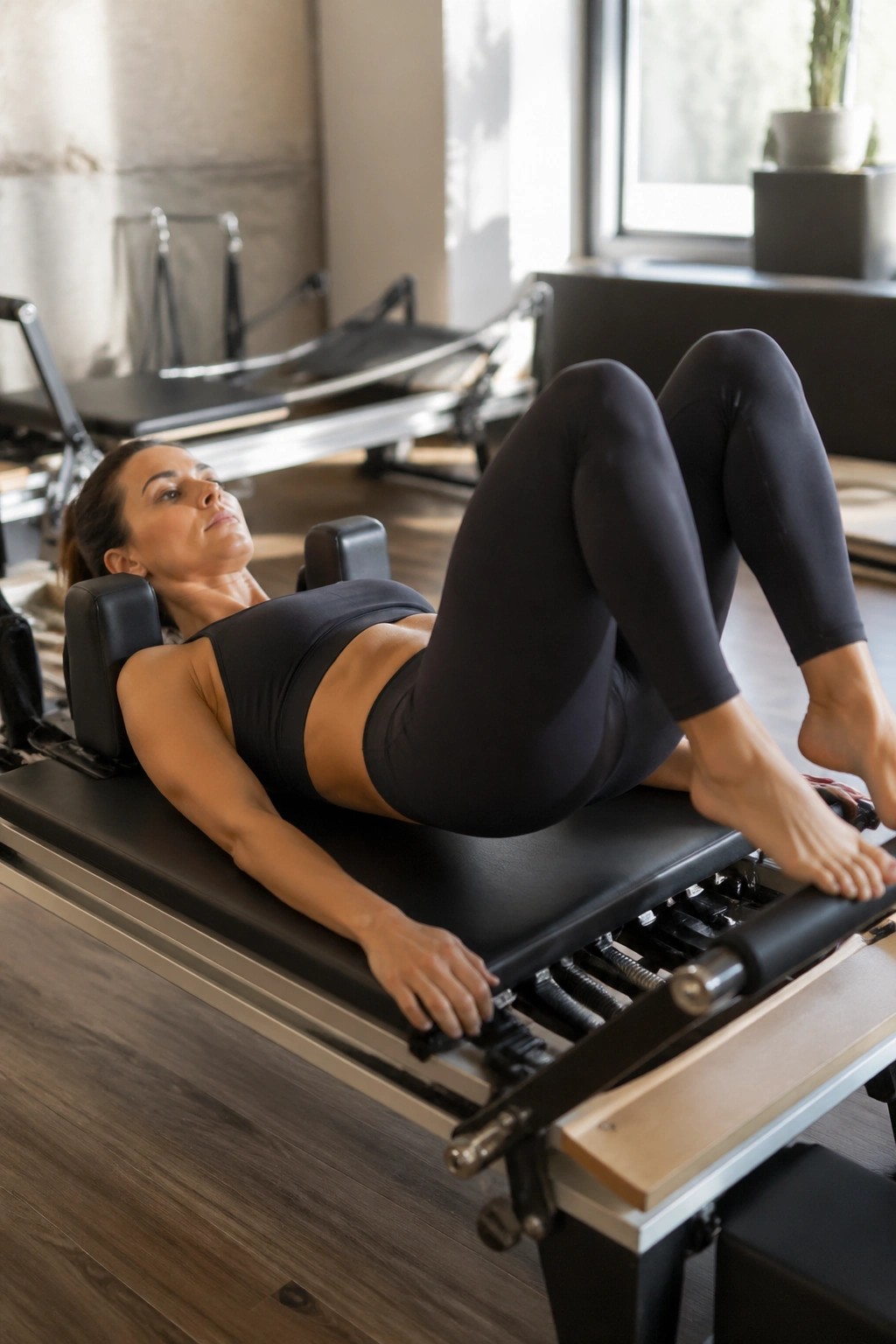
Footwork looks like leg work, but it’s really a lesson in pelvic control. Pressing the carriage out and in with your heels, arches, or toes asks your abs to keep the pelvis still while the legs do the moving. That sounds simple until the carriage starts sliding and your ribs try to pop up and join the party.
What to Feel
- The front of your rib cage should feel heavy, not lifted.
- Your low back should stay long on the carriage.
- The press out should feel smooth, not jerky.
- The return should feel controlled all the way home.
A lot of people treat footwork like a warm-up and rush through it. Bad idea. If you cannot keep the torso quiet here, the harder exercises later will fall apart fast. I like to think of footwork as a checkpoint: if the pelvis stays steady, your abs are doing their job.
Keep the range honest. A smaller press with perfect control beats a giant push-out that turns into a back arch. If your hips hike or your knees lock, shorten the movement and slow down.
2. The Hundred on the Reformer for Deep Core Endurance
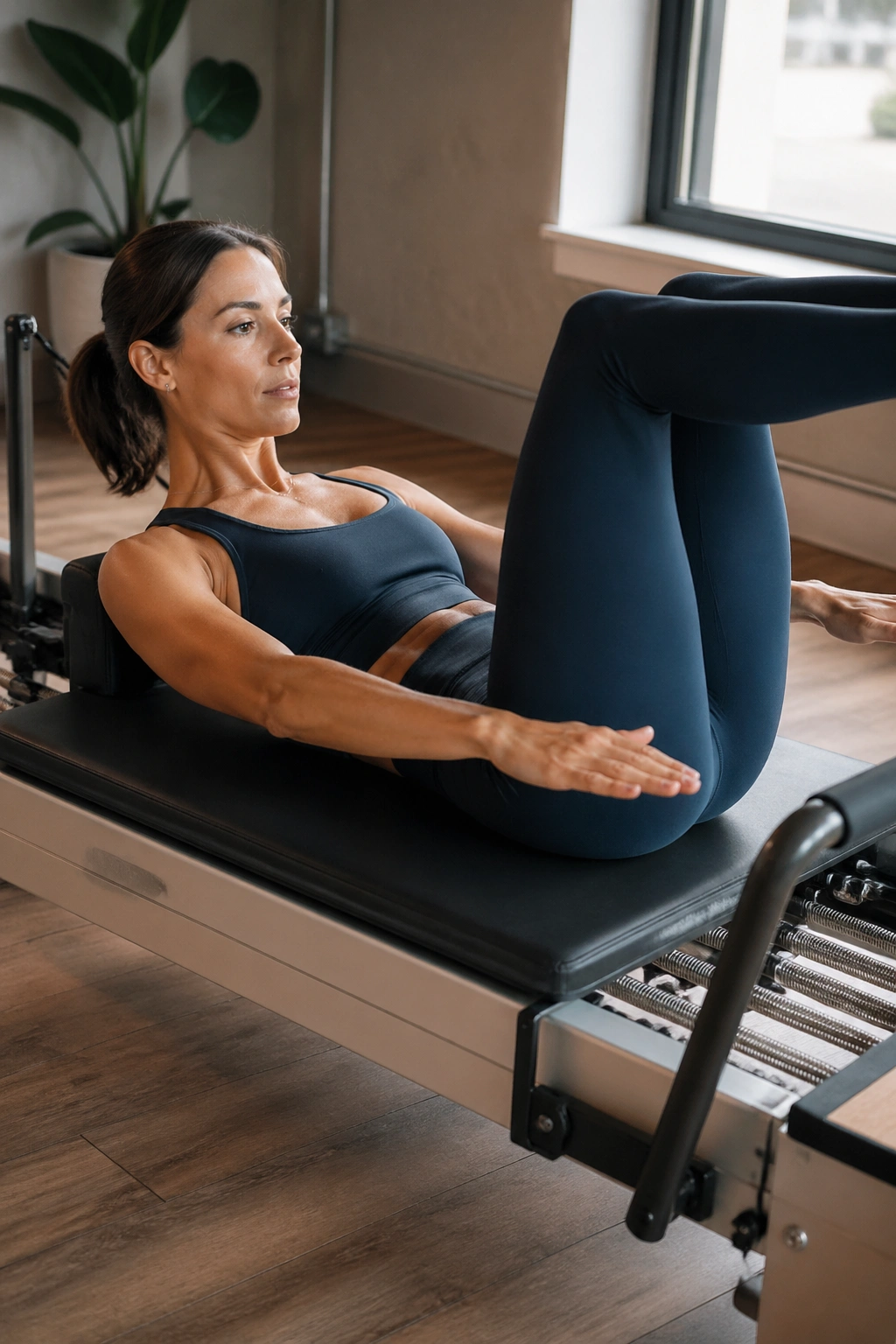
Why does the Hundred show up in almost every serious Pilates class? Because it exposes whether your center can hold shape while your breath gets busy. On the reformer, the straps add just enough work to wake up the front of the body without turning the move into a circus act.
Set up with your head supported if needed, or keep it down if your neck gets cranky. Hold the straps lightly, bring the legs to tabletop or a longer line if you’re ready, and pump the arms while you breathe in for five and out for five. The count matters less than the rhythm. What matters is that your ribs do not flare and your lower back does not peel off the carriage in a panic.
This is not a speed drill. Slow the pumps if your shoulders creep up toward your ears. Slow the legs if the pelvis rocks. The whole point is to keep the trunk steady while the limbs keep moving, and that is where the abs start to feel honest.
Best cue: press the back of your waist into the carriage before you even start pumping.
3. Coordination When You Want Arms, Legs, and Abs to Work Together
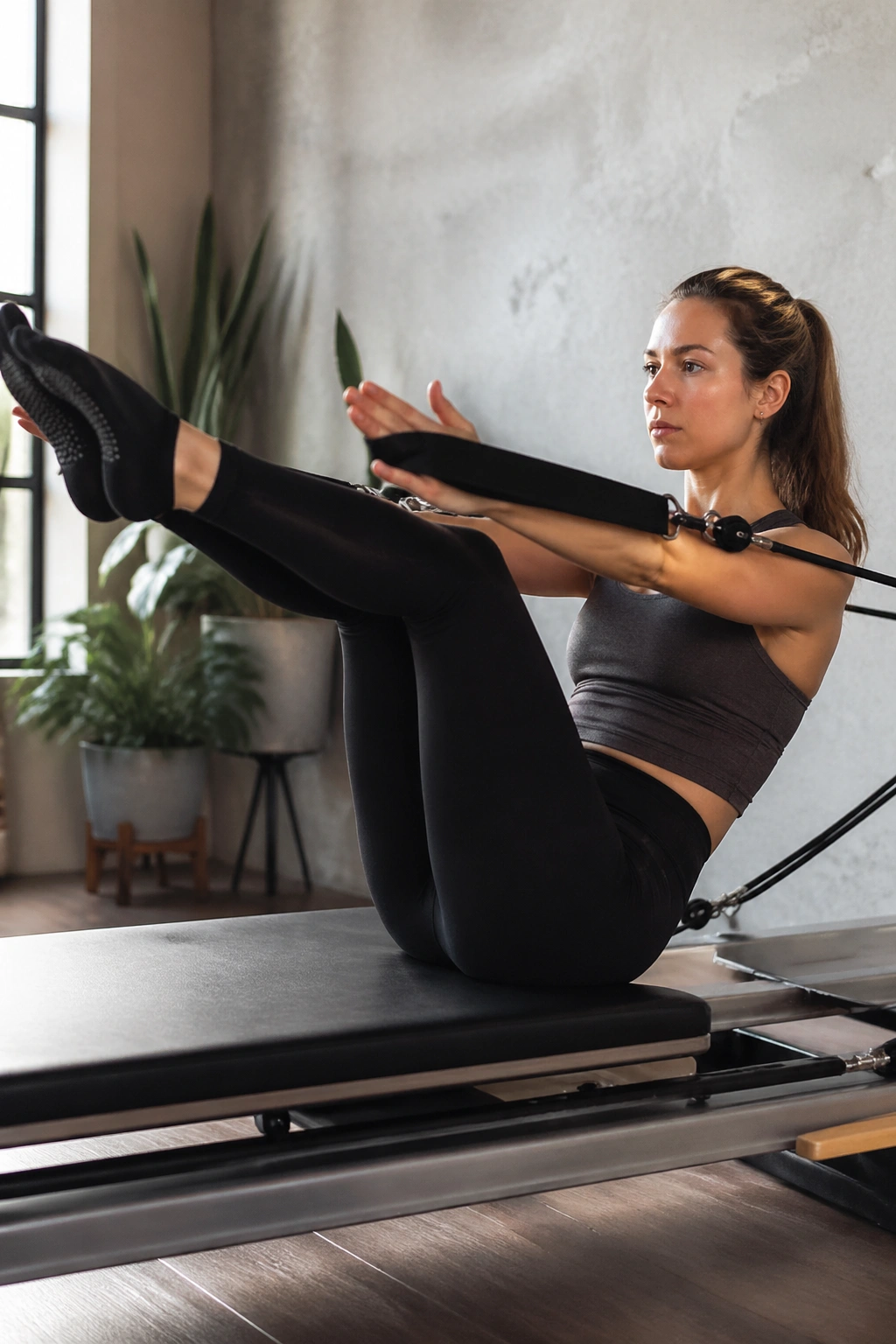
Coordination is one of those exercises that looks tidy from across the room and feels sneaky once you’re on the machine. You curl up, press the straps, move the legs, and breathe all at once. Nothing about it is random. Every part of the body has a job, and the abs are the manager keeping the whole thing from getting sloppy.
How It Works
The reformer adds resistance to the arms while the legs leave and return from a tabletop shape. That combination forces the trunk to resist extension and manage the transition without arching the lower back. If the center lets go, the movement turns into shoulder work with a little leg choreography on the side.
What to Watch For
- Keep the chin slightly tucked without forcing the neck.
- Exhale as the arms press and the legs extend.
- Keep the pelvis still when the legs draw back in.
- Stop the motion before your low back starts to grip.
This one rewards precision more than range. A smaller leg reach with clean control is better than a bigger flourish that folds at the waist. And if you feel yourself rushing, pause. Reset. Start again with less drama.
4. Frog in Straps for Lower-Ab Control Without Straining the Back
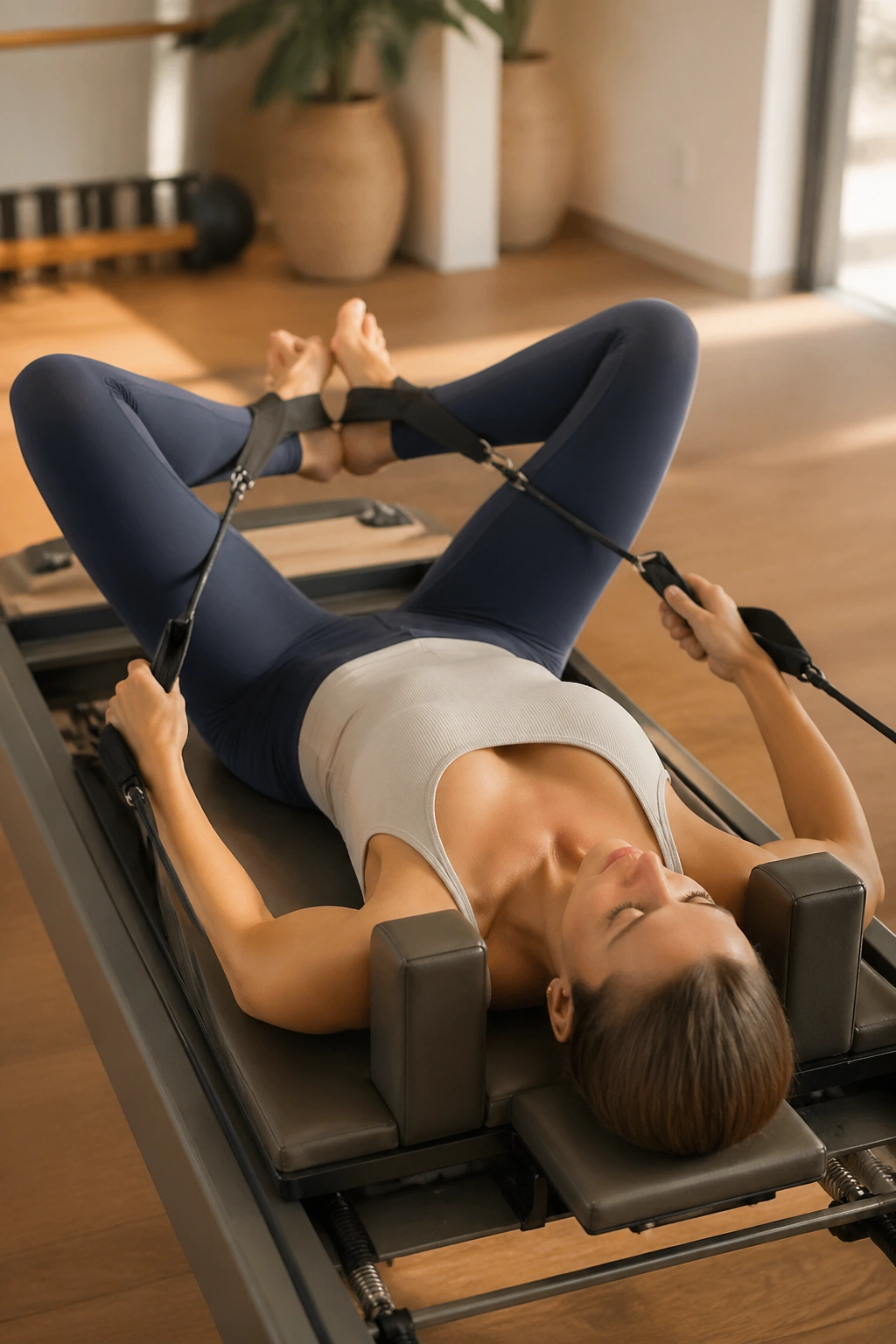
Frog in straps is one of my favorite reformer choices for ab work because it looks gentle and then quietly gets serious. The legs move in and out against spring tension, but the real job is keeping the pelvis from wobbling while the thighs open and close.
Lie on your back, hold the straps, and bring the legs into a bent-knee frog shape. As you press out, think about the back of your ribs staying connected to the carriage. As you bend the knees back in, keep the movement smooth enough that the carriage does not slam home.
The abs here are not screaming for attention. They are doing the steadier work: holding the pelvis neutral, keeping the waistline from spilling open, and stopping the low back from arching when the legs extend. If you want to feel the lower belly more, slow the return. That return phase is where a lot of people lose control.
A clean frog is small, quiet, and even. If it feels like a pendulum, make it smaller.
5. Leg Circles in Straps That Challenge Rotation Control
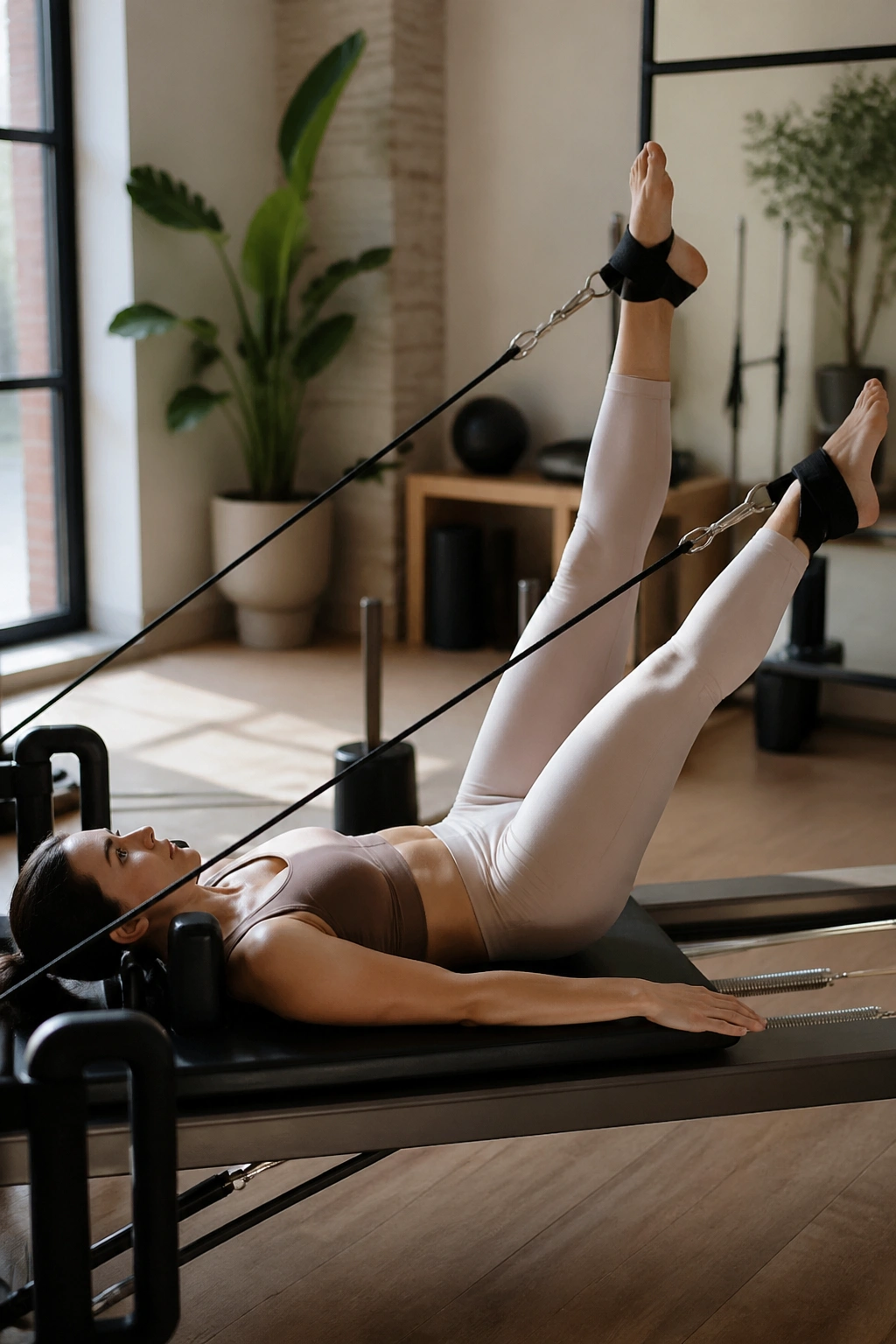
Leg circles in straps can look almost restful if you watch them from far away. Up close, they are one of the better ways to catch cheating in the torso. The legs make circles, but the pelvis is supposed to stay still. That is the whole game.
Start with a manageable size. Big circles are often just back pain with a prettier name. Keep the legs long only as far as you can maintain a heavy sacrum and a quiet rib cage, then trace the circle as if you were drawing it with a pencil that should not scratch the paper.
Why They Matter
The abs, especially the obliques and lower fibers of the deep abdominal wall, have to stop the pelvis from rolling with the legs. The outer thighs do some work too, but the center carries the real load. If the movement gets wobbly, the circle is too large or too fast.
A useful cue: imagine the legs moving while your pelvis weighs more than the straps want it to. That little sense of heaviness keeps the whole thing from turning into a hip flexor contest.
6. Single-Leg Lowering in Straps for a Stronger Midline
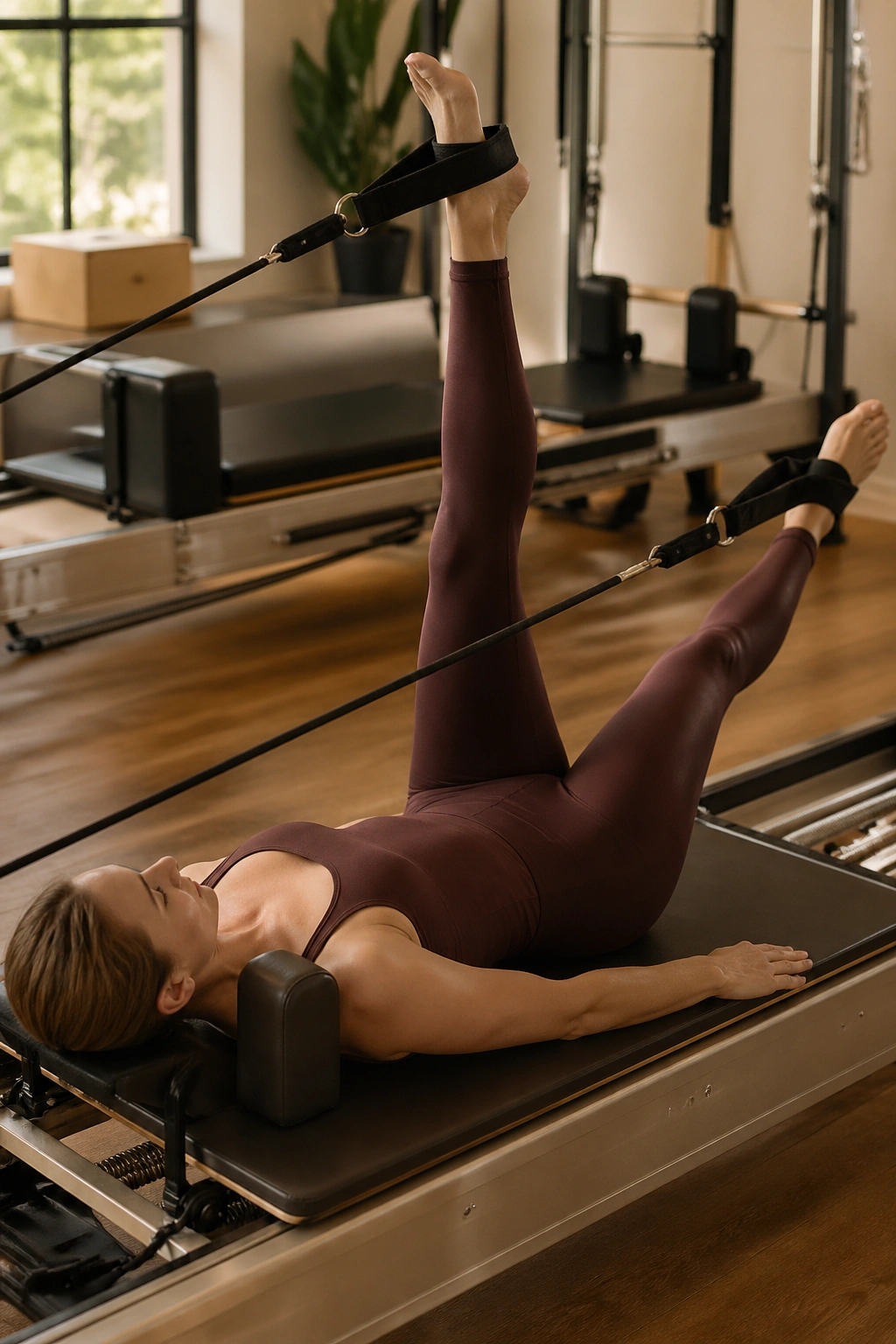
Single-leg work is where a lot of people learn what their core actually does. One leg stays still while the other lowers and lifts, and that asymmetry makes the abdomen fight for balance in a way two-leg movements cannot.
Setup and Feel
- Hold one leg long in the strap while the other leg stays bent or supported, depending on the variation.
- Lower the working leg only until the pelvis wants to tip.
- Keep the non-working side of the waist heavy.
- Move slowly enough to notice the exact moment control starts to slip.
The lower abs have to keep the pelvis from tilting forward or twisting. That is the point. If the range is so big that your back arches, cut it down by half. Tiny ranges done well beat dramatic ones done badly, every time.
This exercise also teaches patience, which sounds boring until you need it. The machine does not care how athletic you feel. It only cares whether the pelvis stays square while the leg moves.
7. Short Spine Massage for Articulation and Real Ab Control
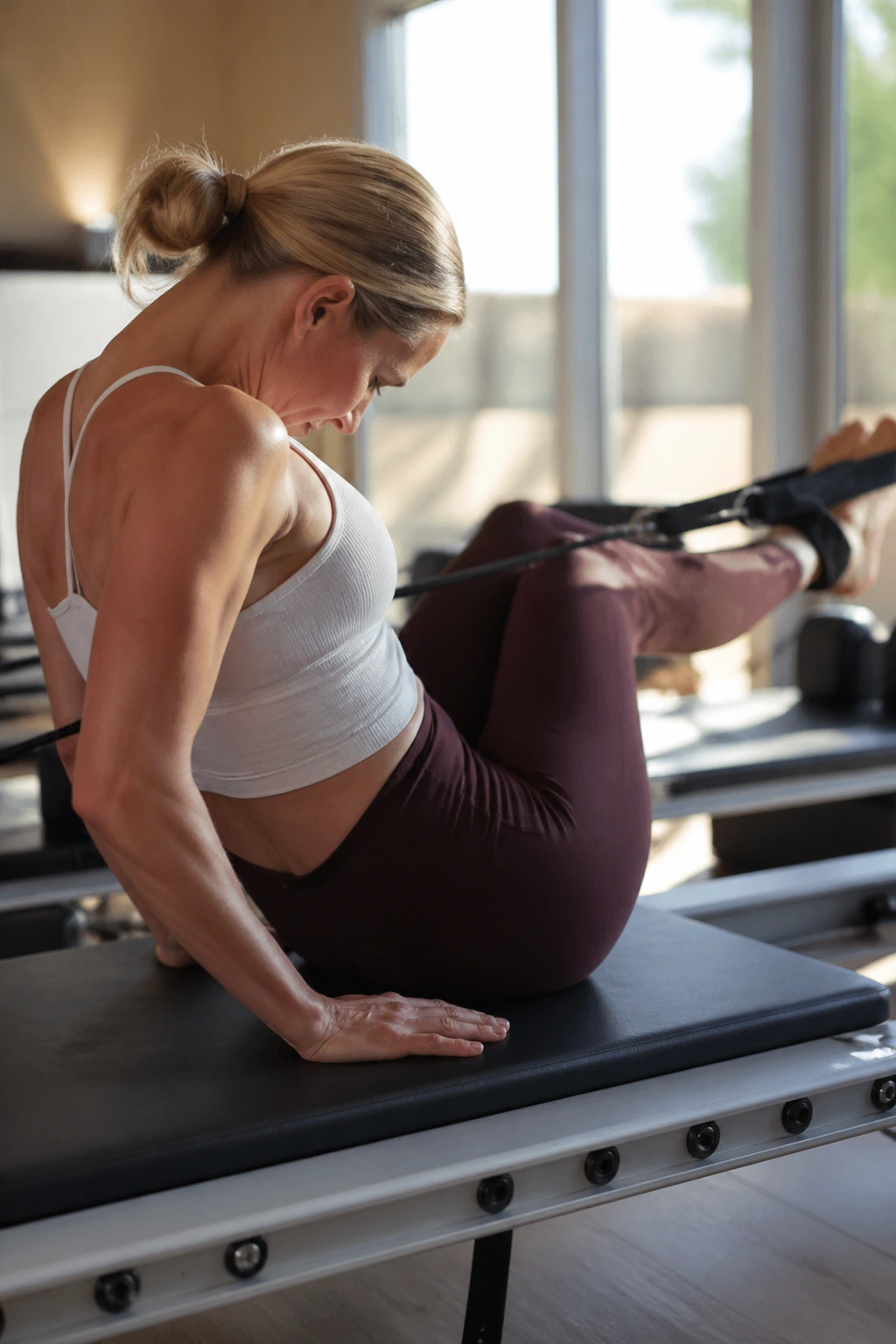
Short spine massage is not a beginner’s move, and I am happy to say that out loud. It asks for spinal articulation, hip mobility, shoulder steadiness, and a center that does not panic when the carriage shifts under you. When it is done well, the abs feel like they are organizing a chain of linked movements from the tailbone all the way up through the ribs.
The move begins with the legs in straps and the spine long on the carriage. From there, you roll the pelvis up, fold the body over, bend the knees, and peel back down with control. It sounds elegant. It is more demanding than it sounds.
If your neck feels compressed or your ribs flare when you lift, back off. The lift should come from the whole trunk, not a shove from the hips. I prefer a conservative range here, especially for anyone who tends to grip the neck or shove the ribs forward.
One clean rep tells you more than five rushed ones.
8. Pelvic Curl on the Carriage for Low-Ab and Glute Sync
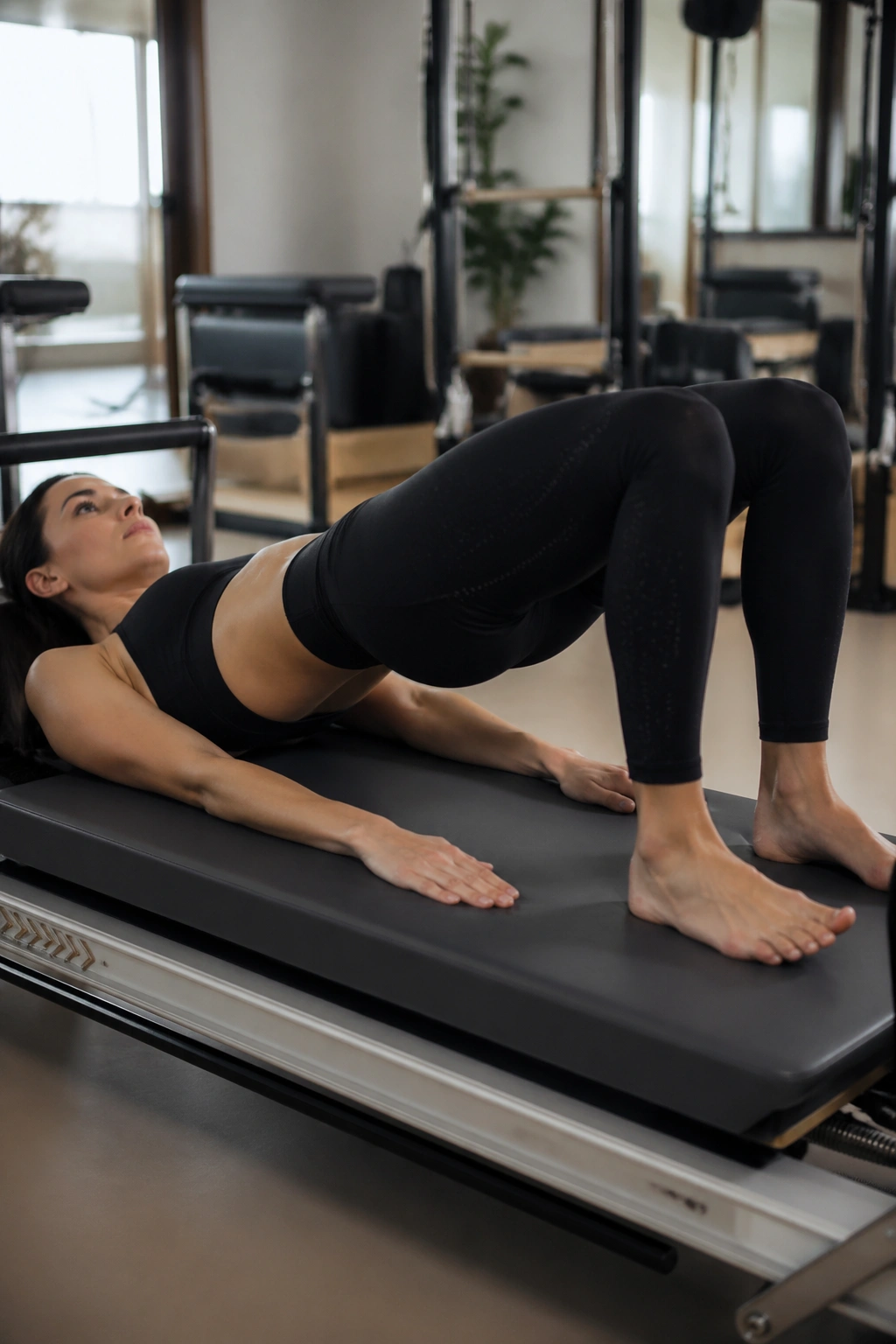
A bridge on the reformer looks familiar, but the sliding carriage changes the game. Your feet stay planted, your spine rolls up one piece at a time, and the abs have to control the rib cage while the glutes and hamstrings help carry you to the top.
The best version starts with a deliberate exhale. That exhale narrows the ribs and helps the pelvis roll without flinging the low back into extension. Then you peel up through the spine, pause at the top, and roll down with the same kind of discipline. No dropping. No shrugging through it. No racing to the finish.
This move is useful because it shows the difference between lifting with the back and lifting with the center. If you feel all the work in your hamstrings, check your foot pressure. If you feel the low back, shorten the range and think about the lower ribs folding toward the pelvis.
It is a plain exercise. That is part of why it works.
9. Round-Back Stomach Massage for Deep Flexion and Upper-Ab Work
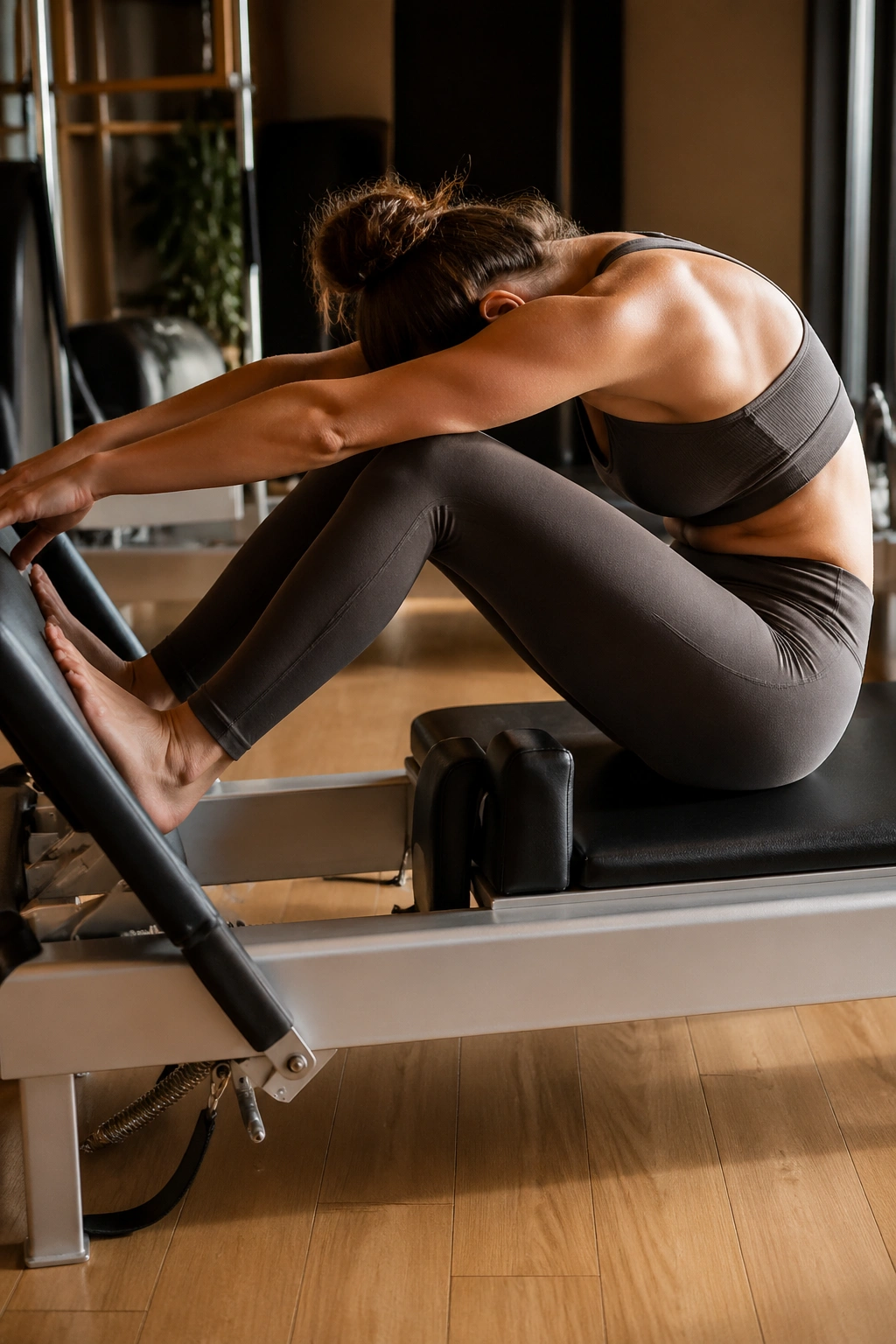
Here’s where the reformer gets a little mischievous. Stomach massage does not sound like an ab exercise, but with a rounded spine and the feet on the footbar, it turns into a small, precise test of flexion control. The abs keep you lifted while the carriage slides away and returns under spring tension.
Sit close enough to the front edge that you can round the low back and hold the shape without collapsing. The heels press, the thighs stay active, and the torso stays in a deep C-curve. As the carriage glides out, the abdominals keep the spine from unraveling.
Why People Feel It Fast
The position shortens the front body, so any loss of control shows up right away. If the ribs pop, the neck tightens, or the shoulders creep forward, the shape is gone.
Try this cue: keep the waist hollowed back as the legs move. Not sucked in hard. Just lifted and contained. That distinction matters. Hard bracing makes the work ugly; organized flexion makes it useful.
10. Flat-Back Stomach Massage for Front-Body Endurance
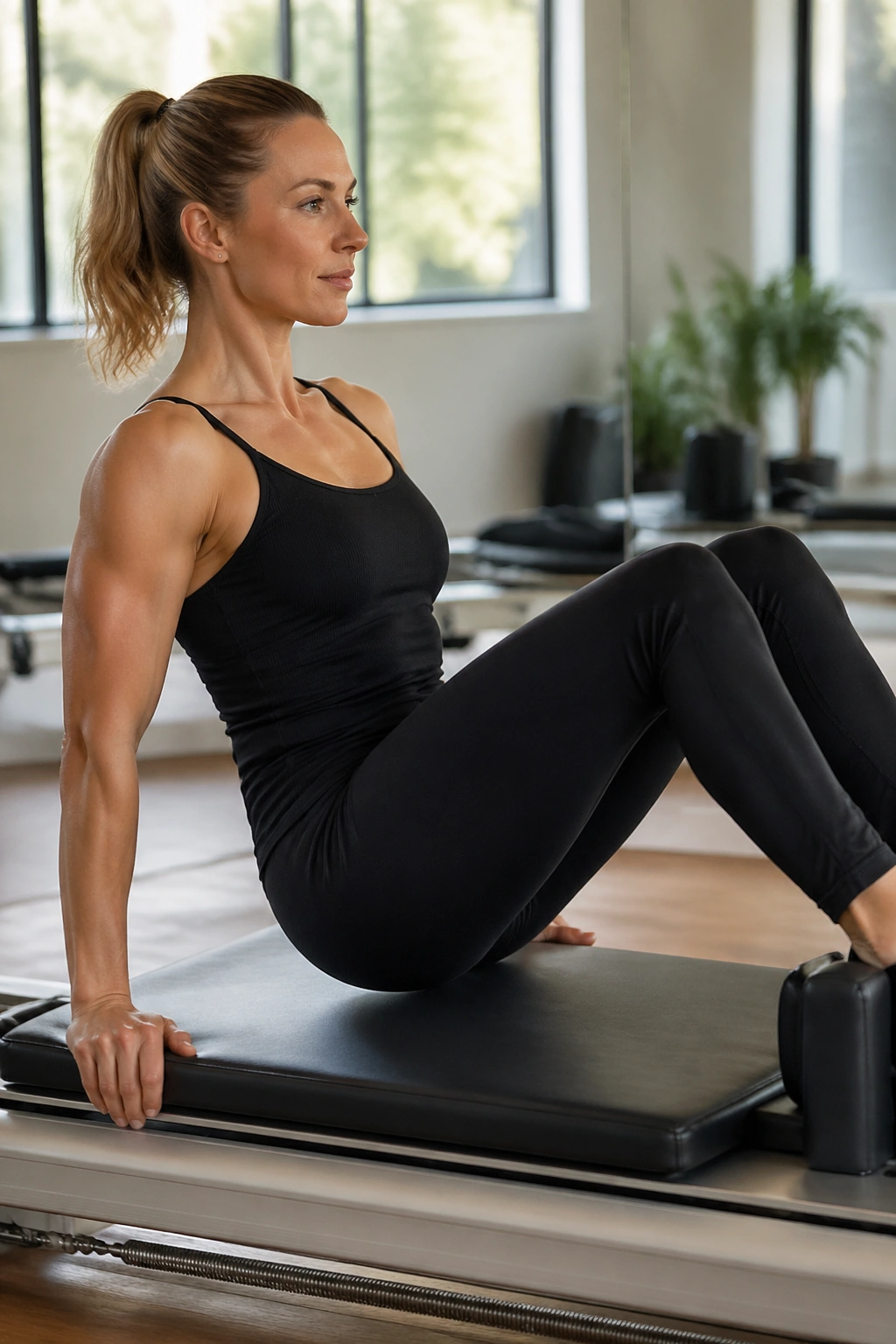
Flat-back stomach massage looks calmer than the rounded version, but it can be harder in a different way. Once the spine comes more upright, the abs have to stop leaning on spinal flexion and do more anti-extension work. That means the front of the trunk has to stay awake while the legs pump the carriage.
Sit tall, keep the chest open without over-arching, and think of the pelvis as neutral and heavy. The carriage moves out and in under the feet, but the torso should feel like it is riding above the movement rather than tipping into it. If you get lazy here, the low back tells on you in about two seconds.
A lot of people feel stronger in the rounded version and weaker in the flat-back version. That makes sense. The rounded shape gives you a built-in assist. Remove it, and the center has to do the work by itself. That is not a flaw. It is the lesson.
Short version: if you can keep the ribs stacked here, your abs are awake.
11. Stomach Massage With a Forward Reach for Obliques and Control
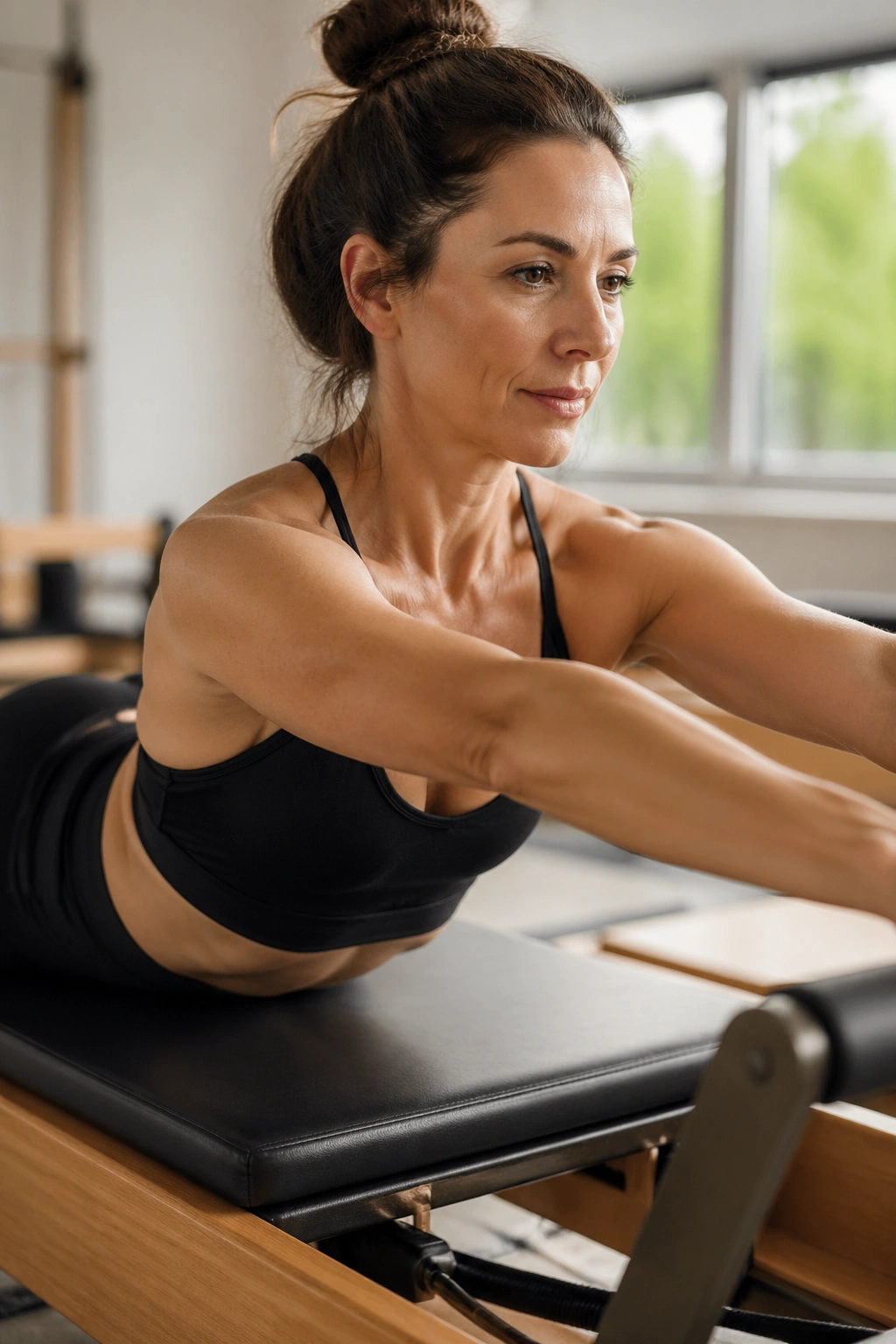
Reach variations on stomach massage are underrated. The arms move forward, the torso has to resist drifting with them, and the obliques start helping more than people expect. That extra reach changes the balance and makes the midline stay honest.
You can keep the shape rounded or work with a taller spine, depending on the version your teacher prefers. Either way, the important part is the same: the trunk cannot chase the hands. The carriage moves, the arms extend, and the waistline stays tethered in place.
A forward reach also has a nice side effect. It exposes whether you are hanging on the shoulder joints or using the whole trunk. If the shoulders round and the ribs collapse, the reach got too big. Keep the reach smaller and cleaner, and the abs will make more sense.
This is one of those exercises that feels modest until it doesn’t. Then it burns.
12. Round-Back Knee Stretches for a Deep Belly Burn
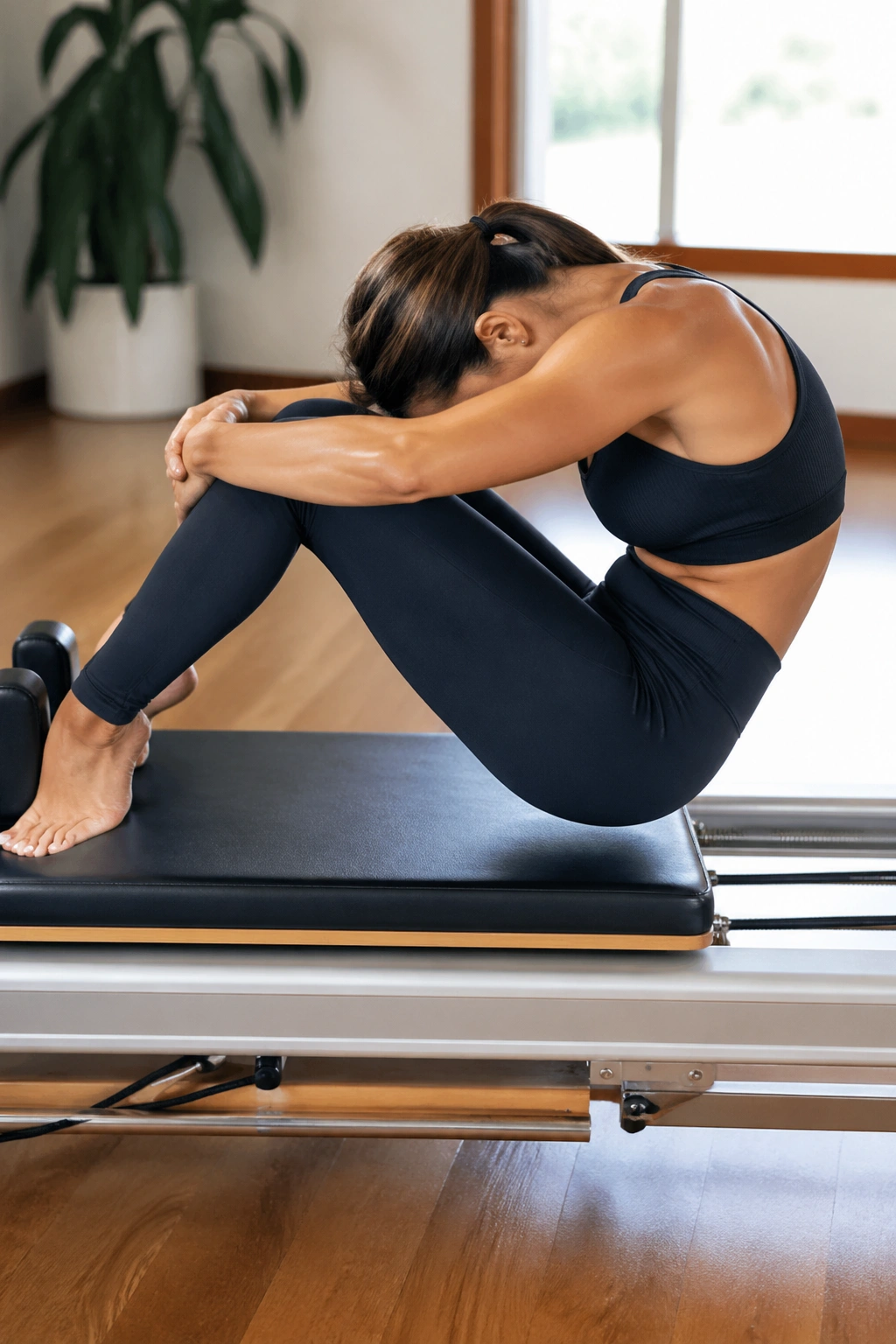
Knee stretches, done with a round back, are the reformer’s answer to “how much control do you really have when the carriage wants to move?” The knees pull under the hips, the spine stays curved, and the abs hold the pelvis from tipping or swaying.
The move is fast enough to tempt you into bouncing. Don’t. A bounce turns it into hip flexor chaos. Keep the carriage light, press out a short distance, and bring it back with the same tidy control. The spine should keep its shape the whole time.
What Good Form Looks Like
- The shoulders stay wide.
- The chin stays slightly tucked.
- The pelvis does not rock forward.
- The carriage returns with a quiet stop, not a slap.
This exercise is one of the clearest ways to feel the lower abs under load. It is also one of the easiest to fake. If the shape gets loose, slow down and cut the range in half. The burn should come from control, not from tossing yourself around on springs.
13. Arched-Back Knee Stretches for Trunk Stability Under Pressure
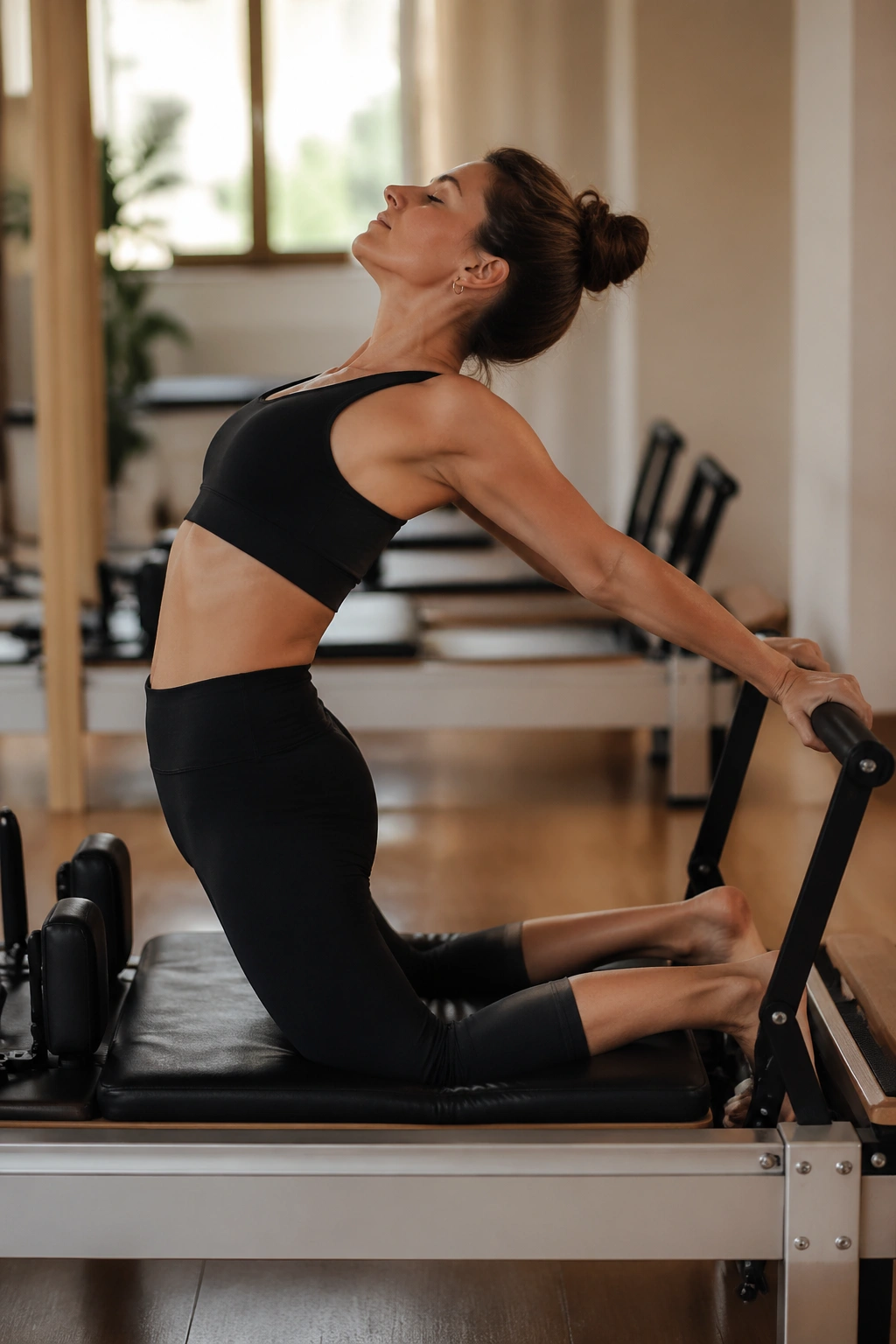
A lot of people think the arched version of knee stretches is just a backbend with carriage movement added. Not quite. Done well, it asks the front of the body to stay lifted while the legs move under a spine that is already extended. That is a harder ask than it looks.
The chest stays open, the lower belly still works, and the shoulders do not collapse into the hands. The abs have to keep the torso from dumping into the low back as the carriage slides. If you are not paying attention, this one turns into a lumbar hinge fast.
The useful feeling is length, not compression. The spine should feel long through the front and supported through the center. If your neck gets tense, check the gaze. If your low back pinches, shorten the range or come out of the arch a little. There is no prize for forcing a bigger curve.
It is a clean exercise. It asks for control in a shape that is a little less forgiving.
14. Elephant for Drawing the Waist Back
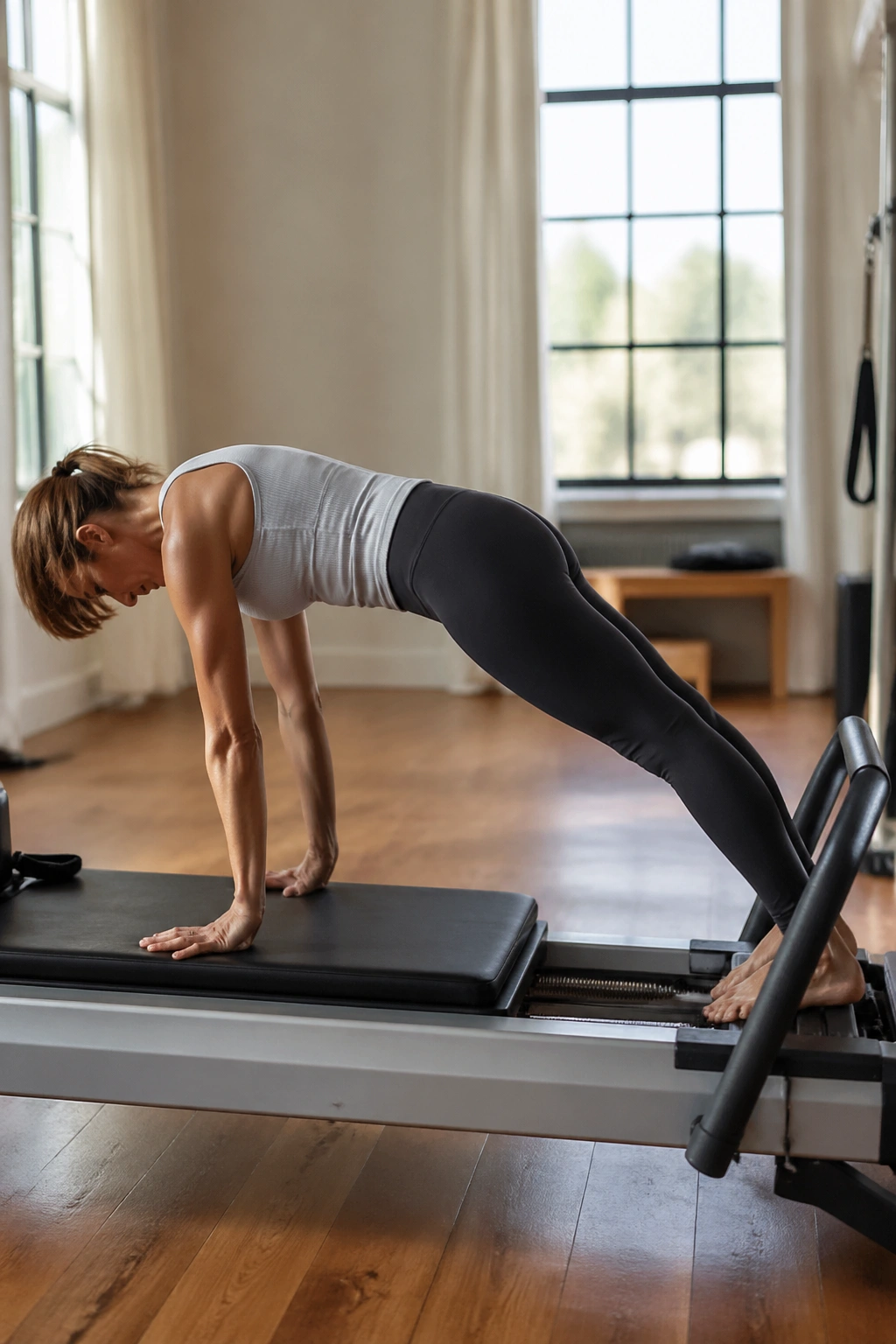
Elephant is one of those reformer exercises that looks strangely simple until you try to keep the carriage from swinging away. The hips lift, the heels press, and the spine folds into a long, flat shape while the abs draw the waist back toward the frame.
The key is the feeling of retreat. The waistline retreats, the belly lifts away from the thighs, and the shoulders stay calm. If you shove the carriage with your legs, you miss the point. The trunk should keep you organized while the hamstrings help support the shape.
This move is wonderful for people who live in a permanent back arch. It teaches the ribs to soften and the abdomen to stay active even when the spine is not rounded. That makes it a nice bridge between pure flexion work and the more upright reformer series.
A small carriage range is enough. In fact, it is usually better.
15. Long Stretch for Anti-Extension Strength
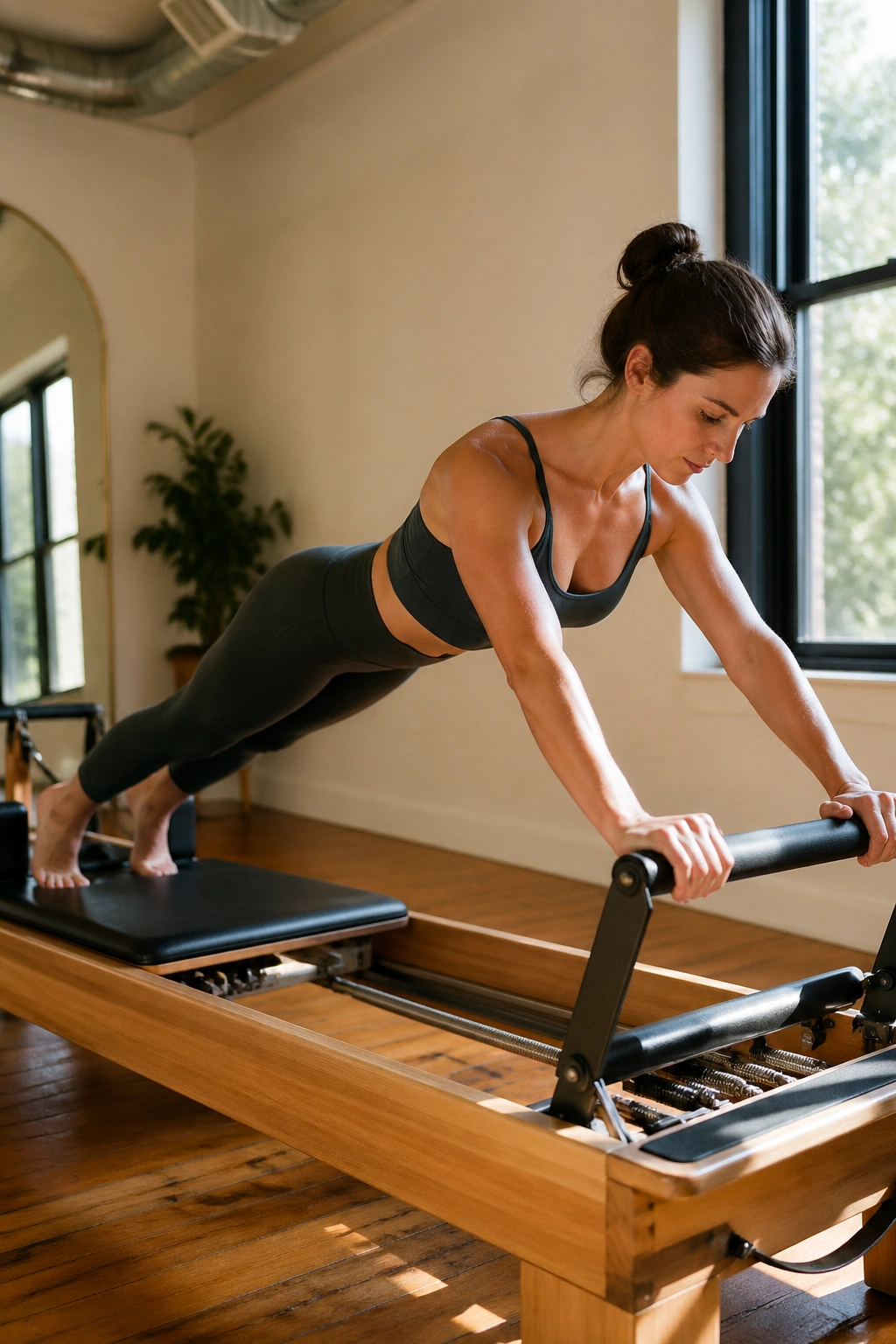
Long stretch is one of the clearest anti-extension exercises on the reformer, and it deserves respect. You move from a plank-like shape while the carriage glides under you, which means your abs have to stop your spine from sagging the second the springs start to pull.
Why It Feels So Honest
- The shoulders cannot dominate the work.
- The pelvis cannot tip forward.
- The ribs cannot dump toward the floor.
- The whole trunk has to stay long and firm.
A lot of people assume long stretch is about arm strength. Not really. The arms matter, but the abs are the ones keeping the line from collapsing. If your low back feels like it is hanging between your shoulders and hips, the shape is too loose or the springs are too heavy for your current control.
I like a version that feels steady and narrow, not flashy. Keep the carriage movement smooth and the plank line quiet. If that sounds boring, good. Boring in Pilates usually means the form is working.
16. Down Stretch for Front-Body Length Without Losing the Core
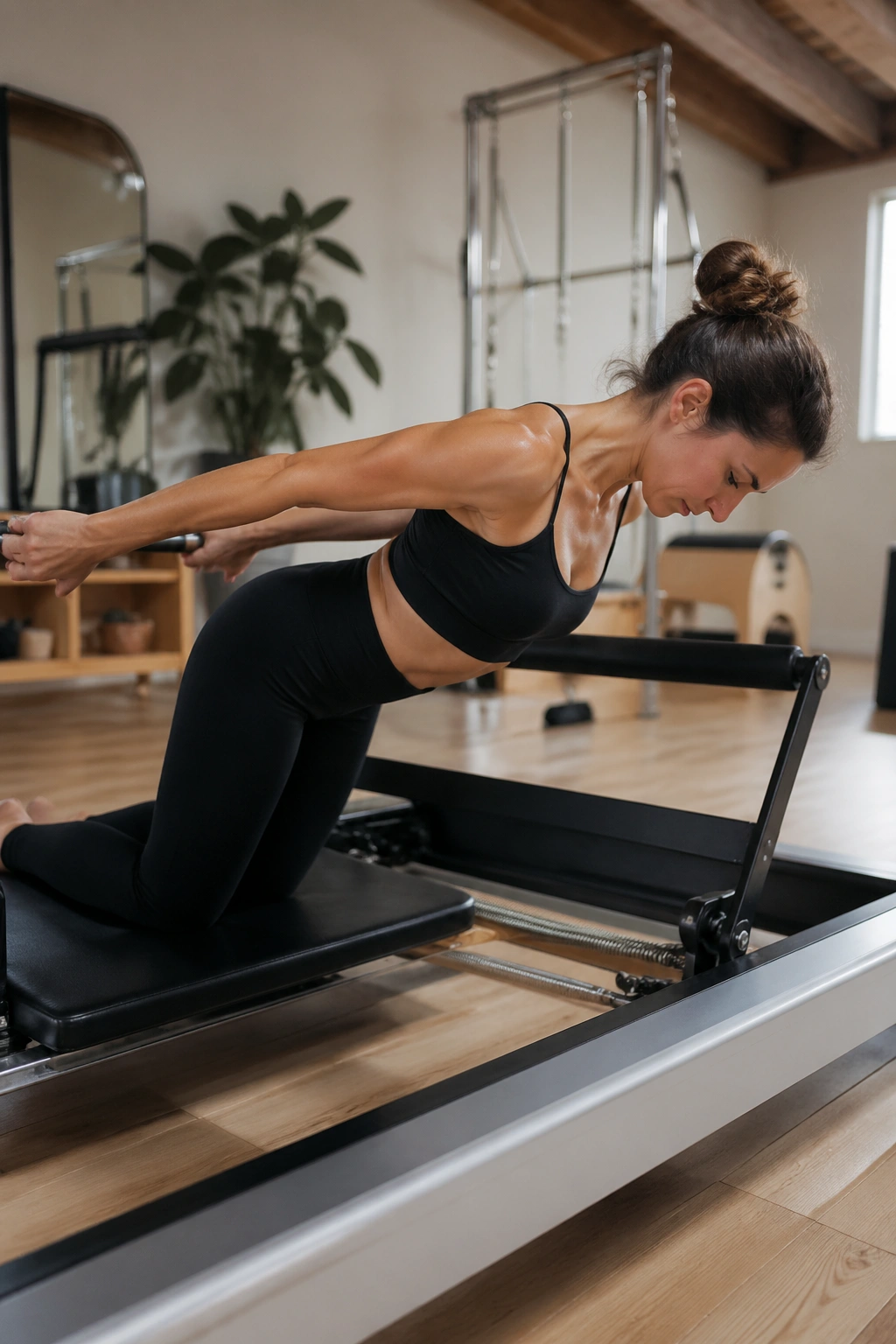
Down stretch asks you to move through a back extension shape while still staying connected through the front of the body. That is where a lot of people drift. They crank the chest up, the low back pinches, and the abs go on holiday.
The better version feels long from the knees through the crown of the head. The pelvis stays tucked under enough to support the lumbar spine, and the carriage glides with control as you press back and return. The work is not huge in range, but it is exact.
This exercise is a good reminder that “strong abs” does not always mean visible crunching. Sometimes it means resisting collapse while the spine opens. That kind of strength matters in the real world, too, because it keeps you from dumping into your lower back every time you reach, lift, or stand tall after sitting too long.
Keep the shape smooth. If you feel pinching, back off before it becomes a habit.
17. Up Stretch for Stacking the Ribs Over the Pelvis
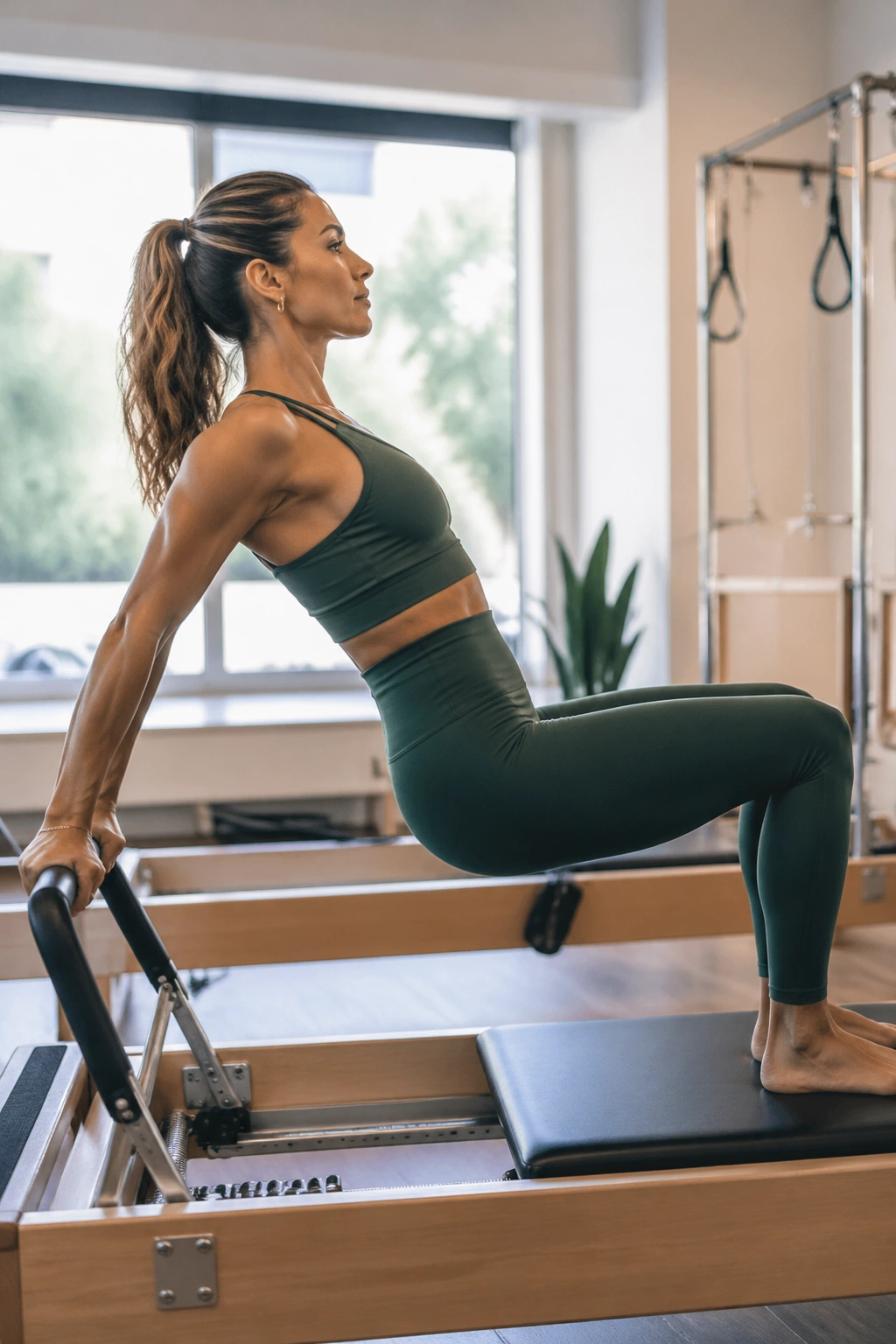
Up stretch has a way of exposing every small cheat in the trunk. The body folds, the carriage moves, and then you have to lift back into a pike-like shape without throwing the shoulders forward or the ribs apart. It is a tidy exercise on paper and a demanding one in practice.
The abs work hardest in the transition. That is the moment when the body wants to dump weight into the hands or swing the pelvis too far forward. Resist that urge. Think about the ribs stacking over the pelvis as the carriage comes home, and let the hips lift only as much as control allows.
This is a good place to keep the motion slower than you think you need. Fast up stretch tends to become a shoulder shrug. Slower up stretch gives the midsection time to organize. And yes, that is where the real work lives.
A small pause at the top can be useful. Not a full rest. Just enough stillness to reset the line.
18. Side Plank on the Reformer for Obliques That Actually Show Up
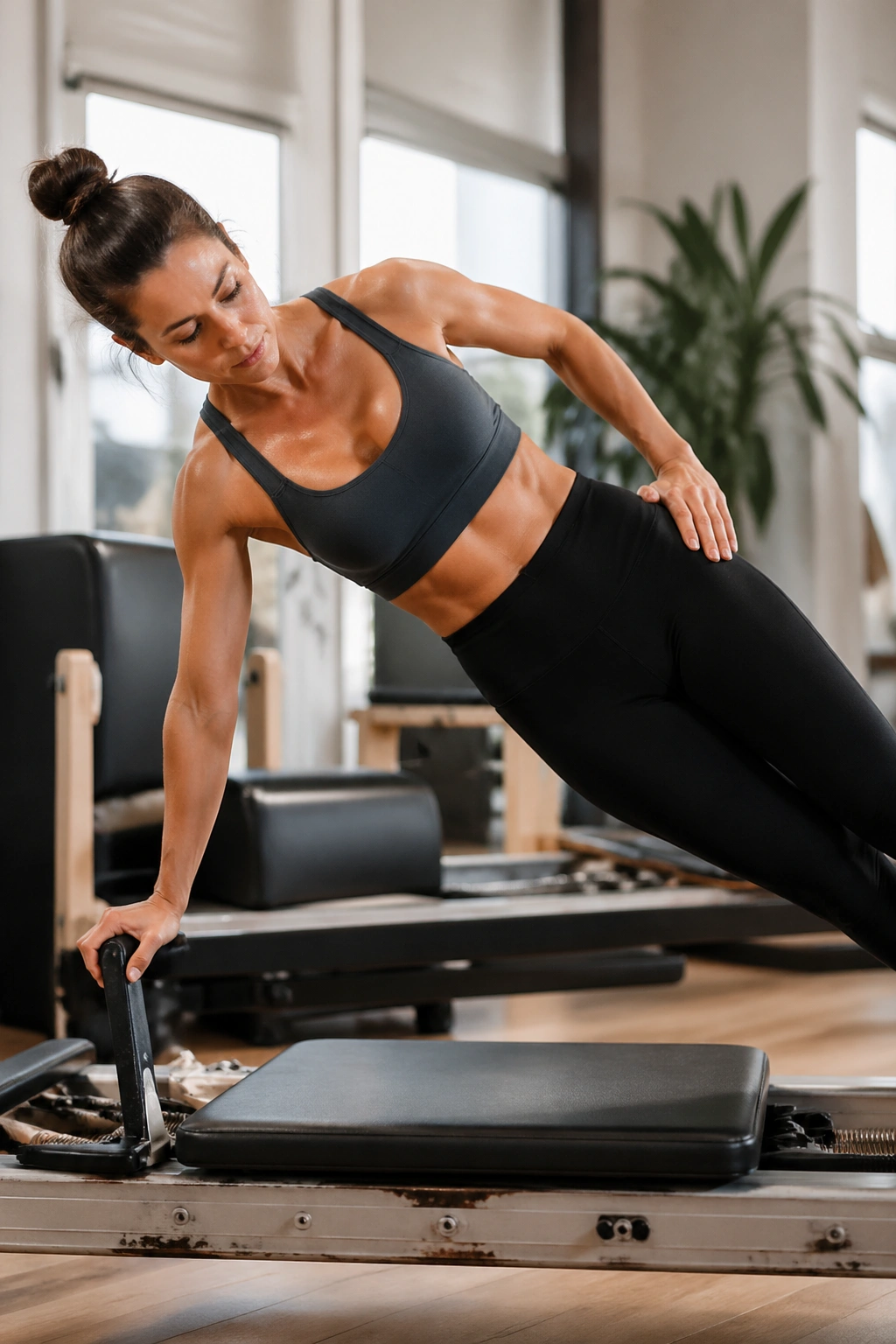
Side plank on the reformer is one of the best ways to make the obliques earn their keep. The body has to resist lateral collapse, keep the pelvis lifted, and stabilize against the carriage at the same time. That is a lot for one side of the trunk, which is why the exercise feels so direct.
Setup
- Stack the shoulders, hips, and ankles or modify with the bottom knee down.
- Keep the supporting hand firm without jamming the shoulder.
- Lift through the side waist, not just the top hip.
- Move the carriage only if the setup stays quiet.
This one is brutally clear. If the waist sags, you know it. If the shoulder collapses, you know that too. The reformer gives instant feedback, and the obliques usually answer with a pretty unmistakable burn.
If you are new to side planks, keep the hold short and the carriage motion tiny. A ten-second hold with clean alignment is more useful than a full minute of wobbling. No contest.
19. Short Box Round Back for Spine Flexion and Ab Strength
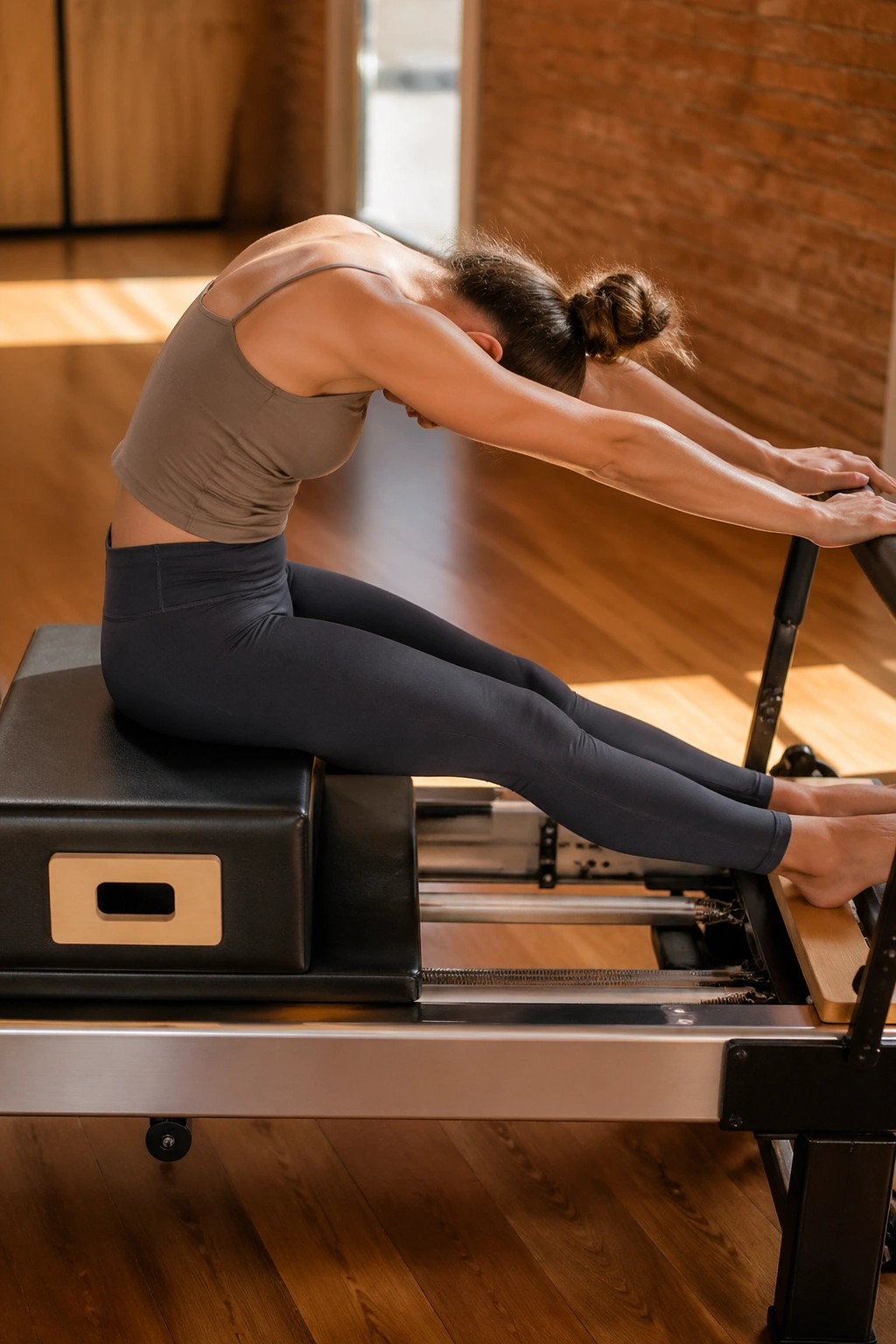
Short box round back is one of the most classic reformer-based ab exercises because it makes you own the C-curve without using your hands to cheat. Sitting tall on the box, feet anchored, you roll back through the spine and return with the center doing the driving.
The movement should start from the abs, not from a yank at the hips. The pelvis rolls under, the ribs fold, and the spine articulates into a tidy curve. If you throw your head back or fling the shoulders, you lose the line and the exercise turns into momentum.
This is a good one to use when you want to feel the full front body working together. The upper abs help, the lower abs help, and the hip flexors have to stay in line instead of taking over. That balance is why the move shows up so often in serious Pilates sessions.
Keep the box stable and the knees quiet. The shape does the work.
20. Short Box Flat Back for Anti-Rotation and Lift
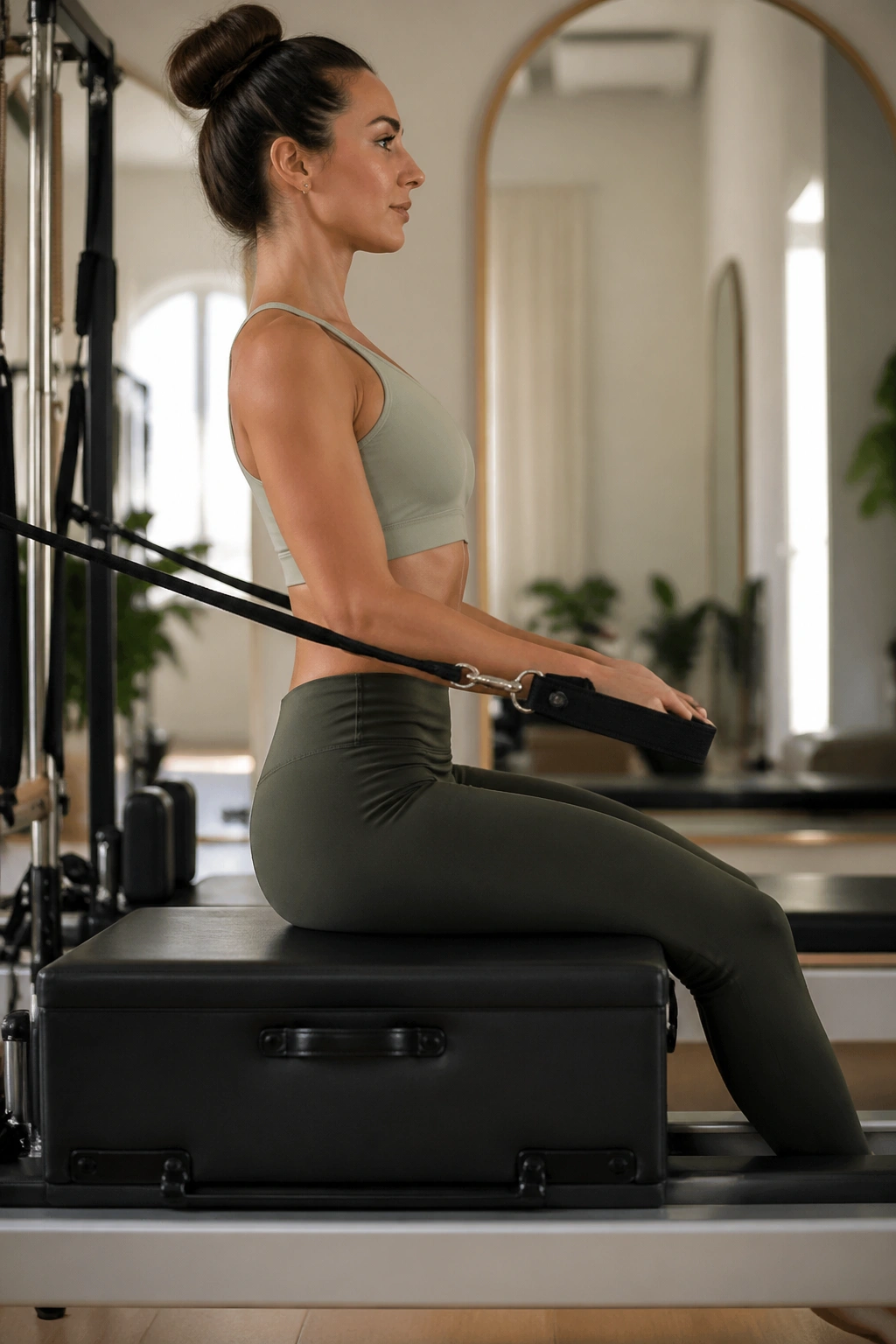
Flat-back short box work is a different animal. You sit tall, hinge back with a long spine, and keep the torso from slumping or twisting as the body moves. The abs have to hold the ribs in place while the spine stays long, which makes this a smart choice for people who need more upright core strength.
The sensation should be lift, not collapse. Think of the crown of the head reaching away from the tailbone while the waist stays cinched inward. If the low back rounds, you’ve gone too far. If the shoulders creep up, the line got heavy.
A nice thing about this exercise is that it trains the body to stay organized in a position many people actually need: sitting upright without hunching. It is not flashy. It is useful. That matters more.
Keep the range moderate and the breath steady. The abs will notice.
21. Short Box Side Bend and Twist for Obliques and Waist Control
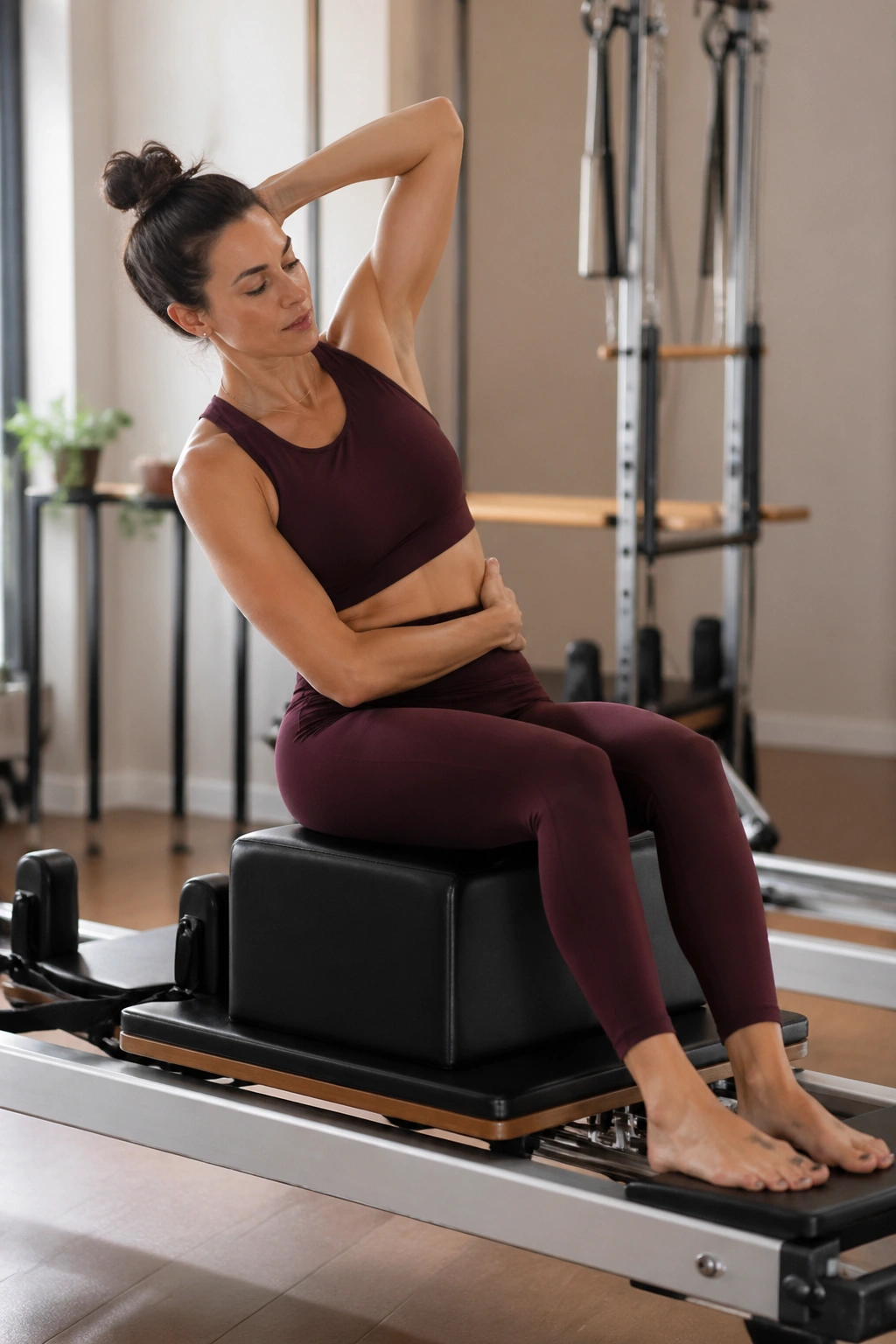
Side work on the short box gets overlooked, which is a shame, because the obliques love it. Side bend and twist variations challenge the waist from the side, then add rotation control on top of that. If you want a more complete midsection, this is where the shape starts to round out.
The side bend asks one side of the trunk to shorten and lengthen in a controlled way while the opposite side stabilizes. Add a twist, and the ribs have to rotate without the pelvis drifting. That is harder than it sounds, and it is one of the cleanest ways to feel the side body wake up.
I like the version that stays small and precise. A huge bend usually just turns into momentum and shoulder work. Keep the box secure, keep the hips anchored, and let the waist move with purpose. You should feel like you are working from the ribs, not from a loose swing in the spine.
This exercise also gives the trunk shape in a way straight-ahead work cannot. You need both.
22. Teaser on the Reformer for Full-Core Control
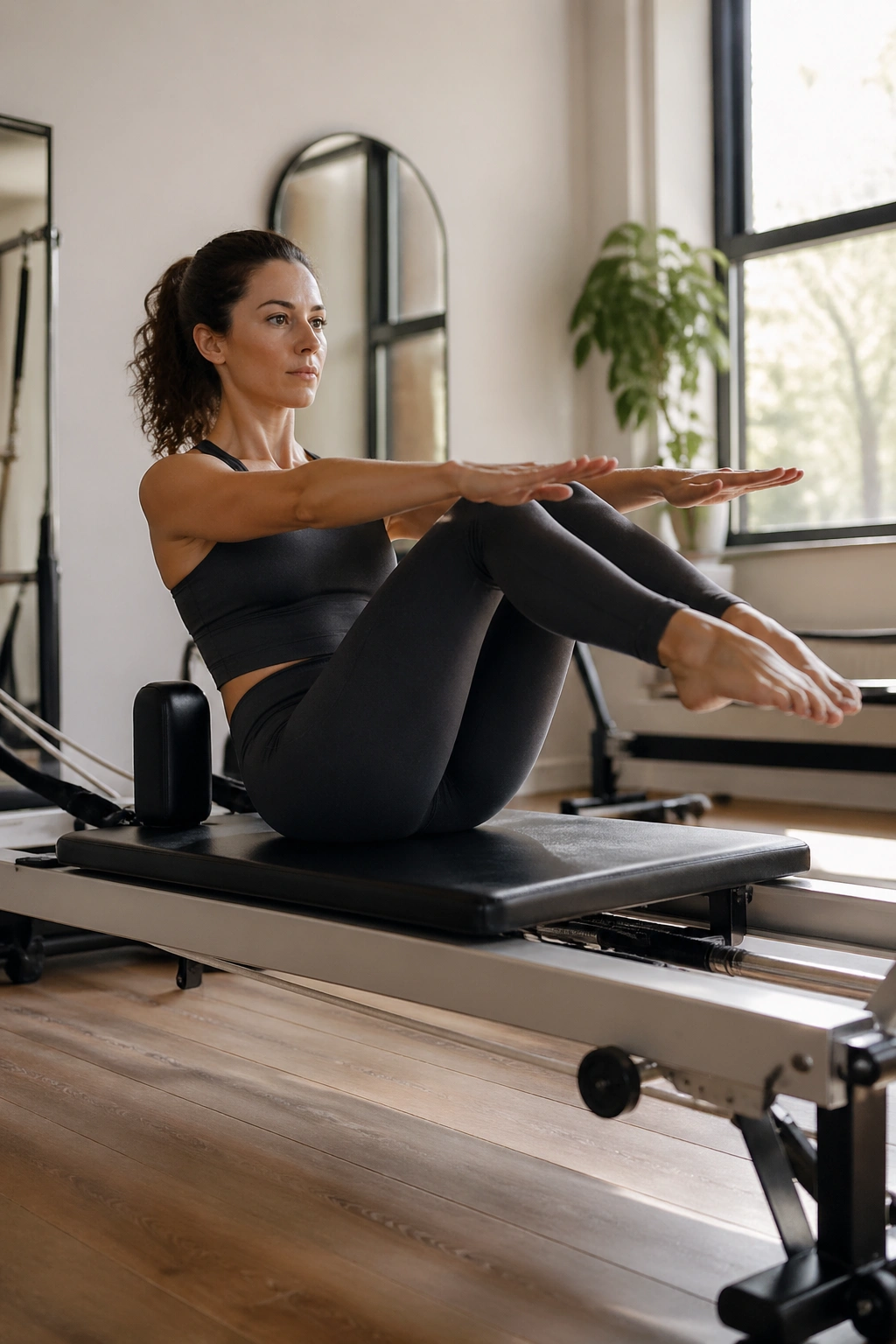
Teaser is the one people want to skip until they finally get it right. Then they understand why it matters so much. It asks for hip flexion, spinal articulation, balance, and enough abdominal control to keep the whole thing from dumping backward or folding at the chest.
Start with the easiest version you can hold with dignity. Maybe the legs stay bent. Maybe the range is tiny. Fine. The point is to roll up with the abs, balance without gripping the neck, and lower with control instead of crashing down. The carriage makes the exercise feel even more exact, because any wobble shows up fast.
What makes teaser so valuable is that it brings the whole front body together. You cannot fake it for long. If the low back pinches, the legs are too low or the torso is trying to move faster than the center can support. If the shoulders tense up, you’re trying to muscle your way through.
A good teaser leaves you feeling tall, not twisted. That is the version worth keeping.
Some people want reformer Pilates exercises for strong abs because they want visible definition. Fair enough. What the machine gives you, though, is something a little more useful: a trunk that stays organized under pressure, in motion, and under spring tension.
That carries over. You feel it when you stand up from a chair, when you carry groceries, when you reach overhead, when you walk up stairs without hanging on your lower back. And if you practice these 22 moves with patience — small range, clean breath, no sloppy swinging — the abs stop being a photo-muscle and start doing real work.
