



A good Pilates routine can look gentle from the doorway and feel sneaky by the third exercise. Your ribs stop flaring, your hips start paying attention, and the small muscles around your pelvis begin doing work they’ve been skipping for months. Pilates routines are at their best when they’re short, precise, and repeated often.
Joseph Pilates built the method around control, breathing, centering, precision, and flow. Those words sound tidy on paper. On the mat, they mean that a five-minute sequence can teach your body more about alignment than a lot of random movement if you keep the form honest.
That’s why the smartest daily work is not a giant heroic session. It’s the kind you can actually repeat on a normal day, with a mat, a wall, maybe a light resistance band, and no dramatic setup. Repeatable beats impressive. Every time.
The 20 routines below cover the full spread: spine mobility, core strength, glute work, posture, balance, arm tone, and the quieter recovery work that keeps the rest of it from feeling like a grind. Pick one, stack two, or cycle through them across the week. Some will wake you up. Some will slow you down. A few will expose exactly where you compensate, which is annoying and useful at the same time.
1. The 5-Minute Morning Roll-Down
If your spine feels rusty in the morning, start here. The roll-down is the cleanest way to wake up a stiff back without throwing your body into anything dramatic. It asks for length through the back of the neck, a little hamstring awareness, and enough control to keep the ribs from popping forward.
Why It Wakes You Up Fast
- Stand with your feet hip-width apart and your weight even across the heel, big toe, and little toe.
- Inhale as you reach your arms overhead.
- Exhale and roll down one vertebra at a time until your hands hang near the floor.
- Hold for 2 slow breaths, then roll back up through the spine, stacking the hips under the ribs and the ribs under the shoulders.
- Repeat 3 times, then move to 6 cat-cows and 8 shoulder bridges on the mat.
A lot of people rush this and turn it into a sloppy toe touch. Don’t. Bend your knees if your hamstrings grab, and keep the movement smooth enough that you can feel each segment of the spine wake up.
Best cue: think “spine, then hips,” not the other way around.
2. The Hundred-and-Toe-Tap Core Circuit
Crunches are not the only way to train your abs. Pilates core work is slower, cleaner, and more honest, which means the muscles around your trunk have to keep the rib cage from drifting and the pelvis from tipping.
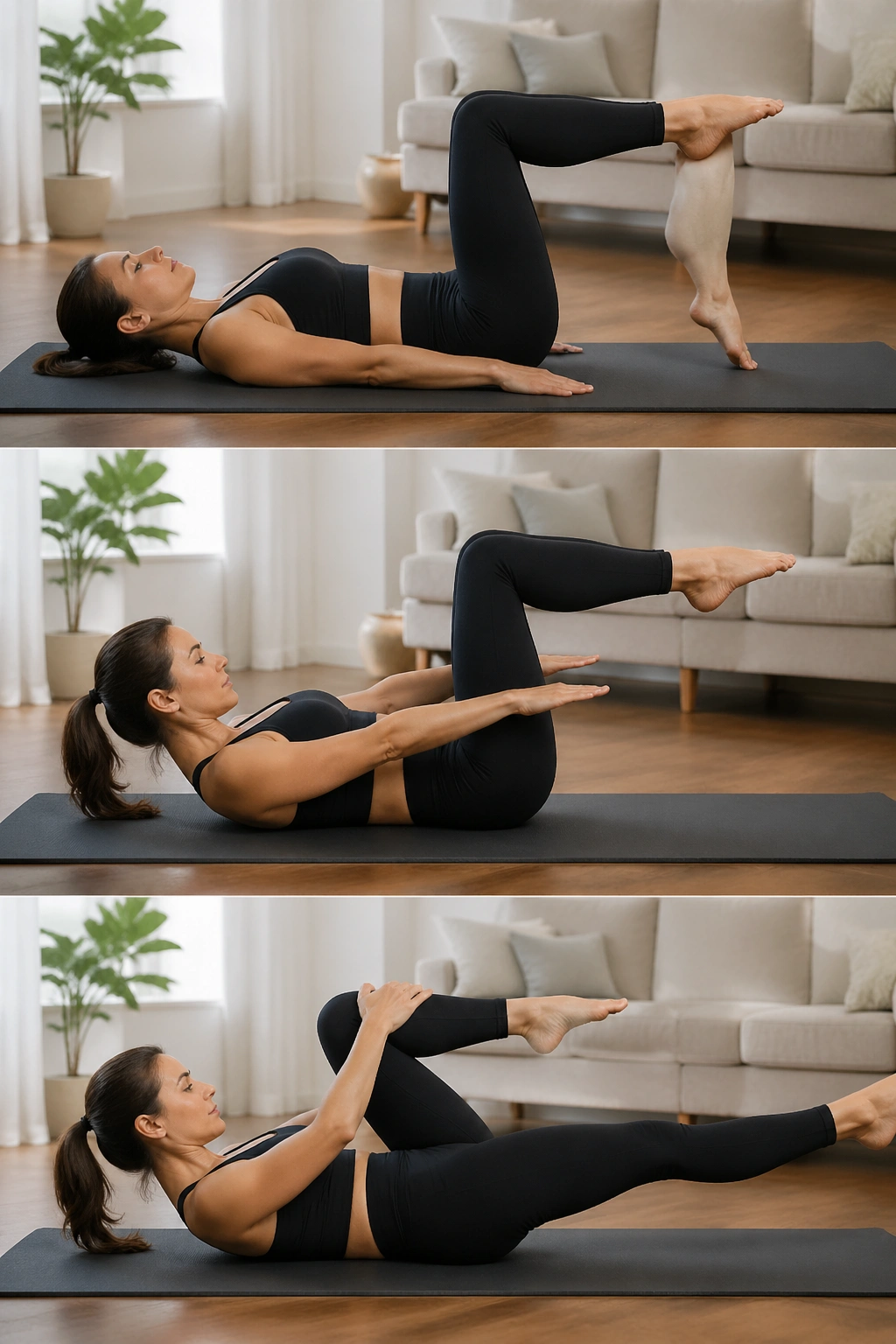
Start on your back with your legs in tabletop. Lower one toe to the floor, then the other, for 8 to 10 controlled taps per side. Keep your lower back heavy and your exhale long enough that your belly feels like it’s narrowing without bulging. After that, move into the Pilates Hundred prep: lift your head and shoulders if your neck is happy, pump your arms for 5 breaths, and keep the ribs knitted together.
You do not need speed here. You need control.
Then finish with single-leg stretch for 6 to 8 reps per side. If your hip flexors start taking over, pause and reset the breath before you keep going. That little reset is the difference between “I did ab work” and “my back is grumbling.”
3. The Desk-Reset Posture Fix
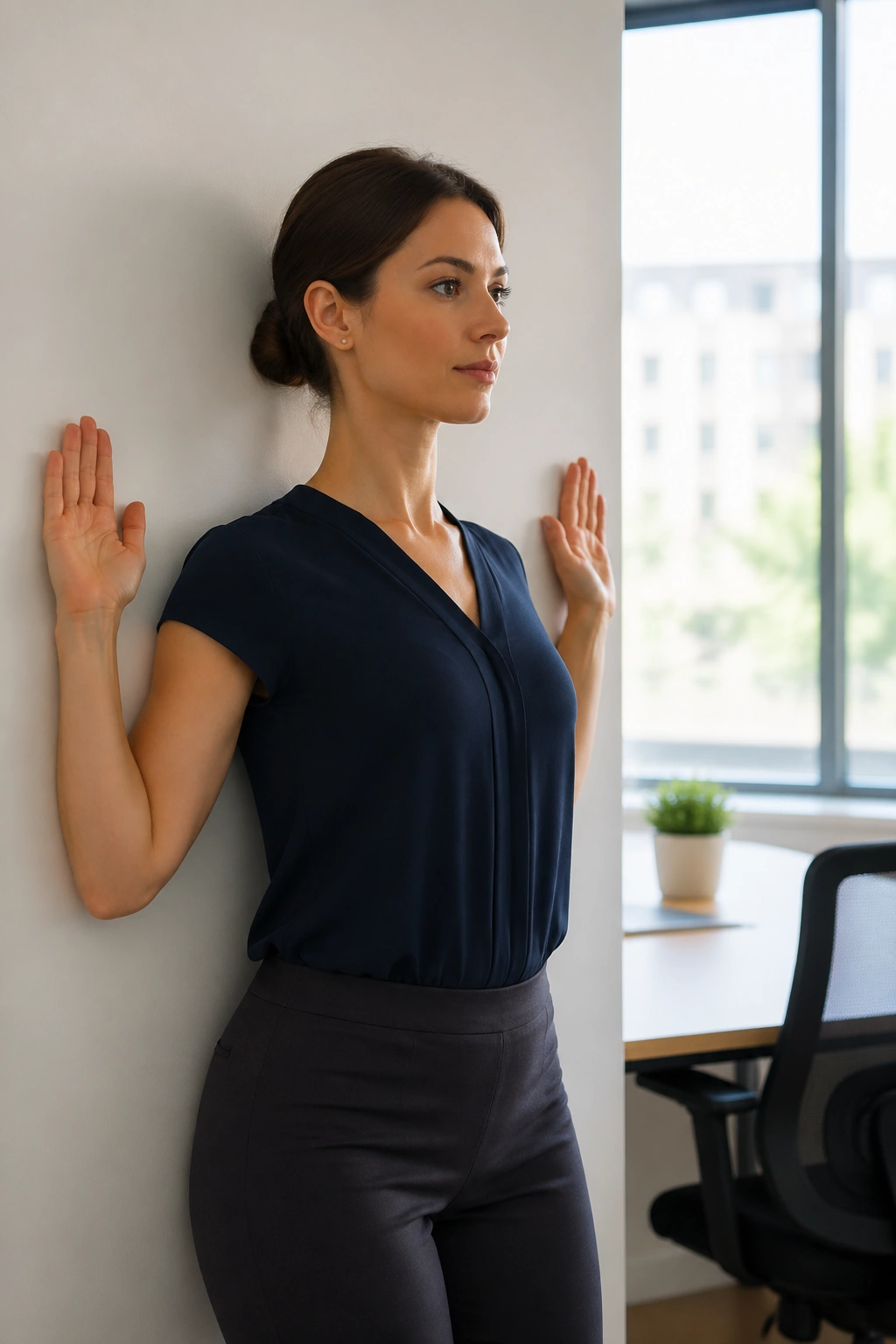
Do your shoulders creep up by lunch? That’s usually a mix of tight chest muscles, tired upper back muscles, and the habit of living a little too far forward in your body. A short posture reset can clean that up better than another cup of coffee.
How to Use It Between Meetings
Stand with your back near a wall and do 5 slow wall roll-downs. Let your head, shoulders, and arms peel away from the wall as you fold forward, then stack back up one piece at a time. Next, place your forearms against the wall and slide them up and down for 8 reps, keeping the ribs from flaring.
After that, add 6 standing thoracic rotations per side. Keep your hips facing forward and let the upper back do the turning. The movement should feel like your ribs are moving around your spine, not like you’re yanking your lower back around.
Finish with a chest opener: clasp your hands behind you, soften the elbows, and lift the sternum just enough to feel space across the front of the shoulders. Not much. You’re trying to open, not jam.
4. The Glute Bridge and Clamshell Builder
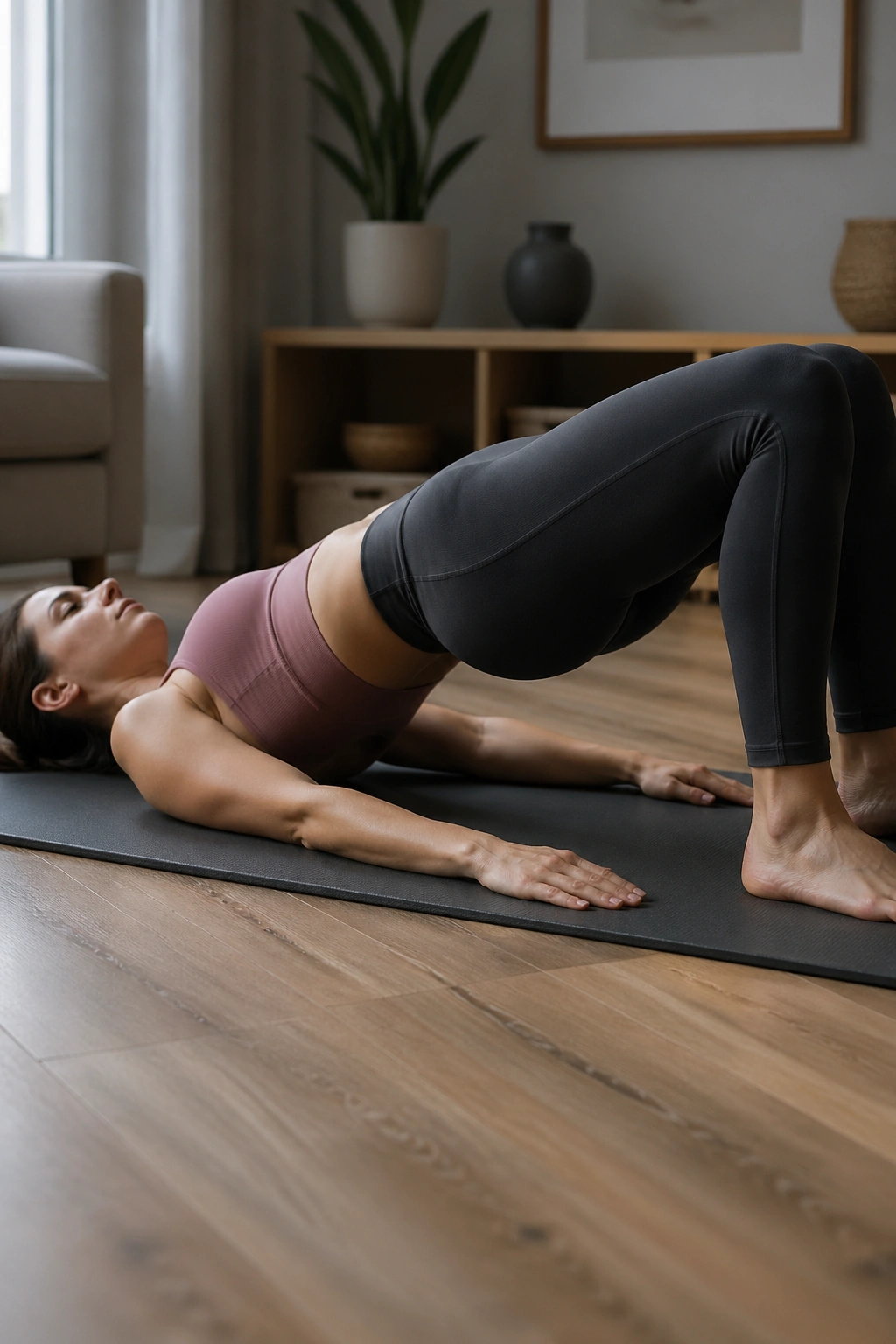
If your glutes switch off the second you lie on your back, you’re not alone. Plenty of people feel bridges in the hamstrings first, which usually means the feet are too far away, the ribs are flaring, or the pelvis is tilting too hard at the top.
What Makes It Work
The fix starts with setup. Lie on your back, feet flat, knees bent, and heels close enough that your fingertips can brush them. Exhale before you lift, press evenly through both feet, and raise the hips until your thighs line up with the torso. Hold for 2 seconds. Lower with control.
- 12 shoulder bridges with a 2-second pause at the top.
- 10 single-leg bridge lifts per side if your pelvis stays level.
- 12 clamshells per side with your heels together and hips stacked.
- 10 small pulses at the top of the last bridge set.
A tiny band above the knees can make the whole thing more honest, but only if you keep the pelvis steady. If your low back starts taking over, bring the range down and slow the tempo. Glute work should feel local, not like a wrestling match in your lower spine.
5. The Spine-Mobility Cat-Cow Flow
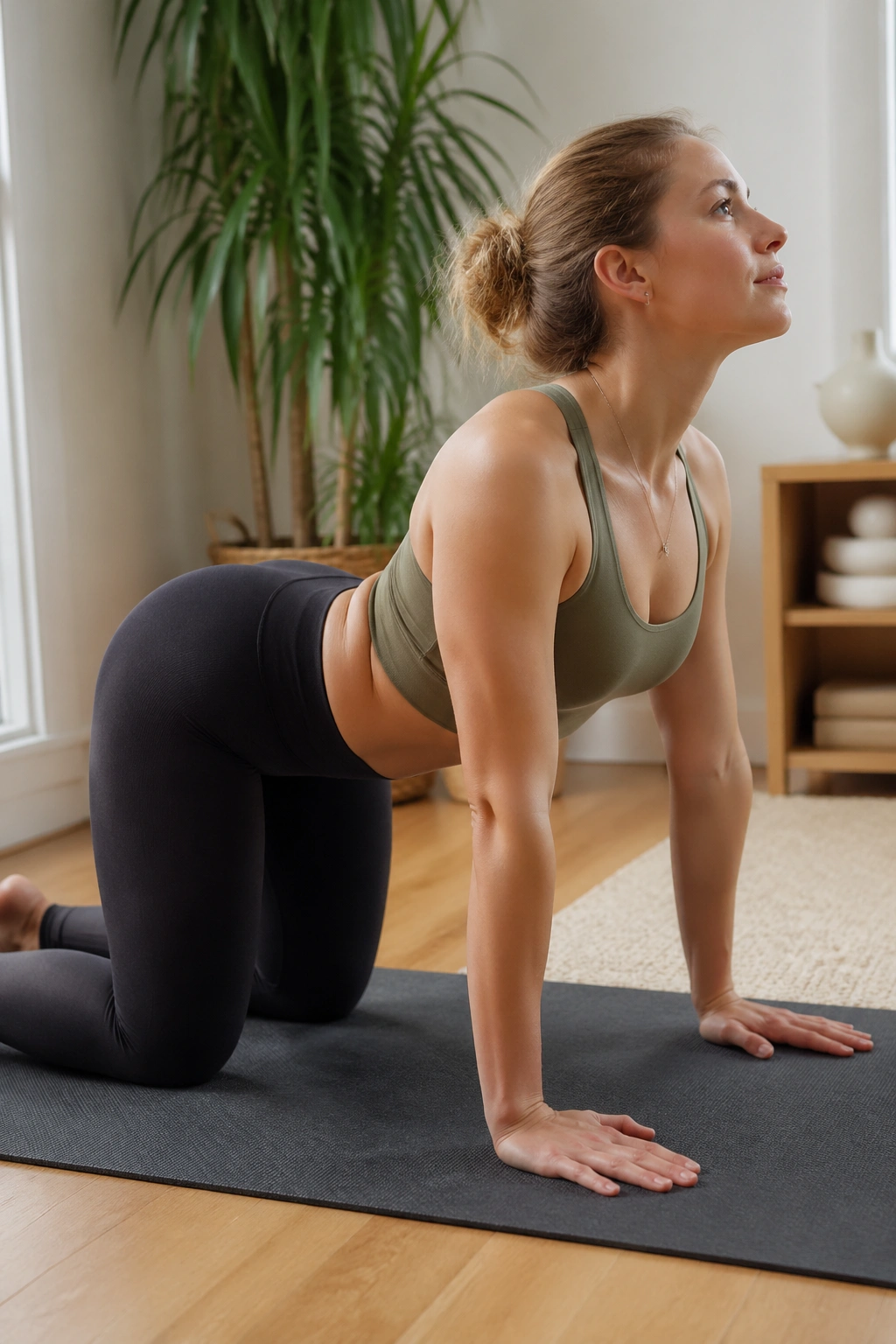
A spine mobility routine does not need to be flashy. In fact, the less theatrical it looks, the more useful it usually is. Cat-cow is still one of the best ways to start because it gives you flexion, extension, and a chance to notice whether one part of the back moves more than the rest.
Start on hands and knees. Inhale to tip the tailbone up, open the chest, and let the spine arc into cow. Exhale to press the floor away, tuck the tailbone, and round into cat. Keep it slow enough that you can feel the breath travel into your ribs.
Add a few rock-backs next. Sit your hips toward your heels, then glide forward again, keeping the arms long and the shoulders quiet. That little shift teaches the hips and spine to share the load instead of dumping everything into the low back.
Finish with a child’s-pose reach or a kneeling lat stretch. The point is not to “stretch hard.” The point is to give the spine permission to move in directions it usually forgets.
6. The Side-Lying Leg Series for Hip Strength
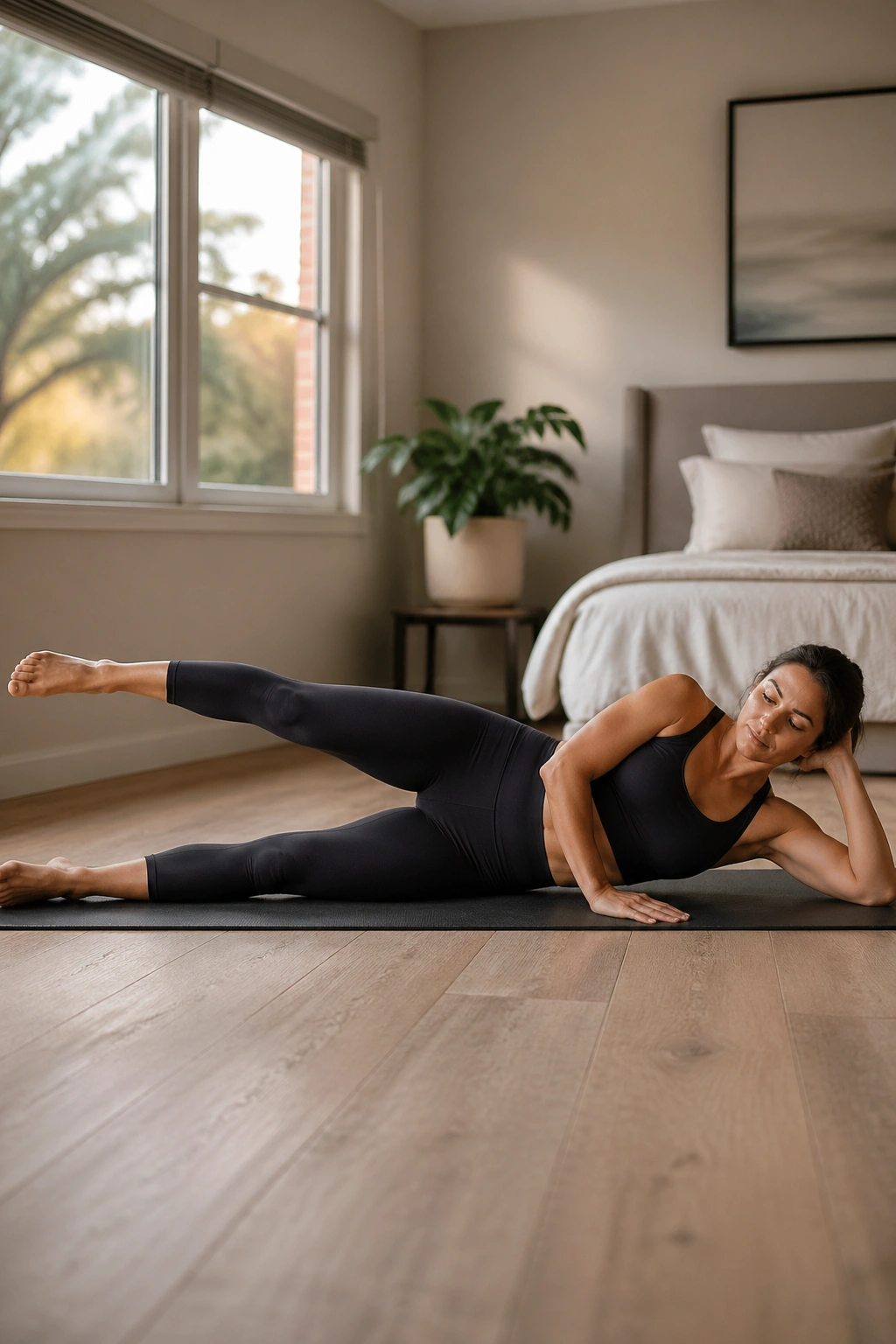
Unlike a quick squat circuit, the side-lying series asks one leg to move while the pelvis stays calm. That sounds simple. It isn’t. You’ll feel every wobble, every cheat, and every lazy shortcut in your hip line.
This is the kind of routine I like for people who can feel their outer hips but not really control them. Lie on your side, lengthen the bottom waist, and keep the ribs stacked. Then lift the top leg just a few inches, not a mile. Big swings steal the work from the side of the hip.
What to Include
- 10 front kicks and 10 back kicks per side.
- 10 small circles in each direction.
- 12 straight-leg lifts with the toes slightly turned down.
- 8 controlled pulses at the top.
If your hip flexor grumbles, shorten the range. If your waist collapses, support your head and think about length instead of height. This routine is boring in the best possible way. It teaches the pelvis to stay put while the leg does the work, and that shows up everywhere else.
7. The Standing Balance and Footwork Routine
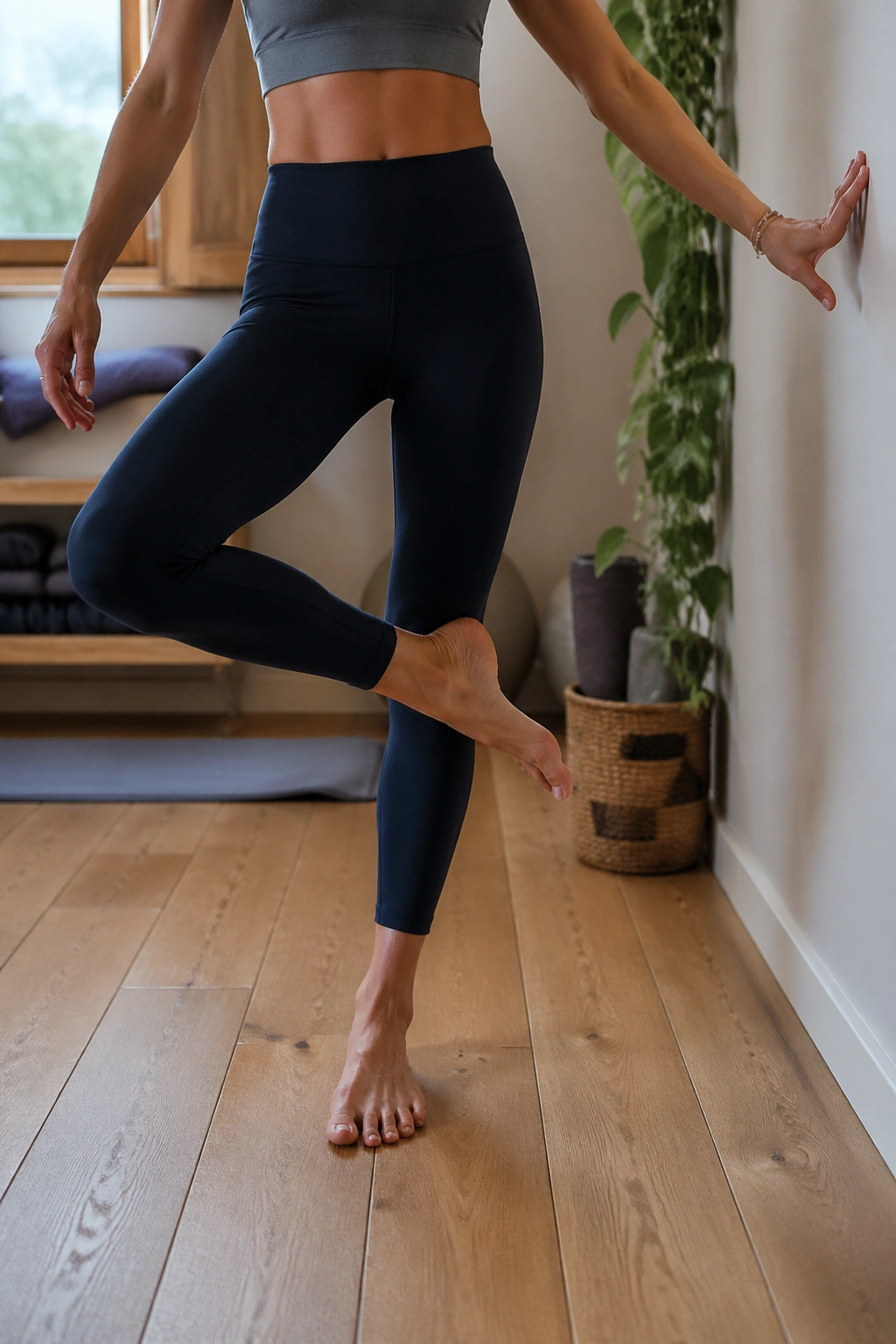
Bare feet on a firm floor tell on you fast. They show you if your arches collapse, if your weight lives in one hip, and if your ankles are doing half the work of your glutes. That’s why standing Pilates is so useful, even if it looks almost too easy at first glance.
Foot Tripod First
Press the heel, the base of the big toe, and the base of the little toe into the floor. That tripod keeps the foot honest.
From there, do 15 calf raises with a slow 3-count lower. Hold a single-leg balance for 20 seconds per side, then add 8 standing side leg lifts while the standing hip stays level. A small arabesque reach behind you is useful too, as long as the pelvis doesn’t twist open to fake the range.
- 15 calf raises
- 20-second single-leg holds
- 8 side leg lifts per side
- 6 rear reaches per side
A mirror helps. So does a wall nearby for fingertip support. The goal is not circus balance. It’s cleaner foot pressure, steadier ankles, and a torso that doesn’t wobble every time one leg leaves the floor.
8. The Plank and Push-Up Control Set
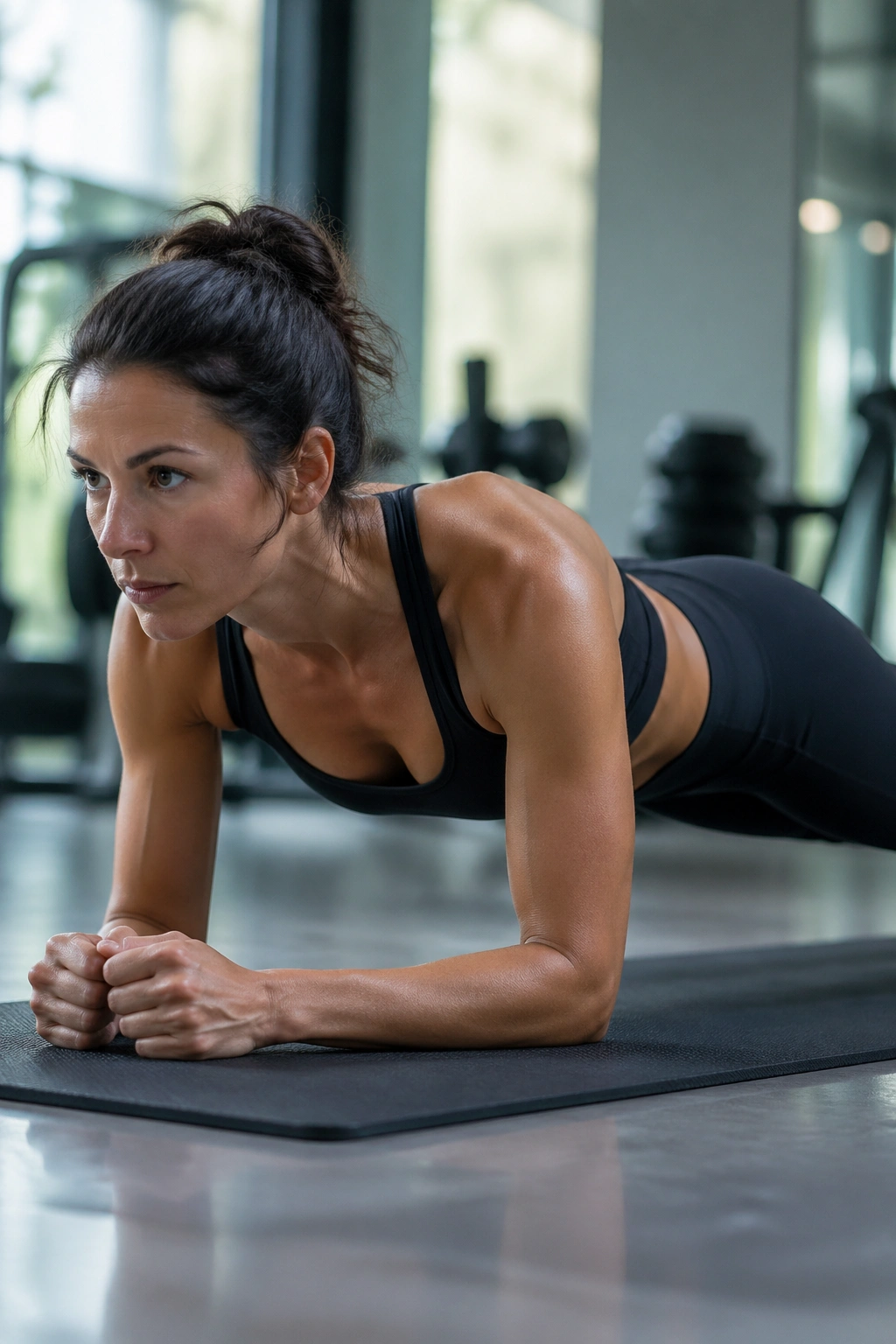
A few clean plank holds beat a rushed minute of flailing. That’s not a motivational slogan. It’s just how the body responds when the shoulders, abs, and glutes are all asked to organize at the same time.
Start on forearms for a 20-second plank. Keep the back of the neck long and the ribs from sagging toward the floor. Then lower the knees for 6 taps or a few tiny lifts if your form stays steady. After that, move into 5 to 8 push-ups against a wall, bench, or the floor, depending on what you can control without losing the line from head to heel.
If wrists complain, stay on forearms or use fists. If the low back complains, shorten the hold and recheck the glutes. The trick is to leave the body feeling challenged, not scattered.
Good plank work should make you quieter, not louder. The breath gets smaller, the ribs stay in, and the whole trunk feels like one piece.
9. The Mermaid Rotation Release
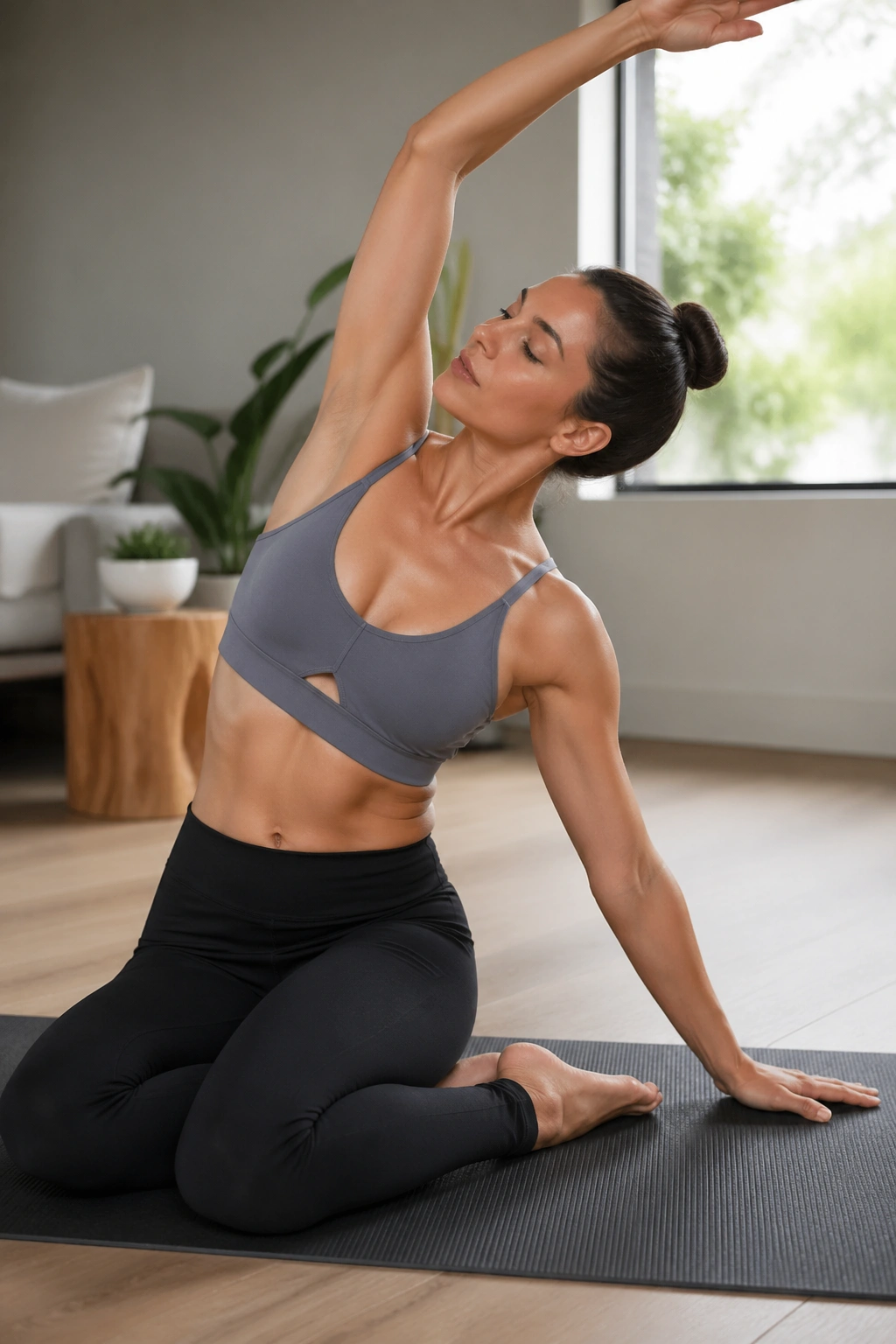
Need a little space through the waist and ribs? Mermaid is one of those Pilates movements that looks almost too graceful to count as work, and then you hold one side bend for three breaths and realize how much your trunk has been guarding.
Sit with both shins angled to one side. One hand can rest on the floor for support while the other arm reaches up and over. Don’t jam the side bend. Lengthen first, then arc. That order matters. If you reach too hard, the shoulder takes over and the waist never really opens.
How to Get the Most From It
After the side bend, rotate the chest slightly toward the floor and come back up through the ribs. Do 3 to 4 rounds per side. Keep your sitting bones heavy, and let the movement stay smooth rather than dramatic.
A small inhale into the side ribs, then a long exhale as you return, tends to make the whole thing feel better. Mermaid works because it asks for space and control at the same time. That’s a rare combination, and your trunk will notice.
10. The Hamstring and Calf Lengthener
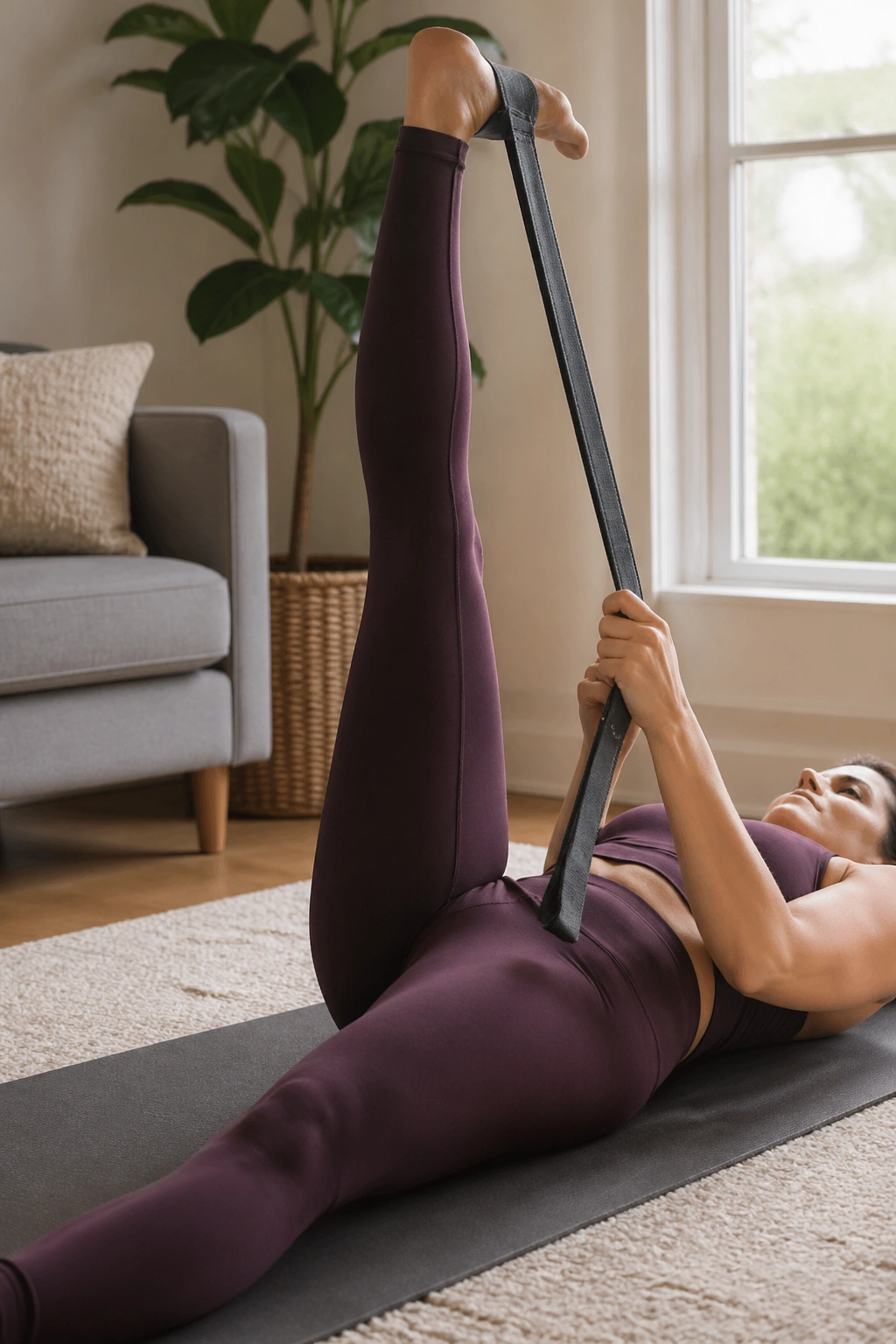
Tight legs after a day of sitting or walking can make every other Pilates move feel smaller than it should. Hamstrings and calves do not just affect flexibility; they affect how the pelvis sits over the hips when you stand and move.
Start with a strap or towel around one foot. Lie on your back and raise the leg until you feel a gentle stretch behind the thigh. Hold for 30 to 40 seconds per side. Then add 6 bridge walkouts: lift into a bridge, walk the feet a few inches away, then back in. Keep the hips from dropping in the middle.
- 30 to 40 seconds of strap stretch per side
- 6 bridge walkouts
- 30 seconds of calf stretching per side against a wall
- 3 slow standing roll-downs to finish
Do not yank the leg toward you. That only makes the nervous system tense up. A steady exhale, a soft knee if needed, and a little patience usually give you more range than force ever will.
11. The Bird-Dog and Swimming Back-Line Routine
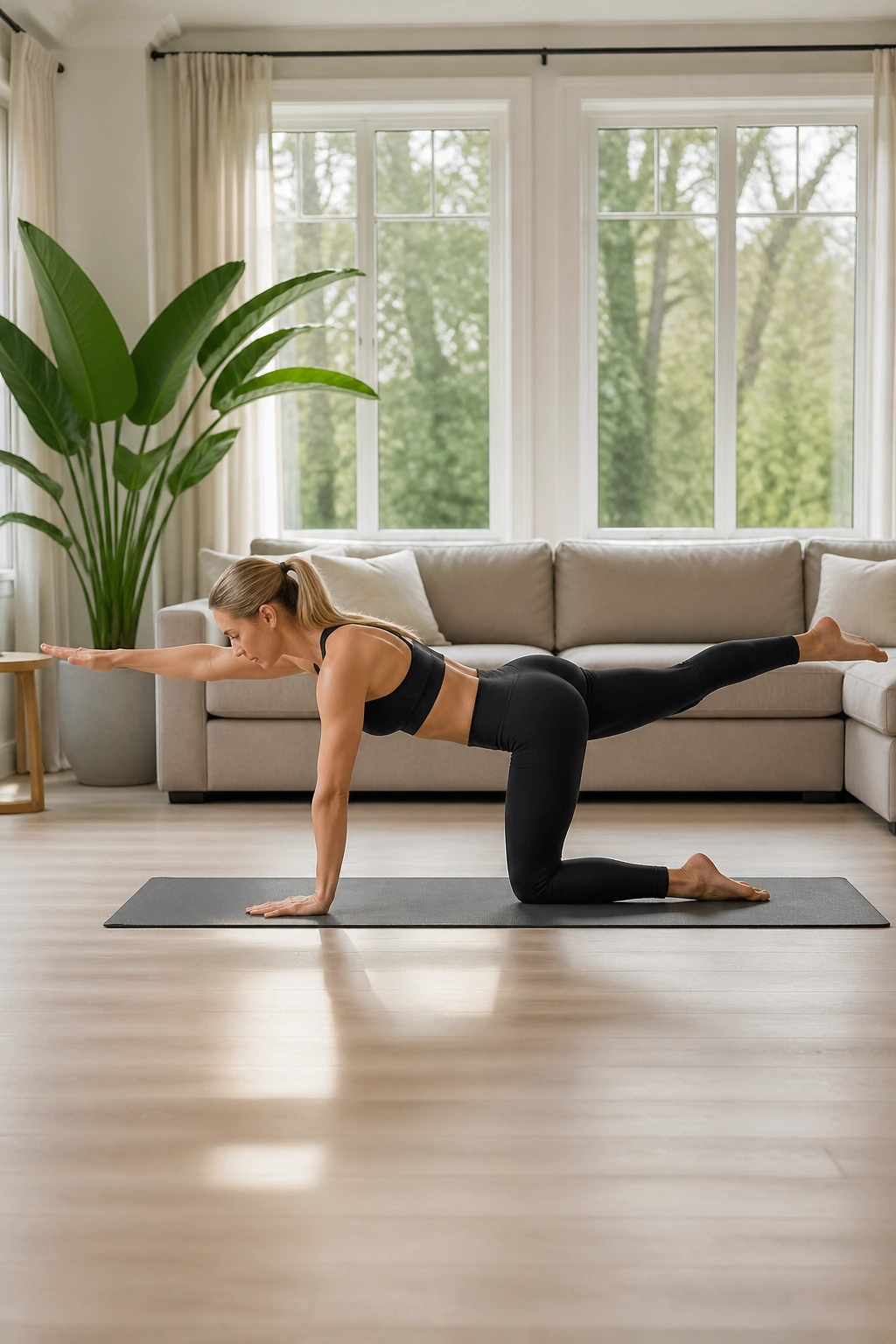
A lot of people think core work only lives in the front of the body. Not even close. The muscles along the back line matter just as much, especially when you want a spine that feels supported instead of braced.
Bird-dog is where I’d start. From hands and knees, reach one arm and the opposite leg long, keeping the pelvis level and the neck in line. Pause for 2 counts, then come back with control. If the low back shifts side to side, shorten the reach. The goal is steadiness, not distance.
Then move into swimming prep on your stomach. Lift opposite arm and leg just a few inches off the floor, switch sides, and keep the lifts small enough that the lower back doesn’t pinch. Four rounds of 20 seconds is plenty.
The floor keeps score. If the ribs fling up or the glutes vanish, the movement becomes something else. When it’s done well, though, your back feels long, not cramped.
12. The Beginner Full-Body Mat Circuit
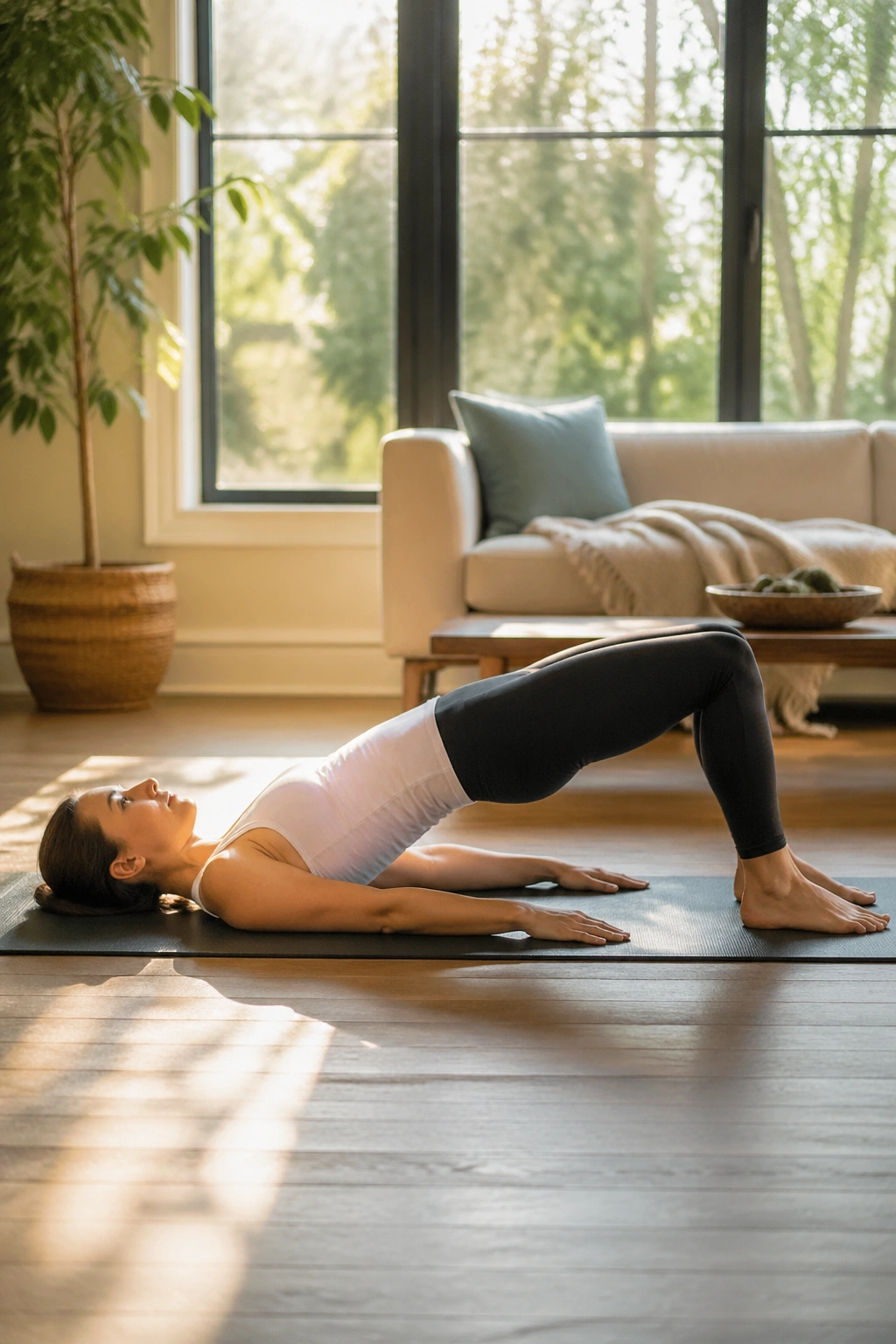
Unlike a fast-paced class that throws twelve moves at you before you’ve found your breath, this circuit keeps the choices simple. It gives a beginner enough variety to feel whole-body work without the stress of remembering a complicated sequence.
Start with a roll-down or standing reach. Then move to shoulder bridge, dead bug, side-lying leg lifts, kneeling swan prep, and a wall or countertop push-up. That mix covers hips, core, upper back, and shoulder support without asking for fancy transitions.
I’d call this the routine for people who want to feel like they did something real, not performative. It has enough challenge to wake up the deep stabilizers, but the shapes stay familiar. That matters when you’re trying to build a habit. Confusion kills consistency.
Do one round slowly, or two rounds if you’re moving well. Keep the transitions clean, because half the value here is learning to move from one position to the next without losing your shape.
13. The Teaser Prep and Roll-Up Strength Set
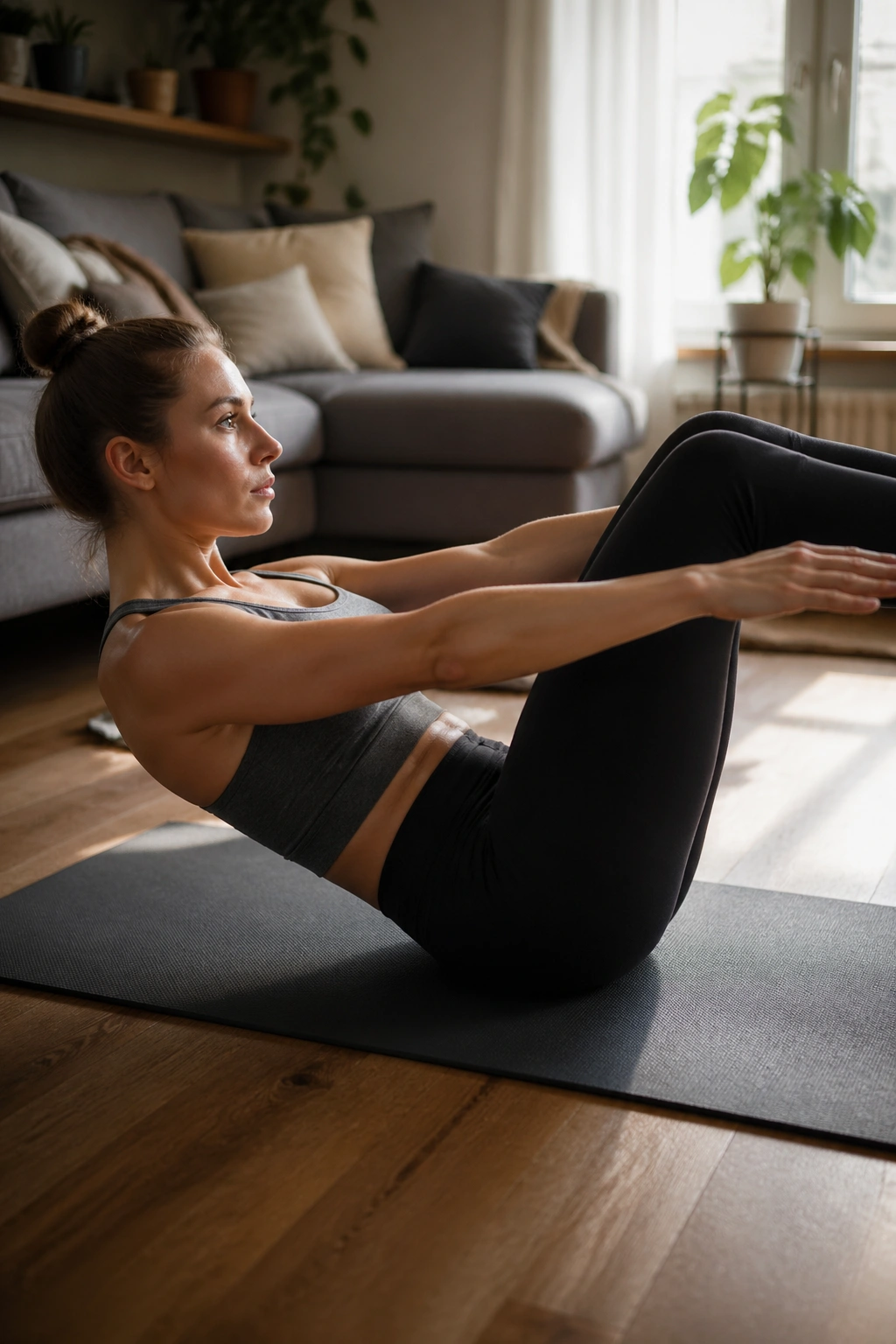
The first time most people try a teaser, the neck starts bargaining. Fair enough. Teaser prep is demanding, and it shows you immediately whether your abdominals can lift the torso without the hip flexors dragging the whole thing around.
What Makes It Hard
- The trunk has to curl without collapsing.
- The legs have to stay awake without tensing into the neck.
- The breath has to keep moving even when the abs are working hard.
Start with 5 roll-ups, using bent knees if needed. Then try 5 teaser prep holds with the knees bent and the shins parallel to the floor. If that feels solid, extend one leg at a time for 3 to 5 slow reps. Finish with scissors or single-leg stretch for 6 each side.
How to Keep It Clean
Keep your chin slightly tucked and your eyes on the thighs, not the ceiling. If the neck starts to grip, lower the head and reset. A smaller teaser with good control beats a bigger one that smears across the floor.
This is one of those routines that builds real abdominal strength over time. Not flashy. Useful.
14. The Light-Weight Arm and Shoulder Sculpt
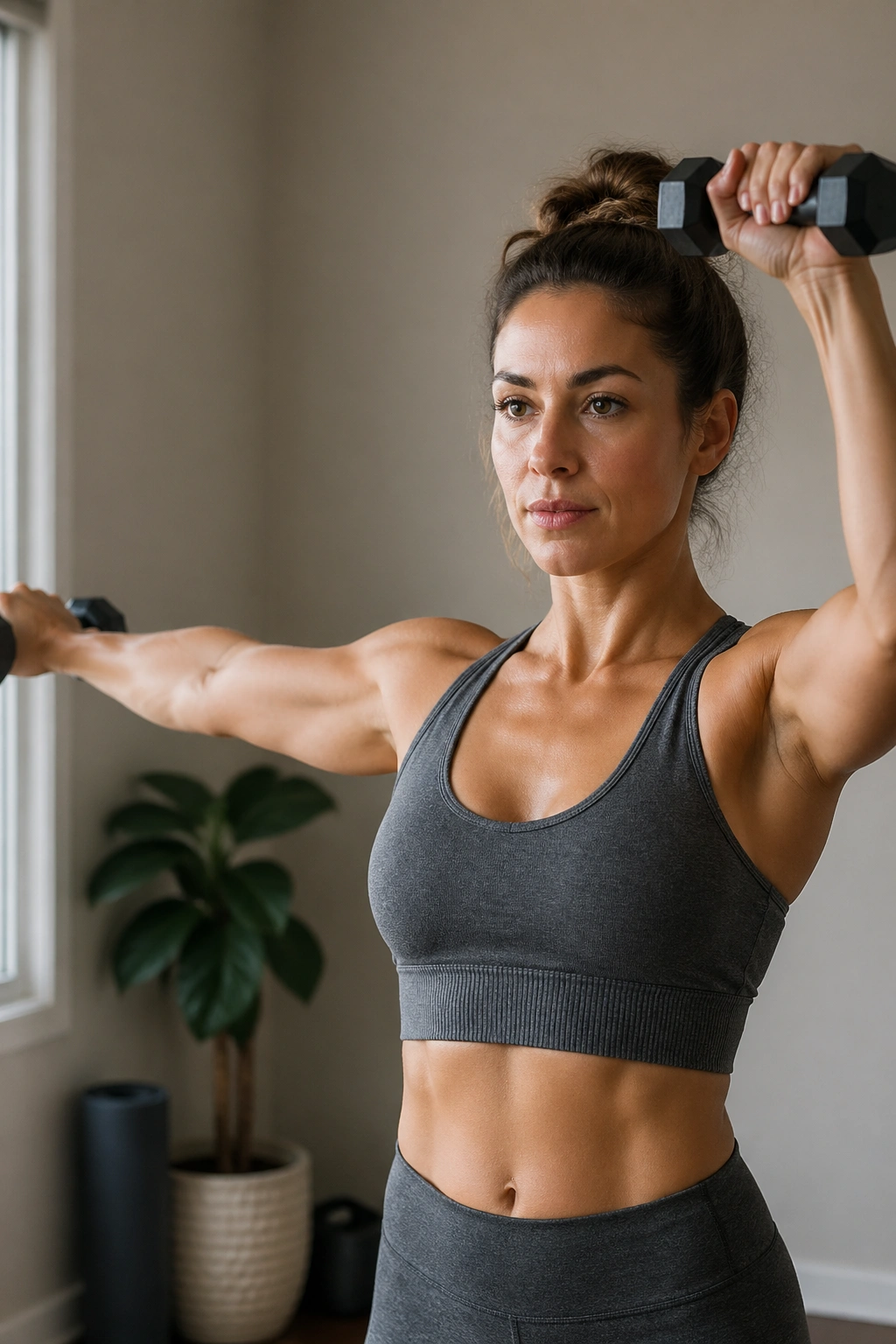
A pair of 1- to 3-pound weights changes the shoulder series from neat to sneaky. The arms look modest, but the stabilizers around the shoulder blades wake up fast when you ask them to keep the movement smooth.
Start with arms by your sides and palms facing in. Lift to shoulder height, lower with control, then rotate the palms up and press overhead for 8 to 10 reps. After that, try a hug-a-tree shape: round the arms forward like you’re holding a beach ball, then open wide without losing the ribs.
Add 10 triceps extensions overhead, then 8 lateral raises with a tiny bend in the elbows. If your shoulders creep up toward your ears, lower the weight. There is no prize for grinding through sloppy reps.
A short arm series like this works best after core activation, when the torso already knows how to stay stacked. Otherwise the low back starts doing the shrugging for you. And that’s not the look.
15. The Inner-Thigh and Pelvic Stability Routine
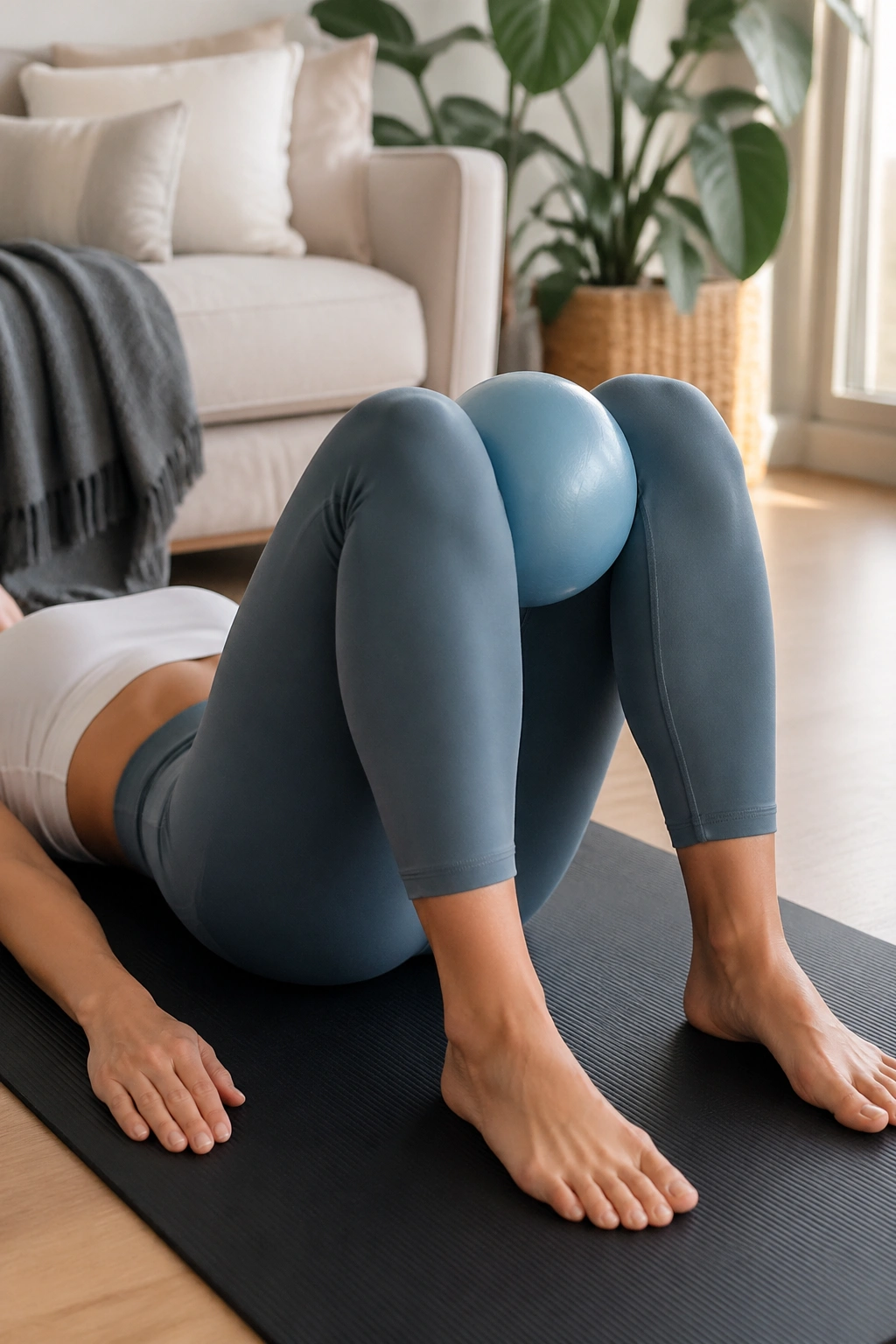
Want your hips to stop wobbling in bridge work and leg lifts? Give the inner thighs something useful to do. They connect more to your pelvis than most people realize, and a tiny bit of focused work can make the rest of the lower body feel steadier.
How to Use It
Lie on your back with a soft ball, pillow, or rolled towel between the knees. Squeeze gently for 10 to 12 counts, then release halfway. Do 2 rounds of that before moving into frog legs or bent-knee openings. Keep the exhale slow so the ribs don’t flare.
After that, bring the ball back in and add a bridge with a light squeeze for 8 to 10 reps. Finish with 10 side-lying inner-thigh lifts per side if you want a little more work.
The squeeze should feel controlled, not white-knuckle. If you clamp hard, the hips and jaw often join the party in the wrong way. Think steady pressure, not a max effort. That small distinction matters more than people expect.
16. The Resistance-Band Glute Burner
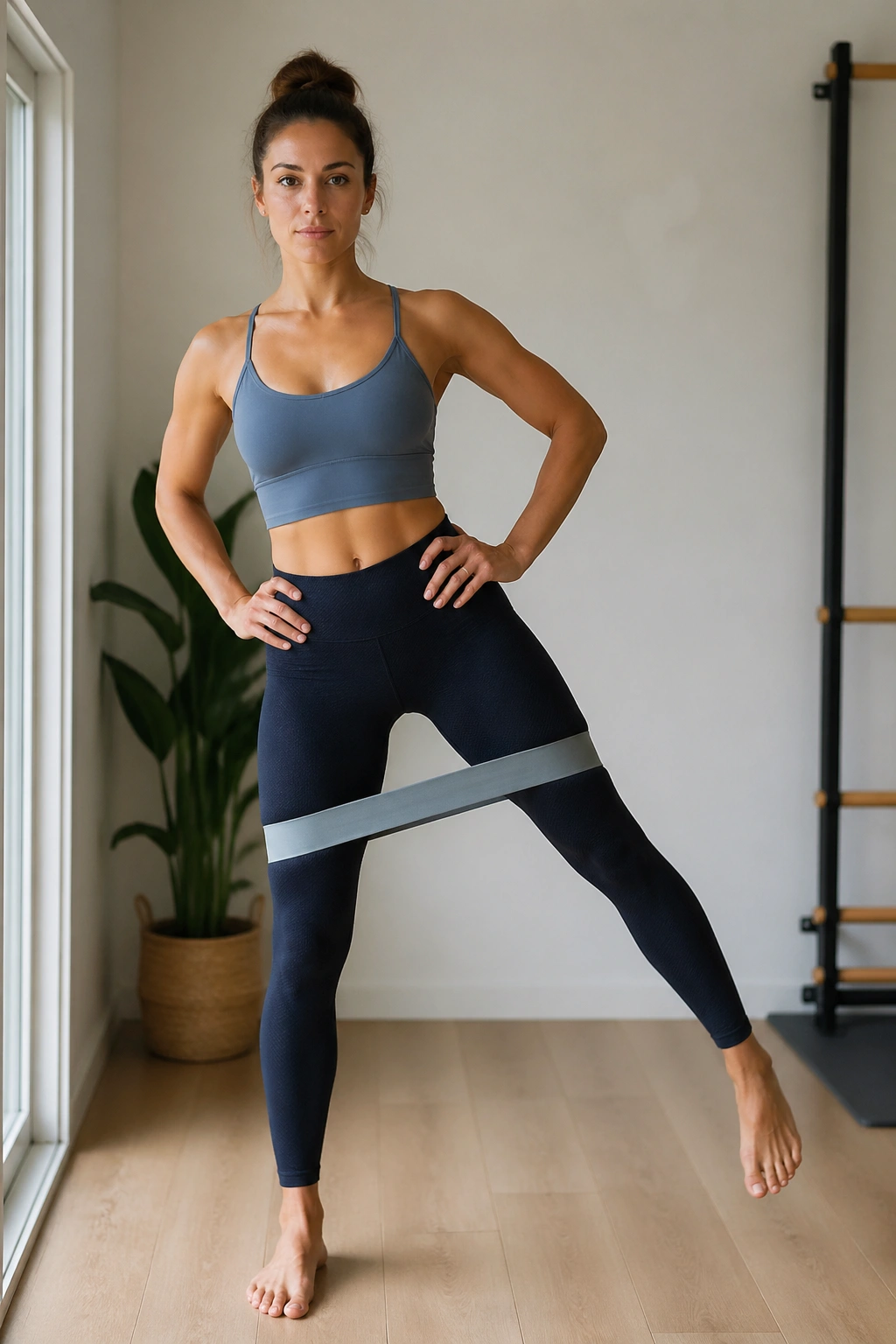
A band around the thighs makes even basic Pilates glute work feel more honest. The outer hips can no longer coast, and the pelvis has to stay quieter while the legs push outward against the band.
Start with 12 banded bridges. Keep the knees tracking over the second toe and avoid letting the band yank them open so far that the low back arches. Then do 10 side steps in each direction, 8 standing kickbacks per side, and 12 clamshells per side. Slow enough to feel it. Fast enough to stay awake.
- 12 banded bridges
- 10 side steps each way
- 8 standing kickbacks per side
- 12 clamshells per side
If the band slides up or digs into the skin, move it slightly lower or use a lighter tension. Heavy resistance is not the point. Clean hip control is. You want the glutes to burn, not the knees to complain.
17. The Evening Downshift and Breath Reset
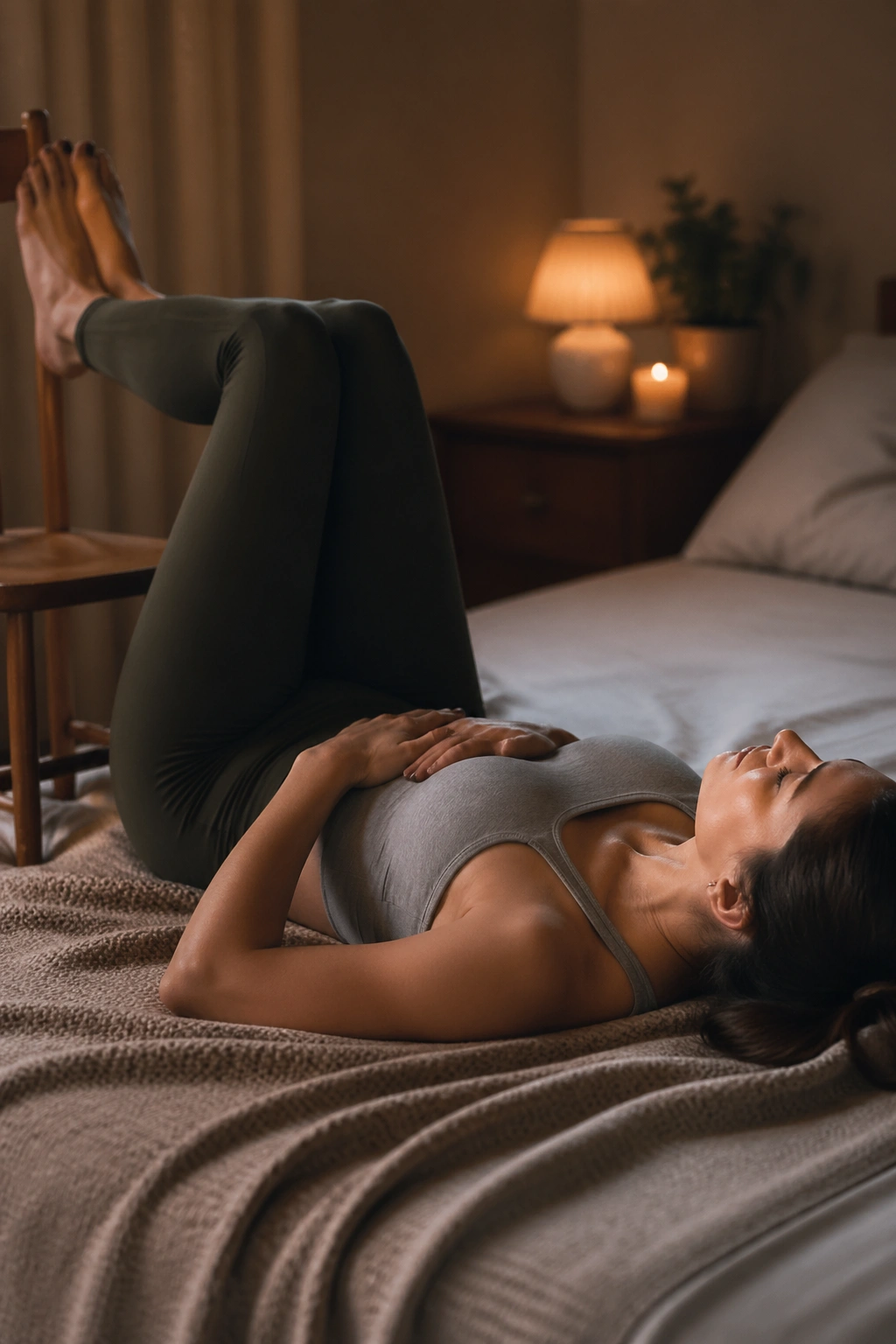
Evening Pilates should feel like the volume got turned down a notch. Long day? Stiff hips? Tight neck? That’s the place for slow mat work, not a battle.
Lie on your back and start with pelvic tilts for 8 to 10 reps. Flatten the lower back gently into the mat, then release it with the breath. After that, place your legs on a chair or sofa so the knees and hips rest at roughly 90 degrees. Stay there for a minute or two, breathing into the sides of the ribs.
Add a supine twist for 30 seconds per side, then finish with a supported child’s pose or a folded blanket under the chest if the floor feels too harsh. The purpose here is not flexibility for its own sake. It’s to lower the tone in the muscles that have been gripping all day.
A quiet routine like this often helps the next day’s work feel smoother. Not because it magically fixes everything. Because the body remembers the difference between effort and release.
18. The Hotel-Room No-Equipment Flow
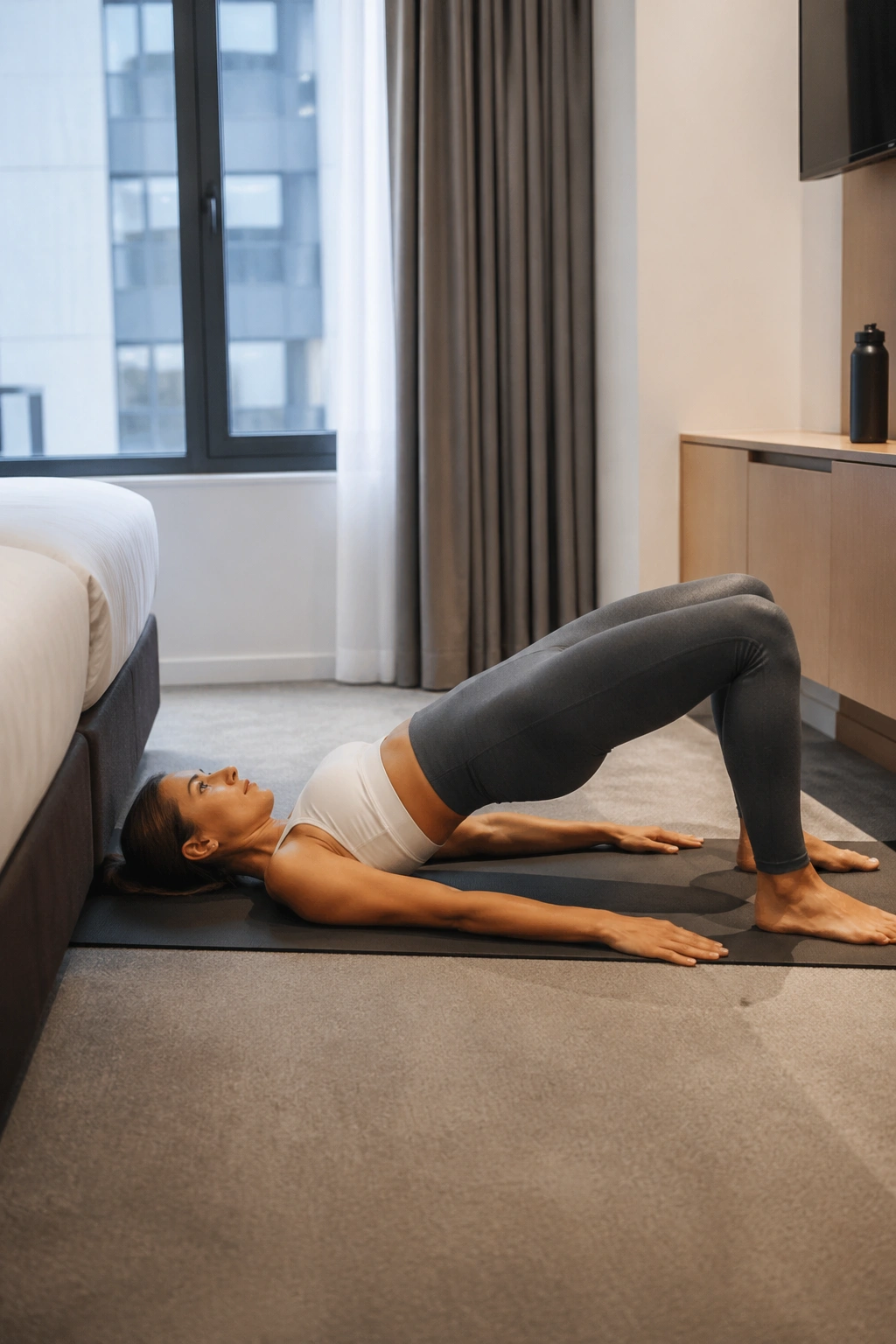
Unlike a gear-heavy workout, this one works with a floor, a wall, and maybe a towel if the carpet is unforgiving. That makes it a useful Pilates routine for travel, tiny spaces, or any day when you do not feel like dragging equipment around.
Start standing with 3 slow roll-downs. Then move to 10 bridges, 8 dead bugs per side, 20-second side planks from the knees, and 6 kneeling push-ups. If you’ve got a wall, add 10 wall squats with a Pilates-style squeeze through the inner thighs.
What I like about this style is that it strips away the extras. No band. No ball. No dumbbells. Just body weight and attention. That can be humbling, because the form has nowhere to hide.
If you’re on the road, keep the sequence short and repeat it twice. If you’re at home and feeling lazy, this is the one I’d use to break the inertia. It’s efficient without feeling rushed, which is a nicer trade than it sounds.
19. The Recovery Day Routine for Heavy Legs
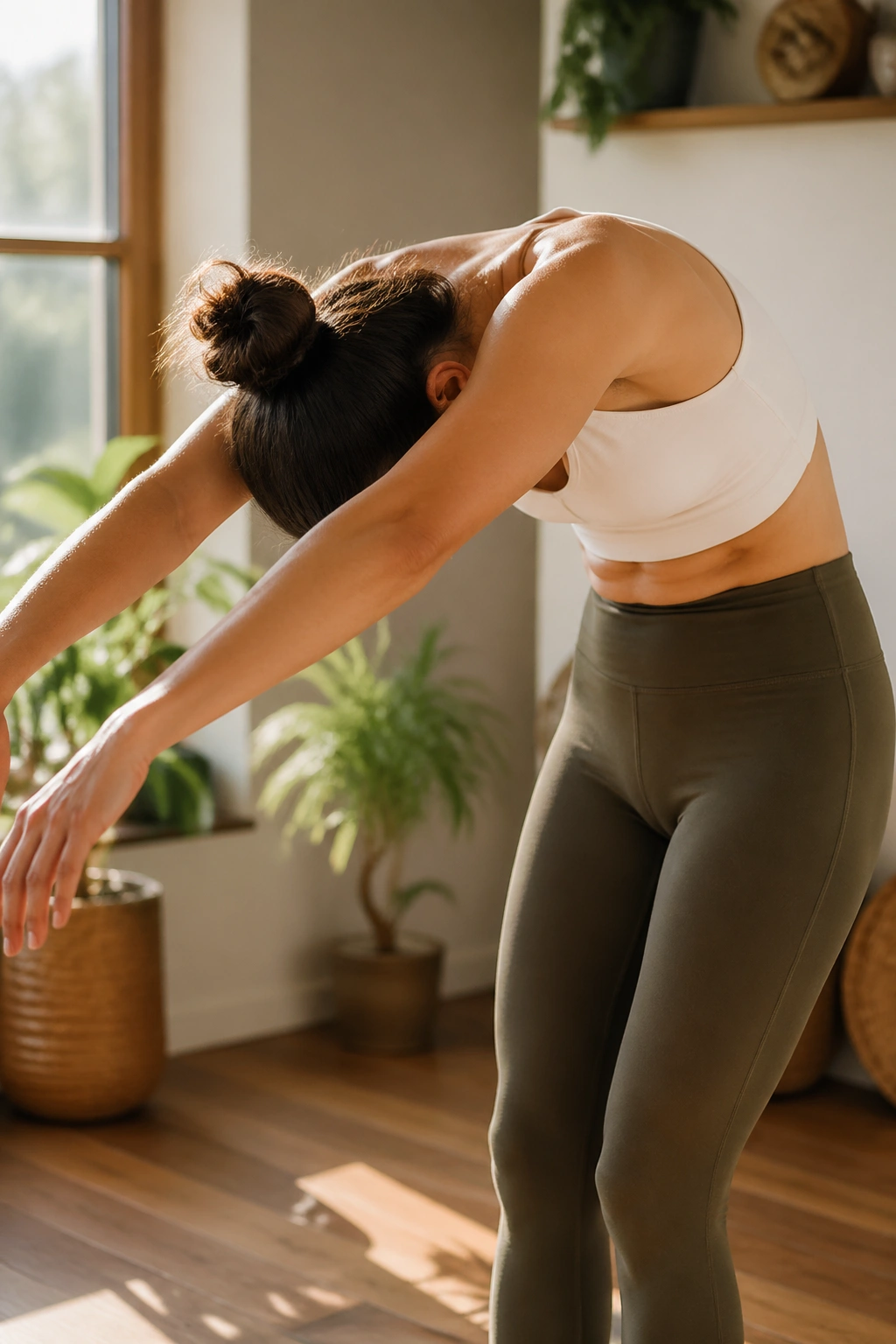
Heavy legs need motion, not punishment. That’s the whole point of a recovery day routine: keep the joints moving, wake up the feet, and get blood flowing without turning the session into another grind.
What to Focus On
- 10 ankle circles each direction per foot.
- 15 slow calf raises with a 2-count lower.
- 8 bridge marches, lifting one foot a few inches at a time.
- 30 seconds of figure-4 stretch per side.
- 10 foot doming reps, where the arch gently lifts without curling the toes.
A small towel under the heels can make the bridge marches feel smoother if the hamstrings are sore. Keep the pelvis level, even if the leg lift is tiny. Tiny is fine. Tiny is often the whole point.
If you spent the day standing, walking, or just feeling pinned to a chair, this routine can take the edge off in under 10 minutes. Recovery work should leave you lighter, not flatter.
20. The Ten-Minute Repeatable Strong-Body Reset
If you only repeat one short Pilates flow, make it this one. It blends enough of the method to keep the spine mobile, the core awake, the hips organized, and the shoulders from wandering off on their own.
Start with 2 roll-downs, 8 cat-cows, and 10 shoulder bridges. Move into 6 toe taps per side, 20 seconds of side plank on each side, and 8 bird-dogs. Finish with mermaid on both sides and 3 long exhales lying flat with your arms open.
That mix covers the basics without feeling random. You get spinal motion, trunk control, side-body work, and a little decompression at the end. It’s the kind of sequence that can fit before breakfast, after a long desk stretch, or on the day when motivation shows up late and leaves early.
I’d keep this one on a note in your phone and stop trying to reinvent the wheel every time. A body gets stronger by being asked the same question often, and answering a little better each time. That’s the quiet beauty of Pilates: small work, repeated well, changes the way everything else feels.
