



The first minute after waking can feel like your body has been folded into a box that was built too small. Neck tight. Lower back cranky. Hips stiff enough to make a simple reach for the pillow feel oddly serious.
That’s normal enough. Sleep keeps you still for hours, and stillness has a way of making everything feel shorter than it really is — hip flexors, hamstrings, the muscles between your ribs, even the small joints in your hands and feet. A few slow yoga stretches can change the mood of the whole morning, but only if they start small and stay honest. No yanking. No fancy shapes. Just enough movement to remind the body it’s allowed to move again.
I’ve always thought the best morning stretches are the ones that feel almost underwhelming at first. Then, two or three breaths later, you notice your spine has stopped sulking. That’s the shift worth chasing. Not a dramatic bend. A little more room.
A good stiffness-busting routine usually starts on the floor, gives the spine something easy to do, opens the hips and shoulders in small doses, then finishes with a pose that leaves you calmer than you were when you started. That order matters more than people think. The body tends to wake up faster when it’s not forced to jump straight into a deep forward fold or a long hold that nobody asked for.
1. Child’s Pose With Wide Knees
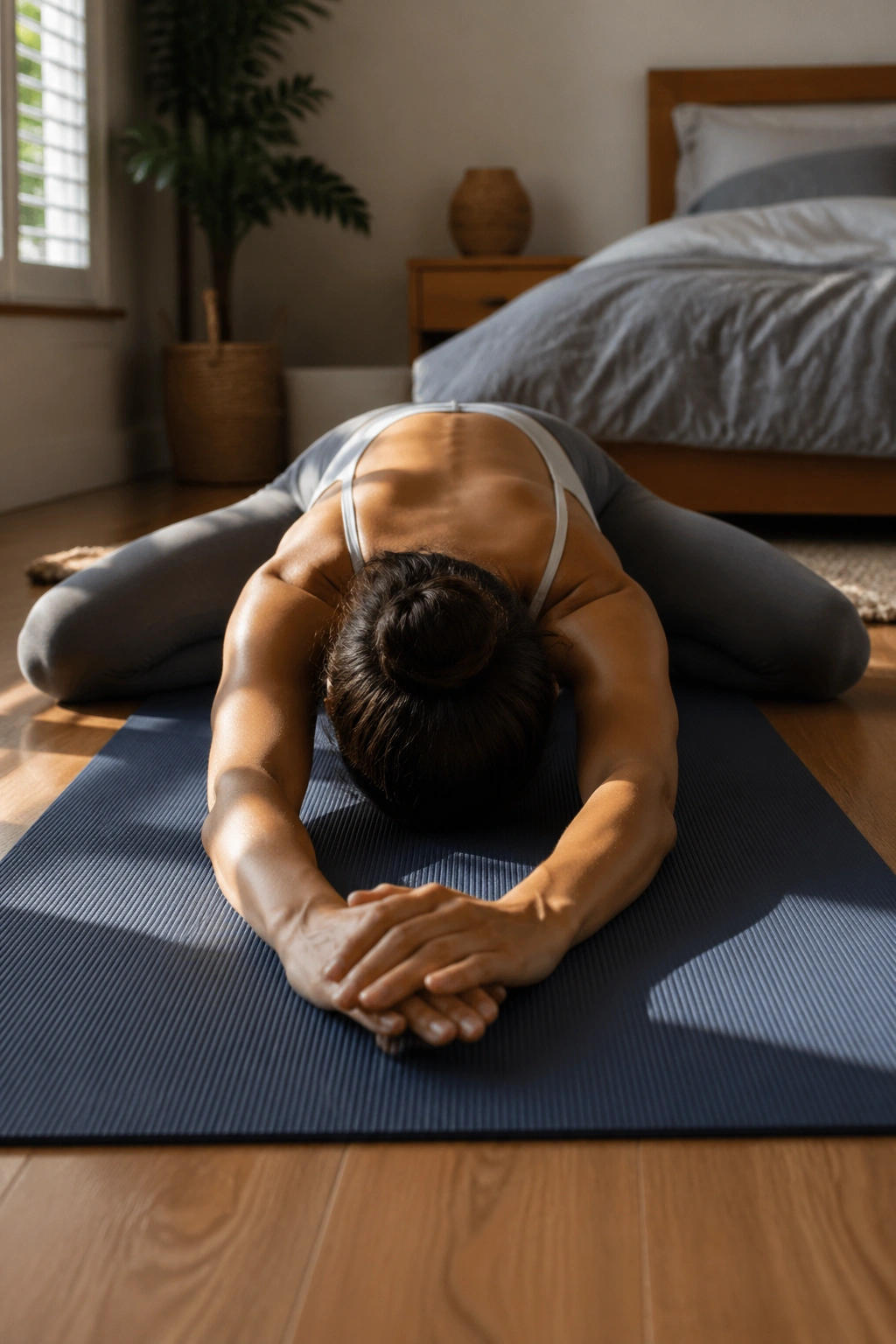
Child’s Pose is the stretch I reach for when the low back feels boxed in. Slide your knees wide, sit your hips back toward your heels, and let your forehead rest on stacked fists if the floor feels too far away.
Why It Helps First Thing in the Morning
The shape gives your back a break without making you work for it. Your breath has somewhere to go, especially into the sides of the ribs and the low belly, and that alone can soften the feeling of being clenched shut.
- Hold for 5 to 8 slow breaths.
- Keep your arms long if your shoulders feel stiff, or bring them by your sides for a quieter version.
- Put a folded blanket under your knees if the joint pressure feels sharp.
Tip: Make the exhale longer than the inhale. That’s the part that tells your nervous system to unclench.
2. Cat-Cow Flow
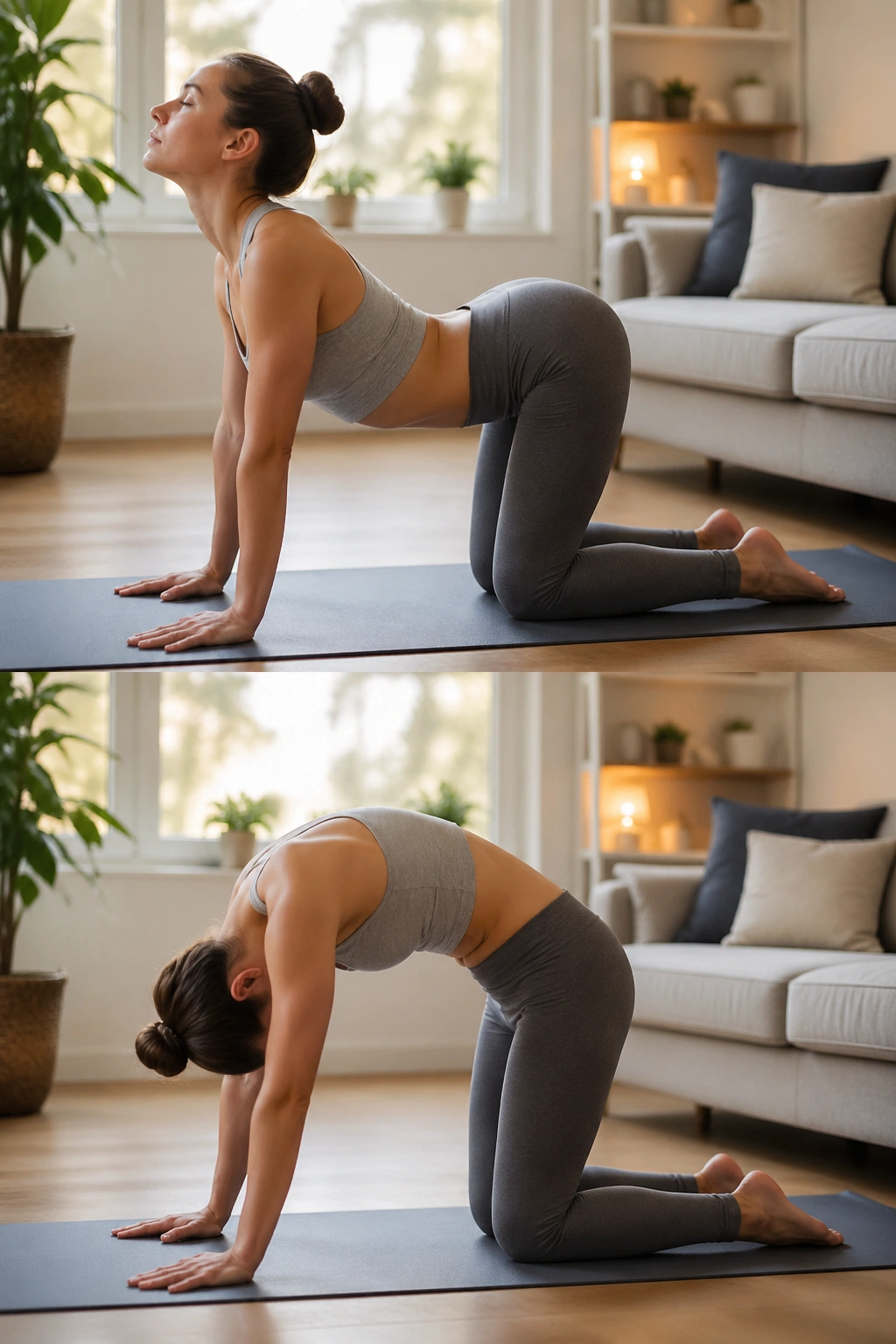
If one movement could wake up the whole spine, Cat-Cow would be near the top of the list. It works because it asks the spine to bend in both directions without any drama, and that back-and-forth motion is often what a stiff morning needs most.
Move slowly on hands and knees. Inhale as you tip the tailbone up and let the chest open for Cow. Exhale as you round the back for Cat, drawing the belly gently inward. Keep the movement smooth enough that you could do it while half awake, which is honestly the point.
I like 6 to 10 rounds here. More than that can feel a little mechanical if you’re still groggy.
After a few cycles, the ribs tend to move better, and that sleepy “my whole back is one piece” feeling starts to fade. Don’t chase a big range. Chase a clean one.
3. Thread the Needle Stretch
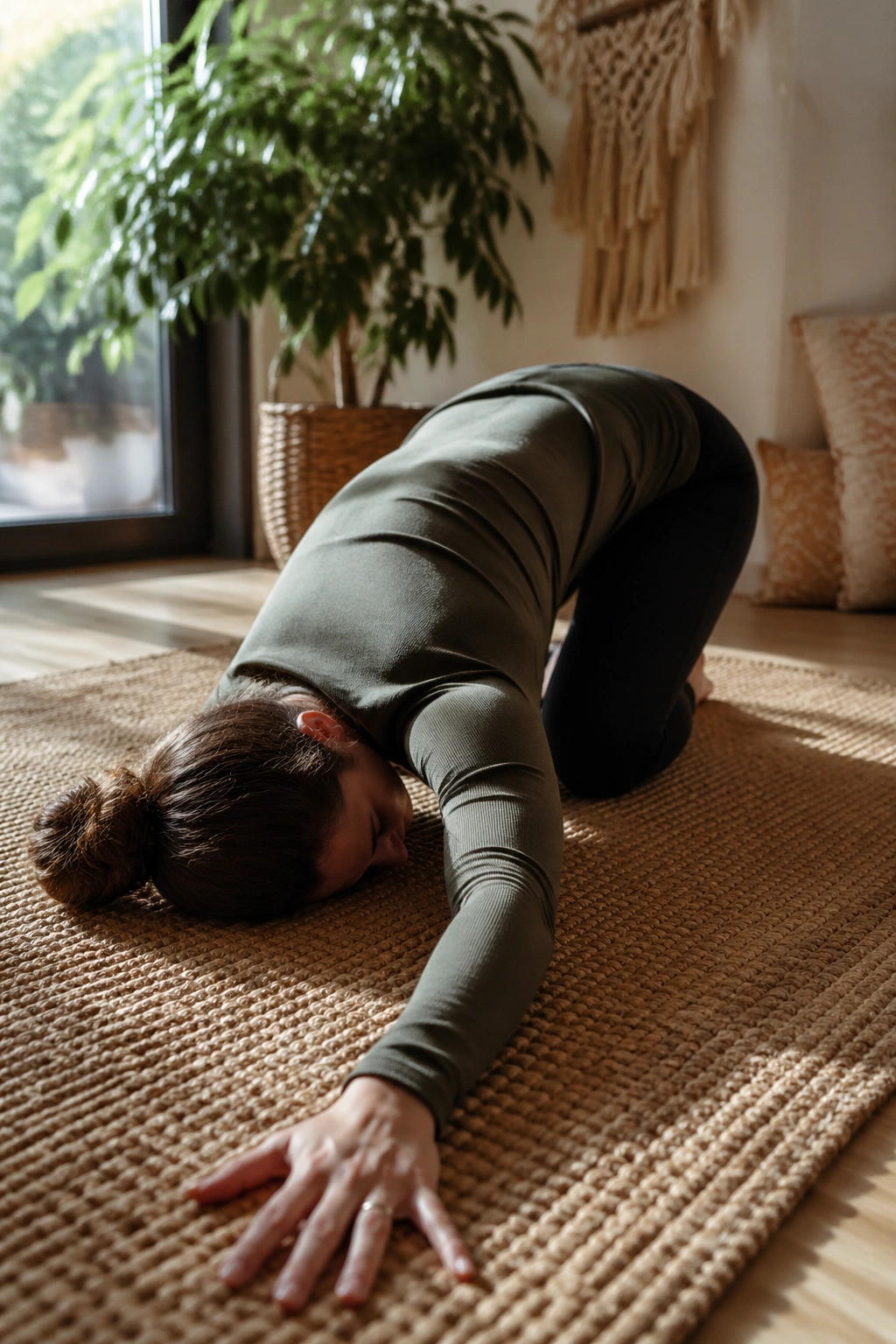
Why does one shoulder always feel tighter than the other after sleep? Usually because people spend hours curled to one side, one arm tucked under a pillow or trapped under the torso. Thread the Needle gives that side of the upper back something it has probably not had since yesterday.
Start on hands and knees. Slide one arm under the other and rest the shoulder and side of the head on the floor or a folded blanket. The bottom shoulder should feel a stretch across the upper back, not a pinch in the joint. Keep your hips high if that feels better.
How to Use It
- Stay for 3 to 5 breaths on each side.
- Reach the top arm forward if you want more shoulder opening.
- Keep the range tiny if your neck feels fragile.
A small twist here is enough. You do not need to flatten yourself into the floor for it to count.
4. Sphinx Pose
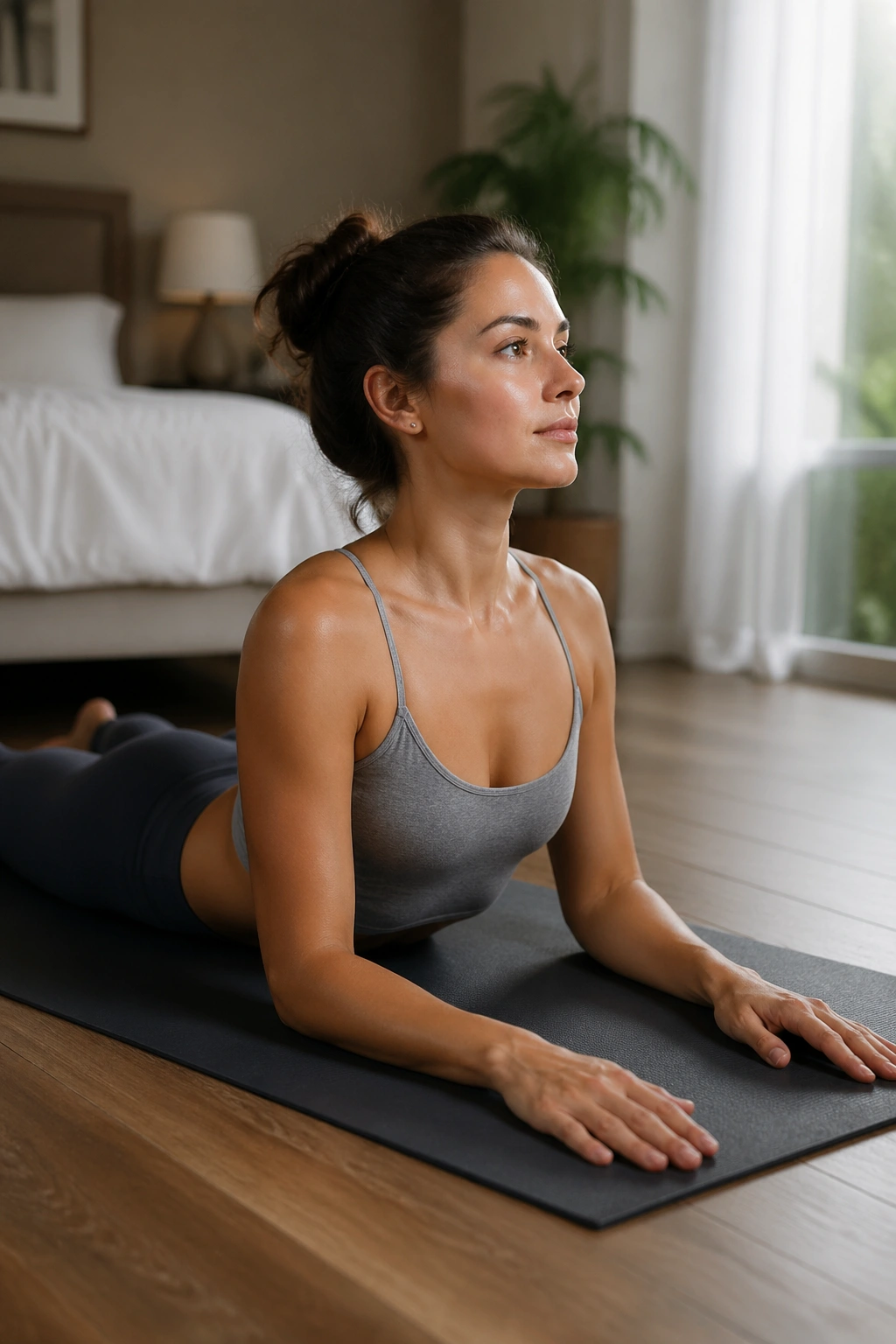
If getting out of bed makes your lower back grumble, Sphinx Pose is the quiet answer. It’s a mild backbend, not a deep one, and that matters. The point is to wake up the front of the body without making the spine feel ambushed.
Lie on your stomach and prop up on your forearms with elbows under the shoulders. Press the forearms down lightly, lengthen the back of the neck, and let the chest drift forward rather than upward. The low back should feel broad, not compressed.
- Keep your legs relaxed and about hip-width apart.
- Squeeze the glutes only a little, if at all.
- Stay for 5 to 7 breaths.
Watch this: if the pose feels pinchy in the low back, lower the chest and bring the elbows a little farther forward. Less is often better here.
5. Downward-Facing Dog With Pedaling Heels
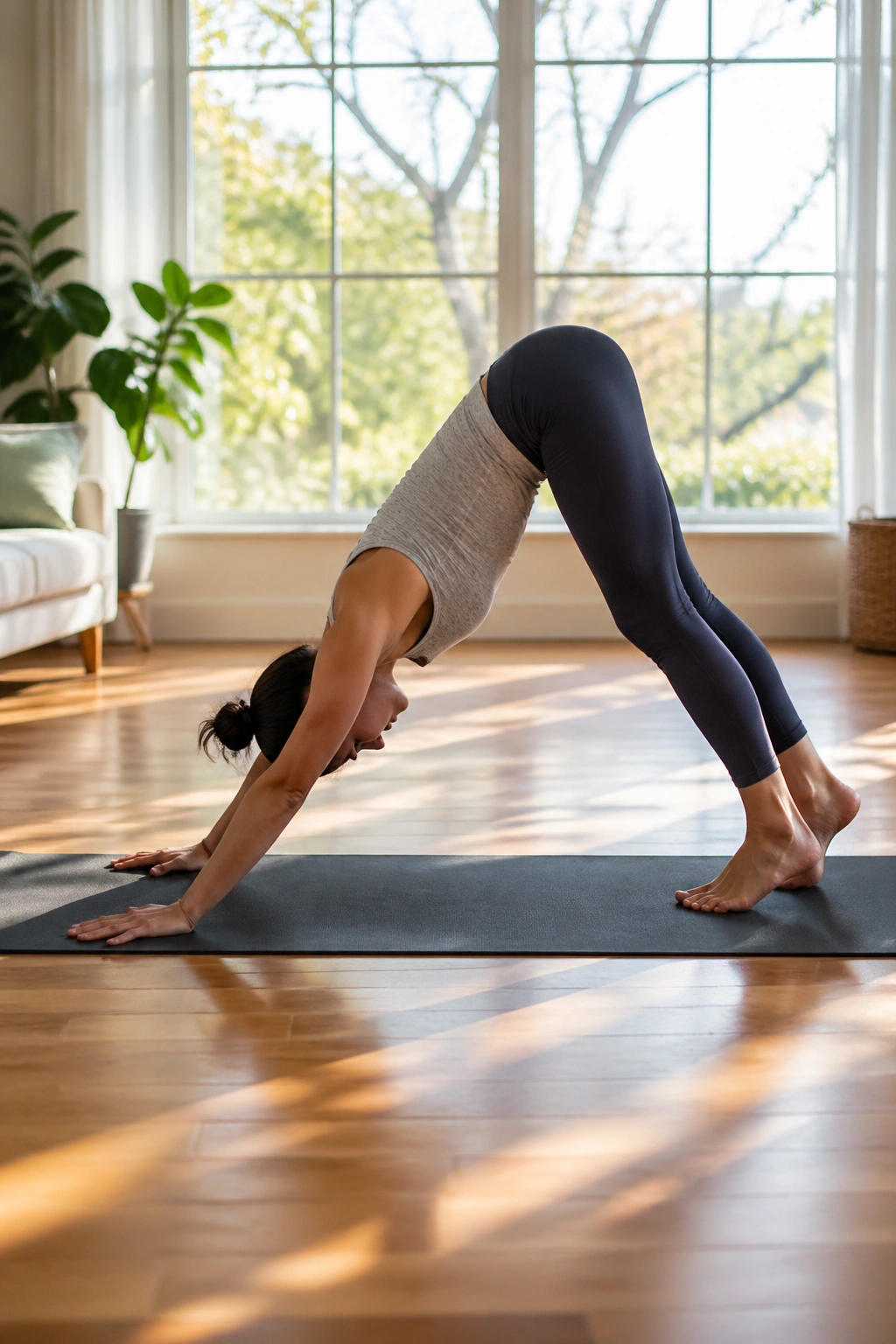
Downward-Facing Dog can be a bit much if you treat it like a test. Treated gently, though, it’s one of the fastest ways to bring life into the backs of the legs and the shoulders at the same time.
Start with bent knees. Lift the hips back and up, then pedal the heels one at a time toward the floor. Keep the knees soft enough that your spine can stay long. If the hamstrings are tight, that bend in the knees is not a cheat — it’s the pose doing its job properly.
A few breaths here usually change the feeling in the calves and the backs of the knees. The shoulders may feel loaded at first. That’s fine. Push the floor away a little and let the neck stay loose.
Don’t hunt for straight legs. The goal is a useful stretch, not a shape that looks good in a photo.
6. Standing Rag Doll Fold
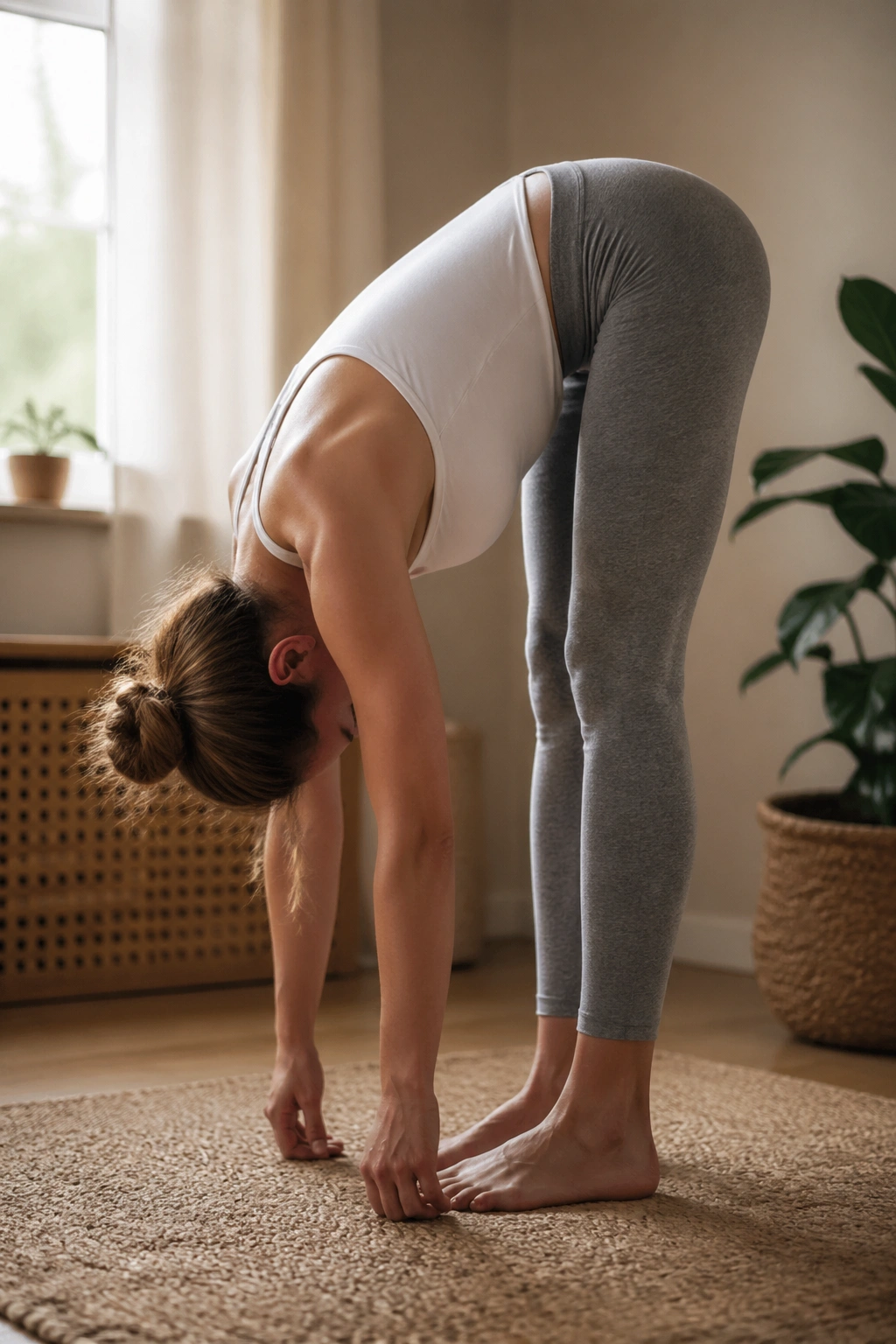
Unlike a rigid forward fold, Rag Doll is supposed to feel a little messy. Knees bend. Arms dangle. The upper body hangs like it has finally given up trying to be organized. That’s part of why it feels so good after a stiff night.
Stand with your feet hip-width apart and fold forward from the hips. Bend your knees as much as you need so the back can relax. Hold opposite elbows or let your hands rest near the floor. A small sway from side to side can ease the low back and the backs of the legs.
Rag Doll is a smart choice if standing still feels better than dropping to the floor. It also gives the head a chance to hang below the heart, which can feel oddly refreshing when you wake up foggy.
Stay for 5 breaths, or a little longer if the neck feels okay.
7. Low Lunge With Hip Stretch
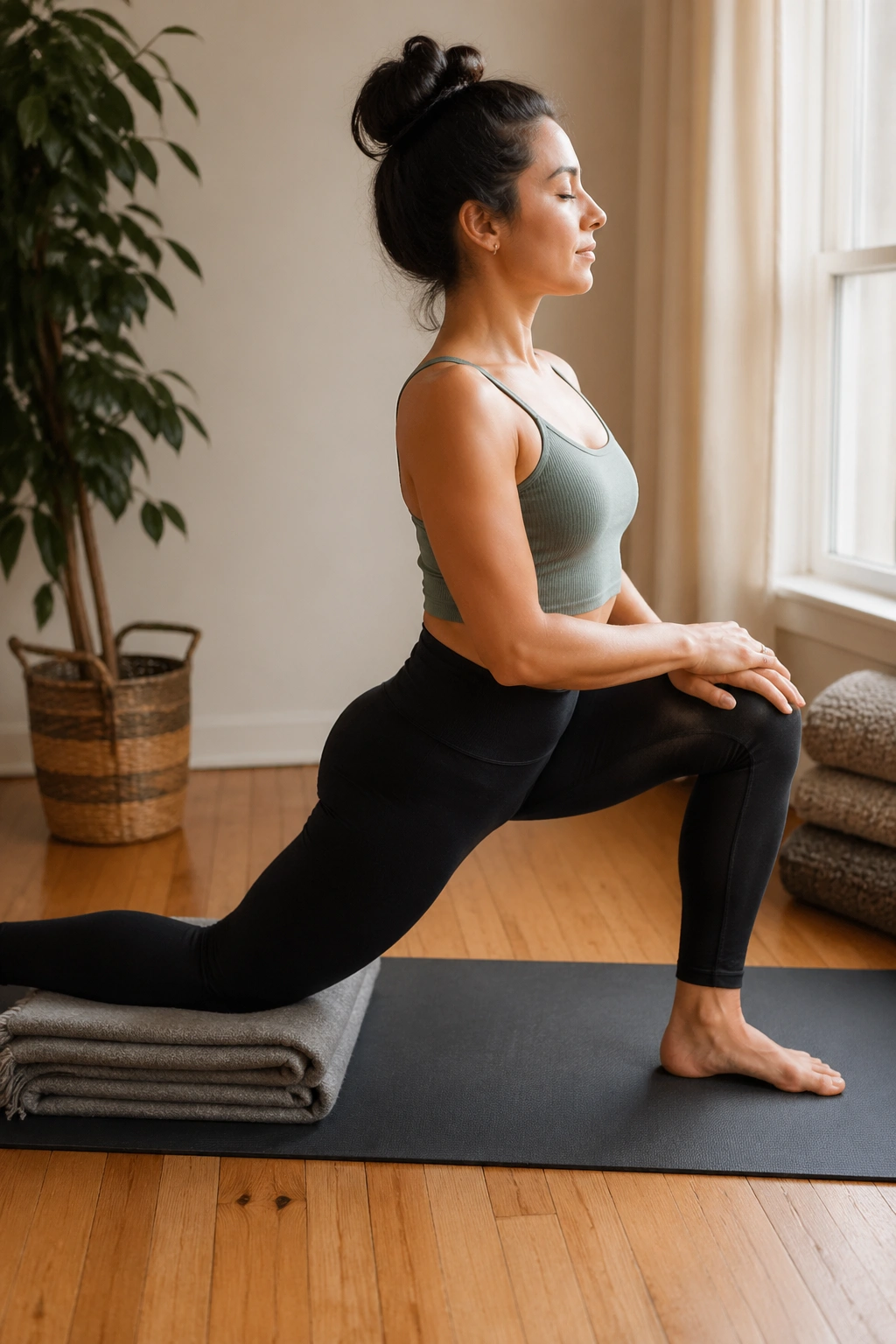
The front of the hip is often the first place to complain after a night of sleep. Low Lunge gives the hip flexors a clean, direct stretch without asking for much balance.
Step one foot forward and lower the back knee to the mat, padding it with a blanket if needed. Keep the front knee stacked over the ankle, then shift the hips forward just enough to feel a mild stretch down the front of the back leg. A small tuck of the tailbone helps keep the low back from arching too hard.
What to Notice
- You should feel length in the front of the back hip, not a squeeze in the low spine.
- Keep the chest lifted without puffing the ribs forward.
- Hold for 3 to 5 breaths per side.
A quiet version works better than a deep one early in the morning. If you’re shaky, keep both hands on the floor or blocks.
8. Standing Forward Fold With Bent Knees
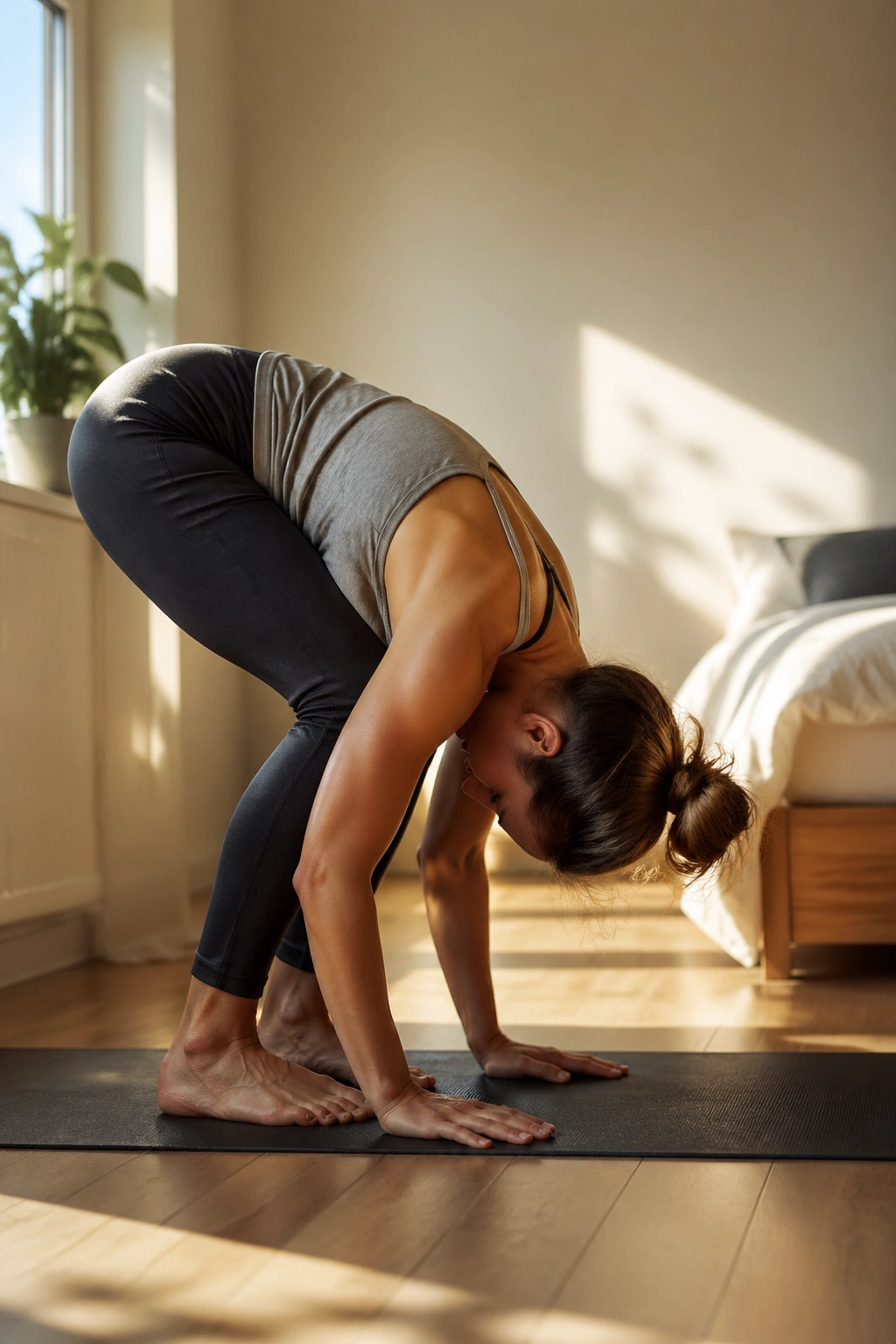
Standing forward folds do not need straight legs to count. In fact, bent knees often make the pose far more useful first thing in the morning because they let the back of the body release instead of fight.
Hinge forward from the hips, bend the knees, and let the torso drape. You can hold opposite elbows or let the fingertips rest on the floor or shins. The spine should feel long enough to breathe into, not jammed into a shape it isn’t ready for.
This one works well after Rag Doll because it asks for a little more steadiness. Keep the weight evenly spread through the feet, and don’t force your head lower than it wants to go. A deep fold with a tense neck is not a win.
Stay for 4 to 6 breaths and notice how the hamstrings respond after the first exhale.
9. Half Split Pose
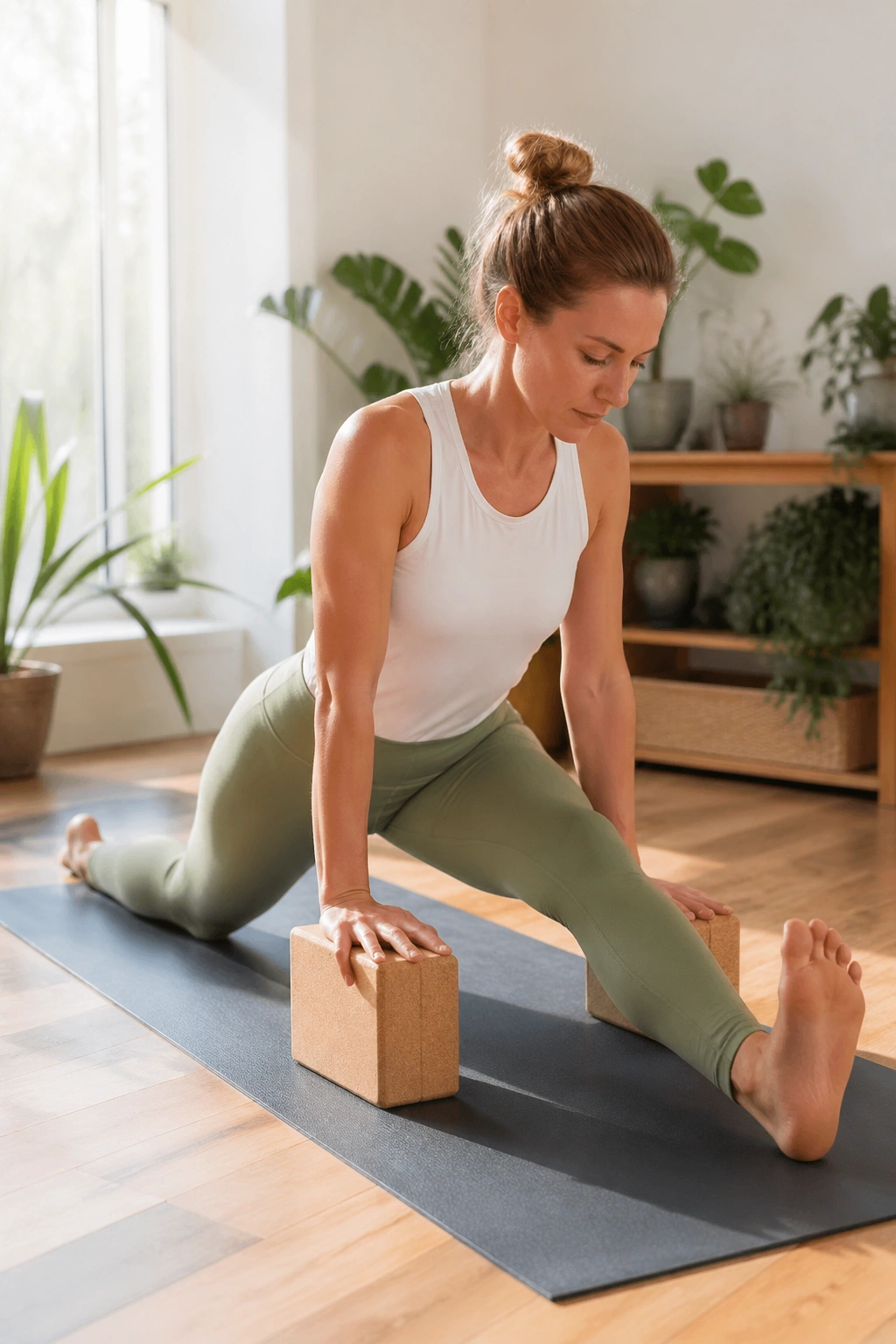
Could your hamstrings use a wake-up call that is less aggressive than a full forward fold? Half Split is the better bet. It gives one leg a focused stretch while teaching the body to keep the spine long.
From Low Lunge, shift the hips back over the back knee and straighten the front leg as much as feels reasonable. Flex the front foot. Then, instead of collapsing toward the shin, lengthen the chest forward first and fold only as far as you can keep the spine honest.
How to Use It
- Hold for 3 to 5 breaths on each side.
- Keep a small bend in the front knee if the back of the leg feels too tight.
- Put blocks under the hands so you can stay tall.
This pose is less about depth and more about shape. If the back of the front leg feels like it has a tight string down the center, you’re in the right neighborhood.
10. Pyramid Pose
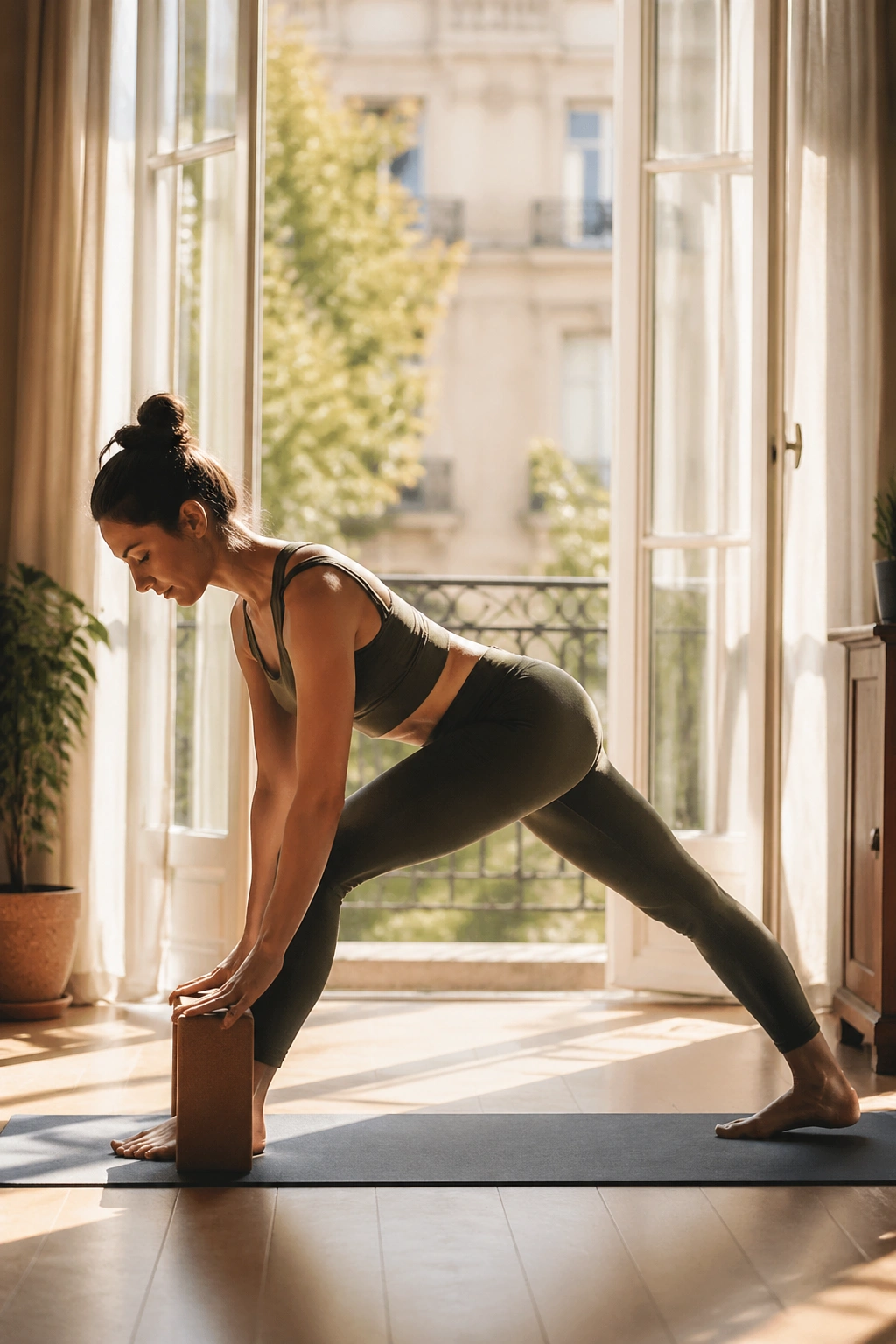
Pyramid Pose is the standing cousin of Half Split, and it can feel more grounded if you like having both feet on the floor. The stretch runs through the back leg, the hamstring, and the calf, with a nice side effect of making the hips work a little too.
Step one foot forward and one back, then square the hips toward the front leg as much as you can. Hinge forward from the hips with a long spine. A slight bend in the front knee is fair game if the hamstring is pushing back hard.
I like this pose for mornings when the legs feel thick and sleepy. It creates a clean line through the back of the body without the wobble that sometimes comes with more open poses.
Stay for 4 breaths, then switch sides. If your balance is off, shorten the stance. That’s not cheating. That’s smart.
11. Crescent Lunge With Side Bend
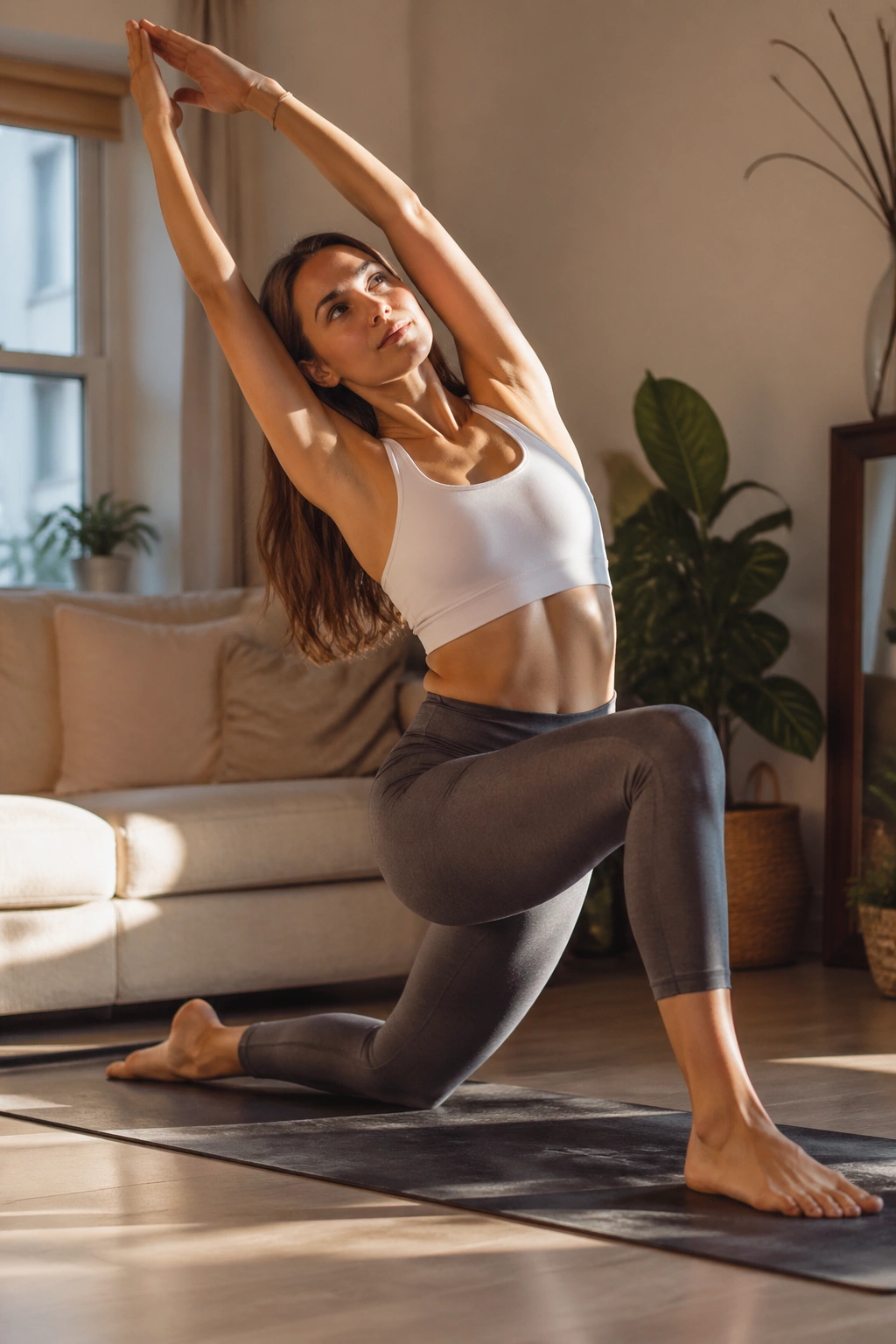
This is the stretch that opens the front body without making the lower back do all the work. Crescent Lunge already asks the hip flexors to lengthen; the side bend adds the ribs and side waist to the conversation.
Start in a low or high lunge. Raise the arms overhead, then lean slightly toward the back leg while keeping the hips mostly facing forward. The side waist on the front of the body should feel open, not pinched. Keep the lift coming from the ribs, not a hard crank through the lower spine.
That small angle matters. Too much bend and the low back takes the load. A little bend, though, gives the whole front line of the body a cleaner wake-up.
Hold for 3 breaths on each side. If balance feels shaky, keep the back heel lifted and the hands on the hips instead of reaching overhead.
12. Lizard Pose
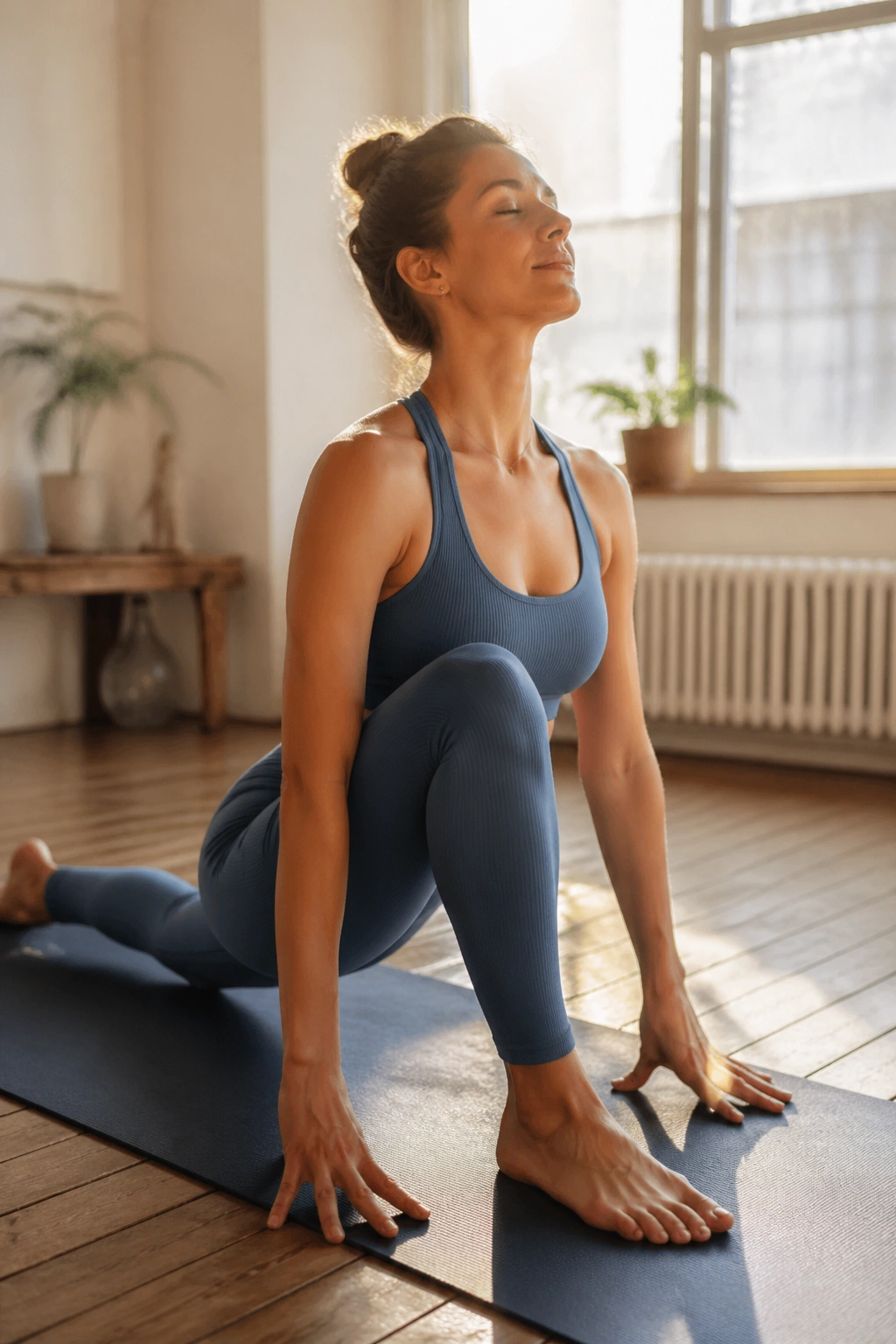
Lizard Pose is for the mornings when the hips feel stubborn. It reaches into the groin, the hip flexors, and the outer hip, which is why it can feel intense fast. Keep it friendly.
From a lunge, place both hands inside the front foot and lower the back knee if needed. You can stay on your palms, drop to forearms, or rest your hands on blocks. The goal is not to sink as low as possible. The goal is to feel a stretch that stays steady while your breath stays calm.
A lot of people rush this pose and end up bracing through the jaw. Not worth it. Ease in, then wait one full breath before changing anything.
Best version for stiff mornings: keep the chest lifted, the back leg active, and the hold short — 3 to 4 breaths is enough.
13. Figure Four Stretch
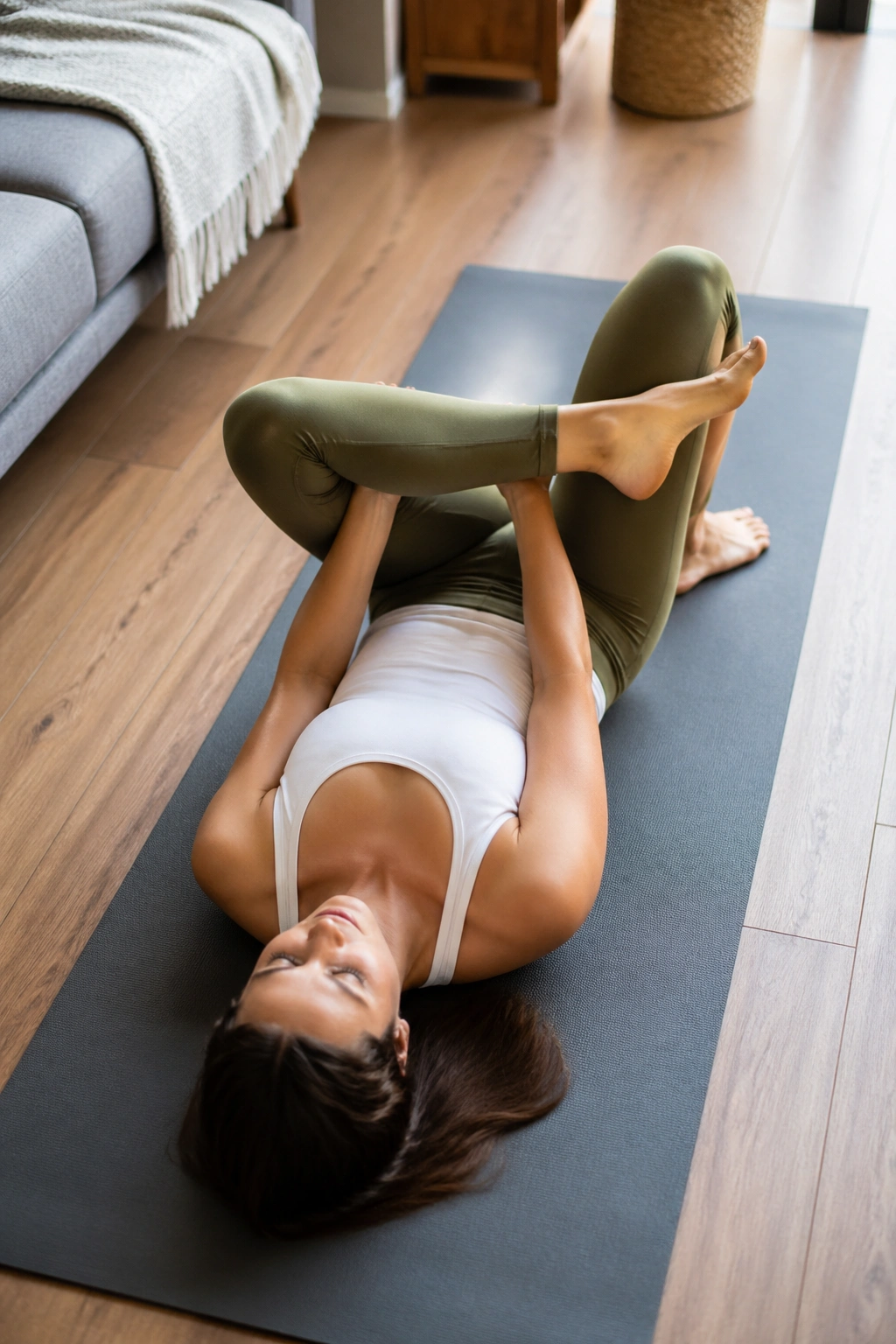
The outer hip can feel like a locked door on a stiff morning, and Figure Four is one of the cleanest ways to open it. This is especially nice if sitting cross-legged on the floor usually feels impossible.
Lie on your back and cross one ankle over the opposite thigh, making a loose figure-four shape. Flex the top foot to protect the knee, then either stay here or thread your hands behind the standing thigh and draw the legs in. You should feel the stretch in the outer glute and deep hip, not in the knee itself.
Quick Details
- Hold for 5 breaths per side.
- Keep the tailbone heavy.
- Use a strap behind the thigh if your arms are short or your hips are tight.
A little stiffness in the beginning is normal. A sharp knee sensation is not. Back off if that shows up.
14. Knee-to-Chest Stretch
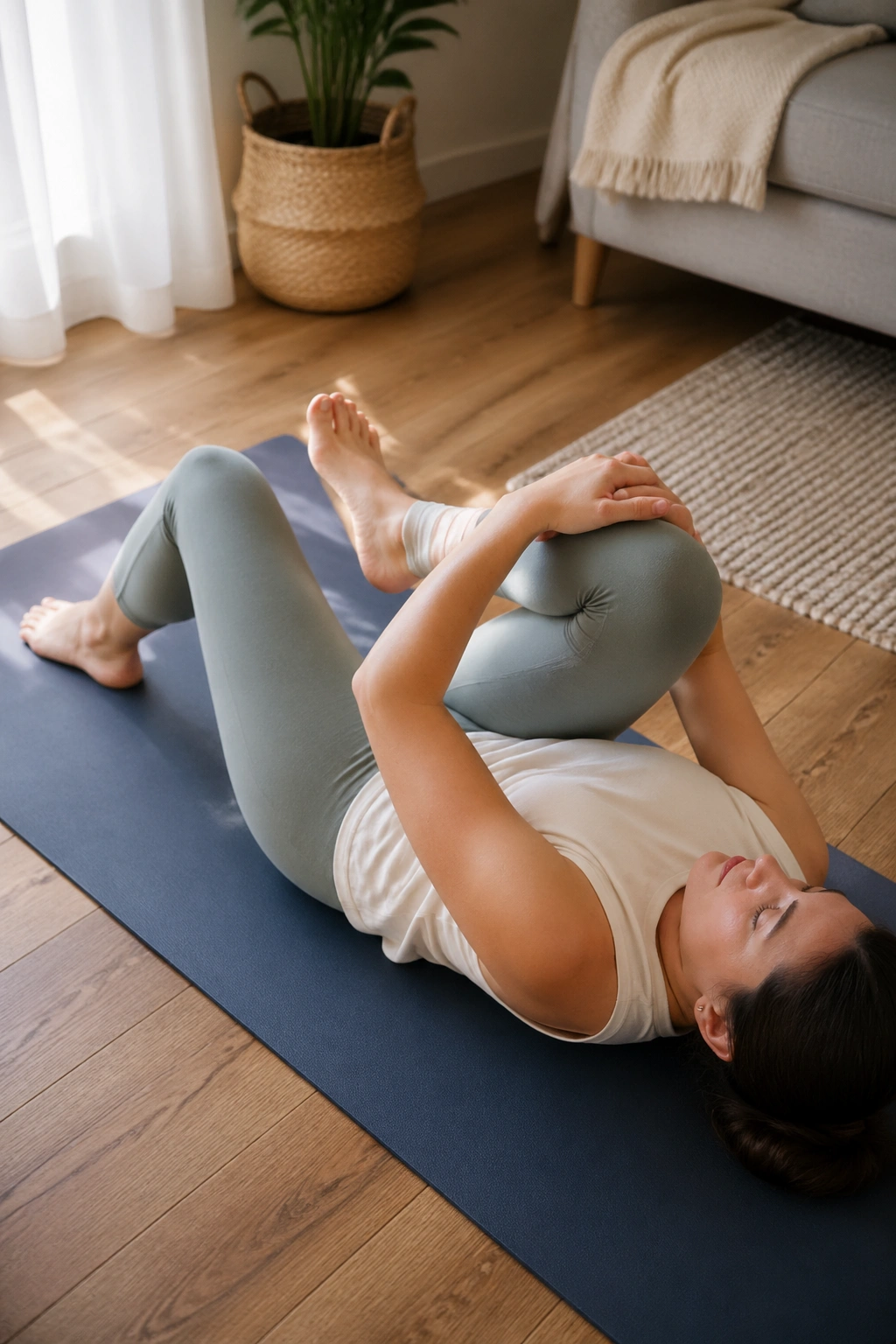
Sometimes the simplest thing works best. One knee drawn toward the chest can calm a cranky low back faster than a complicated pose with too many moving parts.
Lie on your back and hug one knee in, keeping the other leg bent or long on the floor. You can stay still or make tiny side-to-side circles with the knee to massage the low back and sacrum. If both knees come in together, keep the shoulders soft and the jaw unclenched.
This stretch is especially useful after a night of sleeping curled up tight. It gives the back a chance to flatten and breathe. If the lower spine feels compressed, this often brings relief in a few slow breaths.
Hold one side for 4 breaths, then switch. If both knees in feels too intense, keep it to one leg at a time.
15. Supine Twist
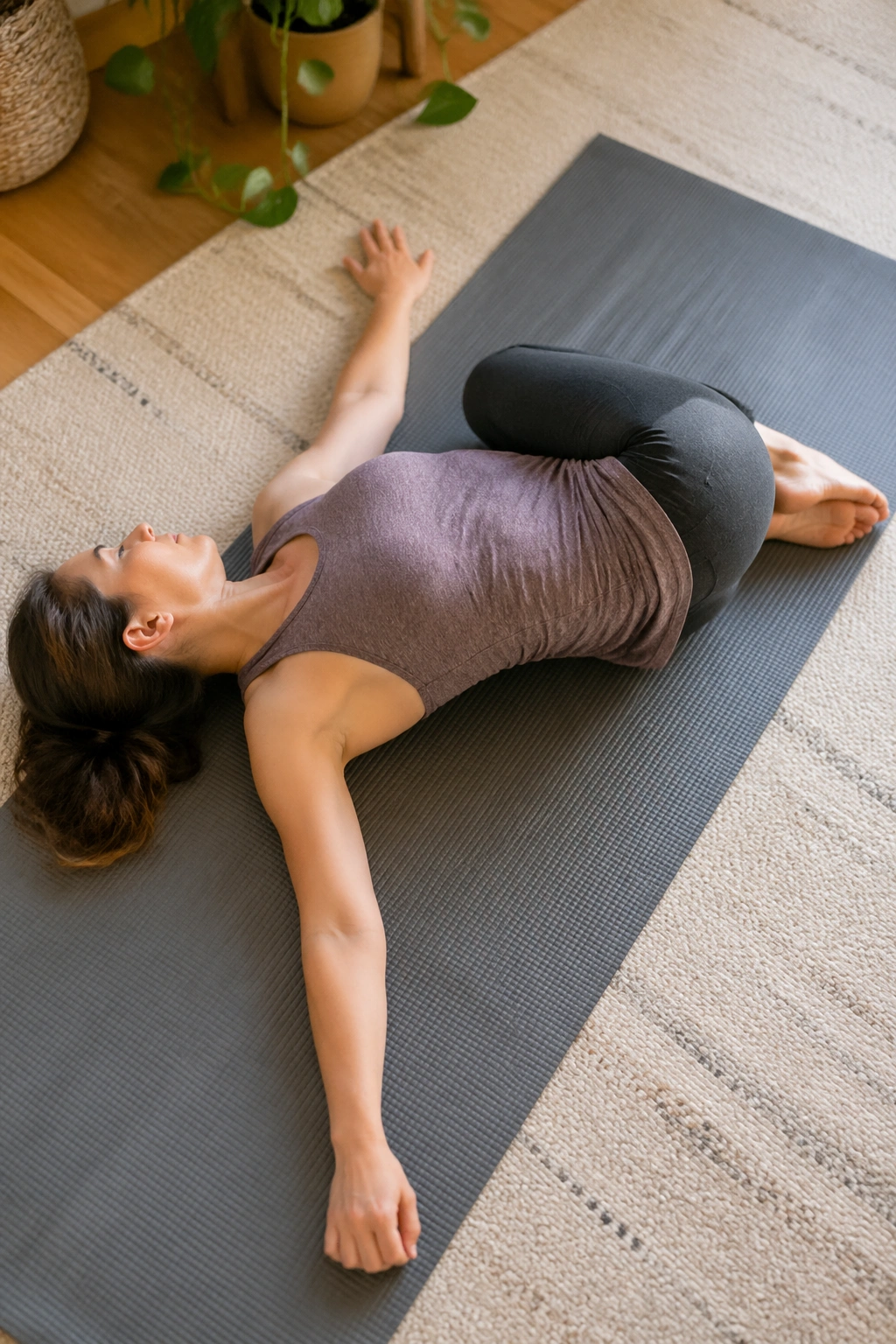
Why does a twist feel so good when you wake up? Because sleep tends to lock the spine into one position, and a gentle twist gives the back a chance to unwind without effort.
Lie on your back, hug the knees in, then drop them to one side while keeping both shoulders down. Turn your head the opposite way if that feels okay, or keep it centered if the neck is fussy. A pillow between the knees can make the pose softer on the lower back.
The twist should feel like a stretch across the waist, the upper back, and maybe a little into the outer hip. If the top shoulder lifts off the floor, reduce the range. That’s the sign to keep it smaller.
Stay for 5 breaths each side. Slow breathing matters here more than depth. A twist with a busy breath is usually too much.
16. Happy Baby
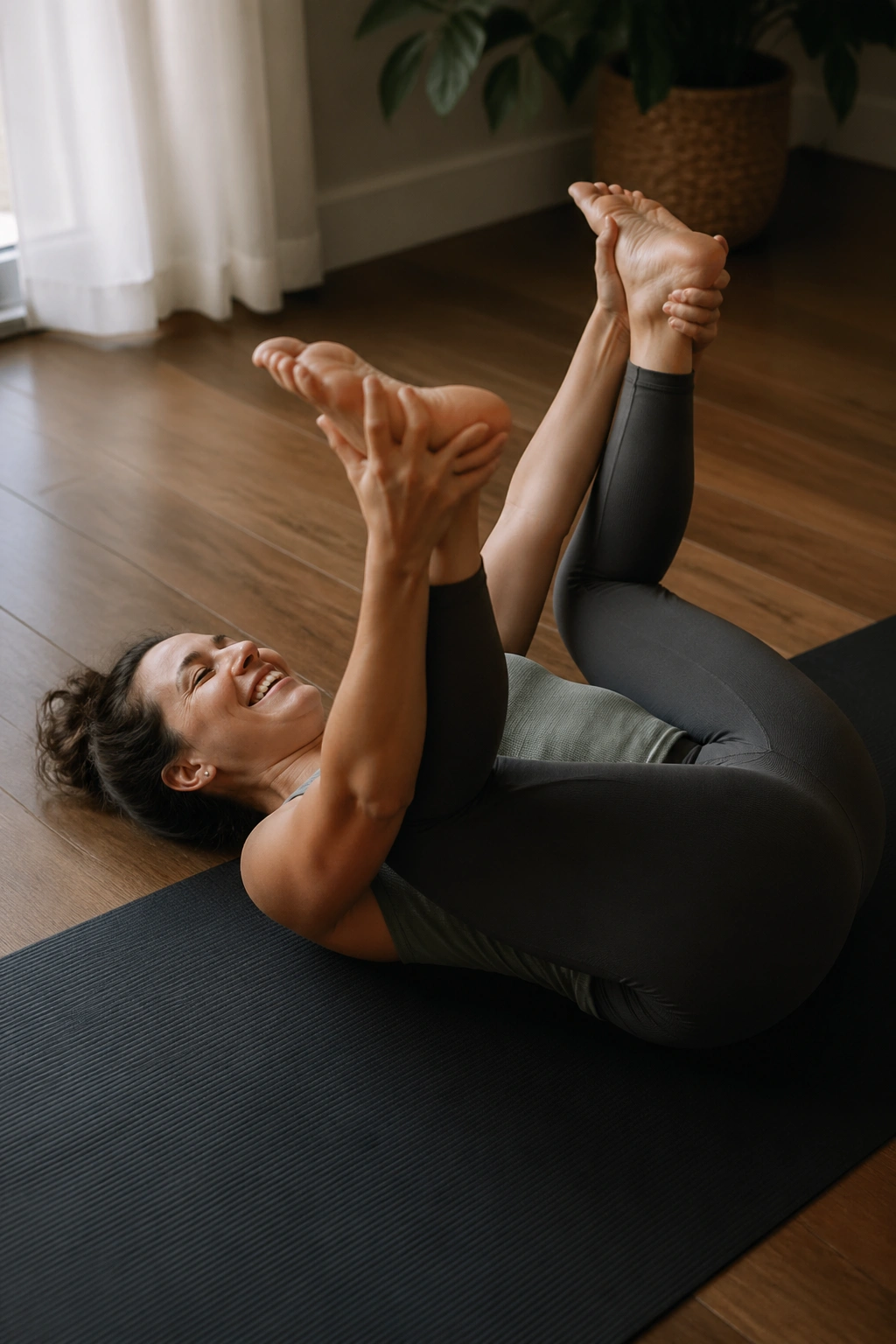
Happy Baby is one of those poses that looks playful and acts serious. It opens the inner thighs, eases the low back, and gives the hips a shape they almost never get during sleep.
Lie on your back, bend the knees toward the chest, and hold the outer edges of the feet or the backs of the thighs. Let the knees drift toward the armpits while the tailbone stays heavy. A tiny rock from side to side can make the stretch feel even better.
I like this pose after a few hip openers because it clears the last bit of stuckness. The low back often settles when the hips can finally release their grip.
Keep the shoulders relaxed. If grabbing the feet feels like too much, hold the thighs or shins instead. Stay for 4 to 6 breaths.
17. Bridge Pose
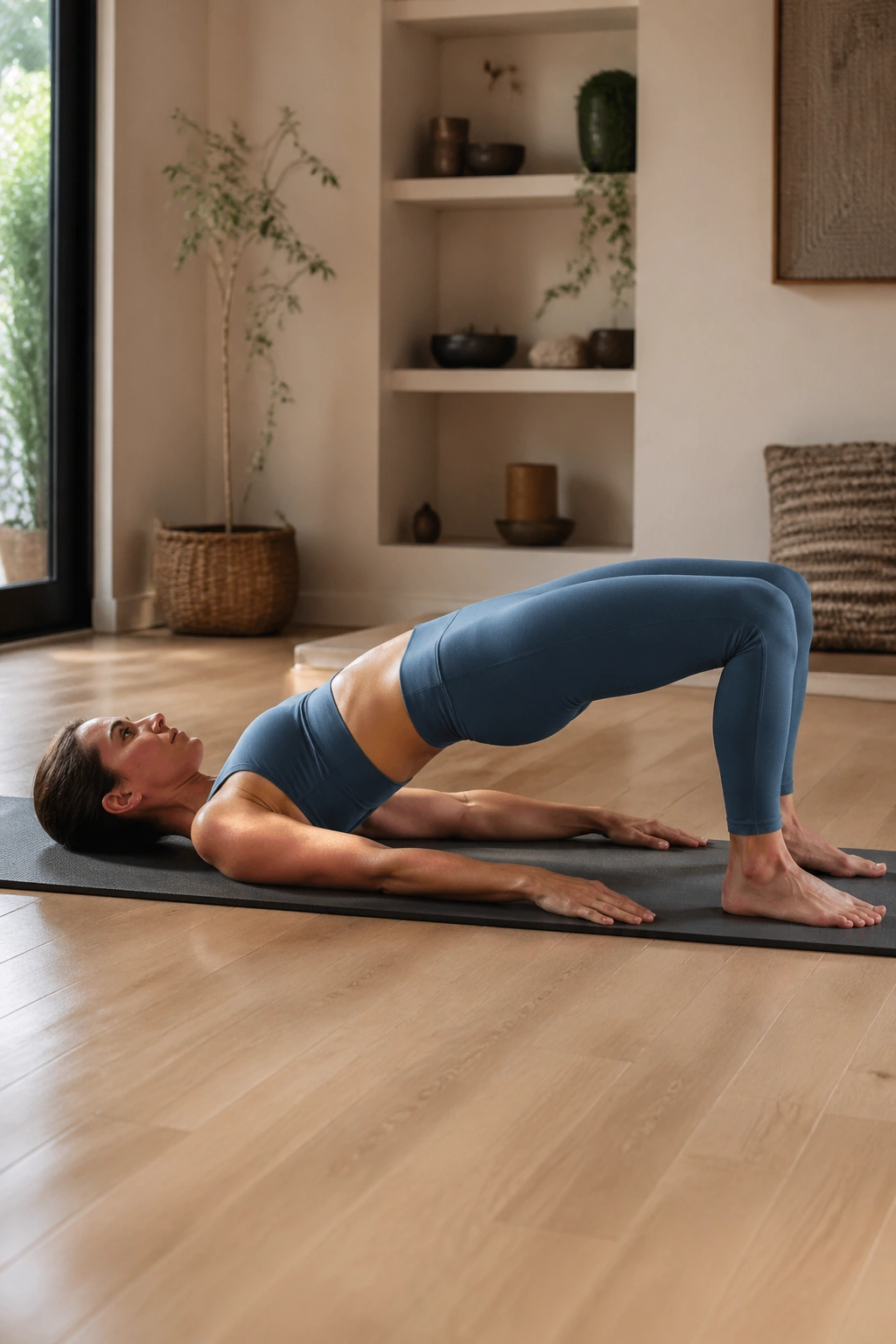
Bridge is one of the best ways to wake up sleepy glutes and the front of the hips without standing up yet. It also gives the spine a gentle backbend, which can feel lovely after a night of curling inward.
Lie on your back with knees bent and feet hip-width apart. Press through the feet, lift the hips a few inches, and keep the ribs from flaring. You do not need a huge arch. A smaller lift with steady legs is usually more useful than a dramatic one that makes the low back do all the work.
If you want more support, you can hold the lifted shape for a few breaths. If you want less, lift and lower slowly for 5 rounds. Either way, the thighs should stay active, and the neck should stay long.
Bridge is a smart choice when your posture feels slumped before the day has even started.
18. Cobra Pose
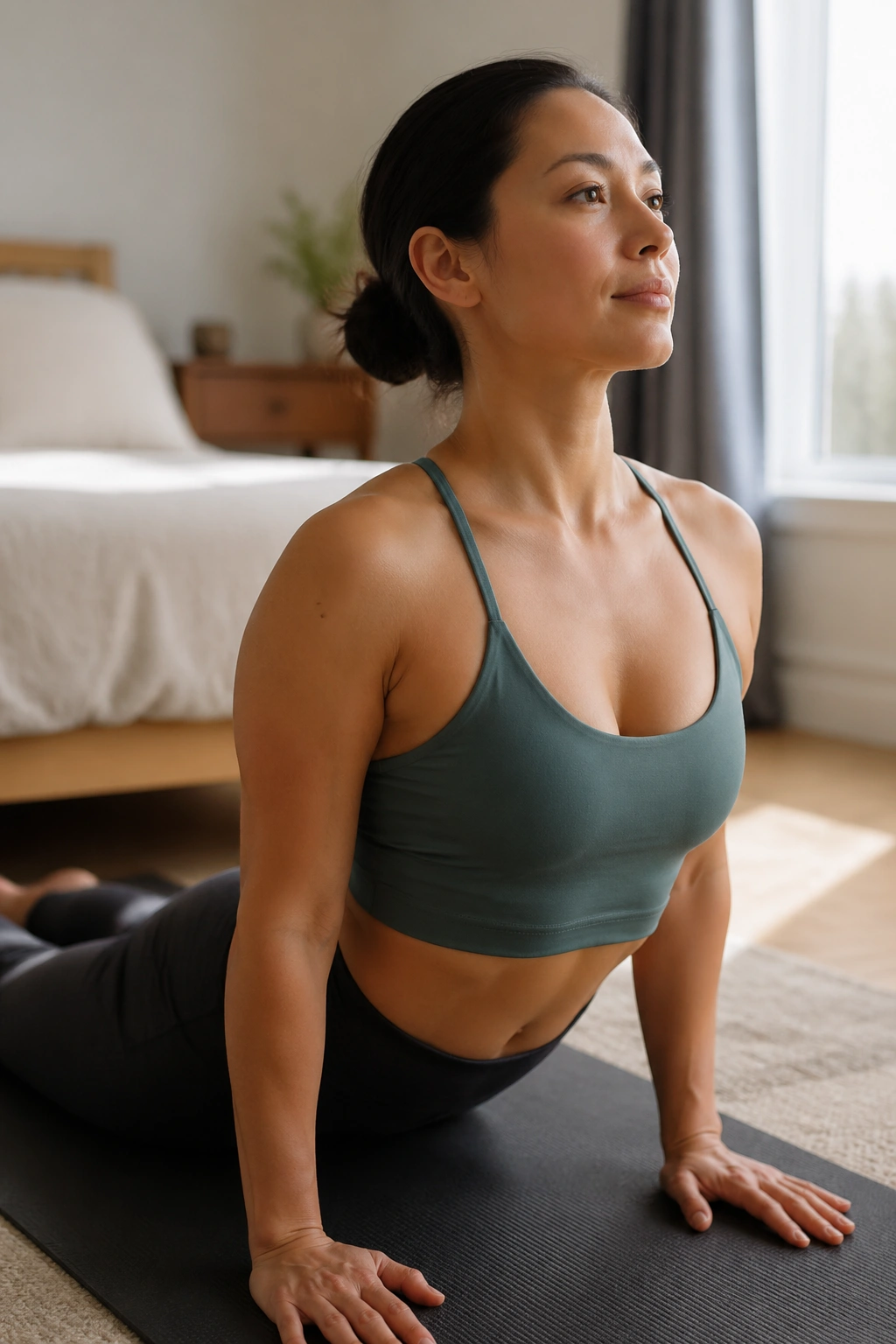
Cobra Pose is the stretch that says, “Fine, we’re awake now.” It opens the chest, asks the spine to extend, and gives the front of the body a stronger wake-up than Sphinx does.
Lie on your stomach with palms under the shoulders or slightly forward. Press the tops of the feet into the floor and lift the chest only as high as feels smooth. Keep the pelvis heavy. Keep the elbows soft. If the lift comes from the low back alone, you’ve gone too high.
A low Cobra is usually the right call in the morning. The sternum floats forward, the shoulder blades slide down, and the neck stays long. That’s enough.
Hold for 2 to 3 breaths, then lower with control. If backbends are not your favorite thing first thing, this one can be tiny and still count.
19. Eagle Arms Stretch
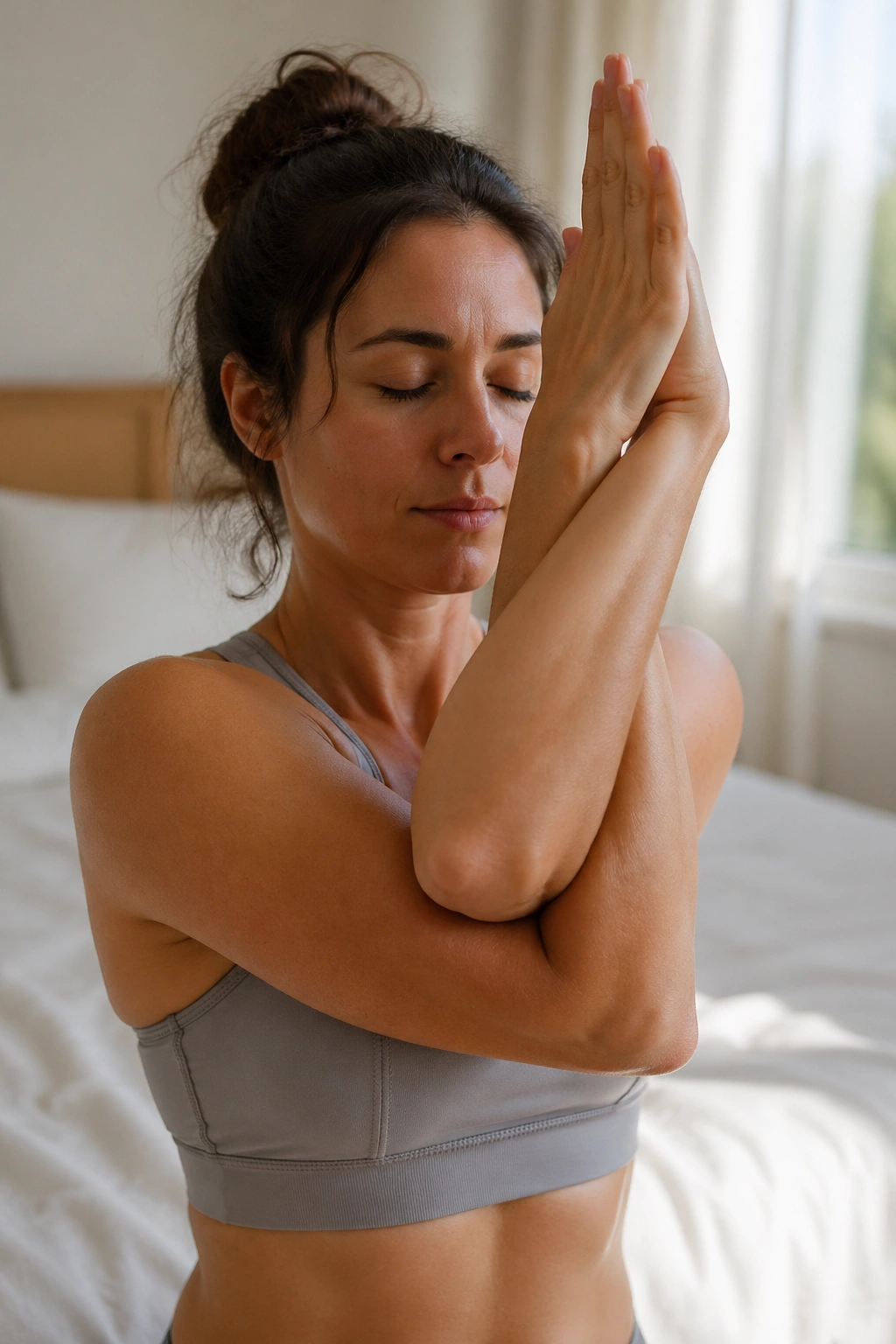
The shoulders and upper back can feel like they spent the night holding luggage. Eagle Arms loosens that knot without needing a lot of space.
Sit or stand, wrap one arm under the other, and either press the backs of the hands together or take opposite shoulders if the full wrap feels awkward. Lift the elbows a little and round the upper back just enough to feel the stretch between the shoulder blades.
What Makes It Worth Keeping
- It opens the rear shoulders and upper back at the same time.
- It takes almost no room, so it works beside the bed.
- It’s easy to dose in small amounts — 3 breaths is enough.
If your shoulders are stiff, do one side at a time and keep the elbows lower. A huge lift is not the goal. A clean squeeze across the upper back is.
20. Seated Side Stretch
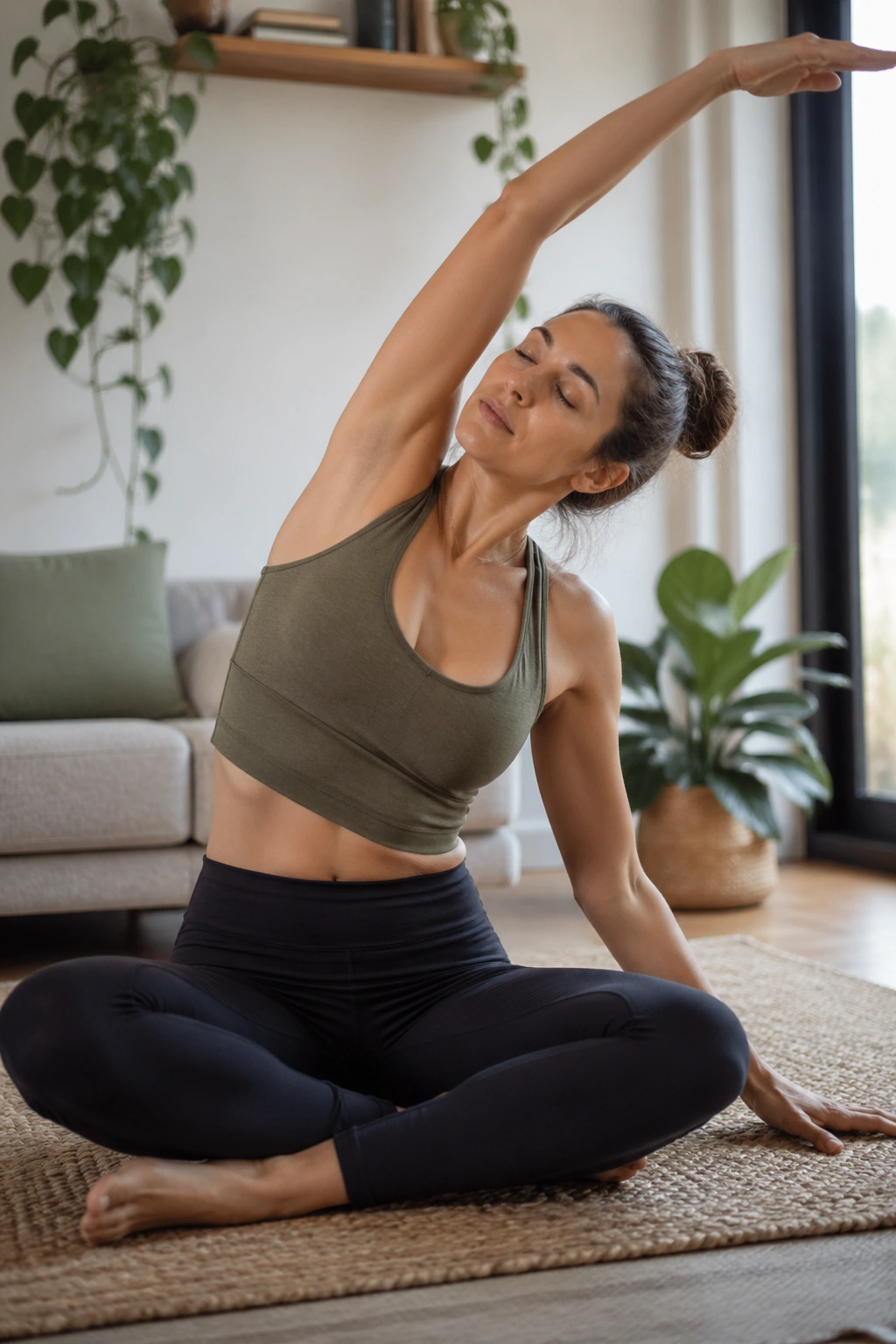
The sides of the body get overlooked all the time. That’s a shame, because the ribs, lats, and side waist matter a lot when you’re trying to breathe easily after sleeping still.
Sit tall with your legs crossed or stretched out. Reach one arm overhead and lean gently to the opposite side. Keep both sit bones heavy. The stretch should run from the hip through the ribs and into the side of the torso. If you feel it in the neck, back off the reach a little and keep the shoulder down.
This stretch can feel better after a forward fold because it opens a different plane of movement. That’s one reason it belongs in a morning routine. The body likes variety before breakfast.
Hold each side for 3 to 4 breaths. A small side bend is enough. A big one can turn into a shrug fast.
21. Gentle Neck Release
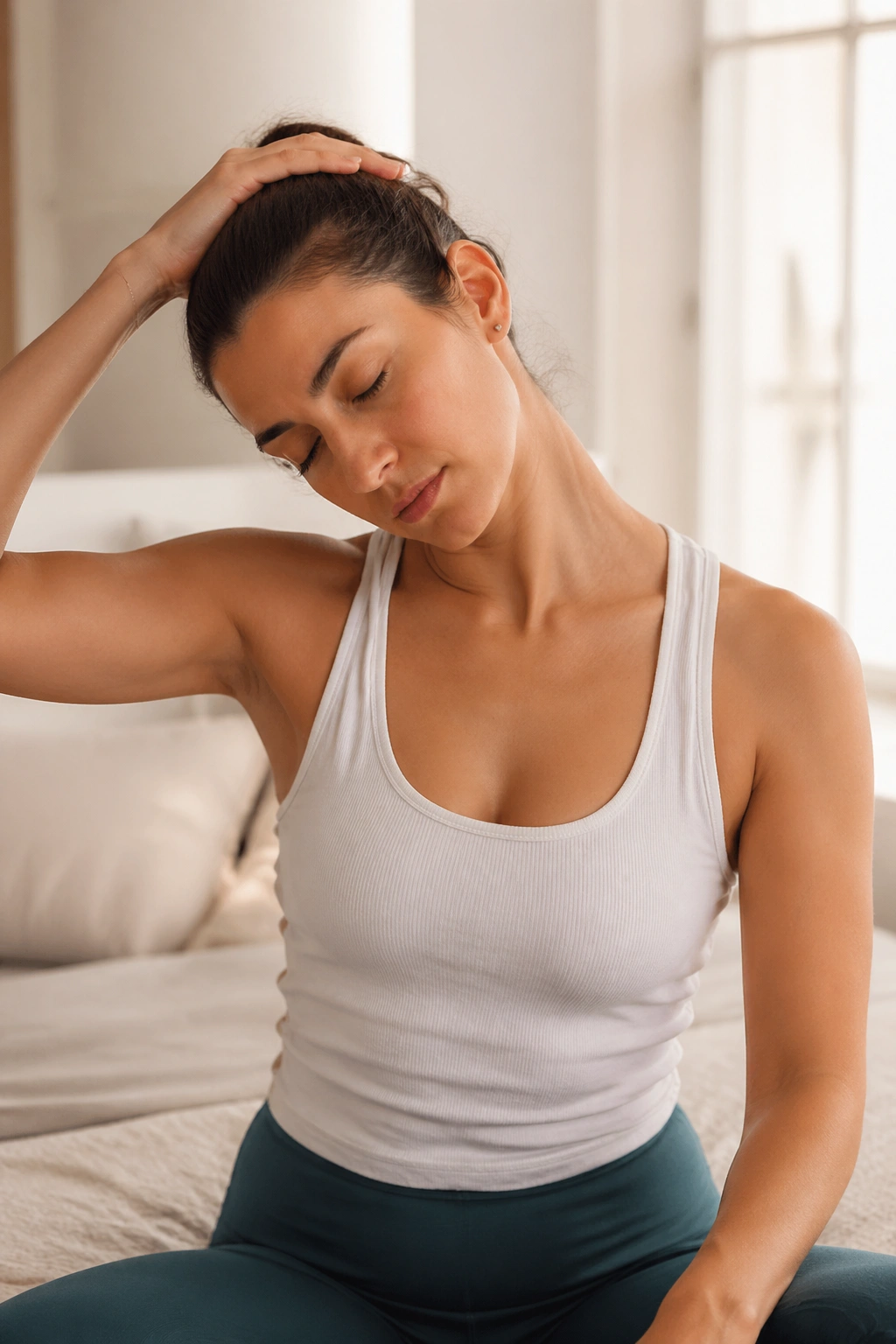
A neck that wakes up stiff can make the whole morning feel off. Skip circles. They tend to do more weirdness than good. Side-to-side releases are cleaner and friendlier.
Sit tall and drop one ear toward one shoulder, keeping both shoulders down. Stay there for a breath or two, then come back to center before switching sides. You can add a soft hand on the head if you want a little more weight, but keep the pull tiny. The feeling should be a long line down the side of the neck, not a hard tug.
How to Keep It Safe
- Move slowly and stop if the neck feels pinchy.
- Keep the chin slightly tucked, not jutting forward.
- Hold each side for 2 to 3 breaths.
A few quiet repeats are better than one long crank. The neck likes patience more than force.
22. Wrist and Finger Stretch
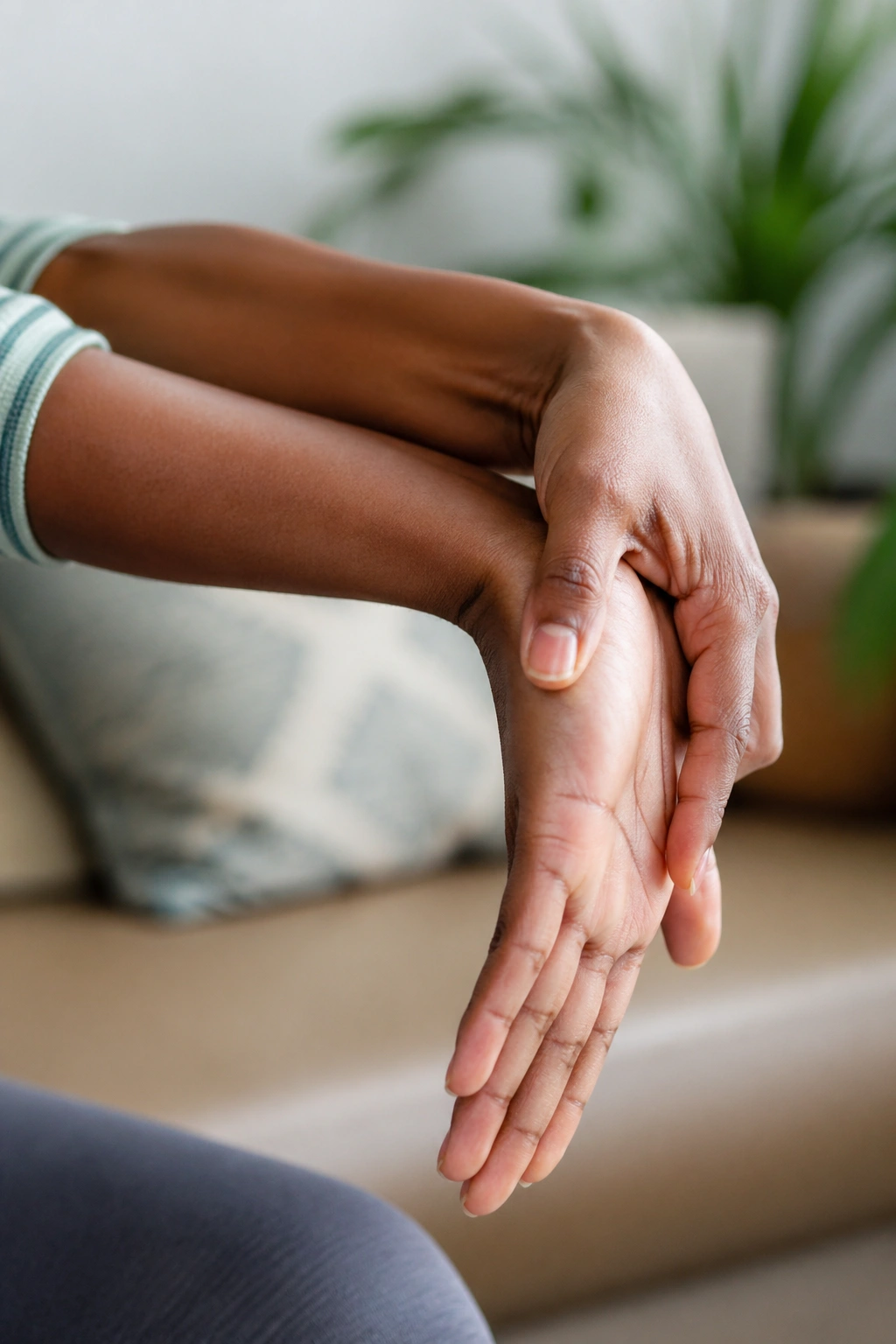
If you sleep with bent wrists or spend a lot of time on a phone, your hands can wake up surprisingly stiff. Wrist and finger work sounds small. It matters more than people think.
Come to hands and knees and turn the fingers slightly out or back, keeping the motion mild. You can also stand and press the palms together at chest height, then lower the hands a little until you feel the forearms lengthen. Open and close the fingers a few times. Roll the wrists in small circles, not giant ones.
This is one of those “do it now, thank yourself later” stretches. It helps before planks, before downward dog, and before you try to grip a coffee mug with a hand that still thinks it is asleep.
Hold each wrist position for 3 breaths. Keep the stretch more about length than pain.
23. Ankle Circles and Point-Flex
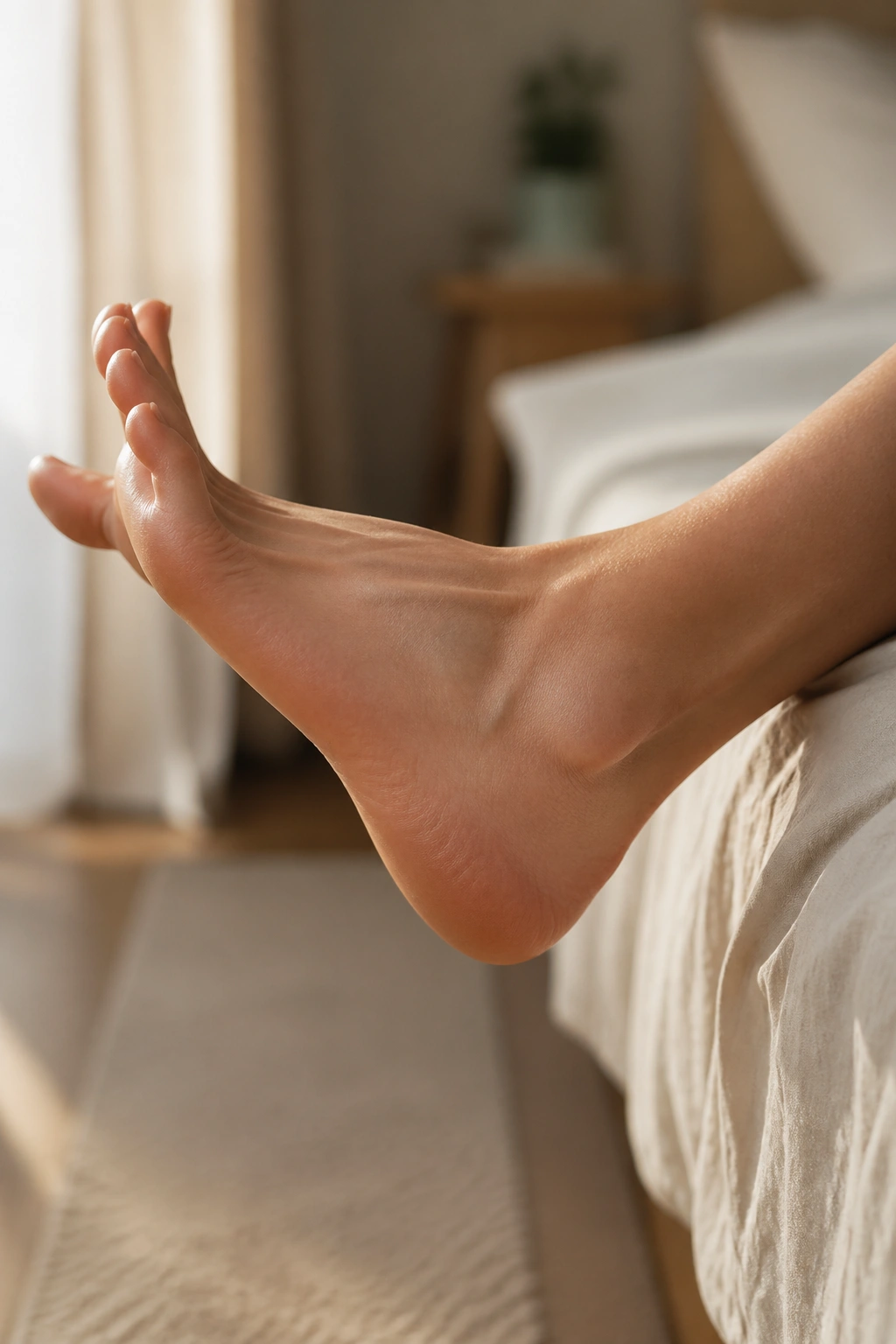
Stiff mornings do not stop at the hips and back. The ankles can feel just as cranky, and if the feet are locked up, everything above them tends to work harder than it should.
Sit on the edge of the bed or lie on your back and lift one foot. Circle the ankle slowly in both directions, then point and flex the foot a few times. That motion wakes up the calves, the feet, and the small muscles that help you stand with less wobble.
If one ankle is much tighter, give it an extra round or two. It takes almost no time, and it can make a standing sequence feel smoother right away.
Try 6 circles each direction per ankle, then 5 point-flex reps. Small movements count here. Tiny can be enough.
24. Wide-Knee Child’s Pose
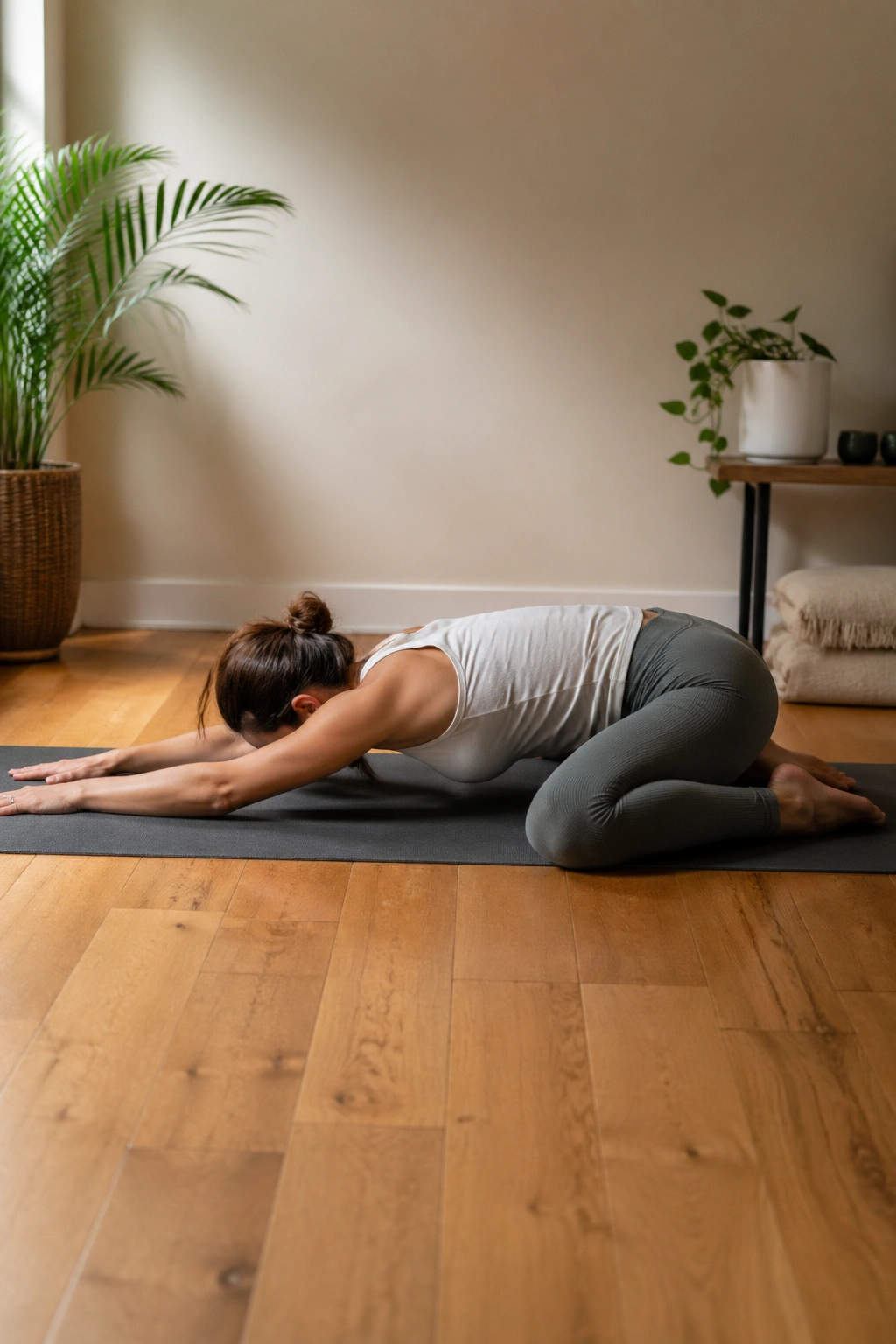
Wide-Knee Child’s Pose is the more open cousin of the regular version. It gives the inner thighs, hips, and low back a little more room to breathe, which is useful when the standard shape feels too tight.
Separate the knees farther than hip-width and fold forward between them. Let the torso hang. Arms can extend in front, or they can rest back by the feet if that feels more restful. The wider base makes the stretch feel less compressed through the belly and pelvis.
I like this pose when the hips are stiff but also tired. It has that quiet, nesting feeling without being too passive. A few full breaths here can soften the inner legs in a way that standing poses sometimes miss.
Stay for 5 to 8 breaths. If the knees feel stretched in a bad way, bring them closer together.
25. Legs-Up-the-Wall
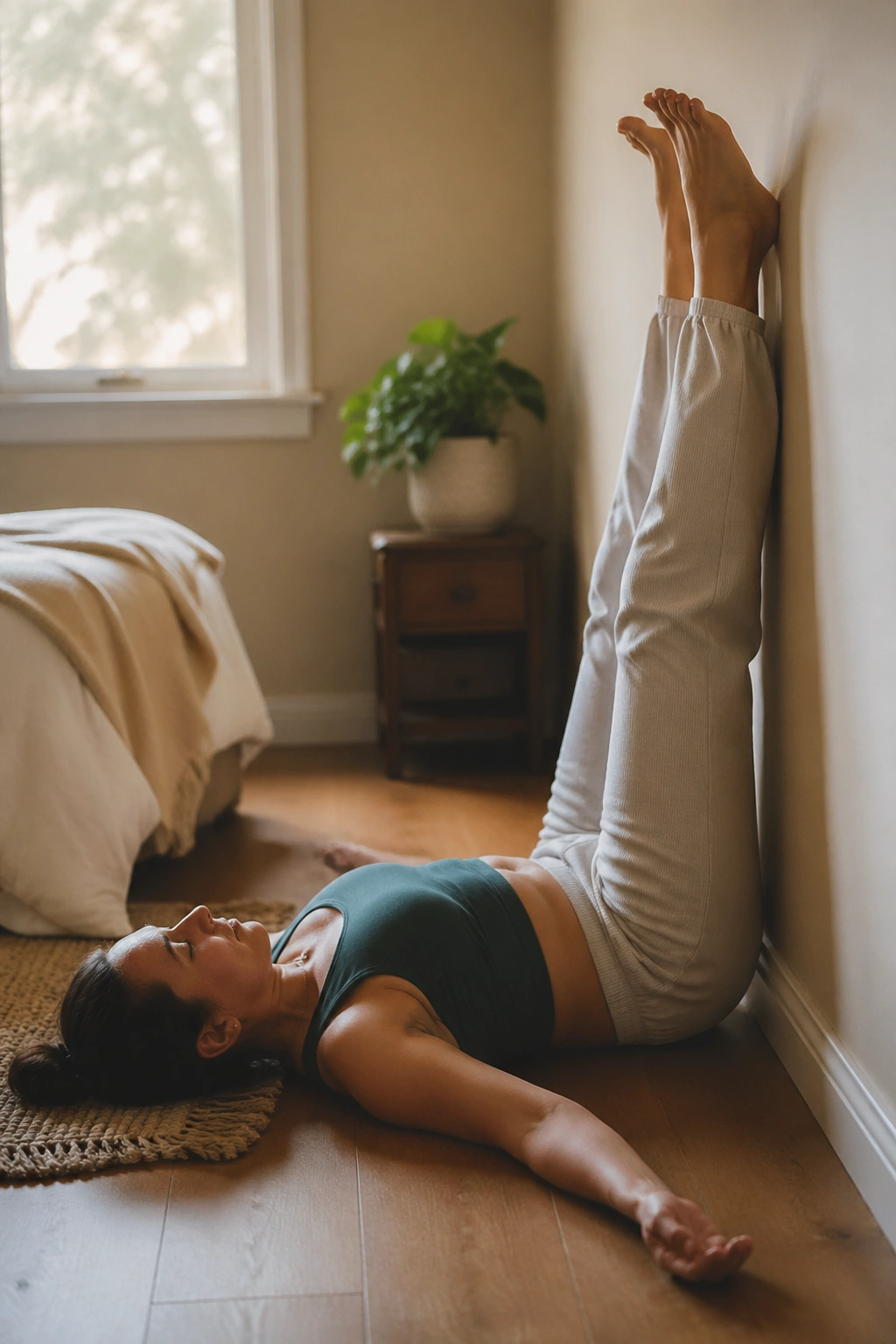
Legs-Up-the-Wall is the pose I’d choose if the body feels stiff and the brain feels crowded. It’s not flashy. That’s the point. The legs rest, the back settles, and the whole system gets a little quieter.
Sit beside a wall, swing the legs up, and let your back come down to the floor. Scoot farther from the wall if the hamstrings pull too hard. Bend the knees if the low back wants more slack. The goal is comfort, not a perfect right angle.
This is a smart finish for a morning stretch session because it gives you a pause after all the movement. You can stay for 1 to 5 minutes, breathing slowly and letting the heels rest against the wall or drift apart.
If you’re short on time, even 60 seconds helps. That’s enough to feel a shift.
Final Thoughts
A stiff morning does not need a heroic routine. It usually needs five to ten minutes of honest movement, a few slower breaths, and the sense that nobody is trying to force the body into shape before it has had coffee.
The stretches that work best are the ones you can repeat tomorrow without dreading them. Start with the spine, give the hips and shoulders some room, and finish with something that calms things down instead of revving them up.
If one area of the body complains every morning, give that spot a little extra time and keep the rest simple. That’s usually where the real change happens.
