



Period cramps can flatten the whole day. One minute you’re upright and functional; the next, your lower belly feels clenched, your back starts complaining, and even sitting still seems like too much work.
That’s where the right yoga poses for period cramps and PMS days earn their keep. Not the dramatic stuff. Not the deep, sweaty flow that leaves you more tired than you started. The useful poses are slower, lower to the ground, and a little boring in the best way. They give your abdomen room to soften, your hips a break, and your nervous system a reason to ease off the alarm bell.
Three to five well-chosen shapes are usually enough. A folded blanket, a wall, and a couple of blocks can do more than fancy gear ever will. The trick is to keep the stretch mild, the breath long, and the pressure off any spot that already feels angry.
Sharp one-sided pain, fever, unusual bleeding, or pain that keeps getting worse is not a yoga problem. That deserves a proper medical check. For the usual cramp-and-bloat misery, though, these poses can make the day feel less like a fight and more like something you can work with.
1. Child’s Pose
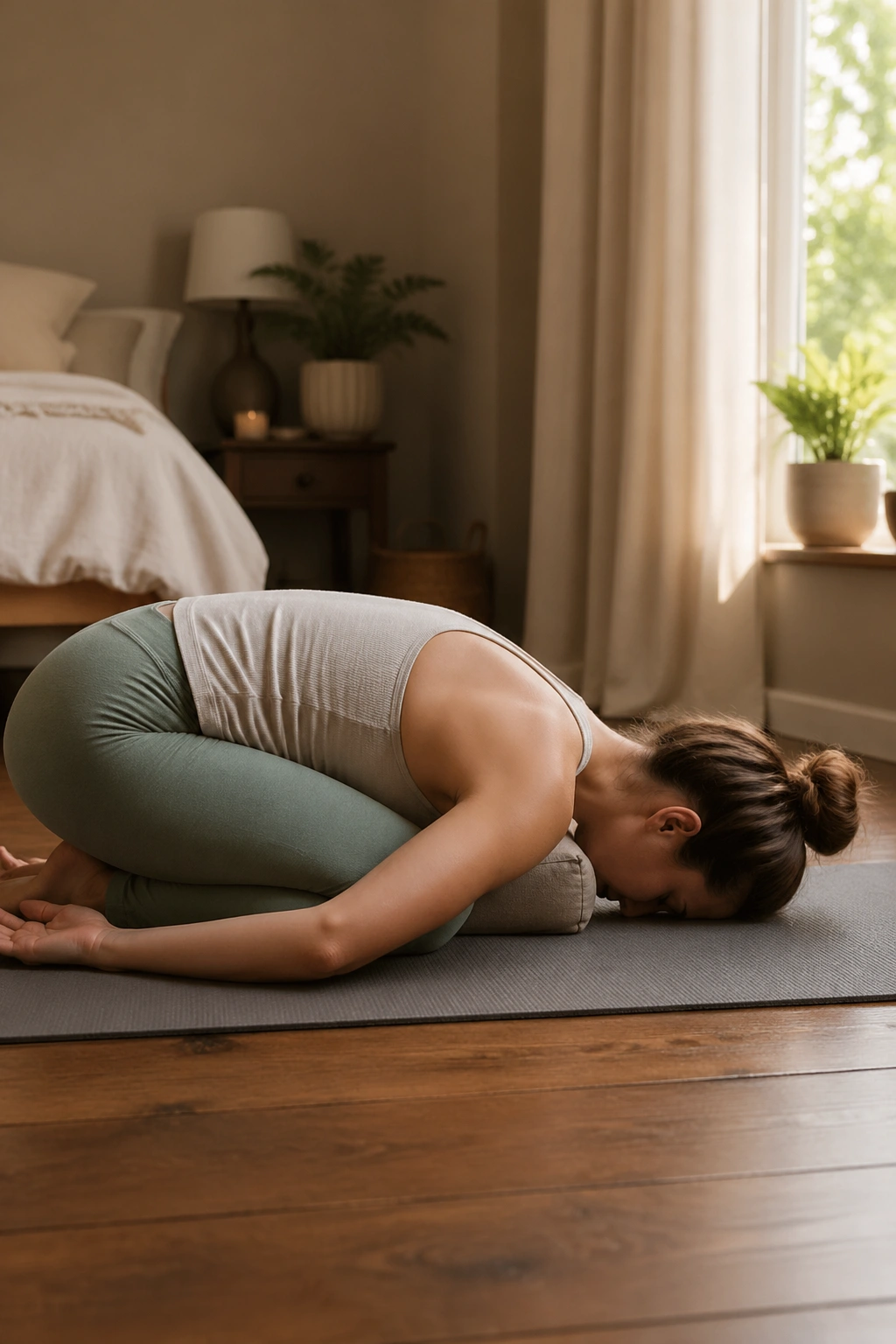
Child’s Pose is the first place I’d send a cranky body. It folds the front of the body inward, which can feel oddly comforting when your lower belly is already guarding itself.
How to make it friendlier on crampy days
If your knees are fine, bring your big toes together and let the knees drift wide. That gives the belly more space to hang instead of compressing into a tight ball. If your knees are touchy, place a folded blanket behind them or skip the deep bend and keep the hips higher.
A bolster under the chest changes everything. So does a pillow between the thighs and calves. With your forehead resting on the mat or a block, the whole pose starts to feel less like a stretch and more like being held up by the floor.
- Keep the arms long if you want a quiet shoulder release.
- Bring the arms by your sides if the shoulders feel overstretched.
- Breathe into the back ribs for 5 to 8 slow breaths, then pause for one longer exhale.
Best cue: let the belly be heavy. If you’re bracing, widen the knees again.
2. Cat-Cow
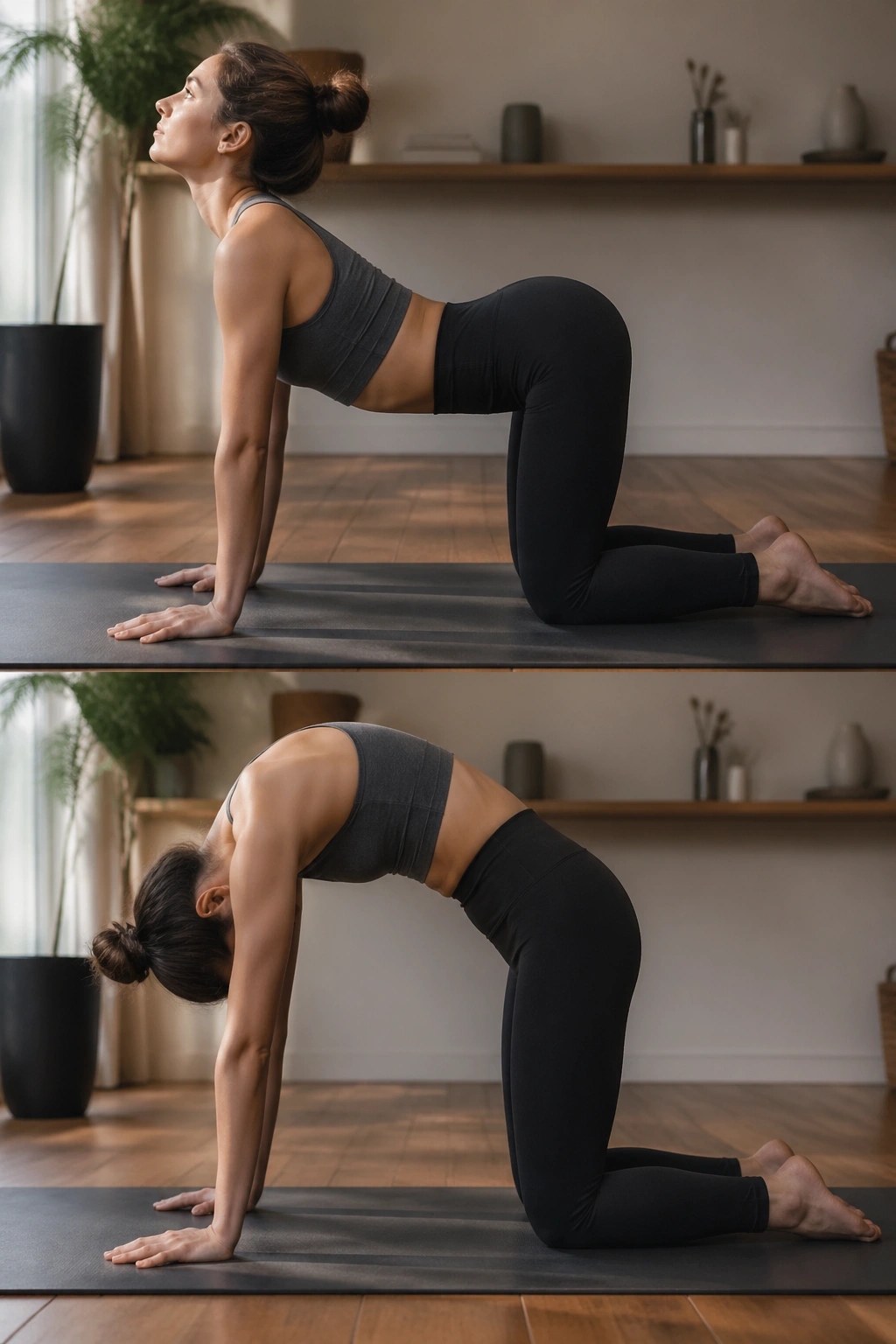
A simple spinal wave can do a lot when your midsection feels tight. Cat-Cow is one of those poses that looks almost too easy, then starts making sense after the third breath.
On the inhale, let the chest glide forward and the tailbone tip up. On the exhale, round the spine and press the floor away. That back-and-forth motion gives the lower belly a break from holding one shape all day, and it often helps the low back stop barking.
Keep the movement small. Tiny waves beat big ones. If the arch in Cow feels pinchy, don’t chase it; just lift the sternum a little and keep the ribs soft. If the round shape in Cat feels cramped, spread the shoulder blades only as far as feels smooth.
I like 6 to 10 rounds, slow enough that you can count the breath without hurrying. If PMS has your neck tight, let the head follow the spine instead of dropping heavily. The goal here is not a performance. It’s a reset.
3. Reclined Bound Angle Pose
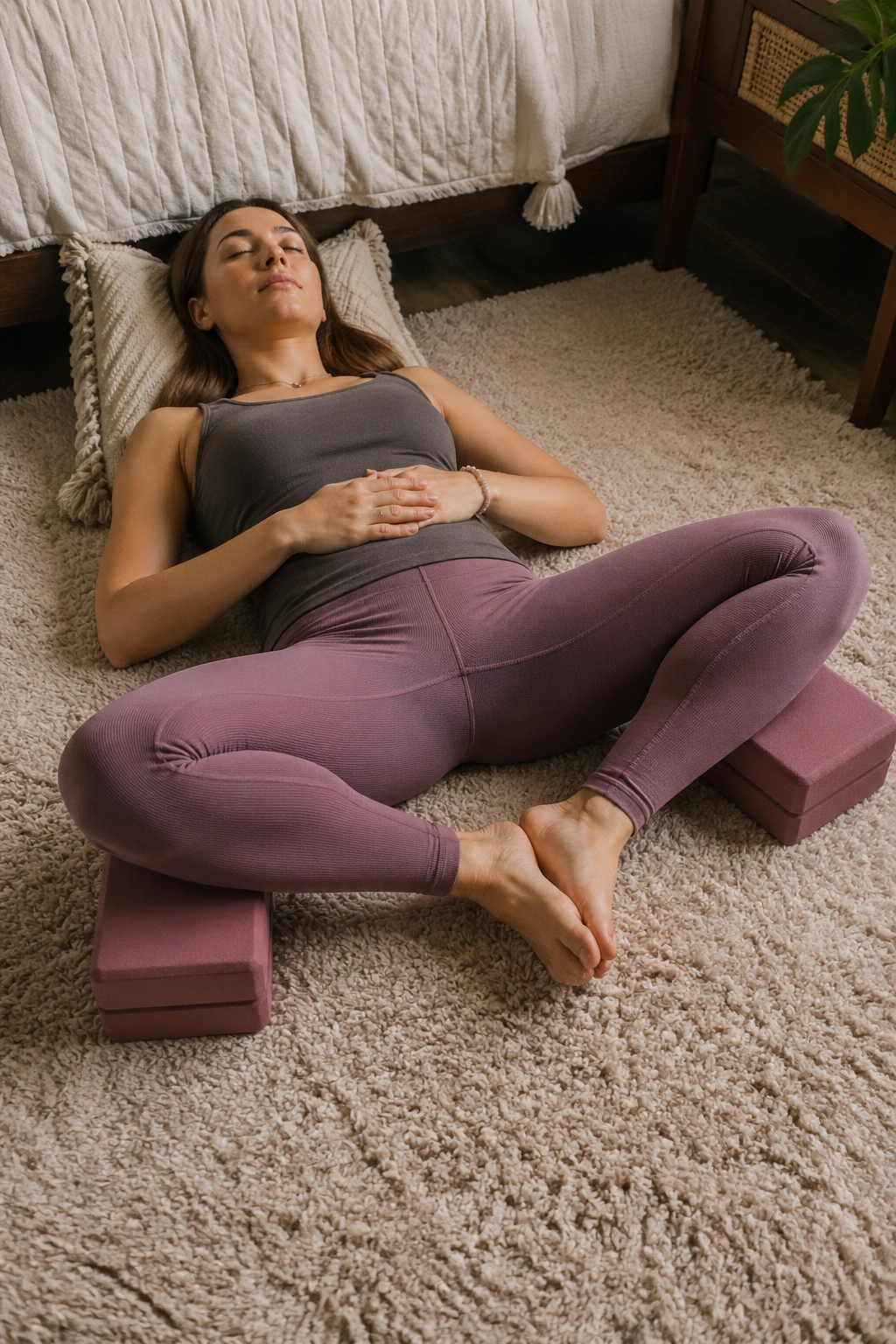
If bloating makes upright positions annoying, Reclined Bound Angle Pose can feel like the mat turned into a couch. It opens the inner thighs and lets the pelvis settle without much effort.
Prop it up the smart way
Lie on your back and bring the soles of the feet together. Let the knees open only as far as they can without strain. Then place blocks, cushions, or rolled blankets under each thigh so the legs are supported instead of hanging in midair.
That support matters. Without it, the groin can grab and the pose starts to feel like work. With it, the front of the hips softens and the lower belly gets room to expand on each breath.
- Place one hand on the belly and one on the chest.
- Keep the feet a little farther from the pelvis if the groin pulls.
- Stay for 1 to 3 minutes, breathing out longer than you breathe in.
Small but useful: if the knees sit much higher than the hips, add more height under the thighs. Hanging legs make this pose harder than it should be.
4. Knees-to-Chest Pose
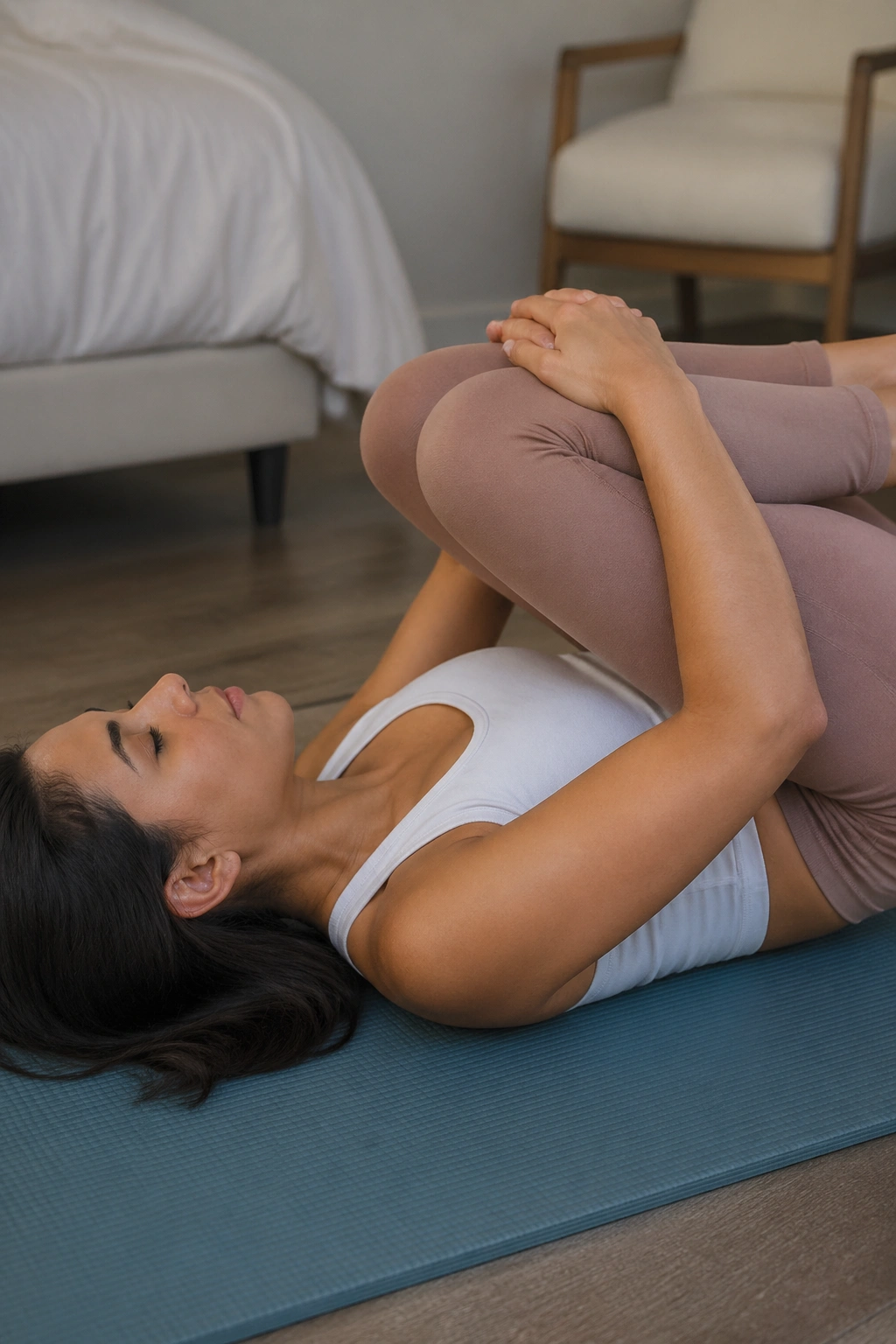
When cramps feel like a fist parked under the navel, this is the simplest place to land. Knees-to-Chest gives the low back a round shape and can take some pressure off the abdomen without asking much in return.
Start with both knees hugged in, then notice what happens. A little side-to-side rock often helps if your sacrum feels grumpy. Some people prefer one knee at a time because the full shape feels too compressed; that’s fine, and on rough days it can be better than forcing the classic version.
What to look for
- The low back should feel broad on the floor, not jammed.
- The breath should stay easy, especially into the side ribs.
- The thighs should come close without pulling hard on the belly.
If the hips are very tight, keep one foot on the floor while you hug the other knee in. That tiny change can make the whole pose more useful. The point is to soften the area around the cramps, not to press into them until they behave.
A slow hold for 3 to 5 breaths on each side can be enough. Then come out carefully. Don’t spring away like nothing happened.
5. Supine Twist
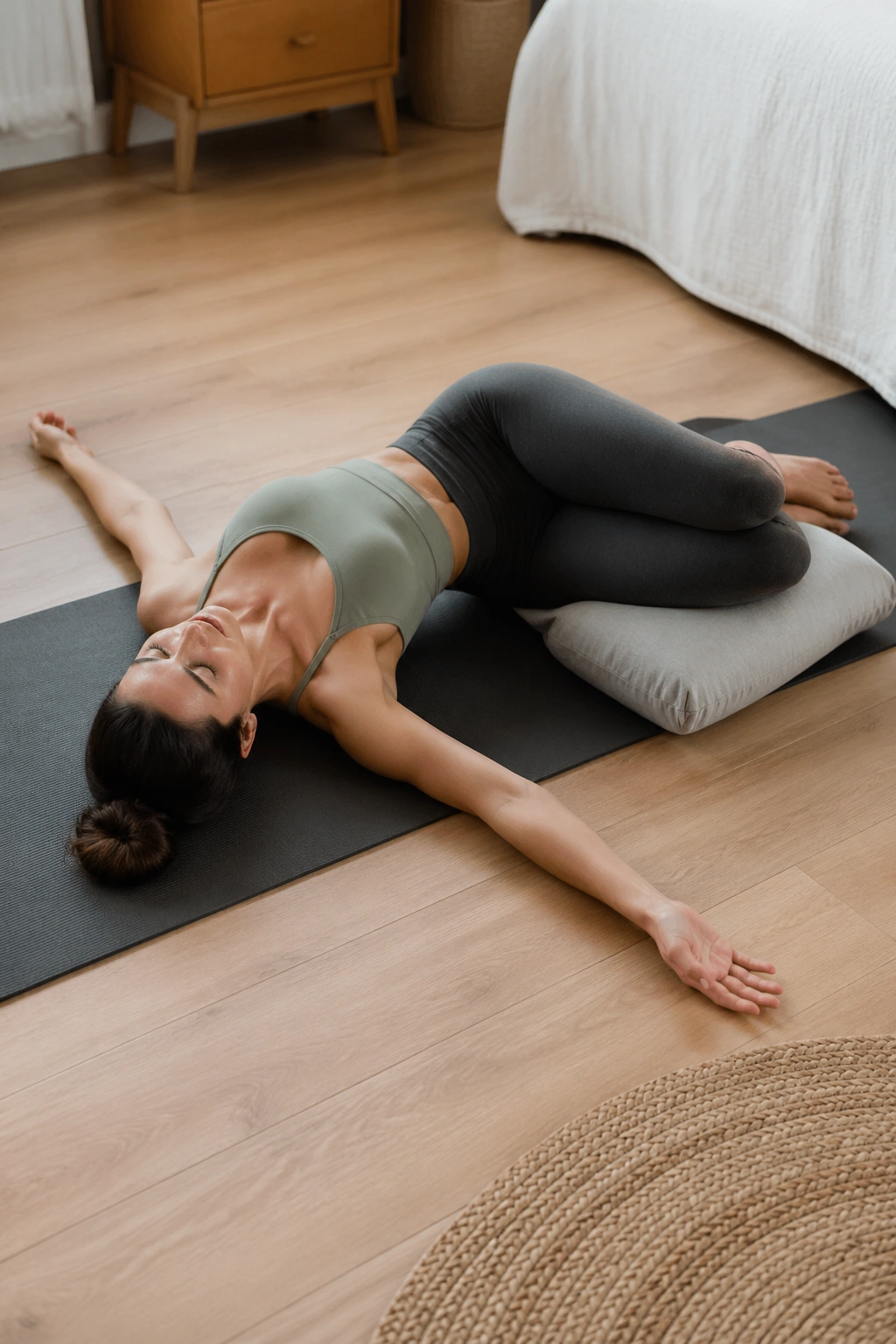
A twist does not need to be deep to count. On period cramps days, a mild supine twist often works better than a dramatic one because the goal is release, not torque.
Lie on your back, bring the knees toward the chest, and let them fall to one side only as far as feels comfortable. Keep a pillow or folded blanket under the knees if they hover too far above the floor. That support keeps the twist from yanking on the lower back.
The shoulders should stay heavy. The chest can open, but the belly should not feel pinched. Breathe into the side of the ribs that’s facing up; that little cue helps the torso widen instead of tightening. Hold for 5 to 8 breaths, then switch.
Less torque. More melt.
If one side feels good and the other side feels cramped, don’t force symmetry. One side may just be enough that day. Human bodies do not always want equal treatment, and honestly, that’s fine.
6. Happy Baby Pose
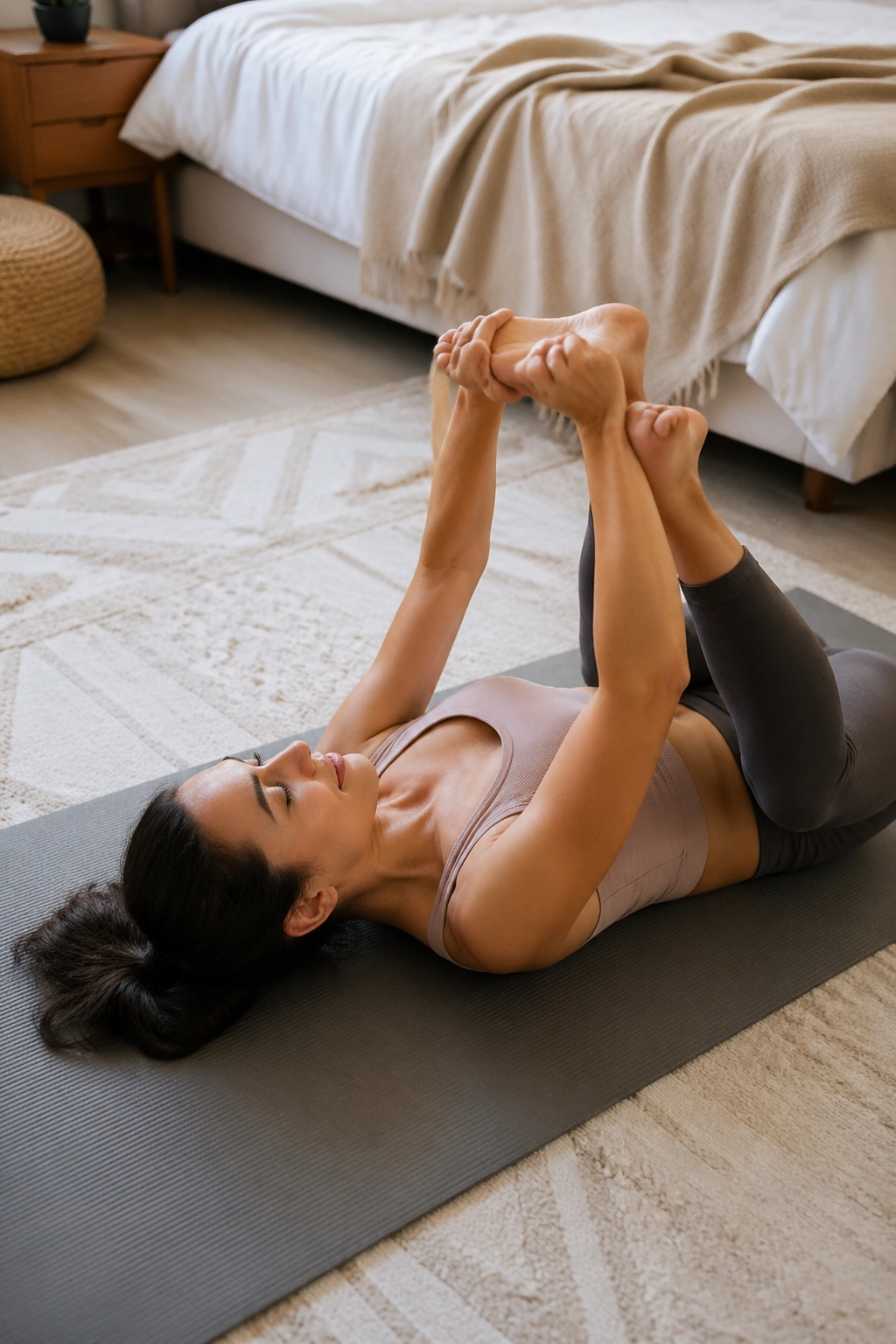
Unlike a hamstring stretch, Happy Baby goes after the sacrum, hips, and lower back at the same time. That makes it a smart choice when cramps seem to travel into the pelvis and you want a pose that feels open without becoming intense.
The wide-kneed version is popular, but the gentler version is often the one that helps more. Hold the backs of the thighs instead of the feet if the groin feels twitchy. Or keep one leg bent and the other foot on the floor for a half version that does not pull as hard.
If you do grab the feet, keep the ankles over the knees, not way in front of them. Pulling the feet too close turns the shape into a hamstring tug-of-war. That is not the point. You want a soft opening through the inner legs and a little roomy feeling across the pelvis.
This pose suits people who carry PMS tension in the hips or who feel a dull ache across the low back. It is less helpful if your knees dislike deep bending. In that case, stay with the half version and let the shape be smaller.
7. Standing Forward Fold
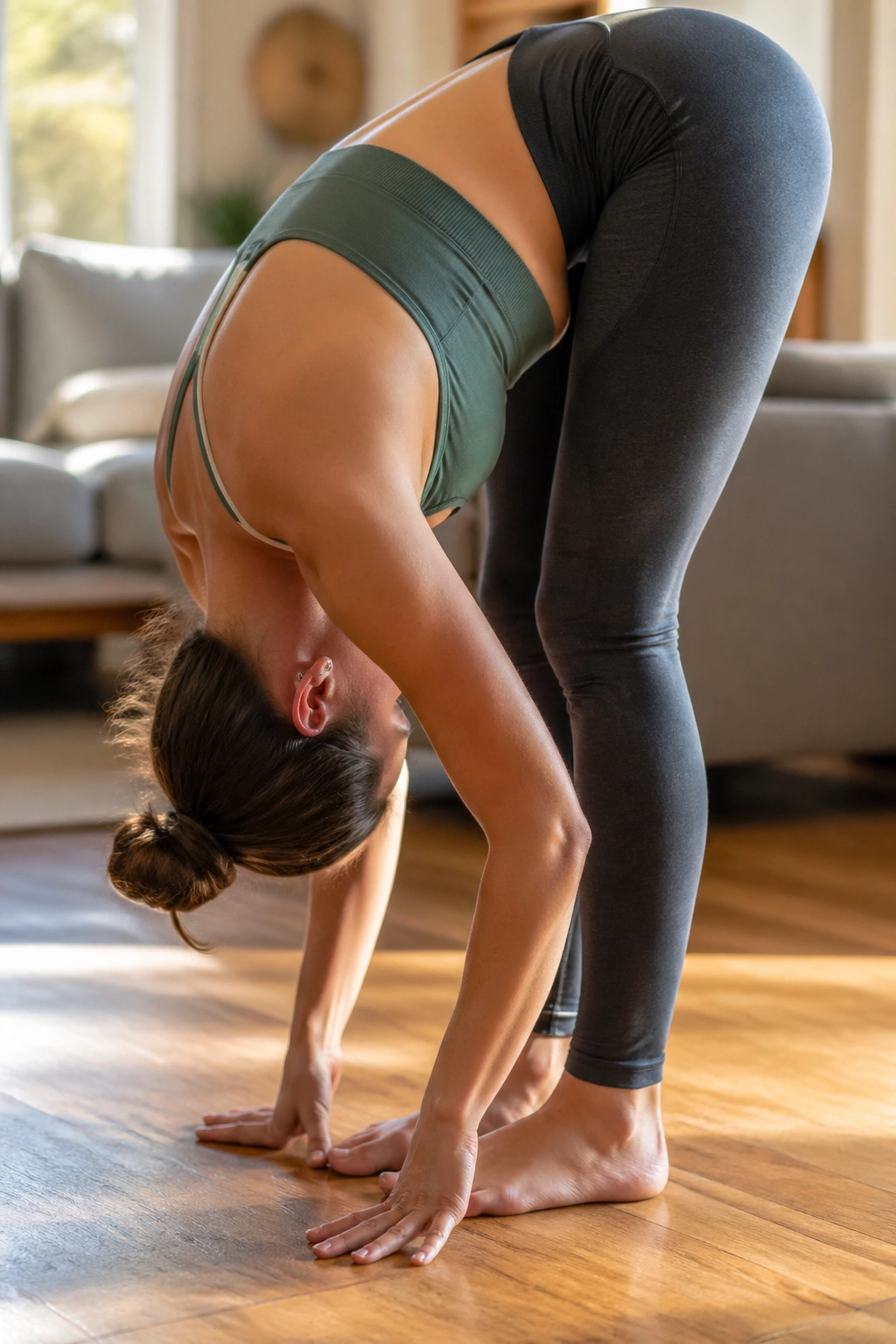
Standing folds are underrated on PMS days, mostly because people do them wrong. Done well, they feel like a quick unload for the back, shoulders, and head.
What makes it work
A bent-knee fold is usually better than a straight-legged one. Stand with the feet hip-width apart, soften the knees, and hinge from the hips until the hands can reach the floor, a block, or a chair seat. Let the head hang only if that feels calm, not dizzy.
- Keep weight evenly spread through the feet.
- Bend the knees more if the low back tugs.
- Rest the forearms on a chair if the torso feels too heavy.
The reason this pose helps is simple: it lets the body stop holding itself up for a moment. That can be a relief when bloating makes your midsection feel rigid and your lower back starts overworking to compensate.
If you feel lightheaded, come out slowly and place both hands on your thighs before standing upright. No rush. A fold that makes you wobble is not a win.
8. Low Lunge with Support
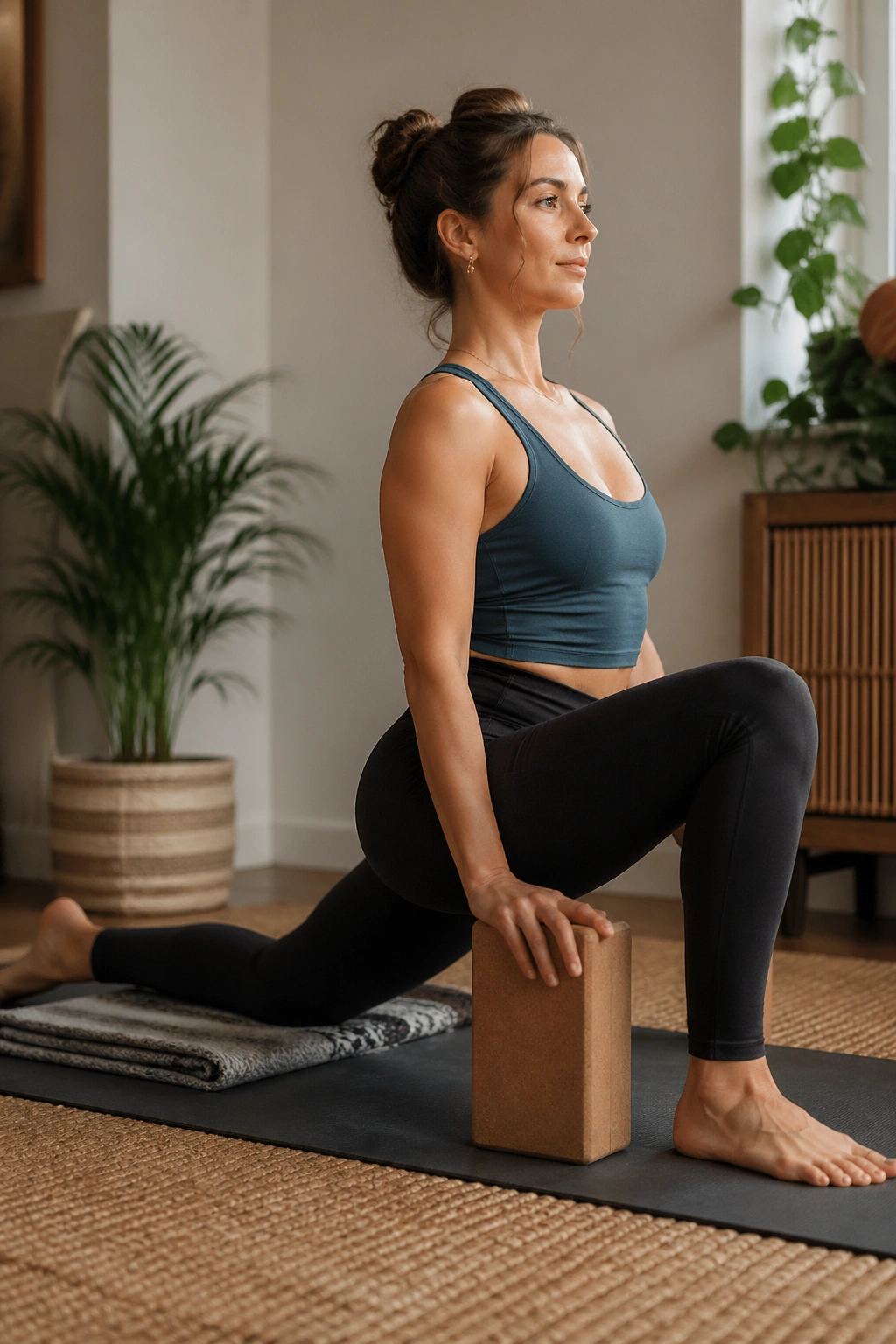
If your cramps come with tight hip flexors from sitting, this pose can change the whole feel of the pelvis. Low Lunge with support lengthens the front of the back leg and often eases the low back at the same time.
Set the back knee on a folded blanket, not a hard floor. Bring the hands to blocks or to the front thigh, and keep the torso tall enough that you can breathe without gripping the ribs. A tiny pelvic tuck can help, but do not squeeze the glutes like you’re trying to win a contest.
This is one of those poses where the setup matters more than the shape. If the front knee wants to slide forward and the front hip starts pinching, shorten the stance. If the back leg feels too intense, slide the knee back or reduce how far you sink in.
Hold for 4 to 6 breaths on each side. The stretch should show up across the front of the back hip, not as a sharp pull in the groin. That line matters.
9. Sphinx Pose
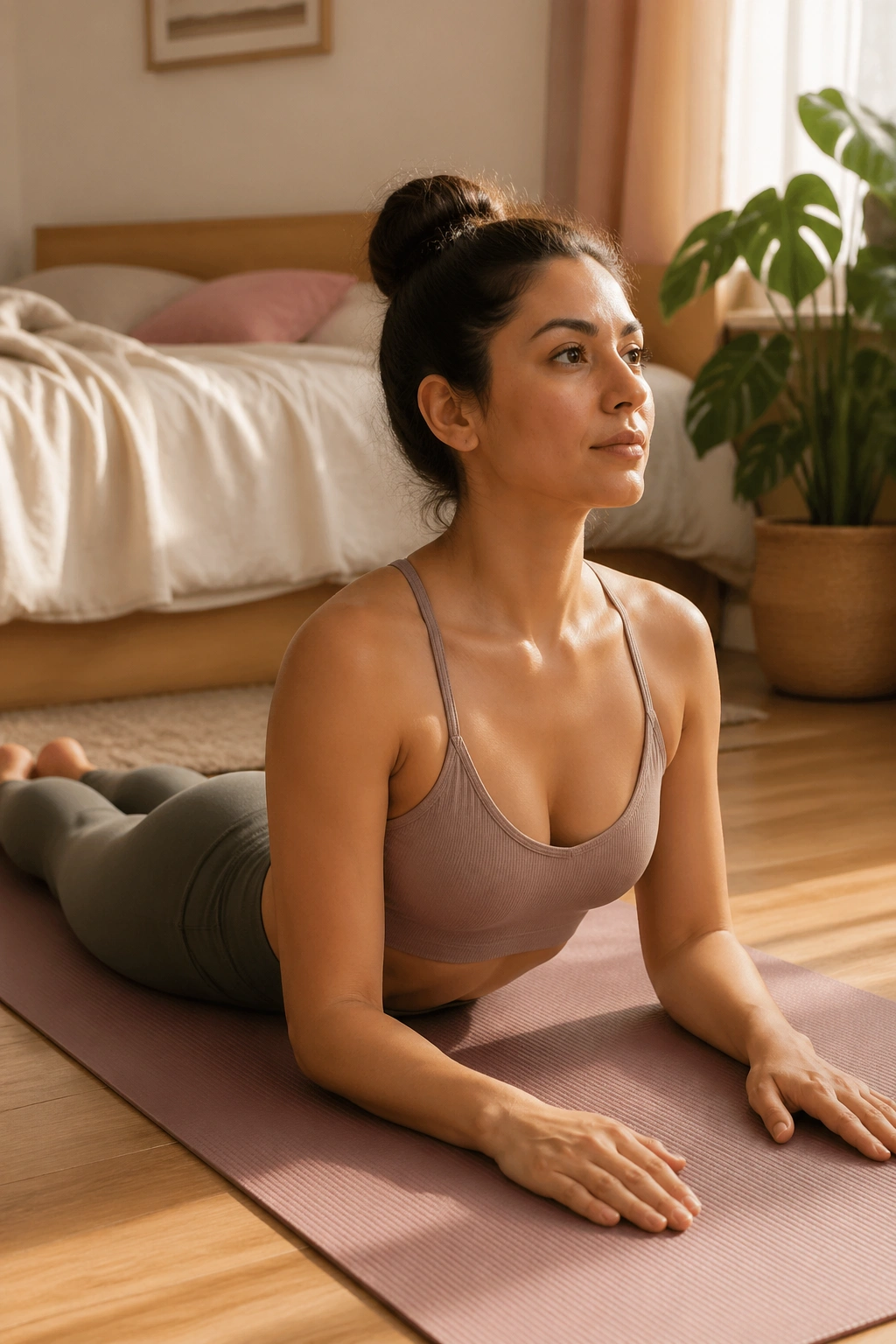
Can a backbend help cramps? Sometimes, yes — if it is low and soft.
Sphinx Pose lifts the chest without asking for a huge arch in the lower back. That gentle extension can feel especially useful when PMS has you slumping inward all day. It’s a nice counter to the rounded shape that comes from sitting, curling, or guarding the belly.
What to feel in the body
Place the elbows under the shoulders or slightly in front of them, then slide the chest forward until the collarbones widen. Keep the pubic bone heavy on the mat. The glutes should stay quiet.
- Breathe into the front ribs, not just the chest.
- Keep the shoulders away from the ears.
- Stop if the lower back feels pinched or jammed.
If the low back complains, move the elbows farther forward or lower the chest a little. A smaller Sphinx is often better than a bigger one. I’d take a calm, low version over a flashy pose that makes the spine clamp down.
This one is especially good if you feel slouched and flat after too much sitting or lying around. Five breaths is enough to start.
10. Thread the Needle
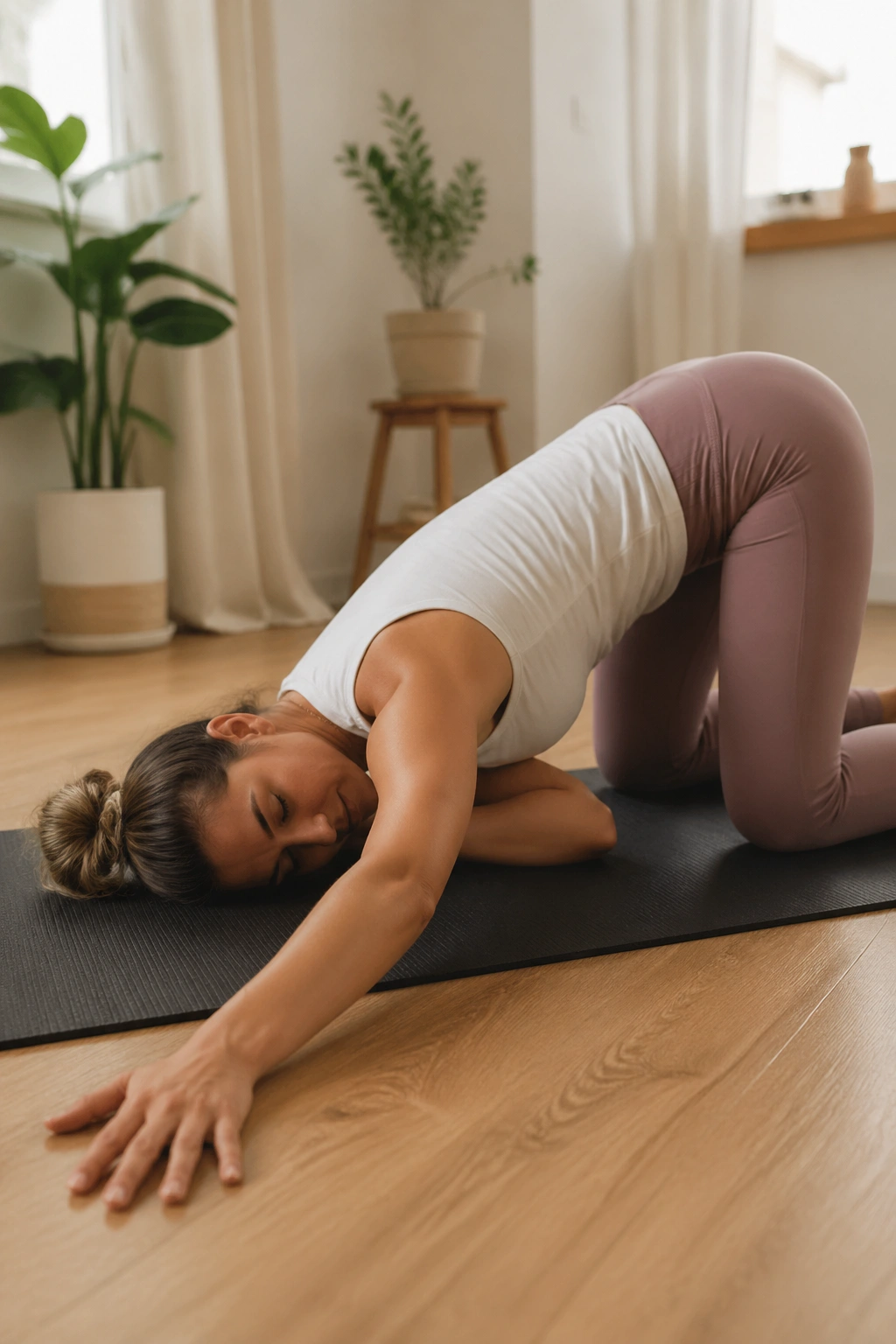
The shoulders and jaw often join the party when PMS hits. Thread the Needle takes aim at that chain of tension without asking you to get fancy.
Start on hands and knees, then slide one arm under the body with the palm facing up or down, depending on what feels kinder. Let the shoulder and side of the face rest on the mat. Keep the hips stacked above the knees if possible. If that feels too much, widen the knees a little and shorten the reach.
The release is usually felt across the upper back, between the shoulder blade and spine. That matters because people often carry period stress higher than they expect. Once the upper back softens, the breath tends to move easier too.
Hold for 4 to 6 breaths on each side, and don’t yank the arm farther just because you can. The deeper shape is not always the better one. A slow exhale and a quiet shoulder can do more than a deep twist.
11. Legs Up the Wall
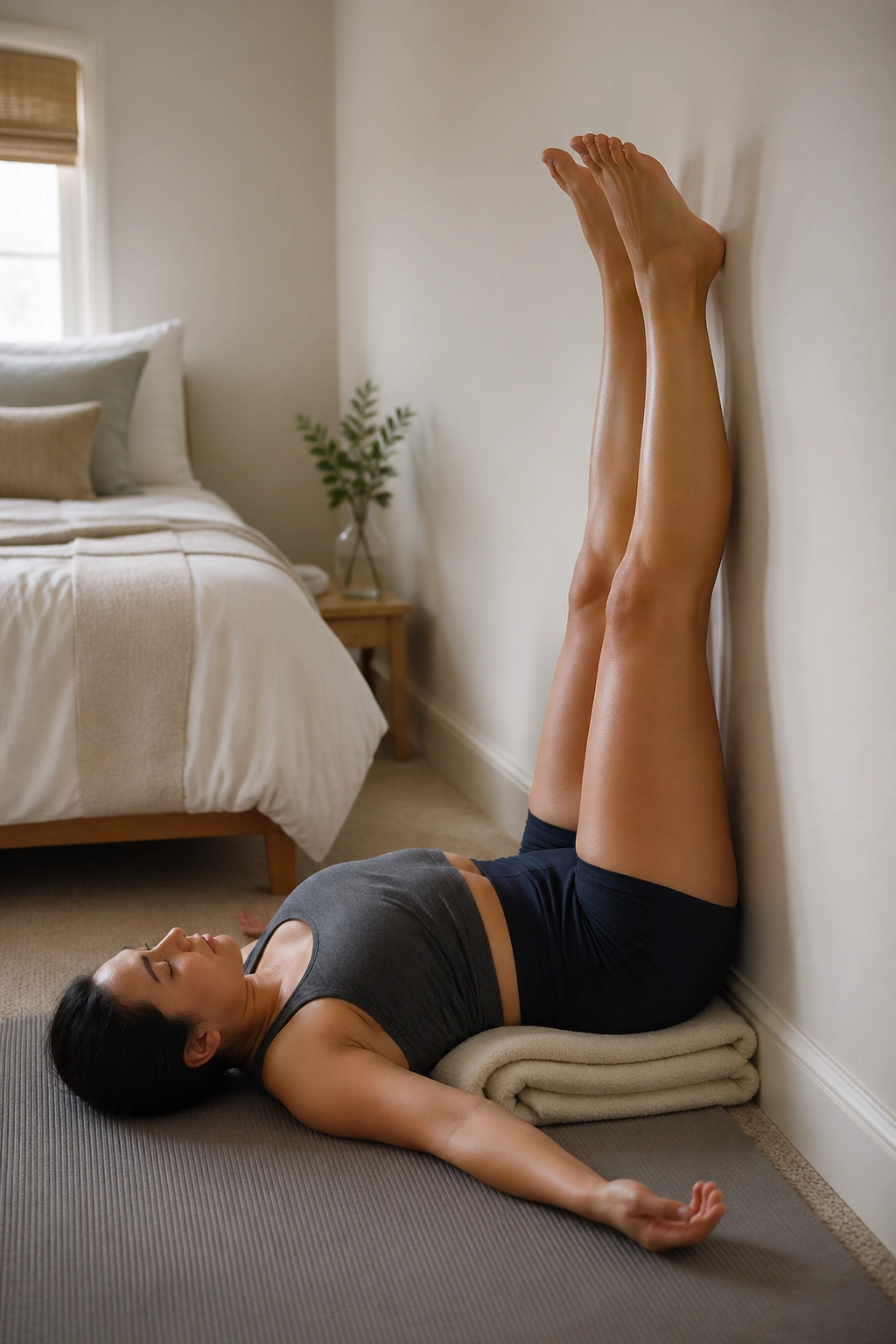
Feet on a wall changes the whole room. The legs stop working, the pelvis gets a break, and the nervous system gets a simpler job.
Lie on your side next to a wall, swing the legs up, and scoot the hips as close as feels comfortable. If your hamstrings are tight, sit a few inches farther away from the wall and bend the knees slightly. A folded blanket under the hips can feel nice, but it is optional.
Do less here.
That’s not a joke. People overdo this pose by arching the back or trying to get perfectly flat. You do not need perfect. You need the feeling of weight leaving the legs and the lower belly loosening as the breath slows down.
Five to 15 minutes works well if you have the time. If a wall position gives you head pressure or feels wrong in the low back, skip it. No pose deserves loyalty.
12. Garland Pose
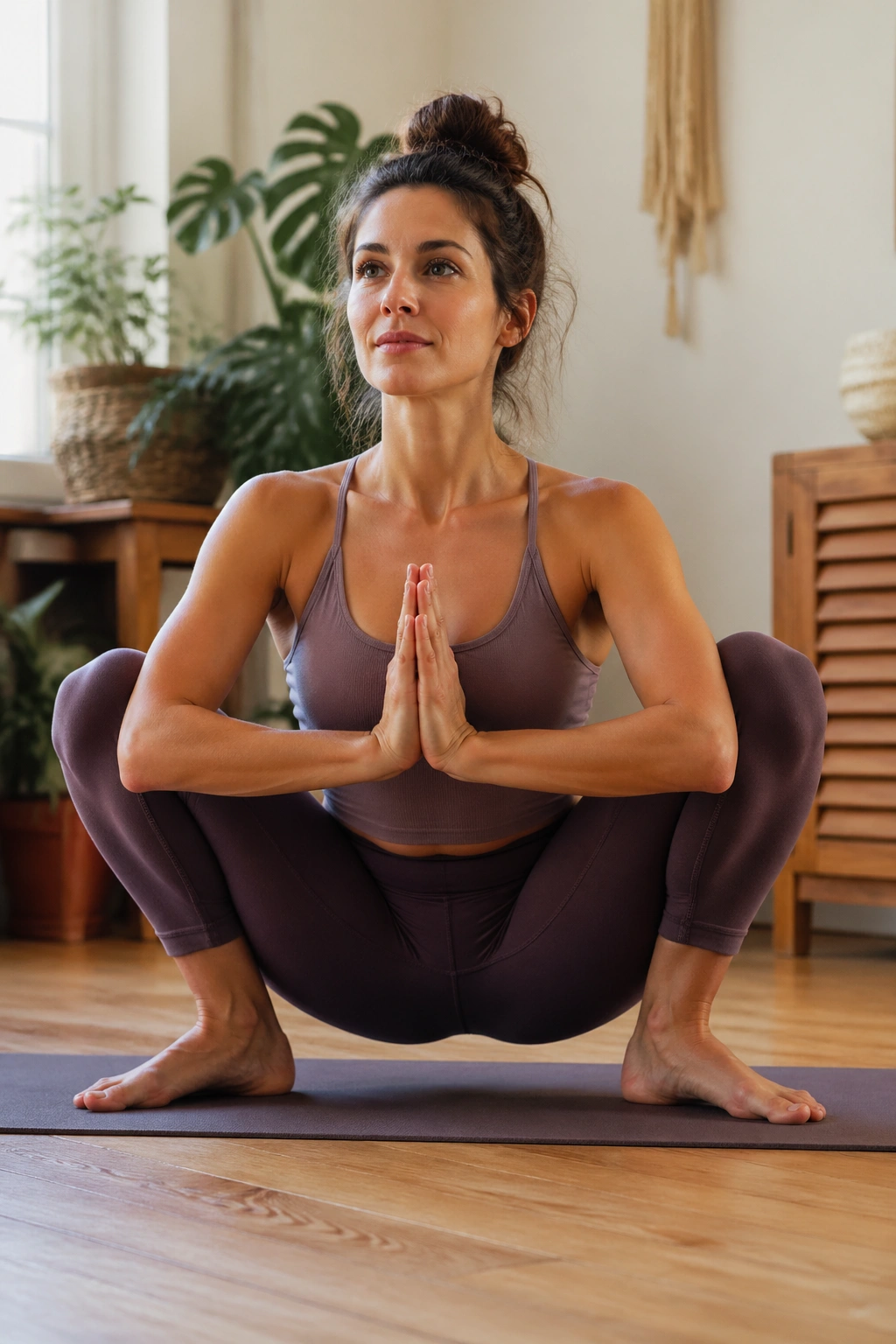
Garland Pose is not about looking graceful. It’s a real-deal squat, and that’s part of why it can feel so good when the pelvis wants space.
Compared with sitting in a chair all day, a supported squat changes the angle of the hips and can give the low back a break. It also brings some gentle opening through the groin and inner thighs, which often feel clenched on crampy days.
Use a block or folded blanket under the heels if they lift. If the ankles fight back, stand near a wall and let your hands press into it for support. Some people also like sitting briefly on a block at the lowest end of the squat rather than hovering all the way down.
The key is comfort through the knees. If the knees feel sharp or unstable, back out. This pose is more about a grounded opening than a deep stretch, and it does not need to be low to be useful.
A few slow breaths here can wake up a sleepy pelvis in a good way.
13. Supported Bridge Pose
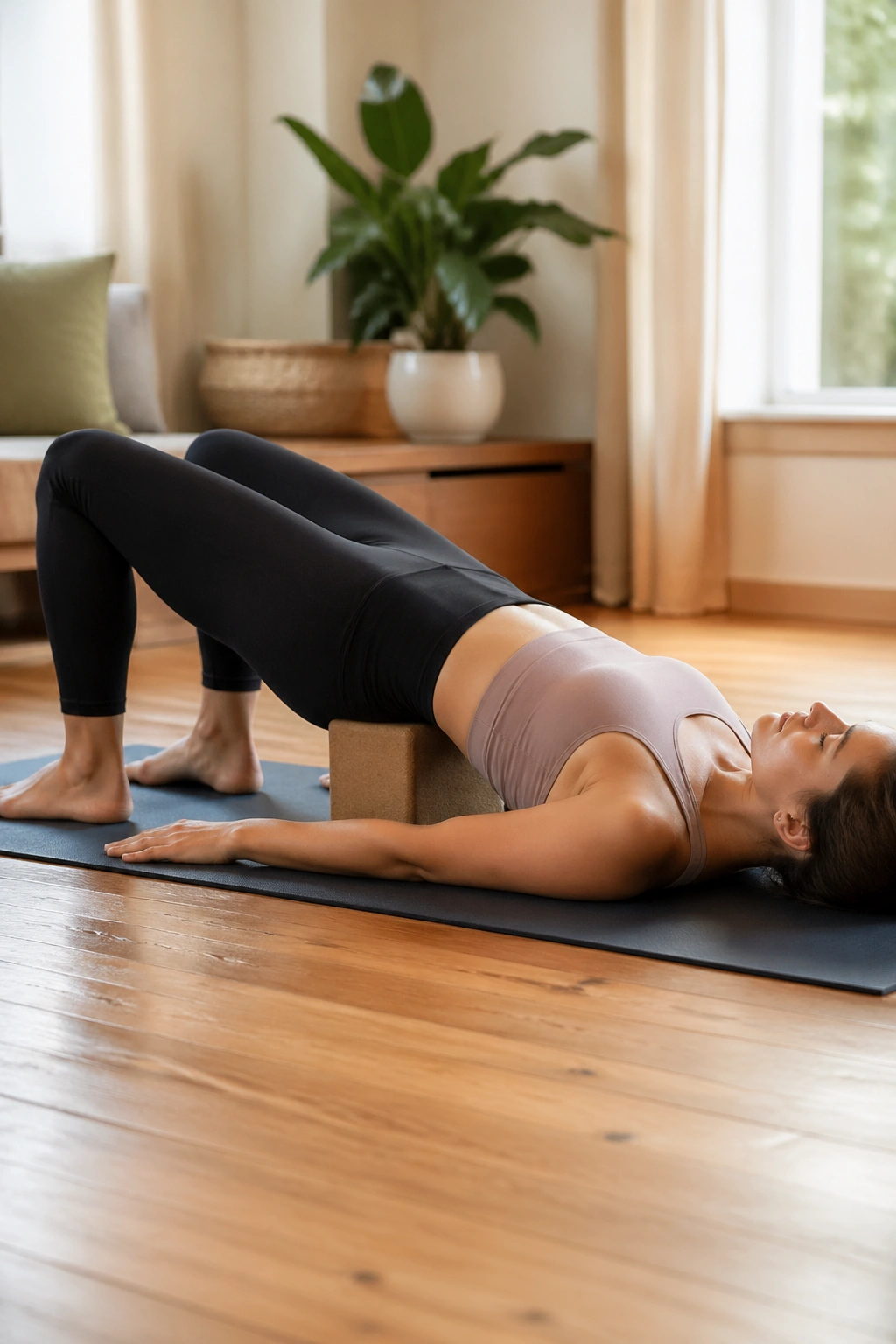
A supported bridge can feel like a tiny reset button for a grumpy low back. It’s one of my favorite yoga poses for period cramps because it opens the front body without asking you to support your own weight.
Set it up without pinching
Lie on your back with the knees bent and feet hip-width apart. Lift the hips just enough to slide a block or firm cushion under the sacrum, not the lower back itself. Then lower onto the support and let the arms rest long by the sides.
- Use the lowest or middle block height first.
- Keep the feet close enough that the knees stack over the ankles.
- If the low back feels compressed, lower the block or skip the pose.
The passive lift can ease a heavy feeling in the pelvis and give the belly a little room. It is different from an active bridge, where the glutes work hard. Here, the support does most of the job, and that’s exactly why it can feel so soothing.
Stay for 1 to 3 minutes, breathing slowly. If the front of the hips opens and the back feels broad, you’ve found the right version.
14. Butterfly Fold
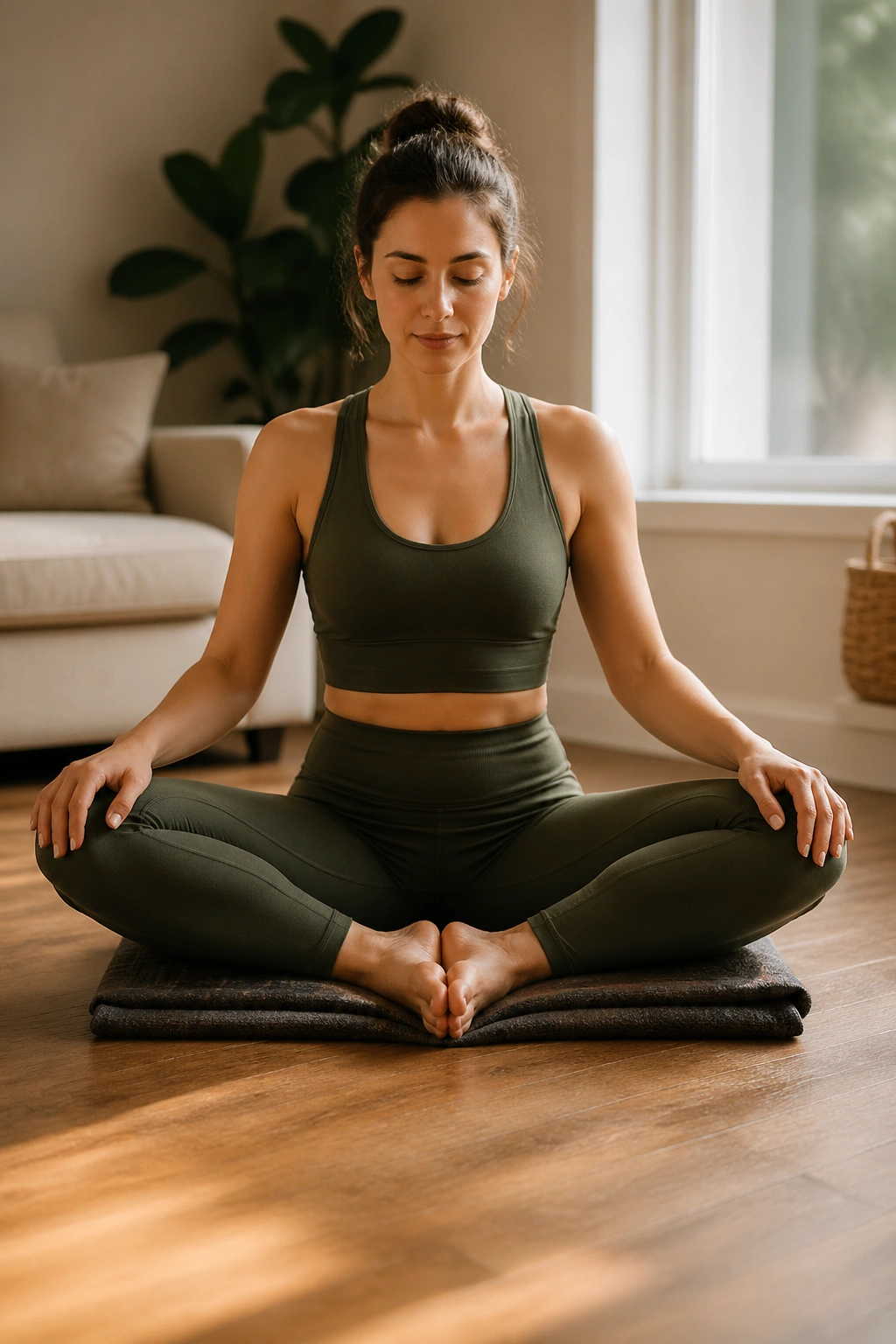
Butterfly Fold is calmer than it looks. Once the feet come together and the knees open, the inner thighs often soften in a way that surprises people.
Sit on a folded blanket if your hips tilt backward. That tiny lift makes it easier to keep the spine long. From there, you can stay upright and breathe or hinge forward from the hips for a deeper version. The second option works best when it feels like a soft fold, not a slump.
Let the knees drop where they want. Do not press them down with your hands. That old habit turns the pose into a test, and period days are already full of tests nobody asked for.
This pose can feel especially nice if bloating has made the lower belly heavy and you want something that opens the pelvis without a lot of pressure. I like it near the end of a practice, when the body is warming down and a slower shape makes sense.
A minute or two is plenty. More is fine if it stays easy.
15. Savasana with Bolster or Pillow
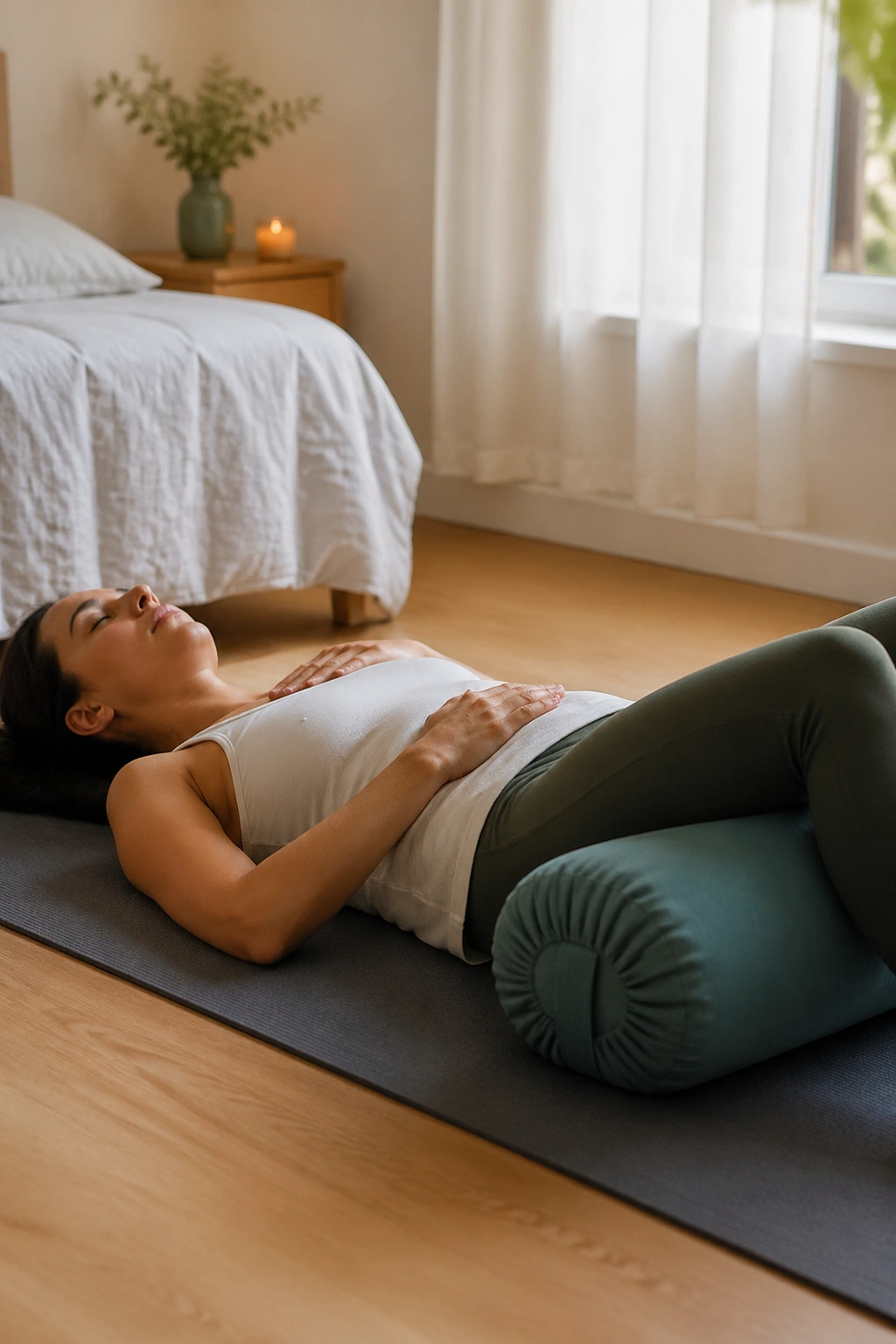
Why save the simplest pose for the end? Because on rough PMS days, the nervous system often needs rest more than it needs more movement.
Lie on your back with a pillow or bolster under the knees so the lower back can release. If lying flat feels too open in the belly, turn onto one side with a pillow between the knees instead. There is no prize for choosing the “proper” version if another one feels safer.
How to breathe here
Let the breath move low and slow. Try an inhale that feels comfortable, then a slightly longer exhale. One hand on the belly and one on the chest can help you notice whether the stomach is finally unclenching or still holding its guard.
- Stay 3 to 10 minutes if you can.
- Keep the jaw loose and the tongue soft.
- If your mind starts racing, count the exhales instead of chasing a blank mind.
This is not wasted time. On period cramps days, real rest can be the thing that makes the rest of the practice work.
Final Thoughts
The best yoga for period cramps is usually the least dramatic kind. Floor-based shapes, support under the knees and hips, and slow exhalations tend to do more than hard stretching ever will.
You do not need all fifteen poses. Pick three, maybe four, and stay with the ones that make the abdomen feel less guarded. Child’s Pose, Reclined Bound Angle, Legs Up the Wall, and Savasana with support are a solid low-effort sequence when energy is low and everything feels a bit raw.
If your cramps are severe, unusual, or paired with heavy bleeding or dizziness, get checked. Yoga can be a comfort. It should not be the thing you have to muscle through.
On the days when your body wants less noise, give it less noise.
