



Kids don’t need a mat full of perfect shapes. They need yoga poses for kids that feel like a game, a dare, a jungle creature, or a tiny bit of showmanship. The minute a practice starts to feel like correction, most children check out. The minute it feels like play, they’re in.
That’s why the best kid-friendly poses are the ones that invite movement instead of demanding stillness. A good children’s yoga flow usually moves from loud shapes to quieter ones, with a few balance challenges tucked in so the body has something interesting to do. I like that rhythm a lot. It keeps the room from going flat.
There’s also a practical side to this. Kids learn body control through repetition, but they usually won’t sit still for a lecture on posture or alignment. Give them a mountain, a tree, a frog, a lion, and a starfish instead, and the lesson lands without much effort. Keep the mat grippy, keep the cues simple, and if something hurts, skip it. No pose is worth a grudge.
1. Mountain Pose
Standing still is harder than it looks.
Mountain Pose gives kids a place to begin without asking for fancy balance or deep flexibility. Feet press into the floor, knees stay soft, the spine grows tall, and the arms can rest by the sides or reach up like the top of a flagpole. The trick is not stiffness. The trick is steady.
What to Feel
A child should feel the whole foot working, not just the toes gripping. Tell them to spread the toes, lift through the crown of the head, and let the shoulders slide away from the ears. If they wobble a little, good. That means they’re paying attention.
Quick cue: ask them to stand like a tree trunk during a tiny windstorm. Not frozen. Just calm and grounded.
Kids can repeat this pose between other shapes whenever they get wiggly. Two breaths here is enough. Five is generous.
2. Star Pose
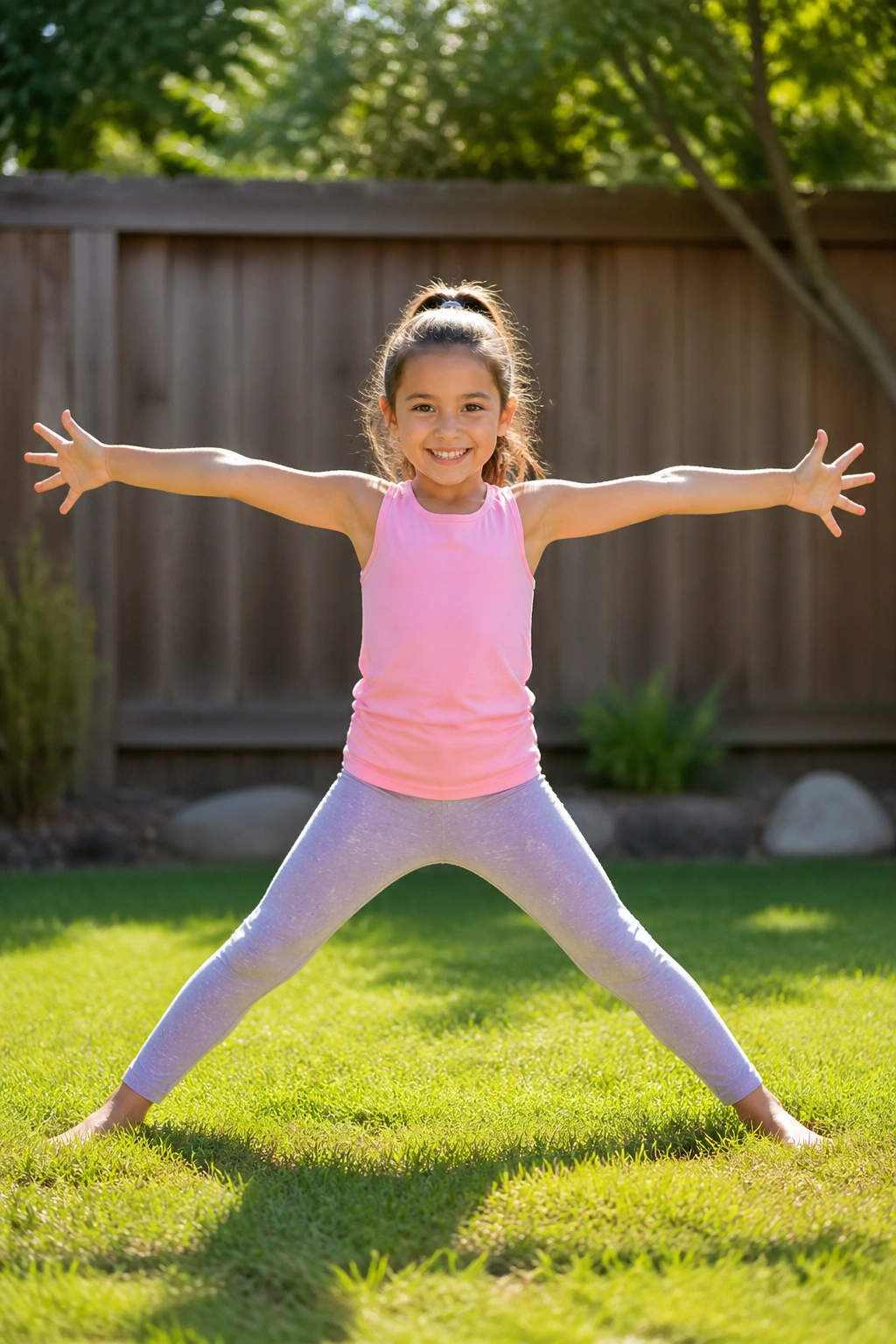
Why do kids light up at Star Pose? Because it gives the whole body a job at once.
Feet step wide, arms stretch out, fingers spread, and the body makes a big open shape that feels like jumping without actually jumping. It’s a great wake-up pose at the start of a session, especially for children who arrive buzzing with energy and need a place to put it. Wide shapes tend to help. They give the brain something obvious to do.
How to Use It
- Stand with feet wider than hips.
- Reach arms out to the sides or slightly up.
- Keep knees soft, not locked.
- Freeze for three breaths, then shake it off.
If balance is shaky, do Star Pose next to a wall. That little support changes everything. Kids often love to make a game out of switching from star to mountain and back again. It’s simple, but it works.
3. Tree Pose
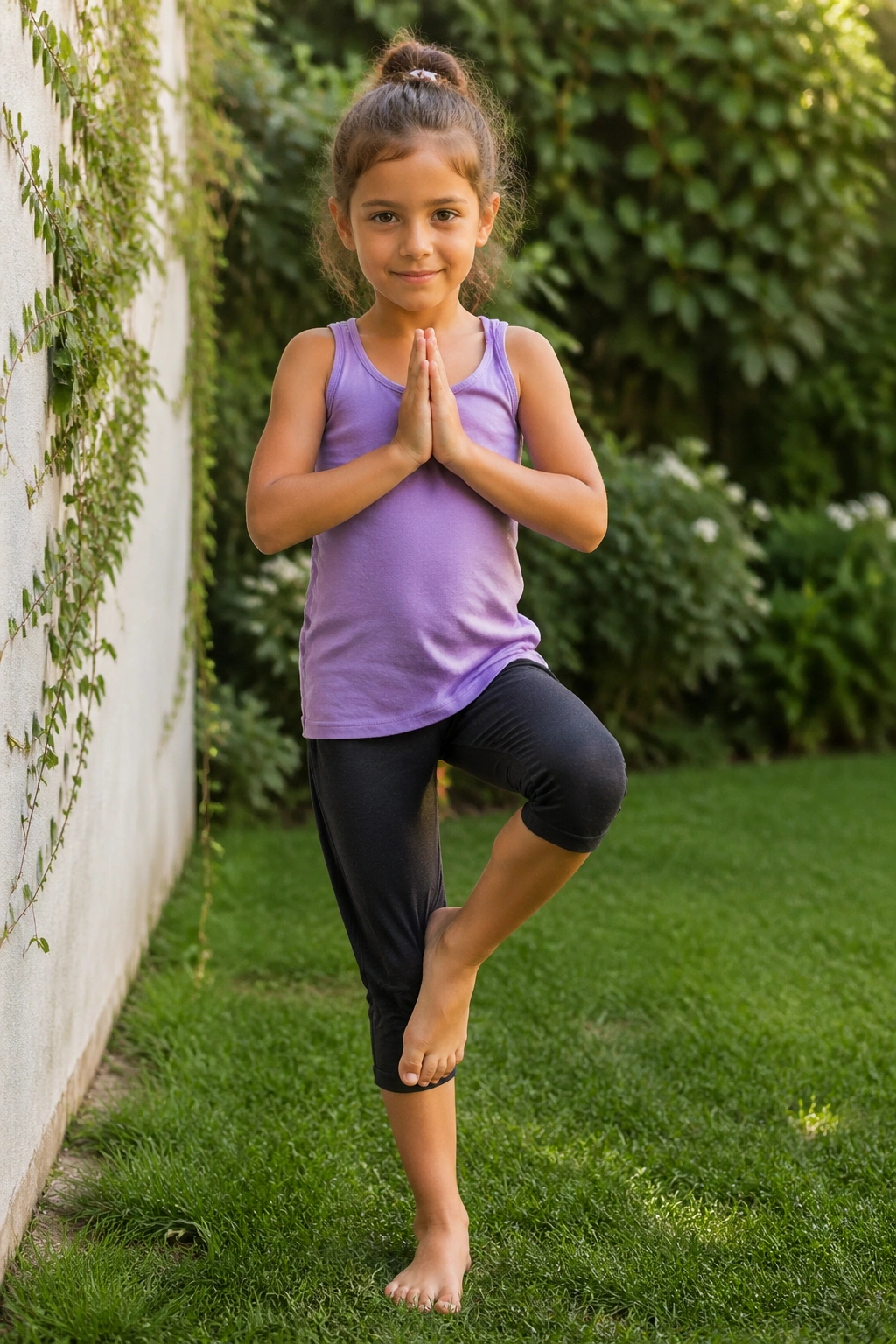
A tree pose with a wall nearby is not a cheat.
One foot roots into the floor while the other presses to the ankle or calf, never the knee. Hands can stay at the heart, reach overhead, or pretend to be branches. The pose teaches balance, but it also teaches patience, which is often the harder part for kids. No one gets the “perfect tree” on the first try. That’s fine.
Keeping It Playful
What Helps Most
- Keep the lifted foot low if balance feels shaky.
- Pick one spot on the wall and stare at it.
- Let the raised knee open to the side only if it feels easy.
- Lower the foot the moment the standing leg starts to wobble hard.
I like this pose because it asks for quiet concentration without becoming boring. A child can say they’re a tree, but they’re also learning ankle control and single-leg strength. That’s a nice trade.
4. Cat-Cow
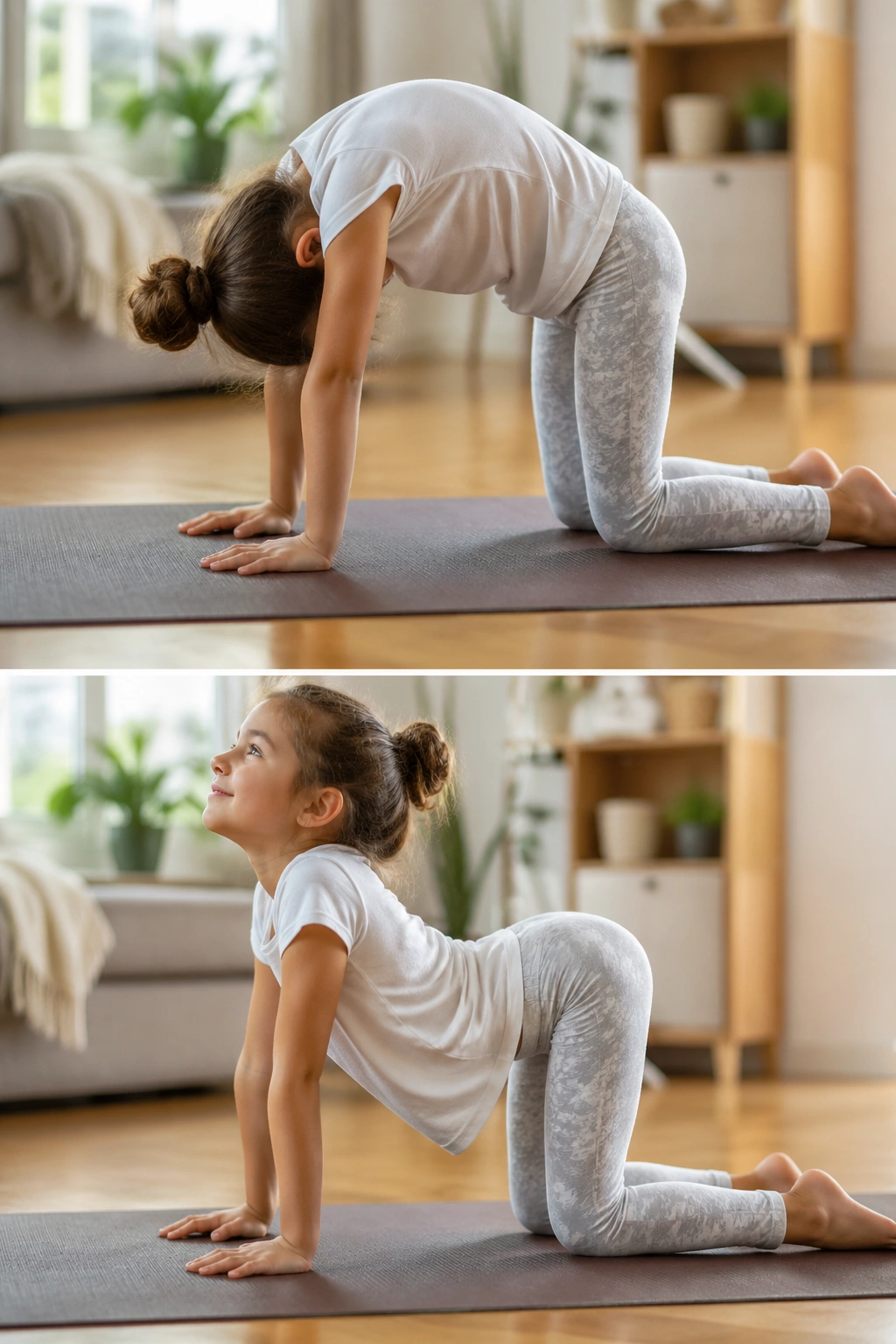
Cat-Cow is the easiest win in kid yoga.
Hands and knees on the mat, back rounds up like an angry cat, then dips down as the chest reaches forward. The motion is smooth, and most kids get it instantly because it looks like animal play instead of an exercise. That matters. A lot. Kids usually understand motion before they understand instructions.
Breathing can match the movement if that feels natural: inhale for Cow, exhale for Cat. If the breathing cue gets in the way, skip it and just move with the body. No one needs to perform a perfect lesson here. They just need to loosen the spine.
A small tip I use often: keep the movement gentle at the neck. The head can follow the spine, but it does not need to whip around. Slow is better than dramatic.
5. Downward Dog
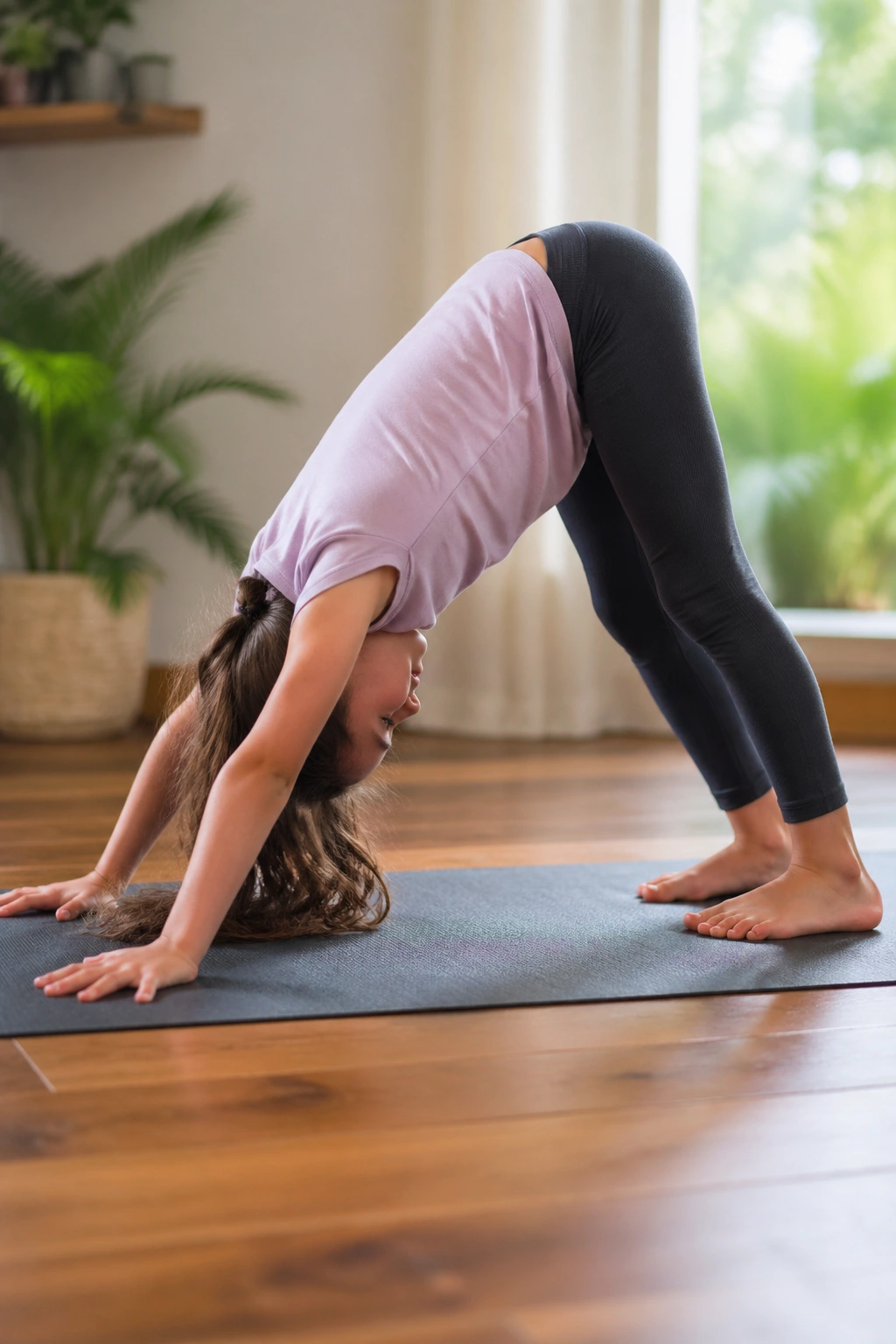
Downward Dog feels like a hallway game.
Hands press into the mat, hips lift high, and the body makes a triangle shape that children can turn into a tunnel, a tent, or a hiding spot. Knees can stay bent. They often should, especially with younger kids or tighter hamstrings. Straight legs are not the goal. Comfort is.
Little Details That Matter
- Spread the fingers wide like starfish.
- Press the floor away with both hands.
- Bend the knees if the heels don’t touch.
- Pedal the feet one at a time for a few rounds.
Kids usually enjoy peeking through their legs in this pose. Let them. It turns a stretch into a bit of mischief. The only thing I’d watch is the wrists. If they start to complain, come down and shake them out before trying again.
6. Cobra Pose
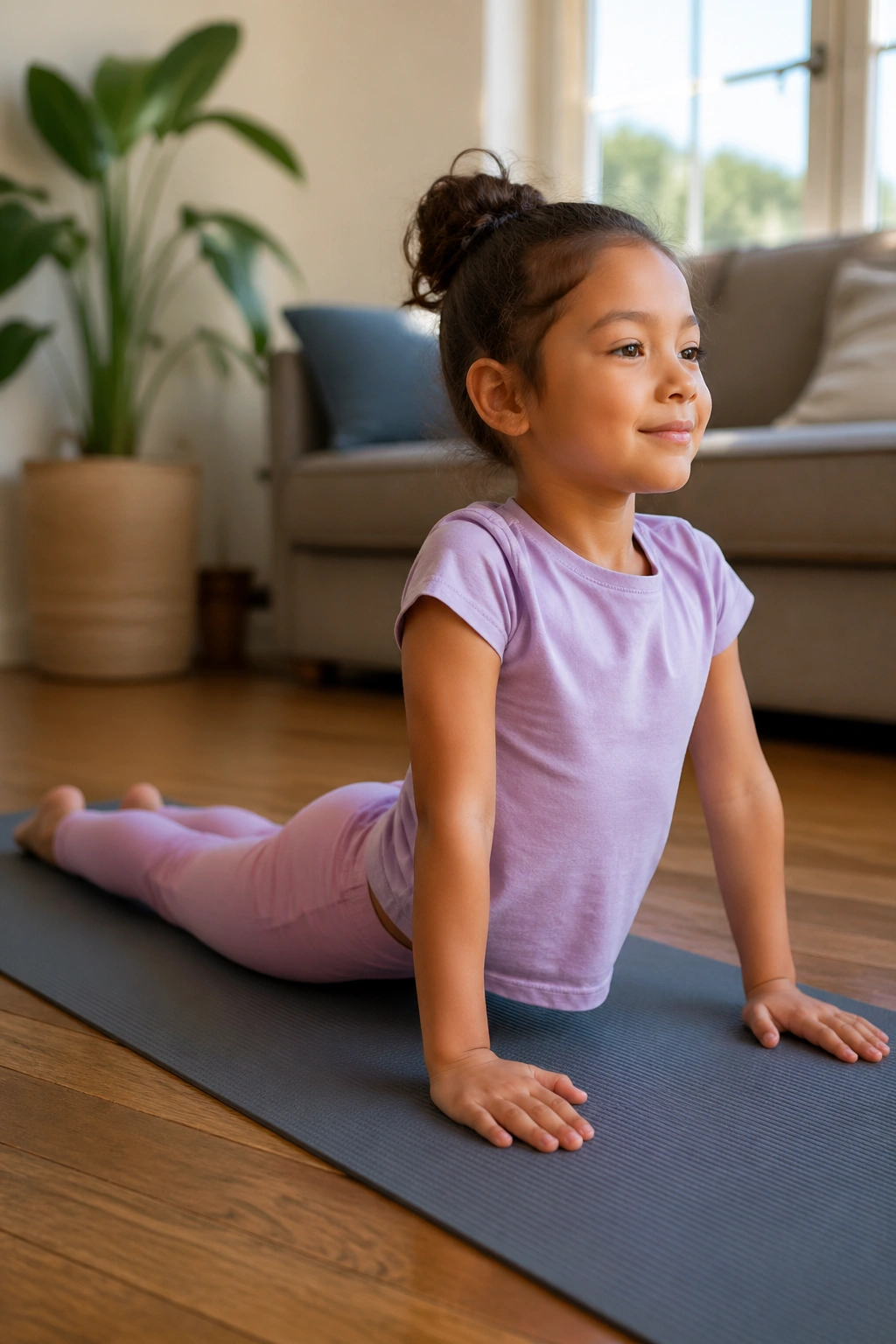
Can a tiny backbend count as a real yoga pose? Absolutely.
Cobra Pose is one of the best ways to open the front of the body without asking kids to do much more than lie down and lift. Hands rest under the shoulders, elbows stay soft, and the chest rises just a little off the floor. The lower ribs stay grounded or nearly grounded. That restraint matters. Big backbends are not the point.
Kids often like Cobra because it feels a bit dramatic without being hard. They can pretend they’re a snake, a seal, or a superhero waking up. Fine by me. I’d rather see a child lift too little than too much. Tiny and clean beats loose and strained.
If the lower back pinches, lower out. If the neck pinches, look forward instead of up. Easy fix. No forcing.
7. Child’s Pose
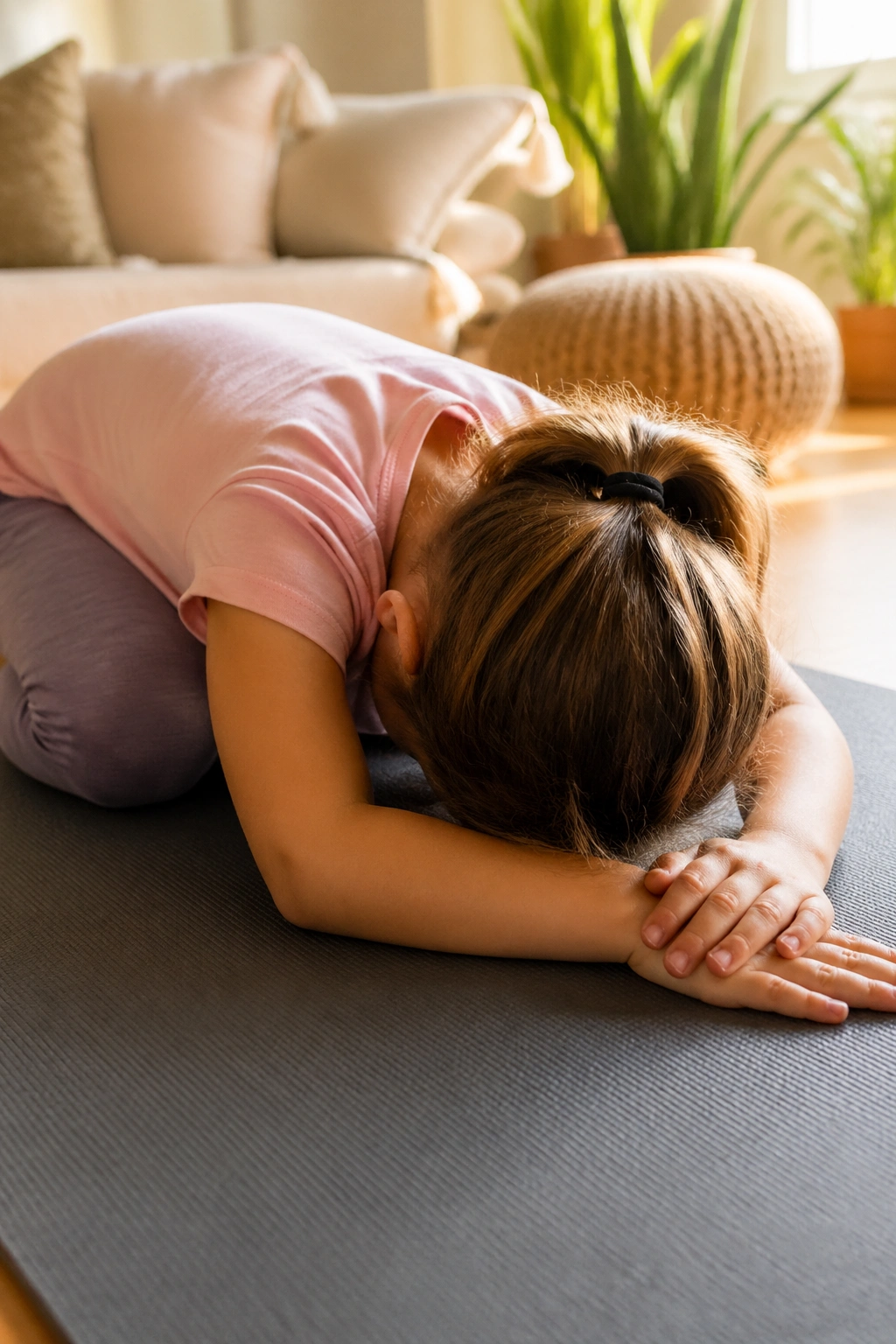
Child’s Pose is the place to land when the room gets loud.
Knees can be together or wide, depending on what feels better in the belly and hips. Arms can reach forward, rest by the sides, or tuck under the forehead. Some kids like to think of it as a cave. Others like turtle shell. I’ve seen both work.
Ways to Make It Feel Cozy
Quiet Options
- Put a folded blanket under the shins.
- Slide a pillow under the chest if the floor feels far away.
- Ask the child to breathe into the back ribs.
- Let the forehead rest on stacked hands.
It’s a rest pose, but not a dead stop. A child can still rock gently side to side or wiggle the hips. That little movement makes the pose less like a command and more like a choice. And children always seem to choose more willingly when the choice is obvious.
8. Butterfly Pose
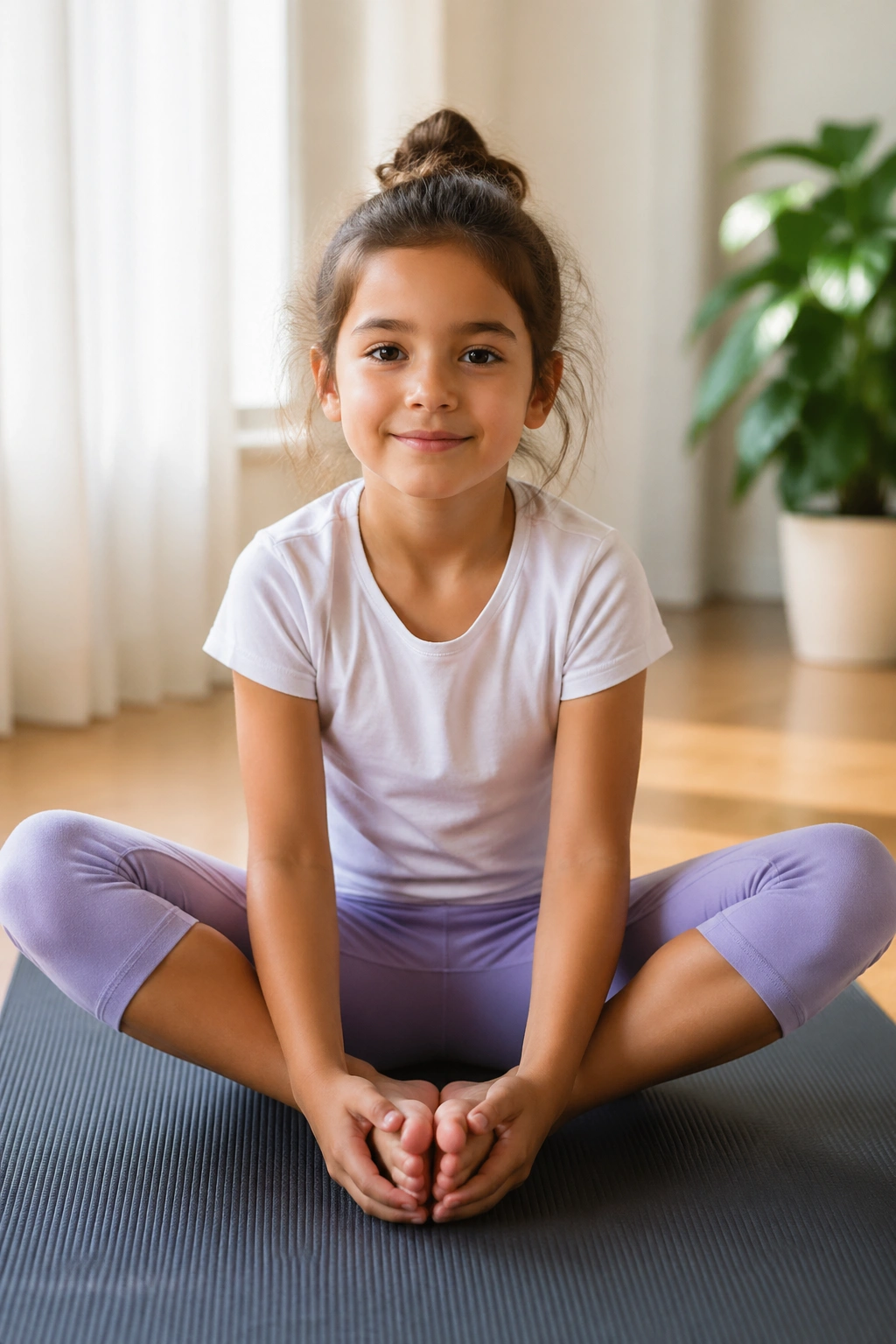
Butterfly Pose works because it never asks for perfection.
Soles of the feet touch, knees fall open like wings, and the legs make a shape that feels friendly rather than strict. A child can sit tall and flutter the knees a few times, then hold still and rest the elbows on the thighs. It’s simple, but it opens the inner legs and gives the hips a gentle stretch.
If a child’s knees sit high, that’s normal. Support under the thighs with folded blankets or a cushion if the floor feels too far away. Nobody earns extra points for forcing the knees down. That advice gets repeated a lot because it matters. Forced stretching is a bad habit.
I also like Butterfly Pose as a quiet reset after bigger standing shapes. The body goes from open and active to soft and centered. That shift is the whole point.
9. Frog Pose
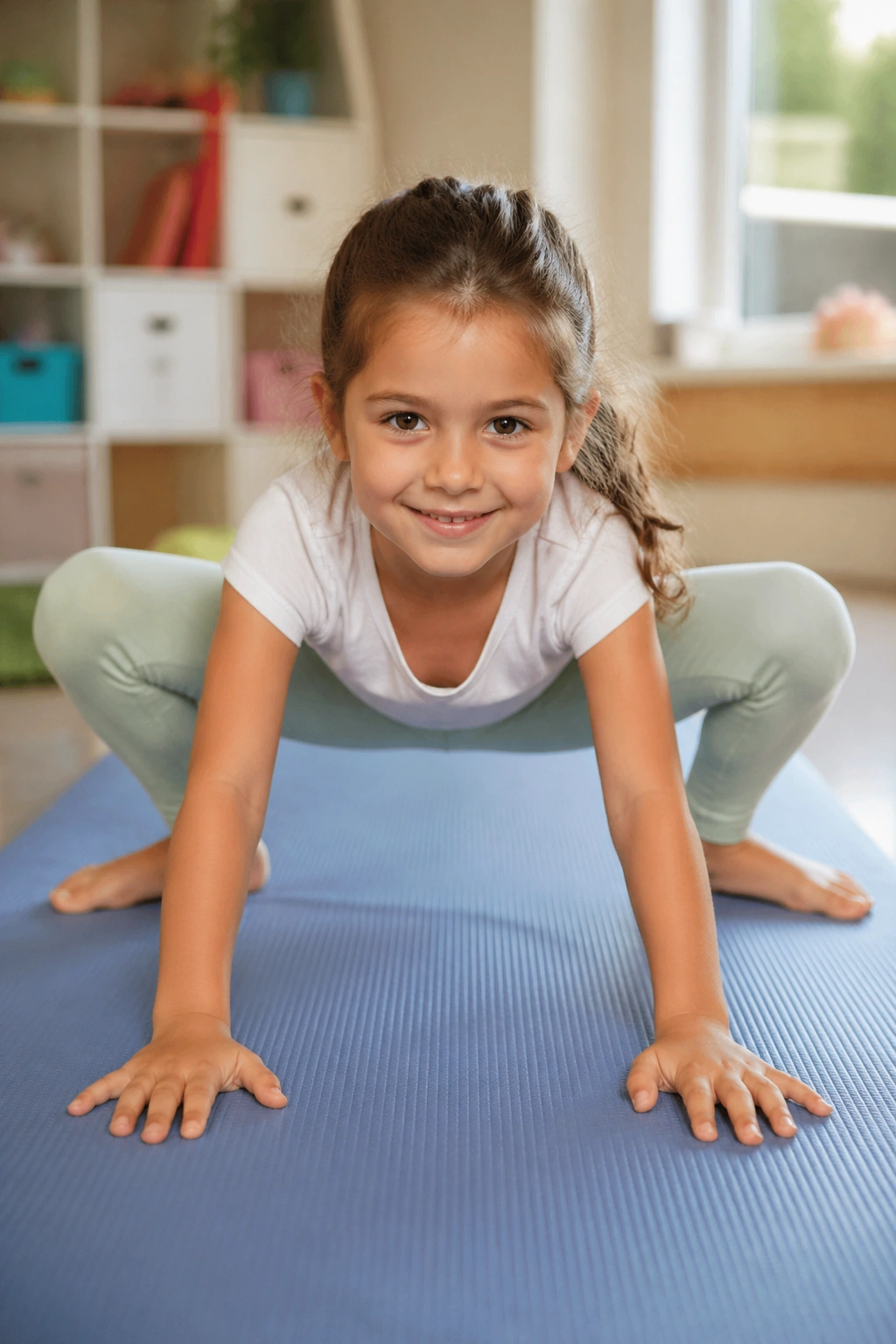
Frog Pose is delightfully ridiculous.
Kids tend to love it the first time they see it, because it looks like sitting in a pond and bracing for a splash. Knees go wide, lower legs angle out, hands rest on the floor or a block, and the hips sink only as far as they want to go. That last part matters. Let the body decide.
A small warning: the knees should feel supported, not twisted. If the ankles or inner knees complain, bring the legs closer together or come out of the pose entirely. Frog is not a pose to bully into submission. It works best when it feels playful and light.
I usually treat this one as a short stop, not a long hold. A few breaths is enough. Then back out, shake the legs, and move on.
10. Bridge Pose
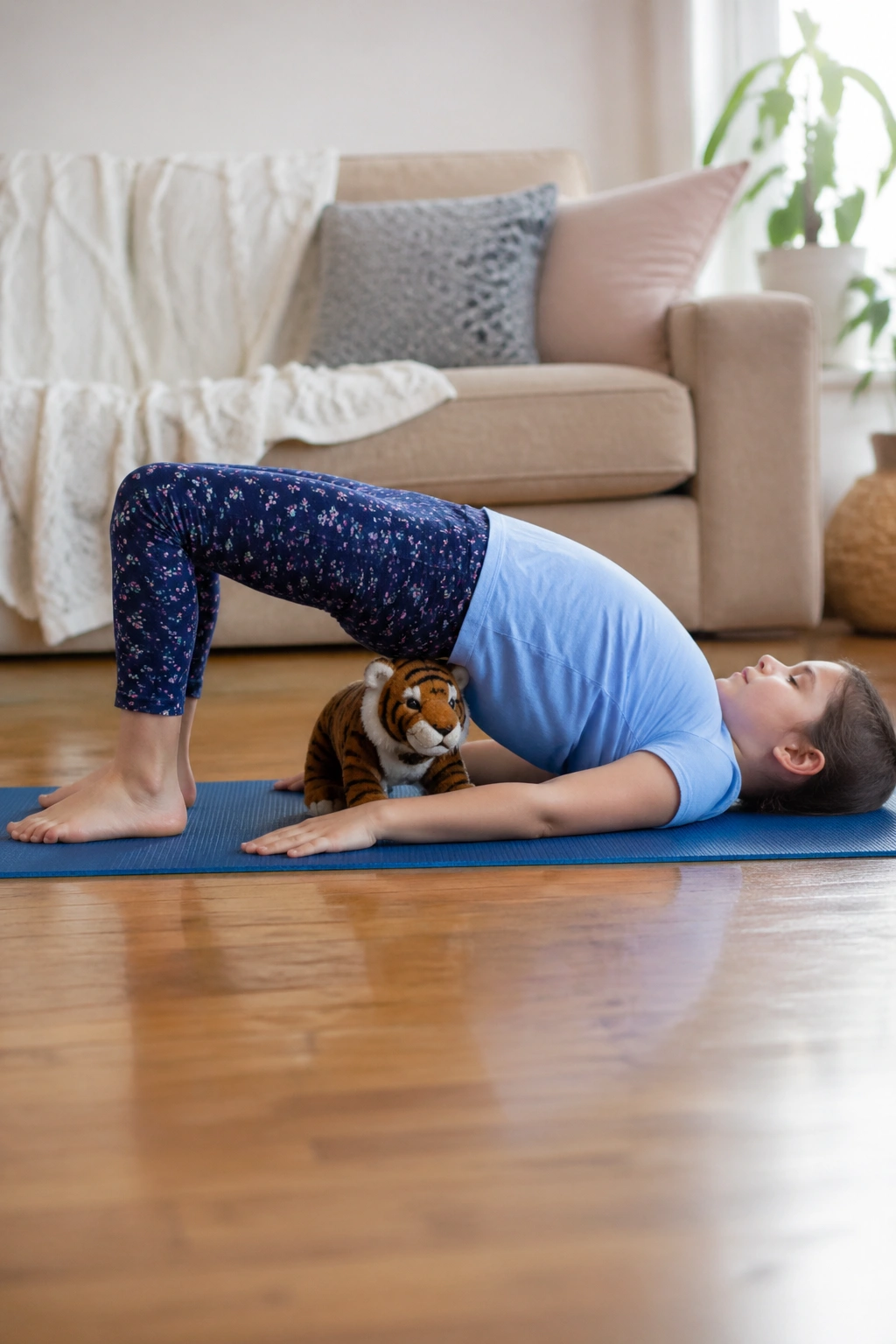
Bridge Pose turns the floor into a little tunnel.
Lying on the back, feet land close enough to the hips that the child can press through the heels and lift the pelvis. The chest stays broad, the neck stays long, and the shoulders do the quiet work underneath. It’s a strong shape, but it still feels like play because the floor is doing half the work.
Make It Safe and Fun
Setup Notes
- Keep the feet hip-width apart.
- Press through the whole foot, not just the toes.
- Lift the hips only as high as feels easy.
- Lower slowly, one vertebra at a time.
A stuffed animal can travel under the bridge, which gives the pose a clear purpose. That little game makes the lift feel less like exercise and more like an invitation. Kids usually remember the game first and the shape second. Good. That’s enough.
11. Tabletop Pose
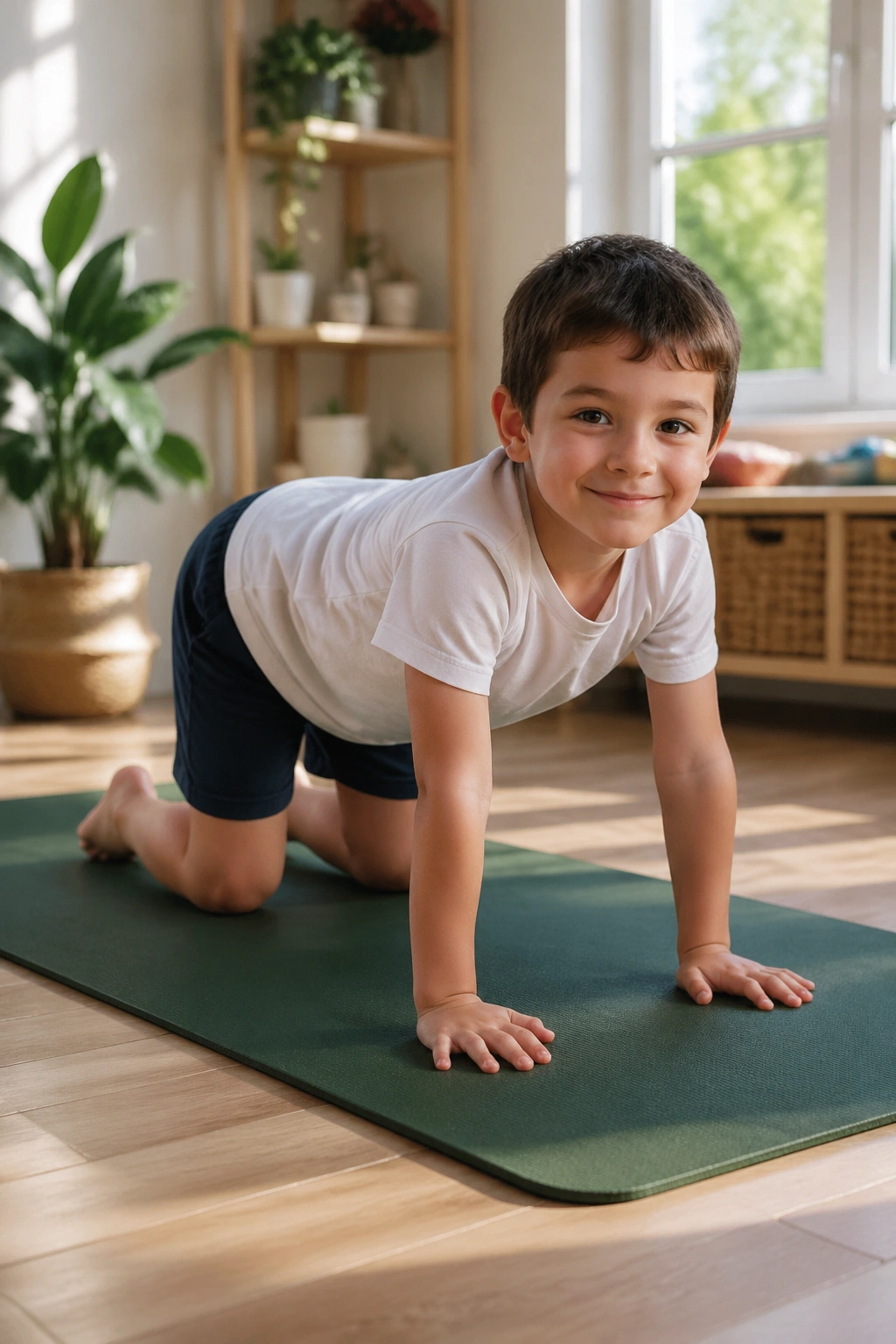
Tabletop Pose is the quiet engine under half the floor poses.
Hands stack under shoulders, knees land under hips, and the back stays flat and awake without being rigid. It looks plain, which is why people skip over it, but I’m not a fan of skipping it. This is the base for Cat-Cow, Bird Dog, and a dozen other playful shapes. If Tabletop feels messy, the rest of the floor work usually does too.
A child can rock forward and back a little here, or tap one knee to the mat while reaching one hand forward. That tiny shifting keeps the pose from turning stale. It also helps kids understand where their weight lives in space, which is a useful skill even if nobody uses that phrase in the room.
If wrists are sore, make fists or place hands on a folded mat. Simple fix.
12. Bird Dog
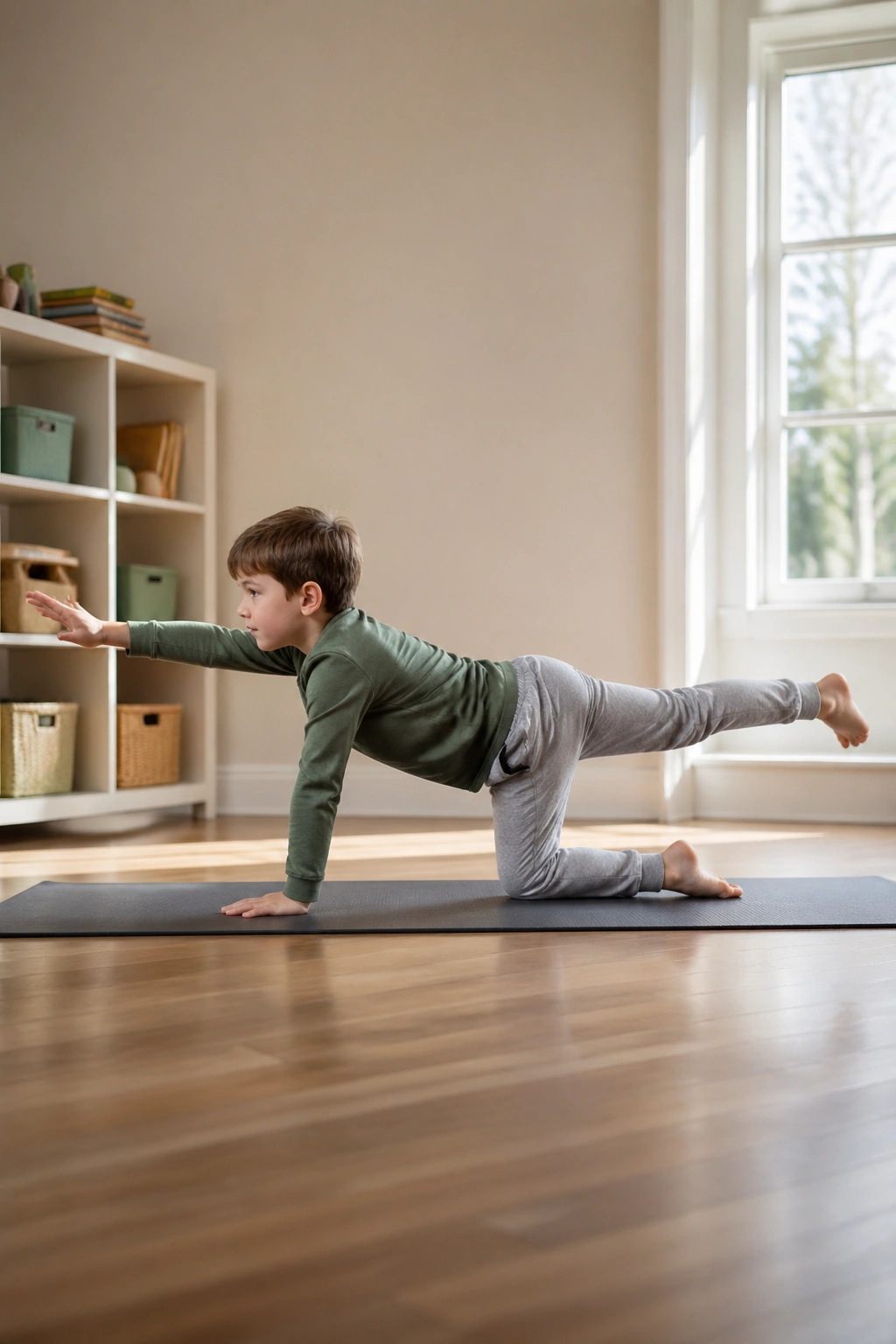
Bird Dog looks silly in the best way.
From Tabletop, one arm reaches forward while the opposite leg stretches back. The torso tries to stay quiet in the middle, which is harder than it sounds and more interesting than kids expect. For many children, the first instinct is to fling everything at once. Slow them down. One piece at a time works better.
Easiest Way to Teach It
- Start by lifting just one leg.
- Add the opposite arm when balance feels ready.
- Keep the hips level, not twisted.
- Hold for one breath, then switch sides.
I like to call this the “spot the bird, point the tail” shape when I’m with kids. The name is enough to make the motion click. No long explanation needed. If the child falls out of the pose, that’s part of the game, not a failure.
13. Airplane Pose
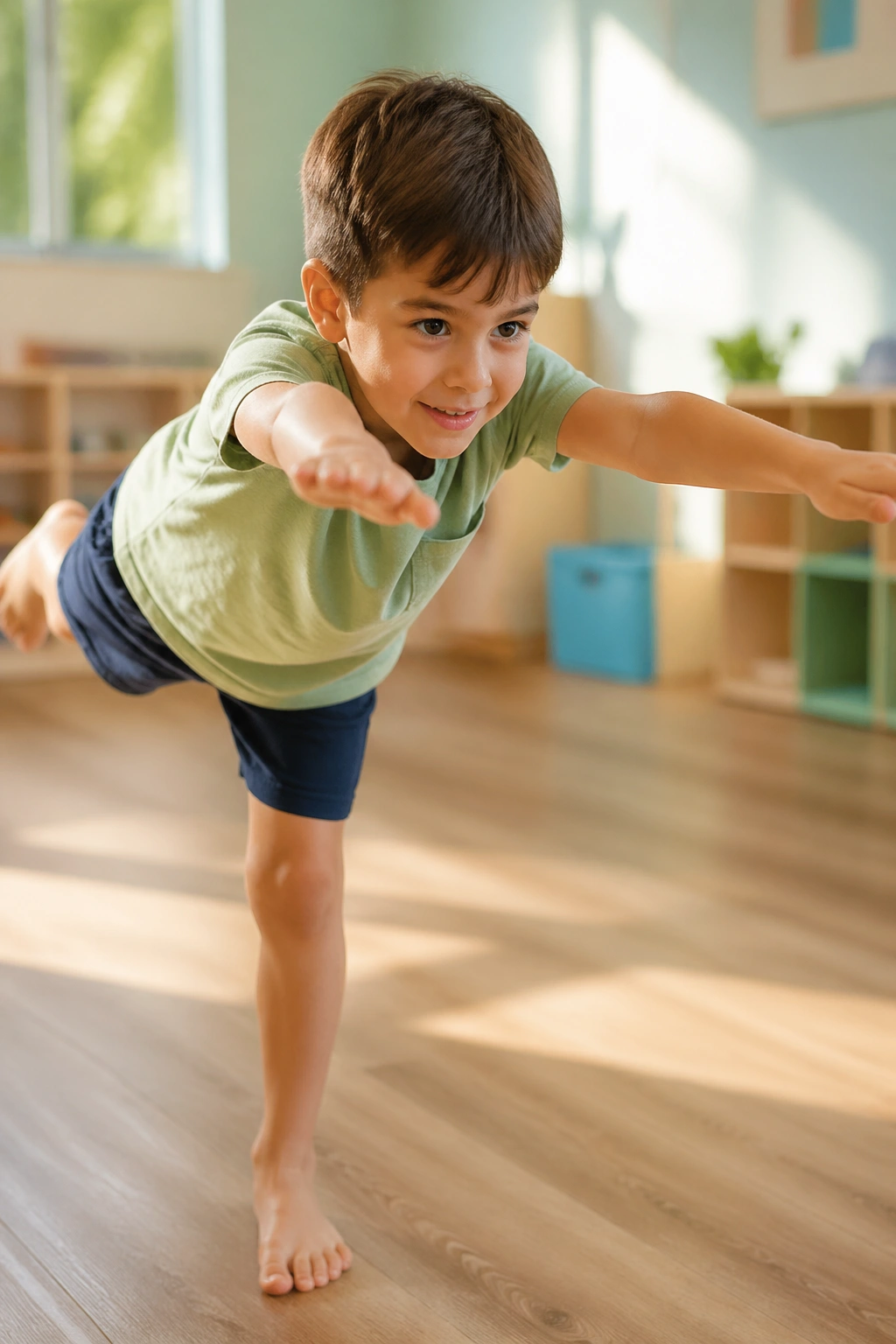
Airplane Pose is the closest thing yoga has to a running start.
The body tips forward from the hips, one leg lifts behind, and both arms stretch out like wings. It’s a balance pose, but it also has a sense of motion baked into it. Kids usually enjoy that. Stillness can be hard. A flying shape feels more forgiving.
The biggest mistake is trying to lift the back leg too high. A small lift is cleaner, steadier, and easier to hold. Eyes can look a little ahead on the floor, not straight down at the toes. That tiny change helps with balance more than people expect. It keeps the body from folding in on itself.
If a child wants to imagine flying over puddles or stepping over a line of toy cars, let them. Imagery helps more than technical words ever will.
14. Warrior I
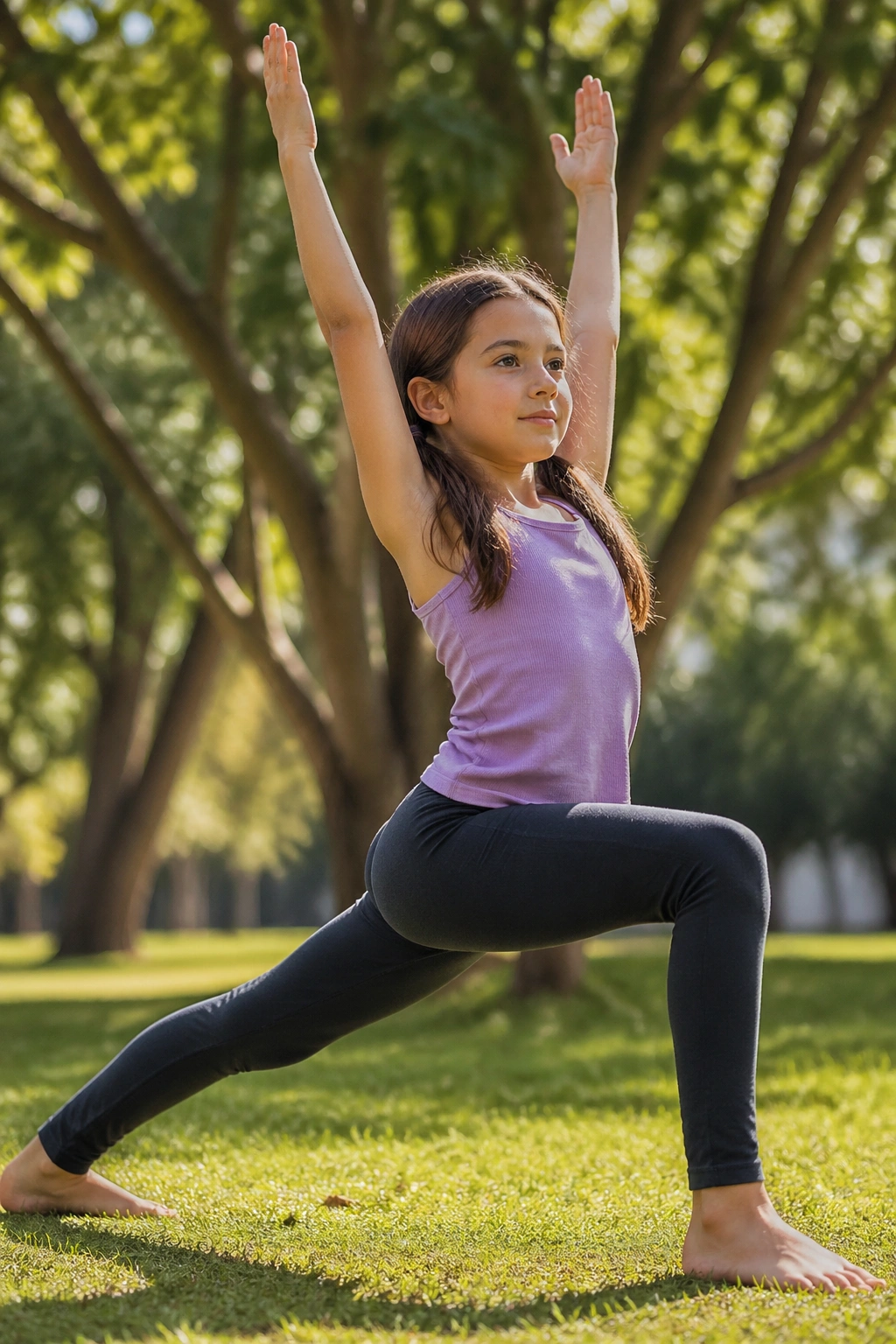
Warrior I is the pose that makes kids stand taller in one breath.
One foot steps forward, the back foot grounds, the front knee bends, and the arms reach overhead like long lightning bolts. It feels strong without being stiff. That balance between power and softness is what makes it so useful for children. They get to feel tall, but they also learn to hold a bent knee without collapsing.
Turn It Into a Mission
A lot of kids do better when Warrior I becomes a little story. March into the pose like you’re climbing a hill. Reach the arms like you’re grabbing the top branch of a tree. Hold for three breaths, then switch sides. That’s enough.
Watch the front knee. It should track over the toes, not dive inward. If the stance feels too long or too wobbly, shorten it by half a foot. Tiny adjustments make a big difference here.
15. Warrior II
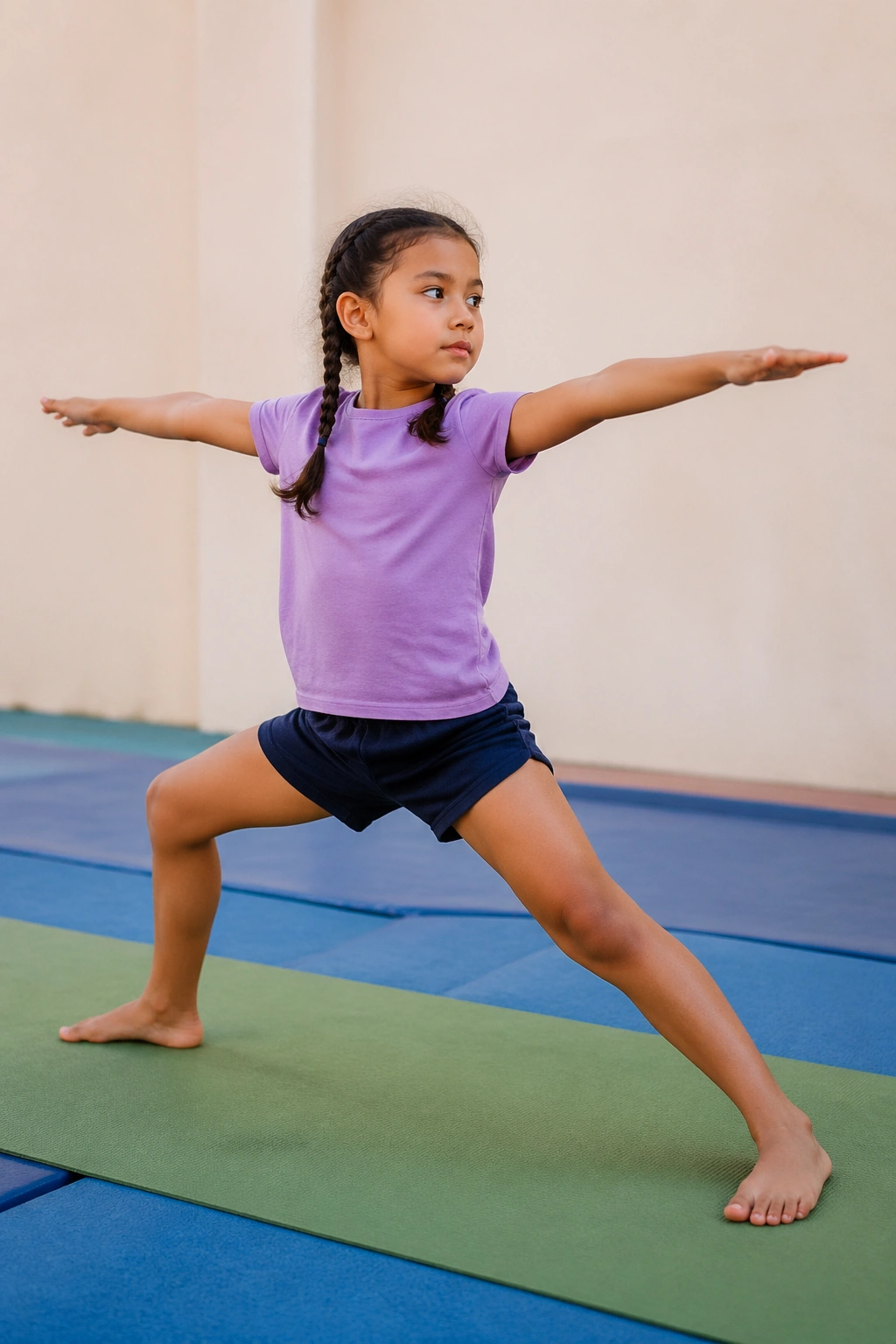
Warrior II gives children that satisfying “I can see everything” feeling.
The feet are set wide, the torso turns to the side, the front knee bends, and the arms open straight out from the shoulders. One hand faces forward, the other back, and the gaze can look over the front fingers. It’s broad, grounded, and a little fierce. In a kid-friendly way. No one needs to look tough. They just need to feel capable.
The front knee should stay stacked over the ankle or second toe. If it caves inward, widen the stance or bring the feet a little closer. The back leg works hard here, so don’t be surprised if kids start to feel it after a breath or two. That’s normal.
I like this one for children who need a pose that says, “Take up some space.” It’s a nice message.
16. Triangle Pose
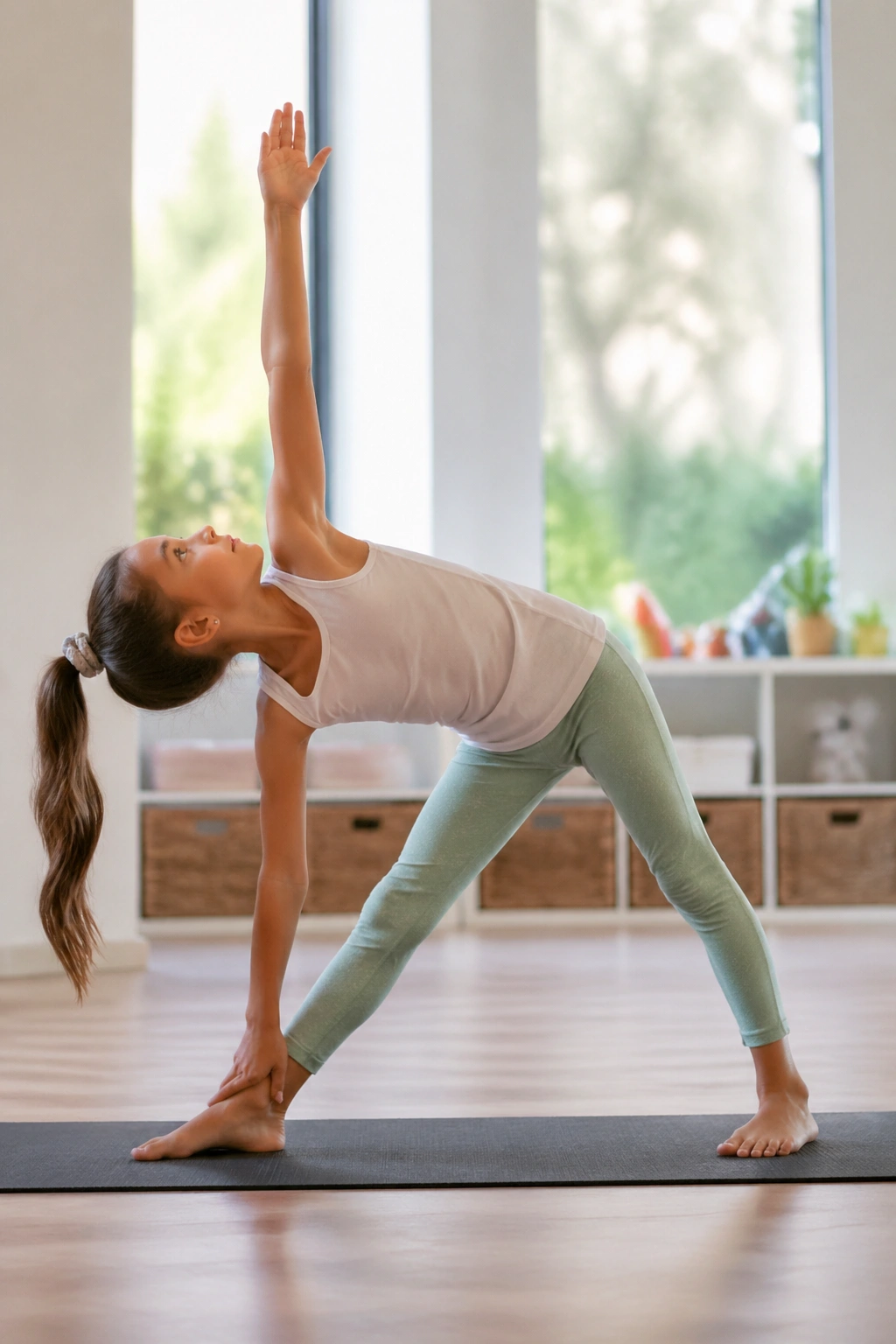
Could Triangle Pose be easier if you stop chasing the floor?
That’s the whole trick. The front leg can stay straight or softly bent, the hips reach back a little, and one hand lands on the shin, ankle, a block, or even a chair. The other arm reaches up, making a long line from the back heel to the fingertips. The shape is open, not collapsed.
What Makes It Work
A Few Good Rules
- Don’t force the bottom hand to the mat.
- Keep both sides of the waist long.
- Turn the chest open only as far as it feels smooth.
- Bend the front knee if the hamstring pulls too hard.
Kids often enjoy Triangle because it feels like drawing a shape in the air. That visual helps. A child doesn’t need to understand the name in a technical way. They just need to know where the body is meant to go.
17. Chair Pose
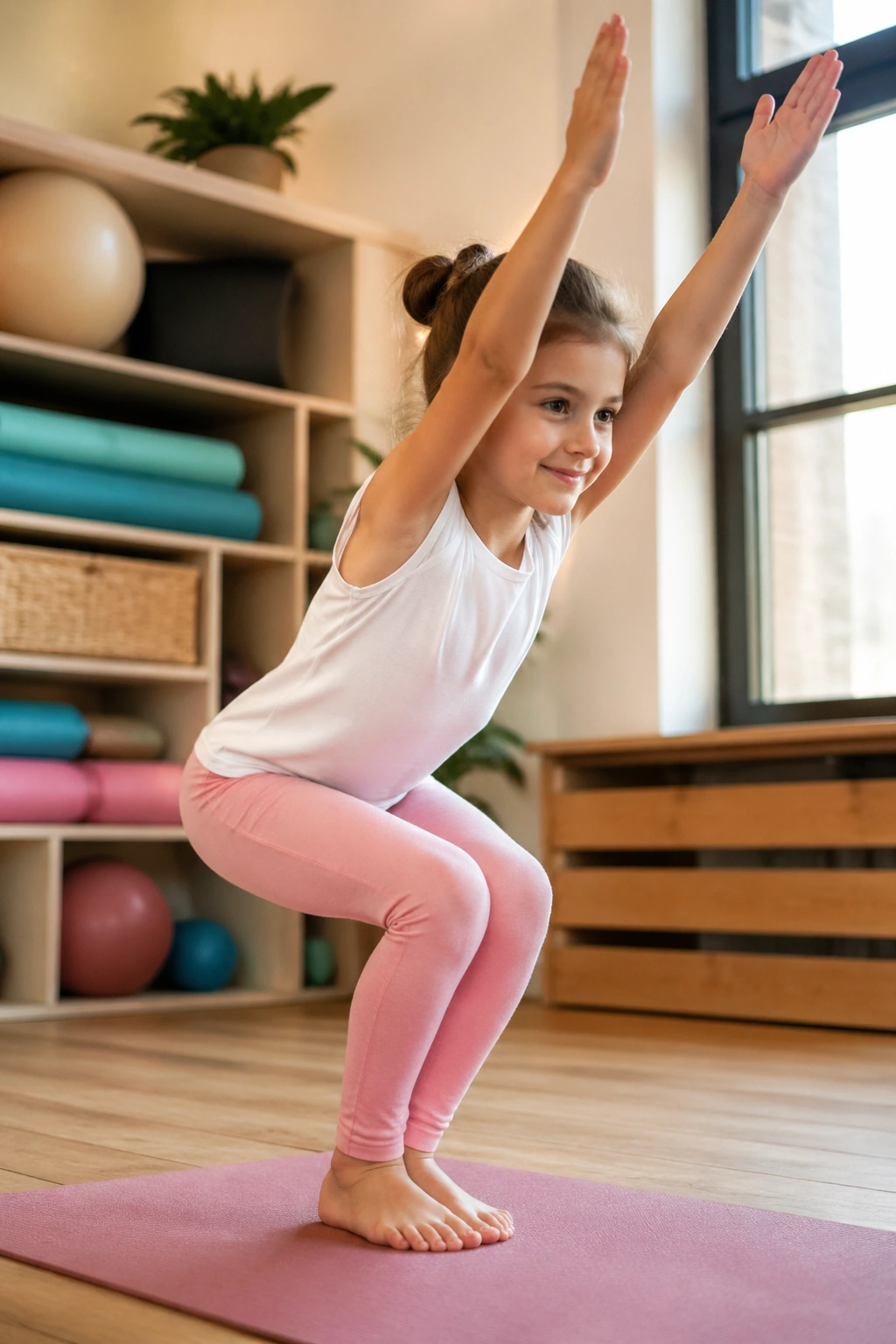
Chair Pose is where the giggles usually start.
Knees bend, hips sit back as if reaching for an invisible chair, and the arms can stretch forward or overhead. It’s a tiny leg burn in a very small package. Children feel that burn fast, which is exactly why they laugh. The pose is honest.
I like to tell kids to keep their weight in the heels and to show me a proud chest, not a hunched one. The back doesn’t need to round. The seat doesn’t need to drop too low either. A half-sit is often enough. If the squat gets too deep, the pose turns into a collapse, and the shape loses its line.
This one works well as a freeze game. Hold for three breaths, count out loud, and stand up before the legs start arguing.
18. Crescent Moon
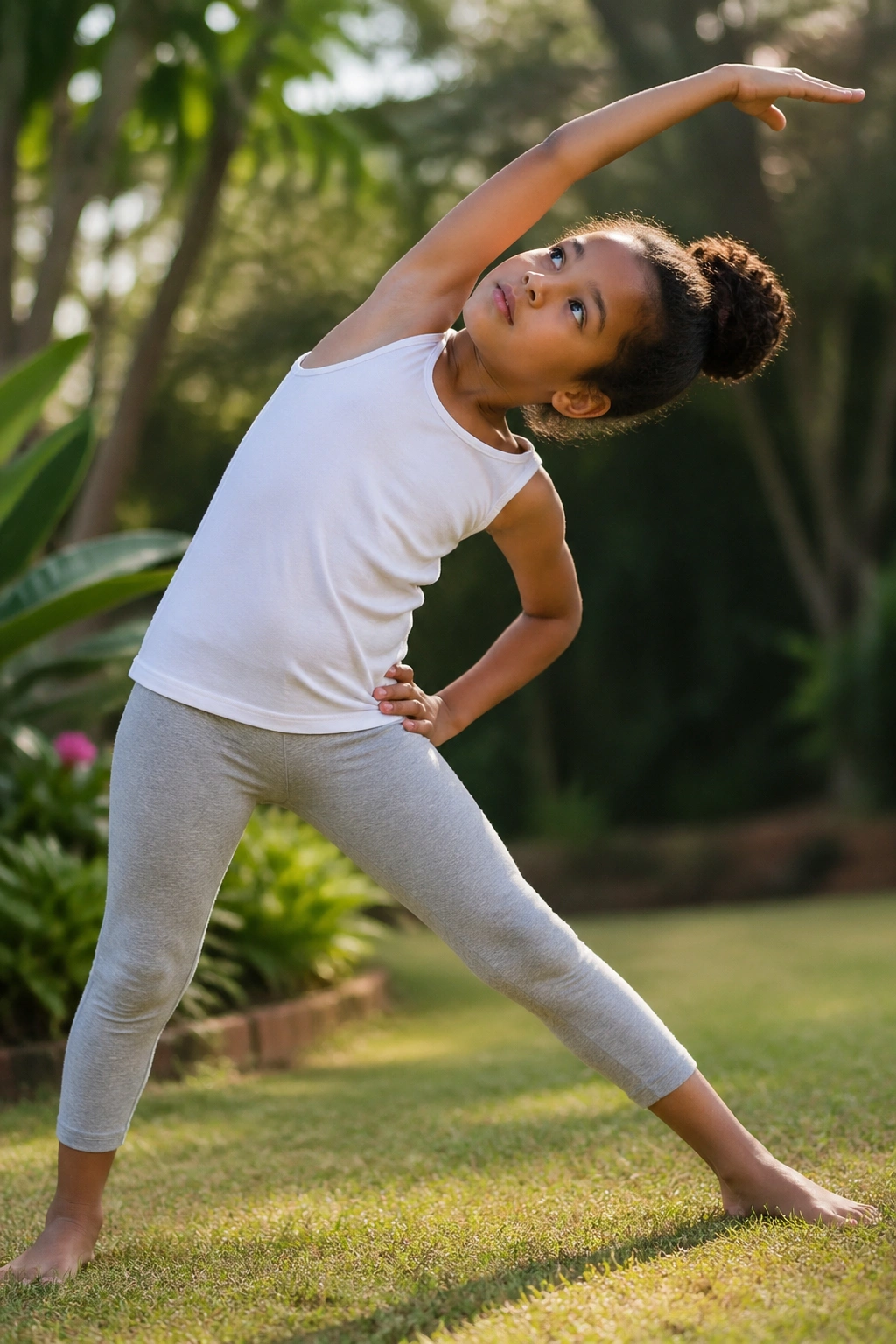
Crescent Moon Pose feels like reaching for a cookie on the top shelf.
One arm or both arms sweep overhead, the ribs lengthen, and the body arcs gently to one side. It’s a side stretch with a little more flair. Kids usually get the image quickly, which makes the pose easier to remember. The important thing is to keep the hips grounded and the shoulders relaxed. A tiny lean is enough.
What It Does for the Body
The stretch moves along the side of the body from the hip to the fingertips. That line can get tight fast, especially after sitting for a while. A child may feel the stretch more in the ribs than in the waist, which is fine. That’s part of the shape.
If one arm overhead feels awkward, lift just the top arm and let the bottom arm rest on the hip. There’s no prize for making the pose look dramatic. A neat, easy arc helps more than a huge bend.
19. Garland Pose
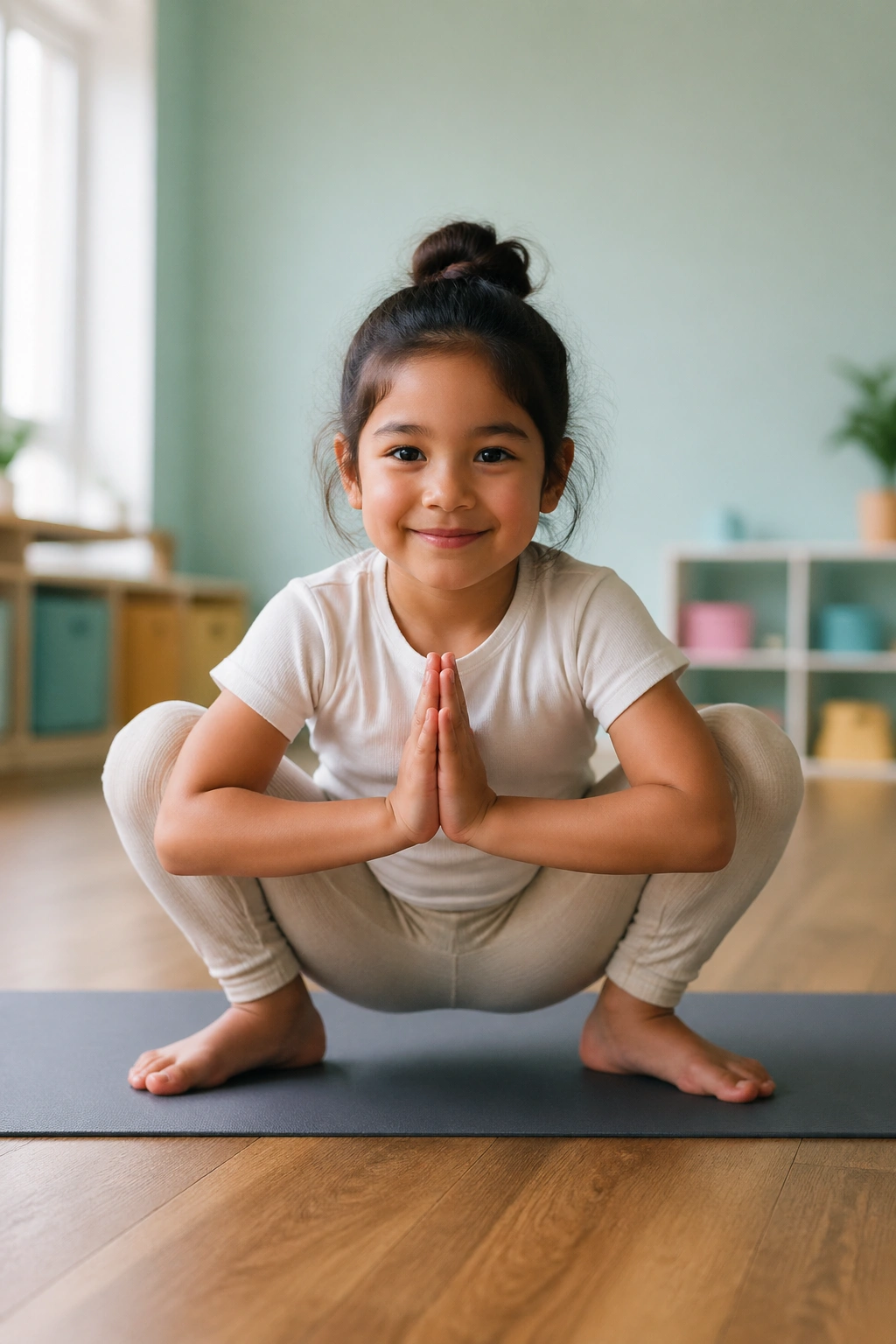
Garland Pose is a squat dressed up as yoga, and that is why it works.
Kids naturally sink into squats when they play, so this shape often feels familiar right away. Feet stay on the floor if they can, knees open wide, and the chest lifts rather than folding in. If the heels float, a rolled towel or stacked mat under them can make the pose much kinder on the ankles.
Small Supports, Big Difference
- Place a block or book under the seat if needed.
- Keep the knees tracking over the toes.
- Let the elbows press gently into the inner knees.
- Hold onto a toy or clasp the hands at the chest.
I love this pose for hip and ankle mobility, but I love it even more because children usually don’t find it strange. Their bodies understand it. That makes the whole practice smoother.
20. Boat Pose
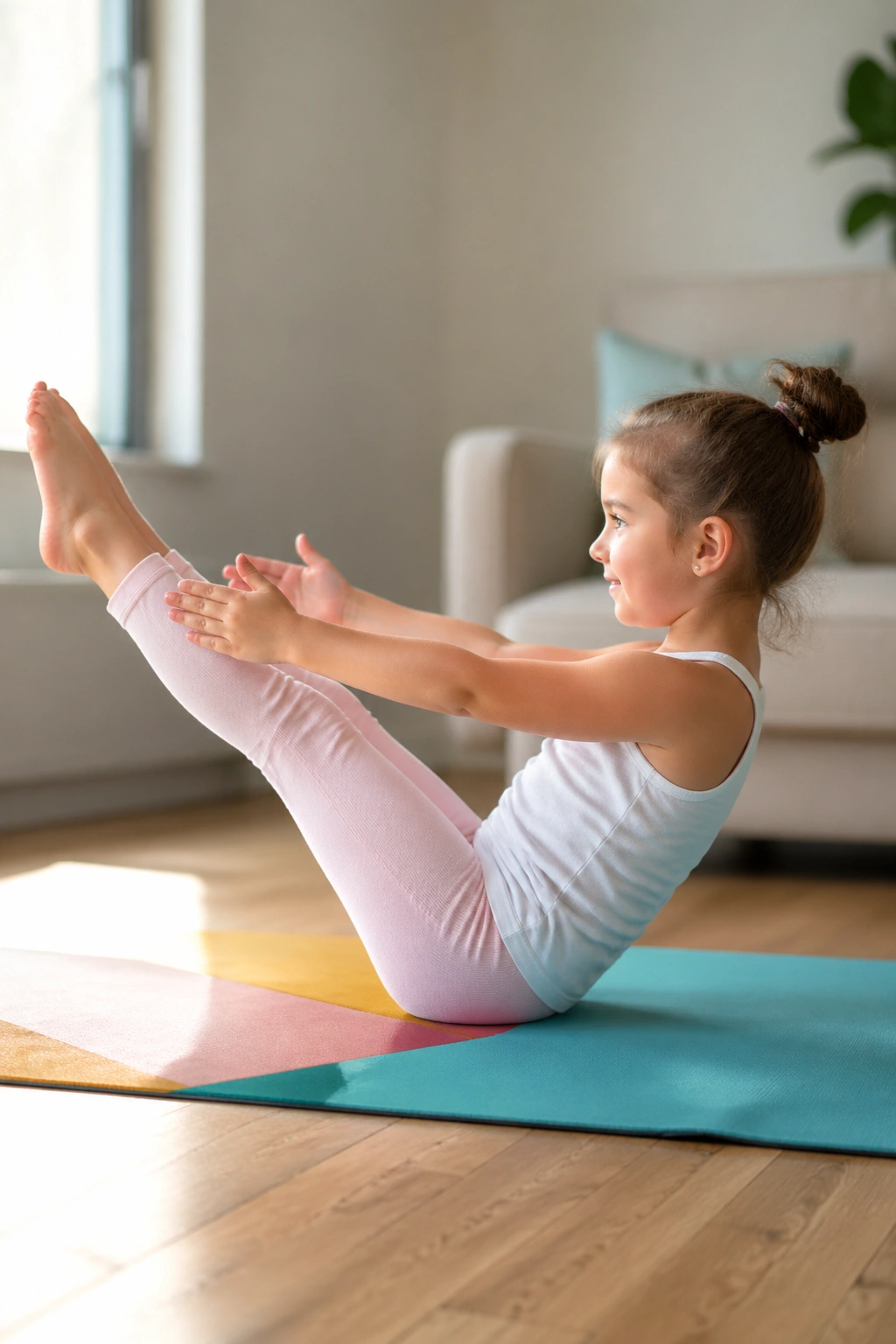
Why do kids enjoy Boat Pose even when their abs complain?
Because it feels a little like balancing on water. Sit on the floor, lean back slightly, lift the feet or keep them down, and hold the thighs or stretch the arms forward. Bent knees are the smart version for most children. Straight legs can wait. The goal is a strong torso, not a wrestling match.
The chest should stay open enough to breathe. If the spine rounds too much, lower the feet or hold behind the thighs. That adjustment turns frustration into success fast. I’ve seen a child go from “I can’t do this” to “Oh, like this?” in one small tweak.
A fun game here is to pretend the toes are the bow of a little canoe. Rock gently from side to side. Just a little. Too much rocking turns the pose into chaos.
21. Happy Baby
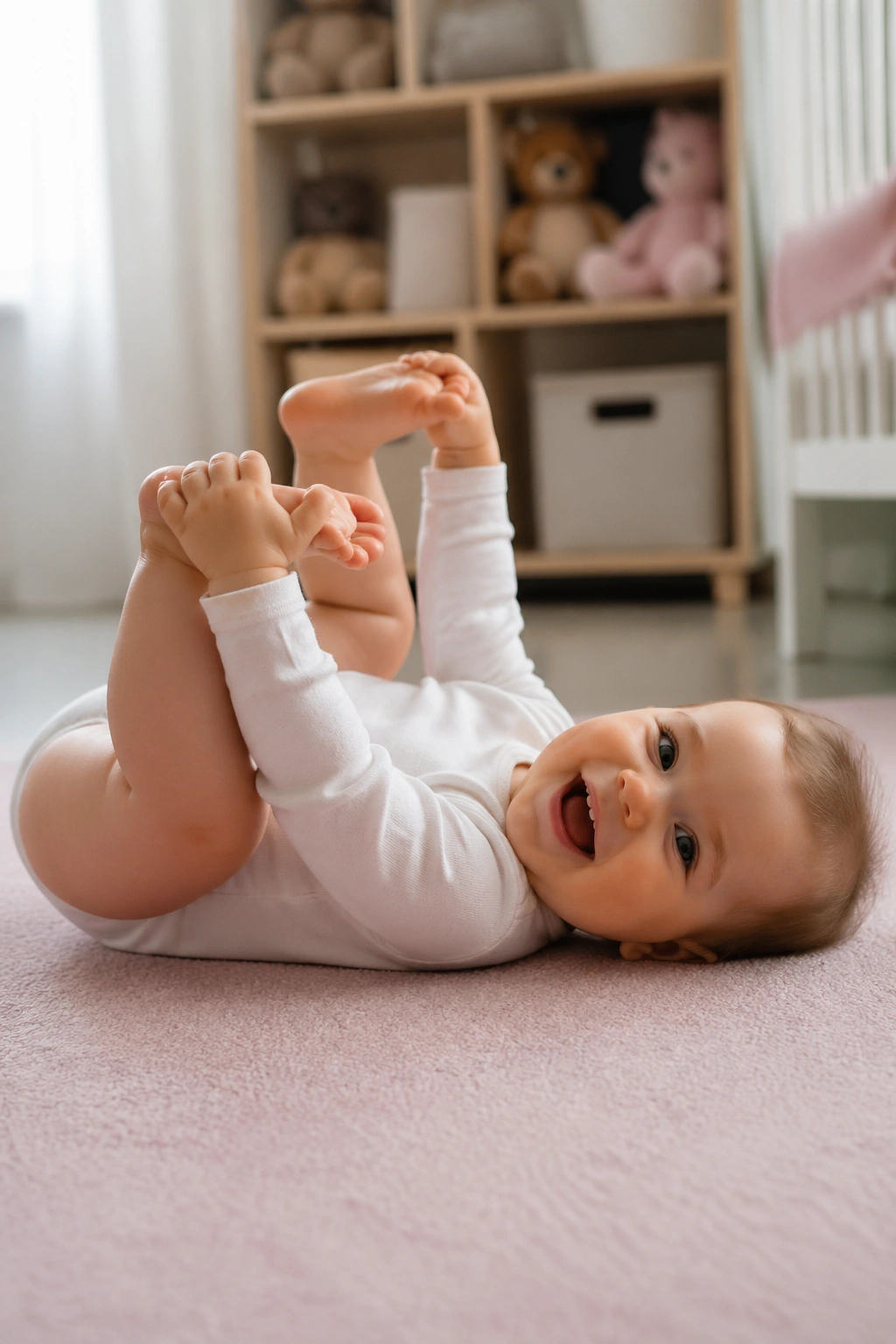
Happy Baby Pose almost never needs an introduction.
On the back, knees bend toward the chest, feet grab the hands or ankles, and the body rocks from side to side like a contented little cradle. It feels funny, and funny is useful. Children relax faster when a pose makes them smile first.
What to Watch For
- Keep the tailbone heavy on the floor.
- Hold the outer edges of the feet if the soles are slippery.
- Bend the knees deeply if the legs are tight.
- Let the head stay on the mat.
I like Happy Baby after stronger standing poses because it gives the lower back and hips a chance to settle. It also tends to soften the room. Kids who were rushing around a minute ago usually slow down here without much push. That’s a nice shift.
22. Camel Pose
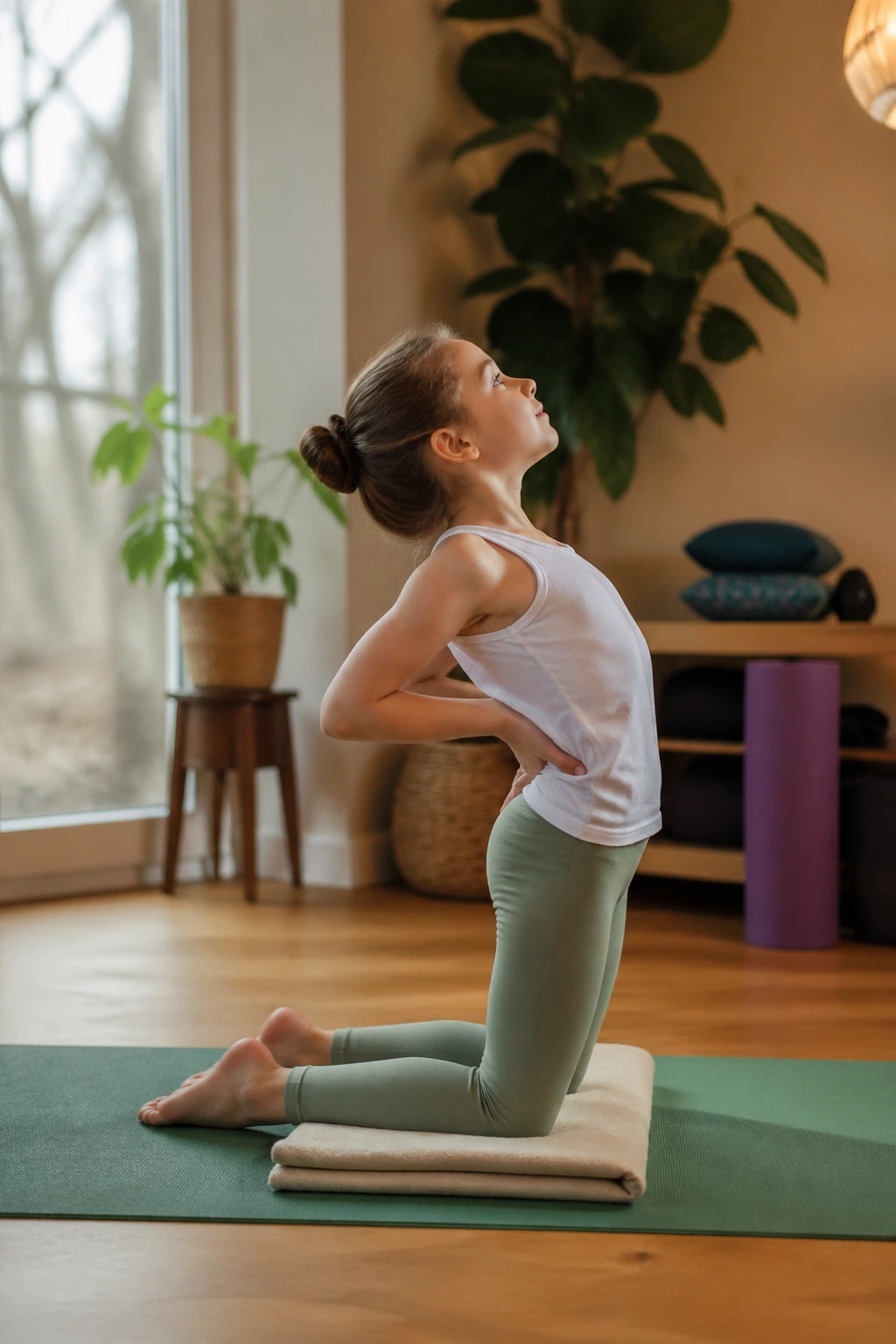
Camel Pose should look smaller than people expect.
Kneeling on the mat, the hips stack over the knees, the hands can rest on the low back to begin, and the chest lifts up and back only as far as the child can keep the front of the body long. This is not a pose to fling the head back into. That’s the fast way to turn a backbend into a sore neck. Tiny and steady is the better path.
Some kids will never need the full heel reach. Fine. A supported version with hands at the lower back is more than enough. If the knees are sensitive, a folded blanket under them helps. If the child feels pinching across the lower back, back off immediately.
It’s a strong pose, but it should still feel like a stretch, not a dare.
23. Sphinx Pose
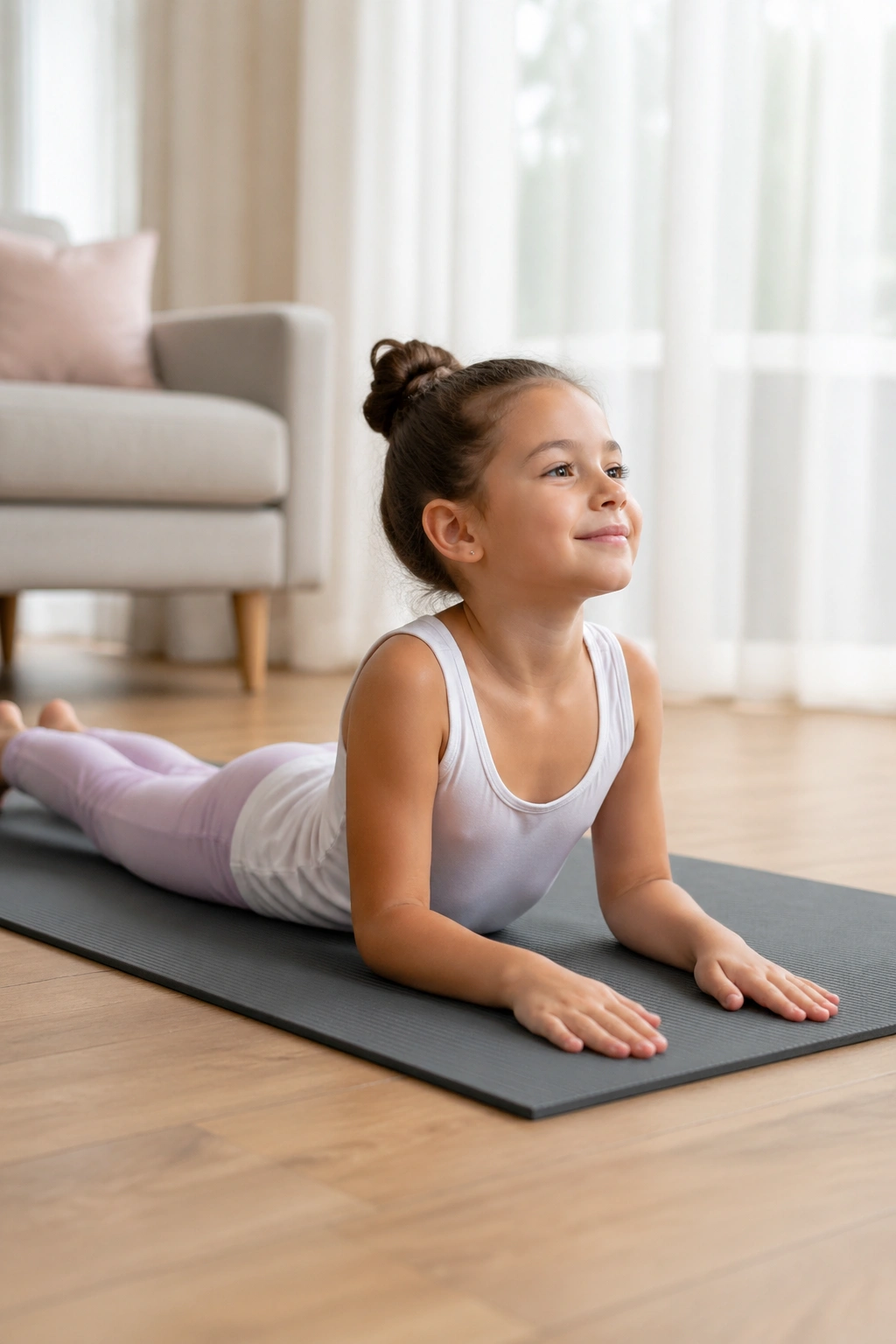
Sphinx Pose is the gentlest way to wake up the front body.
Lying on the belly, forearms press into the floor, elbows land under the shoulders, and the chest lifts into a mild backbend. The ribs stay mostly grounded. The neck stays long. It’s one of those shapes that looks almost too easy until you feel how opening the front can change the whole posture.
Why It Works So Well
Sphinx is useful after a lot of sitting or after any pose sequence that has the child folded forward for a while. It asks the belly to soften and the chest to open without much strain. Some kids will use it like a reading pose, which is honestly fine if it keeps them there for another breath.
If the lower back feels compressed, lower the chest a little or spread the elbows wider. If the shoulders creep upward, slide them down again. Small shifts make this pose feel calm instead of pinched.
24. Lion Pose
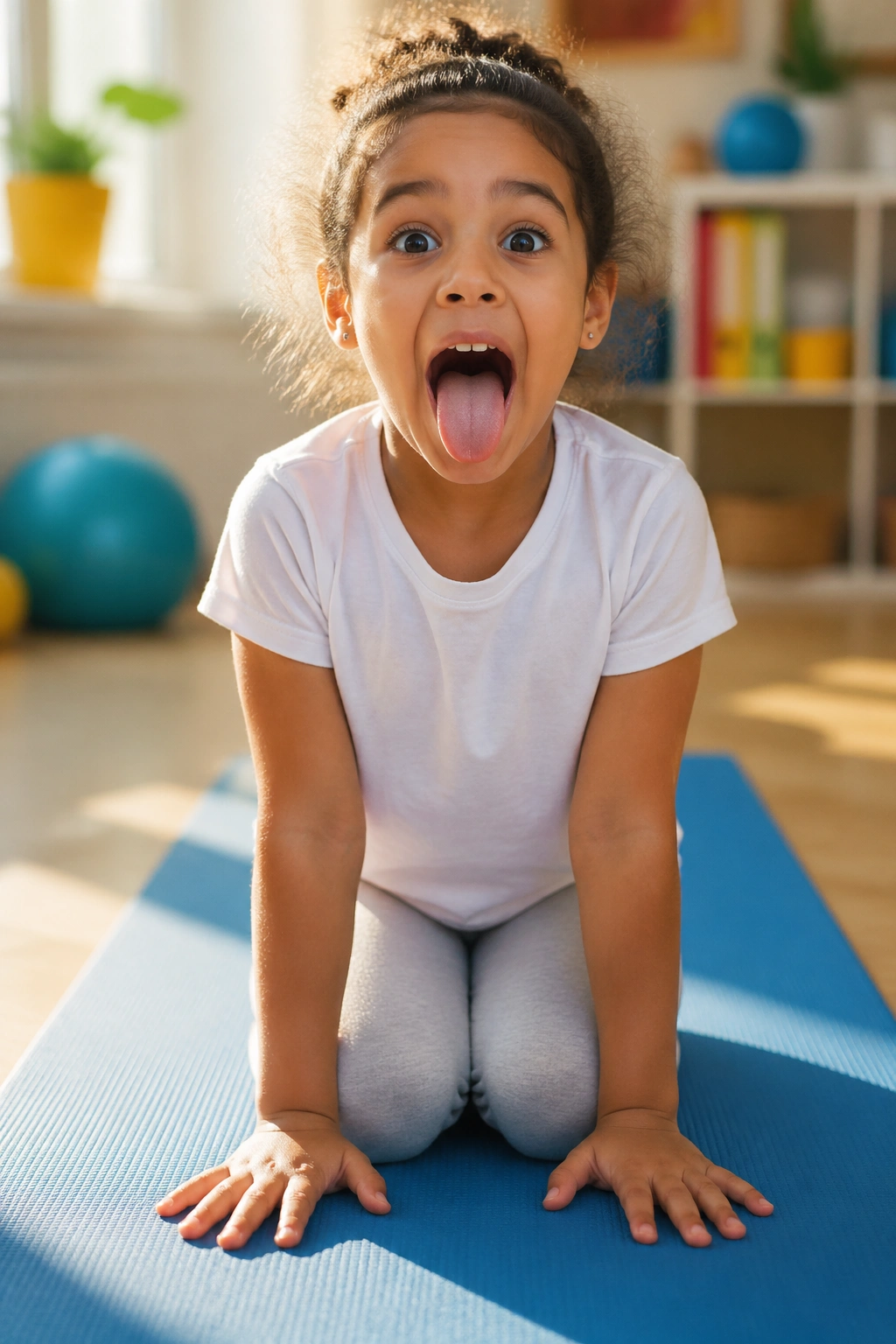
Lion Pose is the release valve for a noisy day.
Kneel, sit tall on the heels if that feels okay, place the hands on the knees, take a deep breath in through the nose, then open the mouth wide and roar on the exhale. Tongue out, eyes wide, whole face awake. It is gloriously unpolished. That’s the beauty of it.
How to Play It
- Roar once, then pause.
- Roar again with a bigger face.
- Add a little growl if the child likes sound effects.
- Repeat three times, then sit quietly for one breath.
Kids love this pose because it lets them make noise on purpose. If they’ve been holding in frustration, Lion Pose can be a clean release. It’s not about being fierce. It’s about letting the jaw, tongue, and breath loosen up all at once.
25. Side Stretch
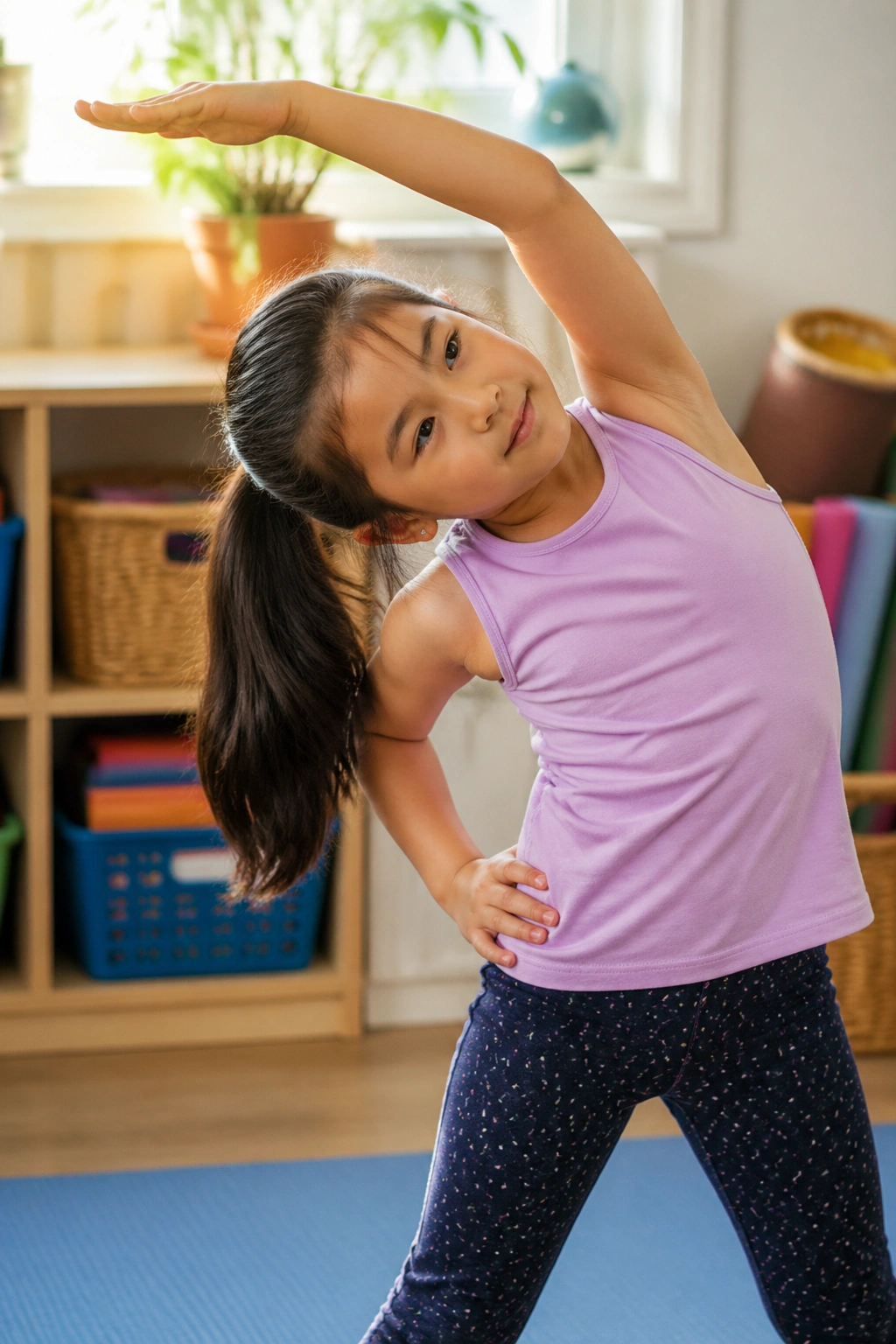
Side stretches can rescue a cranky body fast.
Standing or seated, one arm reaches up and arcs over while the opposite hip stays rooted. The shape is simple, but it opens the ribs, shoulders, and waist in a way kids can feel almost immediately. That fast payoff matters. When a stretch feels obvious, children stay with it longer.
If the shoulder is stiff, don’t force the arm overhead. Let it float lower. If the side bends too far, the torso twists and the stretch goes muddy. A small clean curve works better than a dramatic lean. I’d rather see a child make a neat banana shape than a collapsed noodle.
This is a good one to use between more active poses. It resets the line of the body without slowing everything down too much.
26. Legs Up the Wall
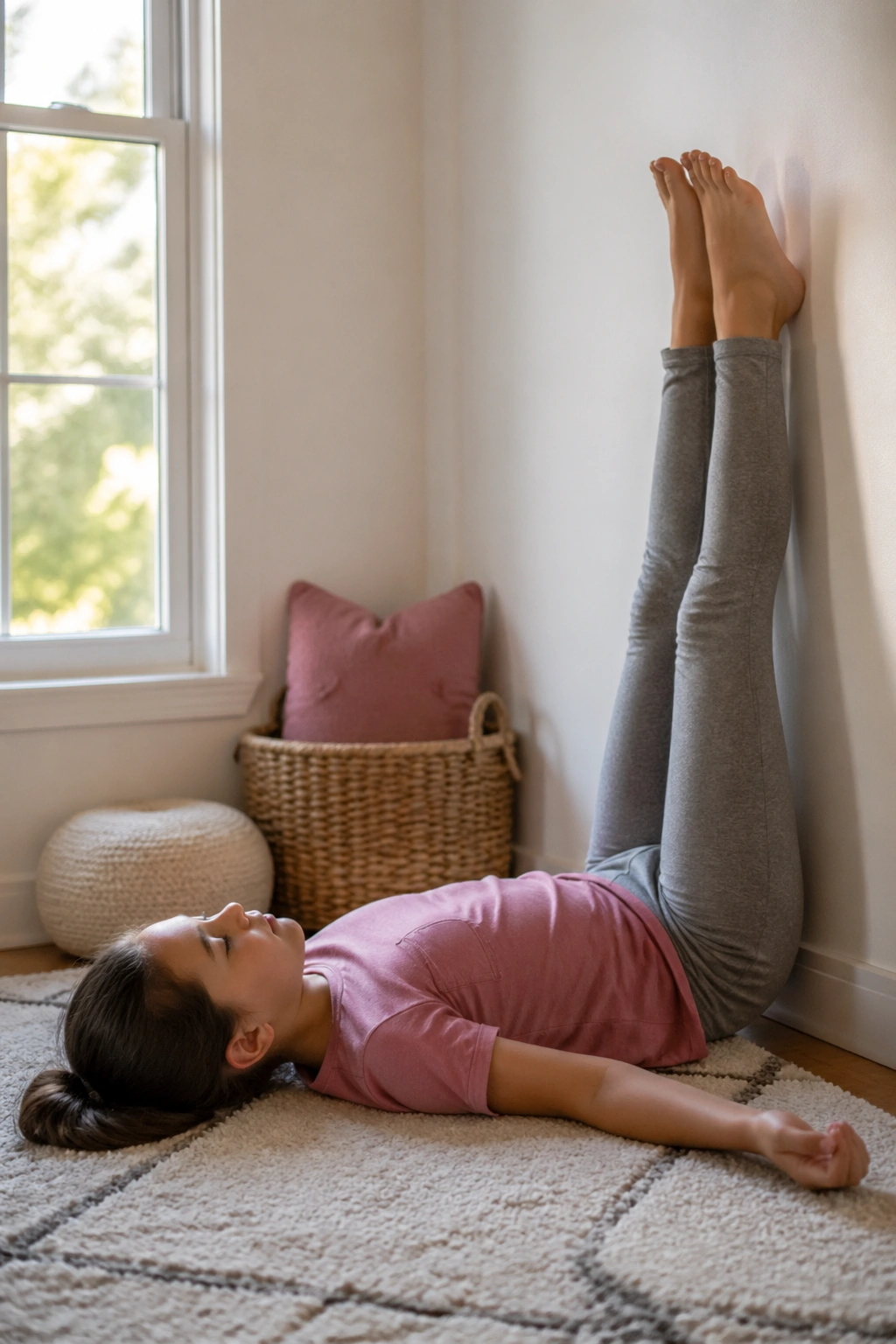
Legs Up the Wall is the closest thing to a reset button.
Sit beside a wall, lie back, and let the legs rise up so the feet rest vertical or nearly vertical. Arms can rest out to the sides or on the belly. The whole pose feels quiet. That’s why it belongs near the end of a kids’ yoga flow, especially after a day that has been full of noise, running, and jumping.
Easy Setup
Make It Comfy
- Scoot hips a few inches from the wall.
- Keep knees slightly bent if the hamstrings are tight.
- Place a folded blanket under the hips only if that feels good.
- Let the eyes close or soften.
I use this one when a child needs to wind down but is still carrying too much energy in the legs. It settles the body without asking for effort. Some kids stay here for thirty seconds. Others want a few minutes. Both are fine.
27. Forward Fold
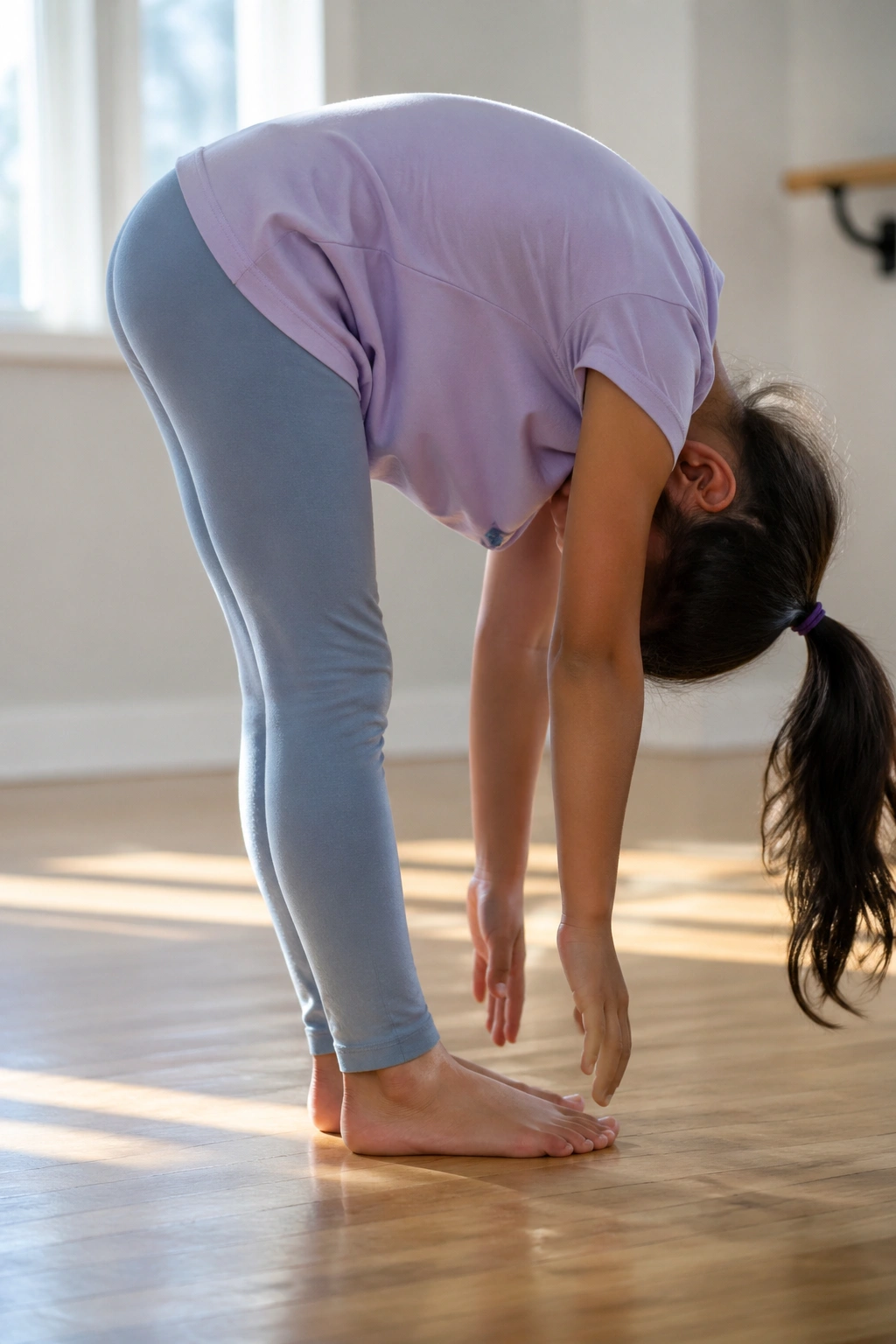
Forward Fold asks for nothing fancy.
Standing with feet hip-width apart, knees soften and the upper body drapes over the legs like a loose rag doll. The head hangs, the arms can touch the floor, hold elbows, or sway side to side. It’s one of the simplest shapes in the whole mix, and that’s exactly why it belongs. Children often need a pose that lets gravity do the work.
A common mistake is locking the knees. Don’t do that. Soft knees keep the stretch friendly and the back happier. If the hamstrings are tight, bend the knees more than you think you need to. The child can still feel the release without pulling anything.
I like this one as a bridge into the final quiet poses. It lowers the volume without making a big deal out of it.
28. Starfish Savasana
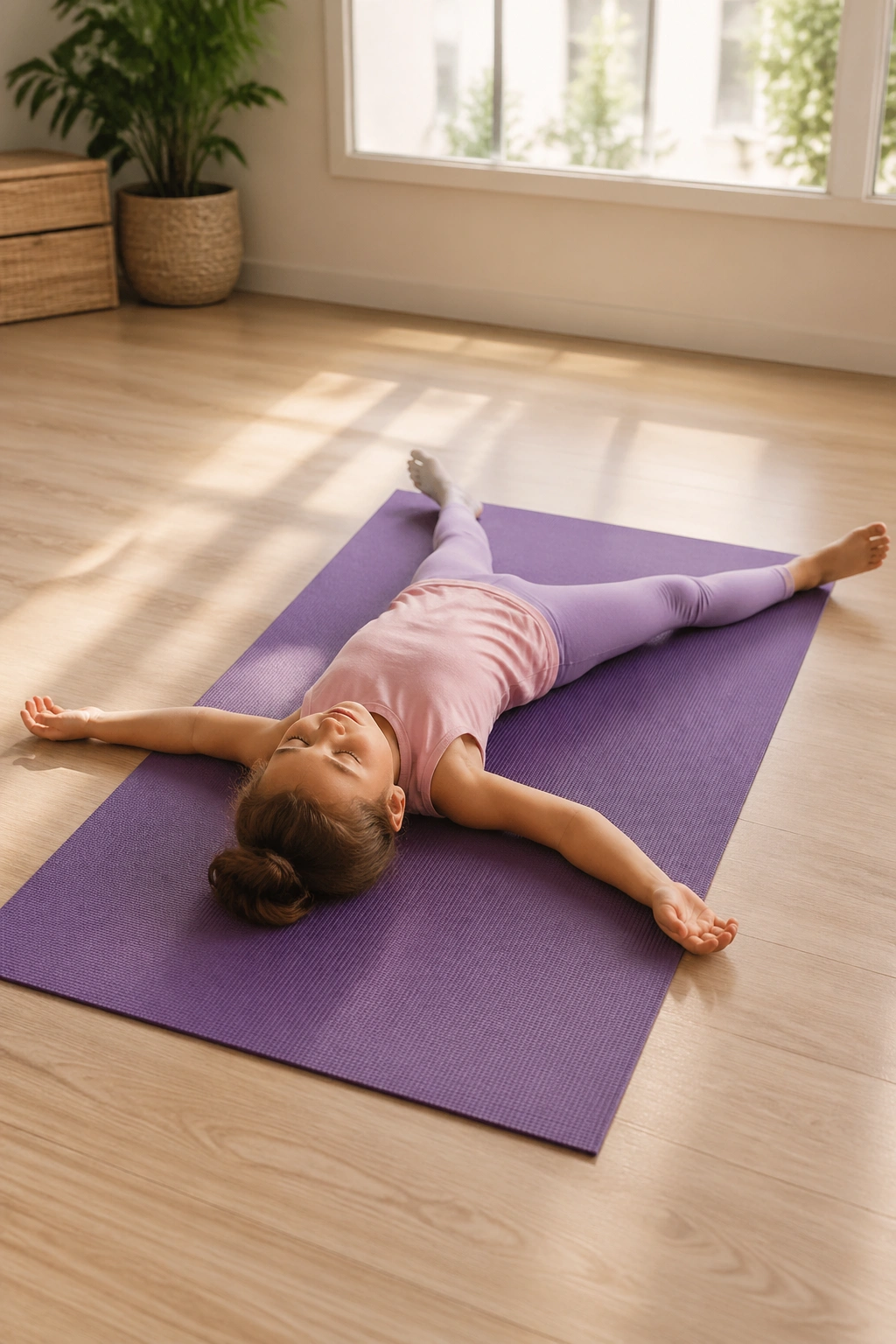
Starfish Savasana is where the whole sequence lands.
Lie on the back, legs and arms relaxed away from the body, palms open or turned up, and let the floor hold everything. You can place a blanket under the knees or a small towel under the head if that helps a child settle. I know this is the hardest sell in kid yoga. Still worth it. A body that has moved needs a place to stop.
The trick is keeping the instructions tiny. “Make yourself heavy.” “Let your toes fall out.” “Stay here for five slow breaths.” That’s enough. If a child wiggles, let them wiggle for a moment and return. The goal isn’t perfect stillness. It’s a quieter ending than the one they started with.
Some kids fall asleep in this pose. Others just stare at the ceiling and breathe. Either way, it works.
Final Thoughts
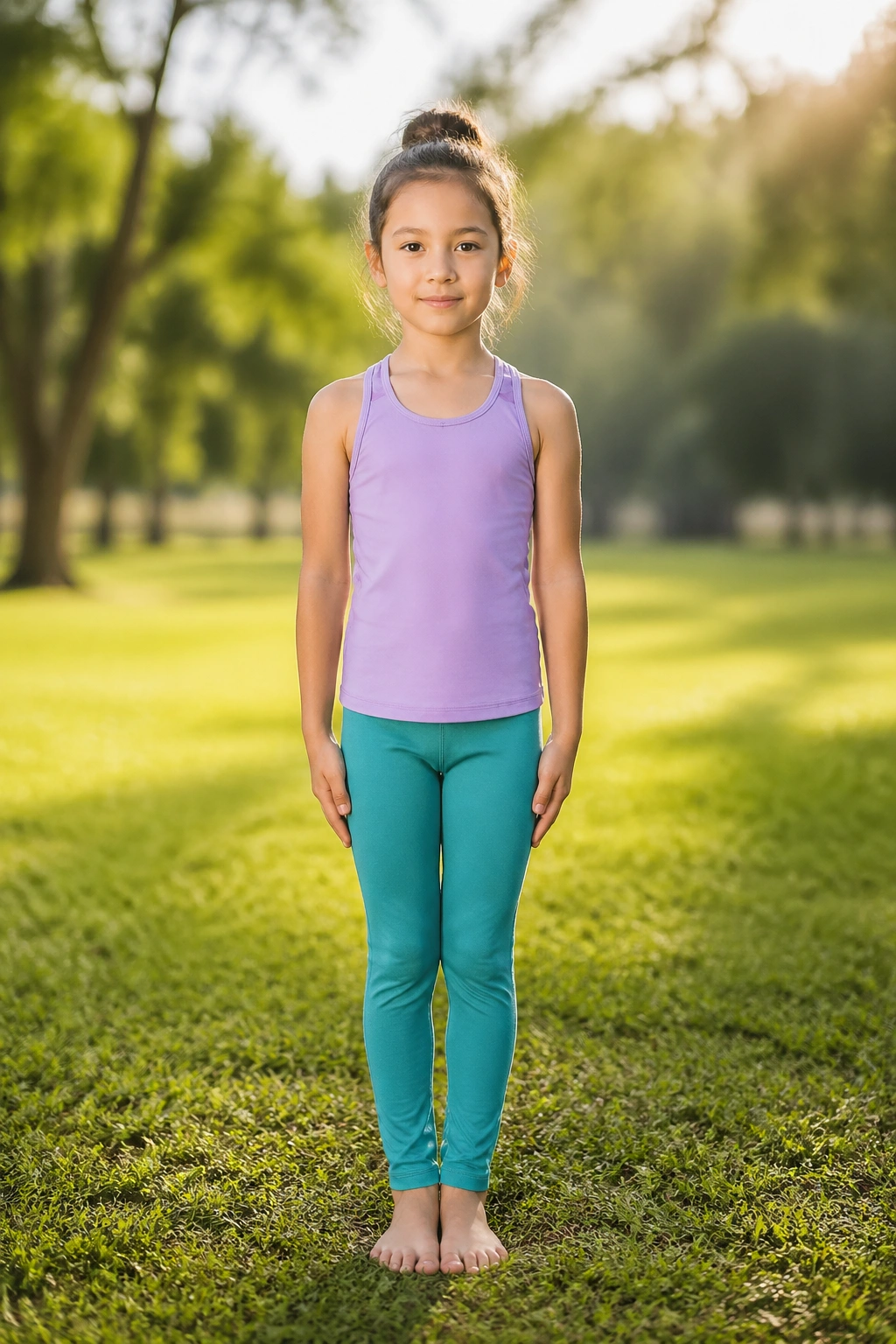
The best kids yoga practice is the one a child wants to do again tomorrow. That usually means keeping the poses playful, changing the pace often, and treating every wobble like part of the game instead of a mistake.
I’d start with five or six shapes, not all twenty-eight at once. Mountain, Cat-Cow, Tree, Downward Dog, Lion, and Starfish Savasana make a solid little flow on their own. Short wins matter. Kids remember the fun part, and that memory is what brings them back to the mat.
And if a pose becomes a joke, let it. A yoga class for children should have room for laughter, weird faces, tiny crashes, and one quiet breath at the end. That mix is where the magic lives.
