



Yoga sculpt workouts can build real strength, but only if you stop treating the dumbbells like props. A pair of 5- to 10-pound weights, a timer, and a mat are enough to light up your legs, shoulders, and core when the tempo stays slow and the holds stay honest.
That is the part people miss. Fast reps and random burning do not change much; controlled lowering, split-second pauses, and one more round than you wanted do. If your quads shake during chair pose or your shoulders start complaining halfway through a plank row, that is useful feedback, not failure.
These sessions work best when you rotate the load: one day for legs and glutes, one for upper body and core, one for balance and unilateral work, then a lighter recovery-style sculpt piece in between. Heavy barbell strength still has its place. So does this. Stronger hips, steadier knees, firmer overhead work, cleaner single-leg control — that is the kind of payback worth chasing.
Keep the weights honest. If your form falls apart, the dumbbells are too heavy for that movement, or the pace is too fast. Three seconds down, one second up, and a 10-second hold at the ugly point of a rep will tell you more than a hundred sloppy reps ever could.
The first workout is the one I reach for when the legs need to wake up fast.
1. Dumbbell Yoga Sculpt Chair Flow
Chair pose is a liar. On paper it looks humble; with two dumbbells and a 30-second hold, it turns into a quad-and-shoulder interrogation.
How to run it
Start with feet about hip-width apart and hold light dumbbells at your shoulders. Sink into chair, keep your ribs stacked over your pelvis, and hold for 20 to 30 seconds before pressing the weights overhead for 8 slow reps. Drop back to shoulder level, pulse the legs 10 times, then sit into one final 15-second hold.
- 3 rounds
- 8 overhead presses
- 10 chair pulses
- 15 to 30-second hold at the bottom
- 30 to 45 seconds rest between rounds
The trick is not going lower. The trick is staying upright when your thighs start to burn. If your chest folds forward, the work leaks into your low back and the whole thing gets messy.
Keep your weight in the middle of your foot. If you rock onto your toes, the quads take over and the ankles start screaming for no good reason.
2. Crescent Lunge Press Series
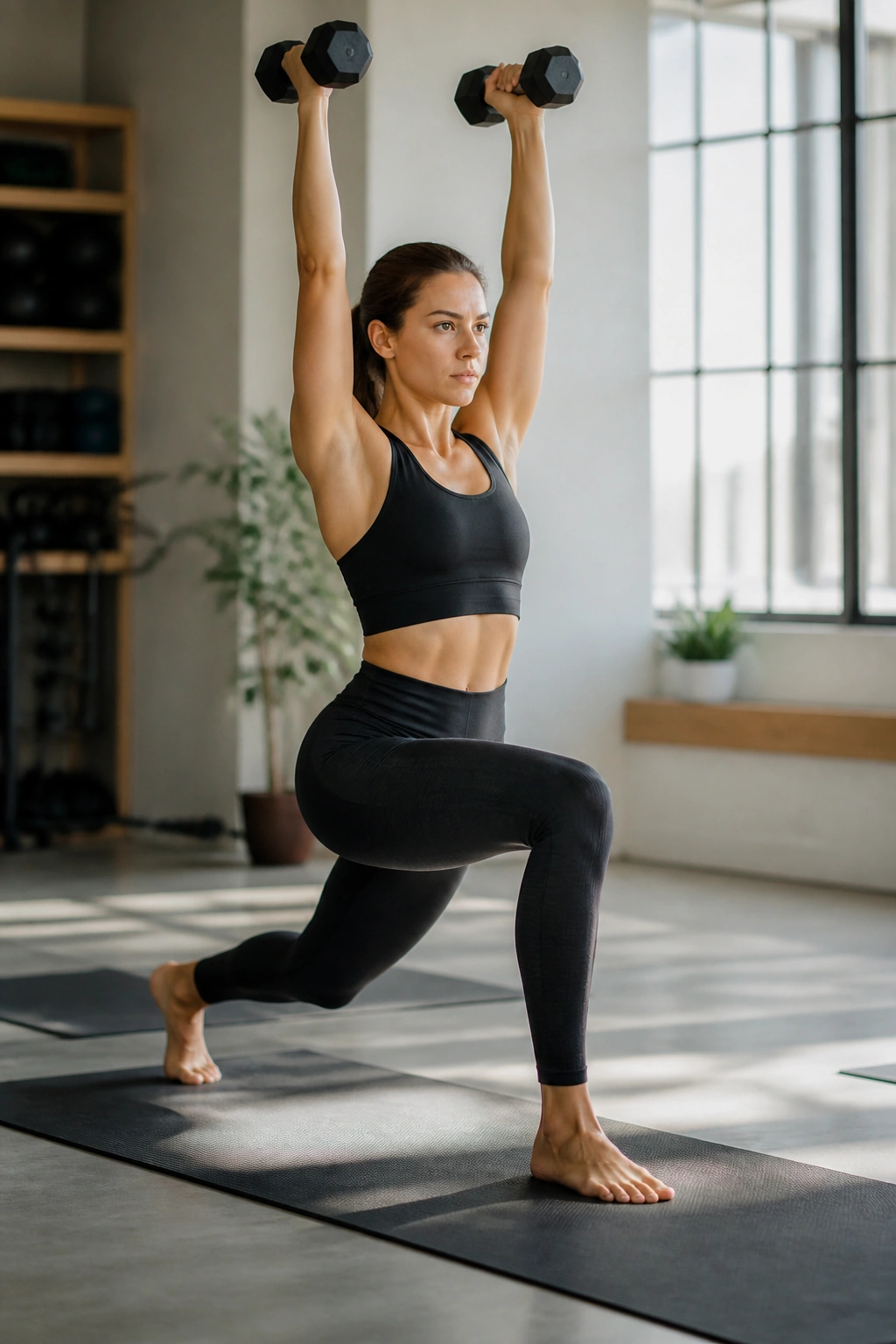
This is one of the cleanest ways to make yoga sculpt feel like strength work instead of cardio. Crescent lunge with a press asks your front leg to stabilize, your back leg to stay long, and your shoulders to work without turning the whole thing into a shrug-fest.
Set up in a high lunge with your back heel lifted. Hold the dumbbells at your shoulders and press overhead for 6 to 8 slow reps, lowering for a full count of three. Then hold the lunge for 10 seconds, switch sides, and repeat for 2 or 3 rounds.
The front glute should fire. Hard. If the knee caves inward or the torso tips forward, the load is wrong or the stance is too short. Take a slightly longer step back than you think you need, because cramped lunges usually become sloppy lunges.
Use this one early in the session, when your legs are fresh and your balance still behaves. By the final round, the back leg will feel long and sleepy. Good. That means the set is doing something useful.
3. Plank Row and Knee-Drive Ladder
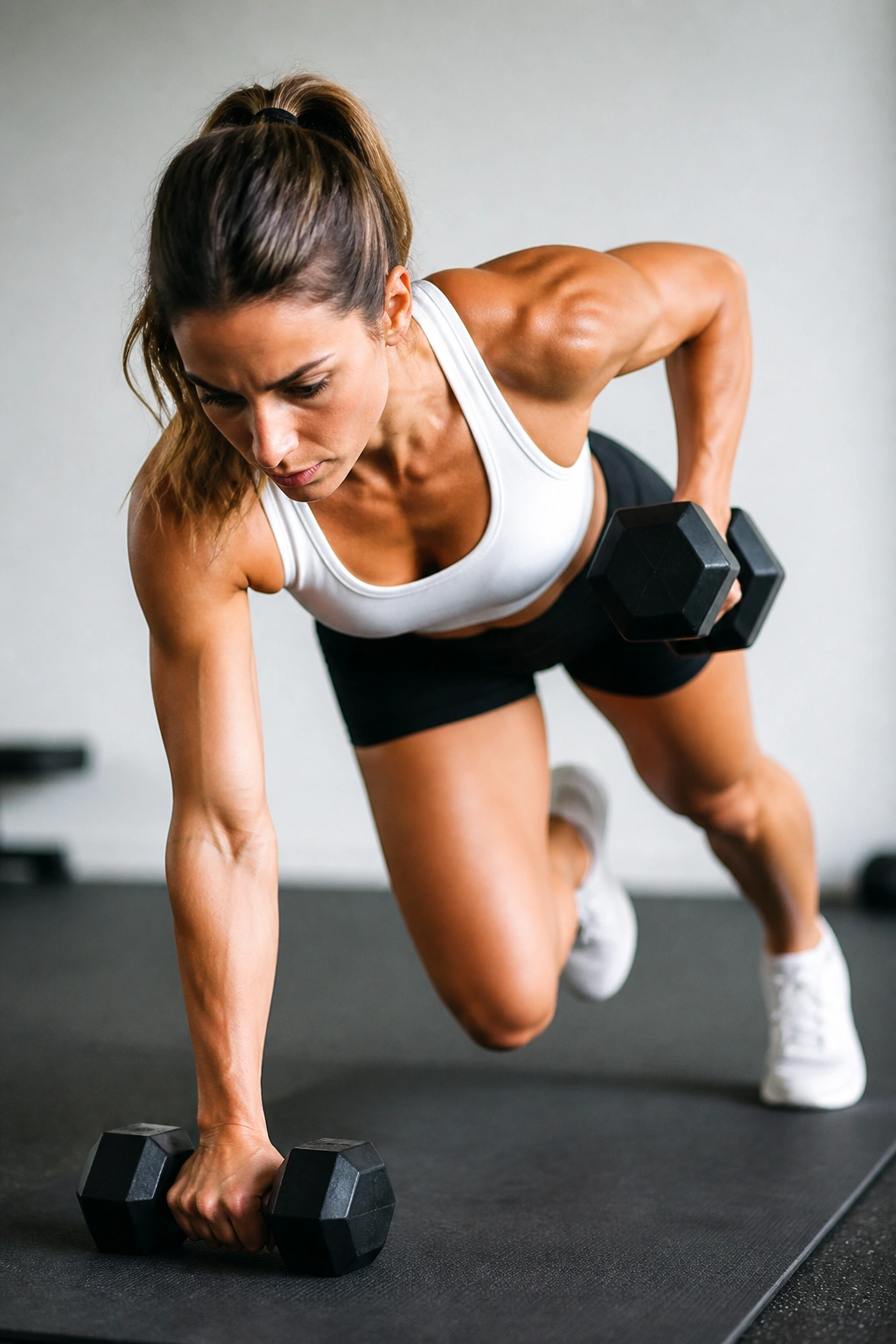
Why does a small plank sequence feel so hard? Because it strips away all the cheating. You cannot swing through the reps, and you cannot hide weak shoulders.
How to use it
Put two dumbbells under your hands and set up in a high plank. Row one weight at a time for 6 reps per side, then drive the opposite knee toward the same elbow for 6 reps per side. Rest 20 seconds and repeat for 3 ladders.
- Hands under shoulders
- Hips level, no twisting
- Row without bouncing the torso
- Knee drives stay slow, not flung
- 3 ladders total
If your wrists get cranky, do it on a bench or yoga block instead of the floor. That small elevation keeps the angle friendlier and lets you focus on the pull.
The real work is anti-rotation. Your body wants to wobble. Your job is to make it look boring.
4. Glute Bridge March Burner
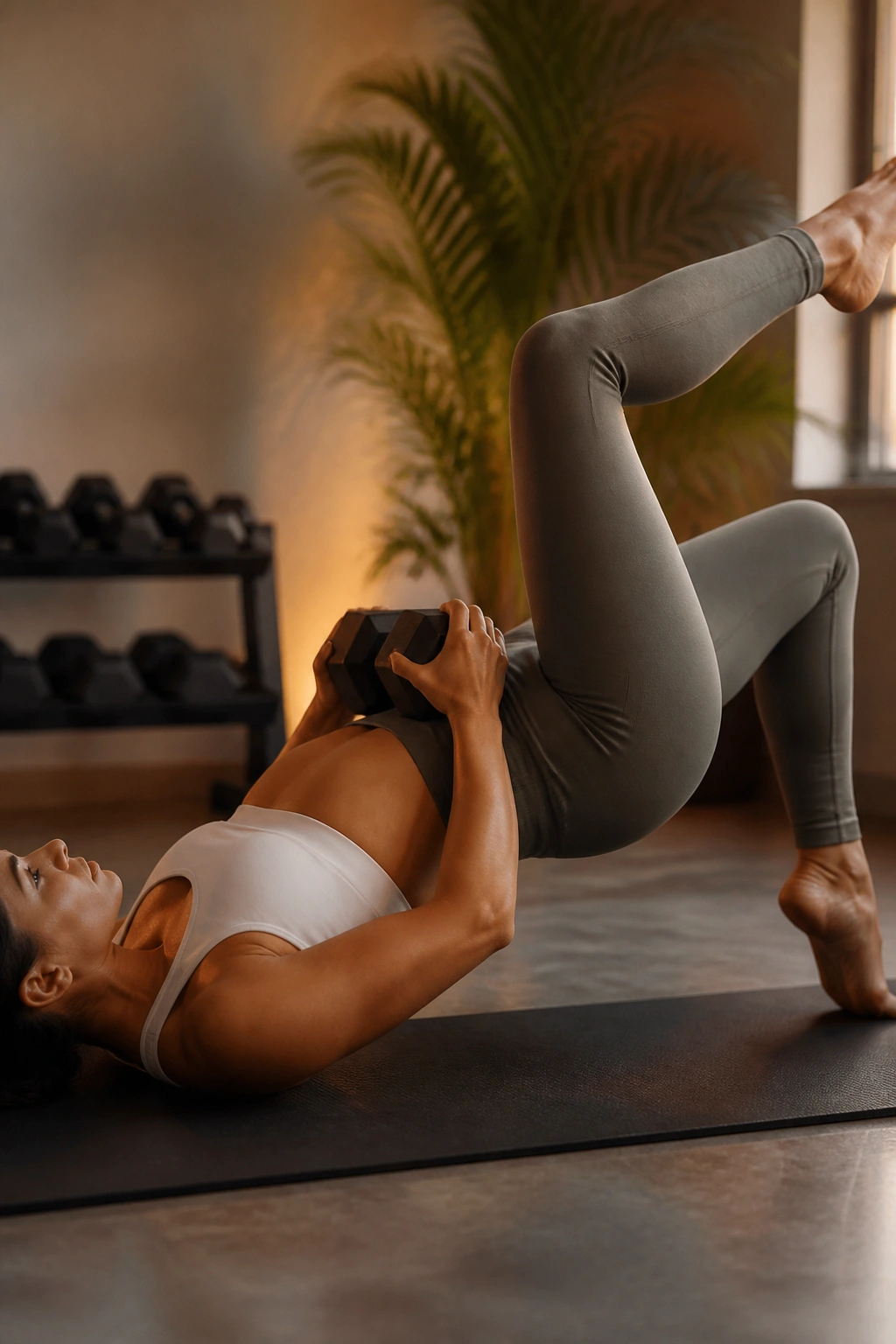
Your lower back should not be doing the work here. If it is, the bridge is too high and the ribs are flaring.
Lie on your back with knees bent and feet flat. Place a dumbbell across your hips or a loop band above the knees if you want a little extra bite. Lift into a bridge, march one knee at a time for 10 total marches, then hold the bridge for 20 seconds before lowering with control. Run 3 rounds.
This one is sneaky. The first set feels polite, the second set starts to drag, and by the third set you can feel whether your glutes are actually awake or just along for the ride. Keep the hips level when one foot leaves the floor. If they drop, shorten the range.
- 10 alternating marches
- 20-second bridge hold
- 3 rounds
- Optional loop band above knees
- Slow lower on every rep
A flat bridge beats a high bridge. More height usually turns into lumbar arching, and that is not the point.
5. Side Plank Reach-Through Sequence
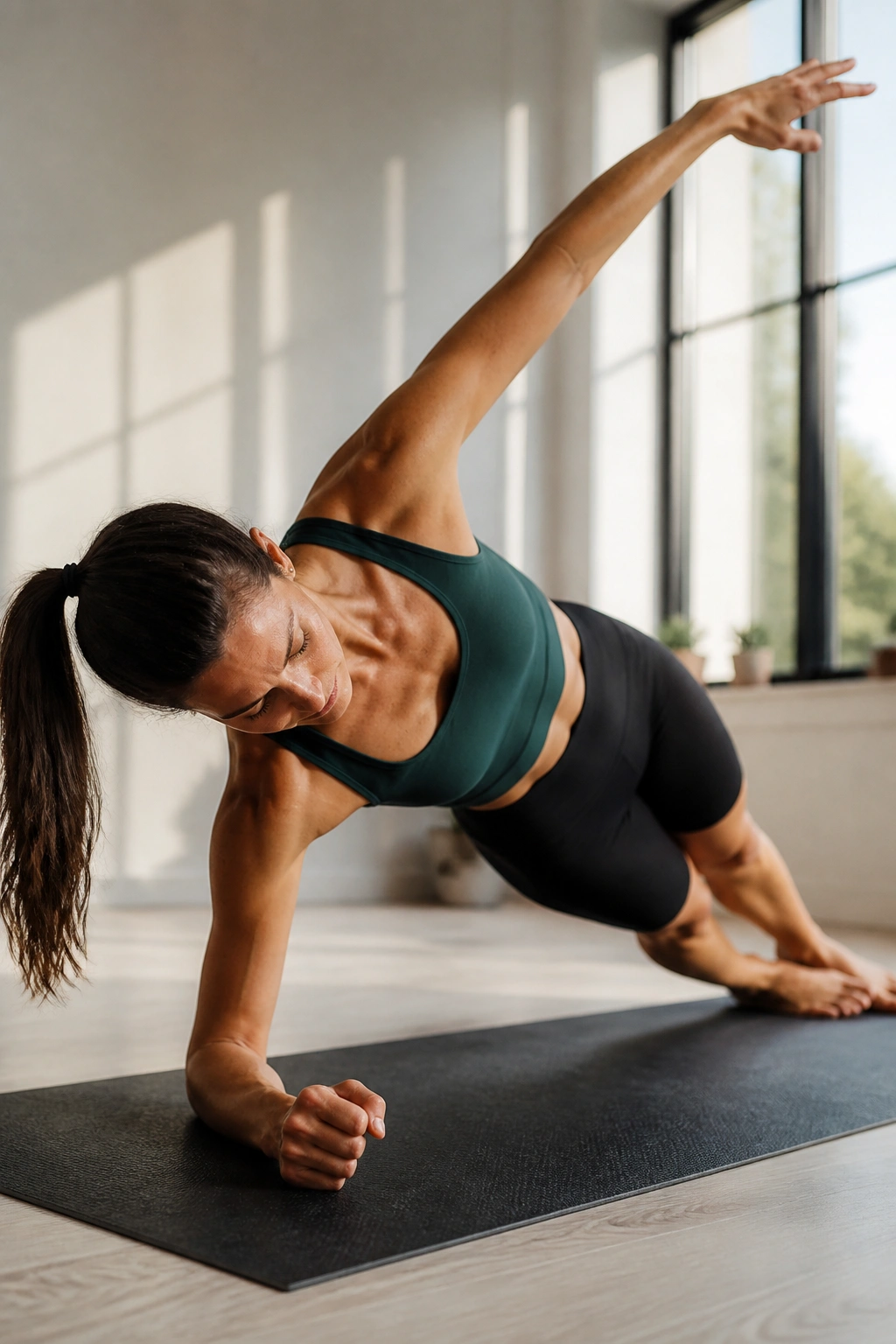
Side plank is the kind of move that looks neat until your lower shoulder starts shaking. Add a reach-through, and the whole thing becomes a lesson in staying organized under load.
Get onto one forearm, stack your feet, and lift the hips. Reach your top arm under your body for 6 controlled reps, then sweep it back overhead for 6 more. Hold the top position for 10 seconds before switching sides. Two or 3 rounds is enough.
The obliques do a lot here, but so do the small stabilizers around the shoulder. That is why this work matters. A lot of sculpt classes go hard on flexion and forget that a strong trunk also needs to resist side-to-side collapse.
If the full side plank is too spicy, drop the bottom knee and keep the same reach pattern. You still get plenty of work, and your form stays cleaner. Clean is better than heroic.
6. Warrior II Pulse Ladder
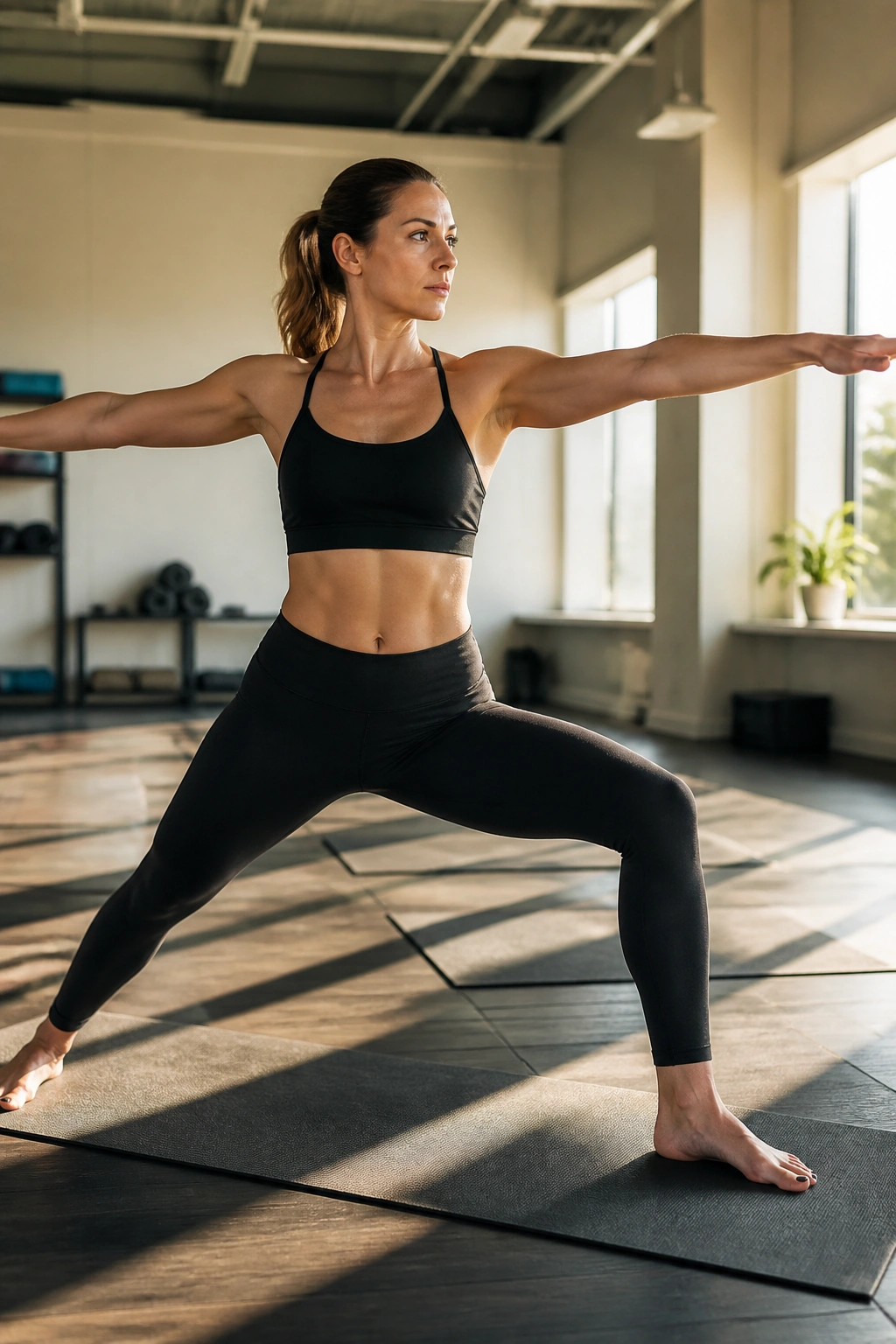
Unlike a long static hold, this one teaches your legs to keep working after the burn starts. That is a more useful lesson than looking pretty in a pose for ten seconds.
Set up in Warrior II with your front knee bent and back leg straight. Pulse down 12 times, hold for 8 seconds, then pulse 8 times, hold again, and finish with 4 slow pulses and a 10-second freeze. Switch sides and repeat for 2 rounds.
This is especially good if your inner thighs tend to disappear in regular strength work. The front leg gets the obvious challenge, but the back leg and the hips have to stay awake too, and that is where the sneaky strength gain lives.
Use a mirror if you need one. If the front knee drifts inward, the whole shape loses its point.
Keep the front heel heavy. That little detail helps the glute and quad share the load instead of dumping everything into the knee.
7. Yoga Sculpt Deadlift-to-High-Lunge Flow
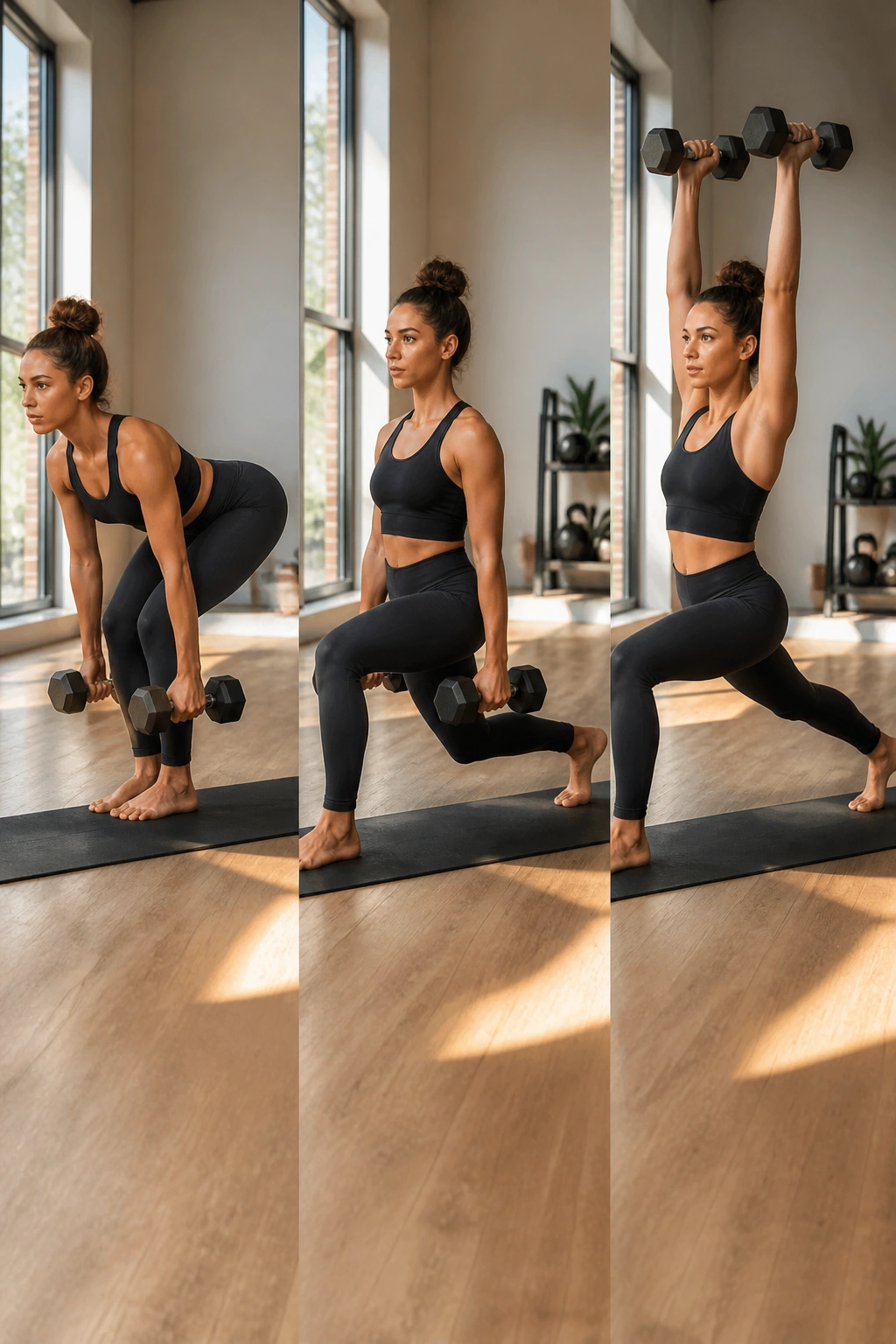
This flow feels smooth until the transitions start asking questions. Hinge, stand, step back, press, step through — if you rush any part of it, balance falls apart fast.
How to run it
Hold a pair of dumbbells at your sides. Hinge into a Romanian deadlift for 6 reps, stand tall, then step one foot back into a high lunge and press the weights overhead for 6 reps. Return to standing, switch sides, and repeat for 2 or 3 rounds.
- 6 deadlifts
- 6 high-lunge presses per side
- 2 to 3 rounds
- 3-second lower on the deadlift
- Rest 30 to 45 seconds between rounds
The hamstrings should feel stretched on the way down, then loaded on the way up. If the dumbbells drift forward and the back rounds, the hinge has collapsed. Keep the weights close to the body and think about sending the hips back, not down.
This is one of the better full-body sculpt patterns because it links posterior chain work with overhead strength. That combination carries over.
8. Boat Pose Dumbbell Hold and Twist
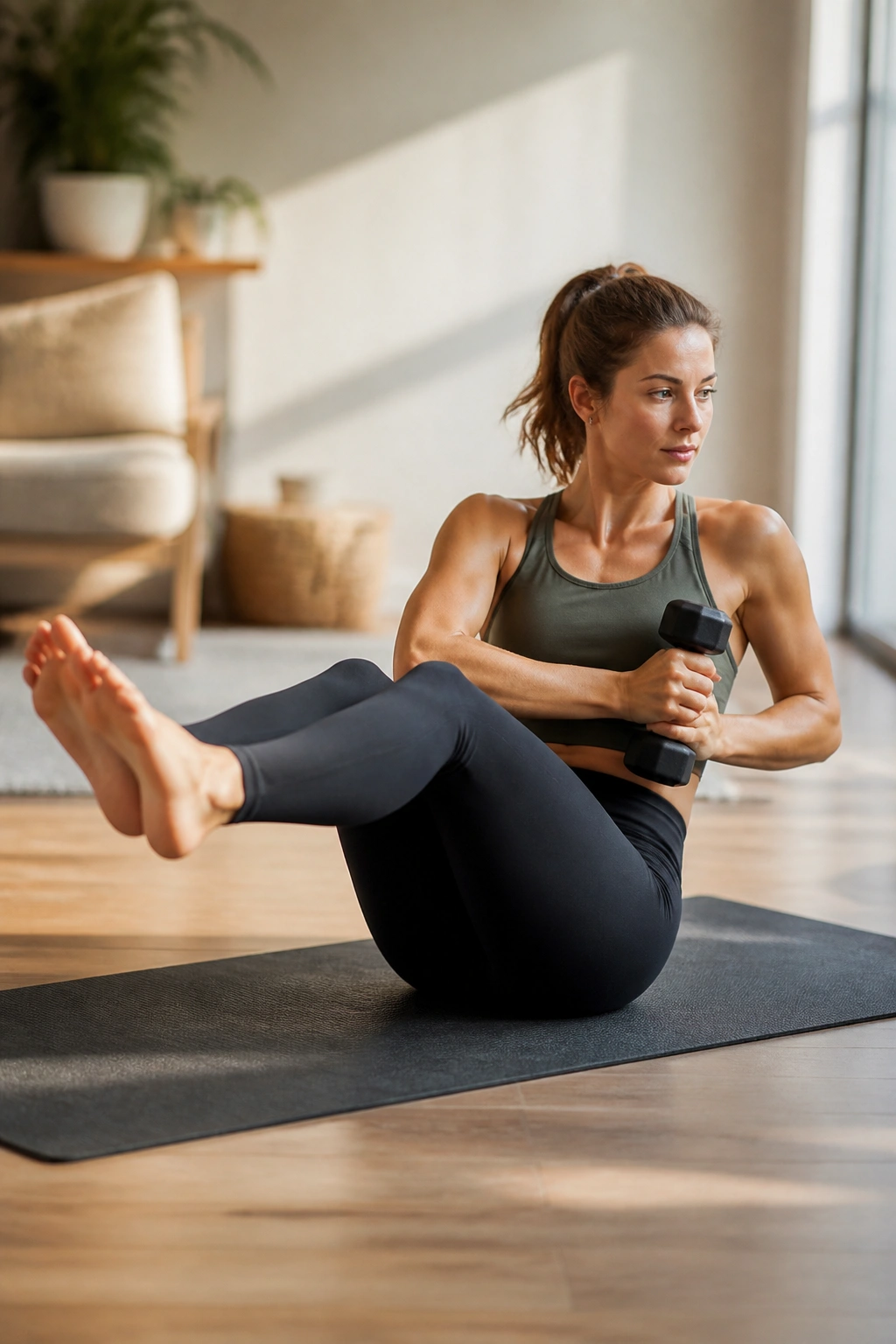
Boat pose gets serious when your heels hover and your hands stop pretending. A light dumbbell makes the core work harder, but the real test is whether you can keep the chest open while the abs do their job.
Sit tall, lean back slightly, and lift the feet into boat pose. Hold one light dumbbell close to the chest and twist side to side for 10 reps, then hold still for 15 seconds. Repeat for 2 or 3 rounds. If the low back starts barking, lower the feet or drop the weight.
The hip flexors will talk first. Fine. The abs should answer. If they do not, you are probably collapsing into the pelvis instead of staying lifted through the ribs.
Keep the movement small. Big twists with a light trunk are mostly noise. Small twists, done slowly, hit harder and feel cleaner.
One nice thing about boat work: you can scale it by bending the knees, and that does not make it lesser. It makes it usable.
9. Push-Up to Down Dog Sculpt
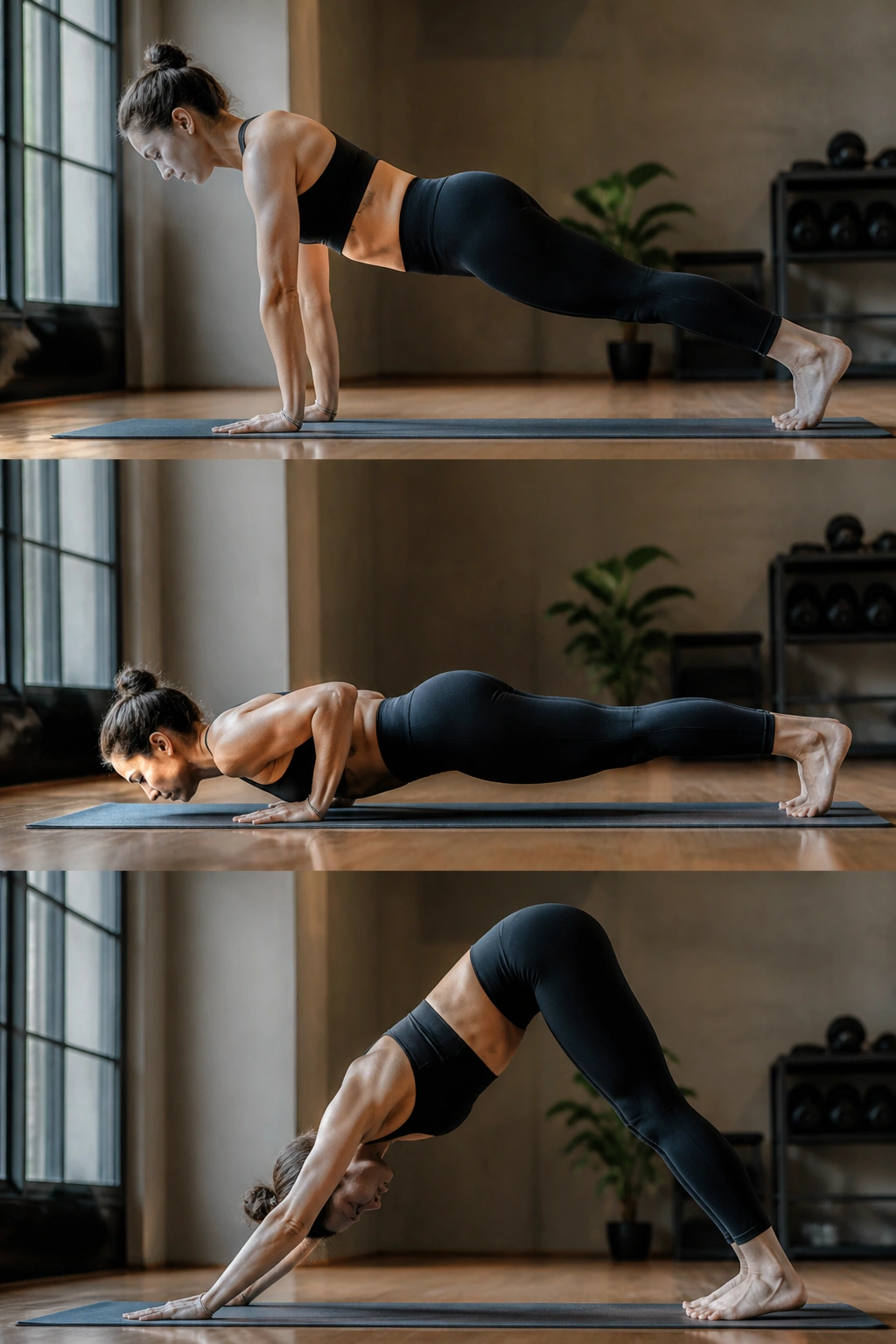
Why does a classic push-up flow do so much? Because it keeps changing the demand before any one muscle gets comfortable.
How to scale it
Start in a plank, lower for 4 seconds, press up, then shift back into Down Dog. Add 4 shoulder taps in plank if you want more core work, and repeat for 3 to 5 rounds. Keep the whole sequence smooth, not frantic.
- 5 push-ups
- 5 Down Dog shifts
- Optional 4 shoulder taps
- 3 to 5 rounds
- Knees down or hands elevated if needed
This one hits chest, triceps, shoulders, and the abs in a way that feels honest. If your elbows flare out wildly, shorten the rep and slow the lower. A clean half-push-up beats a sloppy full one every time.
If wrists are a problem, put your hands on blocks or a sturdy bench. The angle changes enough to take the edge off without neutering the set.
10. Skater Lunge Sweep Circuit
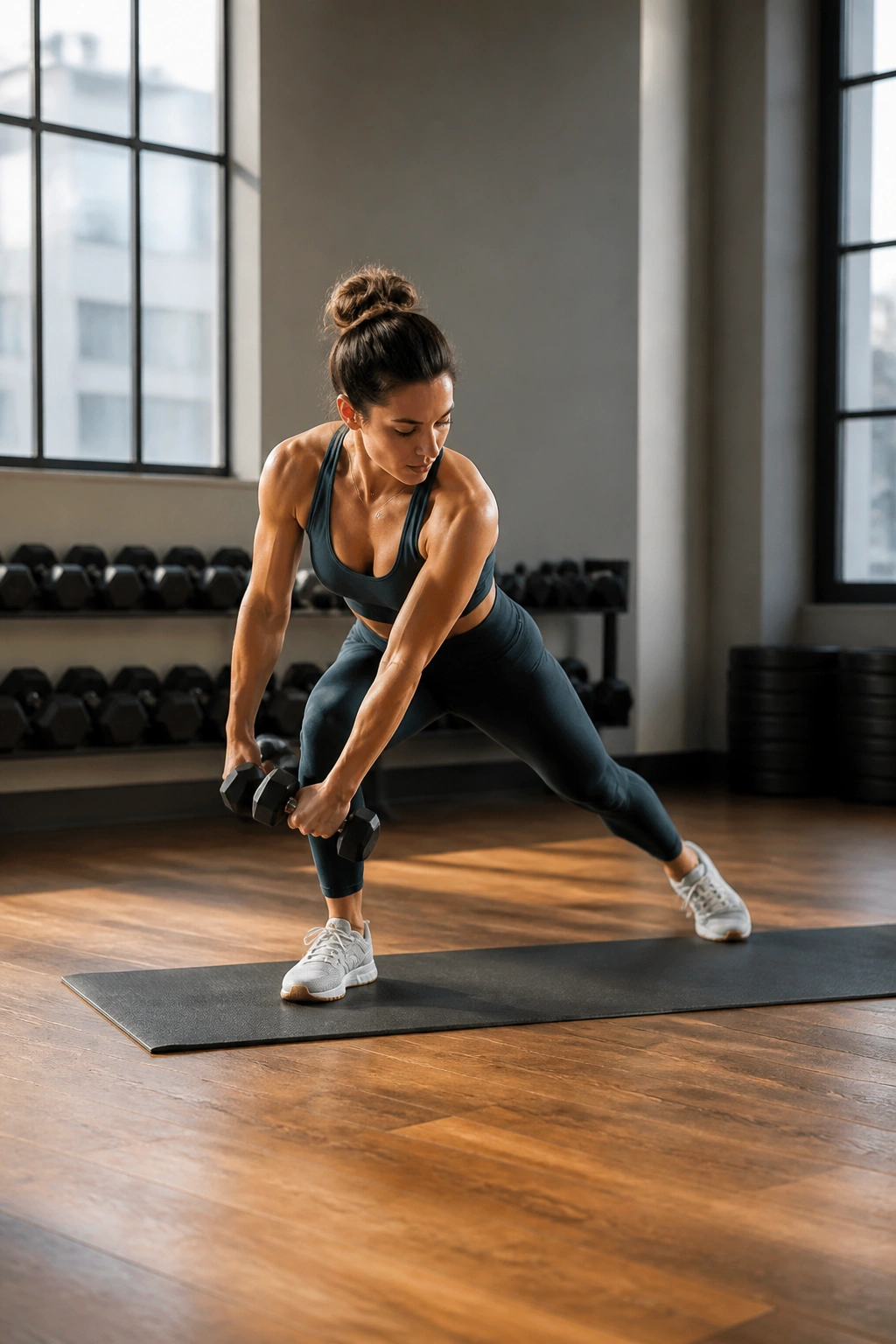
A lateral move changes the whole mood of a workout. Suddenly the glutes have to manage side-to-side force, and the inner thighs stop freeloading.
Step out into a skater lunge, send the hips back, and sweep the hands or dumbbells across the body toward the grounded foot. Push off the floor and switch sides for 8 reps each way. Rest for 20 seconds, then do 2 more rounds.
- 8 skaters per side
- 3 rounds
- Light dumbbells optional
- Keep the chest angled forward
- Land quietly
The quiet landing matters more than people think. If you crash into the floor, the rebound becomes chaos and the knees take the hit. A soft foot strike gives you control and keeps the lateral hip muscles honest.
This is a good day for anyone who sits too much. Side-to-side strength shows up in walking, running, changing direction, and keeping the pelvis steady when one leg is loaded.
11. Cactus-Arm Shoulder Burner
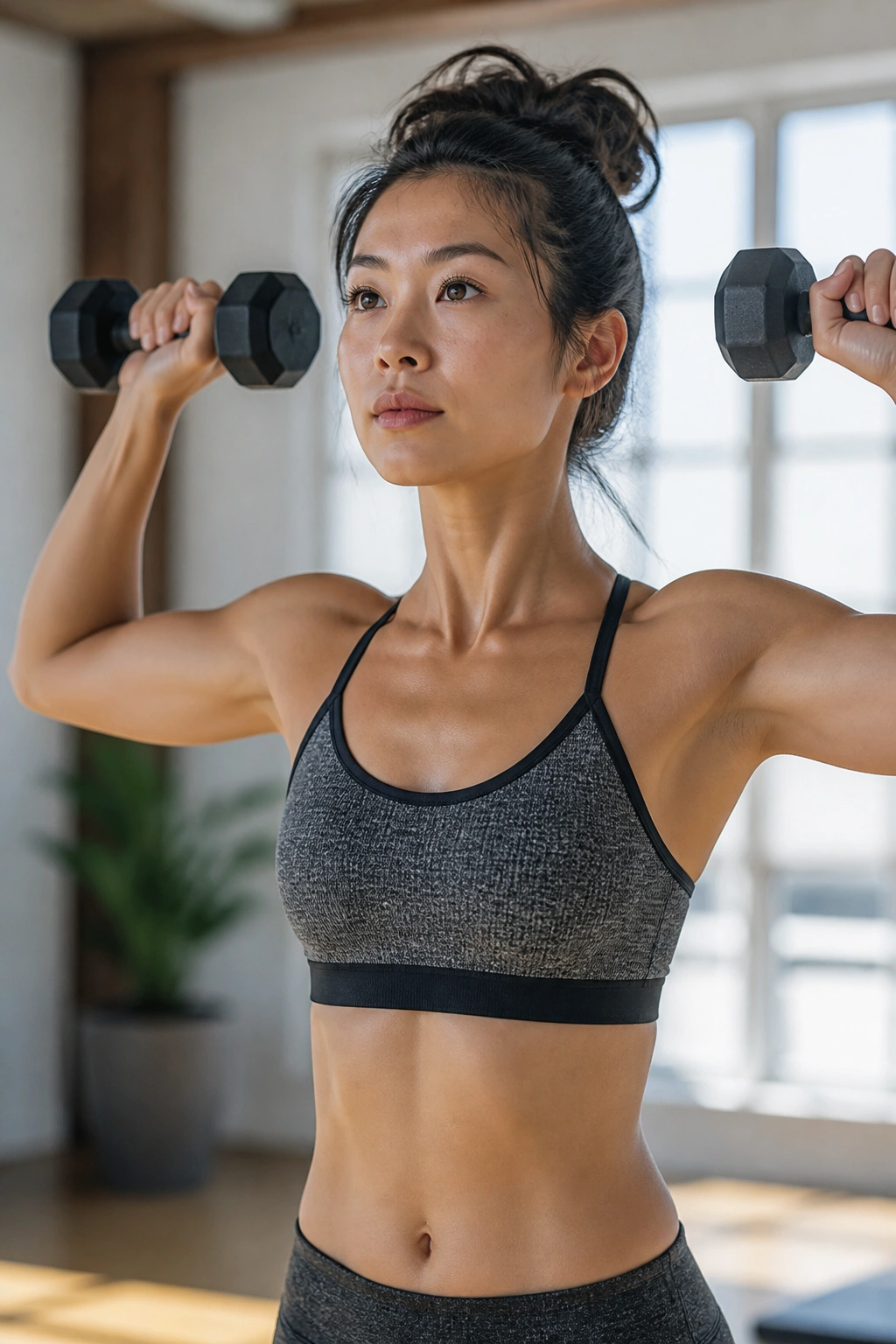
Cactus arms look innocent until your upper back starts to smoke. The position is simple: elbows bent, upper arms out, chest broad, neck long. The work happens because you have to keep that shape while the shoulders burn.
Stand tall or hinge slightly at the hips, then hold cactus arms for 20 seconds. Pulse the arms up and down 8 times, press overhead for 6 reps if the shoulders allow it, and return to cactus for another 15-second hold. Do 3 rounds with only short rests.
The key is not shrugging. If the shoulders ride up toward the ears, the neck gets tight and the target muscles disappear. Keep the shoulder blades wide and down, and think about sliding the upper arms away from the ears.
This is a light-weight day move. Two or 3 pounds is enough. More than that, and people start swinging without realizing it.
Small weights can still be rude. Especially here.
12. Bear Hover Tap Series
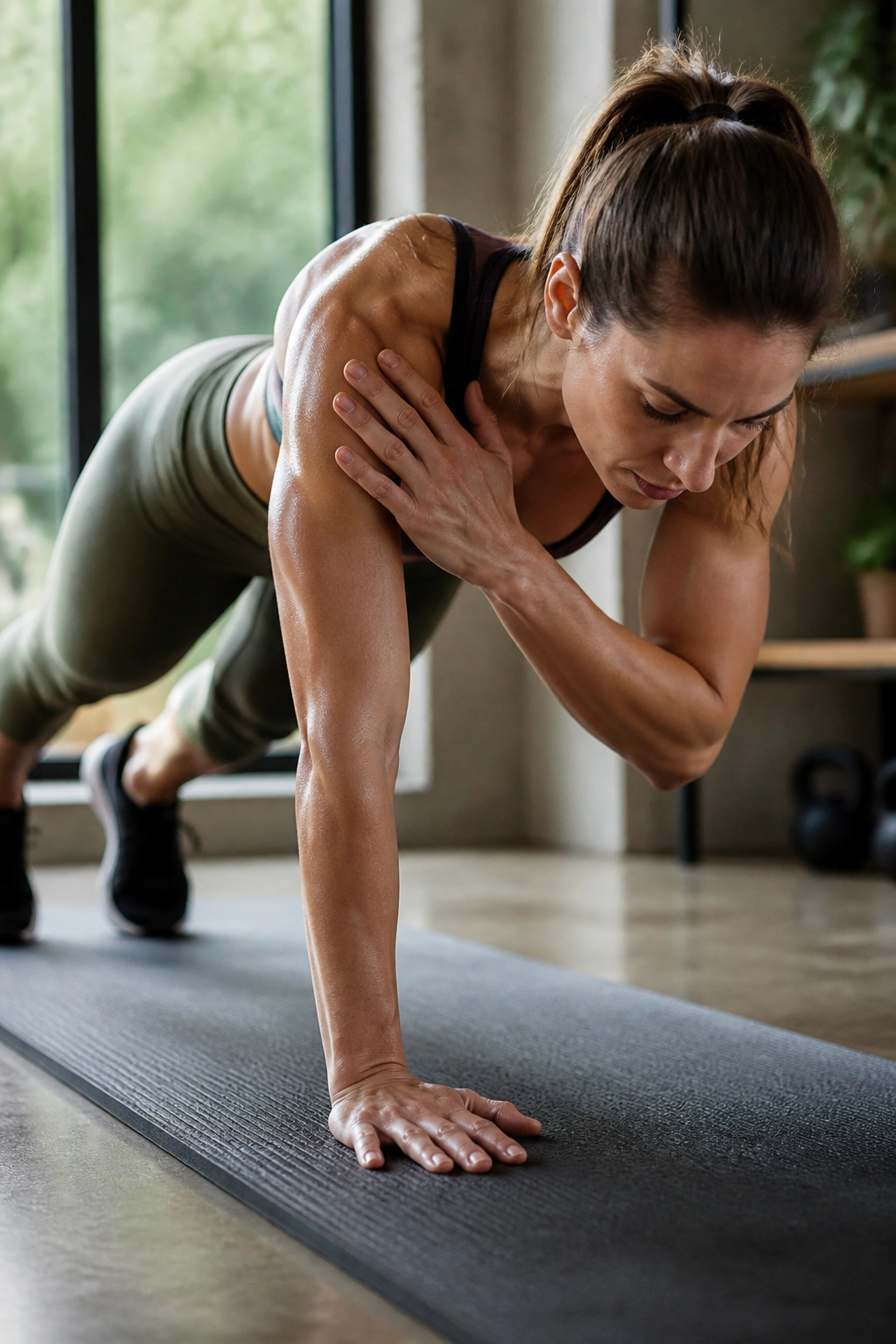
Bear hover is a blunt little move. Once the knees float an inch off the floor, the core has to lock in or the whole shape wobbles.
Unlike a standard plank, bear hover shortens the lever and forces the hips to stay tucked under you. That makes it a smart option for people who want core work without endless crunches or neck strain.
Set up on hands and knees, lift the knees just off the floor, and tap one hand to the opposite shoulder for 10 total taps. Then hover for 15 seconds, breathe, and repeat for 3 rounds. If that feels too easy, add toe taps or move the knees a touch farther from the floor.
The best part is the feedback. If the back sways, you know immediately. If the shoulders drift, you know that too. There is no hiding in a bear hover.
This is a favorite when the goal is control. The burn is a bonus.
13. Reverse Warrior Yoga Sculpt Triceps Flow
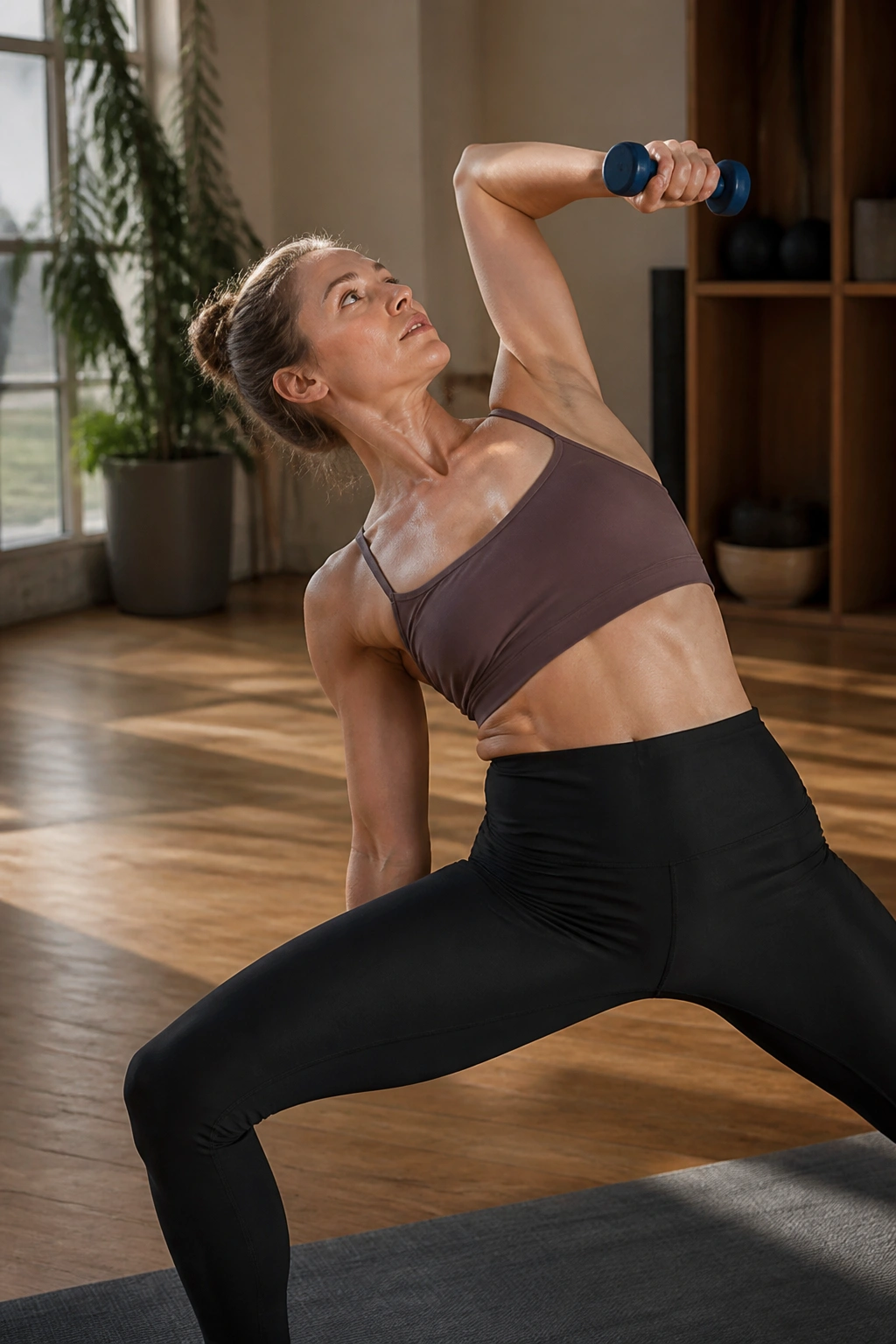
Reverse Warrior is one of those poses people like because it feels open. Add a triceps kickback or overhead extension and it stops being a rest position.
How to run it
Set up in Warrior II, tip into Reverse Warrior, and hold a light dumbbell in the top hand. Perform 8 triceps kickbacks or 8 overhead extensions on that side, return to center, then switch. Keep the front knee bent and the ribs from flaring.
- 8 arm reps per side
- 2 to 3 rounds
- Light weight only
- Keep the side body long
- Do not lock the front knee
The shoulder has to stay calm while the arm moves. That is harder than it sounds. If the upper trap jumps in and steals the motion, lower the weight and slow the rep.
The side bend gives the obliques a stretch, while the arm work turns the upper body into more than a decorative part of the class. That is the whole point here.
14. Curtsy Lunge and Twist Combo
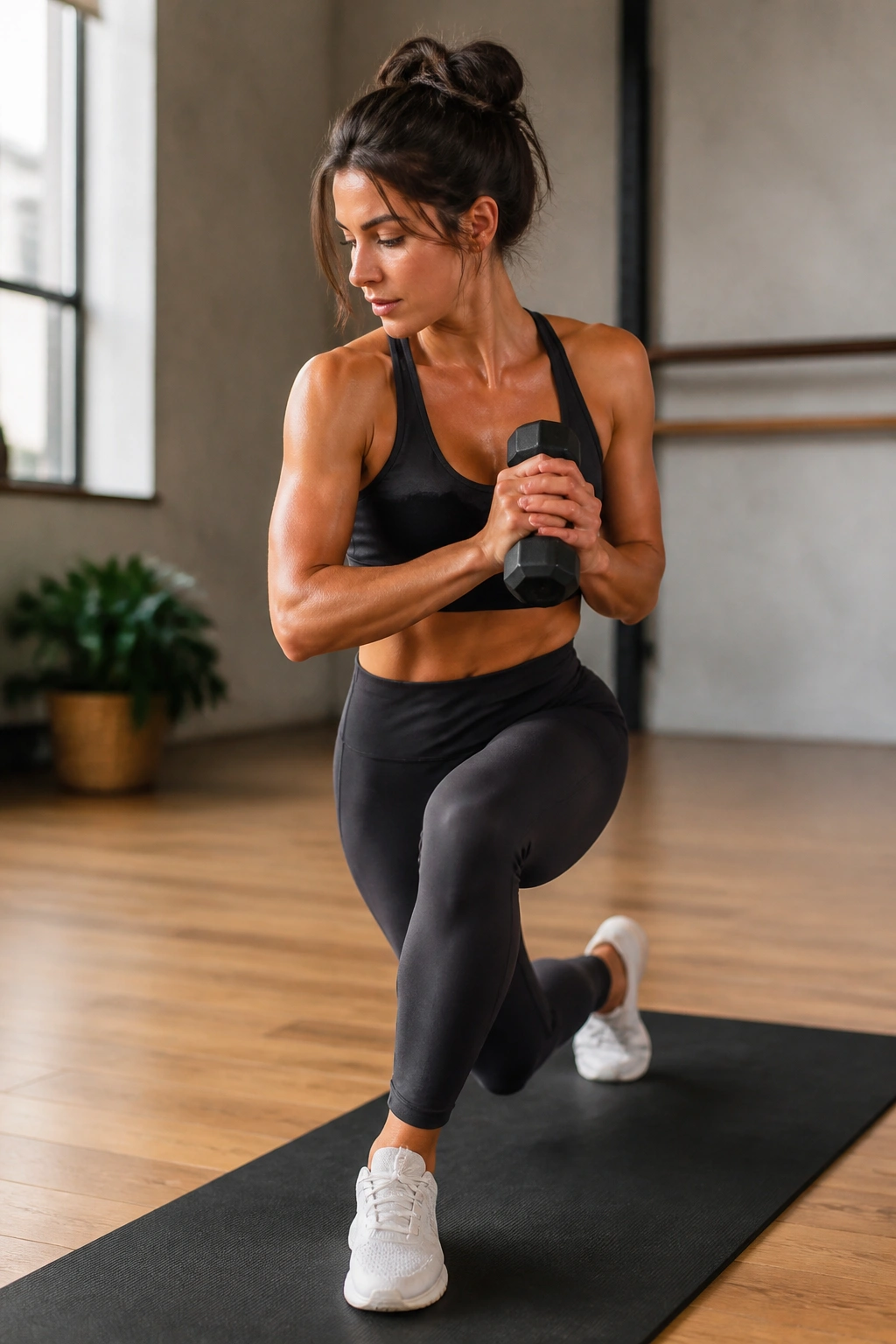
If your knees tolerate it, curtsy work is one of the quickest ways to wake up the outer glutes. Add a twist, and the core has to stop the torso from doing whatever it wants.
Step one leg behind and across into a curtsy lunge, then hold a dumbbell at chest level and rotate gently toward the front leg. Come back to center, stand, and repeat for 8 reps on each side. Do 2 or 3 rounds, with a full breath between reps if balance gets shaky.
The twist should be small. You are not trying to fling the shoulders around. You are training the hips to stay stable while the upper body rotates against them.
If the front knee feels pinchy, swap the curtsy for a reverse lunge. No drama. Same training effect, less irritation.
Keep the pelvis square. That one cue fixes more than people expect.
15. Temple Pose Press Set
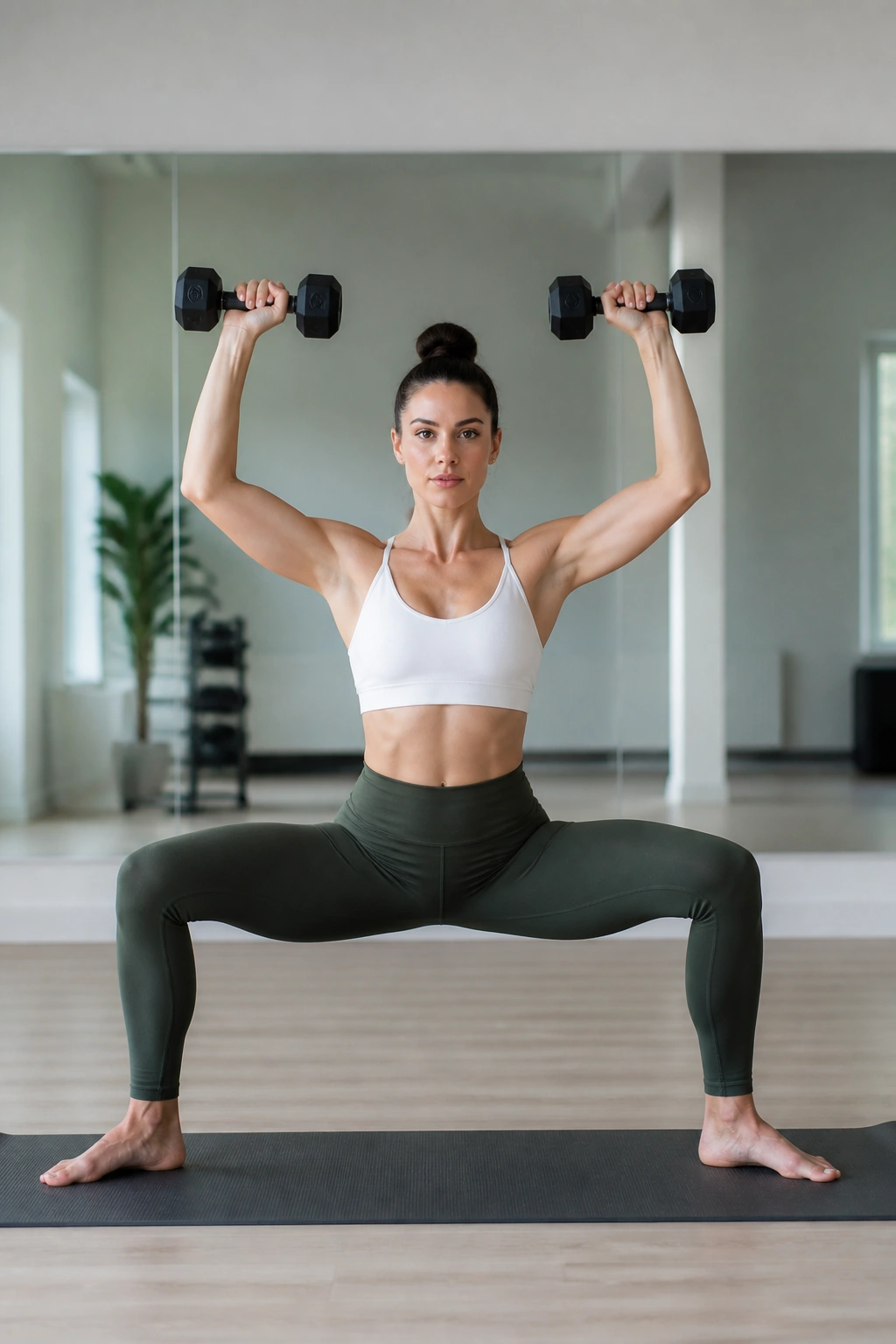
Temple pose is not a rest. Put weights in your hands and it starts asking for honesty from the inner thighs, shoulders, and upper back.
How to run it
Sit low in goddess or temple pose with toes turned out and knees tracking over the toes. Hold a dumbbell at chest level, press overhead for 8 reps, then hold the bottom position for 20 seconds before standing to reset. Three rounds is enough.
- 8 presses
- 20-second low hold
- 3 rounds
- Use 3- to 8-pound dumbbells
- Keep the knees open, not collapsed inward
The inner thighs do work here, but so do the glutes. If the knees cave, the hips are not sharing the job. Widen the stance a little and sit back instead of dropping forward.
This is a good choice when you want legs and shoulders in one shot without a lot of floor work. It is plain, direct, and a little rude in the best way.
16. Split-Squat Isometric Hold + Curl
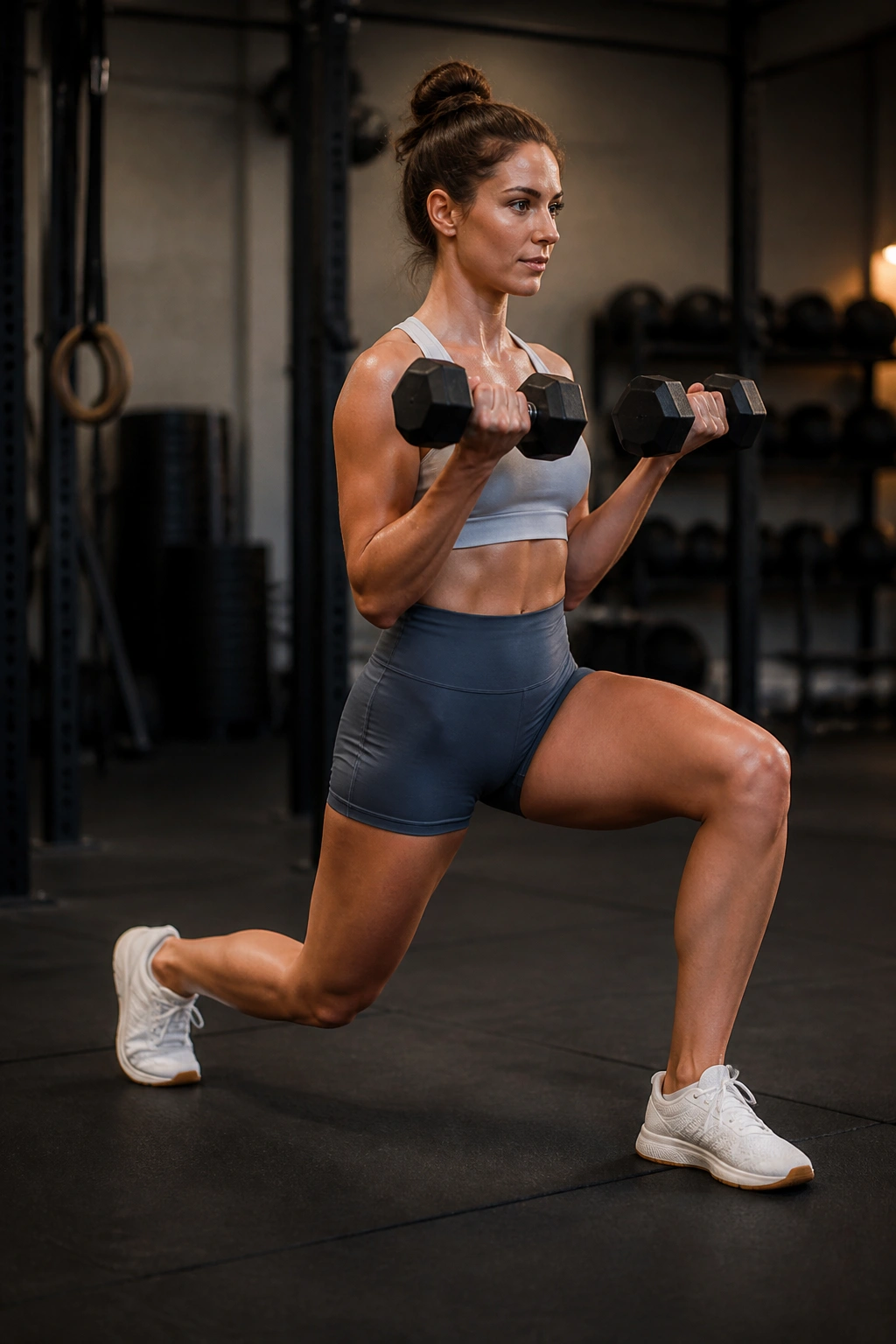
One leg under load is where a lot of so-called core strength shows up for real. Split squat holds reveal the truth fast.
Plant your front foot, step the back foot long enough to stay stable, and lower until both knees are bent. Hold the bottom for 20 seconds, then perform 8 biceps curls without changing the torso angle. Switch sides and repeat for 2 or 3 rounds.
The front quad will light up first. Then the glute. Then the balance muscles start arguing with each other. That is fine. The point is not to bounce around and hope the set ends quickly. The point is to stay still while the arms move.
If the torso tips forward, raise the chest and shorten the stance a bit. If the back knee slams into the floor, you have gone too far.
This is one of those workouts that looks quiet from across the room and feels loud from the inside.
17. Forearm Plank Saw and Pike
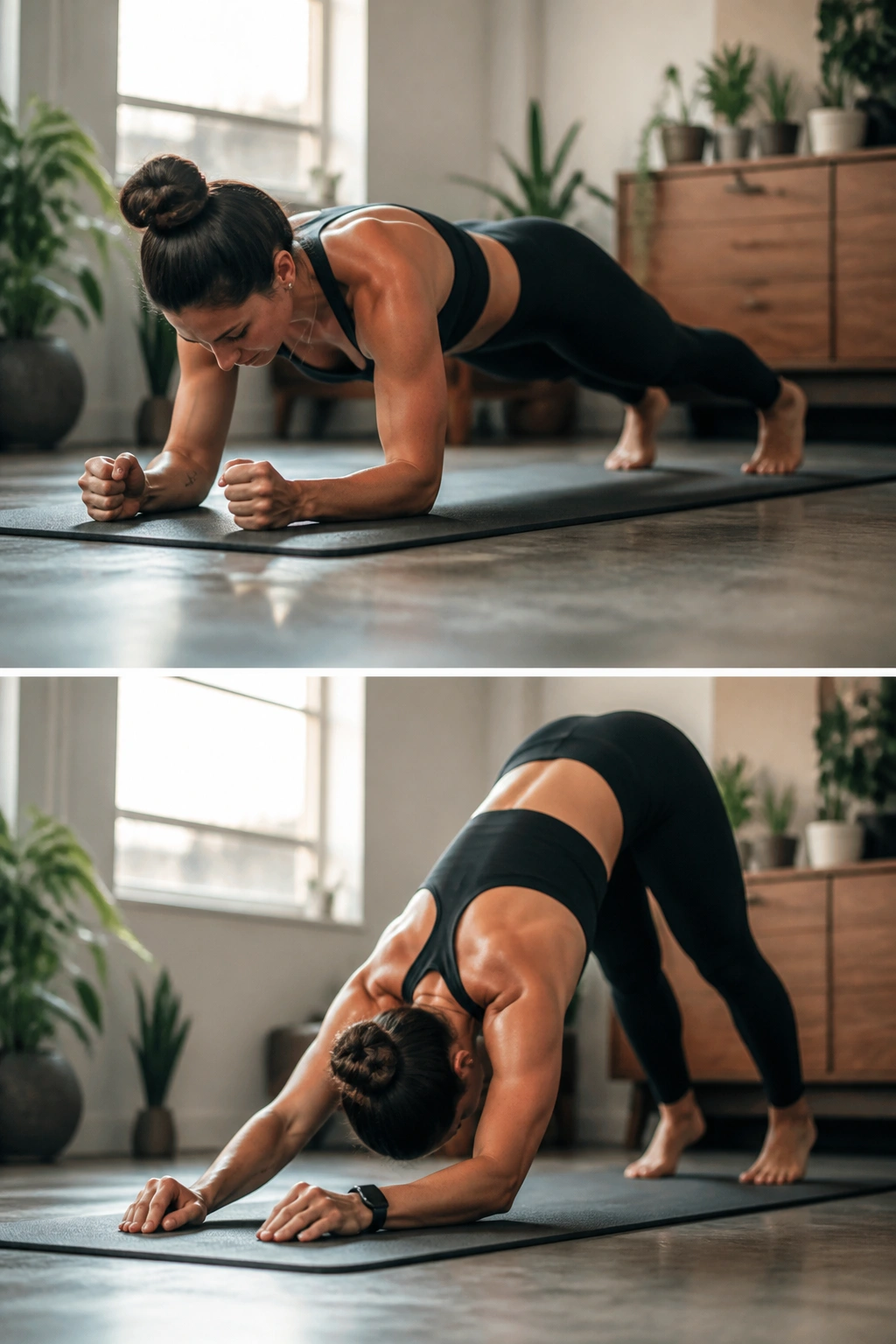
Forearm plank gives the wrists a break, which is nice. The shoulders, however, get no such mercy once you start sawing forward and back.
Set your forearms down, tuck the toes, and hover in a plank. Slide your body forward an inch or two, then back to the starting line for 8 controlled saws. Finish with 5 pike lifts, sending the hips high and returning to plank with control. Do 3 rounds.
The midsection has to hold the spine still while the shoulders and upper back work. That is where the value is. People chase ab burn with endless crunches and miss this kind of trunk stiffness, which carries over much better.
If the lower back pinches, shorten the range and raise the hips a touch. A smaller motion done well beats a bigger motion done badly.
Some days this one feels boring for the first 20 seconds. Then the shoulders catch up.
18. Chair Heel-Lift Calf and Quad Set
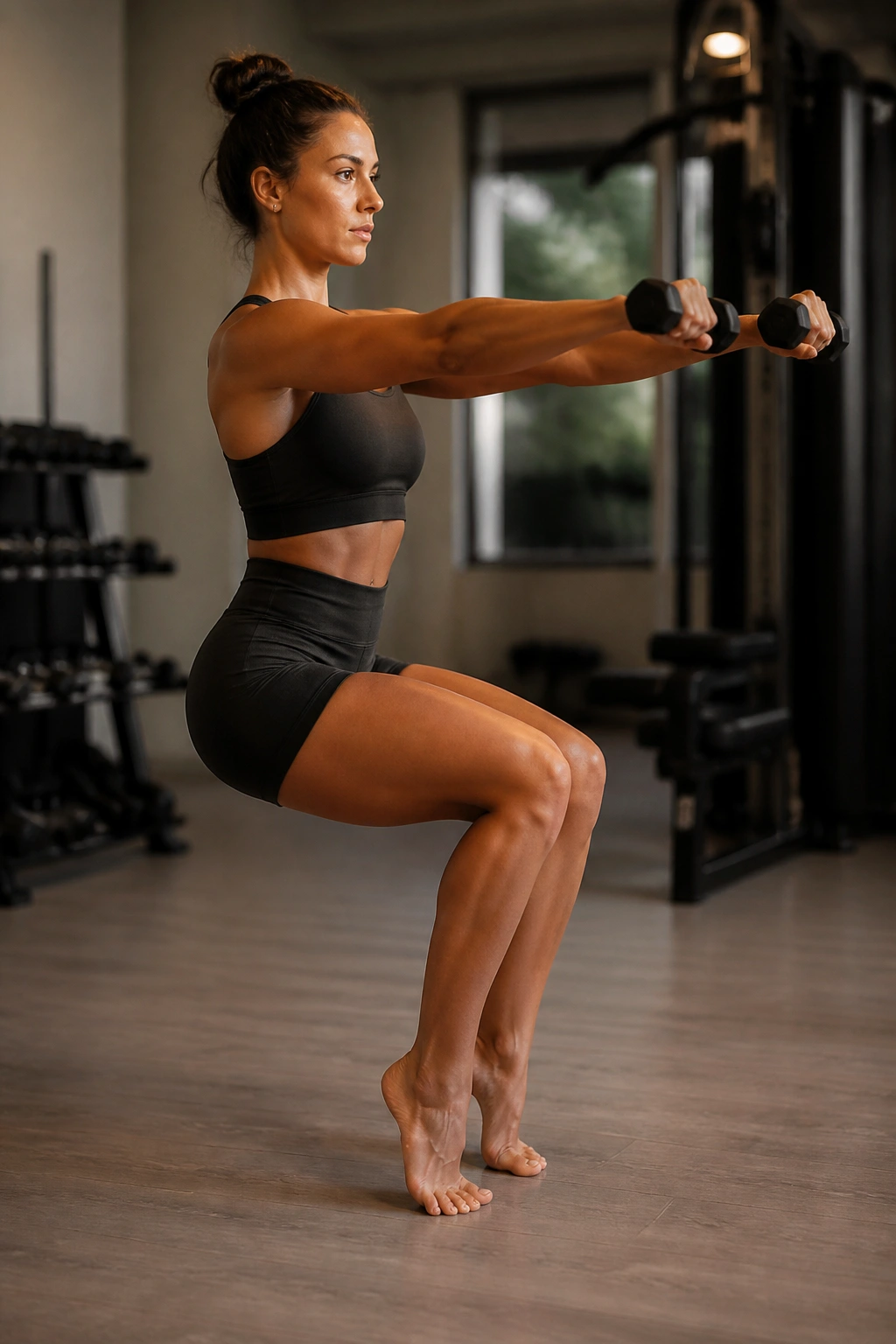
Unlike a plain chair hold, adding heel lifts forces the calves and foot arches to work while the quads stay loaded. It sounds tiny. It is not.
Drop into chair pose, then lift both heels an inch off the floor for 15 reps. Hold the top for 5 seconds, lower, and repeat for 3 rounds. If you want more, keep the weights at shoulder height the entire time.
This is a smart choice for runners, dancers, and anyone whose ankles collapse under fatigue. The calves learn to support you, and the quads never get to coast.
The move is also sneaky on the balance system. Once the heels float, every small wobble gets louder. That is useful data. You want that feedback.
Stay heavy through the big toe mound. If the weight rolls to the outside edge of the foot, the ankle loses its job.
19. Yoga Sculpt Hamstring Curl Bridge Flow
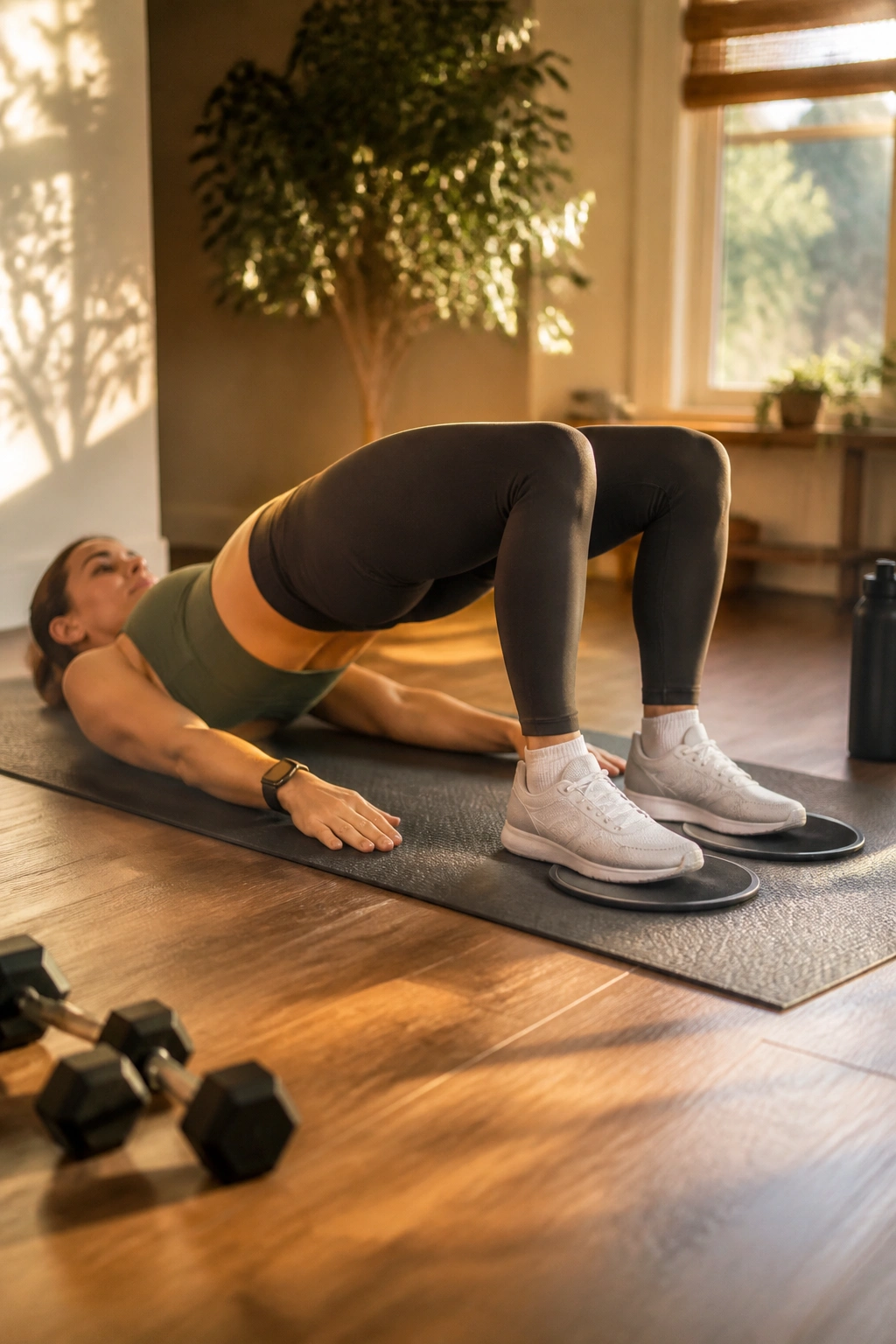
How to run it
Put your heels on sliders, towels, or socks on a smooth floor and lift into a bridge. Curl the heels toward you for 8 slow reps, then hold the bridge for 20 seconds before lowering. Repeat for 3 rounds.
- 8 hamstring curls
- 20-second bridge hold
- 3 rounds
- Hips stay level
- Use a dumbbell on the hips only if the bridge stays clean
The hamstrings should feel like they are lengthening and shortening under load, not cramping out because the hips collapsed. If the bridge drops every time you curl, shorten the motion and keep the glutes higher.
This is one of the best lower-body sculpt patterns for the back side of the body. It works the hamstrings in a way that ordinary squats do not, and the payoff shows up when stairs stop feeling so rude.
20. Bird Dog Row Sequence
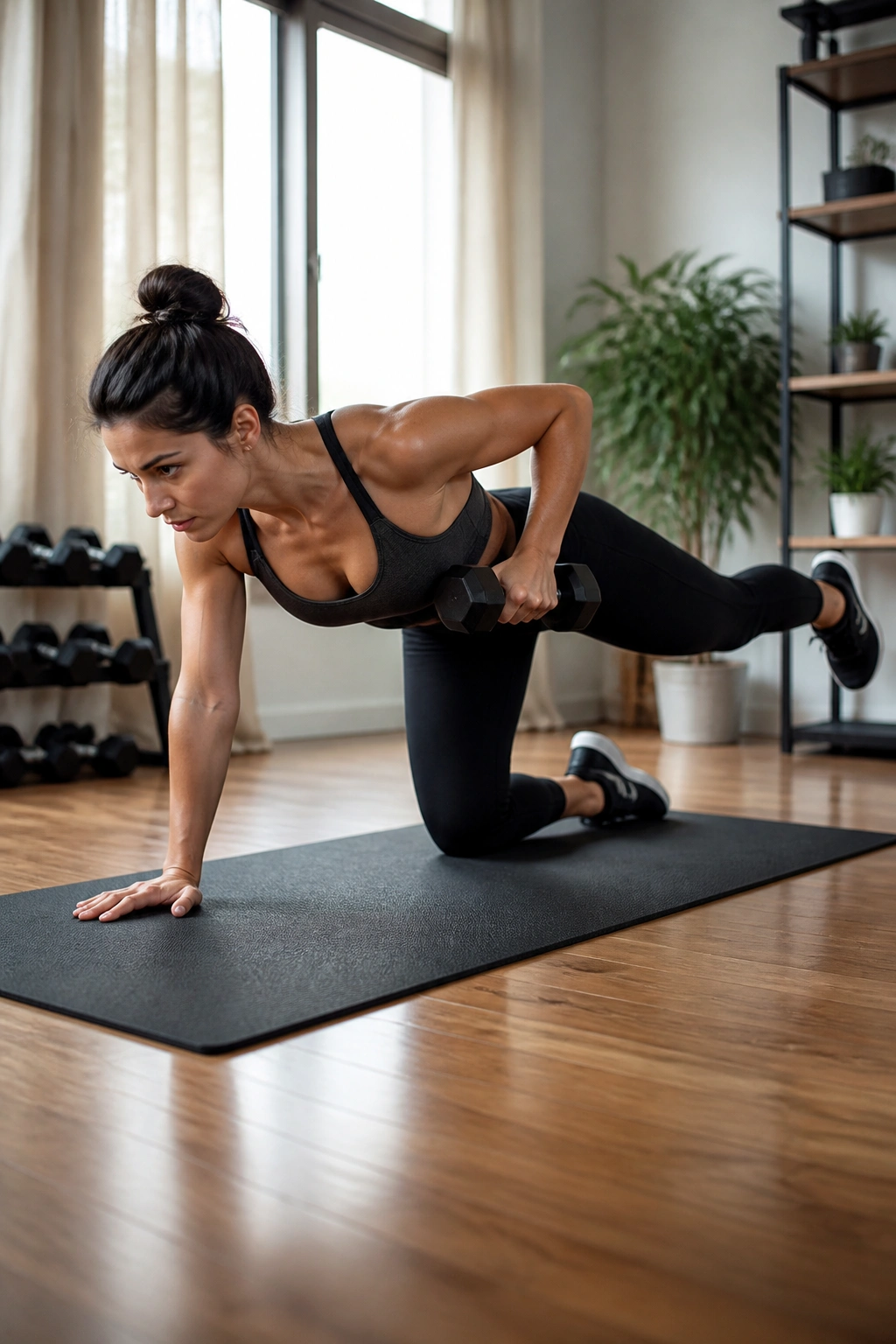
Bird dog rows teach a lesson dumbbells alone cannot: your trunk has to stay quiet while your limbs do the work. That is a real strength skill, not a decorative one.
Start on hands and knees with one dumbbell under the working hand. Extend the opposite leg straight back, then row the weight without letting the hips twist. Do 8 reps per side, then hold the extension for 10 seconds before switching.
The back should stay flat. If the ribs drop toward the floor or the pelvis opens sideways, the row is too heavy or the reach is too long. Keep the motion boring and controlled. Boring is good here.
This drill is excellent for people who want stronger backs, steadier hips, and better plank control without grinding through a ton of floor work. It feels odd at first. Then it starts to feel like the missing link.
21. Three-Legged Dog Kickback
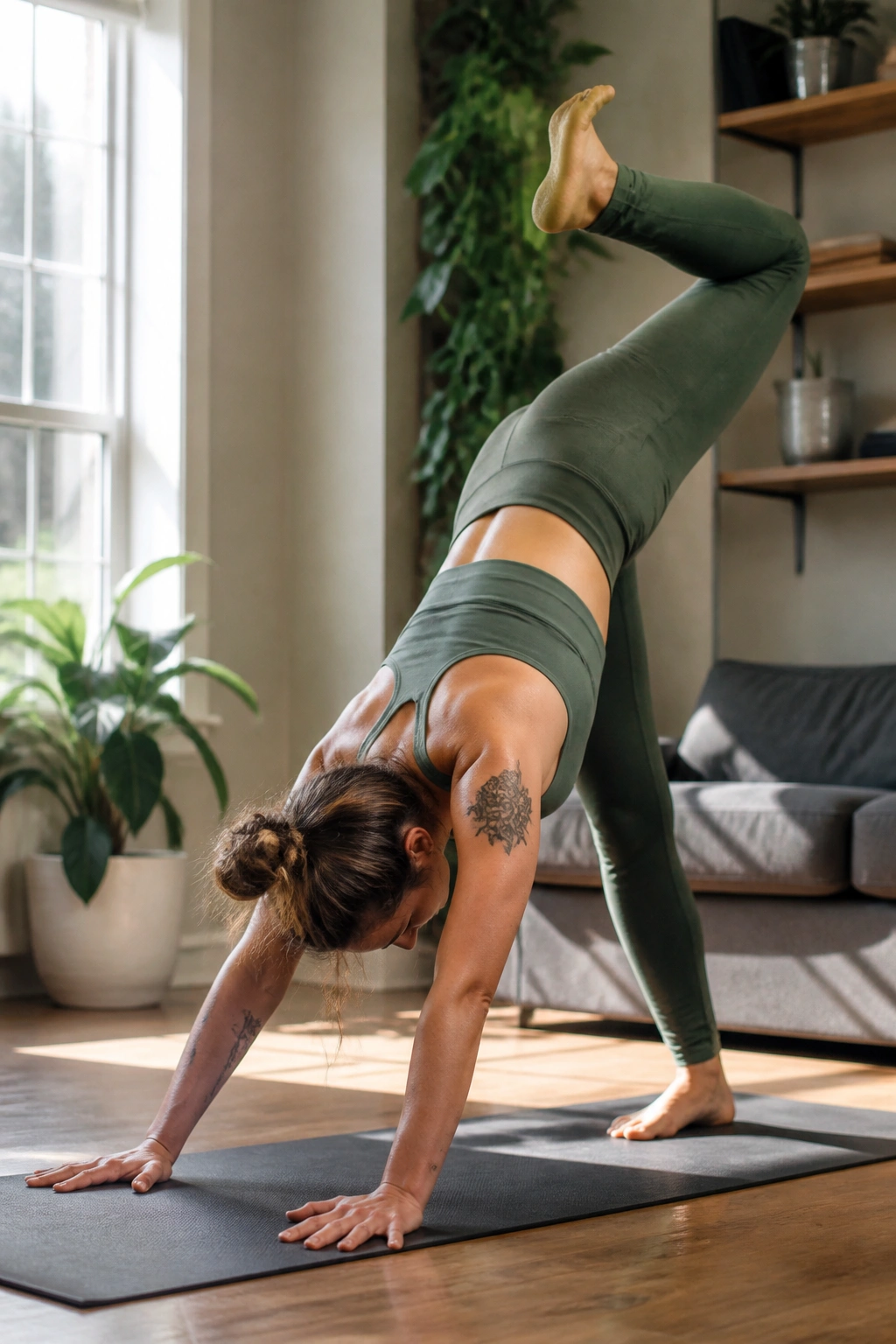
Why does a simple three-legged dog turn into a glute workout so fast? Because once the leg leaves the floor, the rest of the body has to hold the line.
How to use it
From Down Dog, lift one leg high into three-legged dog. Bend the knee and pulse the heel toward the ceiling for 6 reps, then hold for 15 seconds before stepping through and changing sides. Two or 3 rounds is plenty.
- 6 bent-knee kickbacks
- 15-second hold
- 2 to 3 rounds
- Hands press evenly into the floor
- Keep the standing shoulder stable
If the shoulders get cranky, do the same pattern with your hands on blocks or a bench. The angle changes enough to make the position friendlier.
This is one of the better sculpt choices for glutes without a lot of equipment. It also sneaks in a mobility dose, which is handy when the hips feel locked up.
22. Lateral Lunge Curl Press
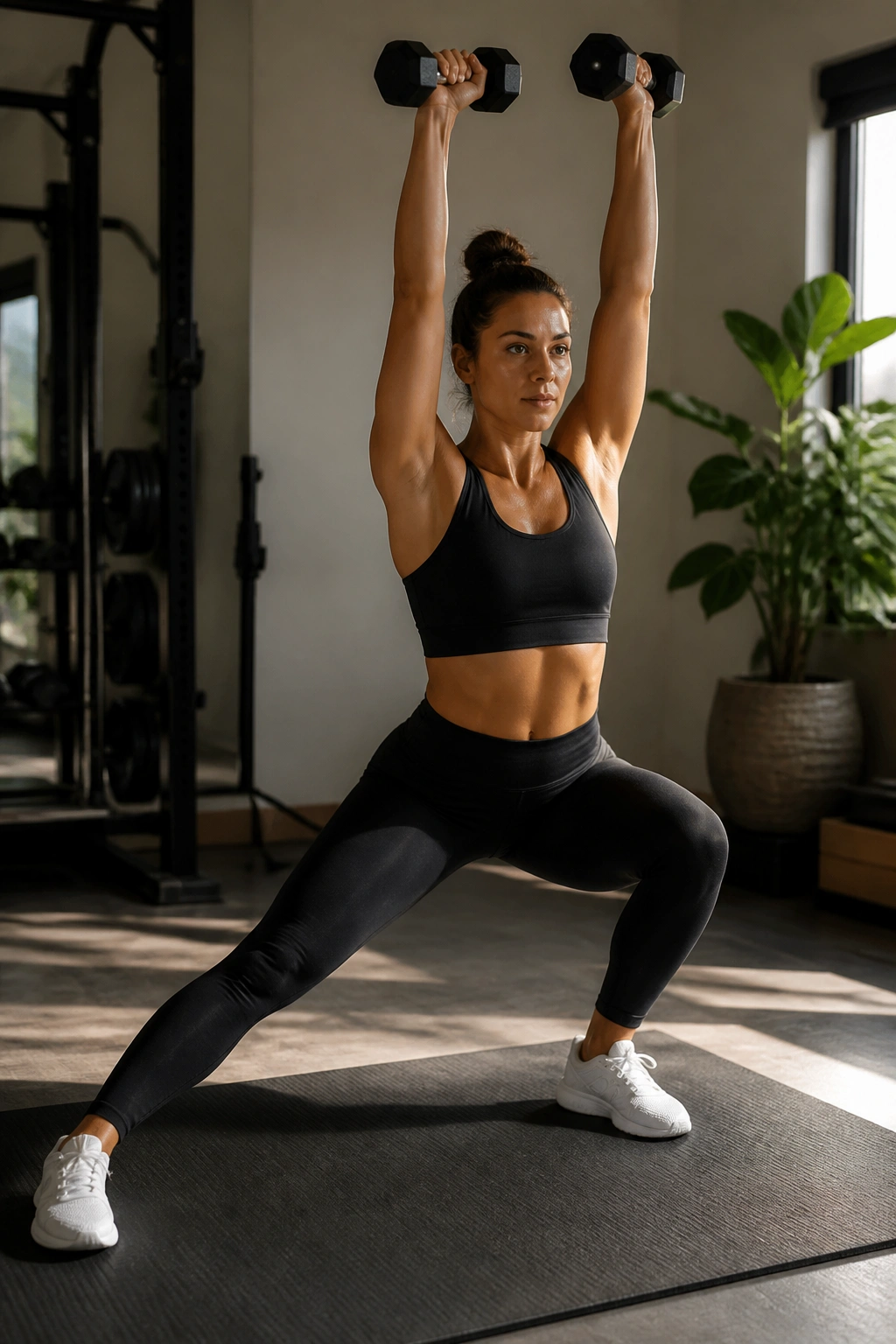
A lateral lunge asks for control in a direction most workouts ignore. Add a curl and press, and the upper body joins the argument.
Step out to the side, sit the hips back into the lunging leg, curl the weights as you rise, then press overhead at the top. Do 8 reps each side for 3 rounds. Keep the moving foot flat and the opposite leg long.
- 8 reps per side
- 3 rounds
- Medium-light weights
- Sit back into the hip
- Keep the trailing leg straight
The adductors on the inner thigh get involved in a way they usually do not. That is good. They matter more for knee control and side-to-side strength than most gym plans admit.
If the knee dives inward, shorten the step and slow down. The position gets better when the hip takes the lead.
This one feels athletic, a little messy, and very effective.
23. Dolphin Plank Shoulder Sculpt
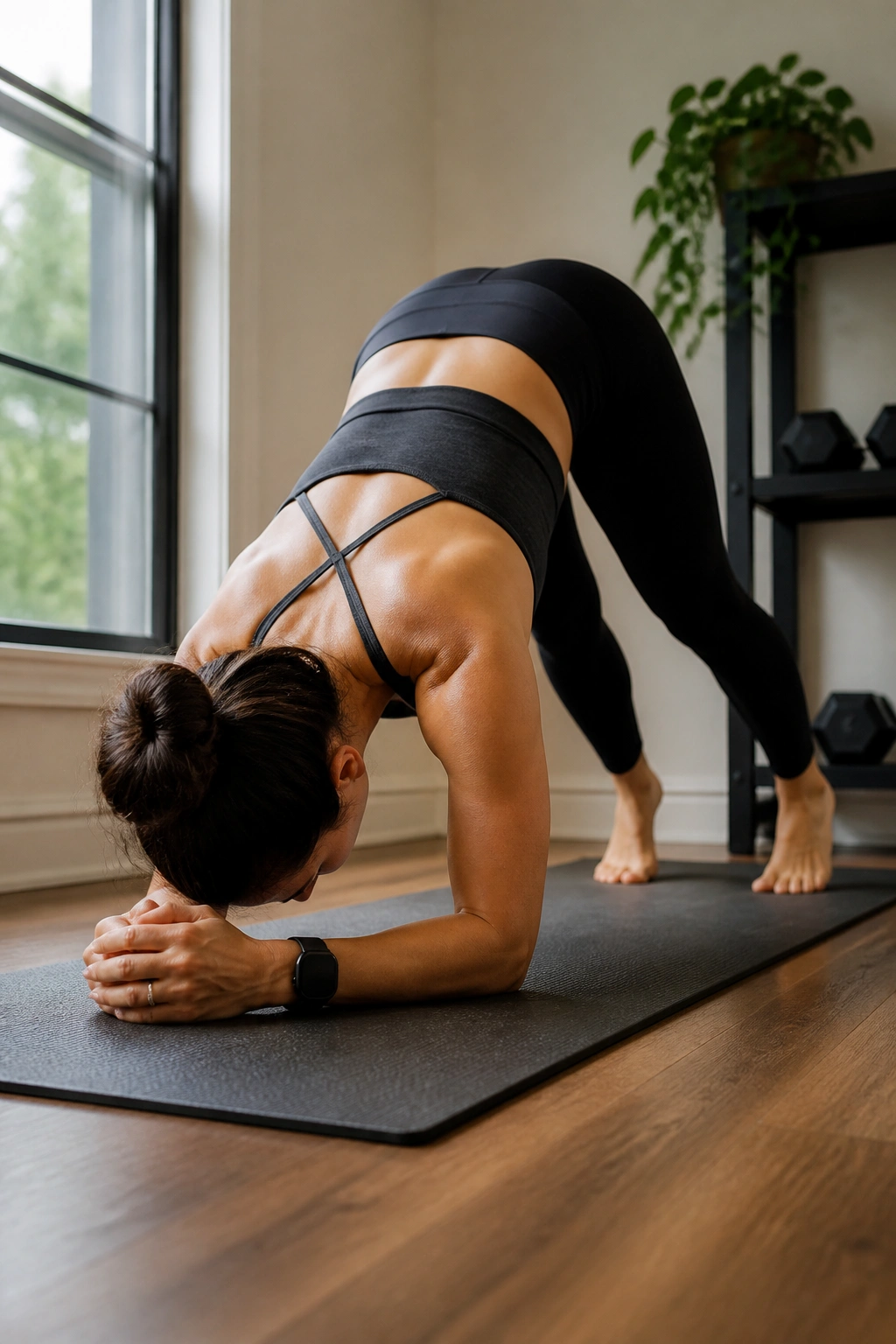
Dolphin plank saves the wrists and lights up the shoulders in a way that makes you notice every inch of the floor. The forearms bear the load, but the upper back and serratus have to work hard to keep the shape from folding.
Set your forearms down, lift the hips, and hold for 20 seconds. Then walk the feet in a little and send the hips up and back for 5 controlled pike reps. Repeat for 3 rounds.
The breath gets deeper here. That is normal. The shoulders should feel loaded, not jammed. If the neck gets tight, push the floor away and widen the shoulder blades a touch.
This is a strong option on days when the wrists need a break but the upper body still wants a challenge. The line from forearms to hips to heels should feel like one organized shape, not three unrelated parts.
No need to rush. The slower version is the better version.
24. Half-Moon Balance and Row
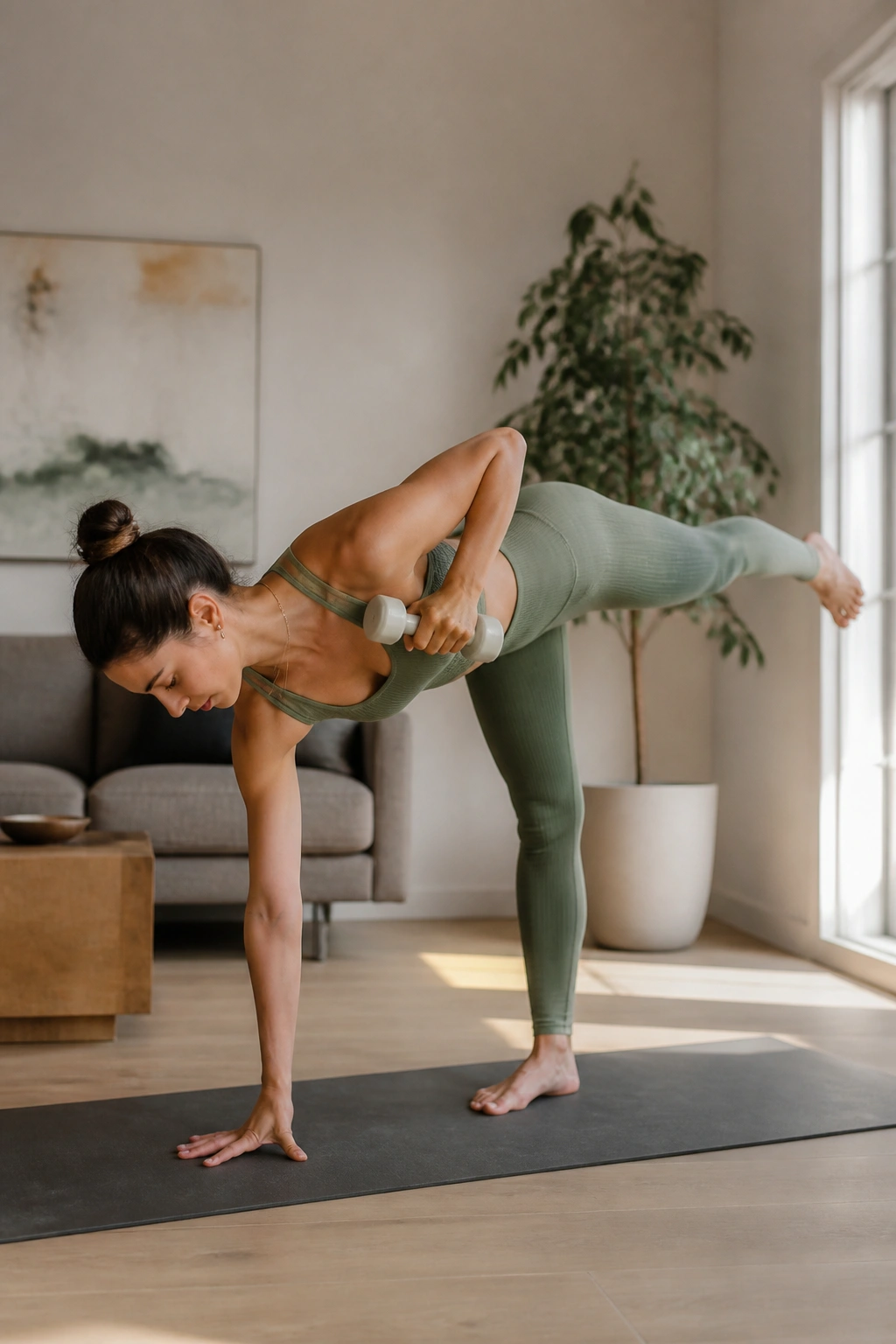
Unlike a standing row, half-moon strips away a lot of stability and asks the standing leg to keep everything from tipping over. That is why it works so well.
Balance on one leg, tip into half moon, and hold a very light dumbbell in the top hand. Row the weight for 6 reps, then hold the pose for 10 seconds before standing upright and changing sides. Two rounds is usually enough.
This is not the place for heavy loading. Two to 5 pounds is plenty. The goal is not to prove you can hold a brick in the air; it is to keep the standing hip and the foot working while the torso stays long.
A wall is fair game. In fact, if you wobble constantly, the wall makes the set better because you can focus on the row instead of rescue work.
The payoff is clean balance, steadier glutes, and a core that stops cheating.
25. Full-Body Yoga Sculpt Countdown Flow
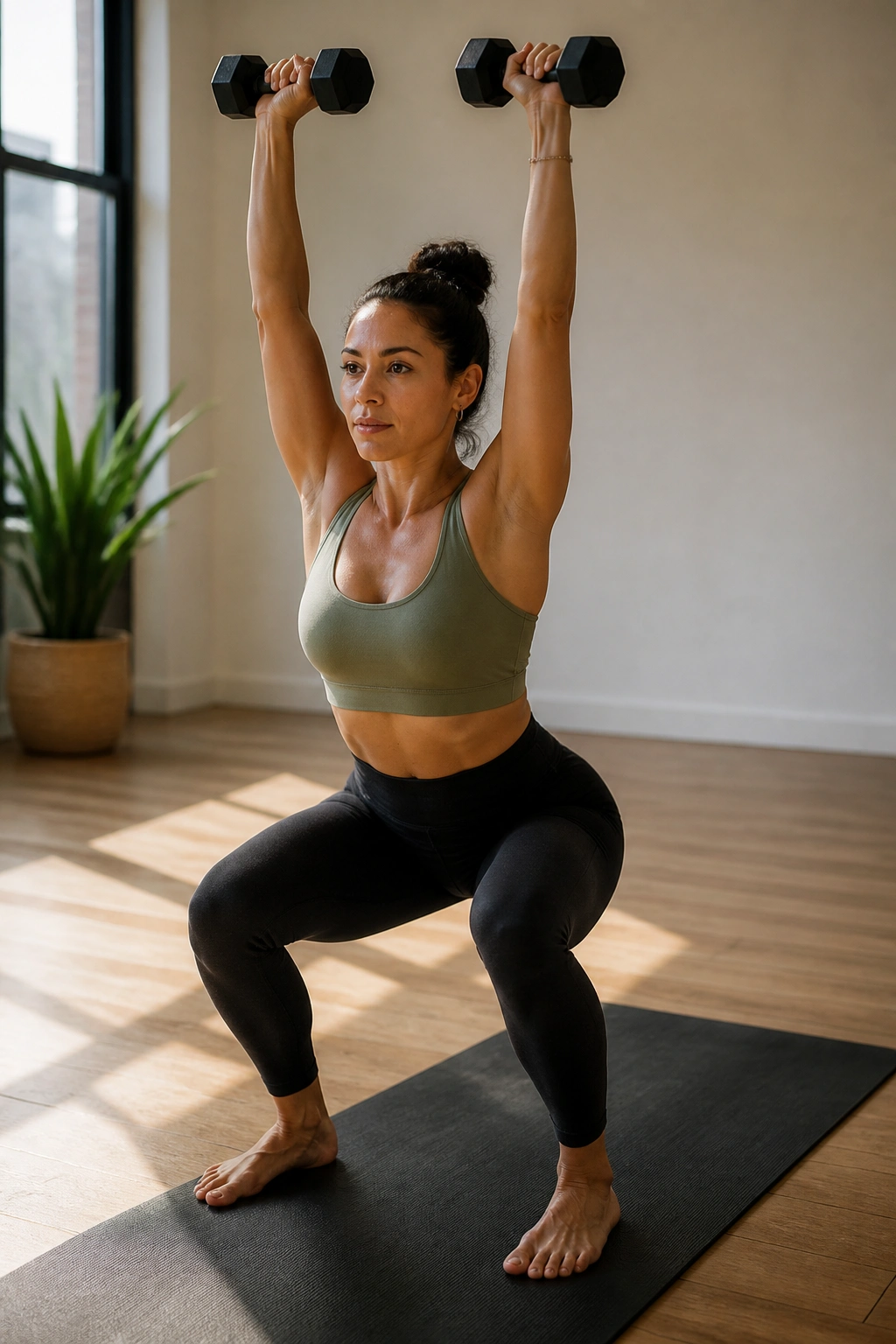
This is the one I like when the whole body needs to wake up at once. It is simple, repetitive, and a little mean by the end.
How to run it
Do a countdown ladder: 10 squat presses, 8 reverse lunges per side, 6 plank rows per side, 4 chair pulses with a 10-second hold, then 2 rounds of 20-second boat holds. Rest for 45 seconds and repeat the whole ladder once or twice.
- 10 squat presses
- 8 reverse lunges per side
- 6 plank rows per side
- 4 chair pulses plus a hold
- 2 boat holds
The ladder format keeps the mind busy, which helps when the burn starts getting loud. It also gives you a clear way to progress: add a little weight, slow the lowering phase, or repeat the ladder one more time.
If you want a benchmark workout, use this one. You will know where the gaps are by the end. The shoulders, legs, and core all show their hand.
Final Thoughts
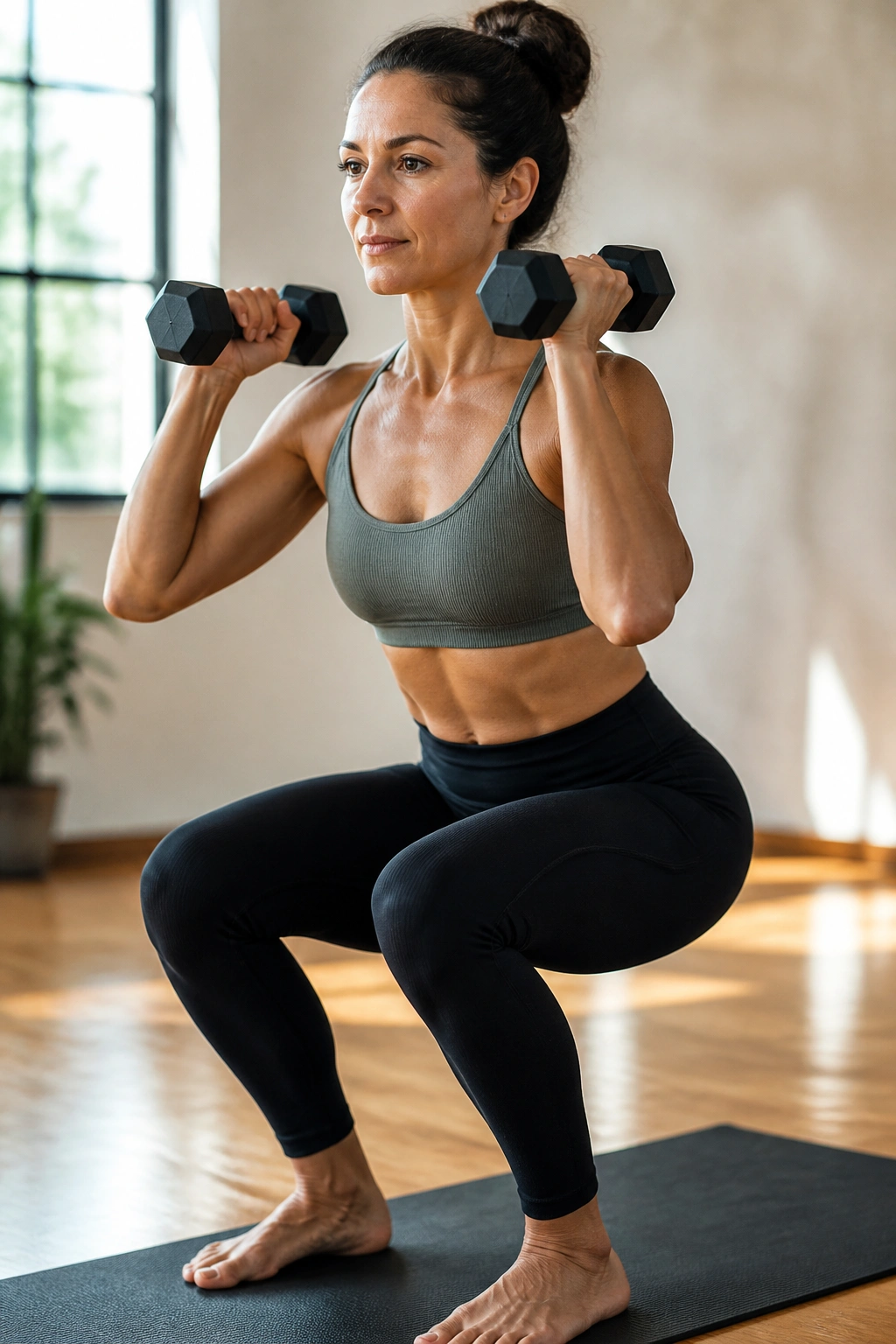
Yoga sculpt workouts earn their keep when they stop feeling like random burn and start feeling like repeatable work. The moves above do that by forcing clean posture, slow lowering, and enough load to make the muscles pay attention.
Pick four to six of them and rotate them through the week instead of trying to do all 25 in a marathon. One lower-body day, one upper-body and core day, one balance-heavy day, and one full-body ladder will cover a lot of ground without trashing you.
Add a little more weight, one extra hold, or five more seconds under tension when the reps stay tidy. That is the whole game.
