



Pregnancy can make the gym feel oddly crowded, even when the room is half empty. Everyone has an opinion, most of them loud, and a lot of them miss the simple truth: if your body is changing, your training should change with it.
The best pregnancy workouts at the gym for beginners are usually the least dramatic ones. Walking, supported machines, light dumbbells, and core work that resists twisting tend to feel steadier than anything flashy. That’s not a compromise. It’s smart training.
Assuming your clinician has said exercise is okay, the sweet spot is usually a pace where you can still talk in short sentences, breathe through your nose some of the time, and finish a set with a few reps left in the tank. If anything brings on dizziness, bleeding, chest pain, fluid leakage, painful contractions, or a heavy pulling feeling in the pelvis, stop and get checked.
Start with the boring stuff. Boring is often what works.
1. Treadmill Walking
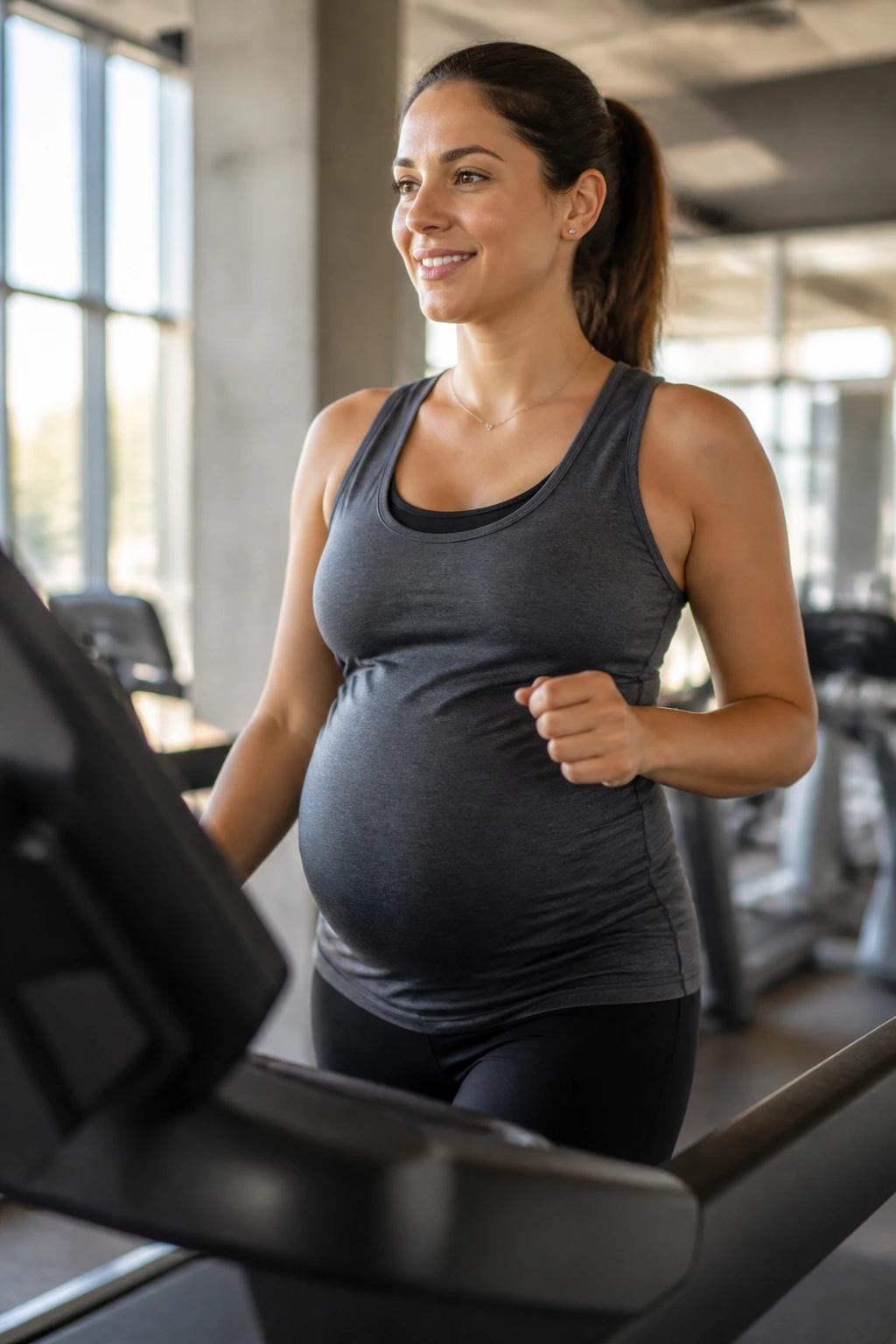
For pregnancy workouts at the gym for beginners, treadmill walking earns the first spot because it’s easy to scale and easy to stop. No balancing act. No weird setup. Just movement you can control with a few button presses.
A clean, steady start
Set the incline between 0.5 and 2 percent and begin at a pace that feels almost too easy for the first two minutes. Then move up until you can still speak in short sentences without huffing. For many beginners, that lands somewhere around 2.0 to 3.5 miles per hour, but the number matters less than the feel.
Keep your chest tall and your steps short. Let your arms swing. Don’t clamp your hands to the rails unless you need them for a brief reset.
- Good starter dose: 10 to 20 minutes
- Best use: Warm-up, recovery day, or low-energy training days
- What to avoid: Leaning back and letting the treadmill drag you
Tip: If you find yourself staring down at your feet, slow down. That usually means your pace is a bit too fast or your incline is a bit too steep.
Walking is not boring. It is stable. And stability matters when your balance and center of mass are shifting week by week.
2. Recumbent Bike Rides
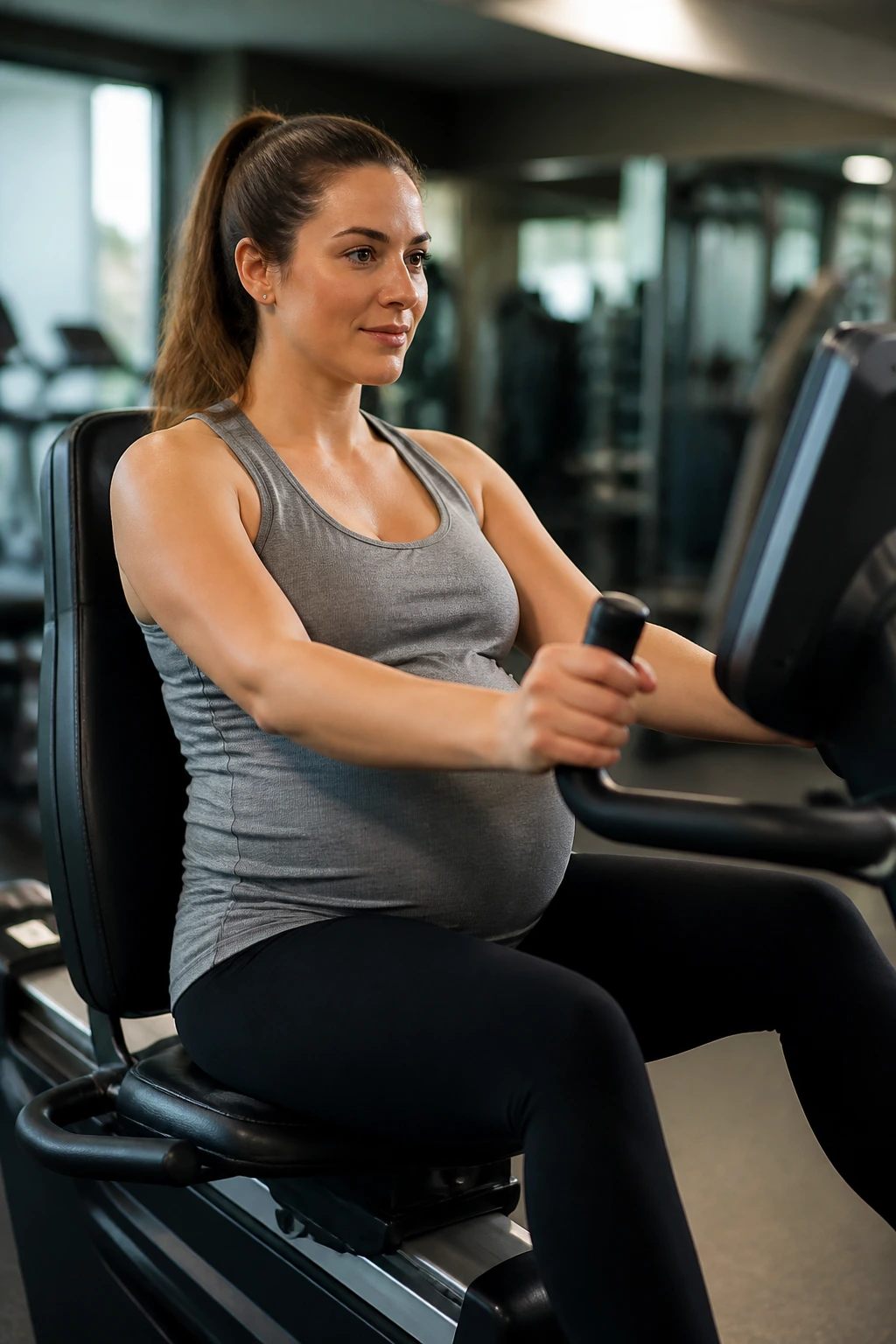
Some days your pelvis wants a seat, not a stride. That is where the recumbent bike earns its keep.
The back support takes pressure off your lower back, and the lower step-over makes it friendlier when your belly starts changing the way you move around the room. I like this option for people who feel wobbly on upright cardio machines or who get cranky hips after walking too long.
How to make it feel smooth
Adjust the seat so your knee stays slightly bent at the bottom of the pedal stroke. If your leg is locked out, the seat is too far away. If your knees feel jammed up, move it back a notch.
Pedal at a pace that feels smooth, not frantic. A comfortable cadence is often around 60 to 90 revolutions per minute, with resistance low enough that you can keep talking. Ten minutes is enough to start. Twenty is plenty if you’re feeling fine.
A recumbent bike session should leave your legs warm and your breathing steady. That’s the point. Not a soaked shirt and a face that looks like you wrestled a bear.
3. Elliptical Trainer Sessions
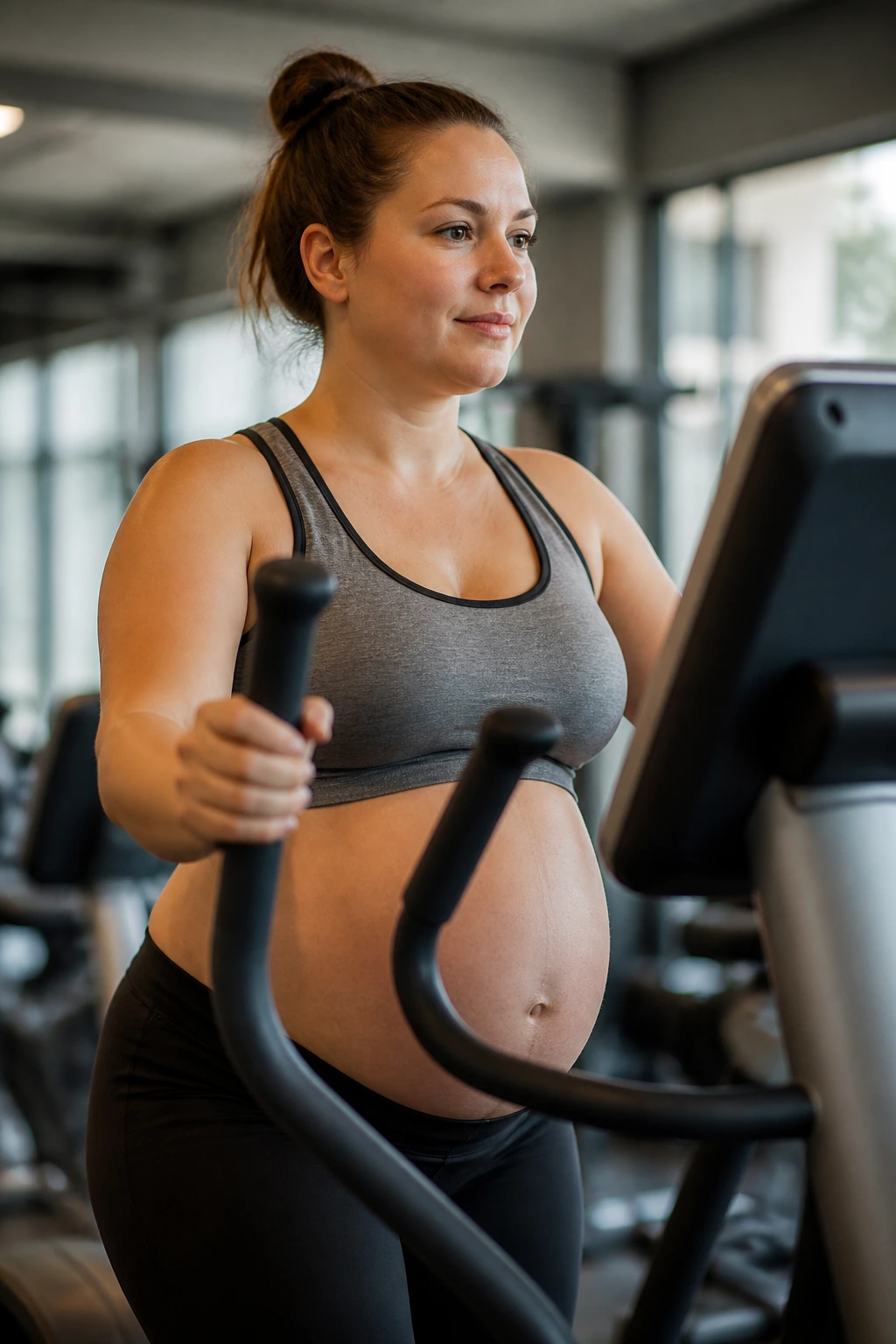
Why do so many pregnant beginners like the elliptical? Because it gives you cardio without the jolt of running, and the machine does some of the balancing for you.
The trick is not pretending you’re in a sprint contest. Shorten your stride a little, keep your shoulders loose, and let the handles stay there for support rather than for a death grip. If the motion feels too bouncy, the stride is probably too long or the resistance is too high.
What to watch for
- Pelvic heaviness: back off and switch machines
- Low-back pinching: shorten the stride and lower the resistance
- Dizzy or hot feeling: stop, drink water, and cool down
A typical starter session is 8 to 15 minutes at an easy pace. For some people, the elliptical feels lovely. For others, it feels awkward from the first minute. Both reactions are normal.
If it feels smooth, keep it. If it feels like your hips are fighting the pedals, move on. No machine is worth forcing.
4. Seated Leg Press
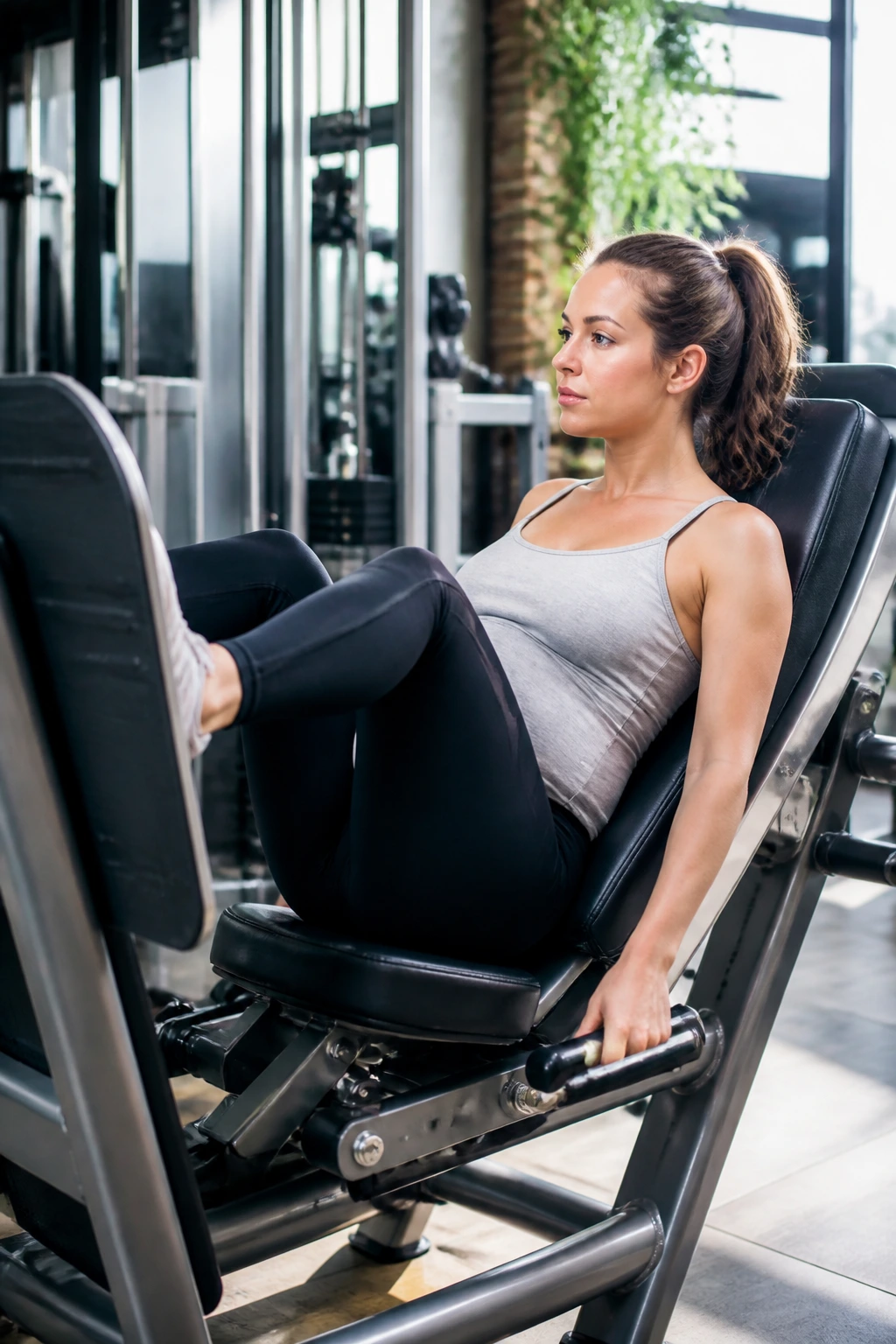
The seated leg press is one of the better lower-body machines for pregnancy because it gives you support, a clear path, and easy load control. It also lets you work your quads and glutes without asking your balance to do extra chores.
I like this exercise when someone wants to train the legs but is nervous about free weights. The seat keeps you anchored. The platform keeps the movement simple.
Setup that protects your back
Place your feet about shoulder-width apart on the platform, with your toes slightly turned out if that feels natural. Lower the sled only as far as you can keep your lower back from curling off the pad. That piece matters.
Press through the whole foot, not just the toes. Do 2 to 3 sets of 8 to 12 reps with a load that feels challenging by the last few reps but never sloppy.
Watch for: Your knees collapsing inward or your hips tucking under at the bottom. Both are signs to reduce depth or weight.
Keep the lowering phase slow. A controlled descent of 2 to 3 seconds usually feels much better than dropping into the bottom and hoping for the best.
5. Goblet Box Squats
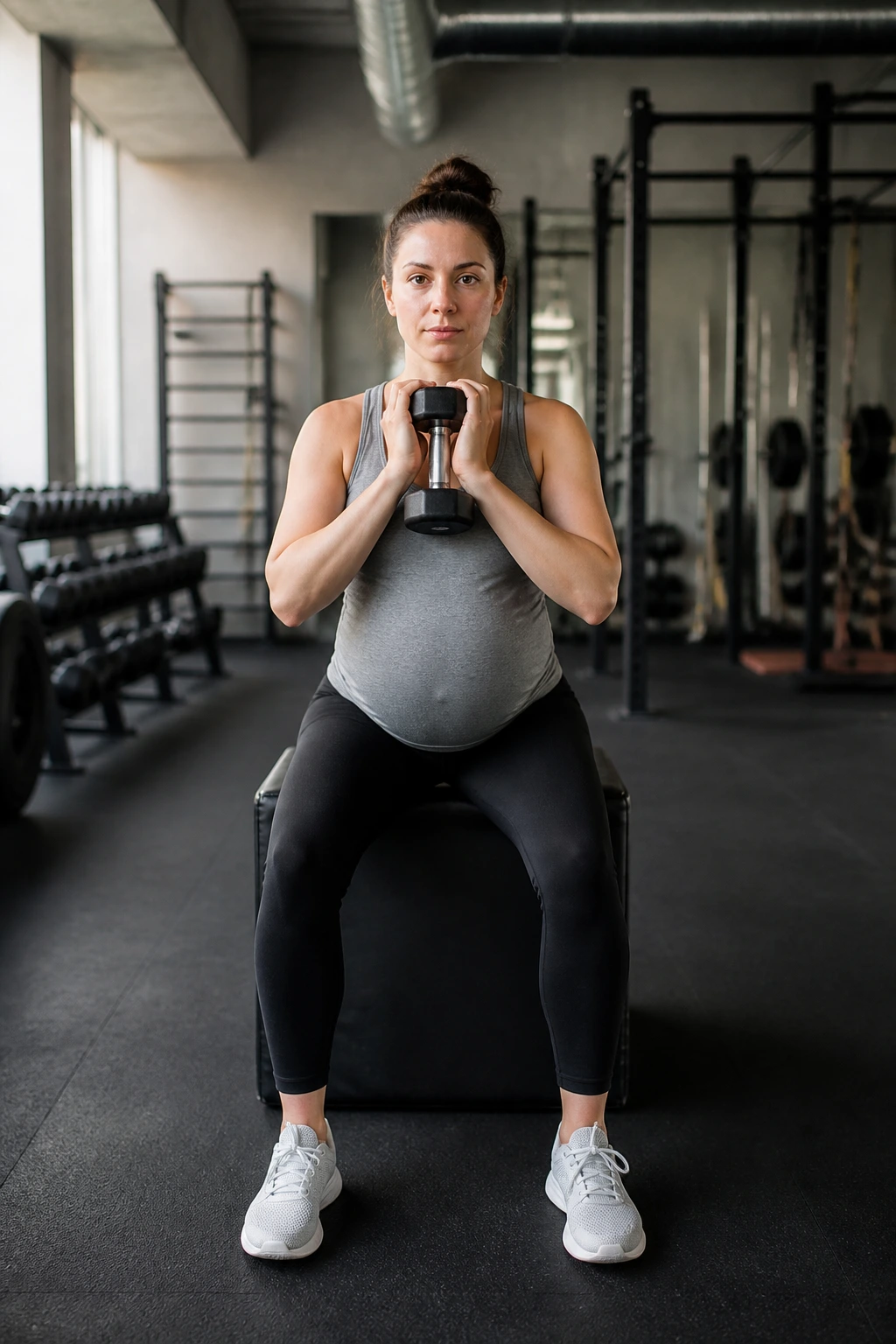
A box squat is basically the gym version of sitting down on a sturdy chair and standing back up with a little intention. That’s why it’s useful when your balance feels a touch off.
Hold a light dumbbell at chest height, sit back to a box or bench, pause lightly, then stand. The box gives you a target, which keeps the squat from turning into a guessing game. Good beginners often like this more than free squats because the depth stays honest.
How to make it feel steady
Use a box or bench height that lets you sit without rounding your lower back. If the box is too low, raise it. A lot of people try to squat deeper than their hips want to go, and that’s where the form starts to wobble.
- Reps: 6 to 10
- Sets: 2 to 3
- Load: Bodyweight first, then a light dumbbell
- Rest: 60 to 90 seconds
A tiny pause on the box helps. You do not want to flop down and bounce back up. That gets messy fast.
6. Dumbbell Romanian Deadlifts
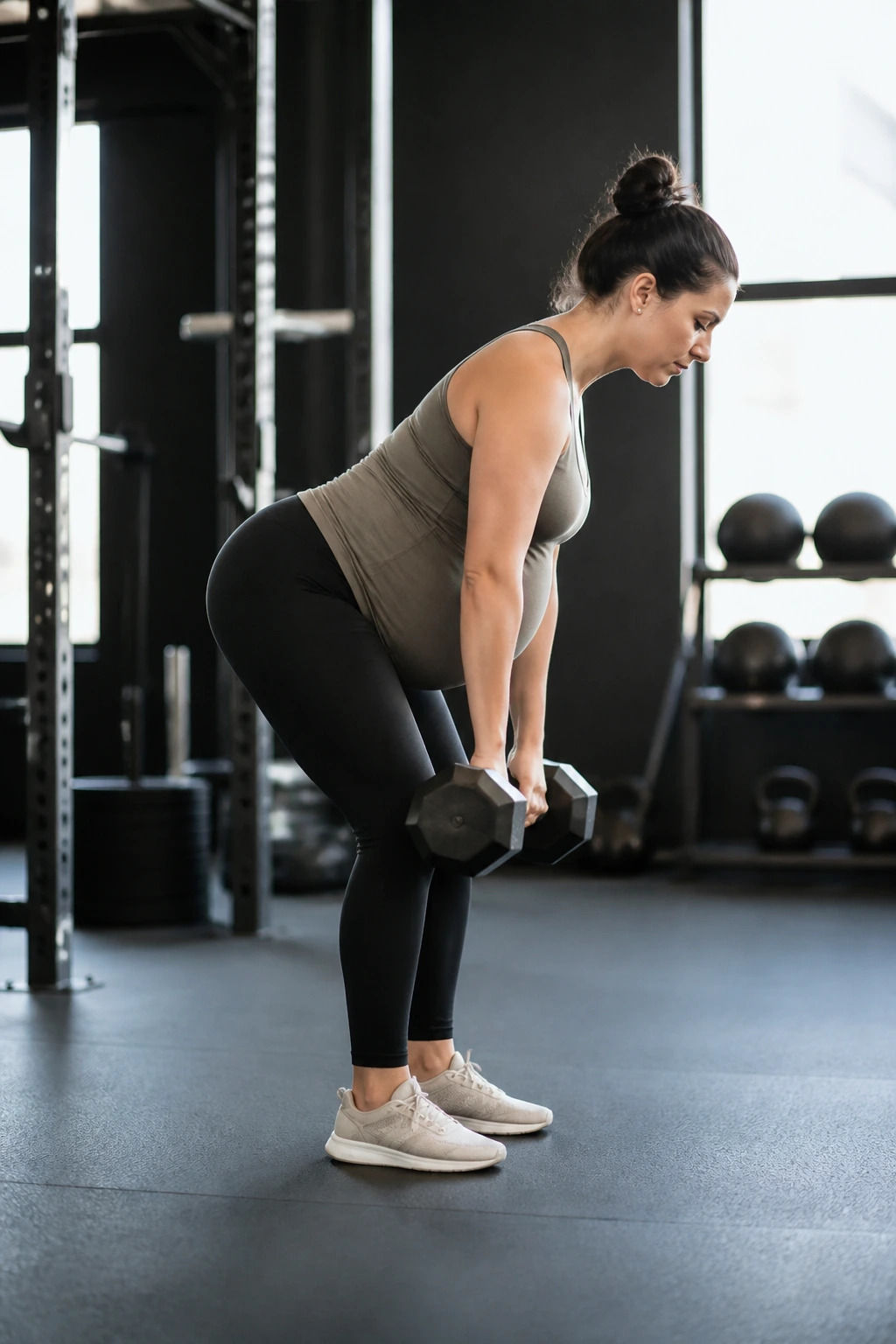
The Romanian deadlift looks simple, and it is, but only when you treat it like a hip hinge instead of a squat. That’s the whole game.
Stand with your feet hip-width apart, hold two light dumbbells in front of your thighs, and slide your hips back while keeping a soft bend in the knees. The weights should stay close to your legs. You should feel a stretch in the hamstrings before you feel anything dramatic in the lower back.
The hinge, not the reach
Lower only as far as you can keep your spine neutral and your shoulders relaxed. For most beginners, that means the dumbbells stop around mid-shin or a little above it. Then stand by driving the hips forward and squeezing the glutes without leaning back at the top.
- Good load choice: Light to moderate, with perfect control
- Starter reps: 8 to 10
- Tempo: 3 seconds down, 1 second up
Do not chase the floor. That’s the mistake. You’re not trying to touch the weights to your shoes. You’re training a hinge.
This one is gold for hamstrings, glutes, and posture, and it tends to feel surprisingly doable even when other lower-body moves start getting awkward.
7. Low Step-Ups
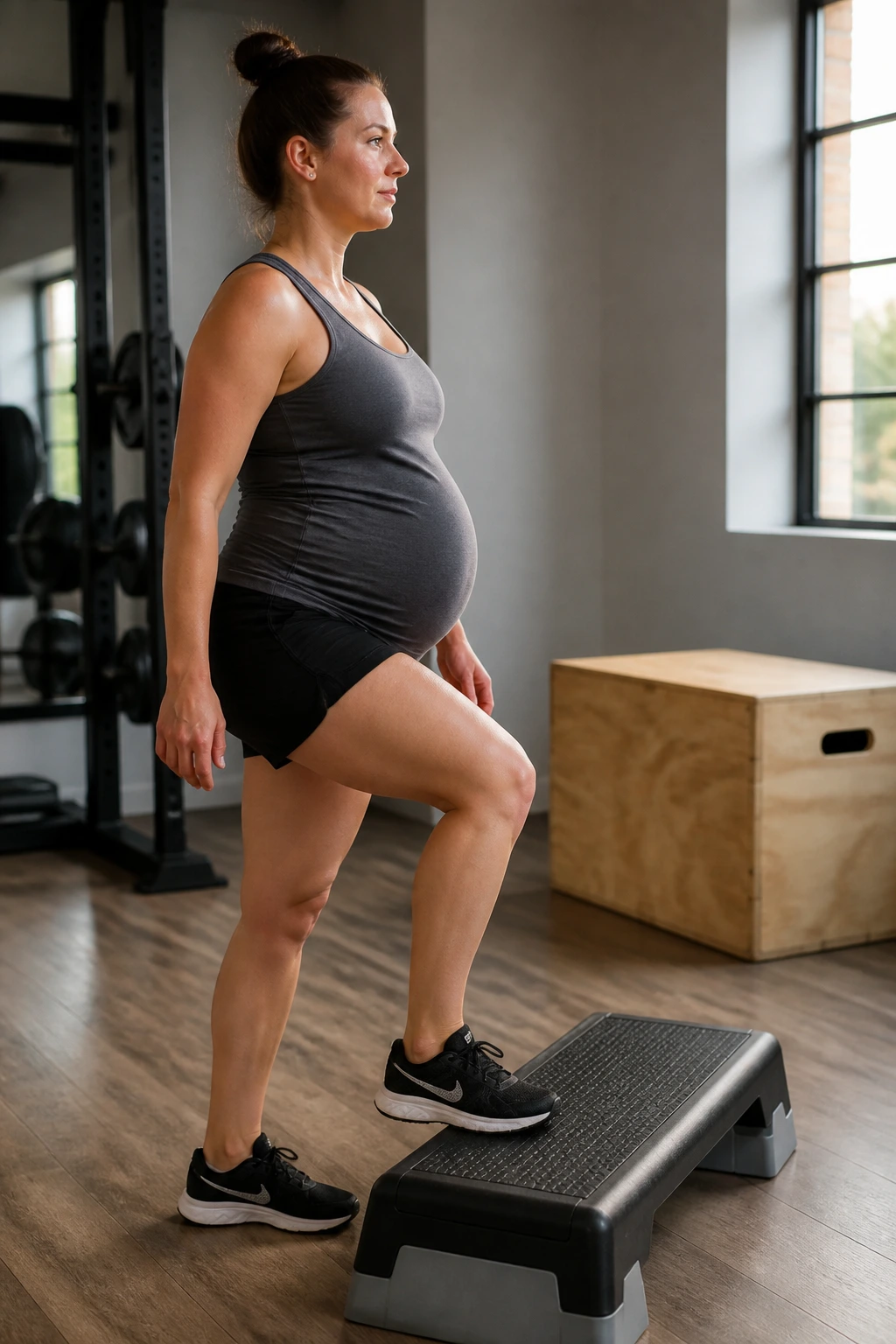
A low step-up is one of those exercises that looks almost too plain to matter. Then you do it for a few reps and realize your legs have thoughts.
Choose a platform or step that’s low enough to keep the movement smooth. If you need to lean and heave to get onto it, the step is too high. Hold the rail with one hand if balance feels shaky. That’s not cheating. That’s smart.
Drive through the whole foot on the working leg, stand tall at the top, then step down under control. Keep your torso upright and avoid pushing off hard with the back foot. The lead leg should do the work.
Short sets work well here: 6 to 8 reps per side for 2 to 3 rounds. It is a quiet exercise, which is part of why I like it. No drama. Just useful strength.
8. Seated Cable Rows
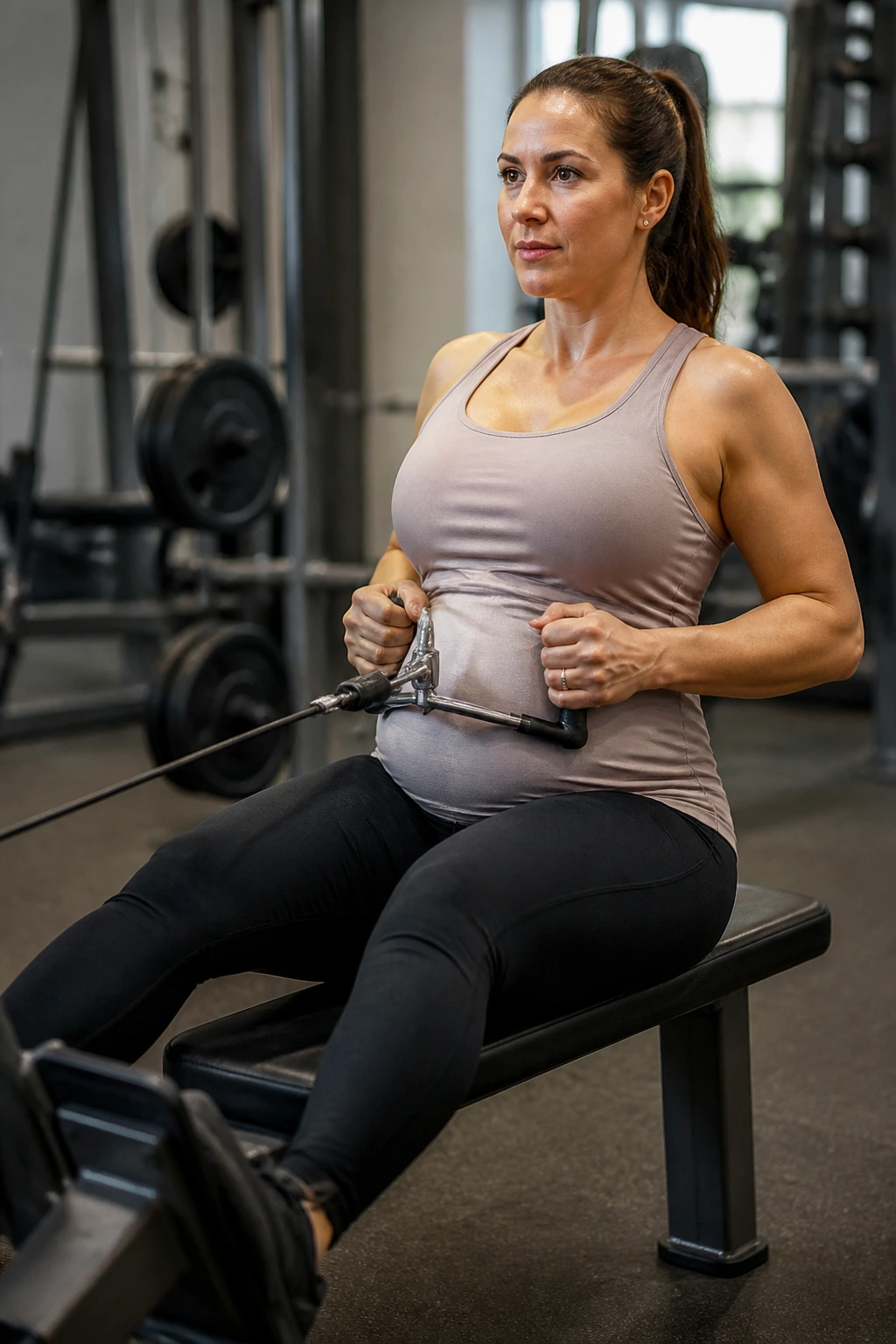
A seated cable row is one of the best upper-back moves for pregnancy because it opens the chest, strengthens the muscles between the shoulder blades, and keeps you from living in that rounded posture that sneaks in after hours of sitting.
Set your feet on the platform, sit tall, and choose a handle that lets your elbows travel close to your sides. Pull the handle toward the lower ribs, pause for a beat, then return with control.
What makes it work
The rowing motion should feel like a squeeze between the shoulder blades, not a yank from the lower back. If your torso starts rocking hard, the weight is too heavy. If your shoulders crawl up toward your ears, reset and breathe.
A clean row often looks like this:
- Chest tall
- Ribs stacked over pelvis
- Elbows driving back, not flaring wildly
- Smooth return to full arm extension
I’d rather see you use a lighter weight and get a real squeeze than haul the stack around with your whole body. That bigger number on the machine is not the goal.
9. Lat Pulldowns
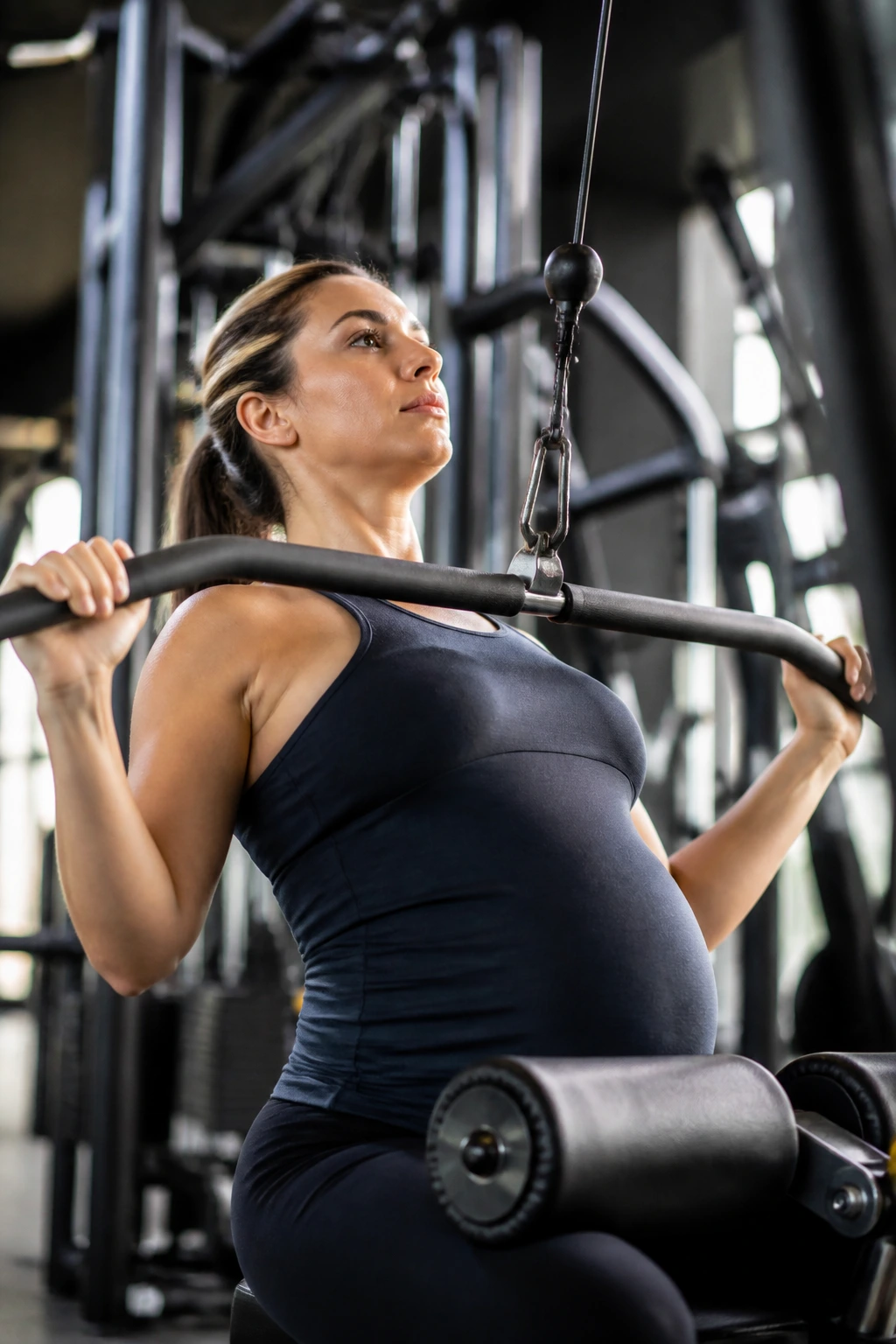
Why keep the lat pulldown in a beginner pregnancy plan? Because it builds pulling strength without making you stand, brace, or balance under load.
Use a wide or neutral grip that feels comfortable on your shoulders. Sit with your thighs locked under the pads, keep your chest lifted, and pull the bar down toward the upper chest. Stop before your shoulders roll forward. Then let the bar rise with control.
The behind-the-neck version is not worth it. It puts your shoulders in a fussier position and buys you nothing useful here.
A good session might be 2 sets of 8 to 12 reps at a weight that feels steady. If your grip gets tired before your back does, that’s fine. It happens. Just lighten the load and keep moving cleanly.
This is one of the exercises that makes people stand taller in daily life. You feel it when you’re lifting bags, reaching for car seats, or hauling laundry up the stairs.
10. Machine Chest Press
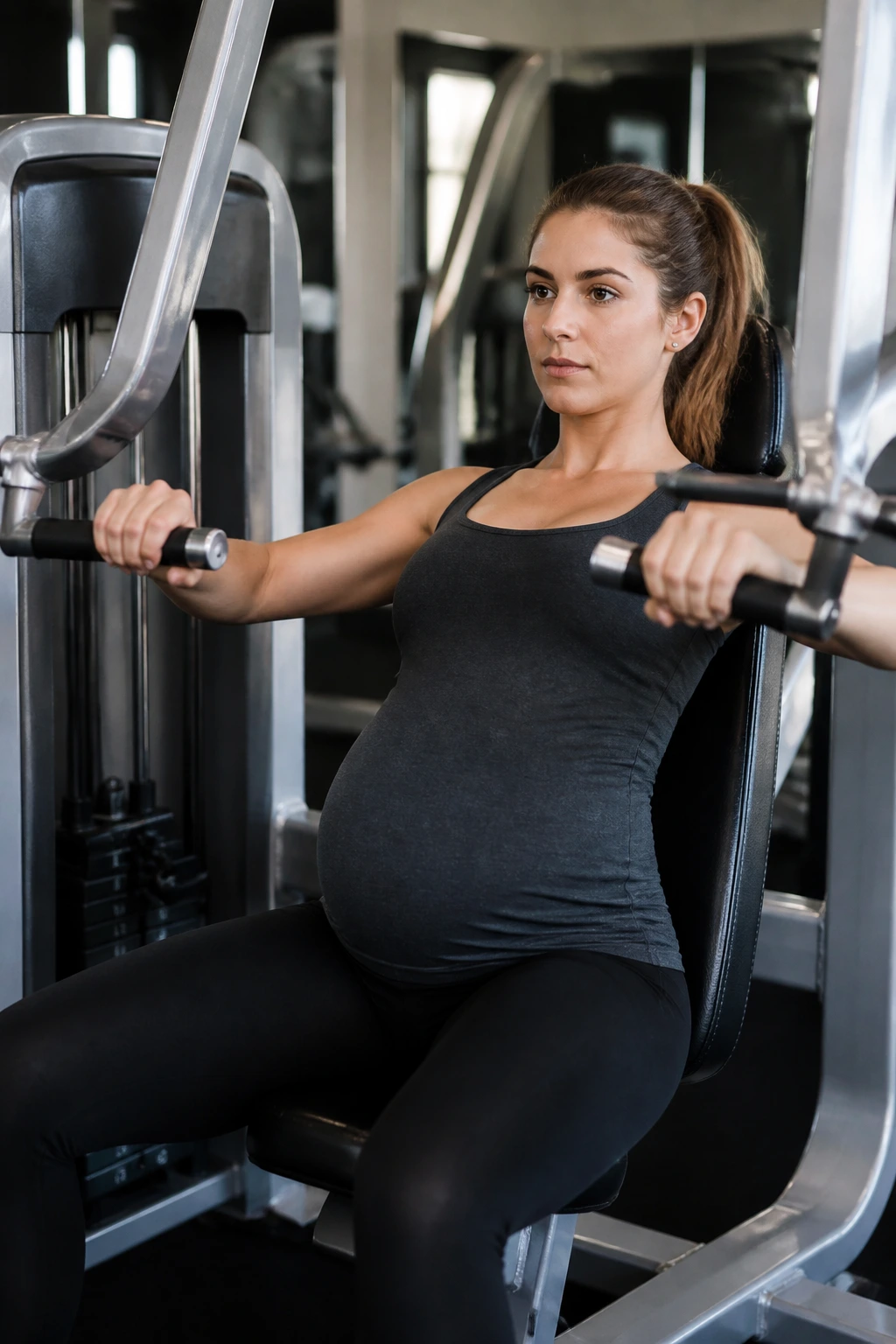
The machine chest press is the kind of upper-body exercise that feels calm in the best way. You sit down, set your seat, and press straight ahead with support all around you. No wobble. No guesswork.
That support matters more than people think. Pregnancy can make free-weight pressing feel less appealing, especially if your shoulders are tight or your core is working hard in other parts of the day.
A setup that saves your shoulders
Adjust the seat so the handles line up around mid-chest. Keep your shoulder blades lightly back and down, but do not jam them together like you’re trying to pinch a coin. That usually gets stiff fast.
Press until your arms are almost straight, then return slowly. Two sets of 8 to 10 reps is enough for most beginners. If your elbows flare out awkwardly, bring them a little closer to your sides.
One sentence, because it matters: Do not lock your elbows hard at the top.
The machine chest press is not flashy. It is just dependable, and dependable training tends to age well across a pregnancy.
11. Incline Push-Ups
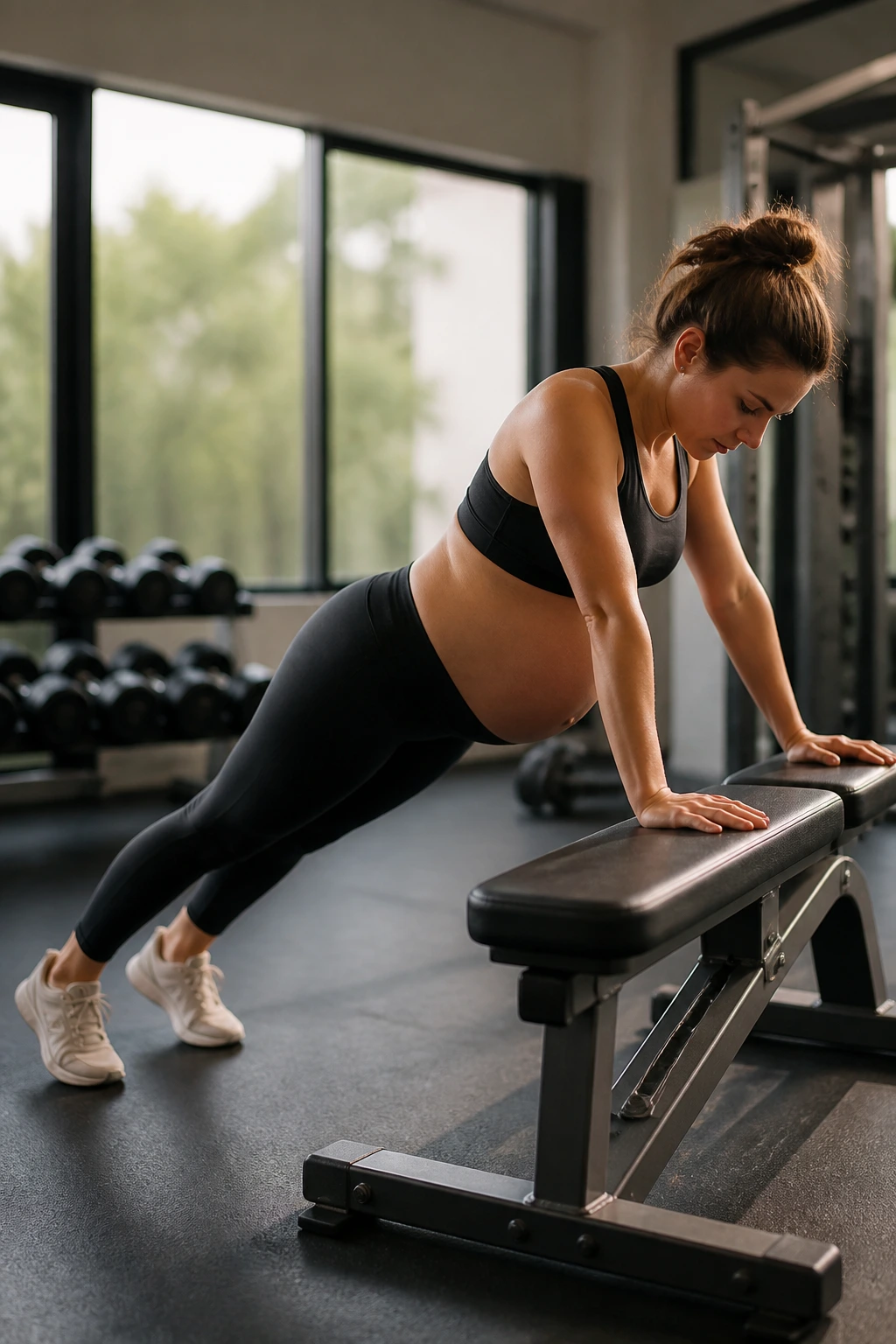
Incline push-ups are the move I like when someone wants to keep bodyweight pressing in the plan but the floor version feels too much. The bench, Smith bar, or a sturdy box turns the exercise into something more manageable.
Why the incline wins
The higher your hands are, the less bodyweight you have to move. That makes the exercise easier on the wrists, shoulders, and core. It also helps if your chest is tender or if the floor position feels cramped.
Start with your hands on a bench or bar at about waist height. Walk your feet back until your body forms a straight line from head to heels. Lower with control, exhale as you press up, and keep your neck long.
- Best rep range: 6 to 10
- Form cue: Elbows at a comfortable angle, not flared straight out
- Easy adjustment: Raise the hands higher if the set feels grindy
If your lower back sags, shorten the set or raise the surface. Clean reps beat heroic ones every time.
12. Seated Dumbbell Shoulder Press
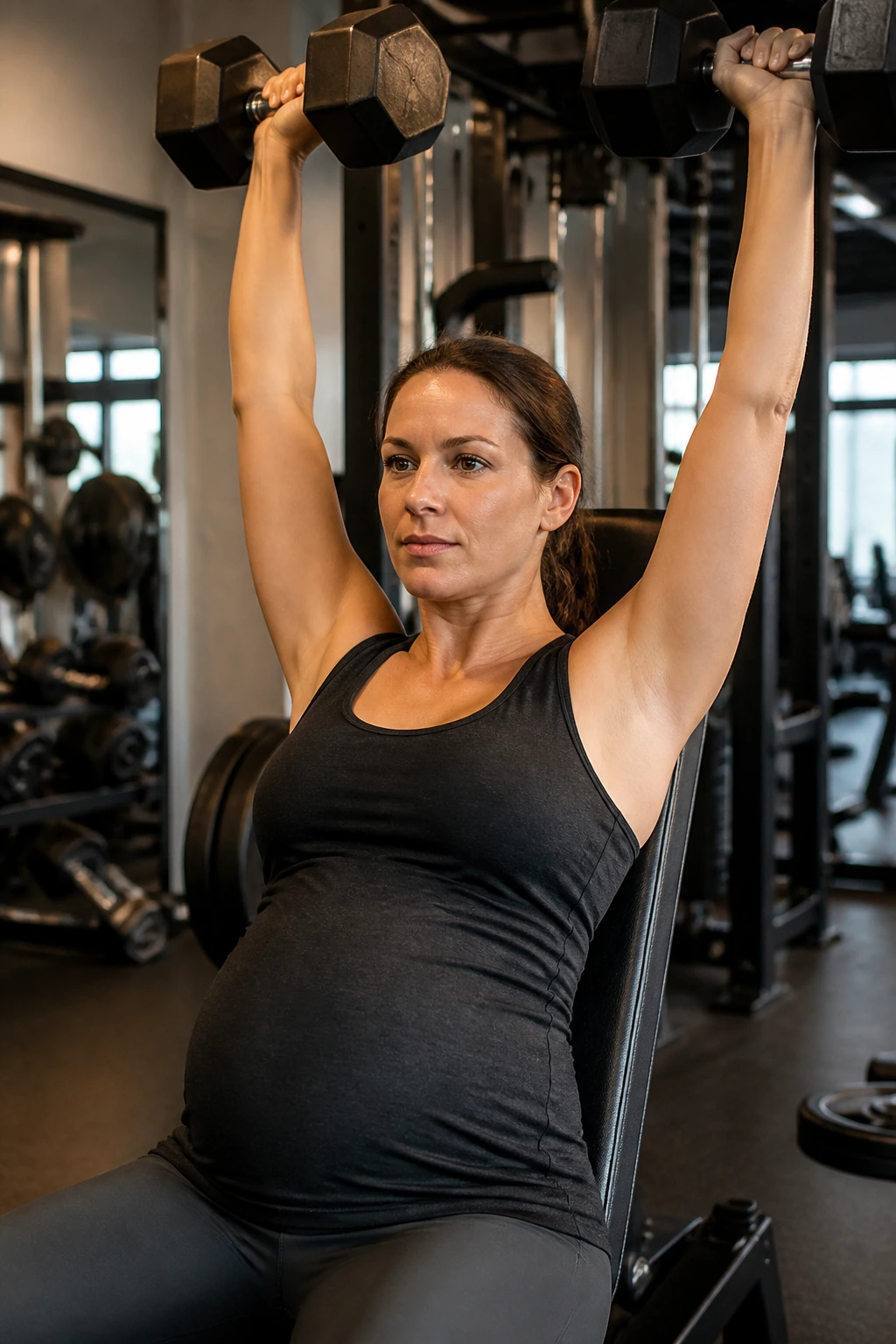
A seated shoulder press can stay in the plan if you keep the weights light and the range honest. The seat gives you support, which helps when standing overhead work starts feeling too messy.
Use a neutral grip if that feels better on your shoulders — palms facing in, elbows slightly in front of the body. Press up only until your arms are comfortable overhead. If your ribs flare or your neck tightens, the weights are too heavy or the range is too big.
Keep it small and tidy
- Reps: 6 to 10
- Sets: 1 to 2 to start
- Load: Light enough to control on the way down
- Cue: Exhale as you press, inhale as you lower
I would rather see a smaller range done well than a big overhead reach with a stiff back. The point is to keep your shoulders strong, not to force your body into a shape it doesn’t want.
Some days overhead work feels fine. Other days it feels cramped. That is normal, and the machine will be waiting next time.
13. Pallof Presses
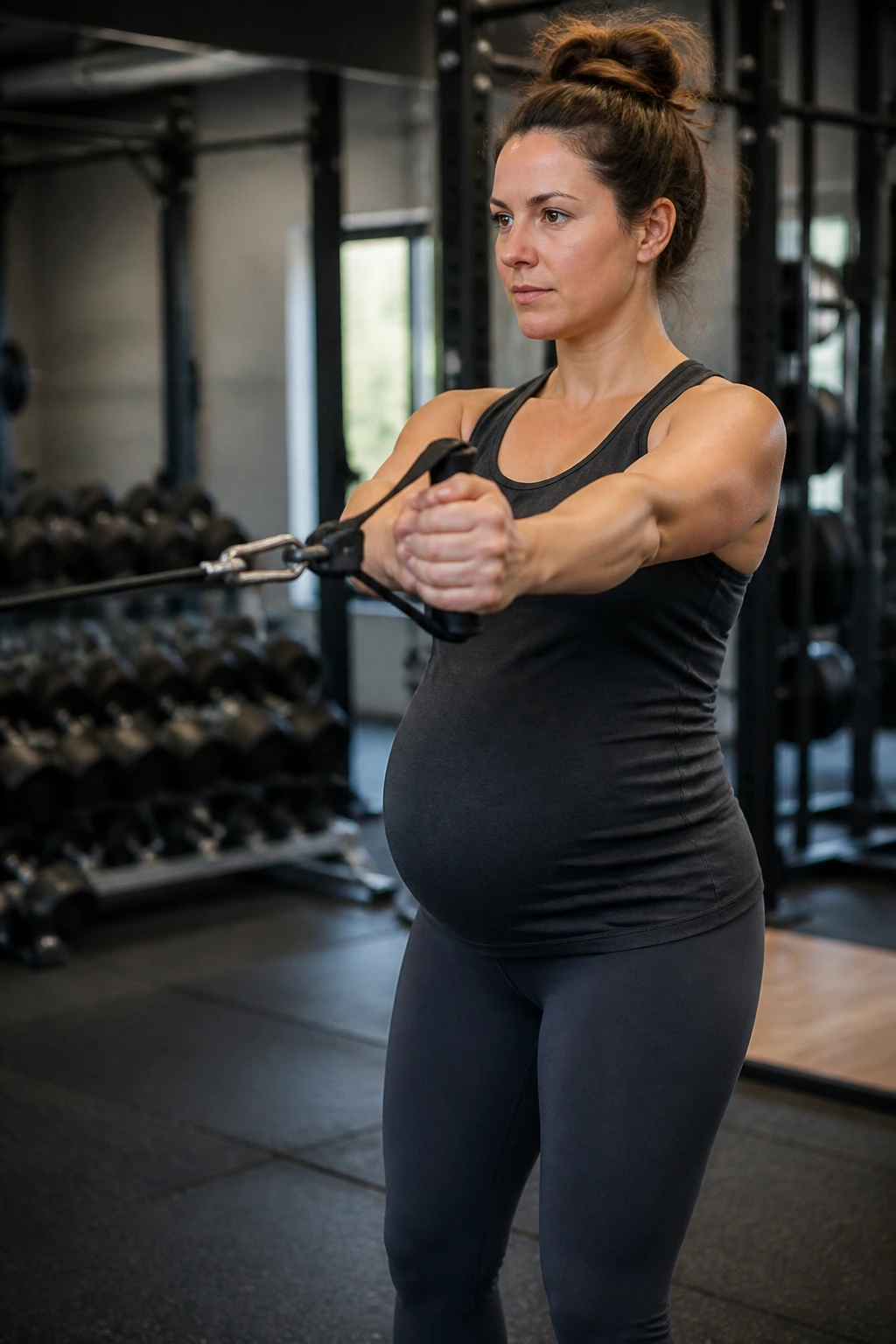
Why does the Pallof press show up in so many pregnancy-safe strength plans? Because it trains your core to resist rotation instead of crunching or twisting hard.
Set a cable or band at chest height, stand sideways to the anchor, and press the handle straight out from your chest. Hold for one or two seconds, then bring it back in. Your torso should stay square the whole time.
If you feel your belly bulging forward or your ribs flaring out, shorten your stance and lighten the load. If you feel pressure downward in the pelvic floor, back off. That feedback is useful. Listen to it.
Pallof presses are subtle. They do not look dramatic, which is probably why people underestimate them. But for carrying groceries, walking uneven floors, and keeping your trunk steady, they pull more weight than they look like they do.
14. Farmer Carries
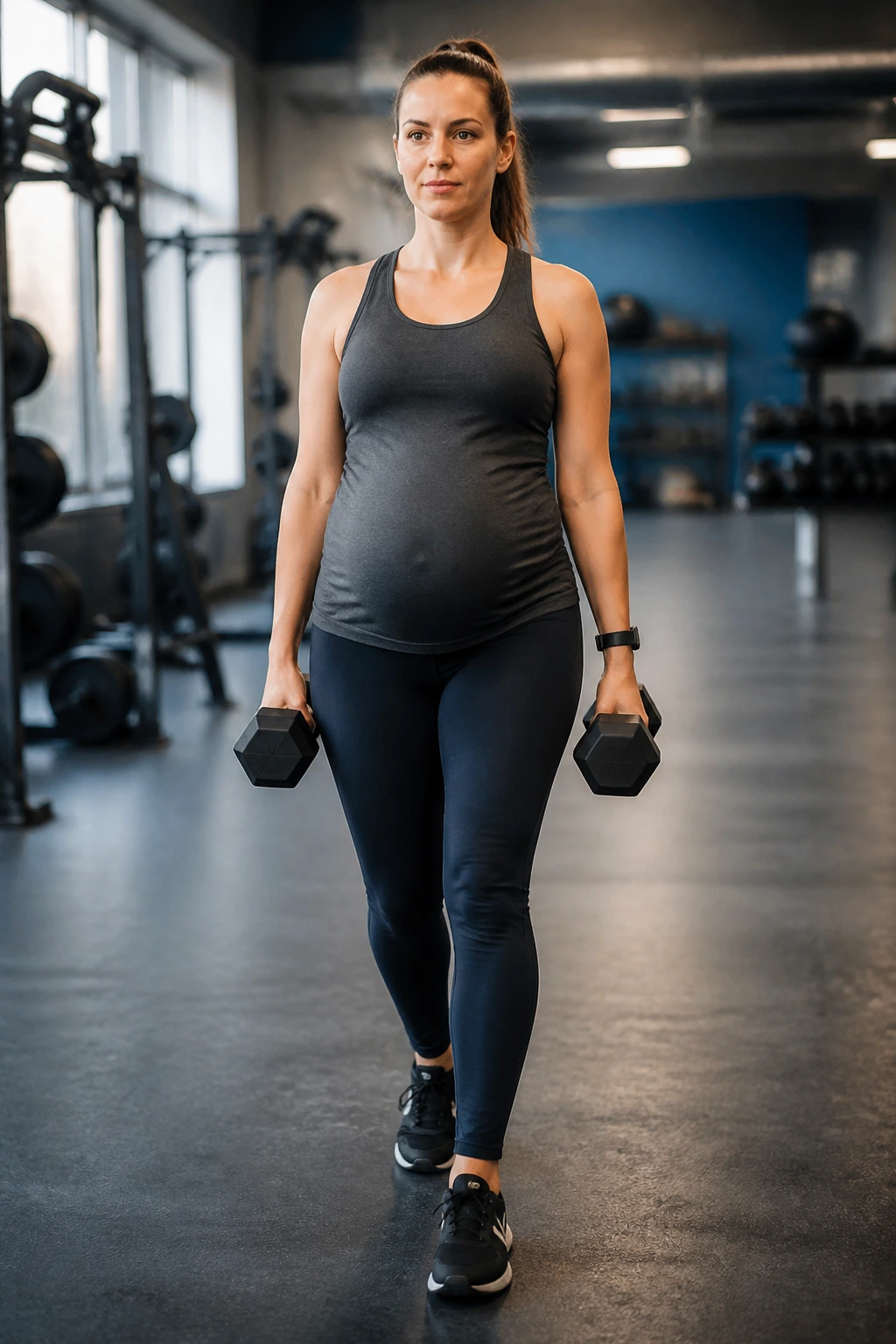
A farmer carry looks almost silly until you do it for 20 to 40 meters with good posture and controlled breathing. Then it feels like one of the most useful things in the whole gym.
Pick up a pair of light dumbbells and walk with tall posture, ribs stacked over hips, shoulders relaxed, and steps slow enough that you’re not bouncing. You can also do a suitcase carry with one dumbbell if one-sided work feels better.
How to keep the carry clean
- Hold the weights at your sides
- Keep your gaze forward
- Breathe in a steady rhythm
- Turn around before your form gets sloppy
This is a sneaky full-body move. Your grip works. Your upper back works. Your core works. Your legs work. And because you’re walking, it usually feels more natural than it sounds.
If your low back starts doing all the talking, the dumbbells are too heavy. Drop the load and keep the walk crisp.
15. Cable Pull-Throughs
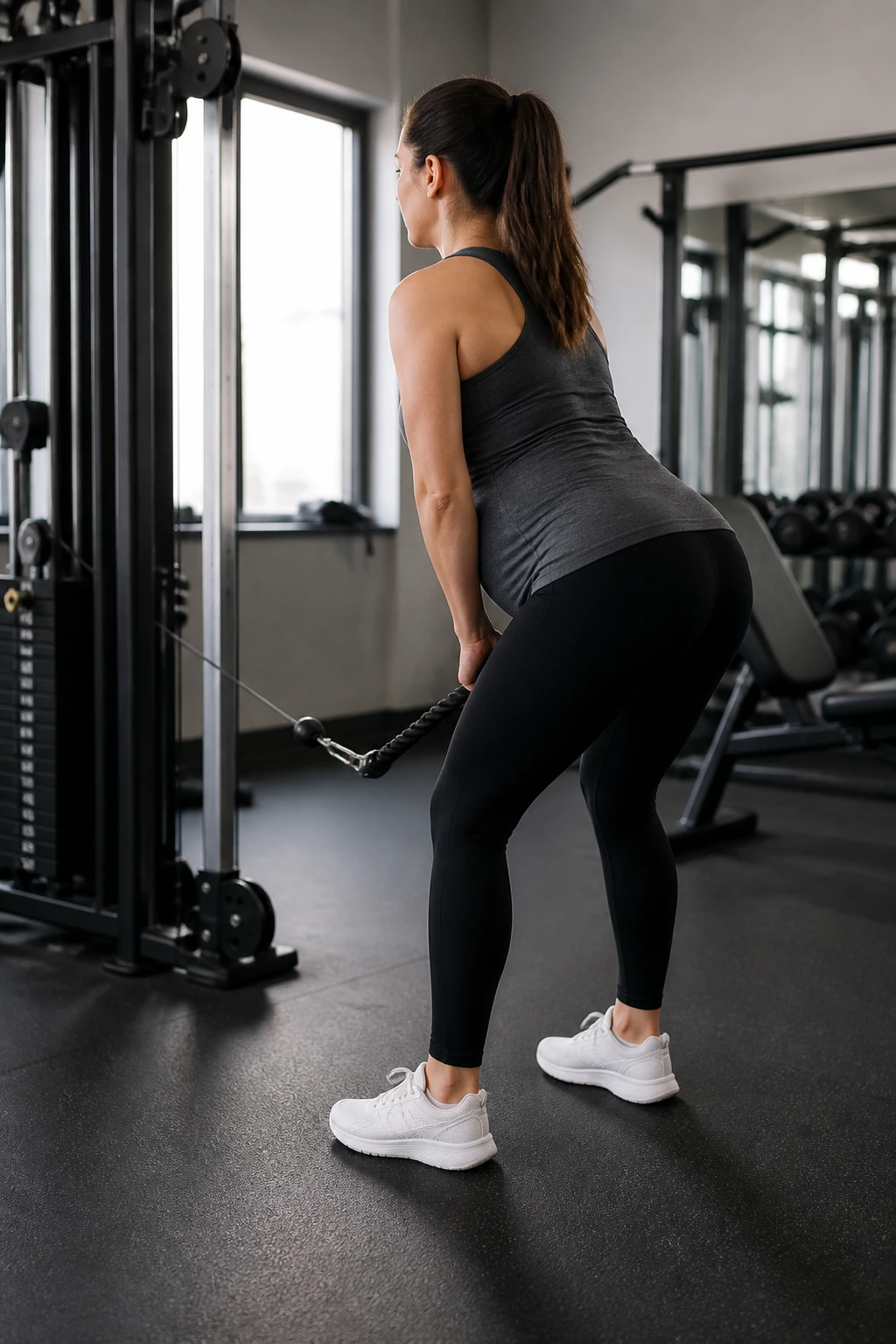
The cable pull-through is one of my favorite hinge exercises for beginners because it teaches the hips to move back without loading the spine the way a heavy deadlift can. It also tends to feel kinder on the lower body than a lot of people expect.
Clip the rope low, stand facing away from the stack, and walk forward until there’s light tension. Push your hips back, let the rope travel between your legs, then stand by squeezing the glutes. Keep the chest from folding forward.
The clean version
The movement should feel like a hinge, not a squat. If your knees are bending a lot, you’re probably dropping down instead of sitting back. If your lower back arches hard at the top, you’re finishing too aggressively.
Use a light-to-moderate load and aim for 10 to 12 controlled reps. The return should be smooth. No jerking. No tug-of-war with the weight stack.
It is a quiet exercise, but a useful one. Sometimes the quiet ones are the keepers.
16. Hip Abduction Machine Work
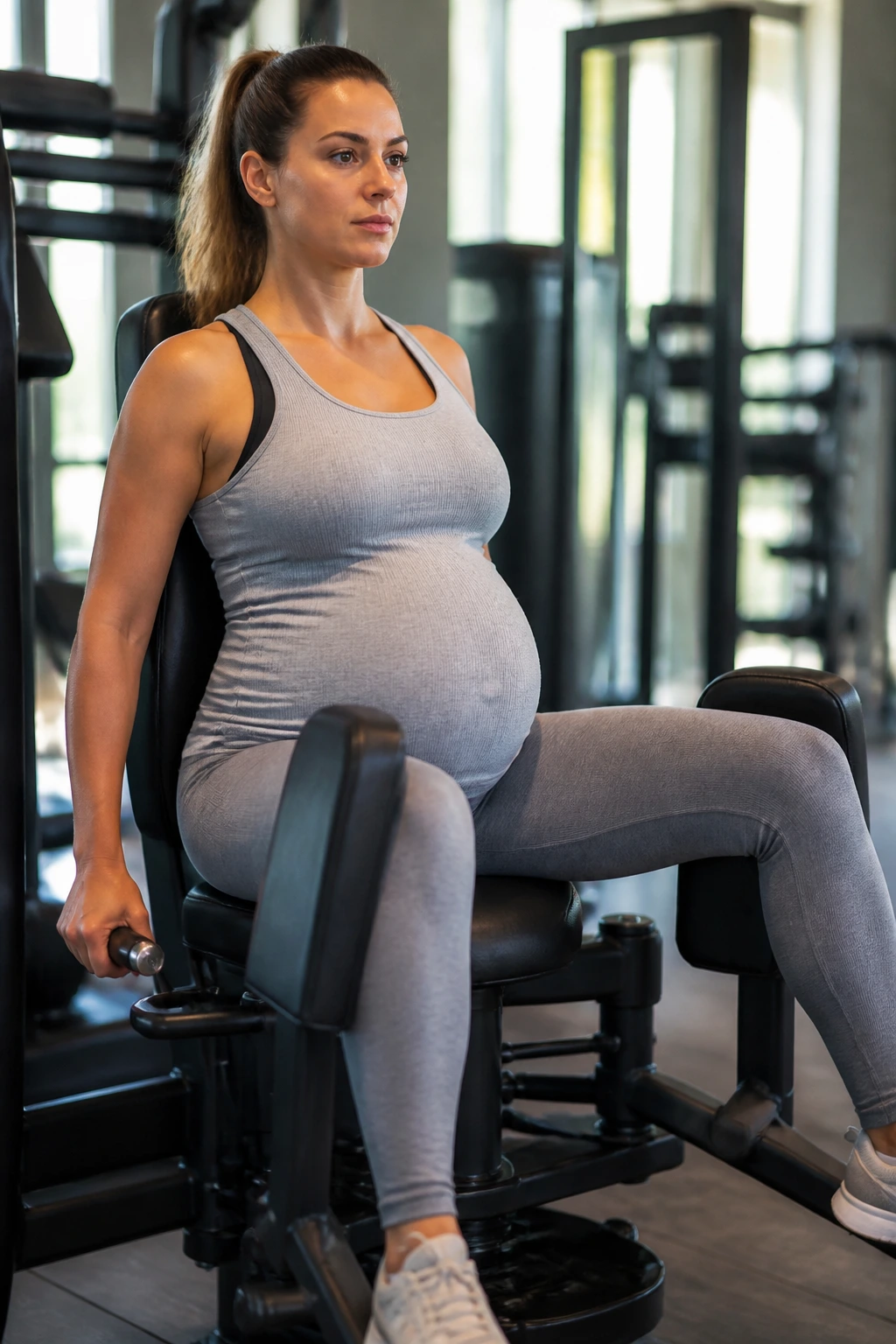
The hip abduction machine does one thing, and it does it well: it trains the side glutes. That matters more than people give it credit for, especially when pregnancy starts changing how your pelvis feels during walking, stairs, and standing on one leg.
Sit upright, place your knees against the pads, and open your legs with control. Don’t slam the stack. Don’t bounce at the end range. That machine can get twitchy if you treat it like a toy.
A moderate setting and 12 to 15 reps usually works nicely. If you lean back a lot or twist your torso to cheat the motion, the resistance is too high. Lower it and try again.
Small muscles matter here. They help steady the pelvis, and steady is what many beginners need most.
17. Seated Hamstring Curls
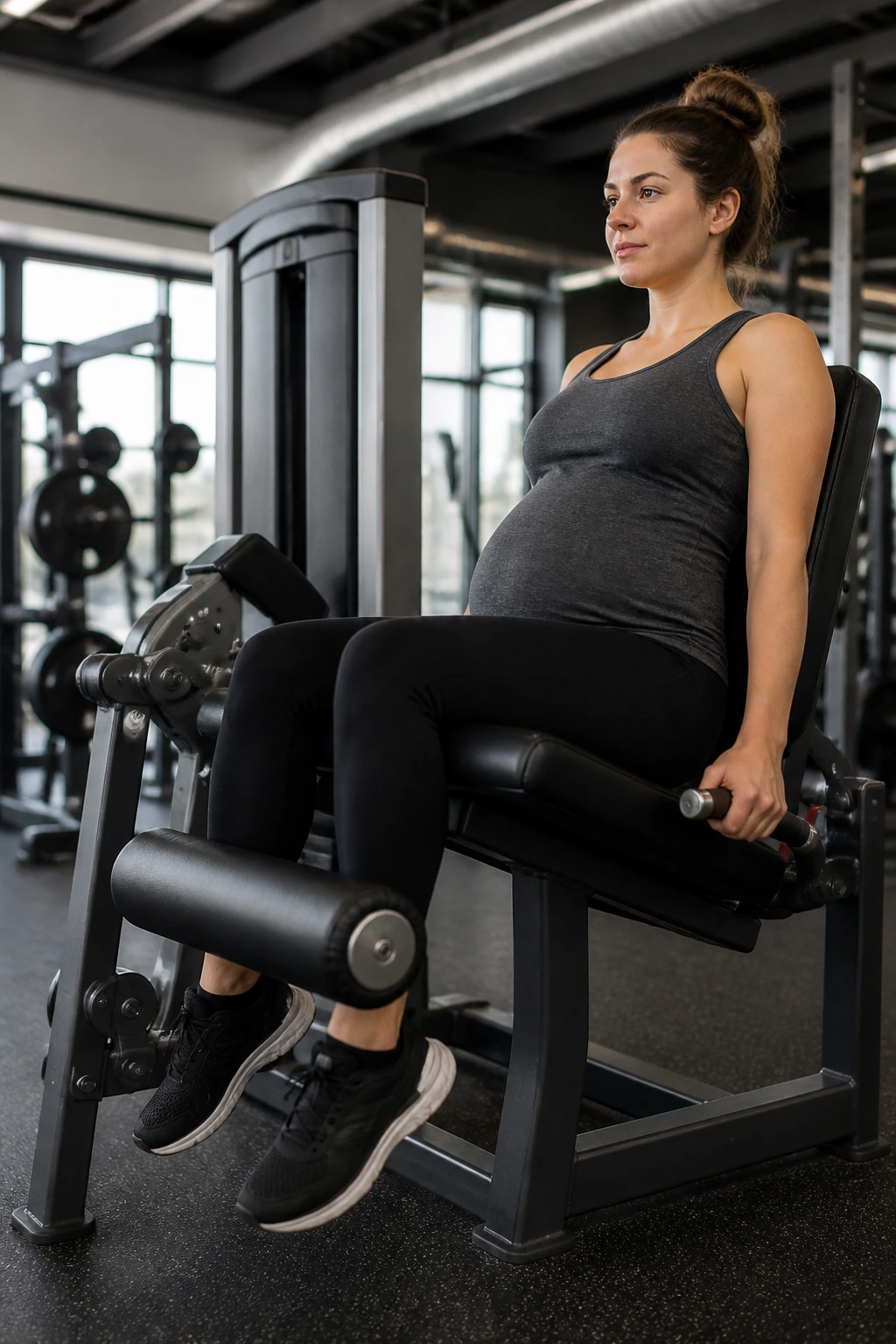
Why bother with hamstring curls when your legs already feel busy? Because the hamstrings help support the knees and hips, and they’re easy to train without much fuss.
Set the machine so the knee joint lines up with the pivot point, then curl the pad down under control. Return slowly. That slow return is where a lot of the work lives, and it keeps the exercise from becoming a sloppy kick-and-drop.
Simple form cues
- Keep the seat snug
- Press the hips into the pad
- Curl smoothly, not explosively
- Lower over 2 to 3 seconds
If your calves take over, the load is too heavy or the pad position is off. Fix the machine before you start blaming your legs.
This is a good one to pair with leg press or box squats. Front of the leg, back of the leg. Balanced enough to feel useful, not exhausting.
18. Face Pulls
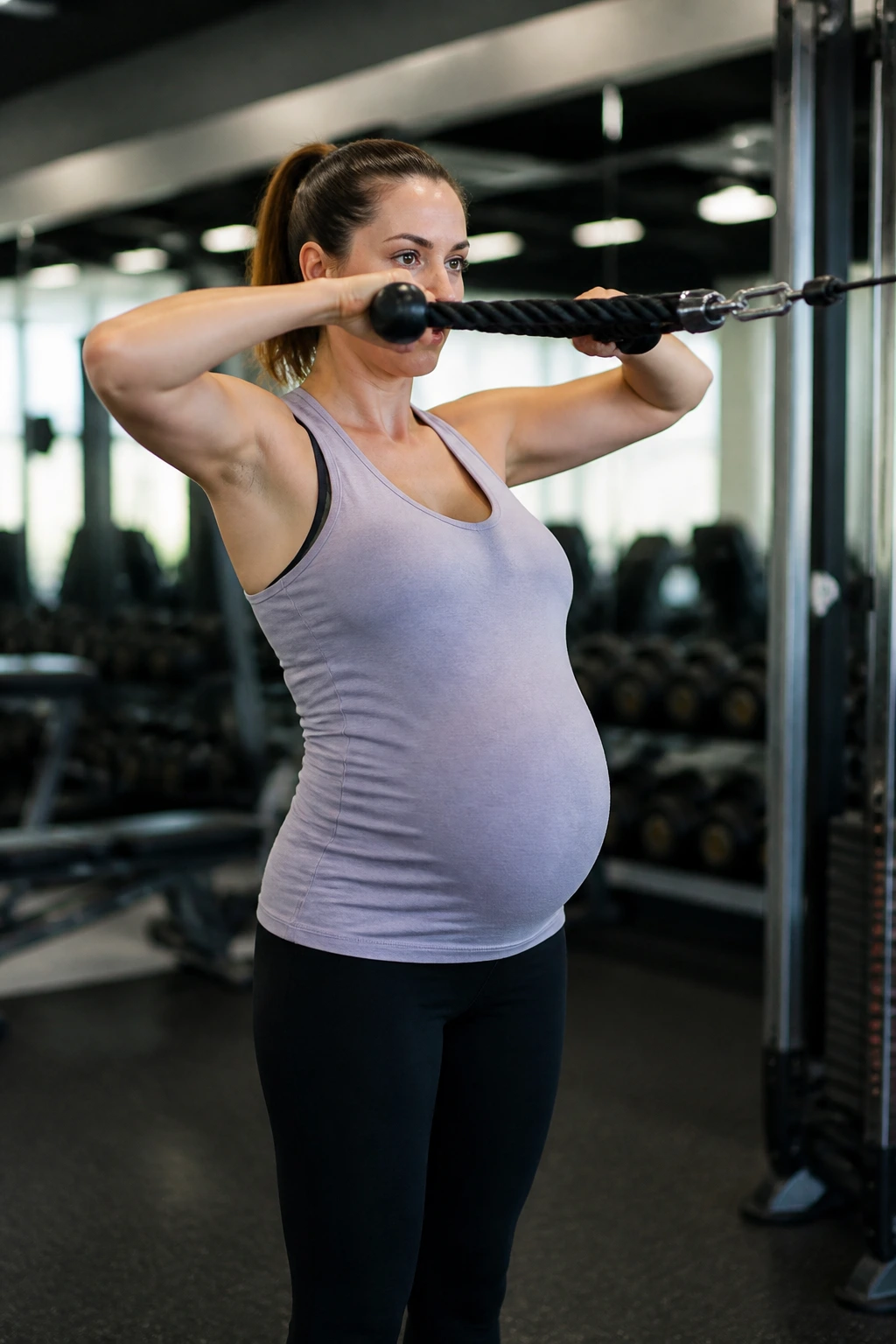
Face pulls are one of those exercises that make sense the moment your shoulders start rounding forward from sitting, carrying, and generally existing. They’re not glamorous. They are useful.
Set the rope at upper-chest or face height, step back until there’s tension, and pull the rope toward your nose or forehead while letting the elbows open out. Keep the wrists neutral and the neck soft. You should feel the upper back, rear shoulders, and the muscles that sit between the shoulder blades.
What usually goes wrong
The load is too heavy. That’s the usual problem. People yank the rope, shrug their shoulders, and turn the movement into a trap exercise. That misses the point.
Use a weight that lets you move slowly for 10 to 15 reps. If your lower back arches to help the pull, step closer to the stack and lighten up.
I like face pulls near the end of a session because they feel like posture insurance. Not magic. Just a very practical way to keep the upper body from getting stiff and cranky.
19. Standing Cable Glute Kickbacks
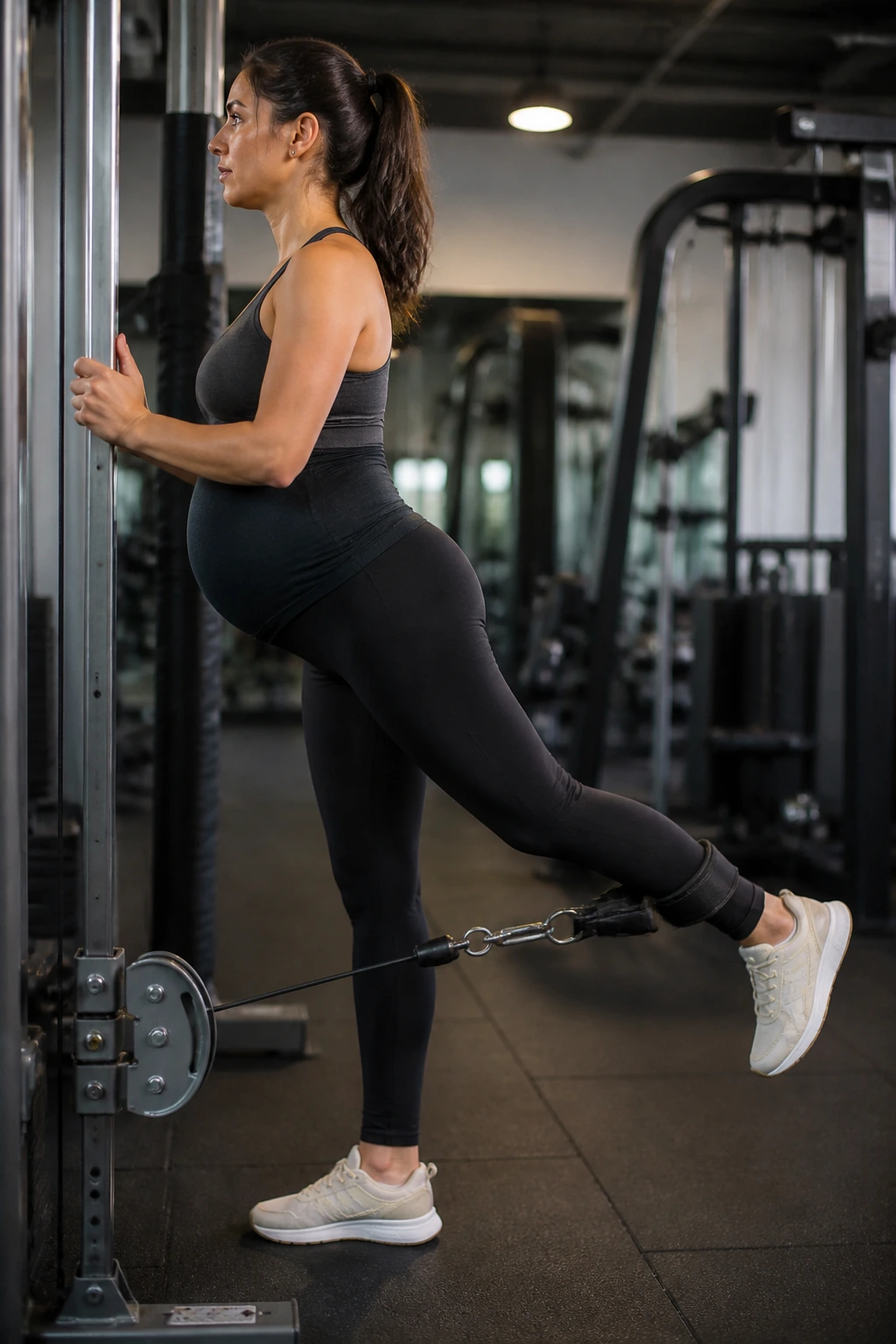
Standing cable kickbacks work well when you want glute work without getting down on the floor or forcing a lot of balance drama. The setup is simple: ankle strap, light cable tension, torso steady.
Face the machine, hold on with one hand if you need to, and move one leg straight back a short distance. The key phrase is short distance. A giant swing is usually the lower back taking over.
Keep your pelvis square and your ribs from flaring. Squeeze the glute at the end, pause for a second, then return slowly. Ten to twelve reps per side is plenty.
This is one of those exercises where more range is not automatically better. A smaller, cleaner kick gives you more useful work than a big one with a sloppy arch. That holds up in pregnancy and out of it.
20. Stability Ball Wall Squats
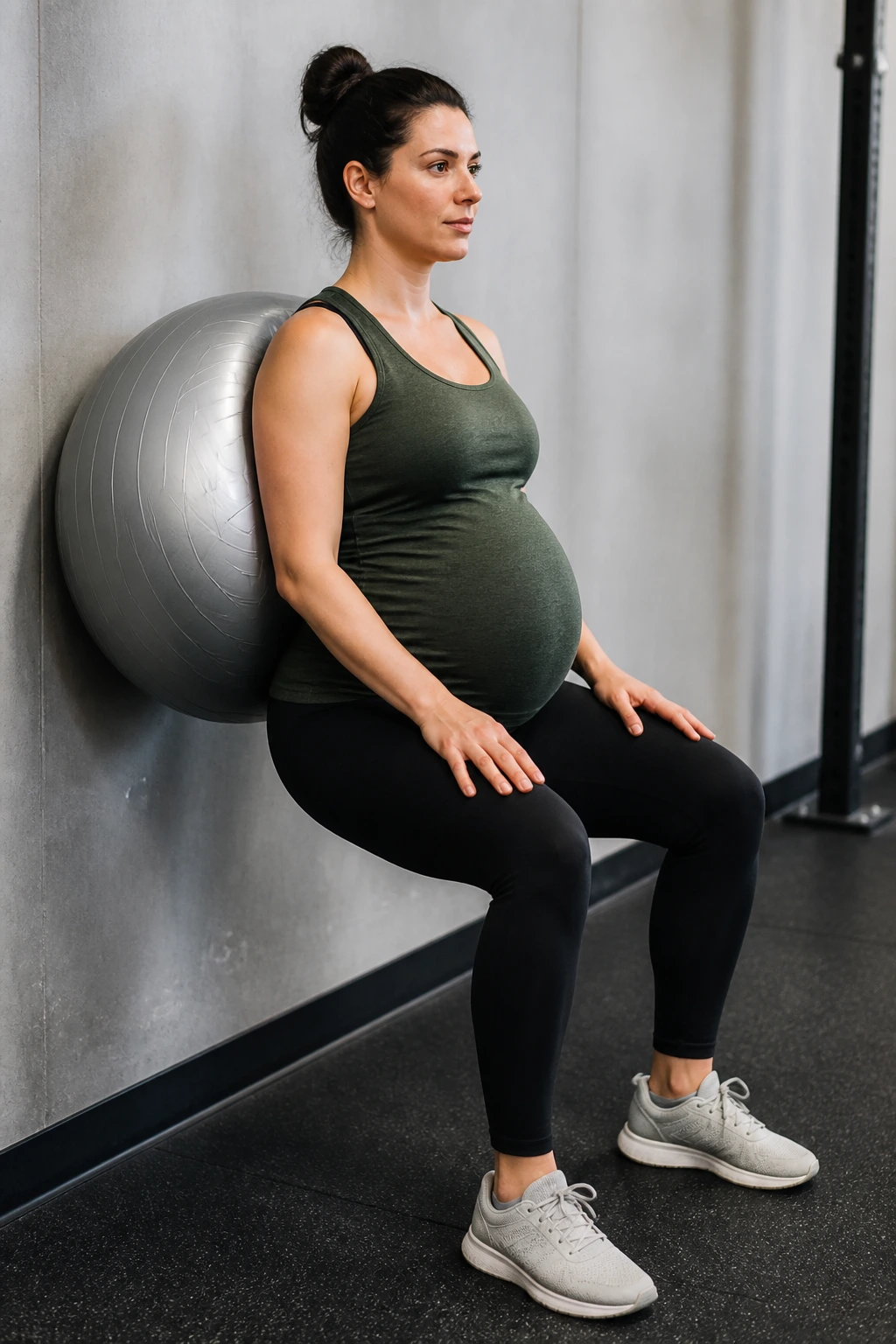
If I had to pick one finish-all, low-drama lower-body exercise for a beginner who wants something repeatable, the stability ball wall squat would be high on the list. It gives you support, keeps the movement smooth, and asks very little from your balance.
Place a stability ball between your lower back and a wall, walk your feet a little forward, and sink into a squat that feels comfortable. Roll down only as far as you can keep the movement controlled. Then press through your feet and stand back up without snapping the knees straight.
A sensible starter plan
- Reps: 8 to 12
- Sets: 2 to 3
- Hold: Pause for 1 to 2 seconds at the bottom if it feels good
- Depth: Only as low as your body likes
If the ball feels unstable, move your feet a few inches farther forward. If your knees hurt, shorten the range. If your breathing gets choppy, lighten the pace.
This is the one I’d keep in the rotation when energy is low and you still want a solid lower-body session. It feels steady. It looks simple. It usually earns its place without making a fuss.
