



A decent workout does not need a treadmill, a mirror wall, or a row of machines humming in the background.
Getting in shape without a gym is mostly about using effort well. You need enough resistance to make your muscles work, enough pace to raise your heart rate, and enough repetition that your body has to adapt instead of merely surviving the session. That sounds fancy, but the feel is simple: your breathing changes, your legs warm up, your shoulders wake up, and the last minute takes more patience than the first five.
The mistake most people make is treating “no gym” like a downgrade. It isn’t. A staircase can hit your lungs. A backpack can load your legs. A patch of floor can reveal whether your core is awake or asleep. And a 20-minute session that you can repeat three times a week beats a heroic burst of enthusiasm followed by six days of sitting around.
What matters is choosing workouts that are hard enough to matter and simple enough that you will actually do them again. Start with walking intervals if you want something plain and effective. Then mix in stairs, rope, bodyweight circuits, and a few mobility-heavy sessions so your body doesn’t get stuck doing the same thing forever.
1. Brisk Walk Intervals Without a Gym
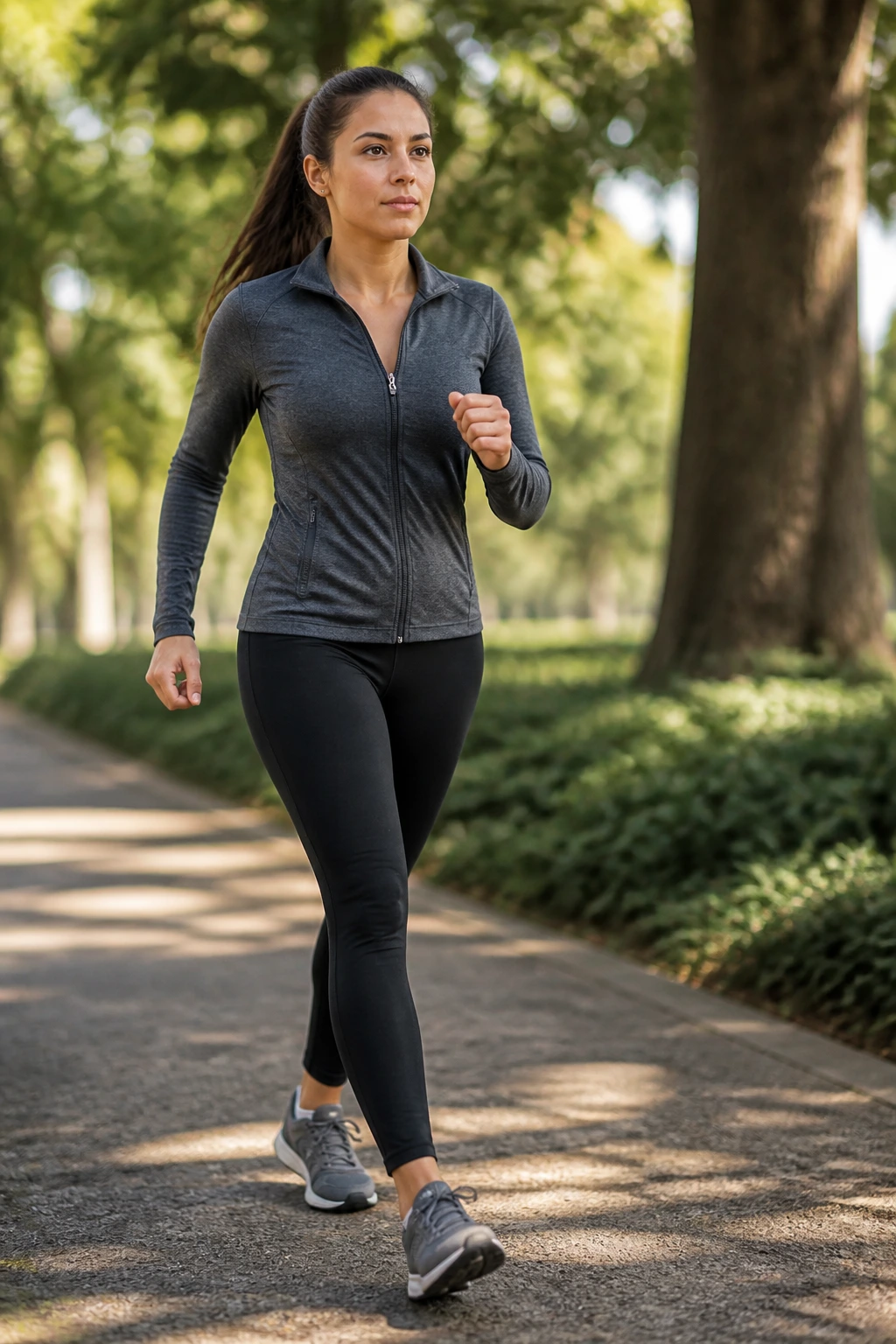
Walking gets dismissed because it looks too calm. That’s a mistake, and a fairly expensive one if it keeps you from using one of the easiest conditioning tools available.
The trick is to stop thinking about walking as “just walking” and start treating it like interval work. Walk easy for a few minutes, then pick up the pace for 60 seconds until your arms are swinging harder and talking in full sentences feels awkward. Repeat that pattern for 20 to 30 minutes, and you’ve got a session that builds stamina without beating up your joints.
A simple version looks like this:
- 5 minutes of easy walking to warm up
- 1 minute of brisk walking
- 1 minute of relaxed walking
- Repeat for 8 to 12 rounds
- 3 to 5 minutes of easy walking to finish
The brisk minute should feel purposeful. Not a sprint. Not a casual stroll with good intentions. Your steps get quicker, your posture gets taller, and your breathing gets deeper, but you still look like a person walking instead of a person escaping a wasp nest.
Best detail to watch: keep your feet under you, not way out in front. Overstriding makes walking feel clunky and can irritate the shins or hips.
A light backpack can make this harder if you want more work, but plain interval walking already does plenty when you keep it honest.
2. Stair Climb Repeats and Step-Ups
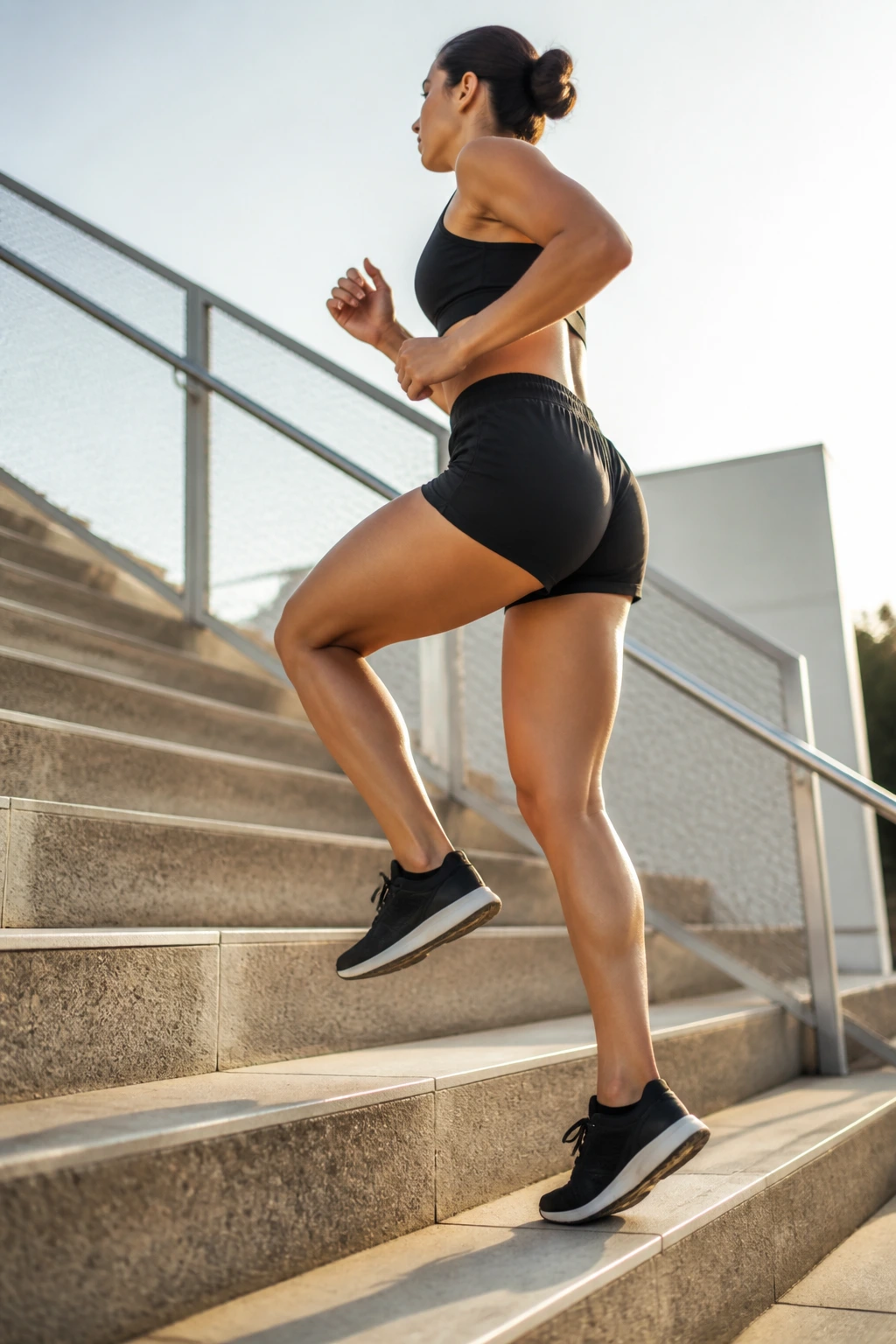
Got a staircase? Good. You’ve got a workout that punches above its size.
Stairs ask for more from your legs than flat ground does, especially your glutes and calves. They also make your heart rate climb fast, which is why a few hard trips up and easy walks down can leave you breathing like you just finished something bigger than it looked.
How to Set the Pace
Start with 6 to 10 rounds of 20 to 40 seconds climbing. Walk down slowly for recovery. That descent matters more than people think; it gives your breathing a chance to settle and lets you keep the next climb sharp instead of sloppy.
Keep your chest tall and your whole foot on the step. Half-foot stair work feels awkward and puts extra strain on the lower leg. If the staircase is narrow or steep, use the rail lightly for balance, not support.
What to Watch For
Knees that cave inward.
That’s the big one.
Push the floor away with each step and think about driving from the glute on the working leg. If your breath turns ragged within two rounds, shorten the climb or slow the pace a touch. The workout should be hard, not messy.
No stairs inside? A sturdy outdoor step or a small set of bleachers can do the same job. The setting changes. The work does not.
3. Jump Rope Rounds That Spike Your Heart Rate
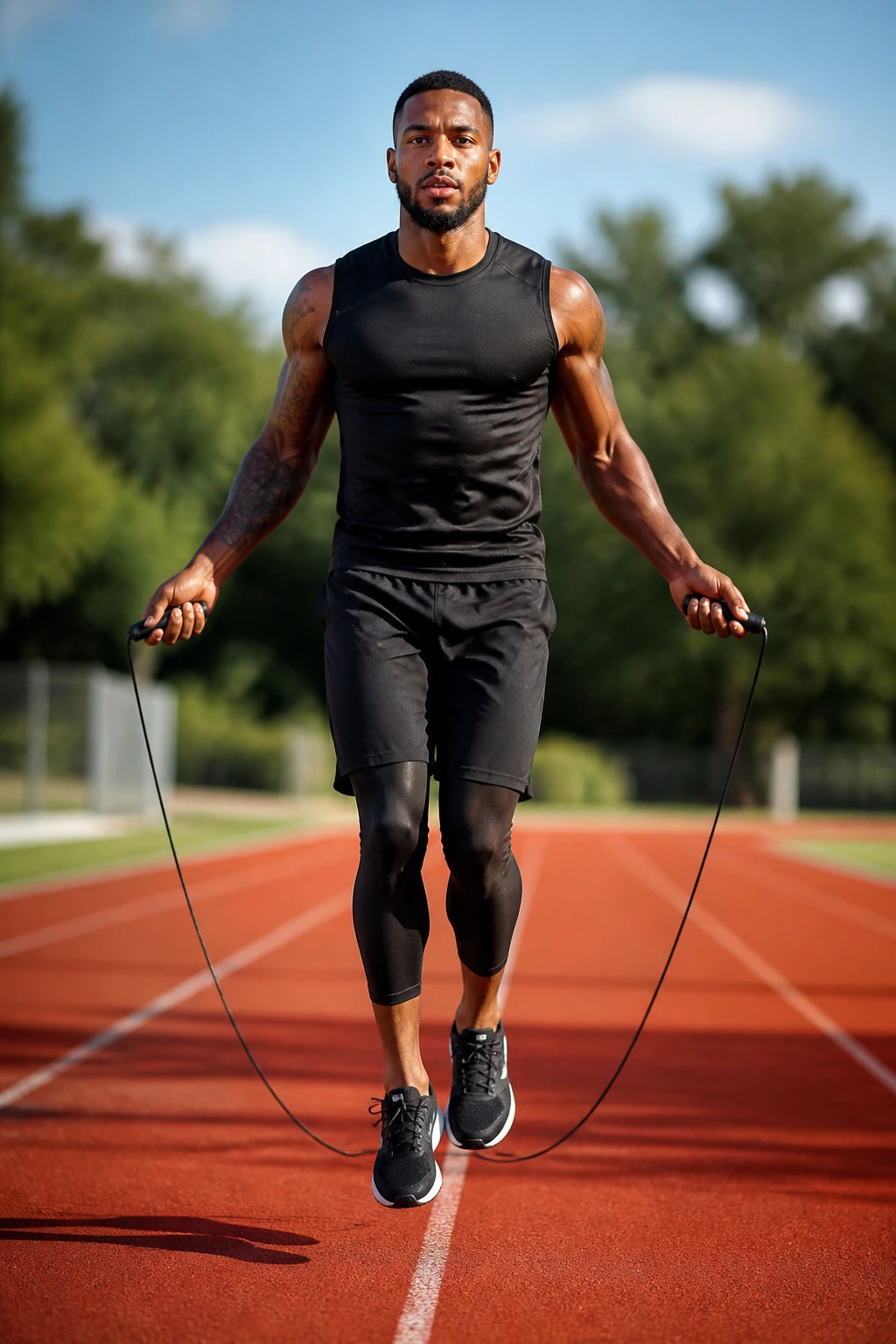
A jump rope can drain you faster than a run twice as long.
That sounds dramatic until you try it for four or five rounds. The rope keeps you honest. You can’t coast through it, and you can’t hide sloppy footwork for long. Even a modest 30 seconds on, 30 seconds off format will wake up your calves, ankles, shoulders, and lungs at the same time.
The nice thing is that jump rope work is easy to scale. Start with two-foot hops if you’re rusty. Move to alternate-foot steps, the boxer step, or a gentle side-to-side rhythm once your timing settles. If the rope keeps clipping your toes, slow down and shorten the jumps. Big airborne hops waste energy fast.
A clean rope session might look like this:
- 30 seconds jumping
- 30 seconds rest
- Repeat for 10 to 15 rounds
Keep your hands low. A lot of beginners turn the rope with their shoulders, which makes the whole thing feel clumsy and tiring. Small wrist turns are enough.
No rope on hand? Mimic the movement anyway. Tiny pogo jumps in place still light up the same muscles, and they make a decent finisher after a strength circuit.
4. Shadowboxing Sprints in a Living Room
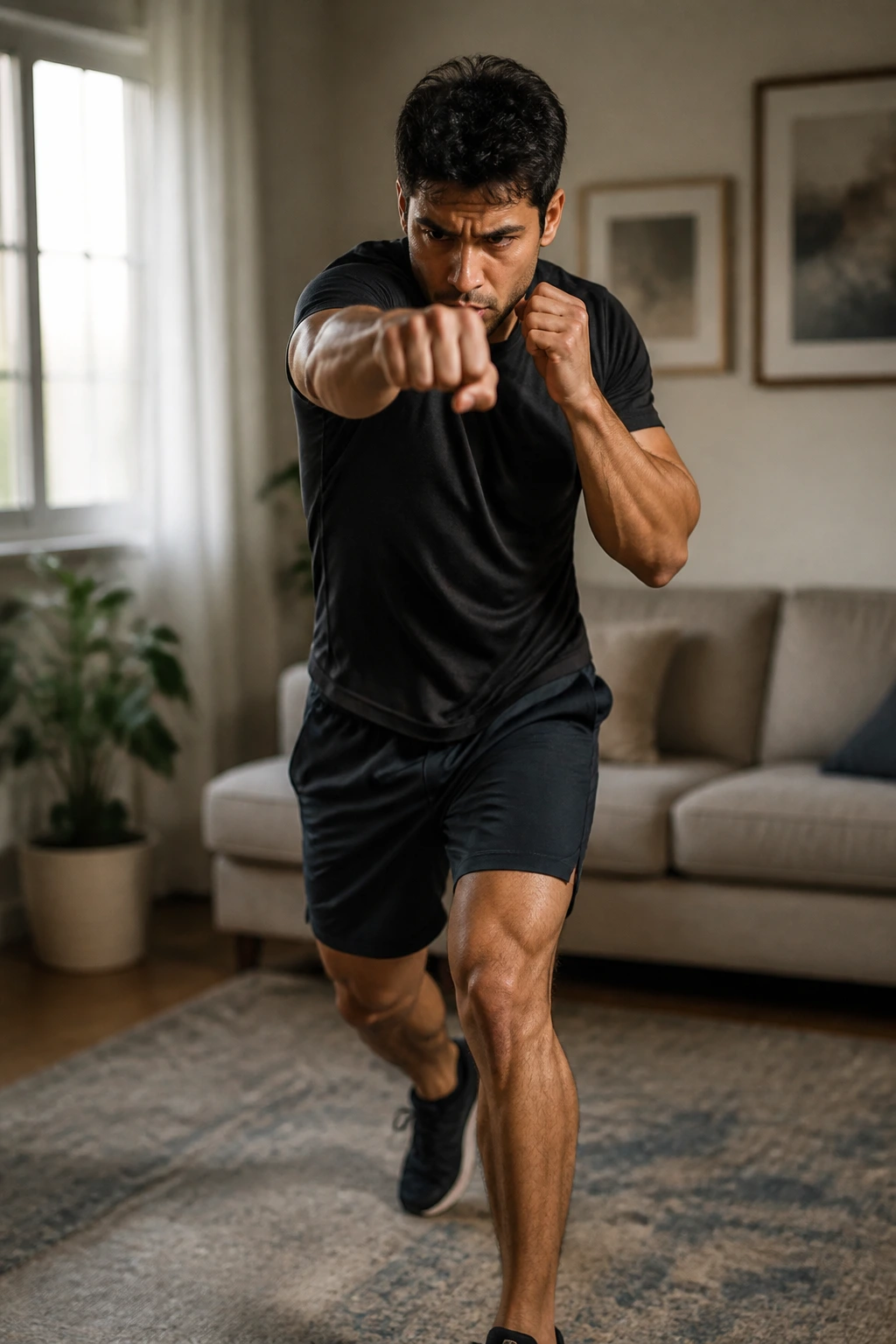
Picture a living room, a timer on your phone, and nobody watching. That is plenty.
Shadowboxing is one of the best workouts to get in shape without a gym because it sneaks cardio, coordination, and core work into the same round. You are not just throwing punches. You’re moving your feet, bracing your trunk, keeping your hands up, and trying not to get lazy halfway through the round.
Use 2- to 3-minute rounds with 45 to 60 seconds of rest. Four rounds is enough to start. Six feels serious. The pace should stay lively, not frantic. Sharp jabs, straight crosses, a hook here and there, then a pivot or a step back so your feet never freeze in one spot.
Round Ideas
- Round 1: light movement and straight punches
- Round 2: add hooks and slips
- Round 3: focus on fast feet
- Round 4: punch in short bursts, then reset
The magic is in the rhythm. A hard 10-second flurry followed by calm movement often works better than trying to throw nonstop. Your shoulders thank you for that.
And yes, you may feel silly the first time. Then you’ll be sweating, and the silliness fades fast.
5. The Bodyweight Squat-and-Push Circuit
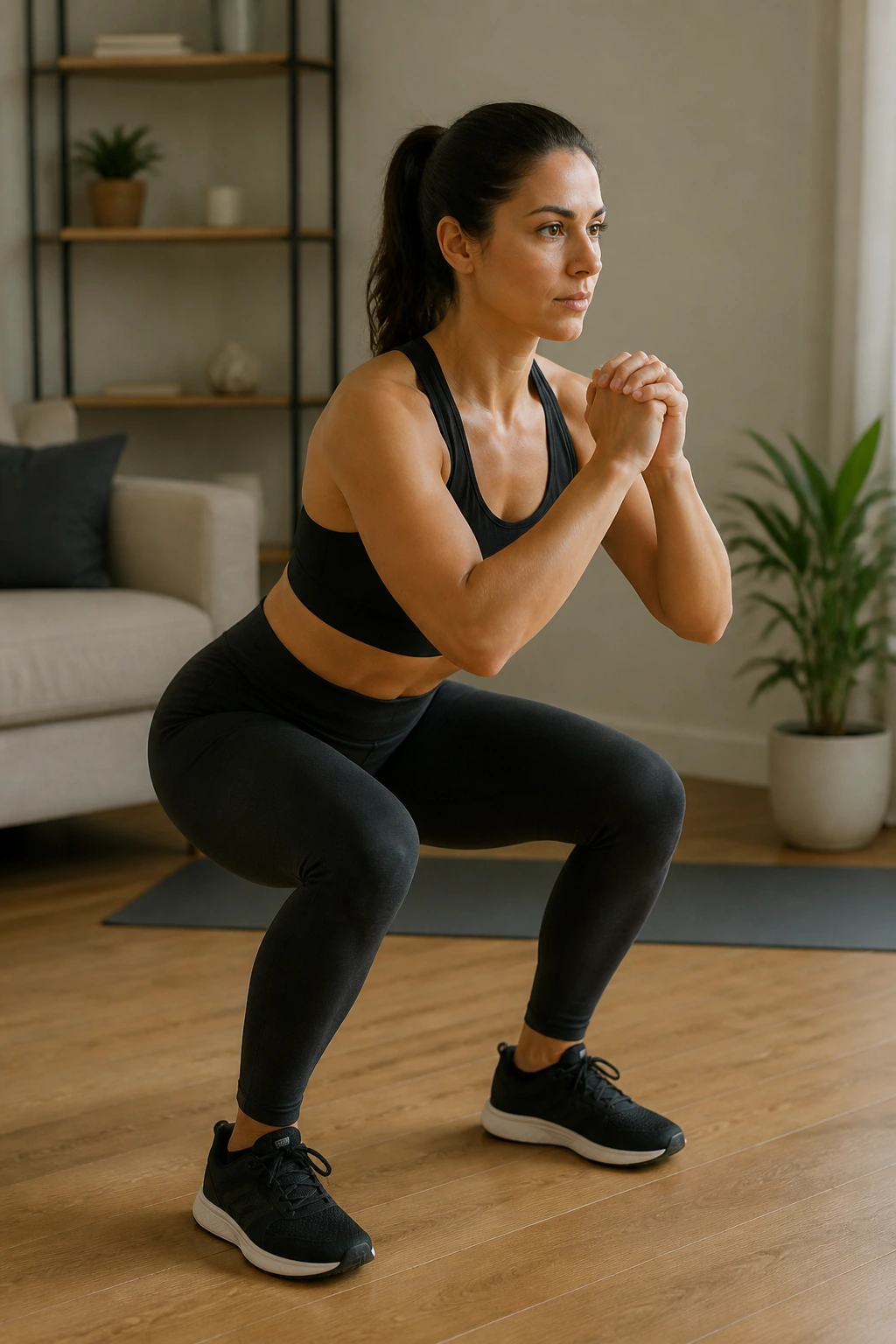
If all you do is cardio, you miss half the picture. If all you do is strength work, you miss the other half. This circuit sits in the middle and behaves like a grown-up workout should.
A good bodyweight circuit asks big muscles to work in sequence. Squats for the legs. Push-ups for the chest, triceps, and shoulders. Reverse lunges for single-leg balance. A core move to stop the whole thing from turning into sloppy flailing. That mix builds useful fitness, not just tiredness.
Why It Works
Squats and lunges load the lower body in a way that walking cannot. Push-ups challenge your upper body without needing a bench or bar. The core work ties it together, which is the part people skip when they are in a hurry and then wonder why their lower back complains later.
How to Run It
Try 3 to 5 rounds of:
- 12 squats
- 8 to 12 push-ups
- 8 reverse lunges per leg
- 20 mountain climbers per side
- 30-second plank
Rest 60 to 90 seconds between rounds.
Do the squats with control. Lower for two seconds, stand for one. That tempo matters more than people want to admit, because fast sloppy reps stop being useful faster than they look. Same with push-ups: your chest should get close to the floor and your hips should stay out of the way. If you need to do them on a bench, table, or couch edge, that still counts.
The workout gets better when you stop treating every rep like a race.
6. Backpack Strength Training at Home
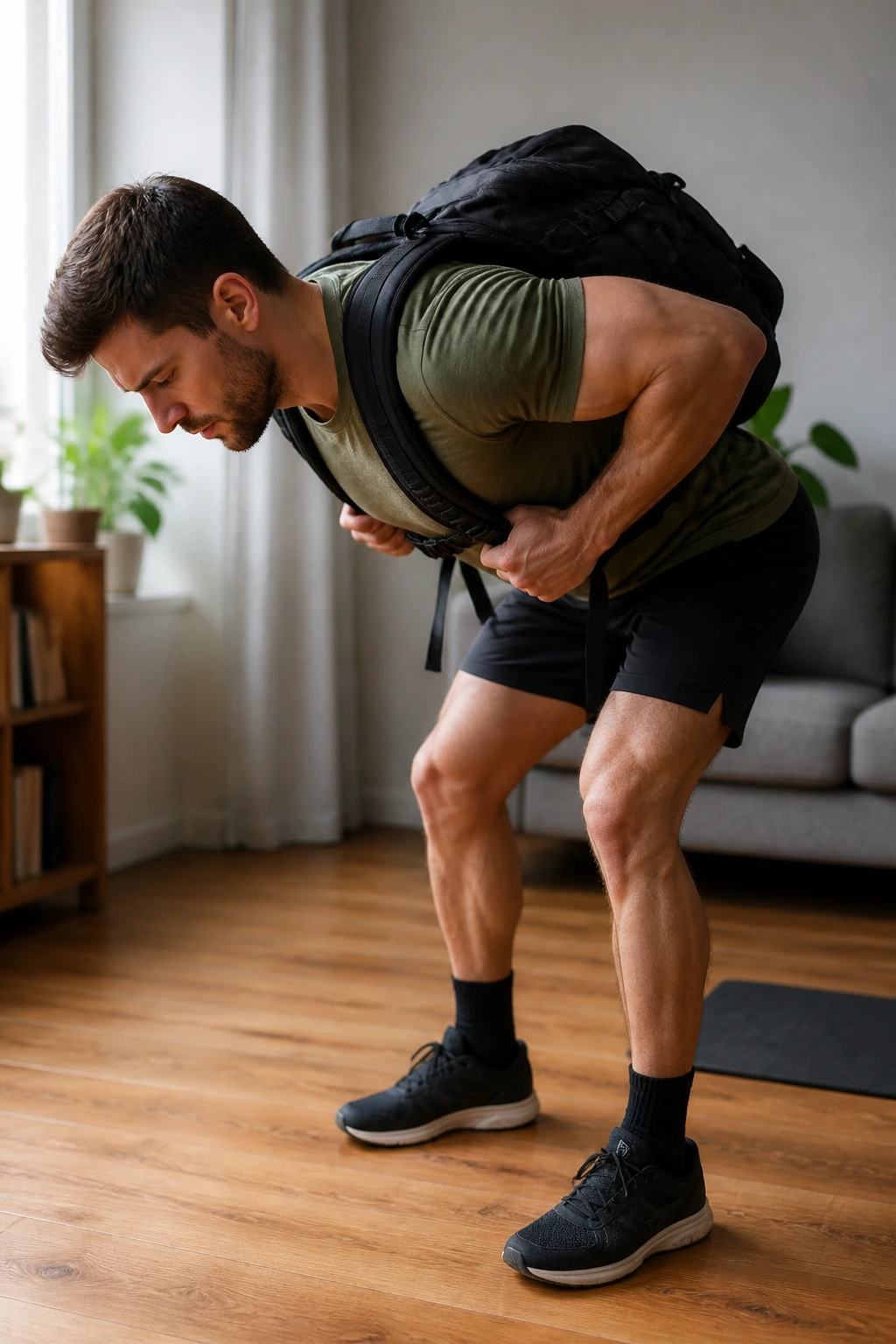
A backpack full of books is ugly, effective, and cheap.
That is why I like it. A gym often charges you for the privilege of loading weight onto your body. A backpack lets you do the same thing with a towel, a zipper, and a bit of common sense. If you pack it well and keep the load close to your back, it becomes a squat, hinge, row, and carry tool all at once.
What to Put in the Pack
Use books, water bottles, canned food, or anything that sits still and doesn’t poke through the fabric. Tighten the straps so the bag does not swing around like a bad idea. If the bottom feels lumpy, wrap the contents in a towel to keep the load from shifting.
The Moves That Pay Off
- Backpack squats
- Bent-over rows
- Split squats
- Romanian deadlifts
- Front-loaded marches
Do 3 sets of 8 to 12 reps for each move. The rows can be a little lighter than the squats, and that’s fine. Your back should feel worked, not twisted.
One Thing Not to Do
Do not throw a heavy backpack overhead unless the bag is built for it and the load is secure. That kind of improvisation looks tougher than it is. Rows and front carries give you plenty of work without asking for a shoulder gamble.
This session is especially good when you want strength training without pretending your apartment is a warehouse.
7. Hill Repeats and Power Walks
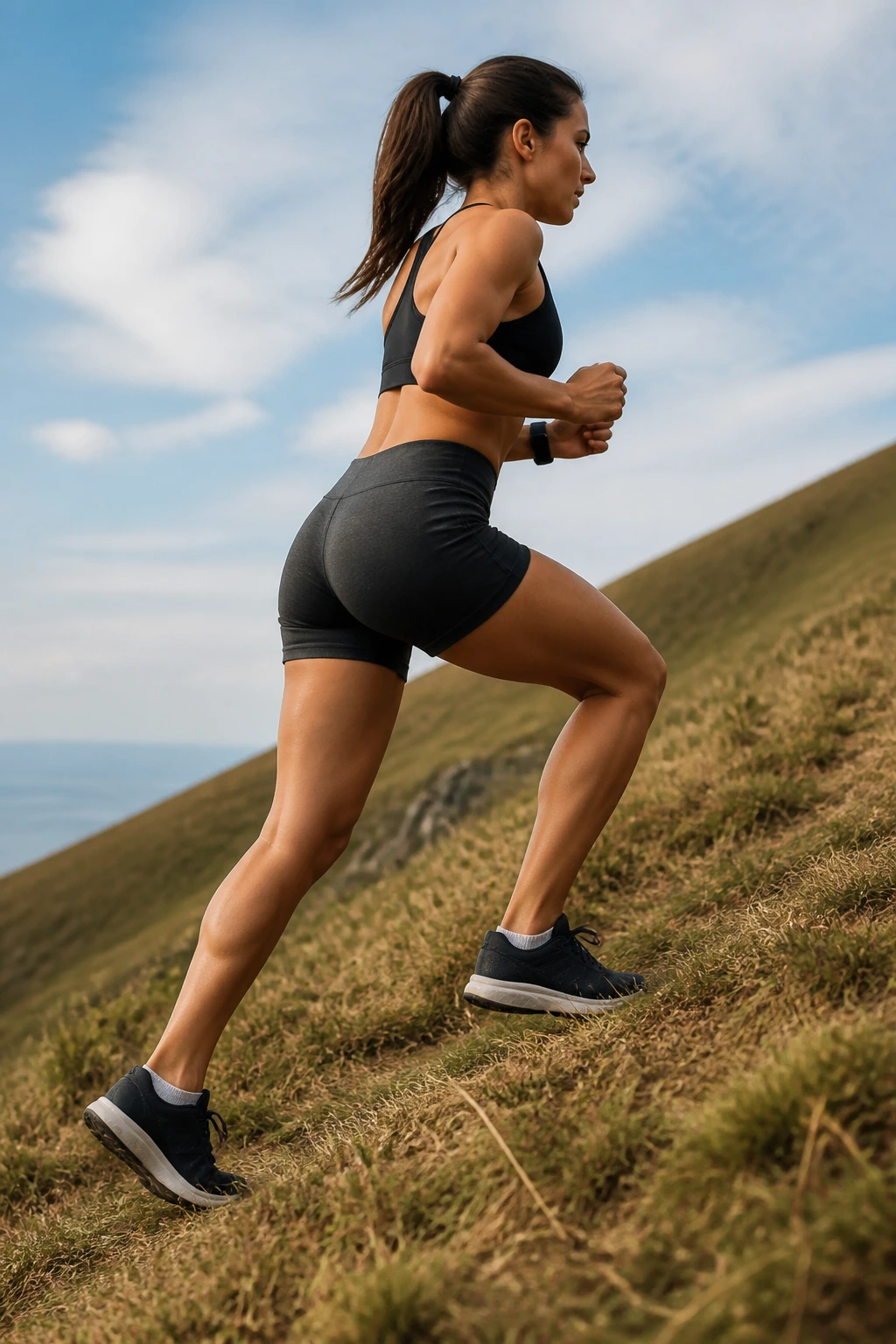
The first thing you notice about hills is your calves. The second is your breathing.
That’s the charm. A hill makes ordinary movement expensive in the best possible way. You can use a real hill outdoors, a steep driveway, or a long incline if that’s what the terrain gives you. Run it if you can. Power-walk it if running feels like too much pounding. Either way, the slope changes the feel fast.
A simple hill session might be 8 to 12 repeats of 20 to 30 seconds uphill, followed by a slow walk back down. Keep your steps short and your torso tall. If you lean too far forward, the hill starts stealing form from your hips and lower back.
Hill work is kinder than flat-out sprints in one useful way: the incline slows you down just enough to keep the motion cleaner. That matters. A lot.
If you prefer walking, do a hard uphill power walk for 10 to 20 minutes and keep your arms driving. You should be able to speak in broken sentences, not deliver a speech. That pace is doing the work.
The return walk down is not dead time. It is recovery, and if you respect it, the next climb gets better.
8. Tabata Bodyweight Finisher
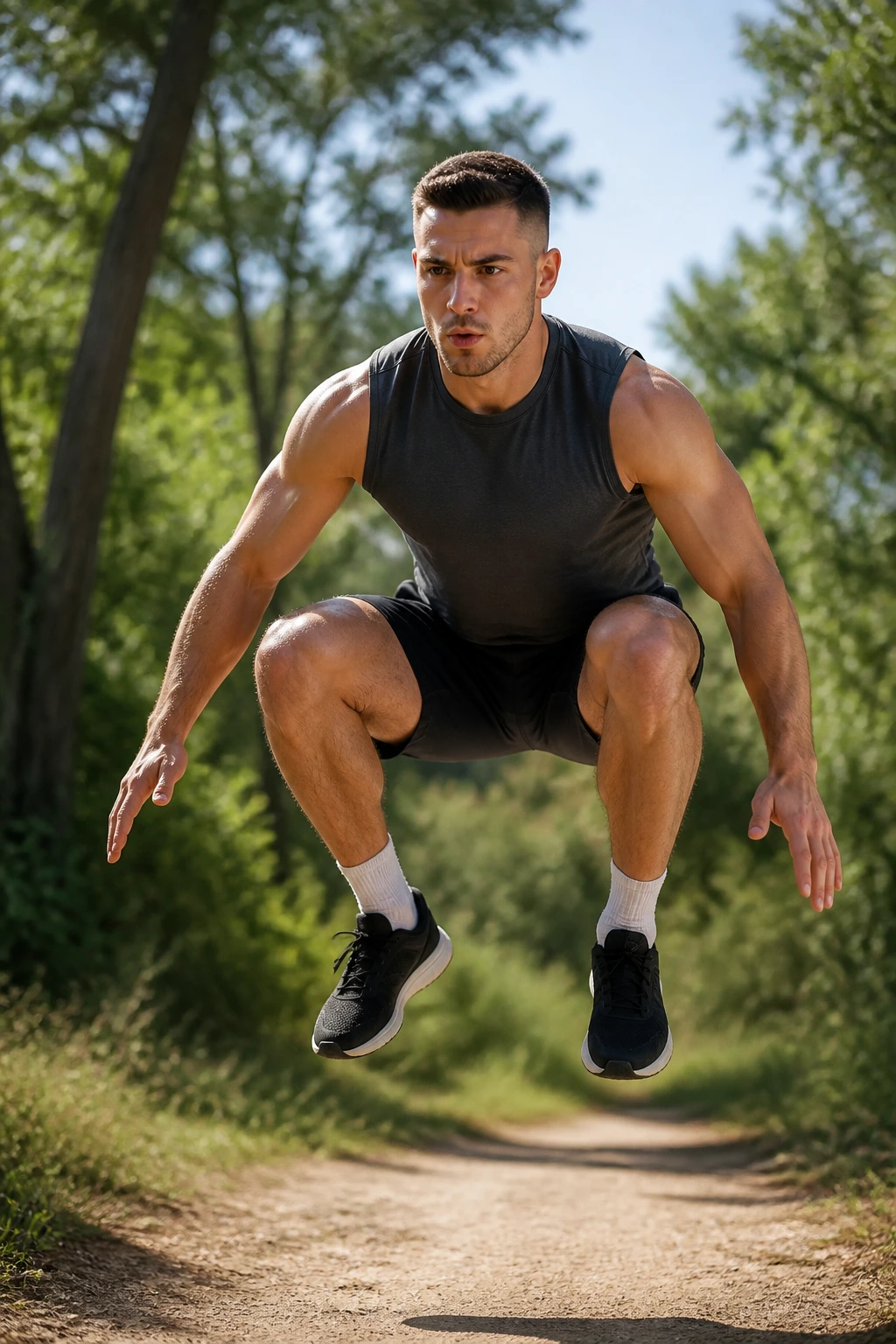
Why does four minutes feel so rude?
Because Tabata is short on paper and stubborn in real life. The classic pattern is 20 seconds of work, 10 seconds of rest, repeated 8 times. That sounds mild until your lungs catch on and your legs start arguing with your plan.
Choose one or two moves that you can keep crisp under fatigue. Squat jumps, mountain climbers, skaters, high knees, or fast bodyweight squats all work. The point is not to collapse into panic movement. The point is to stay technically clean while the clock keeps poking you.
How to Keep It Honest
If your squat jumps turn into tiny half-stands, switch to regular squats. If your mountain climbers turn into a slow crawl, speed up the hands or shorten the range. The work interval is too short to waste on sloppy form.
A clean Tabata finisher might look like this:
- 20 seconds squat jumps
- 10 seconds rest
- Repeat 8 rounds
Or:
- 20 seconds mountain climbers
- 10 seconds rest
- Repeat 8 rounds
You can pair two moves and alternate them, but keep the total under control. More variety is not always better when the goal is to leave the session gasping, not confused.
This is a sharp finisher after a walk, circuit, or strength session. It is not the place for ego.
9. Glute Bridges and Hamstring Work
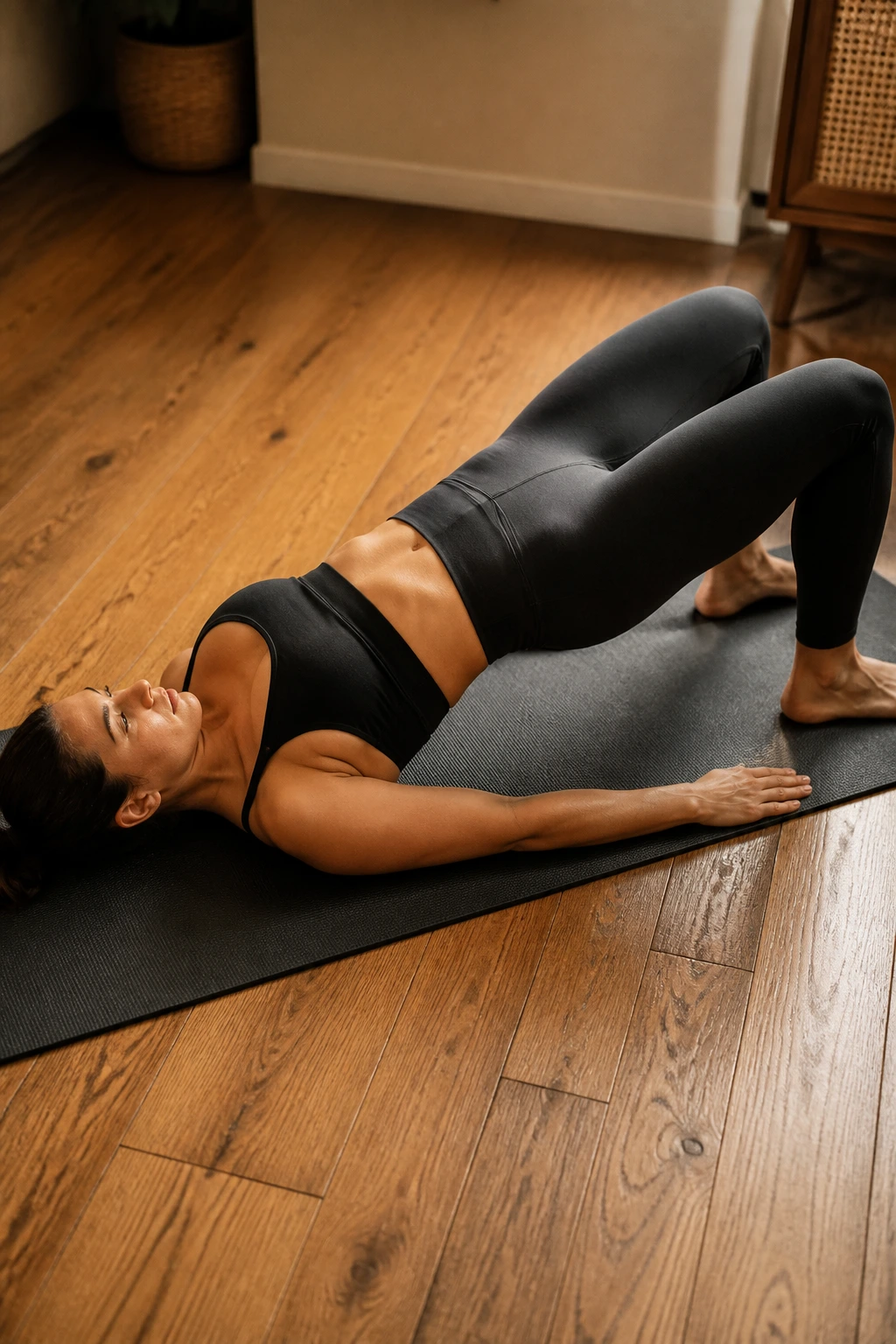
A strong backside makes every other workout easier.
That sounds blunt because it is true. Glutes and hamstrings help with walking, stairs, sprinting, jumping, and even standing up from the floor without looking old before your time. Most people sit enough to mute those muscles. A good bridge session wakes them back up.
Start with floor glute bridges. Lie on your back, feet flat, and drive through your heels until your hips lift and your glutes squeeze at the top. Pause for a second. Then lower under control. If that feels easy, try single-leg bridges or place your shoulders on a couch edge for a hip thrust variation.
A solid session looks like this:
- 3 sets of 15 glute bridges
- 2 to 3 sets of 8 single-leg bridges per side
- 2 sets of 10 hamstring walkouts
- 20-second top hold on the last rep of each set
Feel the work in the back of the thighs and the glutes, not in the lower back. If your back is taking over, bring your feet closer and shorten the range.
This workout is not flashy. Fine. It still pays rent every time you climb stairs, carry groceries, or move into a faster walking pace without your hips complaining.
10. Push-Up Variations That Build Real Upper-Body Strength
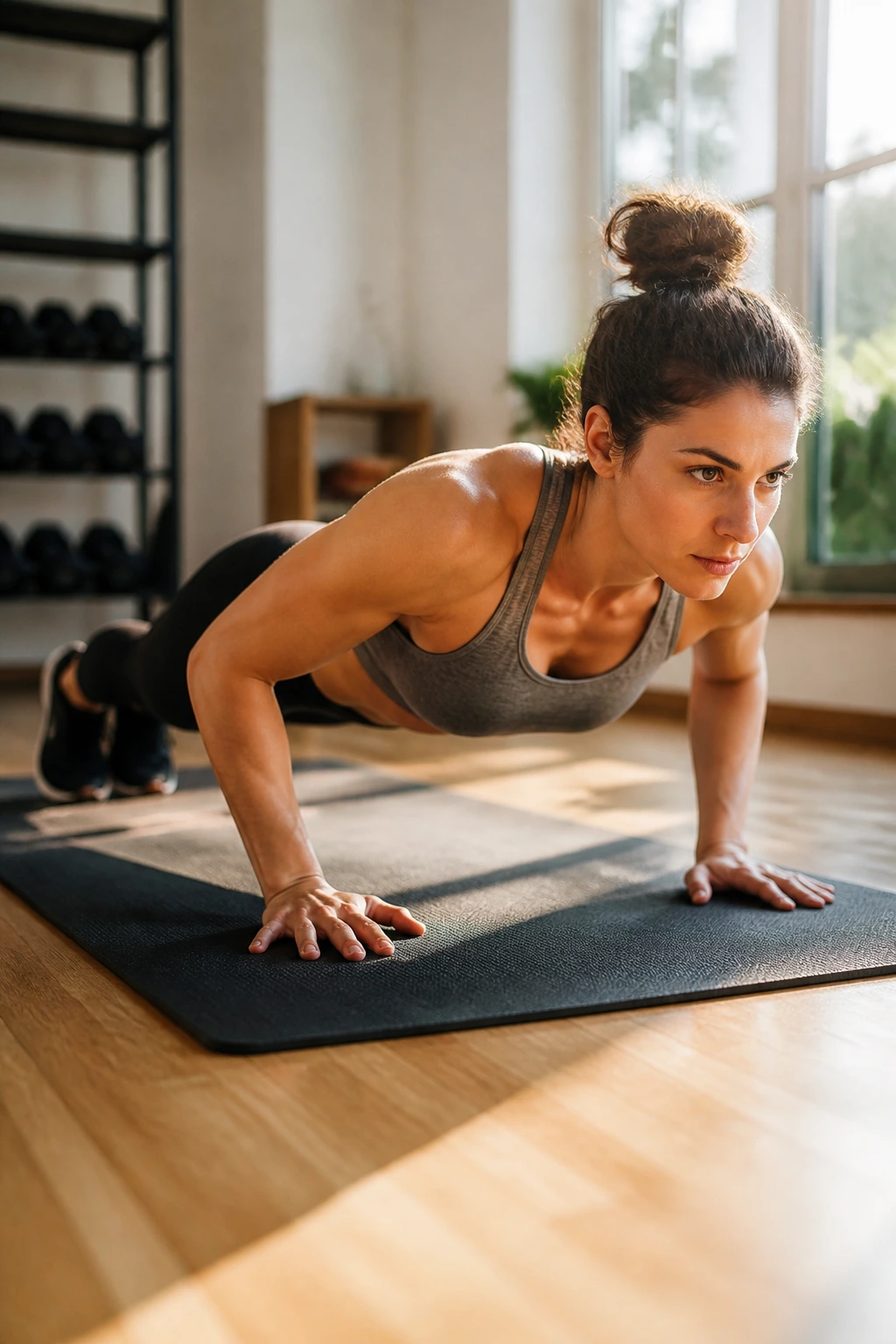
The floor is humbling.
It tells the truth fast, too. Push-up work is one of the cleanest ways to build upper-body strength without a gym because you can change the angle, hand width, tempo, and range without needing a single machine. The key is to treat the push-up as a progression, not a punishment.
Start where you can move well. Wall push-ups are fine if that is what keeps your shoulders and wrists happy. Incline push-ups on a bench, desk, or countertop come next. Floor push-ups are harder. Close-grip push-ups hit the triceps more. Pause reps make everything harder without adding speed nonsense.
A Useful Ladder
- 10 wall push-ups
- 8 incline push-ups
- 6 floor push-ups
- 5 close-grip push-ups
- 3 slow-tempo push-ups with a 3-second lower
Use one rung at a time or cycle through several of them in a circuit.
Your body should stay in one line. No sagging hips. No neck crane. Your elbows can angle about 30 to 45 degrees from your sides instead of flaring out like airplane wings. That keeps the movement cleaner and usually kinder to the shoulders.
If full reps are not there yet, lower the surface. That is not cheating. That is smart training.
11. Crawl Patterns and Plank Flow
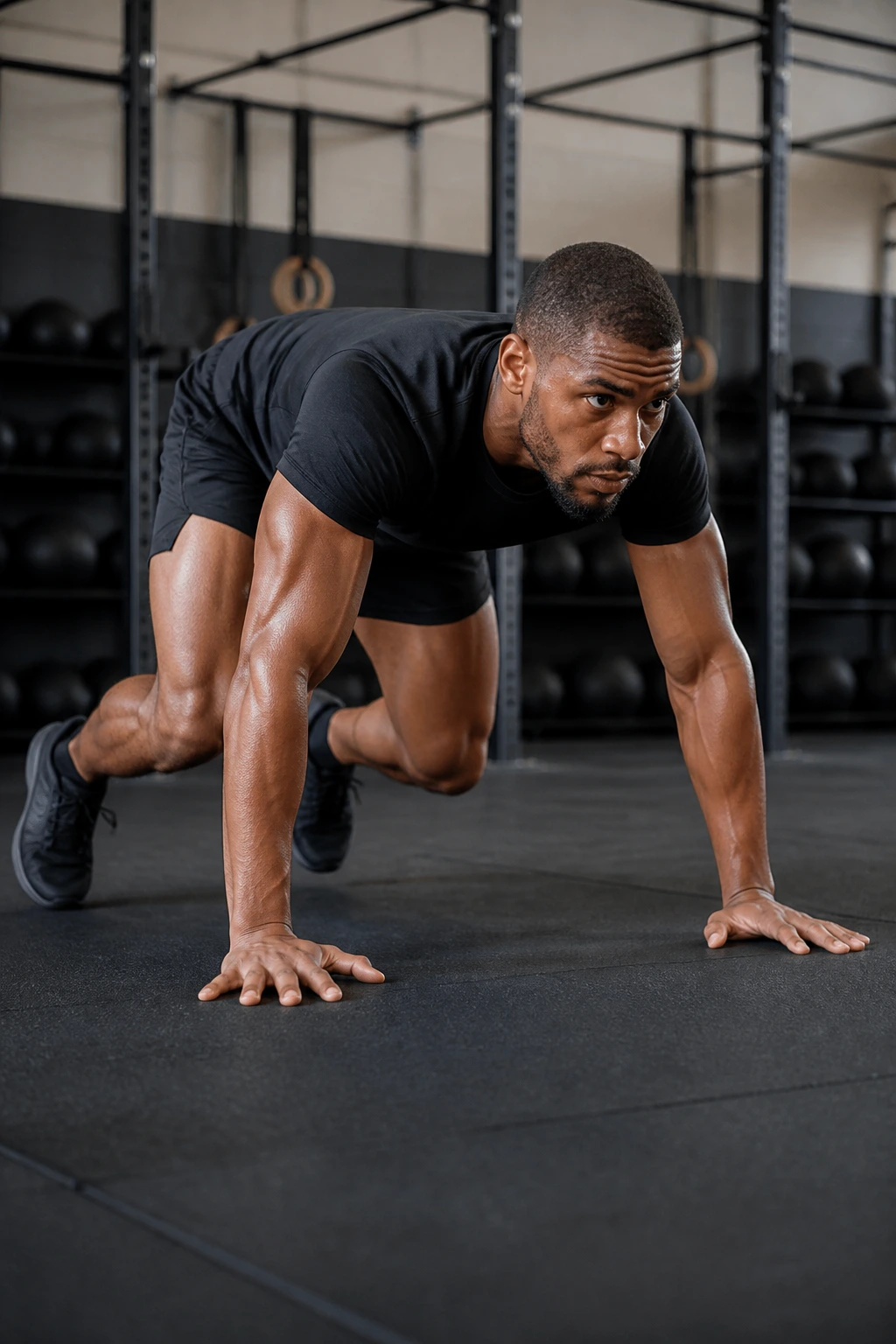
Not every workout has to look like cardio to make you sweat.
Crawls and plank flows are sneaky. They light up the core, shoulders, hips, and wrists while forcing you to move in a way most adults avoid after childhood. That alone makes them worth keeping around.
Bear crawls are the easiest place to start. Hover on hands and feet with knees just off the floor, then crawl forward for 10 to 20 steps. Move back. Crab walks ask for the reverse shape and hit the shoulders and glutes from a different angle. Inchworms combine a hamstring stretch, a walkout, and a plank in one compact move.
A practical flow might be:
- 20 steps bear crawl forward
- 20 steps bear crawl back
- 10 crab walks each way
- 6 inchworms
- 20-second side plank per side
If your wrists get cranky, spend a minute warming them up first. Small circles, gentle pressure shifts, and a few palm lifts help more than people expect. Also, keep the floor clear. Crawling into a chair leg is a terrible reward for good effort.
This kind of session is especially useful when you want to train hard without pounding the joints.
12. Dance Cardio Intervals
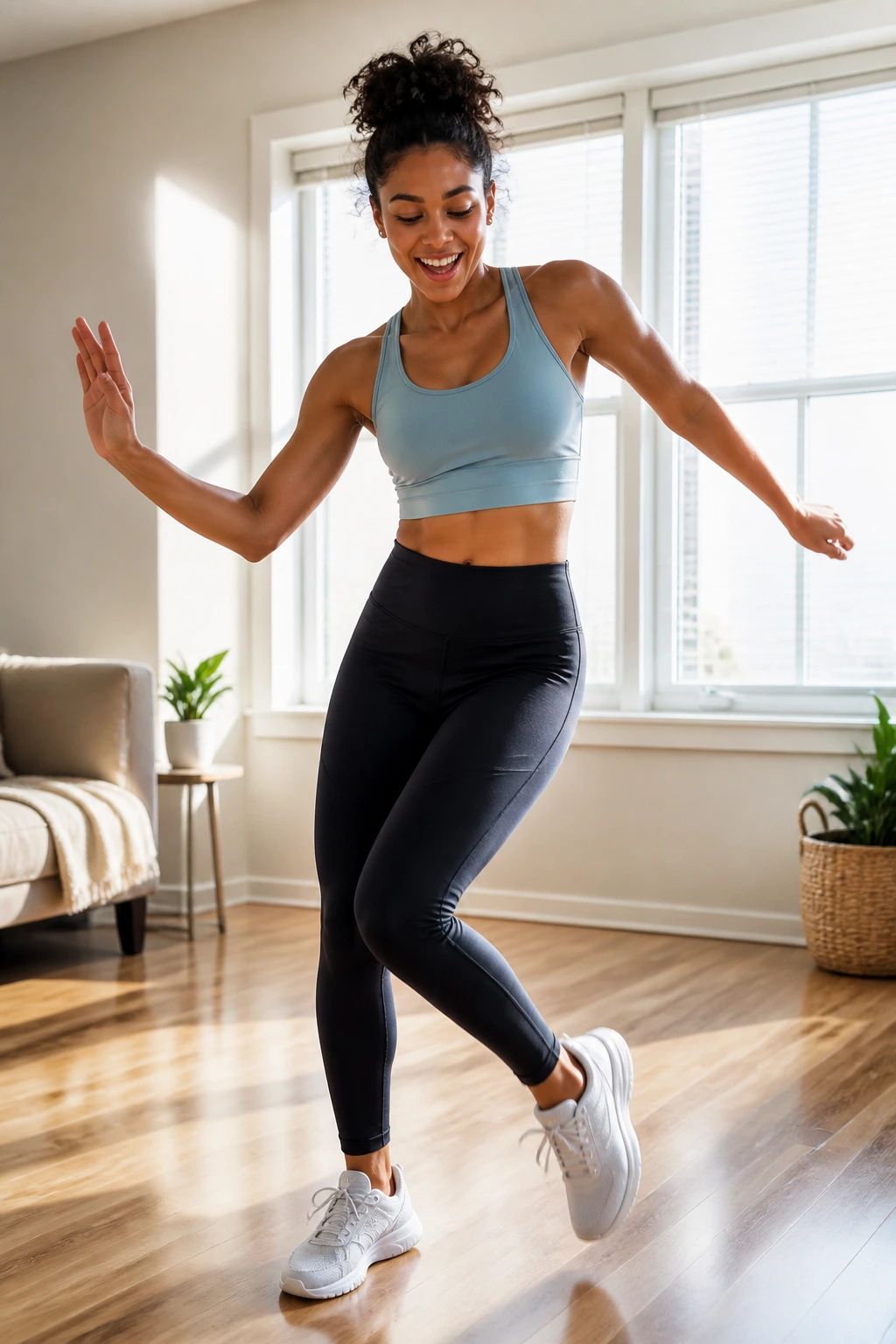
This is not about memorizing choreography.
Good dance cardio is much simpler than that. You pick a handful of movements, keep them moving for a short burst, then rest or slow the pace before repeating. The moves can be basic: step touches, knee drives, skaters, grapevines, marching punches, or a little boxer shuffle if you feel like it.
The reason it works is obvious once you stop overthinking it. You keep moving, your heart rate climbs, and the session feels less like a punishment parade than a workout. That matters when consistency is the problem.
A Plain Structure That Works
- 45 seconds of movement
- 15 seconds to reset
- Repeat for 10 to 12 rounds
Pick 4 moves and rotate them. Keep the range comfortable enough that you can stay loose through your hips and shoulders. If the room is small, make the steps smaller and the arm patterns bigger. If the floor is slippery, ditch the turns and keep it linear.
Dance cardio is also kinder to the brain than a lot of structured workouts. You can keep it simple without getting bored. That alone makes it useful on the days when your motivation has gone flat.
You do not need to be a dancer. You just need to keep moving with enough intent that the session earns its sweat.
13. Run-Walk Intervals Outdoors
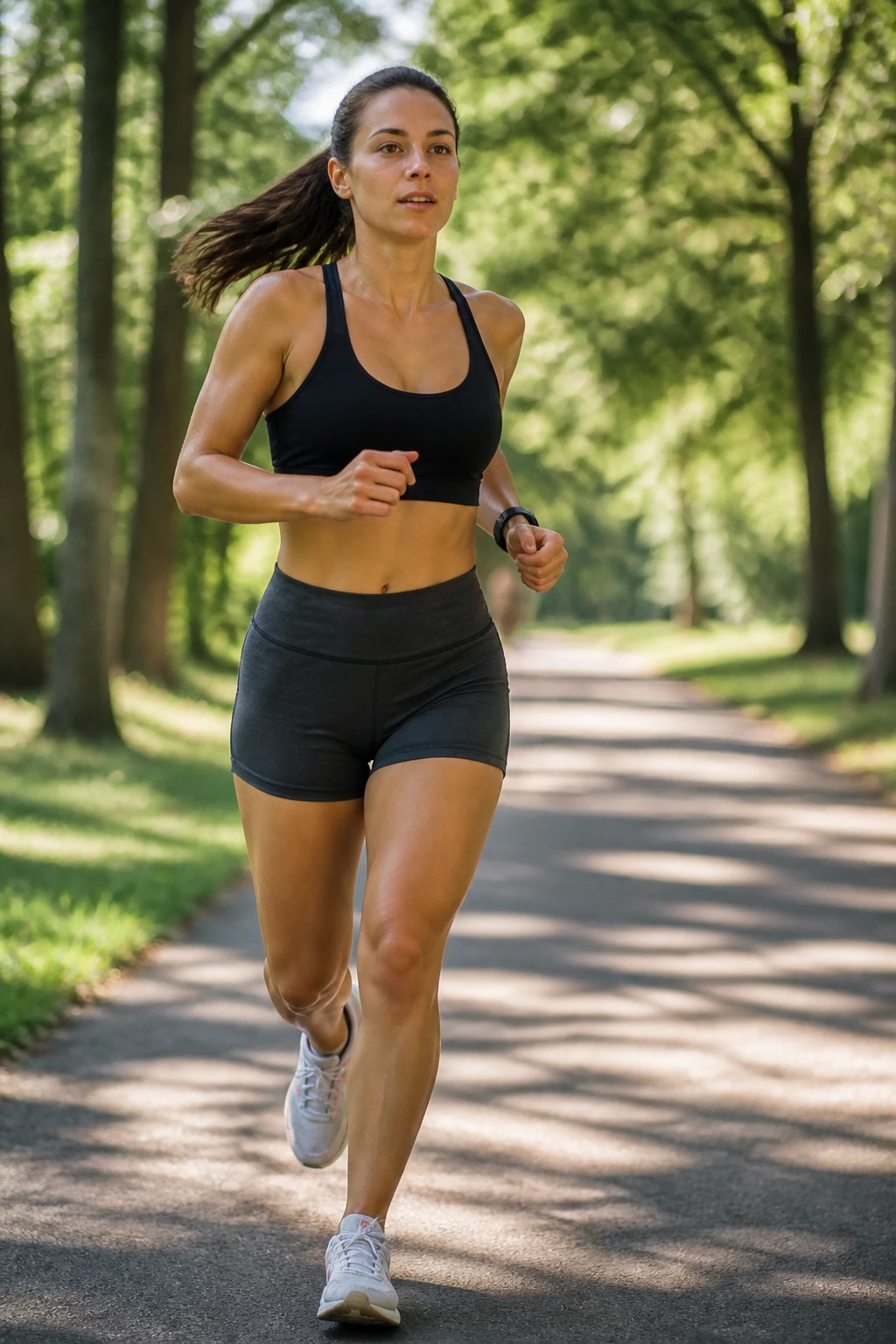
How hard should the run feel?
Hard enough that your breathing changes. Easy enough that your form does not fall apart. That is the line, and it matters more than pace charts or bragging rights.
Run-walk intervals are the cleanest entry point for people who want to improve conditioning without living on a treadmill. Start with 1 minute of jogging and 2 minutes of walking, repeated for 20 to 30 minutes. If that feels comfortable, switch to 90 seconds run / 90 seconds walk. Later, you can stretch the run to 2 or 3 minutes while keeping the walk short.
What the Run Should Feel Like
The run segments should feel controlled, not desperate. You should be able to say a short sentence at the end of the interval, even if you would rather not. If your shoulders creep up toward your ears, you are going too hard.
When to Lengthen the Run
Add time only after you can finish the session without limping into the walk or collapsing onto the curb. A small jump in work time is enough. Thirty extra seconds can change the session without making it ugly.
Choose a safe route and a surface that does not punish you. A park path, quiet street, or track works well. Shoes matter here, but a fancy setup does not. A pair that fits and feels stable is enough.
This workout rewards patience. Push it too fast and it bites back.
14. Mobility-Strength Flow
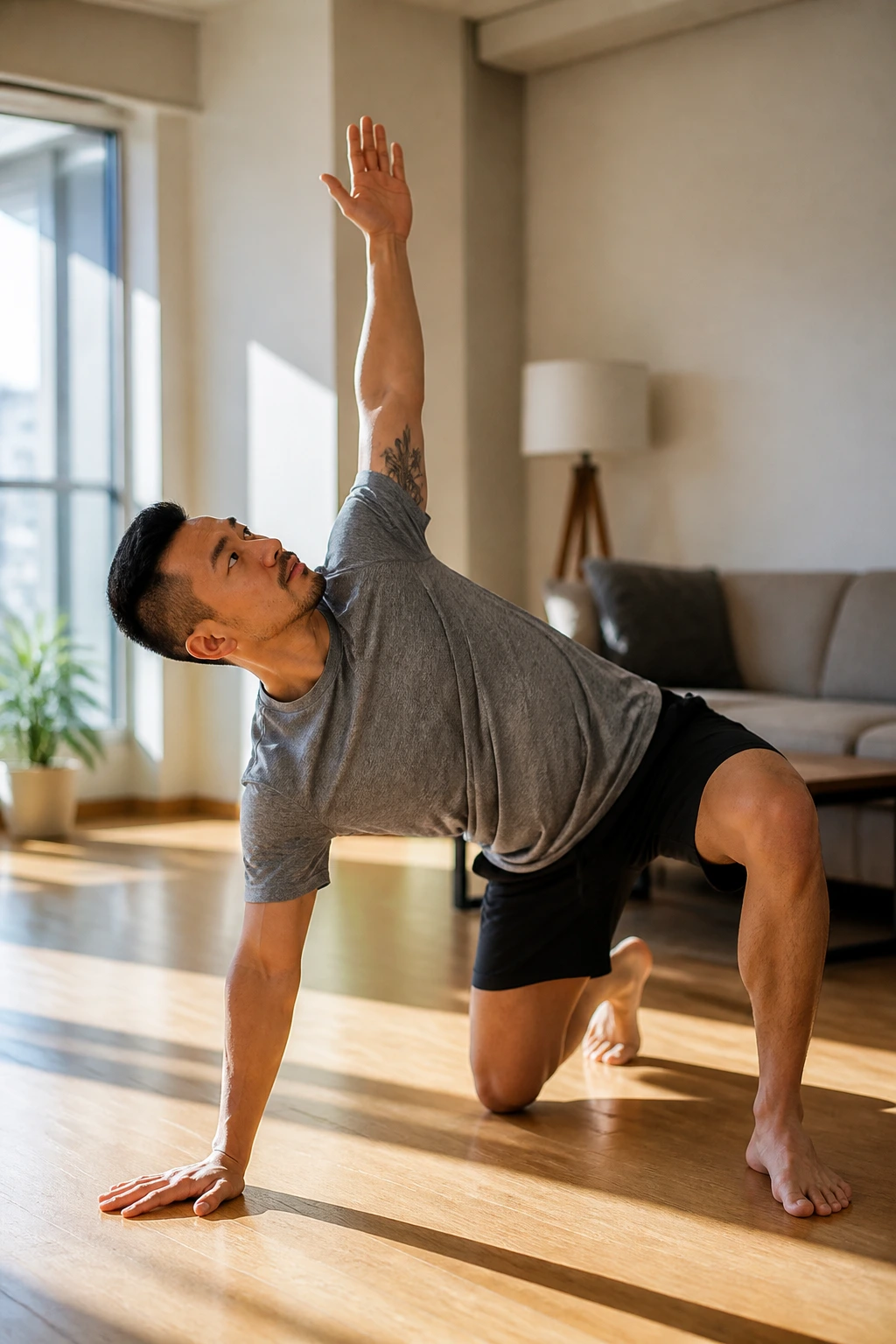
Mobility is not a break from training.
It can be the workout. A slow, controlled flow can wake up stiff hips, open the upper back, and strengthen the middle of your body at the same time. If you sit a lot or wake up feeling creaky, this one earns its spot.
Use 2 to 4 rounds of the following:
- 20-second deep squat hold
- 6 alternating reverse lunges with a reach
- 6 inchworms to plank
- 20-second side plank per side
- 8 thoracic rotations per side
Move slowly enough that you can feel where the tight spots live. The squat hold should feel like a groin and ankle check-in. The lunge reach should open the hip without dumping into the lower back. The plank should feel active, not like you are hanging there waiting for it to end.
A mobility flow sounds gentle until you string together a few rounds. Then the breathing changes, the thighs start to work, and the shoulders wake up. That is what you want.
This is a smart workout for recovery days that are not really rest days. It keeps the joints moving and still gives you a reason to sweat a little.
15. The Full-Body Circuit That Works Without a Gym
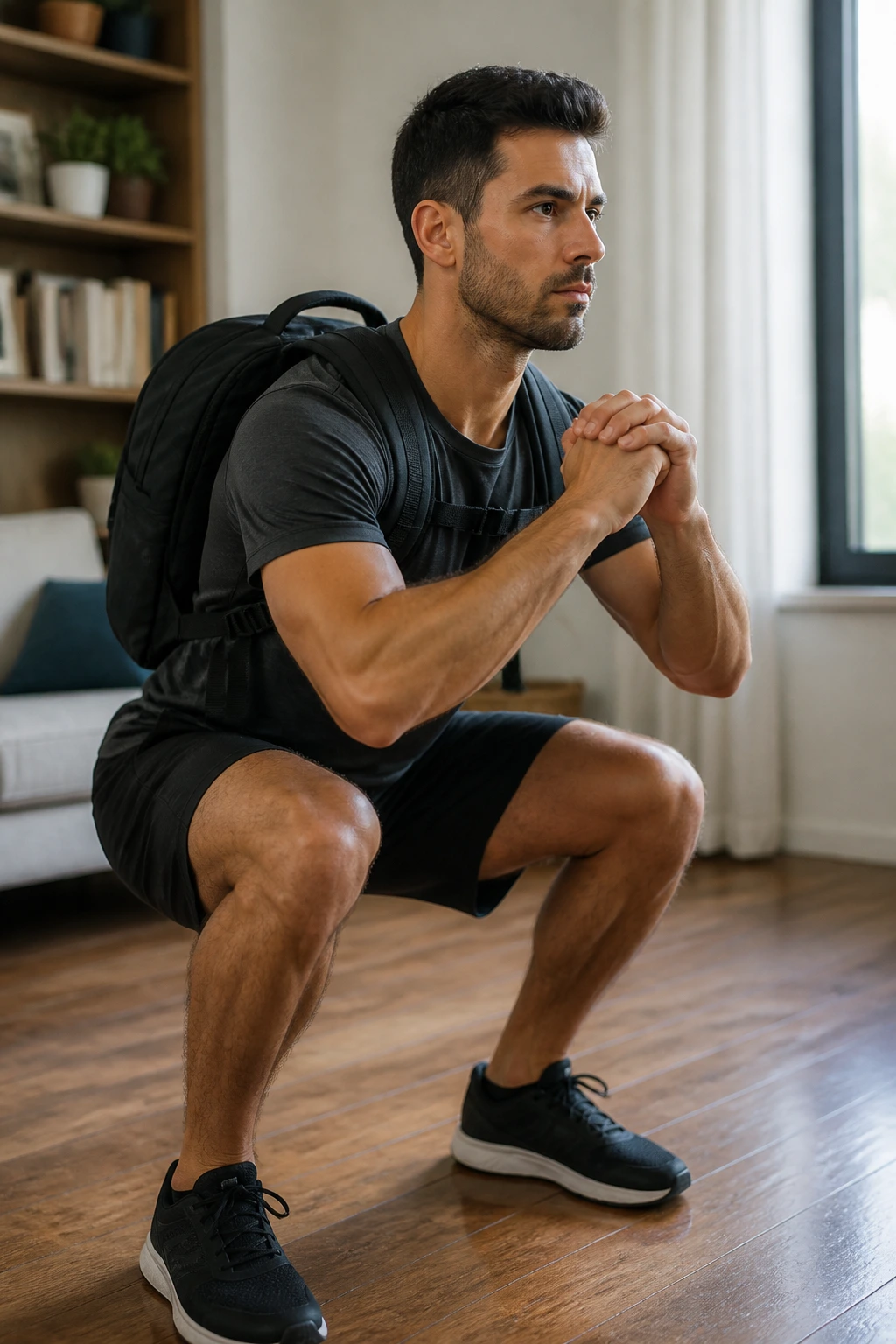
A timer, a floor, and maybe a backpack. That is enough.
This is the workout I would hand to someone who wants one session they can repeat almost anywhere. It mixes legs, push, core, and a bit of conditioning without demanding much setup. The point is not novelty. The point is repeatability.
Try 4 to 5 rounds of:
- 10 squats
- 8 push-ups
- 10 reverse lunges per leg
- 20 mountain climbers per side
- 30-second plank
- 1 minute of brisk marching in place or jump rope
Rest 60 seconds between rounds. If the session feels too easy, slow the lowering phase on the squats, add a backpack, or cut rest to 45 seconds. If it feels too hard, keep the same structure and reduce the round count. That is the part a lot of people skip: a workout is only useful if you can recover enough to do it again later in the week.
Use this circuit on the days when you do not want to think. Use the hill repeats when you want your lungs bullied a little. Use the bridge and crawl sessions when your joints want a quieter kind of work. Mix one hard cardio day, one strength day, and one movement-heavy day, and you’ve got a decent week without touching a gym door.
