



A mat, a timer, and a little space by the couch are enough for ab circuit workouts for women at home that actually make your midsection do some work. The mistake I see most is speed. People rush through crunches, feel it in the neck, and call it core training.
That’s not the point. A good core routine should teach your ribs to stay down, your pelvis to stay quiet, and your abs to carry the load instead of letting the hip flexors steal the show.
At home, that usually means mixing flexion, anti-extension, anti-rotation, and a little standing work so the whole trunk gets involved. Dead bugs, planks, heel taps, marches, side planks—plain exercises, but they bite when the form is honest.
For women trying to fit real training around work, school pickup, late dinners, or a house full of noise, home circuits are easier to keep up than elaborate gym plans. Pick the style that matches your floor space, your energy, and your back. Some are slow and controlled, some feel like cardio with an attitude, and one or two are the kind you keep in your back pocket for the days when motivation is thin.
1. The 12-Minute Beginner Ab Circuit
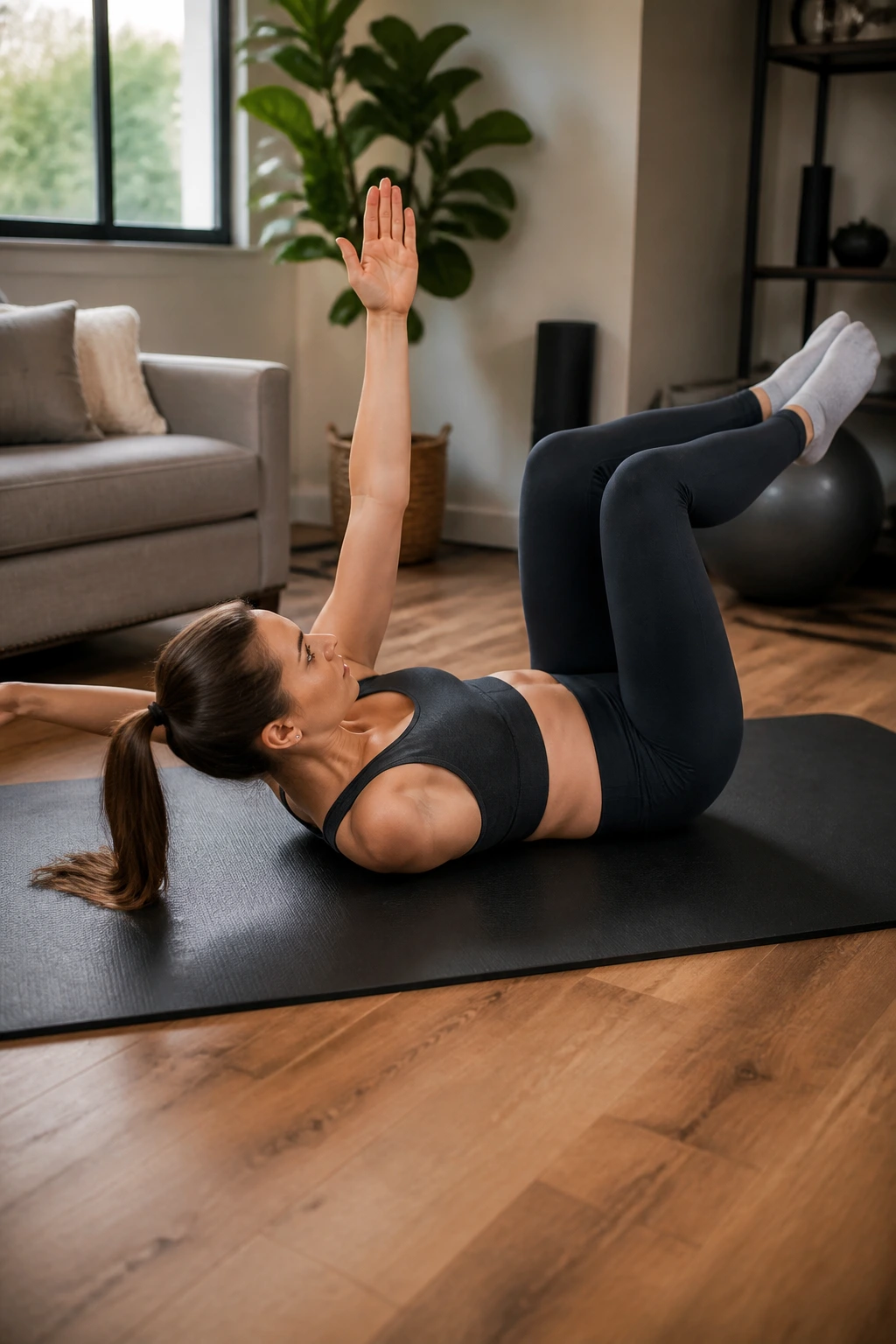
Simple is not soft. This is the kind of circuit that looks easy on paper and then quietly exposes every sloppy rep you’ve been getting away with.
Use it when you want a clean start, when your core feels rusty, or when you need a no-drama home ab workout that doesn’t require equipment.
How to run it
- 30 seconds of dead bugs
- 30 seconds of heel taps
- 30 seconds of forearm plank
- 30 seconds of reverse crunches
- Rest 20 seconds, then repeat for 3 rounds
Keep your lower back heavy on the mat during the floor moves. If it starts to arch, shorten the range before you chase more reps. That one change does more for your abs than speeding up ever will.
Best cue: exhale on the hard part, not after it. Tiny move. Big payoff.
2. Dead Bug and Heel Tap Stability Circuit
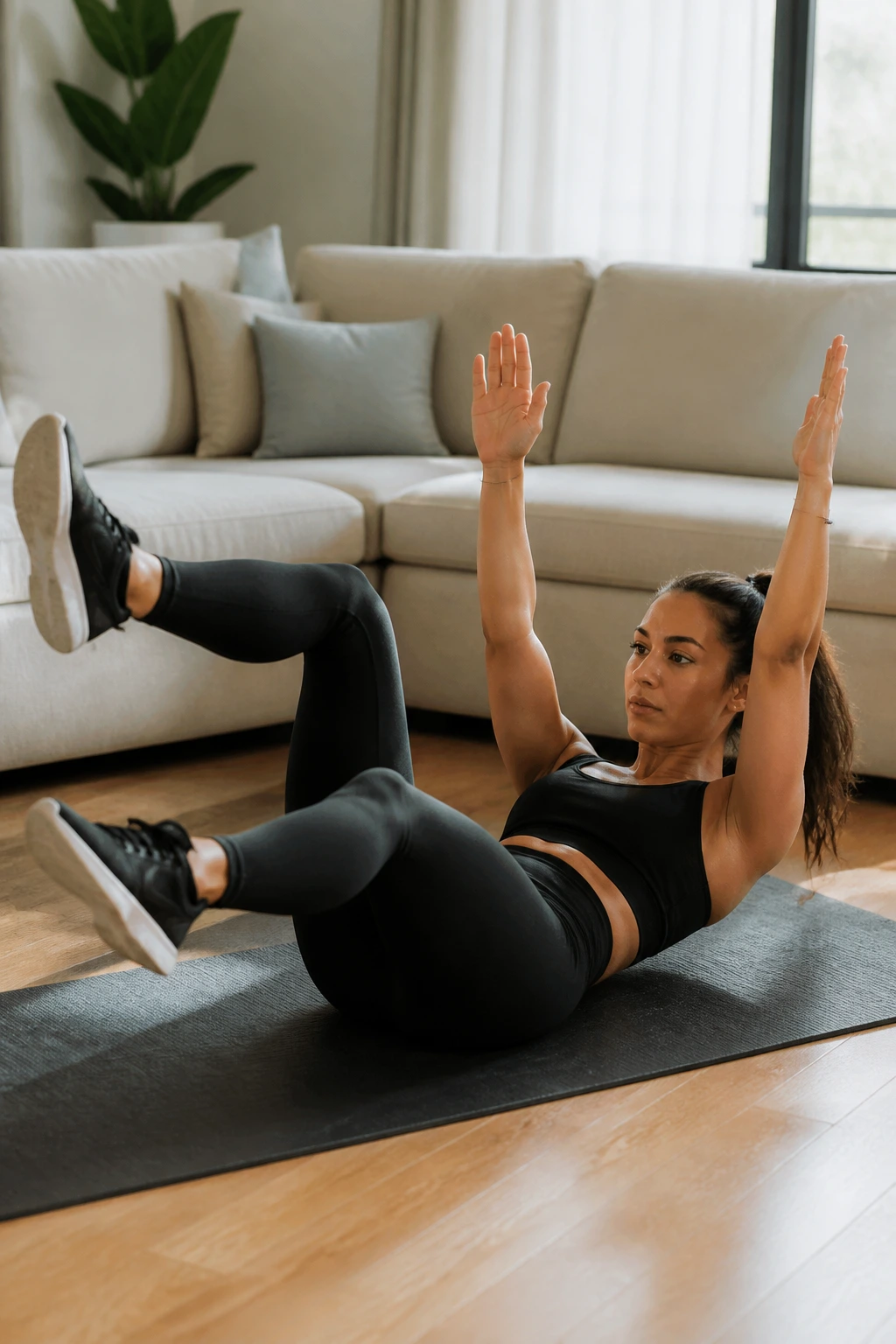
Why do dead bugs show up in so many core plans? Because they force you to control movement instead of chasing a burn.
This circuit is for the woman who wants a flatter, tighter-feeling midsection without living on crunches. It teaches the abs to brace while the legs move, which matters when you’re walking up stairs, lifting groceries, or holding a child on one hip.
Circuit setup
- 8 dead bugs per side
- 10 heel taps per side
- 8 bird-dog reaches per side
- 20-second hollow hold
- Rest 30 seconds and repeat 3 to 4 rounds
What to focus on
Keep your ribs from popping up. That’s the whole game. If your low back is arching, bend the knees more and slow the tempo. A dead bug done well is cleaner than a fast one every single time.
And yes, this feels quieter than a sweaty cardio circuit. It still works. The burn shows up later, usually when you stand up and realize your center stayed switched on the whole time.
3. Standing Core Cardio Circuit
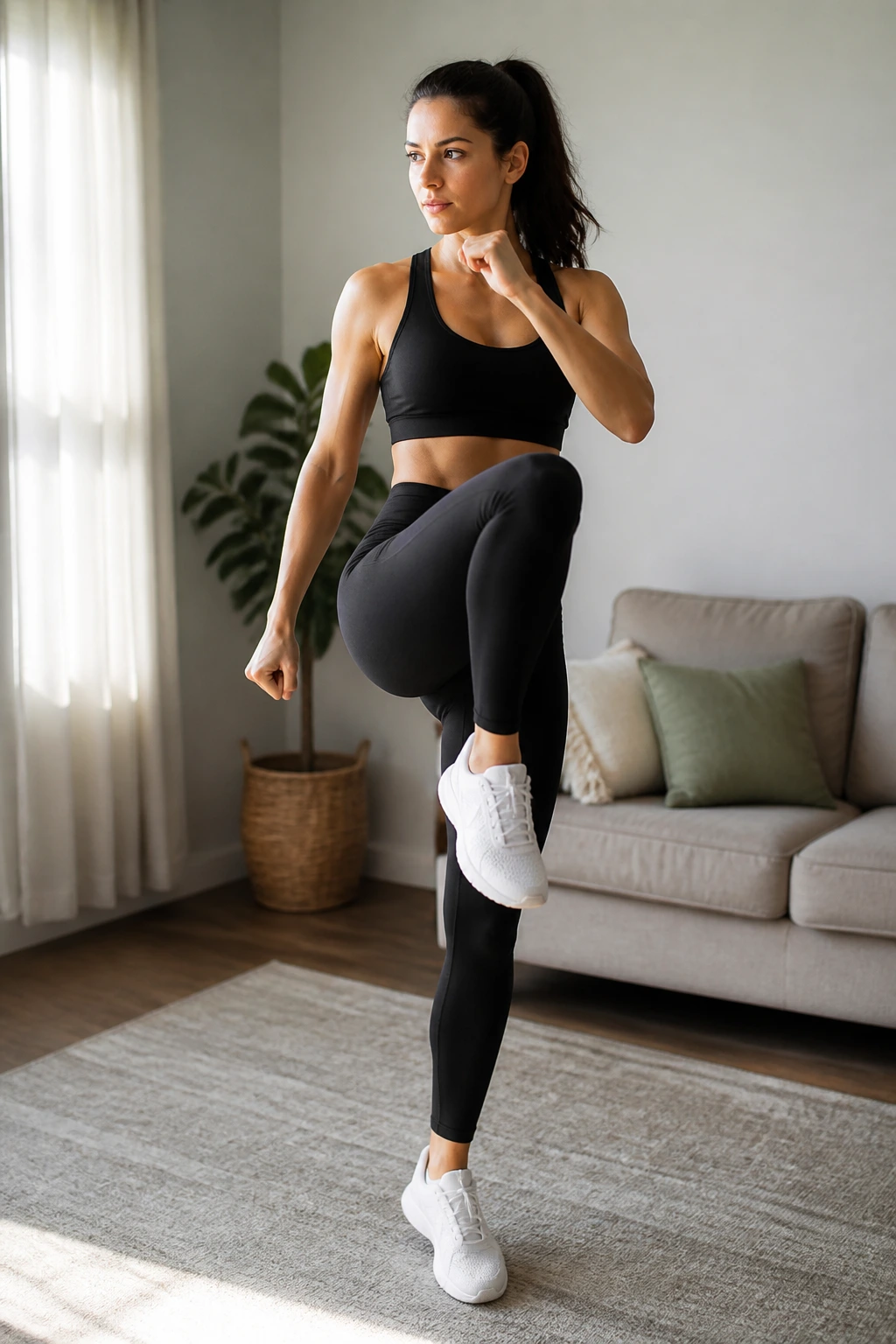
No mat, no problem.
If you hate floor work, this is the one to try first. It keeps you upright, gets your heart rate moving, and still asks your waist to brace while your arms and legs do the work.
A kitchen timer, a water bottle, and a clear patch of floor are enough. I like this style on days when lying down feels like too much effort but skipping training would leave you annoyed all evening.
Best moves for small spaces
- Standing knee drives: 30 seconds
- Cross-body punches: 30 seconds
- Side-to-side skater steps: 30 seconds
- Standing wood chops with a water bottle or light dumbbell: 30 seconds
- Rest 20 seconds and repeat 4 rounds
Keep your hips mostly square. The core should control the rotation, not let your body spin around like you’re on a dance floor. That little detail changes the whole feel.
If your knees or wrists are cranky, this is a clean way to train the midsection without getting down on the mat.
4. Pilates-Style Hollow-Body Flow
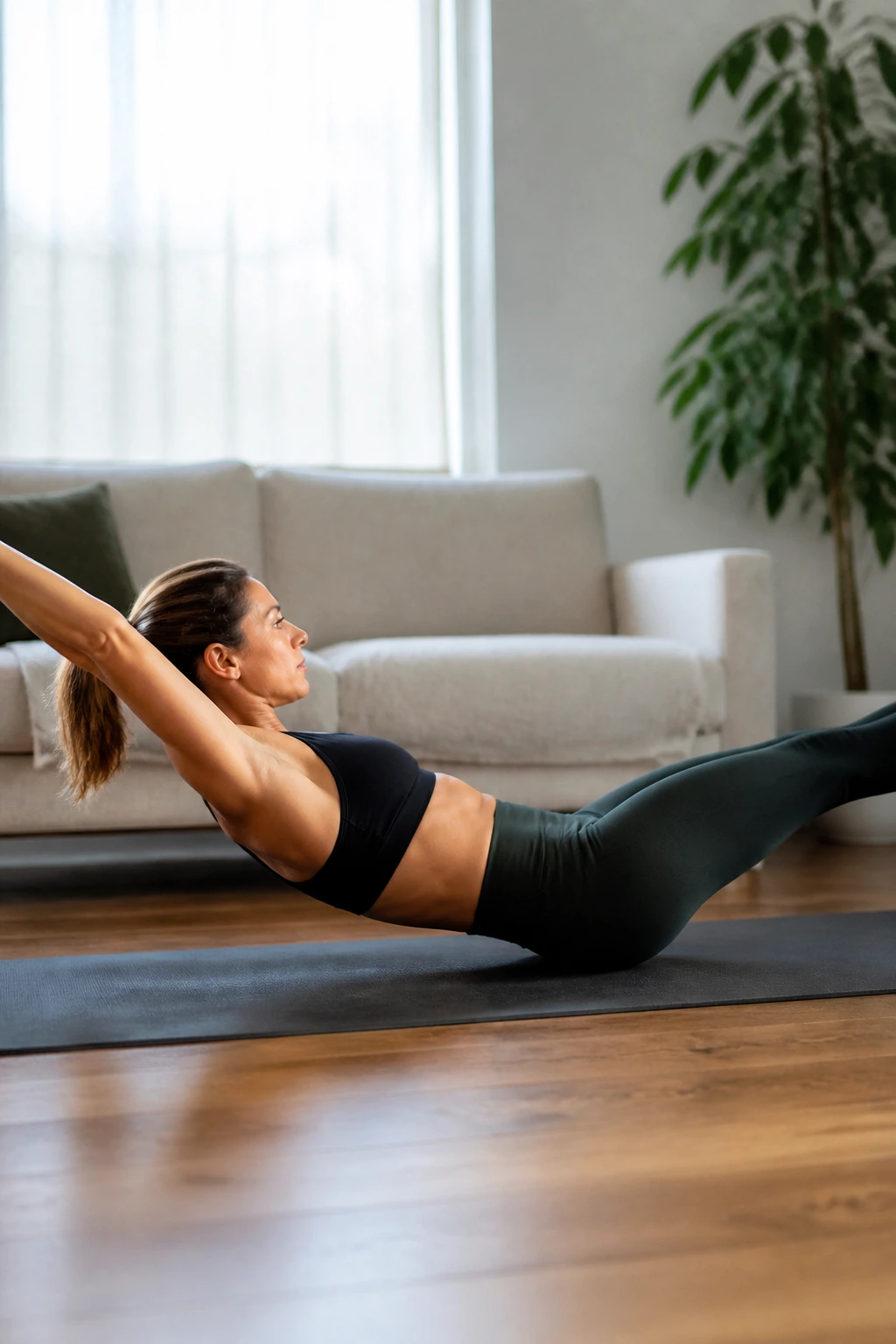
Your lower back should feel glued to the floor.
That’s the feel you want here, and it matters more than how many reps you squeeze out. Pilates-style core work is sneaky that way. It looks calm, but your abs have to stay on the whole time or the shape falls apart.
Flow it like this
Start with a 20-second hollow hold, then move into 10 tabletop toe taps, 8 single-leg stretches per side, and 20 small hundred pulses if your neck is happy. Rest 30 seconds. Do 3 rounds.
If hollow holds make your lower back lift, bend the knees and bring them closer to your chest. That’s not cheating. It’s smart scaling.
What makes it hard
The challenge is the pause. The stillness. You are not chasing speed here. You’re teaching your trunk to keep tension when the legs move away from center, which is exactly why this style leaves your abs feeling worked even though the motions are small.
Do not yank your head forward. If your neck starts to complain, support it lightly or skip the pulses and stay with toe taps.
5. Low-Back-Friendly Reverse Crunch Circuit
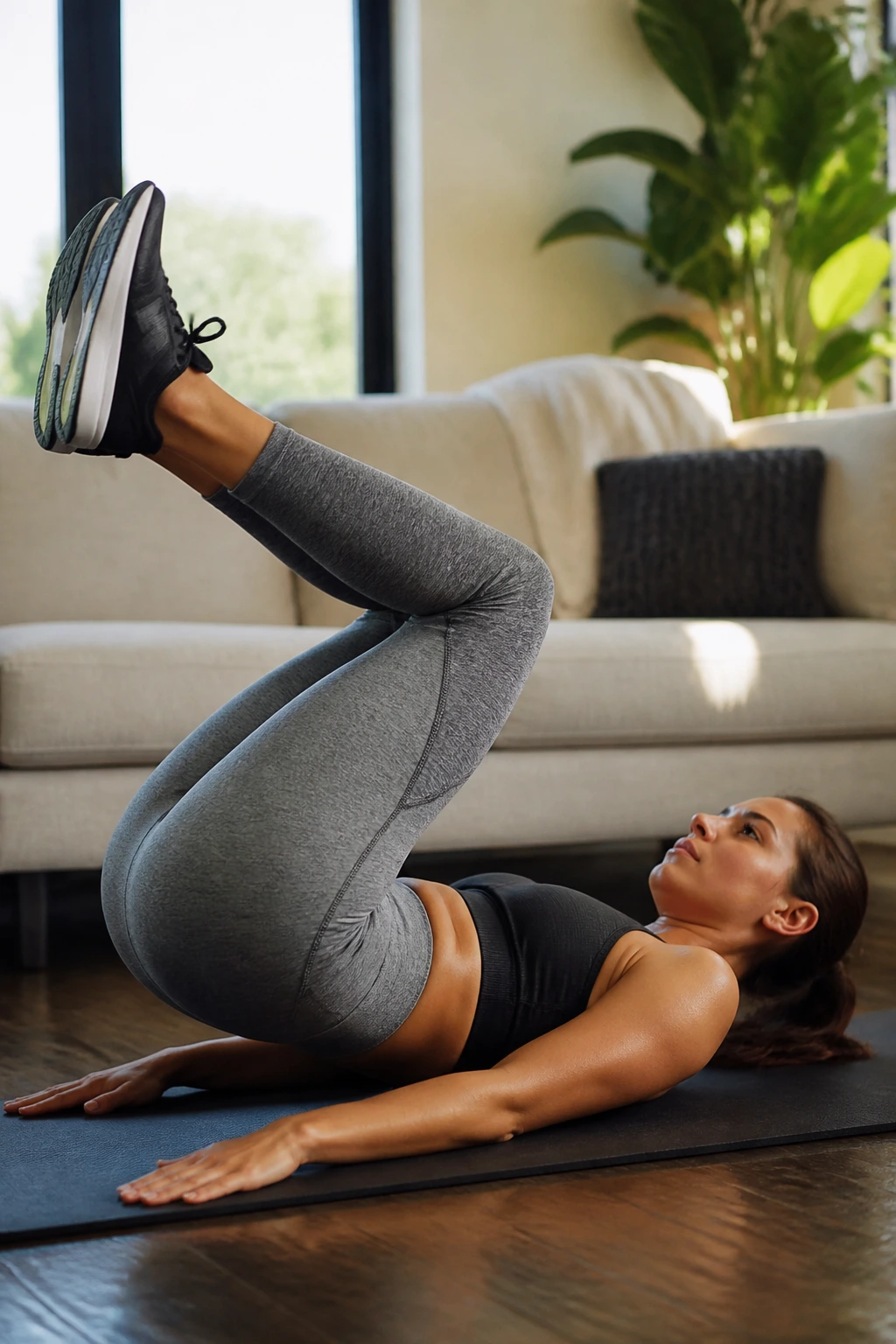
A lot of ab workouts are too aggressive for tired backs.
That’s why reverse crunches deserve their own spot. When you do them well, they train the lower abs without asking your spine to flex hard over and over. The trick is the pelvic tilt—curl the tailbone up first, then let the knees follow.
Circuit order
- Reverse crunches for 10 to 12 reps
- Bent-knee leg lowers for 8 reps per side
- Glute bridge holds for 20 seconds
- Slow bicycle taps for 20 seconds
- Rest 30 seconds and repeat 3 rounds
A few things to watch for
- The movement should be small.
- The hips lift, not the whole torso.
- Momentum is the enemy here.
If you swing your legs and fling your hips, the abs stop doing the job. And if your lower back feels pinched, shorten the range immediately. That is the body telling you the rep got too big.
This circuit is one of my favorites for home training because it feels honest. No fluff. No fancy gear. Just a mat, a small range, and a deep burn that shows up without beating you up.
6. Plank Ladder Circuit
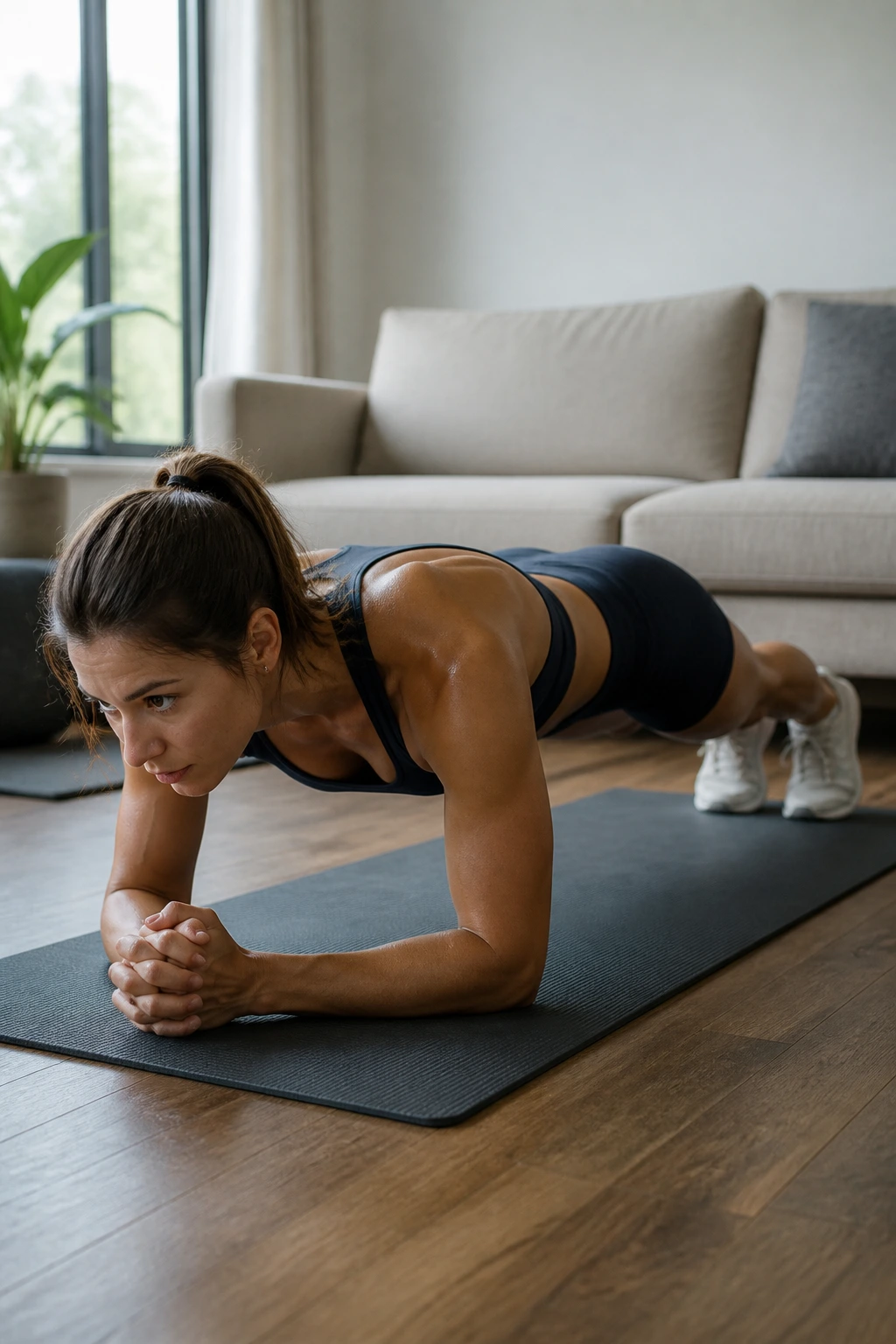
Start at 20 seconds.
That’s the whole idea. Then add time in small steps so the core learns to hold, not just survive. Plank ladders are simple, but they expose weak bracing fast, especially when your shoulders and abs need to cooperate.
How to climb the ladder
- Forearm plank: 20 seconds
- Rest: 10 seconds
- Forearm plank: 30 seconds
- Rest: 10 seconds
- Forearm plank: 40 seconds
- Rest: 10 seconds
- Side plank, left: 20 seconds
- Side plank, right: 20 seconds
Repeat the ladder 2 times if you’re fresh. Once is enough on busy days.
What to feel
Your shoulders should stay stacked over your elbows, and your ribs should not sag toward the floor. If your low back starts to sag, stop early and reset. Better a clean 20 than a sloppy 40.
And if forearm planks irritate your wrists or elbows, raise your forearms onto a couch cushion or use a slightly higher surface. Small adjustments like that keep the workout useful instead of annoying.
7. Oblique Side-Plank Circuit

Unlike straight-ahead crunches, side planks ask your waist to fight side-bending.
That’s why they’re so useful. The obliques do more than make a waistline feel tighter; they help your trunk stay steady when you carry a bag, reach overhead, or twist to grab something off a shelf.
The circuit
- Side plank hold: 20 to 30 seconds per side
- Hip dips: 8 reps per side
- Cross-body mountain climbers: 20 total
- Suitcase march with a backpack: 30 seconds per side
- Rest 30 seconds, then repeat 3 rounds
The suitcase march is the underrated piece here. Load one side with a backpack or a heavy tote and walk in place slowly. If you lean, the weight is too heavy or the bracing is off.
Best cue: keep the rib cage quiet. The waist should work, but the whole torso should stay tall.
This is a very different feeling from crunches. More steady. Less flashy. And for a home workout, it’s one of the easiest ways to make the core earn its keep.
8. Deep-Core Breathing and Marching Routine
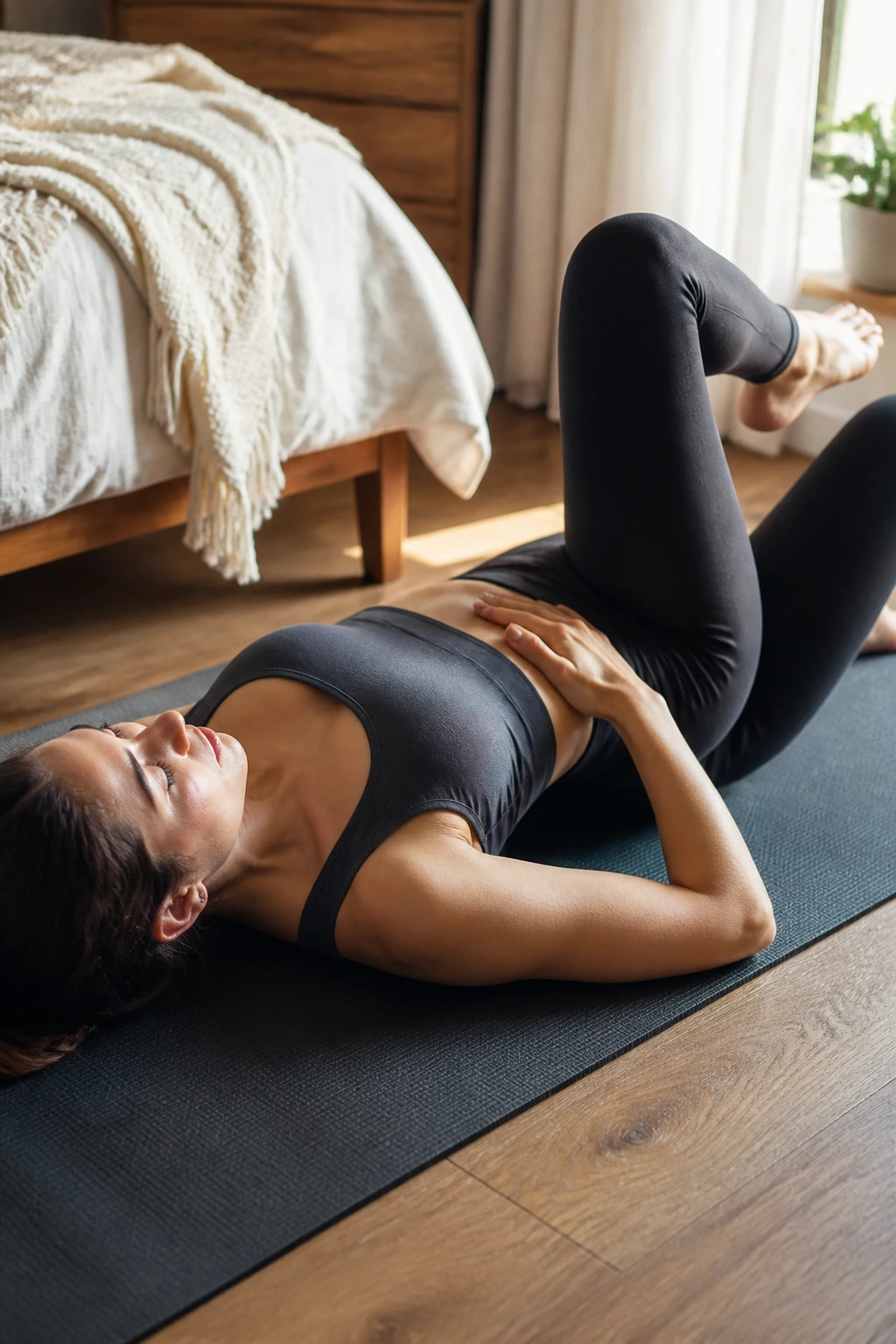
Breathe first. Then move.
That sounds too easy, and honestly, most people skip this work because it looks too calm. But deep-core breathing teaches the diaphragm, abs, and pelvic floor to coordinate, which makes every other ab circuit feel better.
What to do
Lie on your back with your knees bent and feet flat. Inhale through the nose for 4 counts, then exhale for 6 counts and feel your ribs knit down. After 5 breaths, add slow marching: 8 marches per side, then 8 heel slides per side, then a 15-second bear hover if you can keep the back flat.
Why it matters
If you rush the breath, the abs don’t get the cue. The body stays braced at the wrong time, and the whole thing turns into neck tension or back arching. Slow exhale work fixes that.
A one-sentence reality check: this is not glamorous, but it pays off.
Use this routine when your core feels disconnected, after long sitting stretches, or on days when harder planks would be too much. It sets the table for the rest of your training.
9. Dumbbell Loaded Core Circuit
A small dumbbell can make a core workout feel twice as hard.
That’s because load changes the game. Your abs stop just holding positions and start resisting sway, tilt, and rotation. Even a 5- to 15-pound weight is enough for most home setups.
Try this sequence
- Goblet march: 30 seconds
- Dead bug press with a dumbbell over the chest: 8 reps per side
- Suitcase hold: 20 seconds per side
- Plank dumbbell drag: 10 drags total
- Rest 45 seconds and repeat 3 rounds
If you don’t have a dumbbell, a backpack with books works fine. Not pretty. Effective.
Form note
Keep the march slow enough that your pelvis doesn’t wobble. If it sways, the weight is too heavy for the day. The abs should feel like they are stopping movement, not chasing it.
This style is especially good if you already squat, lunge, or train legs at home. Loaded core work ties everything together and makes the whole body feel more solid.
10. Slider or Towel Burn Circuit
Got hardwood or tile? Use it.
A towel under the feet or furniture sliders under the toes turns basic floor moves into a much harder job. The sliding surface forces your core to control every inch of the rep, which is exactly why this circuit earns its place.
Move list
- Body saw: 8 to 10 reps
- Slider knee tucks: 10 reps
- Slider pikes: 8 reps
- Slow mountain climbers: 20 total
- Rest 30 seconds and complete 3 rounds
If you’re on carpet, use socks with care or grab cheap sliders. On slick floors, a folded towel is often enough.
The main warning here is pace. Too fast and the lower back starts to sag while the hips shoot around. Too big a range and the shoulders take over. Keep the motions small at first. Small is fine.
This circuit has a nasty little reputation, and deservedly so. It looks almost polite until the third round, when your abs start arguing with your ego.
11. The 10-Minute AMRAP Ab Circuit
Ten minutes is enough.
That’s the beauty of AMRAP, which stands for as many rounds as possible. You’re not trying to break yourself. You’re trying to keep form clean while moving with purpose for a short, fixed window.
Set the timer for 10 minutes and repeat
- 8 reverse crunches
- 10 mountain climbers per side
- 12 toe taps per side
- 15-second plank hold
Rest only when your form starts to slide, then get back in.
How to pace it
Do not sprint the first round. That’s the rookie mistake. You want your breathing to stay controlled enough that the last round looks like the first one, only slower. If your hips start bouncing during climbers, shorten the range and keep going.
This works well on days when you have a hard stop later. It also pairs nicely after a walk or a short strength session, because the timer keeps you honest and the workout stays compact.
One small rule: if your neck feels strained, swap toe taps for dead bugs. Same idea. Less irritation.
12. The 12-Minute EMOM Core Circuit
Every minute on the minute sounds fancy. It isn’t.
It just means you start a new move at the top of each minute, then rest for whatever time is left. That built-in rest is useful if you tend to rush. It keeps the quality up and the chaos down.
Minute-by-minute plan
- Minute 1: 10 dead bugs per side
- Minute 2: 30-second forearm plank
- Minute 3: 12 reverse crunches
- Minute 4: 20 mountain climbers total
- Repeat this 3 times for a 12-minute workout
Why the rest matters
EMOMs help you avoid the sloppy middle ground where you keep moving but nothing is really happening. If you finish a move in 35 seconds, you get 25 seconds to breathe. If you need the full minute, that’s fine too.
Keep the reps crisp. The dead bugs should be slow. The plank should stay flat. The reverse crunch should feel like the hips curl, not fling. Those details matter more than squeezing in extra reps.
This is one of the easier ways to track progress at home because you can repeat the exact same setup next week and see whether it felt cleaner.
13. Stability Ball Core Circuit
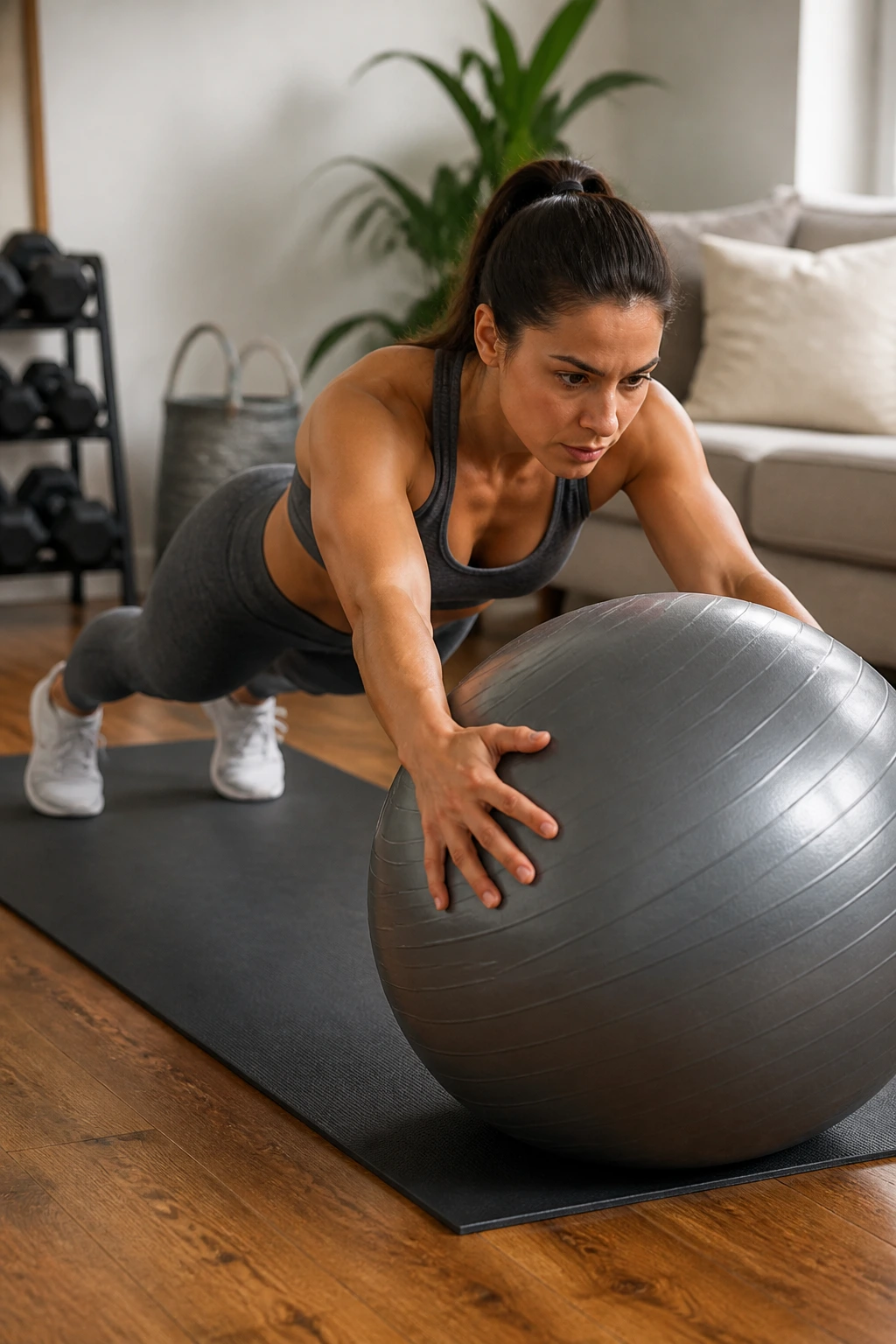
A stability ball looks harmless until it starts moving.
That little wobble changes everything. Your core has to keep you centered while the ball adds a layer of instability, which makes ordinary moves feel much more demanding than they look.
Build the circuit
- Ball rollouts: 8 reps
- Stability ball crunches: 12 reps
- Ball pikes: 6 to 8 reps
- Stir-the-pot circles: 10 slow circles each direction
- Rest 45 seconds and repeat 3 rounds
If the ball feels too slippery, widen your feet. If it still feels rough, shorten the range on the rollouts. That’s the cleanest fix.
The pike is the spicy move here. Keep it small at first and don’t worry about matching a gym video. Most people swing too high and lose the abs halfway through the lift.
This workout is especially nice if you already own a ball and want to get more mileage out of it. It’s cheap equipment, but it earns its space.
14. No-Crunch Anti-Rotation Circuit
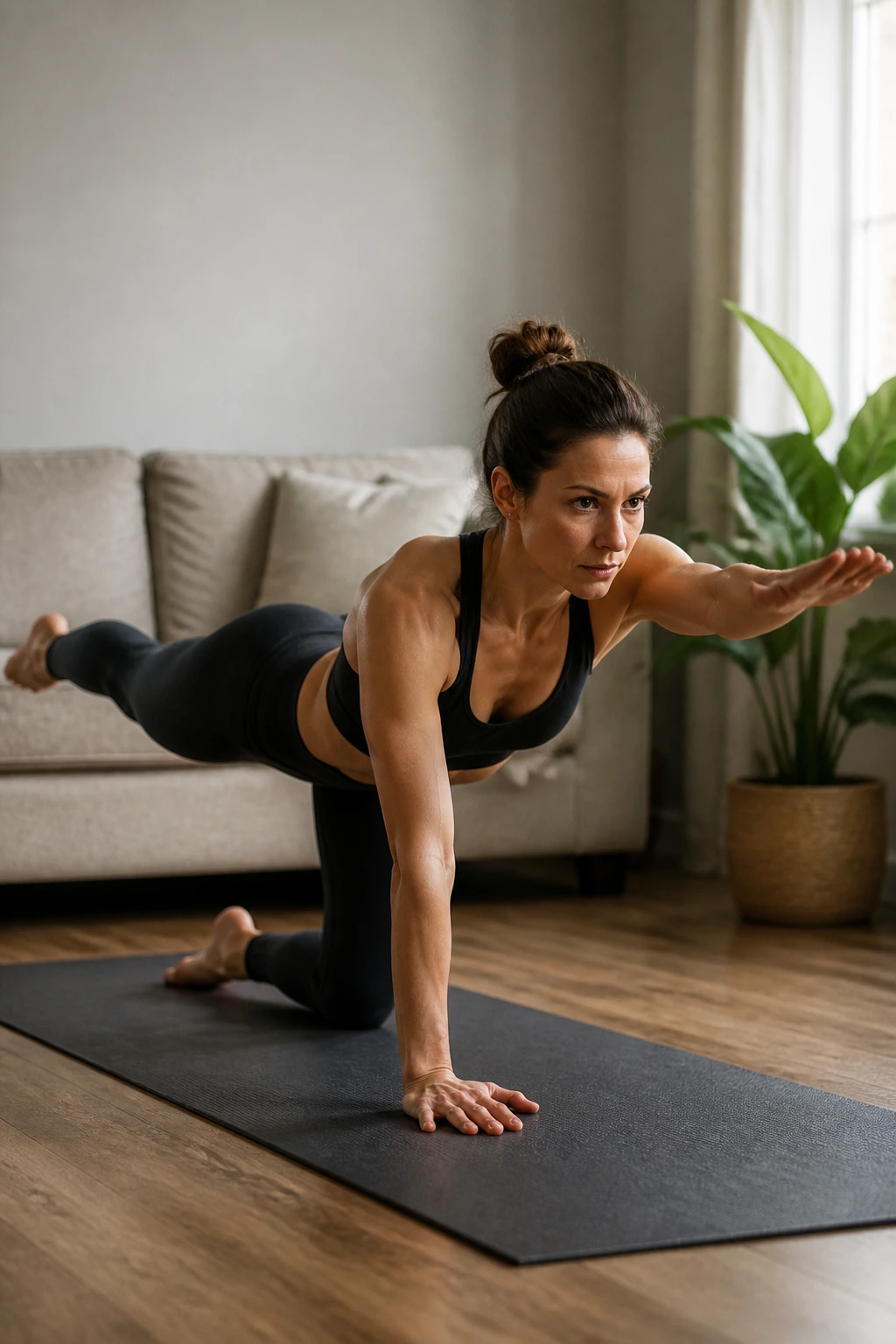
If crunches irritate your neck, skip them.
That does not mean your abs are off the hook. Anti-rotation training teaches your core to stop twisting when your arms and legs want to move in different directions. That matters in real life more than most people think.
What the circuit looks like
- Bird dog holds: 20 seconds per side
- Plank reach: 8 reaches per side
- Wall press march: 20 seconds per side
- Side plank with top-leg lift: 6 reps per side
- Rest 30 seconds, then repeat 3 rounds
What to focus on
Press hard into the wall during the wall march. That resistance is the point. The body should feel like it wants to rotate, then the core catches it before it happens.
This is one of the best options if you’re recovering from a cranky neck, want less spinal flexion, or simply prefer workouts that feel sturdy instead of sweaty. It looks calmer than a crunch circuit, but it is not easier.
Tiny note. Keep the ribs from flaring up on the reach. That little cheat ruins the rep.
15. The Glutes-and-Abs Combo Circuit
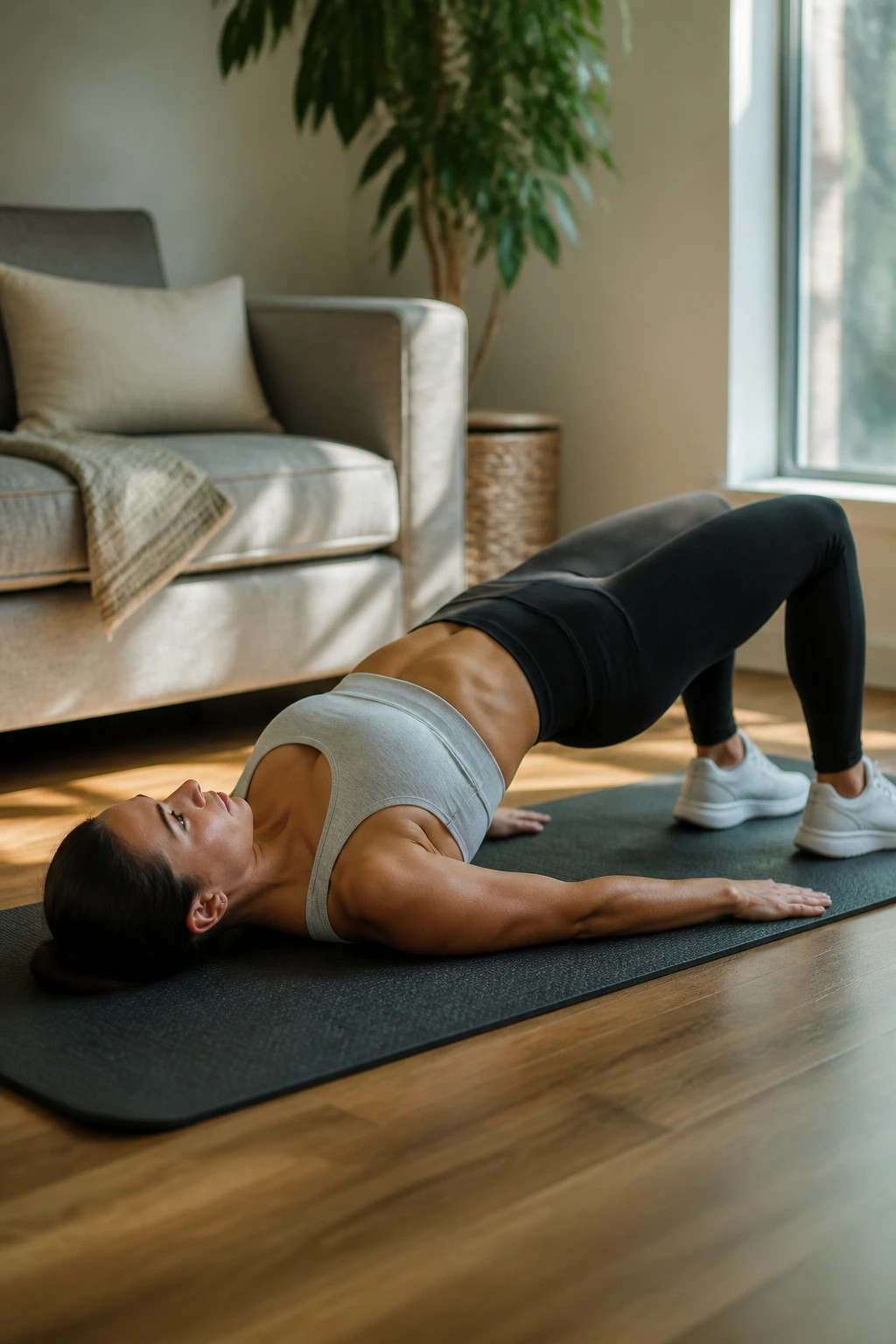
Abs and glutes belong in the same room.
When the glutes are lazy, the lower back tends to take over. When the glutes fire well, the pelvis stays happier and the core has an easier job. This is one of those home workouts that makes the whole body feel more organized.
The routine
- Glute bridges: 15 reps
- Glute bridge march: 10 reps per side
- Dead bug: 8 reps per side
- Donkey kick hold: 20 seconds per side
- Side plank: 20 seconds per side
- Rest 45 seconds and repeat 3 rounds
If your lower back gets tight during bridges, drive through the heels and stop at the top before you over-arch. The glutes should squeeze, not the spine.
This circuit is especially useful on days when you’ve been sitting a lot. Hips feel sticky, core feels sleepy, and the whole trunk wakes up by the end.
Best cue: ribs down, pelvis level, move with control. That’s the whole thing.
16. The Postpartum-Friendly Deep Core Routine
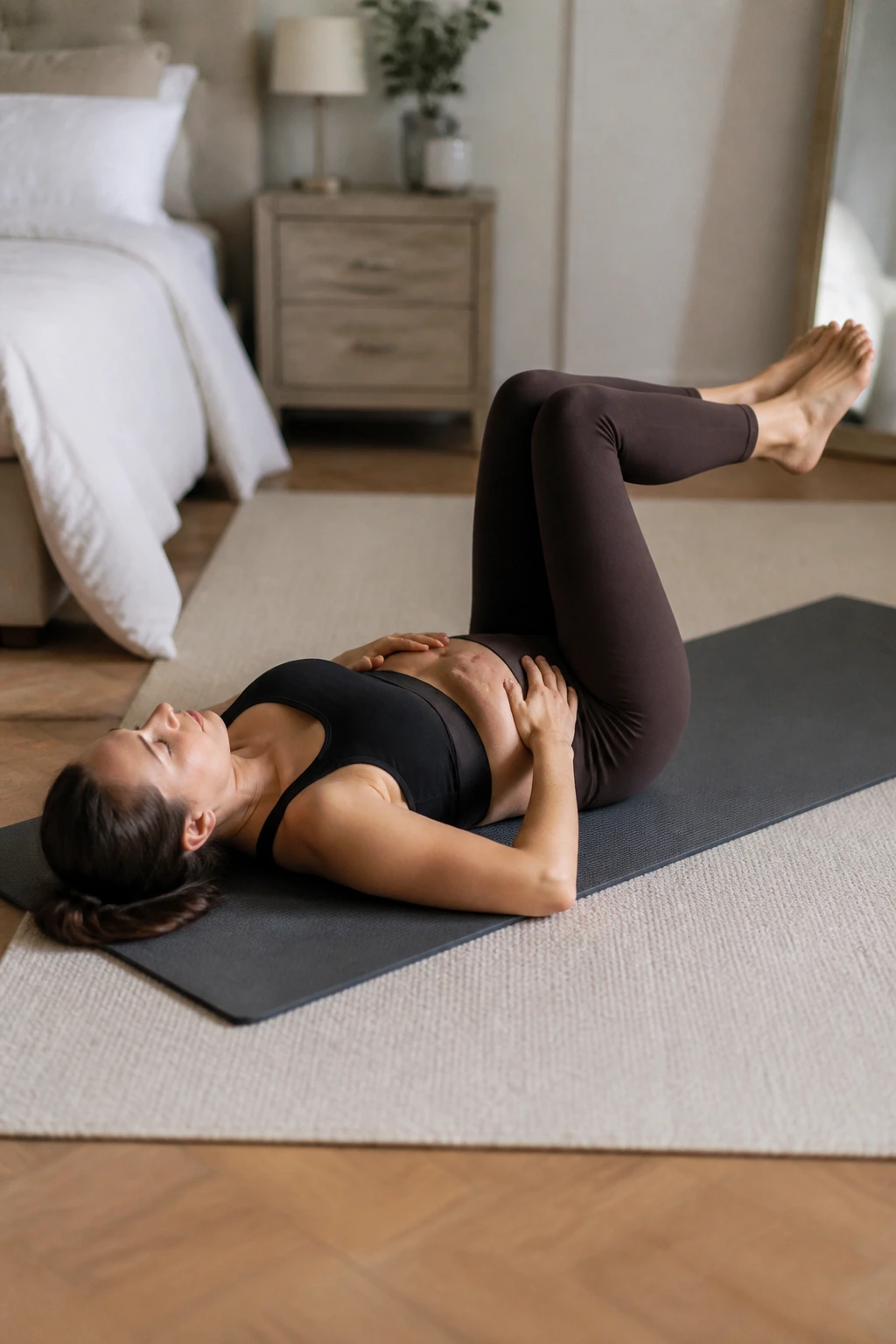
Have you noticed doming along the midline?
If you have, slow down. That’s the sign to back off and rebuild coordination, not to force harder crunches. After pregnancy or any abdominal stretch, the core often needs breathing, timing, and gentle load before it needs intensity.
If you’ve had a recent C-section, abdominal surgery, or concerns about a separated abdominal wall, get cleared by a clinician or pelvic-floor therapist before pushing hard.
Start here
- 90/90 breathing: 5 slow breaths
- Heel slides: 8 per side
- Seated or lying marches: 8 per side
- Wall press holds: 20 seconds per side
- Side-lying leg lifts: 10 per side
The goal is to keep the abdominal wall calm and connected. No bulging, no forcing, no trying to win a workout through grit. If a rep causes pressure, switch to a smaller range immediately.
This kind of routine is boring in the best possible way. It gives the body a chance to rebuild trust, which is worth more than burning hard for ten minutes and hoping for the best.
17. The High-Intensity Core Finisher
Short and nasty works.
This finisher is for the end of a walk, strength session, dance workout, or anything that already warmed you up. It uses short bursts and little rest, so the abs stay under pressure without the workout dragging on forever.
Tabata-style format
Do 20 seconds of work, 10 seconds of rest for 8 rounds total:
- Mountain climbers
- V-sit holds
- Plank jacks
- Bicycle crunches
You can rotate through the four moves twice, or stay on one move if you want a brutal little test. Pick the version that lets you keep your shape.
What to watch for
If your lower back arches during the V-sit or bicycle crunch, switch to toe taps or dead bugs. A sloppy finisher is mostly noise. A clean one leaves your core smoked without making you pay for it tomorrow.
Use this sparingly. Three times a week is plenty for most people. More is not always better here.
Tiny workout. Big attitude.
18. The Twist-and-Reach Circuit
Unlike straight crunches, twist work asks your waist to control rotation, not just bend.
That makes it useful, but also easy to mess up. The difference between a clean twist and a sloppy flail is usually the size of the motion. Smaller beats bigger. Every time.
Keep the twist honest
- Standing wood chop with a light dumbbell or bottle: 10 per side
- Seated reach-throughs: 8 per side
- Cross-body knee drives: 12 per side
- Side plank thread-the-needle: 6 per side
- Rest 30 seconds and repeat 3 rounds
How to do it well
Move from the trunk, not the shoulders alone. If the arms are doing all the work, the core is just along for the ride. Keep your hips steady on the floor moves and stop the reach before the spine starts to feel janky.
This circuit can be a nice change from the usual plank-and-crunch combo. It feels athletic, a little more three-dimensional, and not nearly as repetitive as some home ab routines.
If you have a sensitive lower back, keep the twist small and controlled. Fast rotation is where people get in trouble.
19. The Chair-Based Core Workout
Small apartment. Low ceiling. Zero floor motivation.
A sturdy chair or couch can still give you a real core session, and sometimes that’s the smartest move. This is great for days when kneeling on the floor feels awkward or when your wrists want a break.
Use this setup
- Incline plank on the chair: 20 to 30 seconds
- Standing knee-to-elbow drive: 10 per side
- Seated knee lifts: 12 per side
- Chair-supported mountain climbers: 20 total
- Rest 30 seconds and repeat 3 to 4 rounds
Keep the chair stable and pressed against a wall if it shifts. Safety matters more than squeezing in one more rep. If you wobble, the core isn’t the only thing working.
The incline plank is the anchor here. It’s easier than a floor plank but still teaches brace, shoulder stability, and rib control. Then the knee drives and seated lifts bring the abs back into the picture.
This is a good option for beginners, for busy days, or for anyone who wants to train quietly without turning the living room into a gym.
20. The 20-Minute Repeatable Weekly Rotation
The nicest thing about abs work is that consistency beats novelty.
You do not need a different trick every day. Pick a few circuits, repeat them, and make the reps cleaner over time. That’s the part most people skip when they keep searching for a new routine instead of getting good at the one they already have.
A simple 20-minute rotation
- Dead bug: 10 reps per side
- Forearm plank: 30 seconds
- Reverse crunch: 12 reps
- Side plank: 20 seconds per side
- Standing knee drive: 30 seconds
Do 4 rounds with 30 seconds of rest between rounds. If you want a slightly harder version, shorten the rest to 20 seconds. If your form slips, leave the rest alone and make the reps cleaner.
How to use it through the week
Run one low-impact circuit, one plank-based circuit, and one standing circuit across the week. That mix keeps your core from getting lazy in the same old pattern. It also gives your wrists, neck, and lower back a break from too much of the same thing.
Pick the workout that fits your day and your energy, then repeat it well. That’s the piece that tends to matter most.
