



A tight back, sleepy glutes, and fifteen spare minutes can make a very decent case for a mat session. A yoga Pilates workout at home hits that sweet middle ground: it stretches enough to help, but it also asks your core, hips, and shoulders to do some actual work. That combination matters. Pure stretching can feel lovely and still leave you slumped an hour later.
What makes these workouts worth repeating is the control. In Pilates, small movement often means more honest muscle work; in yoga, breath keeps the shapes from turning stiff or sloppy. Put them together and you get routines that fit in a living room, a spare bedroom, or the narrow strip of floor beside a coffee table. A mat, a folded towel, and maybe a chair are enough for most of them.
I like home sessions that don’t demand a whole production. No jumping. No giant space. No weird setup that makes you put the workout off until the room is “ready.” If a sequence wakes up the spine, loads the glutes, and leaves your shoulders sitting a little better, that counts as good work. Start on the floor, stand up, then come back down when it makes sense. The order matters more than people think.
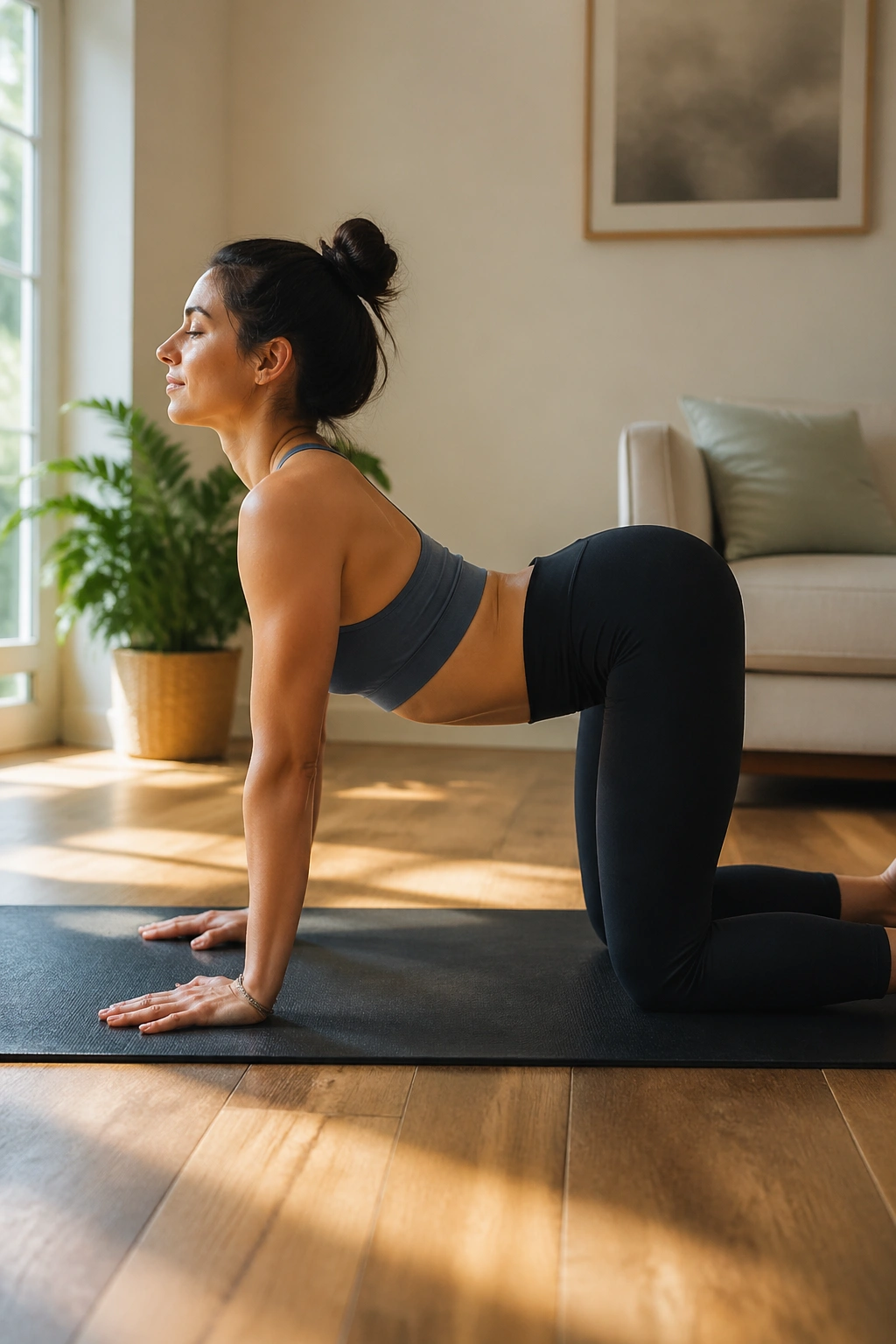
1. Yoga Pilates Warm-Up With Cat-Cow and Hundred
This is the easiest place to start, and honestly, that’s why I like it. Cat-cow loosens the spine from both ends, then the Pilates hundred brings heat into the center without making the whole thing feel frantic.
Why It Works
Do 4 slow rounds of cat-cow, then lie back for the hundred with your knees bent if your neck gets tired. Keep the rib cage heavy when you pump the arms, and breathe in for 5 counts, out for 5 counts. That rhythm sounds simple, but it wakes up your body fast.
- Cat-cow: 4 rounds, moving with your breath.
- Hundred prep: 30 to 60 seconds, head down if needed.
- Breath: long exhale, quiet shoulders.
- Best use: first thing in the morning or after long sitting.
Quick cue: if your lower back arches during the hundred, bring your feet closer and make the lever shorter.
2. Sun Salutation With Knee Drives
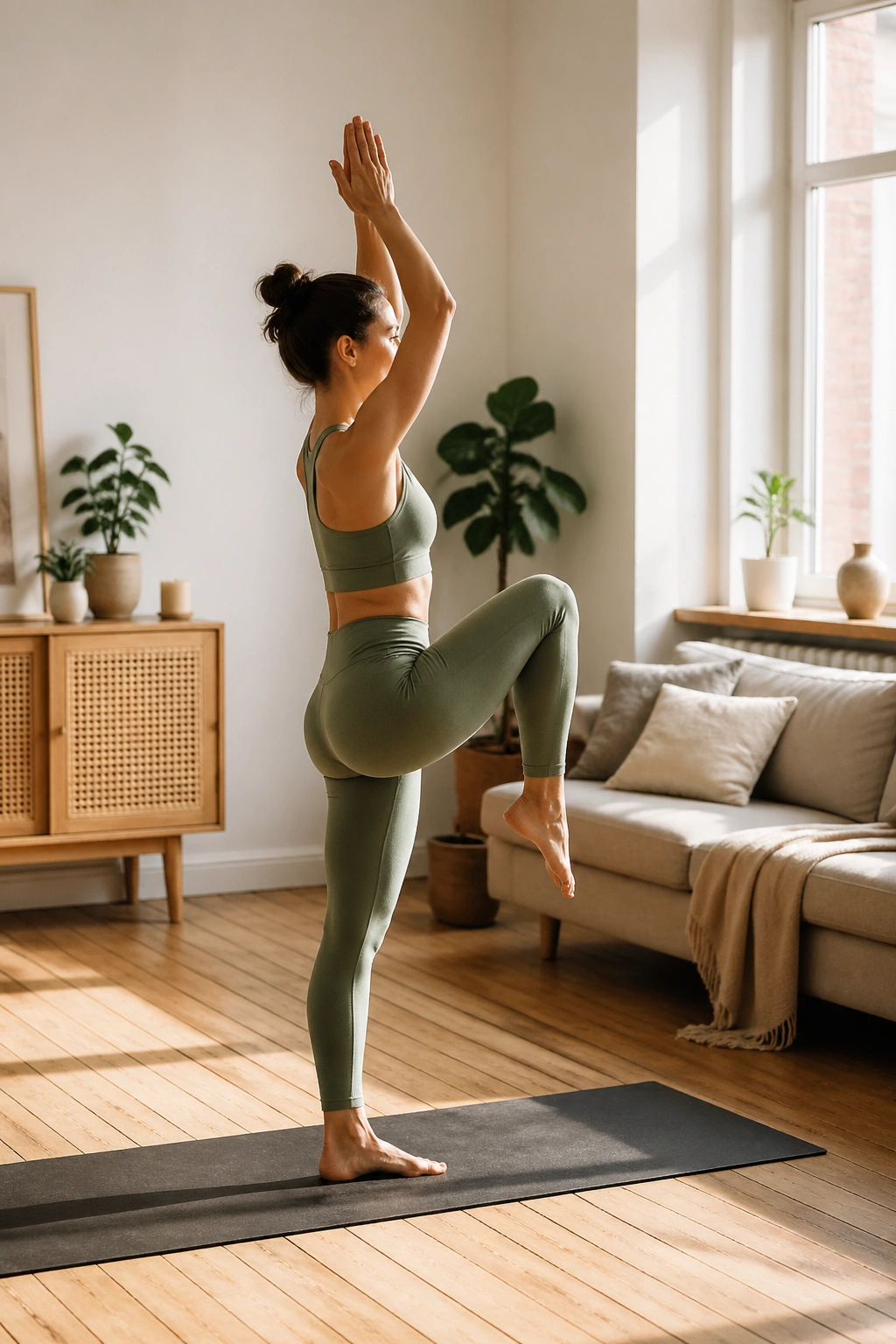
Best for the days when you want heat without bouncing around. A slow sun salutation gets the blood moving; the knee drive turns it into a more Pilates-style core drill without wrecking the flow.
Start with two or three rounds. Step back to plank instead of hopping if your wrists or ankles are fussy, then draw one knee toward the chest before placing the foot down. The motion should feel steady, not rushed. That’s the whole point.
When people try to make this fast, they miss the good part. The real work happens as you control the descent from standing into plank and back again. Keep your gaze a few inches ahead on the mat, not dumped into your shoulders.
I’d use this as a bridge workout. It’s warm enough to count, but it still leaves you with enough gas for the rest of the day.
3. Roll-Up to Half Boat Ladder
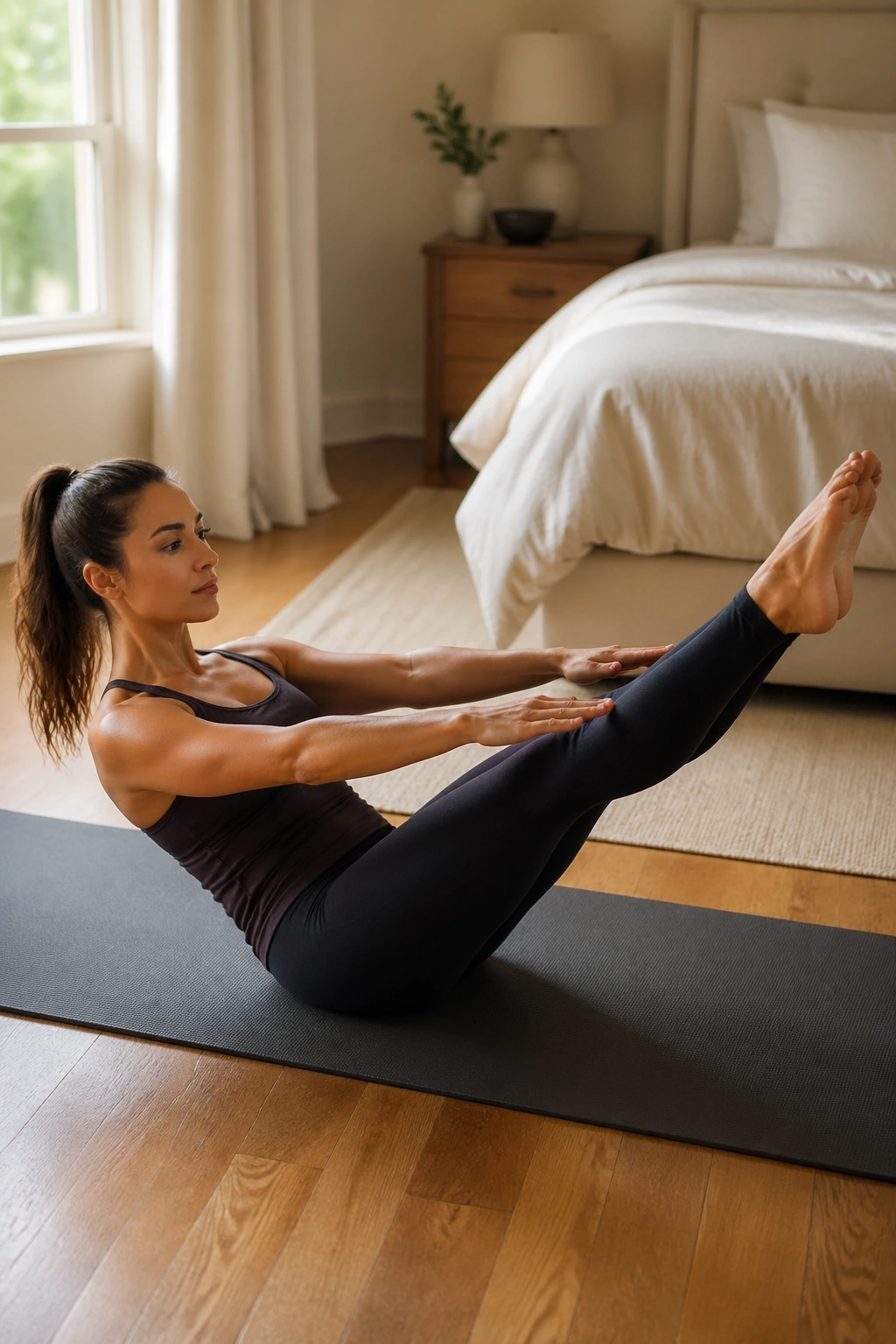
Why do these two moves work so well together? Because the roll-up asks for spine control, and half boat asks for abdominal control. The pair has a nice honesty to it. No drama. Just work.
Do 3 roll-ups, then hold half boat for 20 seconds, then rock back out of it with control. Repeat that ladder 3 times. If your hamstrings pull hard, bend your knees and keep the chest lifted instead of yanking yourself forward. The point is to keep the movement smooth enough that you can feel the abs doing the job.
How to use it
Use this on days when floor core work feels better than standing work. It’s especially good if you sit a lot, because it asks your body to reverse that curled-up shape.
Don’t fling yourself up. Roll each vertebra down like you mean it.
4. Glute Bridge and Crescent Lunge Flow
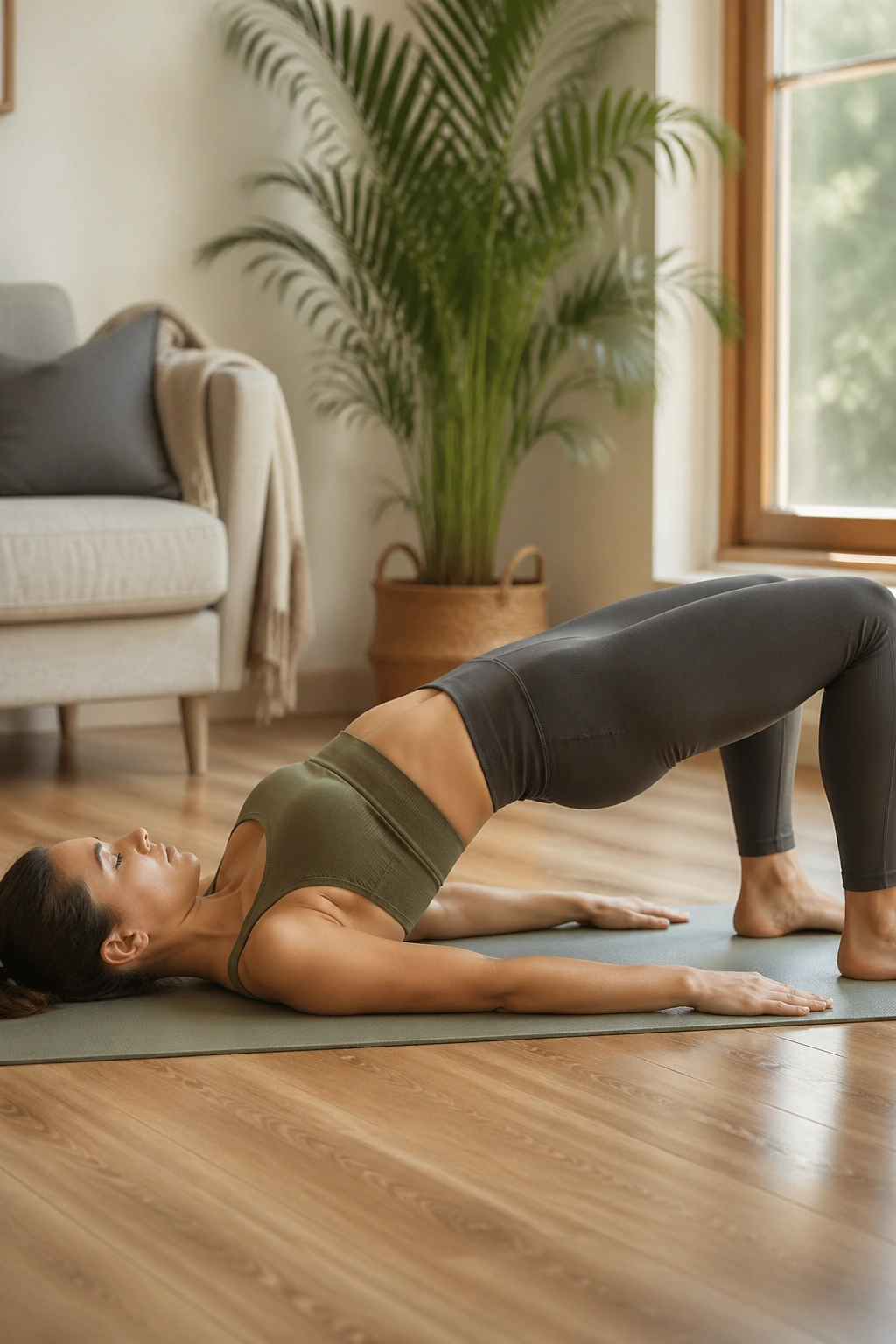
Picture this: you’ve been sitting all day, your hips feel glued shut, and your glutes have gone quiet. This is the routine I reach for when I want them back online without turning it into a boot-camp mess.
Start with 10 slow bridge lifts, squeezing at the top for one count. Then step into crescent lunge on the right, pulse the back knee twice, and switch sides. Do 2 full rounds. Keep the front knee stacked over the ankle, and don’t let the lower back take over the bridge.
- Bridge: 10 reps with a one-count squeeze.
- Crescent lunge: 6 pulses per side.
- Tempo: slow enough to feel the working leg.
- Mod: place a folded towel under the knees for bridge work if the floor feels hard.
The bridge wakes up the posterior chain. The lunge opens the hip flexors that get cranky from sitting. Together, they make a tidy little reset.
5. Side Plank With Thread-the-Needle
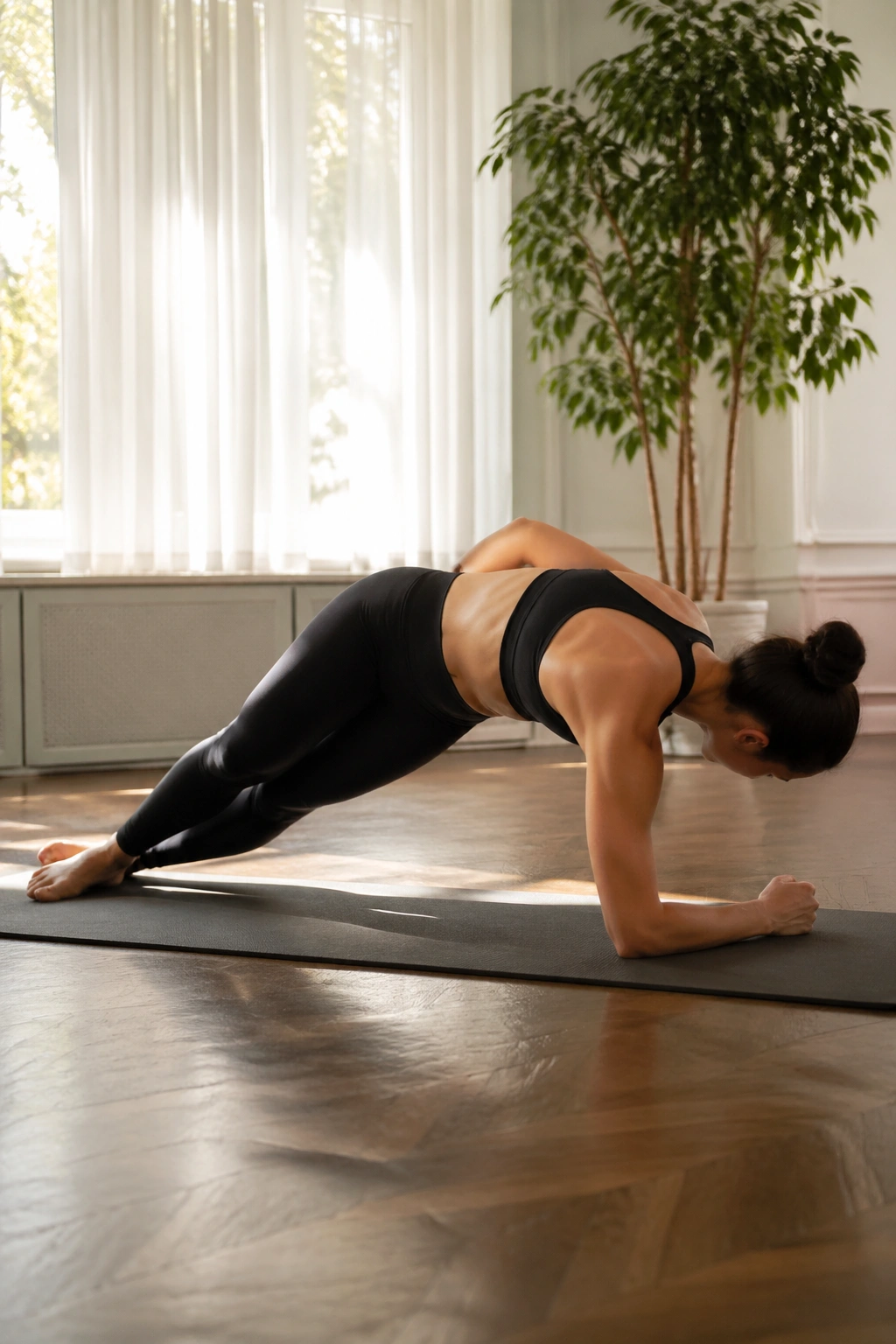
This one is sneaky. It looks like a side-body move, and it is, but it also lights up the shoulders and the deep muscles around the waist faster than most people expect.
Hold a side plank from the forearm if your wrist complains, then thread the top arm under your torso for 5 slow reaches. Come back to full side plank each time. Stay on each side for 30 to 45 seconds, then rest. Keep the hips slightly forward rather than dumping them back. That makes the obliques work instead of letting the lower back do the heavy lifting.
The shoulder on the floor should feel active, not crushed. If it starts to sag, come down and reset. No badge for staying up with bad form.
This is one of those moves that pays off fast. You can feel the line from armpit to hip doing real work.
6. Pilates Swimming and Cobra Hold
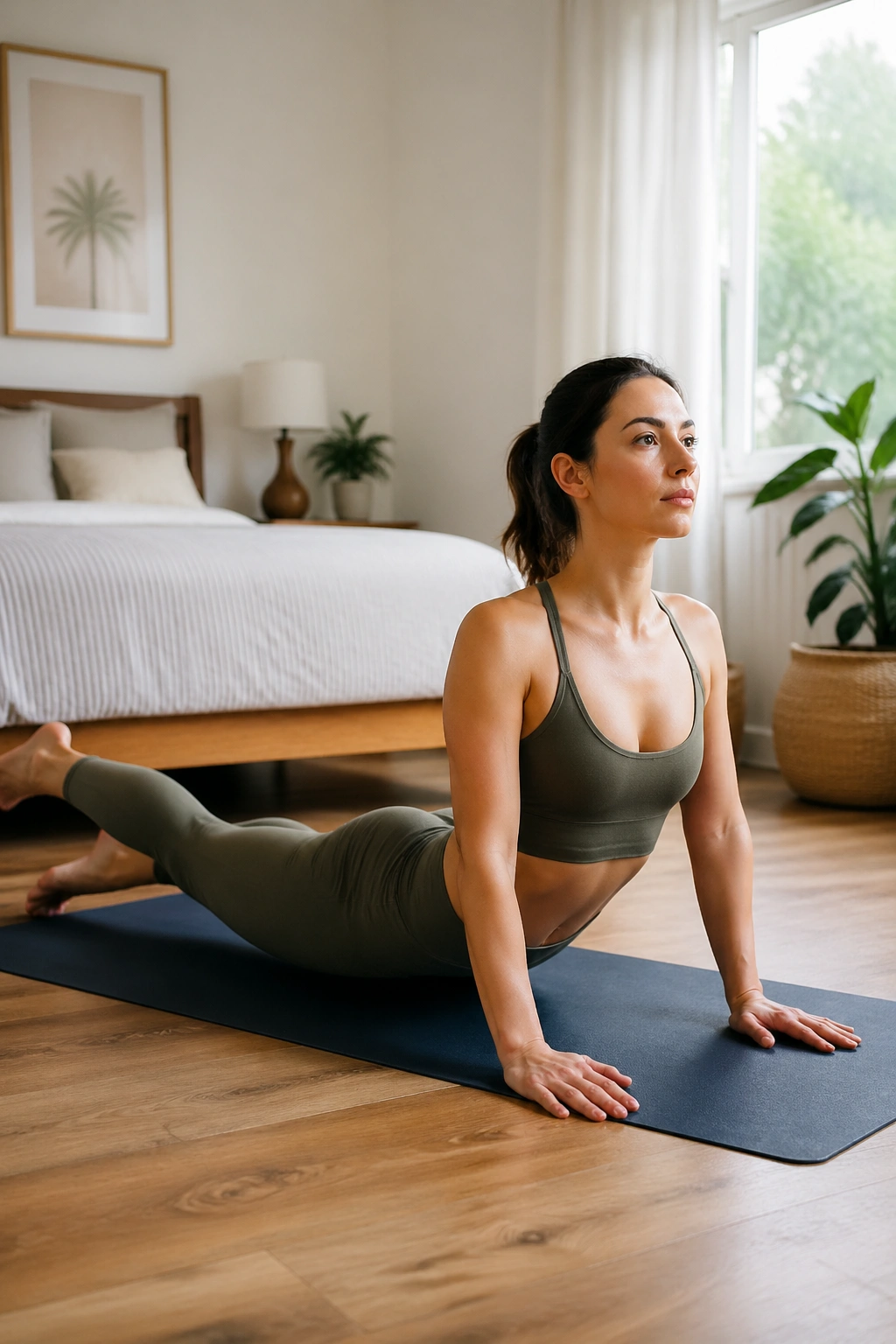
Unlike a big yoga backbend, this combo keeps the back line busy without asking for too much range. Swimming gives you alternating arm-leg reach; cobra keeps the chest open and the spine long.
Lie face down and lift opposite arm and leg for 10 slow switches. Then lower down and hold a low cobra for 15 to 20 seconds. Repeat that pairing 3 times. Keep your forehead hovering just above the mat in swimming, and keep the neck long in cobra. If your lower back pinches, lift less. Smaller is better here.
A lot of people overdo back work. They throw themselves into the shape and then wonder why their spine feels cranky. This version is cleaner.
It’s a solid choice after too much desk time. The upper back usually loves it.
7. Chair Pose Pulse Ladder
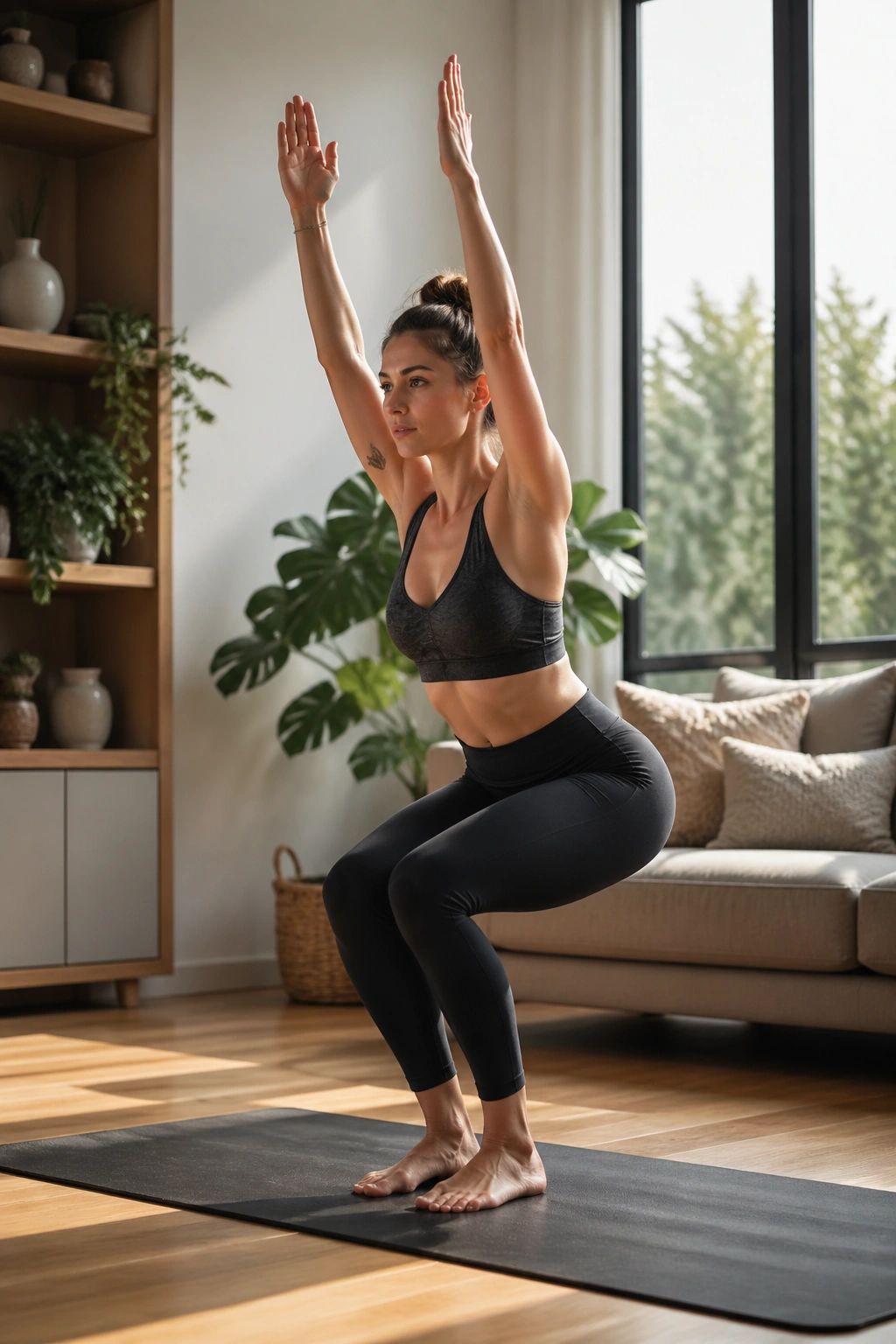
Chair pose sounds ordinary until you hold it for a minute. Then the legs start talking back.
Sink into chair, weight in the heels, and hold for 20 seconds. Pulse 10 times, rise halfway for 5 pulses, then fold forward and shake the legs out. Repeat the ladder 2 to 3 rounds. Add an arm reach overhead if the shoulders feel good, but keep the ribs from flaring.
What to watch for
- Knees track over the second and third toes.
- Chest stays lifted rather than dumped forward.
- Weight stays in the heels, not the toes.
- Popping the hips back too far makes the quads lazy.
This is a nice standing option when you do not want to get down on the floor. It has a Pilates feel because the pulses are tiny, not wild. That’s the sweet spot.
8. Single-Leg Stretch and Warrior III Balance
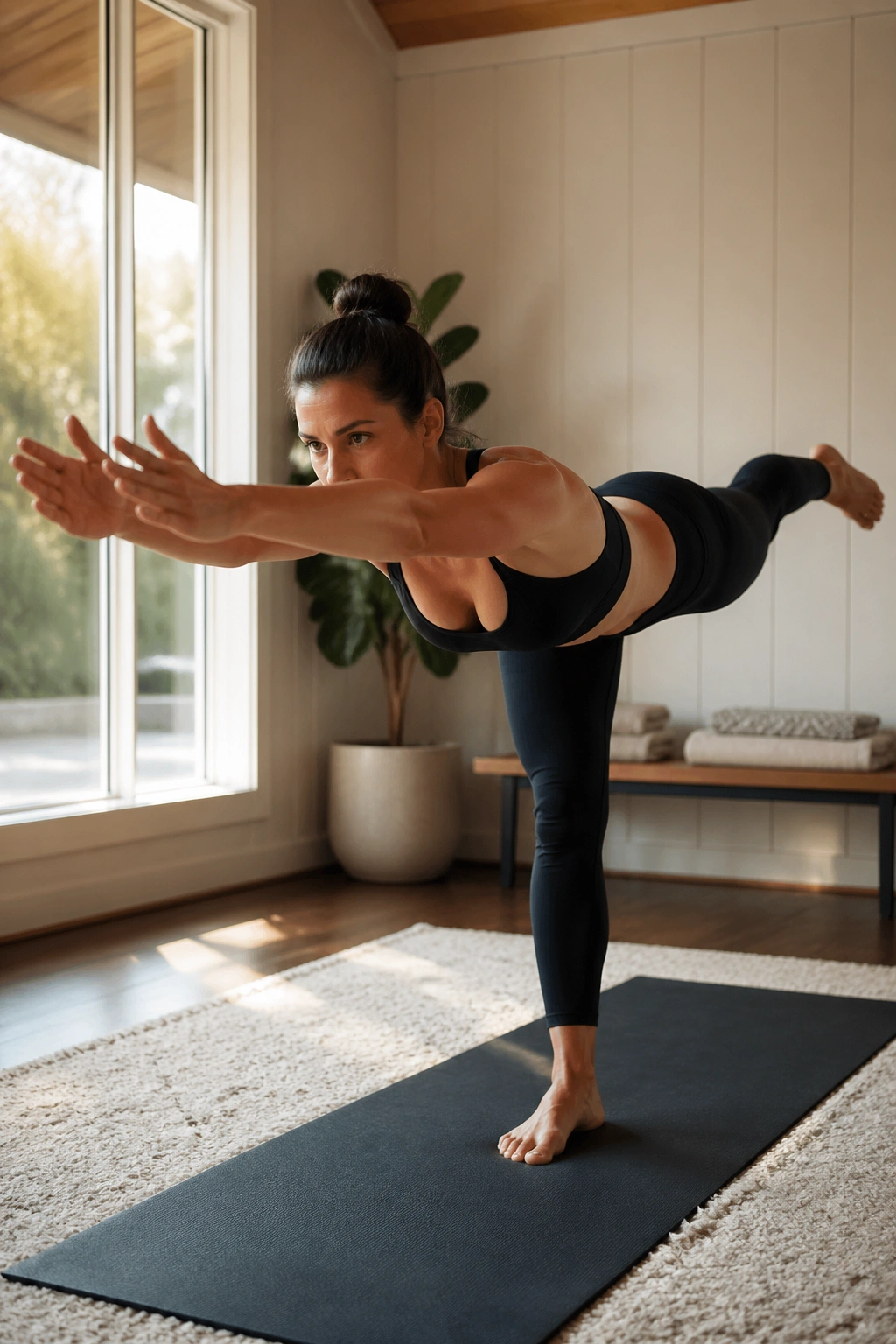
This pairing is a little bit sneaky, and I mean that as praise. The floor part teaches control; the standing part tests whether you can keep it when the ground disappears under you.
Lie on your back and do single-leg stretch for 10 reps per side, keeping the lower back heavy. Then come up to Warrior III and hold it for 15 to 20 seconds on each side. If balance gets wobbly, put fingertips on a wall or keep the back toe light on the floor. The goal is a clean line, not a circus pose.
The move from floor to standing is the useful part. Your core has to keep the pelvis steady, then your standing leg has to carry that lesson into balance.
No need to rush it. Slow transfers make the workout harder in the right way.
9. Forearm Plank to Knee-Tap Series
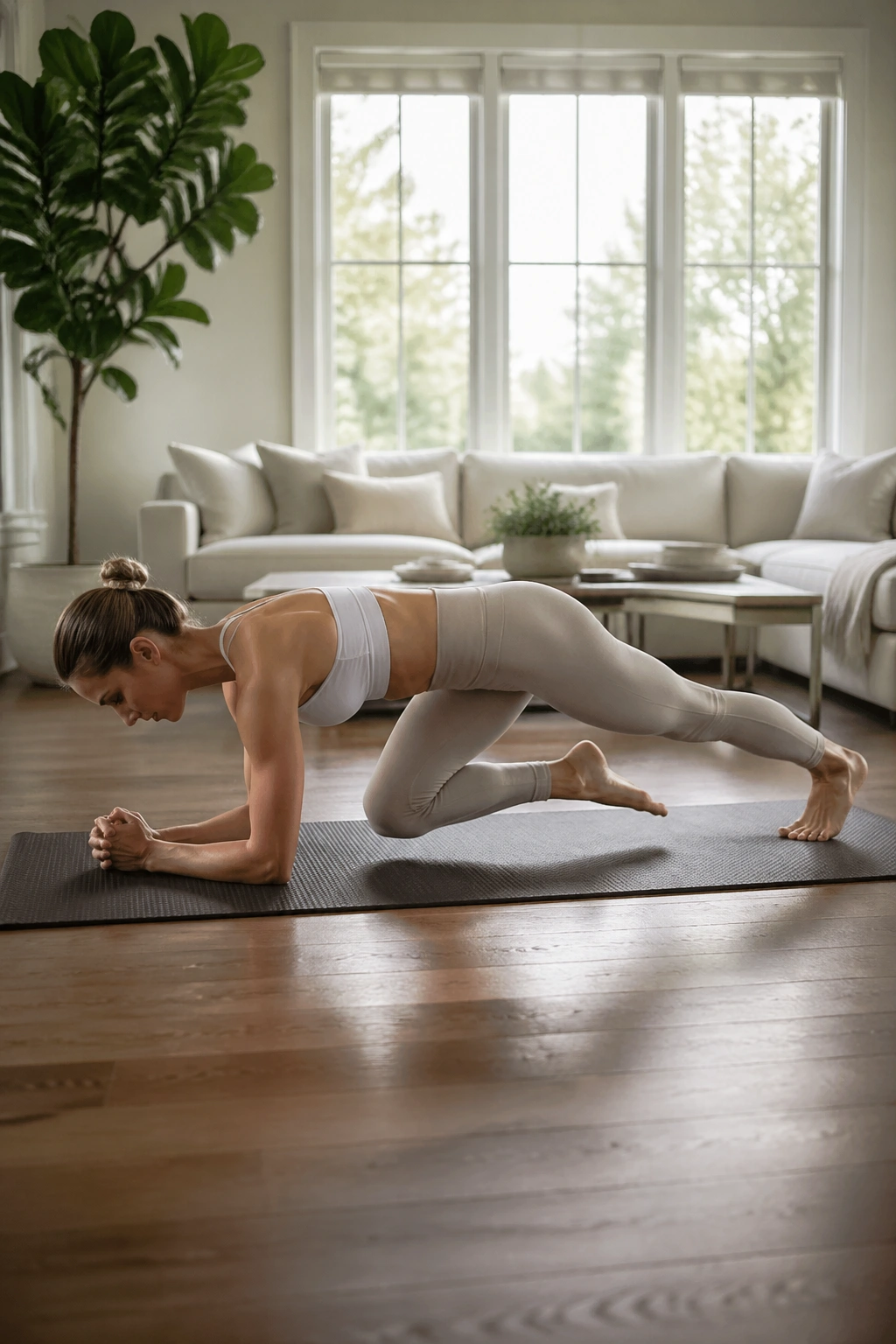
Why does this feel so effective so fast? Because it removes the easy cheating. Forearms on the floor, ribs in, and no bouncing around.
Hold a forearm plank for 20 seconds, then lower one knee toward the mat and lift it back up 6 times per side. Rest for 15 seconds, then repeat the whole set 3 rounds. Keep the tailbone in line with the back of the head. If the lower back starts to sag, stop and shorten the hold.
How to use it
Use a folded towel under the elbows if the floor feels hard. Breathe out on the knee tap and breathe in on the lift. That tiny breath pattern keeps the center engaged without making your face turn red on the first round.
This is one of the better home workouts if you want core work without endless crunches. Quiet. Hard. Useful.
10. Puppy Pose to Swan Dive Back Extension
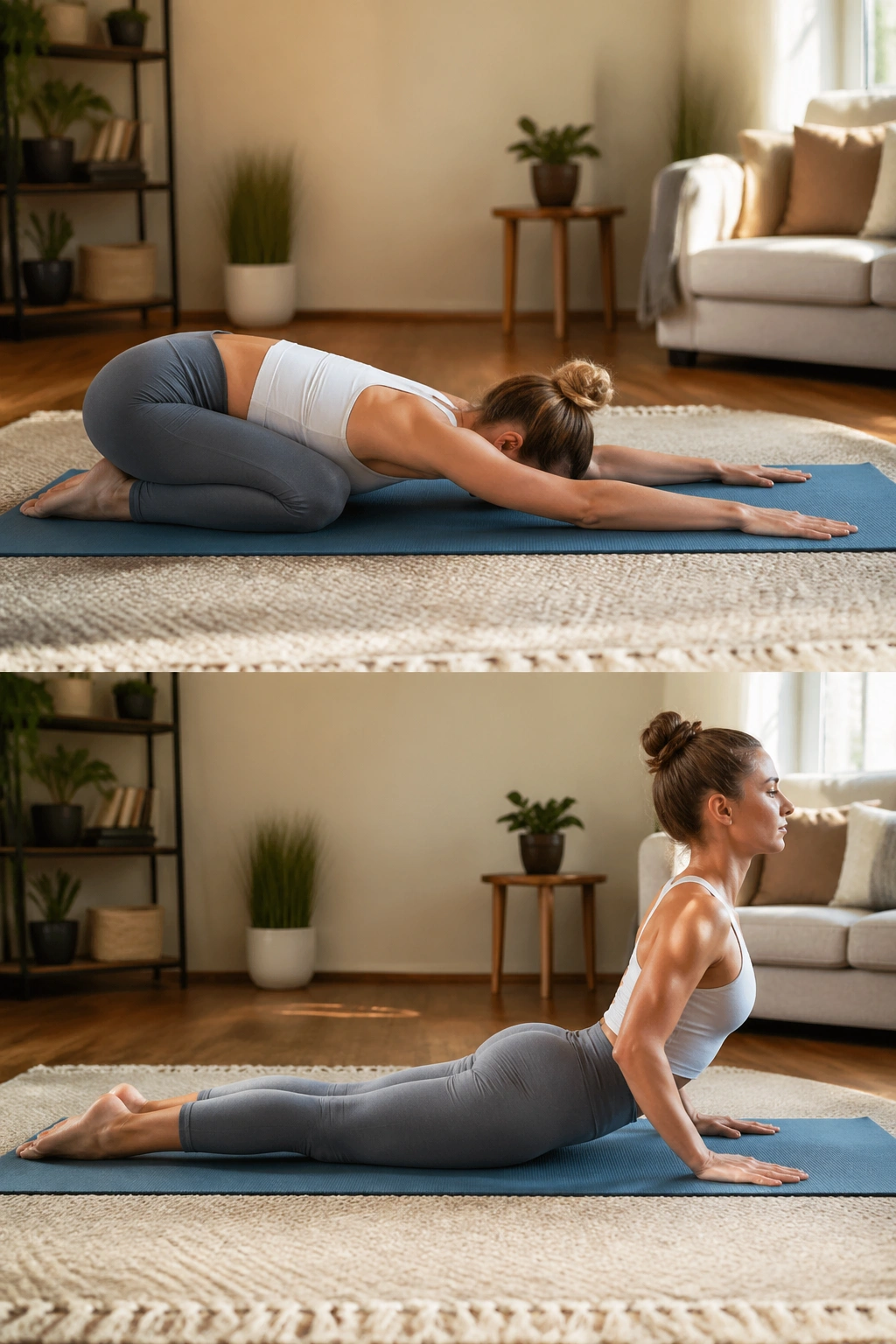
A stiff upper back can make everything feel harder than it should. This sequence opens the front of the shoulders, then asks the back body to lift with more control.
Sink into puppy pose for 30 seconds and let the ribs settle toward the floor. Then come down and move into swan lift reps, rising only as high as you can without jamming the low back. Do 6 to 8 reps, then rest in child’s pose for a breath or two. Repeat the cycle 2 rounds.
What makes it different
- Puppy pose stretches the chest and lats.
- Swan teaches the back to support the lift.
- Child’s pose resets the neck and shoulders.
- The sequence feels better than forcing a deep cobra right away.
I like this on days when the shoulders are cranky. The opening comes first, and the strength follows. That order matters more than people admit.
11. Side-Lying Leg Lift Burn
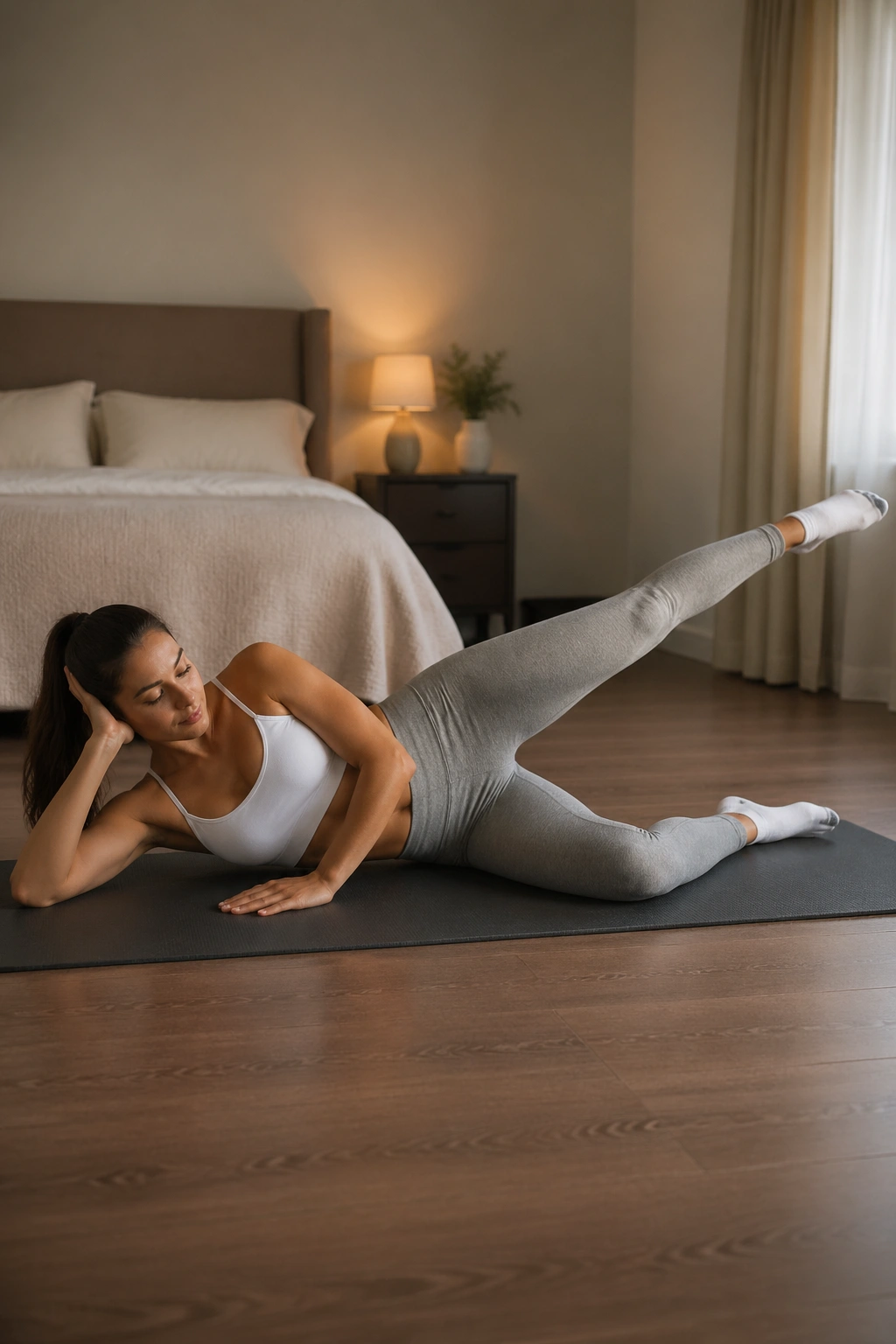
This is where the outer hips start to complain in the best possible way. Side-lying work is quiet, but it gets into the glute medius and the small stabilizers that keep the pelvis steady when you walk, climb stairs, or stand on one leg.
Lie on your side with the bottom knee bent and the top leg long. Lift the top leg 12 times, then make 10 small circles each direction, then hold the leg at hip height for 10 seconds. Do 2 rounds per side. Keep the toes pointed slightly down if the front of the hip keeps taking over.
The temptation is to swing the leg high. Don’t. A smaller lift with a clean pelvis does more work and looks better from the start. Your waist should stay quiet.
This one is simple, and that’s why it stays in rotation for me.
12. Low Lunge and Spine Twist
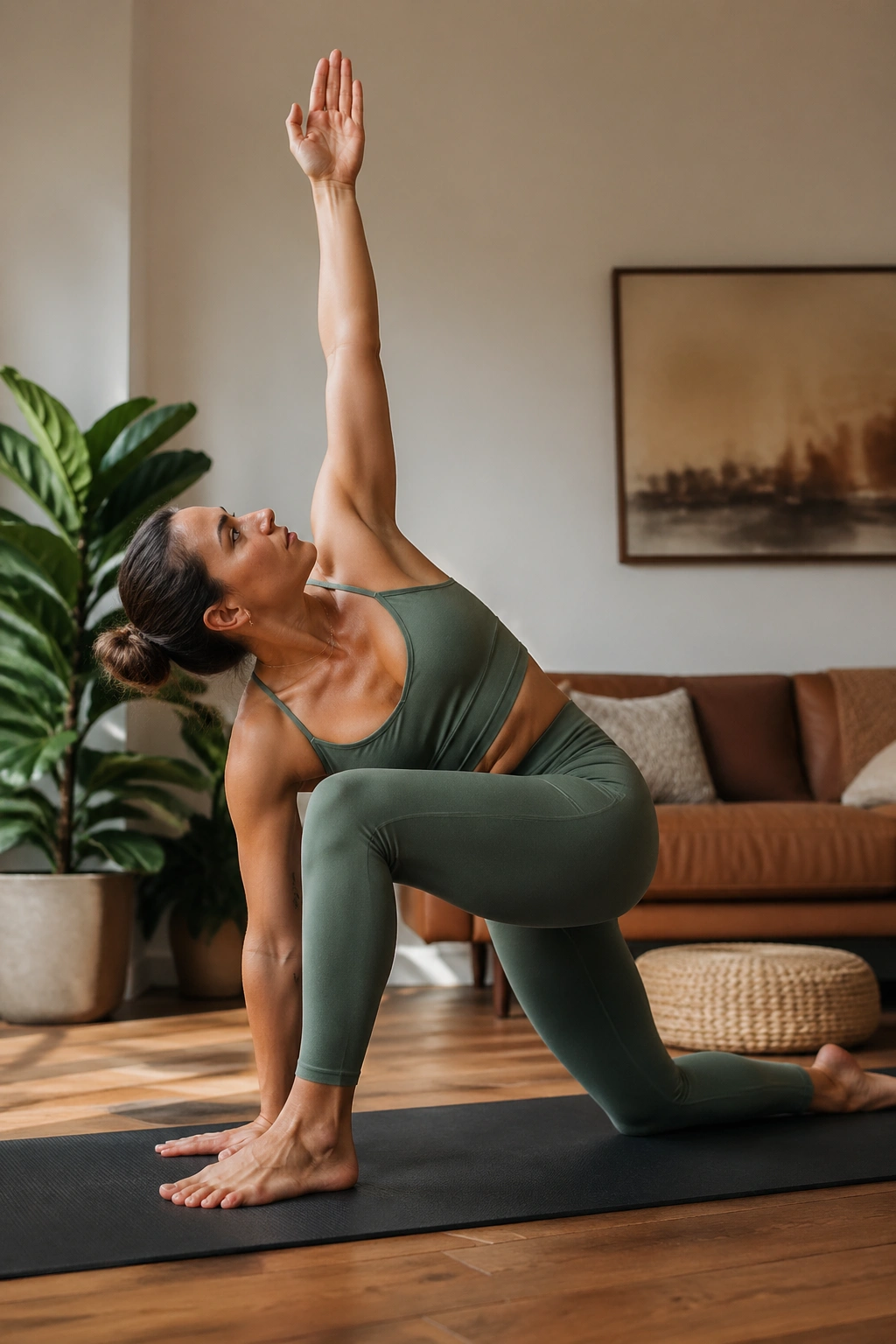
Standing and kneeling work get along better than people think. Low lunge opens the hip flexors; the twist brings the upper back into the conversation.
Step into low lunge and hold for 3 breaths. Bring one hand to the floor and rotate the other arm open for 3 slow twists on each side. Then rise into a half-kneeling reach overhead for one long breath. Repeat the pattern 2 rounds per side.
Unlike a fast stretch, this version asks for a little control. Keep the front heel grounded and the back knee cushioned on a mat or folded towel. If the twist feels jammed, shorten it and lift through the chest first.
The nice part is the change in posture. You come out of it taller, which is half the reason people keep returning to these moves.
13. Teaser Prep With Mountain Pose Reach
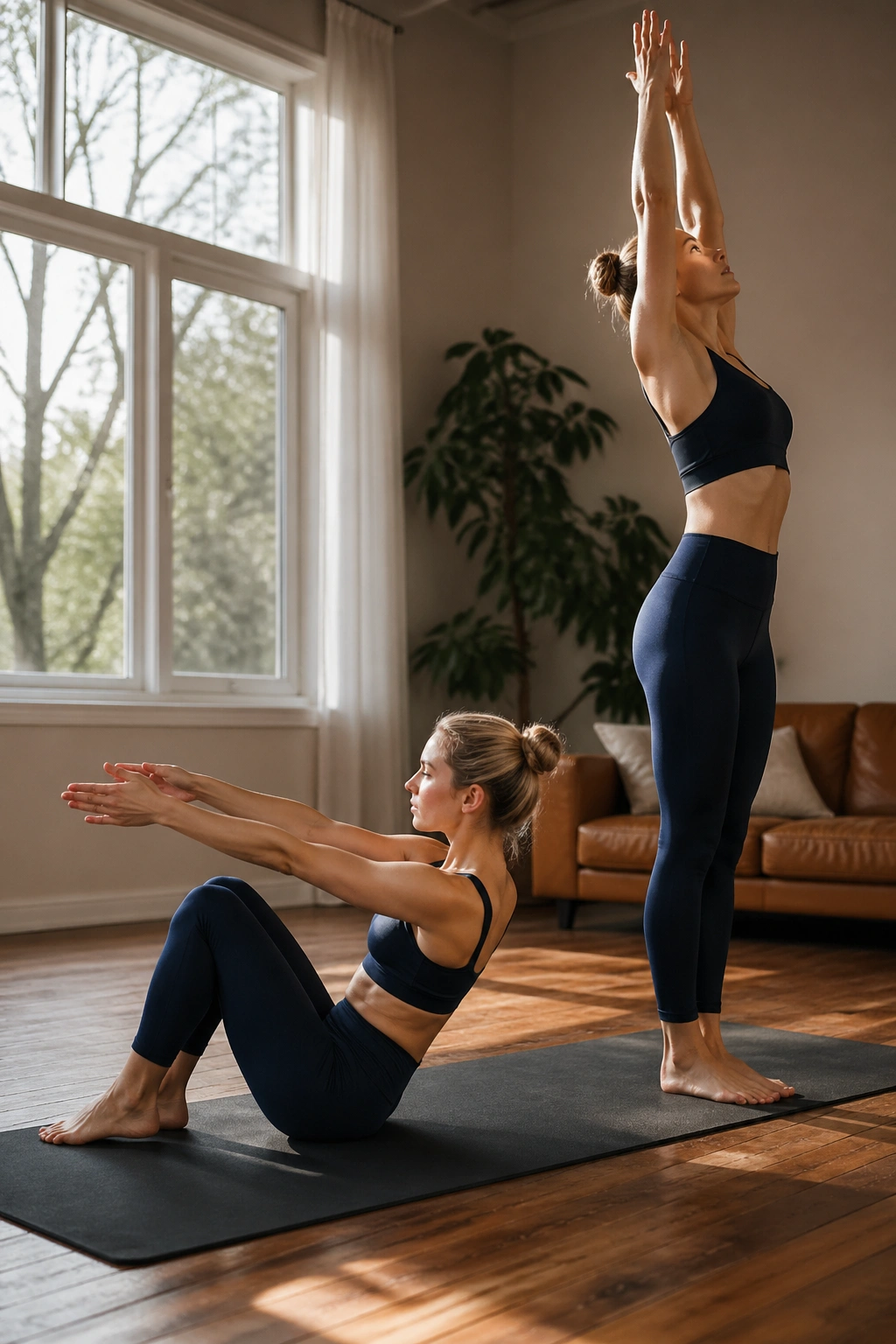
Teaser is the flashy one, but teaser prep is the smart version. It gives you the shape without asking for perfection, which is good because perfection usually ruins the attempt.
Start seated and roll halfway back, then come up with arms reaching forward for 5 reps. Stand into mountain pose, reach the arms overhead, and lower them slowly 5 times. Finish with a gentle toe-touch fold. Do 3 rounds total.
Why it helps
- Half roll-backs teach abdominal control.
- Standing reaches connect the core to posture.
- The set builds toward teaser without forcing it.
- A bent-knee version keeps the low back calmer.
I’d choose this if full teaser makes your hip flexors seize up. The prep gives you the same core conversation without the fight. That’s usually the better trade.
14. Bird-Dog to Knee Hover Core Flow
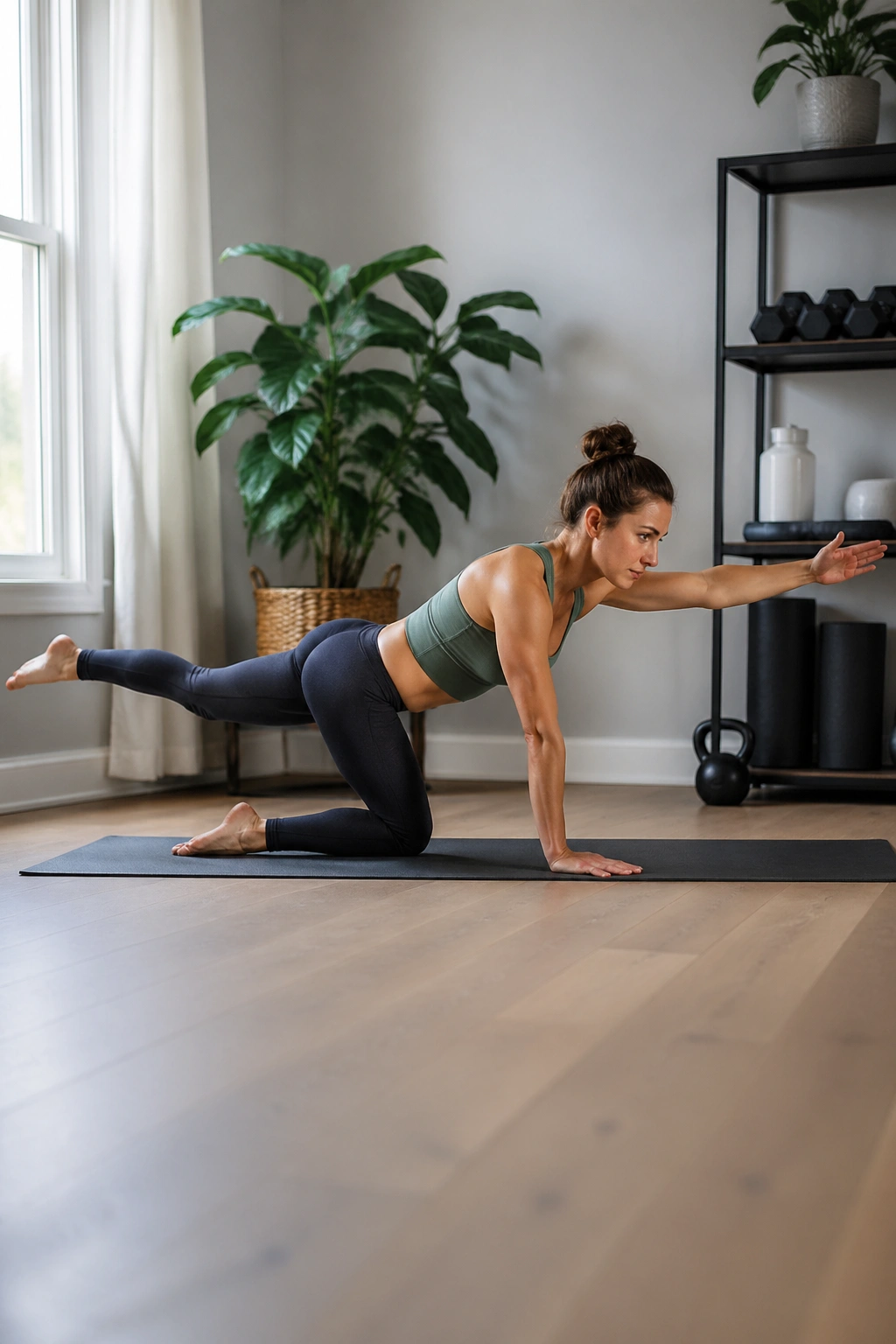
The floor feels boring until bird-dog starts shaking. Then you realize how much stability the body needs just to stay square.
On all fours, extend opposite arm and leg for 5 slow reaches per side. Bring the knee back in, hover it an inch above the floor for 3 counts, then place it down and switch. Repeat for 2 to 3 rounds. Keep the hips level and the ribs from swinging open. If your shoulders get tired, make the reaches shorter.
Bird-dog is one of my favorite back-friendly core moves. There’s no crunching and no sharp bend. Just control.
The knee hover adds a Pilates touch because it asks for precision. Tiny movement. Real work.
15. Figure-Four Bridge and Pigeon Stretch
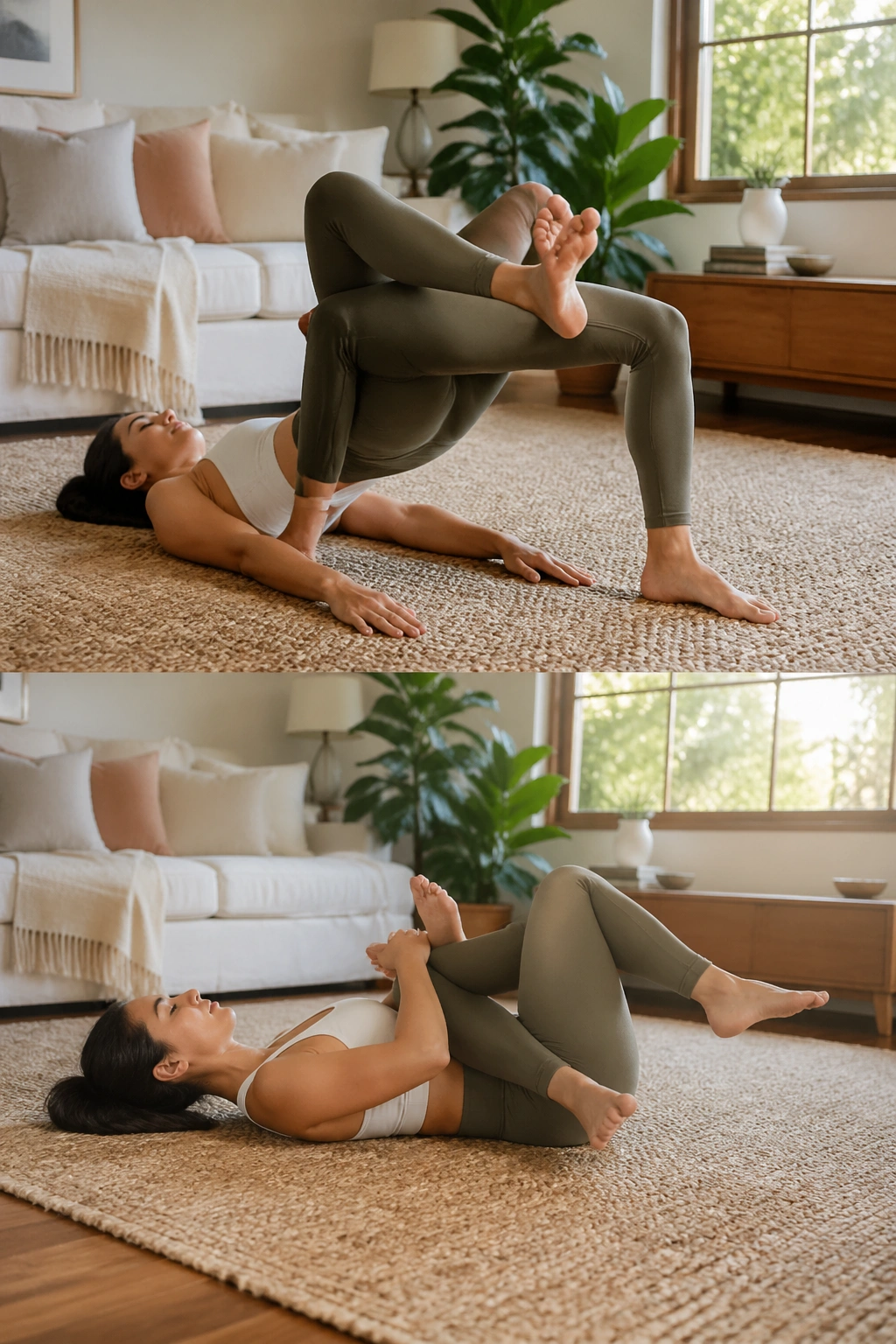
Why pair a bridge with pigeon? Because one wakes the glutes up and the other lets them let go a little. The order matters. Wake first, stretch second.
Cross one ankle over the opposite knee and do 8 bridge lifts on each side. Then come into a reclined figure-four stretch for 3 breaths, and finish with pigeon pose or a chair-supported version if the hips are tight. Stay there for 30 to 45 seconds per side.
The bridge should feel active, not aggressive. Press through the grounded heel and keep the pelvis level. In the stretch, back off if the front knee feels pinchy. Hips do not need to be forced into the floor to count.
This is a good post-walk or post-run reset, but it also works on a plain old stiff day. Those are usually the worst ones.
16. Standing Flow for Desk Tightness
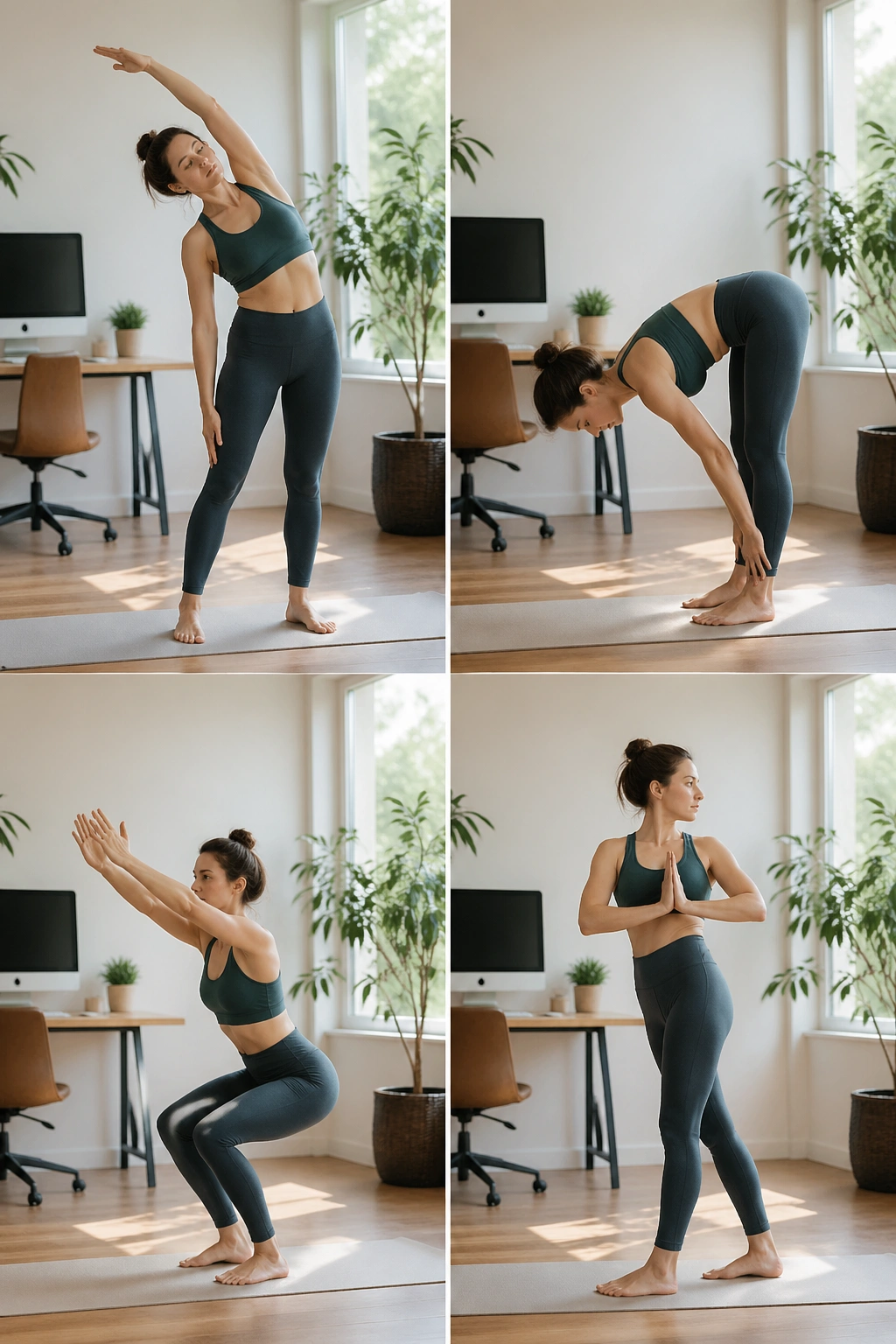
Sometimes you don’t need a mat. You need five standing minutes and enough space to lift your arms without hitting a lamp.
Start with a side bend, then fold forward halfway, then step into a chair squat, then rotate through a standing twist. Hold each shape for 2 breaths and repeat the circuit 3 times. Keep the knees soft, not locked, and let the arms travel with the torso instead of yanking ahead of it.
A standing flow is useful because it changes the posture pattern fast. Chest opens, hips wake up, neck stops doing all the work. That matters after a day spent hunched over a screen.
I keep this one in my back pocket for days when getting onto the floor feels like one step too many. It still counts. And it still helps.
17. Yoga Pilates Core Circuit With Hundred, Toe Taps, and Dead Bug
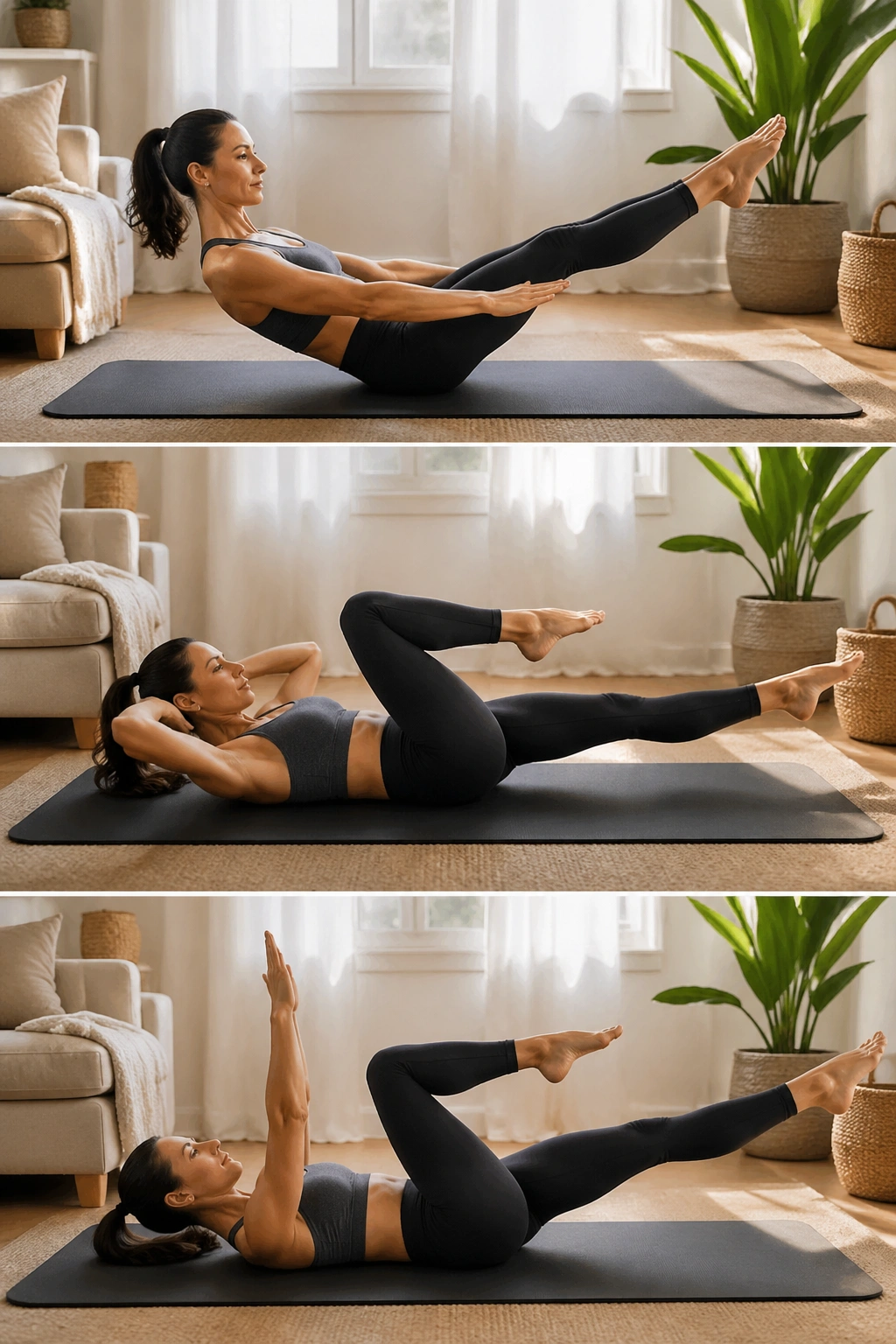
This is the core circuit I reach for when I want a real ab workout without endless crunches. The hundred turns the heat on, toe taps test the pelvis, and dead bug keeps the movement honest.
Do 30 seconds of hundred prep, then 10 toe taps per side, then 8 dead bug switches per side. Rest for 20 seconds and repeat 3 rounds. Keep the low back heavy on the mat, and shorten the lever if you feel it arching. If your neck gets tired, keep your head down during the hundred and focus on the breath.
How to pace it
Move slowly enough that you can finish the set without losing form. I prefer this sequence over faster ab work because it teaches control instead of noise. The abs should feel tired; the neck should not.
It’s a tidy, practical home session. Nothing flashy. Plenty of work.
18. Hip Opener Yoga-Pilates Reset
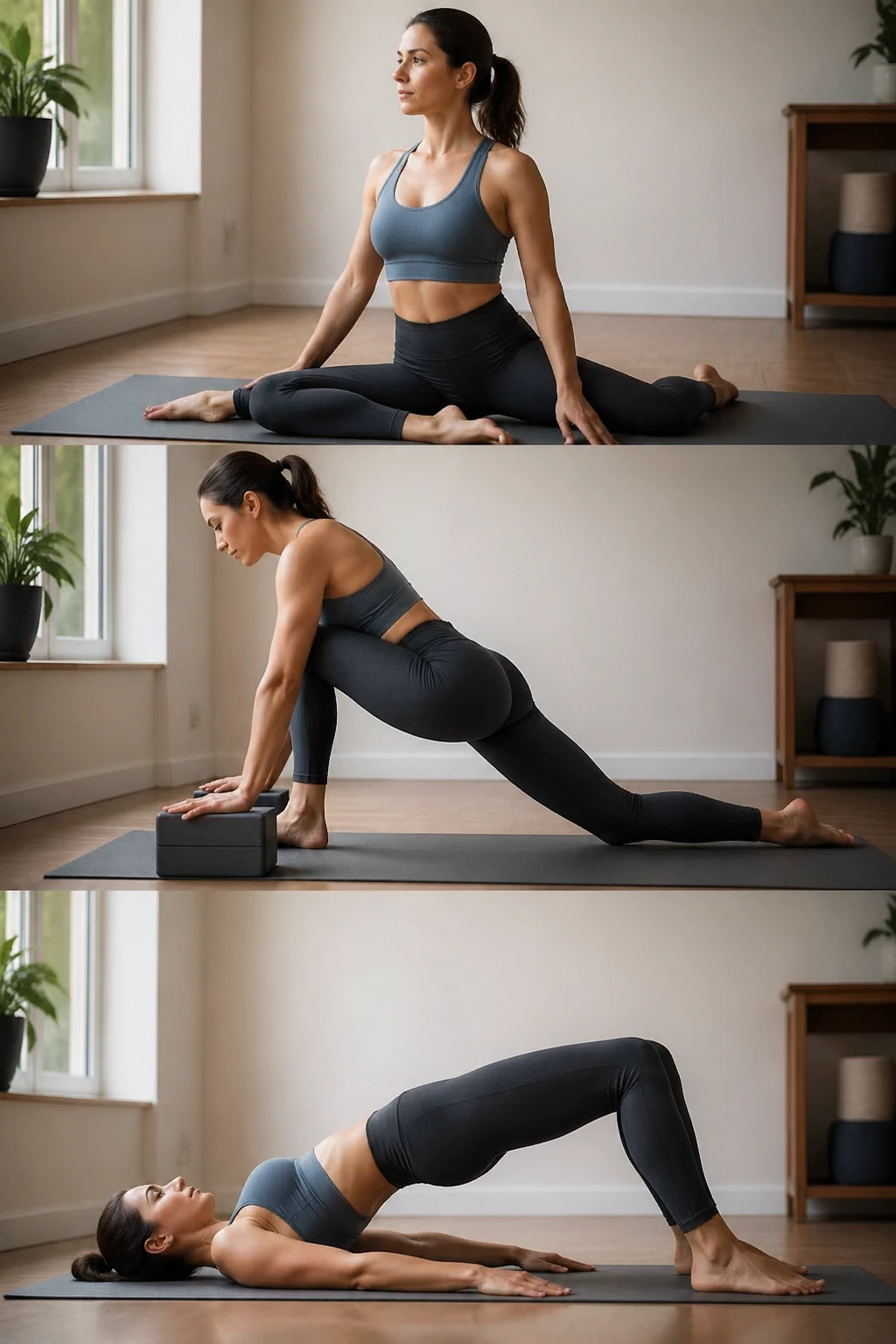
This one is all about the hips, but the real payoff is how the low back feels afterward. Tight hips often drag the spine into weird shapes. Open the hips a bit, and the back usually calms down.
Sit into 90/90 on each side for 3 breaths, then move into lizard lunge with your hands on blocks or books. Finish with a glute bridge hold for 20 seconds and a slow release. Do 2 rounds. Keep the front shin comfortable; forcing the angle is a waste of energy.
A Pilates touch enters through the bridge hold. That little pause teaches the glutes to support the pelvis instead of letting the hips dump forward.
If your knees are sensitive, sit higher. A folded blanket under the sitting bones changes everything. Small adjustment. Big difference.
19. Full-Body Ladder With Squat, Plank, and Down Dog
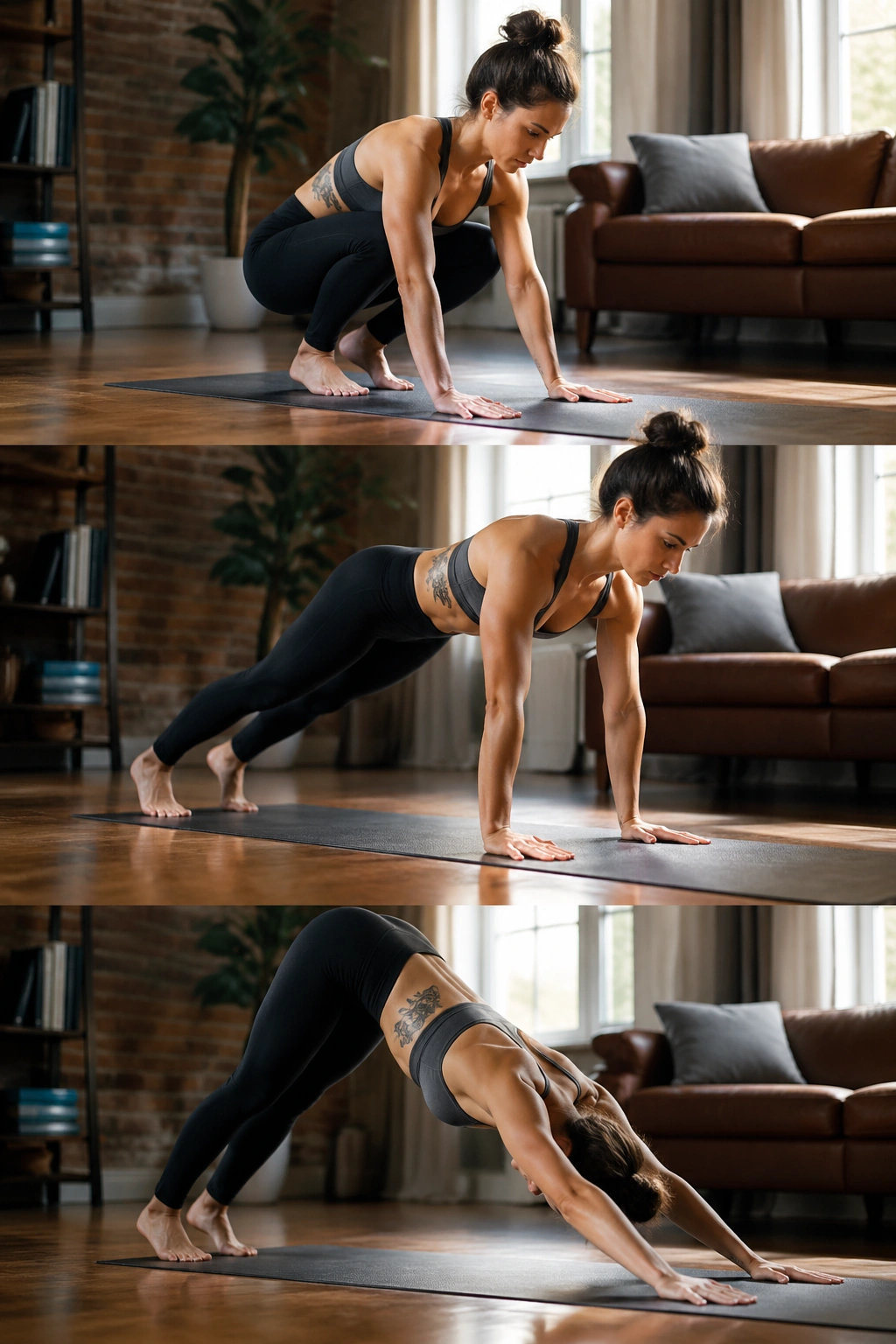
Why do simple ladders work so well? Because they keep the brain from zoning out while the body keeps moving.
Do 5 squats, walk out to plank for 10 seconds, press back to downward dog for 3 breaths, then walk back in and stand. That’s one round. Repeat 4 to 5 rounds, depending on how much time you have. Keep the squat deep enough to feel the legs but not so deep that the heels lift.
What to watch for
- Plank stays short and clean.
- Down dog lengthens the back, not the shoulders.
- The transition between shapes should feel smooth.
- If wrists complain, take plank to the forearms.
This is a good middle-ground workout. It builds heat, but it still has enough yoga in it to keep the movement from feeling mechanical.
20. Reverse Tabletop and Locust Combo
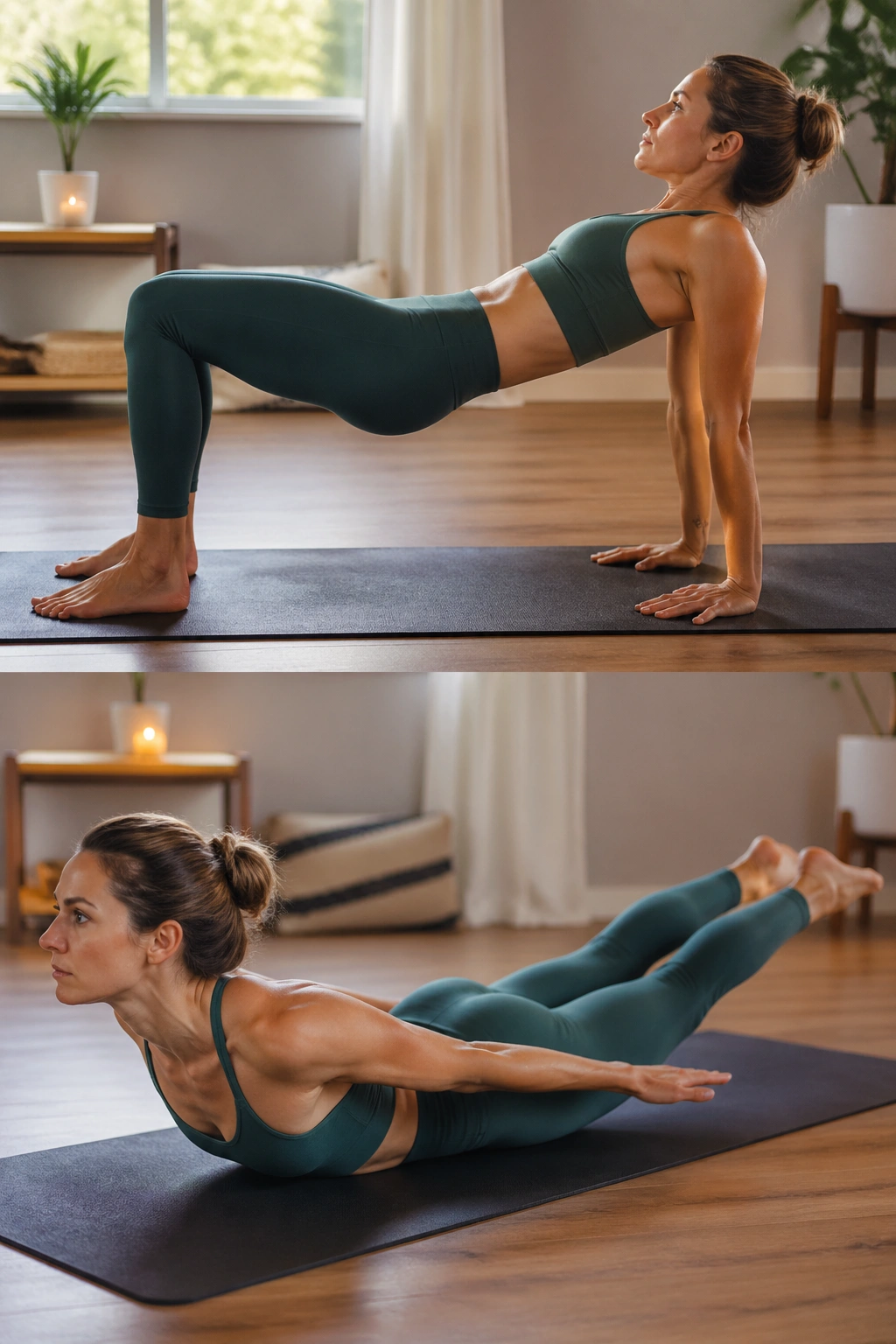
This combination is a posterior-chain wake-up call. Reverse tabletop loads the glutes and triceps; locust pulls the back body into line.
Sit with your hands behind you, lift into reverse tabletop for 15 to 20 seconds, then come down and lie on your stomach for 6 locust lifts. Rest briefly and repeat 3 rounds. Keep the shoulders away from the ears in both shapes. If reverse tabletop pinches the wrists, turn the fingers out slightly or stay lower.
Locust is one of those shapes that looks small and feels big. A tiny lift from the floor can still light up the whole back line if you keep the neck long.
This pairing is nice when you want strength without pounding on the joints. Quiet burn. Good posture work.
21. Mermaid Side Bend and Saw Twist
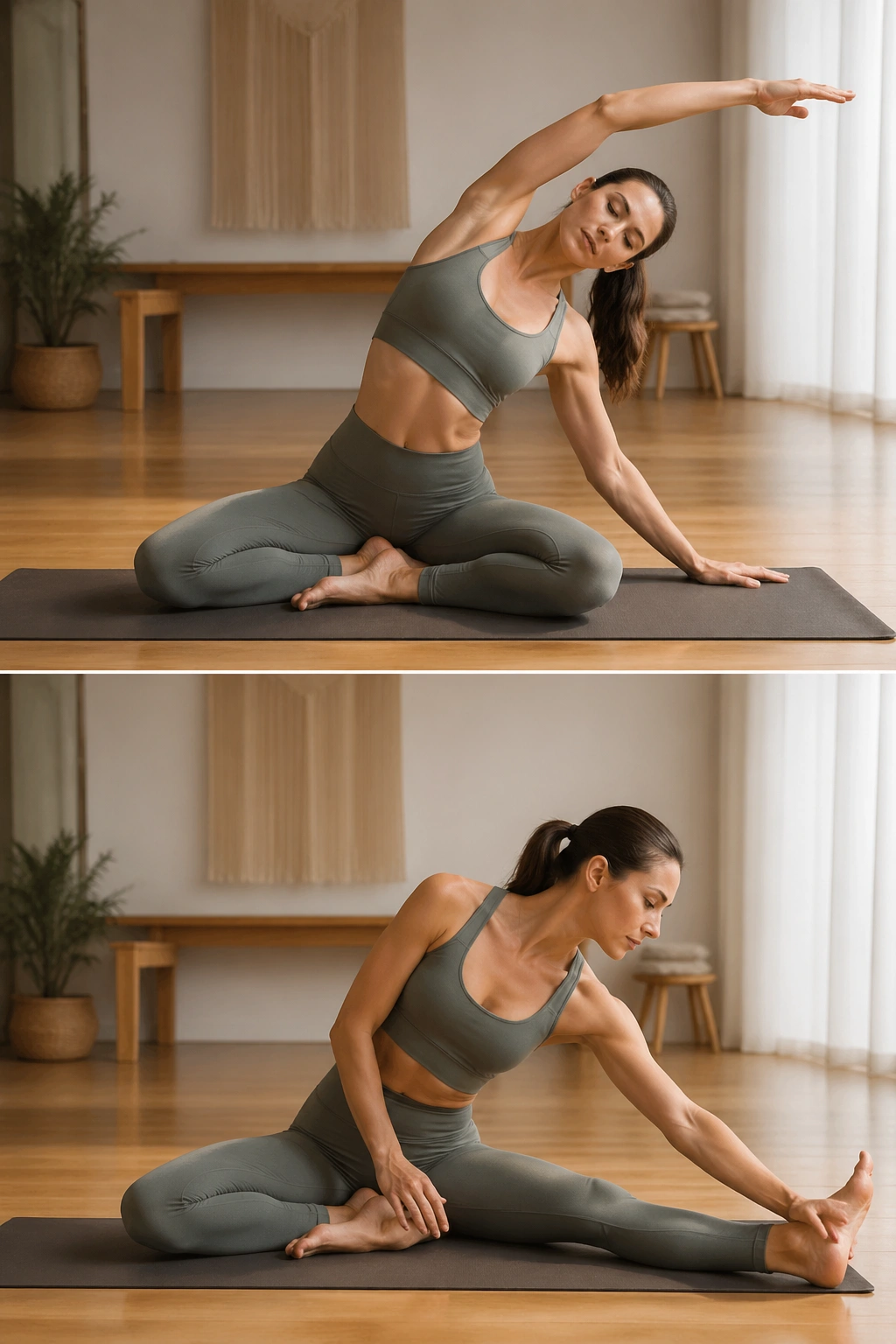
Seated side bends and twists get neglected, and that’s a shame. They’re one of the easiest ways to open the ribs and wake up the waist without any special setup.
Sit in a mermaid shape or a simple cross-legged seat. Side bend over one arm for 3 breaths, then rotate into a saw twist and reach the opposite hand toward the little toe for 3 controlled pulses. Switch sides and repeat. Keep the sit bones grounded, and if the hips are tight, sit on a folded towel to tilt the pelvis forward.
The movement is small, but the effect can be big. The ribs open, the waist turns, and the spine gets a cleaner line. It’s a nice break from all the forward-fold habits most of us collect.
A lot of people rush this. Don’t. Slow bends are where the good stuff lives.
22. Core and Hamstring Flow With Leg Circles
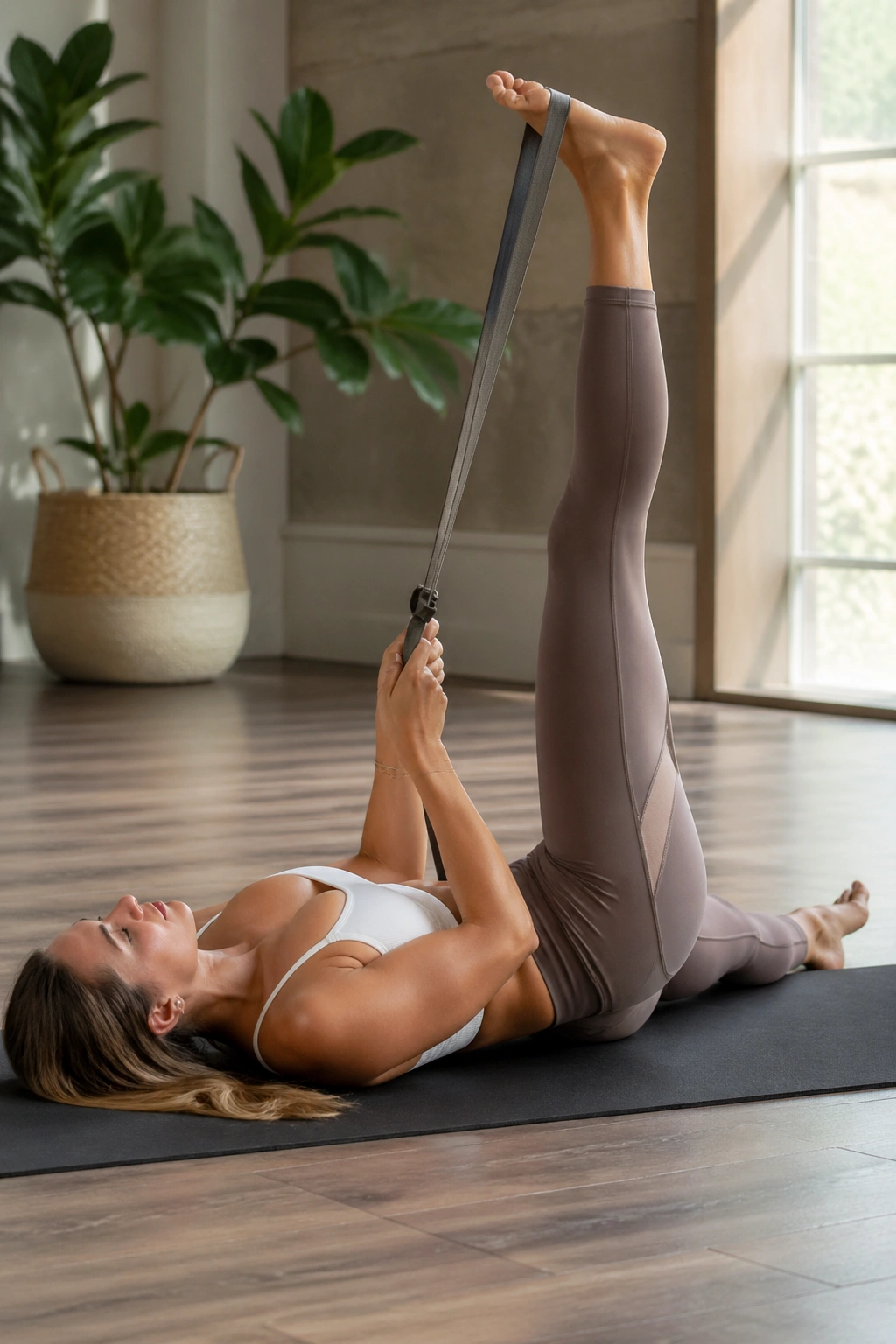
A hamstring stretch gets boring fast unless you give it a job. This flow does that by pairing it with core control.
Lie on your back, lift one leg, and make 8 small circles each direction. Then hold behind the thigh or with a strap for a 3-breath hamstring stretch. Finish with bridge marches for 8 reps per side. Do 2 rounds. Keep the pelvis quiet when the leg circles, because the point is stability, not flailing.
The strap helps if your leg won’t straighten comfortably. Use it. There’s no prize for forcing a reach.
I like this one after walking a lot. The hamstrings get length, and the core learns to keep the pelvis from wobbling around. That combination pays off everywhere else.
23. Yoga Pilates Recovery Flow After a Run
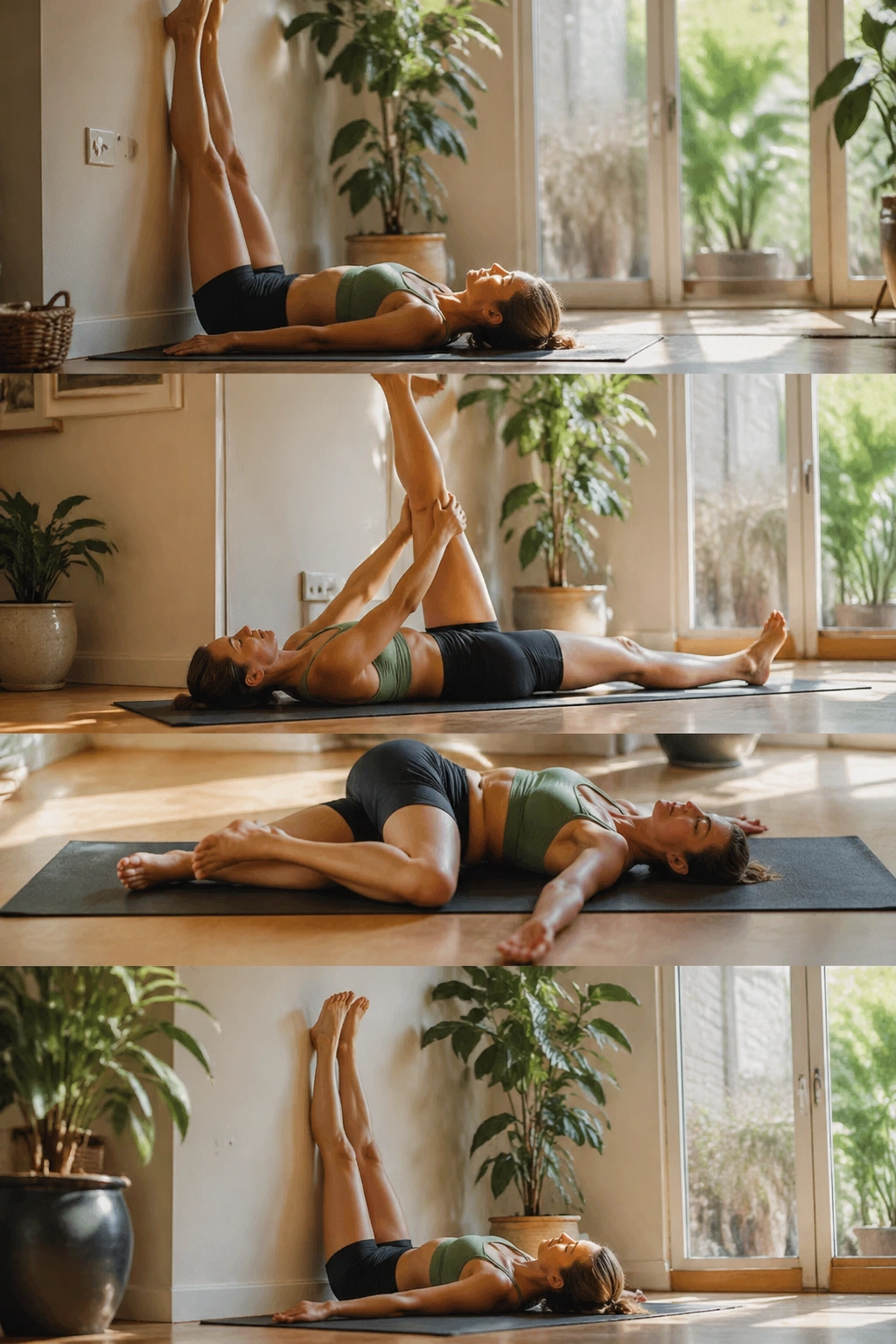
This is the one I use when the legs feel heavy and the calves are talking back. Running leaves a very specific kind of stiffness, and this flow answers it without turning recovery into another workout.
Start with calf stretches against a wall for 30 seconds per side, then move into a low lunge with the back knee down for 3 breaths. Roll onto your back for a gentle hamstring stretch, then finish with a supine twist and a legs-up-the-wall hold for 1 to 2 minutes. Keep the breathing slow and easy.
The order matters. Calves first. Hips second. Spine last. If you flip that around, the legs often stay grumpy.
This is also one of the few sessions where I like a longer finish. Let the nervous system settle a bit before standing up again. Your stride will usually feel better the next day.
24. Low-Impact Cardio Pilates-Yoga Burst
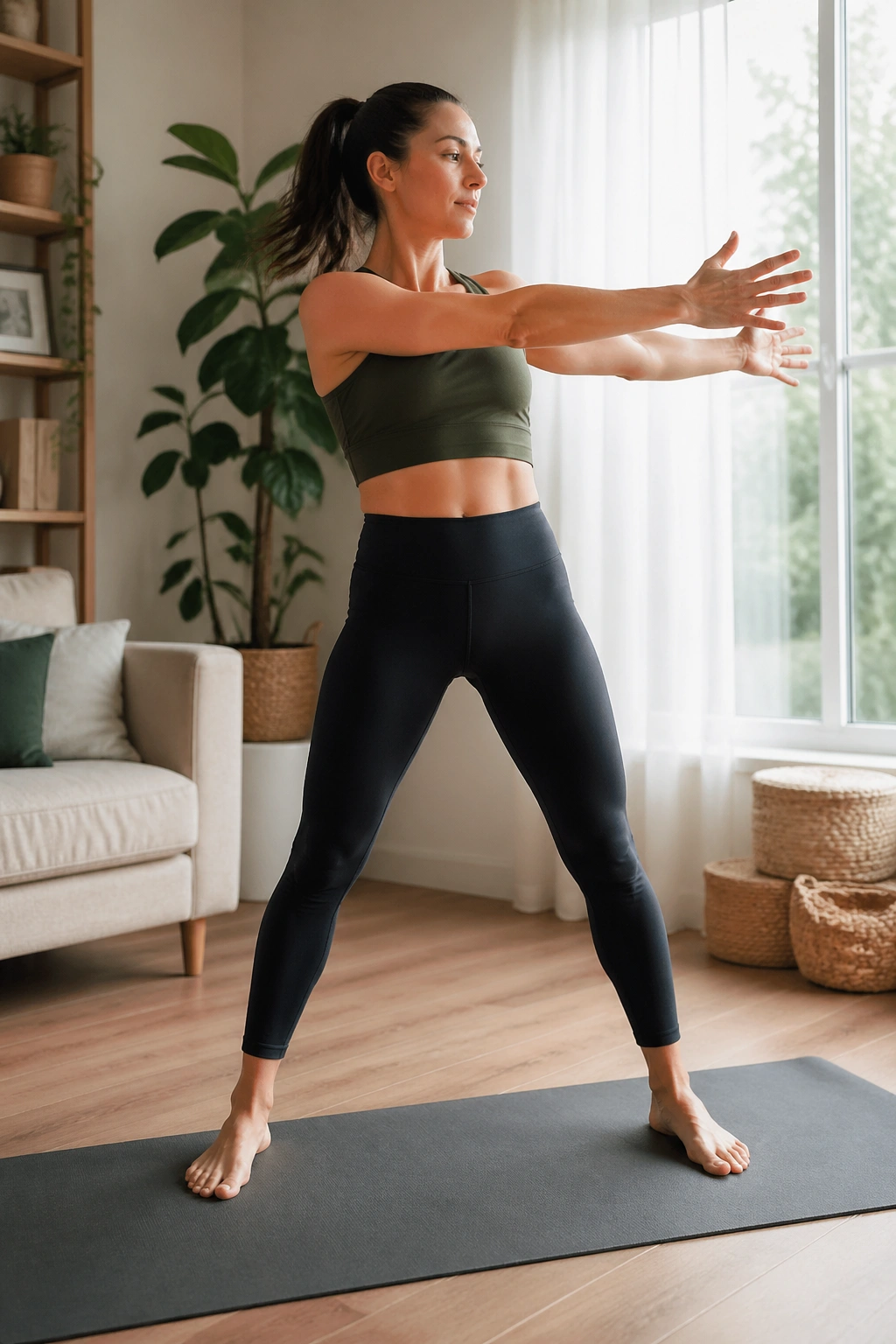
Want to get warm without jumping? This burst gets the heart rate up while keeping the feet mostly quiet.
Do 30 seconds of squat knee drives, then 30 seconds of mountain climber steps from a high plank or hands on a chair, then 30 seconds of standing cross-body reaches. Rest for 20 seconds and repeat 4 rounds. Keep the moves sharp but not frantic. If the pace gets sloppy, slow it down. Sloppy cardio is just noisy.
The mix works because the squat loads the legs, the plank taxes the core, and the standing reach gives you a quick breath reset. You’re never stuck in one shape for long.
It’s a solid choice when you want something that feels like exercise without the pounding. My knees prefer it. So do a lot of living rooms.
25. Evening Downshift Flow for Sleep
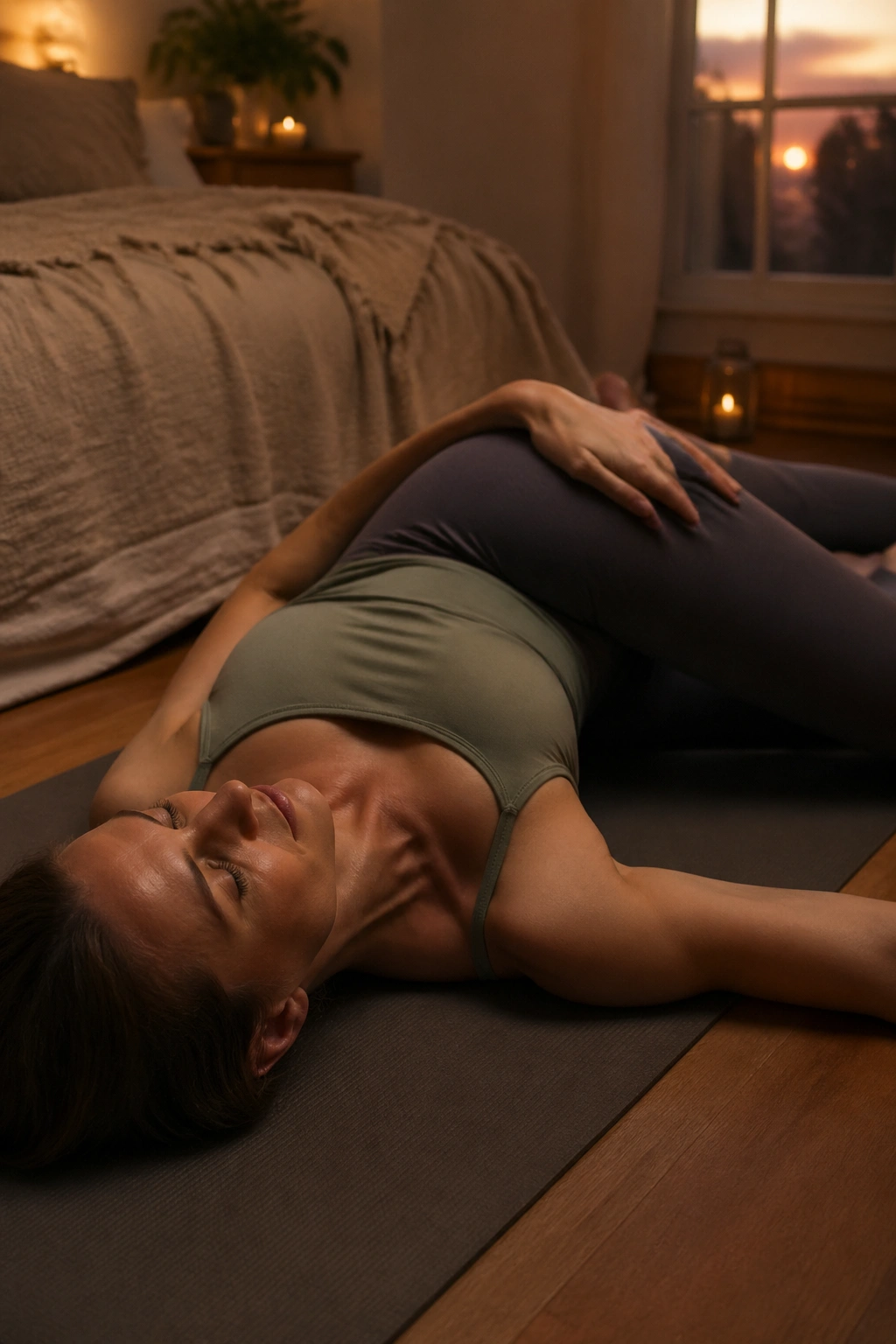
This is the one I save for the end of the day. No strain. No big holds. Just enough movement to let the body unclench.
Start in child’s pose for 4 breaths, then move to a gentle supine twist, then legs up on a chair or the wall for 1 minute. Finish with a slow bridge hold of 10 seconds if you want one tiny bit of strength before bed, or skip it and stay on the floor a little longer. Keep the room dim and the movements unhurried.
What to do with it
- Use long exhales.
- Keep the jaw loose.
- Skip any shape that feels like work.
- Stay longer in the position that feels easiest to soften into.
This is not about earning tiredness. It’s about easing out of the day without a fight. That matters more than people think.
The Bottom Line
A good home yoga Pilates workout does not need fancy gear or a giant block of free time. It needs clear shapes, clean control, and enough variety that your body stays interested. Floor work, standing work, balance work, and recovery work all have a place.
I’d keep three of these in regular rotation: one for heat, one for core, and one for recovery. That mix covers more ground than people expect. And it saves you from doing the same plank-adjacent routine forever, which gets old fast.
Pick the one that matches how your body feels today. That’s usually the smartest choice in the room.
