



Two-pound dumbbells can light up your arms faster than most people expect. Weighted Pilates workouts do not need heavy metal to work; they need slow tempo, tidy alignment, and enough patience to make each rep count.
The mistake I see most often is people treating Pilates like a tiny dumbbell circuit and then flinging the arms around. That just hands the work to the neck and shoulders. In a good arm session, the triceps, rear delts, upper back, and deep core all pull their weight, and your posture changes before the mirror even tells you so.
That is why light hand weights, usually 1 to 3 pounds, can be more useful than the heavy stuff sitting in the closet. You can keep the ribs stacked, keep the wrists calm, and keep the movement clean enough to feel the muscle instead of the momentum. The burn shows up late. That is the point.
The 20 workouts below work as stand-alone mini sessions or as pieces you can mix and match into a 15- to 30-minute upper-body flow. Some hit biceps. Some go after triceps or shoulder endurance. A few sneak in core work so your arms never get to free-ride.
1. Standing Reach-and-Lower Sequence
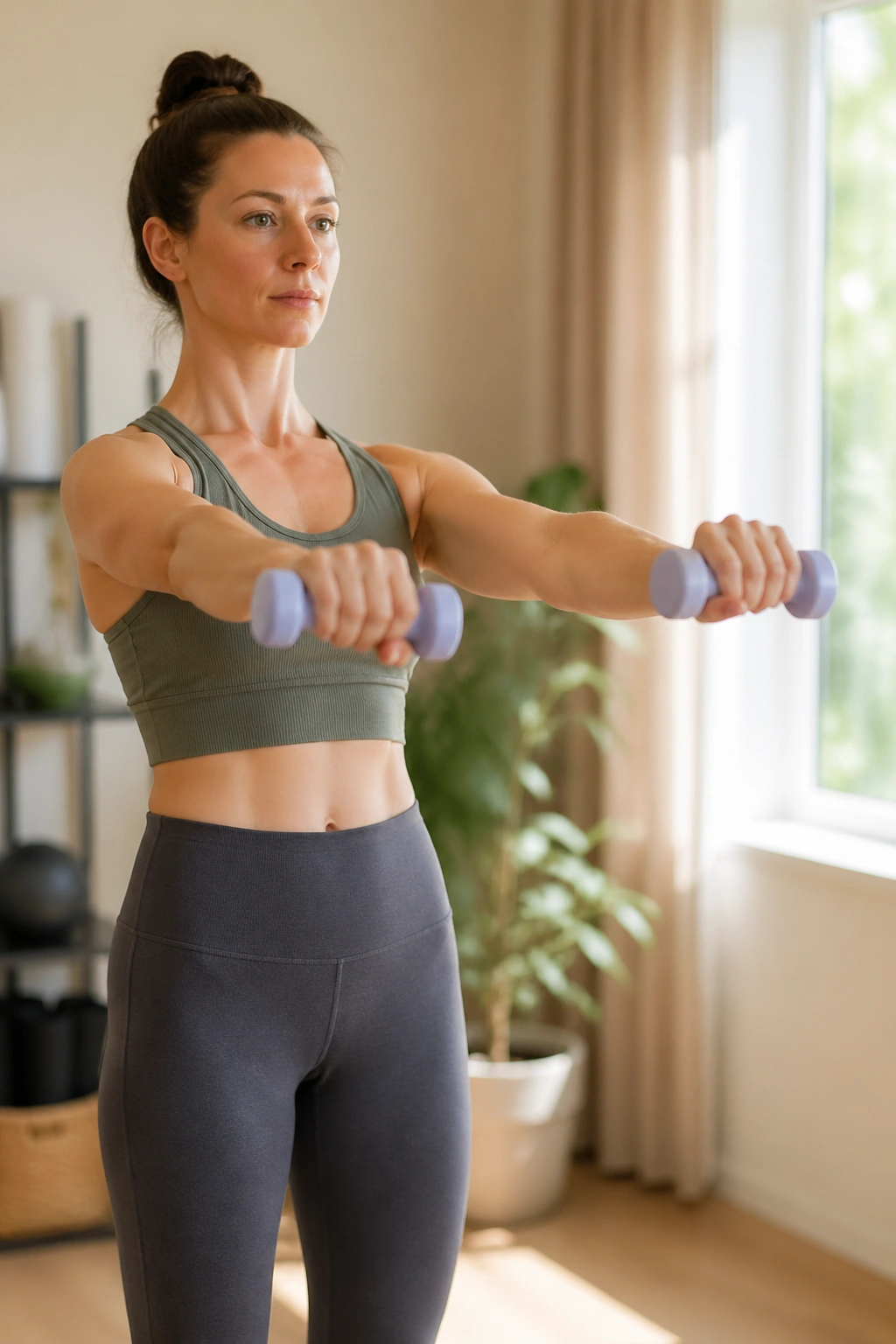
Start with something that looks simple and feels a lot harder than it should. Stand in Pilates stance, feet hip-width apart, and hold a light dumbbell in each hand with your palms facing your thighs.
How to do it
Lift both arms to shoulder height on a smooth inhale, then lower them on a 3-count exhale. On the next round, turn the palms forward at the top and pause for one second before lowering again. Keep the shoulders low and the ribs quiet.
Eight to ten slow reps is enough. If your lower back arches or your neck starts to grip, the weights are too heavy or the lift is too high.
- Best weight: 1 to 2 pounds if you are new to this style
- Tempo: slow up, slower down
- What to feel: shoulders, upper back, and the sides of the arms
One small cue changes everything: imagine your arms moving through thick water, not air.
2. Weighted Pilates Hundred With Light Hand Weights
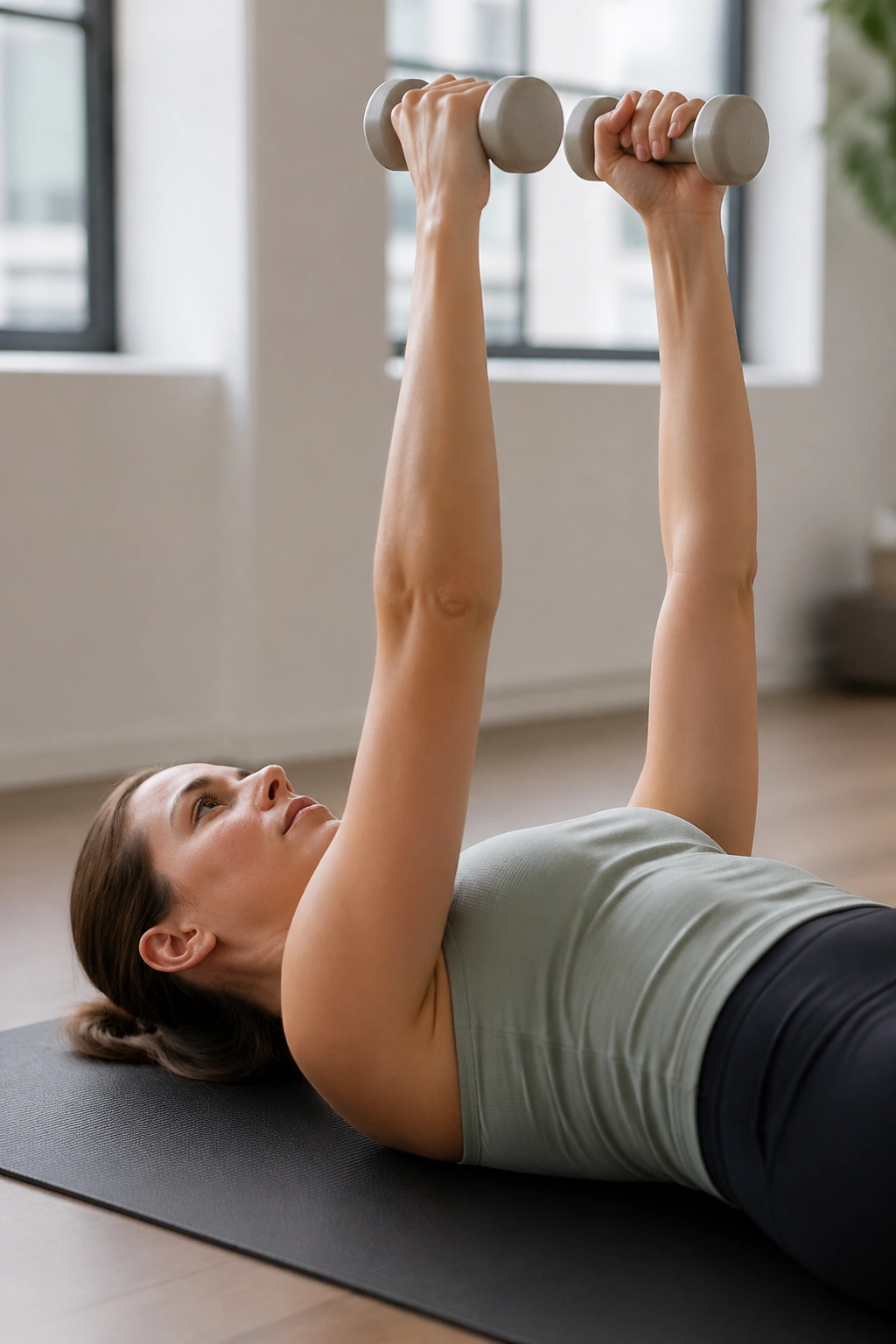
The classic Hundred gets meaner in a good way when the arms carry light weights. Lie on your back, bring your legs to tabletop or keep your feet on the floor if your neck gets tired, and hold the dumbbells above your chest with straight elbows.
Pump the arms in small, crisp motions for 10 breath cycles — five short inhales and five short exhales. The arms should hover a few inches above the chest, not swing toward the face. If your shoulders creep upward, lower the weights or bend the knees.
The magic here is that the core has to stay awake while the arms keep working. That makes the exercise feel less like a shoulder drill and more like a full-body control test.
Keep the chin slightly tucked. If you lift the head and jaw too high, the front of the neck steals the work and the whole thing gets sloppy fast.
3. Tabletop Punches From the Mat
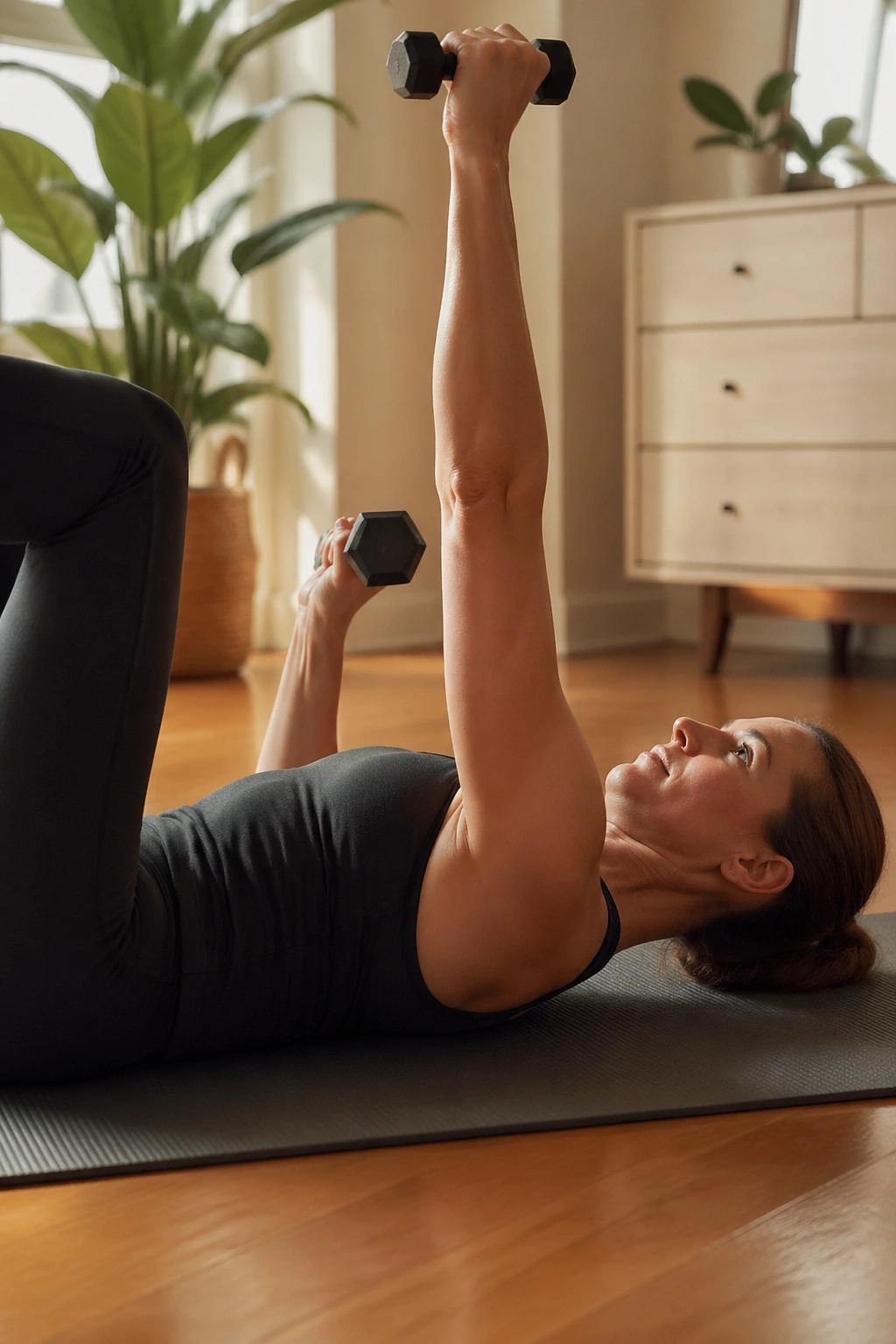
Why does this one work so well? Because a tiny punch can make the shoulder and triceps fire without giving you any room to cheat.
Lie on your back with your knees in tabletop and your arms bent at 90 degrees, weights held over the chest. Punch one arm straight up, then return it with control before switching sides. Move slowly enough that the torso stays quiet. If one side of the body twists or the opposite shoulder lifts, the range is too big.
What to watch for
- Keep both shoulders heavy on the mat
- Press the fist straight toward the ceiling
- Stop the elbow before it locks out hard
- Use a small dumbbell, not the heaviest pair you own
Ten to twelve controlled punches per arm is plenty. This one looks mild from across the room. It is not mild.
4. Triceps Kickbacks With a Long Spine
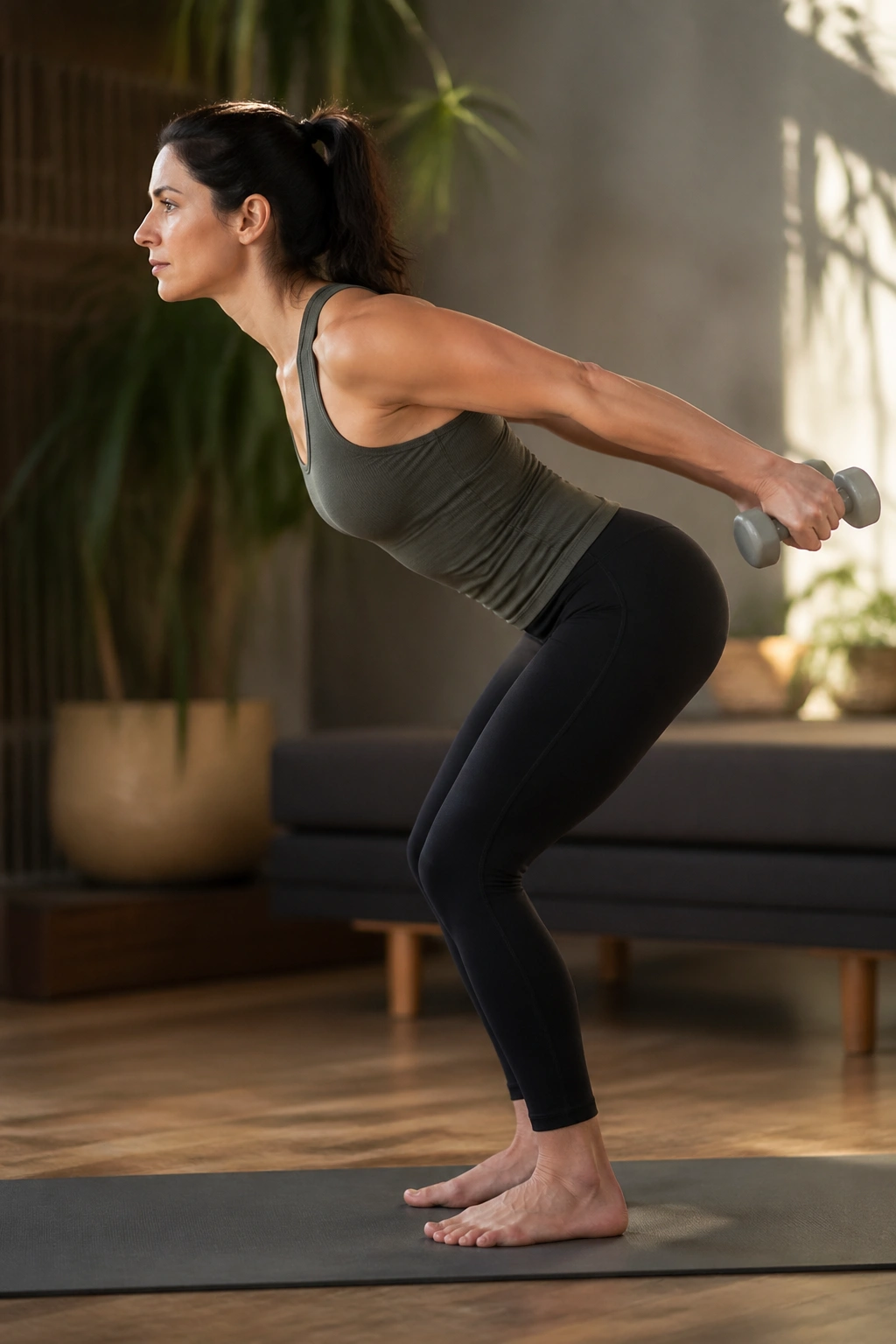
Triceps kickbacks are brutally honest. If you swing, you feel almost nothing. If you stay still, the back of the arm lights up in about two reps.
Hinge slightly at the hips or kneel on the mat with your torso tall. Keep your elbows tucked near your sides and extend the forearms back until the arms are straight, then bend them again on a slow return. The elbows should stay high and still, almost like little hinges on a door.
Twelve to fifteen reps per set works well with light weights. Go slower on the way back than on the way out. That tiny pause at full extension is where the work hides.
No momentum. If the dumbbells start swinging like pendulums, cut the weight in half and make the movement cleaner.
5. Slow Arm Circles and Tiny Pulses
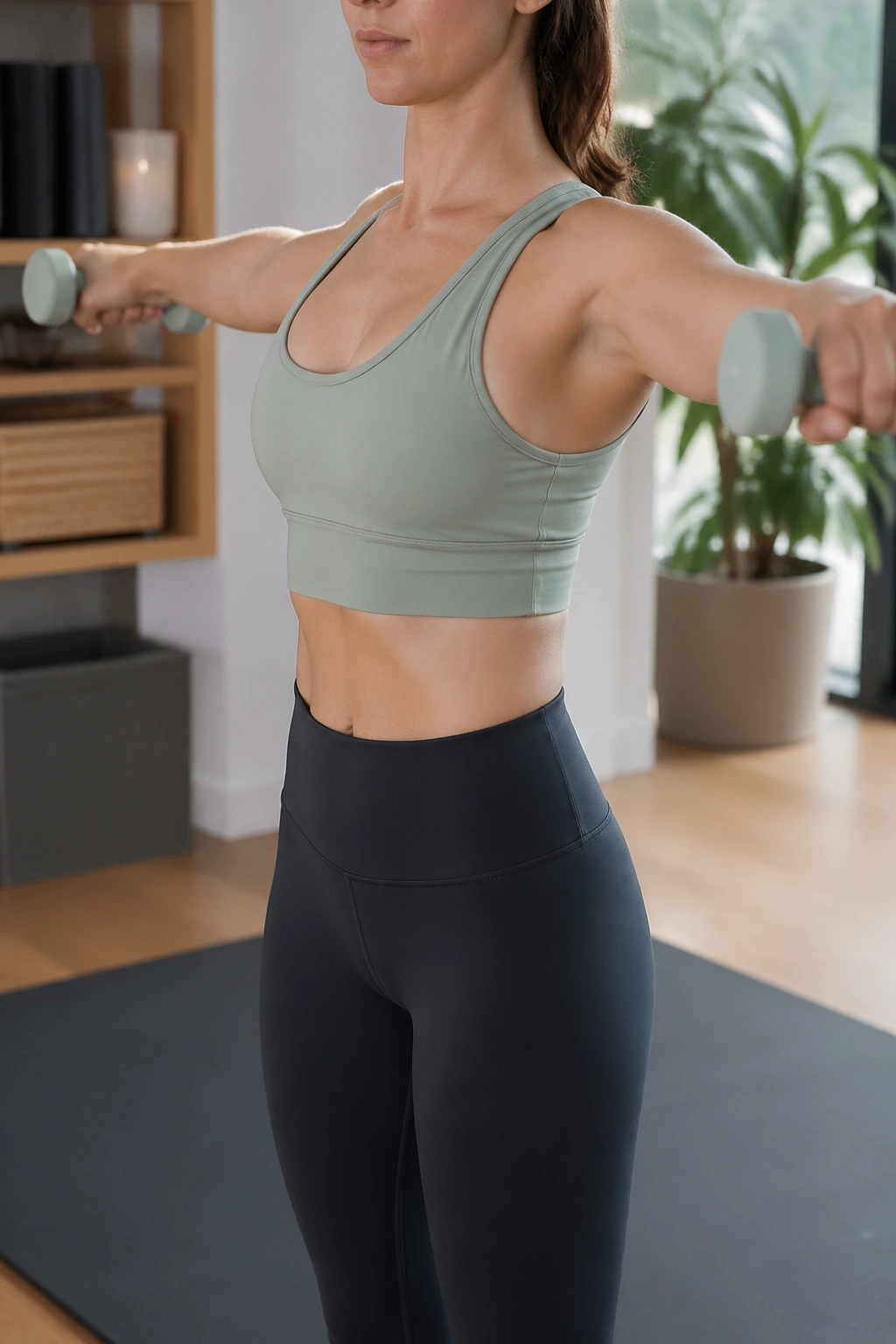
Tiny circles look harmless. They are not.
Hold the arms out to the sides at shoulder height with palms down and start making circles no larger than a dinner plate. Do 20 seconds forward, then 20 seconds backward, then finish with 10 tiny pulses at the top. Keep the neck long and the chest soft, because shrugging defeats the point almost immediately.
Why this one earns its place
The shoulder stabilizers get tired before the big arm muscles do, and that is useful. It teaches you where your real limits are, which is often not where you think they are.
- Best weight: 1 pound, maybe 2 if your form stays tidy
- Best posture: ribs stacked over hips
- Best cue: “reach long” instead of “lift higher”
If your wrists or elbows complain, drop the weights and keep the same rhythm. The burn still shows up.
6. Side-Lying Chest Press and Open
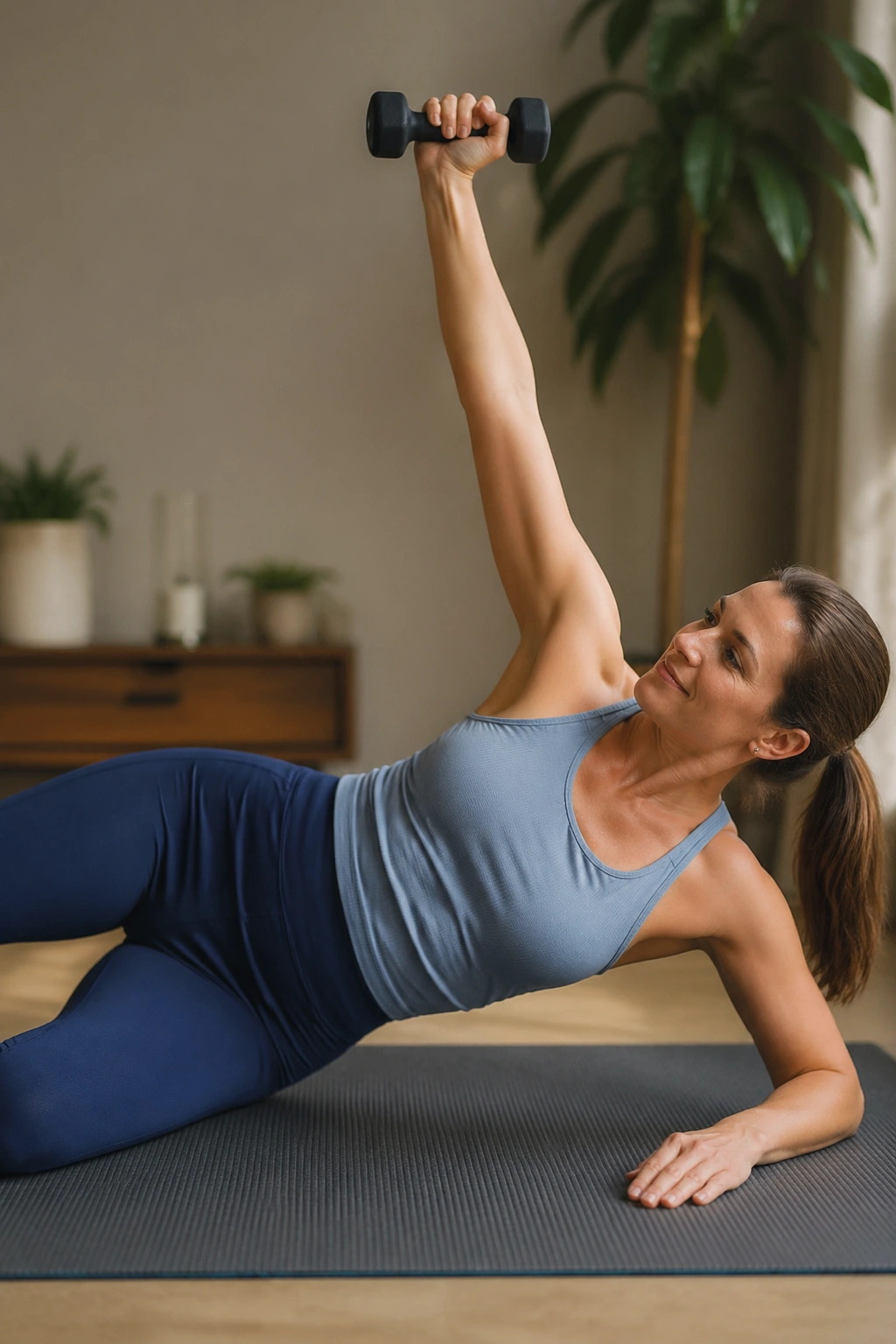
Unlike a standing press, this one pins your torso to the mat and makes the arm do the work without help from a backward lean.
Lie on your side with the bottom knee bent for balance and the top arm holding a dumbbell near the chest. Press the weight straight up, then lower it slowly until the elbow nearly touches the ribs. After a few reps, add a small chest-open motion by sweeping the arm forward and back across the body with no weight or with an even lighter one.
That combination gives the shoulder a useful range without turning the move into a sloppy twist. Eight slow reps on each side is enough to make it count.
If the shoulder feels pinchy, shorten the range. The arm should feel worked, not jammed.
7. Seated Overhead Press With a Locked-In Rib Cage
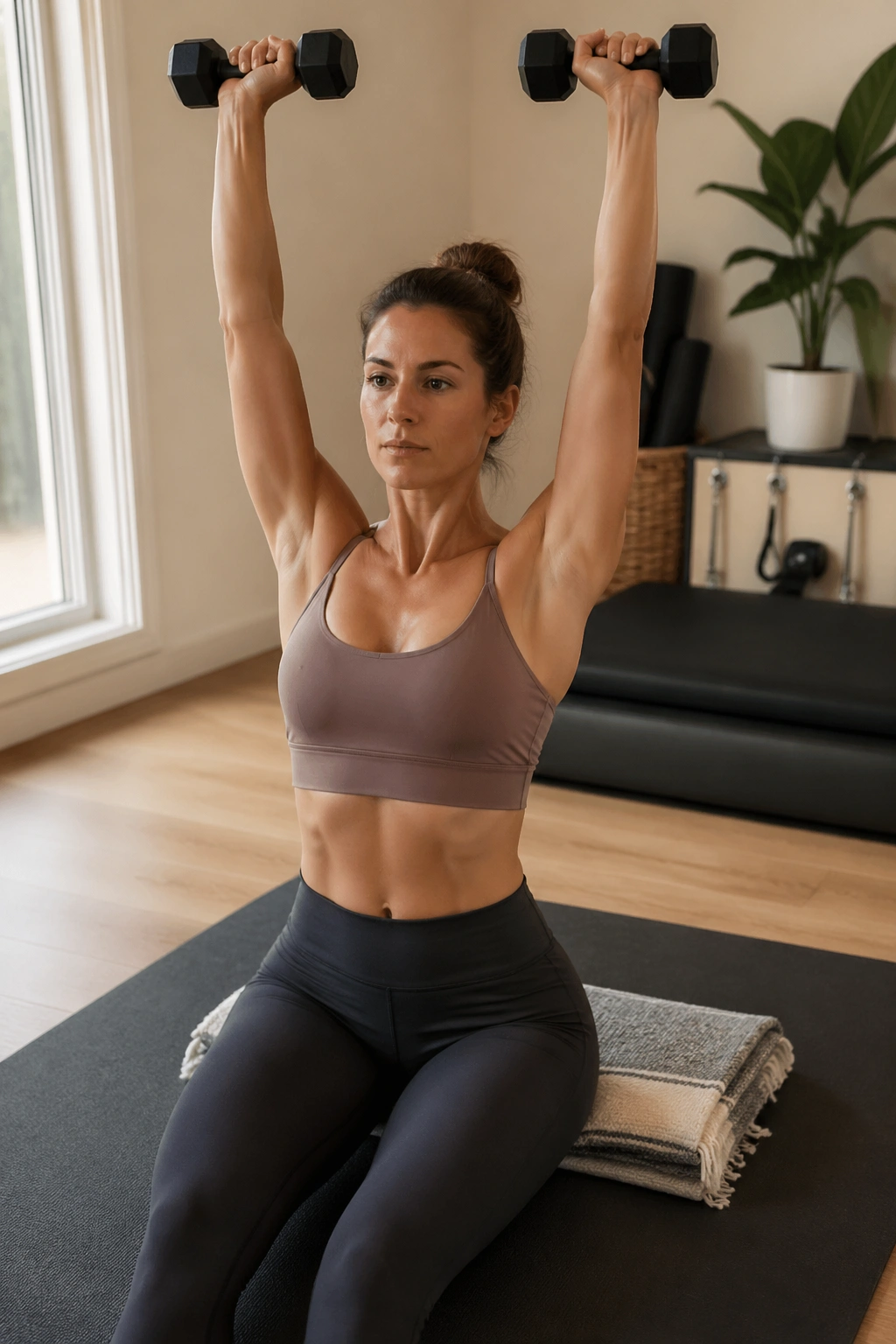
Sitting down strips away a lot of cheating. That is why the seated overhead press belongs on any strong-arm Pilates list.
Sit tall on the mat, a folded blanket, or a firm cushion, and bring the weights to shoulder height. Press them overhead without letting the ribs flare forward, then lower them on a 3-count descent. If you want more challenge, pause for two seconds at the top and keep the biceps close to the ears without shrugging.
What makes this different
The seated position forces the trunk to stay honest. No leg drive. No little sway. Just the shoulders and triceps doing their jobs.
Ten reps is a nice start. If your lower back arches, stop the lift a little lower and rebuild from there.
A clean press feels calm. A sloppy one feels like your spine is trying to escape.
8. Plank Shoulder Taps on Dumbbells
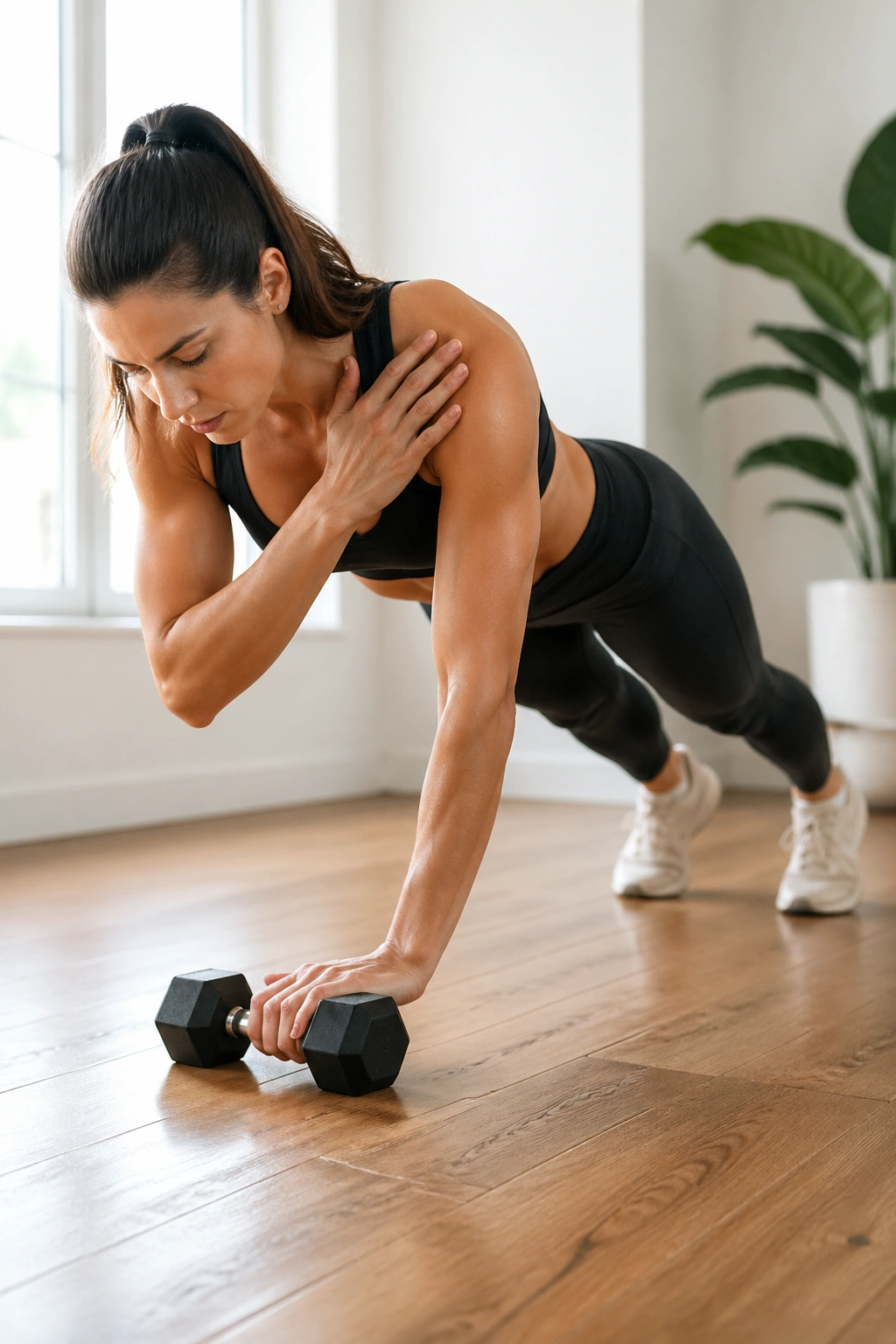
This is one of the better weighted Pilates workouts if you want arm strength, wrist relief, and core control in one short blast.
Set up in a high plank with each hand resting on a dumbbell placed flat on the mat. The weights lift the wrists just enough to make the position easier on the joints. Tap one shoulder with the opposite hand, set it down, then switch sides without letting the hips rock.
Keep the feet wide if you need more balance. Use the knees if the plank turns into a shake-fest too early. Six to eight taps per side is enough when the tempo stays slow.
If the body sways, reset. The point is not speed. The point is staying steady while the arms do something awkward.
9. Swan Prep With Lifted Arms
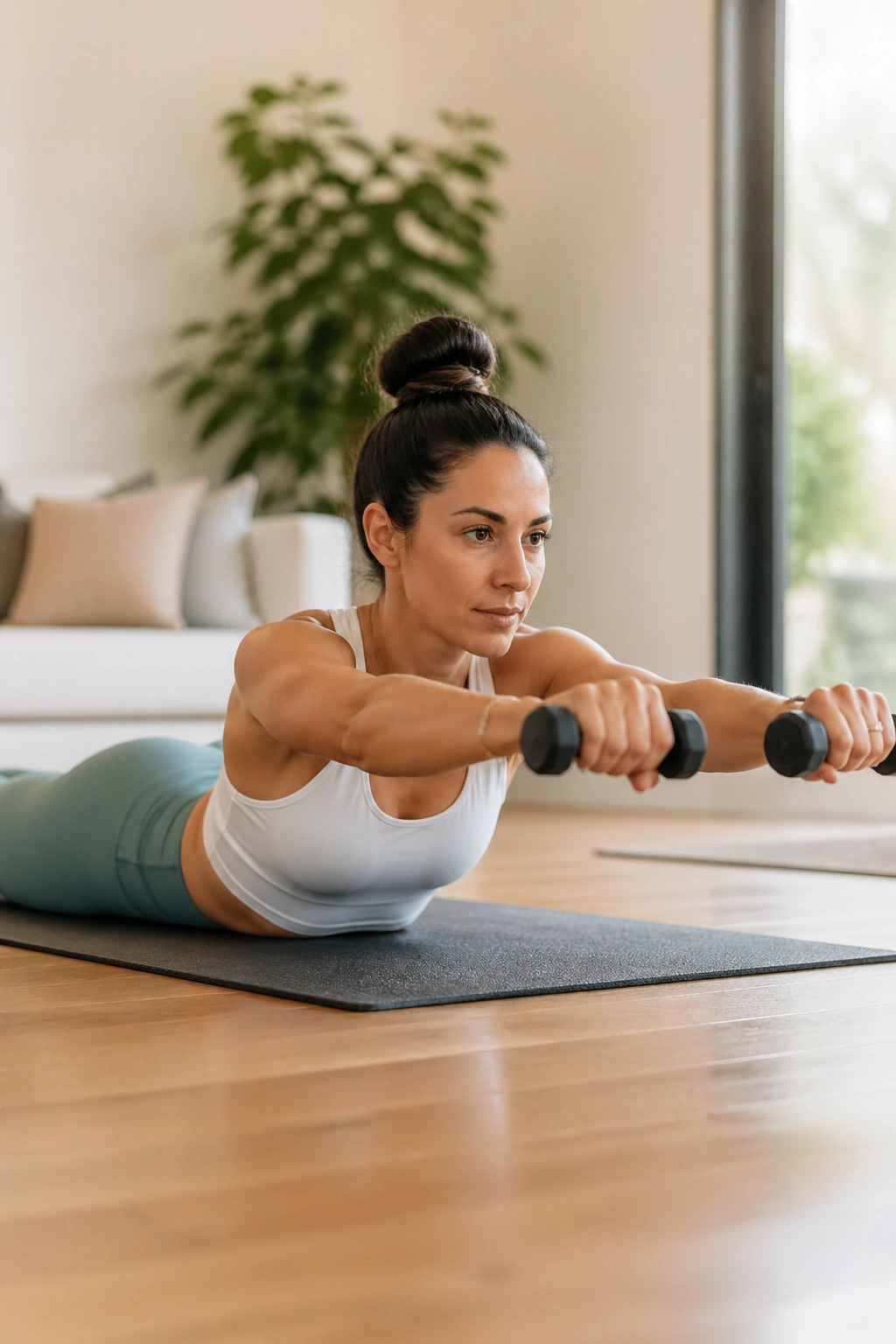
The top of a mat class often gives people that long, graceful look that hides how hard the upper back is working. Swan prep does the same thing, only with more arm involvement.
Lie face down with the weights in your hands and your elbows bent near the ribs. Lift the chest an inch or two, then reach the arms forward and slightly off the mat before returning to the start. The lift should feel small and controlled, not like a backbend contest.
Six to eight reps is enough. If your low back takes over, lower the chest sooner and keep the movement shorter. The arms and upper back should feel busy; the lumbar spine should not be carrying the whole show.
This one is sneaky. It teaches the shoulders to stay open while the back of the body starts earning its keep.
10. Weighted Pilates Boxing Series
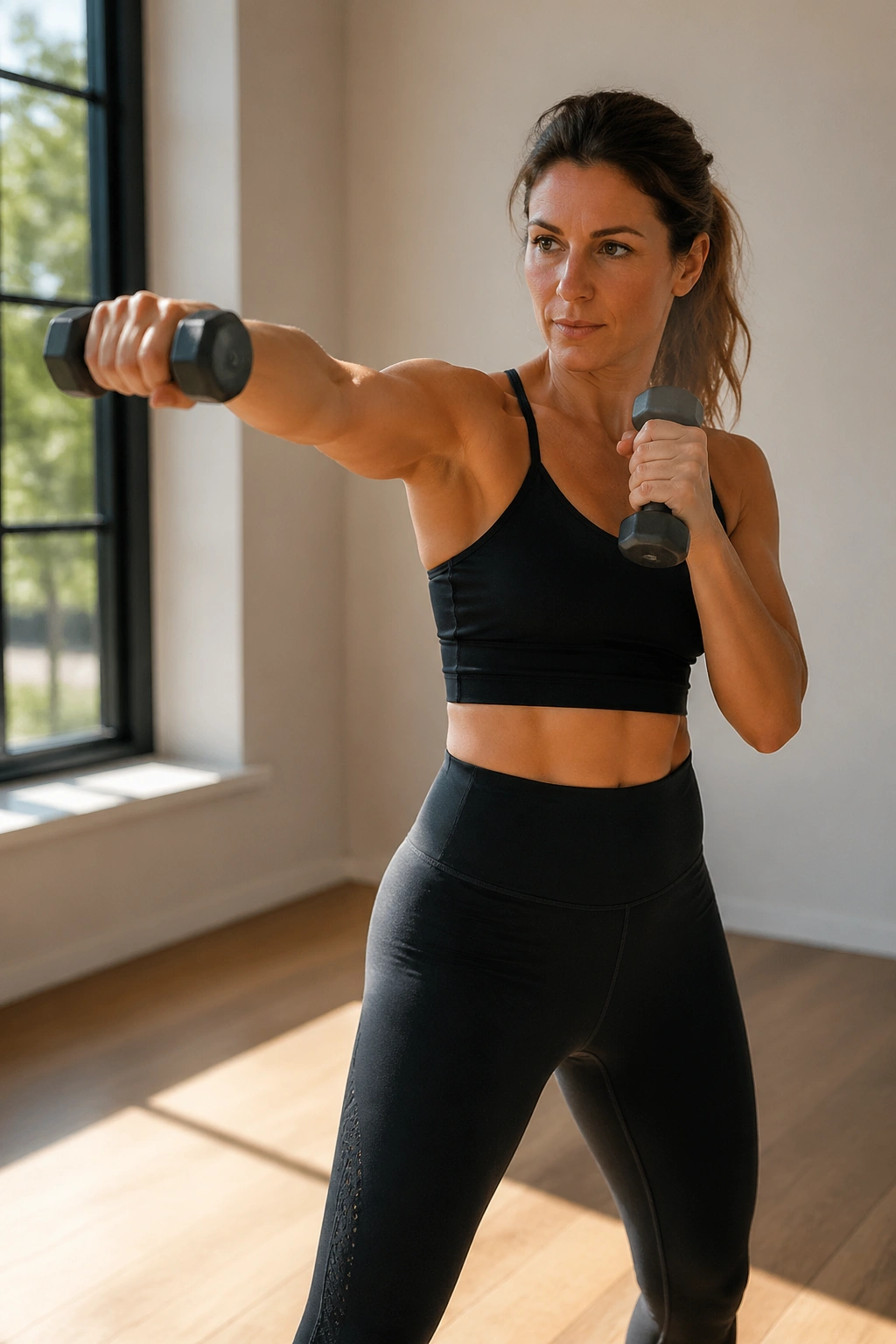
Punching with tiny weights turns out to be a much better arm workout than most people expect. The key is to keep the punches sharp and short, not wild.
Sit tall or stand in Pilates stance with light weights in your hands. Throw straight jabs, then cross punches across the body, then finish with a few controlled uppercuts. Work in 20-second bursts with 10 seconds of rest between rounds. Two to four rounds is a solid upper-body burner.
The torso can rotate a little, but not so much that the lower back starts steering. Keep the punches coming from the shoulder and upper back, then snap the elbow back to the ribs.
Use very light weights here. Boxing with heavy dumbbells gets ugly fast and usually turns into a shoulder shrug contest.
11. Bent-Over Row and Squeeze
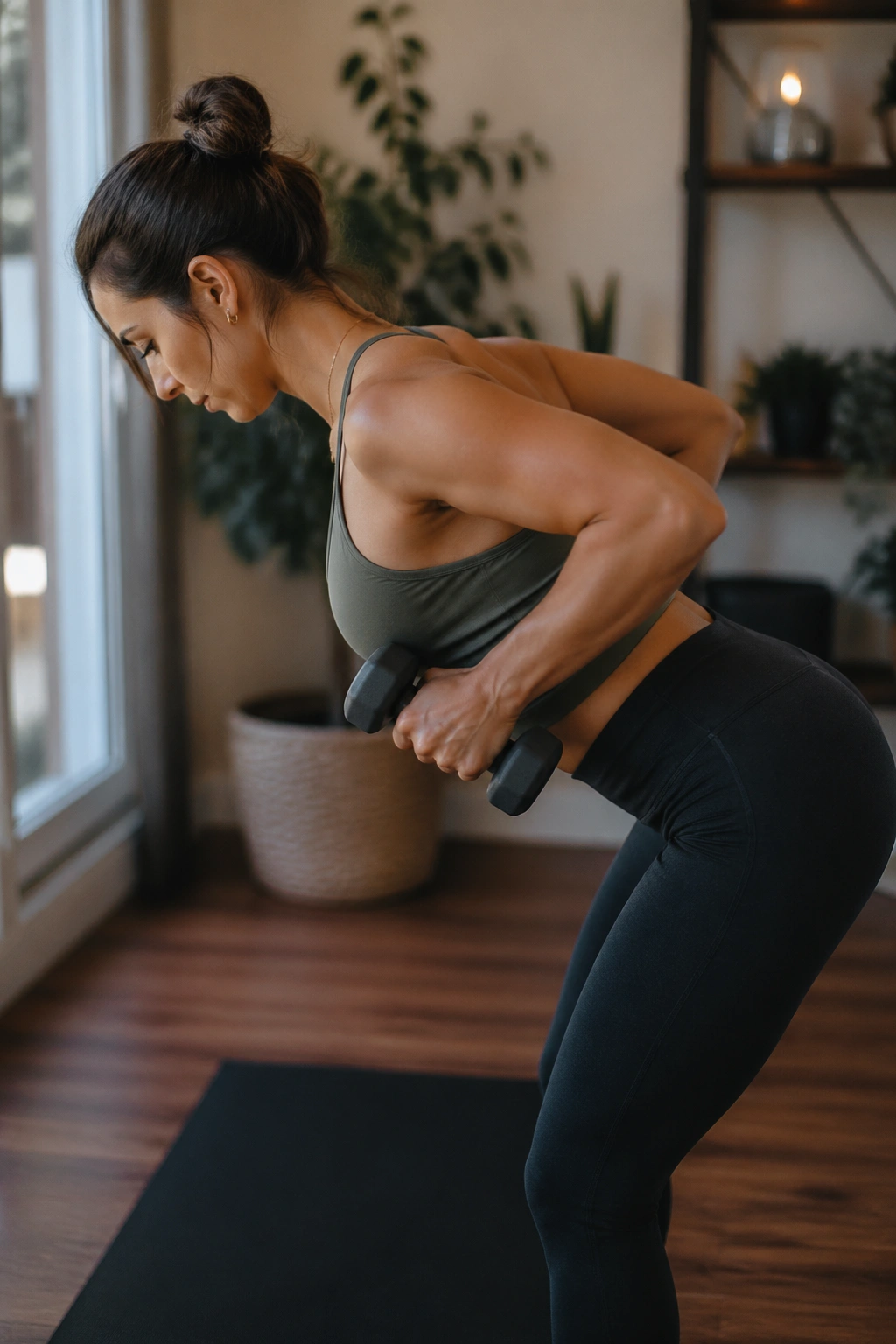
The arm without the back is half a job. Rows fix that.
Hinge forward until your torso is roughly parallel to the floor, let the dumbbells hang under your shoulders, and pull them toward the lower ribs. Pause for two counts at the top, then lower them slowly until the arms hang long again. Your shoulder blades should glide back and down, not pinch together so hard that the neck tightens.
Twelve reps is a good target. If the low back gets cranky, stand a little taller and brace the abs harder. The motion should stay smooth and compact.
This is one of those moves that quietly makes everything else better. Strong arms look better when the upper back is doing its part.
12. Bridge Presses for Back-of-Arm Strength
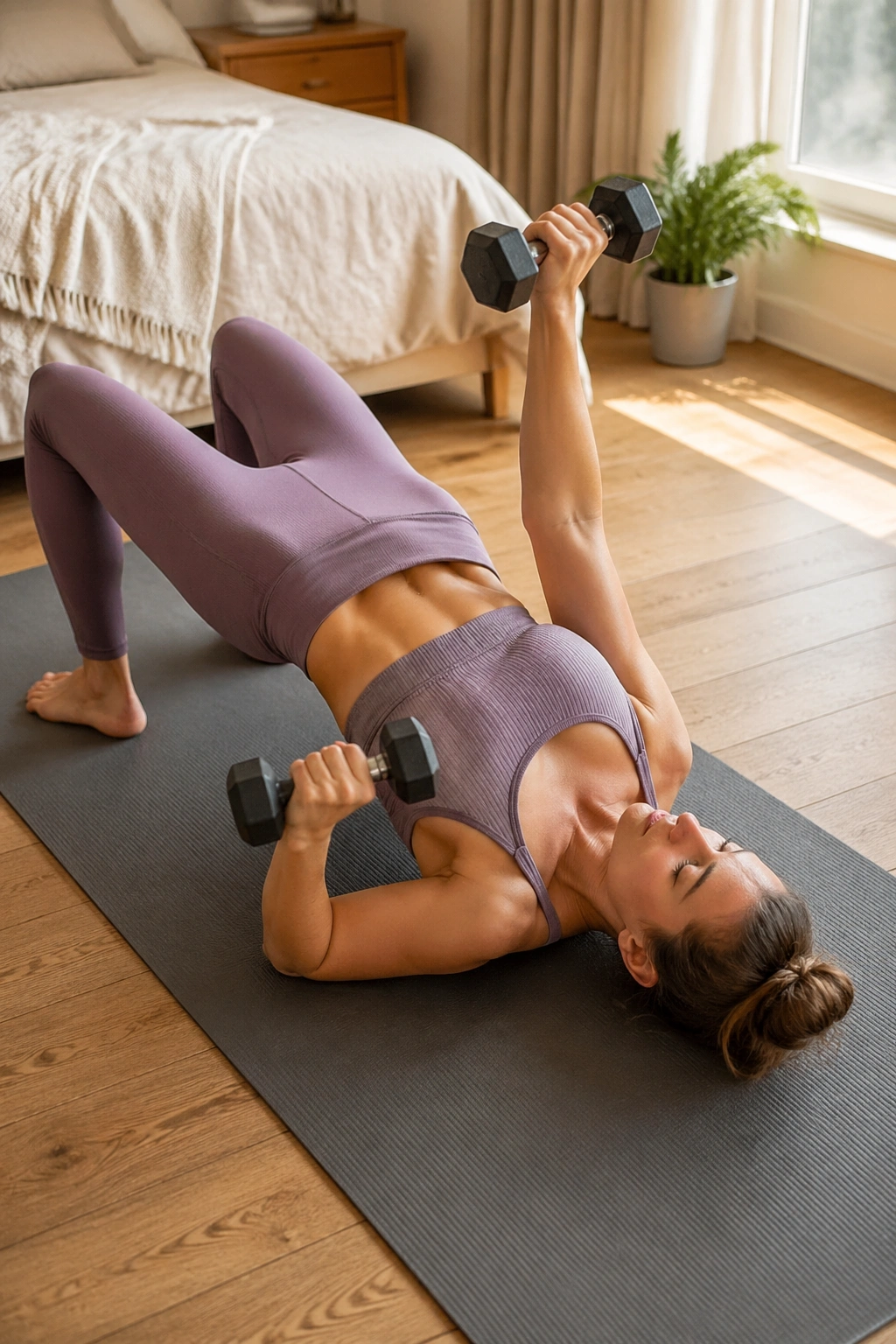
Lie on your back, bend the knees, and press the hips into a bridge. Hold the weights above the chest and lower the elbows toward the floor, then press the dumbbells back up until the arms are straight.
The bridge position changes the feel of the arm work right away. The glutes and hamstrings stabilize the body while the triceps and shoulders keep pressing. That makes the upper body work harder without borrowing from momentum.
Eight to ten controlled reps usually does the trick. If the ribs flare open or the hips sink, lower the bridge a little and keep the spine longer.
Don’t rush the lower phase. The slow return is where the triceps start to complain.
13. Mermaid Reach With a Side Bend
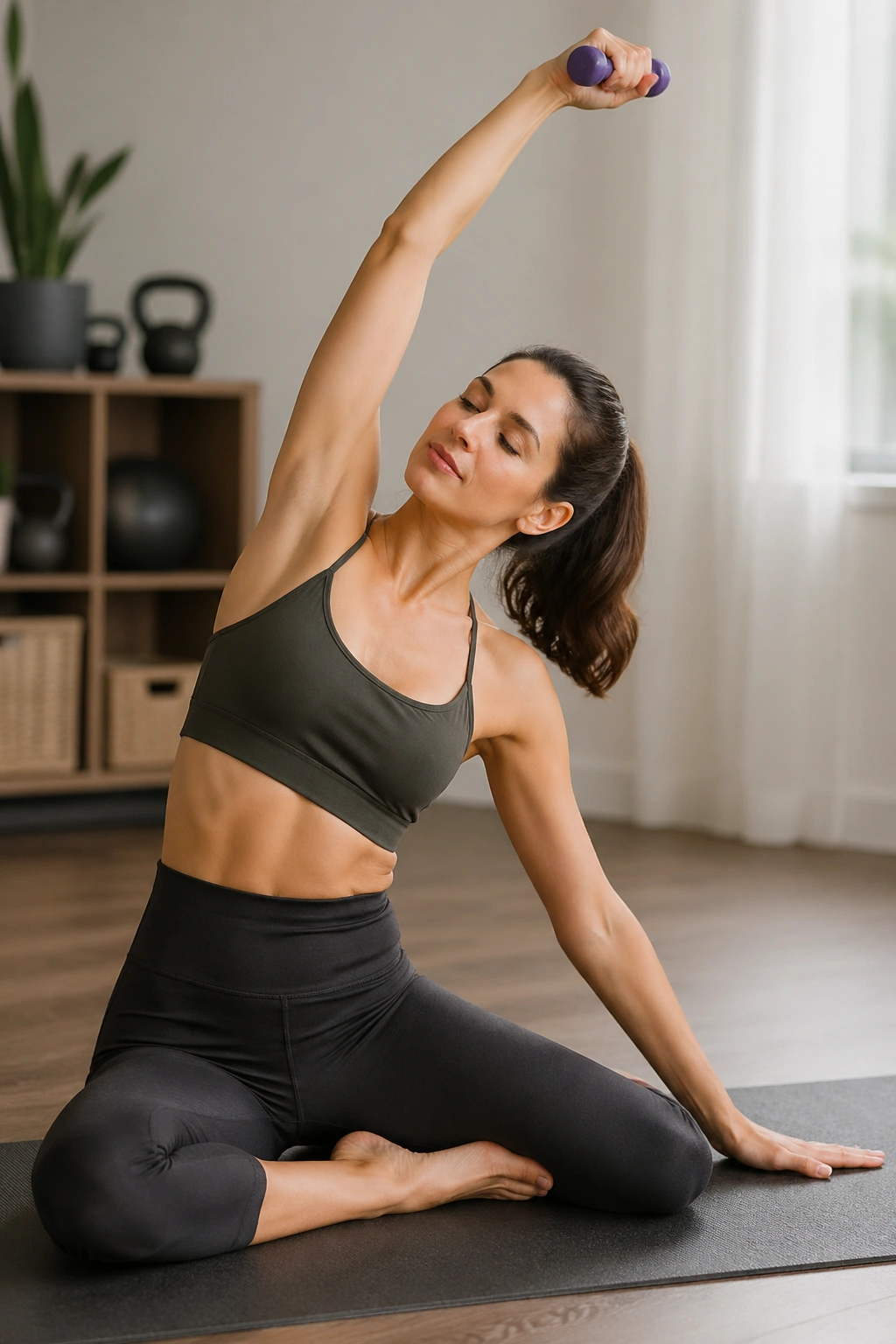
This one looks graceful first and then gets honest. The side body and shoulder both start to talk back.
Sit with one hip grounded, hold a light dumbbell in the top hand, and reach the arm overhead as you side bend away from the grounded side. Return to center, then lightly press the arm overhead again before switching sides. Keep the elbow soft and the wrist in line with the forearm so the shoulder does not get cranky.
How to get the most from it
- Keep both sitting bones heavy
- Reach through the fingertips before bending
- Move slower on the way back up
- Use a smaller weight than you think you need
Six reps per side is enough to create a long, clean line from the waist to the fingertips. It feels a little like a stretch at first. Then the arm work arrives.
14. Curl-Hold-Curl for Biceps Endurance
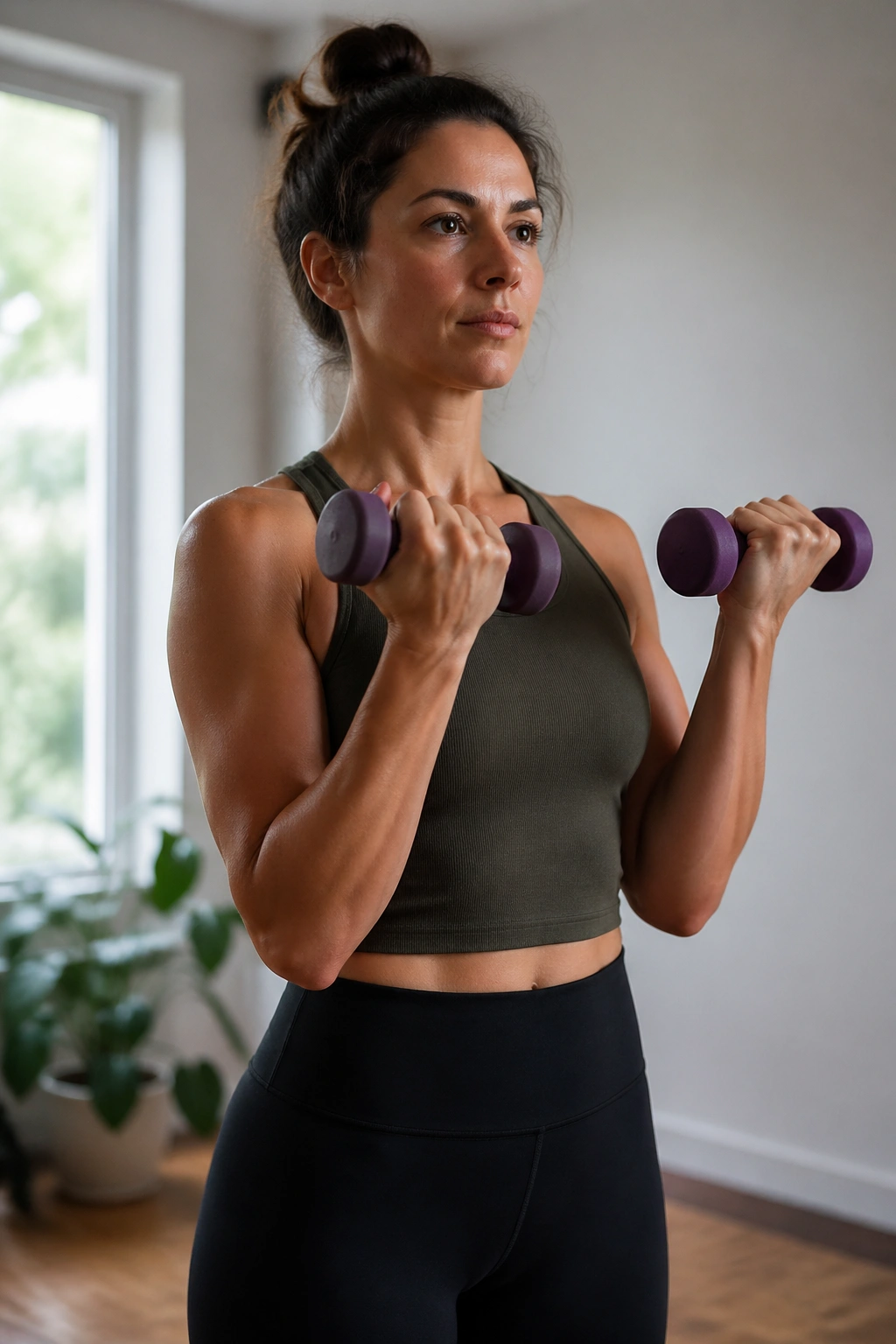
Biceps work better when you stop rushing them.
Stand tall with your palms facing forward and curl the weights up to shoulder height. Hold that halfway point for 10 seconds, then lower the arms in three slow counts. A shorter version works too: curl halfway, pulse twice, finish the lift, then lower with control.
That kind of isometric hold turns an ordinary curl into a real strength test. The shoulders stay quiet, the elbows stay close to the ribs, and the wrists stay straight.
- Best weight: light enough to keep the elbows still
- Best cue: “lift with the forearm, not the shoulder”
- Common mistake: swinging the body backward
Six to eight curls with holds is plenty. Your biceps should feel it before the set ends.
15. Kneeling Lateral Raise Ladder
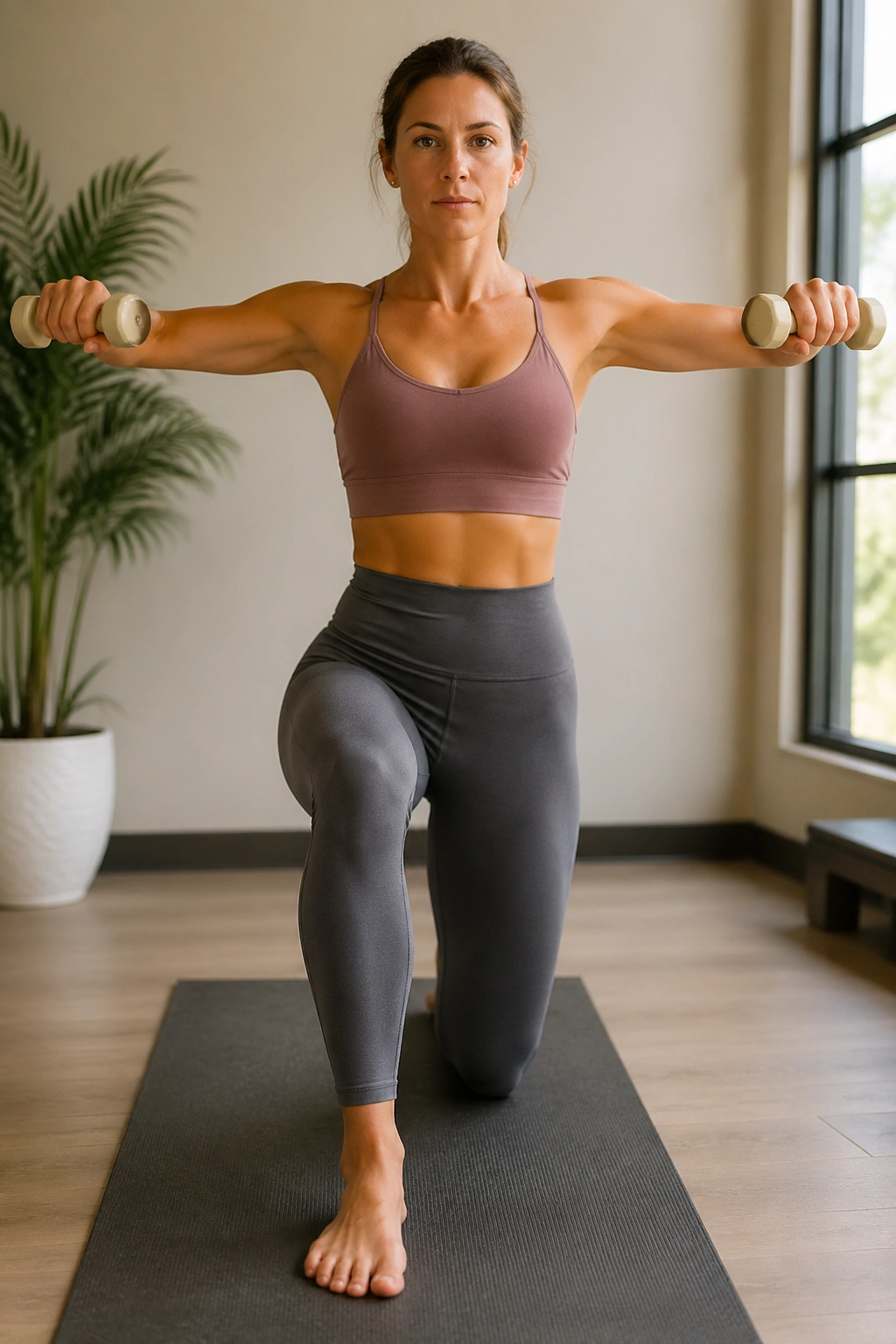
Kneeling takes away the easy cheat of leg drive, and that is why this one works so well.
Get into a tall kneel or a half-kneeling position with one knee down and one foot planted. Hold the dumbbells by your sides and raise them out to shoulder height, then lower them slowly. After a few controlled reps, add tiny pulses at the top for the final three counts.
Why kneeling helps
The pelvis settles. The ribs stop wandering. The shoulders have to finish the job themselves.
Try 8 full raises, then 8 half-range raises, then 8 pulses at the top. That ladder format keeps the burn climbing without needing heavier weight.
If the neck tightens, lower the weights and reset your posture. The move is working when the side delts start heating up and the torso stays quiet.
16. Swimming With Hand Weights
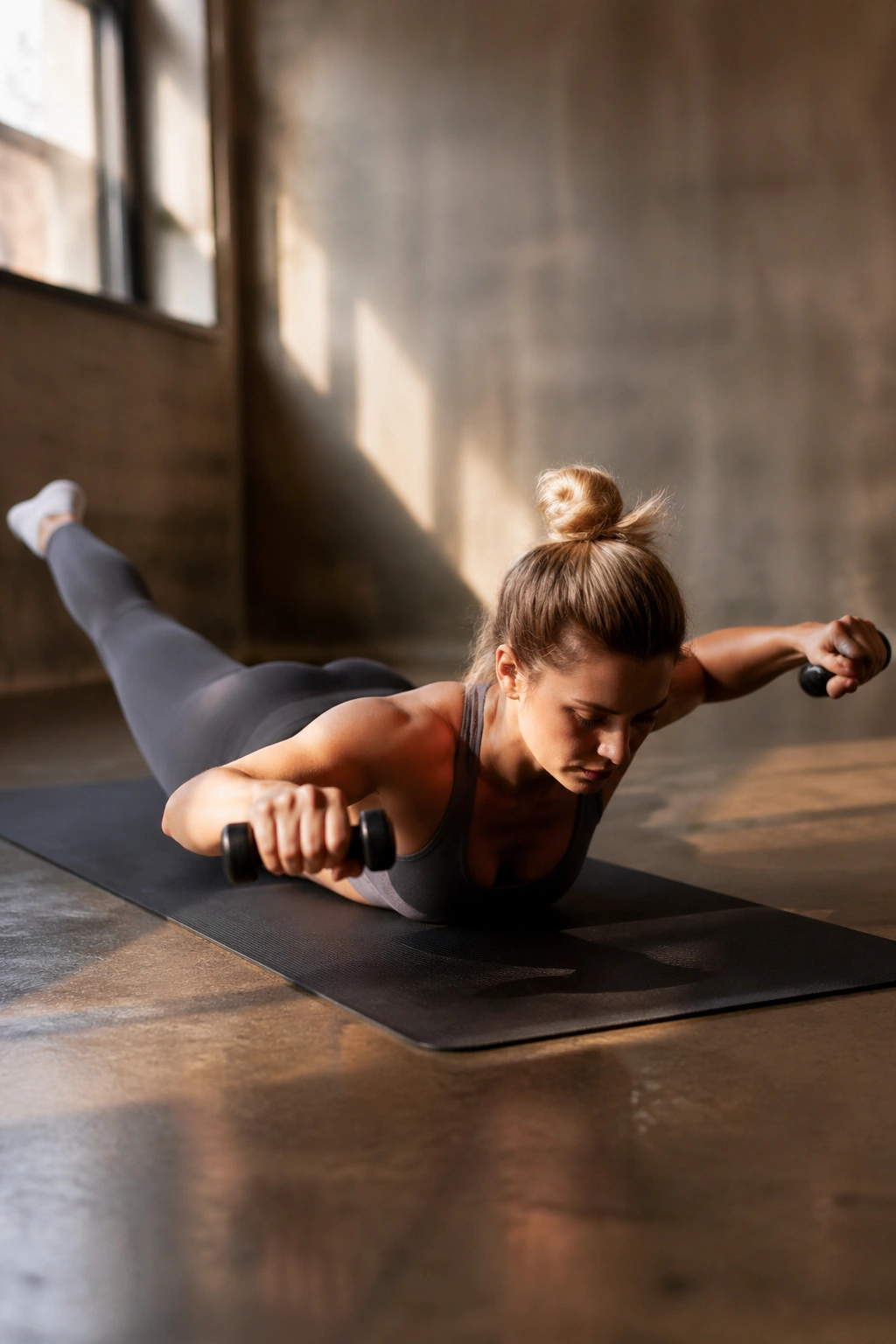
Swimming with hand weights is one of those Pilates arm exercises that looks almost too small to matter. Then the rear delts and triceps start burning.
Lie face down with your forehead hovering above the mat and your arms stretched long in front of you. Lift the chest a little, then alternate raising opposite arm and leg in a slow swimming pattern. If the shoulders feel strong and stable, keep the weights in your hands. If they feel pinchy, ditch the weights and keep the arm pattern.
Work for 20 to 30 seconds at a time. The movement should stay tiny and clean, not big and splashy.
The low back should not take over. If it does, shorten the lift and think more about length than height.
17. Crisscross Punch-and-Pull Combo
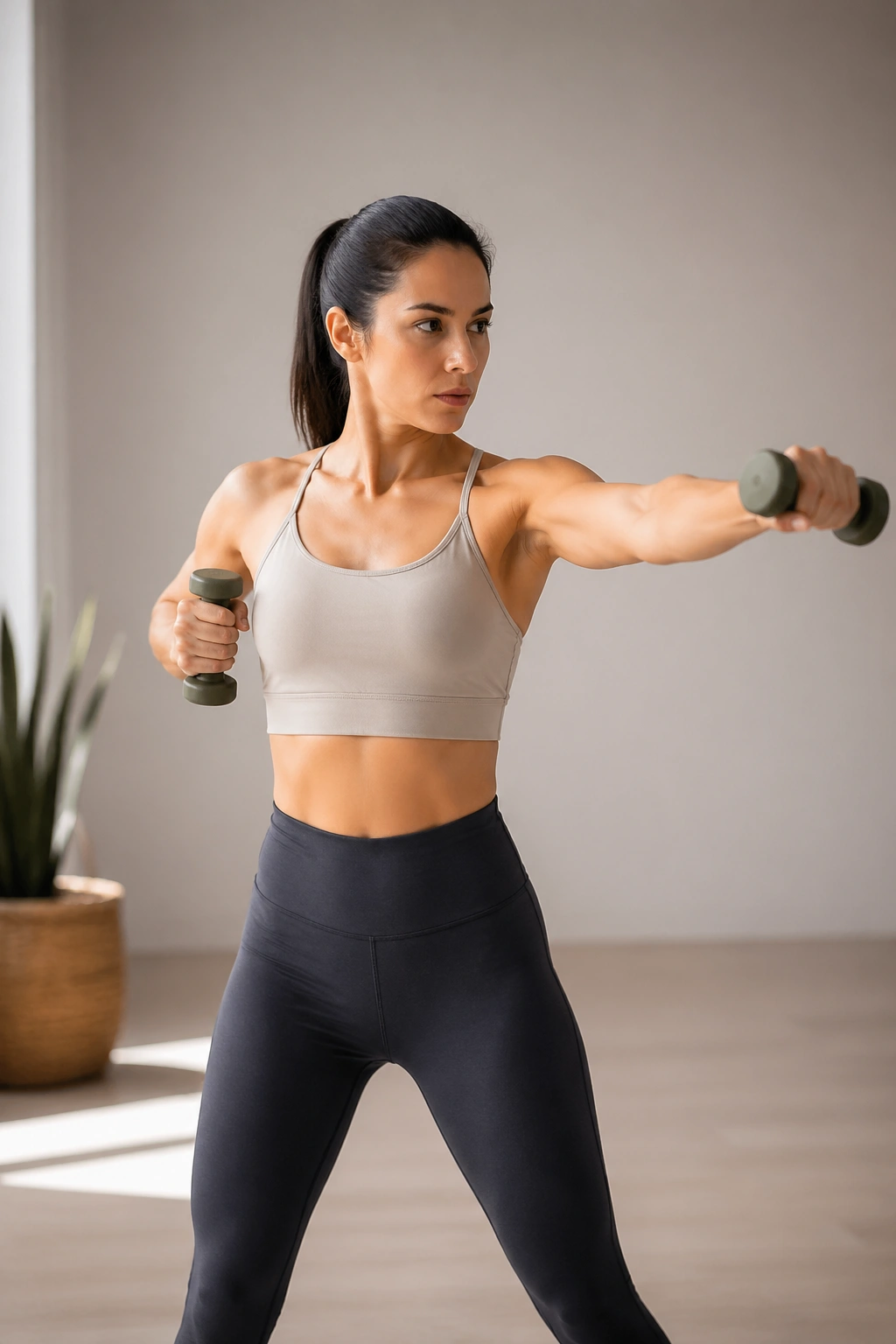
Cross-body work does a lot of useful things at once. It trains rotation, wakes up the shoulders, and keeps the arms from moving like separate parts.
Stand or sit tall with a light weight in each hand. Punch one arm diagonally across the body, then pull the elbow back to the ribs before switching sides. You can add a tiny torso turn, but keep it small enough that the lower back stays calm. The pull-back matters as much as the punch. Skip it and the shoulder loses half the benefit.
Eight to ten reps per side is enough. Keep the punches crisp and the returns slower than you think they need to be.
This one is easy to rush. The slower version gives the arms more time under tension and the obliques more to do.
18. Standing Diagonal Chop Series
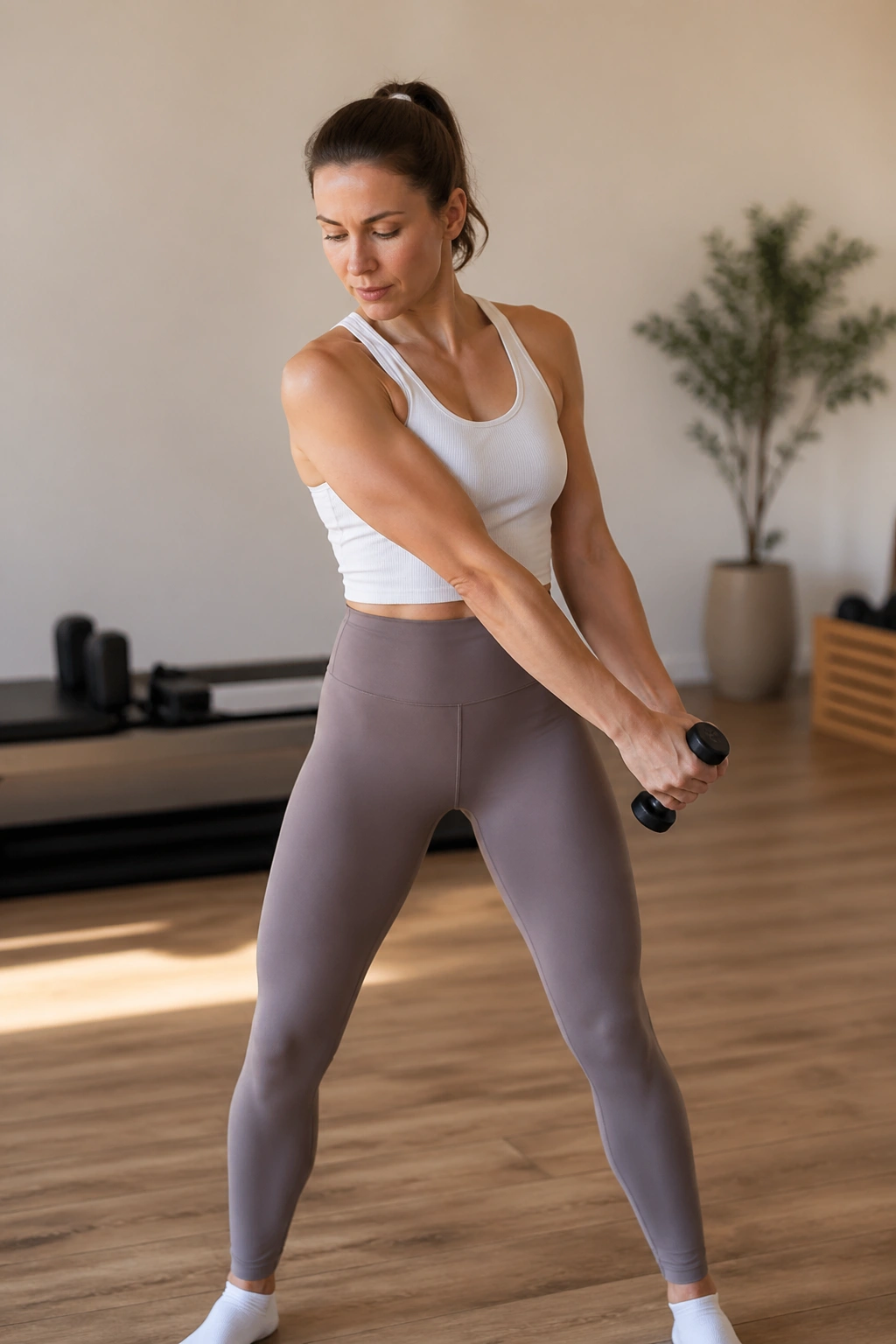
A diagonal chop makes the whole upper body work, which is exactly why it belongs in an arm-focused Pilates session.
Stand with your feet in Pilates stance and hold one weight near the shoulder on one side. Chop it diagonally across the body toward the opposite hip, then return it with control. Keep the elbows soft, the ribs down, and the pelvis steady enough that the hips do not swing wildly.
Quick cues
- Start high and finish low
- Keep the movement close to the body
- Rotate from the ribs, not the knees
- Use a light weight that never pulls you off balance
Ten chops per side is a good amount. It is a stronger arm move than it first looks, and the obliques tend to get involved whether they want to or not.
19. Push-Up to Pilates Press
This one is a little less graceful and a lot more useful than it sounds.
Do 4 slow push-ups from the knees or toes, then stand up and press the weights overhead for 8 strict reps. Rest briefly, then repeat the pair for 2 to 4 rounds. The push-up loads the chest, triceps, and shoulders; the standing press asks those same muscles to organize themselves again under control.
The transition from floor to standing keeps the upper body honest. It also makes it harder to coast through the reps. If the wrists dislike floor work, swap the push-up for an incline version against a wall or sturdy counter.
Do not chase speed here. Clean reps matter more than a long set.
20. Wall-Facing Arm Finisher
Face a wall from about one arm’s length away and hold a pair of very light weights. Bend the elbows into a cactus shape, press the forearms gently toward the wall, then slide the arms upward into a narrow V and back down again. Finish with a short hold at shoulder height and 10 tiny pulses.
That wall position keeps the ribs from flaring and makes the shoulders work in a tighter, more controlled path. It is a smart end-of-session burner because the body can’t hide much. No leg swing. No bouncing. Just tired arms and a spine trying to stay tidy.
Try 45 seconds of work, rest for 15 seconds, then go again if you still have gas. Two rounds is enough for most people.
If you want the cleanest possible finish, keep the weights almost silly-light. The wall will do the rest.
