



Pilates ab workouts can look almost too calm until your lower abs start shaking and your ribs try to pop off the mat. That’s the joke with Pilates: the movement is small, but the demand is not.
The good stuff happens under the skin of the obvious muscles. Your rectus abdominis gets the familiar curl-and-hold work, the obliques handle rotation and side bending, and the deeper transverse abdominis keeps your torso from wobbling like loose luggage. If the breath is sloppy, the whole thing gets sloppy. Fast.
A defined core has a lot more to do with control than with punishment. Crunches can burn. They can also hand the job to your neck and hip flexors if you let them. Pilates keeps asking a harder question: can you move your arms and legs away from center while your trunk stays quiet?
The moves below start with the classic mat work and keep getting more demanding. Bend the knees if your low back starts arching, slow down if your neck gets cranky, and pay attention to the exhale. The first one is the classic for a reason.
1. The Pilates Hundred
The Hundred is the move that tells you very quickly whether your core is actually doing the work. Ten breaths in, ten breaths out, arms pumping, legs held still. It sounds tidy on paper. It feels like a small storm once you’re halfway through.
Why It Works
The magic is the combination of breath, isometric hold, and arm endurance. Your ribs stay drawn in while your arms pulse, which makes your trunk work harder than it would in a plain crunch. Keep the legs in tabletop if you’re newer. Straight legs look fancy, but they are not worth it if your lower back lifts off the mat.
- Curl your head and shoulders up only if your neck stays relaxed.
- Pump the arms about 4 to 6 inches.
- Breathe for 10 full cycles: inhale for 5 pumps, exhale for 5 pumps.
- Keep the low ribs heavy.
Tip: if your neck starts to grab, lower your head and keep the legs in tabletop. That is not a downgrade. It is smart Pilates.
2. Toe Taps in Tabletop
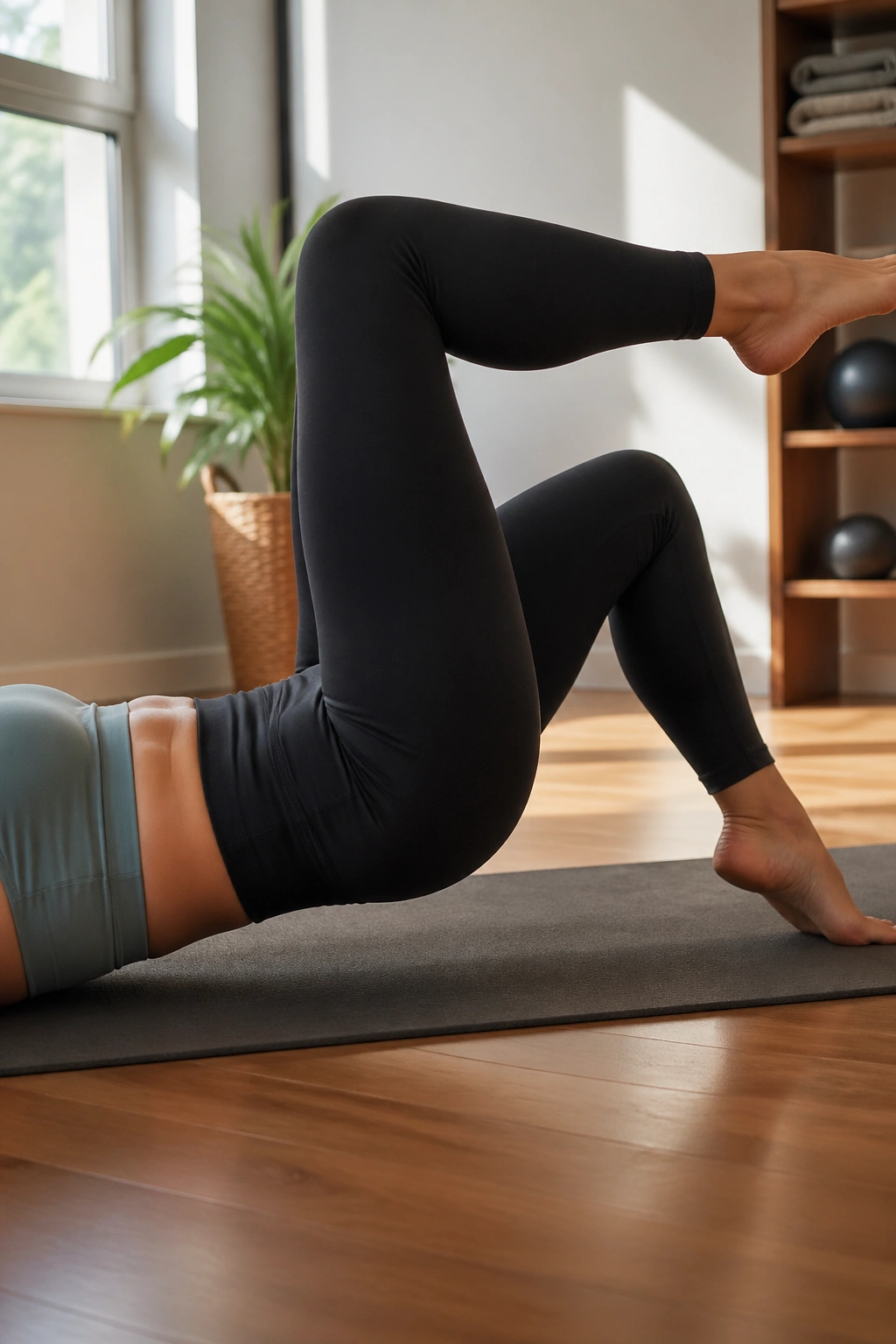
Toe taps are where a lot of people learn that a small Pilates ab workout can hit harder than a long set of crunches. The motion looks tiny. The work is not tiny at all.
The lower abs light up when the pelvis stays still. That is the whole game here. Lie on your back, bring both hips and knees to 90 degrees, then lower one foot to tap the mat and bring it back. The rule is simple: the spine stays quiet, the ribs stay heavy, and the movement comes from the hip joint, not a back arch.
Do 8 to 12 taps per side. If the low back arches the moment your foot reaches for the floor, stop higher. A higher tap with a flat back beats a dramatic tap with a sloppy pelvis every time. I’d rather see a precise 2-inch range than a messy 12-inch one.
3. Single-Leg Stretch
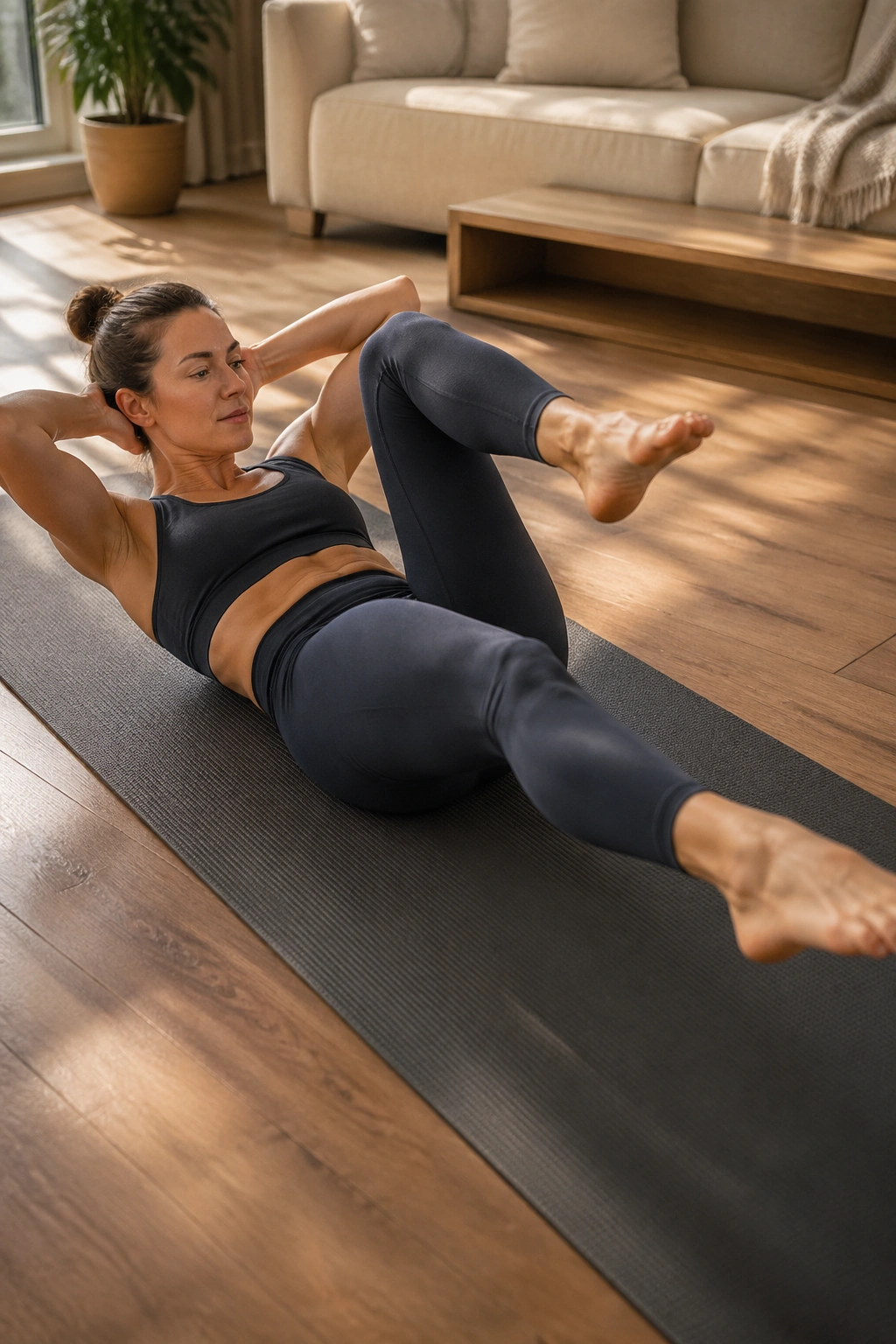
Why does one bent knee feel harder than a full crunch? Because your abs have to stop your torso from twisting, shifting, and cheating. That is the whole point of the single-leg stretch.
Lie on your back, curl the shoulders up, bring one knee in, and send the other leg long at a low diagonal. Switch sides with control. The moving leg should feel smooth, not flung. The still leg should stay active, almost like it is pressing through a long line of energy. Keep the elbows wide and the chin slightly tucked, not jammed toward the chest.
How to Use It
Try 8 to 10 switches per side and match each switch to an exhale. If your lower back starts to arch, raise the extended leg a little higher. If your neck complains, place one hand behind the head and one on the shin, then take the speed down. The exercise is cleaner when it looks almost boring. That’s the good version.
4. Double-Leg Stretch
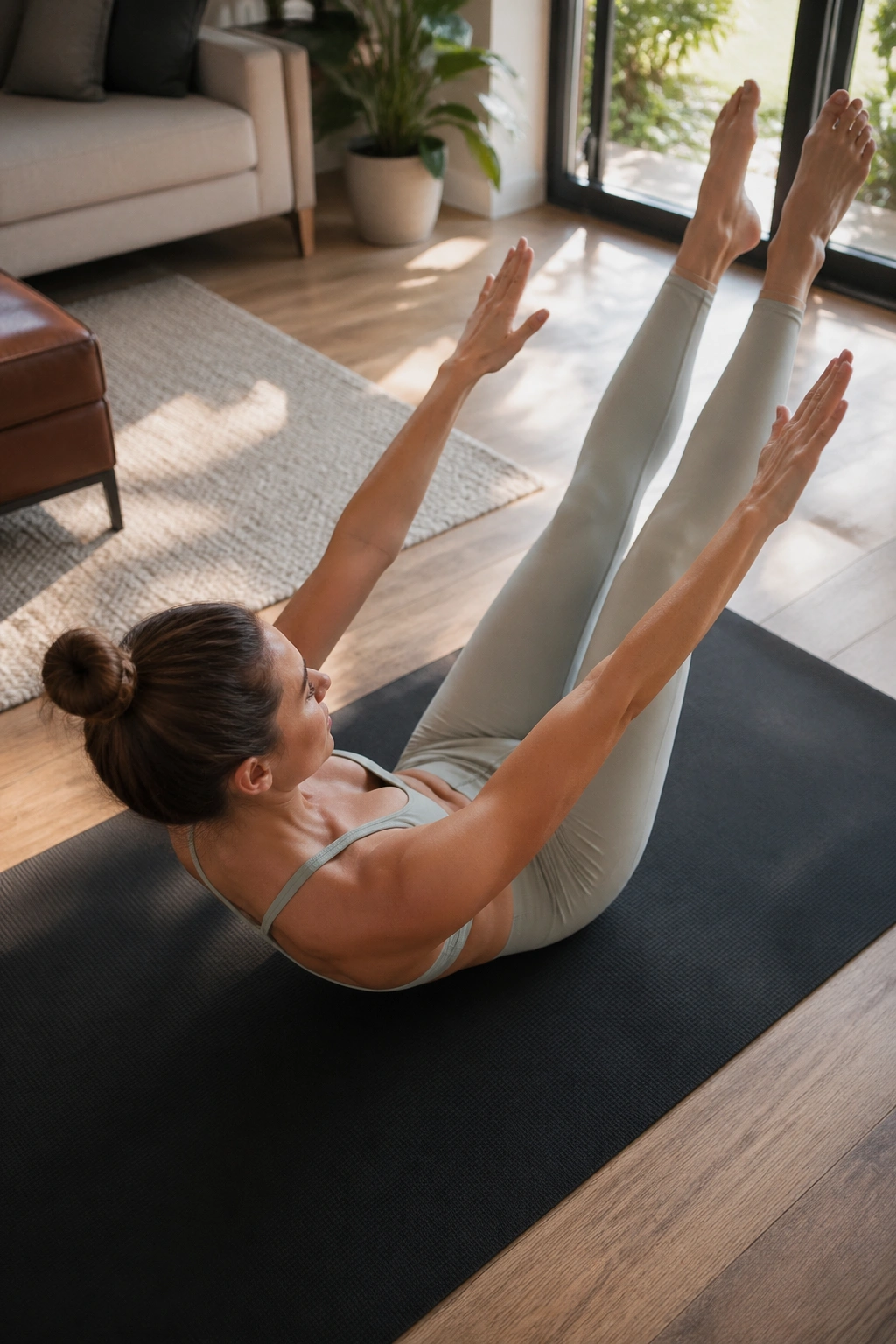
The first time both arms and both legs move away from center at the same time, a lot of people get quiet. They should. The double-leg stretch is one of those Pilates moves that exposes every shortcut in a hurry.
Your job is to keep the trunk curled while the limbs reach long. Draw one knee in, hold the shin, then extend both arms overhead and both legs out on a diagonal. Circle the arms back in as you bend the knees again. The lower back wants to arch. Resist that. The ribs want to flare. Don’t let them.
- Start with 6 to 8 reps.
- Keep the legs higher if the low back lifts.
- Reach through the fingertips and heels at the same time.
- Exhale as the limbs extend, inhale as they return.
One honest note: if you lose the curl, you lose the exercise. Range matters less than control here.
5. Crisscross
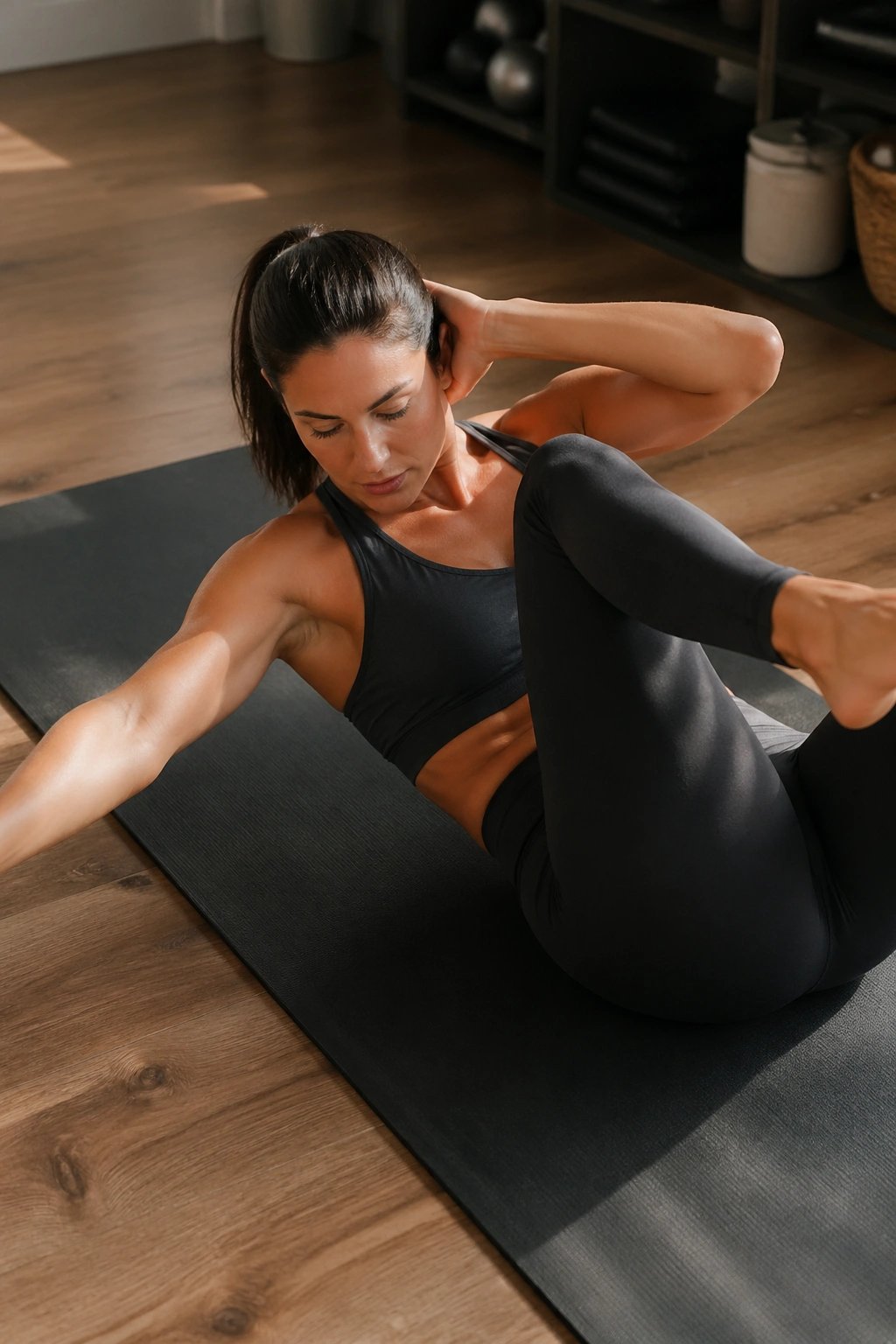
Crisscross is not a bicycle crunch in a Pilates outfit. It asks for more restraint, more trunk control, and less flailing. The rotation should come from the rib cage and obliques, not from yanking the elbow toward the knee like you’re trying to win a race nobody asked for.
Lie on your back, curl up, and extend one leg while the opposite shoulder rotates toward the bent knee. Switch sides slowly. The extended leg should hover low enough to challenge you, but high enough that your pelvis stays steady. When people rush this move, they usually make it smaller and uglier. Smaller is fine. Ugly is the part to fix.
What I like about crisscross is the honest oblique work. You feel the side of the waist, not just the front of the stomach. That matters if your goal is a defined core that looks and functions like one piece, not a set of disconnected muscles.
6. Roll-Up
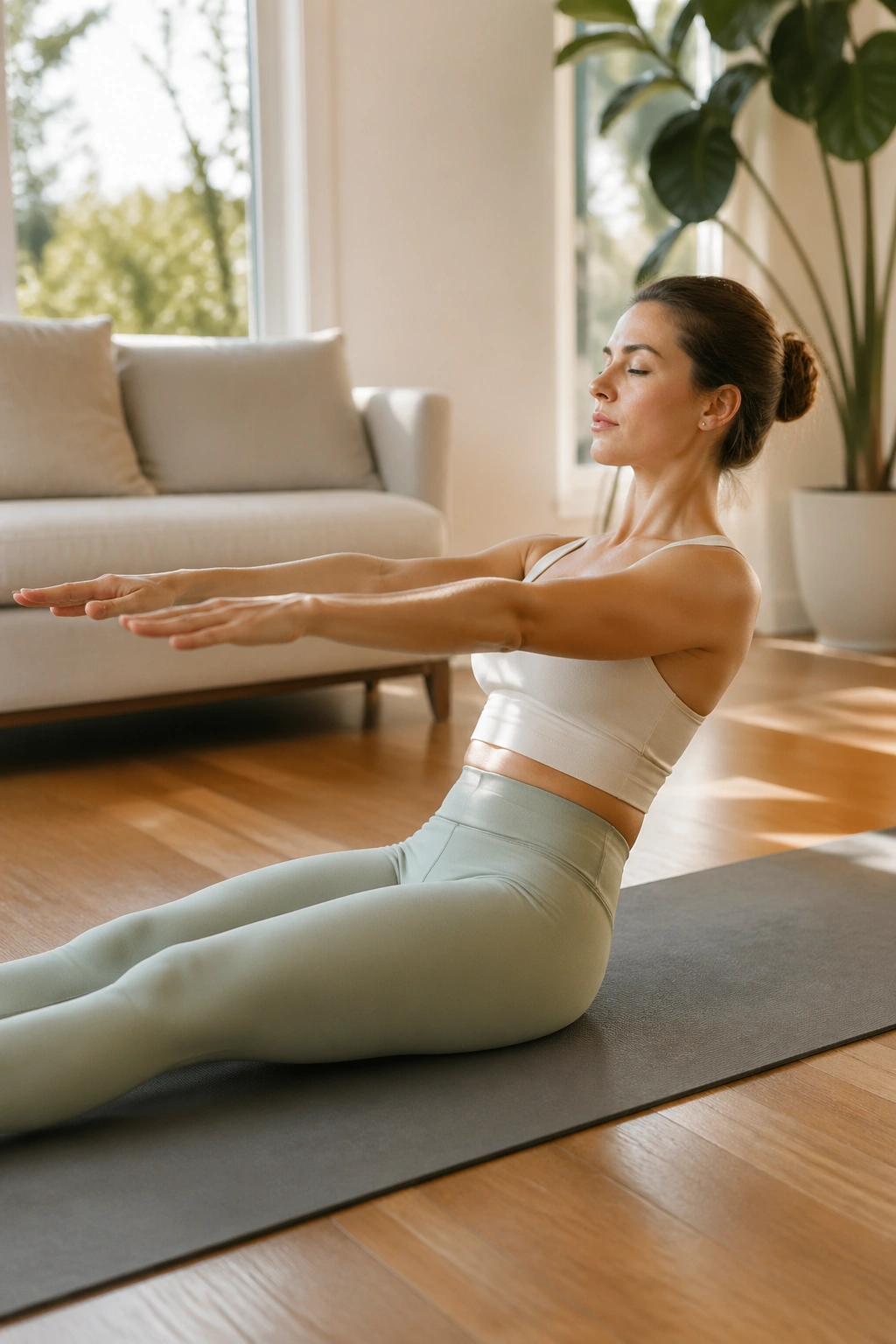
A roll-up is a different animal from a regular crunch. A crunch is a lift. A roll-up is a slow unfurling, vertebra by vertebra, and that tiny difference changes everything.
Unlike a basic abdominal curl, the roll-up asks your spine to articulate all the way down and back up. It is part abs, part hamstring flexibility, part patience. If you yank yourself up with momentum, you miss the point and often irritate your neck. If you move slowly, the front of the torso has to keep working long after the shoulders leave the floor.
Who is it best for? Anyone who wants core strength that shows up outside the mat. It is especially good for people who sit a lot, because the movement pulls the spine into length after all that folding. Start with bent knees or a strap around the feet if your hamstrings are tight. My recommendation: five careful reps, not fifteen sloppy ones.
7. Teaser Prep
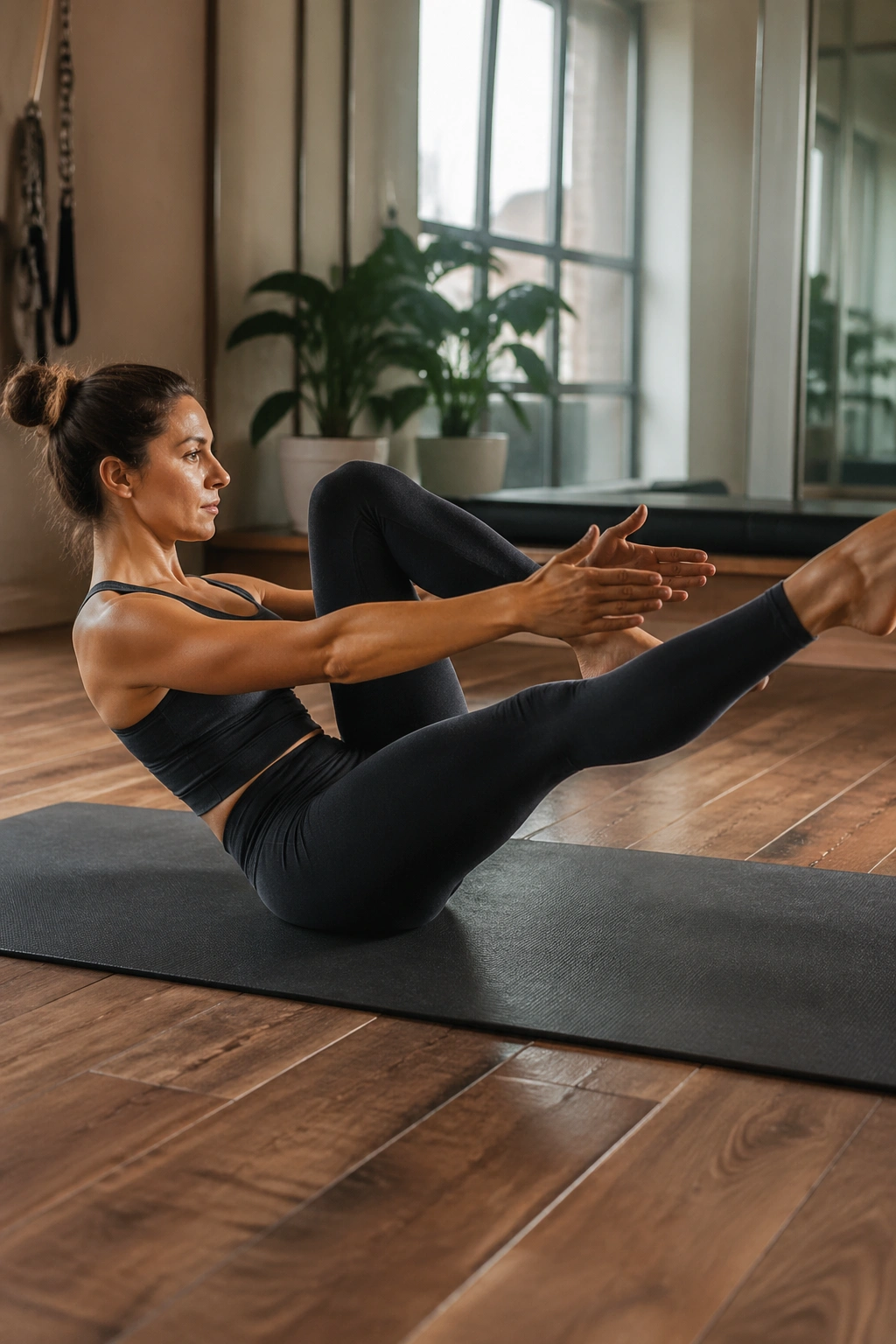
If the Teaser is the flashy move, teaser prep is the one that teaches your body not to fake it. It looks calm. Then you try it. Different story.
What Makes It Hard
The challenge is holding a strong C-curve while the legs hover and the arms reach. Your hip flexors will try to help. Let them help too much, and the abs lose the job. Keep the shoulders low, lift the chest, and think about growing longer rather than tucking harder.
- Start with one knee bent and the other leg long.
- Hold for 3 to 5 breaths before lowering.
- Keep the gaze toward the knees, not the ceiling.
- Stop if the low back starts to pinch.
Best use: work this one after a warm-up, not cold. Your trunk should already feel awake.
8. Scissors
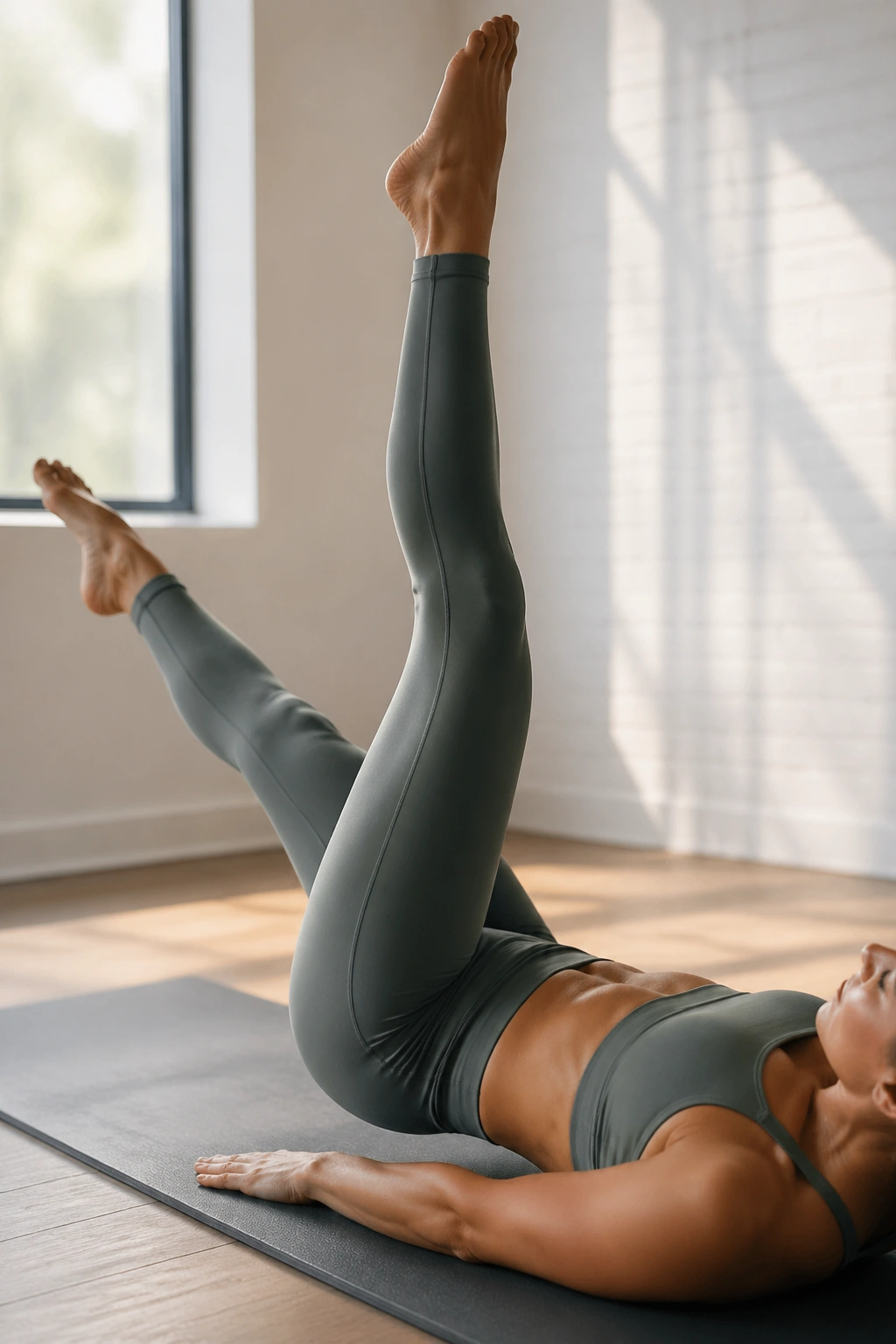
Scissors is one of the cleanest lower-ab moves in Pilates, and it is also one of the easiest to mess up if you get greedy with the leg range. The pelvis should stay anchored while the legs switch places.
Extend both legs up, lower one toward you, and hold the other vertical. Switch with control. The legs should open and close like a pair of blades, not like a dropped gate. If your lower back lifts, the legs are too low. Simple. Annoying, but simple.
The real work happens in the front of the hip crease and the lower abs that keep the pelvis from tipping. Go for 6 to 8 switches per side. Slow down if you feel your neck overworking. A soft neck and a firm center beat the opposite combo every time.
9. Leg Lower and Lift
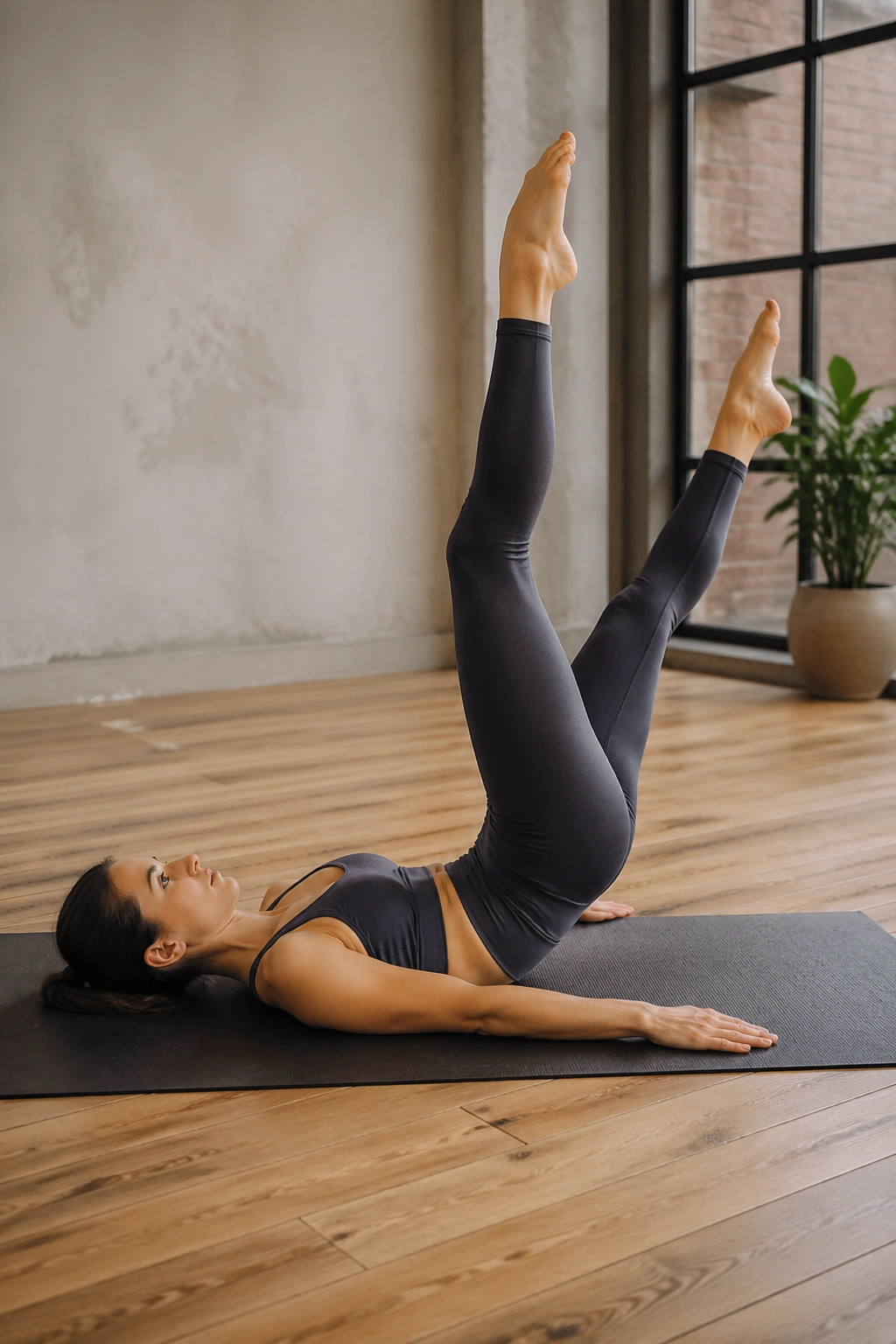
Want a move that tells the truth about deep core control? Try leg lowers. They reveal whether your abs can hold a neutral pelvis when one leg starts heading toward the floor.
How to Use It
Lie on your back with both legs extended toward the ceiling, then lower one leg a few inches while the other stays tall. Bring it back, switch sides, and keep the movement small enough that the low back never arches. The first sign you’ve gone too far is a tiny gap under the lumbar spine. That gap is your cue to raise the leg.
Do 6 to 10 reps per side. Keep the arms pressing lightly into the mat for feedback. If you want more challenge, lower both legs together only as far as you can keep the ribs quiet. If you want less, bend the knee of the working leg. The shape matters less than the control.
10. Hollow Body Hold
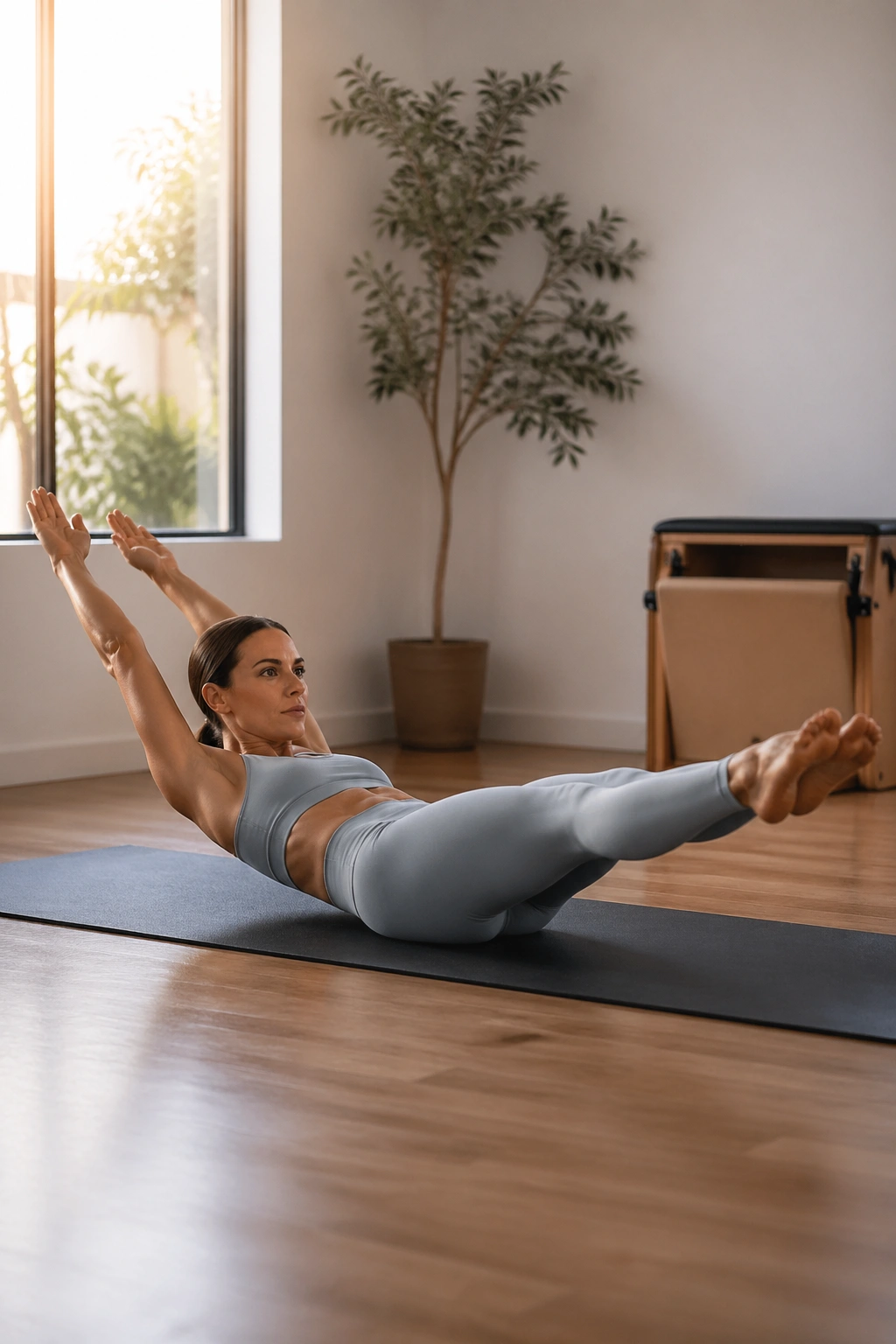
A hollow hold looks like a pause. In the body, it feels like a full conversation between the abs, the front of the ribs, and the deep stabilizers that hate when you cheat.
The key is to keep the low back gently connected to the mat while the arms and legs float away. If the back arches, the hold turns into something else. Worse, it often turns into hip flexor work dressed up as core training. Start with the knees bent. Straighten the legs only when the pelvis can stay steady.
- Hold for 15 to 30 seconds.
- Reach the arms overhead only as far as you can keep the ribs down.
- Keep the chin slightly tucked.
- Think long body, not tight body.
One useful trick: exhale slowly through pursed lips. It helps the ribs stay closed when the legs start to feel heavy.
11. Double Straight-Leg Stretch
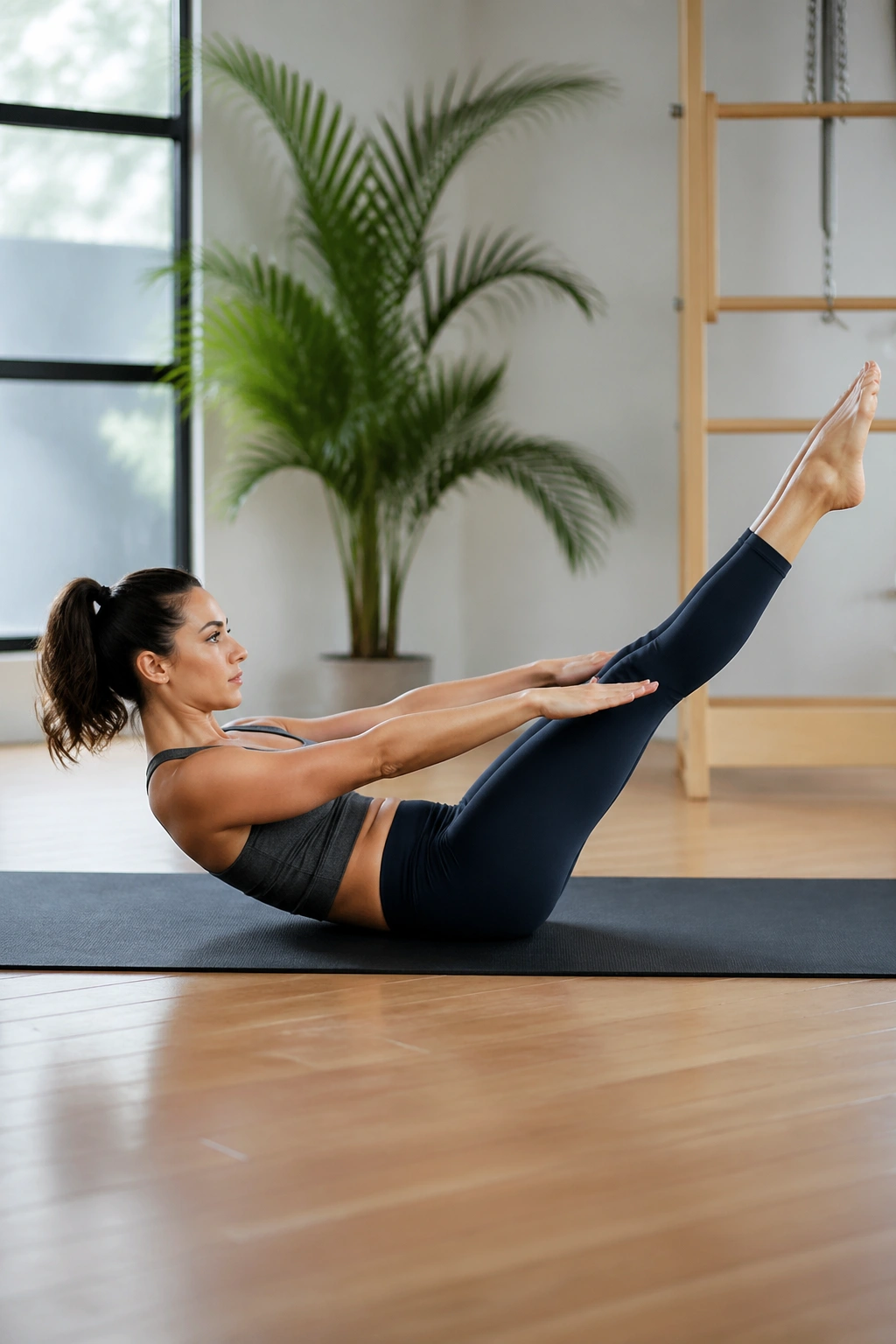
The double straight-leg stretch is the move that makes people either grin or groan. It’s a cousin of scissors, but both legs leave and return together, which makes the center work harder and the temptation to arch the low back a lot stronger.
Lie on your back, curl up, extend both legs to a comfortable diagonal, then bend the knees back in while reaching the arms long or circling them around. The lower you drop the legs, the more the abs have to stop the lumbar spine from taking over. That sounds good. It is good, until the form disappears.
A small range done well is better than a giant range done badly. Stay with 5 to 8 controlled reps and keep the head supported if needed. The shape should feel smooth, almost mechanical, not rushed. The second the motion becomes jerky, the abs stop being the main event.
12. Plank Knee Drives
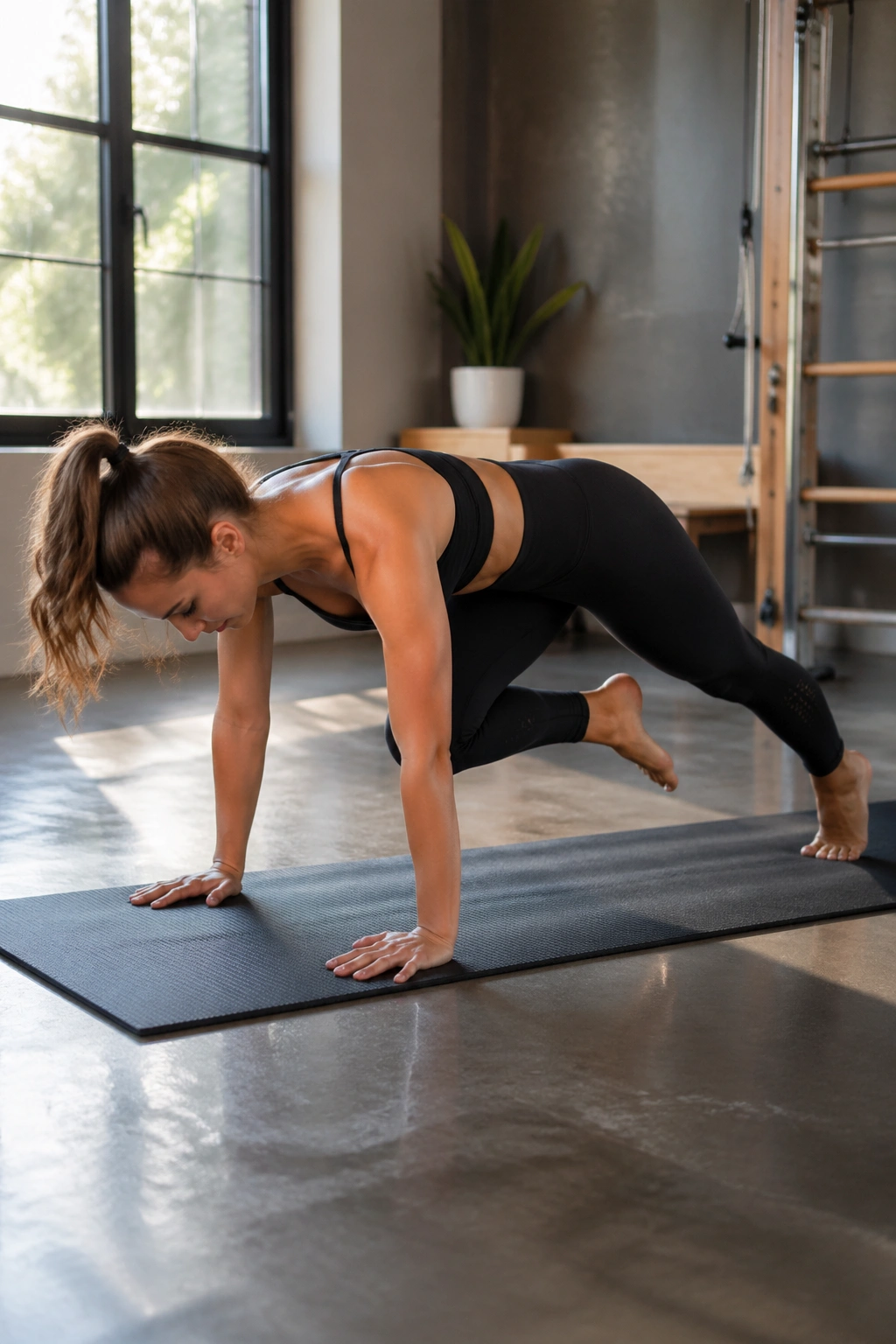
Plank knee drives are the anti-crunch. Instead of folding the torso forward, you resist the body from collapsing while the legs create motion underneath you. That shift changes the job your abs have to do.
Unlike floor crunches, this move trains the front of the core to resist extension. In plain English: your stomach has to stop the low back from sagging when a knee moves forward. That carries over to walking, running, and any Pilates sequence that wants a quiet trunk. Keep the shoulders stacked over the wrists or forearms, draw the ribs in, and bring one knee toward the chest without hiking the hips.
Best for: people who need core work that feels athletic, not just curled. Try 8 to 12 drives per side at a slow pace. If your hips sway side to side, widen the feet and cut the speed in half. The goal is steadiness. Not drama.
13. Side Plank Hip Lifts
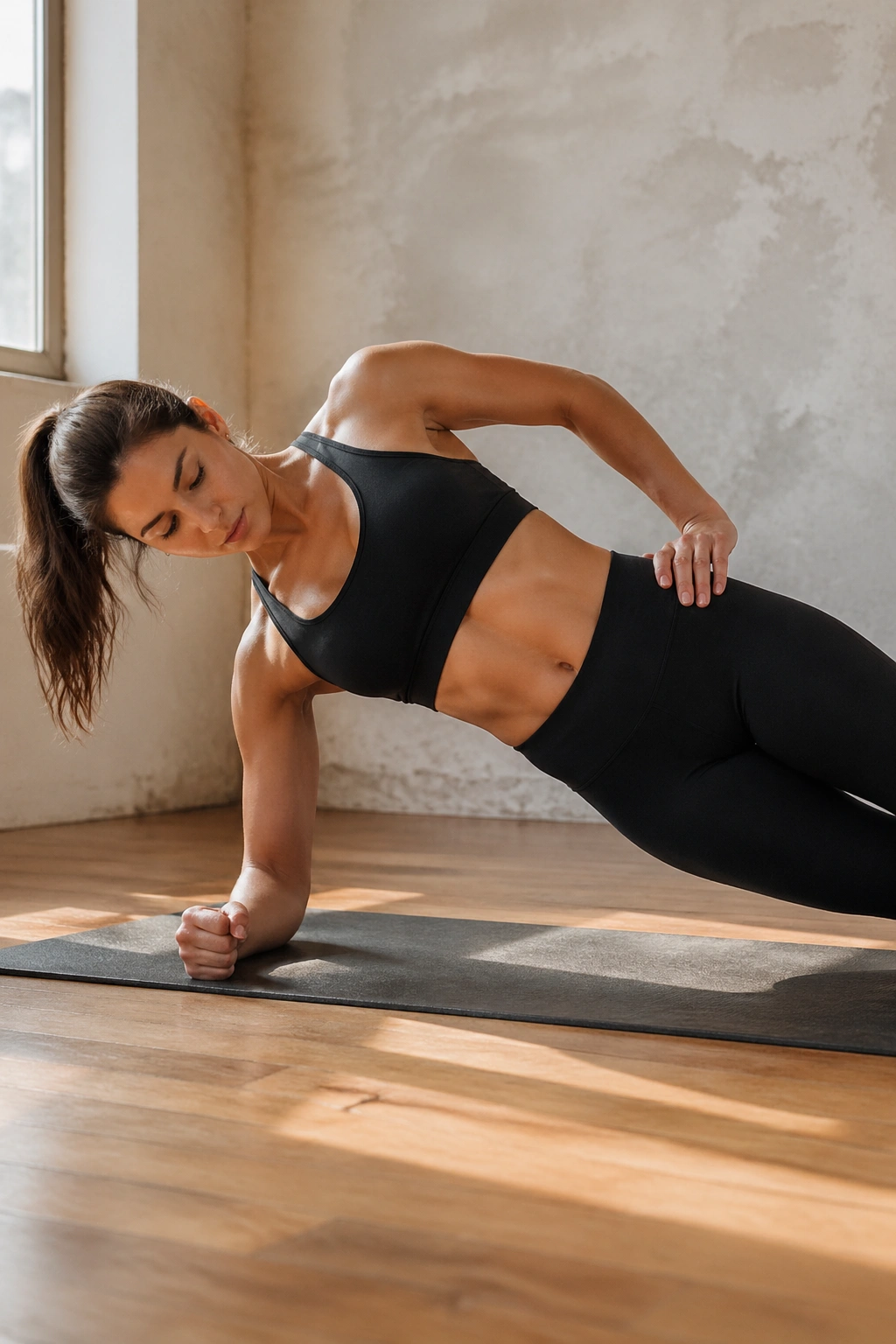
The side body gets forgotten a lot, which is a shame because oblique definition often starts there. Side plank hip lifts hit the waist, the outer hips, and the muscles that keep your torso from folding like a cheap chair.
Why Side Abs Need This
Set up on one forearm or hand, stack the feet, and lift the hips into a long side line. Lower them a few inches and lift again. The movement is tiny, but your waist will know the difference. Keep the shoulders from collapsing and the bottom ribs from jutting forward.
- Aim for 6 to 10 lifts per side.
- Keep the body in one long line at the top.
- Drop the bottom knee for a modified version.
- Exhale on the lift, inhale on the lower.
Tip: if your shoulder gets tired before your waist does, bend the bottom knee. That lets the obliques do the real work.
14. Bird Dog with Reach
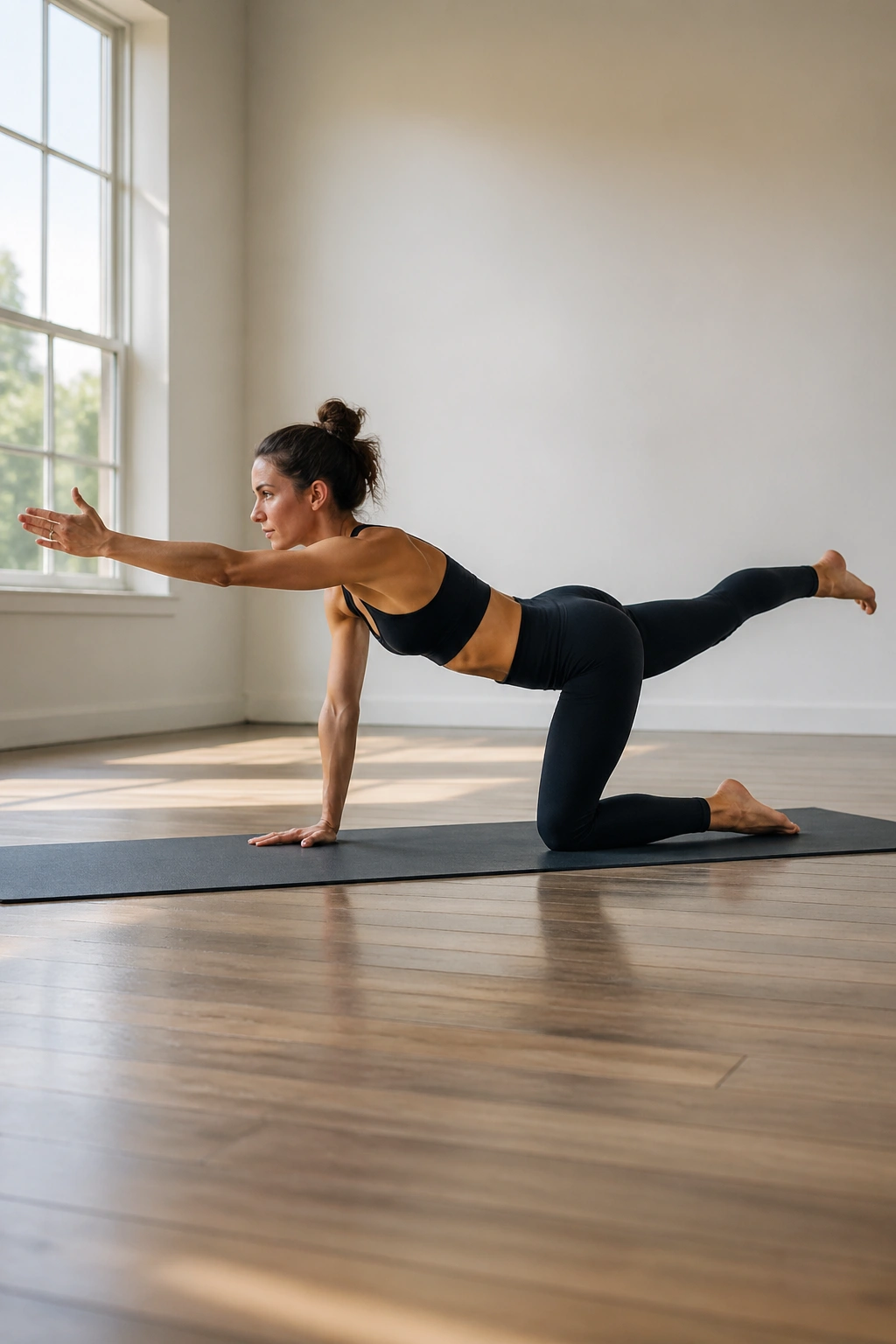
Bird dog doesn’t look like an ab exercise until your pelvis starts wandering all over the mat. Then it becomes obvious. The point is cross-body stability: opposite arm and leg move while the center refuses to wobble.
This is one of my favorite core tests. Start on hands and knees, extend one leg straight back and the opposite arm forward, then hold for a breath before returning. The low back should stay long, not dipped. The ribs should stay stacked, not flared. If you can keep the pelvis level, you’re training exactly the kind of control Pilates is known for.
Work 5 to 8 reps per side and pause at the top. The pause matters. Without it, the move turns into a quick reach and not much else. Slow it down enough that the body has to organize itself. That’s where the abs show up.
15. Dead Bug Curl
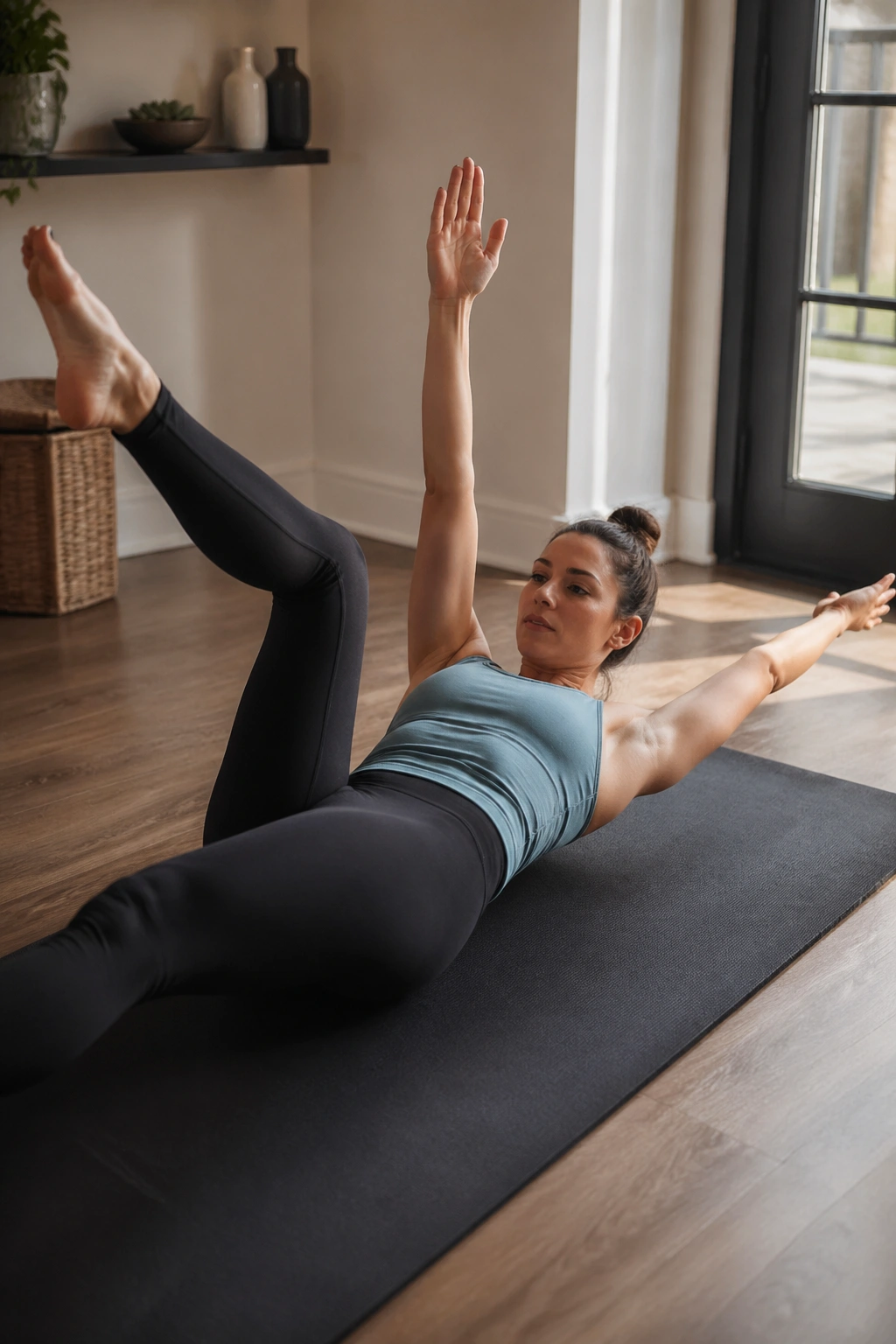
Dead bug sounds modest. Your abs won’t agree. Add a small curl of the head and shoulders, and the exercise goes from coordination drill to serious deep-core work.
How to Use It
Lie on your back with arms pointed toward the ceiling and knees bent over the hips. Curl the head and shoulders up a few inches, then lower one arm and the opposite leg away from center while the other side stays fixed. Return and switch. The lower back stays connected to the mat the whole time. If it pops up, shorten the reach.
- Start with 6 to 8 reps per side.
- Keep the movement slow enough to feel the switch.
- Use bent knees if straight legs feel too long.
- Exhale as the limbs reach away.
A lot of people rush this one because it looks easy. That mistake usually shows up in the neck or the low back. Don’t be that person.
16. Saw
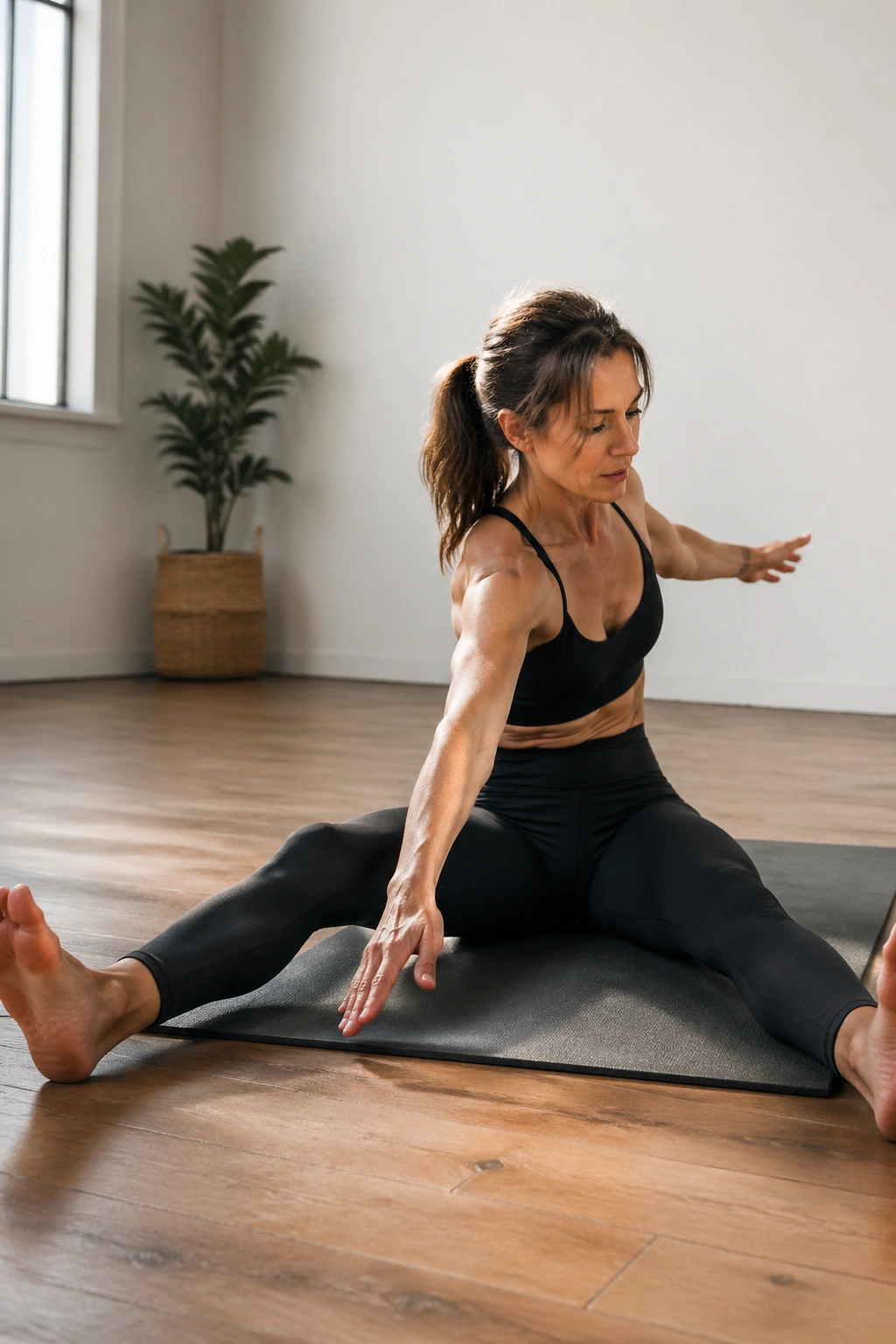
If your hamstrings are tight, the Saw tells on you fast. It is a seated rotation and forward fold that asks your abs to control the spine while the legs stay rooted and long.
Sit tall with your legs open wider than hips, arms out to the sides, then rotate and reach the opposite hand toward the pinky toe. The real aim is not the toe touch. The real aim is keeping the pelvis steady while the torso twists and lengthens. Let the inhale lift you tall. Let the exhale help the turn and the fold.
- Keep the sit bones heavy.
- Rotate from the ribs, not the neck.
- Reach long, then pulse once or twice deeper if you can keep the back flat.
- Do 3 to 5 reaches per side.
The Saw is one of those moves that looks graceful when done well and clumsy when rushed. Slow it down. Your spine will thank you.
17. Spine Twist
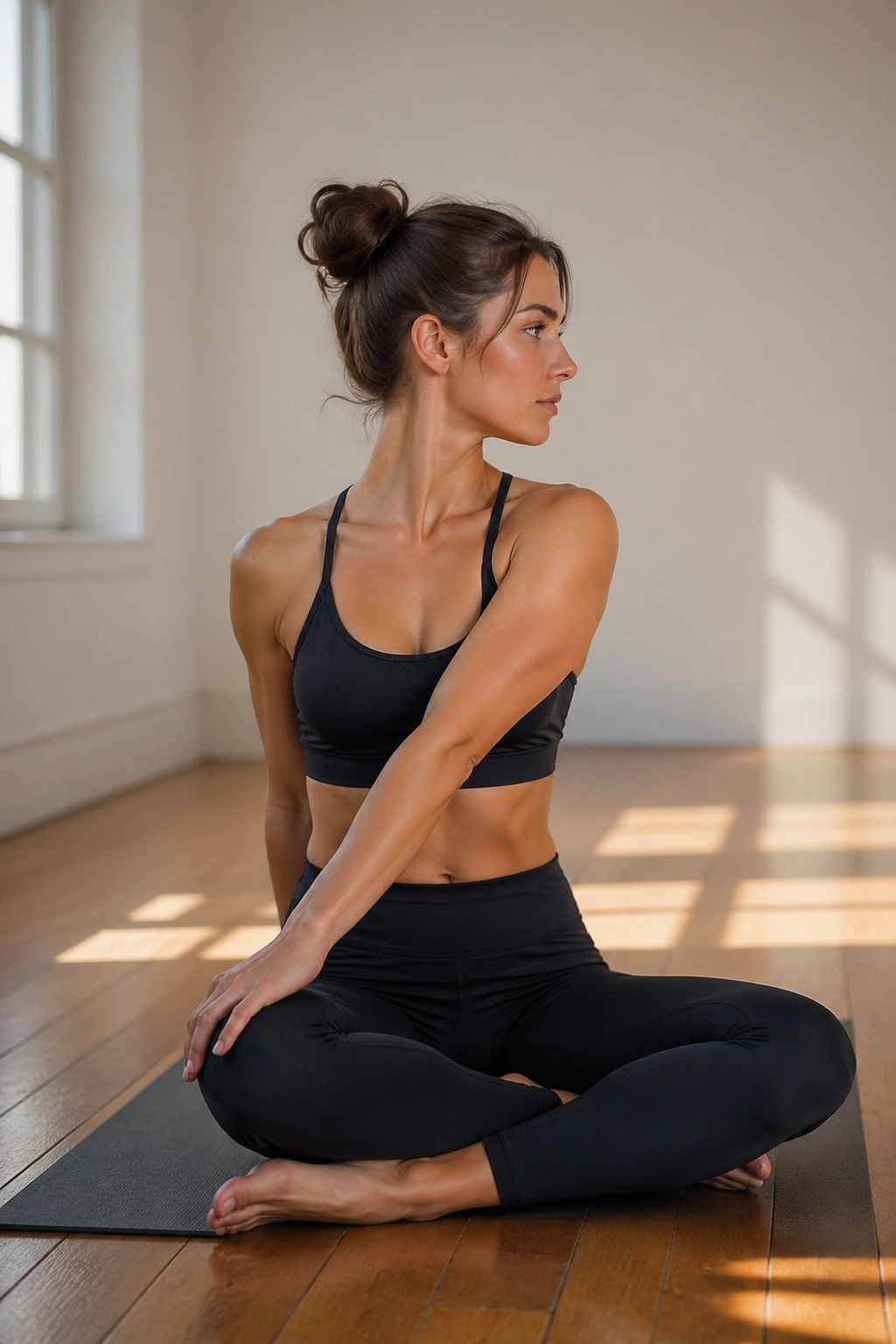
Spine twist is the clean, upright cousin of the bigger rotation moves. It teaches you to stay tall while the ribs turn, which is a surprisingly hard job for the core.
Sit with the legs long or crossed, stack the spine, and twist the rib cage to one side without letting the pelvis drift. Return to center and switch. The best version feels like the crown of the head is floating upward even while the waist turns. If you collapse through the chest, you lose the length that makes the exercise work.
This one is less about burn and more about control. That makes it easy to dismiss, and that would be a mistake. A strong, clean twist is useful for almost every other Pilates ab workout because it teaches the body how to separate the ribs from the pelvis. Do 4 to 6 turns per side and keep the breath smooth. No yanking. No leaning back.
18. Mermaid Side Bend
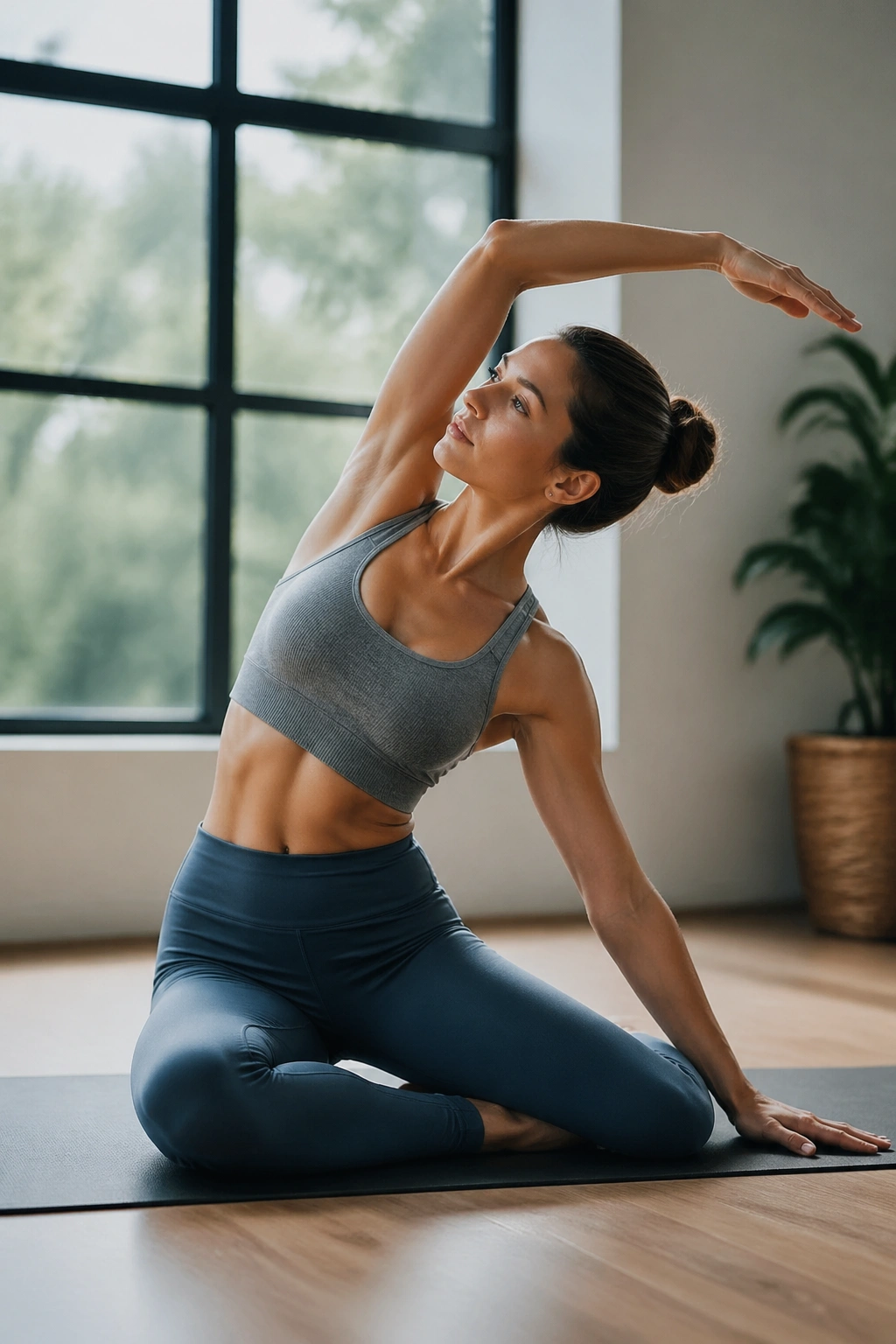
Mermaid is where oblique work stops feeling like punishment and starts feeling a little more open. It still works the waist. It just does it with more length and less neck tension.
Unlike a side crunch, mermaid lets you lengthen one side of the torso before you contract it. Sit on one hip, fold the legs to one side, and reach one arm overhead into a long side bend. Then come back with control. The bend should feel like the ribs are sliding away from the pelvis, not like you’re collapsing into the floor.
Best for: people who want side-body work without a hard neck crunch. It is also a smart choice on days when your midsection feels tight and cranky. Use 3 to 5 bends per side, then hold the stretch for a breath at the top if it feels good. The stretch-and-strength combo is part of the charm.
19. Kneeling Oblique Curl
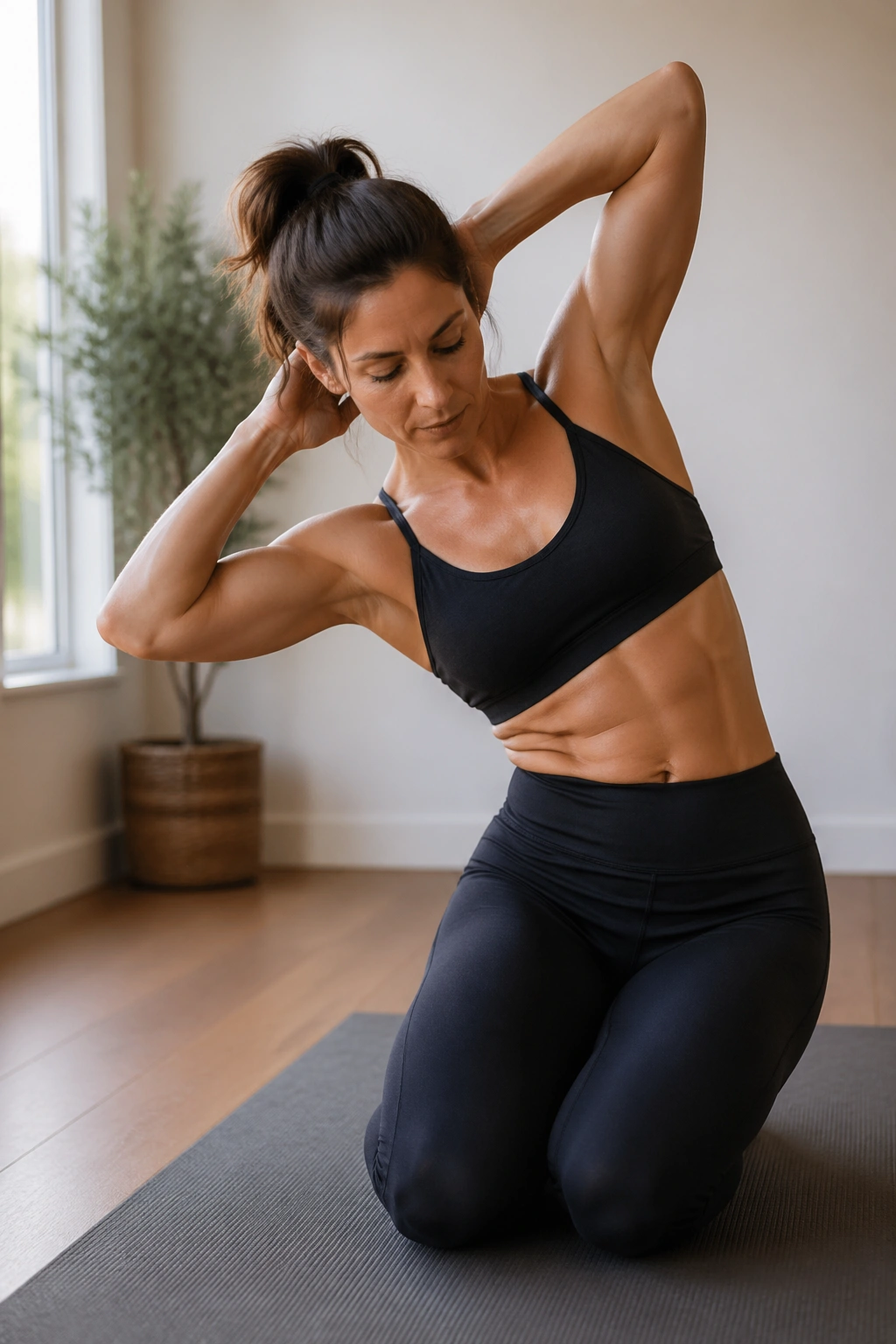
Kneeling oblique curls are the kind of move I’d hand to someone who wants a clear waistline feel without having to master a dozen complex shapes first. It’s direct. You kneel, tilt, and curl the side body into action.
Why It Works
The kneeling position removes some of the cheating that happens when the hips can sway. Bring one hand behind the head, angle the opposite elbow toward the same-side hip, and curl the rib cage sideways. Keep the pelvis stacked over the knees. That stack is what forces the obliques to do the job instead of the lower back.
- Perform 8 to 12 reps per side.
- Move slowly and keep the shoulder away from the ear.
- Stop the curl before the spine collapses forward.
- Use a light touch behind the head, not a hard pull.
Small but important: if your neck feels strained, keep the lower hand on the rib cage so you can feel the side crunch more clearly.
20. Standing Knee Lift with Reach
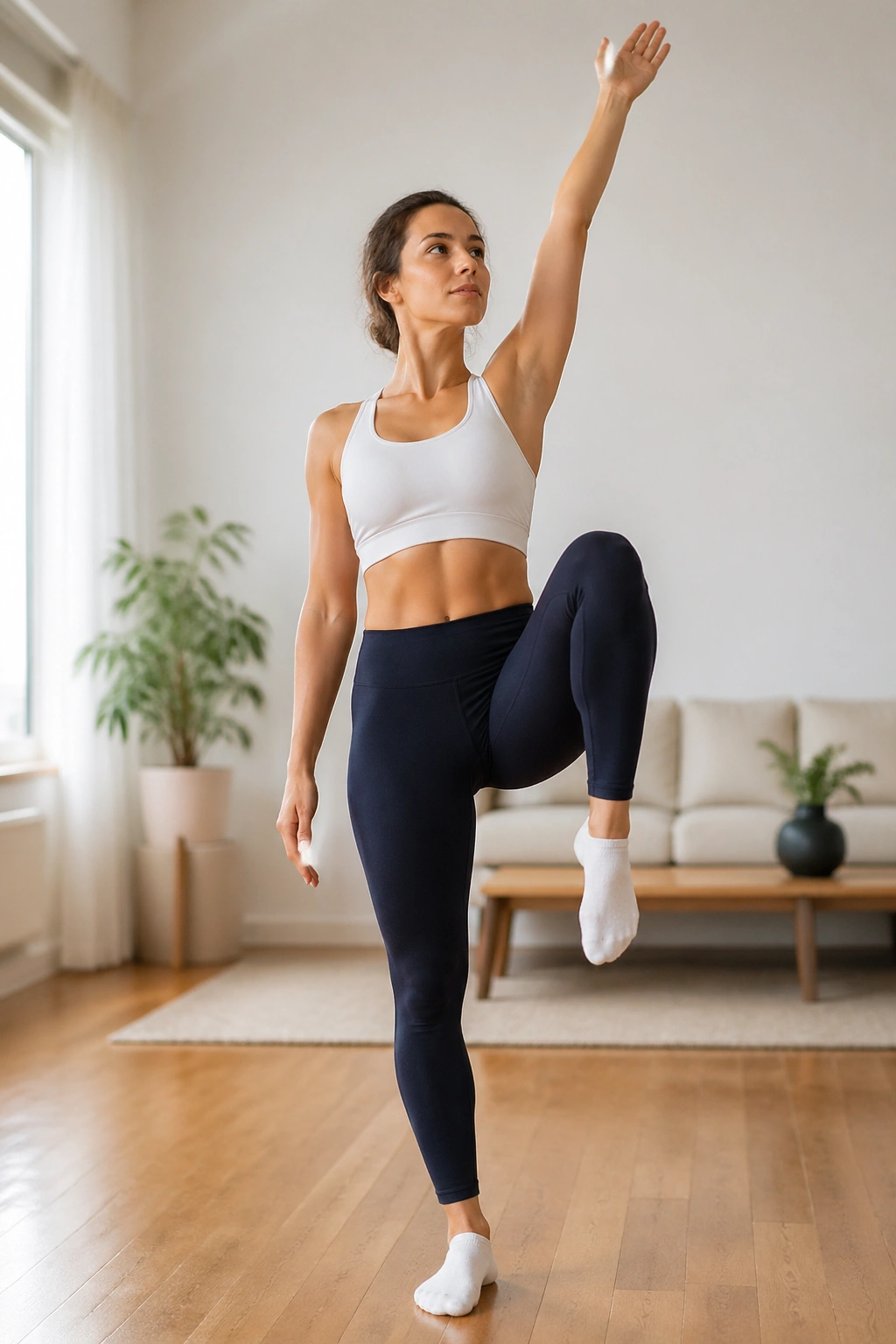
Standing core work is underrated, and this move proves it. You don’t need to be on the floor for your abs to matter. In fact, standing work often shows how well the core handles real life.
Stand tall, lift one knee while reaching the opposite arm overhead or across the body, then lower with control. The challenge is keeping the pelvis level and the standing leg steady while the upper and lower body make opposite moves. That is core training in plain clothes. No mat, no fancy setup, just control.
Do 8 to 10 reps per side and stay slow enough that you can feel the standing foot root into the floor. If you wobble, slow down before you make the movement bigger. This one pairs well with a mirror because the little side-to-side shifts are easier to catch when you can see them. Straight lines are the goal. Messy is the enemy.
Final Thoughts
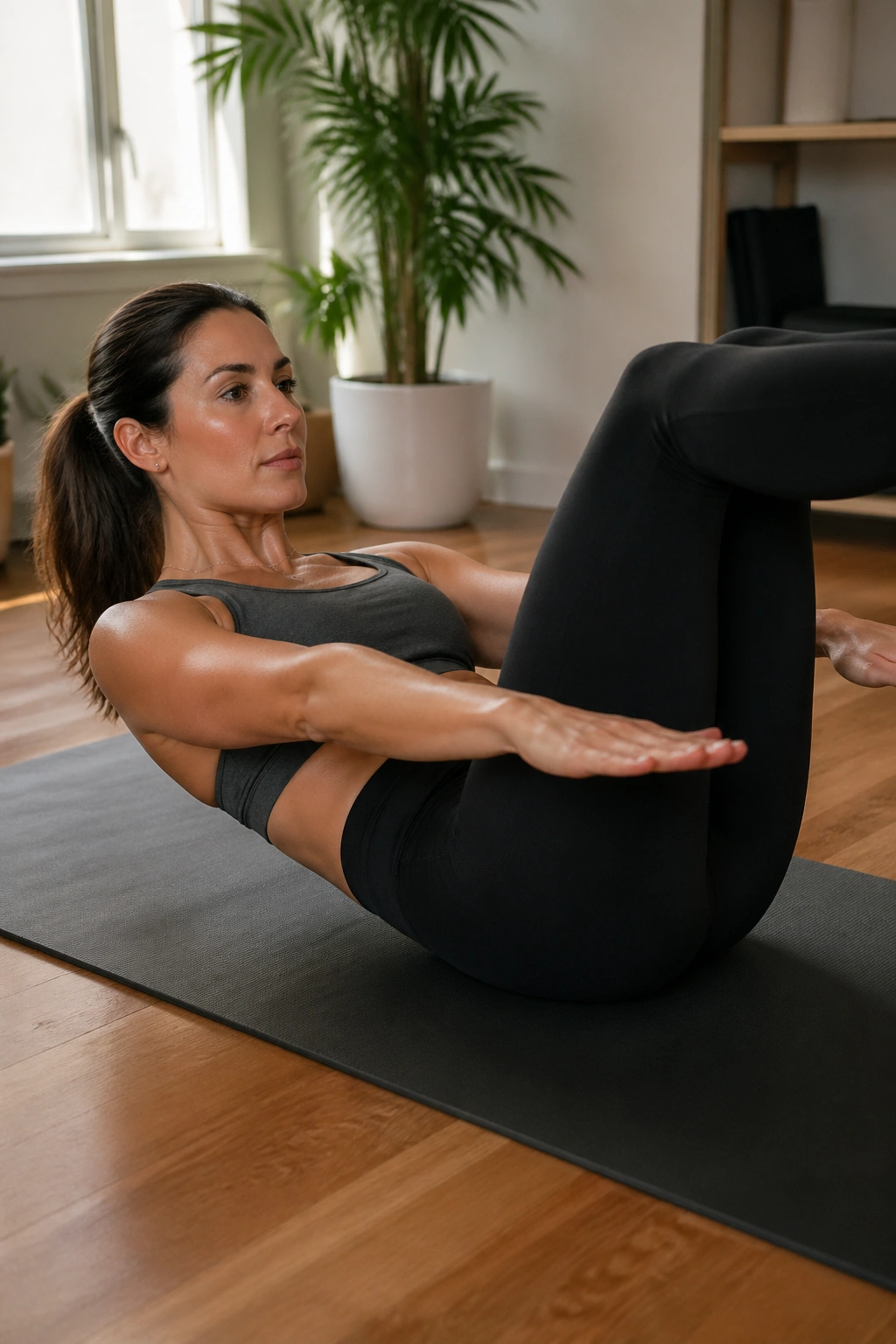
A defined core does not come from one magical move. It comes from a mix of curl, hold, twist, reach, and anti-rotation work done with patience. Pilates is good at that because it keeps asking you to stay organized while the limbs move in different directions.
The exercises that change people the most are often the ones they want to skip: toe taps, dead bugs, hollow holds, side planks. They are not flashy. They do teach the body how to keep the ribs, pelvis, and breath working together, which is the part that carries over when you stand up and walk around.
If you want a simple way to build a session, choose one curl, one leg extension move, one rotation move, and one side-body move. Keep the reps honest, keep the range clean, and stop one rep before the form starts to fray. That’s where Pilates gets useful in the real world.
