



The cleanest dancers I know usually aren’t the ones who hammer random cardio or spend an hour doing endless crunches. They’re the ones who can hold a shape when the music gets fast, stay quiet through a landing, and keep the line of the leg long even when the supporting side is working hard.
That takes strength. Real strength.
And not the gym-bro kind. Dancer strength training has a different job: make the body look longer, steadier, and more precise under load. The best workouts for dancers build strong feet, stable ankles, honest glutes, a trunk that doesn’t pop open every time the arms move, and enough control at end range that a développé or arabesque still looks like a line instead of a negotiation.
Small muscles matter.
A big mistake is chasing “burn” for its own sake. You can leave class drenched and still have weak turnout support, soft landings, or a shaky passé if the work never trains the body in the positions dancers actually need. So the list below leans hard into single-leg control, calf and foot strength, core stability, hip strength, shoulder placement, and those long isometric holds that make lines look clean instead of hurried.
Most of these can be done with one dumbbell, a mini-band, a wall, a slider, or nothing at all. Twenty minutes is enough if you’re honest about tempo and don’t rush the work.
1. Goblet Squat to Relevé Hold
Heavy enough to matter. Light enough to stay clean.
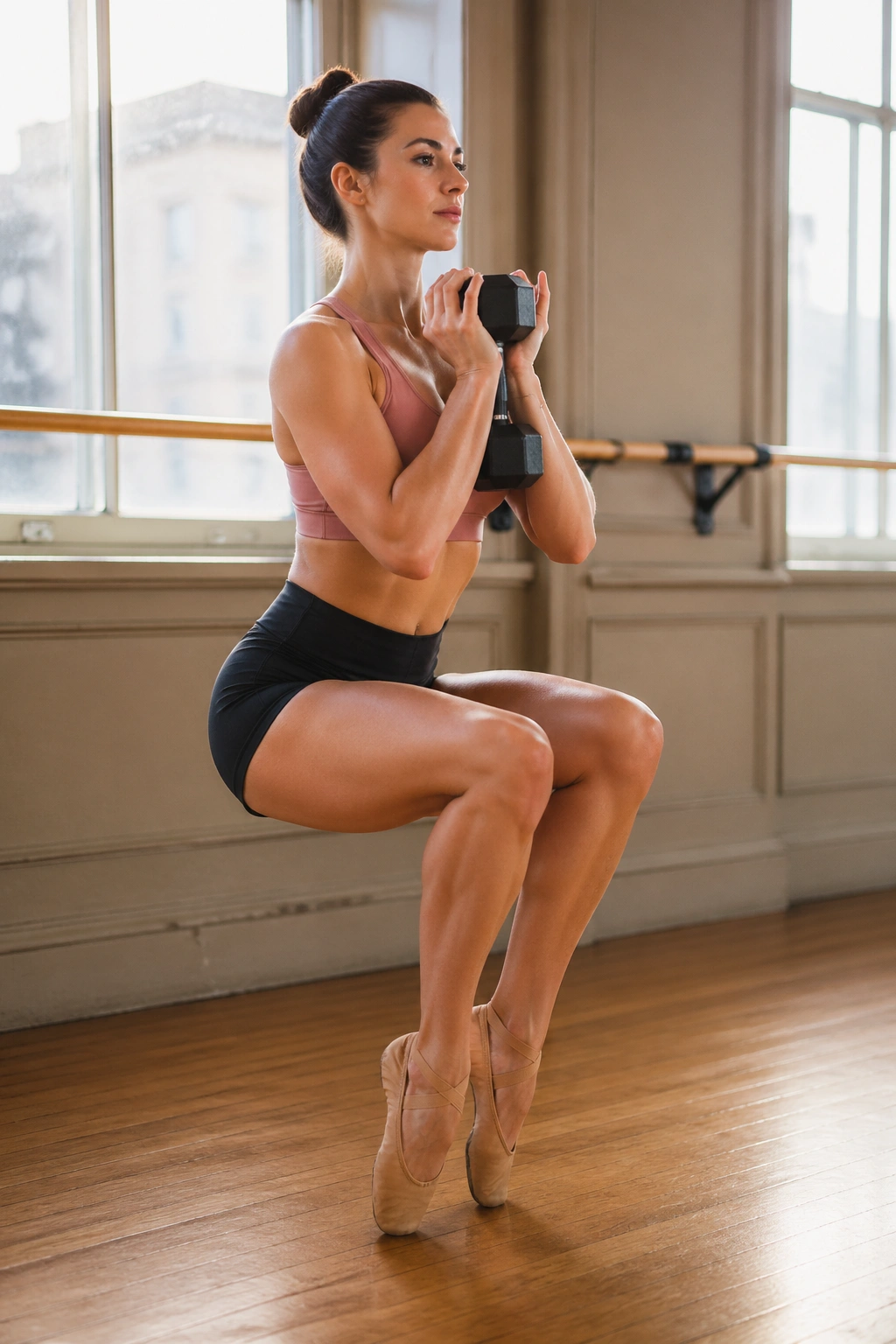
This is one of my favorite strength pairings for dancers because it asks for two things at once: lower-body drive and ankle control. Hold one dumbbell at chest height, sink into a controlled squat, then rise to a strong relevé and pause before you come down. That pause is the point. It exposes sloppy foot mechanics fast.
Why it earns a spot
A goblet squat teaches the legs to share the work instead of dumping everything into the knees or low back. The relevé hold then asks the calves and foot intrinsics to keep the body tall without wobbling. If the arches cave or the heels drift, you get instant feedback.
- Use 3 sets of 6 to 8 reps.
- Lower for 3 counts, rise for 1 count, and hold relevé for 2 to 4 seconds.
- Keep the ribs stacked over the pelvis; don’t flare the chest just to look taller.
- If the heels crash inward, take the squat a little shallower and clean up the pattern first.
Pro tip: stand on a folded towel or yoga mat only if your ankles already feel steady. Soft surfaces can be useful, but they also hide mistakes.
2. Romanian Deadlift to Arabesque Reach
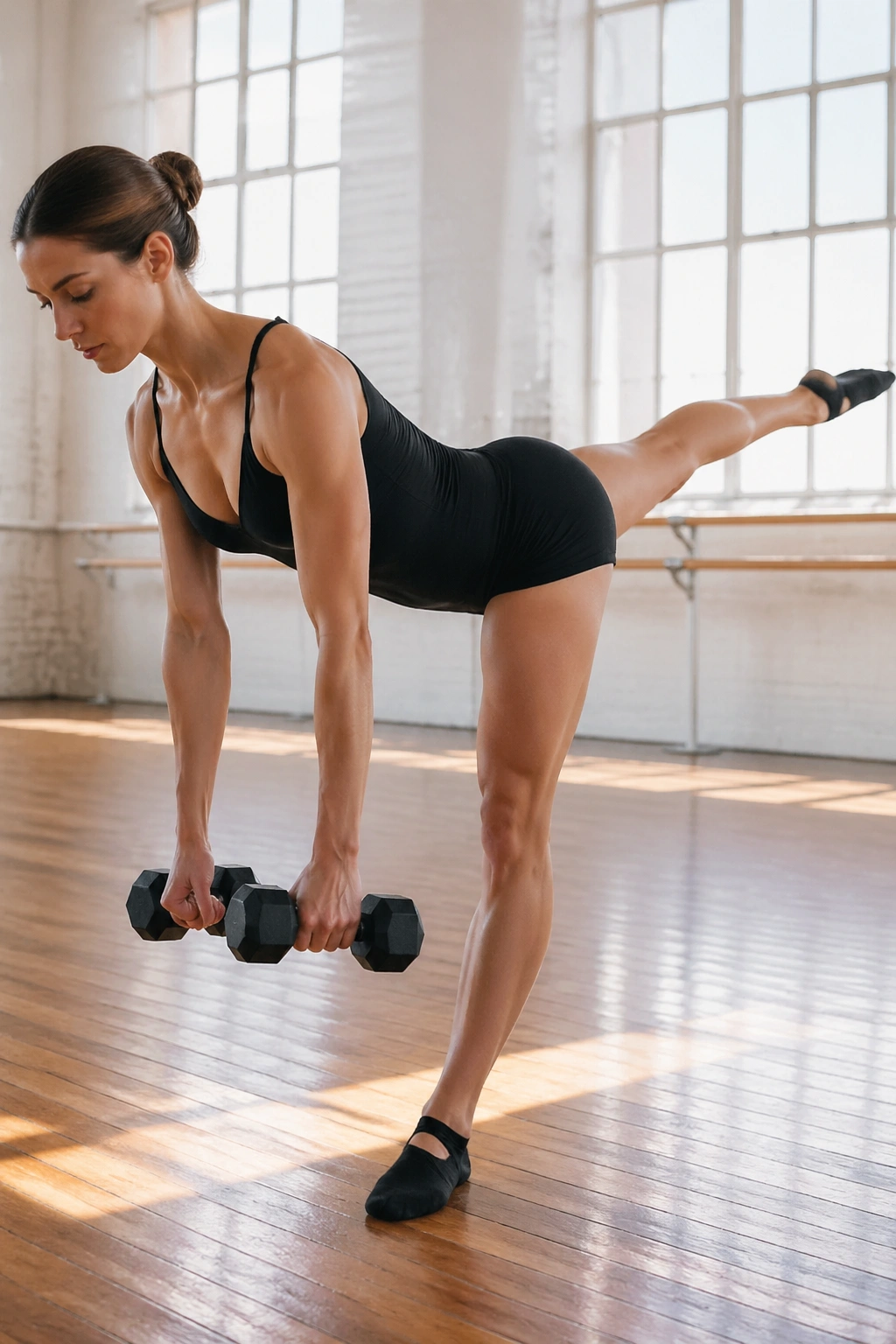
Why do back lines sometimes look short even when the dancer is flexible? Usually because the hamstrings and glutes don’t know how to hold the shape under load.
This hinge pattern fixes that. Hold a dumbbell or two, soften the knees, push the hips back, and keep the spine long as the torso tips forward. Then reach one leg behind you as if you’re sketching a controlled arabesque with the whole back line.
The trick is not height. It’s control.
If the standing hip opens too early, the lower back starts doing the work. If the standing heel lifts, the whole line gets noisy. Keep the pelvis square and think of the back heel reaching away, not up. That simple cue tends to clean up the shape fast.
Do 3 sets of 6 reps per side with a 2-second pause at the bottom. On the way up, squeeze the glute of the standing leg and feel the floor pull back under you. That tiny shift matters. It turns the exercise from a hamstring stretch into a strength drill that actually carries over to adagio, développé, and landing control.
3. Rear-Foot-Elevated Split Squat with Pulse and Rise
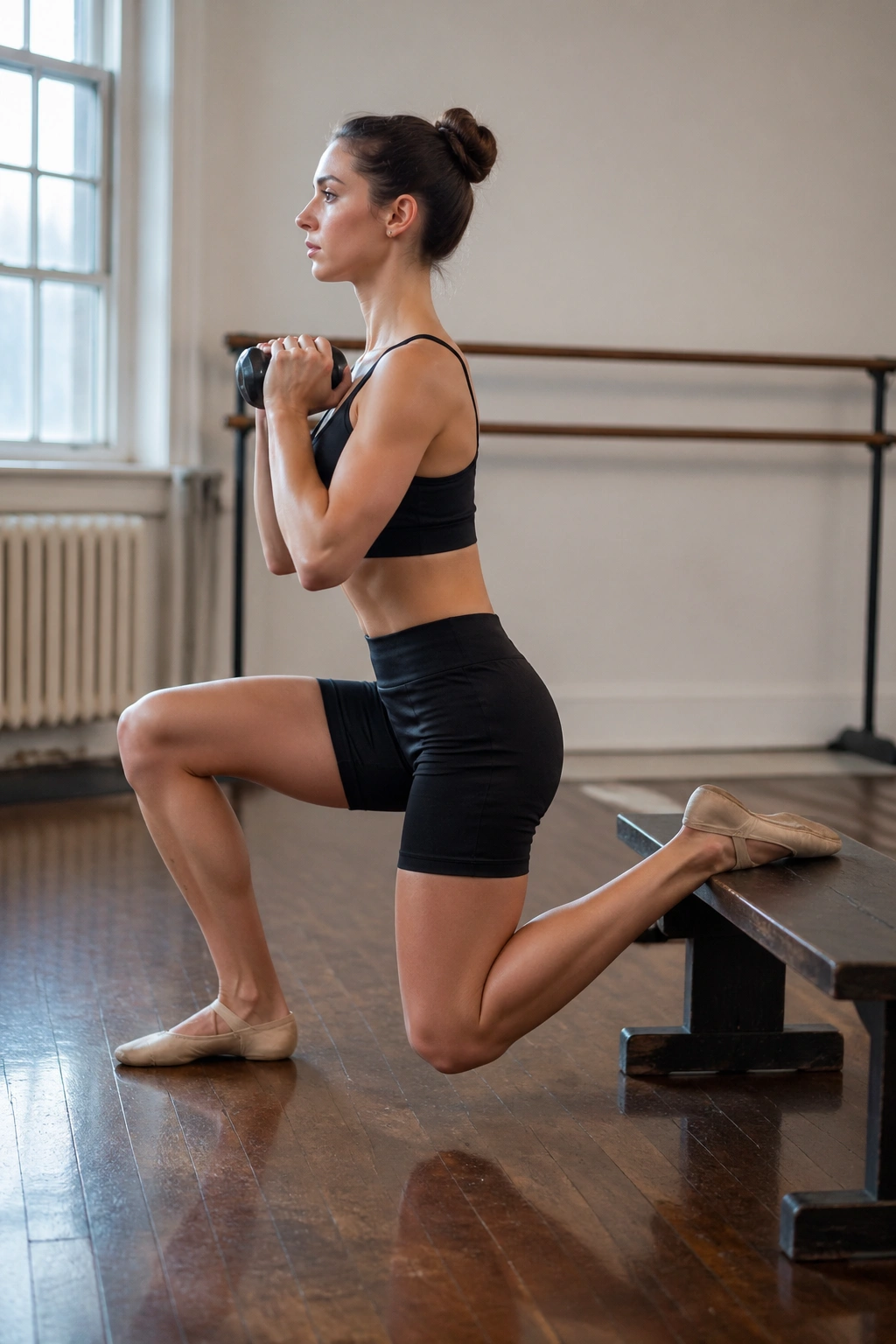
If one leg always feels like the “good” leg, this one is going to be rude. In a useful way.
Put the back foot on a low bench or block, step the front foot far enough forward that the knee can track over the second toe, then lower into a split squat. At the bottom, add two or three tiny pulses, then drive up through the front foot and finish with a tall ankle rise. It’s a lot of work in one pattern, and that’s why I like it.
What it trains
This hits the quads, glute max, glute med, and the stabilizers around the ankle in one shot. It also teaches the pelvis to stay quiet while the body moves through a big range. That matters for any dancer who wants a steadier arabesque, cleaner lunges, or less wobble in a lunge-to-balance transition.
- Start with 3 sets of 5 to 6 reps per side.
- Use a 3-second lower, 2 pulses, and a 1-second rise.
- Keep the front knee from caving inward.
- If the back foot on the bench feels too aggressive, lower it to a step or use a toe tap on the floor behind you.
Watch for this: if your torso dumps forward and the front heel pops, shorten the stance a touch. There’s no prize for making it ugly.
4. Single-Leg Calf Raise Ladder
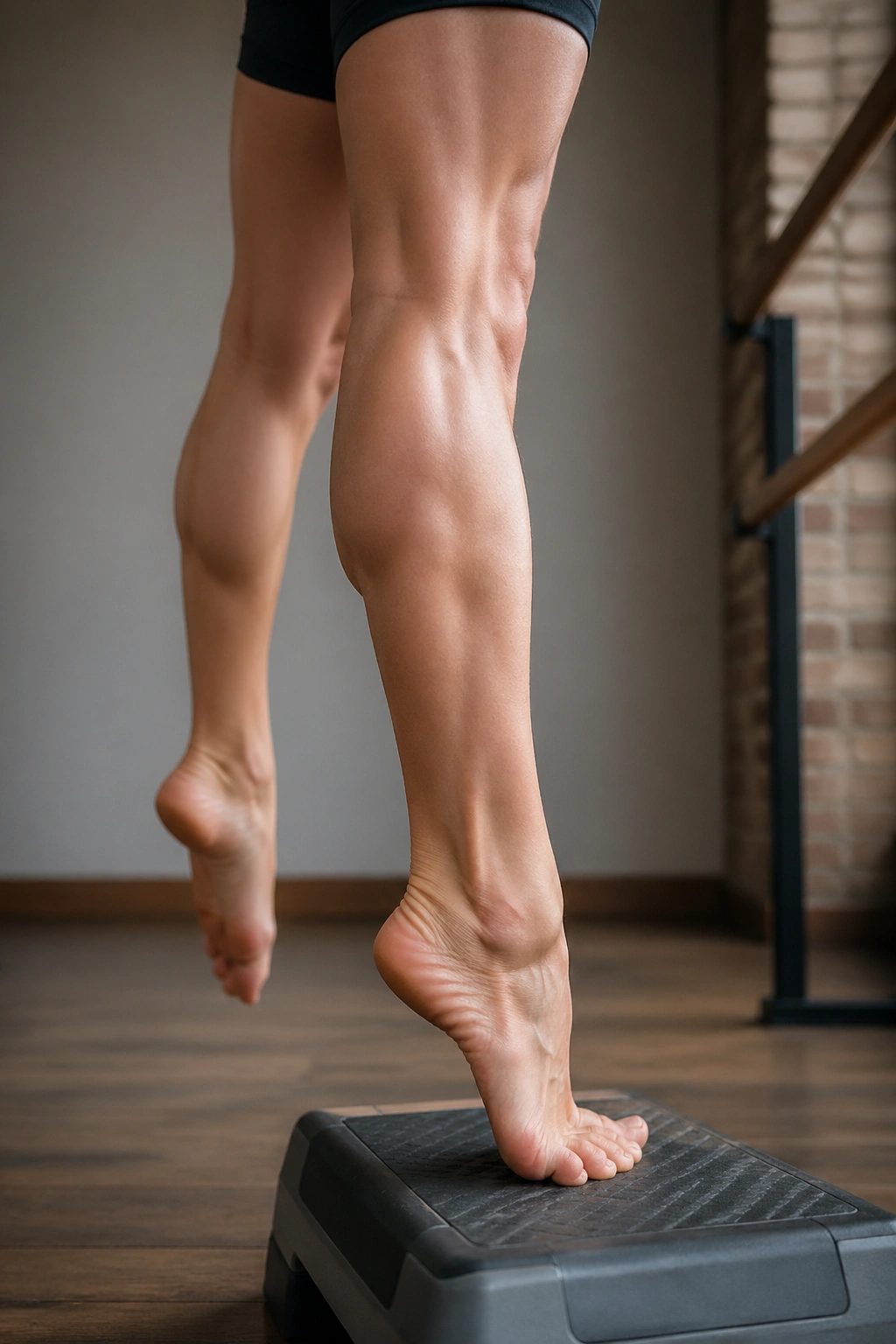
This is the boring one. Which means it’s probably the one people skip and then complain about weak feet later.
A single-leg calf raise ladder builds the lower leg in the exact way dancers need it: straight-knee calf work for the gastrocnemius, bent-knee calf work for the soleus, and a pause at the top so the ankle learns to stay honest. Stand on a step if you’ve got one, drop one heel below the step, then rise slowly and lower even slower.
The lowering phase matters more than the lift. That’s where control gets built.
Try 8 straight-knee reps, then 8 bent-knee reps, then finish with a 15-second hold at the top. Do 2 to 4 rounds per side, depending on how much dance training you’re already doing. If your arches wobble, slow down. If your toes claw the floor, relax them and spread the weight through the ball of the foot.
One more thing. Don’t bounce. A dancer’s calf should look springy, yes, but springy is not the same thing as sloppy.
5. Side Plank with Top-Leg Lift
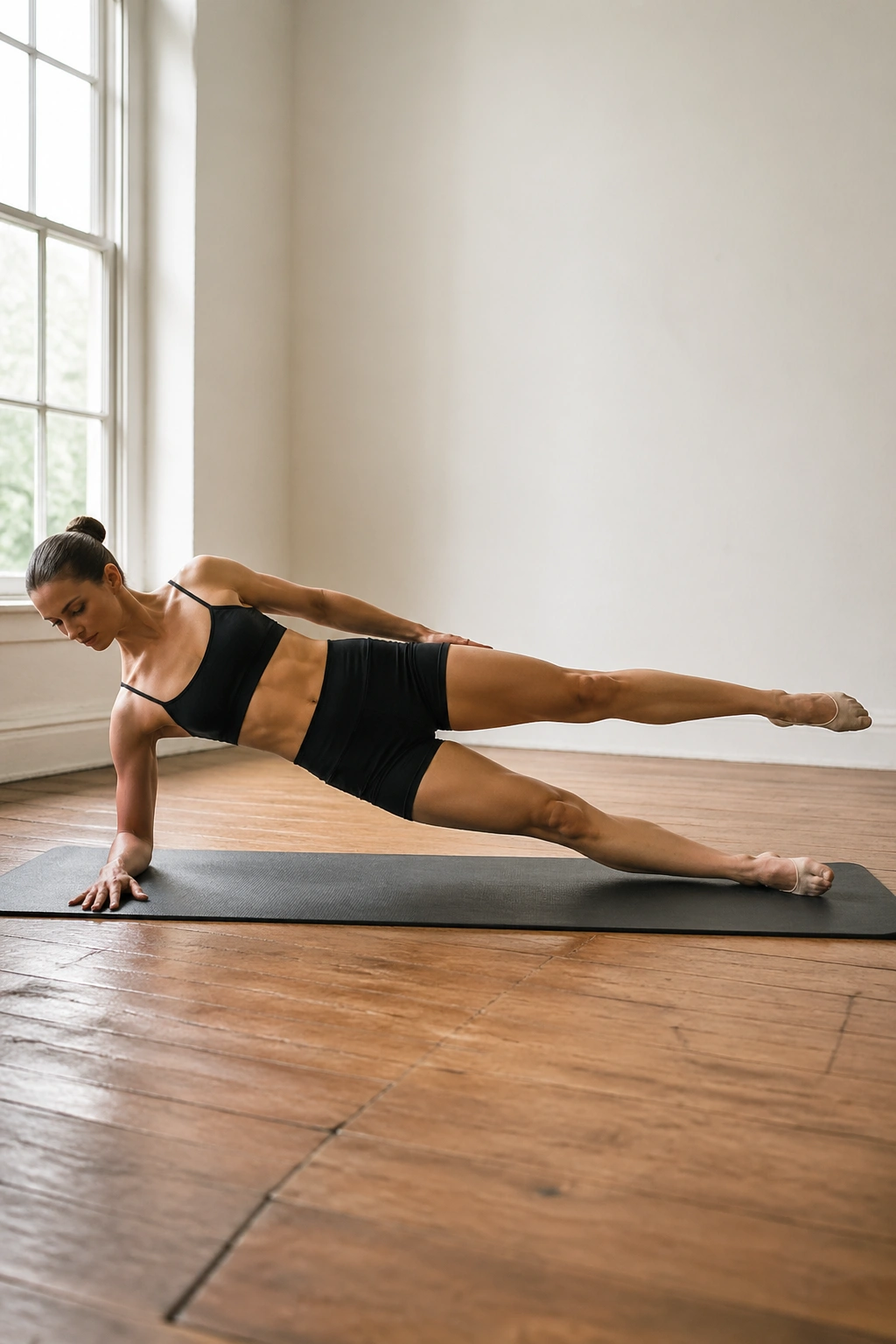
A lot of dancers want prettier side lines and reach for more side bends. I’d rather see this instead.
A side plank with a top-leg lift trains the lateral chain: obliques, glute med, deep hip stabilizers, and the shoulder that has to hold everything together without collapsing. Start on the forearm, stack the feet or place the bottom knee down if needed, then lift the top leg a few inches and keep the body long from wrist to heel.
What makes it different
Unlike a side crunch, this doesn’t fold the torso. The waist stays long. The ribs stay quiet. The lift happens because the hip on top is doing real work, not because momentum kicked in.
That shows up in dancing as cleaner développé placement, steadier relevé balance, and better support when the leg has to stay turned out without the pelvis rolling back. It’s not flashy. It just works.
Hold 20 to 30 seconds per side, or do 6 slow leg lifts inside each hold. If the shoulder shrugs into the ear, shorten the lever and reset. If the low back starts to twist, stop pretending the rep is still clean.
6. Dead Bug with Overhead Press
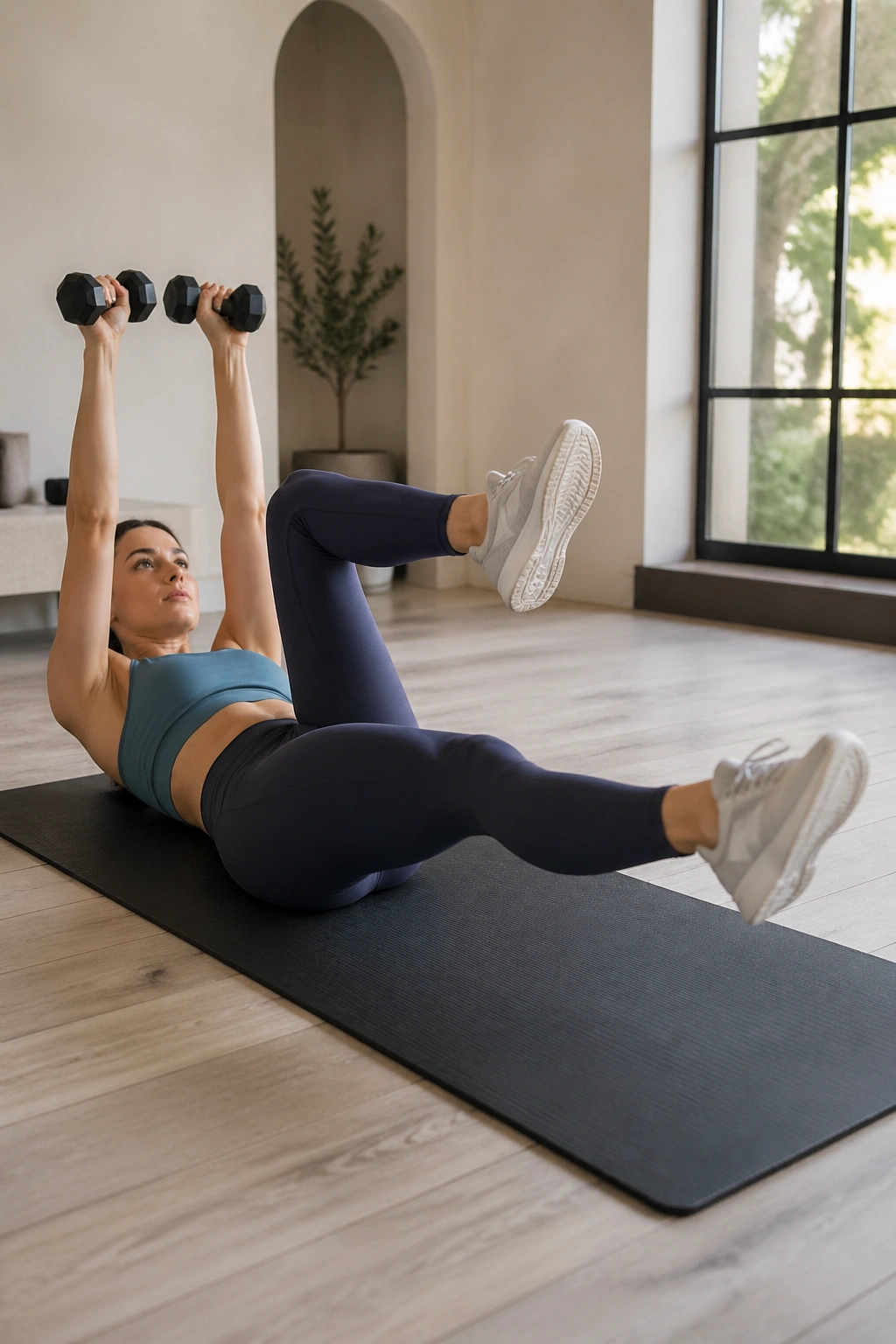
A clean dead bug makes a cleaner extension.
That’s the whole argument. When the ribs flare every time the arms go overhead, the body loses the long line dancers want. A dead bug with a light overhead press teaches the trunk to stay stacked while the limbs move away from center. It’s core work, sure, but it’s also shoulder work and pelvic control work.
Lie on your back, knees above hips, arms up with light dumbbells or no weight at all. Press one arm overhead as the opposite heel reaches long toward the floor. Then come back to center without letting the lower back arch.
- Do 3 sets of 6 to 8 reps per side.
- Move slowly enough that the pelvis stays heavy.
- Exhale as the arm and leg extend.
- Stop the range before the low back starts to lift.
I like this drill because it cleans up the body without draining it. You can do it after class or before a rehearsal day, and it leaves you feeling organized instead of thrashed.
7. Push-Up Plus to Hollow Hold
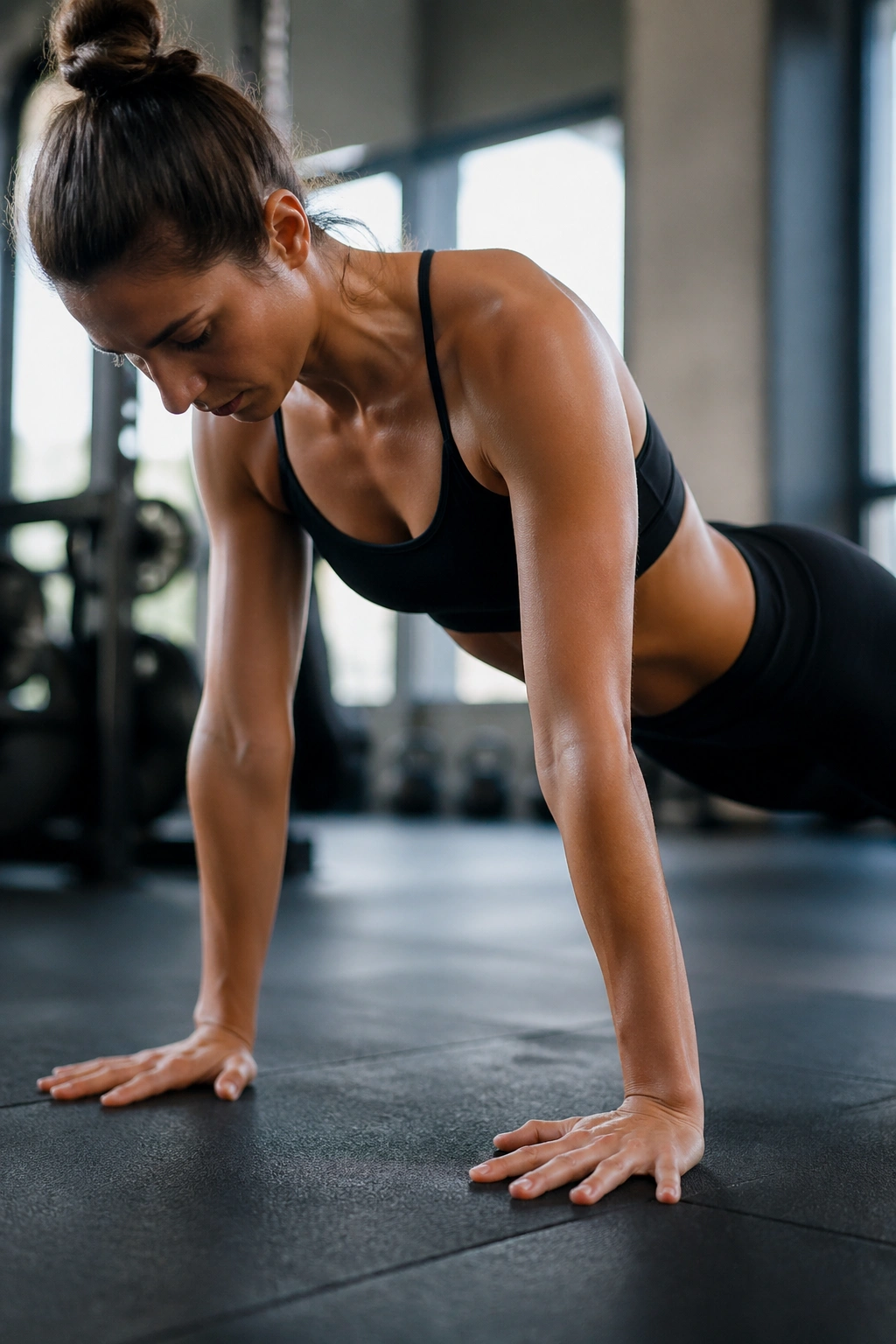
Why does the upper body sometimes look fine in first position and messy overhead? Usually because the shoulder blades don’t know where to live.
The push-up plus fixes that by teaching the scapulae to glide and protract without the chest collapsing. Start in a high plank, keep the elbows straight, and push the floor away so the upper back rounds just a little at the top. Then drop into a short hollow hold on the floor, ribs down, legs long, chin gently tucked.
The combo is useful because it joins shoulder control and trunk tension. That matters for port de bras, lifts, floor work, and any phrase where the arms have to stay alive while the center stays quiet.
Do 3 rounds of 6 to 8 push-up plus reps followed by a 15-second hollow hold. If the shoulders get grumpy, do the plank on an incline with hands on a bench. If the low back pops up during the hollow hold, bend the knees. No shame there. Better shape beats harder shape every time.
8. Copenhagen Side Plank
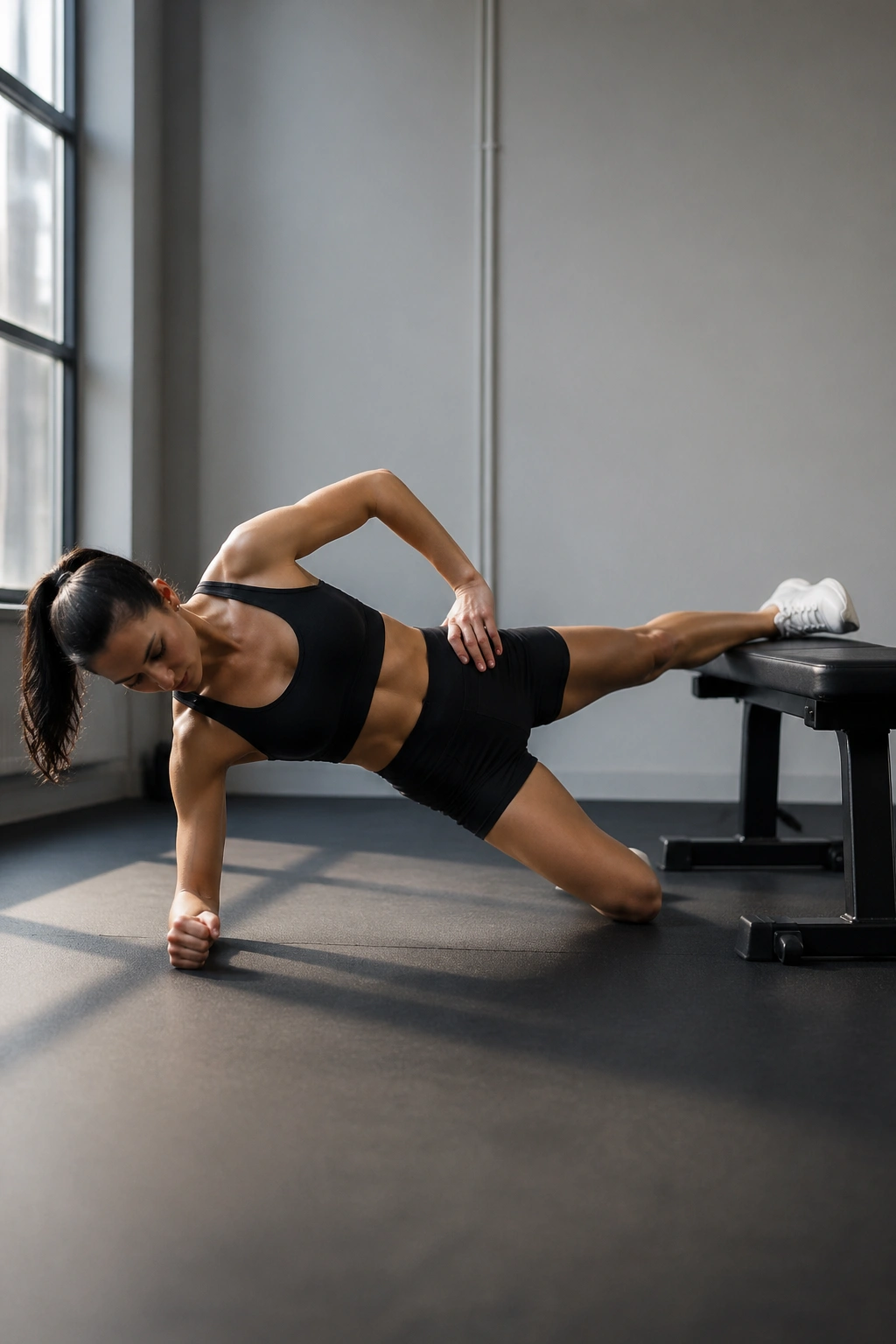
This one looks like a small stunt. It isn’t.
The Copenhagen side plank trains the inner thigh in a way most dancers barely touch. That matters because adductors help stabilize turnout, support single-leg work, and keep the leg from wandering when the body is under load. Start with the top leg resting on a bench or box, then lift into a side plank from the forearm.
Do not force the full version on day one. A bent-knee setup is plenty.
The groin should feel active, not sharp. If you feel pinching, reduce the lever or lower the support. A dancer who can own this position usually owns better lateral stability in ballet and contemporary work too, especially when the leg has to stay lifted without the pelvis tipping.
Use 3 holds of 10 to 20 seconds per side. You can also do 5 slow hip lifts in each hold. The goal is a clean line through the trunk and inner thigh, not a heroic struggle face. Those never age well.
9. Glute Bridge March with Mini-Band
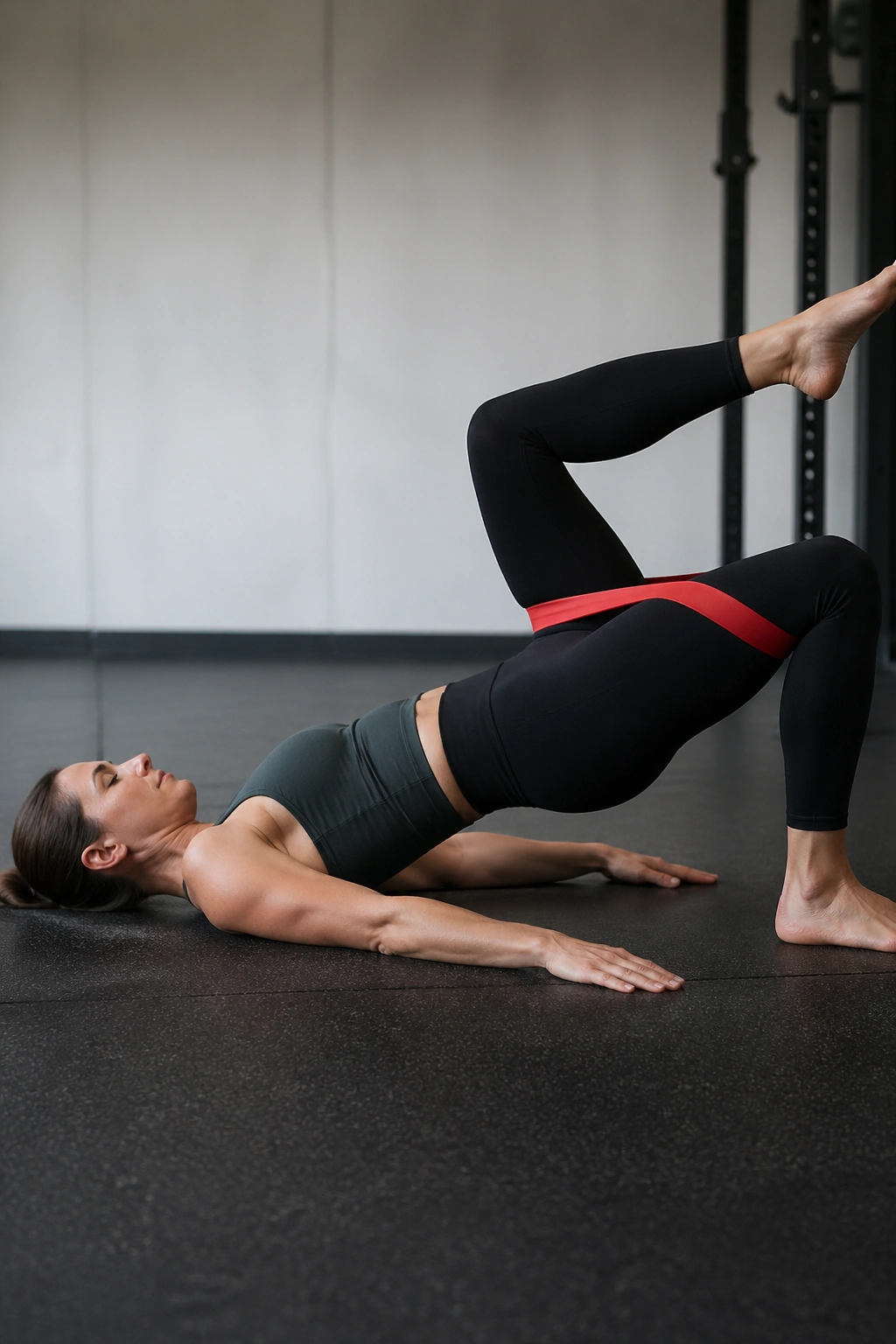
A bridge is fine. A bridge that forces the pelvis to stay level is better.
Loop a mini-band above the knees, lie on your back, and set up in a glute bridge. Lift one knee a few inches without letting the hips wobble, then set it down and switch sides. The band adds just enough outward pressure to wake up the glute med while the bridge keeps the pelvis from doing weird little side-to-side dances.
What I like here is the carryover. Dancers need hip extension, yes, but they also need the pelvis to stay quiet while one leg works. That’s what keeps a passé tidy and a landing from folding in on itself.
Do 3 sets of 10 marches per side. Hold the top of the bridge for 2 seconds on each rep. If the hamstrings cramp, bring the feet a little closer to the hips. If the ribs flare, lower the bridge height. A smaller bridge with clean shape beats a bigger one that feels like it’s held together by wishful thinking.
10. Wall Slide with Lift-Off and Reach
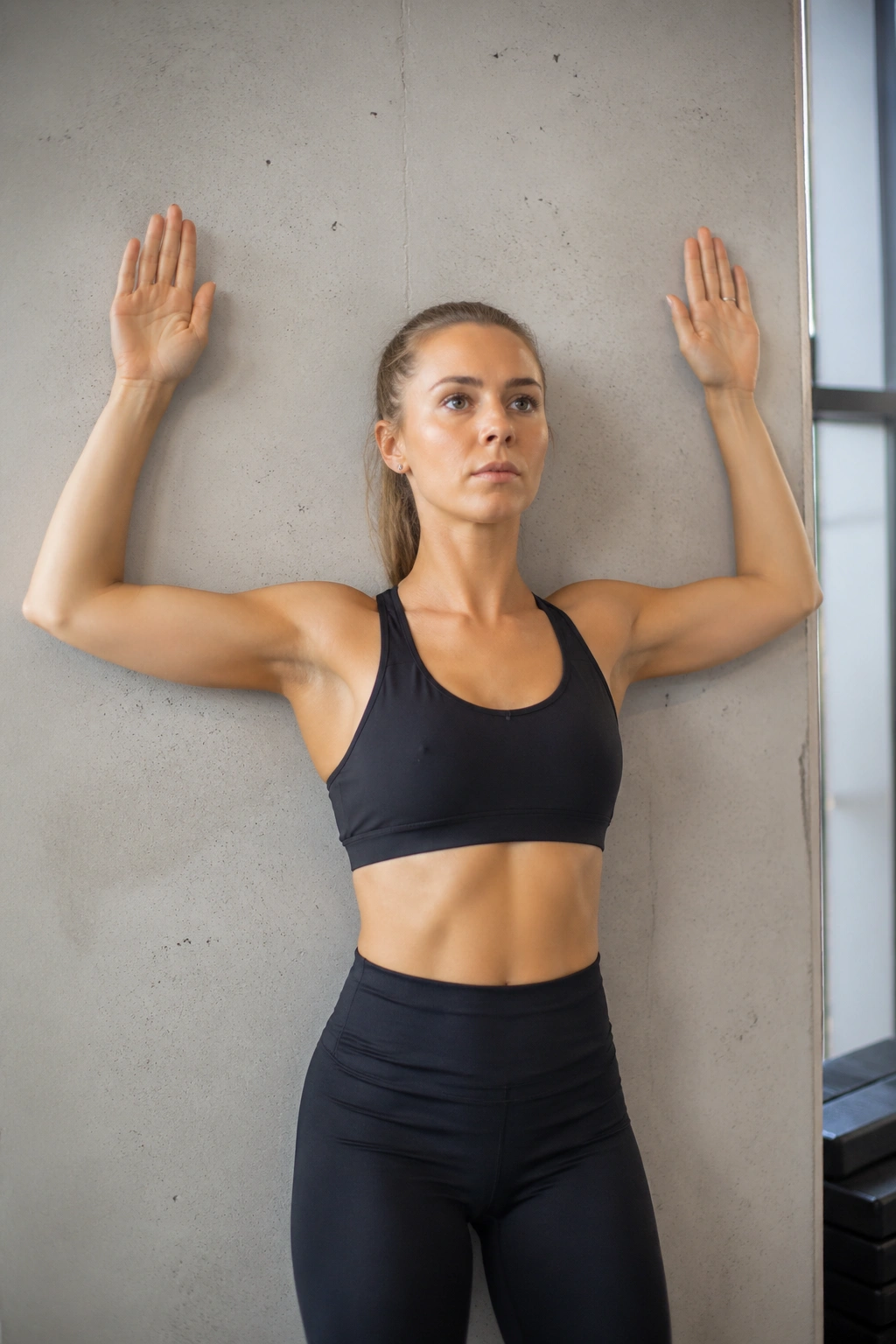
Not every useful strength drill makes you sweat.
The wall slide with lift-off looks almost too calm, which is why people underestimate it. Stand with your back, ribs, and pelvis gently against a wall, elbows bent in a goalpost shape, then slide the arms upward without losing contact through the trunk. At the top, peel the hands and forearms off the wall by about an inch, reach, and lower with control.
This hits the lower traps, serratus, and the little stabilizers that keep the shoulder blades from winging. For dancers, that means cleaner arm paths and less tension in the neck. It also helps the upper back stay long when the arms go overhead, which is one of those details that separates a tidy line from a strained one.
Try 2 to 3 sets of 8 reps with a 3-second reach and a 2-second hold at the top. If you can’t keep the low ribs down, shorten the range. Simple. Unsexy. Effective.
11. Step-Down and Stick
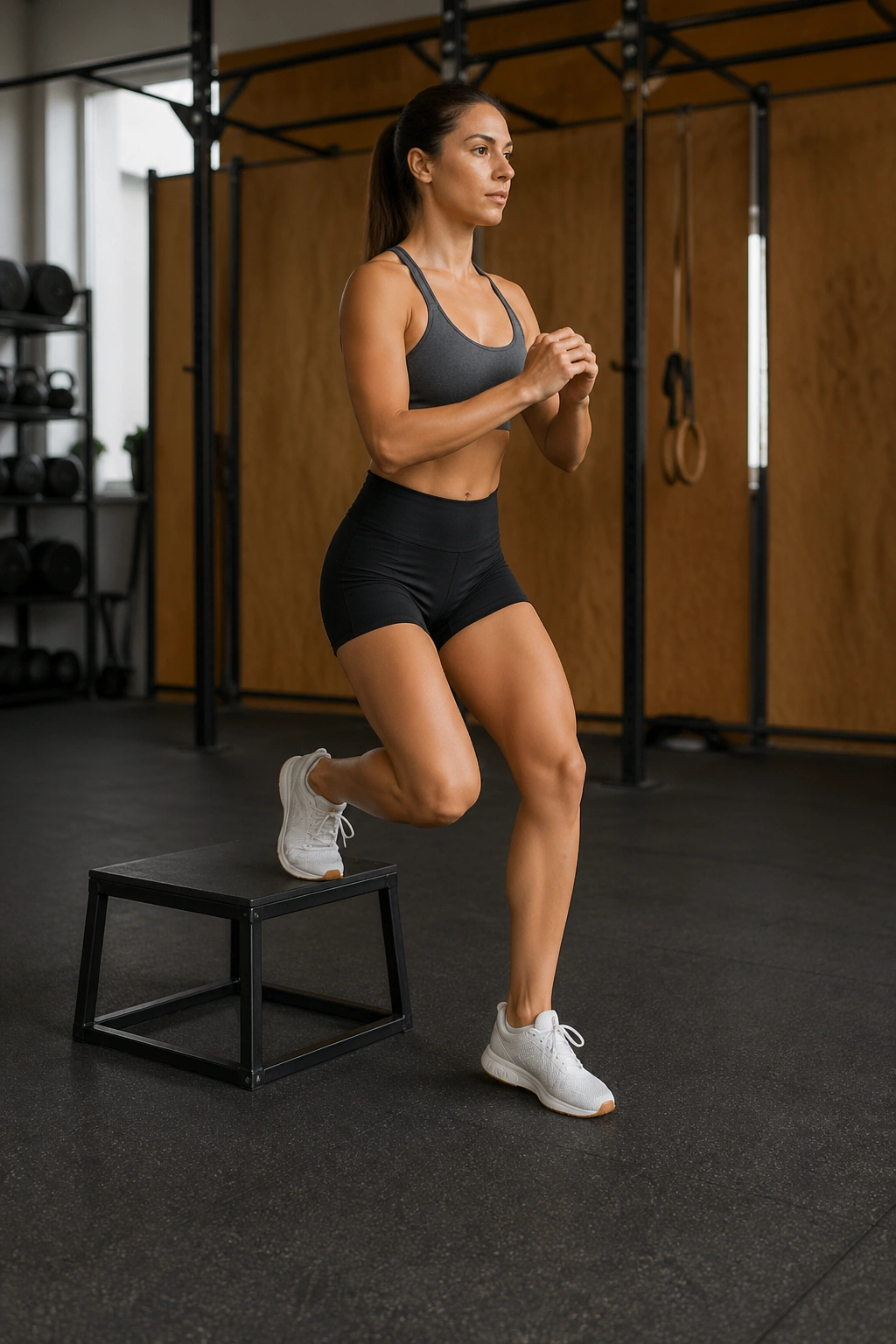
If your landings sound loud, start here.
Step down from a low box or stair, land on one leg, and stick the position for two full seconds before resetting. The “stick” matters more than the step. It teaches deceleration, which is what keeps jumps from turning into sloppy thuds and turns from bleeding all over the floor.
How to get the quiet landing
Keep the step low at first. Four to six inches is enough. Reach one heel to the floor, let the knee track over the second toe, and freeze the shape without sinking into the hip. If the arch collapses, the step is too high or the movement is too fast.
- Use 3 sets of 5 to 6 reps per side.
- Land softly but not mushy.
- Hold the torso tall.
- Reset fully between reps instead of rushing.
A dancer who owns this drill usually starts finding cleaner grand allegro landings and less ankle drama. The body learns where to absorb force. That’s a useful lesson, and not just for dance.
12. Pilates Hundred with Heel Hover
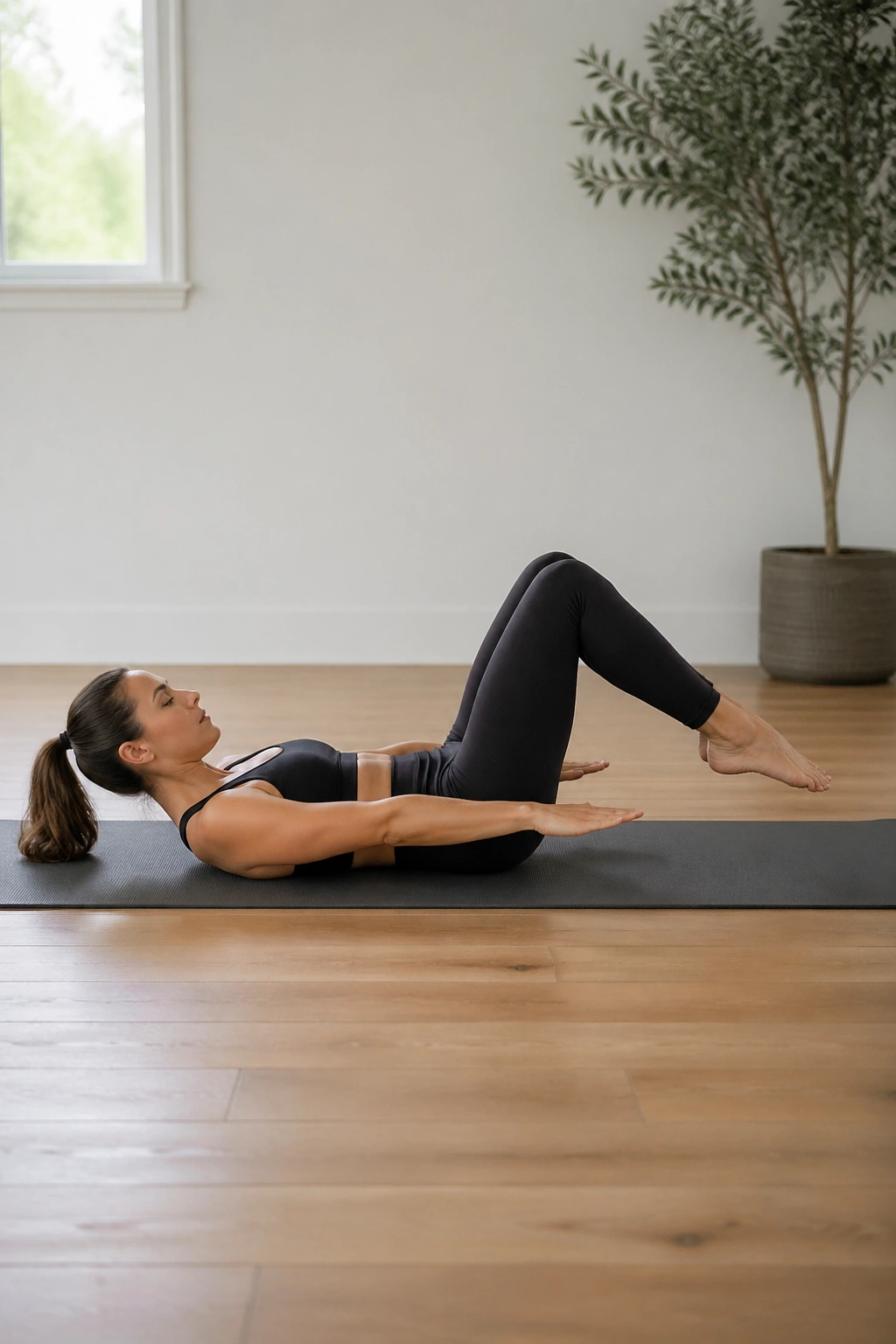
This looks small and feels rude.
The Hundred is still worth doing because it trains breath, deep abdominal control, and lower-limb organization at the same time. For dancers, the heel hover version is especially useful: knees bent, shins parallel, heels hovering an inch or two off the floor while the arms pump. If the low back starts to arch, the heels go too low. Raise them and keep the shape neat.
A few things to watch
- Keep the neck long; don’t crank the chin forward.
- Exhale in short bursts instead of holding your breath.
- If the hip flexors take over, move the feet higher.
- Use the arms as rhythm, not as a way to fling the shoulders.
I’d use 5 rounds of 10 arm pumps with a 2- to 3-second breath pattern. You can keep the head down if the neck gets tired. That isn’t cheating. It’s smart.
The payoff is subtle. The trunk feels less noisy, the legs look longer because the center isn’t flaring, and the whole body gets a little easier to place.
13. Curtsy Lunge with Diagonal Reach
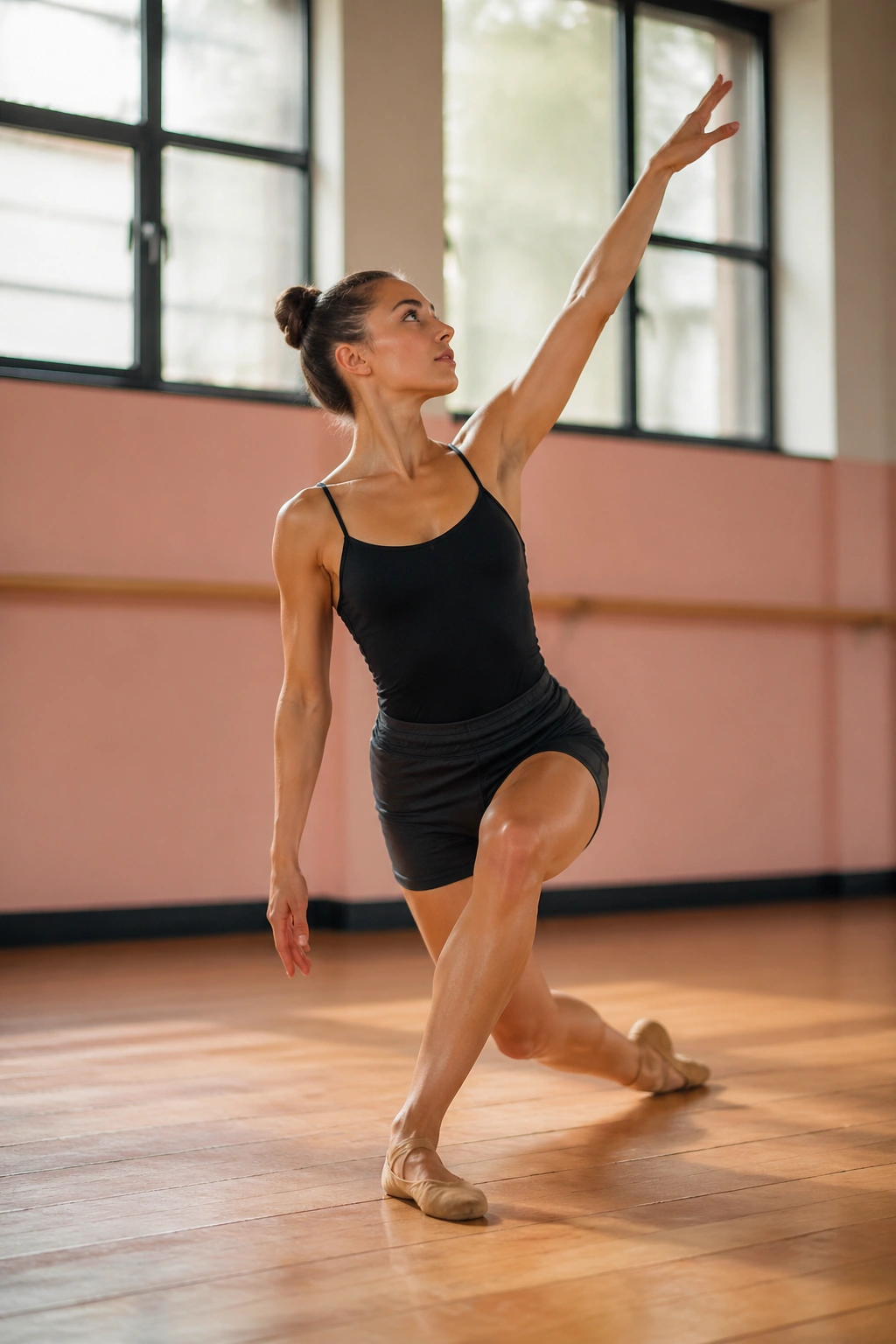
A straight lunge is useful. A diagonal one shows you where the control breaks.
Step one leg behind and across into a curtsy lunge, then reach the opposite arm up and across the body. The diagonal reach asks the torso to stay organized while the hip works in a less comfy line. That makes this a strong choice for dancers who need better hip stability, cleaner transitions, and more control when moving through angled pathways.
This one does not need a huge range. In fact, too much range is usually where the shape falls apart. Keep the front knee tracking clean, let the back leg cross only as far as the pelvis can stay level, and stand up by driving through the front heel.
Do 2 to 3 sets of 6 to 8 reps per side. Slow down the lowering phase. That’s where the useful work happens. If the knee twists inward or the front arch flattens, shorten the step and clean up the angle. The diagonal is the point; chaos is not.
14. Hamstring Slider Curl
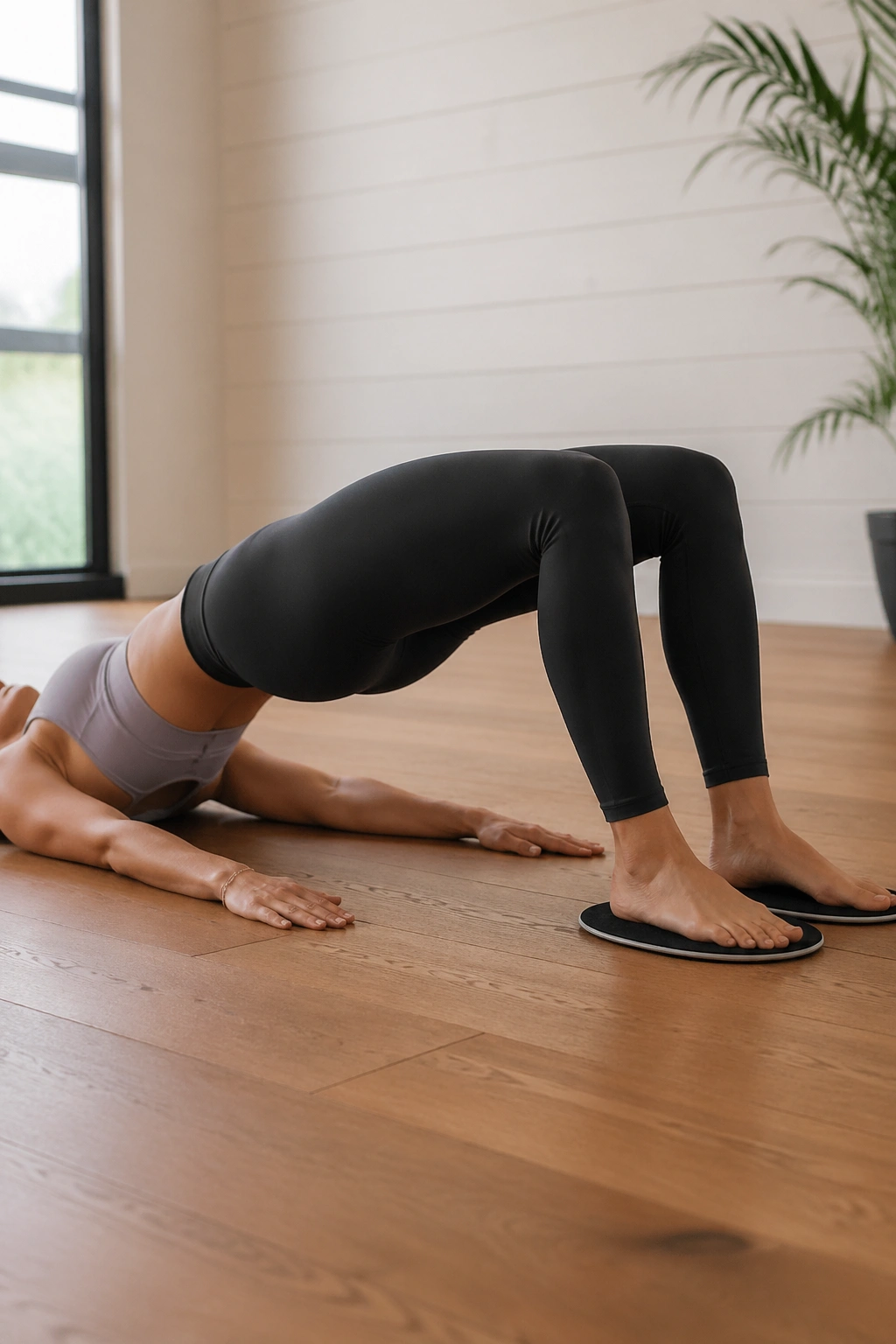
Hamstrings that only work when stretched are not much help on stage.
Lie on your back with heels on sliders, towels, or socks on a smooth floor. Lift the hips into a bridge, then slowly slide the heels away until the legs are almost straight. Pull them back in without dropping the pelvis. Simple to explain. Nasty to execute well.
The beauty of this drill is that it asks the hamstrings to control both lengthening and shortening. That matters for dancers because the back line has to support arabesque, landings, and pelvic stability when the body shifts weight fast. If the low back starts to arch, the hips are too low or the range is too big.
Use 3 sets of 8 to 10 reps. Pause for 1 second when the legs are long. If the curl feels cramped, start with a smaller slide and build from there. A little control goes a long way here. Chasing range before strength is how people end up working around the real problem.
15. Floor Barre Isometric Circuit for Arms, Legs, and Feet
This is the one I’d keep if I had to strip the whole thing down.
Floor barre-style isometrics build the kind of strength that shows up as shape: long legs, quiet hips, better turnout support, and arms that don’t wander when fatigue rolls in. The work is simple. Hold positions. Own them. Then move on before the body starts cheating.
Try a short circuit: 20 seconds of first-position plié hold, 20 seconds of passé balance, 20 seconds of arabesque hover, 20 seconds of arm extension with the shoulders down, and 10 doming reps per foot. Rest for 30 to 45 seconds, then repeat for 3 rounds. If the standing foot caves, reset. If the hip hikes, shorten the hold.
This kind of training is not dramatic, which is probably why it gets ignored. Bad call. Dancers live in shapes, and shapes are built by the muscles that can stay useful when nothing is moving fast. The loud workout is not always the one that gives you the best line.
Do this on a day when you want your body to feel more put together than blown out. That’s the sweet spot. A few strong holds, a few clean reps, and enough honesty to stop before form gets sloppy — that’s usually where dancer strength starts to look like dancer strength.
