



Dumbbell superset workouts work because they keep training dense without turning every session into a long sit-and-stare between sets.
A lot of people think muscle growth comes from piling on more exercises. It usually comes from better work: hard sets, tight form, short enough rest to stay engaged, and pairings that let one muscle recover while another does the heavy lifting. Chest with back. Quads with hamstrings. Biceps with triceps. That rhythm makes a session feel focused instead of random.
The sweet spot is boring in the best way. Use loads that let you hit clean reps, stop one rep before your form starts to wobble, and rest after the pair rather than after every single lift. If you’re training at home, a bench and a pair of adjustable dumbbells can cover a shocking amount of ground. If you’re in a gym, this style keeps you from hogging a rack for half the afternoon.
Pick the right pair, and the whole workout changes shape. The room gets smaller. In a good way.
1. Dumbbell Bench Press and Chest-Supported Row
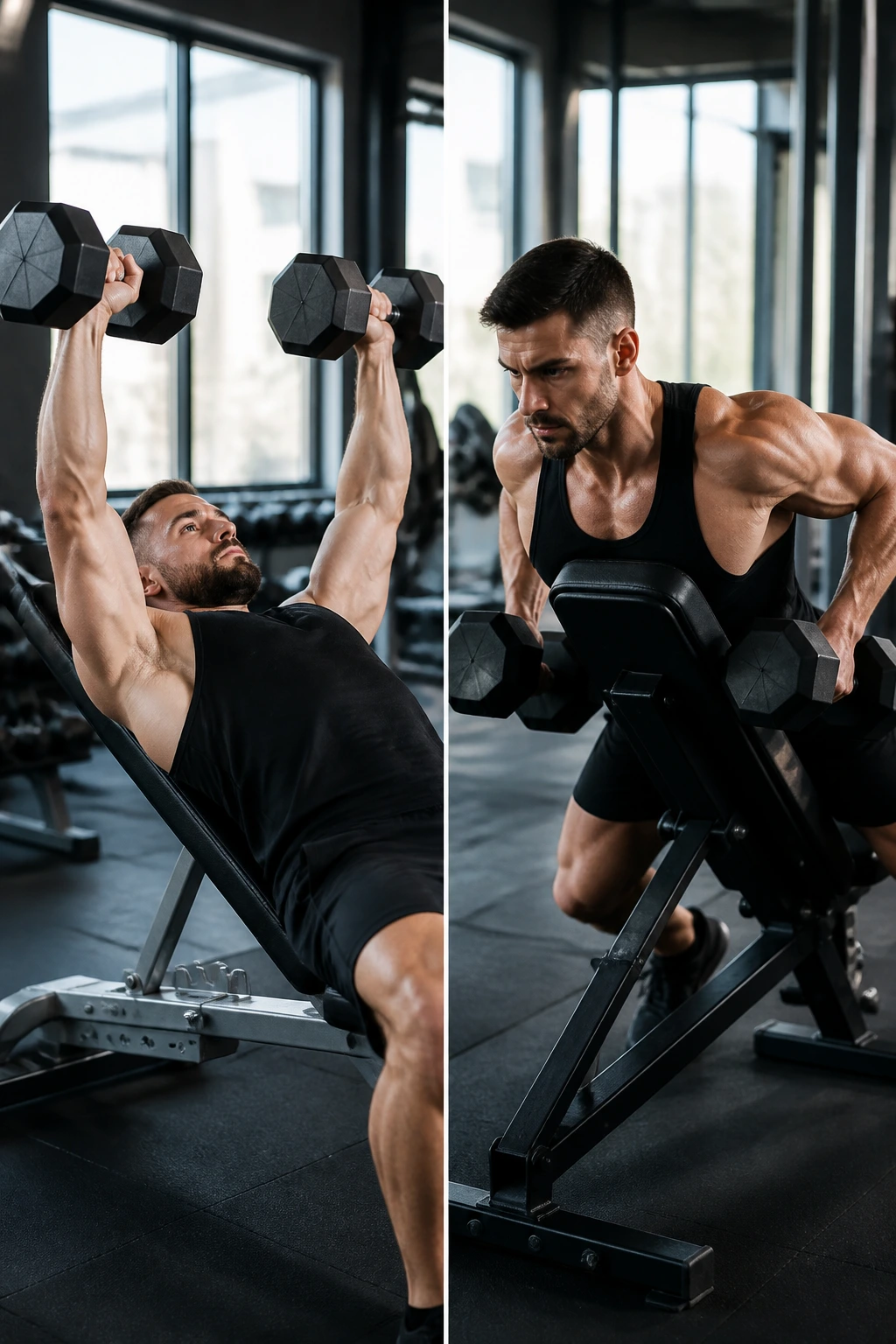
Push and pull belong together.
This is the classic dumbbell superset for a reason. The bench press drives chest, front delts, and triceps, while the chest-supported row hits lats, mid-back, and rear delts without asking your lower back to hold the whole session together. That means you can keep the reps crisp even when the work starts to bite.
Why It Works
Pressing and rowing back-to-back gives you a clean antagonistic pairing. Your chest works hard, then your upper back takes over while the pressing muscles get a brief breather. The result is more total work in less time, and that matters if muscle growth is the goal.
- Do 4 rounds.
- Use 8 reps on the bench press and 10 reps on the row.
- Rest 60 to 75 seconds after the row.
- Set the incline bench at 30 to 45 degrees for the row so your chest stays supported.
Tip: Keep the row strict. If your shoulders shrug and your torso starts yanking, the set is too heavy.
2. Goblet Squat and Dumbbell Romanian Deadlift
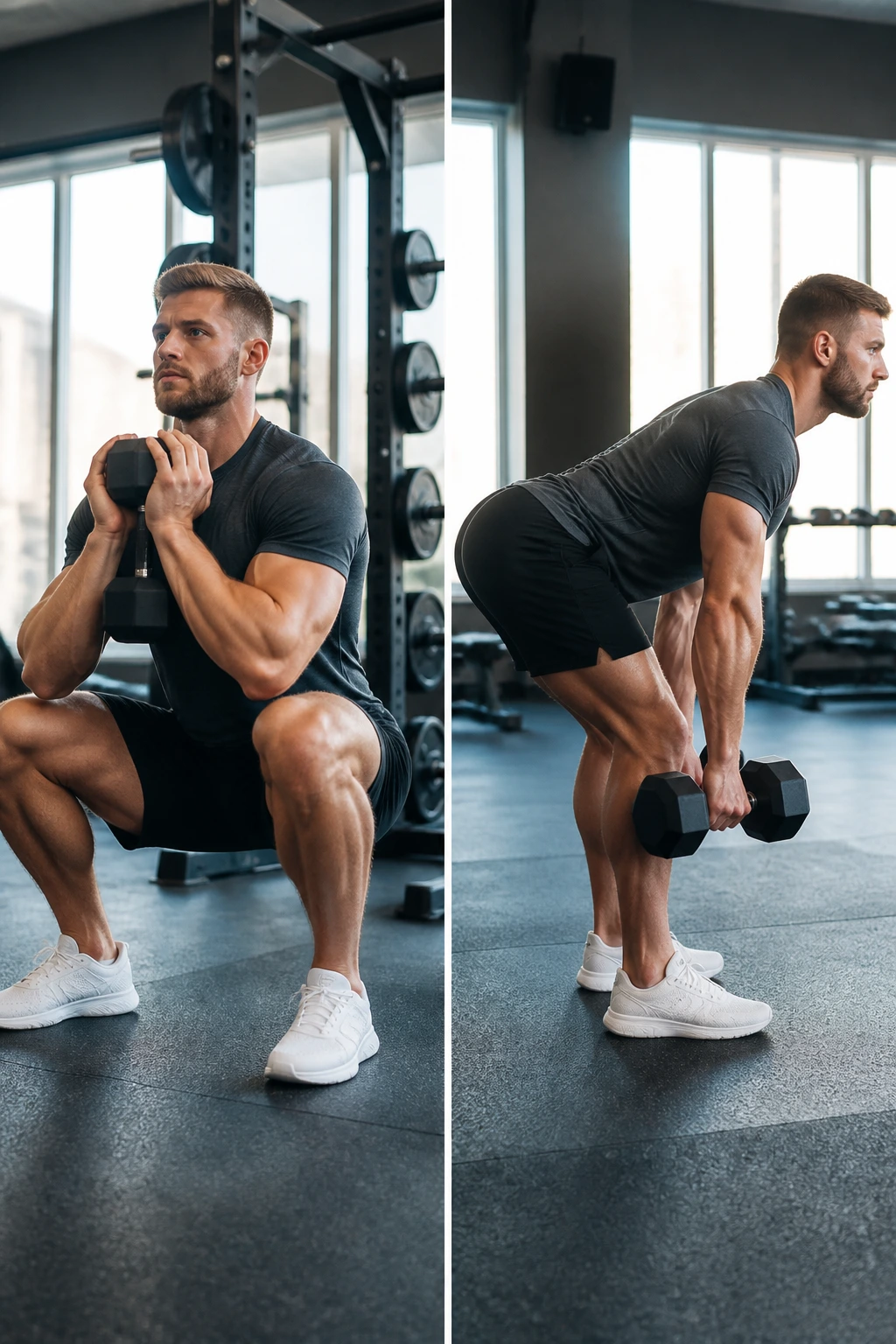
This is the leg pair I hand people when they say they want more work in less time.
The goblet squat lights up quads, glutes, and your upper back just from holding the weight in front of you. The Romanian deadlift flips the script and puts the hamstrings and glutes on the spot. Together they cover the front and back of the lower body without needing a barbell, a machine, or a lot of setup.
Start with a dumbbell you can hold at your chest for 10 clean goblet squats. Then grab two dumbbells for the Romanian deadlift and let them travel close to your legs as you hinge. The key is to keep the knees soft and push the hips back until the hamstrings feel long, not painful. That stretch is the point.
Three rounds is enough for most people. Four rounds is plenty if you’re controlling the lowering phase for 2 to 3 seconds on each rep. Your quads will complain first. That’s fine. They usually do.
3. Incline Dumbbell Press and One-Arm Row
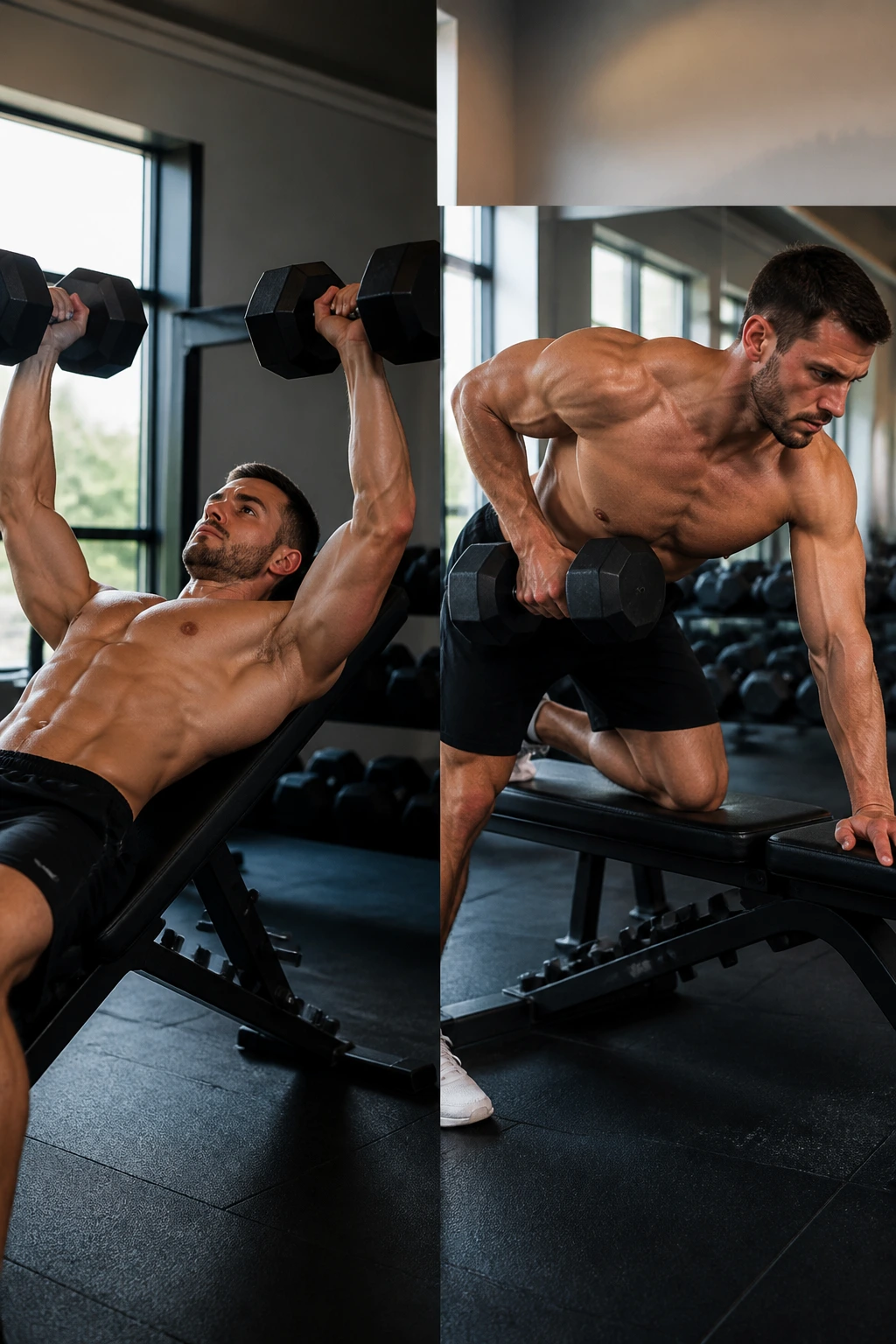
Why does incline pressing plus a one-arm row feel so clean?
Because the pairing does two things at once. The incline press shifts more work onto the upper chest and front delts, while the one-arm row gives your lats and mid-back a strong pull with a little extra torso control. You get chest, back, and a decent amount of core bracing in one run.
How to Program It
Use a bench at about 30 degrees. Steeper than that, and the press starts turning into a shoulder exercise. Then row with your free hand braced on the bench, letting the dumbbell hang for a full stretch before you pull it toward your hip.
- 3 to 4 rounds
- 8 to 10 reps on the incline press
- 10 to 12 reps per arm on the row
- 45 to 60 seconds after each pair
If you want a simple rule, here it is: keep the press smooth and the row hard. That balance keeps the superset from becoming lopsided.
4. Bulgarian Split Squat and Dumbbell Hip Thrust
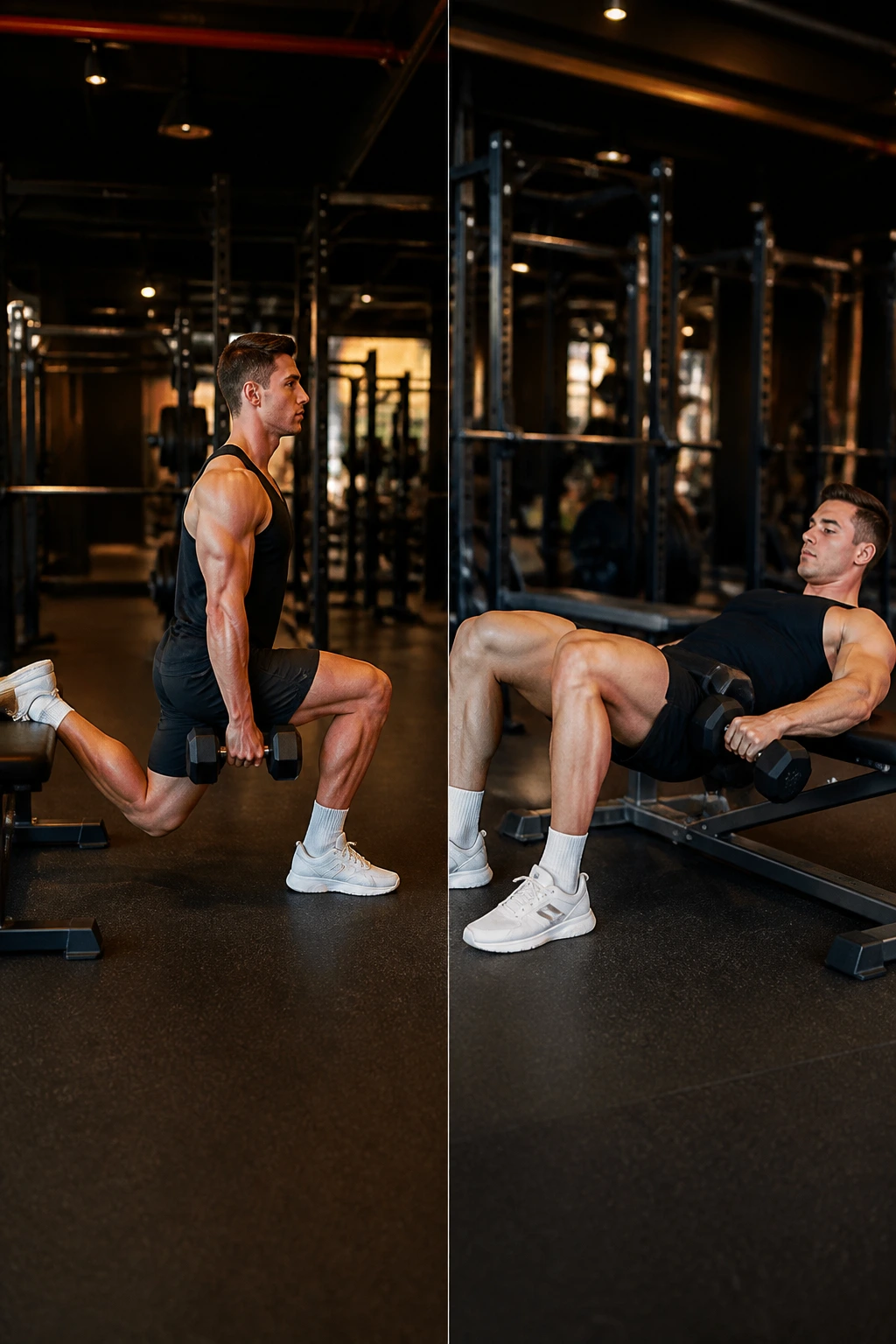
The first time you run split squats into hip thrusts, stairs feel rude.
That is not a complaint. It’s the whole point. The Bulgarian split squat loads the quads and glutes one leg at a time, so you cannot hide behind momentum or a strong side taking over. The hip thrust then piles more tension onto the glutes with less stress on the lower back than a lot of other lower-body moves.
Use a bench or sturdy step that puts the back foot somewhere around knee height. Keep your torso slightly forward on the split squat so the front leg does the work, and stop the descent when the back knee gets close to the floor. For hip thrusts, tuck the chin, drive through the heels, and pause for a second at the top when the glutes are squeezed hard.
- 3 rounds each leg
- 8 to 10 reps on the split squat
- 12 to 15 reps on the hip thrust
- 60 to 90 seconds after both sides are done
A small warning: if your balance is shaky, hold lighter dumbbells than you think you need. Wobble steals tension.
5. Seated Dumbbell Shoulder Press and Lateral Raise
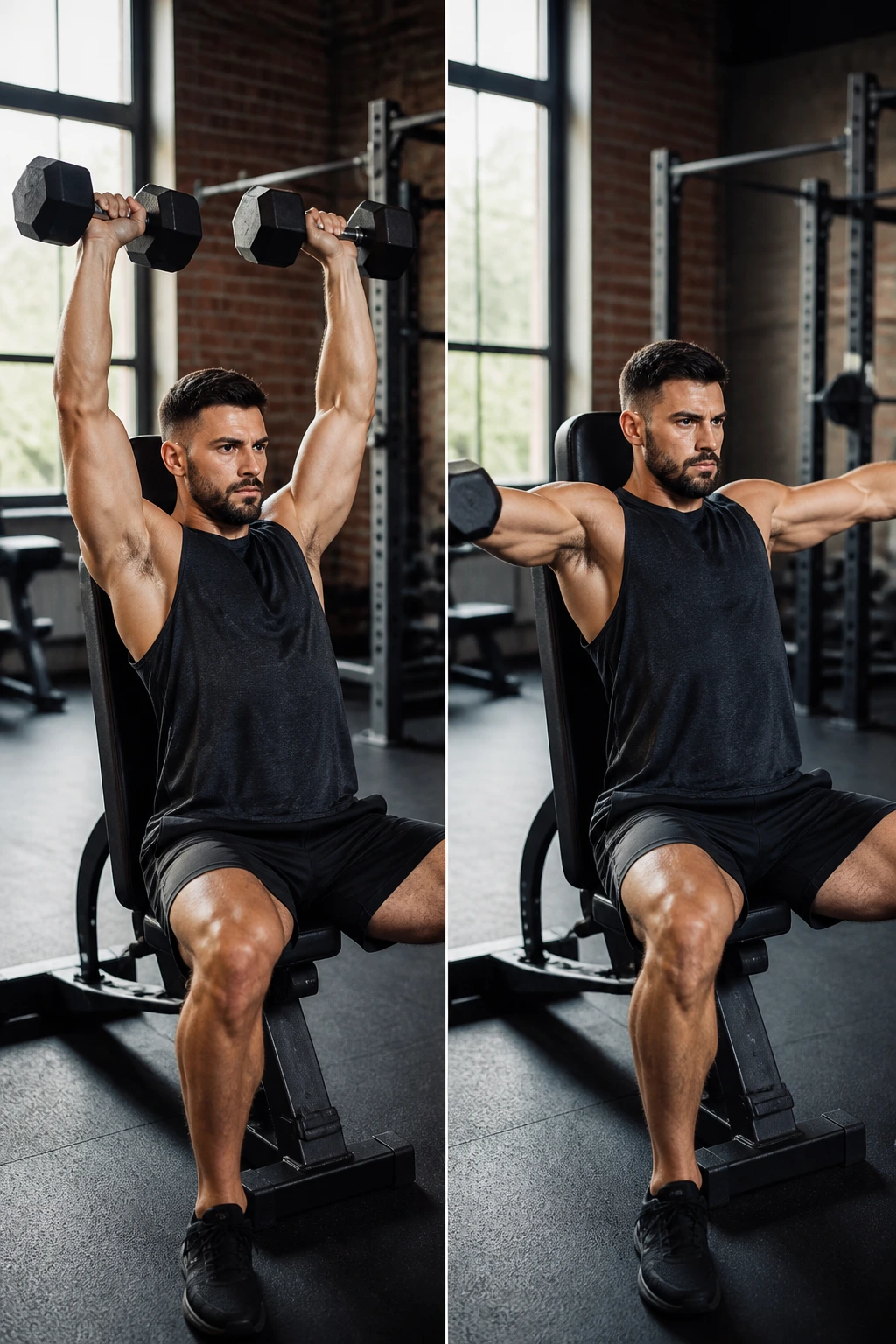
Shoulder sessions can get messy fast.
This pair keeps them honest. The seated press handles the heavy work first, especially the front delts and triceps. The lateral raise comes right after and forces the side delts to do their job without help from your hips, knees, or a sneaky lean-back. That second movement is where a lot of shoulder shape comes from, and it gets missed all the time.
I like this superset with a moderate load on the press and a lighter load on the raises. The press works well for 6 to 8 reps, but the raises usually look better at 12 to 15 reps with a slow lower. If you swing the dumbbells up, you’re not training shoulders anymore. You’re practicing bad habits.
No swinging.
Use a clean seated position, ribs down, and stop the raise around shoulder height. Higher than that, and many people just shrug the weight into their traps.
6. Hammer Curl and Overhead Triceps Extension
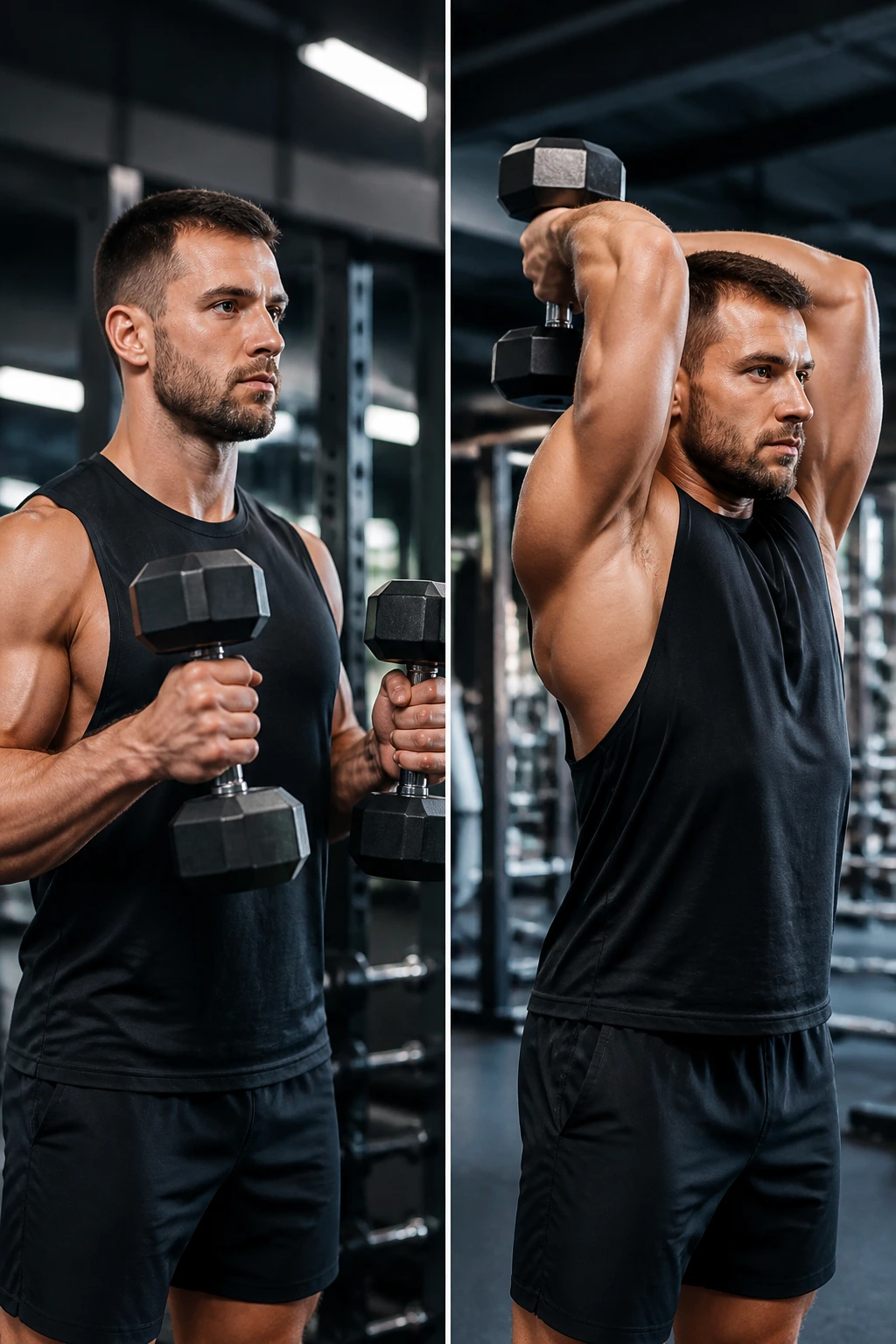
Unlike barbell arm work, dumbbells let each arm move on its own path.
That sounds small. It isn’t. Hammer curls put a lot of attention on the brachialis and forearms, which helps the upper arm look thicker from the side. Overhead triceps extensions stretch the long head of the triceps, which is the part people usually want more of when they say their arms look flat. Together they give you that dense, full look without needing a cable stack.
This pair also tends to be kinder to elbows than some straight-bar curling and pressing variations. If your joints feel cranky, keep the dumbbells neutral on the curl and use one heavier dumbbell with both hands for the overhead extension. Just don’t flare your elbows all over the place.
Best setup? 3 to 4 rounds, 10 to 12 reps on each move, and 45 seconds of rest after the extension. That’s enough to build a burn without turning the session into sloppy arm flailing.
7. Walking Lunge and Renegade Row
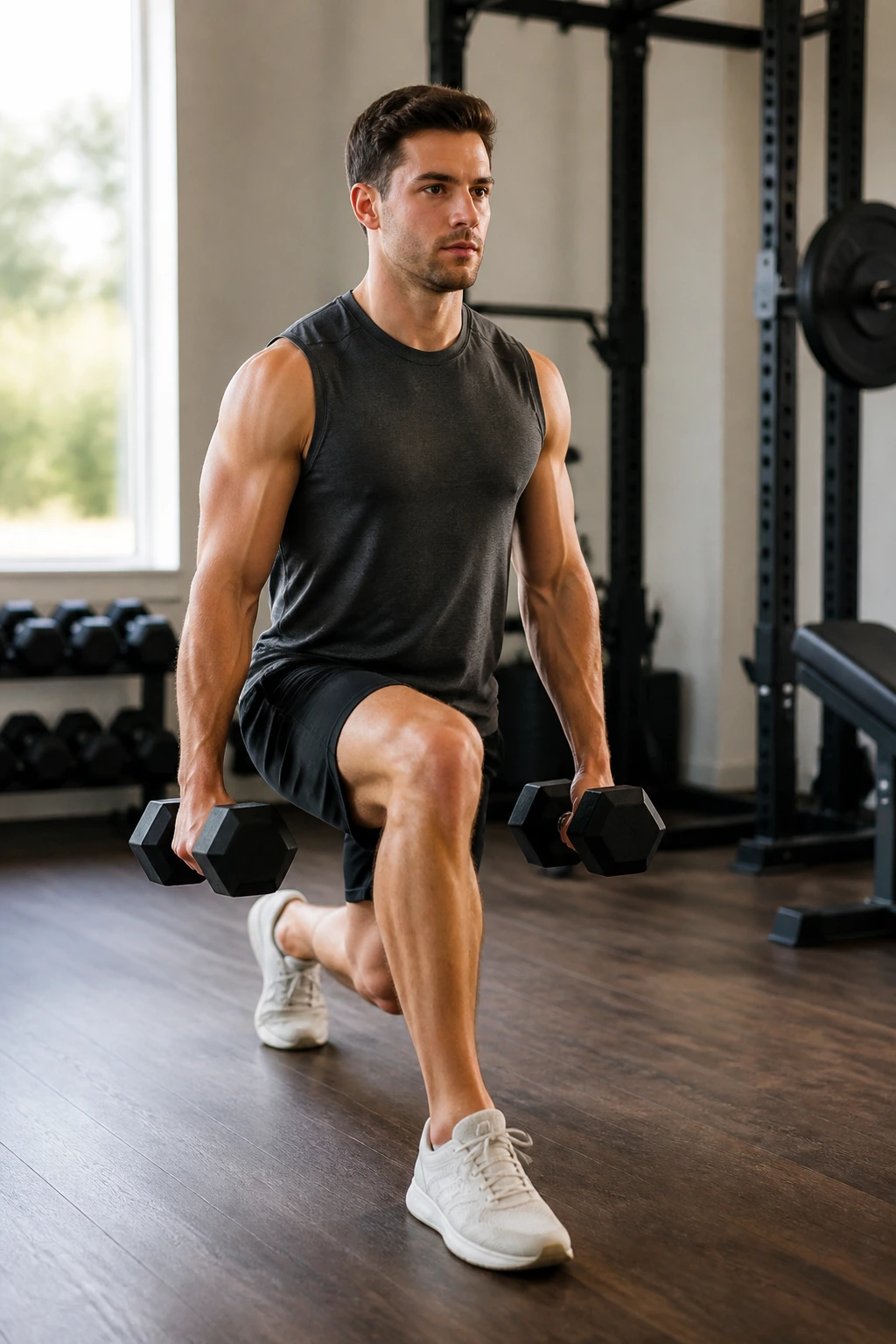
A walking lunge followed by a renegade row looks a little chaotic on paper. That’s why it works.
The lunge drives your quads, glutes, and balance all at once, then the renegade row asks your core to keep your torso from twisting while your back does the pulling. It’s a small-space workout, which makes it useful at home, but it’s also a sneaky way to make your whole midsection earn its keep.
What to Watch For
Use lighter dumbbells than you would for a plain row. Seriously. The plank position changes the game, and heavy weights turn the row into a hip swing. Step the lunges with a controlled stride, keep your front knee tracking over the toes, and let the back knee kiss the floor before you drive up again.
- 3 rounds
- 8 to 10 walking lunges per leg
- 6 to 8 rows per side
- Rest 60 to 75 seconds
If your gym is crowded, this is the kind of superset that gets you in and out without feeling like you skipped half the workout.
8. Floor Press and Dumbbell Pullover
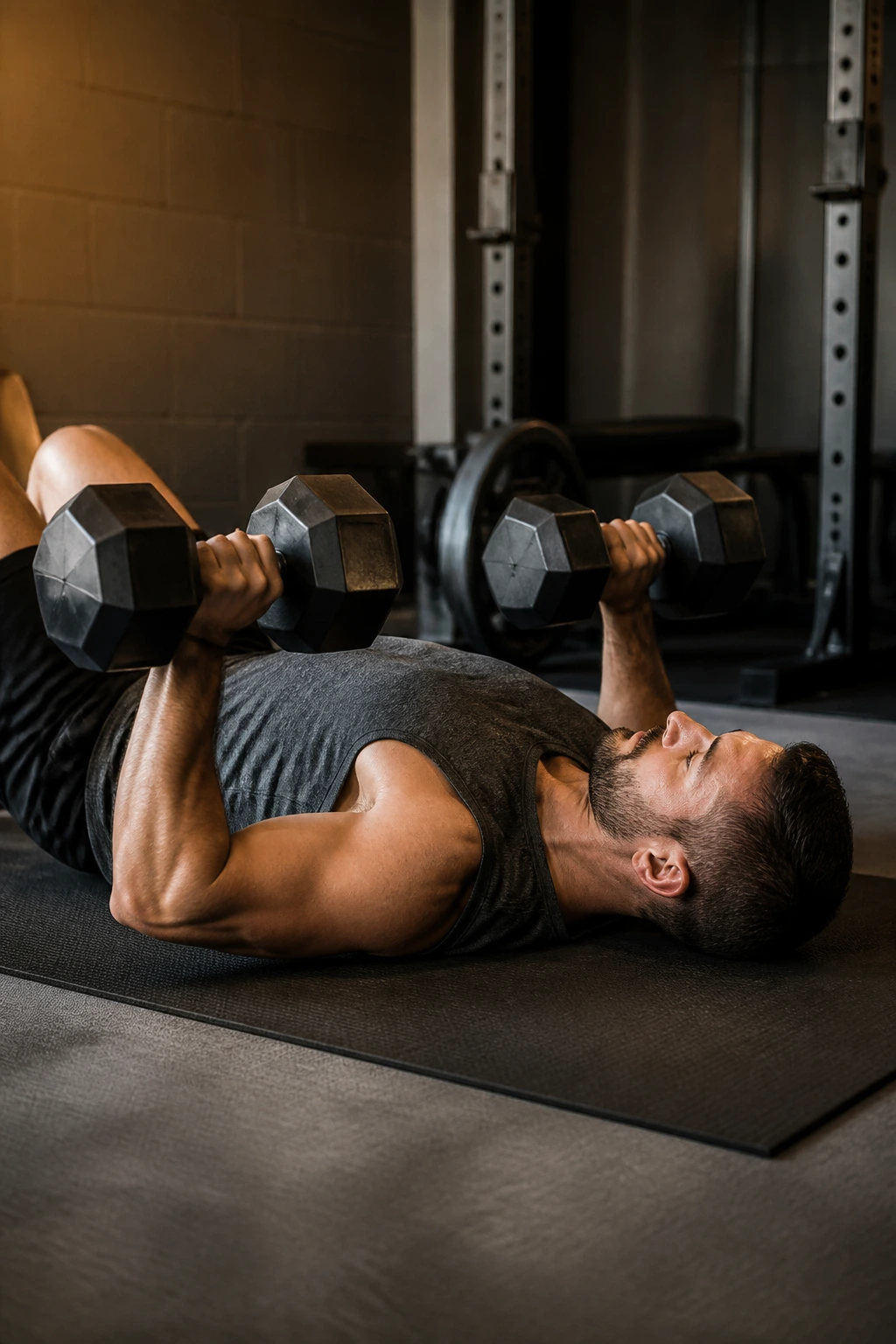
Why does the floor press still deserve a place when a bench is right there?
Because the floor changes the pressing pattern. It cuts off the bottom end of the press, which means less shoulder strain for many lifters and more emphasis on the lockout and triceps. Pair that with a dumbbell pullover, and you get a chest-and-lats combo that feels old-school in the best possible way.
The pullover works best when you keep the ribs down and let the dumbbell travel only as far as your shoulders can handle without losing control. People tend to chase a giant stretch and then overarch their lower back. Don’t. A small, controlled range with a steady tempo does more for muscle than a dramatic flop.
How to Get More Out of It
Use the floor press for 8 to 10 reps, then move to the pullover for 10 to 12 reps with a light-to-moderate dumbbell. Keep the elbows angled slightly in on the pullover so the movement stays smooth.
This pair is especially nice if your shoulders get cranky from lots of flat bench work. It still feels heavy. It just feels cleaner.
9. Front-Foot-Elevated Split Squat and Stiff-Leg Dumbbell Deadlift
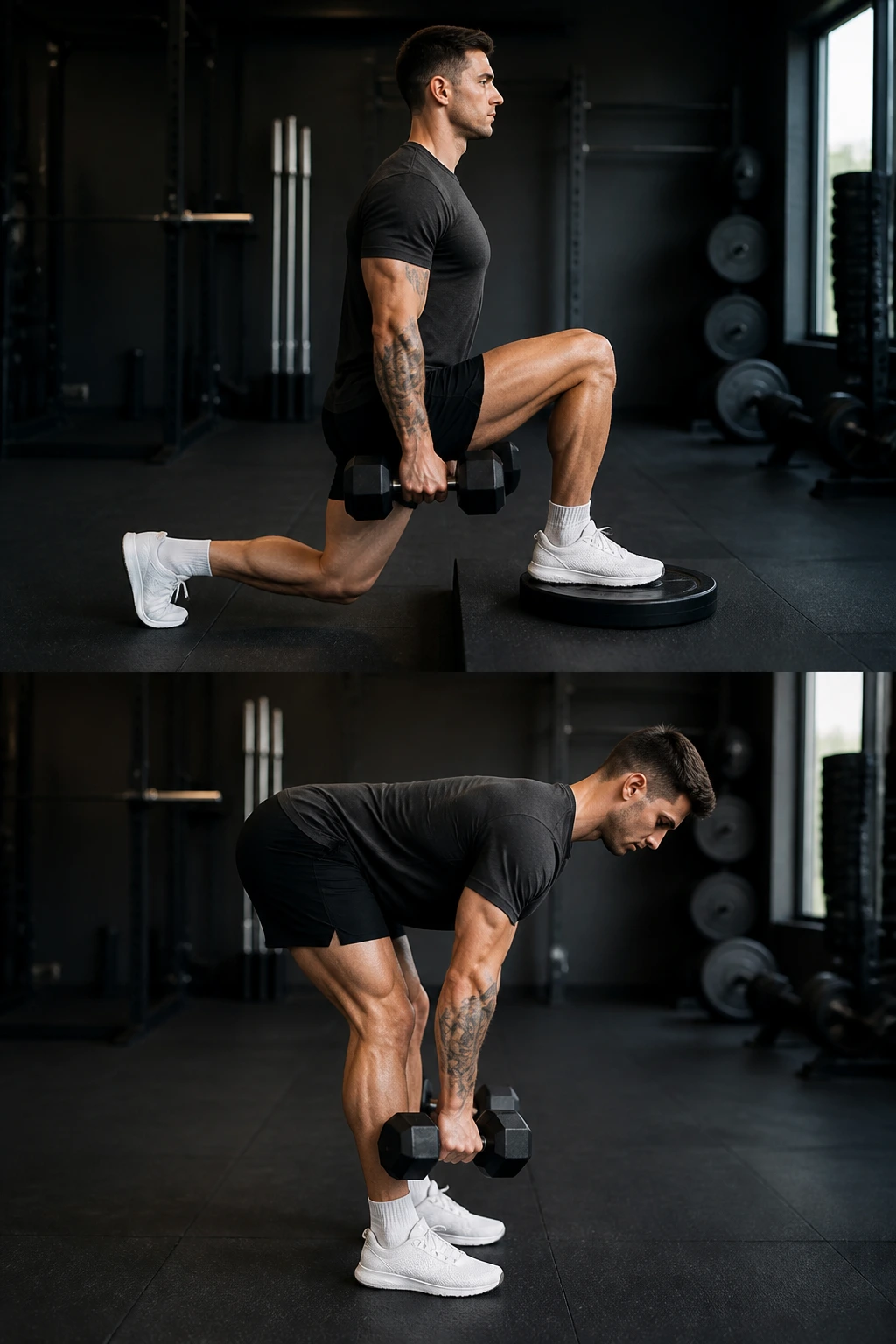
Front-foot elevation changes more than people expect.
Put the front foot on a small plate, a 2-inch step, or a sturdy wedge, and the quad on that leg has to work harder through a longer range. Then the stiff-leg dumbbell deadlift comes in and stretches the hamstrings under load, which gives the back side of the legs a completely different kind of work. One move is knee-dominant. The other is hinge-dominant. That’s a useful contrast.
I like this pairing when someone wants leg growth but doesn’t want to live under a barbell. Use a slow lower on both lifts. On the split squat, take 2 to 3 seconds to descend. On the deadlift, keep the dumbbells close to the thighs, then slide them down until your hamstrings say they’ve had enough. That usually happens before your back starts rounding. Stop there.
Three rounds is plenty. If you’re really pushing it, four rounds can be a lot. Good lot. The kind you feel walking up steps later.
10. Arnold Press and Rear Delt Fly
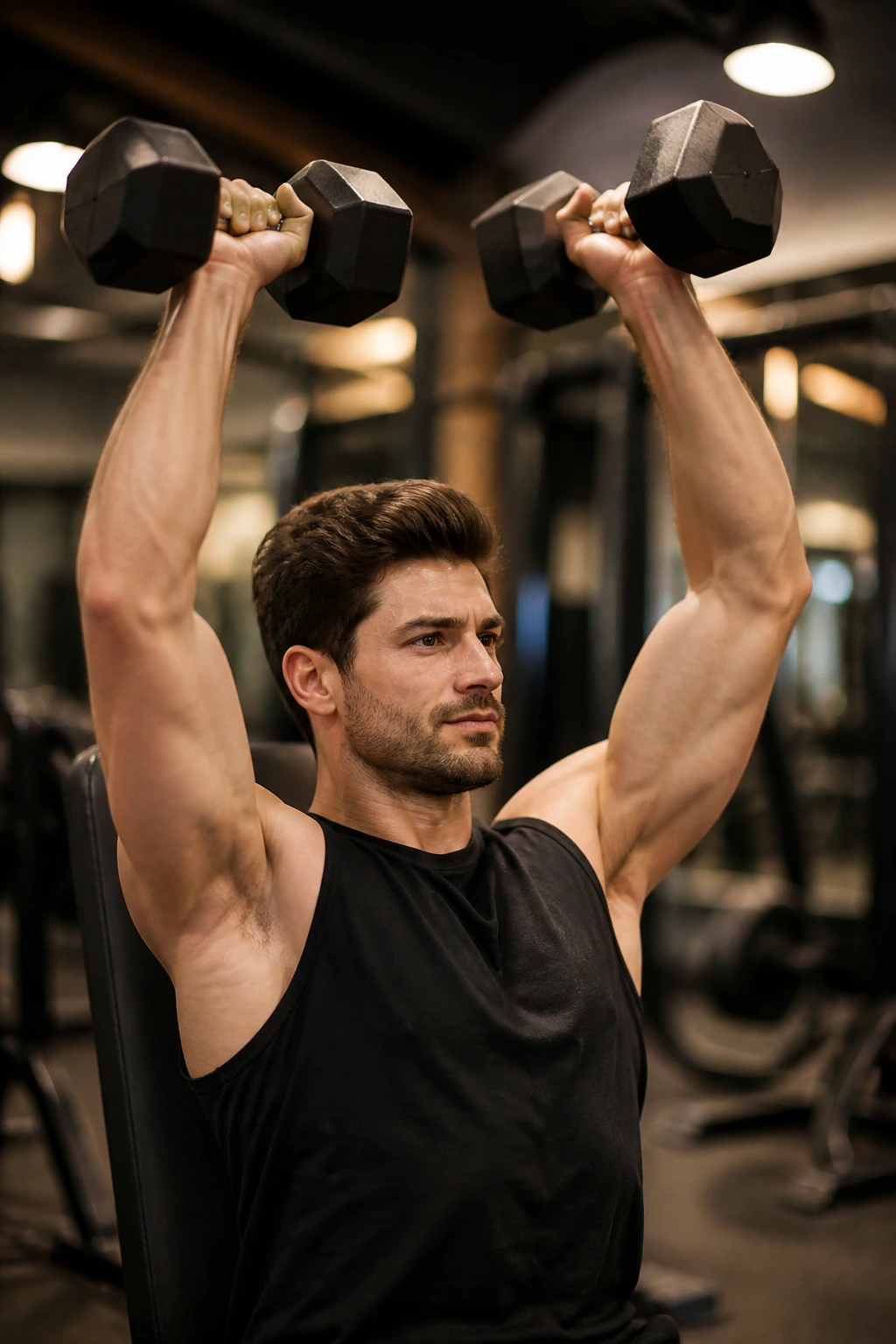
Most shoulder pairs ignore the rear delts. That’s a mistake.
The Arnold press hits the front delts, side delts, and a bit of upper chest through the rotating path. The rear delt fly balances that by pulling the shoulder into a different line of work, one that helps the back of the shoulder look fuller and keeps pressing volume from running the show. If you care about the look of your shoulders, this pairing earns its place.
Use the Arnold press with a load you can control through the rotation. The temptation is to twist fast and sling the dumbbells up. Bad idea. Keep the path smooth and the elbows under the weights. Then, on the rear delt fly, hinge at the hips, keep a soft bend in the elbows, and think about moving the upper arms out wide rather than just lifting the hands.
- 3 to 4 rounds
- 8 to 10 reps on the Arnold press
- 12 to 15 reps on the rear delt fly
- 45 to 60 seconds after each pair
That last move looks tiny. It isn’t.
11. Incline Curl and Close-Grip Dumbbell Press
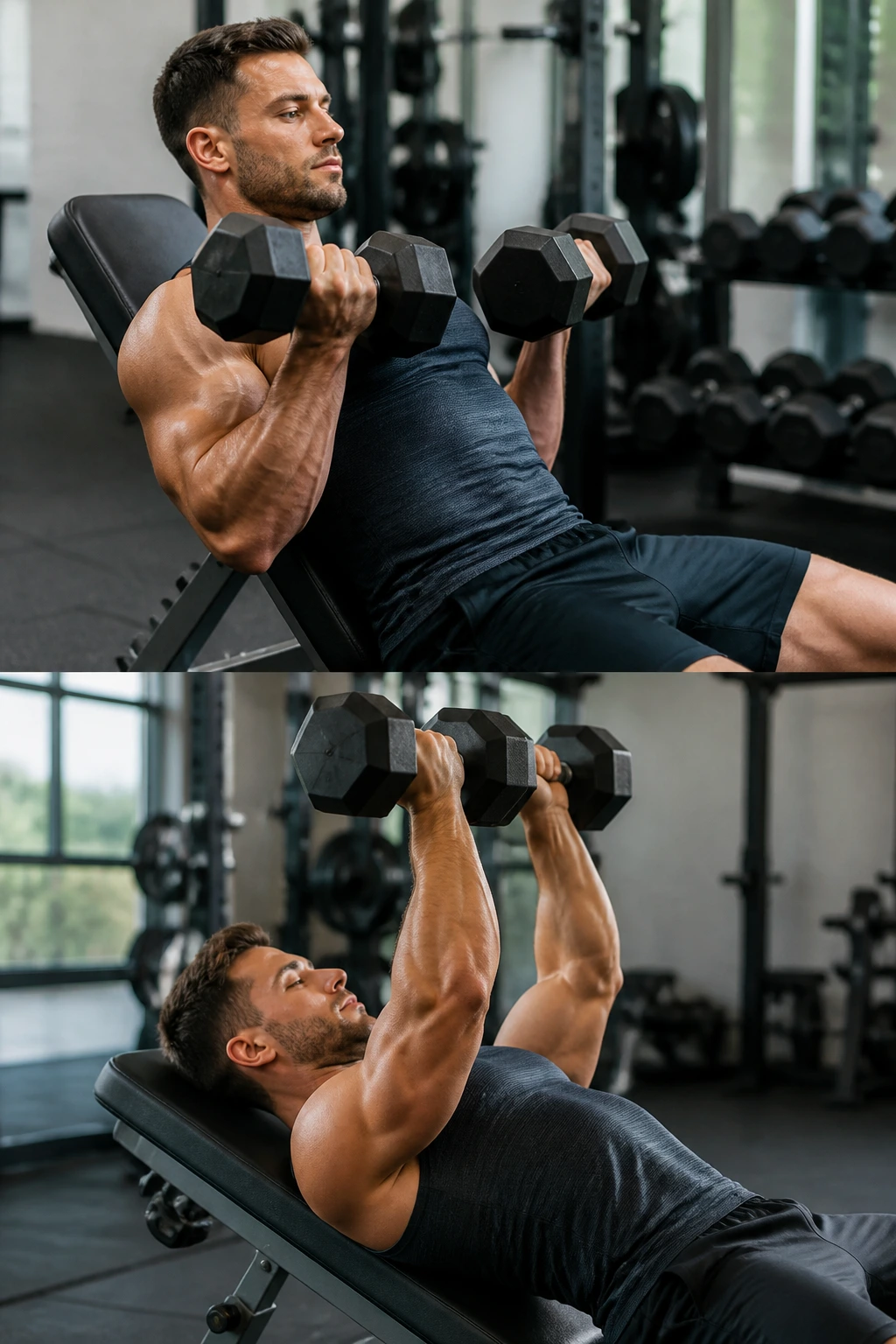
Incline curls are the biceps move people skip until their elbows start complaining.
The angle matters. When your arm hangs behind your torso on an incline bench, the long head of the biceps gets stretched before the curl even starts. Pair that with a close-grip dumbbell press, and you’re hitting the arms from both ends: biceps in a stretched position, triceps under a pressing load that stays a little friendlier on the wrists than a straight bar.
Setup Notes
Set the bench around 45 degrees for the curls. Lower than that, and many people end up yanking their shoulders back too far. For the close-grip press, keep the dumbbells near each other and use a neutral grip. That keeps the elbows from flaring and usually feels better on the shoulders.
- 3 rounds
- 10 to 12 reps on the incline curl
- 8 to 10 reps on the close-grip press
- 60 seconds between rounds
If you want arm size, this is a tidy little pair. Nothing fancy. Just hard reps and a bench.
12. Sumo Dumbbell Squat and Sumo Dumbbell Deadlift
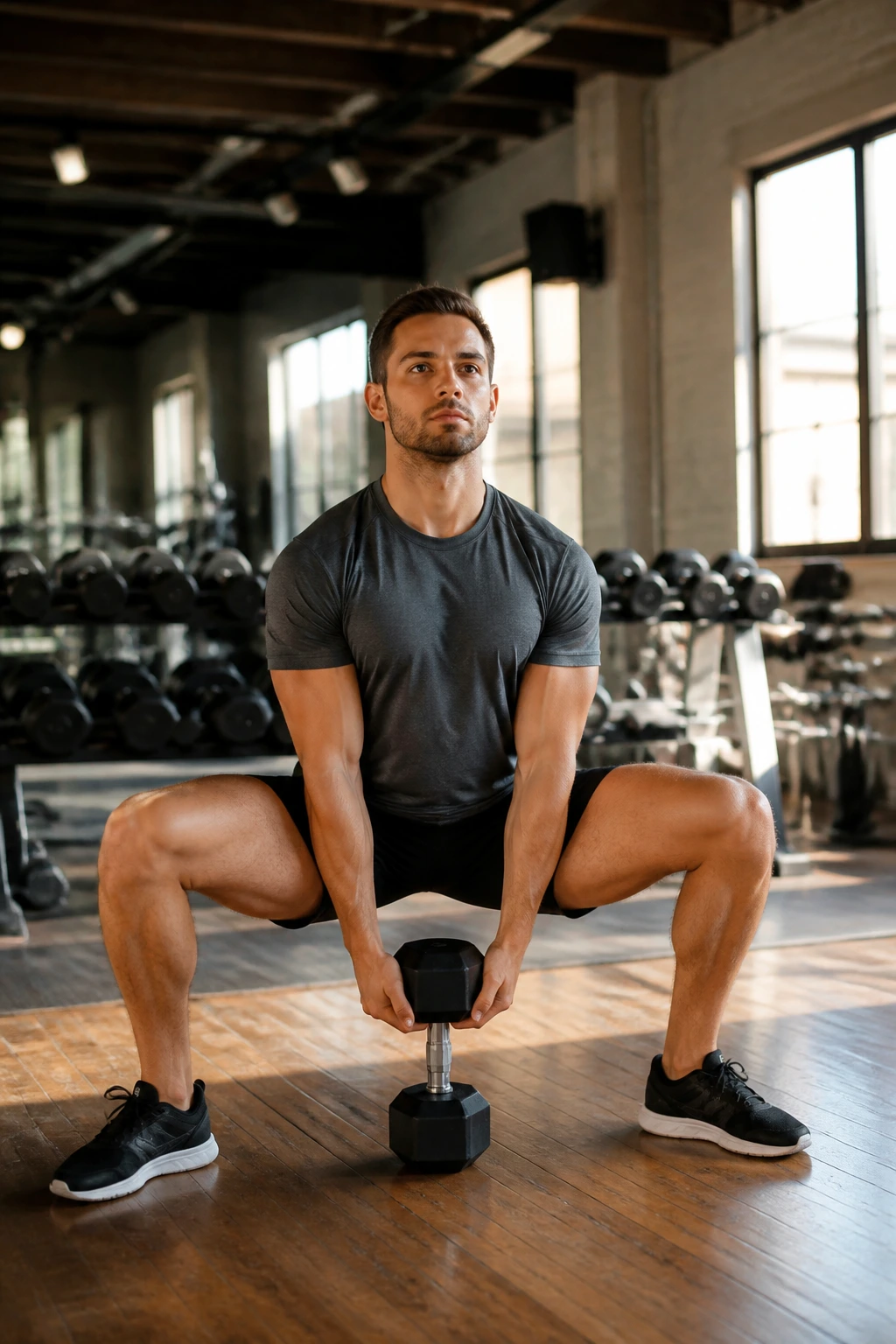
Wide-stance lower-body work hits hard and feels a little old-school.
The sumo squat opens the hips, loads the adductors, and keeps the torso upright enough to make the quads work. The sumo deadlift brings the glutes and inner thighs into the hinge pattern while usually letting you handle a bit more weight than a narrow stance. The whole pair has a dense, grounded feel that a lot of lifters like once they try it.
Here’s the practical part: keep the toes turned out about 30 degrees, push the knees out in line with the feet, and don’t turn the squat into a half-rep bounce. On the deadlift, let the dumbbells hang between the legs and stand up by driving the floor away, not by jerking the weights with your back.
I prefer 3 to 4 rounds of 10 to 12 squats and 8 to 10 deadlifts. If grip starts failing before the legs do, use two dumbbells instead of one. That’s a better problem to have.
13. Dumbbell Push Press and Bent-Over Row
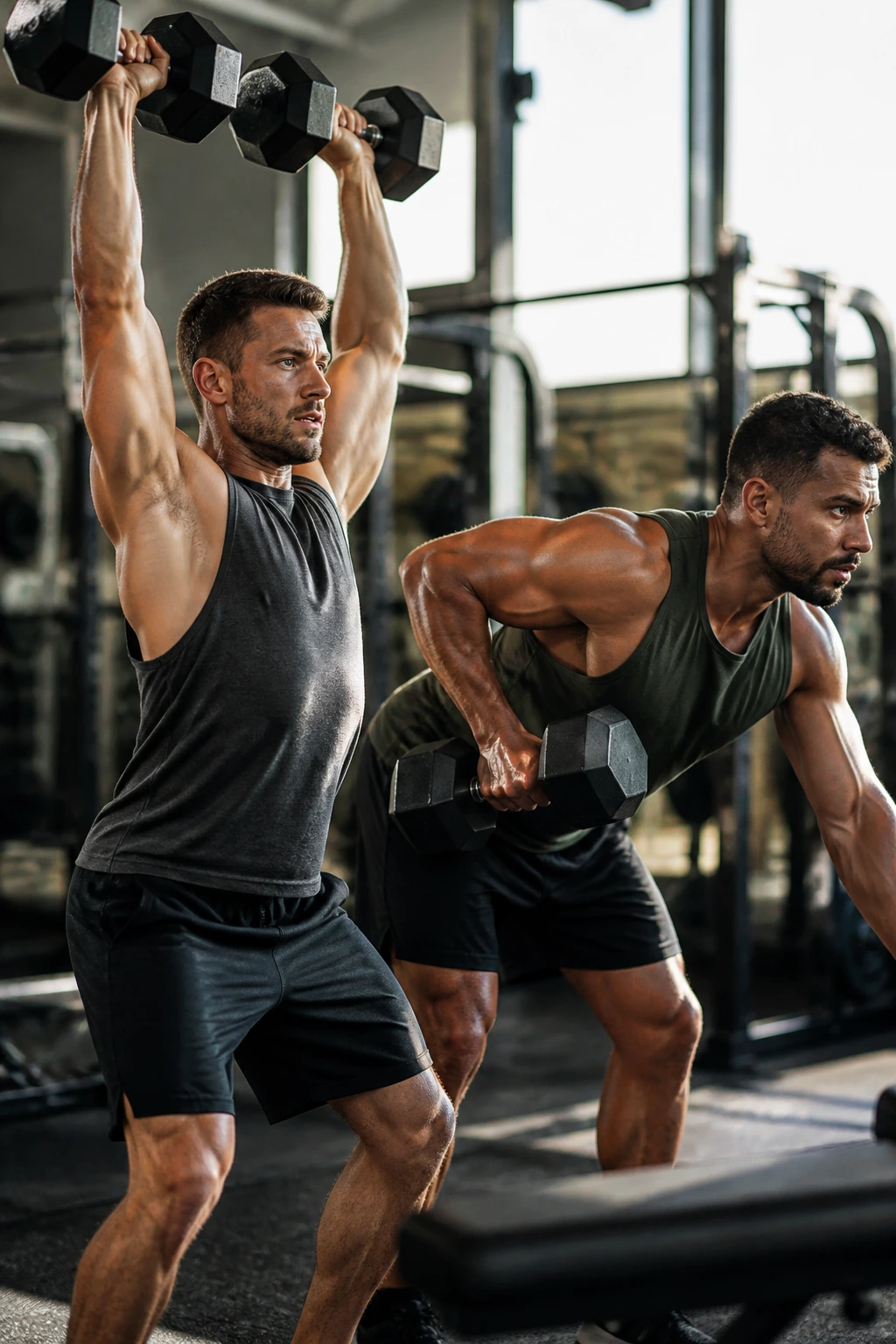
What happens if you pair a dumbbell push press with a bent-over row?
You get a full-body upper session that feels athletic without turning into cardio cosplay. The push press uses a short dip of the knees to help drive the dumbbells overhead, which lets you use more load than a strict press. The bent-over row then gives your back a heavy pull while your core keeps your torso from folding like a lawn chair.
How to Use It
This one works well when you want power plus size in the same workout. Use the push press for 6 to 8 reps and the row for 8 to 10 reps. Keep the dip on the press shallow — a few inches is enough. If you squat down like you’re starting a jump, you’ve gone too far.
- Keep the press explosive.
- Keep the row controlled.
- Rest 75 to 90 seconds after both lifts.
A small warning: the bent-over row asks a lot from your lower back if you’re already tired, so brace hard before each rep and stop a set before your posture slips.
14. Reverse Lunge and Standing Calf Raise
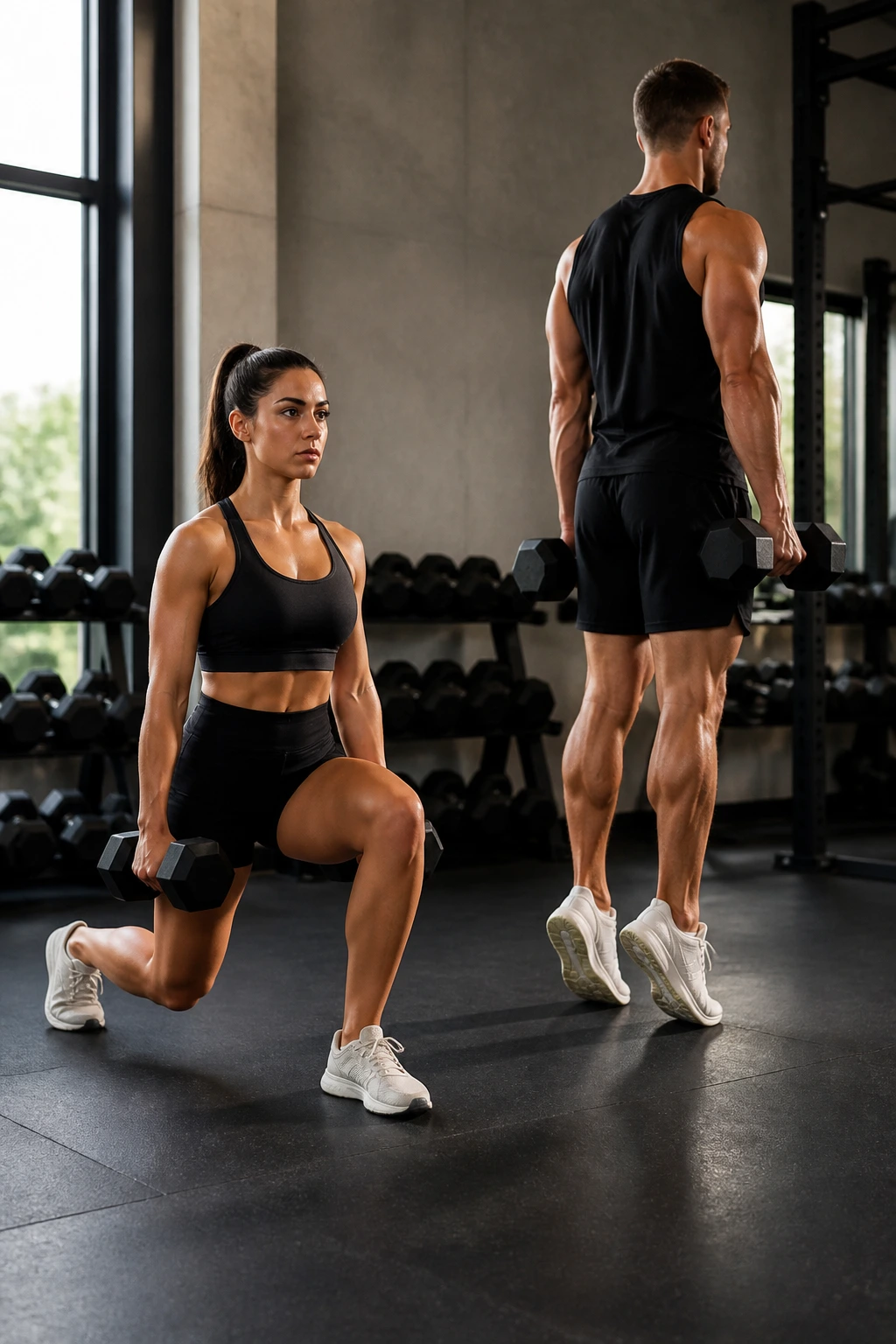
Calves and reverse lunges are a better match than they look.
The reverse lunge gives you a clean lower-body pattern with less knee stress than a forward lunge for many people, while the standing calf raise handles the lower leg directly. That pairing matters because calves usually need a bit more direct work than they get from squats and deadlifts alone. If you want your legs to look complete, skipping calves is a bad habit.
The nice part is that both moves work well with dumbbells at your sides. Step back softly into the lunge, keep the front heel planted, and drive up through the whole foot. On the calf raise, pause for a full second at the top and a full second at the bottom. That pause is not decorative. It keeps the reps honest.
- 3 to 4 rounds
- 8 to 10 reverse lunges per leg
- 12 to 20 calf raises
- 45 to 60 seconds of rest
The burn in the calves can be obnoxious. Good. That usually means you’re not cheating much.
15. Single-Arm Floor Press and Half-Kneeling Row
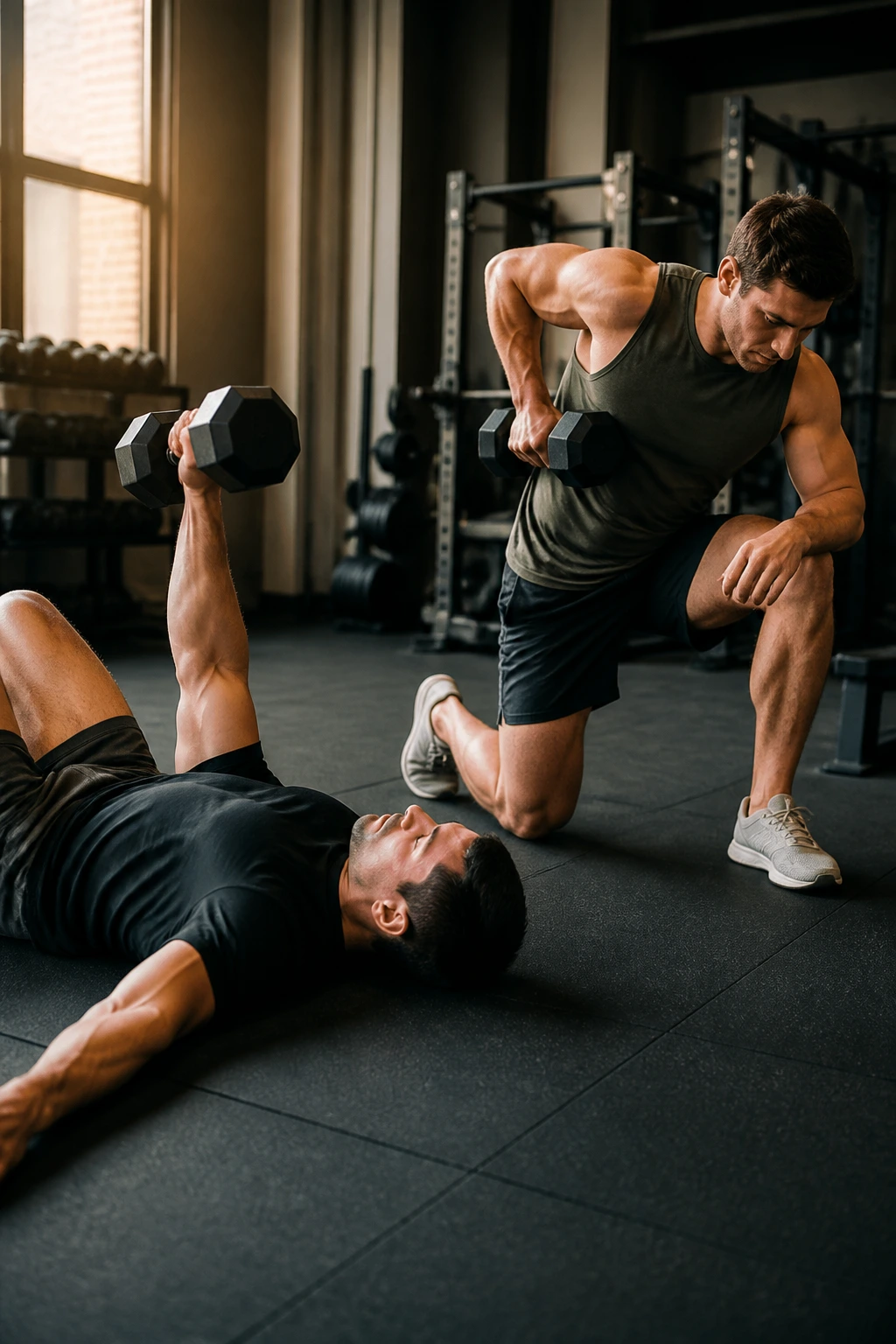
Half-kneeling work makes cheating obvious.
That’s why I like this pair. A single-arm floor press keeps one side of the torso from taking over while the other side presses hard off the floor. The half-kneeling row adds a little anti-rotation challenge, so your core has to stay stacked while your back pulls. It’s a tidy setup for anyone who wants chest, back, and trunk work without loading the spine too aggressively.
Use the same arm on both moves before switching sides, or alternate if that keeps the session moving better. I usually prefer keeping one side together, because it makes the body feel the difference more sharply. The floor press should stop when the elbow touches the floor lightly. The row should come from the shoulder blade sliding back, not from leaning and twisting.
This works especially well at 8 to 12 reps per side for 3 rounds. If your torso keeps rotating, the dumbbell is too heavy. Drop it and clean up the reps.
16. Dumbbell Fly and Squeeze Press
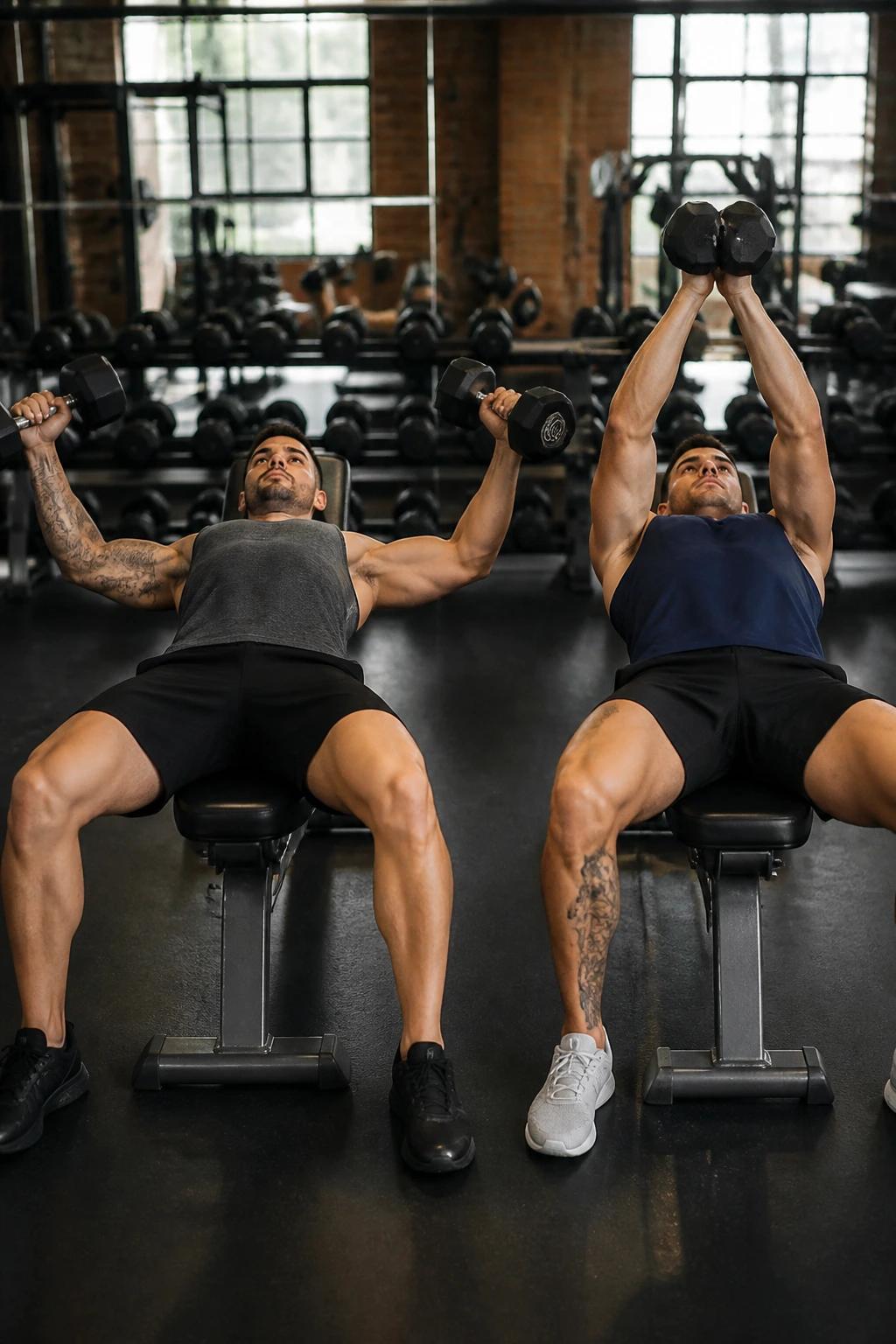
Chest flyes and squeeze presses are not the same thing, and that matters.
The fly puts the chest under a long stretch, which can be useful if you keep the weights light and the range controlled. The squeeze press, where the dumbbells stay pressed together the whole time, keeps tension on the chest through the middle of the movement and usually makes the triceps work a little harder too. Put them together and you get two different kinds of chest stress in one superset.
I like this pairing for people who already press a lot and want something that feels different without getting weird. Use a slight bend in the elbows on the fly, and stop well before the shoulders feel pinned. On the squeeze press, press the dumbbells together hard enough that you can feel your chest working the whole time. That inward pressure matters.
- 3 rounds
- 10 to 15 reps on the fly
- 10 to 12 reps on the squeeze press
- Light to moderate weights
If you go too heavy, the fly becomes a shoulder exercise and the squeeze press loses the squeeze. Neither is worth much.
17. Zottman Curl and Skull Crusher
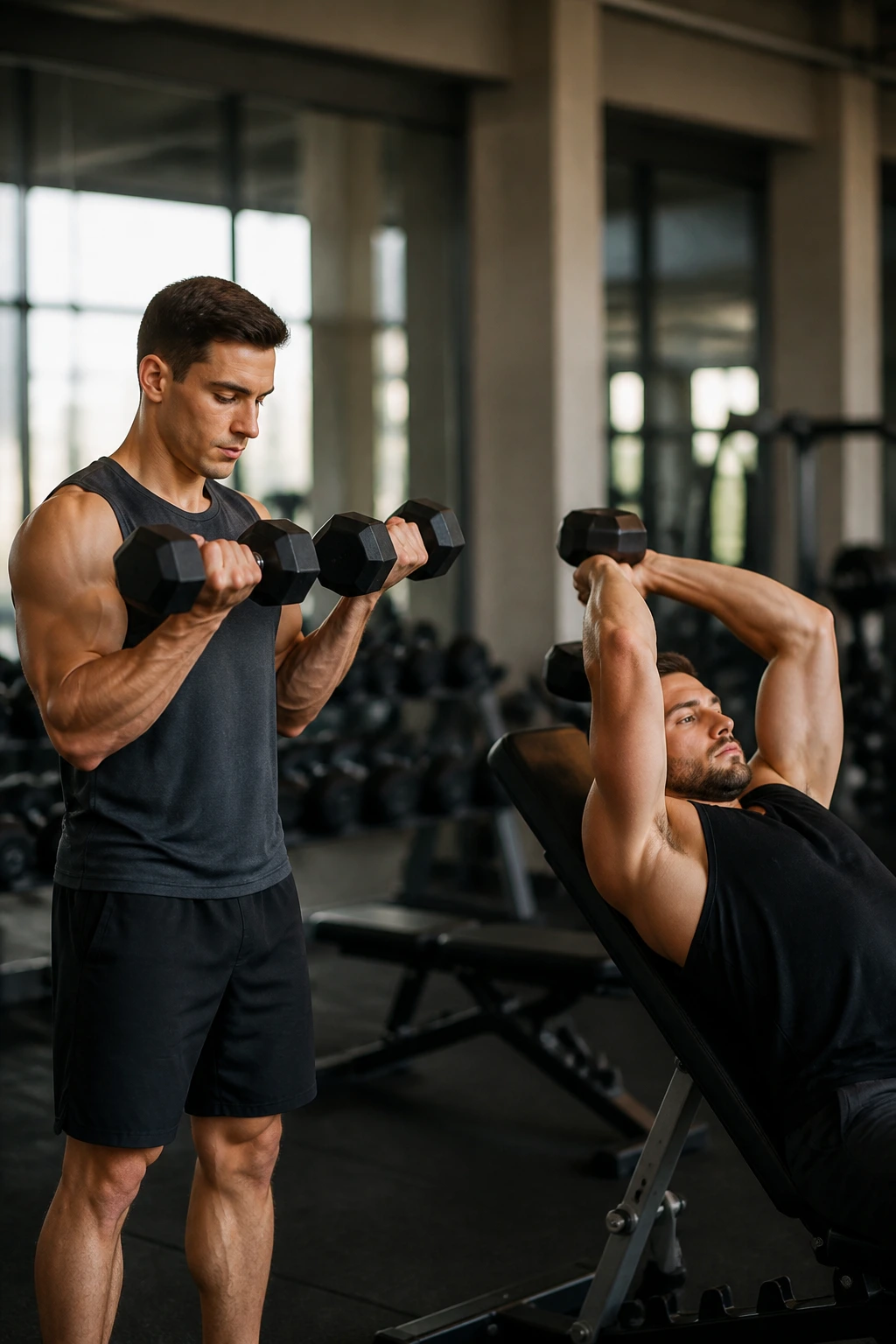
Forearms are not an afterthought.
The Zottman curl is one of those odd-looking dumbbell moves that earns respect the second you try it. You curl up with palms facing forward, rotate at the top, then lower with palms facing down. That means the biceps work on the way up and the forearms get hammered on the way down. Pair that with skull crushers, and you’ve got a superset that hits arm size from two angles without needing a machine.
Why It Works
The twisting path of the Zottman curl makes your grip and forearms do more than they would in a normal curl. The skull crusher then loads the triceps through elbow extension, which is plain but effective when the elbows stay tucked and the upper arms do not wander all over the place.
- 3 rounds
- 8 to 10 Zottman curls
- 10 to 12 skull crushers
- Rest 45 to 60 seconds after the triceps work
If your elbows get cranky, lower the dumbbells a little closer to your forehead instead of letting them travel too far behind your head. Small adjustment. Big difference.
18. Farmer Carry and Dumbbell Thruster
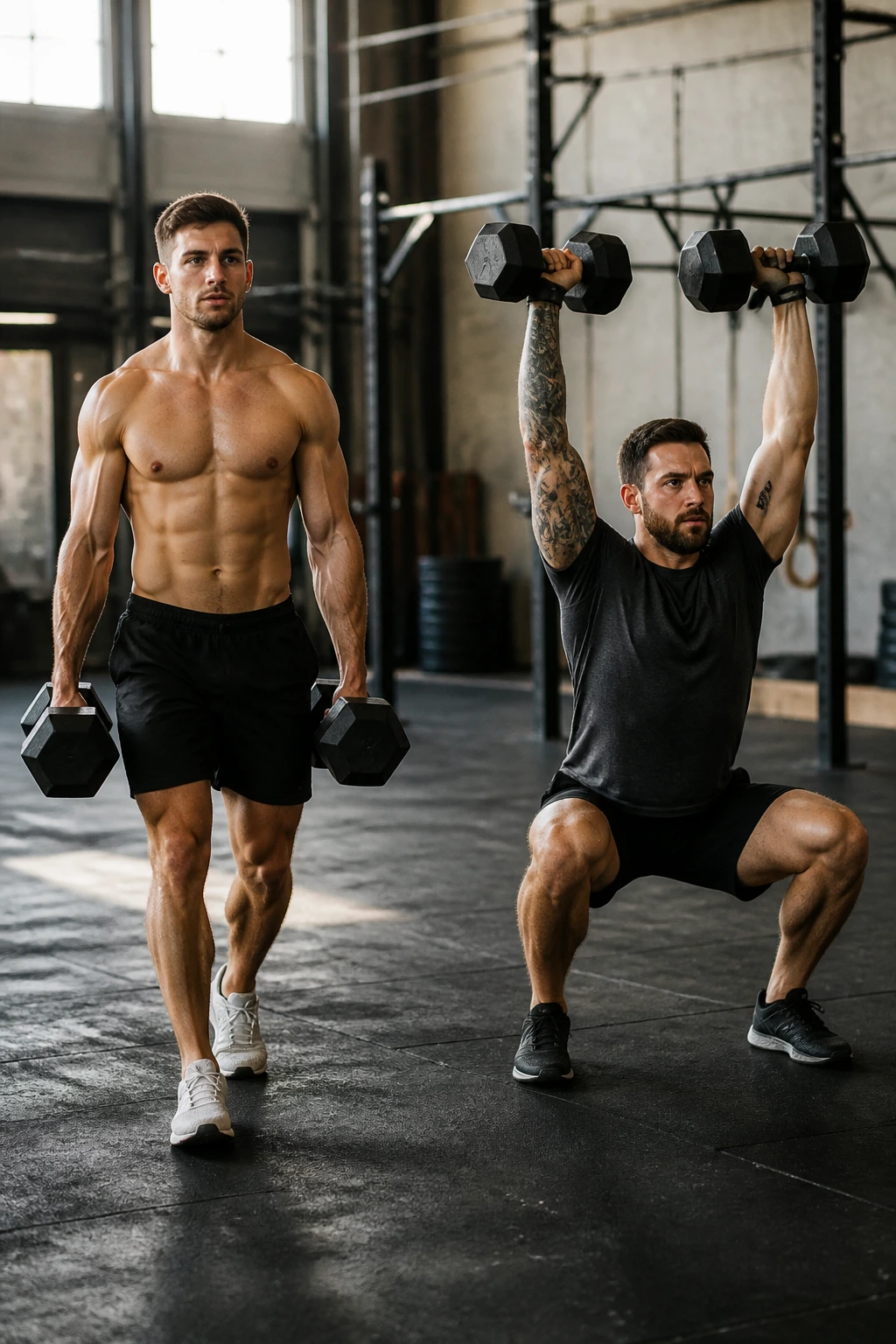
A carry and a thruster finish a session like a slammed door.
The farmer carry is simple: pick up heavy dumbbells, stand tall, and walk with purpose. The thruster is the opposite of subtle — a front squat into an overhead press, all in one push. Together they hit grip, shoulders, legs, lungs, and the kind of full-body tension that makes you stop thinking about your phone for a few minutes.
I like this as a finisher when the goal is dense work rather than perfect freshness. Carry 30 to 40 yards or 30 to 45 seconds, then move straight into 8 thrusters with a load you can keep smooth. Rest 90 seconds after the pair. Do 3 to 5 rounds depending on how much energy you have left. If your posture collapses on the carry, the dumbbells are too heavy. If the thruster turns into a push press with a sad little squat, lighten it.
This is not the prettiest superset on the list. It doesn’t need to be. It’s the one I’d use when I want to leave a workout feeling like I actually trained, not just moved around with equipment.
