



Back workouts at the gym for women matter for more than a pretty silhouette. A trained back changes how you sit at a desk, how you carry a bag, how your shoulders rest under a jacket, and how steady you feel when you hinge, row, press, or pick up anything heavy.
A lot of people still picture back training as one thing: pull-ups, maybe a barbell row, and a grim face in the mirror. That’s a thin view. The smarter version uses cables, machines, dumbbells, and a few controlled hinge patterns so you can build strength without turning every session into a lower-back survival test.
If a woman worries that back work will make her look broad, I’d push back on that pretty hard. Muscle does not show up by accident, and upper-back development usually gives the torso a cleaner shape, not a blockier one, especially when the rest of the program is balanced.
The sweet spot is a mix of vertical pulls, horizontal rows, rear-delt work, and one or two hinge-based lifts. That blend is where posture improves, shoulders settle down, and your back starts doing the job it was built for.
1. Lat Pulldown
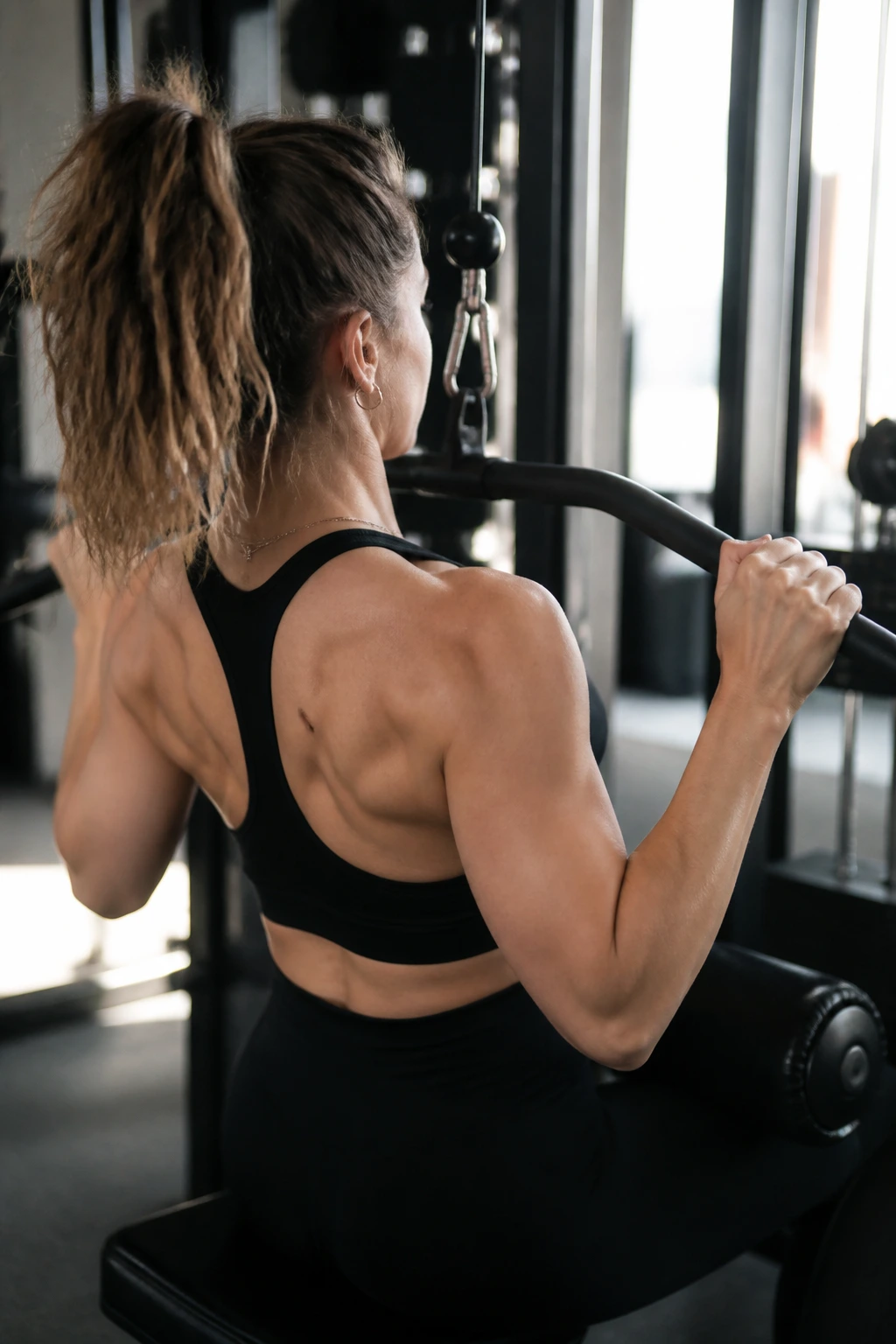
If you want one back exercise that almost never feels confusing, start here. The lat pulldown teaches the main shoulder-blade-and-elbow pattern of vertical pulling without asking you to manage your whole body in midair the way a pull-up does.
Sit tall, set your thighs under the pad, and pull the bar to the upper chest with your elbows driving down, not back. The move should land mostly in your lats and the sides of your upper back, with only a little arm burn at the end. If your neck is doing the work, the load is too heavy.
How to Set It Up
- Use a grip that is just outside shoulder width for most sets.
- Keep your ribs down instead of flaring hard to “help” the pull.
- Pause for half a second at the bottom when the bar touches the upper chest or collarbone area.
- Return the bar under control until your arms are nearly straight, but do not let your shoulders shrug up into your ears.
A clean pulldown usually looks smooth, almost boring. That is a good sign. 2 to 4 sets of 8 to 12 reps is a smart place to live if your goal is strength plus muscle.
2. Seated Cable Row
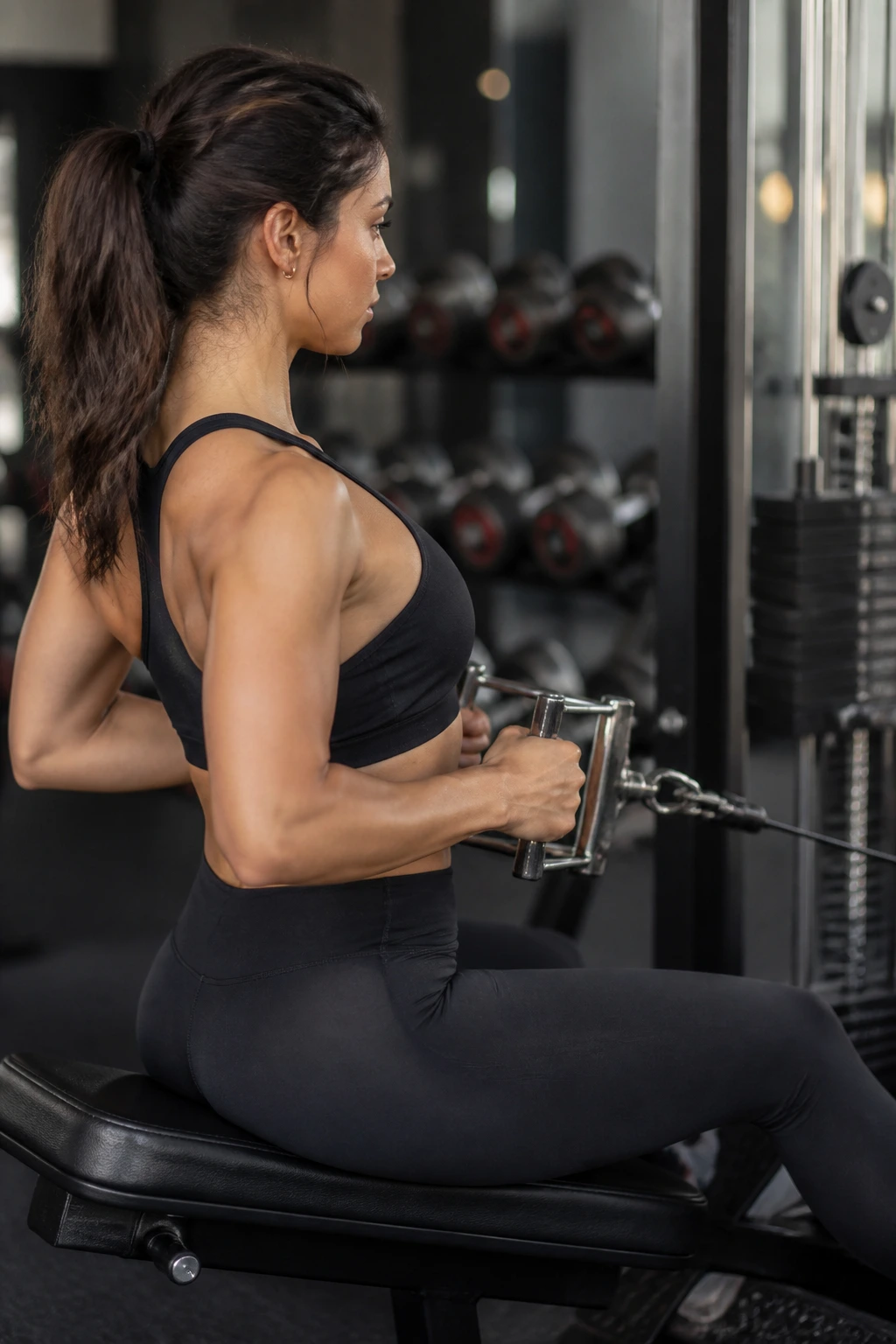
This is the back move I’d put in almost any gym routine. The seated cable row is a workhorse for the middle back, and it gives you a little more room to fine-tune the angle than a fixed machine does.
Set your feet, brace lightly, and pull the handle toward your lower ribs or belly button depending on the handle and grip you choose. Your shoulder blades should move, but they should not slam together like you’re trying to crack a nut between them. The best rows feel like the elbows are driving the motion while the torso stays almost still.
A neutral grip usually feels friendlier on the shoulders. A wide handle can shift more work to the upper back. A close handle tends to let the lats join the party more easily.
What to Watch For
- Don’t lean back and turn the row into a half-body swing.
- Don’t let the weight yank your arms forward on the return.
- Don’t shrug at the top. That steals work from the upper back.
- Use a slow stretch phase so the cable stack doesn’t slam.
3 sets of 10 to 12 reps is a good default. Heavy enough to matter, controlled enough to keep the lower back out of the mess.
3. Assisted Pull-Up
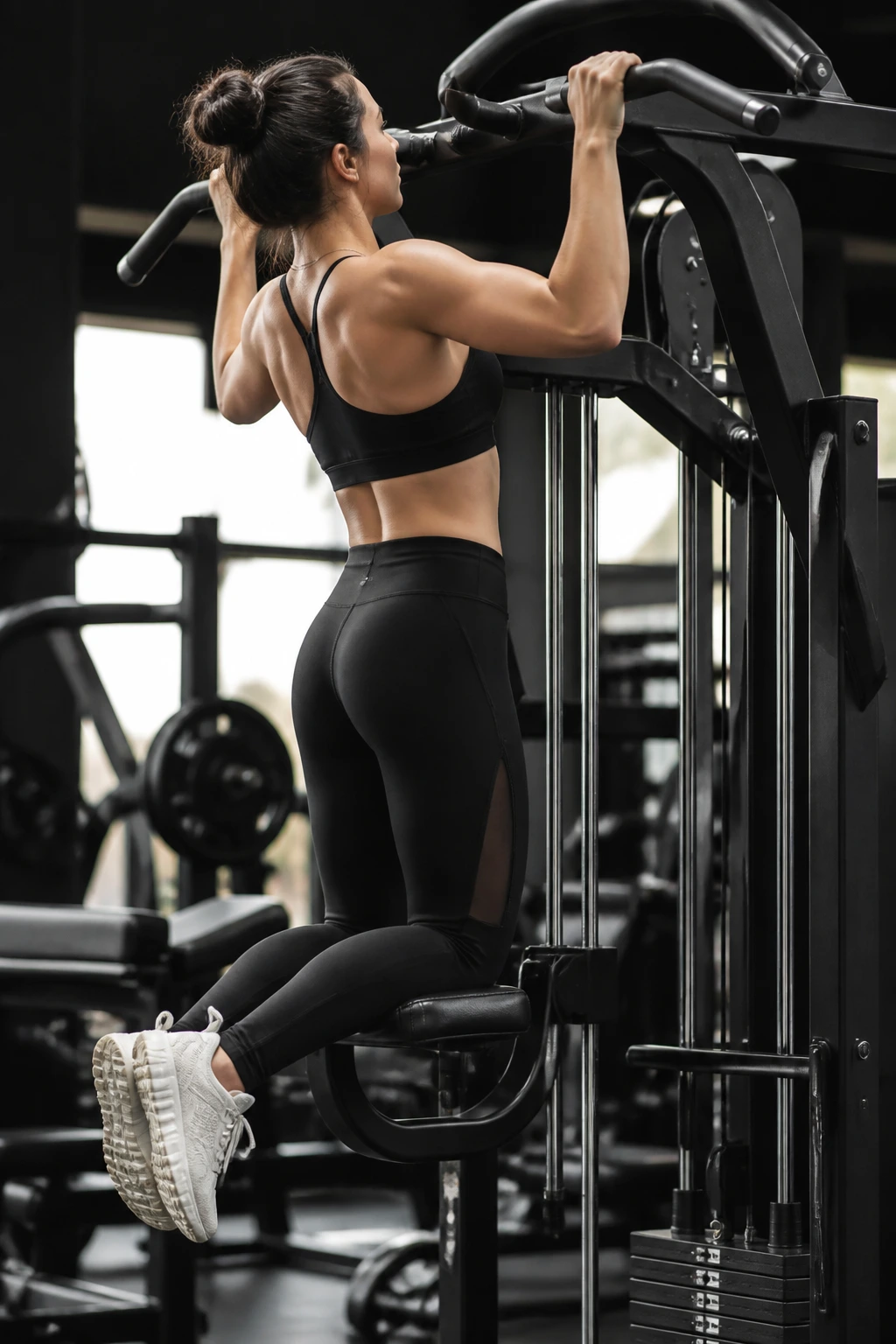
Can’t do a full pull-up yet? Good. That does not mean you should skip it.
The assisted pull-up machine is one of the best ways to build the exact strength you need for the real thing while keeping your form honest. Place one knee or both knees on the pad, grip the handles, and start each rep from a dead hang or near-dead hang with a long spine. Pull your chest up toward the bar, not your chin forward. That little detail matters more than most people think.
The machine lets you reduce assistance in tiny steps, which is useful because pull-up strength often improves in small jumps. One week you may get five clean reps with a certain assistance level. Next time, the same setting feels easier and your elbows track better. That is progress.
How to Progress
- Use enough assistance to get 4 to 8 clean reps.
- Lower the assistance before adding sloppy extra reps.
- Keep the descent slow, about 2 to 3 seconds.
- Stop the set when your shoulders start shrugging or your legs start kicking.
A pull-up earned this way feels a lot better than a rushed one.
4. Chest-Supported Dumbbell Row
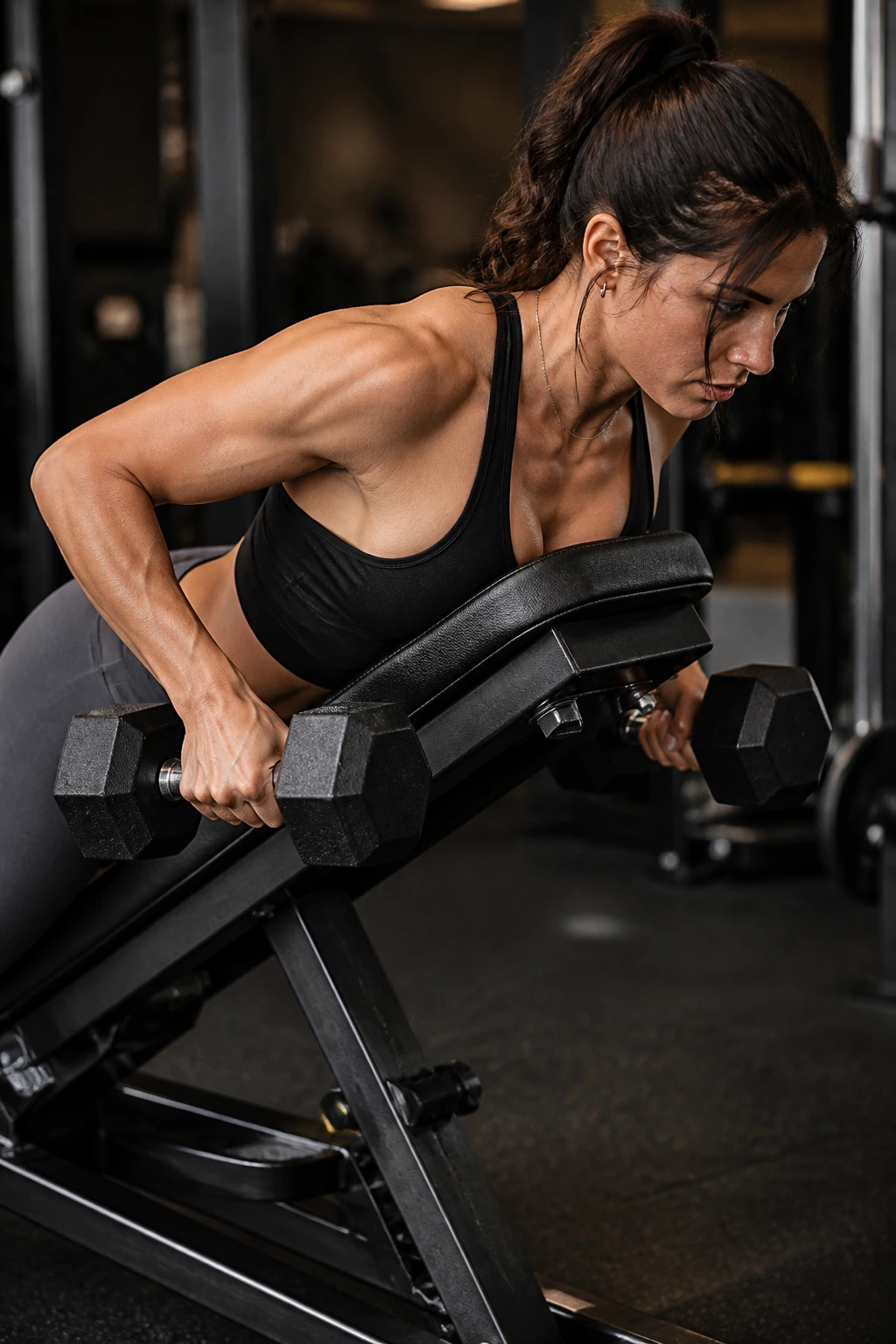
If your lower back gets cranky on rows, this is your friend. The chest-supported dumbbell row lets you work the back hard while the bench does the job of removing most of the cheating.
Set an incline bench around 30 to 45 degrees, lie chest-down, and let the dumbbells hang straight under your shoulders. Pull them up with your elbows slightly tucked, then lower them until you feel a real stretch through the upper back. Because your torso is fixed, you can spend more energy on the lats, rhomboids, and rear delts instead of bracing like crazy.
I like this one for heavier sets because it removes the usual temptation to turn a row into a weird hip-thrusting event. The bench keeps things clean. Clean usually wins.
Take 3 sets of 8 to 10 reps and pause briefly at the top. If the dumbbells are banging together, the range is probably too loose.
5. Single-Arm Dumbbell Row

One side at a time changes the whole feel of the lift. You can actually notice where one lat is lazier than the other, and that feedback is gold.
Put one hand and one knee on a bench, keep the working foot planted, and row the dumbbell toward your hip. Not your shoulder. Your hip. That path helps the lat take over instead of the upper trap. The torso can rotate a little, but it should not spin into a full twist.
Why It Works So Well
- The free side makes the load feel a little heavier, even at moderate weight.
- You can adjust the elbow path for your own shoulder shape.
- It helps clean up left-right strength gaps that bilateral rows hide.
- It teaches your torso to stay solid while one side does the work.
Use a controlled pace and do 8 to 12 reps per side. If you’re yanking the weight, it’s too heavy. If you can’t feel the lower lat, slide the elbow closer to the ribs and think about pulling toward the back pocket.
6. Straight-Arm Cable Pulldown
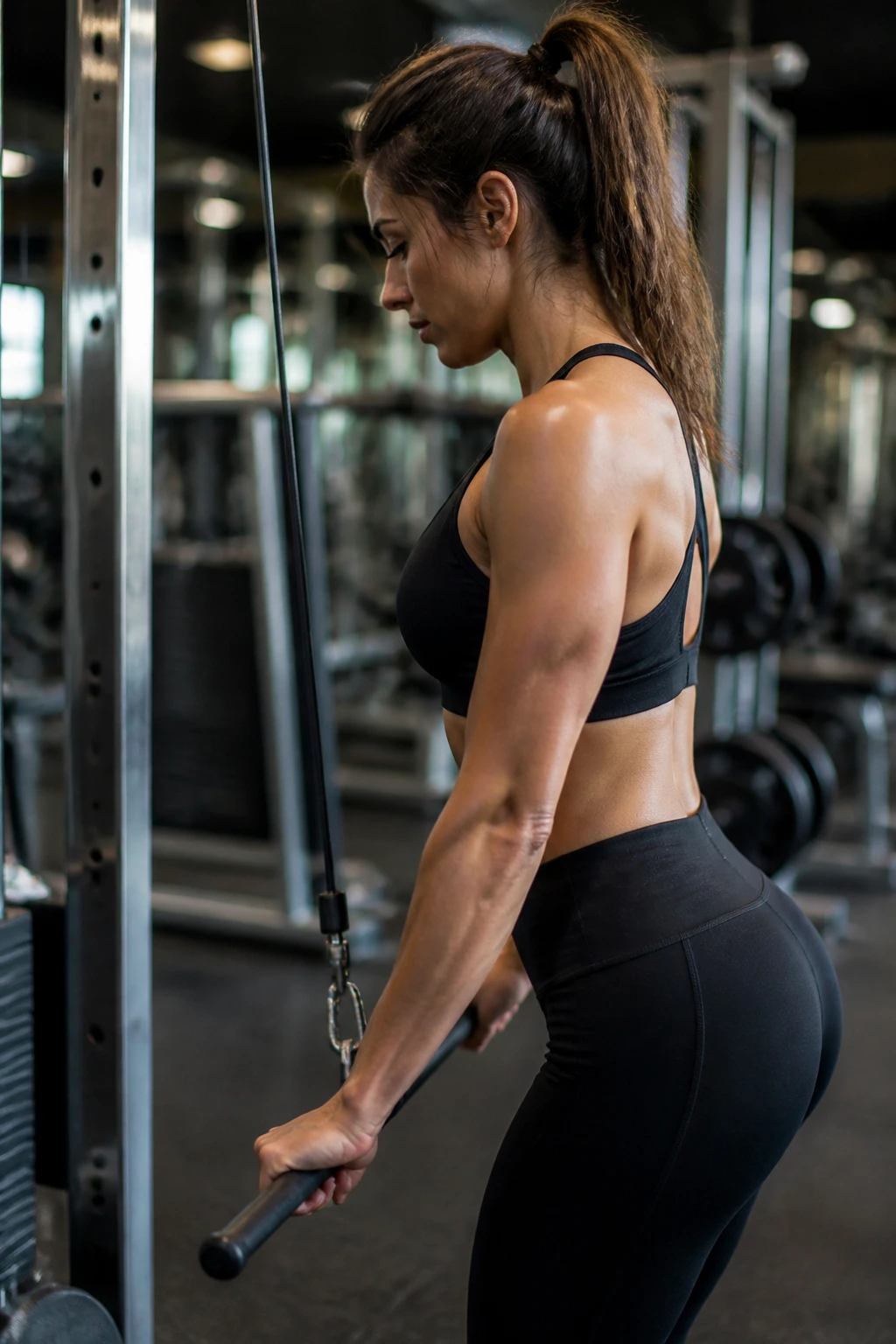
This one looks simple, and that’s exactly why people mess it up. The straight-arm cable pulldown is a lat isolation move, not an arm exercise in disguise.
Stand tall in front of a high pulley, keep a slight bend in the elbows, and sweep the bar or rope down in a smooth arc until your hands reach your thighs. The arms stay nearly fixed; the shoulders and lats do the actual work. You should feel tension from the armpit down the side of the torso, with a little serratus activation near the ribs.
The best version of this move has no body swing and no dramatic arching of the back. If you have to lean back to finish the rep, the cable is too heavy.
Use 2 to 4 sets of 12 to 15 reps. It pairs well with pulldowns or pull-ups because it teaches the lats to finish the pull after the big compound work is done.
7. Face Pull
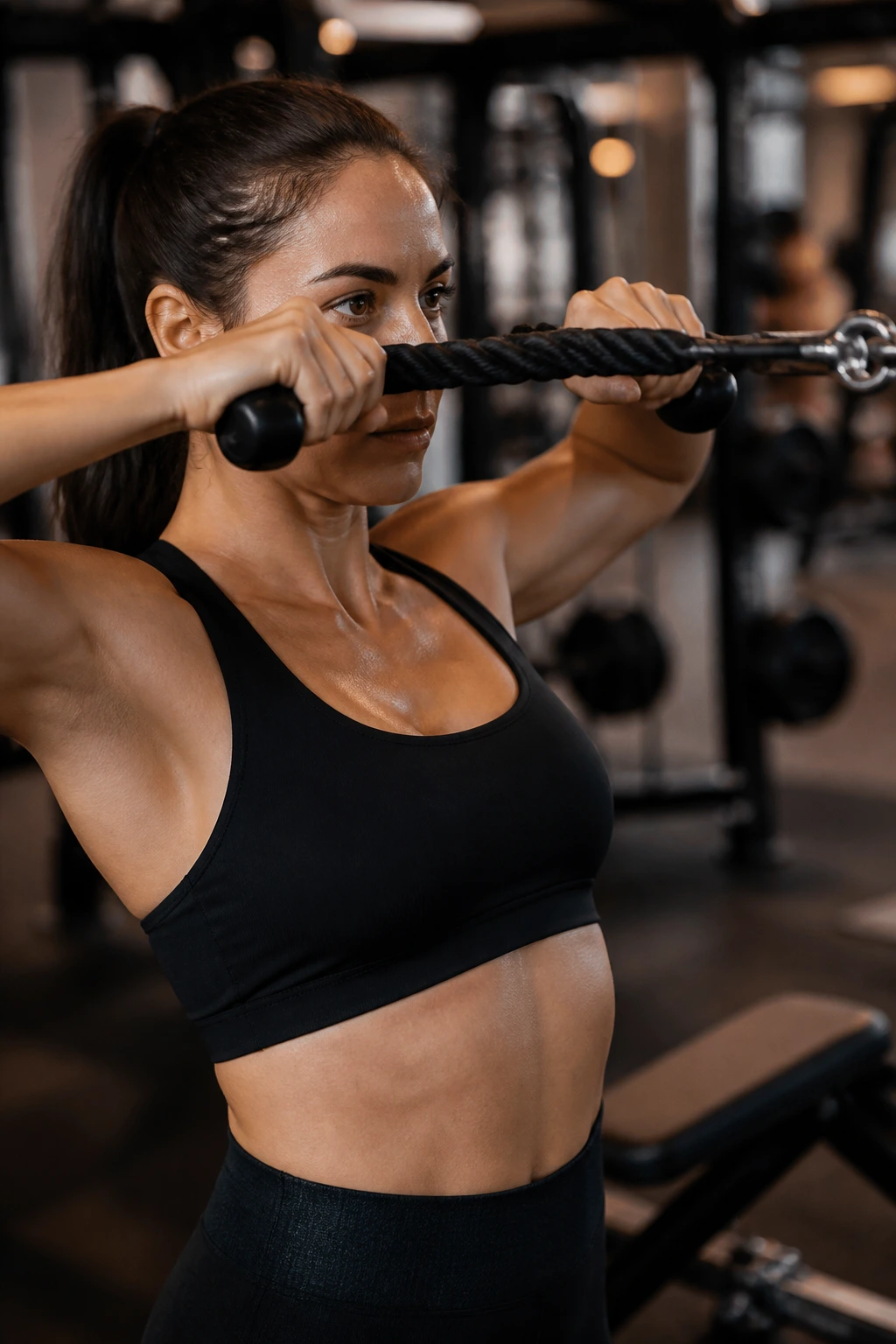
A face pull is small, but it punches above its weight. It hits the rear delts, upper back, and the muscles that help your shoulders sit where they belong instead of drifting forward.
Set a rope on a high cable, grab it with both hands, and pull it toward your face while the elbows rise and flare slightly. Think nose-to-forehead height, not chest height. At the end, your hands should separate a bit so you can feel the upper back contract.
The Details That Matter
- Use a lighter load than your ego wants.
- Keep your ribs stacked and avoid arching hard.
- Finish with the rope near eye level.
- Pause for a beat before returning the weight.
A face pull belongs near the end of a back day, or even on an upper-body day as a warm-up. 12 to 20 reps is the sweet spot because this is about control and shoulder health, not brute force.
8. T-Bar Row
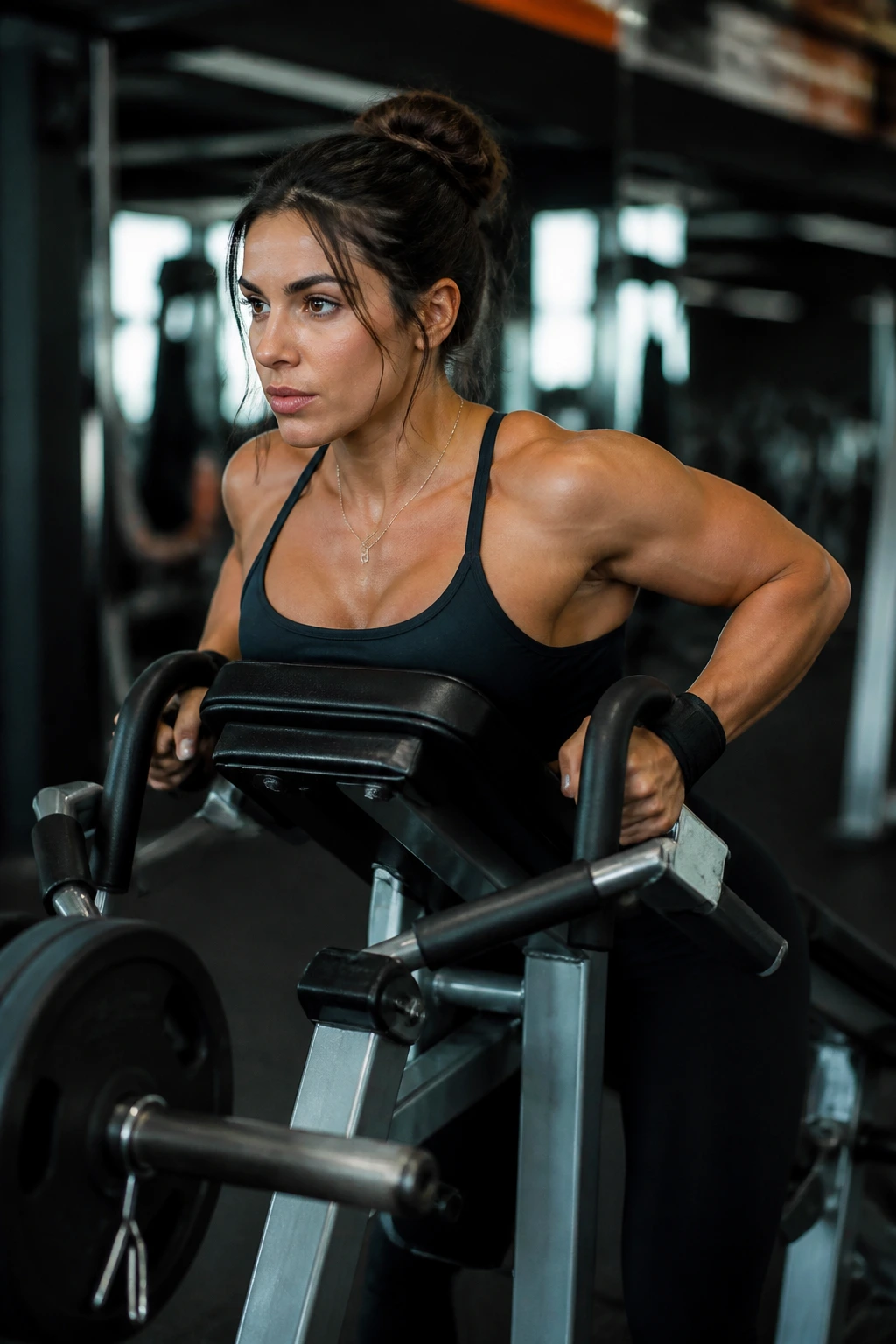
If you want your back to look thicker from the side, the T-bar row earns a spot. It gives you a dense, heavy row pattern with enough support to move serious weight without turning the lift into a full-body heave.
Set your chest against the pad if the machine has one, or brace hard with a free-standing setup. Pull the handle toward the lower chest or upper stomach, and keep the elbow path tight enough that the lats can contribute. This is one of those movements where a half-inch change in torso angle can shift the work from mid-back to lower back fast.
What Makes It Different
The T-bar row lets you load the row heavily without the same balance demands as a bent-over barbell row. That makes it useful on days when you want a strong pull but your lower back is already tired.
I’d use 3 to 4 sets of 6 to 10 reps here. Heavy, controlled, and with a full stretch on the way down. No bouncing off the bottom.
9. Reverse Pec Deck Fly

Why do so many people underuse this machine? Probably because it looks too small to matter. Then they try it properly and their rear delts light up after the first set.
Sit facing the pad, place your chest against the support, and open your arms out wide until they line up roughly with your shoulders. The movement should feel like a controlled sweep, not a shrugging contest. Your shoulder blades move a little, but the rear delts should do the loudest part of the work.
This is a nice choice when the upper back feels tired from rows and you still want to train the back of the shoulders without loading the spine. It’s also useful if your posture tends to collapse forward during the day. The fix is not magic. It’s just repeated work on the muscles that get ignored.
2 to 4 sets of 12 to 15 reps usually works well. Keep the weight moderate and stop before the motion turns jerky.
10. Machine High Row

The high row is one of the cleanest ways to train the upper back without drama. It blends a row with a slightly higher elbow path, which tends to hit the lats, rear delts, and lower traps in a way that feels more upright than a standard cable row.
Sit with your chest supported if the machine allows it. Pull the handles in a high arc toward the upper ribs or lower chest, and let the shoulder blades travel a little at the start and finish. The rep should feel strong but not sloppy. If your neck tightens up, your shoulders are probably creeping toward your ears.
I like this movement for people who want back work without a lot of spinal fatigue. That makes it useful after deadlifts, on higher-volume days, or when you’re trying to keep technique clean late in a session.
Take 3 sets of 8 to 12 reps and keep the squeeze short. Long, sloppy holds tend to become upper-trap shrugging.
11. Barbell Bent-Over Row

A lot of people rush to the barbell row too early. That’s a mistake.
The bent-over row is excellent, but it asks for real hinge control. Set your feet hip-width apart, hinge until your torso is near parallel to the floor, brace your midsection, and row the bar toward the lower ribs or upper belly. The bar should travel in a consistent line, not bounce around like you’re trying to start a lawnmower.
What to Feel
- Hamstrings loaded.
- Lower back braced.
- Elbows driving back.
- Upper back working without momentum.
If you can’t hold the hinge without the torso creeping upward on every rep, use a lighter load or swap to a chest-supported row for a while. That is not weakness. That is a smart choice.
I’d keep the rep range around 6 to 10. This is a strength builder, not a place to chase sloppy burnout reps.
12. Kneeling Single-Arm Cable Row
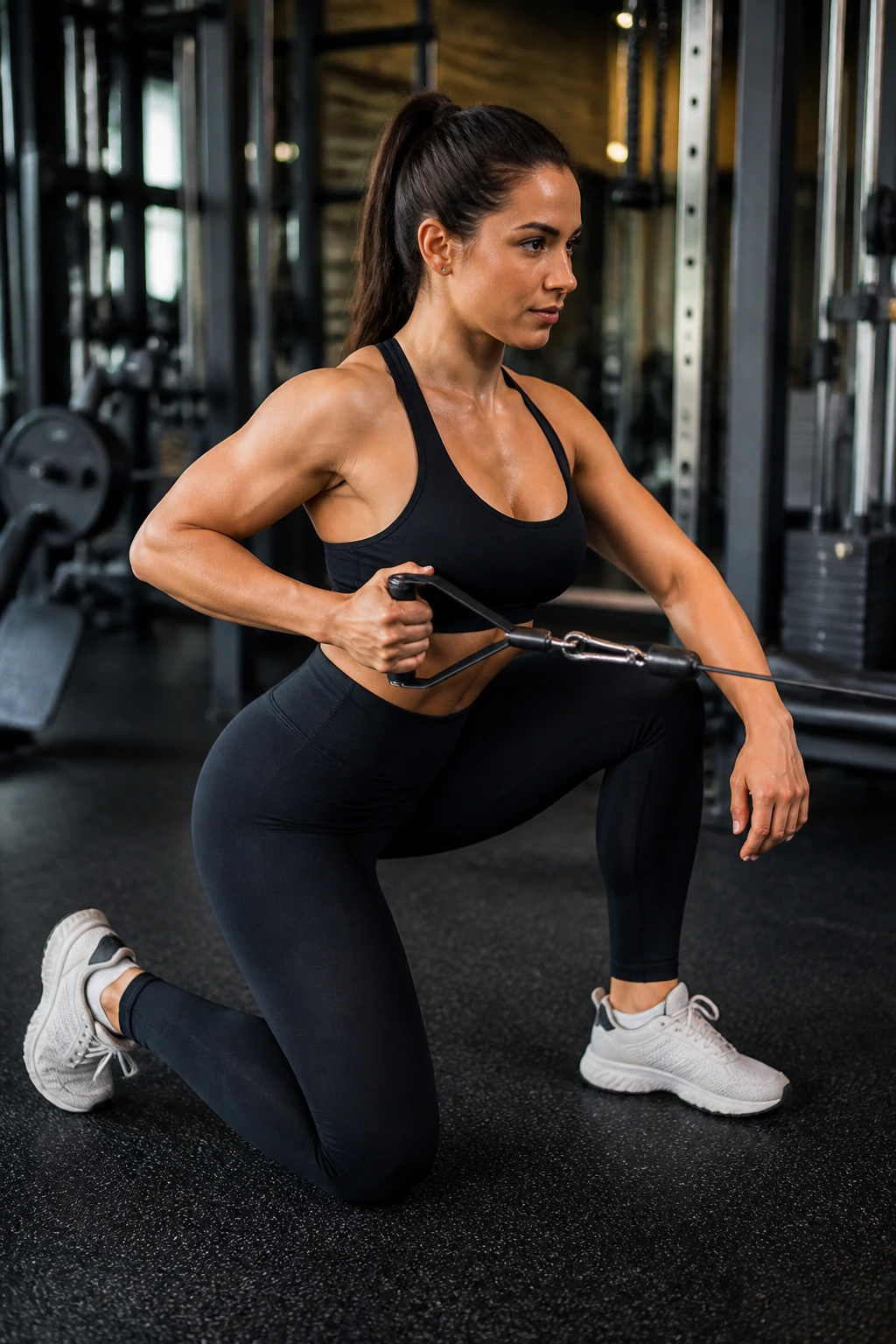
This one is sneaky good because the kneeling position strips away a lot of cheating. No rocking. No leaning. Just a clean pull.
Set the cable handle low, kneel with one knee down and the other foot planted, then row the handle toward the side of your waist. The kneeling stance makes it easier to keep the torso quiet while you work one lat at a time. It also helps you notice whether one side is weaker or less coordinated.
Quick Setup Cues
- Keep the ribs stacked over the pelvis.
- Pull the elbow toward the hip, not straight back.
- Let the shoulder blade reach forward on the return.
- Stop if the torso starts twisting to help the rep.
I like this move for anyone who wants a better mind-muscle connection without much lower-back strain. 10 to 12 reps per side gives you enough time under tension to feel the lats do their thing.
13. Dumbbell Pullover
The dumbbell pullover has a strange look to it, and that’s part of the charm. It feels like a hybrid between a chest move and a lat move, but the long stretch is what makes it useful for back training.
Lie across a bench with your upper back supported, hold one dumbbell with both hands, and lower it slowly behind your head until you feel a deep stretch through the ribcage and lats. Then bring it back over your chest in a smooth arc. The key is control. If the dumbbell drops too fast, the shoulders take over and the whole thing turns messy.
This is one of the few back-adjacent moves where the stretch is a major part of the benefit. You should feel the sides of your torso lengthen at the bottom. If the stretch feels sharp in the shoulders, shorten the range.
Use 2 to 3 sets of 10 to 15 reps. Moderate weight works better than heavy weight here.
14. Romanian Deadlift
If you want a back move that also teaches your whole body to hinge well, the Romanian deadlift is hard to beat. It is not just a hamstring exercise. The spinal erectors, glutes, lats, and grip all have to cooperate.
Stand tall with the bar or dumbbells in front of your thighs, soften the knees slightly, and push the hips back until the weight lowers along the legs. The back stays long and braced; the torso tips forward because the hips are moving, not because the spine is collapsing. Stop when the hamstrings tell you the range has ended, then drive the hips forward to stand again.
What to Keep in Mind
- The bar should stay close to the legs.
- Your lats should stay tight so the weight doesn’t drift.
- The descent should feel loaded, not rushed.
- The lower back should feel worked, not pinched.
This is a lift where less range can be more useful than chasing the floor. 3 sets of 6 to 10 reps is a strong place to start.
15. Cable Rear-Delt Row
A rear-delt row looks a little like a face pull’s cousin, but the elbow path changes the whole story.
Set the cable around shoulder height, hold the handle or rope, and pull with your elbows out to the sides rather than tucked in. The goal is to work the rear delts and upper back together while keeping the shoulders from rolling forward. It feels like a row, but the emphasis is higher and a bit wider.
Unlike a classic face pull, this version can be easier to control if you want more direct rear-delt work with less rope separation at the end. It’s a nice pick when the back of the shoulders needs attention but you still want a row-like pattern.
Keep the load light enough that your wrists stay quiet. 12 to 15 reps is a good range. If the traps take over, lower the weight and shorten the ego.
16. Smith Machine Row
The Smith machine row gets unfairly dismissed by people who think every good lift must be free-standing. Sometimes a fixed bar path is exactly what you need, especially if your goal is to load the back without battling balance at the same time.
Set the bar to a comfortable height, brace your torso in a hinge or with a bench if the gym setup allows it, and row the bar toward your lower ribs. The fixed path makes it easier to keep the rep consistent from start to finish. That consistency can help you push hard while keeping the form cleaner than a shaky free-weight variation.
I like this one for higher-rep work or as a fallback when the free barbell row is too fatiguing that day. It is also useful for people learning how to feel the row without spinning their torso around.
Try 3 sets of 8 to 12 reps and keep the descent slow. If the bar crashes down, you’re leaving useful tension on the table.
17. Back Extension
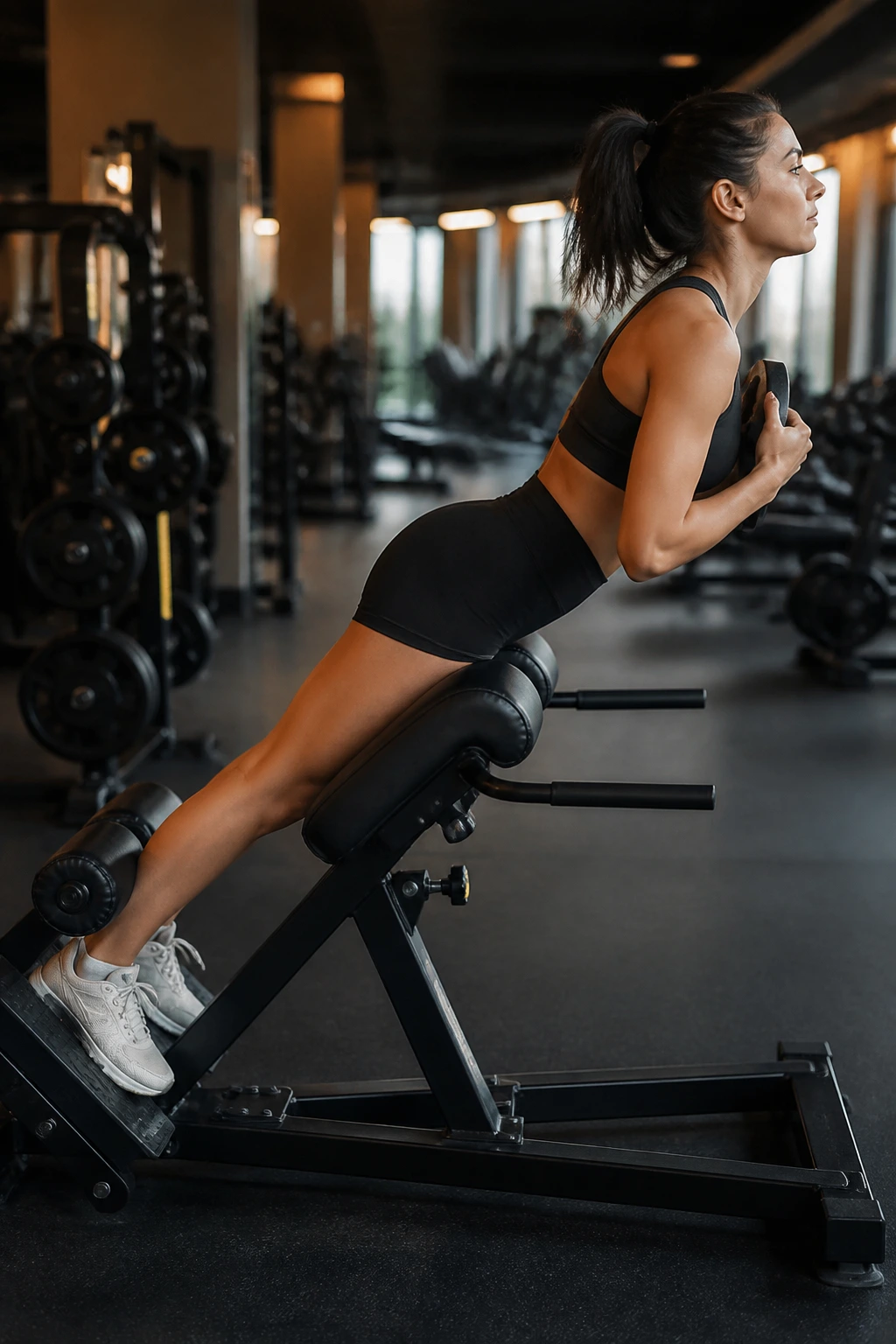
Do you need a dedicated lower-back move? Sometimes, yes.
The back extension machine trains the spinal erectors, glutes, and hamstrings in a way that is controlled and easy to scale. Set the pad so your hips can flex freely, cross your arms or hold a plate close to your chest, and lower your torso until you feel a gentle stretch. Then lift until your body forms a straight line. Stop there. No need to overextend and turn it into a lower-back squeeze contest.
When It Helps Most
- After rows or deadlifts, to build endurance in the lower back.
- On days when you want hinge work without a barbell.
- When you need a safer bridge between beginner and heavier posterior-chain training.
This one should feel like work through the whole back side of your body, not just a sharp pinch in one spot. 10 to 15 reps with a slow tempo is a smart choice.
18. Good Morning

The good morning is a great lift and a terrible place to rush. It’s a hinge pattern that lights up the hamstrings, glutes, and spinal erectors, but only if you treat it like a precision move.
Place a barbell on your upper back, brace hard, and hinge the hips back while keeping the torso long. The bar stays fixed on your back as you tip forward and then return to standing. If the knees drift too far forward or the spine rounds, the range is too deep or the load is too heavy.
This lift rewards patience. It does not forgive ego. Start light, maybe even with an empty bar, and spend a few sessions learning how the hip hinge feels under load.
Use 2 to 4 sets of 6 to 8 reps. I would rather see a light good morning done well than a heavy one that folds in half.
19. Band Pull-Apart
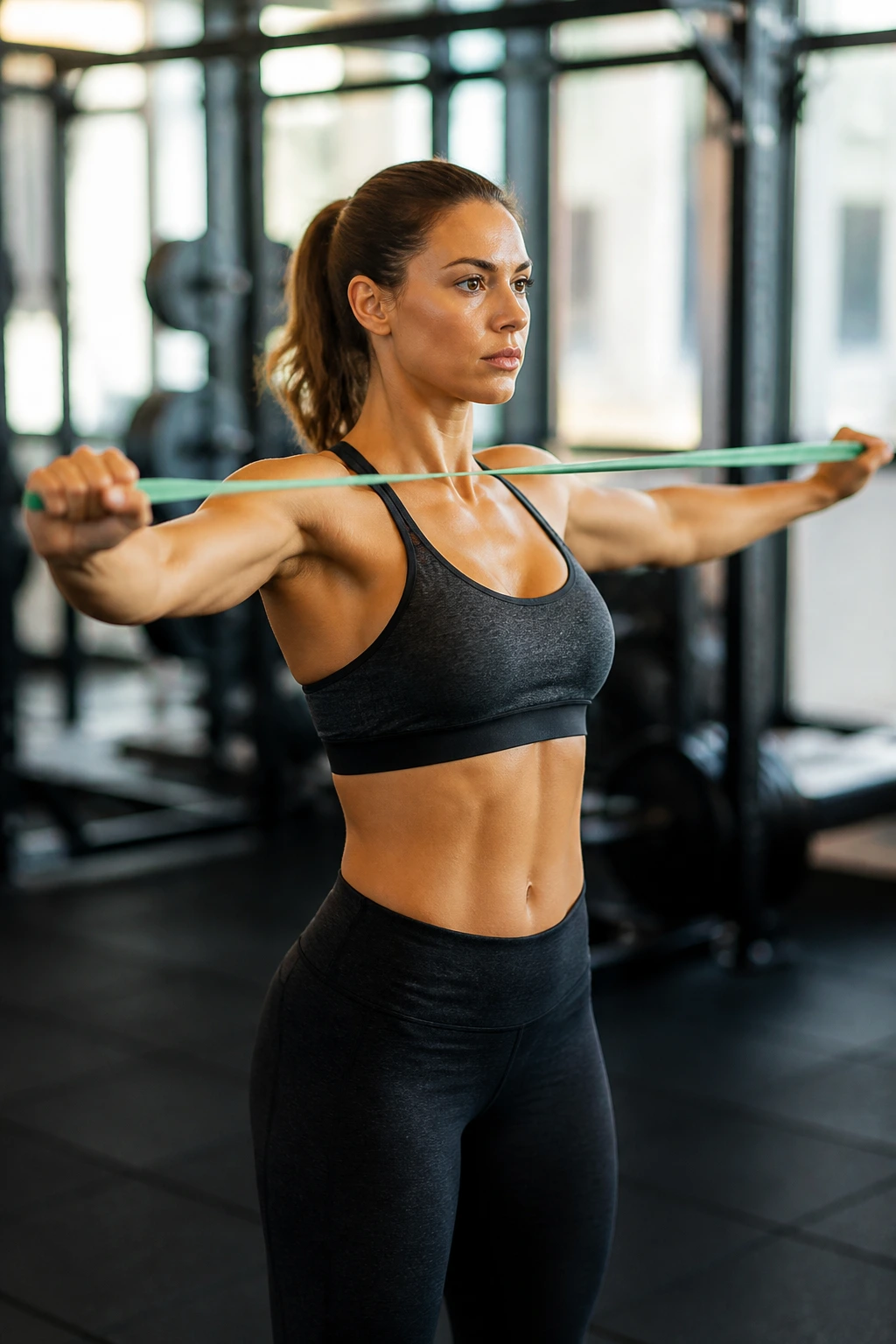
This looks like warm-up fluff until you do it for real.
Hold a light resistance band at shoulder height, arms straight but not locked, and pull the band apart until your hands move out wide and your upper back tightens. Then return with control. The motion is tiny compared with a row or pulldown, but the rear delts, rhomboids, and mid traps get a clean dose of work.
Band pull-aparts are useful between heavier sets, at the start of a workout, or on days when the shoulders feel a little cranky and you want blood moving without stress. They also teach your shoulders not to drift forward all day, which helps more people than they realize.
Do 15 to 25 reps. Light resistance is the right choice here. If the band snaps you backward, it’s too much.
20. Conventional Deadlift

The conventional deadlift is the biggest back move on this list, and it deserves respect. It trains the back hard, but in a way that involves the legs, grip, and bracing muscles all at once.
Stand with the bar over midfoot, hinge down, grab it outside your legs, and set your back flat before you pull. The bar should rise close to the body. If it drifts forward, the lift gets harder fast and the lower back has to work overtime. The first part off the floor comes from the legs, then the hips and upper back finish the job together.
What to Focus On
- Keep the bar against the shins and thighs.
- Brace before the pull, not halfway through it.
- Push the floor away rather than yanking the bar up.
- Lock out by standing tall, not by leaning way back.
This is not a lift for casual fatigue. It works best when you are fresh and paying attention. 1 to 5 reps is enough for strength work, and you do not need many total sets to get a lot from it.
Final Thoughts
A strong back does not come from one perfect exercise. It comes from a good mix: one vertical pull, one or two solid rows, a rear-delt move, and a hinge that teaches the whole posterior chain to stay organized.
If you only have time for a short session, pick four things and do them well: a pulldown, a row, a rear-delt drill, and one hinge. That combo covers most of what women need from back workouts at the gym without wasting energy on flashy stuff that feels harder than it helps.
And if you’re choosing where to spend your effort, start with clean reps, stable positions, and a weight you can own. The back responds well to that kind of work. Not drama. Just steady pulling, week after week.
