



An hour is a long time if you drift through it and a short one if you train with purpose.
That’s the real charm of hour-long workouts. You can warm up without hurrying, lift with enough rest to do decent work, add conditioning without turning the session into a blur, and still finish with a cooldown that doesn’t feel slapped on at the end. A 60-minute workout gives you room to train like a grown-up.
Most short sessions get squeezed into a bad shape. The warm-up gets chopped. The main lifts get rushed. The last ten minutes become a guilty shuffle on the treadmill. If you have more time, use it for structure instead of drift. That’s where the better workout plans live.
1. Heavy Upper-Body Push and Pull
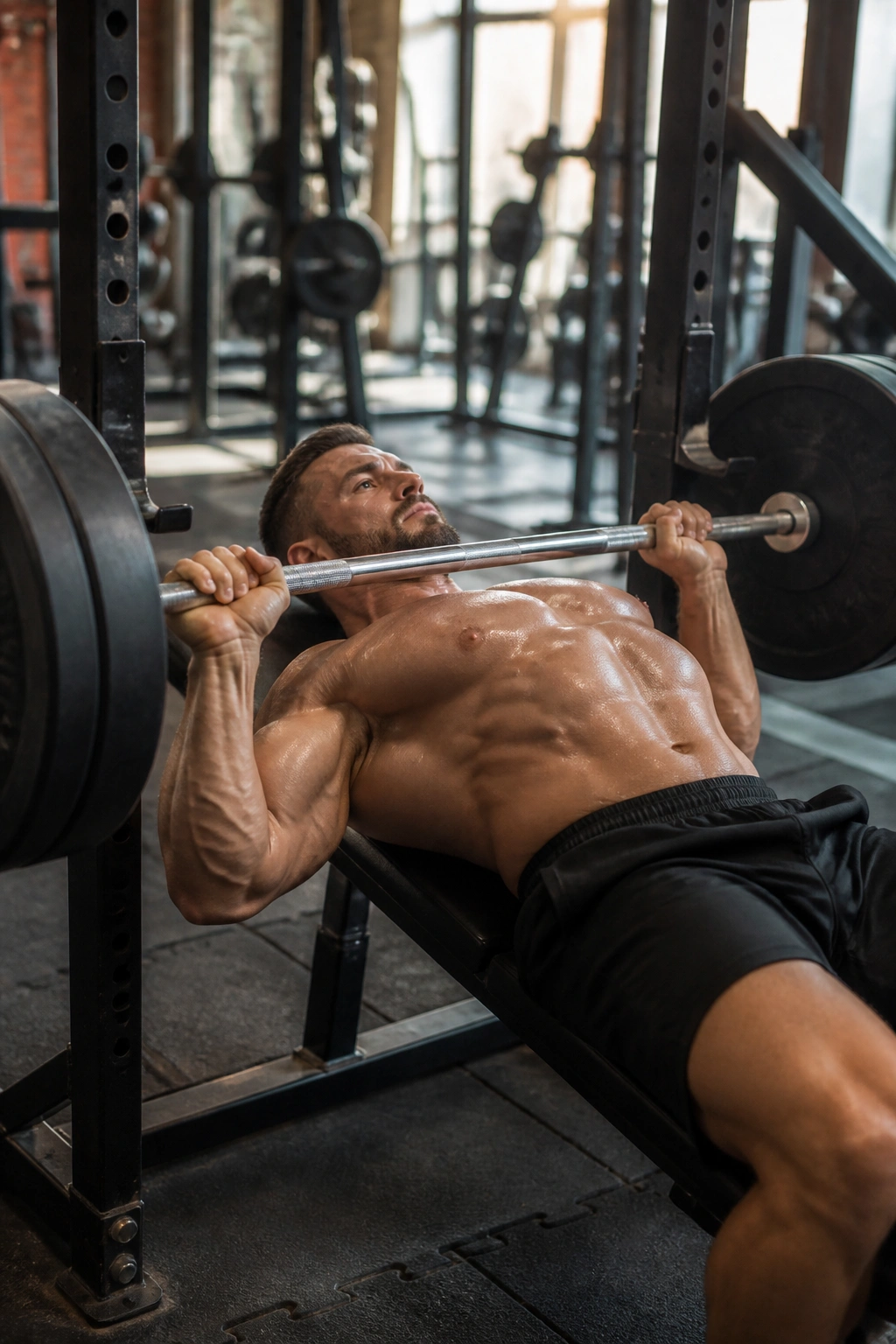
Heavy upper-body work is one of the easiest ways to fill an hour without wasting a minute.
The reason it works is simple: pressing and pulling pair well, and neither one likes being rushed. A proper 60-minute workout gives your shoulders time to recover between sets, which matters more than most people think. If your bench press and row both suffer because you’re gasping for air, the session has stopped being strength training and turned into a messy circuit.
How to Set It Up
- 8 minutes: rower, band pull-aparts, arm circles, and scapular push-ups
- 20 minutes: bench press and chest-supported row, 4 sets of 5 to 6 reps each
- 15 minutes: overhead press and pull-ups or lat pulldowns, 3 to 4 sets of 6 to 8 reps
- 10 minutes: incline dumbbell press and cable rows, 3 sets of 10
- 7 minutes: face pulls, triceps pressdowns, and easy breathing on a bike
Keep the first two lifts honest. Rest 2 to 3 minutes on the heavy sets, and do not turn them into a cardio test. The accessories can move faster, but the barbell work should feel crisp, not frantic.
This is the kind of hour-long workout that leaves your upper body feeling worked without leaving your nervous system fried. Good trade.
2. Lower-Body Strength That Actually Uses the Clock
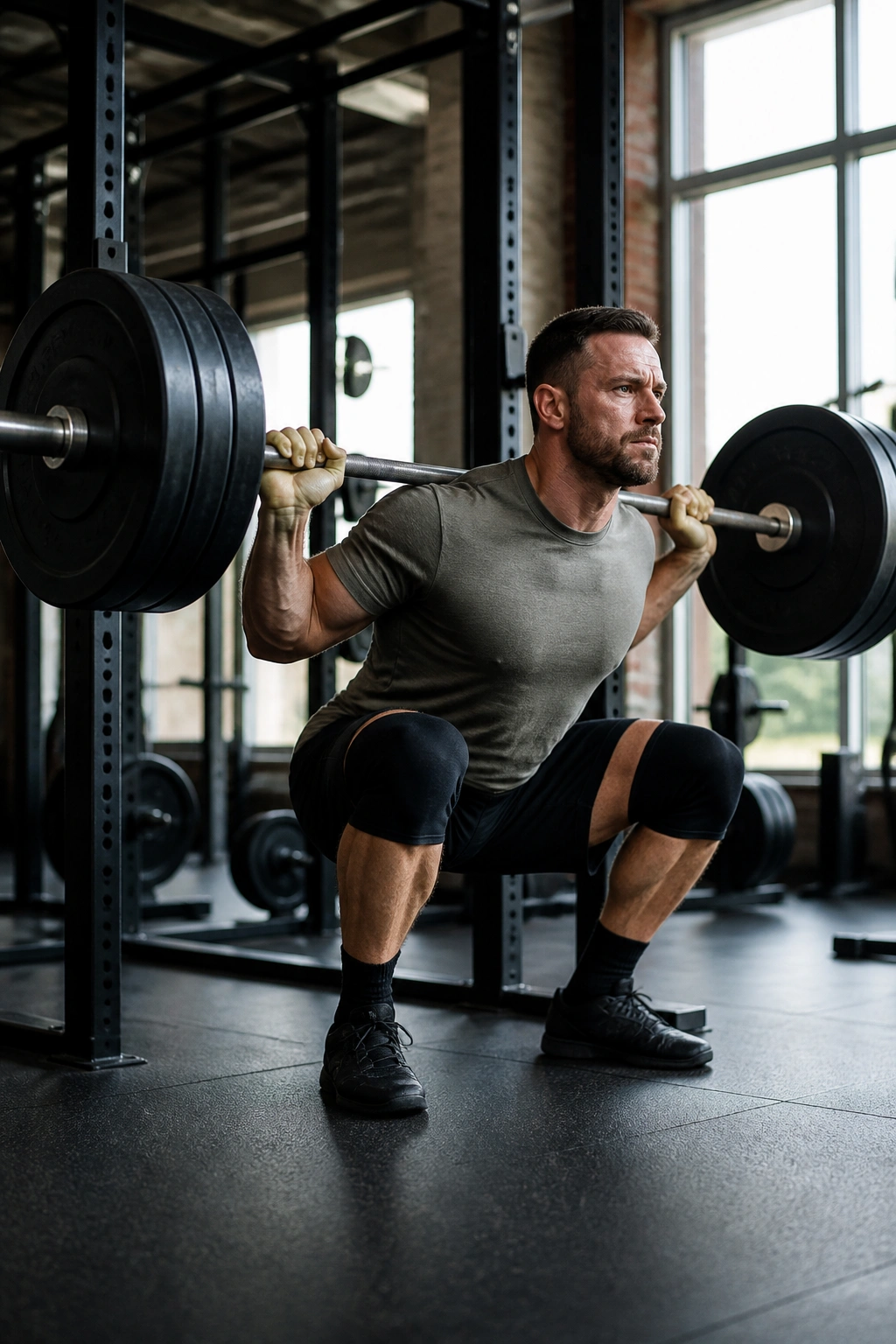
Why do leg days so often feel cramped? Because people try to cram squats, hinges, lunges, calves, and a little bit of ego into 35 minutes.
A full hour changes the mood. You can squat, hinge, and still give your hamstrings and glutes the attention they deserve. That extra time also lets you rest between heavy sets, which matters more on lower body training than almost anywhere else. Legs take more out of you. That’s not a flaw. It’s the point.
A Solid Hour Looks Like This
- 10 minutes: brisk walk, bike, hip openers, bodyweight squats
- 20 minutes: back squat or front squat, 5 sets of 3 to 5 reps
- 12 minutes: Romanian deadlift, 4 sets of 6
- 10 minutes: Bulgarian split squat, 3 sets of 8 per side
- 5 minutes: lying leg curl or sliding hamstring curl
- 3 minutes: calf raises and a short stretch
One thing I’d push hard: keep the first squat sets heavy enough to matter, but not so heavy that your form starts to fold. The same goes for the hinge work. A pretty good leg day beats a dramatic bad one.
If you want a lower-body workout plan that actually changes how your legs feel in daily life, this is the template I’d start with.
3. Full-Body Barbell Day With Simple Progression
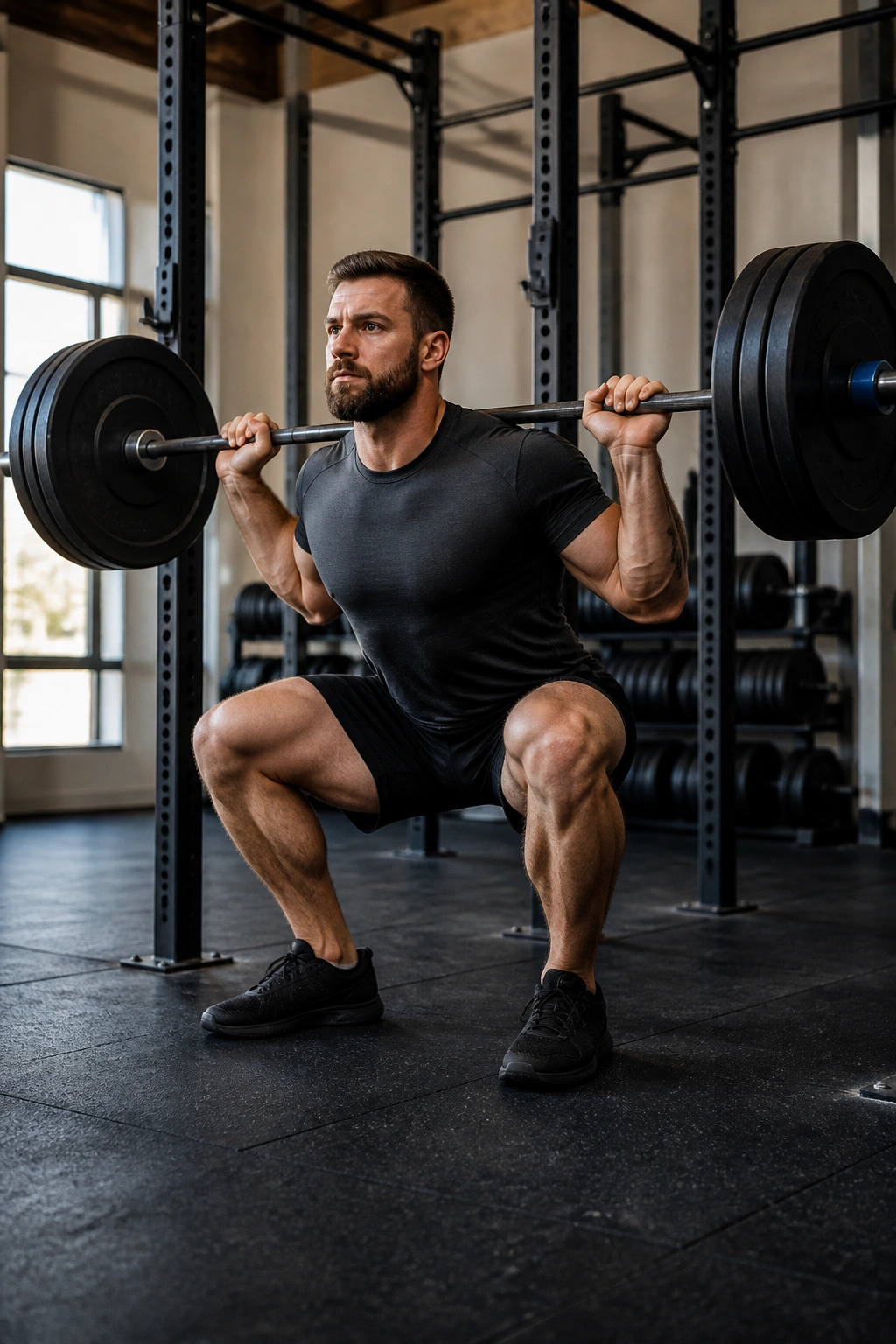
Three big lifts can eat a full hour faster than people expect.
That’s the part people miss. A barbell session does not need twenty exercises to feel complete. If you choose one squat pattern, one press, one pull or hinge, and then give each lift enough rest, the whole thing becomes serious fast. Simple doesn’t mean easy. It means the work is concentrated where it counts.
My bias here leans toward clean movement and repeatable numbers. Four sets of five is a beautiful thing when the load is honest and the rest is long enough for your next set to look like the previous one. The minute your reps start changing shape, you’re done collecting value from the lift.
A good full-body hour might start with a squat, move into a bench press, shift to a barbell row or deadlift variation, and finish with one accessory that fills a gap. Maybe rear delts. Maybe loaded carries. Maybe split squats if your legs need more single-leg work.
The nice part is the progression is easy to track. Add 5 pounds when the sets feel clean. Hold steady when they do not. That’s boring in the best way.
4. Dumbbell Hypertrophy Ladder

If your gym is crowded, dumbbells save the day.
They also let you train around weak links without waiting for a rack to open up. A dumbbell hypertrophy ladder works especially well when you want muscle-building volume and you’ve got a solid 60 minutes to spend. The trick is to start with moderate weight, then move through a few rep ranges without completely frying yourself on the first round.
Why the Ladder Works
You get size work and conditioning without forcing every set to be maximal. That matters. The first pair of exercises should feel demanding, but you still want the later sets to look tidy. If the whole thing becomes a shaky mess by minute 20, the ladder is too aggressive.
A practical version looks like this:
- Dumbbell goblet squat: 12, 10, 8 reps
- Flat dumbbell press: 12, 10, 8 reps
- One-arm dumbbell row: 12 each side, 10 each side, 8 each side
- Walking lunges: 10 each leg for 3 rounds
- Lateral raises: 15 reps for 3 rounds
Keep the rests around 60 to 75 seconds early on, then shorten them a little for the last accessory work. That slight drop in rest is what gives the session its density without wrecking form.
Good dumbbell sessions feel like you worked, not like you survived something.
5. Treadmill Incline Intervals and Core
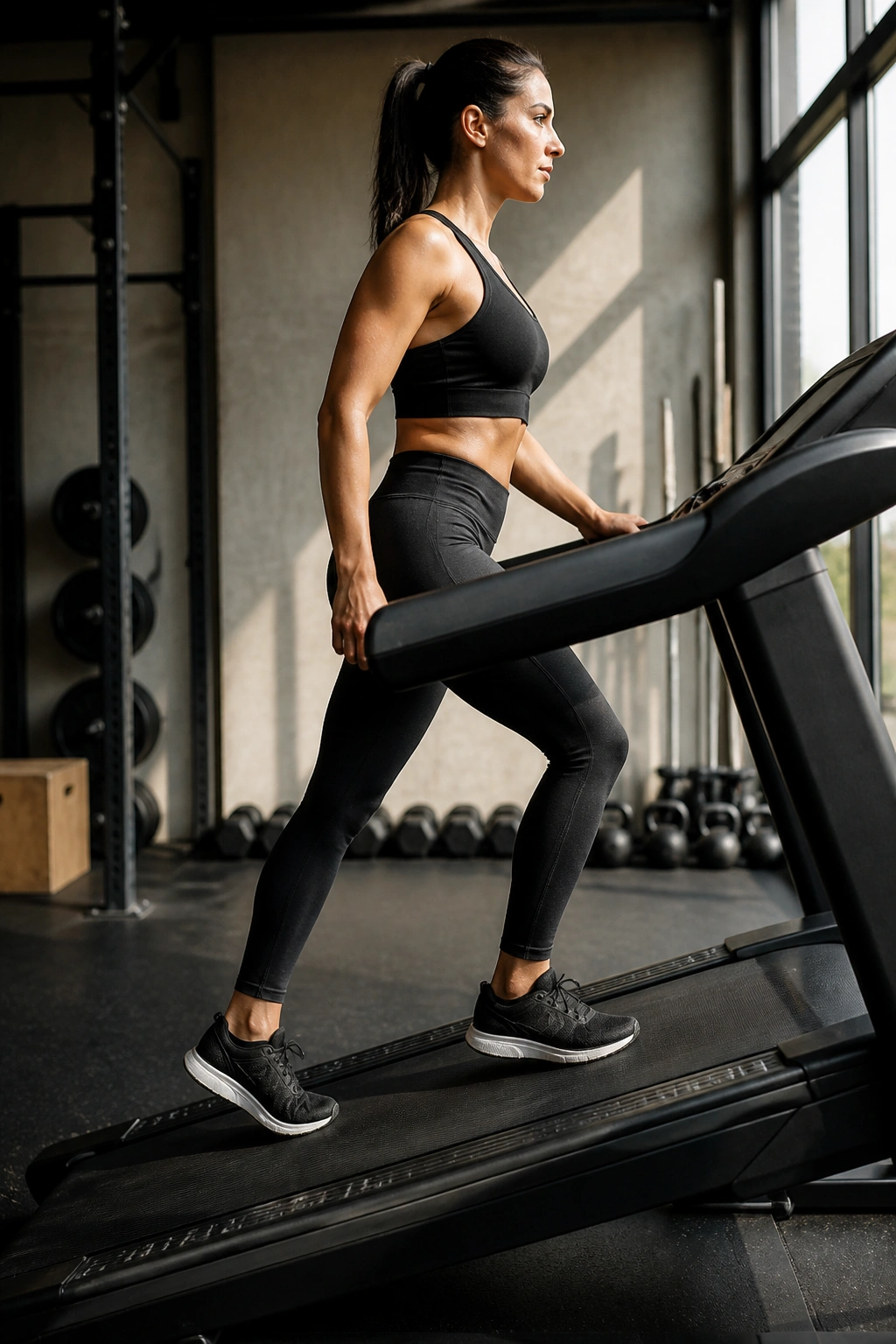
The belt hums. Your calves know what’s coming before your brain does.
Incline treadmill intervals are one of the easiest ways to turn a 60-minute workout into a hard, useful cardio session without needing a track, a hill, or perfect weather. The incline does a lot of the work for you. Your legs have to push, your lungs have to keep up, and your core has to stop you from folding over the console like a disappointed raccoon.
How to Pace It
- 10 minutes: walk or jog at a gentle pace, build the incline slowly
- 24 minutes: 6 rounds of 3 minutes hard at 6% to 10% incline, 2 minutes easy
- 12 minutes: core work, rotating through plank, dead bug, and side plank
- 8 minutes: cooldown walk and calf stretch
- 6 minutes: breathing reset and easy walking
Do not hold the rails unless you need them for balance. Gripping the machine changes the load and turns the movement into something else. Also, keep the hard intervals hard enough that you’re working, but not so hard that your stride starts falling apart on round three.
I like this one for people who want cardio that feels like training instead of time-killing. It has a clear edge.
6. Rowing Machine Endurance Plus Mobility
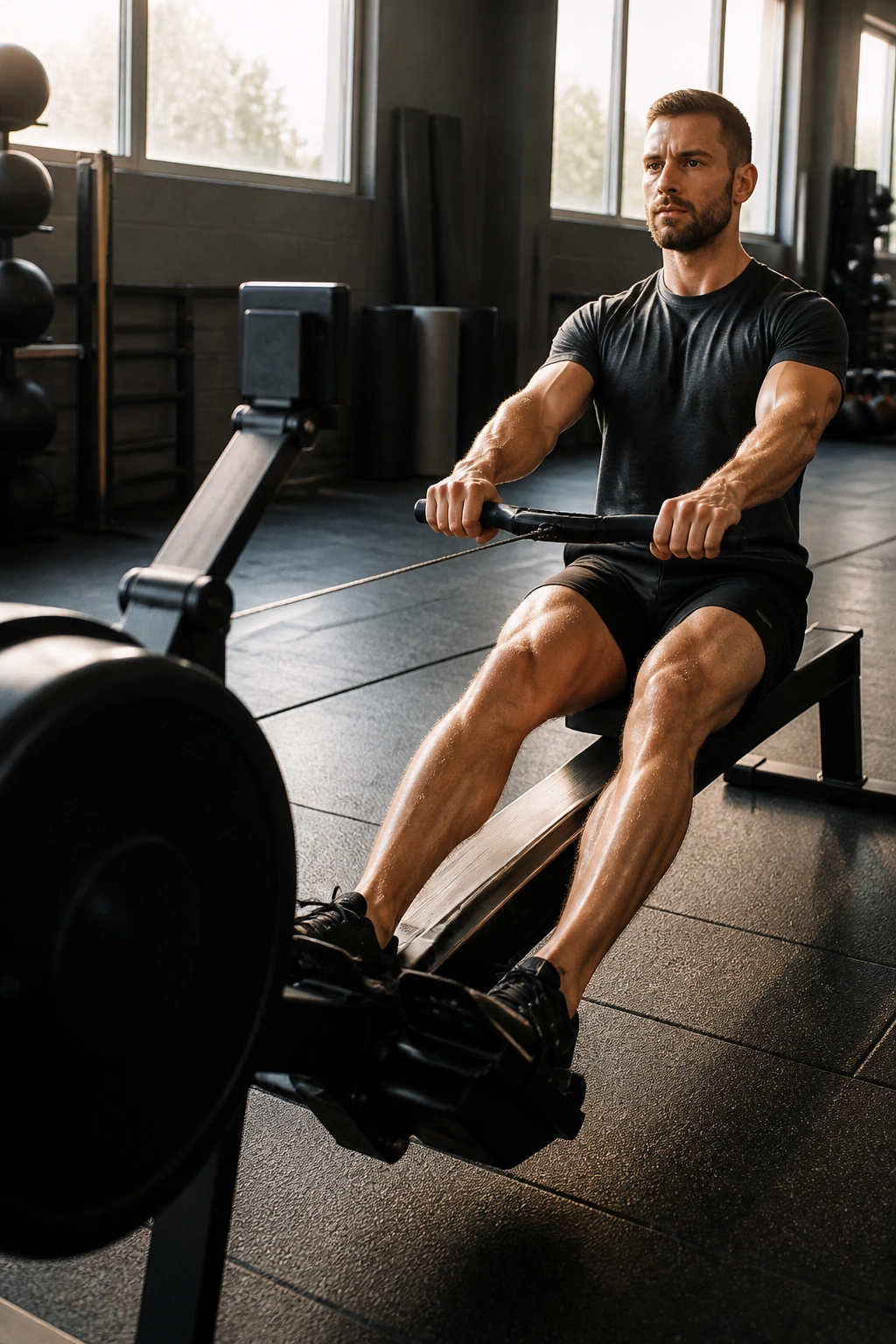
The rower is a lovely piece of equipment when you respect it.
It gives you full-body work without pounding your joints, and it rewards rhythm more than force. That’s why a 60-minute rowing session can be surprisingly calm on the surface while still doing plenty beneath it. If you’ve ever seen someone yank the handle like they’re starting a lawn mower, you know exactly what not to do.
A better version keeps the stroke smooth and the damper somewhere reasonable, not cranked up for no reason. Start with 10 minutes of easy rowing, then move into intervals like 5 x 5 minutes at a strong but sustainable pace with 90 seconds easy between rounds. After that, spend the final 20 minutes on mobility for the hips, thoracic spine, and ankles.
What to Open Up After the Row
- Half-kneeling hip flexor stretch, 45 seconds per side
- World’s greatest stretch, 5 slow reps per side
- Thoracic rotations, 8 per side
- Ankle rocks, 10 per side
- Child’s pose breathing, 1 to 2 minutes
The rower session works because it has a real engine under it, but it never loses the recovery piece. That’s rare. And useful.
7. Kettlebell Conditioning EMOM
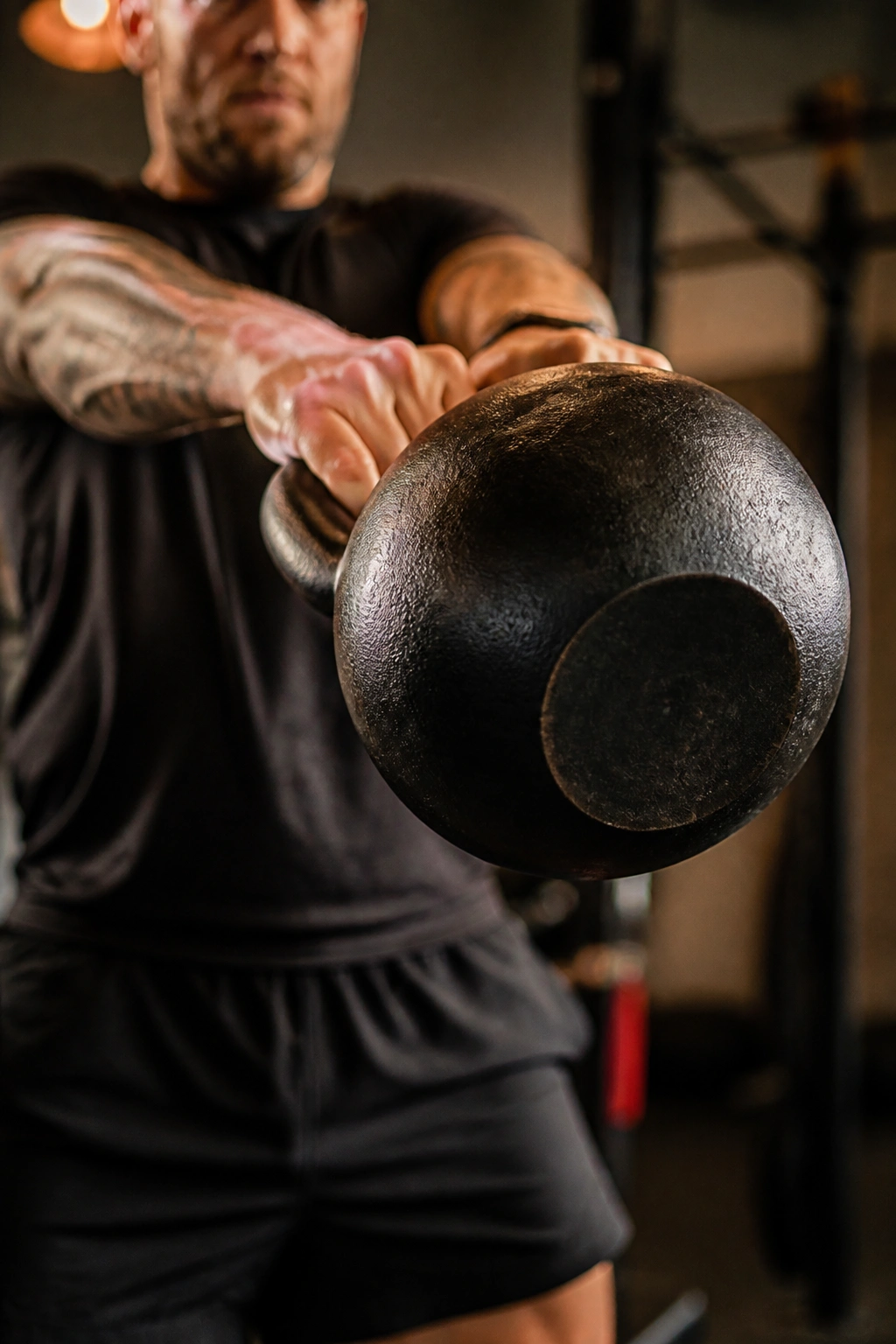
A kettlebell can eat an hour if you stop treating it like a toy.
The cleanest way to do that is with an EMOM, which is shorthand for “every minute on the minute.” You start a new task at the top of each minute, finish the reps, and rest with whatever time remains. It sounds neat on paper. It feels serious in the room.
The 20-Minute Core Block
- Minute 1: 12 kettlebell swings
- Minute 2: 6 clean and press per side
- Minute 3: 8 goblet squats
- Minute 4: rest
Repeat that cycle 5 times.
After the main block, spend 10 to 15 minutes on suitcase carries, halos, and dead bugs. Finish with hip flexor work and a slow walk. That puts you right around an hour, and the session has enough shape to feel planned instead of random.
The big rule here is pace. If your swing gets sloppy or your press turns into a low-back lean, the bell is too heavy or the EMOM is too dense. Keep the reps sharp. It’s not a punishment set.
8. Bodyweight Density Workout for No-Equipment Days
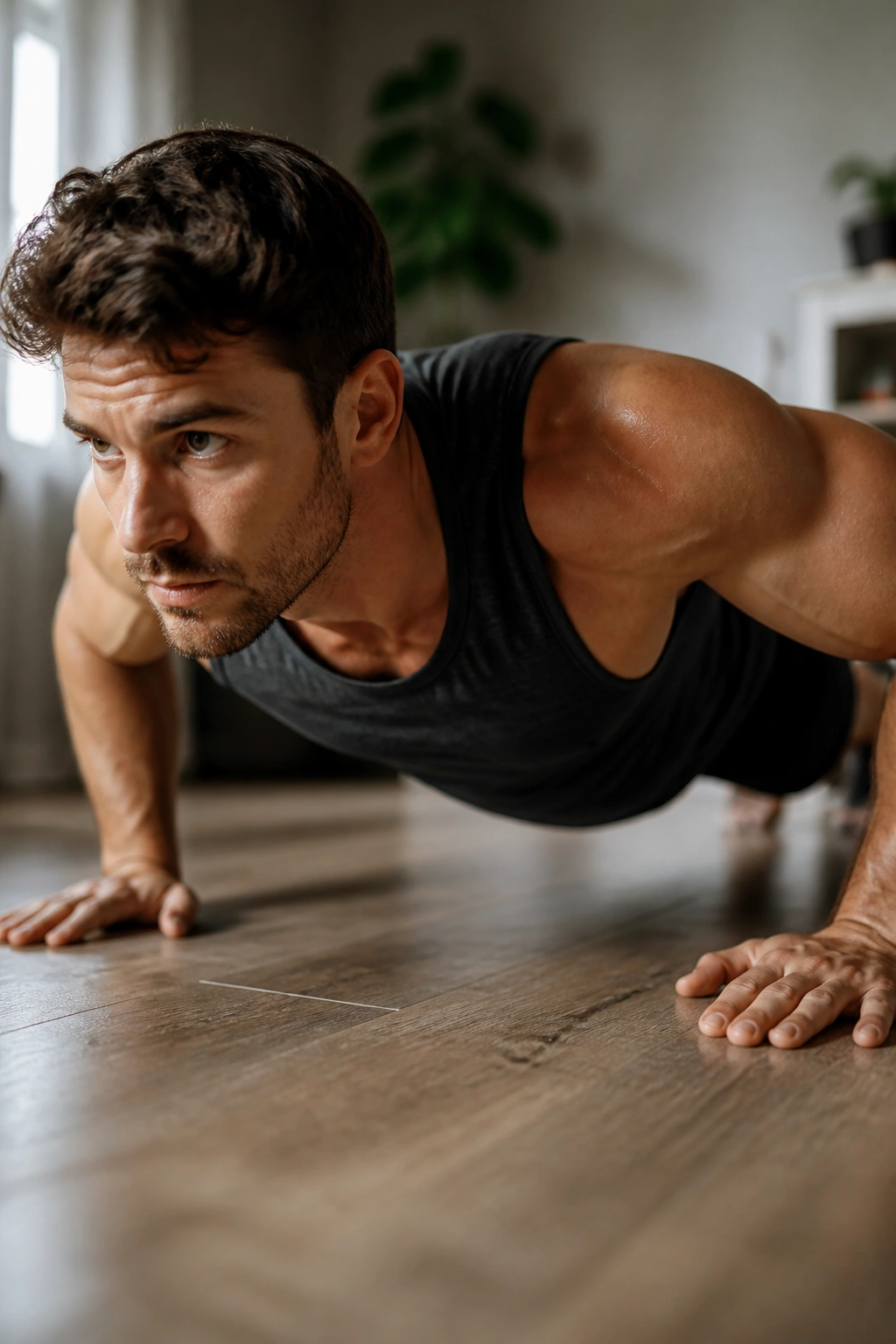
No equipment doesn’t mean no structure.
A bodyweight hour works best when it has a clear timer and a few honest movements. Push-ups, split squats, planks, and crawling patterns can do more than people expect if you give them enough rounds and don’t phone it in. This is a good option when you’re at home, traveling, or just sick of waiting for a bench.
A simple setup is 5 stations, 40 seconds on and 20 seconds off, repeated 4 times. Pick movements that cover push, legs, core, and upper-back substitute work if you have a pull-up bar or rings. If not, slow tempo and floor work do more than they look like they should.
Useful Station Ideas
- Elevated push-ups or standard push-ups
- Rear-foot elevated split squats
- Pike push-ups or shoulder taps
- Hollow body hold or dead bug
- Bear crawl or mountain climbers
The key is honesty. If push-ups collapse by round two, raise your hands on a couch or bench. If split squats get wobbly, shorten the range and own the balance. A bodyweight workout should feel controlled, not sloppy.
9. Power Training With Jumps, Throws, and Short Sprints

Power work is not cardio with a dramatic name.
That mistake ruins a lot of good sessions. Power training needs speed, and speed disappears when fatigue takes over. So the hour has to be built around quality, not exhaustion. The rest periods should feel long enough to be annoying. That’s normal.
Start with mobility and low-intensity drills for 10 minutes. Then spend 20 minutes on jumps and throws: broad jumps, box jumps, medicine ball slams, chest passes, or rotational throws. After that, move to short sprints, sled pushes, or bike bursts with full recovery between efforts. Finish with a light accessory block and cooldown.
Keep the Reps Sharp
- 3 to 5 jumps per set
- 4 to 6 throws per set
- 4 to 8 sprint efforts of 10 to 20 seconds
- 60 to 120 seconds of rest between hard efforts
If your jump height drops or your sprint feels mushy, stop the set. Don’t collect ugly reps just to say you did more. Power is one of the few training styles where less can beat more when the quality is better.
10. Yoga-Strength Blend for Recovery and Movement
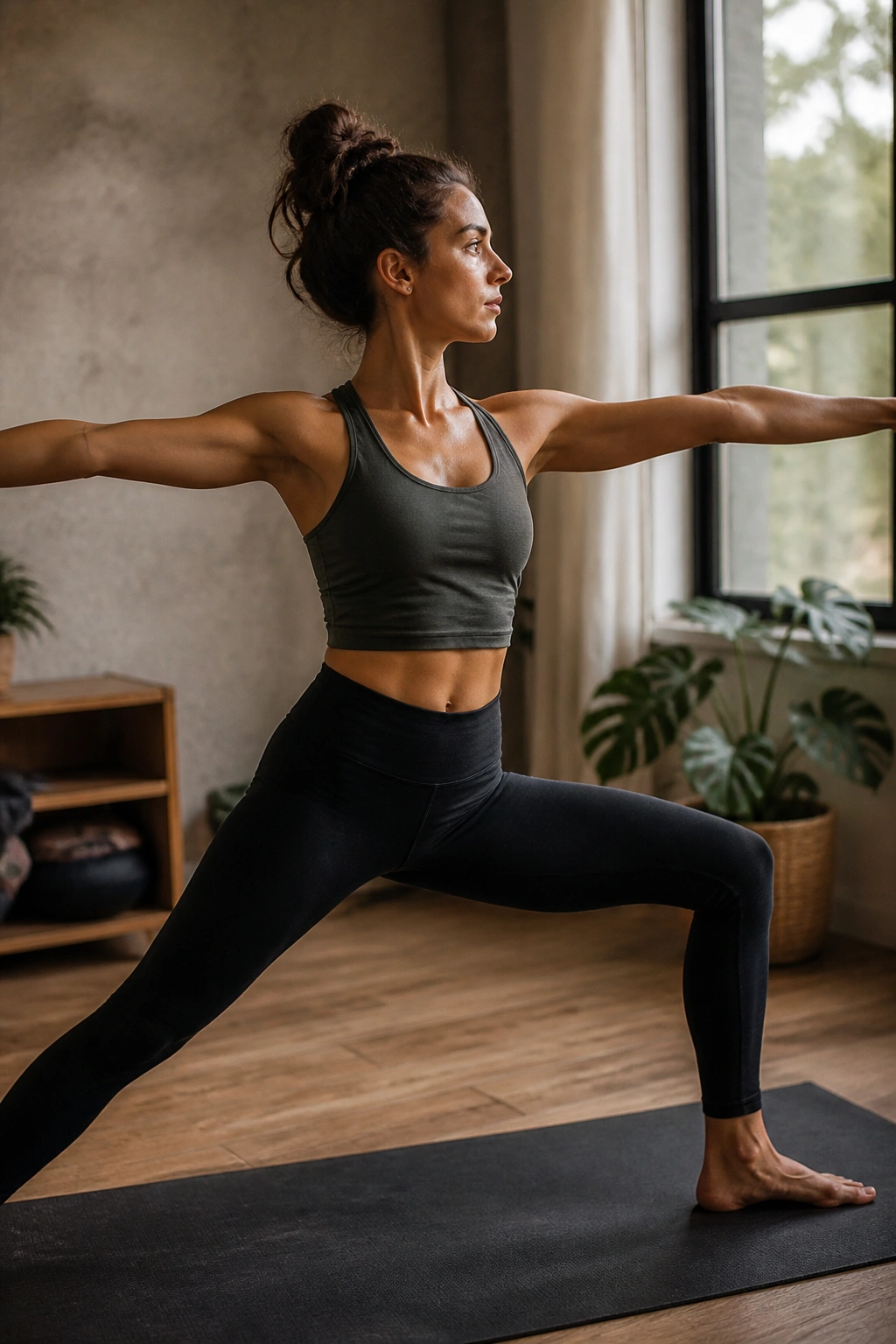
Sticky hamstrings. Tight hips. A low back that wants a truce.
That’s the kind of day where a blended session makes sense. Not full yoga, not full lifting — something in the middle that keeps you moving without turning the hour into a war. A good yoga-strength workout uses bodyweight holds, controlled transitions, and enough breathing to make your joints feel like they got a proper rinse.
What the Hour Can Hold
- 10 minutes: breathing work and cat-cow
- 15 minutes: sun salutations and controlled lunges
- 15 minutes: split squat holds, side planks, bird dogs
- 10 minutes: hamstring folds and thoracic rotations
- 10 minutes: easy flow and long exhales
The strength part lives in the holds. A 30-second split squat hold with good posture is not flashy, but it will tell you a lot about ankle stability and hip control. Side planks do the same for your trunk. Keep the pace slow enough that you can stay aware of position.
This is one of the few hour-long workouts that can leave you calmer at the end than you were at the start. That’s not a small thing.
11. Machine Circuit for a Busy Gym Floor
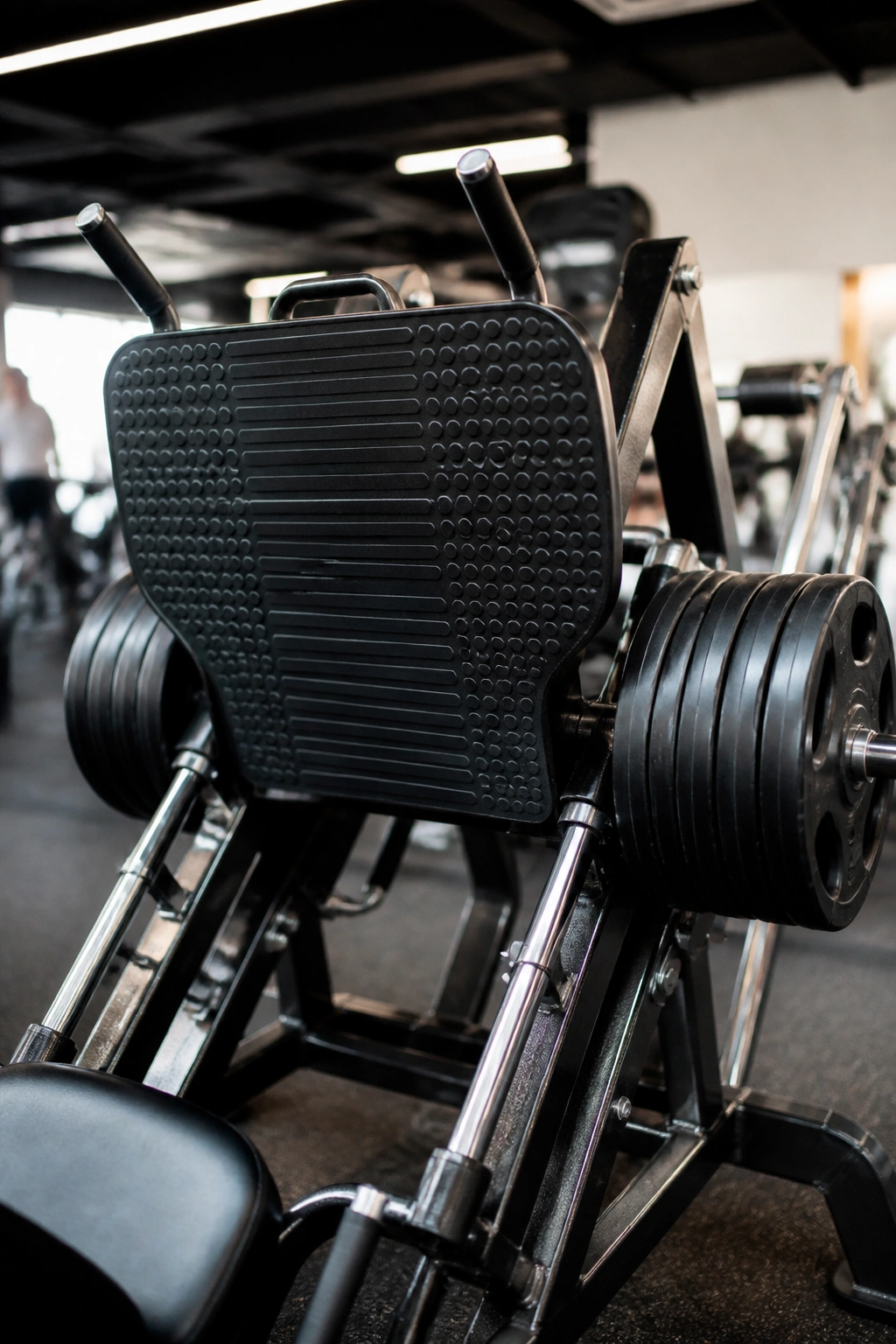
Machines are underrated when the gym floor is packed.
They remove the waiting game and let you keep the session moving. If your goal is muscle, not socializing with the squat rack, a machine circuit can deliver a lot in 60 minutes. The trick is to choose equipment that covers big patterns and to keep the rest periods honest.
A strong template is 3 rounds of 10 to 12 reps with 60 to 90 seconds between stations. Start with the biggest lower-body or press movement, then work through pull, hinge, and core. Keep the weights heavy enough that the last two reps feel slower, but not so heavy that the stack drops with a crash.
Clean Machine Lineup
- Leg press
- Seated chest press
- Lat pulldown
- Seated hamstring curl
- Cable row
- Cable crunch or ab machine
This kind of workout is not glamorous. Fine. It works anyway. Machines let you build volume without the extra setup time, and that means your hour actually stays a full hour of training instead of a collection of little interruptions.
12. Run Then Lift Hybrid Session

Can you run and lift in the same hour? Absolutely.
You just can’t pretend both halves deserve equal attention every time. If the run is the main goal, keep the lifting tight. If strength matters more, keep the run easy and brief. The hour only gets messy when people try to chase two different outcomes with the same energy.
One useful version starts with 20 minutes of easy running or run-walk intervals. Then move into a 25-minute lifting block built around two compound lifts and one core move. Finish with 10 minutes of walking and 5 minutes of hip and calf mobility. That gives you conditioning and strength without turning either one into a half-baked compromise.
If you’re training for general fitness, this hybrid session is gold. If you’re training for a race, put the running first. If you’re trying to get stronger, keep the run conversational and short. The order matters more than people like to admit.
And no, you should not try to PR both in the same hour.
13. Boxing Bag Rounds and Shoulder Work

A heavy bag can make 60 minutes vanish fast.
The rhythm of rounds and rest gives the session a natural shape, which is part of why boxing workouts feel so satisfying. You’re working hard, but you’re also switching gears often enough that boredom never gets a foothold. Good footwork, clean punches, and actual recovery between rounds matter here. Flailing does not.
A Useful Round Plan
- 5 minutes: jump rope or footwork warm-up
- 8 rounds of 3 minutes on, 1 minute off
- Round themes: jab-cross, body shots, hooks, defense, volume, angle changes, power shots, mixed flow
- 10 minutes: shoulder external rotations, band work, and push-up holds
- 7 minutes: core work, such as dead bugs and Russian twists done slowly
- 5 minutes: breathing and easy shadowboxing
Wrap your hands. Use gloves that fit. Keep the first two rounds controlled so your shoulders don’t blow up early. If the last rounds are cleaner than the first, you paced it well.
Boxing is sneaky like that. It looks like chaos. It rewards structure.
14. Stair Climber and Glute Burn Session
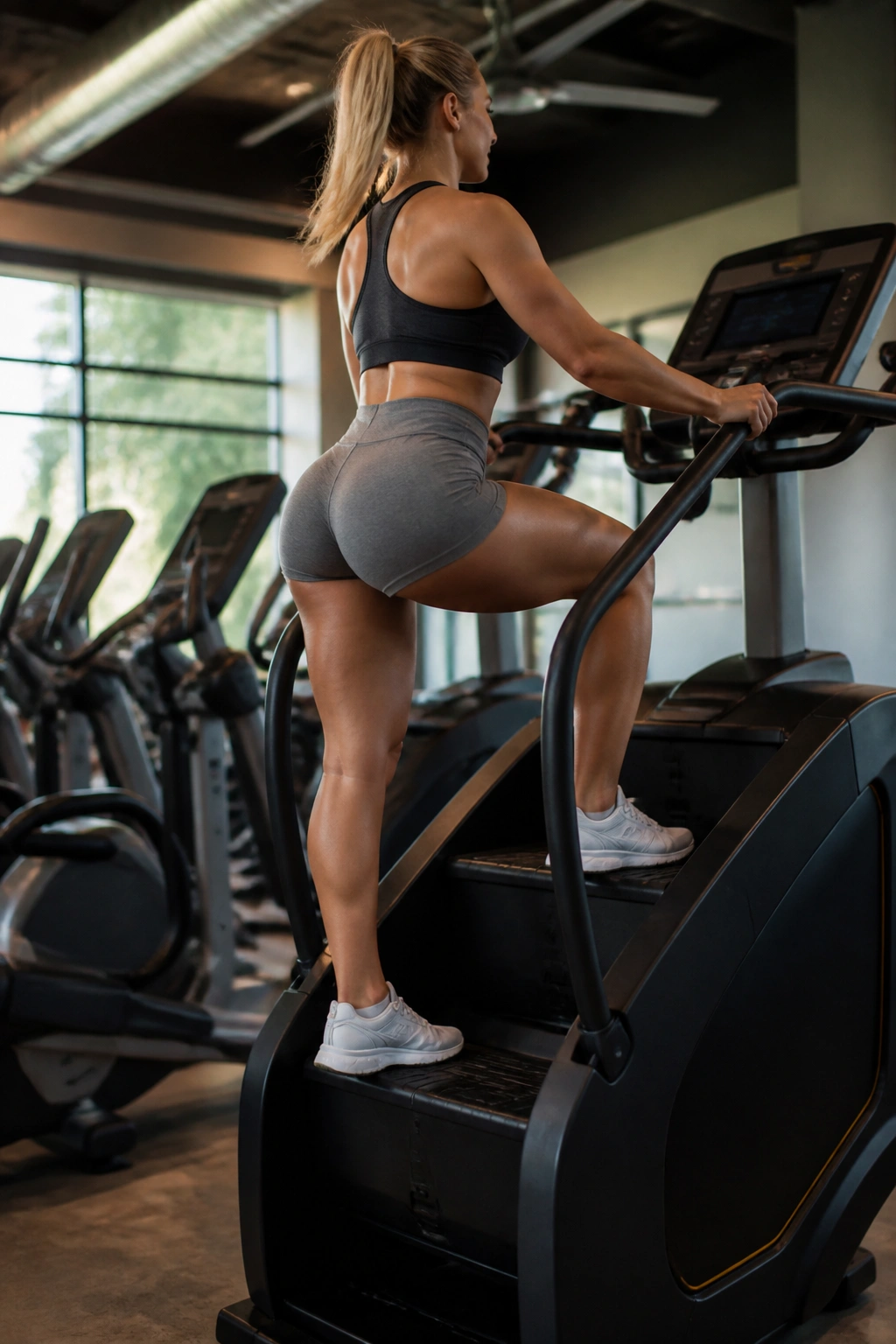
The stair climber is only boring if you use it like a zombie.
Use it with intent and it gets nasty fast. The machine is great for glutes, lungs, and that annoying little muscle endurance that makes hills and stairs feel less rude in daily life. It also pairs well with lower-body accessories because the movement keeps the hips warm and loaded.
A practical hour starts with 10 minutes of easy climbing and hip mobility. Then move into 5 rounds of 4 minutes hard and 2 minutes easy. After that, spend 15 minutes on reverse lunges, hip thrusts, and calf raises. Finish with a short walk and a hamstring stretch.
What Makes It Work
- Keep your whole foot on the step
- Drive through the heel and midfoot
- Avoid hanging on the rails
- Stay tall through the ribs
- Shorten the stride if your hips start tilting
That last point matters. People often overreach on the stair climber and end up yanking with their lower back. Small steps, steady rhythm, and a little stubbornness. That’s the better version.
15. Carry Day: Core, Grip, and Posture

The first time you take a heavy suitcase carry for 40 meters, your body tells on itself.
Your shoulder wants to tilt. Your ribs want to flare. Your grip wants to quit. That’s exactly why carries deserve a full hour once in a while. They train the parts of strength that don’t look exciting on a mirror. Posture. Breathing. Grip. Anti-rotation. Real-world stiffness.
A carry session can be built from farmer’s carries, suitcase carries, front rack carries, and overhead carries. Keep each walk to 30 to 40 meters and rest 60 to 90 seconds between rounds. Pair them with a few core drills and a short mobility block for the hips and thoracic spine.
Good Carry Options
- Farmer’s carry for general grip and trunk strength
- Suitcase carry for side-body control
- Front rack carry for upper-back and core work
- Overhead carry for shoulder stability
- Marching carry for balance and posture
This is not flashy training. I like that about it. It has a hard edge without being a circus.
16. Chest and Back Volume Day
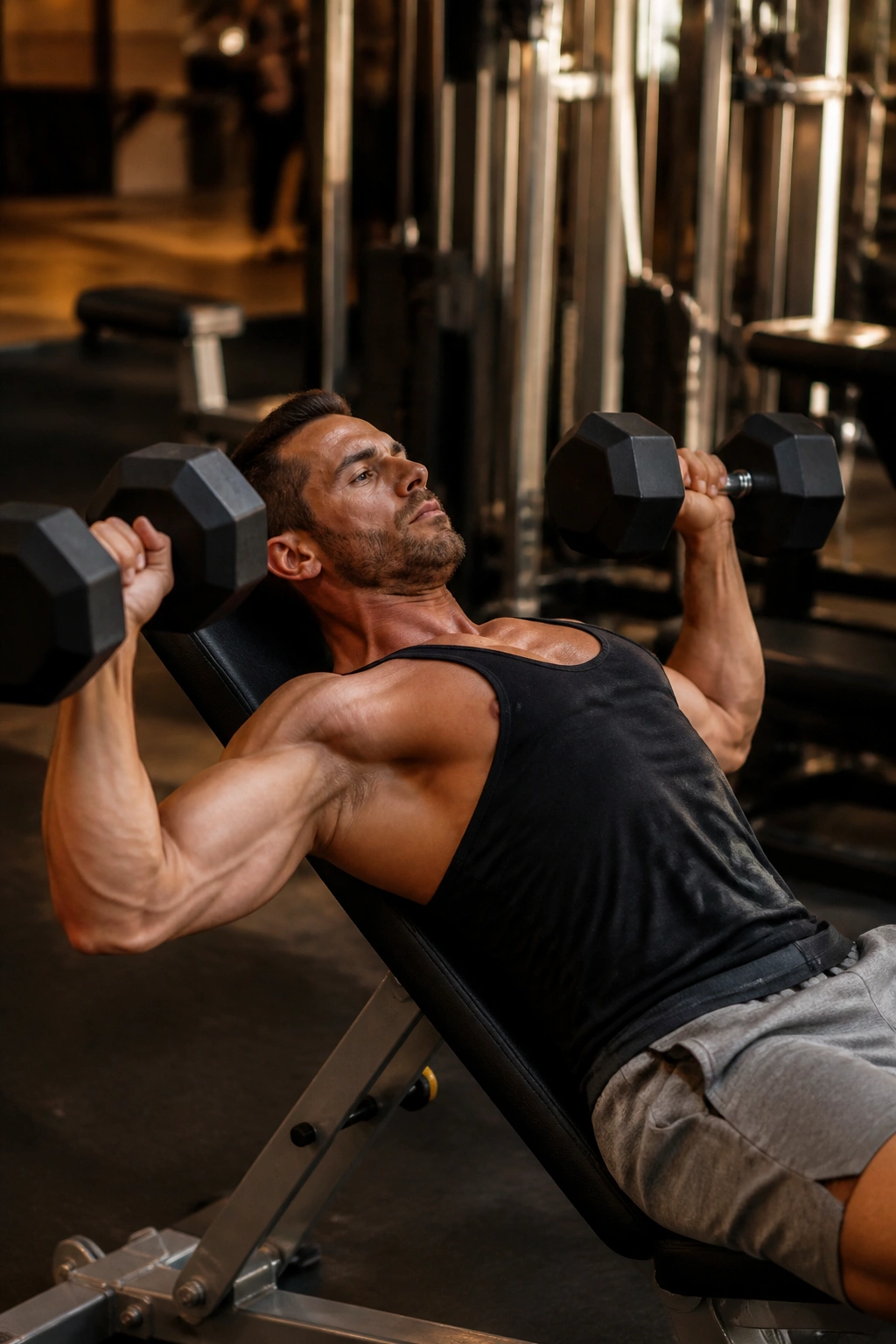
Want a big upper-body session without chasing maxes? This is the one.
Chest and back volume work is one of the easiest ways to fill an hour while keeping your shoulders happier than a pure push day usually does. Pairing pressing with pulling balances the session, keeps your posture from folding over time, and lets you keep moving without long dead gaps between sets.
A smart version uses supersets. Start with incline dumbbell press and chest-supported row, then shift to cable fly and lat pulldown, then finish with push-ups and face pulls. You get a lot of quality reps in a short window, and the pump is no joke if you pick the loads honestly.
Stop 1 to 2 reps shy of failure on the first two supersets. On the last accessory work, you can push closer. Just don’t turn the whole thing into a shoulder shrug festival. If your neck takes over, the weights are too heavy or the form is drifting.
This is one of my favorite hour-long workout plans for anyone who wants visible upper-body work and doesn’t need a one-rep-max ego session.
17. Leg Day With Tempo Reps
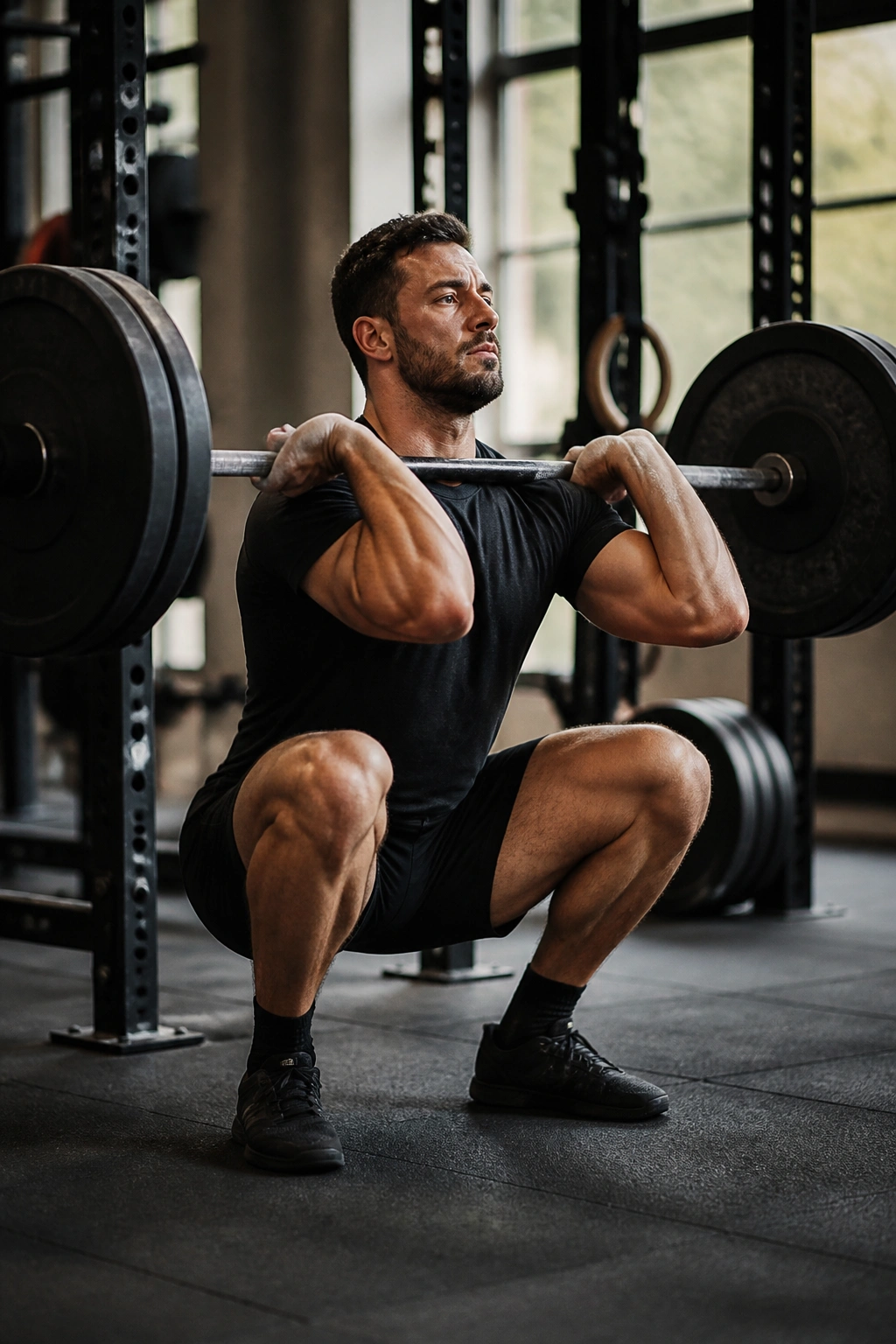
Slow lifting changes the game.
A tempo leg day uses controlled lowering, pauses, and cleaner movement to make moderate weight feel heavy in a useful way. That can be a gift if you want leg strength without the joint drama that sometimes comes with chasing load every session. The burn shows up fast. So does the humility.
Tempo Rules That Matter
- Use a 3-second lowering phase on squats
- Pause 1 second at the bottom of split squats
- Lower Romanian deadlifts for 4 seconds
- Drive up with control, not a bounce
- Keep the last rep looking like the first one
A 60-minute tempo session might start with front squats, then move to Romanian deadlifts, Bulgarian split squats, leg curls, and calf work. The weights will be lighter than your usual heavy day. That’s fine. The time under tension does the work.
Tempo training is one of those things people underestimate until their quads are shaking and their heart rate is up even though the bar moved slowly. Sneaky stuff. Very effective when used with restraint.
18. Zone 2 Cardio and Mobility Block
Not every 60-minute workout needs to leave you drenched.
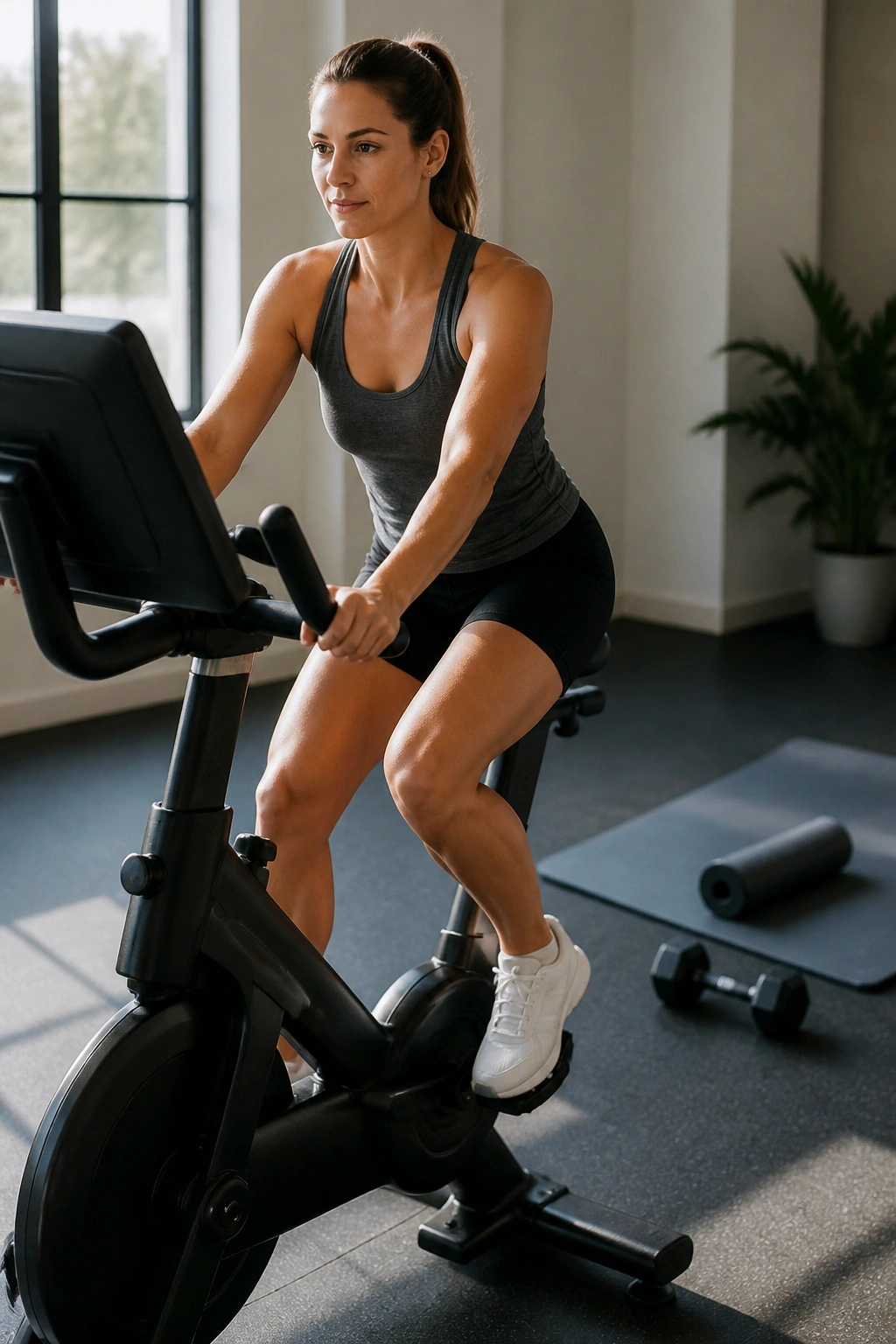
A lower-intensity aerobic session has its place, and it’s a better use of time than people often give it credit for. Zone 2 work — that easy, steady pace where you can still talk in short sentences — builds a base that supports harder training later. It also pairs beautifully with mobility because your body is warm, your breathing is steady, and your joints are ready to move.
A clean setup is 45 minutes on a bike, incline walk, easy jog, or rower at a pace you can hold without straining. Then spend 15 minutes on hips, calves, thoracic rotation, and shoulders. No rush. No chase. Just a solid session that leaves you better than it found you.
This is the workout I’d use when the week is full of hard sessions and the body wants something calmer. It still counts. More than people admit.
19. Agility, Speed, and Footwork Session

A court, a field, or an open stretch of floor gives this workout room to breathe.
Speed and agility sessions are about clean movement, not exhaustion. That means short efforts, clear patterns, and enough rest to keep the feet quick. If your last shuttle run looks like a stumble, the volume is too high. Quality goes first here. Every time.
How to Spend the Hour
- 10 minutes: dynamic warm-up, skips, and leg swings
- 8 minutes: ladder drills or line hops
- 12 minutes: cone shuffles and lateral bounds
- 12 minutes: 6 to 8 short sprints of 10 to 20 meters
- 10 minutes: change-of-direction drills
- 8 minutes: medicine-ball rotational throws or shadow footwork
- 10 minutes: cooldown walk and hip mobility
Keep the rest long enough that you can move fast again. That’s the whole point. Agility work should feel snappy, not sloppy. If you’ve played any sport, this style will feel familiar almost immediately.
It’s a fine option for people who like training that feels athletic instead of purely mechanical.
20. Cooldown Walk, Stretch, and Reset Circuit

You still get credit for the boring hour.
A recovery-focused session is not a placeholder. It keeps the rest of your training week from turning into a stiff, grumpy mess. The trick is to treat recovery like a workout in its own right: timed, deliberate, and long enough to matter. A slow hour can change how the next hard session feels.
Start with 20 minutes of easy walking. Then spend 20 minutes on mobility for the hips, ankles, spine, and shoulders. After that, do 10 minutes of breathing work on the floor — long exhales, knees bent, no urgency. Finish with 10 minutes of light foam rolling or band work if that helps you feel looser.
This is the session I’d keep near the end of a busy week, especially if your legs feel cooked or your shoulders have started talking back. Nothing dramatic. Just a quiet reset that makes the next day easier to start. If you have the time for a proper hour, using one of those hours to feel better is rarely wasted.
