



A home workout can fall apart fast if the plan is sloppy. Too much jumping. Not enough pulling. A few random push-ups, a rushed set of curls, then a promise to “do better tomorrow” that never quite lands.
Solid workout plans for men at home don’t need a garage gym or a perfect schedule. They need a clear shape, a way to get harder over time, and enough variety that your joints don’t start complaining after week two. A chair, a backpack, a pair of dumbbells, a resistance band, and a timer can carry a lot more than people think.
A lot of men overcomplicate this. They chase the perfect program, then skip the first workout because the equipment isn’t ideal. That’s backward. The better move is to pick a plan that matches your space, your energy, and your gear, then make the work a little harder over time — more reps, another set, a heavier backpack, shorter rest, cleaner form.
Simple wins.
1. The 20-Minute Bodyweight Circuit

If you only have a small window and no equipment, start here. This is the kind of session that works because it keeps moving: push-ups, squats, reverse lunges, mountain climbers, and plank holds done in a tight loop with little room to drift.
How to run it
Do 40 seconds of work and 20 seconds of rest for each move. Run the circuit for 3 to 4 rounds. If that feels too easy, slow the lowering phase on every push-up and squat to a 3-second descent.
Why it works
You get strength, conditioning, and a decent sweat without setting up a complicated station. The trick is to stop treating bodyweight work like a warm-up. Slow reps matter.
- Push-ups: 8 to 20 reps
- Squats: 15 to 25 reps
- Reverse lunges: 8 to 12 each leg
- Mountain climbers: steady pace for the full interval
- Plank: 30 to 45 seconds
Do not race the first round. Save a little gas so the last round still looks sharp.
2. Push-Pull Split With a Chair and Floor
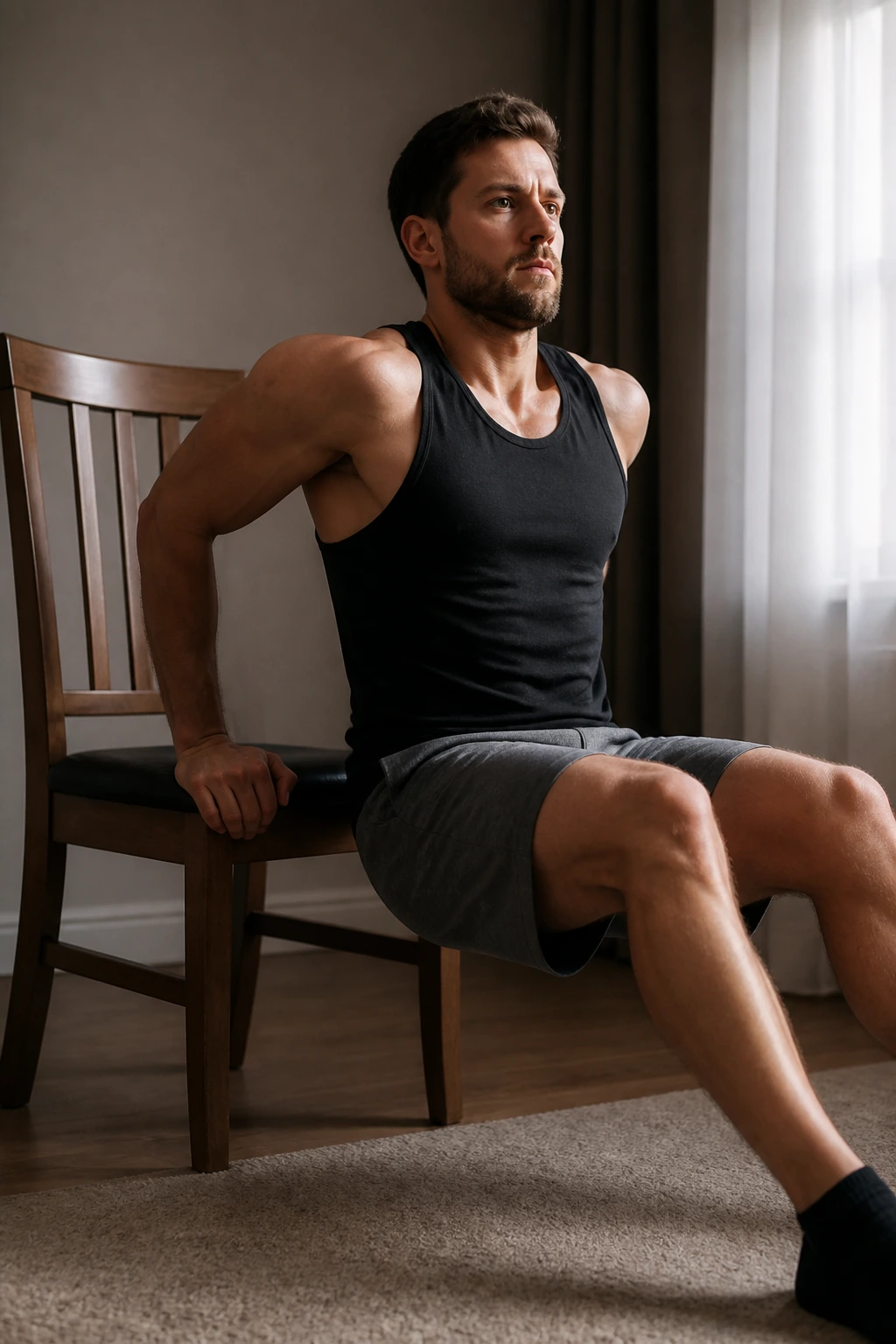
This is the one I’d hand to a man who wants structure without getting buried in it. Split the week into push work one day and pull work the next. You can do push-ups, pike push-ups, chair dips if your shoulders tolerate them, and backpack floor presses on the push side. On pull day, use band rows, backpack rows, reverse flys, and towel isometric rows.
The split makes a difference because it stops every session from feeling like a full-body scramble. Your pressing muscles get one day to push hard. Your upper back gets its own day to catch up, which most home routines badly need.
A good setup is 4 days a week: push, pull, rest, push, pull. Use 3 to 4 sets of 8 to 15 reps on the main lifts. Keep 60 to 90 seconds of rest between sets.
3. EMOM Fat-Burner

Why does this work so well? Because the clock keeps you honest. EMOM means every minute on the minute. You do a set at the top of the minute, then rest with whatever time is left. It feels simple. It is not easy.
Use 10 to 16 minutes total. One minute can be 10 burpees, the next can be 15 squats, then 8 push-ups, then 20 mountain climbers. If your form starts falling apart, cut the reps before you turn the whole thing into sloppy cardio.
How to use it
Pick 4 moves and repeat them for the full block. Choose numbers that leave you 15 to 25 seconds of rest. That gap matters. It keeps the pace honest and gives your lungs a break before the next round starts.
A good EMOM should leave you breathing hard, not wrecked. There’s a difference.
4. No-Jump Low-Impact Conditioning
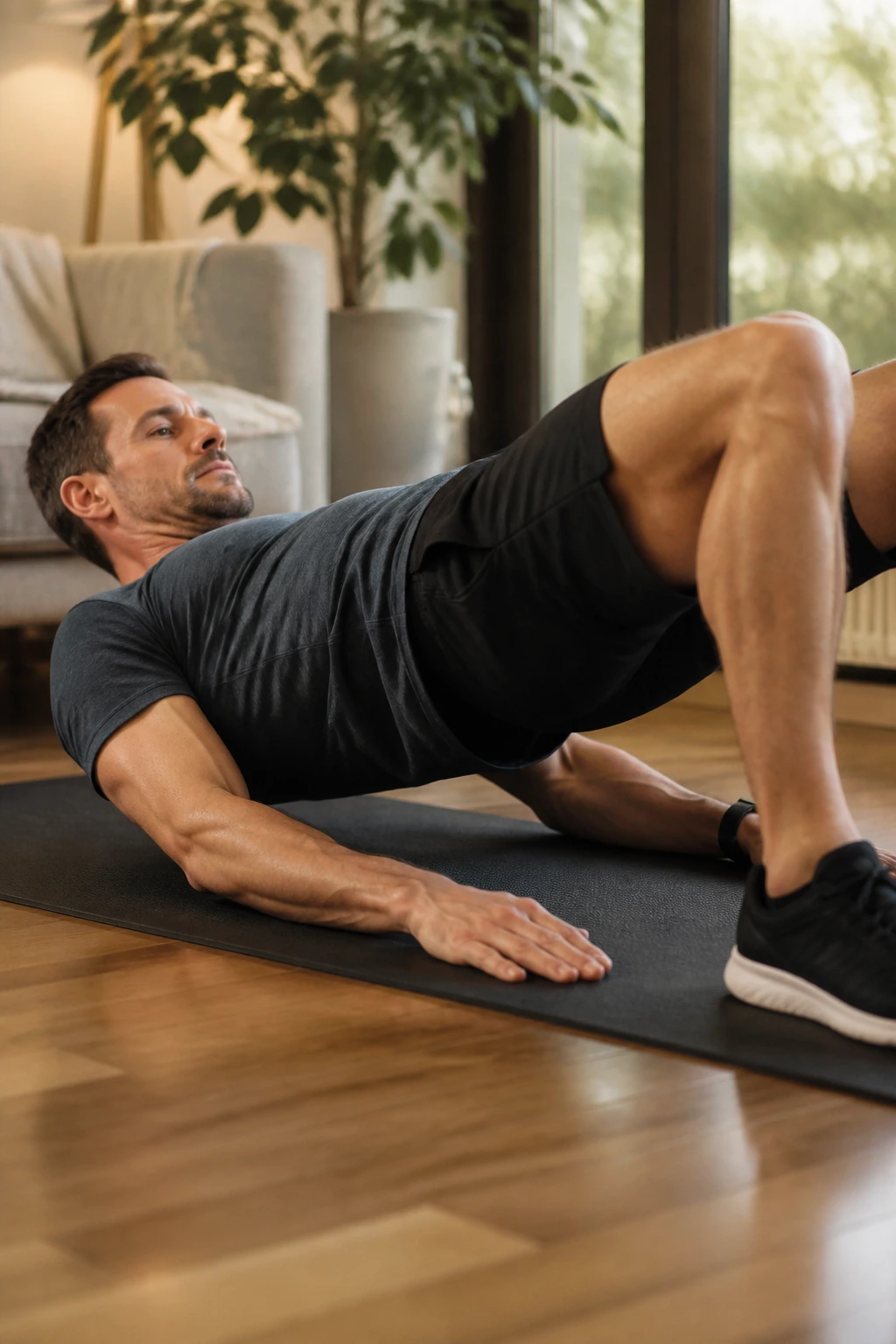
Your knees might thank you for this one. Not every conditioning plan needs burpees and jump squats flying everywhere. A low-impact session can still push your heart rate up if the work is dense enough and the transitions are short.
Use marching high knees, step-back lunges, fast shadow boxing, glute bridges, dead bugs, and wall sits. Keep the footwork quick, but stay grounded. That matters if you live in an apartment or your lower back gets grumpy after too much impact.
Try 30 seconds on, 15 seconds off for 5 to 6 rounds. If you want more bite, hold the wall sit longer or slow the lunges to a controlled pace. Controlled does not mean easy.
This plan suits recovery days, busy weeks, and anyone who wants to sweat without pounding the floorboards.
5. Backpack Strength Ladder
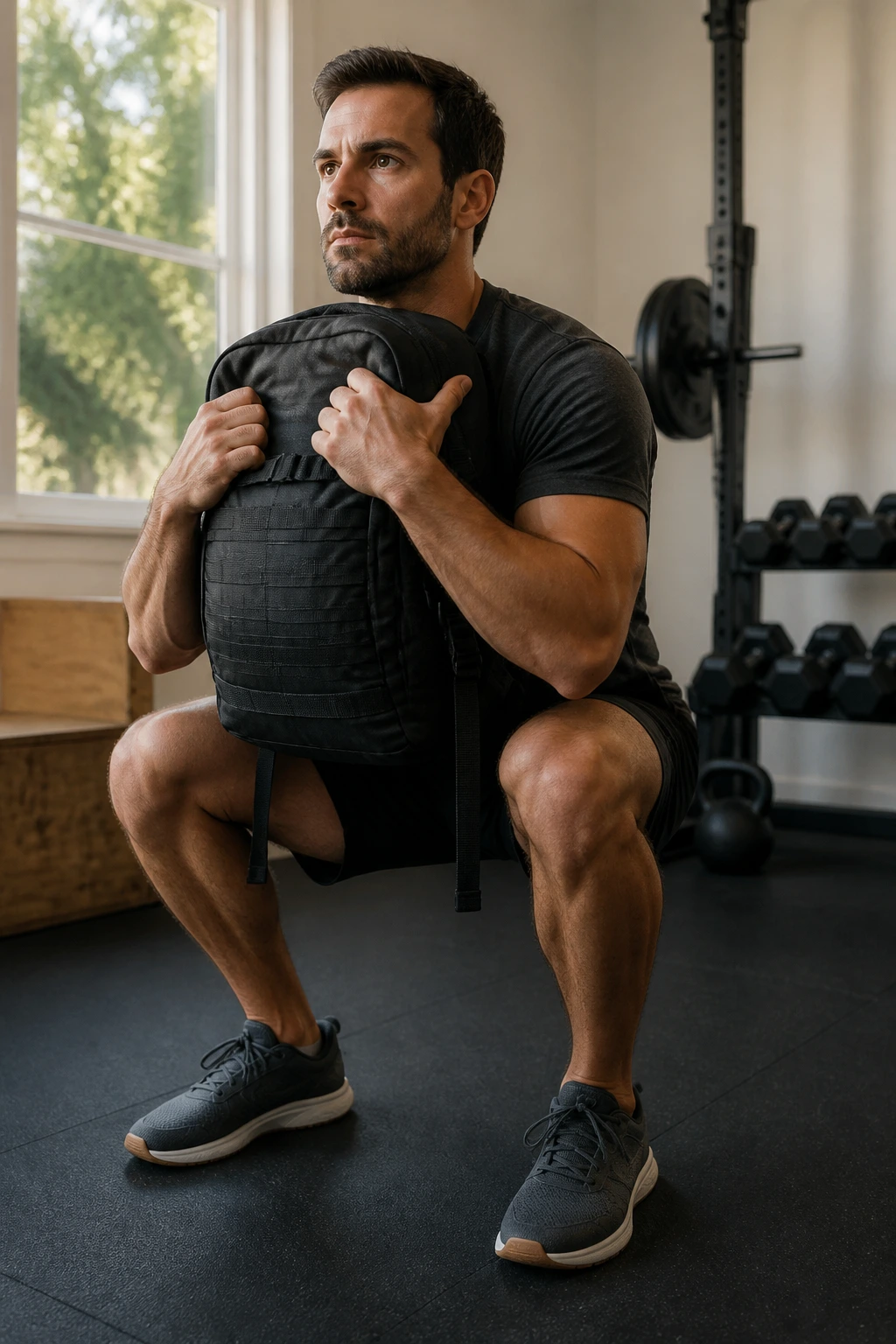
A loaded backpack can do more than people give it credit for. Books, water bottles, old textbooks, even a couple of canned goods if you’re in a pinch — all of it turns into useful resistance. The trick is to keep the load tight so it doesn’t swing around.
Run a ladder: 2 reps, 4 reps, 6 reps, 8 reps, then back down if you’ve got it. Use goblet squats with the backpack hugged to your chest, bent-over rows, overhead presses, and split squats. Rest 30 to 45 seconds between rungs.
The ladder format works because it builds fatigue without needing a huge weight jump. By the time you hit 8 reps, the set feels different. That’s the point.
Keep the bag snug. If it shifts and slaps your back, the load is too loose or the fill is too uneven.
6. Dumbbell Upper-Body Hypertrophy Day

Unlike a generic chest day, this one gives the upper body enough volume to grow without wasting time. If you own one pair of dumbbells, you can do a surprisingly serious session: dumbbell floor press, one-arm row, overhead press, and lateral raise.
Use 3 to 5 sets of 8 to 12 reps for the main lifts. Rest 60 to 90 seconds. The last two reps should feel slow, but your form should still look clean. If the dumbbells are too light, add a 2-second pause at the bottom of each rep.
A good upper-body day at home needs balance. Pressing alone will leave your shoulders cranky. Rows keep your back honest and your posture from folding inward after long hours at a desk.
The shape of the session
- Floor press
- One-arm row
- Overhead press
- Lateral raise
- Triceps extension or close-grip push-up
Simple. Heavy enough. No fluff.
7. Dumbbell Lower-Body Strength Day

Leg training at home gets easier once you stop chasing barbell numbers. Dumbbells can hit the legs hard if you lean on split squats, Romanian deadlifts, goblet squats, and calf raises. One tough set of Bulgarian split squats can make your quads shake in a way a dozen lazy bodyweight squats never will.
Use 3 to 4 sets of 8 to 12 reps on goblet squats and RDLs. Split squats usually work well in the 8 to 10 rep range per leg. Rest 90 seconds if you want the sets to stay strong. Less rest turns the workout into cardio fast.
How to keep it hard without heavy weights
- Slow the lowering phase to 3 seconds
- Pause for 1 second at the bottom
- Finish with 15 to 20 calf raises
- Add a backpack if the dumbbells feel too light
The legs don’t need fancy tricks. They need load, range of motion, and honest effort.
8. Core, Hips, and Posture Reset
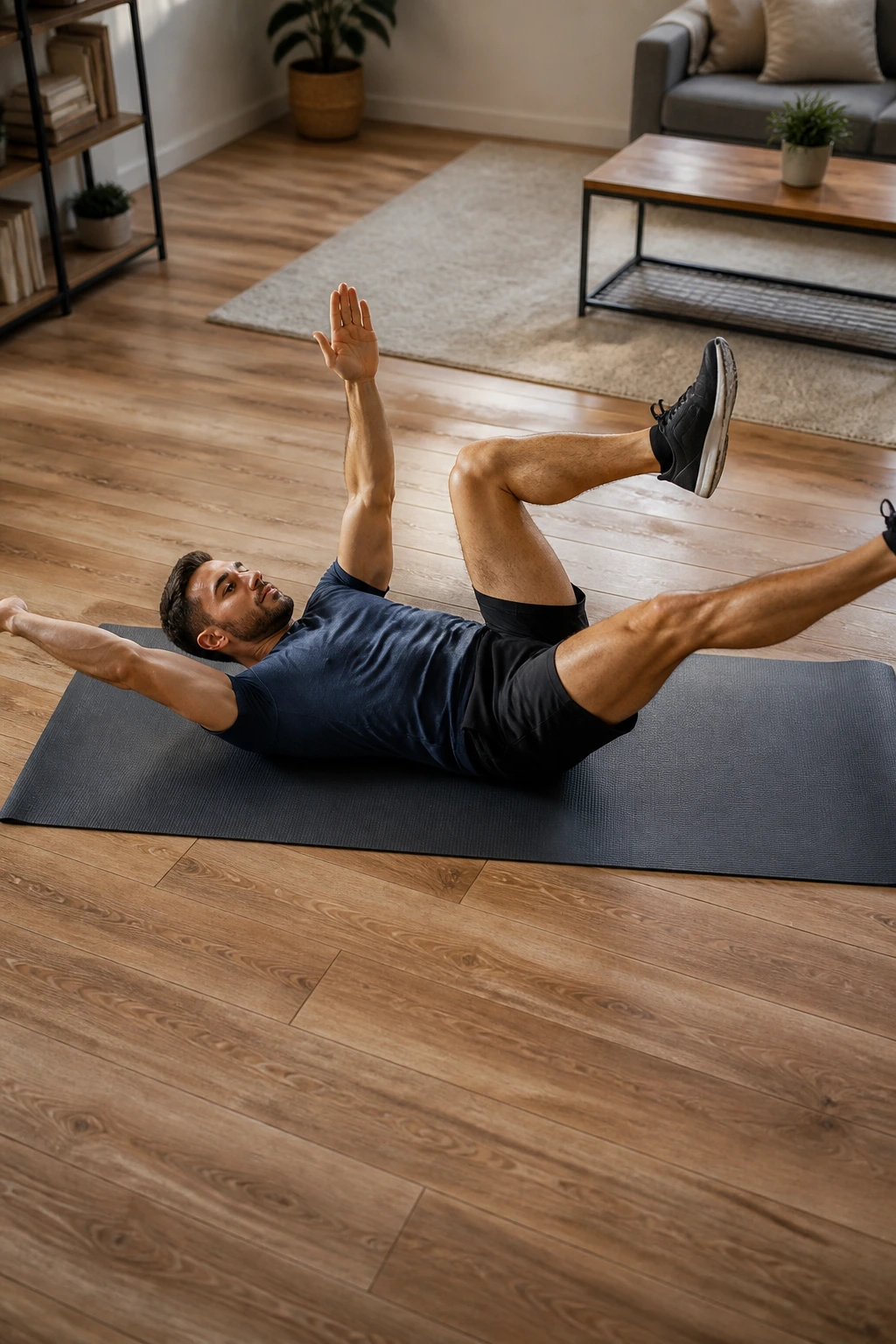
Some workouts leave you tired. This one leaves you straighter. If your lower back feels tight, your hips are locked up, or your desk posture looks like a question mark, a short reset session can pay off fast.
Start with dead bugs, side planks, bird dogs, and glute bridges. Then add hip flexor stretches, 90/90 switches, and thoracic rotations. The work is slower than a sweat-heavy circuit, and that’s fine. The point is control.
A useful format is 2 to 3 rounds of 30 to 45 seconds per move, then finish with 2 minutes of breathing on the floor. That breathing piece matters more than people think. If your ribs stay flared and your neck stays tight, the reset never quite lands.
Do this on rest days or after a hard leg session. It feels boring right up until your back starts moving better.
9. Full-Body Three-Day Dumbbell Plan

Three full-body sessions a week can carry a lot of progress if you keep the exercises sharp. Think squat, hinge, press, pull, carry. That’s enough. You do not need seventeen movements and a spreadsheet the size of a tax return.
Use Monday, Wednesday, Friday or any three nonconsecutive days. Each session should hold 5 exercises: a squat pattern, a hinge, a press, a row, and a finisher like carries or planks. Work in the 6 to 12 rep range for strength-focused lifts, then push the carries or planks for time.
A small detail matters here: write down every set. If last week’s rows were 10 reps with the same dumbbells, this week should be 11 reps or a slower tempo. That’s progression. That’s how home training becomes real training.
The plan is plain, and that’s why it works.
10. Kettlebell Swing and Squat Session

Kettlebells earn their keep fast. A single bell can cover hinge power, squats, carries, and shoulder work without turning your room into a machine park. If you’ve got one, use it.
Build the session around swings, goblet squats, clean and press, and suitcase carries. Keep the swings crisp. Hips snap. Arms stay loose. If you feel the movement in your lower back, the hinge is off and the weight is probably too heavy for your current pattern.
What to watch for
- Back stays flat
- Bell floats from hip drive, not arm yank
- Squats reach full depth you can control
- Carries are done for 20 to 40 meters or 30 to 45 seconds
Run 5 rounds with 45 to 60 seconds of rest. It should feel athletic, not sloppy. That difference matters.
11. Resistance Band Pull-Apart Plan
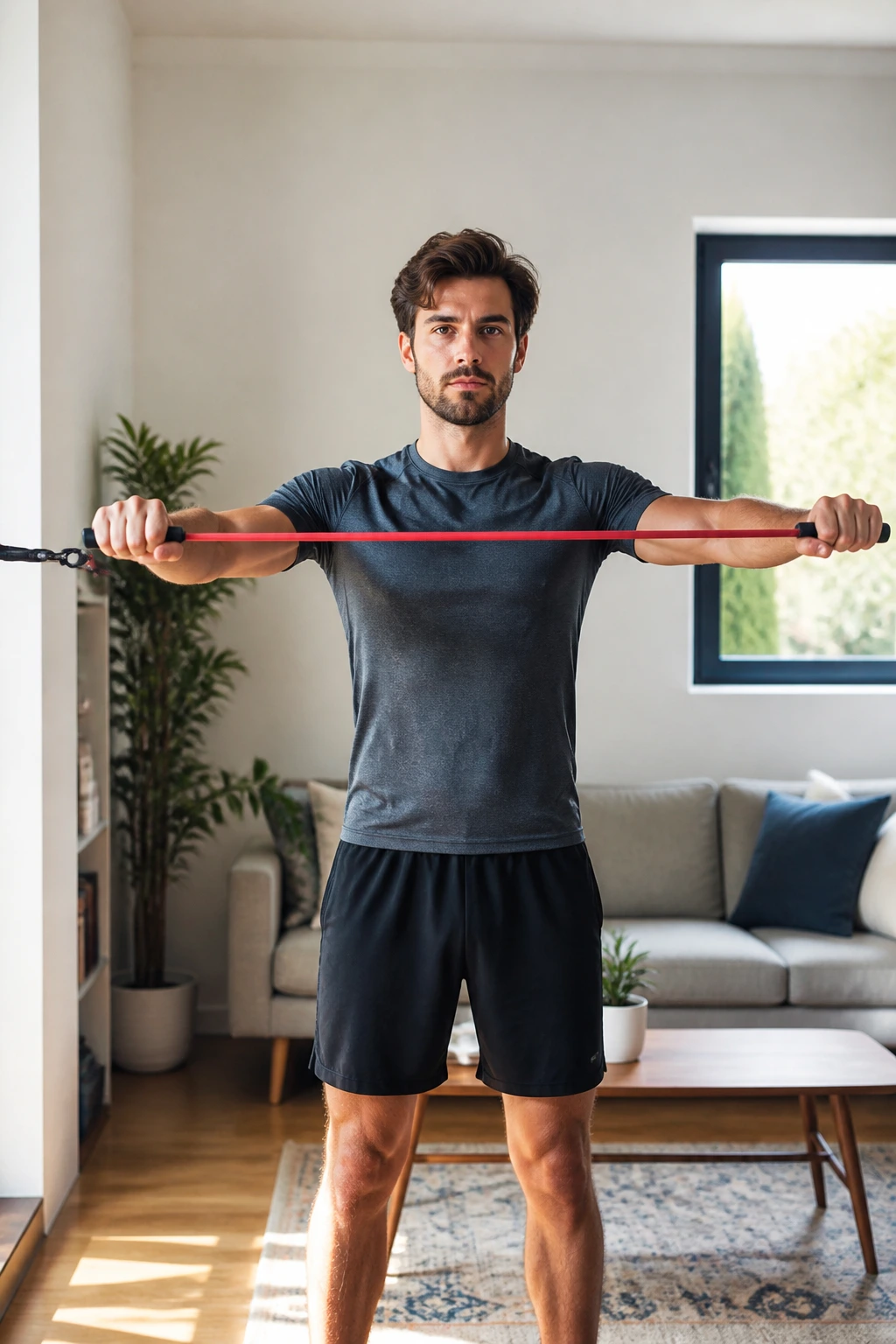
Bands look harmless until you use them correctly. Then your upper back, rear delts, and arms start lighting up in a way that surprises people who think only heavy weights count.
Anchor the band in a door if it’s safe, or hold it under your feet for rows, curls, and presses. Work on band rows, face pulls, pull-aparts, biceps curls, and triceps pressdowns. Use 15 to 25 reps because bands usually shine in the higher range.
This is a good plan for men who sit a lot, press too much, or need more pulling volume without beating up the elbows. It also travels well. Roll a band into a jacket pocket and you’ve got a backup session anywhere.
Pull the band apart with control. If the band snaps back and you let it yank your shoulders forward, you’re just feeding bad habits.
12. Beginner Restart Plan for Busy Weeks
Some weeks are ugly. Sleep gets short. Work gets loud. Motivation gets stupid. A beginner restart plan is for those stretches, and it works because it lowers the barrier so much you can’t talk yourself out of it.
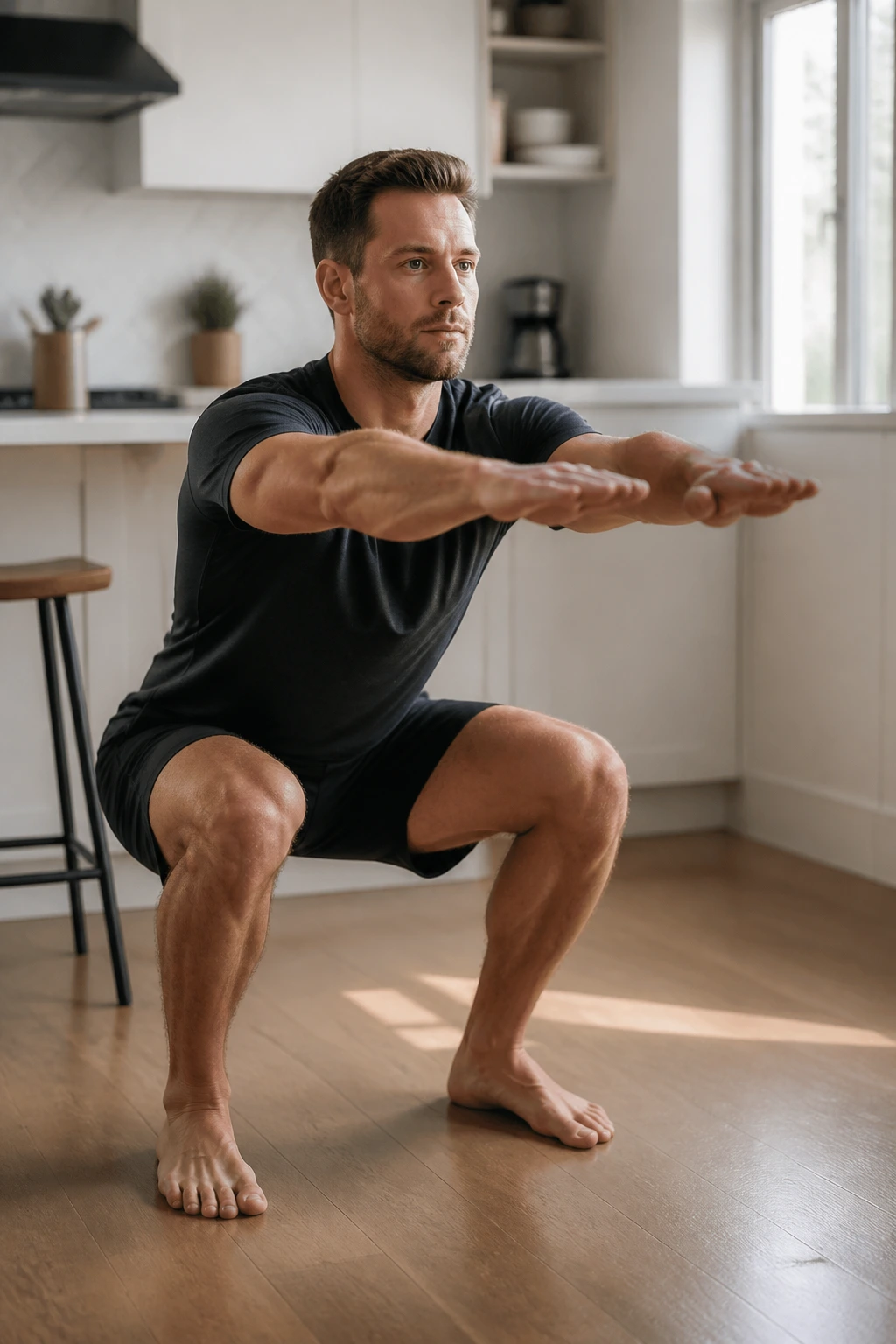
Use 3 exercises per session: squat, push, pull. Do 2 rounds only. That’s enough. Try air squats, incline push-ups against a counter, and band rows or backpack rows. Rest 60 seconds between moves and keep the whole session under 20 minutes.
The rules
- Stop each set with 2 reps left
- Keep the same three moves for 2 weeks
- Add 2 reps per set before adding more exercises
- Leave the room before the workout turns into a debate
This plan is not flashy. It is useful. There’s a difference.
13. Five-Move Density Block

A density block means you do a fixed amount of work in a fixed amount of time, then try to do a little more next time. It feels clean, and clean plans are easier to stick with.
Pick 5 moves: push-ups, goblet squats, rows, reverse lunges, and planks. Set a timer for 20 minutes. Cycle through the list with 30 seconds of work and 15 seconds of rest. Your goal is more total rounds next time, not chaos on the first round.
Why it suits home training
You don’t need a lot of equipment. You do need a clock, a little grit, and the willingness to keep moving even when the novelty wears off. That’s where most good home plans live anyway.
If the pace gets too spicy, trim the rest down to the last two rounds only. That keeps the session tough without turning it into a mess.
14. Athletic Power and Speed Session

Need to feel athletic without wrecking your joints? Keep the reps low and the rest long. Power work is about quality, not smoke.
Use jump squats, skater hops, explosive push-ups, split squat jumps, and short sprint drills in place if you don’t have room outside. Do 3 to 5 reps per set for explosive moves and rest 60 to 90 seconds. If the landings get loud or sloppy, you’re done for the day.
The goal is fast force, not fatigue. That’s the mistake people make. They turn a power session into a cardio contest, and the whole thing loses its point.
Keep the floor clear. Land softly. Reset fully between sets. That’s where the benefit lives.
15. Mobility-Strength Combo for Tight Hips
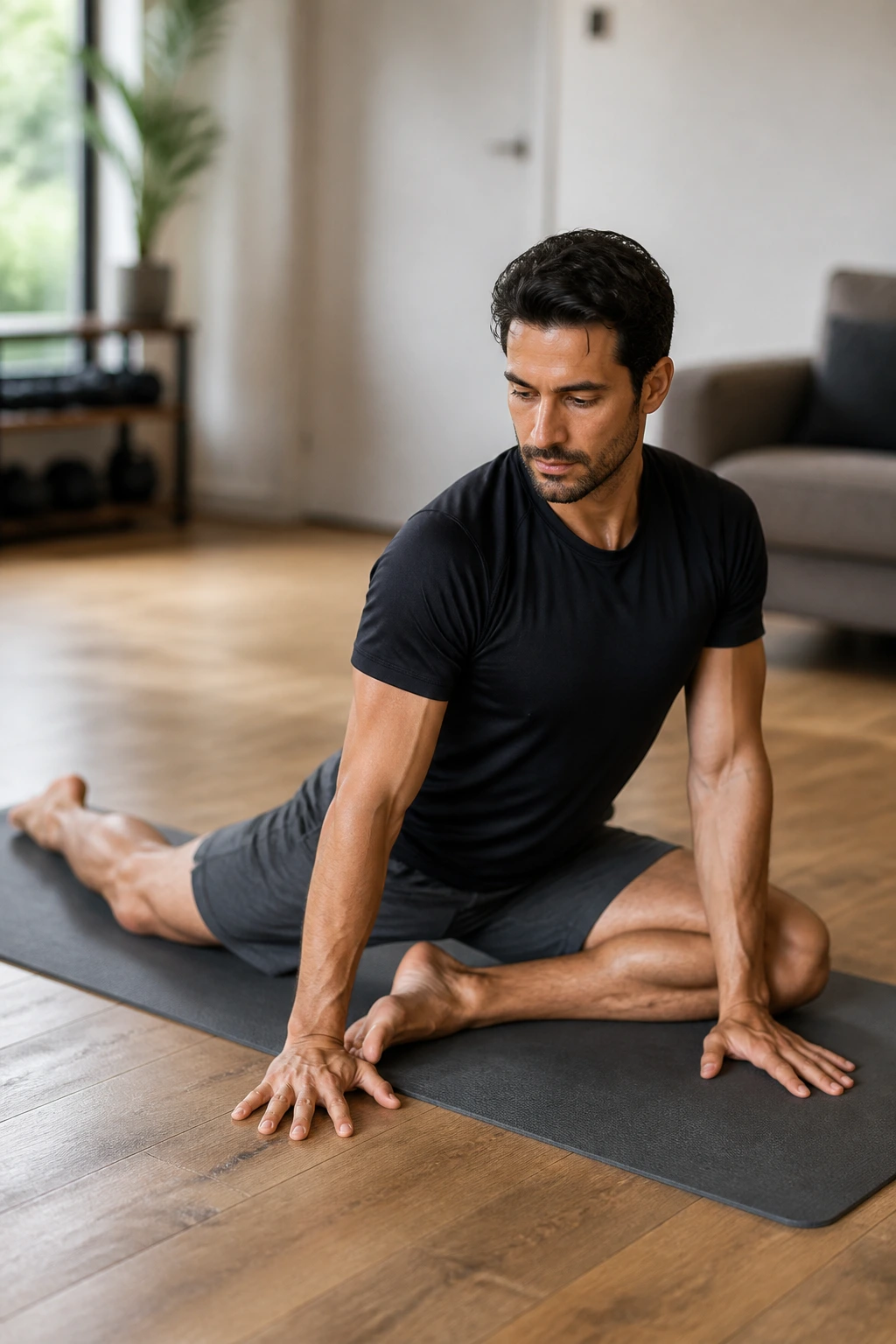
When hips get stiff, everything else starts arguing back. Lower back. Knees. Even your stride when you walk upstairs. A mobility-strength combo lets you train and open things up at the same time.
Start with 90/90 switches, world’s-greatest-stretch style lunges, bodyweight squats held at the bottom for 20 to 30 seconds, and Cossack squats. Then add glute bridges and dead bugs so the hips don’t just feel loose for five minutes and tighten right back up.
This is a good off-day session, but it can also serve as a warm-up before a bigger leg workout. Keep the breathing slow. That matters. Tight hips often come with a tight rib cage and a rushed pace.
You should finish feeling taller, not fried.
16. Four-Day Home Split for Muscle Gain

A four-day split gives you room to push hard without turning every session into a marathon. Upper body, lower body, upper body, lower body. Done.
On upper days, use presses, rows, curls, and triceps work. On lower days, use squats, hinges, lunges, and calves. Aim for 3 to 4 exercises per session, with 3 to 5 sets each. Reps can sit anywhere from 6 to 15, depending on the move and the load.
A simple week
- Day 1: Upper push and pull
- Day 2: Lower strength
- Day 3: Rest or mobility
- Day 4: Upper volume
- Day 5: Lower volume
- Weekend: Rest or light conditioning
This split works because it gives each muscle group enough attention without crowding recovery. If you train hard, eat enough protein, and sleep like a grown man, the plan has room to work.
17. Five-Day Home Split for Hardgainers

Five days sounds like a lot until you see how short the sessions can be. For a hardgainer — someone who struggles to eat enough, recover enough, or stay consistent — the structure can help more than the volume.
Use one day each for chest and triceps, back and biceps, legs, shoulders, and a final pump or conditioning day. Keep the first four days focused and the last day lighter. That final day can be core work, carries, band work, or a brisk circuit.
The catch is recovery. If sleep is poor and meals are random, this split can turn into junk volume fast. So keep the sessions to 30 to 45 minutes and avoid trying to destroy yourself every day.
A good five-day split is controlled. It is not a dare.
18. Time-Crunched Lunch-Break Routine

Short on time? Good. That usually means fewer excuses and less wandering around the room looking for the right playlist. A lunch-break routine should be brutally simple.
Pick 3 exercises and use 10 to 12 minutes total. One round might be push-ups, split squats, and backpack rows. Another could be squat thrusts, plank shoulder taps, and glute bridges. Move fast, but keep the reps crisp.
A useful format is as many quality rounds as possible in the time limit. Track the number of rounds, then try to beat it by one rep or one extra round next time. That tiny target keeps the plan alive.
This is a maintenance plan, a fat-loss assist, and a sanity break all at once. No drama. Just work.
19. Joint-Friendly Plan for Knees and Back
Hard doesn’t have to mean painful. In fact, if your knees and lower back are already annoyed, “harder” is the wrong word to chase. Better is cleaner, more controlled, and less stupid.
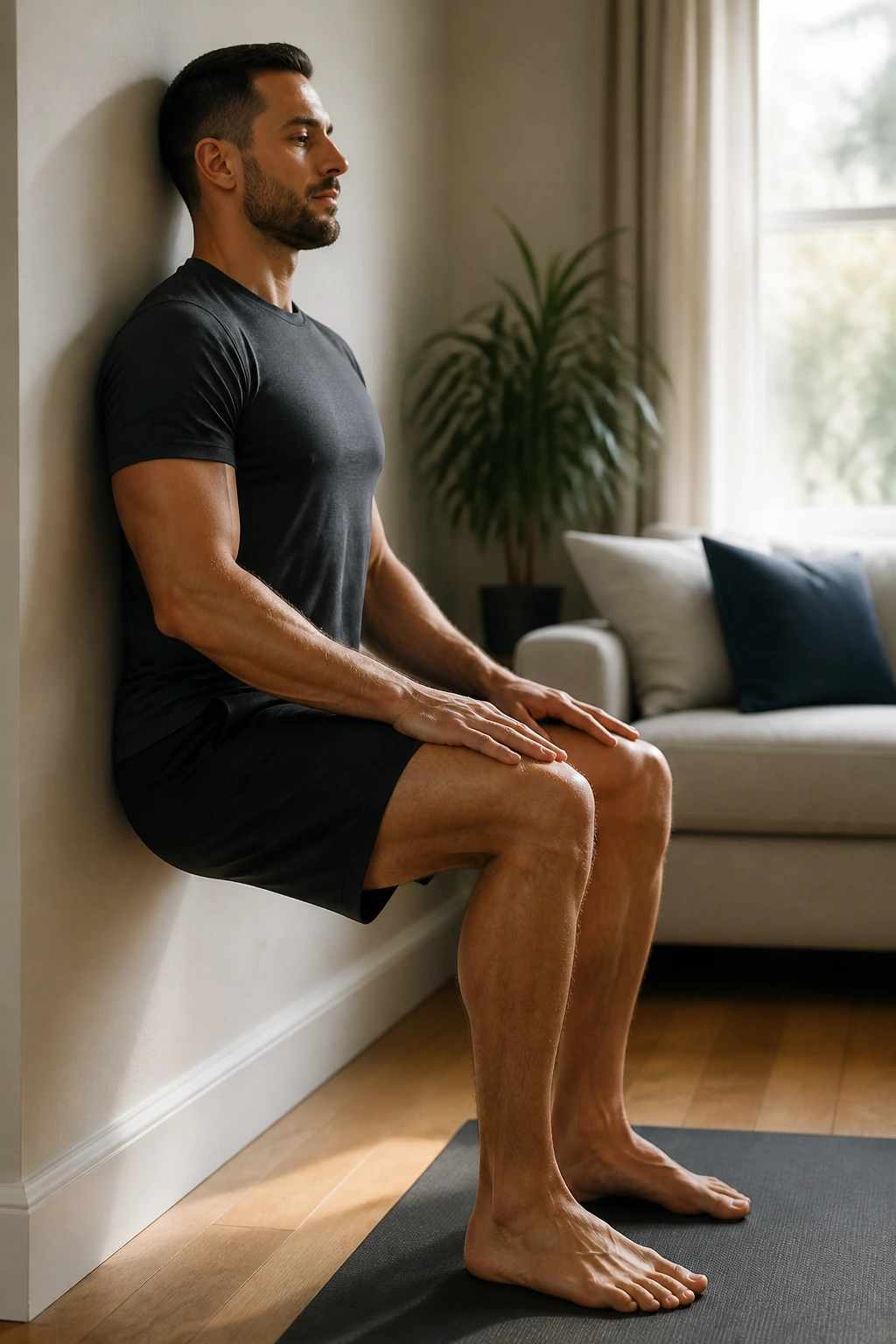
Use step-ups, glute bridges, wall sits, bird dogs, incline push-ups, and band rows. Avoid sloppy jumping and deep fatigue when your form is already shaky. Keep the tempo slow, especially on the lowering phase of each rep.
A useful pattern is 2 to 4 sets of 10 to 15 reps for most moves, plus 20 to 40 seconds on wall sits or planks. You should feel the muscles work without feeling like the joints are taking a beating.
If a move hurts in a sharp way, skip it. That’s not being soft. That’s being sensible.
20. Pump Day With High Reps and Short Rest

A pump day at home is more useful than people think. High reps, short rest, and a bit of burn can do a lot for chest, shoulders, arms, and back when you don’t have heavy weights around.
Use lighter dumbbells or bands and stay in the 15 to 25 rep zone. Pair exercises like lateral raises with push-ups, curls with triceps extensions, and rows with rear-delt flys. Rest only 20 to 30 seconds between moves.
How to make light weights matter
- Slow the negative to 3 seconds
- Hold the top for 1 second
- Keep the range of motion full
- Stop one rep before form gets messy
This style is not a substitute for all strength work, but it fills a real gap. It gives the muscles a reason to stay awake.
21. Single-Leg Balance and Stability Plan
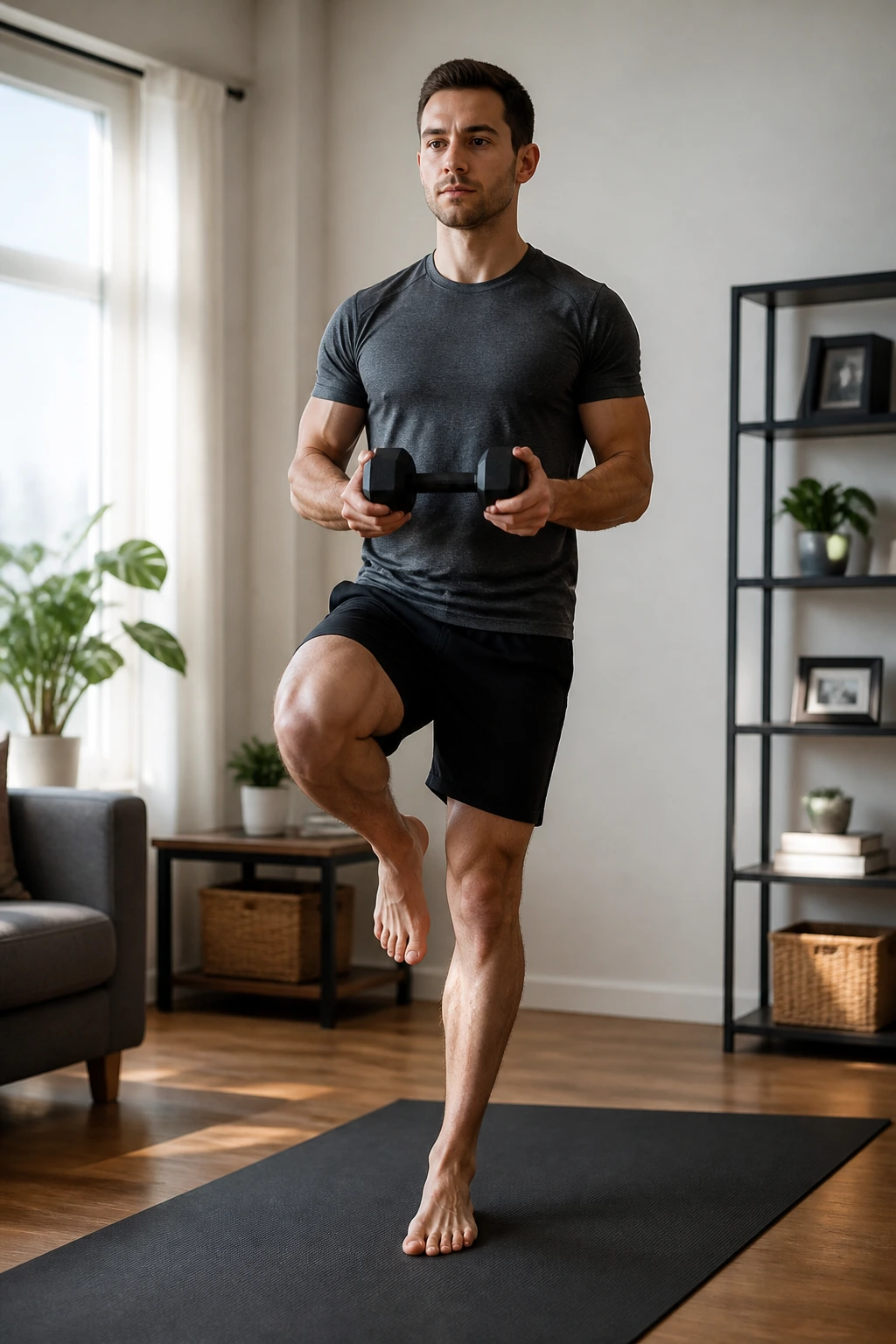
Single-leg work tells the truth. Both sides of the body get a turn, and the weak side stops hiding so easily. That is useful if one knee feels off or one hip always seems to do more of the work.
Choose split squats, single-leg Romanian deadlifts, lateral lunges, calf raises, and suitcase carries. Start with bodyweight, then add a dumbbell or backpack once the balance looks steady. Use 8 to 12 reps per side and move slowly enough that you can control the wobble.
This plan builds legs and balance at the same time. It also tends to clean up the little side-to-side issues people ignore until they turn into bigger problems.
Wobbling is normal. Falling over is not the goal. Control the knee, keep the foot planted, and let the set teach you something.
22. Pull-Up Bar Substitute Plan
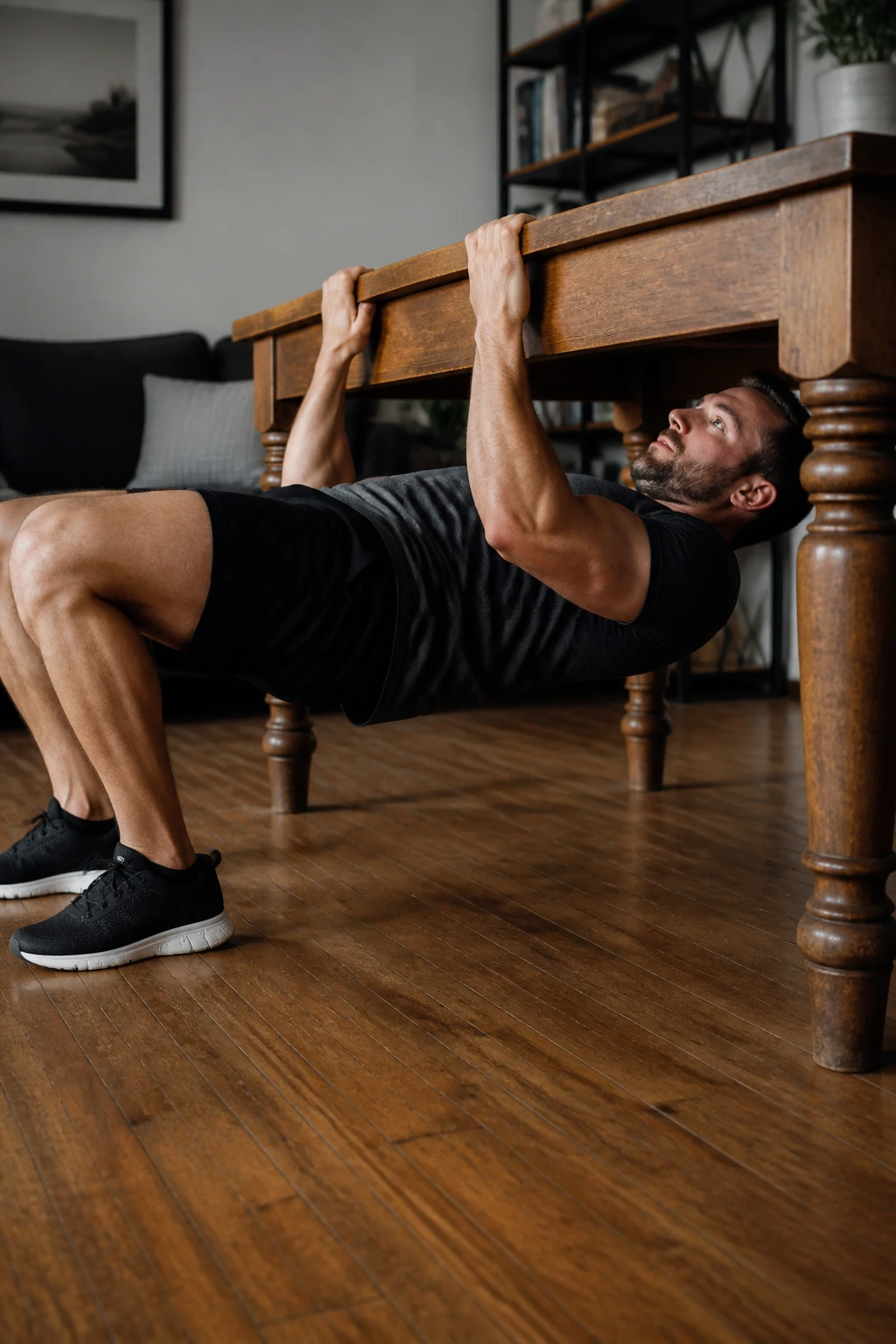
No pull-up bar? Fine. You can still train the back properly. It just takes a bit more intent.
Use inverted rows under a sturdy table if the setup is safe, band lat pulldowns from a high anchor, backpack pullover work on the floor, and Y-T-W raises for the upper back. Add curls if you want more arm work. The main thing is to create a real pulling angle, not just flap your elbows around.
Unlike a bar-only plan, this one lets you build the muscles that help you eventually earn pull-ups later. That’s the smart order. You train the pattern, then the bar feels less impossible.
Stick with 3 to 4 sets of 8 to 15 reps. If your home setup is shaky, stay with bands and floor work. A broken table row is a bad trade.
23. Stair Intervals and Calisthenics Combo

Stairs are free, and they’re nastier than they look. A short stair block can spike your heart rate fast, then let you come back down and hit bodyweight moves with a decent amount of fire left.
Try 20 to 30 seconds of stair climbs, then 10 to 15 push-ups, 15 squats, and a 20-second plank. Repeat for 4 to 6 rounds. If you have a railing, use it. If the steps are narrow or slippery, slow down.
The combo works because it mixes conditioning with muscle work. You’re not just panting up a staircase. You’re training the upper body and core while your legs are already talking back.
Keep your foot placement clean. Bad stair work gets ugly fast.
24. Weekend Warrior Two-Day Plan

Not everyone can train five days a week. Some guys have long workdays, family commitments, and a brain that wants one thing after dinner: a chair. A two-day plan can still do real work.
Use one day for full-body strength and the other for conditioning and mobility. On strength day, hit squat, hinge, push, pull, and carry patterns. On conditioning day, run a circuit with bodyweight moves, core work, and a short stair or jump rope block if you’ve got space.
A practical weekend setup
- Day 1: 4 big lifts, 3 sets each
- Day 2: 15-minute circuit plus mobility
- Optional: 20-minute walk on a third day
The upside is obvious: the plan is hard to dodge because it only asks for two solid sessions. The catch is also obvious. If you miss both days, the whole week vanishes. So keep the sessions short and non-negotiable.
25. Consistency Plan for Long-Term Progress

The most useful plan is the one you can repeat when life gets boring. Not exciting. Repeatable. That’s the real test. A consistency plan usually means a simple three-day full-body schedule, a logbook, and a few small targets that keep you honest.
Use the same core movements for 4 to 6 weeks: squat, hinge, press, row, carry, core. Add 1 rep, 1 set, or a little more load when the reps stop feeling challenging. Every fourth or fifth week, pull back a little if fatigue starts to pile up.
The goal is not to chase a new workout every Monday. The goal is to make the old workout stronger. That mindset saves a lot of time and a lot of nonsense.
If you want a plan that survives busy weeks, this is the one. Plain. Sturdy. Worth repeating.
The Bottom Line
The best home plan is the one you can actually do with the space and tools you have. A backpack, a couple of dumbbells, a band, or nothing at all can still carry a serious amount of training if the work is organized.
Pick one plan that fits your week, write down the reps, and make the next session a little harder. That’s the part people skip, then wonder why nothing changes. Boring progress is still progress.
If you want, I can also turn these into a 7-day home workout schedule, a beginner version, or a muscle-gain version with dumbbells only.
