



Some of the safest workouts while pregnant look almost too plain to matter. A brisk walk, a pool lane, a chair, a light band, a slow set of squats — none of it looks flashy, and that is part of the appeal.
Boring works.
For most uncomplicated pregnancies, a common target is about 150 minutes of moderate activity a week, spread across the days in a way that feels steady instead of punishing. The old trick I trust most is the talk test: you should be able to speak in full sentences, even if you would rather not sing.
Pregnancy is not the time for proving anything. Some days your lower back will complain, some days your pelvis will feel loose, and some days the only sensible workout is a ten-minute walk and a few deep breaths. That still counts. The trick is choosing movements that support your body instead of rattling it, and the first one is as humble as it gets.
1. Brisk Walking on Flat Ground
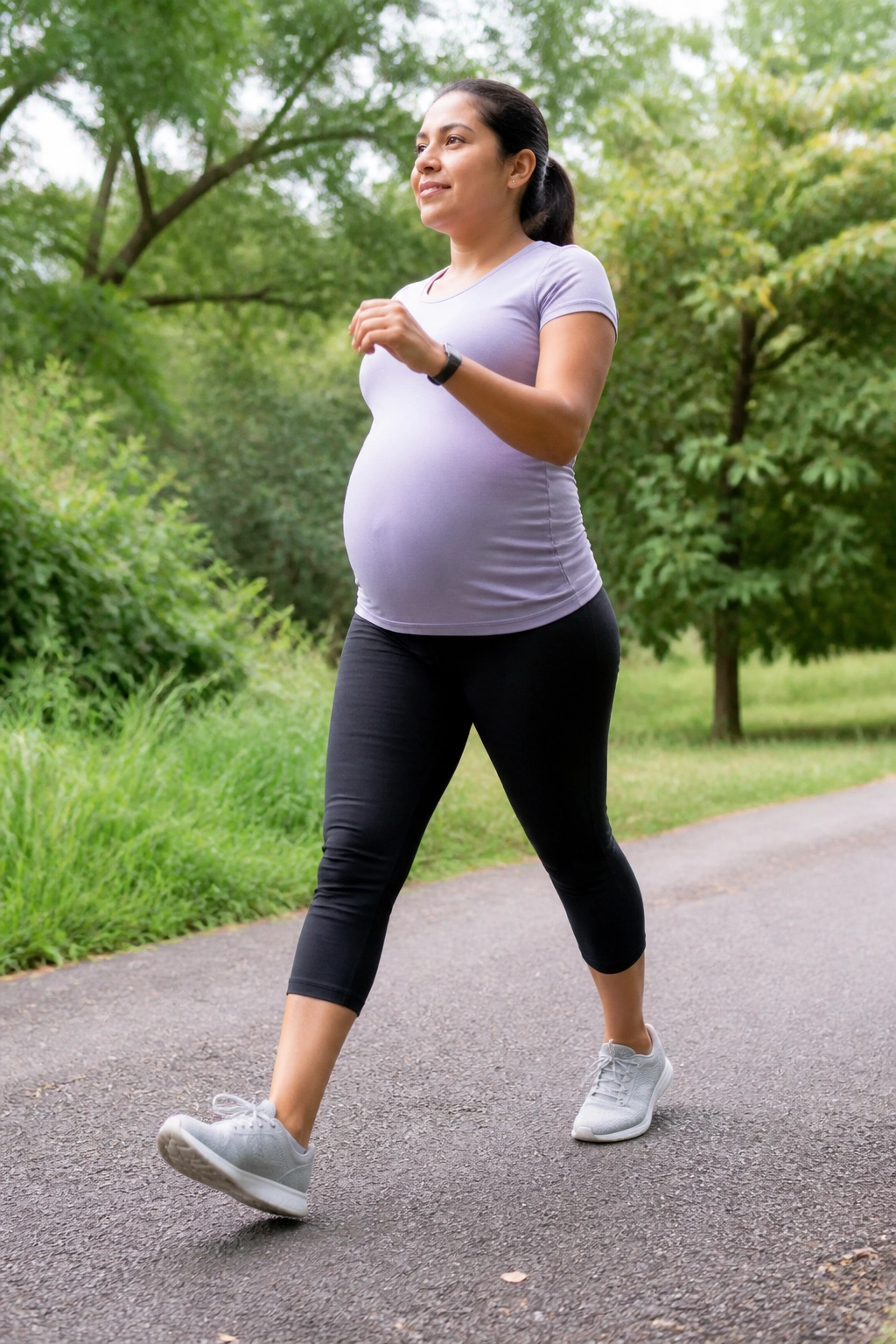
Walking earns its reputation because it is easy to scale. You can do ten minutes after breakfast, fifteen minutes after dinner, or one longer loop when your energy is decent, and it still counts as real exercise.
What makes it pregnancy-friendly is the low impact. Your joints are not taking a pounding, your balance demands are modest, and you can slow down in one second if you feel off. The main mistake people make is turning “brisk” into “race walk with bad posture.” Don’t do that.
How brisk should it feel?
A good pace leaves you breathing a little harder than usual, but not gasping. Your shoulders stay loose, your stride stays natural, and your belly is not getting yanked forward by overstriding. If you can talk in short sentences without panting, you’re in the right zone.
- Keep the route flat when possible.
- Wear shoes with a stable heel and enough room in the toe box.
- Carry water if the walk goes past 20 minutes.
- Shorten your stride if your pelvis feels wobbly.
Best use: a daily baseline workout, a mood reset, or a low-energy day when you still want to move.
Brisk walking is also one of the easiest ways to notice what your body is saying. If your pelvic floor starts feeling heavy, or your lower belly tightens in a strange way, you can cut the walk short without losing the whole session. That flexibility matters more than people think.
2. Stationary Cycling
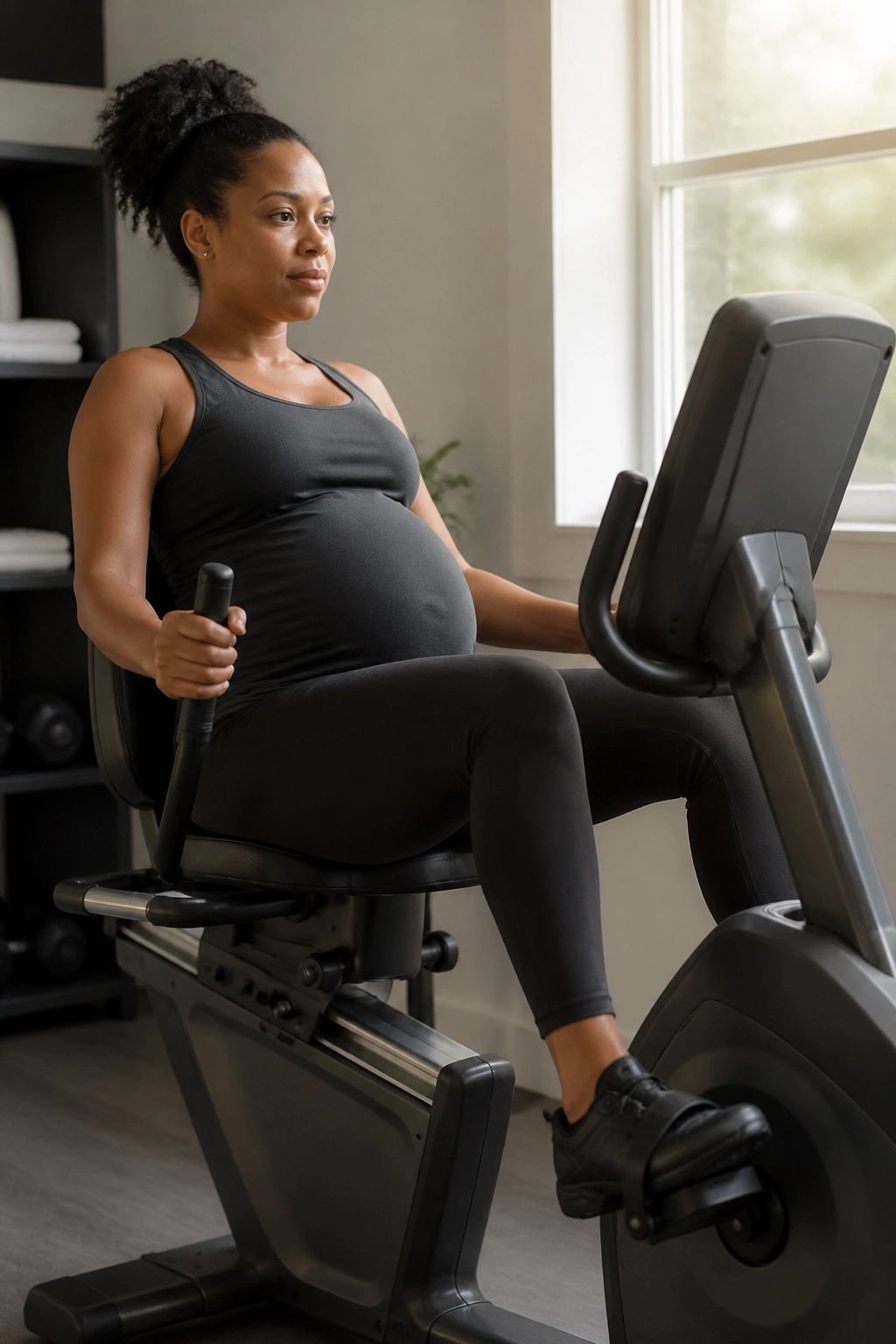
A stationary bike is one of the cleanest pregnancy cardio choices because it gives you movement without much impact. No traffic, no potholes, no sudden balance problem when a dog crosses the sidewalk.
I prefer a recumbent bike for anyone who feels lower-back pressure or gets tired sitting upright for long stretches. A regular upright bike can still work, but the recumbent seat often feels kinder when your center of gravity starts changing. Keep the resistance moderate and the pace smooth. You are looking for steady legs, not a burn that makes you clench your jaw.
A good ride usually lives in the 10-30 minute range, depending on how you feel that day. If your knees track comfortably and your hips do not ache afterward, you’ve probably found a useful setting. If your torso feels scrunched, raise the handlebars or switch to the recumbent version.
One small thing people miss: saddle height matters. If the seat is too low, your knees jam up fast and your hips may feel cranky later. Set it so your knee has a soft bend at the bottom of the pedal stroke, not a deep fold.
3. Swimming Laps or Pool Walking
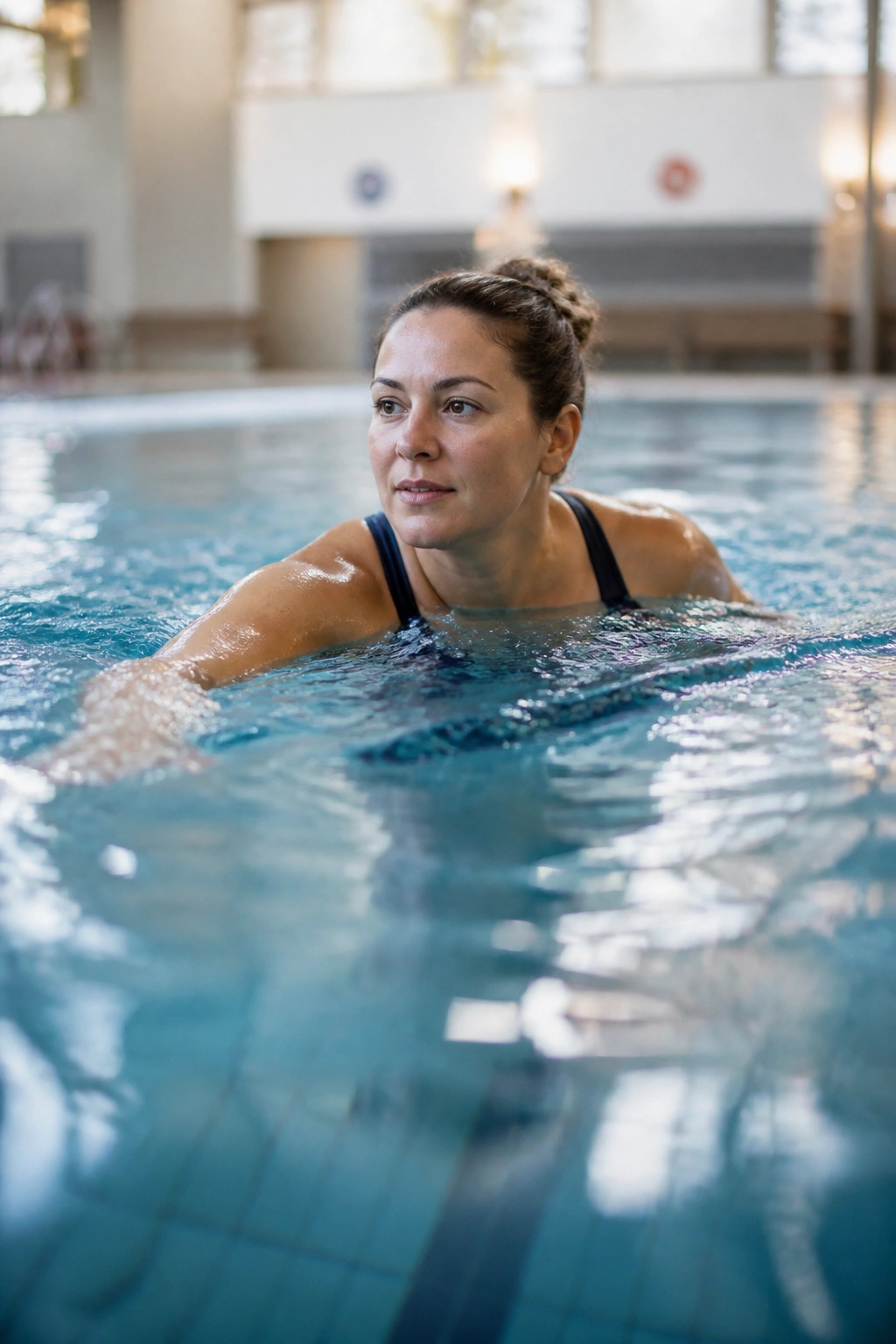
Why does water feel so good? Because it takes weight off everything. Your joints get a break, your belly feels less heavy, and the water keeps you from overheating the way land workouts sometimes can.
Swimming is not only for strong lap swimmers. Pool walking, gentle flutter kicks at the wall, and easy back-and-forth laps all count. The pool is one of the few places where a pregnant body can feel a little lighter for a while, and that is worth protecting.
How to keep it easy and useful
Do not turn the session into a race. A relaxed pace, a few lengths with rest between them, and plenty of hydration are enough. Freestyle and backstroke are both common choices, but if a stroke bothers your neck, shoulders, or lower back, drop it.
- Choose a warm-but-not-hot pool.
- Keep the session around 20-30 minutes if you’re just starting.
- Rest at the wall before you feel wiped out.
- Use a kickboard only if it feels comfortable on your low back.
If a swim leaves you feeling wrung out, the pace was wrong. Water work should feel freeing, not like punishment in a blue room.
4. Prenatal Yoga
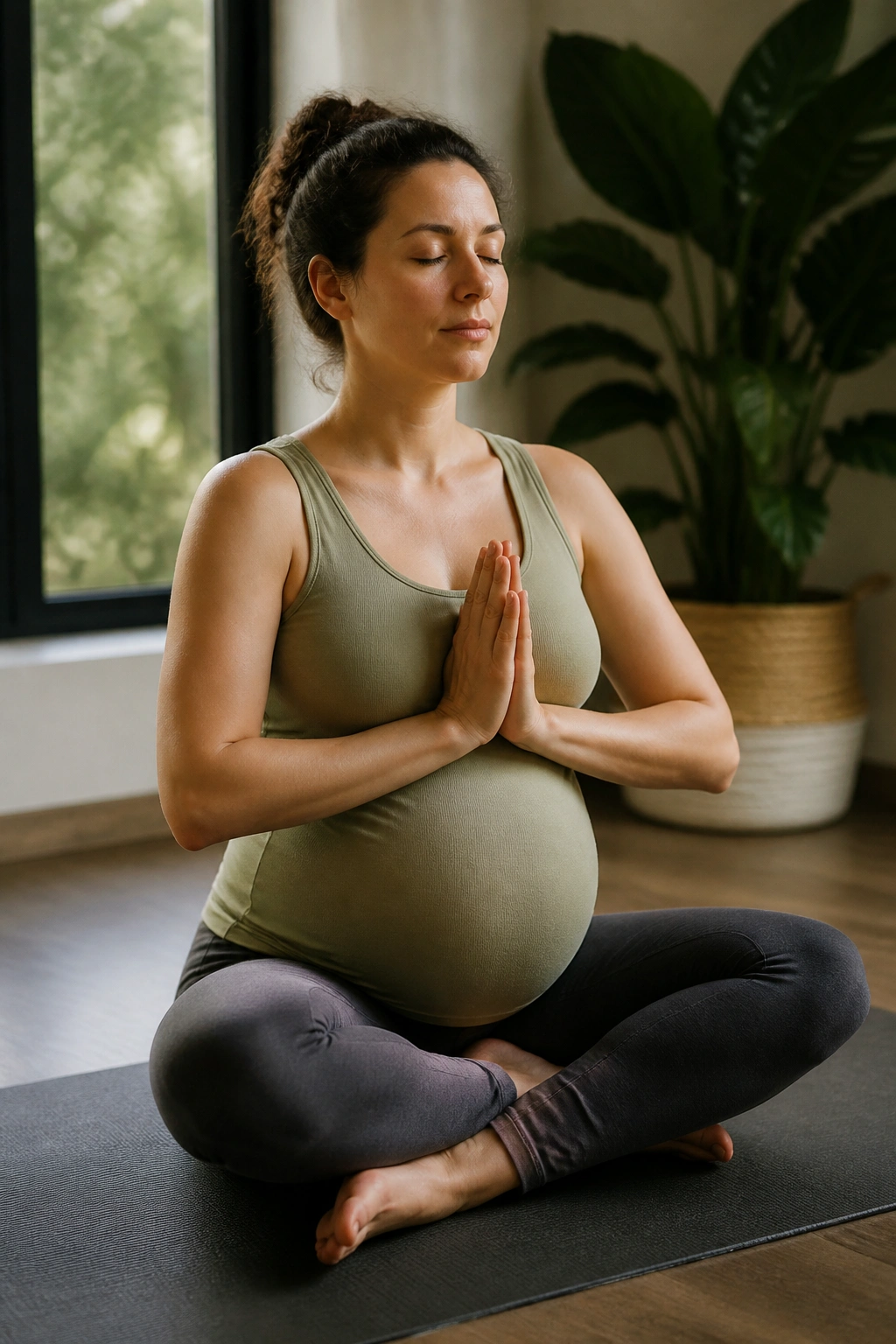
A good prenatal yoga class feels like space opening up in your ribs and hips. A bad one tries to turn pregnancy into a flexibility contest, which is a waste of everybody’s time.
Prenatal yoga works because it slows you down on purpose. That gives you time to breathe, notice tight spots, and shift out of positions that feel sketchy. Gentle standing poses, supported side stretches, hip openers, and calm breathing can all help without making your joints feel like they’re on loan.
What to change
Skip hot yoga. Also skip deep twists, long holds on your back if they make you dizzy, and anything that asks for balance tricks you don’t trust anymore. A wider stance, a block under the hand, and a chair nearby can turn a shaky pose into a useful one.
The best classes use clear, unshowy modifications. You should hear cues like “bend the knees,” “spread your feet,” and “come out if it feels compressed.” That’s the voice you want.
Yoga is one of the few workouts that can leave you calmer and looser without asking for much energy. That makes it valuable on days when your body feels a little noisy.
5. Modified Pilates
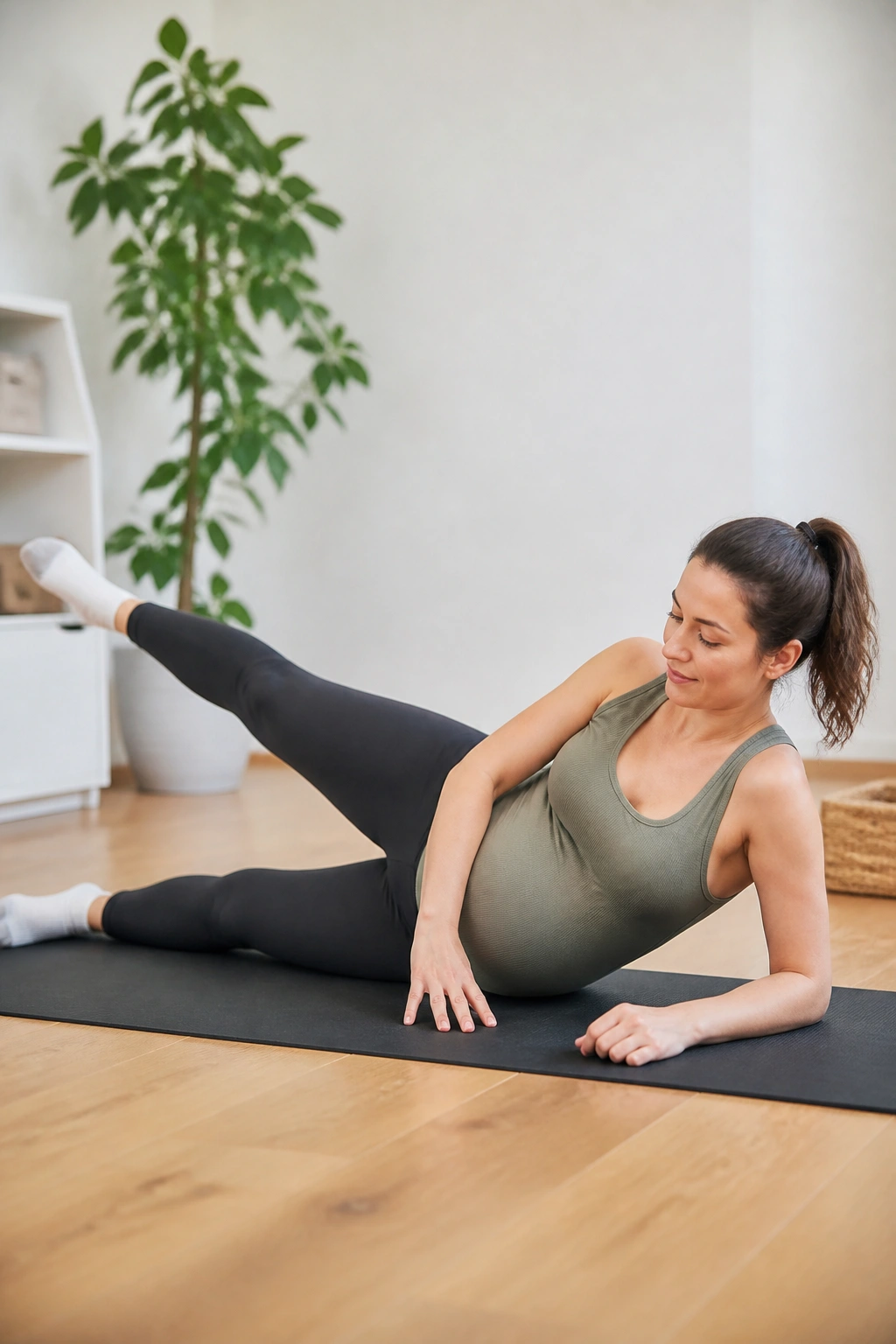
Pilates is at its best when you stop trying to make it look hard. The whole point is control, not drama.
Modified Pilates can be excellent in pregnancy because it trains posture, breathing, and deep support muscles without a lot of impact. The catch is that not every classic Pilates move belongs here. Crunch-heavy sequences, aggressive roll-ups, and long stretches flat on your back often stop feeling right as pregnancy advances. Side-lying, seated, kneeling, and standing variations usually make more sense.
What a smart session includes
- Side-lying leg work for hips and glutes.
- Seated or kneeling arm work with light resistance.
- Gentle pelvic tilts and breath-led core engagement.
- Short sets with slow control, not fast reps.
If a reformer class is available, tell the teacher you want prenatal-safe modifications. They should know how to keep the spring load modest and the transitions slow. A good session leaves you feeling organized through your trunk, not twisted up.
The main warning here is simple: if your abs bulge into a cone shape during a move, back off and change the angle. That little ridge is your body telling you the pressure is too much for that drill.
6. Bodyweight Squats and Sit-to-Stands
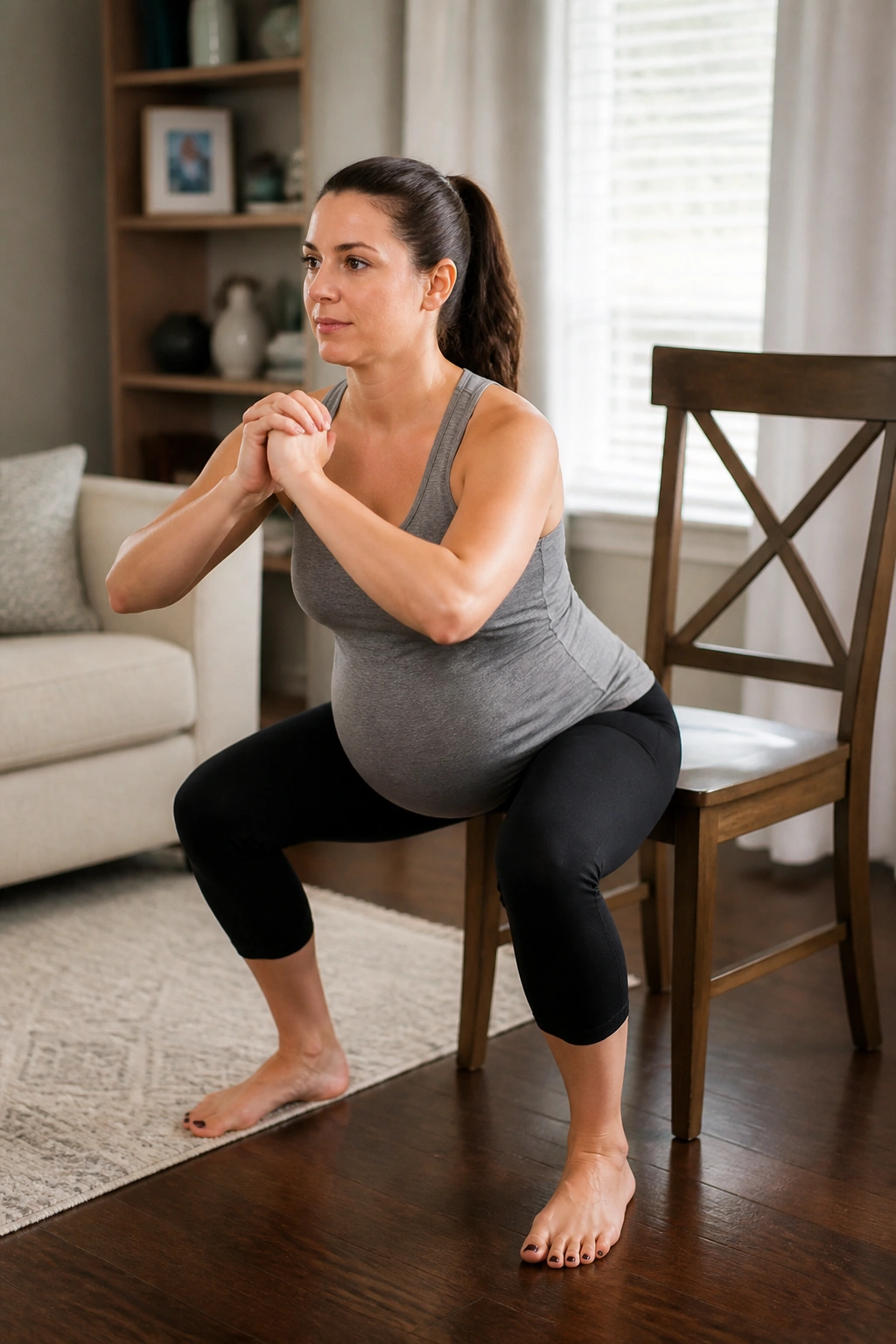
Why keep squatting during pregnancy? Because squats show up in daily life all the time. Getting out of a chair, picking something up, standing from the floor — it is the same movement pattern with different furniture.
Bodyweight squats are useful because they keep your legs strong without loading your spine much. Sit-to-stands from a sturdy chair are even more beginner-friendly and often feel better when your balance is changing. Use a chair with a stable seat, feet about hip-width apart, and an exhale as you stand.
A simple way to do them well
Start with 2 sets of 8 to 12 reps. Lower only as far as you can keep your heels down and your chest open, then stand by pushing through the whole foot. If your knees drift inward, slow down and shorten the range.
A wall or countertop nearby helps if you feel wobbly. So does a slightly wider stance.
What I like about squats is that they make you honest. If your hips are stiff, you feel it. If you’re breathless, you know it. If the floor is too low, the chair tells you immediately.
7. Wall Push-Ups and Incline Upper-Body Work
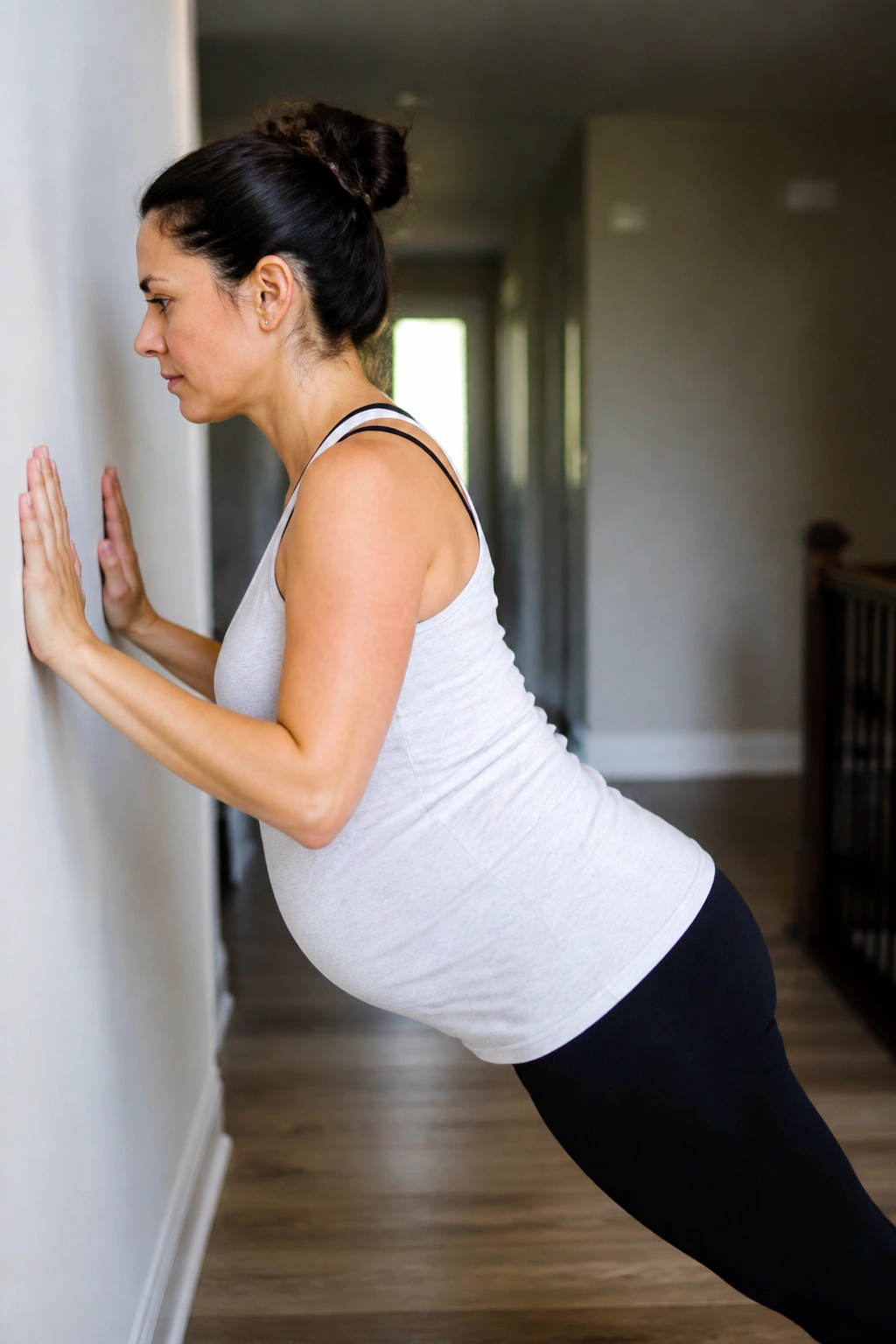
If floor push-ups feel awkward, heavy, or too demanding on your wrists, move them to a wall. That single change makes the exercise friendlier without turning it into fluff.
Wall push-ups train the chest, shoulders, triceps, and the front of the core in a way that is easy to control. Stand at arm’s length from a wall, place your hands at chest height, bend the elbows, and let your body angle toward the wall like one long line. Then press away.
A countertop or sturdy bench gives you a tougher version than the wall and still keeps the load manageable. The lower the surface, the harder the movement gets. That’s useful when you want progression without jumping straight into floor work.
Do not hold your breath on the way down. Exhale as you press, and keep your ribs from flaring up like a popped umbrella. If your lower back arches hard, step your feet a little farther back and lighten the angle.
This is one of those exercises that looks too easy until you do three clean sets. Then your arms start talking.
8. Resistance-Band Rows and Pulls
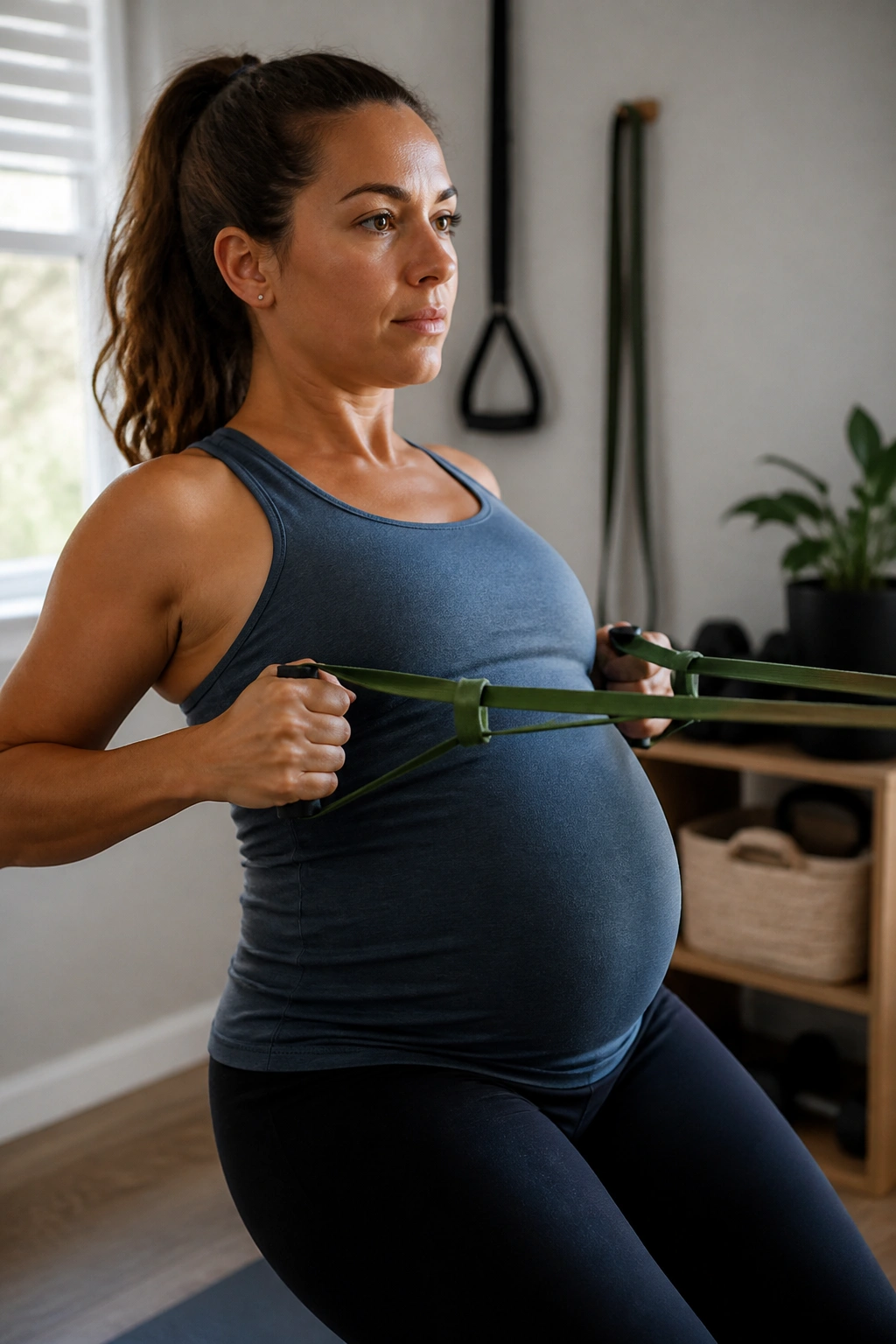
Upper-back work matters more than people expect during pregnancy. Your shoulders round forward, your rib cage shifts, and carrying a growing belly changes how you sit at a desk, in a car, or on the sofa for one more hour than you meant to.
Resistance bands are ideal here because they let you train without loading your joints with heavy weights. Band rows, pull-aparts, and face pulls help keep the upper back awake. They also make daily posture feel less tiring, which is a nicer win than any fancy fitness slogan.
How to set them up
Anchor the band at chest height if you’re doing rows. Stand or sit tall, pull the handles toward your ribs, pause for a second, then return with control. For pull-aparts, hold the band straight out in front of you and separate your hands until your shoulder blades come together lightly.
- Use a band that gives a challenge by the last 3 reps.
- Keep the neck long and the shoulders down.
- Move slowly enough to feel the back muscles doing the work.
- Stop if the anchor point is unstable or cheap-looking.
A cheap band can turn a good workout into a face-first accident, so check the material before you trust it. Serious point. Snapping bands are not charming.
9. Side-Lying Leg Lifts and Clamshells
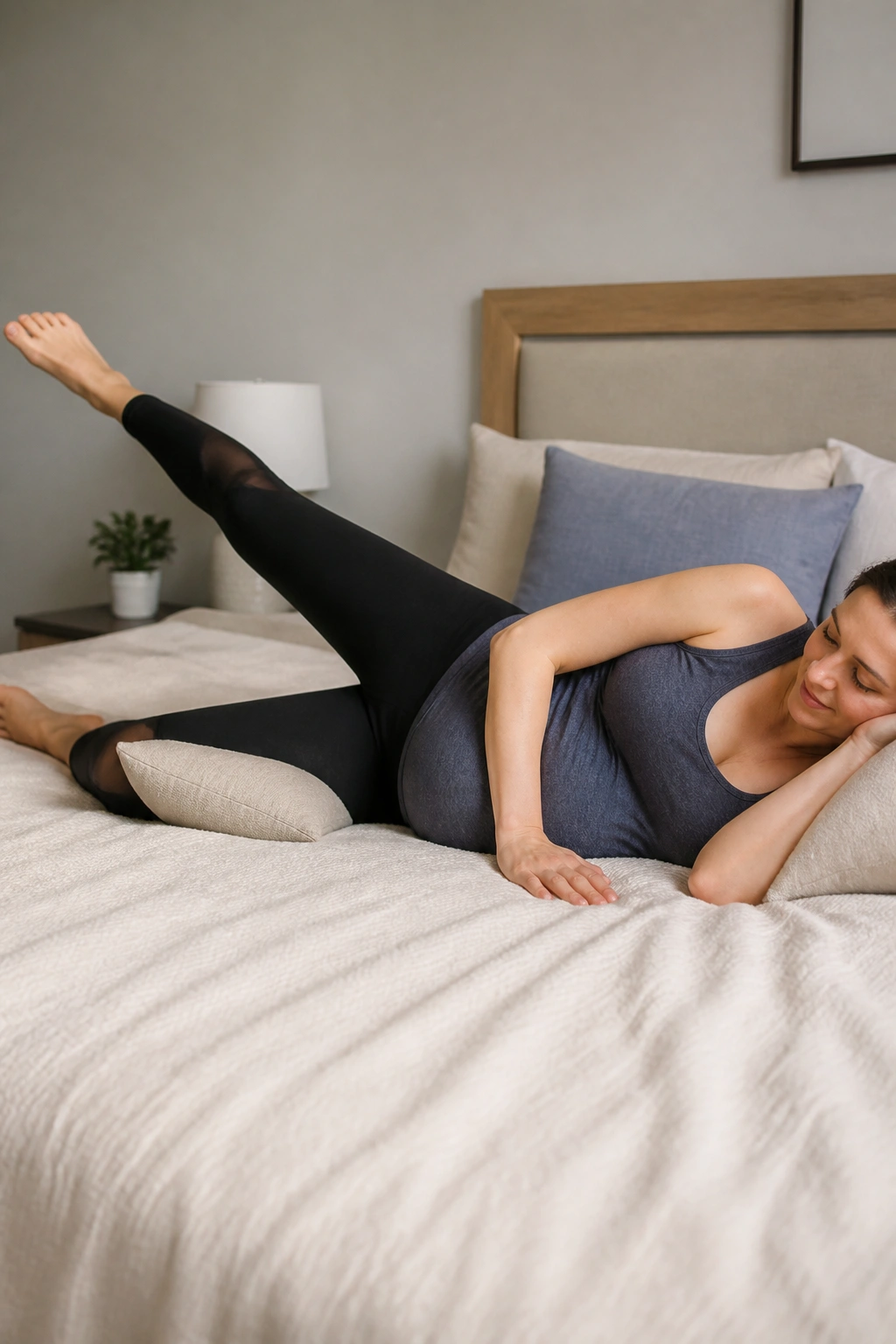
Side-lying work is underrated in pregnancy because it lets you train your hips without flattening your back or asking too much from your balance. It’s one of the quietest, most useful ways to keep your glutes awake.
Clamshells hit the side glutes and help with pelvic stability. Side leg lifts do something similar with a bit more range. Lie on your side, stack your hips, bend the knees a little if you’re doing clamshells, and move the top leg without rolling backward. Slow wins here.
A pillow under your head and another between your knees can make the whole thing feel a lot better. If your top hip keeps drifting behind you, you’re cheating. That usually means the band is too heavy or the range is too big.
These movements are not glamorous. They are the kind of small work that pays you back when you walk upstairs, turn in bed, or get out of the car without wincing.
10. Bird Dogs and Hands-and-Knees Core Work
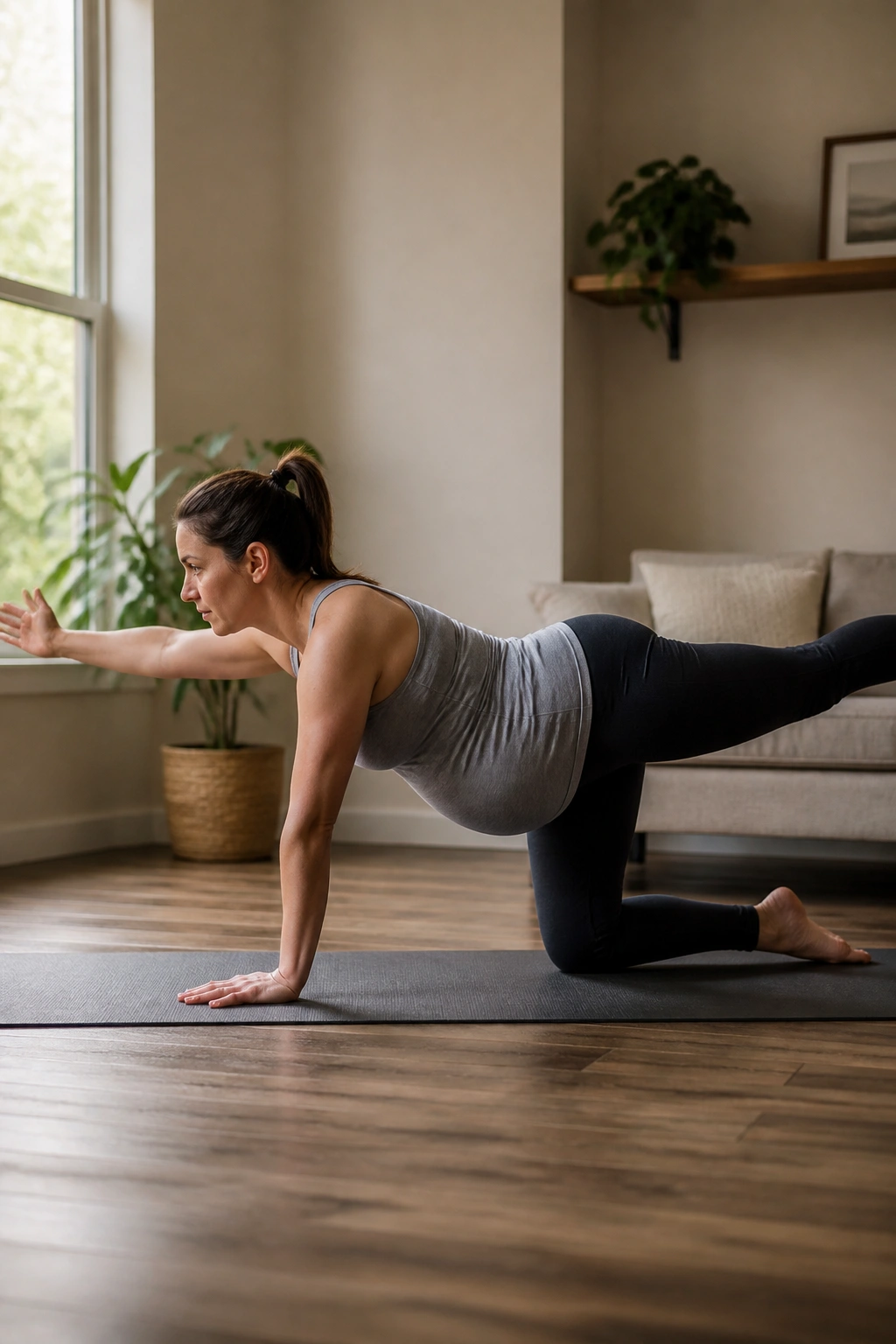
Can you still train your core while pregnant? Yes. You just need to stop thinking only in terms of crunches.
Bird dogs are a smart replacement because they challenge stability without crushing the belly. Start on hands and knees, extend one leg back and the opposite arm forward, and keep the hips level. Hold for a second or two, then switch sides. The movement is controlled, not flashy.
What good form feels like
Your spine should stay long, your ribs should stay quiet, and your lower back should not sag when you lift. If it does, reduce the range or only move the legs. A small motion done well beats a big wobbly one every time.
Some people also like cat-cow and simple hands-and-knees rocking between sets. That can be a nice way to loosen the back before or after the bird dogs. It’s not about making your core miserable. It’s about teaching your trunk to support load without bracing like a board.
If hands and knees bother your wrists, put your hands on dumbbells or fold a towel under the heels of the palms. Small fixes. Big difference.
11. Seated Strength Circuits with Dumbbells
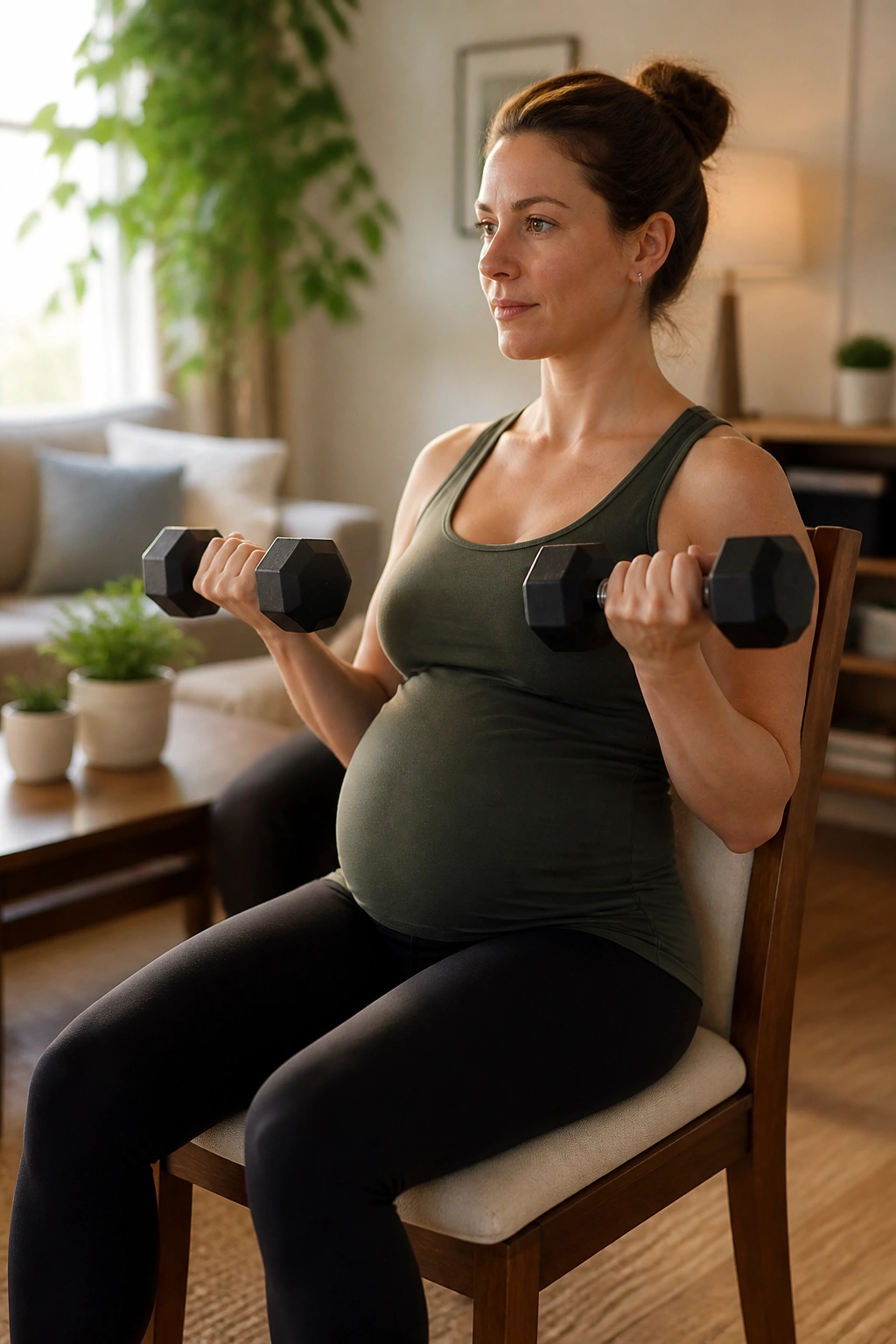
Seated training gets overlooked because it looks modest. It isn’t. Sometimes a chair is the smartest gym equipment in the room.
A seated circuit gives you stability, which matters when balance gets less predictable. You can train shoulders, arms, and upper back with light dumbbells while taking pressure off the feet and pelvis. For many pregnant exercisers, that means less fatigue and better form. A bench with back support works too, especially on days when standing feels like extra work.
Here’s the part people often miss: seated work should still be deliberate. Use slow curls, controlled shoulder presses, lateral raises with tiny weights, and seated rows if you have a band. Eight to twelve reps per move is plenty.
If you start holding your breath, the weights are too heavy. If your neck takes over, the shoulders are too heavy. If your torso starts rocking, the whole circuit needs to be lighter.
I like seated circuits for late-day training when energy is thin. You can do ten minutes and still feel like you kept the habit alive.
12. Step-Ups on a Low Platform
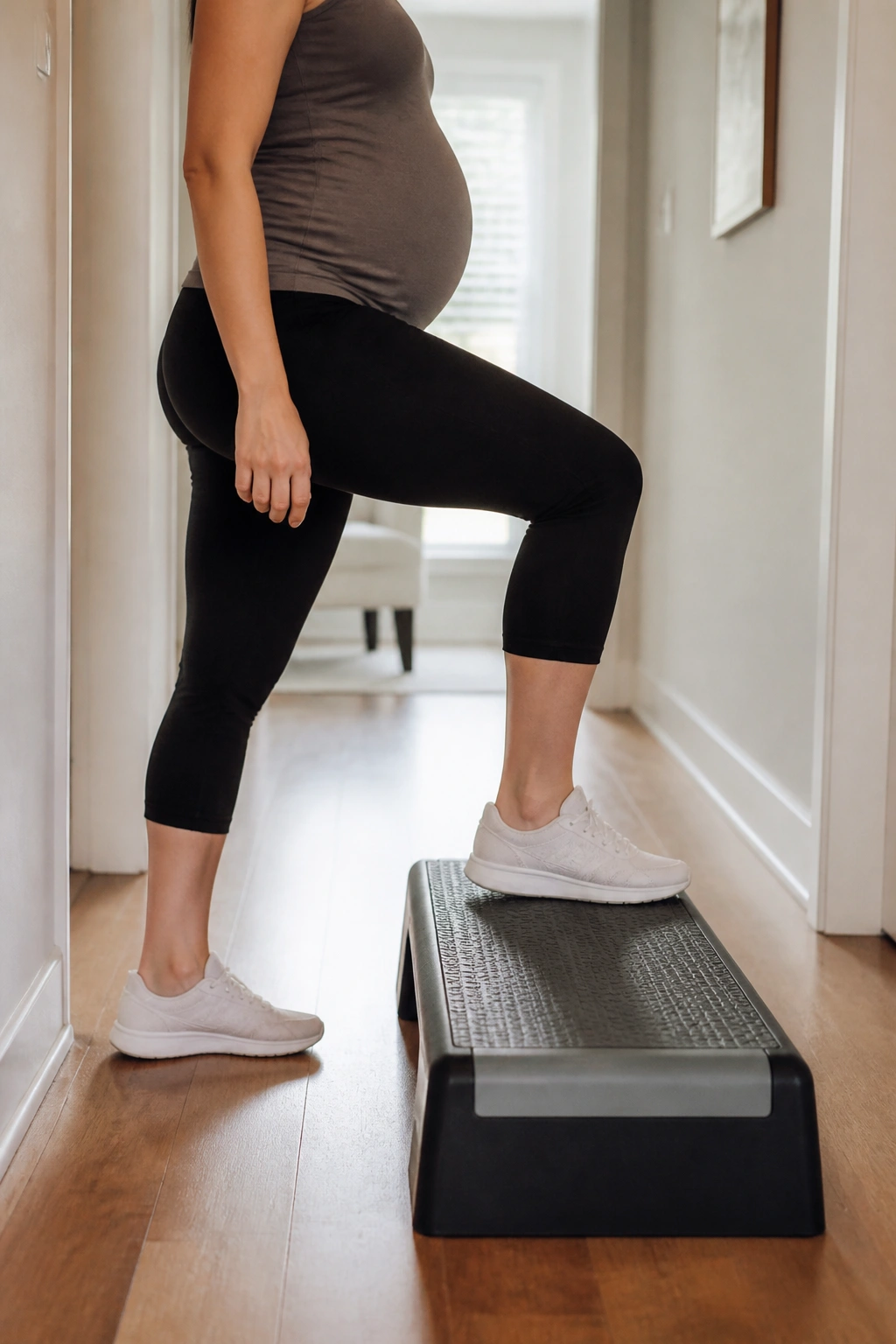
A six-inch step can make your legs work without asking for much impact. That’s the charm of step-ups.
The movement is simple: place one foot fully on the step, stand tall through that leg, then step back down with control. Keep the platform low enough that your hip doesn’t have to swing up awkwardly. A sturdy step, a low aerobic box, or the bottom stair often works fine. If you need a rail or wall for balance, use it.
The details that matter
- Keep your whole foot on the step.
- Push through the heel and midfoot, not just the toes.
- Lead with the same leg for several reps, then switch.
- Use 6 to 10 reps per side to start.
Step-ups are good for glutes, quads, and general leg strength, but they punish sloppy form fast. If your knee caves inward or you feel a jolt in the front of the joint, the step is too high or you’re moving too fast.
This one feels ordinary in the best possible way. You finish, you breathe a little harder, and you know your legs did actual work.
13. Water Aerobics
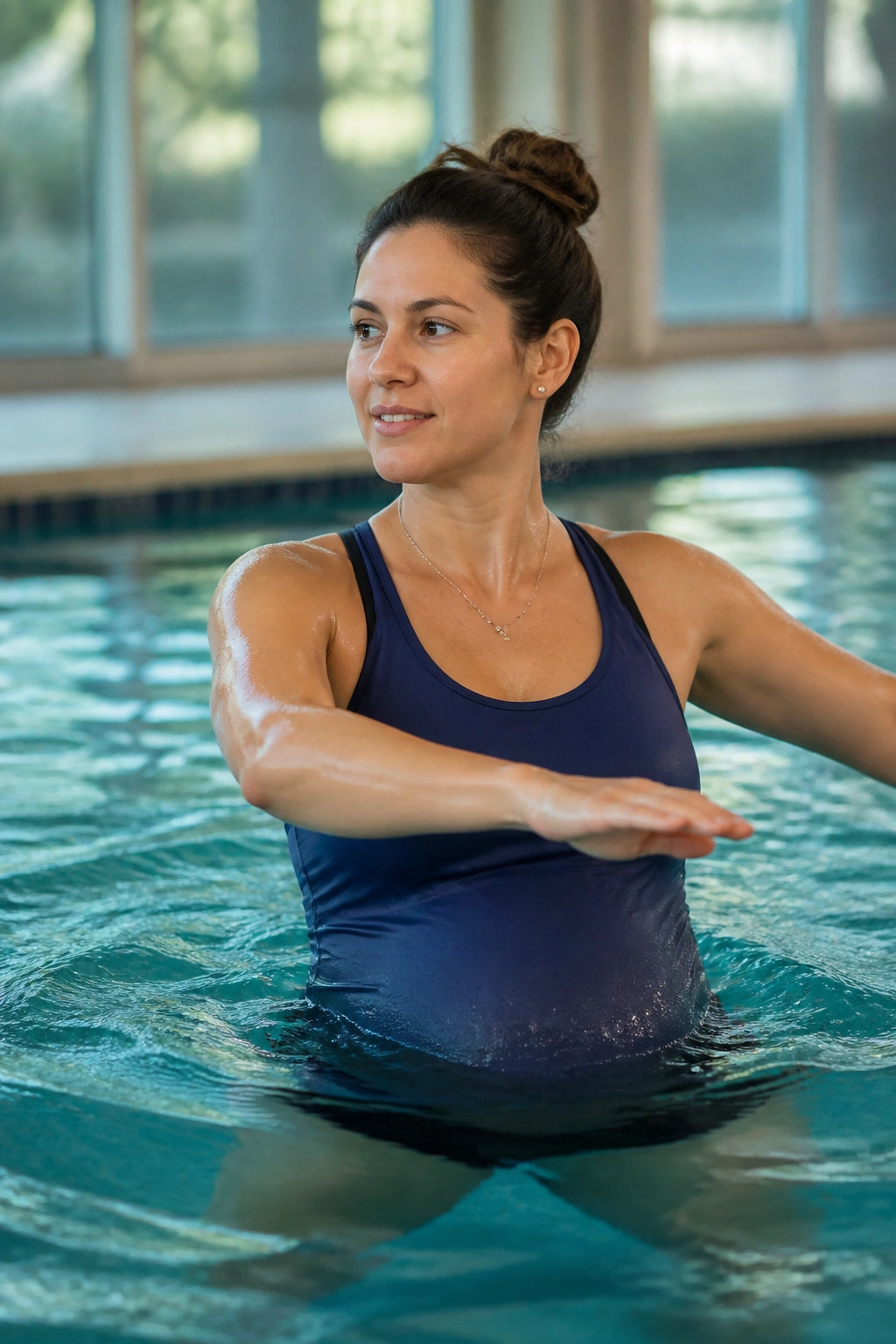
Pool classes have a reputation for being gentle, and honestly, that’s not a flaw. Gentle is sometimes the whole point.
Water aerobics gives you resistance in every direction without the landing forces you get on land. Your legs work, your arms work, your core has to stay awake, and your joints get a break. If you deal with swelling, back ache, or that heavy-legged feeling that shows up after standing too long, the water can feel like a reset.
The nice part is the rhythm. You’re moving, but not pounding. You’re working, but the buoyancy takes the edge off. Chest-deep water is often the sweet spot, because it supports more of your weight while still letting you move freely.
If the class uses hard jumps or sprint intervals, scale them down. Wide marching steps, water walking, gentle arm pushes, and controlled leg lifts are enough. Hot water is a bad idea if it leaves you flushed or lightheaded, so pay attention to temperature.
This is also one of the few workouts where being a little social can help. A pool class can make the time pass faster, and that matters on days when motivation is hiding.
14. Prenatal Mobility and Stretching Flows
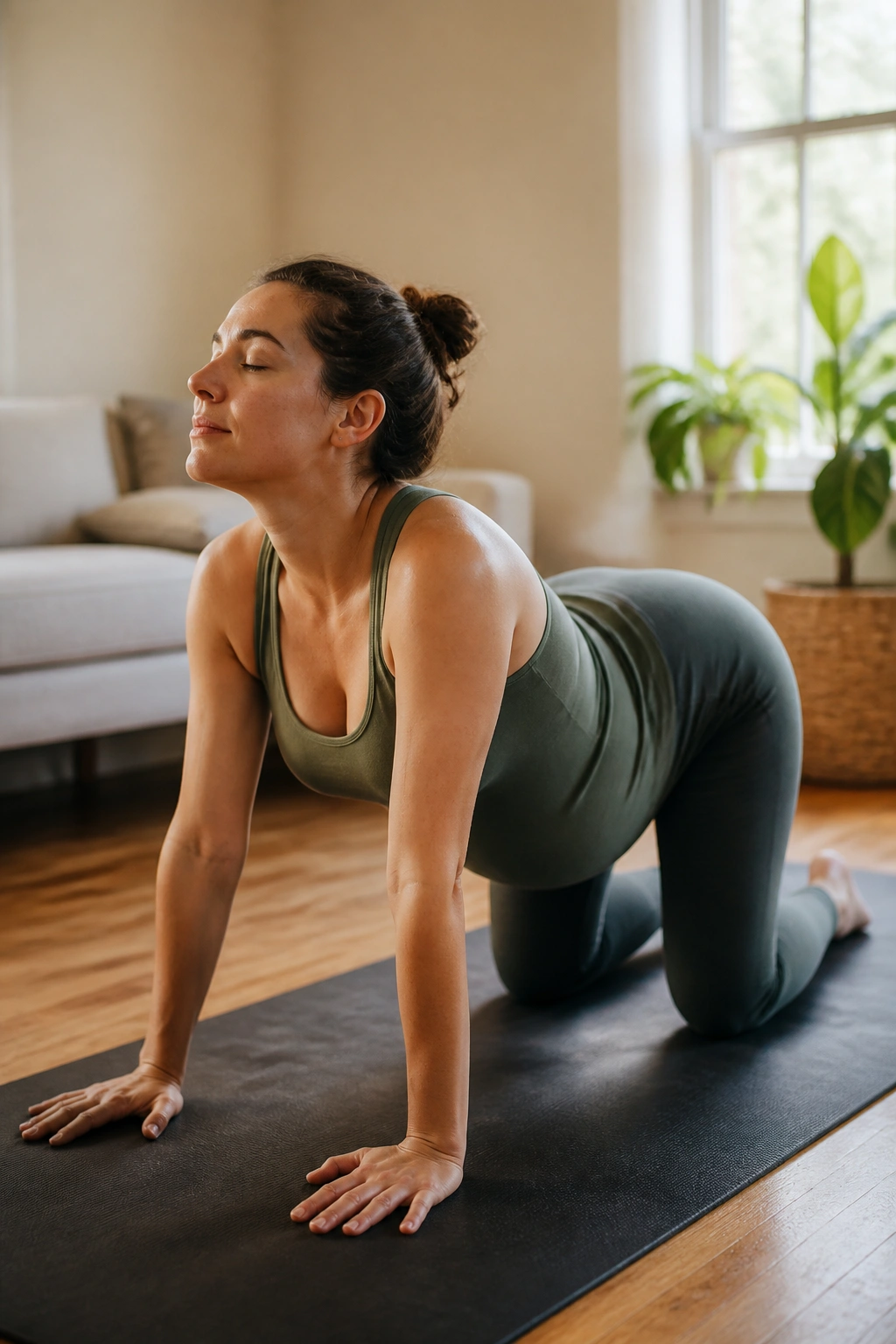
Not every useful workout has to feel like a workout. Sometimes mobility is the thing that keeps everything else possible.
A short flow with cat-cow, ankle circles, hip circles, thoracic rotations, calf stretches, and shoulder openers can make a stiff pregnancy body feel more usable. Think five to ten minutes, not a heroic deep stretch session. You are greasing joints, not forcing range.
Where to be careful
If you’re naturally bendy, don’t chase bigger stretches just because they feel easy. Pregnancy hormones can make the joints looser, which means a stretch that used to feel normal may now go too far. Hold each position lightly and keep some muscle tone in the area.
A nice flow might look like this:
- 6 slow cat-cows
- 5 hip circles each direction
- 6 side bends per side
- 30 seconds of calf stretch on each leg
- 5 shoulder rolls each way
That’s enough. Really.
Mobility work is especially useful before a walk, after a bike ride, or on a day when your body feels stuck in one position. It won’t replace strength, but it keeps the moving parts from seizing up.
15. Pelvic Floor Breathing and Deep Core Drills
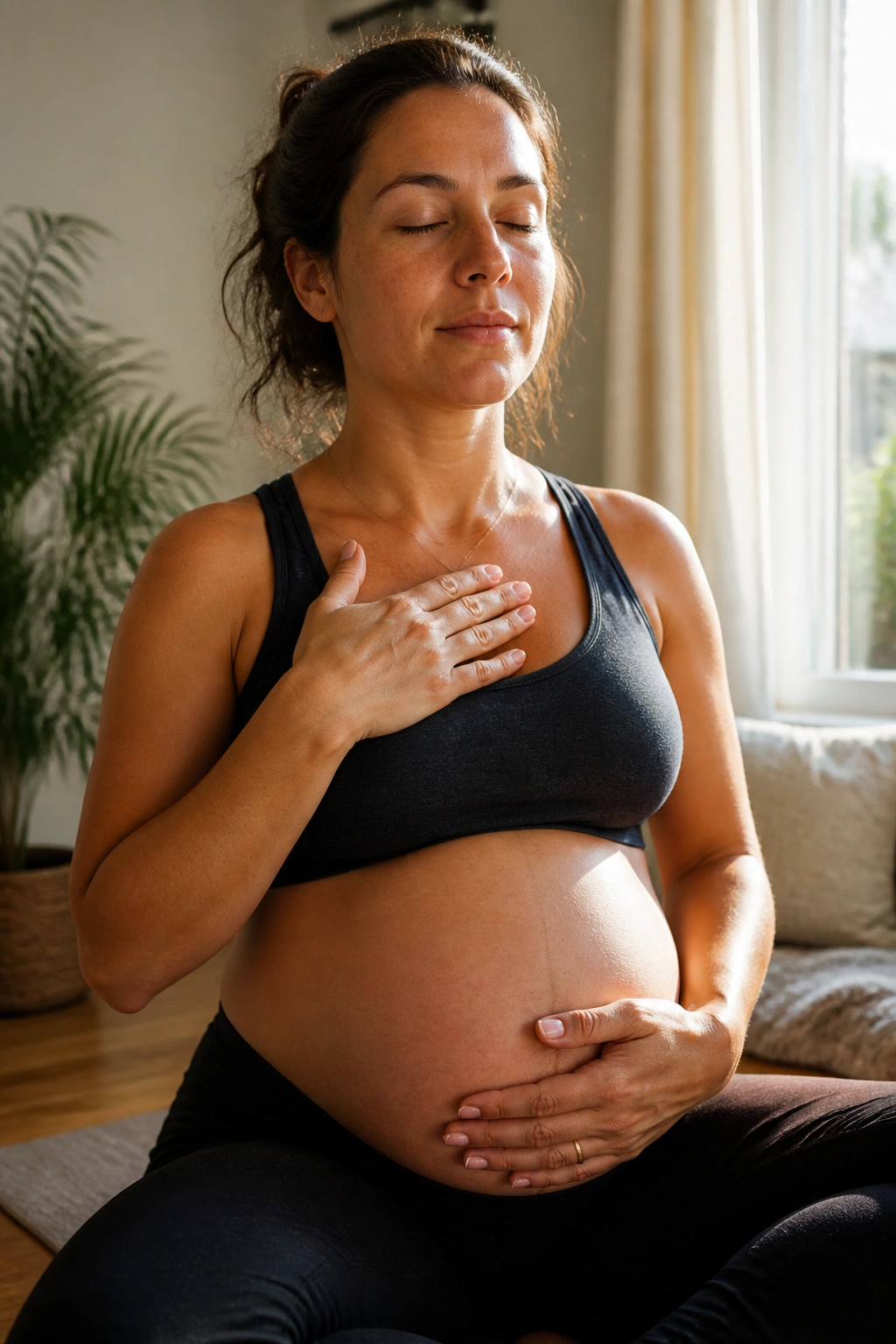
A lot of people think core training means crunches, planks, or some grim variation of both. During pregnancy, that narrow view gets old fast.
Breathing drills are one of the best foundations you can keep all the way through pregnancy because they train the diaphragm, ribs, pelvic floor, and deeper abdominal layers together. Start seated, standing, or lying on your side if that feels good. Inhale and let your ribs widen. Exhale and feel the lower belly draw in gently, not hard. The goal is coordination, not force.
A simple drill can be as plain as five slow breaths, followed by a gentle pelvic floor lift on the exhale and a full release on the inhale. That release matters. People obsess over squeezing and forget that relaxation is part of the job too.
You can build on that with heel slides, seated marches, or supported side-lying core work if it feels comfortable. Keep the motions small and the pressure low. If your belly domes sharply or your back tenses hard, scale it back.
This is the workout most people skip because it looks too easy. I’d argue it is one of the smartest things you can do. Strong breathing and a responsive pelvic floor make almost everything else feel cleaner — walking, squatting, lifting, even just standing in line for too long.
If you’ve got only ten minutes, use them here. It still counts.
