



A blank calendar can feel a little rude. It sits there, full of clean squares, and asks whether you’re actually going to follow through this time.
That’s where workout calendar templates for beginners earn their keep. They turn exercise from a daily argument into a plain schedule: which days you train, what kind of work you do, and where the rest days live. No drama. No guesswork. Just a layout that keeps you from trying to improvise a fitness plan after a long workday with tired legs and a half-empty water bottle.
The best beginner template is rarely the fanciest one. It’s the one with enough structure to keep you moving and enough breathing room to survive a missed session, sore quads, or a week that goes sideways. You do not need a heroic plan. You need a repeatable one.
And that repeatable part matters more than people want to admit. A beginner workout calendar should feel almost boring on paper. That is a compliment. Boring calendars get used.
1. The Three-Day Full-Body Grid
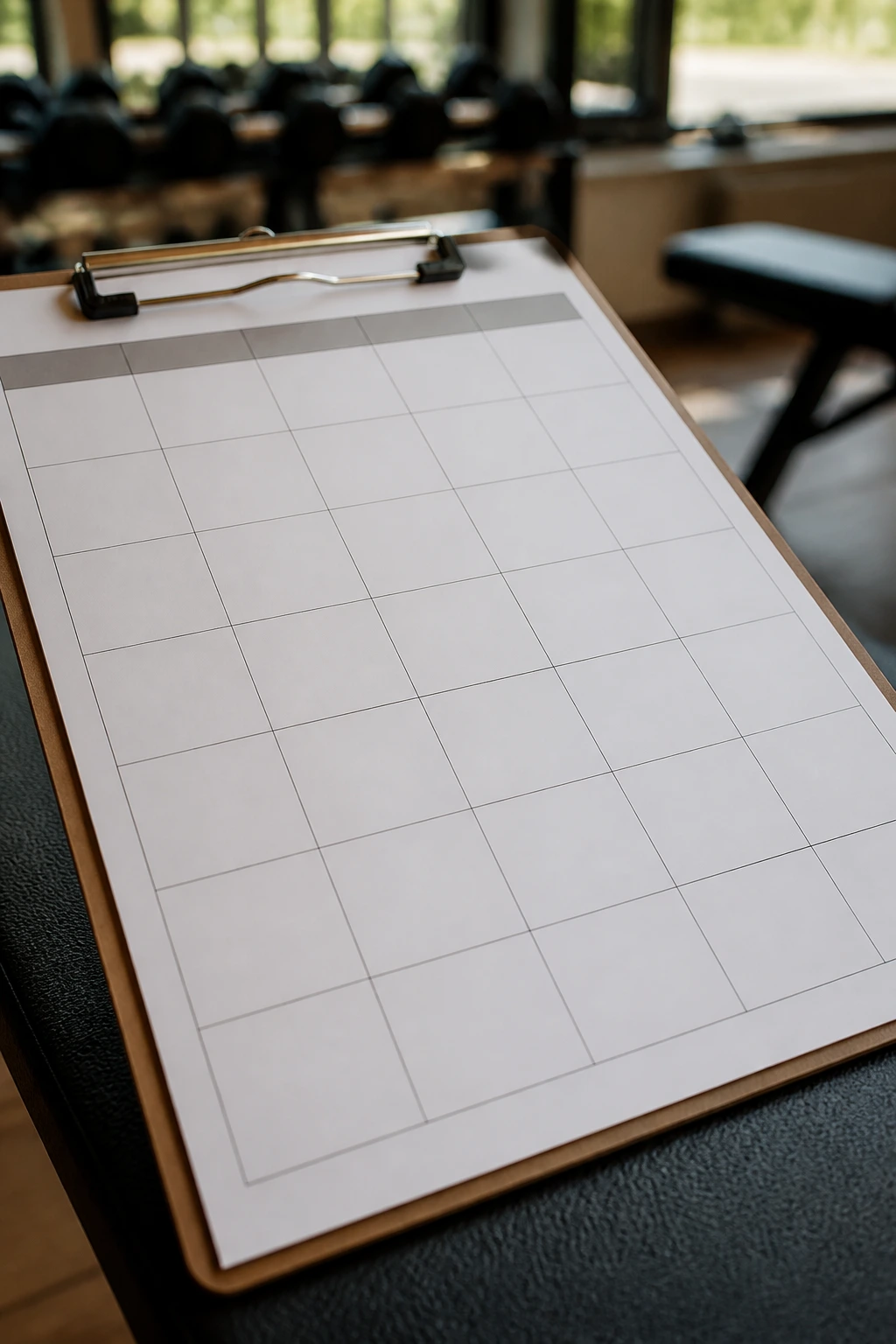
This is the template I’d hand to most beginners first. Three workout days, usually Monday, Wednesday, and Friday, with the whole body trained each time. It spreads the effort out cleanly, and the off-days give your muscles and your joints enough time to settle down between sessions.
What goes in each box
A good grid has room for exercise name, sets, reps, and a small notes line. That notes line matters more than it looks. You can write “last set felt easy,” “knees bothered me,” or “increase dumbbells next time,” and suddenly the calendar becomes useful instead of decorative.
- Monday: squat pattern, push, pull, core
- Wednesday: hinge pattern, overhead press, row, carry
- Friday: lunge pattern, chest press, lat pull, plank
Simple wins. A beginner does not need six days of body-part splits and a spreadsheet that looks like tax prep. Three full-body sessions build skill faster because you practice the same movement patterns more often, and that repetition is where confidence shows up.
2. The Monday-Wednesday-Friday Habit Calendar
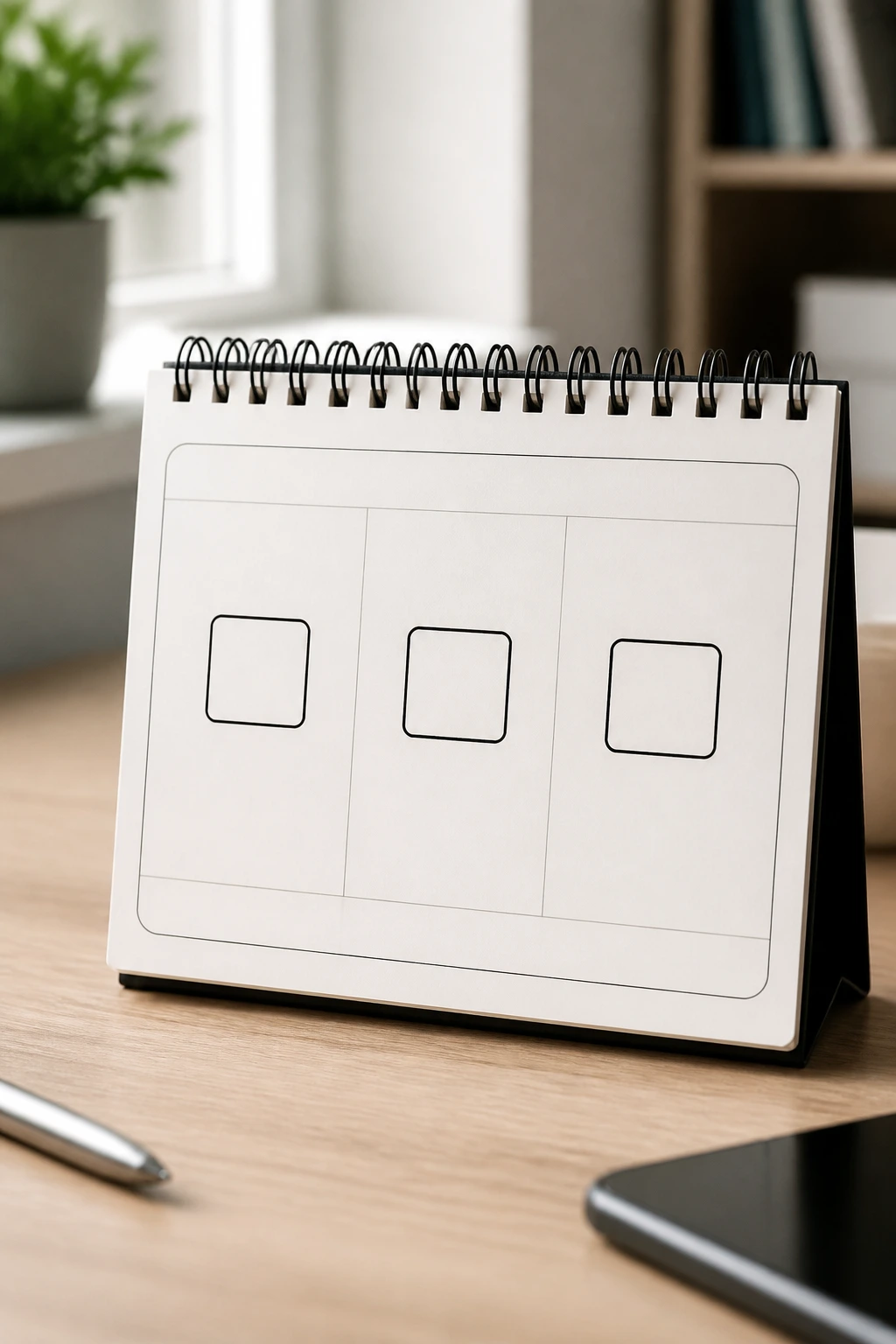
If you need something even cleaner, build the whole month around the same three days and mark each workout with a big checkbox. That’s it. No extra decoration. No tiny font. No elaborate symbols that make you stop and decode the page before you even lace your shoes.
The point of this beginner workout calendar template is habit, not performance tracking. You can add a simple line under each date for “done”, “missed”, or “moved”, plus one word about how it felt. “Good,” “stiff,” “short on time” — enough information to spot patterns without turning the page into homework.
I like this format for people who get overwhelmed by too much planning. It gives you a rhythm that repeats every week, which means your brain stops renegotiating the schedule. That little mental relief is worth more than most people think. Less deciding. More doing.
3. The Two-Day Start-Here Plan

Two workouts a week sounds modest, and that’s the point. For someone who hasn’t trained before, or who’s coming back after a long gap, two days can be the difference between building momentum and getting flattened by soreness on day three.
Use this template when your real challenge is consistency, not variety. One session can be lower-body and core focused; the other can cover upper body, posture, and a little cardio. Leave at least two full rest days between them.
A nice feature here is that the calendar looks spacious. That visual space matters. You don’t feel trapped by the plan, and beginners often relax enough to actually start. Add a third box labeled “optional walk or mobility” if you want a little extra movement without making the week feel crowded.
4. The Upper-Lower Split Sheet
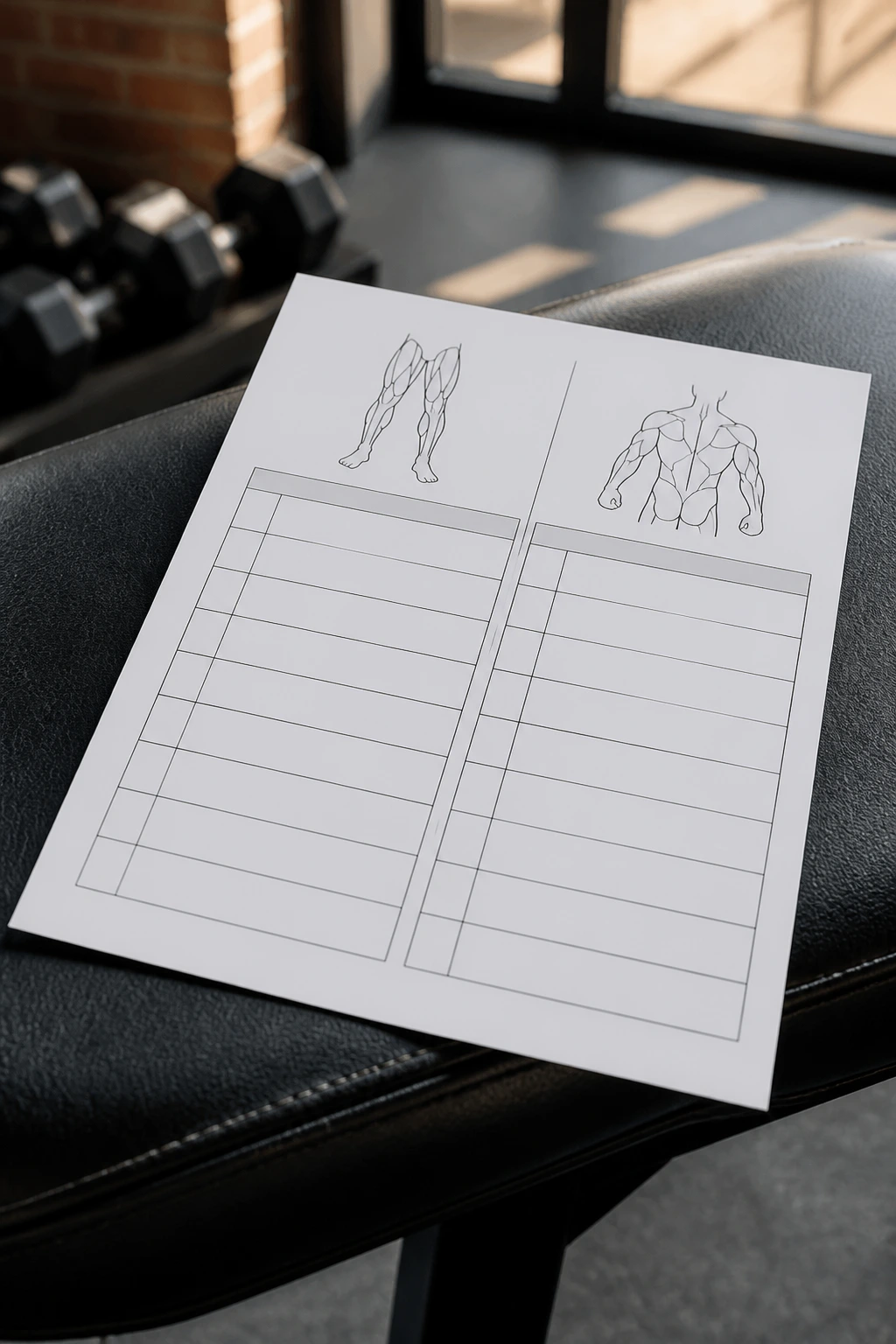
Once three full-body days start feeling familiar, an upper-lower split gives the week a cleaner rhythm. Two lower-body sessions, two upper-body sessions, and enough room to keep the workouts shorter.
How the week usually looks
- Monday: lower body
- Tuesday: upper body
- Thursday: lower body
- Friday: upper body
That structure works well for beginners who want a calendar that feels organized without being busy. The lower-body days can focus on squats, hinges, glute work, and calf raises. The upper-body days can cover presses, rows, pulldowns, and a little shoulder work.
The template should leave space for exercise order, because order matters more than most people realize. Put your biggest lift first while you still have some energy. Then use the smaller movements to finish the job. This is one of those plans that looks basic but ages well. It keeps you from cramming every exercise into one exhausting day, and it teaches you to train with a bit of structure.
5. The 20-Minute Home Circuit Planner
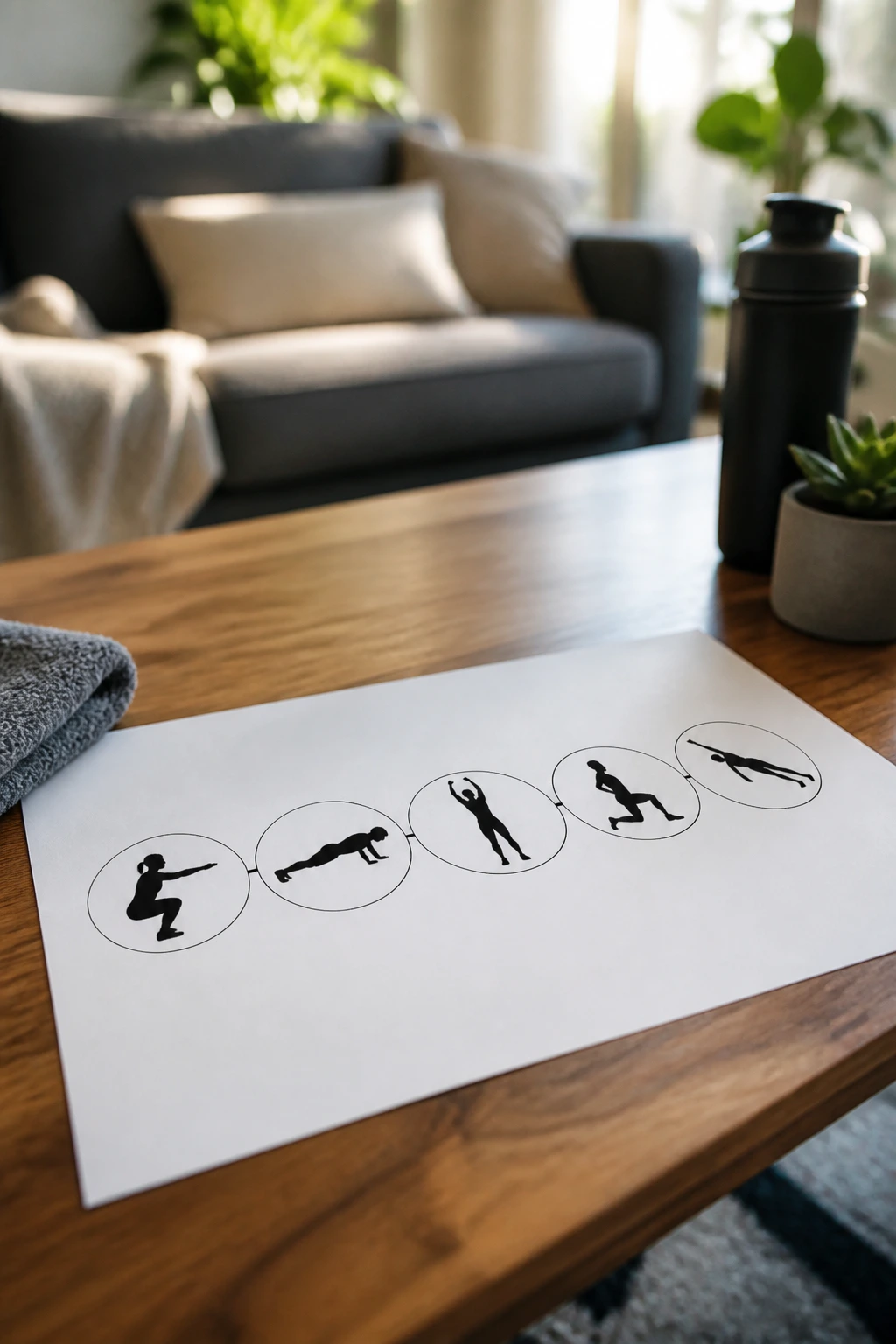
Short sessions are not a consolation prize. For a beginner, a 20-minute plan can be the difference between a workout habit and a stack of abandoned intentions. This template is built for days when you need to start fast, move fast, and stop before your brain starts making excuses.
Make each day a simple circuit with 4 to 5 movements: squat, push-up variation, hinge, row or band pull, and a core move. Put a timer on the page. 20 minutes total, not 20 minutes of wandering around the house. That detail matters.
I like this layout because it respects real life. If you have a noisy schedule, kids, a small apartment, or low patience for long sessions, the template still works. Add a line for “equipment used” so you remember whether you used a resistance band, a dumbbell, or nothing at all. That little note saves time the next round.
6. The Dumbbell-Only Weekly Tracker
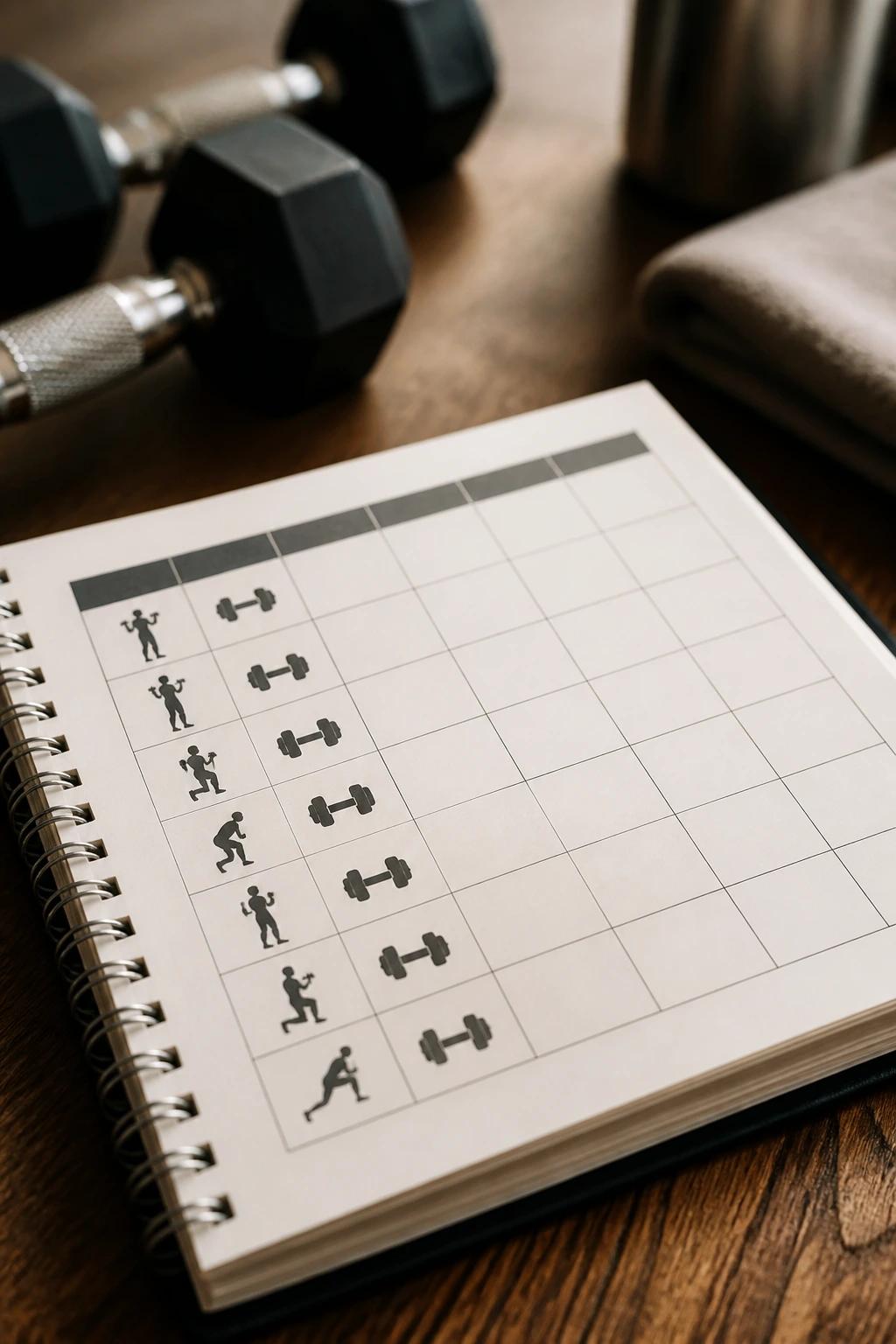
A dumbbell-only calendar is one of the easiest beginner templates to stick with because it removes decision fatigue. You do not need a barbell setup, a cable machine, or a dozen accessory movements. Just a pair of dumbbells and a plan that repeats.
Use one column for the main movement, one for the secondary movement, and one for reps completed. If you own only one pair of weights, this template still works. You can write “goblet squat,” “one-arm row,” “floor press,” and “Romanian deadlift” and build the entire week from those basics.
The best part is how visible progress becomes. When the same exercises show up week after week, you can see when 8 reps turns into 10, or when 12-pound dumbbells stop feeling awkward. That kind of tracking is straightforward, and beginners usually do better with straightforward.
7. The Bodyweight-Only Month View
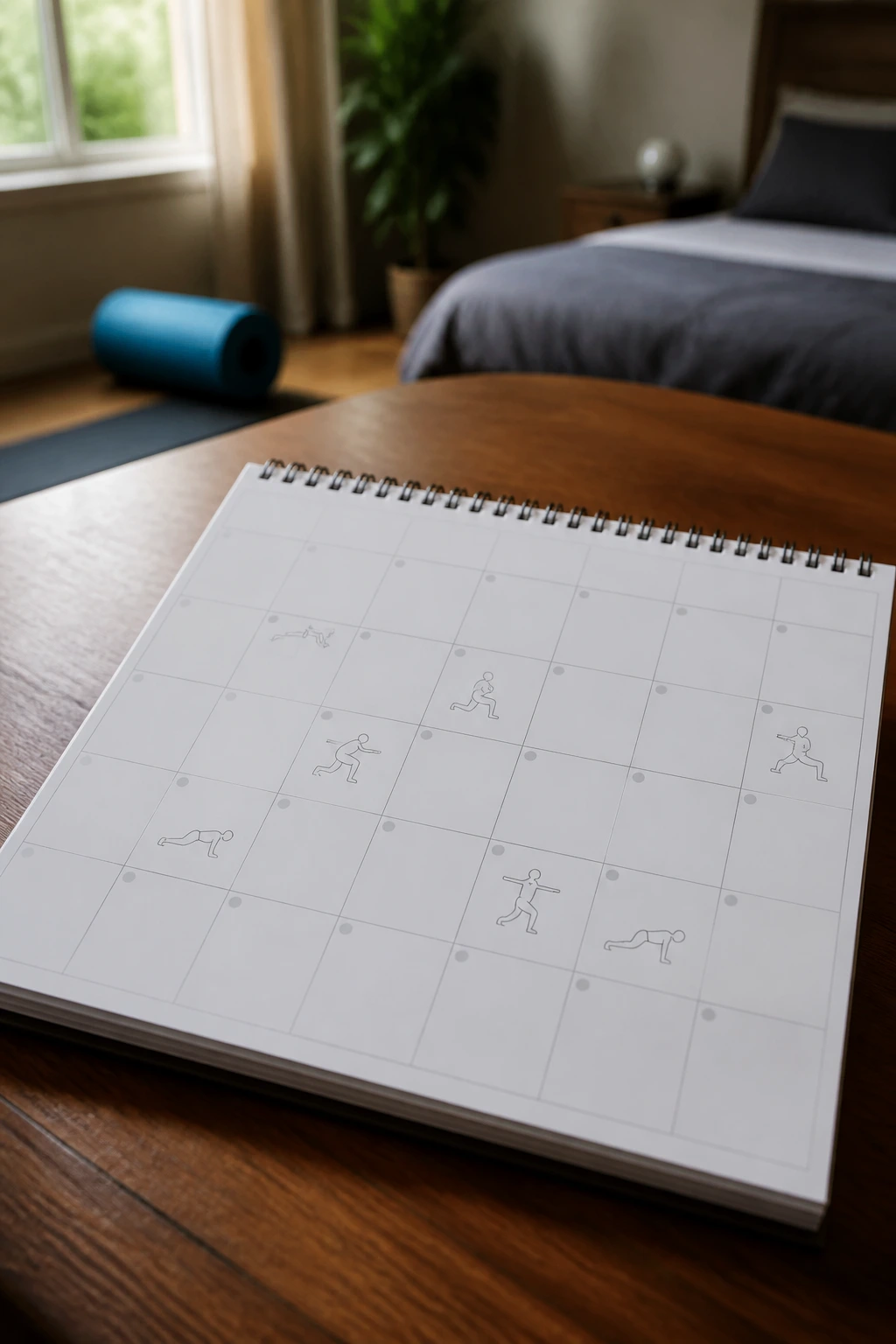
Some beginners do better when the calendar has no equipment at all. No shopping list. No home-gym setup. No excuse that you need one more thing before starting.
This template uses bodyweight basics: squats, incline push-ups, lunges, glute bridges, planks, dead bugs, mountain climbers. Put them directly onto a month view so the workouts are visible at a glance. One box can hold the movement name, another can hold rounds, and a third can hold a little checkmark for completion.
Why this one sticks
Because it feels easy to begin. You can do it in a bedroom, a hotel room, or next to the couch while something is warming in the oven. That portability helps beginners keep the habit alive when schedule and location keep changing. The template should also leave one or two rest days blank on purpose. Blank space is not wasted space. It keeps the month usable.
8. The Cardio and Strength Hybrid Calendar
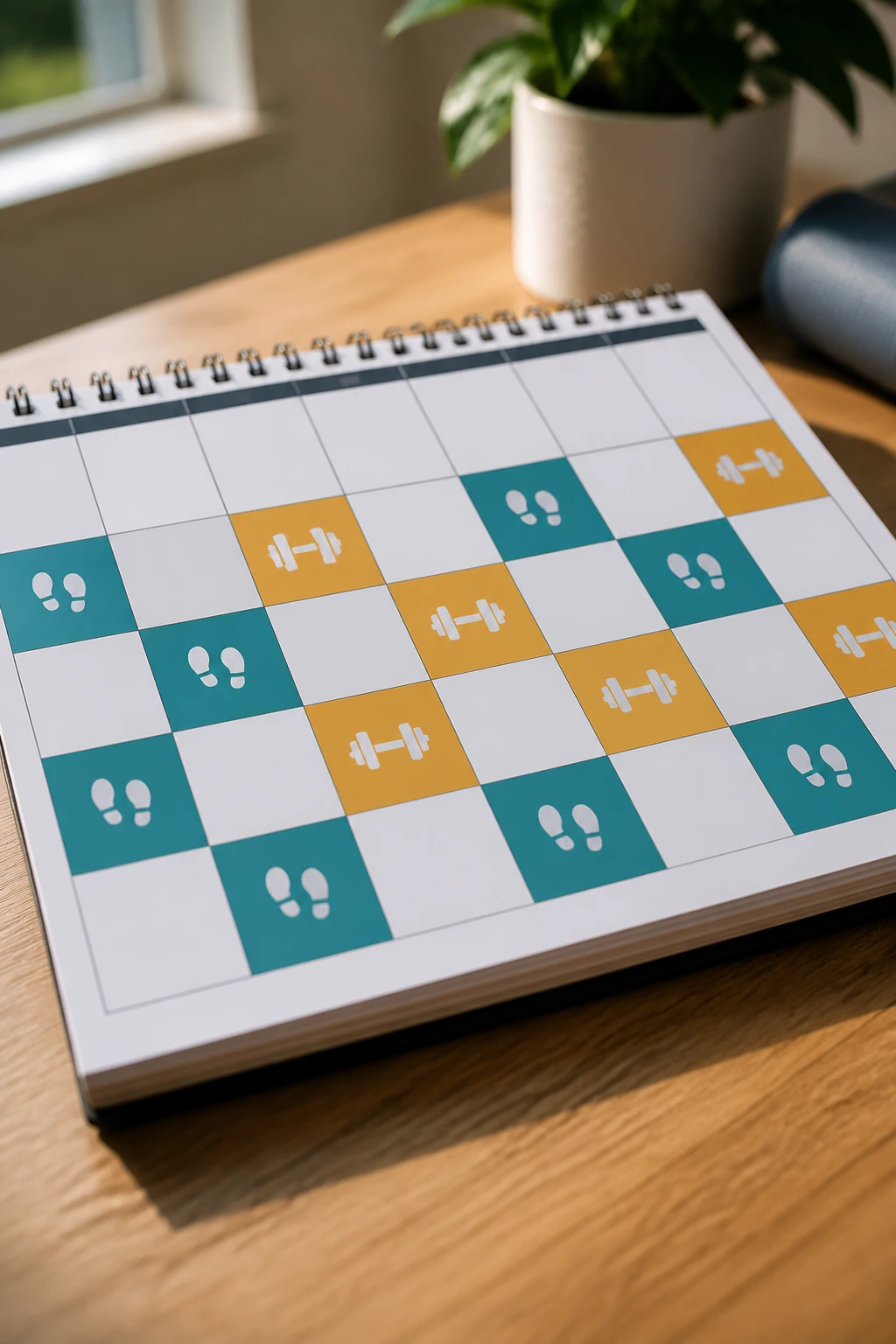
A lot of beginners want to get fitter without choosing between walking, cycling, lifting, or bodyweight work. Fair enough. A hybrid calendar gives both sides room to breathe.
The trick is to assign each session a clear job. One day can be brisk walking or a bike ride. The next can be strength work. Another day can be a shorter mixed session with bodyweight moves and five to ten minutes of cardio at the end. That way the week has shape.
I prefer this template for people who get bored fast. It also helps if your joints prefer variety. Put the cardio days on the calendar in one color and the strength days in another. Two colors. That’s enough. Anything more and the page starts feeling fussy, which is exactly what a beginner does not need.
9. The Mobility-First Recovery Planner
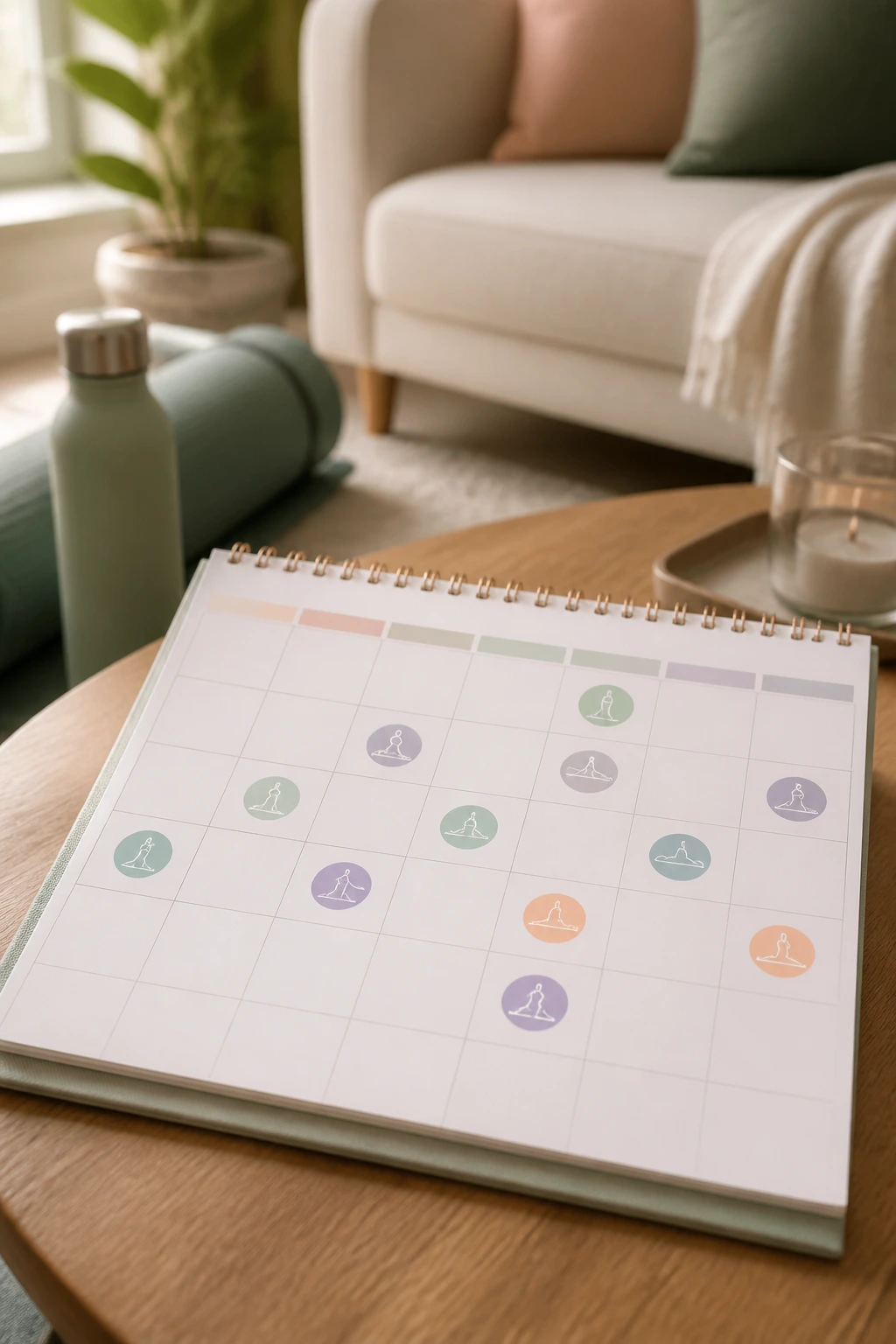
A beginner calendar does not have to pretend every day is a hard workout day. Some of the smartest templates are built around recovery, because sore hips and stiff backs can wreck confidence faster than a tough squat.
What belongs here
- 10-minute mobility flow
- 5-minute breathing reset
- Light walk or easy bike ride
- Optional stretch after training
This template is useful for people who sit a lot, travel a lot, or wake up feeling creaky. I like to place mobility sessions the day after lower-body work and again before a full rest day. It keeps the plan from feeling punishing.
The visual cue matters, too. Mark recovery days in a softer shade or with a small circle instead of a box. That way the calendar tells a different story: not “do less because you failed,” but “do this because your body needs a bit of room.” That’s a better message for a beginner.
10. The 30-Minute Time-Block Calendar
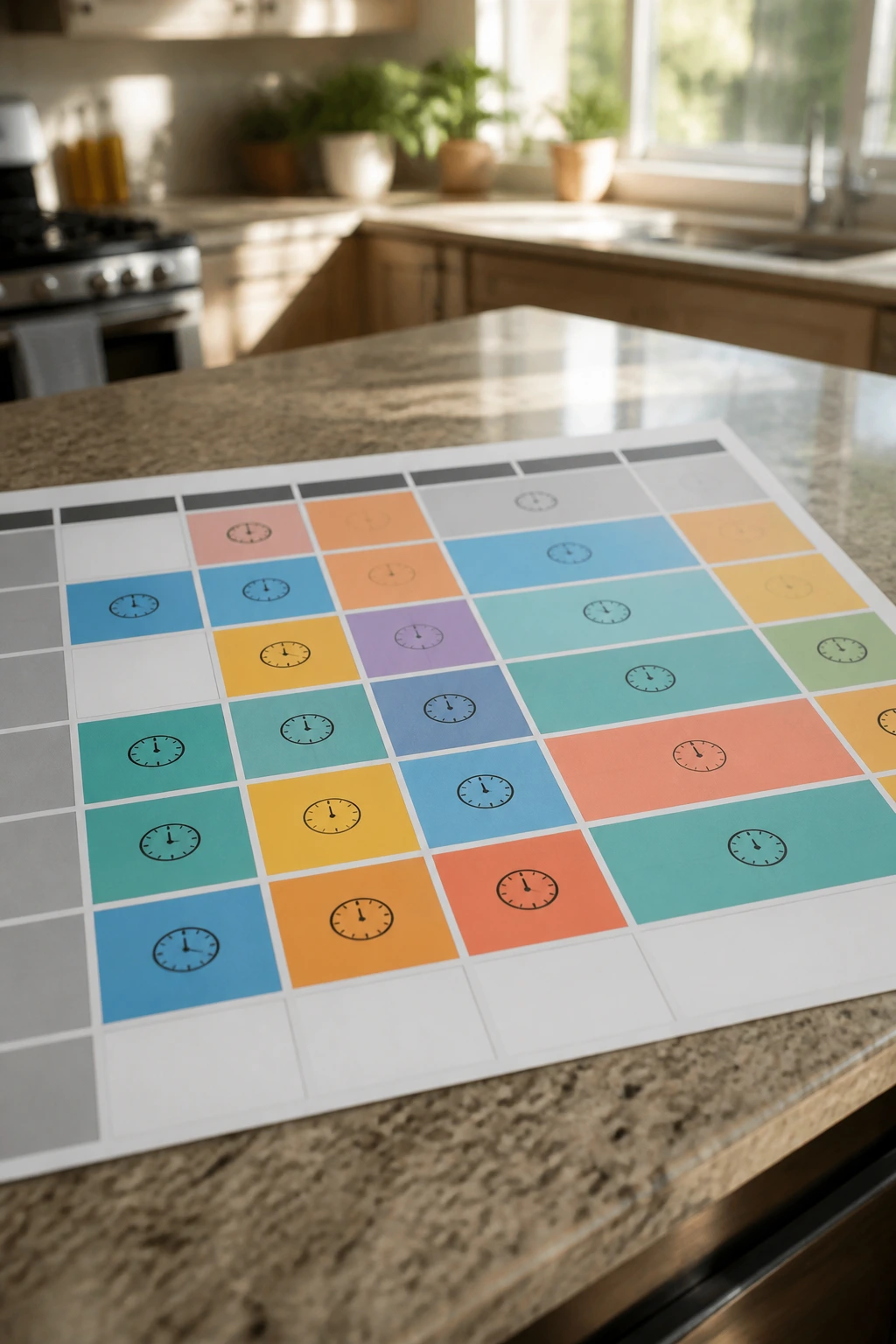
A 30-minute workout feels manageable in a way a vague “work out later” promise never does. Time-blocking is one of the easiest ways to make a beginner workout schedule realistic, especially when the day already has too many moving parts.
Put each workout inside a fixed 30-minute square. Five minutes warm-up, fifteen to eighteen minutes of work, five minutes of slower finish, a couple of minutes to write notes. The calendar should show the block clearly, almost like an appointment with yourself.
This template is especially useful for people who overestimate how long training should take. They imagine a big heroic hour and skip the whole thing when the hour never appears. Thirty minutes is easier to protect. And if you finish a little early, great. If you need the full half hour, the page already allowed for it.
11. The Morning Session Checklist

Morning workouts need a different calendar because the main battle is not effort. It’s friction. Shoes, water, workout clothes, and a time you can actually keep.
Build the template with a small pre-workout checklist beside each morning slot. That checklist can include drink water, change clothes, set timer, and start warm-up. Four boxes. Enough. The whole point is to reduce the number of decisions before the session begins.
I’d use this for beginners who feel better once the day gets going but want to train before work or school. Morning plans reward predictability, so the calendar should stay the same every week. The fewer choices you make before coffee, the better. That’s not a moral statement. It’s just how most people function before breakfast.
12. The After-Work Low-Energy Plan
Some days you finish work and feel like an emptied-out sock. Fine. Your calendar should know that.
This template works best when the workouts are shorter, simpler, and placed after the hour you usually get home. The best version uses a one-line goal for each day: “walk 20 minutes,” “dumbbell circuit,” “stretch and core.” Nothing ornate. You are trying to bridge the gap between the end of the workday and the start of movement.
The notes section should include an energy rating from 1 to 5. That tiny number can save the day. If you see a string of 1s, you know the schedule is too heavy. If you see 4s and 5s after training, you know the plan fits. That kind of feedback is more useful than trying to remember how a workout felt two weeks later.
13. The Fat-Loss Friendly Beginner Schedule
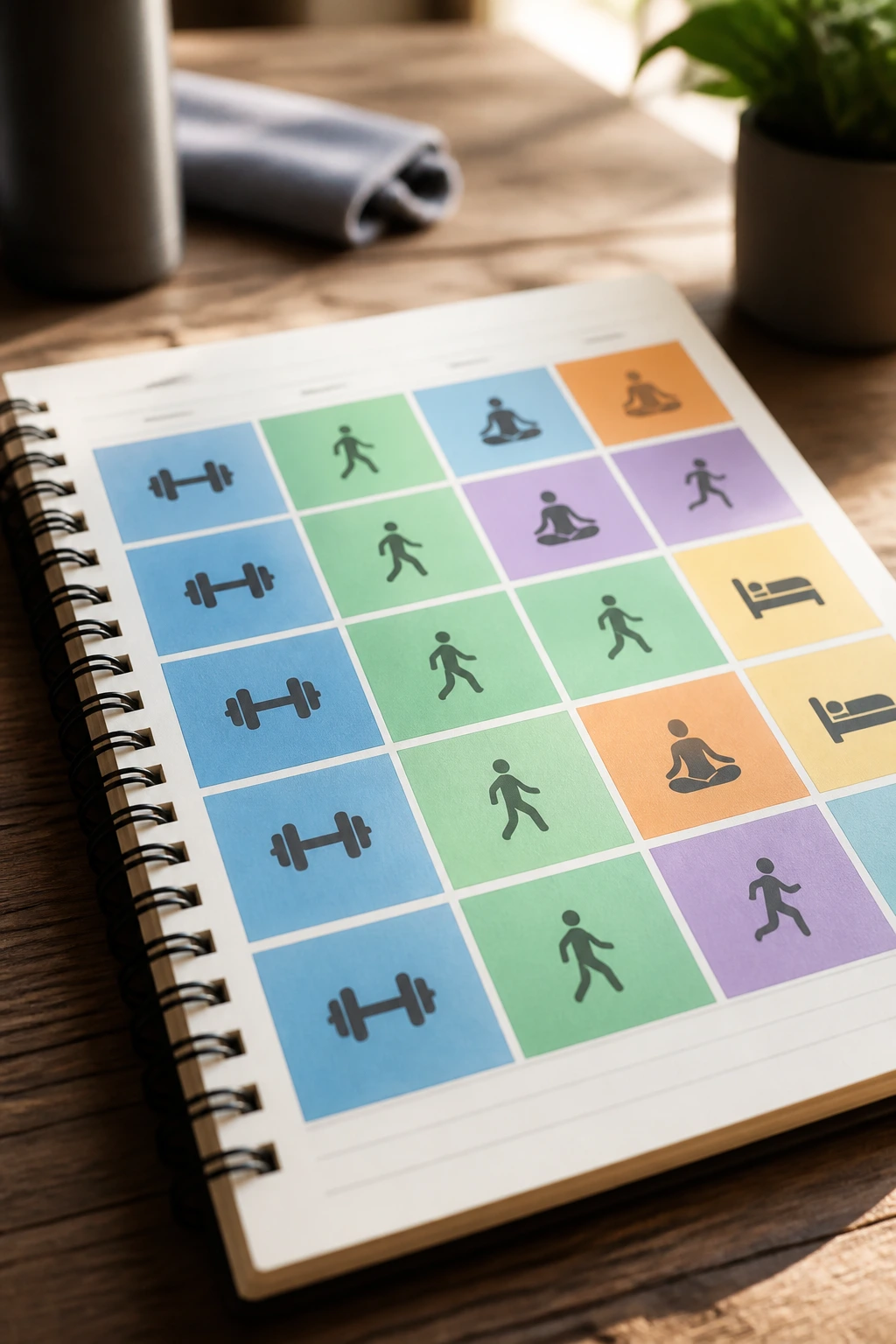
People often use the wrong calendar for fat loss. They build a punishing schedule, then lose steam when it starts feeling like a second job. A better beginner template combines strength training, regular walking, and a little cardio without making every day feel hard.
Place three strength sessions across the week and add two walking days with a step goal. Leave the remaining days open for rest or easy movement. The calendar should show that fat-loss support comes from consistency, not from stuffing the page with workouts.
Use the notes area to track walk time, step count, and training minutes. That helps you see whether the week was active enough without obsessing over every detail. I like this style because it keeps the plan grounded. You are not trying to out-train the calendar. You are trying to keep showing up long enough for momentum to build.
14. The Muscle-Gain Beginner Grid
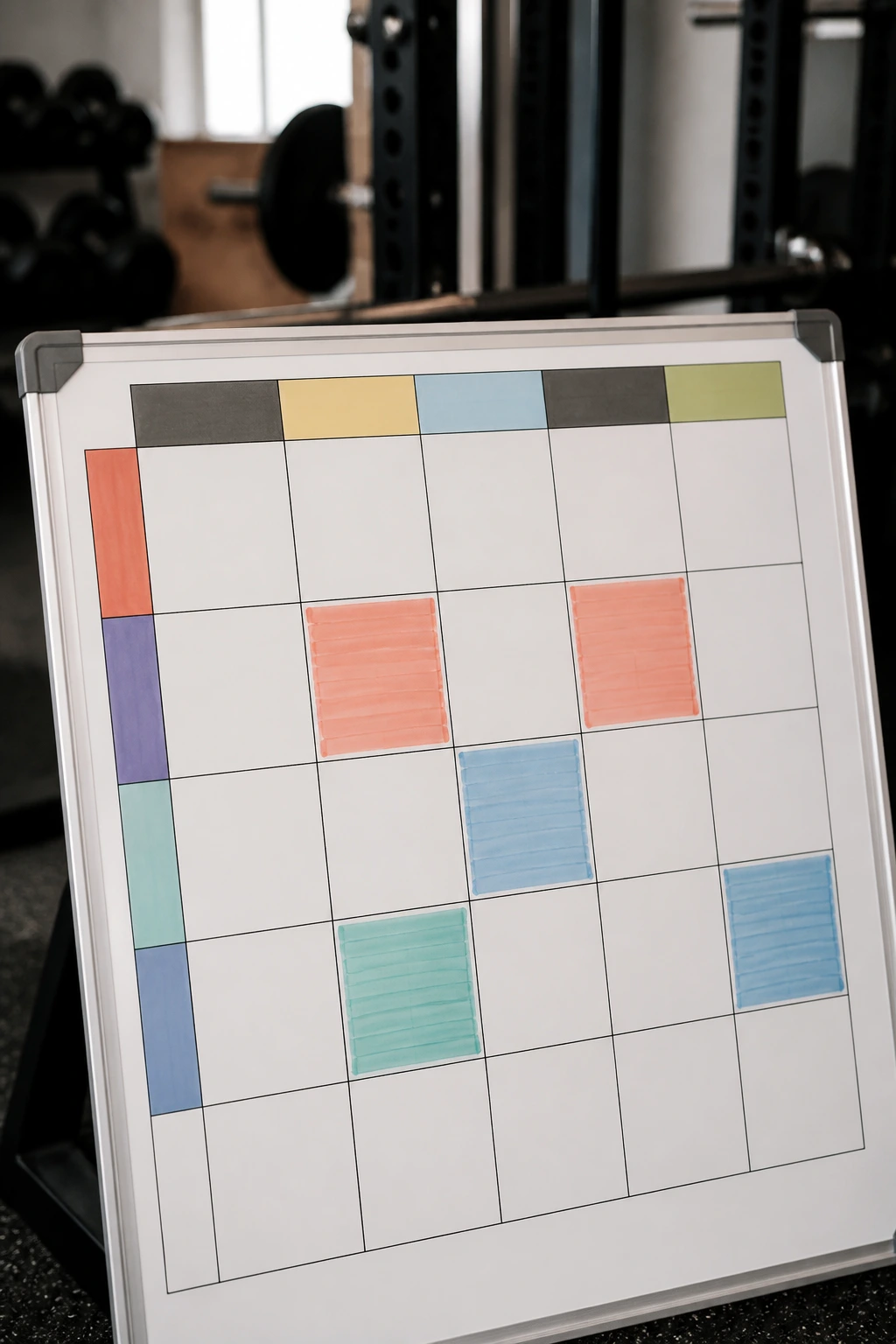
A beginner who wants to build muscle needs a calendar that protects recovery and rewards repeat practice. The schedule itself should be calm. No frantic variety. No day packed with twelve exercises because the internet made it sound serious.
Use four training slots across the week, with enough spacing to recover. Put compound lifts in the first half of the session and smaller accessory work after. The template should include a column for load used, because muscle gain depends on seeing weight go up over time, even if the jumps are tiny.
I’d mark the calendar with a “next time” note at the bottom of each box. That can be as plain as “add 2 reps,” “slow down the lowering phase,” or “move to heavier dumbbells.” The page then becomes a small record of progress, not just attendance. That makes a difference.
15. The Return-From-Break Ramp-Up Template
Coming back after a long gap is its own category. You are not starting from scratch, but you are not picking up exactly where you left off either. A ramp-up calendar respects that awkward middle ground.
Week-by-week feel
Week one: short sessions, light effort, no chasing soreness.
Week two: add one set or five extra minutes.
Week three: bring back the movements that felt smooth.
Week four: let the schedule look normal again.
The beauty of this template is that it keeps enthusiasm from getting ahead of your joints. Beginners returning after time off often try to do too much too fast, then spend the next three days walking downstairs like a pirate. This calendar helps avoid that. Put a small effort scale in each box, and keep the early weeks almost embarrassingly easy. That’s not failure. That’s smart pacing.
16. The Low-Impact Joint-Friendly Calendar
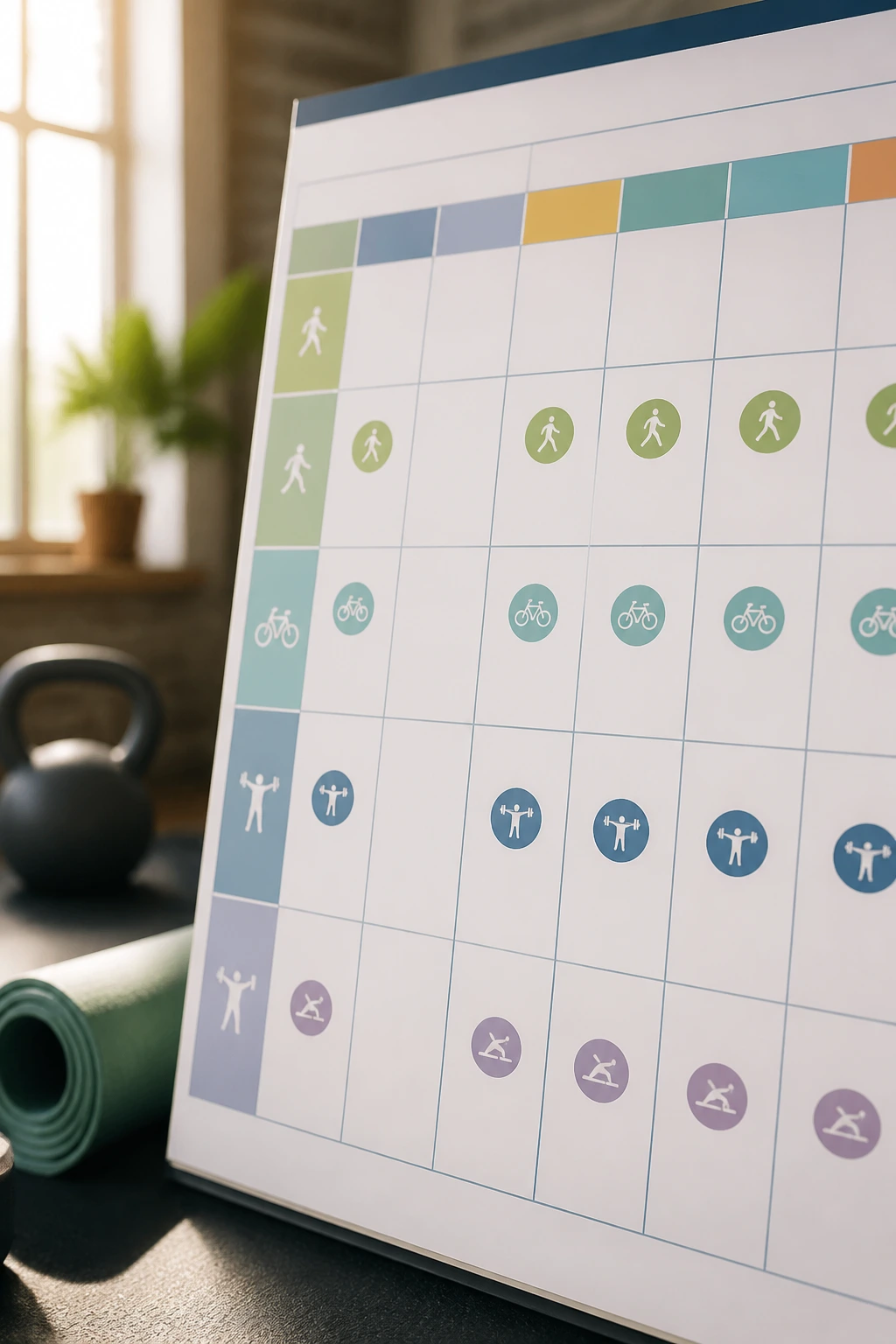
Low-impact does not mean low value. A good joint-friendly template can still build strength, stamina, and confidence without pounding knees or angry ankles into the floor.
Fill the calendar with walking, cycling, rowing, chair work, resistance bands, and controlled strength moves. Leave out jump-heavy drills unless the beginner already knows they tolerate them well. The template should also include a place to mark which movements felt smooth and which ones felt rough.
What I like here is the honesty. If a move bothers your knees at a depth of 90 degrees, write that down. If step-ups feel fine but jumping jacks do not, that matters. The calendar becomes a map of what your body likes, and that’s a useful thing to know early. You do not need to guess forever.
17. The Treadmill and Floor Combo Sheet
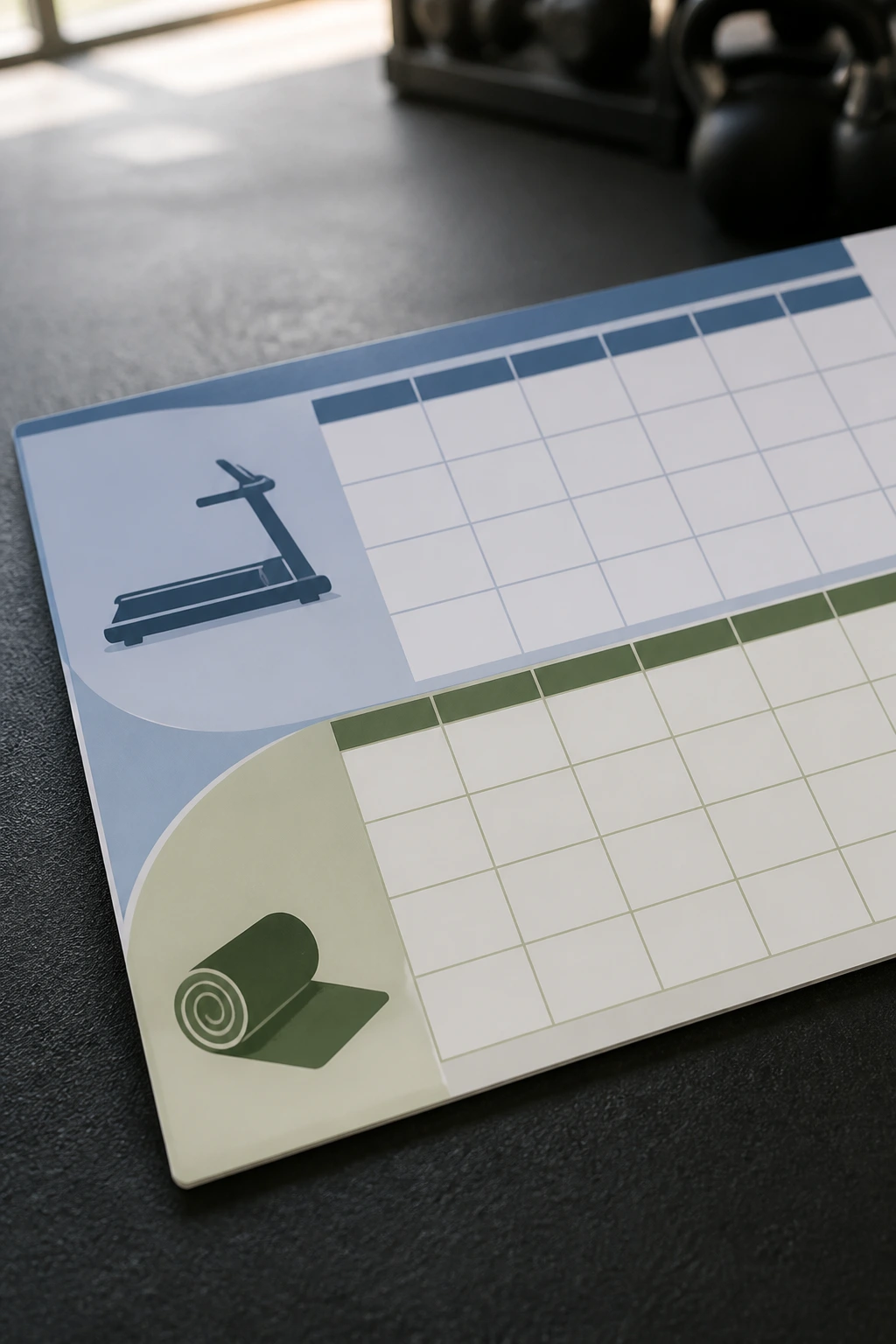
Some beginners want a simple gym visit that doesn’t feel intimidating. A treadmill-and-floor combo calendar does exactly that. It splits the session into two obvious parts: walk first, then a short set of floor work.
Use the first half for a 10- to 15-minute incline walk, easy jog, or steady pace. The second half can hold squats, push-ups, planks, dead bugs, or glute bridges on a mat nearby. The template should track minutes on treadmill and rounds on floor, because those are the two numbers that matter most.
This works well for people who need a warm start. The machine gets the heart rate moving, and the floor work adds strength without a lot of setup. A beginner sees the whole workout at a glance and does not have to wander around the gym guessing where to begin.
18. The Gym Machine Confidence Builder
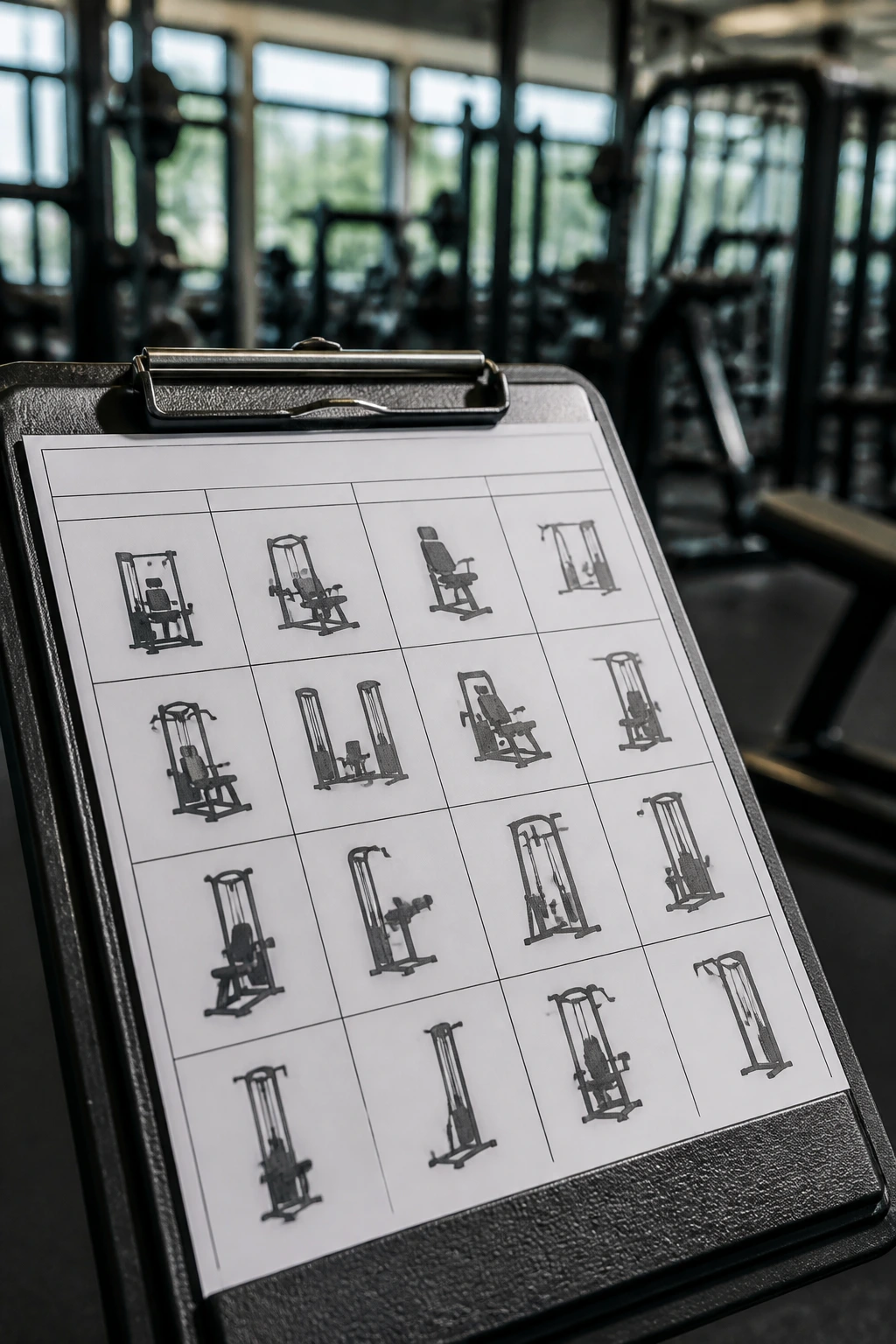
Free weights can feel like a test. Gym machines, on the other hand, are often easier for beginners to understand because the path of movement is already set. That makes them perfect for a confidence-building calendar.
Design the template with machine names in neat columns: leg press, chest press, lat pulldown, seated row, leg curl, cable press. Leave space for seat settings. That sounds minor until you spend five minutes trying to remember where the back pad was set last time. Write it down.
A machine-based calendar is especially good for beginners who want a clean, quiet workout with fewer moving parts. The sessions can still be serious. They just do not need to feel mysterious. And honestly, that is half the battle. Less confusion means more actual training.
19. The Progress-Log Calendar
A workout calendar becomes far more useful when it stops being a simple attendance sheet and starts recording proof. Reps, distance, time, weight, energy, notes — this is the template for people who want to see the work add up.
What to track
- Weight used on each lift
- Reps completed
- Walk or ride distance
- Session duration
- One short note about how it felt
The design should leave enough room to read the entries later. Tiny boxes are annoying. Use wider boxes or a full note line under each workout. That way you can spot progress without squinting at your own handwriting.
I’m a fan of this format for beginners who like data, but not too much data. A small log builds momentum because progress becomes visible. One more rep. One more minute. Five pounds more on the dumbbells. Those are boring victories on paper and satisfying ones in practice.
20. The Habit-Stacking Checkbox Sheet

This template attaches workouts to things you already do. Brush your teeth, then walk. Finish lunch, then stretch. Put on work shoes, then do five minutes of mobility before leaving the house. The calendar becomes a chain of small wins instead of one giant task.
Each day should have 2 or 3 checkboxes tied to existing habits. Keep the actions tiny and specific. “10 bodyweight squats” works better than “move more.” “Walk after dinner” works better than “be active.” The page should make the habit almost impossible to misread.
That kind of setup is friendly to beginners who do not trust motivation. Good. Motivation is unreliable. A stacked habit is easier to repeat because the trigger already exists. It feels a bit mechanical at first, but so does brushing your teeth, and nobody complains about that.
21. The Travel-Friendly Hotel-Room Plan
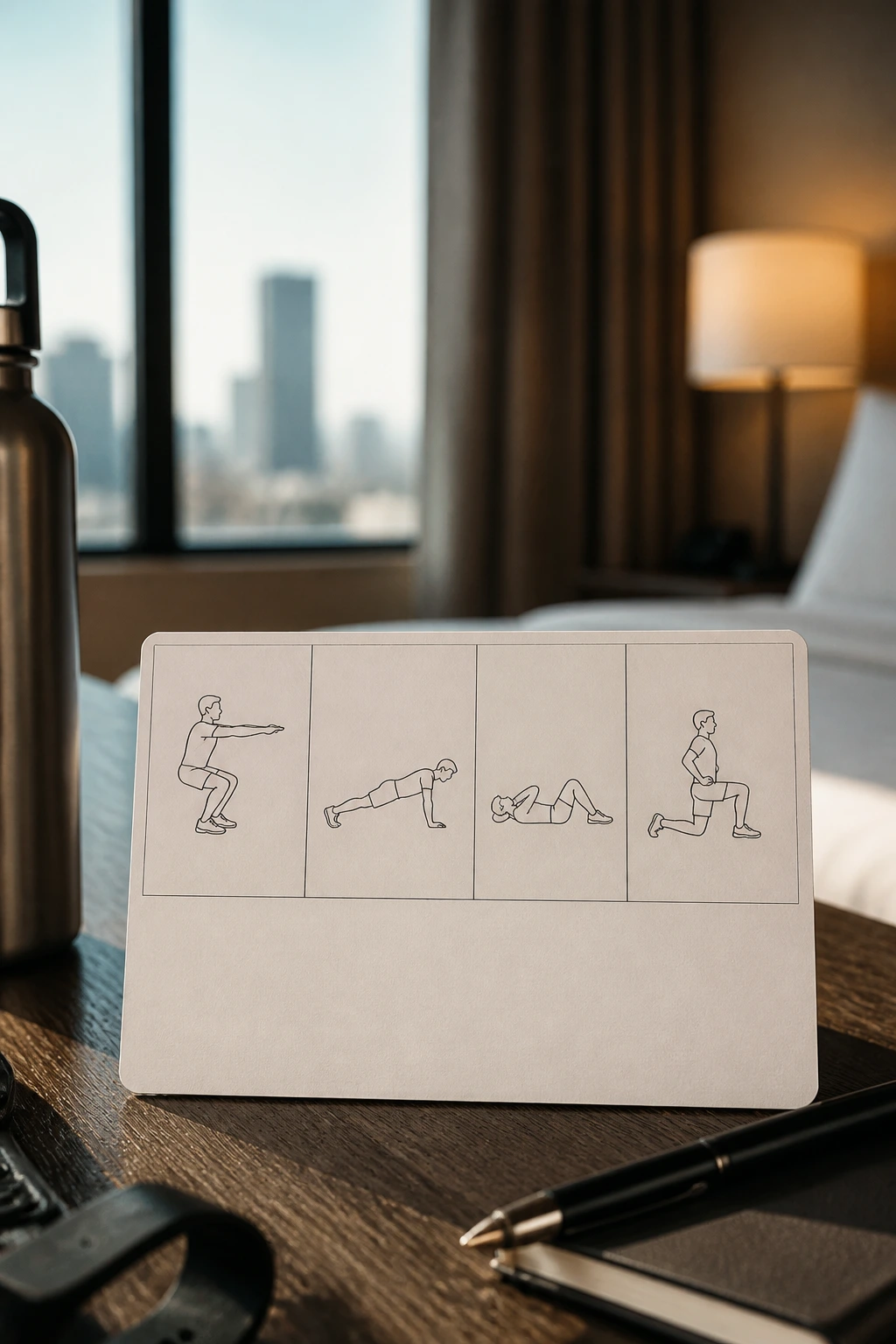
Travel can break a routine fast, mostly because it changes the room, the schedule, and your patience all at once. A travel-friendly calendar solves that by shrinking the workout into something you can do in a hotel room without equipment.
Use three or four exercises per session: squats, incline push-ups on a desk, glute bridges, planks, and a short walk outside if the weather cooperates. Keep the sessions at 15 to 25 minutes. The calendar should leave a note for space available, because sometimes the answer is “not much.”
This template helps beginners stop treating travel like an automatic pause in training. It doesn’t need to be perfect. It just needs to keep the thread alive. One moderate session in a strange room is better than disappearing from the plan entirely.
22. The Month-At-A-Glance Wall Calendar
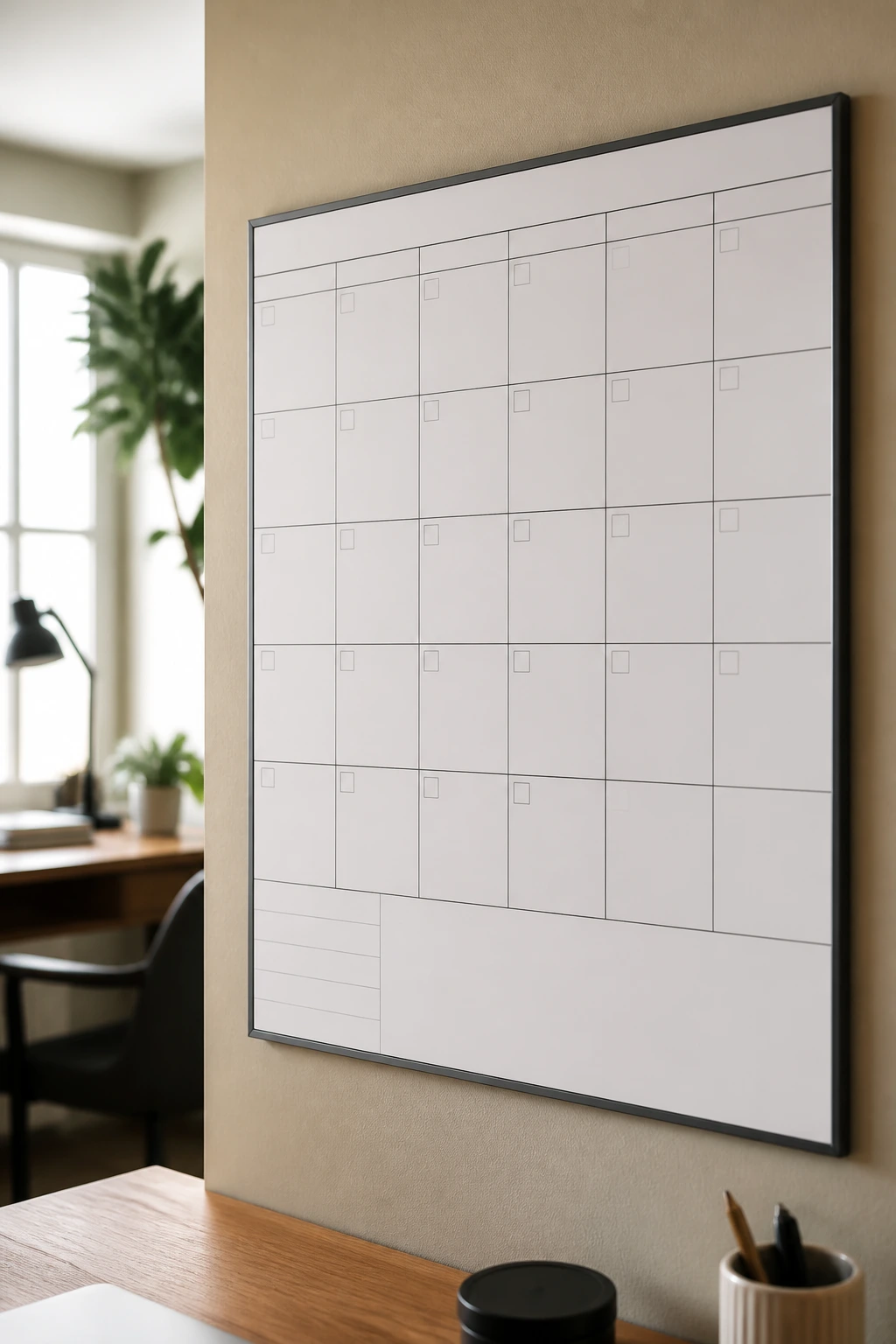
There’s something useful about seeing the whole month at once. A big wall calendar helps beginners notice the shape of their training instead of obsessing over one day. That wider view can be calming.
Color-code workouts by type: strength, cardio, mobility, rest. Leave the rest days blank or lightly shaded so they still feel part of the plan. Add a small box at the bottom of each week for one sentence about how the week went. Not a diary. Just a sentence.
This format works for people who want accountability without opening an app every five minutes. It also makes missed workouts less dramatic. One empty square on a month view looks like a bump, not a disaster. That matters when you’re building a habit and trying not to make every slip feel personal.
23. The Two-On, One-Off Rhythm
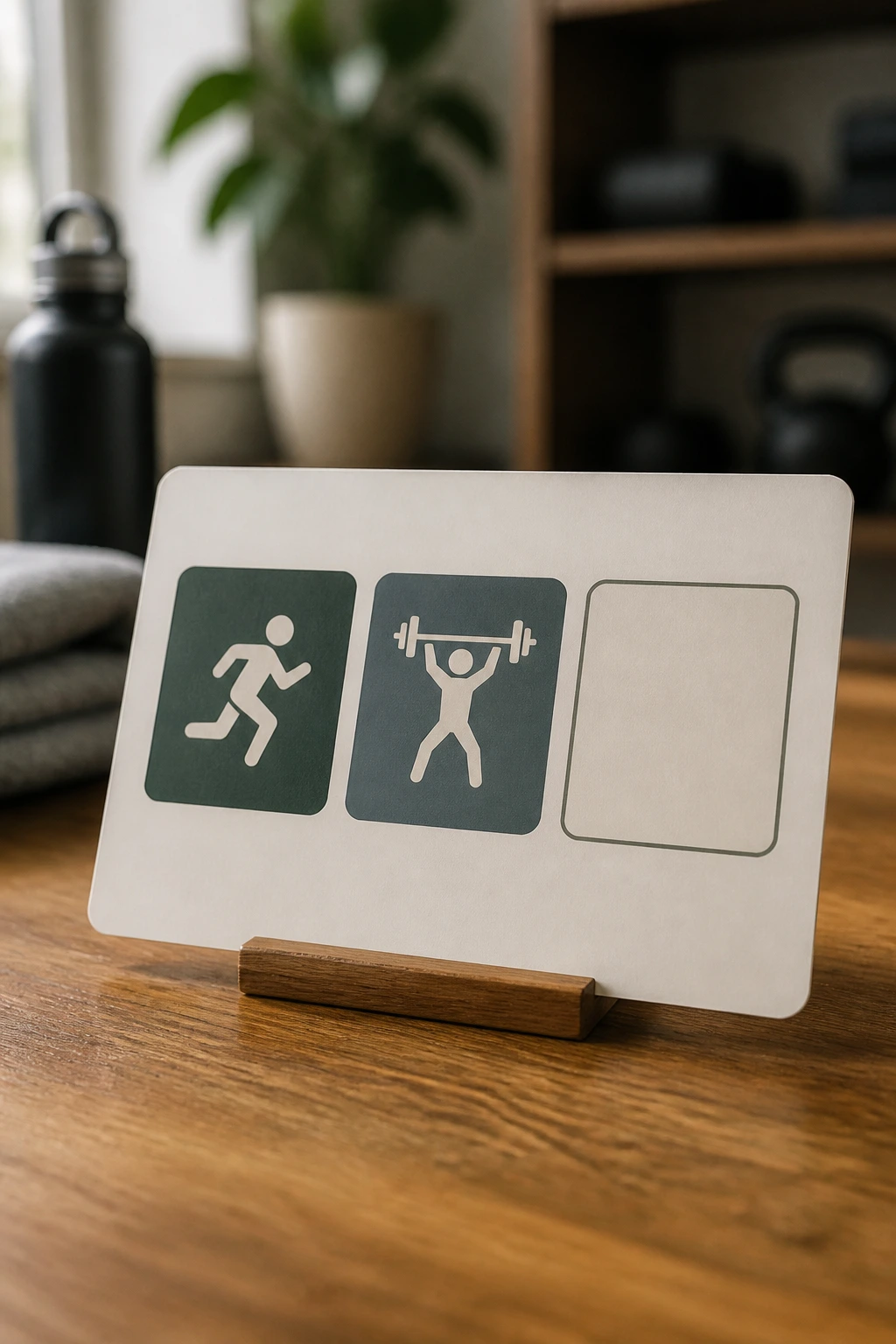
A two-on, one-off pattern is great for beginners who like movement but do not want a five-day commitment. Train two days, rest one, repeat. It creates a neat rhythm and keeps workouts from piling up too close together.
Why it feels easier
You always know what comes next. After two sessions, you get a break. After the break, you train again. The calendar almost runs itself, which is helpful when decision fatigue is part of the problem.
Use the training days for full-body work or a split that fits your equipment. The key is to keep the sessions moderate so the second day does not crush you. Put a tiny recovery note in each rest box: walk, stretch, sleep, or nothing at all. That last one counts too.
24. The Rest-Day and Sleep Tracker
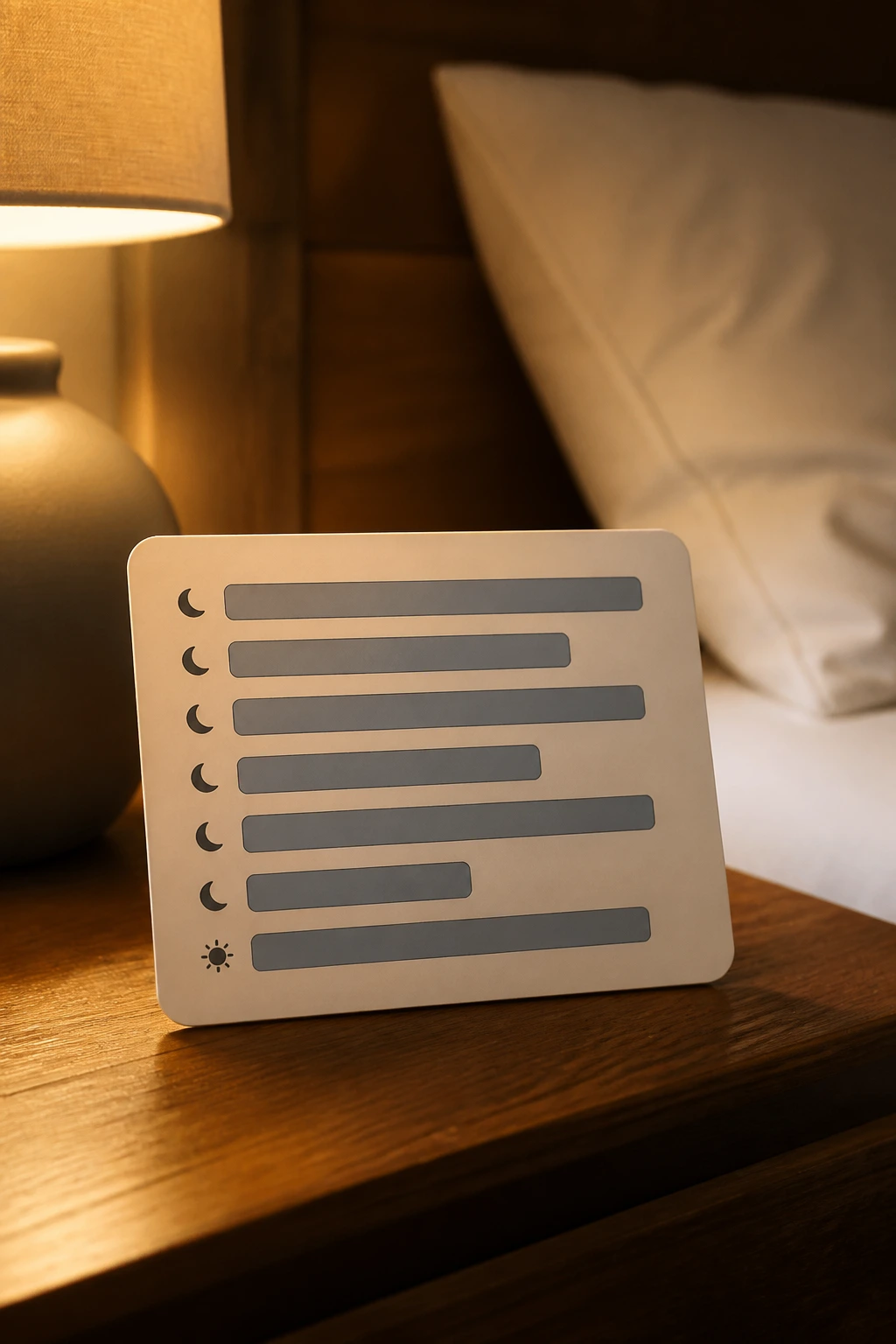
Beginners often obsess over workout days and ignore the boring parts that make workouts possible. Sleep is one of them. A rest-day and sleep tracker belongs on the calendar because poor recovery can make even a small plan feel hard.
Give each day a sleep line with room for hours slept and a quick note about quality. Then add a rest-day box with one recovery action: easy walk, mobility, foam rolling, or full rest. That lets you see the connection between how you slept and how training felt.
This template is especially useful if you wake up tired, stiff, or flat. Sometimes the problem is not the workout plan. It’s the recovery around it. The calendar gives you a way to notice that without guessing. And once you see the pattern, you can stop blaming yourself for what is really a sleep issue.
25. The Flexible Make-Up Day Template

Life happens. Work runs late, kids get sick, the bus is late, and the workout you planned at noon turns into a shrug. A flexible make-up day calendar keeps the whole month from collapsing when one session gets missed.
Build it with one or two open slots labeled make-up workout or catch-up day. Do not cram those slots so full that they become stressful. They are there to absorb the spill, not punish it. You can move a strength session here, swap a walk for mobility, or shorten a workout that ran long the day before.
I like this template because it quietly reduces guilt. A missed session does not vanish into the void. It has a place to go. That small design choice helps beginners stay steady when real life gets messy, and real life always gets messy eventually. The plan survives because the calendar leaves room for being human.
Final Thoughts
The best beginner workout calendar is the one that makes showing up feel plain and possible. Not heroic. Possible. That difference matters more than people like to admit.
Pick the template that matches your energy, your equipment, and your schedule on an ordinary week, not your ideal week. Ordinary weeks are the ones that build the habit.
And leave some blank space. A calendar with a little breathing room is easier to live with, which is usually the whole point.
