



A ponytail that slaps your neck during burpees is not cute after the third rep. And a braid that loosens halfway through a treadmill run is even worse, because then you spend the rest of the workout touching your hair instead of, you know, working out. The hairstyles that stay put during workouts share one trait: they anchor the hair in more than one place, so the whole style doesn’t slide, swing, or puff out the second you start sweating.
The trick is not just “put it up.” That advice is lazy. Hair behaves differently depending on length, texture, and even how clean it is. Freshly washed hair can be slick and stubborn. Second-day hair often has the grip that braids and buns need. Coily hair usually needs a stronger base at the scalp, while fine straight hair often needs a second elastic or a few pins to stop the ends from escaping.
I care a lot more about whether a style survives a set of deadlifts than whether it looks cute in the mirror before class. Cute is nice. Staying in place is nicer. A good gym hairstyle should feel snug when you first tie it, then disappear from your thoughts once the warm-up starts.
1. Sleek High Ponytail
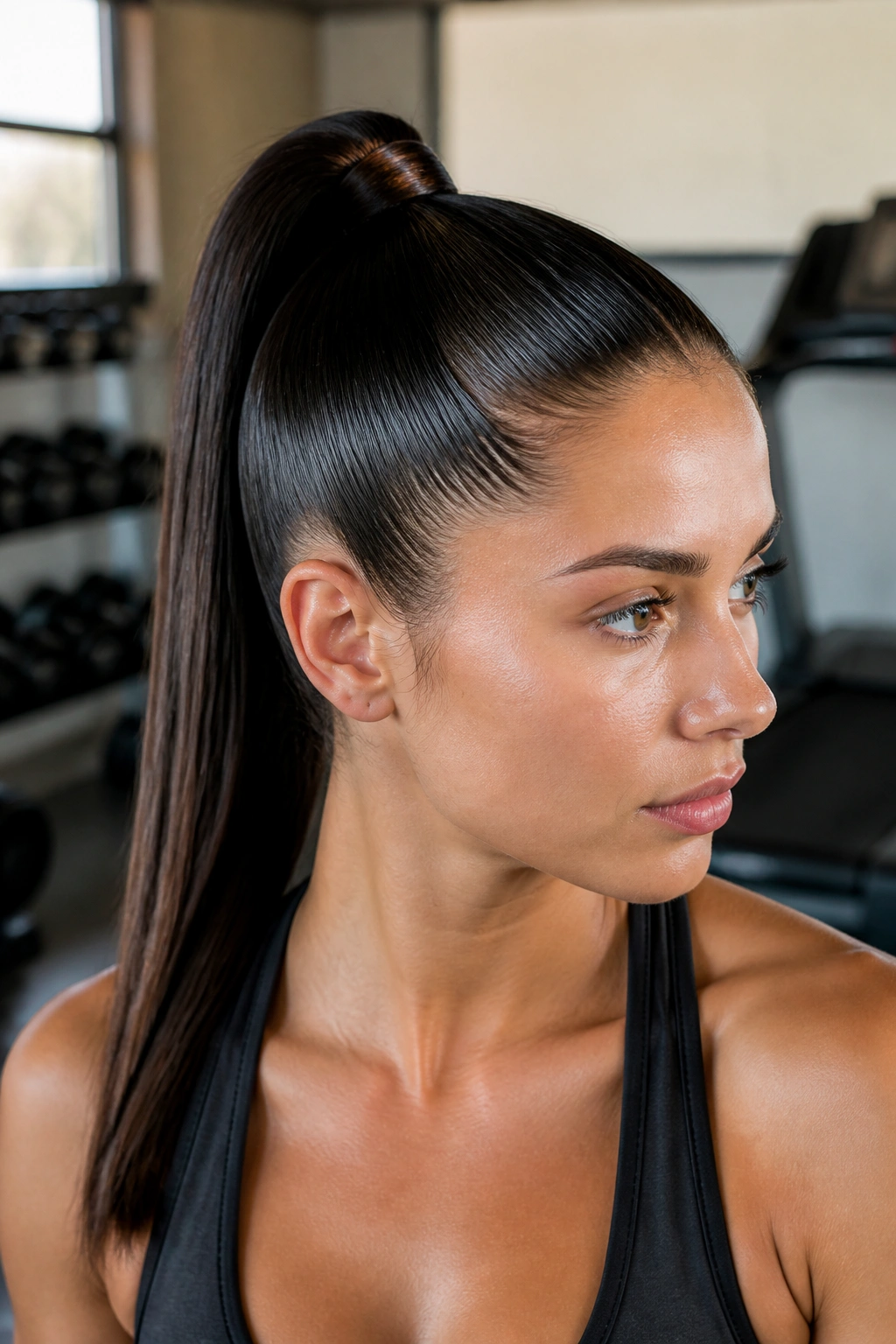
A high ponytail earns its spot because it keeps the weight of the hair off your neck and out of your face in one move. Done properly, it also stays surprisingly steady through lifting, incline walking, and most cardio classes. Done badly, it becomes a swinging metronome. So the base matters.
Why it holds
A tight ponytail sitting at the crown has less chance of sliding than one tied halfway down the head. Wrap a small section of hair around the elastic if you want extra grip, then pin the end underneath. One elastic is often not enough for thick hair. Use two if the first one starts to stretch or sag.
Best for: medium to long hair, especially when you want a clean, simple look.
Watch for: tension at the hairline. If your temples hurt before the workout even starts, the ponytail is too tight.
A sleek high ponytail also works better when the hair has a little texture. If it is freshly blown out and slippery, mist the roots with a light texturizing spray or just wait a day. Hair with some grit behaves better. Always.
2. Braided High Ponytail
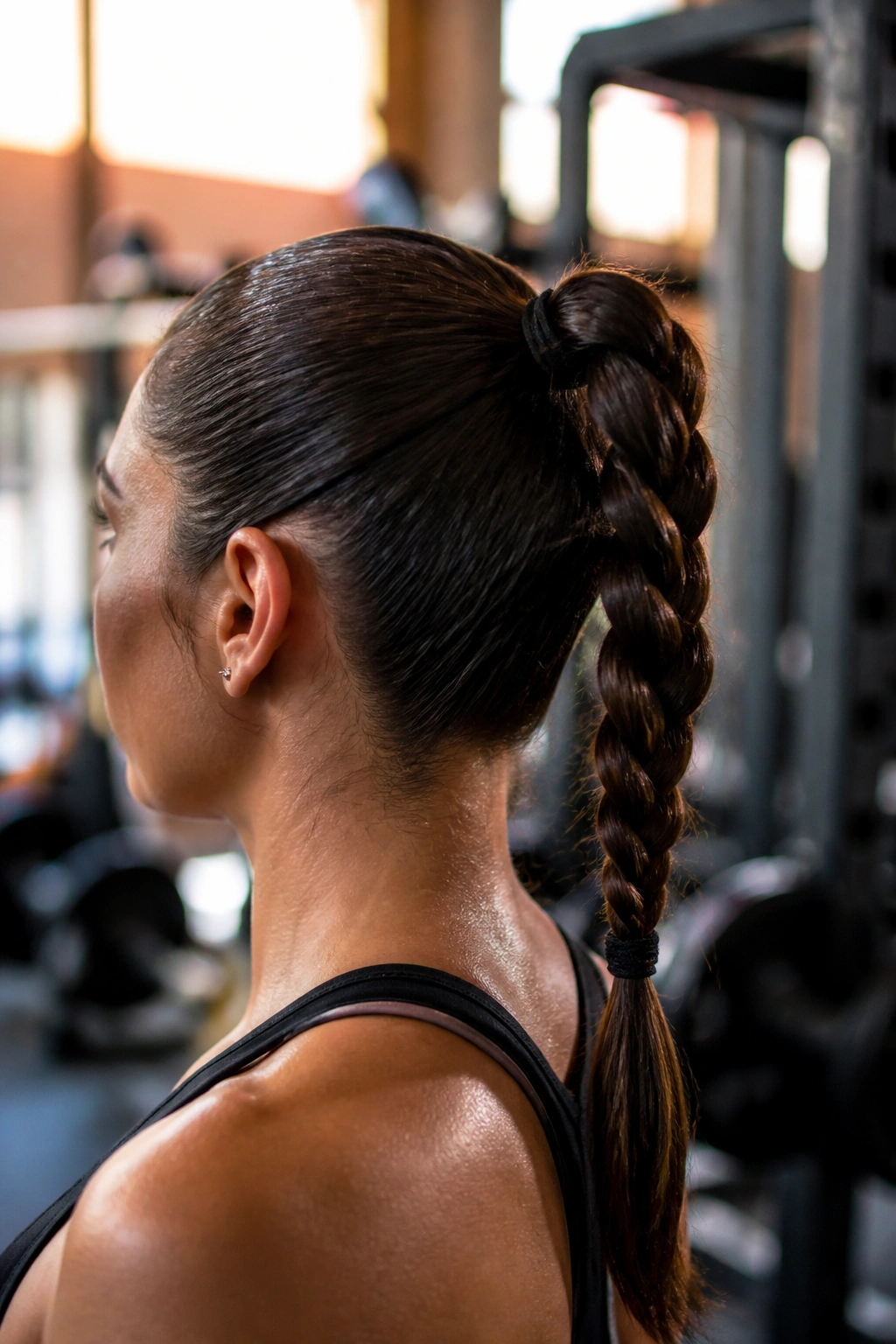
Why does a braided ponytail feel safer than a plain one? Because the loose tail is turned into one long, controlled strand instead of a swinging rope. That one change makes a huge difference once you start running, jumping, or rowing.
Start with a high ponytail, secure it hard at the crown, then braid the length all the way down. A thin elastic at the end keeps the braid from unraveling. If the hair is very long, fold the braid under itself once and pin it near the base. That keeps the tail from whipping across your back during sprints.
This style is one of my favorites for long sessions because it looks neat even when the workout gets messy. Sweat does not wreck it as fast as it wrecks loose styles, and the braid keeps the ends from turning into a frizzy cloud. It’s not magic. It’s just structure.
The only real downside is that if the braid starts too low or too loose, the whole ponytail can droop. Tight base first. Then braid.
3. Dutch Braid
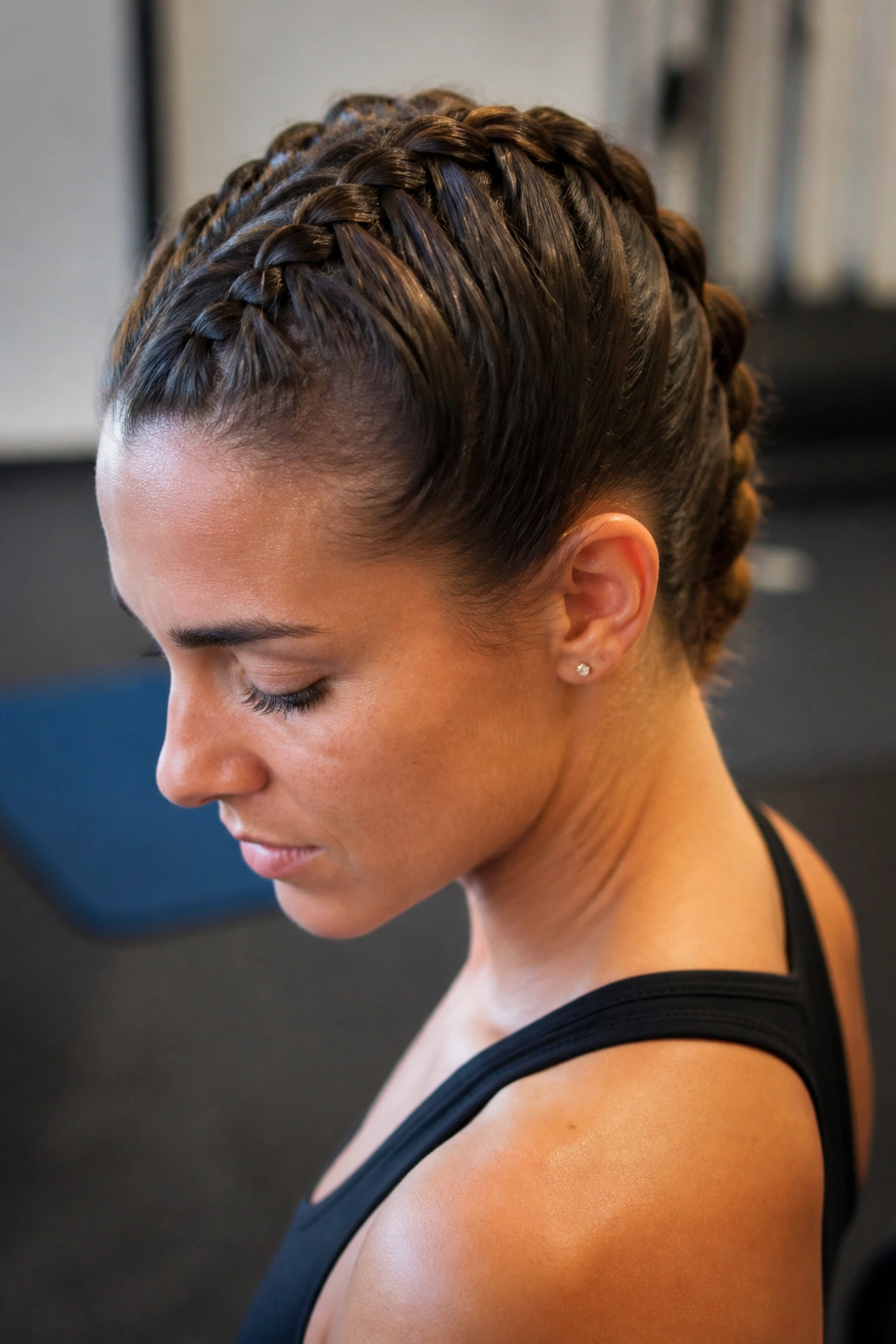
A Dutch braid sits on top of the head instead of sinking into it, which gives it a sturdy, locked-in feel that works well when you’re moving a lot. It is one of those styles that looks more complicated than it is once you get the hand movement down. The braid grips the scalp from the forehead back to the nape, so it does not have much room to wander.
What makes it different
Unlike a French braid, the Dutch braid crosses sections under rather than over. That small change makes the braid pop up a little more and helps it stay visible and secure. It is a smart pick for running, spin class, and rowing because the braid follows the shape of the head instead of bouncing away from it.
How to wear it
- Part the hair cleanly down the center or slightly off-center.
- Start near the hairline and take small, even sections.
- Keep the braid tight enough to hold, but not so tight that your scalp feels sore by the end of warm-up.
- Finish with a small elastic and tuck the tail under a jacket collar if you want it even more stable.
If you only want to learn one braid for workouts, this is a strong place to start. It holds. It stays neat. It does the job.
4. French Braid
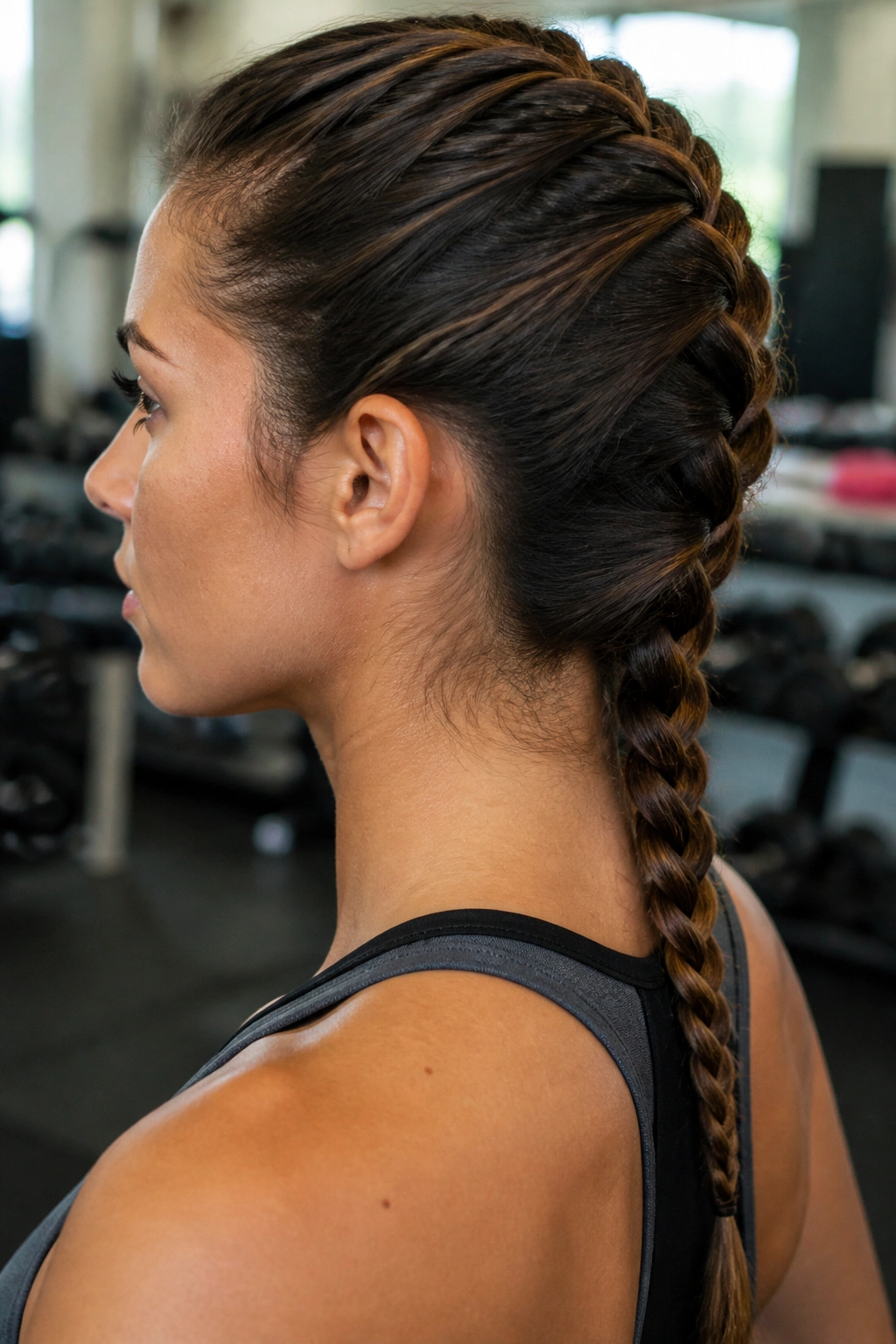
A French braid is the flatter, quieter cousin of the Dutch braid. It hugs the head closely, which makes it especially good if you hate bulk at the back of your head or if you wear a cap, hood, or helmet for part of your training. It also sits nicely under a beanie during colder months, though the real test is whether it stays tidy when you bend forward.
The braid works because each new section gets added right into the structure as you go. That gives the hair a long spine of support. If you keep the tension even from top to bottom, the braid feels stable all the way through a workout. Uneven tension is what makes it loosen at the crown first, and that’s usually the part that matters most.
This style is especially good for people with medium-length hair that brushes the shoulders during lunges or floor work. A French braid keeps those ends from fraying into the face. It is also one of the nicer choices if you want to go from gym to errands without redoing your hair.
A loose French braid looks pretty. A tight one actually works.
5. Boxer Braids
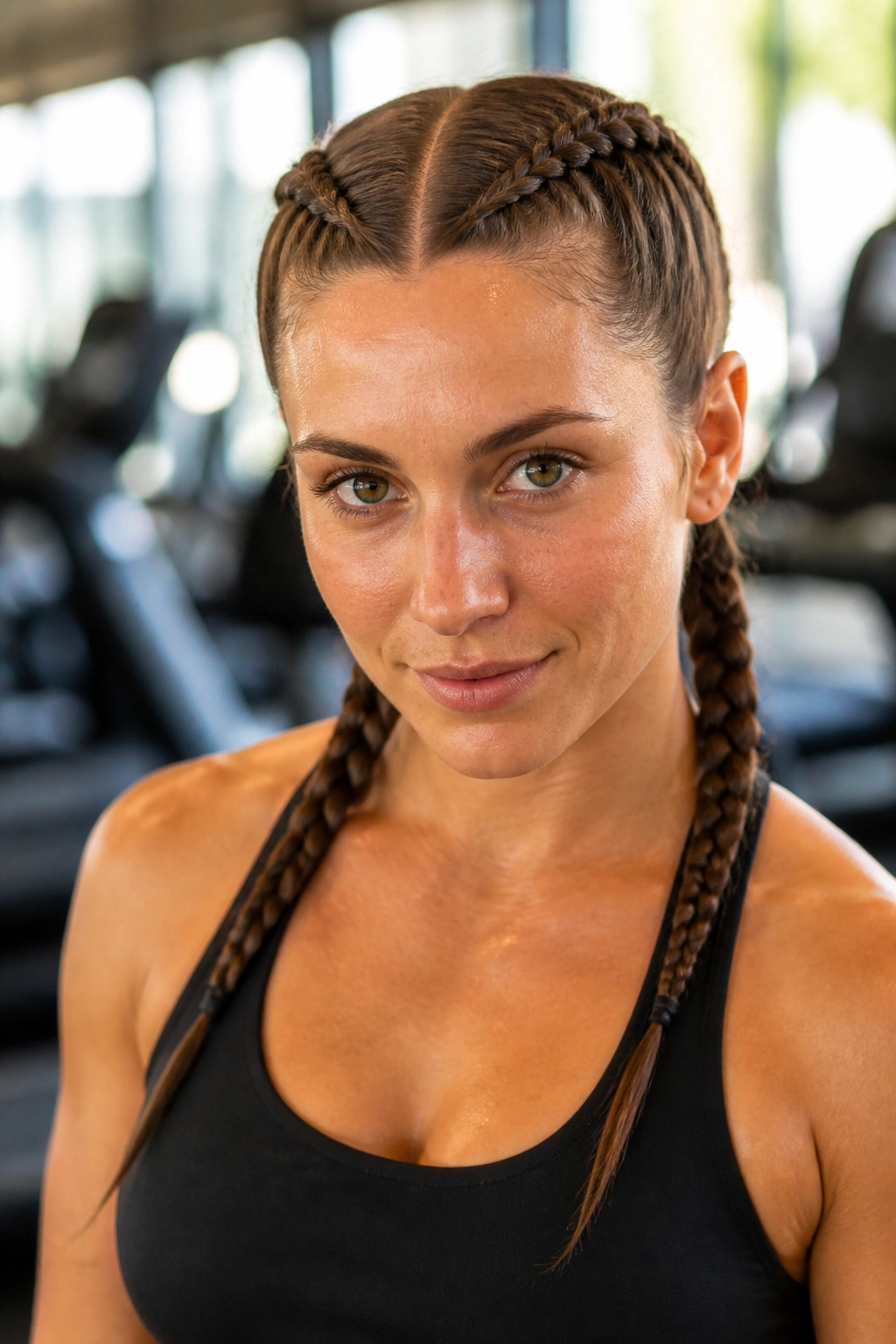
Two braids feel more secure than one because the weight gets split across both sides of the head. That balance matters during burpees, jump rope, and anything that makes your head move around fast. Boxer braids are basically tight Dutch braids worn on each side, and they are hard to beat for high-energy training.
Best for high movement
This is the style I reach for when I know I’m not going to be standing still much. Each braid anchors close to the scalp, so there is less swinging than you get with a ponytail. If your hair is thick, the two-braid setup also spreads out the bulk so one side does not drag the other down.
Quick setup notes
- Part the hair straight down the middle.
- Braid from the front hairline back to the nape on each side.
- Keep the sections even so one braid does not end up fatter than the other.
- Secure the ends with small elastics, then tuck them under the shirt collar if they’re long.
The look is practical, but not boring. More important, it stays out of the way when you’re sweating hard. That is the whole point.
6. Cornrows
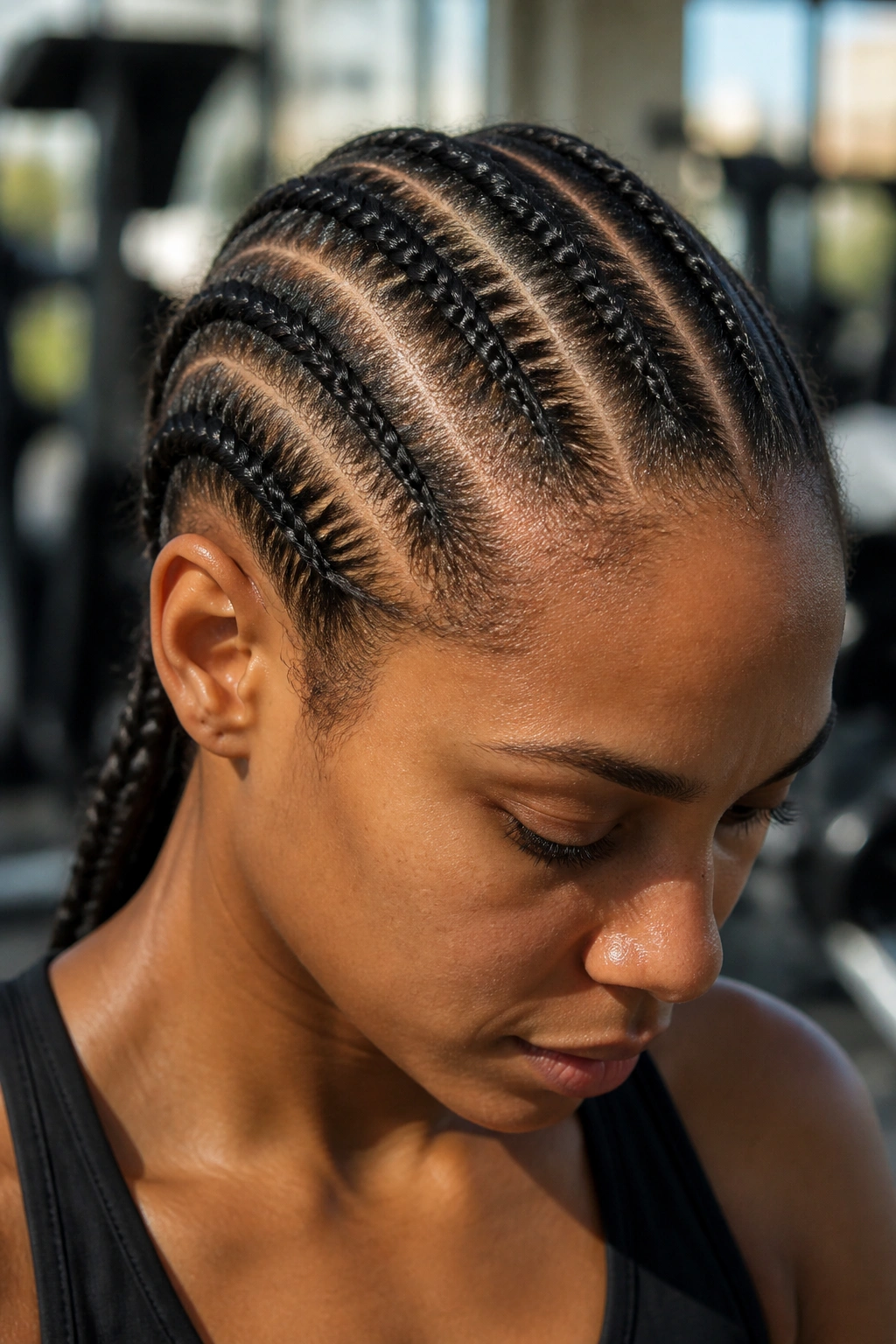
Cornrows are one of the few styles that can survive a serious workout and still look intentional afterward. They sit close to the scalp, they do not swing, and they keep the ends controlled from the start. If you train often and hate redoing your hair every day, cornrows can save you a lot of annoyance.
The key is keeping the braid pattern neat without pulling so hard that your scalp feels hot or tender. Tight is good. Pain is not. The lines can be straight-back, curved, or angled, depending on what suits your hair and your face shape. Straight-back rows are probably the easiest to keep stable under sweat and movement.
Cornrows are especially useful for long training sessions because the hair has fewer loose points to escape from. That said, they need a careful hand. If the rows are installed too tightly, the hairline will complain. If they’re too loose, the style puffs up faster than you want.
They also work well when paired with a low ponytail or braided tail at the back. That extra step keeps the ends from fuzzing out during cardio. Clean lines. Less fuss.
7. Braided Bun
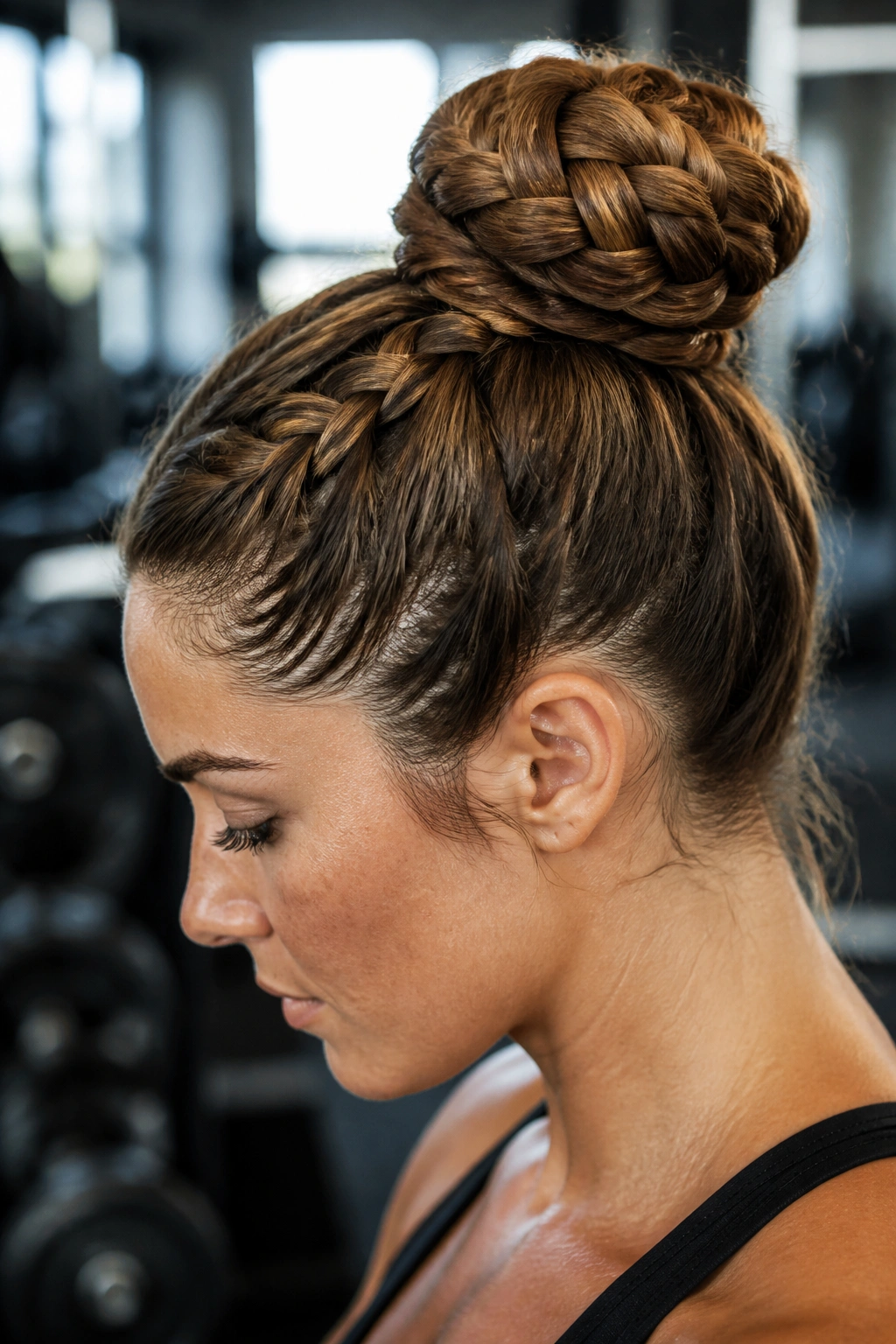
A plain bun can shift. A braided bun has a built-in lock because the braid holds the length together before it gets wrapped. That makes it a stronger choice for rowing, weight training, and classes where you end up lying on the floor or flipping from one side to the other.
Start with a ponytail, braid the tail, then coil the braid around the base and pin it down in two or three spots. Use bobby pins that match your hair color if you care about neatness, but more important is the direction of the pins. Slide them in against the twist, not away from it, so they grab the bun instead of skimming off the surface.
This style is a little more work than a regular bun, but the payoff is obvious once you start moving. The braid keeps the tail from unraveling, and the bun keeps it from swinging. A lot of so-called workout updos fail because they only solve one of those problems.
If your hair is thick, use one elastic for the ponytail base and another to hold the braid before you wrap it. That second anchor helps more than people think.
8. Low Braided Ponytail
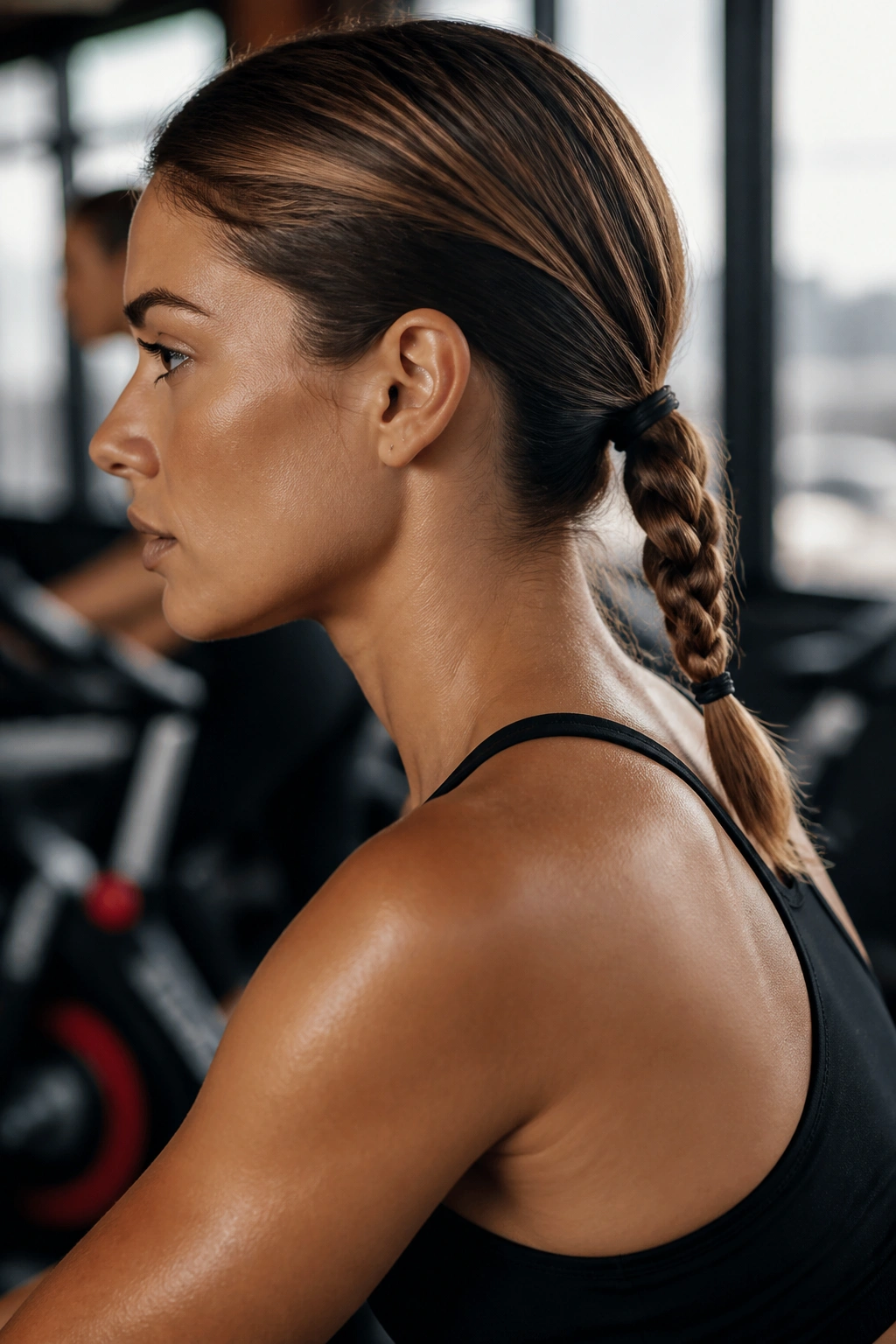
A low braided ponytail is the sort of hairstyle that looks modest until you actually wear it through a hard session. Keeping the ponytail at the nape reduces bounce, and braiding the length stops the end from turning into a sweaty mess. It is one of the easiest ways to keep hair controlled without putting a lot of tension on the crown.
This style is a solid choice for lower-body day, indoor cycling, and anything with a lot of floor work. A high ponytail can get in the way when you’re lying on a bench or mat. A low braided version stays closer to the body and usually feels less fussy. That matters more than people admit.
If you have layered hair, start with a smooth base and secure the ponytail a touch tighter than you think you need. Layers like to escape near the face first. Once the braid is done, a tiny elastic at the end keeps it from fraying into little flyaways.
It is not flashy. It works.
9. Top Knot
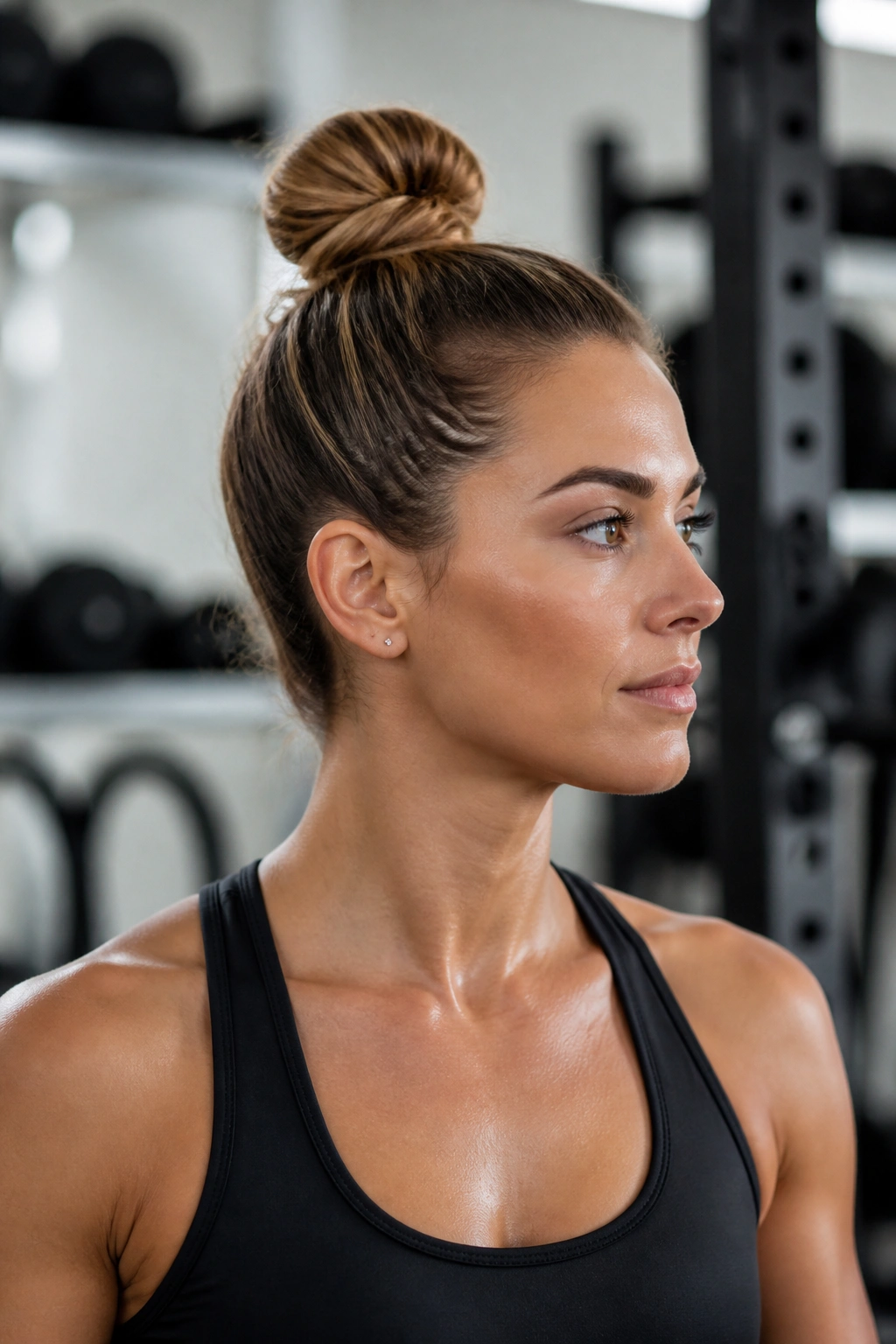
Fast. Simple. Serious. A top knot is still one of the most useful workout styles because it gets everything up and away with almost no setup time, and a properly done one can survive a whole lifting session without sliding down your head. The trick is shape, not size.
A messy knot with a loose base will wobble. A tight knot wrapped around itself and pinned into the center holds far better. Start with a high ponytail, twist the length, then wrap it around the base and pin it in two directions so the knot doesn’t unravel from one side. If your hair is very long, split the tail in half before wrapping. That keeps the knot from getting too bulky.
Top knots are especially good when you want your neck completely clear. They also work under some beanies and hoodies, which is useful if you train outside or in a drafty room. The downside is that they can feel heavy if you pile too much hair too high.
Keep the knot close to the skull. That is the part people miss. A knot that floats above the head looks fun for five minutes and then starts to droop.
10. Double Space Buns
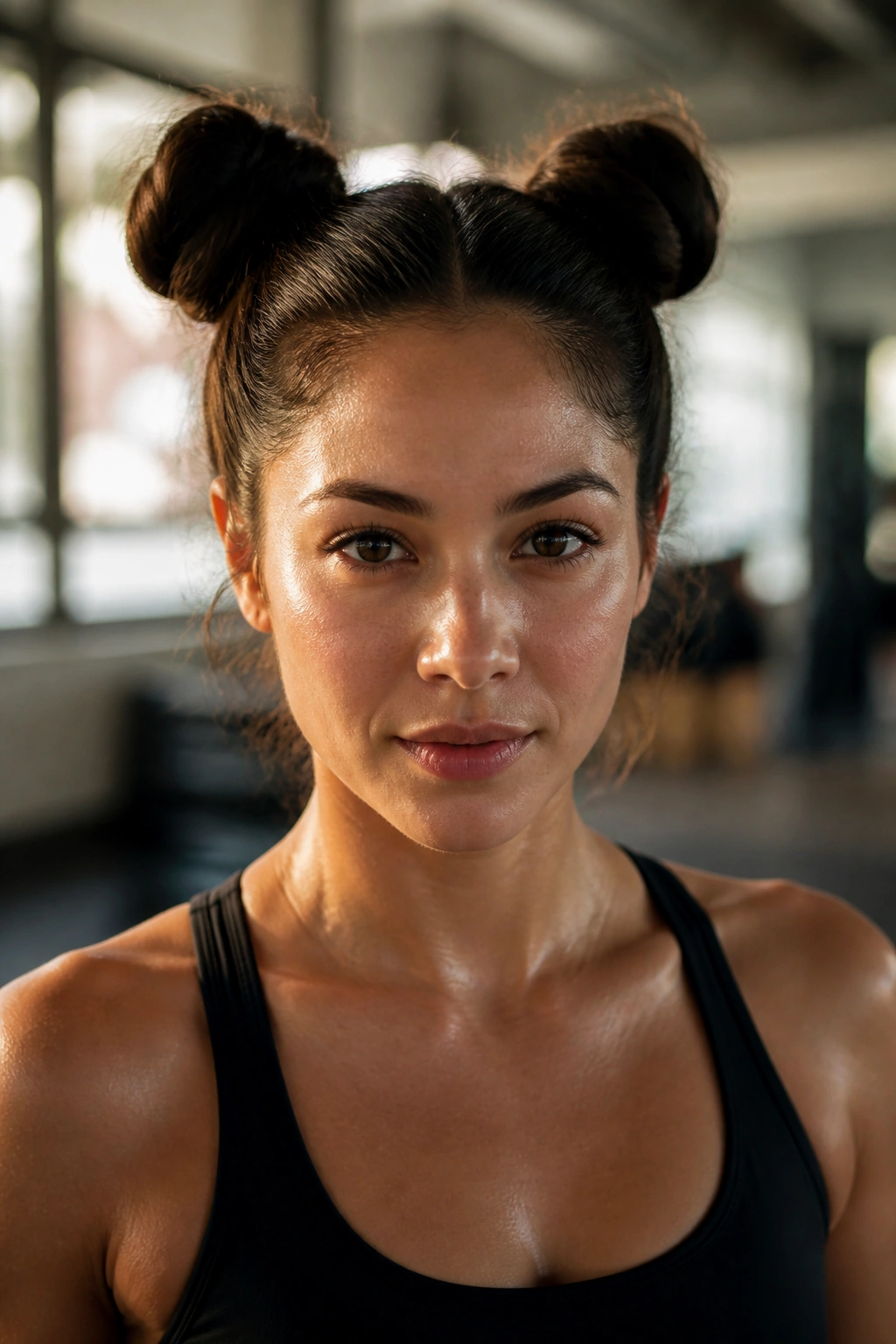
Want your hair off your neck and off your back? Two buns do that better than one in a lot of cases, especially if your hair is thick or long. The weight gets split, which makes the style feel lighter and helps it stay balanced during movement.
Part the hair cleanly down the middle, then tie two high pigtails or two low ones, depending on where you want the buns to sit. Twist each section, coil it around its base, and pin it down. If you want the look to be extra secure, braid each pigtail first. That gives the bun a firmer core.
Where they shine
- Dance cardio and jump-heavy classes.
- Shorter lifting sessions.
- Days when you want your hair contained but not flattened.
Double buns can look playful, but they are practical when done snugly. If one bun is looser than the other, the style starts to tilt. That is the main thing to watch. Even tension on both sides keeps everything sitting right.
11. Bubble Ponytail
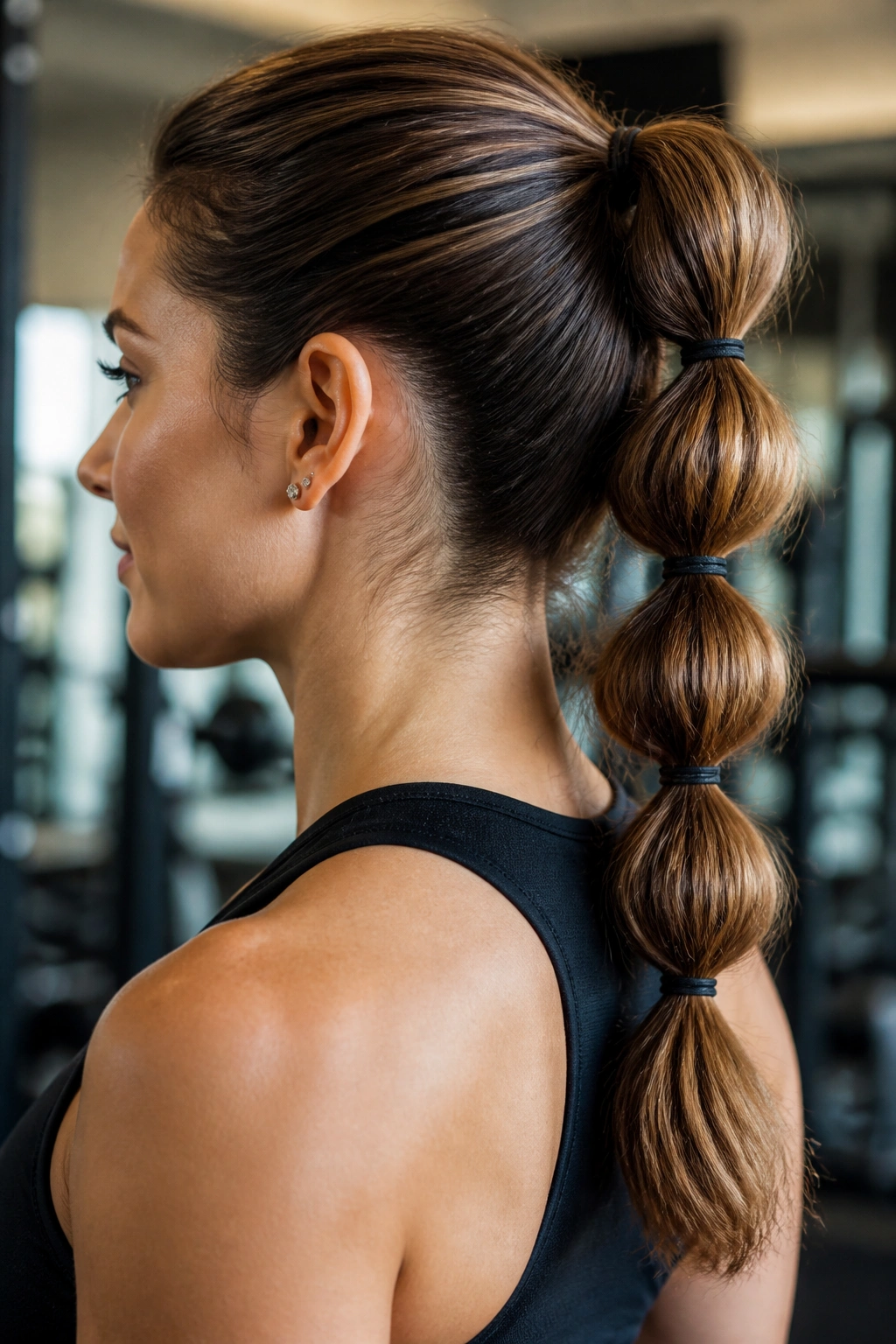
A bubble ponytail looks decorative, yet it is one of the most stable long-hair styles if you set the elastics correctly. The idea is simple: a ponytail gets divided into sections, and each section is cinched with a small elastic every 2 to 3 inches. Those little “bubbles” stop the tail from whipping around and help the length stay bundled.
The first elastic at the base matters most. Make that one secure, then work down the ponytail with evenly spaced ties. Gently pull each section outward after securing it so the bubbles look rounded instead of flat. If the sections are too big, the style sags. If they’re too small, it can get fiddly and start to feel overdone. There is a sweet spot.
This is a nice option for people with long straight or wavy hair that usually slips out of simpler ponytails. It also keeps the hair looking neat after a cardio circuit because the individual sections stay separated instead of tangling together.
What to watch for
- Use snag-free elastics.
- Keep the spacing even.
- Don’t start too low, or the first bubble will collapse.
A bubble ponytail is a little more setup, yes. It’s worth it when the hair needs to behave.
12. Fishtail Braid
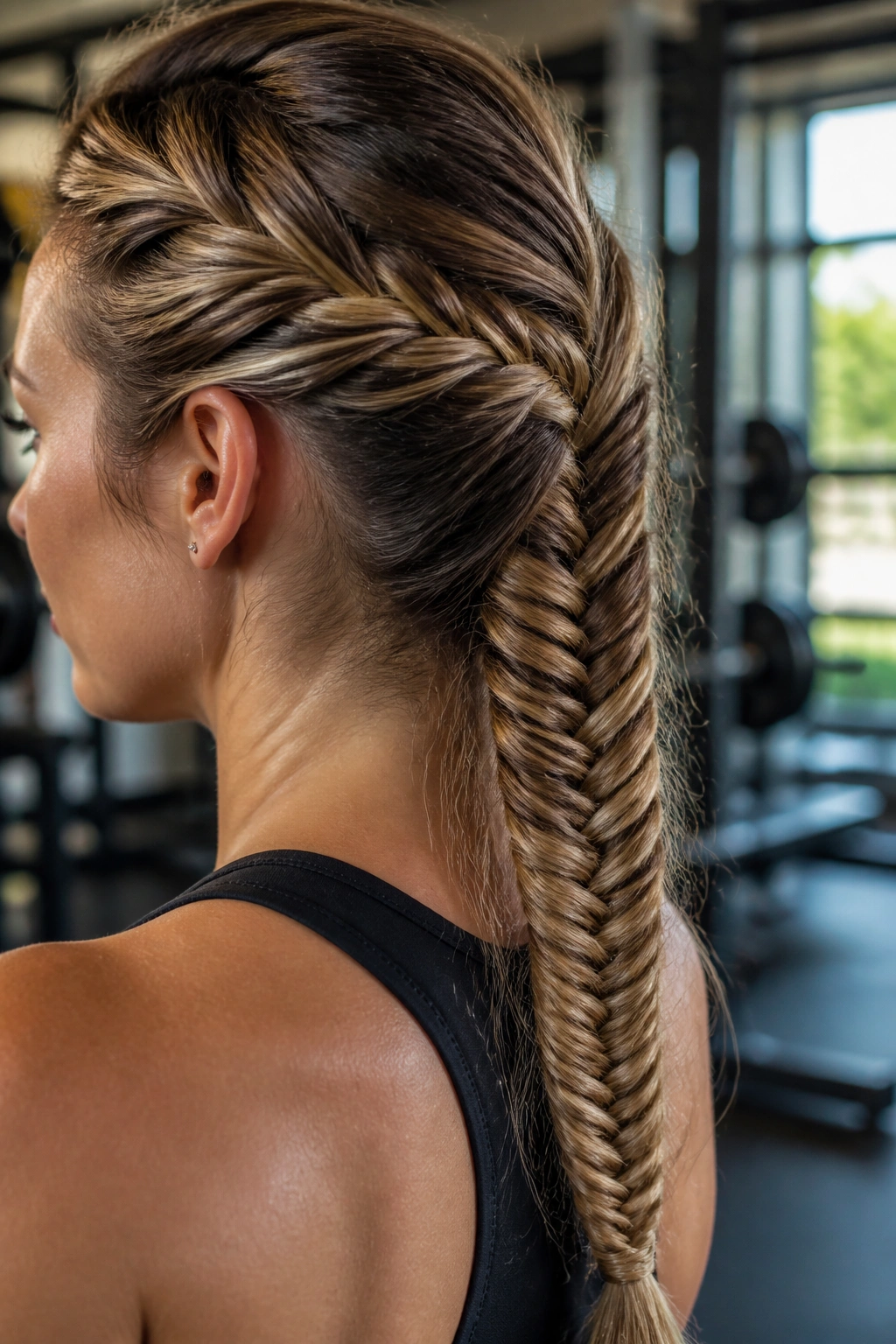
A fishtail braid looks delicate from a distance, which is funny because when it’s done tightly, it can hold better than a lot of looser braids. The braid uses two sections instead of three, and that structure hugs the hair in a way that feels compact and steady. Long hair especially benefits from that close, woven feel.
The main catch is time. A fishtail takes more patience than a regular three-strand braid, and if your hands move too fast, the sections get messy. But once you get it set, it tends to stay pretty well through lifting, walking, and moderate cardio. The pattern also helps smooth the length, which cuts down on frizz at the ends.
I like it most on hair that is already a little textured. Slick, freshly washed hair can be slippery and make the braid loosen early. If that sounds like your hair, wait until the roots have some grip or use a tiny bit of dry texture spray before you start.
It is not the quickest style on this list. It is one of the prettiest that still earns its keep.
13. Rope Braid
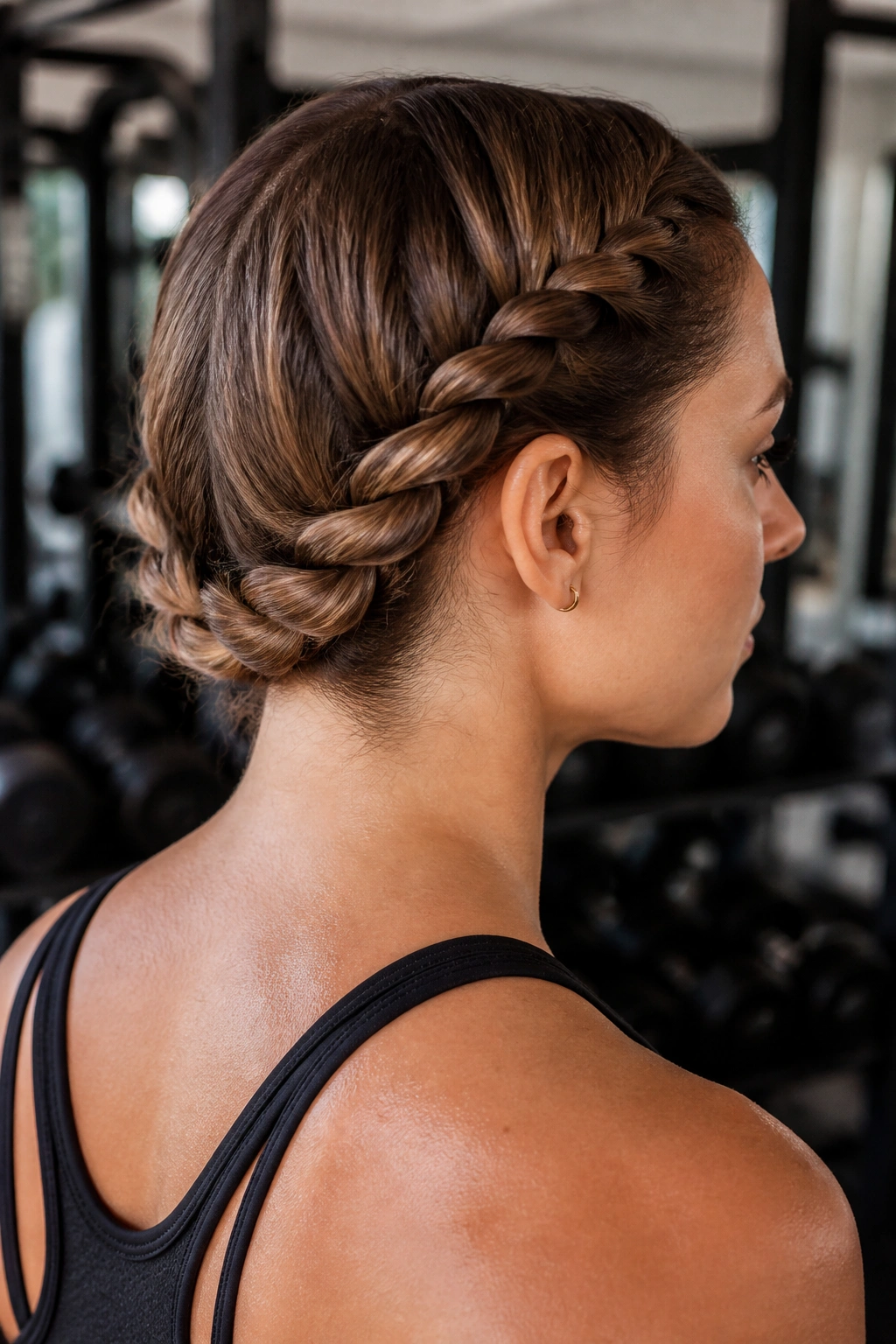
If regular braids keep slipping out of your hair, a rope braid is worth trying. It uses two strands twisted in opposite directions, and the finished shape tends to grip the length in a slightly different way than a standard braid. On fine hair, that difference can mean less unraveling.
Start with a ponytail or a low section, split it into two equal pieces, twist each one in the same direction, then wrap them around each other in the opposite direction. That part matters. Get the direction wrong and the braid softens fast. Once it’s done, secure the end with a small elastic and, if the hair is long, tuck the tail into a bun or under a shirt collar.
This style is a good pick for people who want something neat but not too bulky. It sits flatter than a top knot and usually feels lighter than two thick braids. It’s also nice on days when you don’t want a lot of pins digging into your scalp.
Rope braids are underrated. A little old-school, maybe. Also useful.
14. Crown Braid
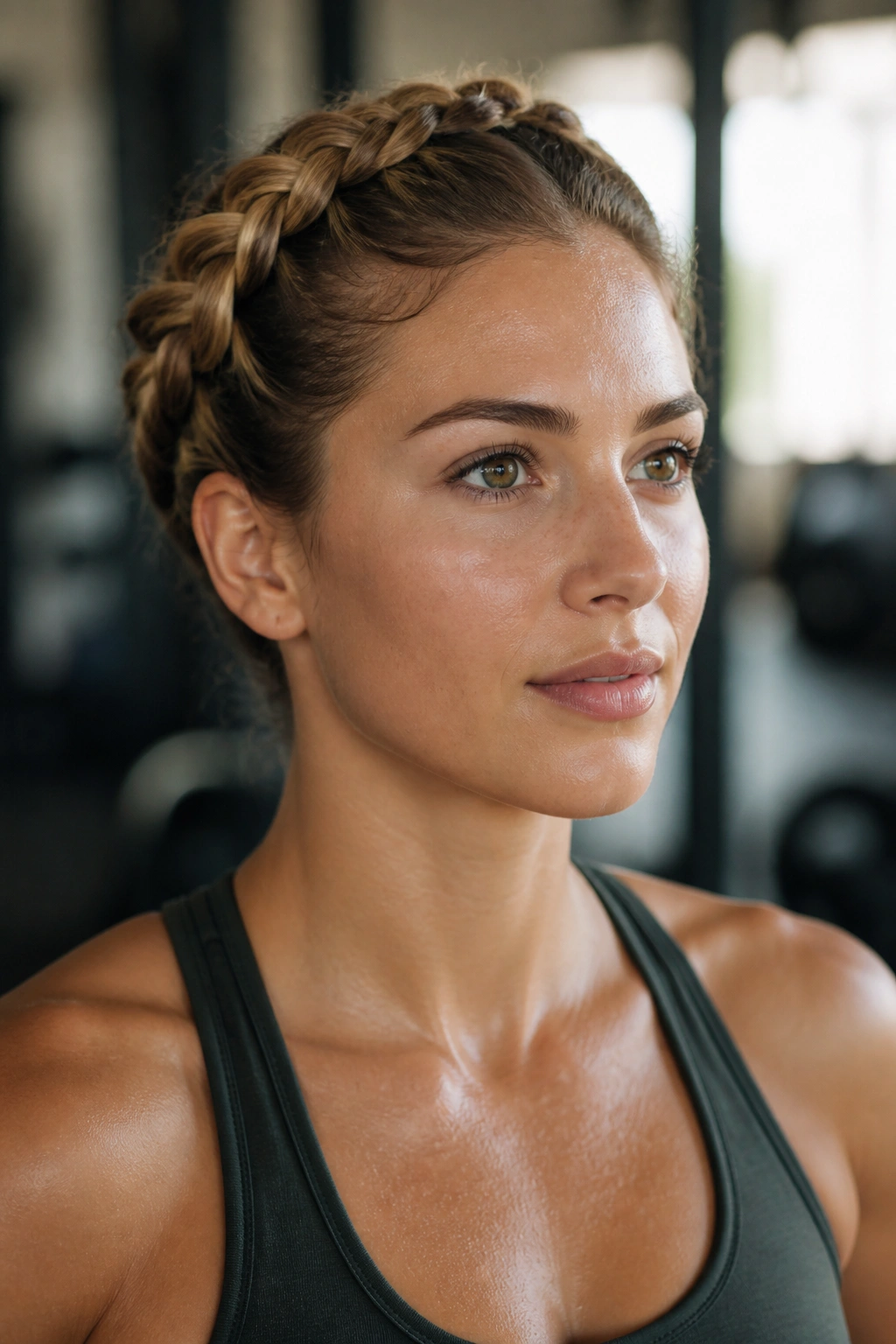
A crown braid keeps the front and sides of the hair off your face by wrapping the braid around the head like a headband. That alone makes it useful for workouts where stray pieces around the forehead drive you crazy. It’s especially good for medium to long hair that usually falls forward when you bend or stretch.
The style works because the braid anchors around the perimeter of the head instead of hanging from one point. That means less bouncing and less neck drag. It also helps if you do a lot of yoga or barre, where your face spends a fair amount of time looking down. No loose front pieces means fewer distractions.
The nape is the part to watch. If the braid gets loose at the back, the whole crown starts to shift. A couple of pins at the base can fix that fast. Some people also finish the braid into a tucked bun at the nape, which gives extra security without changing the look much.
It’s one of the prettiest workout styles that still behaves itself. Not bad for something that starts with basic braiding.
15. High Puff
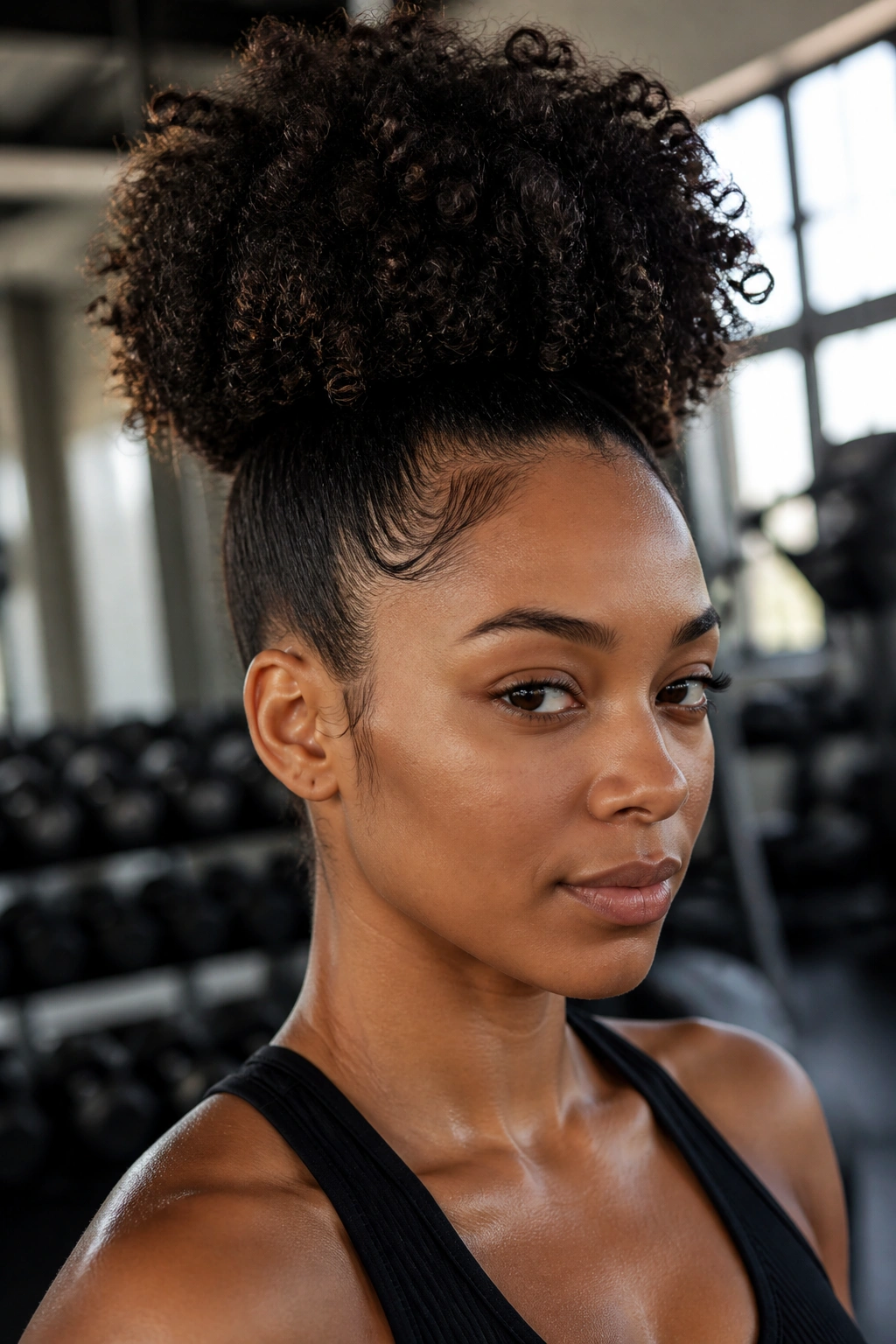
Curly hair needs a different answer. A high puff does that well because it lifts the curls above the shoulders and keeps the bulk away from the neck without smashing the texture flat. It is one of the easiest styles to keep comfortable during workouts when your hair is coily or very curly.
The base matters most here. Use a stretchy band or puff cuff that can hold the hair without digging in, then smooth the edges just enough that the style stays together. You want lift, not pain. If the band is pulling too hard, the puff will feel like a headache waiting to happen.
The high puff also handles sweat better than a lot of looser natural styles because the hair is gathered in one place instead of being spread around the face and nape. A little frizz is part of the deal. That’s fine. The point is control, not perfection.
Good things about a high puff
- Keeps curls off the neck.
- Works fast.
- Pairs well with a headband for extra sweat control.
A good high puff feels secure the moment you move. That is the test.
16. Pineapple Puff
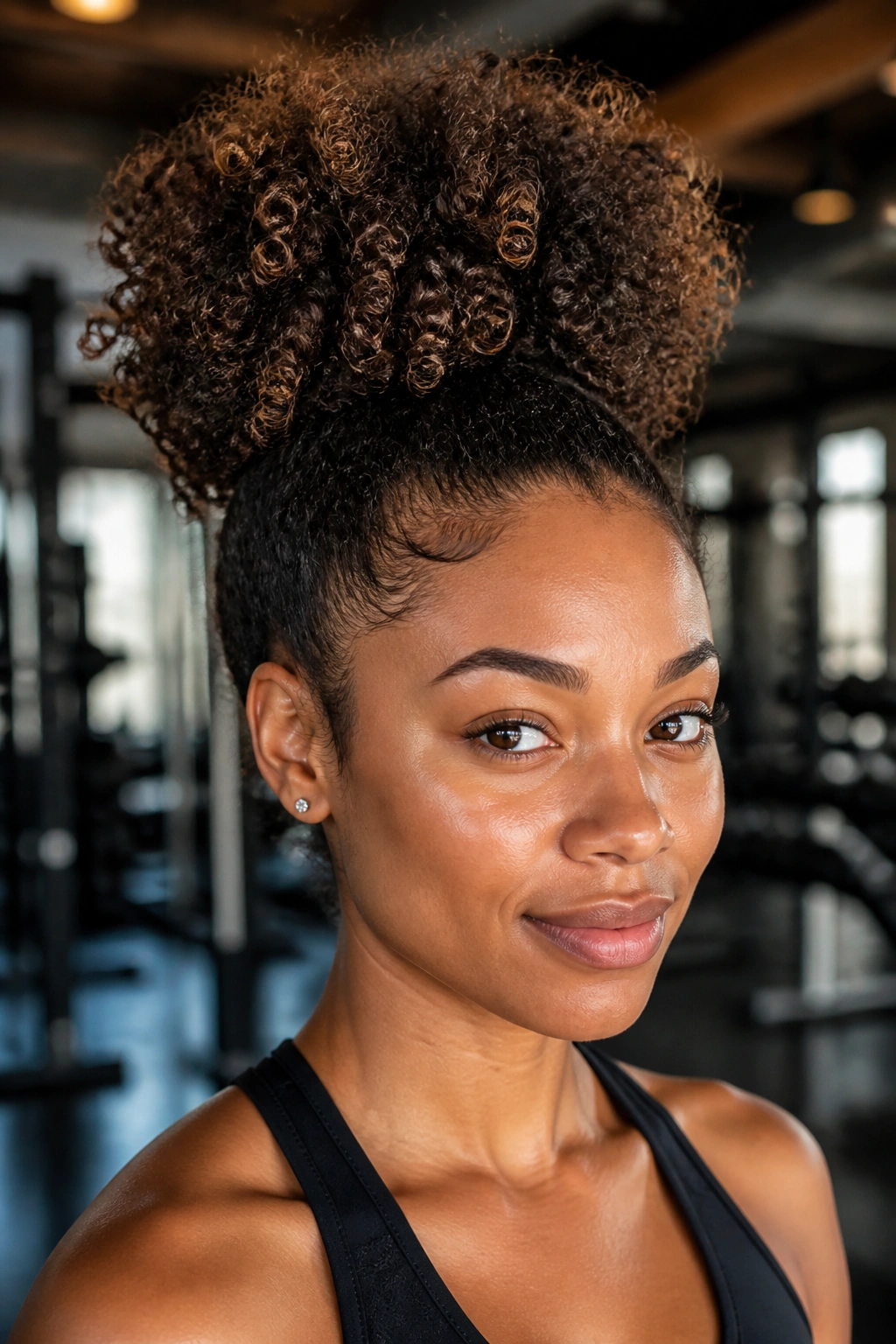
Can a pineapple really stay put in the gym? Yes, if the base is secure and your hair texture cooperates. The pineapple style gathers curls high on the head, which keeps the length up and away while preserving the curl pattern more gently than some tighter updos.
This works especially well for medium-length curls and coily hair that you do not want to flatten before or after training. A satin scrunchie can be comfortable, but if it slides on your hair, switch to a stronger elastic with grip. The style should sit high enough that the ends don’t brush your shoulders every time you move.
Pineapples are better for lifting, walking, Pilates, and moderate cardio than for full-on flipping and jumping. That honesty matters. A style can be secure without being the right answer for every class. If you know your workout involves a lot of upside-down movement, a puff or braided style usually does better.
The nice part is that it still looks good when you’re done. Less stretching, less fuss, and fewer knots later.
17. Two-Strand Twists Rolled Into a Bun
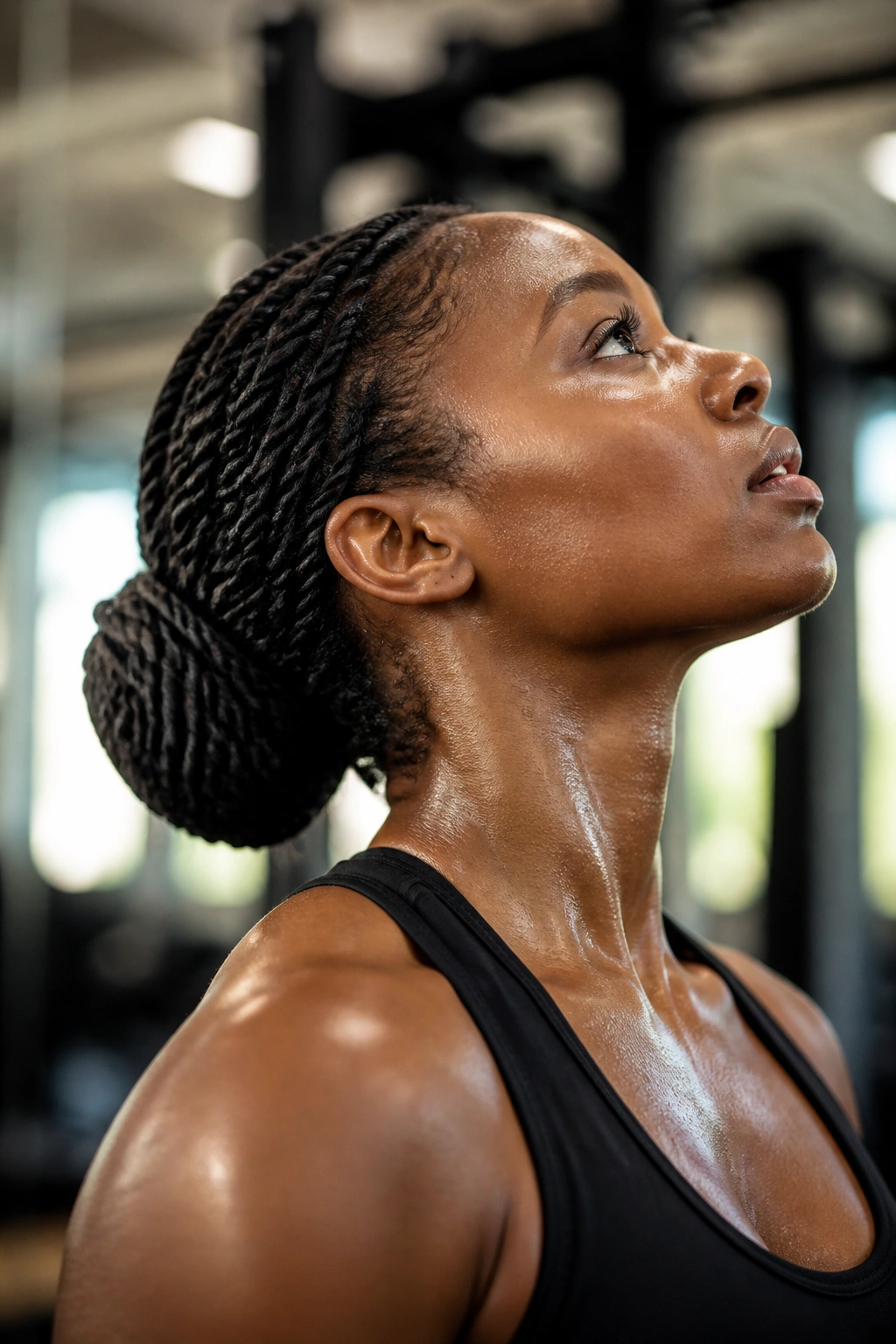
Two-strand twists are one of the safest bets for textured hair because they hold shape without depending on a single tight elastic to do all the work. Once the twists are in, rolling them into a bun gives you a style that stays compact and behaves well under sweat and motion.
Why twists help
The twist pattern keeps each section controlled from root to end. That matters a lot if your hair likes to puff up or separate during exercise. After you twist the hair, coil the length into a low or high bun and secure it with pins at the base and one through the center if needed.
How to make it hold
- Start with slightly damp, not wet, hair.
- Use a small amount of leave-in conditioner or styling cream.
- Twist in the same direction on both sides so the bun sits evenly.
- Pin through the thickest part of the coil, not just the outer layer.
This is a smart choice for people who want a style that can last beyond one workout. It tends to keep its shape better than a loose bun and usually feels less harsh on the scalp than a tight ponytail. Twists do ask for a little more setup time. They give it back by staying in place.
18. Flat Twists Into a Low Knot
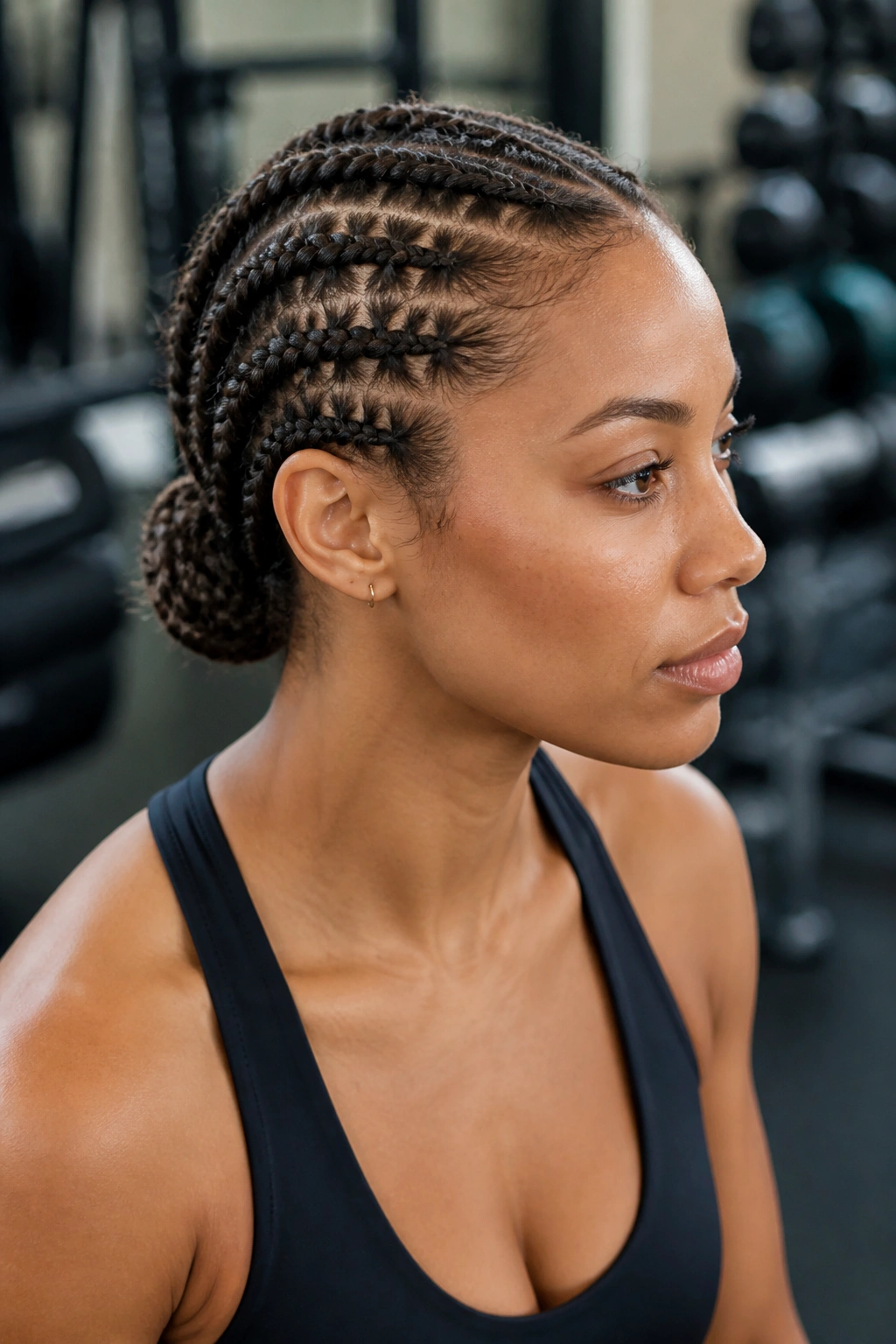
Flat twists are underrated because they lie close to the scalp and keep the head looking neat without a lot of volume at the crown. When they end in a low knot, the whole style sits flat enough for floor exercises, bench work, and any session where a bulky bun would feel annoying.
The style is especially good if you like your hair controlled but do not want the tension of tight braids all over the scalp. Flat twists are often more comfortable than cornrows for some people, and they can be faster to redo between workouts. The low knot also keeps the ends from wandering, which is the thing that usually ruins a neat style halfway through training.
This one works best when the parting is clean and the twists are even. If one side is thicker, the knot twists off-center and starts to lean. A couple of pins in an X shape through the knot can stop that fast.
It’s a low-profile style, and that is the charm. Nothing is flopping around. Nothing is begging for attention. Good.
19. Feed-In Braid Ponytail
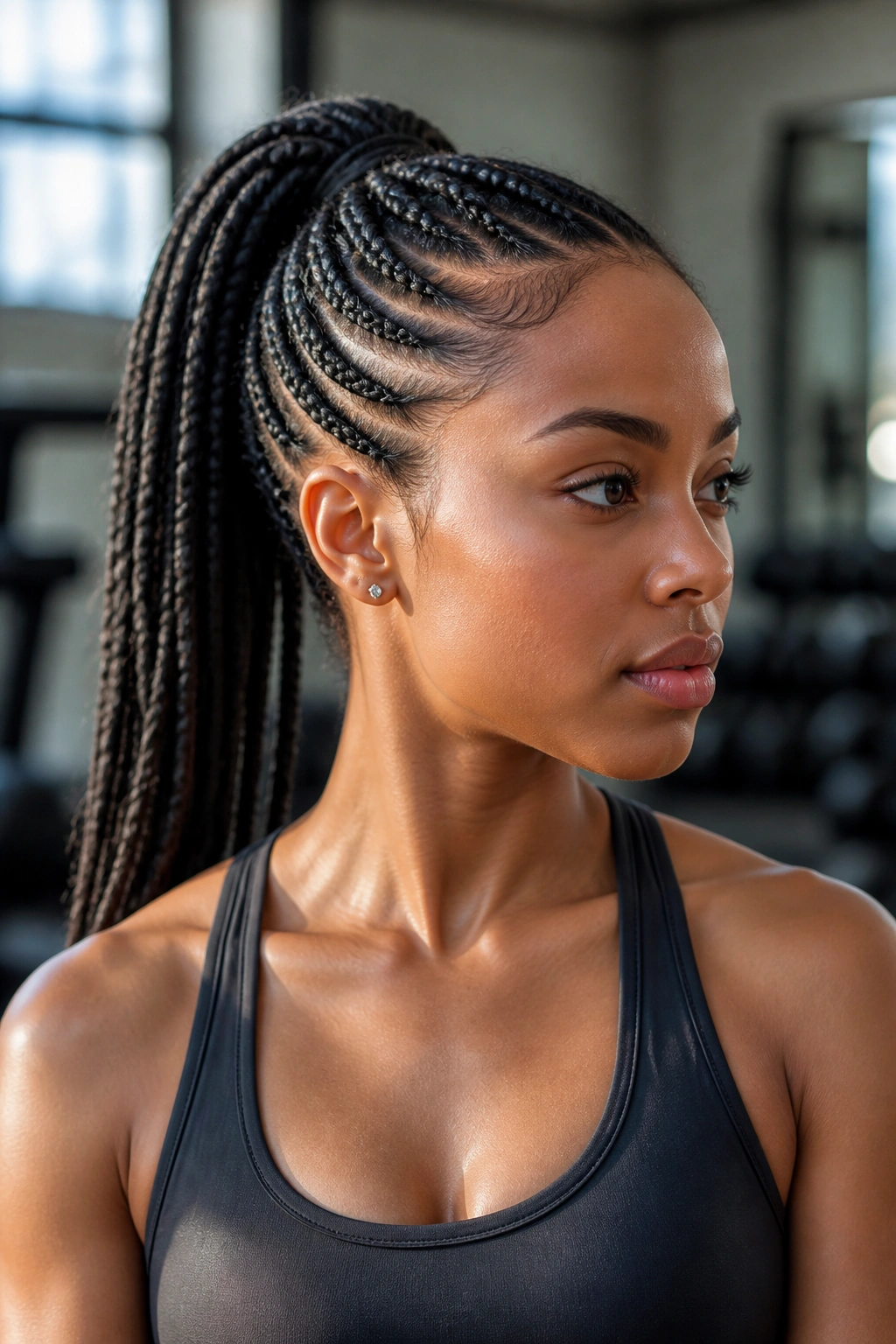
Feed-in braids are great when you want a braid that starts small and gradually grows into a fuller shape without a chunky base. That gradual build makes the style feel neat at the scalp and easier to manage during long workouts or long wear. A feed-in braid ponytail can be one braid, two braids, or a braided crown that ends in a ponytail.
The benefit is structure. Hair gets added little by little, which helps the braid sit smoothly and reduces the heavy lump you sometimes get at the starting point of a regular braid. That matters if you train often and hate anything that feels bulky under a cap, hood, or headband.
This style is especially useful for thick hair because it distributes weight more evenly. It also looks polished without being fragile, which is a nice combination when sweat is part of the plan. If you want extra hold, finish the braid into a ponytail and secure that tail with another small elastic.
Feed-in braids are not the fastest style on this list. They are one of the better ones when you want the hair to stay calm for hours.
20. Tucked Low Chignon with Cross Pins
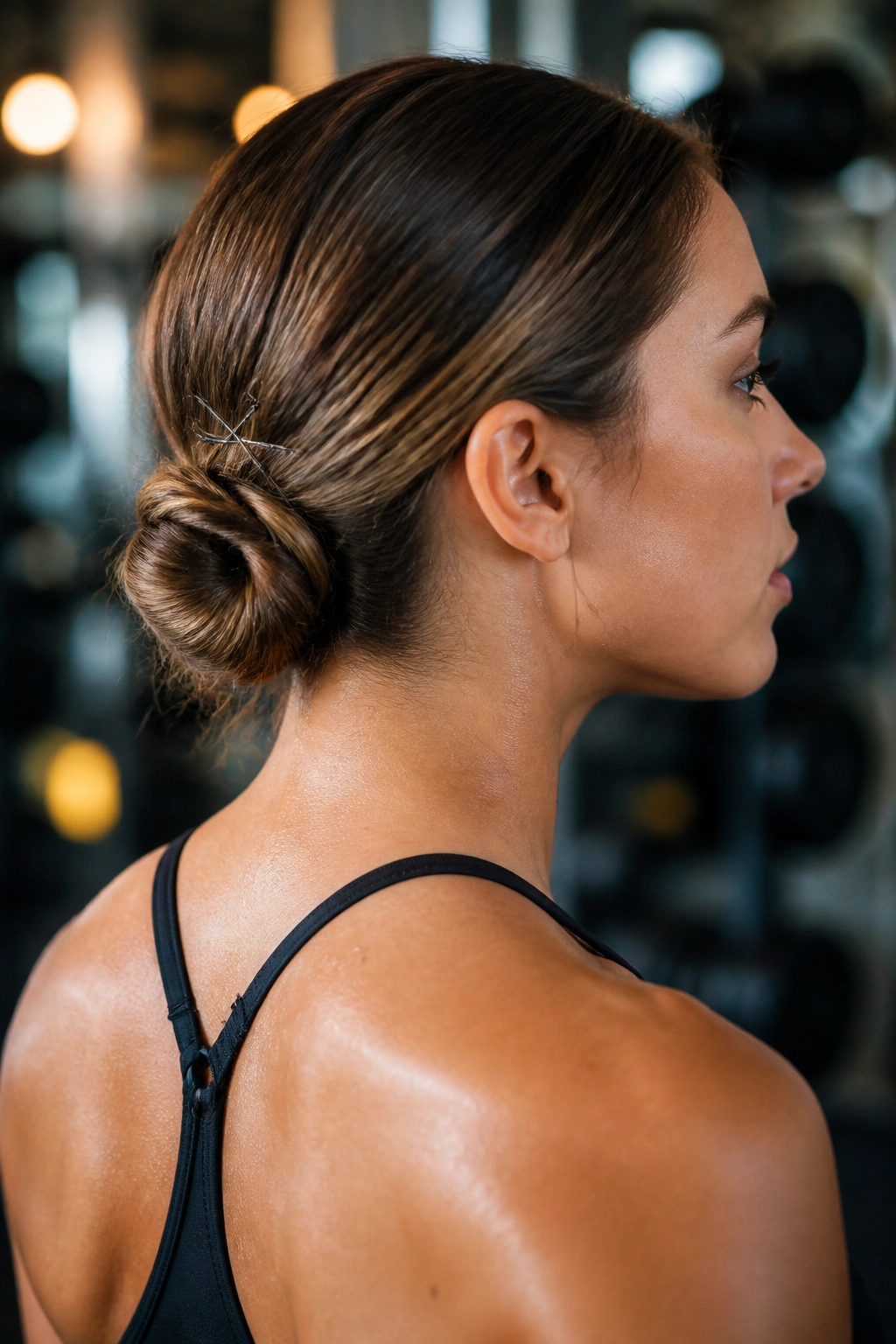
For anyone who hates hair swinging around the face, a tucked low chignon with cross pins is the no-nonsense answer. It starts with a low ponytail, gets twisted, then folded under itself and pinned in place so the ends disappear into the shape. If the pins cross in an X, the hold is noticeably better.
The style works because the knot sits low and compact, which keeps it from bouncing against the neck the way a higher bun can. It is especially nice for weight rooms, walking, barre, and Pilates. If your hair is layered, add a pin through the center of the twist before you tuck the ends. That one extra pin can stop the whole thing from loosening when you move.
This is not the flashiest option here. That’s fine. A workout hairstyle does not need to put on a show. It needs to stay where you left it while you’re doing the real work.
A good test is simple: shake your head once before you leave the mirror. If the chignon stays quiet, you’re set.
