



Two people, one timer, and a little friendly pressure can turn a normal session into something you actually finish. Good workout buddy routines for two people do one thing better than most solo plans: they keep both bodies moving while the other person recovers, counts, coaches, or quietly suffers through the next set.
The trick is not matching every rep. It’s matching effort.
One person might be better at presses, the other faster on sprints. Fine. A strong pair workout uses that difference instead of pretending both people train the same way. That’s where the best routines get interesting. They give you structure, but not a rigid little prison of exact symmetry.
You also do not need a fancy gym. A pair of dumbbells, a medicine ball, a long resistance band, or even a staircase can carry an entire partner session if the layout is clean. And if one of you arrives tired, the plan should still work without turning into a wreck.
That matters. A lot.
1. Mirror Dumbbell Circuit for Two People
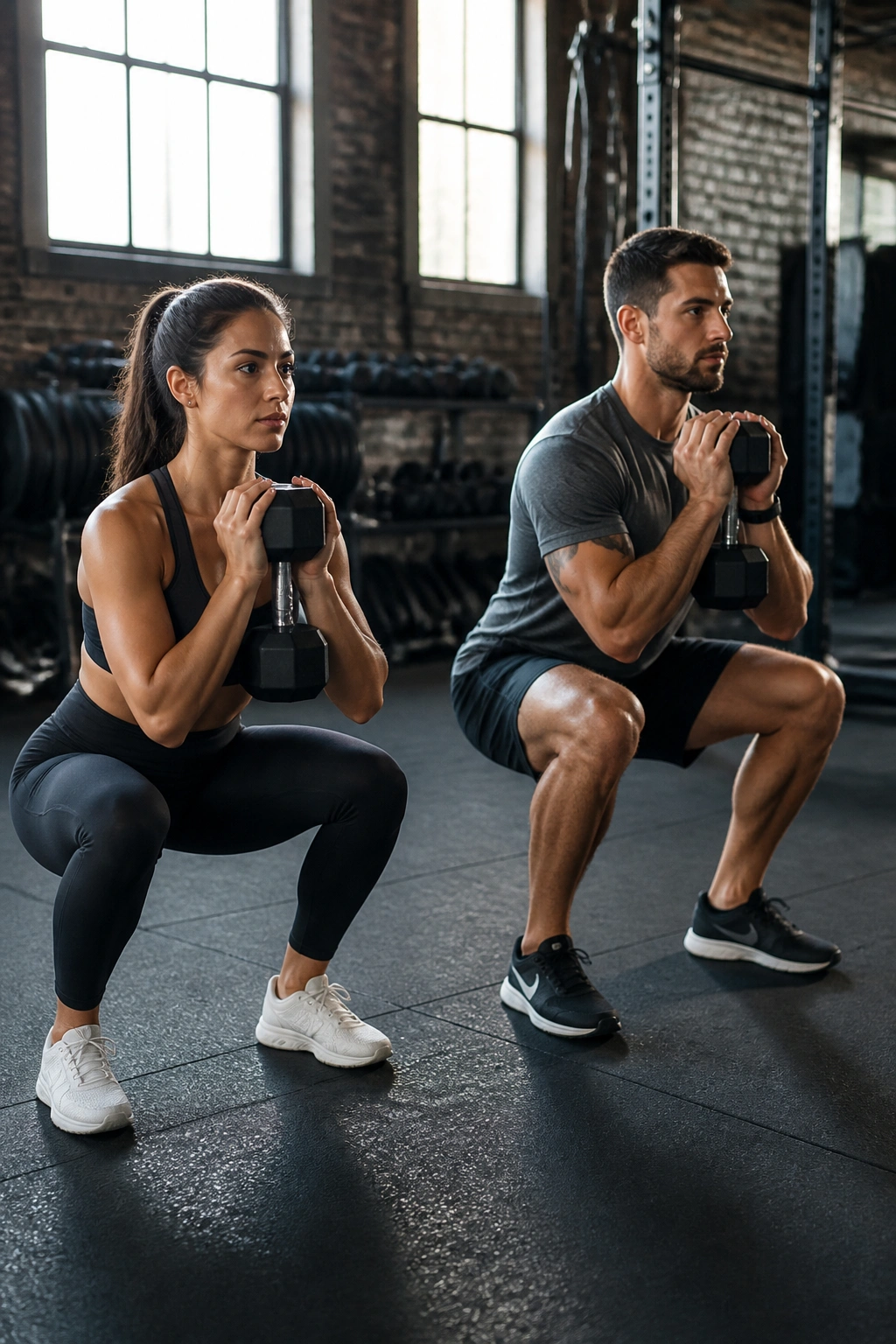
Mirroring is the easiest way to make a two-person workout feel organized from the first minute. One person leads the pace, the other copies the movement with the same timing, and both of you stay locked into the same rhythm instead of wandering off into separate workouts.
How the mirror works
Set a timer for 40 seconds of work and 20 seconds of rest. Pick five dumbbell moves: goblet squat, bent-over row, floor press, Romanian deadlift, and reverse lunge. Do 3 full rounds, and swap who calls the tempo each round.
That tiny lead-and-follow switch matters more than people think. The leader has to stay crisp. The follower has to pay attention. No one gets to drift.
Good pair choices:
- Matching goblet squats for the same depth cue.
- Rows with elbows tucked, so both people can see if the back stays flat.
- Floor presses if you want shoulder-friendly chest work.
- Romanian deadlifts for hamstrings and glutes without a lot of setup.
- Reverse lunges when you want a move that looks simple but gets the legs talking fast.
One useful rule: use the same rep speed, not the same dumbbell weight. If one person needs 25s and the other needs 40s, that’s fine. The point is clean movement, not identical ego.
A mirror circuit works well when you want a calm, controlled session that still produces sweat. It’s also one of the best starter routines for mixed-experience partners because nobody is stuck waiting for a turn.
2. You-Go-I-Go Ladder
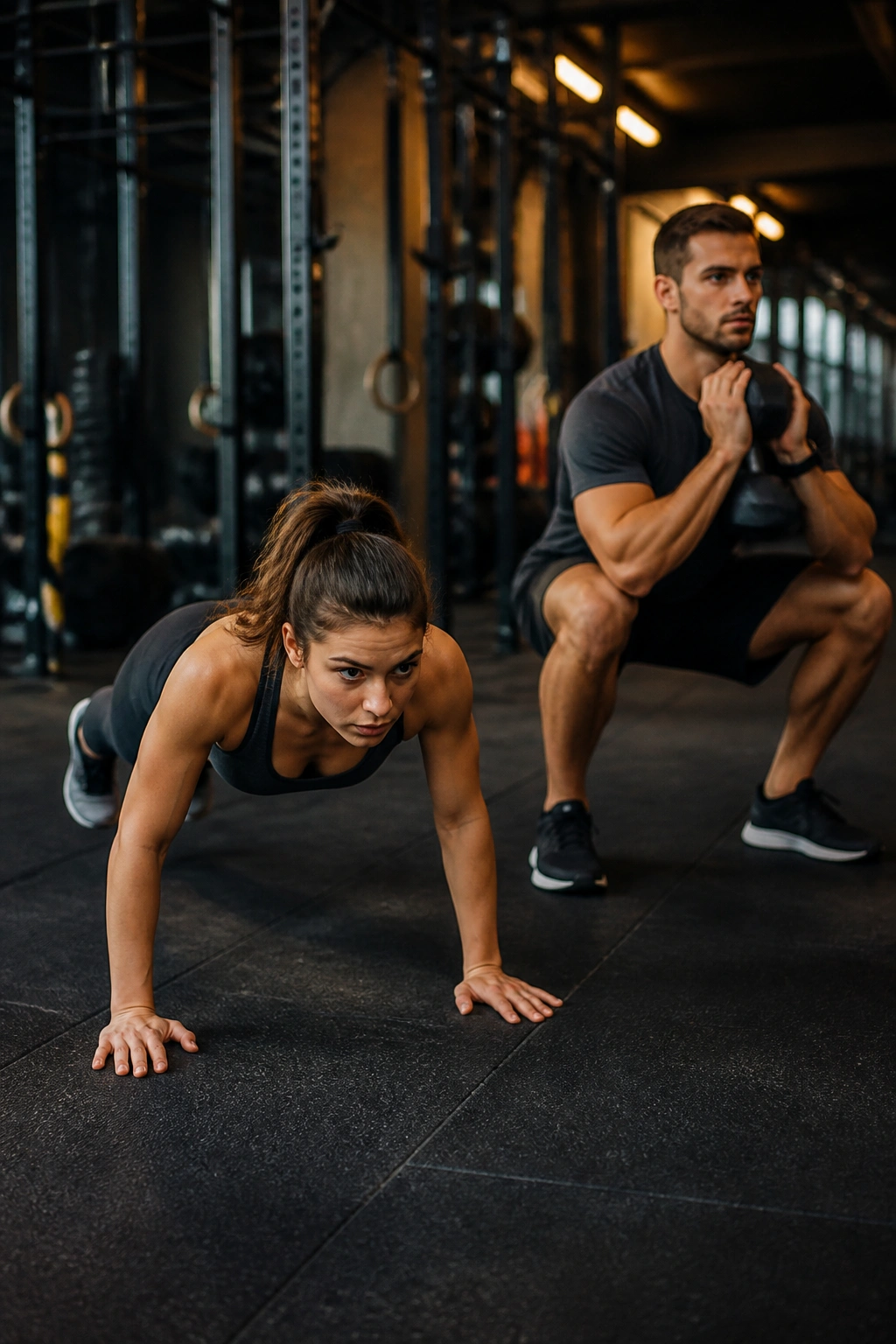
The ladder looks harmless on paper. It does not feel harmless after the fifth rung.
Here’s the basic shape: one person does 1 rep, the other does 1 rep, then you move to 2 and 2, then 3 and 3, all the way up to 5 or 8, and then back down if you want a longer session. Each rung can use push-ups, squats, sit-ups, rows, or kettlebell deadlifts.
The nice part is the built-in rhythm. While one person works, the other breathes. While the second person goes, the first person gets a tiny reset. That is enough recovery to keep the set honest without letting anyone cool off too much.
I like this format for pairs that enjoy a little pressure. It’s not a race, exactly. It just feels like one.
Try this ladder:
- 1 to 5 and back down
- Push-ups on odd rounds
- Goblet squats on even rounds
- Optional finisher: 10 synchronized air squats together
If one of you is much stronger, keep the movement the same and change the tempo. A slower lowering phase—say 3 seconds down—will narrow the gap fast. And if the ladder starts to drag, stop at the top rung and repeat it once instead of forcing a bigger number.
No one needs a 17-minute ladder that turns into sloppy reps.
3. Push-Pull Upper-Body Split for Two People

Want a partner workout that keeps a bench, a pull-up bar, and a pair of dumbbells busy without people standing around? Split the upper body into push and pull work, then alternate sets.
One person does a push movement while the other does a pull movement. That means the chest, shoulders, and triceps get their turn while the back and biceps stay active too. The room stays quiet and organized, which is nicer than it sounds when two people are sharing equipment.
The clean swap
Run 4 rounds of each pair:
- Push-ups for 8 to 15 reps, then one-arm dumbbell rows for 8 to 12 reps per side.
- Dumbbell overhead press for 8 to 10 reps, then band pull-aparts for 15 to 20 reps.
- Bench dips for 8 to 12 reps, then lat pulldown or assisted pull-up work for 6 to 10 reps.
- Plank shoulder taps for 20 taps, then chest-supported rear-delt raises for 12 to 15 reps.
The swap should be fast. One set ends, the other set starts. If you spend too much time chatting, the whole point gets fuzzy.
This is one of the best workout buddy routines for two people who like strength work but hate waiting for a bench. It also plays nicely with different levels. The stronger partner can use heavier weights or harder angles; the other can stay with a cleaner version and still get real work done.
And yes, you’ll both feel your upper back the next day if you keep the rows strict.
4. Medicine Ball Toss and Shuffle

Picture a garage floor, one medicine ball, and enough space to shuffle three or four steps in either direction. That’s all this needs.
The appeal here is not just power. It’s timing. A toss asks for force, but it also asks for a clean catch, fast feet, and a little bit of trust. That mix makes the routine feel athletic without becoming chaotic.
Use 2 to 4 kilograms for most pairs if you want speed, or a heavier ball if your throws are crisp and the ceiling is high enough to survive the experiment. Do 30 seconds on, 30 seconds off for 6 to 8 rounds.
A simple ball sequence:
- Chest pass, then a shuffle back to center.
- Rotational toss from right hip to left.
- Overhead slam if the floor can take it.
- Squat to toss for leg drive and timing.
What makes it different
The shuffle matters as much as the throw. If you just stand there and launch the ball, the session turns into arm work. Add footwork, and now you’ve got core bracing, breathing control, and a bit of light conditioning layered together.
If one of you has a weaker shoulder or a cranky wrist, stay with chest passes and skip the overhead work. That’s not a downgrade. It’s the right call.
This routine feels best when both people keep the throws sharp and stop before form turns sloppy. A medicine ball bounced off the wall at random speed is noise. A clean catch and quick reset is a workout.
5. Partner HIIT Relay

A relay fixes the most annoying part of interval training: watching somebody else work while you cool off too long. In a good relay, the handoff comes fast enough that both people stay switched on.
Use a 20-second hard effort followed by 40 seconds of recovery. One person starts on Station 1, the other starts on Station 2, and you swap after each interval. Four stations is plenty: burpees, mountain climbers, skaters, and jump rope. Eight rounds is usually enough to leave both of you breathing hard without making the session drag.
What keeps it fair: one person can’t sprint the first round and die on the third. The other can’t loaf because the next switch is already waiting. That little bit of accountability changes the whole mood.
A relay also works well when one partner likes cardio more than the other. The numbers are easy, the effort is visible, and nobody has to guess whether they “did enough.” You either finished the round or you didn’t.
Keep the recovery honest. Walk, breathe, shake out the legs, and get ready for the next switch. If you spend the rest period scrolling a phone, the whole format loses its edge.
6. Kettlebell Swing and Carry Pairing
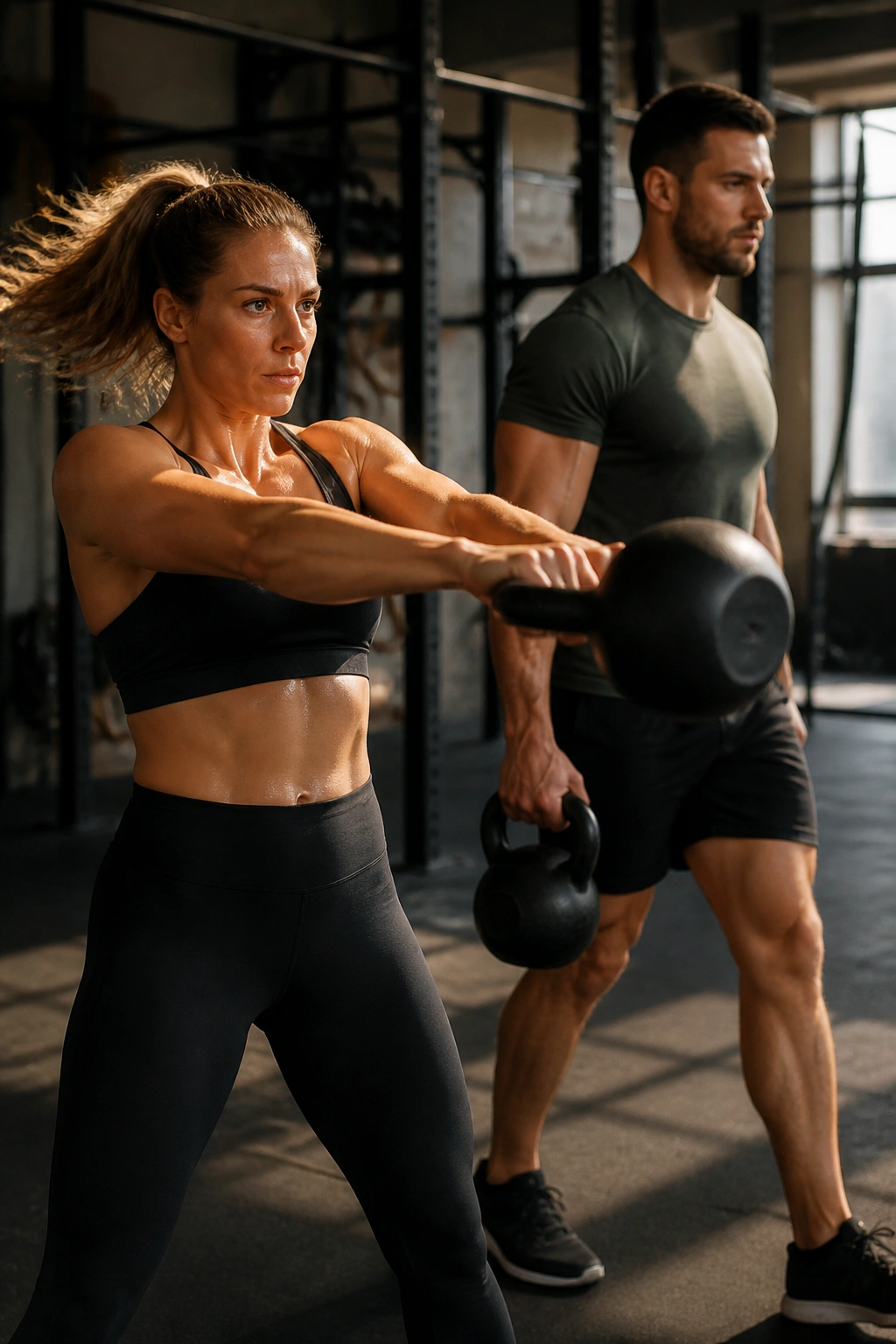
Unlike a straight dumbbell circuit, this one gives a single kettlebell two jobs at once. One person gets hip power from swings. The other gets grip, trunk, and gait work from carries. It feels spare and a little old-school, which is part of the charm.
Start with 15 kettlebell swings while the partner does a 20- to 30-meter farmer carry or suitcase carry. Switch immediately. Run 4 to 6 rounds.
The swing should snap from the hips, not turn into a squat. The carry should look calm, not like somebody is fighting a shopping cart with one wheel missing. That contrast is the whole point.
Best for:
- Small spaces with limited equipment.
- Pairs who want strength and conditioning in the same block.
- Anyone who likes the feel of heavy, simple work.
A suitcase carry is a sneaky choice here because it loads the side body and asks for real posture. You can use one heavier bell for the swing and a lighter load for the carry, or keep everything moderate and move cleanly. If the grip starts going early, shorten the carry rather than turning the shoulders into a shrug contest.
This one leaves you feeling work done in the core, glutes, and upper back all at once. Not flashy. Effective.
7. Lower-Body Tempo Circuit
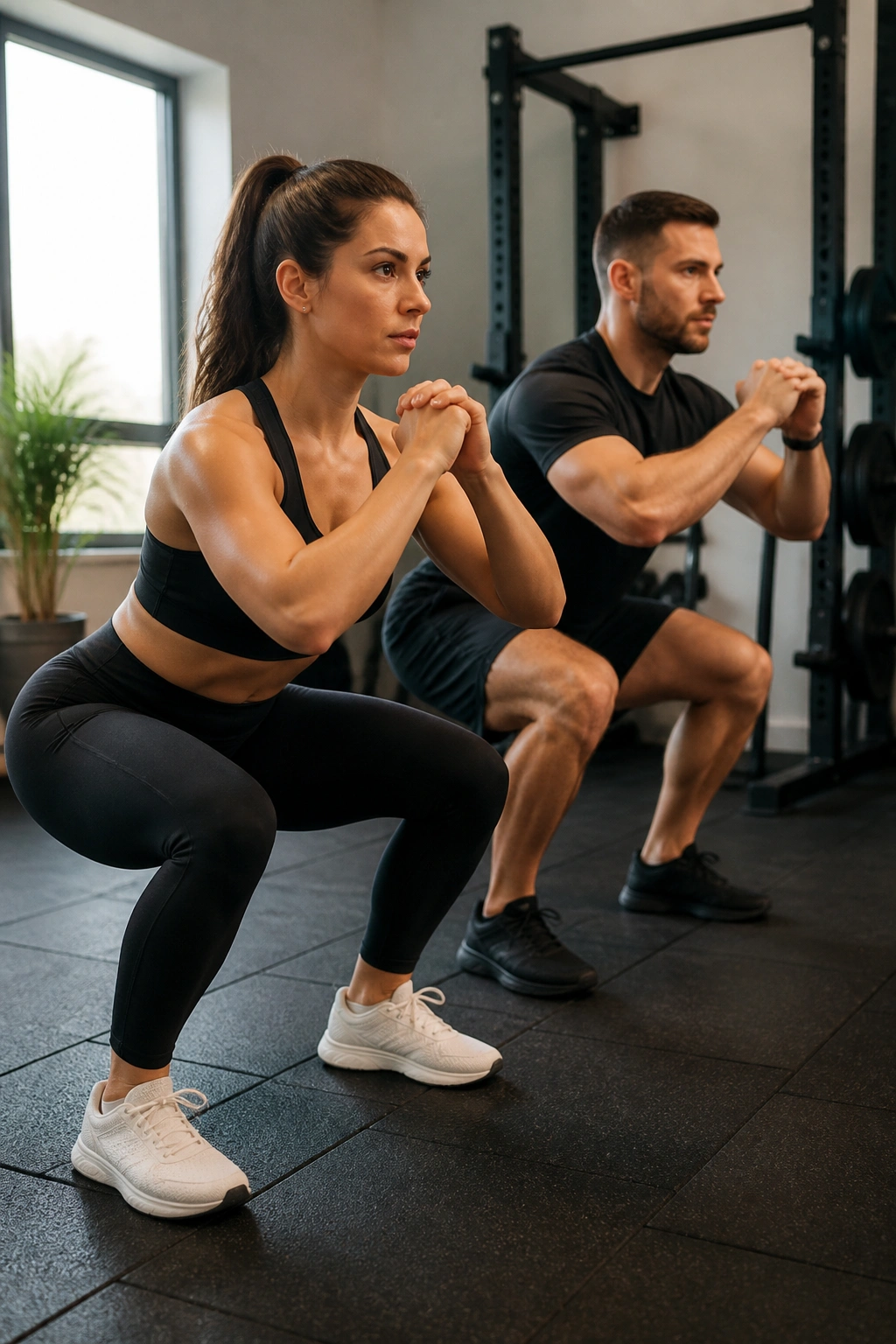
Lower-body work gets better when the tempo is shared.
If both people count the lowering phase out loud, the whole room gets calmer and more focused. That matters more than speed. Fast squats are easy to fake. Controlled squats expose everything.
Tempo matters more than speed
Use a 3-second lower, a brief pause, then stand up with purpose. Run 3 rounds of this sequence:
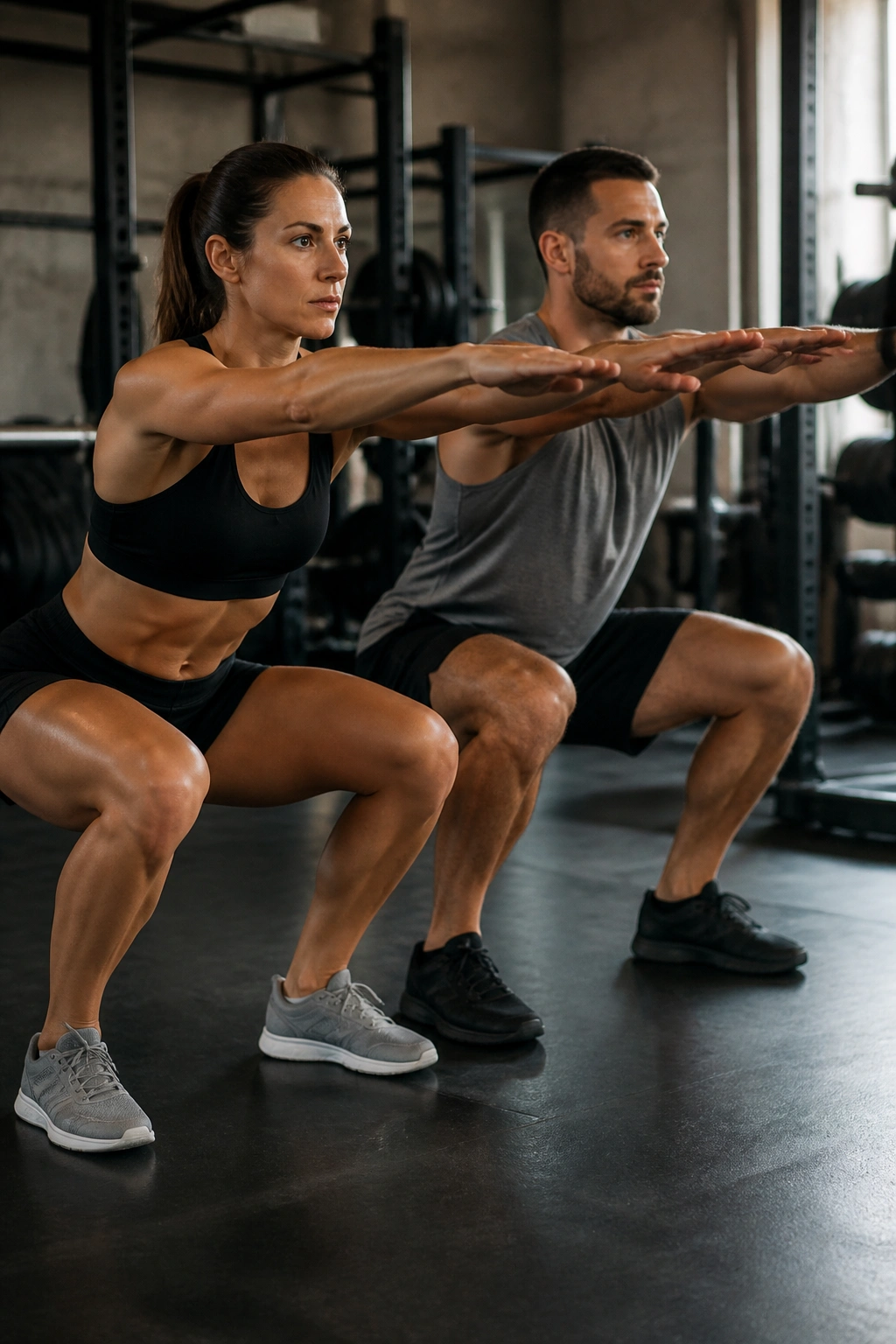
- 12 air squats
- 10 reverse lunges per leg
- 30-second wall sit
- 12 glute bridges
- 20 calf raises
Both people should finish the move at roughly the same time. If one person is stronger, don’t rush them. Slow the tempo and make the bottom position cleaner.
A wall sit works well here because it gives the partner a chance to breathe while still staying under load. That little shift keeps the circuit balanced. One person burns in the thighs while the other resets, then the room flips.
If you want a harder version, hold a dumbbell at the chest during squats or add a two-second pause at the bottom. If you want the routine to feel more like practice than punishment, keep the bodyweight version and make the reps prettier. The difference shows up fast.
This is one of the few routines where form feedback from a partner really helps. From the side, it’s easier to spot knees caving in, heels lifting, or a torso pitching too far forward.
8. Cardio Pace Chase

Pace chasing is honest.
There’s no hiding in it. If you’re on a treadmill, rower, bike, track, or even a measured outdoor path, one person sets the pace and the other tries to match it within a narrow gap. Then you swap.
Start with 1-minute efforts at about 70 to 80 percent of what you think you can hold. On the next round, try to match the same split or beat it by a tiny margin. Not a wild one. Think 1 to 2 percent, maybe a second or two per interval.
The reason this works is that it rewards discipline, not panic. If you blast the first round, the next one gets ugly. If you start too soft, the race feels fake. Somewhere between those two is the sweet spot.
A rower is especially good here because the monitor gives both people a clean number to chase. A track works too, and so does a hill if you want more leg drive. The point is to keep the gap small enough that each person has something real to chase.
Short version? It feels competitive without becoming messy. That’s a rare thing.
9. Mobility and Recovery Flow for Two People
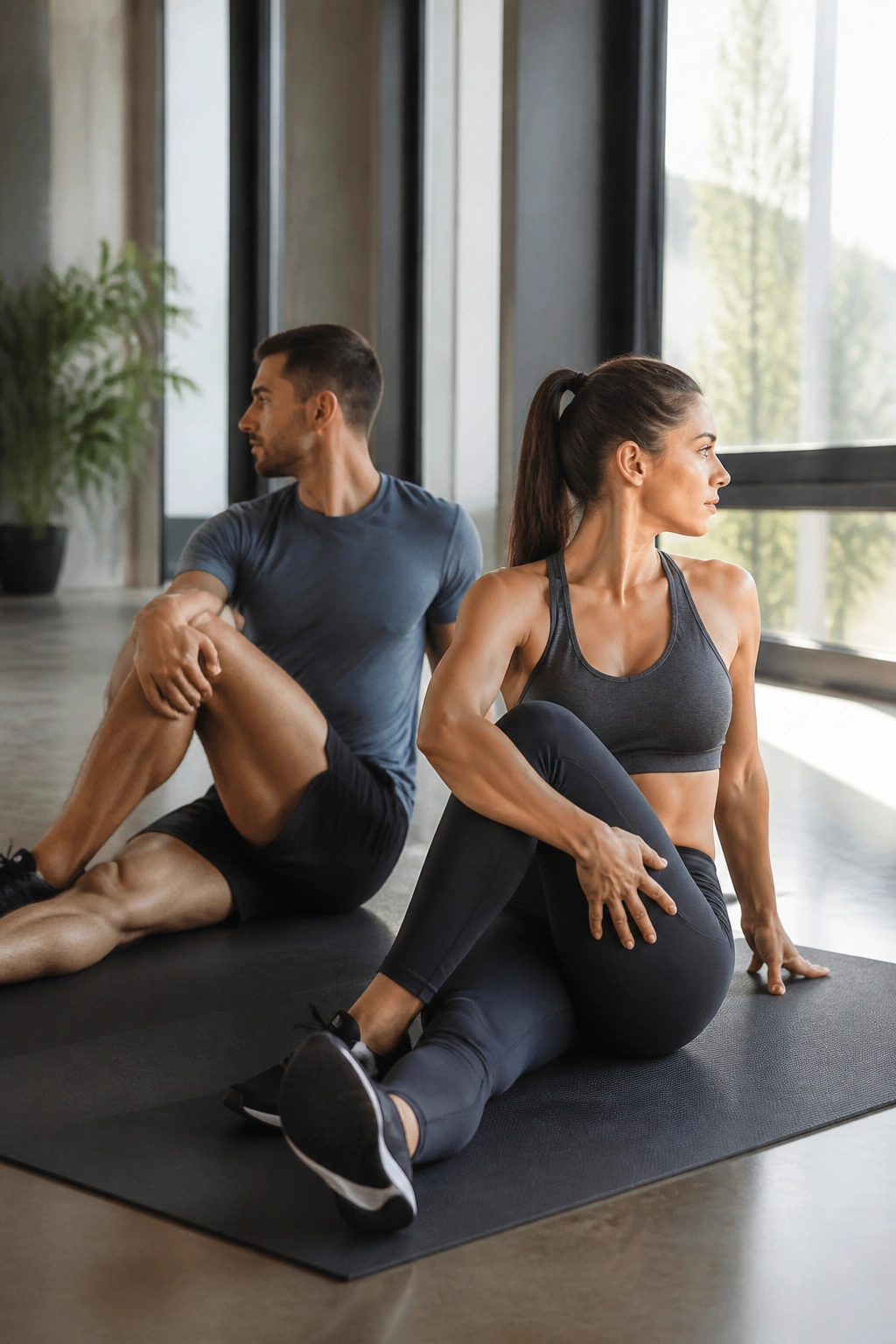
Why let the warm-up become an afterthought?
A paired mobility session is useful because one person can call the tempo while the other pays attention to range. The result is less rushing, fewer skipped spots, and way less of that stiff, half-done stretching people sometimes call recovery.
How to run it
Set a timer for 12 minutes. Spend 45 seconds on each move, then switch sides or move on:
- Cat-cow
- 90/90 hip switches
- Lunge with rotation
- Ankle rocks
- Wall slides
- Deep squat hold with breathing
One person should cue the breath. Nothing fancy. A slow inhale through the nose, a long exhale, and a pause where the ribs settle. That keeps the flow from turning into a frantic yoga impression.
If your partner is stiffer in the hips and you’re tighter in the shoulders, let each person spend an extra round on the place that needs it most. The nice thing about doing mobility together is that nobody has to pretend every body part needs the same amount of work.
This kind of routine can live at the beginning of a workout, at the end, or on a day when you both want to move without crushing yourselves. It’s not boring if you treat it like part of training instead of an apology for not training.
10. Core Pass-and-Hold Routine
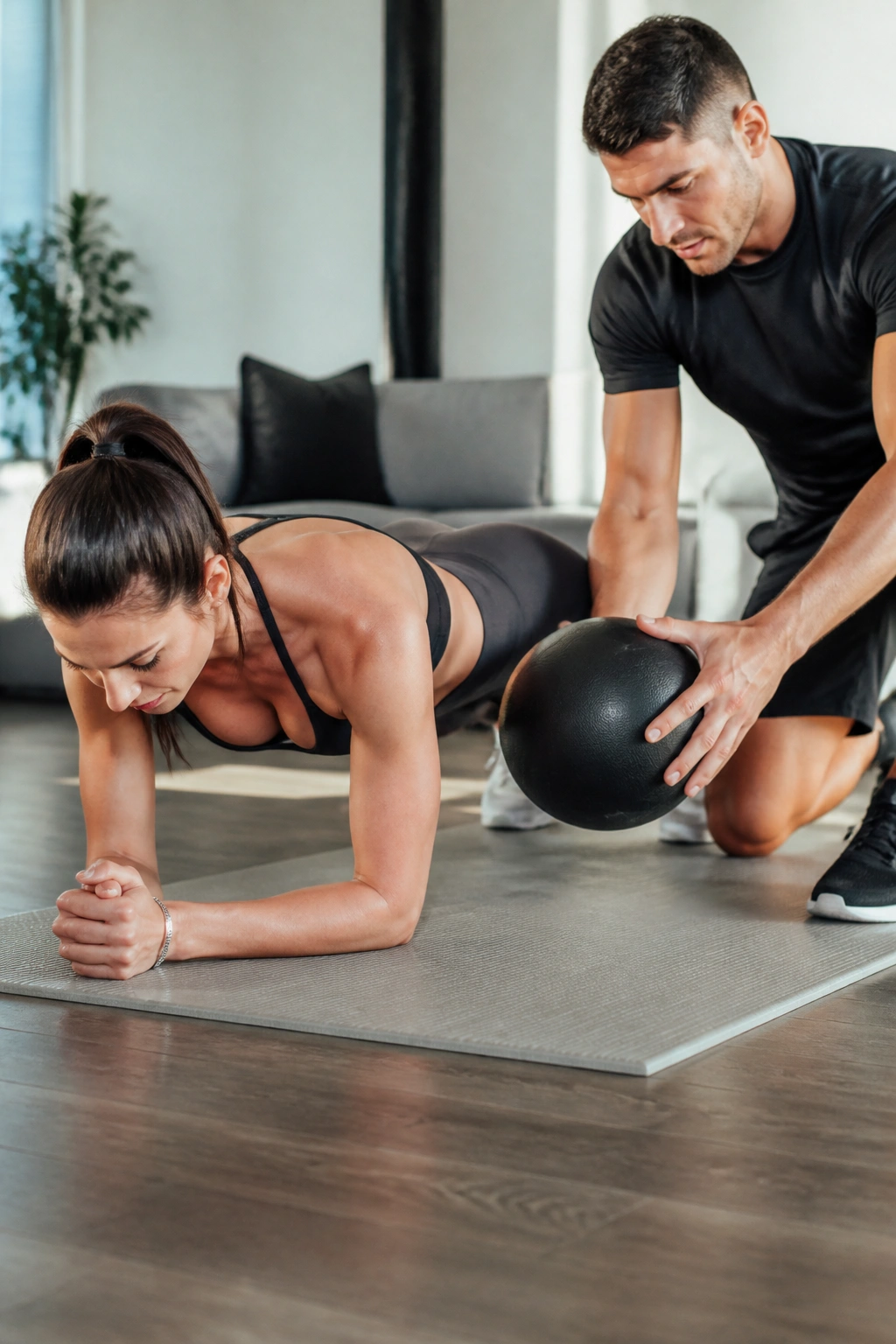
One mat. One medicine ball. Three minutes until the abs start complaining.
Core work for two people gets much better when one person is holding a position and the other is making the movement harder. The overlap forces both of you to brace, breathe, and stay honest instead of flopping through rushed reps.
Try this for 3 to 5 rounds:
- Partner A holds a plank while Partner B passes a light ball around the waist.
- Switch to a hollow hold with alternating leg taps.
- Add seated Russian twists with a pass at the top.
- Finish with dead bug passes, moving the ball hand to hand without arching the lower back.
The pass matters because it gives the torso something unpredictable to resist. The hold matters because it exposes who is cheating with the low back or letting the hips sag. Together, they make a very plain piece of floor space do real work.
If you want to keep it beginner-friendly, shorten the holds to 20 seconds and use a lighter ball or even a pillow. If you want more intensity, lengthen the holds to 40 seconds and slow the pass so the other person has to resist the twist.
This routine is good for pairs who want core training without endless crunches. Much better than endless crunches, honestly.
11. Resistance Band Tug-and-Go
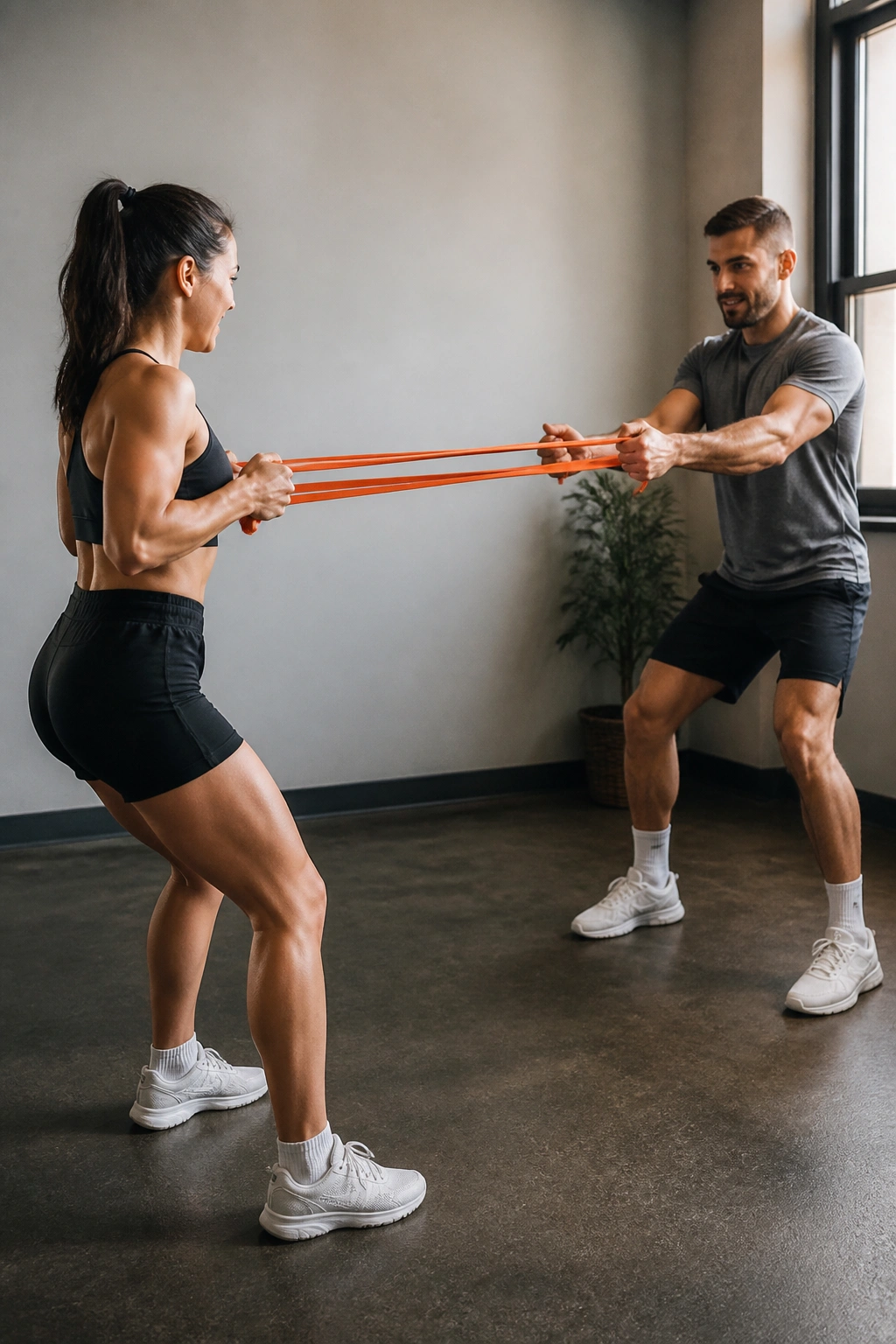
Resistance bands look harmless until two people start pulling from opposite ends.
That’s when the work gets interesting. A partner band routine can be done face to face with a long loop band, or one person can brace while the other moves through rows, presses, and anti-rotation holds. Either way, the band gives a clean, constant pull that’s easy to feel.
Keep the tension light enough that the movement stays smooth. Step back until the band is snug before the first rep. If it’s slack at the start, the whole set gets sloppy. If it’s too tight, the shoulders start doing ugly little shrugs.
Good pair options:
- Standing rows for upper-back work.
- Chest presses with both people pressing away at the same time.
- Pallof presses for anti-rotation strength.
- Lateral walks with the band around the knees or ankles.
- Face pulls if you want the upper back to light up.
The best part is how little space it takes. A living room, garage, or corner of a gym floor is enough. And because the band doesn’t need a rack or bench, one person can coach the other’s stance while the set is still going.
If your pair enjoys friendly competition, count slow reps instead of fast ones. Faster is not better here. Cleaner is better.
12. Beginner Bodyweight Back-and-Forth for Two People
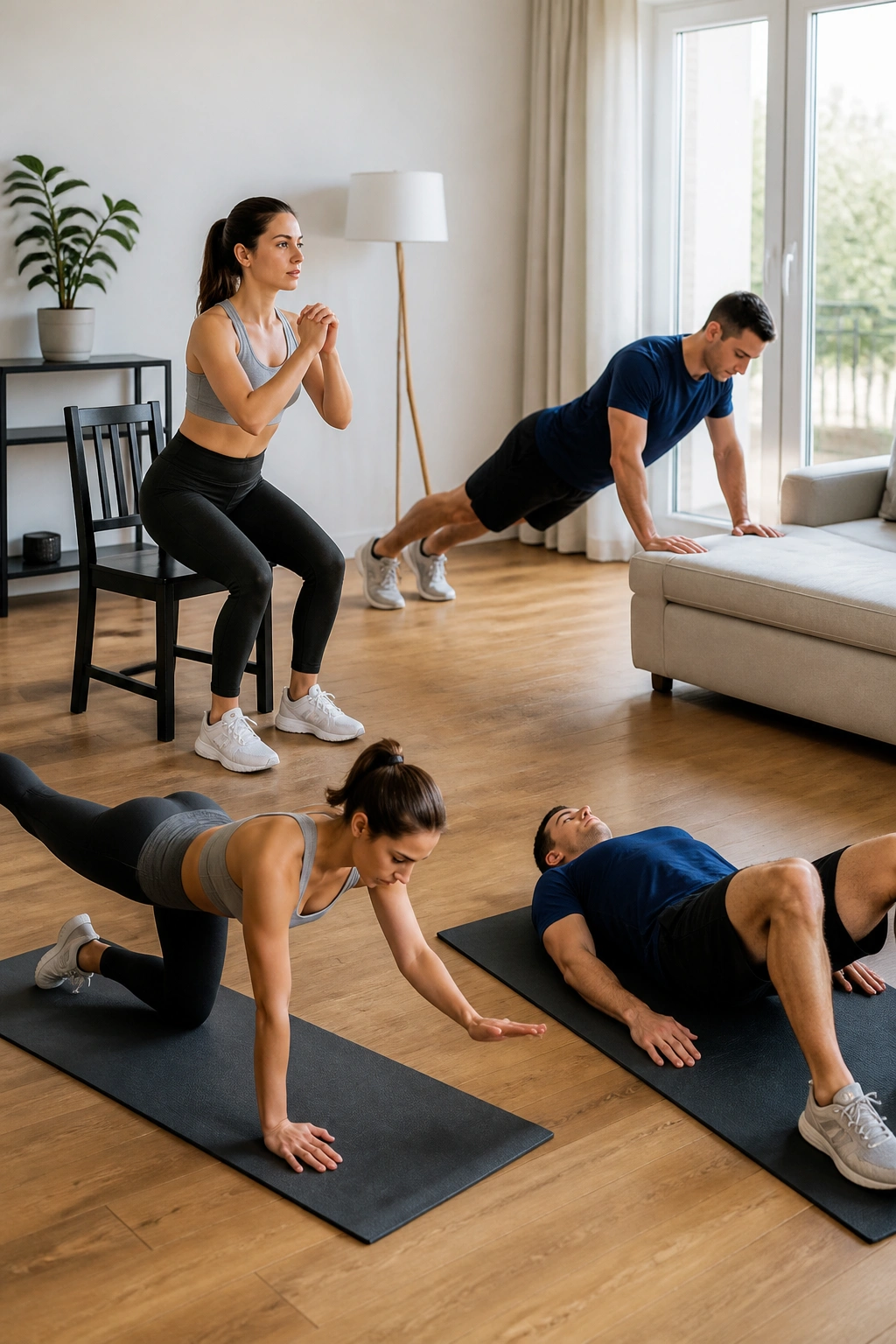
Unlike a grind-heavy HIIT session, this one keeps breathing under control while still making both people work. That’s why it’s such a good choice for new trainees, returning lifters, or partners who want the same routine without the same fitness level.
Run 2 to 3 rounds of these movements:
- Sit-to-stand from a chair or box, 10 reps.
- Incline push-up on a bench or wall, 8 to 12 reps.
- Bird dog, 6 to 8 reps per side.
- Glute bridge, 12 reps.
- Step-back lunge, 6 to 8 reps per leg.
- March in place for 30 seconds.
The back-and-forth part can be as simple as one person doing the exercise while the other counts or watches form, then switching. That makes it less intimidating. It also gives the quieter partner a reason to stay engaged instead of drifting off.
Best for mismatched pairs:
- One beginner, one experienced lifter.
- One person recovering from a layoff.
- Anyone who wants a low-drama session that still builds good habits.
There’s a temptation to make beginner work too easy. Don’t. Slow the lowering phase, keep the reps clean, and make each person finish with a little effort left in the tank. That’s enough. More than enough, usually.
13. Boxing Round Rotation

Boxing rounds are made for pairs because one person can hold mitts or a bag while the other works on rhythm, timing, and footwork. Nobody needs to stand still. Nobody needs to guess what comes next.
Three-minute round format
Use 3-minute rounds with 1 minute of rest. During each round:
- Round 1: jab-cross combinations.
- Round 2: add hooks and slips.
- Round 3: footwork and body shots.
- Round 4: freestyle round with controlled speed.
If you don’t have mitts, one person can shadowbox while the other calls out combinations and watches balance. That still works. It may look less dramatic, but the timing and breathing are there.
The partner on the outside should pay attention to stance, guard position, and whether the punches come back to the face. That’s where a second set of eyes helps. People often move fine when they’re fresh and start leaking form the moment the round gets spicy.
Keep the combinations short. Two or three punches are enough. A long combo string turns into noise, and noise is not the same thing as skill.
This routine feels sharp, athletic, and a little bit playful when it’s done well. Good rounds have that effect.
14. Hill or Stair Relay

Stairs are rude in the best way.
A hill or stair relay strips away a lot of training nonsense. One person goes hard for 20 to 30 seconds, walks back down or returns to the start, and the other goes next. Six to ten rounds is plenty if the grade is real.
Because the surface is fixed, effort becomes easy to judge. If the steps are too easy, you move faster. If the hill is steep, you slow the pace and keep the stride short. Either way, the partner is standing there waiting, which creates a nice little edge.
A good relay format looks like this:
- Person A sprints uphill.
- Person B rests and watches footing.
- Swap at the top or bottom.
- Repeat for 6 to 10 rounds.
If you want to add a strength piece, do 10 air squats or 5 bodyweight lunges at the top before walking back. Keep it light. The purpose is still speed and leg drive, not turning the stairs into a survival test.
Use good shoes and keep the descent controlled. The downhill is where people get sloppy, and sloppy on stairs is a bad hobby.
This one is especially good for pairs who like to train outside and don’t want to carry gear. Hills never need charging.
15. Shared Benchmark Finisher
What if you want the session to end with a number you can repeat?
That’s where a shared benchmark finisher earns its keep. It gives the pair a simple test, enough structure to compare later, and a little sting at the end without requiring a whole separate workout.
Try this:
- 5 rounds
- 10 synchronized air squats
- 8 alternating push-ups each
- 12 seated ball passes or sit-up passes
- 100-meter walk together
- 20-second face-to-face plank
Score the total time. Keep the same floor, the same order, and the same exercise version each time you repeat it. If one session uses incline push-ups and the next uses floor push-ups, the number stops meaning much.
The best part is how clean it feels. There’s no random bonus round, no weird add-on, no desperate last-minute challenge. You finish, check the timer, and you both know where you stand.
If you want a lighter version, cut the plank to 10 seconds and the walk to 50 meters. If you want it harder, keep the order but raise the rep count by 2 on each movement. Small changes. That’s enough.
A benchmark should leave a memory, not a mess. Keep it repeatable, keep it honest, and it will tell you more than a flashy workout ever could.
