



Five minutes doesn’t sound like much until you spend it moving hard enough to raise your pulse and loosen the stiff parts of your body. A short home workout won’t replace a full training session, but it can rescue a low-energy afternoon, wake up a desk-bound back, or keep a streak alive on the days when motivation is doing its usual disappearing act.
Home is where the excuses get loud. No commute to the gym. No waiting for equipment. No need to rearrange the living room into something that looks like a fitness studio. A patch of floor, a chair, a wall, and a timer are enough for a solid five-minute workout.
The best short routines are the ones that have a clear shape: a simple move, a clear pace, and a finish you can feel in your lungs or legs. Some days call for jumping. Some days call for the quiet, sneaky kind of work that leaves you warm without rattling the neighbors. Both count.
So the list below sticks to that idea: small workouts, specific moves, no nonsense, and enough variety that you can pick one based on your mood instead of pretending every day feels the same.
1. A Five-Minute March and Reach Reset
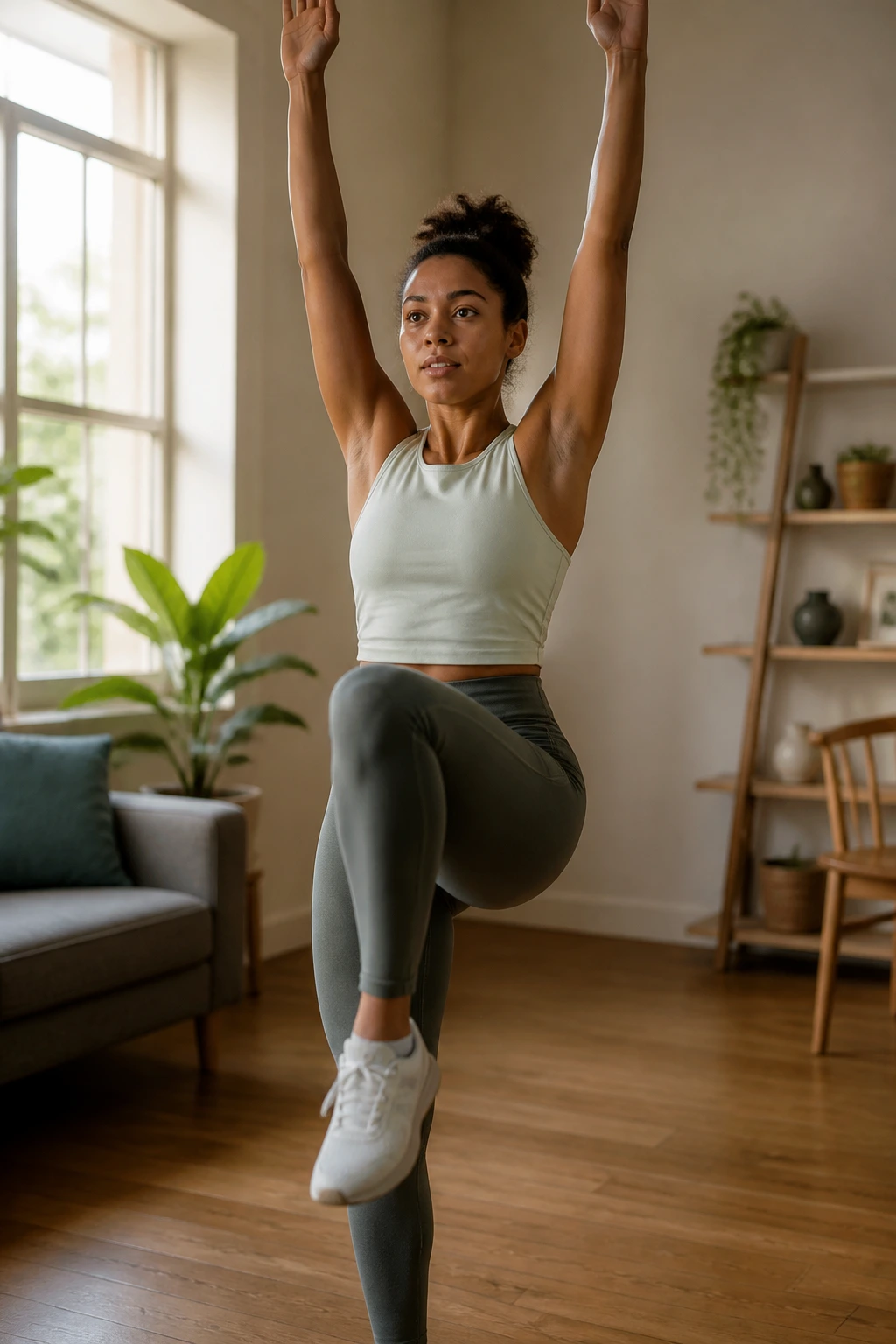
This is the easiest place to start, and that is not a weak thing. It’s a smart one. When your body feels stiff, a hard workout can feel like trying to start a car in winter. A march-and-reach routine gets the joints moving first, then asks for a little more.
How to run it
Set a timer for five one-minute blocks. March in place for the first minute, reaching your arms overhead every few steps. The second minute becomes air squats. The third is alternating knee lifts with an elbow drive. The fourth is a hip hinge, like a standing good morning. Finish with a quick step-touch and big arm swings.
Keep the movement smooth. You do not need to bounce like a jump rope ad. You need rhythm.
- Keep your feet light.
- Pull your ribs down when you reach.
- Let your arms swing naturally.
- If your ceiling is low, reach forward instead of overhead.
Best use: before a longer workout, after a long sit, or on a day when your body feels like cold clay.
2. The Squat and Hold Ladder
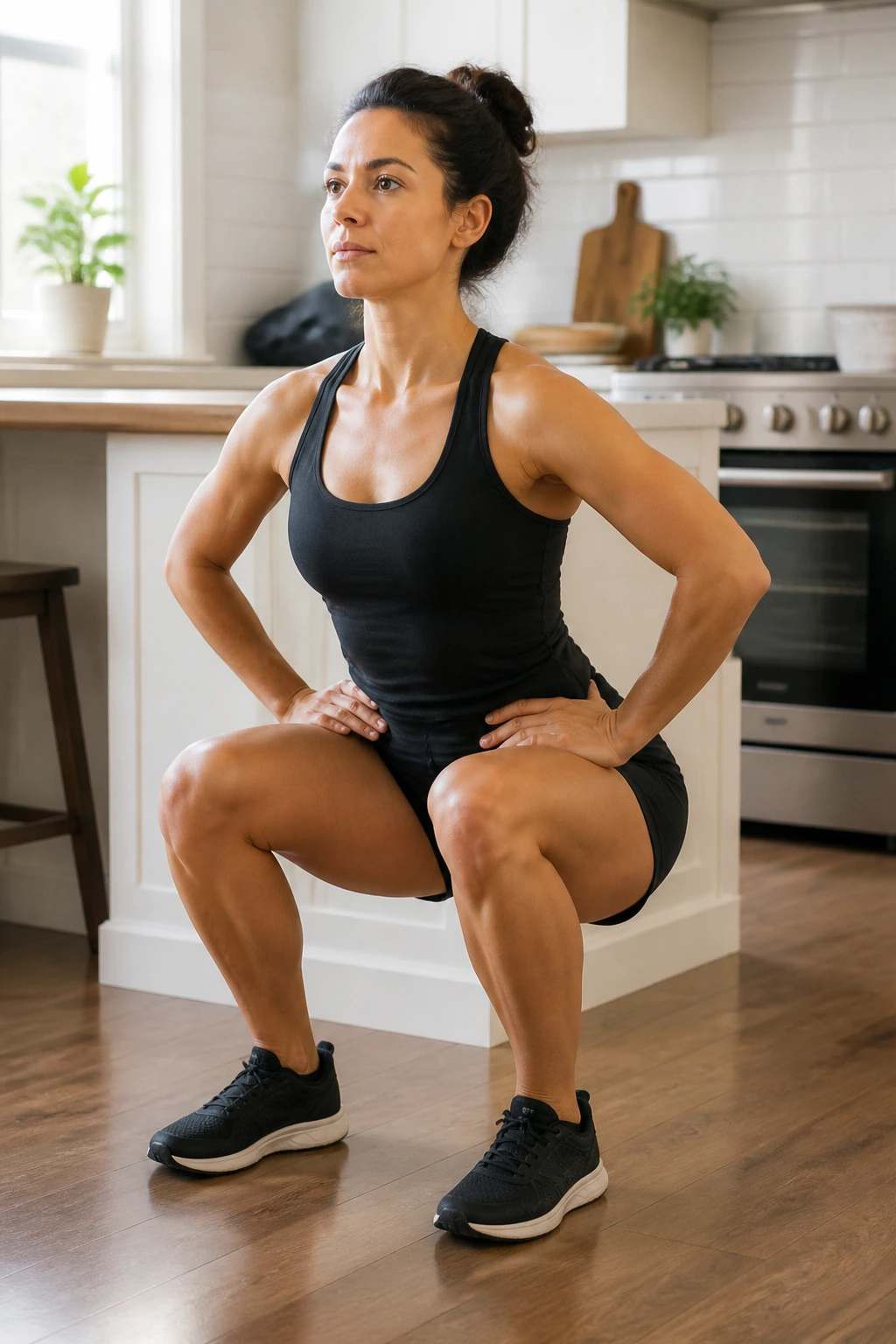
A squat sounds plain until your thighs start talking back. That’s the charm here. You spend five minutes in one of the most useful patterns your body knows, and you never need to leave the square of floor under you.
Start with 45 seconds of regular bodyweight squats, then 15 seconds of standing still. Next minute, drop into a squat hold for 30 seconds and add tiny pulses for the last 15. Minute three is slow squats, lowering for three counts and standing for one. Minute four is squat-to-chair taps if your knees want a target. Finish with fast but clean squats for one final minute.
The trick is depth you can control. Deep is fine if your heels stay down and your back stays long. Shaky and sloppy is not the goal.
Watch for this: if your knees cave inward, shorten the range and slow down. A smaller squat done well beats a big one done badly. Every time.
3. Push-Up, Plank, and Shoulder Tap Combo
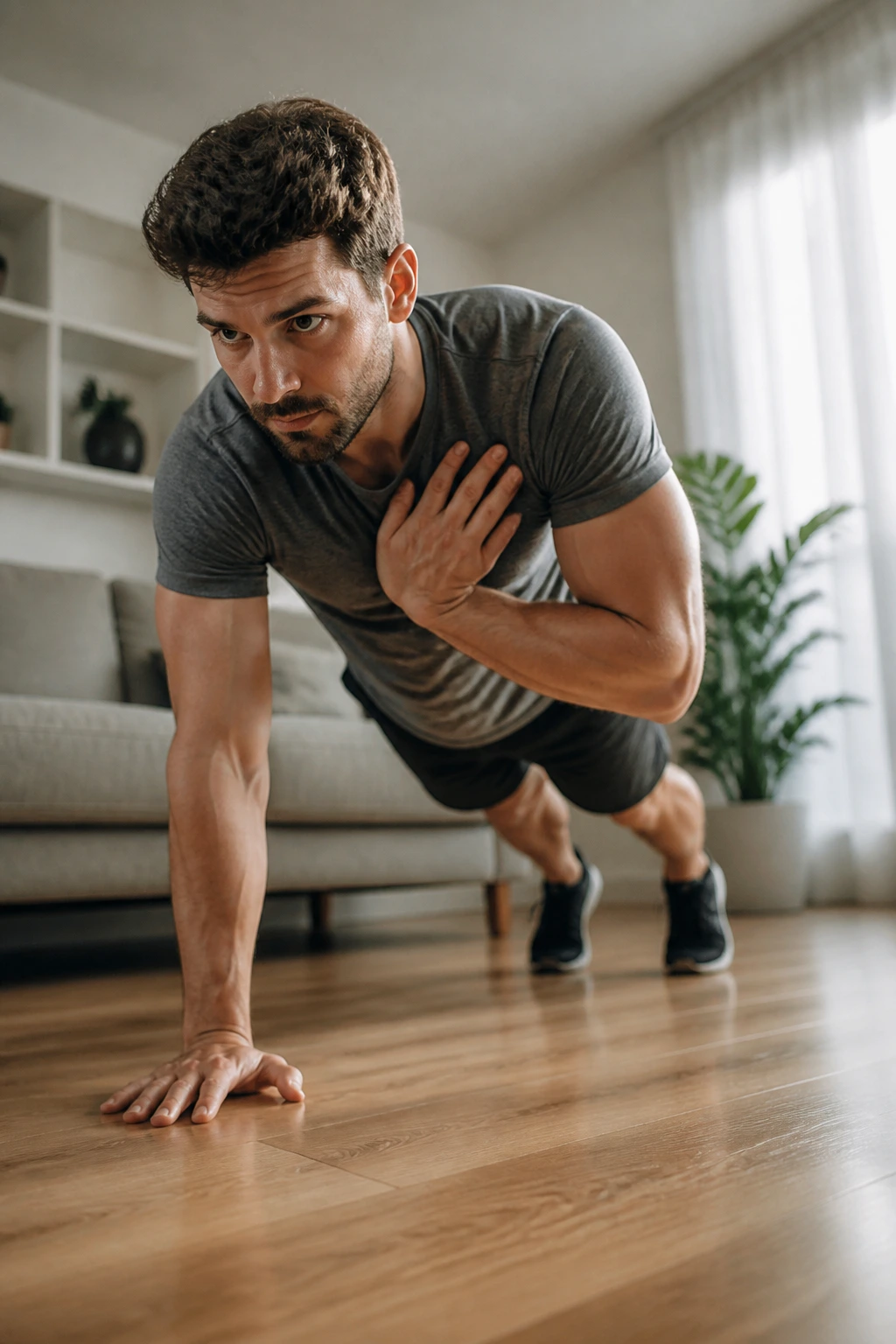
What if you only have floor space and zero equipment? Good. This one was built for that exact complaint.
Use five one-minute rounds: incline push-ups on a couch or counter, then knee push-ups, then a forearm plank, then shoulder taps in a high plank, then slow up-down plank transitions. That mix gives your chest, shoulders, triceps, and core a fair share of the work without asking for a bench, a bar, or a fancy mat.
Make it easier or harder
Begin with your hands on the wall if full push-ups feel messy. Move to a kitchen counter next, then a couch, then the floor. That’s not cheating. That’s progression.
For more challenge, slow the lowering phase to three seconds. The descent is where a lot of the work lives.
Don’t let your hips sag. Don’t crane your neck. And don’t race the plank just because the timer is running. Clean reps matter more than panic reps.
4. The Glute Bridge Floor Burner
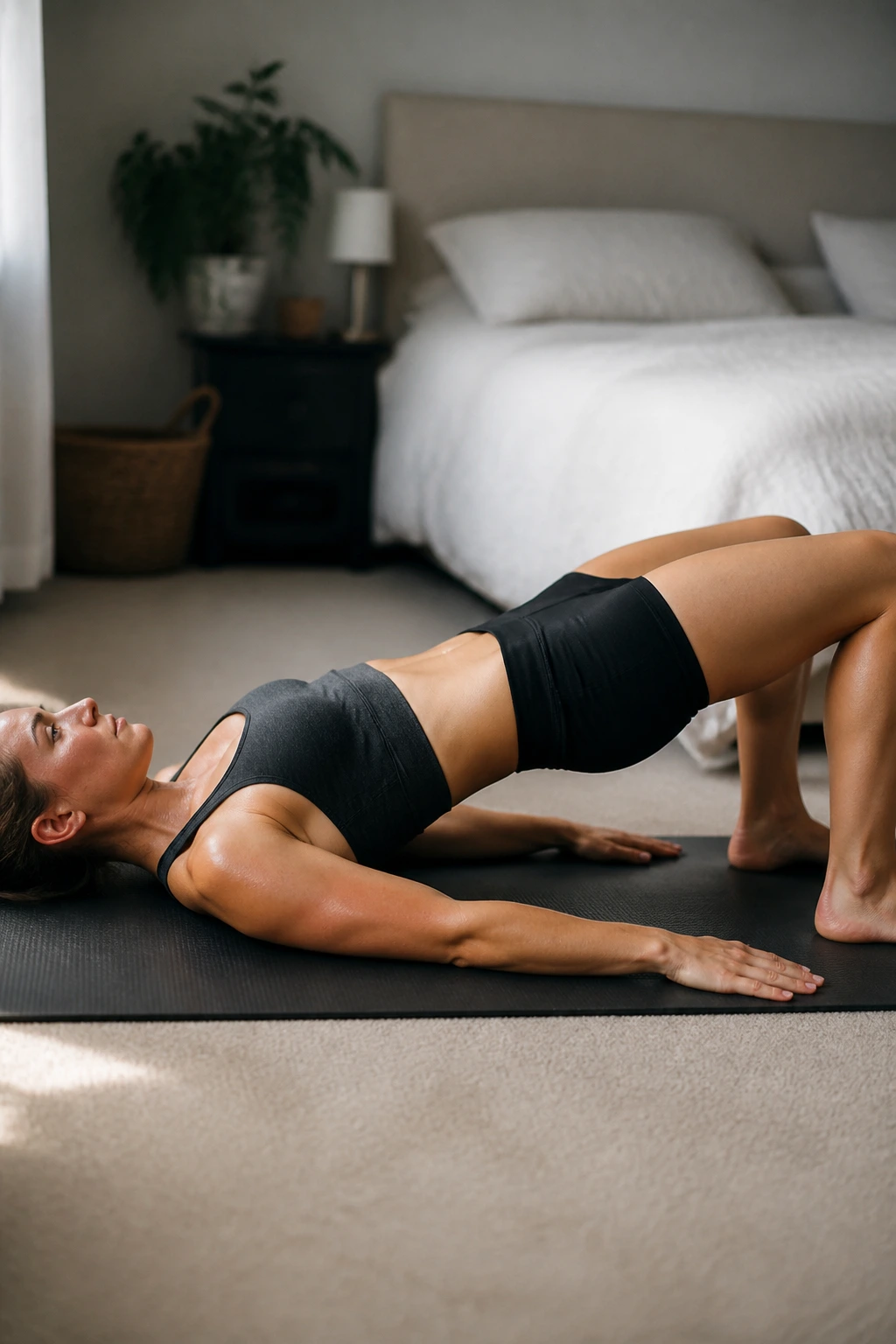
If your lower back gets cranky after sitting, glute bridges are often the kind of fix that feels almost too simple. Then you do them for five minutes and realize your backside was asleep.
Lie on your back with your knees bent and feet flat. Minute one is regular glute bridges, lifting your hips until your body makes a straight line from shoulders to knees. Minute two is a hold at the top, squeezing the glutes for ten to fifteen seconds at a time. Minute three becomes alternating leg marches while the hips stay lifted. Minute four is single-leg bridge work on the right side. Finish on the left.
Why this one earns its place
Glutes should do more than decorate your jeans. They help with walking, climbing, and basic stability.
If you feel this in your hamstrings only, walk your feet a little closer to your hips. If your lower back takes over, lower the bridge height. The top position should feel firm, not cramped.
5. Shadow Boxing in the Living Room
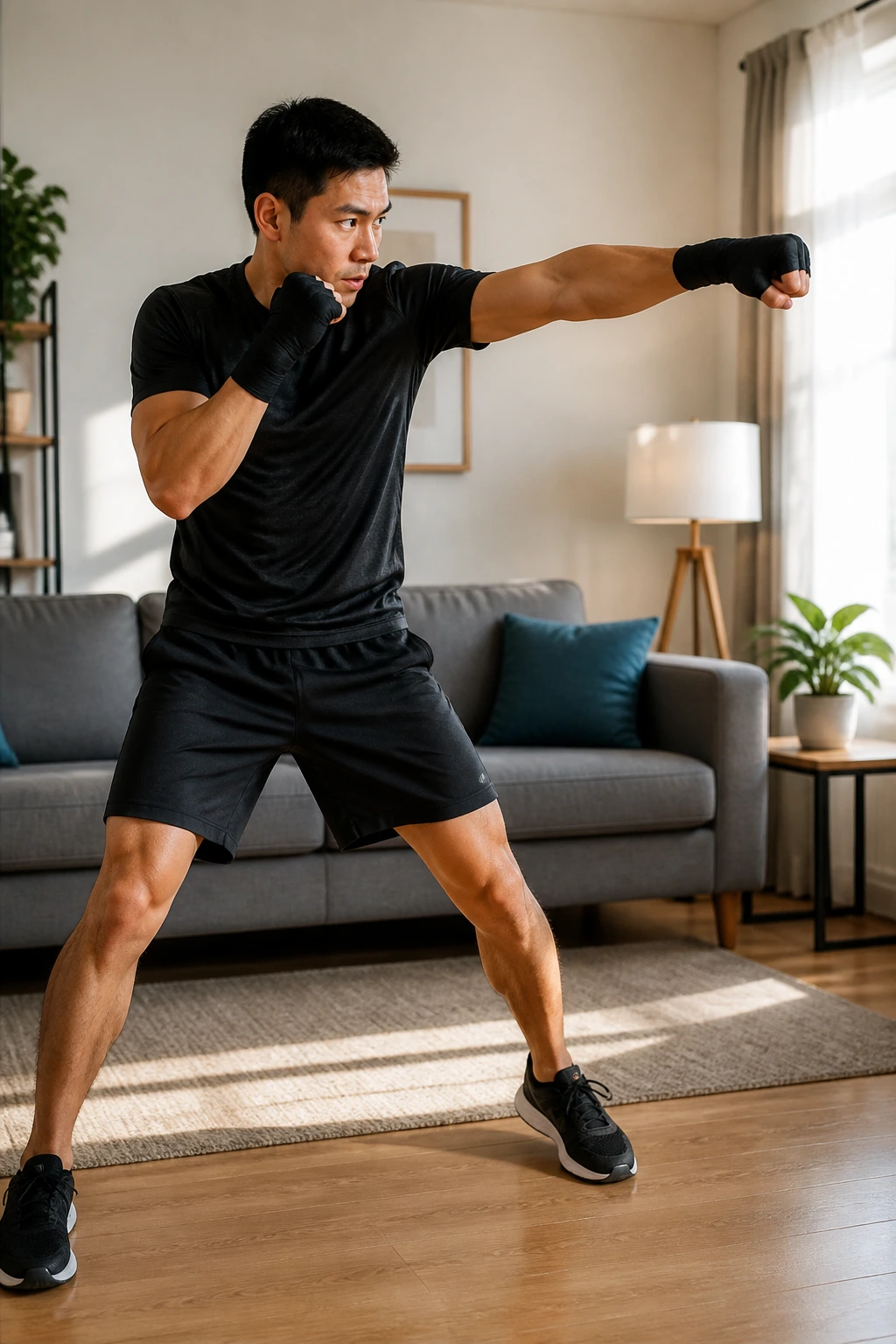
Shadow boxing is one of my favorite five-minute home workouts because it can be quiet or explosive, technical or messy, and still count. You only need space to throw punches without hitting a lamp.
Start with a minute of jab-cross combinations. Then move into jab-cross-hook. The third minute is head movement: small slips, ducks, and pivots between punches. Minute four is fast hands, where speed matters more than power. Finish with a minute of all-out combinations, bouncing lightly on the balls of your feet.
The arms matter, but the feet matter more than most people think. If your lower body stays stuck, the whole thing gets stiff. Keep your knees soft and your weight balanced.
A good shadow boxing round leaves you warm through the shoulders, quick in the lungs, and a little sharper mentally. It also has a nice side effect: stress tends to leave with the jabs.
6. Stair or Step-Up Sprints
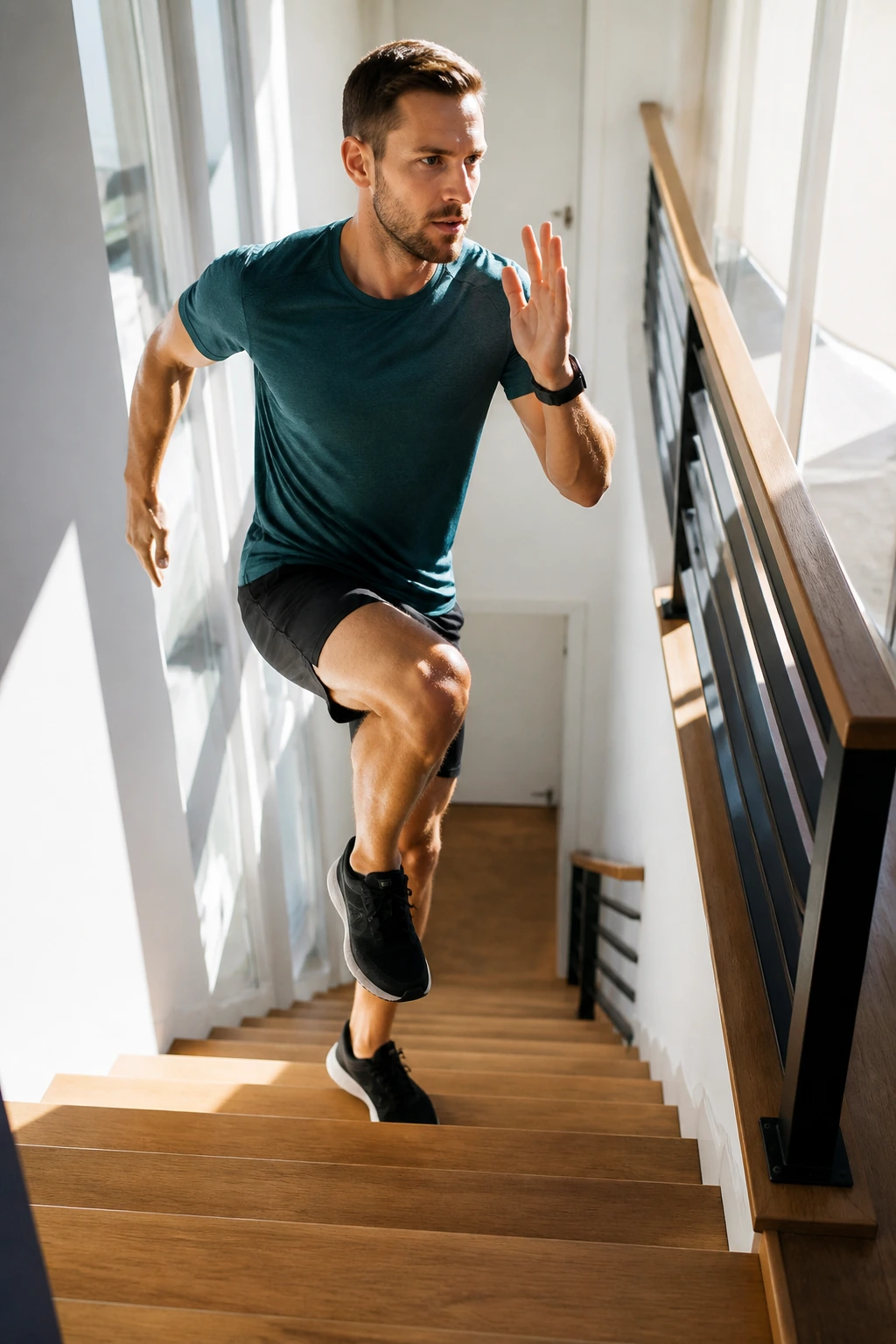
A staircase is a tiny monster, which is why it works so well. If you have one at home, or even a solid step, you already own a very useful piece of cardio equipment.
Use the first minute for steady step-ups. The second minute is faster step-ups with a strong knee drive. Minute three can be side steps if the stairs are wide enough. Minute four is controlled down-and-up tempo work. Finish with a minute of brisk alternating step-ups and a tall posture.
How to keep it safe
Pick footwear with a decent sole, and make sure the step does not wobble. That sounds obvious until someone tries to race a folding stool.
Use the handrail if balance is shaky. And if your knees complain on the way down, turn the workout into more stepping up and fewer fast descents. The climb is the point anyway.
7. Low-Impact Dance Cardio
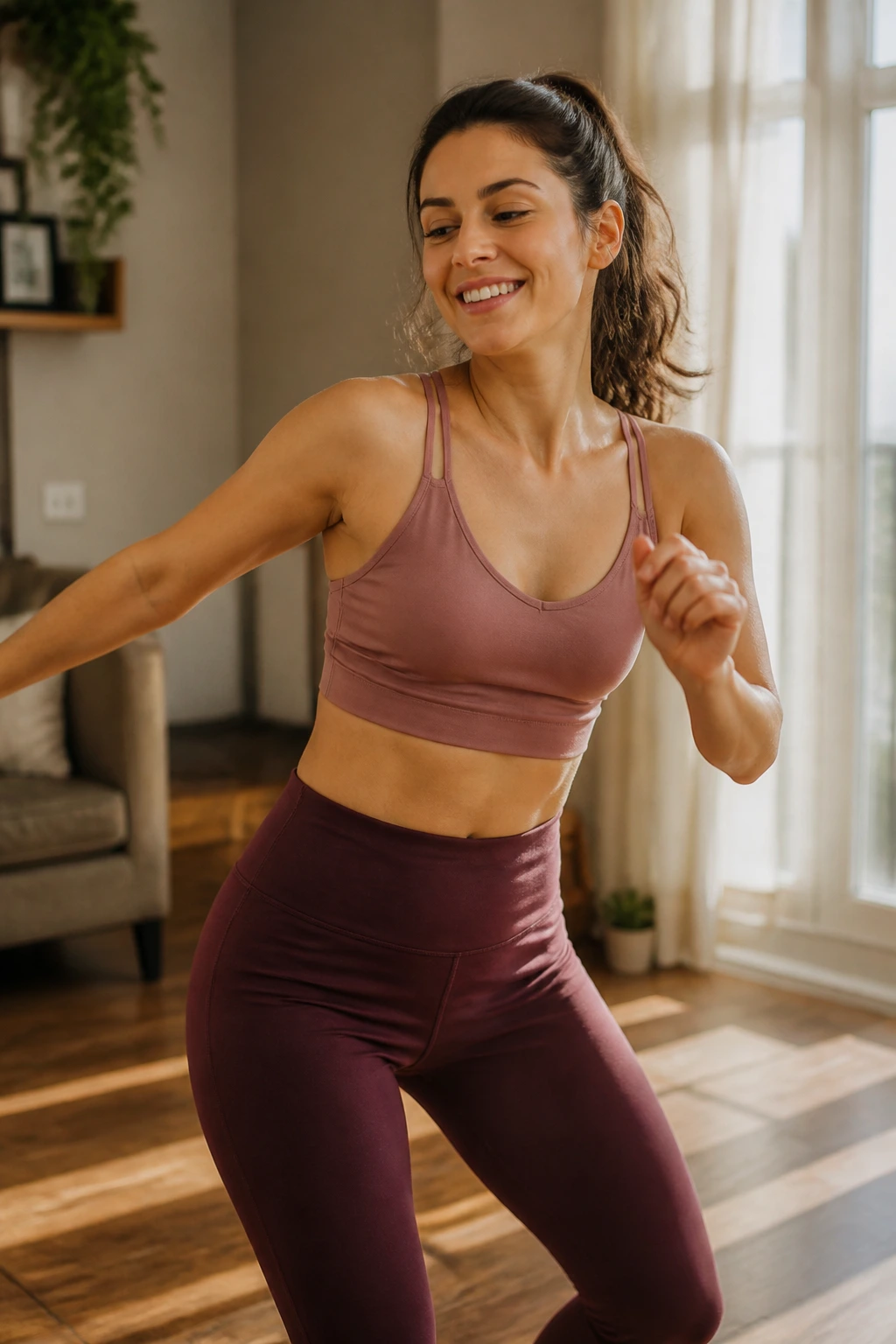
Not every cardio session needs jumping. Sometimes the best five-minute home workout is one that feels more like a private dance break than a formal training session.
Use a steady playlist and move through step-touches, grapevines, knee lifts, heel digs, and arm sweeps. Spend one minute on each pattern. Keep the feet light and let the upper body join in. If you want more effort, make the arms bigger and the steps quicker. If you want less, keep everything low and smooth.
This one is good on days when you’re mentally fried. It asks for coordination, but not perfection. Miss a step? Fine. Start the next one.
I like this routine because it sneaks in a little joy. That matters. A workout you dread is harder to repeat than a workout you enjoy enough to do in socks.
8. The Wall Sit and Calf Raise Combo
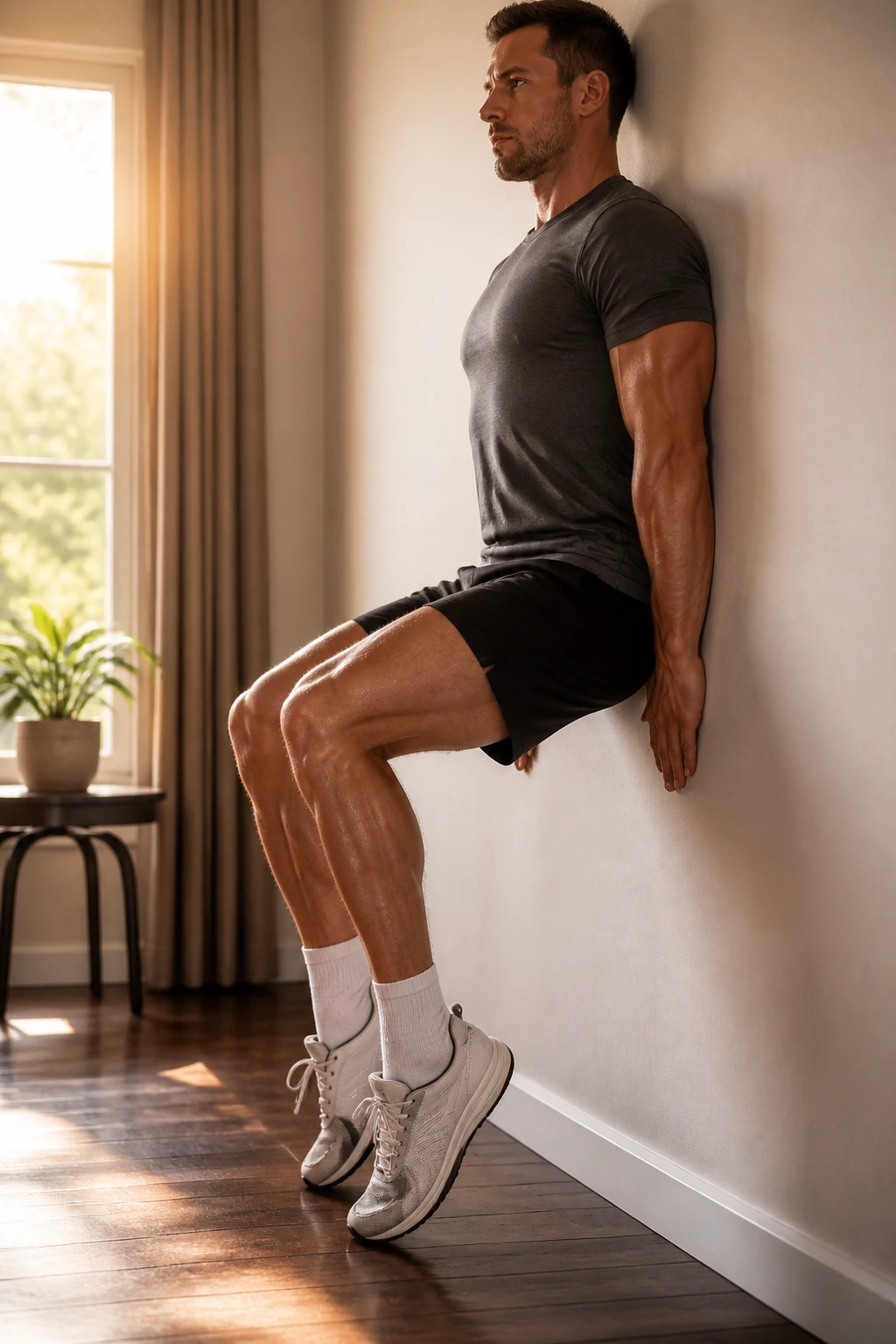
A wall sit looks innocent right up until your thighs light a match. Then you understand why so many people avoid it.
Set your back against a wall, slide down until your knees are somewhere near a right angle, and hold for one minute. The second minute is the same position with slow calf raises. Minutes three and four can alternate between a wall sit and standing calf raises. Finish with a final hold, this time as low as you can manage with decent form.
The calves add a little ankle work, and the wall sit makes the legs honest. No momentum. No hiding.
If your knees dislike deep bends, stay higher on the wall. Even a shallow hold has value. And if you need a break, stand up for five seconds, then slide back down. The goal is time under tension, not heroic suffering.
9. Reverse Lunge and Knee Drive Flow
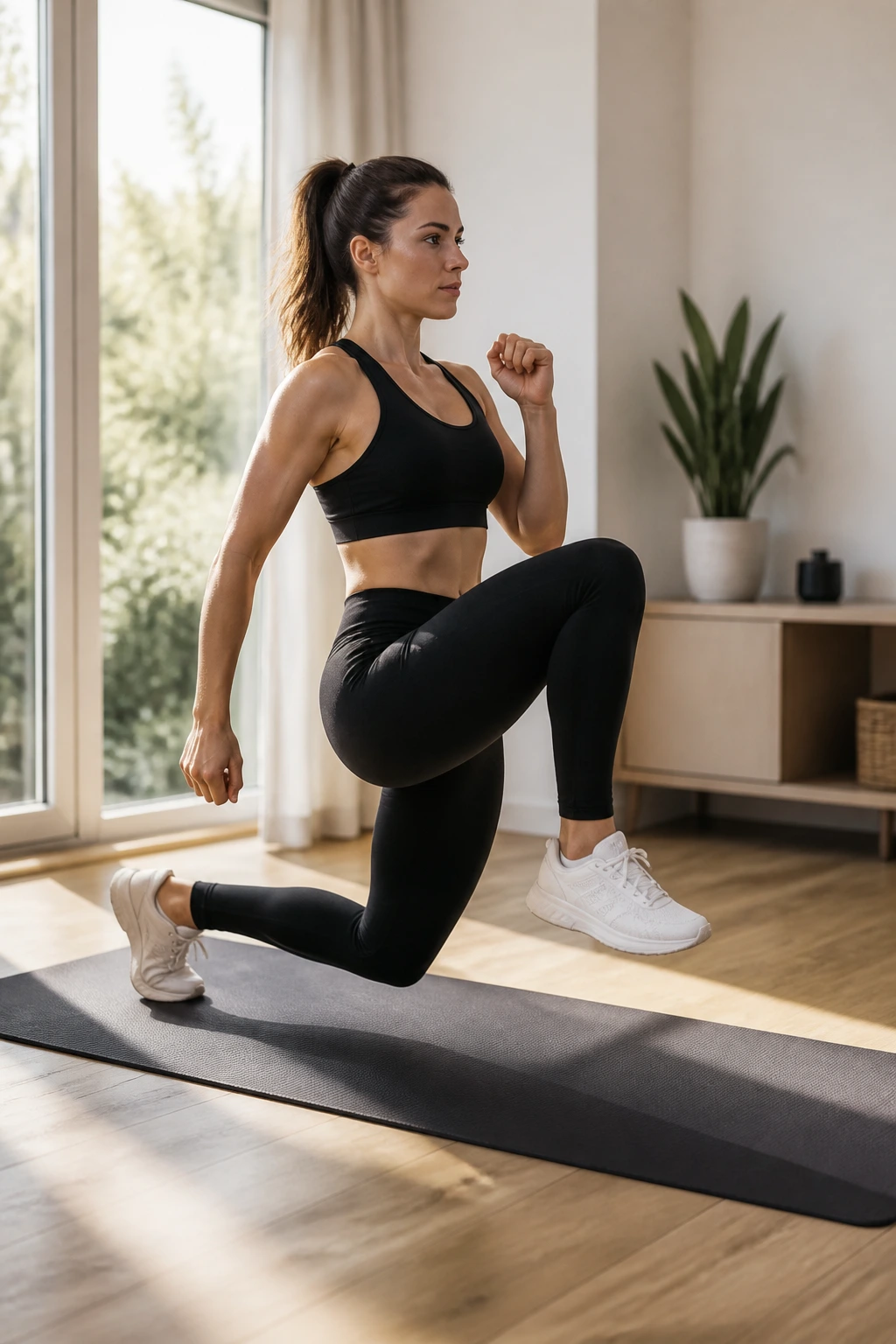
Why do reverse lunges feel kinder than forward lunges for so many people? Because stepping back usually gives the knee a calmer landing and a little more control.
Use one minute of alternating reverse lunges. The second minute adds a knee drive at the top, which wakes up balance. Minute three is a slower lunge with a two-second pause near the bottom. Minute four switches to a reverse lunge with a torso twist. Finish with a quick reverse lunge rhythm that feels almost like marching.
Keep your front foot planted and your chest tall. If your front heel lifts, shorten the step. If balance feels sketchy, keep one hand on a wall.
This is one of those lower-body routines that looks simple from the outside and feels much bigger from the inside. That’s fine. That’s the point.
10. Burpee-Lite Intervals
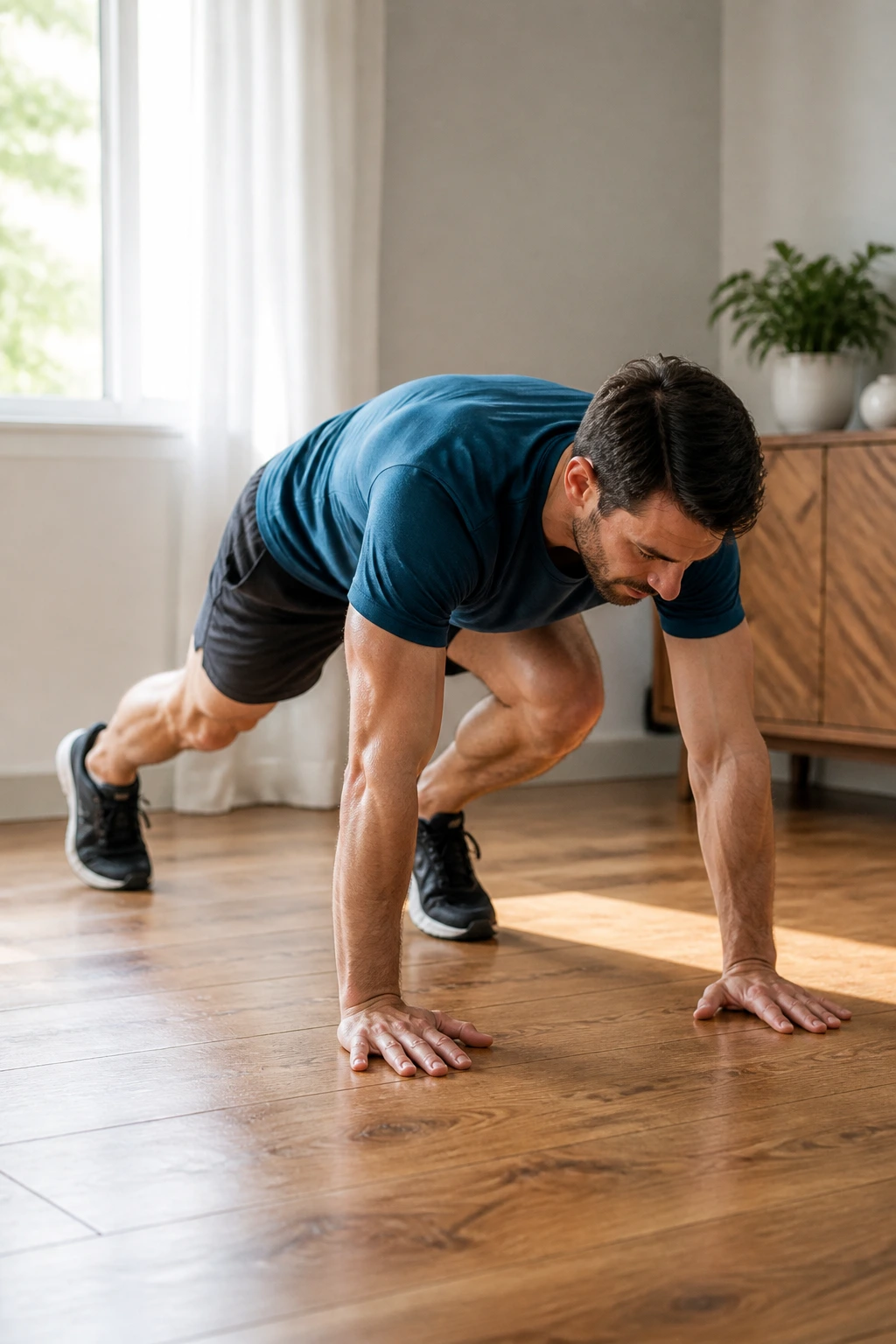
Full burpees are not mandatory. I’ll say that plainly. Plenty of people can get a serious sweat without throwing themselves to the floor and back up again like they owe it money.
A burpee-lite version usually means squat, hands to floor, step one foot back, step the other foot back, step forward, stand, and maybe a small reach overhead. Do that continuously for five minutes, but keep the pace controlled enough that your form stays clean. If you want more speed, shorten the pause at the bottom. If you want less impact, remove the jump entirely.
The beauty of this version is that it can be scaled for almost anyone. It still raises the heart rate. It still hits the shoulders and legs. It just doesn’t punish your wrists or your neighbors.
A decent burpee-lite round ends with breathing that’s louder than you expected. That’s a good sign.
11. Chair Strength Circuit
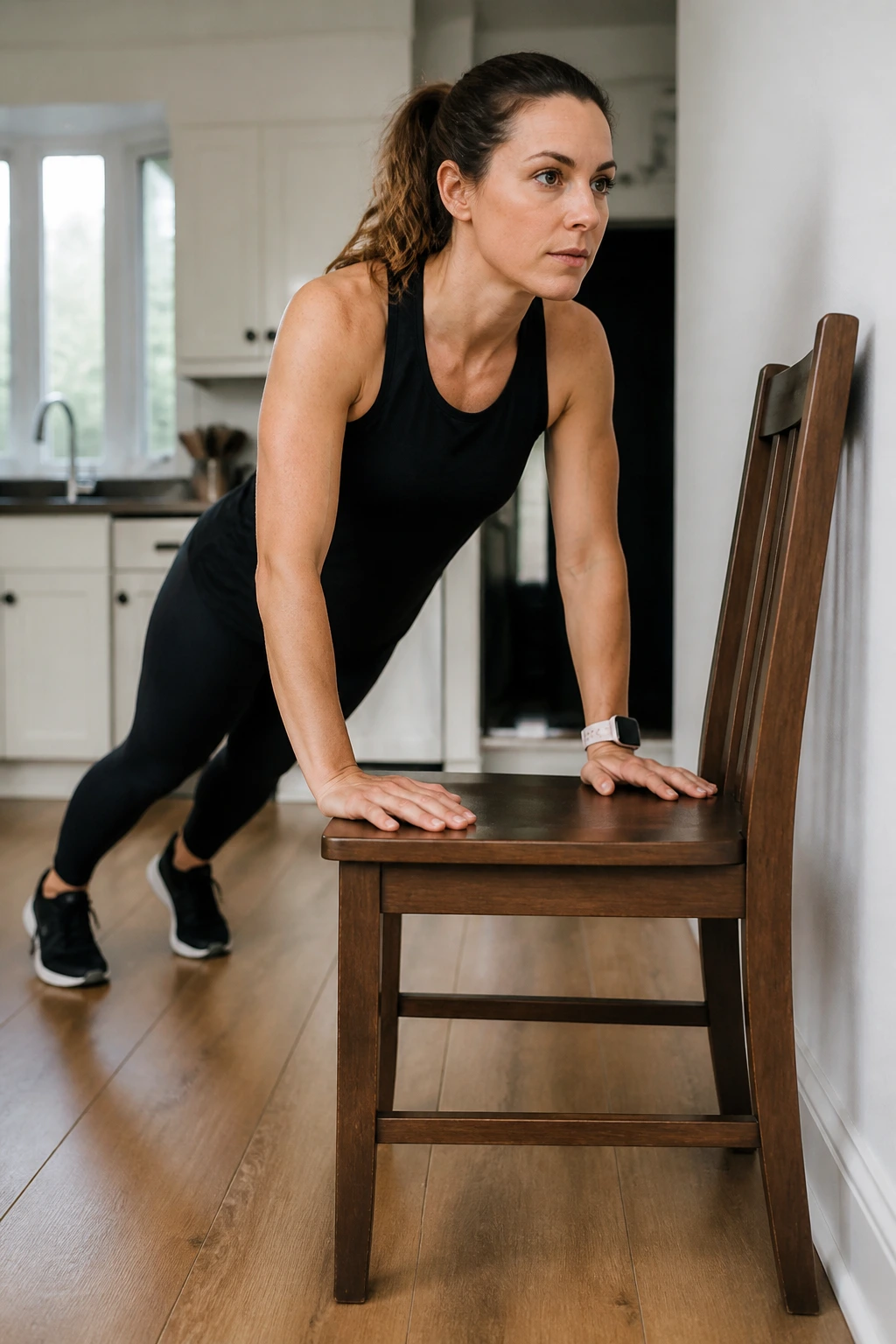
A sturdy chair gives you more workout options than most people realize. It can turn into a step, a support, or a target for controlled movement.
Use minute one for incline push-ups with your hands on the chair seat. Minute two is chair squats, lightly touching the seat before standing. Minute three is step-ups if the chair is low and stable, or seated-to-standing reps if you want less balance work. Minute four is triceps dips, but only if the chair is solid and doesn’t slide. Finish with fast marches beside the chair for a final minute.
A few hard rules
The chair must not move. Slide it against a wall if needed.
If your shoulders hate dips, skip them. Do not force a move that makes the front of the shoulder feel pinchy.
This is one of the most practical home workouts on the list because the setup is almost nothing, and the movement range is easy to control.
12. Bear Crawl and Hover Drill
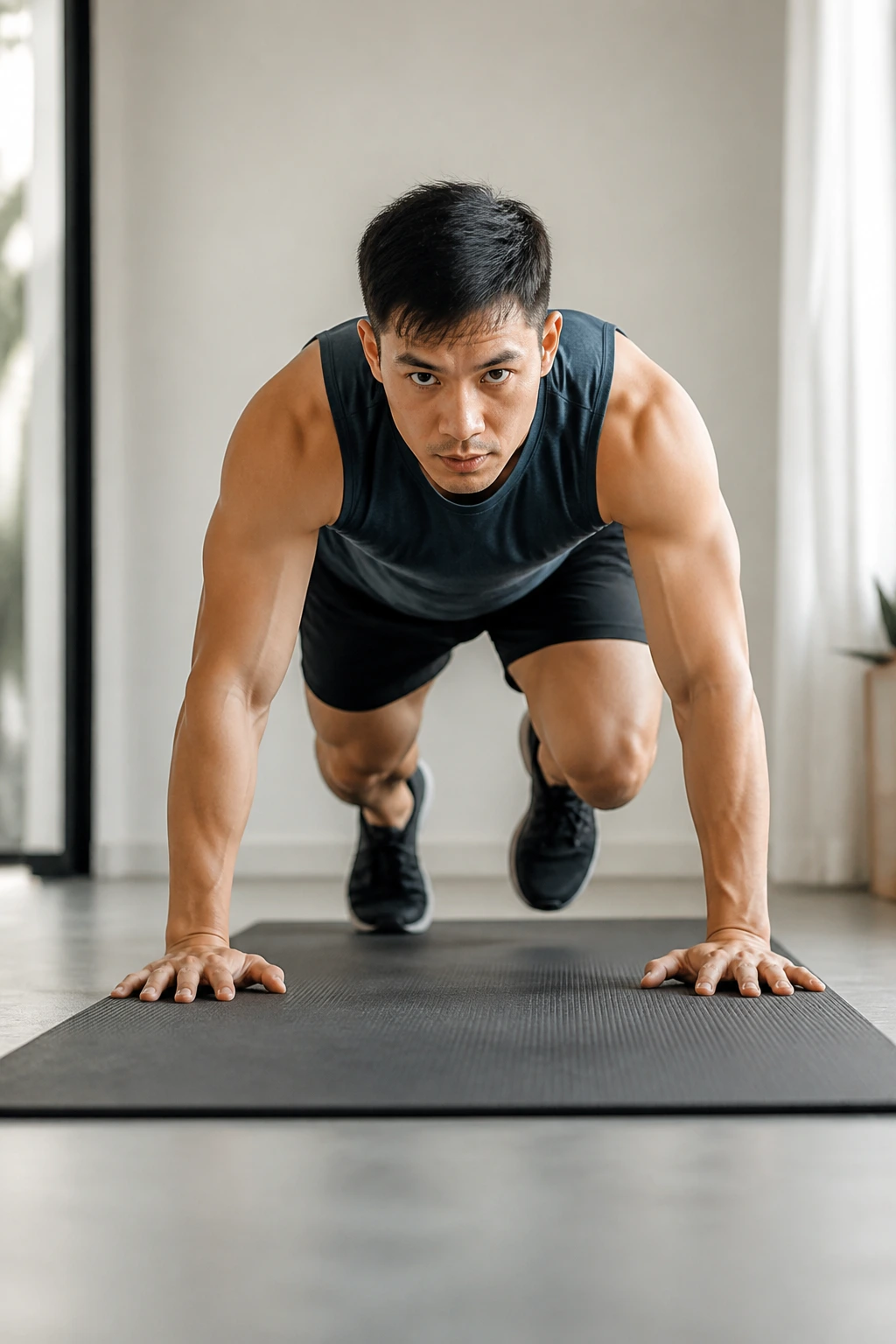
Bear crawls are tiny and annoying in the best way. They light up the core, shoulders, hips, and wrists without needing a lot of room.
Start with a bear hover: hands under shoulders, knees floating a few inches off the floor. Hold for twenty seconds. Then crawl forward a few steps and back again for the next chunk of time. Add shoulder taps from the hover if you want more stability work. Finish the five minutes by alternating crawl, hover, and controlled breathing.
This one makes you work hard without jumping. That’s useful if you share walls with other humans.
Keep the knees low, the back flat, and the steps short. When the crawl gets sloppy, slow down. The floor is unforgiving in a way that is weirdly helpful.
13. Side Plank and Oblique Tap Set
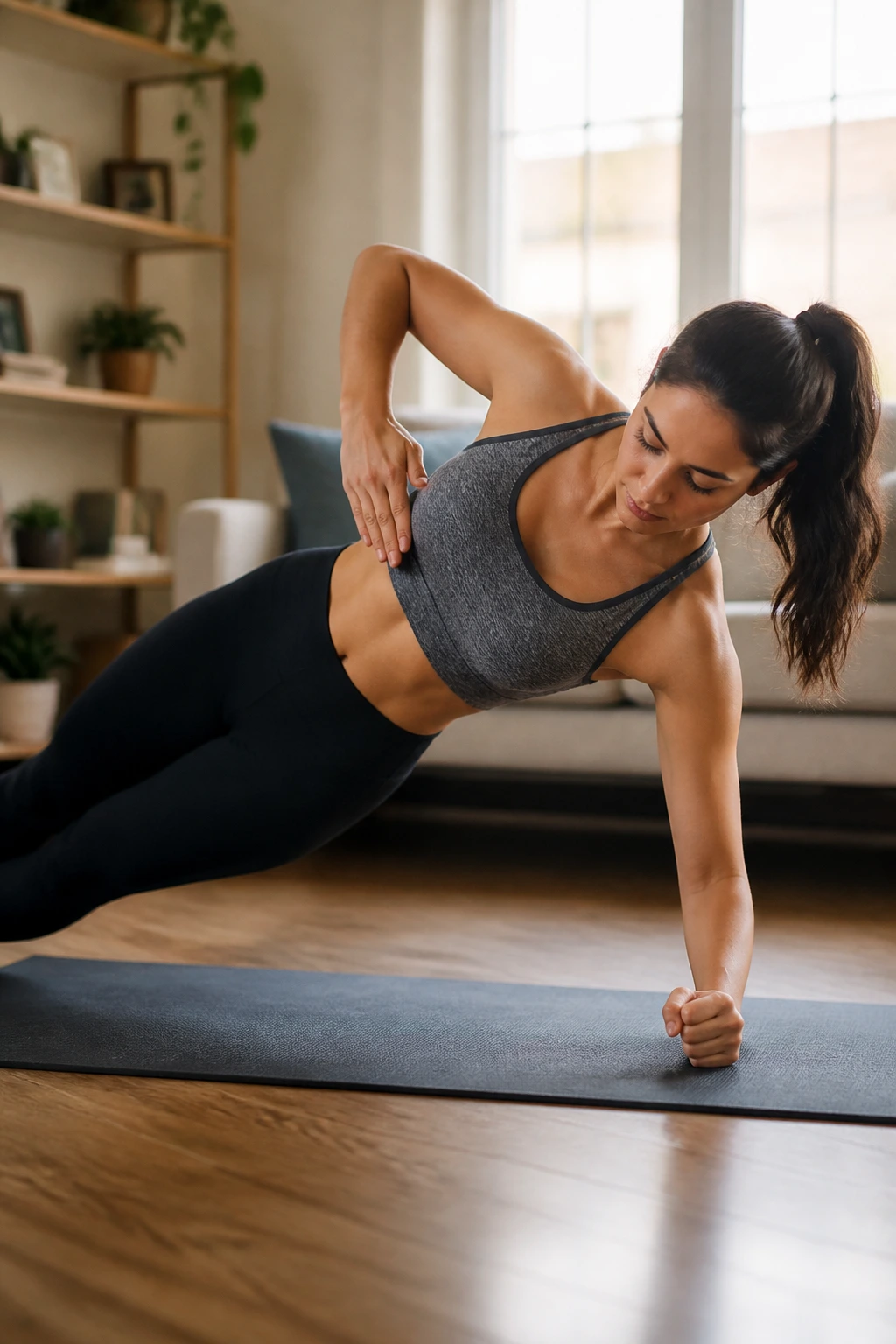
Can a five-minute workout really train the side body properly? If you choose the right moves, yes.
Use one minute for a side plank on the right, then one minute on the left. The third minute is side plank hip dips, lowering a few inches and lifting back up. Minute four becomes a knee-down side plank if you want a quieter version. Finish with standing oblique taps, reaching elbow to knee on one side, then the other, at a faster pace.
The side plank teaches your trunk to resist collapse. That matters more than people think. It is one of the reasons I like it more than endless crunches.
If your wrist gets angry, drop to the forearm. If your shoulders shake, that is normal. If your lower back takes over, shorten the hold. A cleaner 20-second side plank beats a grim 60-second struggle.
14. The Lateral Lunge and Skater Step Circuit
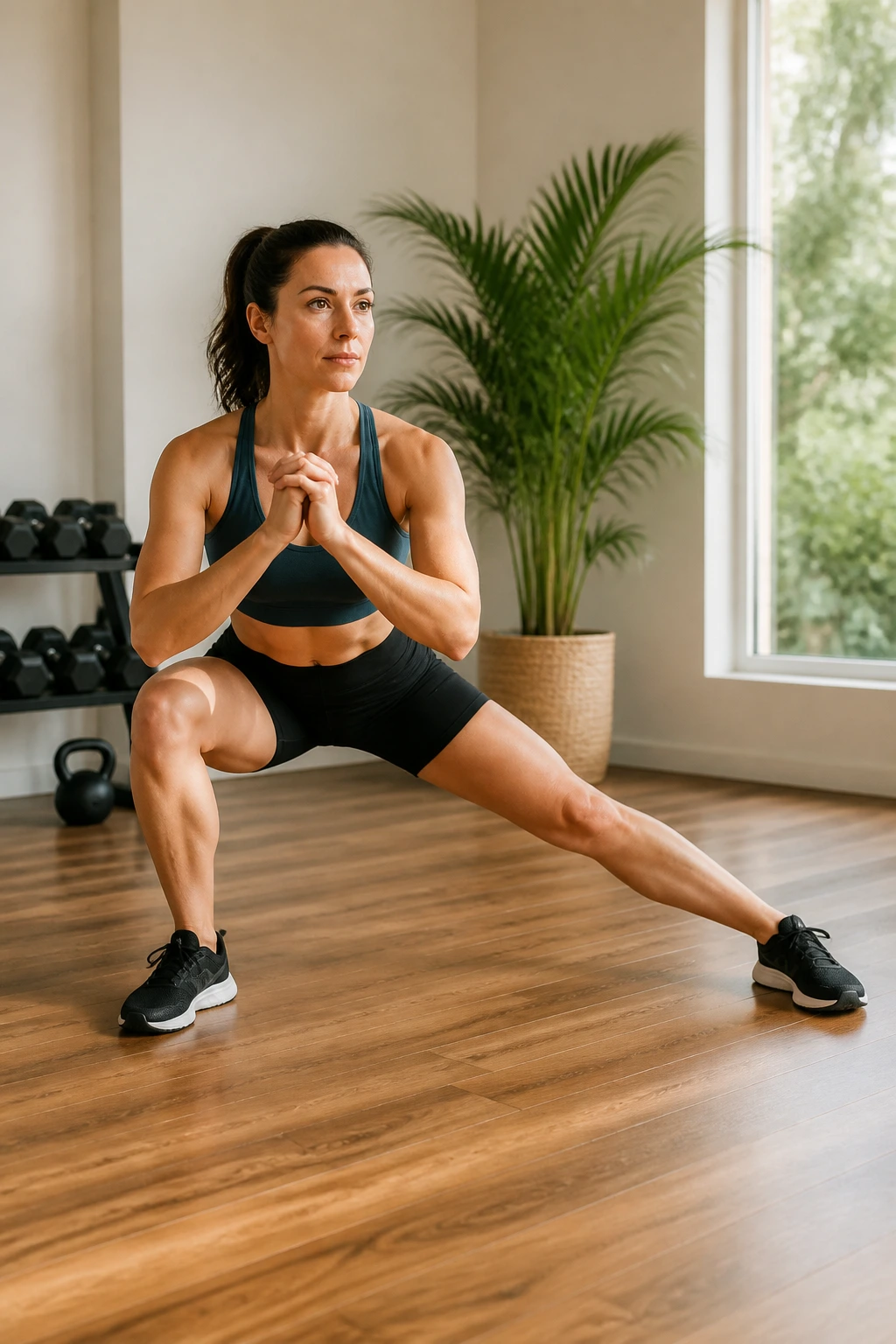
Forward and backward movement get all the attention, but side-to-side work is where a lot of people discover weak hips. This workout fixes that in a simple, sweaty way.
Minute one is lateral lunges, stepping out wide and sitting into one hip at a time. Minute two becomes skater steps with no jump, just a side-to-side reach. Minute three is a faster side shuffle in place. Minute four brings curtsey lunges if your knees tolerate them, or another round of lateral lunges if they don’t. Finish with quick skater taps and strong arm swings.
Your feet should stay planted enough to feel stable, but light enough to move quickly. The inside of the thigh and the outside of the hip both get involved here, which is exactly why the workout feels a little different from standard squats.
15. Mobility Flow for Hips and Shoulders
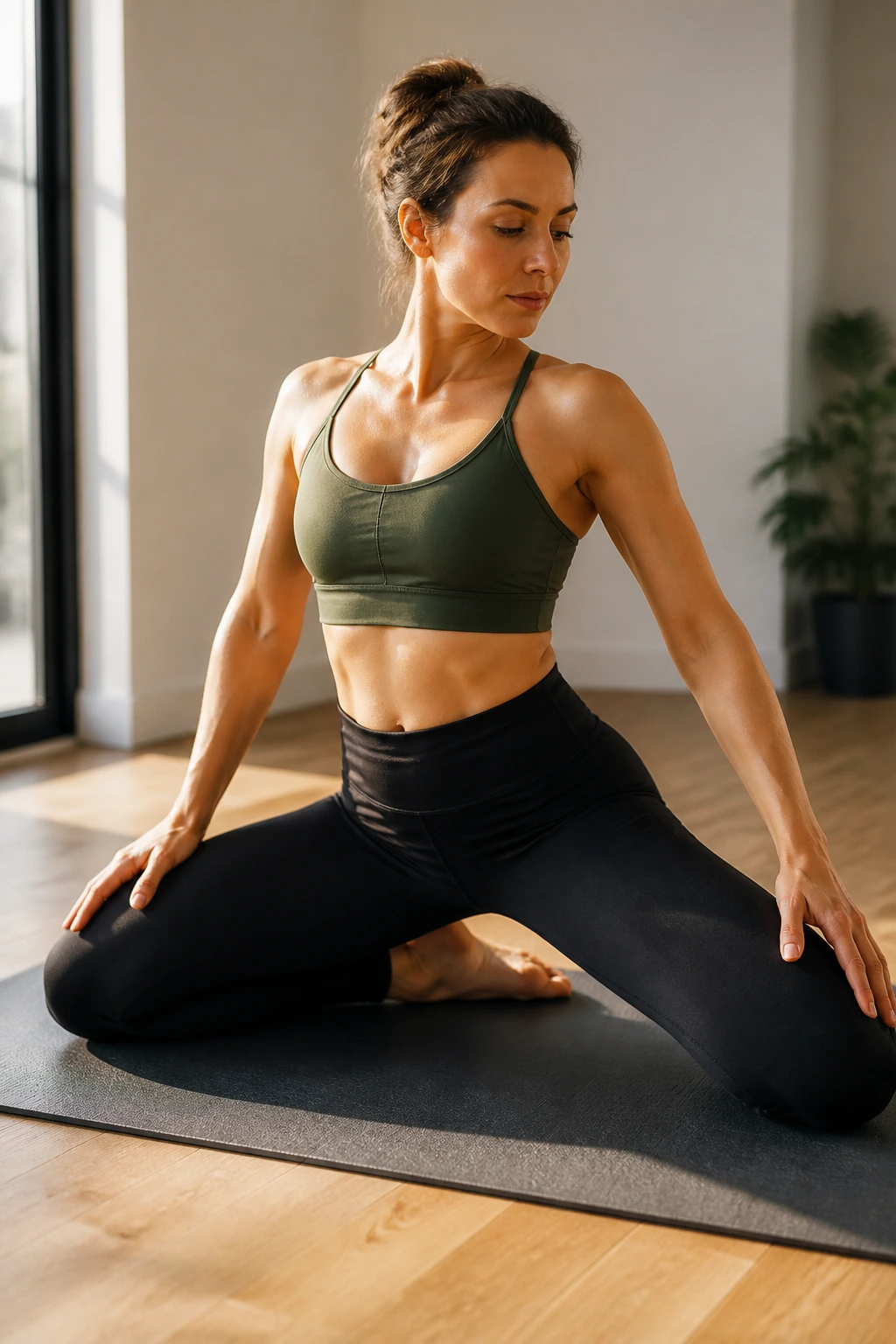
Some days the right move is not “train harder.” It is “move the joints that have been sitting all day.”
Hips first
Spend the first two minutes on hip circles, world’s-greatest-stretch steps, and squat pries. Let the knees open and close. Keep the breathing slow.
Then the shoulders
Use the next two minutes for arm circles, wall slides, and thoracic rotations. Reach one hand toward the ceiling, then rotate the chest gently toward the wall or room. Keep the neck relaxed.
Finish with one minute of alternating low lunges and overhead reaches.
This routine does not feel flashy. It feels useful. There’s a difference.
On days when you feel tight for no obvious reason, this is the one I’d pick before anything louder. A body that moves better usually works better later.
16. The Prone Back-Body Series
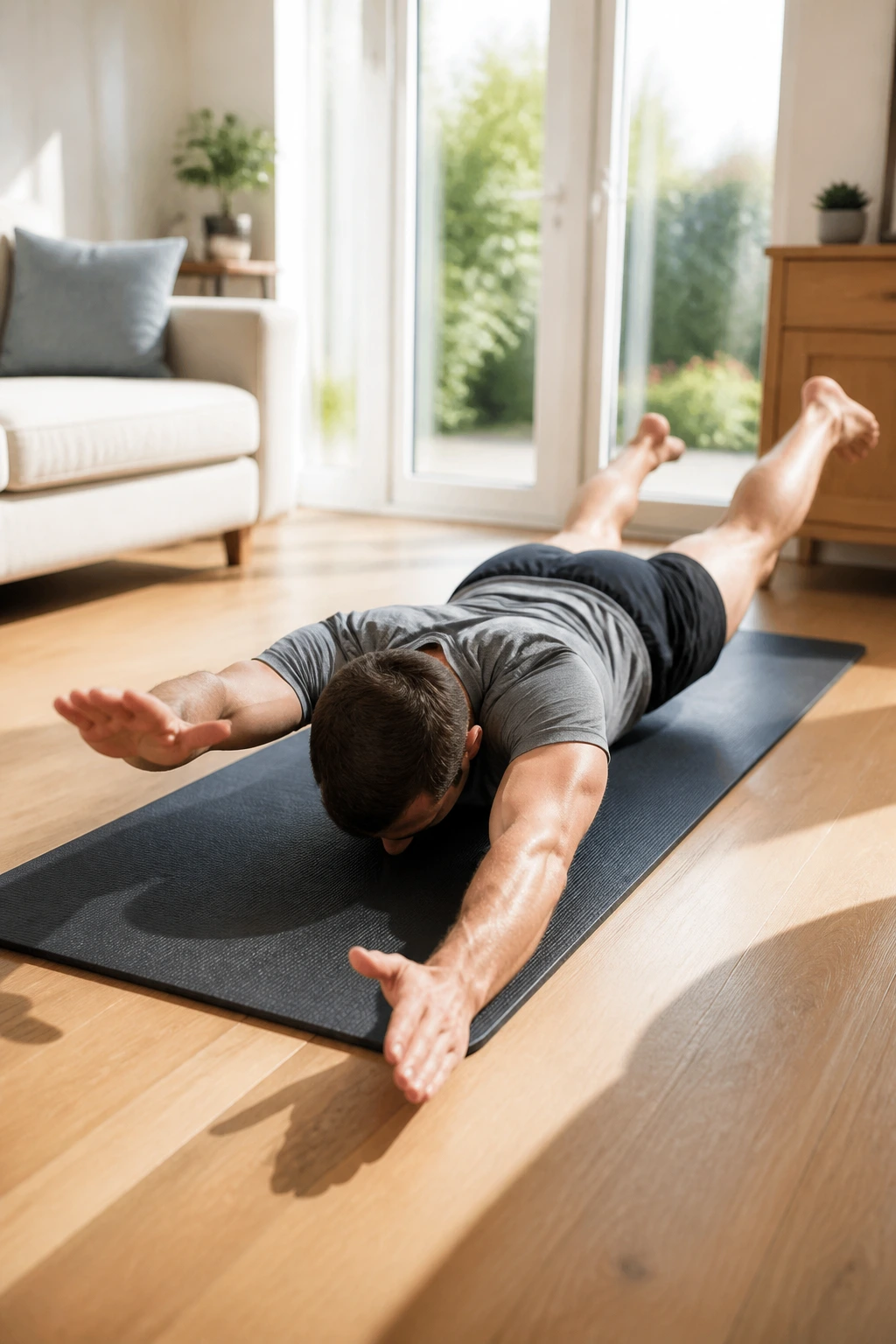
If you spend a lot of time rounded forward at a desk, on a couch, or in a car, your upper back may appreciate some attention from the floor side of things.
Lie face down and use minute one for prone swimmers, lifting opposite arm and leg in a slow alternation. Minute two is Y-T-W arm shapes, with the forehead resting lightly between reps. Minute three becomes reverse snow angels, keeping the hands a little off the floor. Minute four is a gentle cobra hold, chest lifting just enough to feel the back work. Finish with a short set of squeeze-and-release shoulder blade lifts.
The point is not to crank your neck upward. The point is to wake up the muscles that help you stand a little taller.
If your lower back pinches, lower the chest. If your neck cramps, keep your gaze down. Small lifts are plenty.
17. Jump Rope or Invisible Rope Rounds
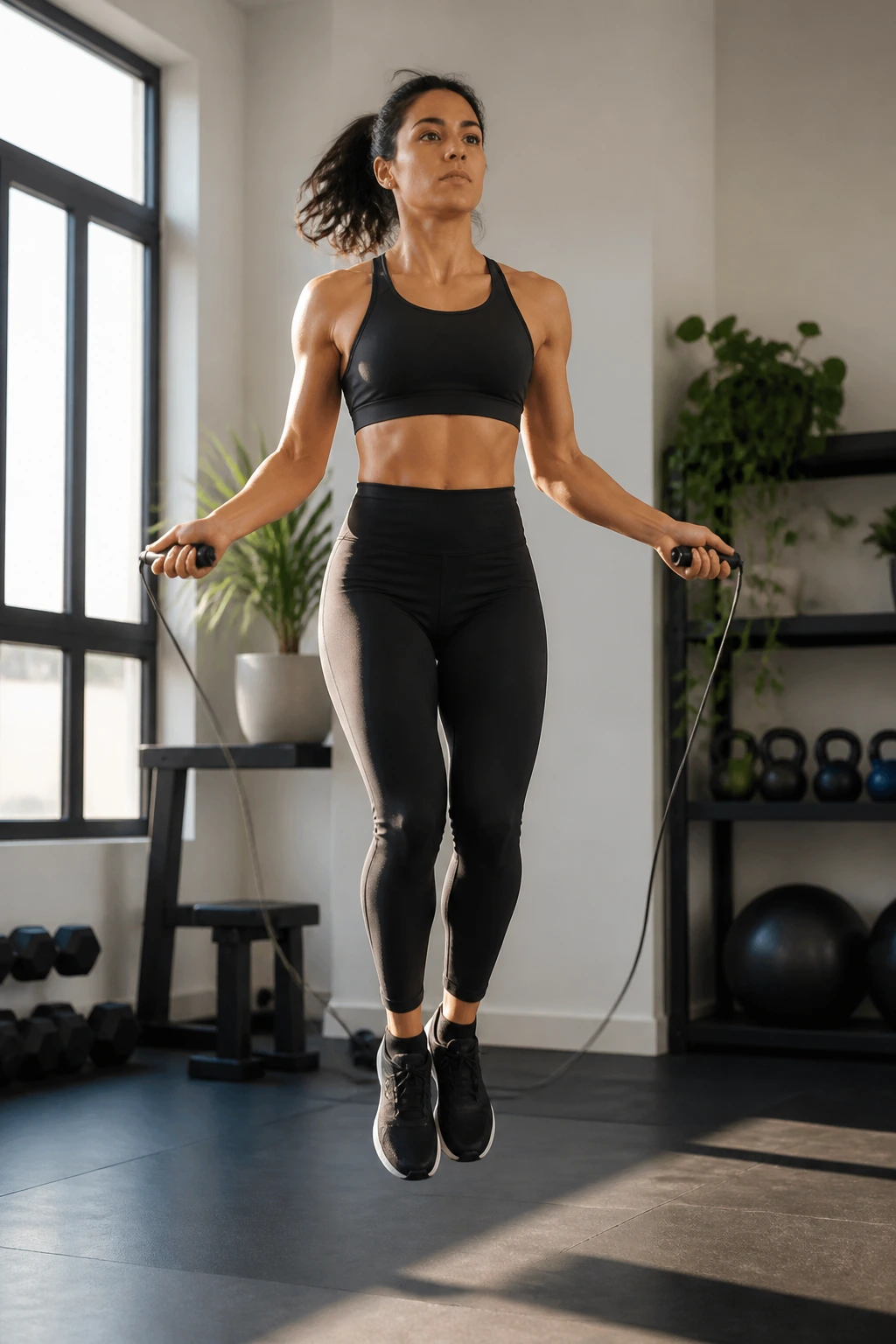
A real jump rope is nice. A pretend one works too. That’s the beauty of this five-minute cardio routine: the rhythm matters more than the gear.
Do one minute of basic jumps, or invisible rope hops if you don’t have the rope. Minute two is boxer step footwork. Minute three is high knees at a moderate pace. Minute four can be single-leg hops or a low-impact march if jumping feels like too much. Finish with one minute of fast alternating feet.
This one gets your heart rate up fast. The constant footwork adds up before you realize it.
Keep your shoulders soft. People tense up and turn a rope workout into a neck workout, which is a waste. If you start tripping, slow the rhythm instead of trying to force speed. Speed comes back once the timing does.
18. The Backpack Strength Circuit
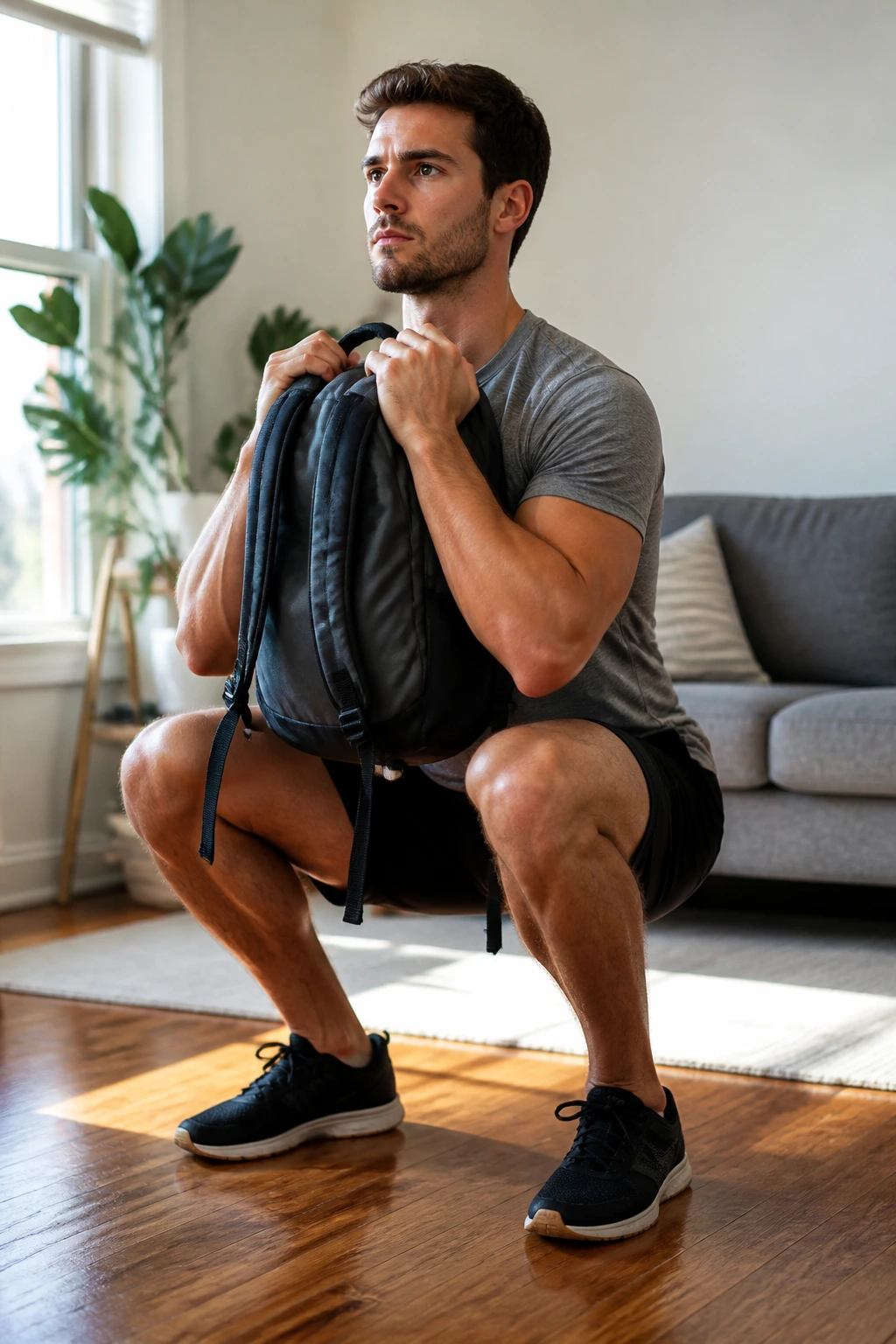
A backpack full of books can stand in for weights better than a lot of people expect. It’s not fancy. It works.
Use it like a dumbbell
Minute one is backpack goblet squats. Hold it close to your chest and sit down into each rep with control. Minute two is bent-over rows, hinging at the hips and pulling the bag toward your ribs. Minute three is backpack deadlifts, keeping the load close to the legs. Minute four is overhead presses if the backpack has secure handles. Finish with a suitcase march, carrying the pack on one side for thirty seconds, then the other.
What makes this useful is the load. Bodyweight is fine, but a little resistance changes the conversation fast.
Check the zipper. Tighten the straps. And if the bag feels awkward overhead, skip the press and row harder instead.
19. Pilates-Style Core Sequence
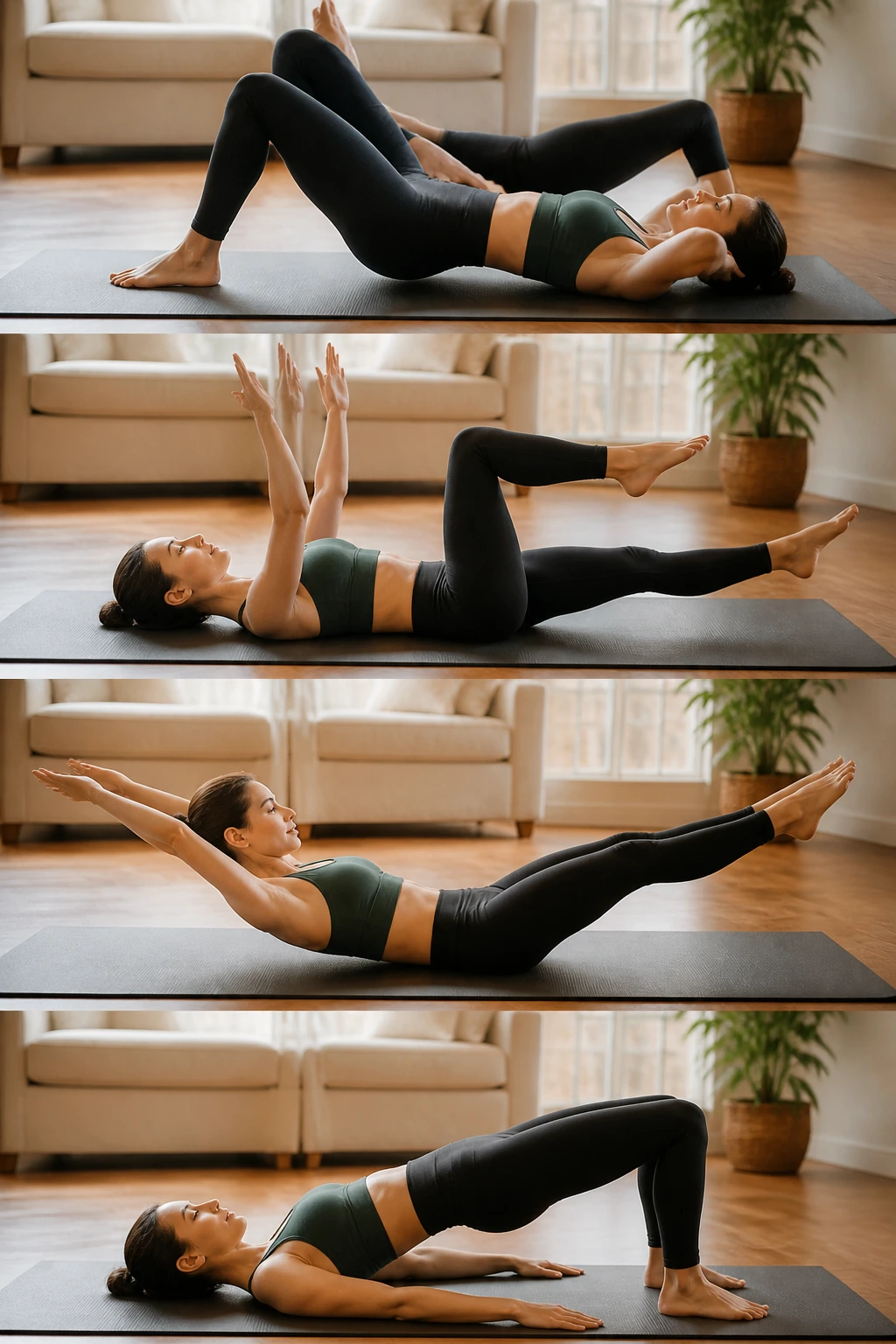
A strong core isn’t just about crunching hard. It’s about control, and control shows up in small shapes.
Start with toe taps for one minute, lying on your back with the legs in tabletop. Minute two is dead bugs, moving opposite arm and leg slowly. Minute three becomes single-leg stretch. Minute four is a hollow hold or a bent-knee version if needed. Finish with a controlled glute bridge and a slow roll-down to the floor.
The pace here matters. If you rush, the lower back takes over and the work gets sloppy. Slow reps keep the abs honest.
A Pilates-style core session can look calm from the outside and burn like mad from the inside. That contrast is part of why I keep coming back to it.
20. EMOM Full-Body Sprint
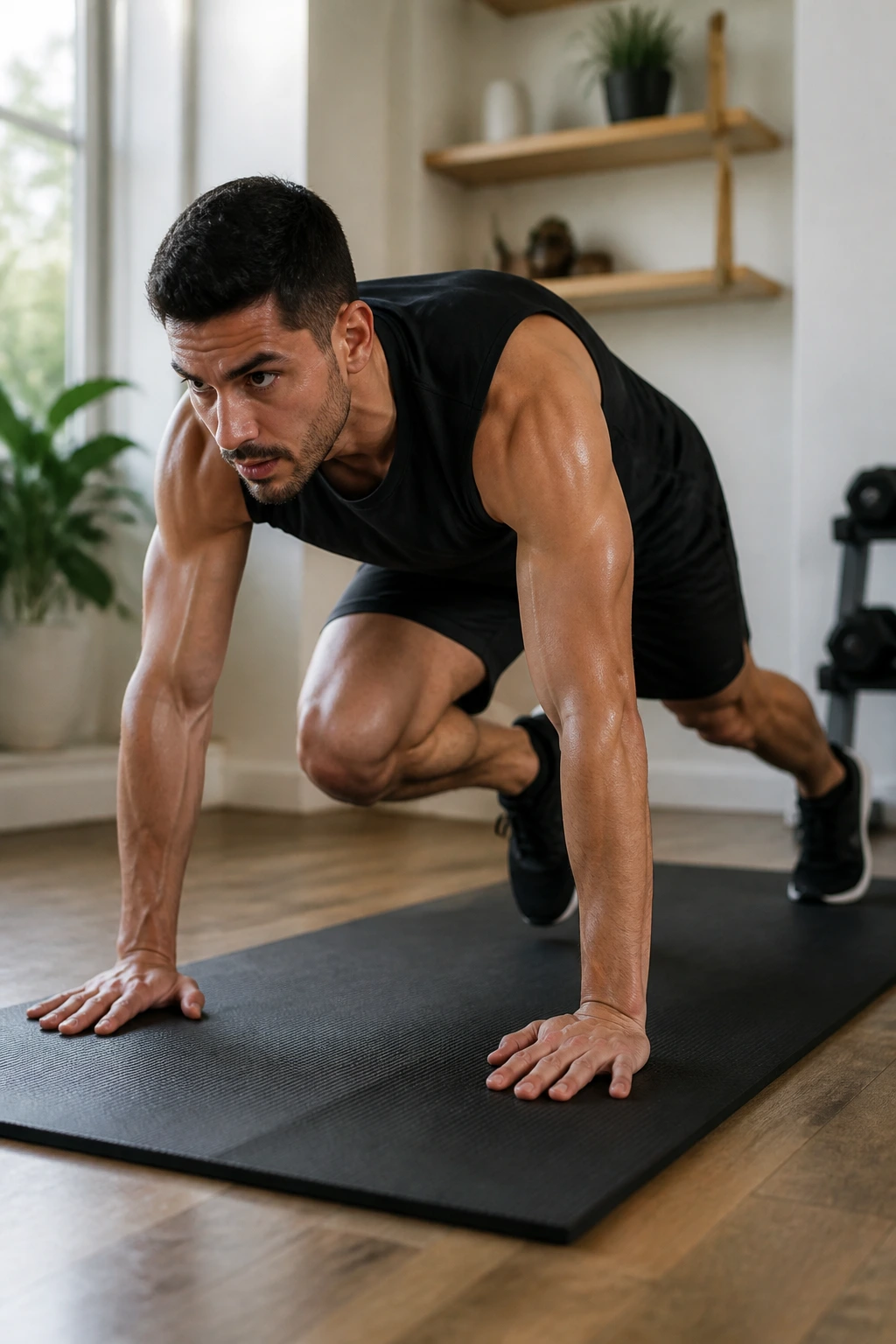
EMOM means every minute on the minute, and it’s a clean way to make five minutes feel organized instead of random.
Set it up like this
Minute one: 10 squats. Minute two: 8 push-ups, scaled as needed. Minute three: 12 mountain climbers per side. Minute four: 10 reverse lunges per leg, or fewer if your legs are already cooked. Minute five: a plank hold for the full minute, or 20 seconds on, 10 seconds off repeated.
The point is to finish the assigned work early enough to breathe before the next minute starts. If you finish with 20 seconds left, great. If you need 50 seconds, reduce the reps.
This workout is short, but it has some teeth. It is especially good when you want structure and do not want to think very hard.
21. The Towel Hamstring Slider Circuit
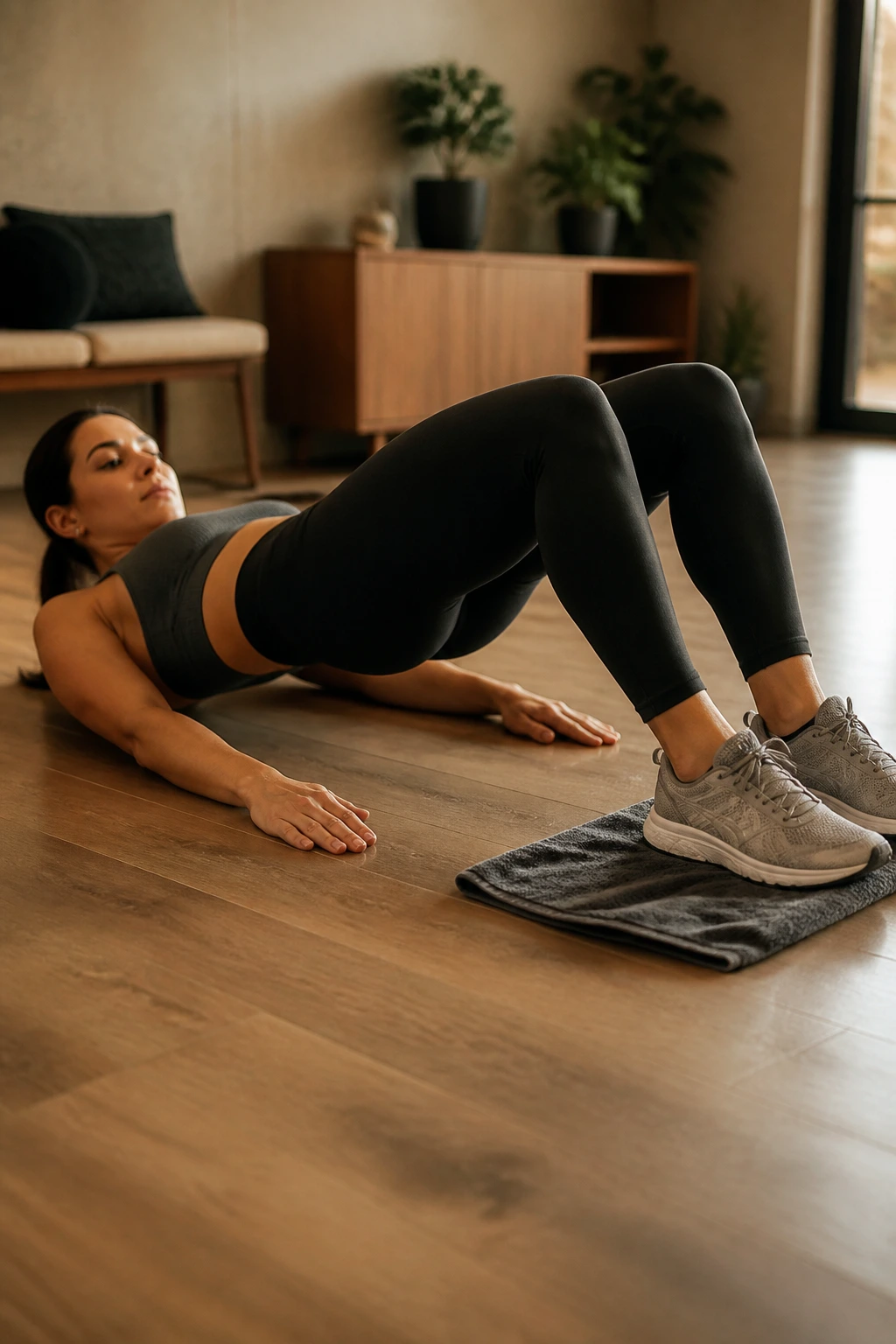
If you have socks on a smooth floor or a towel on tile, your hamstrings are about to have an opinion.
Lie on your back with your heels on the towel. Minute one is bridge lifts and lower. Minute two is slow heel slides, extending the legs out and drawing them back in. Minute three is single-leg bridge holds. Minute four is alternating hamstring curls, one leg at a time. Finish with a final bridge hold and a few slow reps.
The floor needs to be slippery enough for the towel to move, but not so slippery that you skid around like a cartoon. That balance is the whole game.
If your hamstrings cramp, pause, breathe, and shorten the range. Cramps usually mean fatigue or a range that is a little too ambitious for the moment.
22. Standing Desk Reset
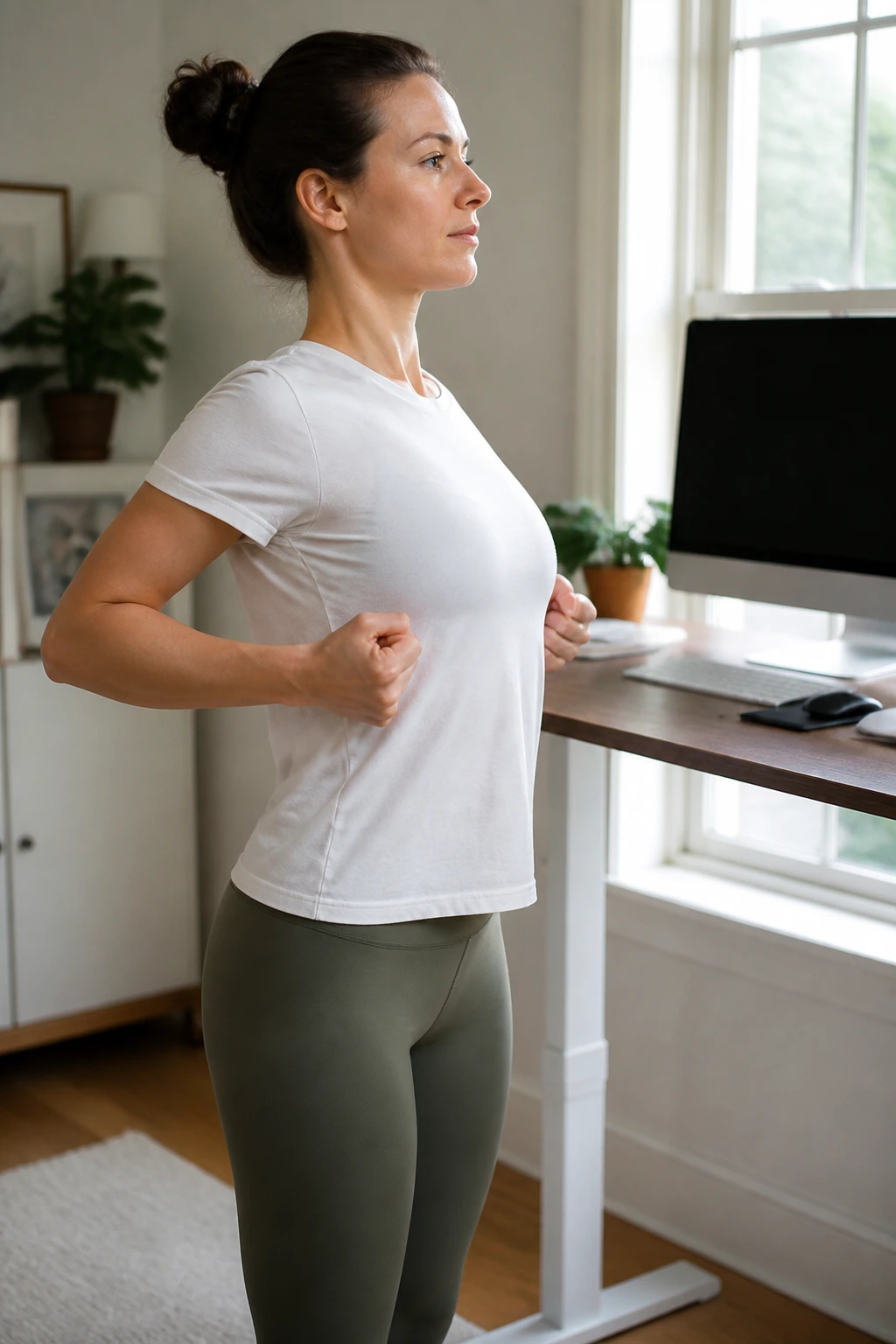
Some workouts are not about sweating through a shirt. Some are about undoing the damage of sitting too long.
Start with neck glides for the first minute: gently draw the head back and release. Minute two is scapular squeezes, pinching the shoulder blades together and letting them go. Minute three becomes standing hip flexor stretches, one side then the other. Minute four is calf raises. Finish with slow air squats and overhead reaches.
This is the routine I’d hand to someone who says they feel “weird” but not injured. Weird usually means stiff, compressed, and underused.
It works best if you keep the movements honest and small. You are not trying to stretch everything into another galaxy. You are trying to give your joints and muscles a break from the same shapes they’ve held all day.
23. Plank Shoulder Tap and Reach Ladder
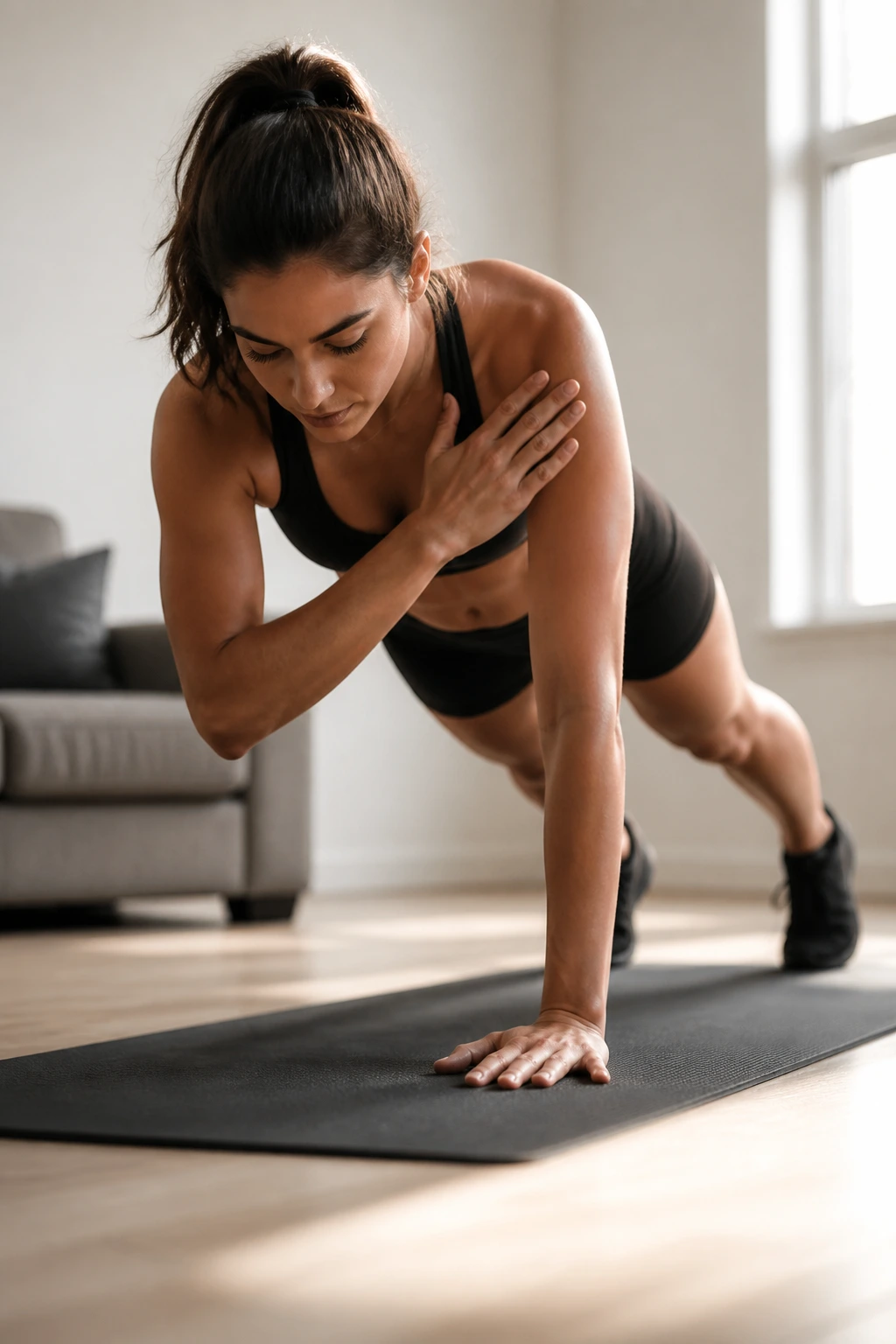
A plank becomes much more interesting once the arms stop being passive.
Use one minute for a high plank with shoulder taps. The second minute is plank reach-outs, extending one hand forward at a time. Minute three becomes plank knee drives, bringing one knee toward the chest without rocking the hips. Minute four is a forearm plank hold. Finish with alternating plank walkouts if your floor space allows it, or return to taps if it doesn’t.
The reason this works is simple: your core has to stop your body from wobbling while the shoulders move. That is hard in a useful way.
If your hips sway all over the place, widen your feet. If your wrists ache, drop to forearms sooner. A stable plank is the prize, not a perfect-looking one.
24. Couch Cardio Ladder
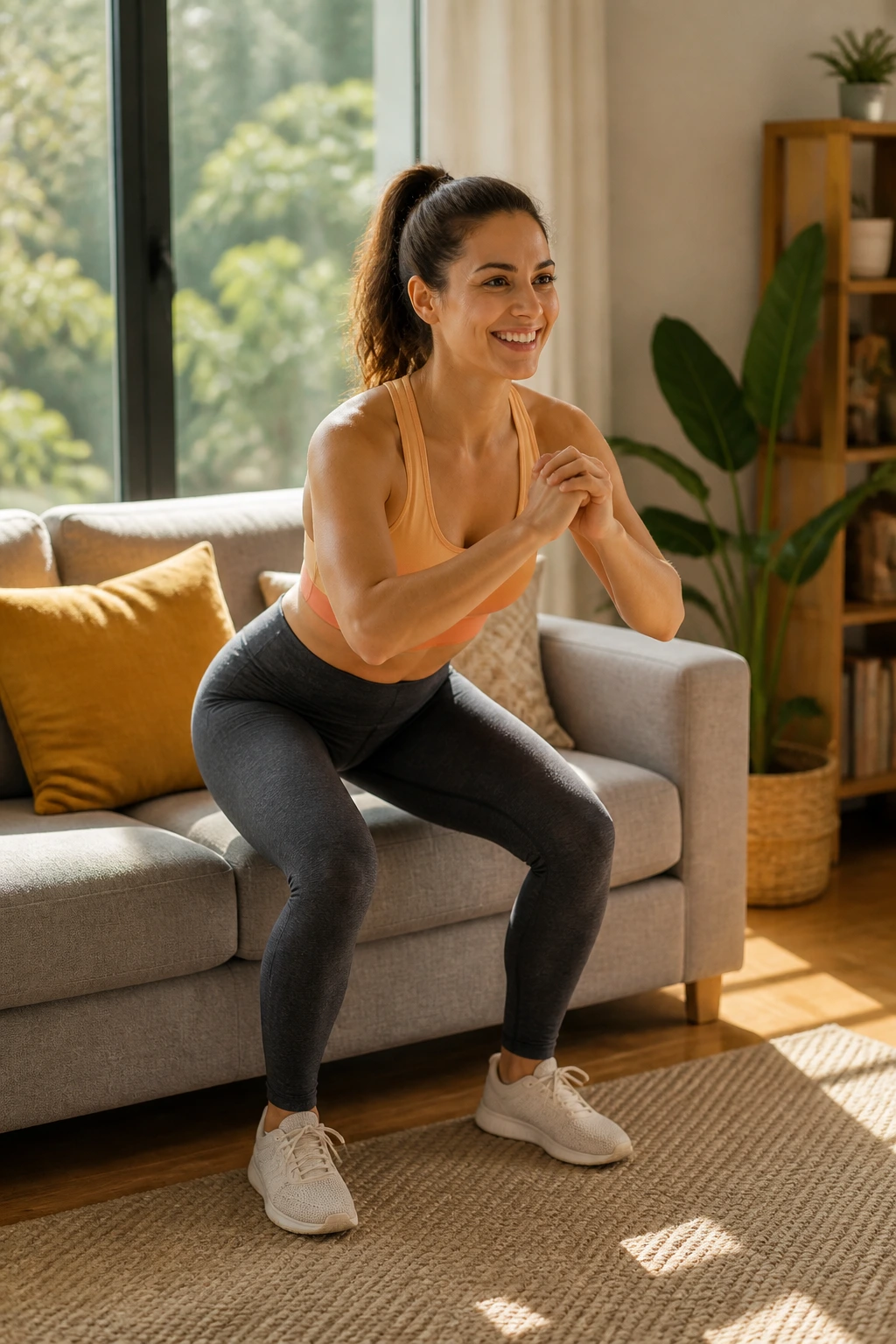
Can the couch be part of the workout instead of the place where the workout dies? Absolutely.
Minute one is sit-to-stands from the couch. Minute two is couch toe taps, alternating feet quickly on and off the cushion edge. Minute three is incline mountain climbers with your hands on the couch. Minute four is skater steps around the couch area. Finish with one minute of quick sit-to-stands and a reach overhead.
This one has a nice rhythm because the furniture acts like a target. You know exactly where to move, which makes it easier to stay in motion.
Make sure the couch is steady and won’t slide. If it does, use a wall or a low bench instead. A moving couch turns a cardio session into a bad day.
25. Recovery Breathing and Stretch
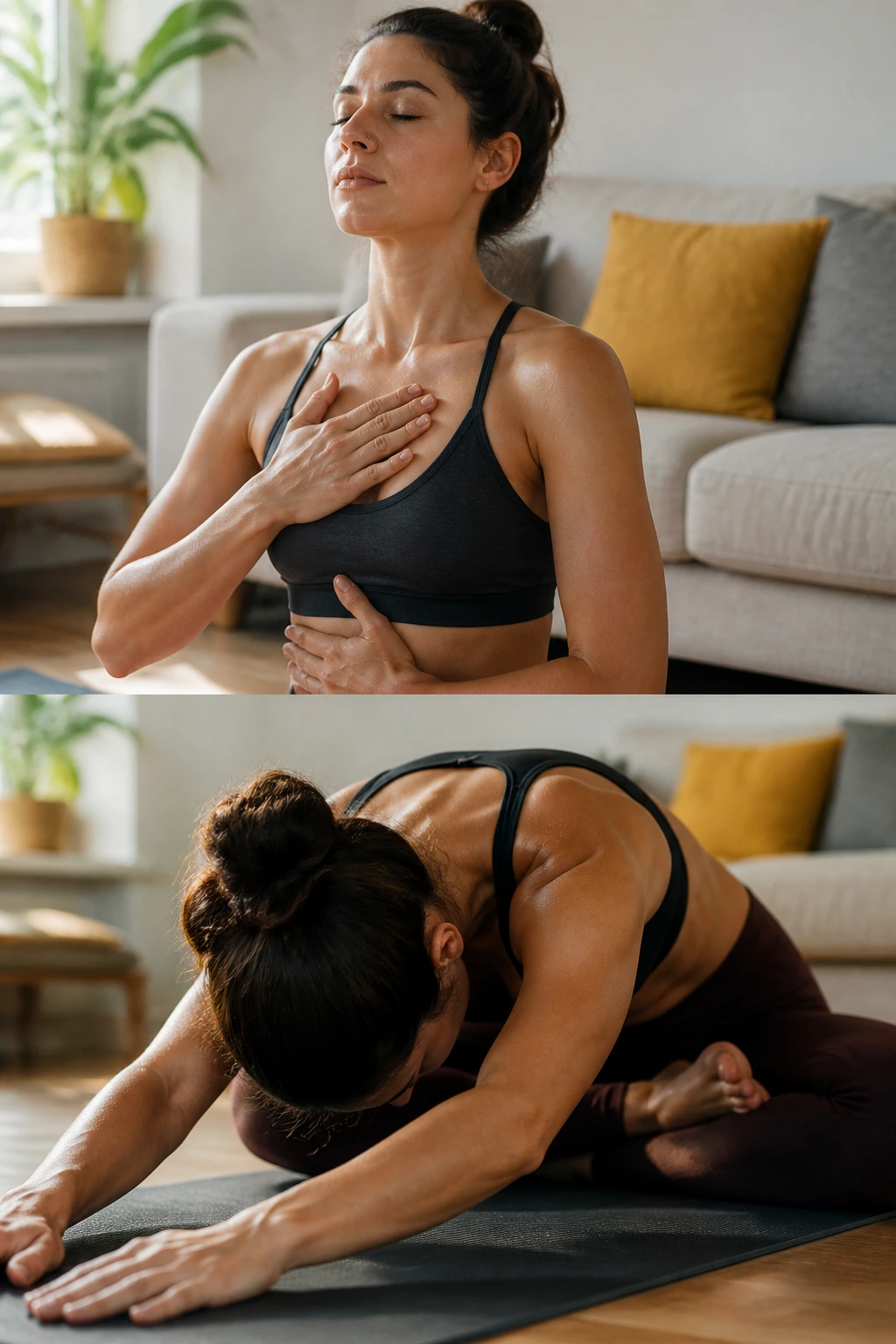
Not every five-minute workout needs to leave you gasping. Sometimes the smart move is to finish with something that brings your system down a notch.
Spend the first minute on slow nasal breathing with one hand on your ribs. Minute two is a forward fold with soft knees. Minute three is a low lunge stretch on one side. Minute four is the other side. Finish with a chest opener, either standing in a doorway or lying on the floor with your arms out wide.
This is the one to use after a harder workout, before bed, or on a day when your body feels more tired than strong.
Recovery work is easy to dismiss because it looks calm. Then you do it consistently and notice you move better the next day. That’s not glamorous. It is useful, which is better.
Final Thoughts
Five minutes is small enough to start without bargaining with yourself. That’s half the battle. Once you stop treating home workouts like they need a perfect setup, the options multiply fast.
What matters most is matching the routine to the day. Some days want squats and lunges. Some want boxing or crawling. Some days you need the quiet version that keeps your joints happy and your back from locking up at the desk. The best five-minute workouts are the ones you’ll actually do again tomorrow.
If you keep a timer nearby and rotate through a few favorites, these short sessions stop feeling like a backup plan and start feeling like part of your normal rhythm. That’s the real win.
