



Building a stronger, more defined midsection is rarely about finding a “magic” movement that shrinks the waistline overnight. If you have been looking for the one exercise that will finally show your abs, you have likely run into the same brick wall most people do: consistent, focused training is the only real answer. The midsection isn’t just one muscle group; it is a complex, interconnected system of the rectus abdominis, the internal and external obliques, the transverse abdominis, and the lower back. When you train at home, you aren’t just doing “tummy workouts.” You are reinforcing your entire torso, which stabilizes your spine and improves your posture, making you look taller and more capable of handling daily physical stress.
The goal here isn’t just about repetition. It is about tension. A set of fifty sloppy crunches provides far less value than ten controlled, slow movements that force your muscles to engage through the entire range of motion. Muscles grow and strengthen under load, and when you are working with body weight, that load comes from how hard you squeeze and how slowly you move. Forget the idea that you need fancy equipment or a crowded gym membership. Everything you need to build a rock-solid core is already in your living room. The following exercises range from classic stability movements to dynamic, high-engagement patterns designed to hit every angle of your core.
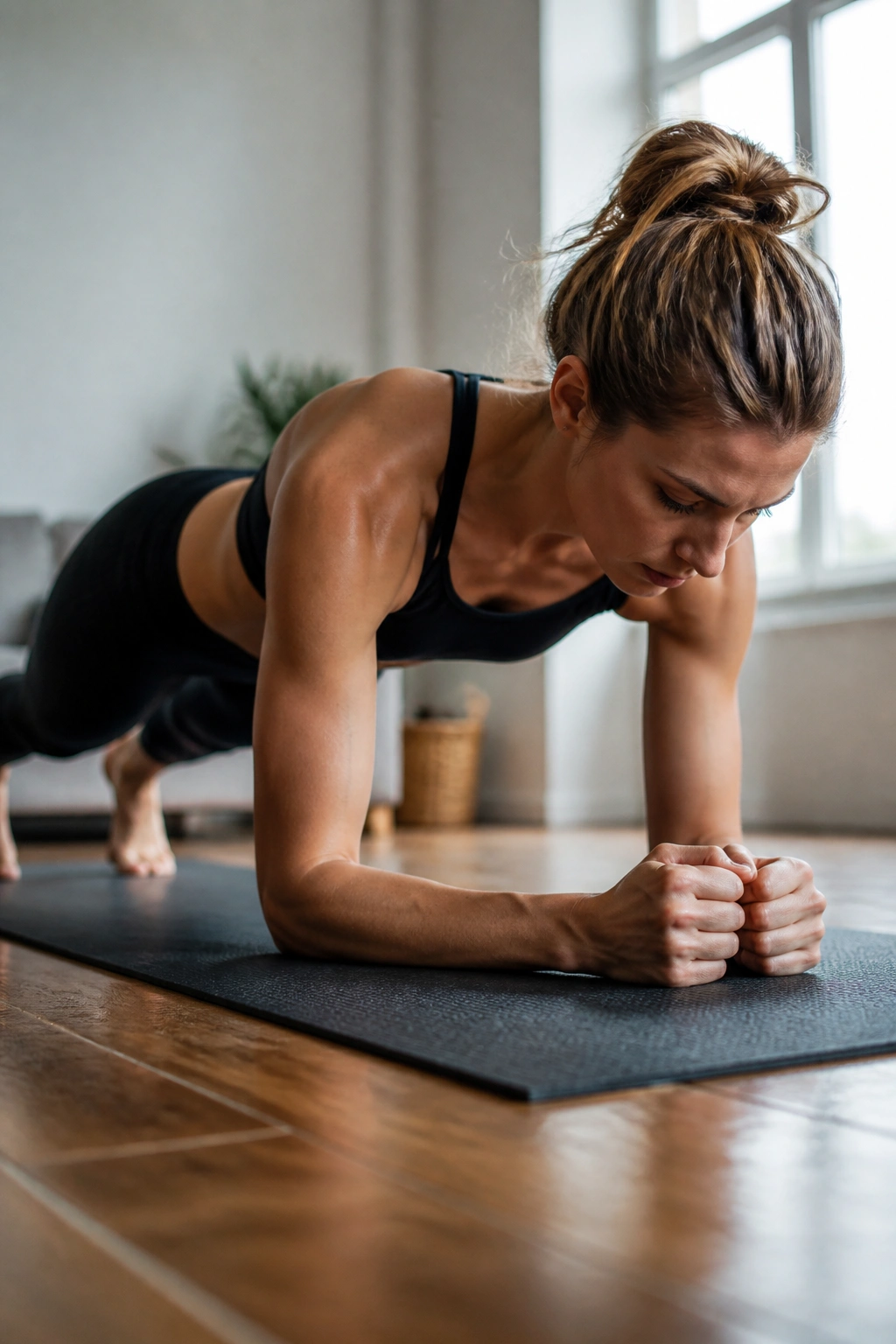
1. Forearm Plank
This is the baseline for all core development, yet it is arguably the most frequently butchered movement in fitness. When done correctly, a forearm plank should feel like a full-body engagement. If you are just hanging out, waiting for the timer to go off, you are doing it wrong.
Why It Matters
A proper plank isn’t just about holding still; it’s about creating tension. You want to imagine you are pulling your elbows toward your toes and your toes toward your elbows without actually moving them. This creates a massive amount of isometric contraction in the abdominal wall.
Execution Essentials
- Start on your forearms, elbows directly under your shoulders.
- Tuck your tailbone—this is the most critical detail. If your lower back arches, you are stressing your spine, not your abs.
- Squeeze your glutes hard. If your glutes are relaxed, your abs will not be firing at full capacity.
- Keep your head neutral, looking at the floor between your hands, not up at the wall or down at your toes.
Pro-Tip: If you can hold a plank for more than two minutes, you are probably “resting” in the position. Start adding movement, like tapping your toes out to the side or lifting one leg at a time, to force your core to stabilize against shifting weight.
2. Bicycle Crunches
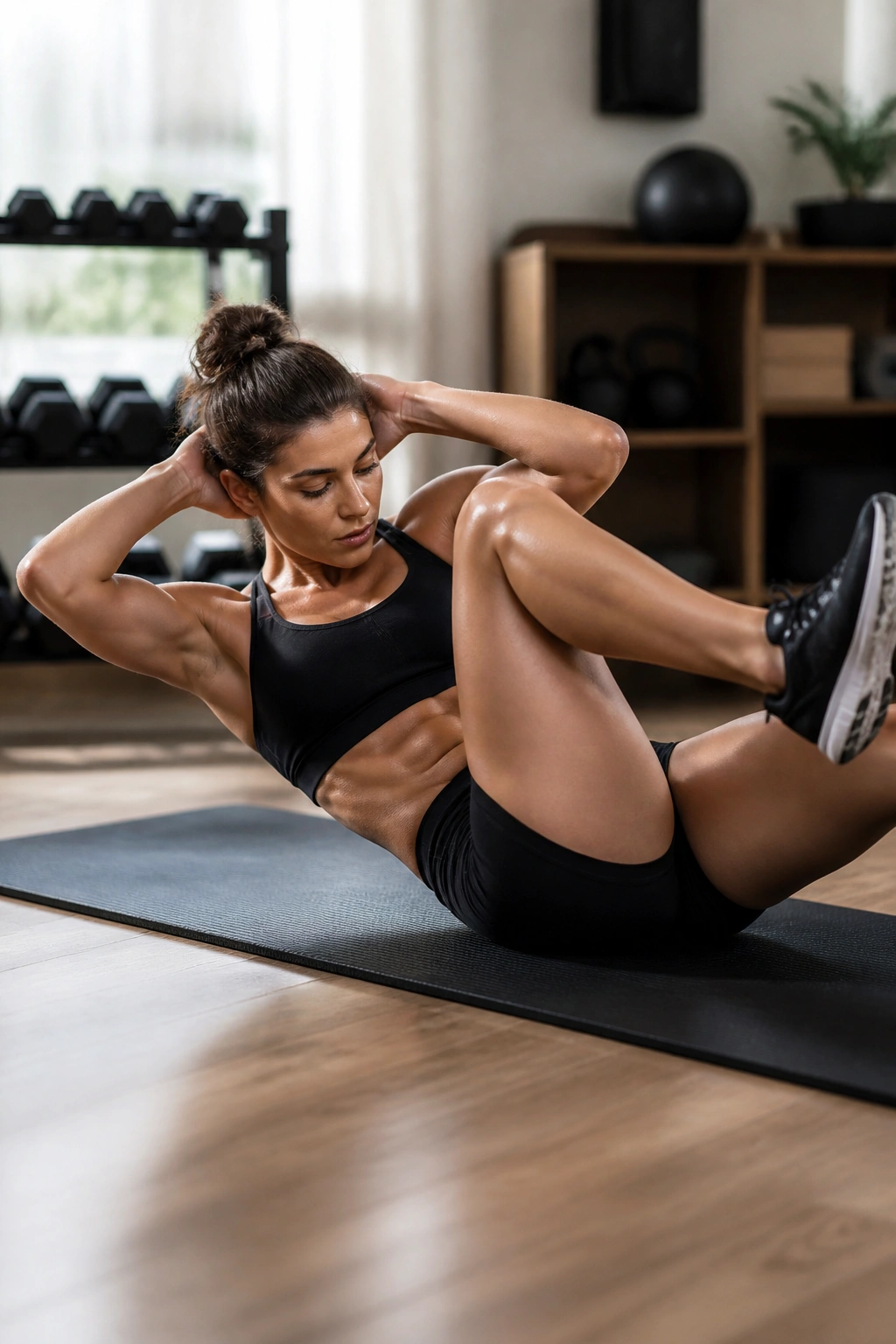
These are a staple for a reason. They force your obliques—the muscles on the sides of your waist—to work in concert with your rectus abdominis. Most people rush these, flapping their elbows back and forth, but the secret lies in the tempo.
The Slow-Motion Difference
Speed is the enemy of effectiveness here. You want to treat every single repetition as if you are moving through wet cement. The moment you lose tension is the moment your hip flexors take over, which defeats the purpose.
Form Checklist
- Lay flat on your back, hands lightly behind your head (do not pull on your neck).
- Lift your shoulders off the ground using only your abdominal muscles.
- As you bring your right elbow toward your left knee, fully extend the right leg until it hovers just above the floor.
- Pause at the peak of the contraction, feeling the twist in your oblique, then switch with agonizing control.
If you find your lower back lifting off the floor, shorten your range of motion. Your back should remain glued to the ground throughout the entire set.
3. Leg Raises
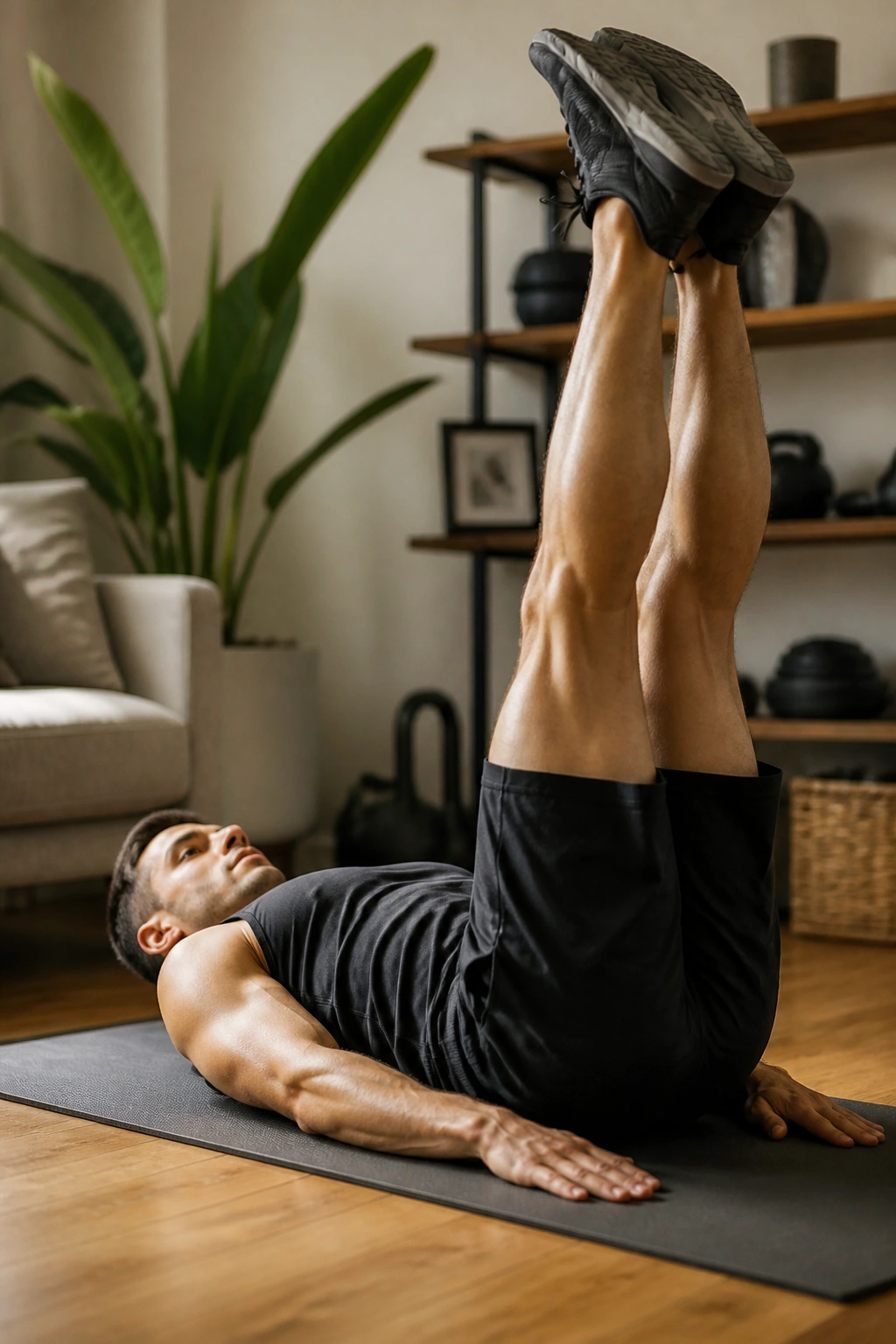
Lower abs are notoriously difficult to target because they are often overshadowed by the larger upper abdominal muscles. Leg raises, when performed properly, force the lower core to bear the weight of your legs, which is a substantial load for even well-trained athletes.
The Mechanics of the Lift
The goal is to move the legs using the pelvis, not the hip flexors. If you feel this mostly in your hips or your lower back, you need to tilt your pelvis backward.
Technique Nuances
- Lie flat with your arms down by your sides, palms pressing into the floor for stability.
- Lift your legs until they are perpendicular to the floor, then lower them slowly.
- Stop just before your heels touch the ground. Hovering at the bottom forces your lower abs to keep fighting against gravity.
- If you have lower back sensitivity, place your hands underneath your glutes. This slightly elevates the hips and makes it easier to keep the spine neutral against the floor.
Remember: Do not let your legs drop with gravity. Use your core to “lower” the weight. The eccentric (lowering) phase is where the most muscle breakdown occurs.
4. Mountain Climbers
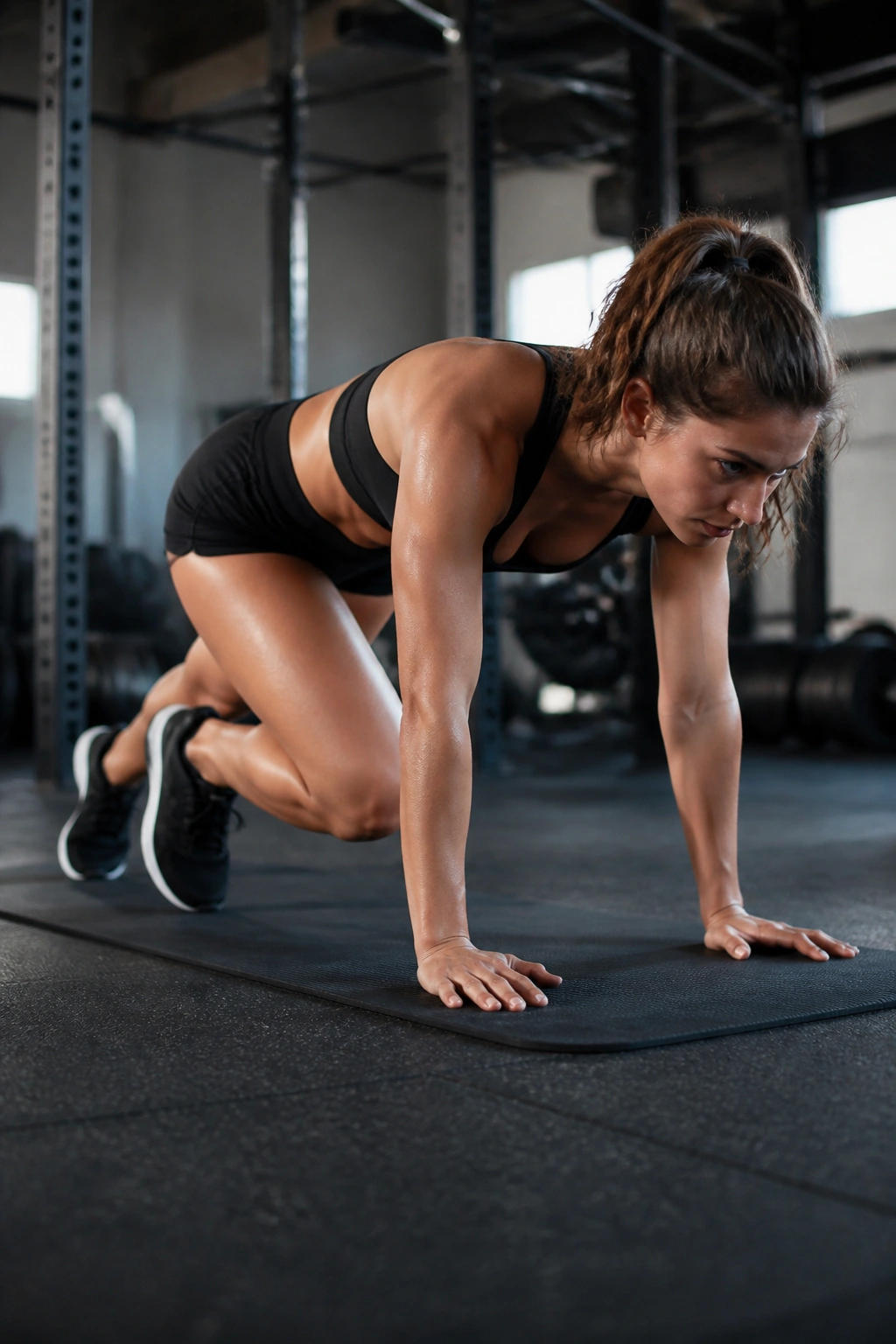
This is an active core movement that also raises your heart rate. It bridges the gap between stability work and cardiovascular endurance. The key here is keeping your hips level; you shouldn’t be bouncing around like you are playing leapfrog.
Maintaining Stability
Imagine you are balancing a glass of water on your lower back. If you bounce, you spill the water. The upper body remains fixed in a standard plank position, while the lower body moves dynamically.
How to Execute
- Assume a push-up position, hands directly under your shoulders.
- Bring one knee toward your chest, driving it as high as you can.
- Quickly switch legs in a jumping motion, keeping your torso locked in place.
- Keep your gaze slightly forward to ensure your spine stays straight.
If you are a beginner, perform these at a slow, marching pace. The controlled march is often more difficult and effective for the core than the high-speed version because it removes momentum.
5. Russian Twists
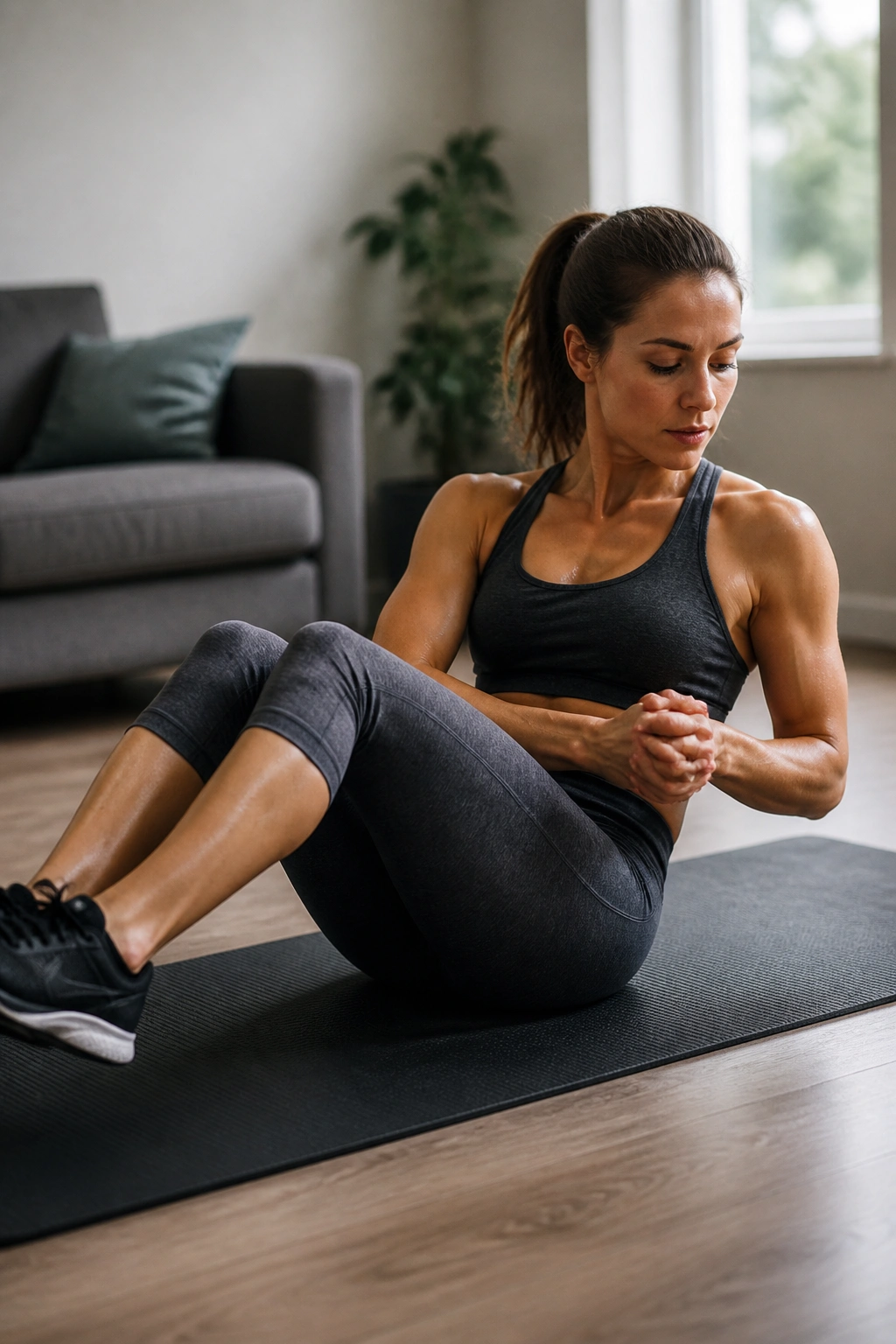
This movement is designed to shred the rotational strength of your core. Whether you are using a weight or just your own body weight, the rotation must come from the torso, not the shoulders.
Finding the Sweet Spot
Many people make the mistake of just moving their arms from side to side. Your arms should stay fixed in front of your chest. The rotation comes from your belly button.
Step-by-Step
- Sit on the floor with your knees bent and feet lifted a few inches off the ground.
- Lean back slightly until you feel your abdominal wall engage—this is your “V” sit position.
- Rotate your torso as far as you can to the right, then fully to the left.
- Follow your hands with your eyes to ensure you are getting a full range of motion through your thoracic spine.
If you feel this in your lower back, stop immediately. It means your core is fatigued and your spine is compensating. Place your feet on the floor to reduce the load while you build up strength.
6. Dead Bug
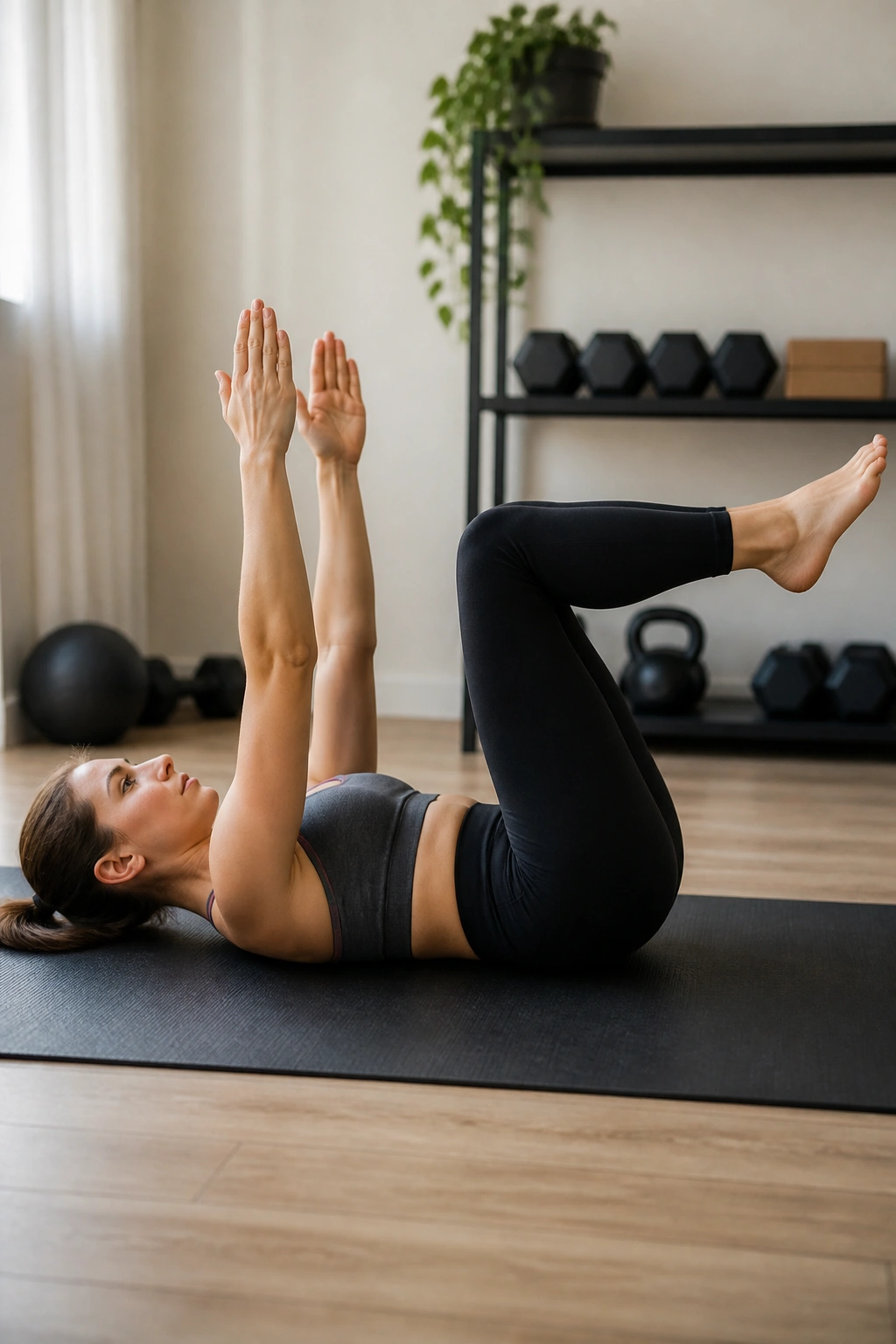
Do not let the funny name fool you; this is one of the most effective exercises for teaching the core to stabilize while the limbs are moving. It is a fundamental movement for spine health.
The “Back-to-Floor” Rule
The defining feature of the Dead Bug is keeping your entire spine pressed into the floor. If you create a gap between your back and the floor, the exercise is essentially useless for core strengthening.
Execution Guide
- Lie on your back, arms extended to the ceiling, legs in the air with knees bent at 90 degrees.
- Exhale slowly as you lower your right arm behind your head and extend your left leg out straight.
- Stop right before your limb touches the floor, keeping your back glued to the mat.
- Return to the starting position and switch sides.
This exercise requires immense coordination. Move slowly. If you can’t get your back to stay flat, don’t extend your leg fully. Just tap your heel to the floor until your core strength catches up.
7. Flutter Kicks
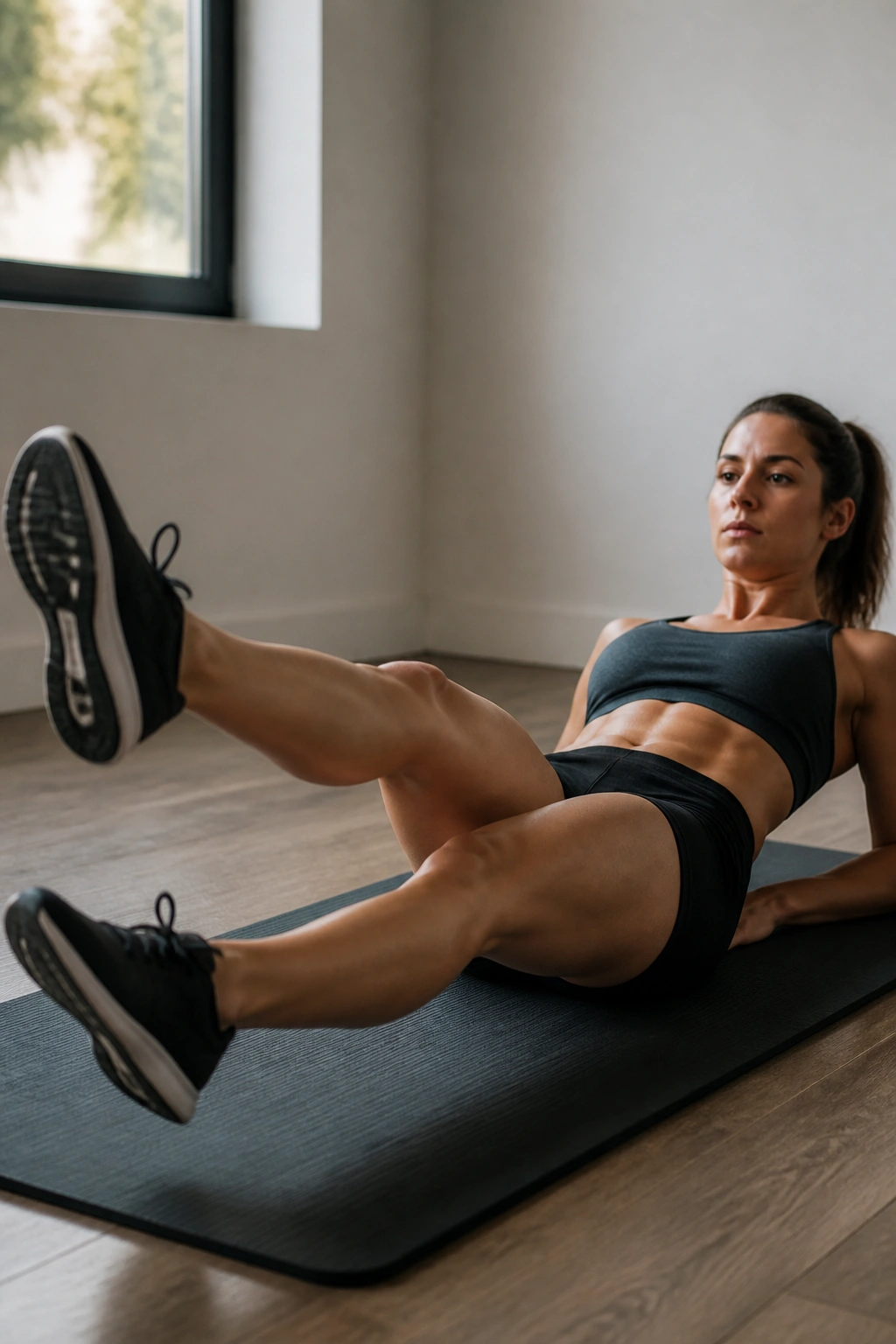
This is a classic endurance movement that hits the lower abdomen with a relentless, sustained burn. It mimics the motion of swimming but places the entire load on your anterior core.
Managing Tension
Because you are holding your legs straight out, there is a tendency to let the hips do the work. You need to consciously focus on pushing your navel down toward your spine.
How to Perform
- Lie on your back, hands under your glutes for support.
- Lift both legs about six inches off the ground.
- Alternate small, rapid kicks.
- Keep the legs straight—don’t let the knees bend.
The wider you flutter, the easier it is. Keep the kicks tight and close to the midline for maximum intensity. If you find your lower back arching, lift your legs higher toward the ceiling. The lower your legs are to the ground, the harder the exercise is on the core.
8. V-Ups
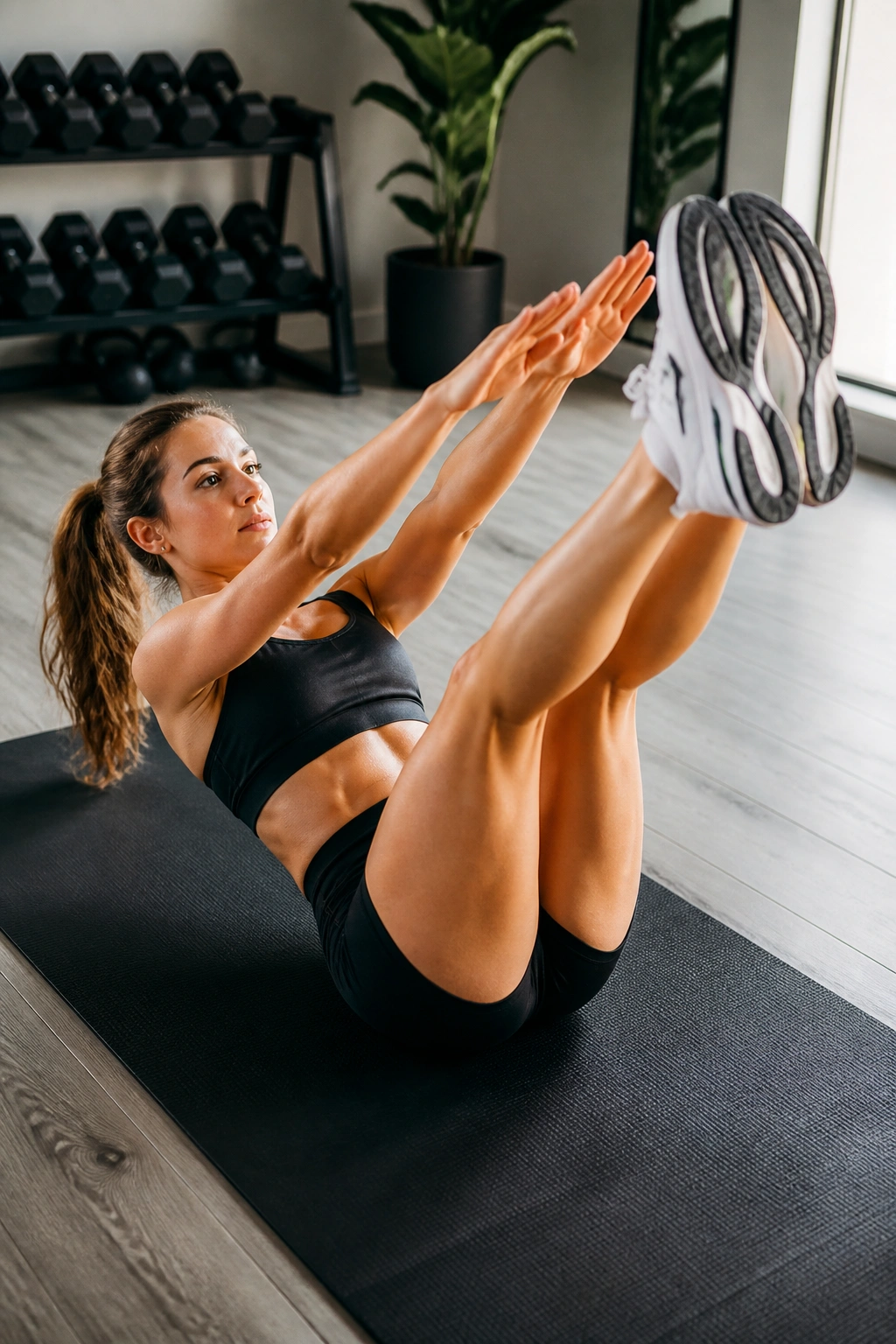
This is a full-core movement that challenges both the upper and lower abdominal muscles simultaneously. It requires a significant amount of flexibility and strength.
The Snap-Up Motion
You want to bring your hands and feet to meet in the middle, folding your body like a book. This requires explosive power on the way up and disciplined control on the way down.
Critical Form Tips
- Start fully extended, lying flat.
- In one fluid motion, lift your legs and torso off the ground, aiming to touch your toes with your fingers.
- Do not round your shoulders to cheat the reach; lead with your chest.
- Lower both legs and torso simultaneously, keeping the core engaged until you are flat again.
If you struggle to touch your toes, aim for your shins or knees. The goal is the fold, not the touch. Keep the movement continuous.
9. Side Planks
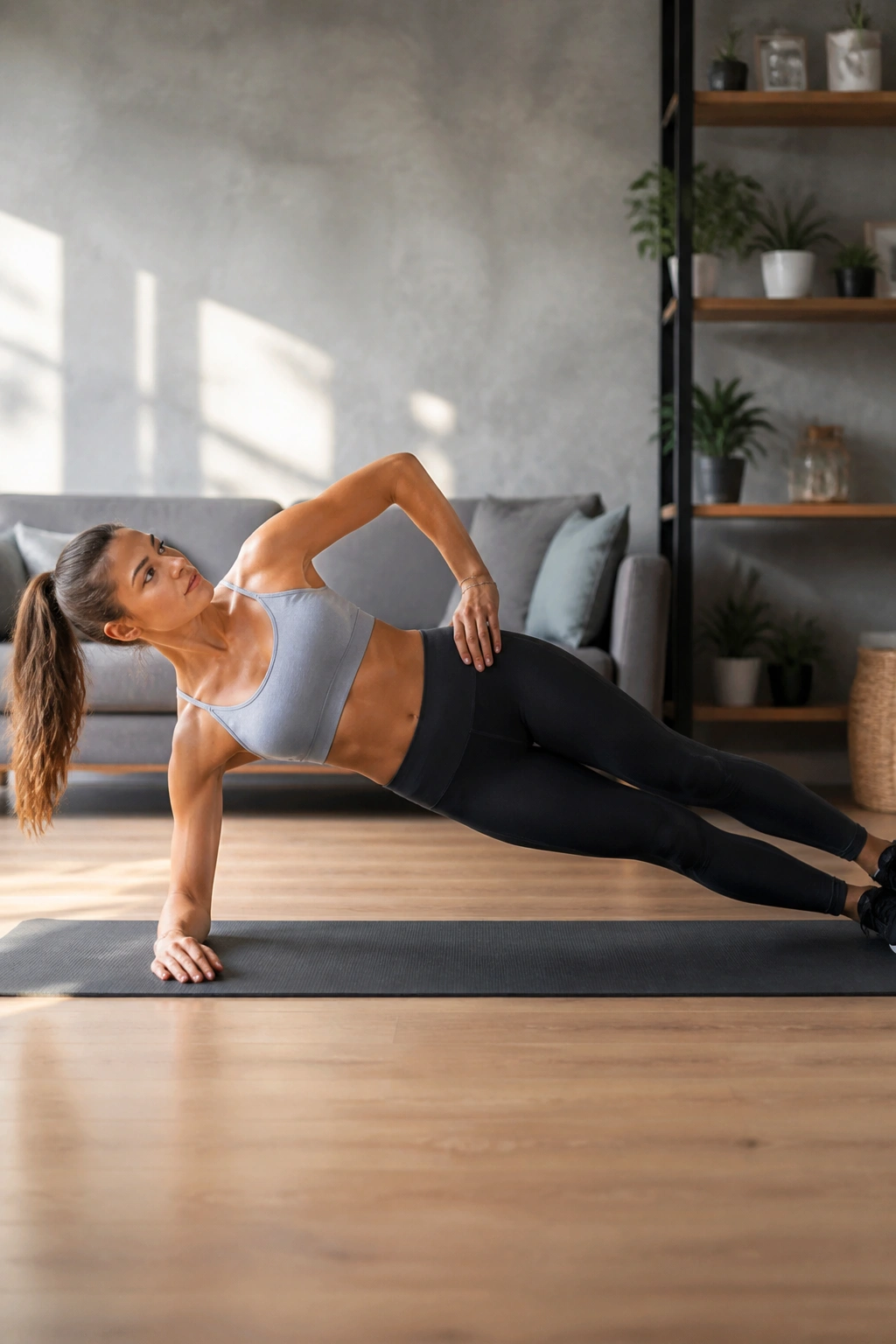
If you want a waist that looks sculpted and tight, side planks are non-negotiable. They target the obliques and the quadratus lumborum, which is a deep stabilizing muscle that protects the lower back.
The Alignment Focus
Everything needs to be in a straight line: head, shoulders, hips, and ankles. Don’t let your hips sag toward the floor.
How to Do It
- Lie on your side, propping yourself up on one forearm.
- Lift your hips off the ground, creating a straight line with your body.
- Hold for time, keeping your core tight and your top hand either on your hip or reaching for the ceiling.
- If this is too hard, drop your bottom knee to the floor, but keep the hips lifted high.
Challenge: Add a “dip” by lowering your hips an inch toward the floor and pushing them back up to the starting line. This adds a dynamic challenge to the static hold.
10. Hollow Body Holds
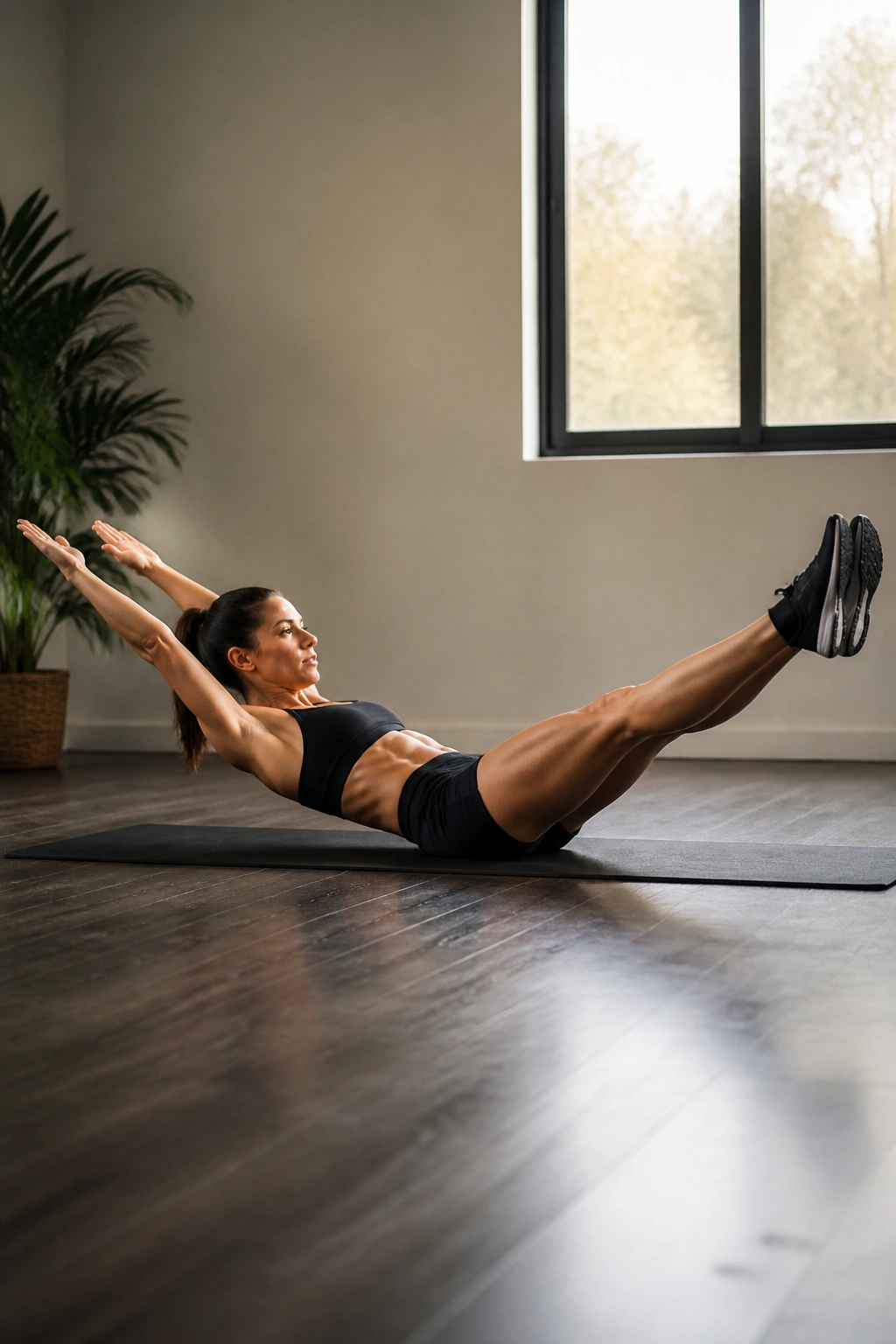
This is an isometric exercise borrowed from gymnastics. It creates an incredible amount of tension in the midsection and is perhaps the ultimate test of core control.
The Banana Shape
Your body should look like a hollowed-out banana or a rocking chair. Your shoulders and your legs are lifted, but your lower back is the anchor point.
Execution Essentials
- Lie flat on your back.
- Lift your legs, head, and shoulders off the ground at the same time.
- Extend your arms above your head.
- Ensure your lower back remains pressed into the mat. If your lower back pops up, lift your legs higher until you can maintain that connection.
If you can only hold this for ten seconds, that is fine. Focus on the quality of the hold rather than the length. Trembling is normal. That is your core waking up.
11. Toe Touches
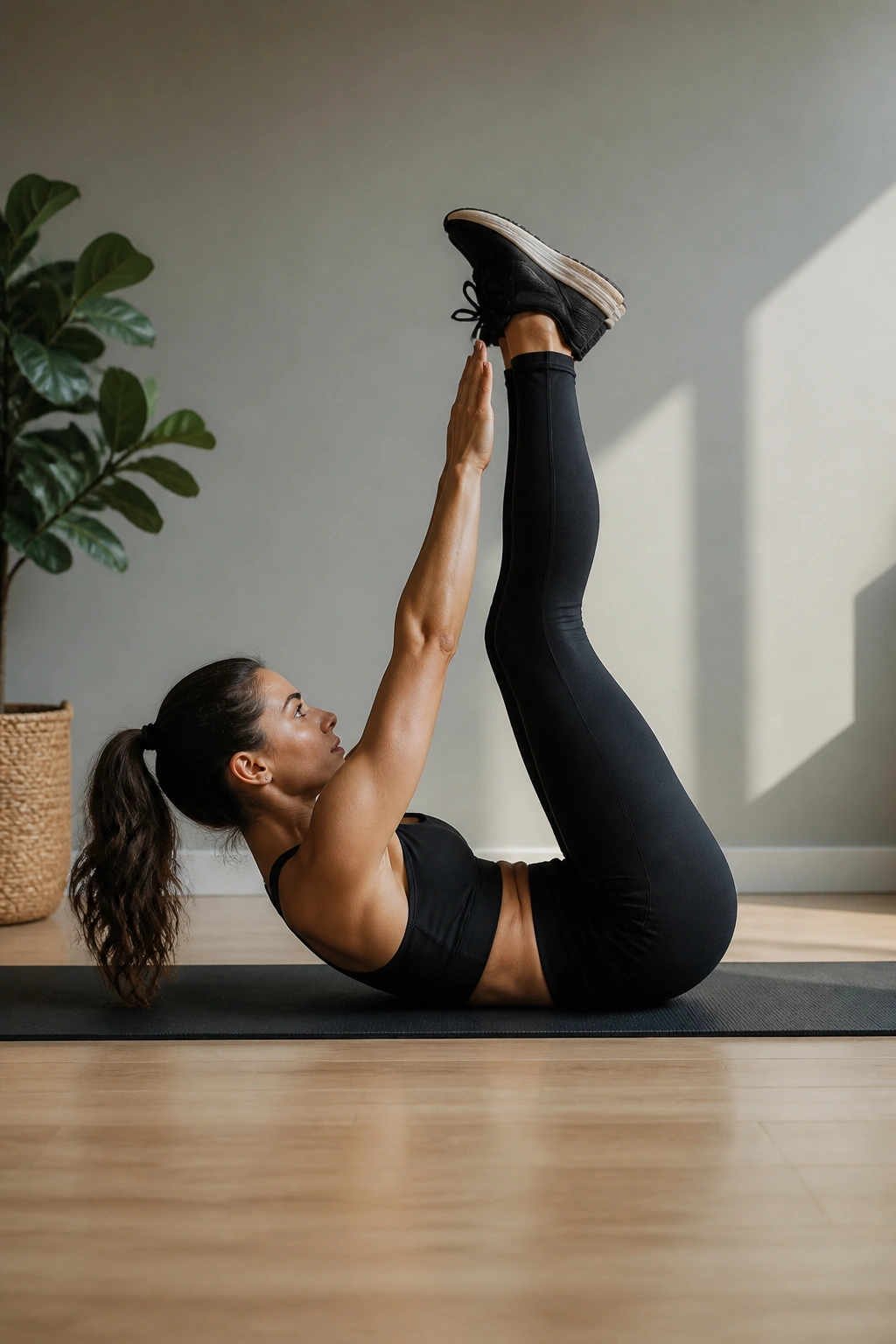
This is a focused move for the upper abs. Unlike a sit-up, where you come all the way up, toe touches keep the tension localized on the rectus abdominis.
Keeping the Legs Locked
The legs act as a fixed pillar here. You aren’t using them for momentum. They stay straight, reaching for the ceiling.
Technique Breakdown
- Lie on your back, legs extended straight up toward the ceiling.
- Reach your hands toward your toes, lifting only your shoulder blades off the floor.
- Pulse at the top of the movement—think “up, up, up” rather than just one long crunch.
- Lower back down slowly, keeping the abs tight.
This is a great exercise for higher repetitions. Aim for a specific rep count, like twenty or thirty, rather than holding for time.
12. Reverse Crunches
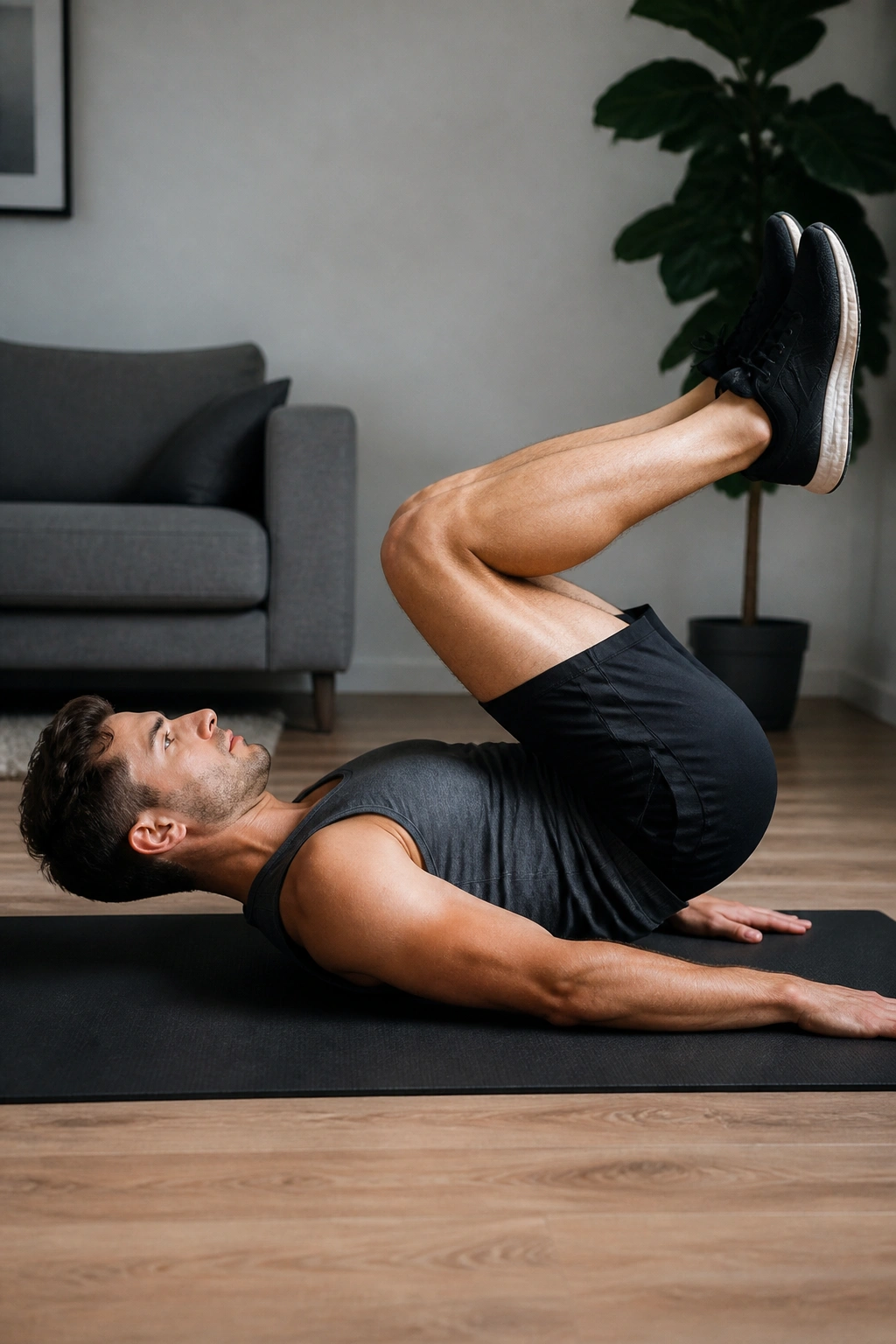
These are often confused with leg raises, but the movement is fundamentally different. Instead of lowering legs, you are curling your hips toward your chest.
The Hip Roll
You aren’t just moving your legs; you are actively engaging your lower abs to lift your pelvis off the ground. It’s a small, controlled motion.
Execution
- Lie on your back, hands at your sides.
- Bend your knees at a 90-degree angle and bring your thighs toward your chest.
- Using your lower abs, peel your hips off the floor, bringing your knees toward your forehead.
- Lower your hips back to the mat with control.
Do not use your hands to push off the floor. The strength must come from the contraction of the lower abdominal wall.
13. Bird-Dog
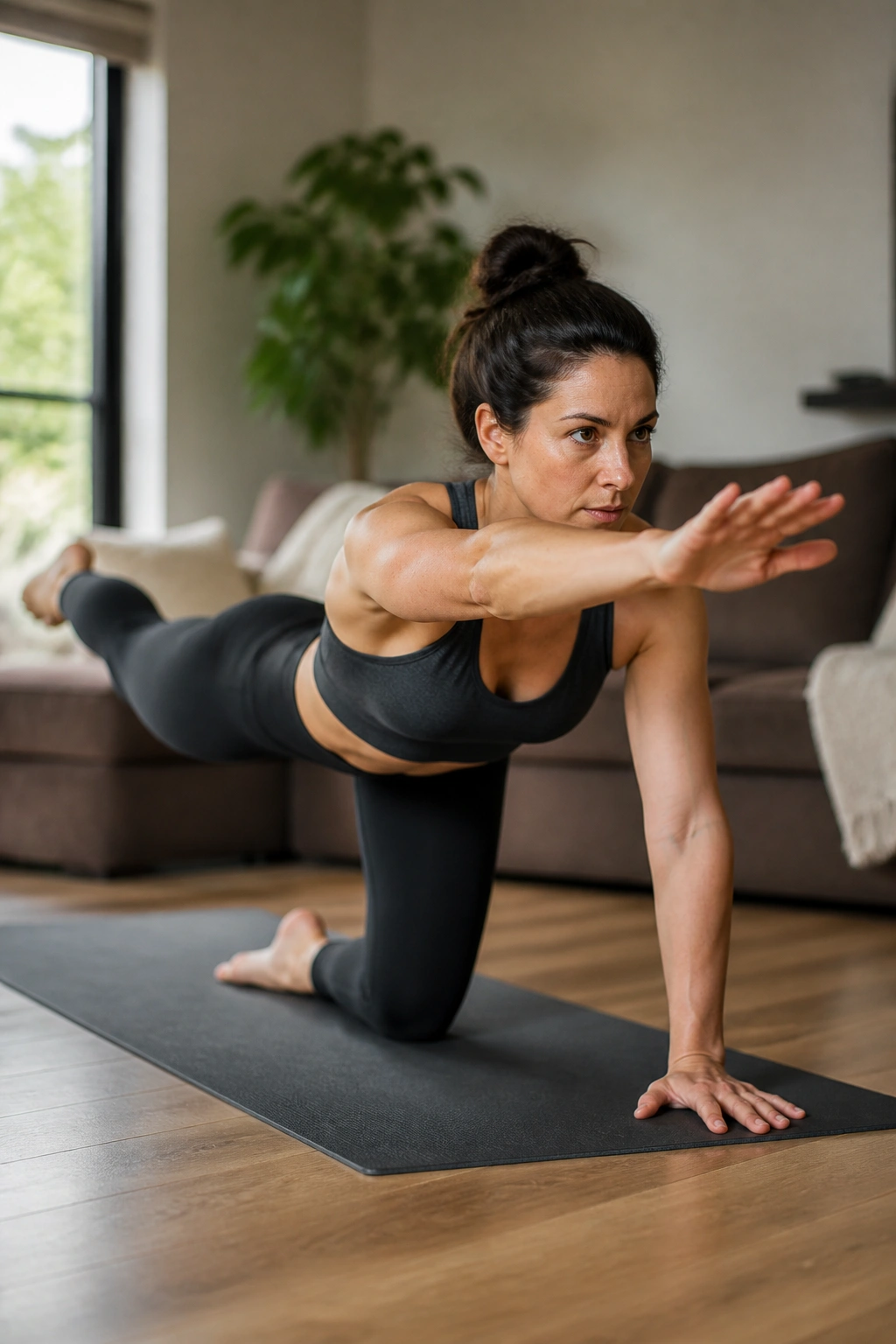
This movement is essential for core stability and back health. It is the perfect antithesis to all the crunching and twisting we do. It trains the core to handle opposing limb movement, which is how we actually move in real life.
The Cross-Body Connection
You are moving your right arm and left leg simultaneously. It demands balance and deep, focused concentration.
How to Do It
- Get on your hands and knees in a tabletop position.
- Simultaneously extend your right arm forward and your left leg backward.
- Keep your hips perfectly square to the floor. Don’t twist or open your hips to the side.
- Hold for two seconds at the top, squeezing the glute of the extended leg, then return to center.
Think of yourself as a statue. There should be no wobbling or shifting of your weight as you switch sides.
14. Heel Touches
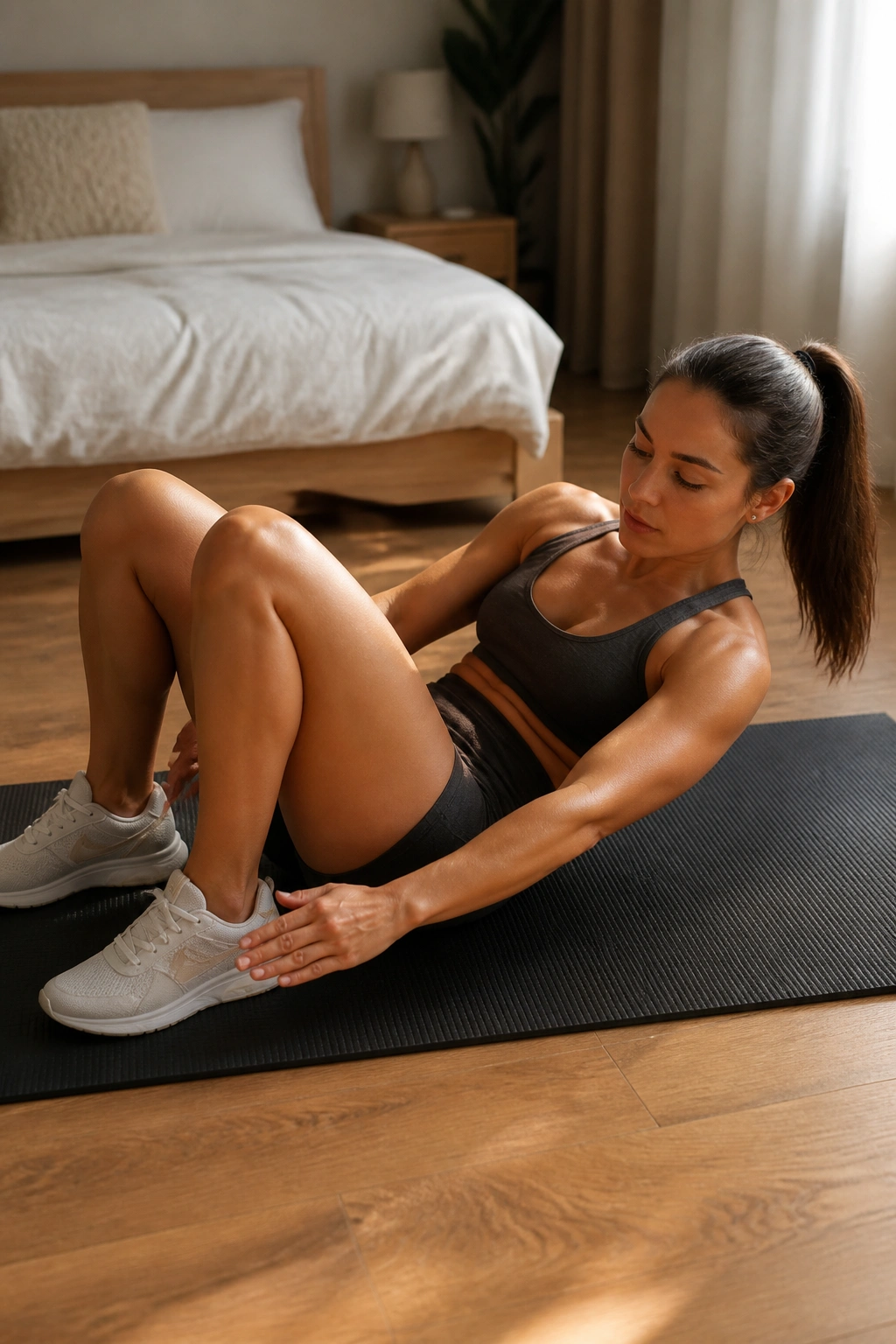
These are fantastic for the obliques, but they require you to be mindful of your neck. It’s easy to strain your neck by pulling it forward, so keep your gaze fixed on the ceiling.
The Lateral Flexion
This movement is about bending sideways. Imagine your torso is a hinge. You are trying to shorten the distance between your ribcage and your pelvis on the side you are reaching toward.
Step-by-Step
- Lie on your back with knees bent and feet flat on the floor, about hip-width apart.
- Lift your shoulders slightly off the ground.
- Reach your right hand to tap your right heel, then your left hand to tap your left heel.
- Move rhythmically and keep your shoulder blades elevated throughout the set.
If you don’t feel a deep burn in your sides, reach further. The movement should be deliberate and side-to-side, not just rocking back and forth.
15. Plank Jacks
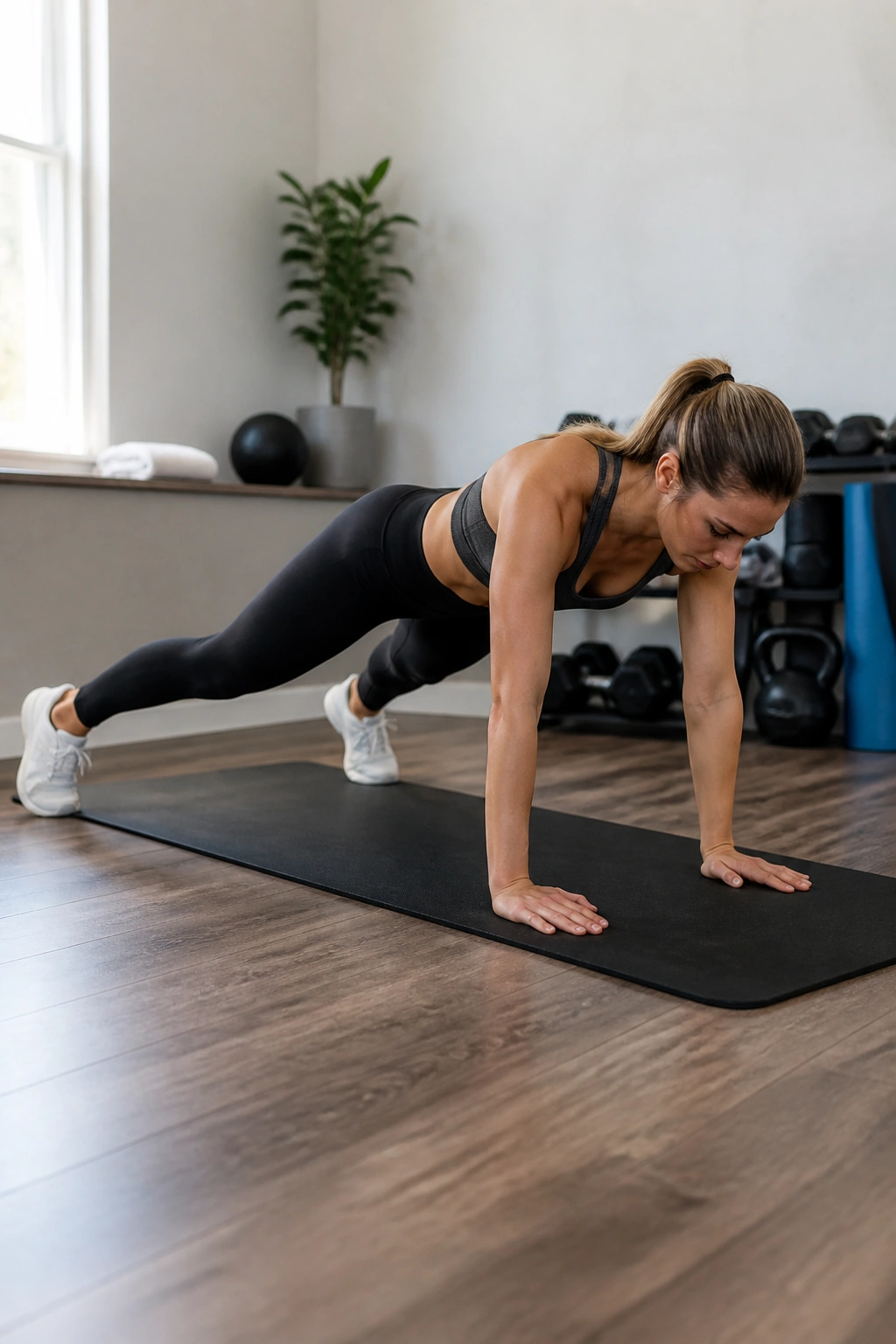
This is a cardiovascular-core hybrid. It takes the stability of the plank and adds a dynamic lateral movement that forces your core to work harder to keep your hips level.
The Jump
This is a plyometric move. You want the jump to be controlled, not erratic.
Execution
- Get into a standard plank position on your hands.
- Jump your feet out wide, then jump them back to center, similar to a jumping jack motion.
- Keep your torso perfectly still. Your hips shouldn’t bob up and down; they should remain flat.
If the jumping bothers your joints or makes you lose form, just step one foot out at a time—left, right, center, center—instead of jumping.
16. Windshield Wipers
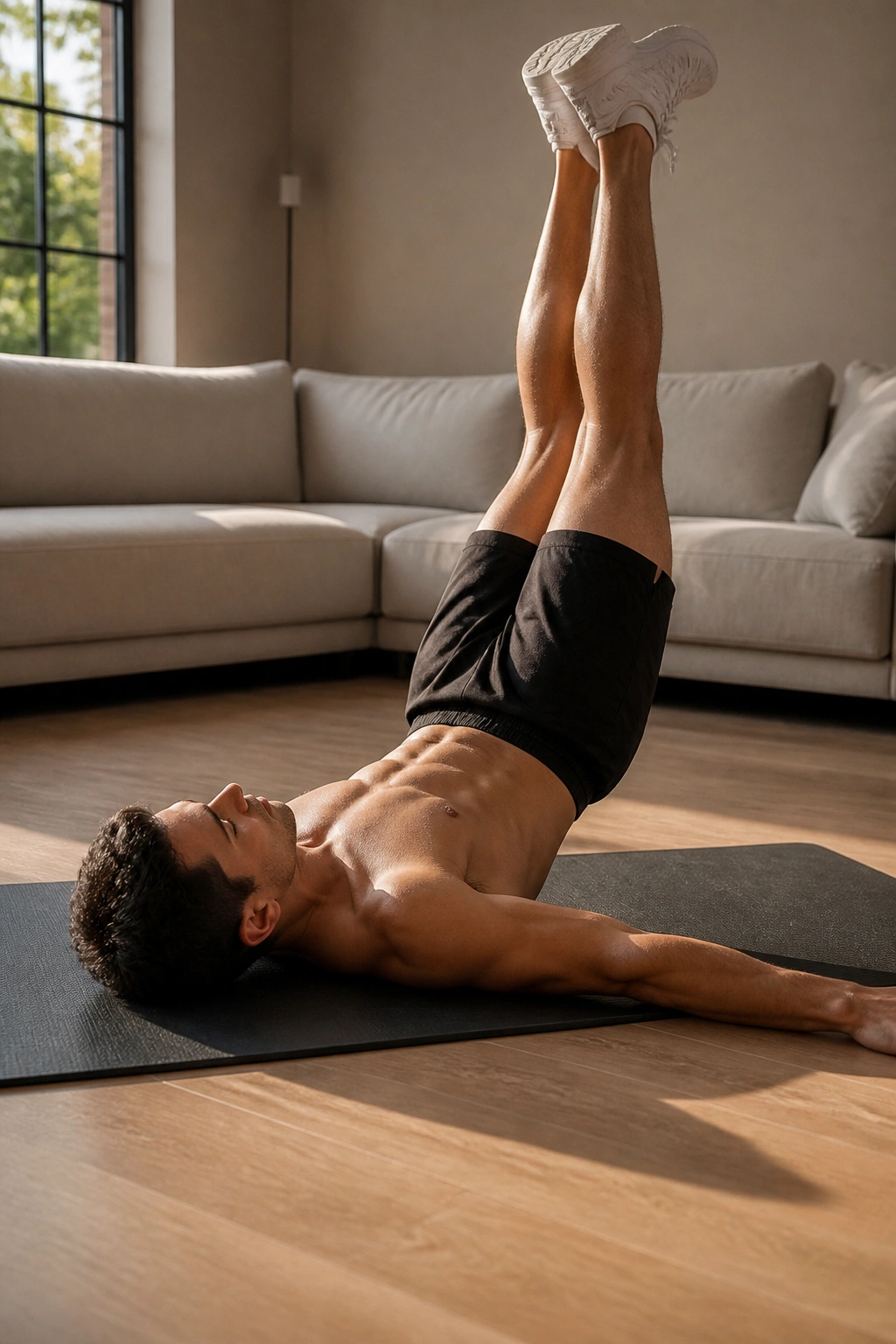
This exercise requires a lot of control and is excellent for advanced core conditioning. It mimics the motion of wipers on a car, moving your legs from side to side while your torso stays flat.
Range of Motion
You don’t need to touch the floor with your legs to get the benefits. Go as far as you can while keeping both shoulders pressed firmly into the mat.
Technique
- Lie on your back, arms spread out wide for stability, palms down.
- Raise your legs straight up to the ceiling.
- Slowly lower both legs to the right side, stopping just before they touch the floor.
- Engage your obliques to pull them back to the center and then repeat on the left side.
If you feel your shoulders peeling off the ground, you have gone too far. Focus on the oblique squeeze, not the depth.
17. Scissors
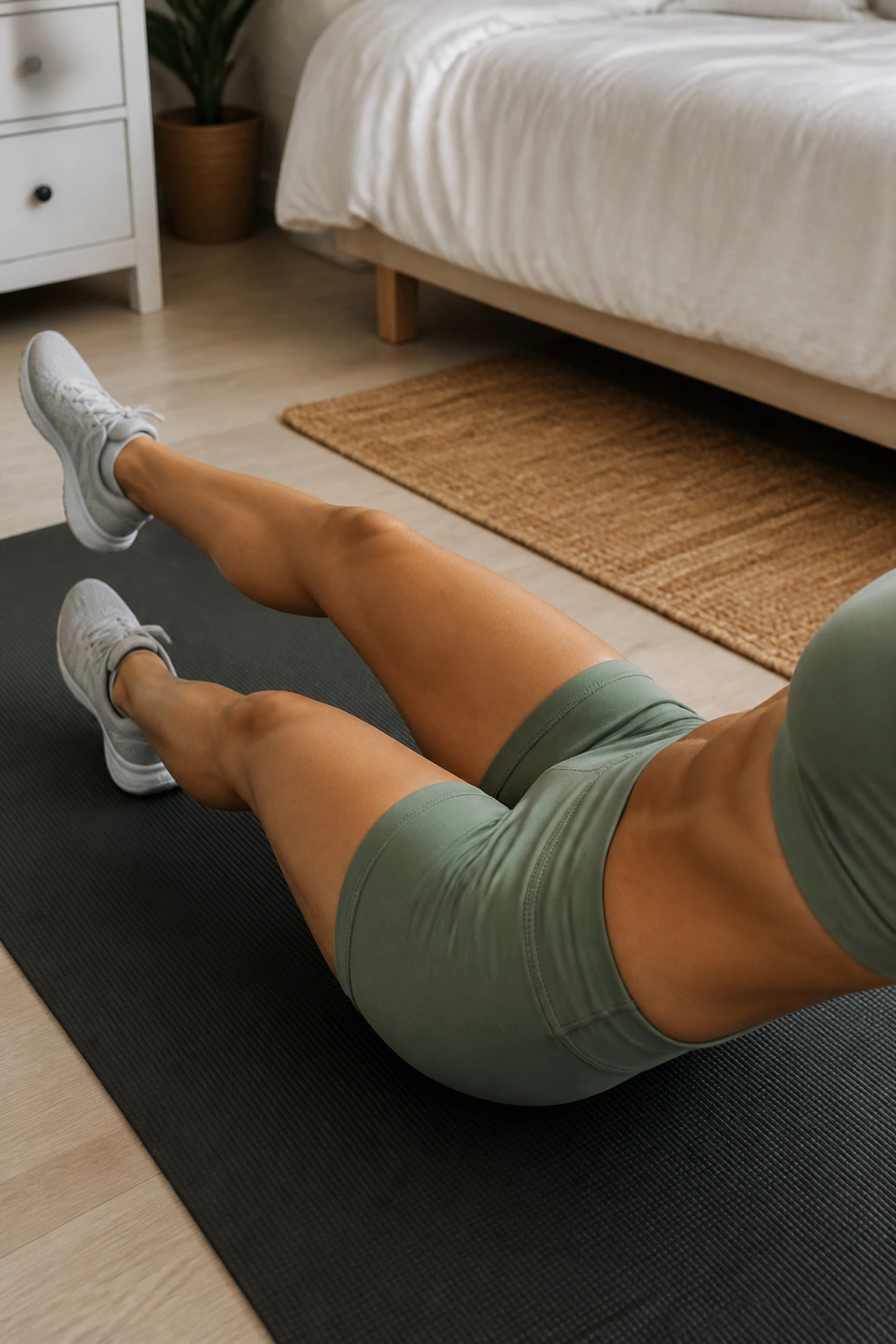
This move keeps the lower abs under constant tension. The motion is small, controlled, and requires keeping the back completely flat against the floor.
The Cross-Over
You aren’t kicking up and down; you are crossing your legs over each other in a scissoring motion, just a few inches above the floor.
How to Execute
- Lie on your back, hands under your glutes.
- Lift your legs slightly off the floor.
- Cross your right leg over your left, then open them, then cross your left over your right.
- Keep the movement steady. The lower you hold your legs to the floor, the harder this becomes.
If you feel your back arching, lift your legs higher. Never sacrifice back position for the sake of getting lower to the ground.
18. Spider-Man Planks
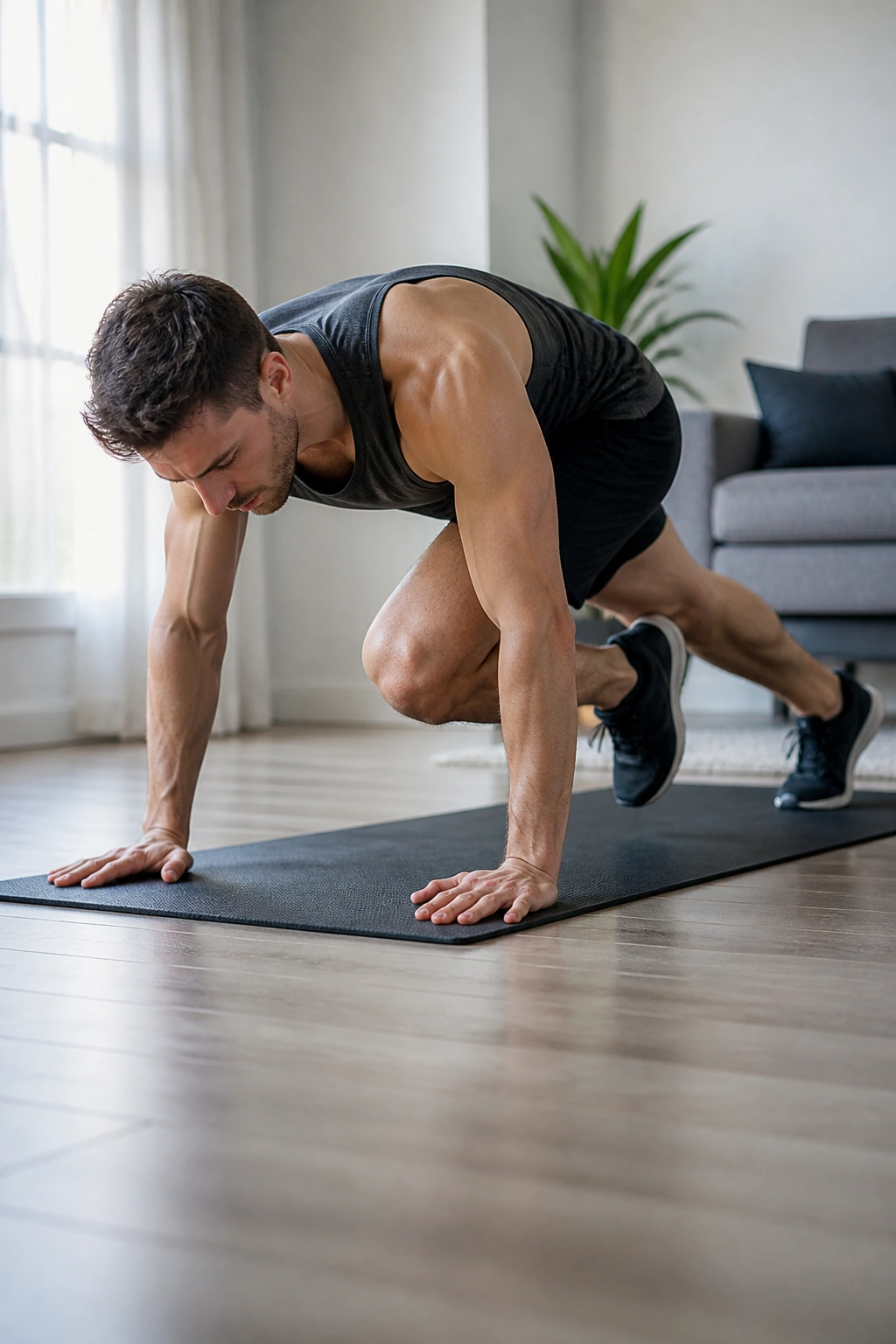
This exercise adds an element of hip mobility to your plank, which hits the obliques in a very unique way. It’s an effective functional movement for building a lean, conditioned core.
Bringing the Knee to Elbow
You want to bring the outside of your knee to the outside of your elbow. This lateral crunch is killer for the obliques.
Technique
- Start in a high plank position (top of a push-up).
- Bring your right knee to your right elbow by crunching your side.
- Return to the plank and switch to the left.
- Keep your butt down—don’t let your hips shoot up into the air as you bring the knee forward.
Perform these slowly. If you rush, you’ll just be moving your legs and missing the squeeze. It’s about the pause at the point of contraction.
19. Boat Pose
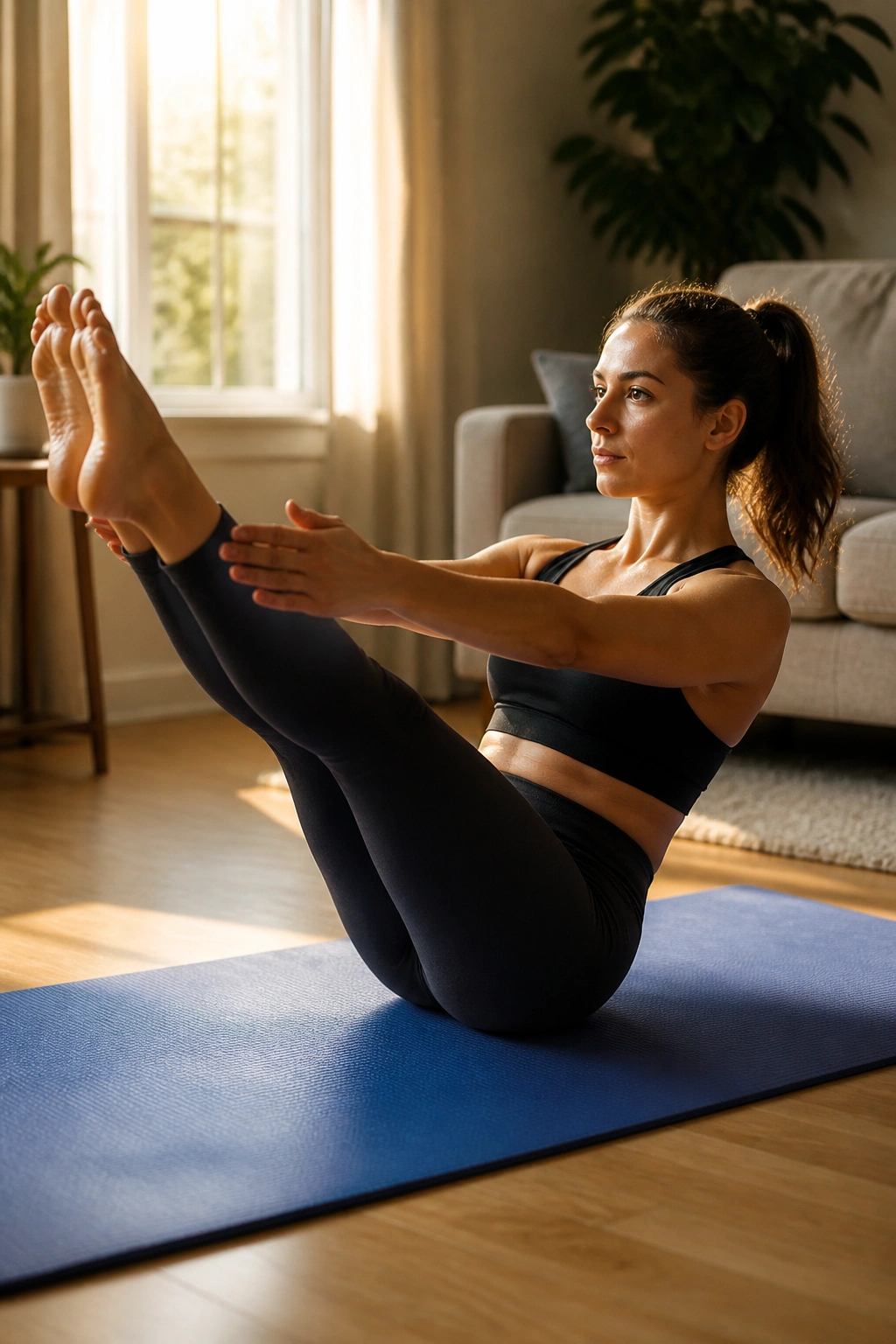
This is a static hold that targets the entire abdominal wall. It requires a lot of balance and core strength to maintain the shape, which is why it is so effective.
Finding Balance
You are essentially balancing on your tailbone. It is uncomfortable, but that is the point. You want to feel the muscles in your abdomen working hard to prevent you from tipping over.
Execution
- Sit on the floor, lift your feet off the ground, and lean back slightly.
- Extend your legs straight out, or keep them bent if necessary, while extending your arms forward toward your toes.
- Your body should form a “V” shape.
- Hold this position, focusing on long, deep breaths.
If your legs start shaking uncontrollably, that’s normal. It means your core is fatigued. Keep trying to lengthen your spine.
20. Glute Bridges
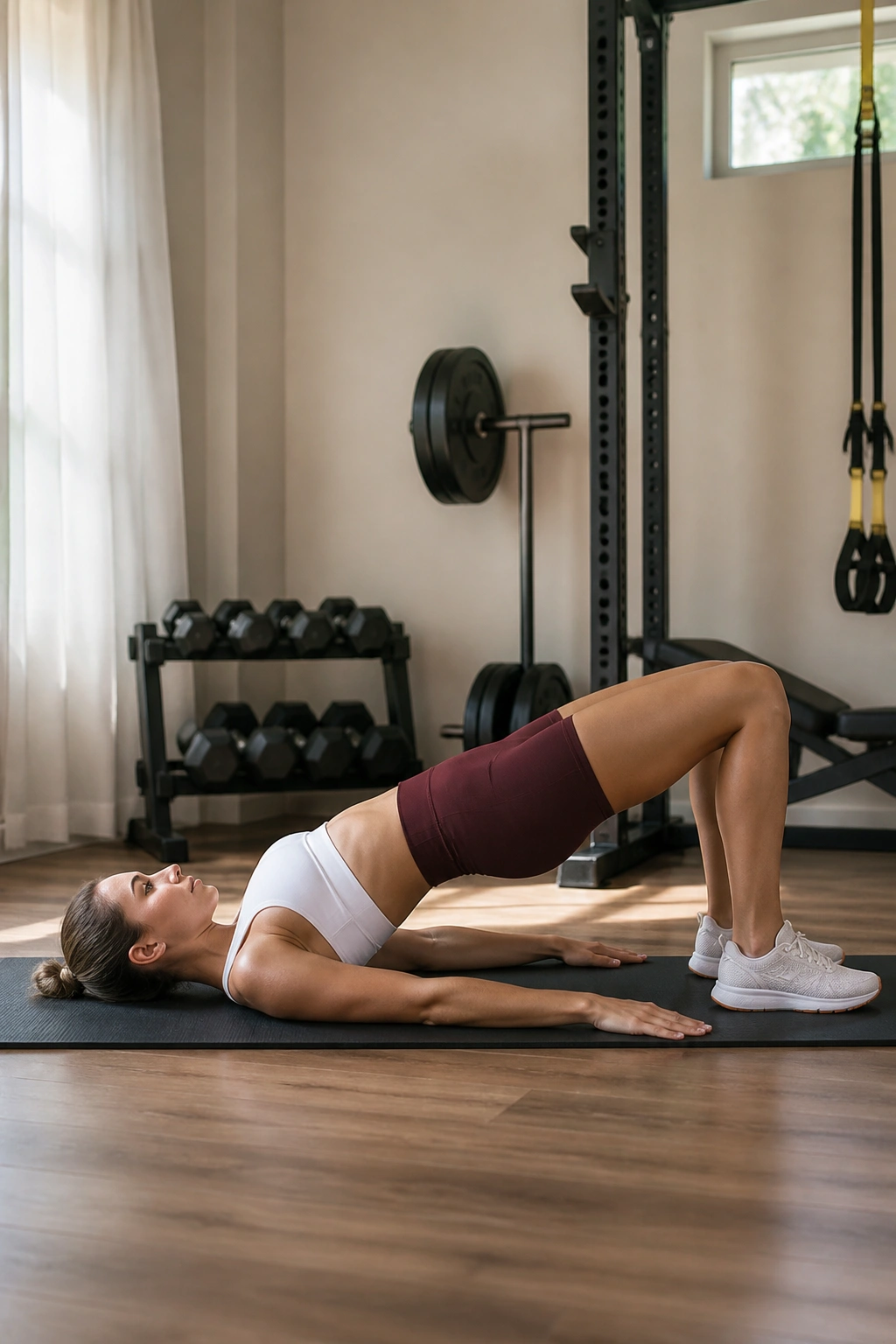
Wait, isn’t this a leg exercise? Yes, but it is also one of the best ways to engage the posterior core and strengthen the lower back, which is essential for abdominal support. A weak back makes your abs work twice as hard to stabilize you.
Glute and Core Integration
When you squeeze your glutes at the top, you are creating a stable platform for your core. It’s not just about the glutes; it’s about the full core circuit.
How to Do It
- Lie on your back, knees bent, feet flat on the floor.
- Drive through your heels to lift your hips toward the ceiling.
- Squeeze your glutes at the top.
- Lower back down with control.
Add a “march” by lifting one foot off the floor while your hips are up, forcing your core to stabilize against the imbalance.
21. Bear Crawls
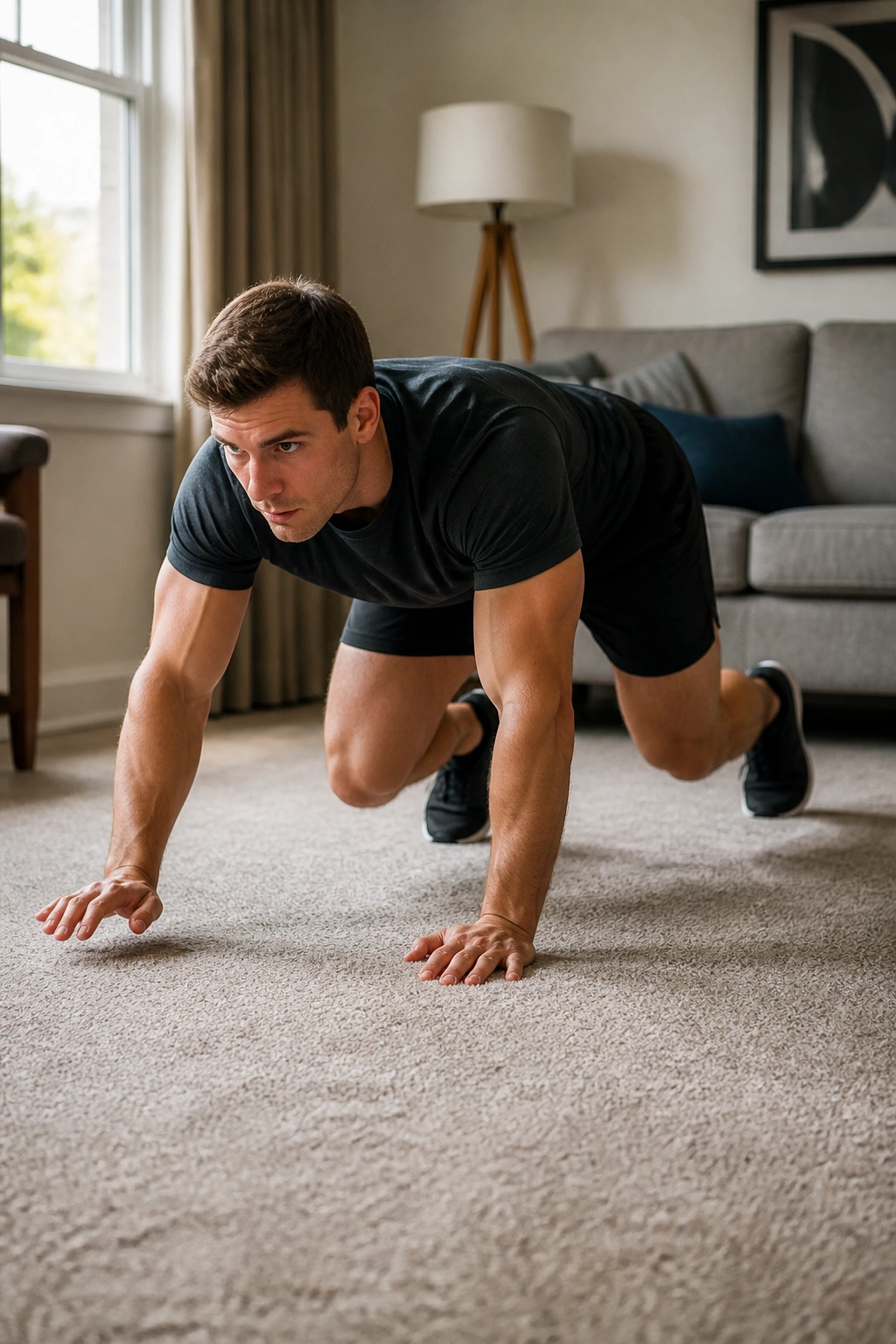
This is a functional movement that forces your core to stabilize in a quadruped position. It’s about total-body integration and core engagement.
The Crawl
You are not walking on your knees. Your knees should be hovering just an inch or two off the floor.
Technique
- Get on your hands and knees.
- Lift your knees slightly off the floor, so your weight is on your hands and toes.
- Move your right hand and left foot forward, then your left hand and right foot, keeping your back flat the entire time.
- Crawl forward for a set distance or time.
It’s tougher than it looks. Your core has to work overtime to keep your back from swinging side to side as you move.
22. Sit-ups
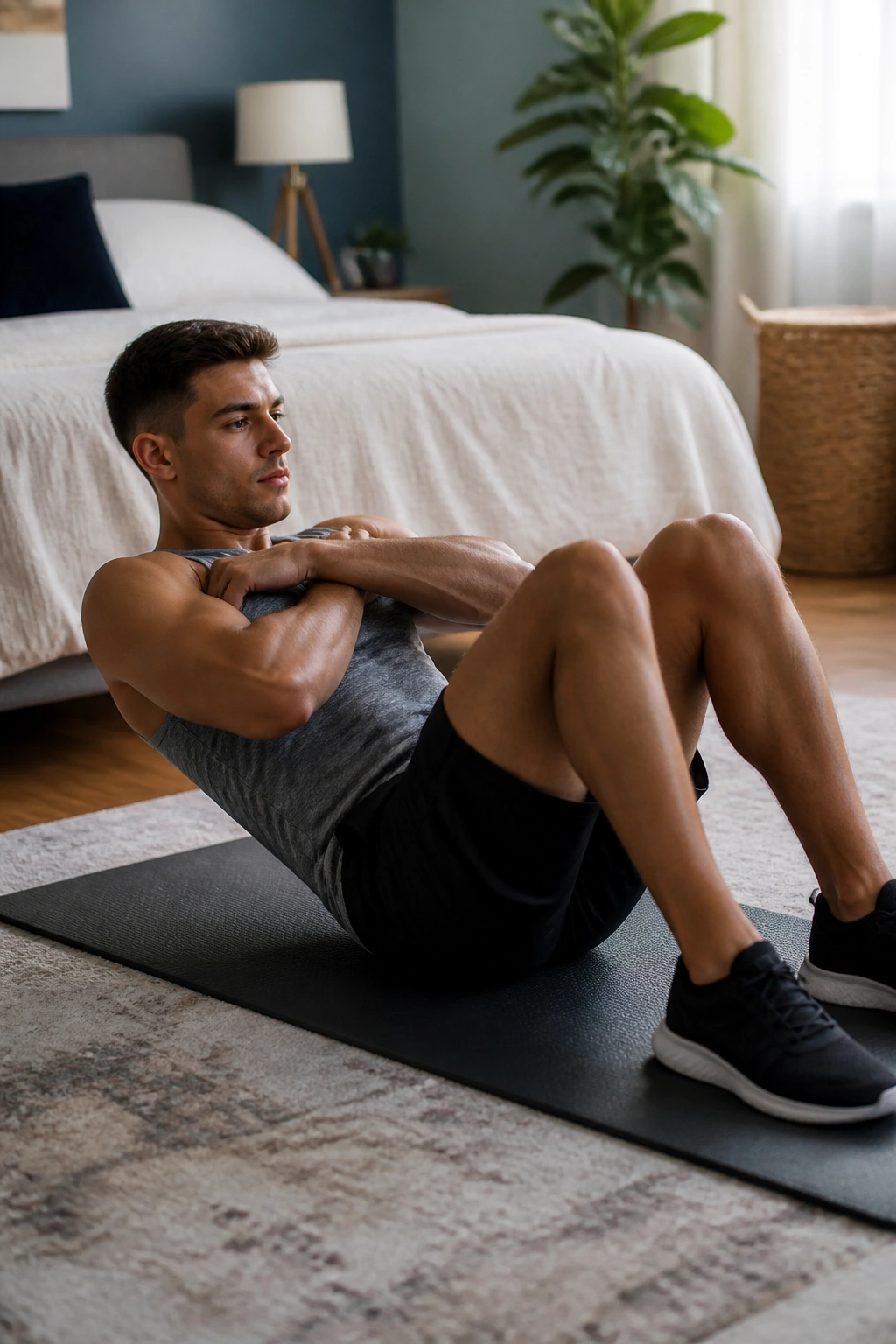
While often criticized, the sit-up remains a classic movement for a reason. When performed with proper form rather than using momentum, it is highly effective for building the rectus abdominis.
Avoid the Neck Pull
The biggest issue with sit-ups is people pulling on their necks. Cross your arms over your chest or place your fingertips lightly behind your ears, but never interlace your fingers behind your head and pull.
Form Checklist
- Lie on your back, knees bent.
- Use your abs to pull your torso up, not your hip flexors.
- Imagine your spine peeling off the floor one vertebra at a time.
- Lower yourself back down with the same control.
If your feet keep lifting off the floor, you might be relying on momentum. Hook your feet under a couch or heavy object if you need to, but focus on the muscle contraction.
23. Superman Holds
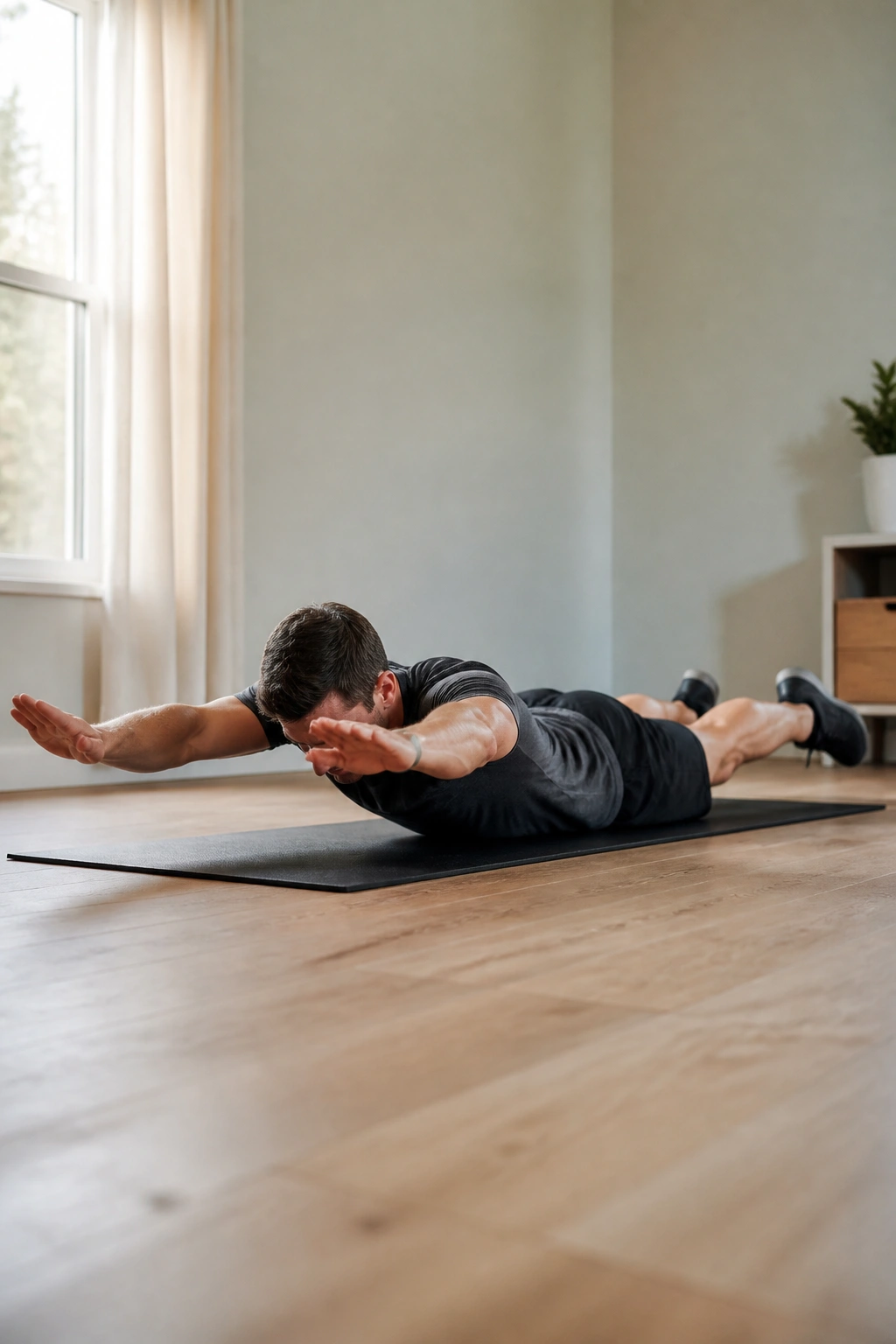
Like the bird-dog, this is about the posterior core. You cannot have a strong, balanced midsection if you ignore your lower back. This movement helps build that foundational strength.
The Lift
You are lifting your chest and your legs off the floor simultaneously, using your lower back and glutes to hold the shape.
Execution
- Lie face down on the floor.
- Reach your arms out in front of you.
- Lift your arms and legs off the floor at the same time, looking straight down at the mat.
- Hold for a few seconds, then lower.
Don’t jerk yourself up. It’s a slow, deliberate lift. This helps with posture and keeps your midsection balanced from front to back.
24. Plank Hip Dips
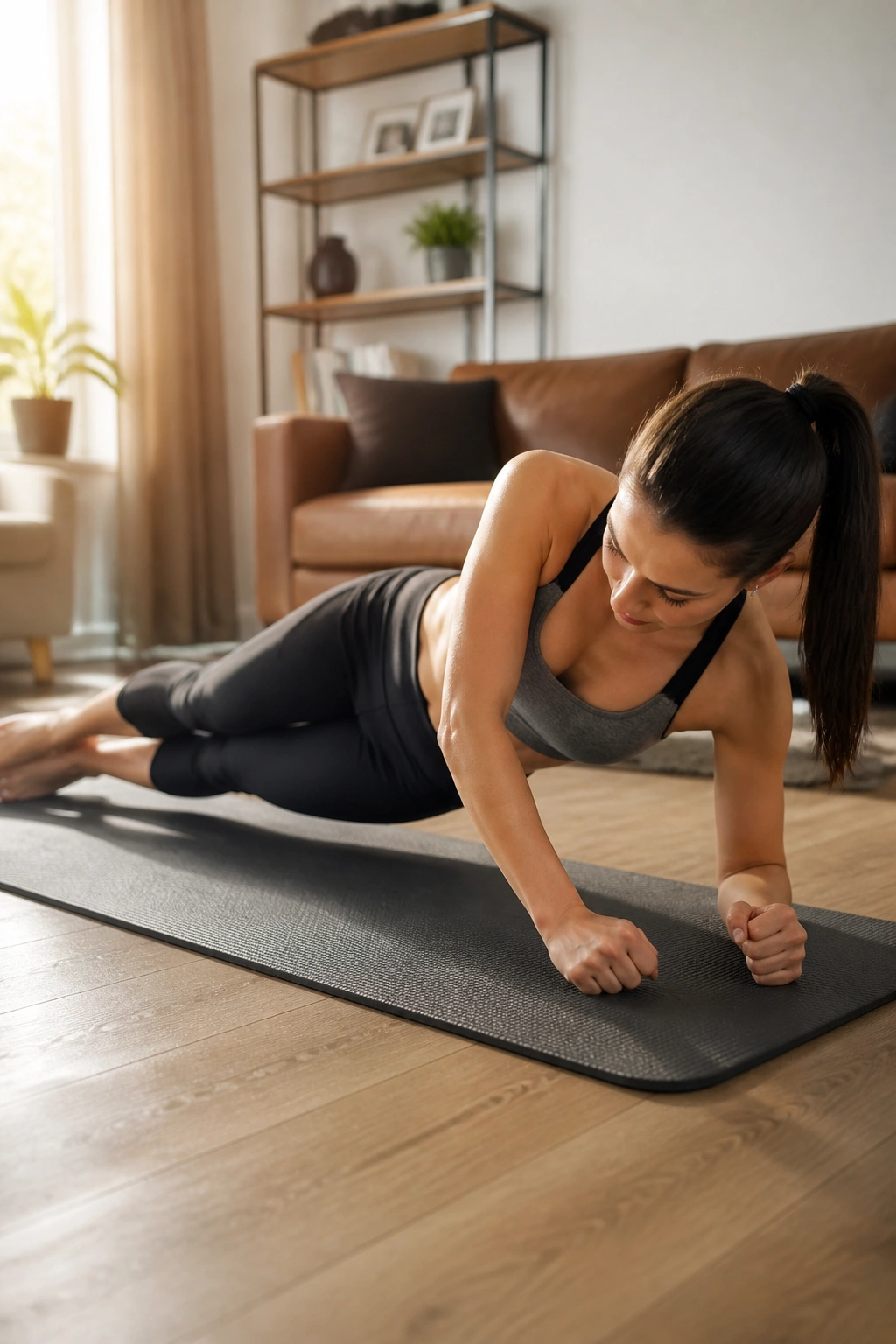
This is a dynamic oblique exercise that adds movement to the plank. It’s simple but incredibly effective at targeting the sides of your waist.
The Pivot
You are pivoting on your toes, rotating your hips from side to side. It requires balance and focus.
Technique
- Start in a forearm plank.
- Rotate your hips to the right and try to touch the floor with your right hip.
- Come back to the center.
- Rotate to the left and touch the left hip to the floor.
Keep your forearms glued to the floor. The rotation happens at the waist, not the shoulders.
25. Inchworms
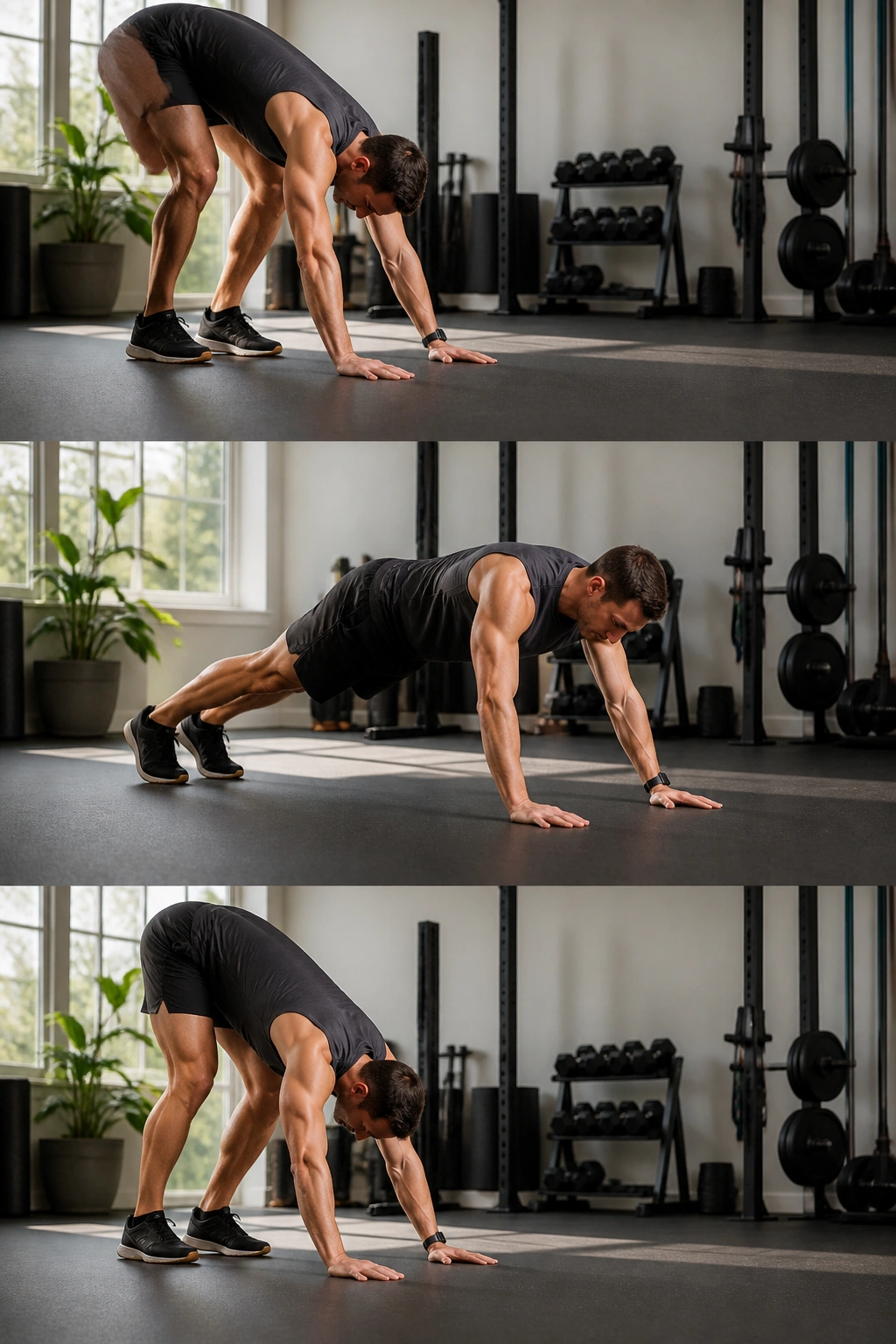
This is a full-body movement that stretches the hamstrings while engaging the core. It’s a great way to finish a session.
The Walkout
You are walking your hands out to a plank position and then back to your feet. It forces your core to stay engaged as your center of gravity shifts.
How to Perform
- Stand tall with your legs straight (or slightly bent if needed).
- Bend at the hips and place your hands on the floor.
- “Walk” your hands forward until you reach a plank position.
- Hold for a second, then walk your hands back to your feet and stand up.
Move slowly. Don’t rush the walkout; feel every inch of the floor beneath your hands.
Final Thoughts
Strength is built in the quiet moments of effort. No single exercise on this list is a magic bullet, but the combination of these movements, performed with consistency and attention to form, will build a core that is not only visually defined but functionally powerful. Your goal should not be to burn out every single day, but to challenge your stability and strength in a way that allows you to show up and do it again tomorrow.
Focus on the quality of your movement. If you find yourself rushing through a set just to get to the end, stop, take a breath, and reset. The abs and surrounding core muscles respond to time under tension, not to speed. If you are consistent with these movements and maintain a balanced approach to your nutrition, the results will follow. The process is straightforward, but the work is yours to do. Keep showing up, stay controlled, and trust the time you put in.
