



Most people approach the quest for a six-pack the wrong way. They see the abdominal muscles as a target that needs to be beaten into submission with thousands of crunches, hoping that sheer repetition will magically melt away the layer of fat sitting on top. It does not work that way. The truth is simple, if slightly uncomfortable: you cannot out-train a poor diet. No amount of ab work will reveal a six-pack if you have a layer of subcutaneous fat obscuring your rectus abdominis. Once that reality is settled, however, the muscle underneath is just like any other muscle. It needs progressive overload, tension, and a variety of movement patterns to grow and sharpen. You do not need a gym membership to build a core that looks carved from stone. You just need the right movements, executed with perfect tension and intensity.
The following list comprises twenty-five distinct exercises that target every single angle of your core. Some are foundational, some are advanced, and a few are designed to challenge your stability in ways you have likely never felt before. Do not try to do all twenty-five in a single session. Instead, pick five or six for a circuit, rotate them, and focus on the quality of the contraction rather than the speed of the movement. Stop thinking about “doing reps” and start thinking about “creating tension.” If you want results, you have to earn them in the living room floor, one set at a time.
1. The Standard Plank
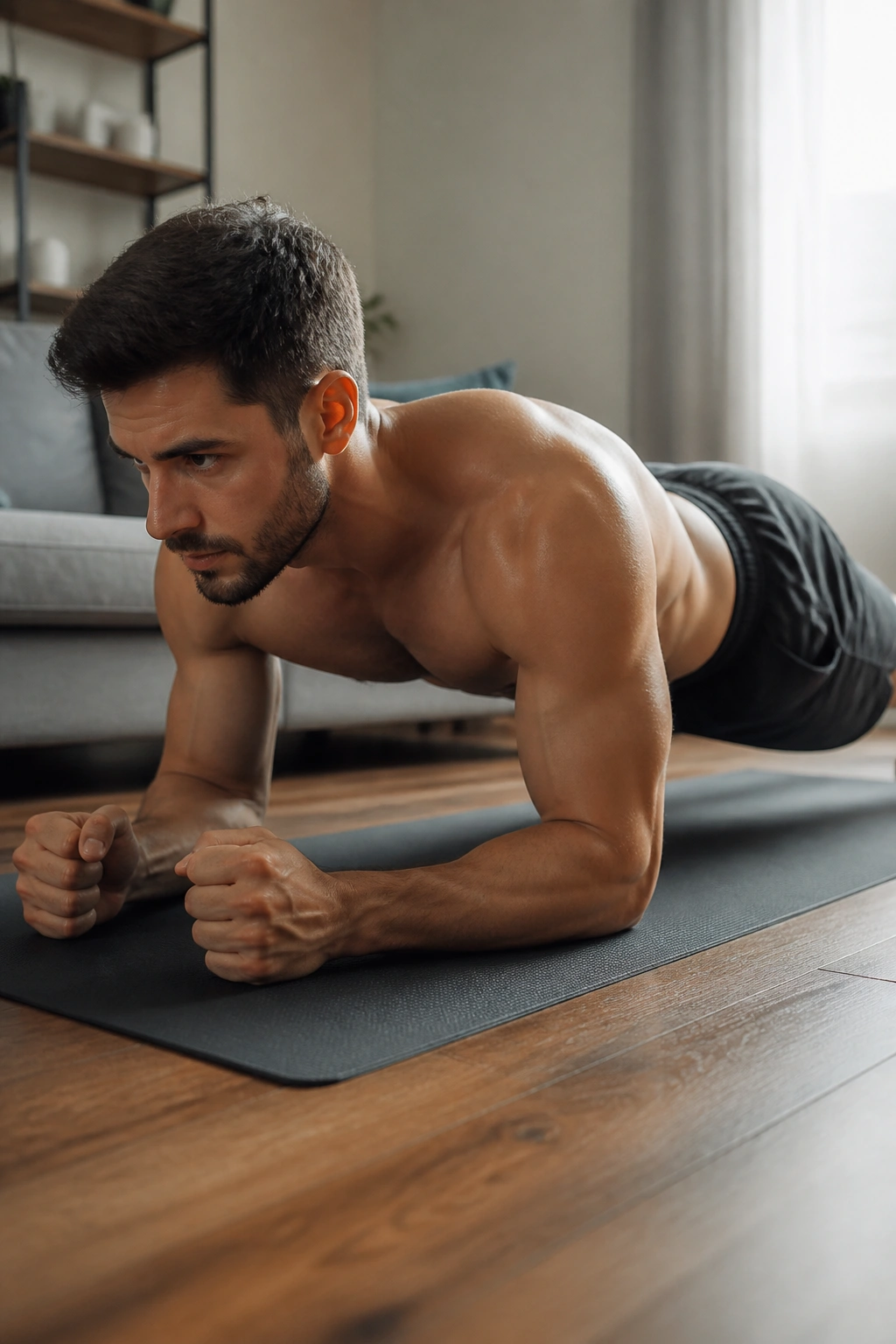
The plank is the ultimate anti-movement exercise. Most people treat it as a test of endurance—they get into position, look at the clock, and wait for the time to pass while their back sags and their glutes go lazy. That is a waste of time. To make a plank effective, you must actively engage your entire body. Squeeze your glutes until they cramp. Tuck your pelvis underneath you to remove the arch in your lower back. Push your elbows into the floor as if you are trying to slide them toward your toes.
Why It Builds a Strong Core
This position teaches your transverse abdominis, the deepest layer of your core, to stay braced. A braced core is what protects your spine during heavy lifting and makes your midsection look tighter even when you are relaxed. If you are not shaking after forty-five seconds, you are not doing it right. Keep your neck neutral and your breathing steady. Do not hold your breath. Shallow, rhythmic breathing is essential for maintaining core tension throughout the hold. Aim for three sets of sixty seconds, with a focus on maximum tension, not maximum time.
2. Bicycle Crunches
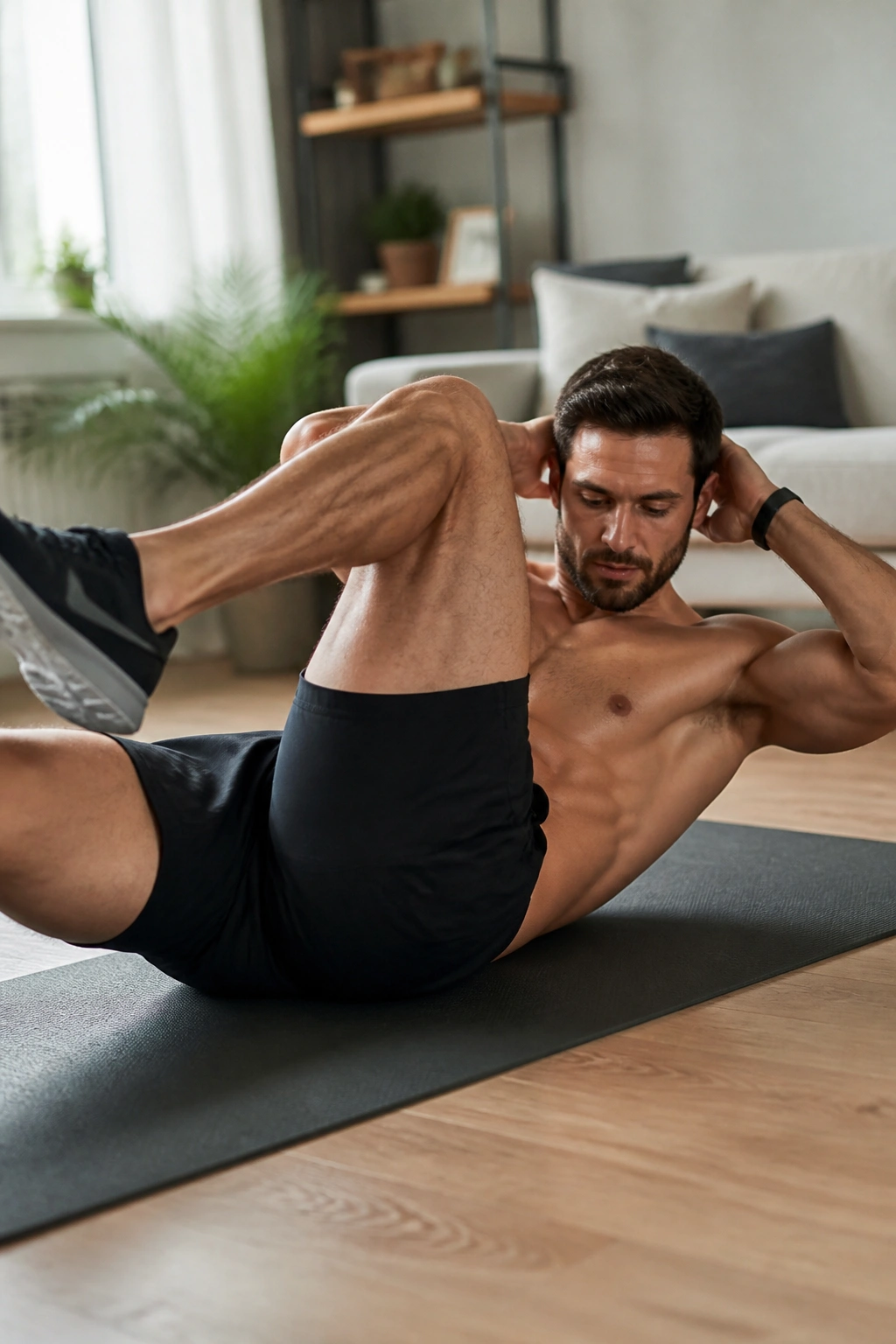
These are arguably the most effective movement for the rectus abdominis and the obliques simultaneously. The secret here is not the speed at which you move your legs, but the rotation of your torso. When you bring your right elbow toward your left knee, do not just reach with your arm. Think about driving your ribcage across your body to meet your knee. Your shoulder blade should actually lift off the ground.
Common Form Mistakes to Avoid
Most guys rush through these. They pedal their legs like they are on a bike and just tap their elbows to their knees. This accomplishes very little. Slow down. Pause at the top of the movement and squeeze your core for a full second. Feel that burn in your obliques? That is what you are after. If you pull on your neck, you will end up with a sore neck, not a sore stomach. Keep your fingertips lightly behind your ears, not interlaced behind your head.
3. Lying Leg Raises
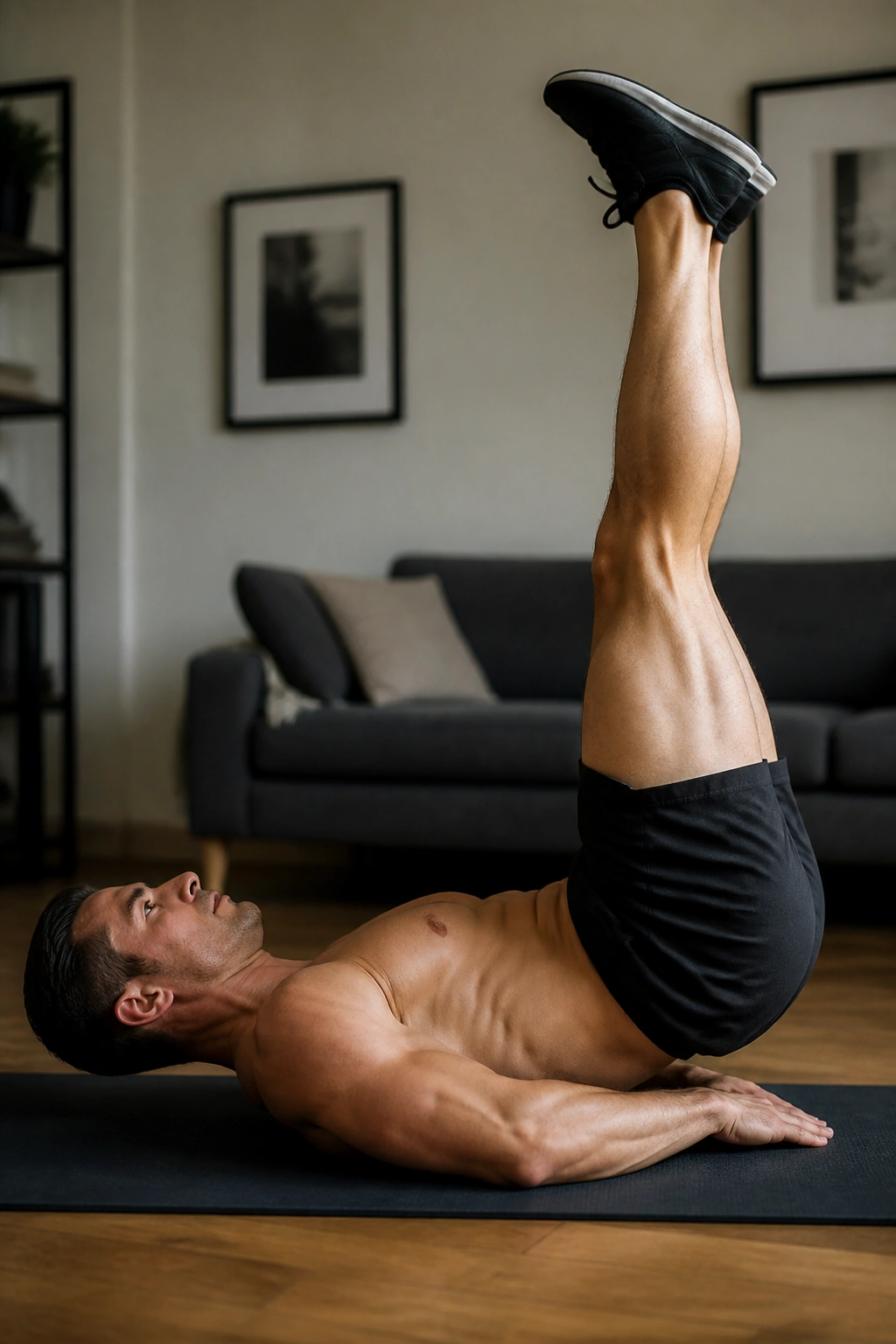
This exercise is a brutal test for the lower abs, which is the area most people struggle with the most. Lie flat on your back with your legs straight and your hands tucked slightly under your glutes for support. Lift your legs until they are perpendicular to the floor, then lower them back down with control. The eccentric phase—the lowering part—is where the real work happens.
Controlling the Lowering Phase
Do not let your feet slam into the floor. Lower your legs as slowly as you can without letting your lower back arch off the mat. If your lower back starts to peel off the ground, that is your limit. Stop there. You can place your hands under your hips to protect your lower back, but try to keep the work in your stomach muscles, not your hip flexors. If you feel this mostly in your quads, you are likely pulling too much with your hips and not enough with your core. Think about curling your pelvis toward your ribcage.
4. Mountain Climbers
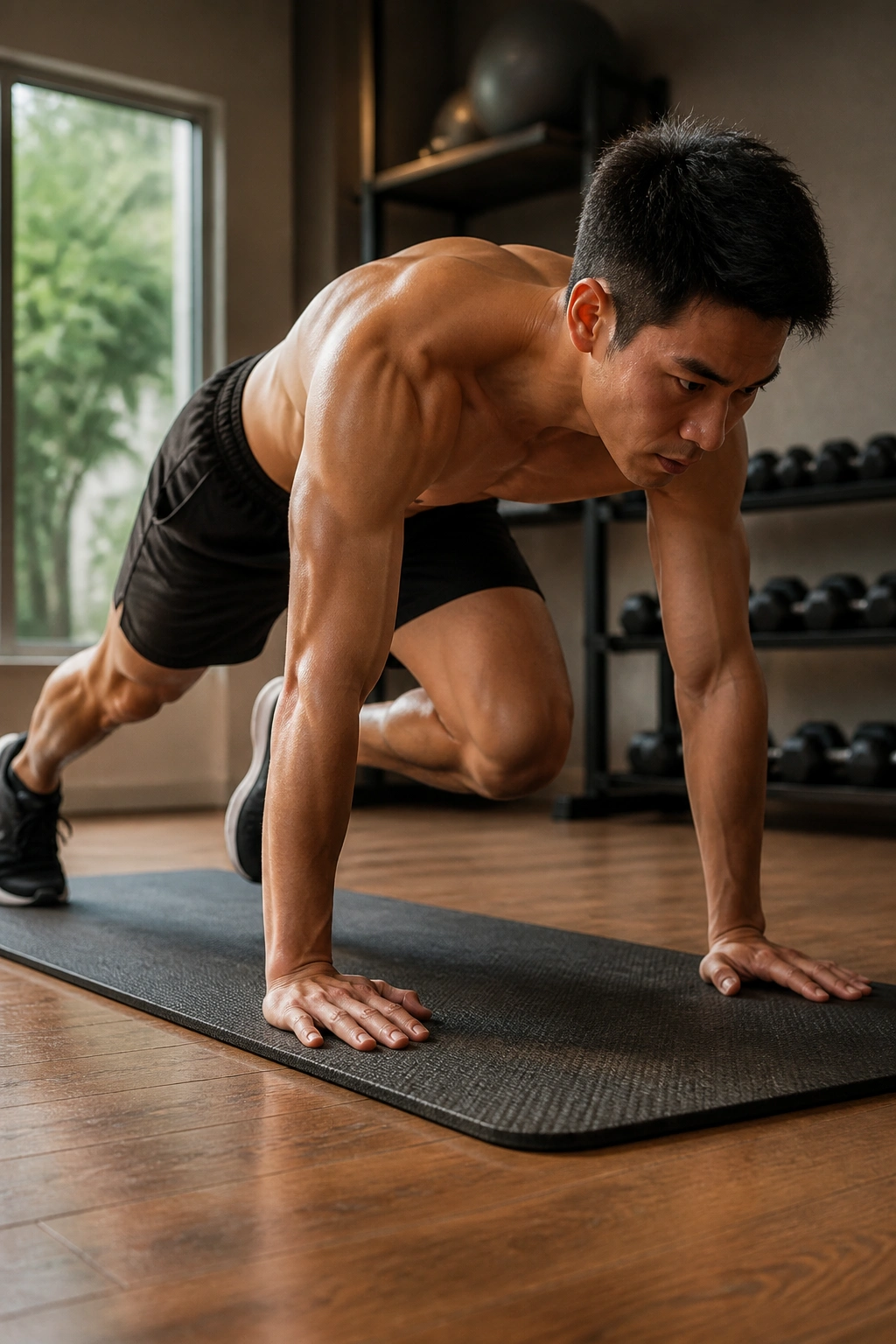
These bring an element of cardio into your ab training, which helps keep your heart rate up while you work your core. Start in a high plank position, hands directly under your shoulders. Drive one knee toward your chest, then switch rapidly. The key to making this an ab workout rather than just a cardio drill is to keep your hips low and your back flat.
Maximize the Contraction
Do not let your butt skyrocket into the air. If you see your hips rising, drop them back down. When you drive the knee up, forcefully crunch your abs. It is a rapid contraction, but it should still be a contraction. Perform these for thirty to forty-five seconds at a time. If you move too fast, you will lose the tension. Find a rhythm where every “step” involves a conscious engagement of the abdominal wall.
5. Russian Twists
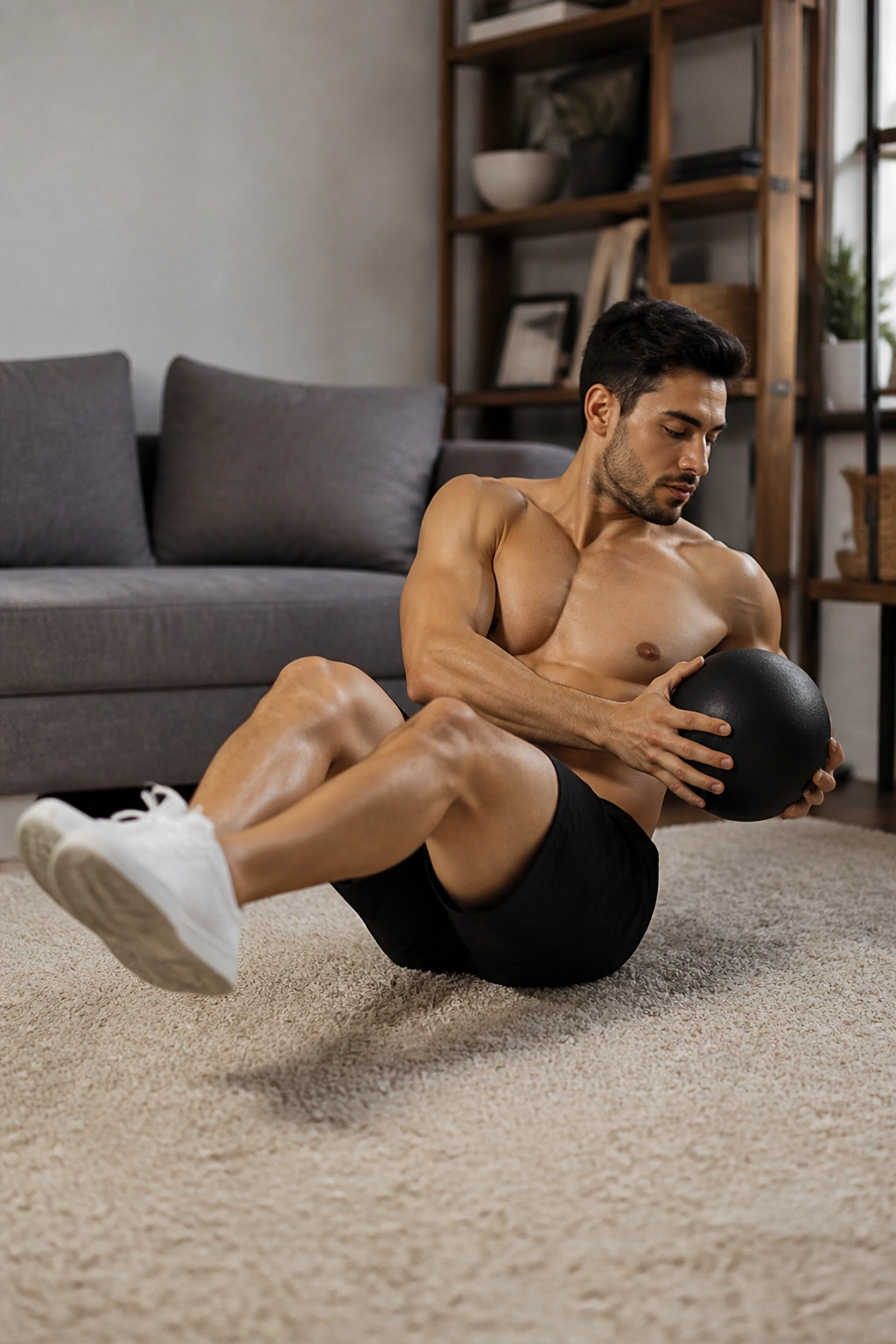
Rotation is a function of the core that is often ignored in traditional bodybuilding-style ab training. Sit on the floor, lean back slightly until you feel your abs engage, and lift your feet a few inches off the ground. Twist your torso from side to side, touching your hands to the floor on each side.
Increasing the Intensity
If this feels too easy, stop just tapping the floor and start “throwing” an imaginary weight or a real dumbbell from side to side. Your eyes should follow your hands as you twist. This forces your head and neck into the rotation, ensuring your spine is doing the work. Keep your chest up. Do not slouch forward; that defeats the purpose of the movement by putting pressure on your lower back instead of the abdominal wall.
6. Dead Bug
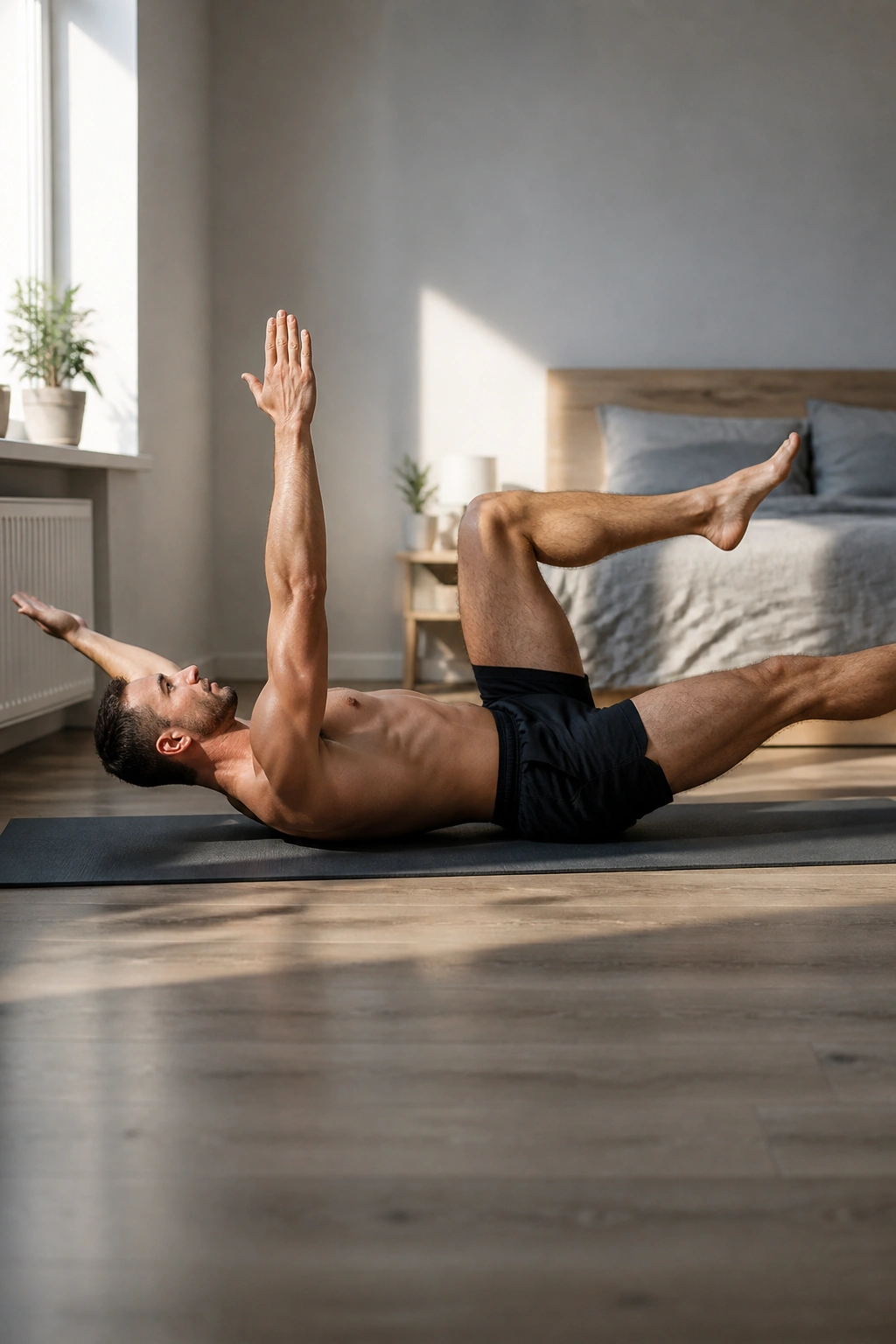
The Dead Bug is a classic physical therapy exercise that has been co-opted by serious lifters because it works. Lie on your back, arms extended toward the ceiling, knees bent at ninety degrees. The goal is to lower your opposite arm and opposite leg simultaneously without moving your spine.
The Spine-Neutral Challenge
Your lower back must stay glued to the floor the entire time. If you cannot do this, do not lower your legs as far. This is an exercise in dissociation: you are learning to move your limbs while your core remains rock-solid and still. It sounds simple, but once you try it, you will realize how much your abs struggle to hold that position. Do not rush. This is a slow, methodical movement.
7. Heel Touches
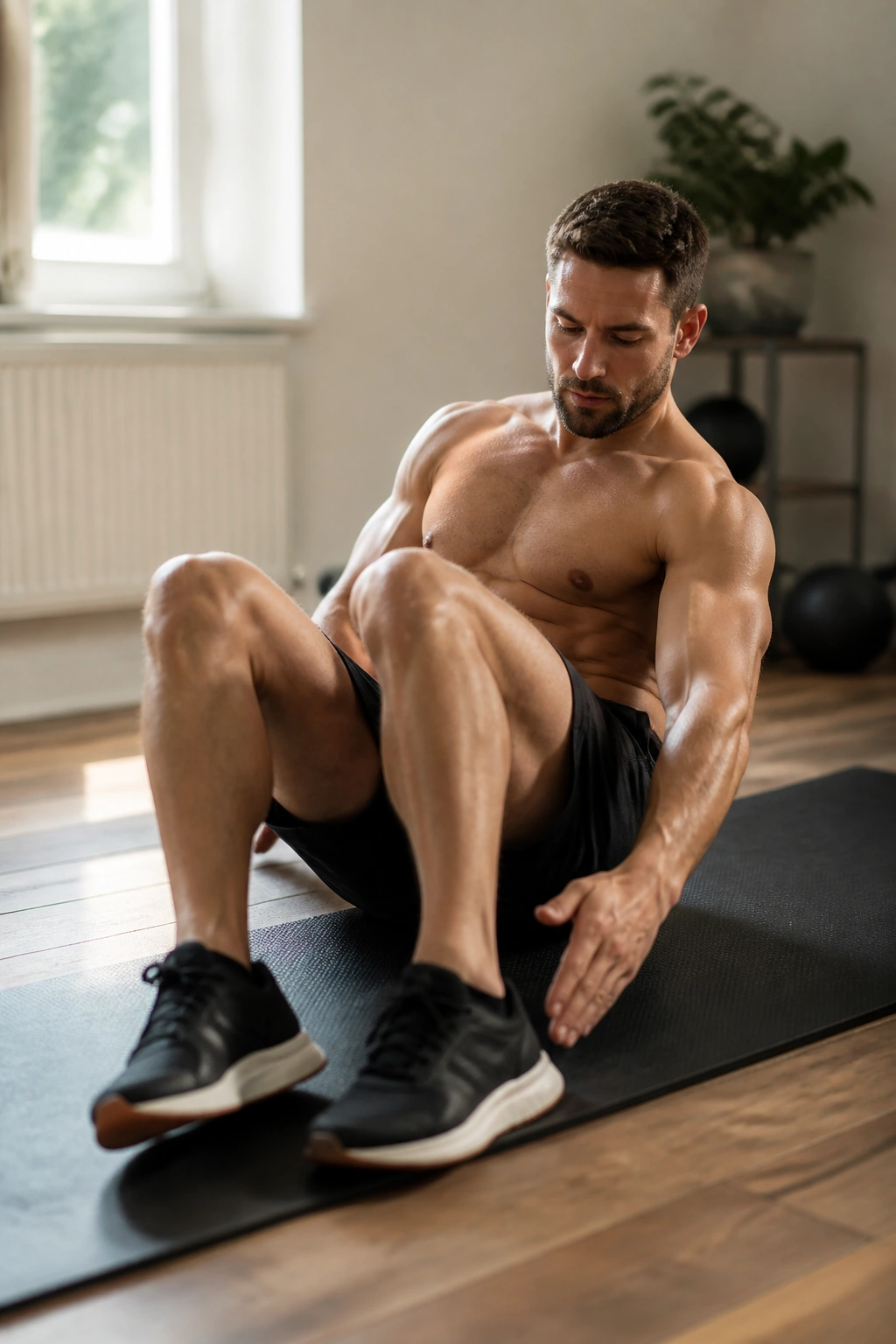
This is a specific isolation exercise for the obliques. Lie on your back with your knees bent and feet flat on the floor, about hip-width apart. Lift your head and shoulders slightly off the ground, contracting your abs. Reach your right hand toward your right heel, then your left hand toward your left heel.
Why This Works
The lateral flexion—the side-to-side bending—is the primary function of the obliques. By staying in a constant state of contraction, you force these muscles to fire for the entire duration of the set. Focus on squeezing your side as you reach. It is a small movement, but the constant time under tension is what makes it feel so intense by the end of a minute. Avoid resting your head back down between reps. Keep the tension alive.
8. Flutter Kicks
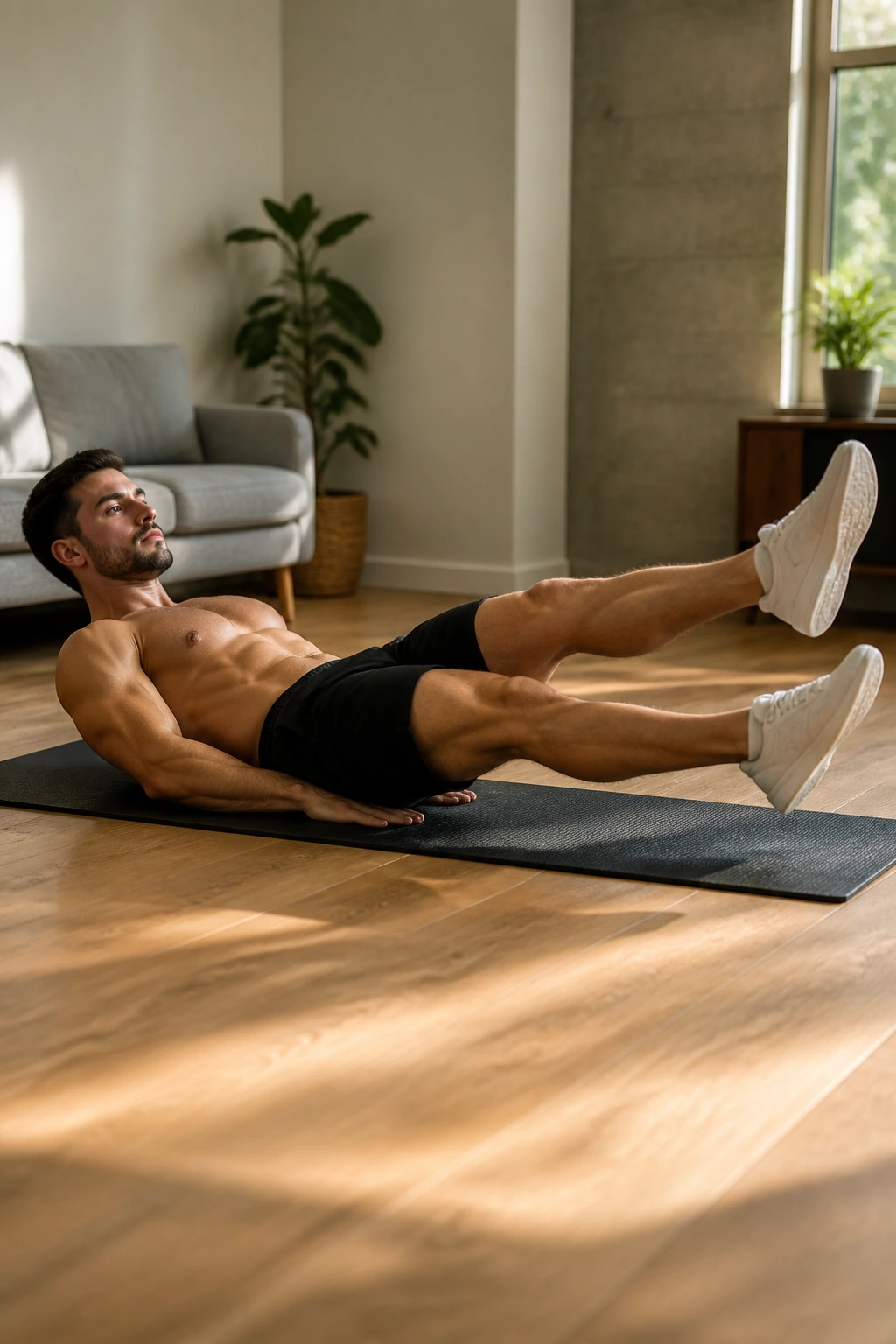
This move is an endurance burner that will leave your lower abs screaming. Lie on your back, hands under your glutes, and lift your legs about six inches off the ground. Alternate kicking your legs up and down in a small, rapid motion.
Maintaining Proper Tension
Do not kick high. The smaller the movement, the harder it is to keep your abs braced. If you kick too high, you rely on your hip flexors. Keep the movement tight and controlled. Focus on pointing your toes and keeping your legs as straight as you can. If your lower back starts to ache, stop immediately, reset your position, and engage your core harder before going again.
9. Reverse Crunches
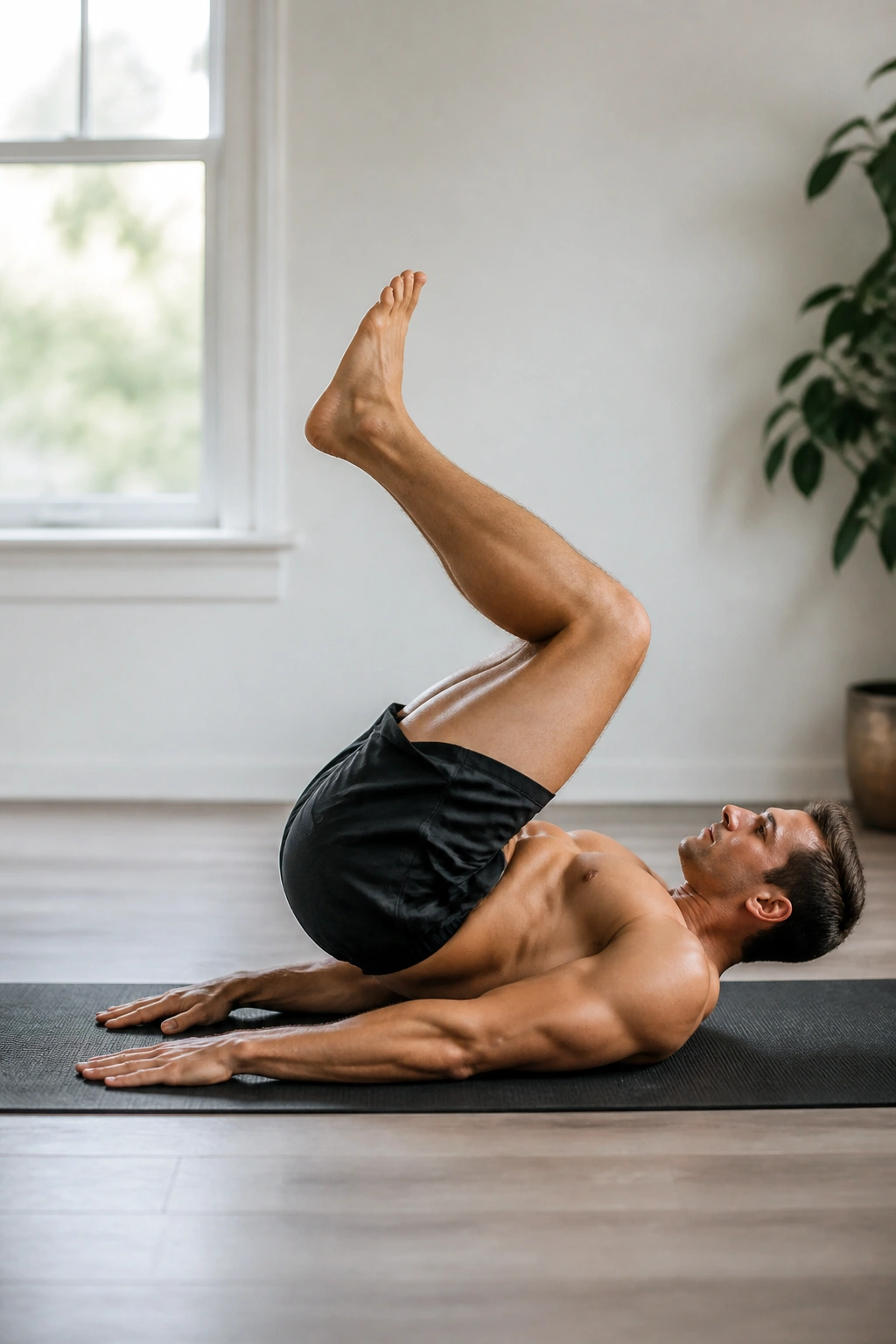
Unlike a standard crunch, which works the upper abs, the reverse crunch curls the pelvis toward the ribcage, targeting the lower abs. Lie on your back, knees bent, and feet in the air. Use your lower abs to pull your knees toward your chest, lifting your hips off the floor.
The Control Aspect
Do not use momentum to swing your legs up. You should not be kicking your feet toward the ceiling; you should be curling your tailbone toward your face. The movement range is small. If you find yourself rocking back and forth, slow down. You need to initiate the lift with your lower stomach muscles, not your legs. When you lower your hips back to the mat, do it slowly.
10. V-Ups
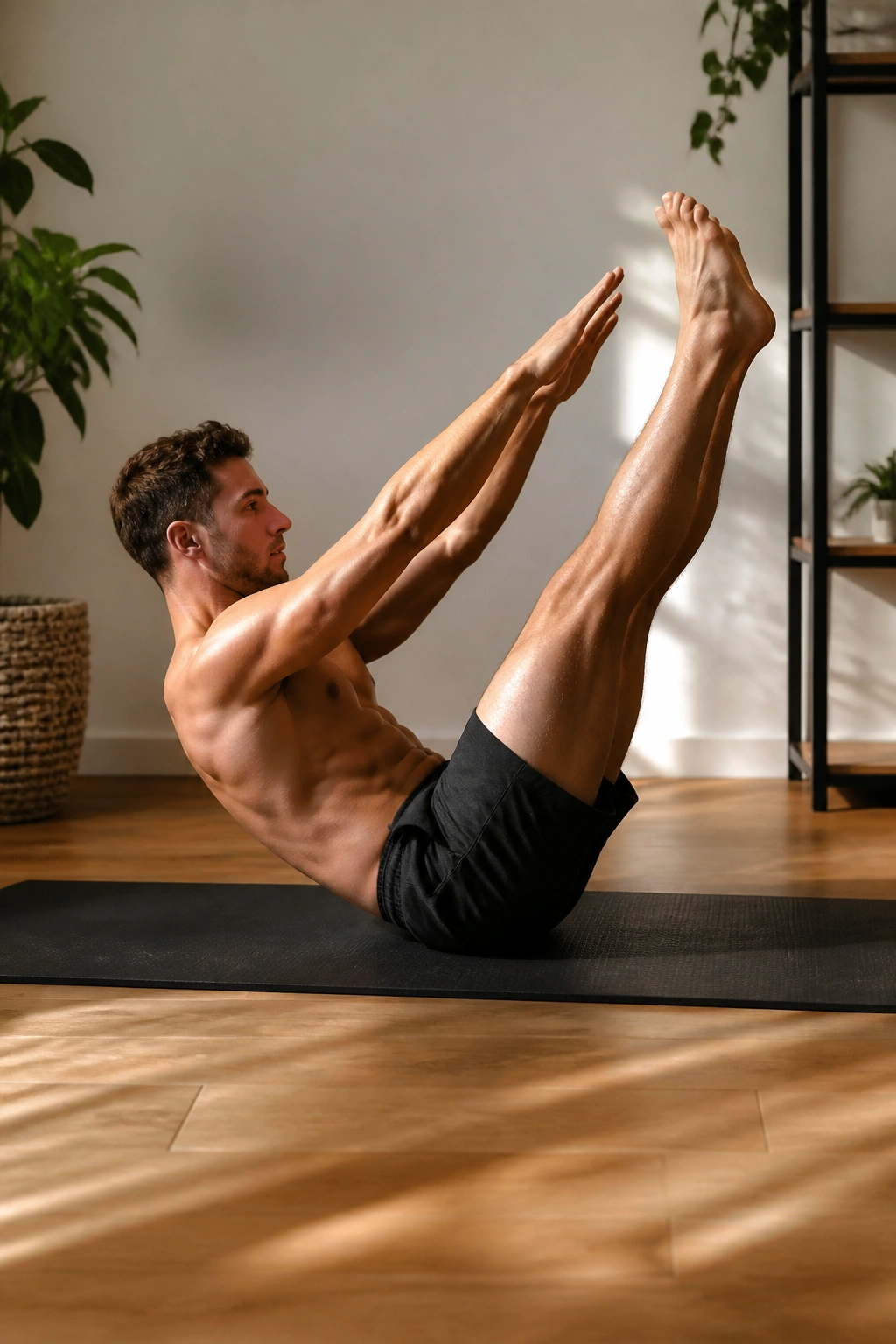
The V-Up is an advanced compound core movement that requires significant abdominal strength and flexibility. Lie flat on your back, arms and legs extended. Simultaneously lift your torso and your legs, aiming to touch your fingers to your toes in a “V” shape at the top.
Scaling for Success
This is difficult. If you cannot do a full V-Up, start by doing tuck-ups, where you bend your knees as you pull them in. The most important part of the V-Up is not touching your toes, but reaching your torso high enough to get your shoulder blades off the ground. If you are struggling, reach for your shins instead. Focus on the snap of the contraction at the top.
11. Plank Jacks
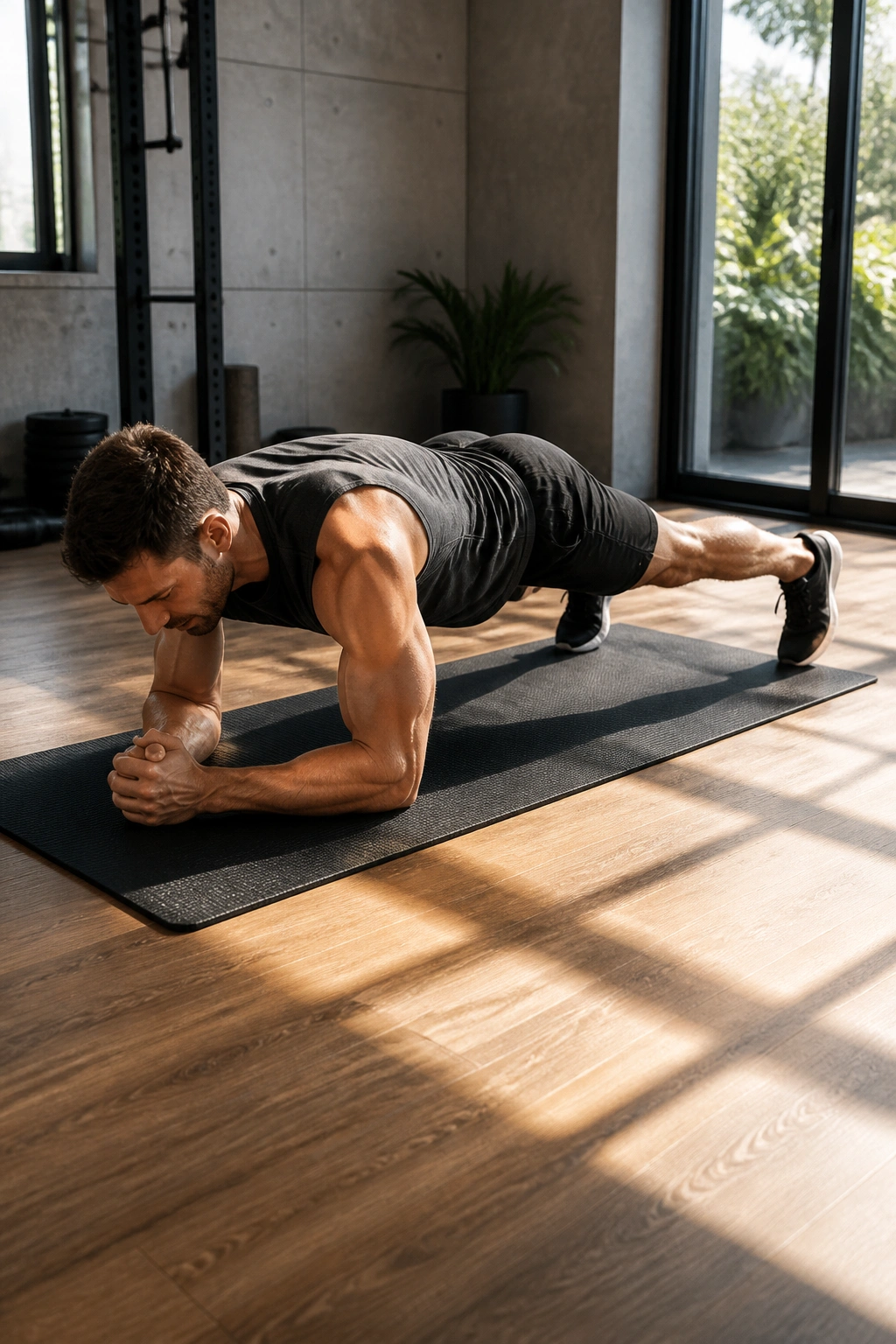
This is a combination of a plank and a jumping jack, which creates a high-intensity core challenge. Start in a standard plank position. Jump your feet out wide, then back together, like a jumping jack, while keeping your torso perfectly still.
Keeping the Torso Quiet
The biggest mistake here is letting your hips bounce up and down while your feet move. Your core should be acting as a stabilizer. If your hips are shifting significantly, you need to slow down or shorten your range of motion. Think of your upper body as a solid block of cement. Only the legs should be moving. This requires significant engagement of the rectus abdominis and the obliques to prevent any swaying.
12. Scissor Kicks
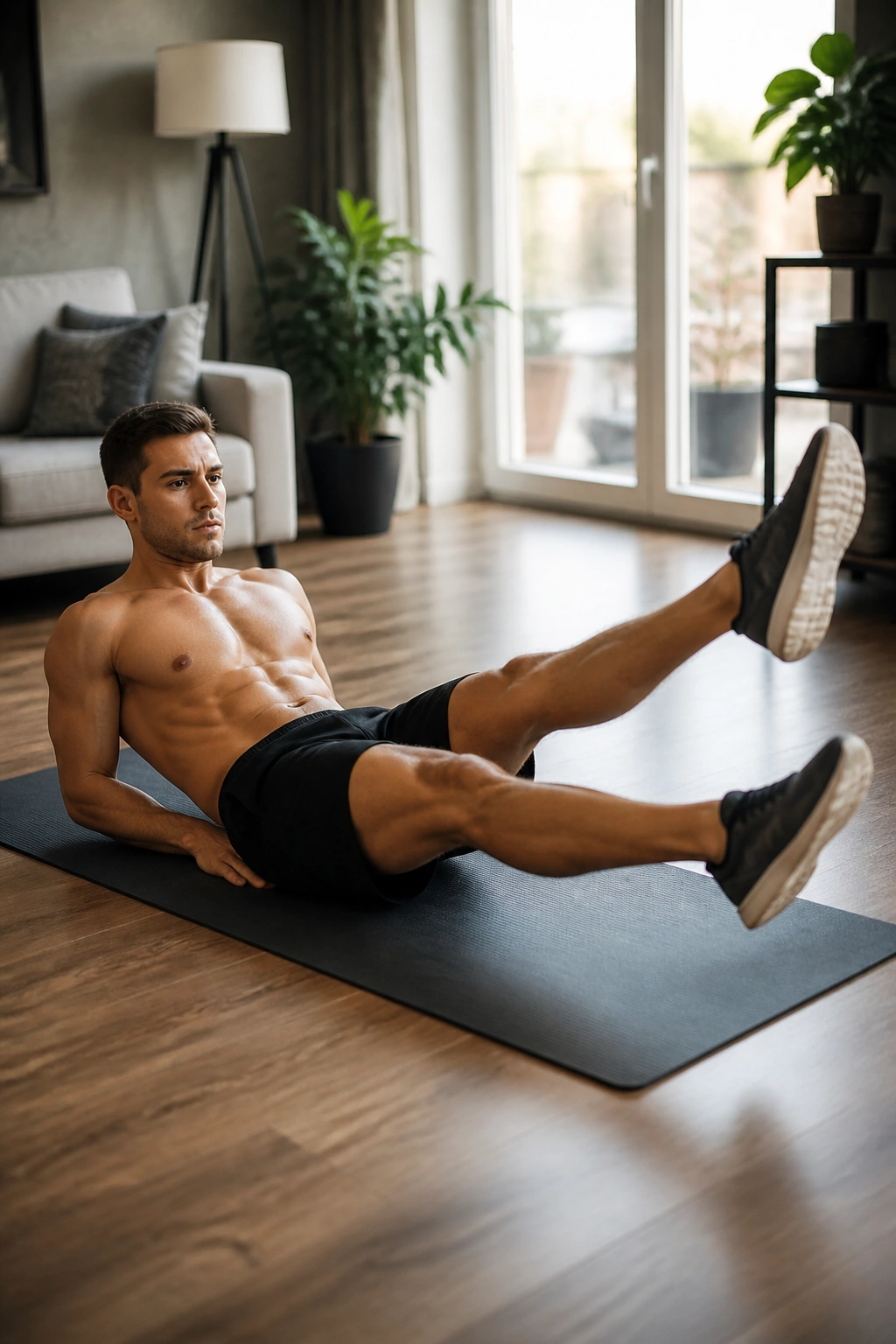
Similar to flutter kicks but with a lateral movement pattern, scissor kicks are excellent for lower ab endurance. Lie on your back, legs straight, and hands under your glutes. Lift your legs and cross one over the other in a scissoring motion.
Managing the Range of Motion
Keep the movement low to the ground. The closer your legs are to the floor, the harder your abs have to work to keep your spine flat. If you start feeling it in your hip flexors more than your abs, lift your legs a few inches higher. This is a very common adjustment. Do not be afraid to customize the height to ensure the tension stays exactly where you want it.
13. Bird-Dogs
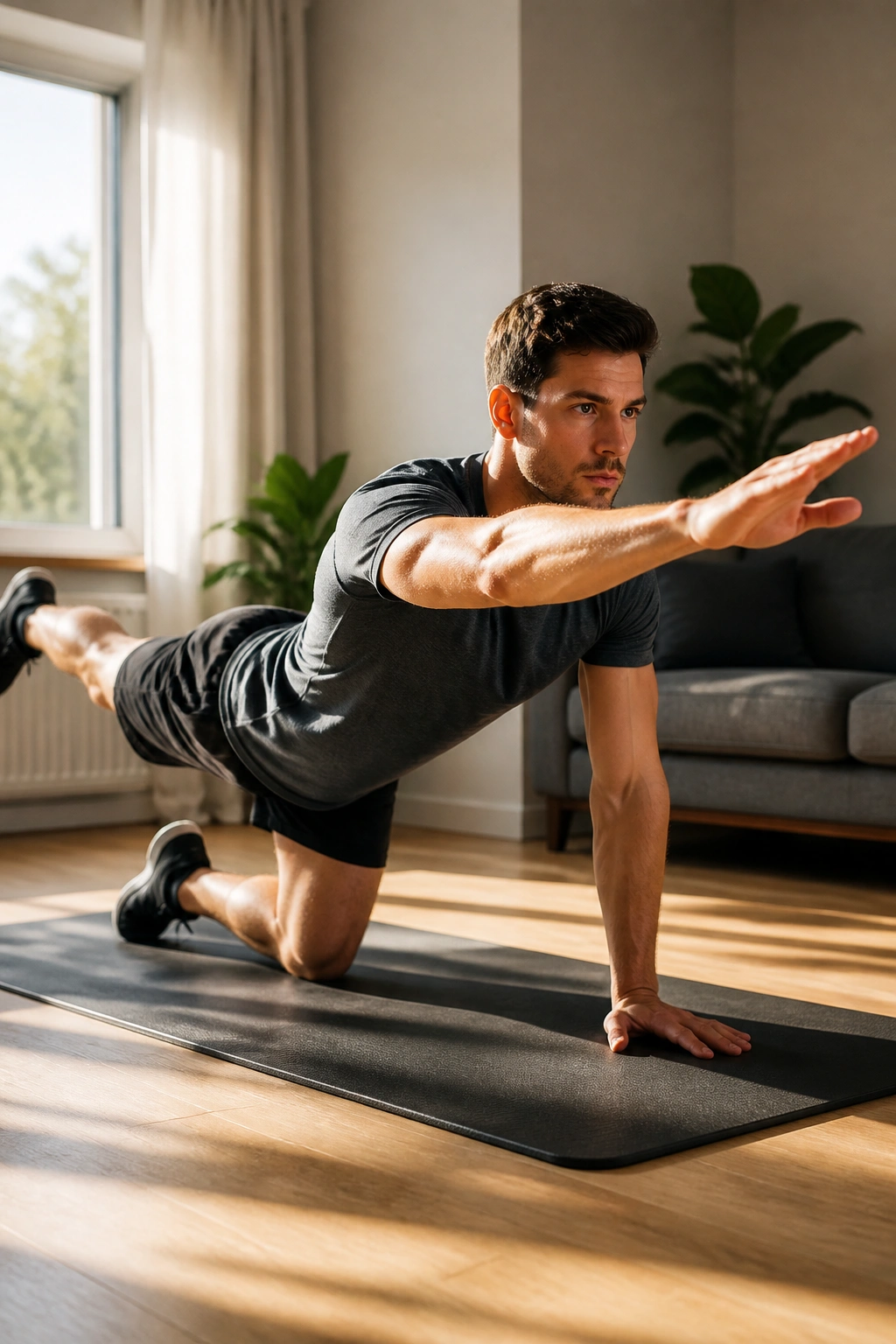
This is an often-overlooked move that is crucial for building a resilient, strong core. Get on your hands and knees in a tabletop position. Simultaneously extend your right arm forward and your left leg backward. Hold for a second, feeling the tension, then switch sides.
The Stability Test
The goal is zero movement in your hips or torso. You are essentially fighting to stay balanced. The “ab” work here comes from keeping your core braced and your spine neutral throughout the transition. If you wobble, you are rushing. Slow it down. You should be able to balance a glass of water on your lower back while doing this. If you can’t, you aren’t bracing hard enough.
14. Spiderman Planks
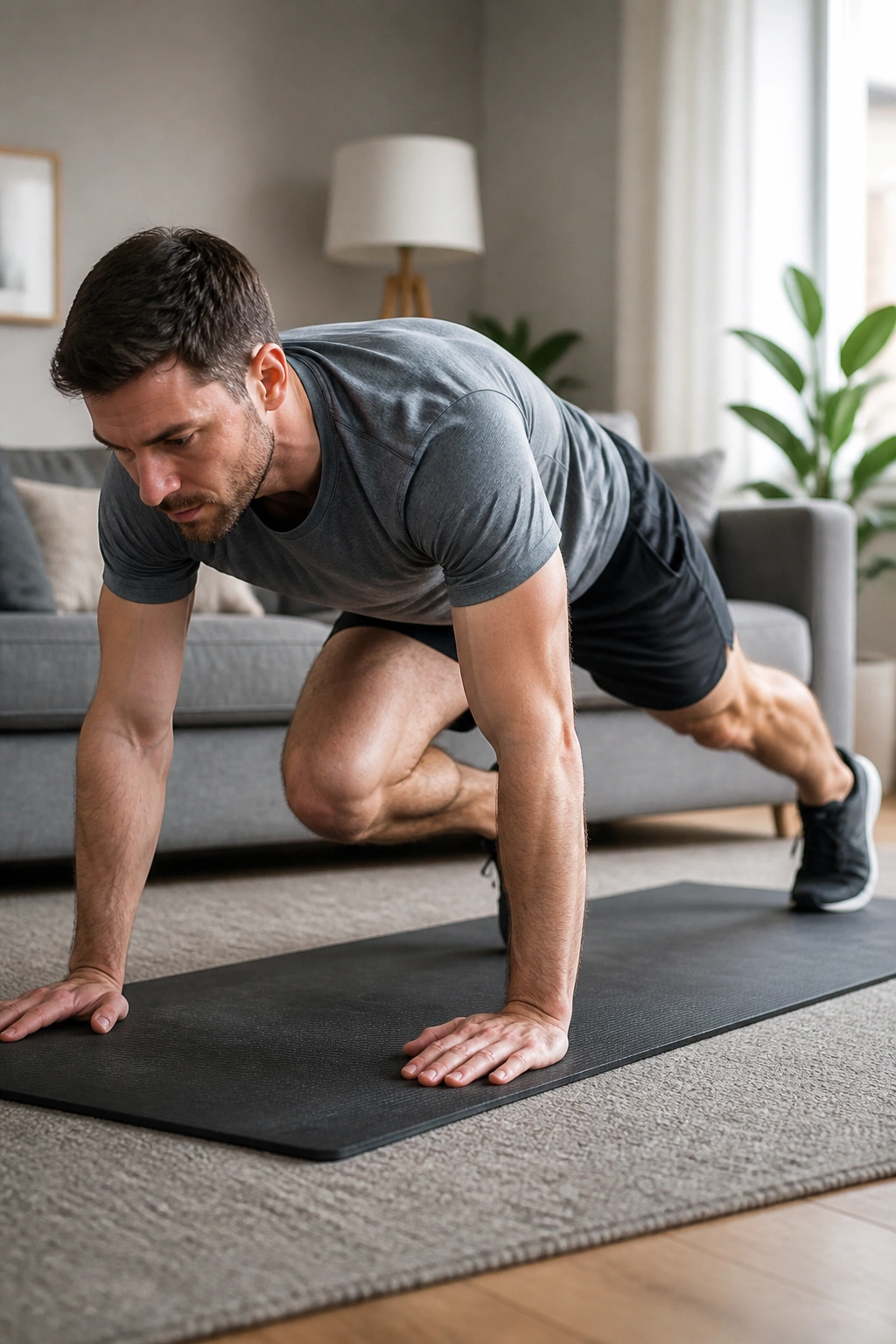
This is a dynamic variation of the plank that forces the obliques to work overtime. Start in a standard high plank position. Bring your right knee to the outside of your right elbow, crunching your obliques. Return to the plank and switch sides.
Focusing the Oblique Crunch
This isn’t just about moving your leg; it is about the squeeze. When your knee meets your elbow, pause and really compress your side. Think of it as a side-crunch from a plank position. The more you “hunt” for that squeeze, the more effective this becomes. It’s also great for hip mobility, but keep your main focus on the abdominal tension.
15. Toe Touches
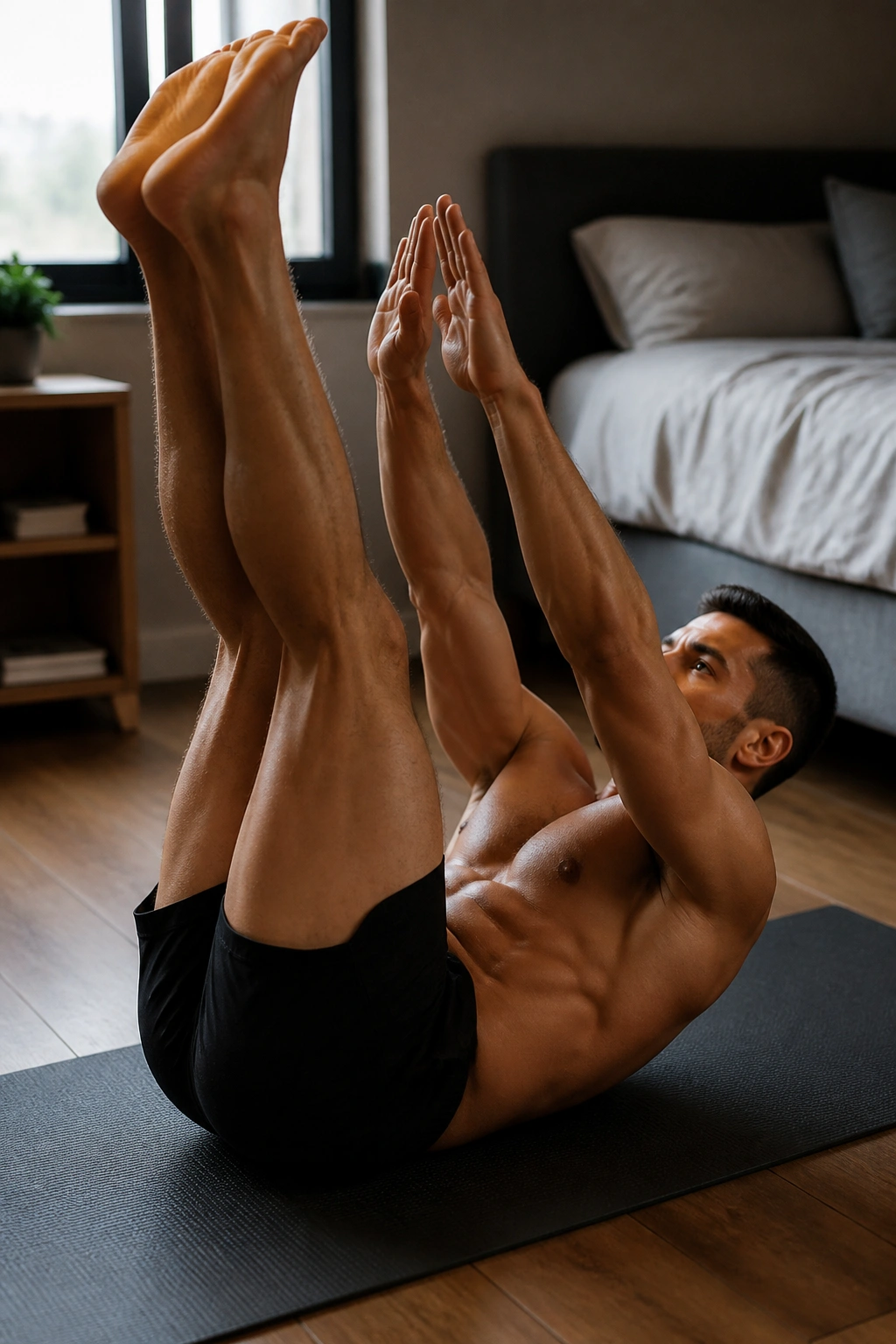
Toe touches are a direct way to work the upper abs and the core stability muscles. Lie on your back with your legs extended straight up toward the ceiling. Reach your fingers toward your toes, lifting your shoulders off the ground.
Reaching for Height
You do not need to touch your toes if your flexibility doesn’t allow it. The goal is to reach your fingers past your knees, up toward the ceiling. The higher you lift your shoulder blades, the harder the contraction. Keep your legs as straight as possible. If they start to bend, your hamstrings might be tight, but keep trying to push the heels toward the ceiling to maintain that engagement.
16. The Hollow Body Hold
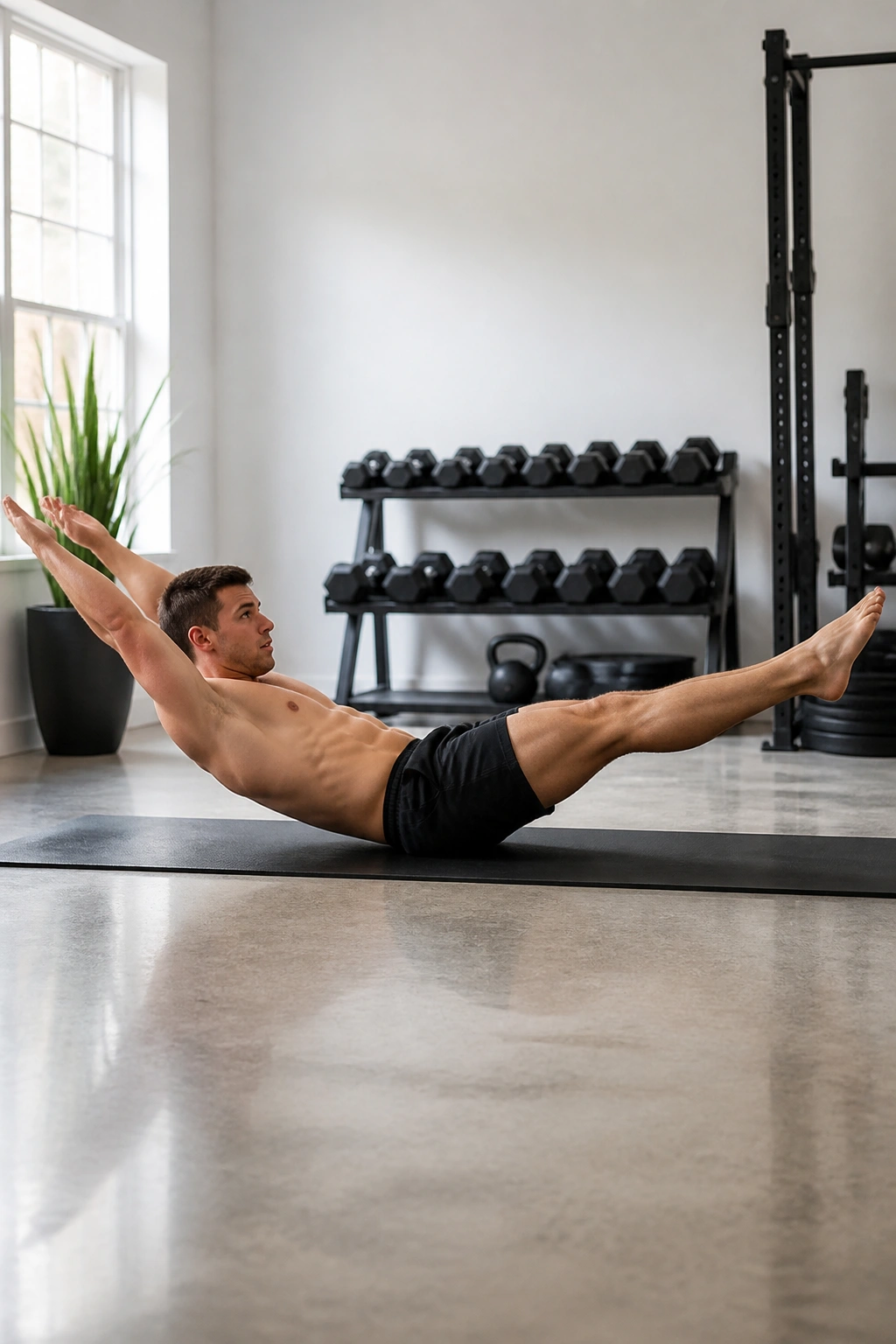
If you ever want to know if your core is truly strong, try the hollow body hold. Lie on your back, legs straight, arms stretched overhead. Lift your legs, arms, and shoulders off the floor simultaneously, creating a “banana” or “hollow” shape with your body.
The Ultimate Core Isometic
Your lower back must remain pressed firmly into the ground. If there is a gap, you are not engaging correctly. This move is deceptively hard. Start by holding it for 20 seconds. It is a full-body engagement. If you are shaking uncontrollably, that is a good sign. It means you are finding the weak points in your chain and forcing them to stabilize. This is the gold standard for gymnastics core training.
17. Windshield Wipers
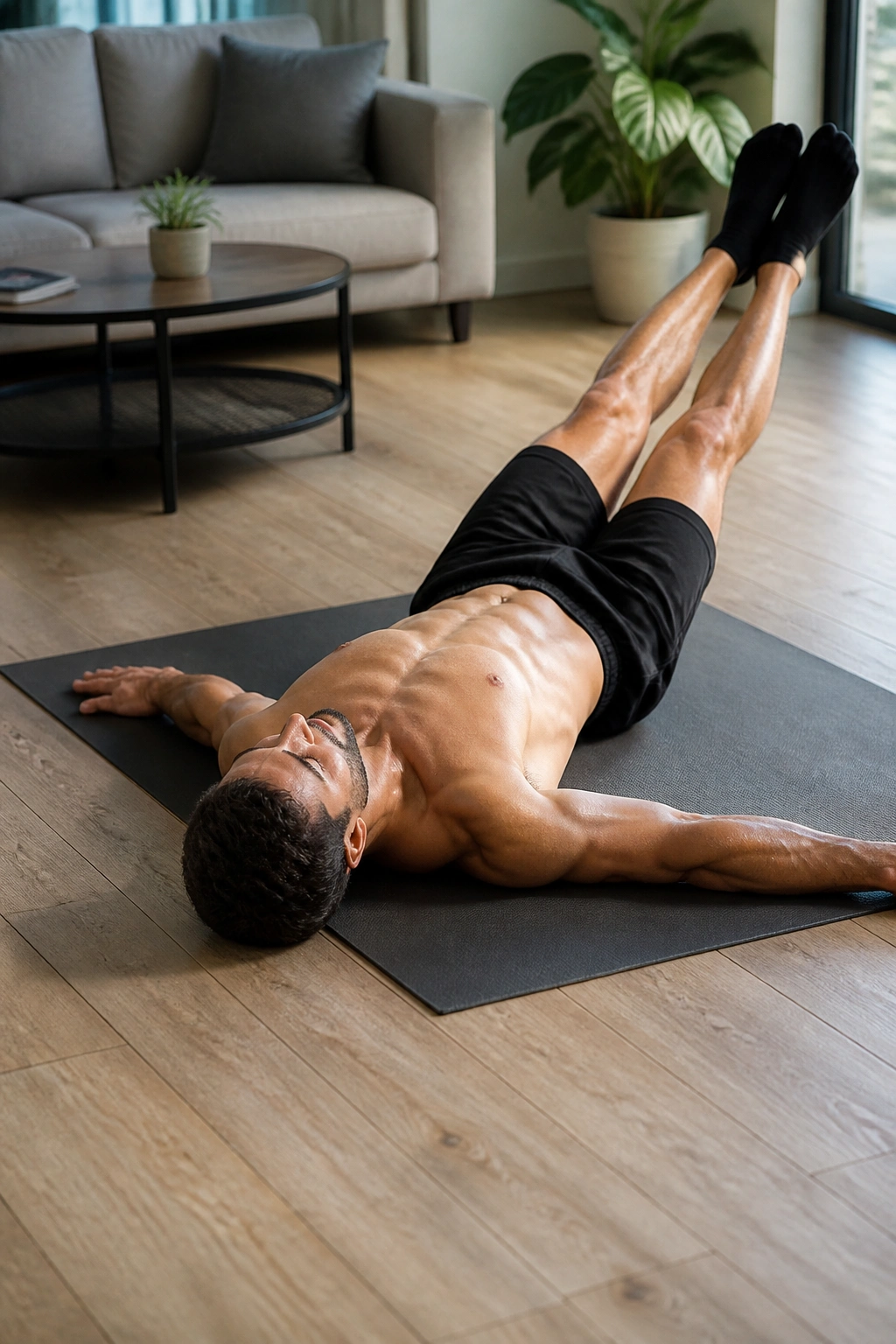
These are advanced and should be treated with respect. Lie on your back with your arms out to the sides for stability. Lift your legs straight up. Slowly lower your legs to the right side, keeping them straight, then back to the center, then to the left.
Controlling the Descent
The danger here is letting your legs fall too fast, which can tweak your lower back. You must use your core to fight gravity the entire way down. If you cannot keep your legs straight, bend your knees to reduce the leverage—this is a perfectly acceptable modification. Never sacrifice your lower back position for range of motion. If you feel your spine lifting, stop the movement earlier.
18. Side Plank Dips
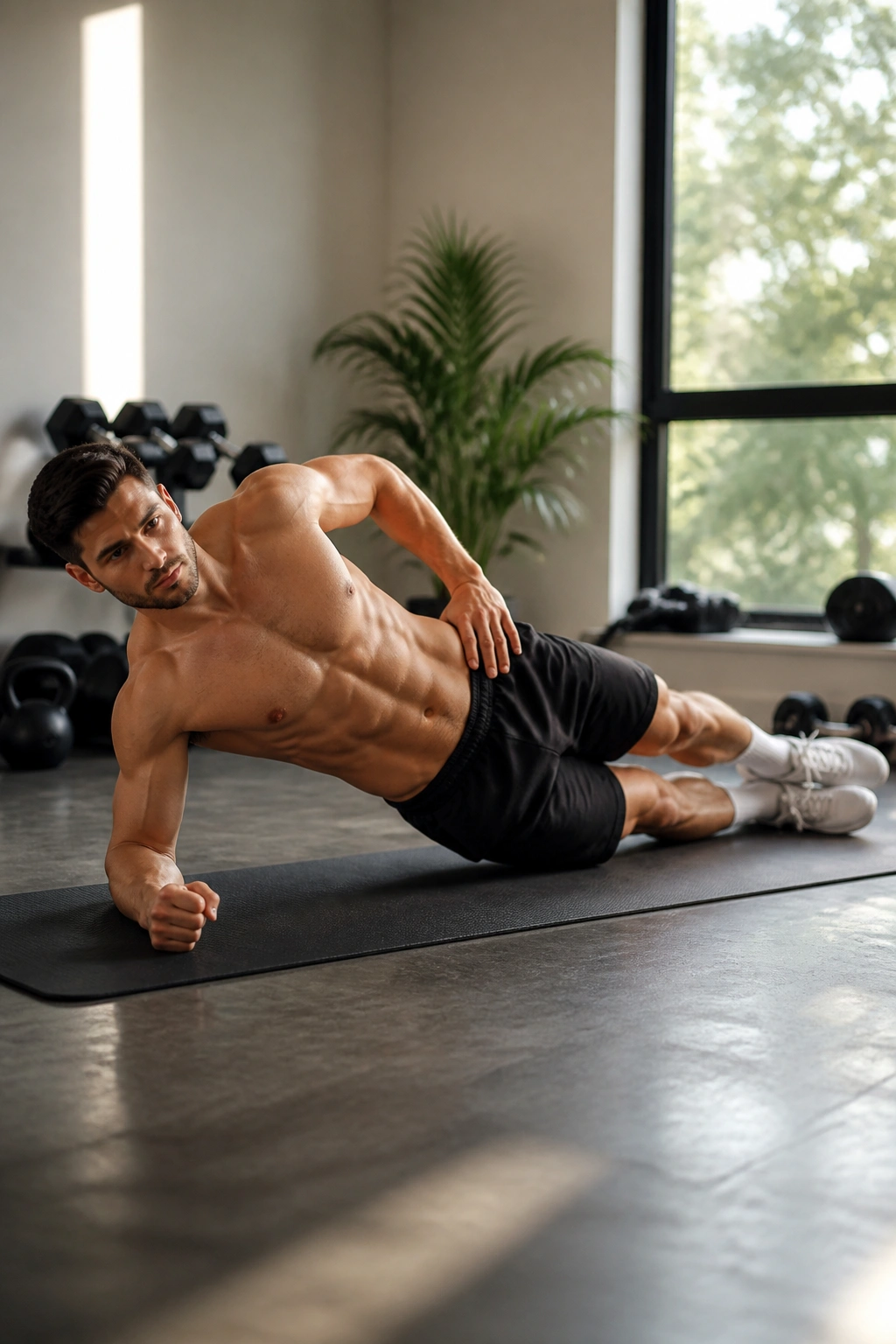
Standard side planks are great, but adding movement creates a much higher stimulus for the obliques. Get into a side plank position on your elbow. Lower your hip toward the floor, then drive it back up, squeezing your oblique at the top.
The Squeeze at the Top
Many people drop their hips and then just let them hang. You need to actively drive the hip up as high as you can. It should feel like you are doing a side-crunch while holding your body weight. Do not rotate your chest toward the floor; keep your torso facing forward. If your shoulder starts hurting, ensure you are pressing actively through your elbow, not just collapsing into the joint.
19. Towel Rollouts
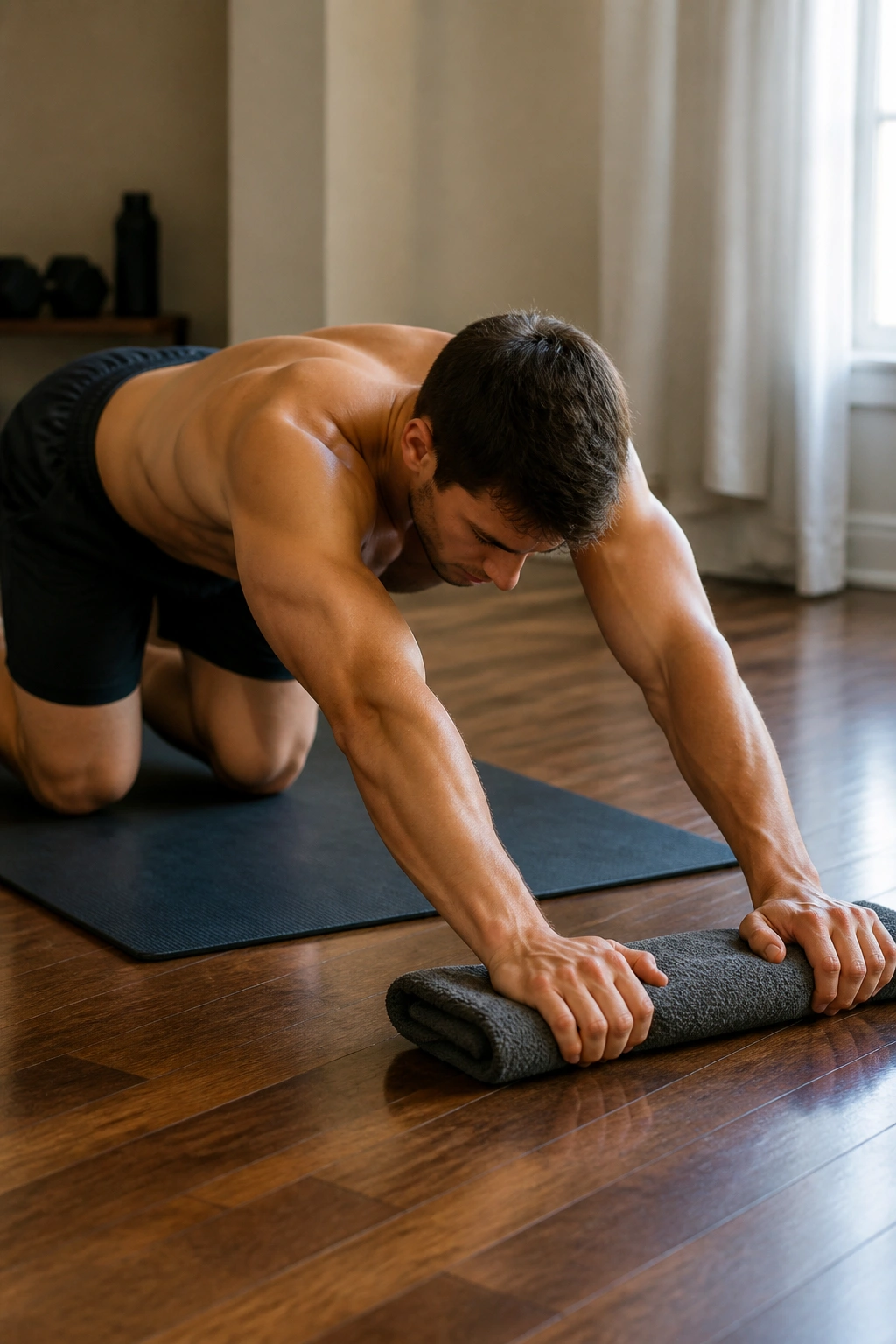
You do not need an expensive ab wheel for this; a towel on a hardwood or tile floor works just as well. Kneel on a mat, place your hands on a towel in front of you. Slide your hands forward as far as you can while keeping your back flat, then pull your hands back in using your abs.
The “Pull” Mechanic
The magic happens on the return. It is easy to roll out; it is hard to roll back in without arching your back. Think about dragging your elbows into your knees. If you feel this in your lower back, you have gone too far. Shorten your range of motion until you can maintain a rigid, slightly rounded back position throughout the entire repetition.
20. The Superman
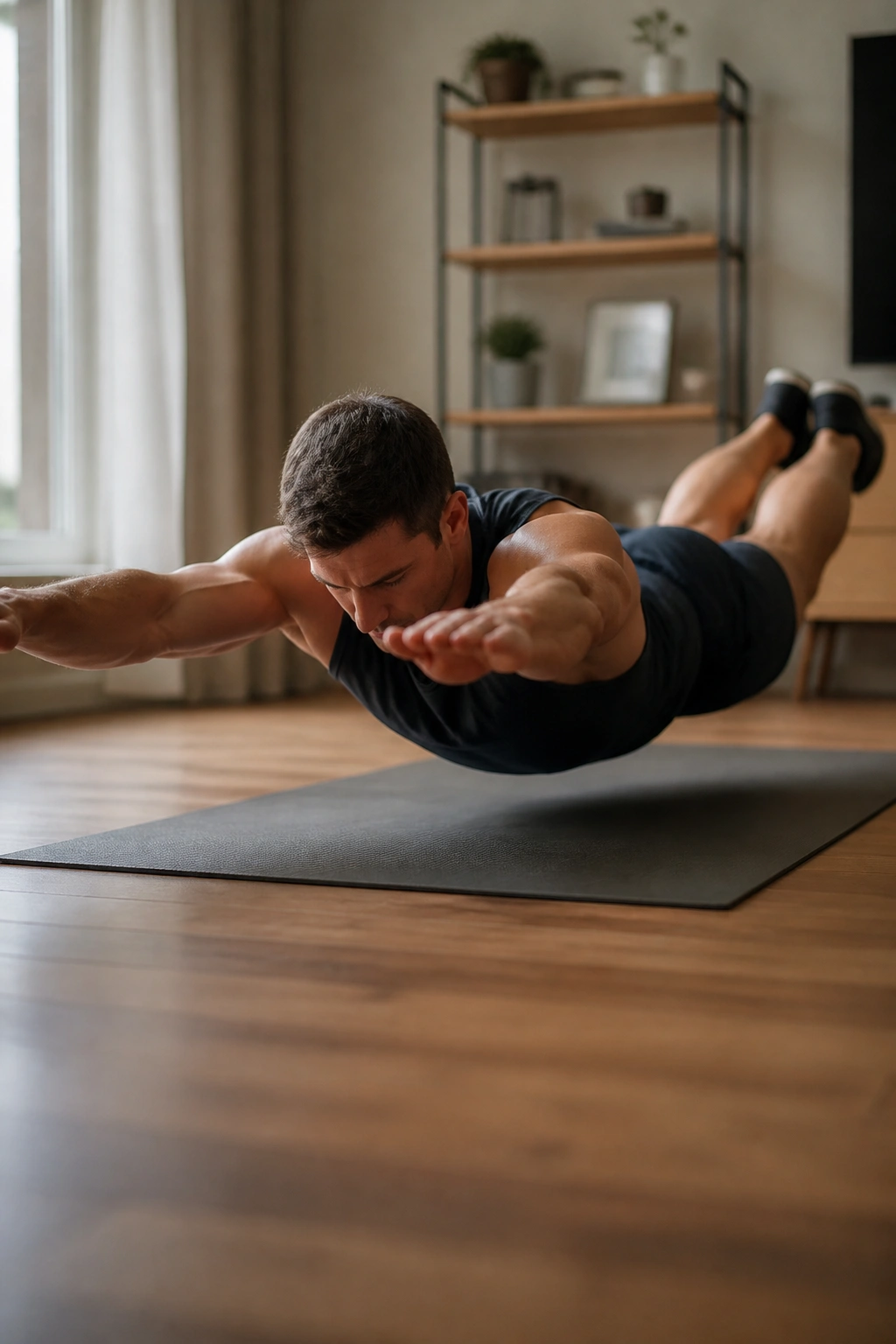
Core strength is not just about the front of your body. The Superman works the lower back and posterior chain, which balances out your core development. Lie on your stomach, arms and legs extended. Lift both your arms and legs off the floor, squeezing your glutes and lower back muscles.
Protecting the Spine
Do not jerk your body up. Think of it as a smooth, controlled lift. Your gaze should be directed toward the floor to keep your neck in a neutral position. If you have back issues, be very cautious with this move and avoid hyper-extending. The goal is to reach, not to curl into a backbend. This is about stability and strength in the posterior core.
21. Knee Tucks
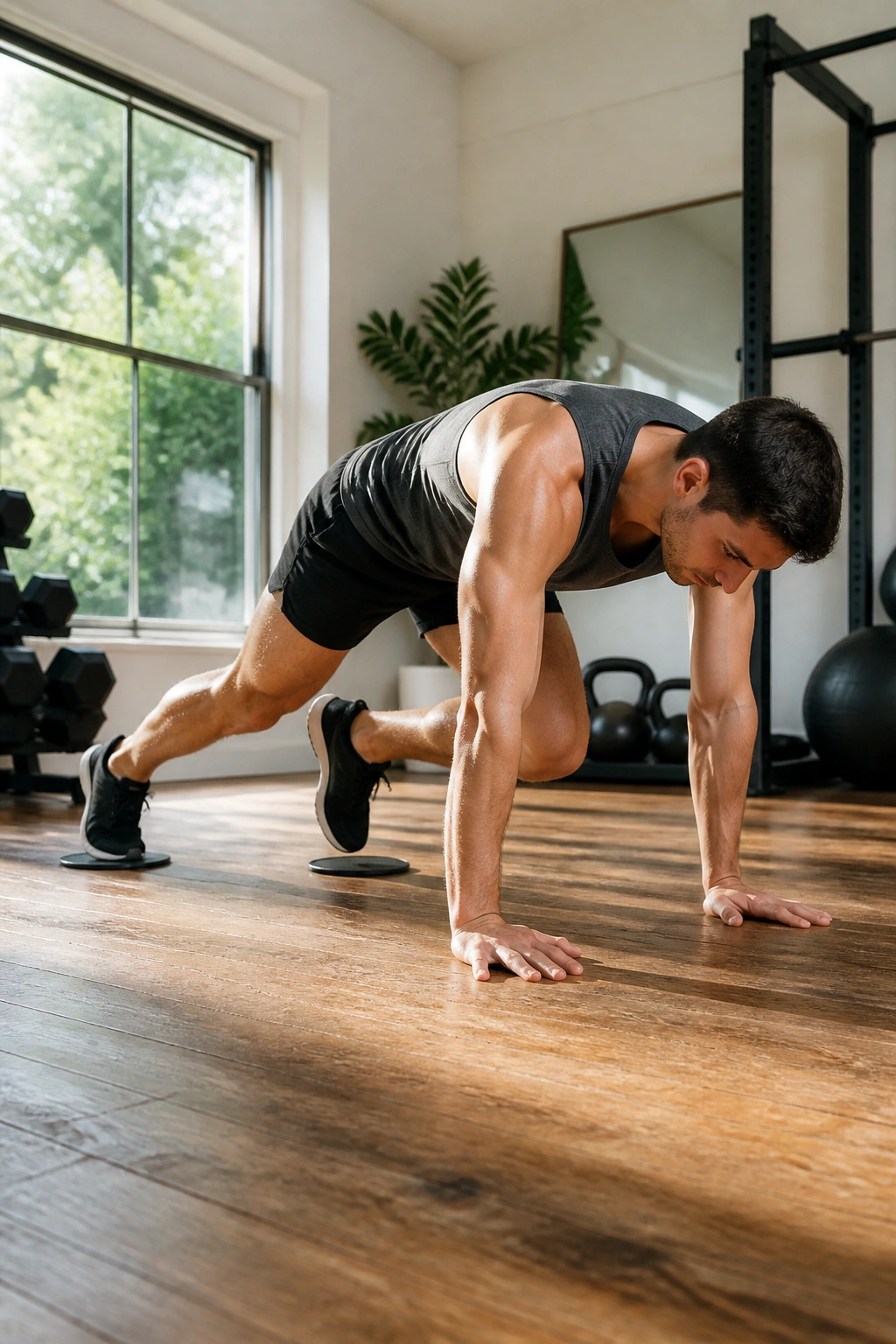
Using a pair of sliders, socks on a hardwood floor, or a towel, get into a plank position with your feet on the sliding surface. Drive your knees toward your chest, tucking your hips under, then slide back out.
Avoiding the Arch
As you slide your legs back, it is tempting to let your hips sag toward the floor. Don’t do it. Your abs are the only things preventing your lower back from arching. Imagine you are trying to push your stomach button into your spine the entire time you are moving. The tuck should be explosive, but the extension back to the plank position should be slow and controlled.
22. Plank Pull-Throughs
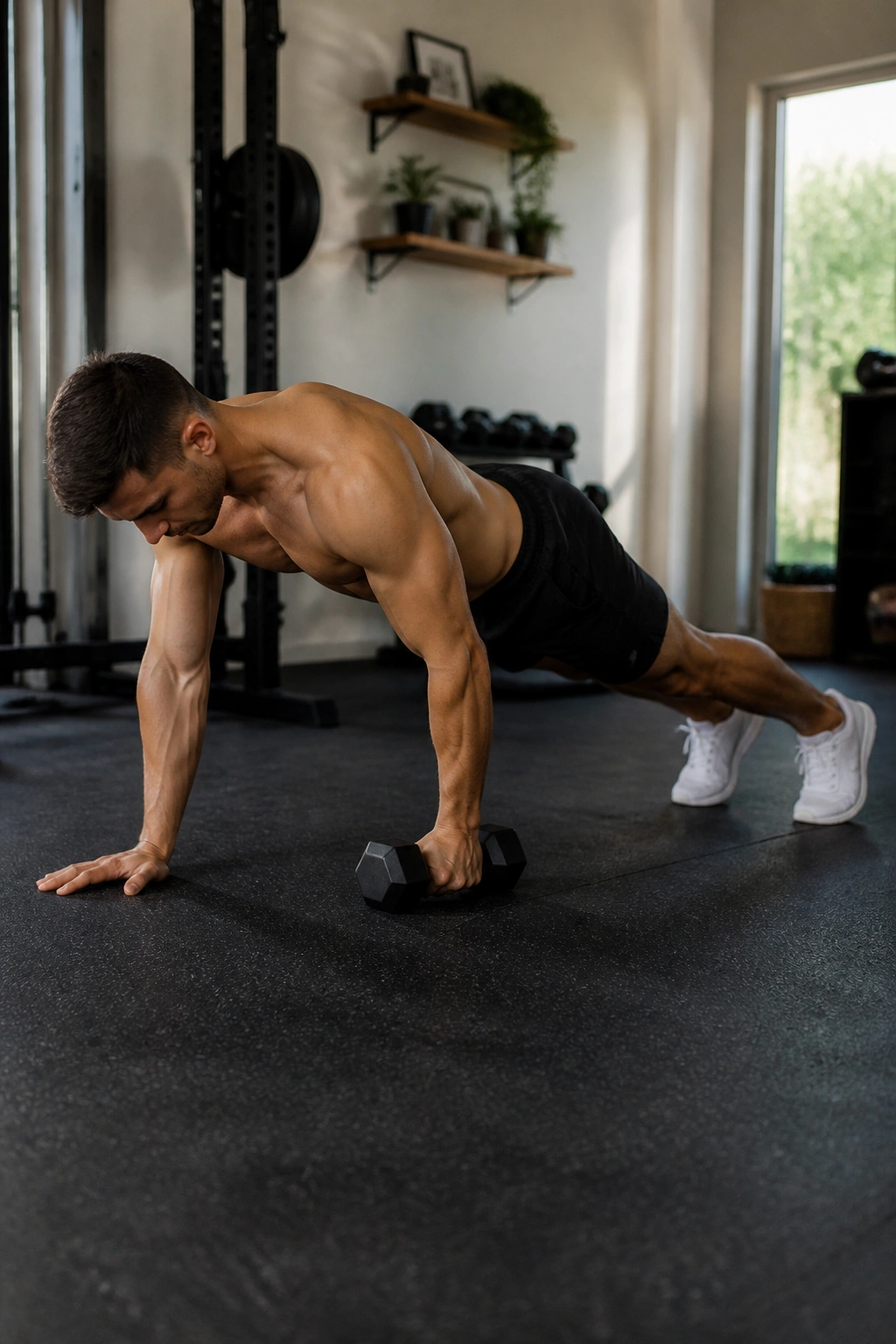
This exercise adds a resistance element to a standard plank. Get into a high plank with a small dumbbell or even a water bottle placed to the side of your body. Reach underneath your chest with the opposite hand, grab the weight, and drag it to the other side.
Preventing Hip Rotation
The challenge here is not moving the weight; it is keeping your hips from rotating while you shift your weight to one arm. You are essentially doing a one-arm plank for a split second. Stay rock solid. If your hips are rocking, widen your feet for a broader base of support. This is a masterclass in anti-rotation training.
23. Alternating Toe Taps
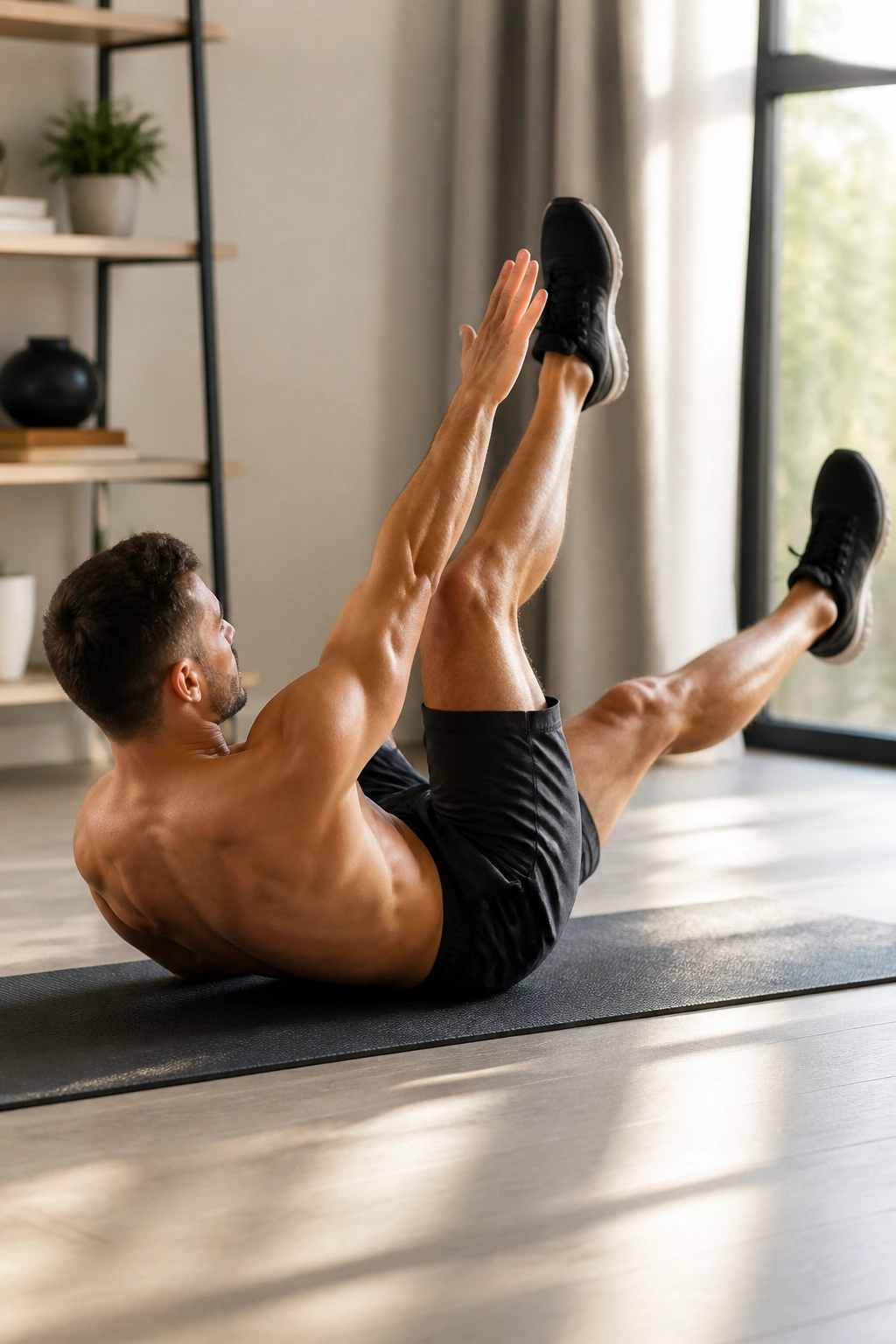
This movement is excellent for high-volume ab work and coordination. Lie on your back, legs straight up in the air. Reach up and tap your right hand to your left foot, then your left hand to your right foot, alternating sides.
Rhythmic Contraction
This is not about speed, but constant engagement. You should be lifting your upper back off the floor with every rep. Focus on the oblique fire as you reach across your body. It is a smaller movement than a full V-up, which allows you to perform more reps and really burn out the abdominal muscles at the end of a workout.
24. Bear Crawls
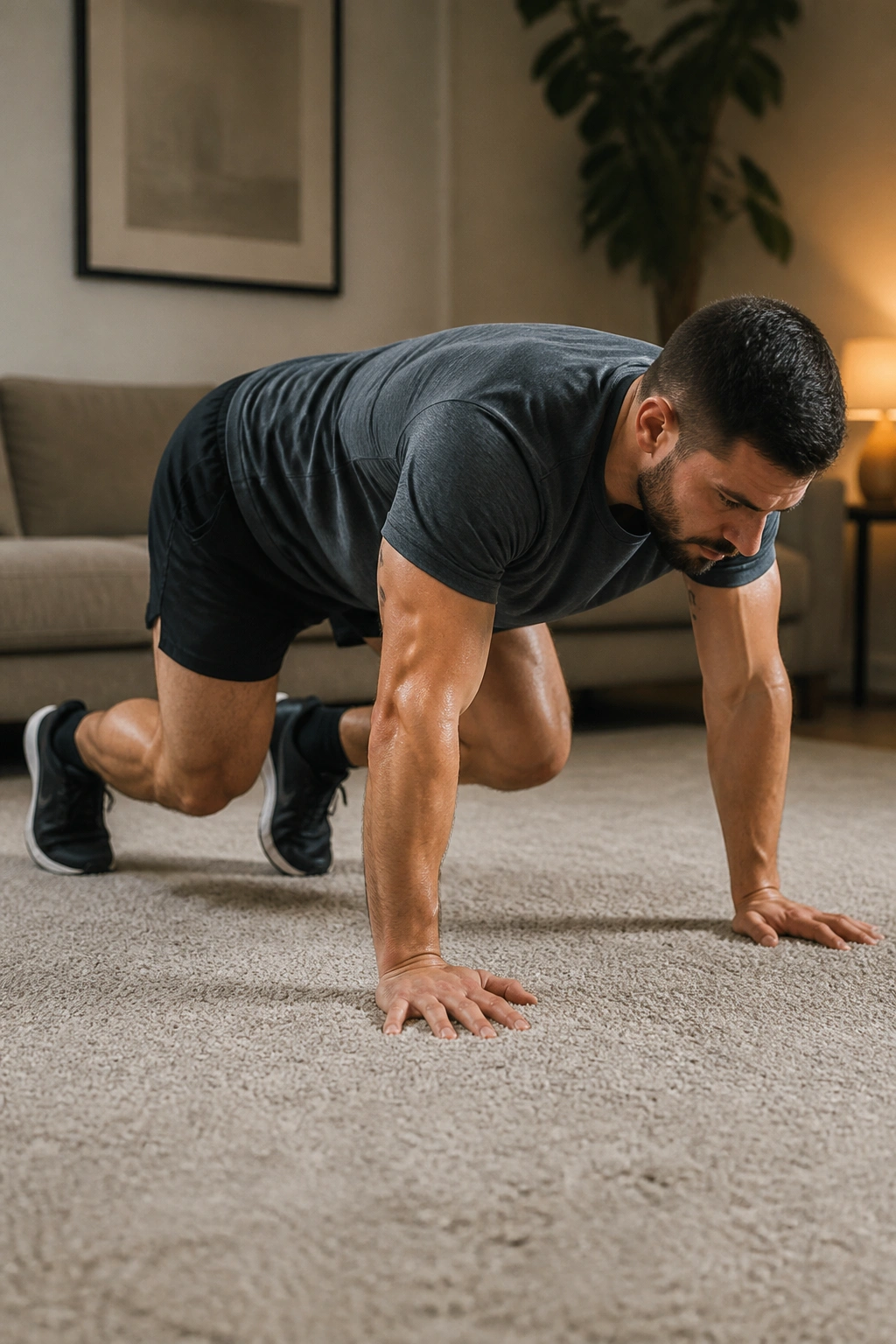
Bear crawls are one of the most underrated core exercises. Get on your hands and knees, then lift your knees an inch off the floor. Crawl forward using opposite arm and opposite leg. Your back must remain flat like a table.
The Stability Challenge
If your back is bouncing up and down, you are failing the core stability test. Your core must keep your torso level while your limbs move dynamically. This is difficult and taxing, but it builds a level of functional core strength that crunches simply cannot replicate. Do not rush the steps. Keep the movements small and controlled to maximize the tension in your stomach.
25. The Inchworm
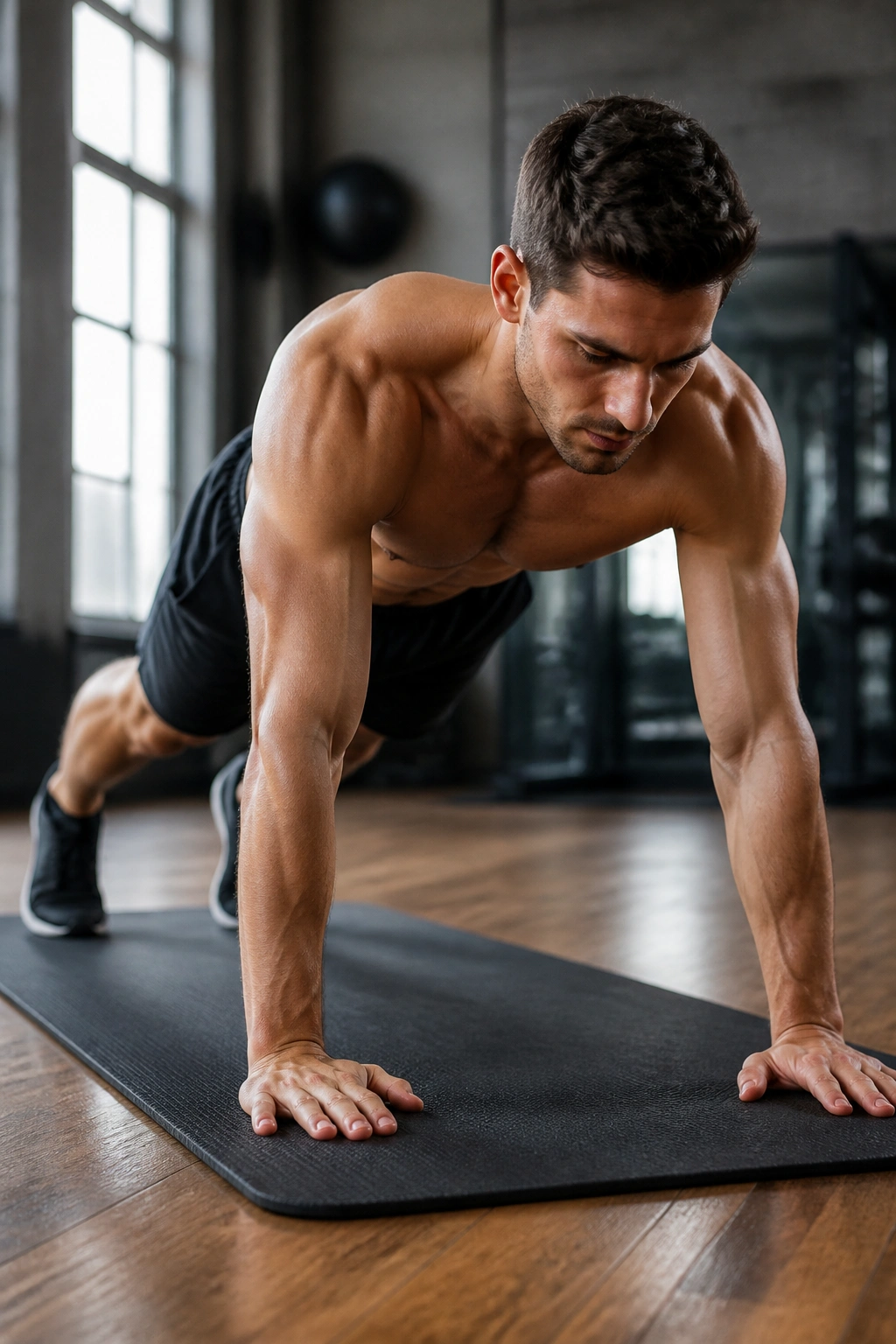
Start by standing tall. Hinge at your hips, touch your hands to the floor, and walk them out into a high plank position. Hold for a second, then walk your hands back to your feet and stand up.
Integrating Full Body Tension
The core engagement happens during the walkout and the hold. When you are in the plank, squeeze your abs as hard as you can. Do not just move through the motions. Every time you reach the plank position, reset your posture—tuck your pelvis, squeeze your glutes, brace your core. This constant resetting makes the inchworm a fantastic exercise for teaching your abs how to turn on instantly in any position.
Final Thoughts
Building a six-pack is as much about discipline as it is about effort. You can learn every one of these twenty-five movements, but if you do not perform them with intensity, you will not see the changes you want. Stop looking for the “best” exercise and start focusing on performing any exercise with better control and tension.
Your abs are designed to stabilize your spine and resist movement as much as they are designed to create it. If you focus on bracing, controlling your breathing, and moving slowly through the eccentric phase of every rep, you will see progress. Be consistent. If you show up and put in the work—with proper form and controlled tension—the results will take care of themselves.
