



The first few minutes on a treadmill can feel a little comic. The belt moves, your feet follow, and suddenly a pace that looked harmless on the console feels brisk in your body. That is normal. The smartest beginner treadmill workouts keep the numbers small, the recoveries generous, and the ego parked somewhere else.
These 25 treadmill workouts for total beginners lean on walking first, then short jogs, then easy inclines. Use the low end of each speed range if you are unsure: 2.0 to 2.5 mph for an easy walk, 2.6 to 3.2 mph for a brisk walk, and 4.0 mph or a little higher only when the jog feels smooth. Clip the safety key, keep your shoulders loose, and use the rails for balance only when you need them.
The plan is simple: learn the belt, learn your breathing, and leave each session feeling like you could have done a bit more. That last part matters. A workout you can repeat beats a workout that wipes you out and makes you dread the machine tomorrow. Start with the shortest options below and work forward when your legs are ready.
1. The 10-Minute Beginner Treadmill Confidence Walk

If the treadmill makes you tense, make the session short. Ten minutes is long enough to get your legs used to the belt without turning the workout into a staring contest with the console.
Pace map
- 3 minutes at 2.0 to 2.3 mph
- 4 minutes at 2.4 to 2.8 mph
- 3 minutes back at 2.0 to 2.3 mph
Keep your gaze forward, not down at your feet. If you need the rails for the first minute, fine. Let go as soon as your stride feels steady.
Tip: If your breathing feels ragged, drop the speed by 0.2 mph right away. That small change usually helps more than trying to “push through.”
2. The Conversation-Pace Treadmill Walk

Why does a treadmill feel harder than walking outside? Because the moving belt asks for rhythm. Once you find a pace where you can still speak in full sentences, the whole thing starts to feel less weird.
Settle into 12 to 15 minutes at 2.3 to 2.9 mph. Your feet should land quietly, not slap the belt. If you can mutter a sentence without gasping, you are in the right zone. If you can sing, speed it up a touch. If you cannot talk at all, slow down.
How to use it
- Begin with 3 minutes easy.
- Hold the steady pace for 6 to 8 minutes.
- Finish with 3 to 4 minutes easy again.
That is enough. You do not need drama on day one.
3. The 30-Second Speed-Bump Walk

Short speed bumps beat one long slog for almost every beginner. They wake your legs up without asking for a big jump in effort.
Try 30 seconds at 3.0 to 3.4 mph, then 90 seconds at 2.1 to 2.5 mph. Repeat that five to six times. The faster parts should feel lively, not frantic. The recovery parts matter just as much, because that is where your breathing settles and your body learns that speed changes are safe.
What to watch for: Your shoulders should stay loose, and your steps should stay under control. If the faster segment makes you reach for the rails, the pace is too high.
That tiny interval pattern is a useful bridge. It teaches rhythm without making the treadmill feel like a test.
4. The 30-Second Jog Sampler

If 30 seconds of jogging sounds silly, good. It should. That is the point. Very short jogs let you feel the motion without trapping you in it for too long.
Use 30 seconds of very easy jog at about 4.0 to 4.5 mph, then 2 minutes of walking at 2.2 to 2.7 mph. Do that four to six times. Your jog does not need to look polished. It just needs to feel smooth enough that you are not fighting the belt.
What makes it work
The long walk breaks keep your breathing under control, and the tiny jog blocks let your body practice coordination. That combination is kinder than trying to run for five straight minutes and regretting it halfway through.
If you finish thinking, “I could do one more round,” you picked the right pace.
5. The Low-Incline Hill Walk
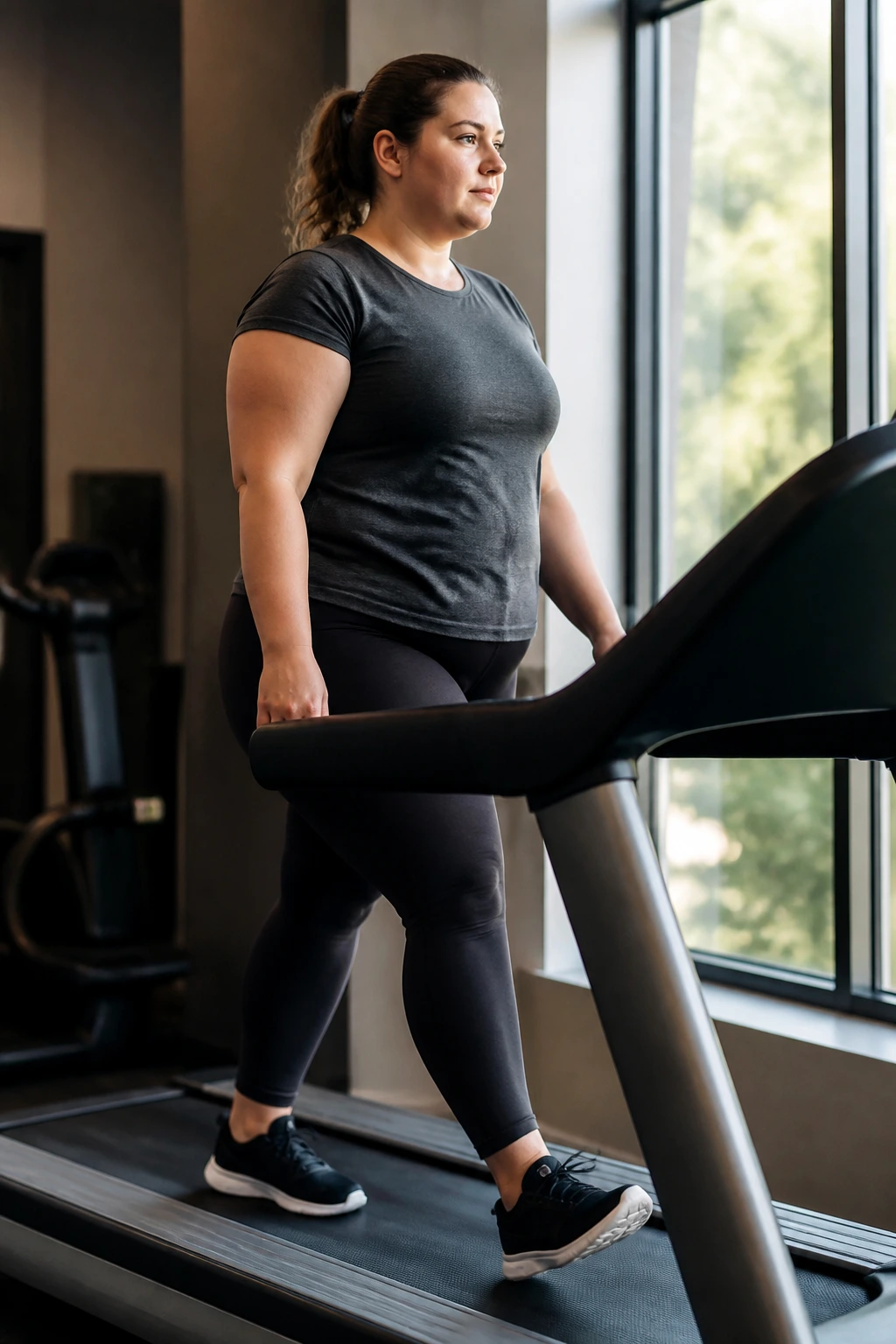
A small incline changes the whole feel of the belt. You are still walking, but your glutes and calves have to help a little more, and the session stops feeling flat.
Start with 5 minutes at 0% incline and 2.2 to 2.6 mph. Then raise the incline to 2% or 3% for 5 minutes, keeping the same speed if you can. Drop back to flat for the last 5 minutes. Simple. No tricks.
The mistake beginners make here is cranking the incline too fast and then leaning on the handrails. Don’t. If the hill feels rough, lower the incline before you lower your pride. A good hill walk should feel like work, not like climbing a mailbox.
This is one of the best treadmill workouts for total beginners who want a little more challenge without jogging yet.
6. The Gentle Speed Ladder

Unlike a straight walk, this ladder keeps changing the pace every couple of minutes, which is useful if you get bored fast or lose focus when the belt stays the same.
Start at 2.1 to 2.4 mph for 2 minutes. Move to 2.5 to 2.8 mph for 2 minutes. Then 2.8 to 3.1 mph for 2 minutes. Reverse the ladder back down: 2.5 to 2.8 mph, then 2.1 to 2.4 mph. That gives you 10 minutes of movement, and you can repeat the pattern once if you feel good.
Best for: people who want a workout that feels active without turning into a run.
Skip it if: speed changes make you feel wobbly. Stay flat and steady instead.
The ladder works because your body never has time to go stale.
7. The 20-Minute Steady Treadmill Walk
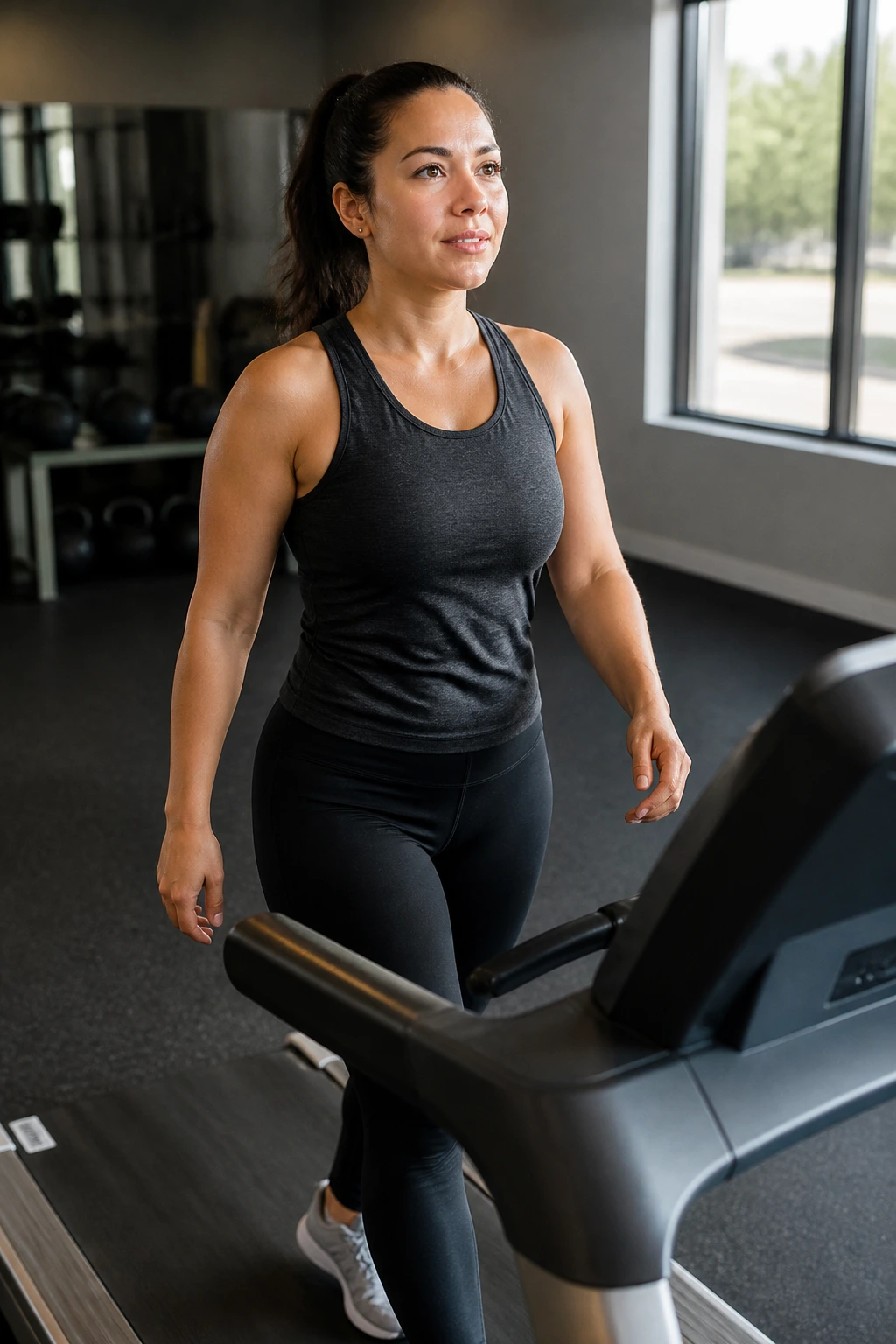
Some days, the simplest plan wins. A steady walk is boring in the best way possible. You get on, you settle in, and you leave with done-ness instead of guesses.
Pick a pace between 2.4 and 3.0 mph and hold it for 20 minutes. If you are new to exercise, use the first 5 minutes to find your rhythm, then stay there. Your breathing should be deeper than at rest, but not messy. You should still be able to talk without needing a pause after every sentence.
Set the belt
- 0% incline for the full session
- hands off the rails unless you need balance
- shoulders loose, chest open, eyes forward
A steady walk is useful because it tells you what “comfortable effort” actually feels like. That makes later workouts easier to judge.
8. The One-Minute Jog Blocks

What if you can walk 25 minutes but still can’t jog for long? Then the answer is not to force it. One-minute jog blocks are a cleaner bridge.
Jog for 1 minute at 4.2 to 4.8 mph, then walk for 2 minutes at 2.2 to 2.7 mph. Repeat five times. That gives you a full 15 minutes of work, but only 5 of those minutes are jogging. For a total beginner, that split is often the sweet spot.
The jog should feel controlled by the end of the first 15 seconds. If you are flailing, slow it down. If the walk recovery feels too easy, shorten it later, not right away.
This workout teaches a basic truth: you can practice running in small pieces.
9. The Incline Pyramid

If you like structure, this one has a nice shape. It climbs up, then comes back down, and the changing grade keeps your attention on the task instead of the clock.
Walk 2 minutes at 1% incline. Then 2 minutes at 2%. Then 2 minutes at 3%. After that, step back down: 2 minutes at 2%, then 2 minutes at 1%. Keep your speed around 2.2 to 2.8 mph the whole time.
The hill should feel honest but manageable. Your calves will notice it, and so will your breathing. That is fine. What you do not want is a sharp burn that forces you to shorten your stride or grip the rails.
If your treadmill moves in tiny incline steps, use them. Small changes are enough.
10. The Fast-Walk Treadmill Progression

A fast walk teaches control better than a hard sprint. You learn how to move a little quicker without turning your form into a mess.
Start at 2.3 mph for 3 minutes. Bump to 2.6 mph for 3 minutes. Then 2.9 mph for 3 minutes. Finish with 3.1 to 3.3 mph for 2 minutes if that still feels stable. Add a 3-minute easy walk at the end.
The point is not speed for its own sake. The point is noticing where your stride changes. If your steps start getting choppy, you have gone far enough for that day.
This is a good one for people who hate the jump from walking to jogging. It narrows the gap.
11. The Long-Recovery Run-Walk

A lot of beginners make the mistake of making the jog part too long and the recovery too short. Flip that around and the workout gets friendlier fast.
Try 45 seconds of very easy jogging at 4.0 to 4.5 mph, then 2 minutes and 15 seconds of walking at 2.2 to 2.6 mph. Repeat six times. The long recovery gives your heart rate time to settle so the next jog feels like a fresh attempt, not a punishment.
No need to chase speed here. Smooth beats fast. If you finish one round and think, “That was manageable,” you are on the right track. If you are still breathless when the next jog starts, lengthen the walk recovery by 30 seconds.
This is one of those workouts that looks tiny on paper and feels surprisingly useful in real life.
12. The Hill Sandwich

Flat, hill, flat, hill, flat. That pattern is easy to remember and easier to survive than one long climb.
Walk 3 minutes at 0% incline. Then raise the deck to 2% or 3% for 2 minutes. Return to flat for 3 minutes. Then hill again for 2 minutes, then flat for the last 3 minutes. Keep your speed around 2.3 to 2.8 mph.
The alternating shape helps because you never sit in the hill long enough to dread it. You get a break before the legs feel stubborn. That makes this a smart choice if you want incline work but dislike the feeling of being stuck on a climb.
Best for
- walkers who get bored on flat treadmills
- beginners who want a little extra leg work
- anyone who is not ready for jogging yet
It is plain, but it works.
13. The 25-Minute Endurance Cruise

A longer steady session is a different kind of win. There are no intervals to chase and no hills to manage. Just time, pace, and patience.
Set the treadmill between 2.4 and 3.0 mph and walk for 25 minutes. Around the 10-minute mark, check your shoulders. Around the 15-minute mark, check your stride. If you have started leaning forward or stomping, ease the pace down a notch.
Pace guide
- Easy start: 2.2 to 2.5 mph
- Middle stretch: 2.6 to 2.9 mph
- Last 5 minutes: return to 2.2 to 2.5 mph if needed
This workout is useful because it teaches you how a longer walk feels when you do not keep interrupting it. That matters more than people expect. If your goal is consistency, this is a good place to live for a while.
14. The Five-Stage Pace Ladder

What if your attention drifts the minute a workout gets repetitive? Then a ladder gives you something to count without making the session feel hard.
Walk 5 minutes easy at 2.1 to 2.4 mph. Move to 4 minutes at 2.5 to 2.8 mph. Then 3 minutes at 2.8 to 3.0 mph. Then 2 minutes at 3.0 to 3.2 mph. Finish with 1 minute at the briskest pace that still feels smooth. Walk 3 minutes easy to cool down.
The first two stages should feel almost sleepy. The middle stages wake the legs up. The last minute is where you notice whether your form stays tidy.
If you need to repeat the same ladder twice, that is fine. The workout does not care whether it looks impressive.
15. The Recovery-Day Treadmill Walk

Recovery days are training days too. That sounds cheerful until you realize the walk still has to be done with intent, not as a shuffle while checking your phone every 12 seconds.
Keep the whole session easy: 15 to 20 minutes at 2.0 to 2.6 mph with a flat incline. Use this workout after a harder day, or after a day when your legs feel heavy and slightly grumpy. The goal is to get blood moving, not to set a pace record.
A recovery walk should leave you looser than when you started. If you step off the treadmill and feel more tired than before, you walked too fast or too long.
This is the day to pay attention to posture. Tall spine. Soft arms. Quiet feet.
16. The Beginner Tempo Test

If your first two minutes feel fine and the next six feel messy, you may have picked the right tempo. A controlled challenge is supposed to feel like work.
Walk 4 minutes easy at 2.2 to 2.5 mph. Then spend 6 minutes at 2.8 to 3.3 mph, which should feel challenging but not frantic. Finish with another 4 minutes easy. If that middle block leaves you gasping, cut it back by 0.2 mph next time.
How to judge it
- You can speak, but not chat forever.
- Your breathing is deeper, not panicked.
- Your steps stay even.
That middle segment teaches your body to settle into effort without rushing. It is a useful bridge between casual walking and harder treadmill work.
17. The Incline-Only Walk
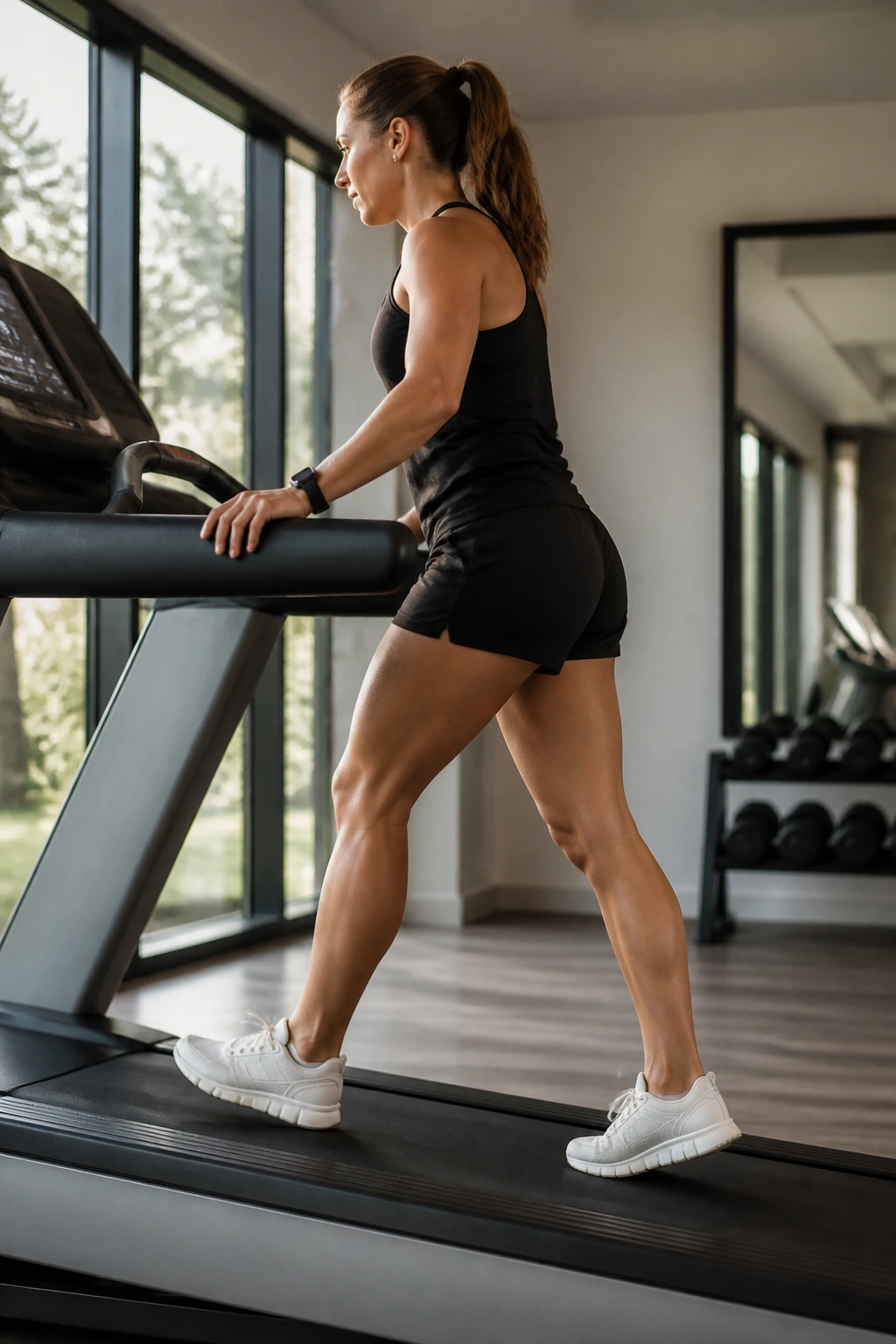
A pure incline walk is a sneaky little workout. Because the speed stays modest, people underestimate it until the calves start reminding them that gravity exists.
Set the incline to 1% to 3% and walk at 2.0 to 2.6 mph for 15 to 20 minutes. Keep the stride short and steady. If the deck angle makes you lean on the rails, the incline is too high. Drop it back and try again.
This is especially useful for beginners who dislike jogging but want to feel their legs work. It also pairs well with short sessions, because you can get a decent challenge in less time than a flat walk.
No need to chase the steepest hill available. A gentle grade is enough.
18. The Mixed-Mode Confidence Builder

Unlike pure jogging plans, this one keeps the scary parts short and the familiar parts long. That makes it easier to stick with when you are still learning what your body can handle.
Walk 3 minutes easy, jog 30 seconds, walk 2 minutes, jog 30 seconds, walk 3 minutes, jog 45 seconds, walk 2 minutes, then finish with 3 minutes easy. Jog at 4.0 to 4.6 mph if that feels smooth; stay walking if it doesn’t.
The workout is best for people who want a first real blend of walking and running without getting stuck in one mode for too long. It builds confidence because you keep proving to yourself that the jog is survivable.
If one of the jogs feels off, that is not failure. It is information.
19. The TV-Friendly 30-Minute Walk

This is the workout for days when you want something simple enough to do without thinking too hard. You still work, but the session does not demand much from your brain.
Walk 10 minutes at 2.3 to 2.6 mph. Then nudge up to 2.7 to 3.0 mph for 10 minutes. Finish with 10 minutes back at 2.3 to 2.6 mph. Set the incline to 0% or 1% and leave it there.
Posture checkpoints
- Eyes forward, not down
- Hands relaxed
- Footfalls quiet
- No leaning on the rails
This one is handy because it gives you a whole half hour of movement without any fussy math. Put on a show if you want, but don’t let the screen pull your posture apart.
20. The 90-Second Jog Practice

A 90-second jog is long enough to matter and short enough to feel doable. That combination makes it a strong next step after short jog samples.
Jog for 90 seconds at 4.2 to 4.8 mph, then walk for 2 minutes and 30 seconds at 2.2 to 2.7 mph. Repeat five times. The first jog may feel awkward. The second usually feels better. By the third, your body gets the message.
How to scale the jog
- Too hard? Drop 0.2 mph.
- Too easy? Add 0.2 mph next time.
- Still shaky? Keep the same speed and shorten the number of rounds.
That last part matters. You do not have to make every session harder. You just need enough practice to make the jog feel less foreign.
21. The Ladder-Down Workout
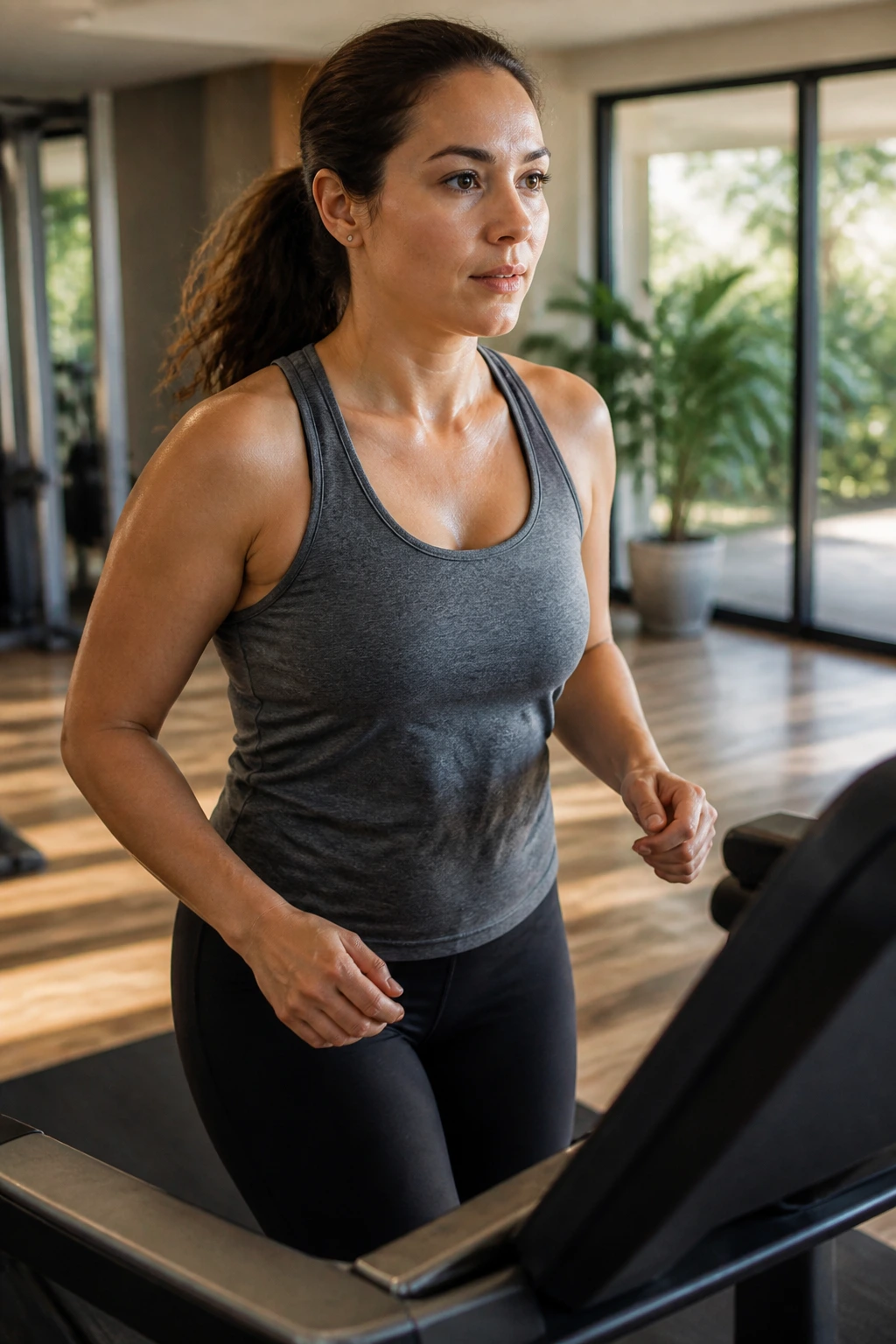
Start a little higher, then ease back down. That sounds simple, and it is. Sometimes simple is the right move.
Walk 3 minutes at 2.2 mph, then 3 minutes at 2.6 mph, then 3 minutes at 2.9 mph. After that, step down: 2.6 mph for 3 minutes, then 2.2 mph for 3 minutes. Add a 3-minute cool-down if you want to stretch it to 18 minutes.
The nice part about a ladder-down workout is that the hardest work comes before fatigue builds up. You are fresh when the pace rises, so the session feels cleaner than a random all-out push.
If you want to make it tougher later, increase only the middle segment. Leave the rest alone for a while. That’s enough.
22. The One-Percent Progression Walk
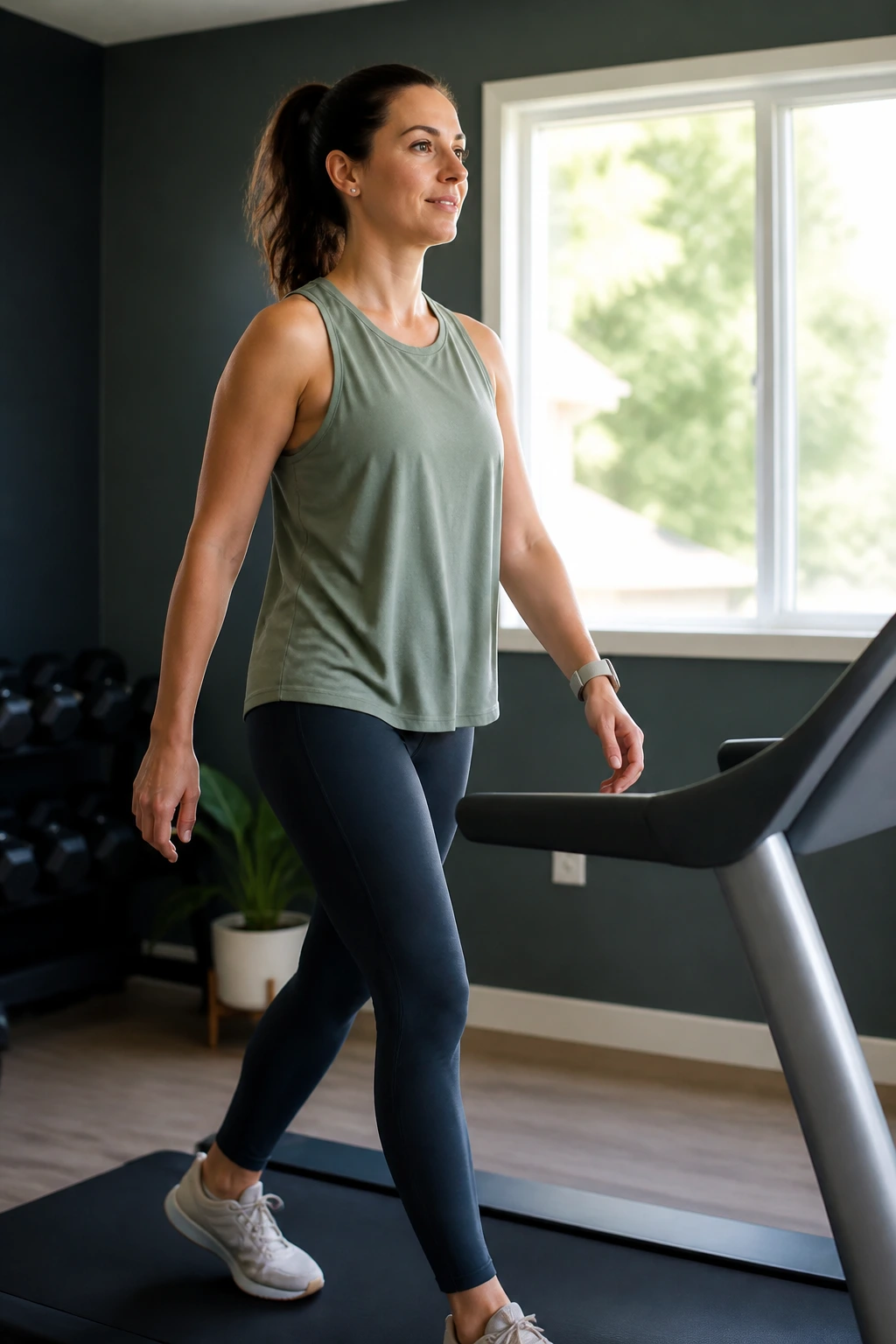
A small incline change can do more than a big speed jump. That is why this workout is useful when you want progress without a lot of strain.
Walk 5 minutes at 0% incline and 2.3 to 2.6 mph. Move to 1% for 5 minutes. Then 2% for 5 minutes. Drop back to 1% for 5 minutes, then finish flat for 5 minutes. Keep the pace steady the entire time.
The purpose here is to learn how incline feels before you start treating hills like a punishment. Tiny changes are easier to control, easier to repeat, and less likely to make your stride fall apart.
If your calves complain the next day, that is fine. If your lower back complains, slow down and check your posture.
23. The 4-3-2-1 Interval

This workout is a little bit of a tease. Each work block gets shorter, which means you can lean into the effort without feeling trapped by it.
Walk 4 minutes at 2.3 to 2.6 mph. Then 3 minutes at 2.7 to 3.0 mph. Then 2 minutes at 3.0 to 3.3 mph. Then 1 minute at the briskest pace that still feels under control. Repeat the ladder once if you feel strong, or finish with a 3-minute easy walk.
The shorter the block gets, the easier it is to stay sharp. Your posture matters here. So does your breathing. If either one falls apart, back off and repeat the same speeds next time instead of chasing more.
This is a nice option when you want variety without a long workout.
24. The Walk-Jog Confidence Circuit

If you can walk and you can jog, even a little, this mixed circuit ties the two together. It is not flashy. It is practical.
Walk 2 minutes, jog 1 minute, walk 2 minutes, jog 1 minute, walk 2 minutes, jog 90 seconds, walk 2 minutes, then finish with 3 minutes easy. Use 4.0 to 4.7 mph for the jogs and 2.2 to 2.7 mph for the walks.
Best for
- beginners who are bored by straight walking
- people building toward their first nonstop jog
- anyone who needs short wins inside a longer session
The goal is to leave with a little more confidence than you had at the start. Not a huge leap. Just enough to make the next treadmill session feel less annoying.
25. The Repeat-It-Next-Week Treadmill Template

A good beginner plan should be repeatable. If a workout feels useful but impossible to remember, it is harder to stick with, and that gets old fast.
Use this template: 5 minutes easy walk, 10 minutes steady walk, 5 minutes brisk walk or very easy jog, then 5 minutes easy to finish. Keep the easy parts at 2.1 to 2.5 mph, the steady block around 2.6 to 3.0 mph, and the last push wherever your form still stays neat.
This is the session to come back to when you want to check progress. If the steady block feels smoother after a few tries, you are improving. If the jog block still feels rough, keep it short and keep the walk breaks generous.
That’s the real trick with treadmill work: repeat something sane long enough for your body to trust it. Then nudge one number. Not five. One.
