



Treadmill running workouts for beginners are far easier when you stop treating the console like a scoreboard. The belt is moving under you, the numbers are staring back, and one overeager tap on the speed button can turn a promising session into a negotiation with your own legs.
The good news: beginners do not need heroic workouts. They need repeatable ones. Short run intervals, honest recovery, and a pace that feels a little too easy at first usually beat the all-or-nothing approach people copy from stronger runners. That style tends to backfire. Hard. You start too fast, your breathing gets ragged, and the whole session becomes a lesson in regret.
Treadmills have one sneaky advantage and one annoying flaw. They make it simple to control pace, but they also make it easy to overdo pace because the belt never argues back. A comfortable beginner run should still let you speak in short phrases. If you need to clutch the rails, the speed is too high. If your stride turns into a stomp, the incline may be too steep. A slight incline—around 1%—often feels more natural than dead flat, because it nudges the body into a posture that is a bit closer to outdoor running.
The workouts below start gently and build in small, sane steps. Some are walk-run repeats, some are pure confidence builders, and some are there for the days when you want to move without feeling wrecked afterward. That mix matters. It keeps you coming back, and coming back is where progress lives.
1. The 30-Second Jog Reset

This is the workout I like for the nervous first day, when running still feels like a brand-new language. You walk, you jog for half a minute, you come back to walking, and nothing dramatic has to happen.
Set the treadmill at a brisk warm-up pace for 5 minutes. Then alternate 30 seconds of easy jog with 90 seconds of walking for 6 to 8 rounds. Keep the jog smooth, not fast. If your breathing spikes in the first two rounds, cut the speed by 0.2 to 0.4 mph and keep going.
A tiny dose of running does something useful: it teaches your legs that jogging is not a crisis. That matters more than distance right now.
- Warm-up: 5 minutes easy walk
- Main set: 6 to 8 rounds of 30 seconds jog / 90 seconds walk
- Cool-down: 5 minutes easy walk
Tip: Start the first jog at a speed that feels almost boring. Boring is fine.
2. The 1-Minute Run / 2-Minute Walk

Why does this one work so well? Because the run is long enough to feel real, and the walk is long enough to calm things down before panic sneaks in.
Use a 5-minute warm-up, then repeat 1 minute of running and 2 minutes of walking for 6 rounds. If you want numbers, many beginners land somewhere around 4.0 to 5.5 mph for the run and 2.8 to 3.5 mph for the walk, but your actual pace matters more than the label. You should finish each run feeling like you could do one more.
What Makes It Useful
The run-to-walk ratio teaches control. It also keeps form cleaner, because you are less likely to get sloppy when the work bursts are short.
How to Pace It
Use the first two intervals to find your rhythm, then keep the rest steady. No need to chase the treadmill display.
3. The 30/90 Ladder

Short reps can feel almost playful, and that is a good thing when you are building a running habit from scratch. The ladder format also keeps your head busy, which helps if you get bored the second the belt starts moving.
After a warm-up, run 30 seconds, walk 90 seconds, then repeat with 45 seconds running, 90 seconds walking, 60 seconds running, 90 seconds walking, and back down if you want a little more work. The entire session can stay under 20 minutes. It looks modest on paper. It is not nothing, though. The later reps ask for cleaner breathing and a steadier posture.
A ladder works because the body gets a little more work each round without a huge jump in stress.
4. The 1% Incline Jog and Walk Bursts

A flat treadmill can feel a touch artificial, and that is where a small incline earns its keep. 1% incline is enough to make the run feel more natural without turning the workout into a hill fight.
Try 5 minutes of warm-up walking, then do 2 minutes of easy jogging at 1% incline followed by 2 minutes of walking at 0% to 1% incline. Repeat 5 or 6 times. Keep your chest tall and your steps quick. Do not lean hard on the front rails. That habit sneaks in fast, and it ruins the effort.
You will probably notice your glutes and calves working a little more. Good. That is the point. But keep the jog light; the incline should wake you up, not bury you.
5. Five-Minute Blocks That Build Confidence

A lot of beginners need one thing more than speed work: a workout that feels large enough to count, but not so large that it feels threatening. Five-minute blocks do that nicely.
Walk for 5 minutes, jog for 5 minutes, walk for 3 minutes, jog for 4 minutes, walk for 2 minutes, then finish with a final 3-minute jog if your breathing still feels calm. If not, keep walking and call it a win. Seriously. Finishing controlled beats forcing one ugly last block.
This style helps you learn how your body responds after the first few minutes. Most people feel awkward at the start and much better once the legs warm up. That is normal. The body needs a minute to remember what running is.
6. Fartlek by Feel on the Treadmill

Fartlek sounds fancy, but the idea is simple: play with pace. On a treadmill, that means changing speed by feel instead of following a rigid interval clock.
How to Pick Your Speeds
After 5 minutes of walking, jog easy for 2 minutes, then nudge the speed up for 30 seconds to 1 minute. Drop it back down for recovery, then repeat 4 to 6 times. The “faster” part should feel lively, not desperate. If you can’t control your breathing at the end of the quick section, you went too hard.
What to Watch For
- Keep speed changes small: 0.2 to 0.4 mph is enough.
- Stay off the rails.
- Move one speed at a time, not three.
- Leave the workout feeling sharpened, not crushed.
This one is useful for runners who get bored with the same interval again and again.
7. The Steady 10-Minute Jog

Not every beginner needs more intervals. Some need a clean, plain run that teaches the body what steady effort feels like. No drama. No tricks.
Warm up, then jog continuously for 10 minutes at a pace where speaking is possible in short sentences. That phrase matters more than any number on the screen. If you are gasping, slow down. If the pace feels almost suspiciously easy for the first 4 minutes, keep it there anyway. Most beginner runs go wrong because people start with too much ego and not enough patience.
I like this workout because it feels like a milestone without asking for much. Ten minutes is enough time to build rhythm, but not so long that form falls apart.
8. The 2% Hill Repeats

Want stronger legs without sprinting? Add a little hill work. Treadmill hills are a tidy way to make a beginner run feel harder without making it messy.
Set the treadmill to 2% incline and alternate 45 seconds of jogging with 75 seconds of walking for 6 to 8 rounds. Keep the running pace moderate. The incline provides the stress; the speed does not need to.
You will feel this in the back of the legs and around the glutes, and that is useful. Hill repeats also teach posture. If you start folding at the waist, the work gets ugly fast. Stay tall, drive the arms, and take shorter steps.
This is a sharp session, so save it for a day when your legs are fresh.
9. The Recovery Shuffle
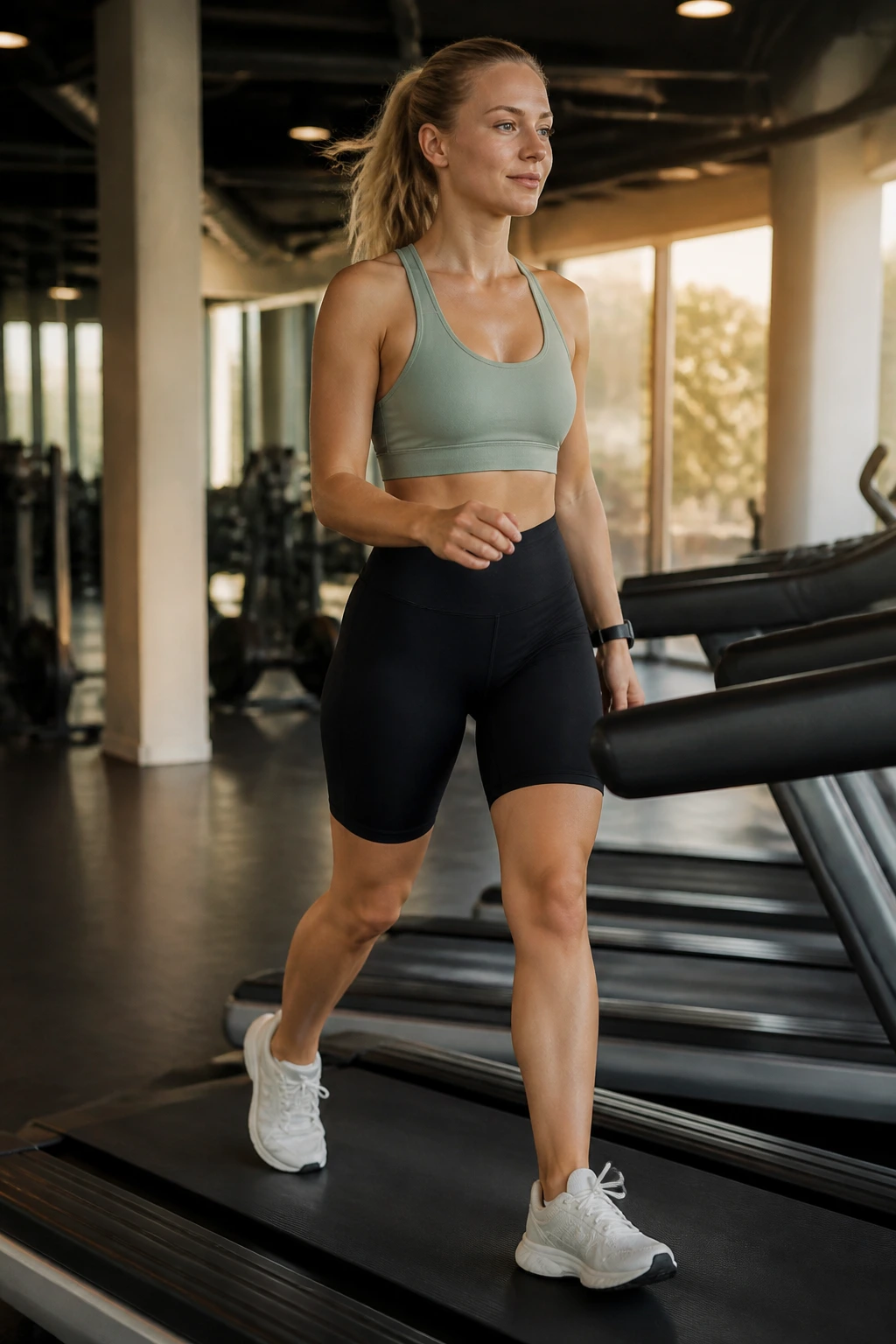
Sometimes the best treadmill workout is the one that feels almost too gentle. That is not laziness. That is smart training.
Use this on days after a harder session or on days when your legs feel heavy and flat. Walk 5 minutes, then alternate 3 minutes of very easy jogging with 2 minutes of walking for 4 to 5 rounds. Keep the jog embarrassingly relaxed. If you think, “This is too slow,” you are probably in the right zone.
What Easy Should Feel Like
You should be able to breathe through your nose for parts of it. Not the whole thing, and not as a rule, but enough to remind yourself that this is recovery, not punishment.
The point is blood flow and rhythm. Finish fresher than you started.
10. The Negative Split Beginner Run

Starting slow and finishing a little quicker is one of the nicest habits a new runner can build. It teaches restraint first, speed second.
Do a 5-minute walk warm-up, then jog 6 minutes at a very easy pace, followed by 4 minutes a little faster, then finish with 2 minutes at the same or slightly faster pace if you still feel smooth. The early miles, or minutes, should almost feel undercooked. That is intentional.
A negative split protects beginners from the classic mistake of going out too fast. The first half should feel almost conservative. The second half should feel like you found another gear, not like you rescued the workout from disaster.
11. The 3-Minute Run / 2-Minute Walk

This one is for the day you want more running without jumping straight into long continuous effort.
Start with a 5-minute warm-up, then repeat 3 minutes running and 2 minutes walking for 4 to 6 rounds. The run should still feel under control at the end of each rep. If your form starts to bounce or your shoulders creep toward your ears, shorten the speed slightly on the next round.
How to Use It
- Good for runners who already tolerate 1-minute intervals.
- Good if the 10-minute steady jog feels too big.
- Good when you want a session that feels structured but not harsh.
The recovery is short enough to keep the heart rate from dropping all the way back to baseline, which makes the workout feel more like running and less like separate little chores.
12. Brisk Walk Intervals for Nervous Beginners
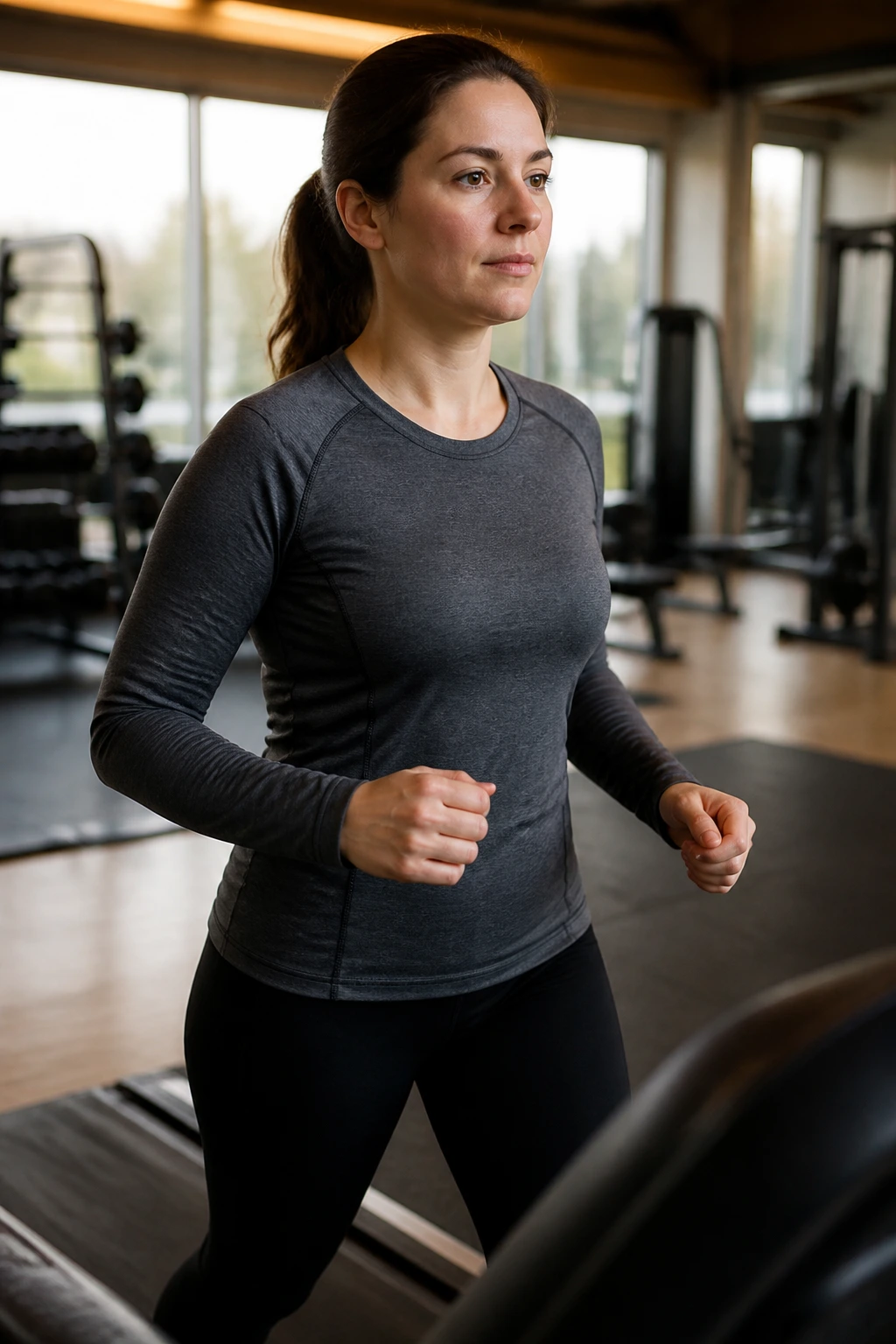
Not every beginner is ready to jog every time they step on the treadmill. Fine. Walk training counts, and it can build a base faster than people expect.
Set the treadmill to 3.0 to 4.0 mph for a brisk walk. After a 5-minute warm-up, do 4 minutes brisk walking and 1 minute very light jog for 6 to 8 rounds. If jogging still feels annoying, keep it all walking and increase the incline by 0.5% to 1% during some of the blocks.
The win here is consistency. You are teaching your body to handle time on the treadmill, and that alone matters. Some runners need a little more walking before running becomes pleasant. No big deal.
13. The Four-Speed Pace Ladder

This workout gives you variety without chaos. It uses four distinct efforts, and each one has a job.
After warm-up, move through:
- 2 minutes walk
- 2 minutes brisk walk
- 2 minutes easy jog
- 1 minute faster jog
Repeat that ladder 2 or 3 times. The “faster” jog should not turn into a sprint. It should feel like a neat step up, nothing more. A good beginner ladder feels organized, almost tidy. That is the charm.
You learn how different speeds feel in your body, which helps a lot when you later need to adjust pace on the fly. Random guessing is less common after a few sessions like this.
14. The Form-Focus Workout

A treadmill is a useful mirror. Not a perfect mirror, but close enough to catch sloppy habits before they become permanent.
Three Things to Check
During each run interval, check these three things:
- Shoulders: keep them low and loose.
- Arms: bend at roughly 90 degrees and swing back, not across the body.
- Feet: land under you, not way out in front.
Use 1-minute jogs with 1-minute walks for 8 to 10 rounds, and make each run a little cleaner than the last. The pace can stay modest. The goal is not speed; it is body control.
A lot of beginners think running is about lungs first. It is partly lungs, sure, but it is also posture, foot placement, and rhythm. Mess those up, and the workout feels harder than it should.
15. The Long Warm-Up, Short Finish

Some sessions need patience up front. If you rush the start, the rest of the workout tends to go sideways.
Walk for 10 minutes before you run at all. Then do 6 rounds of 20 seconds a little quicker and 100 seconds easy walk or very light jog. The long warm-up lets the body unlock, and the short quick bursts wake up your legs without asking for much.
One sentence for the skeptical crowd: the warm-up is not wasted time. It is the session.
I like this workout for anyone whose first few minutes always feel stiff. By the time the quick strides arrive, the body is already ready to move.
16. The First 15-Minute Continuous Run

This one feels like a small ceremony. It is often the first time a beginner realizes they can keep going longer than they thought.
After a 5-minute walk, run 15 minutes continuously at an easy, conversational pace. If you need to slow down after 6 or 7 minutes, slow down. Do not stop unless you have to. The point is to stay in motion, even if that motion is modest.
If 15 minutes feels impossible, split it into 2 blocks of 7 minutes with a 2-minute walk in the middle, then try again next time. Progress does not need to be dramatic to be real.
17. The Incline Pyramid Walk-Run

A pyramid gives your legs a little story to follow. The effort rises, peaks, and comes back down.
Try this: after warm-up, run or jog for 1 minute at 1% incline, then 2 minutes at 1.5%, then 3 minutes at 2%, then go back down to 2 minutes at 1.5% and 1 minute at 1%. Walk 90 seconds between each block if needed. If the incline starts to feel like too much, keep the speed lower and shorten the run intervals.
This is one of the better beginner strength sessions because it builds effort without asking for true speed. The treadmill does the work, and your job is mostly to stay tidy.
18. The Talking Test Workout

Can you talk while running? Good. That question saves beginners from a lot of bad pacing.
Use 4 rounds of 5 minutes running with 2 minutes walking between rounds. During the runs, aim for a pace where you can say a short sentence without folding over. If you need more than one breath to say your name, back off.
Why It Helps
The talking test keeps the workout honest. Heart rate monitors can be useful, but most beginners need a simpler guide. Breath and speech are hard to fake.
A run that sounds like heavy breathing from the first minute is usually too fast. That is the blunt version, and it is usually right.
19. The Speed Strides Session

Speed strides are short, light bursts that sharpen your legs without smashing them. They are not sprints. That distinction matters.
After a warm-up, do 20 seconds quick, relaxed running followed by 100 seconds easy walking. Repeat 6 to 8 times. The quick part should feel snappy, with fast feet and controlled arms. You should finish each stride feeling like you could have kept it going for a bit longer.
This is one of my favorite beginner tools because it builds a little speed without the emotional baggage that comes with “speed work.” Keep the body loose. Keep the steps short. And do not chase the treadmill display like it owes you money.
20. The Time-on-Feet Session

Distance can be a bad friend to beginners. Time is often better. It stops the mind from obsessing over miles and puts the focus where it belongs: staying upright and moving.
Set aside 25 to 30 minutes total and divide it however you need. Maybe it is 3 minutes jog, 2 minutes walk, repeated. Maybe it is 1 minute jog, 1 minute walk, repeated a dozen times. The point is to stay on the treadmill and keep the movement steady.
If the session ends with you feeling like you could have done five more minutes, that is a good sign. Beginners often need a little extra confidence, not more exhaustion.
21. The Playlist Interval Day

Music can do strange things to pace. One song makes you fly; another makes you drag. You can use that on purpose.
Pick 6 to 8 songs. Jog during one song, walk during the next, then repeat. If a song runs too long, shorten the speed during the final minute. If a song ends early, walk until the next track starts. Simple. Flexible. No spreadsheet required.
The best part is mental. The workout stops feeling like a measurement exercise and starts feeling like a rhythm exercise. That helps on days when you are tired of counting seconds.
22. The Small-Surprise Interval Day

This workout keeps boredom away by adding tiny changes, not wild ones. Beginners often think variety has to mean chaos. It doesn’t.
Set a timer for 2 minutes. At the start of each round, choose one of three speeds: easy walk, brisk walk, or light jog. Repeat 8 to 10 times. If you want a little structure, assign each speed a number on the treadmill and write them down before you begin. That way the workout still feels planned, even though it has some surprise built in.
The benefit is simple: you learn to adjust without overthinking. That matters outside the treadmill too, where pace changes happen all the time.
23. The Reset Session After a Missed Week

Missed a few sessions? Good. Don’t make the comeback workout a punishment.
Walk for 5 minutes, then do 1 minute jogging and 2 minutes walking for 5 rounds. Keep the jog easier than you think it should be. Finish with 5 minutes of walking. That’s it. No need to “make up” missed time with a heroic session. That usually ends badly, and the soreness lasts too long.
This workout is about re-entry. It rebuilds rhythm, keeps your confidence intact, and lowers the odds that you will avoid the treadmill tomorrow because today felt awful.
24. The 20-Minute Mixed Endurance Run

Here’s the bridge workout. It sits between walk-run intervals and a longer continuous run.
After a warm-up, do:
- 4 minutes jog
- 2 minutes walk
- 3 minutes jog
- 2 minutes walk
- 4 minutes jog
- 2 minutes walk
- 3 minutes jog
That gives you 14 minutes of running spread across a manageable block, with enough walking to keep your form from falling apart. The pace should stay comfortable throughout. If the final 3-minute jog feels shaky, slow the treadmill by 0.2 mph next time.
This session is useful because it teaches endurance without the “all at once” pressure of a continuous run.
25. Your Own Beginner Treadmill Template
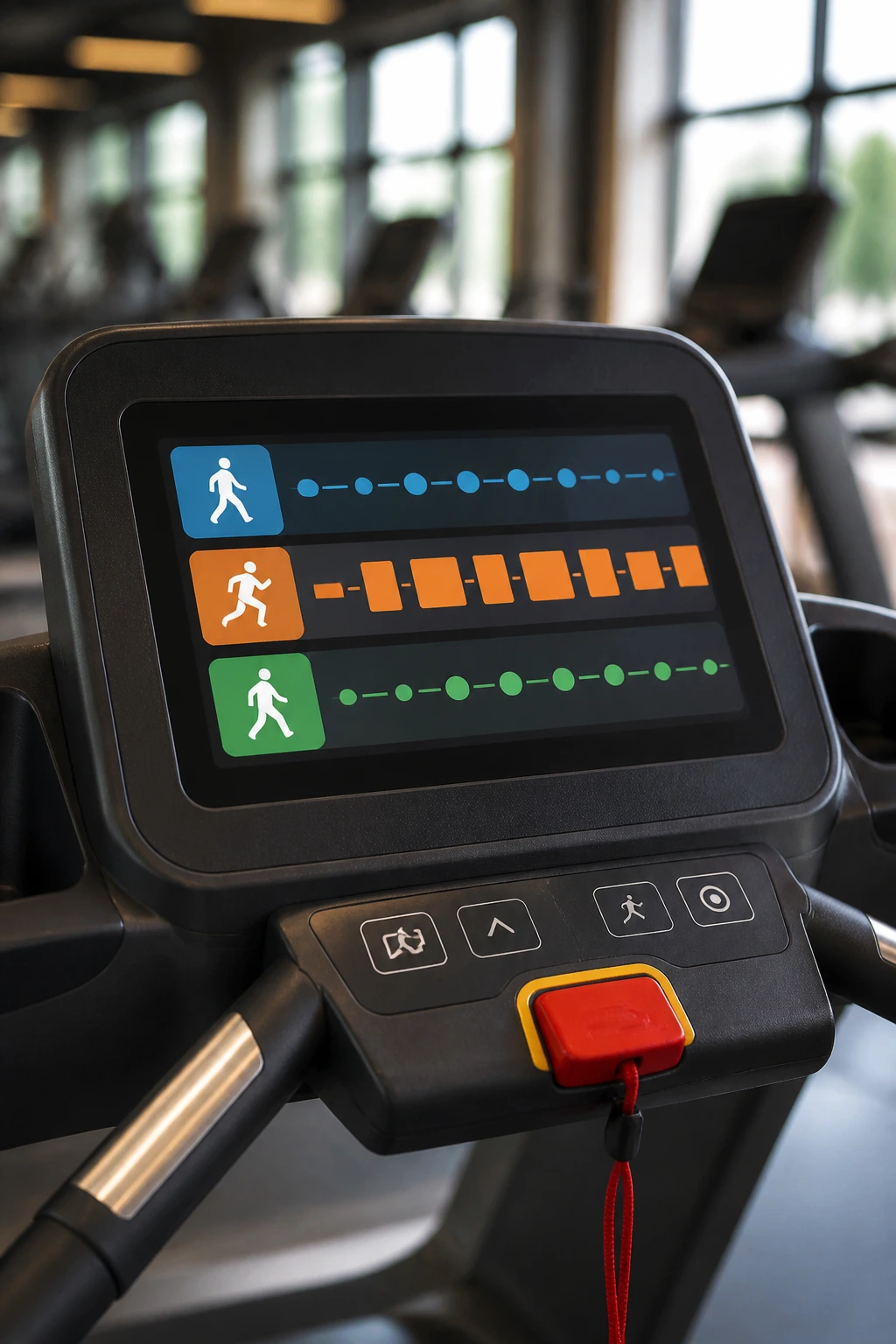
Once you have a few of these workouts under your belt, building your own session gets easier than it looks. Keep the bones the same: warm-up, main set, cool-down. Change only one variable at a time—speed, incline, or interval length—not all three.
A simple template might look like this:
- 5 minutes walk
- 6 rounds of 1 minute jog / 2 minutes walk
- 5 minutes walk
Or this:
- 5 minutes walk
- 3 rounds of 3 minutes jog / 2 minutes walk
- 5 minutes walk
Or, on a good day:
- 5 minutes walk
- 10 to 15 minutes steady jog
- 5 minutes walk
That flexibility is the real goal here. The treadmill stops feeling like a test and starts feeling like a place you know how to use. And once that happens, consistency gets a lot easier to protect.
