



Thirty minutes can leave you humbled if the session is built with a little bite. It can also leave you bored if the plan is mostly chatter and a few half-hearted sets.
The difference shows up fast. A real total body burn uses big movements, short rests, and enough variety to keep your legs, lungs, shoulders, and midsection all talking at once. You finish tired, yes, but also sharper — the kind of tired that feels earned instead of random.
I’ve always liked workouts that don’t waste time on busywork. Give me a squat, a push, a hinge, a carry, and a clock that’s moving. That’s enough. And if the workout is smart, thirty minutes is plenty.
Some of the sessions below are simple enough to do in a living room with no gear at all. Others ask for dumbbells, a rower, a sled, or a treadmill because sometimes the easiest way to make thirty minutes count is to let the equipment do part of the heavy lifting. Pick the one that fits your space, then stay honest with the pace.
1. Bodyweight Tabata Ladder for a Total Body Burn
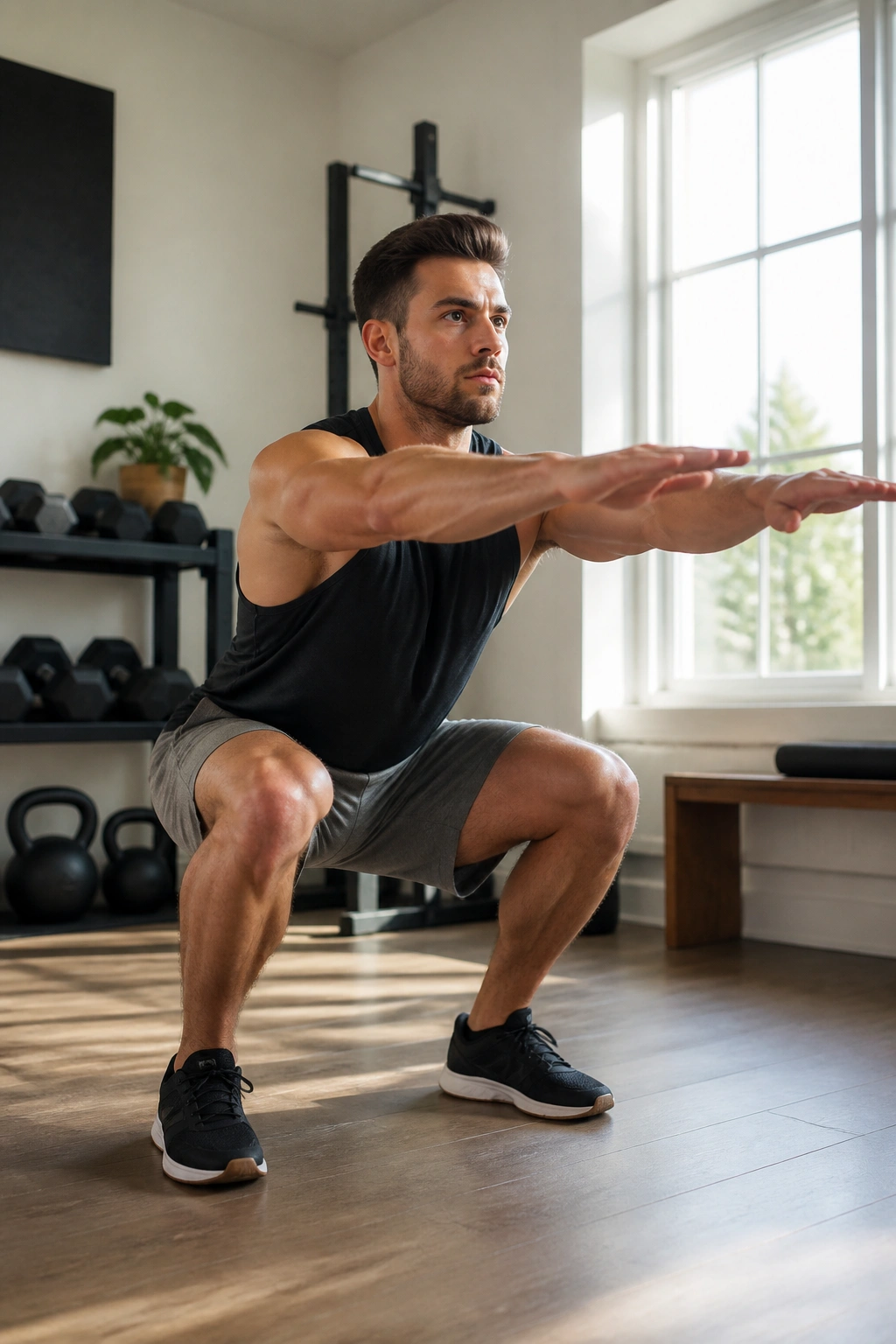
This is the one I reach for when I want a hard session and zero setup. No dumbbells. No machine. Just you, a timer, and the uncomfortable truth that bodyweight work can get brutal fast when the rest periods shrink.
Why It Works
Tabata-style intervals are short on purpose. You work for 20 seconds, rest for 10, and repeat with enough focus that your breathing starts climbing almost immediately. That tight work-to-rest ratio keeps the heart rate high while the big patterns — squat, push, lunge, brace — hit the whole body.
Use four moves: air squats, push-ups, reverse lunges, and mountain climbers. Do each for 20 seconds, rest 10 seconds, then move to the next exercise. One full round takes 2 minutes. Repeat the circuit four times for 16 minutes of work, then take 2 minutes to breathe and shake out your arms.
A simple finish helps. Spend the last 5 minutes on a brisk march, slow high knees, or an easy walk around the block if you’re training at home. It sounds tame. It isn’t.
Tip: Keep every rep crisp. The second your squats turn into half-reps and your push-ups look like a collapse, back off for the next round.
2. The Dumbbell Squat-and-Press Circuit

If you only have one pair of dumbbells, this is the one I’d pick first. It hits the legs, the back, the shoulders, and the core without asking you to learn anything fancy.
Start with a load that feels moderate for 8 to 10 clean reps. Not light. Not ego-heavy. The sweet spot is a pair of dumbbells you can move for 40 seconds with good form, then still have enough left to stay tidy in the final round.
Do goblet squats, bent-over rows, push presses, Romanian deadlifts, and alternating reverse lunges in a circuit. Work 40 seconds, rest 20 seconds, and complete 3 rounds. That gives you 15 minutes of solid work. Add a 5-minute finisher of fast suitcase marches or farmer carries, then cool down with a quick walk and a few deep breaths.
The charm here is balance. Pushing and pulling, hinging and squatting, all in one tight loop. It’s not glamorous. It works.
And yes, your grip will complain before your lungs do if you hold the dumbbells too long. That’s part of the fun.
3. The Kettlebell Swing, Clean, and Carry Session
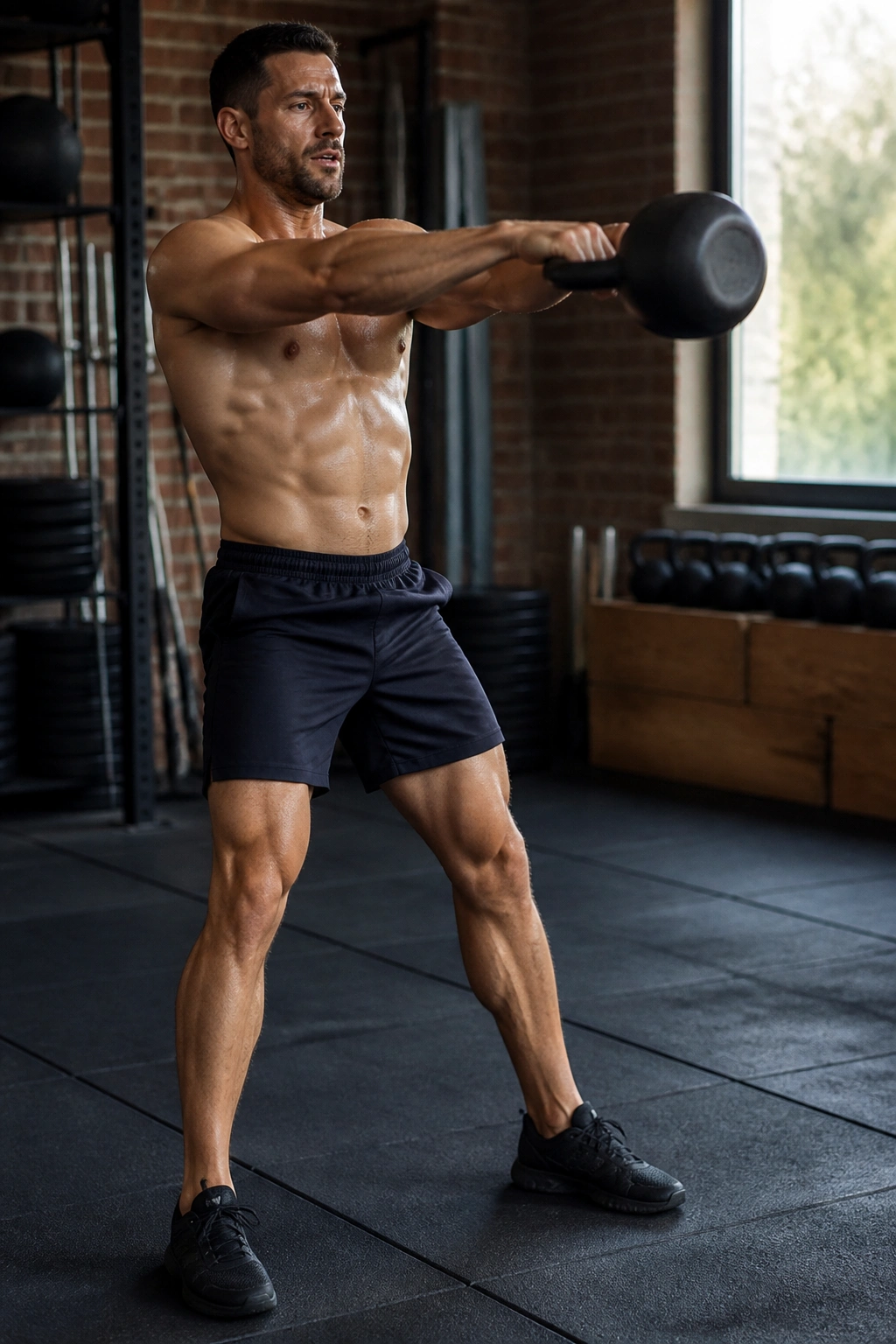
A kettlebell makes thirty minutes feel dense in a good way. The bell is awkward enough to keep you honest, and that awkwardness is part of the point — every rep asks you to brace, hinge, and control the load instead of flinging it around.
How to Run It
Spend 5 minutes warming up with hip hinges, glute bridges, and arm circles. Then move into a 10-minute swing block: 15 seconds of hard swings, 45 seconds of easy walking, repeated 10 times. After that, shift into clean and front-rack work for 8 minutes — 5 cleans per side, then 5 front squats, resting as needed. Finish with 6 minutes of carries: farmer carry, suitcase carry, rack carry, or any mix that keeps you walking and braced.
The swing block drives the heart rate up. The carry block teaches your trunk not to fold. That combination is why this session feels bigger than its clock.
If your lower back takes over during swings, stop and reset. The hinge should come from the hips, not a rushed yank from the spine.
4. Treadmill Incline Sprint Blocks
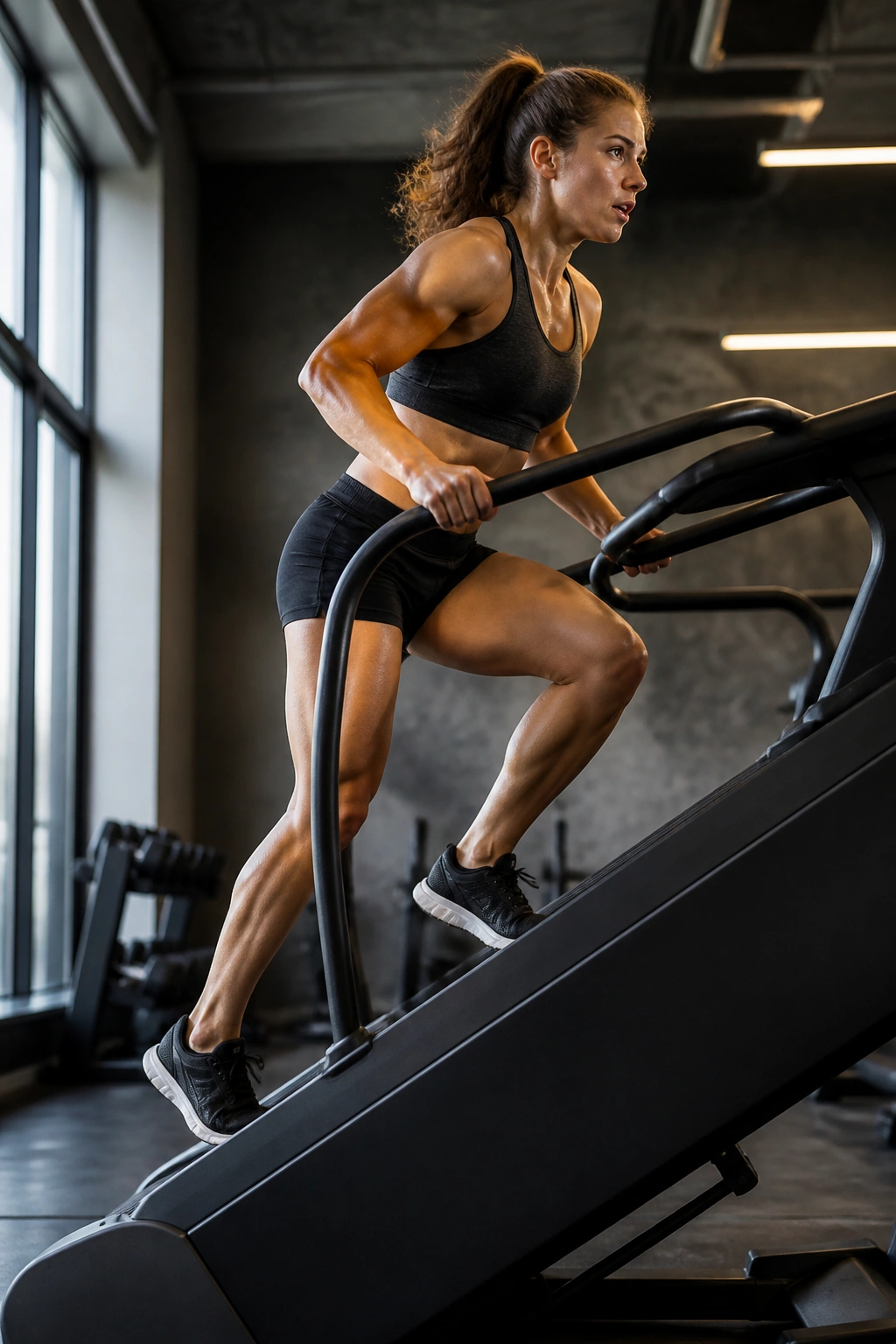
A treadmill can be a polite little machine or a complete bully. Use incline sprints the right way and it becomes the second one.
Picture this: your warm-up starts with a 5-minute walk, the belt gliding under your feet while your breathing settles. Then you start the blocks — short, sharp efforts with enough incline to make your legs work even if your top speed isn’t wild.
Run 10 rounds of 30 seconds hard and 60 seconds easy at a 4 to 10 percent incline. If you’re newer to running, fast walking at a steeper incline works fine. The goal is not to see how reckless you can be. The goal is to keep the effort high without turning the workout into a survival episode.
After the intervals, spend 5 minutes at a steady incline walk and another 5 cooling down flat. The climb taxes the glutes and calves; the short recovery keeps your heart rate from fully settling. It’s tidy, and a little rude.
Don’t lean on the rails. That habit steals the work from your legs and makes the whole thing feel easier than it should.
5. Shadow Boxing Rounds with Core

This one surprises people. They see boxing footwork and think it’s mostly shoulders and ego. Then the second and third rounds hit, and the core starts doing the hard truth work.
Shadow boxing is a sneaky full-body session because it asks for stance, rotation, balance, and rhythm all at once. You’re not just throwing punches. You’re shifting weight, keeping your ribs down, and staying light on your feet while your breathing climbs.
Set a timer for 5 rounds of 3 minutes, with 1 minute of active rest between rounds. During each round, rotate through jab-cross, hook-cross, slips, uppercuts, and knee drives. Keep your hands up between combinations. Exhale on the punches. That little breath cue matters more than most people think.
After the fifth round, drop to the floor for 5 minutes of core work: dead bugs, hollow holds, and slow mountain climbers. Then walk for 2 or 3 minutes to bring everything down.
No bag needed. No gloves required. Just clean movement and a little swagger.
6. Resistance-Band Push-Pull Circuit
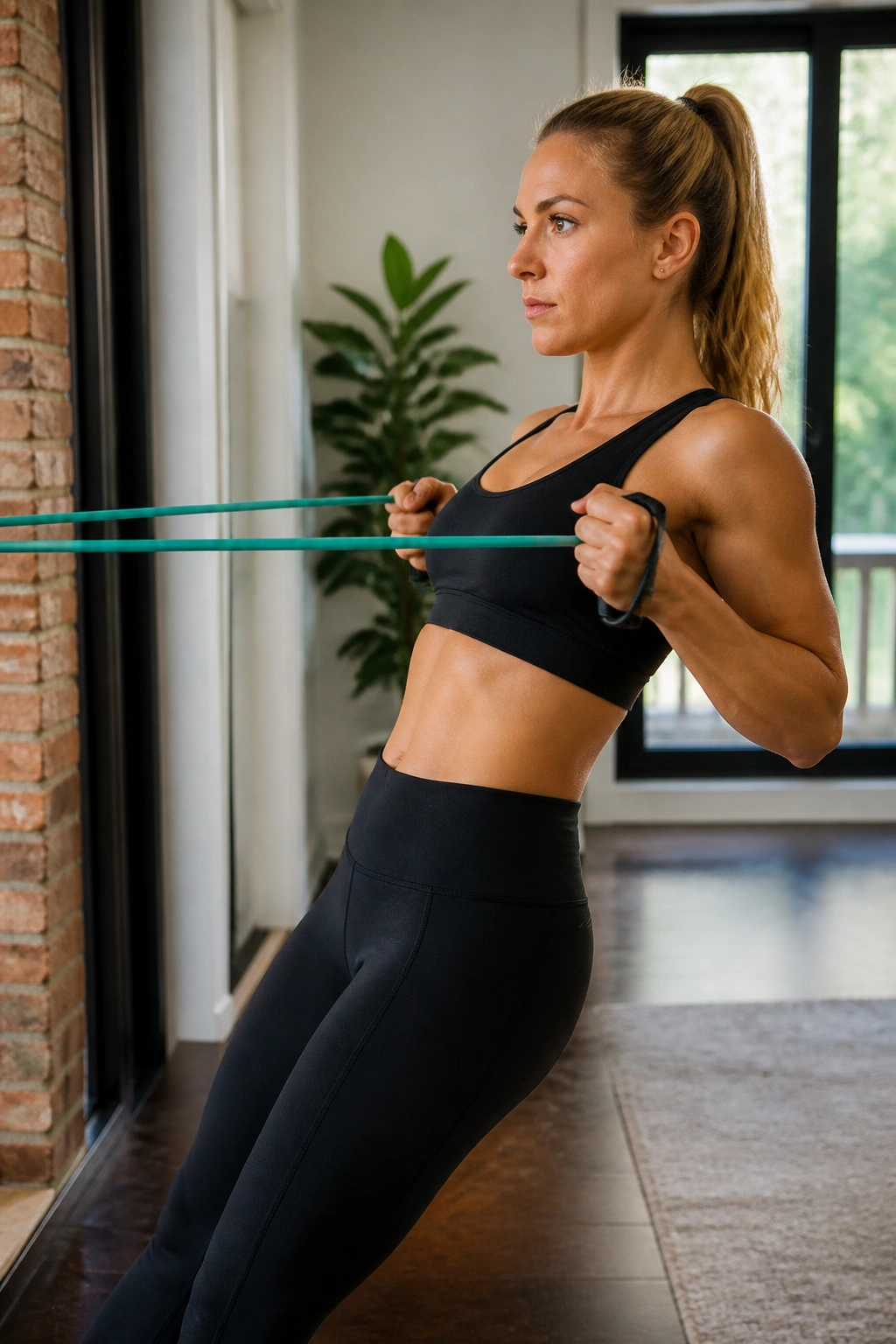
Bands do one thing dumbbells don’t. They keep tension on the muscle the whole way through the move, which means the top of the rep can burn more than you expect. That makes them useful when your joints want a friendlier day but you still want a session that earns its keep.
Use a long loop band or a handled tube band and set up a circuit of band rows, chest presses, face pulls, good mornings, and lateral walks. Work 45 seconds, rest 15 seconds, and complete 3 full rounds. You’ll cover your back, chest, shoulders, glutes, and outer hips without needing much floor space.
Unlike a dumbbell circuit, this one keeps tension even when the movement looks easy. That’s the trick. The band doesn’t care that the rep is halfway done. It pulls back the whole time.
Best for: people training at home, people whose shoulders hate heavy pressing every day, and anyone who wants a cleaner option on a recovery day without going soft. A medium band usually gives enough resistance for most of the circuit, but keep a lighter one nearby for face pulls.
Simple. Cheap. Useful.
7. Stair Climber Power Intervals
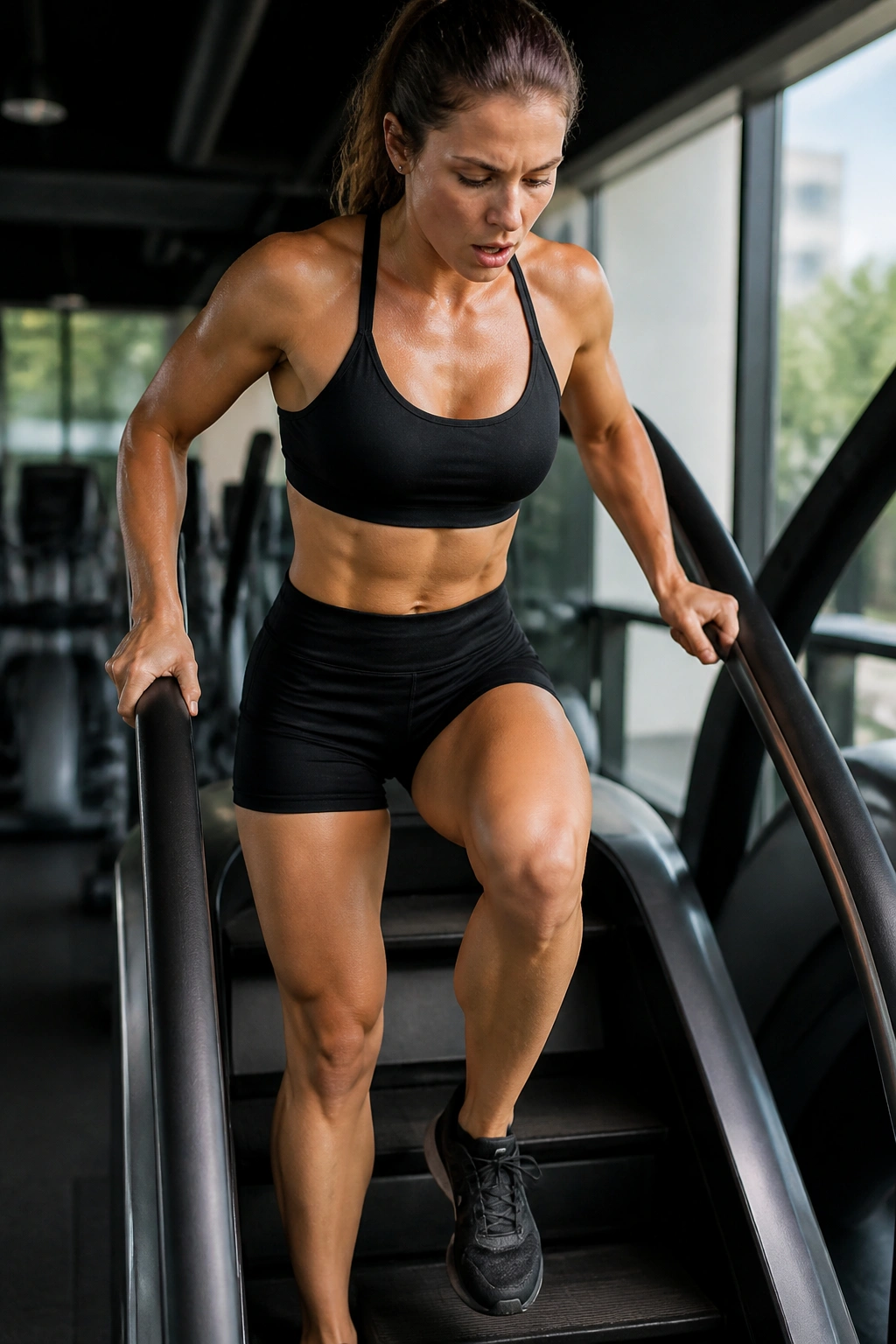
If you’ve ever stood on a stair climber and wondered why the first five minutes felt fine, you already know the setup. The machine looks harmless right up until your calves and lungs decide to file a complaint.
Use 8 rounds of 1 minute hard and 1 minute easy. Stay tall. Let your full foot find the step. Light hands only. If you’re hanging on like you’re trying to rescue yourself, the machine is doing less of the job than it should.
After the final interval, get off and do an 8-minute floor finisher: 20 bodyweight squats, 10 push-ups, 20 seconds of plank, 10 reverse lunges per side. Repeat that pattern until the clock runs out. It gives the upper body and trunk a say in the workout, which the stair climber never will.
The pace should feel aggressive but controlled. You want your breathing elevated by minute three, not a full panic by minute one.
A stair climber is honest in a way some cardio tools aren’t. You can’t really fake it.
8. Lower-Body Strength with a Jump Finisher

Most people think a leg workout is either strength or cardio. Not this one. This one turns into both, and your quads will know the difference halfway through the first round.
Use goblet squats, Romanian deadlifts, split squats, and glute bridges for the strength block. Work in 3 rounds, keeping 8 to 12 reps per move and resting about 30 seconds between exercises. Pick a weight that feels steady, not cute. The last two reps of each set should take focus.
Then finish with a jump block: 20 seconds of jump squats, 40 seconds of rest, repeated 6 times. If jumps bother your knees, swap in fast bodyweight squats or step-ups. The point is to spike the heart rate after the strength work, not to win a vertical jump contest.
Your legs will feel heavy on round three. Good. That’s the workout doing what it should.
I like this one because it has a clear arc. You load the muscles first, then you ask them to move fast while they’re already tired. Nasty. Effective.
9. Rower Pyramid Intervals

The rower is rude in a different way. It doesn’t care how fit your upper body looks in a mirror. The machine rewards rhythm, and it punishes sloppy pacing almost immediately.
Start with a 5-minute easy row. Then row a 250-meter piece, rest 45 seconds, 500 meters, rest 60 seconds, 750 meters, rest 75 seconds, then back down: 500 meters and 250 meters. Keep the stroke rate around 24 to 28 strokes per minute unless you’re already very comfortable on the machine.
What Makes It Work
The pyramid pattern keeps you from disappearing into one boring pace. Short pieces feel fast. Longer pieces demand patience. Together they train power and control in the same thirty-minute window.
How to Use It
- Push hard enough that the 750-meter piece feels like work by the halfway mark.
- Keep your drive strong through the legs first, then the back, then the arms.
- Breathe out on the drive, in on the recovery.
- Finish with 5 minutes of easy rowing or walking.
The rower is one of the best tools for a total body burn because it asks the lower body to do most of the force and the upper body to finish the job. That mix is sneaky, and I mean that in the nicest way.
10. EMOM Compound Lift Burner
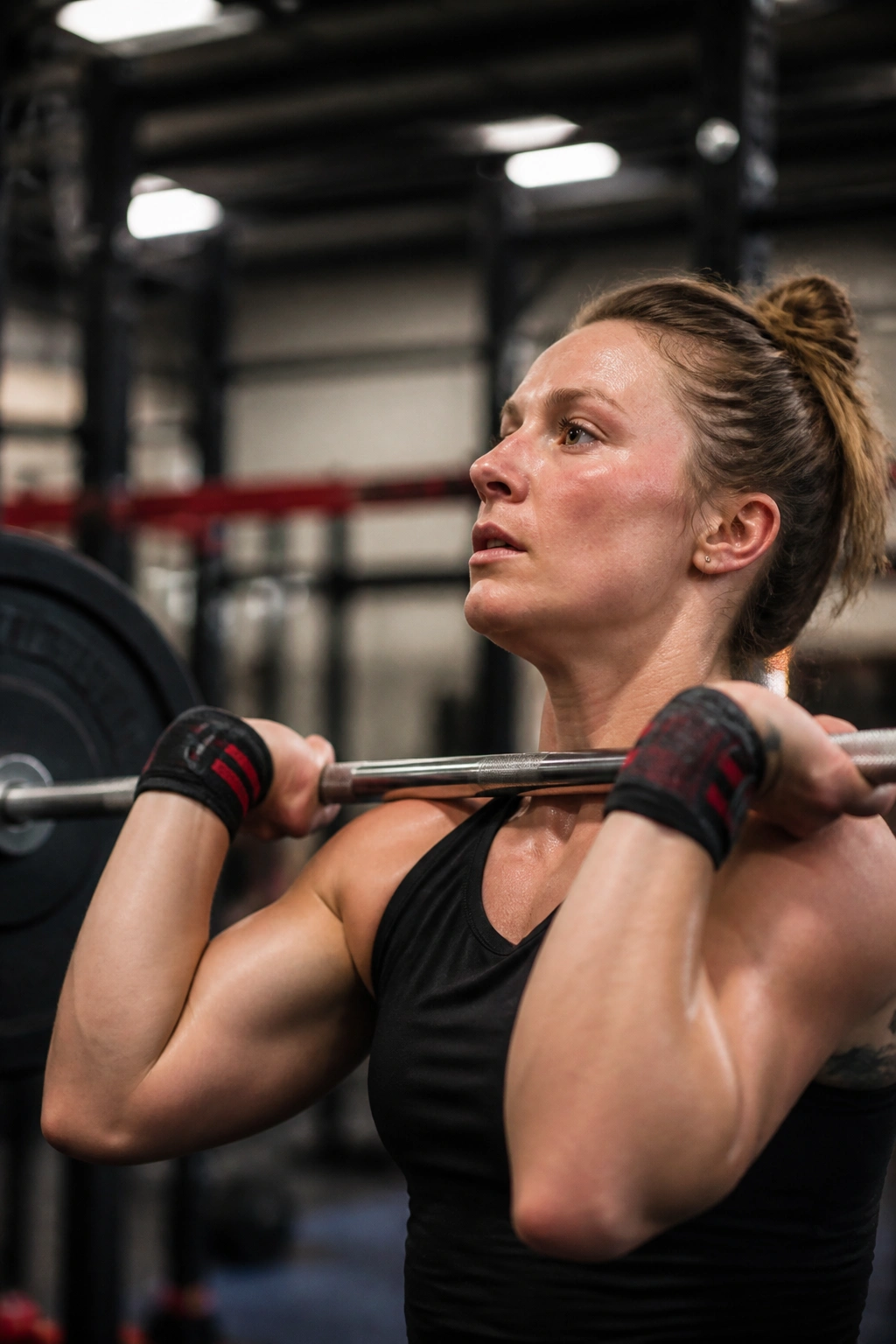
EMOM means every minute on the minute. The idea is simple: you do the prescribed reps at the start of each minute, then rest with whatever time is left. When the minute turns over, you go again.
Use four compound lifts: deadlift, push press, front squat, and bent-over row. Do 6 reps of each, one movement per minute, and repeat the four-minute cycle 5 times. That gives you 20 minutes of work with built-in rest that disappears fast if your load is too heavy.
The smart move is choosing a weight you can move cleanly in about 30 to 35 seconds. If the reps take 50 seconds, the session turns ugly. If they take 15 seconds, the load is too light. The middle is where this workout earns its name.
Finish with a 5-minute walk, then spend the last few minutes on hips, ankles, and thoracic twists. That recovery piece matters because compound lifting compresses a lot into a small window. Your body feels it.
This is one of my favorites on days when you want strength work that still leaves you breathing hard.
11. Mountain Climber and Plank Flow

Your core will not get to coast here. The nice thing about a floor-based circuit is that it looks modest until you’re in round three and every shoulder tap feels louder than it should.
Set up five moves: plank shoulder taps, mountain climbers, bear crawls, plank jacks, and side plank hip lifts. Work 40 seconds, rest 20 seconds, and repeat the full sequence 4 times. That lands you at 20 minutes, which is enough to make your trunk, shoulders, hip flexors, and breathing pattern all get involved.
The flow matters. Go from a stable plank to a fast climber, then into a bear crawl, where the whole body has to stay compact under load. Bear crawls are a little annoying. That’s part of their charm.
After the circuit, spend 5 minutes stretching your hip flexors and chest. Those are the spots that tend to tighten up after a lot of floor work, especially if you’re not used to staying low.
If your wrists are touchy, put your hands on dumbbells or push-up handles. Small fix. Big difference.
12. Battle Rope and Medicine Ball Circuit
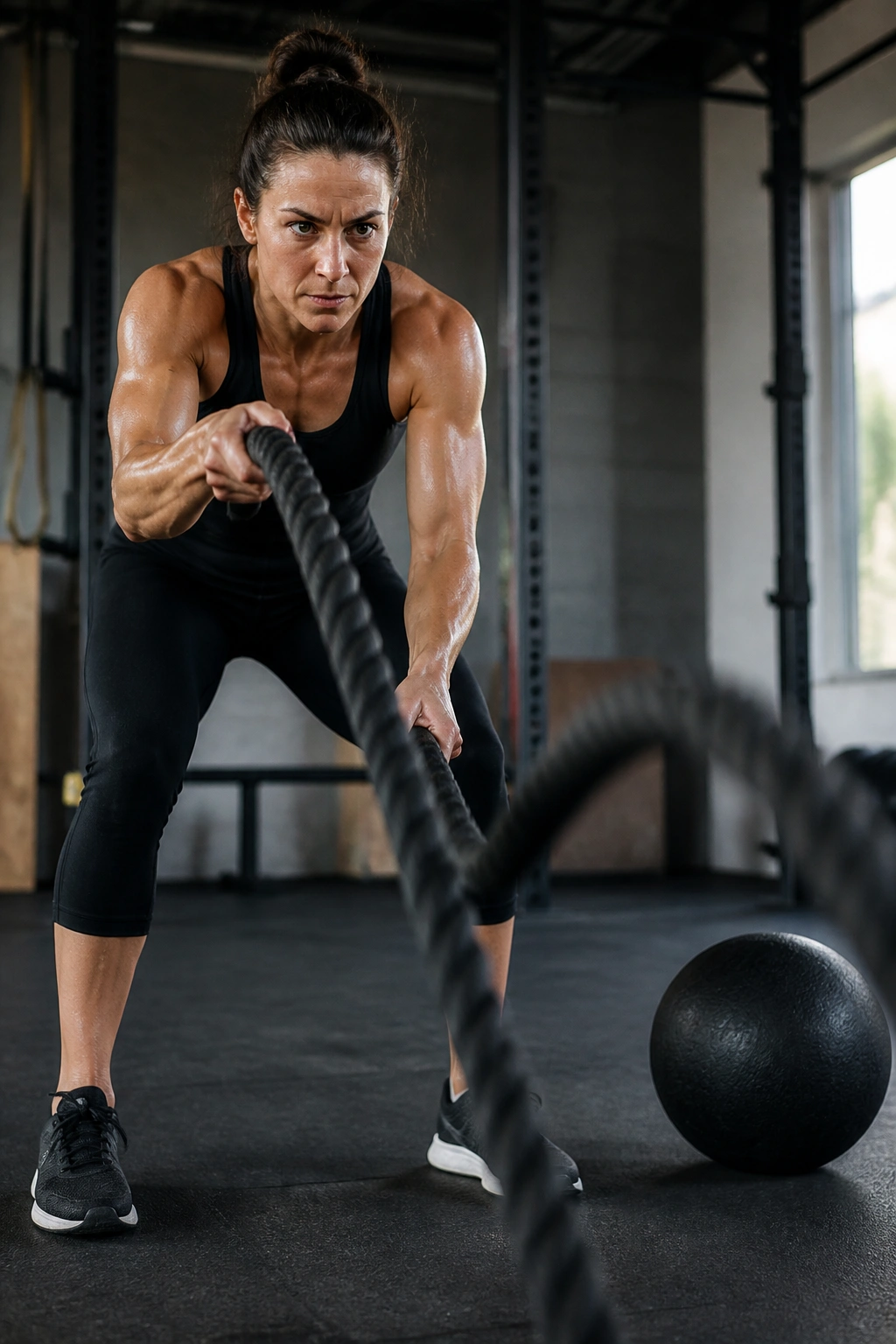
This one feels like the gym is fighting back. Battle ropes and medicine balls both demand full-body effort, and they do it in a way that makes resting feel luxurious.
Use 6 stations: alternating rope waves, rope slams, medicine ball slams, squat-to-press, lateral skaters, and push-up shoulder taps. Work 40 seconds at each station, then rest 20 seconds before the next one. Run through all 6 stations for 3 rounds.
That gives you 18 minutes of work, and it’s dense. The ropes burn the shoulders and upper back. The slams wake up the core. The squat-to-press adds legs to the mix, which is the whole point of a total body session anyway.
A few quick details make a difference:
- Keep the rope waves crisp, not flailed.
- Throw the ball down with intent, then pick it up with good posture.
- Use skaters as a low-impact cardio bridge if jumping feels rough.
- Don’t rush the transition from one station to the next; the setup time is part of the training.
If you’ve got access to both tools, this is a brutal little half-hour.
13. The AMRAP Travel Workout

A hotel room, a spare patch of floor, a park, a garage — this workout doesn’t care much where you are. That’s the whole appeal.
AMRAP means as many clean rounds as possible in a set time. Set the clock for 20 minutes and cycle through 12 air squats, 10 push-ups, 16 alternating lunges, 8 burpees, and 20 high knees. If you have a backpack, add 10 bent-over rows between the push-ups and lunges.
The trick is pacing. Start at a speed you can hold for the full 20 minutes without turning your movement into a mess by minute 12. That means you may need to breathe a little harder than you want at first, but not sprint.
This one works because it’s easy to scale. Drop the burpees to step-backs. Use incline push-ups on a bed or bench. Cut the lunge count in half if your legs are cooked from another day. The structure stays the same.
Finish with a 5-minute walk or slow march in place. Keep it simple. Travel workouts do not need drama. They need repeatable effort.
14. Pilates-Strength Hybrid Burn
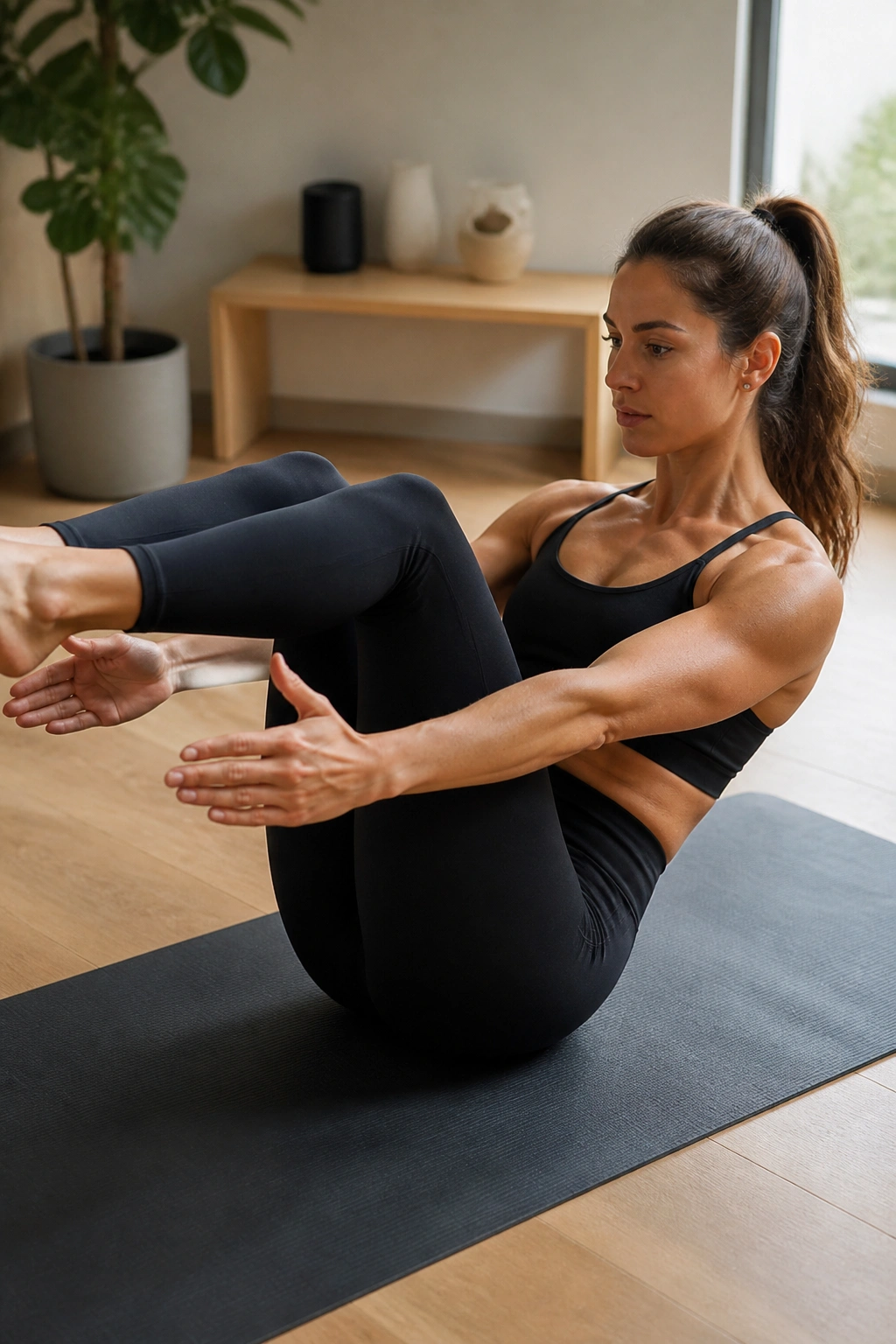
Slow work can hurt more than fast work. People hate hearing that until they feel a set of slow split squats light up the thighs in a way that no sprint ever quite matches.
Use a light-to-moderate load and move through dead bugs, glute bridge marches, split squats with a slow lower, push-up holds, side planks, and hollow body holds. Work for 45 seconds, rest 15 seconds, and complete 2 to 3 rounds depending on how much time you need to stay inside the 30-minute mark.
Why the Slow Pace Matters
The slow tempo keeps you from hiding in momentum. Every second under tension counts, and the smaller stabilizers have to do real work instead of getting dragged along. That’s why this style feels quiet for the first few minutes, then surprisingly sharp.
What to Watch For
- Keep your ribs from flaring on the dead bugs.
- Lower under control on the split squats; no dropping.
- Hold the push-up halfway down if full reps are too sloppy.
- Breathe slowly through the side planks instead of bracing your face off.
This workout is a good fit when you want a burn without jumping, pounding, or cranking your heart rate into the ceiling. It’s calmer, but not easy.
15. Hill Walk-Run Combo

A hill gives you a lot of work without demanding all-out speed. That’s useful when you want a cardio session that still grabs the glutes, calves, and core.
Warm up with a 5-minute flat walk. Then do 10 rounds of 1 minute uphill effort and 1 minute easy walk back down or back to the start, depending on the route. Stay tall through the torso and drive your arms like you mean it. If you’re on a treadmill, incline walking at 8 to 12 percent works well. If you’re outdoors, find a hill that takes about a minute to climb at a hard but manageable pace.
After the intervals, finish with 5 minutes of steady incline walking and 5 minutes of slow mobility for calves, hips, and ankles. That keeps the workout from ending on a redline and gives your legs a chance to loosen up before you sit down.
I like hills because they’re honest without being flashy. You can’t fake effort very well on an incline.
16. Slow-Eccentric Bodyweight HIIT

This one is sneaky. The work intervals look short, but the slow lowering phase turns a simple bodyweight workout into a deep leg and core session fast.
Use squats, push-ups, reverse lunges, hip bridges, and plank up-downs. Work 30 seconds, rest 15 seconds, and keep each lowering phase around 3 to 4 seconds. That tempo matters more than the rep count. You are not chasing speed here. You’re chasing control.
By round two, the burn usually shows up in places people don’t expect — the bottoms of the thighs, the back of the shoulders, even the midsection as it tries to keep you stacked. That’s the payoff for going slow on the way down.
If your form starts to wobble, cut the rep count and keep the tempo. A clean 4-rep set beats a sloppy 10-rep pile any day. The workout still works.
Use 4 rounds, then spend the last 5 minutes walking, breathing, and loosening the hips. The recovery feels earned here.
17. The Full-Body Dumbbell Complex
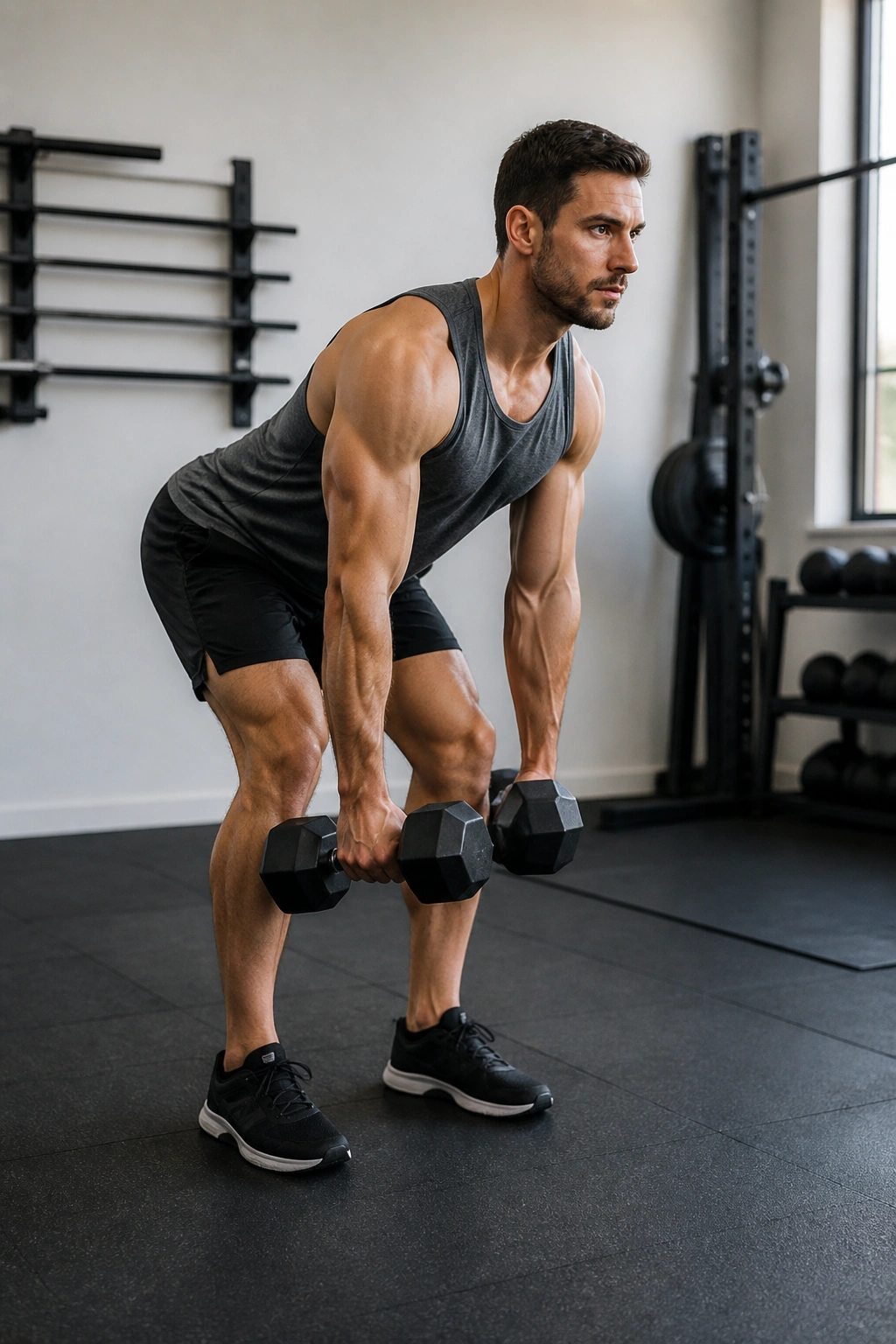
A dumbbell complex is one of my favorite ways to make strength and cardio shake hands. You use one pair of dumbbells and move through several exercises without setting them down. That little rule changes everything.
Choose a moderate pair and perform 6 deadlifts, 6 bent-over rows, 6 hang cleans, 6 front squats, 6 push presses, and 6 reverse lunges. That’s one round. Rest 90 seconds, then repeat for 4 rounds. If you need to stop and reset your grip, fine. Just don’t fully unload the bells unless your form falls apart.
The reason this works is simple: the compound lifts keep the muscles under stress while the short rest pushes the heart rate up. You’re not just lifting. You’re carrying fatigue from one move into the next, which is exactly why the session feels so dense.
Best for: people who like strength work but want more sweat without switching tools every minute. Also good for home gyms where you’d rather not build a giant station setup.
It’s a little old-school. That’s part of the appeal.
18. The Sled Push and Drag Grinder
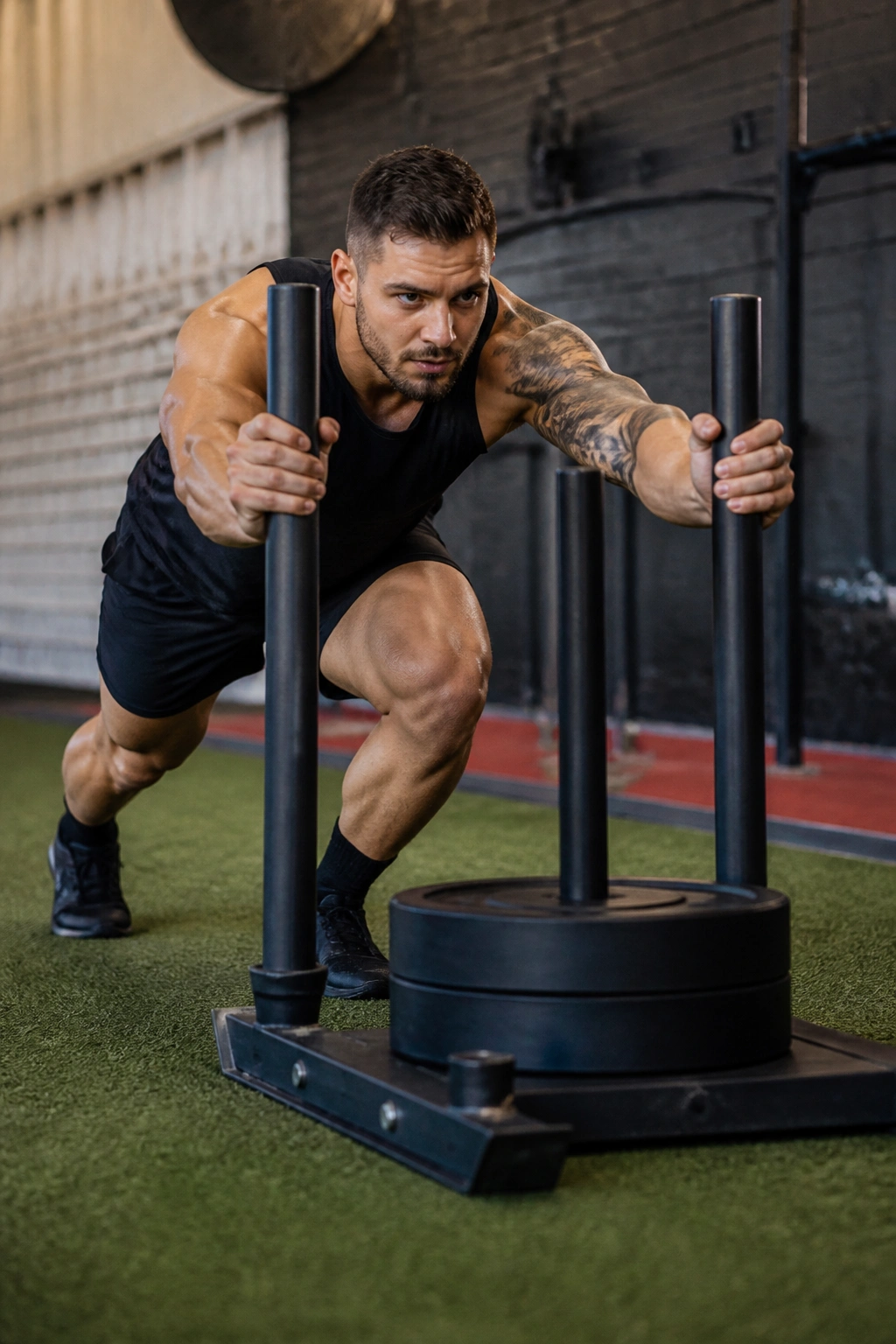
If you have access to a sled, use it. Sled work is one of the most honest full-body sessions around because the load forces your legs, trunk, and grip to stay useful at the same time.
Set up 6 pushes of 15 to 20 meters, then 6 backward drags of the same distance, then 6 walking lunges or lateral drags if space allows. Rest about 45 seconds between efforts. The whole thing usually sits nicely inside 20 minutes of work, which leaves room for a warm-up and cool-down.
What Makes It Different
Sled pushing lights up the quads and glutes without much eccentric pounding. Backward drags shift more work into the thighs and knees in a controlled way. Together, they give you a heavy feeling without the same joint wear you’d get from repeated jumps or hard running.
If You Don’t Have a Sled
A loaded backpack carry, heavy farmer walk, or plate push on turf can fill the gap. Not perfect. Still useful.
This workout has a satisfying kind of brutality to it. You finish, breathe hard, and feel like you did actual labor instead of gym theater.
19. Mixed Cardio Relay

Some people get bored when a workout stays on one machine. Fair enough. A relay-style session fixes that by changing the tool before your brain has time to moan about it.
Set up five 2-minute stations: rower, jump rope, bike sprint, shuttle run, and shadow boxing. Move through all five stations, then repeat the circuit 3 times for a full 30-minute session. Keep the first minute of each station at a hard-but-controlled pace, then push the last minute a little more.
That structure keeps the session from feeling like five mini-workouts stitched together badly. It becomes one long effort with changing textures. The rower hits the back and legs. Rope work sharpens rhythm. The bike lets the legs pump without impact. Shuttle runs and boxing bring the whole thing home.
If jumping bothers you, swap the rope and shuttle for fast step-ups and brisk lateral marches. The value is in the changing stress, not in one perfect move.
This is a good choice when you want total body fatigue but hate the mental drag of staring at the same screen or wall for half an hour.
20. The Three-Block Total Body Reset
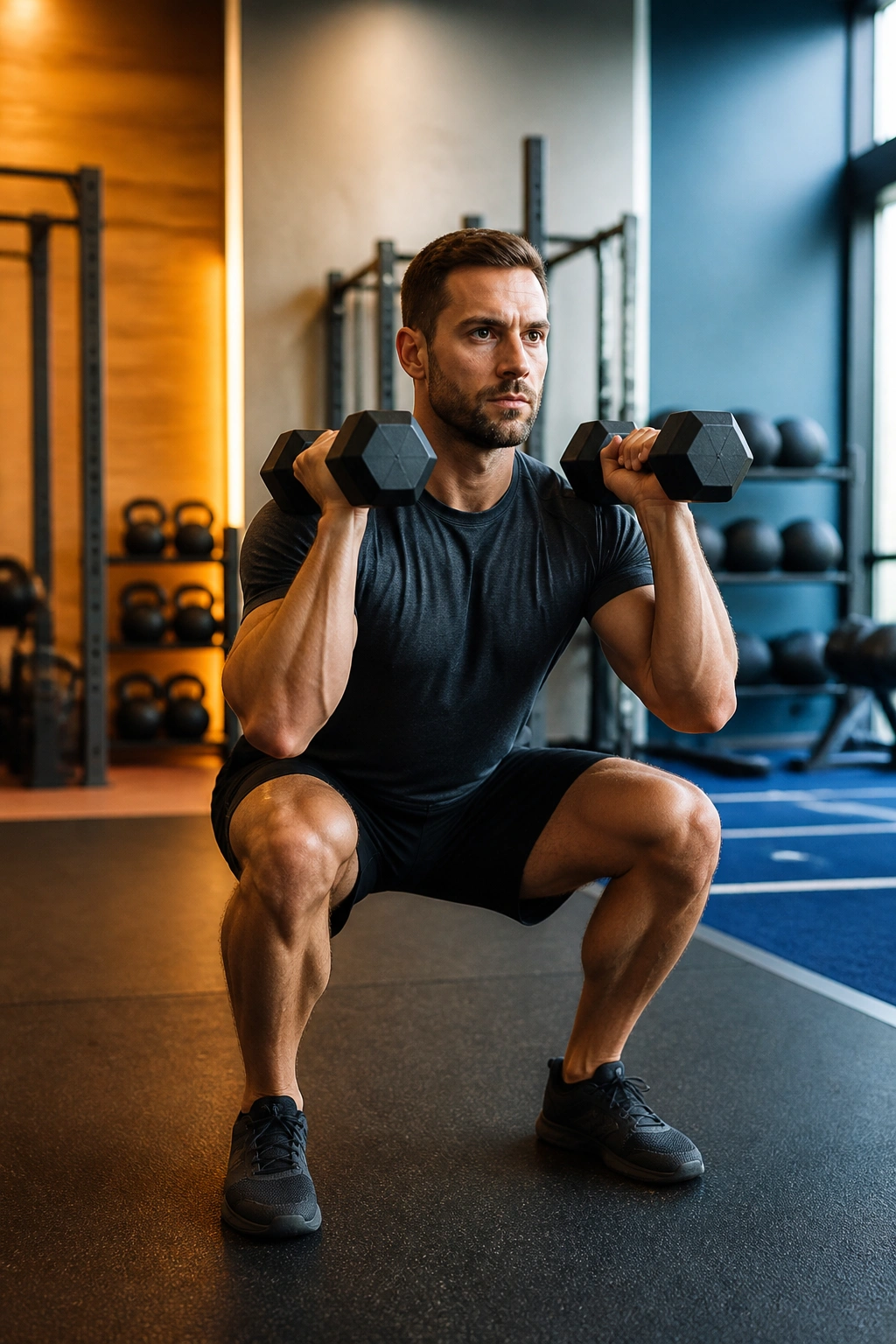
This is the plan I’d hand to someone who wants one repeatable thirty-minute template they can keep coming back to without getting lost in options. It has structure, but not too much. Enough variety to stay interesting. Enough repetition to make progress.
Block One: Strength
Spend 7 minutes on squats, push-ups, and rows. Move for 40 seconds, rest 20 seconds, and cycle through the three exercises until the block ends. Use bodyweight or dumbbells depending on the day. The goal is steady work, not max effort.
Block Two: Engine
Take 1 minute to breathe, then do 7 minutes of mountain climbers, skaters, or bike sprints. Keep the pace high but clean. If your form goes sloppy, the block is too hot. Back it off a little and keep moving.
Block Three: Core and Carry
Use the last 7 minutes for planks, dead bugs, suitcase carries, or marching in place with weight. The body should feel boxed in by the end — not crushed, just fully used. That’s the sweet spot.
Leave 4 minutes total for warm-up and cool-down, and you’re sitting right at 30 minutes. Straightforward. No fluff. A very good way to keep showing up.
Final Thoughts

A good thirty-minute workout does not try to be everything. It has a job, it stays focused, and it leaves you feeling like the time was spent on purpose.
My bias is simple: start with the version you can repeat. If a workout needs too much gear, too much setup, or too much mental bargaining, it’s probably not the one you’ll use again next week. The best plan is the one that survives a busy day and still makes you work.
Pick one of these, run it twice, and adjust the load or pace on the second pass. That second round tells you far more than the first one ever will.
