



If your workouts leave you tired but not changing shape, the problem is usually not effort. It is stimulus. The body is annoyingly literal, and muscle grows from hard tension, enough volume, and time under load—not from cute circuits that feel busy and go nowhere.
The best workouts for women who want real muscle are not complicated. They are heavy enough to matter, repeatable enough to progress, and honest about rest. Squats, hinges, presses, rows, carries, split squats; the stuff that makes a set feel a little too long in the last two reps.
Women sometimes get steered toward light weights, endless reps, or workouts built around burning calories first and building shape second. That order is backwards. If you want fuller glutes, denser legs, a back that actually looks trained, and shoulders that hold their own, you need sessions that let you add load, track reps, and recover like it matters.
A good muscle-building workout usually has one main lift, one or two helpers, and just enough accessory work to hit the weak spots without turning the session into a sweat contest. Three to five hard sets on the big movements, 6 to 12 reps on most accessories, and enough rest to make the next set count do most of the work. Sweat is cheap.
1. Heavy Back Squats for Women Who Want Real Muscle
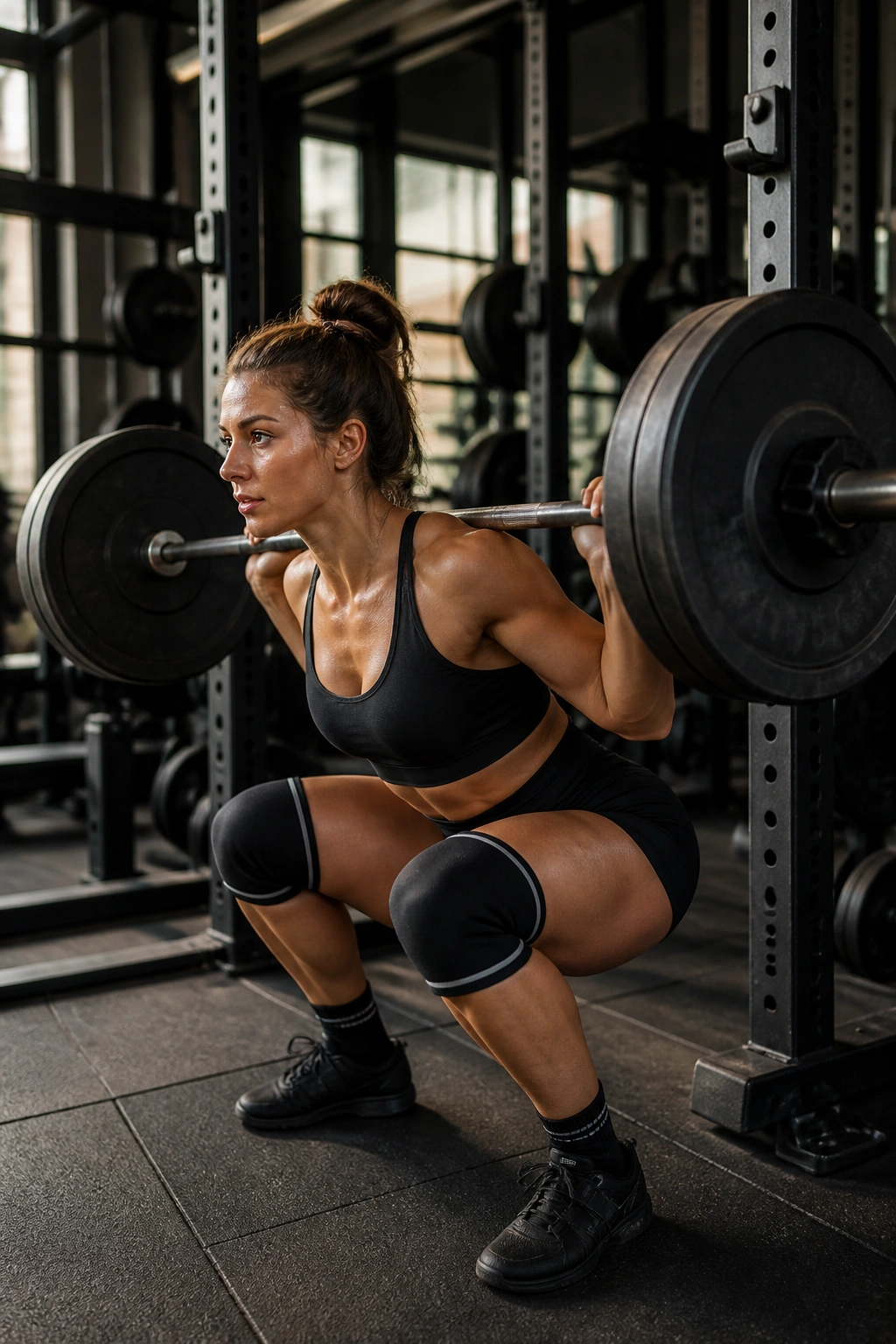
If legs and glutes are the goal, the back squat still earns its place.
It is not fancy. Good. Fancy does not build thighs. A well-loaded back squat gives you a big chunk of tension through the quads, glutes, and adductors, and it rewards patience. If you rush the descent or bounce out of the hole, the lift turns into noise.
How to run it
- Back squat: 4 sets of 5 reps
- Romanian deadlift: 3 sets of 8 reps
- Walking lunge: 3 sets of 10 reps per leg
- Standing calf raise: 3 sets of 12 to 15 reps
- Front plank: 2 sets of 30 to 45 seconds
A few things matter here. Take 2 to 3 minutes of rest on the squat sets, and keep the last rep clean enough that you could own another one if you had to. On the descent, use a controlled 2-second lower, then drive up hard through the whole foot.
Brace before you move. A deep breath into the belly and sides will help more than any motivational quote ever has.
2. Hip Thrusts That Actually Grow Glutes
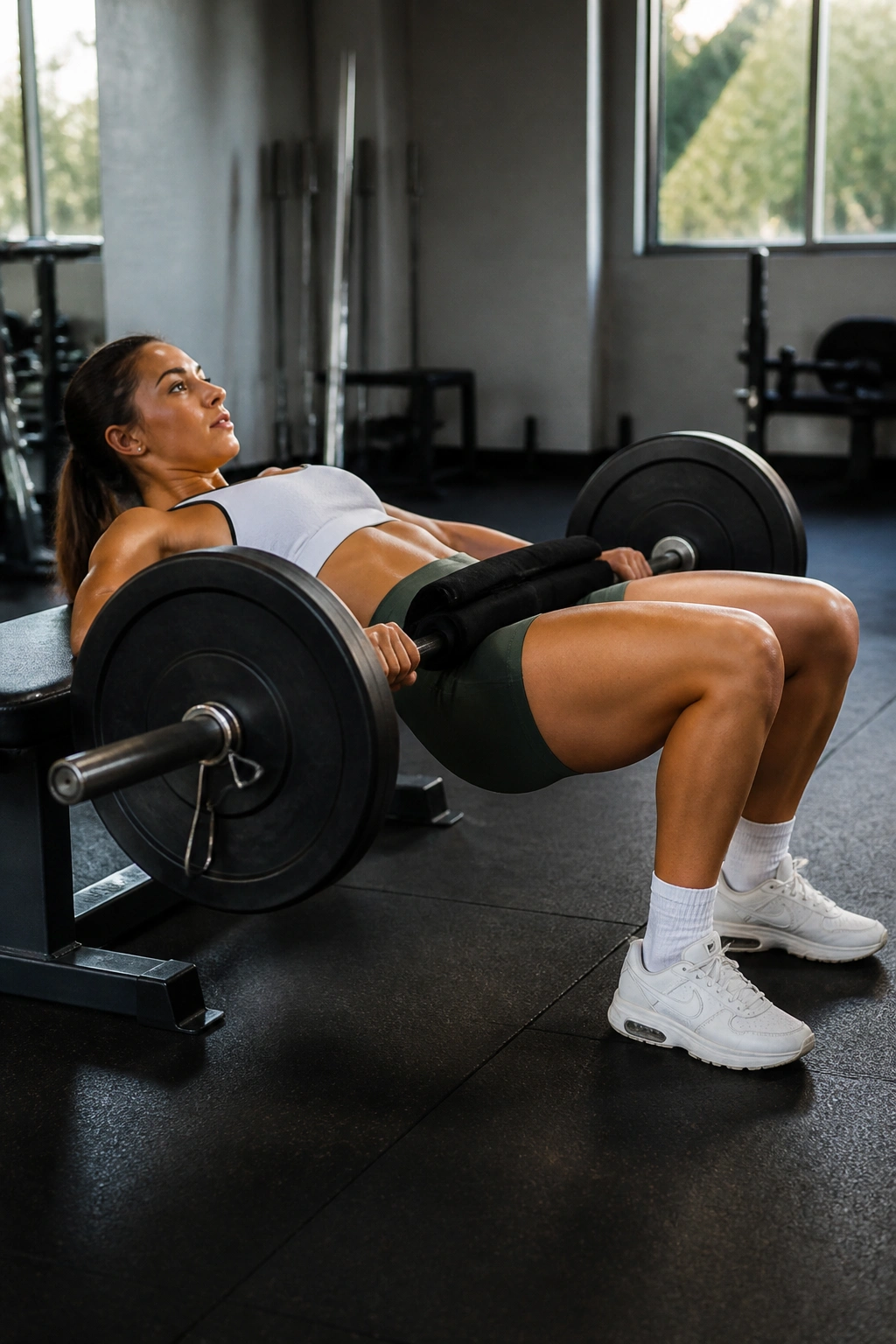
Hip thrusts are not glamorous. They are effective.
That is why they keep showing up in serious glute programs. The top of the movement loads the glutes hard, and the lower back usually gets less drama than it would in a heavy hinge. If your goal is shape, not just exhaustion, that matters.
The setup is the part people rush. Get your upper back on a bench, plant your feet so your shins are close to vertical at the top, and keep your ribs down. Then drive the hips up until the torso and thighs are nearly in line, pause for one full second, and lower with control. If you bounce the bar or arch your lower back to cheat the finish, you lose half the point.
A simple way to run it is 5 sets of 6 to 8 reps for the barbell hip thrust, followed by 3 sets of 10 glute bridges and 3 sets of 15 cable abductions. If your lower back feels tired before your glutes do, swap the barbell for a Smith machine or a heavy dumbbell across the hips. Less romance. More useful tension.
3. Deadlift, Row, and Hamstring Day
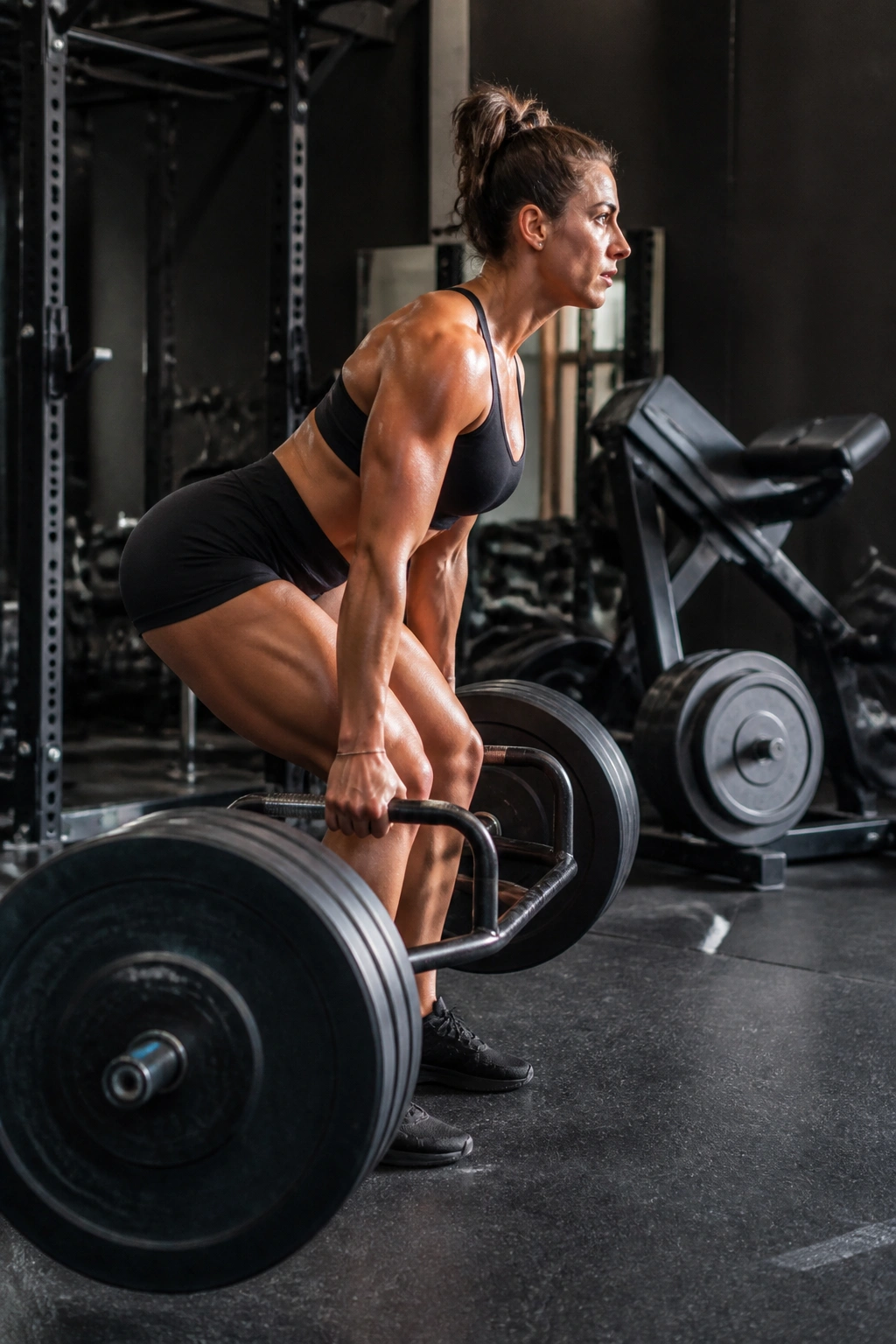
Why do so many back workouts feel busy but never build much?
Usually because the weights are too light and the pulls are too sloppy. A muscle-building posterior-chain session should make your hamstrings, upper back, and grip all file complaints at once. Trap-bar deadlifts or conventional deadlifts are a strong start, but the row work is what rounds out the look.
How to use it
- Trap-bar deadlift: 4 sets of 4 reps
- Chest-supported row: 4 sets of 8 reps
- Seated leg curl: 3 sets of 10 to 12 reps
- Face pull: 2 sets of 15 reps
- Optional dead hang: 2 rounds of 20 to 30 seconds
The deadlift stays heavy and crisp. The row stays strict enough that your torso does not start doing its own thing. That little detail matters more than people admit, because a row that turns into a shrug is just a messy shrug.
If your lower back gets cranky, use a chest-supported row and a trap bar. If you can keep the spine neutral and the bar path honest, this session builds a back that looks strong from the side and from behind.
4. Push Day for Chest, Shoulders, and Triceps
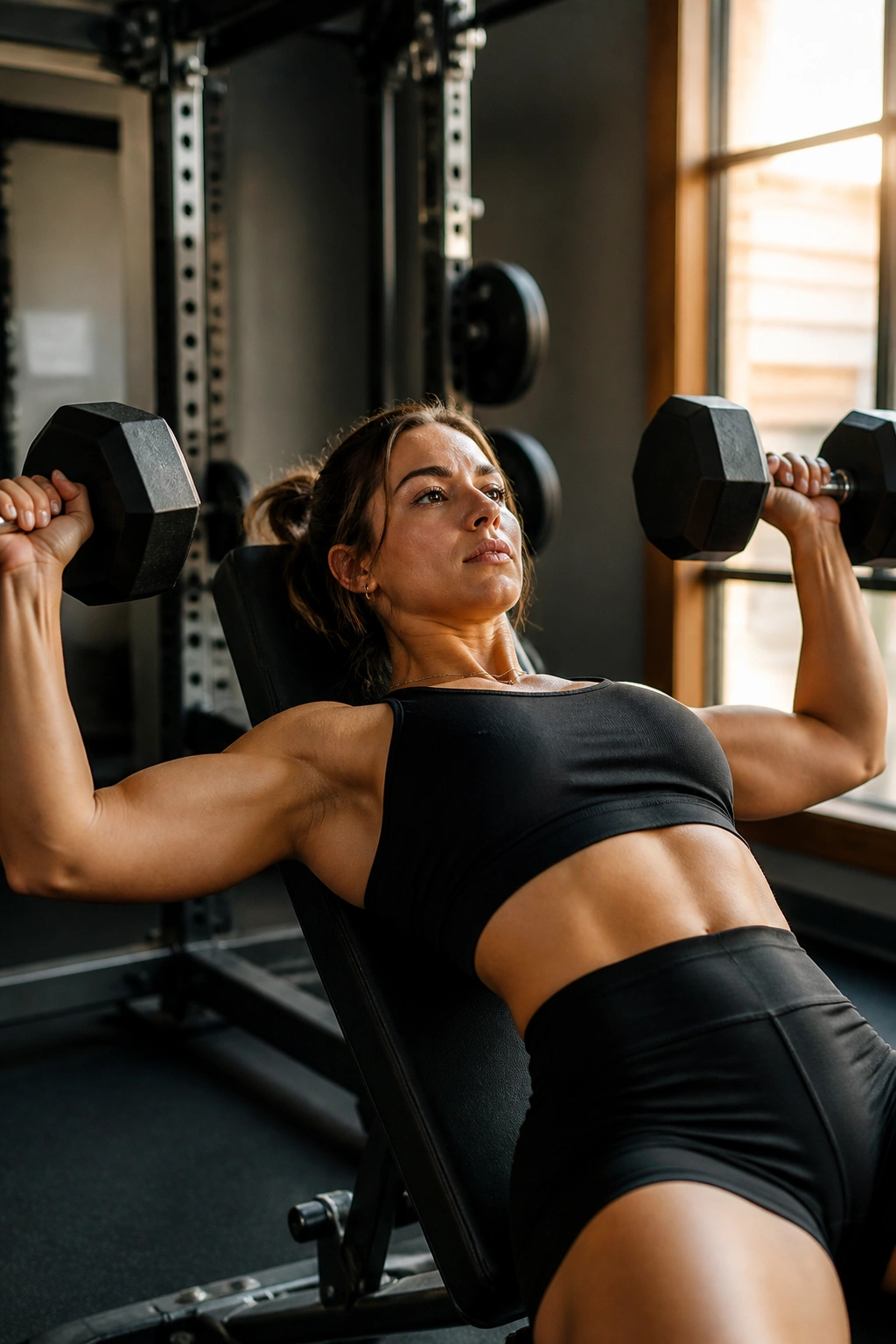
You want stronger arms and upper body shape? Then pressing has to be in the room.
A lot of women spend too much time on small shoulder movements and not enough time on actual presses. That is backwards. Pressing gives you the biggest return for chest, front delts, and triceps in one shot, and it tends to carry over to better posture, too.
A clean push day can start with dumbbell bench press for 4 sets of 8, move to seated overhead press for 3 sets of 6, then use incline cable flyes for 3 sets of 12 and rope pressdowns for 3 sets of 10 to 12. Rest about 90 seconds on the accessory work and closer to 2 minutes on the presses.
Keep your shoulder blades set on the bench. Don’t flare the elbows wildly. And on triceps work, lock the upper arm in place; the forearm should do the moving. That sounds small. It is not. Clean press mechanics are what let you load the movement without turning the shoulder into a cranky mess later.
5. Pull Day for Back Width and Biceps
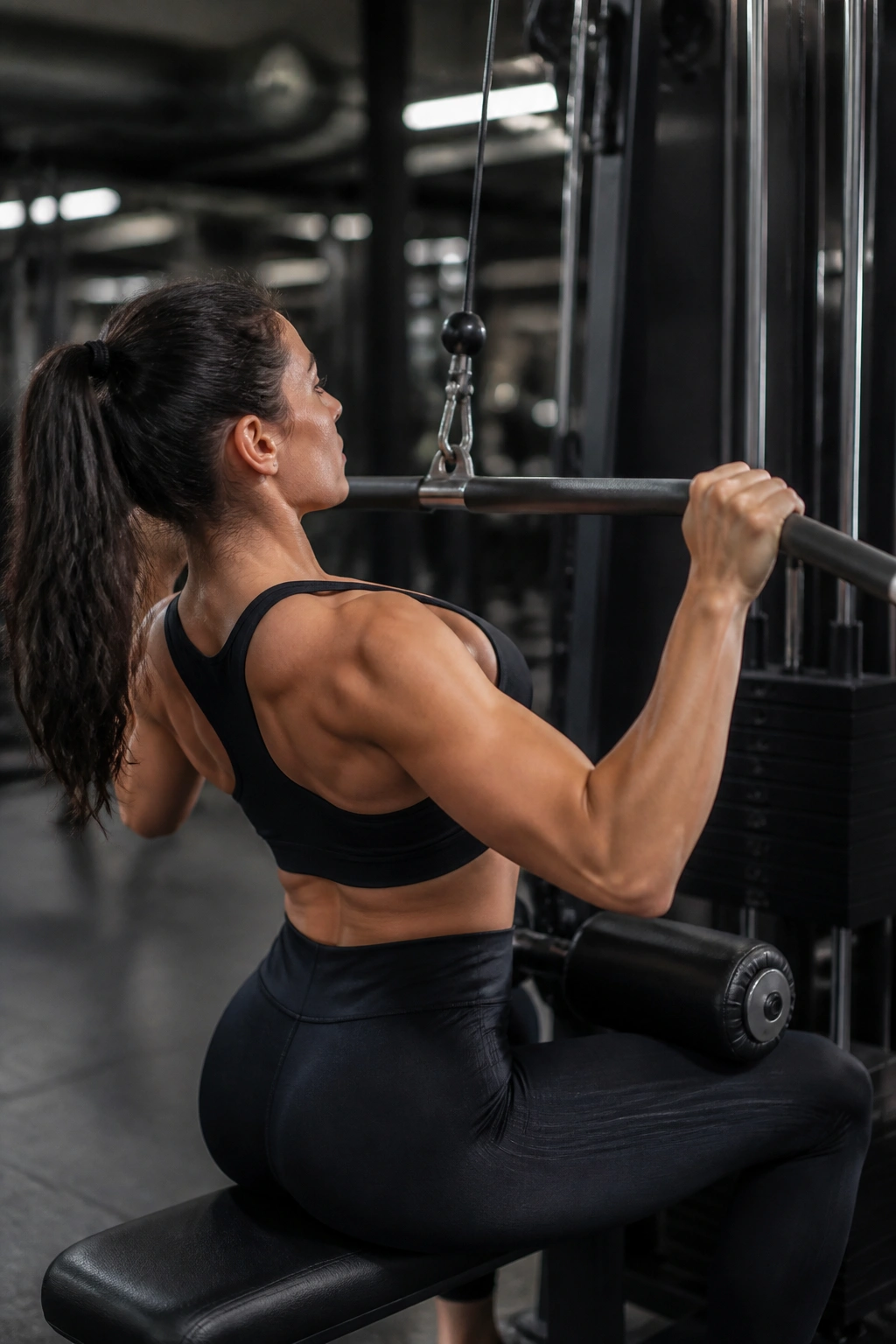
A stronger back does more than fill out a tank top. It gives you a better base for deadlifts, presses, carries, and all the little things people forget are strength markers until they can’t do them well.
This is the day for vertical pulls and rows that actually move something heavy. Start with assisted pull-ups or lat pulldowns for 4 sets of 6 to 8, then hit one-arm dumbbell rows for 3 sets of 10 per side, and finish with rear delt flyes and hammer curls for 3 sets each. The rear delts matter more than most people think. So does the grip.
If you only row, your lats can stay underworked. If you only pulldown, your mid-back can lag. The clean fix is both. Keep the pulldown chest tall and elbows driving down, then let the row train the path of the shoulder blade through a full reach and pull.
A simple rule
- Pull with the elbow, not the hand.
- Pause one beat at the top.
- Stop two reps before form falls apart.
That last one saves more sets than any “burnout” trick ever will. Boring? Sure. Useful? Absolutely.
6. Bulgarian Split Squats for Women Who Want Real Muscle
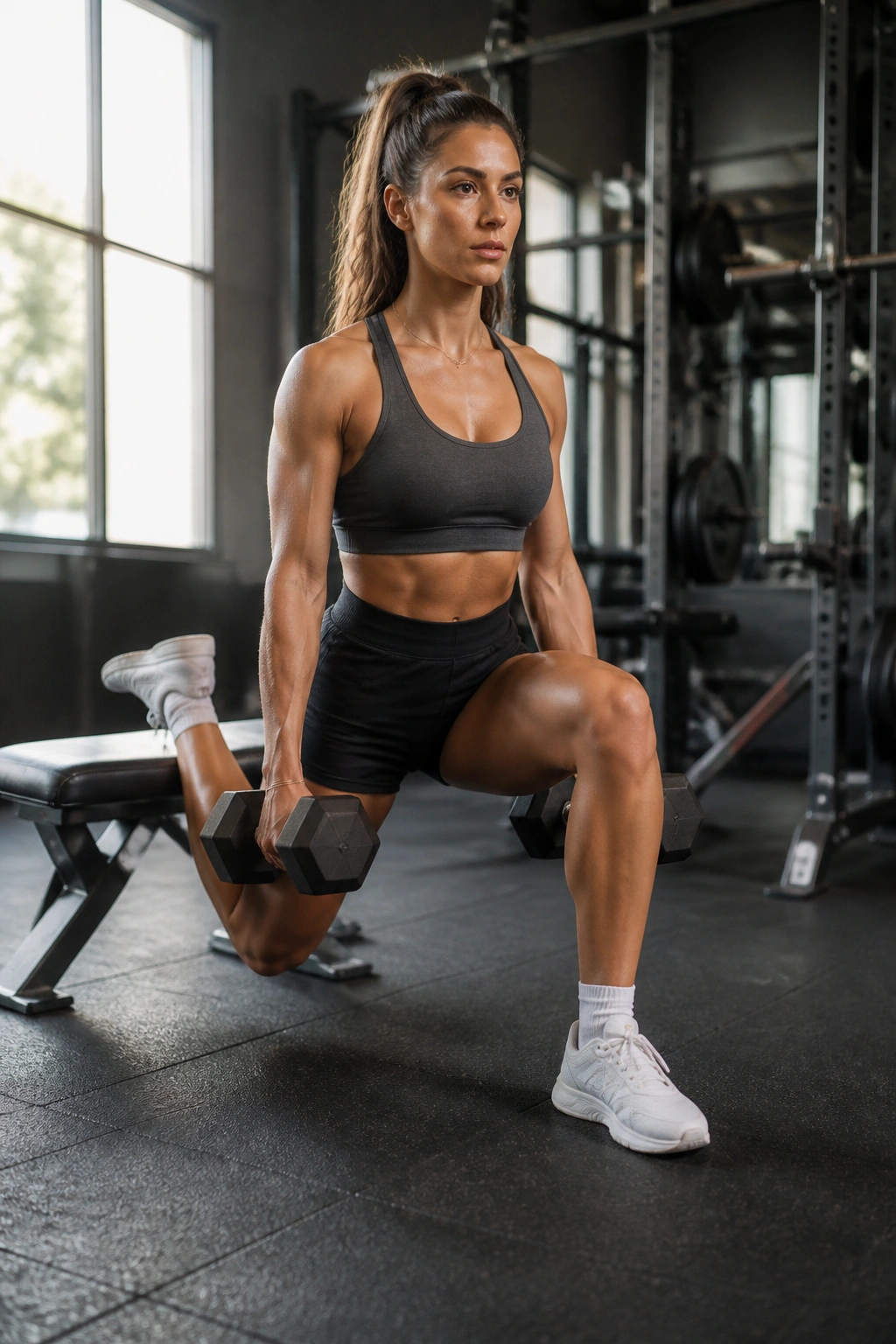
Unlike a straight barbell squat day, this one tells on your weak side fast.
That is why I like Bulgarian split squats for women who want real muscle. They hit the glutes, quads, and adductors hard without asking your spine to carry the whole load, and they expose side-to-side differences that bilateral lifts can hide. If one leg is quietly doing more work than the other, this workout finds out.
Run 3 or 4 sets of 8 reps per leg with a dumbbell in each hand or one heavy dumbbell held goblet-style. Put the front foot far enough away that the knee can travel naturally without folding the torso too much. Then add walking lunges for 2 sets of 12 steps if you still have gas.
Best for: lifters who want glute and thigh growth, but do not want every leg day to feel like a lower-back tax.
Less ideal for: anyone who rushes balance and cuts the range short. That turns a great movement into a shaky half-rep habit.
The burn shows up fast. Good. That is part of the deal.
7. Front Squat and Leg Press Quad Day
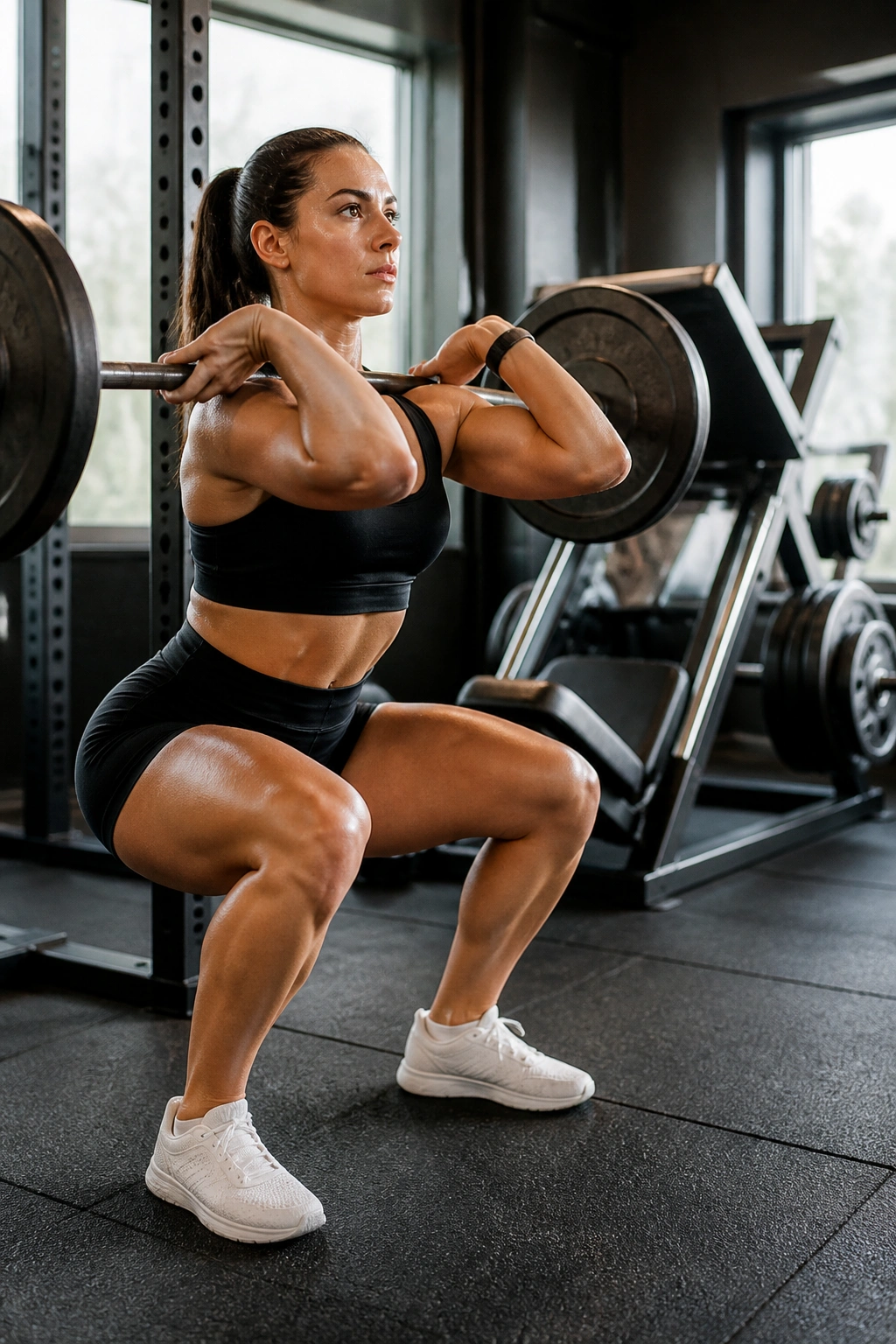
Want thicker quads without living under a barbell all week?
Front squats and leg presses make a strong pair. The front squat forces a more upright torso, which shifts the work toward the quads and upper back. The leg press then lets you pile on more volume without your balance becoming the bottleneck.
How to get the quad bias
- Front squat: 4 sets of 5 reps
- Hack squat or leg press: 3 sets of 10 reps
- Leg extension: 3 sets of 12 to 15 reps
- Seated calf raise: 3 sets of 15 reps
Keep the front squat tall and tight. If the elbows drop, the whole lift starts leaking. On the leg press, place your feet lower on the platform if you want more quad work, and don’t shove the sled so deep that your lower back rounds and the hips tuck under hard.
Do not turn the press into a glute press by moving the feet too high. That mistake is everywhere.
A quad day like this can be brutal in the best way. The last few leg extensions should feel like your thighs are arguing with you.
8. Bench Press and Incline Dumbbell Press
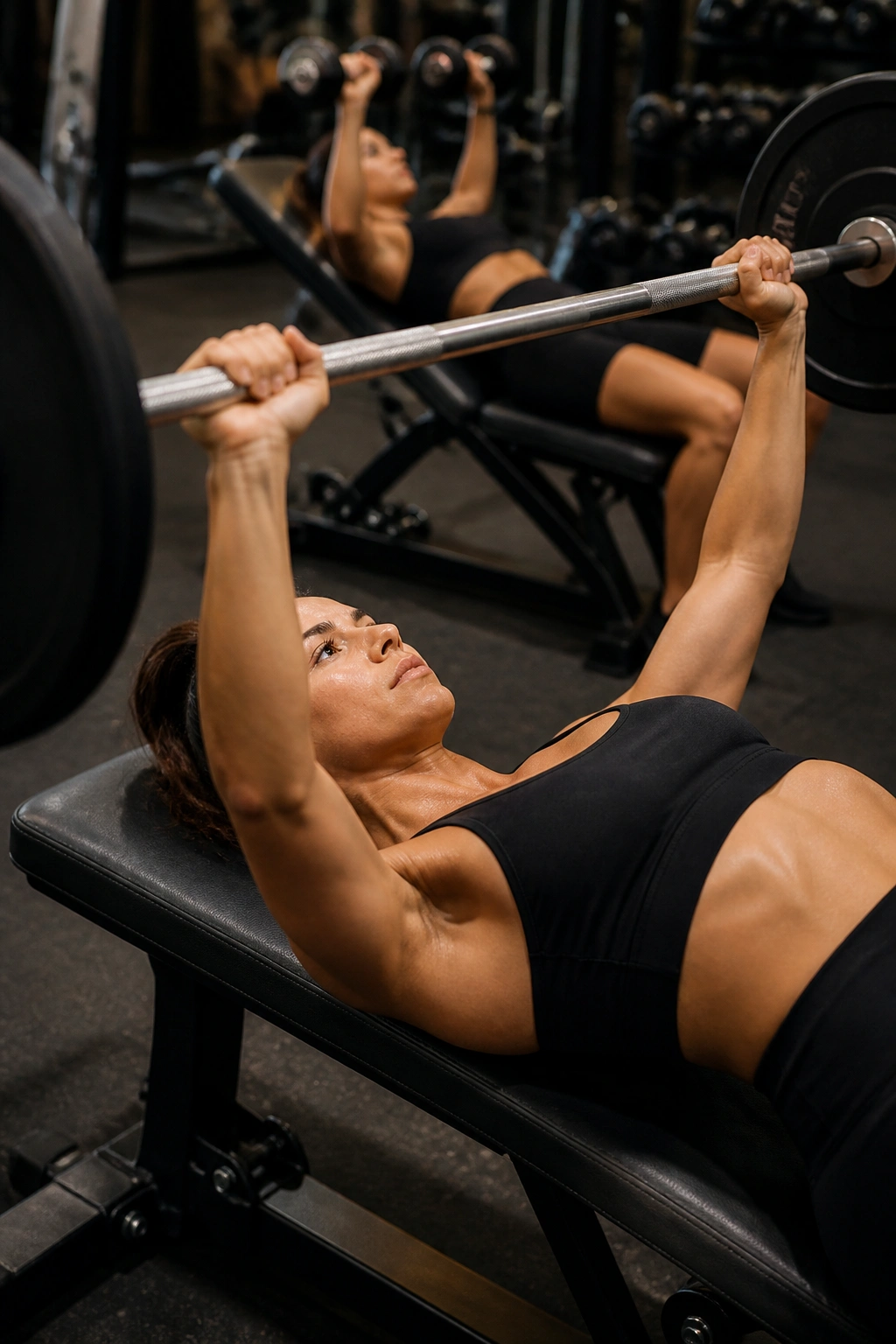
Bench pressing belongs in a muscle-building plan for women.
I said it. Chest training is not just for men, and it is not just for powerlifters. A solid bench press builds chest, triceps, and front delts, and it gives you a pressing base that makes almost everything else feel steadier. The trick is to respect the setup, not muscle the bar around like a moving box.
Start with barbell bench press for 4 sets of 5 reps, then move to incline dumbbell press for 3 sets of 8, and finish with close-grip push-ups or skull crushers for 2 to 3 sets of 10 to 12. Keep the bench work heavy enough that the last rep matters, but not so sloppy that your shoulders feel pinched by set two.
The cleanest cue is simple: pull the shoulder blades back and down, lower the bar to the lower chest, and press slightly back toward the rack. That bar path looks small on paper. In practice, it is the difference between a good rep and a grindy mess.
If upper body growth has stalled, chest work is often the missing piece.
9. Overhead Press and Lateral Raise Day
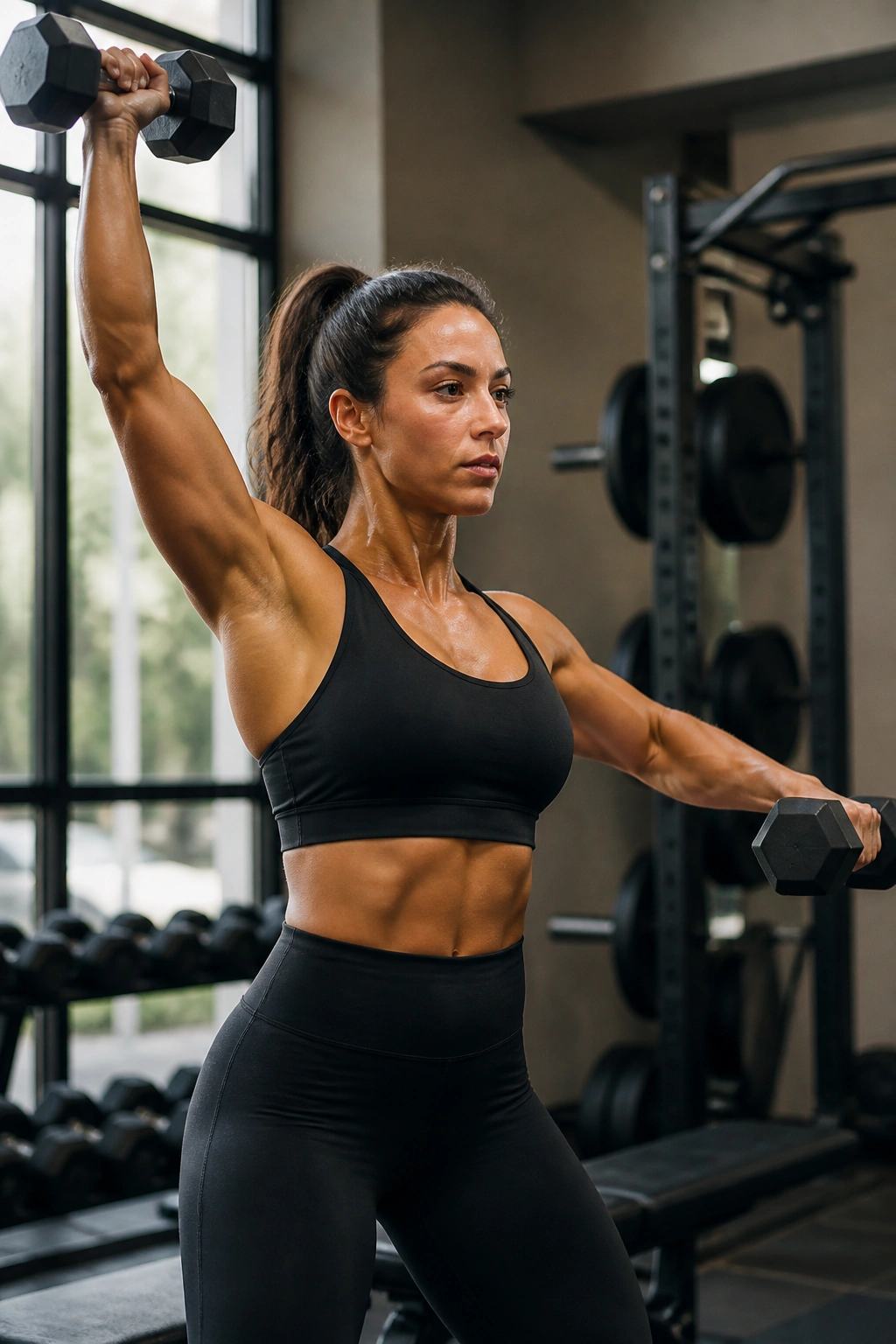
The first strict overhead press feels humbling. Good.
Shoulders grow when they are forced to stabilize, press, and keep doing both under load. A lot of people chase side raises and ignore the main press. That leaves delts undertrained and the triceps doing all the stubborn work.
A clean shoulder day can open with standing overhead press for 5 sets of 3 reps, then shift to seated dumbbell press for 3 sets of 8, followed by lateral raises for 4 sets of 12 to 15 and rear delt flyes for 3 sets of 15. Finish with a 20-second overhead hold if your core and shoulders still have something left.
What to watch for
- Keep the rib cage from flaring.
- Do not turn the press into a standing backbend.
- Raise the dumbbells a little in front of the body on lateral work.
- Stop the set when the shoulders start shrugging the load.
That last bullet saves a lot of useless swings. Side delts love clean, controlled reps. They do not care about your desire to heave the weight around.
10. Pull-Up Progression and Lat Pulldown Day
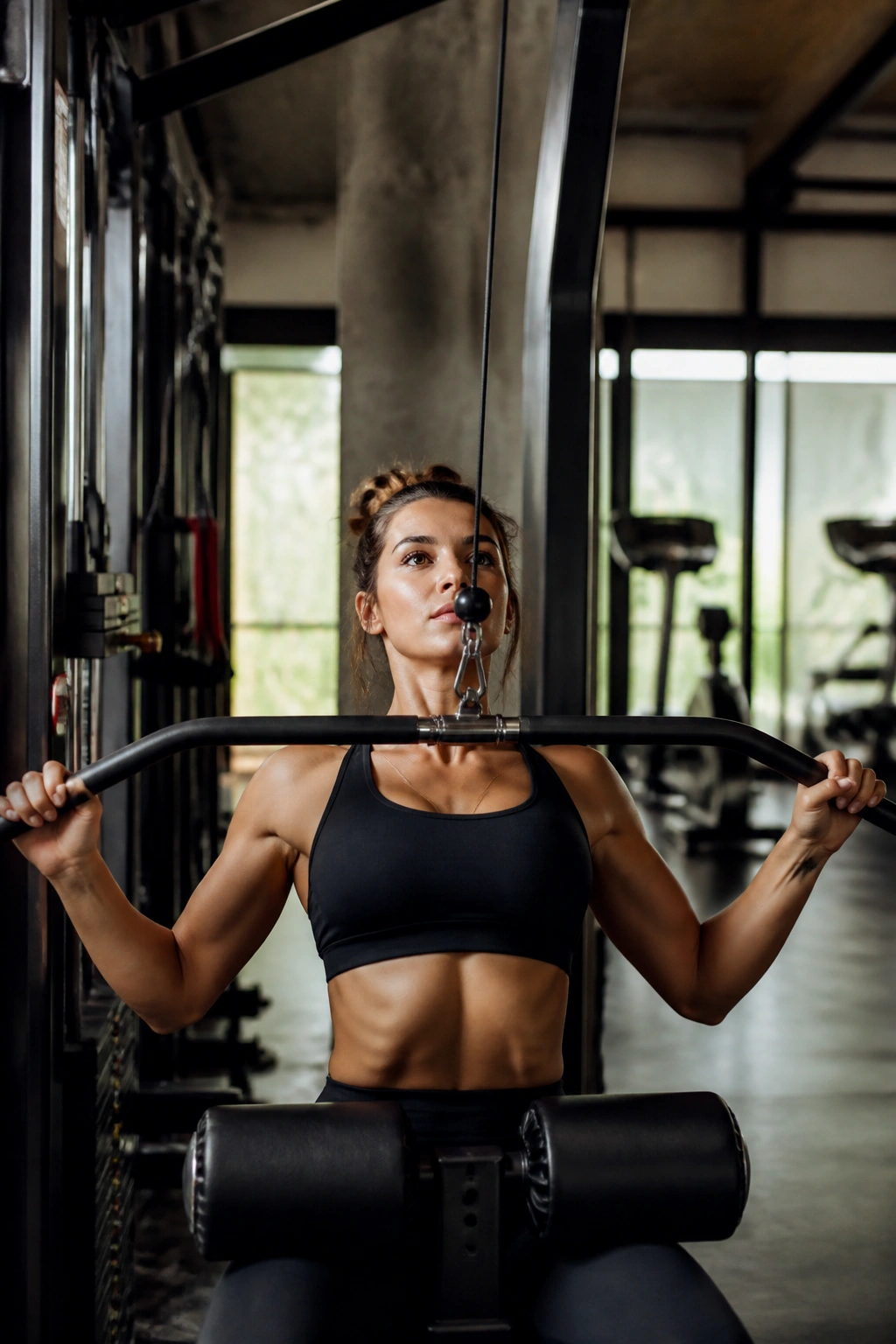
If pull-ups still feel out of reach, that is not a failure. It is a training problem.
And training problems can be fixed. The shortest route is a pull-up progression day built around assistance, negatives, and heavy pulldowns. You are teaching the lats and upper back how to own your own bodyweight before you ask them to do the whole thing alone.
How to progress
- Assisted pull-up: 4 sets of 4 to 6 reps
- Slow negative pull-up: 3 sets of 3 reps, lowering for 3 to 5 seconds
- Lat pulldown: 3 sets of 8 to 10 reps
- Straight-arm pulldown: 2 sets of 12 reps
- Hammer curl: 2 to 3 sets of 10 to 12 reps
Start with the pull-up variation you can handle without jerking. Then use the pulldown to get more total work in the lats, not just more fatigue. The negative matters because the lowering phase builds control fast, and control is usually the piece missing when people say they “can’t do a pull-up.”
What not to do
- Do not kick your legs around.
- Do not use a band so thick that it carries the whole lift.
- Do not skip the row work and wonder why the back still feels flat.
That last one is common. Annoying, too.
11. Machine Hypertrophy Day for Safer Extra Volume
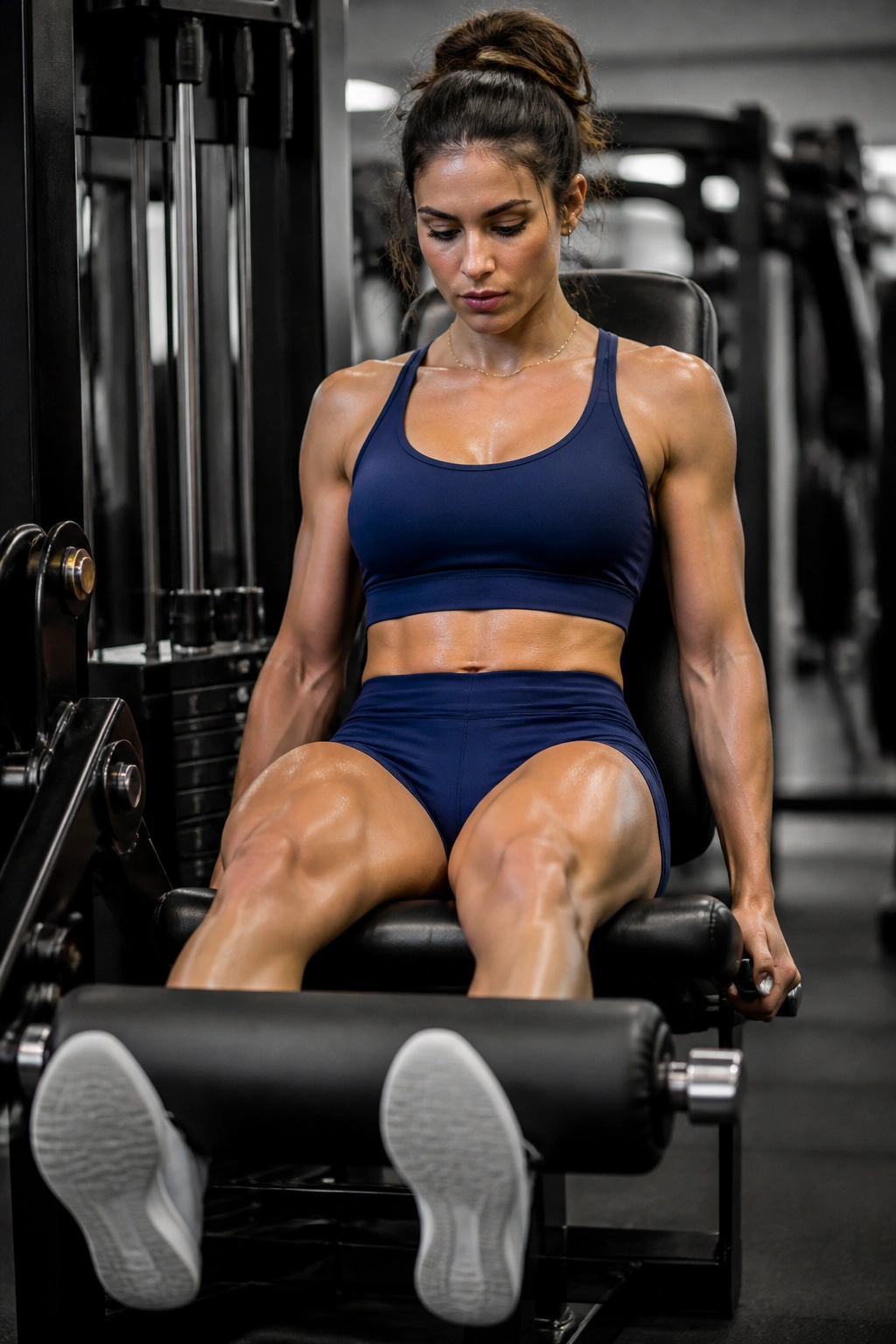
Unlike free-weight days, machines let you push closer to failure without worrying about balance or a wandering bar path.
That makes this style of workout useful when you want more muscle-building volume but your joints feel a little cooked. It is not glamorous. It is effective, and sometimes that is the better choice. The resistance stays honest while the setup gets simpler.
A smart machine session might look like hack squat for 4 sets of 8, seated row for 3 sets of 10, machine chest press for 3 sets of 10, leg curl for 3 sets of 12, and cable lateral raise for 2 sets of 15. Rest 60 to 90 seconds on most of it. That shorter rest keeps the density up without turning it into sloppy cardio.
This is the day I like when a lifter wants extra volume but does not need more chaos. If the barbell work is already heavy earlier in the week, machines give you a way to pile on quality reps without getting beaten up by setup fatigue.
One good machine set near failure can be worth three half-hearted free-weight sets. That is the whole point.
12. Dumbbell Home Workout for Real Muscle
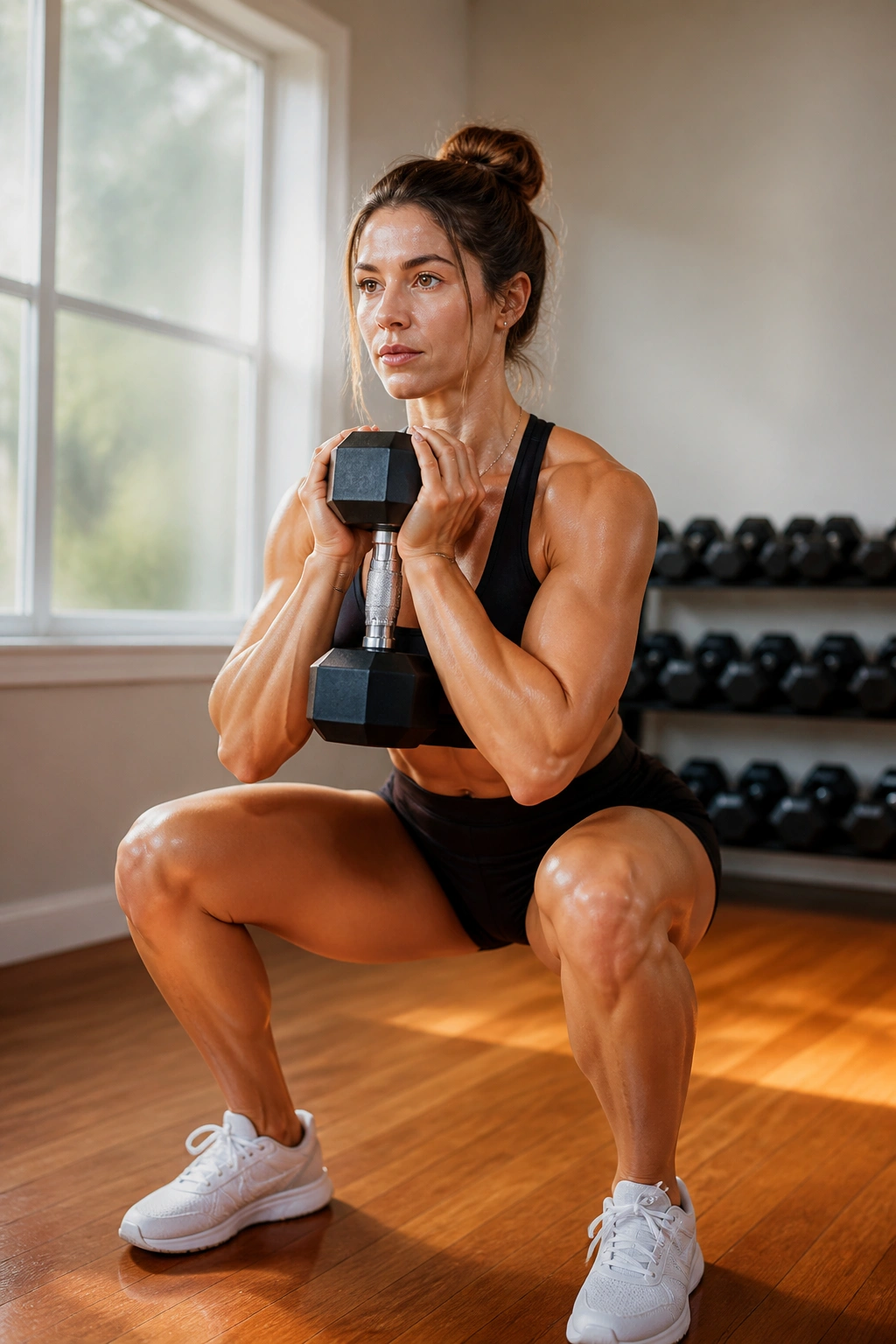
No rack? Fine. That does not kill muscle gain.
A pair of adjustable dumbbells can build plenty of shape if you stop trying to turn the workout into a race. Home training works best when the exercises are simple, the reps are honest, and the last few reps feel like a job. Slow the lowering phase down and the weights go a long way.
A solid at-home session
- Goblet squat: 4 sets of 10 reps
- Dumbbell Romanian deadlift: 4 sets of 8 reps
- Floor press: 3 sets of 10 reps
- One-arm dumbbell row: 3 sets of 10 reps per side
- Split squat: 2 sets of 12 reps per leg
- Lateral raise: 2 sets of 15 reps
Use 90 seconds of rest between sets. If the weights are limited, slow the eccentric to 3 seconds down on the squat and RDL. That small change makes a light dumbbell feel a lot more serious.
The mistake to avoid is turning the whole thing into a sweat circuit with tiny rests. That may feel efficient. It is also a fast way to cap the load before the muscles have actually been challenged.
13. Kettlebell, Carry, and Core Work
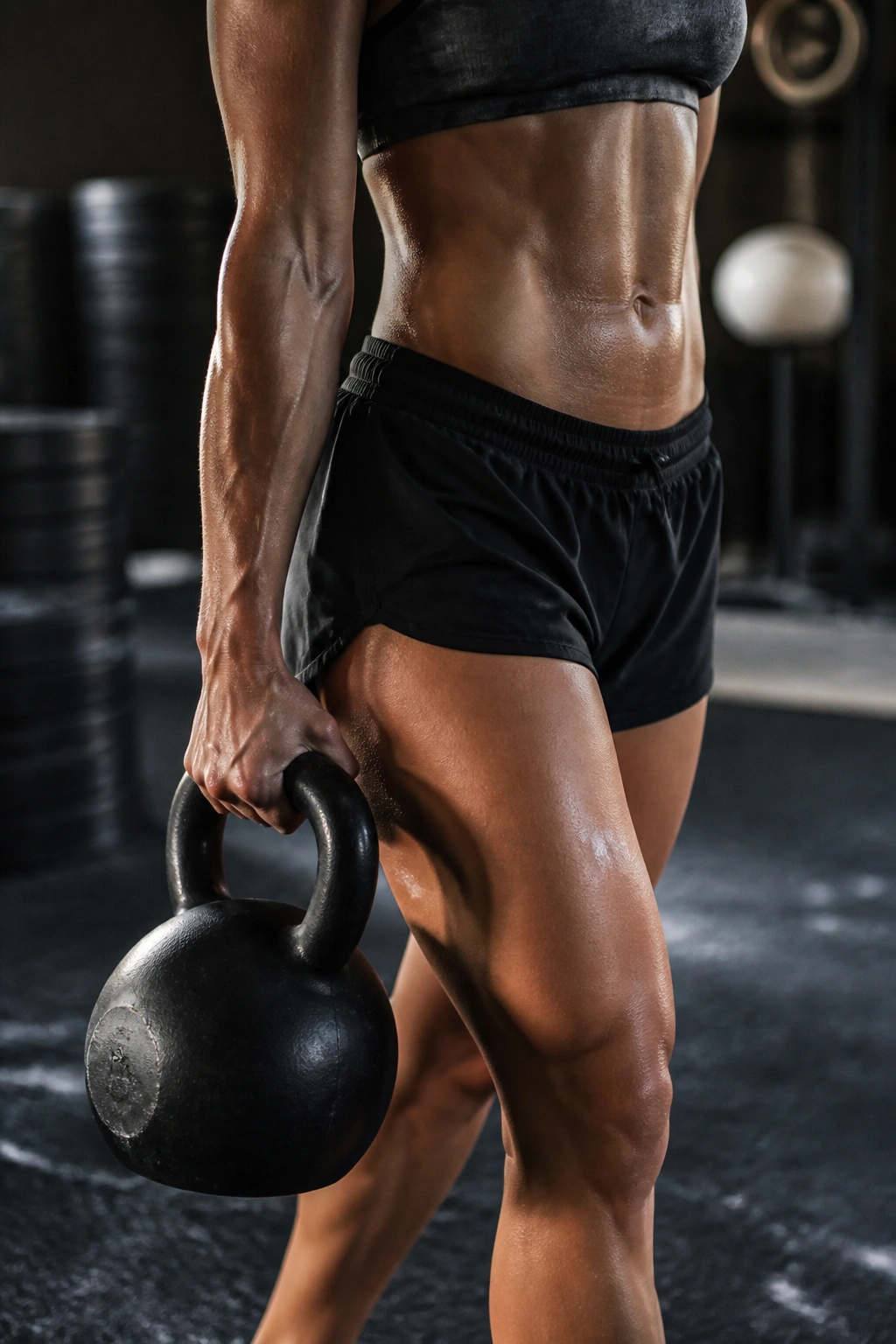
A single kettlebell can look modest and still ruin your grip.
That is exactly why I like it for muscle work. Carries, goblet squats, presses, and swings train bracing and coordination while forcing the trunk to behave under load. You feel the work fast, but the point is not to gas out. The point is to stay tight while moving something awkward.
A strong version of this session could be goblet squat for 4 sets of 8, kettlebell swing for 3 sets of 15, suitcase carry for 3 rounds of 30 meters per side, half-kneeling press for 3 sets of 8 per side, and front rack march for 2 rounds of 20 steps. Keep the carries heavy enough that your torso wants to lean. Then don’t let it.
Key details
- Brace before every carry.
- Keep the bell close on the rack work.
- Stop the swing set when power drops.
- Use a weight that makes the last 5 meters of the carry matter.
That last line is the whole game. If the load feels decorative, it is too light.
14. Full-Body Density Workout
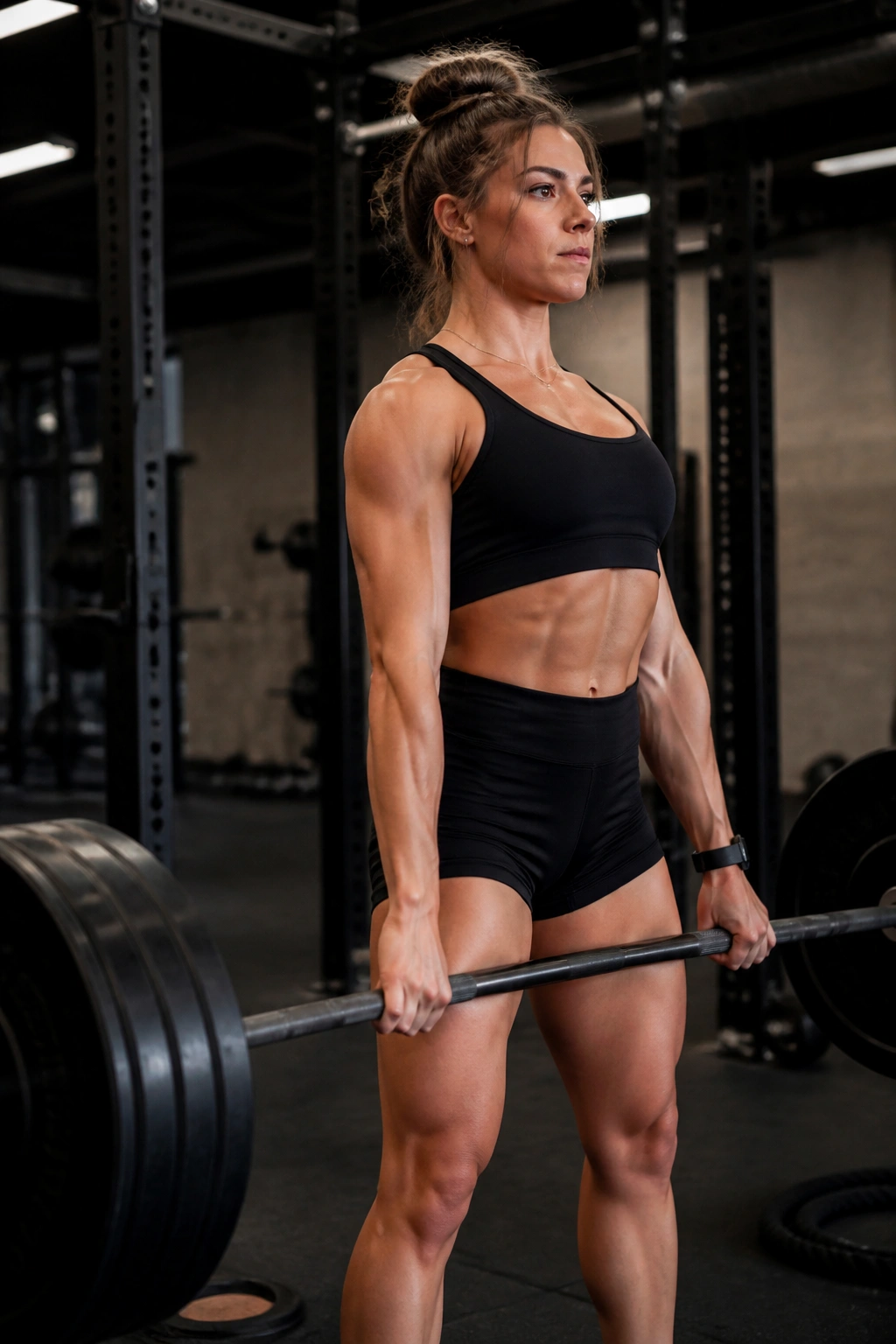
Full-body sessions are not beginner-only.
They build muscle just fine when the loading is honest and the rest is kept under control, not chopped into frantic nonsense. I like this style when someone wants to train hard three days a week, keep sessions efficient, and still hit every major movement pattern. You get squat, hinge, push, pull, and carry work in one place.
A practical setup looks like this: deadlift for 3 reps, bench press for 5 reps, row for 8 reps, front squat for 5 reps, and farmer carry for 30 to 40 meters. Run that as 4 rounds, resting 2 minutes between rounds. The weights should be heavy enough that the final round feels earned, not breezed through.
The trap is turning the whole thing into a breathless fitness test. That is a different sport. If your form starts slipping, trim a round or add more rest. Muscle likes quality reps. It does not care that you were sweaty enough to wring out your shirt.
This is the kind of session that quietly teaches your body to handle more work without turning every workout into a max-out day.
15. The Weak-Point Workout for Women Who Want Real Muscle
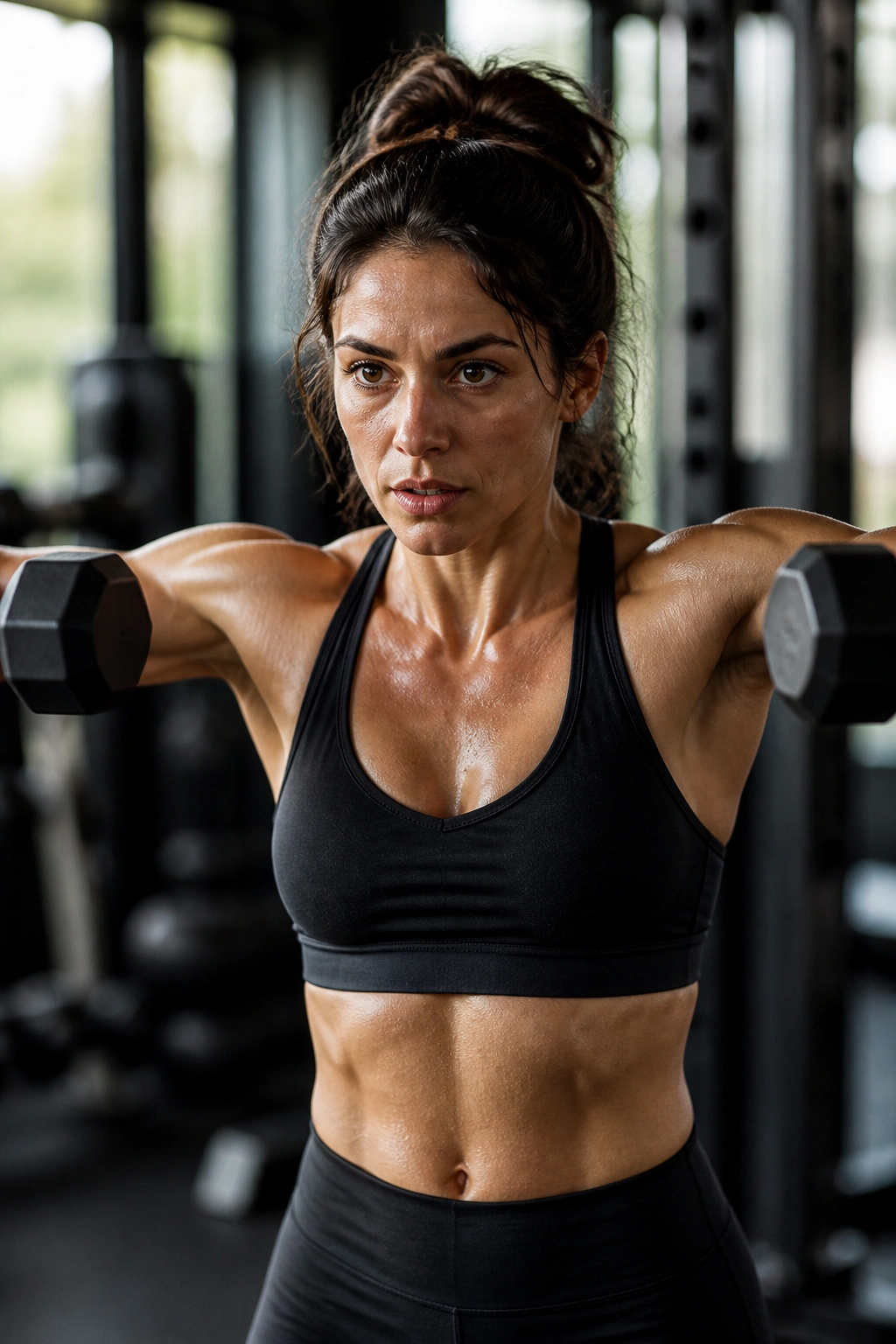
This is the session I use when the big lifts are going fine, but one or two areas still lag.
Maybe your shoulders grow slower than your glutes. Maybe your arms disappear unless you train them directly. Maybe your calves never seem to get the message. A weak-point workout is where you give those places the extra sets they have been dodging.
Where to put the extra work
- Lateral raise: 4 sets of 15 reps
- Cable curl: 3 sets of 12 reps
- Rope pressdown: 3 sets of 12 reps
- Seated calf raise: 4 sets of 15 reps
- Cable hip abduction or abduction machine: 3 sets of 20 reps
- Ab wheel or dead bug: 3 sets of 8 to 10 reps
Keep the rests shorter here, around 45 to 75 seconds, and stay strict. This is not the day to chase heroic numbers on a lift you barely control. It is the day to feed the missing pieces enough hard work that they stop lagging behind.
Use this workout once a week, or plug two of its moves onto the end of a bigger day. If progress stalls, add a set before you add chaos. That small adjustment usually beats reinventing the whole plan.
Real muscle comes from repetition, load, and enough patience to let the numbers climb. Not from making every session feel like a test.
