



If your abs only wake up for crunches, kettlebell workouts for stronger abs will expose that fast. A kettlebell does not care how neat your reps look on a mat. Once the bell sits off to one side, overhead, or out in front of you, your midsection has to keep the ribs, pelvis, and shoulders from drifting apart.
That is the part most people miss. The best kettlebell core work is often standing work: carries, presses, hinges, get-ups, and squats where your torso has to stay quiet while your limbs do the noisy stuff. When the bell moves away from your centerline, the abs have to do more than squeeze; they have to resist twisting, tipping, and over-arching.
I like that kind of training because it feels honest. If you cheat, the rep tells on you right away. If you rush, the weight gets weird in your hand and your back starts trying to help, which is exactly when the whole thing stops being about strong abs and turns into a lesson in control.
Start with the first lift and keep your eyes on what the torso is doing, not just on how tired your shoulders feel.
1. Turkish Get-Ups for Full-Body Bracing
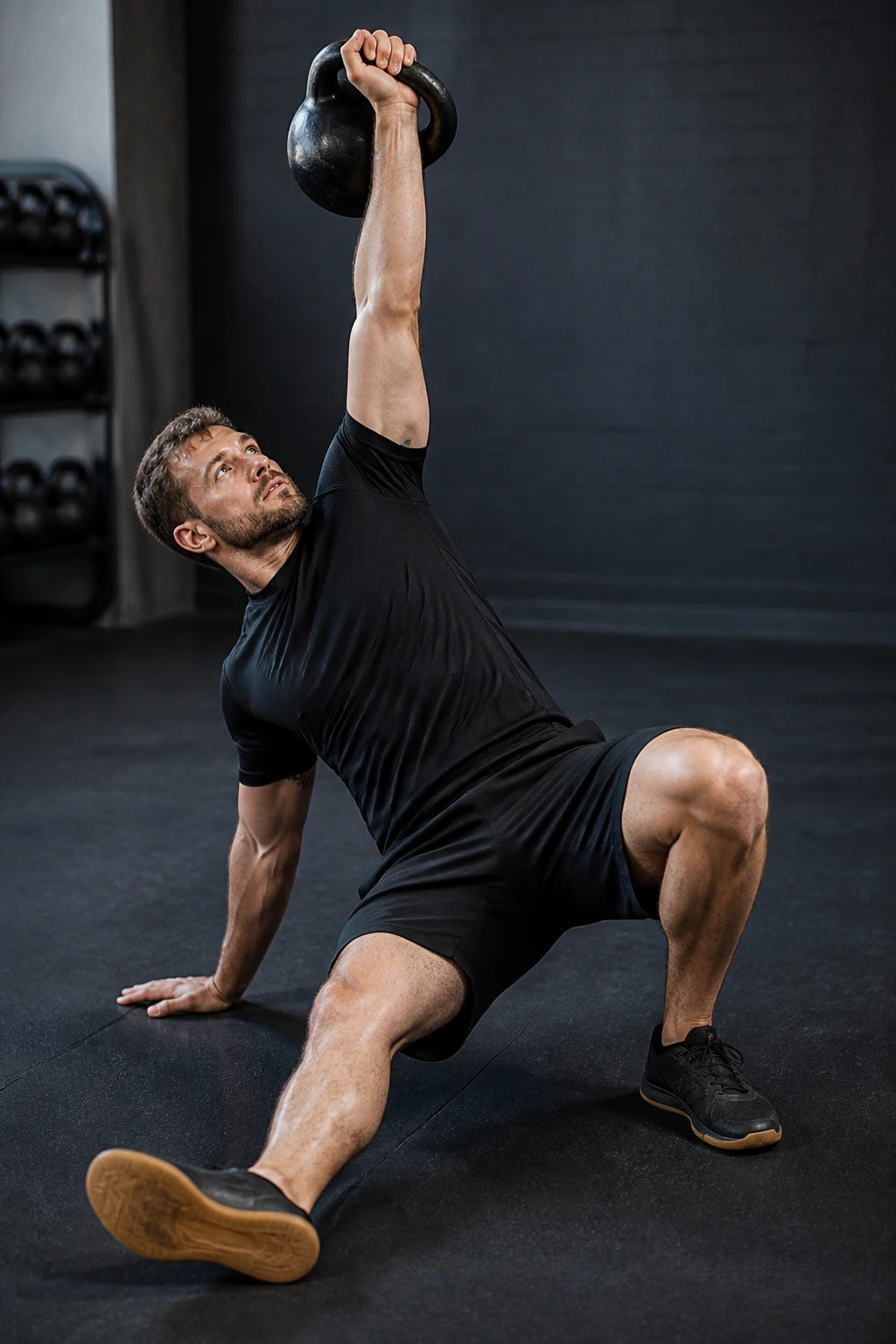
The Turkish get-up is the closest thing kettlebells have to a full-body lie detector. One rep asks your abs to stay on while you roll, post, half-kneel, stand, and then do the whole thing in reverse. There is nowhere to hide.
Why It Hits the Core So Hard
The magic is in the transitions. You are not just “lifting” the bell; you are keeping the weight stable while your body keeps changing shape, and that means your midsection has to organize the whole move from the floor up.
Start light. One rep per side is enough at first, and even that can feel spicy if you move with control. A bell that is too heavy turns the get-up into a shoulder shrug with a lot of drama. That is not the point.
- Press the kettlebell straight up and keep your wrist stacked over your elbow.
- Roll to your elbow, then to your hand, without letting the bell wander.
- Sweep the leg through slowly and keep the chest open.
- Stand, pause, and own the top position for a breath before you go back down.
Best use: 2 to 4 sets of 1 rep per side, with a full minute or two between sides if you need it. Clean reps matter more than load here.
2. Single-Arm Swings That Punish a Lazy Midsection
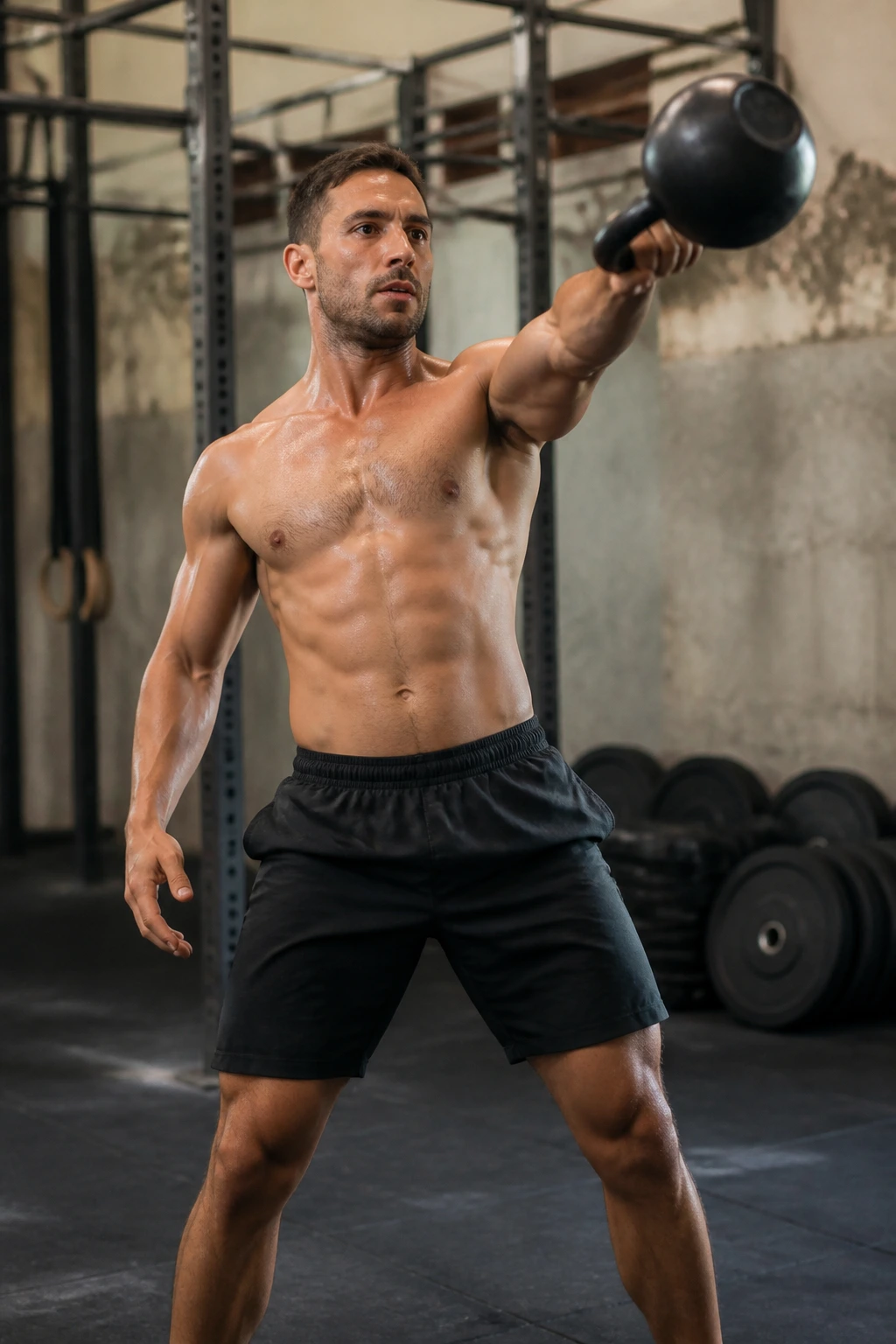
A two-handed swing can hide a sloppy torso. One hand won’t. The bell tries to pull your shoulder forward and your body wants to rotate just enough to make the rep easier, so your abs have to clamp down before the weight ever leaves the floor.
That is why single-arm swings belong in any serious list of kettlebell workouts for stronger abs. They train anti-rotation without making a big speech about it. You feel it in the obliques, sure, but you also feel it deep in the lower belly when the bell snaps back and you refuse to fold with it.
Use a weight that lets the swing stay sharp. 10 sets of 10 reps per side works well if you like density, or do 5 sets of 15 with short rests. The free hand should not wave around like it is trying to help. Keep it quiet.
If the bell starts arcing away from your body, the set is already gone. Reset, shorten the swing path, and keep the hips doing the work.
3. Suitcase Carries That Light Up the Side Abs
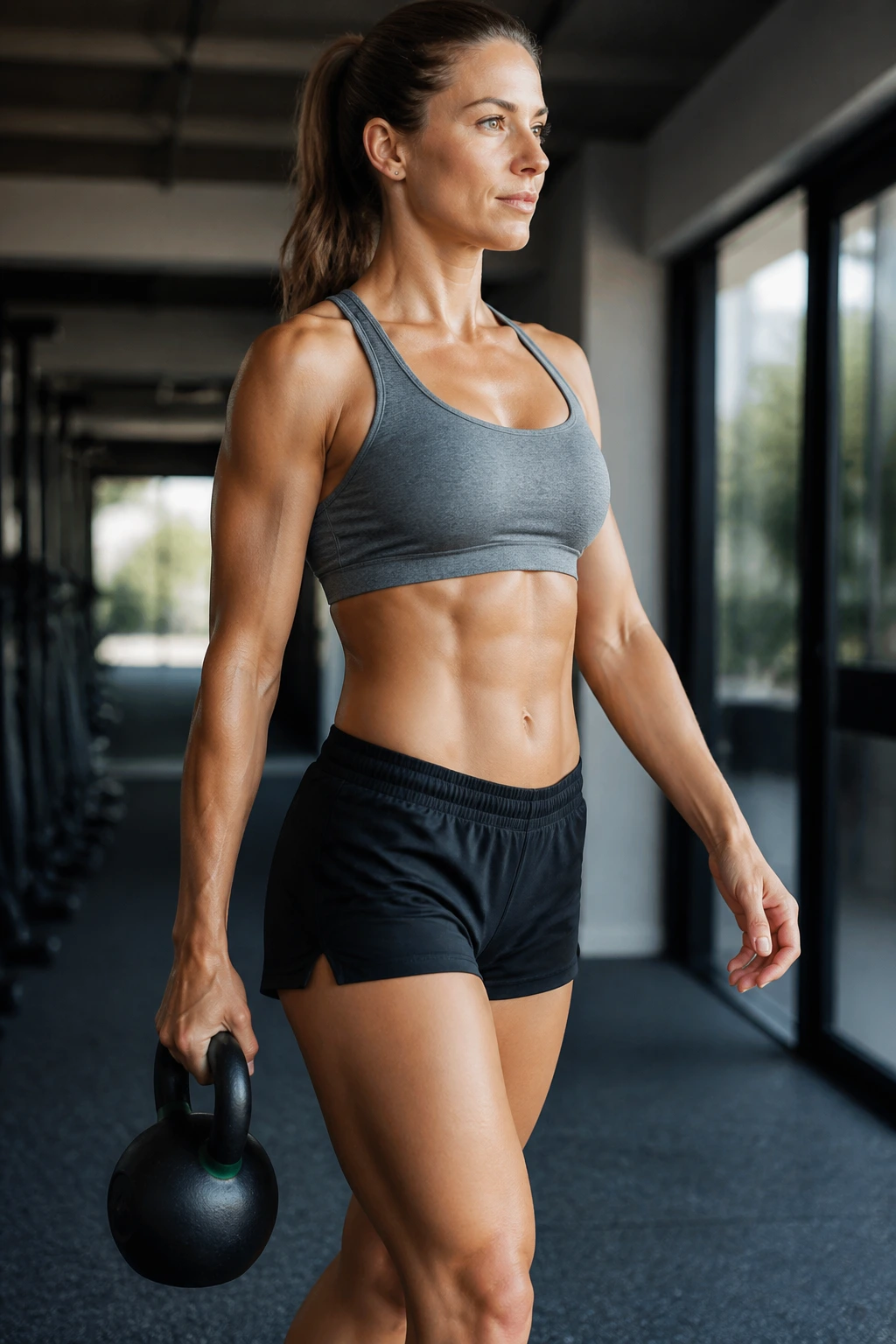
Why does a simple walk with one kettlebell feel so unfair? Because your body hates being tilted, and a suitcase carry loads one side long enough for the obliques to stop pretending they are optional.
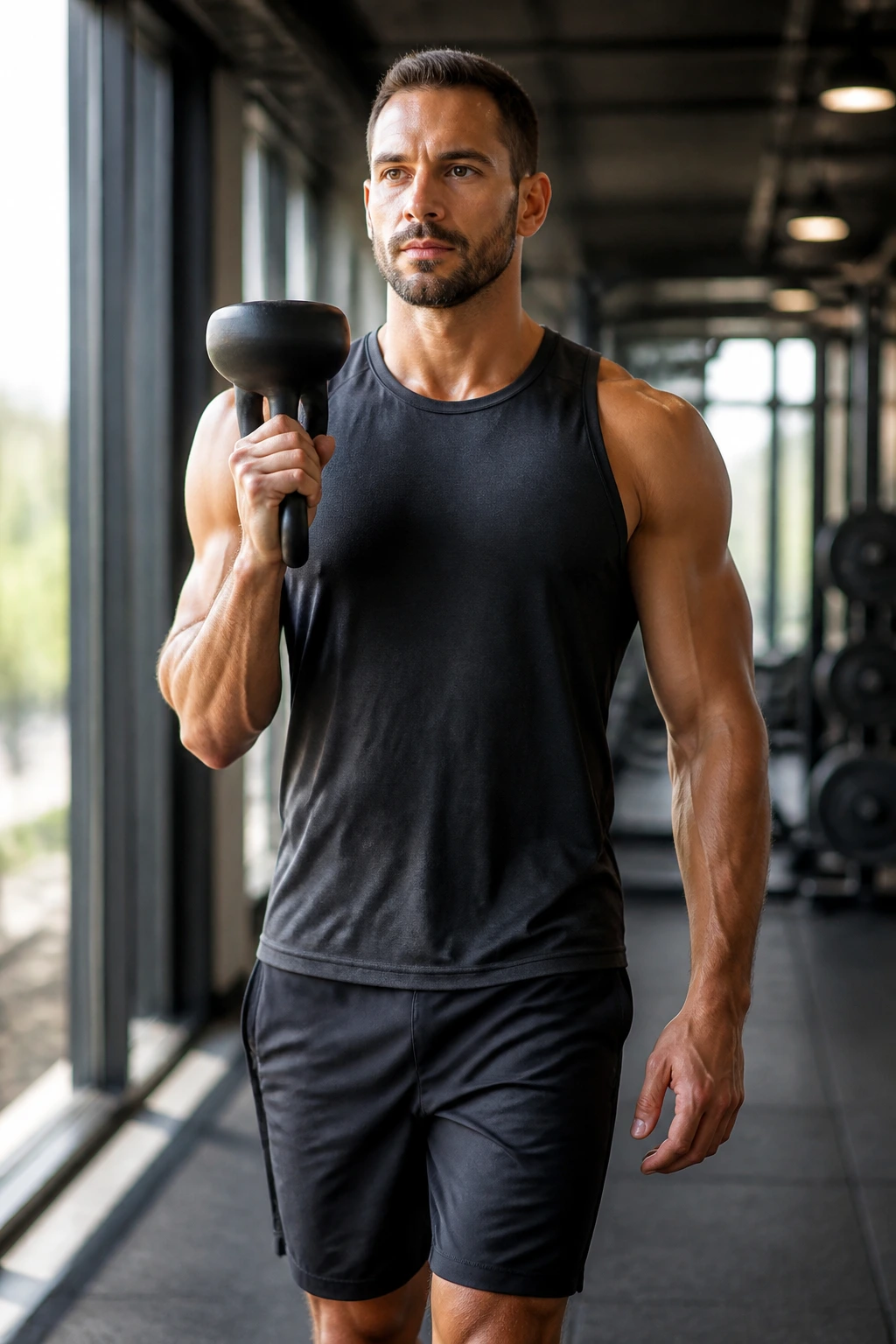
Hold the kettlebell in one hand and walk like you mean it. Tall posture. Quiet shoulders. No leaning away from the load. That last part matters more than people think. If your rib cage shifts toward the free side, the abs are already losing.
How to Do It Well
- Pick a bell you can carry for 20 to 40 yards without hitching your hip.
- Keep your chin level and your ribs stacked over your pelvis.
- Walk slowly enough to control the sway, but not so slowly that you turn it into a balance drill.
- Switch sides every set, not halfway through a walk.
A suitcase carry looks almost boring from the outside. On the inside, it is pure side-body work. Use 3 to 5 rounds per side, and add distance before you add load. Heavy is nice. Controlled is better.
4. Front Rack Marches for an Unmoving Torso
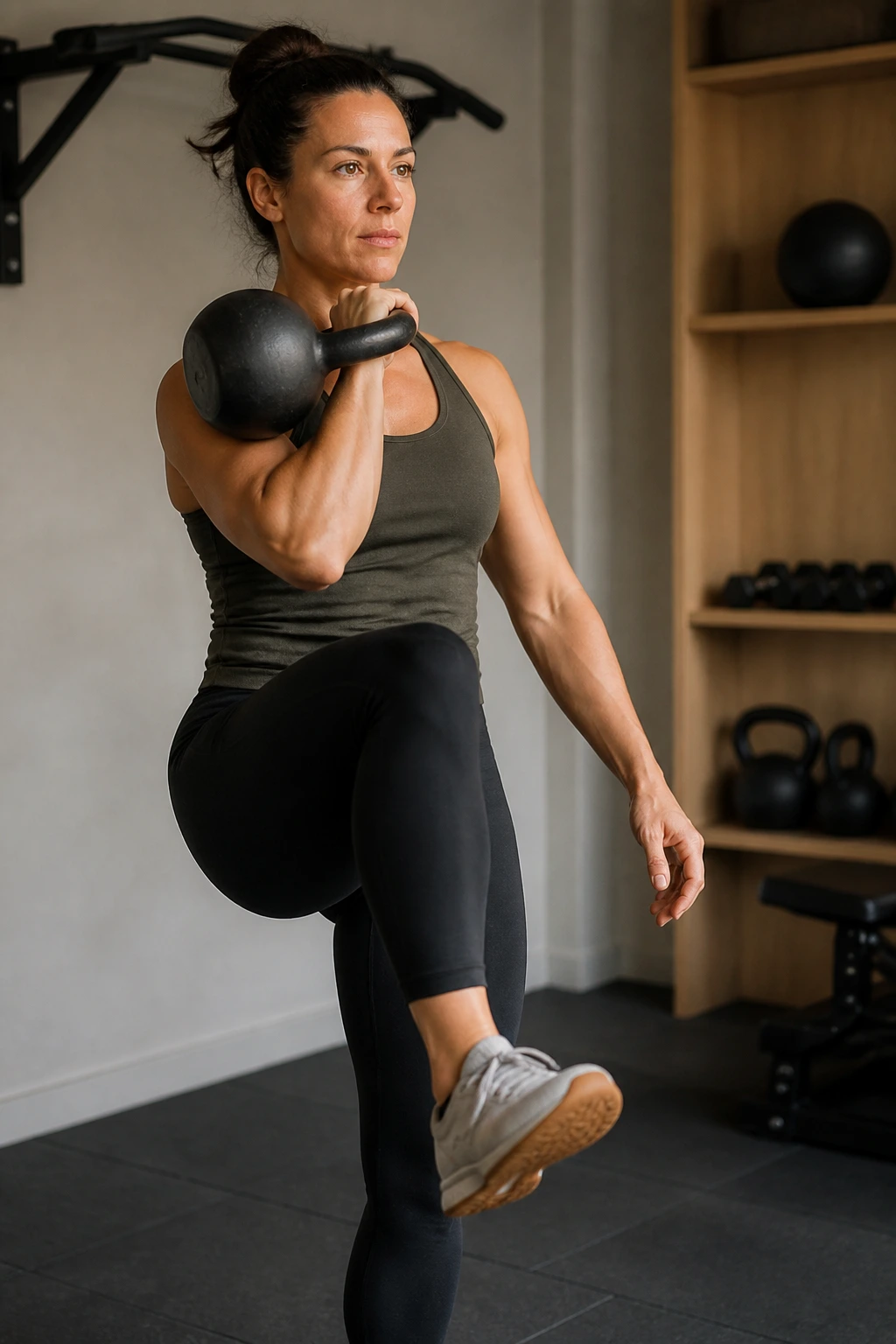
Marching in place sounds dull until the bell sits in the front rack and your ribs start bargaining. One side of the body wants to crank upward, the other side wants to fold, and your abs have to keep the whole mess square.
This is one of my favorite choices when someone wants kettlebell workouts for stronger abs but does not want a lot of floor work. You can do it in a tiny space, and it punishes posture fast. A good front rack march should look almost calm. That calm is hard-earned.
Stand tall with the bell resting on the forearm, elbow tucked in, and fist close to the chest. March for 20 to 30 steps per side, keeping the pelvis level and the rib cage from flaring. If the weight feels like it is pulling you sideways, slow down and shorten the steps.
The best cue is simple: zip up the midsection before the first knee rises. Once that’s in place, the rest gets cleaner.
5. Windmills for Obliques, Hips, and Shoulder Control
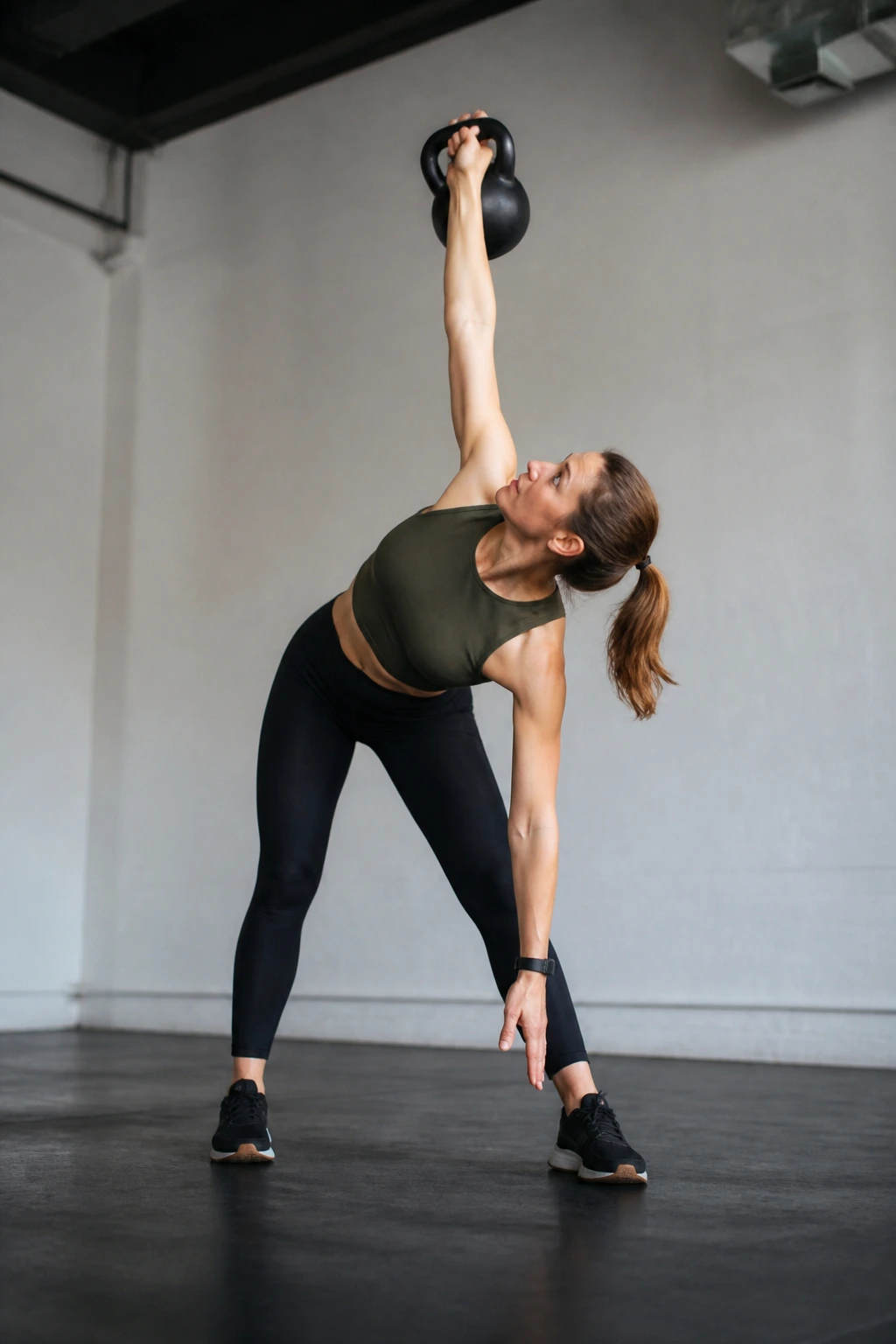
This is not a showy lift. It is a precise one.
A windmill asks you to hold a kettlebell overhead while you hinge at the hips, slide one hand down your leg, and keep the chest open as your torso turns. The obliques work hard, but so do the glutes and the small stabilizers around the shoulder. If any one piece gets lazy, the rep gets messy fast.
A Clean Windmill Setup
Start with a light bell and a wide stance. Press the kettlebell overhead first, then turn the feet so the working-side toes point out a little. Keep your eyes on the bell as you hinge. Your free hand can slide down the inside of the thigh or shin, but only as far as the torso stays stacked.
- Use 3 sets of 5 reps per side.
- Move slow enough to feel the side body lengthen.
- Stop the descent when the back starts to round or the shoulder starts drifting.
- Stand by driving through the hip, not by yanking the torso upright.
A windmill is one of those drills that looks easier in theory than it feels in your hands. That is normal. Keep the weight modest and let the position do the work.
6. Renegade Rows That Refuse to Let the Hips Twist
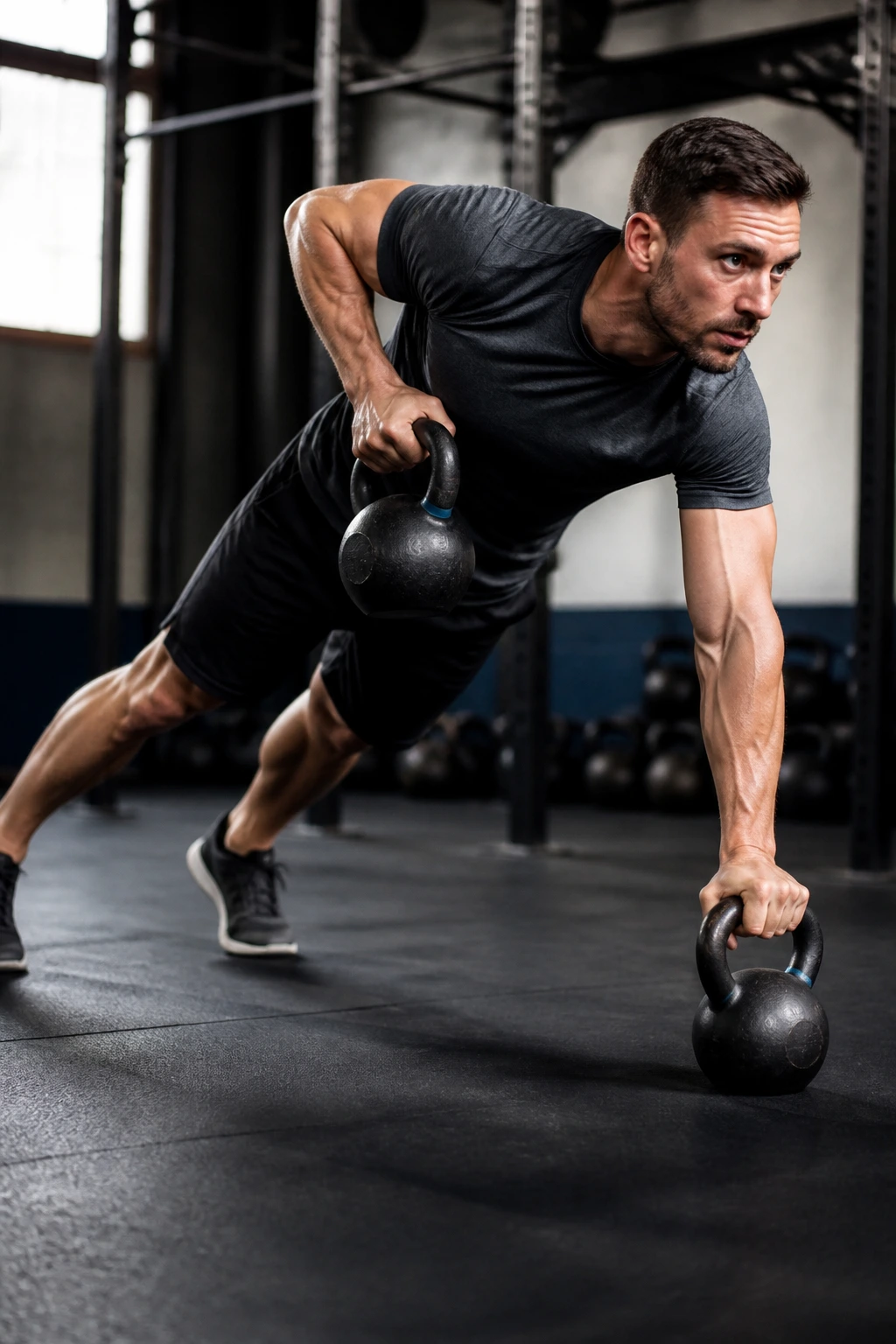
If your hips dance, the row is too heavy or your feet are too close together. That is the whole truth of renegade rows. The kettlebell wants to pull one side of the body open, and the abs have to say no.
Get into a high plank with hands on the bells, feet a bit wider than you think you need, then row one bell at a time without rocking the torso. The goal is not a big pull. The goal is a still body under a moving arm.
A lot of people turn renegade rows into a back exercise and miss the point. The back helps, sure, but the visible skill is anti-rotation under load. If your shirt is shifting side to side, you are giving away the rep.
What to Watch For
- Keep your feet wide enough to build a real base.
- Row with the elbow close, not flared out.
- Pause for one count at the top.
- Lower the bell with control so the floor does not slam your hand into a sloppy reset.
Try 3 to 5 sets of 6 to 8 rows per side. Light to moderate load wins here. Heavy and ugly is just heavy and ugly.
7. Halos for a Quiet Rib Cage
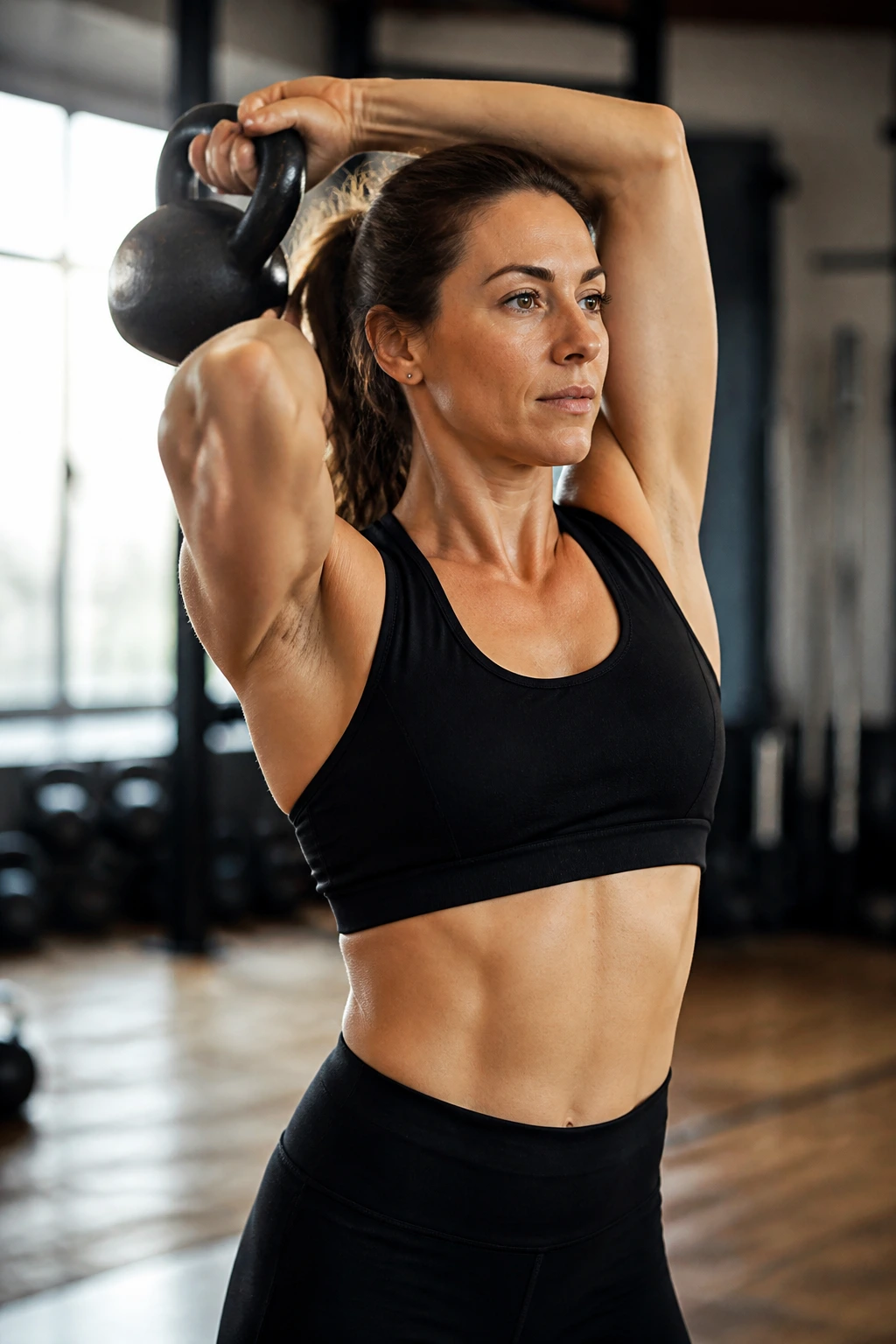
The bell should skim past your hairline, not bash into it. That tiny detail matters more than it sounds, because a clean halo keeps the rib cage still while the arms draw a circle around the head.
I use halos as a warm-up when the torso feels stiff, and I keep them around for core work because they force you to own your posture. If the ribs pop forward, the circle gets bigger and sloppier. If the waist arches, the shoulders often start doing too much. The abs are the quiet fix.
Do 2 to 3 sets of 6 to 8 circles each direction with a bell you can move smoothly. Stay tall. Squeeze the glutes lightly. Let the arms move around the head while the midsection stays almost stubbornly boring.
One nice thing about halos: they tell you how organized your trunk is before the harder work begins. If the motion feels jittery, the next drill should probably be lighter too.
8. Dead Bug Pullovers for Anti-Extension Strength
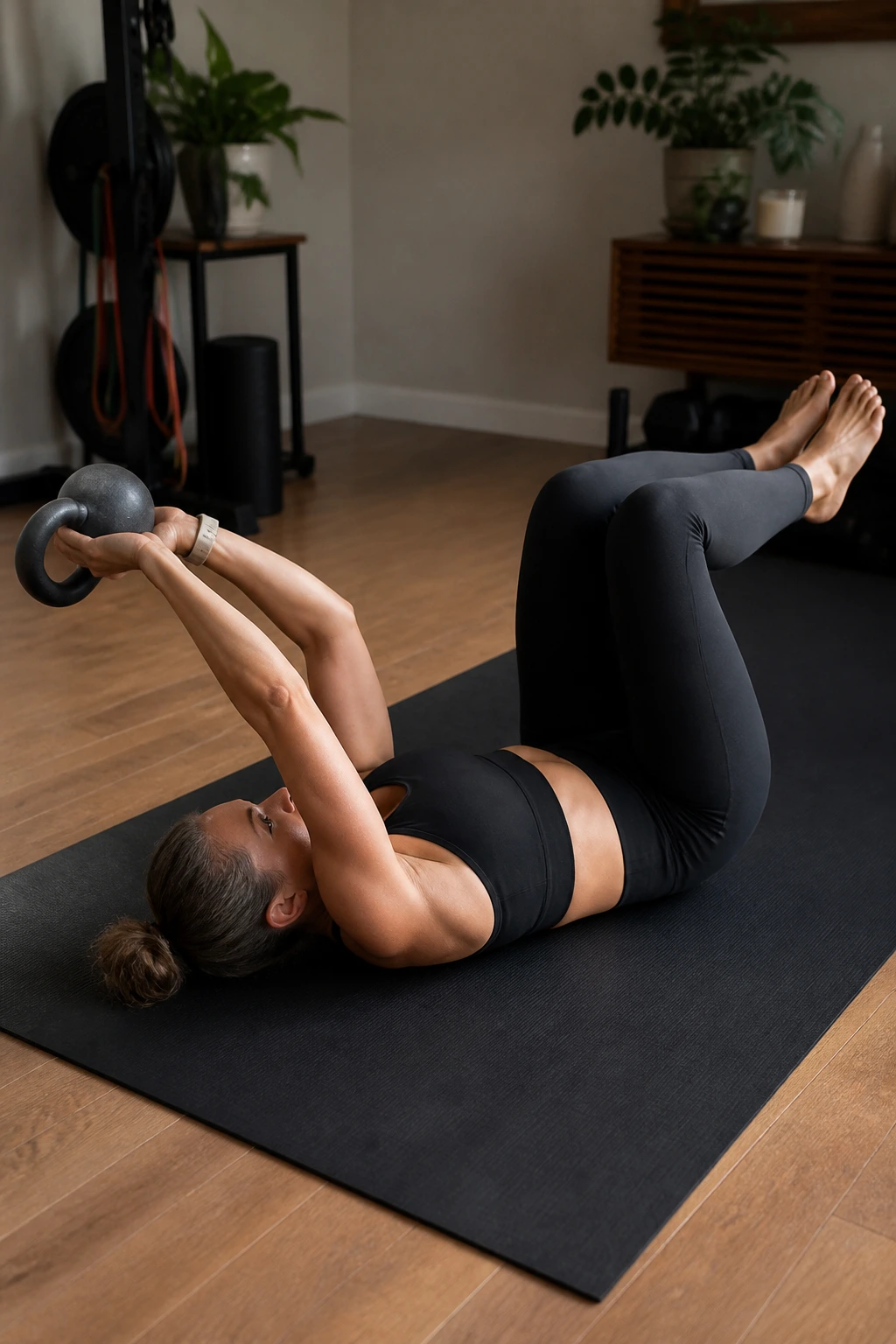
Want lower abs without crunching a thousand times? Dead bug pullovers do the job with less drama and more honesty.
Lie on your back, hold a kettlebell with both hands over the chest, and bring your knees to tabletop. From there, lower one leg at a time while the bell travels back behind you in a slow arc. Your lower back has one job: stay close to the floor. If it arches, the set is gone.
Why This Works
The pullover changes the lever length. As the bell moves overhead, the abs have to stop the ribs from flaring and the spine from taking a little unwanted break. At the same time, the leg lowers challenge the pelvis from the other direction.
A few useful cues:
- Exhale as the bell moves back.
- Keep the low back heavy on the floor.
- Only lower the legs as far as you can without losing contact.
- Use a small kettlebell at first. There is no prize for overloading this one.
Do 3 to 4 sets of 6 reps per side. Slow reps. No rushing. If the floor starts winning against your lower back, make the bell lighter and shorten the lever.
9. Clean and Press Reps That Teach Whole-Body Tension
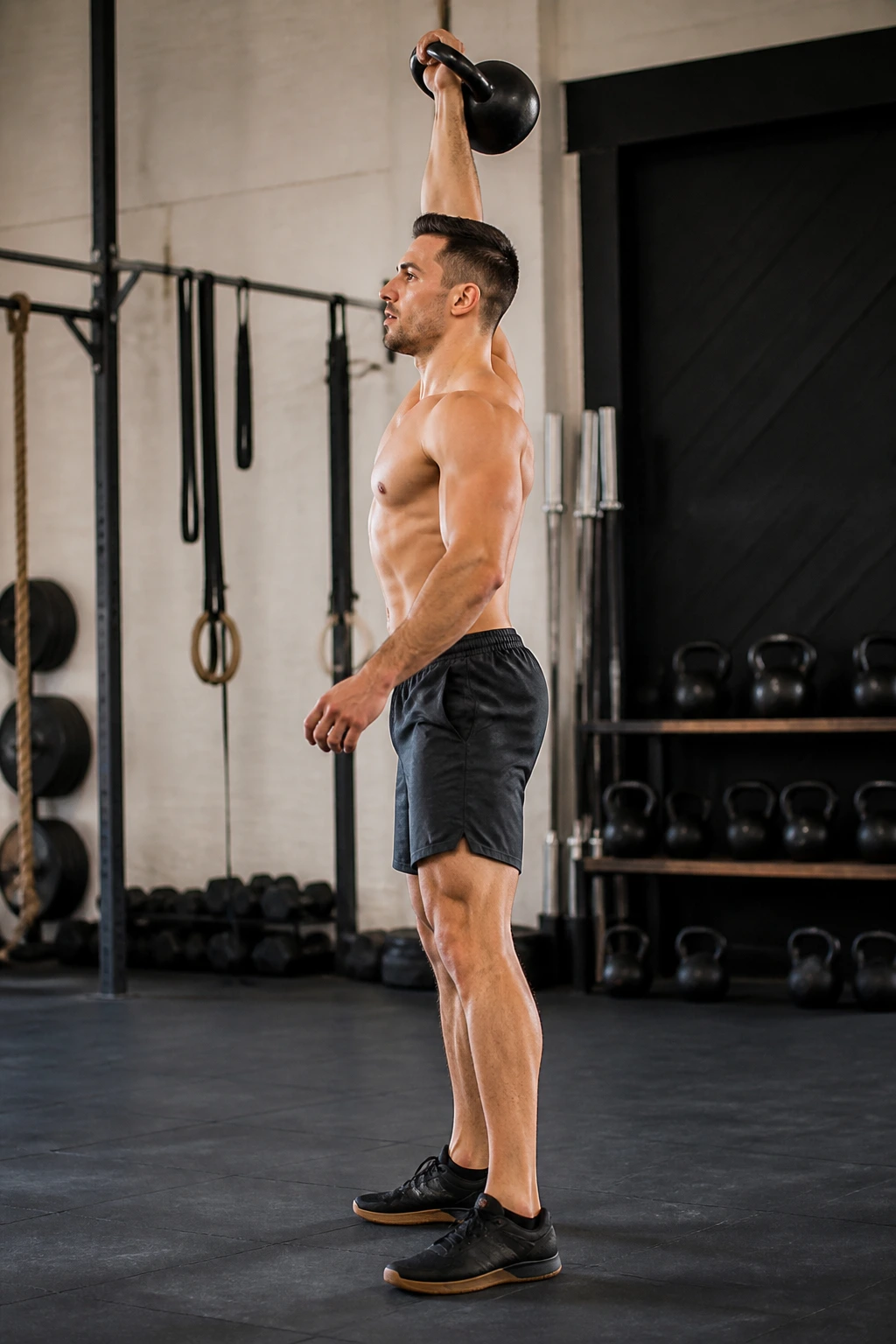
A clean and press forces the abs to earn every centimeter. The bell leaves the floor, lands in the rack, and then has to travel overhead without the torso spilling forward or leaning back like a lawn chair.
That transfer from clean to press is where the core work lives. You need enough tension to keep the bell close, but not so much that you get stiff and jerky. The trunk has to brace, then breathe, then brace again. It is a little ugly when done well.
Use one bell at a time and clean it to the rack with a tight path. Pause for a second, own the stacked position, then press overhead without flaring the ribs. 4 sets of 5 reps per side is a sensible place to start if the movement is new.
The clean part should land softly. The press should feel controlled, not thrown. If the lower back starts arching on the way up, the bell is too much or the core is too loose.
10. Goblet Squat Pauses That Stop the Fold
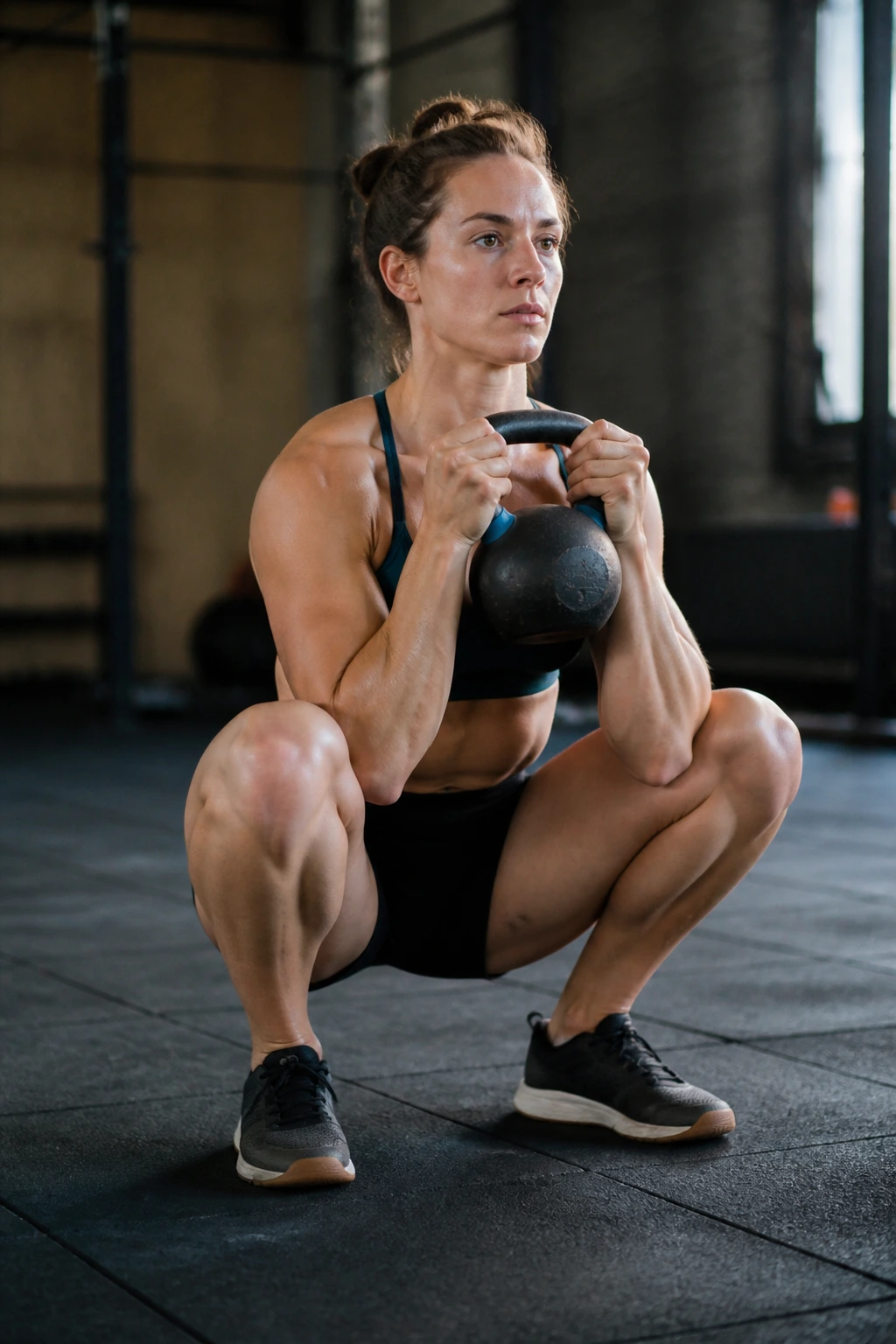
A squat can be core work if you stop at the bottom and stay there.
That pause matters. Hold a kettlebell at the chest, sink into the squat, and sit for 2 to 3 seconds while keeping the elbows inside the knees and the torso upright. The front load wants to pull you forward, which means the abs have to keep the spine from folding into the thighs.
How to Use the Pause
- Descend under control for about 3 seconds.
- Pause at the bottom without bouncing.
- Press the feet into the floor and stand by driving the hips and chest together.
- Keep the bell close enough that it does not drag the shoulders forward.
Use 3 to 4 sets of 5 to 8 reps. The pause will make a moderate load feel much heavier, and that is exactly why it works. You are training the body to hold shape when it wants to collapse.
I prefer this version to endless fast goblet squats when the goal is stronger abs. Fast reps are fine. Paused reps teach control.
11. Offset Reverse Lunges That Fight Side-to-Side Drift
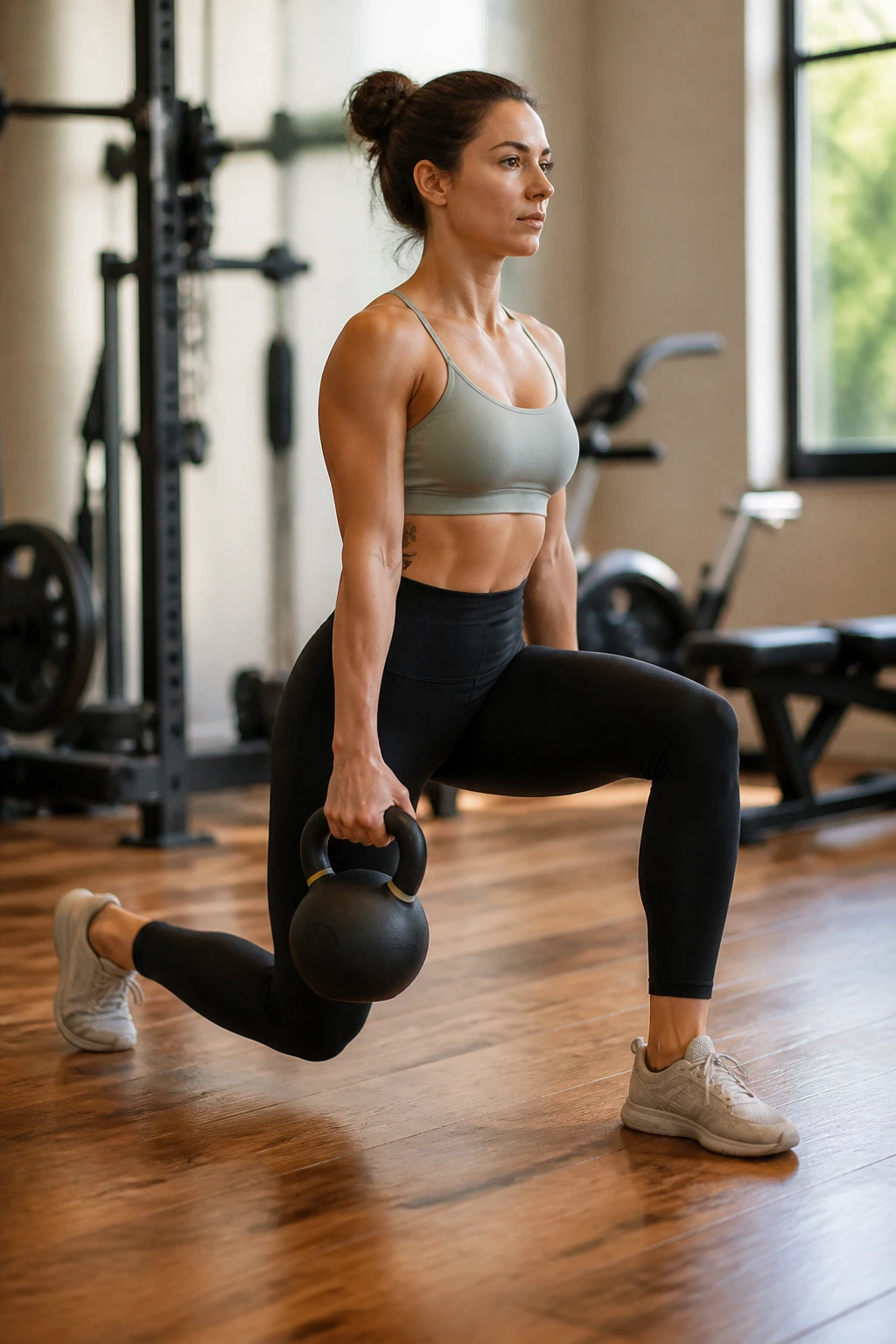
Put the bell in one hand and the lunge stops feeling symmetrical. That asymmetry is useful. The torso has to resist tipping toward the loaded side while the front leg works and the back leg tracks cleanly behind you.
Hold the kettlebell in a suitcase position or a front rack and step back into a reverse lunge. The pelvis should stay level. The ribs should stay stacked. If the torso twists every time you descend, the obliques are being asked a question they are not yet answering well.
Try 3 sets of 8 reps per side. Slow the descent and keep the front foot planted as if you are screwing it into the floor. That little cue helps the knee stay honest and gives the midsection a stable base.
One useful detail: suitcase lunges hit the side body a little harder, while rack lunges make the torso work harder against front-loaded collapse. Both earn a place here.
12. Plank Pull-Throughs for Anti-Rotation Power
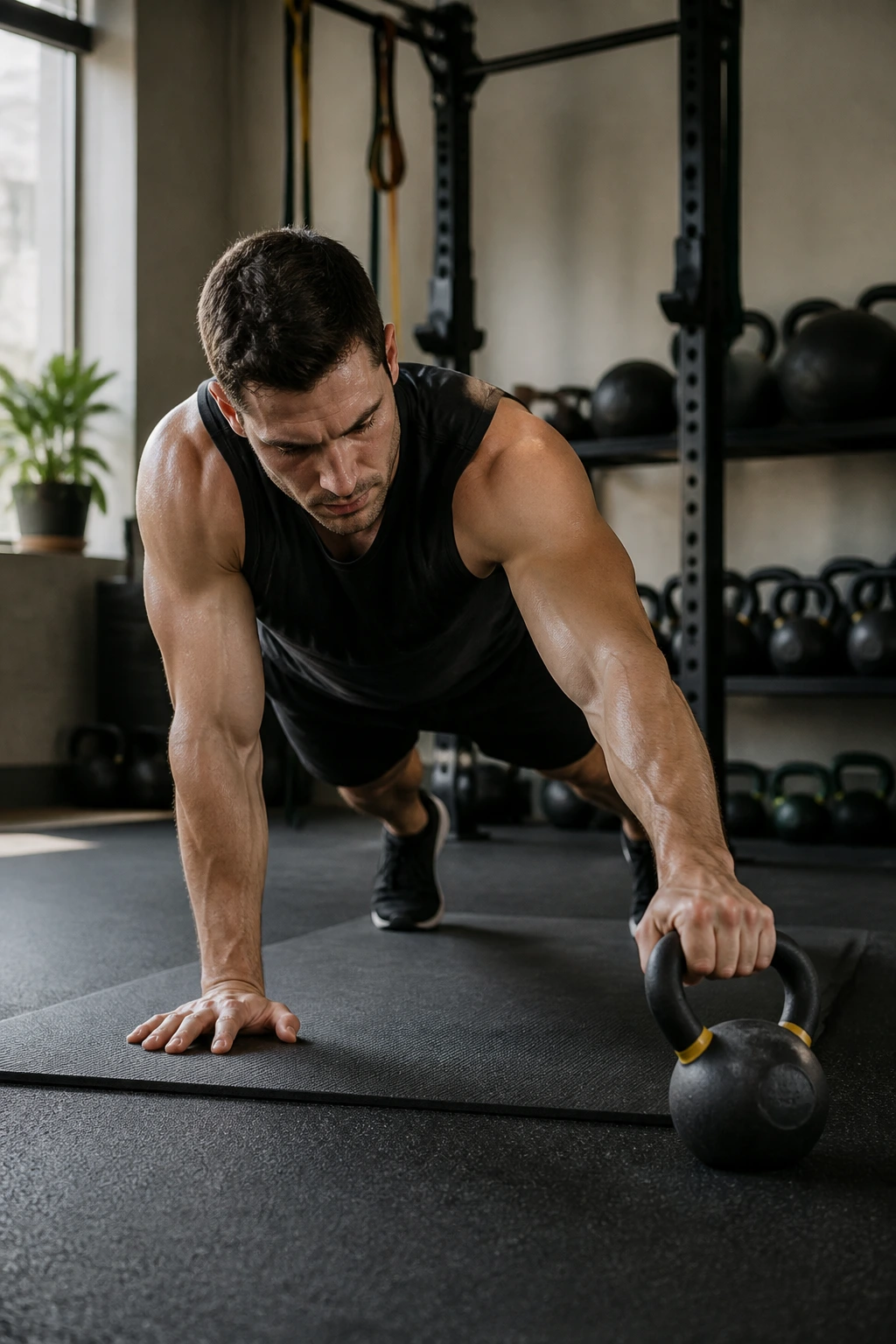
Can you keep your hips still while dragging iron across the floor? That is the whole test.
Set up in a high plank with a kettlebell just outside one hand. Reach across with the opposite hand, pull the bell to the other side, then reset and repeat. The moment the hips sway or the feet wobble, the abs are taking the shortcut. Don’t let them.
A Few Details That Matter
- Feet wider than plank width gives you better control.
- Pull the bell slowly so the torso does not whip to follow it.
- Keep the chest square to the floor.
- Breathe out on the drag, then take a small breath before the next rep.
Use 3 sets of 8 to 12 drags. The load does not need to be dramatic. A tidy plank pull-through with a light bell is worth more than a heavy one that looks like a wrestling match.
If your wrists get cranky, put your hands on dumbbell handles or push-up bars for the plank and keep the kettlebell just close enough to grab.
13. Bottoms-Up Carries for a Wobbly-Weight Challenge
The upside-down bell exposes weak wrists fast. It also lights up the midsection in a sneaky way, because the whole body has to coordinate around a load that wants to flop over.
Hold the kettlebell by the handle with the bell facing up, elbow close at first, then walk. The forearm works hard, the shoulder gets serious, and the abs have to help keep everything stacked under a weight that feels more unstable than it looks.
Do 4 to 6 carries of 15 to 20 yards per side. Start with a very light bell. Seriously. This is not the lift where you prove anything. It is the lift where you learn how much force it takes to keep your body quiet.
If the bell wobbles wildly, shorten the carry and slow the pace. You want a little instability, not a circus trick. The better the line from hand to shoulder to hip, the more useful the carry becomes.
14. Single-Arm Overhead Holds That Expose Weak Links
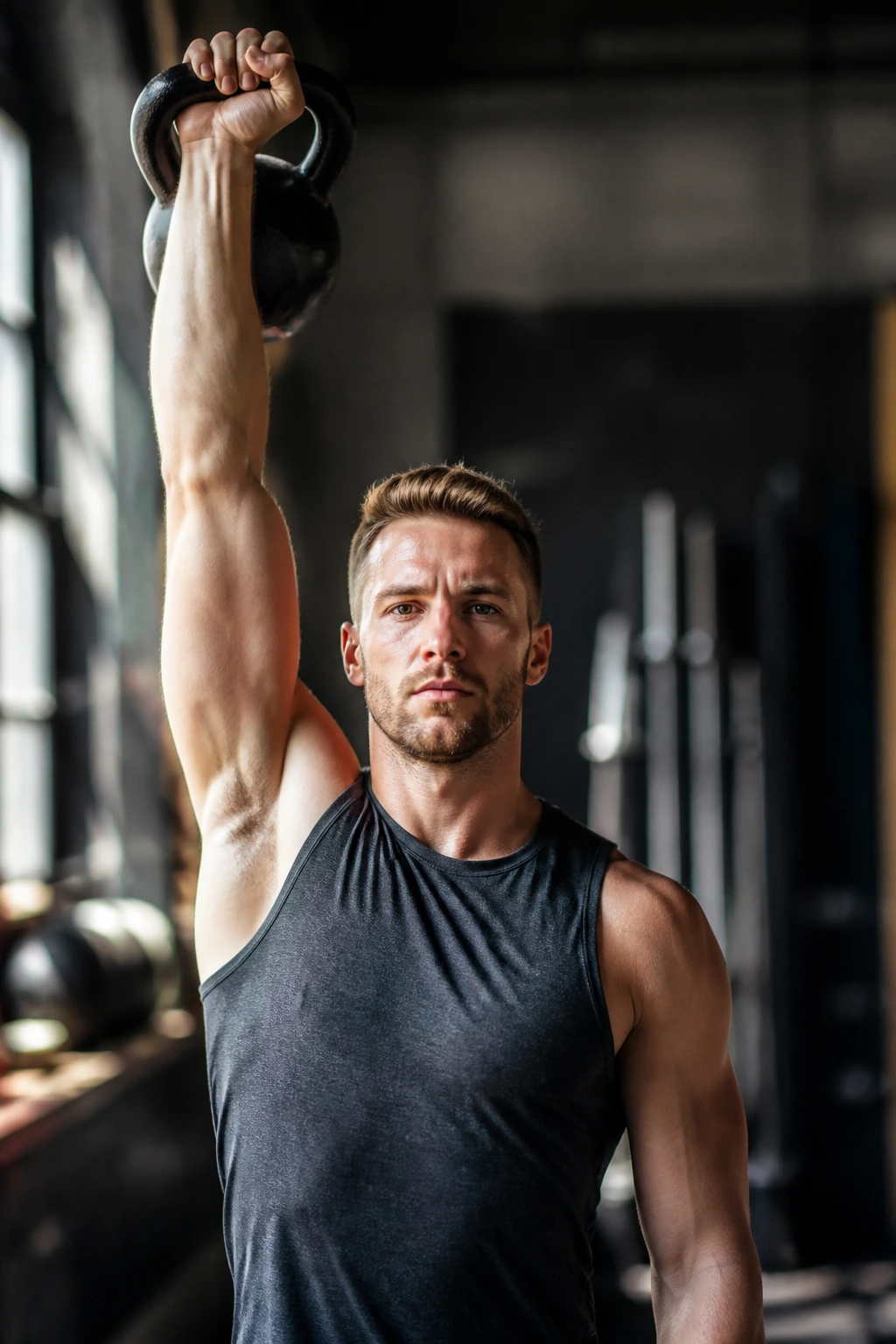
Stillness is hard.
Press one kettlebell overhead, lock the elbow, and stand there. No leaning. No rib flare. No shrugging up into the ear. The abs and the glutes work together to keep the body from turning the hold into a leaning contest.
You can make this harder by marching in place once the static hold feels clean. That tiny change forces the pelvis to stay level while the shoulder continues to stabilize the bell. It is a small adjustment, and it changes the whole feel of the drill.
How to Progress It
- Begin with 20-second holds per side.
- Build toward 30 to 40 seconds if your form stays clean.
- Add slow marches before adding more weight.
- Keep the biceps near the ear, but do not jam the shoulder upward.
I prefer overhead holds over random ab-machine work when someone needs better posture under fatigue. The carryover to pressing, walking, and even getting up from the floor is hard to ignore.
15. Single-Leg Deadlifts That Catch Every Cheat
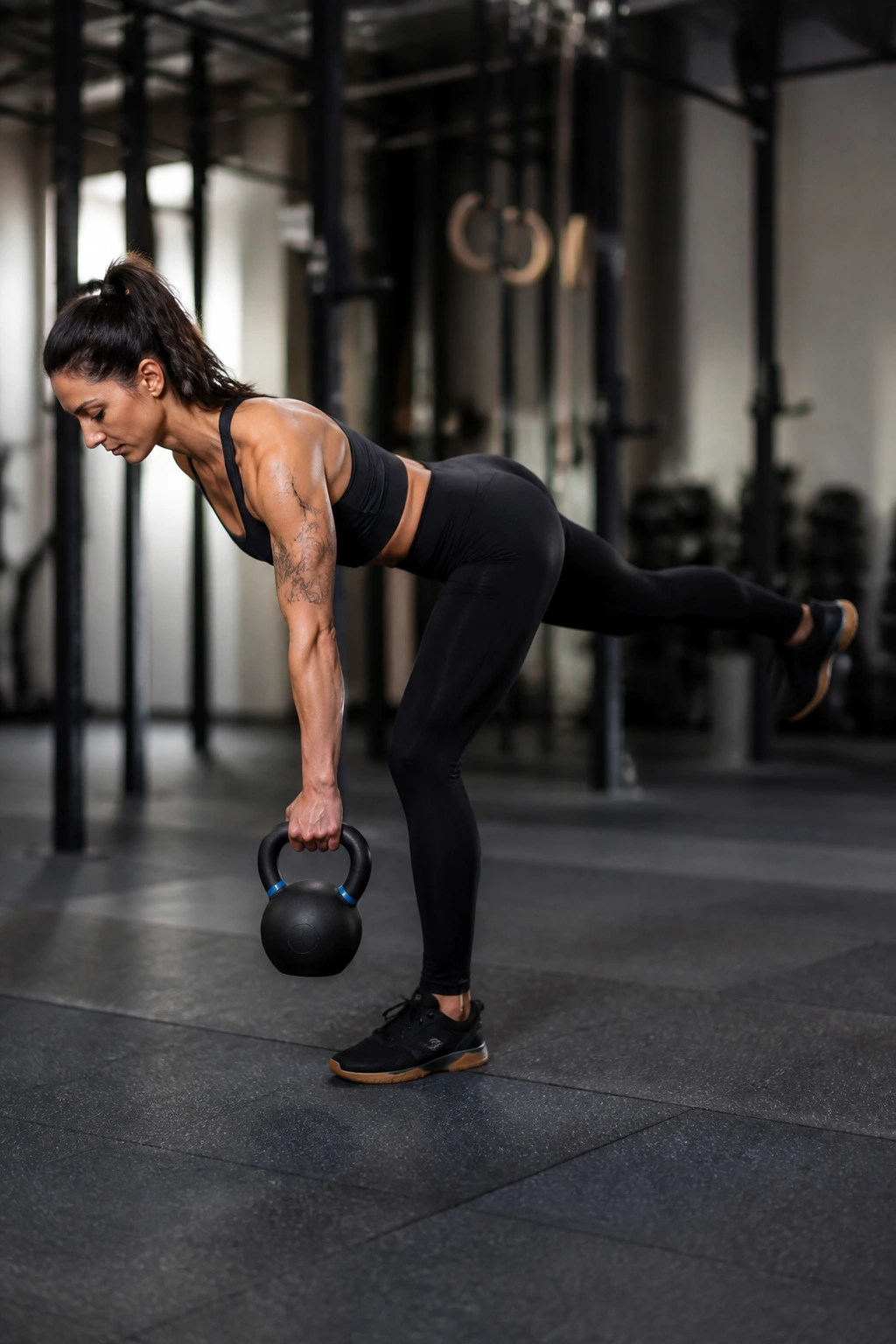
One leg. One bell. Every cheat shows up.
A single-leg deadlift forces the standing side to hold the pelvis steady while the free leg reaches back and the torso hinges forward. Put the kettlebell in the opposite hand for a bigger anti-rotation challenge, or hold it in the same-side hand if you want to keep the balance demand a little lower.
The clean version looks smooth from the side. The bad version turns into a toe-tap with a bent spine. Keep the hips square, reach the back heel long, and stop the descent when the torso starts to round or the standing knee gets sloppy.
- Use 3 sets of 6 reps per side.
- Keep a slight bend in the standing knee.
- Let the free leg act like a counterweight.
- Finish each rep by squeezing the glute, not by throwing the torso upright.
This one is good for more than abs, but the midsection definitely feels it. The obliques work to keep the body from tipping, and the low abs help keep the ribs from drifting.
16. Half-Kneeling Presses for Rib Control
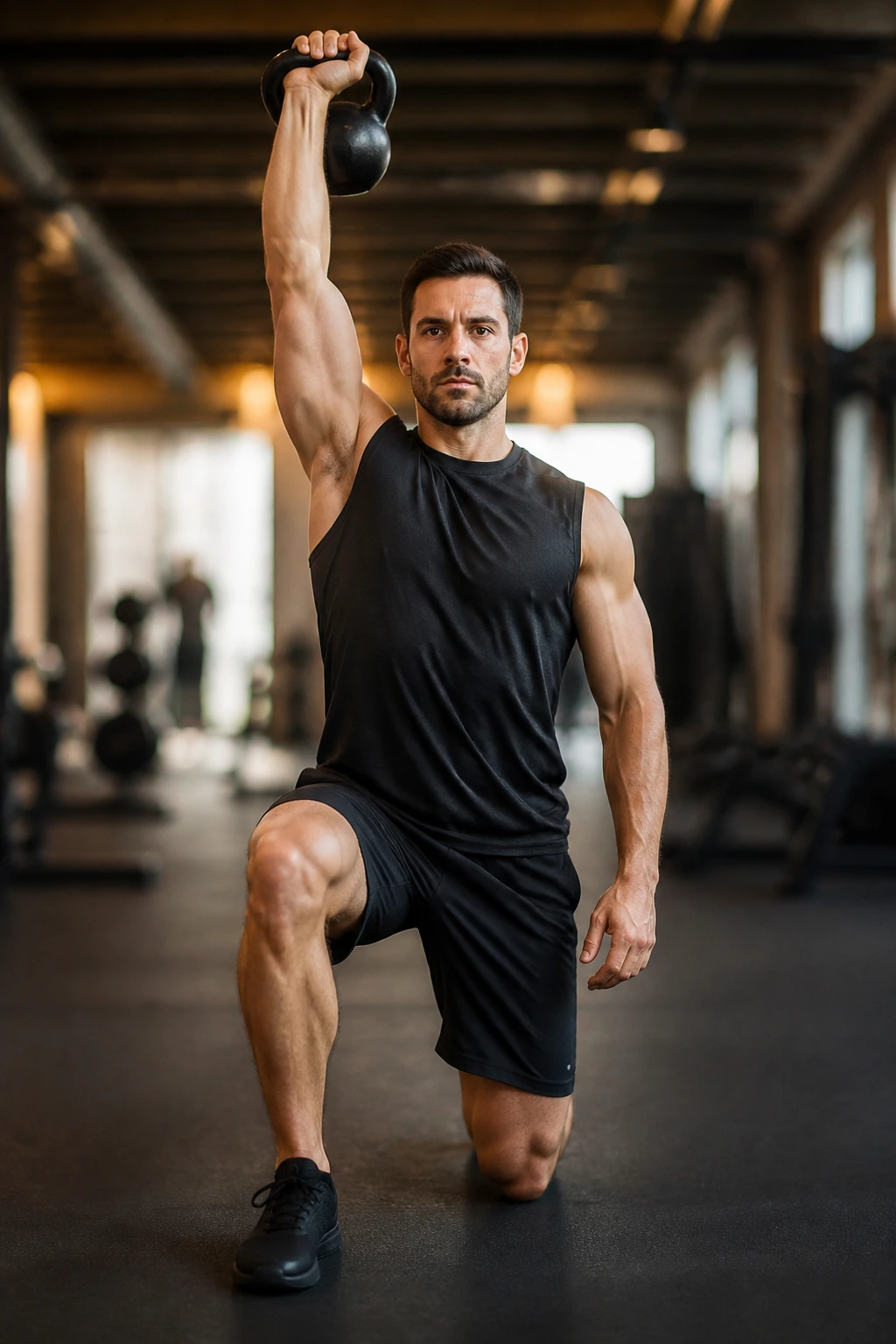
Why half-kneeling? Because it removes a lot of leg drive and forces the torso to earn the press.
Set one knee on the floor, plant the other foot, and press the kettlebell with the arm on the same side as the front leg. That setup makes the abs and glutes work together to keep the pelvis from tipping and the ribs from flaring as the bell moves overhead.
A few coaches prefer the opposite-side arm for an even bigger anti-rotation challenge. I like both. Same-side feels cleaner for learning the stack. Opposite-side feels more demanding and can expose a lazy torso fast.
Do 3 sets of 8 reps per side with a light to moderate bell. Squeeze the glute on the kneeling side, stay tall through the crown of the head, and pause for a breath at the top. If the lower back arches to “help” the press, the load is too much.
It looks simple. It isn’t.
17. Halo Squat Complexes for Upright Posture Under Load
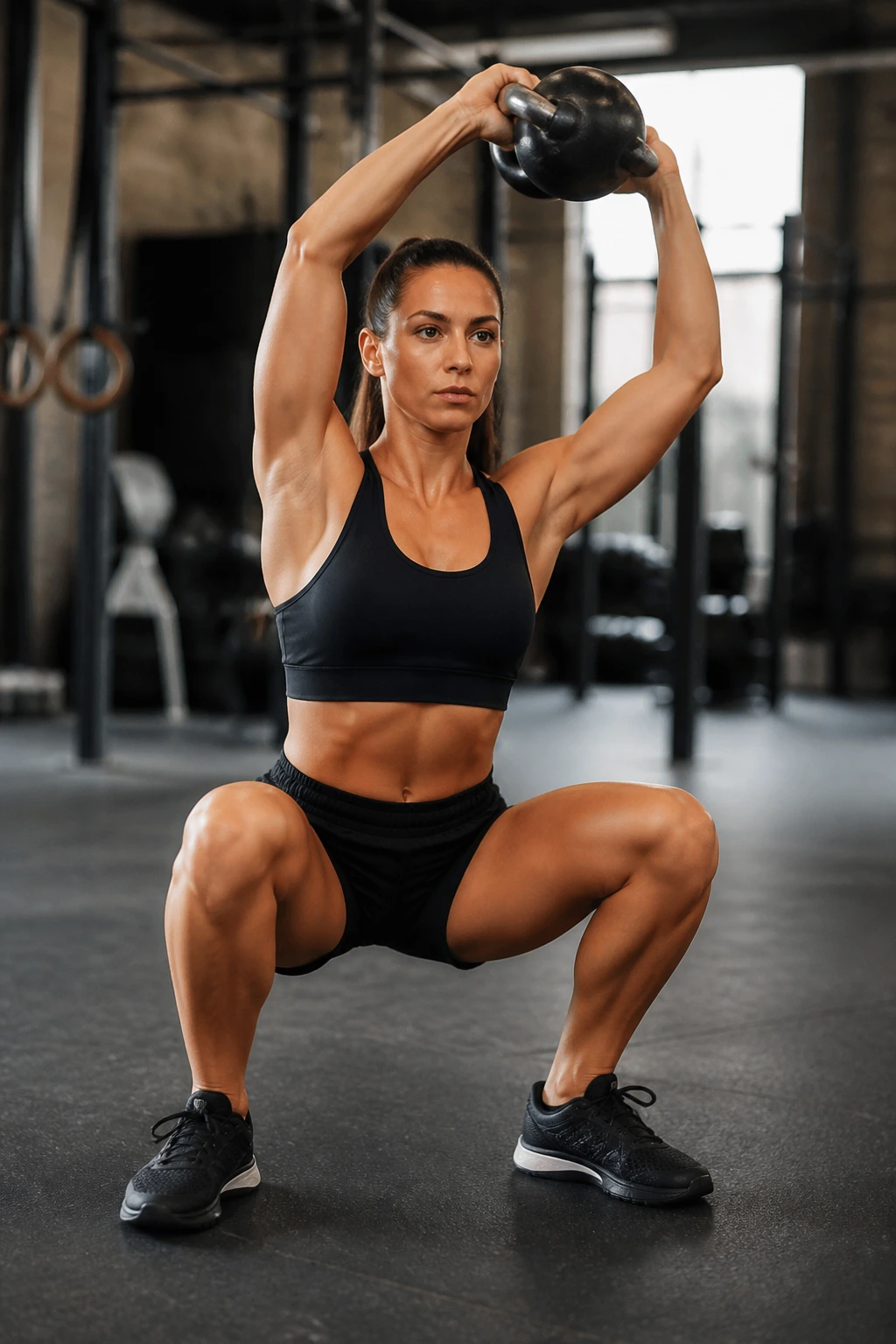
Try circling a bell around your head and squatting at the same time. It sounds goofy. The torso, meanwhile, has to stay disciplined.
The halo squat complex blends two things that tax the abs in different ways. The halo asks for rib control and shoulder organization. The squat asks for trunk stiffness under a front load. Put them together and you get a small workout that feels bigger than it should.
Here’s a clean version: do 5 halos in one direction, 5 in the other, then 5 goblet squats. Rest for 60 to 90 seconds and repeat for 3 rounds. Keep the bells light enough that the circles stay smooth and the squat stays upright.
This is a nice choice on days when the core feels flat but you do not want a heavy lift. The movement is steady, the breathing gets involved, and the midsection has to keep the upper and lower body from having separate opinions.
18. Around-the-Body Passes for Grip and Midsection Control
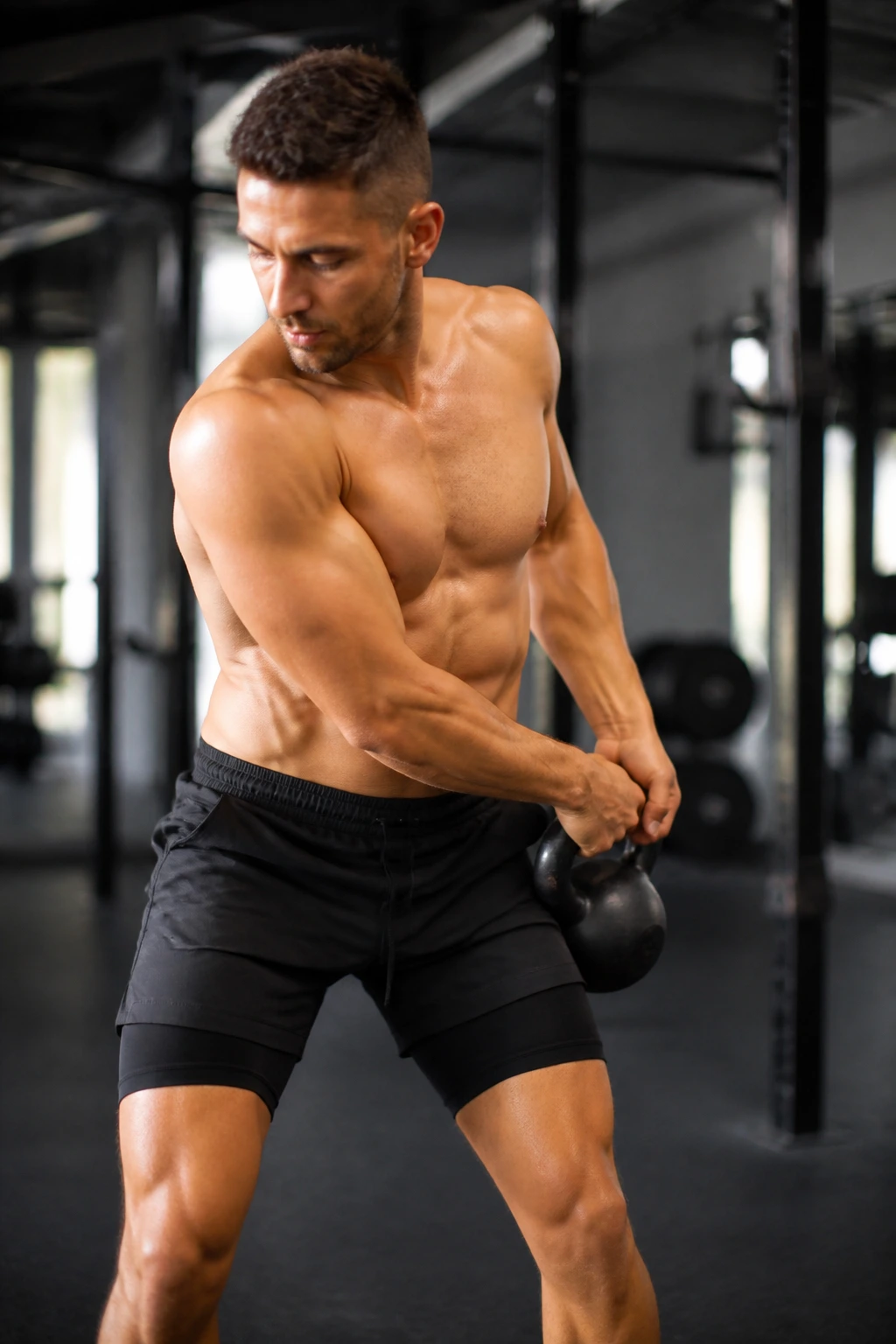
The least glamorous drill on this list can be one of the best warm-ups.
Stand in an athletic stance and pass the kettlebell around your waist from one hand to the other, circling it clockwise and then counterclockwise. The bell should move close to the body. If it wanders out, the torso stops working and the shoulders start doing all the boring cleanup.
This is not about speed. A controlled pass keeps the obliques awake, the grip sharp, and the posture from slumping while you stay in motion. It also teaches you to resist the tiny twists that build up before a real set starts to go wrong.
Try 2 to 3 minutes total, broken into 30-second chunks. Keep your knees soft, chest tall, and passes smooth. It works well between heavier lifts because it wakes up the trunk without frying it.
Simple move. Good payoff. That combination is rare enough to mention.
19. One-Arm Thrusters for Cardio and Core Burn
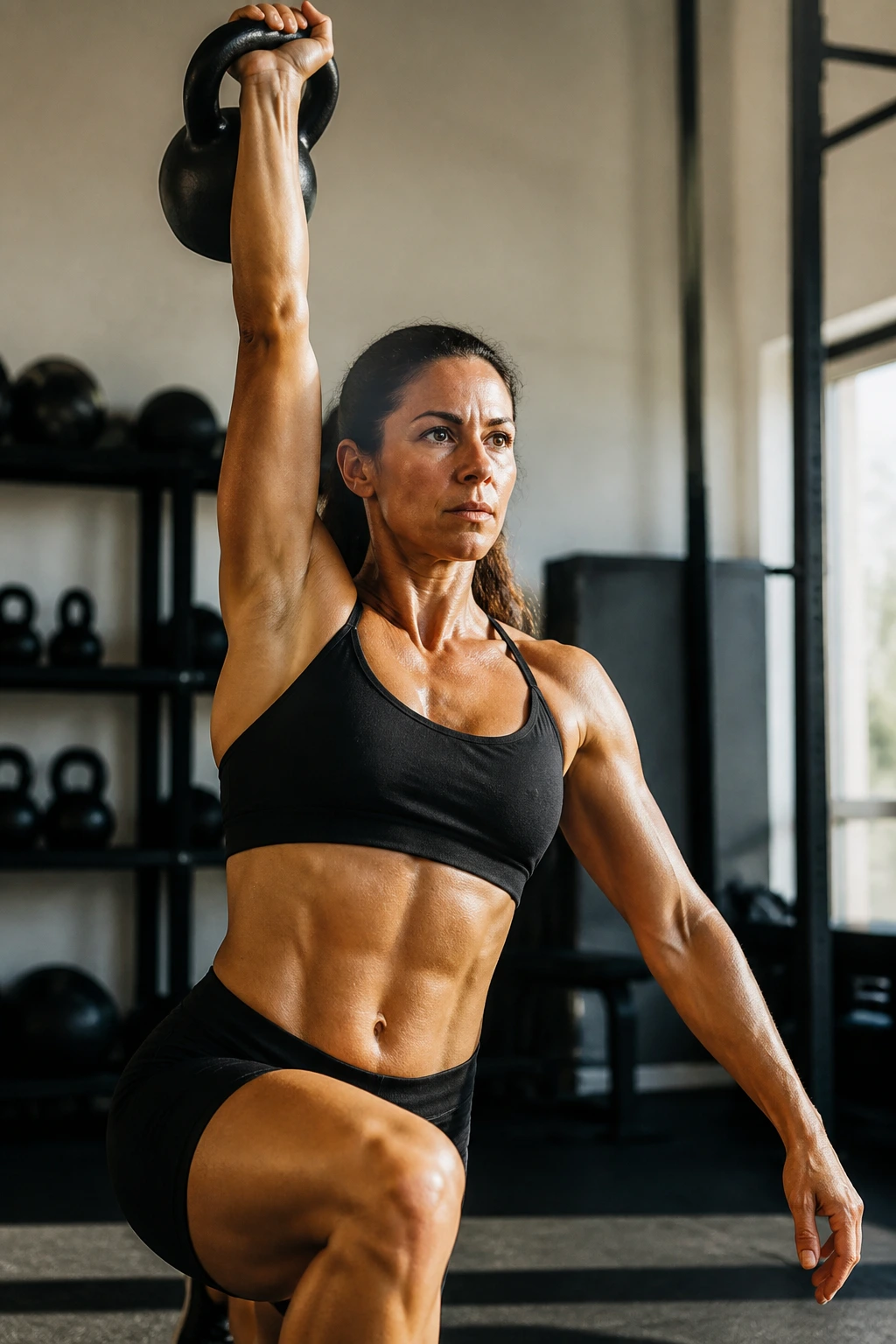
Thrusters look like a shoulder move, but the abs are doing the bookkeeping.
Clean the bell to the rack, drop into a squat, then drive up and press overhead in one smooth motion. With one bell, the trunk has to fight sideways pull during the squat and again during the press. That makes the core stay switched on through a fast change of position, which is useful and a little rude.
Use 3 sets of 6 reps per side if you want a strength focus, or turn it into a short conditioning block with 30 seconds of work, 30 seconds of rest. Keep the bell light enough that the squat stays crisp and the press does not become a sloppy lean-back.
The mistake people make here is trying to muscle the bell with the arm alone. Don’t. The legs start the work, the torso keeps the shape, and the press finishes only if everything is lined up. If the rib cage pops forward at the top, you pressed too fast or too heavy.
20. The Five-Move Kettlebell Core Finisher for Stronger Abs
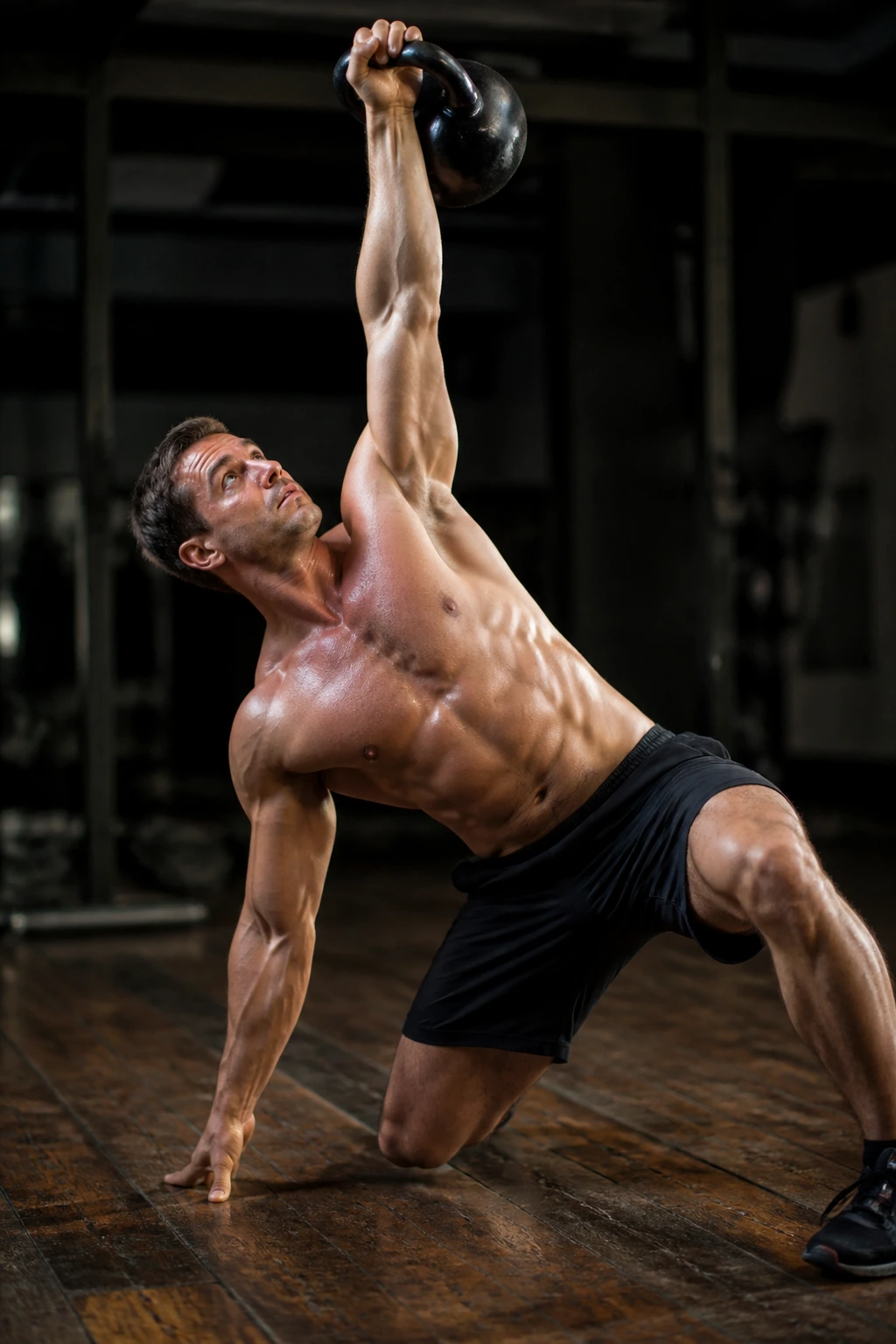
If you want a hard 8-minute finish, this little circuit does the trick without needing a circus of equipment. It mixes hinge work, anti-rotation, front-rack tension, and a floor drill so the abs never get to settle into one easy job.
The Circuit
- 10 single-arm swings per side
- 5 clean-and-press reps per side
- 20-second front rack march per side
- 5 windmills per side
- 8 plank pull-throughs total
Rest 60 to 90 seconds after the full round, then repeat for 2 to 4 rounds. Keep the first round smooth and conservative. If your breathing turns ragged on round one, that is a sign to lower the bell or trim the reps before you chase fatigue.
The nice thing about a finisher like this is that it does not rely on one trick. It asks the abs to brace, resist twist, hold posture, and control the load in motion. That is what strong abs actually do most of the time anyway. Not crunches. Not endless sit-ups. Control, then more control, and one more rep where your body wants to cheat and you refuse to let it.
