



Full body unilateral workouts for women have a funny way of exposing the truth fast. One side always wants to take over. One hip cheats. One shoulder shrugs. And once you start training one limb at a time, the little leaks in strength and control stop hiding behind momentum.
That is exactly why I like unilateral work so much. It builds strength you can actually use: climbing stairs with a bag in one hand, getting off the floor without wobbling, carrying groceries, pressing overhead without leaning to one side, and squatting without your pelvis drifting into a weird little tilt. It also tends to feel cleaner on the joints than endless jumping or sloppy high-rep circuits, which matters if you already spend half the day sitting and the other half feeling tight through the hips.
One side. Then the other.
The trick is not to turn every workout into a balance contest. A good unilateral session still needs load, a clear rep target, and enough rest to do the work well. If your form falls apart before your muscles are done, slow the tempo, shorten the range a little, or lighten the weight. Chasing shaky reps is how people end up training their compensation patterns instead of their strength.
1. Full Body Unilateral Workout with Dumbbells and a Bench
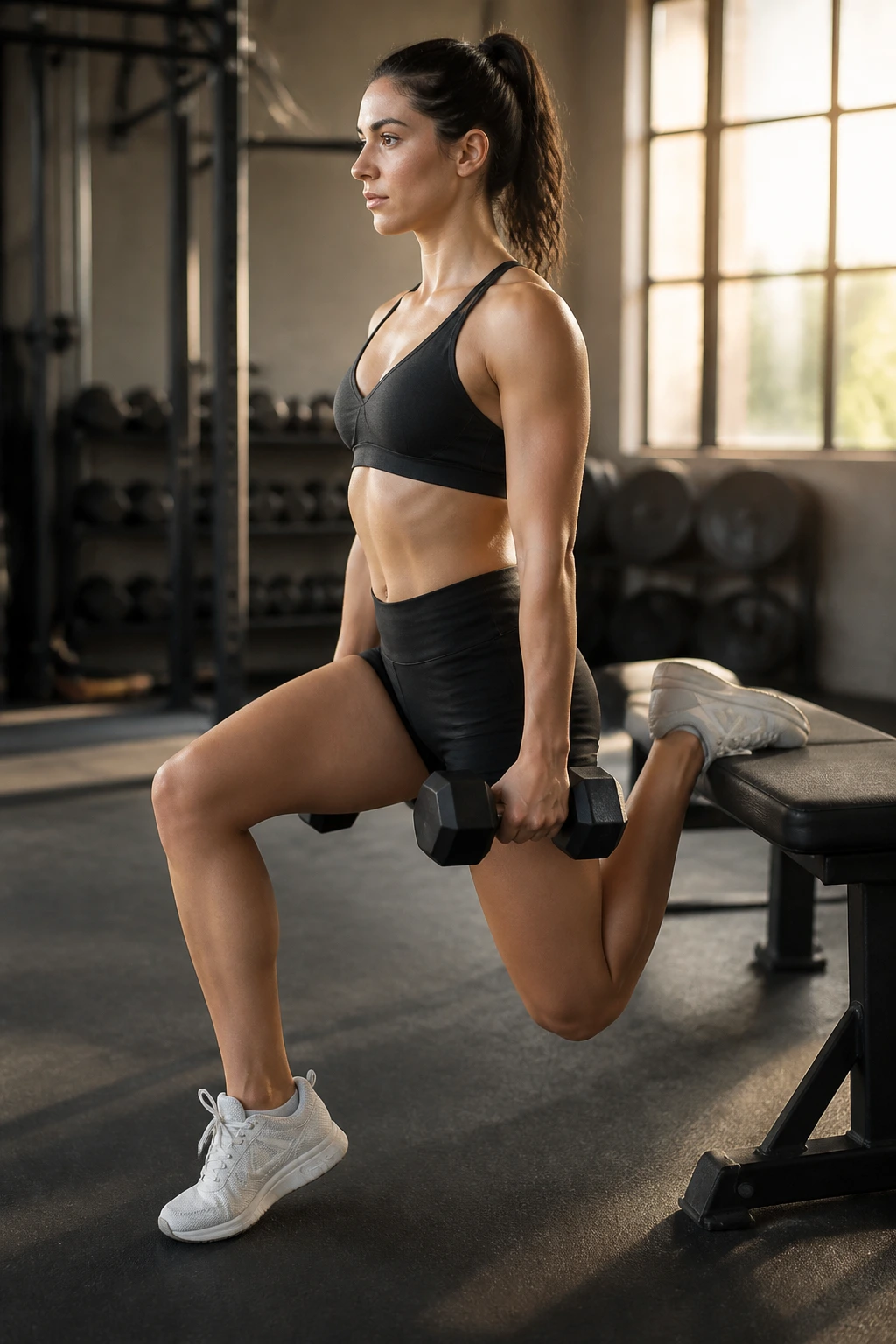
This is the one I’d hand to someone who wants a simple, honest workout without a lot of fluff. A bench gives you a target, dumbbells keep the loading manageable, and the single-leg work makes every rep count. It looks basic on paper. It is not easy in practice.
How to run it
Do 3 to 4 rounds of the following, resting 45 to 60 seconds between exercises and 90 seconds between rounds:
- Bulgarian split squat — 8 reps per side
- One-arm dumbbell row — 10 reps per side
- Half-kneeling single-arm press — 8 reps per side
- Single-leg glute bridge — 10 reps per side
- Suitcase carry — 30 to 40 steps per side
Use a load that feels solid but not sloppy. The last two reps of each set should be work, not a panic drill. If your front knee in the split squat caves inward, drop the weight before you keep pushing. That little collapse usually means the glute med is clocking out early.
Best detail: keep your ribs down on the half-kneeling press. If your lower back arches to help the dumbbell go up, the press has stopped being a shoulder drill and turned into a back compensation trick.
2. Reverse Lunge and Single-Arm Press Combo
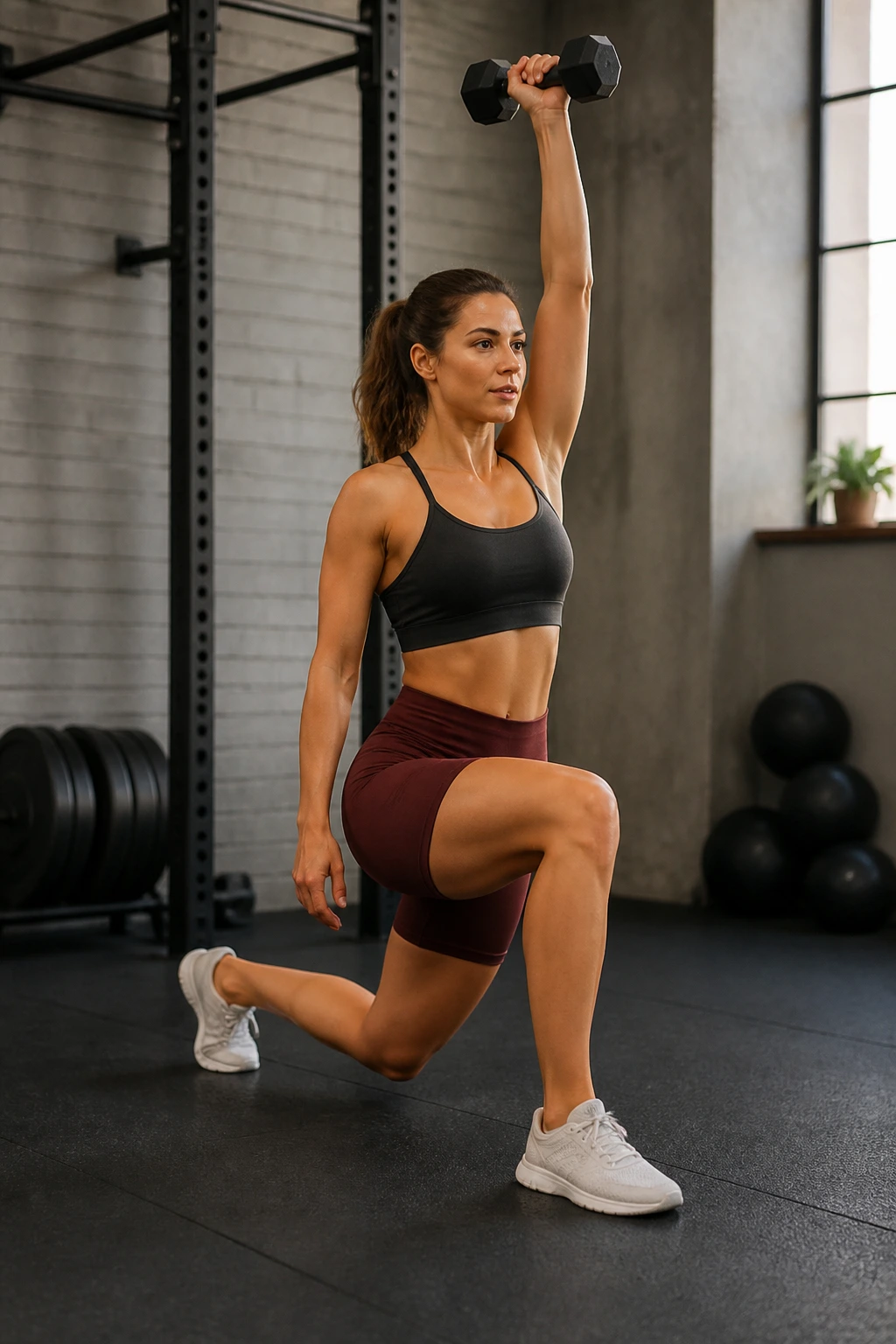
A reverse lunge is often friendlier than a forward lunge, especially if your knees get annoyed by sudden forward travel. You step back, load the front leg, and then drive up through the whole foot. Pair that with a single-arm press and you get a workout that hits legs, glutes, shoulders, and core without needing a complicated setup.
Run 4 sets of 6 to 8 reps per side for the lunge, then 8 presses per side, then finish with a 20- to 30-second plank reach on each side. Rest about 75 seconds after each round. The lunge should feel powerful, not rushed. Think tall torso, front heel glued to the floor, back knee dropping straight down.
The press is where people get lazy. Don’t let the dumbbell drift too far in front of your face. Keep the wrist stacked over the elbow and press slightly back so the weight finishes over your shoulder, not out in front of it.
If you want more of a sweat than a strength day, shorten the rest to 30 seconds and keep the same exercise order. If you want a heavier strength feel, increase the rest and stay strict. Simple. No circus act needed.
3. Single-Leg Romanian Deadlift and Floor Press Ladder
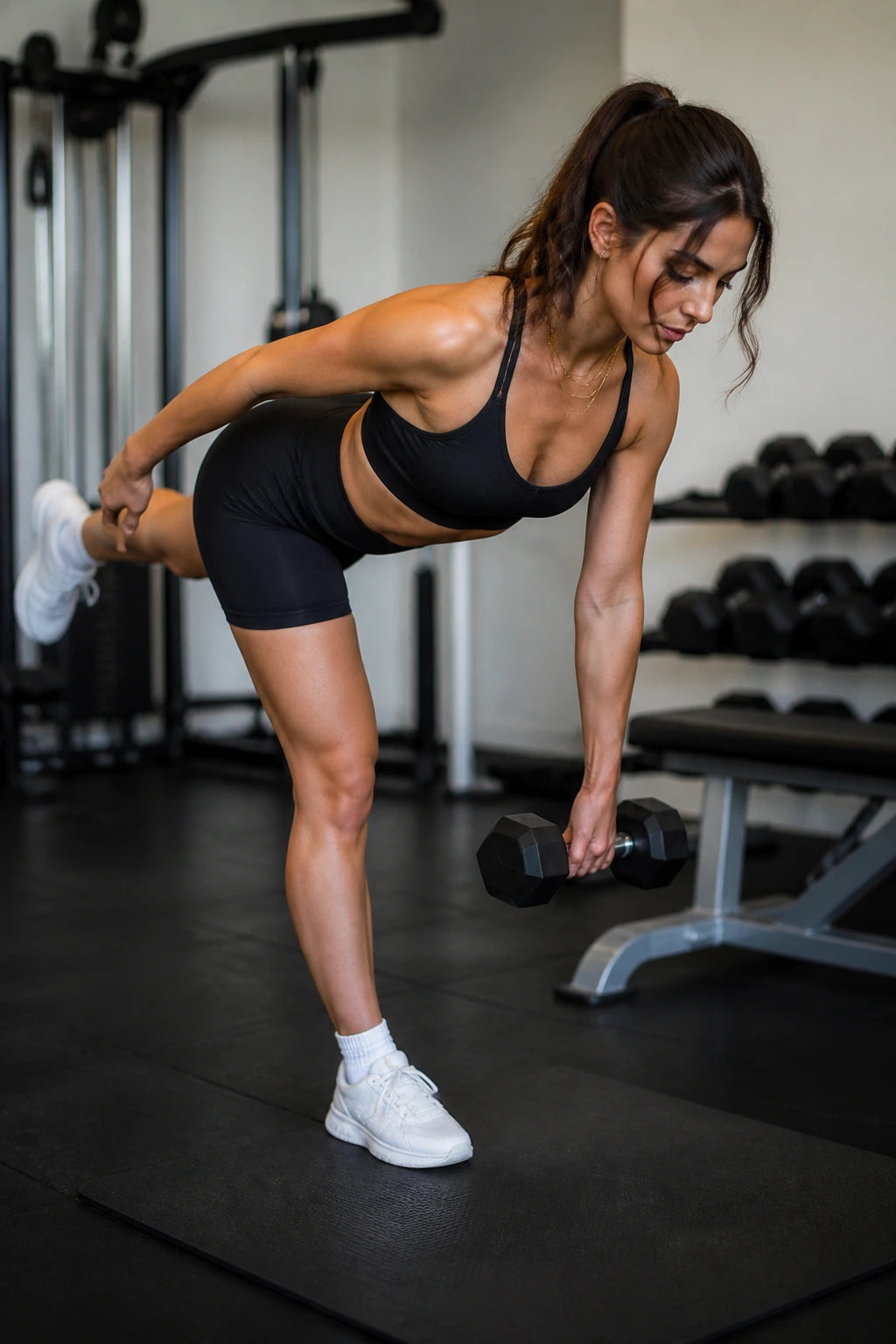
Why does this pairing work so well? Because it forces the back side of the body to do its job while the upper body pushes from a stable floor position. The single-leg Romanian deadlift teaches balance and hinge control. The floor press gives your chest and triceps something to do without the shoulder joint wandering all over the place.
Workout setup
Use a 6-8-10 ladder for each move, three rounds total:
- Single-leg Romanian deadlift — 6 reps per side
- Single-arm floor press — 8 reps per side
- Single-arm row from a bench or split stance — 10 reps per side
- Dead bug with an exhale — 6 slow reps per side
Start light on the deadlift. People love to grab too much weight here, and then their torso twists like they’re trying to look over one shoulder at the mirror. Don’t do that. Keep your hips square and let the back leg float behind you like a counterweight.
The floor press is the sneaky one. You can load it harder than a standard press in some cases because the floor stops your elbow from drifting too low. That makes it a clean strength move, not a shoulder gamble.
4. Step-Up, Row, and Carry Session
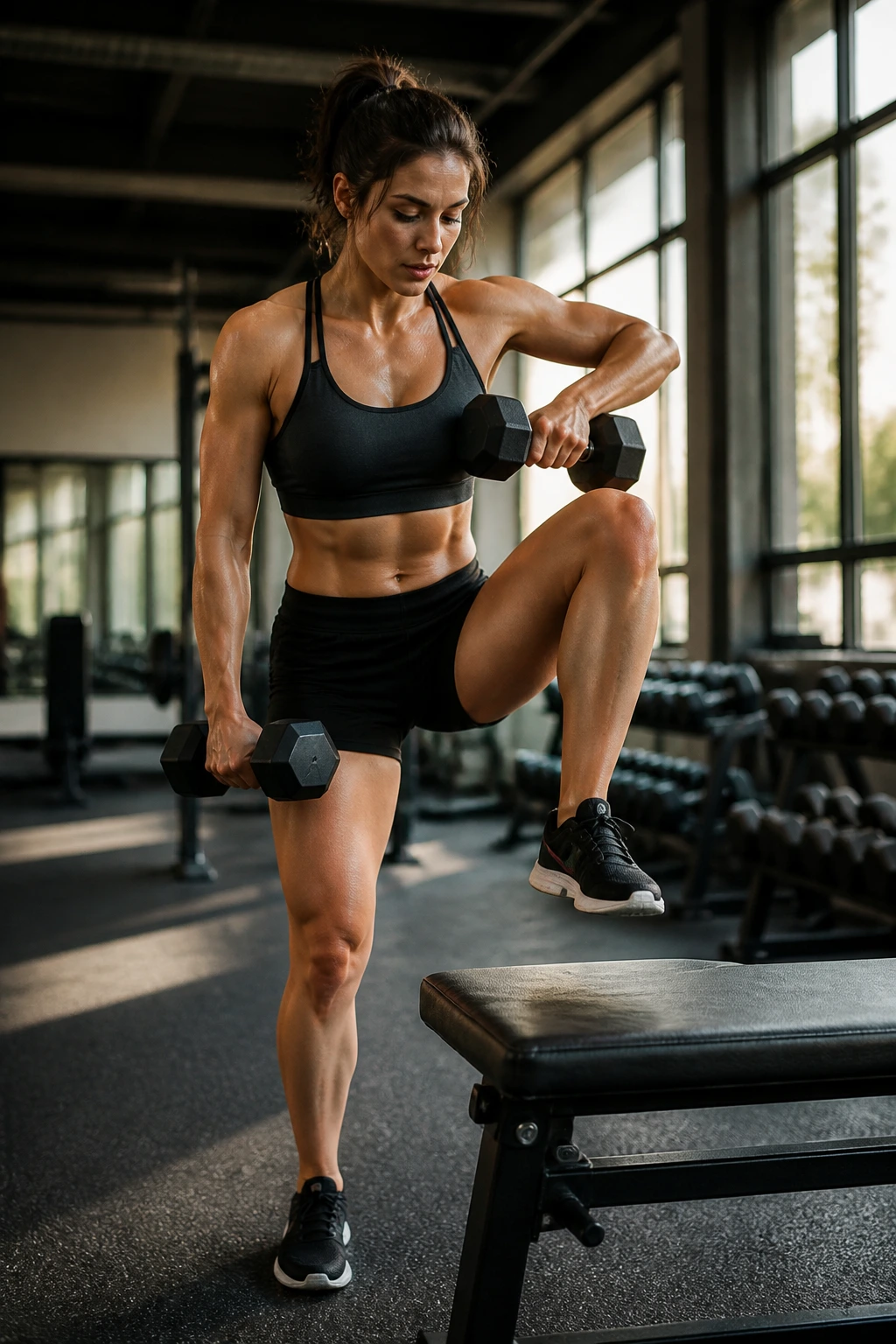
If stairs make you feel winded faster than they should, this session will tell you why. Step-ups are brutally honest. They show you which leg can drive and which one likes to fake it. Add a row and a carry, and you’ve got a real full body unilateral workout, not just a leg day in disguise.
Do 3 rounds of this:
- Step-up to knee drive — 8 reps per side
- One-arm dumbbell row — 10 reps per side
- Front-rack suitcase carry — 25 to 40 steps per side
- Incline push-up with shoulder tap — 6 to 10 reps per side
Pick a step height that lets your whole foot land cleanly. Too high, and you start pushing off the back leg like it owes you money. Too low, and the movement turns into a shuffle. Mid-shin to knee height usually works well for most people.
The carry matters more than it gets credit for. Walking with one weight on one side forces the trunk to resist rotation, and that’s the sort of strength that shows up when you pick up a child, a suitcase, or a pile of grocery bags. Quiet strength. The useful kind.
5. Bulgarian Split Squat and Single-Leg Hip Thrust Strength Block
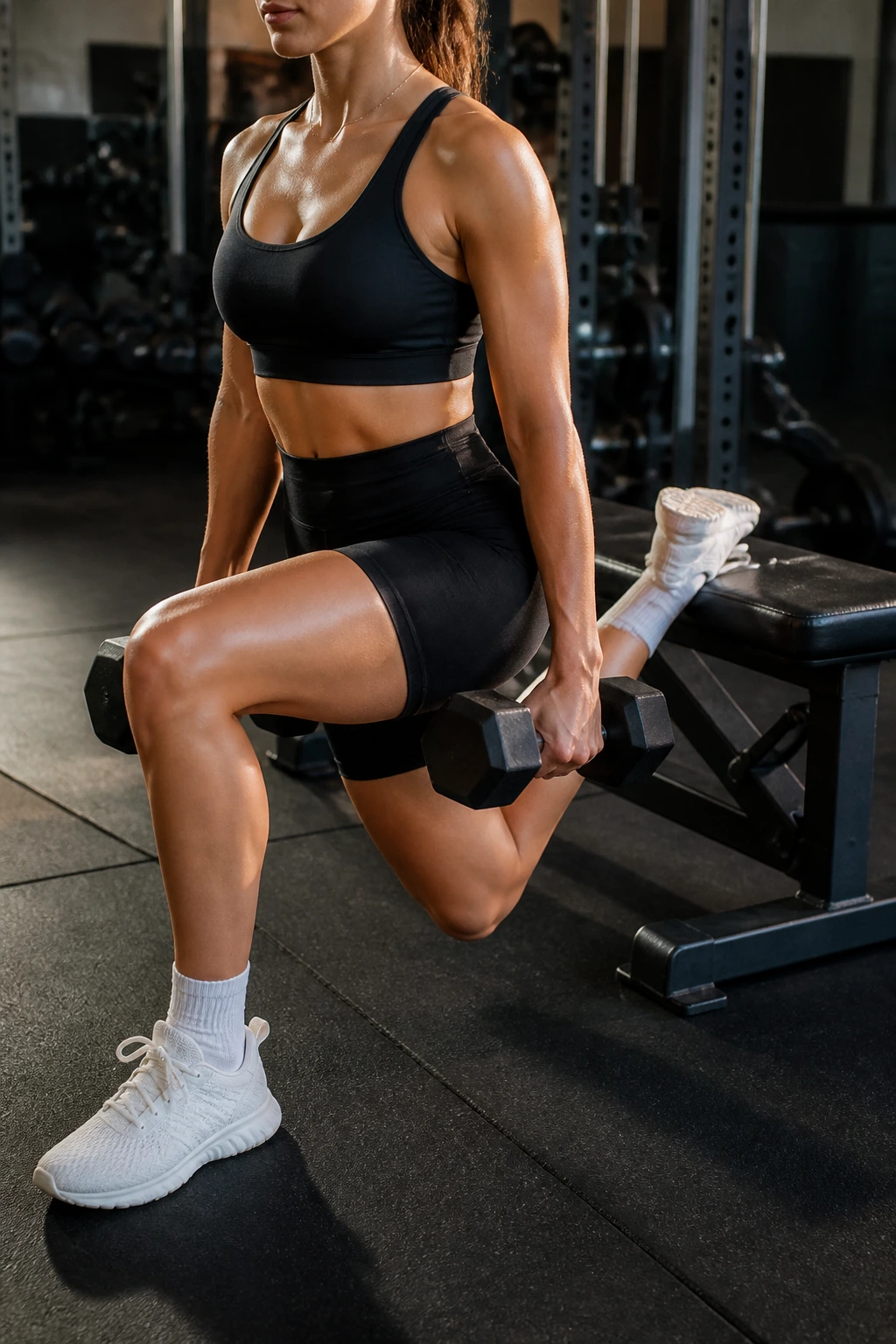
This is the heavy hitter. If you want glutes, quads, and hips that can actually produce force on one side without wobbling, this is the workout that gets serious fast. It’s also the one that exposes every lazy rep you try to sneak through. There’s nowhere to hide.
Do 4 sets of:
- Bulgarian split squat — 8 reps per side
- Single-leg hip thrust — 10 reps per side
- Half-kneeling one-arm press — 8 reps per side
- Side plank with top-leg lift — 20 to 30 seconds per side
Rest 60 to 90 seconds between sets. The split squat should feel like a strong descent and an even stronger stand. If you bounce off the bottom, you lose the point. Pause for half a second, feel the front foot stay heavy, and drive up through the heel and midfoot.
The hip thrust is not there for drama. It’s there to teach the glute to finish hip extension without your lower back taking over. Squeeze at the top, but don’t overarch. The top position should look powerful, not strained.
This workout is best when you want a strength day that feels like work. Not punishment. Work.
6. Lateral Lunge and Cross-Body Press Conditioning Set
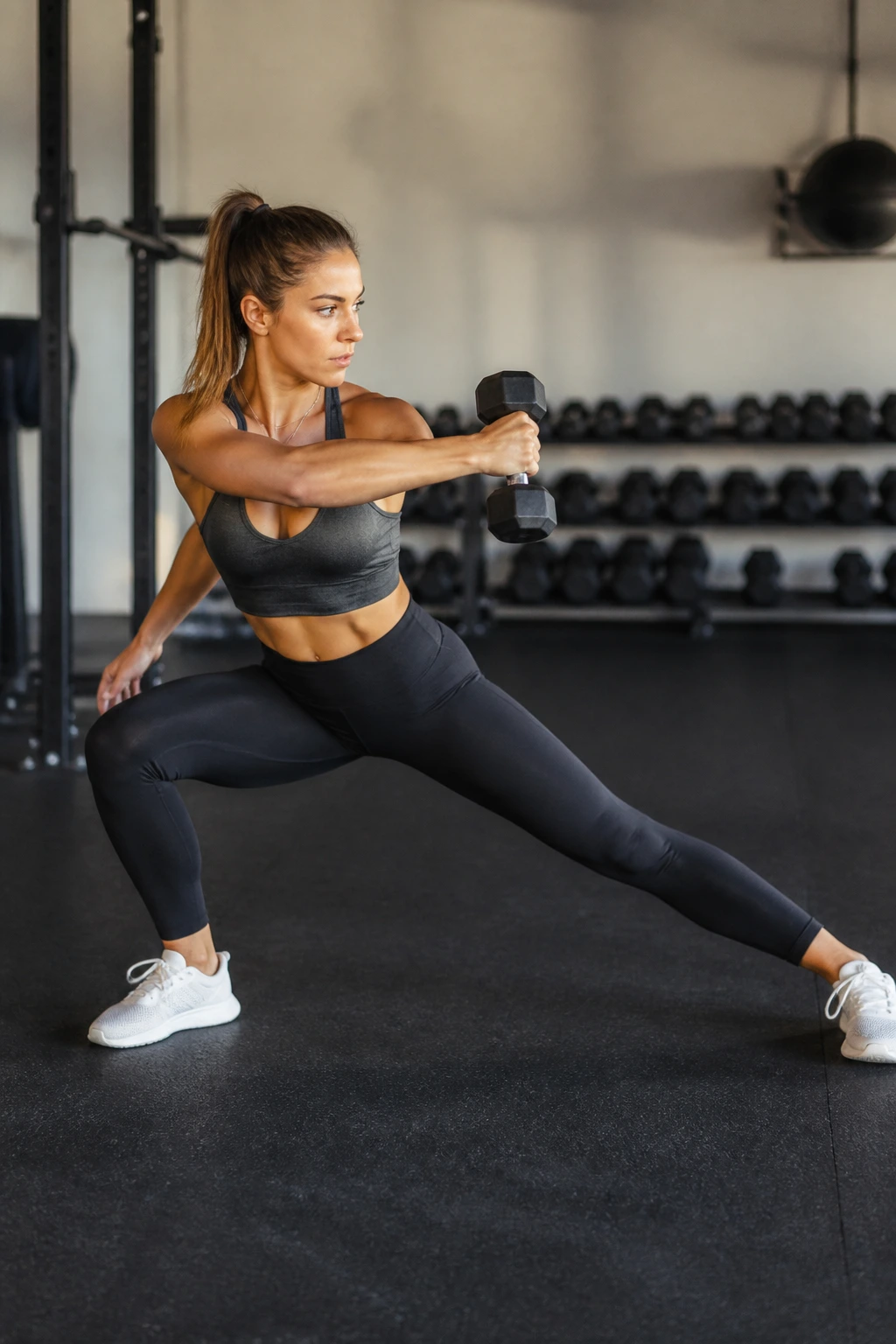
Most people live in straight lines. They walk, sit, stand, and climb in pretty predictable ways. The body does not love that. A lateral lunge wakes up the side-to-side plane, and the cross-body press asks your core to stop the torso from rotating when the arm moves across the body.
What makes it different
Unlike a forward lunge session, this one hits the hips from the side. That matters if your knees cave on squats, your adductors feel tight, or one hip always feels more awake than the other.
Run 3 to 4 rounds of:
- Lateral lunge — 8 reps per side
- Cross-body dumbbell press — 10 reps per side
- Lateral step-down — 8 reps per side
- One-arm cable or band row — 12 reps per side
Keep the lateral lunge smooth. Step out, sit into the moving hip, and keep the trailing leg long. People often rush the return and dump the torso forward. Better to go smaller and cleaner than larger and sloppy.
Best for: anyone who wants stronger hips, better knee tracking, and a little more side-plane control. Honestly, it’s a good antidote to too much desk sitting.
7. Single-Arm Kettlebell Clean to Front Rack Complex
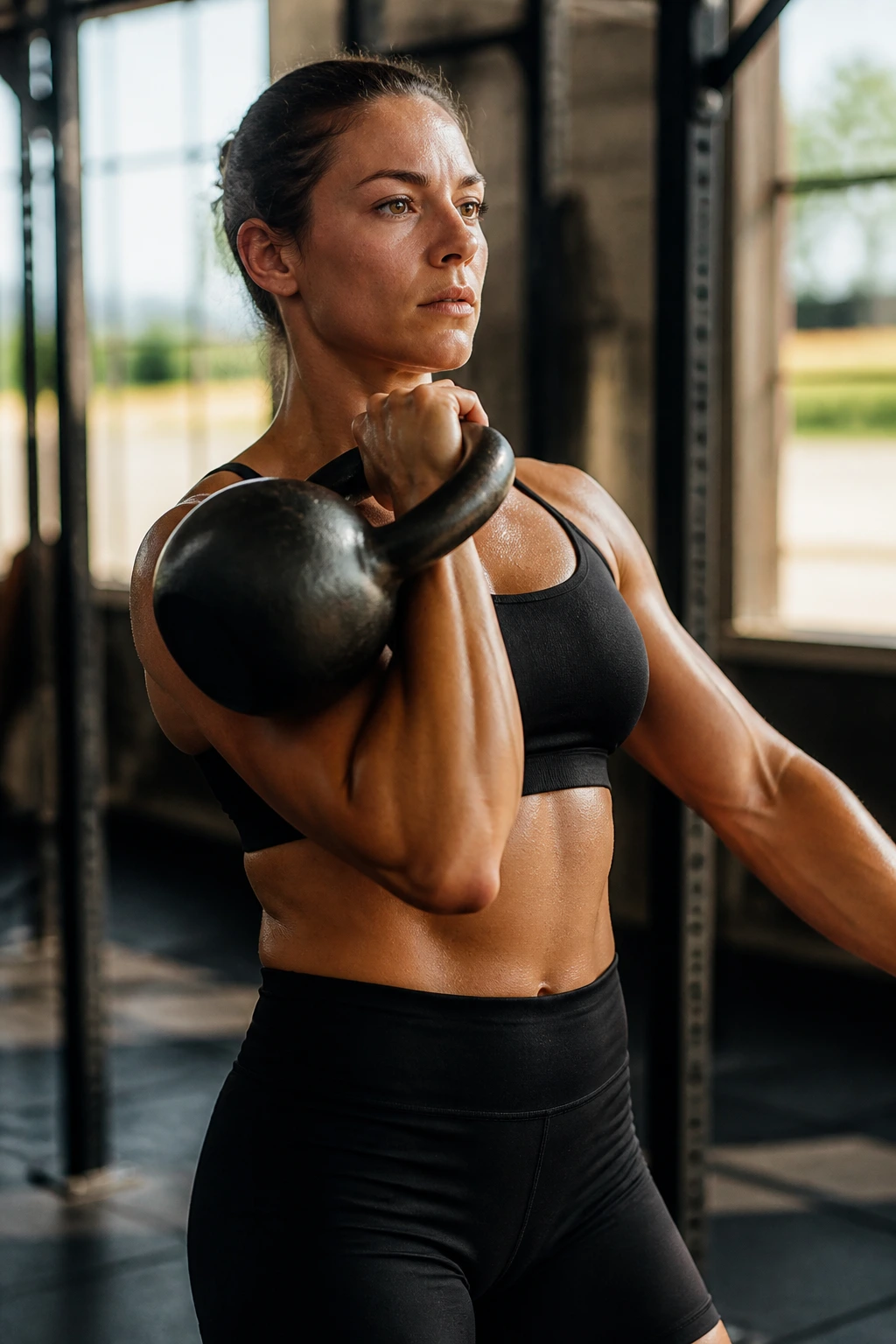
Kettlebells are excellent here because the offset load makes you work harder than you expect. A single-arm clean into a front rack position feels athletic, but only if the movement stays tidy. If the bell slaps your forearm like it’s mad at you, the timing is off.
Why the clean matters
The clean teaches power from the floor or swing position into a stable rack. Once the bell is racked, your torso has to stay square while your leg and shoulder work on one side at a time. That’s where the workout gets interesting.
Do 5 rounds per side:
- Single-arm kettlebell clean — 5 reps
- Front-rack reverse lunge — 6 reps per side
- Single-arm push press — 6 reps per side
- Suitcase march — 20 steps per side
Rest 60 seconds between sides if needed. Keep the clean close to the body, then let the bell settle softly in the rack. Don’t swing it wide. Wide bells are noisy bells, and noisy bells usually mean wasted energy.
If you only have one kettlebell, this is one of the best ways to make it feel like enough. It usually is.
8. Bodyweight Glider Unilateral Circuit
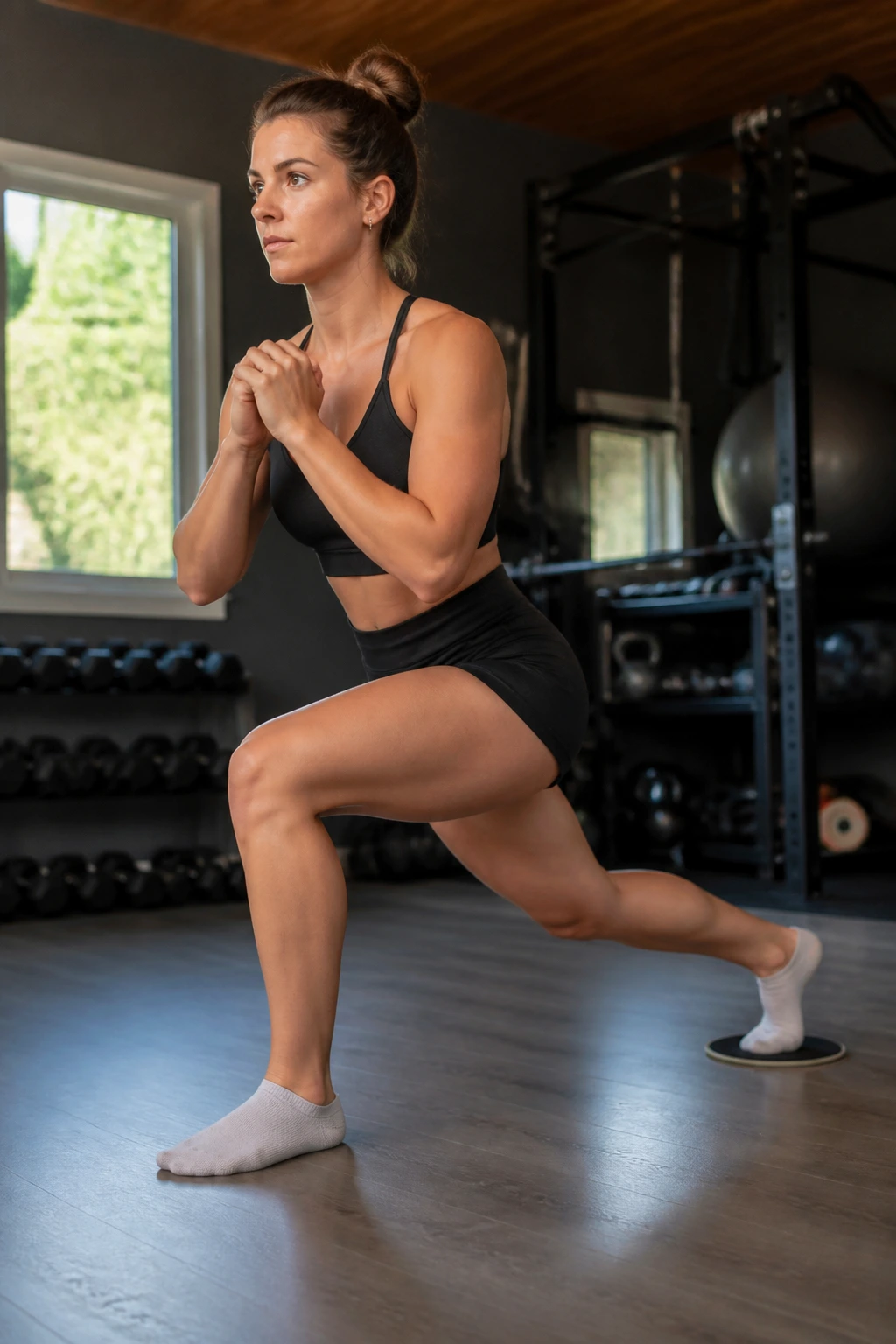
No weights. No problem. This is the kind of session people underestimate right up until their glutes start shaking on the third round. Sliding work is sneaky because the moving foot never gets to dump all the pressure into the floor at once. You have to control the path.
Do 40 seconds on, 20 seconds off for 4 rounds:
- Sliding reverse lunge
- Single-leg glider hamstring curl
- Skater reach
- Bear plank shoulder tap
Use socks on a smooth floor or sliding discs on a mat. The reverse lunge should stay controlled on the way back in. If your front knee shoots forward and the torso folds, shorten the range. A smaller clean rep beats a long ugly one every time.
The hamstring curl is the hard part for most people. Keep the hips lifted and move slowly enough that you can feel the back of the leg doing the work. If the hamstrings cramp, pause, reset, and start again with less range.
This is a strong travel-day workout. It is also humbling, which is useful in its own way.
9. Suspension Trainer Single-Leg Full Body Workout
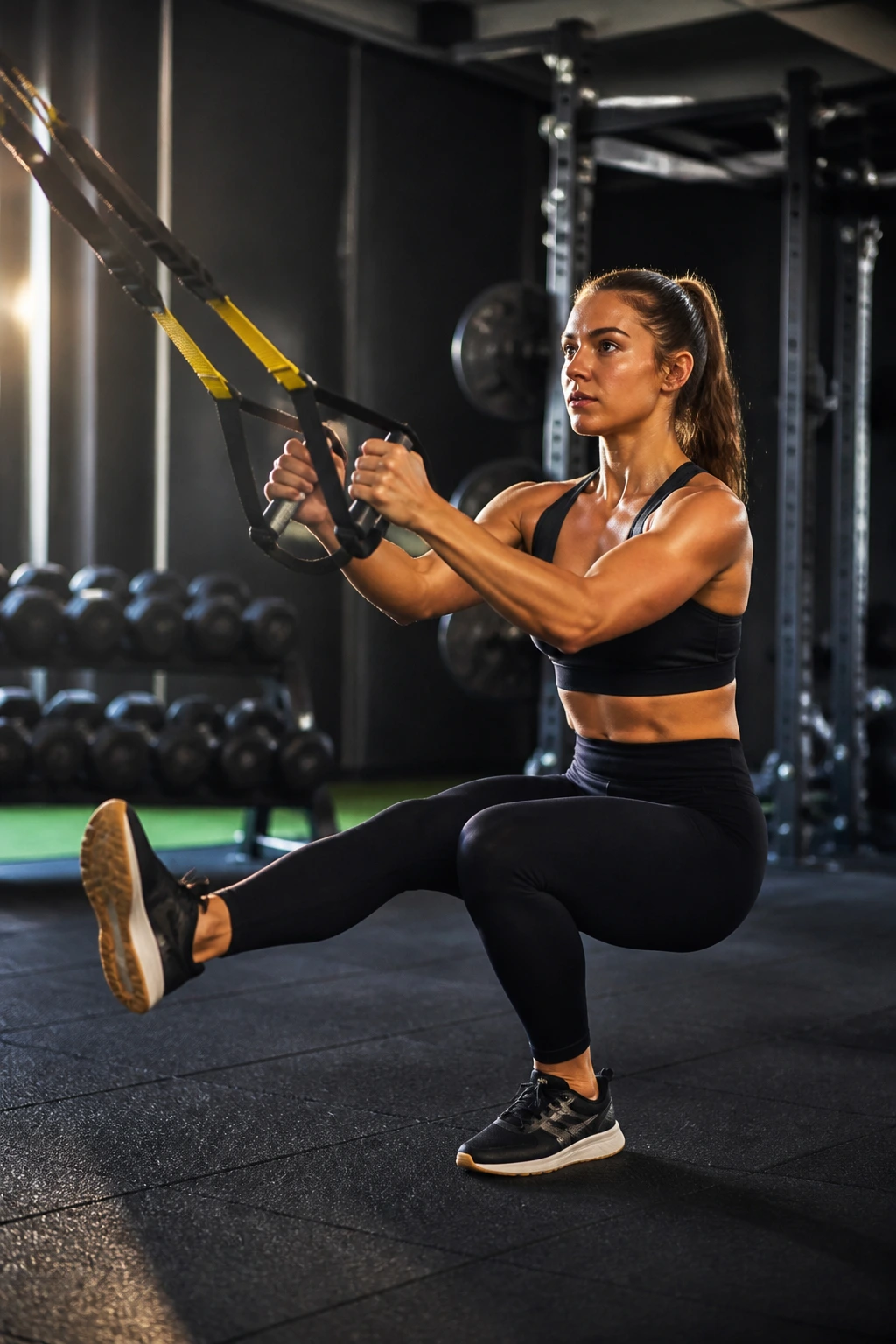
A suspension trainer changes the feel of unilateral work fast. The straps give you some help where you need it and more instability where you don’t. That combination makes it a smart choice if you want to train hard without needing a full rack of weights.
How to get the most from it
Set the straps at mid-length and run 3 rounds of:
- Assisted single-leg squat — 8 reps per side
- Single-arm suspension row — 10 reps per side
- Single-leg hamstring curl — 8 reps per side
- Single-arm chest press — 8 reps per side
Use the straps to keep your torso honest. If you lean back too much on the squat, you’ll feel the straps bail you out. Don’t let them. Stay tall, let one leg work, and keep the motion smooth.
The row is worth doing slowly. Pull the handle toward your rib cage and pause for a count before lowering. That pause cleans up a lot of sloppy upper-back work.
Best part? You can scale this from beginner-friendly to seriously tough just by changing your body angle. Tiny shift. Big difference.
10. Cable Machine Unilateral Strength Tri-Set
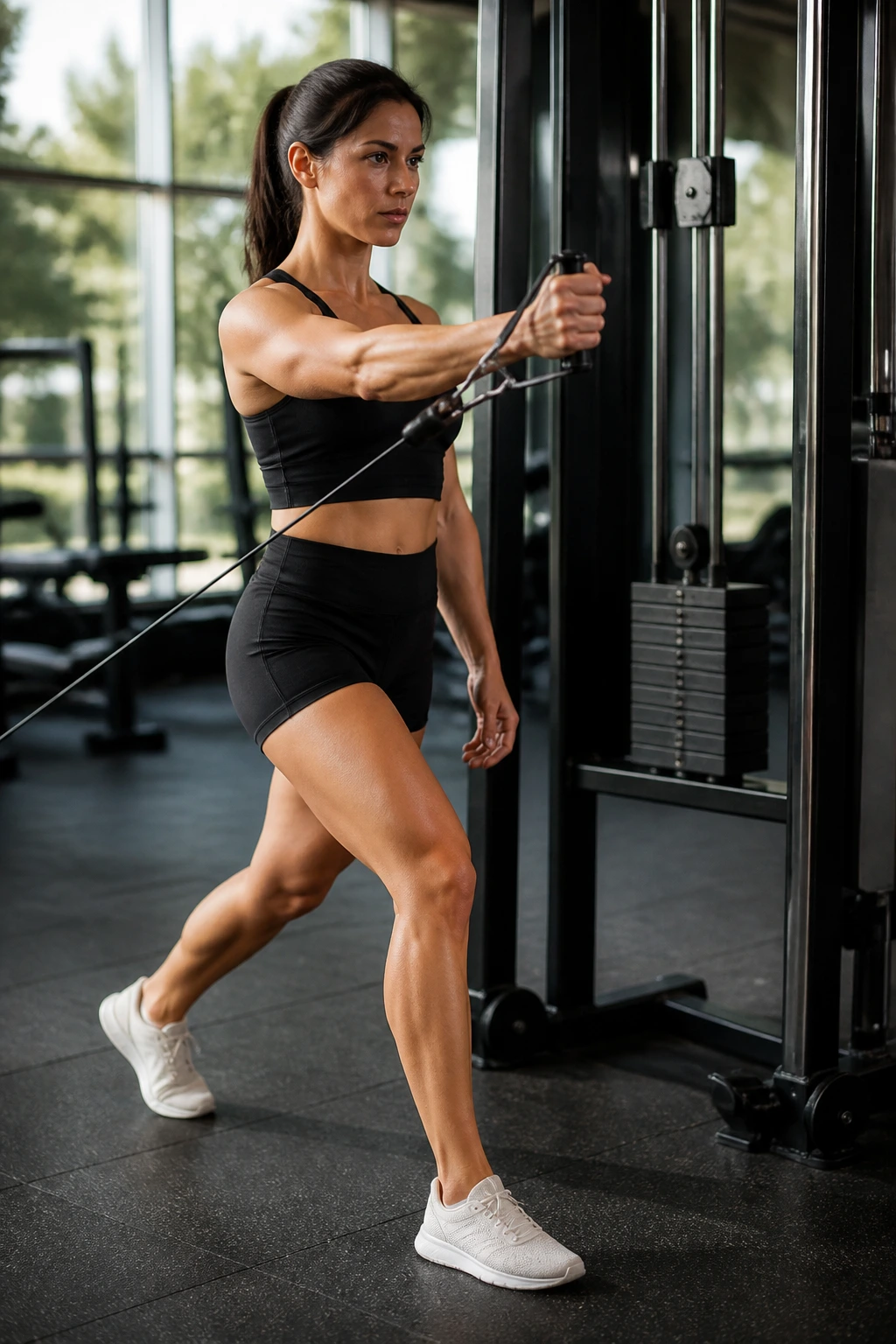
Cable machines are underrated for unilateral training because the tension stays on through the whole range. Free weights are great, sure, but cables make you work through the messy middle where control usually breaks down. That makes them excellent for shoulders, hips, and anti-rotation work.
What the cables do well
They keep the resistance honest. When your arm or leg drifts out of line, the stack reminds you immediately.
Run this tri-set for 3 to 4 rounds:
- Split-stance cable press — 10 reps per side
- Single-arm cable row — 10 reps per side
- Cable pull-through to reverse lunge — 8 reps per side
Rest 45 to 60 seconds after each round. Keep your stance narrow enough to challenge balance, but not so narrow that you’re wobbling around like you’ve had too much coffee.
The split-stance press is especially useful for people whose torso twists when they press dumbbells overhead. The cable line of pull makes the weakness obvious. Good. That is the whole point.
If you want a polished-looking, joint-friendly session, this is a smart place to spend 20 minutes.
11. Stair and Bench Sweat Session
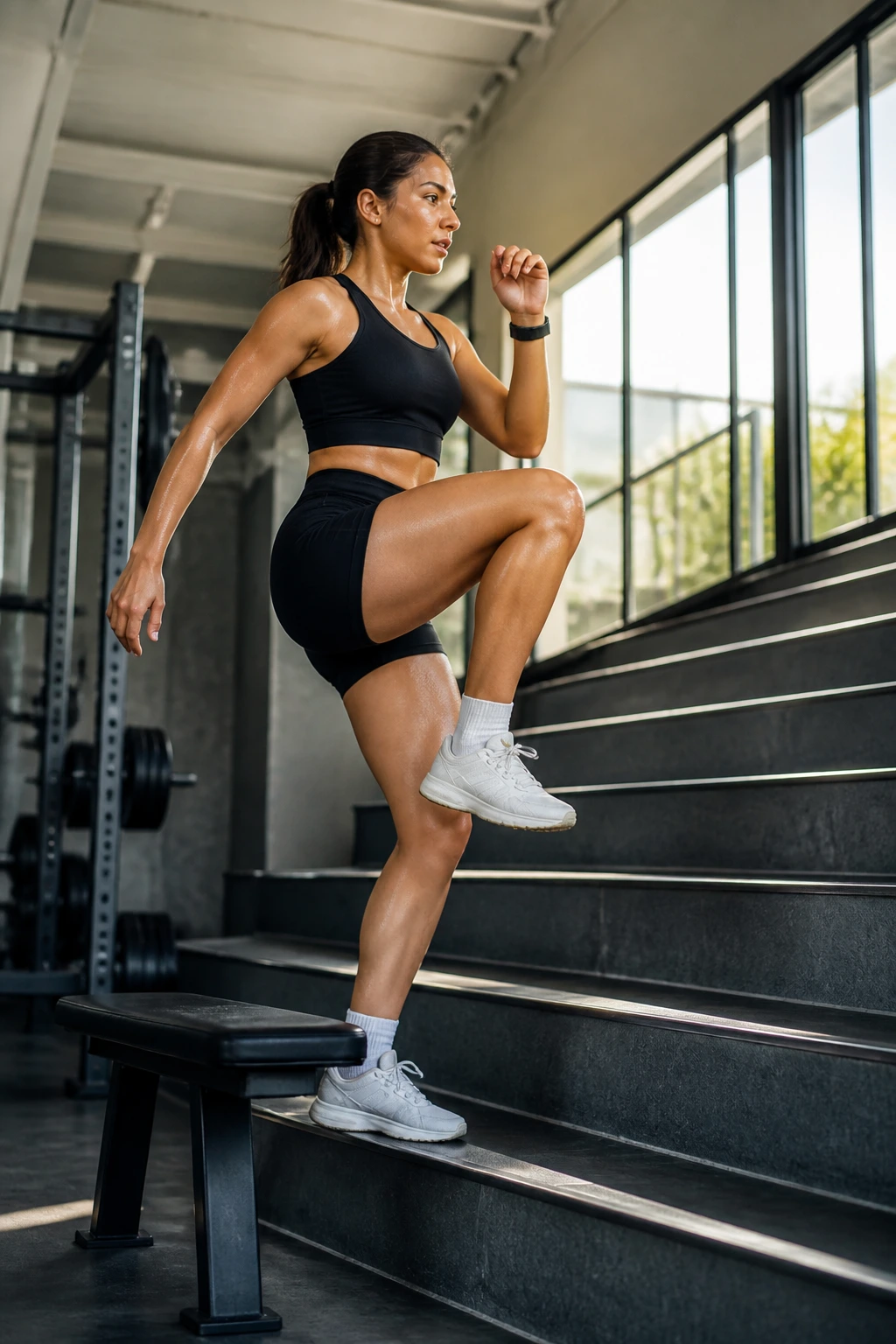
Here’s a useful rule: if you have a bench and a few steps, you already have enough equipment for a full body unilateral workout. You don’t need a huge setup to make the session count. You do need a little discipline, because the pace can get sloppy fast once you’re breathing harder.
The layout
Set a timer for 18 minutes and cycle through these moves:
- Bench step-up with opposite knee drive — 10 reps per side
- Incline push-up with alternating hand reach — 8 reps per side
- One-arm bench-supported row — 10 reps per side
- Reverse lunge to overhead reach — 8 reps per side
Keep the step-up smooth and drive through the standing leg. If you push off the floor with the trailing foot, you’re stealing from the working side. That’s the cheating pattern this workout is trying to catch.
The incline push-up keeps the chest and triceps in the mix without turning the workout into a shoulder wrecking ball. Reaching one hand out forces the trunk to resist rotation, which is exactly where the core earns its keep.
Short, sweaty, no nonsense. That’s the mood here.
12. One-Dumbbell Full Body Unilateral Workout for Tight Spaces
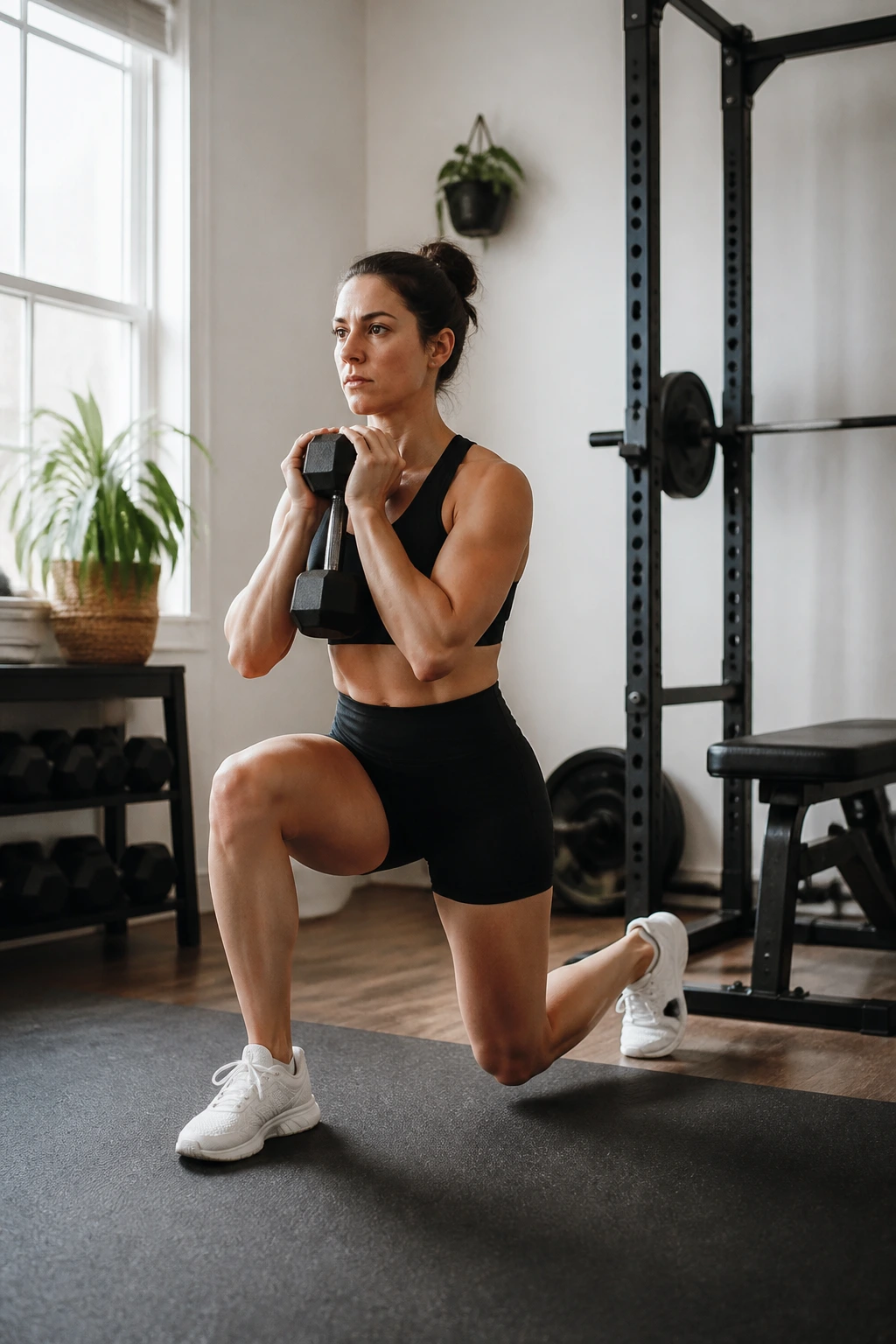
If you only have one dumbbell, you can still train like you mean it. Actually, a single dumbbell can be a blessing. It forces smarter choices. Less clutter, less wandering, more focus. This is one of my favorite setups for home days because it removes the excuse that you need perfect equipment.
Do 4 rounds of:
- Single-arm goblet split squat — 8 reps per side
- Single-arm floor press — 10 reps per side
- Single-arm row with hand on chair or couch — 10 reps per side
- Suitcase march — 30 seconds per side
Rest 60 seconds between rounds. Keep the goblet split squat upright and controlled. The front foot should stay planted, the back heel should stay light, and the torso should resist the urge to fold forward.
The floor press is clean and friendly here. Since the elbow meets the ground, you get a hard stop that keeps the shoulder from wandering. That makes it an excellent choice when you want pressing work without overreaching.
This is the workout I’d use on a weeknight when the room is small and the energy is lower than I’d like. It still gets the job done.
13. Slow Tempo Unilateral Strength Builder
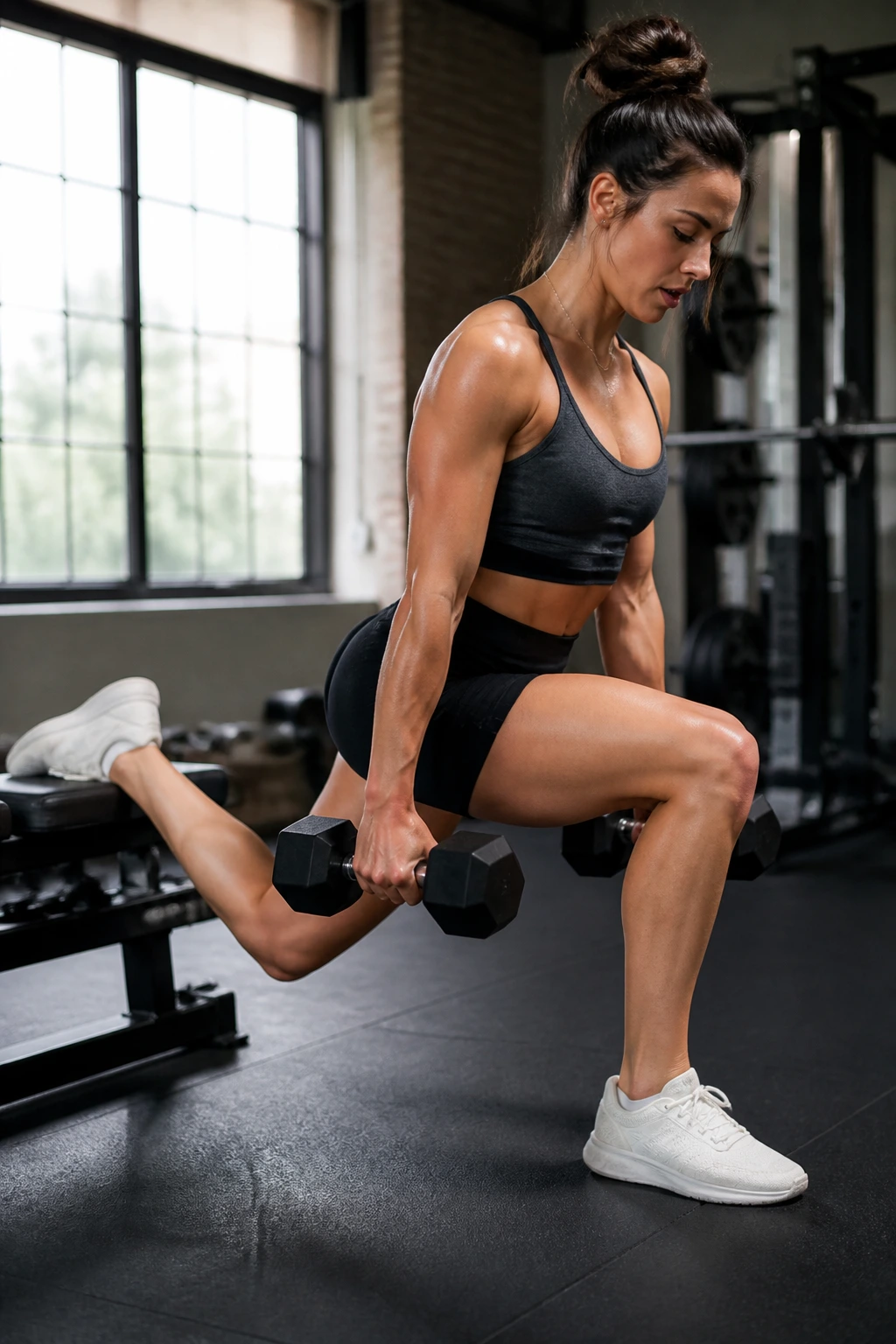
Tempo work is boring for about 90 seconds. Then it gets serious. Slowing the lowering phase forces you to own every inch of the rep, and that tends to expose weak glutes, shaky ankles, and lazy core bracing faster than a fast workout ever will.
Use a 4-1-1 tempo on the first two moves and a 3-1-1 tempo on the press and row:
- Bulgarian split squat — 6 reps per side
- Single-leg Romanian deadlift — 6 reps per side
- Half-kneeling one-arm press — 8 reps per side
- Single-arm bench row — 8 reps per side
Run 3 sets with 75 to 90 seconds of rest. The pause at the bottom is not there to torture you. It gives you a second to feel whether the working side is actually doing the job or whether the other side is cheating by twisting the pelvis.
Tempo work is especially good when you feel stuck. Not because it is magical. Because it removes momentum. You cannot fake a controlled rep for long.
That’s annoying. Also useful.
14. Mixed-Implement Density Session
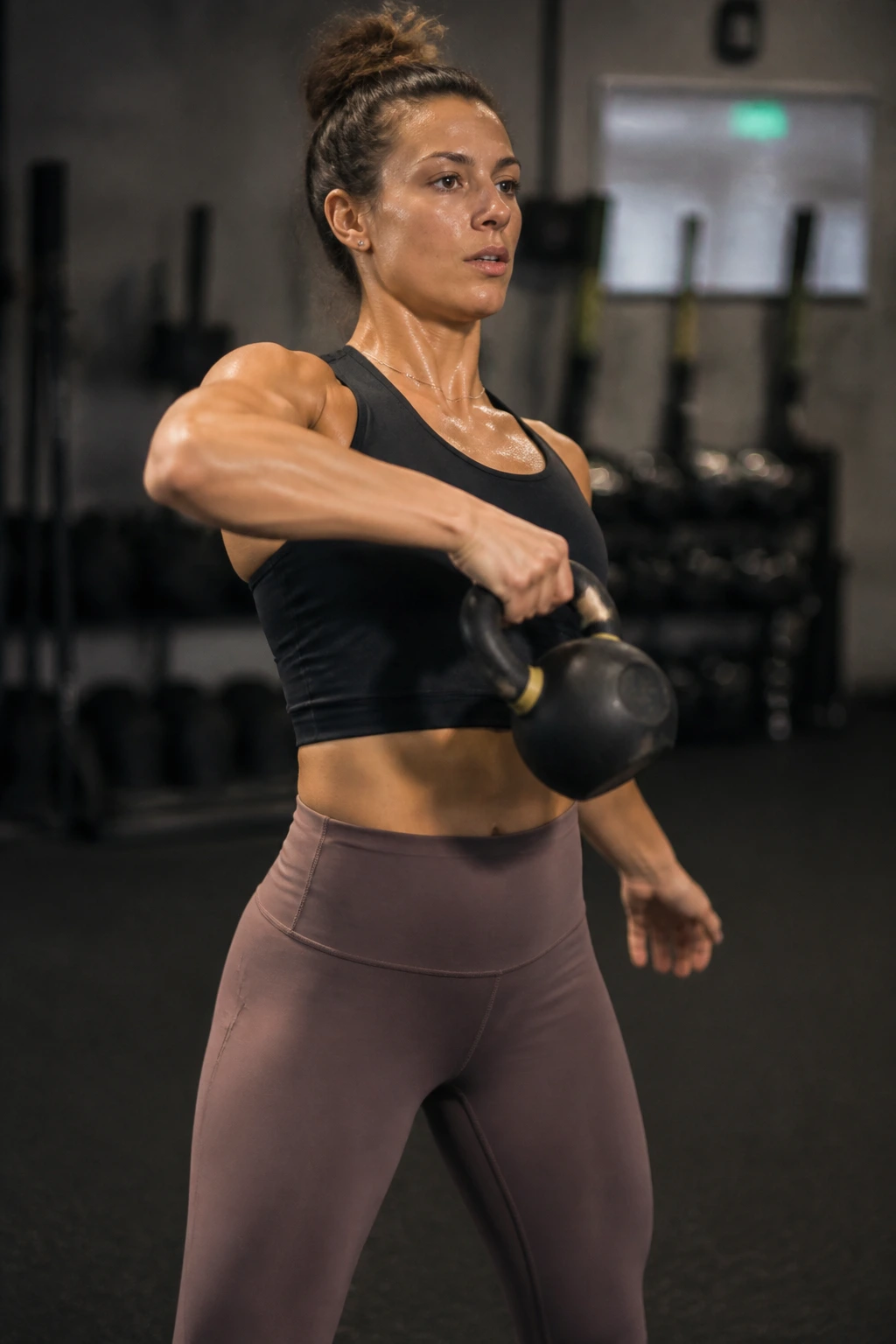
Some days you want strength. Some days you want density. That means a bit more work in the same amount of time, with enough structure that it still feels like training and not just exercise confetti.
How to pace the clock
Set a timer for 16 minutes and alternate these stations every minute:
- Minute 1: Single-arm kettlebell clean — 5 reps per side
- Minute 2: Rear-foot-elevated split squat with dumbbells — 6 reps per side
- Minute 3: Single-arm floor press — 8 reps per side
- Minute 4: Suitcase carry or march — 30 to 40 steps per side
Repeat the cycle four times. Keep the reps crisp. If you’re dragging by minute ten, lower the load before the movement quality drops off.
This setup works well because each station asks for a different kind of effort. The clean is power. The split squat is leg strength. The floor press is upper-body pushing. The carry ties the whole thing together. No part gets to hide.
It’s a good middle ground when you want a tougher session but do not want to spend an hour in the gym.
15. Loaded Carry and Core Stability Finisher
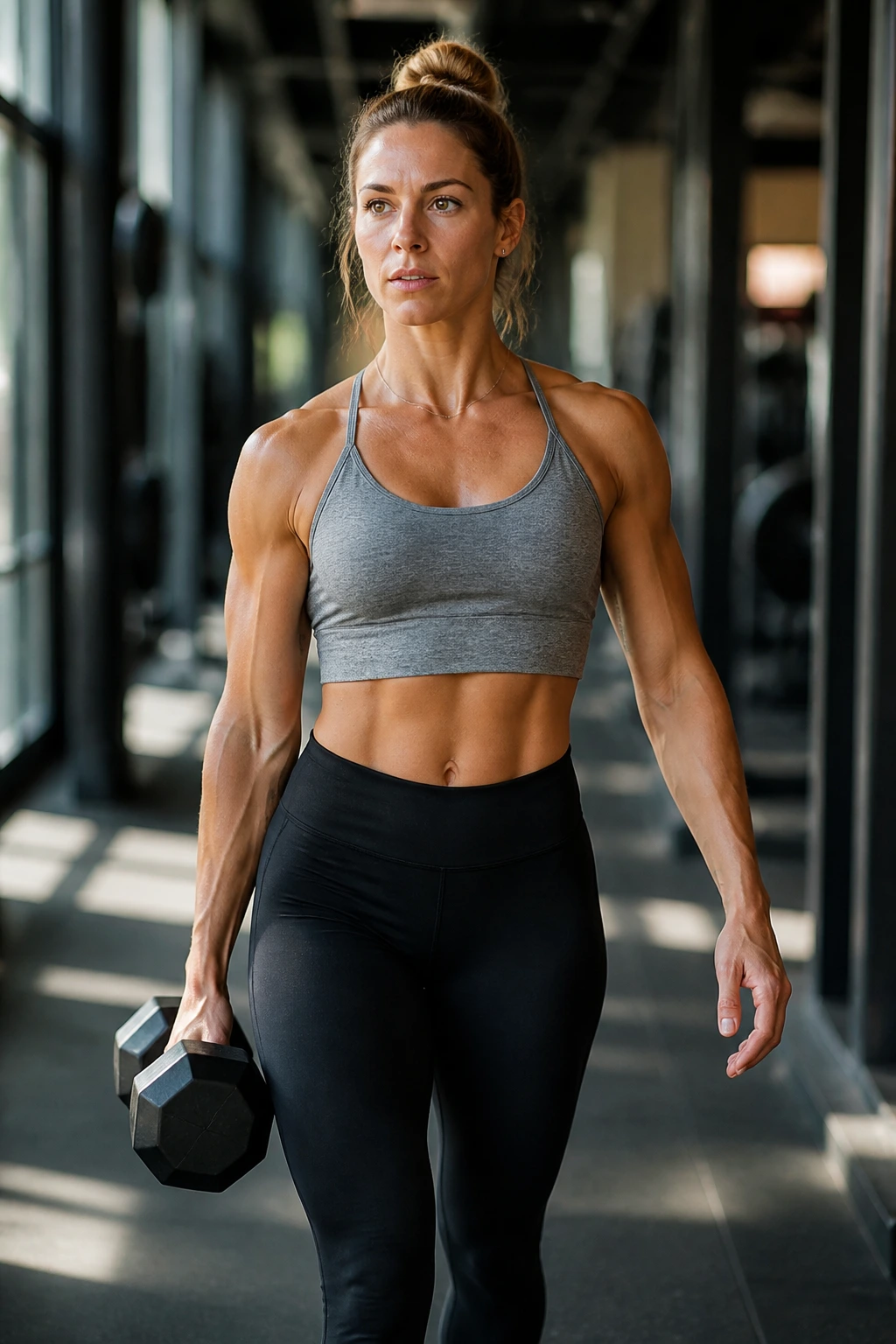
A lot of people skip the finishers that actually matter. They do the pretty exercises, then walk away before the trunk and grip get any say in the matter. That’s a mistake, especially if you care about balanced strength and posture under load.
Do this as a 10- to 12-minute finisher after another workout, or run 3 rounds on its own:
- Suitcase carry — 30 to 45 seconds per side
- Front-rack march — 20 steps per side
- Half-kneeling one-arm press hold — 20 seconds per side
- Single-leg calf raise with pause — 10 reps per side
The carry and march force the torso to stay tall while one side works harder than the other. That is the point. Don’t rush the steps. Feel the ribs stay stacked over the hips and let the obliques do their quiet, stubborn job.
The calf raise seems small, but it’s a useful add-on. A lot of unilateral lower-body work fails at the ankle before it fails at the hip, and this is a cheap way to clean that up.
Save this session for the days when you want to leave the gym feeling more put together than wrecked. It’s not flashy. It works.
