



A timer changes everything.
The same living room that feels too small for a real workout can turn into a hard, honest training space once you give it a clock, a few movements, and a reason to keep moving. That’s the appeal of CrossFit style workouts at home: no long setup, no wandering around the gym, no pretending that a random set of curls counts as conditioning. You pick a workout, you move with intent, and the floor starts feeling a lot less harmless.
Most people get home training wrong in one of two ways. They either go too easy and call it “active recovery,” or they go full chaos mode and string together burpees until their form falls apart. Neither one is especially useful. The good home version sits in the middle — short, hard, measurable, and scalable with a backpack, a chair, a pair of dumbbells, or nothing at all.
That’s why these workouts work. They look simple on paper, but simple and easy are not the same thing. A 12-minute AMRAP, a ladder, a chipper, or an EMOM can hit hard if the pace is honest and the movements are clean. If you’ve got a little floor space and enough room to swing your arms without punching a lamp, you’ve got enough.
Start with the plainest one first. Then pick the style that fits your space, your equipment, and how much noise the people below you are willing to tolerate.
1. A 12-Minute CrossFit Style Burner

Twelve minutes is long enough to get your breathing up and short enough to keep you from negotiating with yourself.
This one works as an AMRAP — as many rounds as possible. You cycle through 8 air squats, 6 pushups, 4 burpees, and 12 mountain climbers per side for 12 minutes straight. No equipment. No excuses. And if pushups on the floor are too much, use a couch edge or a sturdy counter and keep the movement crisp.
The beauty of a short AMRAP is pacing. Go out too hot and the burpees slap you back by minute four. Start too slow and you waste the point. A good first round should feel almost too easy. Almost.
I like this one for days when you want a clear score without a giant setup. Count rounds, count reps, or just track how many times you make it through the full list. Either way, the score gives the workout teeth.
2. Backpack Chipper
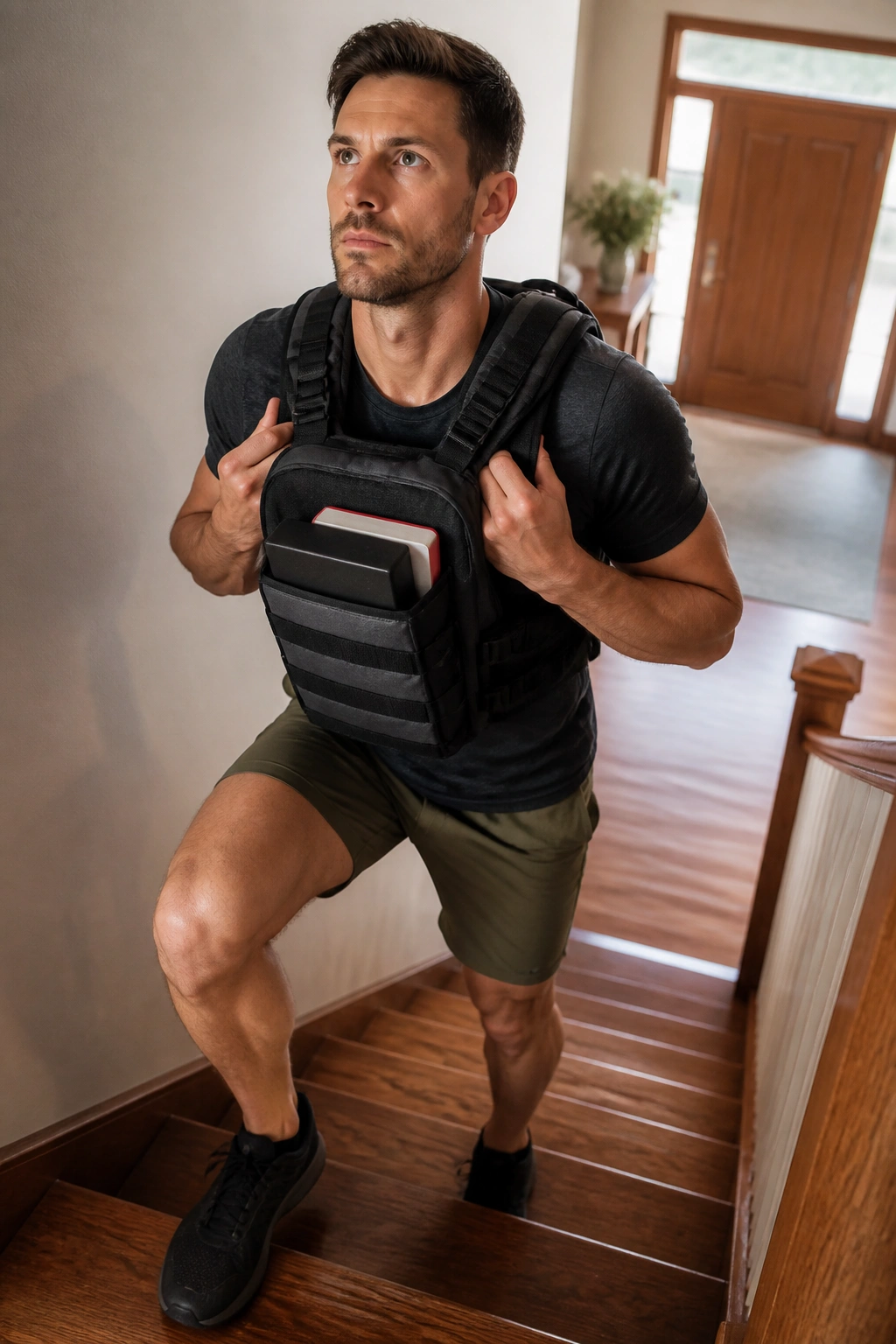
Got a backpack and a floor? That’s enough.
Load the backpack with books, water jugs, or canned food, then move through 40 step-ups, 30 backpack deadlifts, 20 reverse lunges per leg, 15 pushups, and 10 burpees for time. Keep the backpack snug so it doesn’t flop around like a bad idea. If the deadlifts turn sloppy, lighten the load. Fast.
How to Scale It
- Use a lower step if your stairs feel steep or unstable.
- Swap pushups for incline pushups on a counter or table.
- Cut the burpees to 5 if your space is tight and your neighbors are sharp-eared.
- Hold the backpack at your chest for lunges if wearing it throws off your balance.
A chipper is different from a round-based workout because the finish line is visible. That matters. You can feel the list shrinking, and that changes the way your brain handles the hard part. A longer middle usually feels brutal in the moment, but the last ten reps are where the whole thing gets interesting.
Tip: tape the backpack shut. Books shift. So do water bottles. Not in a fun way.
3. Cindy With a Home Twist
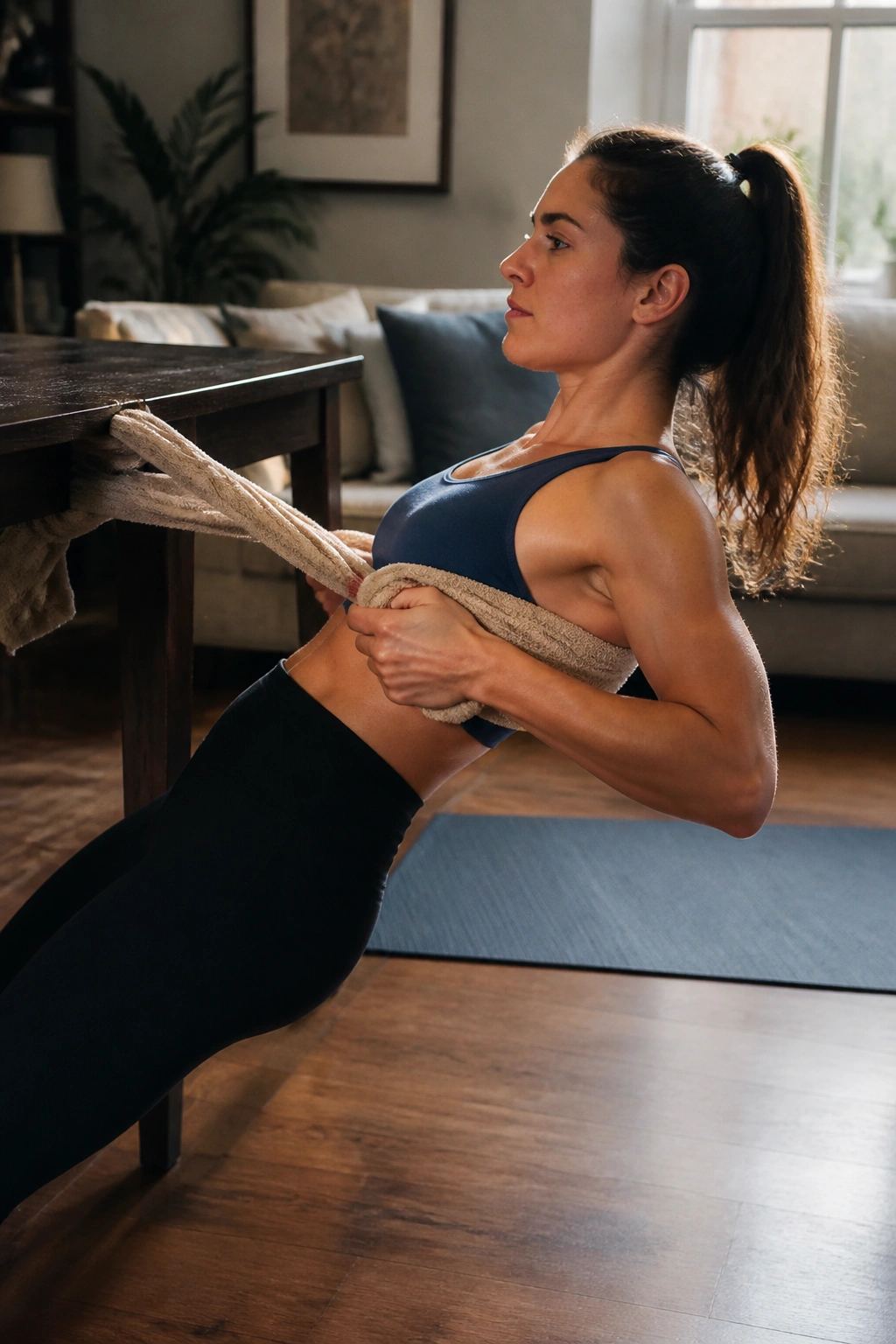
Cindy is one of those workouts that looks polite on paper and then quietly wrecks you.
The classic version is pullups, pushups, and air squats. At home, swap the pullups for towel rows under a sturdy table, band rows, or door-anchor rows if you already own a setup. Then run a 20-minute AMRAP of 5 rows, 10 pushups, and 15 air squats. Keep the reps clean. No cheating the squat depth just because the clock is staring at you.
What makes this one so effective is the repeatability. The movements are basic, but the repeated cycle exposes weak spots fast. If your rows are jerky, your pushups sag at the hips, or your squats stop at half-depth, the workout tells on you. That’s useful information.
One-sentence truth: basic movements are not easy movements.
If you want a version that feels a little nastier, slow the lowering phase on the pushups to three seconds. The workout doesn’t get longer. It just gets meaner.
4. Thruster Ladder, No Excuses
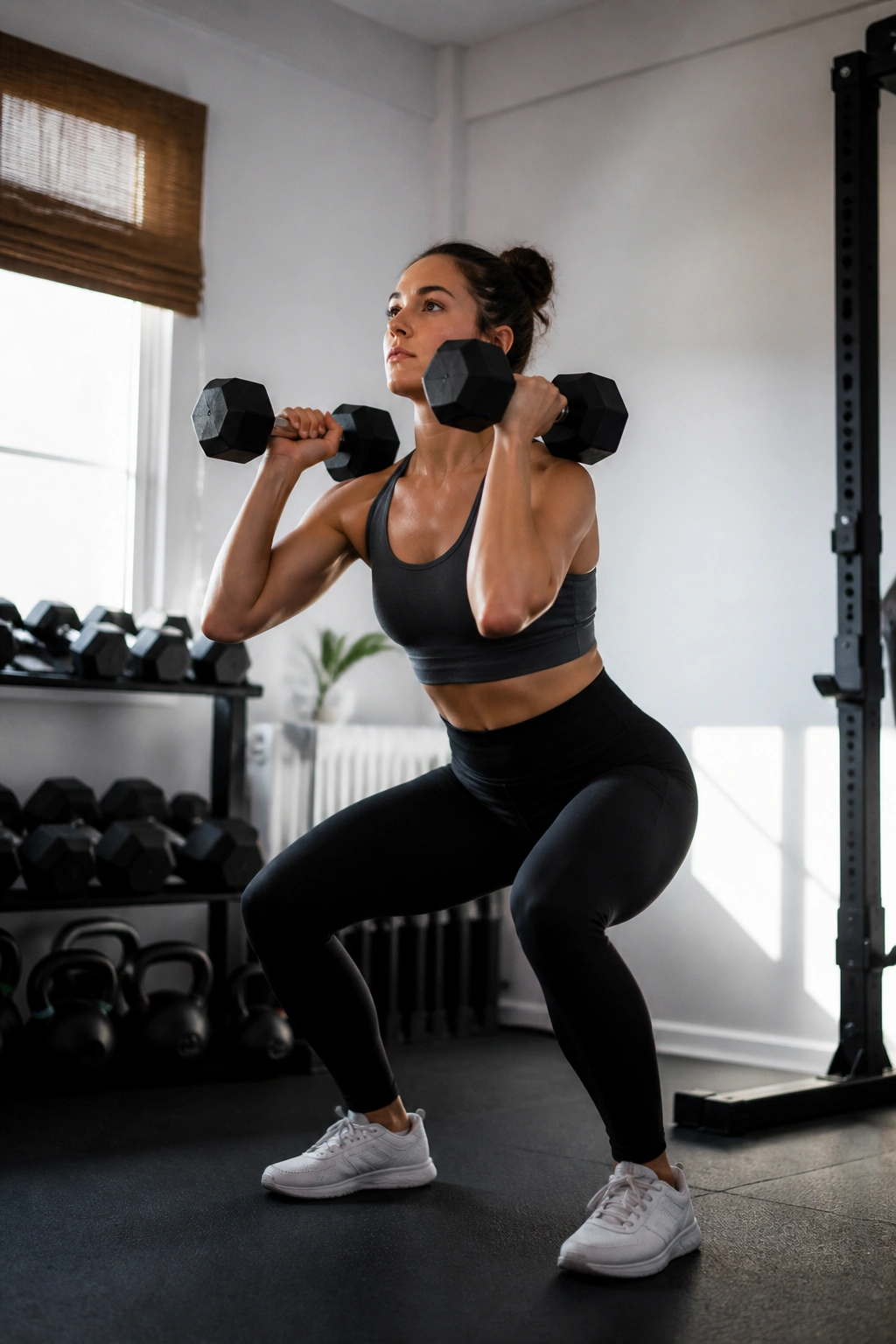
Heavy thrusters are not the only way to make a workout ugly.
Try a ladder of 1-2-3-4-5-4-3-2-1 thrusters and burpees, using two dumbbells, one kettlebell, or even a single backpack hugged to the chest. Do the thrusters first, then the same number of burpees. So 1 thruster, 1 burpee. Then 2 and 2. Keep climbing until 5, then come back down. That’s it.
The rep pattern keeps changing just enough to mess with your head. You never settle into autopilot. The first few rounds feel almost casual, which is a trap. By the time you get back down the ladder, your legs are less willing to cooperate and your breathing starts sounding rude.
What Makes It Work
- Thrusters combine a squat and press, so they hit legs and shoulders at once.
- Burpees push your heart rate up without needing much space.
- The ladder gives you a built-in pace change, which keeps the workout from feeling flat.
- A light load works better than a heavy one if your form starts to fold.
I’m a fan of this one because it feels like real conditioning, not random suffering. There’s a rhythm to it. Then the rhythm breaks.
5. Stair Sprints and Step-Ups
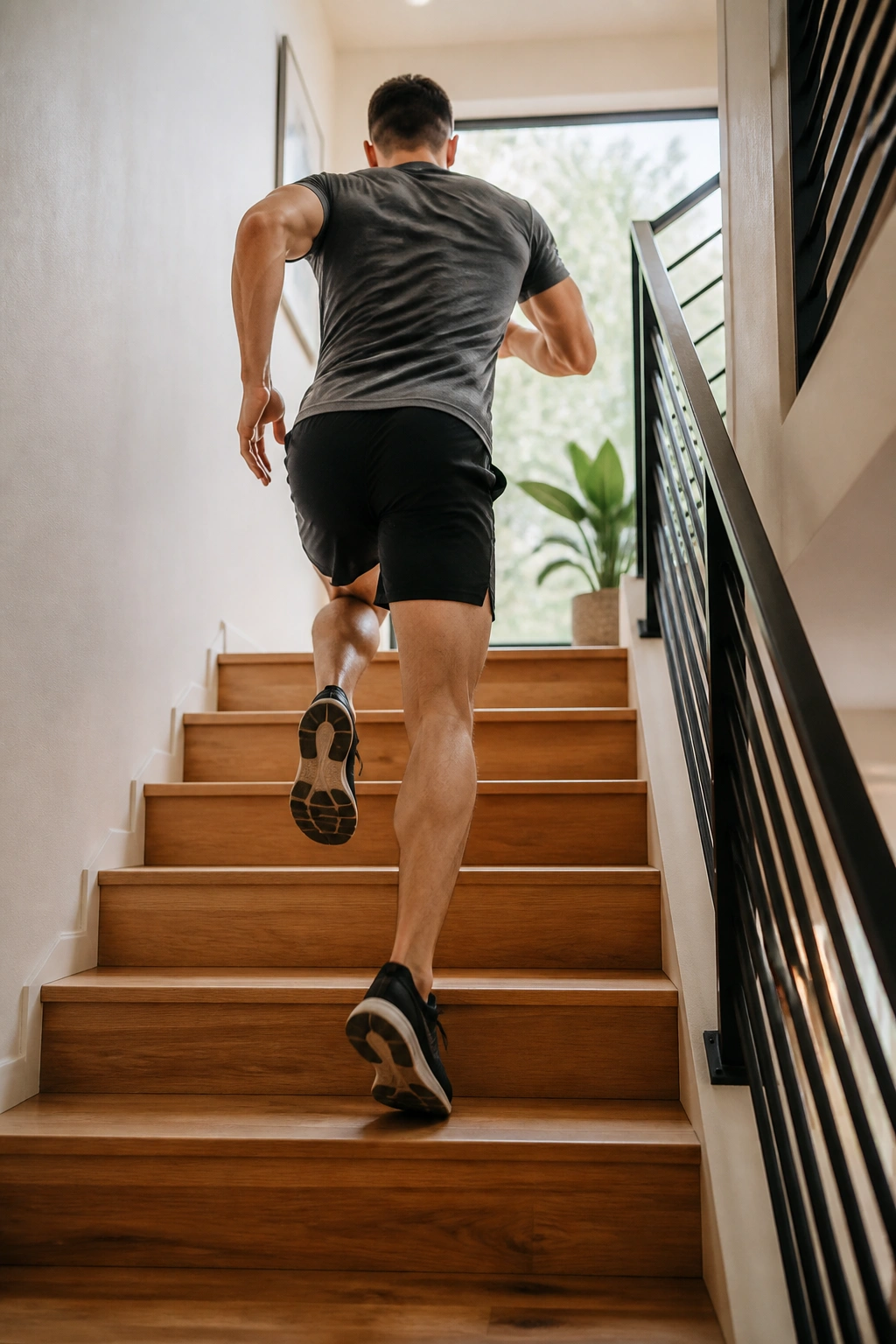
If your stairs are the loudest thing in the house, this one needs a little care. Nobody wants a neighbor complaint because you decided to become heroic before breakfast.
Use a staircase, a single sturdy step, or even a porch landing. Sprint up for 10 to 20 seconds, walk down slowly, then do 12 step-ups per leg and 10 squat jumps or fast air squats. Repeat for 6 to 8 rounds. If jump noise is a problem, keep it to step-ups and fast squats only. The workout still works.
The reason stairs hit so hard is simple: gravity is rude. Every trip up demands more from the legs than flat ground does, and the walk back down lets your lungs settle just enough to go again. That makes it a clean home replacement for hill repeats or machine intervals.
This is one of the best CrossFit style workouts at home when you want pure engine work without a pile of floor movements. It also has a nice side effect: your calves will remind you about it later.
6. The CrossFit Style EMOM 20
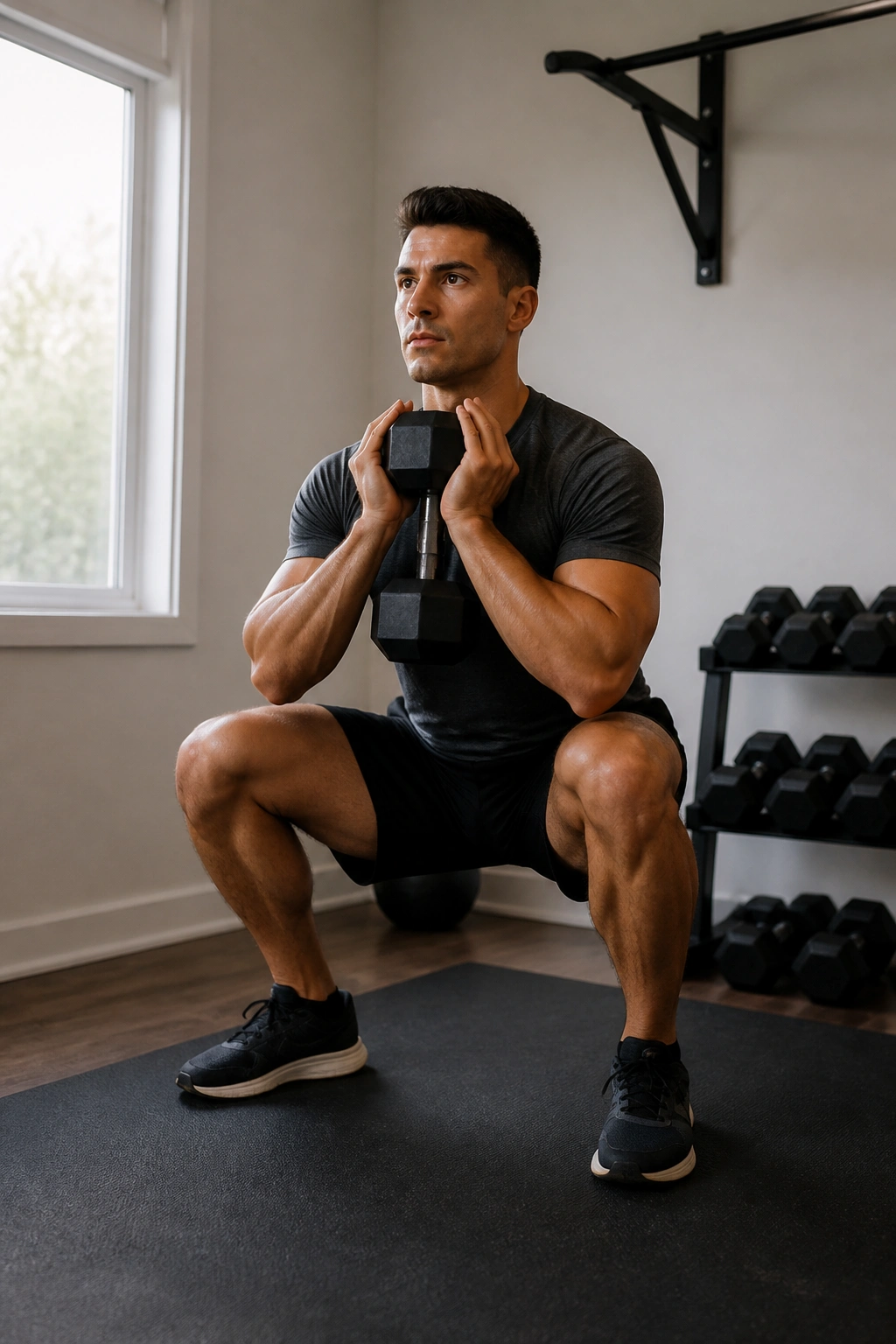
Want a session that never gets boring? Use the clock to do the job.
An EMOM is every minute on the minute. For 20 minutes, repeat this four-minute cycle five times: minute 1, 12 goblet squats; minute 2, 10 pushups; minute 3, 12 bent-over backpack rows or dumbbell rows; minute 4, 30-second plank hold. Any leftover time in each minute is your rest. Any extra rest you need means the reps were probably too high.
How to Use It
- Pick a load that lets you finish the work in 35 to 40 seconds.
- Keep the plank strict, with ribs down and hips level.
- If rows are hard to set up, use a resistance band or slow towel rows.
- Do not turn the squats into a bounce-fest. Stand all the way up.
EMOMs work because they reward consistency. You can’t coast, but you also can’t sprint like a maniac for two minutes and faceplant. The pacing is the whole point. And if you like seeing clean numbers, this one feels satisfying in a way that’s hard to explain until you’ve done it.
7. Burpee Ladder for Tight Spaces
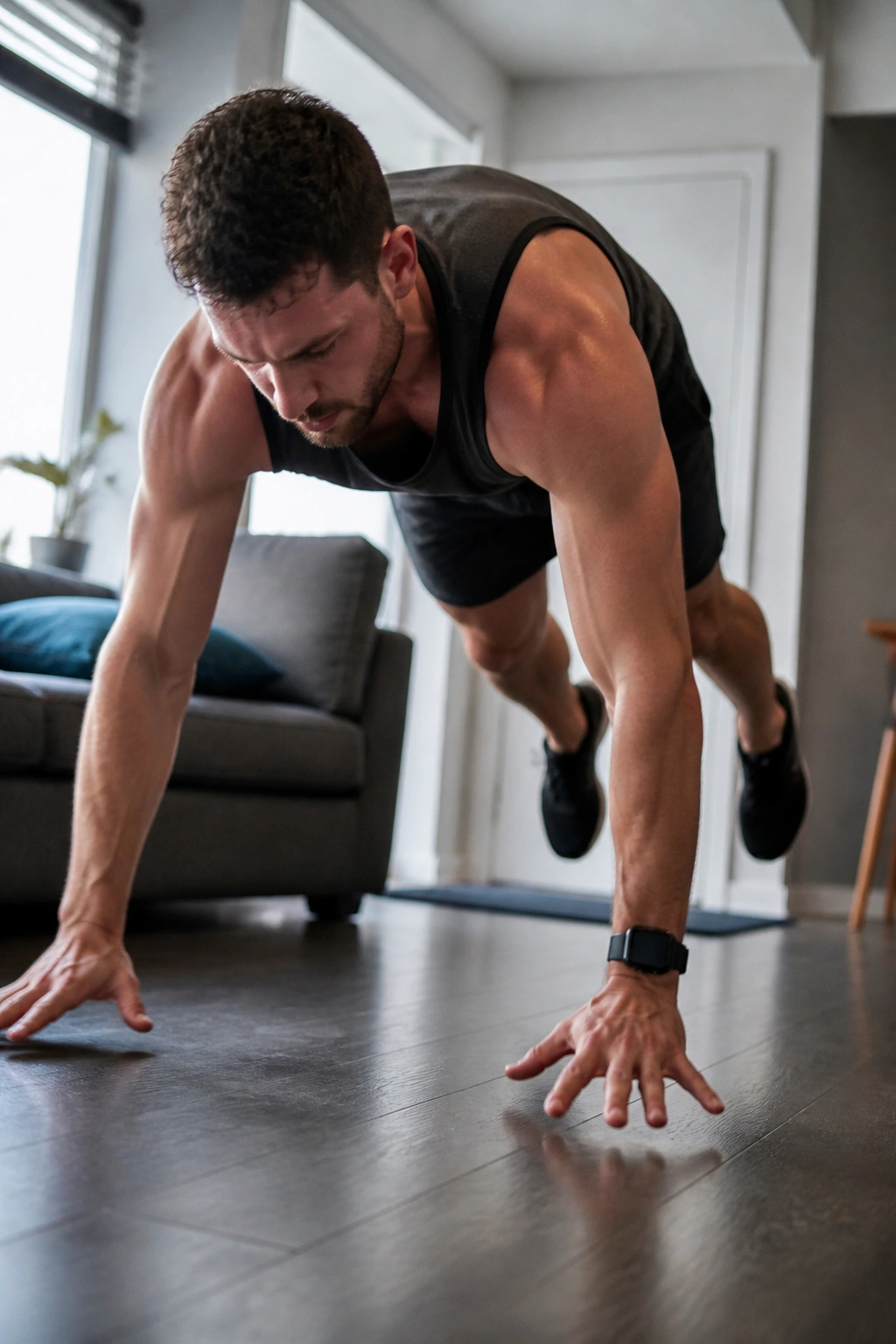
Compared with longer chipper workouts, a burpee ladder feels meaner because the pacing keeps changing.
Start with 2 burpees, then 4, then 6, then 8, then 10, then come back down to 8, 6, 4, and 2. After each set, do 10 air squats. If you want more work without more noise, add 20 seconds of high knees between rounds instead of more burpees. Small room. Big heart rate.
The ladder shape matters here. Early sets feel tiny, almost insulting. Then the middle hits, and the workout starts collecting a debt. By the time you turn the corner and head back down, you’re not fighting the burpees as much as you’re fighting the memory of the burpees.
This is the kind of workout I’d use when I want conditioning without equipment and without long explanations. It’s simple enough to memorize. That matters when your brain is already busy counting down the second half of a ten-burpee round.
Watch out for: sloppy landings. If your low back starts taking over, shorten the rep count and keep the jump small.
8. Single-Arm Snatch and Carry Complex
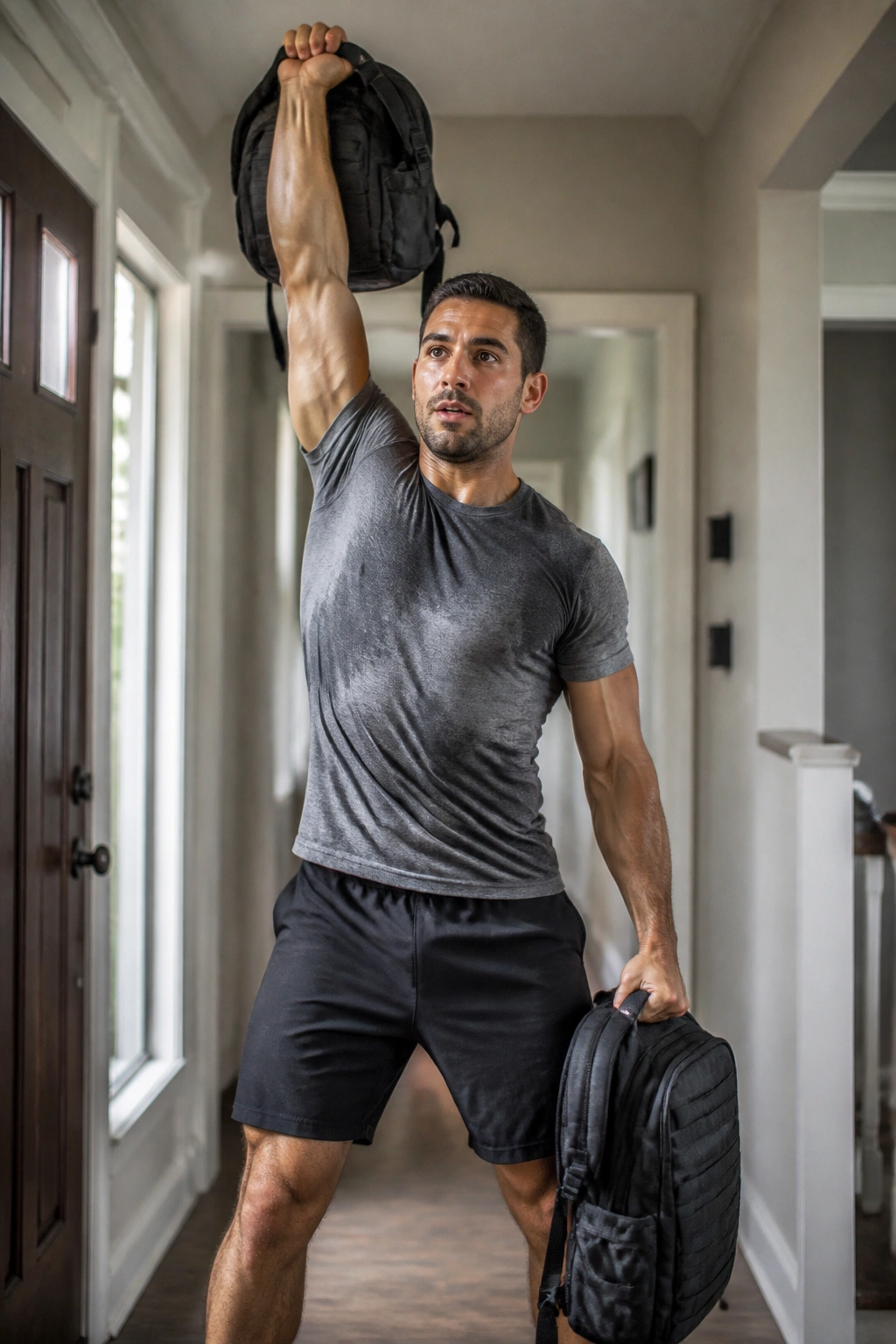
Set a backpack by the door and it starts to look like a small training plan.
This one uses a kettlebell, dumbbell, or one heavy backpack with a handle. Do 6 single-arm snatches on the right, 6 on the left, then 30 seconds of suitcase carry on each side. Rest 60 seconds. Repeat for 5 rounds. If overhead work bothers your shoulder, swap the snatches for high pulls and keep the carry.
The carry is the part people skip in their heads and then feel in their ribs later. That offset load forces the trunk to stay honest. It’s not flashy. It’s just hard in a way that shows up everywhere else — walking, squatting, even standing still with a laundry basket.
The Right Feel
- The snatch should pop from the hips, not curl from the arm.
- Your wrist finishes stacked over your shoulder.
- The suitcase carry should feel like one side of your body is trying to lean, and you refuse to let it.
- If grip is the first thing to fail, shorten the carry before you cut the snatches.
This workout is excellent if you want to feel strong instead of merely tired.
9. A Bodyweight Hero Circuit

Bodyweight workouts can hit hard when the rest periods are short enough.
Run 5 rounds of 10 hand-release pushups, 15 jump lunges, 20 sit-ups, and 25 mountain climbers per side. Rest 30 to 45 seconds between rounds. No gear, no setup, no hunting for plates under the couch. Just a mat, a little floor space, and a willingness to breathe through your nose for exactly zero seconds.
What I like here is the way the movements change the stress. Pushups make the upper body fail first. Jump lunges make the legs feel springless. Sit-ups bring the midsection back into the conversation. Then mountain climbers keep the whole thing churning when you’d prefer it didn’t.
This is a good apartment workout if you keep the jumps low and the landings soft. If your ceiling is low, skip the jumps and do reverse lunges instead. Same spirit. Less drama.
One small rule: stop the set when the pushup shape falls apart. Fatigue is not a license for collapsed hips.
10. Swings, Squats, and a Fast Heart Rate
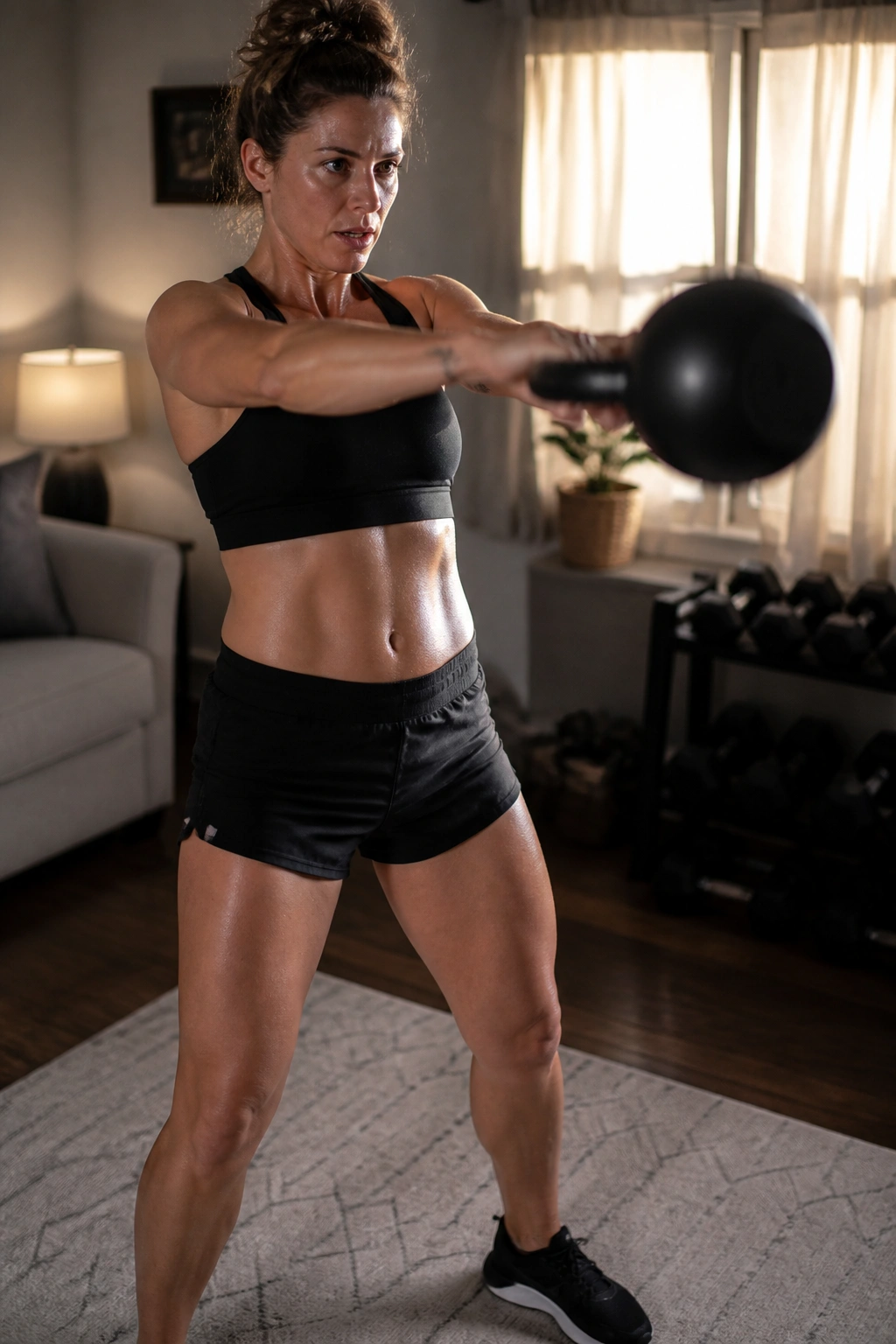
Swings are sneaky.
A kettlebell swing looks like a hinge drill until the third round, when your glutes start arguing with your lungs. Do 15 swings, 12 goblet squats, 10 pushups, and 30 seconds of fast feet. Repeat for 5 rounds. If you only have a backpack, two hands on the top handle can work, but the hinge has to stay clean.
What to Watch For
- The swing comes from the hips snapping, not the arms lifting.
- The kettlebell should float to chest height, not drift overhead.
- Your back should stay flat through the hinge.
- If the low back feels it more than the hamstrings, lower the load.
I’d use this on days when I want a hard engine piece without endless jumping. It feels athletic, not just sweaty. That difference matters. The squat resets the legs, the swings wake up the posterior chain, and the pushups keep the upper body from getting too comfortable.
Short version: this workout gets loud fast.
11. The Quiet Apartment Grinder
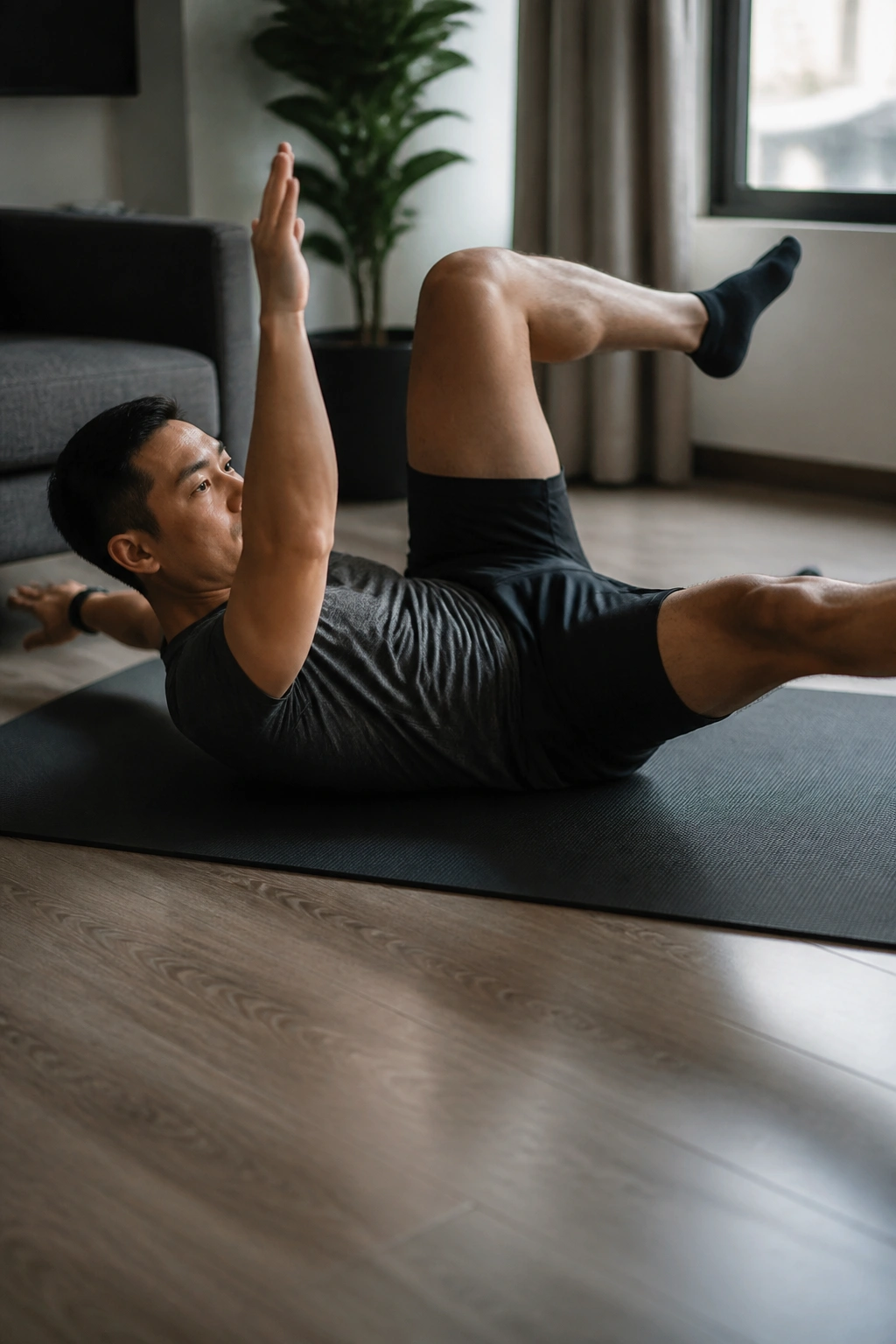
The quietest workout in the list is often the one that hurts the most the next morning.
Keep it low impact. Do 18 minutes of 8 slow air squats, 8 incline pushups, 8 reverse lunges per leg, and 20 dead bugs. Move steadily. No jumping, no burpees, no dropping a dumbbell on hardwood. If you want more bite, slow the squats to a three-count on the way down.
This is the right choice when space is tight or noise matters. It still fits the CrossFit style mold because it is timed, measurable, and movement-heavy. The trick is to keep the tempo honest. Rushing through dead bugs doesn’t impress anyone, and the squats should still end with the heels planted and the chest tall.
A lot of people assume “quiet” means “easy.” Nope. Slow reps can expose weak hips and lazy cores in a way that fast circuits hide. If you want the burn without the stomp, this is your workout.
12. Push-Pull Upper Body Breakdown

Push days at home feel different from gym push days.
You don’t need a bench press to smoke your upper body. Try 4 rounds of 12 pike pushups, 15 chair dips, 10 backpack rows, and 20 shoulder taps per side. Rest 45 seconds between rounds. If pike pushups feel awkward, put your hands on the floor and your feet on a couch cushion so the angle is less steep.
The push-pull mix keeps your shoulders from getting too one-sided. Chair dips hit the triceps fast, but they can irritate cranky shoulders if you dive too deep. Stay in control. The best dip depth is the one where your shoulders feel loaded but not pinched.
A Few Good Adjustments
- Use a table for rows if your backpack feels too light.
- Shorten the pike pushup range if your head is dropping forward.
- Keep the chair dips smooth; no bouncing.
- Add a 20-second hollow hold after each round if you want more core work.
This one is a little old-school, and I mean that in a good way. It rewards clean reps more than fancy equipment.
13. Lunges, Split Squats, and Slow Legs
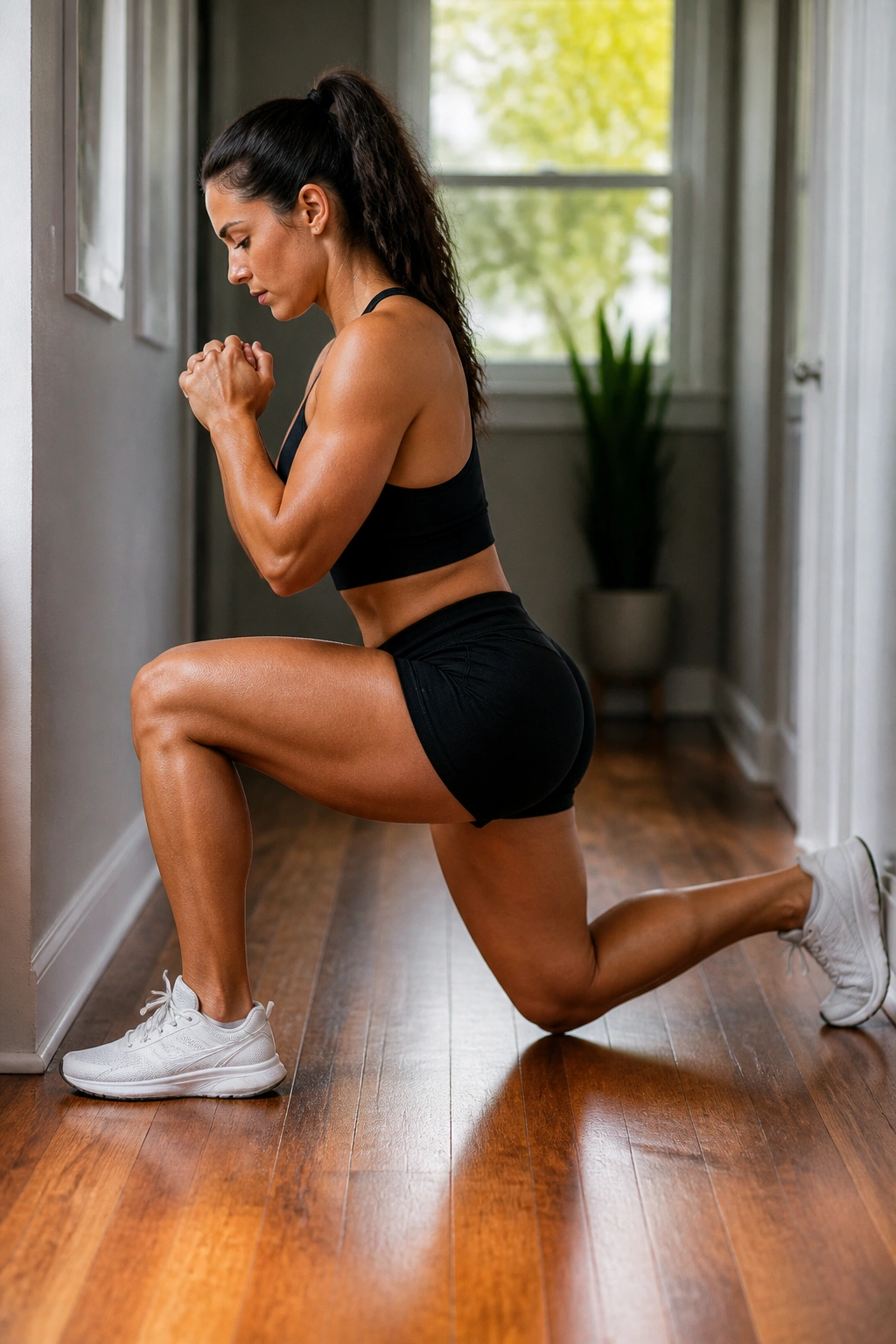
A set of walking lunges in a hallway looks harmless until rep twelve.
Do 4 rounds of 12 reverse lunges per leg, 10 Bulgarian split squats per leg with the back foot on a couch or chair, 20 glute bridges, and a 40-second wall sit. Rest 30 seconds between rounds. If the split squats are too aggressive, keep both feet on the floor and make them regular split squats.
The whole point here is leg tension. You’re not trying to jump around. You’re trying to make the quads and glutes stay under load long enough that they stop lying to you. Slow lowering on the split squats — about 3 seconds down — makes the workout feel twice as long without actually adding time.
This is one of those sessions where a little humility helps. Heavy breathing doesn’t mean you’re working the right thing. Sometimes the right thing is your front leg shaking during a wall sit while your brain thinks it should be over by now.
14. Core Work When You’re Already Tired
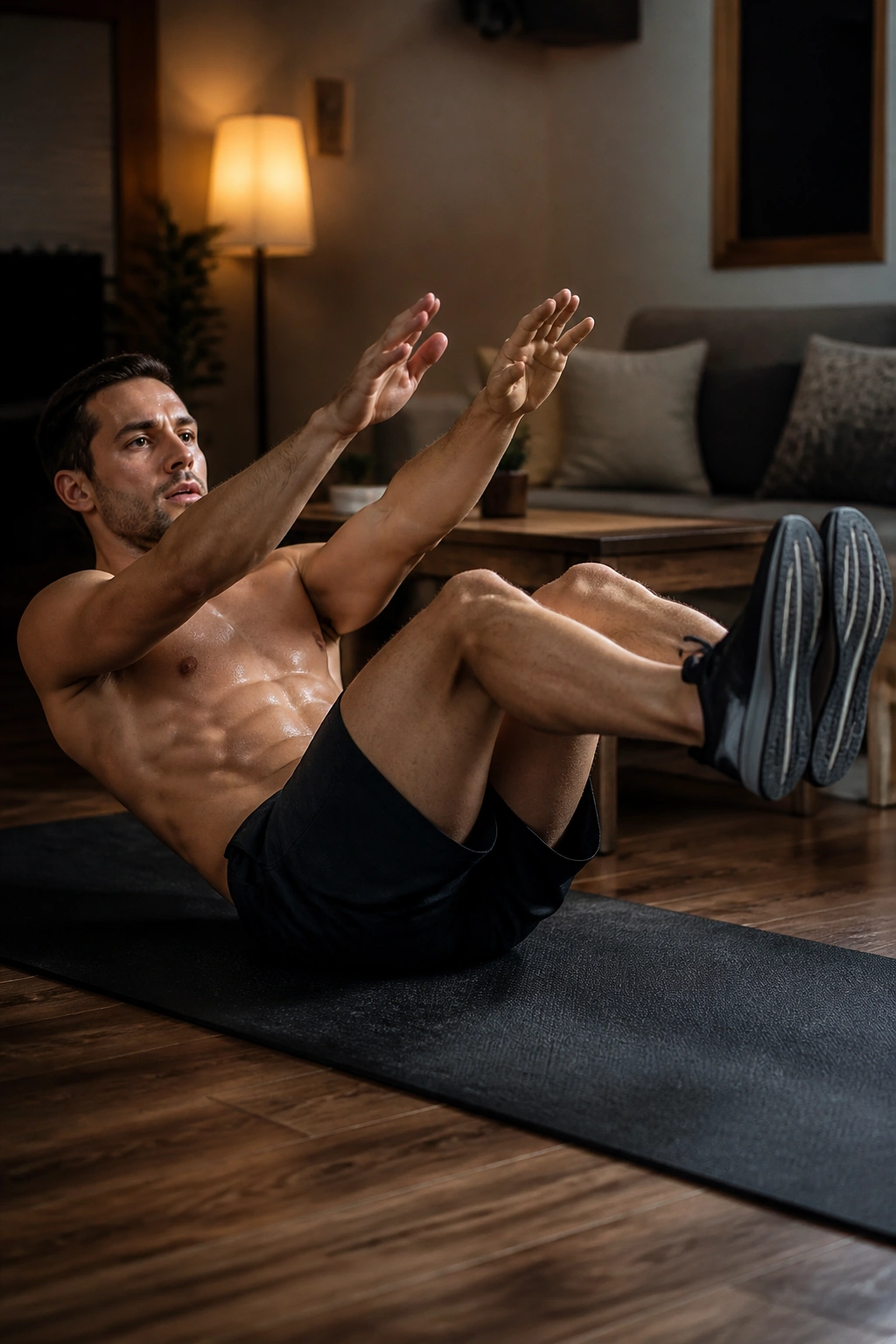
Why train your core only when you’re fresh?
Put it after a little conditioning. Do 3 rounds of 10 burpees, 20 hollow rocks, 20 plank shoulder taps, and 30 bicycle crunches. Rest 30 seconds. If hollow rocks bug your lower back, keep one foot down or switch to dead bugs.
How to Keep It Useful
- Start the hollow hold with your low back pressed into the floor.
- Move the shoulders slowly on the taps so the hips don’t twist.
- Keep the bicycle crunches controlled; speed is not the prize here.
- Stop one or two reps before your back starts arching.
A tired core is a more honest core. Fresh-floor abs often look good and don’t tell you much. But after burpees, the trunk has to stabilize when the breath is already ragged, and that’s much closer to what real movement feels like.
This workout is short, which is good, because it gets spicy fast.
15. Tempo Reps Meet Metcon Pace
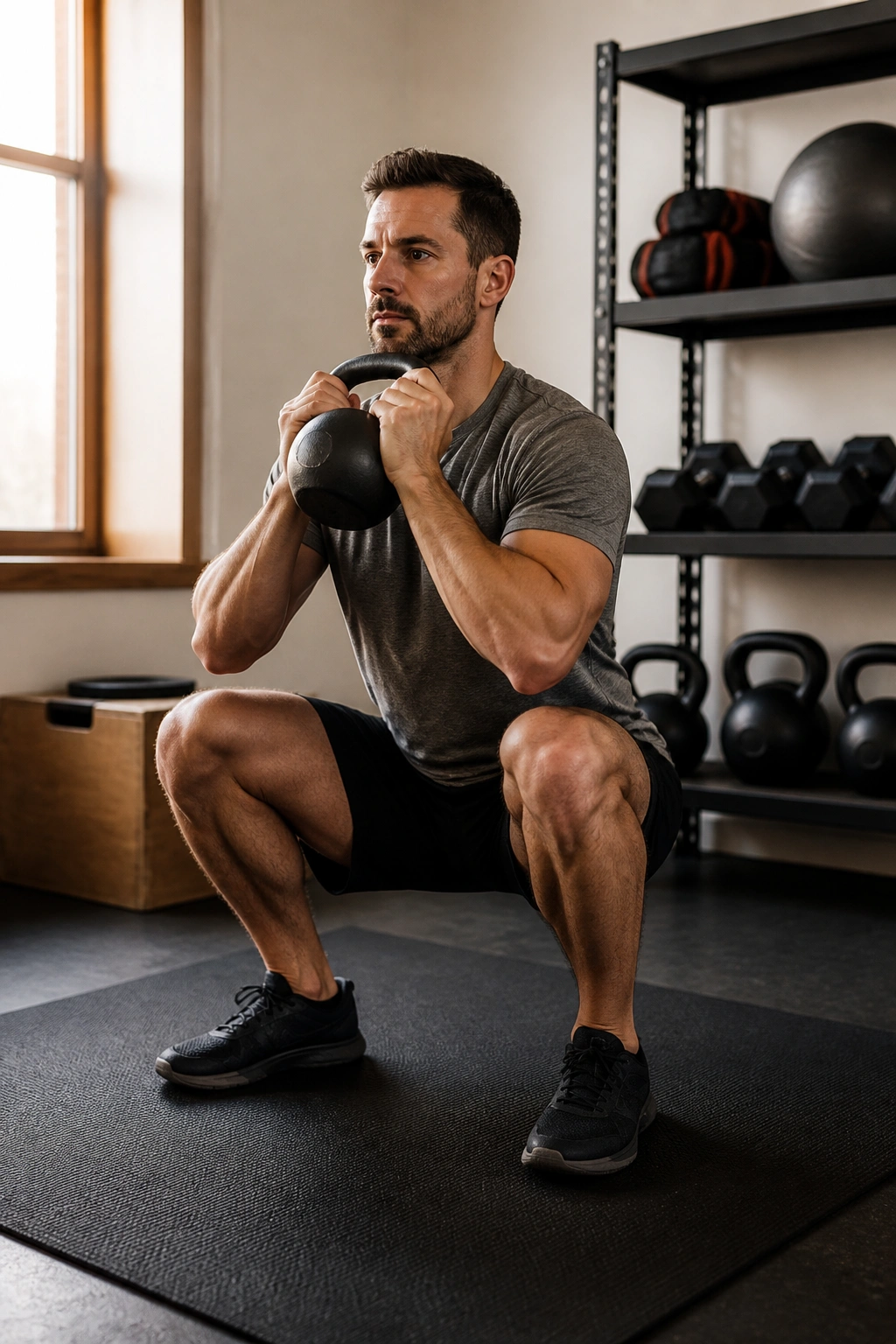
Tempo reps slow the room down and make light weights feel honest.
Use a dumbbell, kettlebell, or backpack for 4 rounds of 5 tempo goblet squats, 5 slow pushups with a three-second lower, 5 single-leg deadlifts per side, and 10 burpees. Rest 45 seconds between rounds. The tempo is the trick. It turns ordinary weights into work that sticks to your legs and shoulders.
I like this approach when the gear at home is lighter than I want. Slower reps make up for the missing load better than people expect. They also clean up sloppy movement. A rushed squat will show up immediately when the descent takes three full counts.
The burpees at the end keep the whole thing in CrossFit style territory, which means the strength work doesn’t live in a bubble. It gets mixed back into conditioning, and that’s the part a lot of home workouts miss.
Short, honest rule: if your form breaks, lighten the weight before you add more reps.
16. Deck of Cards Conditioning

Shuffle a deck, lay it on the floor, and the workout starts before you can overthink it.
Assign one movement to each suit. Hearts are air squats, diamonds are pushups, clubs are sit-ups, and spades are burpees. Flip the cards one at a time and do the number on the card — jack = 11, queen = 12, king = 13, ace = 14. Work through the whole deck, or stop after 20 minutes if the pile gets rude.
The fun here is also the problem. You never know what’s next, so you can’t pace perfectly. That makes the workout feel raw and a little chaotic, which is useful once in a while. If you draw three big burpee cards in a row, well, that’s the room’s opinion on your cardio.
If You Want It Cleaner
- Use only half the deck if the full run is too long.
- Swap burpees for squat thrusts to lower the impact.
- Replace pushups with incline pushups if the chest starts to quit early.
- Keep the cards in one pile so you’re not fishing under furniture.
This is one of the more playful CrossFit style workouts at home, and it still earns its place because the scoring is simple: finish the deck.
17. Wall Walks and Pike Pushups
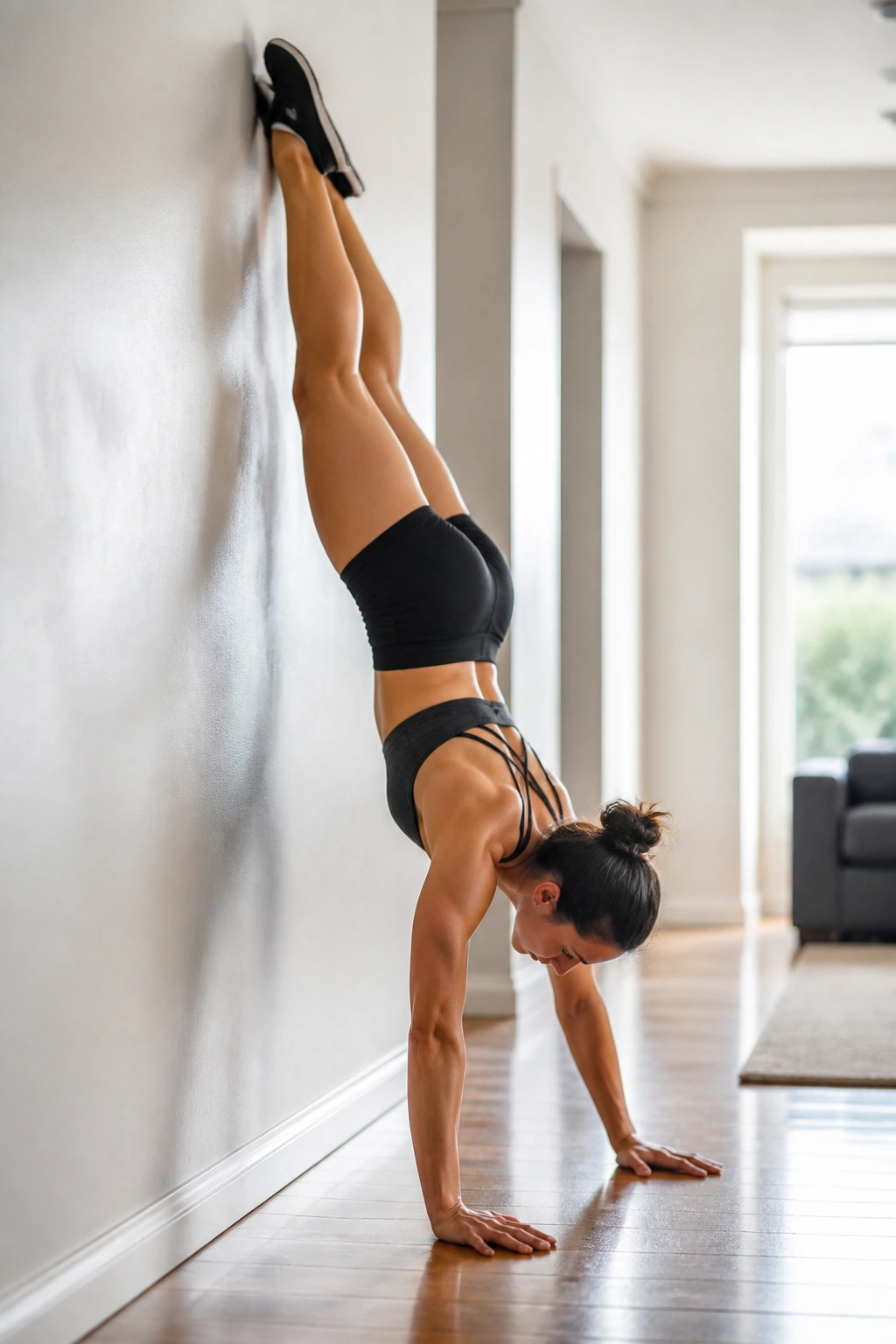
Your shoulders notice wall walks before your lungs do.
Start with 3 wall walks, 6 pike pushups, 9 V-ups, and 12 air squats. Run that for 4 to 5 rounds. If wall walks feel too much, hold a plank with feet on a couch and walk your hands back a few inches. Same family. Less upside-down panic.
The wall walk is the anchor. It demands shoulder strength, midline control, and a little courage because being upside down changes the way the whole body feels. Then the pike pushups keep the shoulders loaded without needing a barbell. The V-ups keep the center from hiding.
This one is useful if you want skill work folded into conditioning. Not every home workout has to be pure sweat. Sometimes it’s better when it also asks you to balance, brace, and control your body in awkward positions.
Nope, it’s not glamorous. It is effective.
18. Low-Impact CrossFit Style Training for Shared Spaces
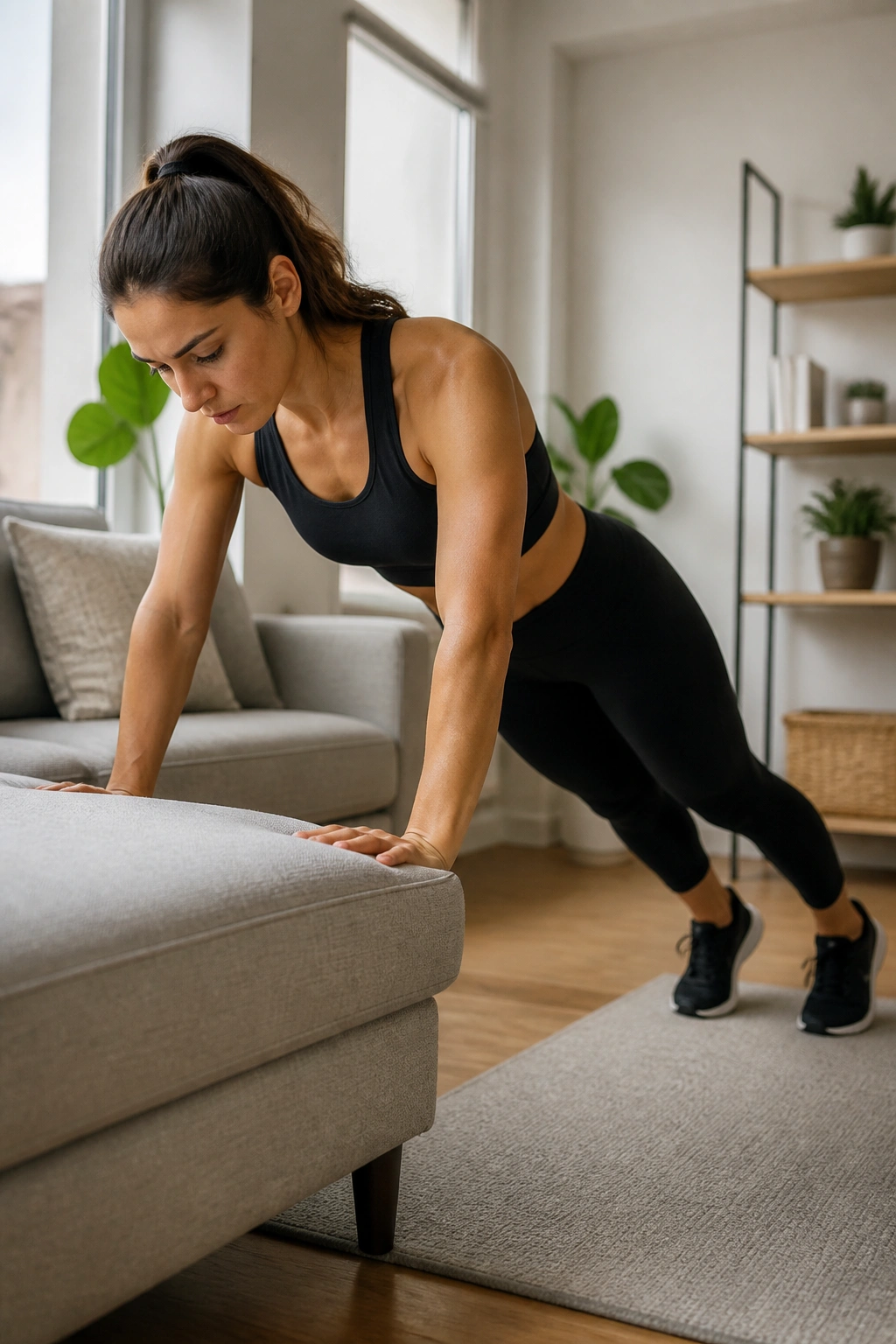
Need something quieter, softer, and still tough?
Run 20 minutes of 10 step-back lunges, 10 incline pushups, 10 glute bridges, 10 dead bugs, and a 20-second squat hold. Repeat at a steady pace. No jumping. No crashing. No thudding footsteps that make the dog downstairs bark. The workout still has shape and intensity, just less noise.
This is the version I’d hand to anyone training in a shared apartment, or anyone whose knees are asking for a break from the usual impact stuff. The steady pace keeps the heart rate up, but the movement stays controlled enough that form doesn’t fall apart when fatigue shows up. That’s a decent trade.
A squat hold sounds small until minute ten. Then the quads start talking. Loudly.
If you want more intensity, cut the rest between rounds to almost nothing. If you want less, keep the dead bugs slow and breathe through the nose. Either way, this belongs in the home-workout rotation because not every hard session has to sound like a dropped toolbox.
19. A 100-Rep Home Benchmark
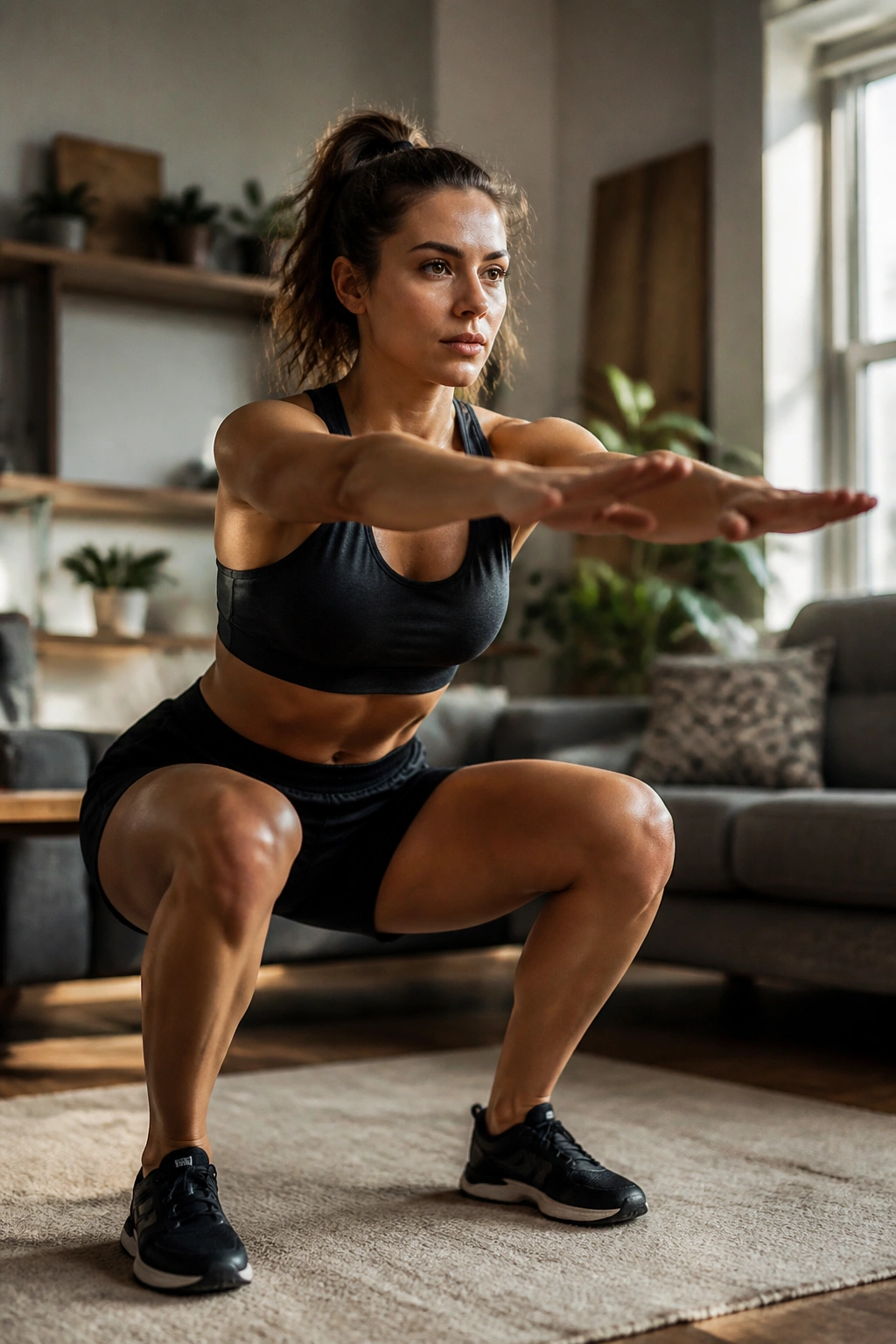
A hundred reps sound easy until you start breaking them into sets.
Choose four movements: 25 air squats, 25 pushups, 25 sit-ups, and 25 alternating reverse lunges per leg. If that’s too much, cut the reps to 20 each and finish the whole thing for time. The beauty of a benchmark is that it gives you something to beat later without changing the rules every time you feel tired.
What Makes It a Good Benchmark
- The movement list is plain enough to repeat.
- The rep count is high enough to expose pacing errors.
- The workout works with zero equipment.
- It tells you where the break points are, which is useful.
I’m not a fan of random max-effort home workouts with no record. They’re fun once and forgettable after that. A benchmark gives you a number. A number lets you compare. That’s where the value lives.
If your first round of pushups dies in the teens, split them into smaller sets from the start next time. That’s not a failure. That’s strategy.
20. Chair, Backpack, and Floor Circuit
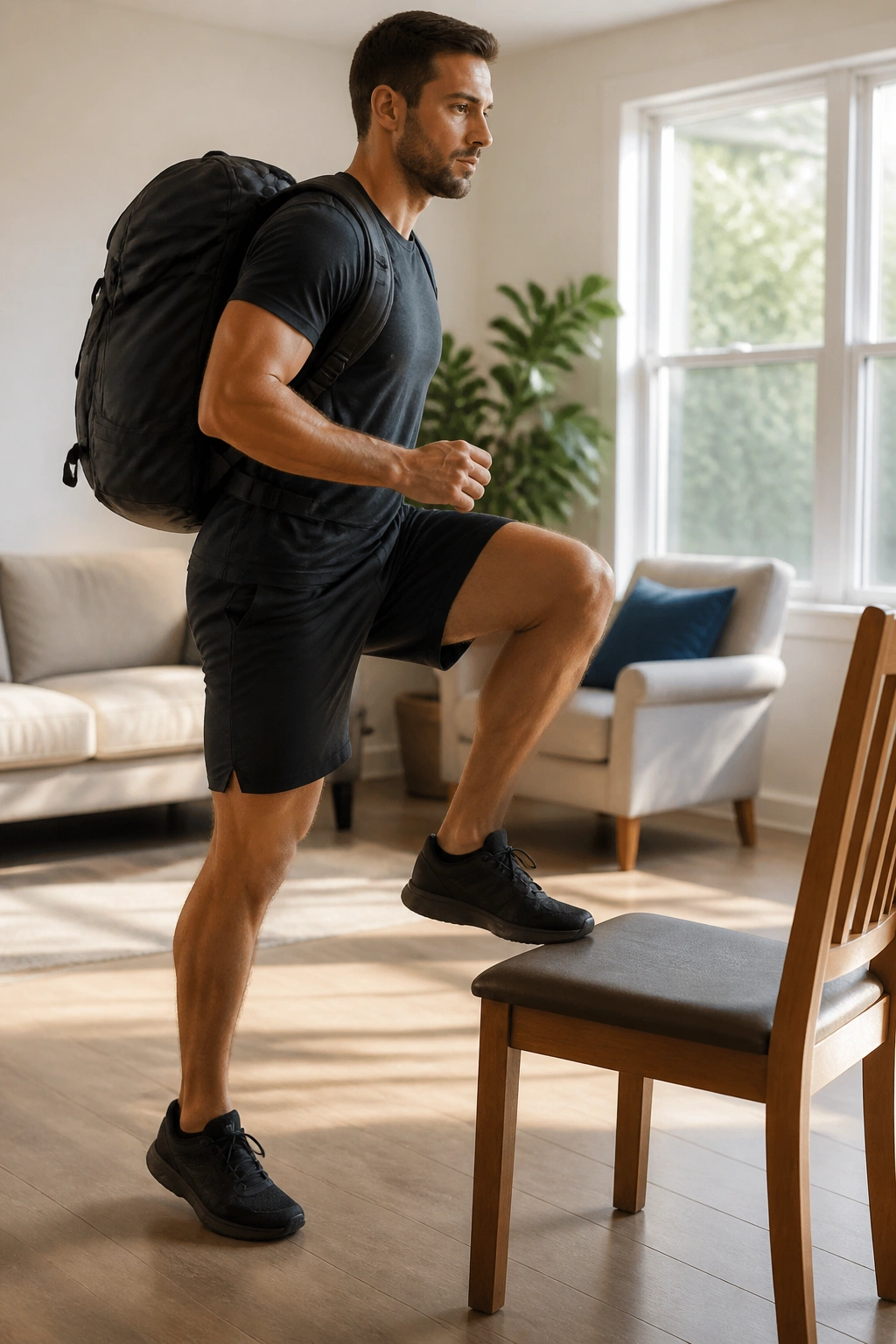
A chair, a backpack, and a little floor space are enough for a mean session.
Do 5 rounds of 12 chair step-ups per leg, 15 backpack rows, 10 hand-release pushups, 12 backpack front squats, and 20 V-ups. Rest 45 seconds between rounds. The chair gives you height, the backpack gives you resistance, and the floor takes care of the rest.
This workout has a nice balance. The step-ups and front squats hit the legs. The rows and pushups cover the upper body. The V-ups keep the midsection from drifting into the background. It feels like a whole-body session, not a series of random little tests stitched together.
A few notes matter here. Keep the chair solid. Keep the backpack close to the body on the squats. Keep the rows from turning into back swings. And if the V-ups are ugly, bend the knees and keep the spine honest instead of chasing a dramatic range of motion that your abs aren’t ready for.
That kind of honesty pays off fast.
21. Five Rounds That Do Not Mess Around
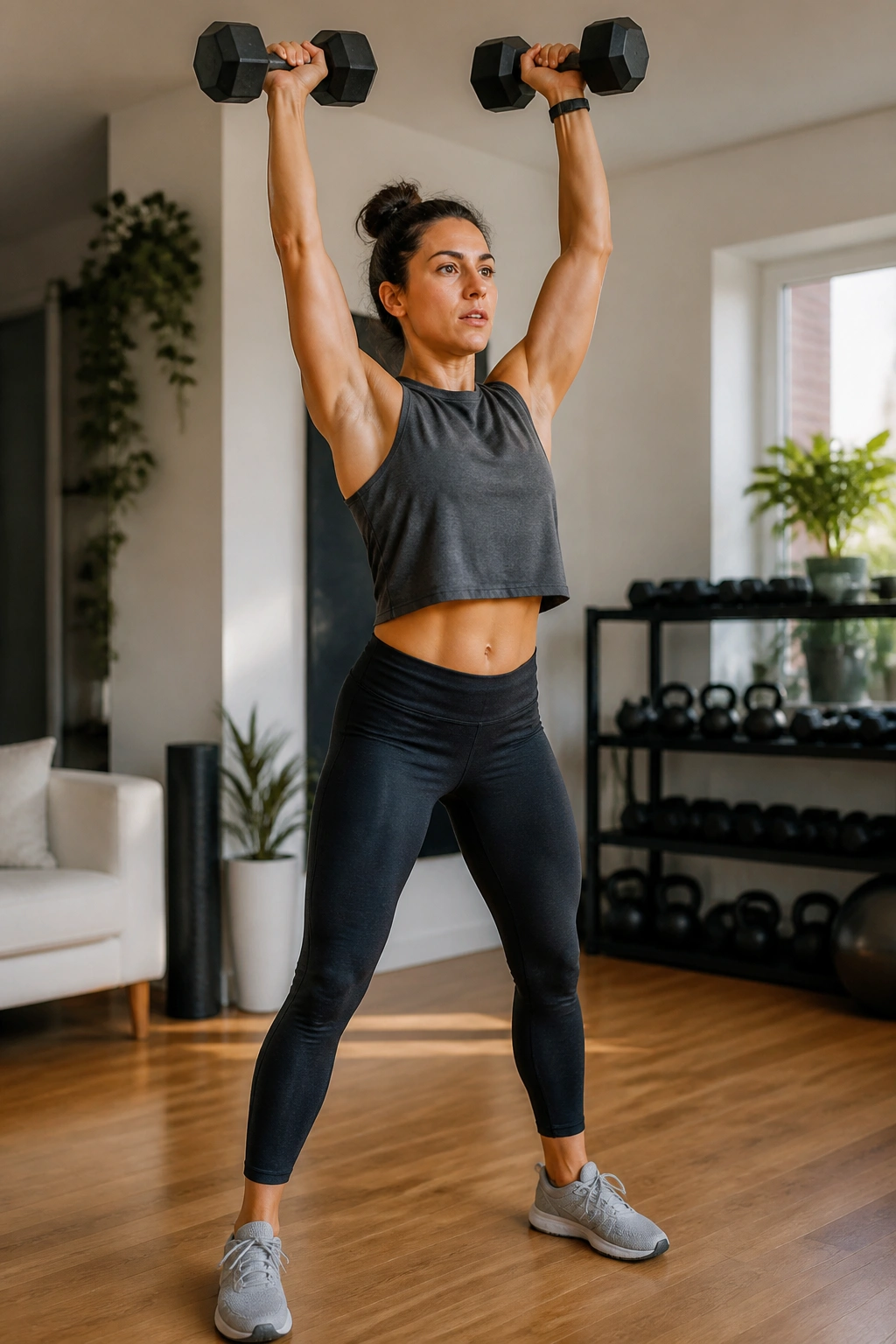
Five rounds is enough.
Do 10 dumbbell thrusters, 10 burpees, 20 alternating walking lunges, and 30 seconds of plank jacks. Rest 60 seconds after each round if you need a fixed break, or go straight through if you want the full squeeze. The workout is straightforward, which is part of why it works. You know exactly where the pain is coming from.
The thrusters and burpees are the heavy hitters. The lunges keep the legs loaded when you’d rather lie down. Plank jacks look harmless, then steal the last bit of comfort you had left. That combination feels like a home version of a classic mixed-modal CrossFit day: legs, lungs, trunk, repeat.
I like this one on days when I want the workout to have a clear shape and a hard finish. There’s no mystery. There’s just work. And sometimes that’s the cleanest answer.
Warning: if the thrusters turn into a press-out disaster, lower the weight. Save the shoulders.
22. 21-15-9 Home Finisher
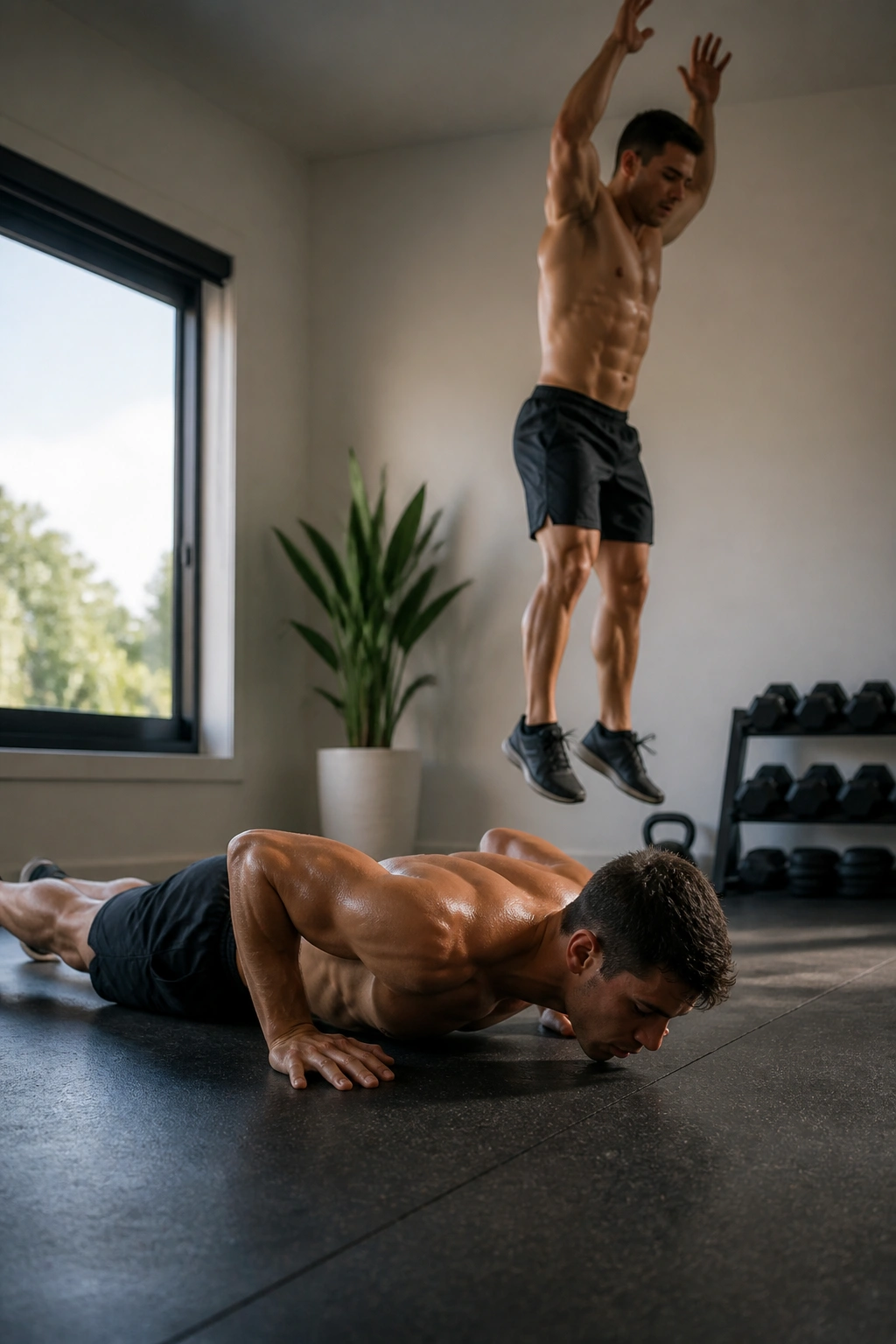
The 21-15-9 format has one job: get in, work hard, get out.
Use burpees and squat jumps, or burpees and dumbbell push press if you’ve got a pair of weights. Do 21 burpees and 21 squat jumps, then 15 and 15, then 9 and 9. If you want a little more structure, rest only after the 15s. If you want a bigger challenge, keep the rest at zero and let the final round feel like a small argument.
This format is popular for a reason. The numbers drop fast enough that you can see the finish line, but the opening round is big enough to force real pacing. A lot of people sprint the first 21 and spend the next five minutes trying to remember why that was a bad idea. Don’t do that. Break the first round into chunks if you need to.
Finish with a few slow breaths, a walk around the room, and a note on how the movement felt. That last part matters more than it sounds. If one of these workouts beats you up in a bad way, scale it before the next round. If it just leaves you tired and a little proud, you probably picked well.
