



Sliders workouts look harmless until your core starts shaking and your hamstrings cramp halfway through rep four.
That is the whole appeal. A pair of slippery discs turns ordinary bodyweight moves into long, controlled reps that punish sloppy form and reward real strength. They also keep the session quiet, which matters if you train in an apartment or on a thin floor. On hardwood, tile, or a slick mat, the same move can feel completely different, and that friction—or lack of it—changes everything.
When the glide is smooth, you load the muscles through a longer range than a standard squat or plank usually gives you. The result is not circus-style chaos. It is a clean kind of challenge: hips stay square, ribs stay down, feet keep moving, and the set gets hard because you can’t cheat the range anymore.
If the sliders stick, use towels, furniture sliders, or socks on a smooth floor. If they slide too fast, shorten the path and slow the tempo. The first move below is the one most people underestimate, which is exactly why it belongs at the top.
1. Slider Mountain Climbers
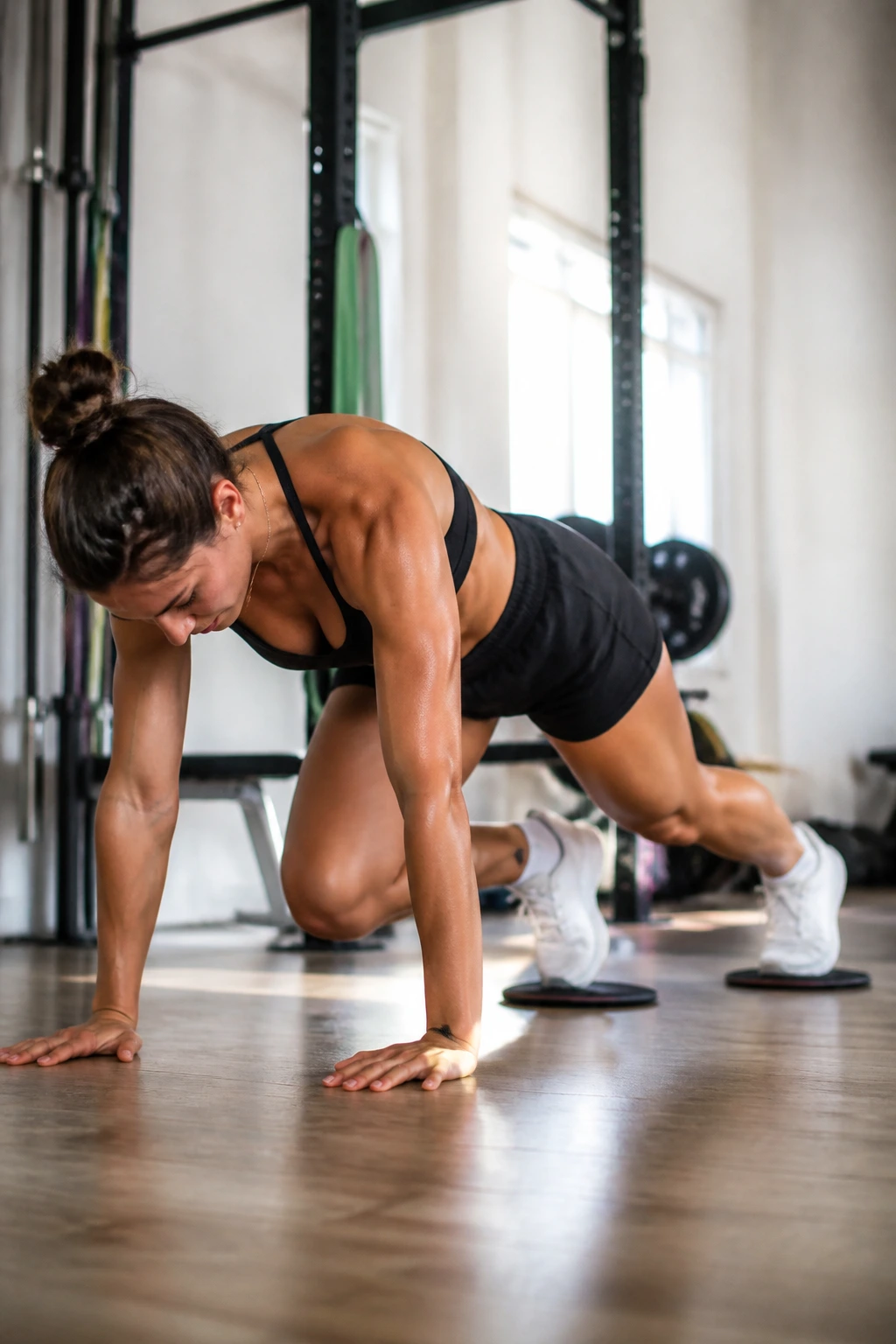
Start here if you want a move that wakes up your core without feeling complicated.
Hands under shoulders. Feet on the sliders. Drive one knee in, then the other, and keep the hips from wobbling side to side like a loose shopping cart. Three sets of 20 to 30 seconds is plenty when you’re doing them with real control.
Why It Works
Slider mountain climbers hit the abs, hip flexors, shoulders, and serratus at the same time. The sliding foot keeps the movement honest, because you cannot bounce your way through the set. Each rep asks for a tiny burst of force, then a quick reset.
- Keep your shoulders stacked over your wrists.
- Slide the knee forward, not up.
- Exhale each time the knee comes in.
- Stop the set when your lower back starts sagging.
Pro tip: Think “quiet feet.” If the sliders slap the floor, you’re rushing.
2. Slider Pike Tucks
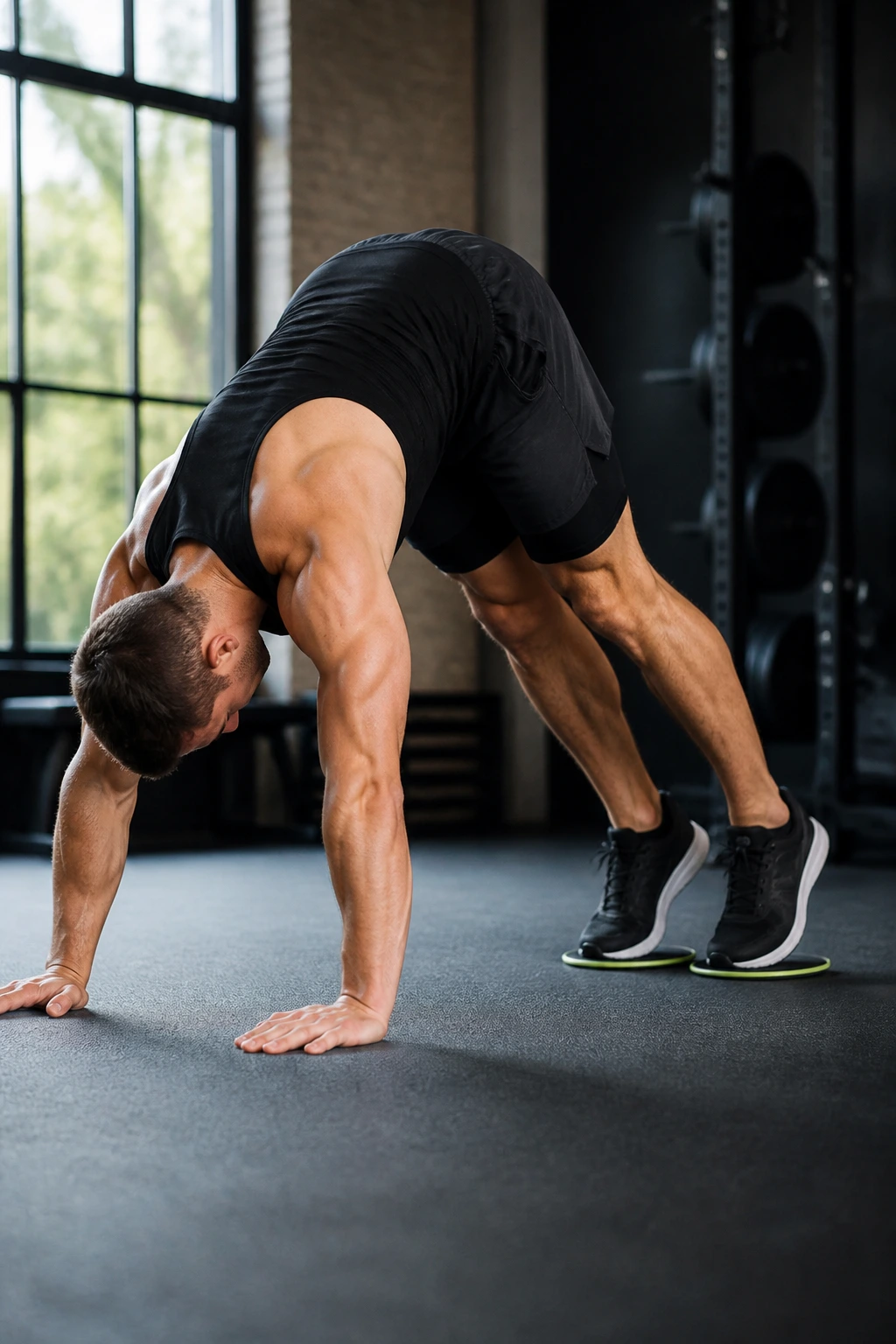
This is the move that exposes weak abs fast.
From a high plank, slide both feet in and lift your hips into a sharp pike, then return to the long plank without letting your ribs flare. The set looks simple from across the room. It is not simple once your shoulders and midsection have to hold the line through the whole range.
Do 3 to 5 slow reps if you’re new to it. More advanced lifters can push to 8 to 10 reps with a three-second return. The key is the same either way: the low back does not take over.
If the full pike feels ugly, shorten the glide. A smaller range done well beats a huge range with a sagging spine every time.
3. Slider Hamstring Curls
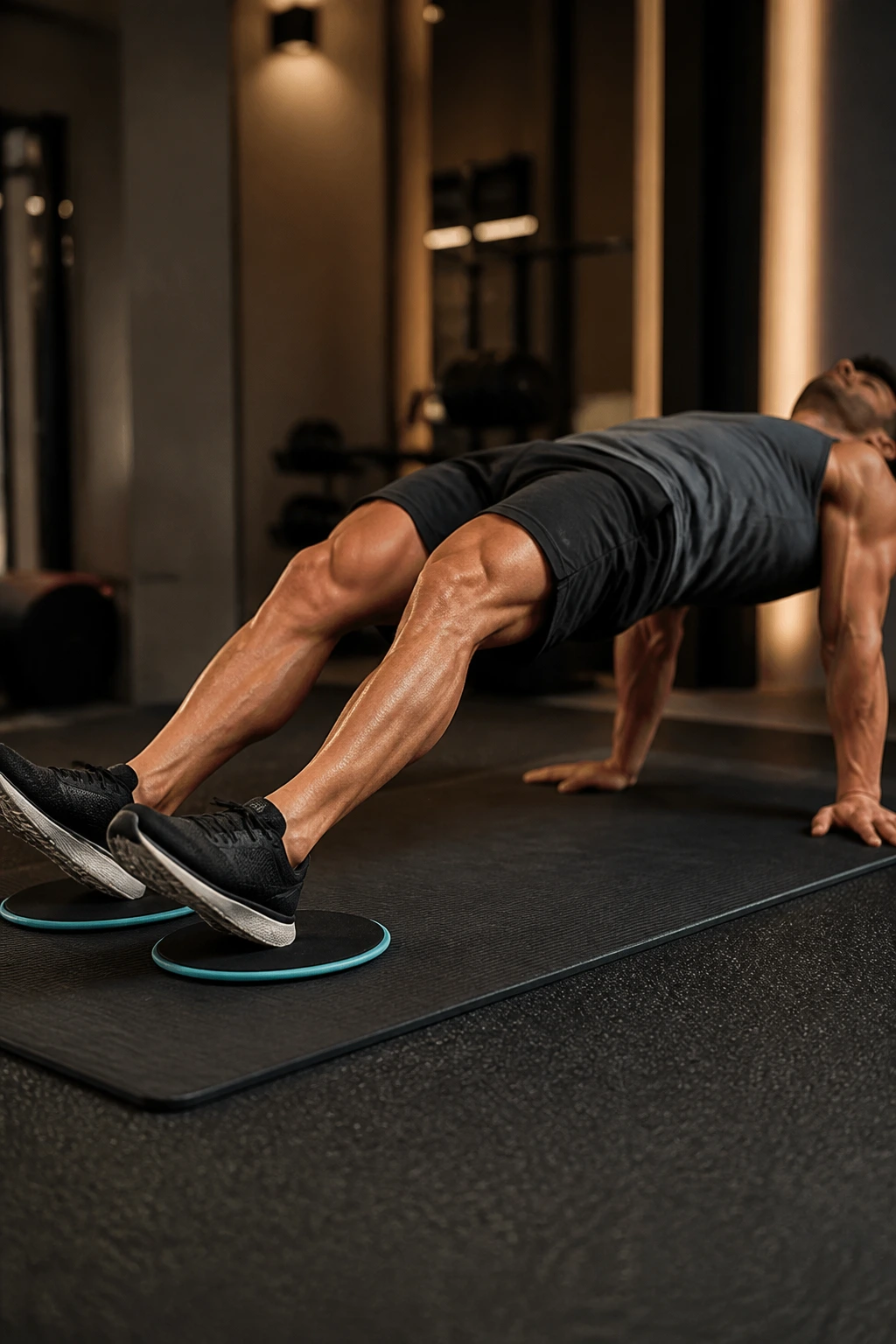
Why does a floor move make the back of your legs light up so hard?
Because the hamstrings hate being asked to control both the slide out and the pull back in. Start in a glute bridge with heels on the sliders, hips lifted, and ribs tucked down. Extend the legs until they’re nearly straight, then drag the heels back under you without dropping the hips.
How to Use It
Use 3 sets of 8 to 12 reps. If cramping starts early, cut the range by a third and slow the tempo. That usually helps more than forcing through.
The best cue is plain and boring: keep your hips high. The moment the pelvis drops, the movement turns into a lower-back shrug instead of a hamstring drill.
4. Slider Reverse Lunges
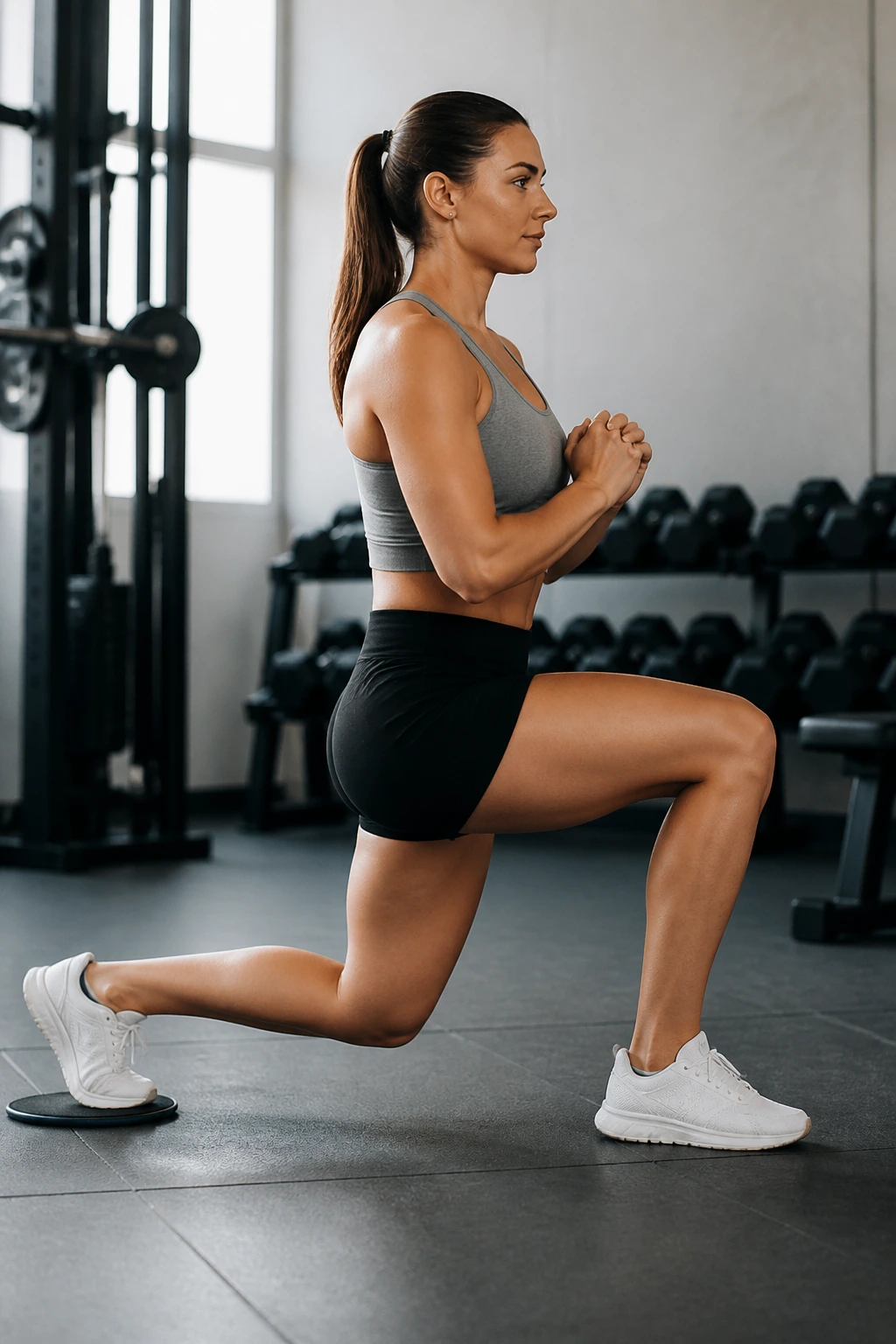
A back foot that glides instead of steps makes the lunge feel cleaner on the knees.
Stand tall, place one foot on a slider, and send that leg straight back while the front leg bends. The front heel stays rooted. The torso stays proud. And the sliding leg should look like it is tracing a controlled line, not shooting out and collapsing.
- Do 8 to 10 reps per side.
- Keep the front knee tracking over the middle toes.
- Shorten the slide if the torso tips forward.
- Pause for one second at the bottom if you want more quad work.
The useful part here is the front-leg load. You get a strong leg day pattern without the awkward stomp of a step-back lunge. Good move. No fluff.
5. Slider Lateral Lunges
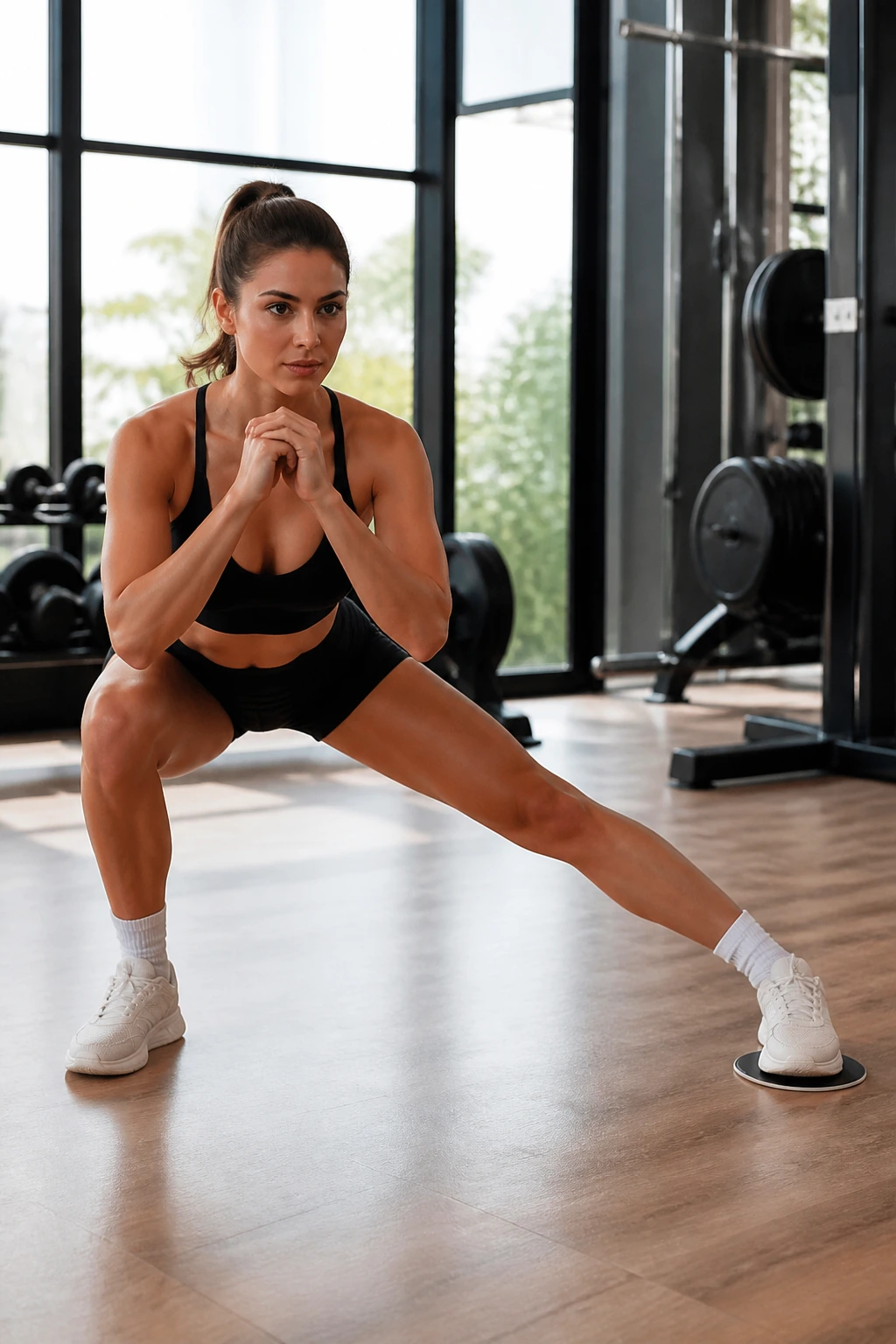
Side-to-side work is where sliders earn their keep.
Most people train forward and back all day, then wonder why their hips feel stiff and their inner thighs never get any love. A lateral lunge on sliders fixes that. Slide one foot out to the side, sit the hips back, keep the other leg long, and let the inner thigh of the straight leg stretch under control.
The tricky part is patience. Do not rush the return. The adductors and glutes do their best work when you pause for a beat at the bottom and then pull yourself back with intention.
I like 2 to 3 sets of 8 reps per side here. More than that often turns sloppy fast, especially if the floor is extra slick. One solid set tells you plenty.
6. Slider Body Saw
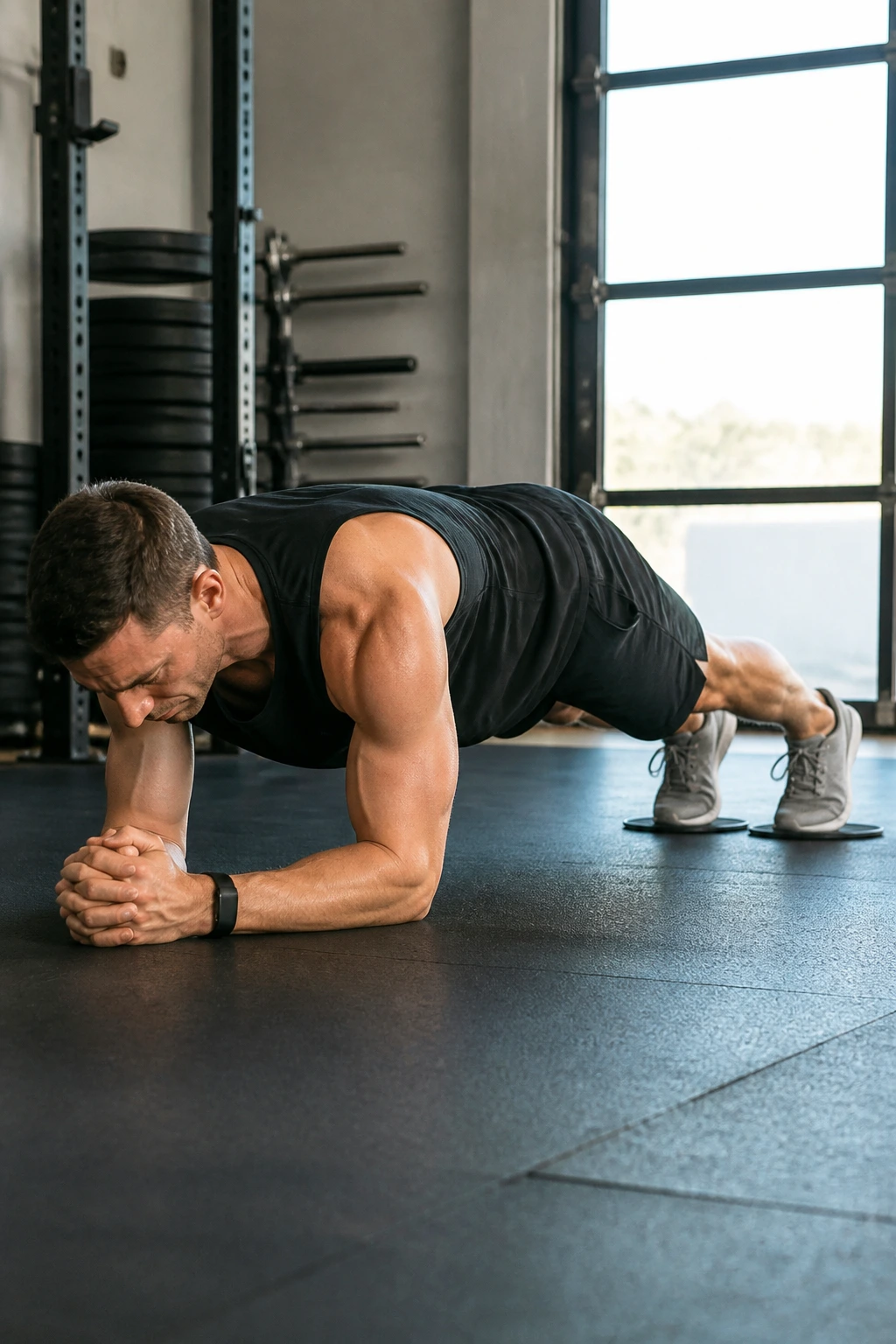
A regular plank is one thing. A body saw is another animal.
Forearms on the floor. Feet on the sliders. Shift your whole body back a few inches, then pull forward again, keeping the torso rigid the whole time. The movement is tiny. The burn is not.
What Makes It Different
Unlike a static plank, the body saw asks your abs to fight length changes. That means the deep core has to brace while the shoulders and lats keep the line from folding. It feels a lot like a plank that has been made meaner in the smartest way.
Best For
- Core endurance
- Anti-extension strength
- Shoulder stability
- People who can hold a plank but still lose their low back after 20 seconds
Recommendation: Start with 20 to 25 seconds and stop before your hips start swinging. Clean reps beat long, ugly ones.
7. Slider Push-Up Knee Drives
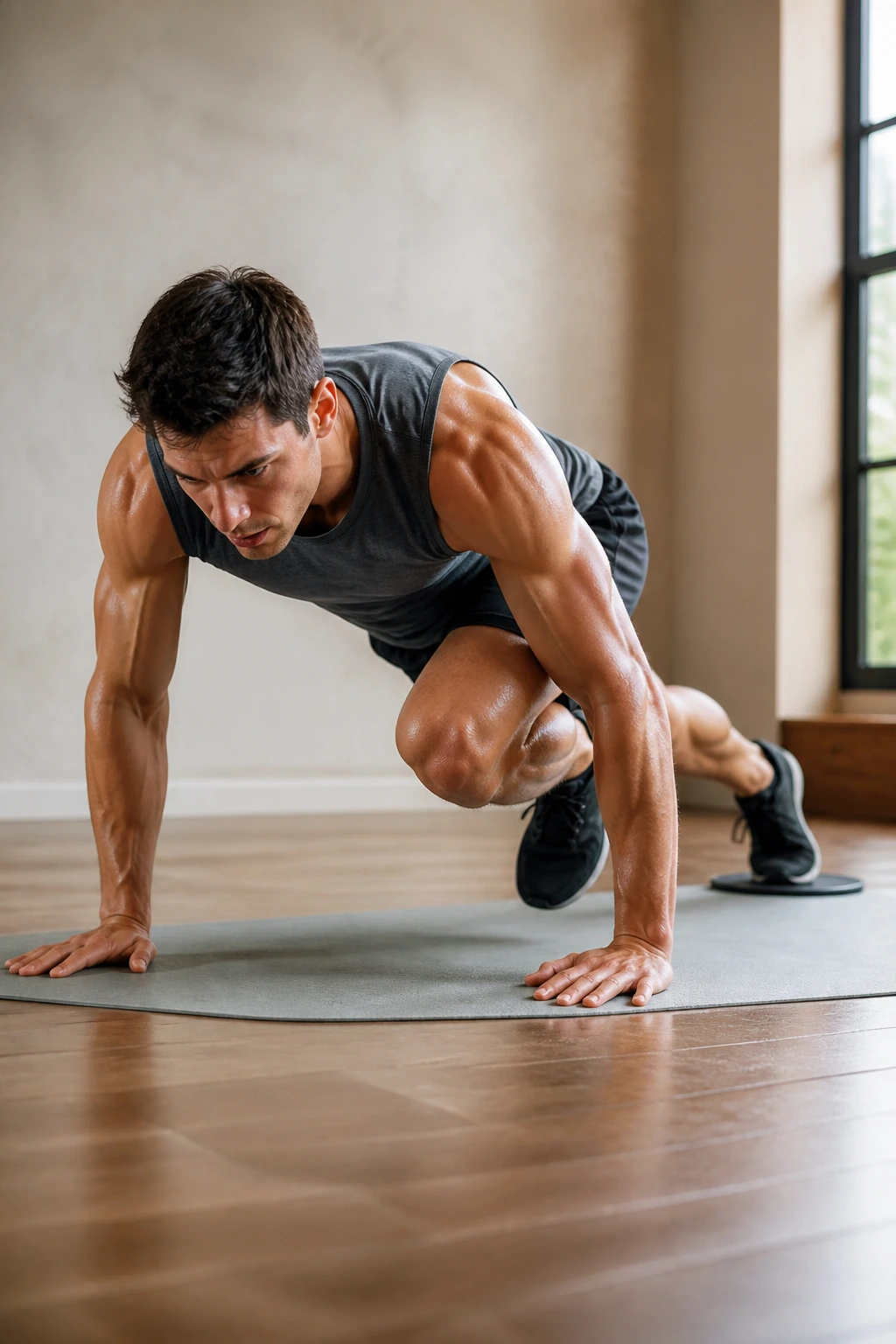
This one looks like upper-body work until the core gets involved.
Hands on the floor, feet on sliders, body in a straight line. Drop into a push-up, press back up, then drive one knee toward the same-side elbow before switching sides. The push-up loads the chest and triceps. The knee drive asks the abs to stop the pelvis from rotating.
What To Watch For
- Keep the push-up shallow if your shoulders are tired.
- Move the knee forward under control, not with a jerk.
- Brace before every rep.
- Don’t let the feet drift so far apart that the movement becomes a cheat code.
Two to four sets of 6 to 8 total reps works well. If the combo feels too busy, separate the push-up and the knee drive for a few sessions, then put them back together.
8. Slider Plank Jacks
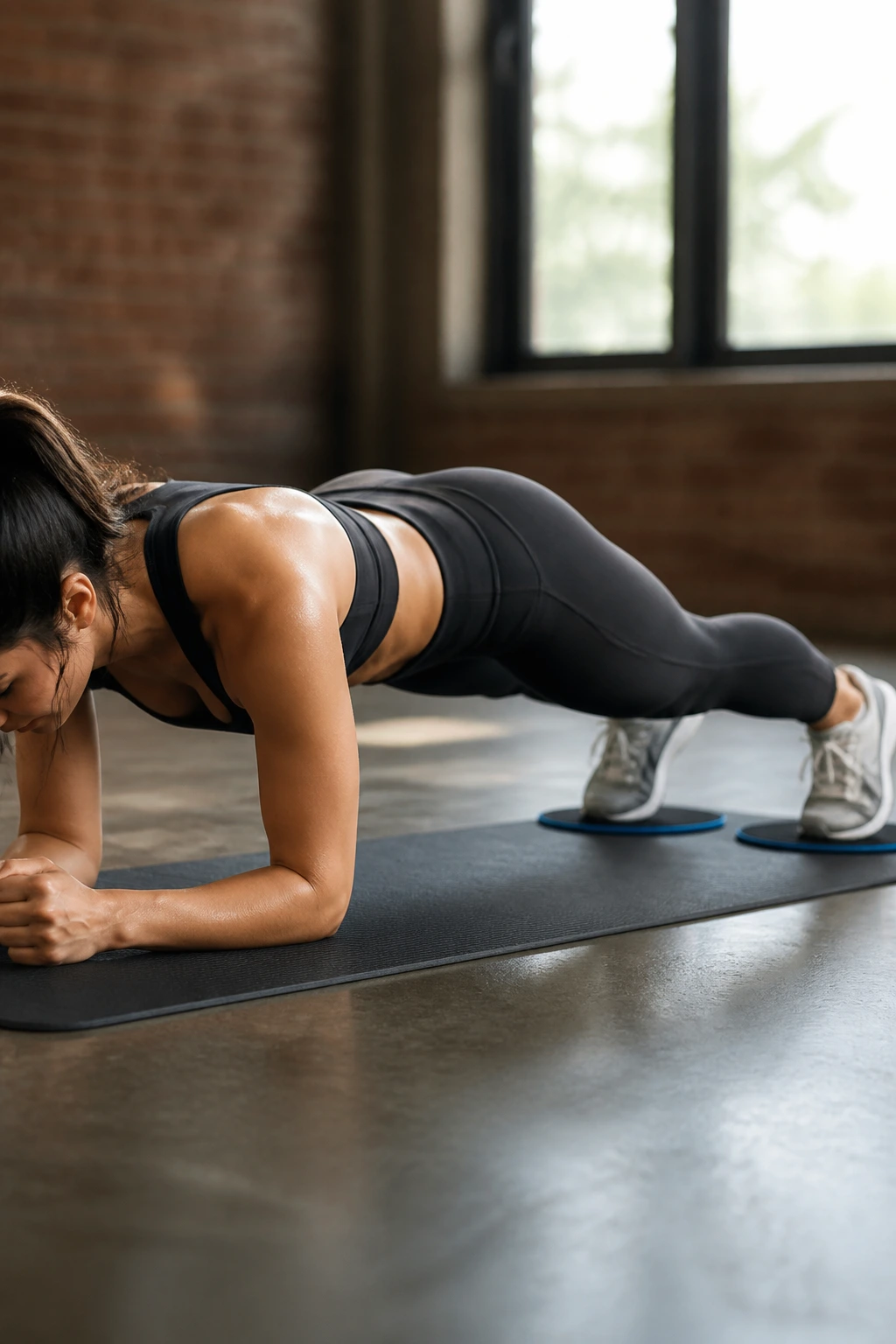
Quiet, low-impact plank jacks are sneaky hard.
You slide the feet out and in instead of jumping, which saves your joints a bit of drama while still making the core work. Hands stay planted. Shoulders stay stacked. The only real movement happens below the waist, and even that needs restraint.
The temptation is to go wide and fast. That usually backfires. The wider the slide, the more your hips want to wiggle, and the more your low back starts helping in ways it should not. Keep the range small at first.
Try 3 sets of 20 to 30 seconds. If you want a finisher that feels athletic without pounding the floor, this is a good one.
9. Slider Single-Leg Glute Bridge Curls
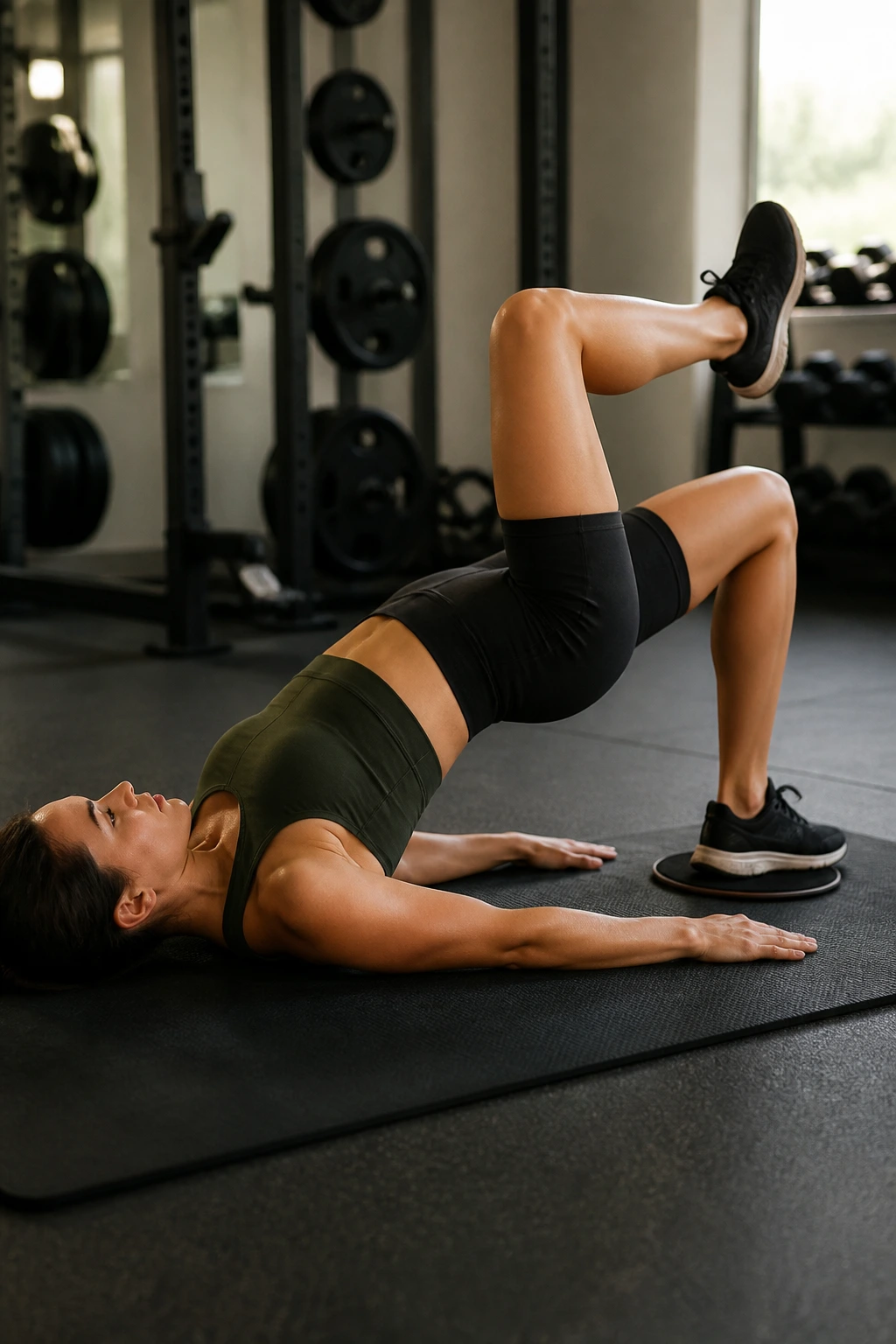
Can one heel on a slider make a bridge that much harder? Absolutely.
Lift one leg, keep one heel on the disc, and hold the hips up while you slide the working heel out and back in. The standing leg in the air makes the whole pelvis work overtime to stay level. The hamstring gets strong. The glute gets honest. Balance turns into a side job you cannot ignore.
How to Use It
Use 6 to 8 reps per side and pause at the top before each slide. If your hips twist, shorten the movement and slow the return. The goal is not speed. The goal is a bridge that looks boring from the outside and burns from the inside.
A small cramp in the hamstring is normal. A cramp that makes you groan out loud is your cue to shorten the range.
10. Slider Walkouts
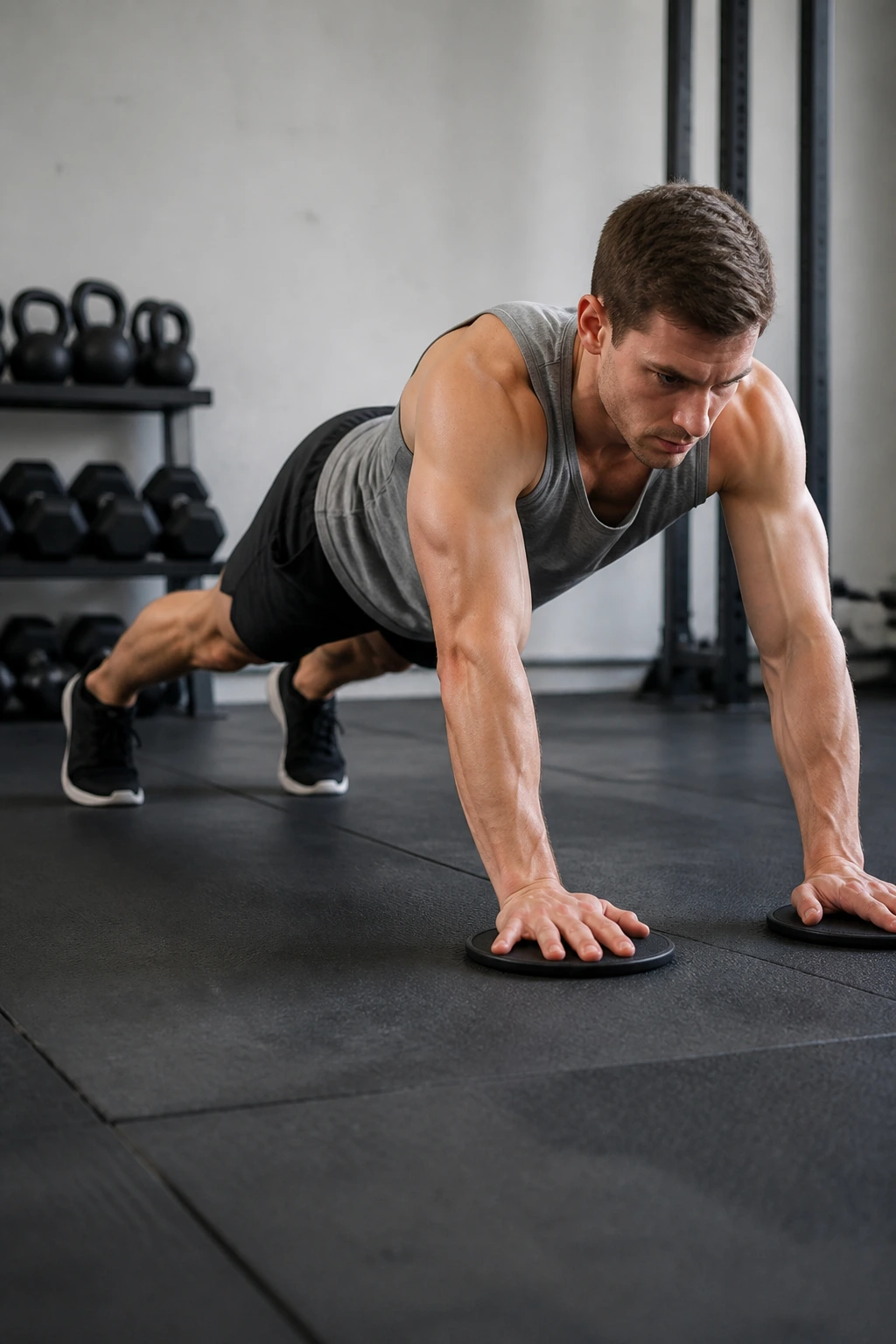
This is the sort of drill that feels easy for the first step and sneaky by the third.
Stand tall, place your hands on the sliders, and walk them forward until you land in a plank. Then walk them back and stand up again. Simple? Yes. Easy? Not after a few reps, because the hamstrings, shoulders, and core all have to cooperate in the same little sequence.
- Move one hand at a time.
- Keep the legs only slightly bent.
- Brace before the hands leave your body.
- Stop if the low back starts sagging in the plank.
I like this one as a bridge between warm-up and strength work. Five to 8 controlled reps is enough to make the whole body pay attention.
11. Slider Curtsy Lunges
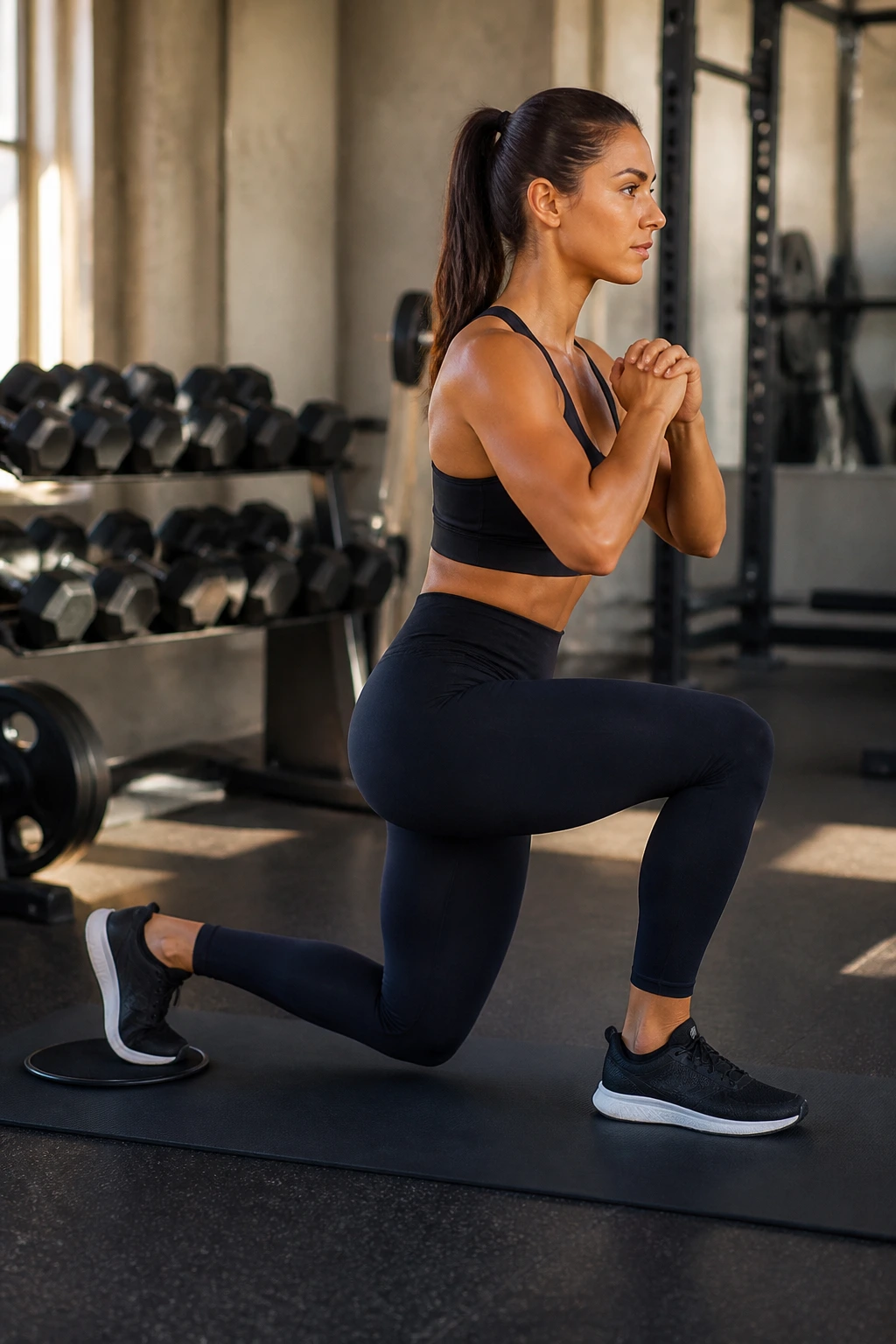
Some lower-body moves hit the obvious muscles. Curtsy lunges go after the bits people forget.
Slide one leg back and across behind the standing leg, then lower into a cross-body lunge. The angle lights up the glute medius and the inner thigh while still giving the quad a fair share of work. It also exposes any shaky knee control right away.
The chest should stay lifted. The front foot should stay rooted. And the back leg should glide behind you without collapsing into a twisty mess at the hips.
Do 3 sets of 8 reps per side. If the knees feel crowded, narrow the cross-behind path. There’s no prize for going extra deep on the first try.
12. Slider Rollout to Plank
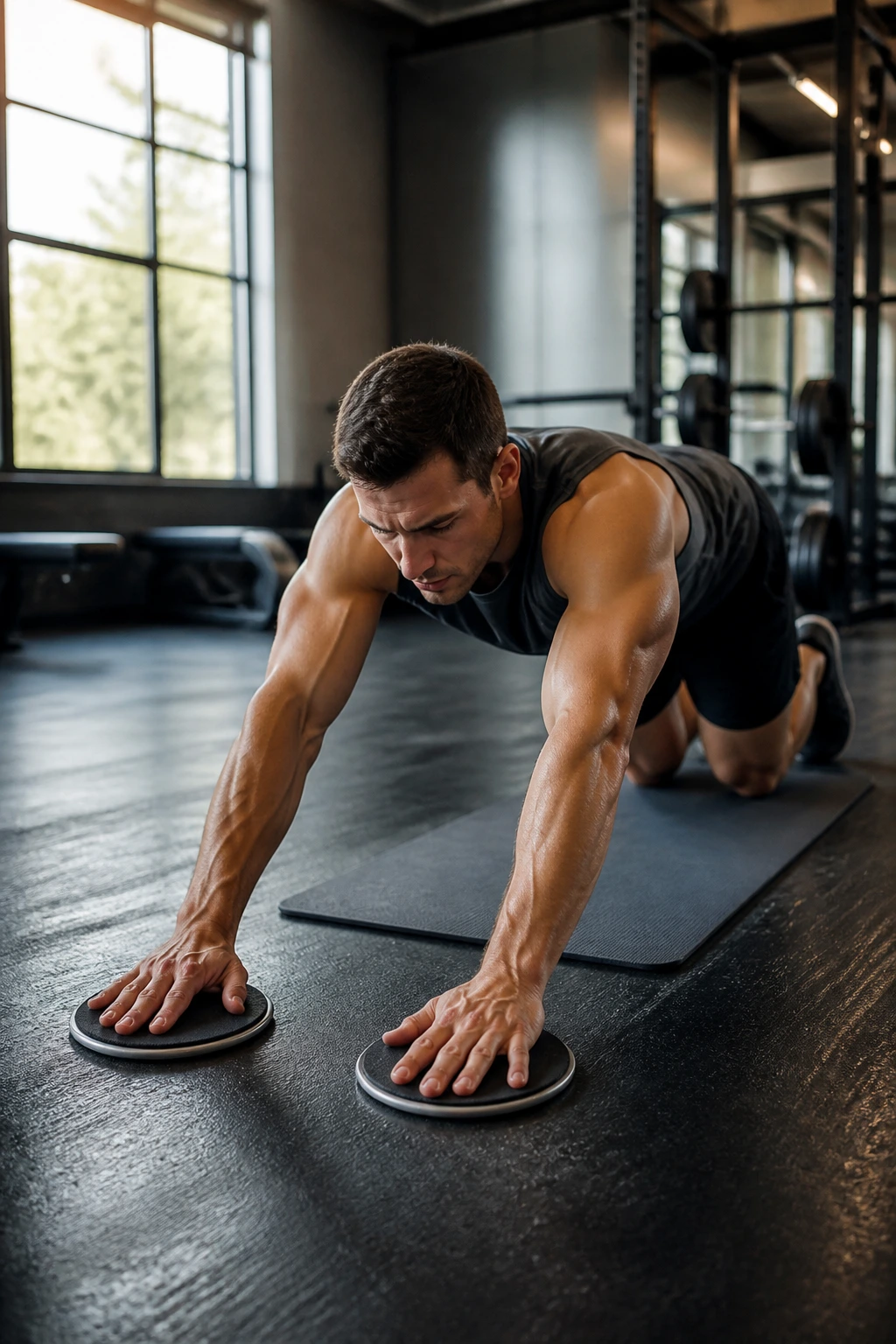
An ab wheel is great. This version is friendlier and easier to scale.
Kneel on the floor with your hands on the sliders. Slide forward until the arms lengthen and the torso starts to feel long, then pull yourself back under control. The abs work hard, but so do the lats and the muscles around the shoulder blades. That makes the move feel more “whole body” than a plain crunch.
What Makes It Different
Compared with a dead bug or a normal plank, the rollout asks your body to resist extension under load. That means the front line of the body has to stay tight while the shoulders reach out in front of you. It is a pure bracing test.
Who It Fits Best
- Anyone who can hold a kneeling plank without wobbling
- People looking for stronger anti-extension core work
- Lifters who want a bridge toward harder ab wheel work
Recommendation: Start with 5 to 8 reps and keep the reach short until your ribs stop flaring.
13. Slider Skater Slides
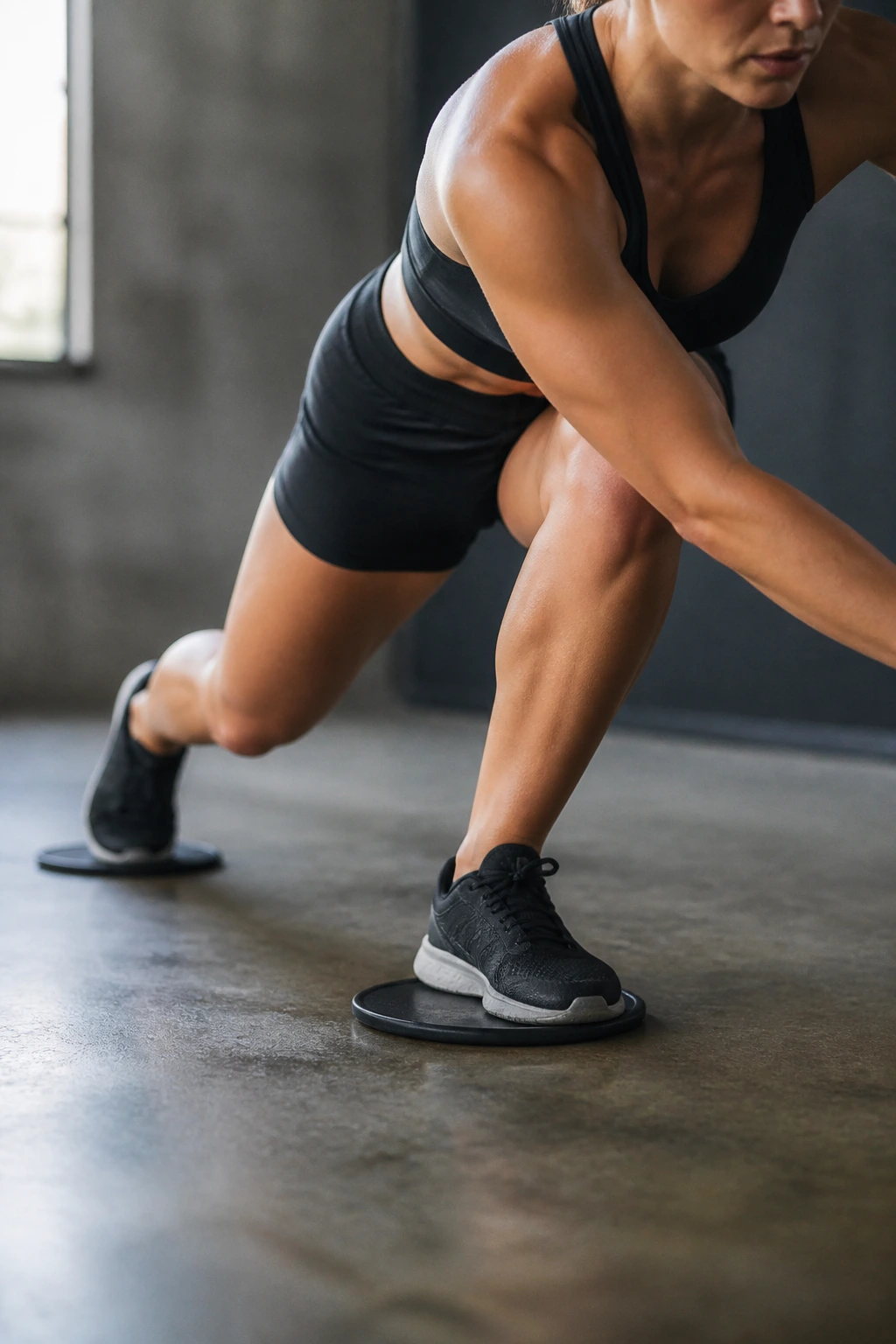
This one has a little speed to it, which is part of the fun.
Shift your weight to one leg, let the other foot slide out and behind you, and use the glutes to drive back across the floor. It borrows the feel of a skater hop without the impact. That makes it a good pick when you want lateral power but your knees would rather skip the jumping.
Why It Works
The side glutes and outer hips have to fire fast, then brake fast. That combo teaches control, not just strength. The adductors help too, especially when you push back from the sliding leg and pull yourself into the next rep.
Quick Facts
- 2 to 3 rounds works well as a warm-up or finisher
- Keep the slide smooth, not choppy
- Aim for 6 to 10 reps per side
- Use a wall or rack for balance if needed
Pro tip: Land softly. If the movement sounds loud, it is probably too big.
14. Slider Bear Crawl
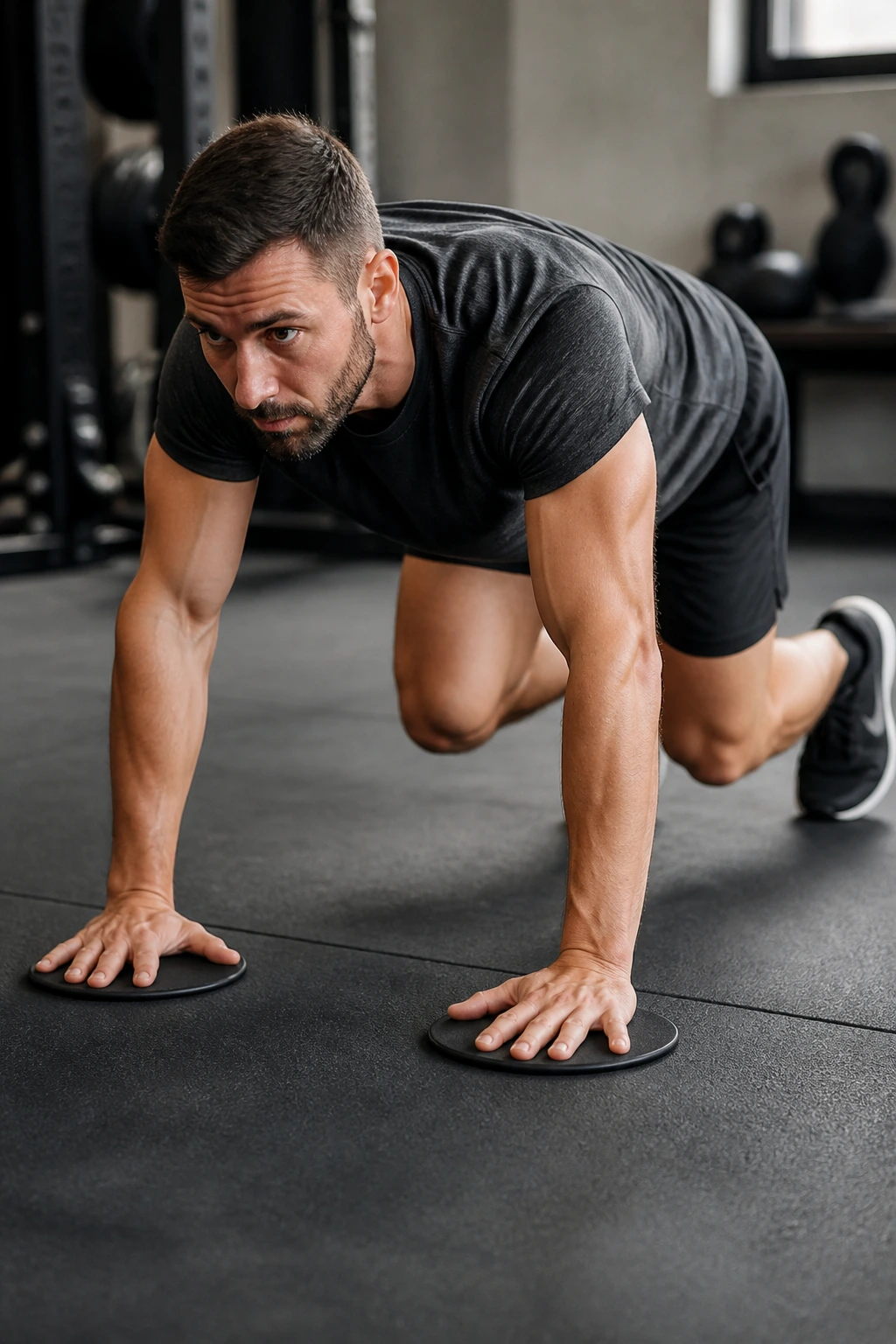
Few moves humble people faster than a bear crawl on sliders.
Hands under shoulders. Knees hover an inch or two off the floor. Then move the opposite hand and foot together in tiny, controlled steps. The core has to stop the torso from rocking. The shoulders have to keep the upper body from folding. The hips get dragged into the party whether they want to be or not.
Do 10 to 20 slow steps forward, then back up. If that sounds easy, try keeping the knees low and the back flat at the same time. That usually changes the story.
This is one of those drills that looks like conditioning but acts like strength. Clean it up, and it becomes a serious full-body staple.
15. Slider Split Squat Slides
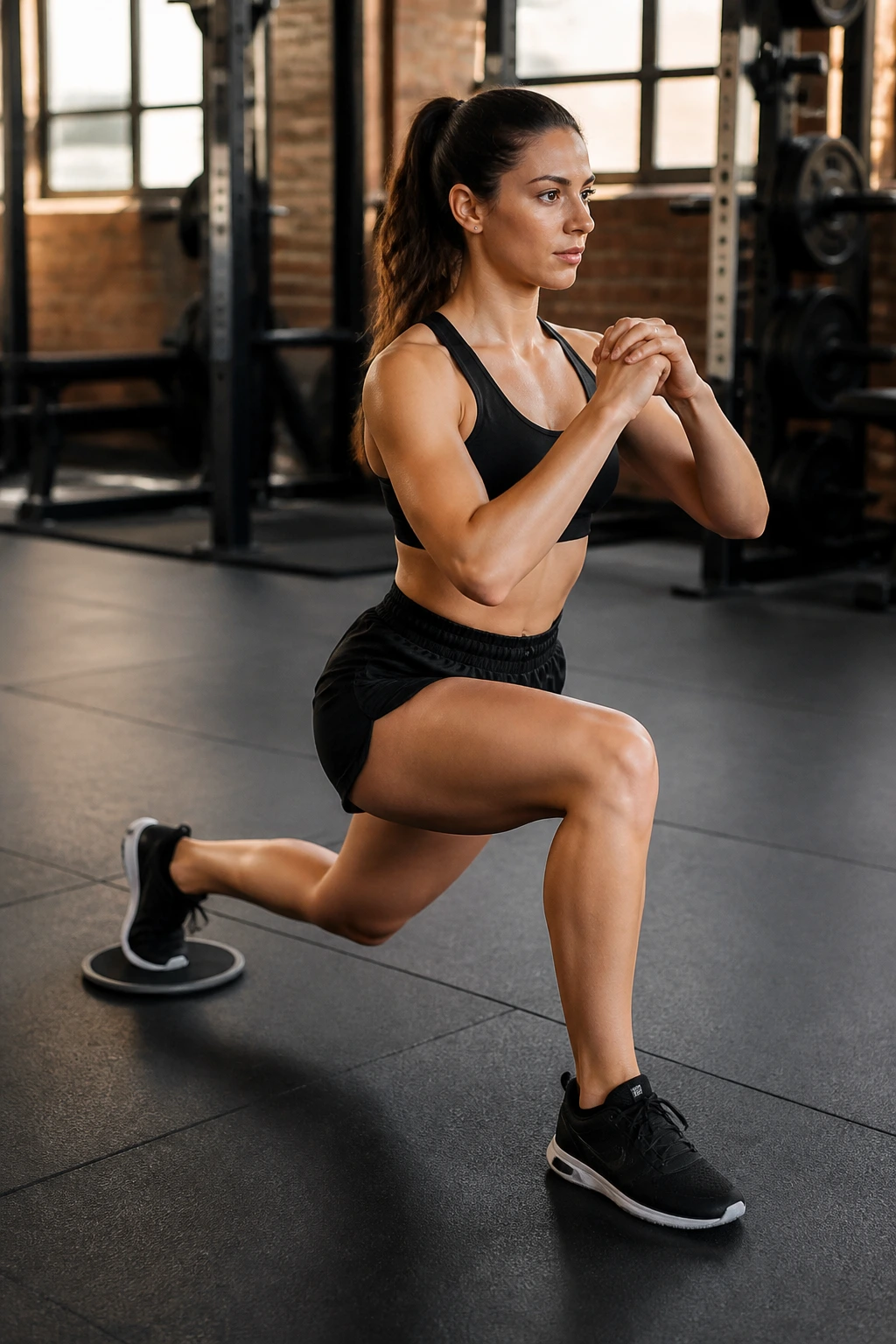
A split squat already gets the job done. The slider version gives you a bigger range and less clunk.
Set one foot forward and one foot on the slider behind you. Lower into the split squat by letting the rear foot glide back. Then pull it in to stand. The front leg does the heavy lifting, and the sliding back leg adds just enough instability to make the glutes and quads work harder.
How to Use It
Take 8 slow reps per side. Pause at the bottom for a half-second if you want more leg burn. If the front knee caves inward, cut the depth and slow down.
The best cue is simple: front heel glued down. If that heel pops up, the whole set gets messy.
16. Slider Chest Fly Push-Ups
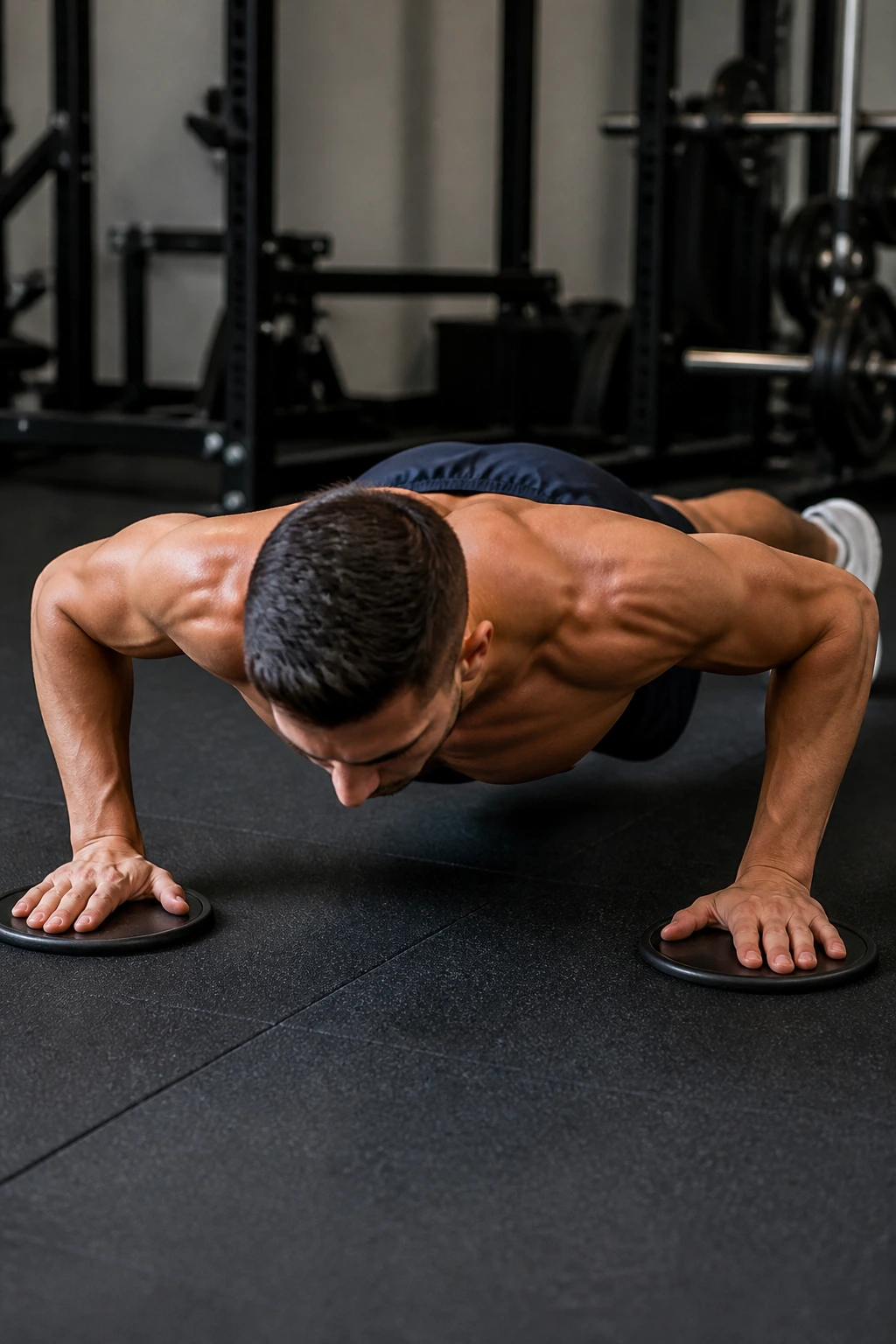
This is an advanced push-up variation, and it deserves respect.
Hands on the sliders, body in a plank, lower the chest while the arms slide out a little wider, then pull the hands back under the shoulders and press up. The chest gets a long stretch. The triceps have to support the return. The shoulders are busy the whole time, so this is not the move for rushing.
The range should stay modest. A deep fly on a slick floor can turn into a shoulder complaint fast if you chase depth before control.
- Start with knees down if needed.
- Keep elbows softly bent.
- Stop the slide before the shoulders pinch.
- Use 3 sets of 5 to 8 reps.
A tiny range done well is far better here than a big, sloppy one.
17. Slider Hamstring Bridge March
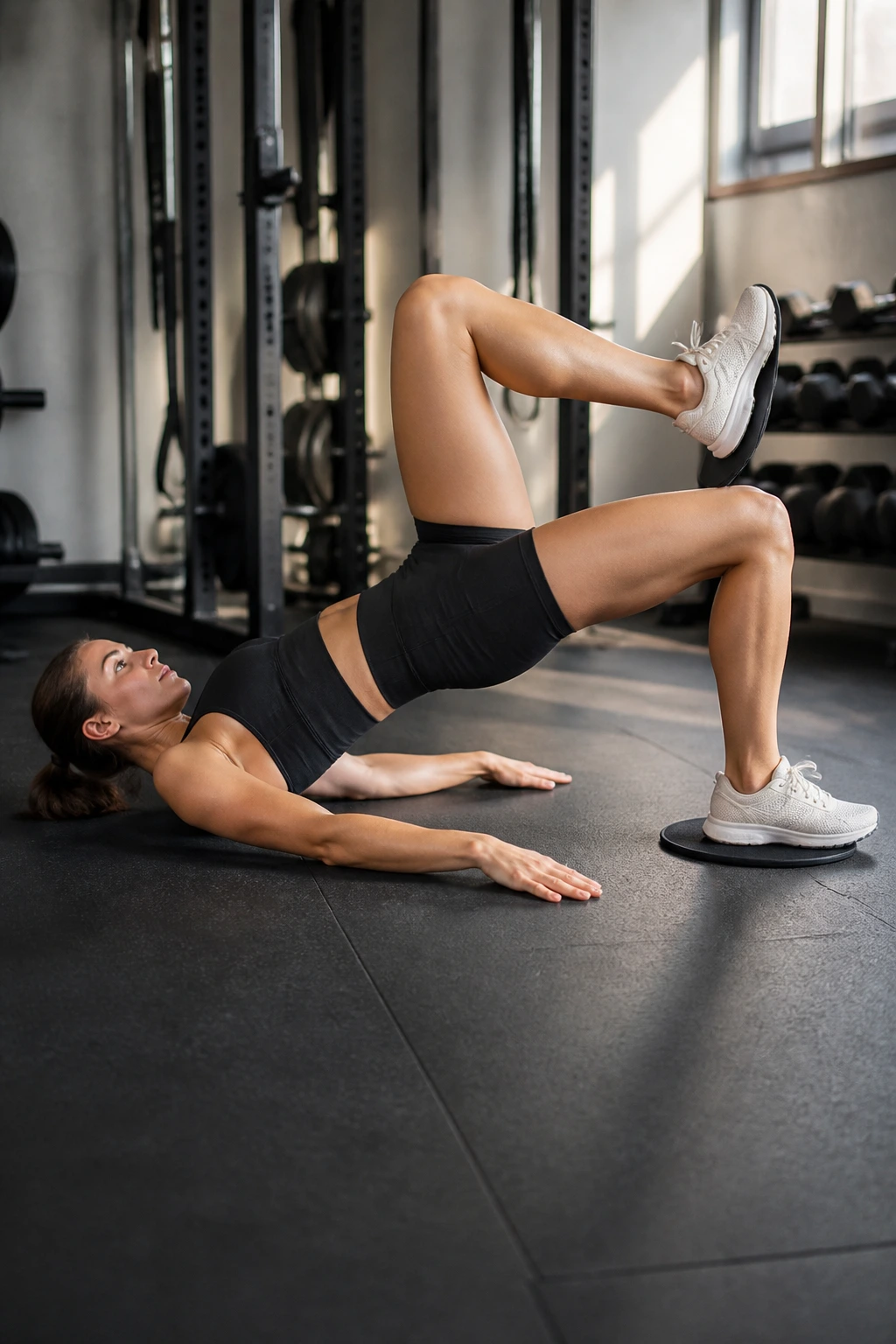
A bridge march looks almost too neat to count as hard work.
Get into a glute bridge with both heels on the sliders. Lift one foot a few inches, hold the hips level, then return it and switch sides. The hamstrings keep the pelvis from tilting. The glutes keep the bridge alive. The abs stop the ribs from opening up like a bad shrug.
This move is less about pure curl strength and more about keeping the body square while one side moves. That makes it useful for anyone whose low back steals work from the hips. It also shows you quickly whether one side is sloppier than the other.
Go for 8 marches per side. If the hips bob, reduce the lift and shorten the pause.
18. Slider Cross-Body Mountain Climbers
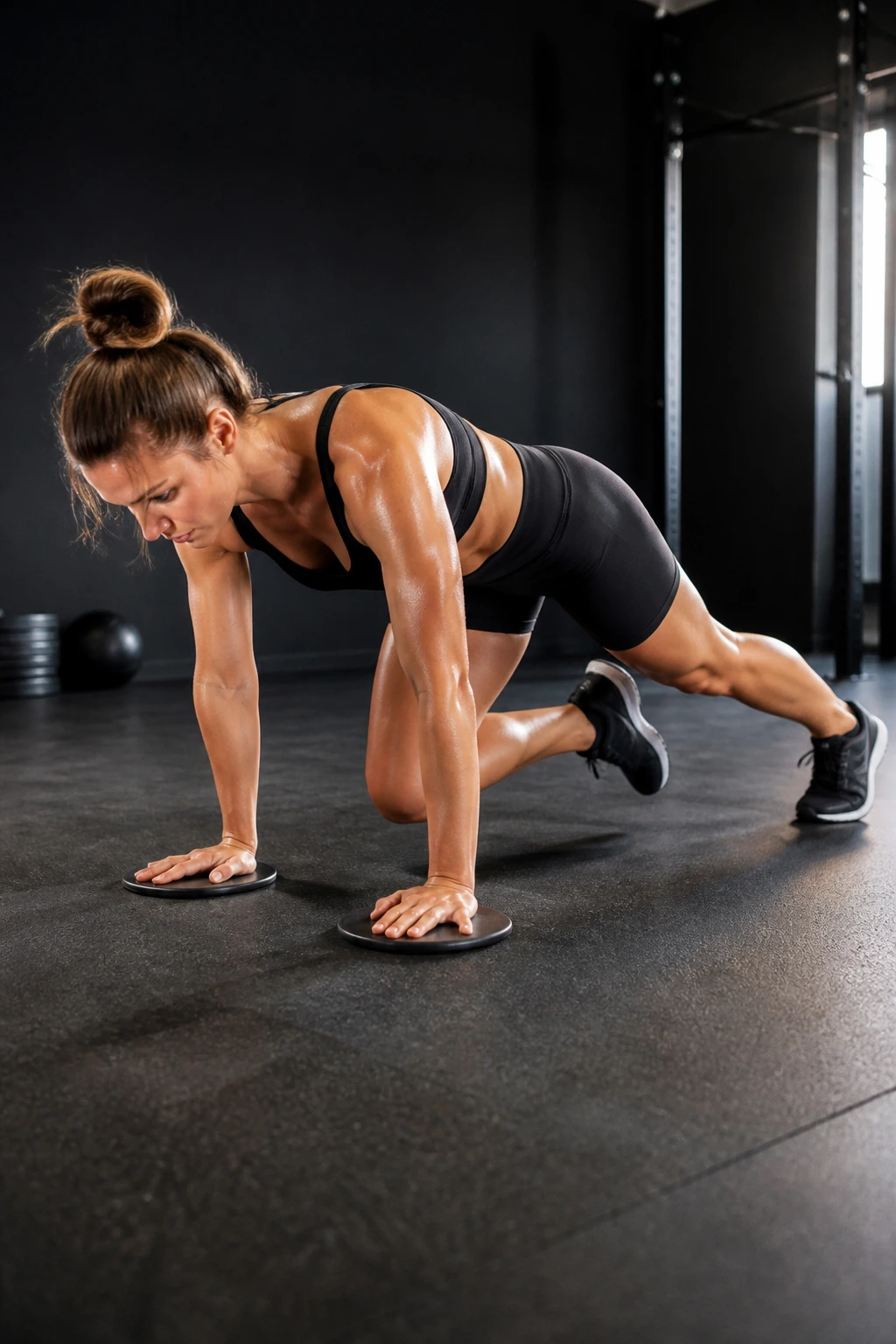
Straight mountain climbers hit the front of the core. Cross-body climbers bring the obliques into the room.
From a plank, drive the right knee toward the left elbow, then switch. Keep the motion controlled enough that you can feel the torso resisting the twist. The glides should be smooth, almost boring, because the challenge lives in the brace, not the speed.
What Makes It Different
Unlike a standard climber, the cross-body version asks for rotation control. That matters for sports, lifting, and even plain old walking mechanics. If your trunk cannot resist twist under pressure, the set falls apart fast.
Who It’s Best For
- People who want more oblique work
- Lifters training anti-rotation strength
- Anyone who gets bored with straight climbers
Recommendation: Try 20 to 30 seconds per round and keep the hips level. One sloppy set tells you nothing. Three clean sets tell you plenty.
19. Slider Side Plank Knee Tucks
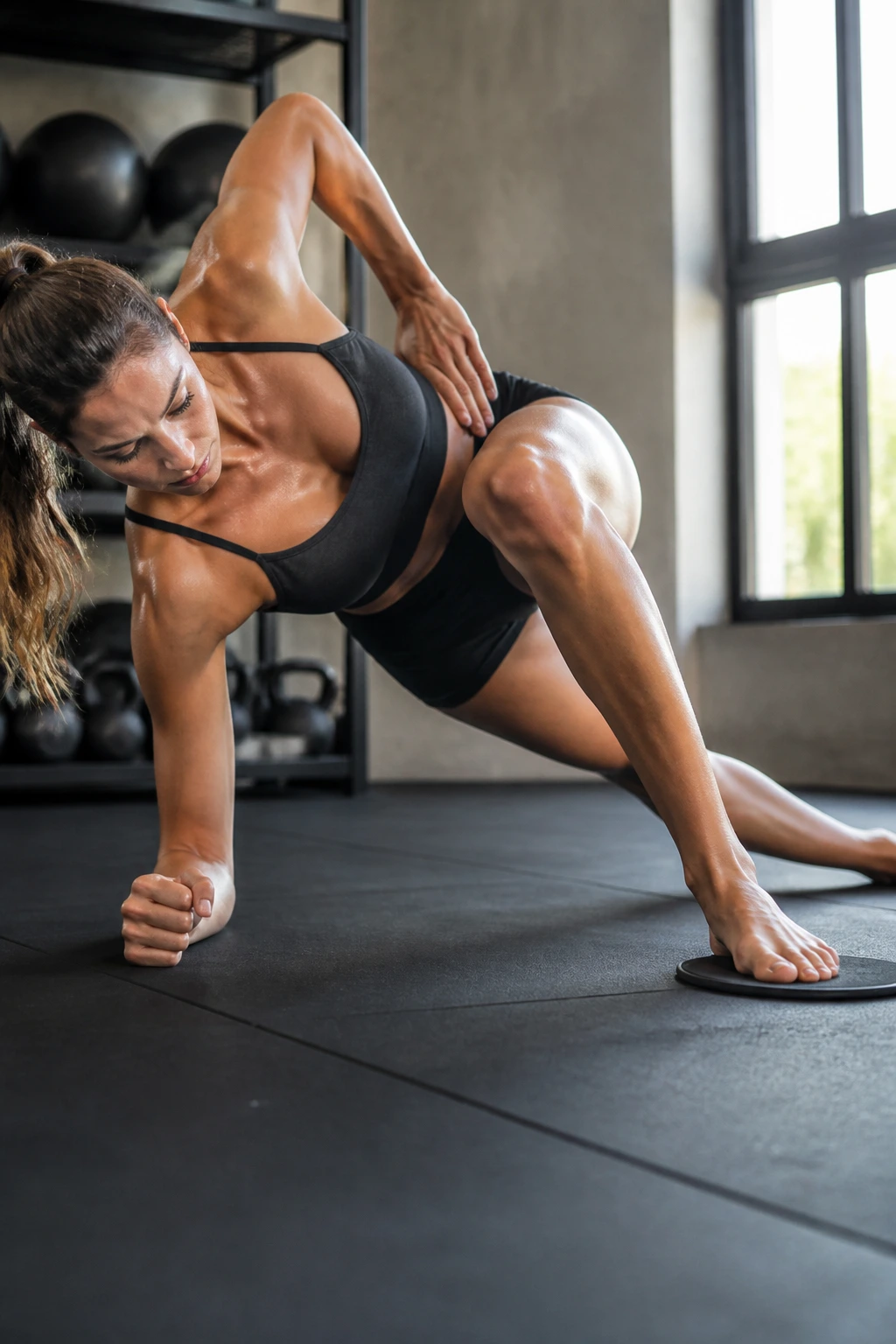
Side planks need help sometimes, and sliders make them less dull.
Set up in a side plank with one foot on a slider and the body lined up from head to heel. Draw the sliding knee in toward the chest, then extend it back out while keeping the hips lifted. The obliques work hard. The shoulder on the floor works too. And the sliding leg gives the movement a little extra bite.
Why It Works
The side plank already teaches the body to resist side bending. The knee tuck adds a moving load, which makes the waist and outer hip fire harder to keep the line steady. That is a fancy way of saying your side core has to do its job for real.
How to Get the Most From It
- Keep the bottom shoulder packed down.
- Move the knee in a straight path.
- Use a short slide if the balance feels shaky.
- Aim for 6 to 8 reps per side.
The movement should look controlled, not dramatic. If the hips drop, reset.
20. Slider Single-Leg Deadlift Reaches
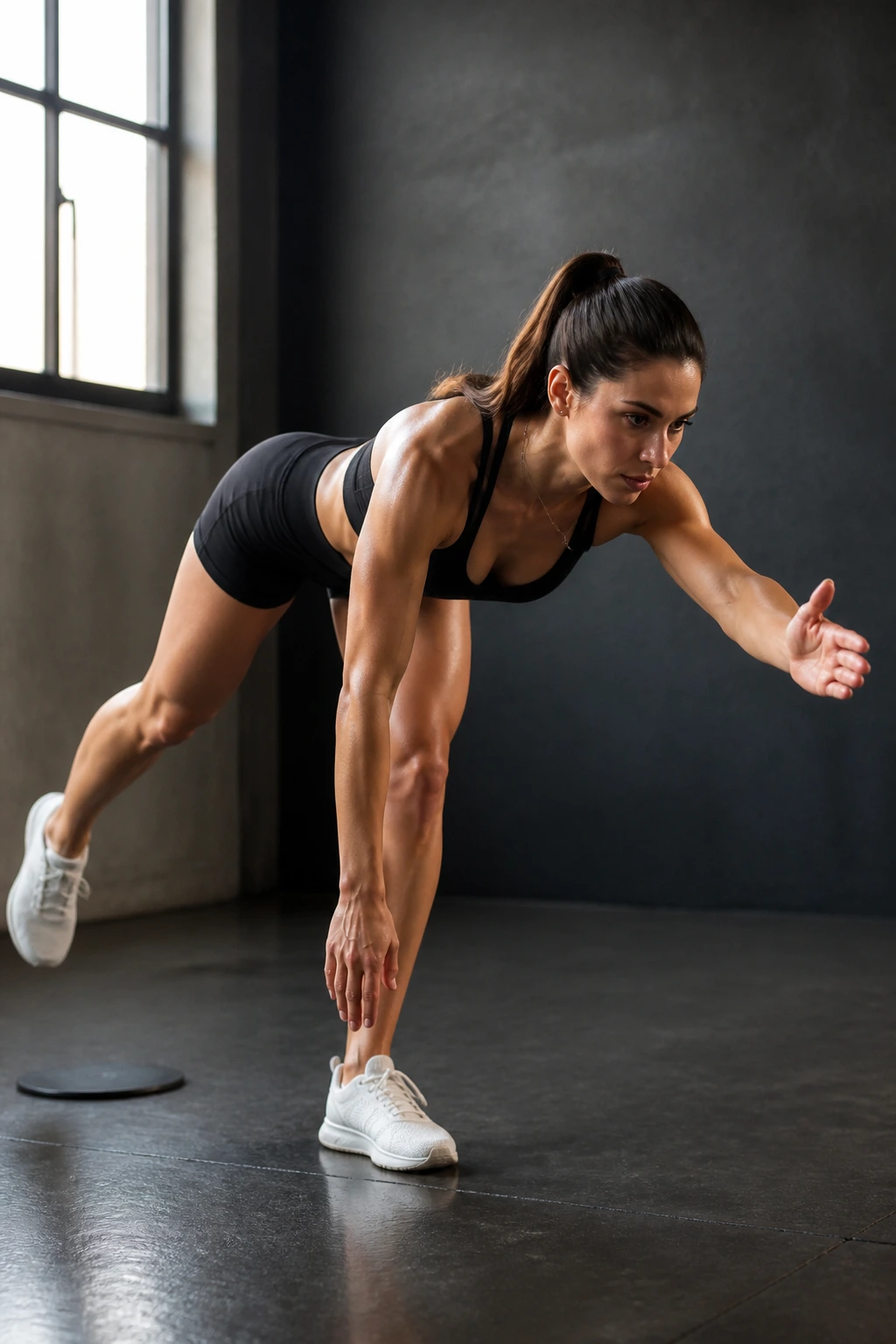
This is one of the cleanest ways to train hinge strength without dumbbells.
Stand on one leg with the other foot resting on a slider behind you. Hinge at the hips, send the free leg back in a long line, and let the slider travel only as far as your balance allows. The standing hamstring and glute load up fast, and the torso has to stay square instead of twisting toward the floor.
Do 6 to 8 reps per side and keep the reach slow. If you rush, the move turns into a wobble contest. If you slow it down, you’ll feel the back of the hip wake up in a way that regular bodyweight hinges often miss.
One clean rep beats three shaky ones here.
21. Slider Dead Bug Press
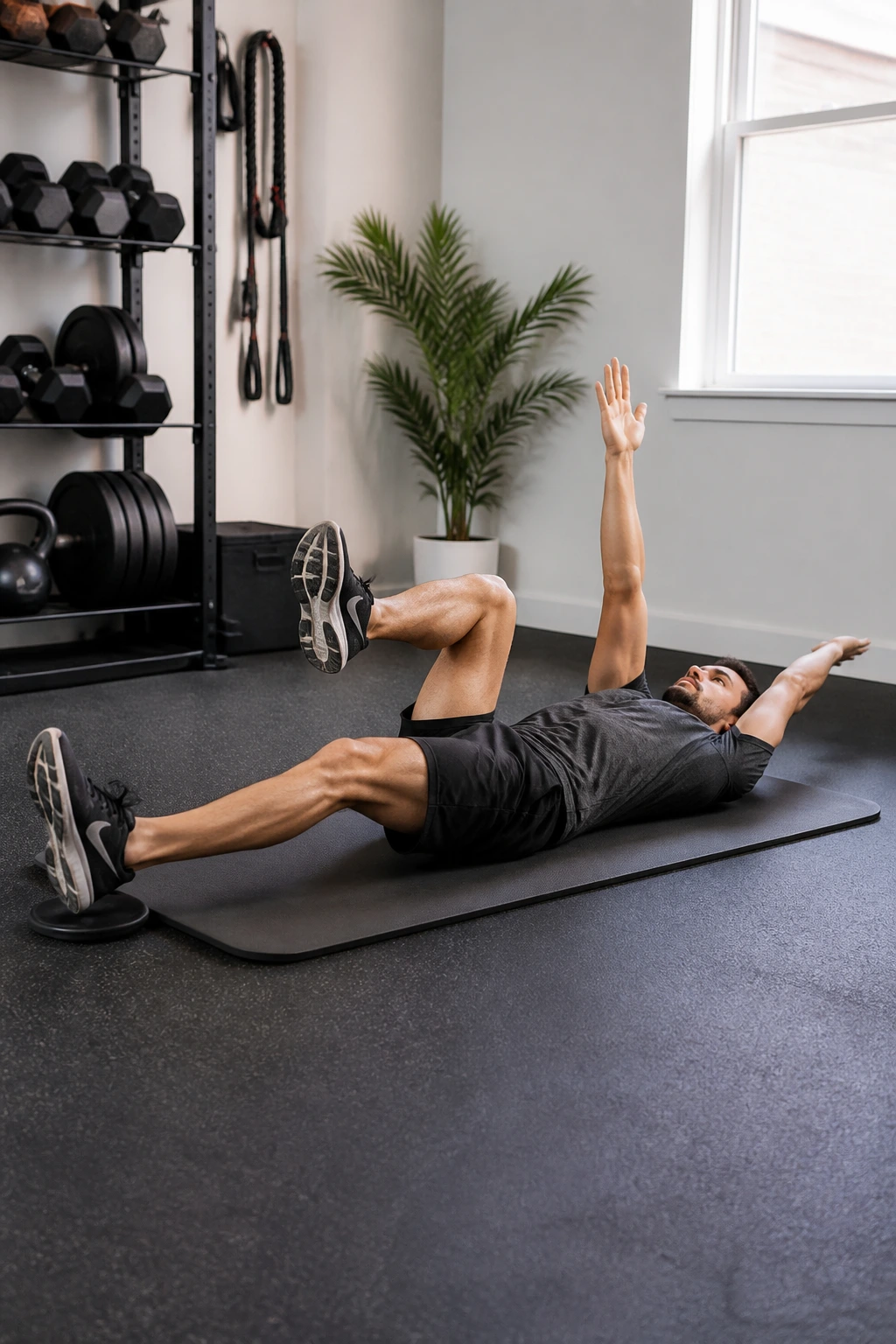
A dead bug is already a smart core drill. Adding sliders makes it harder to cheat.
Lie on your back with one heel on a slider and the opposite arm reaching overhead. Extend the free arm and the sliding leg at the same time, then pull both back to the starting position without letting your lower back peel off the floor. The goal is not range for range’s sake. The goal is a trunk that stays calm while the limbs move around it.
How to Use It
Try 6 to 10 reps per side with a deliberate exhale on the extension. If the back arches, shorten the leg slide and keep the arm reach smaller.
The dead bug press works well as a warm-up or as a recovery day core move. It is quiet, slow, and far harder than it looks.
22. Slider Triceps Extension Rollouts
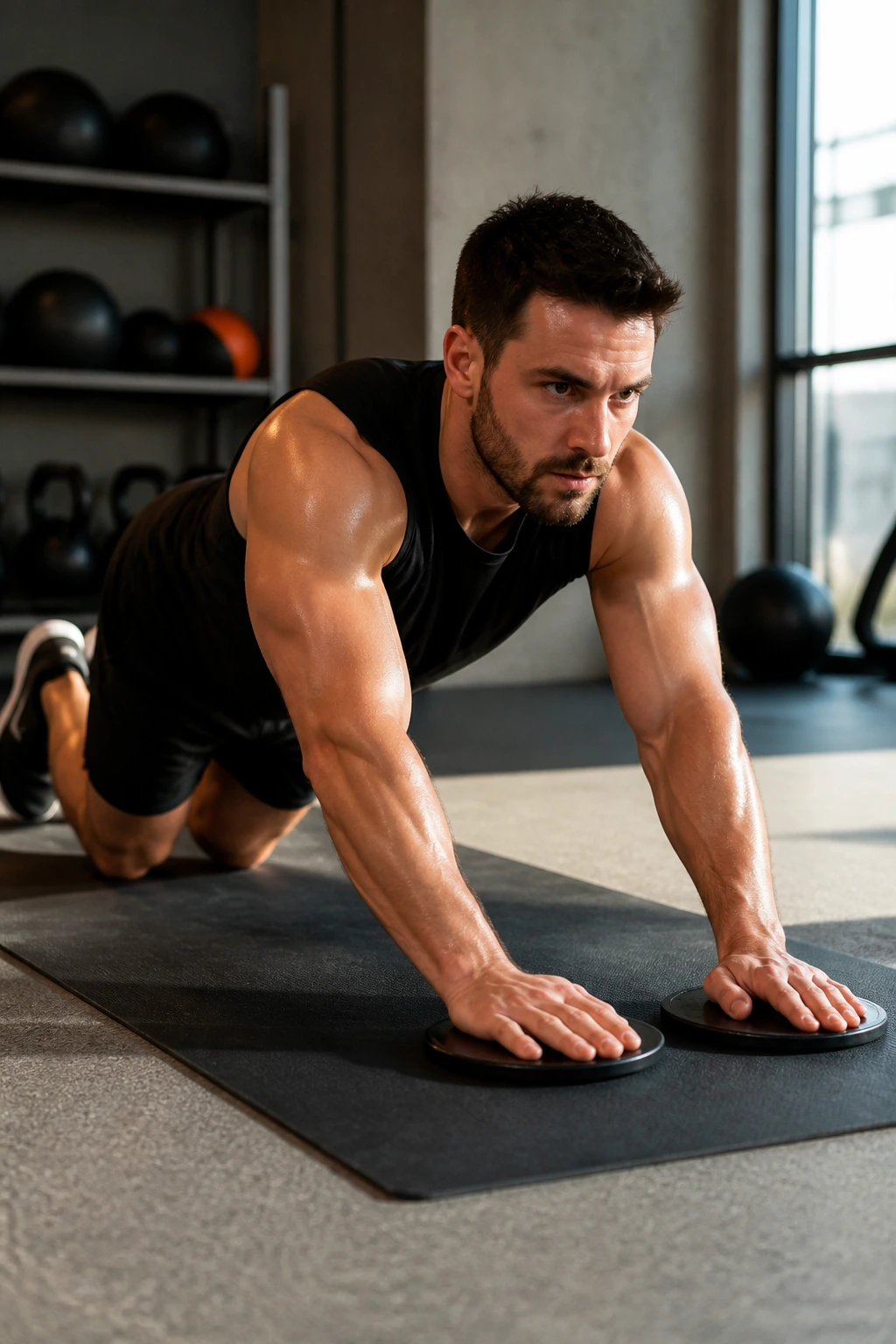
People expect sliders to torch legs and abs. Then this one shows up.
Start in a kneeling plank with your hands on the sliders. Let the arms glide forward while the elbows bend, then press and pull back to the starting point. The triceps work to straighten the arms. The lats and core help keep the torso from dumping forward. It feels a little like a bodyweight skullcrusher, which is exactly why it earns a spot here.
- Keep the elbows close to the ribs.
- Shorten the slide if the shoulders feel cranky.
- Brace the abs before each rep.
- Use 2 to 3 sets of 6 to 8 reps.
If the movement turns into a shoulder shrug, stop and reset. The triceps should be doing the talking.
23. Slider Frog Curls
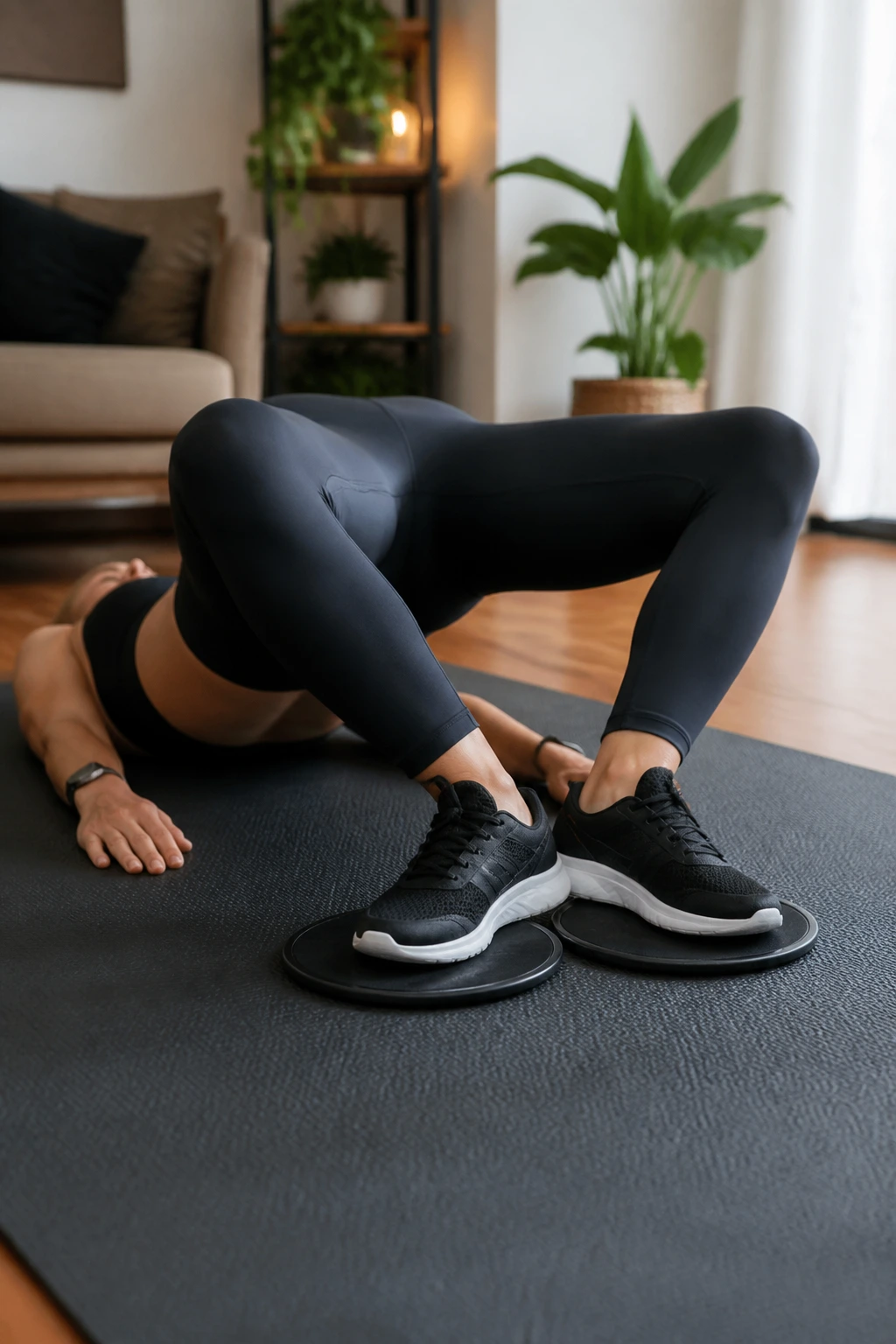
This one is ugly in the nicest possible way.
Lie on your back, bring the soles of the feet together in a frog shape, and place the heels on the sliders. Lift into a bridge, then slide the heels out and back in while the knees stay open. The inner thighs join the hamstrings, which makes the whole back line of the leg work in a strange, effective way.
The frog position keeps the adductors involved more than a standard hamstring curl does. That can be useful if you want to hit the inner thigh without adding another machine or band.
Keep the hips from dropping. That is the whole game. Three sets of 8 to 10 reps is enough to make the legs complain for the rest of the session.
24. Slider Cossack Slide Squats
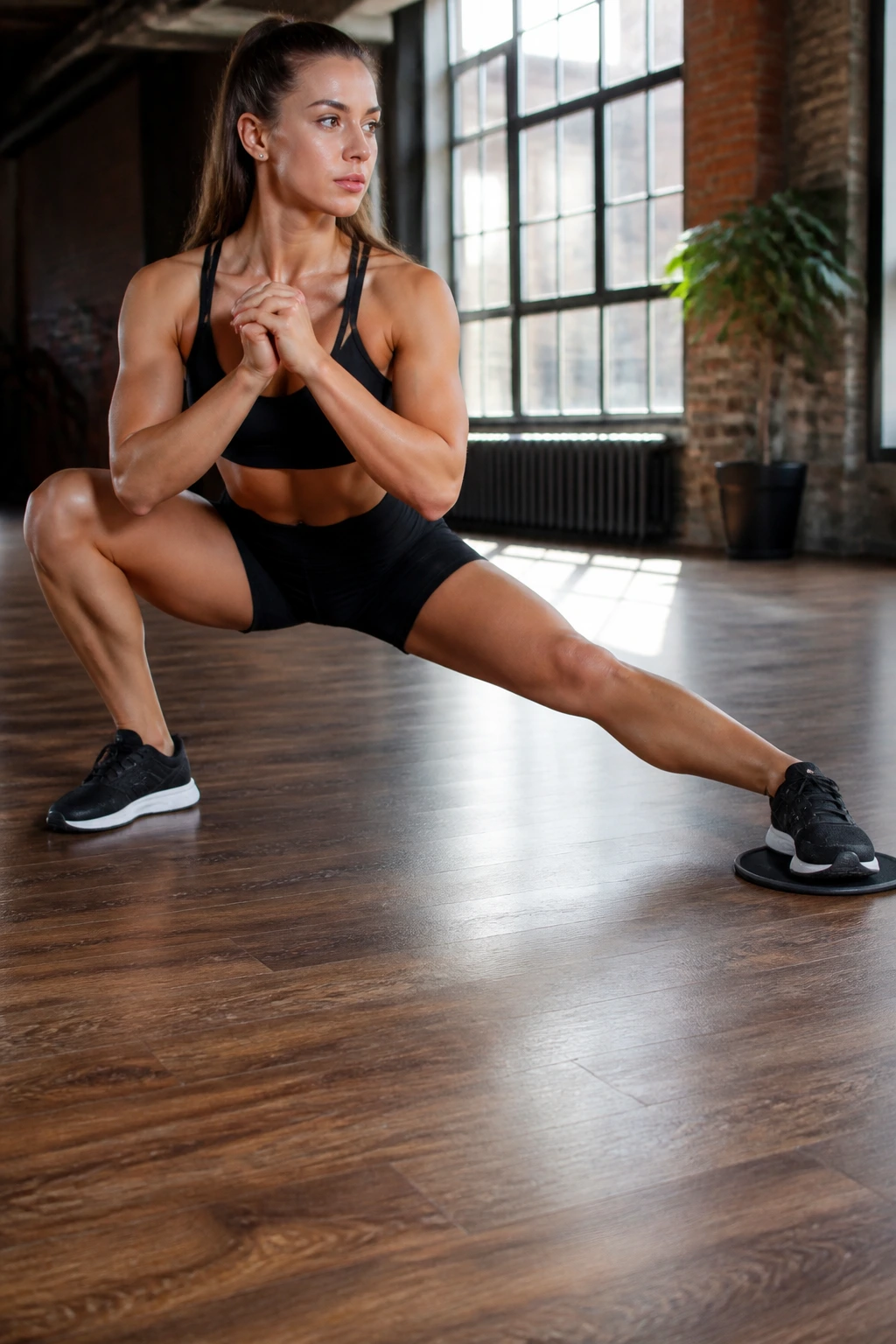
If you want hips that move better, this is a useful place to live for a while.
Take a wide stance, let one foot slide out while the other knee bends deeply, and sit into the side squat with the chest tall. The sliding leg stays long, the working side gets bent, and the inner thigh on the straight leg gets a long, honest stretch. This is one of the few lower-body moves that trains strength and mobility without feeling like a gimmick.
What Makes It Different
Compared with a standard side lunge, the slider version makes the transition smoother and more controlled. That matters because the motion can go deeper without the same abrupt drop. You get more time in the bottom position, which is where the hips usually start to talk back.
Best For
- Adductor strength
- Ankle and hip mobility
- People who want lateral leg work without impact
- Warm-ups before squats or deadlifts
Recommendation: Start with a short slide and build up to 5 to 8 reps per side.
25. 12-Minute Slider Total-Body Finisher
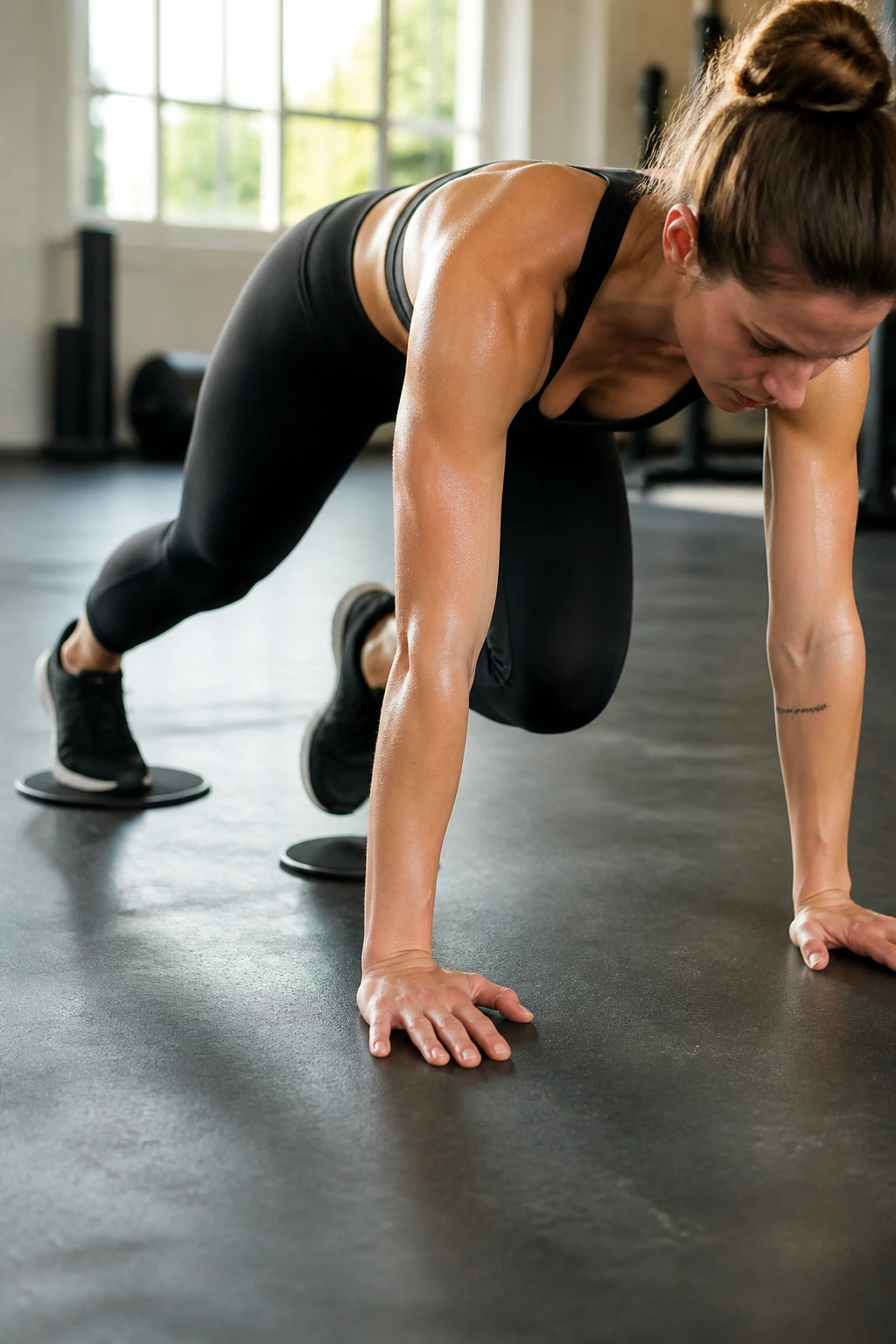
A good slider finisher should leave you breathing harder, not limping around the room.
Set a timer for 12 minutes and move through this simple loop at a steady pace:
- 30 seconds of slider mountain climbers
- 30 seconds of reverse lunges
- 30 seconds of body saws
- 30 seconds of hamstring curls
- 30 seconds of plank jacks
- 30 to 45 seconds of rest
Repeat the circuit until the timer runs out. If that feels too easy, keep the rest short and make every rep slower. If it feels too spicy, cut the work to 20 seconds each and keep the rest longer.
The nice thing about a finisher like this is that it pulls the whole session together. Legs, core, shoulders, and the back of the body all get touched without needing a rack, dumbbells, or a lot of floor space. And on days when motivation is thin, a few discs on the floor are enough to build a decent session without much ceremony.
