



Forty-five minutes is long enough to get sweaty, winded, and a little humbled. It is also long enough to waste if you drift between exercises, fiddle with your phone, or pick moves that never quite ask enough from your body.
That is the problem with a lot of so-called fast sessions. They look efficient on paper and feel mushy in real life. A proper forty five minute workout has shape: a warm-up that wakes you up, a main block that keeps the pace honest, and a finish that leaves your legs, lungs, or upper body asking for mercy.
The burn does not come from random suffering. It usually comes from density, smart pairings, and not loafing around between sets. Heavy legs. Short rests. Clean form. A timer that keeps you from getting cute.
Some days call for dumbbells. Some call for a treadmill incline, a rowing machine, or a round timer that makes boxing feel both simple and rude. And on the days when you only have a mat and a little floor space, there are still ways to make 45 minutes count.
1. Dumbbell Squat, Press, and Row Circuit
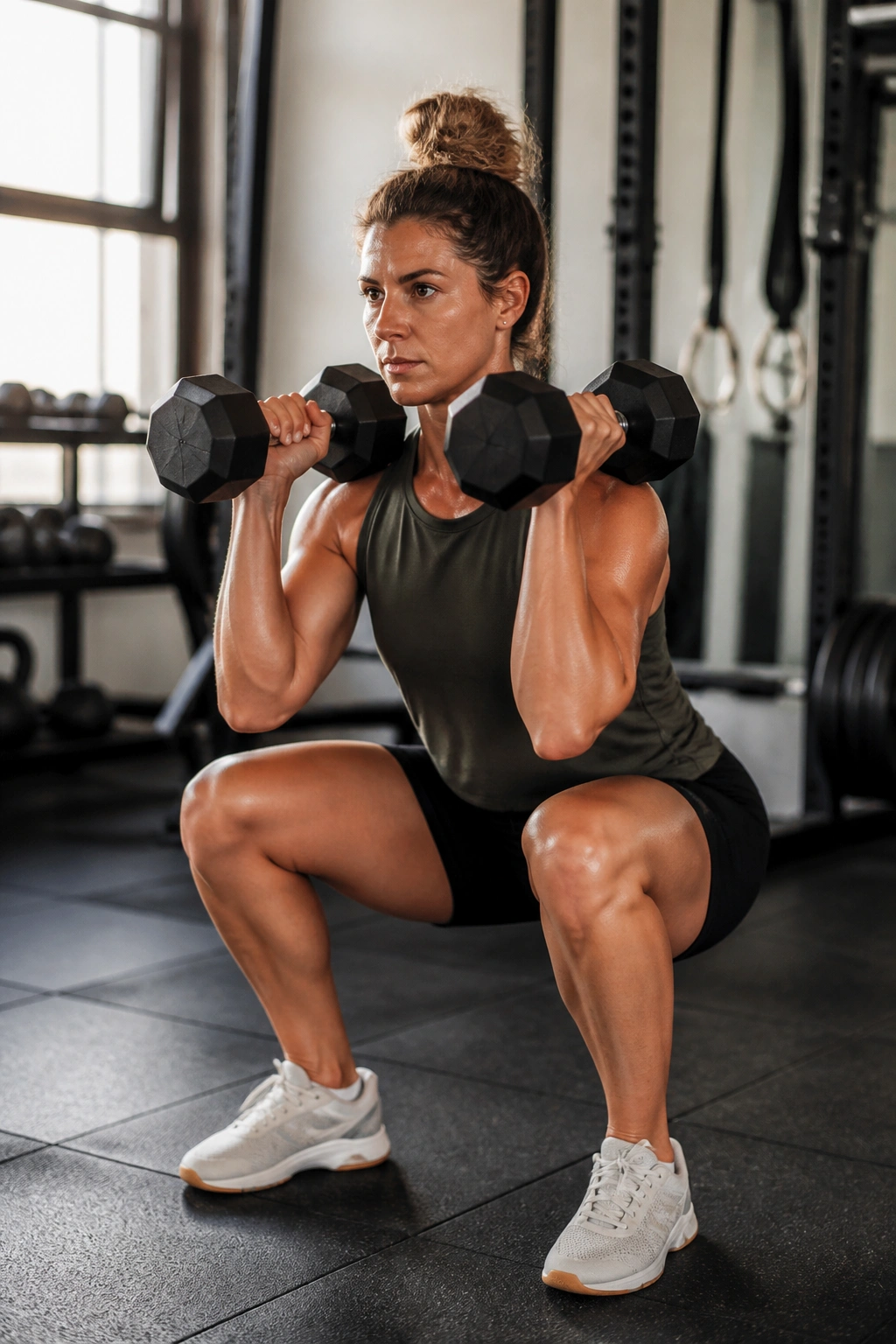
This is the kind of session I reach for when I want a blunt, no-nonsense full-body hit. Two dumbbells, a clear timer, and no dead time. That’s the whole mood.
How It Runs
Start with 5 minutes of easy movement: marching, arm circles, hip openers, and a few bodyweight squats. Then run 4 rounds of this circuit:
- 10 goblet squats
- 8 push presses
- 10 bent-over rows
- 30 to 45 seconds of plank
- 60 seconds of rest
Use a load that makes the last two reps of each set slow, but not ugly. The squat should feel like legs, the press should light up shoulders, and the rows should make your upper back do some honest work.
Finish with 5 minutes of alternating reverse lunges and suitcase carries if you’ve got room. Short steps. Tall chest. That’s where the burn starts to feel expensive in a good way.
Pro tip: keep the dumbbells close to your mat. If you have to wander across the room every round, the workout gets softer fast.
2. Incline Treadmill Intervals That Light Up Your Legs
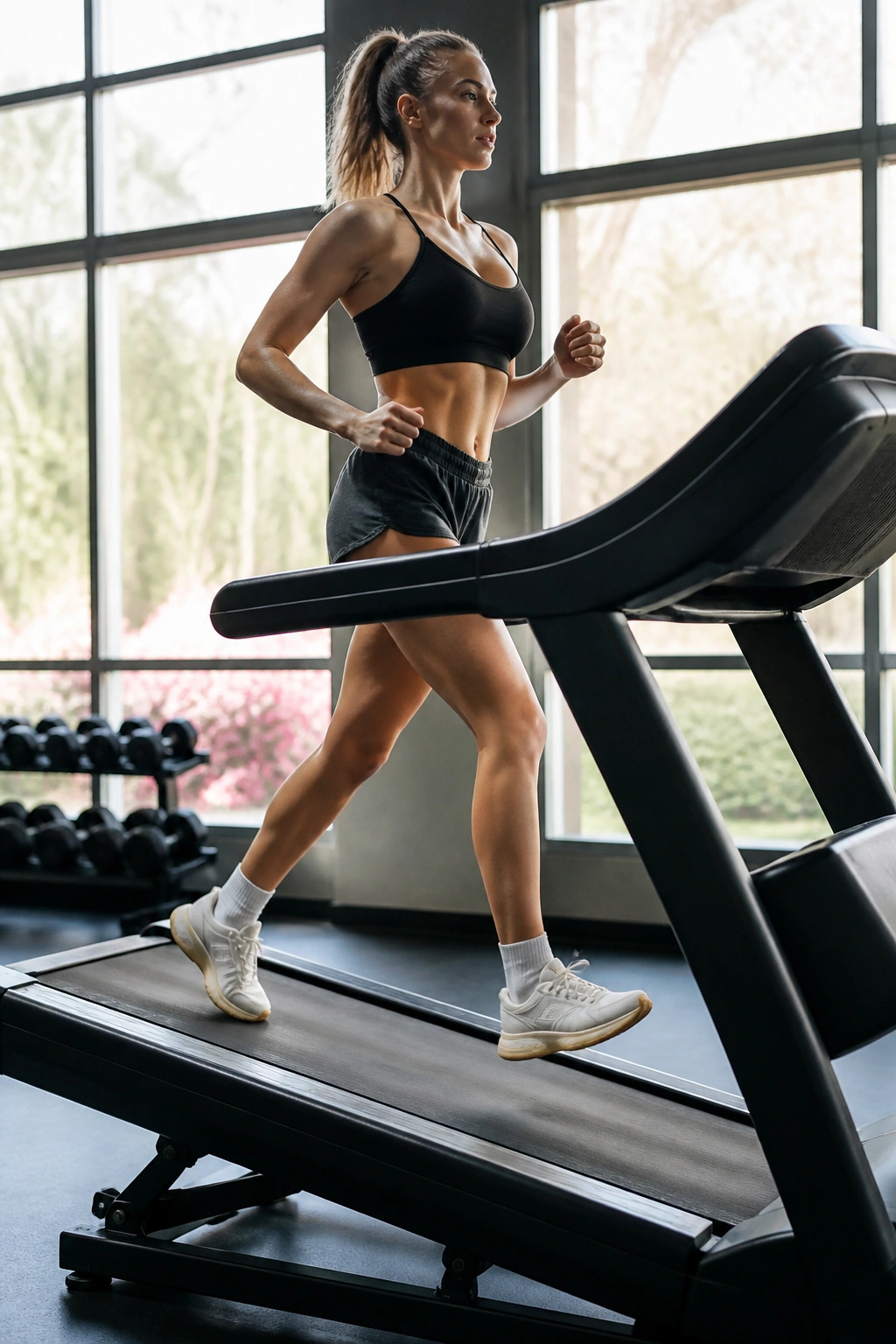
Incline walking gets dismissed by people who think suffering has to look dramatic. That’s a mistake. A steep walk, done hard enough, can smoke your calves, glutes, and lungs without pounding your joints into the floor.
Set the treadmill to a 6 to 10 percent incline. Walk fast enough that talking turns into short phrases. Not gasping. Not strolling. Somewhere in that awkward middle where your heart rate climbs and your hamstrings start to notice.
A simple format works well here: 90 seconds hard, 60 seconds easy, repeated 10 times. After that, spend 5 minutes at a moderate incline and steady pace, then cool down for 5 minutes on flat ground. Keep your hands off the rails unless you actually need balance. Gripping the front turns the whole thing into a half-effort.
The nice part is that incline work creates a deep leg burn without forcing max speed. It feels controlled. Then, around the seventh or eighth interval, it stops feeling controlled at all.
3. Kettlebell Swing and Core Ladder
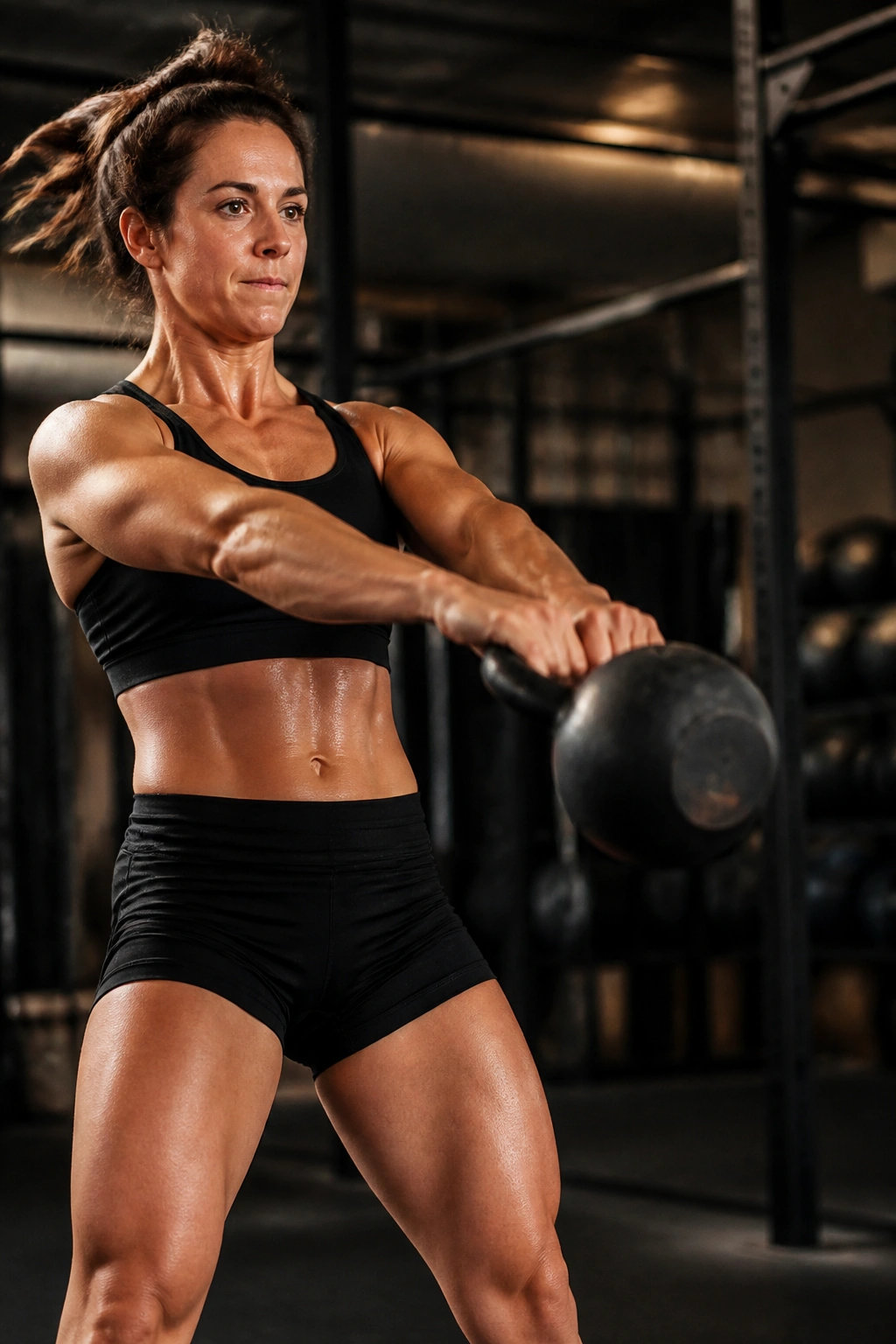
Why do kettlebell swings feel so brutal so fast? Because they punish laziness. If your hinge is sloppy, your lower back complains. If your hip snap is sharp, your lungs get involved almost immediately.
That’s what makes this 45-minute workout such a good deal. You get power, conditioning, and a core tax all at once. Start with 5 minutes of hip hinges, glute bridges, and dead bugs. Then build a ladder:
How to Use It
- 10 swings
- 15 swings
- 20 swings
- 15 swings
- 10 swings
Rest 45 to 60 seconds between rungs. After each round, add 8 to 10 dead bugs or a 20-second hollow hold. If your grip starts to go before your legs do, that’s normal. If your lower back starts doing the lifting, stop and reset.
A kettlebell should float from the hips, not be yanked with the shoulders. Keep your ribs down. Snap the hips. Let the bell fall back on its own.
This one is sneaky. It looks simple. It is not.
4. Upper-Body Push-Pull Day

A desk day leaves a specific kind of stiffness in your shoulders. This session is built for that feeling. It gives your chest, back, triceps, and rear delts enough work to matter without turning the gym into a two-hour project.
Use a classic push-pull pairing: a pressing move, then a pulling move. Bench press and rows work well. So do push-ups and single-arm dumbbell rows if you’re training at home. Run 4 supersets of 8 to 12 reps per movement, with 45 seconds between exercises and 75 seconds between rounds.
The Useful Details
- Press with elbows at about 45 degrees, not flared straight out.
- Pull with a full stretch, then row hard to your ribs.
- Use a weight that makes the last rep slow but clean.
- Finish with 2 rounds of 12 to 15 triceps extensions and band pull-aparts.
That final bit matters more than people think. The burn lives in the smaller muscles. The big lifts build the base. The finish catches whatever was left.
5. Glute and Hamstring Strength Block
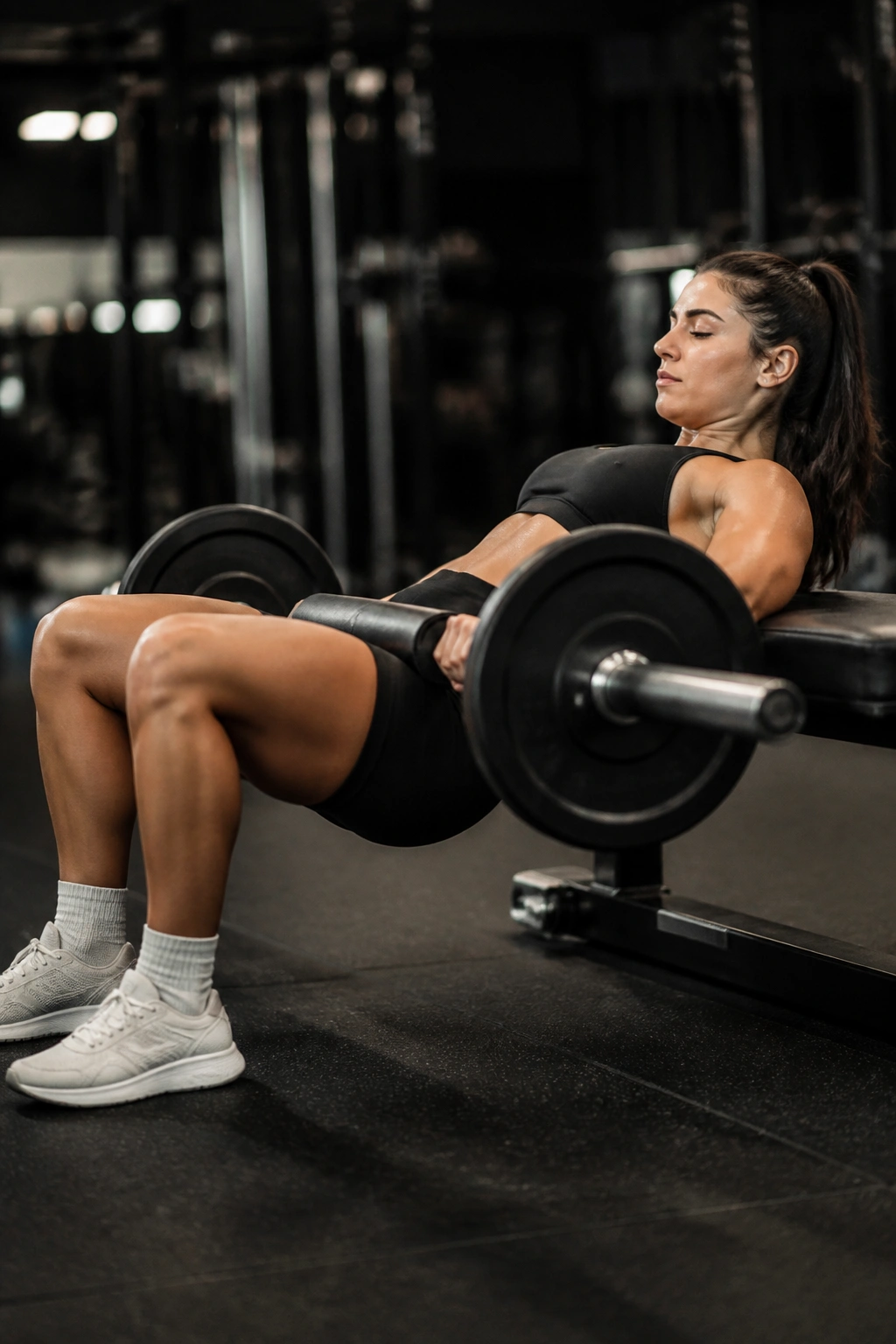
This is the workout that makes stairs feel rude later in the day. Good. That’s the point.
Start with Romanian deadlifts, because hamstrings need a hinge pattern, not endless curls. Then move into Bulgarian split squats, hip thrusts, and sliding leg curls or stability-ball curls if you have them. Use 3 sets of 8 to 10 reps on the heavy lifts and 10 to 12 on the smaller ones. Rest 60 seconds between sets, maybe 75 if your form is getting sloppy.
What makes this session work is the blend of stretch and squeeze. Romanian deadlifts load the lengthened hamstrings. Hip thrusts hammer the top of the glute. Split squats make each leg work without the stronger side stealing the whole show.
One-sentence truth: your glutes will complain before your brain does.
Keep the tempo controlled on the way down. Two or three seconds is enough. If you rush the lowering phase, you lose half the point of the workout and most of the burn.
6. Rowing Machine Intervals for Total-Body Heat
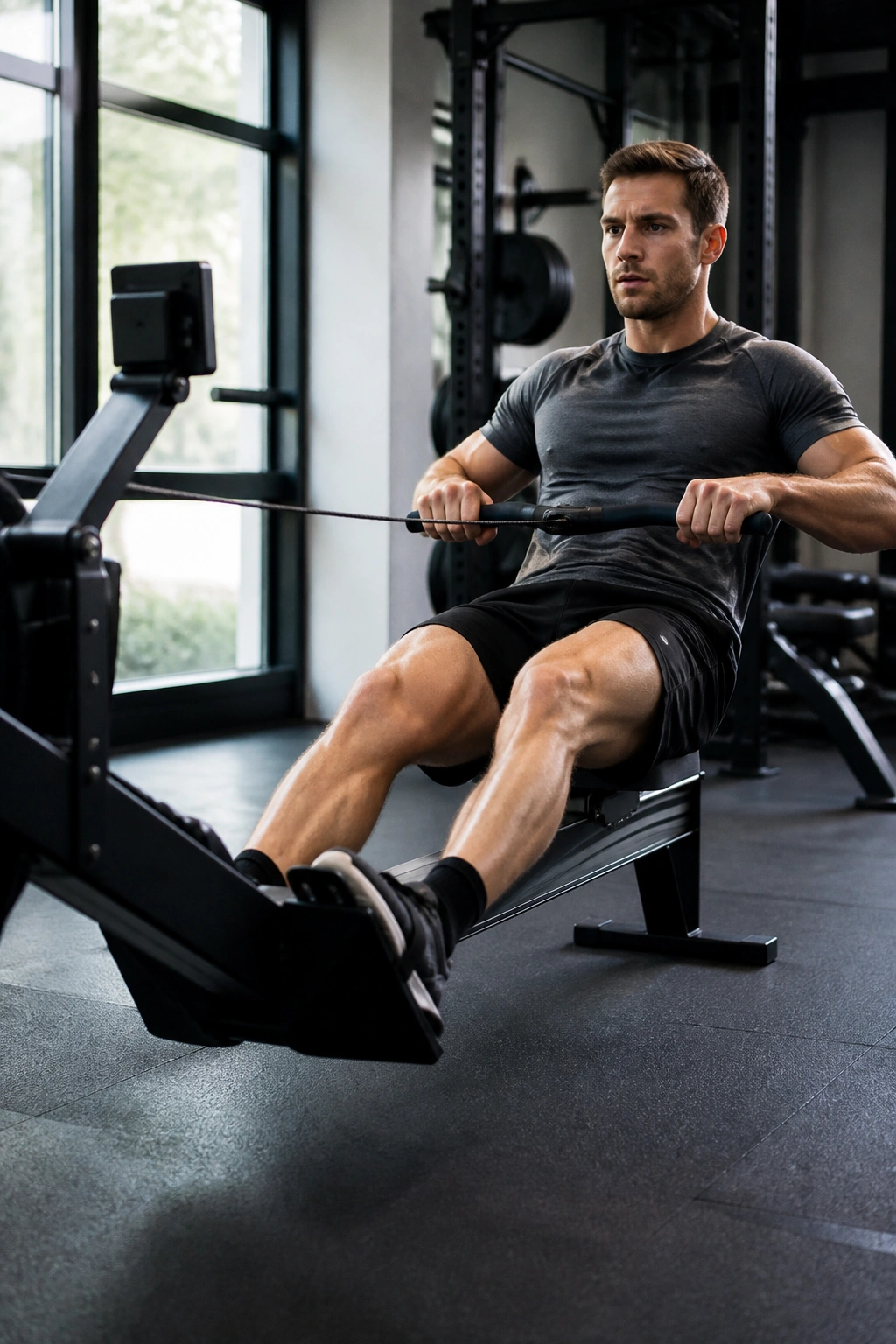
Unlike running, rowing hits the legs, back, arms, and lungs all at once. That is why a rowing machine can feel like a full-body argument in under an hour.
Use the first 6 minutes to loosen up with easy strokes. Then run 5 rounds of 4 minutes hard and 2 minutes easy. Hard means strong leg drive, a quick pull, and a steady rhythm you can hold without falling apart. Easy means enough movement to recover, not a leisurely drift.
What Makes It Work
- Keep the damper reasonable; cranking it up is not a shortcut.
- Push through the floor first, then lean back, then finish the pull.
- Keep your shoulders loose on the recovery.
- Watch your stroke rate before chasing pace.
The machine punishes bad sequencing. If you yank with your arms first, you blow up faster and get less out of each stroke. Rowing done right feels smooth. Rowing done wrong feels like dragging a couch through wet sand.
Finish with 5 minutes of steady moderate rowing. By then, your legs should be warm and your breathing should be loud.
7. Every-Minute-on-the-Minute Bodyweight Burner

This is the one I hand to people who claim they need no equipment and no excuses. Fair enough. Fine. Here’s the format.
Set a timer for 25 minutes. Every minute, start a new move, complete the work, then rest for whatever time is left in that minute. Rotate through five exercises:
- 12 air squats
- 8 to 12 push-ups
- 16 reverse lunges
- 20 mountain climbers per side
- 30-second plank
Repeat that cycle 5 times. If your heart rate is high by minute 8, welcome to the club. The beauty of this style is that it removes the whole negotiation. You do the work when the minute starts. You stop when the work is done.
Add a 10-minute warm-up with joint circles, inchworms, and marching high knees. Then finish with 10 minutes of mobility for hips, calves, and thoracic spine. It still lands right at 45 minutes, and the burn comes from the nonstop rhythm more than from one giant set.
8. Boxing Rounds and Shadowboxing Footwork

Why does boxing leave people drenched so quickly? Because it fools you. It looks light until the second or third round, when your shoulders start to sting and your calves are suddenly alive with protest.
Start with 5 minutes of jump rope or light footwork. Then set a timer for 8 rounds of 3 minutes on, 1 minute off. Alternate between jab-cross combinations, hook work, defensive slips, and footwork-only rounds. If you have gloves and bags, use them. If not, shadowboxing still does the job.
A Smart Round Layout
- Round 1: jab-cross, easy pace
- Round 2: jab-cross-hook, add head movement
- Round 3: footwork only, circle and pivot
- Round 4: 30-second flurries, then reset
- Round 5: body shots or low-line punches
- Round 6: defense-focused, slip and step out
- Round 7: pace round, keep hands high
- Round 8: all clean technique, no wild swinging
Keep the movement crisp. Big sloppy swings waste energy and wreck your shoulders. Small, sharp punches are the real engine here. The burn sneaks up through the hips and the lungs.
9. Tempo Run With Strides

A tempo run is not a race. It’s the pace just under the point where your breathing gets ragged and your form starts to wander. That middle ground is where the good stuff lives.
Spend 10 minutes jogging easy. Then hold a steady tempo pace for 20 minutes — hard enough that you can say a short sentence, not a full conversation. After that, add 6 strides of 20 seconds each with 40 seconds of walking between them. Finish with 5 minutes of easy jogging or walking.
The strides are the little twist that makes the session punchier. They wake up your legs after the sustained effort and remind your stride to stay snappy. Do them on flat ground. Smooth, not frantic.
If you only have one speed workout in the week, this is a good one. It trains discomfort without turning into a wrecking ball. And yes, your calves may feel a little tight afterward. That’s part of the bargain.
10. Bike Sprint Ladder

A bike sprint ladder works because the machine gives you a clean place to go hard without worrying about impact. The catch is that you need to push with intent. Lazy pedaling does almost nothing.
Warm up for 8 minutes with a mix of light spinning and a few 10-second pickups. Then climb this ladder:
- 10 seconds hard, 50 seconds easy
- 20 seconds hard, 70 seconds easy
- 30 seconds hard, 90 seconds easy
- 40 seconds hard, 2 minutes easy
- 30 seconds hard, 90 seconds easy
- 20 seconds hard, 70 seconds easy
- 10 seconds hard, 50 seconds easy
That takes about 25 minutes with the recoveries. Add 7 minutes of easy spinning and 5 to 10 minutes of cooldown, and you’re right at 45.
Sprints on a bike are a strange kind of honest. Your legs fill with heat fast, your breathing gets loud, and because you’re seated, there’s nowhere to hide.
11. Pilates Core and Glute Floor Session
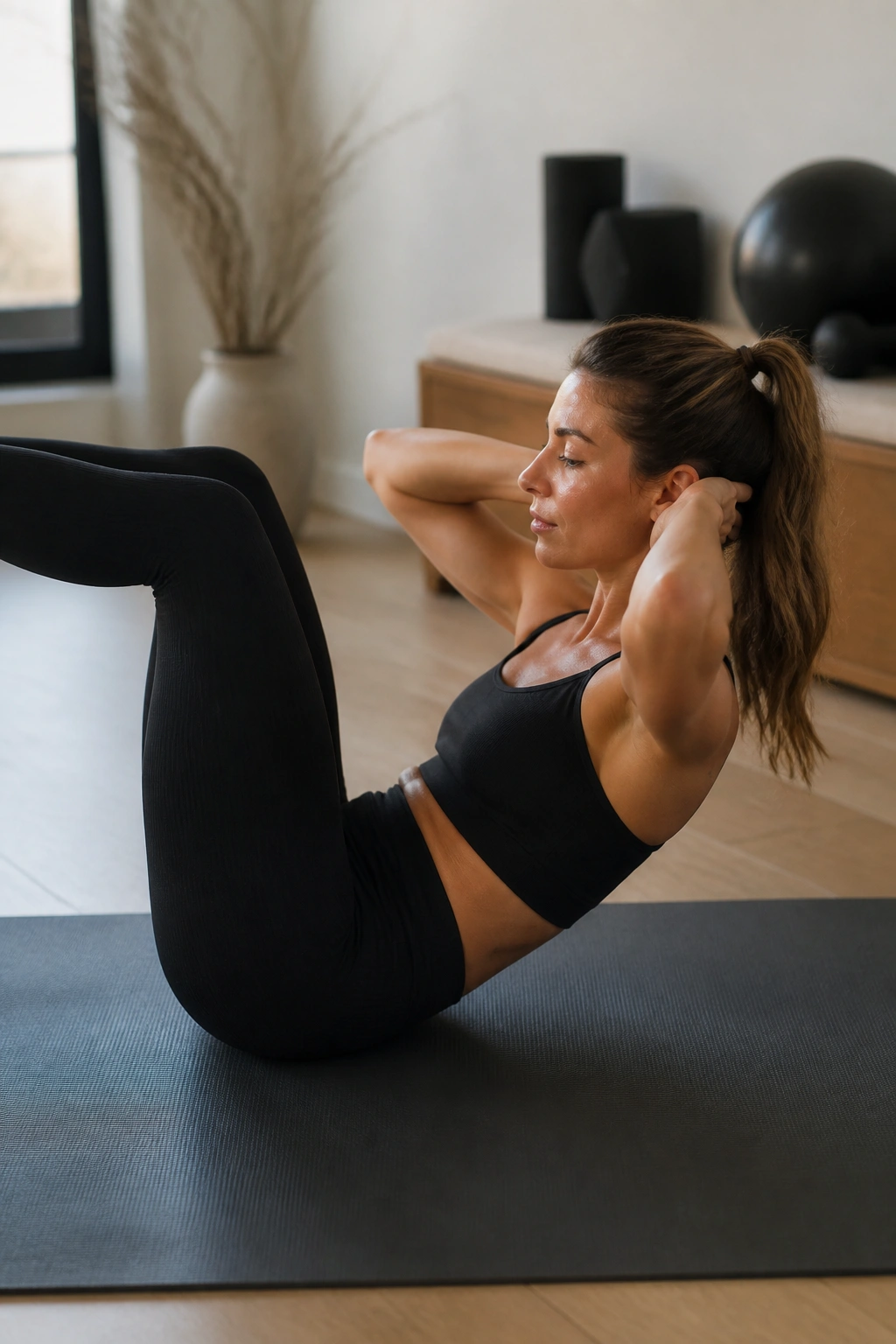
People underestimate floor work because it doesn’t look dramatic. Then they try a proper Pilates sequence and discover their abs were lazier than they thought.
The appeal here is control. Instead of chasing speed, you slow things down and keep tension on purpose. Start with the hundred, dead bugs, and a few rounds of glute bridges. Then move into side-lying leg lifts, clamshells, and slow leg lowers. If your lower back starts arching, the set is too hard or too sloppy.
Breath and Position Matter
- Exhale on effort, especially on the hard part of each rep.
- Keep ribs heavy against the mat.
- Press your lower back down when the move asks for core control.
- Use small ranges if the full version turns into cheating.
The burn comes from staying honest in the small positions. No swinging. No rushing. Just time under tension, which sounds boring until your hip flexors start grumbling and your deep core catches up.
This is a smart option when you want heat without pounding your joints. It still counts. More than people admit.
12. Stair Climber Hill Climb

A stair climber can humble strong people in a hurry. It is not fancy. It does not need to be. Step up hard, keep your posture tall, and the burn arrives in your glutes and calves before you’ve settled into the machine.
Use 5 minutes to warm up at a moderate pace. Then alternate 4 minutes hard and 1 minute easy for 5 rounds. If the machine has levels rather than speed, work somewhere in the upper middle of your usable range — hard enough that talking is broken, but not so hard that you’re grabbing the rails and hanging on for dear life.
Keep your hands light. Leaning forward and loading your arms reduces the work in the legs, which defeats the point. At the end, spend 5 minutes at a steady moderate pace, then cool down.
If you want to make this session nastier, finish the final minute of each hard round with slower, deeper steps. That changes the muscle demand in a way your quads will notice immediately.
13. Dumbbell Complex Without Putting Them Down
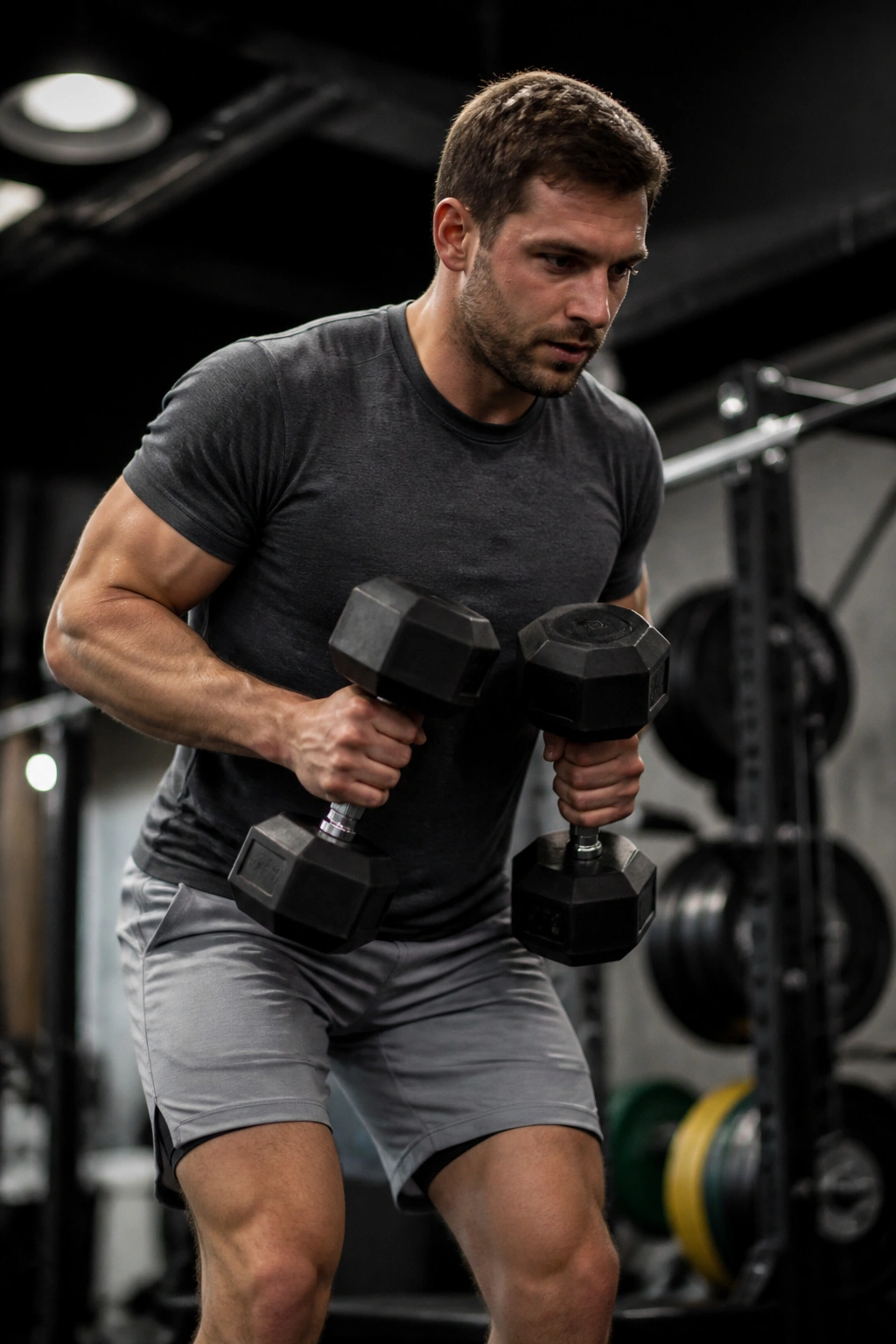
This one is rude in a very efficient way. You pick up the dumbbells once, and for several minutes they stay in your hands while your whole body starts bargaining.
Choose a moderate pair of dumbbells. Not light. Not absurd. Then move through this complex without setting them down:
- 6 Romanian deadlifts
- 6 bent-over rows
- 6 hang cleans
- 6 front squats
- 6 push presses
Rest 90 seconds between rounds, and run 4 to 5 rounds total. Keep the weight honest enough to tax your grip and breathing, but not so heavy that your clean turns into a shoulder shrug with ambition.
The secret is the transition. Moving from hinge to row to clean to squat keeps your body under tension almost the whole time. That’s why the burn builds so fast. There’s no real off switch.
If your rack position gets sloppy, drop the load. This workout punishes ego fast. It should feel athletic, not like a fight with your own form.
14. Suspension Trainer Total-Body Session
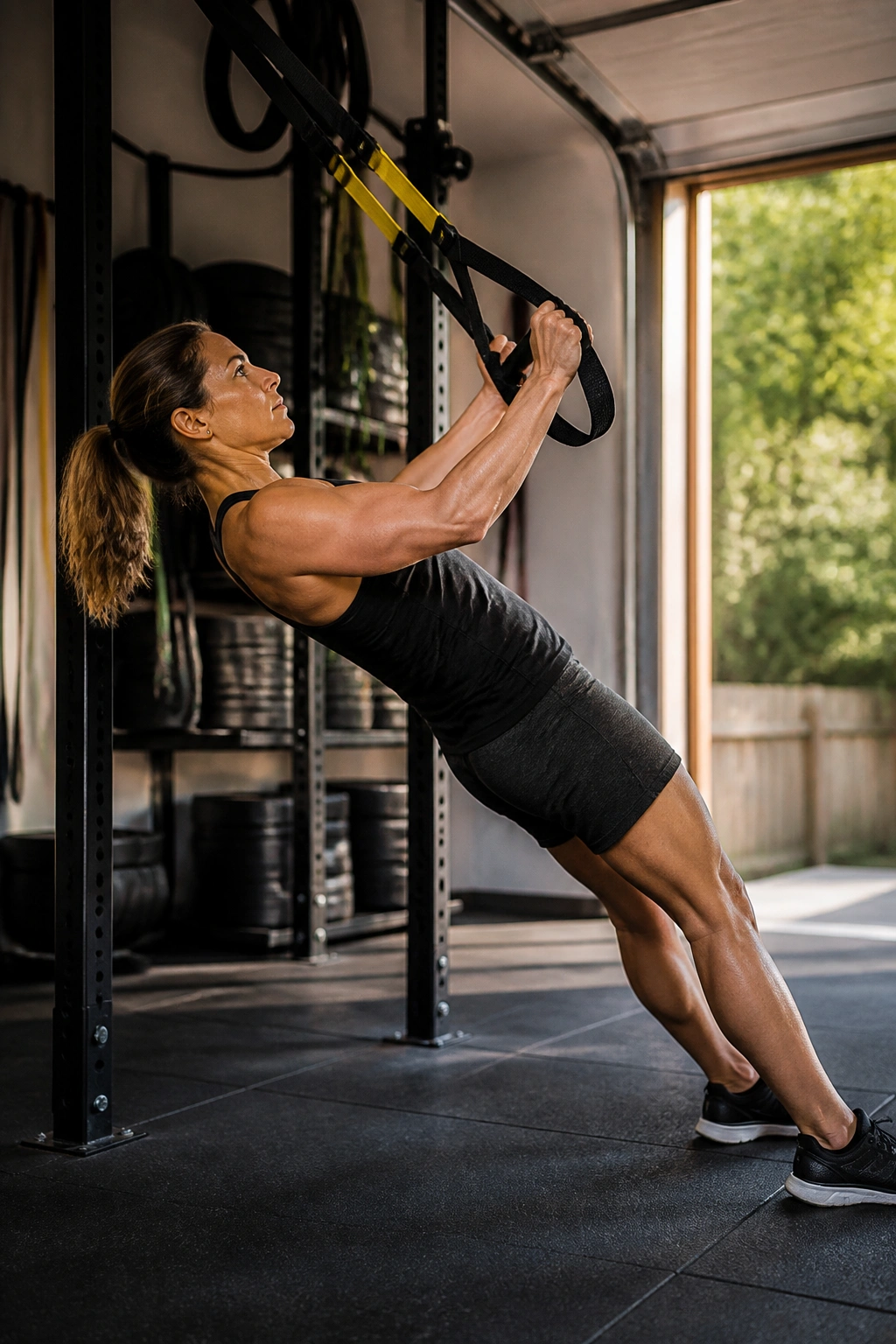
Why does a suspension trainer feel harder than it looks? Because the angle never stops changing the difficulty. A tiny shift in foot position can turn a manageable row into a shaky little test of control.
Set up 5 minutes of warm-up with shoulder rolls, inchworms, and plank holds. Then run 4 rounds of:
- 10 suspension rows
- 8 suspension push-ups
- 10 split squats per leg
- 8 body saws
- 30-second hollow hold
Rest 60 seconds between rounds. If you want more burn, walk your feet forward a little during rows or push-ups so your body sits at a steeper angle.
Angle Changes Everything
- Feet farther forward = harder rows.
- Body more horizontal = harder push-ups.
- Slower tempo = more time under tension.
- Narrower stance = more balance demand.
This session is useful because it scales so cleanly. Beginners can keep the angle mild. Stronger people can turn the screws without changing the setup. And after a few rounds, your core starts working in a way that feels less like crunches and more like survival.
15. Recovery Strength and Mobility Flow
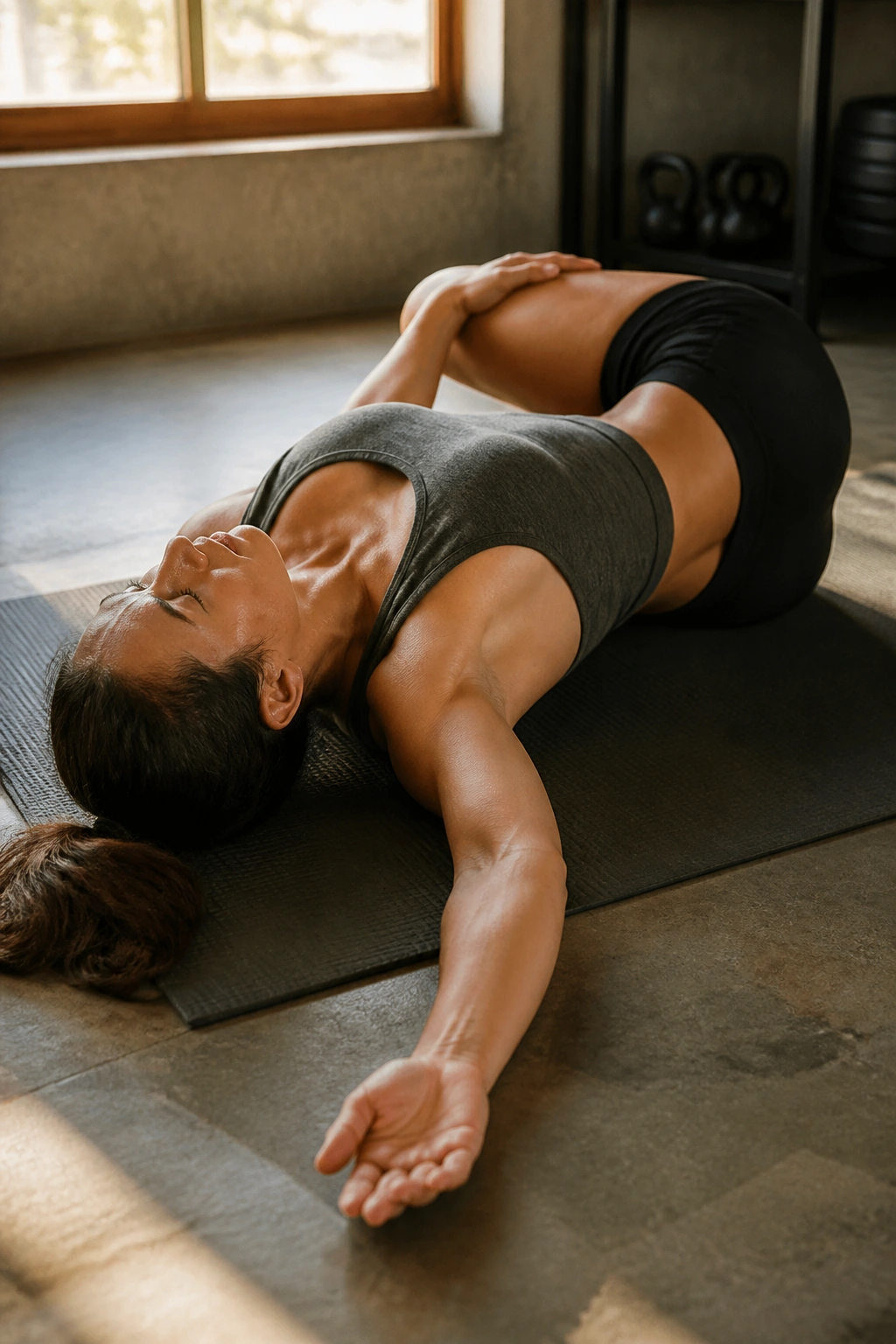
A lighter session can still leave you warm, sweaty, and a little shaky. That matters on days when hard impact would be a bad idea but sitting still feels worse.
Use light weights or bodyweight and move through 3 rounds of this sequence:
- 8 Cossack squats per side
- 8 single-leg Romanian deadlift reaches per side
- 10 glute bridges with a 2-second squeeze
- 6 thoracic rotations per side
- 20 seconds of bear crawl
- 30-second couch stretch per side
Take 30 to 45 seconds between moves and keep breathing through your nose when you can. The whole point is to build control and heat without crushing yourself. You should finish looser, not wrecked.
This kind of work is underrated because it feels too gentle to count, until you notice your hips move better and your back stops sounding like a folding chair. A good recovery session still asks something of you. It just asks politely.
16. Barbell Density Day
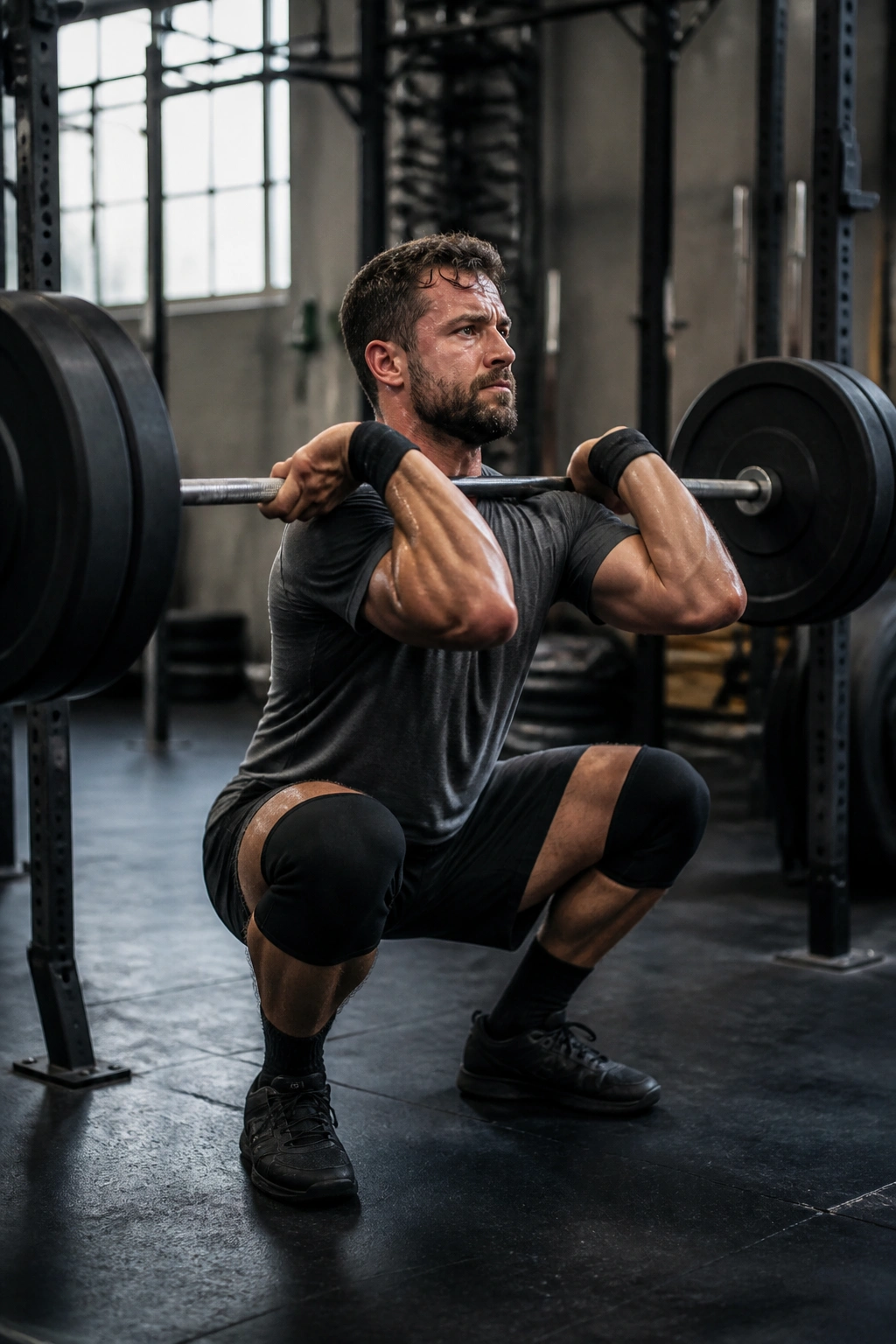
A barbell density day is not about chasing a one-rep max. It is about doing useful work in a tight window and refusing to waste a set. Heavy enough to matter. Light enough to keep moving.
Pick 2 main lifts, maybe front squat and bench press, then add one pull like a bent-over row or RDL. Set a timer for every 90 seconds and complete one set when it beeps. Use 6 to 8 reps per set for 20 to 24 total minutes on the main work.
A Practical Structure
- 5 minutes: barbell warm-up and empty-bar drills
- 12 minutes: front squat, 6 reps on the clock
- 12 minutes: bench press, 6 reps on the clock
- 8 minutes: bent-over rows, 8 reps on the clock
- 8 minutes: cooldown and loaded carries
The density makes the session bite. You’re not sitting around for five minutes between sets, so your heart rate stays up and the work feels denser with every round. If your form breaks, the weight is too heavy for this style. That’s the line.
It’s a hard session without being sloppy. That matters.
17. Shuttle Sprints and Agility Cones

This one feels like recess with consequences. Set up 3 cones about 10 yards apart, or use markers in a driveway, park, or open gym space. Then run, shuffle, and stop with purpose.
Warm up for 8 minutes with skips, side steps, and easy accelerations. After that, do 10 shuttle reps: sprint to cone 1, change direction, sprint to cone 2, backpedal or shuffle to the start. Rest 45 to 60 seconds between reps.
Add 4 rounds of lateral work after that:
- 20 yards lateral shuffle right
- 20 yards lateral shuffle left
- 10-yard backpedal
- 10-yard sprint finish
This is where the burn gets sneaky. Your legs are not just moving; they are braking, pushing off, and recovering over and over. That deceleration work fries the quads in a way straight-line running often misses.
Use clean footwork. If your knees cave or your turns get sloppy, shorten the distance. Fast is fine. Controlled fast is better.
18. Dance Cardio With a Hard Core Finisher

The room should feel a little silly at first. That’s fine. Dance cardio works because it keeps you moving in ways that don’t feel mechanical, and the longer you stay with it, the more your legs and lungs start to object.
Spend 20 minutes on continuous dance cardio. Pick steps you can repeat without thinking too hard: grapevines, kicks, knee lifts, turn steps, whatever keeps you bouncing. Then add 10 minutes of interval-style movement: 40 seconds fast, 20 seconds easy, repeated through the same patterns or a few new ones.
Finish with 10 to 12 minutes of core work on the mat:
- 12 bicycle crunches per side
- 10 slow mountain climbers per side
- 30-second side plank per side
- 12 dead bugs per side
The trick is to keep the movement big enough to raise your heart rate, not so wild that you stop every 30 seconds to fix your balance. Sweat shows up fast here. So does that deep thigh burn from constant shifting and stepping.
19. SkiErg, Rower, and Bike Machine Circuit
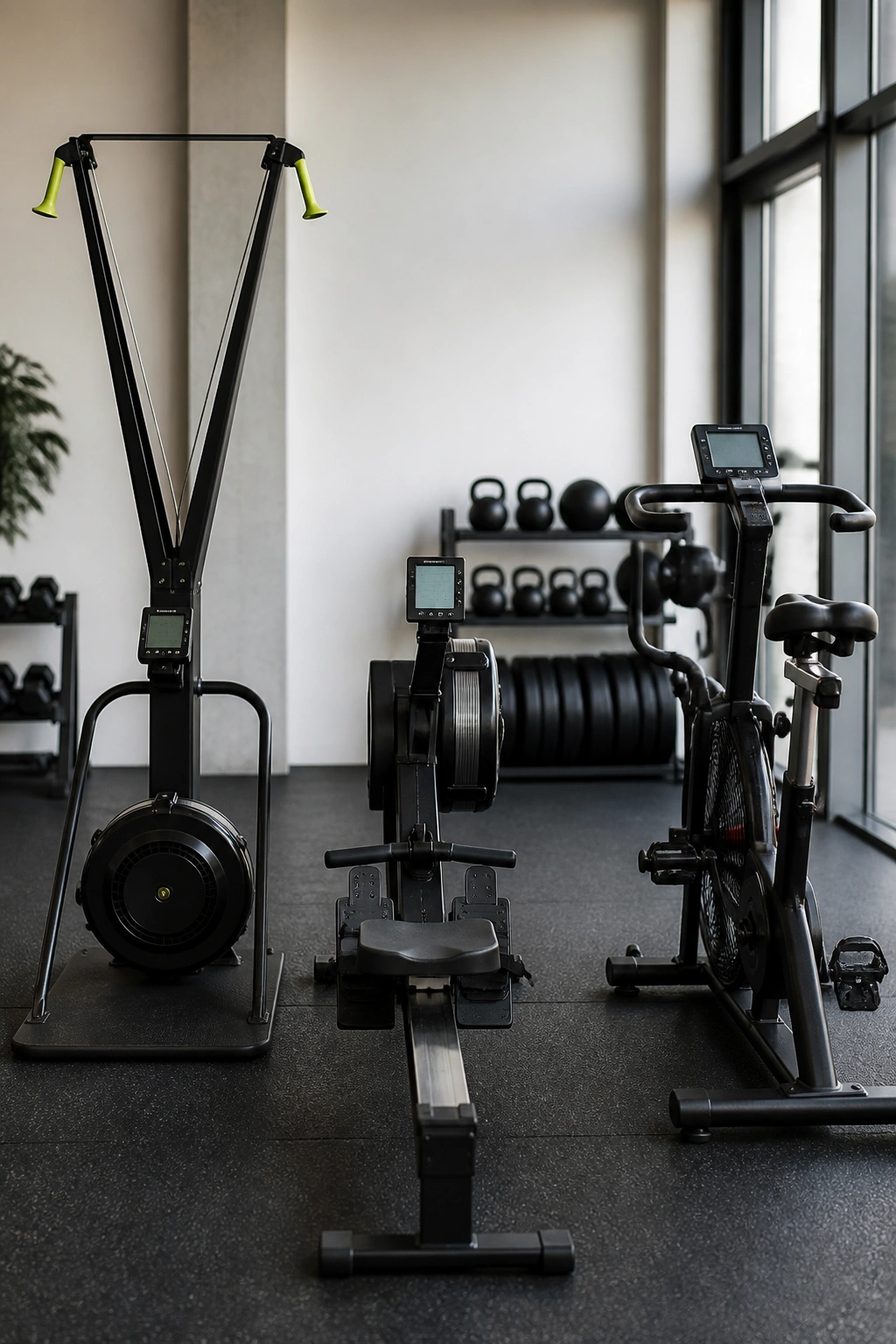
Three machines. Three different kinds of pain. That is exactly why this circuit works.
Spend 5 minutes warming up on any one machine, then rotate through SkiErg, rower, and bike for 5 minutes each at a hard but sustainable pace. Rest 60 to 90 seconds between machines. Repeat the whole loop twice if your conditioning is decent, or once if you want the workout to stay crisp.
How to Order the Work
- SkiErg first if your arms and back are fresh.
- Rower in the middle for a full-body push.
- Bike last when your legs already feel cooked.
That order matters because each machine asks a little something different. The SkiErg loads the lats and trunk. The rower spreads the work around. The bike crushes the quads and lungs in a straight line. Put them together and there’s nowhere to hide.
If you need a simple pacing rule, use the first minute to settle, the next three to work hard, and the final minute to empty the tank without falling apart. That’s enough.
20. No-Equipment Living Room Burn
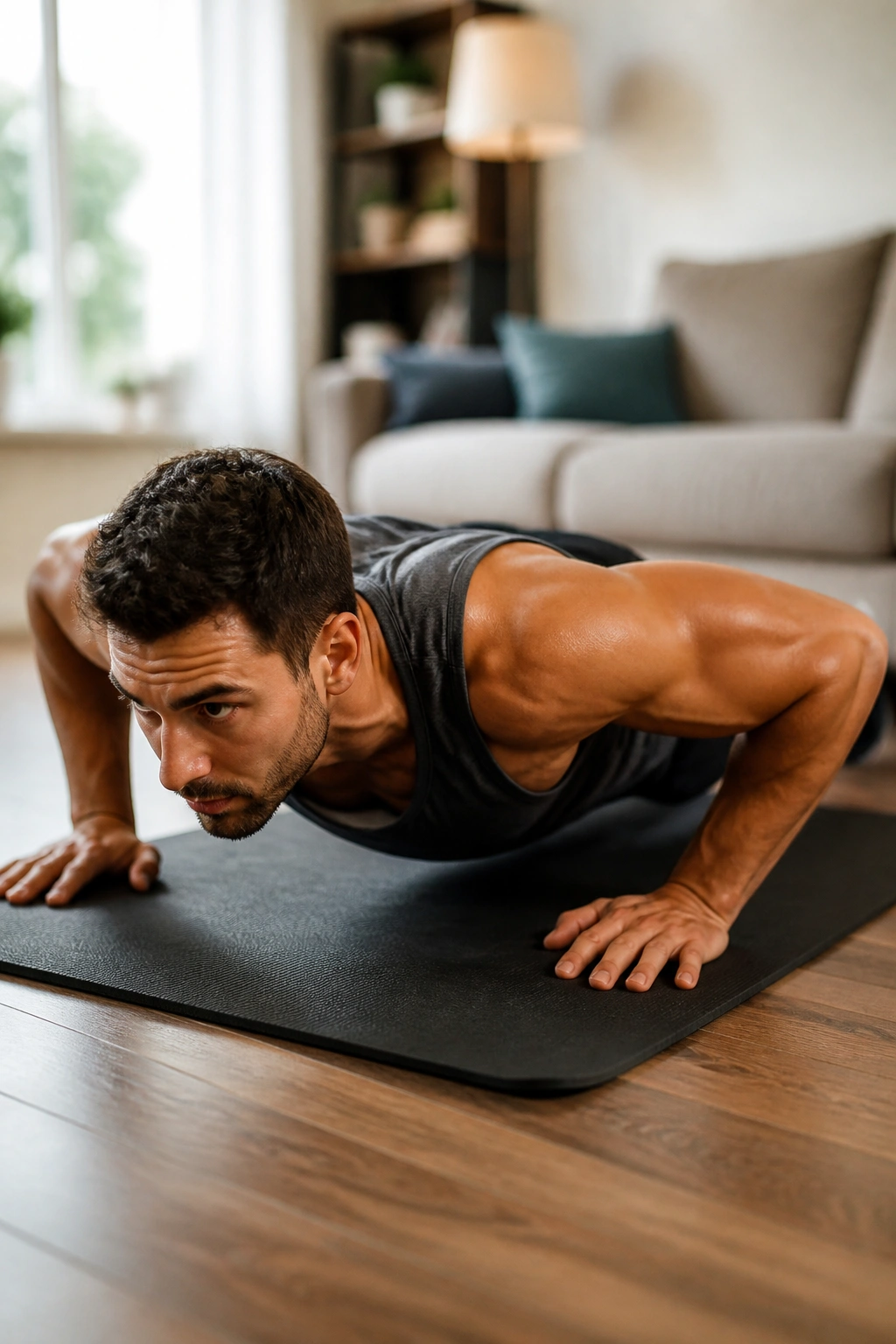
Sometimes the best session is the one you can do in socks on a patch of floor. No commute. No machines. No excuses hiding behind missing gear.
Set a 40-second work, 20-second rest timer and cycle through these 6 moves for 5 rounds:
- Bodyweight squats
- Push-ups
- Reverse lunges
- Bear crawls
- Plank jacks
- Glute bridges
That’s 30 minutes of work and rest, which leaves 5 minutes to warm up and 10 minutes to cool down. Keep the squats deep enough to feel your thighs, keep the push-ups strict, and keep the bear crawl low and slow if you want your core to get involved.
A small tweak makes this session much harder: shorten the rest to 15 seconds in the last two rounds. The room gets quiet except for breathing, which is usually a sign you’re doing it right. If your wrists get cranky, swap plank jacks for a forearm plank. If your knees complain, cut the lunge depth a little.
This one is plain, portable, and honest. A good fallback when life gets messy. And some weeks, that’s the workout that saves the whole routine.
