



Inner thighs get blamed for a lot. Loose jeans. Knees that cave in during squats. That stubborn feeling that your legs are working, but the inside line never seems to get the memo.
The fix is usually less dramatic than people hope. It’s not endless tiny pulses with zero load, and it’s not 40 minutes of cardio hoping the right spot shrinks first. Stronger adductors — the muscles that pull your legs inward — respond best to a mix of load, range, isometric work, and a little patience. That sounds plain. It is plain. It also works.
A lot of women want inner thigh workouts that feel useful instead of decorative. Good instinct. The best moves here do more than make your thighs burn; they help with hip stability, cleaner squats, steadier lunges, and that subtle feeling of control when you walk, climb stairs, or change direction fast.
Start with exercises that make the inner thigh do real work, not just “feel the burn” for thirty seconds and disappear into the noise. The first one is a classic for a reason.
1. Sumo Squats That Load the Adductors
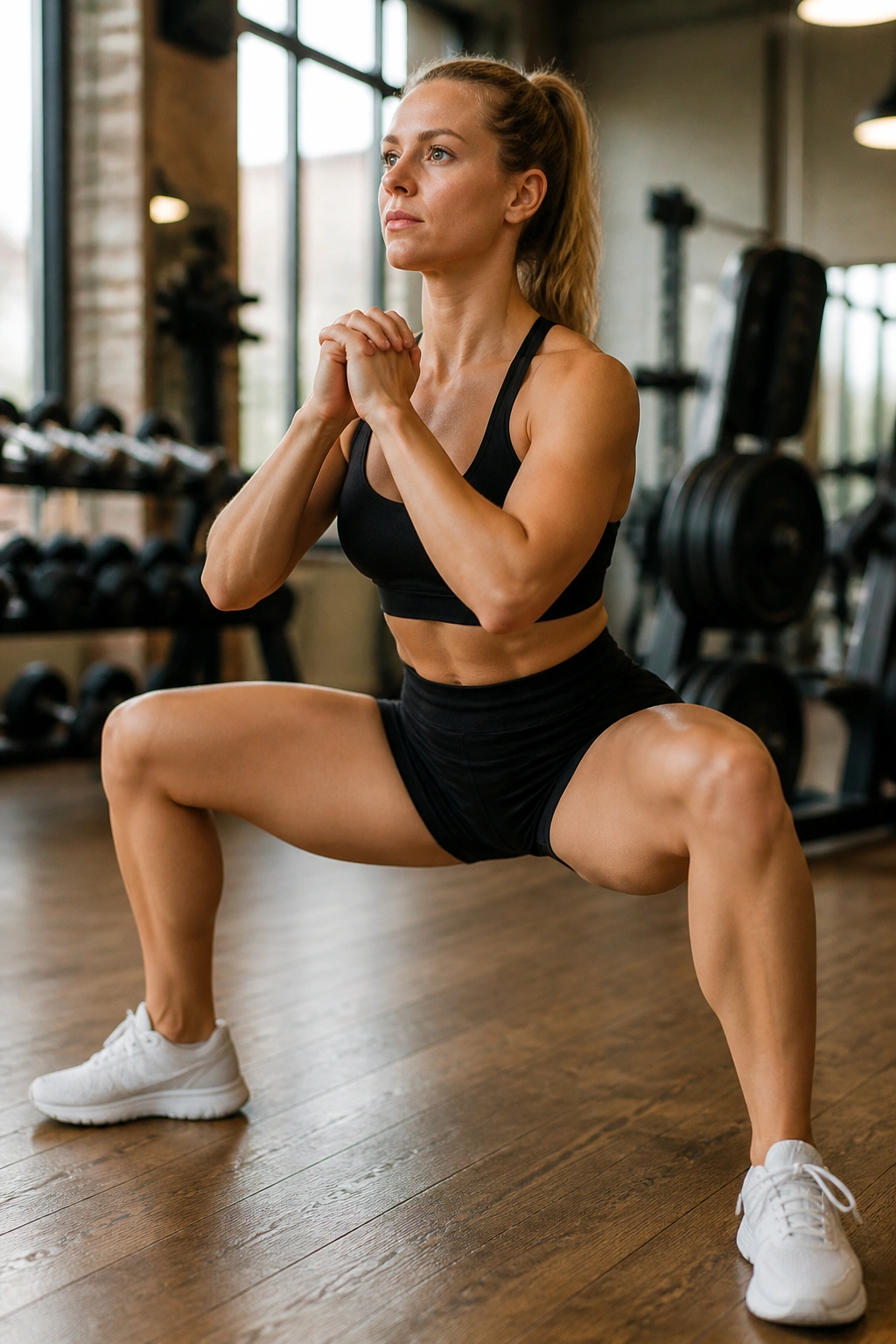
This is the move people skip because it looks too simple, and then they wonder why their inner thighs never get much love. A wide stance sumo squat puts the adductors on duty right away, especially if you keep your torso tall and let the knees track over the toes.
Lower for a count of three, pause for one beat, then drive up through the whole foot. If your arches collapse, the work leaks out of the inner thigh and into sloppy mechanics. Not ideal. Keep your weight centered and think about pulling the floor apart with your feet.
How to Do It Well
- Stand with feet a little wider than shoulder width.
- Turn the toes out about 20 to 30 degrees.
- Sit down between your hips, not forward onto your knees.
- Do 3 to 4 sets of 10 to 15 reps.
- Add a dumbbell or kettlebell once bodyweight stops feeling hard.
Pro tip: A slower descent makes the adductors work harder than shallow, rushed reps.
2. Sumo Pulse Squats for a Deep Inner-Thigh Burn
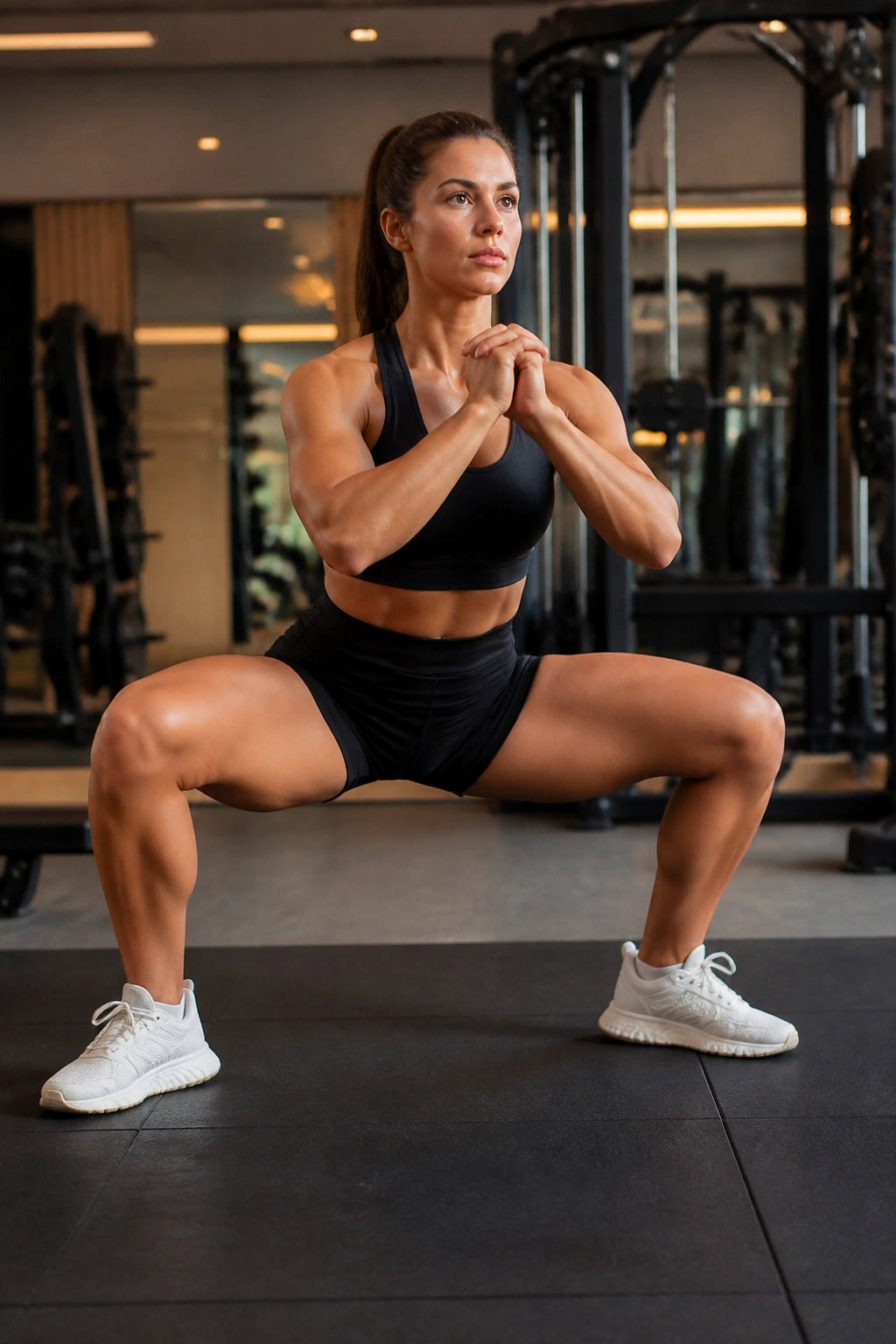
Do you want the inner thigh to light up fast? Pulse squats in a wide stance do that because they keep tension on the adductors in the bottom range, where most people get lazy and bounce out.
The key is not to turn these into tiny, frantic movements. That looks busy. It does not do much. Drop into a deep sumo squat, then pulse 2 to 4 inches up and down for 15 to 25 reps. The burn should show up inside the thighs first, then in the glutes, then in your patience.
Finish each set with a full stand and a breath. You’ll feel it more if you keep the chest lifted and the knees open.
That little detail matters.
3. Goblet Sumo Squats for More Load and Better Form
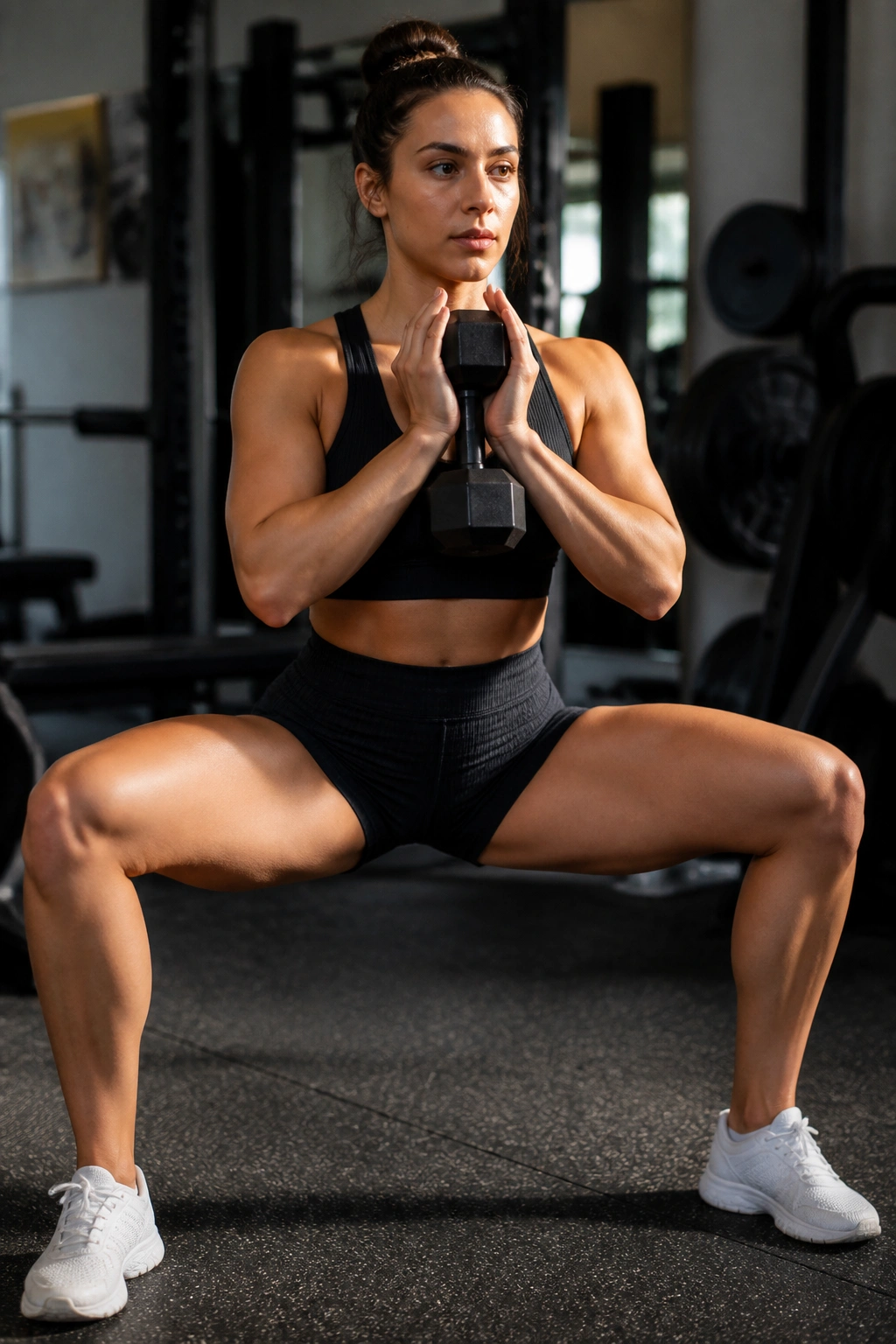
If bodyweight sumo squats feel too easy, hold a dumbbell at your chest. The goblet position makes it harder to cheat because the weight pulls you into a more honest squat pattern. You can’t flop around as much. Good.
Think about lowering until your thighs are close to parallel or a touch below, then standing up with your feet glued to the floor. A 20- to 40-pound dumbbell is a useful place to start for many people, but form matters more than chasing a number. If your lower back rounds, the weight is too much.
Do 3 sets of 8 to 12 reps. Rest about 60 seconds. Heavy enough to challenge, clean enough to repeat.
4. Wide-Stance Romanian Deadlifts That Hit the Inner Thighs and Hamstrings
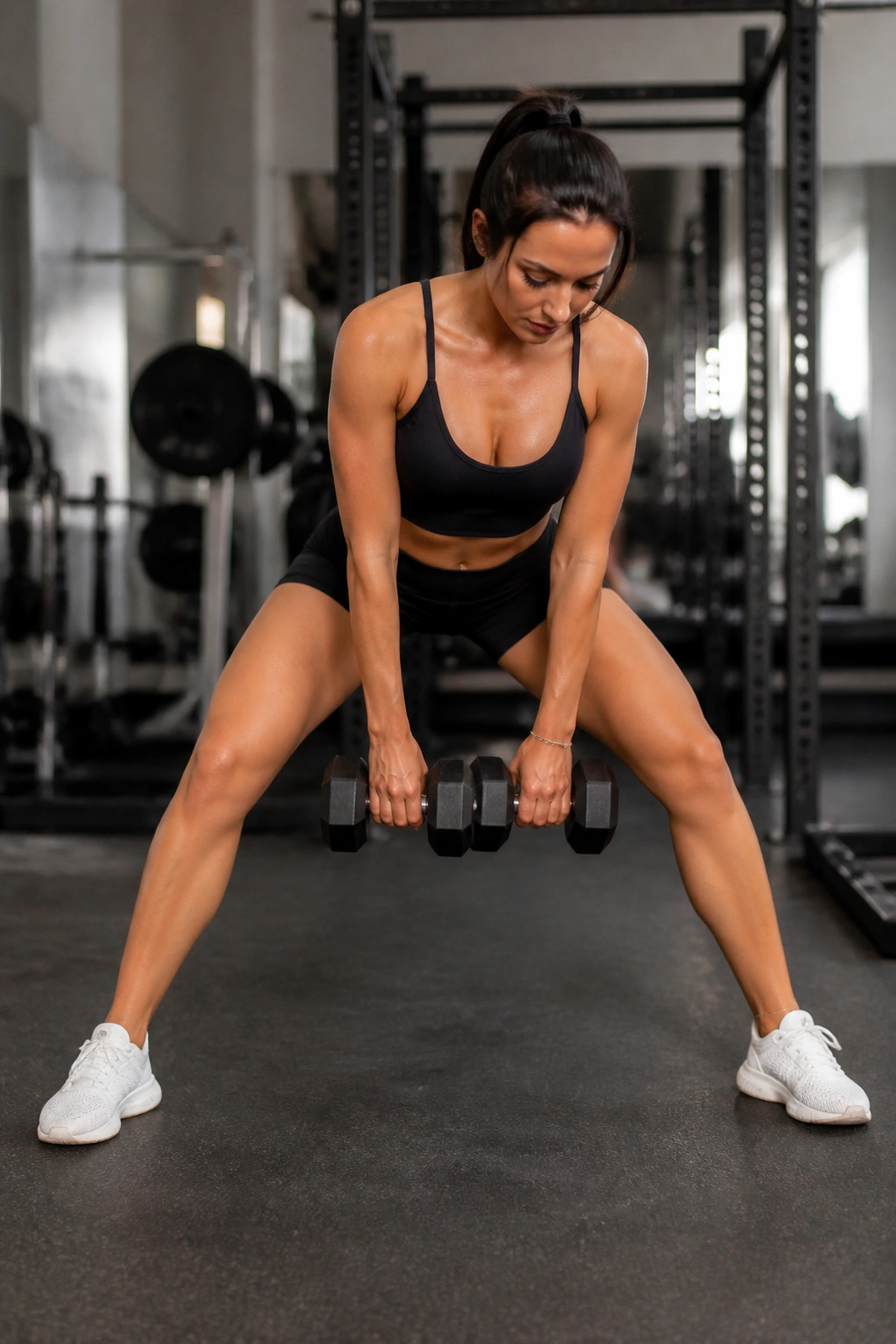
People usually call this a hamstring move, and fair enough, it is. But in a wide stance, the inner thighs work hard to stabilize the pelvis and keep the legs lined up. That’s why this one earns its place in an inner thigh workout plan.
Keep a soft bend in the knees, hinge at the hips, and slide the dumbbells down the front of your thighs until you feel a stretch through the back of the legs. Don’t chase the floor. Chase tension. The moment the spine starts to round, stop.
Do 3 sets of 8 to 10 reps with a controlled 2-second lower. It’s slower than most people want. It also gets better results than yanking the weight around.
5. Lateral Lunges for Side-to-Side Adductor Strength
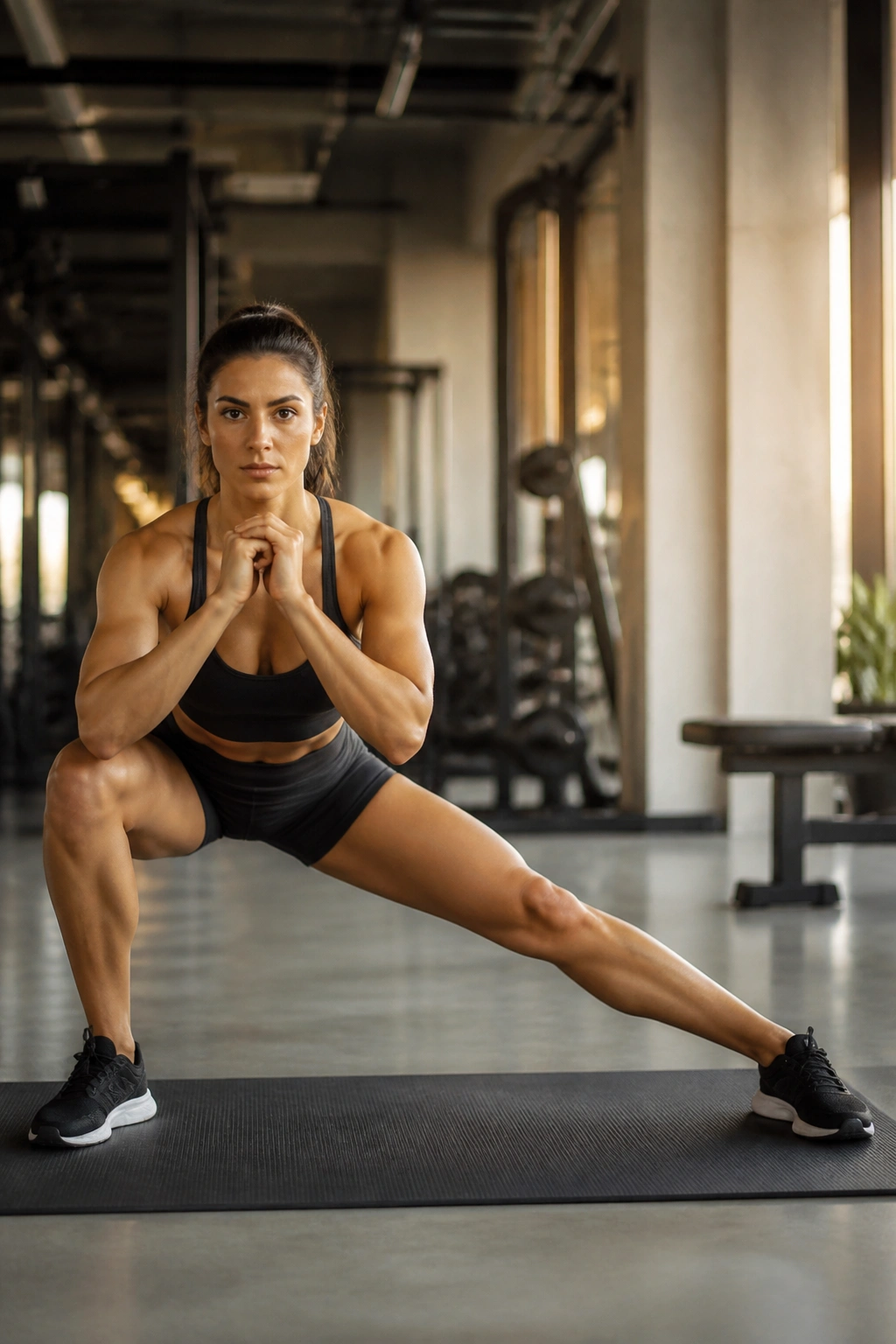
Side-to-side work is where the inner thigh stops being a passive helper and starts doing its actual job. Lateral lunges load one leg while the other stays long, stretched, and involved. That stretch is part of the magic.
Step out wide, sit your hips back into the lunging leg, and keep the other leg straight with the foot flat. The straight leg should feel like it’s lengthening along the inside seam. Push back to center through the bent leg, then switch sides.
What to Watch For
- Keep the non-working foot flat.
- Don’t let the knee collapse inward.
- Stay low enough to feel the inner thigh stretch.
- Use 2 to 3 sets of 8 to 10 reps per side.
Tip: Hold a dumbbell at your chest once your bodyweight version feels tidy.
6. Cossack Squats for a Deep Stretch and a Serious Challenge
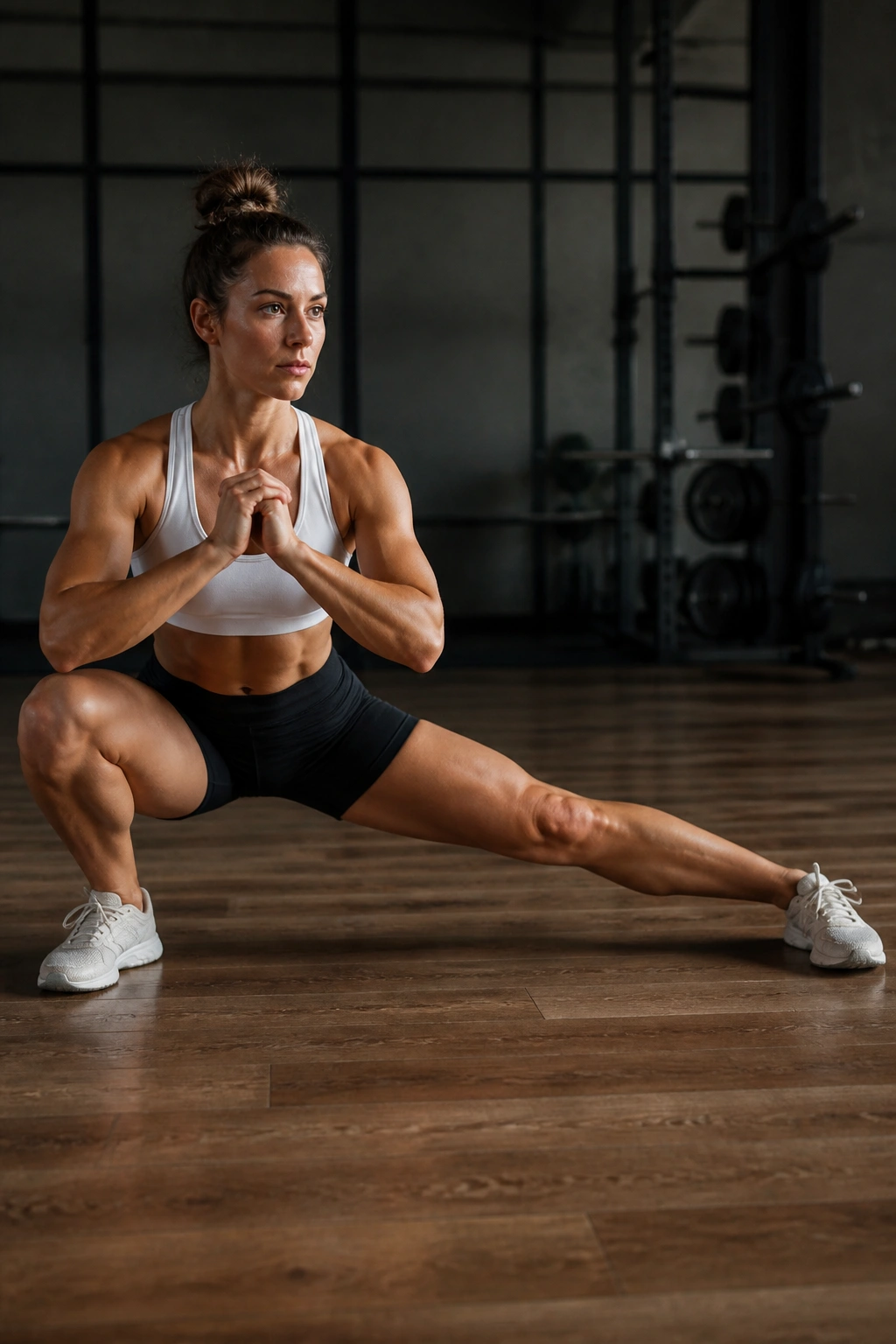
Want one move that feels equal parts mobility drill and strength test? Cossack squats are it. They ask the adductors to lengthen under load, which is exactly the kind of job that tends to reveal weak spots fast.
Shift into a deep side squat on one leg while the other leg stays long and the foot points up or stays lightly grounded. Keep the heel down on the working side if you can. If your ankle complains, don’t force the depth. Go as low as you can without twisting the knee.
This one works well for 3 sets of 6 to 8 reps per side. Slow is fine. Ugly is not. You want control, not drama.
7. Side-Lying Inner Thigh Lifts You Can Feel Immediately
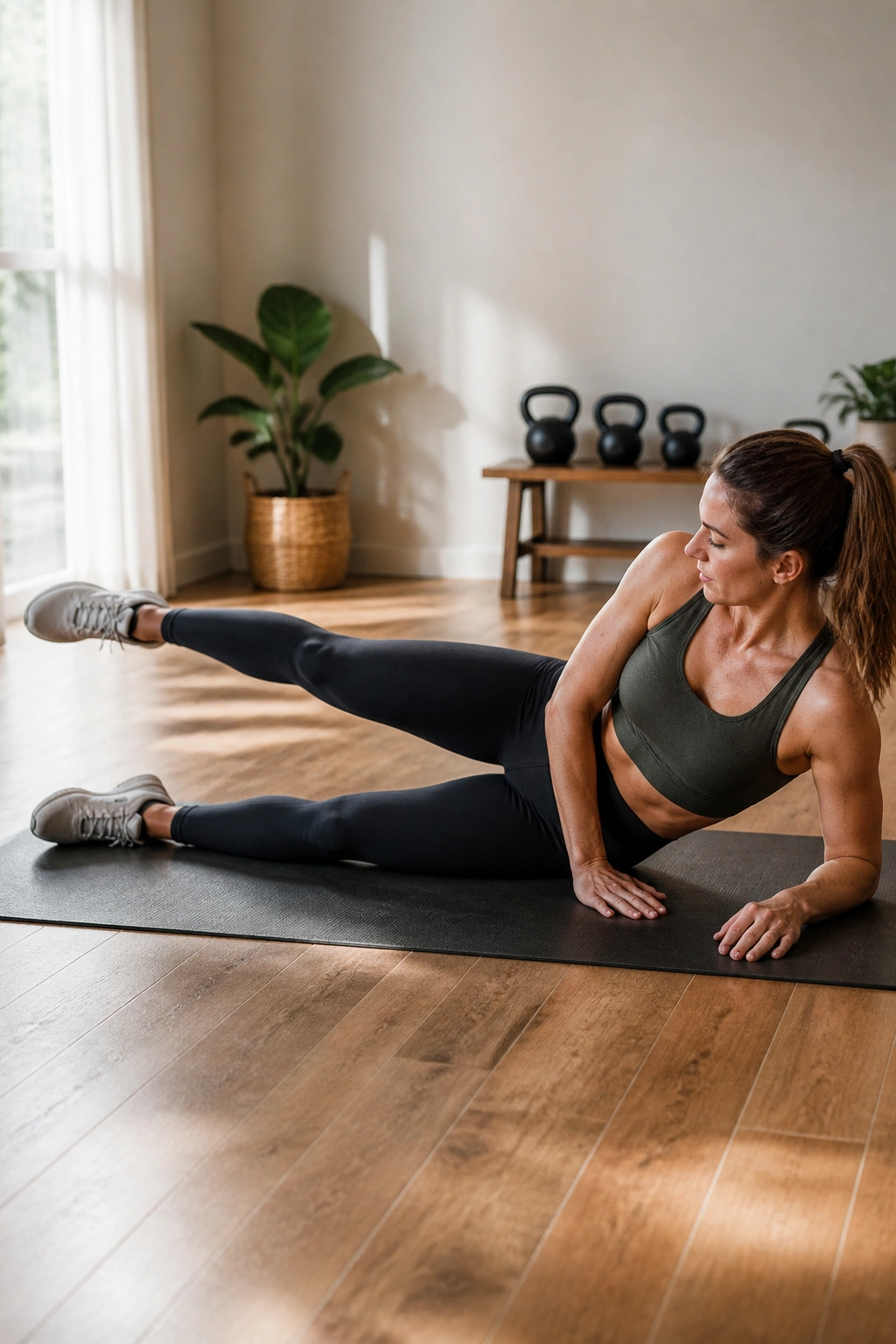
The mat should feel cool under your hip. Your top leg should stay quiet. And the bottom leg? That’s where the work lives. Side-lying adduction is one of the cleanest ways to isolate the inner thigh without loading the whole body.
Lie on your side with the bottom leg straight and the top leg bent in front for balance. Lift the bottom leg a few inches off the floor, pause for one second, and lower with control. It looks tiny. It isn’t.
How to Get the Most From It
- Point the toes forward, not up.
- Keep the pelvis stacked.
- Do 2 to 4 sets of 12 to 20 reps.
- Slow reps beat fast reps here every time.
If you want more challenge, add an ankle weight. A light one is enough to start.
8. Side-Lying Adduction with an Ankle Weight for Extra Tension
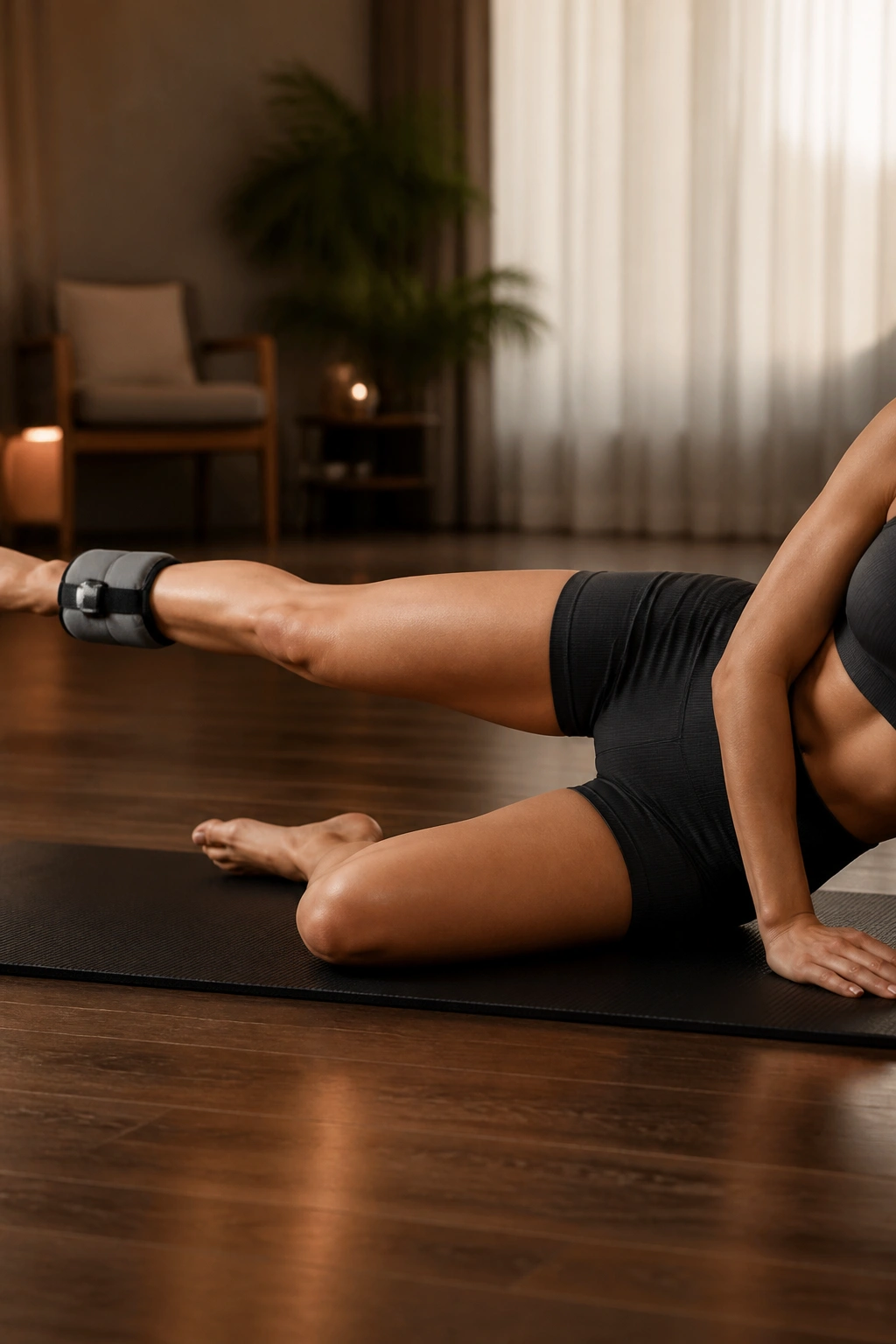
This version takes the same idea and turns the dial up a notch. A 1- to 3-pound ankle weight can make a small movement feel brutally honest, especially near the last few reps, when the inner thigh starts trying to bargain.
Set up exactly as you would for a regular side-lying lift, but keep your pace controlled. Lift only as high as you can without swinging the torso or twisting the hips. If the motion becomes sloppy, the weight is too heavy. Simple.
Unlike big compound lifts, this exercise is about clean isolation. It’s best when you want a short finisher after squats or lunges, or when you need a lower-impact day that still makes the adductors work.
9. Standing Cable Hip Adduction for Real Resistance
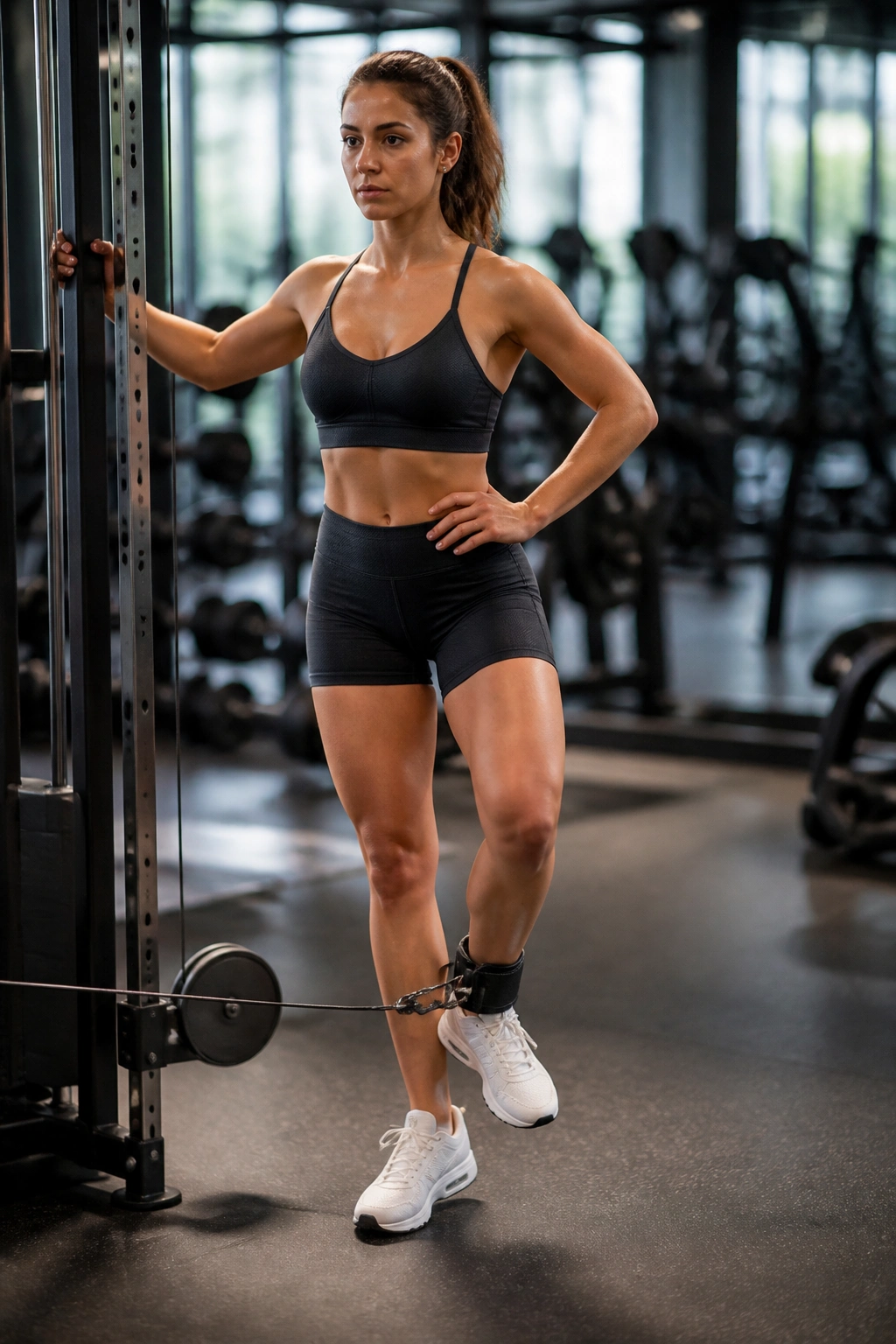
If you have access to a cable stack, use it. Cable adduction gives the inner thigh a smooth line of tension that bodyweight work can’t match. It also lets you train one side at a time, which is handy when one hip feels weaker or less stable.
Attach the ankle cuff low, stand tall, and bring the working leg inward across the body with control. Don’t swing. Don’t lean away like you’re trying to escape the exercise. A slight hold at the end range makes the set much harder.
Do 3 sets of 12 to 15 reps per side. Light to moderate resistance is enough at first. The cable will expose shortcuts fast.
10. Standing Band Adduction for a Home-Friendly Inner-Thigh Drill
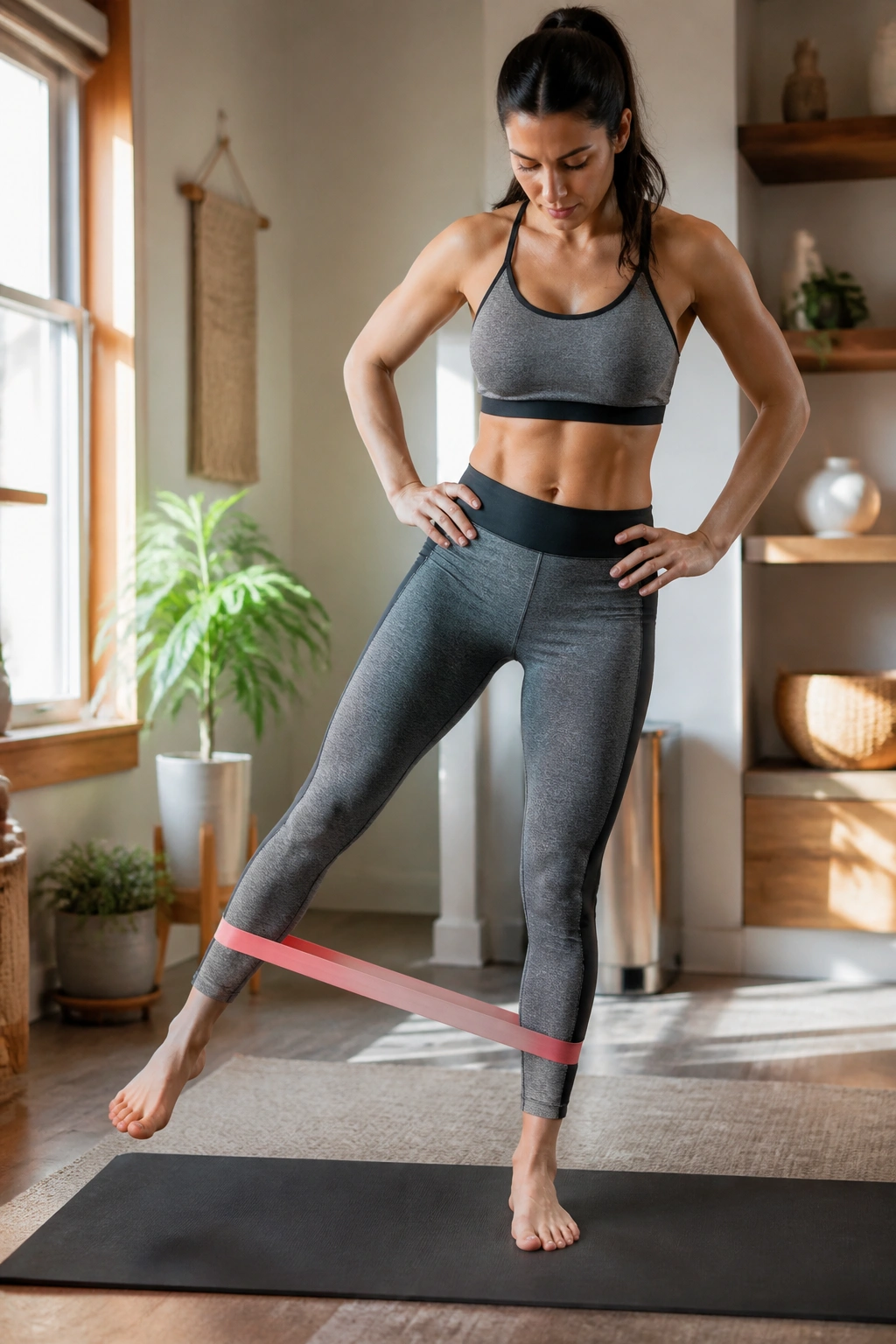
No cable machine? A loop band and a sturdy anchor can do a decent job. Standing band adduction is one of the simplest inner thigh workouts for women who train at home, and it fits easily into a short circuit.
Anchor the band at ankle height, loop it around the inside ankle, and pull the leg inward with slow control. Keep the standing leg soft, the ribs stacked over the pelvis, and the movement small. Big swings are a waste of time here.
A Clean Rep Looks Like This
- Start tall with the working foot slightly away from the anchor.
- Pull inward for 1 to 2 seconds.
- Pause when the inner thigh tightens.
- Return slowly, resisting the band on the way back.
- Use 2 to 3 sets of 15 reps per side.
That’s enough to make it count.
11. Seated Ball Squeezes for an Easy but Effective Isometric Hold
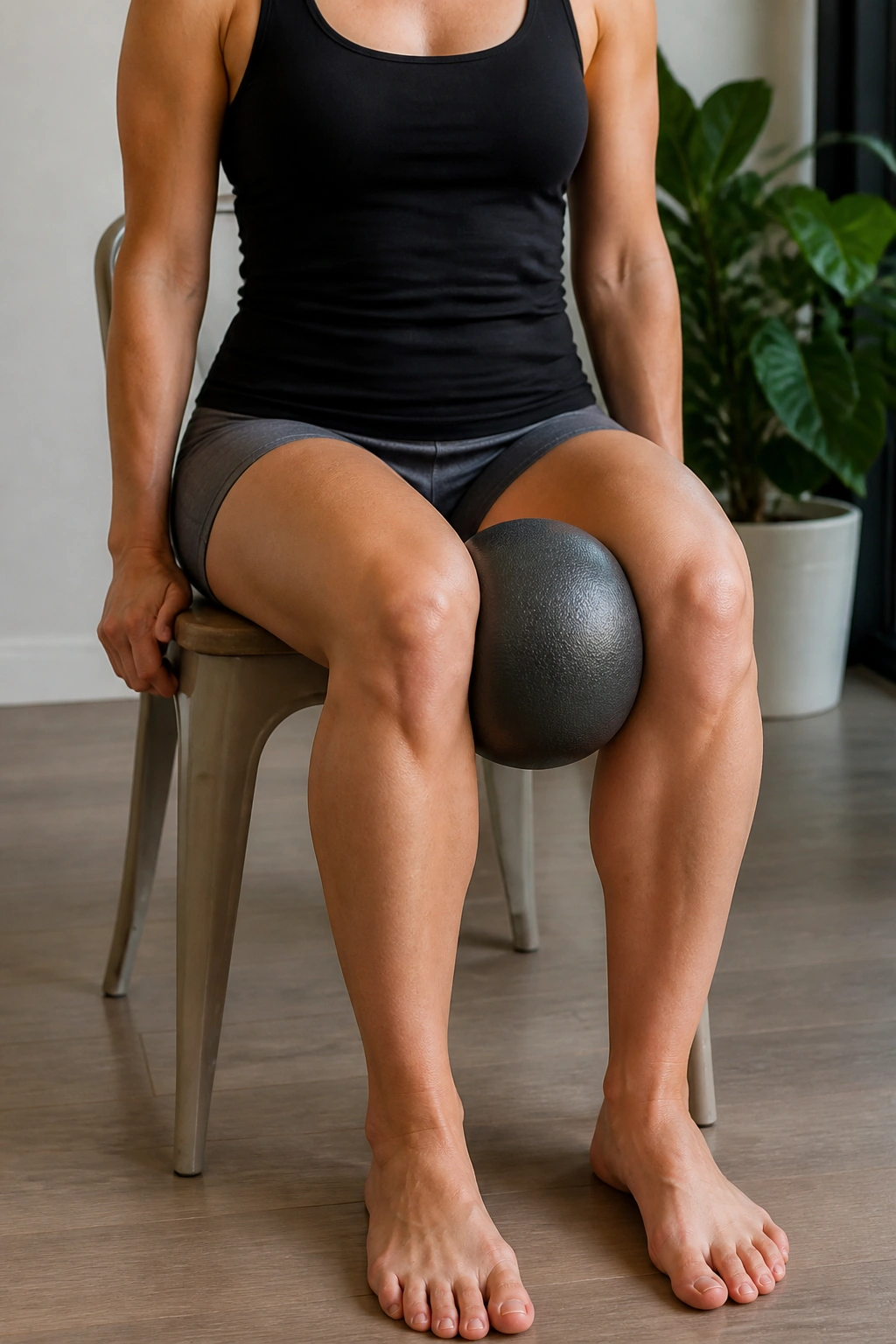
Sometimes the best inner thigh work looks almost too easy. Seated ball squeezes are one of those moves. Put a Pilates ball, a yoga block, or even a firm pillow between the knees and squeeze like you mean it.
Hold the squeeze for 10 to 20 seconds, then relax for a few breaths. Repeat for 5 to 8 rounds. You’ll feel this more if you sit tall instead of slumping into your lower back. The pelvis should stay neutral, not tipped under.
This is a sneaky good option on recovery days, during warm-ups, or between heavier lower-body sets. It won’t replace loaded work. It does, however, wake up the adductors fast.
12. Glute Bridges with a Ball Squeeze for Inner Thigh and Hip Support
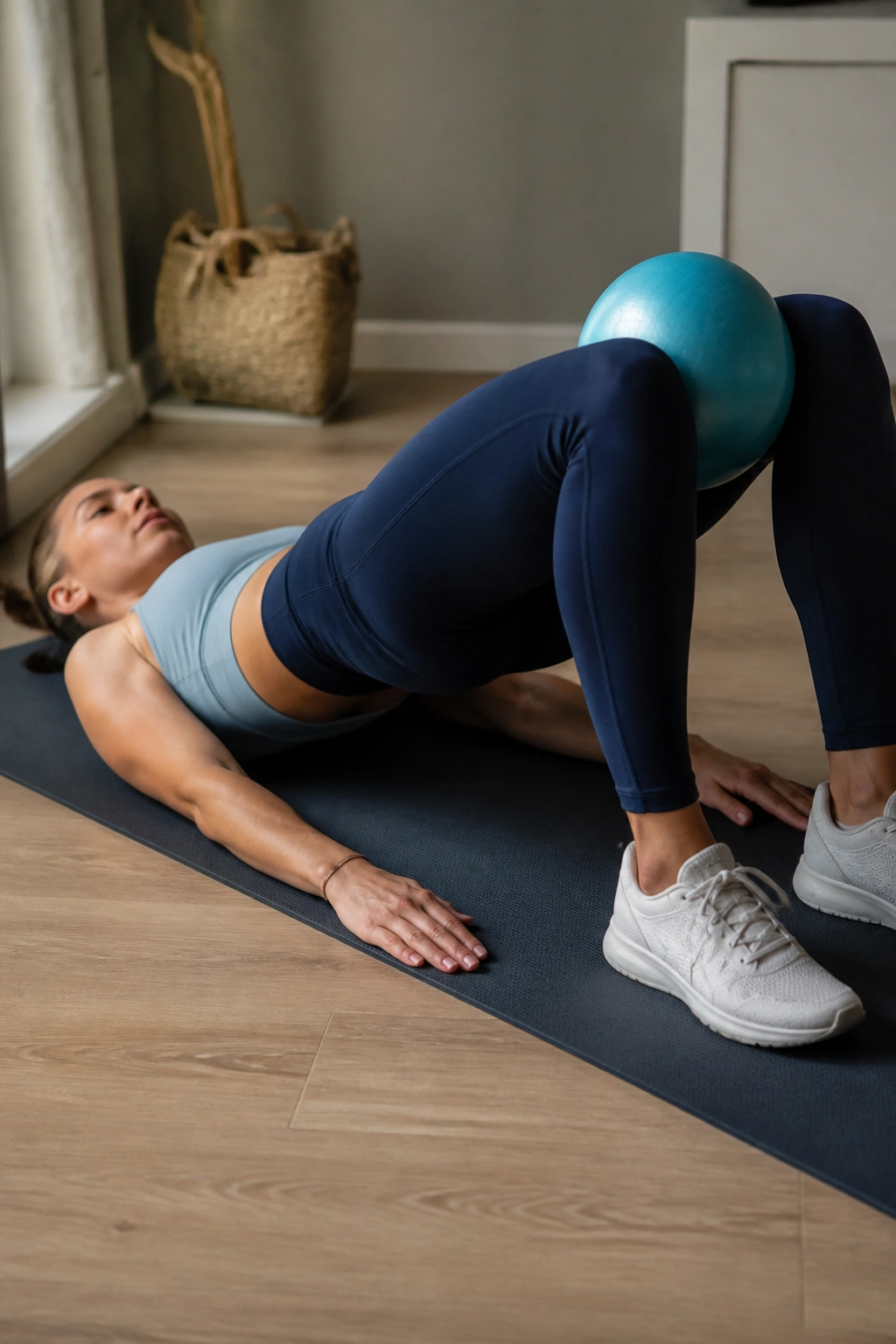
Want the inner thighs to help your glutes instead of just hanging around? Put a ball between your knees and bridge up. The squeeze keeps the adductors active while the hips extend, which is a very nice combo when done well.
Press through your heels, lift the hips until your body makes a straight line from shoulders to knees, and hold the ball lightly but firmly. If you crush the ball with every rep, you’ll lose the bridge. Keep the ribs down and don’t arch your back to get higher.
Do 3 sets of 12 to 15 reps with a 2-second squeeze at the top. It’s a small detail. It changes the exercise.
13. Frog Pumps with a Block Between the Knees
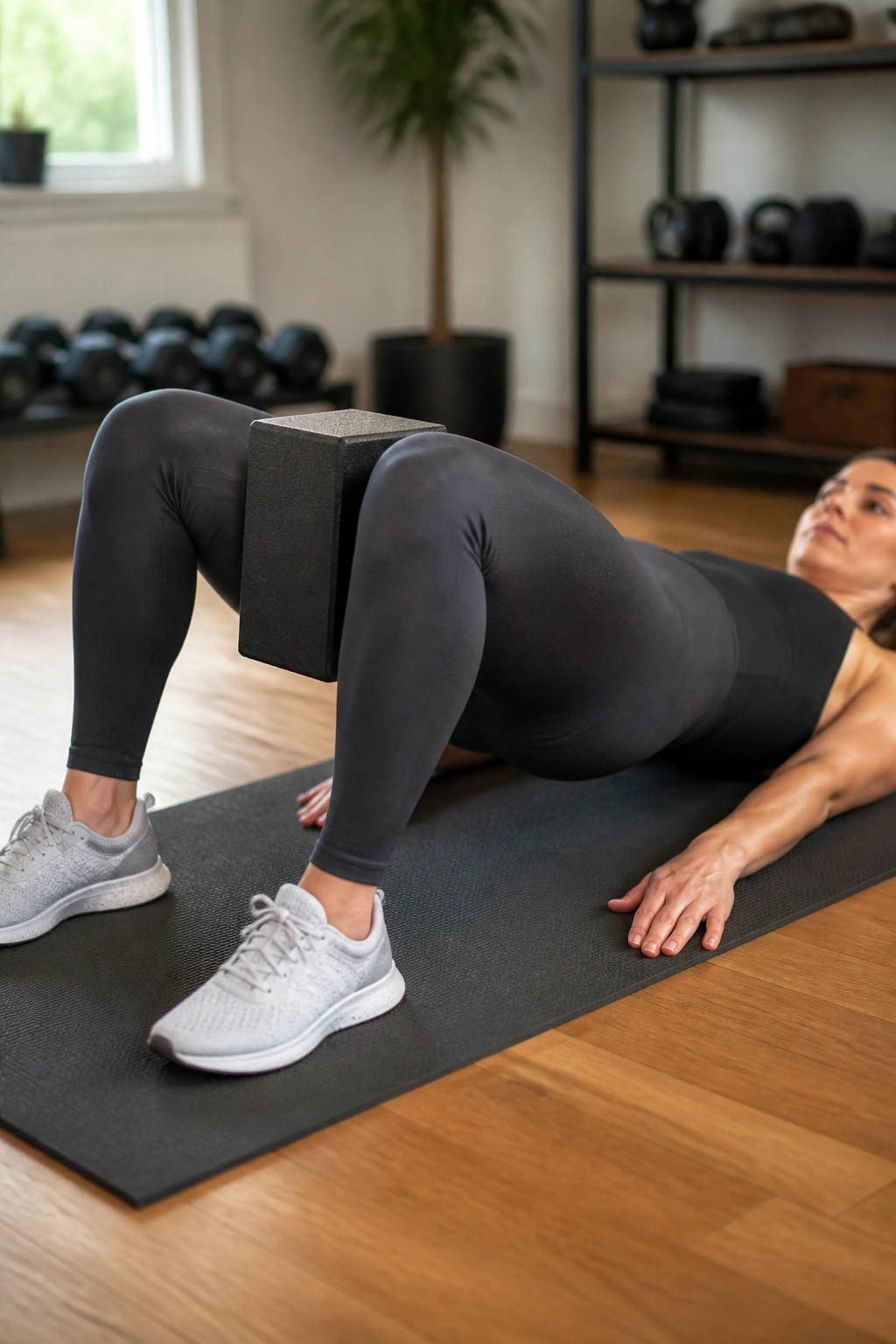
Frog pumps have a funny name and a serious payoff. Sit with the soles of your feet together, knees open, and a block or ball between the knees. Then pump the hips up and down in a short range. The inner thighs stay on through the whole set, which is why this one catches people off guard.
Keep the movement compact. You are not trying to bridge high. You’re trying to keep the hips working while the adductors hold the legs in position. If the lower back starts stealing the work, reset and make the reps smaller.
Use 20 to 30 reps as a finisher. Burn comes quickly. That is the point.
14. Copenhagen Planks for Serious Adductor Strength
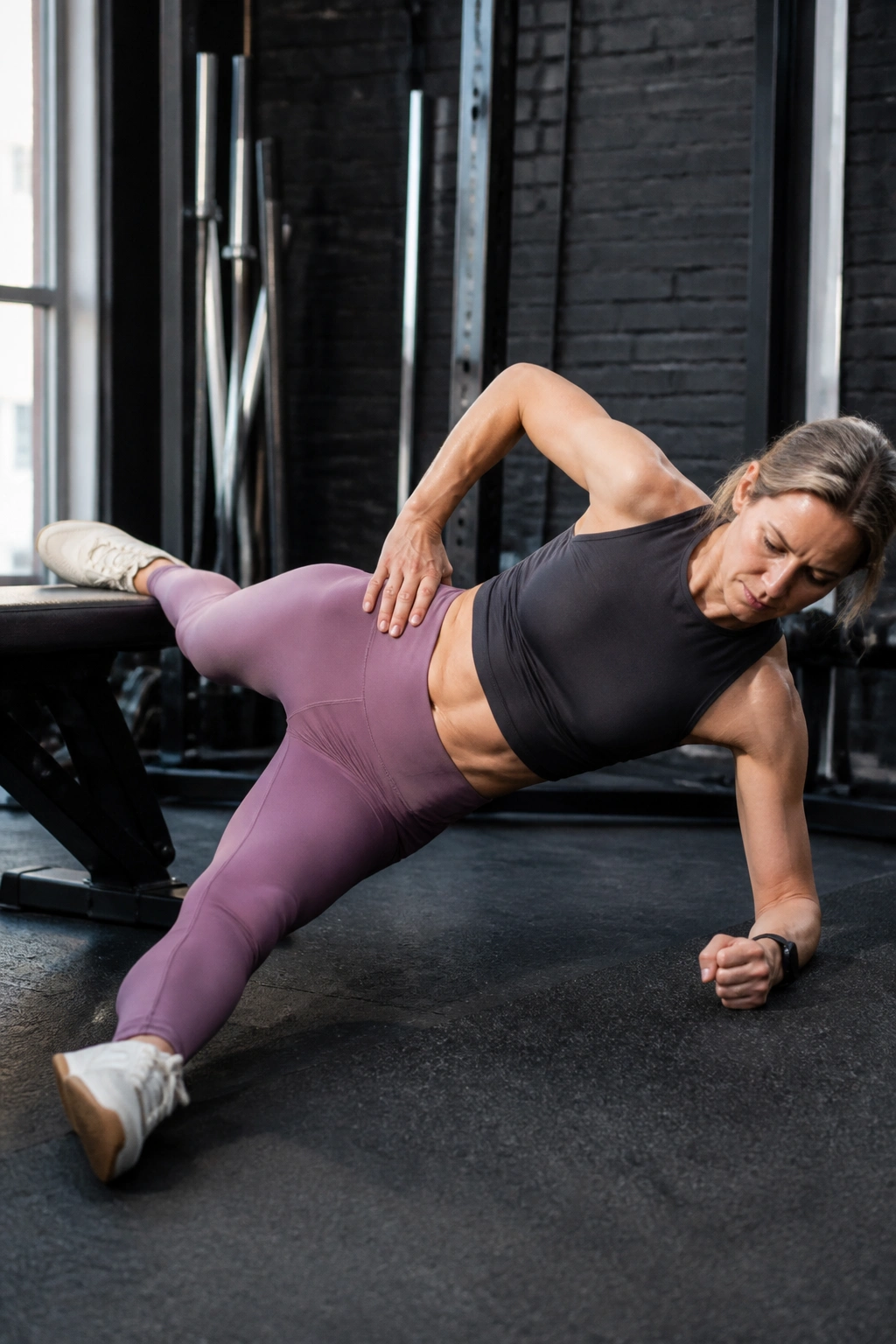
This one looks hard because it is hard. Copenhagen planks build strong inner thighs by asking them to support your bodyweight, not just move it. That’s a big difference, and it matters if you want more than a burn.
Start with the top leg on a bench and the lower leg hanging underneath, then lift into a side plank. Beginners can keep the top knee on the bench instead of the whole lower leg. Hold for 10 to 20 seconds at first. Longer holds come later.
How to Progress
- Start with knee support, not ankle support.
- Keep the hips high and level.
- Aim for 3 to 5 holds per side.
- Add time before adding a harder lever.
It’s a serious exercise. Respect it.
15. Adductor Machine Squeezes Without the Sloppy Reps
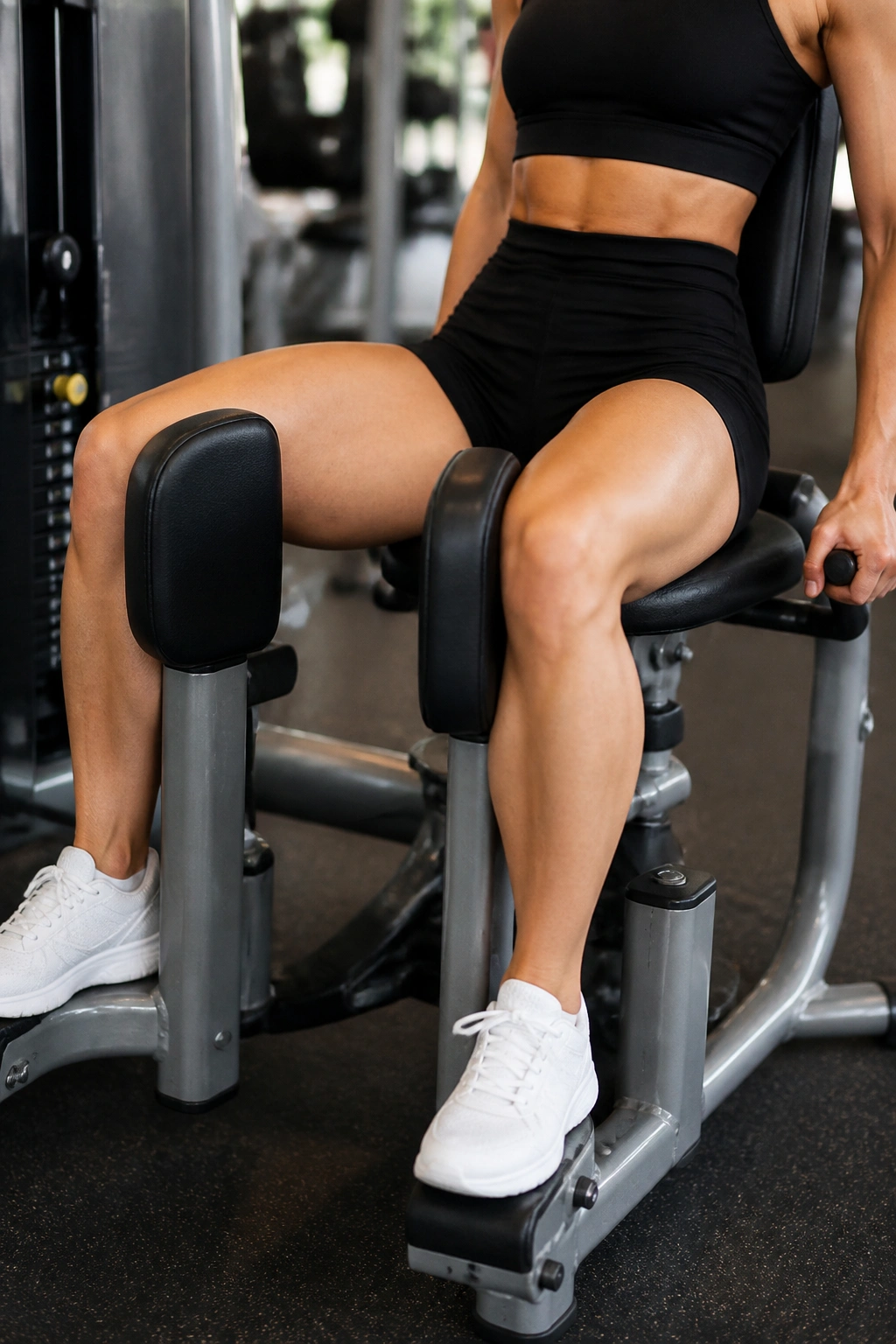
Some people act like the adductor machine is cheating. I don’t buy that. The machine is one of the most direct ways to load the inner thigh, and the fixed path helps you focus on the muscle instead of balance.
Sit tall, set the pads so they rest on the inside of your thighs, and close the legs with control. The return should be slower than the squeeze. If you slam the stack, the exercise turns into noise. If you pause for half a second when the pads meet, the set gets much better.
Use 2 to 4 sets of 10 to 15 reps. Moderate weight beats ego weight here. Always.
16. Slider Side Lunges for Smooth, Hard Inner-Thigh Work
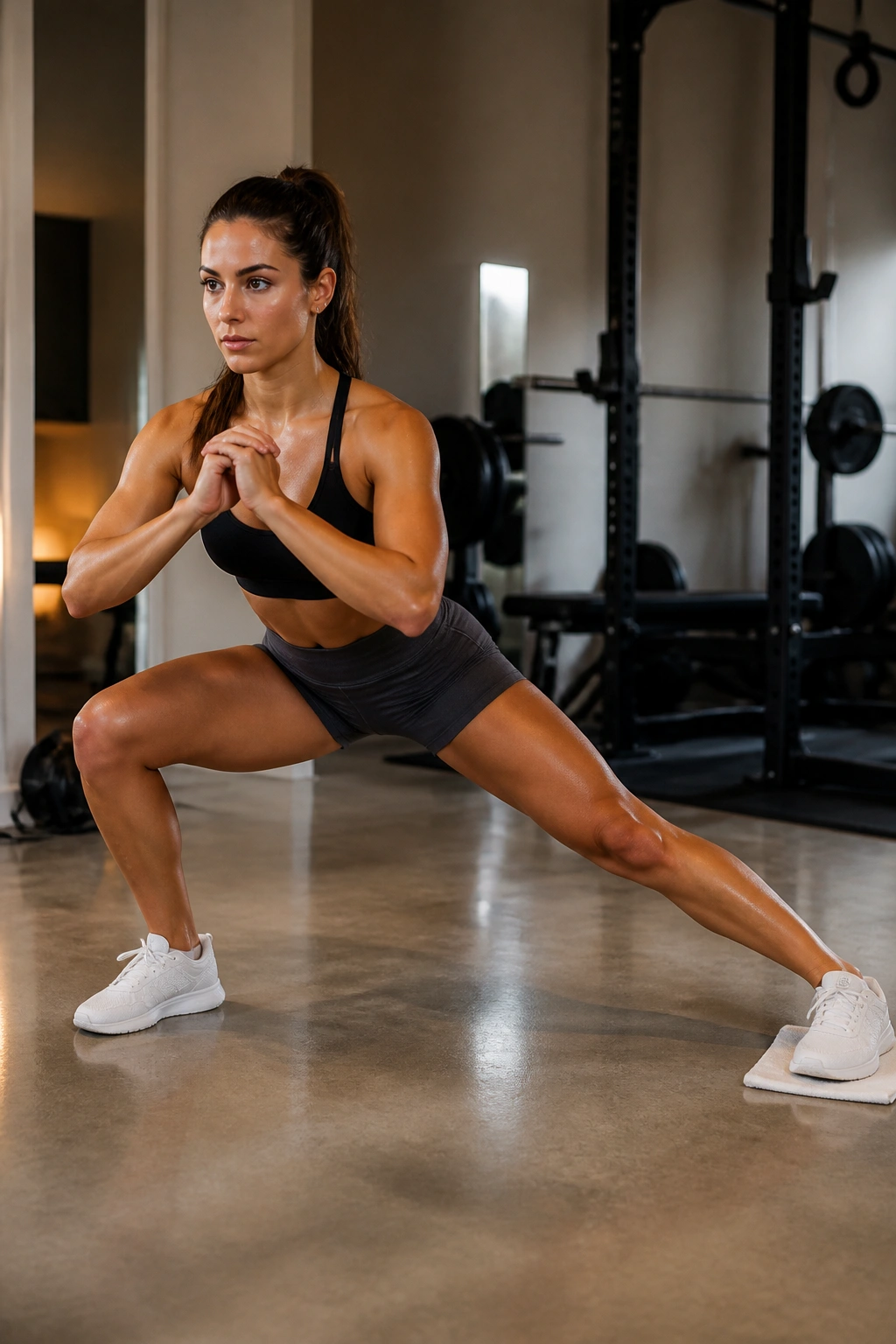
Ever tried a side lunge on a slick floor or with a slider under one foot? It feels different. The sliding leg gets a long eccentric load, which is catnip for the adductors.
Stand with one foot on a towel, furniture slider, or smooth disc. Shift your weight into the planted leg as the sliding leg moves outward, then pull back in using the inner thigh and glute of the standing side. Keep your chest lifted and avoid twisting through the spine.
The best part is the range. You can make the motion shallow or deep depending on the day. The worst part is cheating with momentum, and yes, people do that constantly.
17. Curtsy Lunges That Actually Respect the Knees
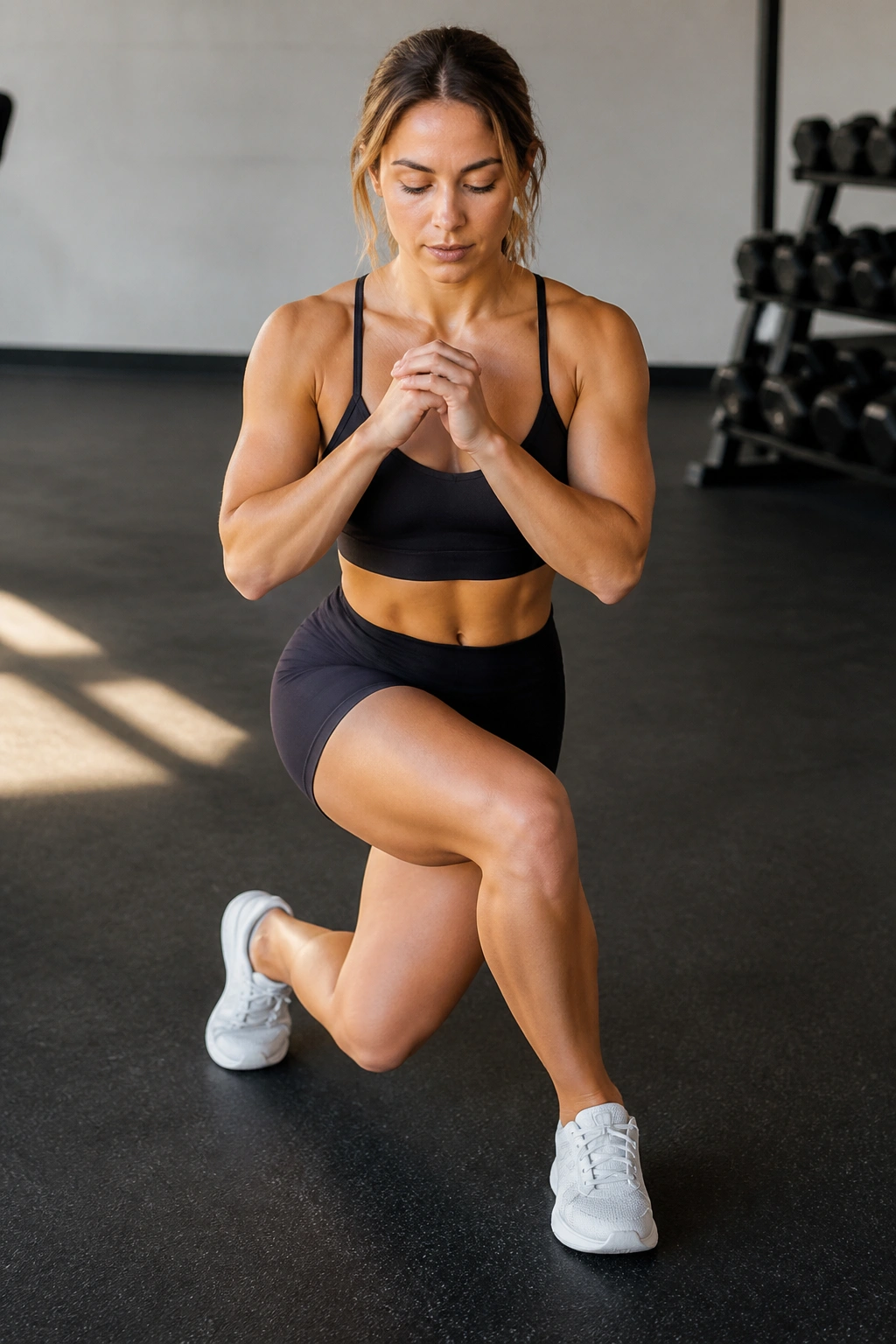
Curtsy lunges get sloppy fast if you rush them. Done well, though, they challenge the inner thigh, glute med, and balance all at once. The crossover angle makes the standing leg work harder than a straight-back lunge.
Step one leg behind and slightly across the body, then bend both knees just enough to keep the pelvis level. Don’t force a huge crossover. That puts stress where you don’t want it. A small step with a controlled return works better and feels cleaner.
Form Check
- Keep most of your weight in the front leg.
- Don’t let the front knee cave inward.
- Use 2 to 3 sets of 8 to 10 reps per side.
- Start bodyweight before adding dumbbells.
Small. Controlled. Honest.
18. Reverse Lunges with a Lateral Leg Sweep
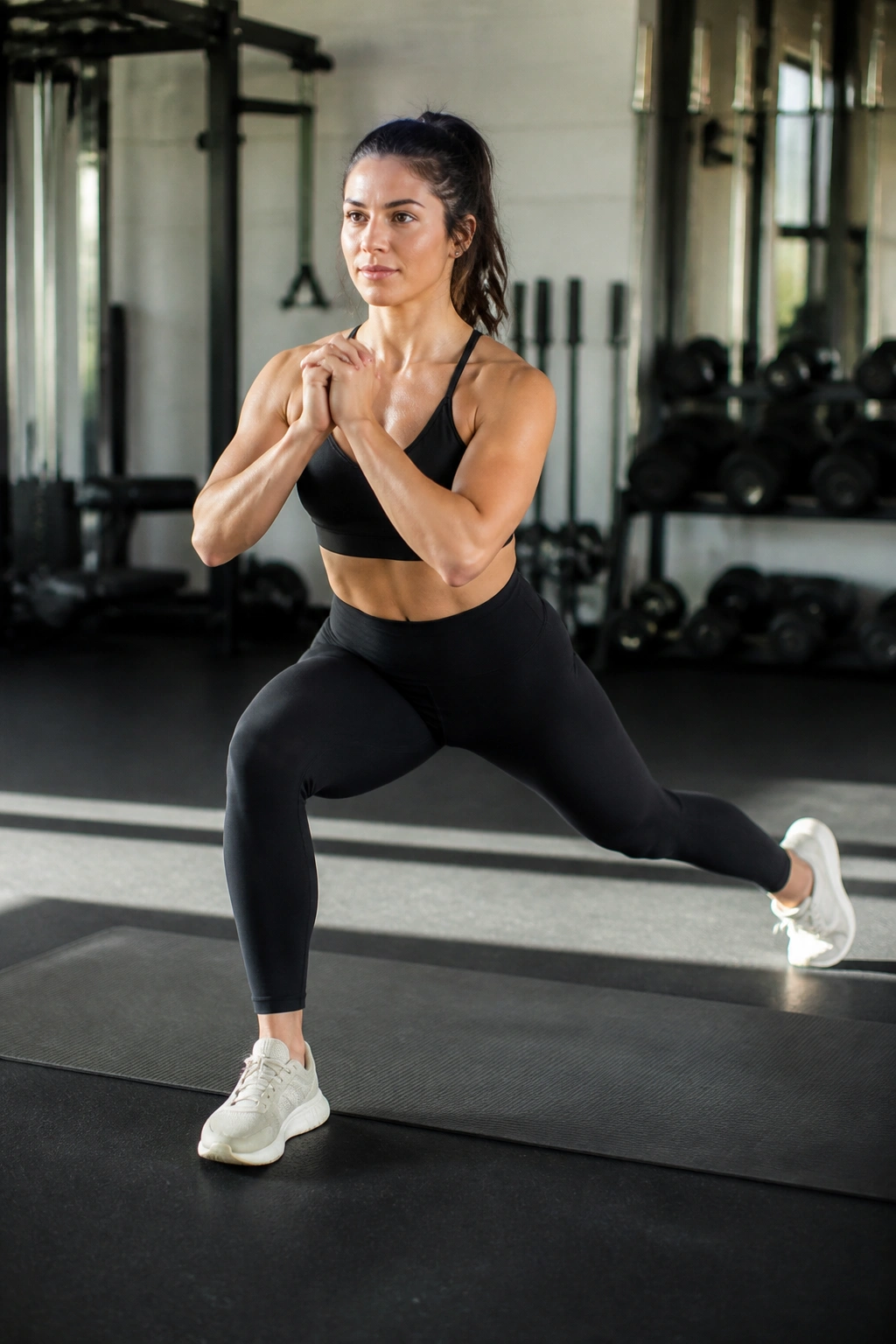
This one is part lunge, part balance drill, part inner-thigh wake-up. Step back into a reverse lunge, stand up, then sweep the trailing leg out to the side before resetting. That side sweep forces the standing leg and adductors to stabilize hard.
You’ll feel the standing leg work through the hip and the inside of the thigh, especially if you keep the pelvis square. The trick is to move deliberately instead of swinging the leg like a pendulum. A sweep that’s too big turns into a circus trick. Keep it small and crisp.
Do 3 sets of 8 reps per side. If you want more challenge, hold dumbbells at your sides.
19. Wall Sits with a Pillow Press for Quiet, Nasty Burn
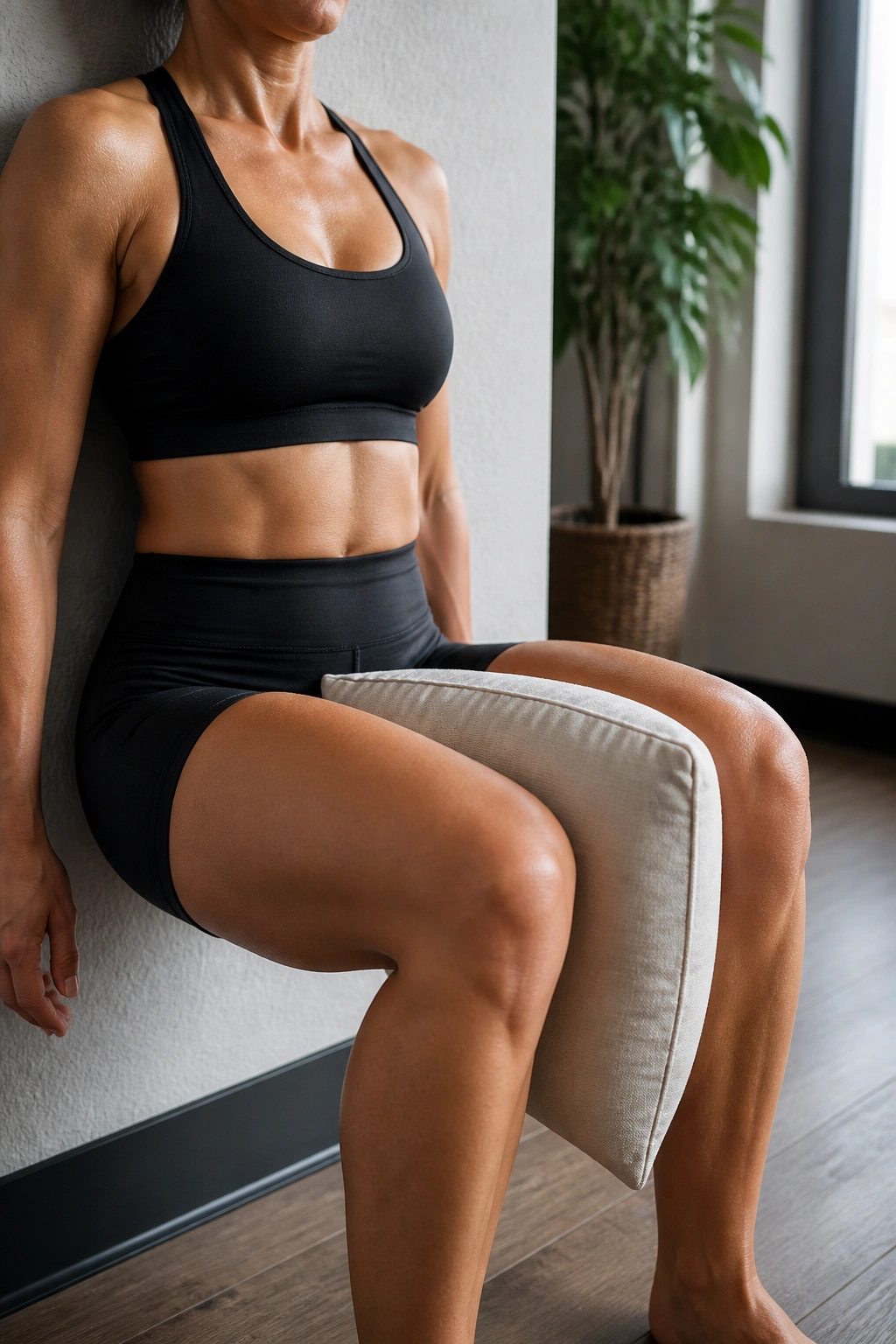
The wall should be boring. The squeeze should not. A wall sit with a pillow or ball between the knees puts the inner thighs under a long isometric hold, and long holds can be painfully effective in a short window.
Slide down until your thighs are close to parallel, plant your feet hip-width apart, and press the knees gently into the pillow. Hold for 20 to 45 seconds. Breathe. Your quads will complain first. The adductors join the conversation right after.
- Keep the lower back flat against the wall.
- Don’t let the knees drift apart.
- Use 3 to 5 rounds.
- Short holds are fine if you’re new.
It’s not flashy. It works.
20. Sumo Deadlifts for Heavy Inner-Thigh and Glute Work
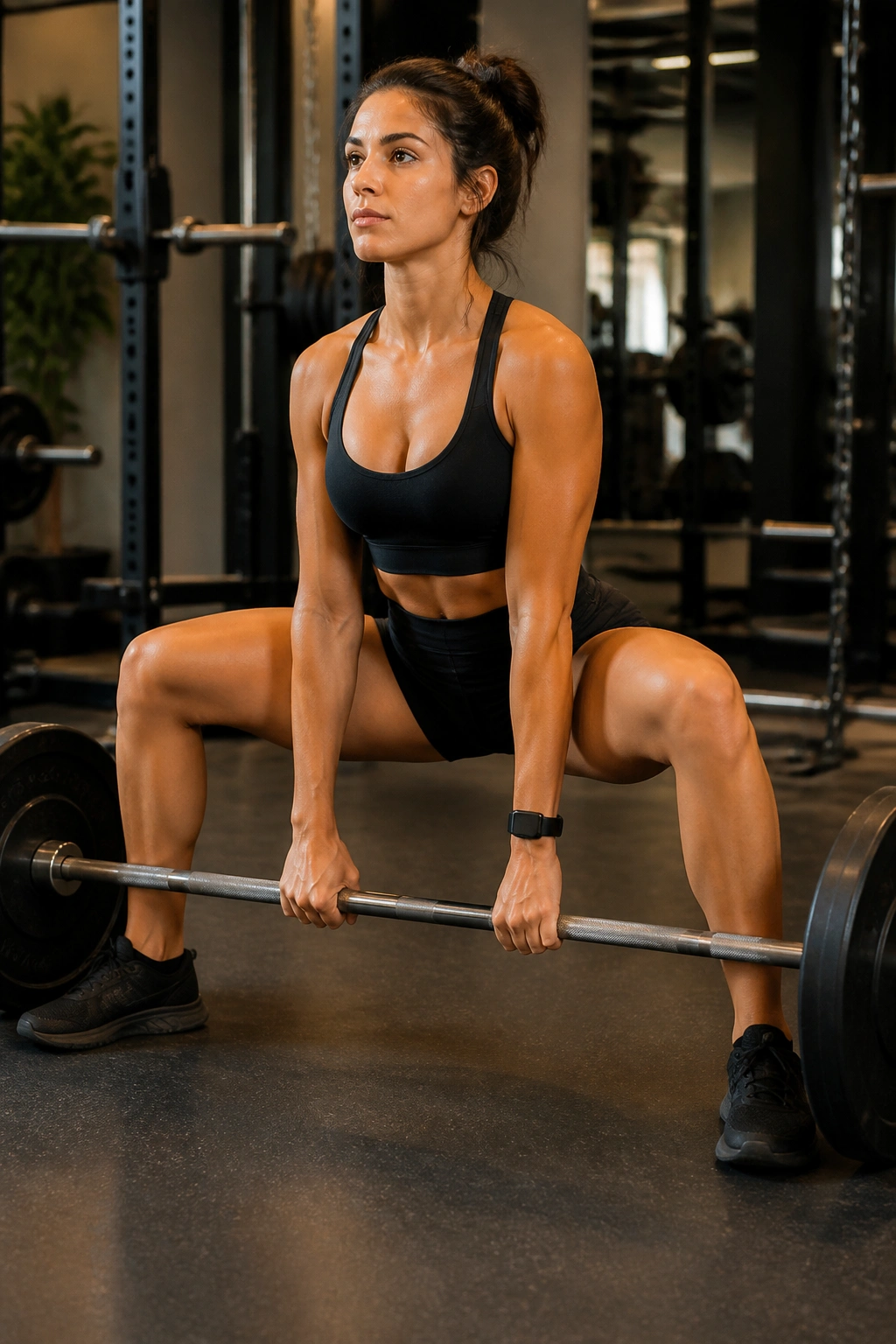
If you want strength, not just a burn, sumo deadlifts are one of the best choices on this whole list. The wide stance shortens the pull a little and puts the adductors in a very active position off the floor.
Set your feet wide, toes slightly out, and take the barbell or kettlebell between your legs. Hinge down with a neutral spine, brace, and stand by driving the floor away. The inner thighs should feel loaded on the way up, especially if you keep the knees tracking out instead of caving inward.
This is not a high-rep dance move. Use 3 to 5 sets of 5 to 8 reps. Clean reps only. Add weight slowly.
21. Lateral Step-Ups with an Inside Knee Drive
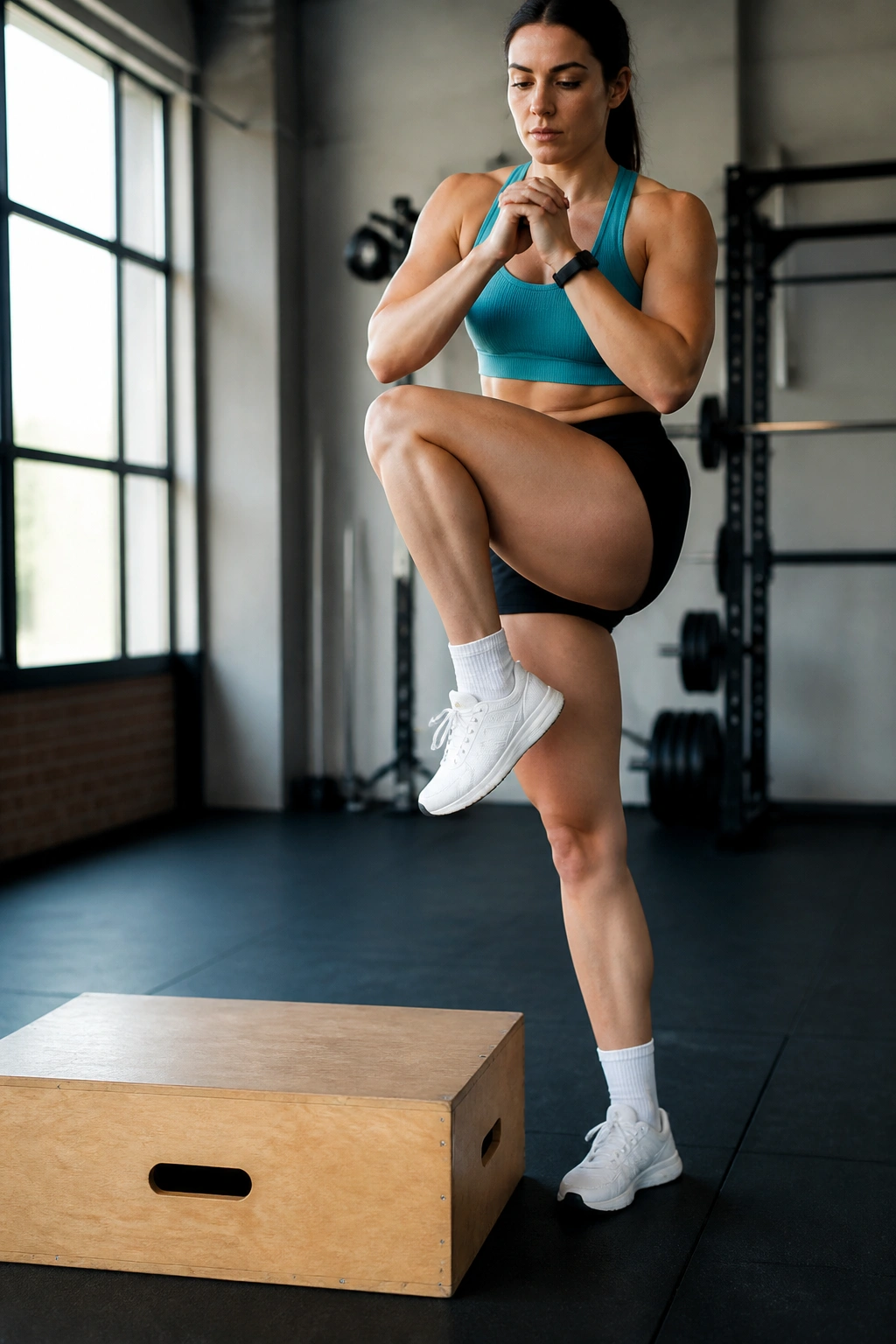
Can a step-up hit the inner thigh? Yes, if you use the right angle. Driving the inside knee upward and keeping the standing hip stable makes the adductors help more than people expect.
Choose a box or bench around knee height or lower. Step up laterally, plant the whole foot, and drive through the standing leg as the opposite knee rises across the body. If the bench is too high, you’ll start swinging instead of stepping. Lower is better.
What Makes It Work
- Keep the standing foot flat.
- Avoid pushing off the floor with the trailing leg.
- Do 2 to 3 sets of 8 to 12 reps per side.
- Hold a light dumbbell if bodyweight feels tame.
It’s a neat little change that adds up fast.
22. Side Plank with Bottom-Leg Lifts for Sneaky Adductor Work
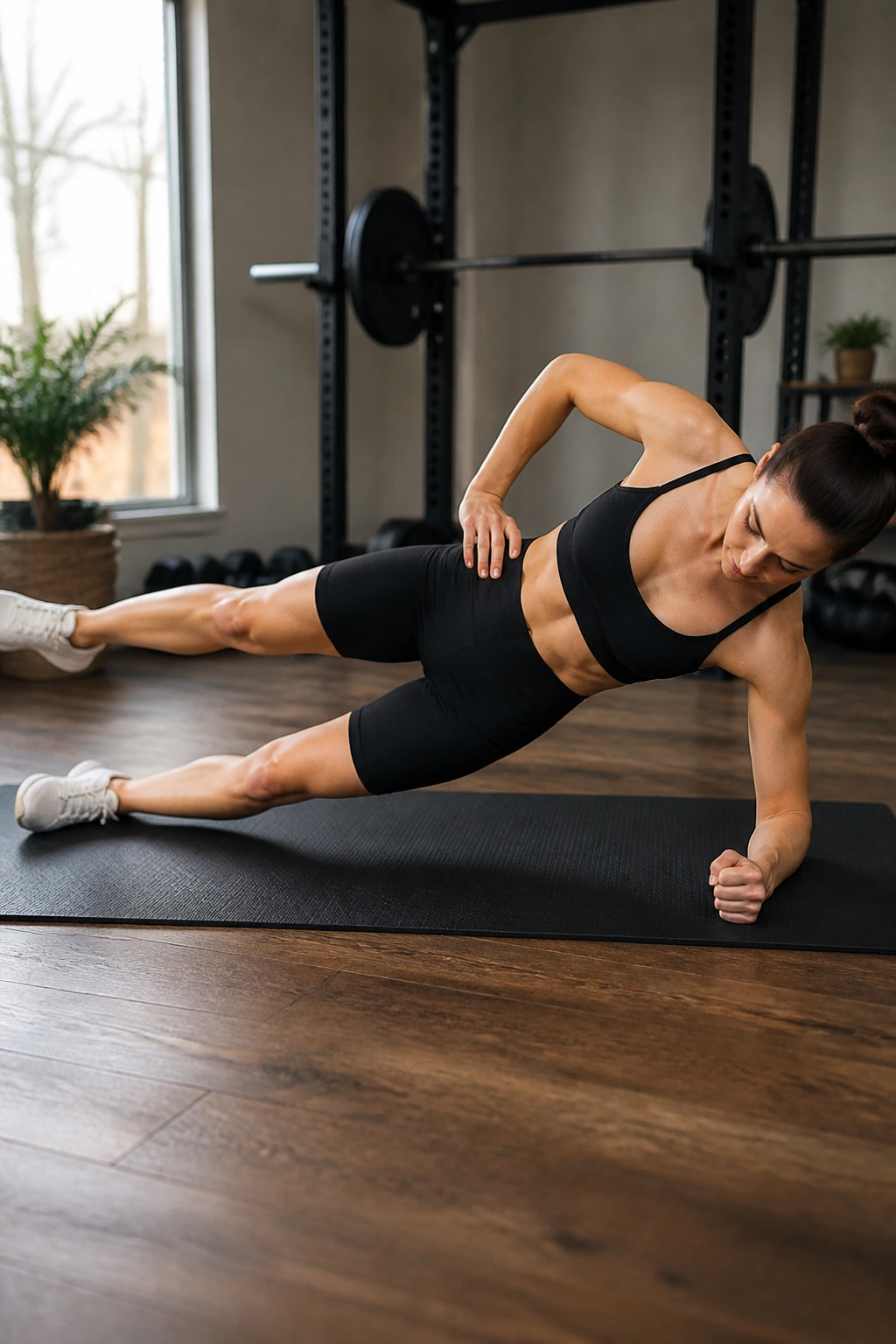
This move surprises people because they expect the side plank to be all obliques. It isn’t. Lifting the bottom leg adds a serious inner-thigh challenge, especially if you keep the hips stacked and steady.
Set up in a side plank with the top leg bent in front for support if needed. Lift the bottom leg a few inches, pause, and lower slowly. The motion is small, and that’s exactly why it’s hard. If the torso starts wobbling, shorten the hold or drop the top knee for support.
Do 2 to 3 sets of 8 to 12 lifts per side, or hold the lift for 10 seconds at a time. Either way, stay controlled. No flinging.
23. Kneeling Band Adduction for a Clean, Focused Finish
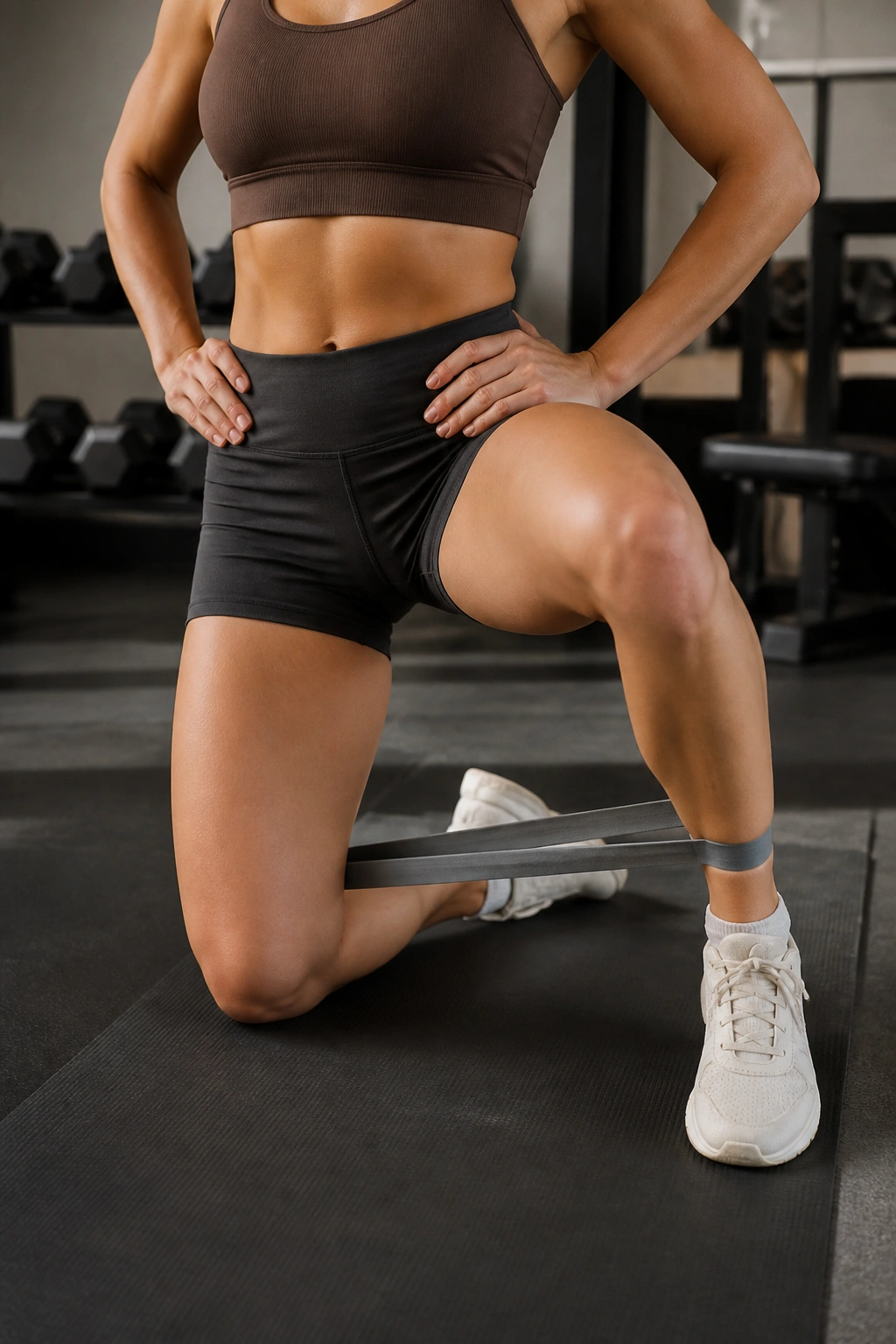
Kneeling changes the angle in a useful way. Kneeling band adduction takes momentum out of the equation and puts the inner thigh front and center, which makes it a solid finisher when you want targeted work without standing fatigue.
Anchor a band low, loop it around the inside ankle, and kneel on the opposite knee with the torso tall. Pull the working leg inward across the midline, pause, then let it return slowly. The movement should feel deliberate from start to finish. If you’re leaning or twisting, reset.
This one pairs well with squats or deadlifts because it hits the adductors from a different angle. Use 12 to 15 reps per side.
24. Supine Scissor Squeezes for a Mat-Based Inner-Thigh Burner
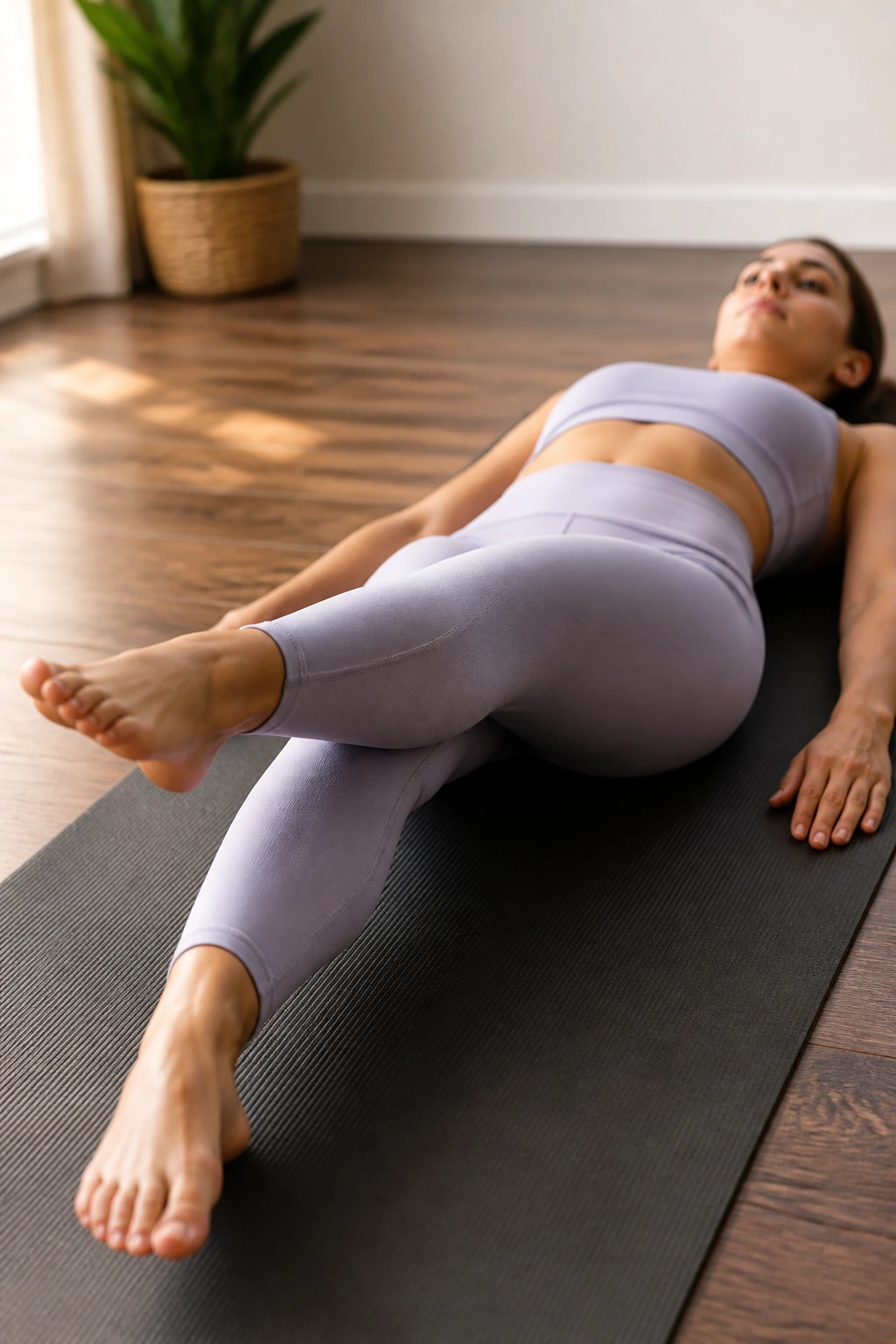
Lie on your back and press your legs long. Then cross one leg over the other, squeeze lightly as they meet, and switch. The crossing pattern keeps the adductors active without needing much equipment, which makes this handy for small spaces or travel days.
Keep your low back heavy on the floor. If the hips pop up, bend the knees a little and shorten the range. The reps should feel smooth, not jerky. This is one of those workouts that looks mild until about rep 12, when the inside of the thighs starts to protest.
A Simple Way to Do It
- Work for 30 to 45 seconds.
- Rest for 20 seconds.
- Repeat for 3 to 4 rounds.
- Add a light Pilates ball between the ankles if you want more load.
Small mat work. Real burn.
25. Inner Thigh Burnout Circuit That Ties It All Together
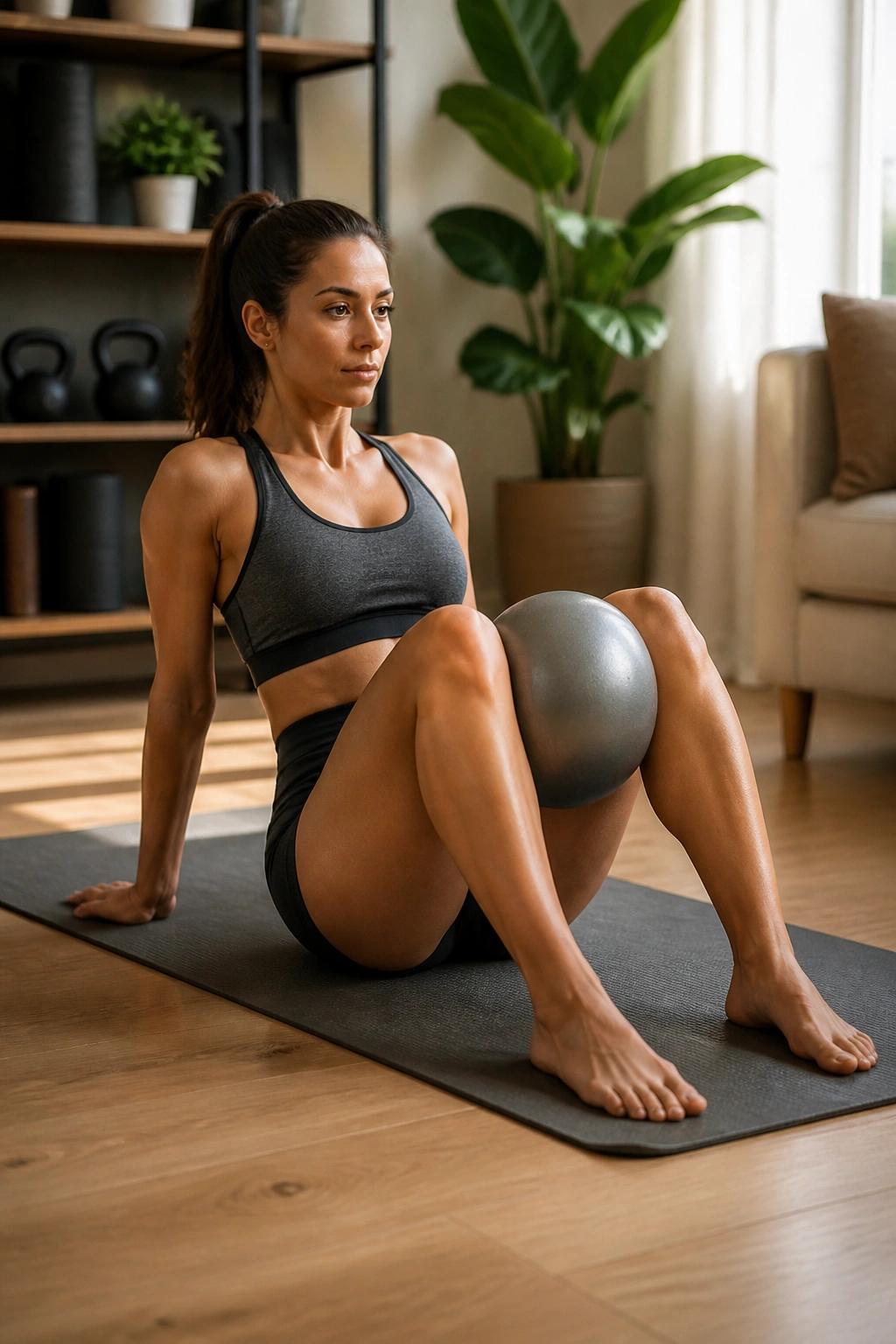
If you want one short finisher after leg day, this is the one I’d keep around. A tight circuit with a squat, a squeeze, and a floor-based adductor move usually gets more done than twenty random reps of one exercise.
Try this:
- 12 sumo squats
- 15 seated ball squeezes
- 12 side-lying inner thigh lifts per side
- Rest 45 seconds
- Repeat for 3 rounds
Keep the pace steady. The first round should feel manageable; the second should sting; the third should make you respect the inner thigh a little more than you did five minutes earlier. No need to turn it into a marathon. Short, focused, and repeatable beats chaos.
If you train these moves two or three times a week, keep the form honest, and add a little load over time, the inside of the thigh starts to feel stronger in a way you can notice in squats, lunges, and even plain walking. That’s the kind of change that sticks.
