



A good squat can wake up your whole lower body without taking over the living room. That is why squat variations for women at home matter so much: you can hit quads, glutes, hamstrings, and balance with nothing more than floor space, a sturdy chair, a backpack, or a loop band. No rack. No commute. No excuses.
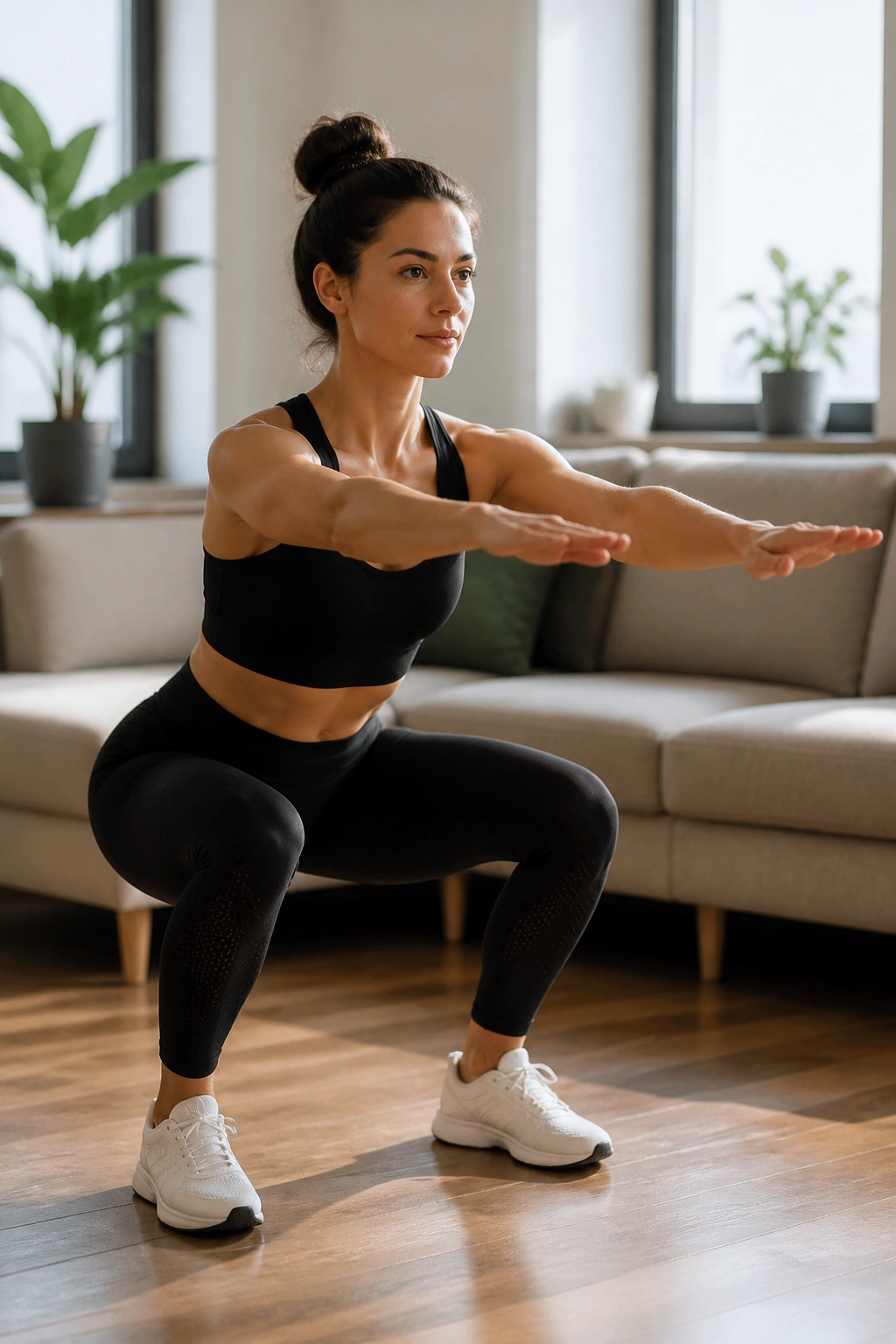
The smartest way to use squat work at home is not to start with the flashiest move. Start with the one that tells the truth. A clean air squat shows you whether your feet are set, your knees track well, and your core is awake enough to keep your ribs from flaring. Once that pattern feels solid, you can change stance, tempo, depth, load, or balance and get a completely different training effect.
Tiny changes do more than people expect. A chair can make a squat safer on a tired day. A two-second pause at the bottom can expose weak spots fast. A wider stance shifts stress away from the front of the knee and toward the hips and inner thighs, which is useful if your body likes one position better than another. Small stuff. Big difference.
Pick the version that matches your day, not the one that looks hardest on video. The first few variations below build control; the later ones ask for more strength, more balance, and a little more nerve.
1. Bodyweight Air Squat
The air squat is still the cleanest test of lower-body control. It looks plain, and that is the point. When you strip away the load, you can see whether your heels stay planted, your knees travel in line with your toes, and your hips lower without collapsing into a shruggy mess.
What to watch for
- Keep your feet about shoulder-width apart.
- Sit down and back until your thighs are at least parallel, if your mobility allows.
- Drive through the whole foot, not just the toes.
- Stand tall without leaning backward at the top.
A lot of home workouts skip the air squat because it feels too basic. That’s a mistake. If this version is shaky, adding weight only hides the problem for a little while. Clean reps here make every later variation safer and more useful.
Tip: If your heels lift, stop chasing depth and shorten the range until your feet stay glued down.
2. Chair Squat
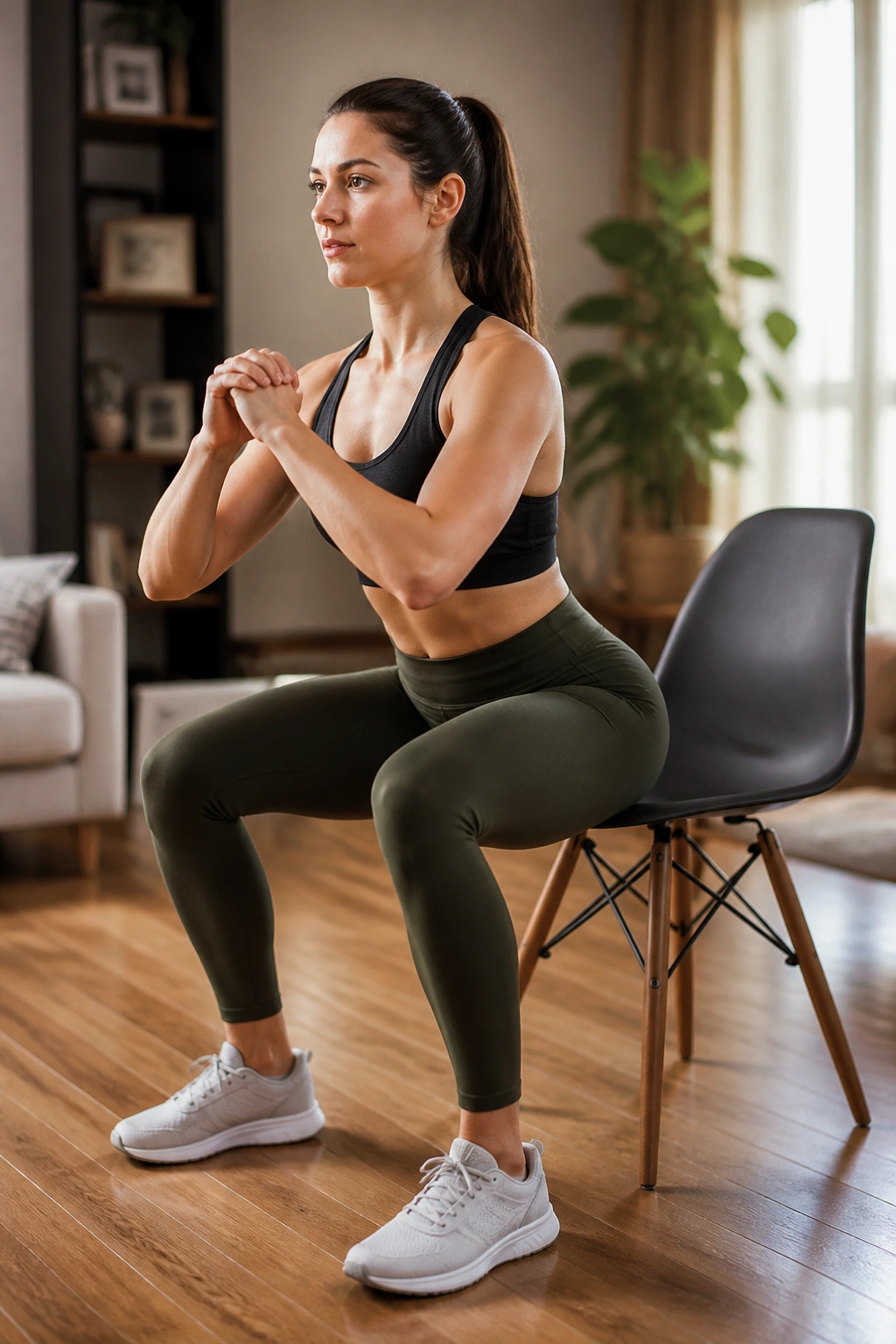
If full depth feels awkward, the chair does the judging for you. You lower until your hips lightly touch the seat, pause for a beat, then stand back up without plopping down like you’re done for the day. That little touch gives you a clear target and keeps the range consistent.
Chair squats are one of the best squat variations for women at home when confidence is still building or knees feel a bit cranky. The chair helps you learn control without guessing how low to go. It also makes it easier to sit the hips back instead of dumping everything into the front of the knees.
One detail matters more than most people think: don’t relax on the chair. Tap, breathe, rise. Tap, breathe, rise. That rhythm keeps the move honest.
3. Box Squat
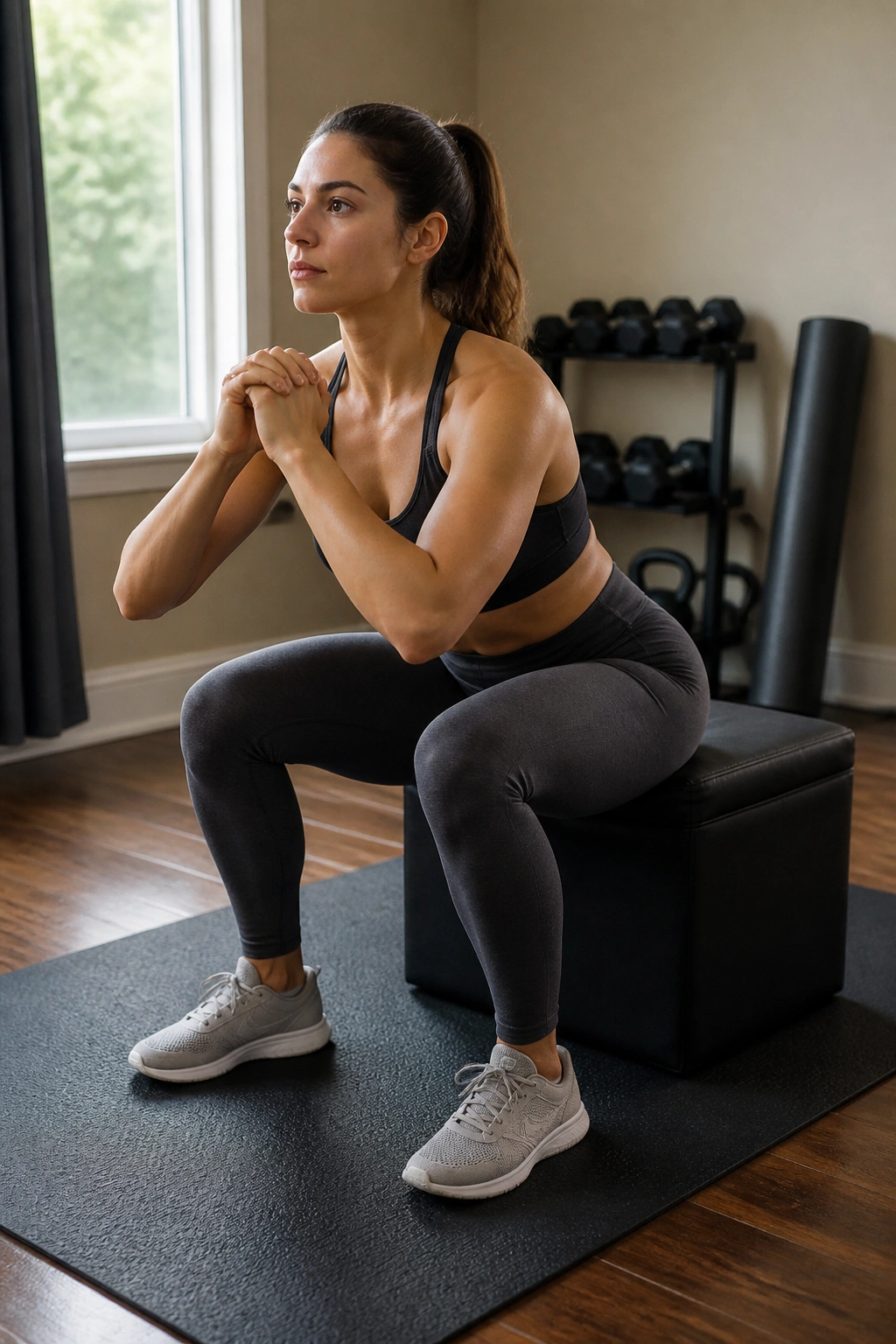
A box squat feels a little more deliberate than a chair squat because the target is usually firmer and a bit lower. That makes it useful when you want to learn how to load the hips instead of just dropping into the knees. A stack of sturdy books, a low bench, or a firm ottoman can work, as long as it does not wobble.
The nicest thing about a box squat is the repeatability. Same height every rep. Same depth. Same bottom position. That consistency helps you notice whether one side is shifting, whether your torso is pitching forward, or whether you’re rushing the descent.
Sit back under control, pause on the box without collapsing, then stand. It should feel tidy, not rushed.
4. Goblet Squat
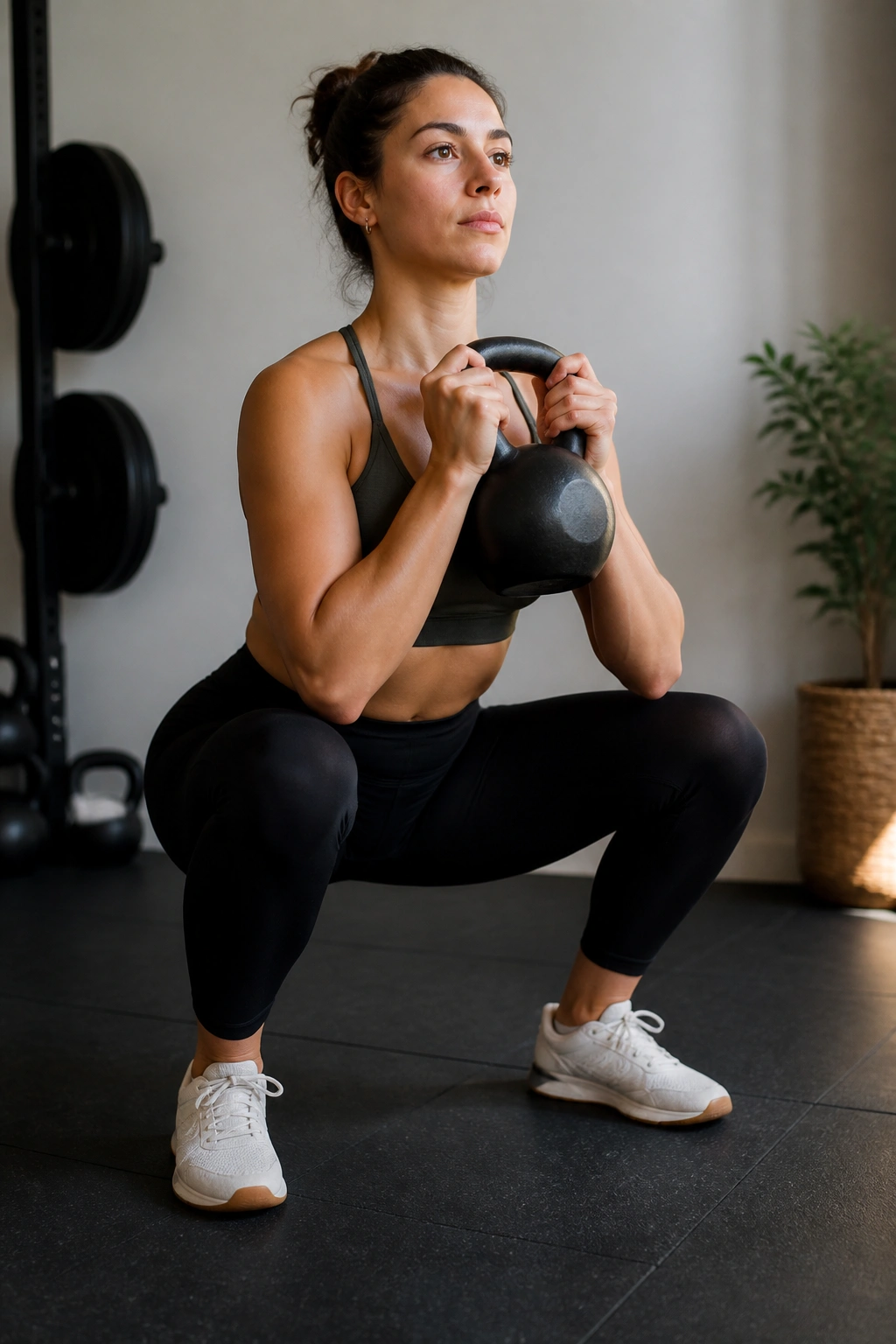
Want one squat that makes bracing hard to fake? Hold a dumbbell, kettlebell, heavy water jug, or backpack at chest height and do a goblet squat. The load in front of you naturally helps the torso stay upright, which is handy if your lower back tends to do too much of the work.
How to load it
- Hold the weight close to your sternum, not out in front.
- Keep elbows angled down, not flared like a chicken wing.
- Use a load that lets you keep your heels down and your chest open.
- Start with 8 to 12 controlled reps.
This move is a favorite for home training because it gives you a stronger squat without needing a barbell. It also teaches midline tension, which carries over to almost every other lower-body exercise. The weight does not need to be huge. It needs to be steady.
5. Sumo Squat
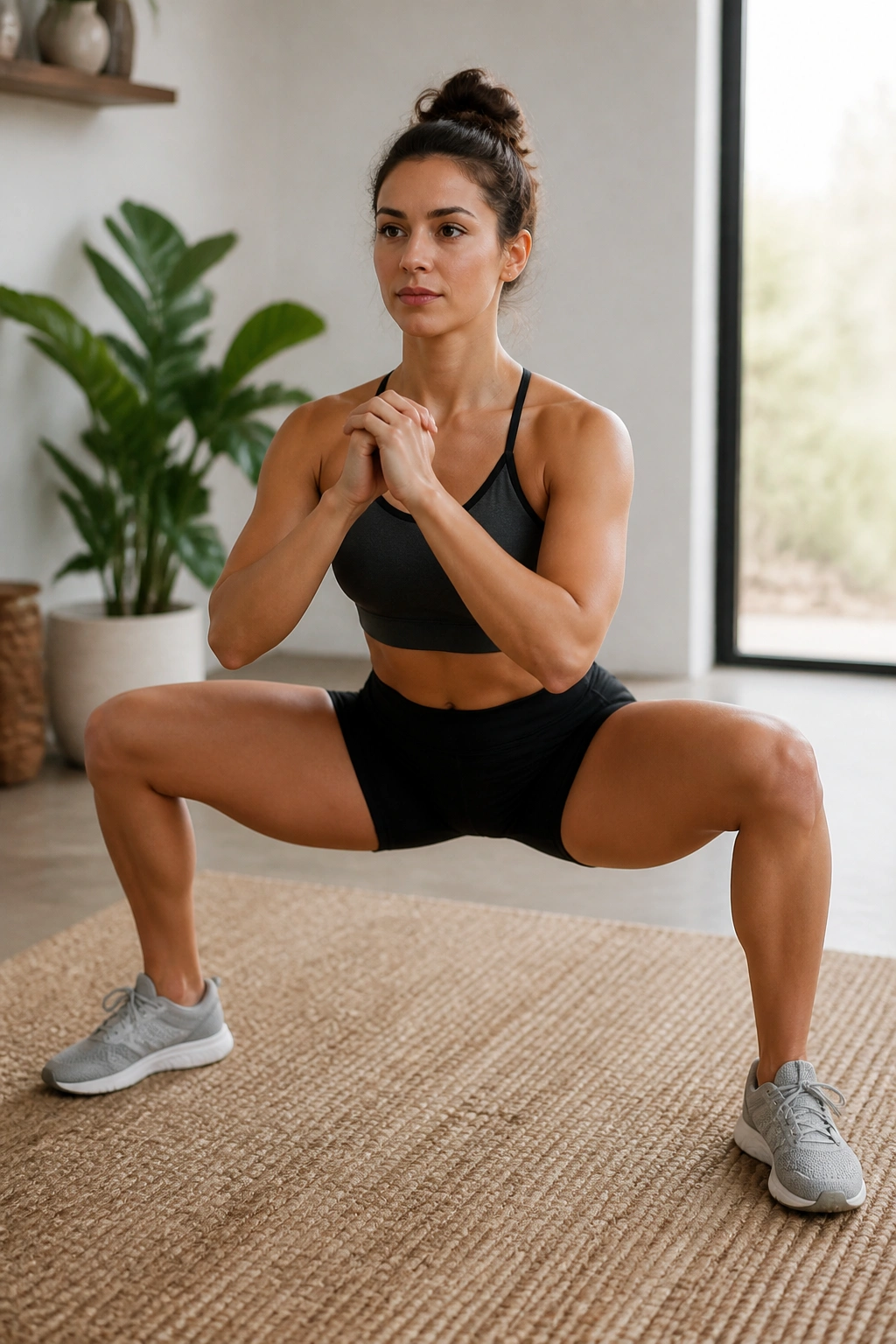
This is the inner-thigh squat. A wide stance with toes turned out changes the whole feel of the movement. The adductors get more work, the glutes help more on the way up, and many people find the bottom position feels more natural than a narrow stance.
Put your feet wider than shoulders, turn the toes out about 20 to 45 degrees, and sit straight down between your hips. Keep the knees tracking over the second and third toes. If the knees cave in, the stance is too wide or you’re going too fast.
A sumo squat is useful when you want a squat that feels different without turning into a completely different exercise. It’s still familiar. Just broader, lower, and a little more hip-heavy.
6. Narrow-Stance Squat
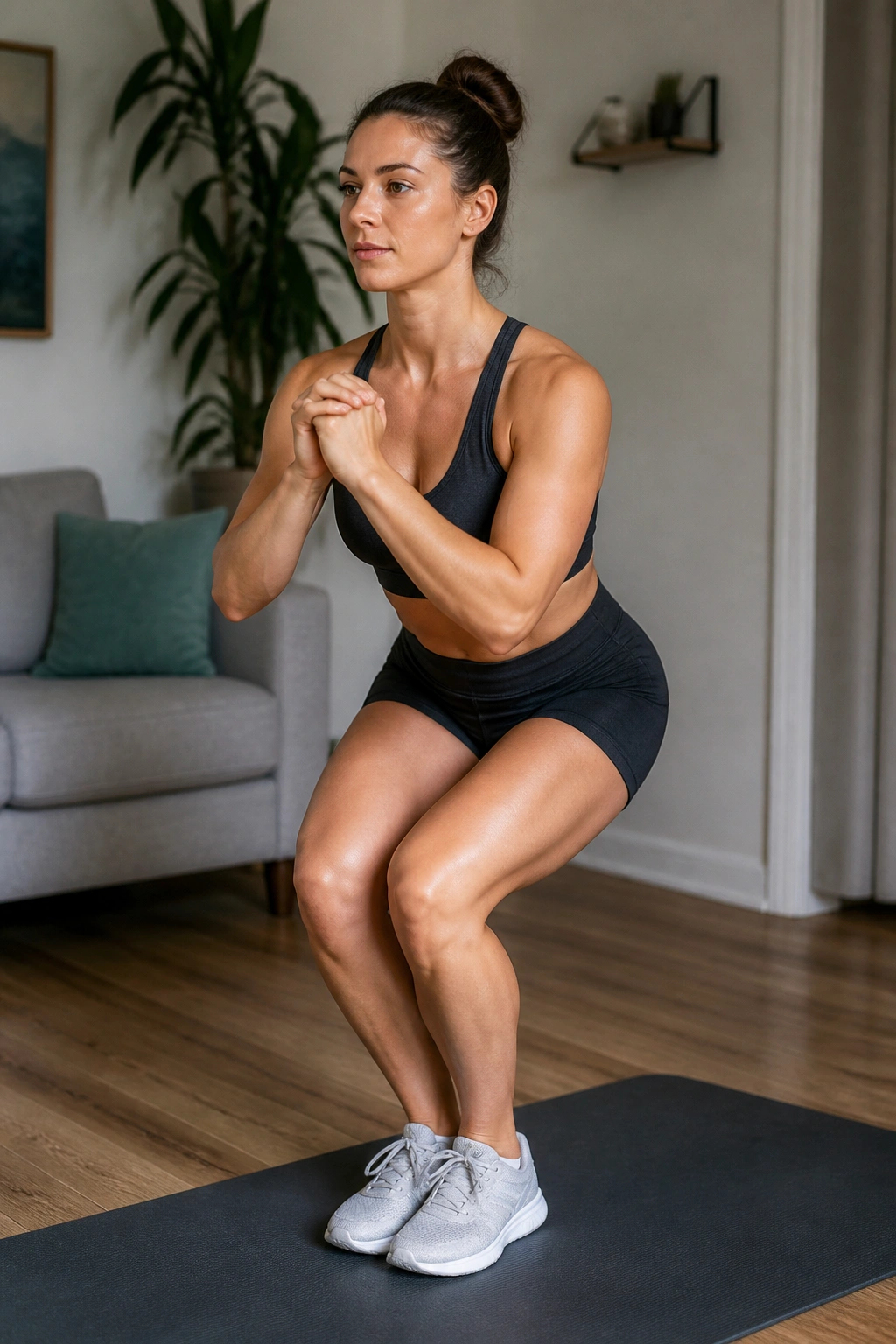
A narrow stance makes the quads work harder. That’s the big reason people keep coming back to it. When your feet move closer together, the knees have to travel more, the torso often stays a touch more upright, and the front of the thighs pick up more of the load.
That does not mean you need to stand with your feet glued together. Hip-width or just inside hip-width is usually enough. Too narrow, and balance gets messy for no good reason. Too wide, and you lose the quad bias that makes this version useful.
It’s a neat option on days when you want a cleaner front-thigh burn and less hip spread. Simple. Slightly mean. Very effective.
7. Prisoner Squat
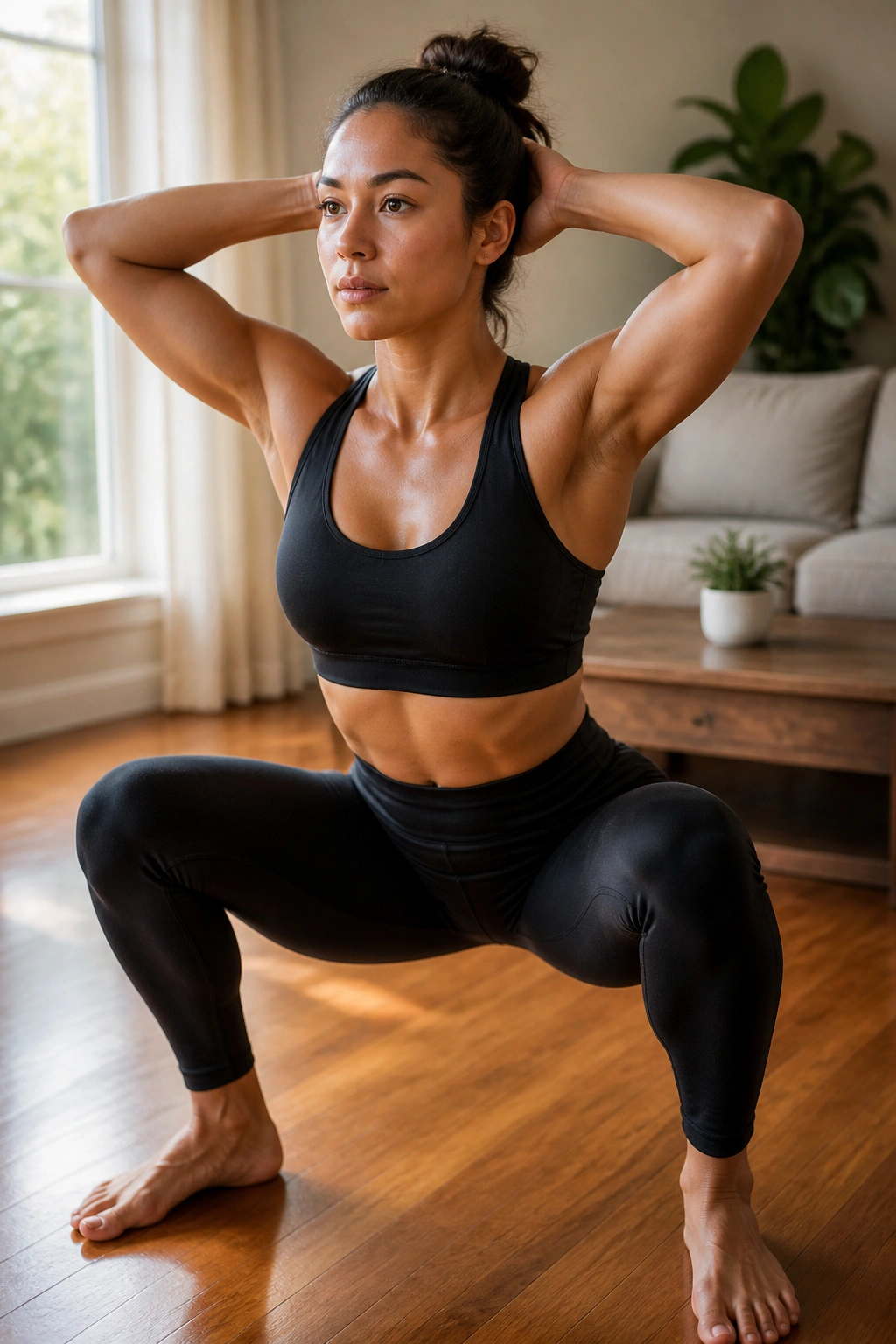
Hands behind the head. Chest open. Elbows wide. That small setup change makes the prisoner squat harder than it looks because it removes the easy cheat of letting the arms swing forward for balance. If your torso collapses, you feel it right away.
This is a good at-home variation when you want posture feedback without equipment. You’ll notice if your ribs flare, if your lower back arches too much, or if your chest drops on the way down. The body has fewer places to hide.
Why it works
A prisoner squat forces you to stay stacked: head, ribs, hips. That makes it great for body awareness and for anyone who tends to fold forward in regular squats.
Try 3 sets of 10 to 15 reps. Keep the movement smooth. No drama.
8. Pulse Squat
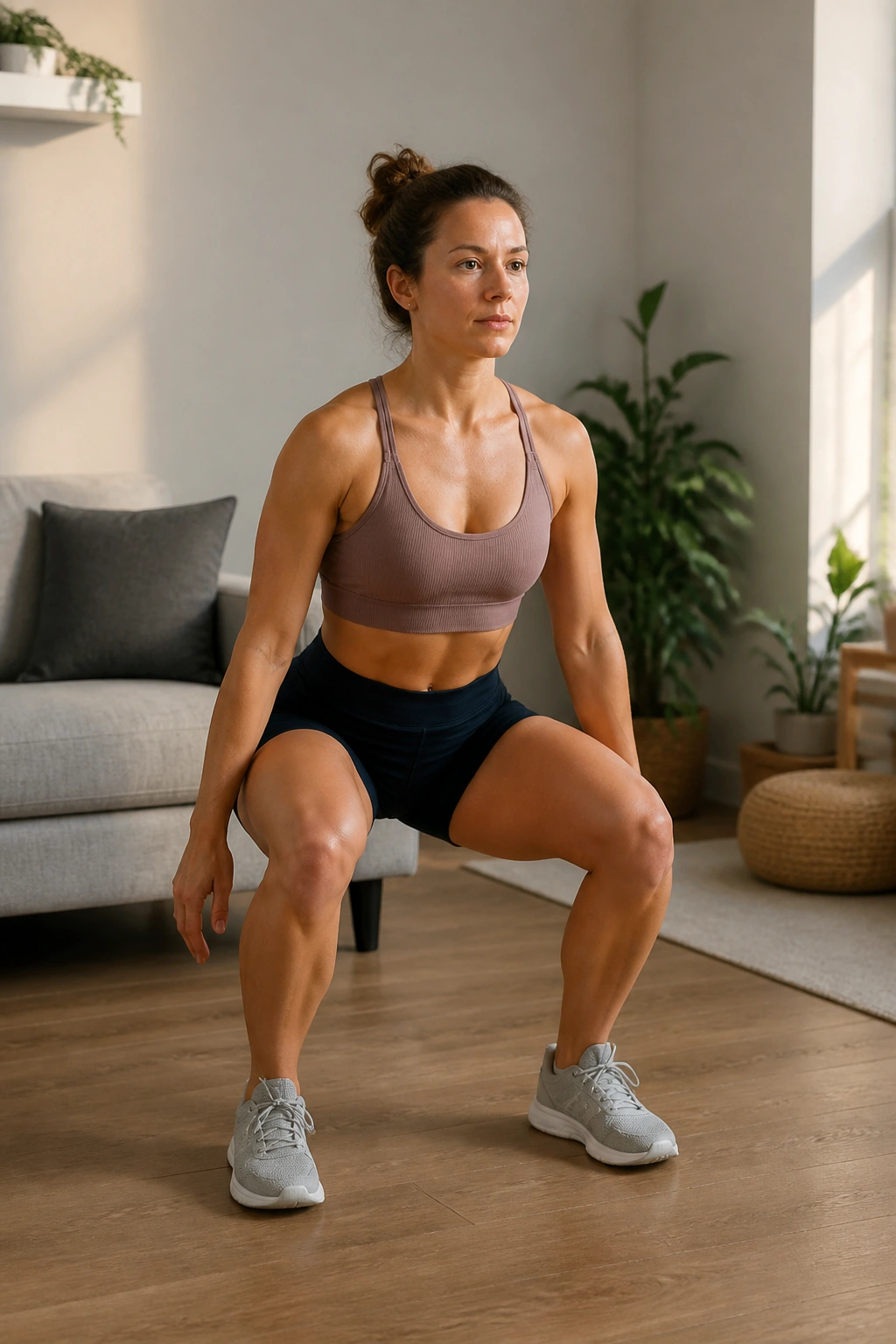
Pulse squats are tiny movements with a rude attitude. You drop into the lower half of the squat, then move up and down just a few inches for repeated pulses. The range is small, but the burn shows up fast because the legs never get a full rest.
This variation is useful when you want time under tension without adding weight. It’s also a good finisher after regular squats, because it keeps the muscles loaded in the hardest part of the movement. Ten to twenty pulses is enough for most people before form starts to wobble.
Don’t bounce through it like a trampoline. Stay controlled, stay low, and stop when the knees or lower back start complaining. That burn should feel muscular, not sloppy.
9. Tempo Squat
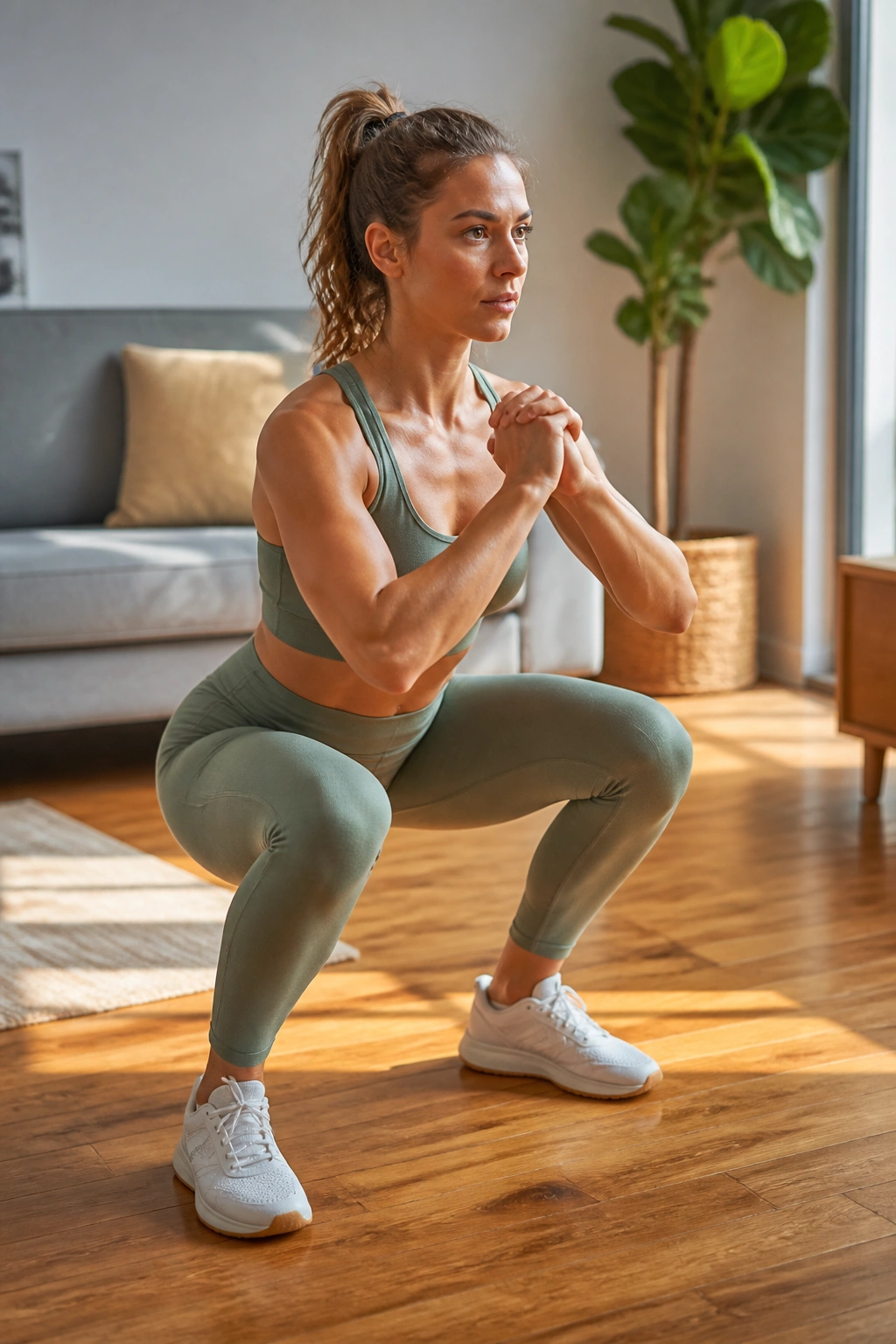
A tempo squat is where the pacing does the heavy lifting. A common count is 3 seconds down, 1 second at the bottom, 1 second up. You can also go slower if the regular version feels too easy. No extra equipment needed. Just patience.
A simple count that works
- Lower for 3 to 4 seconds.
- Hold briefly at the bottom.
- Stand up in 1 to 2 seconds.
- Reset your breath before the next rep.
Tempo squats are excellent when you want to make bodyweight work feel more serious without adding load. They also clean up sloppy reps because there’s no room to rush. If you’ve ever shot down too fast and lost your brace, this version exposes that habit fast.
10. Pause Squat
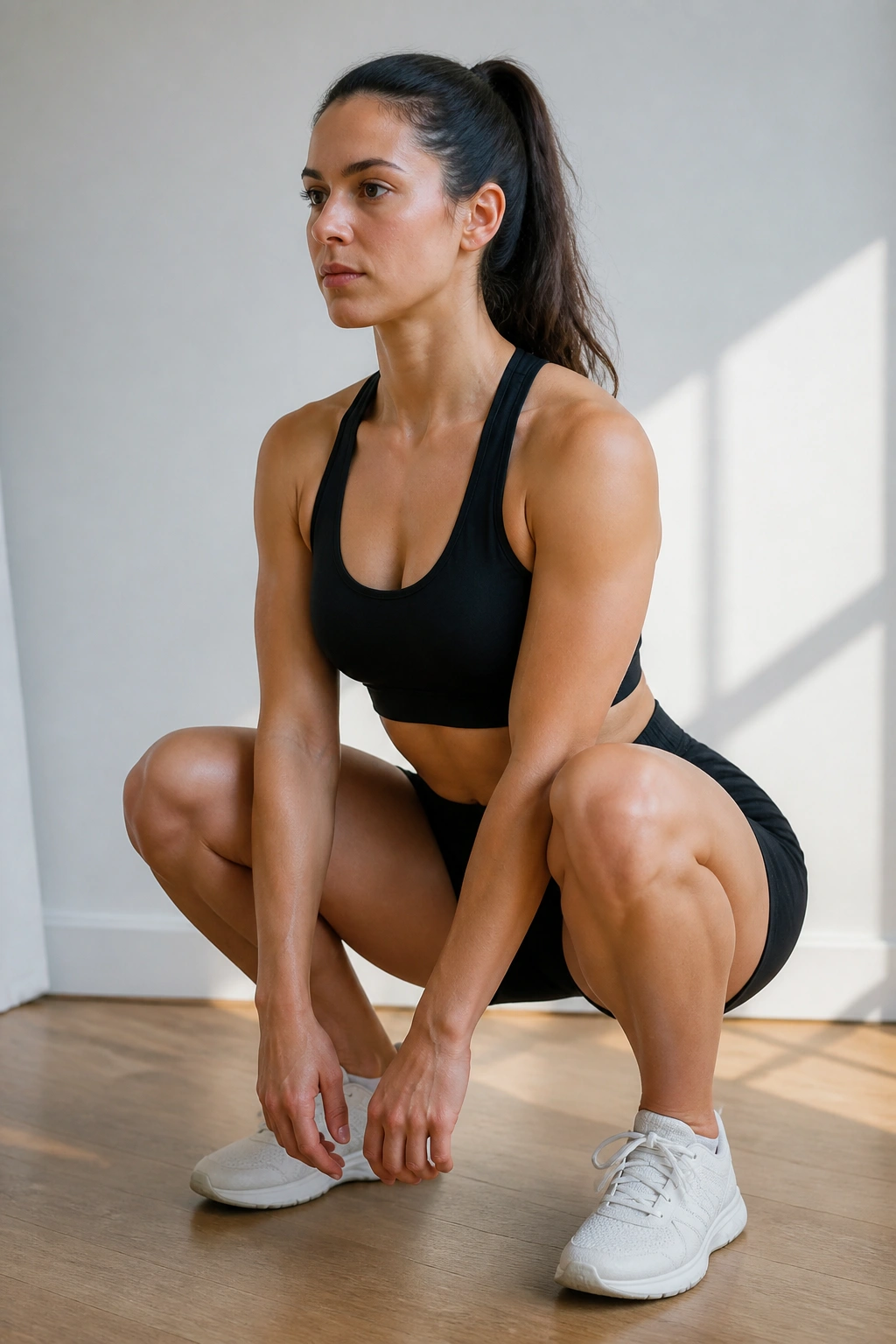
A pause squat takes the bounce out of the bottom position. You lower yourself under control, stop for 2 to 3 seconds in the deepest stable spot, then drive up without shifting around. That pause makes the weak spot louder. It also builds confidence in the hole, which is where a lot of people get wobbly.
This variation pairs well with chairs, boxes, or goblet loading. A paused bodyweight squat can feel brutal all by itself, especially if you keep the torso upright and the knees honest. The point is not to collapse and survive. The point is to stay braced while the muscles do the work.
If your first rep feels easy, the second and third usually do not.
11. Wall Sit
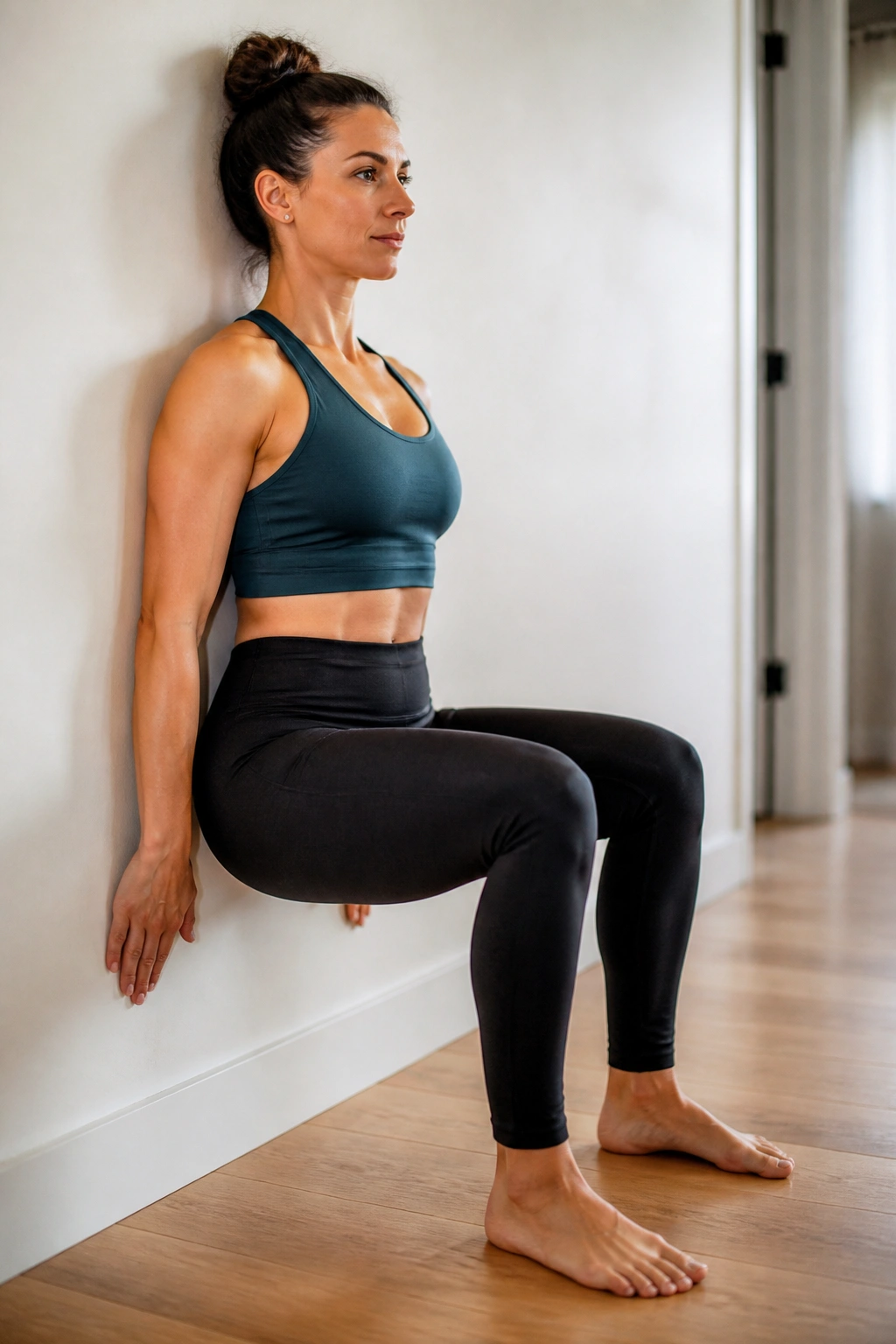
A wall sit is a squat you hold instead of repeat. Back flat against the wall, knees bent, thighs close to parallel, feet planted a little in front of you. Then you wait. That’s the whole trick, and somehow it still feels rude by the 20-second mark.
Wall sits are perfect for home training because they are quiet, controlled, and easy to dose. You can use them as a finisher, a warm-up burn, or a knee-friendly way to train isometric strength when dynamic squats feel off.
Keep these details in mind
- Set the knees roughly above the ankles.
- Press the lower back into the wall.
- Keep breathing instead of holding your breath.
- Start with 20 to 30 seconds if you’re new.
If you can hold 45 to 60 seconds with tidy form, you’re doing well.
12. Jump Squat
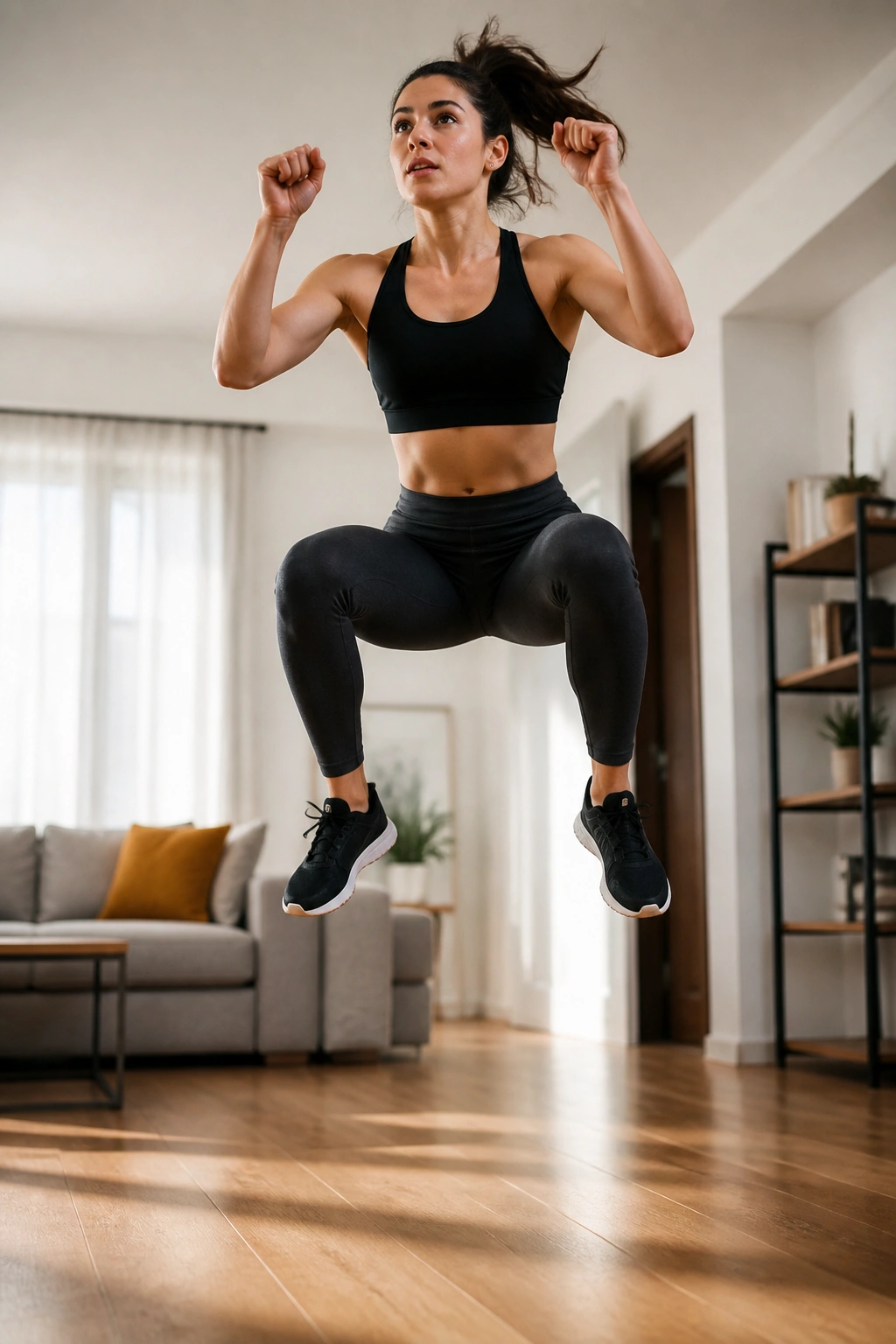
Jump squats add power, and they also add noise if your landing is sloppy. Start with a normal squat, drive up explosively, leave the floor, then land softly with bent knees. The landing should feel like you’re trying not to wake the house.
This variation is useful when you want speed and athletic pop, not just slow muscle work. It asks the glutes, quads, and calves to fire fast. That said, it’s not the first move to reach for if your knees hurt or your landing mechanics are rough. Get the regular squat clean first.
Two to three sets of 5 to 8 reps is plenty for most home sessions. Keep the jumps crisp. When the landings get heavy, stop.
13. Squat to Calf Raise
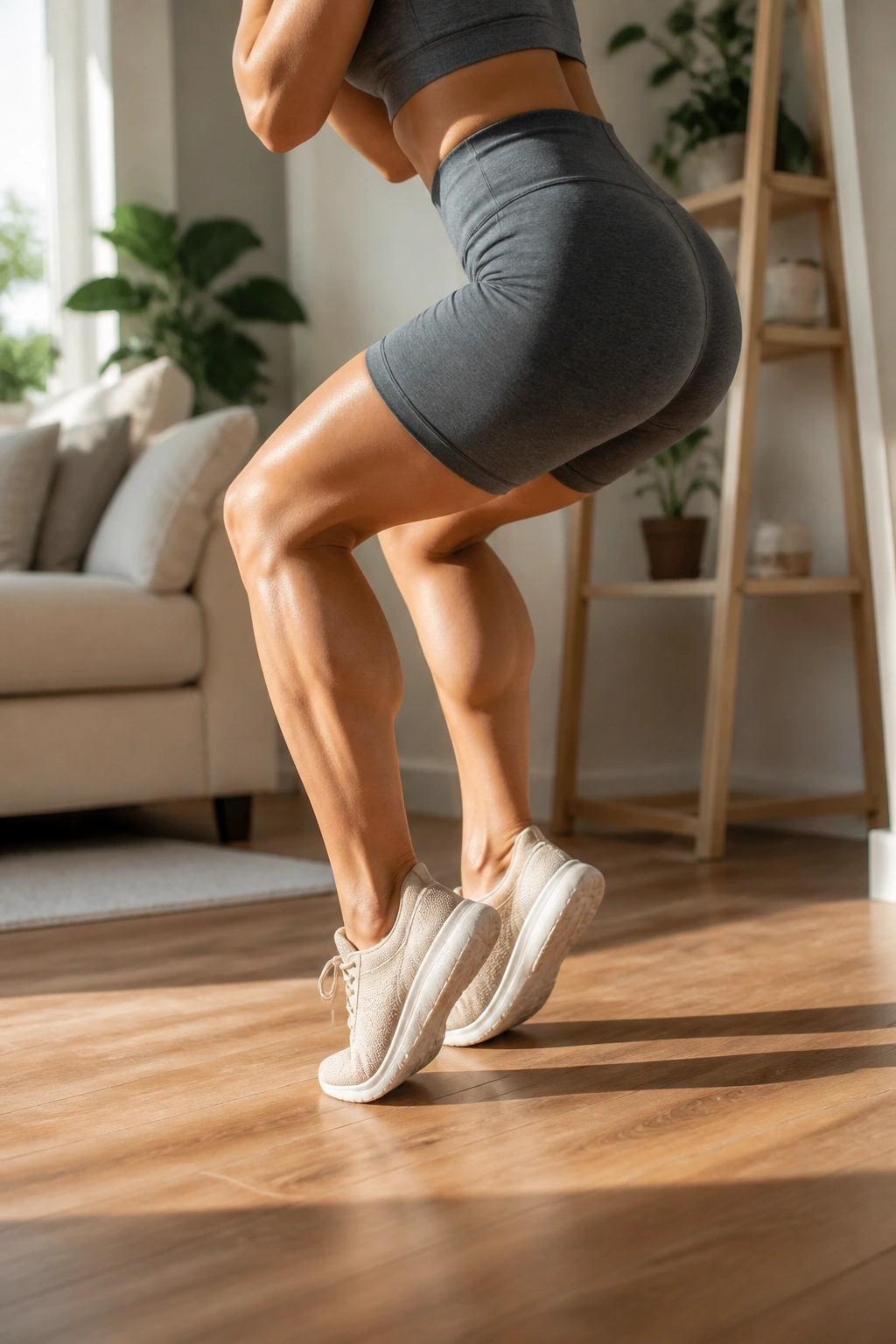
A squat to calf raise gives you two jobs in one rep. You lower into the squat, stand up fully, then rise onto the balls of your feet and squeeze the calves at the top. It sounds simple. It is simple. And that’s part of why it works so well at home.
Why the finish matters
The calf raise at the top forces a full stand before the next rep begins. That little pause cleans up rushed squats and gives your ankles a bit of extra work. It also makes the move feel longer and more athletic, which is useful if you want more movement without needing more equipment.
A backpack or pair of dumbbells can make this one tougher, but bodyweight is enough. Try 10 to 15 slow reps and keep the calf lift controlled—no bouncing. That last squeeze is what earns the burn.
14. Backpack Squat
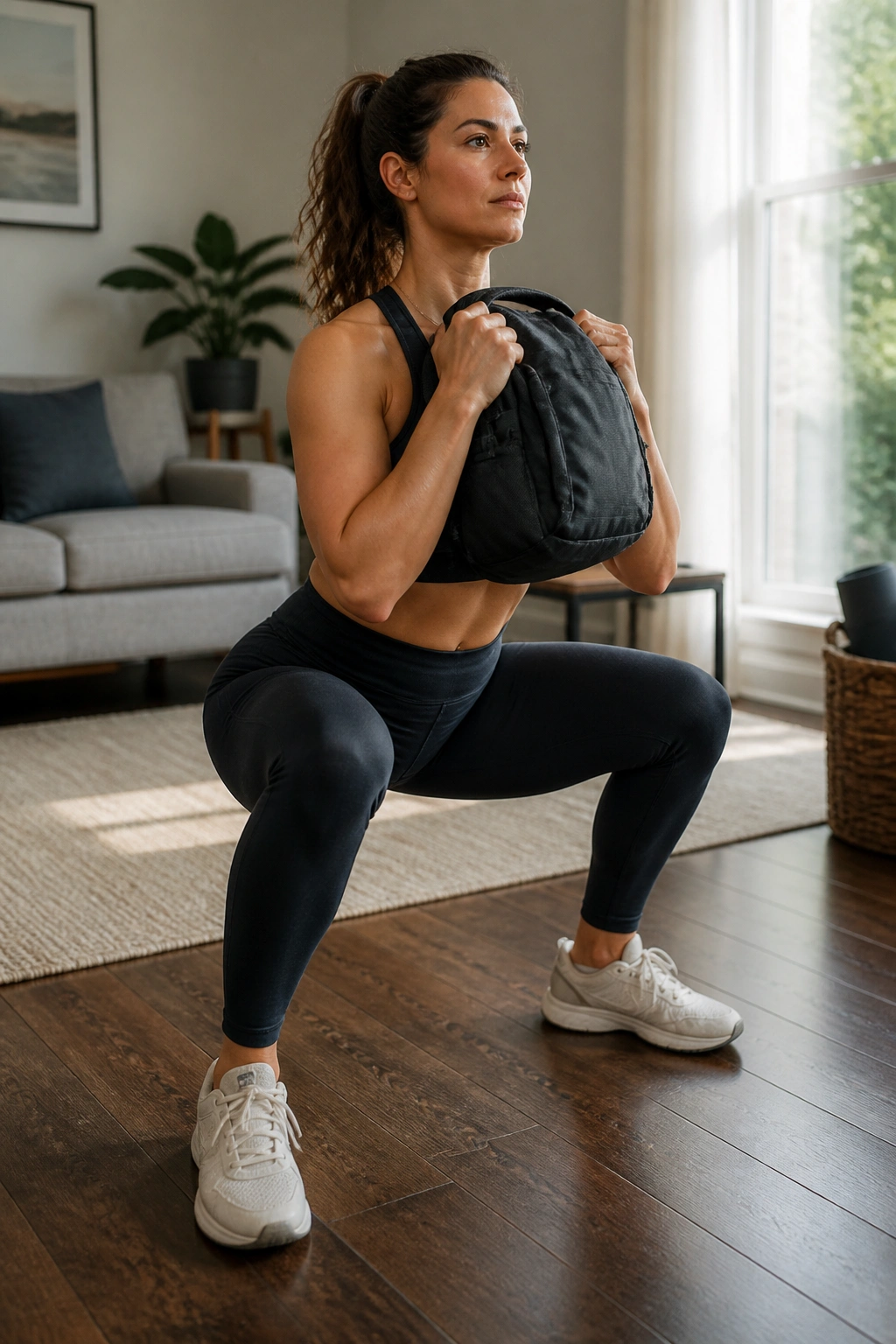
A backpack squat is one of those home moves that sounds improvised because it is. Fill a backpack with books, water bottles, or a towel for padding, hold it at your chest or wear it on your back, and squat like you mean it. The load is crude, but it works.
The chest-hug version tends to feel more like a goblet squat. The back-loaded version changes balance a bit more and can make the hips work harder to keep you upright. Either way, the point is progressive overload without a gym. That matters when bodyweight squats stop feeling challenging.
Use a backpack that sits snug and does not swing around. Loose books banging together are annoying, and annoying is usually a sign the load setup needs fixing.
15. Resistance-Band Squat
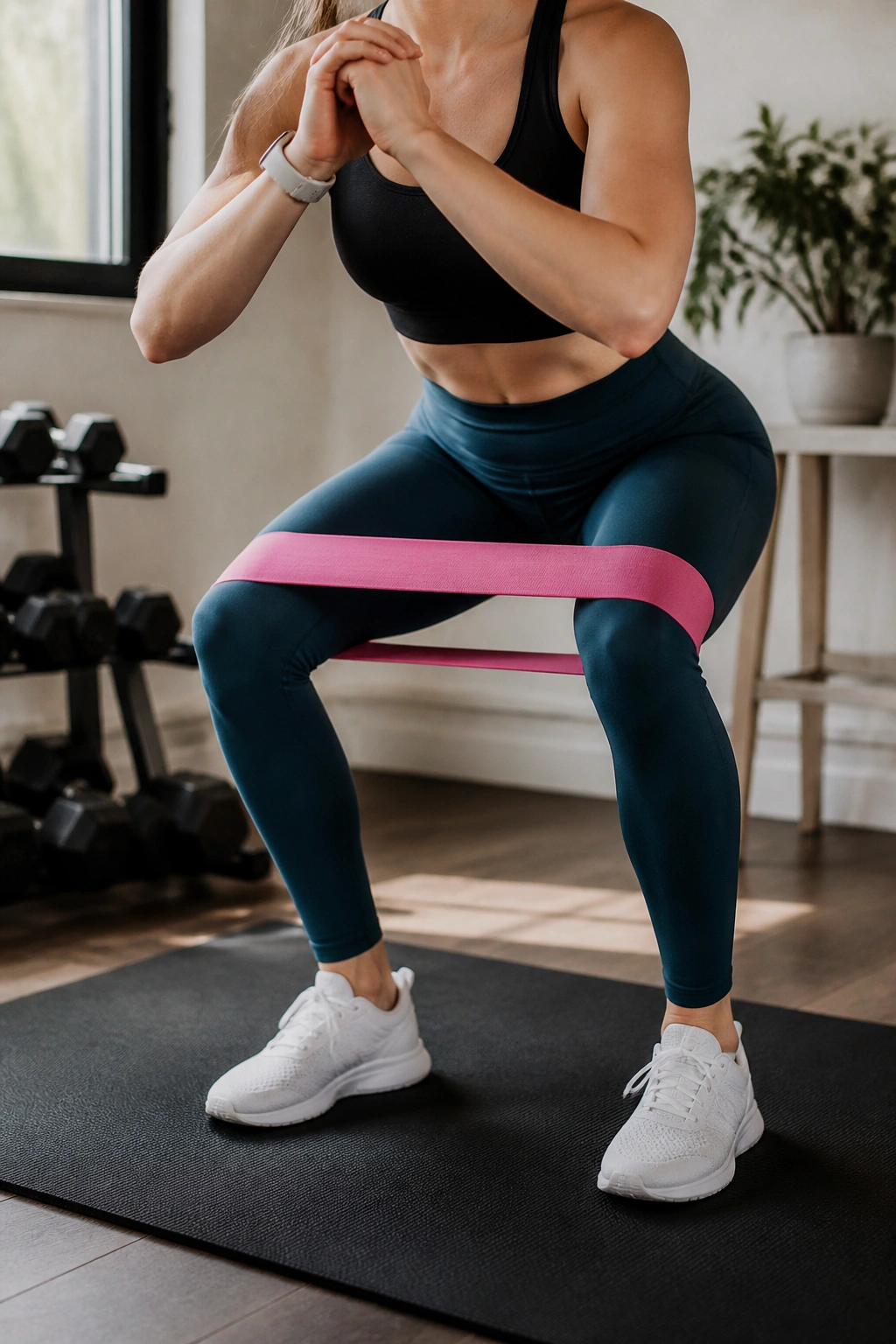
No weights? A band changes the feel fast. Loop a resistance band above the knees or stand on a long band and hold the ends at shoulder height. Either version adds tension that makes the hips stay active through the whole squat.
Set-up that feels clean
- Use a light to medium band first.
- Keep tension on the band before you descend.
- Press the knees gently outward, not wildly.
- Stop if the band position makes your feet slip.
Band squats are especially useful if your knees tend to drift inward. The band gives you a clear cue to push out and keep the thighs aligned. That little feedback can clean up form better than a hundred verbal reminders.
16. Banded Squat with Abduction
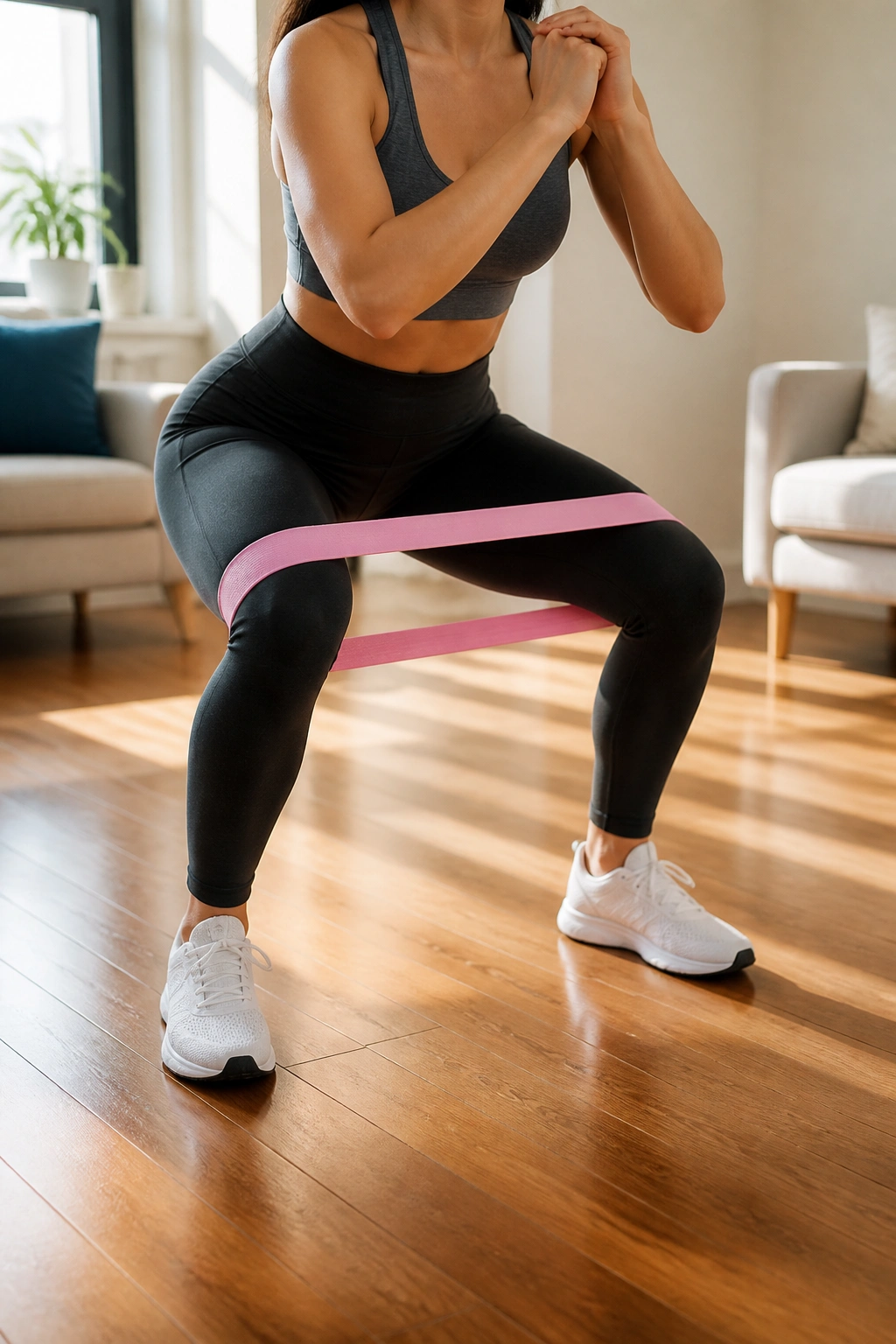
This version is a close cousin to the regular band squat, but the band work becomes part of the squat itself. Lower into the squat, then press the knees outward against the band at the bottom or on the way up. The extra outward pressure lights up the glutes and side hips fast.
It’s a good choice when you want more glute med work without adding a separate mini-band routine. The side hips help stabilize the pelvis, and a lot of people feel that immediately when they try this move after plain squats. The difference is not subtle.
Start with a light band. Too heavy, and the knees start twisting instead of tracking. That turns a useful drill into a messy one.
17. Frog Squat
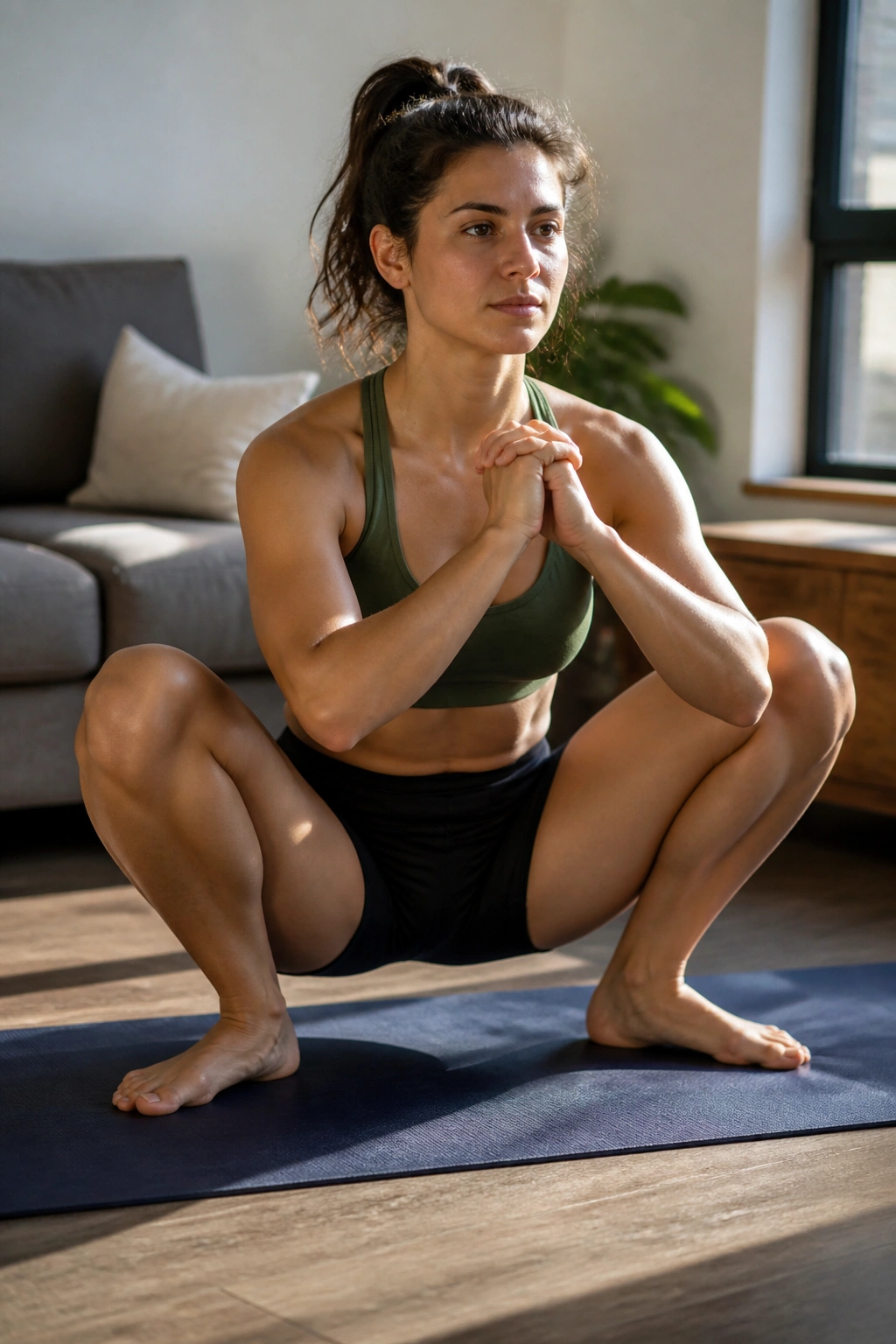
A frog squat looks a little odd the first time you try it, which may be why people avoid it. Feet are turned out, heels stay close together or fairly narrow, and you sink into a deep, open-hip position. It feels part squat, part mobility drill, part inner-thigh wake-up call.
The reason it earns a place here is simple: it gives the hips a deep bend without always demanding the same straight-ahead pattern as a regular squat. On tight days, that can feel kinder. On strong days, it can feel spicy. Both are useful.
Do not force the depth. If your heels pop up or your back rounds hard, shorten the range and stay smooth. Deep does not mean sloppy.
18. Heels-Elevated Squat
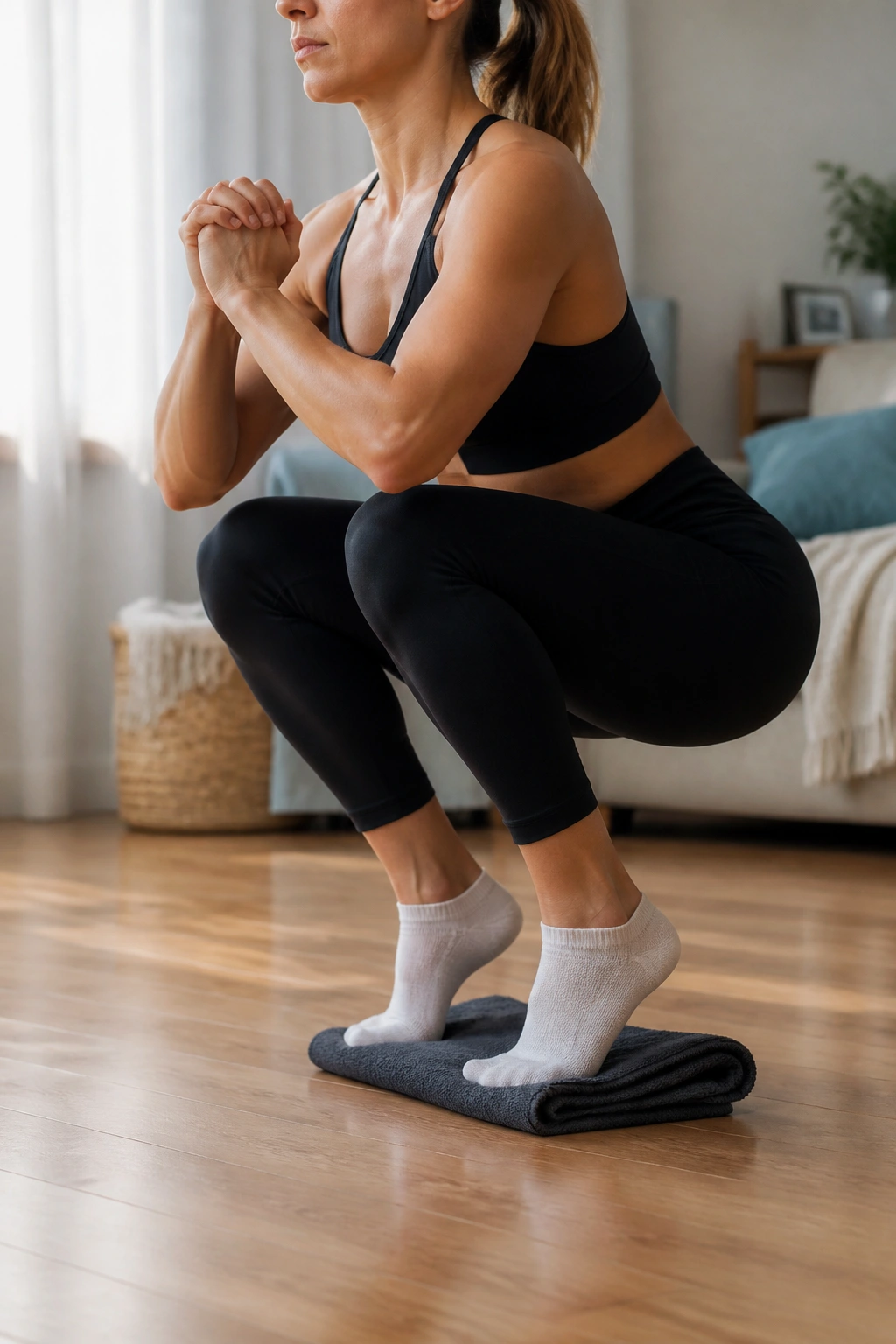
Put your heels on a folded towel, a small wedge, or a couple of slim books, and the squat changes fast. The heel lift makes ankle mobility less of a roadblock and shifts more work into the quads. For people who struggle to keep the heels down in a flat-foot squat, this can be a relief.
The move is useful, but it should not become a crutch forever. If your feet always need a lift, the ankles may need a little more attention too. Still, for home training, it is a smart workaround on days when the flat version feels awkward.
You’ll usually notice a more upright torso and a stronger front-thigh burn. Good. That’s the point.
19. Lateral Squat
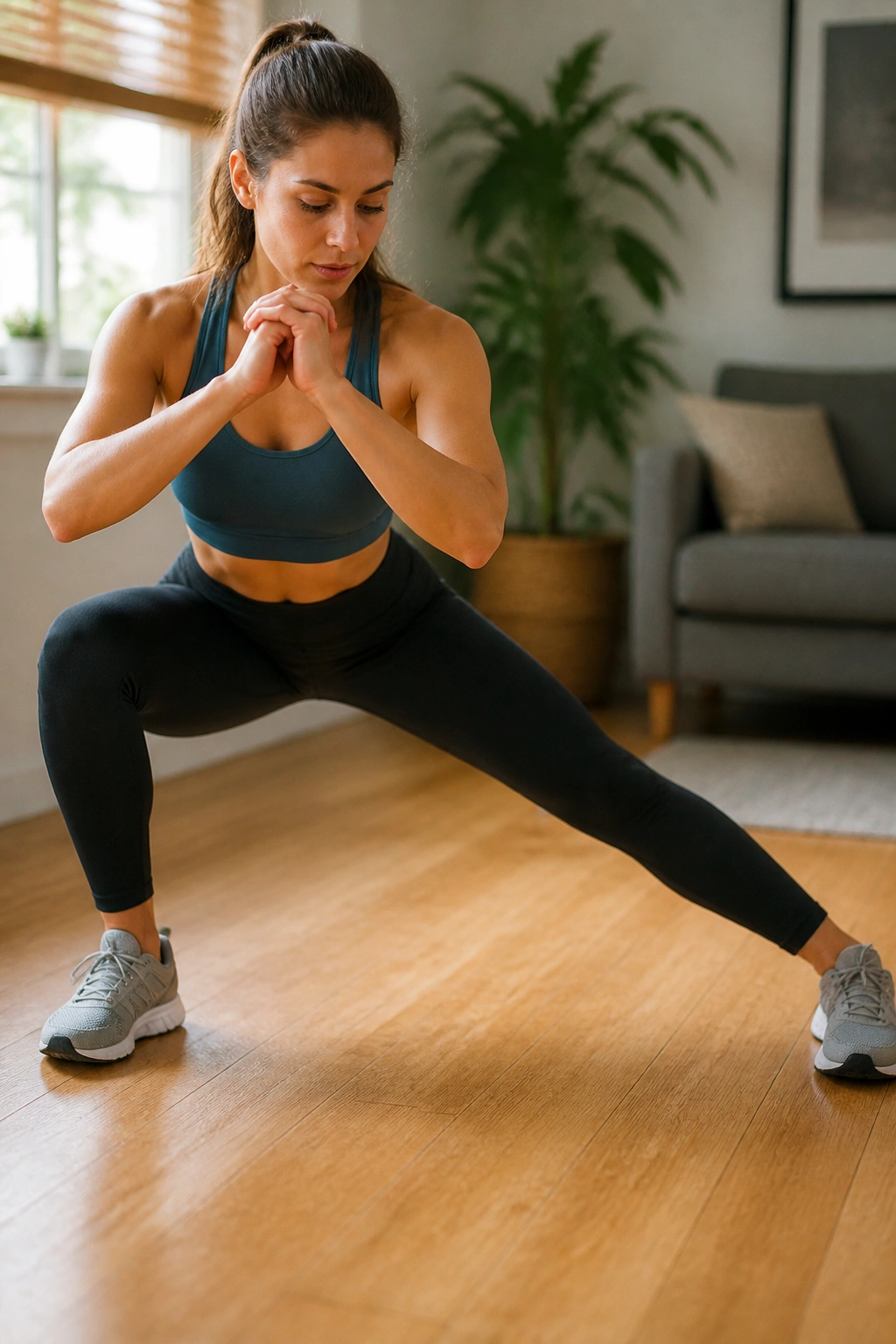
Step to one side, sit into that hip, and keep the other leg long. A lateral squat feels different from a straight-up-and-down squat because the weight shifts side to side instead of just front to back. That side loading makes the inner thigh, glute, and adductor group work in a way many home routines miss.
This one is excellent if your hips feel stiff after too much sitting. The lateral step opens the groin a bit, then asks the bent leg to push you back to center. You get movement and strength together, which is a nice combination when you’re short on time.
Keep the trailing foot flat and the stepping foot grounded. If you rush the shift, you lose most of the benefit.
20. Cossack Squat
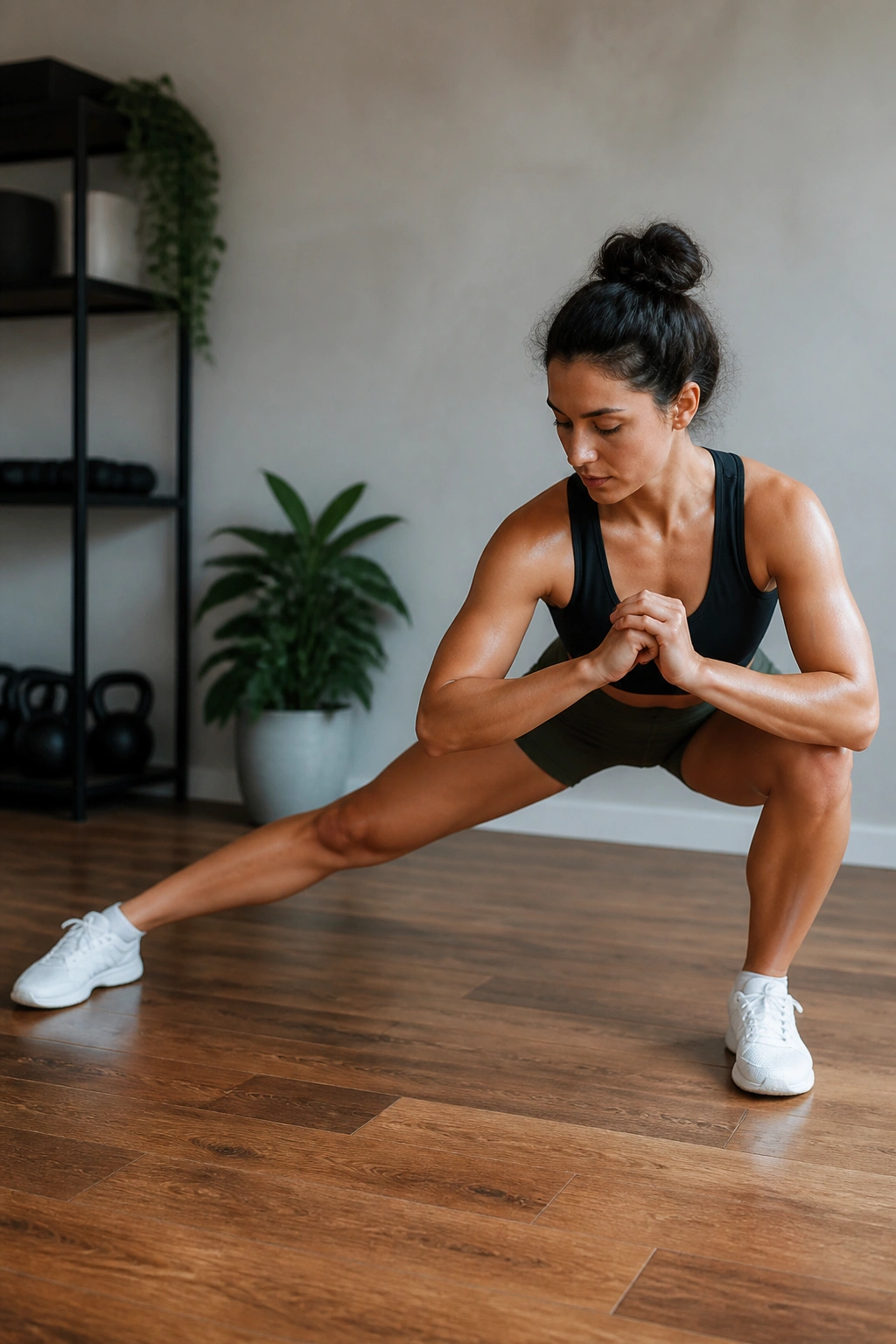
The Cossack squat is the deep side squat that exposes tight hips fast. One leg bends while the other stays straighter, and your body sinks side to side with more range than a simple lateral squat. It can feel awkward the first few times. That’s normal.
What makes it different
- The bent leg does most of the work.
- The straight leg gets a strong inner-thigh stretch.
- Balance matters as much as strength.
- A small range is fine at first.
Cossack squats are excellent for mobility, control, and adductor strength. They are not the move to rush. If you need support from a wall or chair the first few sessions, use it. Ugly first reps are still useful reps.
21. Squat with Alternating Knee Drive
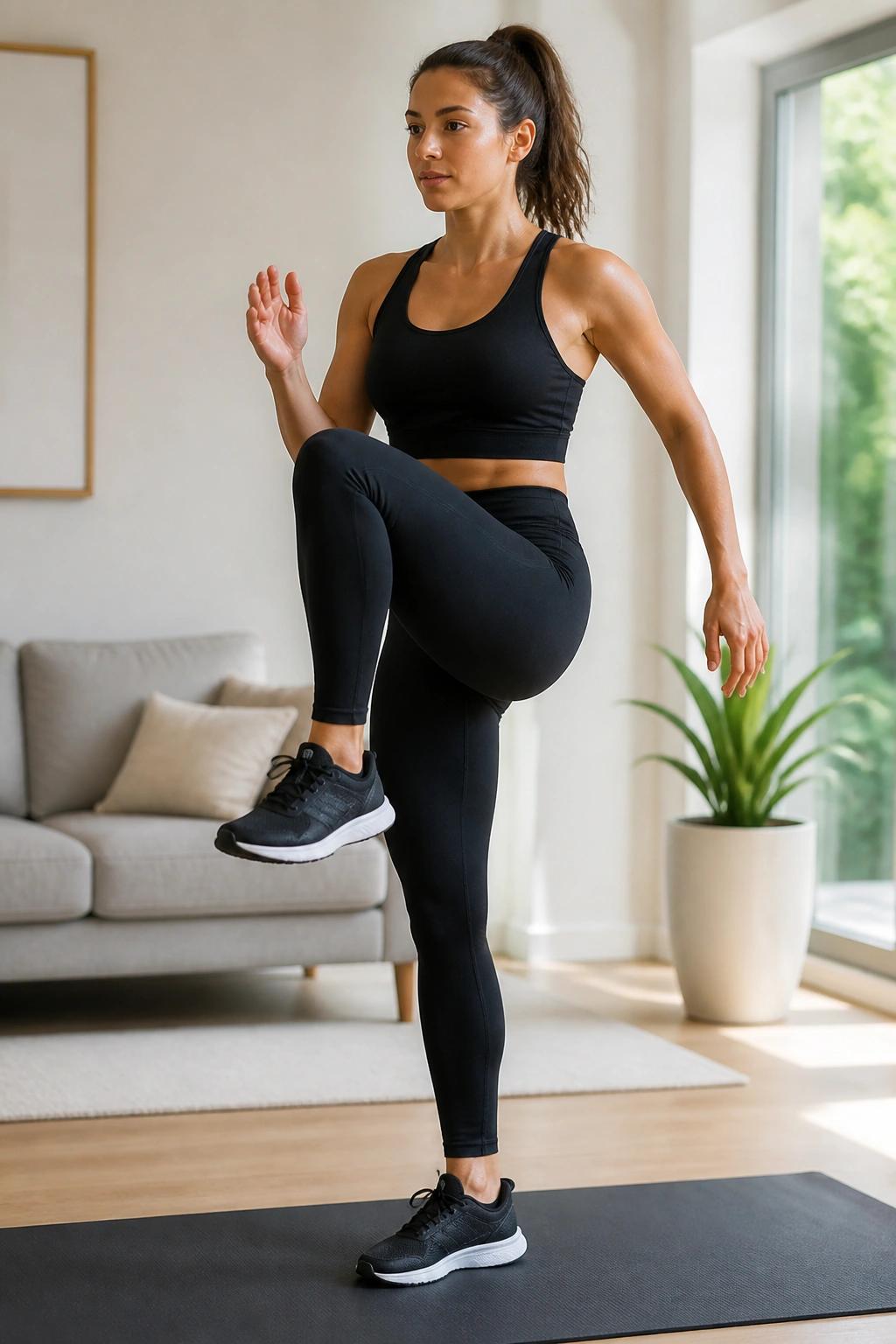
This is a squat with a little marching energy built in. Lower into a squat, stand up, then drive one knee toward your chest before switching sides on the next rep. The knee drive turns a plain squat into a balance drill without needing extra gear.
It’s useful when you want a home move that feels athletic but still simple. The standing leg has to stabilize the pelvis for a second, which wakes up the glutes and core. If your hips drift from side to side, slow the tempo and tighten the brace.
Do not lean back on the knee drive. Stay tall, lift the knee, and set it down with control. That’s the whole game.
22. Single-Leg Box Squat
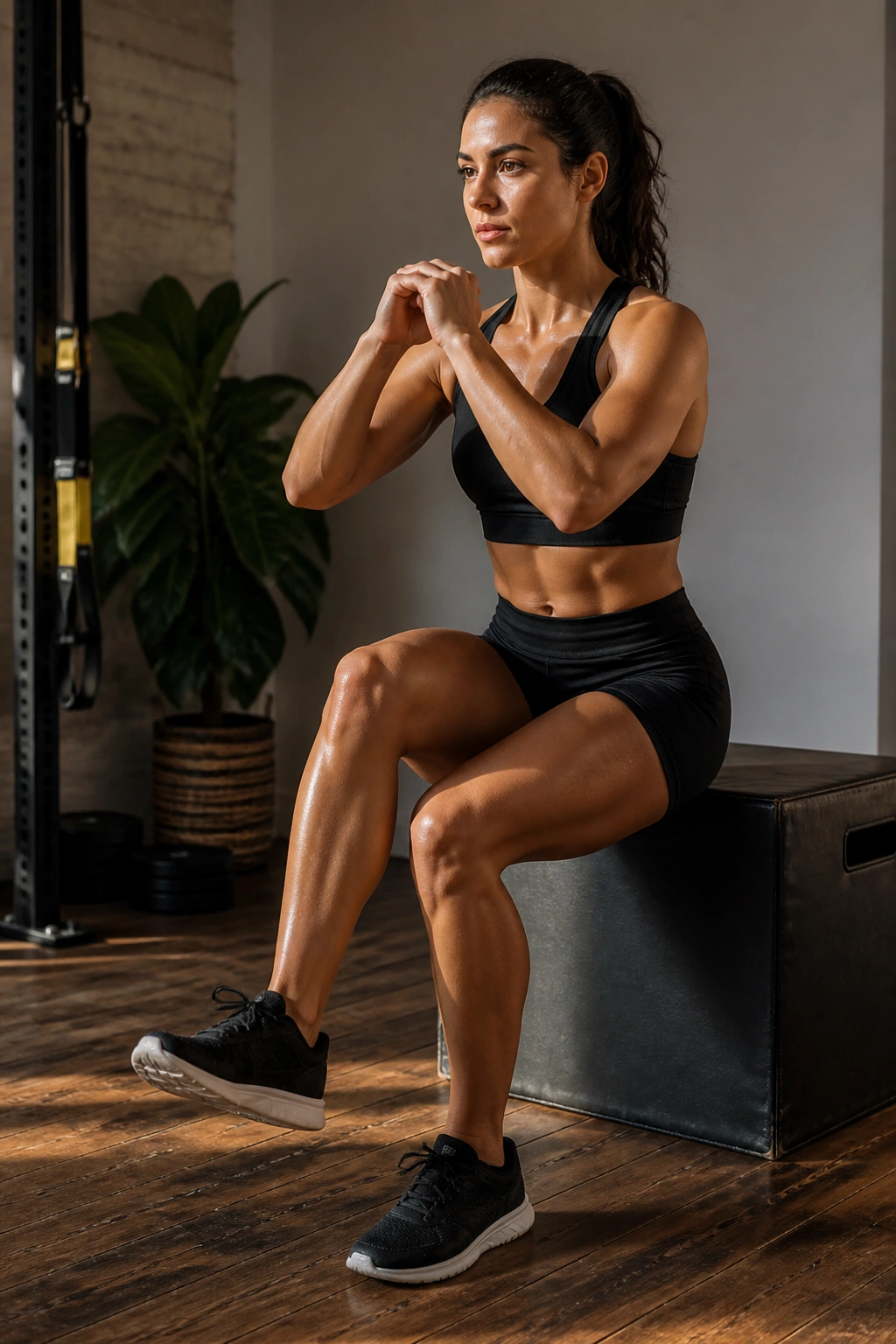
Can you stand up from a chair on one leg without wobbling all over the room? A single-leg box squat is the clean way to find out. Sit back to a chair or box with one leg lifted slightly off the floor, then push through the working leg to stand.
This move builds unilateral strength, which matters more than most people think. If one side is weaker, a two-legged squat can hide it for months. A single-leg box squat makes the mismatch obvious, then gives you a way to work on it.
Start with a higher box than you think you need. Lower the height only after the movement feels steady. One rep done well beats five ugly ones every time.
23. Offset-Load Squat
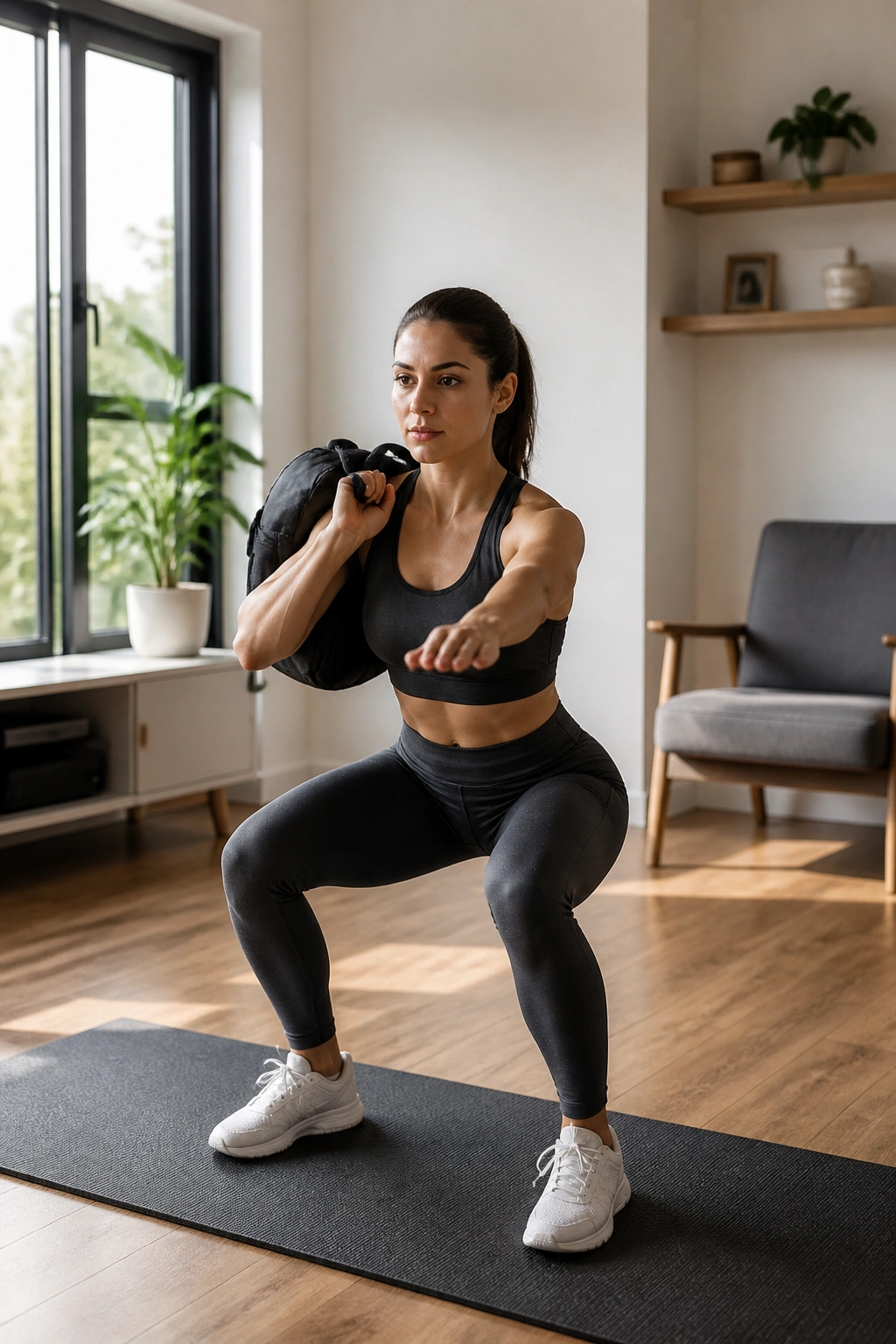
Hold your weight on one side instead of centering it, and the squat gets interesting fast. A dumbbell, kettlebell, or backpack in one hand creates an offset load that asks the core to fight rotation while the legs keep the squat going.
This variation is sneaky. The legs still work, but the trunk has to resist tipping. That makes it a great home option when you want more than a basic squat but do not have two matching dumbbells. It also teaches you to stay square through the ribs and hips.
Switch sides after each set so the body does not live in one pattern. A suitcase-style squat can feel small, but it adds up quickly.
24. Assisted Pistol Squat to Box
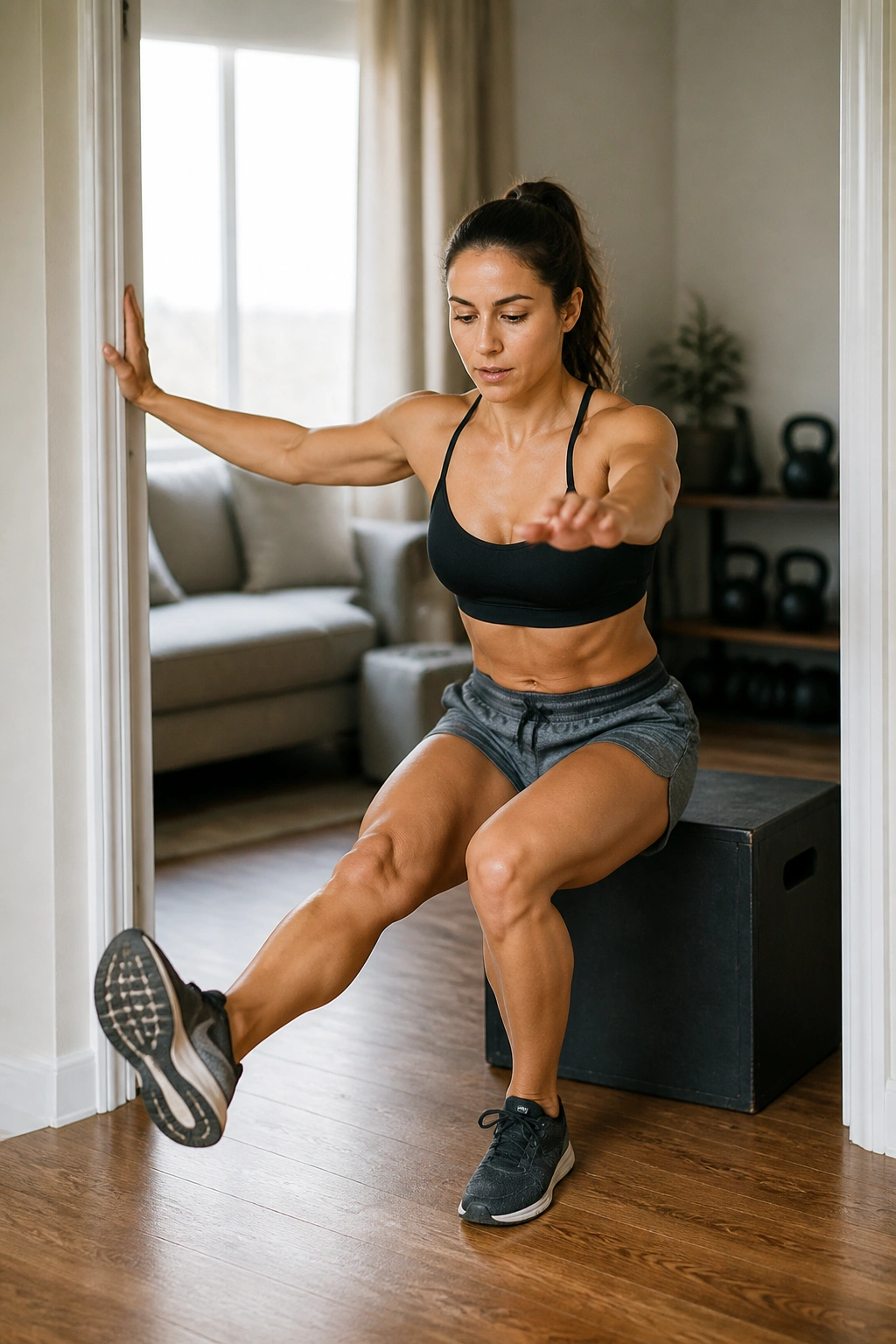
This is the squat variation that separates “I can squat” from “I can control my body.” A pistol squat uses one leg, full stop, and the assisted version lets you hold a door frame, chair, or wall while you lower to a box behind you. It is demanding. It should be.
How to keep it safe
- Use a box height that lets you keep control.
- Hold support with one hand if needed.
- Keep the working heel grounded.
- Stop the descent before you lose balance.
The key is control, not heroics. If the knee caves in or the torso folds hard, raise the box. A good assisted pistol squat to box feels smooth and deliberate, almost slow. That is the version worth training.
25. 1.5-Rep Squat
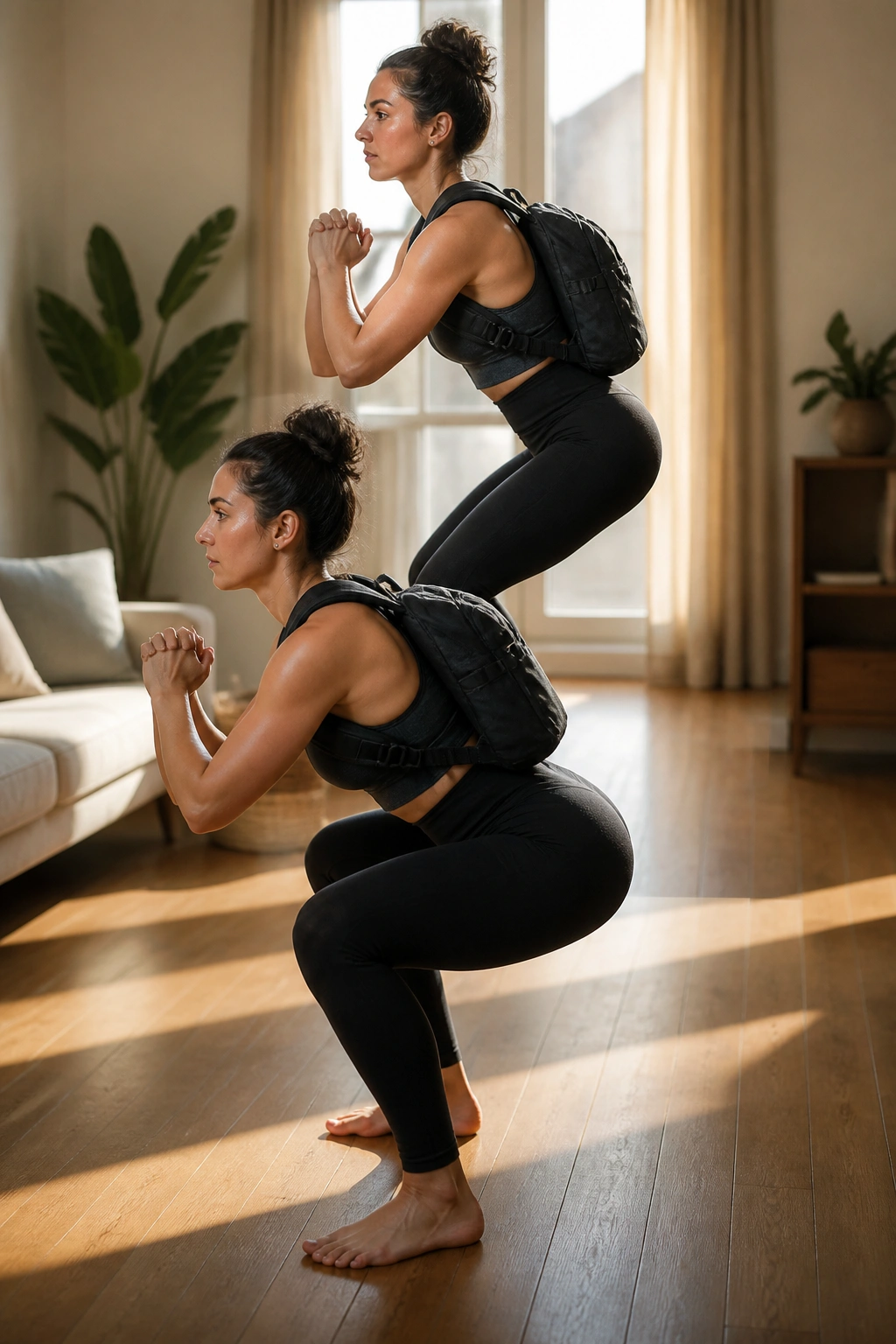
A 1.5-rep squat means you go all the way down, come halfway up, go back down again, then stand. One rep. That half rep in the middle changes the whole exercise because it keeps the muscles under tension where they usually want a break.
How to count one rep
- Squat down to full depth.
- Come up halfway.
- Lower back to the bottom.
- Stand all the way up.
This is one of the best squat variations for women at home when the goal is more time under tension without more weight. Bodyweight 1.5 reps can feel brutal in a good way. Add a backpack or goblet load and it gets serious fast.
Keep your breath steady and your knees honest. If the middle half-rep turns sloppy, shorten the range a little and clean it up.
Final Thoughts
The best home squat is the one you can repeat with clean form, not the one that looks most advanced on camera. A chair, a band, a backpack, or a slower tempo can change the work more than another ten flashy reps ever will.
If you’re planning a lower-body session at home, mix one basic squat, one side-to-side pattern, one loaded version, and one hold or pulse. That gives you strength, control, and a little burn without making the workout feel crowded. Simple setup. Better results.
And if your body likes one variation more than the others, keep it. That’s not weakness. That’s useful information.
