



There is a lingering myth in the fitness world that to build thick, powerful legs, you need to load a barbell with hundreds of pounds of iron or constantly hunt for heavier dumbbells. People stare at squat racks as if they are the only gateway to athletic development, ignoring the fact that your own body weight is a sophisticated tool. If you know how to manipulate leverage, tempo, and angle, you can trigger muscle growth and endurance without ever touching a piece of gym equipment.
Mastering the mechanics of the lower body does not require a fancy setup. It requires a floor, a little bit of space, and an honest assessment of your current capability. When you remove external weight, you are forced to confront your weaknesses. You cannot hide behind heavy plates if your stabilizer muscles are weak or your range of motion is limited. This is exactly why bodyweight squats—when performed with intent and technical precision—are often more revealing than weighted variations.
You might be looking for a way to stay consistent while traveling, or maybe you simply prefer the freedom of training in your living room. Whatever the reason, the following list covers the spectrum of intensity, from foundational movements that teach your nervous system how to fire the correct muscles, to advanced unilateral variations that will challenge even the most experienced lifter. Pay attention to the form cues, focus on the sensory feedback in your muscles, and remember that quality of movement always beats quantity.
1. The Standard Bodyweight Squat
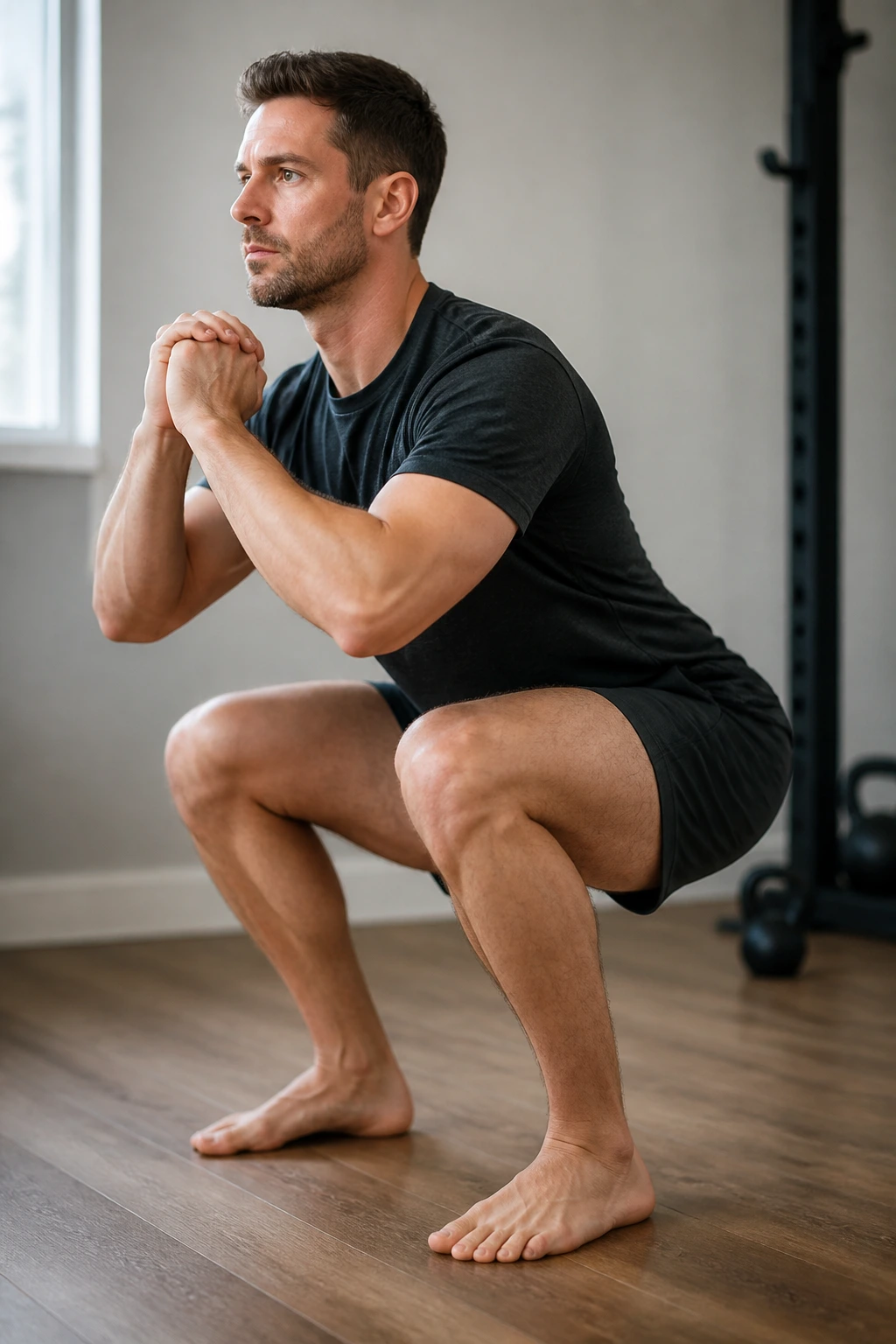
The standard squat is the foundation upon which every other leg movement is built. If you cannot perform a technically perfect squat without weight, you have no business trying to load a barbell. The goal here is simple: learn to hinge your hips and drop your glutes back while keeping your chest upright and your heels firmly planted.
Why This Is Essential
Most people make the mistake of letting their knees cave inward or lifting their heels as they descend. By focusing on keeping your feet shoulder-width apart and driving through the entire foot, you engage the quads, hamstrings, and glutes evenly. It is a full-body movement that prepares your nervous system for more complex variations.
How to Execute Properly
- Stand with feet shoulder-width apart, toes pointed slightly out.
- Keep your chest high and your eyes fixed on a point in front of you.
- Initiate the movement by pushing your hips back as if sitting into an invisible chair.
- Lower until your thighs are parallel to the floor, or slightly below if your mobility allows.
- Drive upward through your heels, squeezing your glutes at the top.
Pro tip: Imagine you are trying to spread the floor apart with your feet as you stand up. This cue activates the muscles on the outside of your hips, keeping your knees stable and preventing them from caving in.
2. Sumo Squat
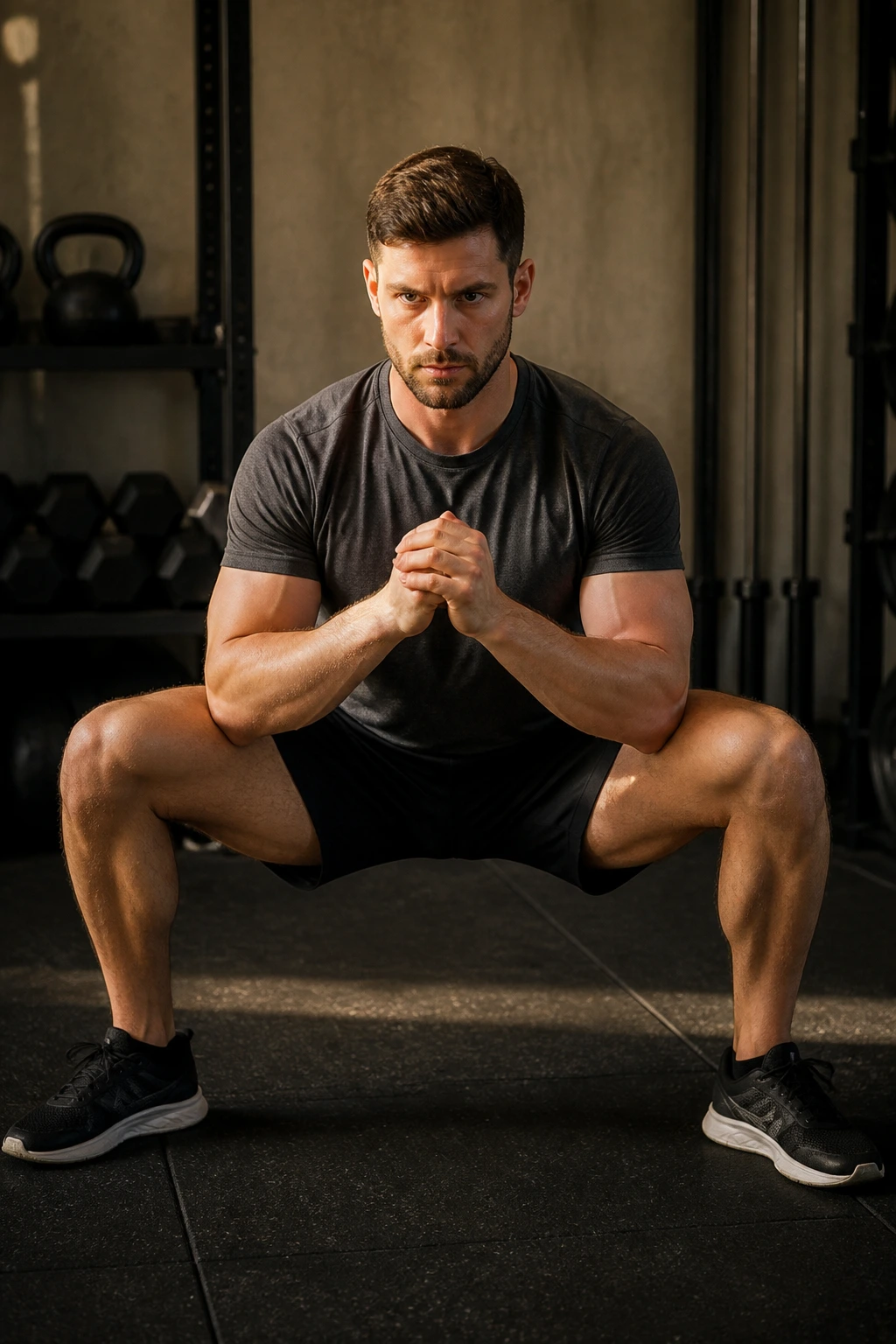
The sumo squat shifts the emphasis from the front of the legs to the inner thighs and the glutes. By widening your stance and pointing your toes outward, you force your adductors to work much harder to stabilize your body throughout the descent and ascent.
Mechanics of the Wide Stance
Because your base of support is wider, you have to work harder to maintain balance. You will notice that you cannot sink quite as deep as you might with a standard stance because of the tension placed on your inner thigh muscles. This is exactly what you want. The restriction in depth is a sign that the target muscles are doing their job.
Focus Areas
- Keep your torso perfectly vertical.
- Do not let your knees track past your toes more than necessary.
- Squeeze your inner thighs at the peak of the movement.
- Maintain a slow, controlled tempo.
If you struggle with knee pain, pay extra attention to your foot angle. You do not need to turn your toes out to ninety degrees. Find an angle where your knees track directly over your middle toes. If they track inside your toes, widen your stance or reduce your turn-out.
3. Jump Squats
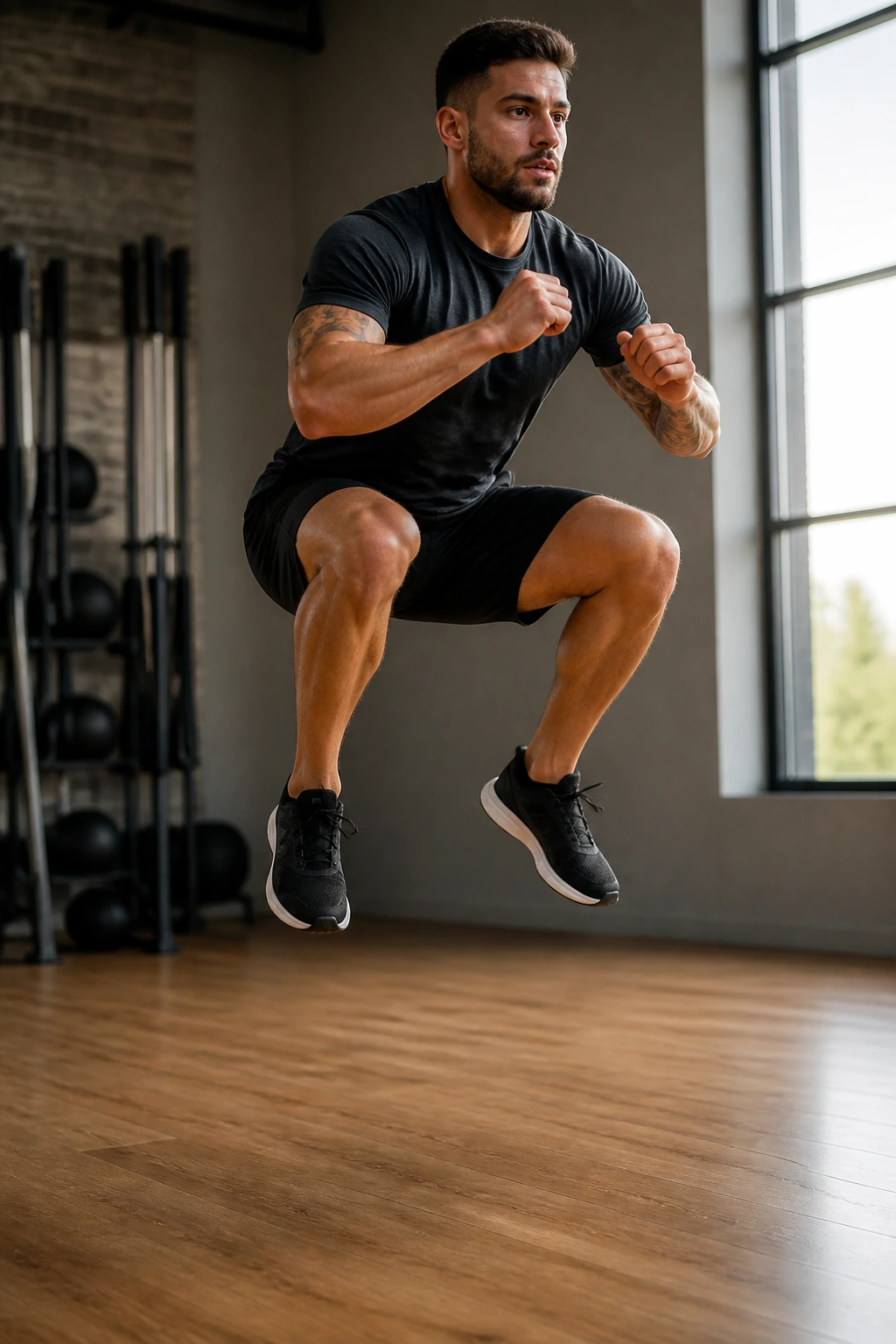
Sometimes, you need to move fast. Jump squats take the standard squat and introduce a plyometric element, forcing your legs to produce force rapidly. This builds explosive power and helps condition your cardiovascular system in a way that slow, controlled reps simply cannot match.
The Power of Explosiveness
The key to a successful jump squat is not how high you jump, but how soft you land. Your body must act like a spring. When you land, you should immediately absorb the impact by sinking back into the bottom of a squat, turning the kinetic energy of the landing into the potential energy for the next repetition.
Common Mistakes to Avoid
- Landing with locked knees, which puts unnecessary stress on your joints.
- Failing to use your arms to generate momentum.
- Rounding your back during the squat phase.
- Cutting the depth of your squat because you are rushing the jumps.
Think of your landing as a reset. Each rep should start from the bottom position, ensuring you aren’t just “bouncing” off your tendons but actually pushing through your muscles.
4. Pistol Squats
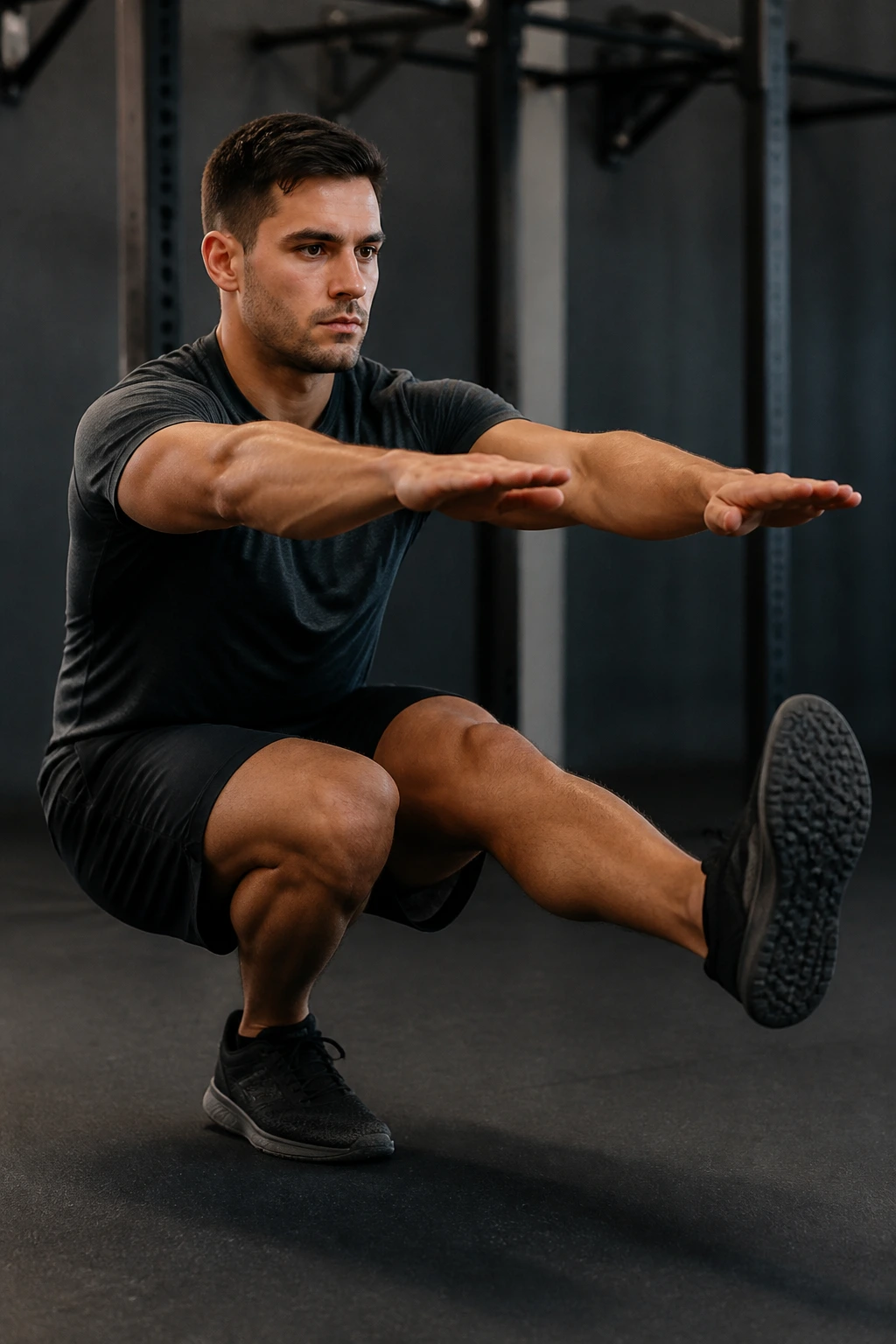
If there is a king of bodyweight leg exercises, the pistol squat is it. It is a single-leg squat where the non-working leg is extended straight out in front of you. This movement requires a combination of extreme quad strength, ankle mobility, and core stability. It is the ultimate test of lower-body control.
How to Build Toward a Full Pistol
Most people cannot jump straight into a full pistol squat. Start by performing the movement while holding onto a doorframe or a sturdy pole. This provides the balance support you need to get used to the depth. Once you can comfortably do ten reps with assistance, try doing them with a slightly elevated heel or by sitting down onto a bench and standing back up on one leg.
Technique Breakdown
- Start standing on one leg.
- Extend the other leg straight, keeping it off the ground.
- Keep your chest upright, resisting the urge to hunch over your knee.
- Lower yourself until your glutes touch your heel.
- Drive up through the single working foot.
Warning: Do not force this if you have knee instability. The torque on the knee joint is significant. Focus on slow, controlled eccentrics (lowering phase) before trying to power through the full range of motion.
5. Bulgarian Split Squats
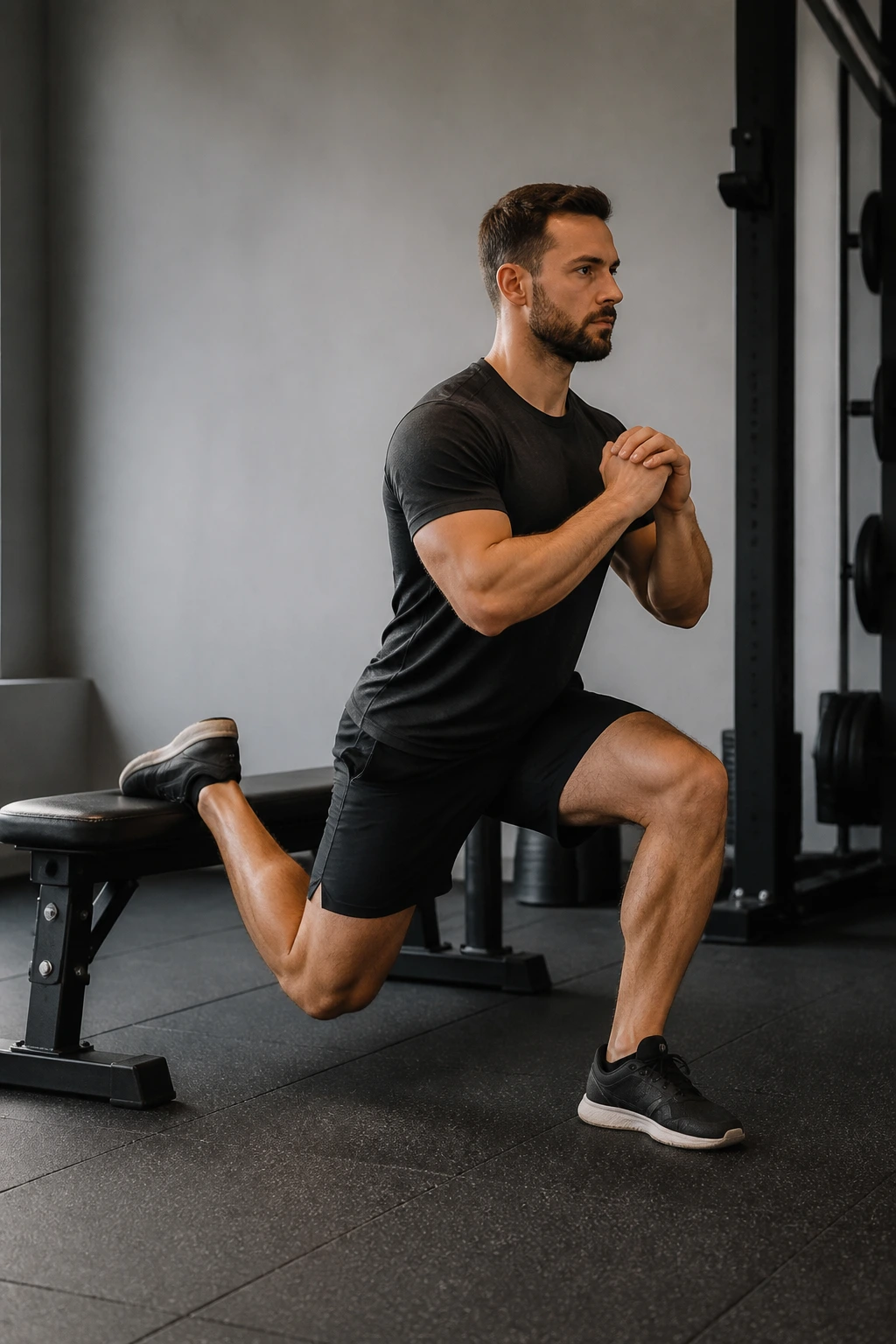
The Bulgarian split squat is universally loathed for a reason: it is incredibly effective. By placing your rear foot on an elevated surface—a couch, a chair, or the edge of your bed—you isolate one leg at a time. This removes the stability of the second leg and forces the front leg to handle the load of your entire body weight.
The Setup Matters
The distance of your front foot from the bench changes which muscles take the brunt of the work. If your foot is too close to the bench, your knee will travel far forward, heavily targeting the quads. If your foot is further out, you will feel a deeper stretch and engagement in your glutes and hamstrings.
Performance Cues
- Keep your hips square. Do not let one side drop.
- Lean your torso slightly forward to bias the glutes.
- Keep your torso upright to bias the quads.
- Ensure your front heel stays pressed into the floor for the duration of the set.
This exercise often exposes muscle imbalances. If your left leg is significantly weaker than your right, perform your sets on the weaker side first, then match that number with your stronger side.
6. Curtsy Squats
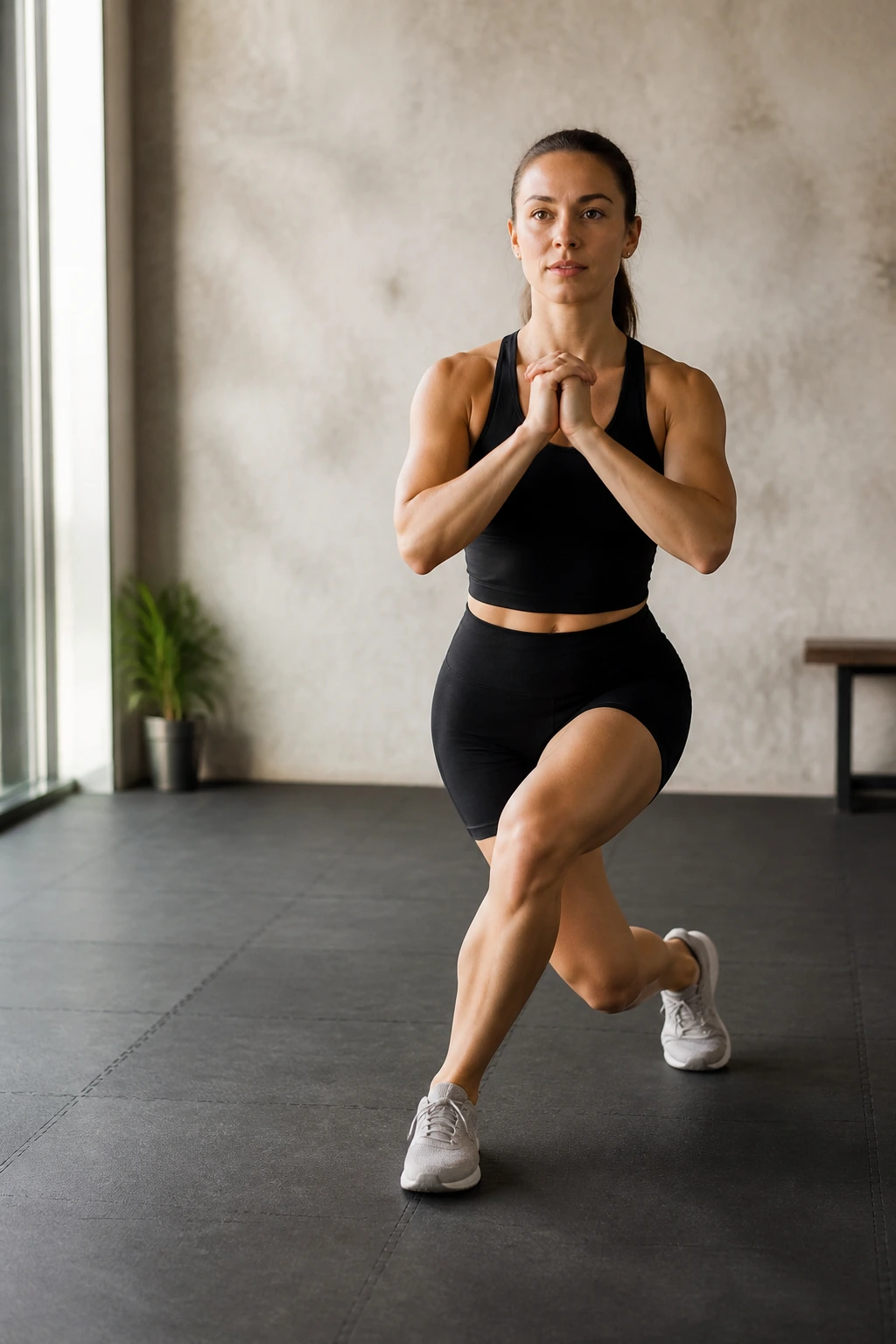
Curtsy squats look a bit like a dance move, but they are a fantastic tool for targeting the glute medius—the muscle responsible for hip stability and the “side” curve of the glute. By crossing one leg behind the other, you change the angle of the hip joint and force those stabilizer muscles to fire.
Why They Work
When you perform a standard squat, you move in the sagittal plane (front to back). When you perform a curtsy squat, you are moving slightly in the frontal plane, which is often neglected. This helps prevent knee issues by strengthening the muscles that keep your pelvis stable when you walk or run.
Proper Execution
- Start from a standing position.
- Step your right foot back and across behind your left leg.
- Lower your hips until your left thigh is nearly parallel to the floor.
- Keep your chest facing forward; do not twist your torso.
- Push through the left heel to return to the standing position.
This is not a race. Because the movement is awkward, you should perform it slowly to maintain control. If you lose your balance, slow down further.
7. Prisoner Squats
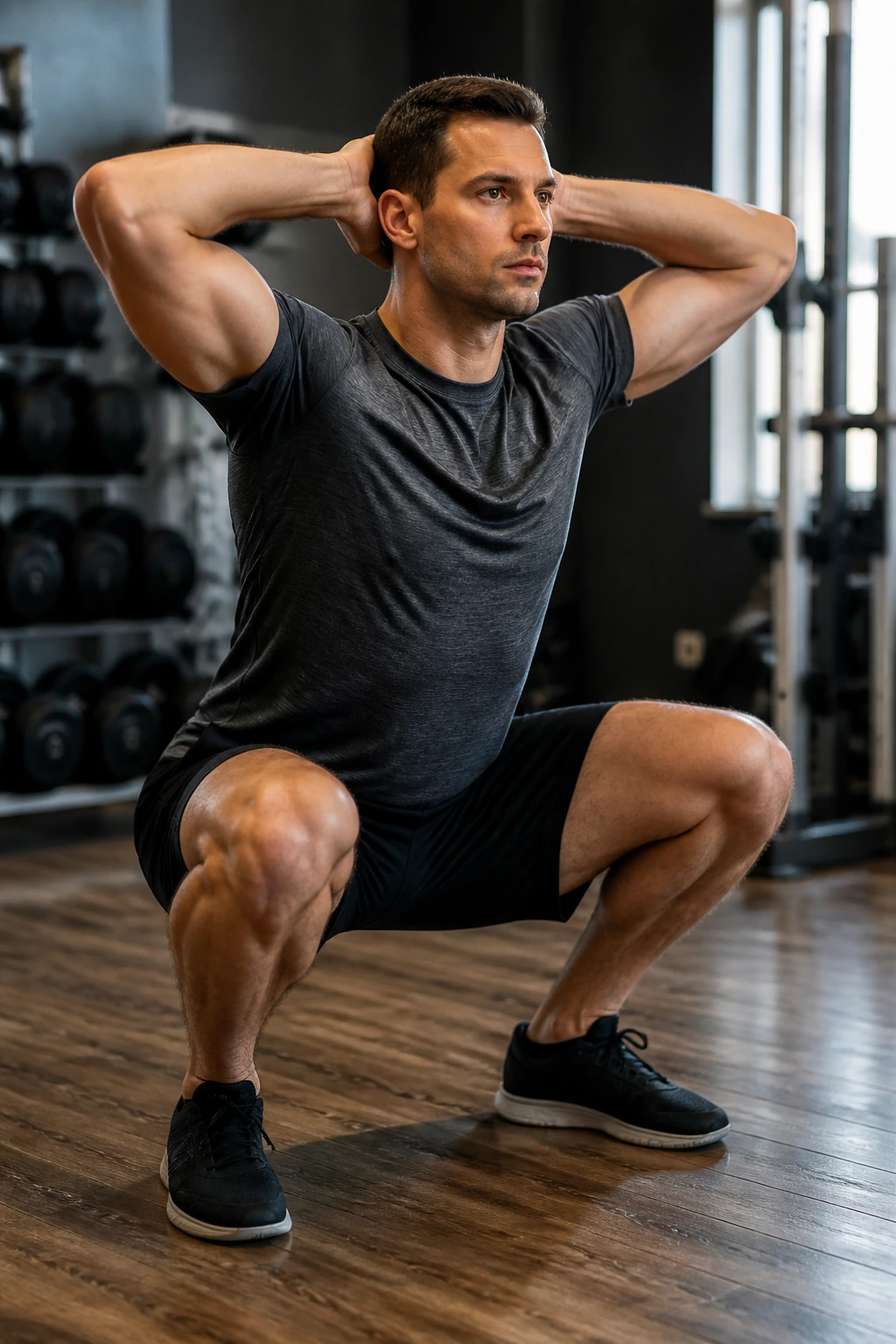
Prisoner squats are performed with your hands clasped behind your head, elbows flared out. This position forces your chest to stay open and prevents you from hunching over, which is a common cheat in standard squats. It requires significantly more upper-back and core engagement than the standard version.
The Thoracic Advantage
By locking your hands behind your head, you create a rigid upper body. If your thoracic spine (the upper back) is stiff, you will immediately feel it. This exercise is excellent for improving posture and thoracic mobility while getting a solid lower-body workout.
Key Points to Remember
- Do not pull on your neck. Your hands are just resting lightly on the back of your head.
- Keep your elbows pulled back.
- Drop your hips straight down, not back.
- Maintain a proud chest throughout the entire range of motion.
If you find yourself tipping forward, widen your stance slightly. The prisoner squat is meant to be a test of your vertical torso control.
8. Box Squats (Chair Squats)
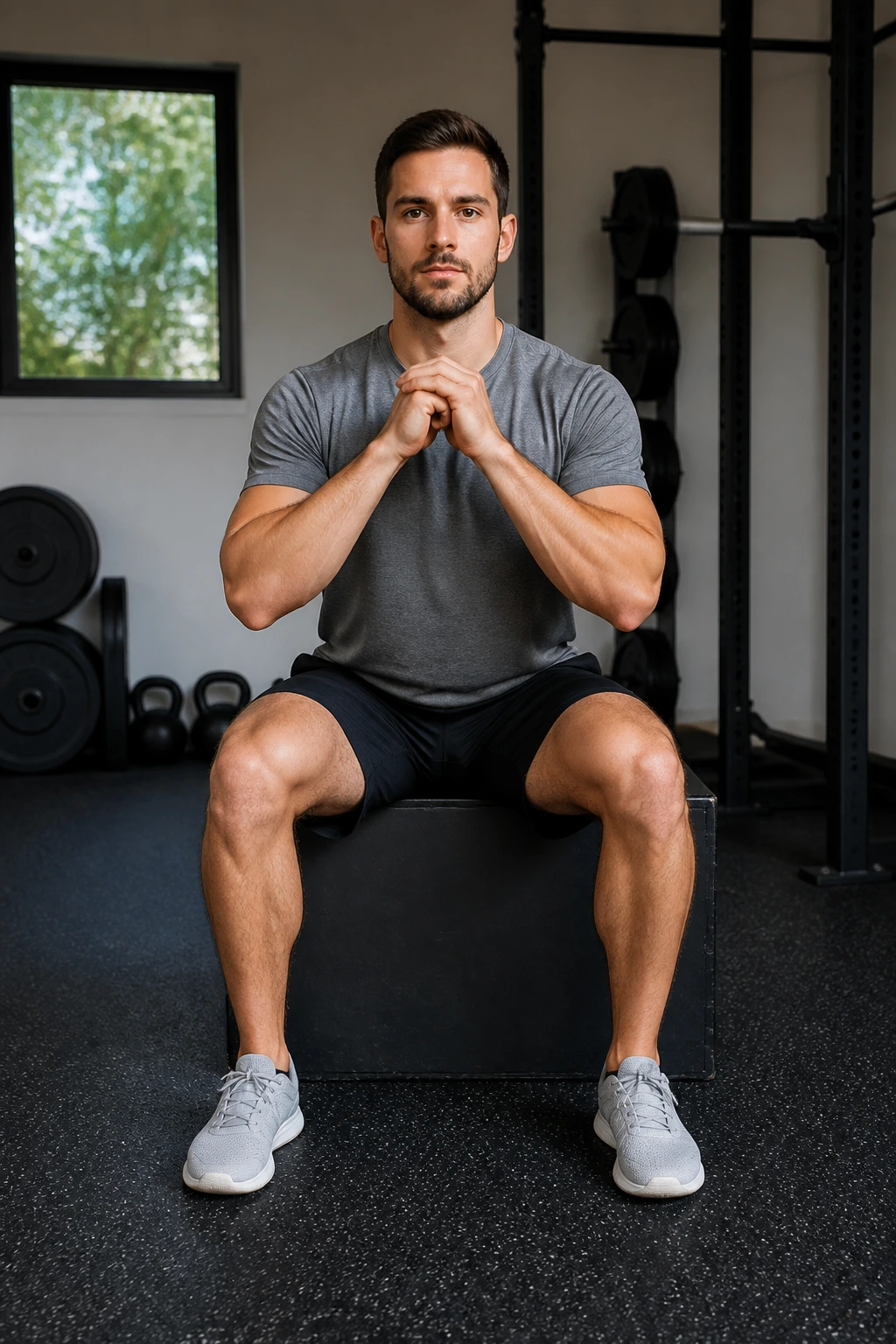
Using a box, chair, or bench allows you to learn how to sit back properly without the fear of falling backward. By sitting down to a fixed height, you can pause at the bottom, break the eccentric-concentric chain, and then explode upward. It effectively removes momentum from the equation.
Breaking the Chain
The hardest part of a squat is the transition from the lowering phase to the lifting phase (the bottom). Most people use a bounce at the bottom to get help. By sitting down and briefly pausing on the bench, you force your muscles to generate force from a dead stop. This builds incredible raw strength.
Adjusting for Height
- Choose a surface that puts your thighs at or slightly below parallel.
- Do not “plop” onto the chair. Control your descent all the way down.
- Maintain tension in your core, even while you are sitting for that split second.
- Tap the chair, do not relax on it.
This is the perfect variation for those who struggle with knowing how deep to go or who have knee pain with free-standing squats.
9. Wall Sit
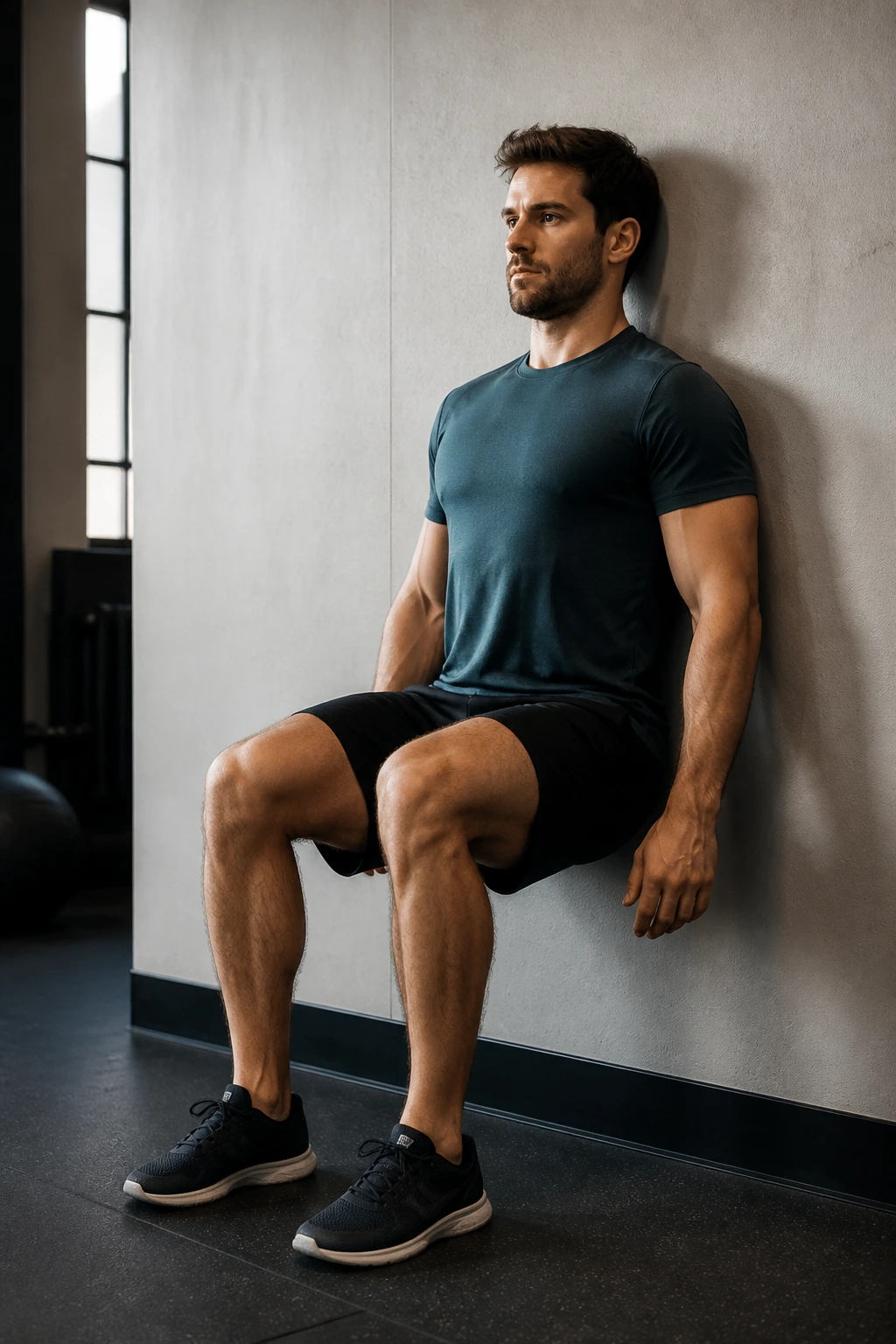
The wall sit is the ultimate test of isometric endurance. You are not moving through a range of motion; you are holding a position against gravity. This variation is famous for burning out the quadriceps and is often used by athletes to improve knee stability and endurance.
The Isometric Burn
Isometrics are unique because they recruit a high number of muscle fibers without the wear and tear of repetitive movement. However, the accumulation of lactic acid will be intense. The mental challenge here is just as important as the physical one.
Perfect Form
- Lean your back flat against a wall.
- Slide down until your knees and hips are at ninety-degree angles.
- Press your lower back firmly into the wall.
- Hold until your quads begin to shake.
Do not be surprised if your legs give out quickly at first. Start with 30-second holds and build up. The goal is to accumulate time, not just suffer through a single long set.
10. Hindu Squats
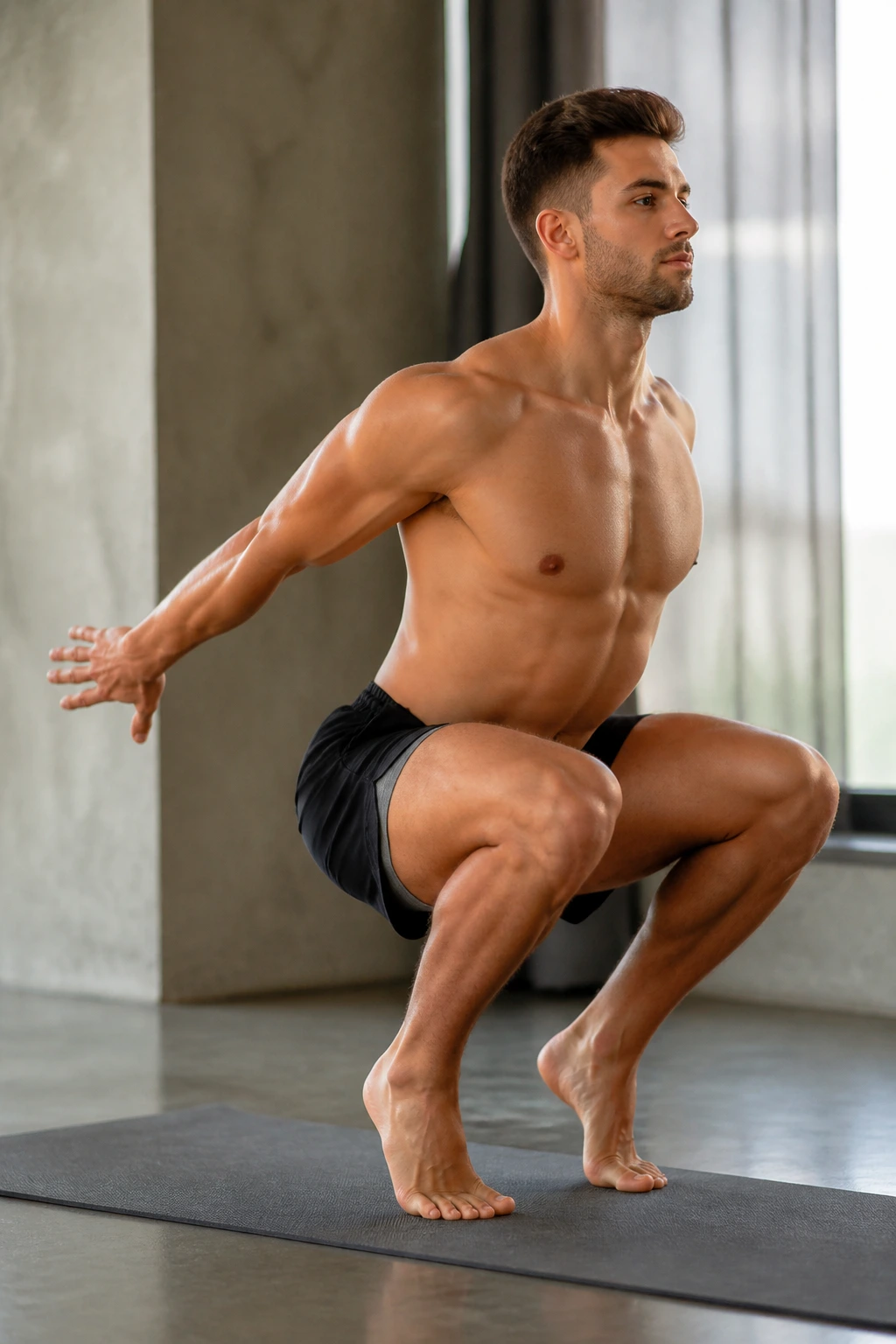
Hindu squats, also known as “Baithaks,” are a classic movement used by wrestlers for decades. Unlike a standard squat where you keep your heels flat, in the Hindu squat, you lift your heels as you descend and your knees travel well forward. It is a rhythmic, high-repetition exercise that builds massive stamina.
The Rhythm Factor
Hindu squats are meant to be done in a flow. As you go down, your arms swing forward; as you stand up, your arms swing back behind you. This rhythmic swinging helps you keep the tempo high. It creates a burning sensation in the quads that is distinct from the static tension of a wall sit.
Important Note on Knees
Because your knees travel over your toes significantly, ensure you have healthy knees before adding high volume to this movement. If you feel any sharp pain, revert to a standard squat. This is a drill for endurance, not for heavy maximal strength.
11. Squat Pulses
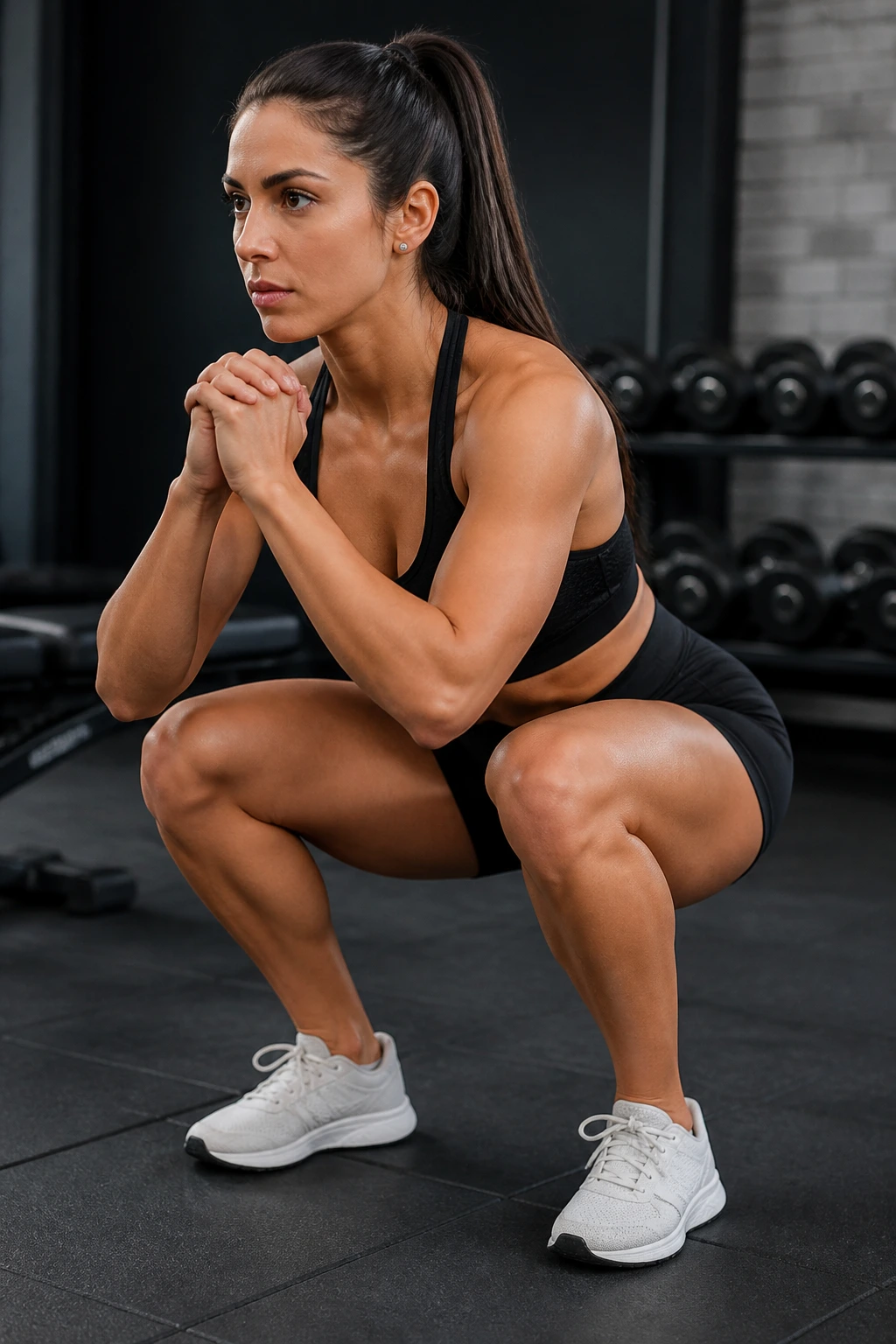
Squat pulses are the secret weapon for increasing time under tension. You descend to the bottom of your squat and perform small, inch-long movements up and down, never coming back to the full standing position. This prevents your muscles from ever relaxing during the set.
Why This Hurts (In a Good Way)
When you reach the top of a standard squat, your quads get a micro-second of relief. Pulses remove that relief. By staying in the “danger zone”—the bottom half of the rep—you keep the blood trapped in the muscle, creating a massive pump and forcing your muscle fibers to adapt to the constant tension.
How to Pulse
- Descend to the bottom of your squat.
- Rise only two or three inches.
- Lower back down.
- Repeat for the designated time or rep count.
- Keep the motion fast and choppy.
Try doing three sets of 20 pulses. Your quads will feel like they are on fire by the end of the second set.
12. Frog Squats
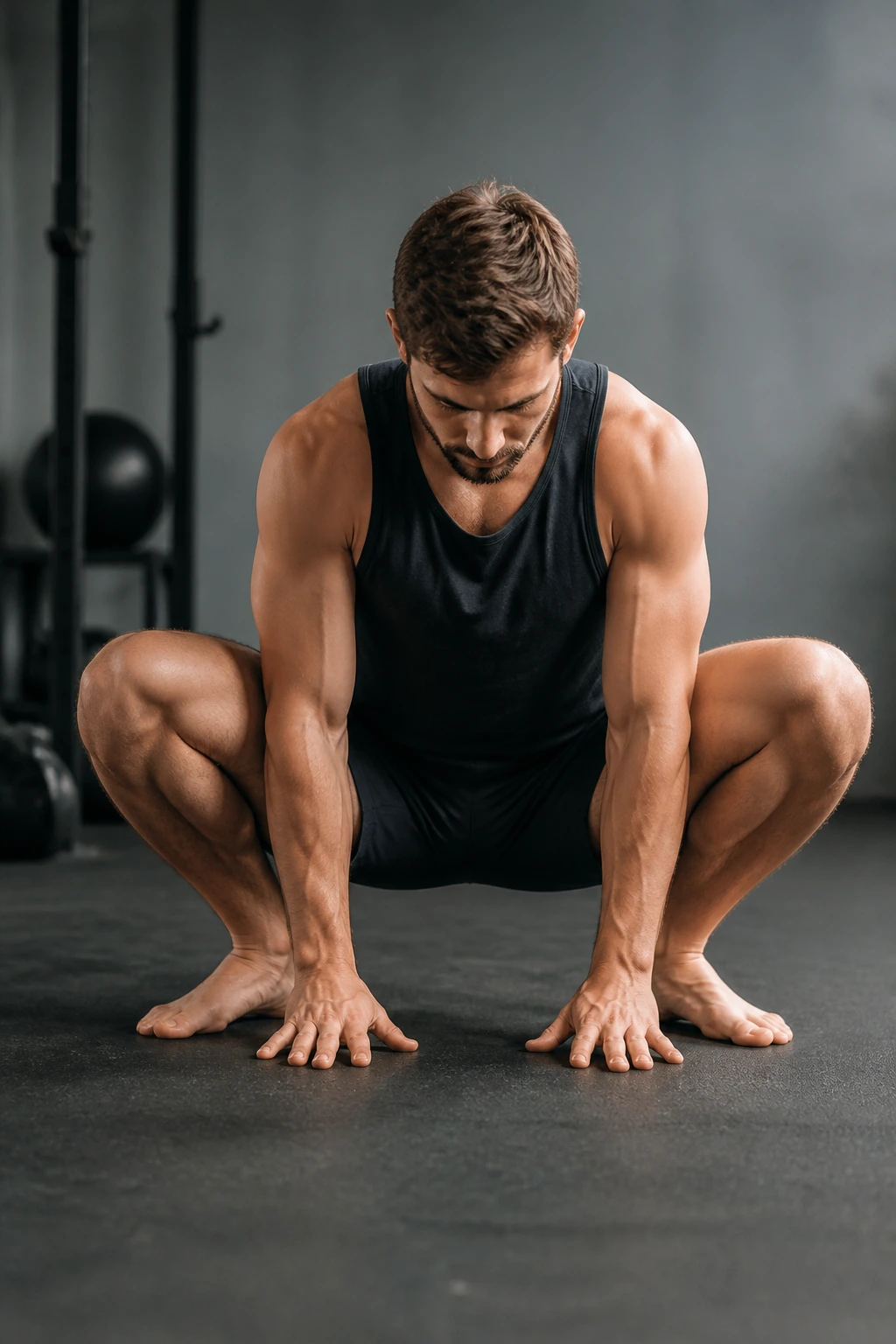
Frog squats are a combination of a squat and a stretch. You stand with a wide stance, toes pointed out, and hands touching the floor. From this deep position, you extend your legs to straighten your knees (lifting your hips) and then sink back down into the deep squat.
The Deep Stretch
This variation is fantastic for opening up the hips and working the hamstrings. Because you keep your hands on the floor (or fingers touching), you can get a deep, almost primal stretch in your posterior chain. It is an excellent mobility and strength hybrid.
Movement Pattern
- Sink into a deep, wide squat.
- Place your hands on the ground between your feet.
- Without moving your hands, push your hips toward the ceiling to straighten your legs.
- Feel the stretch in your hamstrings.
- Sink back down into the squat, chest up.
If you can’t reach the floor, place your hands on a book or a sturdy object. Do not round your back excessively just to reach the floor.
13. Cossack Squats
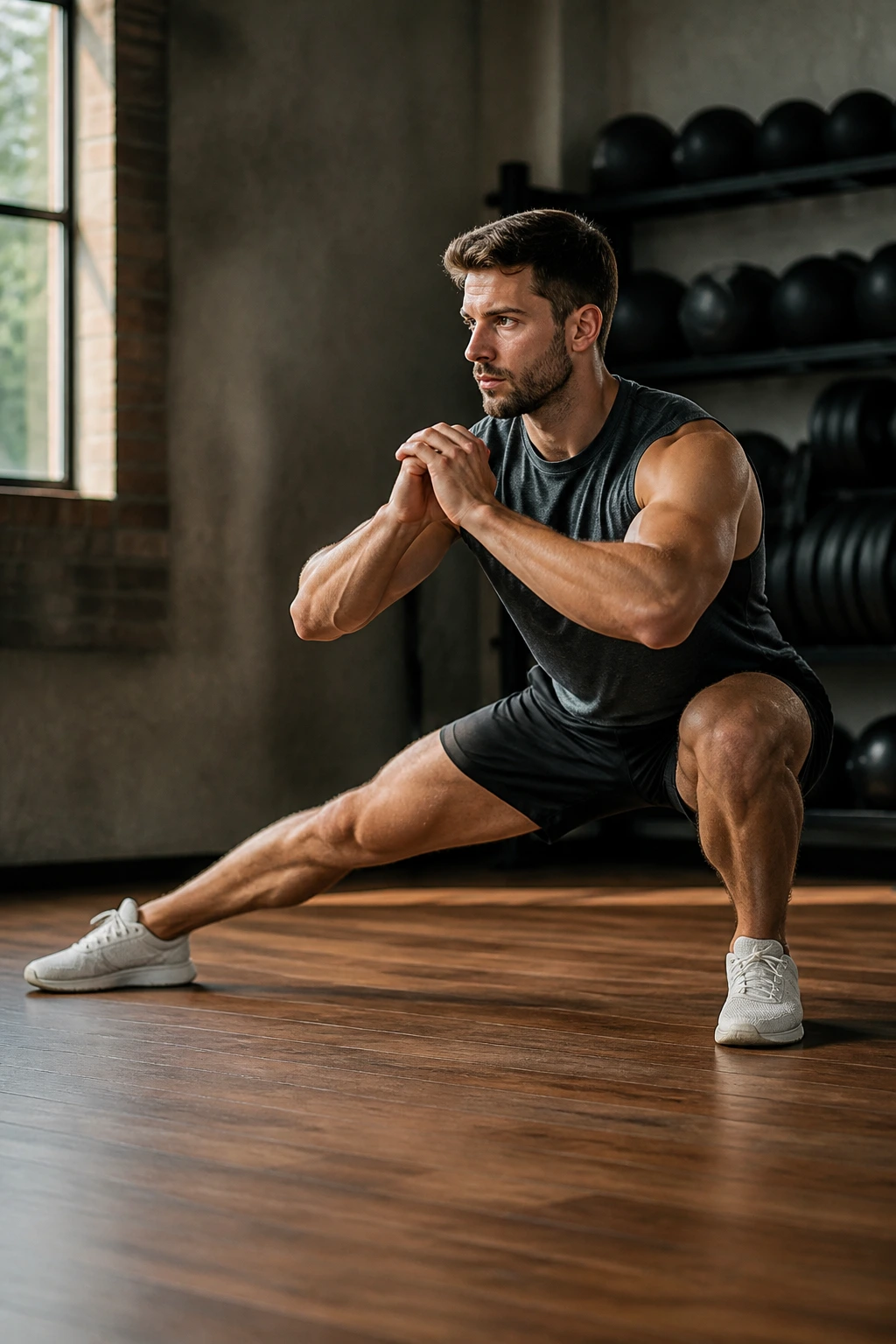
Cossack squats are a lateral movement that targets the hips, groin, and glutes in the frontal plane. You start wide and shift your weight entirely to one leg, bending that knee while keeping the other leg perfectly straight.
The Lateral Difference
Most of our movement in daily life happens forward and backward. Cossack squats challenge you to move side-to-side. This builds incredible mobility in the ankles and hips. It is one of the best exercises for preventing groin strains and improving overall lower-body flexibility.
Technique Tips
- Start with a very wide stance.
- Shift your hips to the right, bending your right knee while keeping the left leg straight.
- Keep your right heel flat on the ground.
- Push through the right heel to return to the center and switch sides.
If you cannot keep your heel on the ground, widen your stance or don’t go as deep. It is better to have a shallower range of motion with a flat foot than to go deep with your heel lifting off the floor.
14. Squat to Calf Raise
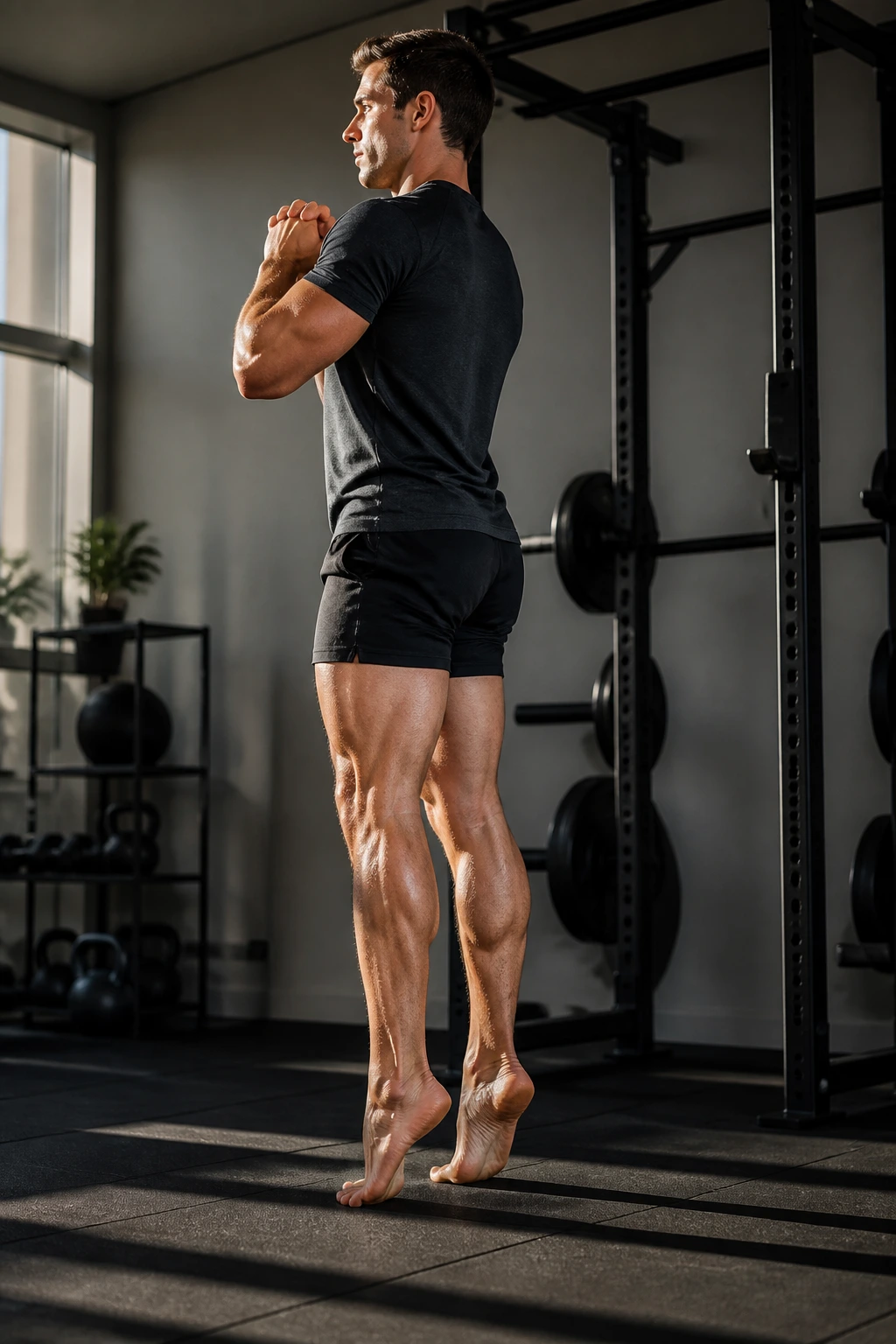
This variation combines two distinct movements into one fluid repetition. You perform a standard squat, and as you reach the full standing position, you immediately transition into a standing calf raise. This engages the entire lower leg chain in a single rep.
The Full Chain Connection
By adding the calf raise, you are forcing your ankles to stabilize your body at the end of the squat. This improves balance and ankle strength, which is often neglected in standard squat variations. It is a subtle change that makes a surprisingly big difference in leg fatigue.
Flow and Control
- Squat down with control.
- Drive up explosively.
- Rise onto the balls of your feet at the top.
- Hold the calf contraction for a split second.
- Lower your heels before the next rep.
This variation requires coordination. Ensure the squat part is solid before you add the calf raise.
15. Pause Squats
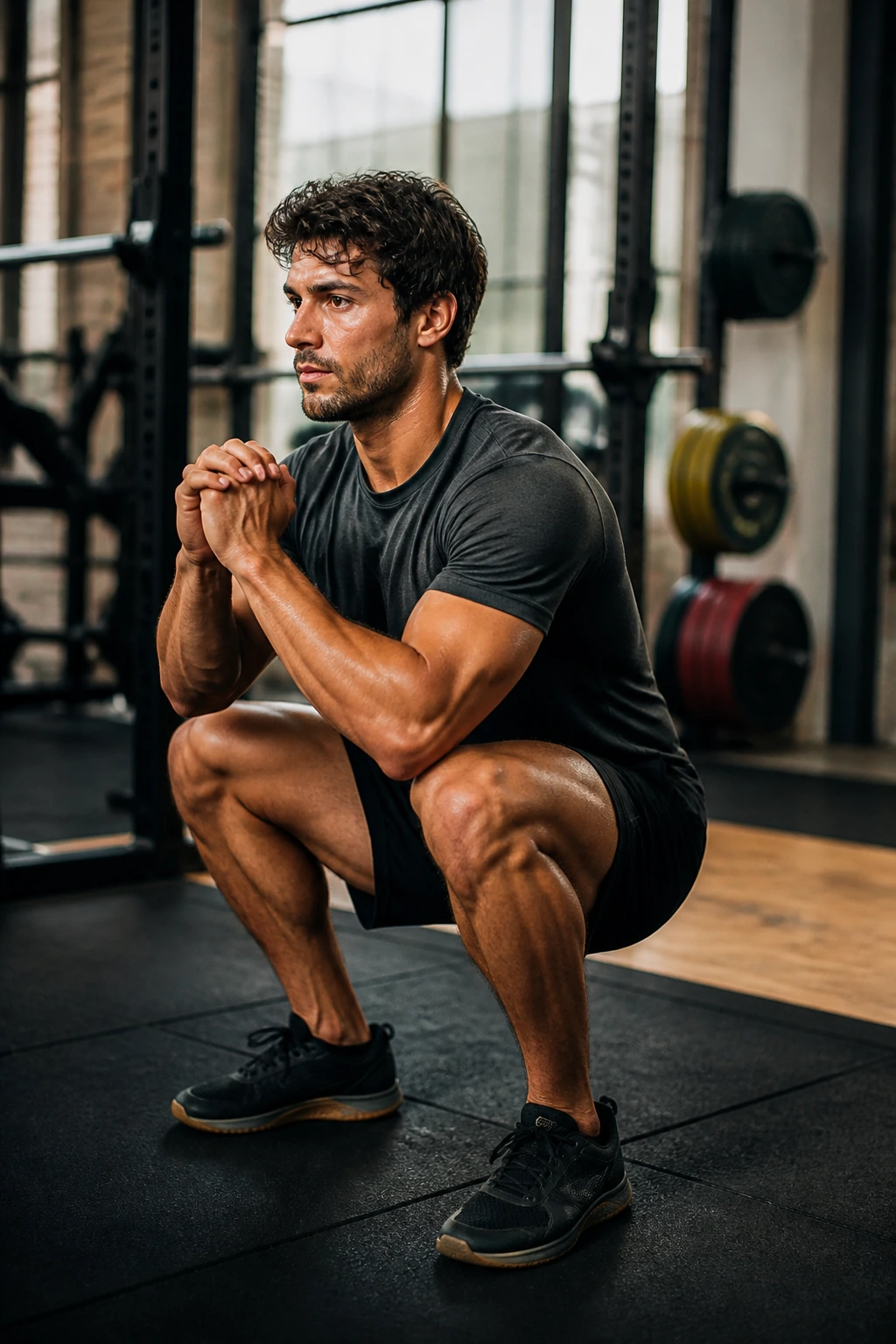
Pause squats are exactly what they sound like: you descend into the squat and hold the bottom position for three to five seconds before rising. This removes the “stretch reflex”—the natural elastic energy of your tendons—which forces your muscles to do all the work from a dead stop.
Mastering the Bottom Position
The bottom of a squat is where most people fail. They bounce out of it to avoid the hard work. By forcing yourself to hold that position, you learn to relax your mind while your body is under stress. It builds confidence in your depth and improves your raw strength.
Holding the Pause
- Lower into your squat steadily.
- Once you reach the bottom, count “one-thousand one, one-thousand two, one-thousand three.”
- Keep your muscles active during the count. Do not just sag into your joints.
- Explode upward.
The longer the pause, the harder the set becomes. Start with a two-second pause and gradually increase it.
16. Narrow Stance Squats
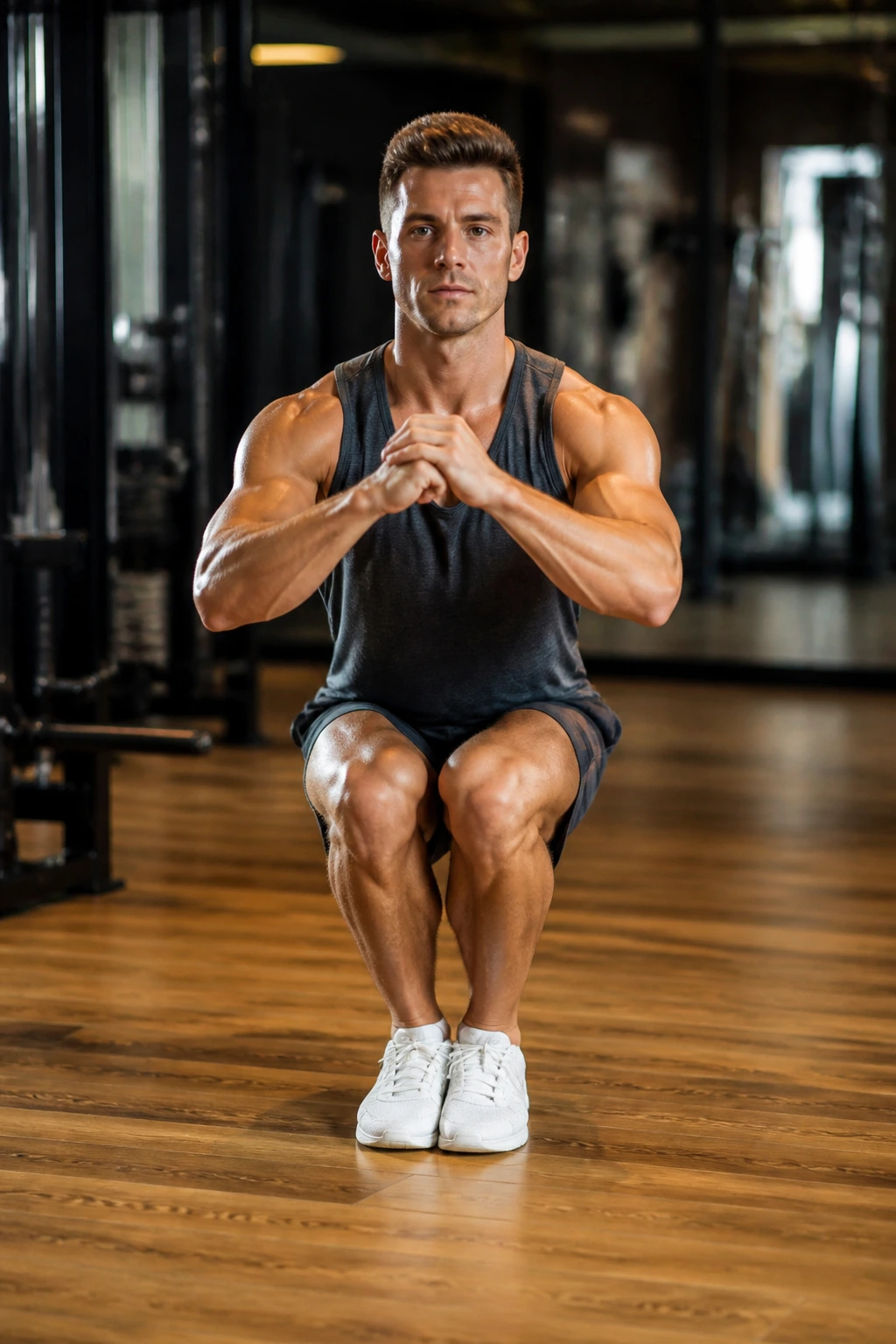
While the sumo squat targets the inner thighs, the narrow stance squat—with feet touching or just a few inches apart—places the load squarely on the outer quads. This is a great way to isolate the quadriceps without needing heavy machines.
Quad Isolation
Because your feet are close together, your knees will naturally travel further forward over your toes. This is desirable in this specific variation. You will feel the tension almost exclusively in the sweep of your quads.
Finding Balance
- Place your feet together.
- Keep your heels flat; if they rise, widen your stance just slightly.
- Lower yourself, allowing your knees to travel forward.
- Keep your torso upright to ensure the quads take the load.
This variation can be challenging for those with limited ankle mobility. If your heels keep lifting, do not force the range of motion. Work on ankle flexibility separately.
17. Shrimp Squats
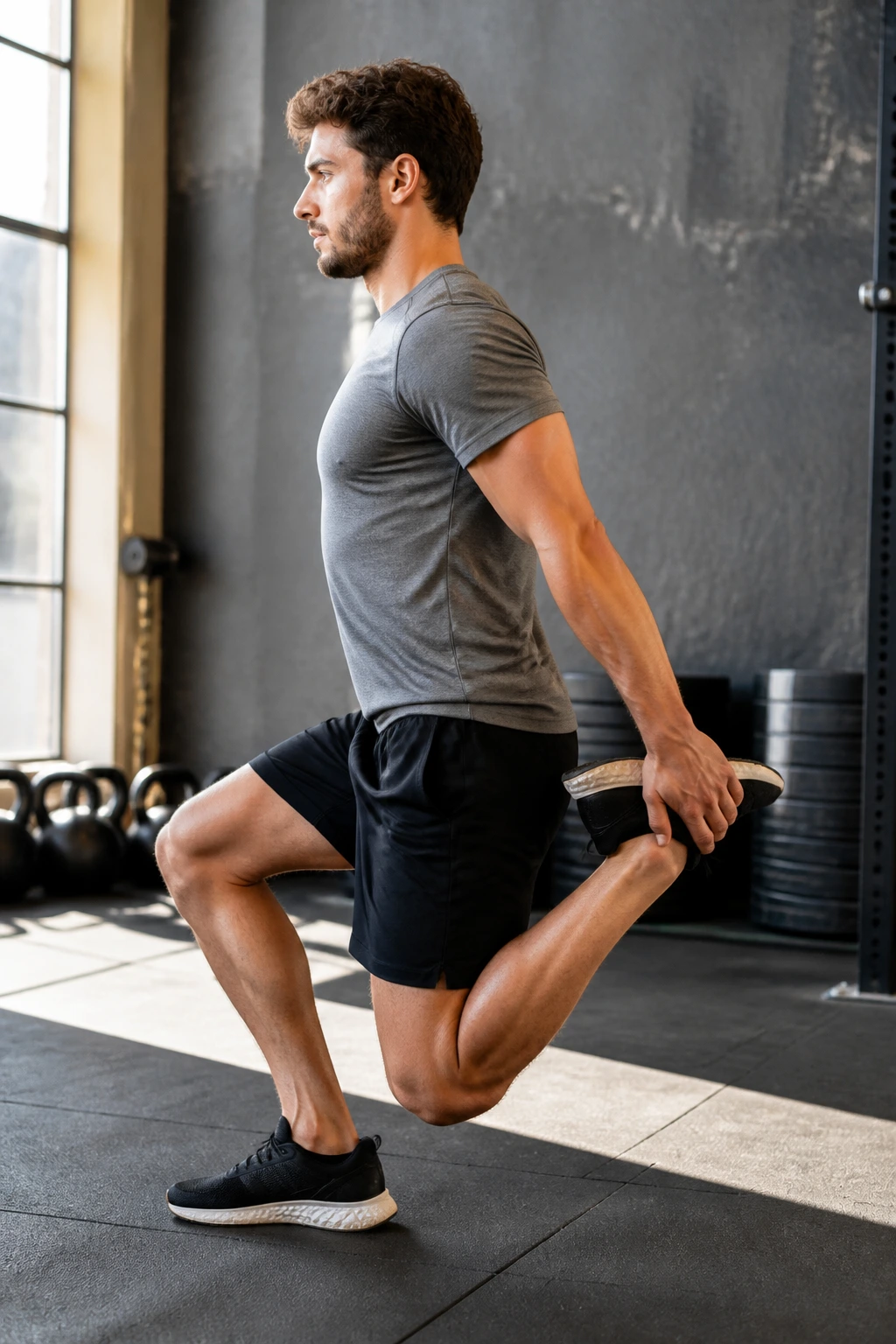
The shrimp squat is a unilateral exercise that feels like a cross between a lunge and a pistol squat. You stand on one leg, bend your other knee to bring your foot behind you (like a quad stretch), and then squat down until your back knee touches the floor.
The Stability Challenge
This movement requires significant balance. By holding your back foot, you are essentially creating a self-assisted balance mechanism. It is a fantastic variation for those who want to build unilateral leg strength but find the pistol squat too difficult.
How to Perform
- Stand on your left leg.
- Bend your right knee and grab your right foot with your right hand behind you.
- Slowly squat down on your left leg, bringing your right knee toward the floor.
- Touch the floor gently with your right knee.
- Push through your left heel to stand back up.
You can hold onto a wall for balance if this is your first time. The goal is to eventually perform it without holding onto anything.
18. Plie Squats
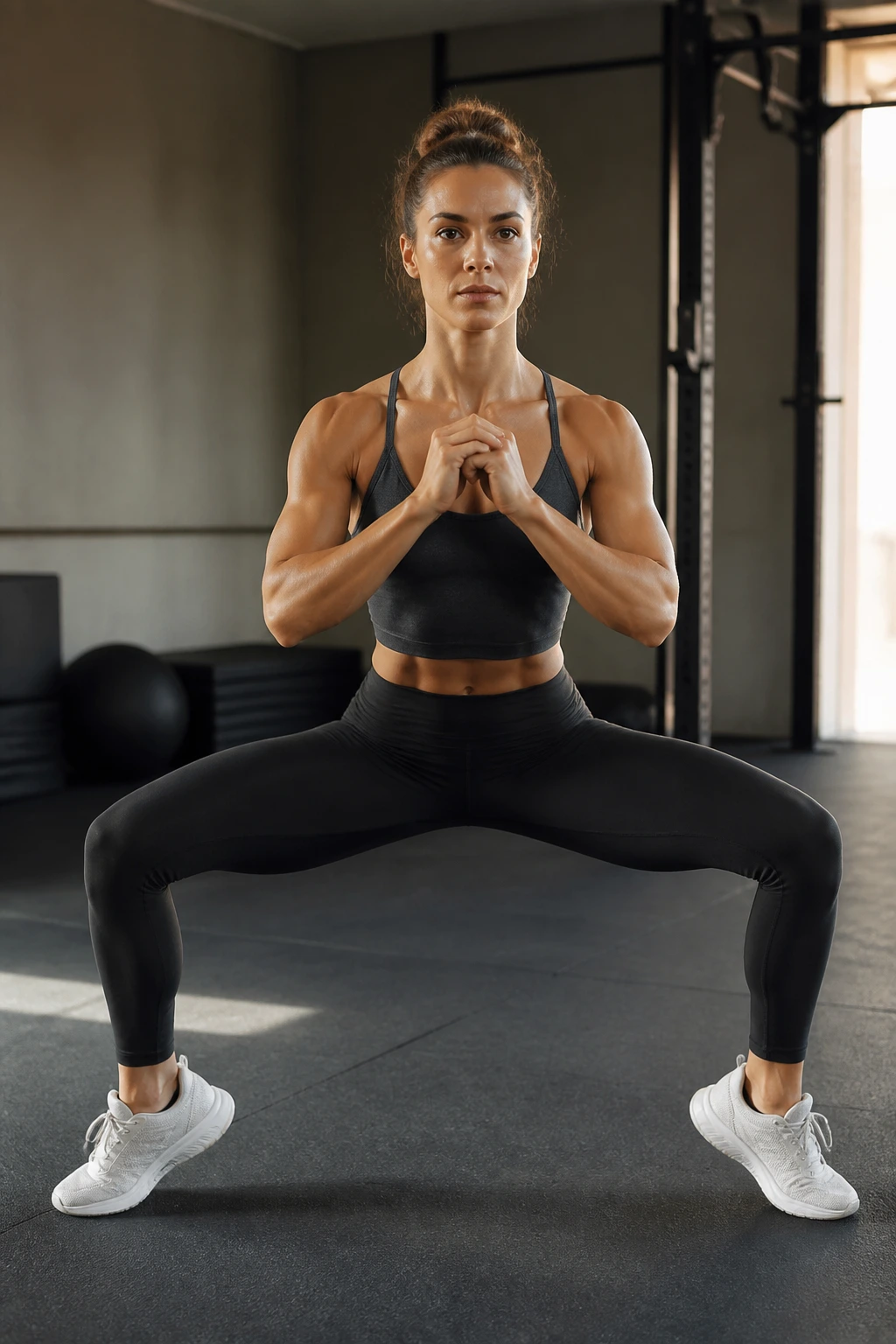
Similar to the sumo squat, the plie squat uses a wide stance with toes turned out. However, the focus here is on the upright torso and the “pulse” style execution that draws inspiration from ballet. It is fantastic for deep adductor activation.
The Ballet Connection
Think of this as a dance-inspired movement. Your goal is to stay perfectly upright, with your glutes tucked slightly under your spine. This changes the angle of the pelvis and emphasizes the connection between your glutes and your inner thighs.
Execution Details
- Widen your stance significantly.
- Point your toes out at a 45-degree angle.
- Lower your hips straight down, keeping your back straight.
- Drive up, squeezing the glutes at the top.
- Maintain a slow, graceful tempo.
It is easy to let your knees collapse inward. Keep pushing your knees out toward your pinky toes for the entire set.
19. Static Split Squats
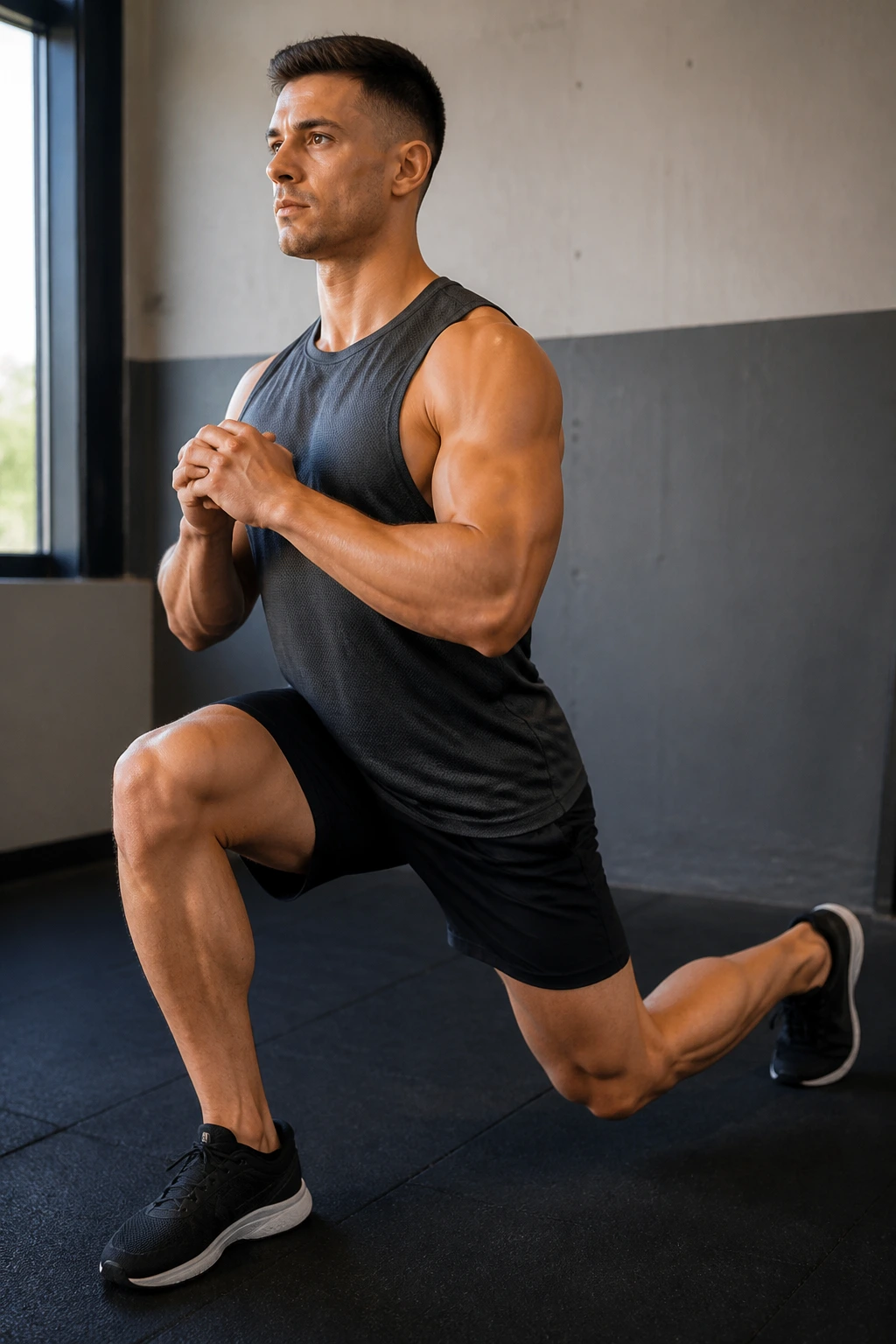
Before you jump into Bulgarian split squats (which require an elevated surface), you must master the static split squat. You assume a lunge position, but you do not step in and out. You simply stay in that lunge stance and move up and down.
Building the Base
This is the safest way to train unilateral strength. Because both feet are on the floor, you have much more stability. You can focus entirely on the depth of the lunge and the engagement of the legs. It builds the tolerance required for the more difficult Bulgarian variation.
The Setup
- Step one foot forward, one foot back.
- Drop your back knee toward the floor.
- Keep your torso upright.
- Perform your reps, then switch legs.
If you want to make this harder, you can perform these with a slow, three-second count on the way down.
20. Squat Jacks
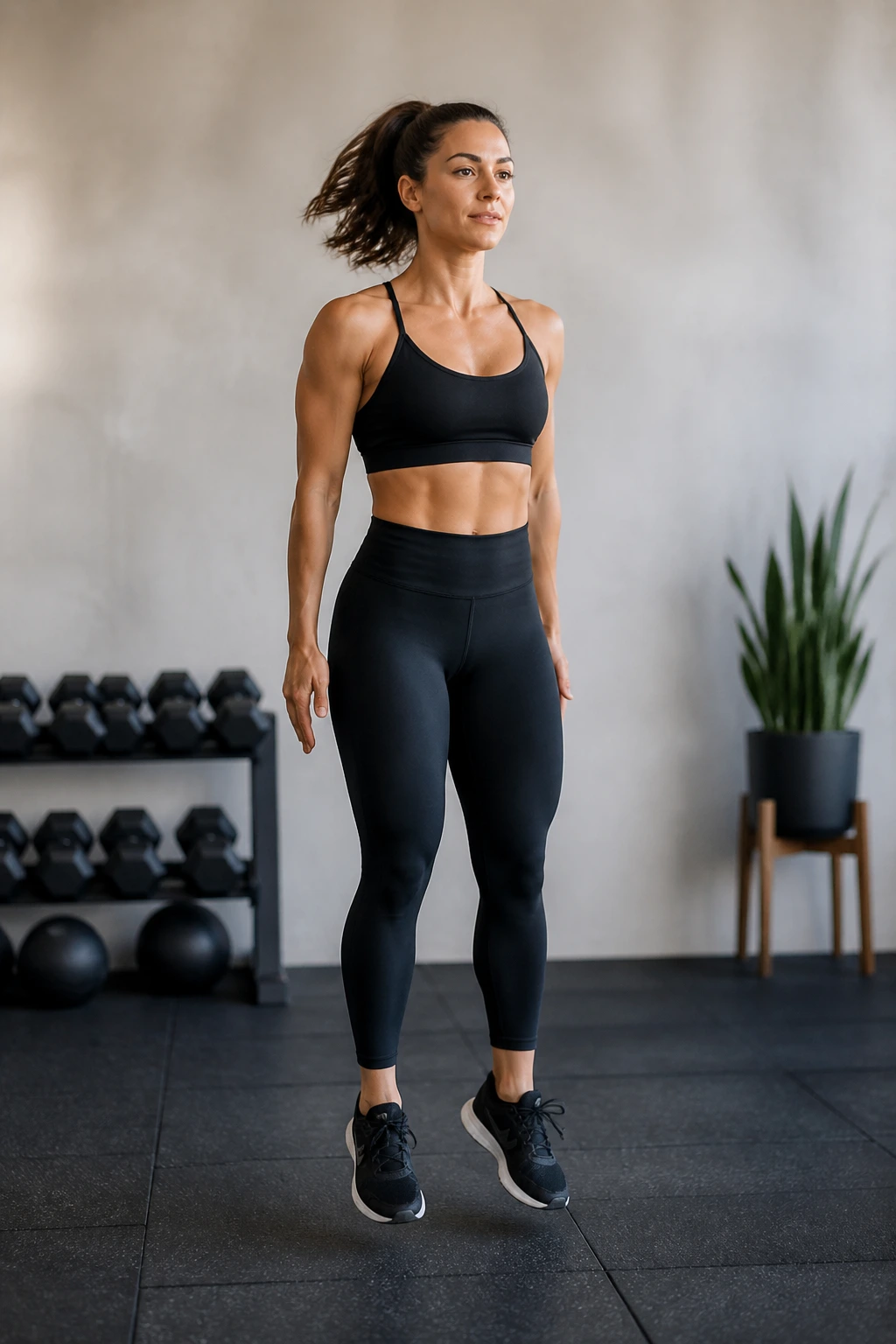
We finish the list with a conditioning-focused variation. Squat jacks are essentially a jumping jack combined with a squat. You start in a narrow stance, jump out into a wide squat, and jump back in. It gets your heart rate up and burns out the legs simultaneously.
The Cardiovascular Burn
This is not a heavy strength exercise; it is a metabolic conditioning move. It is designed to be performed for high repetitions or timed intervals. Your quads will burn, and your lungs will be working hard.
Technique
- Start with feet together.
- Jump your feet wide and land in a deep, wide-stance squat.
- Immediately jump your feet back together.
- Keep your chest up throughout the motion.
This is the perfect movement to use as a “finisher” at the end of a workout to ensure you have completely emptied the tank.
Final Thoughts
You now have a complete arsenal of movements that require nothing but the floor beneath you. Building leg strength is not about the equipment you possess; it is about the intensity you apply to the movement. If you find the standard bodyweight squat becoming too easy, do not look for weights—look for a harder variation.
The beauty of these twenty variations lies in their ability to target your lower body from every conceivable angle. Mix and match them. Use the explosive ones like jump squats and squat jacks to kick off a workout, follow with the strength-based moves like pistols or Bulgarian split squats, and finish with the endurance-based variations like wall sits or squat pulses. Your legs will grow, your stability will improve, and you will never again have to worry about needing a gym membership to get a world-class workout.
