



Leg day often carries a reputation for being the most grueling session in the gym. It is the day you probably dread, but it is also the day that dictates your overall athletic potential. When you build a foundation of lower body strength, you are not just working on how you look in a mirror; you are fortifying your entire kinetic chain. Every heavy lift, every sprint, and even the simple act of standing up from a chair relies on the engine you build through these movements.
Building strong legs requires more than just piling plates onto a barbell and hoping for the best. It requires intention, mechanical discipline, and a willingness to embrace movements that test your stability just as much as your raw power. If you have hit a plateau, or if your knees feel unstable during heavy squats, the solution usually lies in diversifying your approach. True leg development comes from mixing heavy compound lifts with unilateral work that exposes your weaknesses.
Stop looking for a single magic exercise. There is no one movement that covers every angle of your quads, hamstrings, and glutes. Instead, the most effective approach involves selecting a variety of patterns—hinges, squats, lunges, and isolation work—to ensure complete development. Consistency is the only metric that truly matters, so choose a selection of these movements and perform them with absolute control.
1. Goblet Squat
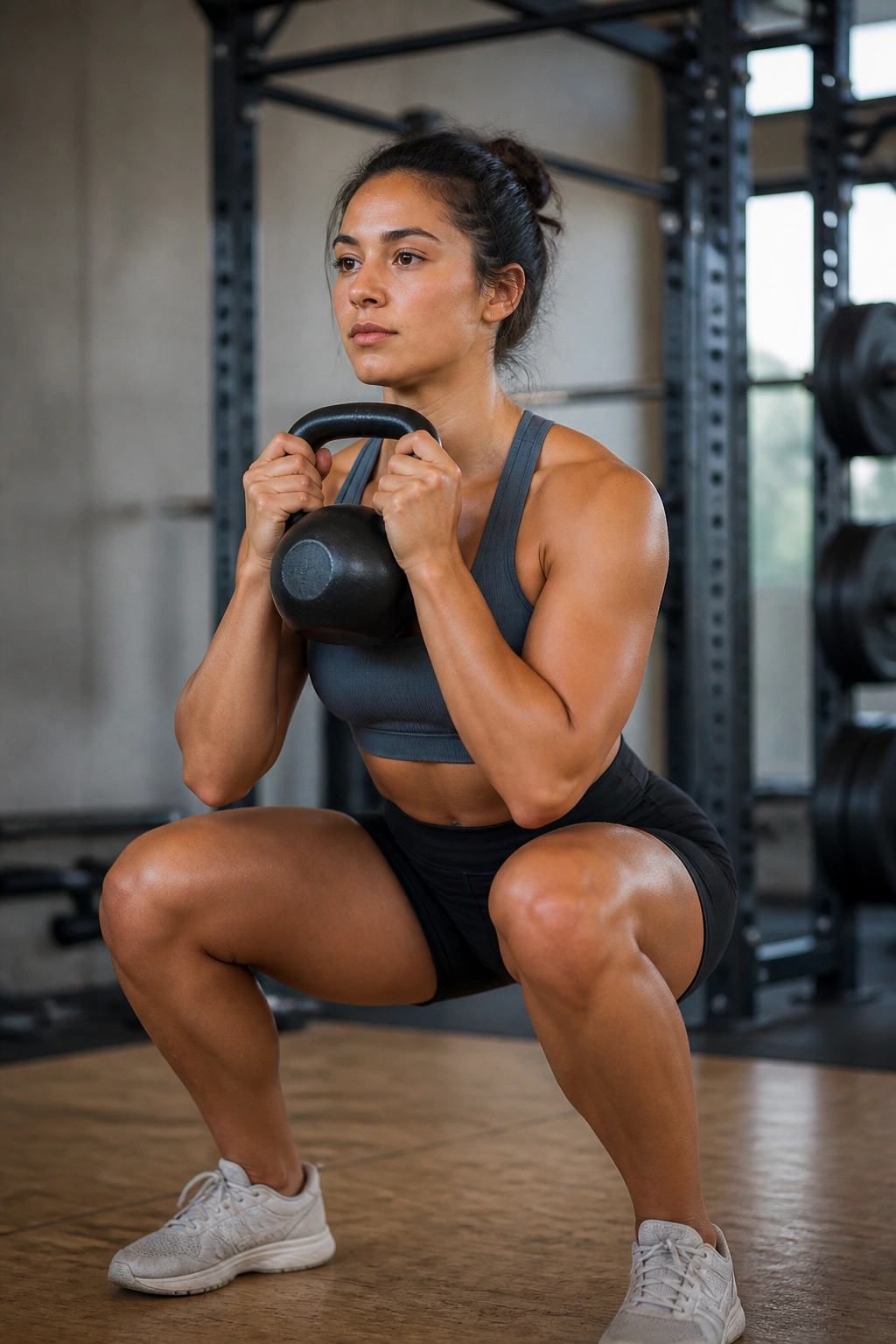
You don’t need a heavy barbell across your back to build serious quad size. The goblet squat is the great equalizer. By holding a kettlebell or dumbbell at chest height, you are forced to maintain an upright torso. If you round your back, the weight pulls you forward immediately. It is a self-correcting movement that teaches you exactly where your center of gravity should be.
Why It Works for Technique
This exercise forces a deep squat pattern that many people cannot achieve with a barbell. The front-loaded weight acts as a counterbalance. You will likely find that you can squat lower—and with better form—than you can with a back squat.
How to Execute It Perfectly
- Stand with your feet slightly wider than shoulder-width.
- Hold the weight against your chest, cupping the top of the kettlebell or the ends of the dumbbell.
- Keep your elbows tucked in and pointing down toward your knees.
- Lower your hips slowly, keeping your heels flat on the floor.
- Pause for one second at the bottom, then drive upward by pushing through your midfoot.
Pro tip: Imagine you are trying to spread the floor apart with your feet as you stand up. This cue activates the glutes and helps keep your knees from caving inward.
2. Romanian Deadlift
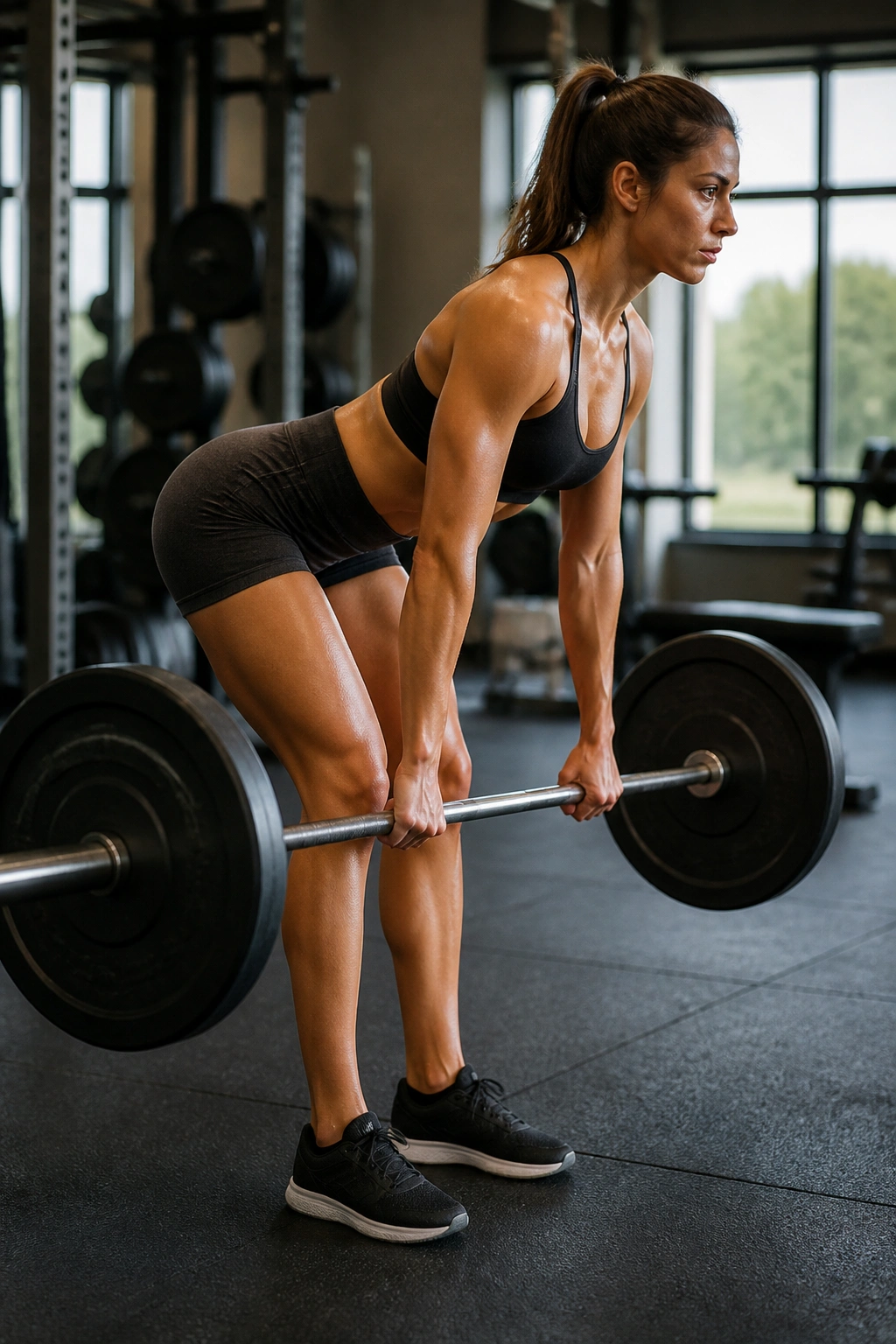
The Romanian Deadlift, or RDL, is arguably the most misunderstood movement in the gym. Most people turn it into a squat by bending their knees too much. In reality, this is a pure hinge pattern. You should feel a deep, intense stretch in your hamstrings, not your lower back. If you aren’t feeling it in your hamstrings, you are likely missing the hinge.
The Mechanics of the Hinge
Think of this move as a horizontal push of your hips. Keep your knees slightly bent—just enough to unlock them—and then push your hips backward as if you are trying to close a door behind you with your glutes. Your torso will naturally lean forward as a result.
Critical Safety Guidelines
- Keep the bar or dumbbells extremely close to your shins at all times.
- If the weight drifts away from your body, your lower back takes the load.
- Stop the lowering phase the moment you lose the tension in your hamstrings or your back begins to round.
- Maintain a neutral spine; keep your chin tucked slightly and look at the floor a few feet in front of you.
This is not a race. Perform these with a slow, controlled negative—taking about three seconds to lower the weight—and a powerful, controlled return to the starting position.
3. Walking Lunges
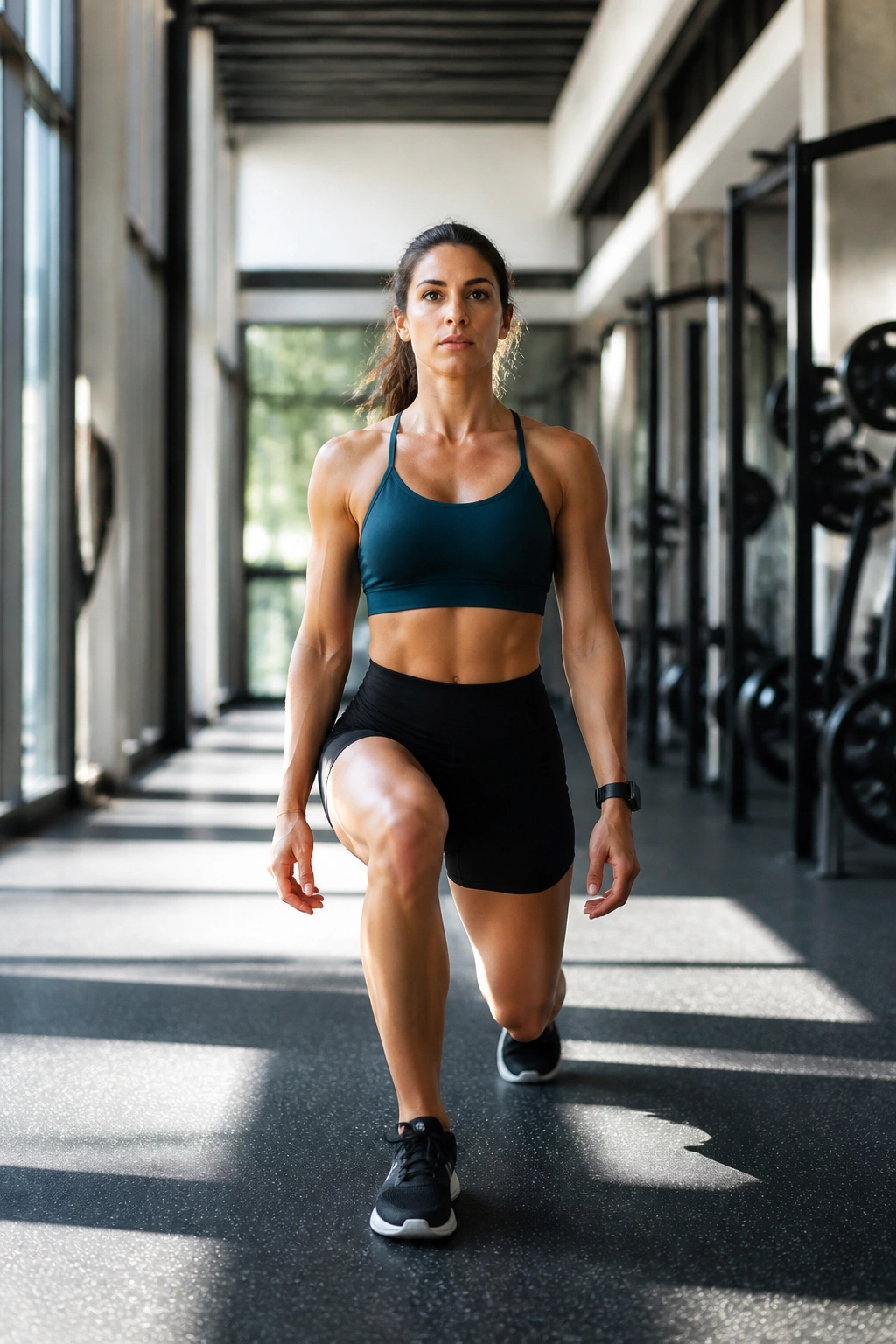
Walking lunges force you to stabilize your entire body with every single step. This is dynamic stability in action. Because you have to reset your balance between each repetition, you recruit more stabilizer muscles than you ever would with a stationary squat.
Why They Are Essential
If you only train with two feet on the ground, you are ignoring unilateral imbalances. Many of us have one leg that is slightly stronger or more coordinated than the other. Lunges highlight these differences immediately. If you wobble on the left side but feel solid on the right, you know exactly where you need to focus your training energy.
How to Maximize the Benefit
- Take a long enough step so that your front shin is vertical at the bottom of the lunge.
- Keep your torso upright; leaning too far forward shifts the focus away from the glutes and quads.
- Do not let your back knee slam into the floor. Aim to touch the floor lightly, or stop an inch above it.
- Push off your front foot to bring your back leg forward into the next step.
4. Bulgarian Split Squat
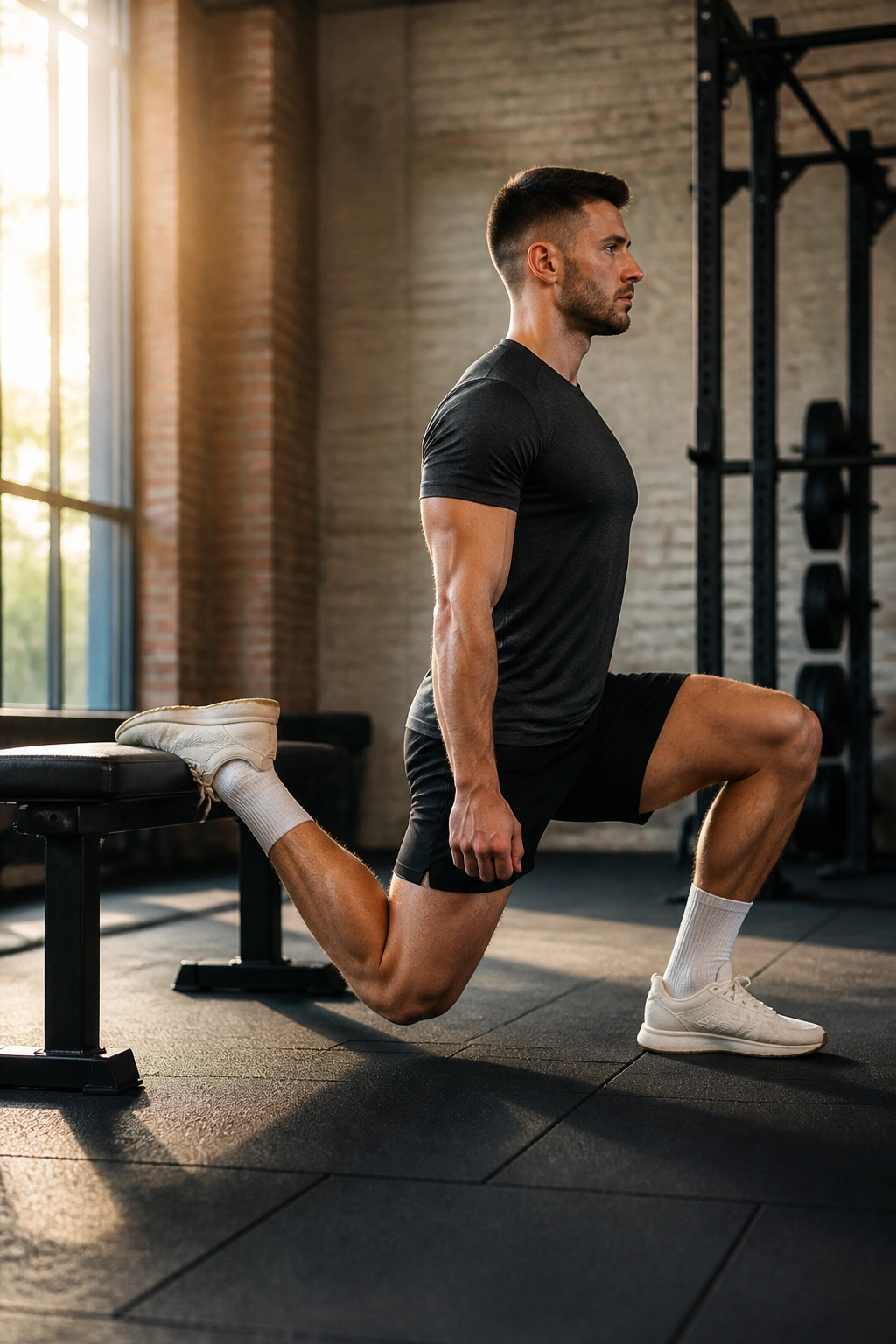
Few exercises are as hated or as effective as the Bulgarian split squat. It is essentially a single-leg squat with your rear foot elevated on a bench. This setup removes the lower back from the equation, placing the entire load directly onto the working leg.
The Intensity Factor
Prepare for discomfort. Because you are training one leg at a time, your heart rate will skyrocket, and the muscle fatigue will set in much faster than with bilateral movements. Do not be surprised if you need to use significantly less weight than you think. This is not about how much weight you can move; it is about how much tension you can apply to the working muscle.
Troubleshooting Your Form
- If you feel it more in your lower back than your legs, lean your torso slightly forward.
- Ensure your front foot is far enough in front of the bench. If it is too close, your heel will lift off the ground, causing knee strain.
- Keep your weight distributed across your entire foot, not just the toes.
5. Leg Press
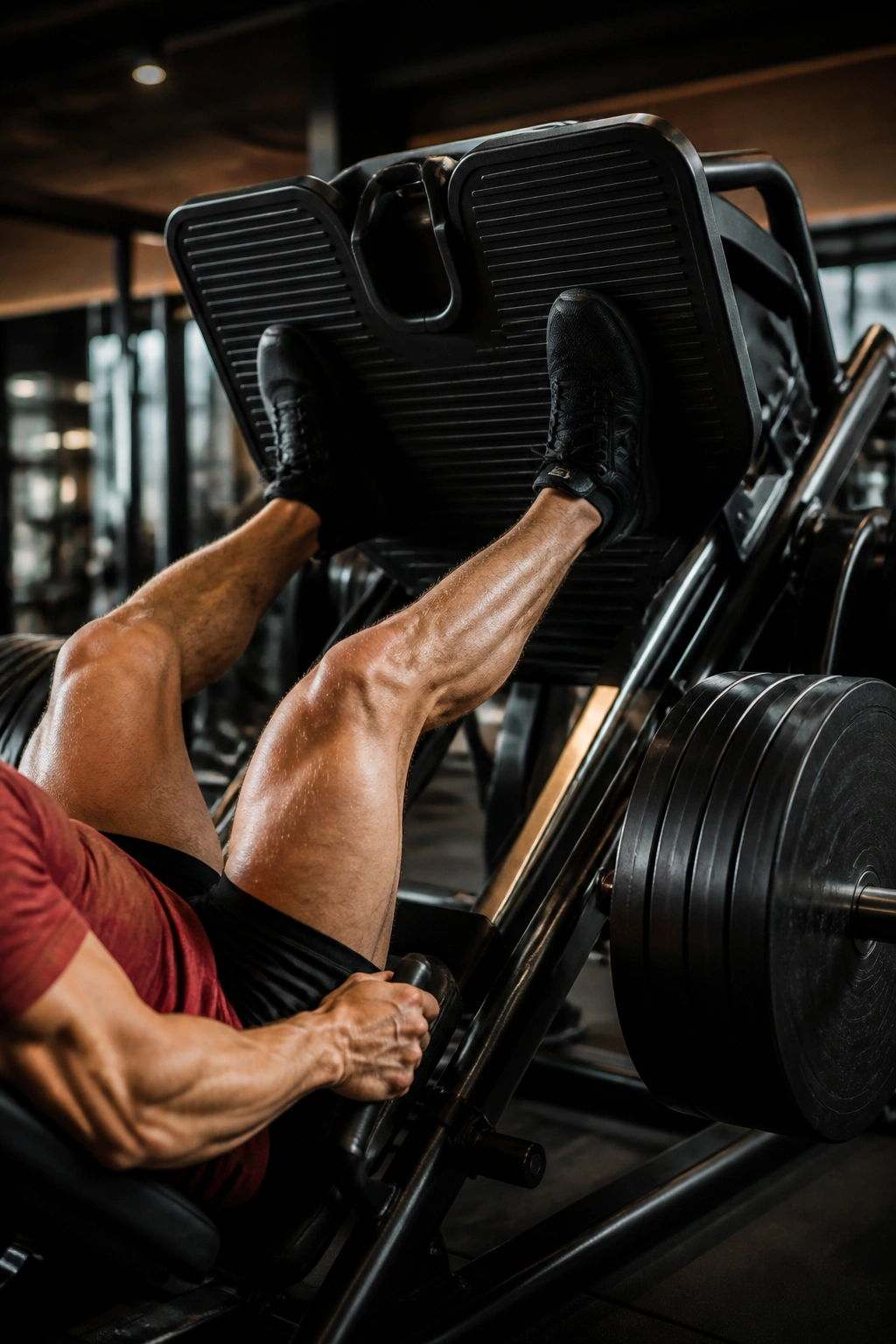
The leg press often gets a bad rap from purists who argue it is not “functional.” Ignore them. When you want to isolate the quads and move heavy loads without the stability demands of a barbell squat, the leg press is a tool that belongs in your arsenal. It allows you to push your muscles to total failure safely.
Foot Placement Matters
Where you put your feet on the platform changes the stimulus significantly:
- Low placement: Puts more emphasis on the quads.
- High placement: Shifts more load to the glutes and hamstrings.
- Narrow stance: Targets the outer quad sweep.
- Wide stance: Hits the inner thighs and adductors.
Never lock your knees out at the top of the movement. Keeping a slight bend ensures the tension stays on the muscles and off the joint itself.
6. Glute Bridges
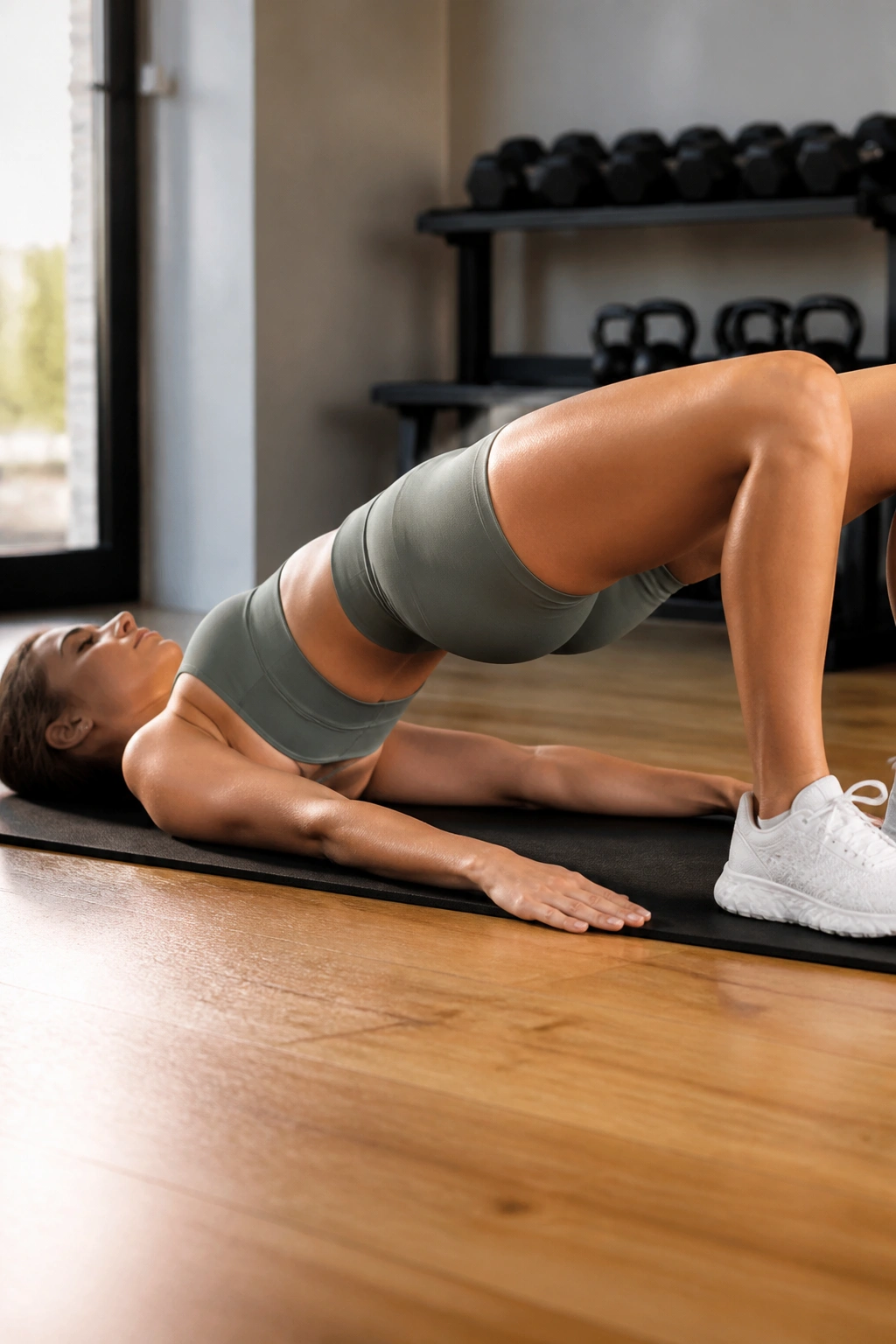
Isolation work is vital, and the glute bridge is the king of glute activation. It is simple, requires minimal equipment, and is incredibly effective at teaching the glute muscles to actually fire. Most people suffer from “glute amnesia” due to sitting all day; this exercise is the cure.
The Mind-Muscle Connection
Lay on your back with your knees bent and feet flat. Drive through your heels to lift your hips toward the ceiling. At the top, squeeze your glutes as hard as you possibly can. Hold that squeeze for two full seconds before lowering.
Advancing the Movement
Once you master the bodyweight version, place a barbell across your hips or use a single dumbbell. You can even elevate your shoulders on a bench for a greater range of motion, which is essentially the precursor to the heavy hip thrust. This movement is a test of control, not speed.
7. Step-Ups
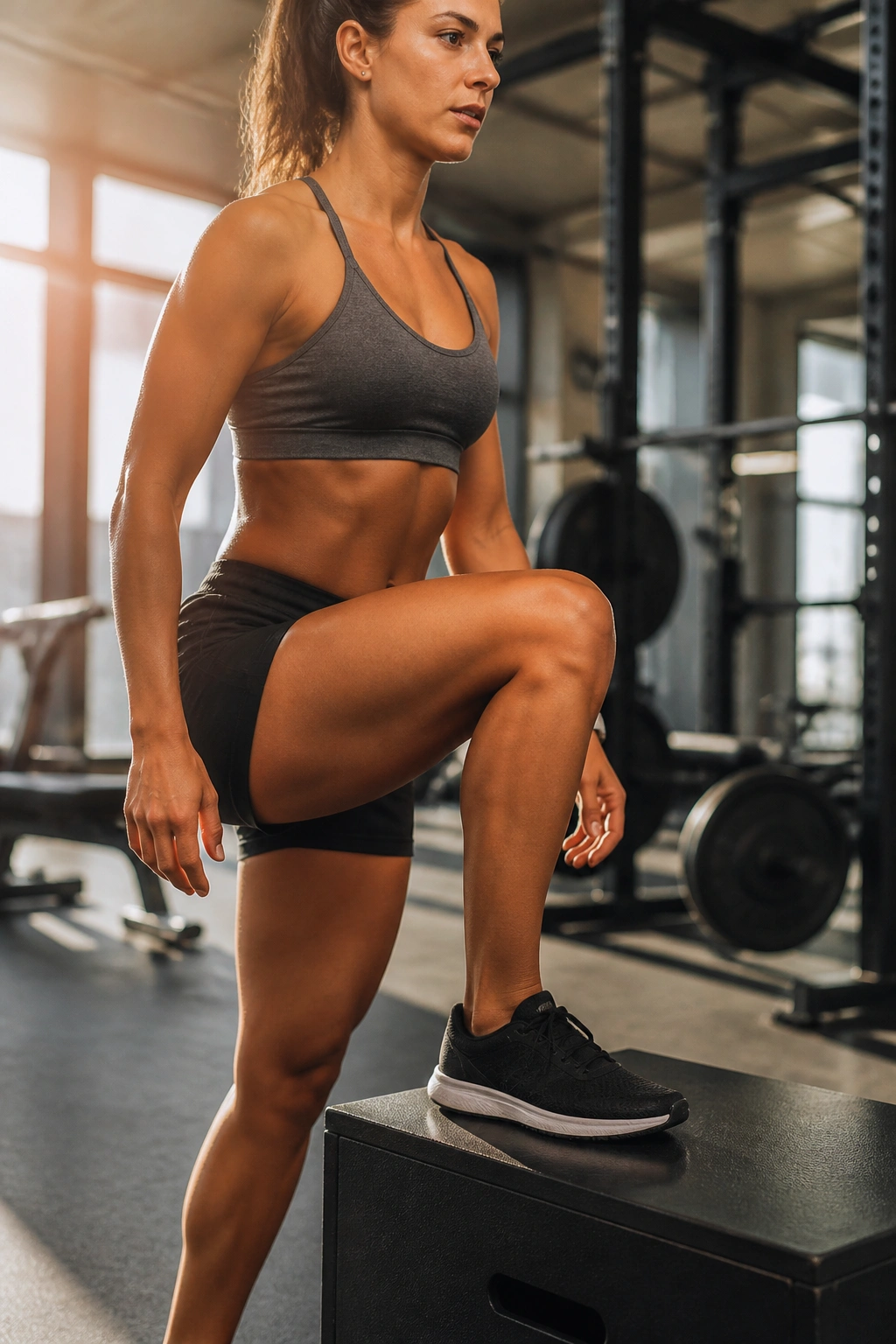
Step-ups are one of the most functional exercises you can do. You are quite literally simulating the act of climbing stairs, but with added resistance. This movement requires significant core stability and leg strength to control your body weight as you lift it onto the platform.
Choose Your Height Carefully
If the platform is too high, you will have to lean forward excessively and use momentum to swing your body up. You want a platform that puts your thigh roughly parallel to the ground when your foot is on it.
How to Maintain Control
- Keep your entire foot on the box.
- Drive through the heel of the leg on the box, not the toes of the leg on the ground.
- Control your descent. Do not just drop back down; lower your trailing leg slowly to the floor. The eccentric, or lowering, phase is where much of the muscle-building happens.
8. Sumo Deadlift
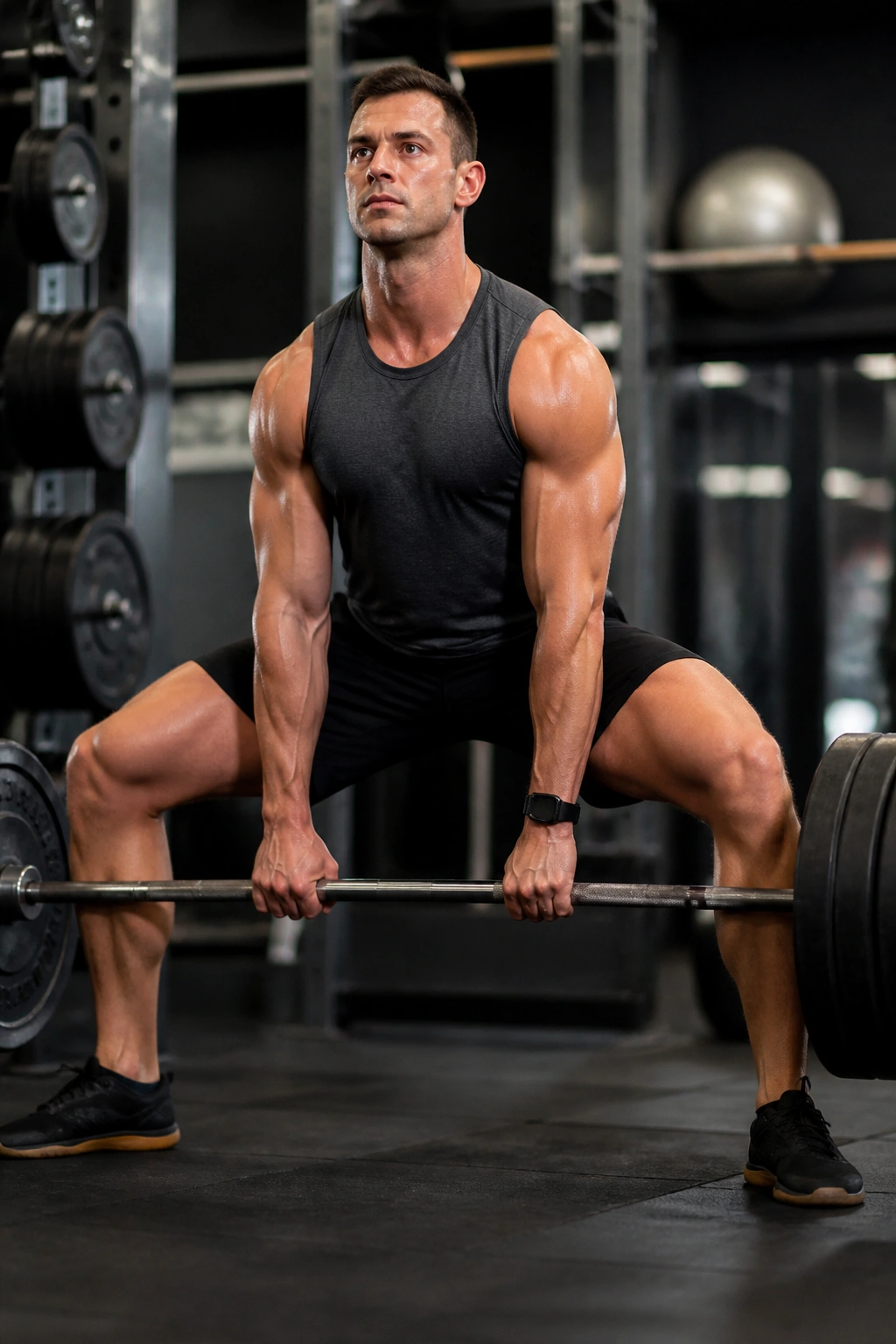
The sumo deadlift involves a wide stance with your hands positioned inside your knees. This stance changes the biomechanics compared to a conventional deadlift. You will find that you can maintain a much more upright torso, which reduces the shear force on your lower back.
Why Use This Variation
It places a greater emphasis on your quads and your adductors (inner thighs) compared to the standard deadlift. If you have long limbs and struggle to keep your back flat during a conventional deadlift, the sumo variation might be the mechanical answer you have been looking for.
Technical Cues
- Point your toes outward to match the angle of your knees.
- Push the floor away rather than pulling the weight up.
- Keep your arms straight and relaxed; they are just hooks for the bar.
- Tighten your lats to keep the bar close to your body throughout the entire pull.
9. Calf Raises
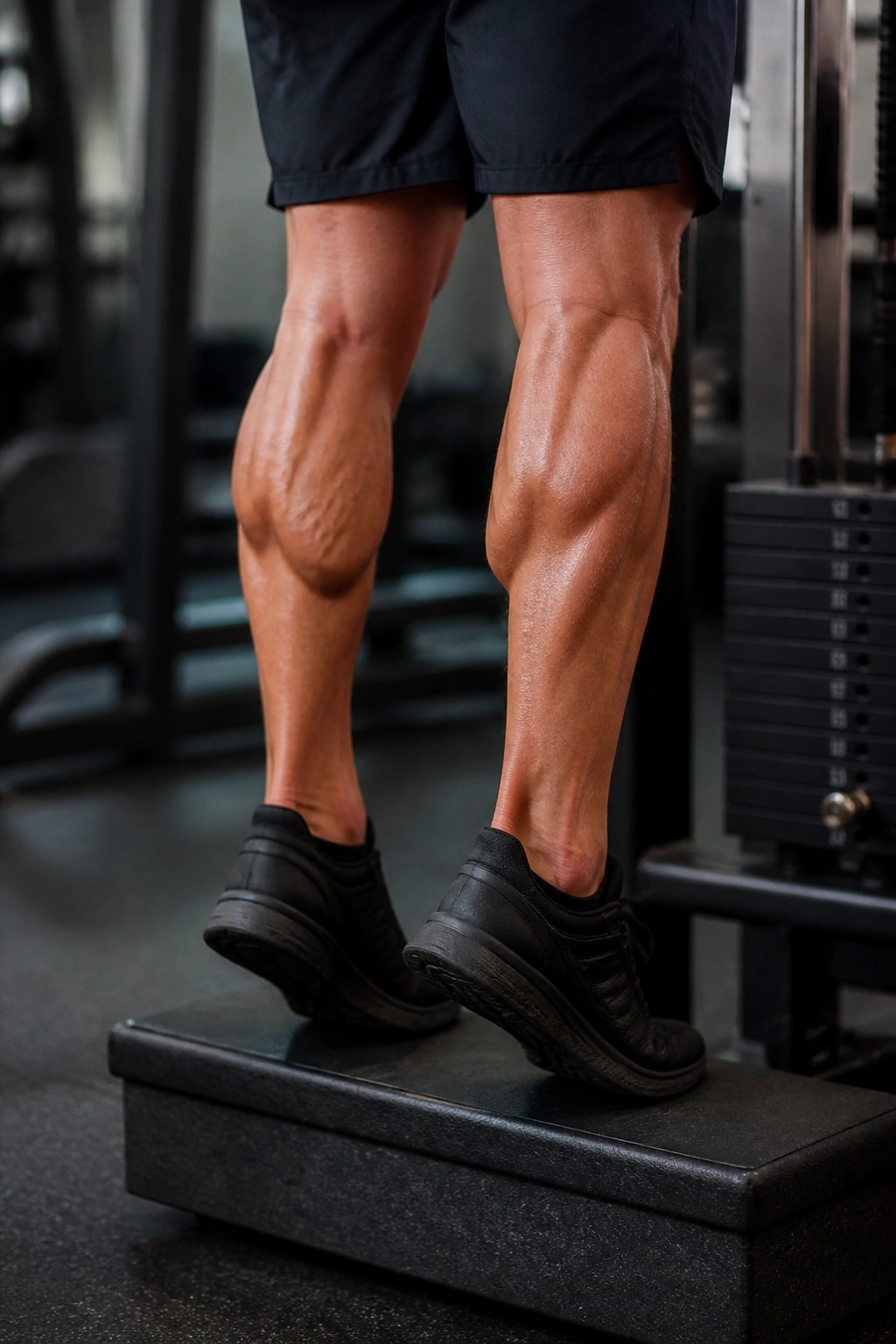
Do not ignore your lower legs. Strong calves provide stability for your ankles and knees, which helps with every other lift on this list. Calf raises are simple, but they are often performed incorrectly. People tend to bounce at the bottom to use the Achilles tendon’s elasticity.
The Slow and Controlled Approach
To actually build calf muscle, you need to eliminate the bounce. Perform the movement with a slow tempo. Rise up onto the balls of your feet, squeezing at the very top for a second, then lower your heels well below the level of your toes to get a full stretch.
Standing vs. Seated
- Standing raises hit the gastrocnemius (the large, visible part of the calf).
- Seated raises target the soleus (a muscle that runs underneath the gastrocnemius).
- You need both to build a complete lower leg.
10. Box Jumps
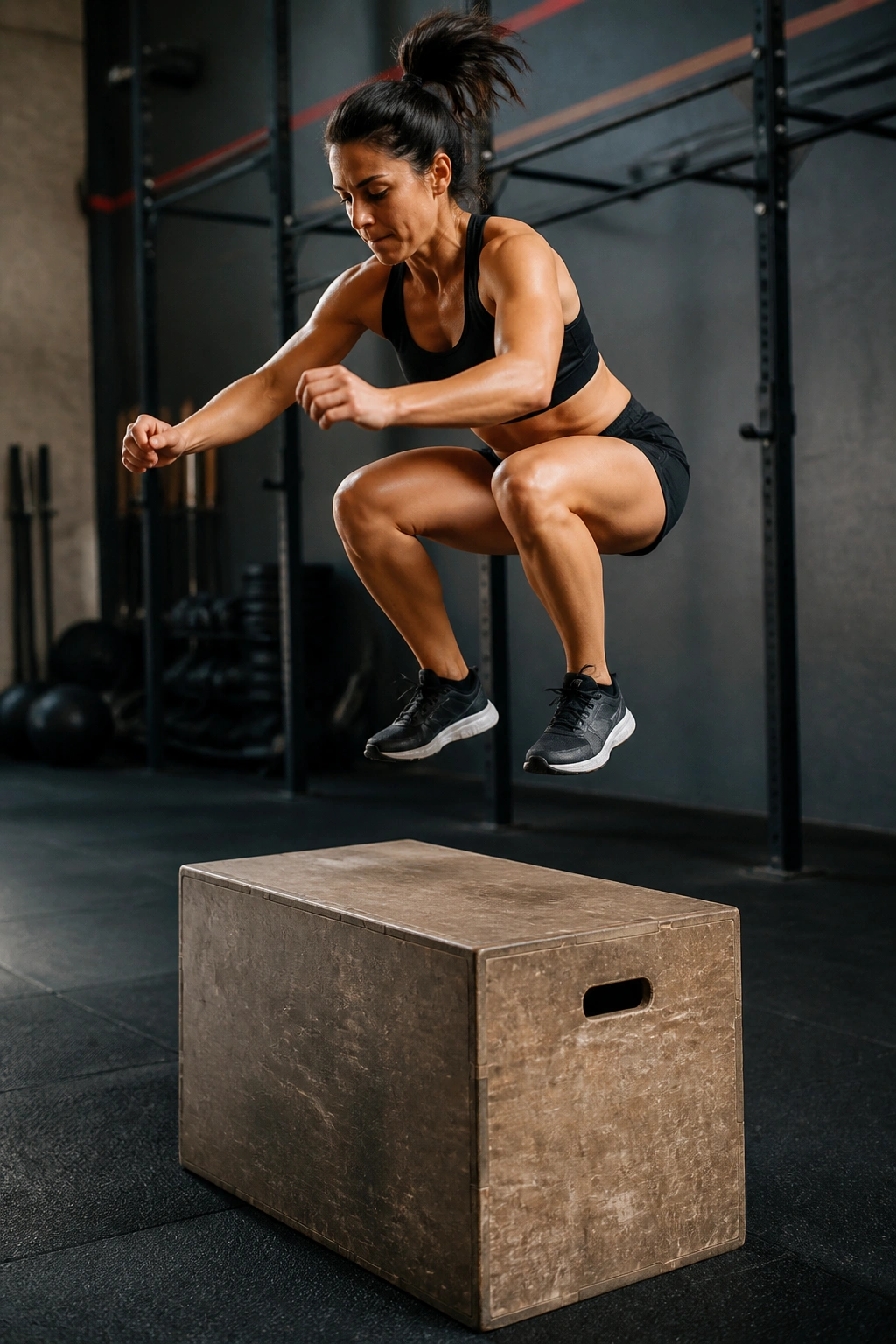
Explosive power is the missing link for many gym-goers. Box jumps are not just about showing off; they teach your central nervous system to recruit muscle fibers quickly. This is essential for athletic performance and for keeping your legs snappy and responsive.
Prioritize Safety and Landing
The biggest mistake people make is jumping onto a box that is too high. This leads to landing with your knees bent in a deep squat, which is not the goal. You want to land softly on the box with your hips slightly bent, absorbing the impact quietly. If you make a loud thud when you land, your box is too high or your technique is poor.
How to Progress
- Start with a low box.
- Focus on the quality of the takeoff and the quietness of the landing.
- If you can jump onto it with complete control, try to perform a set of 5-8 reps, resetting your feet on the ground between each jump to ensure maximum power output for every rep.
11. Kettlebell Swings
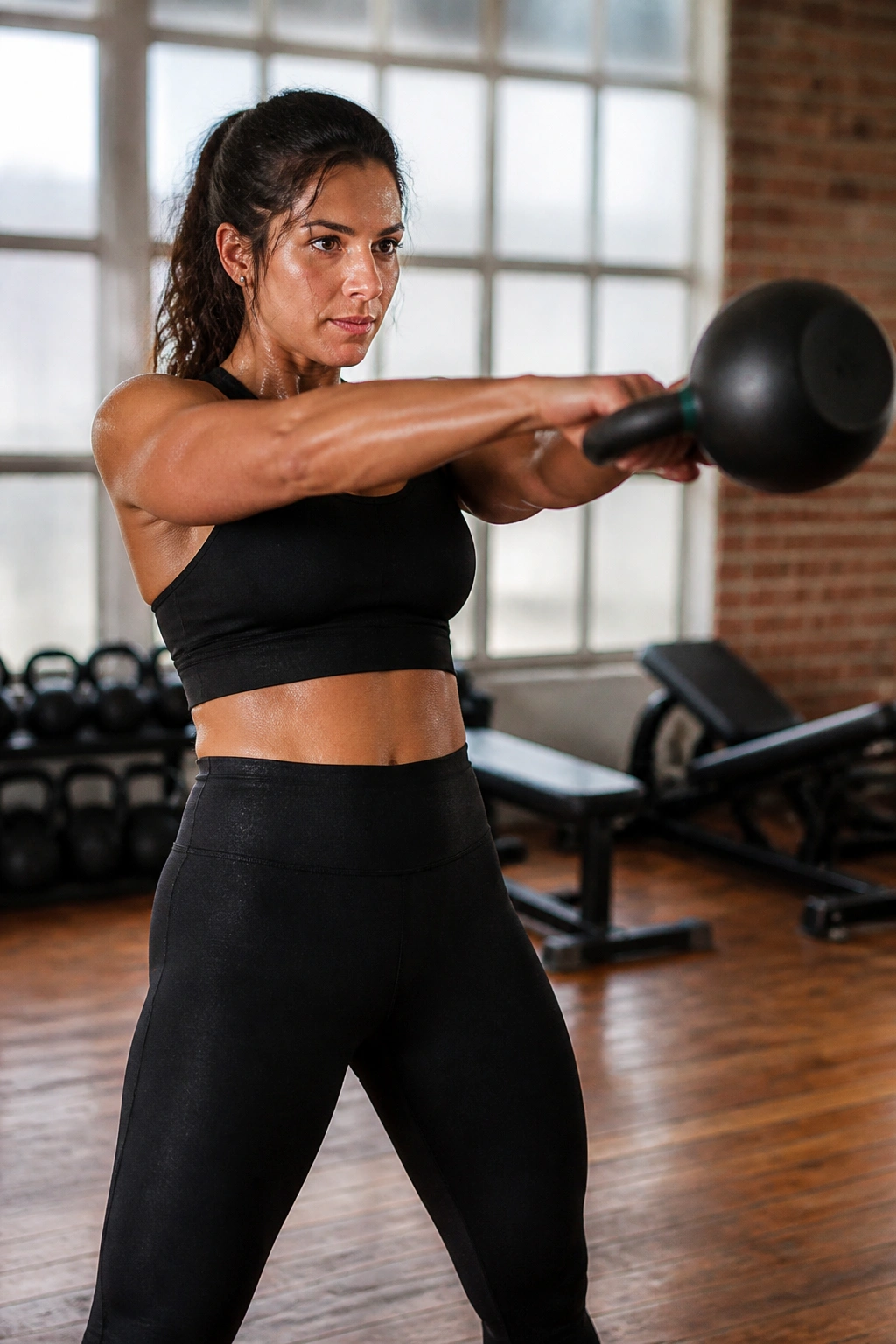
The kettlebell swing is a ballistic movement that builds serious power in your posterior chain. It works your hamstrings, glutes, and lower back in one fluid motion. It is also an incredible conditioning tool that will leave you breathless if you do enough reps.
The Hinge, Not the Squat
This is the most common point of failure. The swing is a hinge, not a squat. Your knees should only bend slightly. The power comes from the explosive snapping of your hips forward. If your knees are bending deeply, you are turning this into a squat and missing the entire point of the exercise.
Mastering the Rhythm
- Start with the kettlebell a foot in front of you.
- Hike it back between your legs like a center snapping a football.
- Use the momentum of your hips to drive the bell forward.
- Let the bell float to chest height; do not use your arms to lift it.
- Your arms are merely ropes attached to the bell.
12. Lateral Lunges
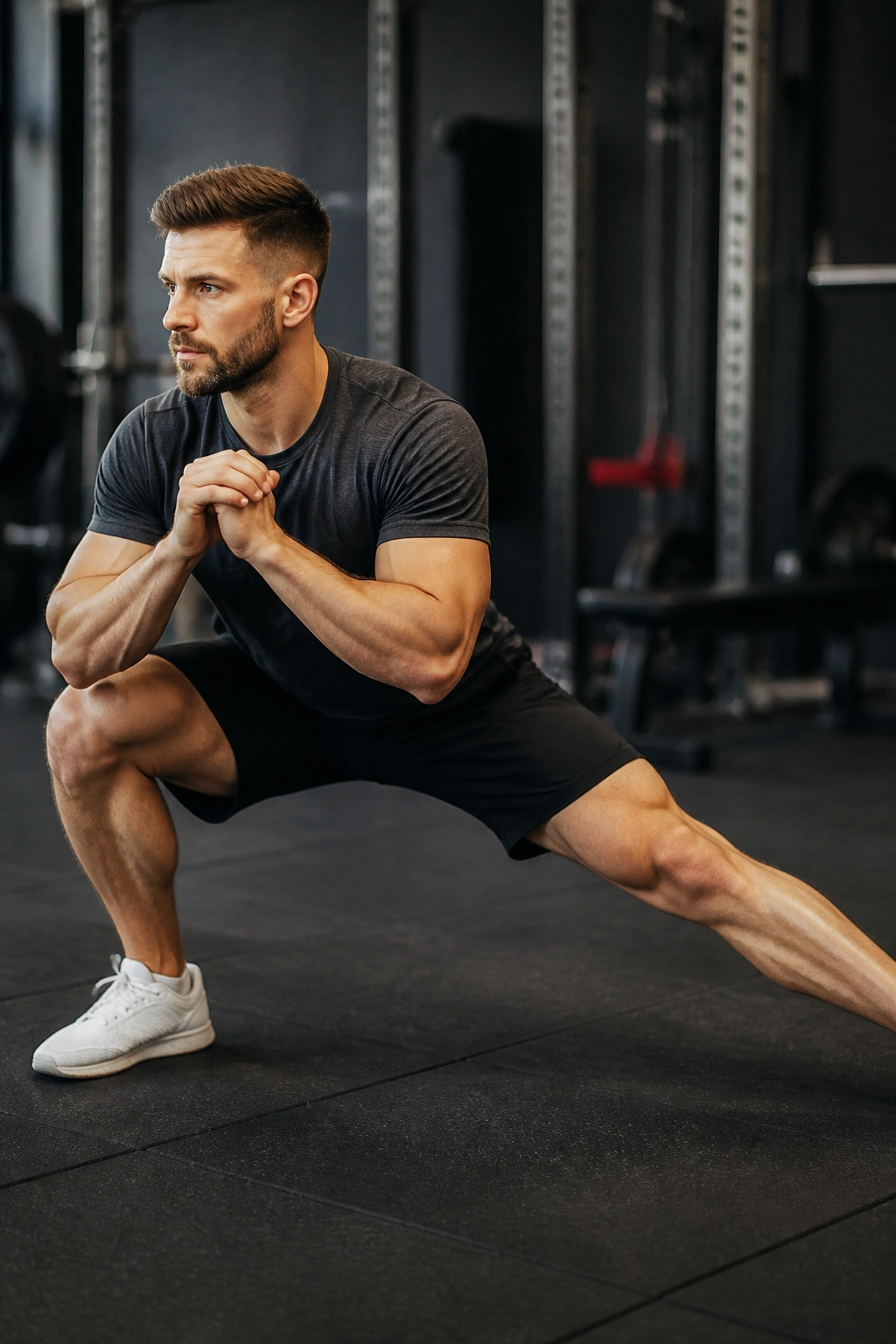
We spend most of our time in the gym moving forward and backward. Life, however, happens in all directions. Lateral lunges train your legs in the frontal plane, strengthening your inner and outer thighs, as well as your glutes. This is crucial for knee health and preventing injuries.
The Proper Mechanics
Step out wide to the side. Keep the trailing leg straight while you sit your hips back and down into the lunging leg. Your goal is to keep your chest up and your heel flat on the floor. It should feel like a deep stretch in the inner thigh of the straight leg.
Why This Matters
It exposes your hips to a movement pattern they aren’t used to. You will likely feel sore in muscles you didn’t even know you had the day after performing these. That soreness is a signal that you have addressed a gap in your training.
13. Hamstring Curls
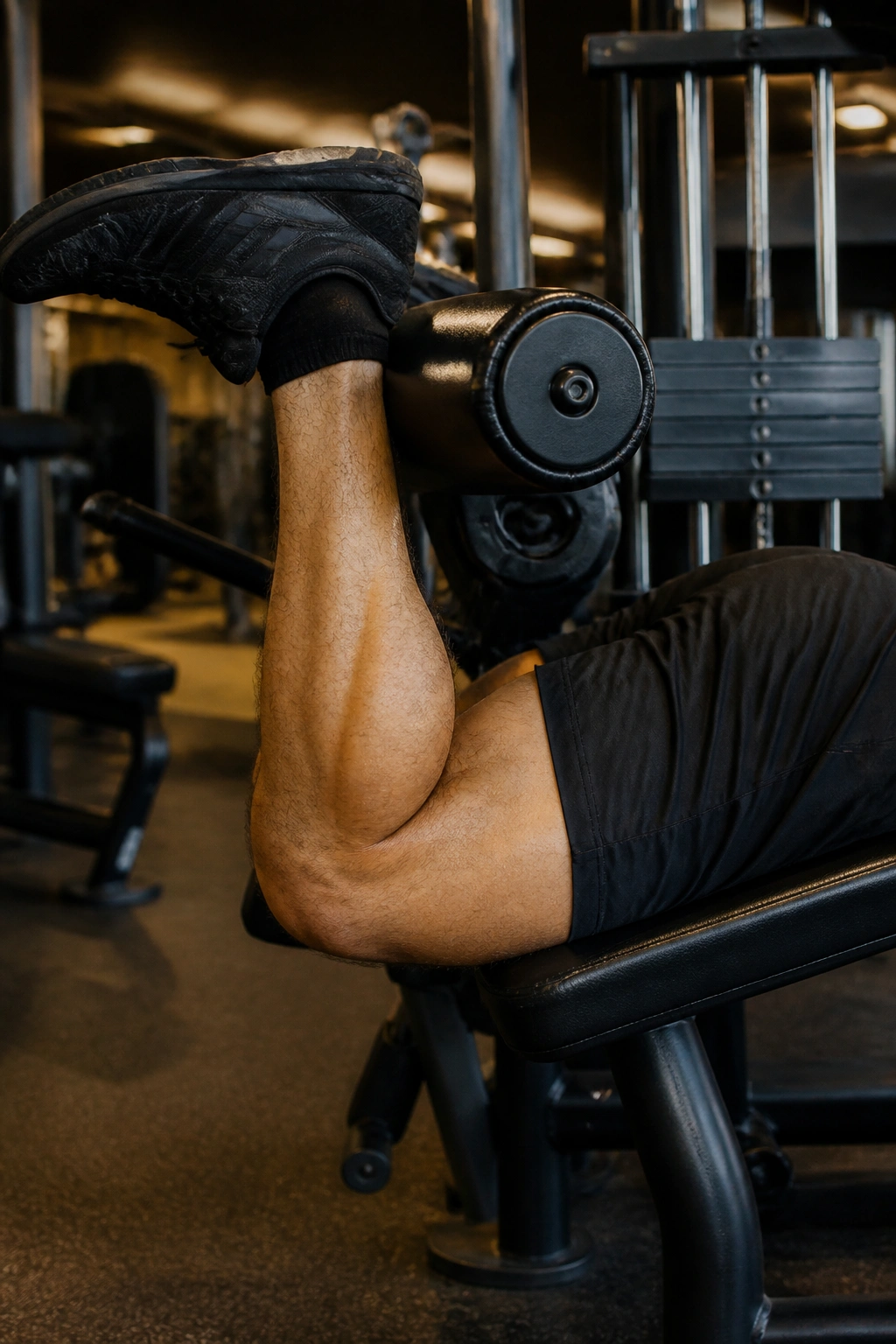
While compound movements like deadlifts are great for hamstrings, isolation work ensures you hit every part of the muscle. The leg curl machine—whether seated or lying—is the classic way to do this.
The Mind-Muscle Connection
Focus on the squeeze at the point of contraction. When your heels are closest to your glutes, hold for a split second. Then, control the weight on the way back down. Most people let the weight slam down due to gravity. Don’t do that. Fight the weight for 2-3 seconds on the descent.
Standing vs. Lying Variations
If you have access to a standing leg curl, use it. It often feels more natural and hits the hamstrings from a slightly different angle. Regardless of the machine, keep your hips pressed firmly into the pad. If your hips rise off the pad, you are cheating the movement and using your lower back.
14. Pistol Squats
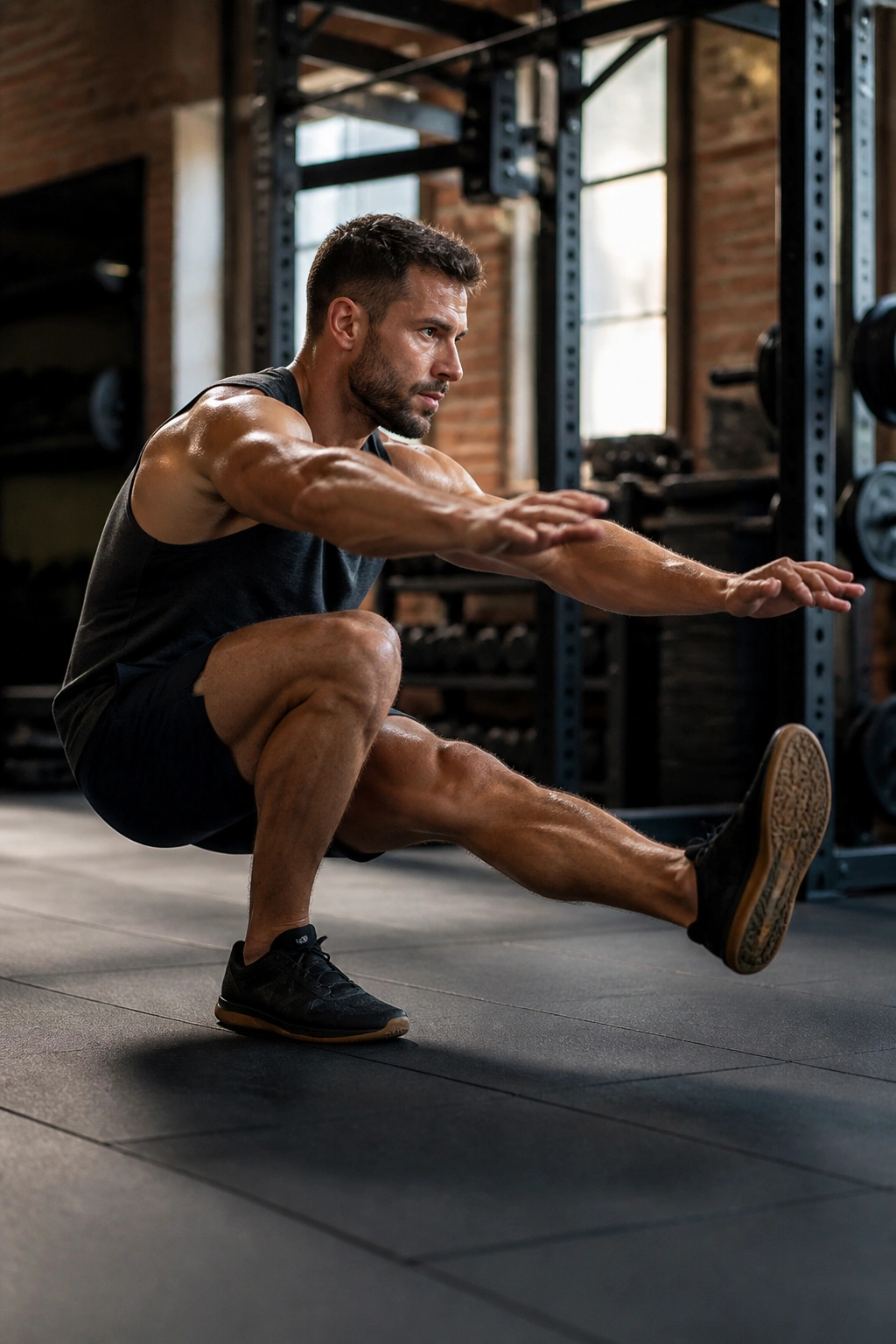
This is the ultimate test of unilateral leg strength. A pistol squat is a one-legged squat performed while holding the other leg out straight in front of you. It requires not just strength, but immense balance and ankle mobility.
How to Scale Down
Do not be discouraged if you cannot do one yet. Use a counterweight—hold a light dumbbell out in front of you—to balance your center of mass. Alternatively, practice by squatting down onto a high box and gradually lowering the height as you get stronger.
The Benefits of Difficulty
Because this movement requires so much coordination, it forces you to slow down. You cannot “muscle” your way through a pistol squat with poor form. You will fall over. This necessity for perfection makes it one of the most effective exercises for building a stable, injury-resistant leg.
15. Hack Squats
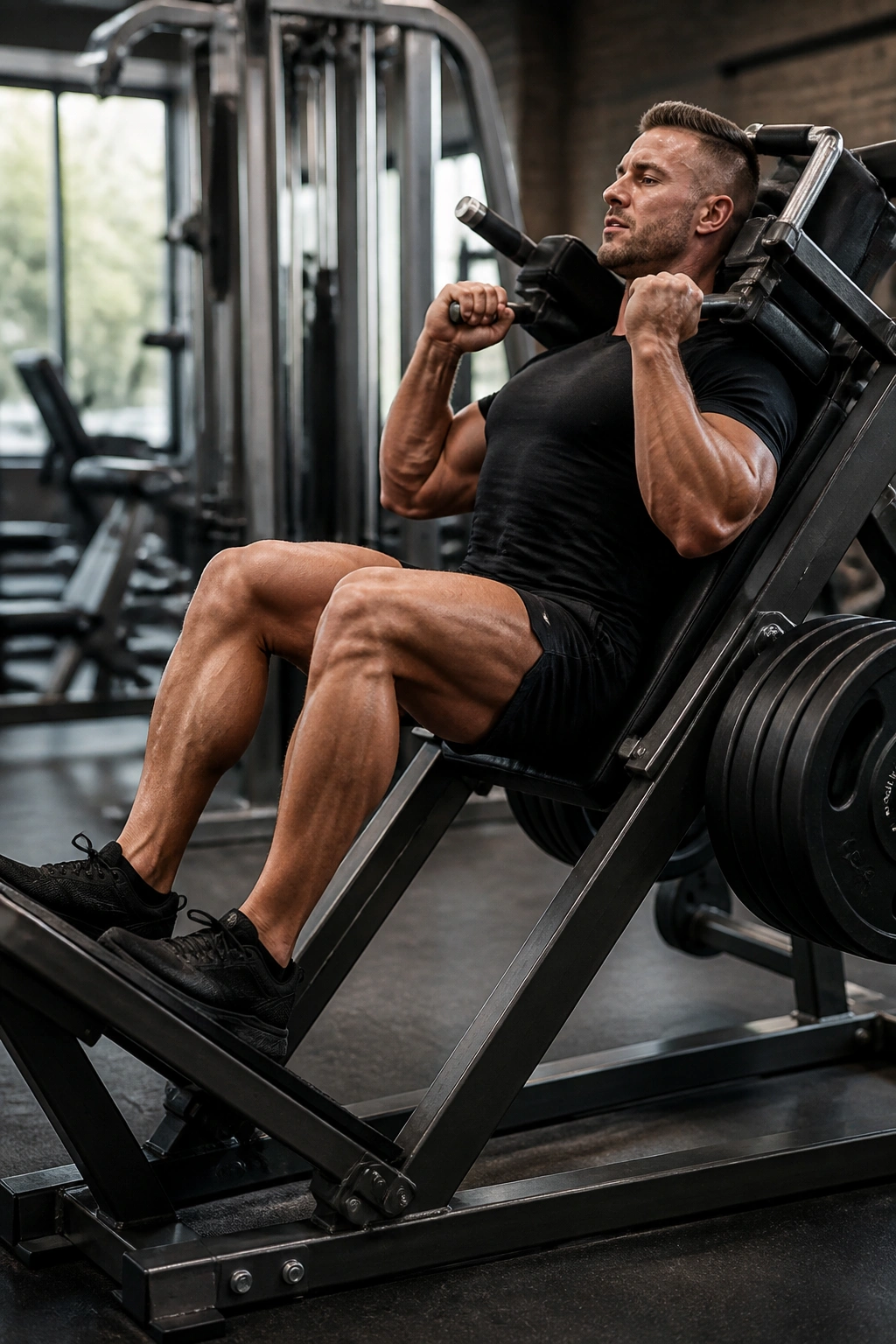
The hack squat machine provides a fixed path of motion, which is ideal if you are looking to isolate the quads without worrying about balance. It keeps your back supported against a pad while allowing you to descend into a deep squat.
The Advantage of Stability
Because you don’t have to balance the weight, you can push yourself much closer to failure than you might with a free-weight squat. This makes it an excellent “finisher” exercise at the end of a leg workout when your core is already fatigued.
Foot Placement Nuances
Just like the leg press, foot placement dictates the stimulus. Place your feet lower on the platform to bias the quads, or higher to get more glute engagement. Play with the stance to see where you feel the most tension in your target muscles.
16. Sumo Squats
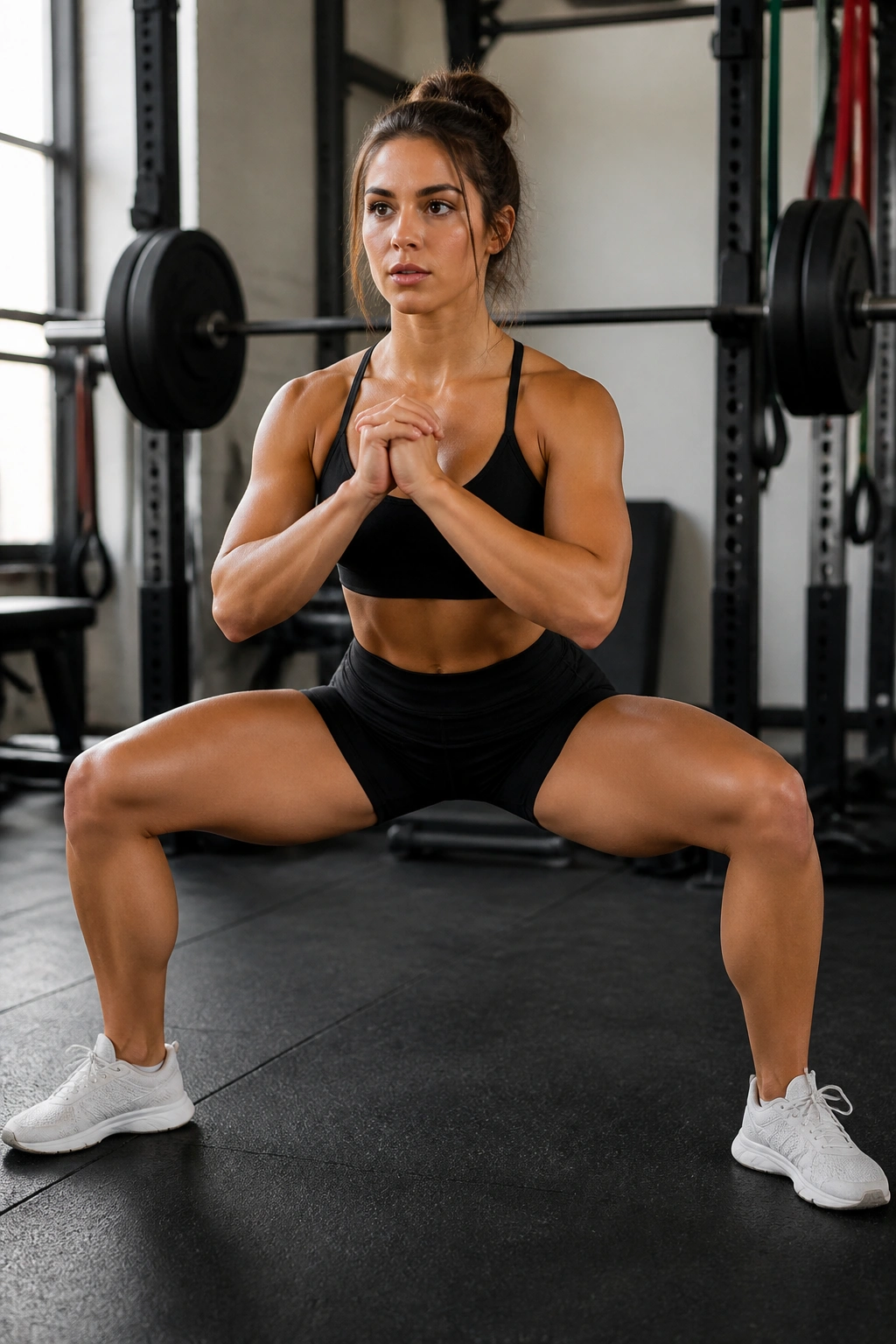
Take your stance wider than a traditional squat and point your toes out significantly. This is the sumo squat. It forces your hips into external rotation, which places a heavy emphasis on your adductors—the muscles that run along the inside of your thighs.
The Adductor Focus
Most people have underdeveloped adductors because traditional squatting doesn’t hit them as hard. By forcing this wide, toes-out position, you challenge these muscles in a way they rarely experience.
Maintaining Proper Alignment
Despite the wide stance, the same rules apply as any other squat. Do not let your knees collapse inward. Your knees should track directly over your toes throughout the entire movement. If you feel like your knees are caving in, bring your feet in slightly until you can maintain perfect alignment.
17. Reverse Lunges
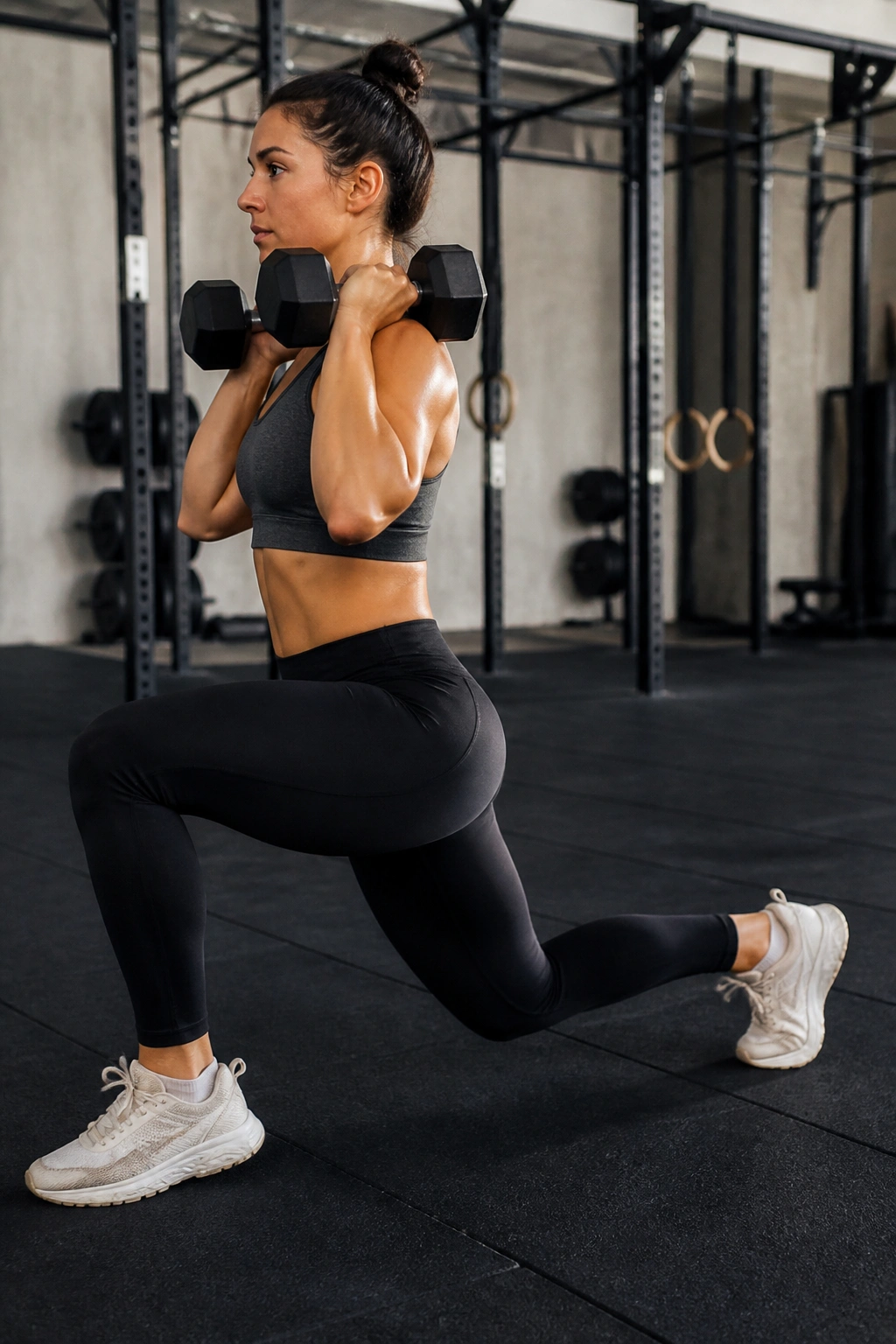
Why choose reverse lunges over forward lunges? It comes down to joint health. Forward lunges create a lot of forward momentum, which puts significant shear force on the knee. Reverse lunges, where you step backward, are much more forgiving on the knee joint while still providing a massive glute and quad stimulus.
The Stability Advantage
Because your front foot stays planted, it is much easier to maintain your balance. This allows you to load the movement more heavily. Many lifters find they can use significantly more weight in a reverse lunge than in a walking lunge.
How to Execute
- Stand tall with your feet together.
- Take a controlled step backward.
- Lower your back knee until it almost touches the ground.
- Keep your front shin vertical.
- Drive through the heel of the front foot to return to the starting position.
18. Hip Thrusts
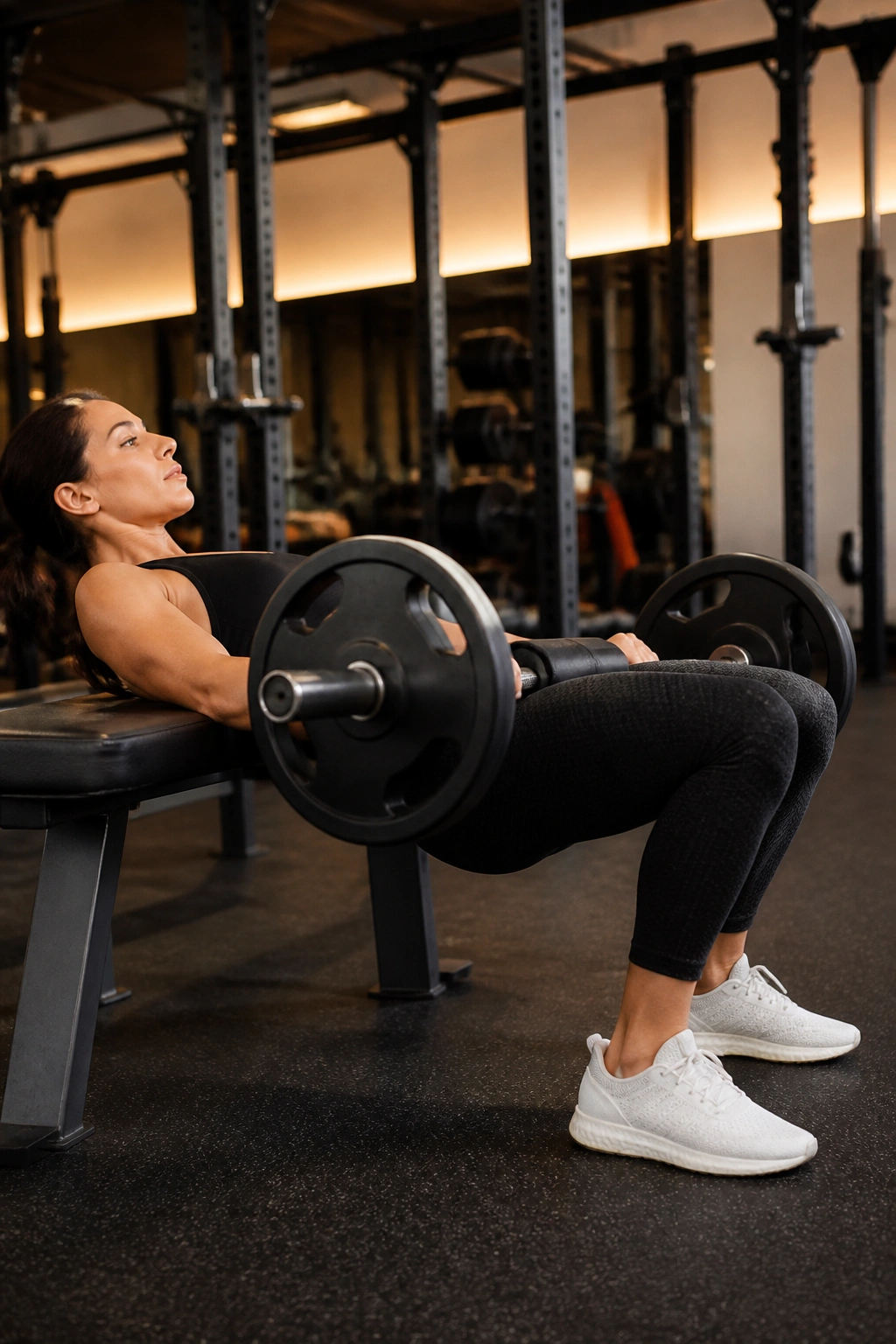
If glute development is your primary goal, the hip thrust is non-negotiable. It is the most effective movement for isolating the glutes because it places the maximum load on them at the shortest point of the muscle—right at the top of the contraction.
The Setup
You need a bench to support your upper back and a barbell or a heavy dumbbell for weight. Place the weight across your hips. Roll your shoulder blades onto the edge of the bench.
The Squeeze
Drive through your heels to lift the weight. Your chin should be tucked, and your eyes should look forward throughout the movement. At the top, your shins should be vertical. Squeeze your glutes as hard as you can for two seconds before lowering. This is not about moving weight; it is about feeling the contraction in your glutes.
19. Curtsy Lunges
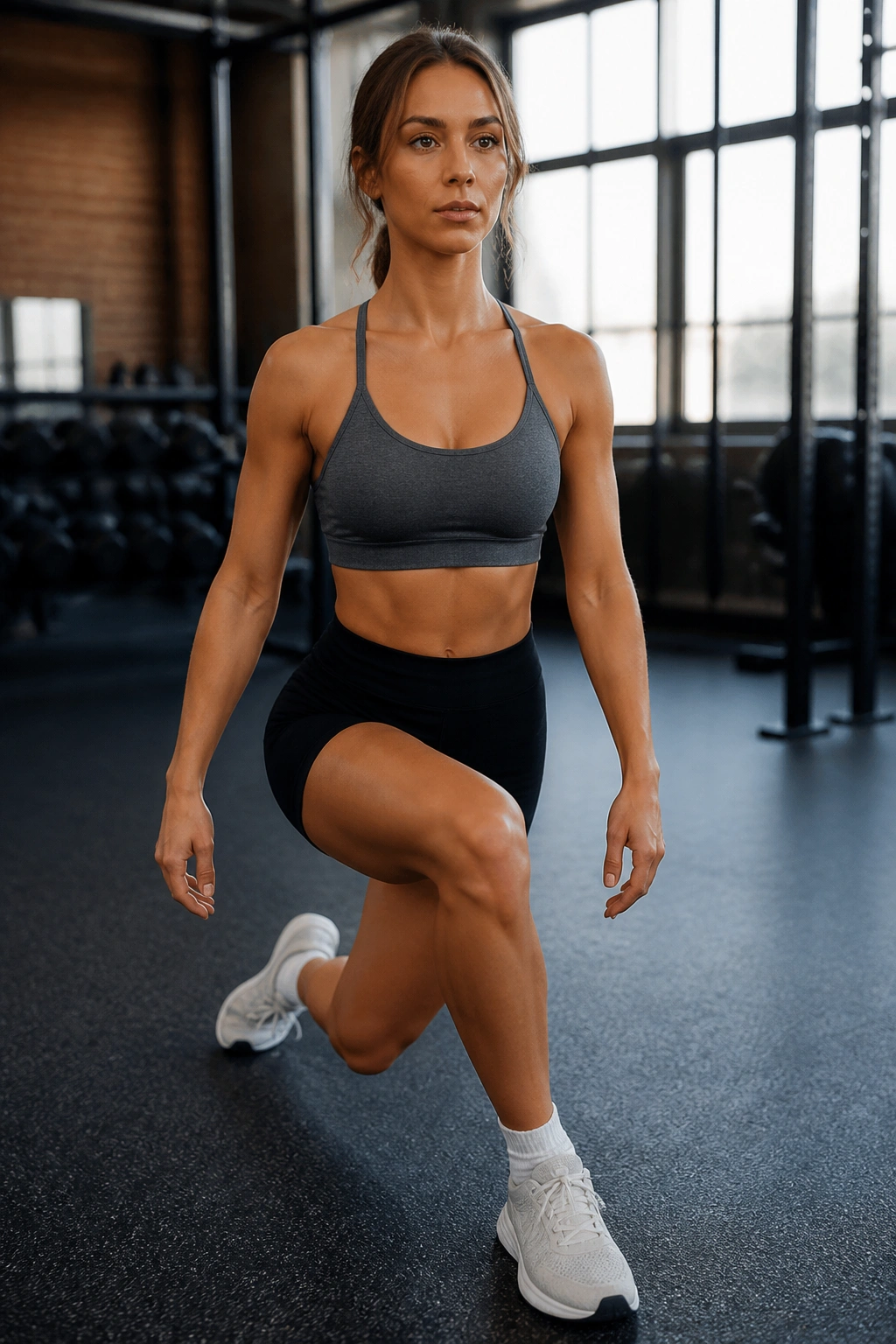
The curtsy lunge is a variation that targets the glute medius—a muscle on the side of your hip that is often ignored in traditional training. When you step one foot behind the other as if you were curtsying, you shift the load laterally and hit that side glute.
Why You Need It
Weak glute medius muscles are a primary cause of knee pain and poor stability. Strengthening this area helps keep your pelvis level and your knees tracking correctly in other movements.
Execution Tips
- Step back and across your body.
- Keep your torso relatively upright.
- You do not need heavy weight for these to be effective; they are all about the angle and the stability. Use light dumbbells or just your body weight to focus on the glute engagement.
20. Single-Leg RDL
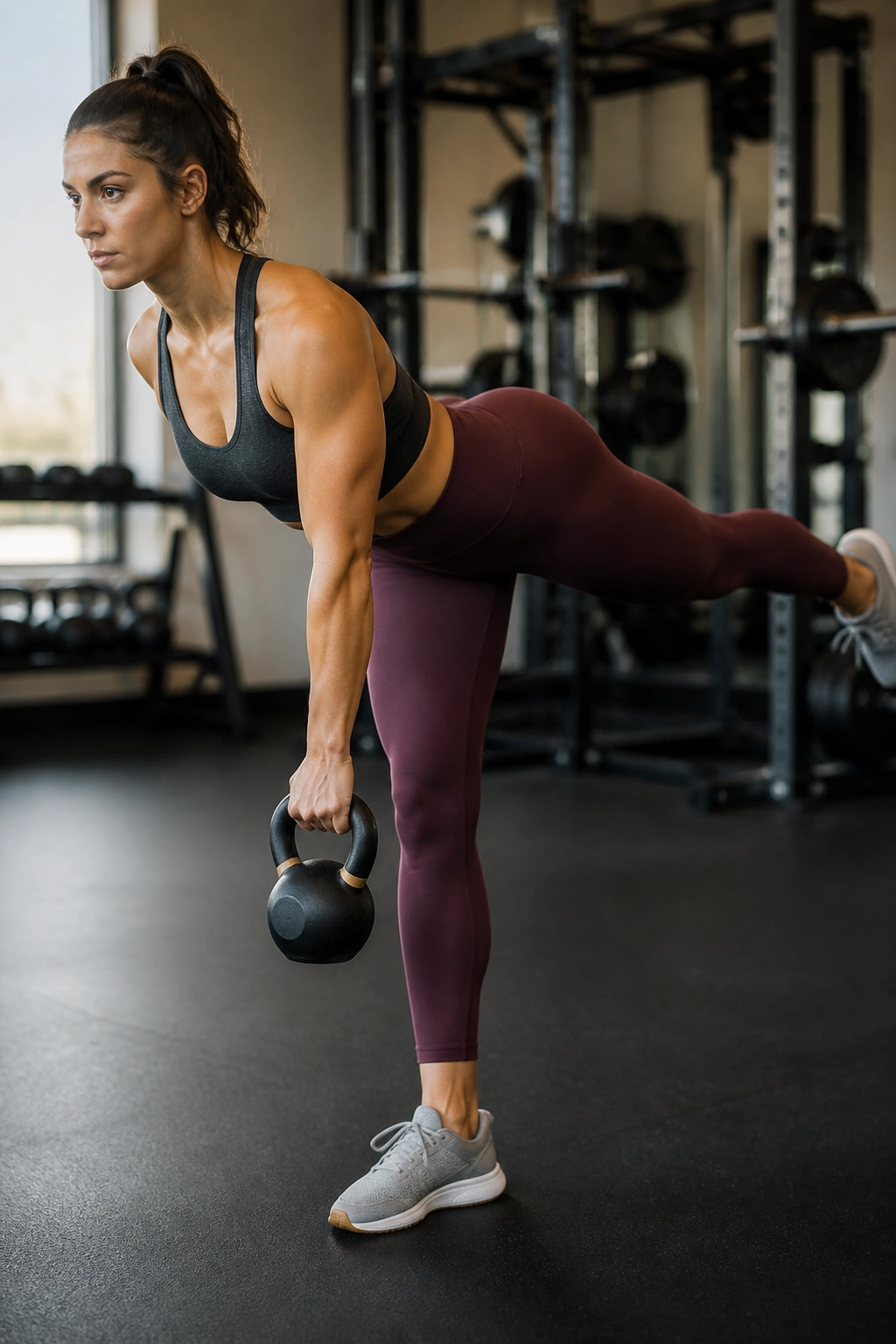
We wrap up with the single-leg Romanian Deadlift. It is the ultimate exercise for balance, hamstring strength, and core stability. It exposes every weakness you have. If your balance is shaky, do not worry—that is exactly what this exercise is designed to fix.
How to Find Your Balance
Hold a weight in the hand opposite to the working leg (e.g., left hand, right leg). This helps keep your hips level and prevents you from rotating too much. Keep your supporting knee slightly soft, not locked straight.
The Movement
Hinge at the hips as you lower the weight toward the floor, extending your free leg backward for balance. Your body should form a “T” shape at the bottom of the movement. Return to the starting position by driving through the heel of the standing leg. It is challenging, humbling, and incredibly rewarding.
Final Thoughts
Building powerful legs is a marathon, not a sprint. You are creating a foundation that will support your activity level for decades. Don’t worry about hitting every single exercise on this list in one week. Instead, pick a few that challenge you, master the form, and focus on progressive overload—doing just a little bit more, whether that is more weight, more reps, or better control, over time.
Listen to your body. There is a clear line between “good pain”—the soreness that signals growth—and “bad pain,” which is usually a sharp, stinging sensation in a joint or ligament. If a movement causes the latter, stop immediately, re-evaluate your form, or choose an alternative from this list. There is no exercise worth an injury. Keep it consistent, keep it controlled, and you will build the strength you are looking for.
