



A lot of strength training plans for runners look good on paper and fall apart the first time the weekly mileage climbs. The smarter version is less flashy: enough loading to make your hips, calves, hamstrings, and trunk sturdier, but not so much gym stress that your easy runs start feeling like a job.
That balance matters. Running is a repeated single-leg sport, and the body gets punished for weakness in places you can’t see in the mirror. Glutes that stop firing, calves that never get trained, a core that leaks force side to side — those are the things that show up as sloppy mechanics on the last mile of a tempo run.
Most runners do well with two lifting days a week. Some can handle three during a lower-mileage block. Others need a tiny dose, almost annoyingly small, just to stay together while the running workload is high. The point is not to collect exercises. The point is to build a week that makes running feel smoother instead of heavier.
Pick the plan that matches your season, your body, and your equipment. Then keep it steady long enough to matter.
1. The Two-Day Foundation Plan

The easiest place to start is the two-day plan. It gives you enough work to get stronger without turning every Wednesday into a recovery problem.
Why it works
Keep both sessions built around five patterns: squat, hinge, single-leg, upper-body pull or push, and core. That’s the whole skeleton of a good runner strength session. Use 2 to 3 sets of 5 to 8 reps on the main lifts, then finish with calves and carries.
A simple week looks like this:
- Day 1: Goblet squat, Romanian deadlift, split squat, plank, standing calf raise
- Day 2: Trap-bar deadlift, step-up, row, side plank, farmer carry
Leave 1 to 2 reps in reserve on the main lifts. That matters more than most runners think. If the bar speed turns into a grind, the session has gone too far and the next run usually pays for it.
2. The Off-Season Build Plan

What changes when your mileage drops a little and you can actually build? You stop treating strength work like support and start treating it like training.
This plan uses three sessions per week. One is heavy lower body, one is upper body plus trunk, and one is power or athletic work. I like this setup because it lets you touch strength, stiffness, and coordination without cramming everything into one long gym day.
A simple weekly split
- Session 1: Back squat or front squat, RDL, split squat
- Session 2: Pull-ups or lat pulldown, dumbbell press, anti-rotation core
- Session 3: Box jump, sled push, single-leg hop, calf work
Use slightly heavier loads here than you would in race season. 3 to 5 sets of 3 to 6 reps on the main lifts is plenty. The catch is recovery: if the gym work starts making your runs flat, the weight room is too loud.
3. The In-Season Maintenance Plan

Maintenance is not a weak plan.
During a race block, the job changes. You are not trying to grow from scratch. You are trying to keep strength, keep stiffness, and keep your legs from falling apart after hard sessions.
This is where one to two short sessions a week shine. Keep them crisp. Heavy enough to matter, short enough that you still want to run the next day. I like 2 sets of 3 to 5 reps on the main lift, then one accessory movement for the glutes or calves, and one core drill.
Skip the junk volume. Seriously. A bunch of extra lunges done to failure may feel productive, but they usually leave a runner with dead quads and no measurable benefit. The goal is to leave the gym feeling better than when you walked in, not cooked.
4. The Marathon Support Plan

If your long run leaves your hips wobbling on the stairs, the marathon plan is where you start.
Marathon runners need durability more than drama. That means the session should hit the posterior chain, calves, and single-leg control while keeping soreness under control. Two days a week is enough for most people. One day can be a heavier full-body lift; the other can be a shorter accessory day.
What the marathon body usually needs
- Romanian deadlifts for hamstrings
- Rear-foot elevated split squats for one-leg force
- Seated calf raises for soleus strength
- Rows and carries for trunk steadiness
- Dead bugs or Pallof presses for anti-rotation control
I’d keep the reps moderate here: 3 sets of 6 to 8 reps on the main work, with slower tempos on some accessory lifts. Marathon training already piles on fatigue. The strength plan should make you harder to shake, not harder to recover.
5. The Half Marathon Support Plan

The half marathon sits in a funny middle ground. You need speed, but you also need enough strength to hold form when the pace gets stubborn.
That makes this plan a nice blend of heavier lifting and race-support work. Two sessions a week works well. One day can be a lower-body strength day with 4 sets of 4 to 6 reps. The second can be lighter and a little faster, using step-ups, split squats, and short plyos.
I like this plan for runners who feel good in short races but start leaking mechanics when the workout gets longer. Keep the accessory work honest: calf raises, single-leg RDLs, and core carries do a lot of quiet work here. No need for a circus. The half marathon already supplies enough excitement.
6. The 5K Speed Plan

5K runners can get away with heavier work than they usually think.
Why? Because the race asks for force, stiffness, and clean mechanics at speed. That makes the weight room a good friend. I’d keep this plan to two sessions weekly, with one heavy lower-body day and one power day built around jumps, fast lifts, and short hill sprints if you tolerate them.
The fast-race checklist
- Trap-bar deadlift: 3 to 5 sets of 3 reps
- Front squat: 3 sets of 4 reps
- Box jump or pogo hop: 3 sets of 5 to 8 contacts
- Single-leg calf raise: 2 sets of 10 to 12 reps
- Suitcase carry: 2 rounds of 30 to 40 meters
The point is not to build bodybuilder legs. The point is to create force fast. If the plyos start feeling sloppy, cut the volume. Clean contacts matter more than a big number on the page.
7. The Trail Runner Stability Plan

Uneven ground exposes lazy hips fast. If you run trails, the gym should teach your body to stop collapsing when one foot lands on a rock and the other foot lands in a rut.
This plan leans hard on lateral strength, ankle control, and single-leg balance. Step-downs, lateral lunges, single-leg RDLs, and loaded carries all earn their place. I also like adding a little rotational work because trails rarely hand you a straight line.
What to emphasize
- Lateral lunge: 2 to 3 sets of 6 to 8 reps per side
- Step-down: slow lower, controlled knee tracking
- Single-leg RDL: keep the pelvis level
- Farmer carry: stay tall, do not sway
- Side plank: own the hip, not the floor
This is a good plan for runners who twist an ankle every time the ground gets ugly. It won’t make you invincible. Nothing does. But it can make your body less surprised when the trail turns rude.
8. The Hill Runner Power Plan

Hill runners need more than cardio lungs. They need the kind of strength that lets them push uphill without folding at the waist.
That’s why I like a plan built around step-ups, sled pushes, deadlifts, and calves. Hills reward force production in a pretty specific way: you’re driving the body up and forward, not bouncing around wasting energy. Your gym work should match that.
A simple hill-focused session might look like this:
- Trap-bar deadlift: 4 sets of 4 reps
- High box step-up: 3 sets of 6 each leg
- Sled push: 4 x 20 to 30 meters
- Standing calf raise: 3 sets of 10 to 15
- Hanging knee raise: 2 to 3 sets of 8 to 12
Keep the sled work heavy enough that you have to lean into it, but not so heavy that you crawl. That’s a bad trade for runners.
9. The Beginner Bodyweight Plan

No equipment? Fine. That is not a dealbreaker.
A beginner runner can get a lot done with bodyweight work if the exercises are chosen well and the tempo is slow enough to create tension. I like this plan because it teaches control first, which is often the missing piece anyway.
Use movements like split squats, glute bridges, push-ups, side planks, and calf raises. Start with 2 to 3 rounds and stop each set before the form gets sloppy. If you can’t feel the target muscles working, slow the lowering phase to 3 seconds.
A simple first month
- Split squat: 8 reps per side
- Glute bridge: 12 reps
- Push-up: 6 to 10 reps
- Side plank: 20 to 30 seconds
- Calf raise: 15 to 20 reps
The plan is plain, maybe even a little boring. That’s fine. Boring works when the goal is to build a habit that lasts.
10. The Dumbbell-Only Home Plan

A pair of dumbbells opens up more than people expect.
Unlike bodyweight-only work, dumbbells let you load the hinge and squat patterns without turning the session into a gym expedition. That makes this plan a nice fit for runners who train at home but still want a real strength stimulus.
Go with goblet squats, dumbbell Romanian deadlifts, reverse lunges, presses, and rows. Two or three sessions a week is enough. I’d use 3 sets of 6 to 10 reps on most movements, with carries at the end if you have room to walk.
A good home session might be over in 35 minutes. That matters. If the routine takes 75 minutes, most runners stop doing it. The plan should fit the life you actually live, not the life you imagine on a perfect Monday.
11. The Barbell Strength Plan

A barbell plan makes sense when you want a real strength block and you can recover from it.
This is where squats and deadlifts belong. Not every runner needs them, and not every runner should chase them hard, but when used well they build a strong base. I like a setup with two lifting days per week, one squat-focused and one hinge-focused.
The core lifts
- Back squat or front squat
- Trap-bar deadlift or conventional deadlift
- Barbell hip thrust
- Weighted split squat
- Chest-supported row
Main lifts can live in the 3 to 5 rep range. Accessories can sit at 6 to 8 reps. Keep the total volume sane. A runner who squats hard, deadlifts hard, and then adds a mountain of accessories is usually asking for heavy legs on workout day.
12. The Kettlebell Plan

A kettlebell is not a compromise if you use it right.
It’s a great tool for runners because it teaches hip drive, grip strength, and a little bit of trunk discipline without needing a full rack of equipment. Swings are the obvious move, but goblet squats, cleans, and carries deserve just as much attention.
I like this plan for runners who want a short, athletic session. Use kettlebell swings for 10 to 15 reps, then pair them with squats or lunges. Add a press or row if you want a more complete session. Keep the rest short — 45 to 75 seconds between rounds is plenty.
The biggest mistake is turning the kettlebell into a cardio-only toy. It can do that, sure, but runners usually need more than a sweat. They need better force production.
13. The Single-Leg Balance Plan

Why do single-leg plans work so well for runners? Because running is single-leg work.
That sounds obvious, yet plenty of strength plans ignore it. This one doesn’t. Build the whole session around step-ups, split squats, single-leg RDLs, skater squats, and calf work. You’ll feel the stabilizers wake up in a way bilateral lifts sometimes miss.
A useful version looks like this:
- Rear-foot elevated split squat: 3 x 6 each side
- Single-leg RDL: 3 x 6 each side
- Step-up: 2 x 8 each side
- Single-leg calf raise: 3 x 12
- Side plank with leg lift: 2 x 20 seconds each side
The nice part is how quickly the weak side shows itself. The annoying part is the same thing. Still worth doing.
14. The Posterior Chain Plan

If your hamstrings and glutes are undertrained, the running form eventually shows it.
The posterior chain plan is simple: give the back of the body more work. That means RDLs, hip thrusts, back extensions, Nordic curls, and bridges. I’m fond of this plan for runners who feel their quads doing everything on hills, descents, or faster work.
Keep the session heavy enough to feel useful, but don’t chase failure on hamstring curls or Nordics. Those exercises can bite back. A couple of well-done sets are plenty. I’d rather see 2 strong sets of 4 to 6 Nordic lowers than four ugly sets done with a pulled face and a prayer.
This plan pairs well with a calf focus, because hamstrings and calves tend to get lazy together.
15. The Calf and Foot Armor Plan

Calves are not decoration. They are brakes, springs, and shock absorbers.
Runners who skip calf work usually find out the hard way when Achilles stiffness, plantar fascia grumbles, or lower-leg fatigue shows up. This plan keeps things focused: standing calf raises, seated calf raises, tibialis raises, toe walks, and short-foot drills. Add a few low pogo hops if the tendons tolerate them.
A small but useful menu
- Standing calf raise: 3 sets of 12 to 15
- Seated calf raise: 3 sets of 12 to 15
- Tibialis raise: 2 sets of 15 to 20
- Toe yoga: 2 minutes
- Pogo hop: 3 sets of 10 to 20 contacts
Do this work a few times a week. It does not need to be glamorous. It does need to be consistent. Calves respond well to frequent, moderate loading, and feet respond even better when you stop ignoring them.
16. The Core and Anti-Rotation Plan
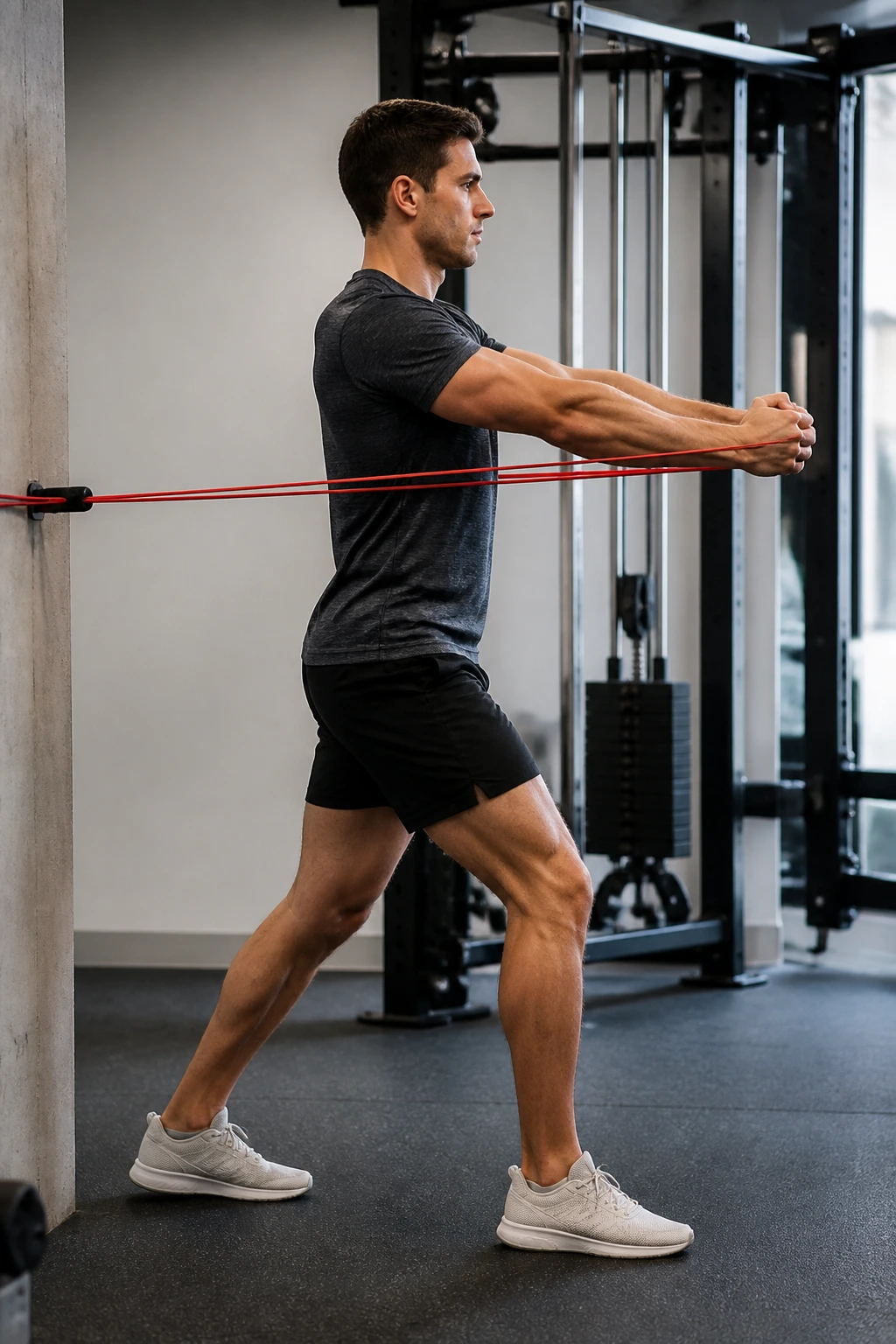
What do runners actually need from core training? Not endless crunches.
They need a trunk that resists twisting, tipping, and collapsing when one leg lands after the other. That’s why anti-rotation work matters more than a vanity ab circuit. Think Pallof presses, side planks, dead bugs, bird dogs, and suitcase carries.
A nice thing about this plan is that it rarely wrecks your legs. You can bolt it onto a running day after an easy run or do it on a day when the body feels a little beat up. Use 2 to 3 sets of 20 to 40 seconds for holds, and 6 to 10 reps for the movement drills.
I like suitcase carries most of all. One heavy dumbbell in one hand, torso tall, no leaning. It looks simple. It is simple. And it works.
17. The Plyometric Strength Plan

Plyometrics belong in a runner’s plan, but only in the right dose.
The goal is to teach the legs to be springy, not to turn every session into a bounce party. That means a small number of high-quality contacts: pogos, bounds, low box jumps, skip drills, and jump rope. Pair those with a strength lift so the body gets both force and stiffness.
Keep the contacts low
- Box jump: 3 sets of 3 to 5
- Pogo hop: 3 sets of 10 to 20
- Bounds: 3 sets of 20 to 30 meters
- Jump rope: 3 rounds of 30 seconds
If the landings get loud or sloppy, stop. That’s the warning sign. Tendons like smart loading, not endless pounding.
18. The Recovery-Friendly Microdose Plan

A lot of runners need less strength work than they think, not more.
This microdose plan is built for heavy training weeks, travel weeks, or the stretch of the season when life is messy and energy is low. Ten to fifteen minutes, four or five times a week, can keep the joints online without creating a huge recovery bill.
Use bodyweight split squats, glute bridges, calf raises, planks, and band rows. One round is enough on some days. Two rounds on a better day. The trick is to stay fresh. No one is impressed by a tiny lifting session that ruins tomorrow’s workout.
This is the kind of plan I like when the running volume is high and the legs need a little reminder, not a full lecture.
19. The Heavy-Light Split Plan

A heavy-light split gives you structure without turning the week into a slog.
One day is for heavy lifting: low reps, longer rests, serious focus. The other day is for lighter, faster work: jumps, mobility, single-leg drills, and a few accessory lifts. That contrast keeps strength moving while protecting the running sessions that matter most.
A sample week might look like this:
- Heavy day: squat, deadlift, row, calf raise
- Light day: box jump, split squat, Pallof press, carries
Keep the heavy day away from your hardest run if you can. Forty-eight hours is a nice buffer. The light day can sit closer to a workout because it should leave you feeling springy, not crushed.
20. The Circuit Strength-Endurance Plan

Not every runner wants a barbell. Some want a hard, efficient circuit that trains strength and work capacity at the same time.
That’s fine, as long as the circuit stays honest. Choose 5 to 7 movements, keep the load moderate, and work for 30 to 45 seconds per station with brief rest. Squat, hinge, push, pull, carry, core — that’s enough. Add a jump or sled push if you have it.
A sample circuit
- Goblet squat
- Dumbbell row
- Reverse lunge
- Push-up
- Farmer carry
- Side plank
Do 3 rounds. Rest 60 to 90 seconds between rounds. This plan fits runners who like to sweat, but it should still feel like strength work, not just a tired boot camp class in running shoes.
21. The Prehab and Injury-Prevention Plan
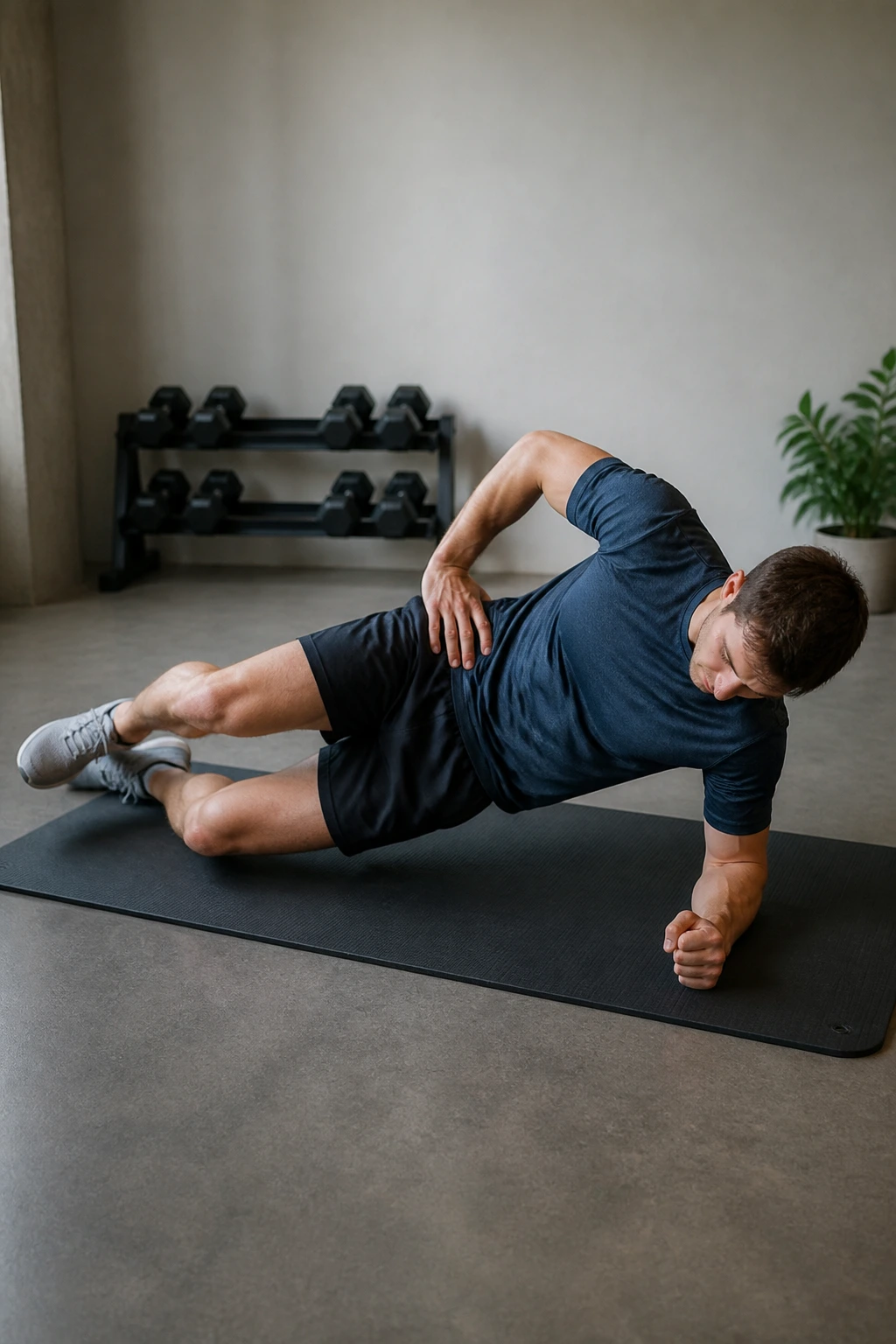
What if you keep getting the same nagging issue — knees, Achilles, hips, or shin?
Then the plan should stop pretending the problem will disappear on its own. A prehab-focused routine uses targeted work for the areas runners abuse most: glute medius, calves, adductors, hamstrings, and feet. Banded lateral walks, Copenhagen planks, calf raises, hamstring slides, and foot drills fit here.
A smart prehab session does not need to be long. Twenty-five minutes is enough. The work should feel controlled and a little boring, because that usually means you’re training the pieces that don’t get much love elsewhere.
Good places to start
- Banded lateral walk: 2 sets of 12 steps each way
- Copenhagen plank: 2 sets of 15 to 20 seconds
- Hamstring slide: 2 sets of 8
- Tibialis raise: 2 sets of 15
- Short-foot hold: 3 rounds of 20 seconds
Do this consistently, and keep the ego out of it.
22. The Time-Crunched 20-Minute Plan

Twenty minutes is enough if you stop pretending you need a full gym experience every time.
This plan uses supersets and a timer. Pick one lower-body move, one upper-body pull, one single-leg exercise, and one core drill. Run them in pairs, rest briefly, and move on. The whole thing should feel focused and brisk.
A clean version:
- Goblet squat + row
- Split squat + push-up
- Calf raise + side plank
Do 3 rounds, 8 to 10 reps on the lifts, 20 to 30 seconds on the holds. That is a real session. Not a toy. Not a substitute for sleep or food. But enough to keep strength from sliding when the week gets crowded.
23. The Gym Access Plan for Serious Mileage

If you have real gym access, use it for the stuff home training makes harder.
Machines, cables, sleds, and a trap bar make certain movements easier to load and easier to recover from. That matters when your running week is already full. I like this plan for higher-mileage runners who want quality without spending forever under the bar.
Useful tools here
- Trap bar deadlift for a cleaner hinge
- Leg press for quad loading with less setup
- Seated hamstring curl for the back of the thigh
- Cable row for upper-back work
- Sled push or drag for leg drive with low soreness
The machine work is not a downgrade. It is a tool. If a leg press lets you get a hard quad stimulus with less fatigue than a deep squat, that is a win worth taking.
24. The Home No-Equipment Plan

No dumbbells, no barbell, no kettlebell. Still fine.
A no-equipment plan can work if you’re willing to get creative with tempo, unilateral work, and household tools. Stairs help. A backpack helps. A towel on a smooth floor helps more than you’d think. Use split squats, single-leg bridges, step-ups, towel hamstring slides, and calf raises.
I like this plan for travel, busy weeks, or runners who need something frictionless. If the workout lives next to the couch and takes 15 minutes to set up, you’re far more likely to do it. The trick is making easy things hard enough: slow the lowering phase, pause at the bottom, and use one leg at a time whenever possible.
This is not fancy. It does not need to be.
25. The Maintenance Plan That Keeps You Fresh

Once you’ve built a base, the smartest plan is often the one that asks for less.
This maintenance setup is for runners who already know what works and just need to hold onto it. One or two sessions a week, minimal volume, clean execution. Squat or hinge once, single-leg work once, calves and core both times if you can fit them in. That’s plenty.
A simple rule helps: if the lifting starts hurting your running rhythm, cut a set before you cut a run. Strength should support the season you’re in, not try to run the schedule for it. Keep the work crisp, keep the loads honest, and don’t let the gym become a place where you chase fatigue for its own sake.
That is the whole game, really. Strong enough to run well. Fresh enough to do it again tomorrow.
