



Some days the body does not want a workout; it wants a reset. A sturdy chair can give you one without forcing you onto the floor, and that is exactly why chair yoga keeps showing up in homes, offices, waiting rooms, and hotel corners where people need to move but do not have much room or energy.
These free printable chair yoga routines are built for that kind of day. They are short enough to copy onto a page, specific enough to follow without guessing, and gentle enough to use when your back feels compressed, your shoulders have climbed up near your ears, or your hips have gone stiff from sitting too long. A dining chair with no wheels usually works better than a soft swivel chair, because you want the seat to stay put when you twist or reach.
The useful part is not that chair yoga looks easy. It is that it strips away the noise. You can sit tall, plant your feet, breathe in a controlled way, and get moving in a few minutes instead of waiting for the perfect block of time. Small moves count here. So do slow exhalations, a steady spine, and the willingness to stop before a stretch turns into a tug-of-war.
Keep a towel nearby if your shirt rides up, and keep your feet flat unless a routine tells you otherwise. Start with the spine wake-up, because the back likes to be reminded what upright feels like.
1. Morning Chair Yoga Spine Wake-Up
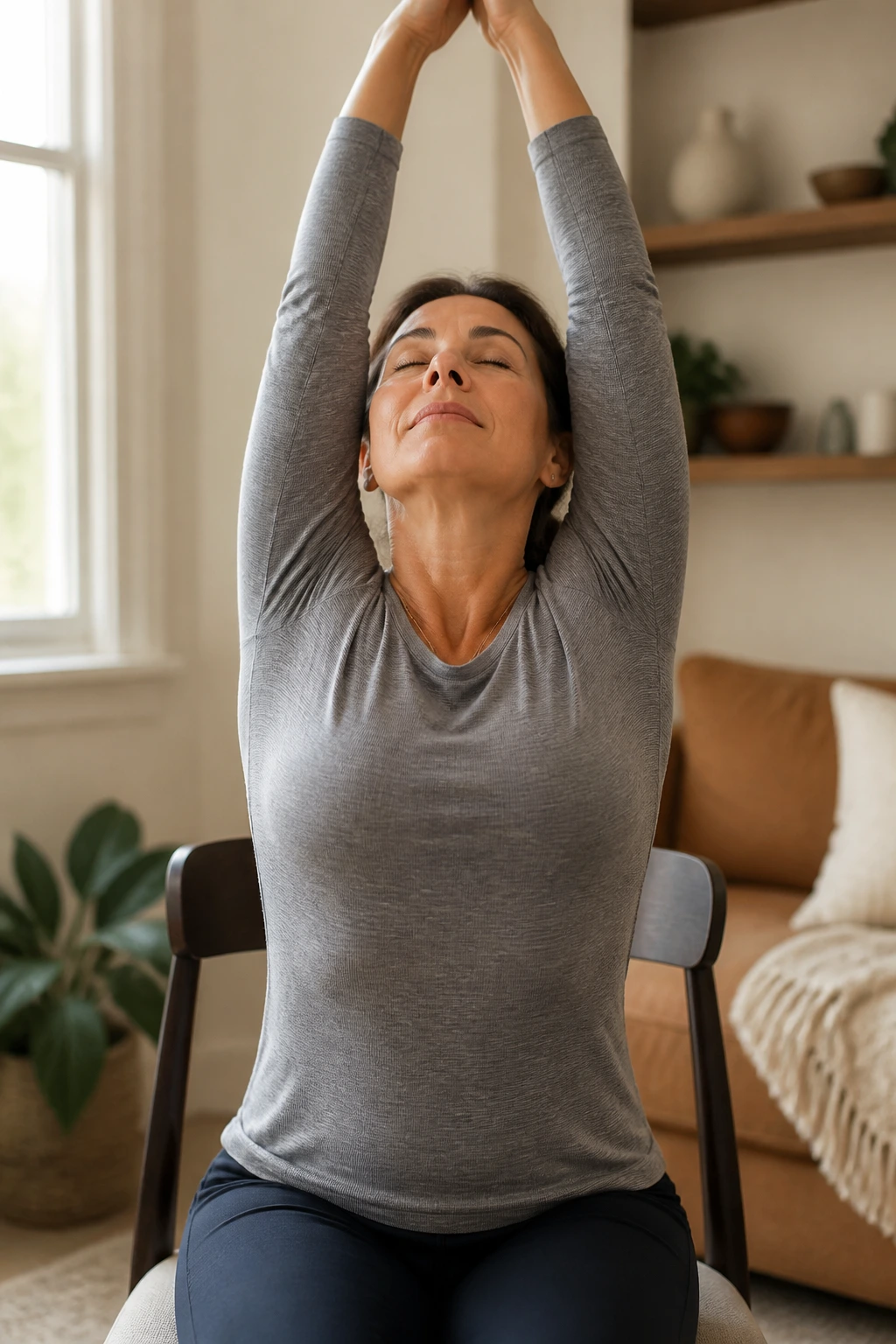
Your spine likes a slow start. After sleep, a little compression, and maybe a phone scroll before you stood up, the back usually feels more like a hinge than a column. This chair yoga routine loosens that feeling without yanking on anything.
Five-minute flow
- Sit near the front edge of the chair with both feet flat.
- Inhale and reach both arms up for 3 breaths.
- Exhale into seated cat-cow for 6 slow rounds, moving one vertebra at a time.
- Side bend right and left for 2 breaths on each side.
- Fold forward with forearms on thighs for 3 relaxed breaths.
- Roll back up slowly, then lift and lower the heels 10 times.
The trick is pace. If the last shape feels rushed, the whole sequence feels sloppy. Keep the motion smooth, not big. By the end, your lower back should feel warmer and your shoulders should sit lower without effort.
2. Neck and Shoulder Reset

Why do shoulders creep toward the ears after one long meeting? Because they spend hours bracing, and then they forget how to let go. This routine gives them a few clear directions: up, back, down, and out of the ears.
Start with two slow chin nods, as if you’re saying yes to the air. Then tip the right ear toward the right shoulder for 20 to 30 seconds, switch sides, and keep your jaw loose the whole time. A clenched jaw turns a neck stretch into a fight. Nobody needs that.
The best part is the shoulder work. Roll both shoulders back 6 times, then squeeze the shoulder blades together for 5 slow breaths. If you want a little more, bring the arms into cactus shape and keep the elbows at shoulder height while you breathe into the ribs. That opens the front of the chest without forcing the neck to do extra work.
Skip any sharp pull. A neck stretch should feel like a mild tug and a little warmth, not a zing.
3. Desk-Seat Posture Fix
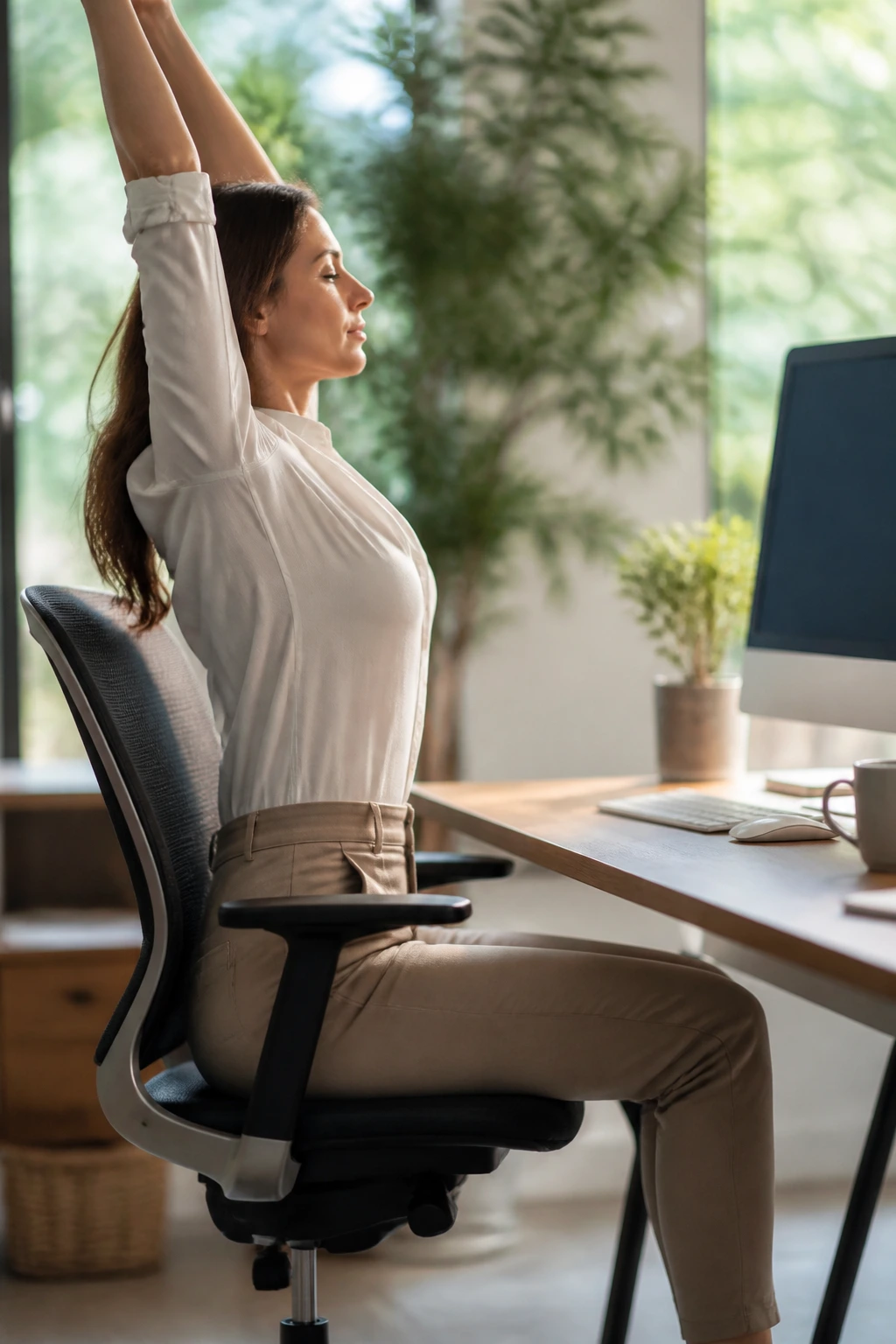
If you catch yourself sliding into a slump after 20 minutes, this one earns its spot on the page. It is not fancy. It is basic enough to use between emails, which is usually the whole point.
Three anchors that matter
- Put both feet flat and about hip-width apart.
- Sit on your sit bones, not all the way back in the cushion.
- Stack ribs over hips, then gently draw the chin back.
From there, add 5 seated arm reaches overhead, 6 slow shoulder blade squeezes, and 10 heel lifts. That combination wakes up the spine, the upper back, and the feet at the same time. Tiny, yes. Useful, also yes.
The posture fix works because it gives you landmarks. You are not trying to look perfect. You are trying to remember what centered feels like before your body sinks into the chair again.
4. Lower Back Release
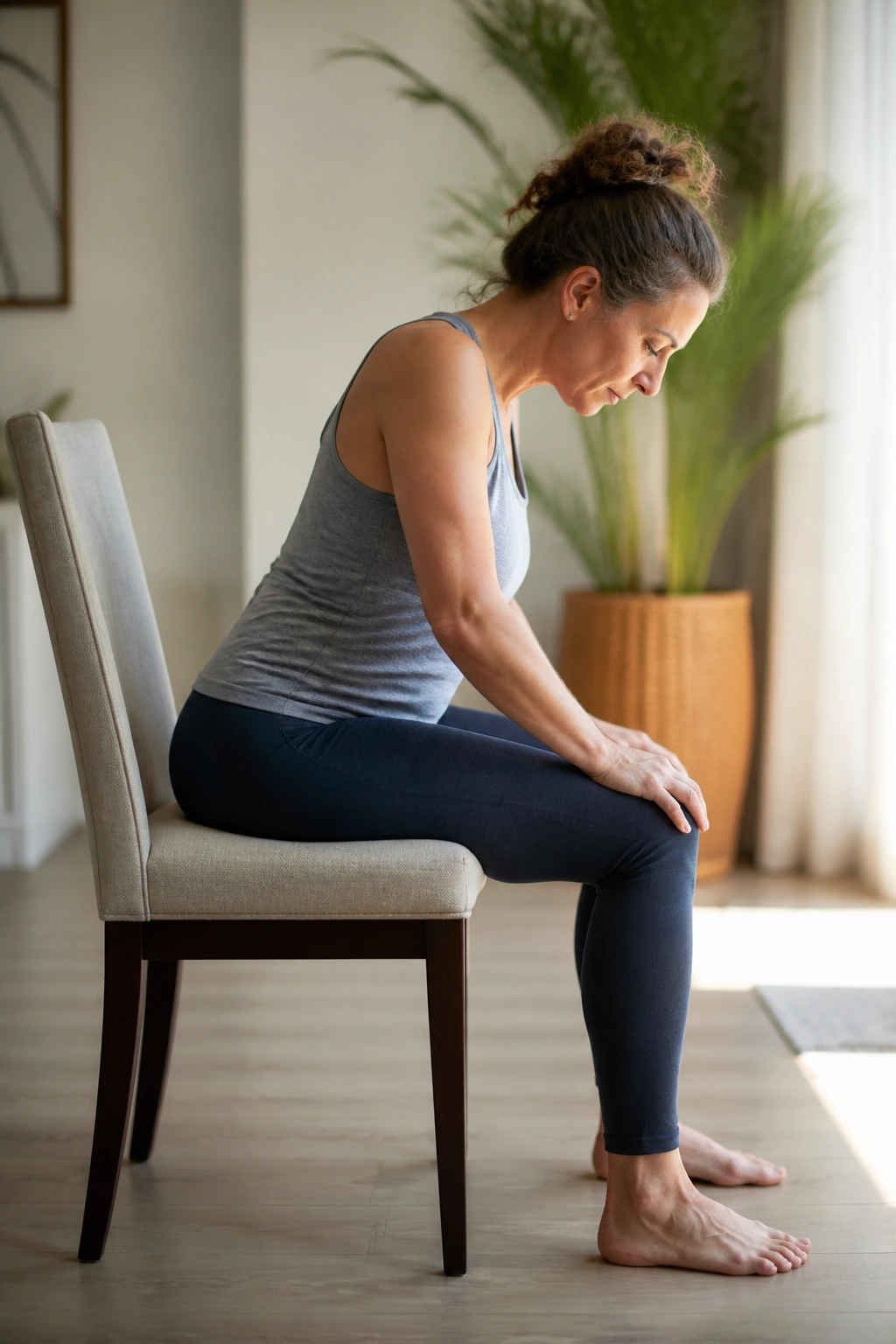
A tight lower back often wants movement, not more caution. People guard it so hard that everything around it gets stiff too, and then the stiffness spreads up into the mid-back and down into the hips. A little motion usually helps more than freezing in place.
Begin with pelvic tilts: rock the pelvis forward and back 8 times until the low back feels less locked. Then lift one knee at a time, holding each lift for a breath or two. Keep the movement small. If the hip flexors grab, shorten the range and slow down.
Finish with a gentle forward hinge, hands on thighs, and let the belly move toward the legs without collapsing the chest. Three breaths is enough. If the back feels pinchy, come up sooner. That is not failure. That is good information.
This one is useful on days when your low back feels like it has forgotten the rest of the body exists.
5. Seated Cat-Cow Flow
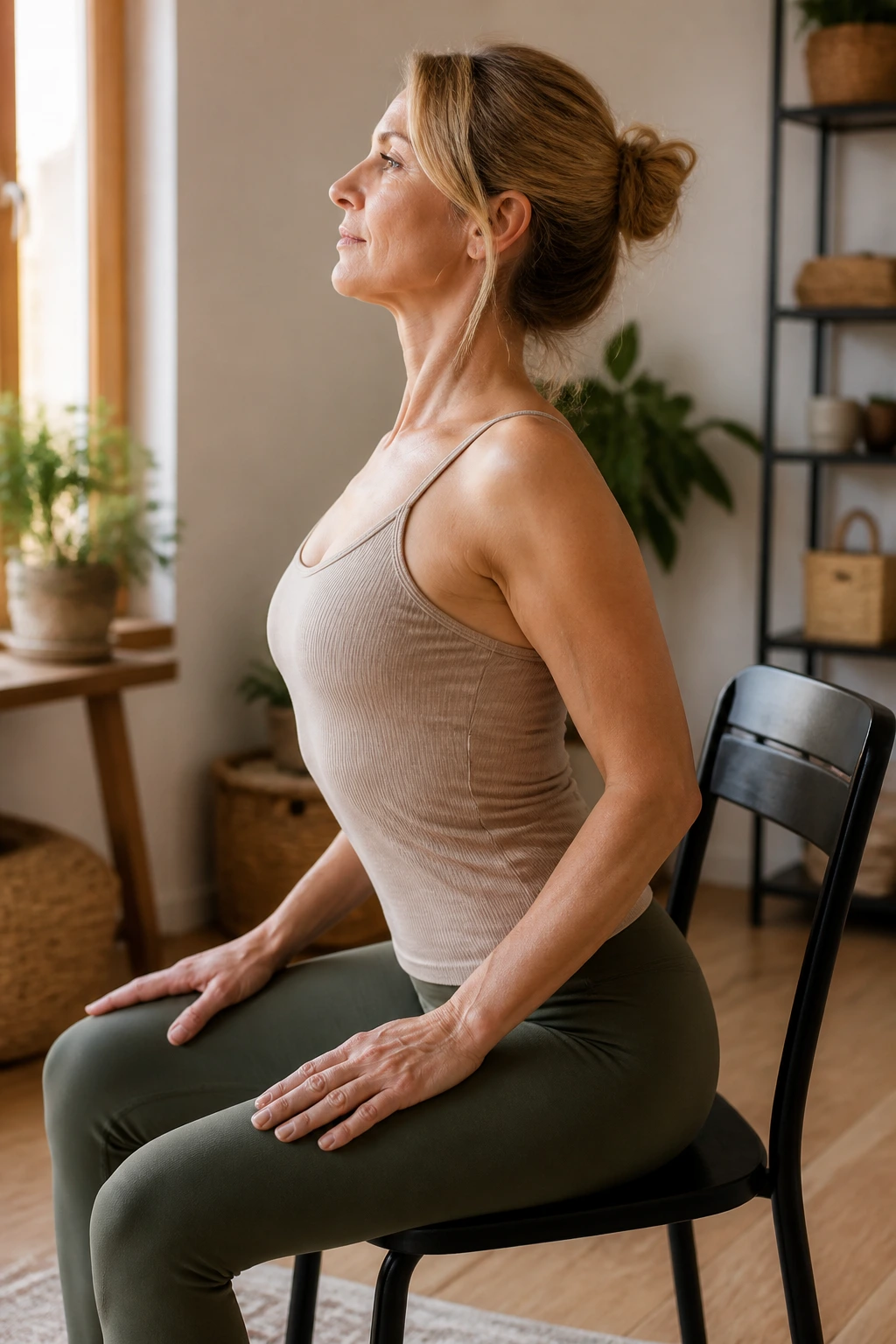
This is the classic for a reason. Seated cat-cow is one of the easiest chair yoga routines to print, teach, and repeat, because the movement is plain and the feedback is immediate. You can feel the spine open as soon as the breath and motion start talking to each other.
How to move it
- Sit tall and place your hands on your thighs.
- Inhale, tip the pelvis forward, lift the chest, and look slightly up.
- Exhale, round the spine, tuck the chin a little, and press the hands into the thighs.
- Repeat for 6 to 8 rounds.
- Add a pause at each end for one full breath.
The nice thing here is that the motion is small enough to stay safe, but large enough to wake up the whole back line. If you do it quickly, you miss the point. Slow is the whole trick.
Stop when the breath feels smooth again. That is when the spine has done its job.
6. Hip Opener for Stiff Seats
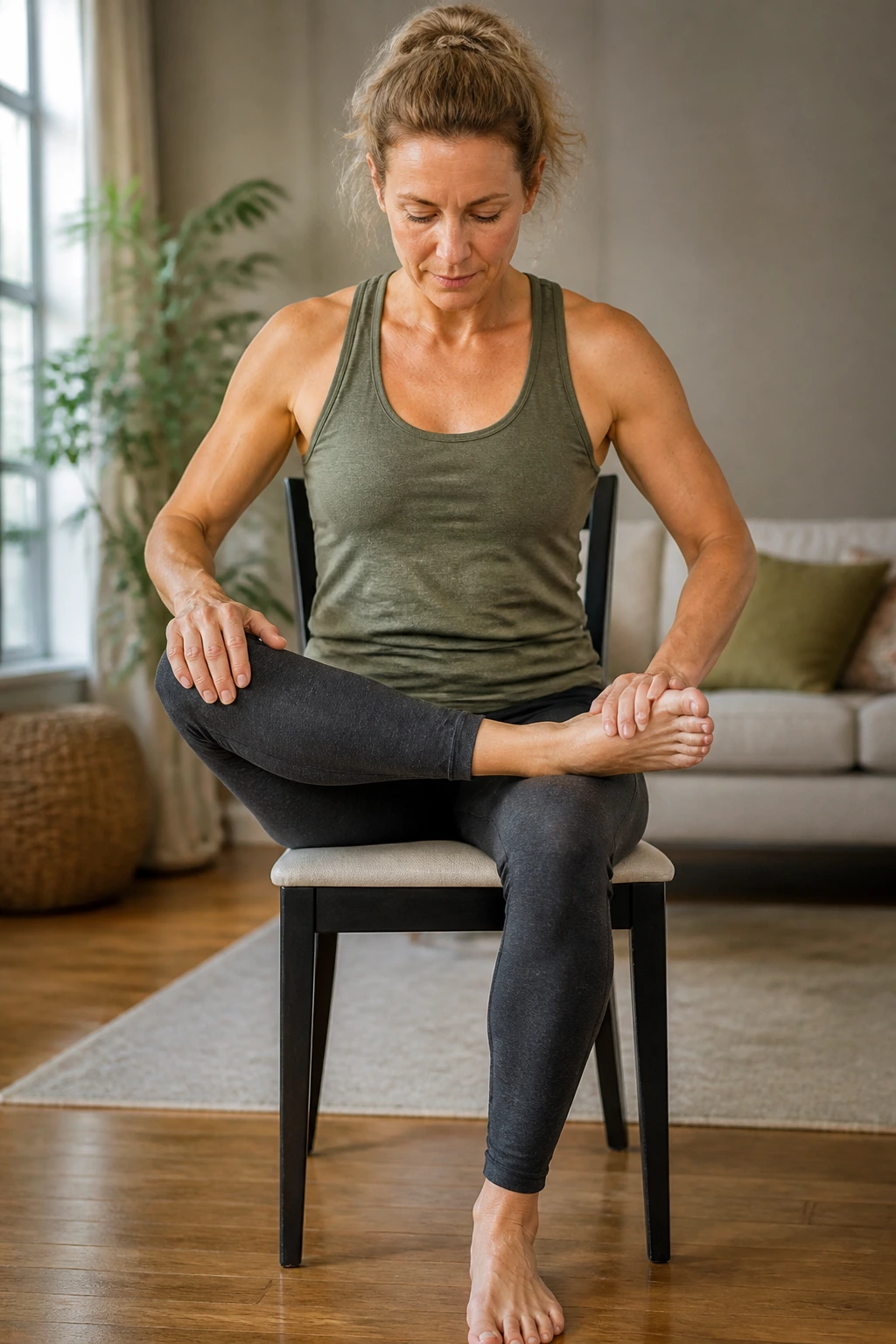
Ever stand up after a long stretch of sitting and feel like your hips have been bolted shut? This routine is for that exact moment. It gives the front of the hips, the outer hips, and the glutes a chance to soften without putting you on the floor.
Start by crossing the right ankle over the left thigh if that feels comfortable, keeping the lifted foot flexed. Hold for 3 breaths, then hinge forward only an inch or two. If the knee complains, back off immediately and keep the torso upright. You should feel the stretch in the hip, not in the joint.
Then shift to seated knee circles: one knee at a time, small circles, 5 each direction. Finish with a gentle side-to-side weight shift while both feet stay planted. That last part sounds too easy to matter, but it changes how the hips sit in the chair.
The routine works best when the shapes stay small and patient. Big hip stretches tend to look prettier than they feel.
7. Hamstring Lengthener
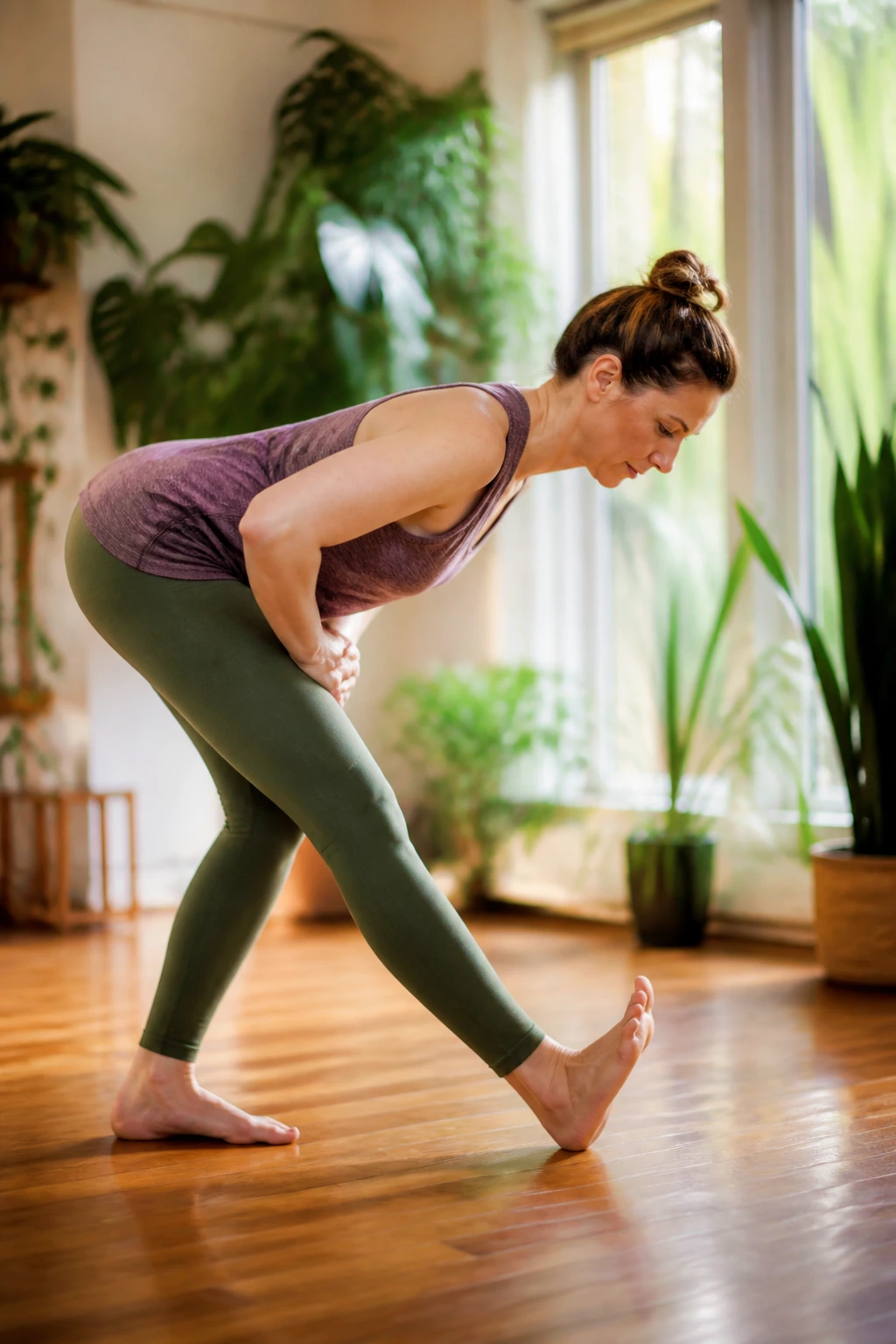
You should feel this behind the thigh, not behind the knee. That distinction matters more than people think, because a hamstring stretch done badly just makes the back of the knee unhappy and the whole thing feels pointless.
Slide one heel forward until the leg is long enough to create a mild pull. Keep the toes up toward the ceiling, then hinge forward from the hips with a straight back for 20 to 30 seconds. If you round hard through the spine, the stretch changes character. Sometimes that is fine. Sometimes it is not. Use your judgment.
The other useful trick is breathing into the back of the leg. Slow exhales help the muscle loosen without you forcing it. Switch sides, then repeat once more if the first round feels helpful.
I like this one after travel or long desk work because it changes the feeling in the whole back line, not only the legs.
8. Core Wake-Up in a Chair
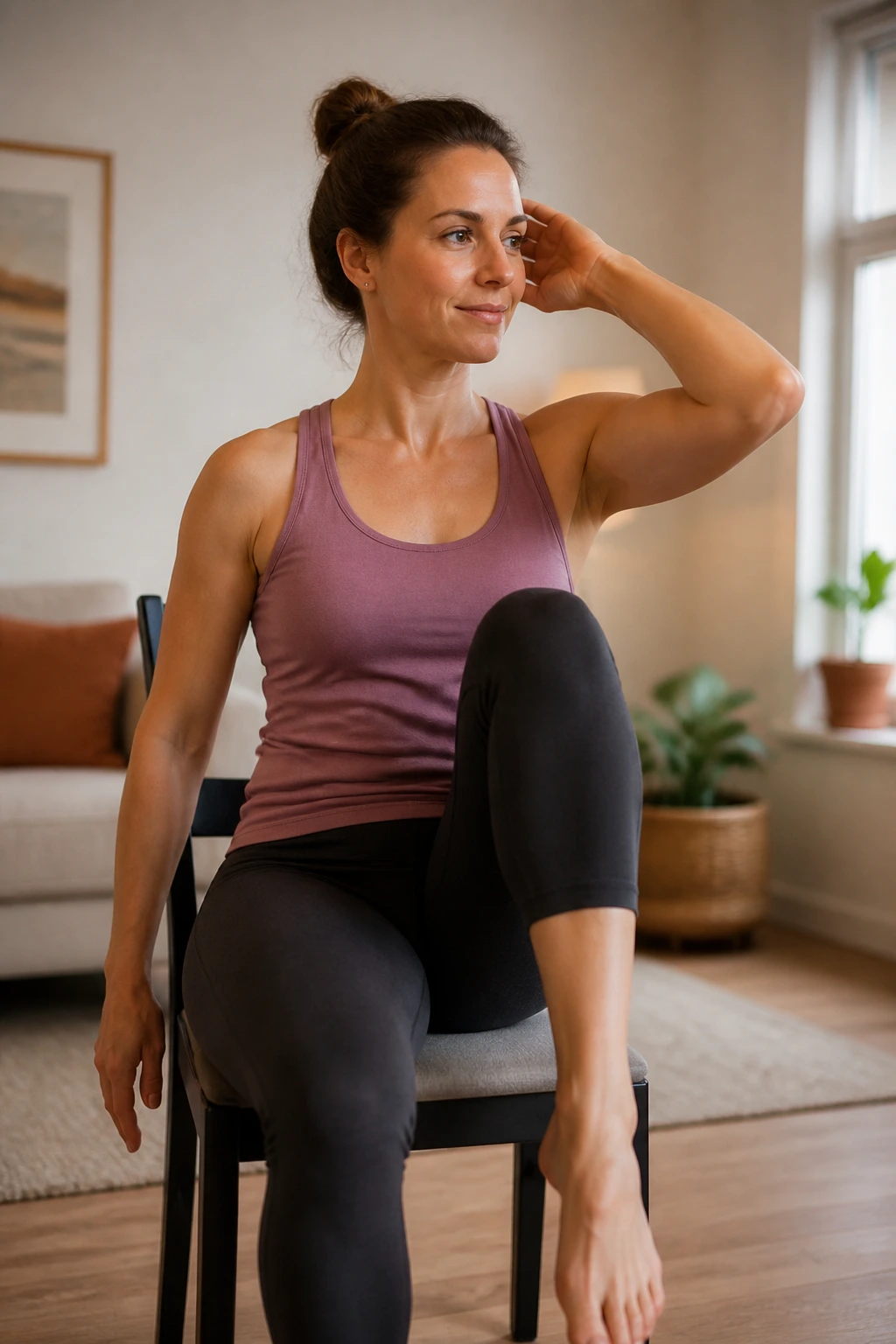
Floor crunches are not the only way to train your middle. In a chair, the core has to work differently: less dramatic, more sneaky. That makes it a smart choice for anyone who wants a gentle abdominal wake-up without getting down on a mat.
Start with seated marching for 10 slow lifts per side. Keep the chest lifted and the ribs from flaring. Then bring the right knee toward the left elbow, return to center, and switch sides for 6 rounds. If that feels easy, hold your arms straight out in front and resist the urge to lean back.
The magic is in the exhale. Tighten the belly slightly as you breathe out, then let it soften on the inhale. That rhythm makes the core work without a hard crunch.
It is not flashy. It works anyway.
9. Wrist and Hand Relief
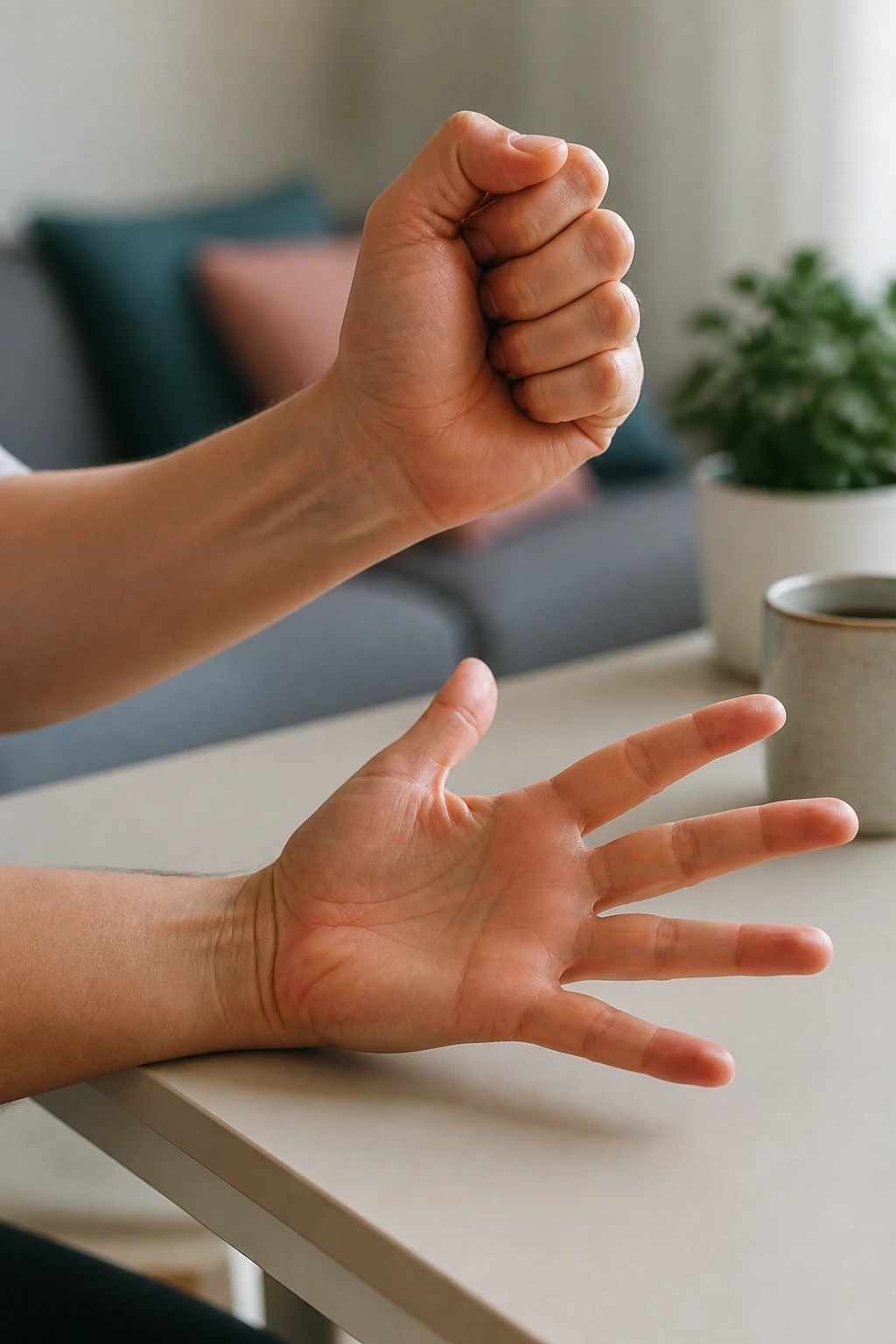
Typing, texting, gripping a steering wheel, carrying bags — the hands collect a surprising amount of tension. Chair yoga for the wrists and hands is one of those small routines that pays off fast, especially if your fingers feel puffy or your forearms feel tired.
- Make fists gently, then open the fingers wide 10 times.
- Circle both wrists 5 times in each direction.
- Press palms together at chest height for 5 breaths.
- Turn the right palm up, gently pull the fingers back with the left hand for 15 seconds, then switch.
- Shake the hands loose for 10 seconds and let them hang.
That last shake matters more than it sounds. People tend to hold tension in their hands without noticing it, and a tiny reset can change how the shoulders feel too.
Use this one between work blocks. It takes less time than scrolling a message thread you do not even want to answer.
10. Chair Yoga Chest Opener and Breath Reset
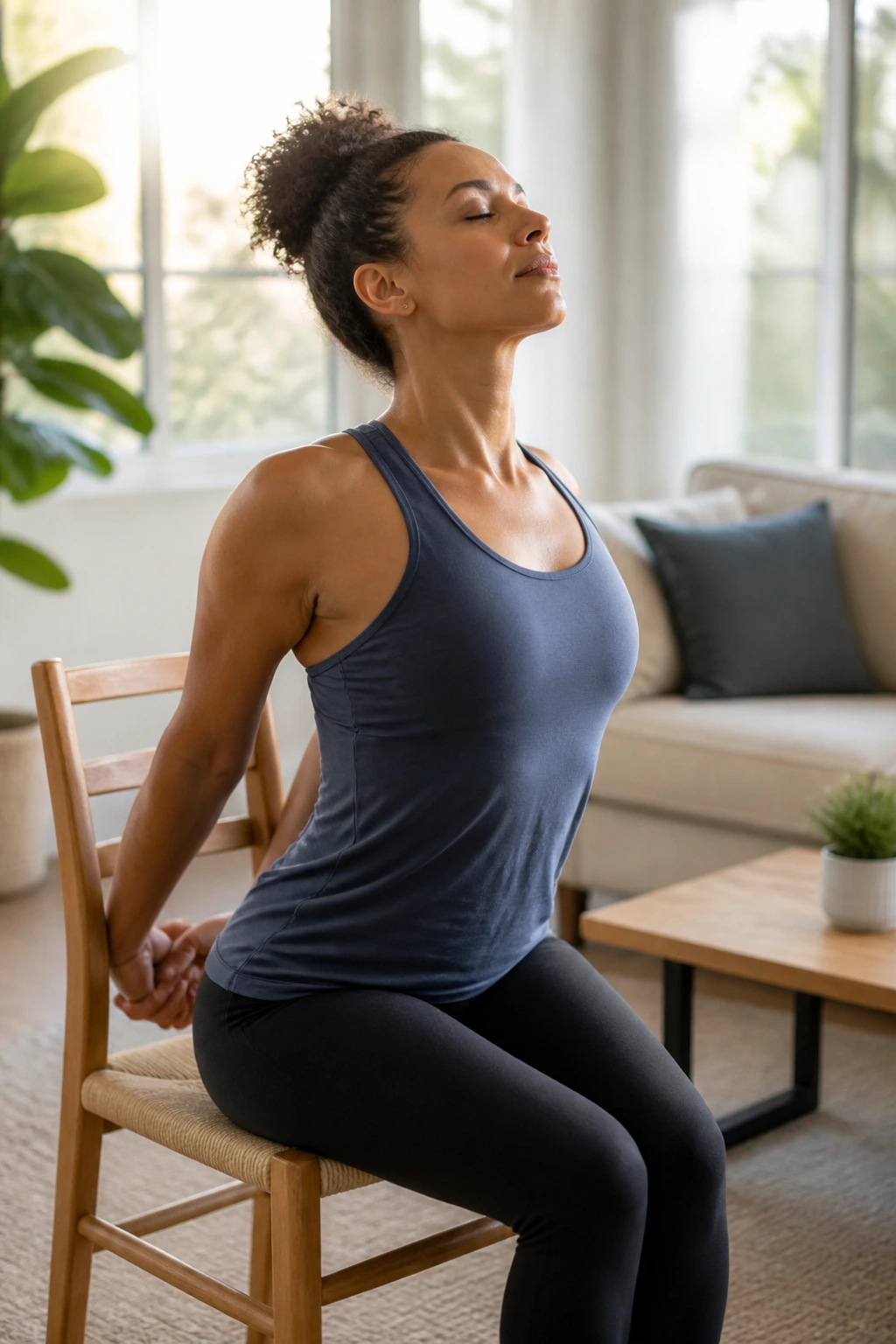
When the chest is tight, the breath gets small. That usually happens after hunching over a keyboard or folding the upper body forward for too long. This chair yoga sequence opens the front of the body and gives the lungs a bit more room to do their job.
Breath first, movement second
Sit tall, place one hand on the belly and the other on the ribs, and take 5 slow breaths that spread wide through the sides of the torso. Then clasp the hands behind the back if that feels okay, straighten the arms a little, and lift the sternum without jamming the lower back. Hold for 3 breaths.
Next, bring the arms into cactus shape — elbows bent, palms facing forward — and squeeze the shoulder blades gently toward the spine. You do not need a giant backbend. You need a clear opening across the chest.
This routine works well when you feel flattened by the day. It gives you a chance to breathe like a person again.
11. Seated Balance and Foot Strength
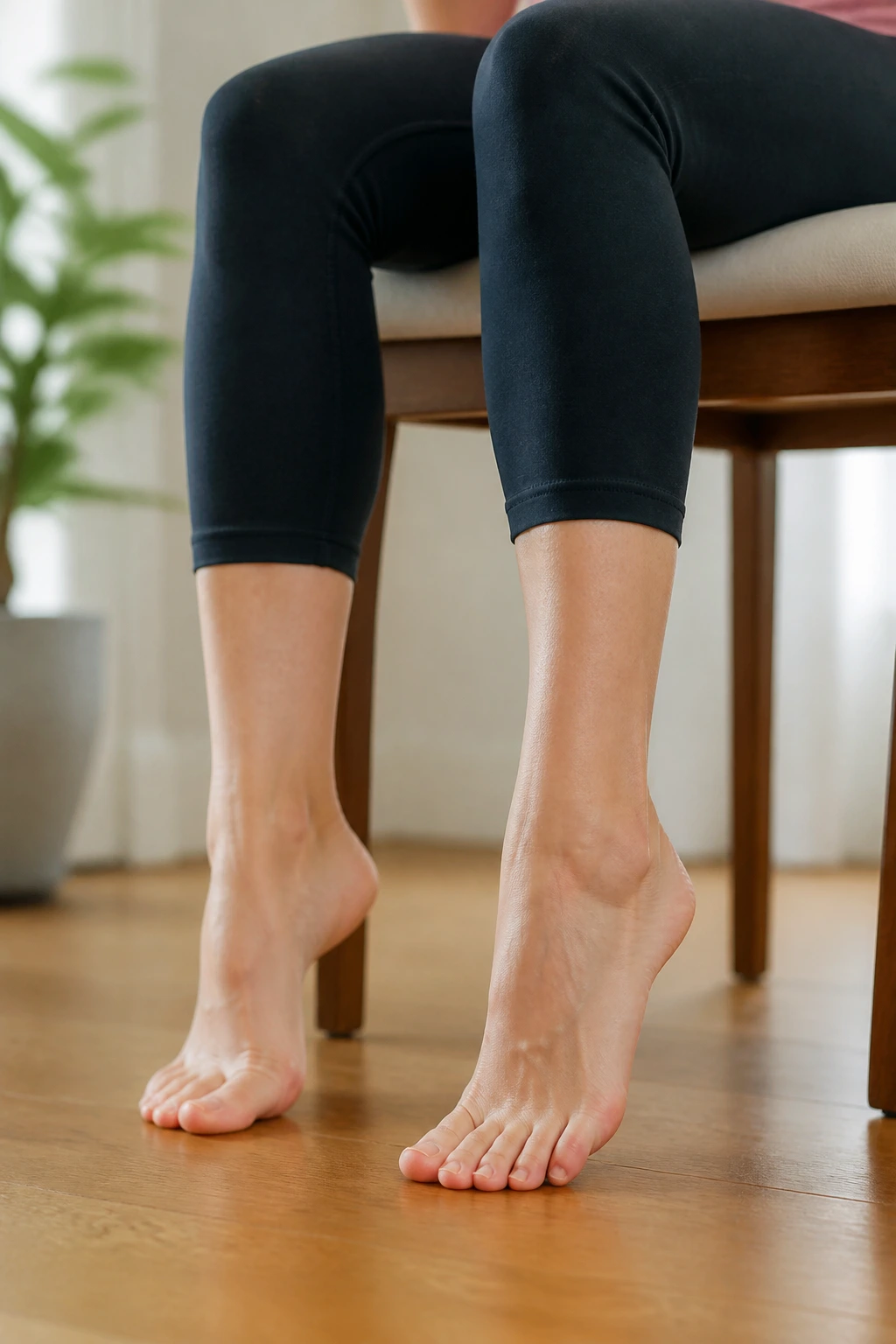
People forget the feet when they sit. Then they wonder why standing feels wobbly. A little seated balance work brings the feet back into the conversation and makes the ankles feel less sleepy.
Lift one heel while keeping the toe rooted, then switch. Do 10 each side. After that, hover one foot an inch off the floor for 3 breaths while the torso stays upright. It looks tiny. It is. The challenge comes from staying steady without leaning on the chair back.
A second round can include toe lifts and ankle circles. The goal is not to build circus-level balance while sitting. The goal is to remind the lower legs that they still have a job.
This routine is a quiet one, but I’d keep it on the page. Strong feet make almost everything above them feel better.
12. Gentle Twist for Digestion
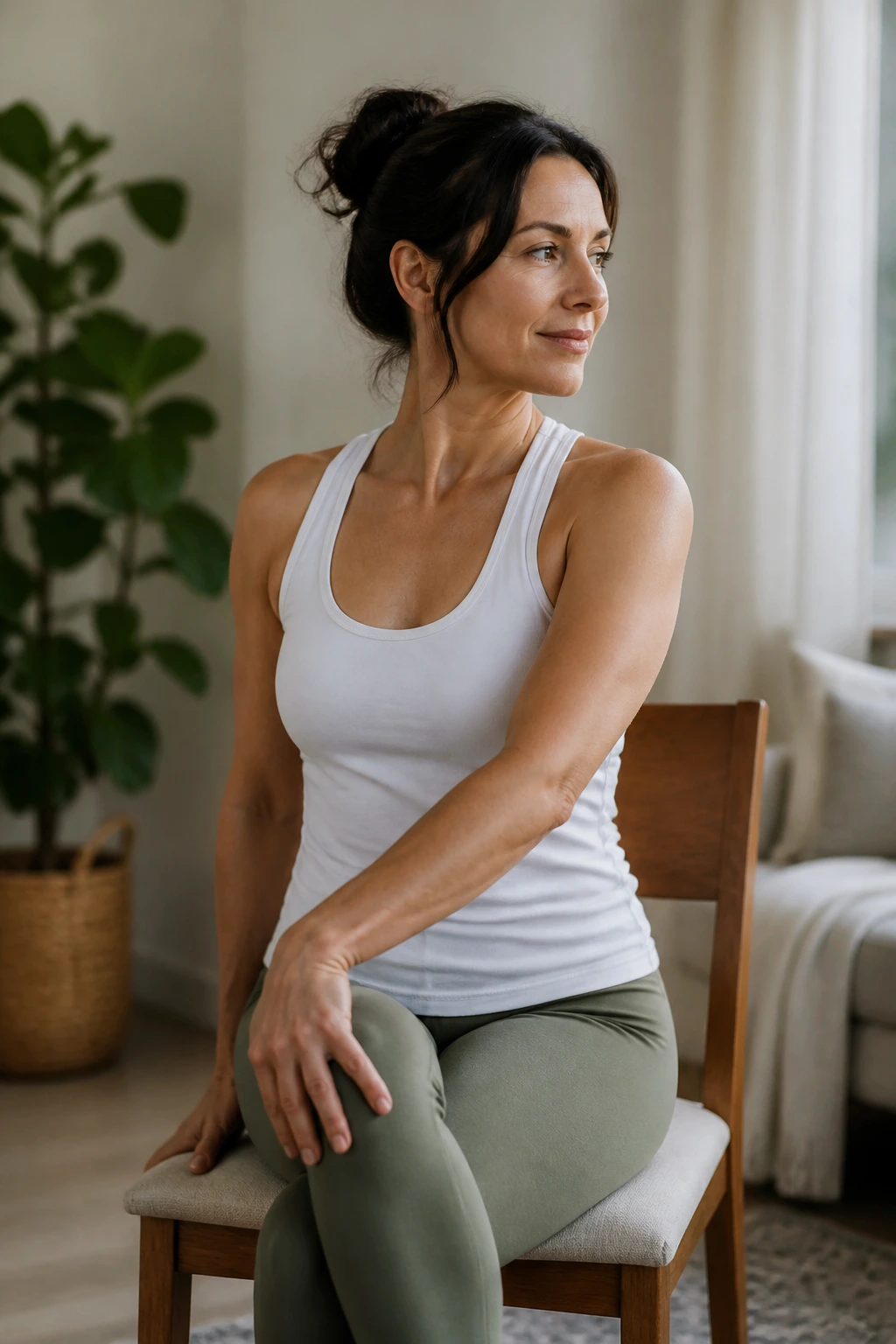
Do seated twists actually help, or do they just feel nice? The honest answer: they usually help most when the movement stays gentle and the breath stays slow. A hard twist is not the point here.
Sit tall, inhale to lengthen the spine, then exhale and turn from the ribs, not from the neck. Place one hand on the opposite thigh and the other on the chair seat for support. Hold for 3 breaths, come back to center, and switch sides. If the lower back feels compressed, reduce the twist by half.
The useful version of this routine feels open, not wrung out. You should be able to breathe evenly while the torso rotates. That tells you the shape is doing what it should.
I like this after lunch or after a long stretch of sitting. It is calm, small, and easy to repeat without building drama around it.
13. Circulation Booster
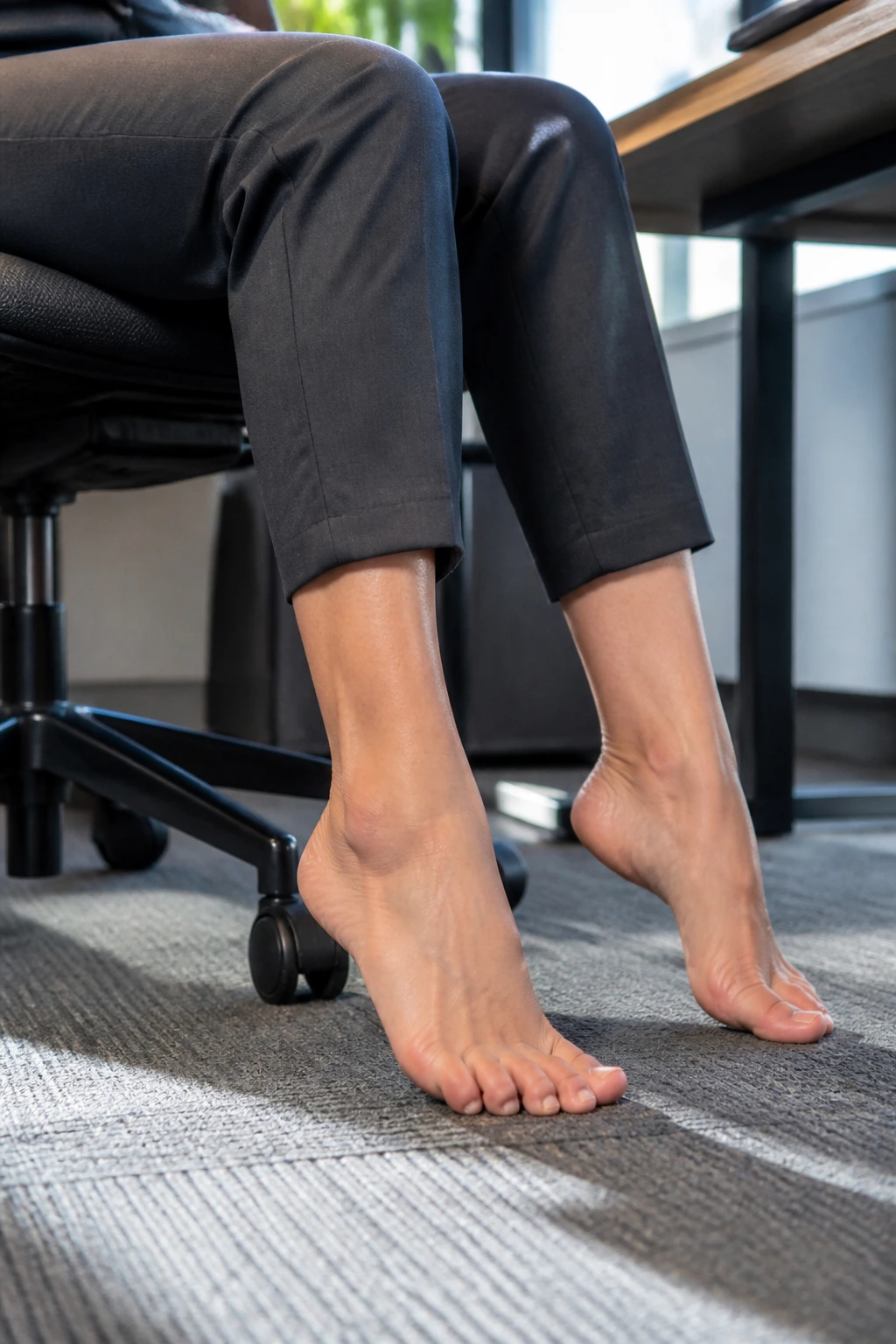
Heavy legs do not need punishment. They usually need rhythm. This circulation-focused chair yoga routine gets the blood moving without asking you to stand for long periods or do anything fussy.
- Pump both ankles 20 times.
- Lift both heels for 15 reps.
- Lift both toes for 15 reps.
- March in place for 30 seconds.
- Squeeze the thighs together lightly for 5 breaths.
- Finish with 5 slow arm circles.
That mix matters because it wakes up the lower body from different angles. The ankles handle the pumping, the calves help move blood back up, and the thighs stop everything from feeling glued to the chair.
If your legs feel puffy at the end of the day, this is one of the routines worth printing and keeping near the desk or couch. It is plain, but plain is fine when the goal is to feel less heavy.
14. Calf and Ankle Care
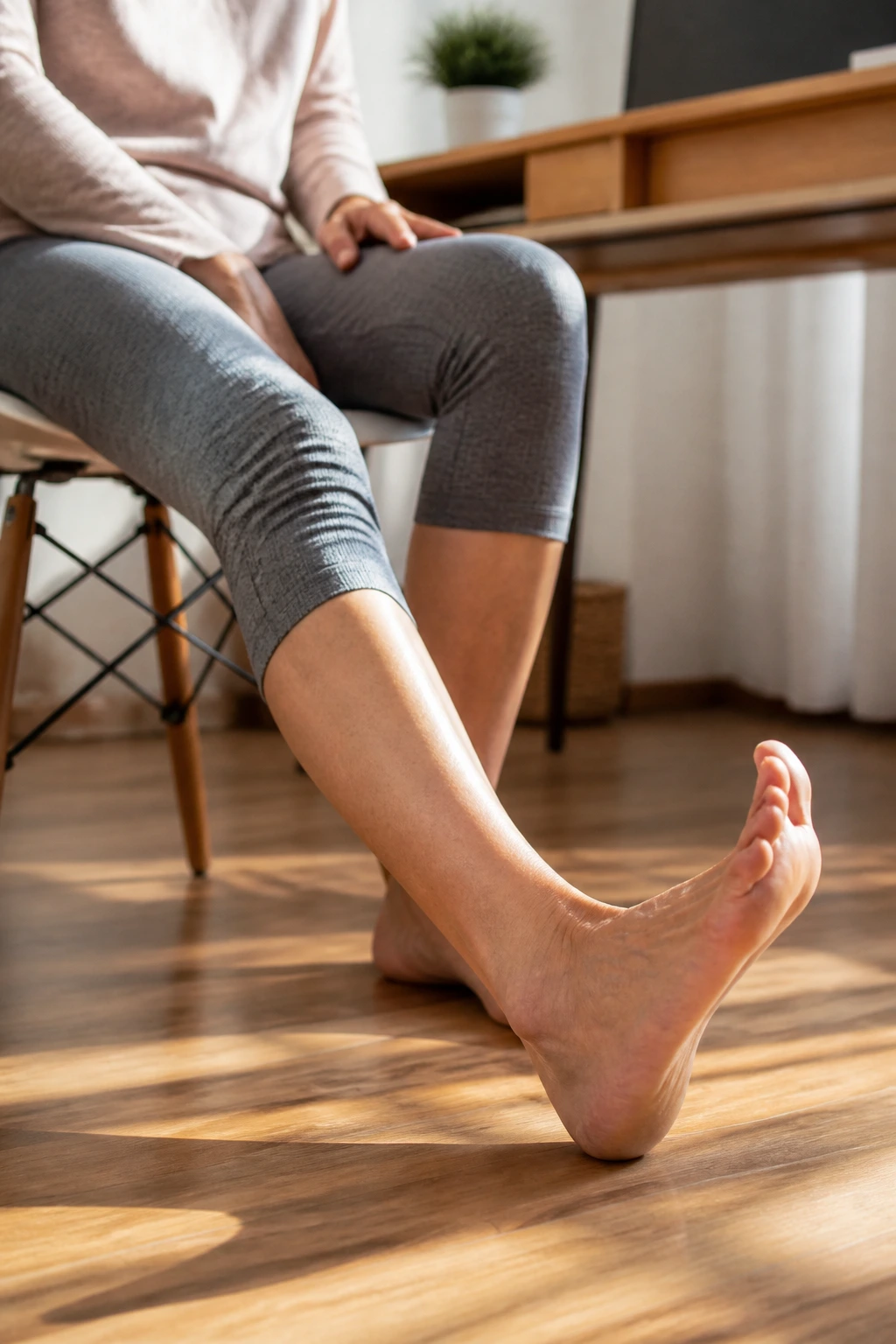
The calves get ignored until they start complaining. Same with the ankles. Then a walk feels stiffer than it should, and the feet do that annoying thing where they seem to remember every mile you sat still.
Extend one leg forward with the heel on the floor and the toes lifted. Hold for 20 seconds, then bend the knee slightly and point and flex the foot 10 times. After that, draw 5 slow ankle circles in each direction. Switch sides.
If you want a little more calf work, stand only if the day allows it and press both hands into the chair back while keeping one heel down. That version gives a deeper stretch, but the seated version is enough for most people.
Short answer: ankles need motion, not heroics. Give them that, and they usually stop sulking.
15. Chair Yoga Stress-Down Evening Routine

A body that has been on all day needs a downshift, not another project. This chair yoga routine slows the pace on purpose. It is the one I’d keep close for evenings when the brain is still buzzing but the rest of you wants the lights turned down.
A slower five-minute sequence
- Sit with both feet grounded and take 4 long exhales.
- Roll the shoulders back 6 times.
- Fold forward over the thighs and let the arms hang for 3 breaths.
- Return upright, then take a gentle side bend on each side for 2 breaths.
- Finish with hands on the belly and 5 quiet breaths.
The point is not to stretch hard. The point is to stop chasing the day. Long exhales usually help more than people expect, because they tell the body it can stop bracing.
Use this before bed, after dinner, or anytime you need your nervous system to unclench a little.
16. Full-Body Chair Flow
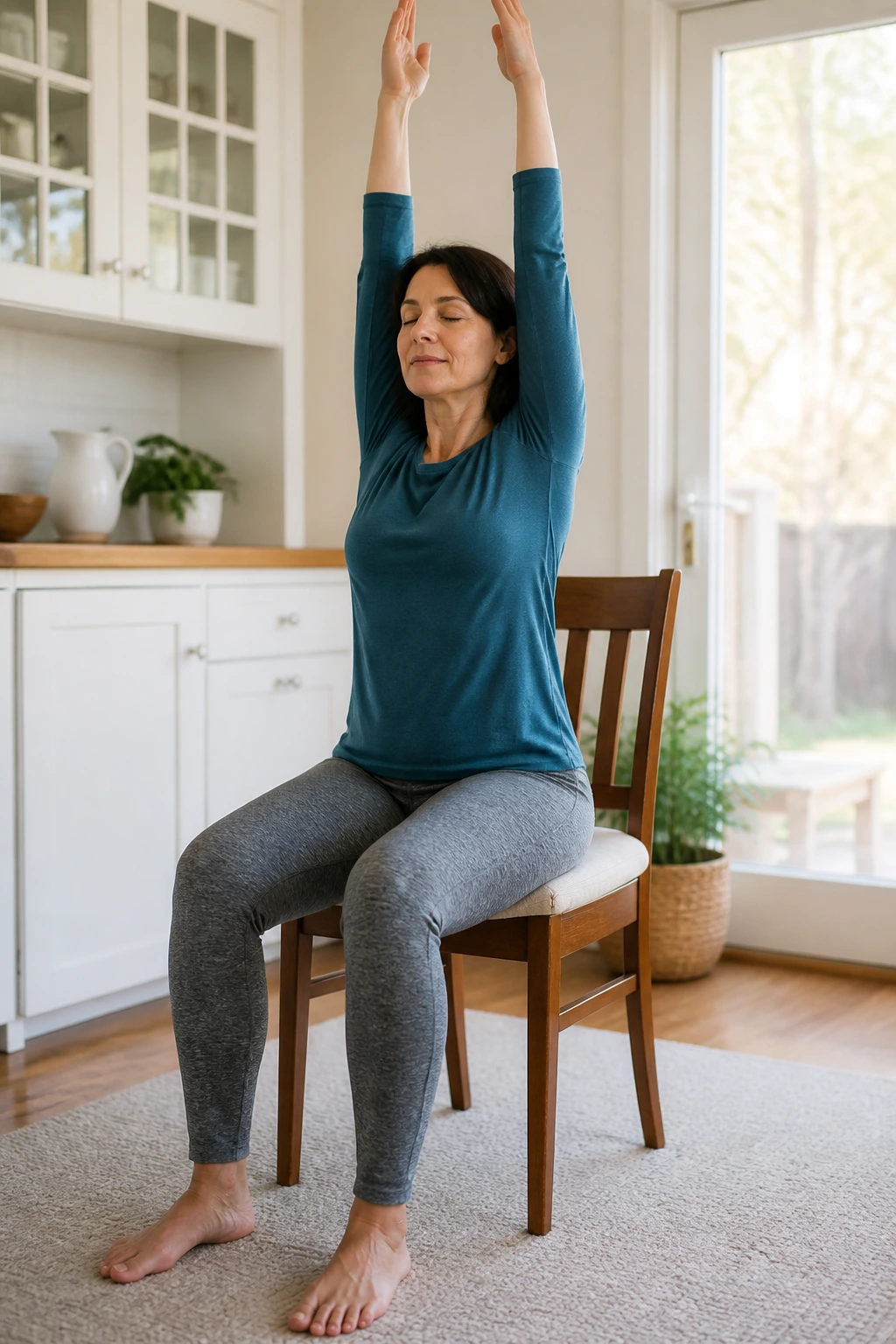
A good all-in-one routine has a steady rhythm. No rush. No weird transitions. Just enough movement to touch the spine, hips, shoulders, and legs without turning the session into a circus act.
The flow
- 3 deep breaths with the arms overhead
- 6 seated cat-cows
- 5 shoulder rolls in each direction
- 8 alternating knee lifts
- 20-second hamstring stretch on each side
- 3 gentle seated twists per side
- 10 heel raises to finish
The beauty of this sequence is its balance. Nothing gets overworked, and nothing gets skipped. The spine gets warmed up, the legs wake up, and the chest opens enough to make the breath feel larger by the end.
If you want one routine to print first, make it this one. It covers the whole body without asking for much time, and it’s easy to remember once you’ve done it twice.
17. Senior-Friendly Mobility Circuit
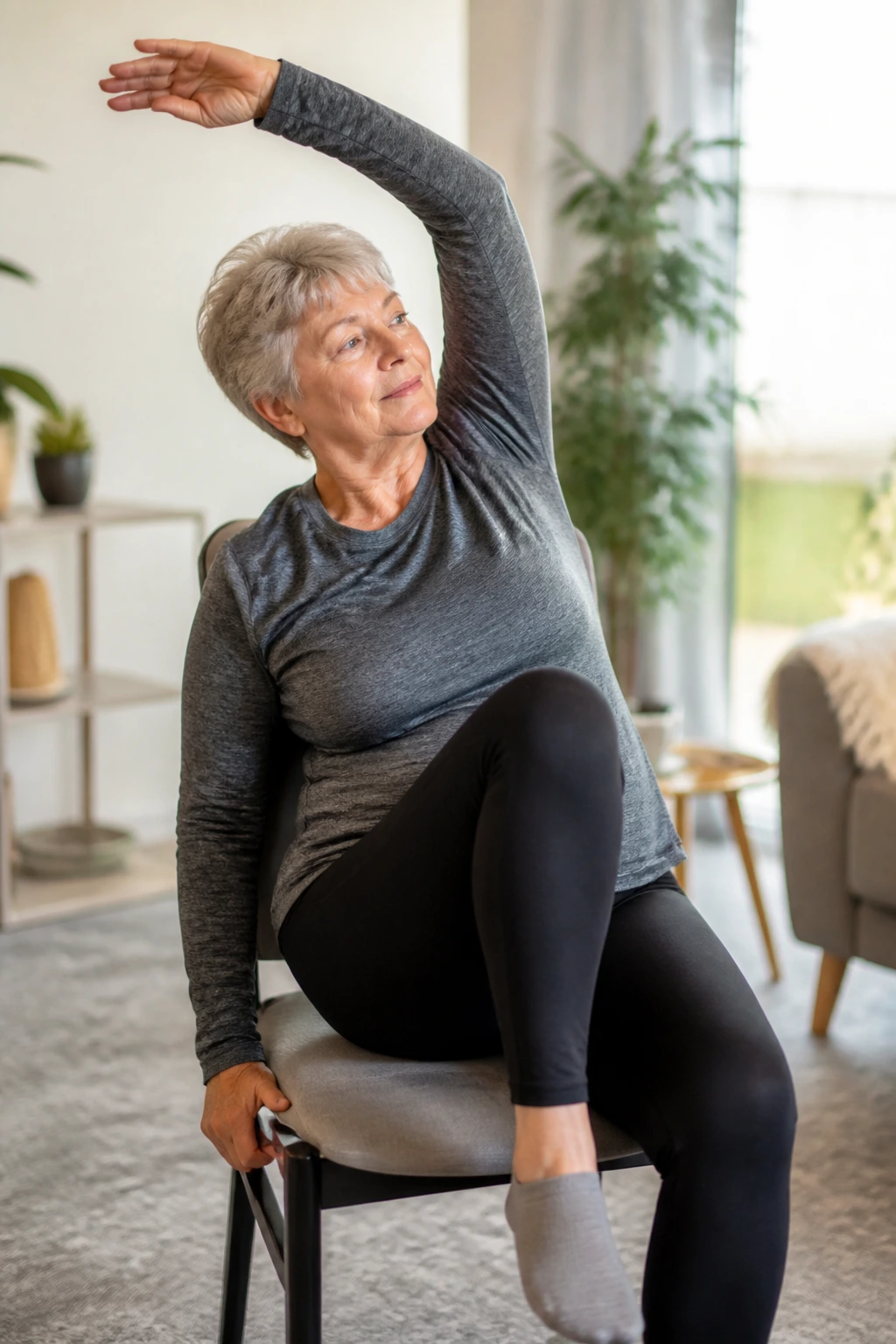
This is the routine I’d hand to someone who wants steady movement without fast transitions or deep bends. It is calm, clear, and forgiving, which makes it useful for beginners and for anyone whose joints prefer a gentler pace.
Start with seated marching for 20 seconds, then move into shoulder rolls and ankle circles. Add a slow side reach, then a small seated twist with one hand on the chair seat for support. Keep each shape for 2 to 3 breaths. That is enough. More is not always better.
Good signs to watch for
- The breath stays smooth.
- The chair feels stable under you.
- The stretch feels warm, not sharp.
- You can repeat the move without bracing.
I like this circuit because it respects the body instead of pushing it. That is not a small thing. It is the whole point.
18. Office Break Routine
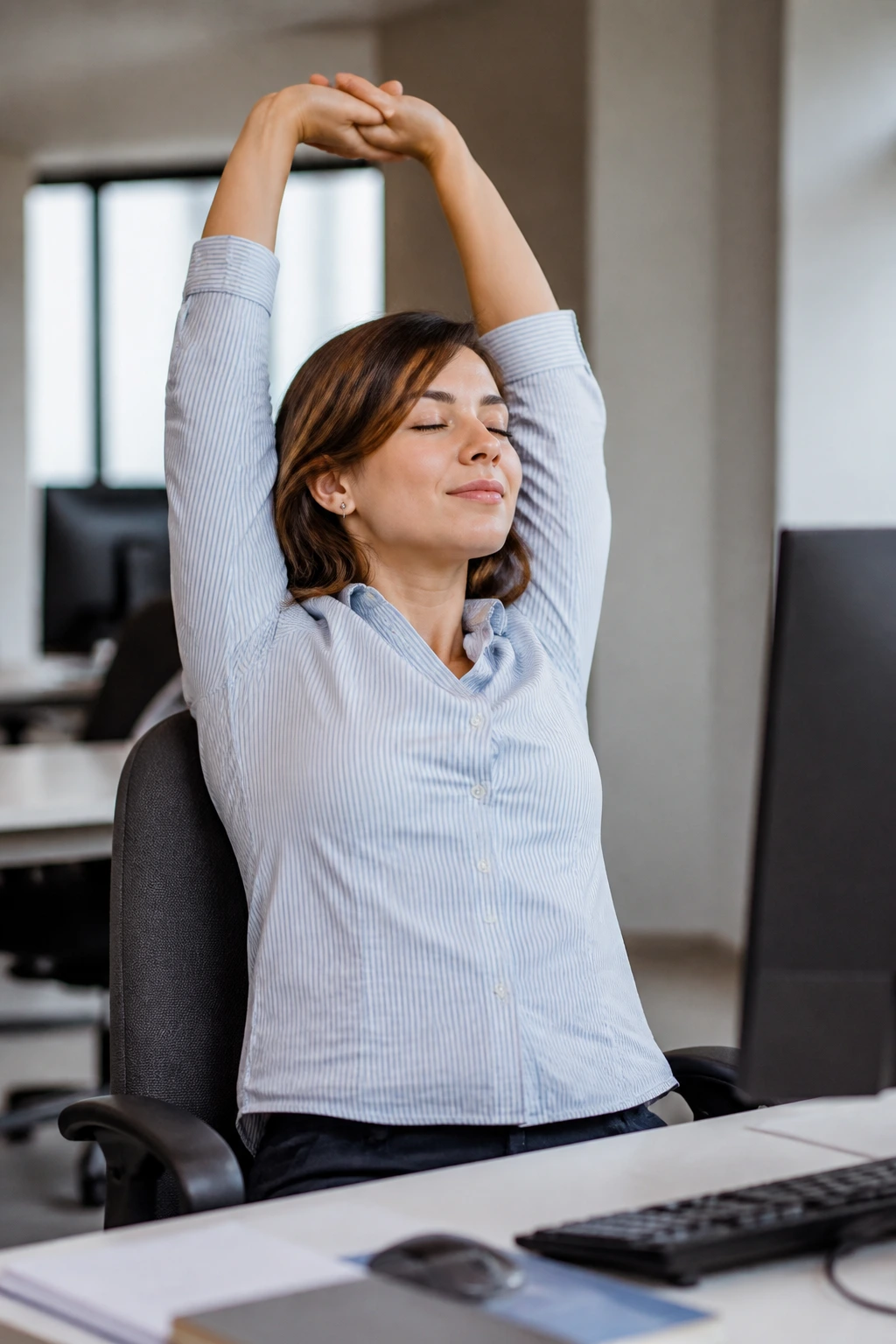
The best four-minute break is the one you’ll actually repeat. That is why office chair yoga makes sense in the first place. It does not demand a change of clothes, a mat, or a speech to the people around you.
Sit tall, inhale both arms overhead, exhale and lower them slowly. Then do 5 shoulder rolls, 8 neck nods, 10 heel lifts, and 6 seated twists. If you have a few extra seconds, add a forward fold with your hands on the thighs and breathe into the back ribs.
The sequence matters less than the interruption. You are breaking the loop of stillness before your body stiffens into it. That tiny reset can make the next hour feel less sticky.
It is a short routine, and that is the point. A routine you can repeat at your desk beats a perfect plan you never touch.
19. Travel-Day Chair Sequence
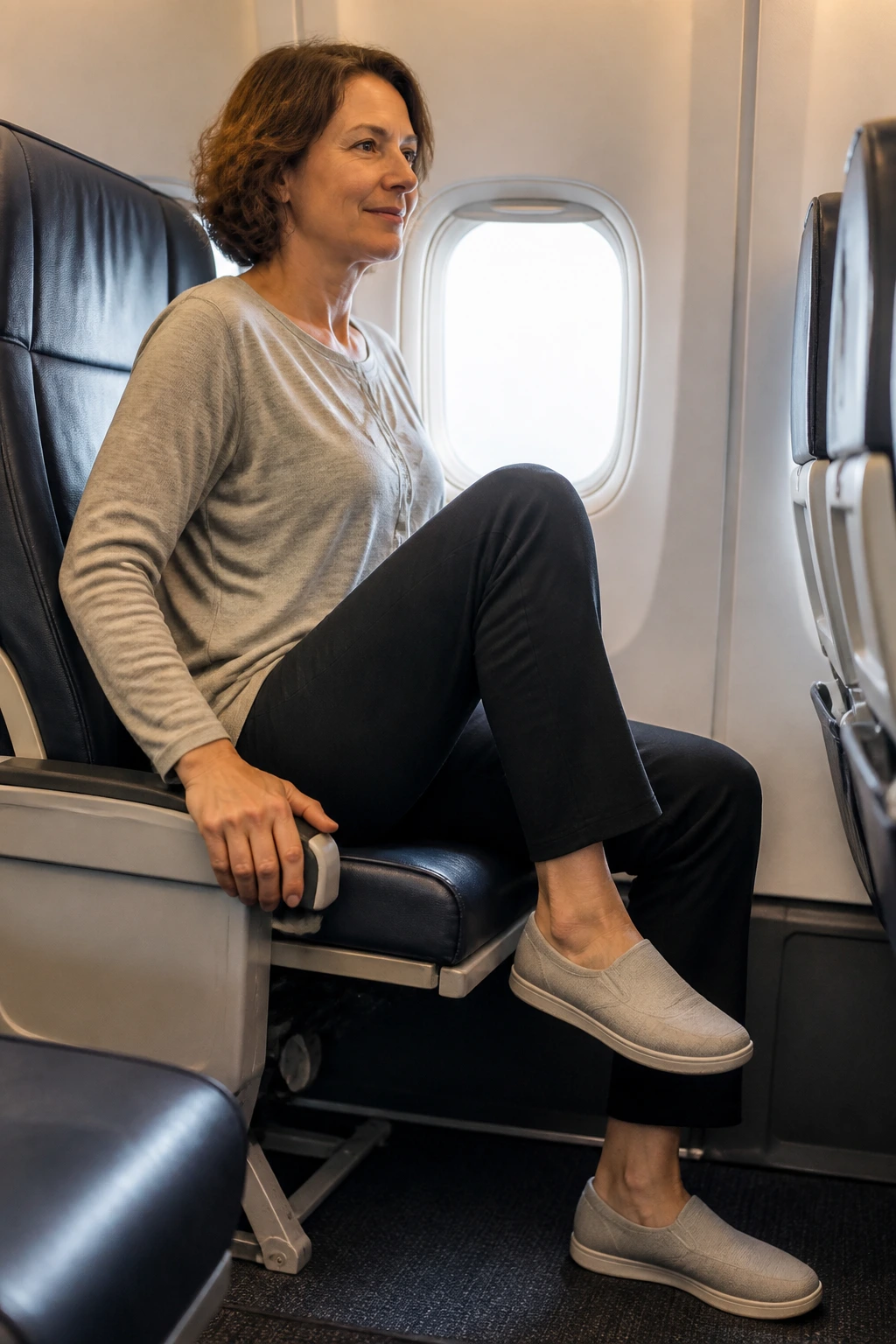
Stiff after a long ride? That is usually the legs, hips, and upper back all asking for the same thing: movement that does not require a lot of space. A chair-based travel routine handles that better than most people expect.
Sit near the edge, lift and lower one knee at a time for 10 reps, then circle the ankles. After that, reach the arms forward and up, then twist gently side to side. Keep the range small if you are in a cramped seat or if armrests get in the way. No need to wrestle the furniture.
A small travel reset
- March in place for 30 seconds.
- Lift the heels 15 times.
- Open the chest with cactus arms for 3 breaths.
- Fold forward if space allows, or stay upright and hinge slightly.
Travel makes people stiff in odd places. This routine smooths out that stiffness without making a scene.
20. Chair Yoga Bedtime Wind-Down

Evening movement should feel like exhaling with your whole body. This chair yoga routine is softer than the morning versions. Slower too. It is the one I’d print for the nightstand, because it asks the body to loosen instead of perform.
Take a seat, place the hands on the ribs, and breathe for 5 slow rounds. Then roll the shoulders, fold forward over the thighs, and let the head hang for a breath or two. Come back up, add a seated twist on each side, and finish with one hand on the chest and one on the belly. Stay there for 4 breaths.
Keep the lights low if you can. Keep the movements small. A bedtime routine should not leave you buzzing.
This is the kind of sequence that makes a room feel quieter, even if nothing else changes.
Final Thoughts
A printable routine works best when it is short enough that you’ll actually use it. Three or four pages can cover a whole week’s worth of different moods: stiff back, tight neck, sleepy legs, wired brain.
I’d print the ones that match your real life, not the ones that look prettiest on paper. Keep the office break, the bedtime wind-down, and the spine wake-up where you can reach them fast. That’s usually enough to build a habit without making it feel like homework.
And if a move feels off, shrink it. A smaller stretch that you repeat beats a dramatic one you avoid.
