



Most arm workouts for men who want real muscle fail for one boring reason: they chase a pump and skip the hard work that actually changes sleeve fit. A couple of curls at the end of chest day won’t do much if the load never moves, the range gets sloppy, and the triceps never get the same attention as the biceps.
Bigger arms are not built by luck. They come from loaded elbow flexion, loaded elbow extension, enough weekly sets, and a little patience when the mirror seems rude. The triceps make up most of the upper-arm size, which is why a guy can keep curling forever and still look narrow from the side.
You do not need a circus of exercises. You need a few heavy presses, a few strict curls, some work that hits the muscle in a stretched position, and one or two moves that punish grip and forearms. Get those pieces right, and arm day stops being filler. It starts looking like work.
1. Close-Grip Bench Press for Thick Triceps
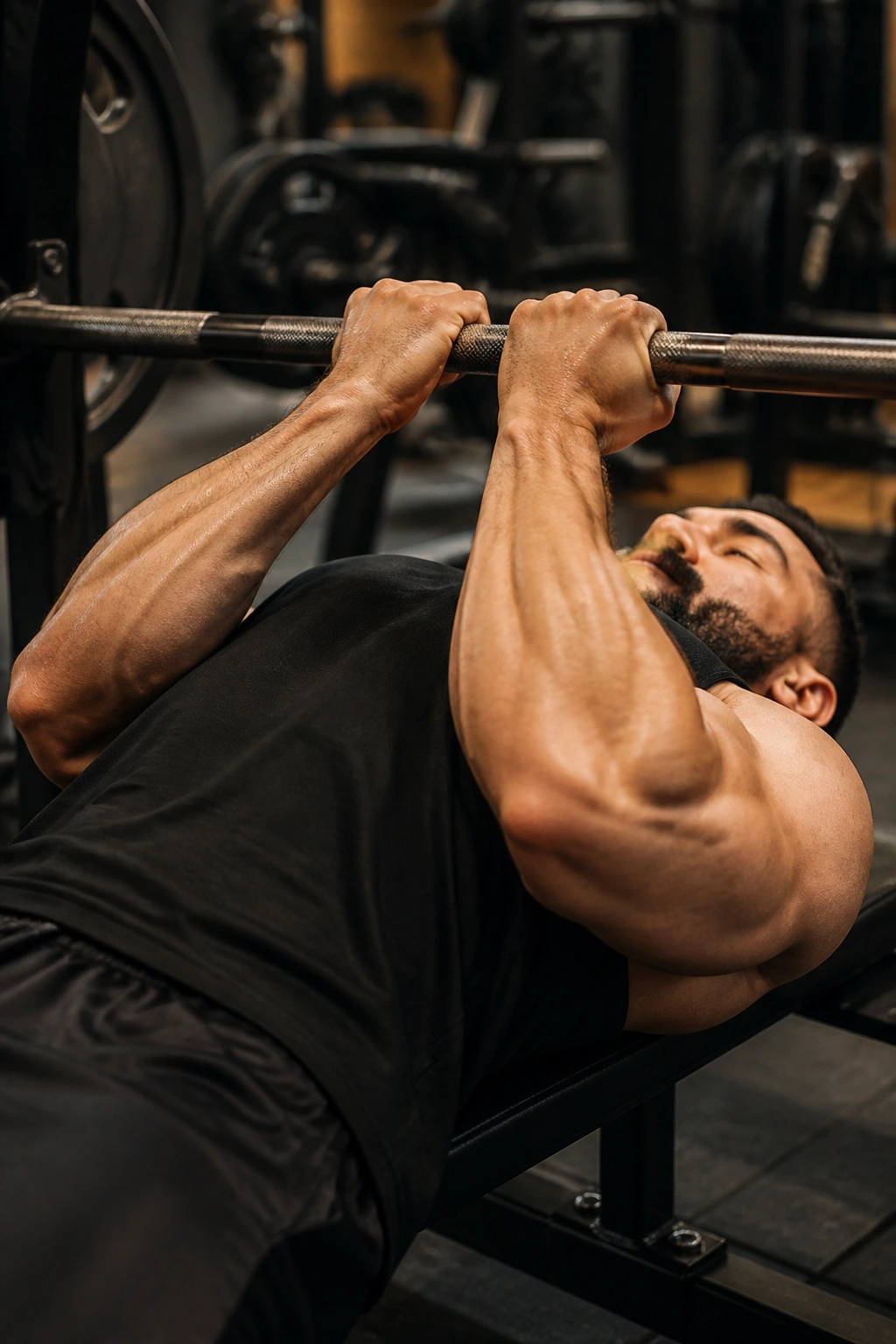
If you want thicker arms, start with a press that lets you load the triceps hard.
The close-grip bench press does something a lot of isolation moves cannot: it lets you use serious weight while keeping the triceps under real tension. Keep your hands just inside shoulder width, lower the bar to the lower chest, and tuck the elbows about 30 to 45 degrees from your torso. Too narrow and your wrists hate you. Too wide and the chest takes over.
How to Use It on Arm Day
- Sets and reps: 4 sets of 5 to 8 reps.
- Rest: 2 to 3 minutes between sets.
- Tempo: Lower under control for about 2 seconds, then drive up hard.
- Best cue: Keep your forearms vertical at the bottom.
Do not turn this into a shoulder press.
If the bar drifts too high on the chest, the shoulders start stealing the rep. If your elbows flare, the same thing happens. What you want is a tight, heavy press with a clean pause on the chest and a strong lockout. That lockout is where a lot of triceps work lives, and it is why this lift deserves a place on any serious arm day.
2. Standing Barbell Curl for Pure Biceps Strength
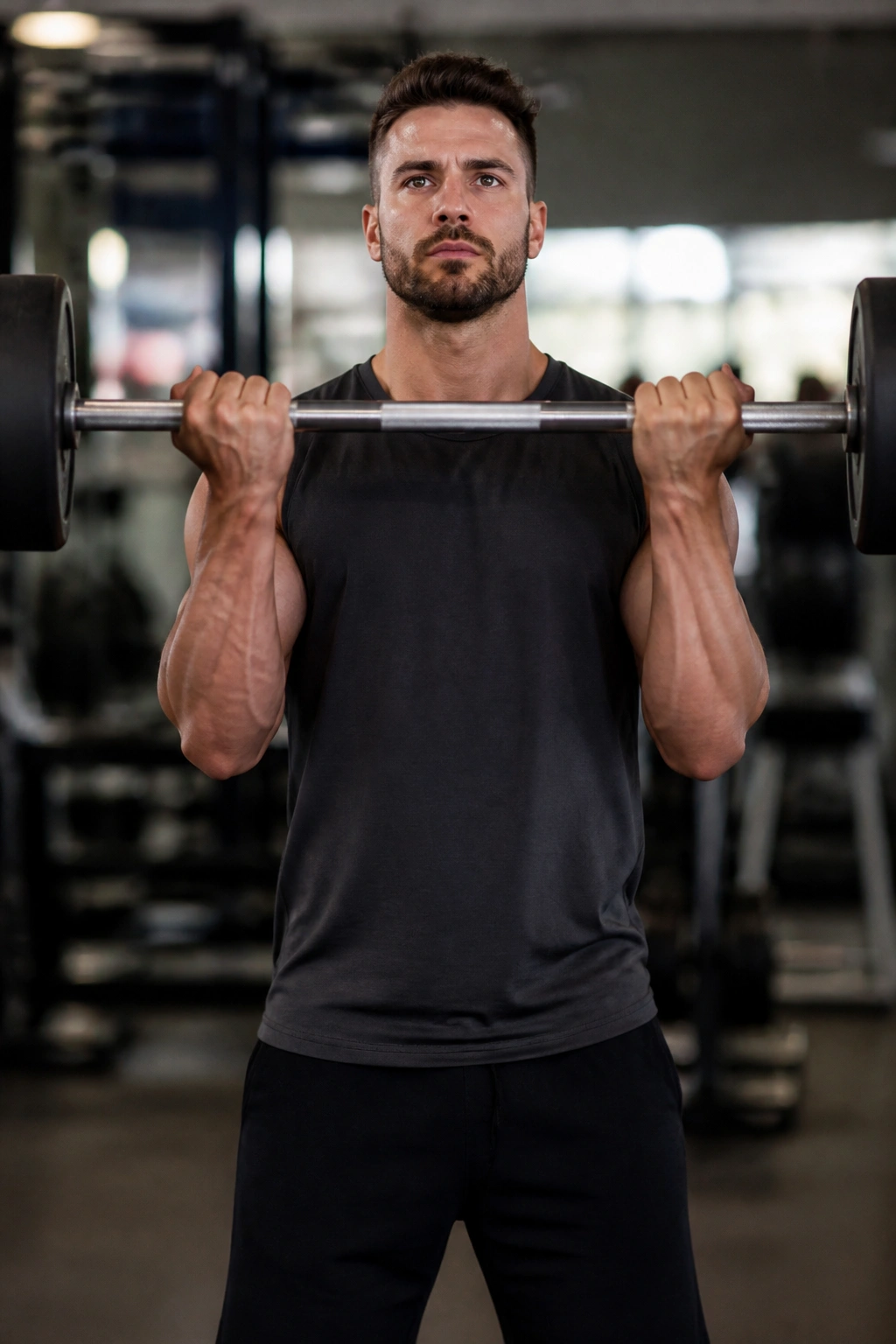
A standing curl looks old-school because it is old-school.
That is the point. The barbell curl is still one of the cleanest ways to overload the biceps without the machine doing half the job for you. Stand tall, brace your glutes, keep your ribs down, and curl without leaning back like you’re trying to dodge the weight. A little body English ruins the rep faster than most people want to admit.
The best bar path is simple: start with the bar near your thighs, curl it in a smooth arc, and finish near the upper chest without letting the elbows drift far forward. If the wrists bend way back, the forearms take a beating and the biceps lose tension. A straight wrist is not fancy. It works.
Use 4 sets of 6 to 8 reps and keep the last rep honest. If the bar only moves because your hips throw it, the set is over. That kind of discipline is what separates an arm workout from random movement.
3. Incline Dumbbell Curl for the Long Biceps Head
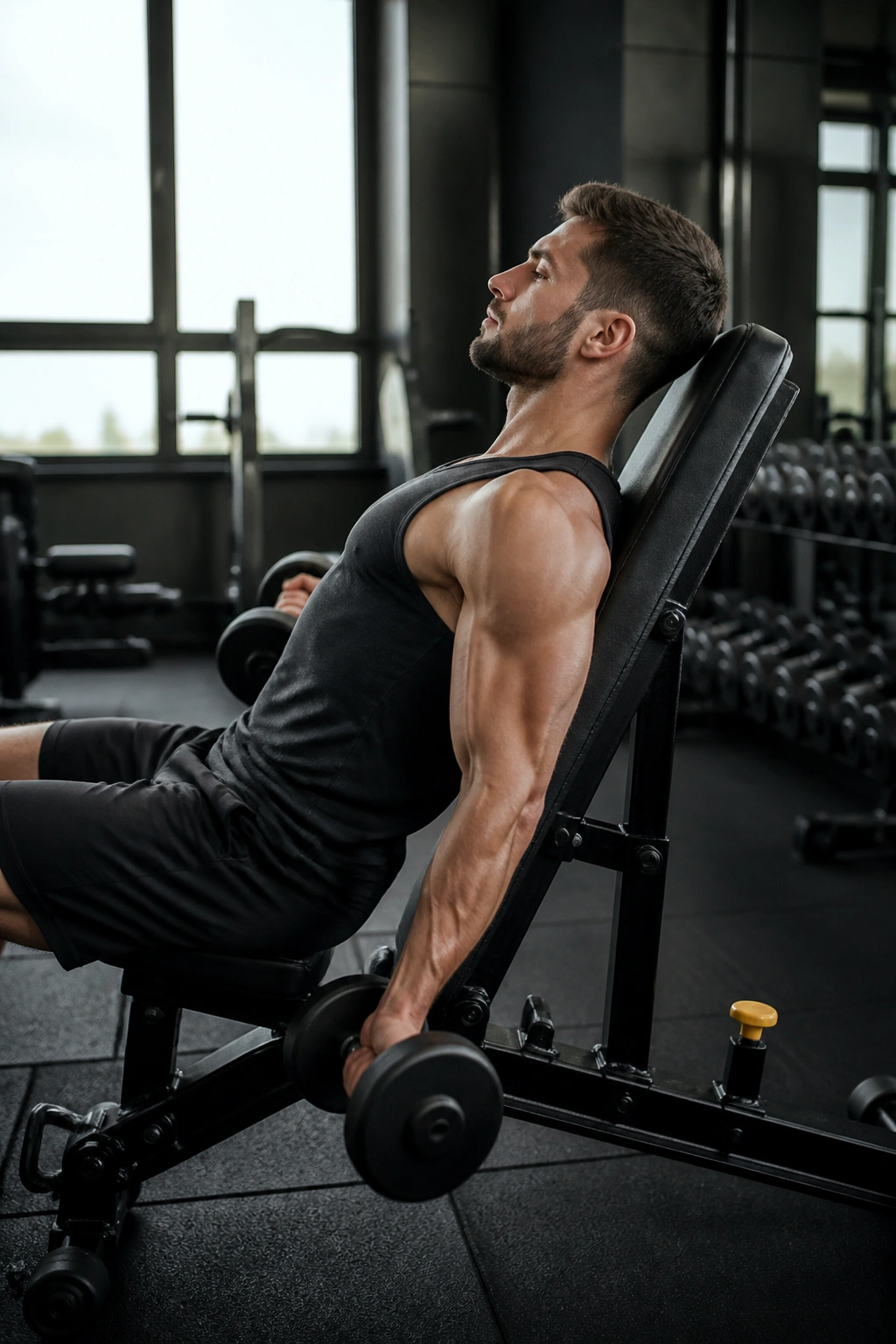
Why do incline dumbbell curls matter if you already curl standing?
Because the arm is in a stretched position at the start, and that changes the feel of the whole movement. Set a bench to about 45 to 60 degrees, let your arms hang slightly behind your torso, and curl without letting the shoulders roll forward. The long head of the biceps gets a deeper stretch here, and most guys can feel that difference within the first set.
The key is not to rush the bottom half. Let the dumbbells settle for a second near full extension, then curl up with a smooth line, not a jerk. If you rush the lower half, you skip the part that tends to light up the biceps most. Weirdly enough, the hard part is usually the quiet part.
How to Feel the Stretch, Not the Shoulder
- Keep the shoulder blades pinned to the bench.
- Stop the dumbbells from swinging behind you.
- Use 3 to 4 sets of 8 to 12 reps.
- Lower for 2 to 3 seconds on every rep.
A lot of lifters try to make these into a front-delt exercise. Bad move. If the front of your shoulder starts feeling like the main event, drop the weight and slow down.
4. Weighted Dips for Dense Upper Arms
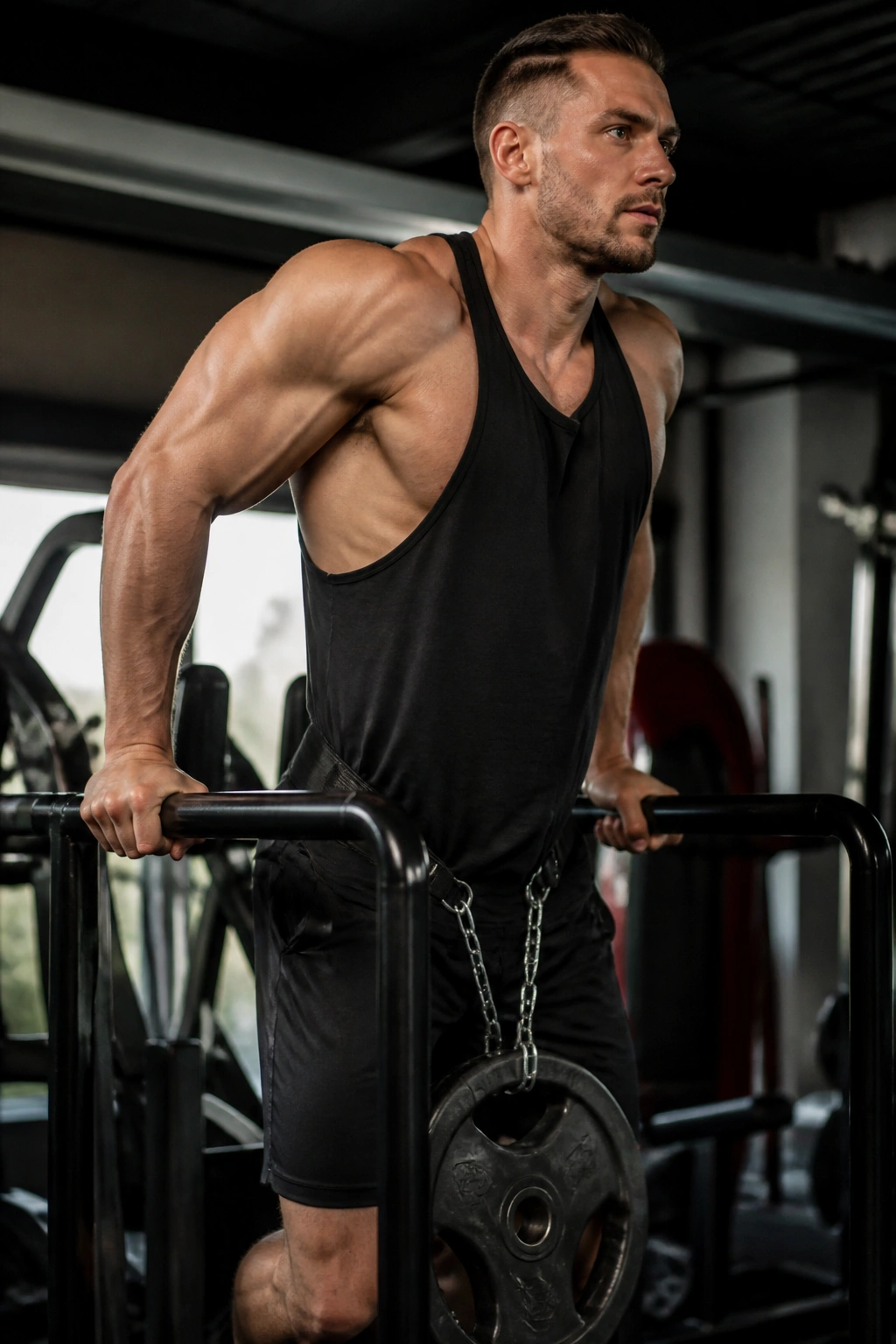
Picture a guy who can dip with a plate hanging from his waist and still looks flat in a T-shirt.
That guy usually has triceps worth noticing. Weighted dips are one of the bluntest tools for upper-arm thickness because they let you move a lot of load through a deep elbow bend. Keep your torso fairly upright if triceps are the goal, elbows pointing back rather than flaring out, and descend only as far as your shoulders tolerate cleanly.
There’s a line people cross on dips when they get greedy for depth. Past that line, the front of the shoulder starts complaining, and the rep turns messy. Stop when your upper arm is roughly parallel to the floor if your shoulders are cranky. Some lifters can go deeper, but there is no prize for turning the bottom into a joint test.
- Sets: 3 to 5
- Reps: 5 to 10
- Load: Add weight only when bodyweight reps are smooth
- Cue: Push the handles apart slightly at the top
If your gym has an assisted dip machine, that still counts. Use it. A controlled dip is better than a sloppy weighted one.
5. Hammer Curl for Biceps and Brachialis
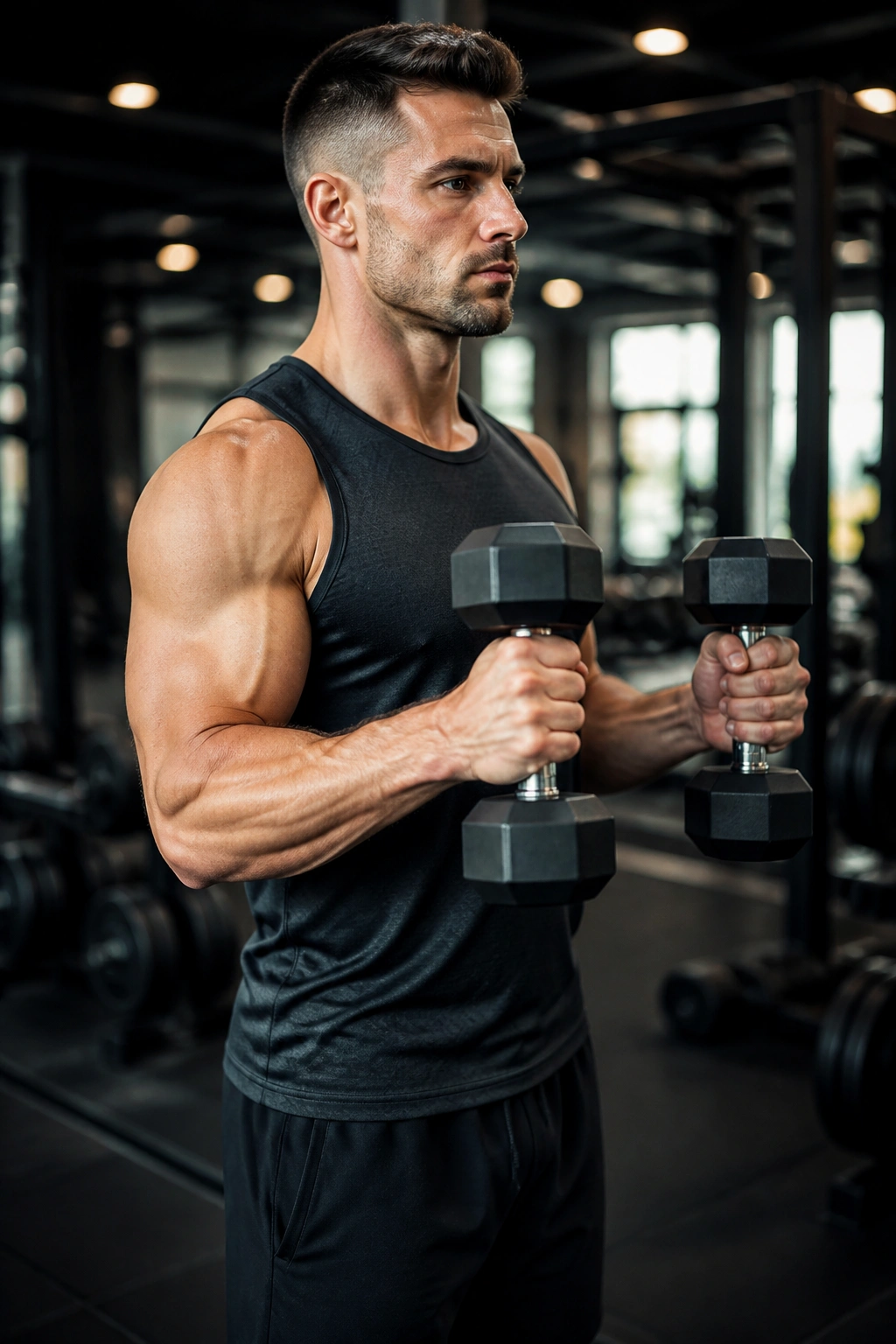
Hammer curls earn their keep.
Most people think of them as a side quest for the biceps, but the neutral grip also hits the brachialis and brachioradialis, which helps add thickness to the upper arm and forearm from the side. That matters. A lot. If your arms only look decent from the front, hammer curls are one of the fixes.
Use dumbbells or a rope on the cable stack. Keep the palms facing in, let the elbows stay close to the ribs, and curl without turning the wrists at the top. The movement should feel solid and slightly heavy, not loose and bouncy. A clean hammer curl has a different look from a regular curl; the dumbbell path is shorter, and the forearm stays stacked under the elbow.
I like 3 to 4 sets of 8 to 12 reps here, with a slower lowering phase. The temptation is to race them because the movement feels easier than a supinated curl. Don’t. That’s how you turn a useful exercise into a warm-up you don’t remember five minutes later.
6. EZ-Bar Skull Crushers for Long Triceps Head
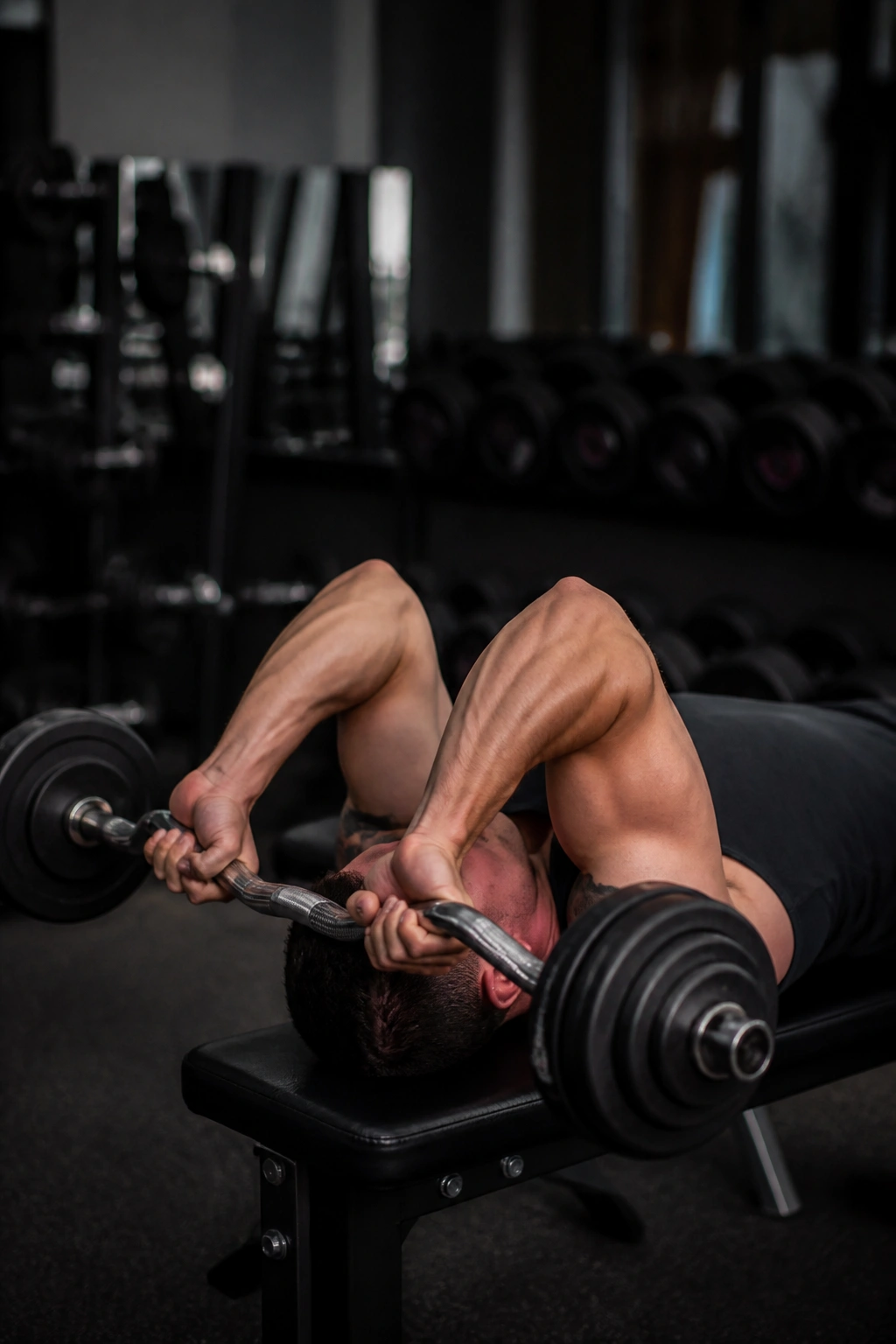
Most people do skull crushers wrong.
They either let the elbows fly all over the place or drop the bar to the nose and wonder why the triceps never feel loaded. A better version uses an EZ bar, a slight incline or flat bench, and a path that lowers the bar a little behind the forehead. That keeps tension on the triceps instead of dumping stress into the elbows.
The long head of the triceps is a big deal for arm size, and skull crushers are one of the few classic lifts that make you work it while the shoulder stays flexed. That stretch is useful. Painful sometimes, yes, but useful. Use a load you can control for 3 sets of 8 to 12 reps, and keep the upper arms nearly fixed.
How to Keep Them from Wrecking Your Elbows
- Warm up with one light set of 15.
- Use an EZ bar instead of a straight bar if the wrists complain.
- Lower slowly for 2 seconds.
- Stop if the elbows start barking after the first few reps.
If skull crushers feel awful, do not force them every week. Swap to a cable version or Tate presses and keep training.
7. Preacher Curl for Strict Reps
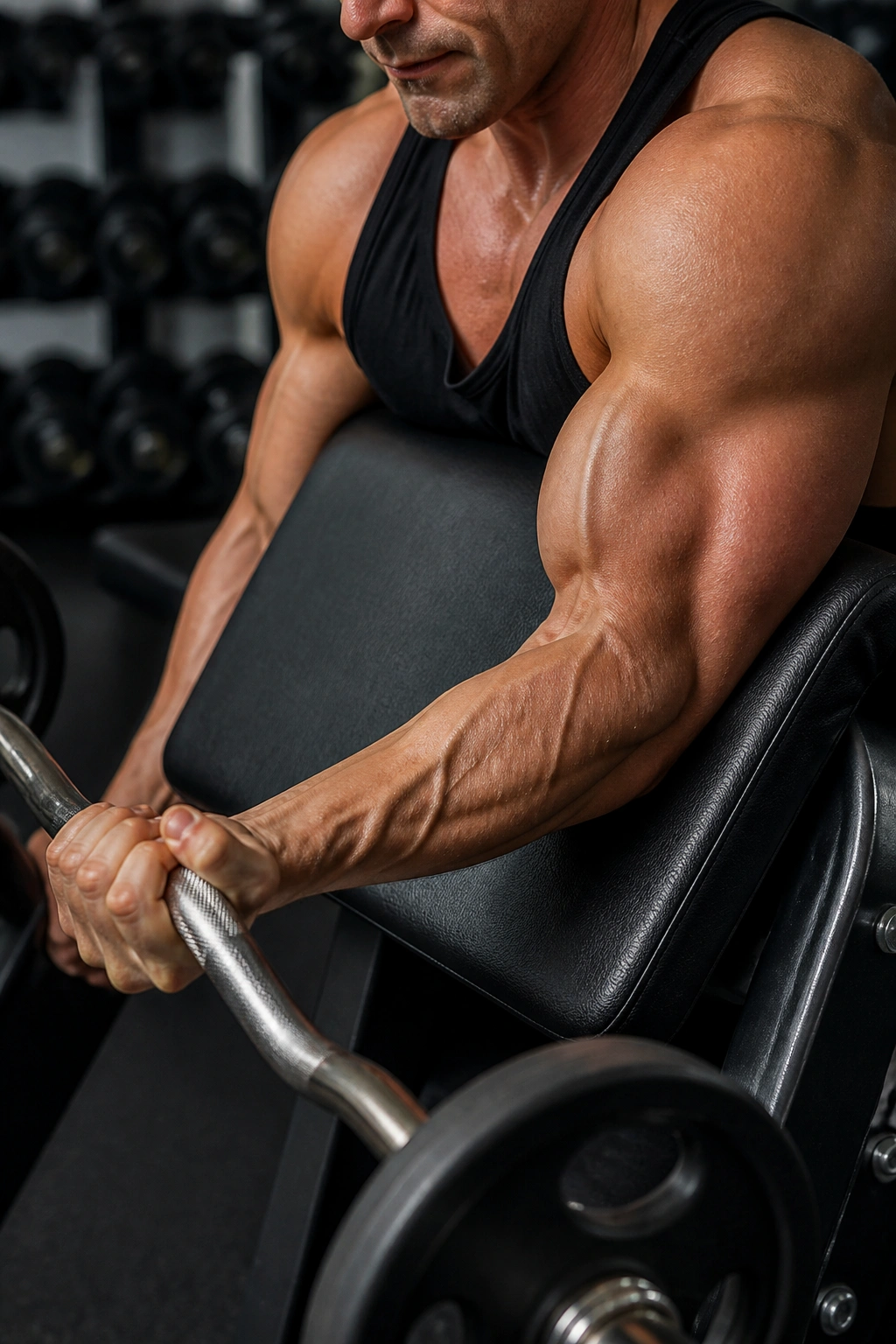
What happens when you take the hips out of the curl? You get honesty.
The preacher bench kills a lot of cheating, and that is why it works so well for arm growth. With the upper arm fixed on the pad, the biceps have to do the work without much help from the torso. It’s a little humbling. Good. Humbling usually means useful.
Use an EZ bar, straight bar, or dumbbell. Lower under control until the elbow nearly straightens, then curl up without letting the shoulder roll forward. The bottom half is where people get lazy and bounce off the pad. That bounce steals tension and can irritate the elbow, so keep the descent smooth and stop the rep where you still own it.
Preacher curls are best for 3 sets of 10 to 12 reps. They fit nicely after a heavier curl because they let you keep working the biceps without needing to swing a heavier bar around. And if you want cleaner form, they punish sloppy reps fast.
8. Rope Pushdown for Constant Triceps Tension
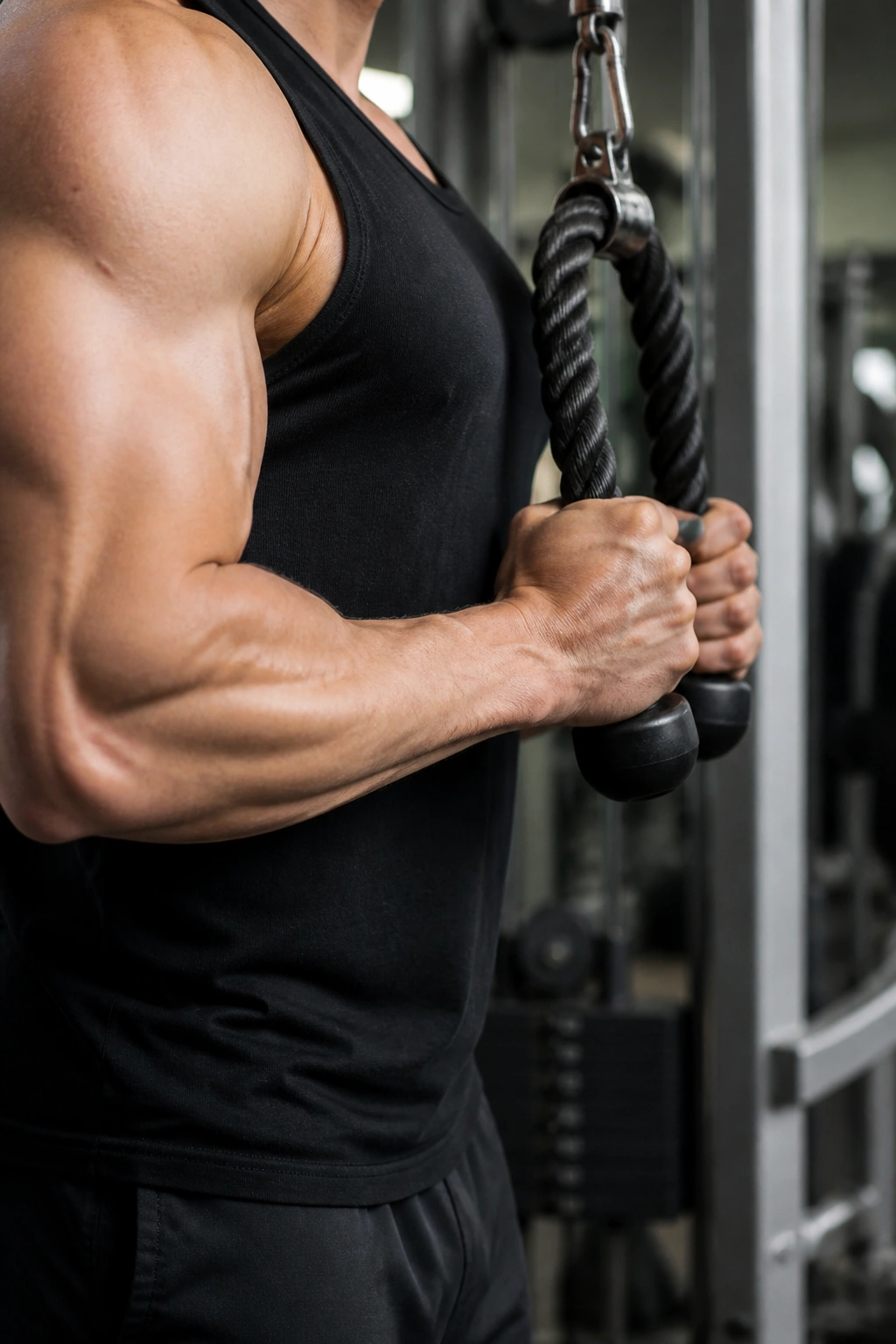
Cable work gets dismissed too easily.
Rope pushdowns are not flashy, but they keep tension on the triceps through most of the movement, and that makes them a smart finisher. Stand tall, pin the elbows near your sides, and push the rope down until your hands separate slightly at the bottom. That small flare gives the triceps a hard squeeze without turning the rep into a shrug.
A lot of lifters lean their body weight into the stack and end up doing a half-body extension. That’s not the goal. Keep the ribcage quiet, let the elbows bend and extend, and hold the bottom for a beat. The triceps should feel like they’re doing the final inch of the work.
What to Watch For
- Sets and reps: 3 to 4 sets of 12 to 15.
- Top position: Let the forearms come up, but keep the elbows fixed.
- Bottom position: Split the rope and squeeze for 1 second.
- Breathing: Exhale as you push down.
Cables tell on sloppy form fast.
That’s why they’re useful. You can’t fake the tension as easily, and that makes them a reliable part of a real arm workout.
9. Chin-Ups for Arm Size You Can Feel
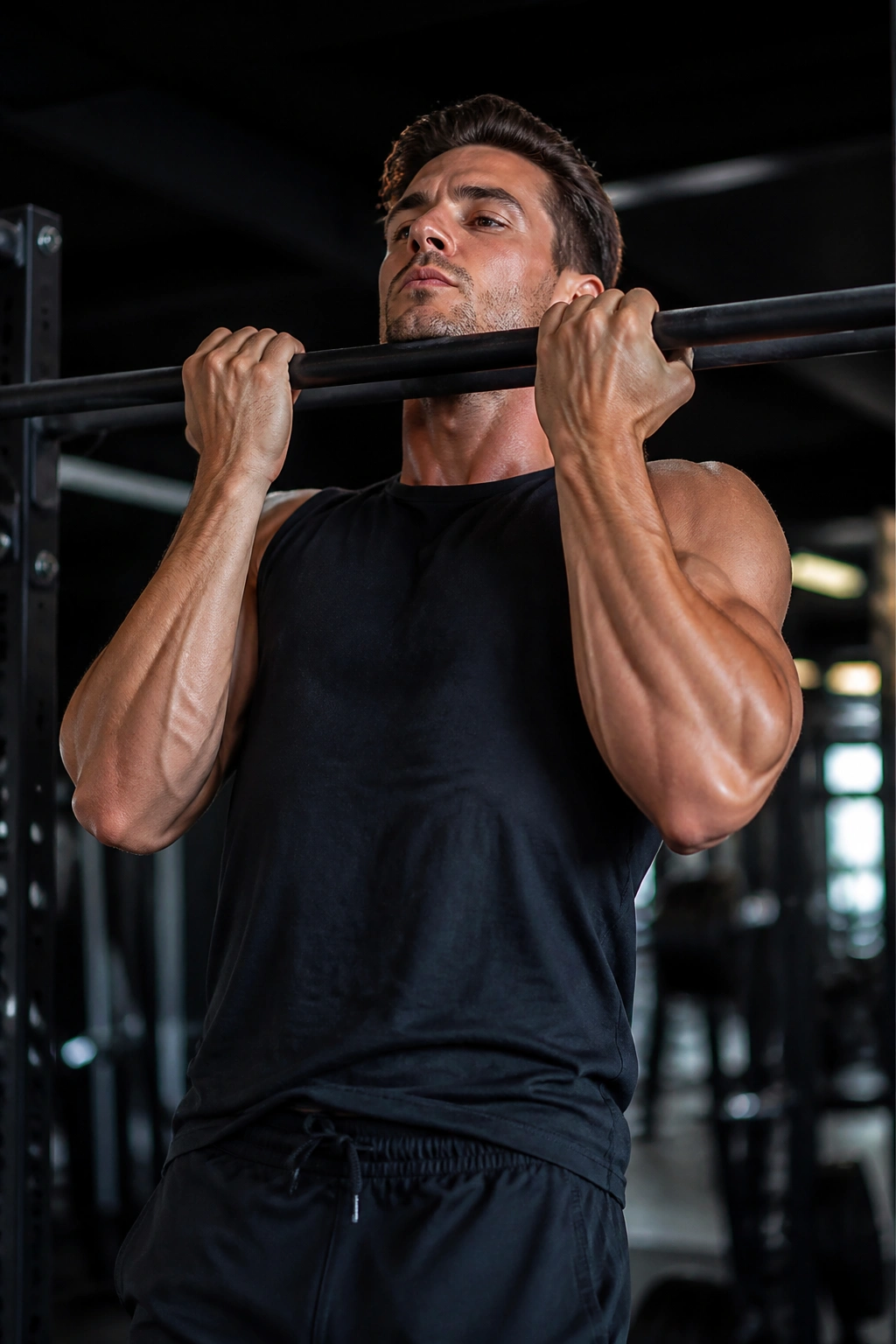
Why do chin-ups belong on an arm list when they’re also a back move?
Because underhand chin-ups load the biceps hard, especially when you use enough range and enough bodyweight. If you can add weight and keep the reps clean, the arms get dragged into a heavy pull that no isolation move can quite match. That’s a good problem to have.
Take a shoulder-width or slightly narrower underhand grip, start from a dead hang, and pull until your chin clears the bar without kipping. If the neck cranes forward and the legs kick all over the place, the rep is gone. Keep it tight. The grip itself also matters here; a narrow grip tends to let the biceps contribute more than a very wide one.
Use 4 sets of 4 to 8 reps if you’re strong enough, or bodyweight sets of 6 to 10 if you’re building up. If you can already hit 10 clean reps, start adding a small plate. Five pounds is enough to matter. Ten is even better.
10. Cable Curl for Smooth Resistance
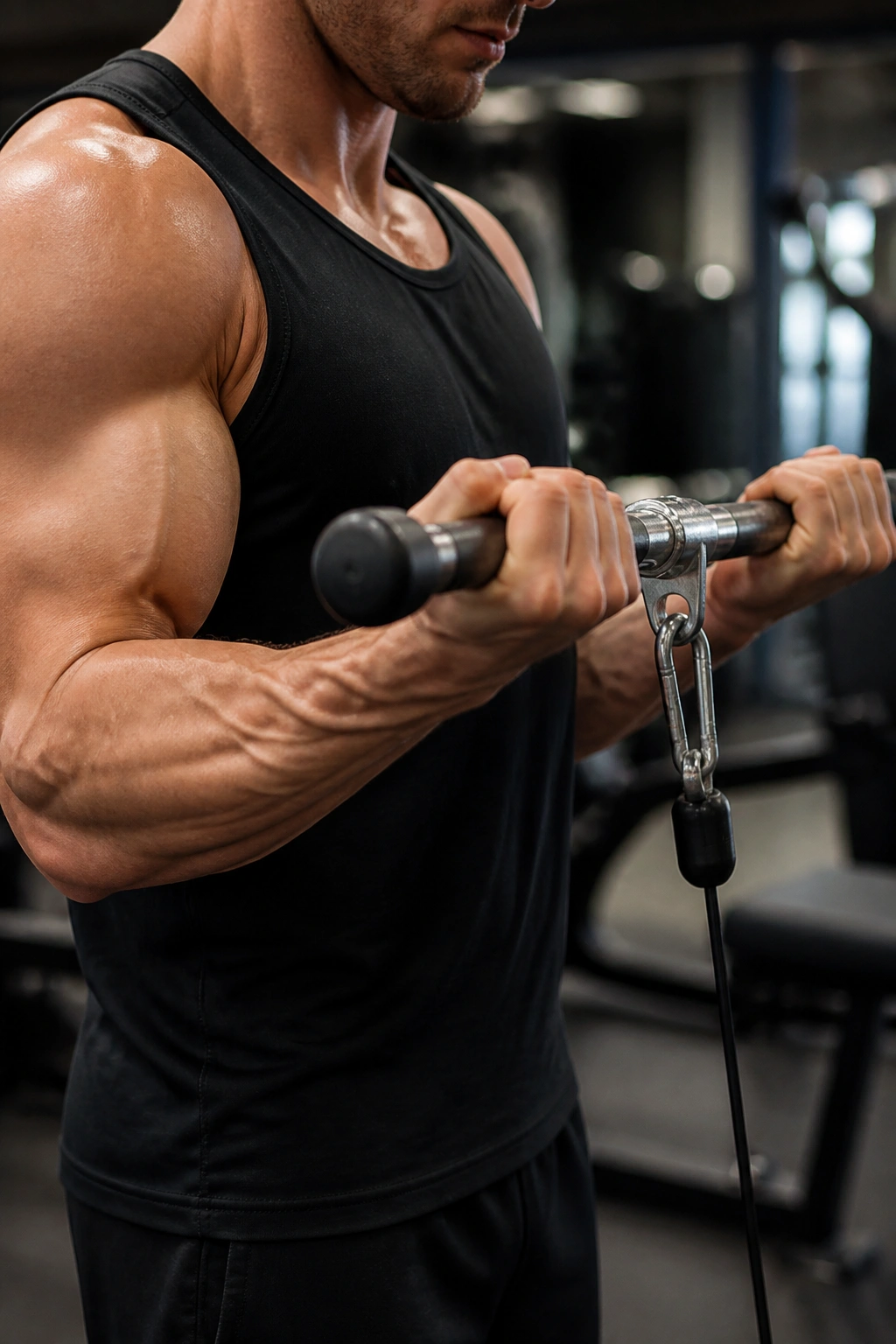
Cable curls are not beginner curls; they’re smart curls.
The cable keeps tension on the biceps when a dumbbell would go soft near the bottom. That makes the exercise feel smoother, yes, but also harder to cheat. If your torso starts moving, the stack tells on you immediately. That is a feature, not a flaw.
A low pulley with a straight bar is the simplest setup. Single-arm cable curls are even better if one biceps is lagging or one elbow likes a slightly different path. Keep the elbow near the side of the body and curl until the forearm is near vertical. The resistance curve stays friendly on the joints and brutal on the muscle, which is a nice trade.
Best Ways to Set It Up
- Use a straight bar for both arms at once.
- Try a single handle for cleaner side-to-side work.
- Stand a half-step back so the stack doesn’t slam.
- Choose 10 to 15 reps and keep the last 3 reps slow.
If you want an arm workout that leaves the biceps pumped without wrecking your elbows, this one earns regular rotation.
11. Overhead Dumbbell Extension for the Long Head Stretch
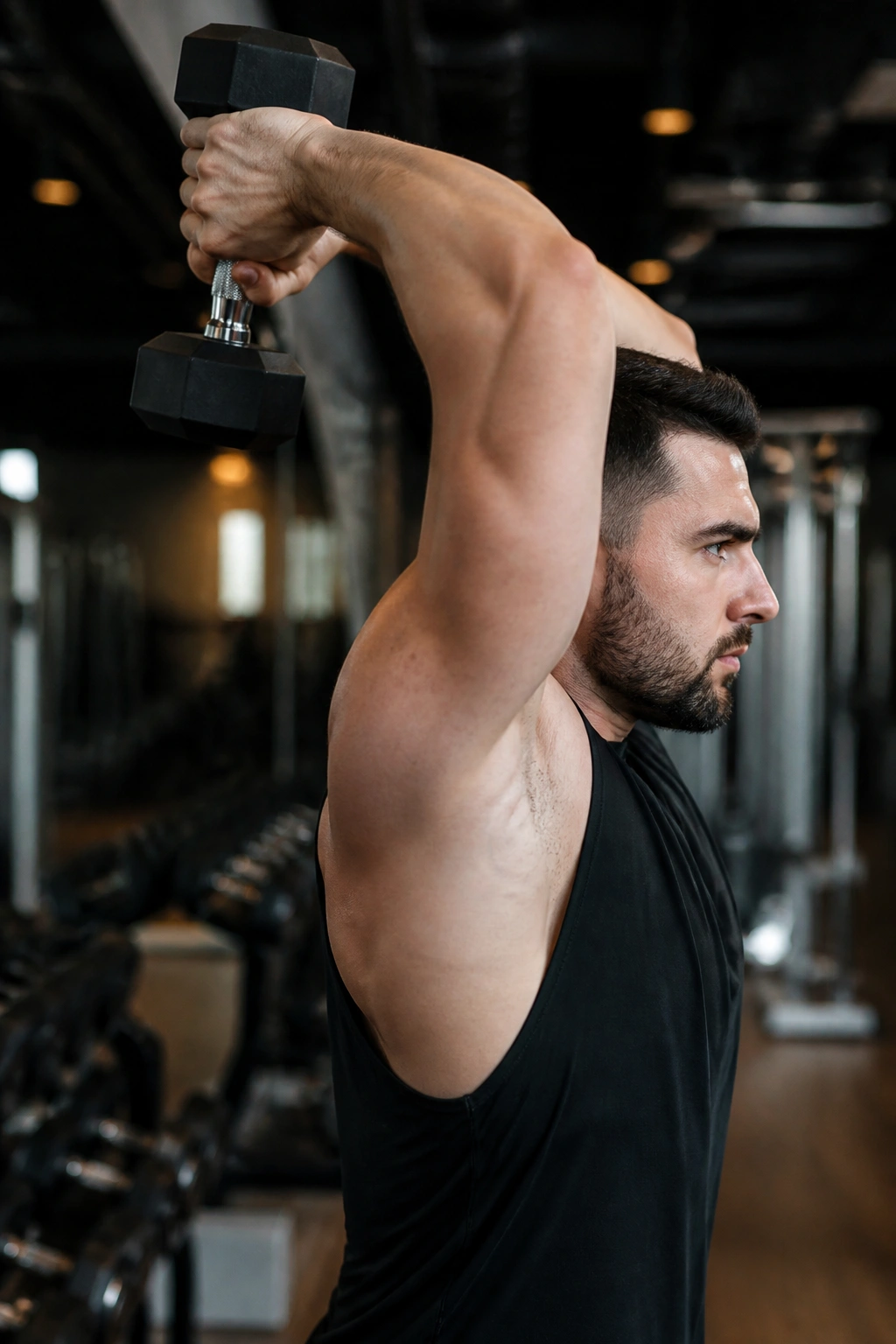
If your triceps only feel work at lockout, you need this.
The overhead extension puts the long head of the triceps in a stretched position, which is a big reason it shows up in serious arm training. Hold one dumbbell with both hands, or use a rope on a cable, and let the elbows point up rather than drifting forward. Lower the weight behind the head under control, then press it back up without flaring the elbows wide.
A lot of guys use too much load here and end up turning the rep into a backbend. Don’t. Keep the torso stacked, abs tight, and ribcage from shooting upward. The stretch should feel deep, not sketchy. If the shoulders are tight, a cable version often feels smoother than a dumbbell.
Use 3 sets of 10 to 15 reps and take your time on the lowering phase. That slow descent matters. It’s where the exercise does its best work, and it’s also where form starts to leak if you rush.
12. Reverse Curl for Forearm and Elbow Balance
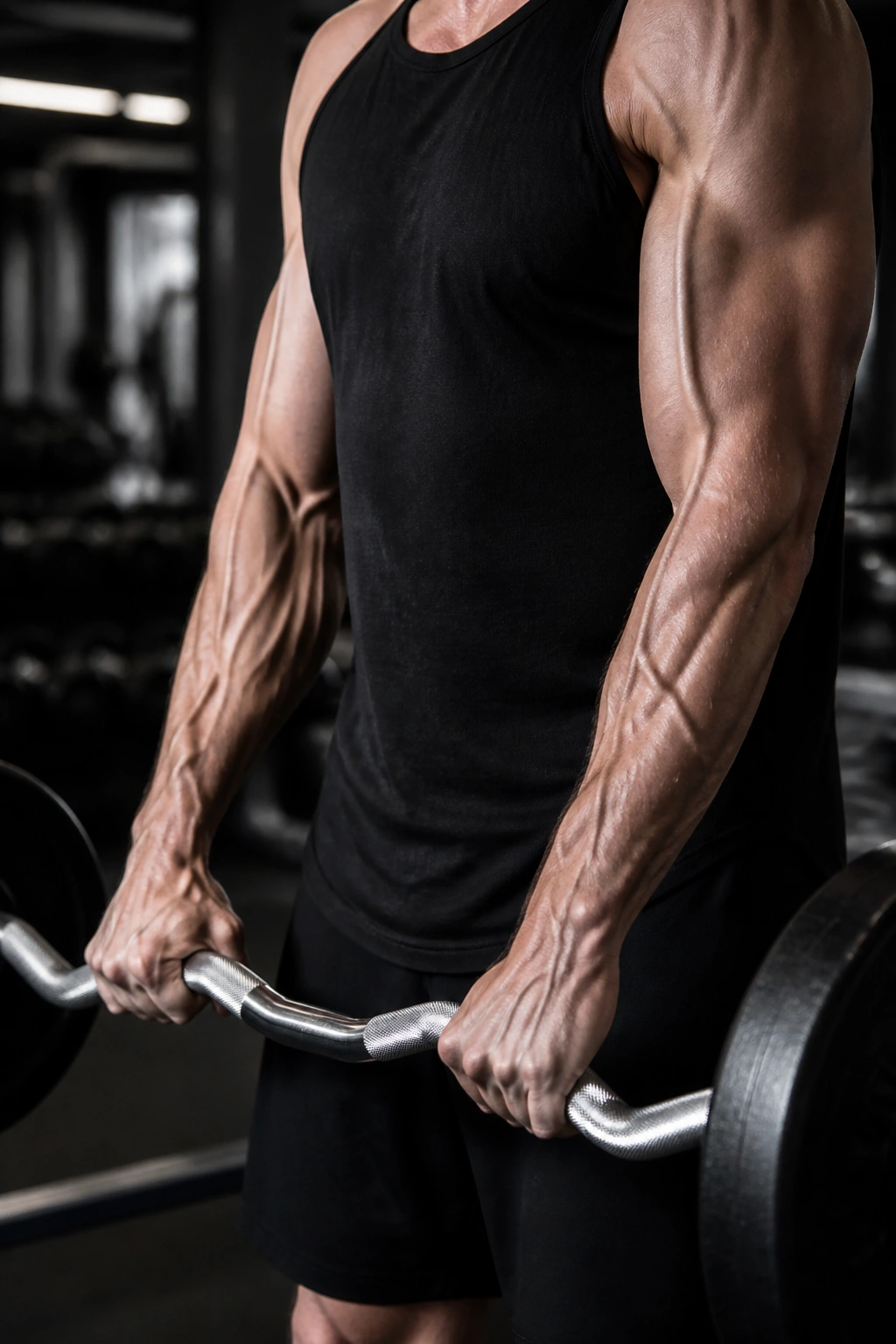
Reverse curls look modest. They aren’t.
With the palms facing down, the brachioradialis and forearms take over more of the work, and the biceps get a different kind of challenge. That matters if your arms are growing unevenly or if your elbows feel beat up from too many straight curls. A little pronated-grip work can make the whole arm look thicker and feel sturdier.
Use an EZ bar if a straight bar feels too rough on the wrists. Keep the elbows pinned, lift with a controlled motion, and resist the urge to lean back for extra help. The load will usually be lighter than your regular curl, and that is fine. Chasing ego weight here is a waste of time.
How to Program It
- Sets: 3 to 4
- Reps: 10 to 12
- Rest: 60 to 90 seconds
- Tempo: 2 seconds down, no bounce at the bottom
Your forearms will tell the truth before your ego does.
That’s why reverse curls belong in a real arm plan. They balance the more glamorous biceps work and help your grip carry over to rows, deadlifts, and chin-ups.
13. Concentration Curl for Peak Control
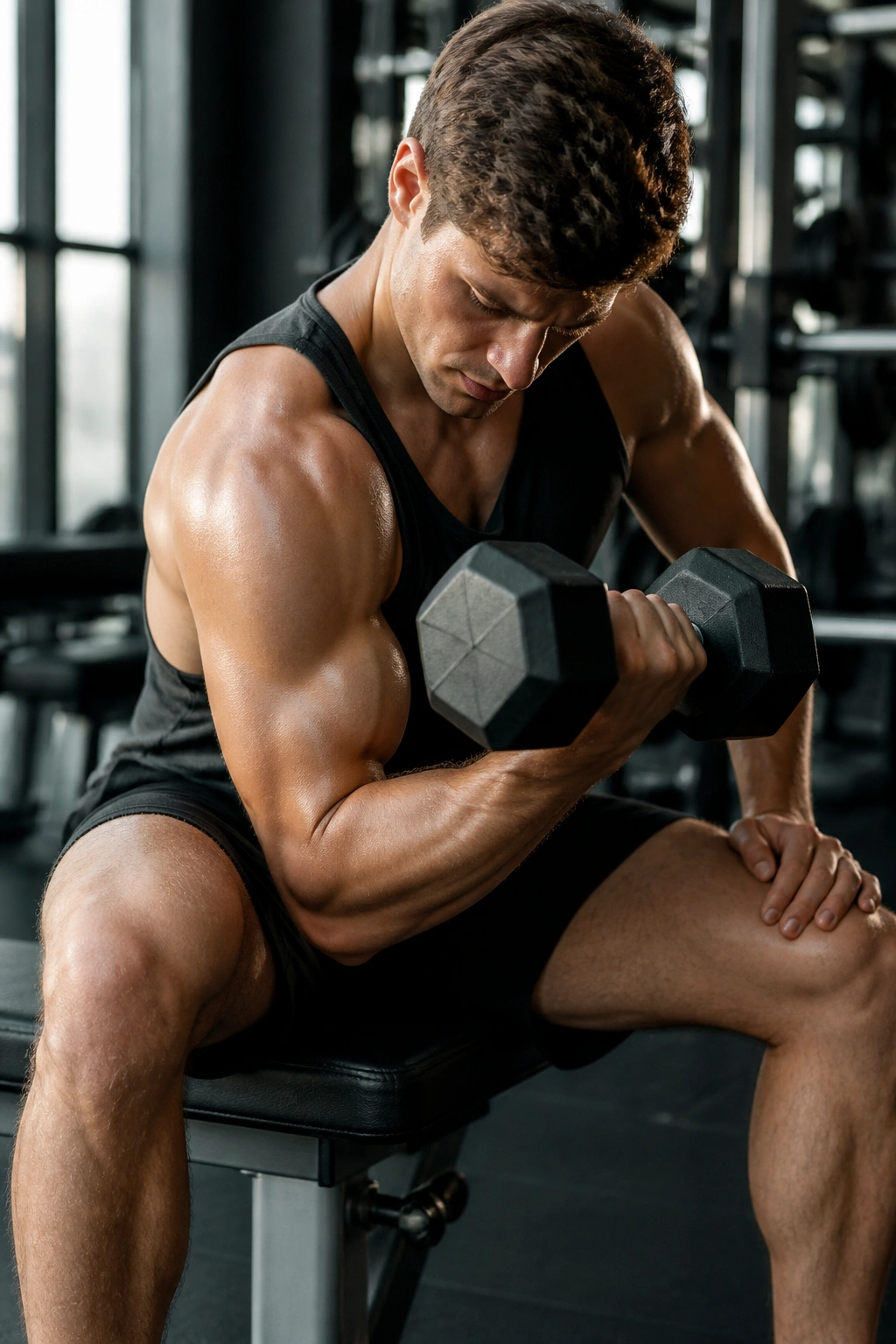
A concentration curl is what happens when you stop trying to impress the room.
Sit down, brace the upper arm against the inner thigh, and curl one dumbbell with almost annoying patience. The setup is simple, but it teaches control better than a lot of flashier moves. Because the body is fixed, the biceps has to finish the job with less help from momentum or shoulder drift.
The peak contraction is the point here. Squeeze the top for a second, then lower slowly until the arm is almost straight. The bottom stretch should feel long, not sloppy. This is a great finisher when the heavier work is already done, because it lets you squeeze every last bit of effort out of the biceps without needing huge loads.
I like 2 to 3 sets of 12 to 15 reps per arm. It’s not a power lift. It’s a control lift. If you rush it, the movement loses the whole reason it exists.
Execution Cues
- Keep the upper arm glued to the inner thigh.
- Turn the pinky slightly up near the top.
- Pause for 1 second at the squeeze.
- Lower slowly enough that you can count to 3.
That tiny bit of patience does more than a lot of people expect.
14. Tate Press for Elbow-Friendly Triceps Growth
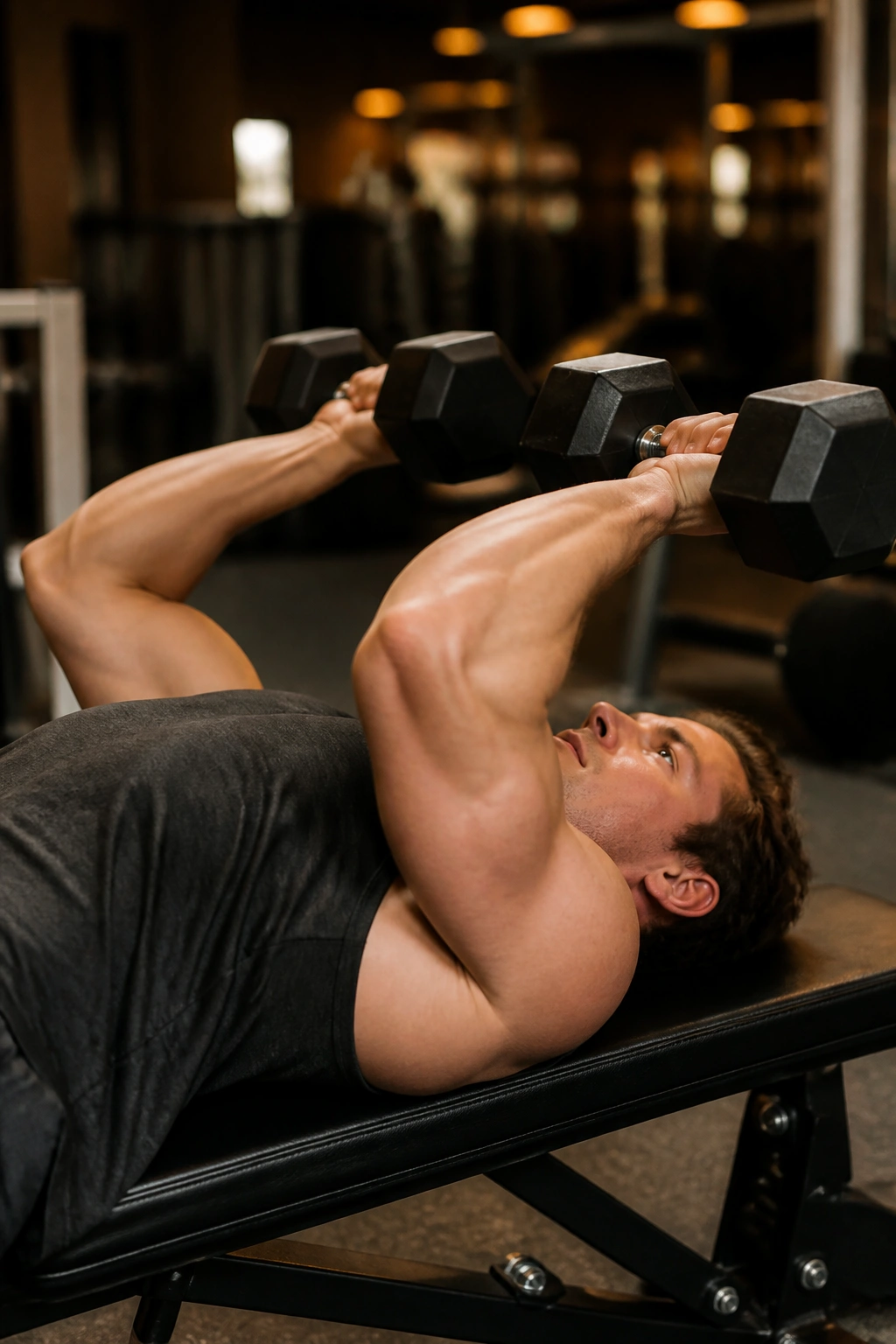
What if your elbows hate skull crushers?
Use the Tate press. It looks odd at first, and that’s exactly why plenty of lifters ignore it. Lie on a bench with dumbbells held above the chest, elbows flared out, and lower the weights toward the chest line before pressing them back up. The movement bends and extends the elbows without the same harsh leverage some lifters feel in skull crushers.
This is one of those exercises that feels awkward for the first few reps and then starts making sense. The triceps get a short, sharp burn, and the elbows often complain less than they do with straight-bar extensions. That alone makes it worth keeping around.
Use moderate dumbbells for 3 sets of 8 to 12 reps. The path is small, so don’t chase huge range just to chase range. Keep the wrists stacked and the elbows controlled. If the shoulder starts taking over, the dumbbells are too heavy.
Tate presses are a good middle ground when you want triceps growth without beating up the joints for no reason. Not every hard set needs to feel heroic.
15. Farmer’s Carries and Dead Hangs for Forearm Thickness
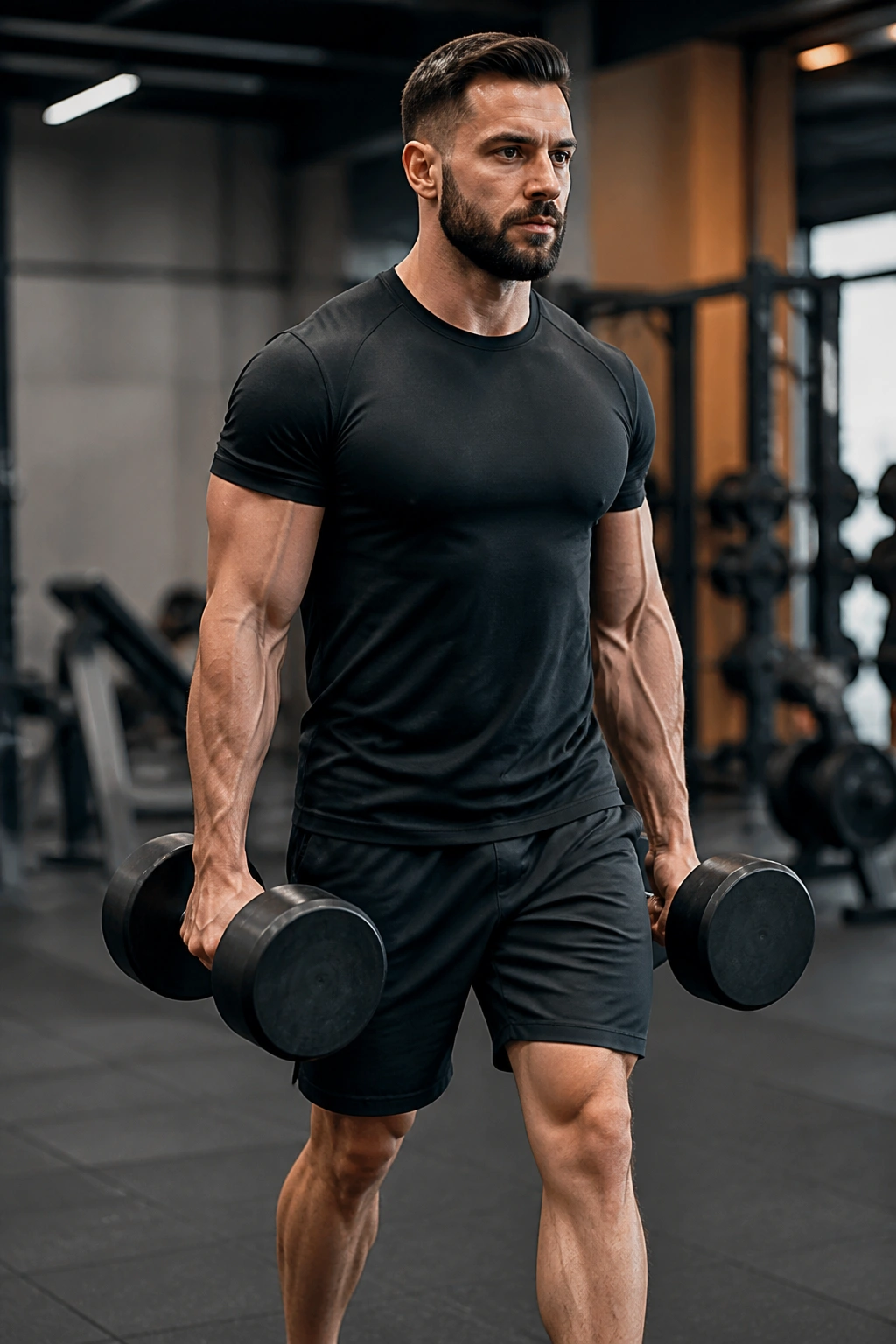
Forearms are where a lot of arm training either finishes strong or quietly forgets the final inch.
Heavy farmer’s carries and dead hangs look simple, but they build grip, forearm thickness, and a kind of useful upper-body grit that curls alone never reach. Carry a pair of heavy dumbbells for 30 to 60 seconds, or hang from a pull-up bar for 20 to 45 seconds at a time. The forearms should feel hot, the grip should start fading, and the whole upper arm gets pulled into the work.
The beauty of these drills is that they reveal weaknesses fast. If your wrist position collapses, if the fingers open early, if one side gives out faster than the other, you’ll know. No guessing. That is helpful, even when it stings a little.
Use them at the end of arm day or after back work. 3 to 5 rounds is plenty. Try not to turn every carry into a race; walk tall, keep the shoulders down, and let the weight hang cleanly from the hand. If you want real muscle, not just a good pump, this is the sort of boring hard work that keeps showing up in the mirror.
Pick a few of these, not all fifteen in one day. One heavy press, one strict curl, one triceps stretch move, and one grip finisher will usually beat a crowded session full of half-reps and bad form. Arms grow when the work is clear, the loads move, and the joints stay healthy enough to train again next week.
