



Shoulder workouts change the way a shirt hangs on your body. Broader delts make your arms look thicker, your waist look a little tighter, and even a plain T-shirt sit better across the back.
Here’s the catch: a lot of people train shoulders like they’re trying to win a front-delt contest. Heavy pressing gets all the attention, side delts get a half-hearted set or two, and rear delts get left to clean up the mess. That usually leads to sore joints, not the wide, strong look people want.
Arms look stronger when the shoulders do their share.
The mix that works best is plain, almost boring in the good way: a few solid presses, some lateral raise work, rear-delt work, and one or two stability moves that keep the joint happy under load. Get that balance right and the whole upper body starts to look built, not just pumped. The exercises below cover that mix from heavy barbell work to bodyweight drills and the small, sneaky lifts that change the shape of the shoulder cap.
1. Standing Dumbbell Overhead Press
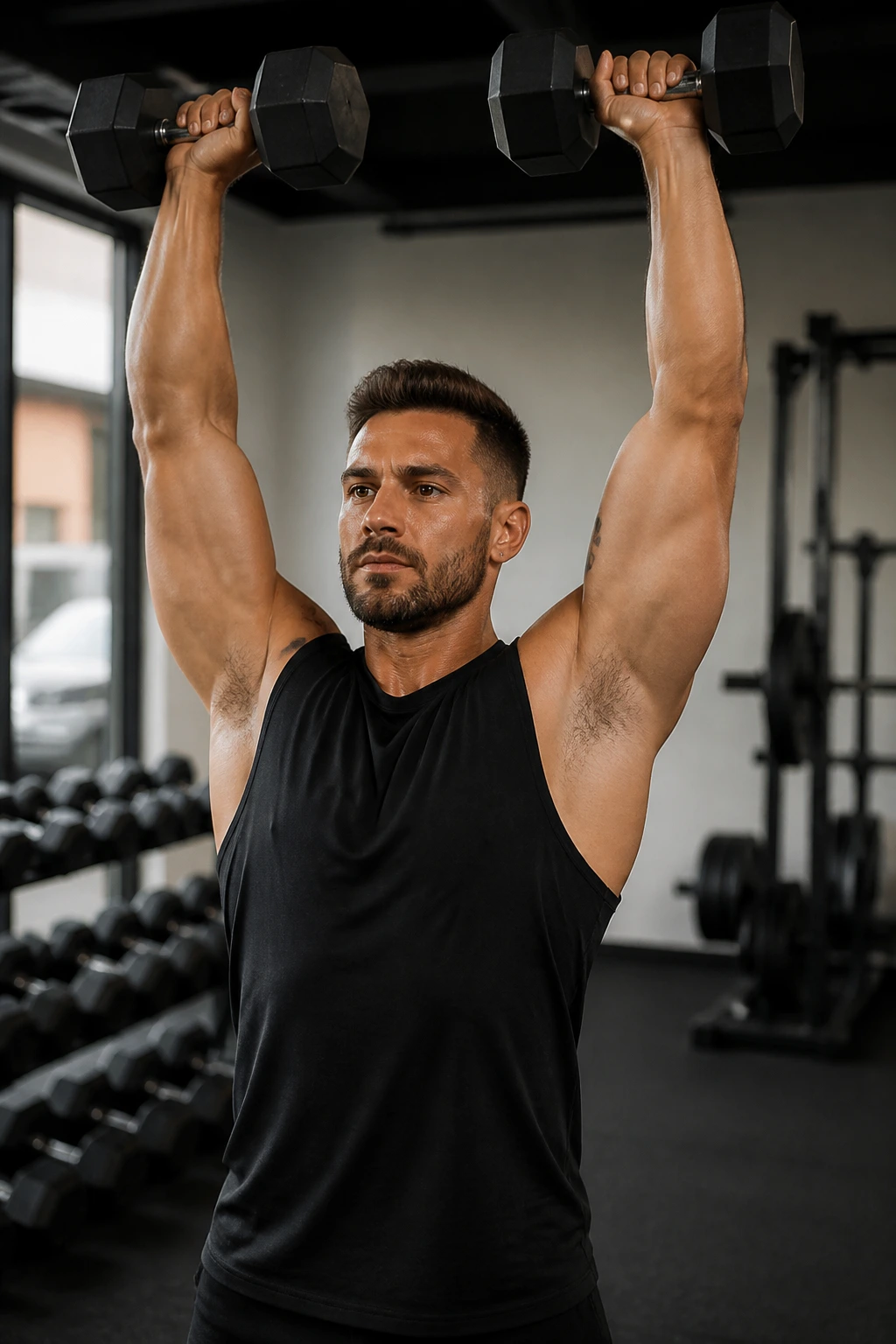
If I had to pick one movement to anchor a shoulder day, this would be near the top. The standing dumbbell overhead press builds size, tests balance, and forces your core to do its share instead of letting your lower back steal the show.
Why It Earns Its Place
Each dumbbell moves on its own path, which makes this press a little less forgiving than a barbell press. That’s a good thing. You have to keep both sides honest, and the shoulder joint gets a cleaner line of work without one arm dragging the other along.
Use a grip that feels natural, not cramped. Press from just outside shoulder width, keep your ribs down, and finish with the dumbbells stacked over your shoulders, not drifting behind your head. If your lower back arches hard, the weight is too heavy or your brace is sloppy.
- Best rep range: 4 to 8 reps for strength, 8 to 10 for size
- Tempo: controlled on the way down, crisp on the way up
- Common mistake: turning the lift into a standing incline bench press
Pro tip: squeeze your glutes before every rep. It sounds tiny. It changes everything.
2. Seated Barbell Shoulder Press
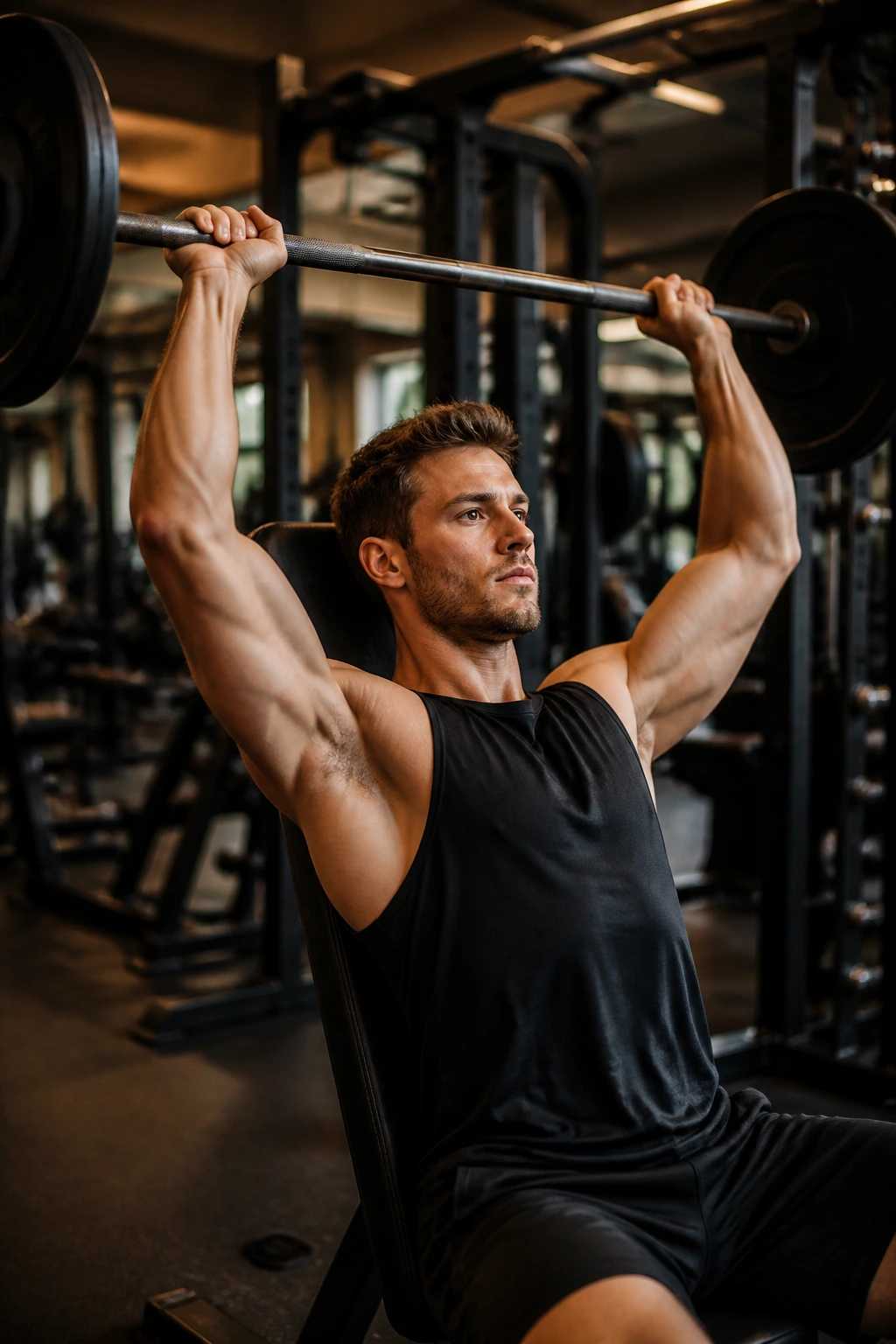
A seated barbell press is the blunt instrument of shoulder training. Heavy, honest, and a little unforgiving. That’s exactly why people keep coming back to it.
Where It Fits Better Than Dumbbells
The barbell lets you load more weight than most dumbbell presses, and the seated position removes some of the balance demand. That makes it a strong choice when you want to focus on raw overhead strength and push the front delts hard without your legs trying to help.
Keep the bench upright or only slightly tilted back. Too much lean turns this into a chest press, and that defeats the point. Lower the bar to the upper chest or chin area, then press in a straight line that ends just behind the forehead.
A clean barbell press rewards patience. Rush the descent and the bar starts bouncing off your structure instead of building it. That bounce looks strong for half a second. It is not.
3. Arnold Press
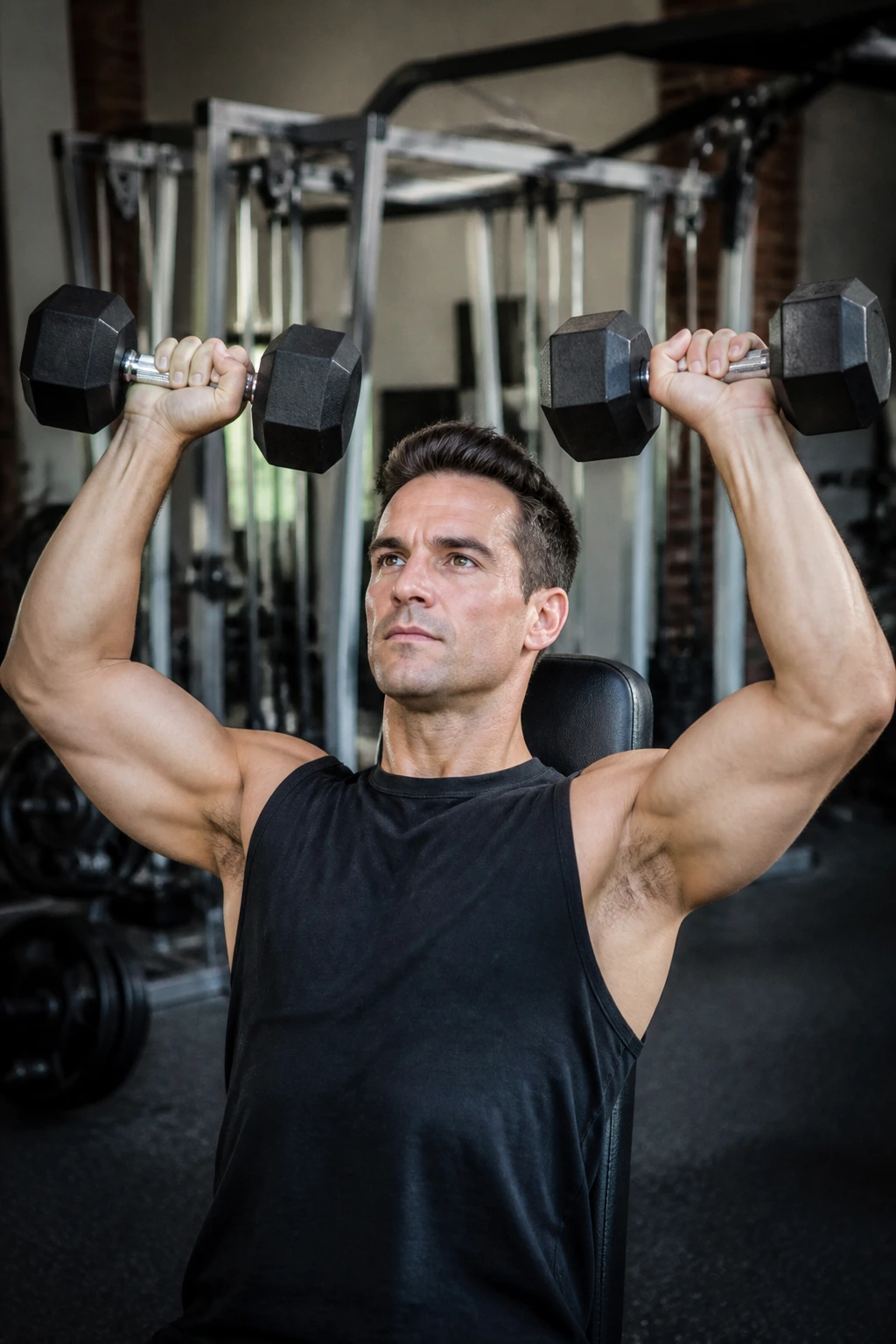
Why does the Arnold press keep showing up in shoulder programs? Because the rotation gives the front delts and side delts a longer path to work, and that extra range can be useful when your shoulders tolerate it well.
Start with the dumbbells in front of your face, palms turned toward you. As you press, rotate the hands outward so you finish palms facing away. The motion is smooth, not dramatic. If it feels like you’re wrestling the joints, the weight is too heavy or the range is too deep.
I like this one best for moderate reps, somewhere around 8 to 12, because the rotational path gets sloppy fast once fatigue piles up. Keep your elbows under control and avoid letting them flare wildly at the bottom. The whole lift should feel like a controlled spiral, not a circus trick.
It’s a useful variation. It is not the one to max out on.
4. Z-Press
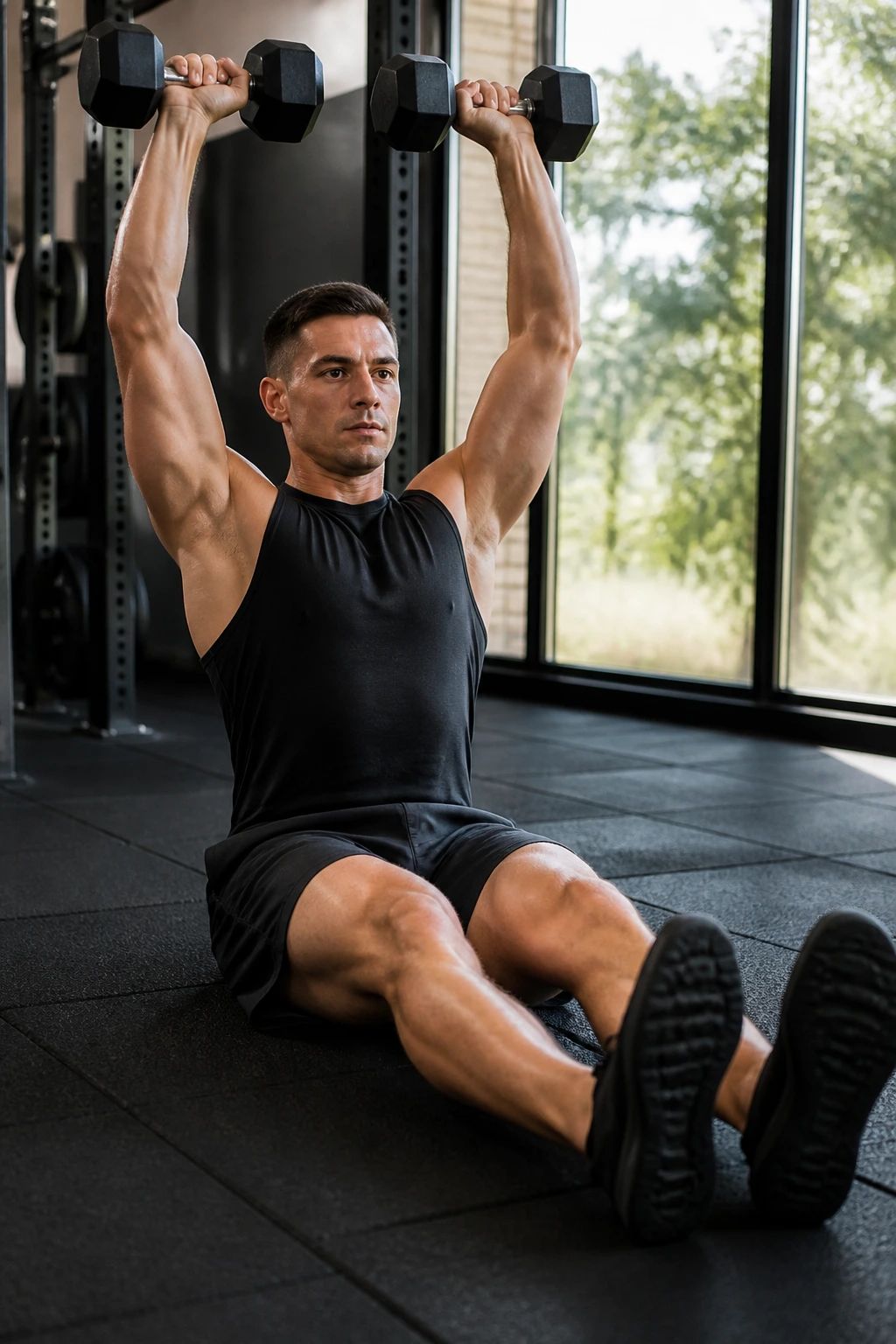
Sitting on the floor with your legs straight out in front strips away a lot of nonsense. No leg drive. No leaning back. No sneaky bounce from the bench. The Z-press tells you fast whether your overhead mechanics are clean.
Why It Feels So Hard
The floor position forces your torso to stay tall, and that makes your core, hips, and shoulders work together. If your hamstrings are tight, the position will feel even more honest, which is another way of saying uncomfortable. That discomfort is useful if your goal is better control, not just moving weight.
Press the dumbbells or bar from shoulder level and keep your chest lifted without flaring your ribs. If you can’t sit tall, reduce the load. Don’t turn the lift into a wrestling match with your spine.
- Best for: strict pressing strength and core control
- Use: 3 to 4 sets of 6 to 10 reps
- Watch for: loss of posture, especially near the lockout
Short version: if you can Z-press well, a normal overhead press starts to feel easier.
5. Neutral-Grip Machine Shoulder Press
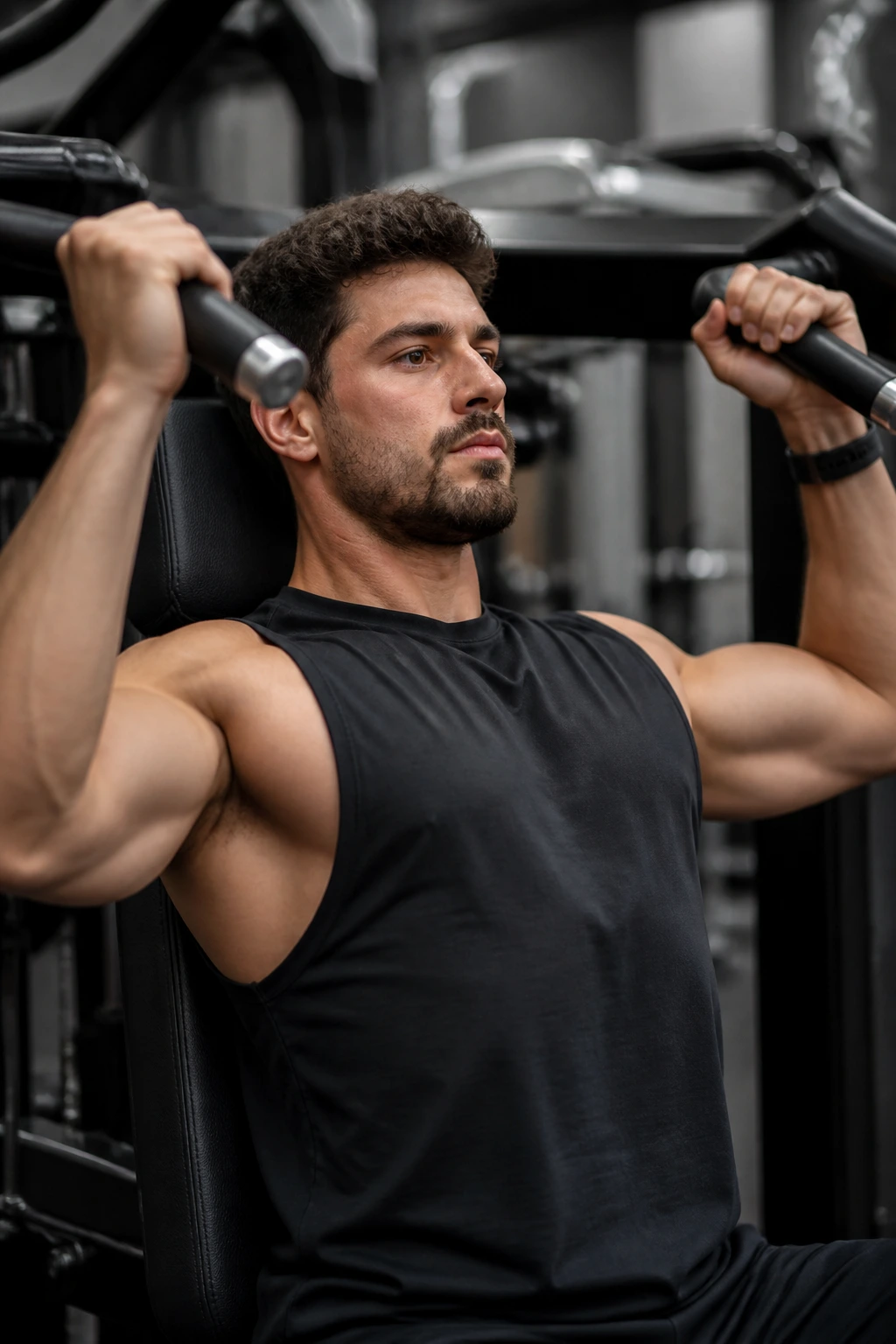
Boring? Sure. Useful? Also yes. A neutral-grip machine shoulder press earns its spot because it lets you press hard without spending half the set trying to stabilize the weight.
Why Machines Deserve a Spot
The fixed path helps when free weights feel rough on the joints or when you want to train close to failure without the wobble taking over. Neutral handles also tend to feel friendlier for lifters whose shoulders dislike a fully pronated grip.
Set the seat so the handles start around ear level, not buried too low. Press until the elbows straighten without shrugging your shoulders toward your ears. If the machine forces your hands too far in front of your body, move the seat or skip it. Bad machine angles can make a simple exercise feel weird fast.
This is a solid place to chase 8 to 12 reps. The machine does the balancing, so you can focus on tension, range, and a controlled return. That matters more than looking fancy.
6. One-Arm Landmine Press
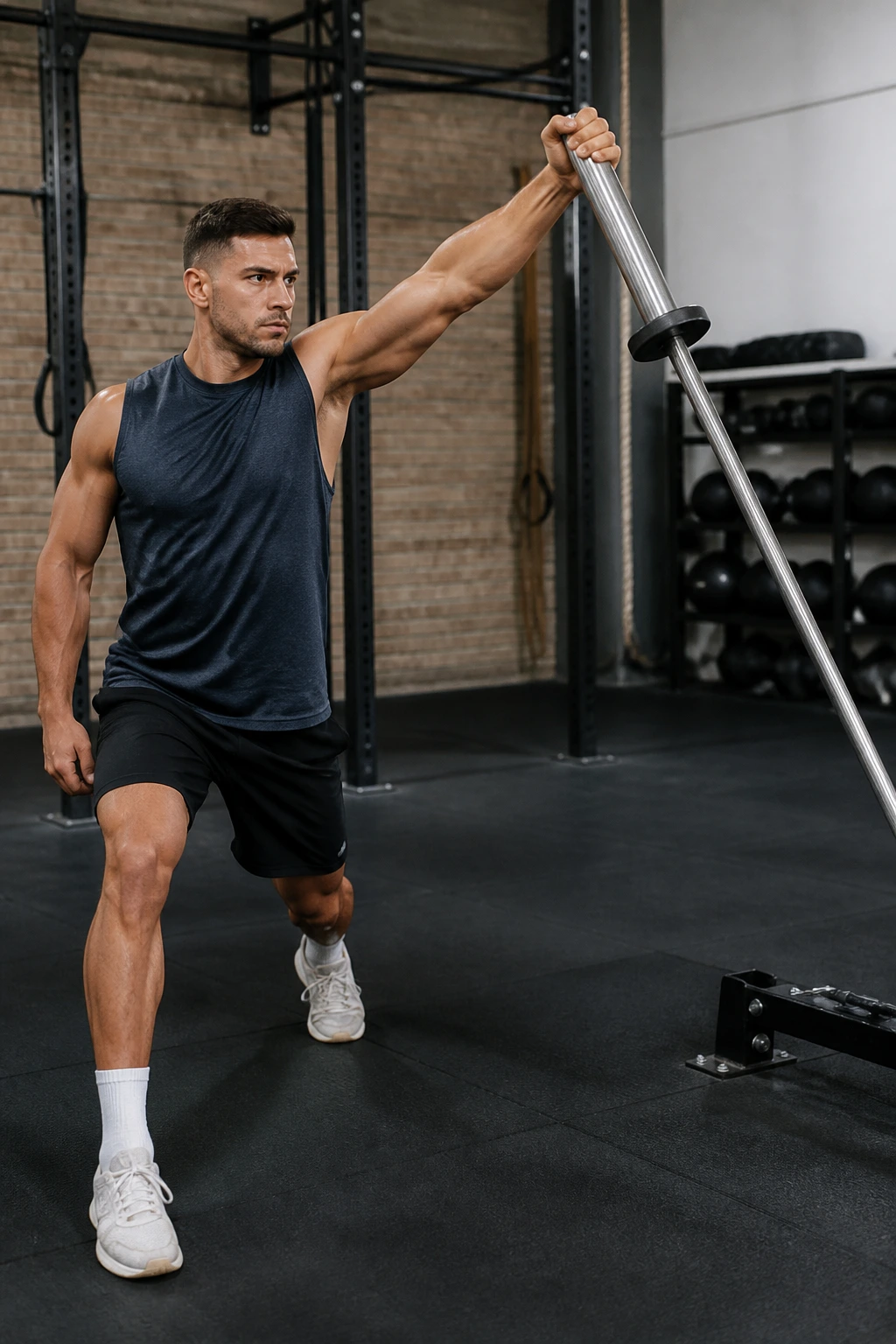
The landmine press is the press I hand to tall lifters, beginners with cranky shoulders, and anyone tired of fighting a straight bar. The angled path makes overhead work feel more natural for a lot of bodies.
Setup Matters
Wedge one end of the bar into a corner or landmine base, then hold the loaded end with one hand at shoulder height. Press up and slightly forward, not straight overhead. That diagonal path is the whole point. It keeps the shoulder blade moving in a way that often feels smoother than a vertical press.
The one-arm version adds anti-rotation work, so your torso has to stay square while the weight tries to twist you. That’s sneaky core training. It also lets each side work independently, which helps if one shoulder is weaker or less stable than the other.
- Great for: shoulder-friendly pressing and trunk control
- Nice rep range: 6 to 10 per side
- Form cue: keep the ribs down and the wrist stacked over the elbow
If a straight overhead press bugs you, this is a smart place to start.
7. Push Press
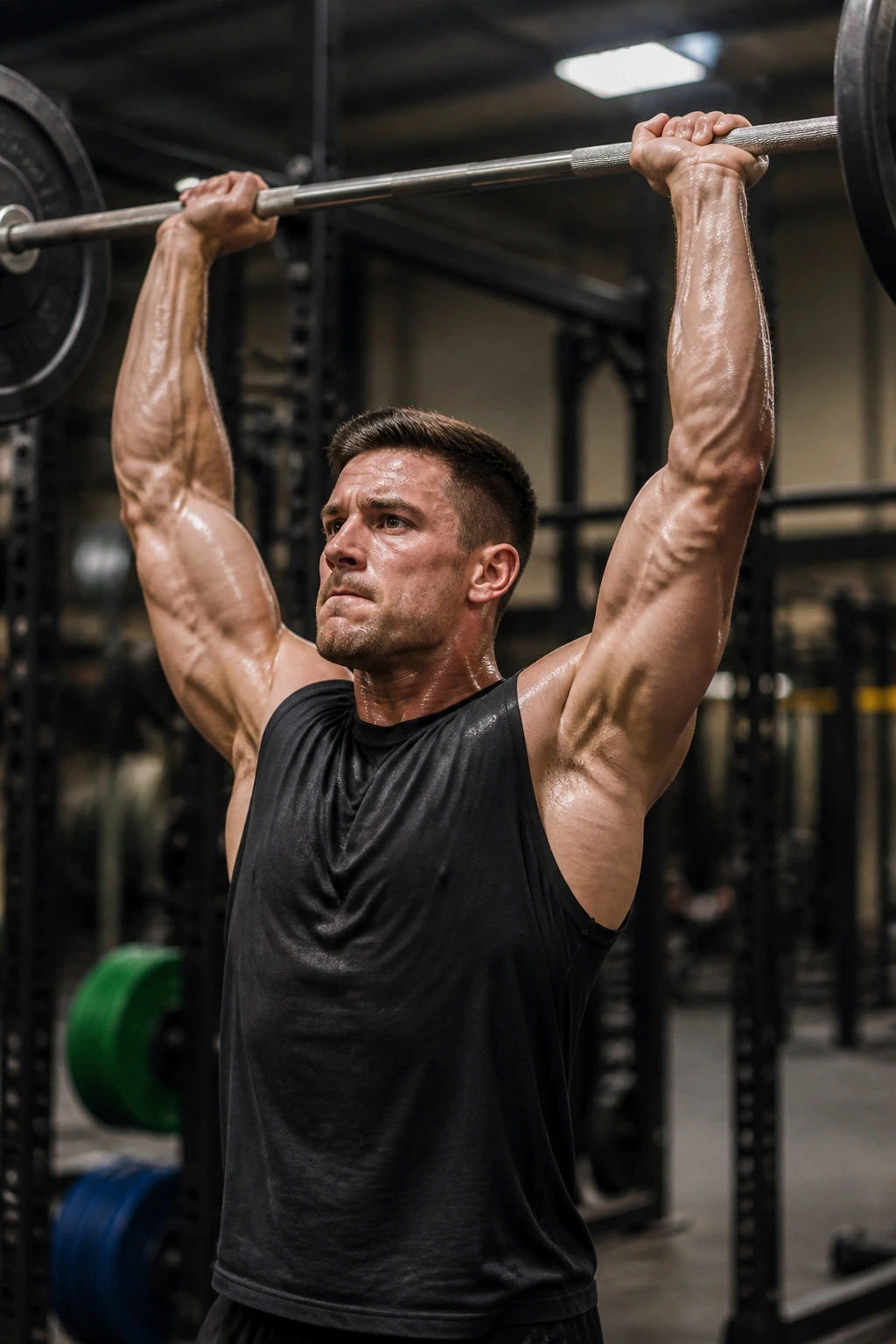
This is not a cheat if you do it on purpose. The push press uses a quick leg drive to move more weight overhead, which makes it a power move rather than a strict strength test.
Dip a few inches by bending the knees and hips together, then drive hard through the floor and finish the press with your shoulders and triceps. The dip should be short and vertical. If your torso folds forward, the bar path gets messy and the lift stops being useful.
Use the push press early in a session, before fatigue turns the movement into a sloppy heave. Low reps work best here. Think 3 to 5 clean reps, not a marathon set of half-reps.
It’s a great way to overload the shoulders with weight they wouldn’t handle in a strict press. Just remember the point: drive, catch, finish. Not bounce, fling, and hope.
8. Dumbbell Lateral Raise
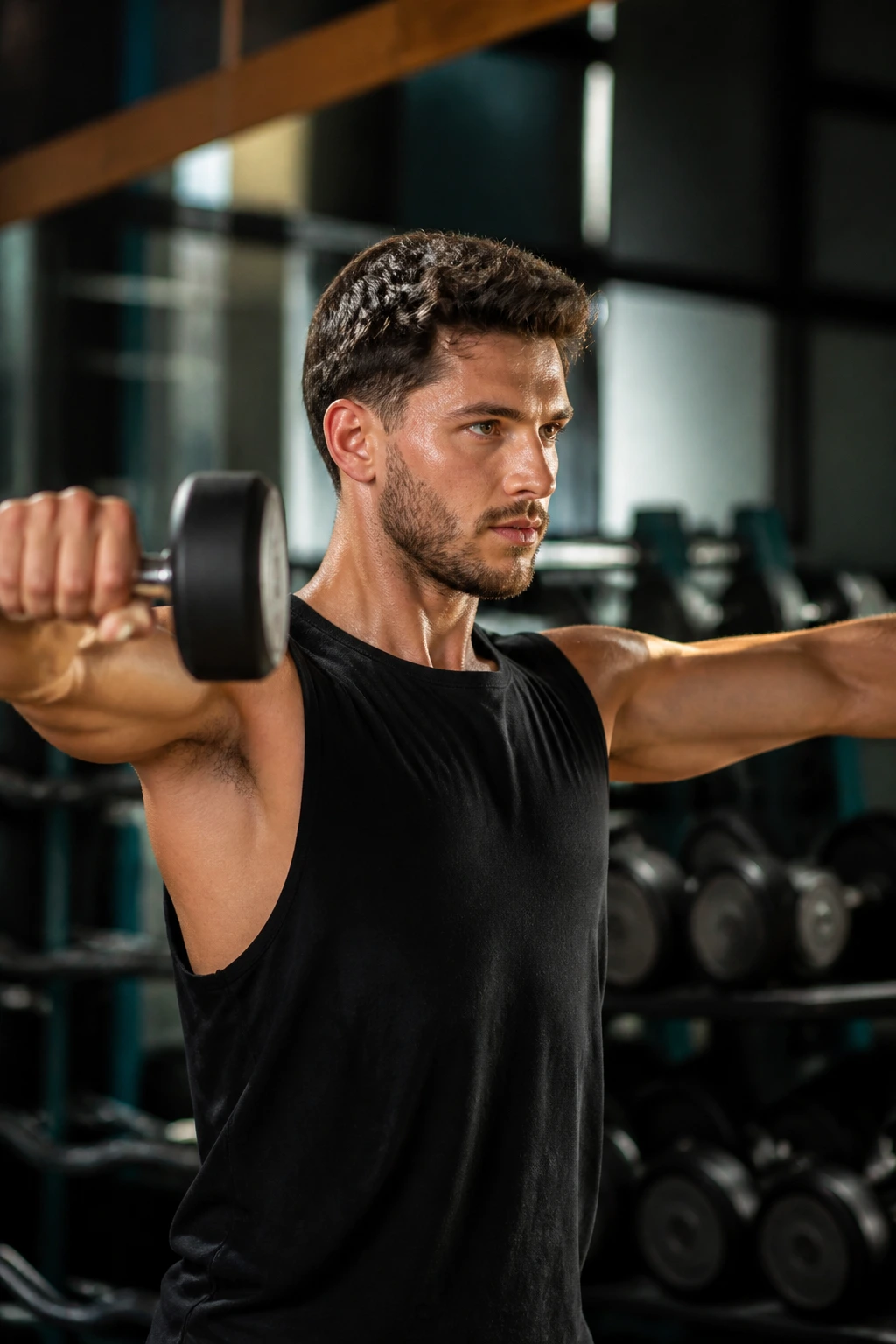
Side delts are the reason shoulders look wide from the front. Pressing helps, sure, but the dumbbell lateral raise is where the shoulder cap starts to show up in a T-shirt.
The Side-Delt Rules That Matter
A small bend in the elbows keeps the lift comfortable, but the hands should not turn into hooks. Lead with the elbows and raise until the upper arms are about parallel to the floor. Higher is not better if the traps take over and the shoulders shrug up.
Most people go too heavy. Then the torso sways, the wrists curl, and the lift turns into a weird half-swing. Drop the weight and make the side delt do the work. You’ll feel the difference around rep 8 or 9, when the outside of the shoulder starts to burn in that sharp, stubborn way.
- Best rep range: 10 to 20
- Tempo: 2 seconds up, 2 to 3 seconds down
- Common mistake: shrugging before the arms get to shoulder height
No need to make it fancy. Clean reps beat ugly weight every time.
9. Cable Lateral Raise
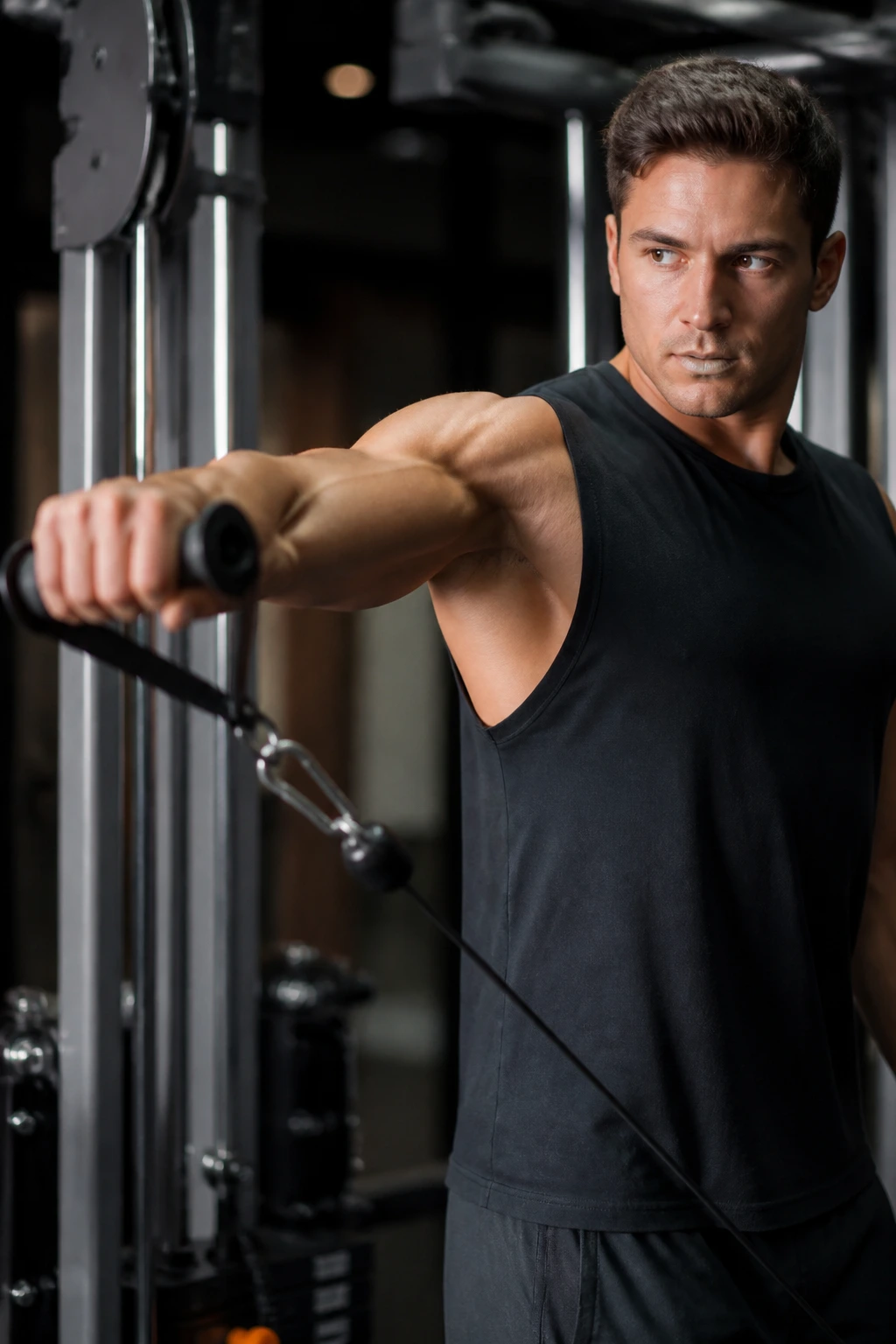
A cable lateral raise feels different from dumbbells for one simple reason: the tension stays on the muscle longer. That matters when the goal is side-delt growth, because the bottom of the movement often gets skipped with free weights.
Why Cables Feel So Different
Set the pulley low, stand a step or two away from the stack, and let the working arm start slightly across the body. From there, sweep the arm outward until it reaches shoulder height. The cable pulls in a line that keeps the delt working even when the arm is near the bottom.
That steady pull can make a lighter weight feel harder than a dumbbell. Good. That’s the point. You want the side delt to work, not the momentum from your hips.
- Best use: strict hypertrophy work
- Helpful detail: do one arm at a time
- Rep range: 12 to 20 with a short pause at the top
A clean cable raise is sneaky. It looks easy from the outside, then your shoulders start complaining halfway through set two.
10. Lean-Away Lateral Raise
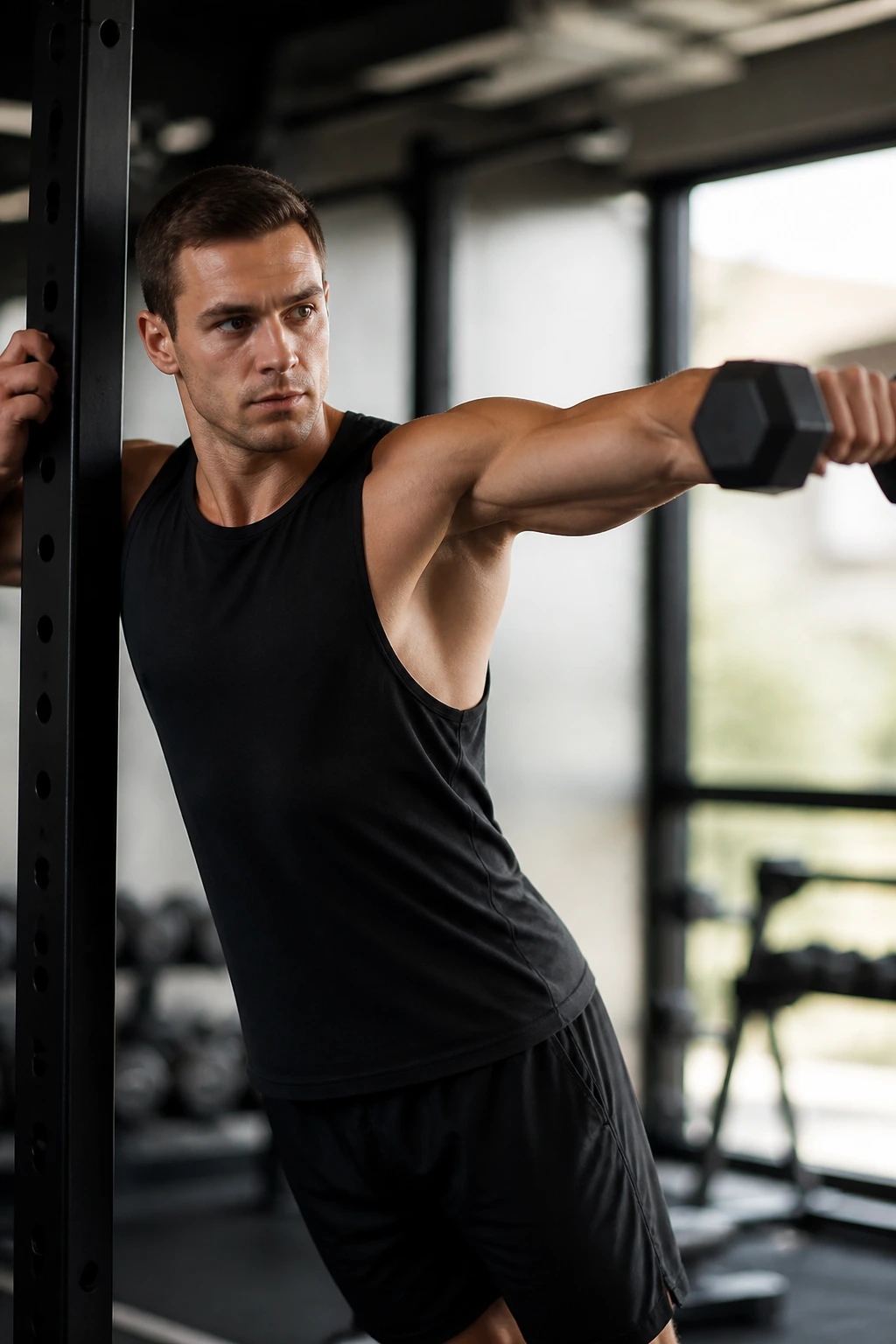
A tiny lean changes everything. The lean-away lateral raise loads the lower half of the movement harder, which is where a lot of people lose tension on regular raises.
Hold onto a post or upright, step away a bit, and let your torso angle out just enough to create that longer line of pull. Then raise the dumbbell or cable with strict control. You’re not trying to win a balance contest. You’re just trying to make the side delt stay busy from the first inch of motion.
This version works especially well when standard laterals start feeling too easy near the bottom. It also pairs nicely after heavier pressing, since the shoulder is already warm and the path feels more natural.
Keep the lean modest. If you have to swing your body to get the arm moving, the setup has gone too far.
11. Front Raise
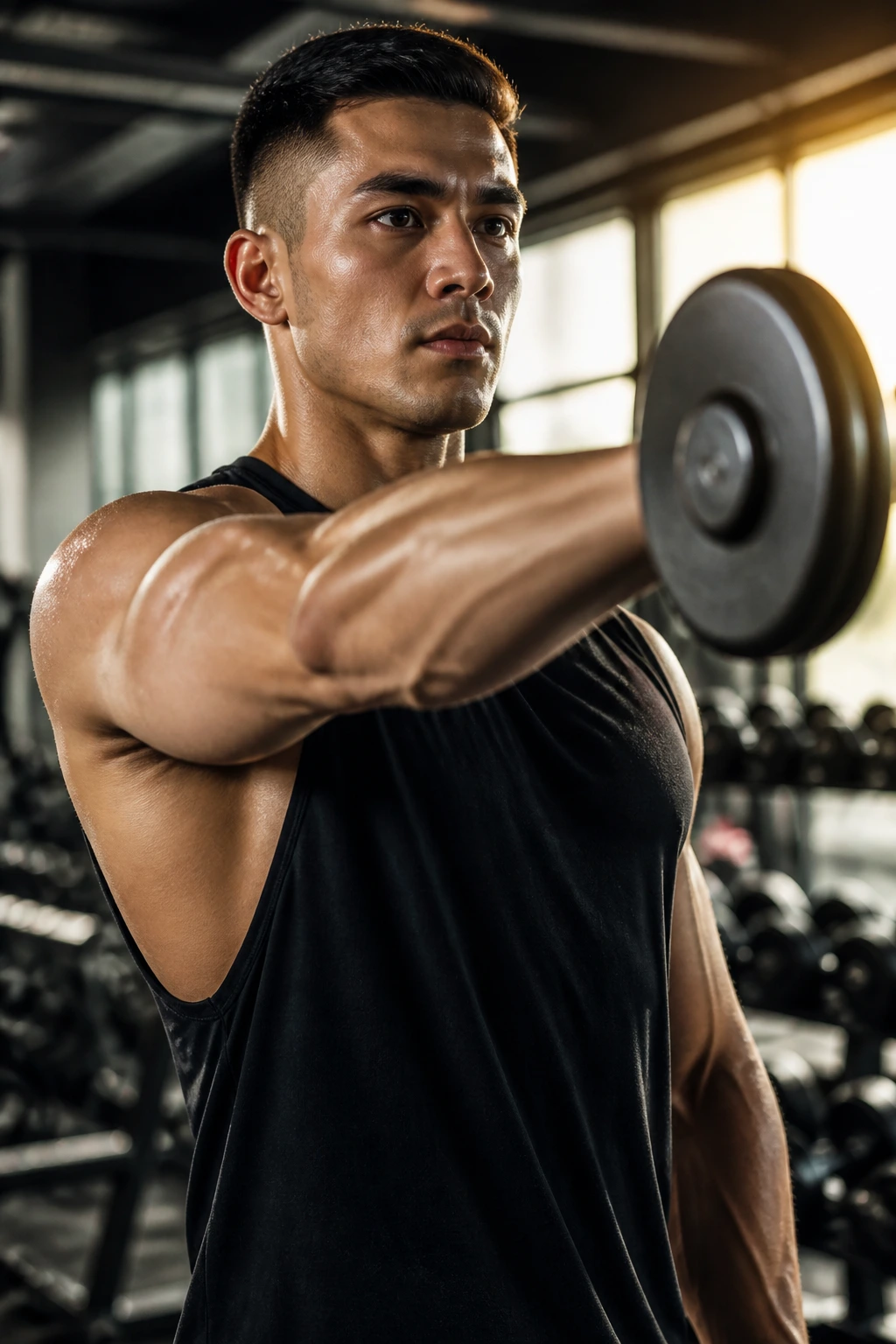
Front delts do not need the ego boost people think they do. Pressing already hammers them, which is why front raises are usually a small accessory, not the main course.
That said, they still have a place. If your pressing is strong but the front of your shoulders lags behind, a controlled front raise can help fill the gap. Dumbbells, a cable, or a plate all work. The key is keeping the motion strict enough that the upper traps stay quiet.
I like front raises as a finisher or paired with lateral raises in a short superset. Keep the range smooth and stop around eye level. Past that, a lot of lifters start arching the back and swinging the weight.
Use them when they solve a problem. Skip them when they’re only there because they look like a shoulder exercise.
12. Plate Raise
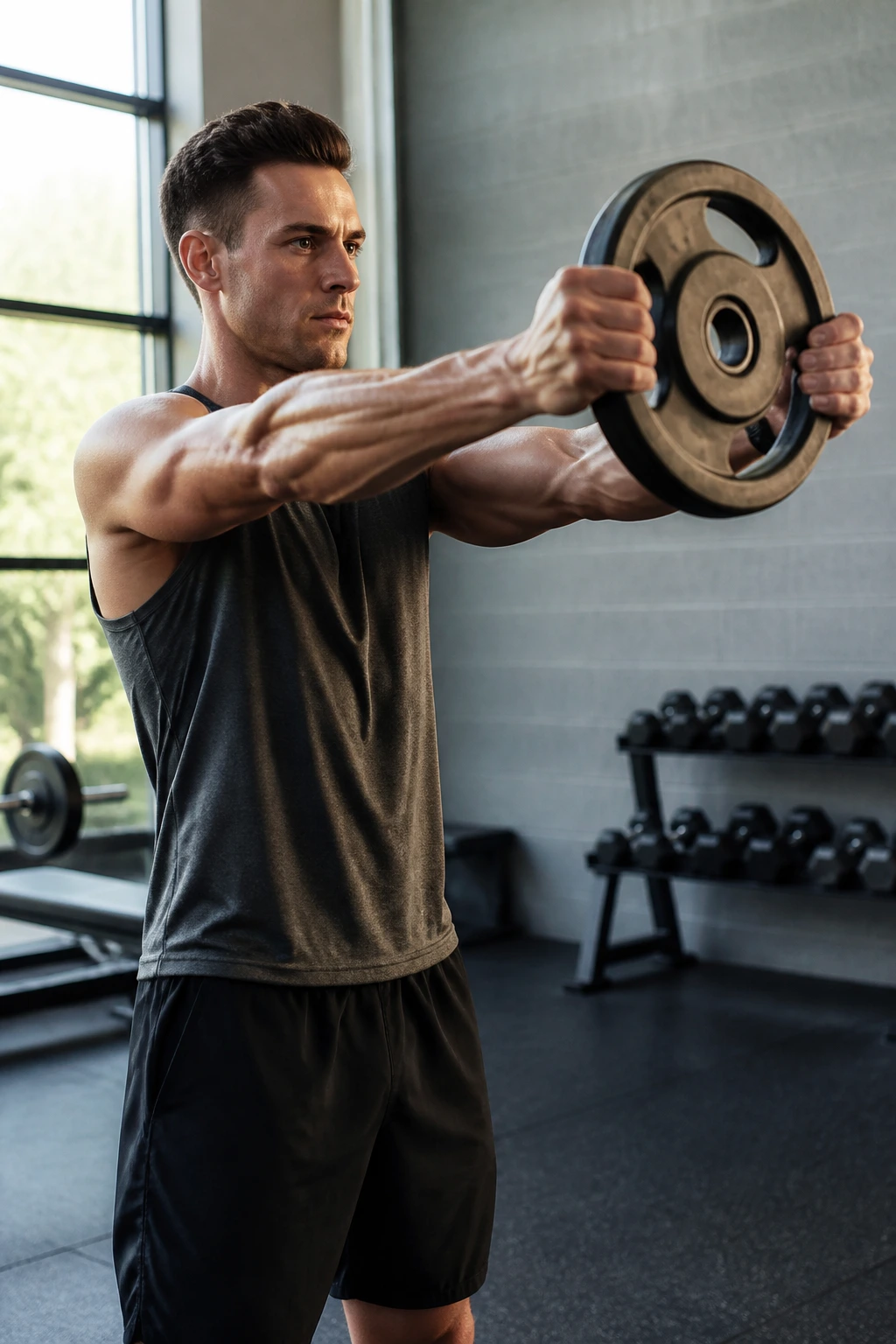
A plate raise is simple, cheap, and a little old-school in the best way. Grab a small plate, hold it with both hands, and raise it in a controlled arc from thigh level to shoulder height.
The grip changes the feel compared with dumbbells. You can’t easily cheat by rotating the wrist or flopping the elbows around, so the front delt has to stay on task. It also makes for a useful home-gym option when all you’ve got is a plate and some floor space.
Keep your shoulders down and your neck relaxed. If the traps start climbing, lower the plate and slow the tempo. A 5- to 10-pound plate is enough for most people. The lift burns out fast if you do it right.
This is a good finisher on days when you want a shoulder pump without a lot of setup. Straightforward. Effective. No drama.
13. Bent-Over Rear Delt Fly
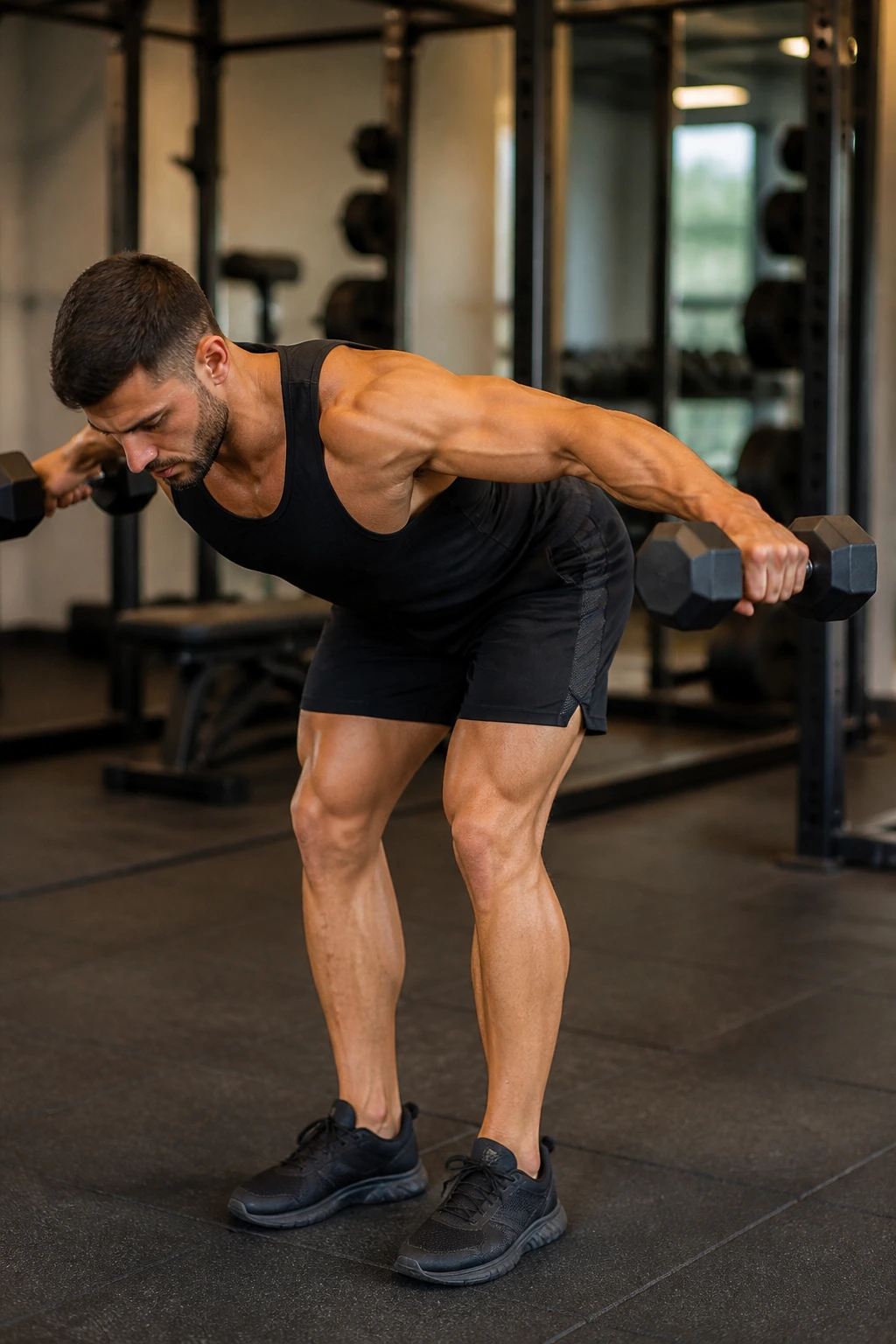
Rear delts are the part most people skip, and it shows. The bent-over rear delt fly fixes that by hitting the back of the shoulder in a way that presses never do.
What to Watch For
Hinge at the hips until your torso is close to parallel with the floor, then lift the dumbbells out and slightly back. Keep a soft bend in the elbows and think about moving the upper arms, not yanking with the hands. If the traps dominate, the weights are too heavy or the path is too high.
A chest-supported version on an incline bench works well when your lower back gets tired from holding the hinge. That version removes some of the cheat and lets you stay on the rear delts longer, which is usually a better trade than grinding through sloppy reps.
- Rep range: 12 to 20
- Best cue: sweep out, don’t shrug up
- Useful variation: machine or cable rear-delt fly
Rear delts change posture, yes, but they also make the shoulders look fuller from the side. That’s the part people notice in a fitted jacket.
14. Face Pull
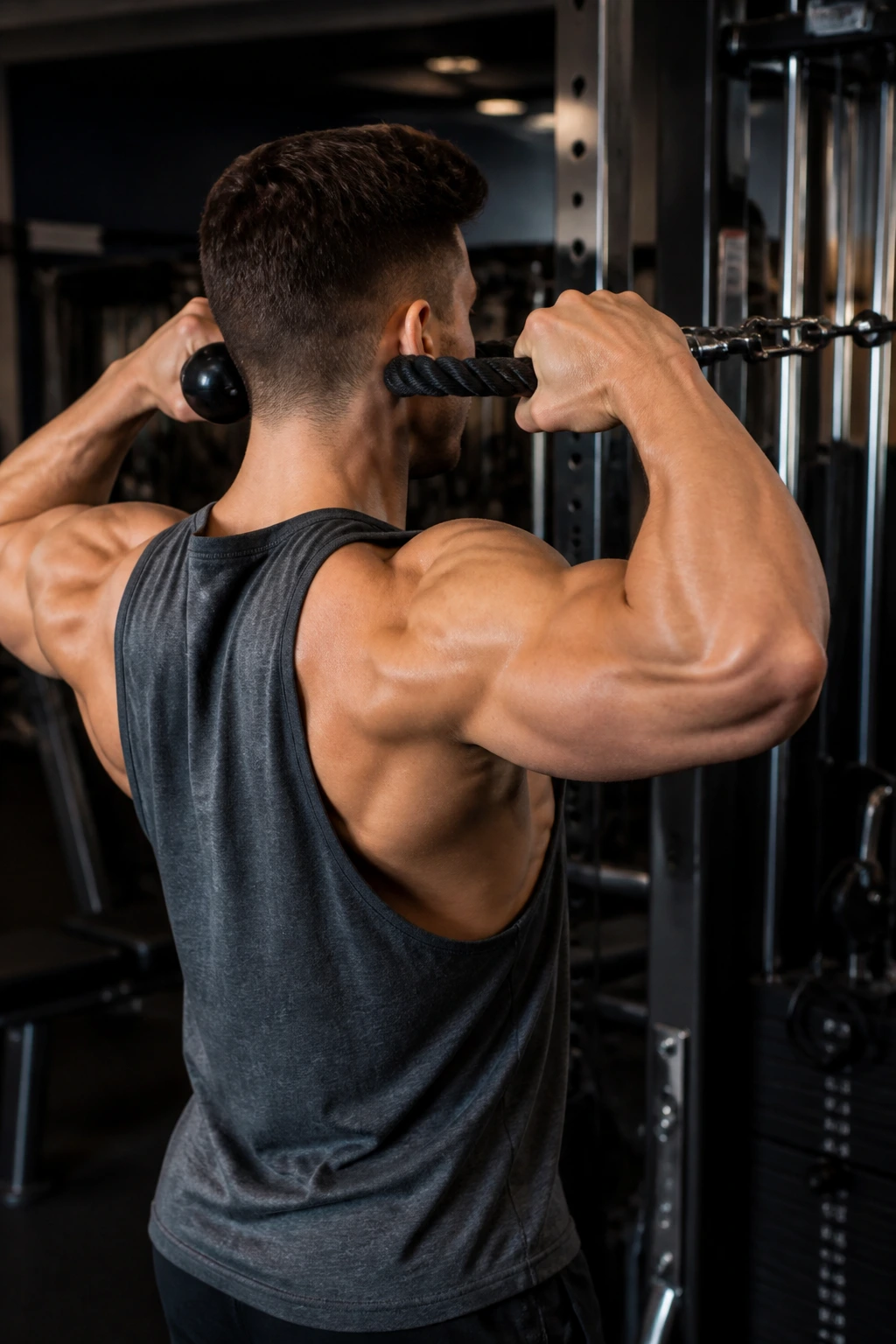
A face pull is one of the rare shoulder moves that helps you train and clean up a bit of the mess pressing creates. The rope path matters more than people think.
The Rope Path Matters
Set the cable at upper chest or face height, grab the rope, and pull it toward the forehead or eyebrow line. As the rope comes in, finish with the hands slightly apart and the elbows high enough to get the rear delts and rotator cuff involved. The move should feel smooth, not yanked.
A face pull is not a row. If you pull low toward the chest, it turns into something else. If you shrug hard at the top, the neck takes over. Keep the shoulders down and the motion crisp.
- Great after pressing
- Works well for 12 to 20 reps
- Useful cue: pull apart as you finish
This is the kind of exercise that does not look flashy and still earns a permanent spot. That usually means it’s worth keeping.
15. Reverse Pec Deck
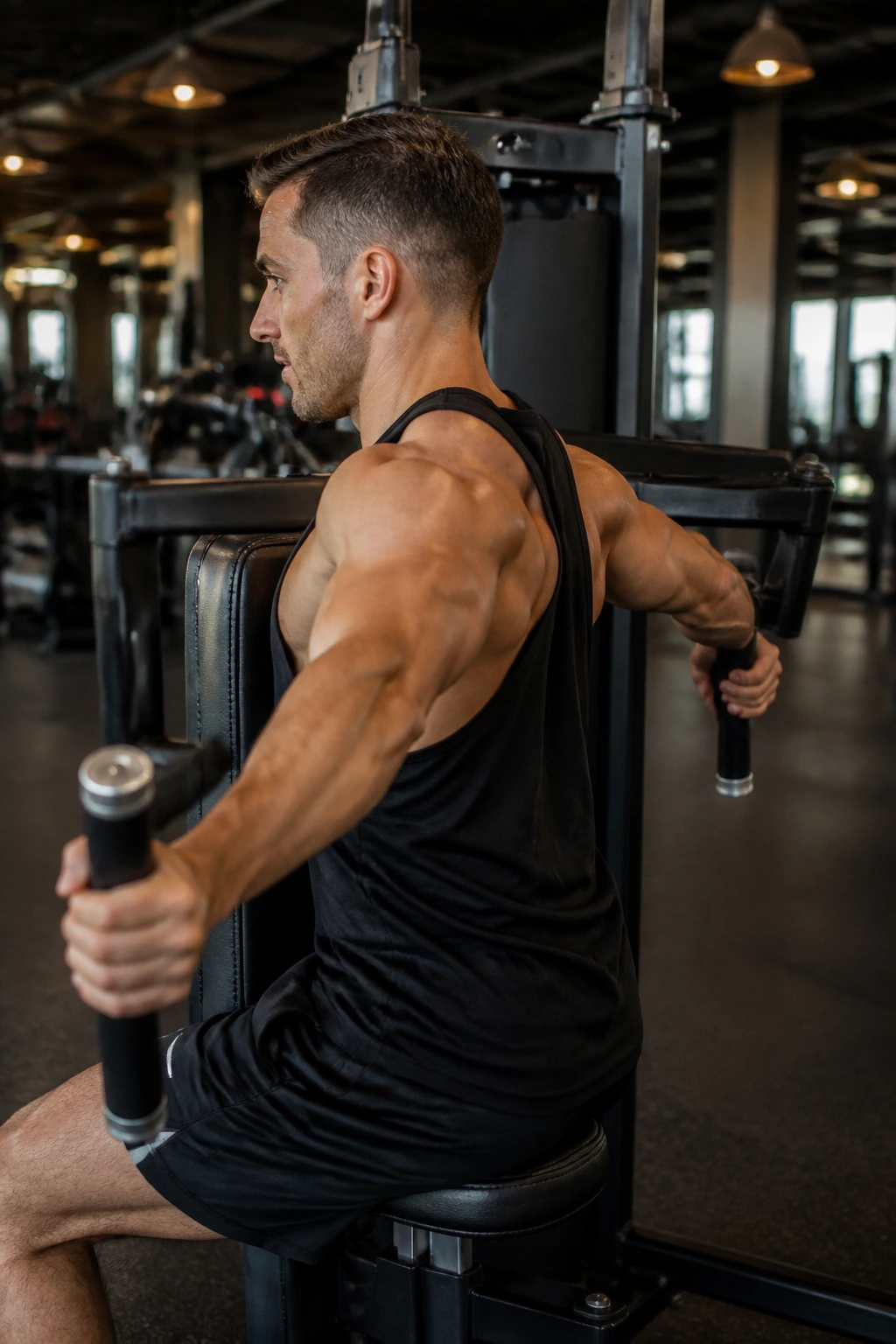
If you want rear-delt work without balancing a dumbbell or chasing a cable handle around the gym, the reverse pec deck is as clean as it gets. Stable seat, fixed path, straightforward tension.
Set the seat so the handles line up near shoulder height, then keep your chest glued to the pad. Open the arms wide and think about spreading the shoulder blades without turning the movement into a full back row. The rear delts should burn first. If the mid-back takes over hard, lighten the stack.
That stable setup makes it easier to train close to failure with good form. You can slow the eccentric, pause for a beat at the open position, and still keep the path neat. That matters more than people think.
This is a machine I like near the end of a shoulder session, after pressing and one or two raise variations. By then the rear delts are warm, and the machine lets you squeeze out more clean reps than a free-weight fly would.
16. Upright Row
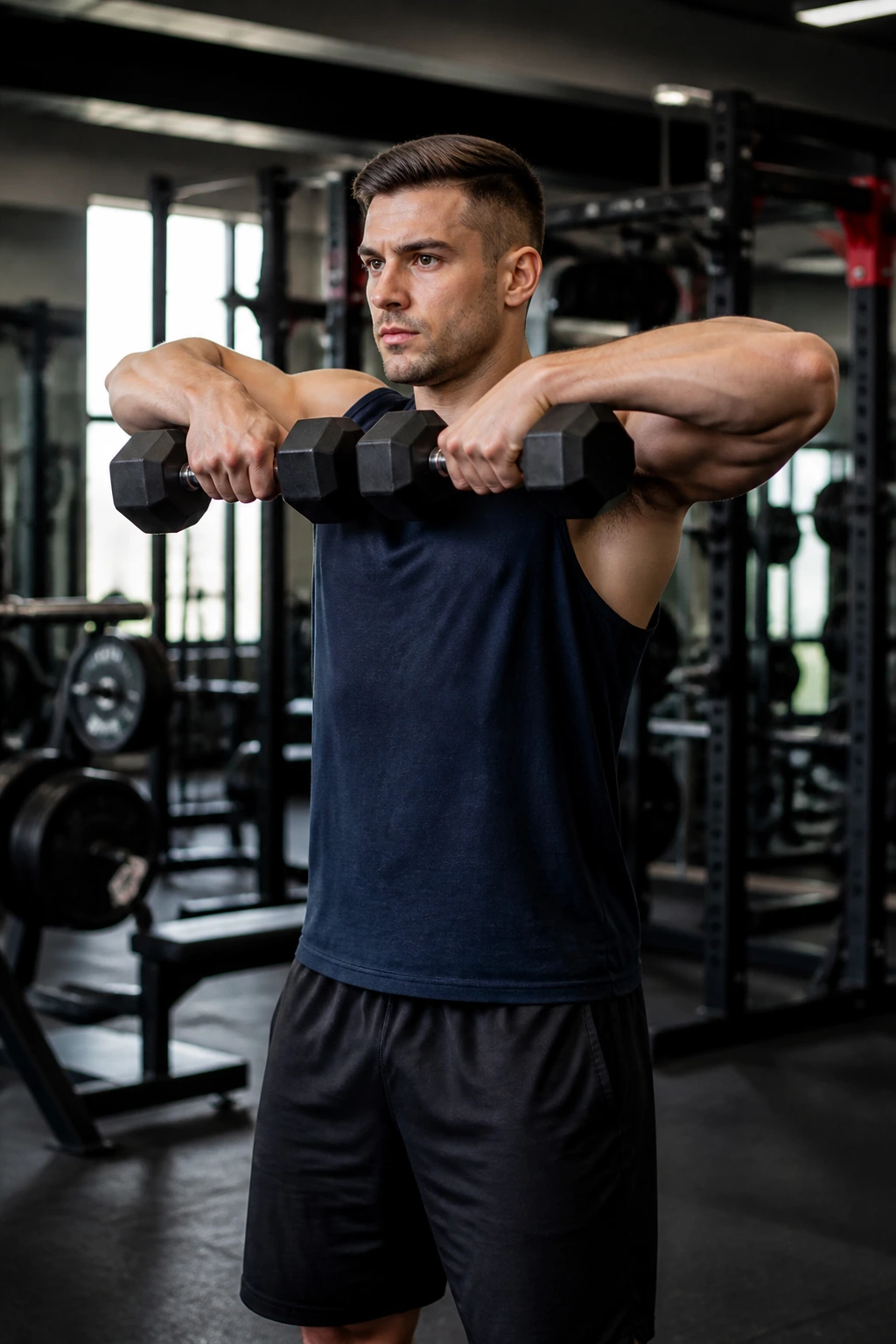
The upright row gets blamed for a lot, some deserved, some just lazy coaching. Done badly, it can feel terrible. Done with a sane range and a sensible grip, it can still build traps and side delts.
Use a cable or a pair of dumbbells with a wider hand path. Pull the weight up until the elbows are around shoulder height or a little below, then stop. You do not need to drag the bar to your collarbone. You also do not need to turn every rep into a shoulder pinch test.
If your shoulders already hate this pattern, skip it. There are plenty of other moves in this list that will give you a better return with less annoyance. I’d rather see someone do more lateral raises and face pulls than force an upright row that feels wrong from the first rep.
Used well, it can fit. Used carelessly, it earns its bad reputation.
17. Pike Push-Up
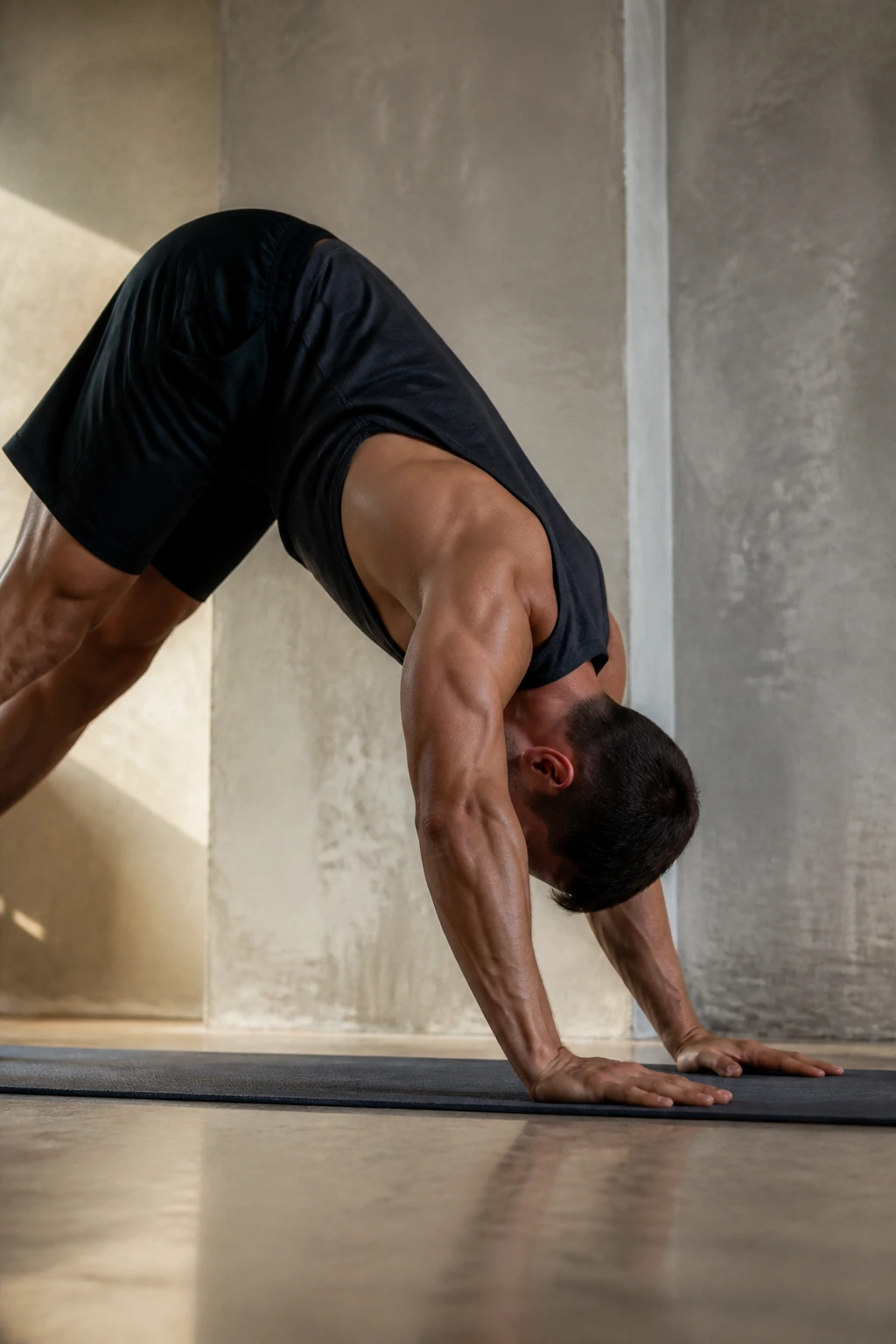
Probably the best no-equipment shoulder builder, the pike push-up puts your body in a steep angle so the shoulders have to press your weight through a tight path.
Start in a pike position with your hips high and your hands about shoulder width apart. Lower your head toward the floor between your hands, then press back up until the elbows lock out. The more vertical your torso gets, the harder it feels on the shoulders. Feet elevated on a box makes it tougher still.
The move is part shoulder press, part triceps work, part core bracing. That’s a nice combination when you want training to travel well beyond the gym floor. It also exposes sloppy mechanics fast. If your head dumps forward or your lower back caves, the set is done.
Use a slow descent and keep the neck neutral. One clean rep beats three ugly ones. Every time.
18. Wall-Facing Handstand Push-Up Negatives
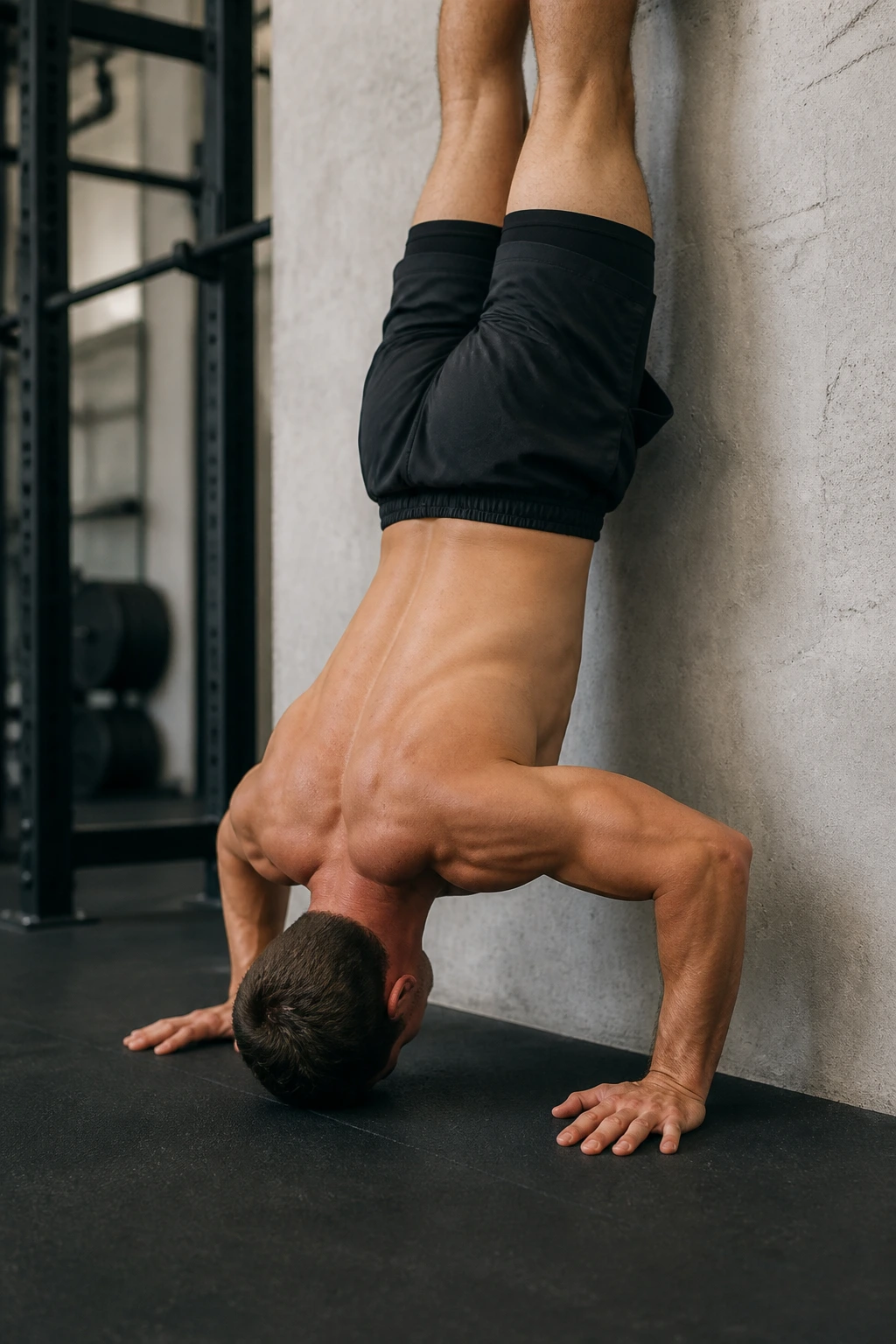
Kick up to a wall and lower under control for three to five seconds, and you’ll learn a lot about your shoulders fast. Wall-facing handstand push-up negatives are advanced, messy, and worth the work if you want overhead strength that shows up in real life.
How to Approach Them
Face the wall so your body stacks more naturally over the hands. Keep the hands a little wider than shoulder width, brace hard, and lower only as far as you can control. If your elbows flare wildly or your head crashes to the floor, cut the range short and build from there.
These negatives build strength in the exact part of the press where many lifters stall. They also train balance, wrist tolerance, and the kind of midline control that makes everything else feel cleaner. Light it up with a few sets of 2 to 4 slow reps, not long sloppy sets.
- Best for advanced lifters
- Progression idea: wall hold → partial negative → full negative
- Stop if: wrist pain or neck strain shows up
No equipment is a nice bonus. The floor and a wall can still do plenty of damage.
19. Bottom-Up Kettlebell Press
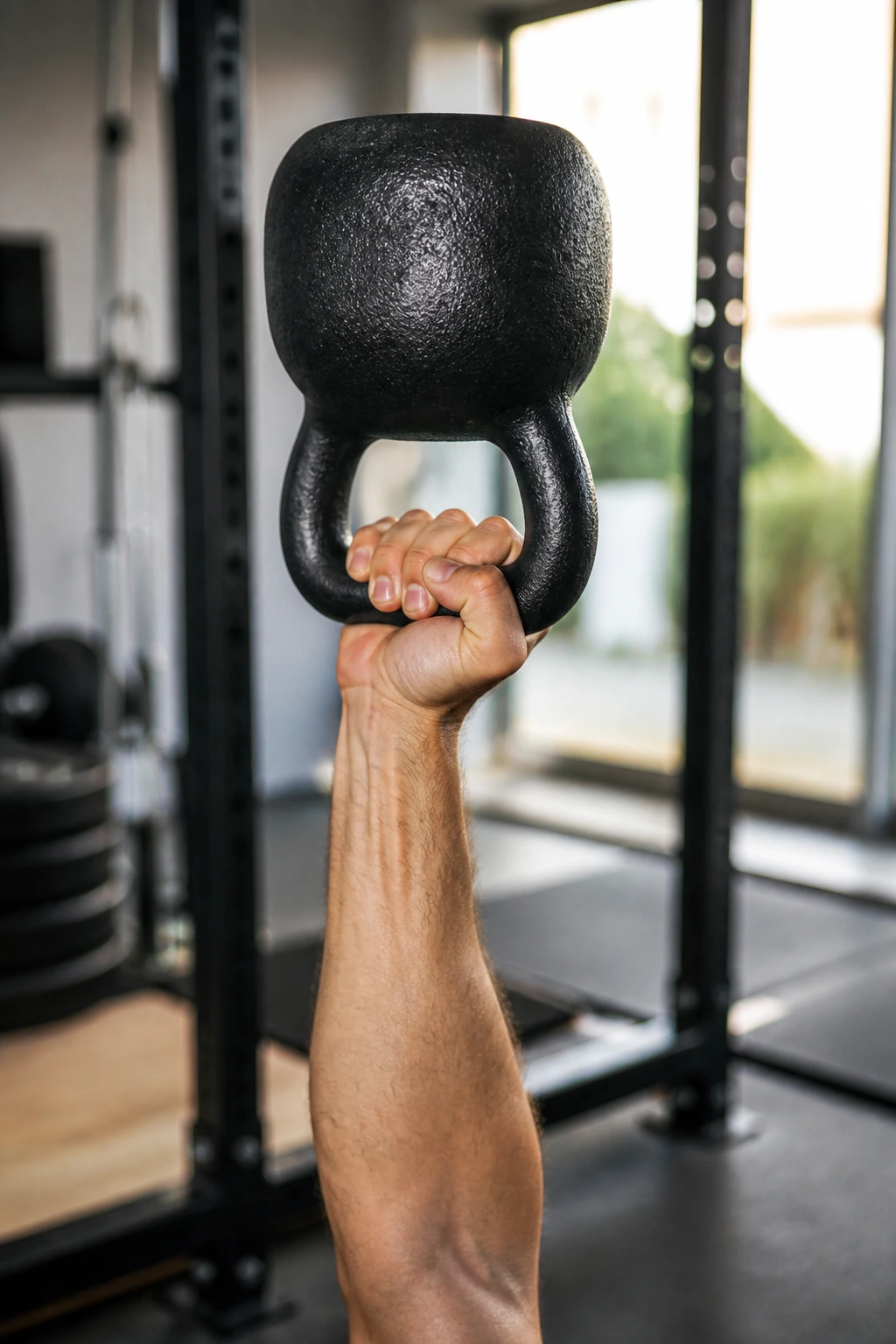
This one humbles people. The kettlebell wants to tip, and that shifting load forces your grip, forearm, and shoulder stabilizers to wake up and stay awake.
Hold the bell upside down in the rack position with the bottom of the bell pointing toward the ceiling. Press slowly. If the bell wobbles, your wrist and shoulder are telling you exactly where the weak link is. That feedback is useful, even if it feels a little rude.
Light weight works best here. That’s not a cop-out. The point is control, not ego. A heavier bell turns the lift into a grip circus, and then the shoulder work gets muddy.
This press pairs well with regular overhead pressing because it fills in the stability gap. It can also clean up the little wobbles that make a heavy press feel unstable near lockout.
20. Cuban Press
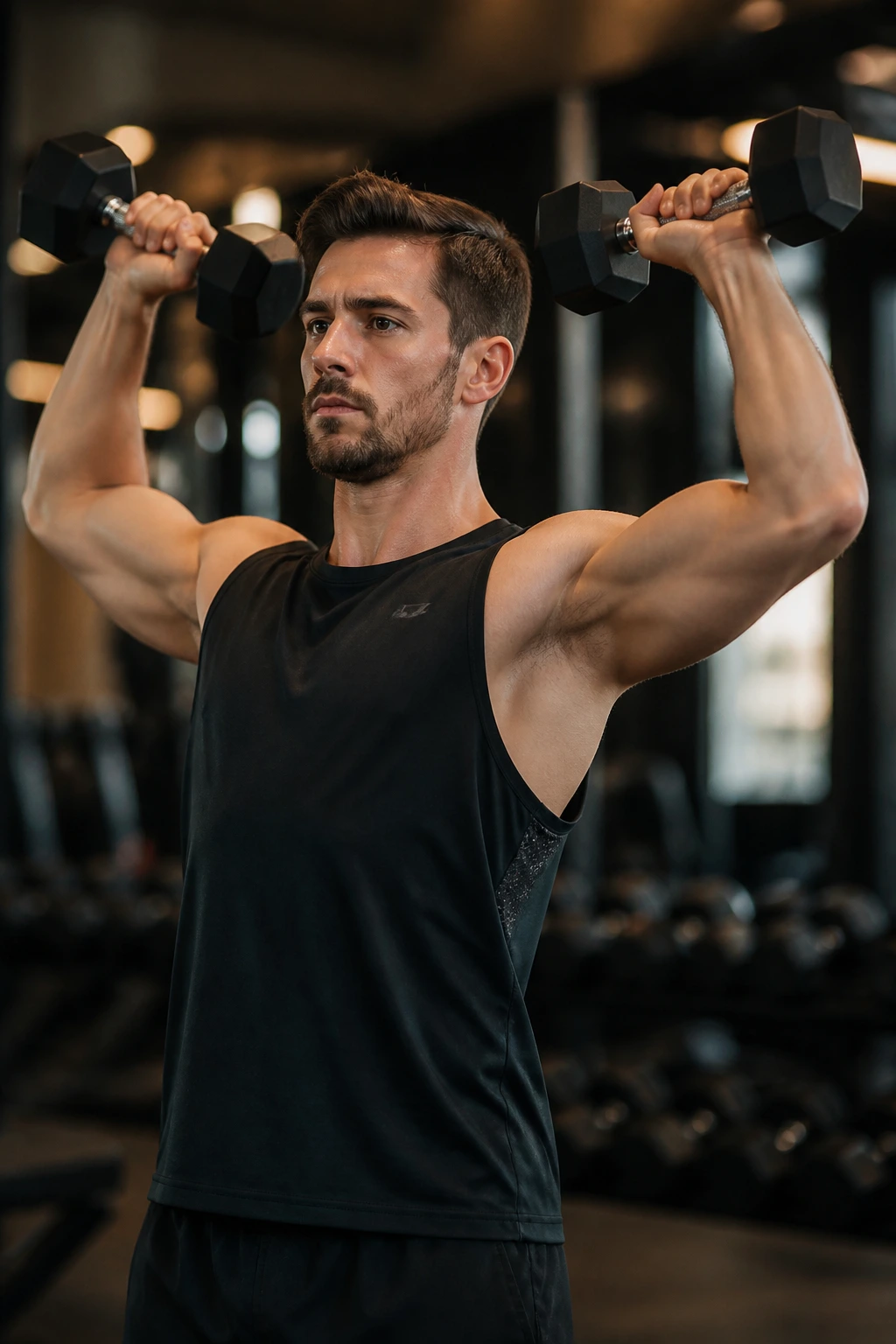
The Cuban press is not a showy lift, and that is exactly why it belongs here. It blends external rotation with a light press, which makes it a smart finisher for shoulders that need more control, not more chaos.
Start with the dumbbells hanging in front of you, then pull the elbows up and out, rotate into a high-catch position, and press lightly overhead. The weights should stay light. Really light. If you load this like a main press, the rotator cuff gets dragged into a fight it was never meant to win.
Why It Works as a Final Lift
The move hits the rear delts, rotator cuff, and upper back in one compact pattern. That makes it useful after heavier pressing and lateral work, when the bigger movers are already tired and the smaller stabilizers need a cleaner job.
- Use 2 to 3 sets of 8 to 12
- Keep the tempo slow
- Stop the set if the shoulders shrug or the wrists lose their line
If you build shoulder workouts around one strong press, one or two side-delt movements, a rear-delt drill, and one stability exercise, the whole upper body changes in a way that feels honest. Not flashy. Better than that. The shoulders start to look ready for real work, and the arms look thicker because the frame is doing its job.
