



The best resets are usually dull. A two-week health challenge that survives real life is almost never a detox, a boot camp, or a giant vow to “start fresh” on Monday. It’s a small, clear change you can repeat when you’re tired, busy, and mildly annoyed.
That’s why the smartest two week health challenges tend to feel almost too simple at first. A walk that happens before your inbox opens. A breakfast that keeps you full until lunch. A bedtime that stops bouncing around like a loose wheel. Boring, yes. Effective, also yes.
Pick one pressure point, not five. If your energy is flat, fix sleep and movement before you start interrogating every bite of food. If your body feels stiff from sitting, mobility and strength will pay off fast. If your evenings keep getting messy, the problem may be the hours after dinner, not the whole day.
And if you’ve got a health condition, take a hard reset with some care. A change that sounds harmless on paper can still be a bad fit for certain medications, injuries, or blood sugar issues. The point here is not to be heroic. The point is to feel better by the end of 14 days, with habits you can actually keep.
1. The 20-Minute Morning Walk Challenge
A brisk walk before the day gets noisy changes the tone of everything that follows. Twenty minutes is enough to wake up your joints, get your heart rate moving, and give your brain a little daylight before screens start shouting at you.
Why this one works
Walking is one of those rare habits that does three jobs at once. It counts toward the usual public-health movement target, it loosens up stiff hips and ankles, and it tends to make people a little calmer before the first ugly email lands. The walk does not need to be fast enough to leave you gasping. It should feel purposeful, though — a pace where you can talk in short sentences without sounding winded.
The real win is consistency. Ten bad workouts in your head don’t matter much. A 20-minute walk that actually happens, six or seven times in two weeks, matters a lot.
How to run it
- Walk for 20 minutes every morning within the first hour after waking.
- Keep the pace brisk enough that your breathing is deeper, but still controlled.
- Wear the same shoes each day if that makes the habit easier to remember.
- If the weather is ugly, use a treadmill, hallway laps, or a stairwell.
- Add 2 minutes of easy calf raises or ankle circles when you get back.
Tip: put your shoes where you trip over them. Seriously. Friction is the enemy here, not willpower.
2. The Every-Hour Mobility Break Challenge

Why do your hips and upper back feel older than the rest of you by lunchtime? Usually because they have been welded into the same position for 60 to 90 minutes at a stretch.
This challenge is tiny on purpose. Once every hour, stand up and spend 60 to 90 seconds moving through a short reset. A few shoulder rolls, a spinal twist, a hip stretch, maybe 10 calf raises. Nothing dramatic. Just enough to stop your body from turning into office furniture.
The 60-second sequence that actually feels good
What to do
- 10 chair stands to wake up your legs.
- 5 slow torso rotations per side, with your hands on your ribs.
- 20-second hip flexor stretch per side.
- 10 calf raises while you wait for the kettle, printer, or browser tab to load.
The magic is not the moves themselves. It’s the interruption. You break the long sitting spell before your lower back starts complaining and your neck starts creeping forward like a turtle looking for food.
If you work at a desk, this is the challenge I’d put near the top of the list. It is not glamorous. It is also the sort of thing your body notices by day four.
3. The Protein-First Breakfast Challenge

You know that breakfast that looks harmless — toast, coffee, maybe a banana — and then somehow your brain starts hunting snacks by 10:30? That’s the signal. Not a moral failure. Just a meal that ran out of gas too soon.
For 14 days, build breakfast around protein first. That usually means aiming for 25 to 35 grams if you’re an average adult, though you don’t need to obsess over a calculator. Eggs, Greek yogurt, cottage cheese, tofu, smoked salmon, protein oats, or a quick shake all work if they keep you steady.
What 25 to 35 grams looks like
- 3 eggs plus plain Greek yogurt
- 1 cup cottage cheese with berries
- Tofu scramble with beans and vegetables
- Greek yogurt, chia seeds, and a scoop of protein powder
- Protein smoothie with milk, frozen fruit, and nut butter
The point is not a giant breakfast. The point is a breakfast that keeps you from raiding the pantry before lunch. I like this challenge because it changes the rest of the day in a sneaky way — fewer emergency snacks, less caffeine chasing, less “why am I suddenly furious?” energy.
If mornings are rushed, pick one repeatable combo and stop trying to be creative. Repetition is a feature here.
4. The No Sugary Drinks Challenge

Sugar in a glass is slippery. People rarely feel stuffed by it, which is exactly why it’s so easy to overdo without noticing. A soda, a sweet coffee drink, juice, or an energy drink can add a lot of sugar and calories without giving you much back in the way of fullness.
Cutting those drinks for 14 days is one of the fastest ways to make your energy feel less jagged. Not because sugar is evil. It isn’t. But liquid calories disappear fast, and your body does not treat them the same way it treats solid food.
Keep the swap simple. Water. Sparkling water. Unsweetened tea. Black coffee if that works for you. If plain water bores you, add lemon, cucumber, or mint and stop there. Chasing flavored “healthy” drinks can turn into a weird little side quest.
One more thing: if coffee is your ride-or-die, watch the clock. A giant sweet drink at 4 p.m. can make bedtime uglier than it needs to be, and then you’re fighting two problems at once.
5. The Same-Bedtime Challenge

What if sleep gets easier when the clock stops changing every night? That’s the whole idea here.
Pick a bedtime and keep it within a 30-minute window for 14 days. Pair it with a wake time that stays steady too, because a bedtime alone does not fix much if you sleep until noon on the weekend and then wonder why you feel weird on Monday.
Why the window matters
Your body likes rhythm. Not perfect rhythm — humans are not machines — but enough regularity that your brain starts expecting sleep at a certain hour. If your bedtime swings from 10:15 to 1:00 to 11:45, your nervous system never gets a clean cue.
The first few nights can feel annoyingly plain. Good. That usually means you’re not chasing exhaustion anymore. You’re training timing.
A few practical rules
- Stop heavy meals about 2 to 3 hours before bed if possible.
- Keep the bedroom cool and dark.
- If you stay up late one night, do not “fix” it with a giant sleep-in.
- Leave the phone outside the bed if it tends to hijack your brain.
This challenge matters because sleep affects appetite, mood, recovery, and whether your workouts feel like work or punishment.
6. The Three-Strength-Sessions Challenge

Three short strength workouts beat one heroic session and six skipped intentions. Every time.
This is the challenge I’d hand to someone who wants to feel stronger, stand taller, and stop huffing through stairs for no good reason. You do three full-body sessions a week, on nonconsecutive days, for two weeks. Each one can be 20 to 30 minutes. That’s enough.
A simple full-body setup
The workout
- Squat pattern: goblet squat, sit-to-stand, or bodyweight squat — 2 to 3 sets of 8 to 12 reps
- Hinge pattern: hip bridge, Romanian deadlift, or kettlebell deadlift — 2 to 3 sets of 8 to 12 reps
- Push pattern: incline push-up, wall push-up, or dumbbell press — 2 to 3 sets of 6 to 12 reps
- Pull pattern: band row or dumbbell row — 2 to 3 sets of 8 to 12 reps
- Core or carry: plank, side plank, or farmer carry — 2 to 3 rounds of 20 to 45 seconds
You do not need to annihilate yourself. Leave one or two good reps in the tank. That’s the sweet spot for most people who still have to walk upstairs, answer texts, and function like a human after the workout.
The quiet payoff is posture, bone loading, muscle tone, and that sturdy feeling in your middle that cardio alone doesn’t always give you. I prefer this challenge over random “full body burns” because it has a clear shape. Clear shapes get repeated. Repeated things work.
7. The After-Dinner Walk Challenge
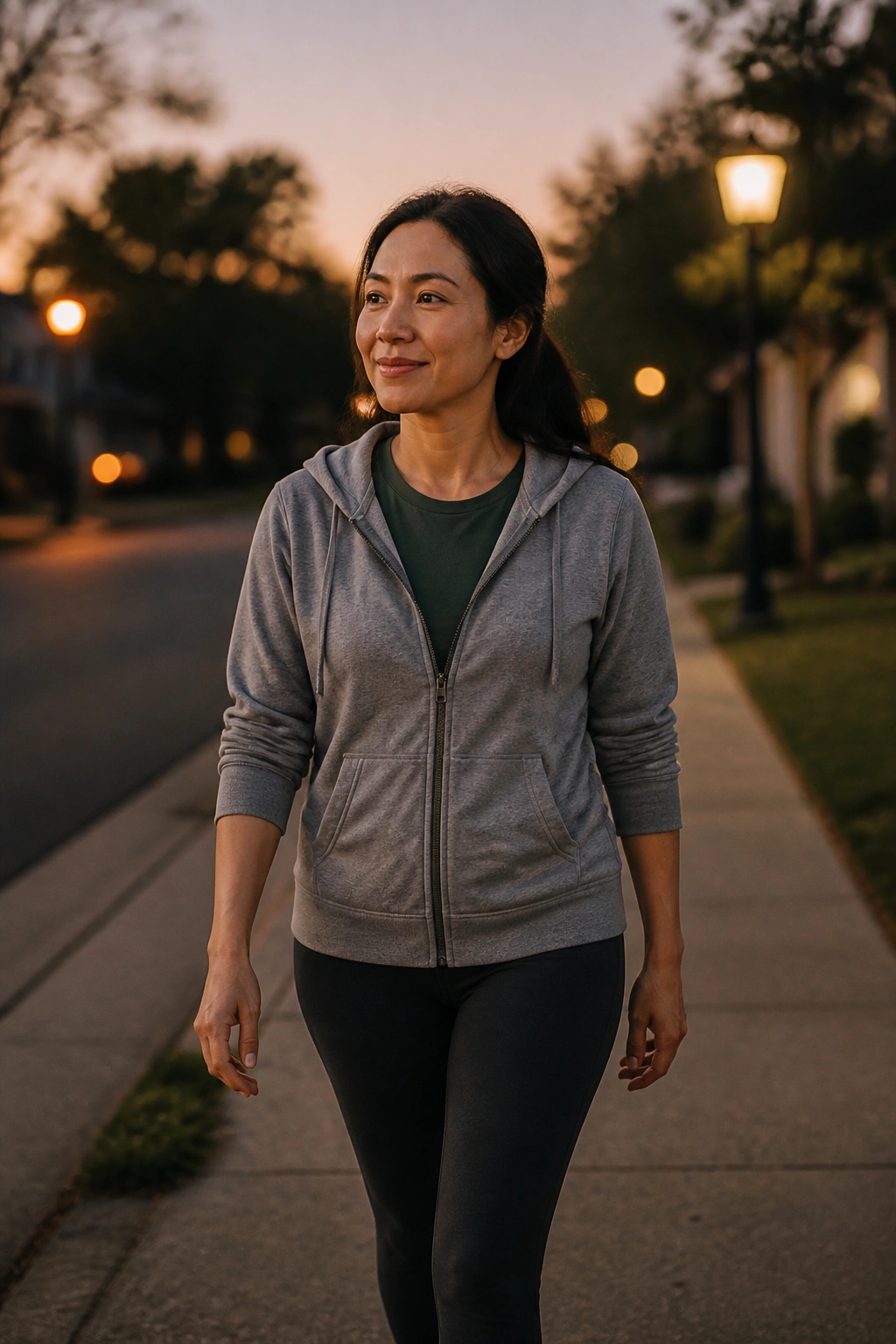
I love this one because it feels too easy to matter, and then it does.
A 10- to 15-minute walk after dinner can help settle your meal, calm the post-dinner slump, and stop the couch from swallowing the whole evening. If you’ve ever eaten dinner, sat down “for just a minute,” and looked up an hour later with a cold plate and a dead phone battery, you already know the danger.
What makes it worth doing
A post-meal walk is gentle, not sweaty. That matters. You’re not trying to train. You’re trying to keep your body from dropping straight into mush mode. The movement also gives your legs something to do while your digestive system works, which is one reason so many people feel less heavy afterward.
If you want the habit to stick, make the route stupidly simple. Around the block. Down the hall. Up and down a quiet street. No scenic quest required.
- Start within 30 minutes after dinner
- Keep the pace easy enough for conversation
- Leave your keys and shoes by the door
- Use the same route for the first week, then change it if you’re bored
One lap is enough. Two is fine. More is optional.
8. The Fiber-At-Every-Meal Challenge
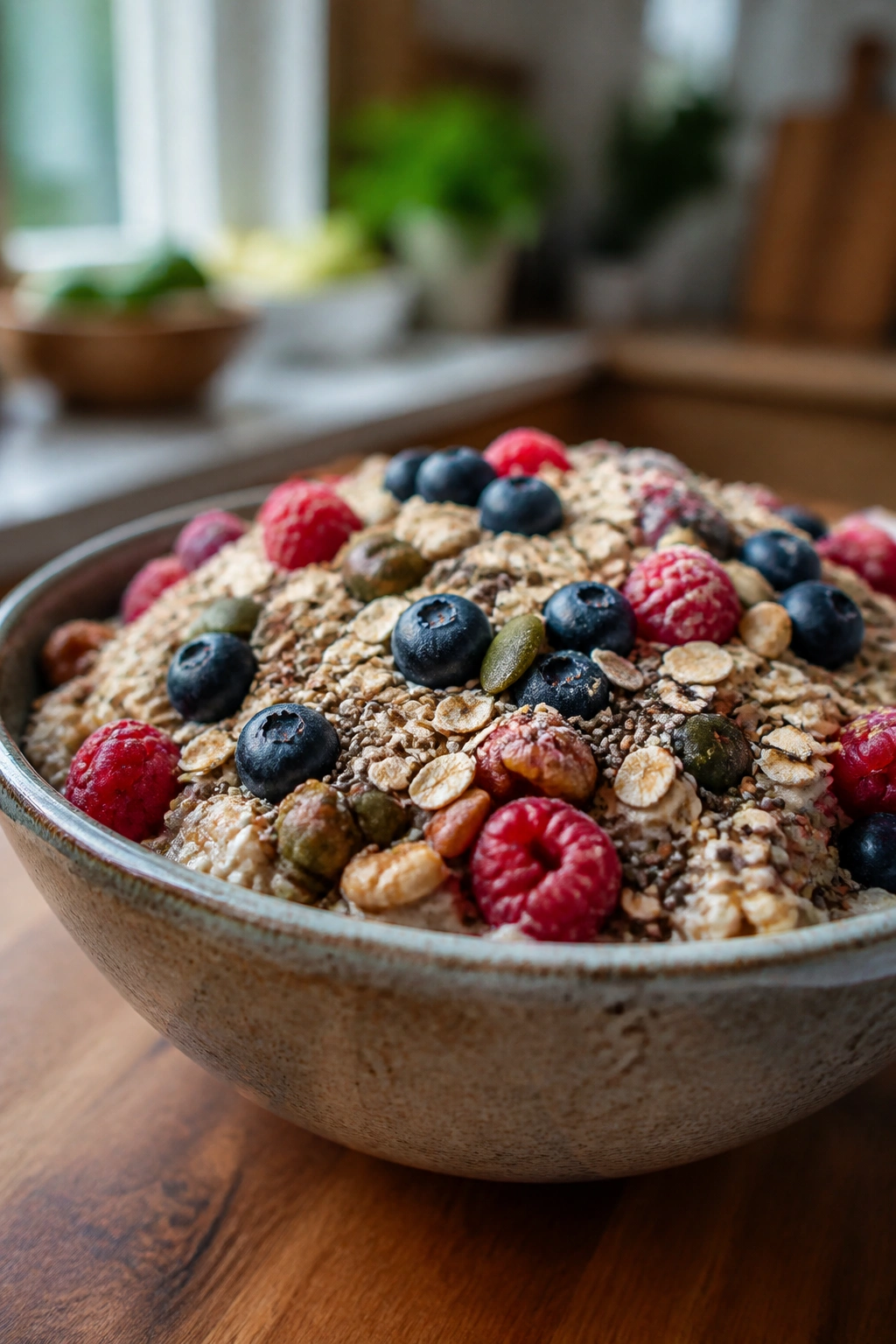
Most people do not need a dramatic food overhaul. They need more fiber in the meals they already eat.
For two weeks, make sure every meal has at least one fiber source: oats, beans, lentils, berries, apples, chia, vegetables, whole grains, or potatoes with the skin on. The adult daily target usually lands around 25 to 38 grams, depending on the body and the person. You do not have to hit the number on day one. Work up to it.
A day that actually works
A breakfast with oats and berries. Lunch with a big salad or bean soup. Dinner with vegetables and a whole grain. That’s enough to move the needle without making you feel like you joined a rabbit cult.
The catch is gas. Fiber can make your stomach mutiny if you jump from near-zero to a giant bowl of lentils overnight. So increase slowly, drink enough water, and give your gut a few days to catch up. That part is boring. It also matters.
Good signs you’re on track
- You feel full longer after meals
- Snacking drops a little
- Bowel movements get more regular
- Energy stays steadier between meals
If your meals are mostly refined carbs and not much else, this challenge can feel like a small revolution.
9. The Screen-Off-One-Hour-Before-Bed Challenge

Sleep hates bright rectangles.
This is one of the cleanest health challenges on the list: for 14 days, no phone, tablet, laptop, or TV during the last hour before bed. The reason is not mystical. Screens keep your brain alert, expose you to light, and invite one more scroll that turns into seventeen.
The first night feels weird. By the fourth, the room gets quieter. That’s the effect most people notice first — not magical sleep, just less mental noise.
If your phone is your alarm, buy a cheap alarm clock and park the phone across the room or outside the bedroom. Half-measures fail here. If the device is still at arm’s length, you’ll reach for it when you get bored or anxious, and the whole thing turns into theater.
What replaces the screen matters less than you think. Read a paper book. Stretch on the floor. Lay out clothes for tomorrow. Take a shower. Sit there like a houseplant. Your nervous system does not care about the aesthetic. It cares that you stopped feeding it blue light and tiny dopamine hits.
10. The Bodyweight Ladder Challenge
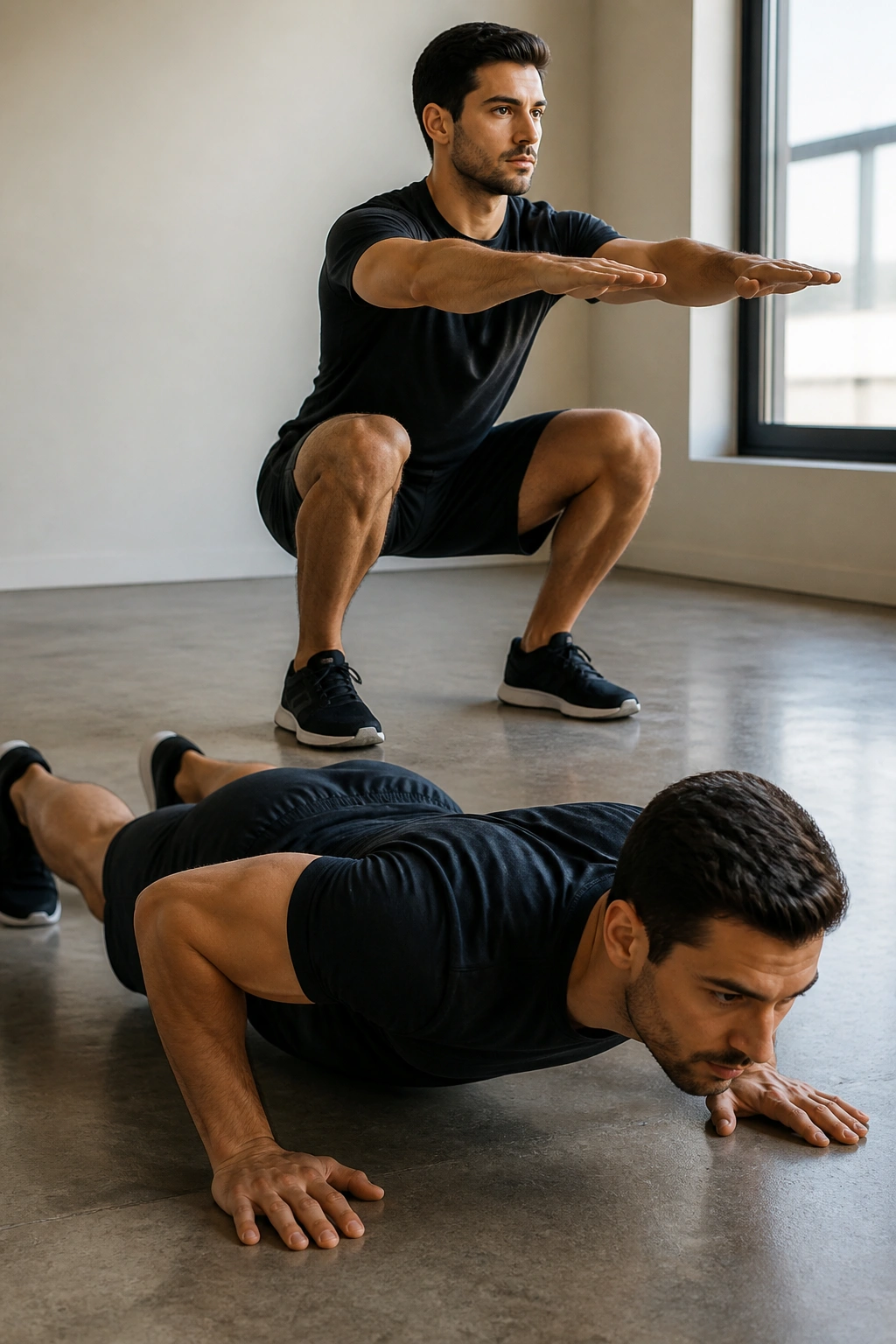
Ten push-ups, 15 squats, 20 marching steps, 30 seconds of plank. Repeat. That’s a ladder challenge in plain clothes, and it works because it’s short, measurable, and hard to fake.
For 14 days, do one bodyweight circuit most days, then add a little more work every few sessions. Start where you can keep good form. If push-ups on the floor are a mess, use a bench or wall. If squats bother your knees, sit to a chair and stand back up with control.
A simple ladder to try
Round one
- 5 push-ups
- 10 squats
- 15 reverse lunges
- 20-second plank
Round two
- 6 push-ups
- 12 squats
- 16 reverse lunges
- 25-second plank
Keep climbing only if the reps still look clean. Once your form goes sloppy — hips sagging, shoulders jammed up, knees caving in — stop there. That is not failure. That is the signal to hold the ladder instead of climbing it.
This challenge is handy for travel, busy weeks, or anyone who needs a little structure without a full gym plan. It gives you a workout that feels like a real workout, not a random collection of moves.
11. The Alcohol-Free Fortnight Challenge

What changes when you take alcohol off the table for 14 days? More than most people expect.
Sleep usually gets the first obvious improvement. Appetite often settles down too, since a drink or two can lower your guard around late-night snacking. Training can feel cleaner, mornings can feel less foggy, and your hydration gets a break from playing catch-up.
The trick is social pressure. That part is real. So decide ahead of time what you’ll say when someone offers you a drink. Keep it short. “I’m skipping alcohol for two weeks” is enough. No speech needed. No apology. You are not asking permission.
If you normally drink heavily, do not stop abruptly without medical advice. That is the one place where this challenge can turn from simple to risky, and it deserves respect.
What to use instead
- Sparkling water with lime
- Nonalcoholic beer or wine, if that keeps the ritual intact
- Tea after dinner
- A glass of water before deciding on anything else
The surprise with this challenge is how much mental clutter disappears when the evening doesn’t revolve around a pour.
12. The Posture Check-In Challenge

The neck ache that shows up after lunch is usually not a mystery. It’s a setup problem.
Every hour, do a 20-second posture check: feet flat, ribs stacked over hips, shoulders loose, chin gently tucked, screen roughly at eye level. No military pose. No fake “good posture” chest thrust. Just a body that isn’t folding over itself.
The reset that matters
A lot of posture advice is too grand. People are told to “sit up straight” as if one command can erase six hours in a chair. That’s nonsense. Better to check in often and make tiny corrections before the slump turns into a knot between the shoulder blades.
- Place the top of the monitor closer to eye height
- Keep elbows near your sides when typing
- Put both feet on the floor
- Stand up for 30 seconds after each hour block
- Do 5 chin tucks if your head lives forward of your shoulders
The point is not elegance. It’s reducing the tiny stress load that piles up all day. After two weeks, your back may not feel new, but it usually feels less irritated, and that is not a small thing.
13. The Water-and-Electrolyte Tracking Challenge

A surprising number of “I feel off” days are partly dehydration, partly too much coffee, and partly not noticing either one until the afternoon.
For 14 days, track your water in a simple way. One bottle in the morning. One by lunch. One by late afternoon. That’s the shape. If you sweat a lot in workouts or live in a hot climate, adding electrolytes once a day can help, especially on training days.
Do not overcomplicate it. You are not trying to build a hydration personality. You are trying to avoid the dry mouth, dull headache, and tired legs that show up when fluid intake gets sloppy.
A practical way to judge it
- Urine should usually look pale straw, not dark yellow
- Start the day with a glass of water before coffee
- Sip during workouts instead of waiting until the end
- Don’t chug a huge bottle right before bed
If you hate tracking, use containers as your system. One 24-ounce bottle. Fill it twice. Done. The best hydration plan is the one you can repeat without thinking about it all day.
14. The No-Snacking-After-Dinner Challenge

This one is not about punishment. It’s about noticing whether you’re hungry or just reaching.
For two weeks, keep the kitchen “closed” after dinner. If you truly need food, have a planned option — something boring and real, not a scavenger hunt through the pantry. If you are not hungry, tea or water is fine. The rule is there to stop the half-asleep grazing that turns one cookie into a small archaeological dig.
Hunger or habit?
That question matters more than people think. If you would happily eat plain yogurt, an apple, or a boiled egg, you’re probably dealing with hunger. If you only want chips, ice cream, or whatever is easiest to mindlessly shovel in, the issue is probably habit, stress, or the need to keep your hands busy.
I like this challenge paired with the after-dinner walk. Walk first, then decide whether you still want food. A lot of snack cravings shrink after ten minutes of movement and a glass of water.
You do not need to ban evening food forever. Just put a little daylight between dinner and the fridge door. That’s often enough to change the pattern.
15. The Weekly Reset Prep Challenge
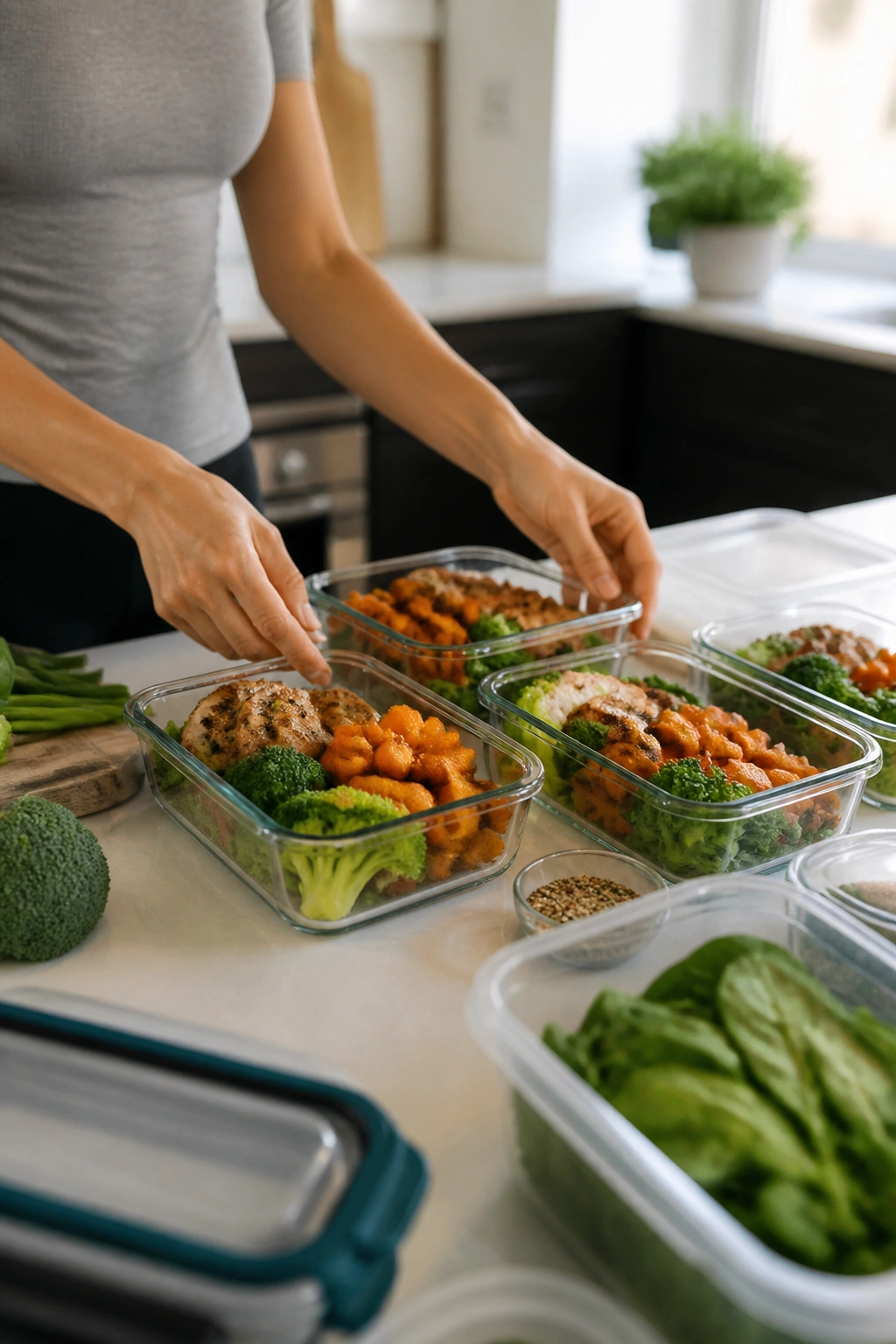
This one is the quiet king of the bunch. It doesn’t look exciting, but it makes the other challenges easier.
Once each week for two weeks, spend 45 minutes on reset prep: buy groceries, wash produce, cook one protein, portion snack items, refill water bottles, and lay out workout clothes. If you want to be extra practical, also charge your headphones and find the shoes you keep losing.
What to prep first
- One protein: chicken, tofu, turkey, beans, eggs, or yogurt
- One vegetable batch: roasted broccoli, chopped peppers, washed greens
- One grab-and-go snack: fruit, nuts, hummus, cottage cheese
- One movement cue: shoes, mat, or gym bag by the door
The best thing about this challenge is that it removes those annoying little decisions that kill momentum. No mystery dinner. No frantic search for clean socks. No “I would walk, but where is my water bottle?” nonsense.
If you want to stack challenges without making your life miserable, this is the one that supports the rest. I’d take a decent prep session over motivational speeches all day.
Final Thoughts

The most useful two-week reset is rarely the loudest one. A simple walk, a steadier bedtime, a protein-heavy breakfast, or a clean evening routine can change how your body feels faster than a dramatic promise you’ll abandon by Thursday.
Pick one challenge that fixes a real snag in your day. If you want more energy, start with sleep, walking, or the sugary-drink cut. If you feel stiff and out of shape, strength plus mobility is the better bet. If evenings keep drifting off the rails, the after-dinner walk and the screen cutoff are hard to beat.
Two weeks is short enough to stay honest. It’s also long enough to notice when a habit is helping. That’s the sweet spot.
