



Most people assume that building real strength requires a heavy barbell, a rack of dumbbells, or a gym membership that costs more than a car payment. They think Pilates is just glorified stretching or something you do to “lengthen” muscles without actually putting in the work. Both of these assumptions are dead wrong. You can build significant lean muscle, improve your structural integrity, and create a core that feels like a corset made of steel without ever leaving your living room.
The secret isn’t in the equipment; it is in the precision of the movement and the consistency of the load. When you combine the controlled, tension-based approach of Pilates with the progressive overload principles of strength training, you unlock a way of exercising that protects your joints while challenging your nervous system. You do not need fancy reformer machines. You just need a mat, some floor space, and the willingness to slow down enough to feel exactly which muscle is firing.
This approach is about durability. It’s about creating a body that doesn’t just look capable but actually performs under stress. Whether you are looking to fix your posture, tone your frame, or just finally get through a workout without your lower back screaming at you, the plans below are designed to be swapped, mixed, and matched. Forget the fluff. Let’s get into the mechanics of building a better body at home.
1. The Foundation Builder: Floor Strength Flow
This plan focuses on re-establishing your connection to the posterior chain. Most people spend their days hunched over keyboards, and this sequence is the antidote. We aren’t trying to exhaust the muscles immediately; we are trying to wake them up. This routine is best performed in the morning to set your posture for the day.
Why This Works
By keeping the movements slow and controlled, you force your stabilizing muscles—the ones that rarely get worked during conventional lifting—to take over. You are building an endurance base for the larger, more aggressive strength moves you will tackle later in the week.
- Bird-Dogs: 20 reps total, moving slowly with a 3-second pause at the peak of the extension.
- Glute Bridges: 15 slow reps, focusing on squeezing the glutes rather than arching the lower back.
- Plank Rocks: 1 minute, rocking forward and backward on the balls of your feet.
Pro tip: Focus on your breath. Inhale on the extension and exhale sharply as you pull your knee to your elbow. This helps lock in your core.
2. Core-Focused Pilates Circuit
If your goal is a tighter waistline and better spinal support, this circuit is non-negotiable. We focus here on the transverse abdominis, which is the “girdle” muscle that wraps around your spine. Many people work their “six-pack” muscles (rectus abdominis) to death and ignore the deep, foundational layers.
The Sequence
- The Hundred: 100 pumps of the arms, keeping legs at a 45-degree angle.
- Single-Leg Stretch: 20 reps per side, head and shoulders curled off the floor.
- Criss-Cross: 20 reps, focusing on the rotation of the ribcage, not just the elbow to the knee.
How to Execute Properly
The key here is to keep your lower back glued to the floor. If your back arches, you have gone too low. Lift your legs higher until you can maintain that flat-back contact. It isn’t about how low your legs go; it’s about how much tension you can keep in your belly.
3. The Weighted Pilates Hybrid
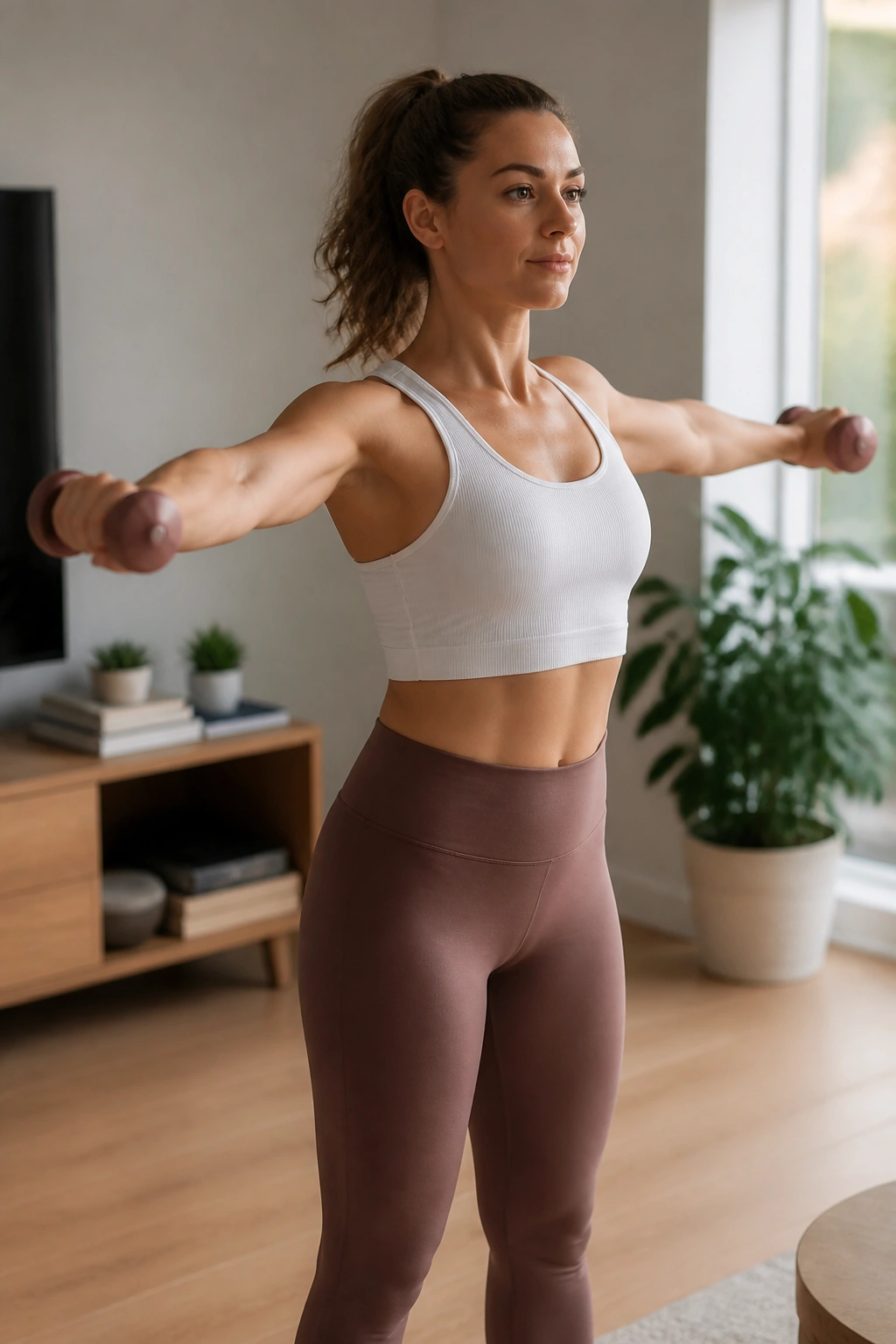
Pilates is historically about body weight, but adding light hand weights—think 2 to 5 pounds—changes the lever length and increases the intensity on your shoulders and upper back. This is perfect for anyone wanting to sculpt the arms without building the bulk of heavy weightlifting.
Movement Patterns
- Weighted Arm Circles: Stand with feet hip-width apart. Hold weights in hands, circling backward for 60 seconds, then forward for 60 seconds.
- Pilates V-Squats: With heels together and toes apart, squat down while simultaneously raising arms to shoulder height.
- Tricep Kickbacks in Tabletop: Get on hands and knees. Keep one weight in one hand and extend your arm straight back, squeezing the tricep. 15 reps per arm.
Critical Warning: If your shoulders start to shrug toward your ears, your weights are too heavy. Drop them. Technique is always the priority.
4. Lower Body Sculpt: The Barre-Inspired Method
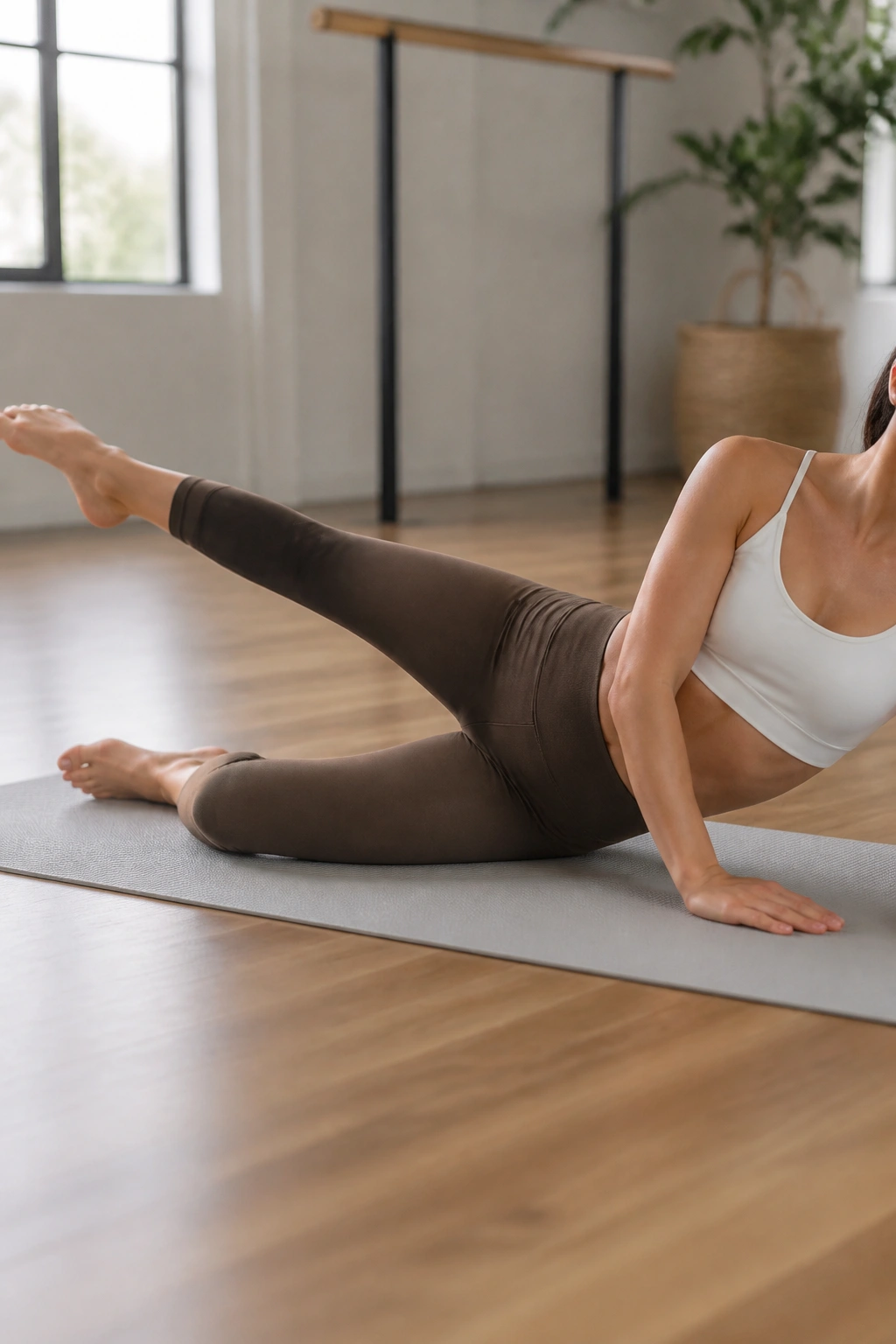
We’re borrowing from the ballet world here, but with a strength training twist. The goal is to fatigue the glute medius and minimus—the muscles that give you that “lifted” look and keep your hips stable. These small, isometric pulses are deceptively difficult.
The “Burn” Sequence
- Side-Lying Leg Lifts: 20 reps per leg, toes pointed forward, not up toward the ceiling.
- Clamshells with a Pulse: 30 reps per side. Keep your heels glued together and only lift the top knee.
- Standing Fire Hydrants: Use a wall for balance. Lift the bent leg out to the side 20 times.
Unlike heavy squats, which utilize the big gluteus maximus, this routine hits the deeper hip stabilizers. You will feel this in the side of your hips within minutes. Do not rush the pulses. A one-inch pulse is better than a giant, uncontrolled swing.
5. Upper Body Definition Without the Gym
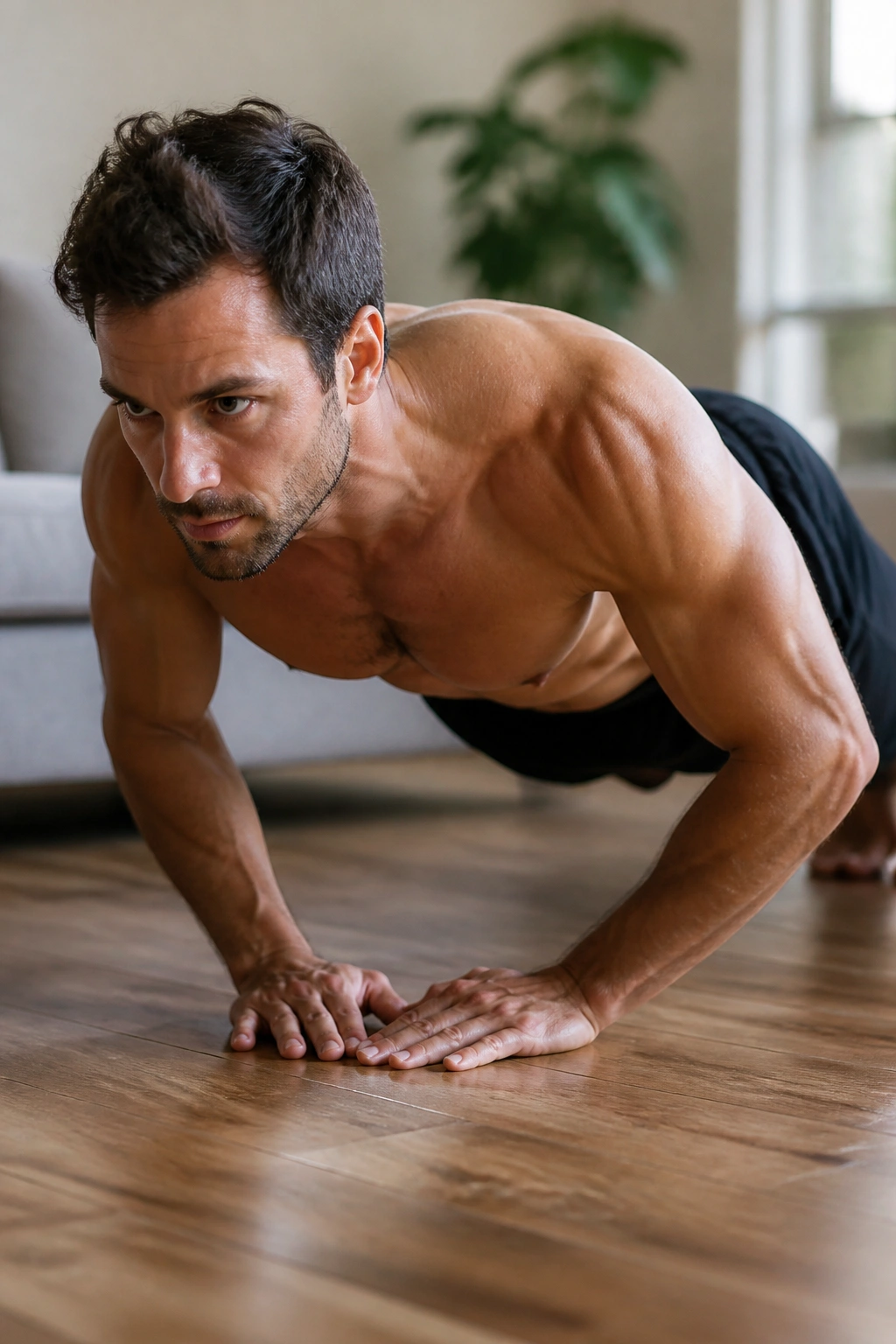
Building lean arms and a defined back doesn’t require a pull-up bar. We use gravity and angular physics. This workout relies on “Push-Up Variations” and “Back Extensions” to create a balanced upper body.
Essential Movements
- Diamond Push-ups: 10 reps (or modified on knees). These target the triceps heavily.
- Pike Push-ups: 12 reps. Keep your hips high in the air to shift the focus to your shoulders.
- Superman Lifts: 20 reps, lifting chest and thighs off the floor simultaneously, holding the squeeze at the top.
The Logic: Your shoulders need both pushing and pulling work. By doing pike push-ups for the push and superman lifts for the pull, you create a balanced physique that prevents that hunched-over look many desk workers develop.
6. The 15-Minute “Emergency” Workout
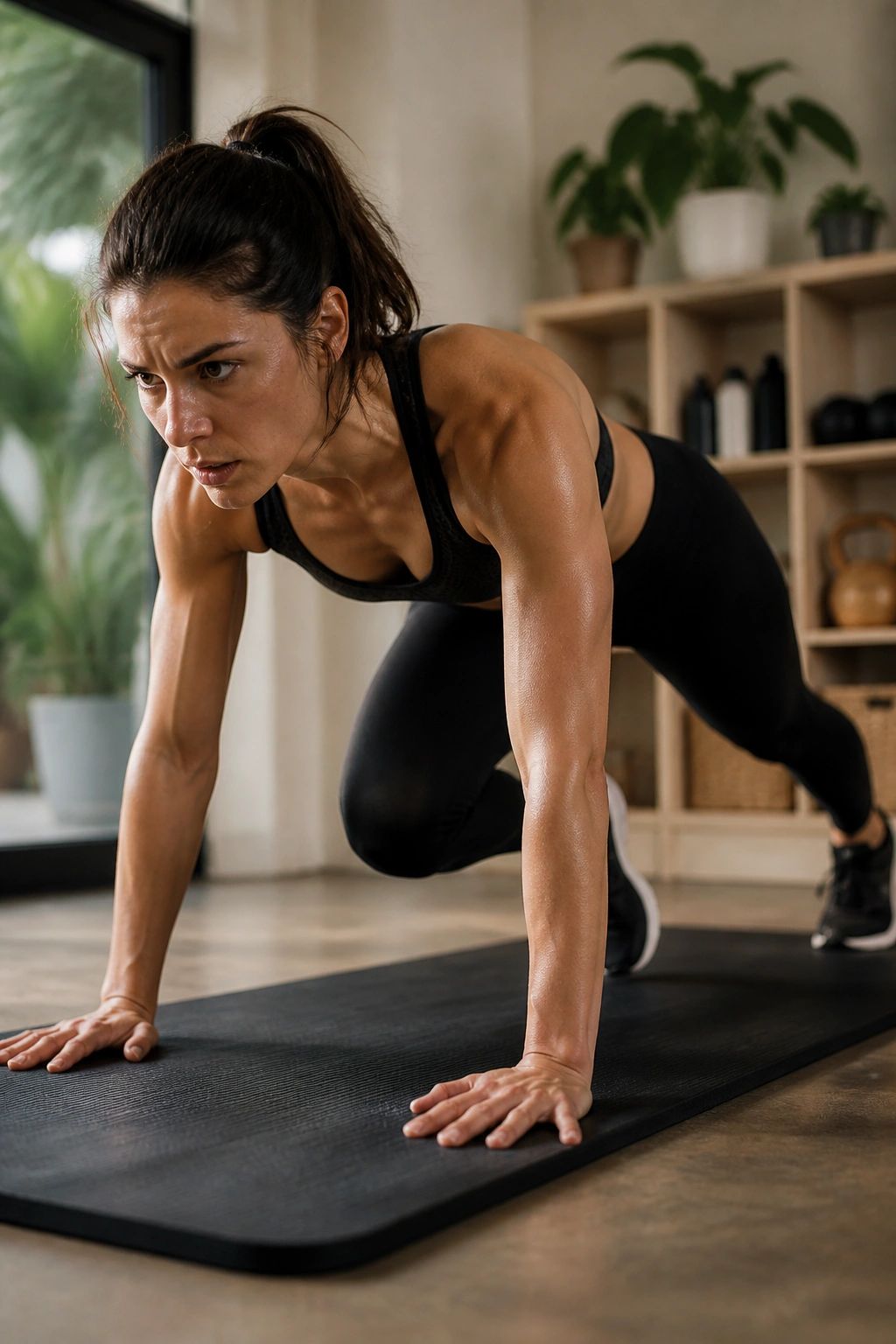
Sometimes you have a tight schedule, and you need a high-efficiency plan. This is a HIIT-Pilates fusion. No resting, no pauses, just constant tension for 15 minutes.
Structure
Perform each exercise for 45 seconds, then move immediately to the next for 15 seconds. Repeat the circuit 3 times.
- Mountain Climbers: Slow and controlled, not fast and frantic.
- Pilates Scissor Kicks: Keep legs straight and core engaged.
- Plank Jacks: Keep your hips from bouncing up and down.
- Side Planks: Hold for 45 seconds per side (if you only have 15 minutes, do 22 seconds each).
This isn’t about heavy weight; it’s about metabolic demand. Your heart rate should be elevated from start to finish. If you aren’t sweating by the end, you aren’t moving through the transitions fast enough.
7. Postural Reset: The Spine Alignment Plan
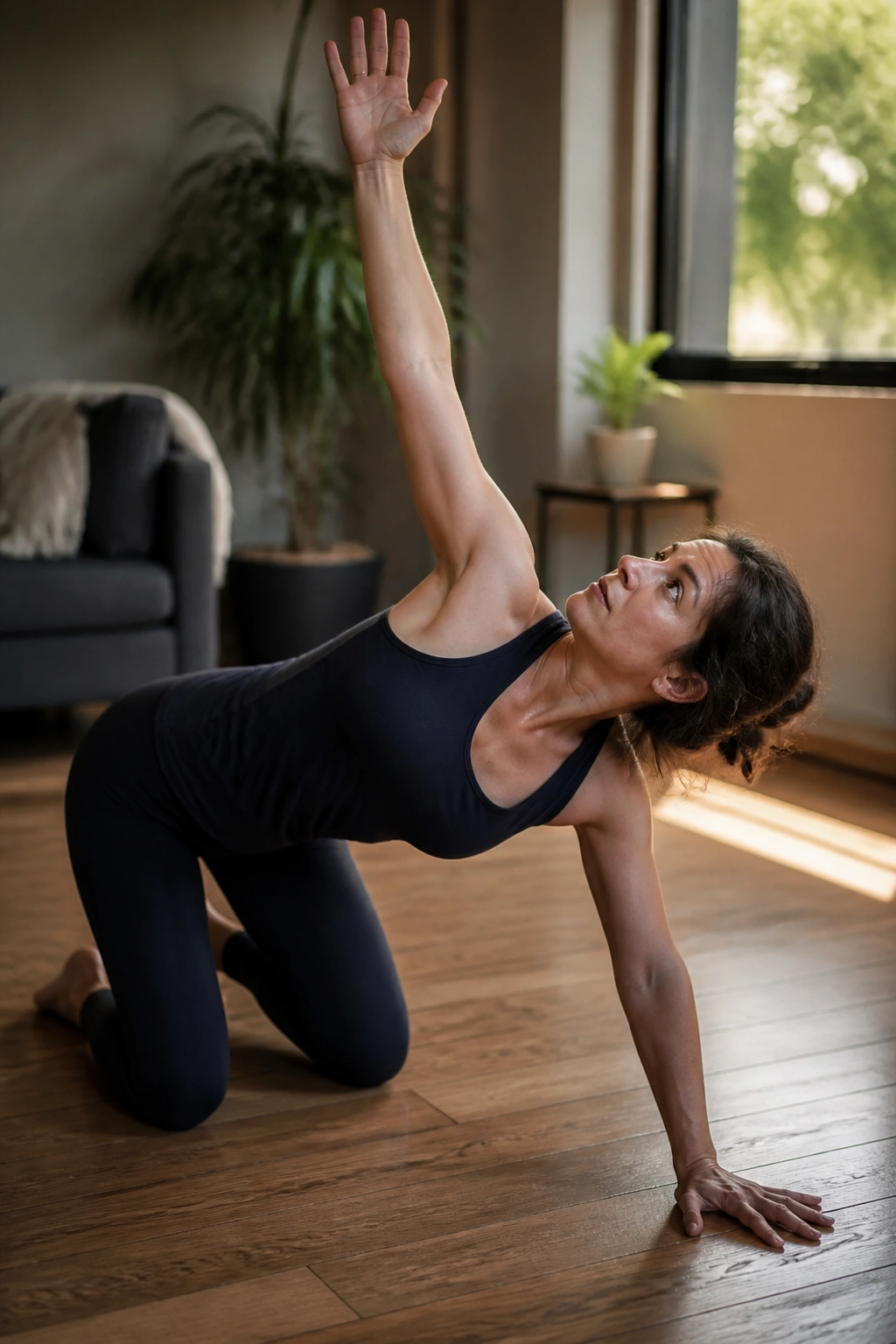
This isn’t for burning calories; it’s for fixing the damage caused by sitting all day. We focus entirely on the thoracic spine (upper back) and the scapular stabilizers (shoulder blades).
The Moves
- Thoracic Rotations: Start in a quadruped position. Reach one arm under your body, then open it up toward the ceiling. 10 reps per side.
- Scapular Retraction: Stand against a wall. Keep your elbows and wrists against the wall and slide your arms up and down like you are making a snow angel. 15 reps.
- Cat-Cow: 20 slow, deliberate cycles, focusing on moving one vertebra at a time rather than just bending the whole back at once.
If you hear popping or cracking in your spine, that’s often just gas escaping the joints. As long as there is no sharp pain, it’s normal. This routine is essentially a “tune-up” for your spine.
8. Resistance Band Pilates Strength
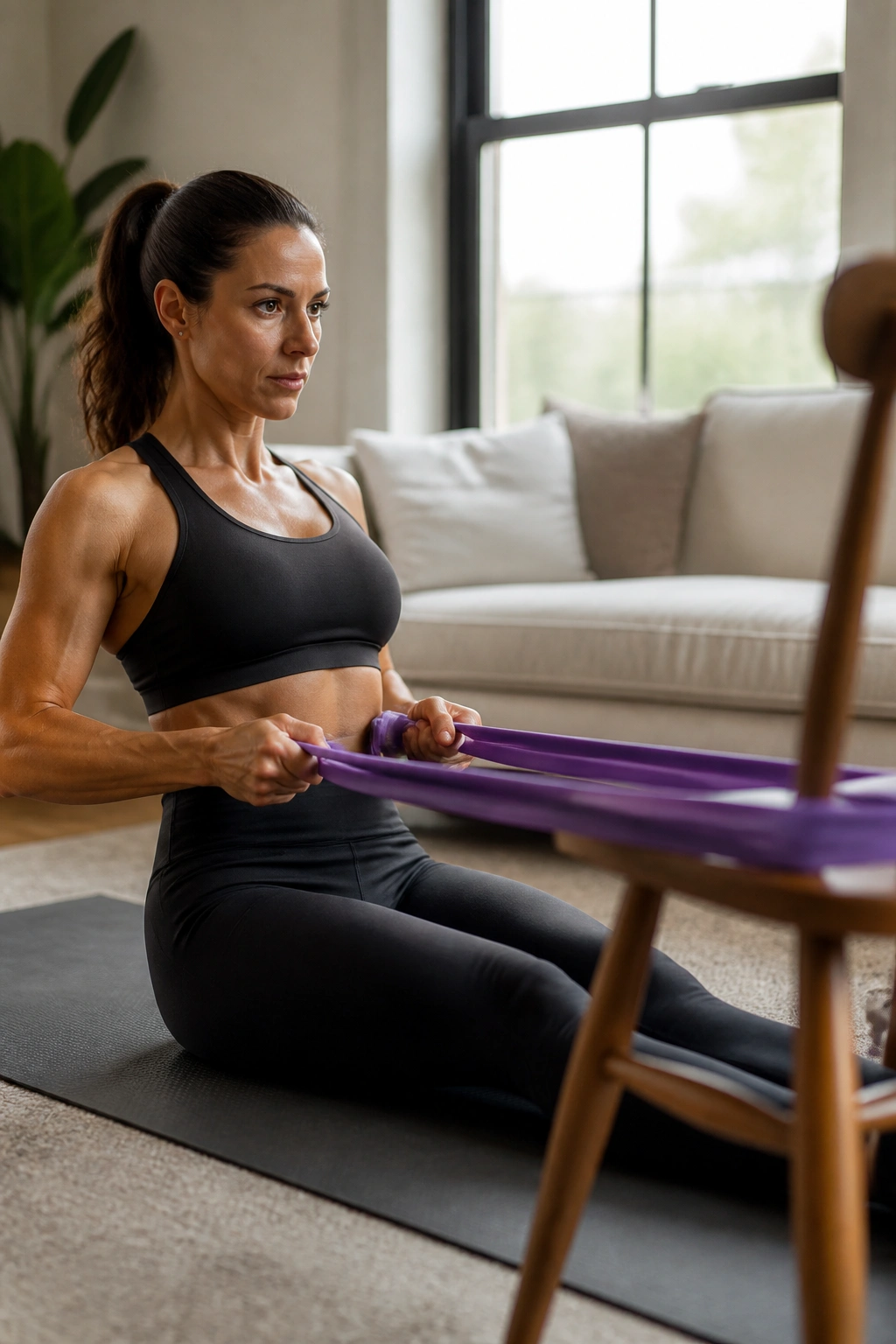
Resistance bands are the most underrated tool in home fitness. They provide “accommodating resistance,” meaning the harder you pull, the harder the resistance becomes. This is great for hitting muscles at the very end of their range of motion.
Why It Works
Traditional weights are heaviest at the bottom of the movement. Bands are heaviest at the top. By using them for Pilates exercises like rows and leg presses, you force your muscles to work harder where they are naturally weakest.
- Seated Row: 20 reps, pulling the band toward your hips.
- Banded Leg Press: Lie on your back, loop the band around your feet, and push out. 20 reps.
- Banded Chest Press: Loop the band behind your back and press forward. 15 reps.
9. Full-Body Endurance Flow
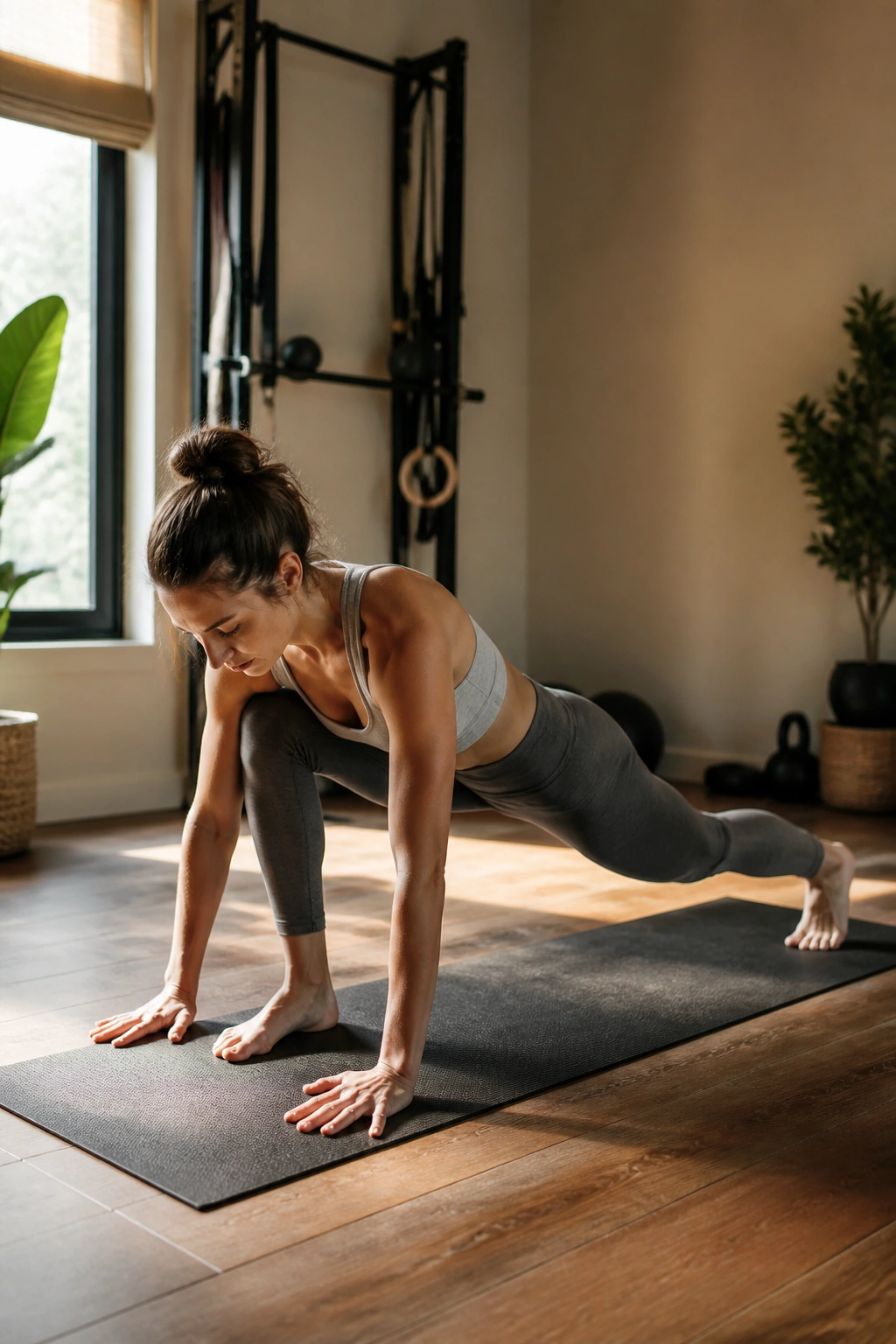
This plan is all about keeping the muscles under tension for a long time. We aren’t doing 3 sets of 10. We are doing 3 minutes of continuous movement. This builds the type of muscular endurance that makes you feel “tight” and compact rather than bulky.
The Flow
You will perform a series of lunges, planks, and leg circles without putting your feet down or resting between sets. It is a “flow” because each movement transitions into the next.
Common Mistake to Avoid
Don’t hold your breath. It sounds simple, but when the burn starts to set in, most people instinctively hold their breath. This causes tension in the neck and jaw. Keep breathing, keep moving, and let the legs shake.
10. The Glute-Hamstring Burner
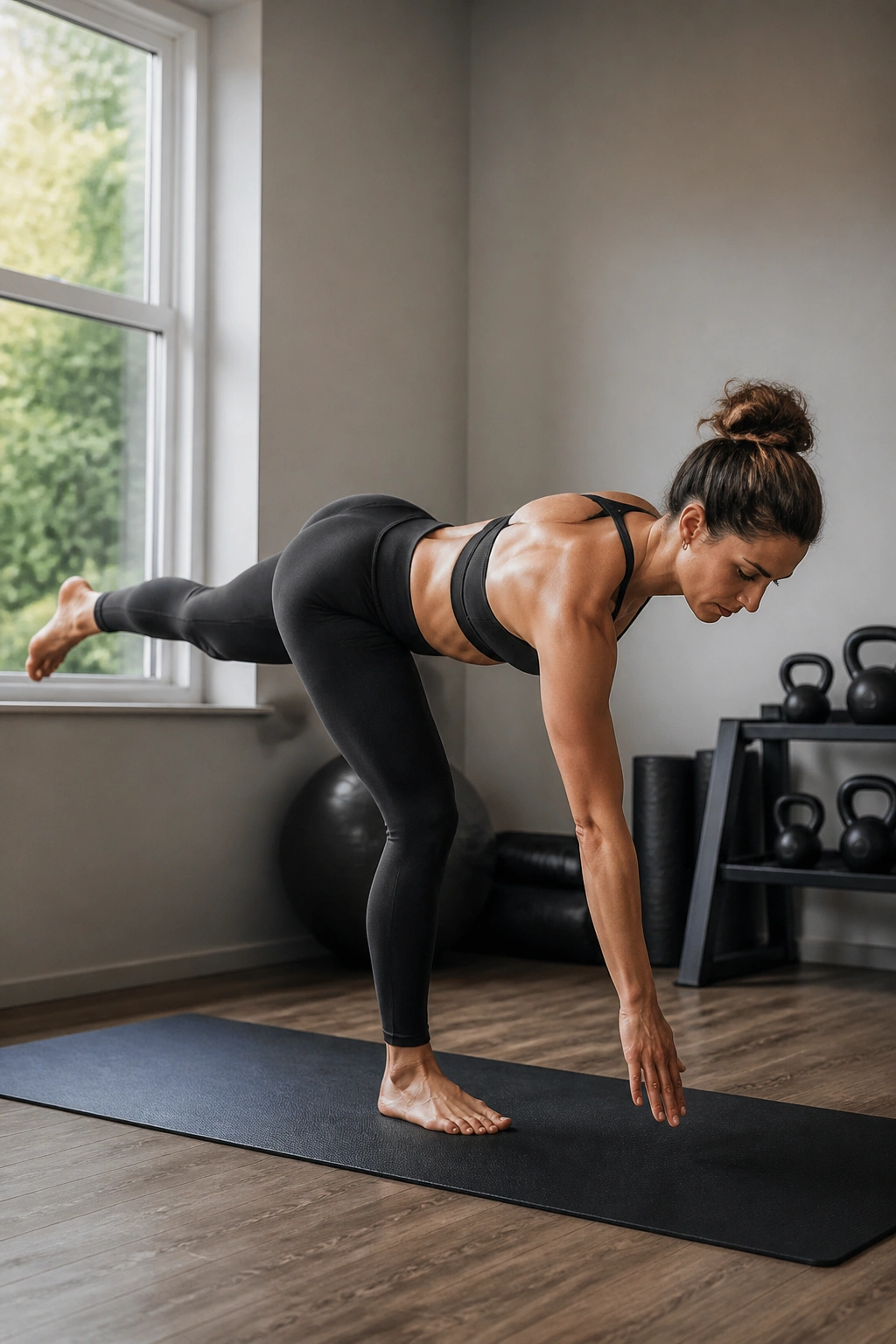
If you want stronger legs, you need to hit the hamstrings. Most people focus on quads, leading to an imbalance. This plan uses “eccentric loading”—focusing on the lowering phase of the movement—to grow and strengthen the posterior chain.
Key Exercises
- Hamstring Walkouts: Lie on your back, lift your hips, and slowly walk your heels away from your body, then walk them back in. 10 reps.
- Romanian Deadlift (Bodyweight): Balance on one leg, hinge at the hips, and reach toward the floor with the opposite hand. 15 reps per leg.
- Donkey Kicks: Use a pulses to keep the glute under constant tension. 20 reps per leg.
Pro tip: Slow down the “walkout” phase. The slower you move, the harder your hamstrings have to work to keep your pelvis level.
11. Stability and Balance: The Single-Leg Plan
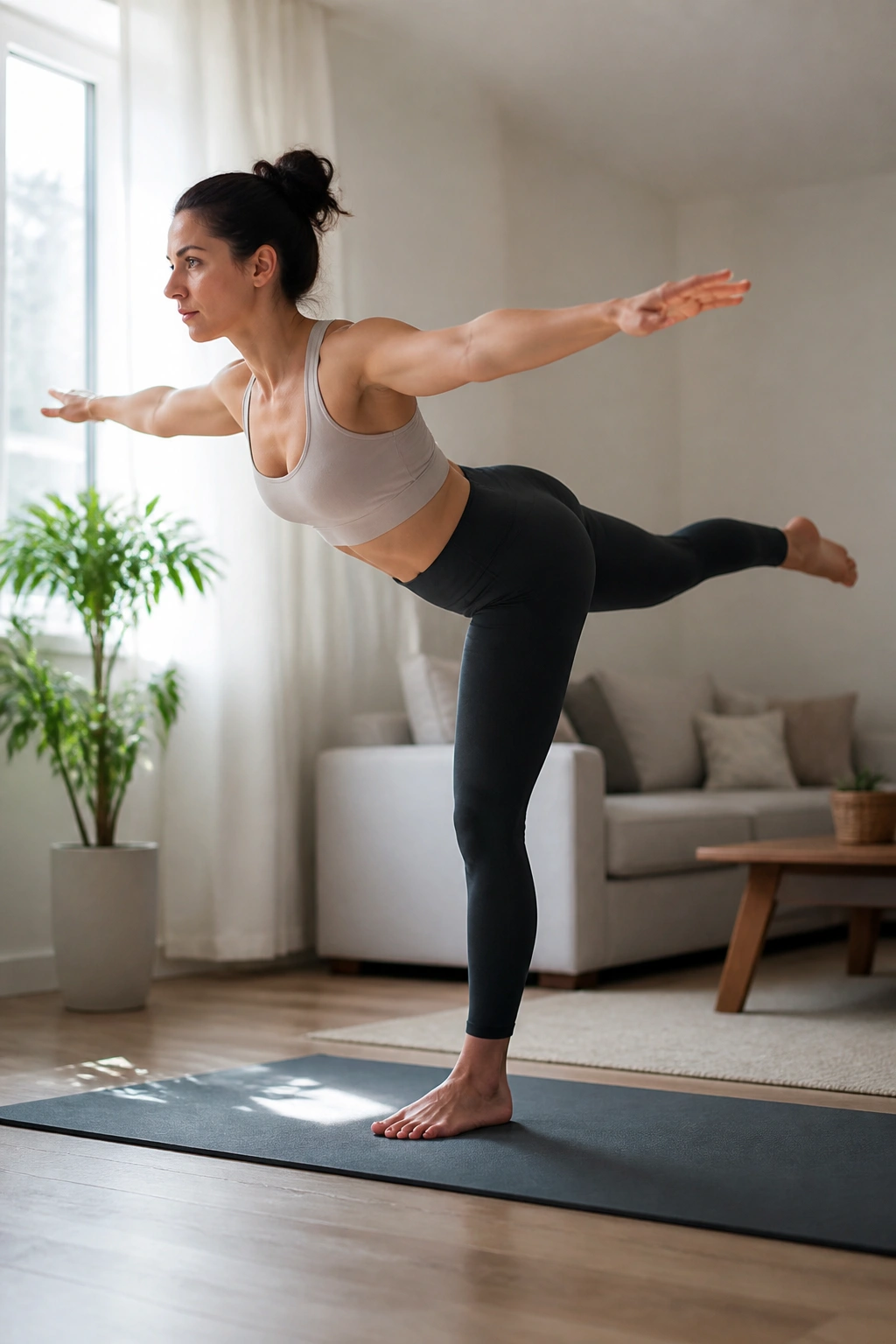
Balance is a skill, not a talent. This plan forces your core to stabilize your body while your limbs move. When you stand on one leg, your brain has to fire dozens of micro-muscles that don’t get used when you are sitting or standing on two legs.
The Routine
- Single-Leg Deadlift (No weight): 10 reps per side.
- Single-Leg Sit-to-Stand: Use a chair. Stand up on one leg and sit down slowly. 10 reps per side.
- Side-Lying Leg Series (Balanced): Focus on keeping the top hip stacked directly over the bottom hip.
If you struggle with the single-leg work, do not be frustrated. It’s a sign your brain hasn’t learned to coordinate those muscles yet. Use a wall for support initially, but keep trying to let go.
12. Advanced Power Pilates
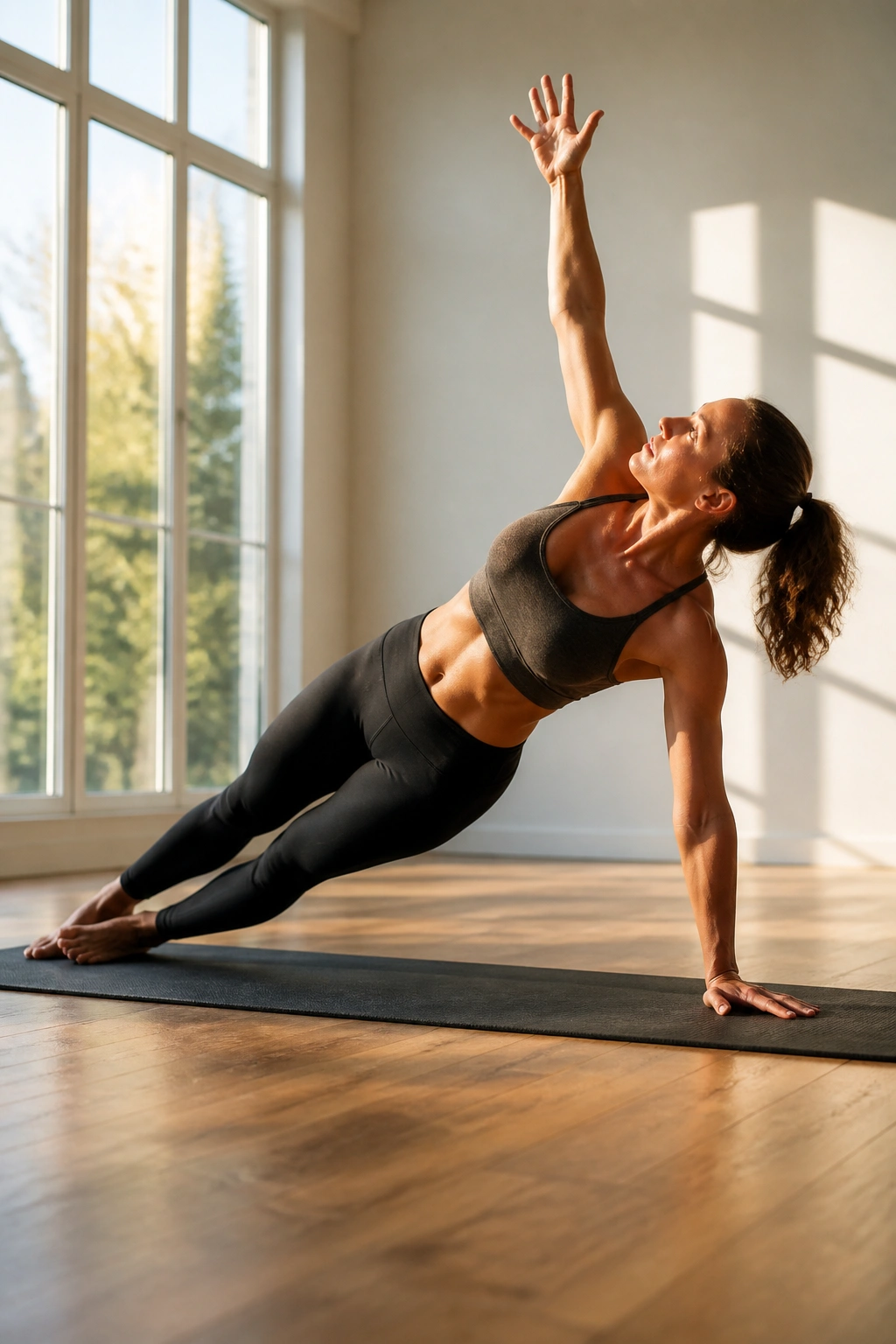
This plan assumes you already have a strong core and decent coordination. We are increasing the leverage and removing the support structures (like using your hands on the floor for balance).
The Progression
- Full Plank to Pike: Start in a plank, jump your feet forward, and pipe your hips up. 15 reps.
- Boat Pose Hold: 60 seconds of holding, but keep your legs straight and arms extended overhead.
- Push-up to Side Plank Rotation: Do a push-up, then rotate your body into a side plank. 10 reps per side.
This is a high-intensity routine. It is meant to be done when you feel rested, not when you are already exhausted from a long day. If your form breaks, stop and take a break.
13. The “Desktop Worker” Shoulder Opener
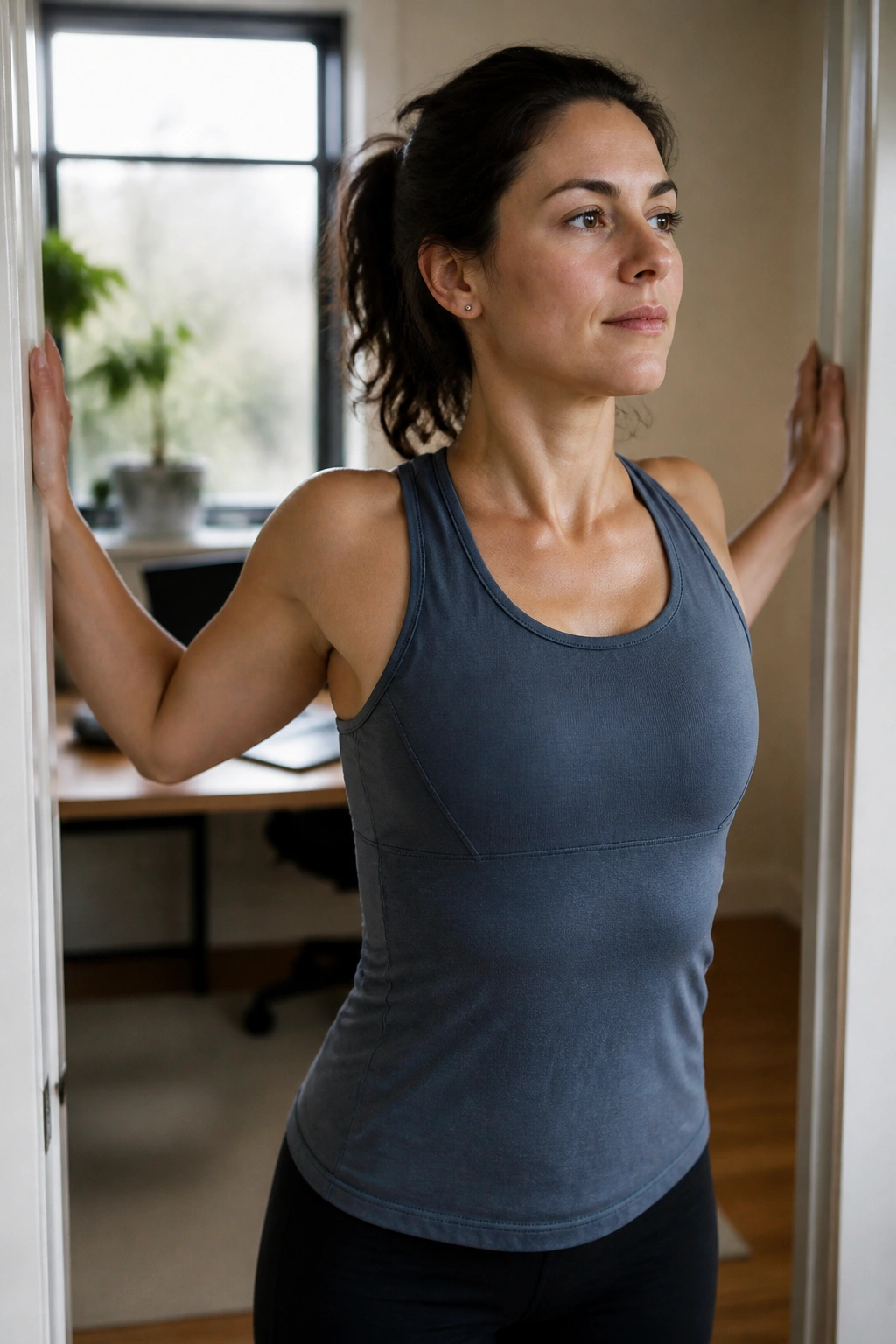
This is not a full-body workout. It is a targeted plan for people who spend 8+ hours a day at a desk. You will need a wall and a doorway.
Exercises
- Doorway Chest Stretch: Stand in a doorway, place your arms on the frame, and lean forward. Hold for 60 seconds.
- Wall Angels: 20 reps, focusing on getting your elbows to touch the wall at the bottom of the movement.
- Y-W-T Raises: Lie face down and lift your arms in the shape of a Y, then a W, then a T. 10 reps for each letter.
Why this matters: When your chest is tight, it pulls your shoulders forward, which weakens your upper back. By opening the chest, you allow the upper back muscles to actually do their job, which instantly makes you look taller and more confident.
14. Mat Pilates: The Classic Repertoire
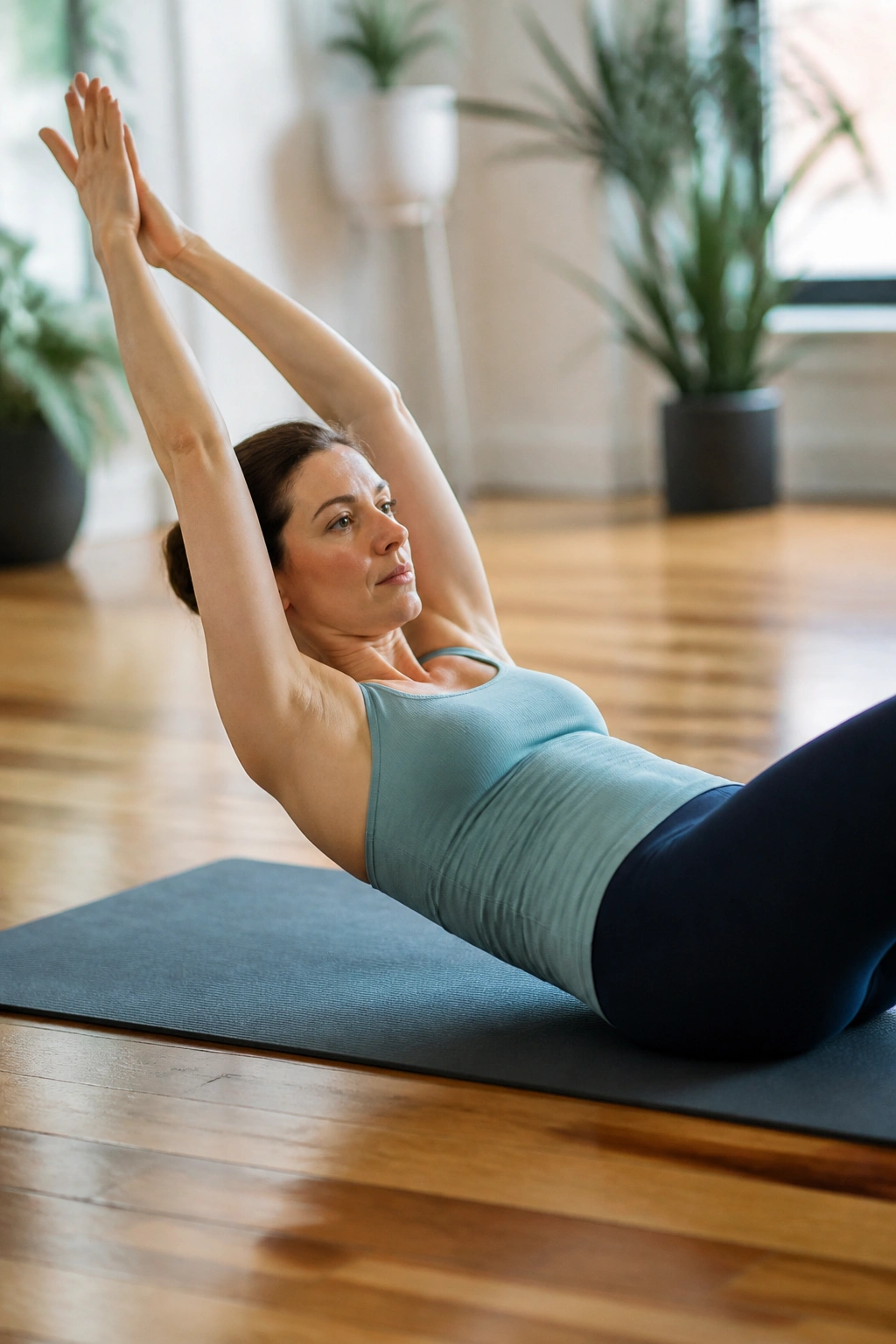
Sometimes, you don’t need to reinvent the wheel. The original Pilates mat exercises were designed to be done as a sequence because they flow perfectly into one another.
The Sequence
- The Hundred
- Roll-Up
- Single-Leg Circle
- Rolling Like a Ball
- Single-Leg Stretch
- Double-Leg Stretch
Do this entire sequence as one continuous block. It should take about 20 minutes. It builds a comprehensive level of abdominal strength that modern variations often miss because they are too focused on burning calories rather than controlling the body.
15. The “No-Knee-Pain” Leg Day
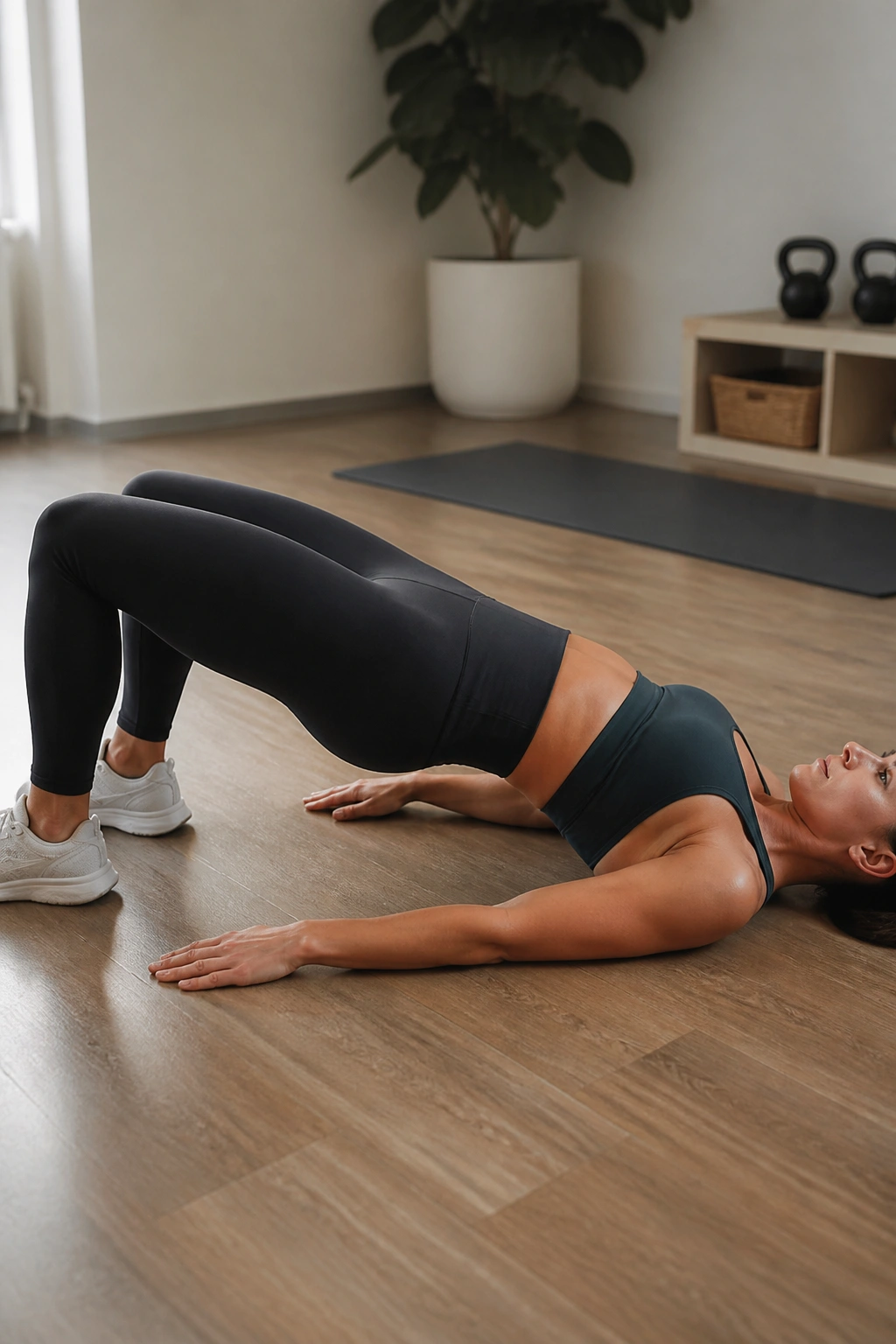
If you have sensitive knees, high-impact jump squats and lunges are a recipe for trouble. This plan builds strength around the knee joint without putting excess force through the joint itself.
The Focus
We prioritize hip-dominant movements and closed-chain exercises that keep the foot planted.
- Glute Bridges: These are the king of knee-friendly leg work.
- Side-Lying Clamshells: Hits the glute medius without involving the knee.
- Straight-Leg Raises: Lie on your back, keep one leg straight, and lift it. This targets the quad (VMO) without bending the knee joint under load.
Crucial detail: If you feel pain in your knee, stop immediately. Discomfort in the muscle is good; pain in the joint is a signal to adjust your angle or range of motion.
16. The Posterior Chain Primer
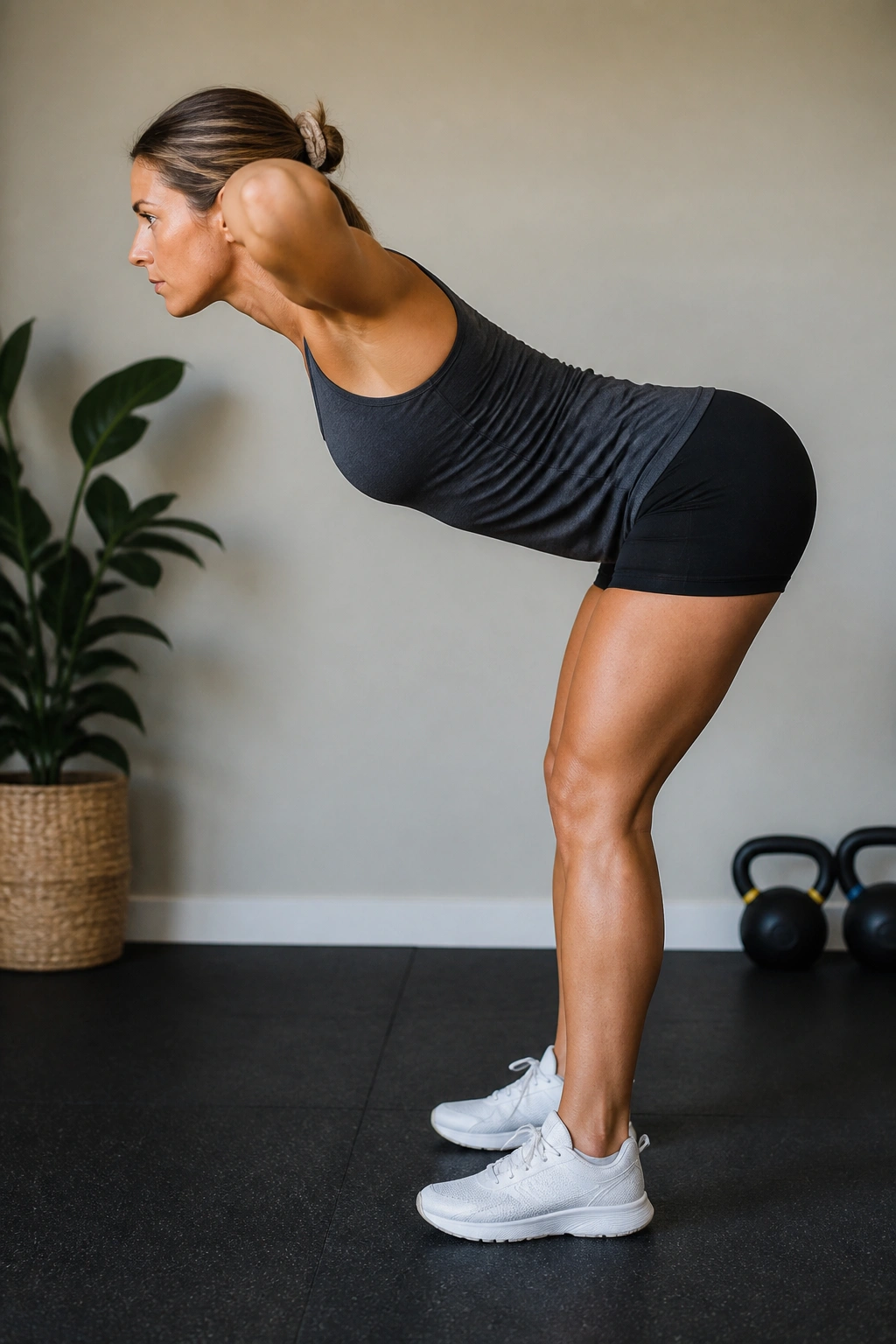
This plan is for people who want to fix their “office butt” and improve their deadlift strength. We are hitting the lower back, glutes, and hamstrings specifically.
The Exercises
- Good Mornings (Bodyweight): Place hands behind your head and hinge at the hips. Keep back flat. 20 reps.
- Bird-Dog: 20 reps, emphasizing the squeeze in the glute.
- Reverse Lunges: Focus on pushing through the heel of the front foot to activate the glute. 15 reps per leg.
Why this is effective: Many people struggle with lower back pain because their glutes have become “lazy.” By isolating these movements, you force the brain to re-engage the glute muscles, which takes the pressure off your lower back.
17. The Arm Sculpting “Burn-Out”
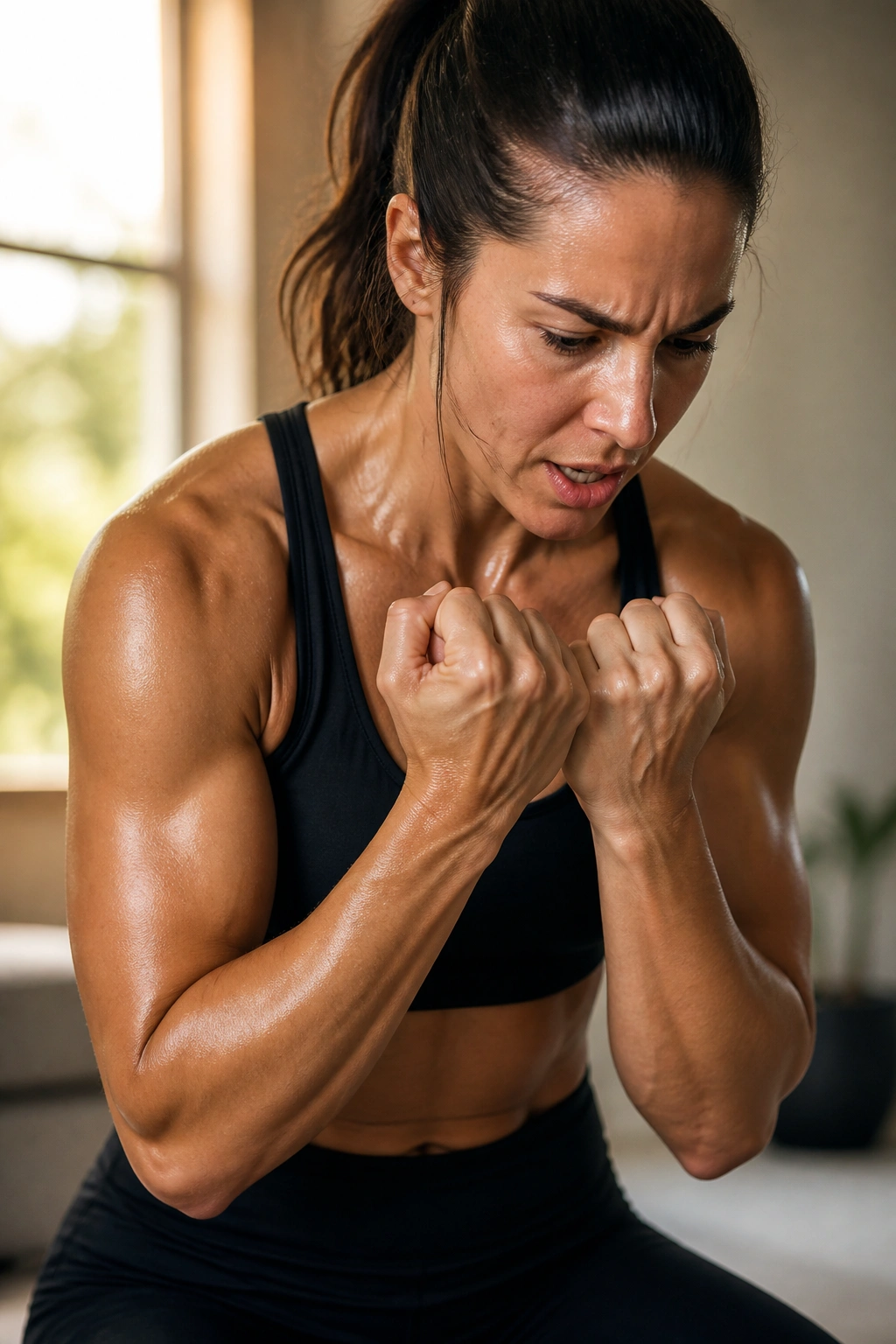
This is a higher-volume plan. We are not going for heavy strength; we are going for muscular endurance and that “pumped” feeling in the shoulders and arms.
Structure
- Bicep Curls (No weight): Clench your fists tight and flex your biceps as if you were holding a 20lb dumbbell. 30 seconds.
- Tricep Dips (Off a chair): 20 reps. Focus on the squeeze at the bottom.
- Arm Circles: Keep arms straight and palms facing down. Make small circles for 1 minute.
You will be surprised how much tension you can create without any weights at all. The key is in the intention—you must actively contract the muscle you are trying to work. If you just wave your arms around, you’ll get nothing.
18. The Cardio-Pilates Fusion
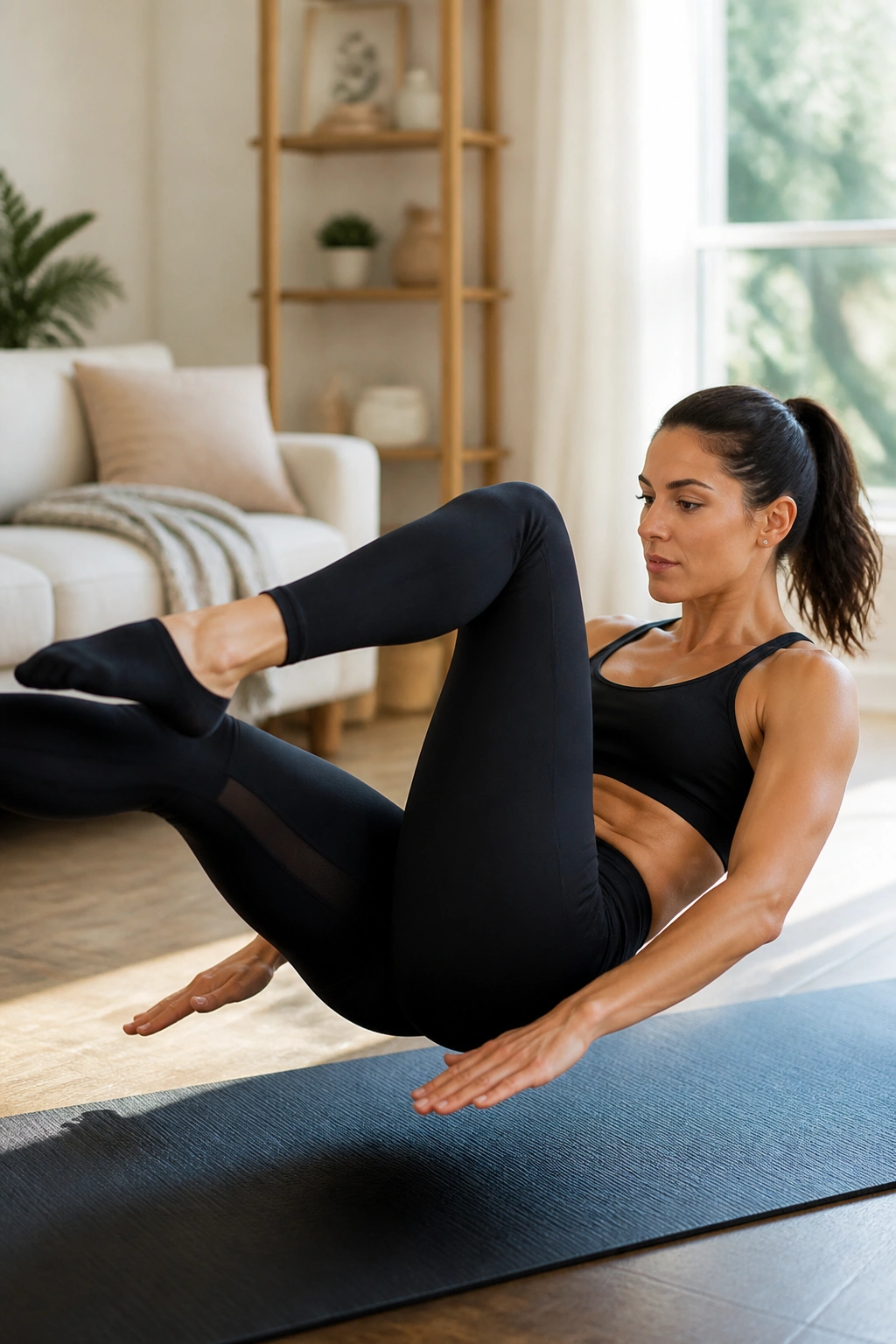
If you are a fan of Pilates but feel like you aren’t getting enough heart-rate elevation, this is for you. We keep the core engaged but add rhythmic movement to get the lungs burning.
The Routine
- Pilates Sprints: Lie on your back and “run” your legs in the air, maintaining a strong, stable core. 1 minute.
- Plank Jacks: 45 seconds.
- Jump-Squats (Low Impact): Do a squat and come up onto your toes quickly, instead of leaving the ground. 45 seconds.
Repeat this 4 times. It is a massive calorie burner and keeps your core working while your heart rate is red-lining.
19. Lateral Movement Mastery
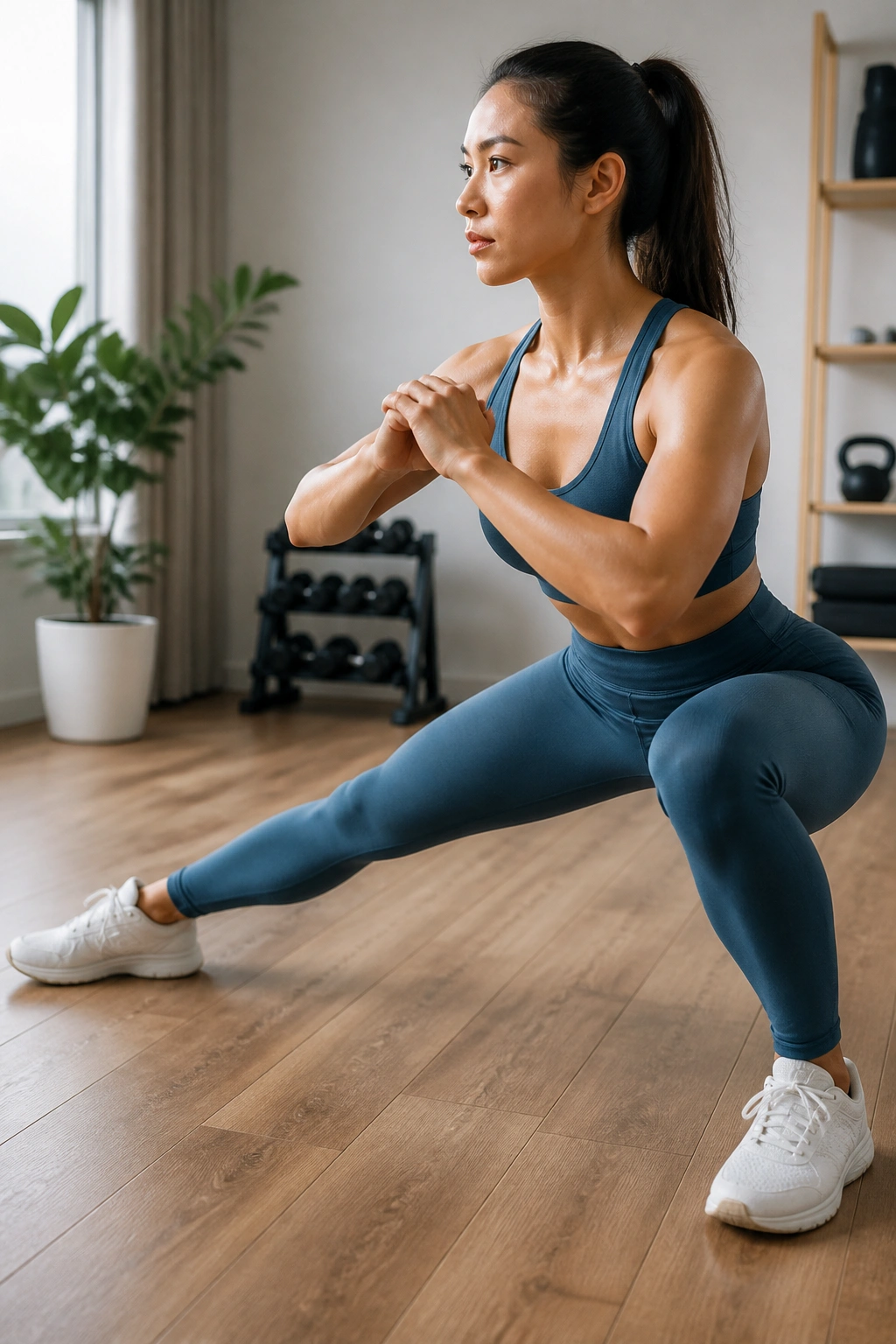
Most people move exclusively forward and backward. This creates massive weaknesses in the hips and ankles. This plan focuses on side-to-side (frontal plane) movement.
The Moves
- Lateral Lunges: Step out to the side, keeping one leg straight and bending the other. 15 reps per side.
- Side-Lying Leg Lifts: 20 reps.
- Lateral Plank Walks: Start in a plank and “walk” your hands and feet to the side. 10 steps each way.
Adding lateral movement is the fastest way to stabilize your knees and hips. It’s also how you prevent injuries in everyday life, like when you trip or have to change directions quickly.
20. The “Abs-Only” 10-Minute Finisher
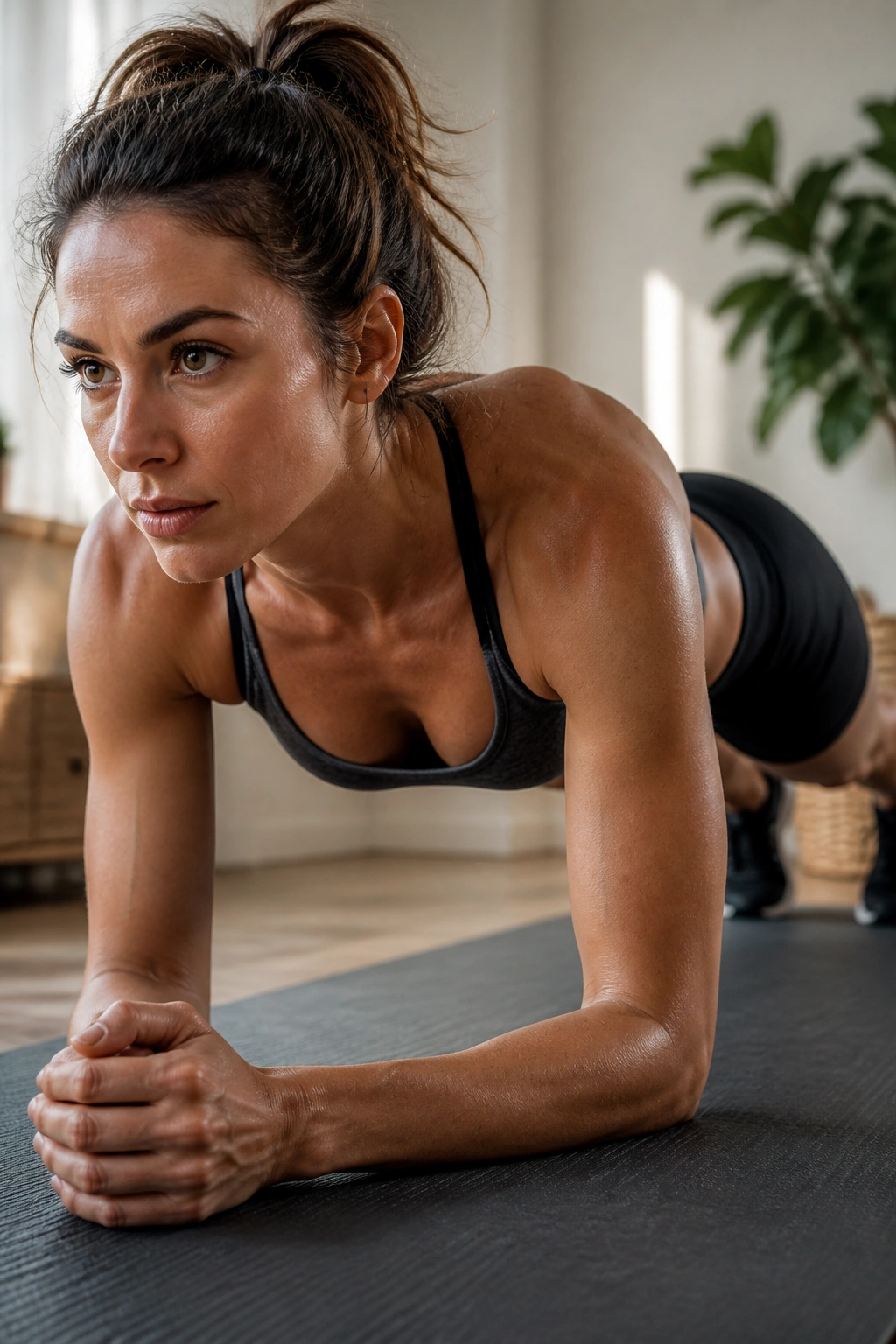
This is not a full workout; it’s a bolt-on to the end of any of the other sessions. If you have 10 minutes, you can do this.
The Protocol
- Dead Bug: Keep your back flat against the floor. 20 reps.
- V-Ups: Aim to touch your toes with your fingers. 15 reps.
- Plank: Hold for as long as you can with perfect form, then add 10 seconds.
The rule: If your form breaks, you are done. There is no benefit to doing a “ugly” V-up. The second your lower back loses contact with the floor, stop.
21. Yoga-Pilates Flow
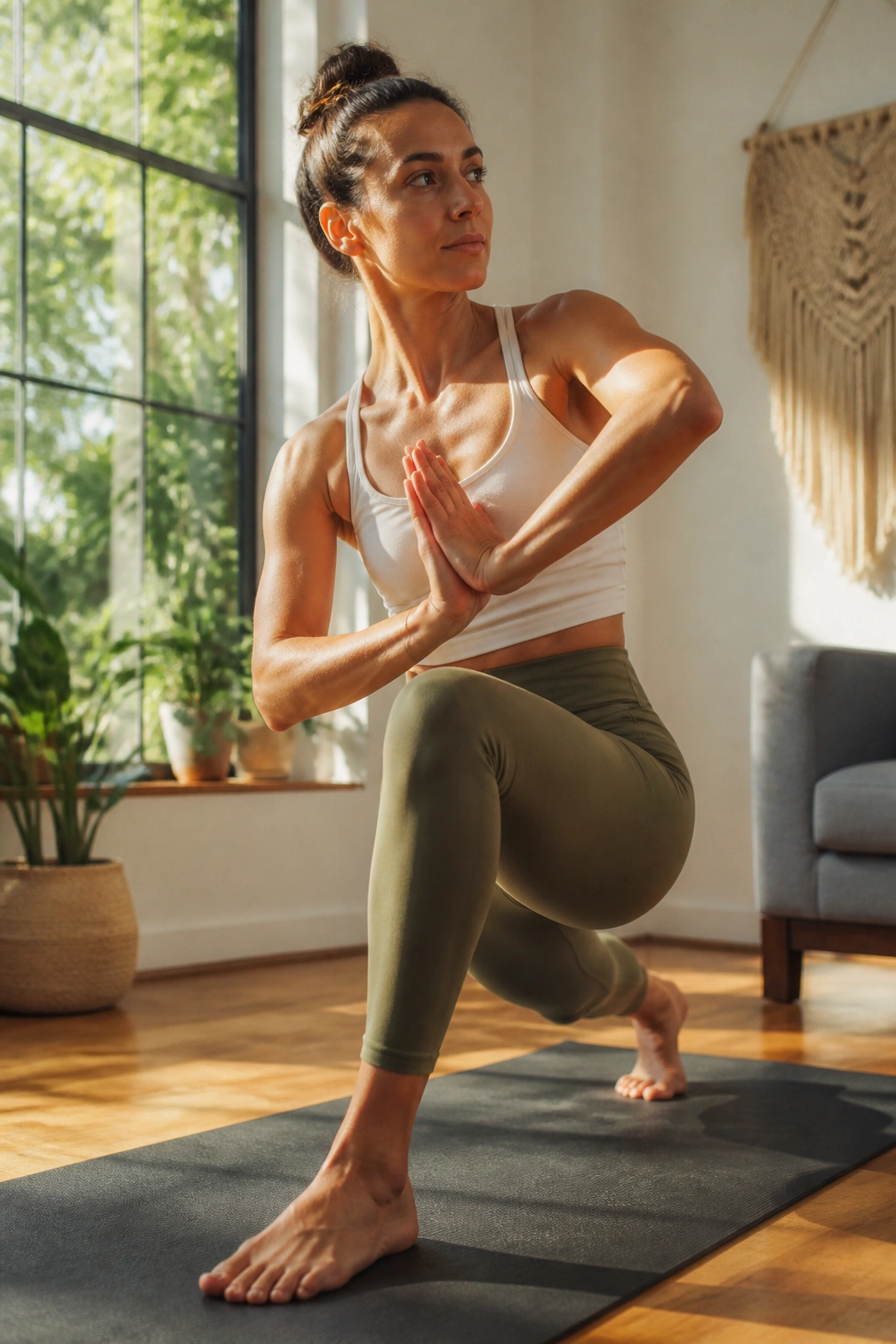
This plan uses the breath-linked movement of yoga and the core-centric focus of Pilates. It’s perfect for active recovery days.
The Flow
- Downward Dog to Plank: Move between these two poses slowly. 10 reps.
- Cat-Cow: 10 reps.
- Crescent Lunge with Twist: Step forward and twist your torso toward the front leg. 10 reps per side.
This is all about mobility. You aren’t trying to tear muscle fibers; you are trying to grease the joints and improve your range of motion.
22. The Lower Back Protection Plan
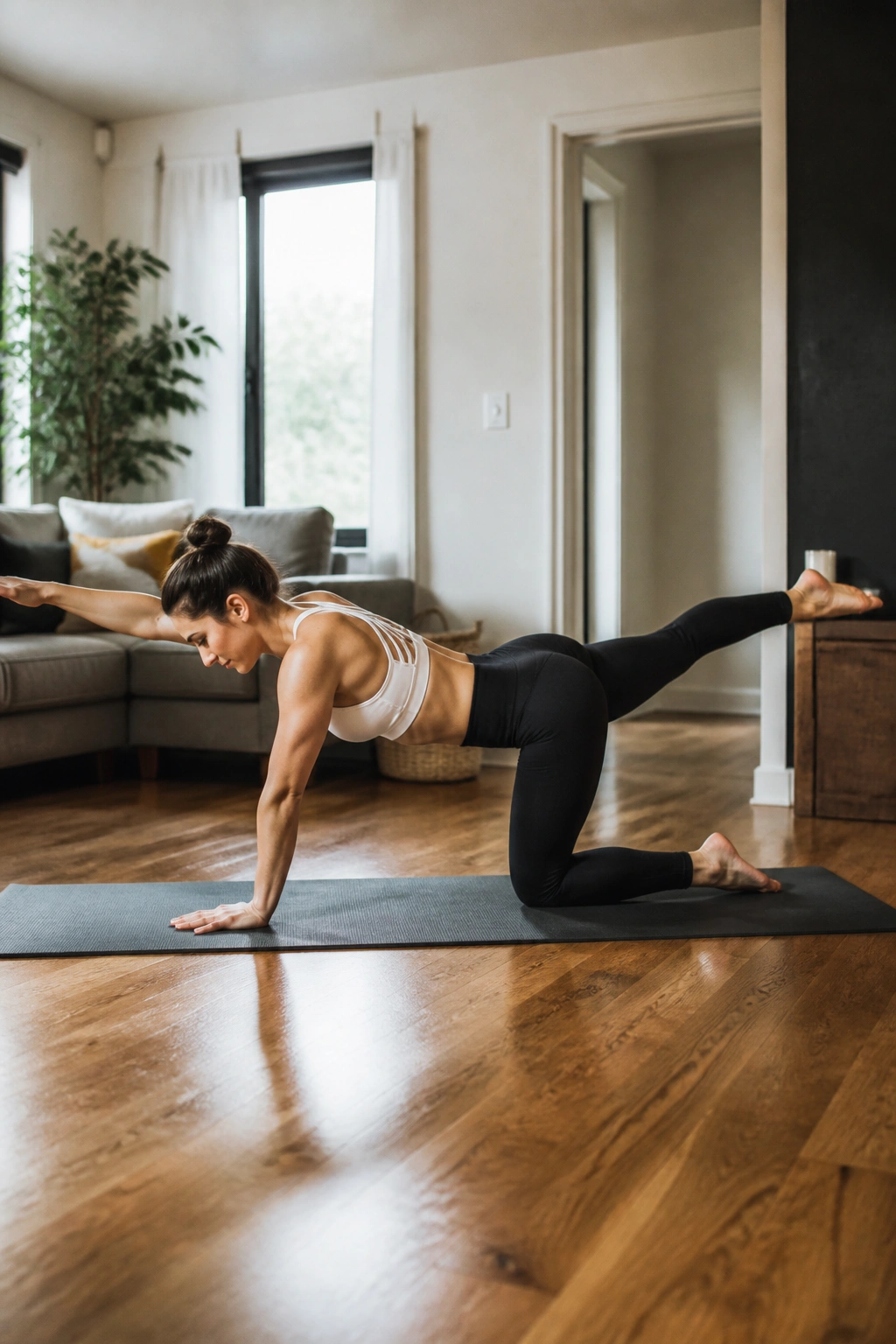
This plan is specifically for anyone who has experienced “stiffness” in the lower back. It avoids all crunch-based movements that put pressure on the lumbar spine.
Exercises
- Pelvic Tilts: Lie on your back and rock your pelvis back and forth. 20 reps.
- Bird-Dog: Essential for spinal stability. 15 reps.
- Glute Bridge: Focus on a slow, controlled lift. 15 reps.
The goal here is stability, not flexion. Stop trying to “flex” your spine and start trying to stabilize it. Your lower back wants to be a pillar, not a hinge.
23. Weighted Strength Integration
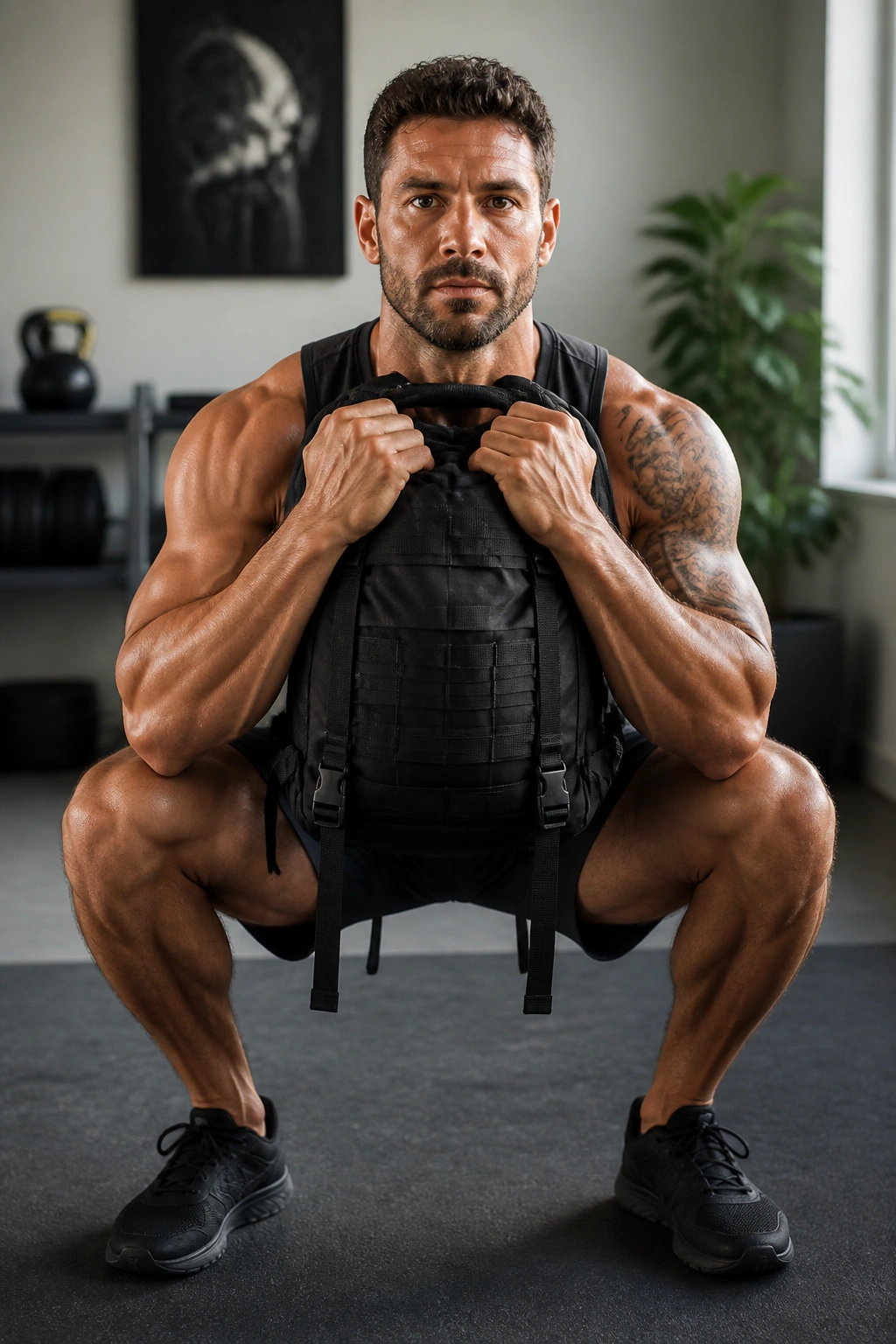
This is for when you want to get stronger, not just “tone.” Use a backpack filled with books or water bottles if you don’t have dumbbells.
Movements
- Weighted Squats: Hold the weight at your chest (Goblet style). 15 reps.
- Weighted Glute Bridges: Place the weight on your hips. 15 reps.
- Weighted Overhead Press: Use small bottles. 15 reps.
Because you are using resistance, you must move slower than usual. The added load makes your core work significantly harder to stay balanced.
24. Functional Movement Focus
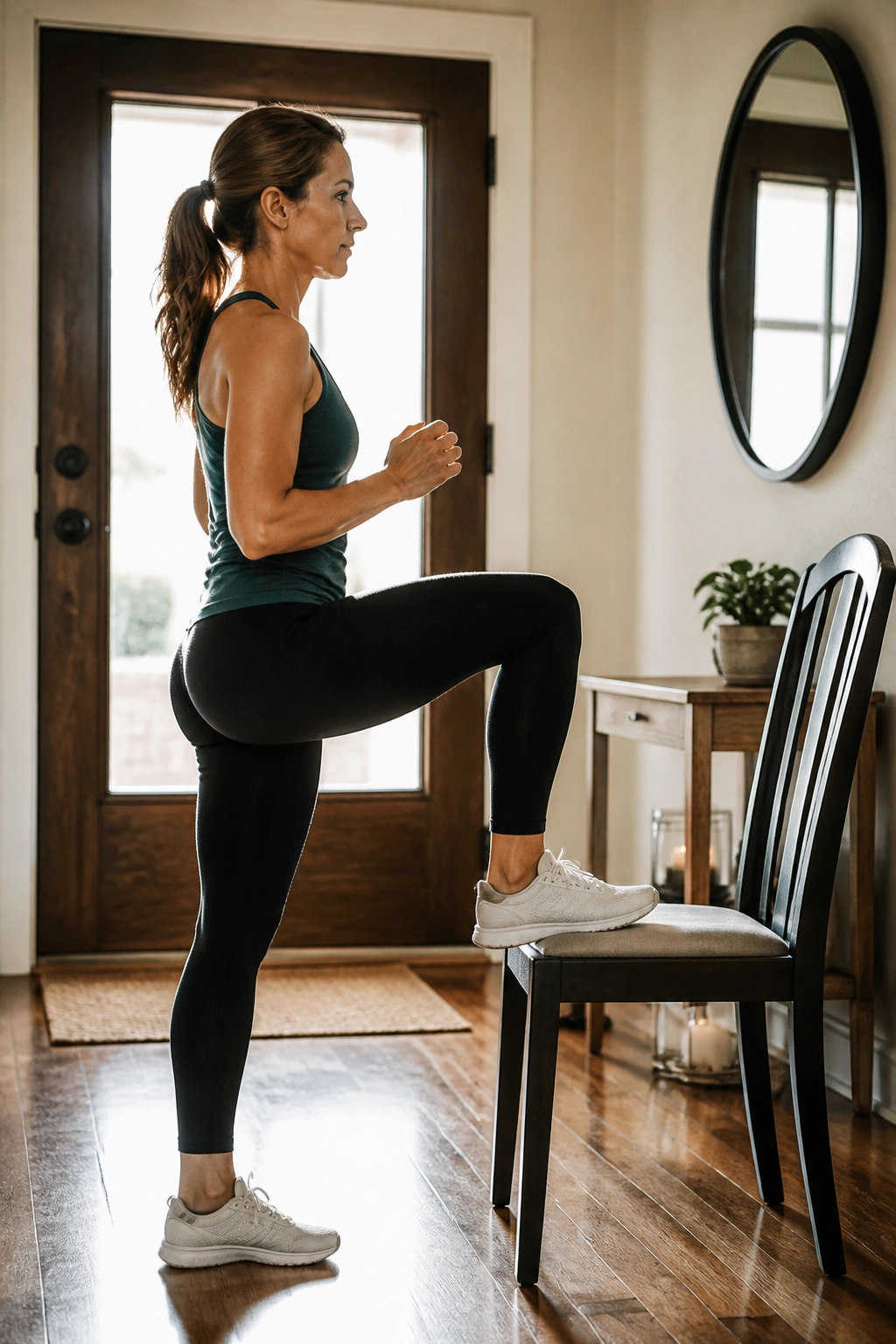
This plan is designed to mimic things you do in real life—picking up boxes, twisting to reach something, and getting up from a chair.
The Moves
- Step-Ups (onto a sturdy chair): 12 reps per leg.
- Rotation Lunges: Step into a lunge and twist your torso. 12 reps per side.
- Inchworms: Start standing, walk your hands out to a plank, and walk back. 10 reps.
These movements are “functional” because they translate to real-world strength. Being able to do a perfect bicep curl is fine, but being able to pick up a heavy box without tweaking your back is better.
25. The Consistency Challenge: A 20-Minute Routine
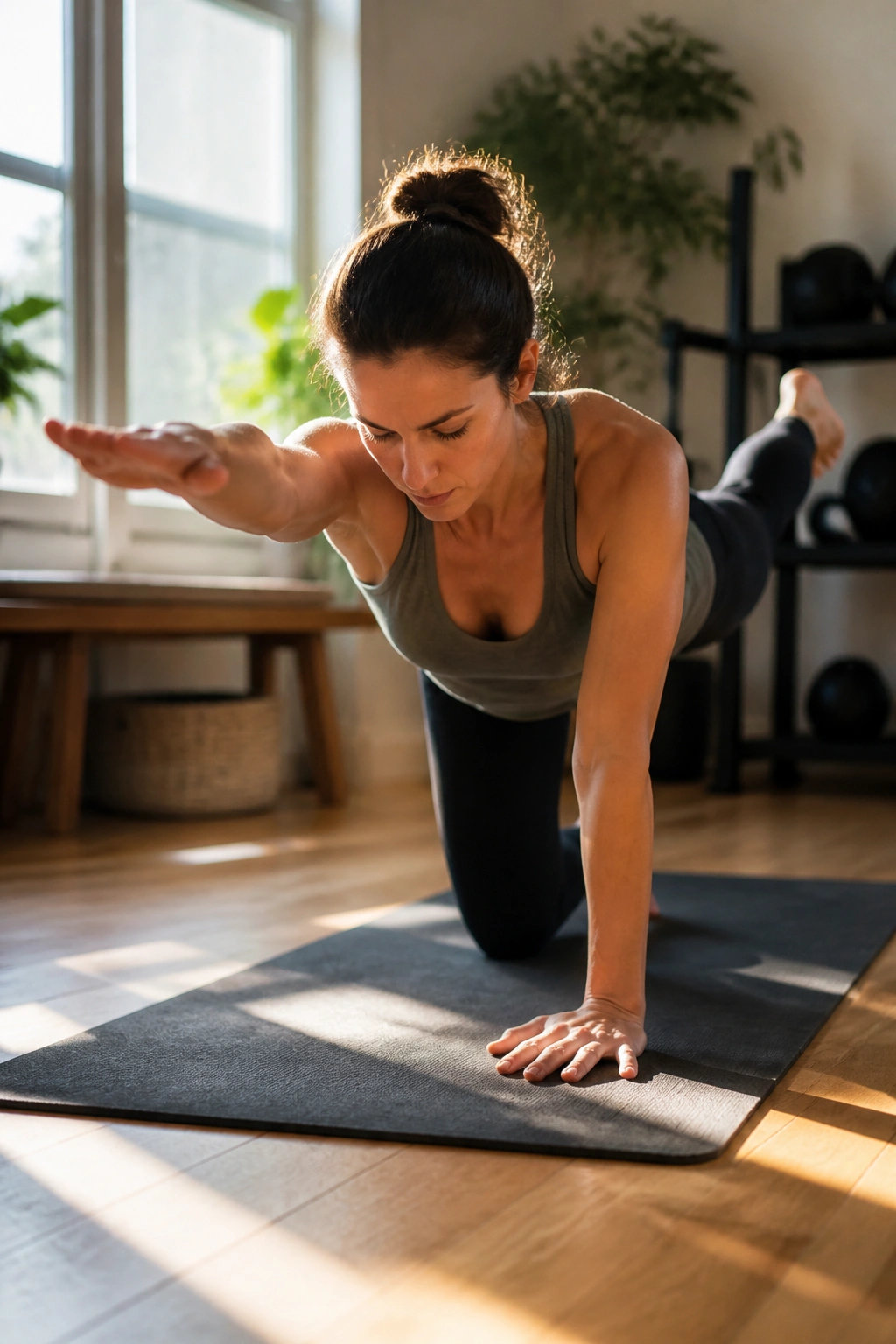
If you struggle to stay consistent, this is your new best friend. You do this exact 20-minute routine every single day. No changes. No excuses.
The Sequence
- 5 minutes: Warm-up (Arm circles, Cat-cow, gentle neck rolls).
- 10 minutes: Core work (Hundred, Planks, Side planks).
- 5 minutes: Cool down (Deep breathing and light stretching).
The strategy: The hardest part of working out is the decision to start. By having a pre-set routine that you know by heart, you remove the “what should I do today?” mental friction. Just show up and do the work.
The Bottom Line
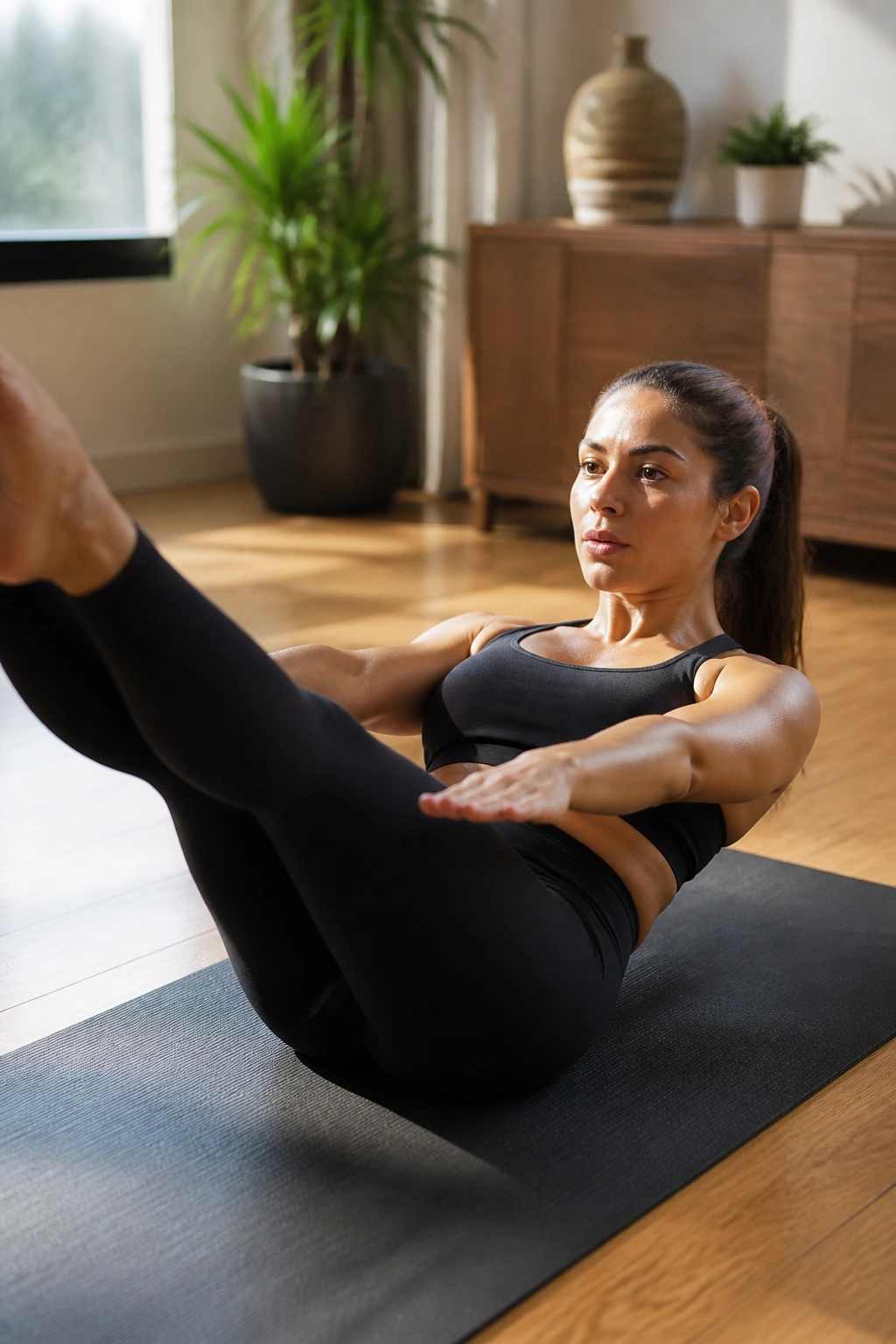
Building a body that works for you shouldn’t feel like a chore, and it certainly shouldn’t require a gym contract you never use. Whether you are after more strength, a more stable core, or just a bit of relief from the daily grind, the secret is in how you move.
Start with these plans, but don’t just treat them as rigid rules. If one day feels like your body needs a bit more movement, lean into the cardio-fusion plans. If you wake up feeling stiff, the postural resets are your best friend.
The goal isn’t to be perfect; it’s to be persistent. If you miss a day, don’t sweat it. Just pick it back up tomorrow. Your body is a long-term project, not a sprint. Focus on the sensation of the muscle working, breathe through the discomfort, and keep showing up. That is the only real shortcut there is.
