



Ten minutes is enough to change the way your body feels by lunch.
That’s the part people miss when they assume Pilates has to mean a long class, a reformer, or a perfect hour carved out of the day. A short Pilates workout can do a lot when it’s built around breath, control, and clean movement instead of speed for the sake of speed. One crisp set of toe taps or a properly stacked bridge can wake up muscles that have been asleep under a desk all morning.
Busy women need workouts that behave like real life. A mat near the bed, a timer, maybe a loop band or a pillow, and a routine that doesn’t collapse the second your phone buzzes. That’s the standard here. No fluff. No fake complexity. Just ten-minute Pilates workouts that actually fit inside a packed day and leave you feeling more open, stronger, and less folded in half than you were before.
1. Core Wake-Up on the Mat
A strong ten-minute Pilates workout starts with the core, but not the sweaty, frantic version you see in fitness clips. Real core work begins by getting your ribs, pelvis, and breath back in the same conversation. When those three line up, everything else gets easier.
How to run it
- Lie on your back with your knees bent and feet hip-width apart. Take 5 slow breaths, letting your ribs soften on the exhale.
- Tilt your pelvis gently for 1 minute, pressing the low back into the mat and then returning to neutral.
- Lift one leg at a time into tabletop and do 10 slow toe taps per side.
- Move into the Hundred prep for 1 minute, keeping your head down if your neck feels touchy.
- Finish with single-leg stretch for 1 minute each side, then 1 minute of dead bug reaches.
Keep the exhale long. That one detail matters more than a lot of people think.
The goal isn’t to see how fast you can move. It’s to keep your low back quiet while the front of your trunk does the work. If your ribs start popping up, shorten the range and slow everything down. That tiny adjustment makes the whole workout cleaner.
I like this one for mornings because it feels like turning the lights on inside your torso. Nothing dramatic. Just organized.
2. Glute Bridge Ladder
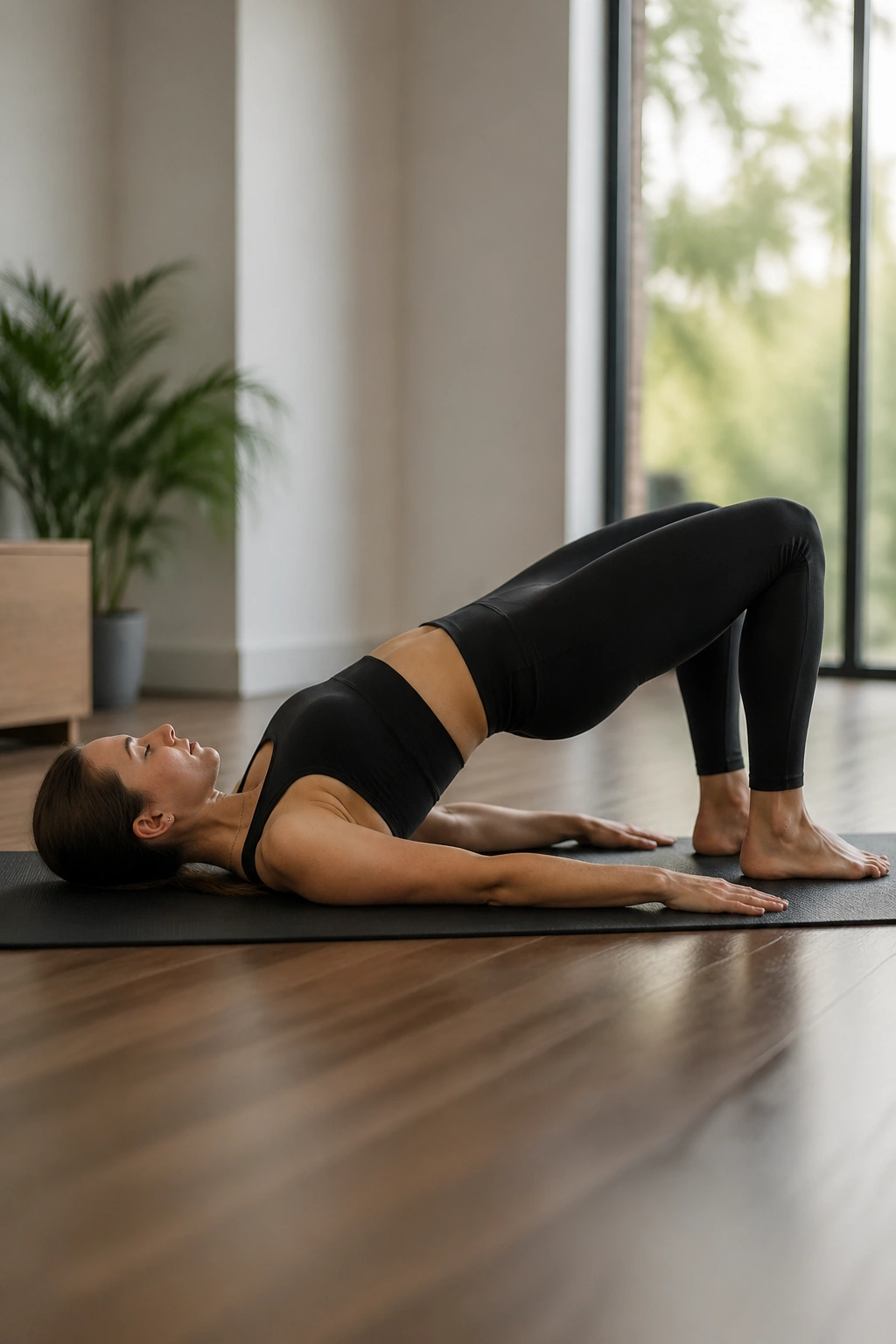
Glute work is where short Pilates sessions earn their keep. Sitting tends to switch the seat off, and once that happens, your hamstrings and low back start picking up the slack. That’s a trade nobody wants.
Start with your feet close enough that your fingertips can brush your heels. Press up into a bridge and hold for 20 seconds, then lower with control. Repeat that twice. After that, add 10 tiny pulses at the top, where the movement should feel almost sneaky.
Then build the ladder. One minute of bridge marches. One minute of frog bridges with the soles of the feet together. One minute of single-leg bridge holds, 20 seconds each side. Finish with 90 seconds of small bridge lifts, not huge ones, because big bridge shapes often turn into back bends.
If your hamstrings cramp, move your feet a little closer to your seat. That usually helps faster than people expect.
This workout is quiet, but it can light up the backside in a very honest way. You should feel the glutes doing the pushing, not your lower back arching like it is trying to escape. Clean reps beat bigger reps here, every time.
3. Shoulder Reset at the Wall
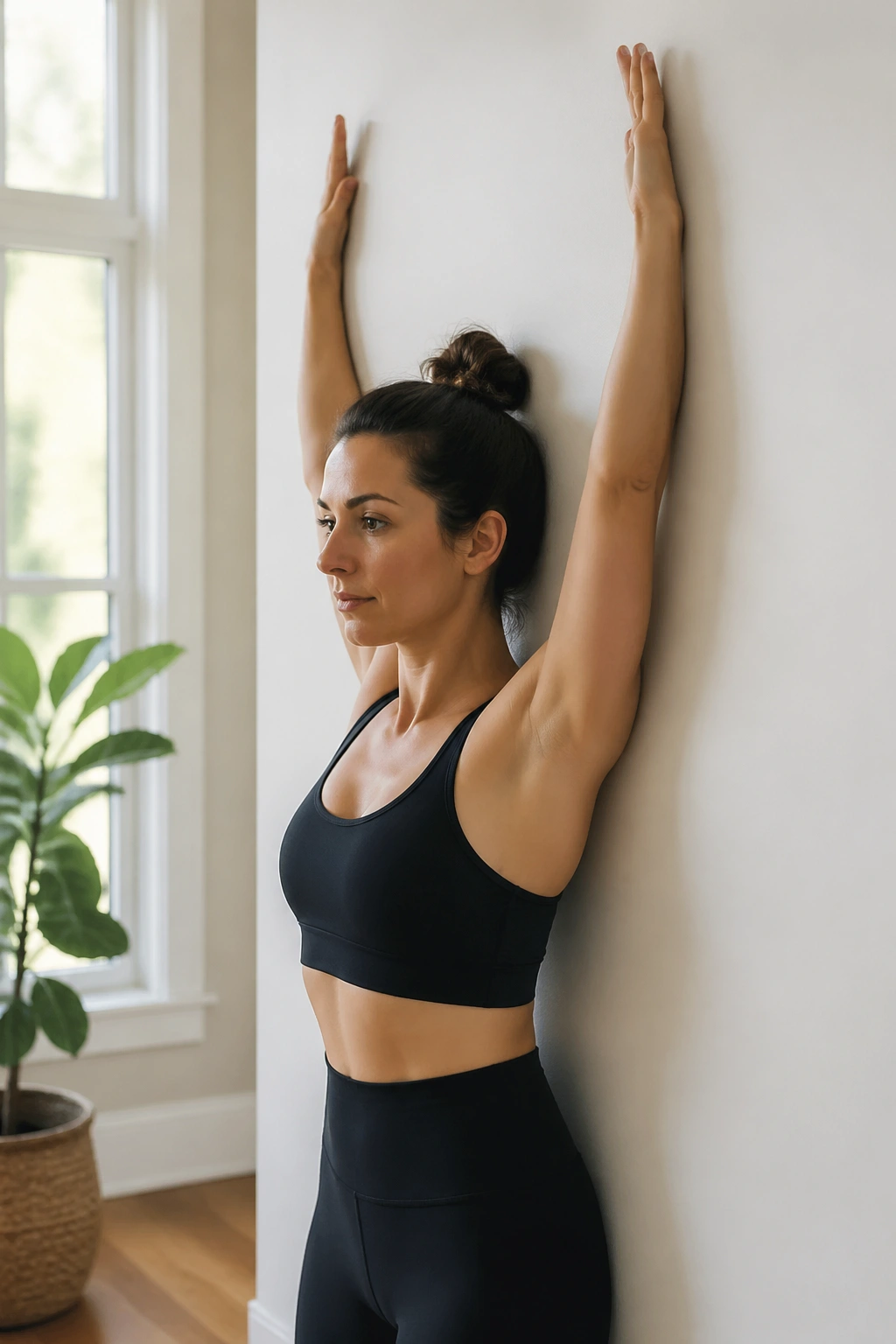
Why do shoulders creep up by noon? Because most of us spend a good chunk of the day reaching forward, typing, carrying bags, and hunching over screens. Pilates gives you a way to pull the upper back into place without needing a full workout or a lot of space.
Stand with your back near a wall and bend your knees slightly. Roll your shoulders down and back, then start with wall angels for 1 minute, keeping the ribs from flaring. Move into cat-cow on the mat for 1 minute, then thread-the-needle for 1 minute per side. After that, do prone “W” lifts for 1 minute, where the elbows stay bent and the shoulder blades draw down.
What to feel
- The back of the neck stays long.
- The shoulder blades slide, not squeeze.
- Your chest opens without arching the low back.
- The arms feel supported, not yanked.
Finish with 1 minute of chest opening while lying on a rolled towel or small pillow.
That towel trick is worth keeping around. It gives the front of the shoulders a real chance to let go instead of fighting the floor. And yes, the whole routine is tiny enough to do in work clothes if you need to.
4. Inner Thigh and Pelvic Floor Flow
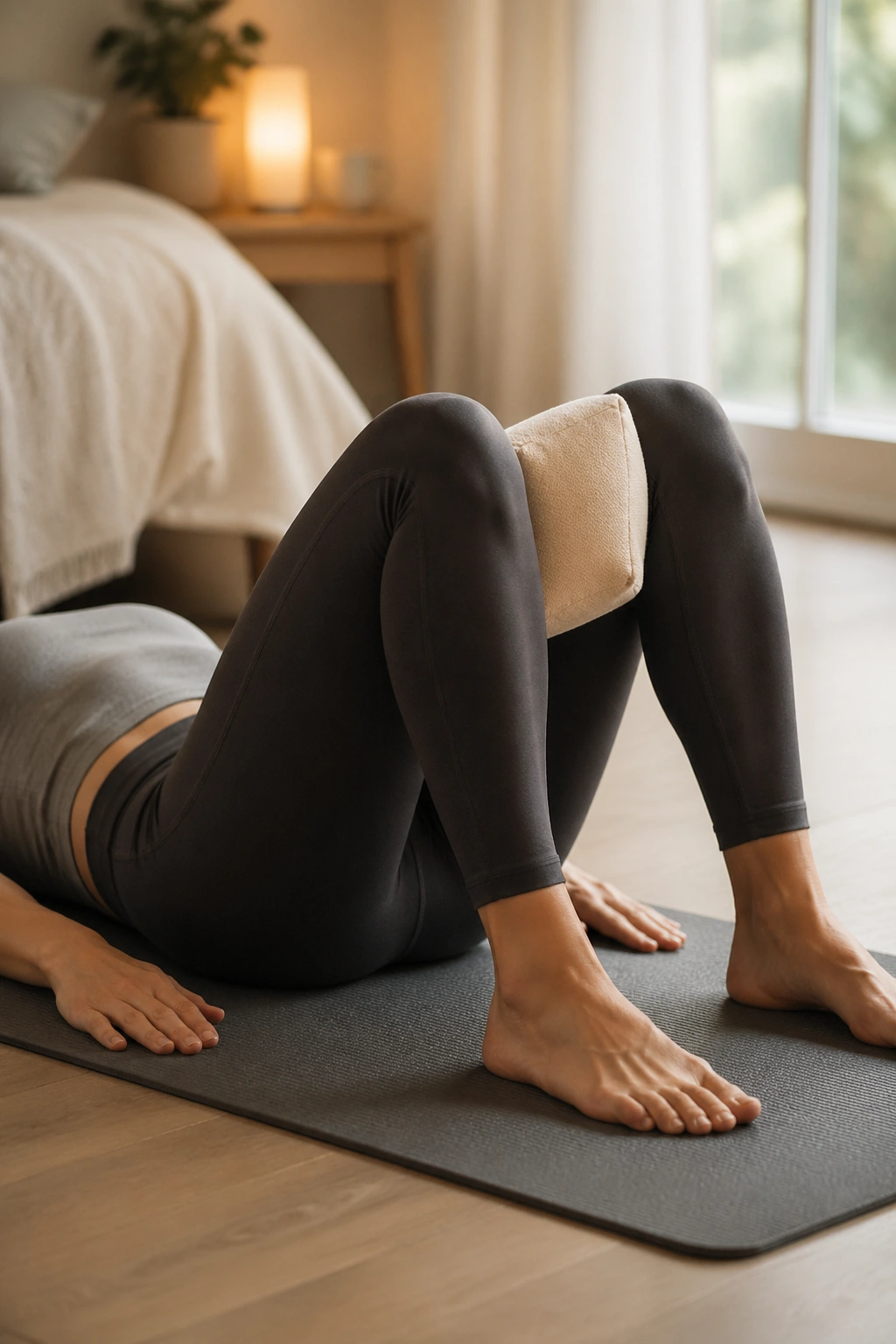
If you sit a lot, the inside of the thighs can feel like forgotten territory. They’re there. They just don’t get much love until they start feeling tight, sleepy, or weirdly weak on one side.
Lie on your back with a small pillow or yoga block between your knees. Squeeze gently for 30 seconds, release for 10, and repeat for 2 minutes. That simple squeeze is a useful cue for the inner thighs and pelvic floor to work together without clenching hard. Then move to side-lying leg lifts, 1 minute per side, keeping the top hip stacked so the movement stays honest.
Add small leg circles in the air for another minute per side. Keep them tiny. Big circles usually turn into hip flexor chaos. Finish with clamshells for 1 minute per side and a minute of butterfly breathing with the soles of the feet together.
Do not crush the pillow. A little pressure is enough.
This is one of those workouts that feels gentle while it’s happening and oddly effective later, especially if your hips tend to feel stuck after a long day. The inner thighs are small, but they help stabilize more than most people realize. That’s the part worth paying attention to.
5. Standing Pilates in a Small Space
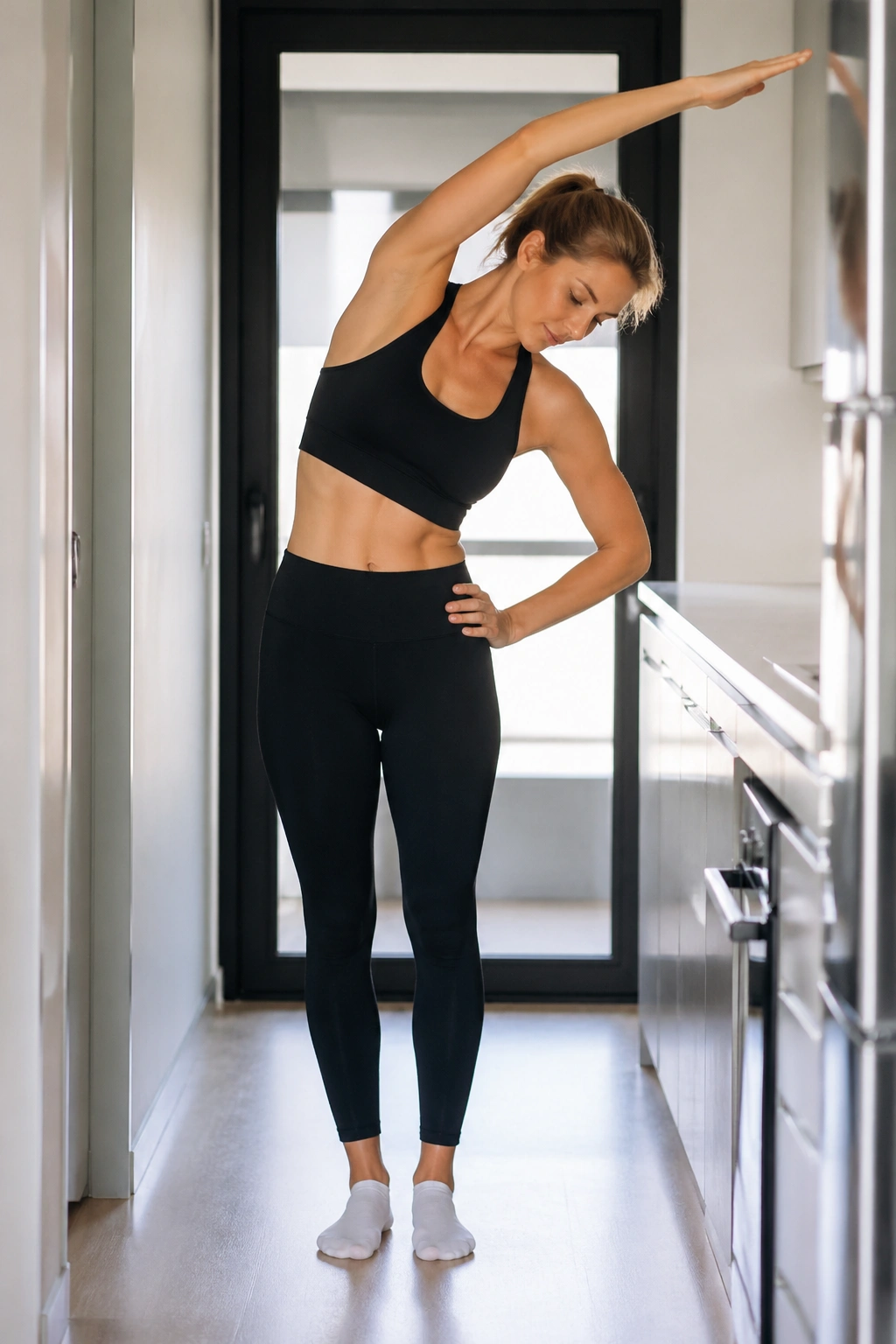
You’re in jeans, the meeting ended early, and the floor is not happening. Fine. Stand up and do Pilates anyway.
This routine is built for the kitchen, the hallway, the office, the hotel room, or any other place where you can stand without making a scene. Start with 1 minute of roll-downs, letting the head hang and the spine melt toward the floor one segment at a time. Then come back up and do 1 minute of parallel plié squats with the heels planted and the knees tracking over the second toes.
Move it through the body
- 1 minute of side leg lifts, right side then left.
- 1 minute of standing arabesque taps while one hand rests on a wall or chair.
- 2 minutes of standing side bends with the opposite arm reaching overhead.
- 2 minutes of calf raises, lifting slowly and lowering even more slowly.
- 2 minutes of standing twist, ribs turning first, hips staying quiet.
The trick with standing Pilates is not to rush. Most people move too fast, lose their posture, and then wonder why they feel nothing but a bit of wobble. Slow down and the muscles show up.
I like this one for days when you need movement but not a mat ritual. It looks simple. It’s not lazy. There’s a difference.
6. Low-Back Relief Sequence
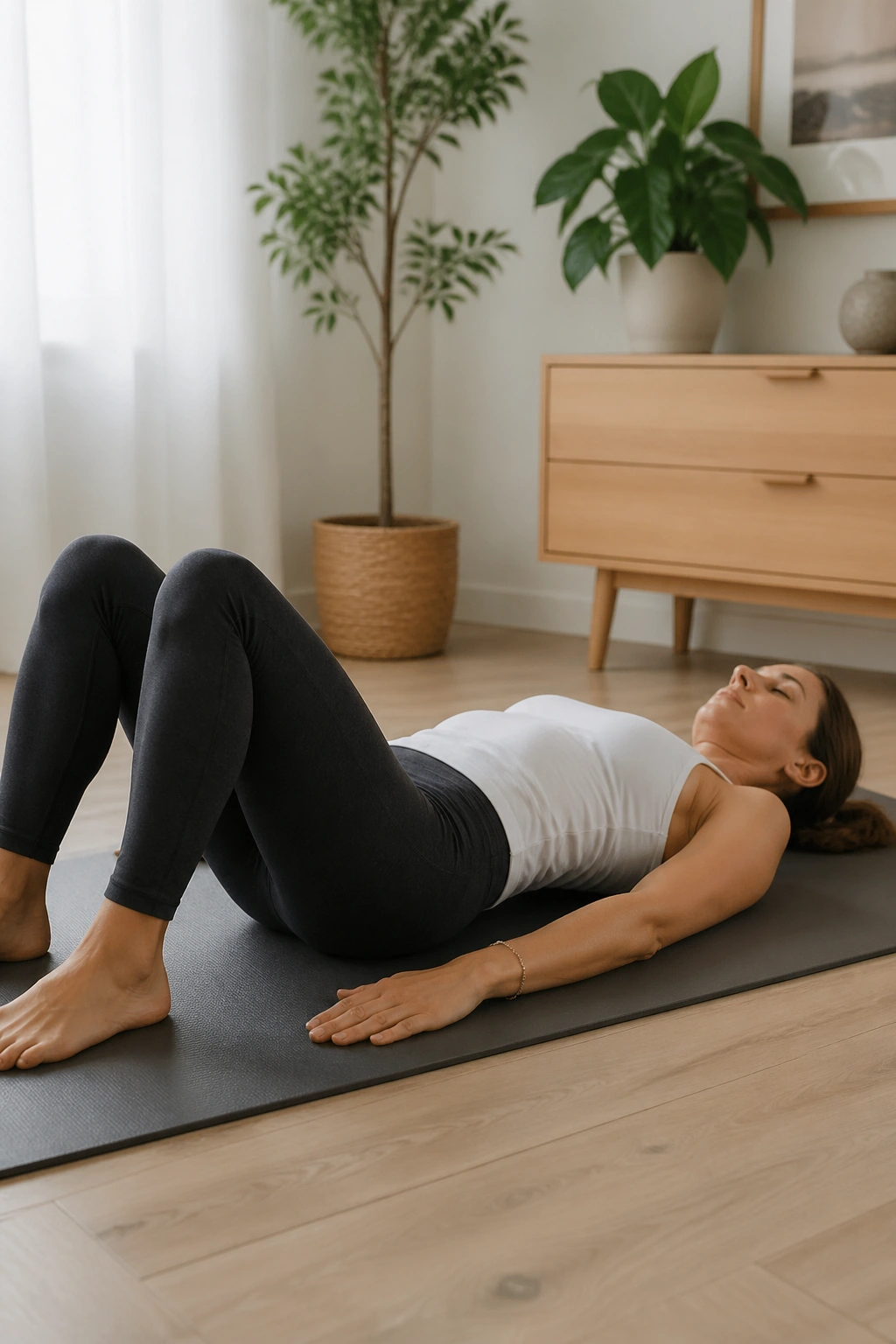
A stiff low back does not always want rest. Sometimes it wants careful motion, the kind that tells the spine it is safe to move again.
Start on your back with knees bent and feet on the floor. Do pelvic clocks for 1 minute, drawing tiny circles with your pelvis as if you were tracing the face of a clock. Then let both knees sway side to side for 1 minute, stopping before the stretch turns sharp. Move into a figure-four stretch for 1 minute per side, then a supported bridge for 2 minutes with the glutes lifting and the ribs staying down.
After that, come into mermaid on one hip for 1 minute per side and finish with child’s pose side reaches for the last 2 minutes.
What not to do
- Don’t force range.
- Don’t bounce.
- Don’t push into pain that travels down the leg.
- Don’t hold your breath when the stretch gets real.
A good low-back flow should feel like space, not strain. The spine unwinds a little. The hips soften. The waist stops feeling jammed up. If you have a sharp, shooting, or numbing pain, that is not the routine to power through. Different problem, different answer.
This one is quiet work. It pays off anyway.
7. Arms, Chest, and Posture Burn
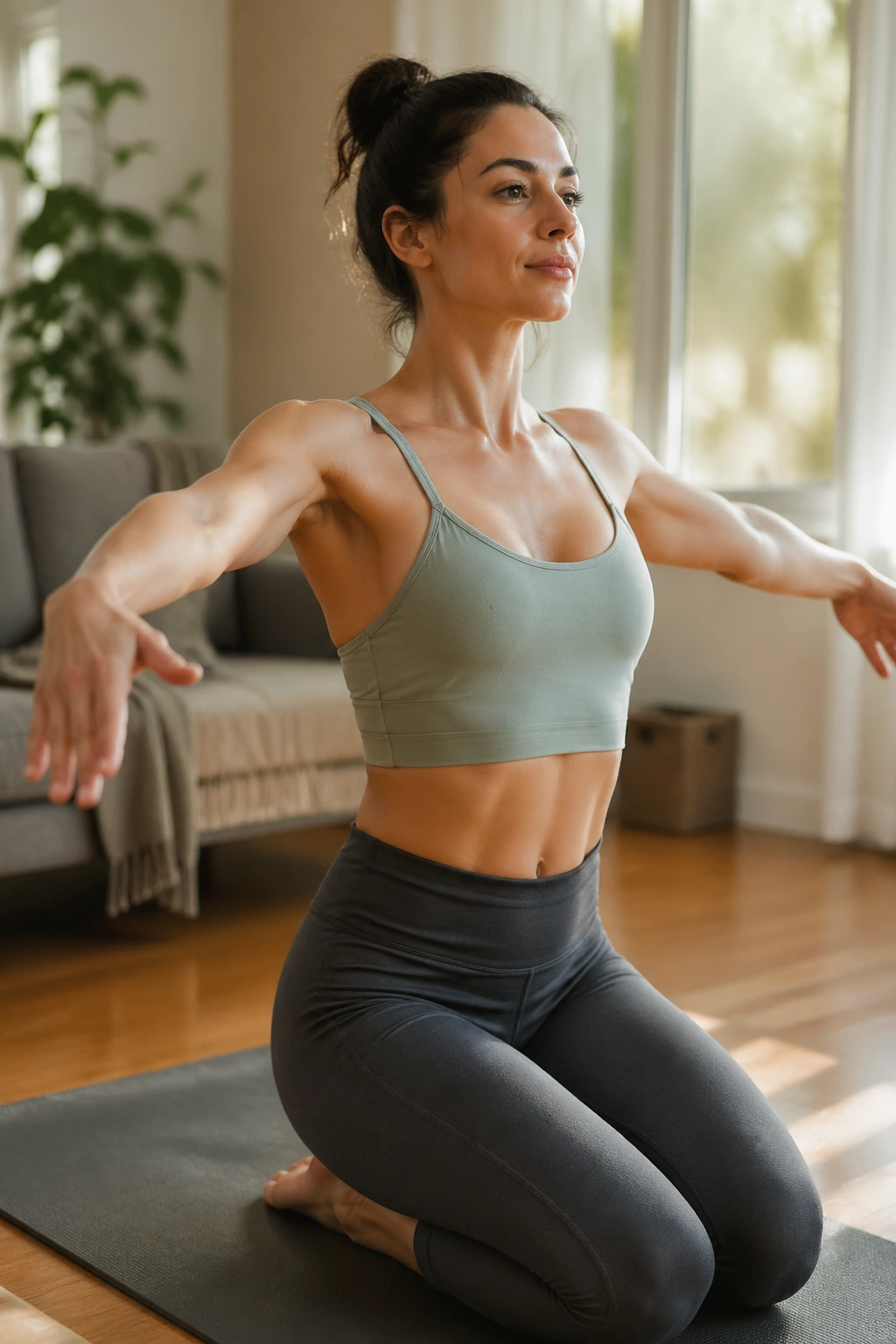
You can light up the upper body without a single heavy dumbbell. In fact, with Pilates, lighter loads often make the work cleaner because you can pay attention to the shoulder blades instead of muscling through the movement.
Start kneeling on the mat. Do 1 minute of arm circles with the palms facing down, then 1 minute facing in. Add triceps press-backs for 1 minute per side, keeping the elbows close and the chest open. If you want a little extra bite, hold 1- to 2-pound weights or just use your own bodyweight and slow the tempo down.
Then move into plank shoulder taps for 1 minute, swan prep for 1 minute, and a kneeling chest opener with clasped hands behind the back for the final 2 minutes.
Keep the shoulders wide. That cue saves the neck.
A lot of arm routines turn into trap workouts, which is not the goal. The work should spread across the upper back, the back of the arms, and the chest without the neck taking over. If you feel your jaw clenching, pause and reset.
This one is sneaky. It looks small, and then your arms start telling the truth.
8. Side-Body Length and Waistline Flow
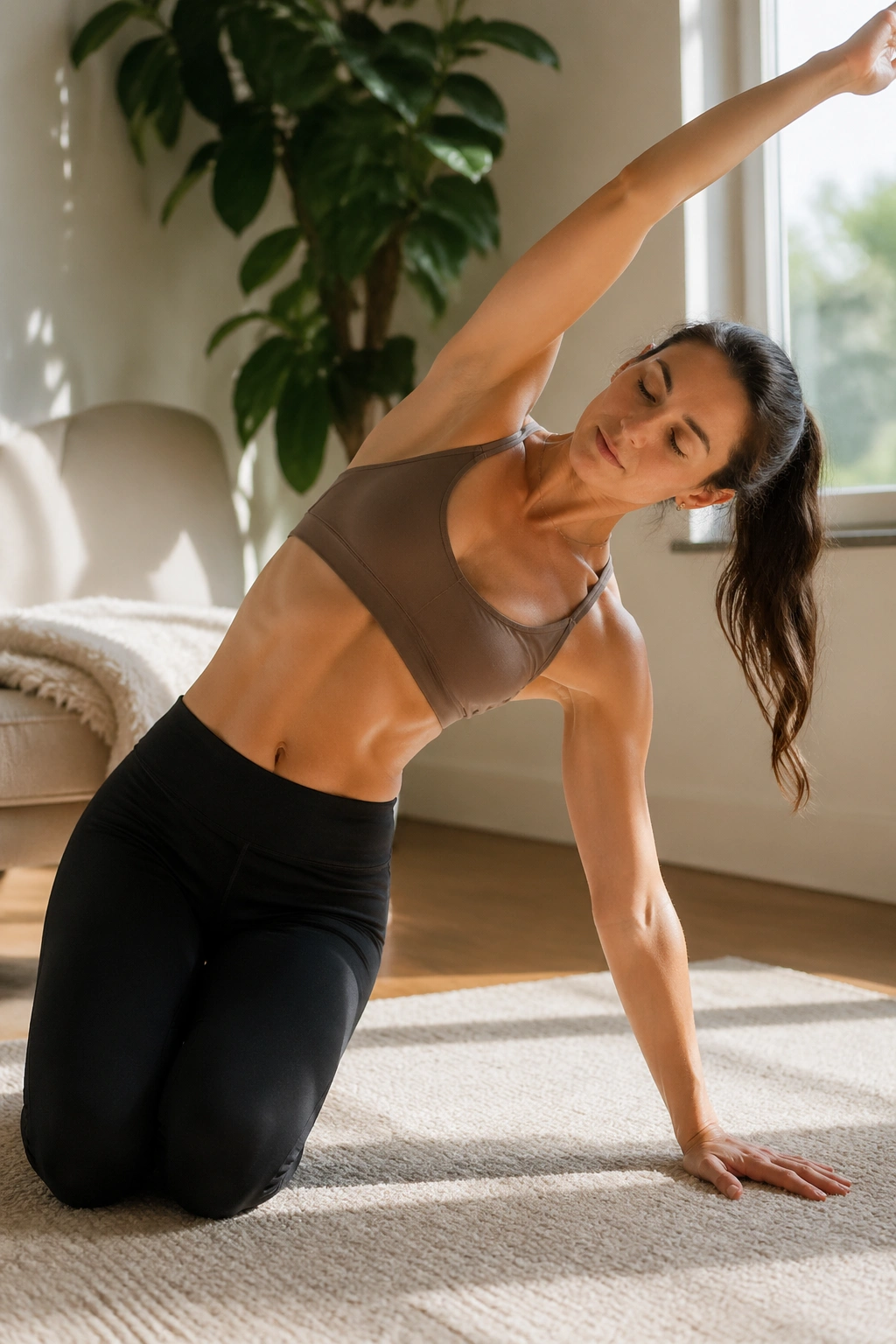
What makes side-body work so satisfying? It gives you a long, clean feeling through the ribs and hips that crunches never quite manage. The line from armpit to outer hip matters more than people think.
Begin with side plank from the knees for 30 seconds per side. If that’s enough, stay there. If not, add a top-leg reach for a little more challenge. Move into mermaid stretch for 1 minute per side, then side kick series on the mat for 2 minutes per side. Keep the kicks controlled and small enough that your torso doesn’t wiggle around to help.
How to keep your neck quiet
Lift from the side waist, not the shoulder.
That sounds simple, and it is. But it changes everything. When the neck starts doing the work, the movement gets clumsy fast. When the side waist takes over, the whole body looks and feels longer.
Finish with 2 minutes of side-lying hip lifts or oblique dips, depending on how much challenge you want. The goal is not to fold in half. The goal is to stay long while the muscles work. That distinction matters more than the burn.
9. Beginner Total-Body Pilates Circuit
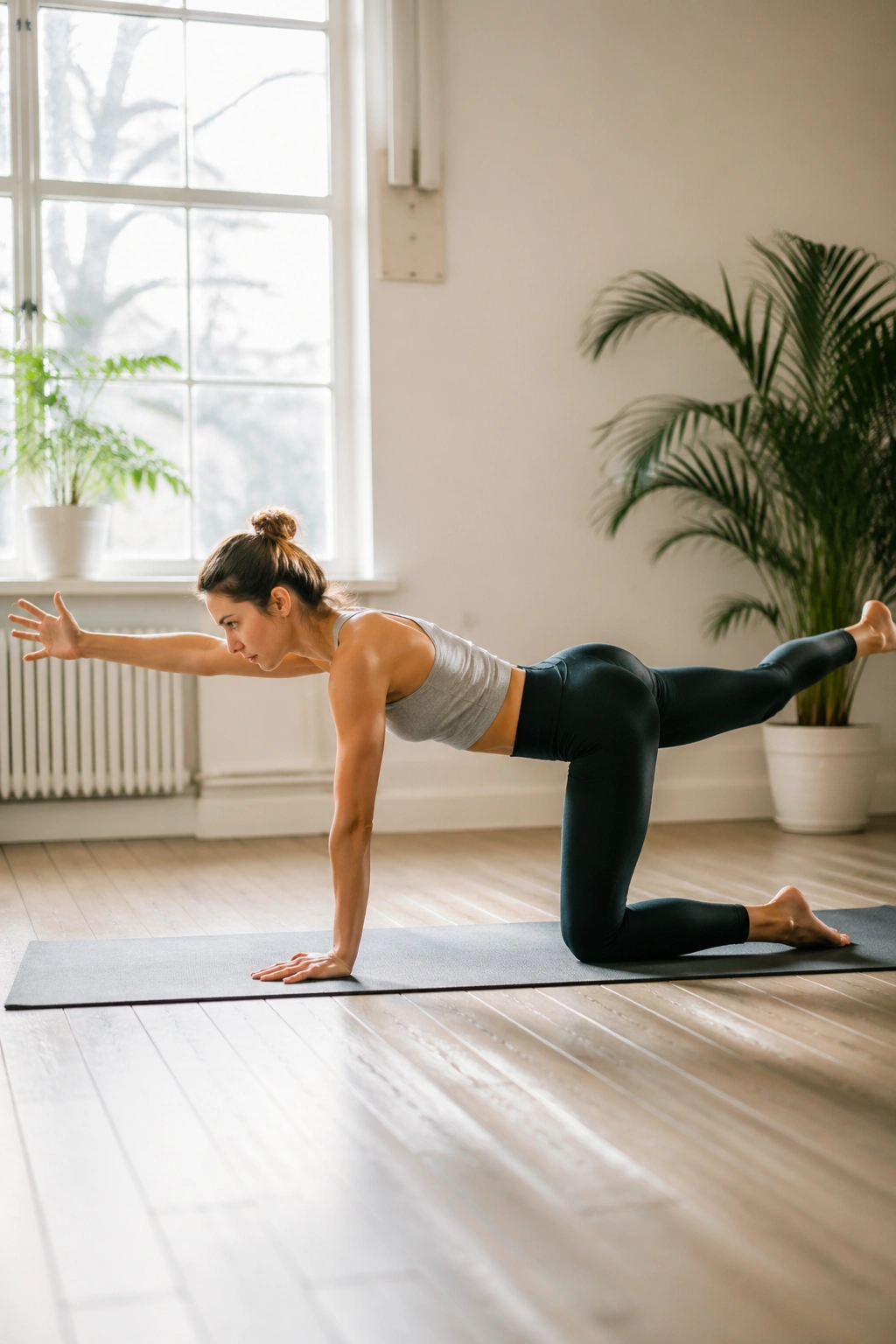
Beginner does not mean boring. It means clean, repeatable movement that leaves you feeling better, not wiped out and confused.
Start with 1 minute of breathing and arm reaches on your back. Move into tabletop toe taps for 2 minutes, then a bridge series for 2 minutes, keeping the lift modest and the feet grounded. After that, do bird dog for 2 minutes on hands and knees, reaching opposite arm and leg without letting the pelvis twist. Finish with 2 minutes of standing squats and overhead reaches, then 1 minute of easy spinal stretch.
This workout works because it touches the whole system without demanding a lot of coordination. That matters on tired mornings. It also gives you a clear pattern to follow, which is a relief when your brain is already negotiating ten other things.
Use fewer reps if your form starts to slide. Quality beats quantity here.
The nice thing about this circuit is how unthreatening it feels. Nothing fancy. Nothing punishing. Just a solid ten minutes that helps your body remember what organized movement feels like.
10. Oblique Twist and Rotation Series
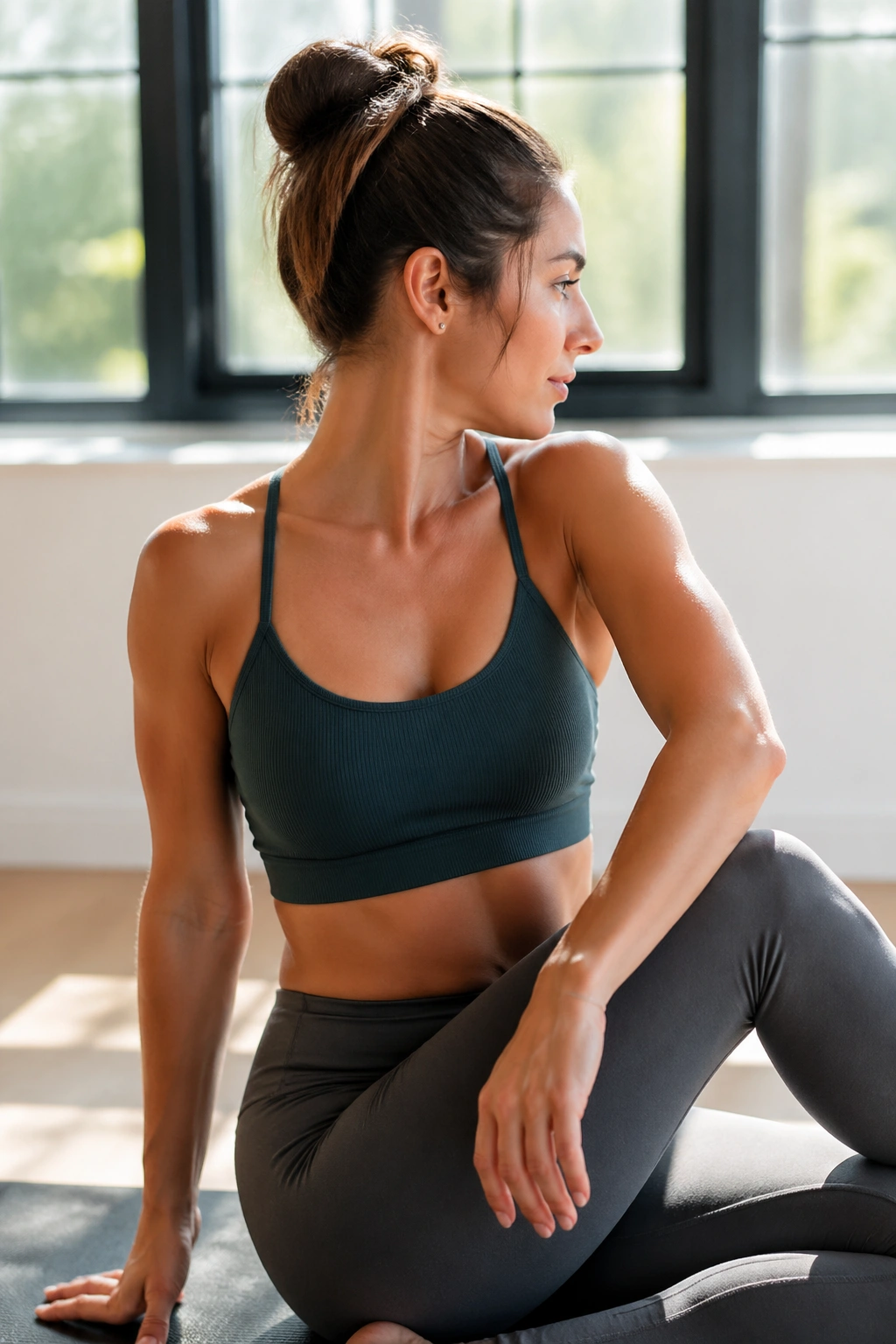
Rotation feels best when it starts in the ribs, not in the hands. That’s the difference between a twist that frees up your torso and one that just yanks your neck around.
Sit tall with your legs crossed or extended and start with seated spine twist for 1 minute per side. Let the pelvis stay steady while the rib cage turns. Then move into saw for 1 minute per side, reaching one hand toward the outside of the opposite foot without collapsing the chest. Follow that with crisscross for 2 minutes, moving slowly enough that each twist feels deliberate.
Add a kneeling rotation with one arm reaching up and across for 1 minute per side, then finish with side plank twist or thread-throughs for the last 2 minutes.
What to watch for
- Hips trying to follow the twist.
- Shoulders hauling the movement around.
- The breath getting stuck.
- Range that looks big but feels sloppy.
Keep the twist smaller if your lower back feels cranky. A tidy rotation is worth more than a dramatic one. This is a good workout for people who carry tension in the middle of the body and want a clean reset without a lot of impact.
It’s one of my favorite short flows when the spine feels stiff in that “I’ve been sitting too long” way.
11. Post-Walk Recovery Flow
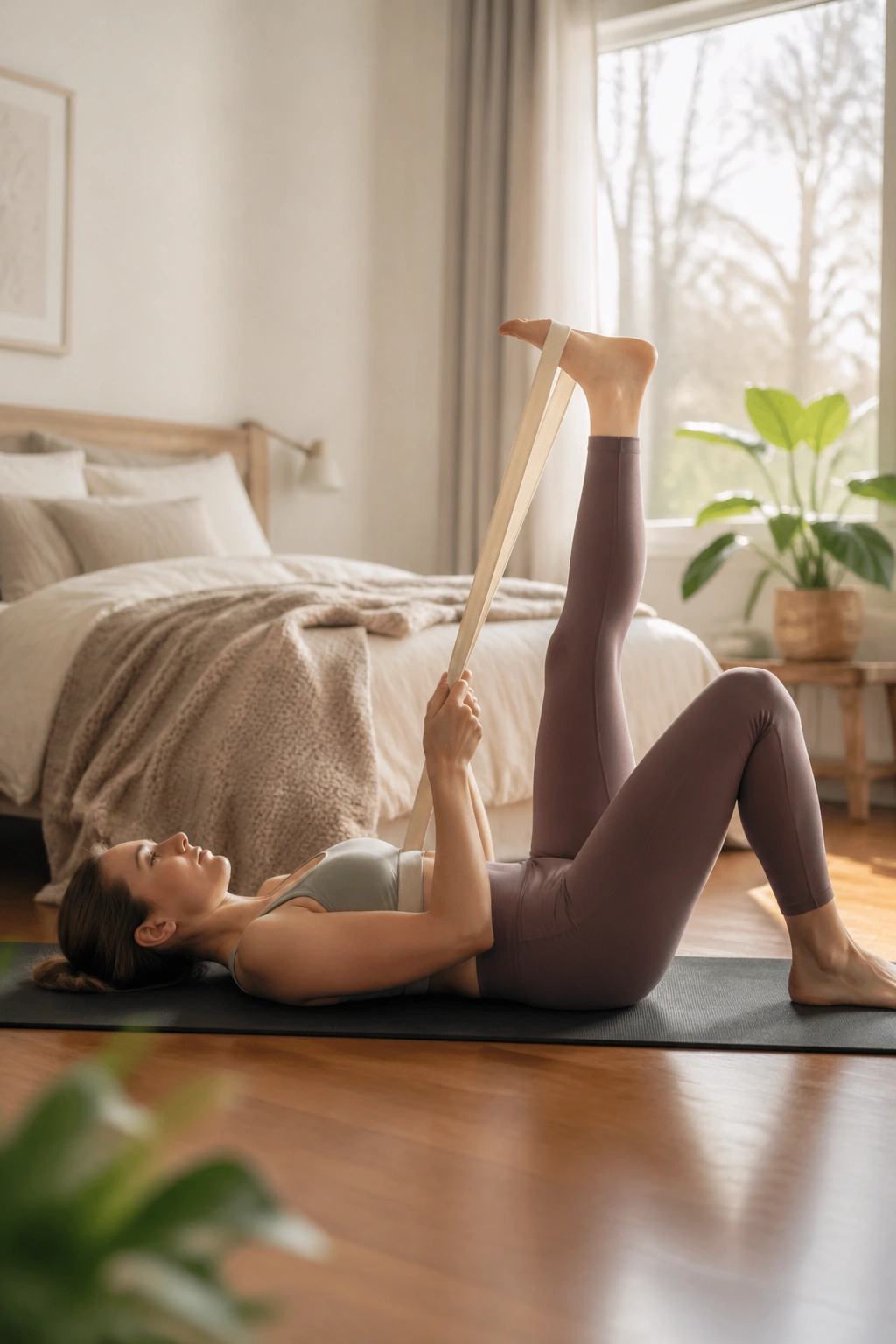
After a long walk, the calves can feel tight and the front of the hips can feel glued in place. That combination makes the whole body feel oddly short, like it has been compressed from both ends.
Lie down and start with calf stretch using a strap or towel for 1 minute per side. Then move to hip flexor lunge stretch for 1 minute per side, keeping the back glute gently active so the stretch lands where it should. Add hamstring stretch for 1 minute per side, but keep the knee soft if that feels better. Finish with spinal twist for 1 minute per side, then ankle circles for the final 2 minutes.
Why this one works
Walking is great, but it can still leave a few places feeling sticky. The calves shorten. The hip flexors grip. The feet get bossy. And the low back often pays for it.
This flow gives those spots a chance to let go without turning into a long stretch session. Use a pillow under the head if your neck gets annoyed on the floor. Keep the breath smooth. There is no prize for pushing deeper.
If your day includes a lot of standing or errands, this routine earns its place fast. It feels like taking your legs out of stiff shoes, even when you’re already barefoot.
12. Mini-Band Leg and Seat Burner
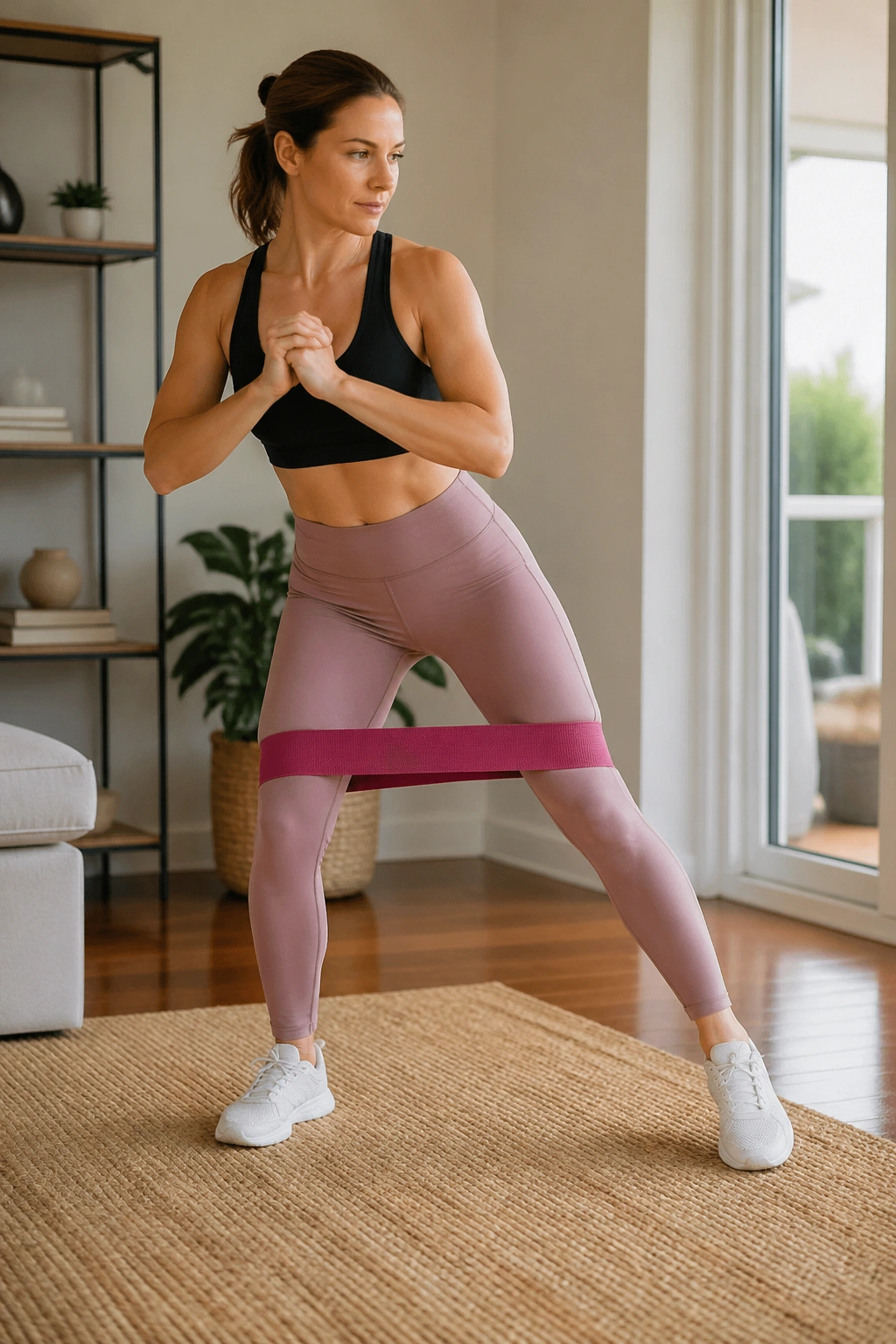
A loop band changes the feel of a ten-minute Pilates workout fast. Not because it makes everything harder, but because it makes the small muscles stop cheating.
Place the band just above the knees for most of the routine. Start with 1 minute of bridge presses, gently pushing the knees out against the band at the top. Then move into side-steps for 2 minutes, taking small, quiet steps rather than huge ones that make the band roll. Add clamshells for 1 minute per side and squat pulses for 2 minutes with the feet parallel.
Band placement that saves your knees
Too loose and the band slides. Too tight and the form gets sloppy. Above the knees is usually the easiest place to start.
Finish with standing kickbacks and diagonal leg lifts for 2 minutes, keeping the torso tall and the pelvis steady. If your lower back starts to take over, reduce the range and slow the tempo. The band should make you feel more specific, not more chaotic.
This is a favorite for glutes and outer hips because the band gives you instant feedback. You know right away when the movement drifts. That makes it useful, and a little humbling too, which I appreciate.
13. Midday Energy Reset
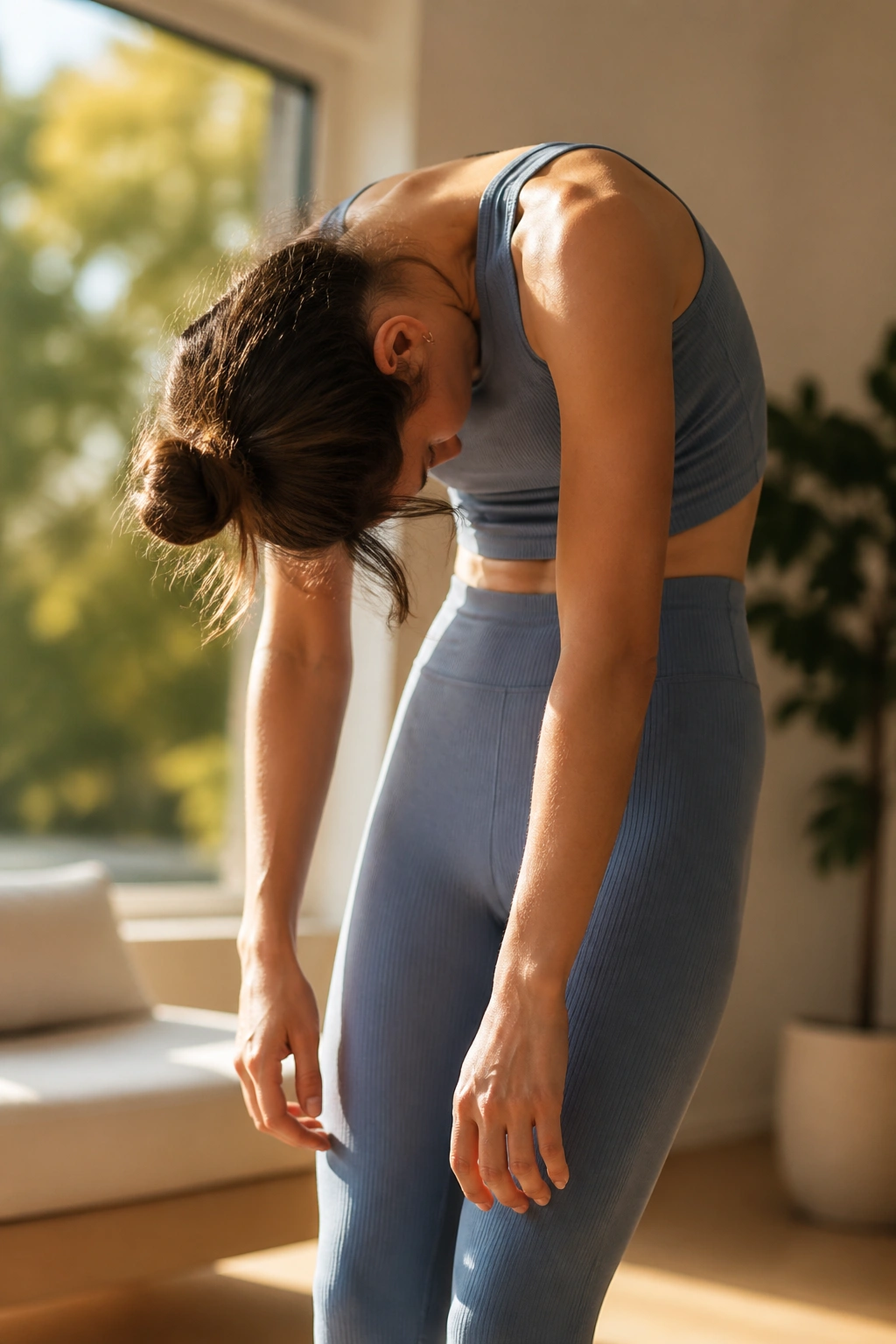
A good midday workout should wake you up without making you sweaty enough to resent your shirt. That balance is harder than it sounds, and Pilates handles it well when the sequence stays crisp.
Start standing with 1 minute of breath and shoulder rolls. Move to a standing roll-down for 1 minute, letting your head hang and your spine stack back up slowly. Then go to half-kneeling rotations for 2 minutes total, 1 minute per side. Add tabletop toe taps or dead bug for 2 minutes if you have a mat nearby, then finish with standing knee lifts and opposite-arm reaches for 2 minutes and a chest opener for the final 2 minutes.
This kind of routine helps when your brain feels foggy and your body feels flat. It shifts blood flow, clears the front of the hips, and gives the posture muscles a wake-up call without turning into a full training session.
Move slower than your urge tells you to. That’s the whole trick.
I like this one for busy women because it respects the middle of the day instead of trying to dominate it. Ten minutes, done cleanly, is enough to change the tone of the next few hours.
14. Hundred to Teaser Challenge
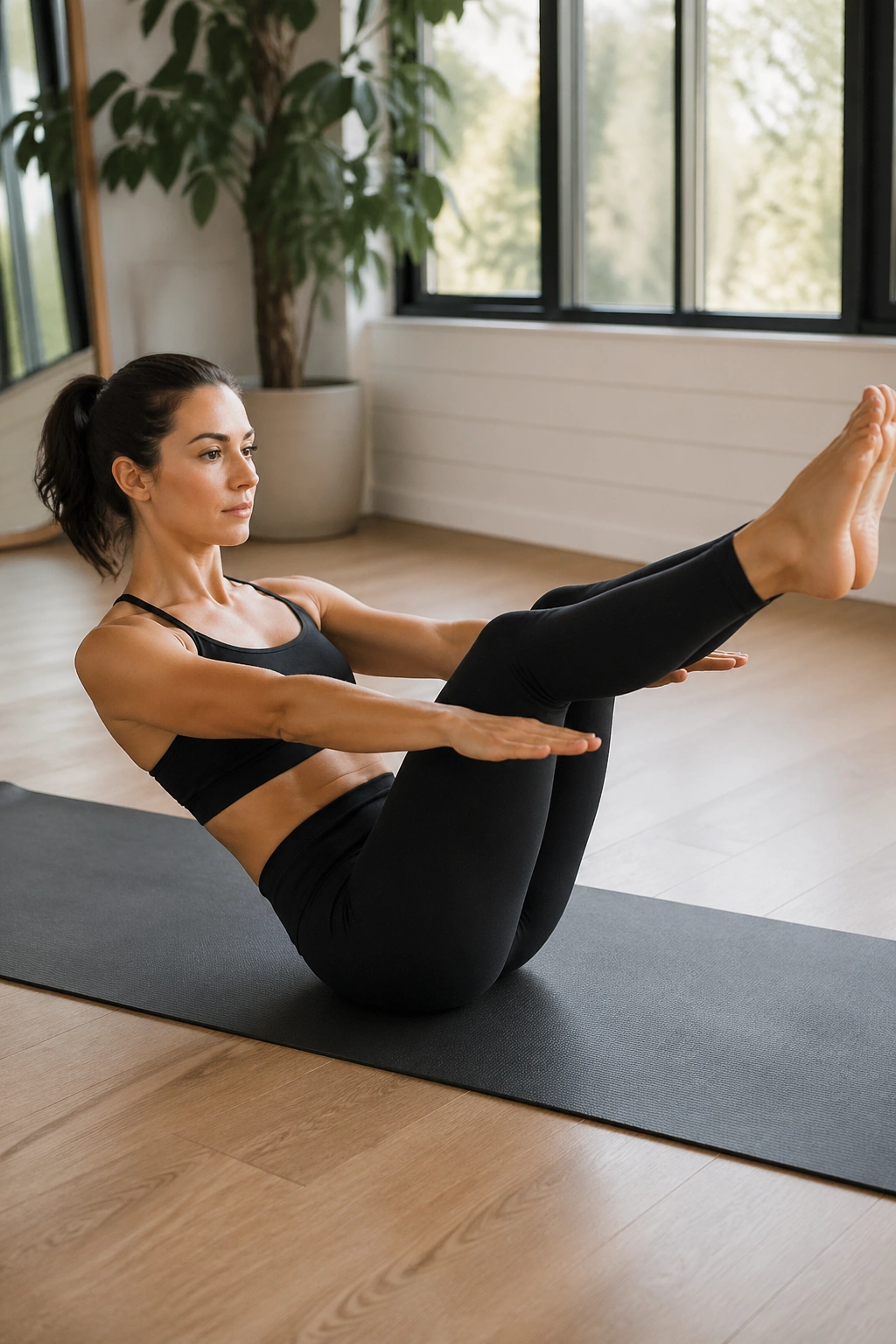
If you want a real challenge in ten minutes, stop chasing speed and load the control. That is where Pilates gets serious.
Start with the Hundred, either full or modified, for 1 minute. Then move into double-leg stretch for 1 minute, scissors for 1 minute, and crisscross for 1 minute. After that, do teaser prep or half teaser holds for 2 minutes, rolling back only as far as you can keep the spine organized. Add plank knee drives for 2 minutes and finish with roll-up variations for the last 2 minutes.
What makes it hard
- The neck has to stay calm.
- The low back has to stay contained.
- The breath has to keep working.
- The torso has to control the legs instead of chasing them.
That’s why this one is not for days when your form is already frayed. If your ribs pop up or your neck starts shouting, scale back immediately. Try one leg at a time, bend the knees, or keep the head down. There is no medal for forcing the full version.
This workout is short, but it has teeth. When it’s done well, you feel taller afterward, almost stacked from the inside out. When it’s done badly, you feel it in all the wrong places. That is a useful difference to know.
15. Evening Wind-Down Breath Flow
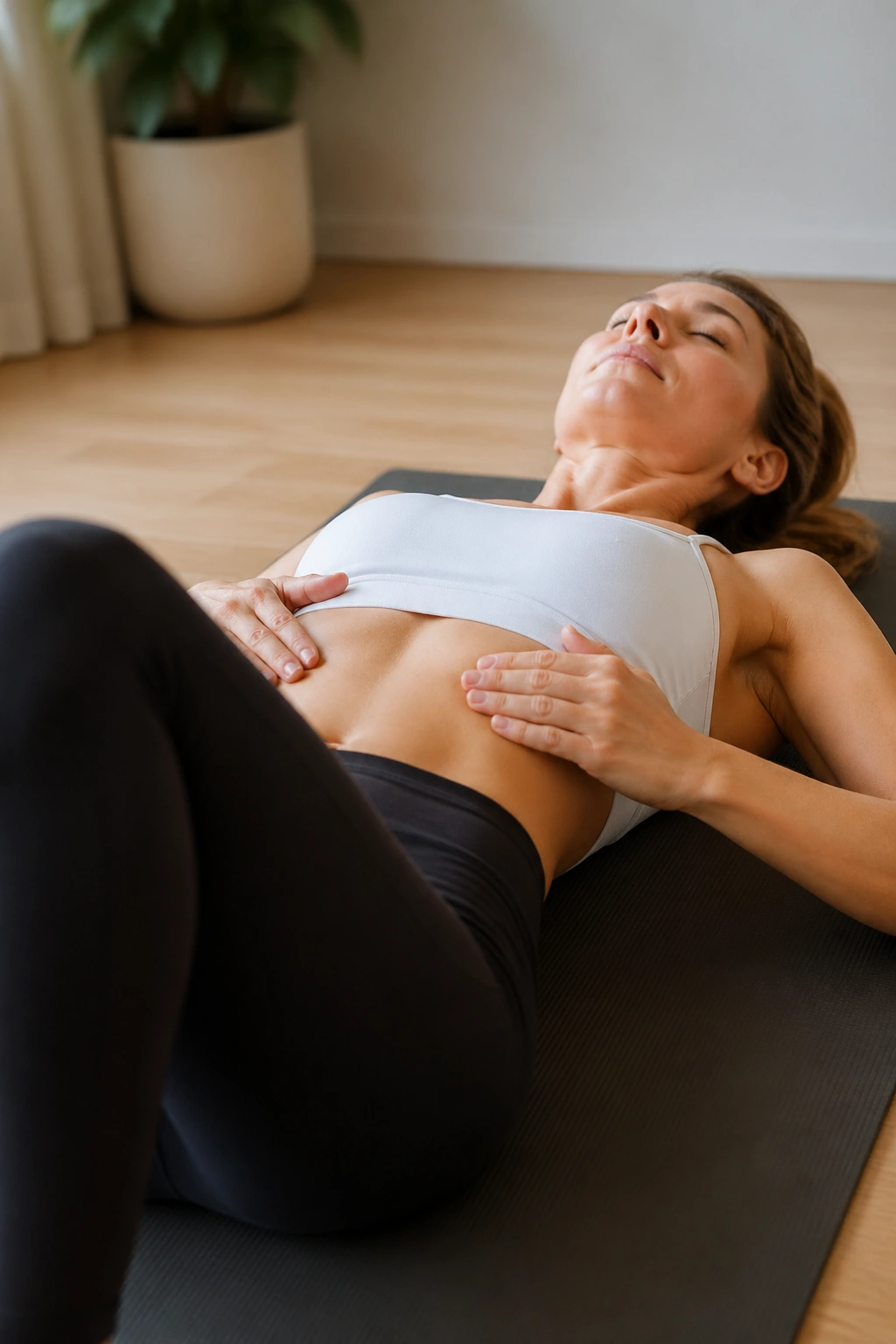
Some nights, the best Pilates workout is the one that makes your exhale longer.
Lie on your back with your knees bent and start with 90 seconds of deep breathing, letting the ribs widen into the floor. Then do windshield wipers for 1 minute, moving the knees side to side in a slow rhythm. Add a supported bridge for 2 minutes, but keep the lift low and the glutes soft. Follow that with figure-four stretch for 1 minute per side and open-book thoracic rotations for 1 minute per side.
Finish with 2 minutes of legs-up-the-wall breathing or a long supported rest on the mat.
This one is less about effort and more about downshifting. The body gets a signal that the day is ending, not just pausing. That matters more than it sounds like it should. If your shoulders live near your ears by dinner, keep this one close.
A ten-minute Pilates routine does not have to leave you winded to count. Sometimes the smartest choice is the one that loosens your hips, calms your breath, and makes sleep feel less far away. This is that routine.
