



Standing cardio routines for beginners work because they let you raise your heart rate without asking your joints to take a beating. No jumping. No getting down on the floor. No weird choreography that leaves you staring at the screen while your breathing goes sideways.
That matters more than people think. A lot of beginners do not quit because they dislike exercise; they quit because the first workout felt too fast, too bouncy, or too confusing to repeat a second time. Standing moves fix that. You can keep one hand on a wall, shorten the range, slow the pace, and still get a real cardio effect.
If you can march in place for 30 seconds, you can start. If you can swing your arms and stay tall, you already have enough to work with. The trick is picking movements that are easy to remember, easy to scale, and easy to stack into a 10- to 20-minute session without turning it into a circus.
So start simple, keep your shoulders loose, and let the rhythm build. The first routine is the one most people underestimate.
1. Standing Cardio Warm-Up March
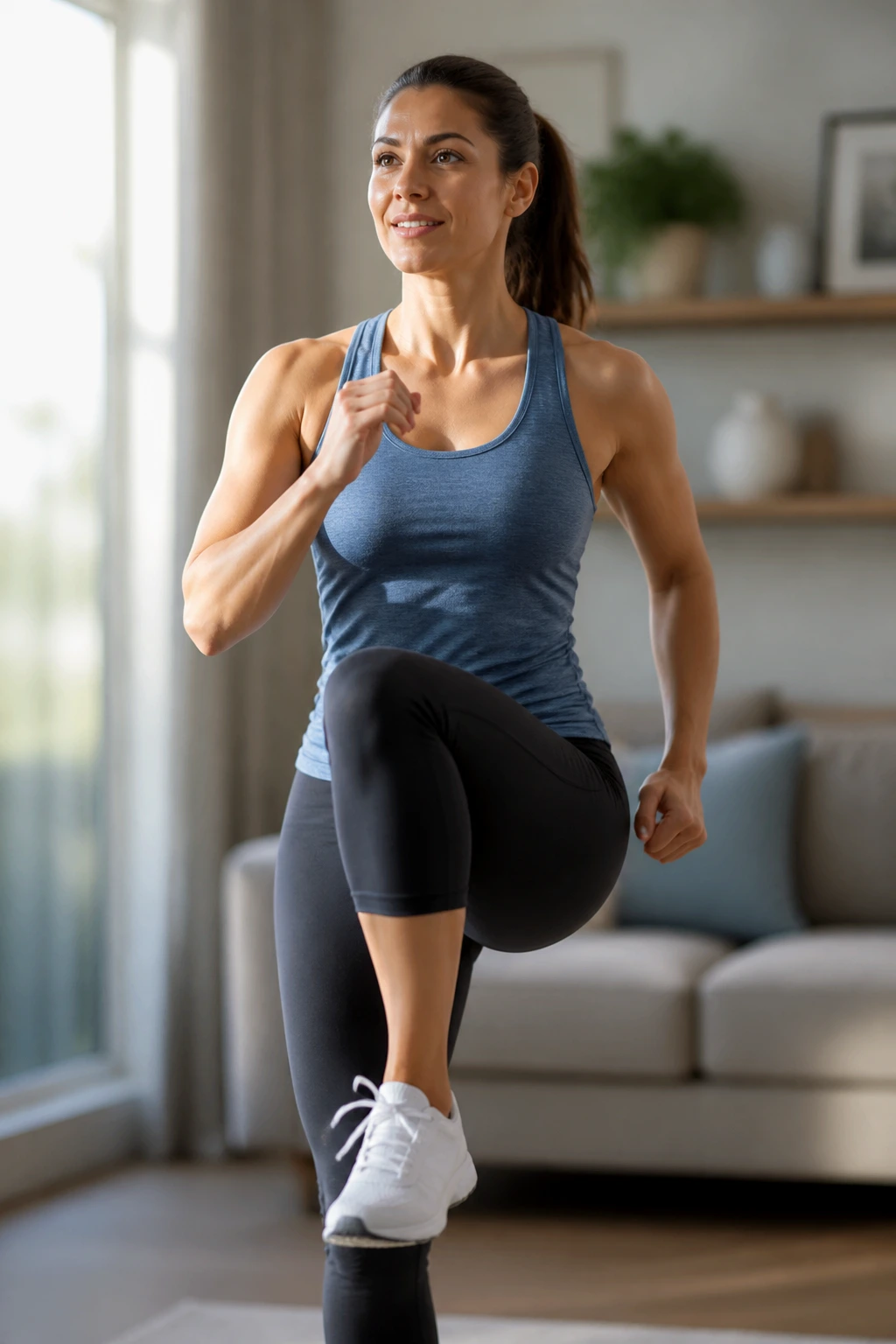
The humble march gets ignored because it looks too easy. That’s a mistake. A brisk standing march is one of the cleanest ways to wake up your body, lift your heart rate, and set a calm pace before you ask for more.
Keep your feet under you and lift each knee to a comfortable height, even if that’s only a few inches off the floor. Swing your arms naturally, not like a robot. Thirty seconds on, 15 seconds easy is a good starting rhythm, and you can repeat it for 3 to 5 minutes without feeling wrecked.
The best part is how adjustable it is. Want more challenge? Drive the knees a little higher and pump the arms harder. Need less? Keep the steps smaller and touch a chair or wall for balance. Small move. Real work.
2. Step-Jack Pulse
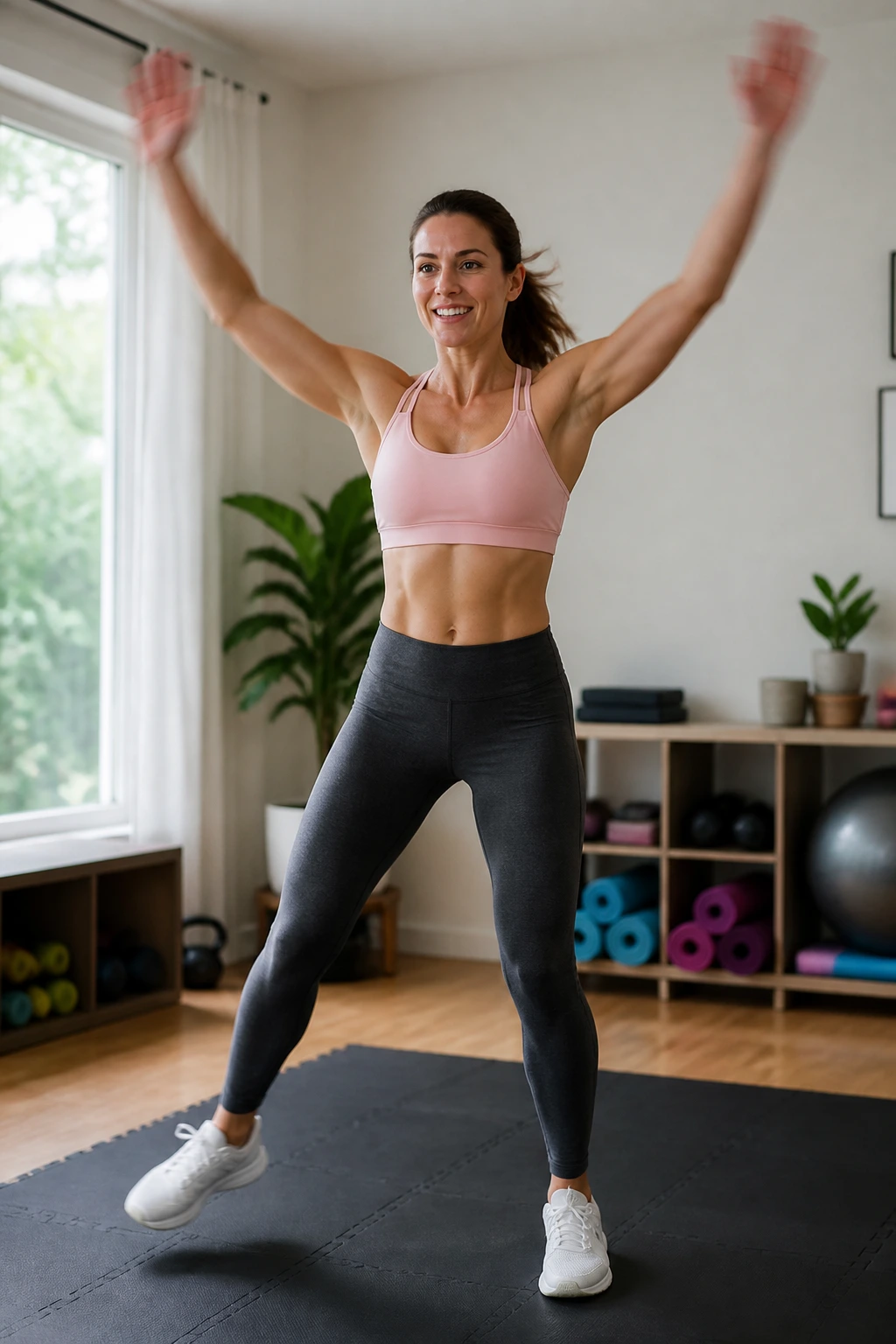
Can you get the jack feeling without the jump? Absolutely.
Step-jacks give you the side-to-side action of jumping jacks, only your feet stay grounded. Step one foot out, then the other, while your arms sweep overhead and back down. The movement is simple, but the timing matters. Keep the steps light and the landings quiet. If your shoes are slapping the floor, you’re probably moving too hard for a beginner session.
Why It Feels Easier
Traditional jacks ask for a quick hop and a bigger landing. Step-jacks spread the load out, which is kinder on the knees and a lot less intimidating. They also let you keep breathing under control, which is half the battle at the start.
Try 30 seconds of step-jacks, 30 seconds of marching, and repeat that pair 4 times. If your arms get tired first, shorten the overhead reach and stop just above shoulder height for a round or two.
3. Boxer Shuffle with Punches
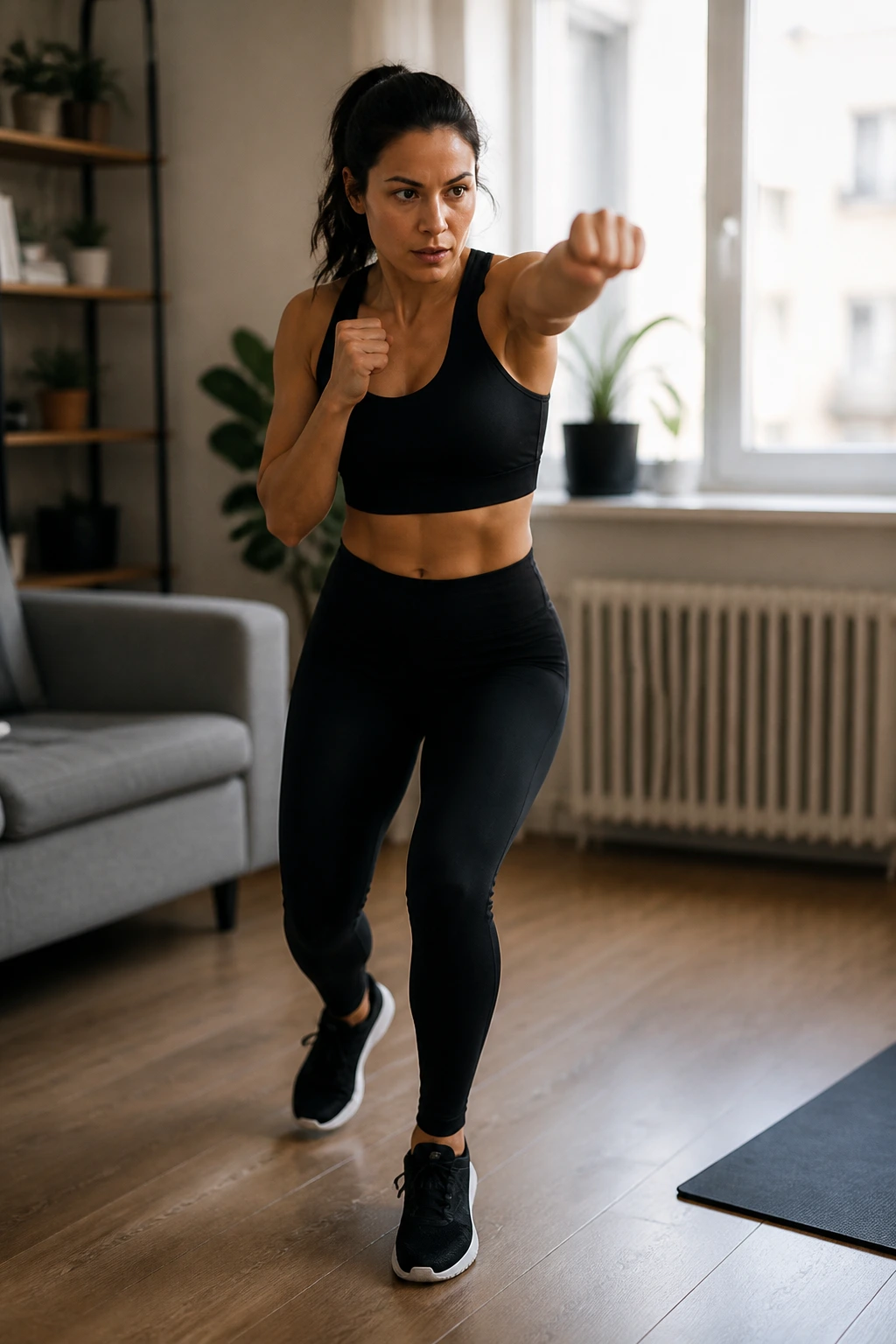
This one looks light and sneaky until your calves start talking back.
Boxer shuffle with punches stays on the feet the whole time, but it adds enough speed to make the workout feel alive. Keep your feet close to the floor, shift your weight from side to side, and throw straight punches at chest height. You do not need a huge bounce. In fact, beginners usually do better with a tiny shift and quick hands than with a big springy shuffle.
A good pattern is left-right-left-right for 20 seconds, then a quick double jab for 10 seconds. Repeat that for 3 to 5 minutes. Keep the core braced so you are not leaning back every time you punch. That’s the bit most people miss. The punch comes from the shoulders and torso, not from flinging your whole body around.
4. Knee Drives with Overhead Reach
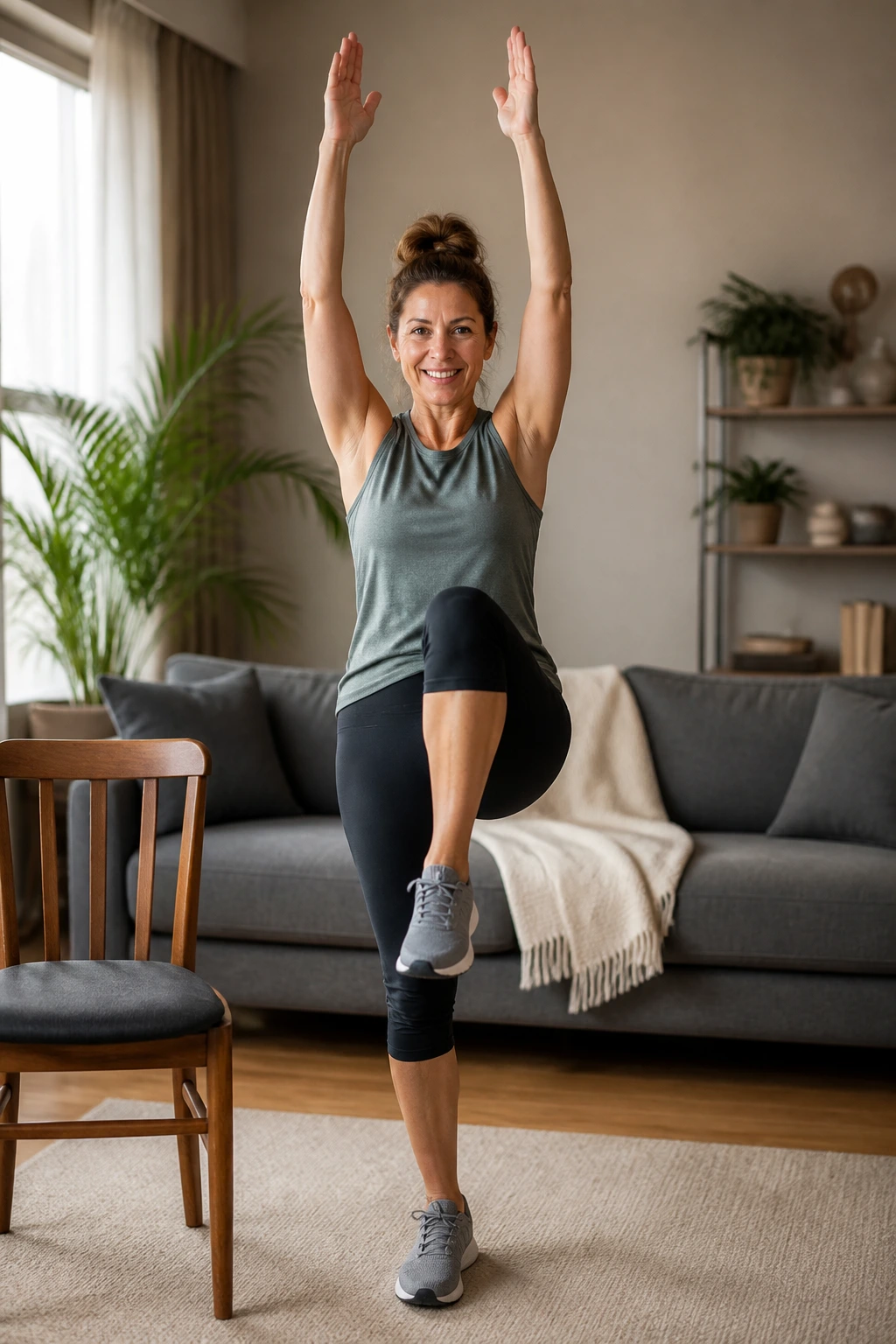
Knee drives are one of those moves that can look plain and still hit hard.
How to Do It
Stand tall, lift one knee toward your chest, and reach both arms overhead at the same time. Lower with control, then switch sides. The magic is in the rhythm: knee up, reach high, lower softly, change sides. If you want more cardio, speed up the switch. If you want more balance work, pause for half a second at the top.
What to Watch For
- Keep the standing leg soft, not locked.
- Don’t shrug your shoulders.
- Bring the knee up only as high as you can keep your torso tall.
- Use 20 to 30 seconds per set and rest for 15 seconds.
A chair nearby helps a lot the first few times. No shame in that.
5. Side Step Touch with Arm Sweeps
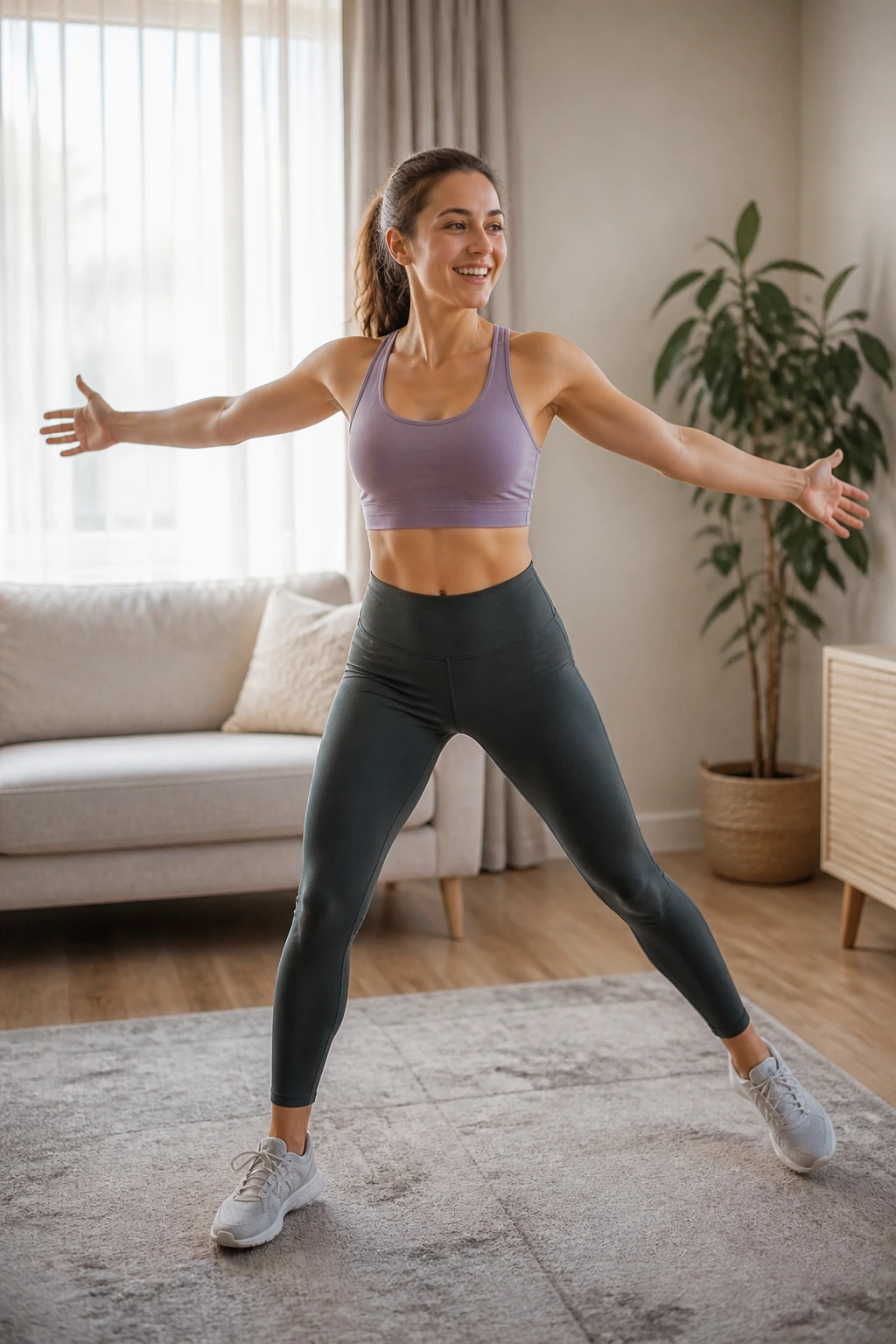
Picture this: you’re in a living room, there’s not much space, and you want to move without making a scene. This is the routine.
Step to the right, touch the left foot in, then step to the left and touch the right foot in. At the same time, sweep your arms across your body or out to the sides in a big easy arc. The move stays low-impact, but the side-to-side travel keeps your body working and your pulse rising.
I like this one for beginners who get stiff fast. The side steps open the hips a little, and the arm sweeps stop everything from feeling cramped. Do 45 seconds of steady side steps, then 15 seconds of marching in place. Repeat 4 times. If you want extra work, lower your stance by a few inches and keep the chest lifted.
6. Heel Digs and Forward Presses
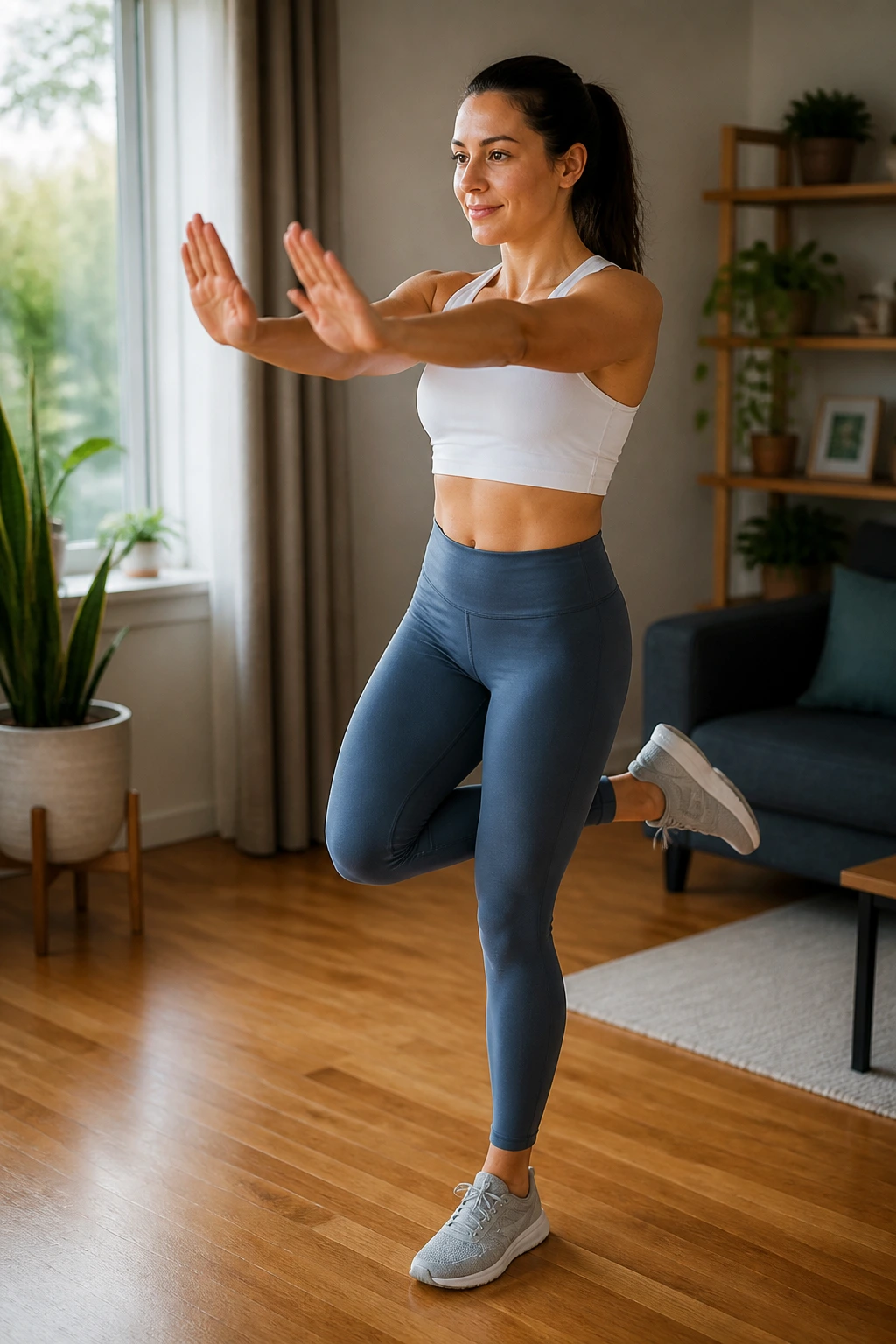
Heel digs are old-school, and I mean that in the best way. They feel friendly, almost lazy at first, then they catch you when your arms start pushing harder.
Extend one heel forward, tap it lightly, and bring it back under you. As the heel goes out, press both hands forward like you’re pushing the air away. Switch sides every beat or every two beats. The forward press wakes up your shoulders and upper back, which is useful if you sit a lot during the day.
A nice beginner pattern is 8 heel digs per side, then 8 quicker taps per side. Keep the toes up when the heel reaches out, and keep your core from slumping backward. That little posture detail matters. It keeps the move from turning into a lazy sway.
7. Shadow Boxing Combo Rounds
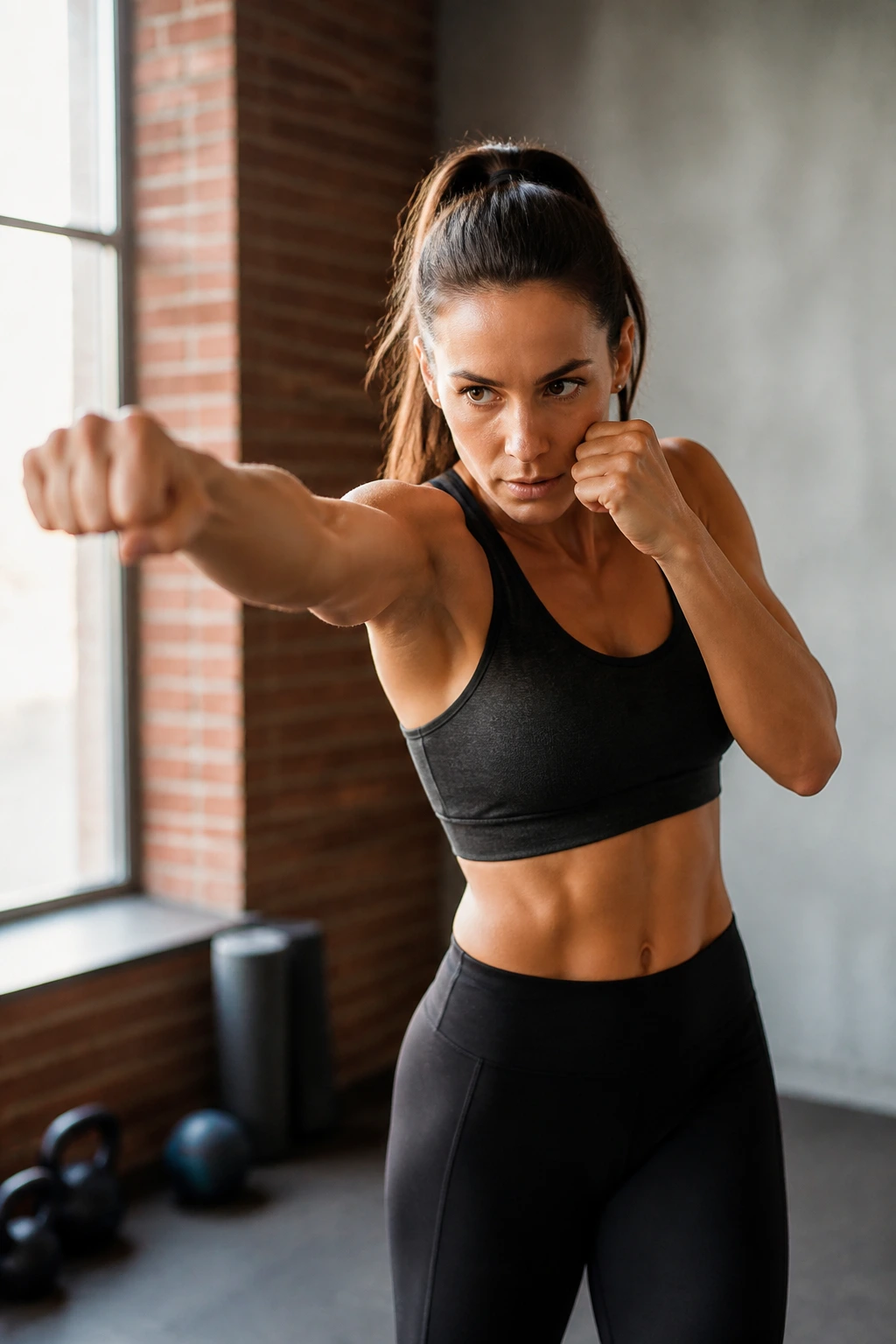
Compared with jumping rope, shadow boxing gives you the same sense of speed without the constant pounding.
Start with your feet hip-width apart. Throw a jab-cross, then add a hook if you feel steady. You can keep your feet planted or add a tiny march between punches. The point is not to look fierce. The point is to keep your hands moving and your breathing honest.
A simple round works well: 20 seconds jab-cross, 20 seconds jab-cross-hook, 20 seconds easy march. Repeat for 3 rounds. Beginners often punch too hard and lose shape, so keep the fists relaxed and stop each punch just in front of your face or shoulder line. Harder punches are not better here. Cleaner punches are.
8. Low-Impact Skater Steps
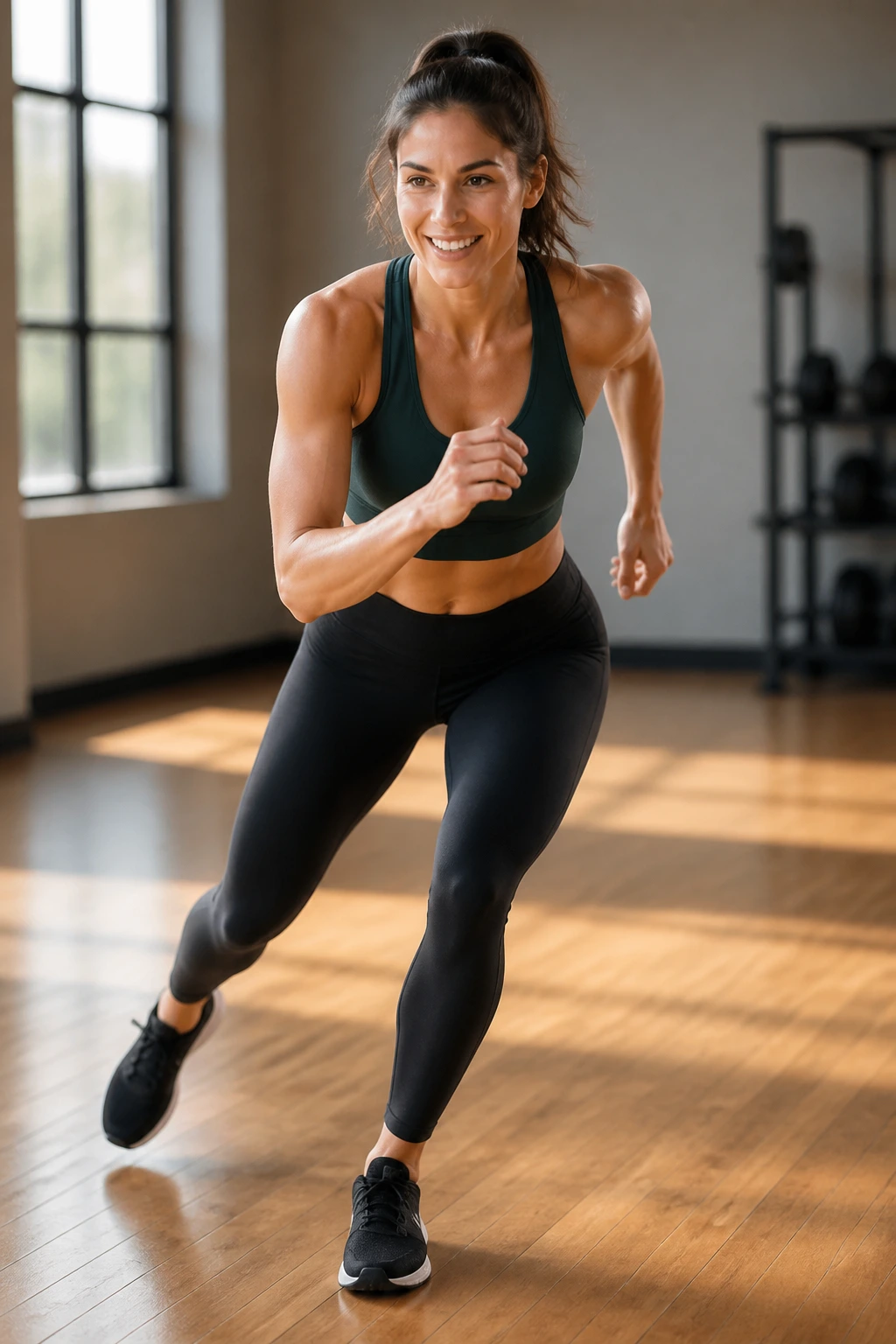
Skaters usually make people think of jumping sideways. You can skip that part.
Step your right foot out to the side, then bring the left foot behind it with a light tap. Switch sides and keep the motion smooth, almost like skating without leaving the floor. Add a small reach toward the outside knee if your balance is solid. If not, keep the hands at chest level and just pump the arms.
The side step is the engine. The tap behind is the garnish. Keep your knees soft and your torso slightly forward so the move feels athletic, not stiff. Try 30 seconds steady, 15 seconds faster, then rest. Two to four rounds is enough for a beginner session.
9. Grapevine Walk and Clap
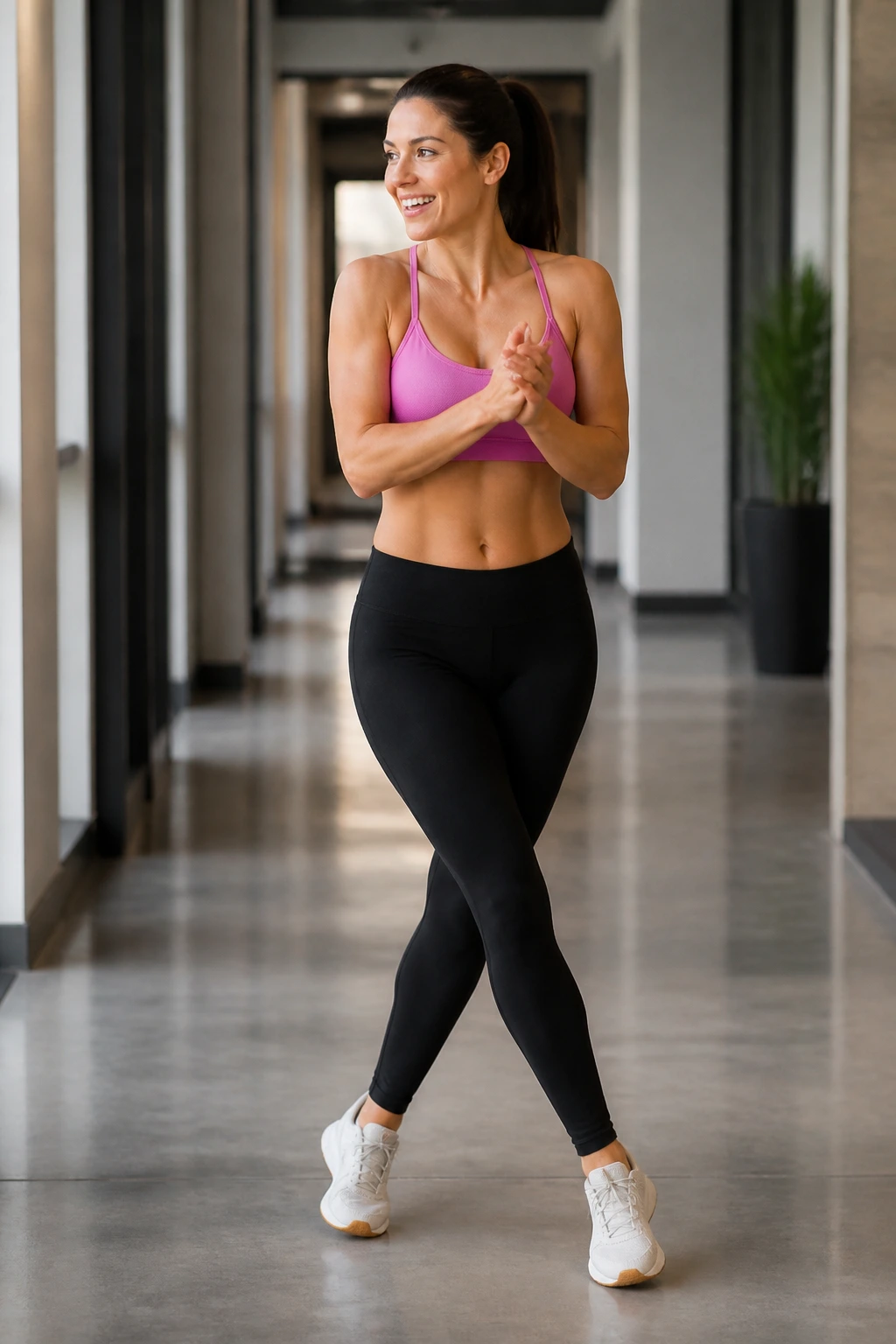
Grapevines are the sort of move that looks fancy until you break it into pieces.
The Rhythm
Step right, cross the left foot behind, step right again, then touch the left foot in. Reverse the pattern going left. If that feels tricky, keep the feet moving first and forget the clap. The clap is optional. The footwork is what counts.
When to Slow Down
If you feel twisted or off-balance, shorten the steps and stay closer to a straight line. The move still works. It doesn’t need to be broad to be useful. Use 20 seconds right, 20 seconds left, then march for 20 seconds to reset. Three rounds is plenty for a first pass.
10. Standing Oblique Crunches
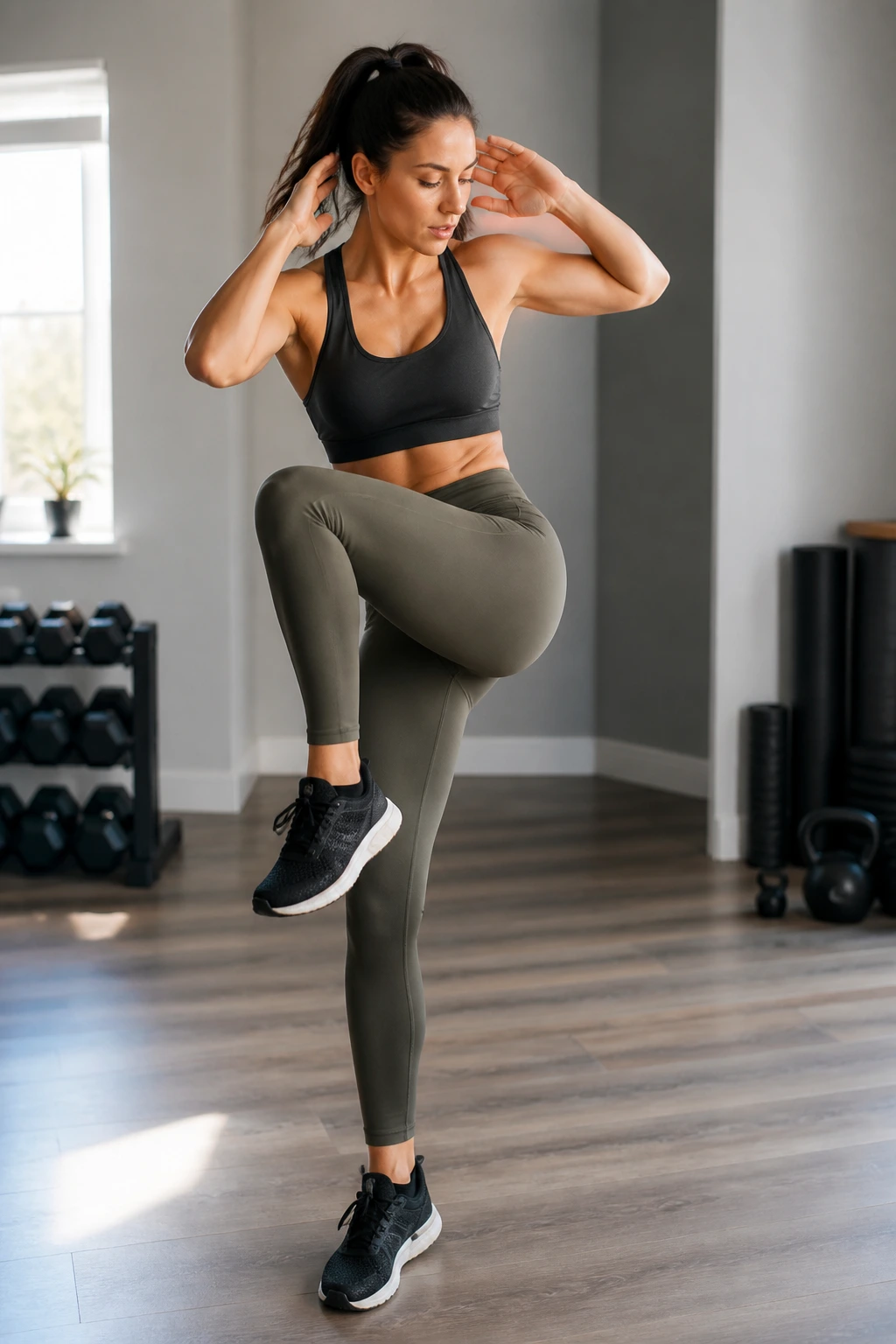
Standing oblique crunches bring the sideways squeeze without the floor work.
Lift your right knee toward your right elbow, then lower and switch sides. Keep the elbow and knee moving toward each other without hunching the shoulder forward. The torso should stay tall, and the movement should feel like a side crunch, not a collapsed twist.
A lot of people rush this move. Don’t. Slow knee-to-elbow reps build more control, and control makes the faster version cleaner later. Start with 10 reps per side, then pick up the pace for 20 seconds. If balance is shaky, tap the raised foot down lightly between reps. That tiny reset helps more than forcing a perfect rhythm.
11. Toe Tap Pyramid
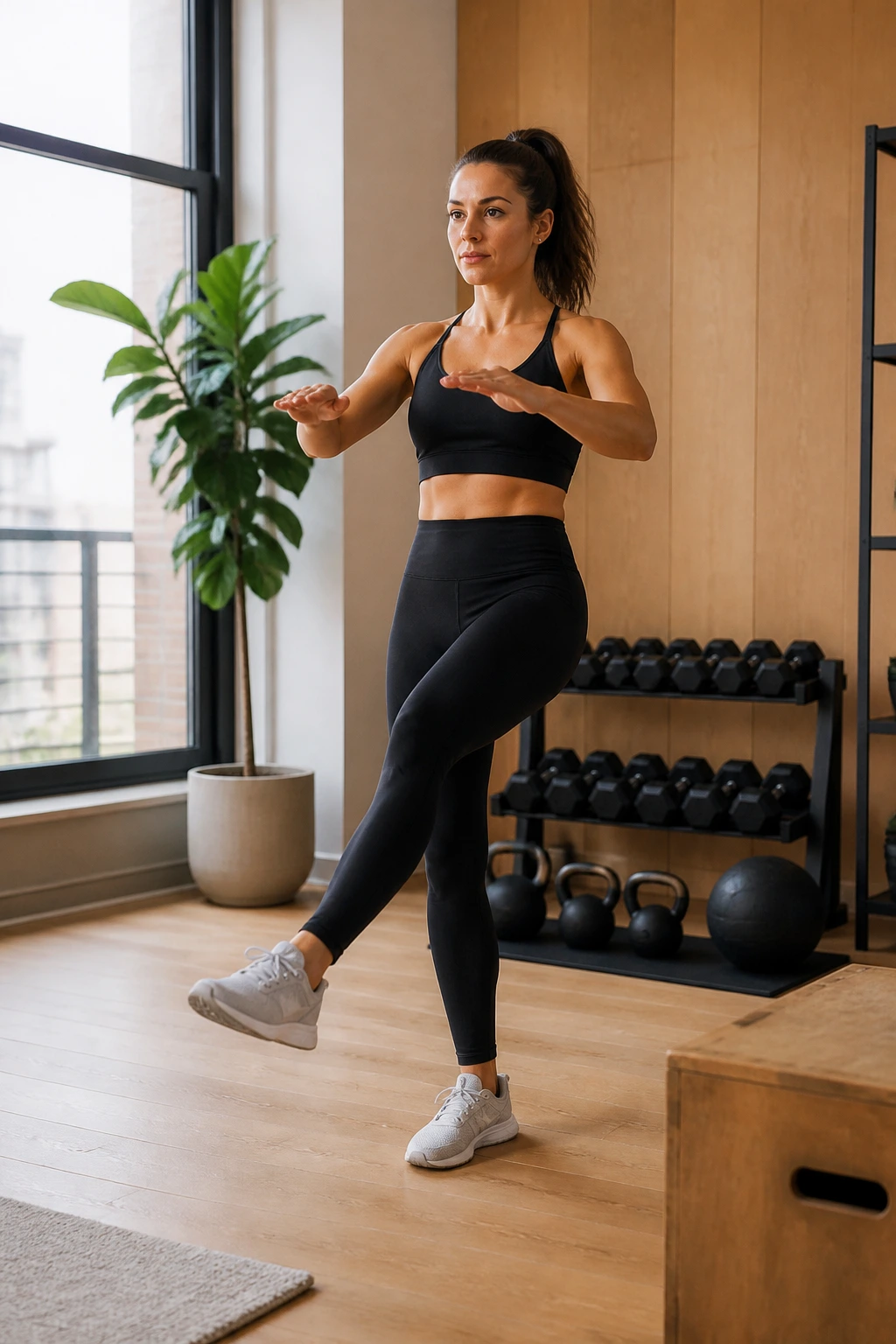
This is the one I’d use in a cramped room or while watching a show. It’s easy to learn, easy to repeat, and it sneaks up on you.
Start by tapping your right toe forward, then center, then left toe forward, then center. After that, tap out to the side, then back in. Build the pattern in small layers: forward taps first, then side taps, then a little speed. The “pyramid” part means you increase the speed in steps, then back off.
Try this:
- 20 seconds slow taps
- 20 seconds medium taps
- 20 seconds quick taps
- 20 seconds easy march
That structure keeps your breathing from spiking too hard. It also helps beginners feel the difference between controlled and rushed.
12. Front Kicks and Pull-Downs
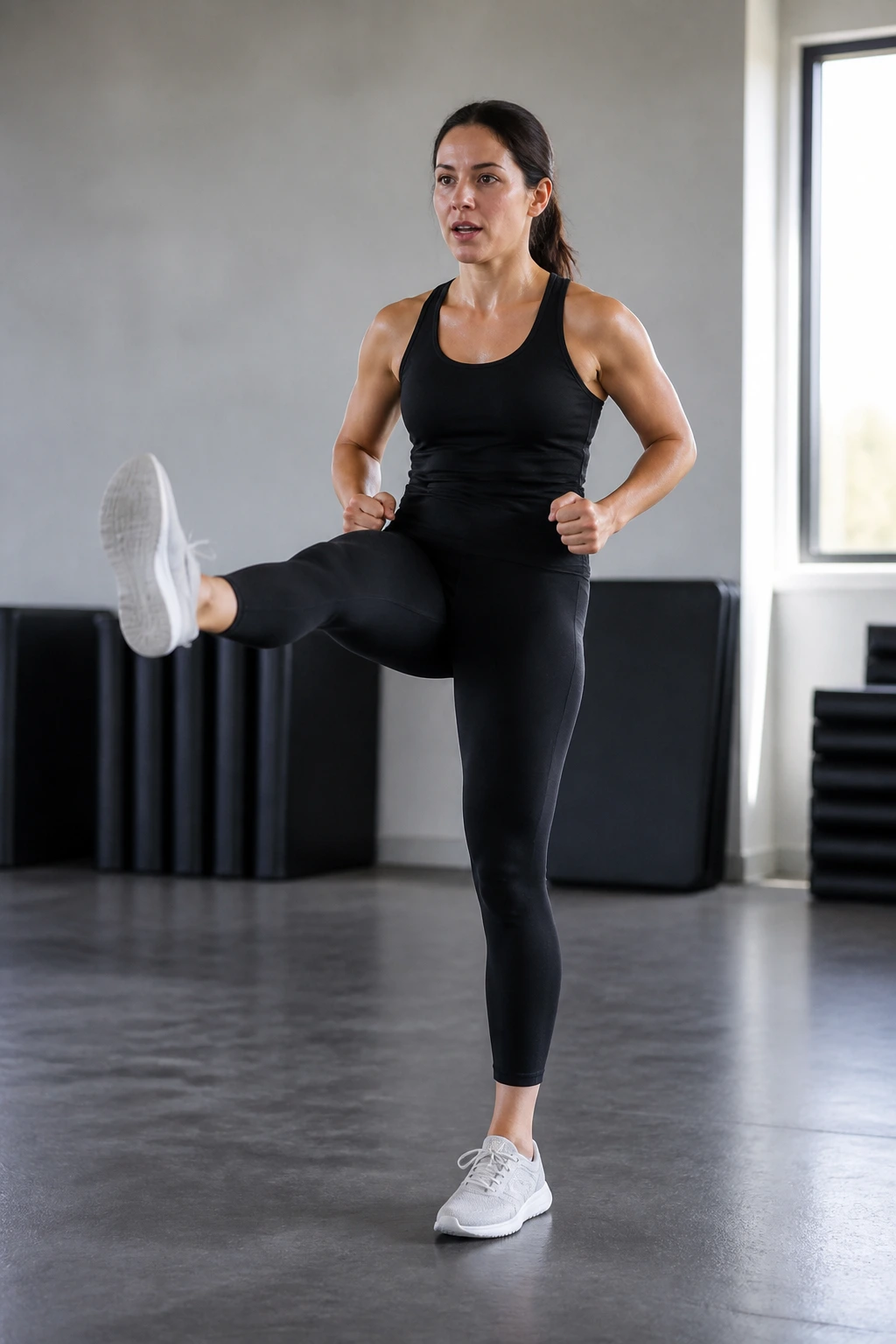
Front kicks don’t need to be high to count. Low ones are fine, and often better.
Kick one leg forward with a soft knee, then pull both hands down as if you’re drawing something from overhead to your waist. Switch sides. The arm pull adds a little back and shoulder work, which makes the routine feel fuller than a simple kick drill.
Keep the kick below hip height unless your balance is solid. A small kick done well beats a high kick done badly. That’s not a motivational line; it’s just good mechanics. Use 30-second sets, and if your lower back starts arching, shorten the leg and tighten the belly a bit more.
13. Fast Feet March
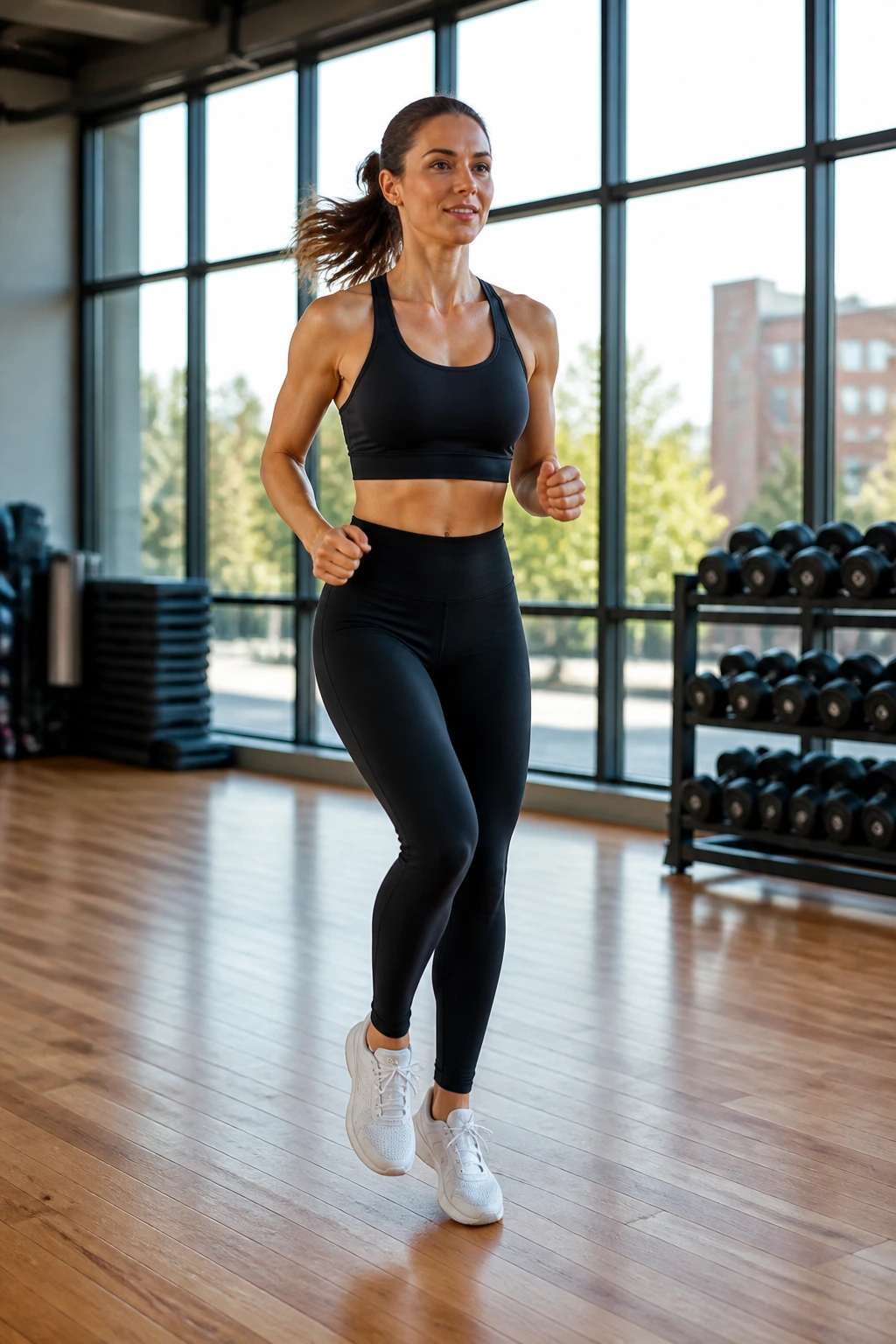
Fast feet can sound intimidating because people picture sprinting in place. Not here.
Stay tall, take quick tiny steps under your hips, and let the arms pump lightly at your sides. Your feet should barely leave the floor. The motion is short, quick, and controlled. That’s enough to elevate your heart rate without turning the workout into a hop-fest.
You can build this one in layers: 10 seconds steady, 10 seconds faster, 10 seconds steady again. Then walk in place for 20 seconds. Beginners like this because it feels sharp without being dramatic. And that matters. A routine you’re not afraid of is the one you’ll repeat.
14. Standing Cross-Country Skiers
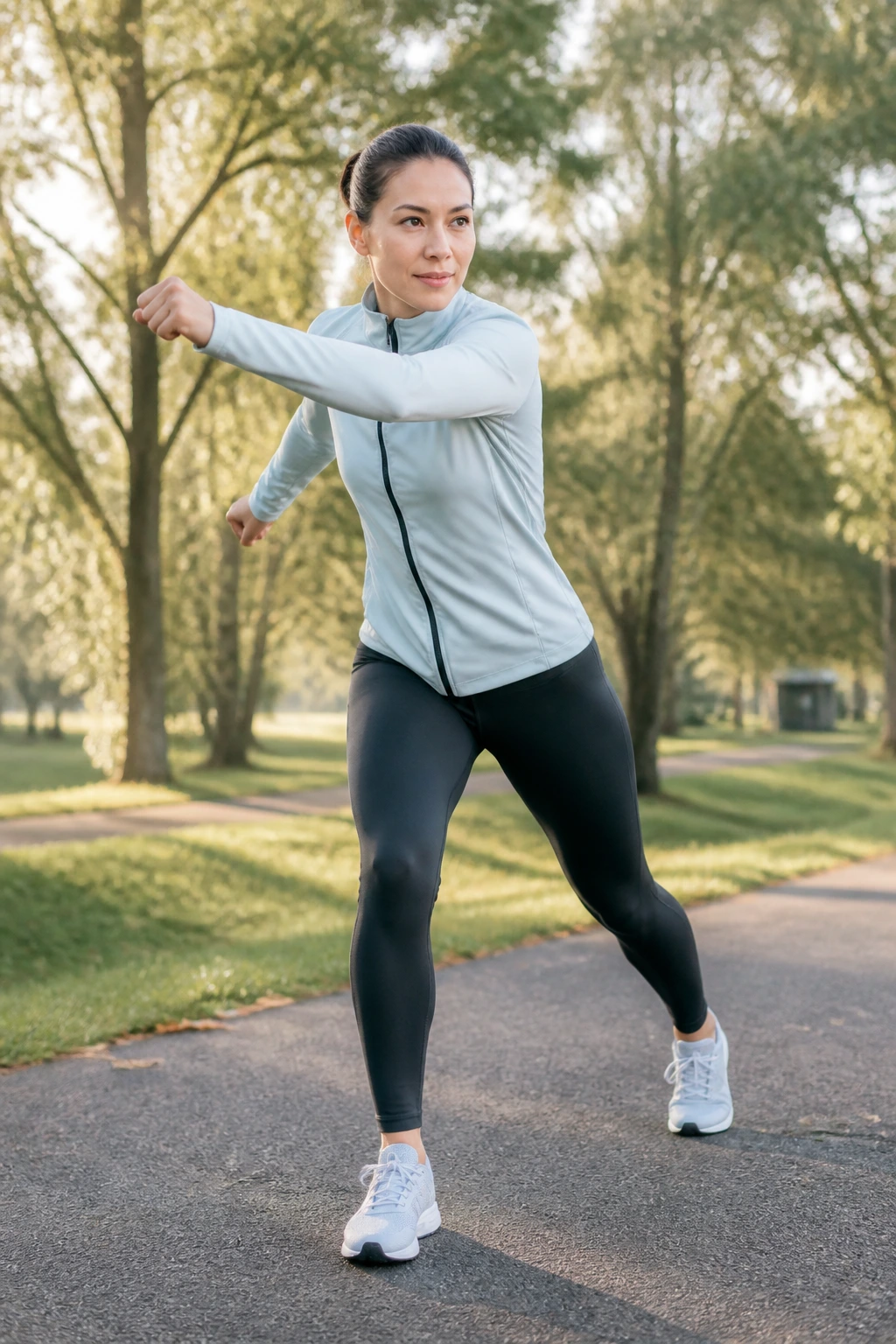
Want a move that feels smooth instead of frantic? Use the skier pattern.
Step one foot slightly forward as the opposite arm reaches forward, then switch sides like you’re gliding. The feet stay grounded, but the upper body does real work. The arms swing across the body, and the torso follows just enough to keep the motion flowing.
How It Should Feel
You should feel a gentle pull through the sides of your body and a warm build in your thighs. If your shoulders are creeping up toward your ears, slow down. If your feet are getting too wide, bring them in. Two-minute blocks work well here, broken into 30-second chunks if you’re new to exercise. Smooth wins. Always.
15. Side Knee Lift and Reach
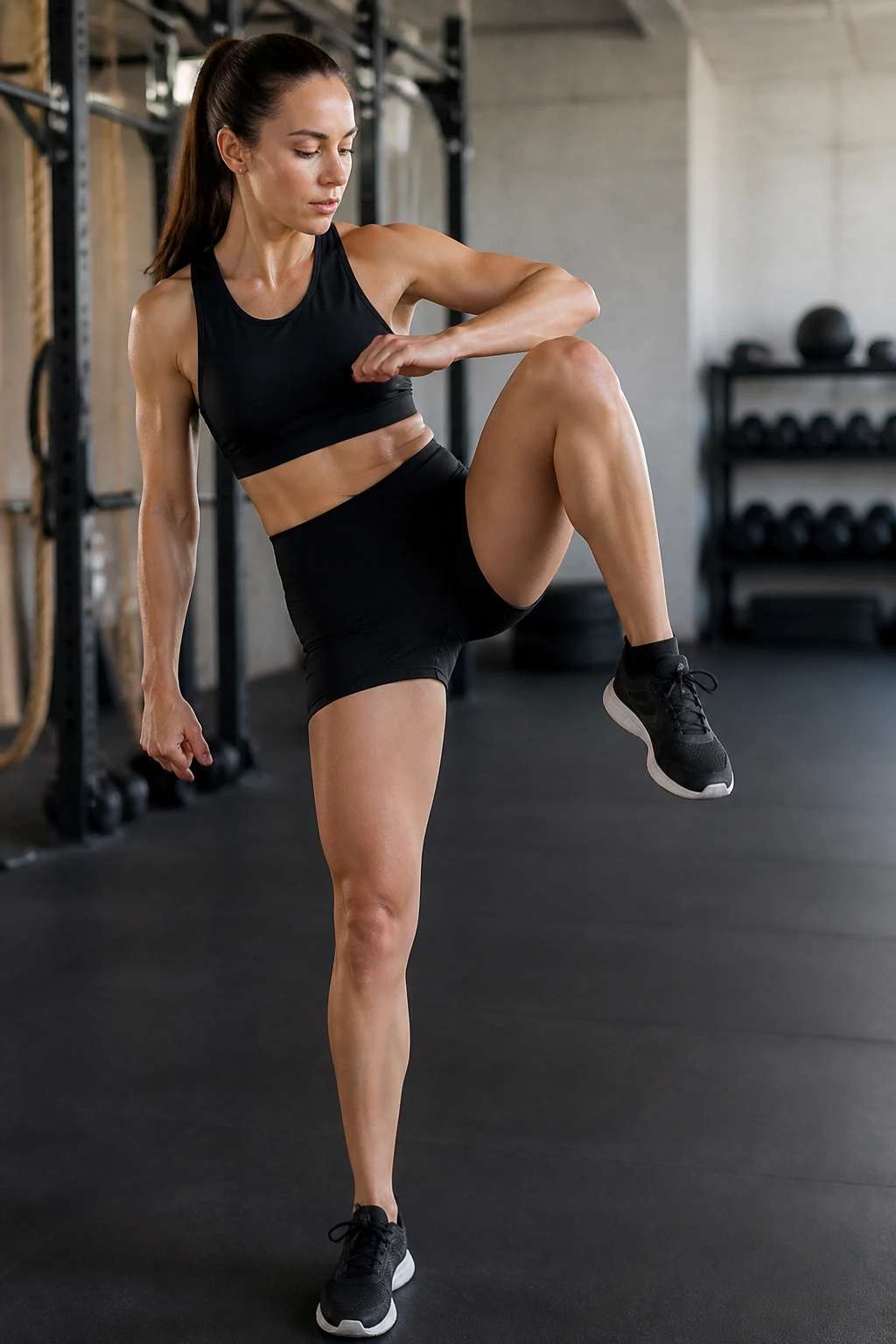
This is one of my favorite beginner moves because it feels organized. Left side works, then right side works. No guessing.
What to Do
Lift one knee out to the side while the same-side elbow or hand reaches toward it. Lower with control, then switch. Keep the supporting foot planted and the chest open. The sideways lift brings the obliques into play, and the reach helps you stay honest about posture.
A Small Cue That Helps
Think “up and out,” not “up and forward.” Forward usually turns into a twist and a slump. Out keeps the torso cleaner. Aim for 8 to 12 reps per side, then march for 20 seconds before repeating. If you want a harder round, speed up the lower phase a little. Just a little.
16. Punch-Overhead Combo
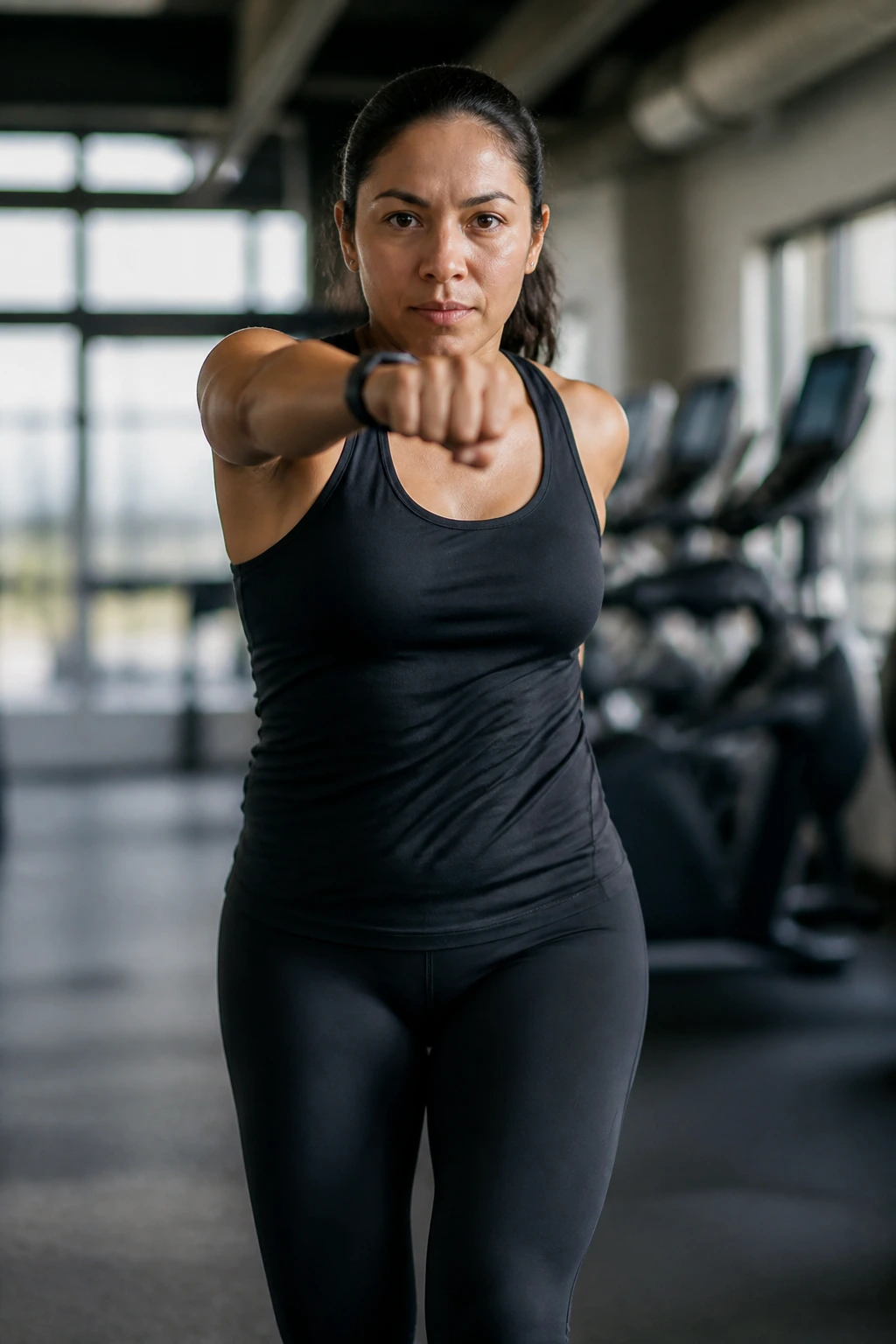
A lot of beginners punch only forward. Mixing in overhead reaches changes the whole feel.
Throw two punches at chest height, then reach both arms overhead and lower them slowly. The overhead reach brings in the shoulders and makes you lengthen through the torso. It also gives you a nice reset between punch bursts. That reset matters more than people think.
Keep the feet marching lightly under you while the arms do the work. The march stops the routine from getting too upper-body heavy. Try three rounds of 40 seconds work, 20 seconds rest. On the final round, shorten the punches and keep the reach tall. That usually keeps form cleaner when you’re tired.
17. Step-Back Taps with Arm Drive
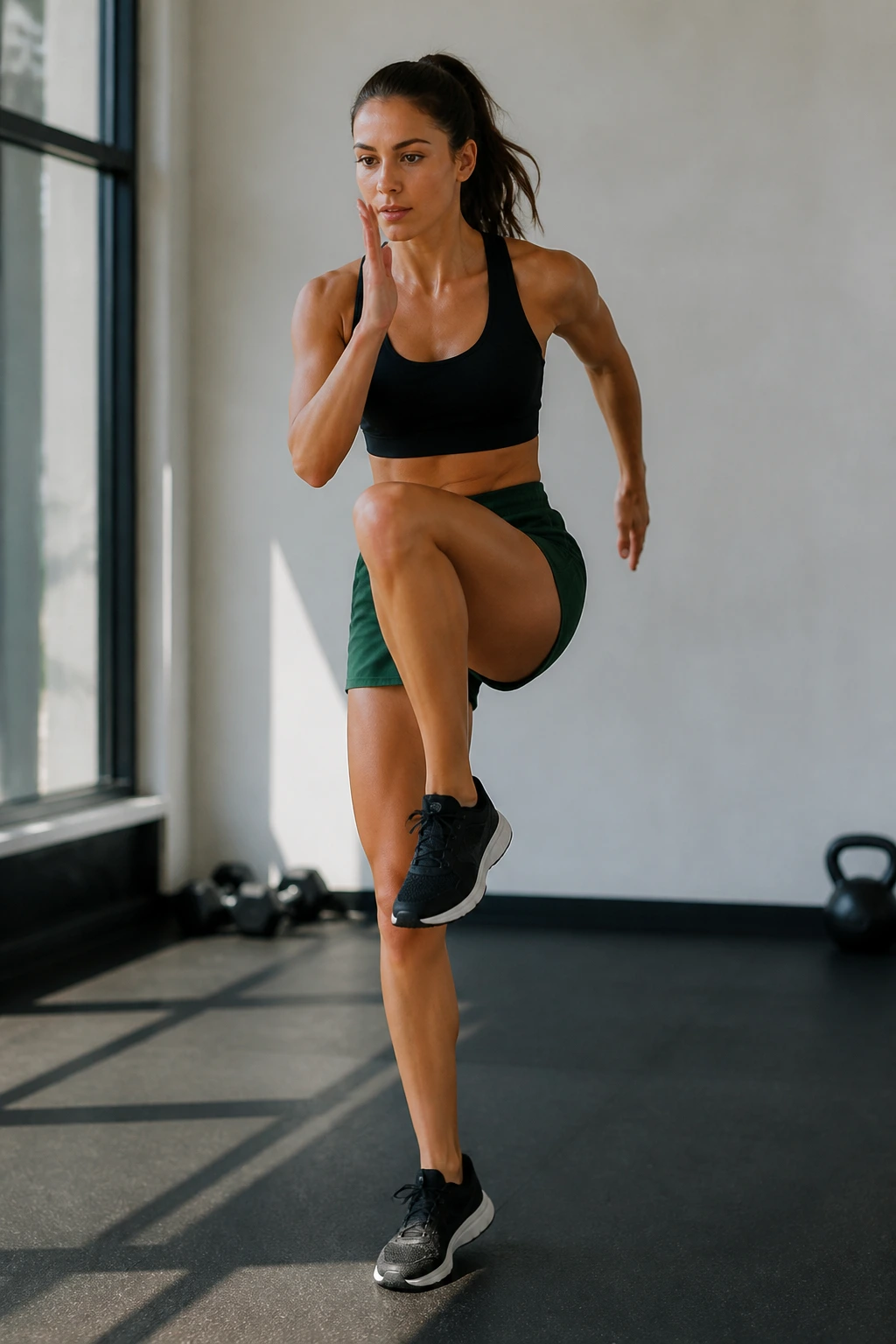
Step-back taps are good for anyone who wants a cardio move that feels grounded.
Step one foot back, tap the toe lightly, then drive that same knee forward as you return to center. At the same time, swing the opposite arm forward in a simple drive motion. The move should feel like a controlled march with a little more length.
Bullets help here because the cues are simple:
- Step back only 1 to 2 feet.
- Keep the front heel down.
- Pull the knee forward with control.
- Work for 30 seconds per side.
The step-back gives your hips some room, and the arm drive keeps the heart rate up. It’s a good choice on days when you want movement without a lot of bounce.
18. High-Knee Hold and Pulse
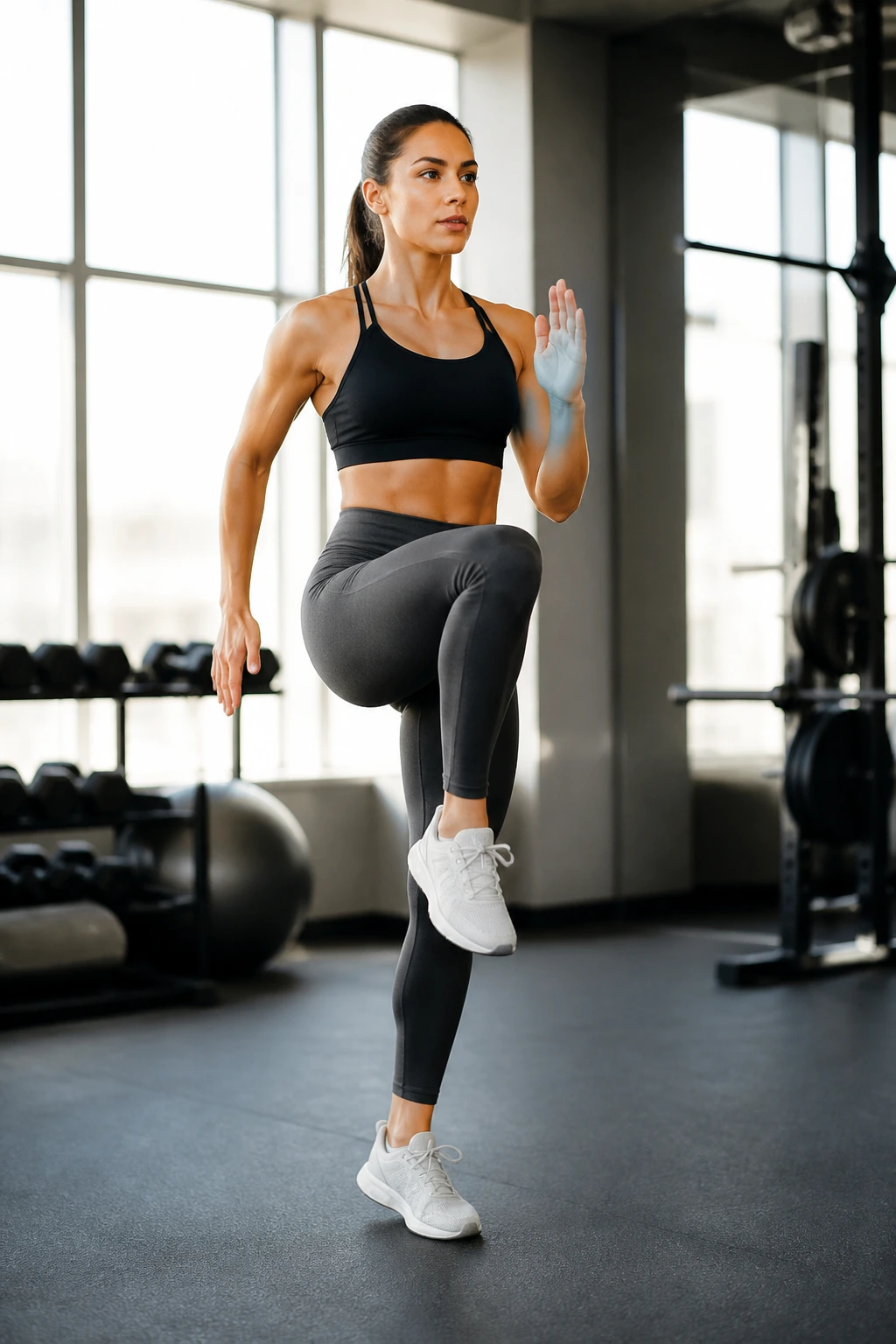
High knees can be rough if you try to do them fast. The hold version is kinder and, honestly, smarter for beginners.
Lift one knee to a comfortable height, hold it for one beat, pulse the opposite arm, then switch. You are not racing. You’re training your balance, hip control, and breathing all at once. The pulse keeps the move lively, but the hold keeps it tidy.
Unlike classic high knees, this version lets you work on shape first. Once the holds feel steady, you can shorten them to half a beat and pick up the pace. 20 seconds on, 20 seconds easy march is a good starting point. If your hips feel tight, keep the knee lower and the torso more upright. That’s the right tradeoff.
19. Salsa Step Cardio
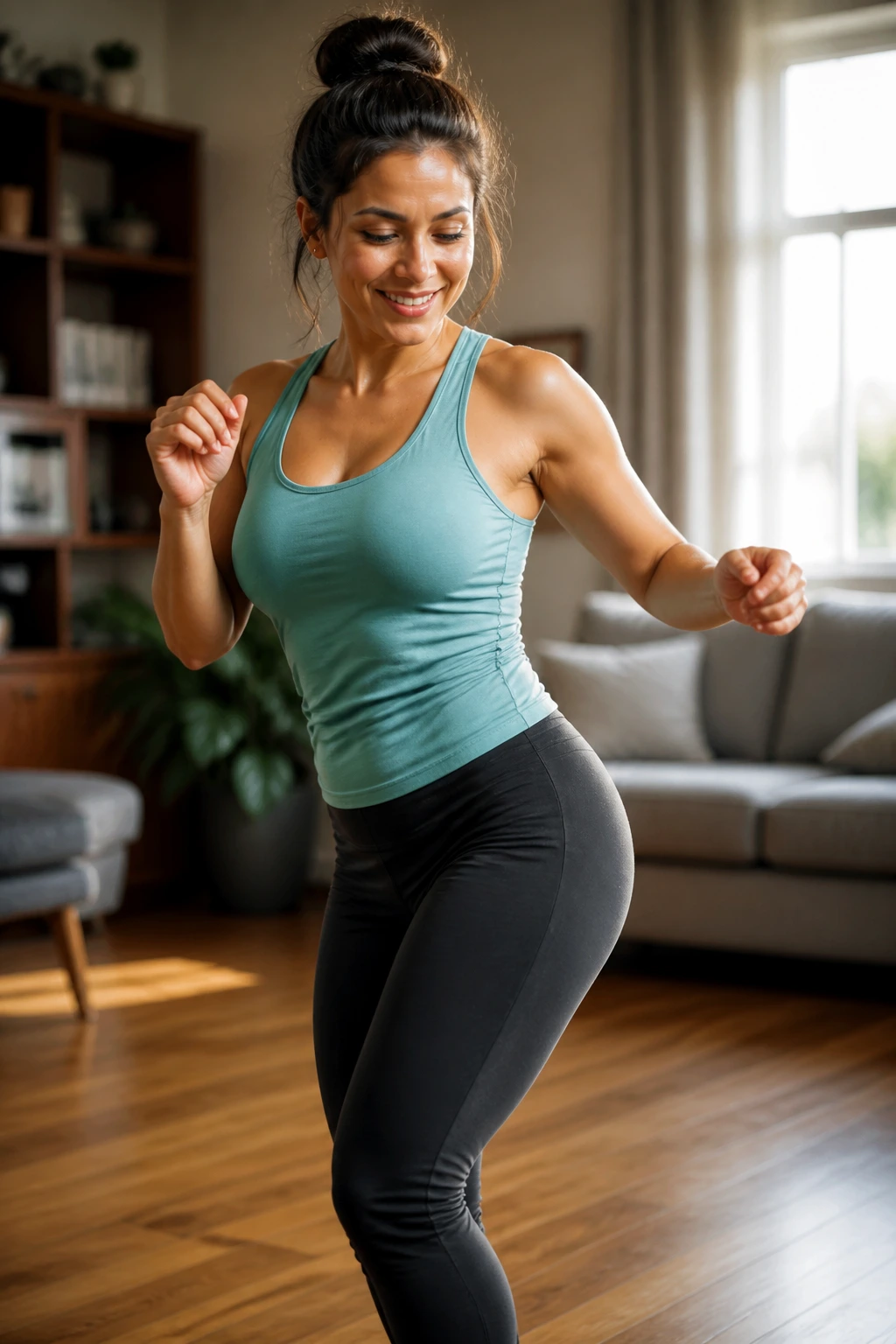
Put on a song with a decent beat and this one basically takes care of itself.
Step right, bring the left foot in, then step back with the left foot and bring the right foot in. Add a little hip sway if it feels natural, but don’t force it. The real value here is rhythm. Once your feet start following the count, the workout stops feeling like counting reps and starts feeling like movement.
I like this routine for beginners who get bored fast. The steps are simple, the music does half the coaching, and the pace can stay light. You can do 1 minute of salsa steps, then 30 seconds of marching in place. Repeat that 3 or 4 times. If you keep getting crossed up, shorten the step and keep your eyes forward instead of down.
20. Alternating Front Tap and Chop
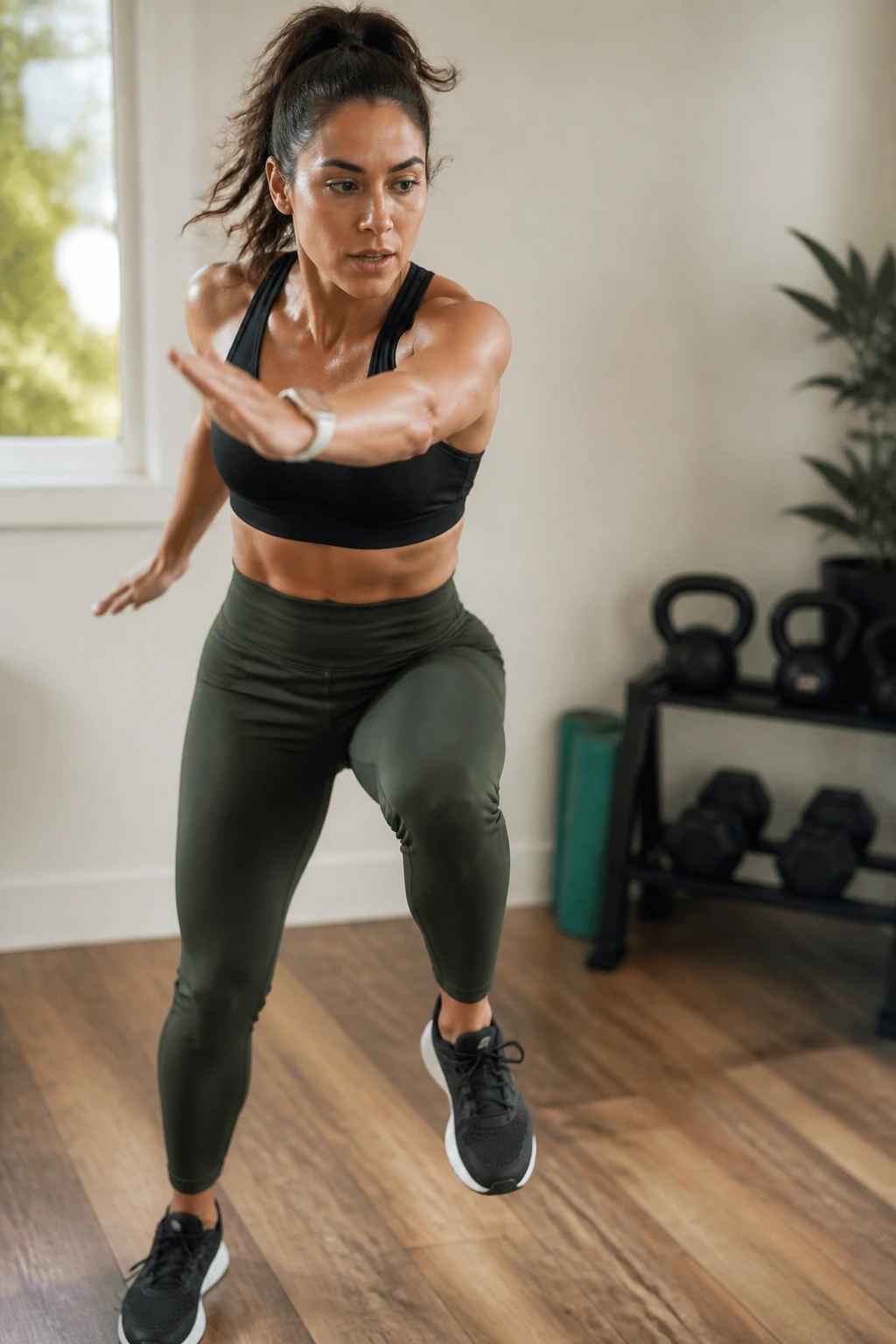
This move looks simple until the arms and legs start talking to each other.
Quick Setup
Tap the right foot forward while both hands chop diagonally down toward the left hip. Switch sides and keep the motion crisp. The chopping action adds a little torso rotation, which makes the move feel more athletic than a plain toe tap.
What to Check
- Keep the step small.
- Rotate from the ribs, not the low back.
- Let the arms move at shoulder pace, not full speed.
- Use 30 seconds work, 15 seconds rest.
The chop should feel controlled, almost like slicing through air. If it turns into a fling, slow down. The rhythm is better when the upper body stays readable.
21. Heel-to-Butt Kicks
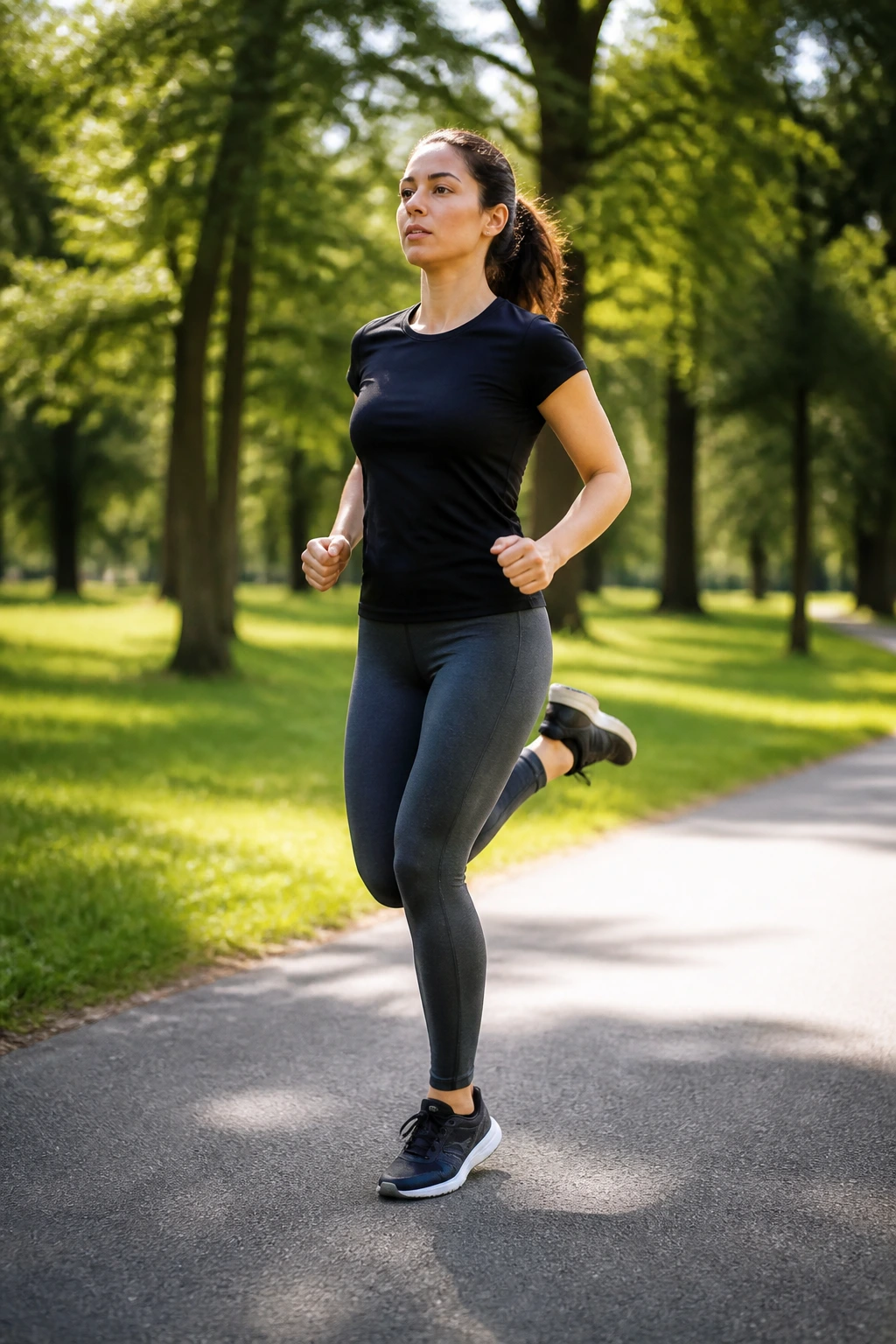
Heel-to-butt kicks are usually associated with running drills, but you can keep them gentle.
Bring one heel toward your glute, then lower it with a soft landing. Alternate sides and add a light arm swing. You’re aiming for a quick back-of-the-leg wake-up, not an acrobatic heel grab. Beginners should keep the knee pointing downward and the torso tall.
A nice way to use this move is 15 seconds of kicks, 15 seconds of marching, repeated 4 to 6 times. It’s short, but it adds variety to the session and breaks up all the forward-driving moves. If your knees feel cranky, shorten the heel path. A smaller kick is still a kick.
22. Quarter-Turn Marches
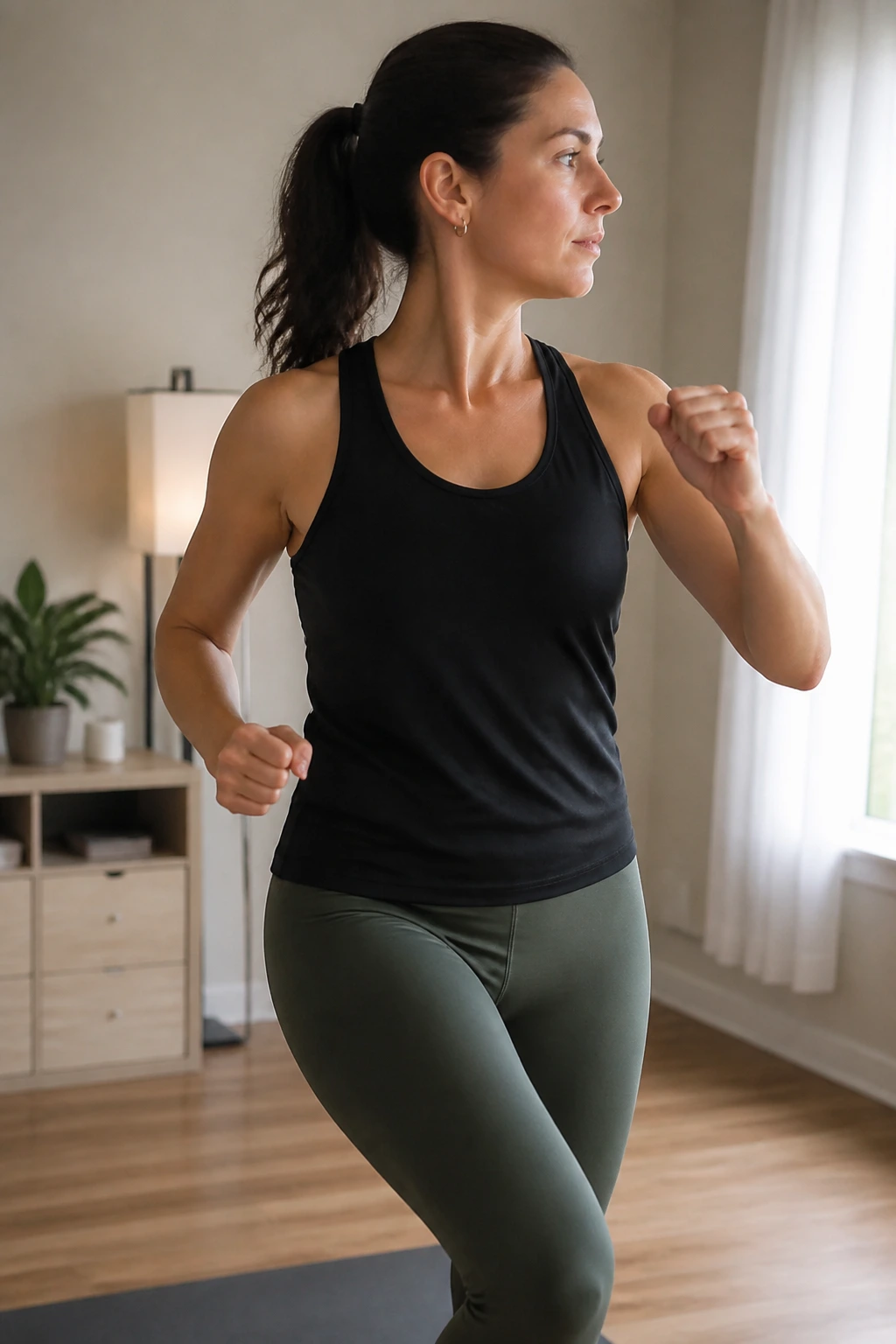
Quarter-turn marches sound fancier than they are. That’s fine. Fancy is not the point.
March forward for two or three steps, turn a quarter turn to the right, march again, then turn back to center. You can do the same to the left if you have room. The turn adds coordination work and keeps your brain awake, which is useful when a routine starts to feel repetitive.
- March 3 steps.
- Turn 90 degrees.
- March 3 steps.
- Return to center.
That’s the whole thing. Keep the turns smooth, not snappy, and make sure your eyes follow your body. Beginners often rush the twist and end up wobbling. Slow turns stay useful longer.
23. Wall-Assisted Knee Drives
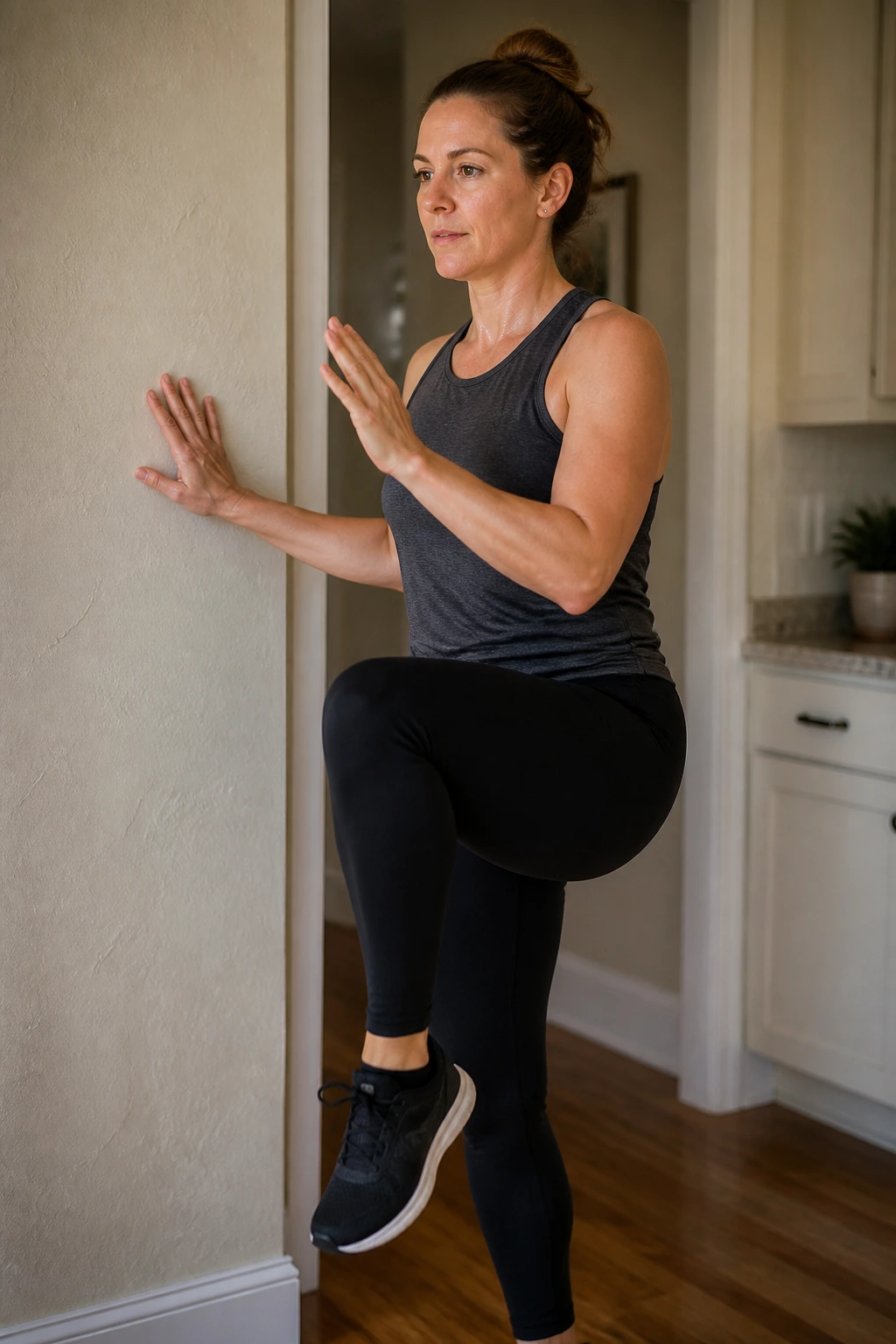
Need something steadier? Use the wall.
Place one hand lightly on a wall or counter, stand tall, and drive one knee up while the opposite arm moves forward. Switch sides. The wall takes some of the balance demand away, which lets you push the cardio side a little harder without feeling sketchy.
Why use the wall? Because it lets you move sooner. A lot of beginners wait too long to try anything that looks “real,” then they spend the whole workout managing balance instead of moving. This version cuts that problem down fast. Try 30-second rounds with 15 seconds of marching in between. If you want more intensity, increase the arm drive before you increase knee height.
24. Standing Mountain Climbers to Tall Stand
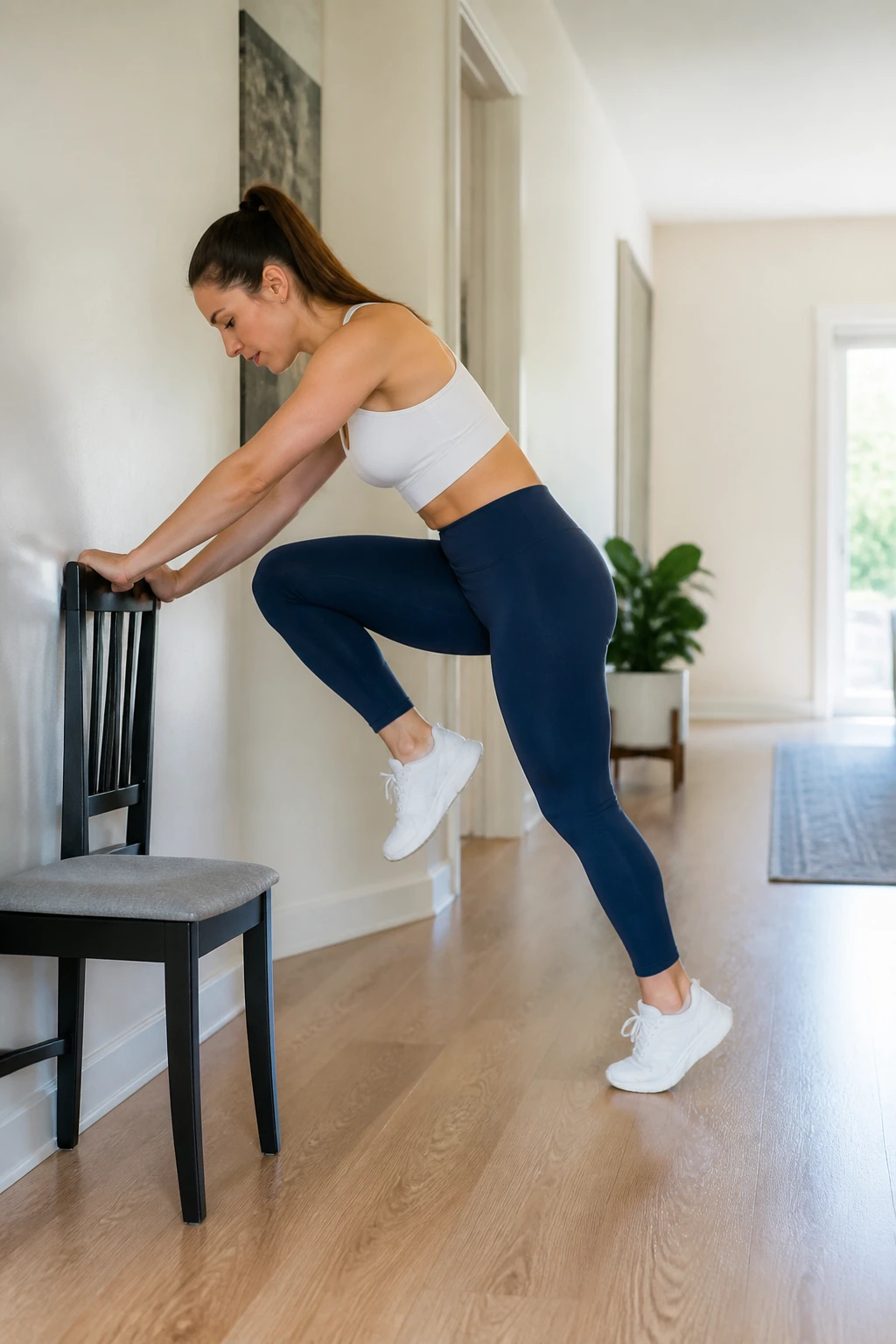
This is the standing version that often surprises people.
Lean your hands onto a wall or the back of a sturdy chair, step one knee in toward your chest, then switch quickly like a standing mountain climber. After 10 to 20 seconds, stand tall and march in place for recovery. The hinge position makes your core work a bit harder, and the stand-up reset gives your breathing a break.
When It Works Best
It shines in short bursts. Use 20 seconds on, 20 seconds off, and repeat 4 to 6 times. Keep your hips from sinking and your back from arching. If the wall angle feels too steep, move your feet back a little. If your shoulders get tired first, bring the wall closer. Tiny changes matter here.
25. Five-Minute Repeat Circuit
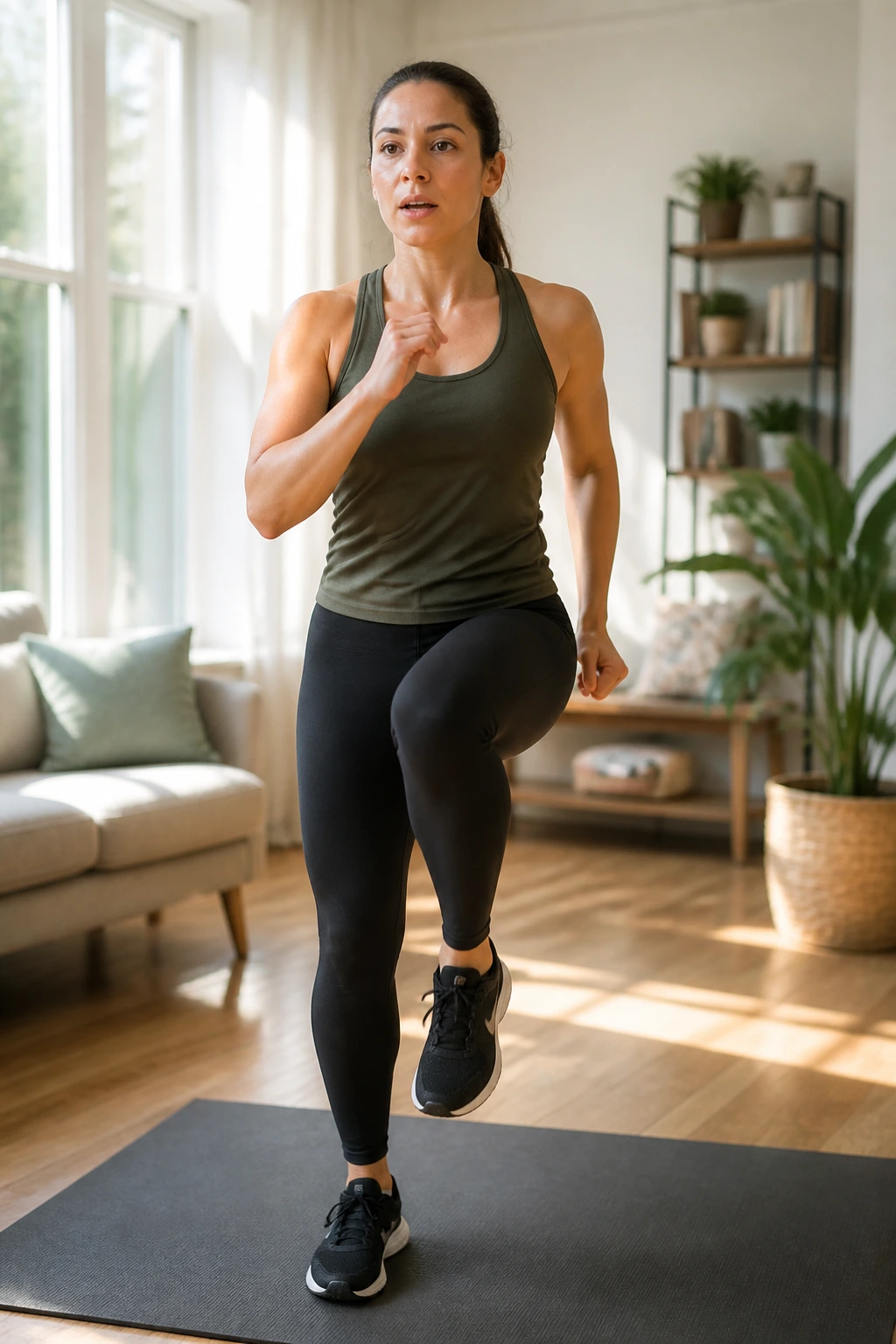
This is the routine I’d hand to a beginner who wants something repeatable without a long setup.
How to Run It
- March in place for 30 seconds.
- Do step-jacks for 30 seconds.
- Add boxer punches for 30 seconds.
- Switch to knee drives for 30 seconds.
- Finish with heel digs for 30 seconds.
Rest for 30 to 60 seconds, then repeat the whole circuit 1 to 2 more times. That gives you a simple five- to ten-minute block that feels organized, not random. Keep the first round at a comfortable pace and let the last round be the one where your breathing gets louder.
No fancy finish is needed. If you can finish this circuit and still want one more round, that’s a good sign. If you’d rather stop cleanly, that’s good too. The best beginner cardio plan is the one you’ll actually do again tomorrow.
