



Your body does not need punishment after a stretch of sitting, travel, missed workouts, or a few too many weeks of “I’ll start Monday.” It needs rhythm, a little sweat, and a plan you can finish without hating your life by day four.
That is where two-week workout plans earn their keep. Fourteen days is long enough to shake off stiffness, wake up your lungs, and get your head back into the habit of moving. It is short enough that you can stay focused without spiraling into a giant, dramatic fitness overhaul that collapses the first time work runs late.
I like this kind of reset because it is honest. You are not trying to become a different person in two weeks. You are trying to feel less rusty, less sluggish, and a little more like yourself when you climb stairs, sit down, or reach for a grocery bag.
The catch is simple: the best reset is not the hardest one. It is the one that matches your energy, your joints, and your schedule, which is why the plans below lean in different directions — walking, lifting, low-impact cardio, mobility, circuits, and a few smarter bursts of intensity. Pick the one that fits your body right now, not the one that sounds toughest on paper.
1. The Walking and Mobility Reset

A week of heavy sitting can leave your hips feeling glued together and your back cranky in that low-grade, annoying way that never quite turns into real pain but never really leaves, either. This plan fixes that by being almost stubbornly plain.
Start with 20 to 30 minutes of brisk walking every day, then tack on 8 to 10 minutes of mobility work when you get back. Think hip circles, cat-cow, ankle rocks, thoracic rotations, and a short couch stretch if your hip flexors feel tight. It sounds basic because it is basic. Basic works.
Why it works
Walking gets blood moving without frying your nervous system. Mobility work gives your joints a chance to move through ranges they have forgotten, which is usually the hidden problem after a stretch of low activity.
A simple two-week shape
- Days 1-4: 20-minute walks + 1 mobility circuit
- Days 5-7: 25-minute walks + 1 mobility circuit + 2 sets of bodyweight squats
- Days 8-11: 25 to 30-minute walks + mobility + 10 wall push-ups
- Days 12-14: one longer walk, about 40 minutes, if your legs feel fresh
Best for: desk workers, new starters, and anyone whose lower back complains when they sit too long.
The pace should let you talk in full sentences. If you need to gasp, you went too hard for a walking reset.
2. Two-Week Workout Plan for Dumbbell Full-Body Strength

A pair of dumbbells can do more for a reset than a noisy, punishing bootcamp. I know that sounds unglamorous, but it is one of the reasons this plan works so well. You get strength, posture work, and a little metabolic kick without needing to live in the gym.
Use four training days each week, about 35 to 45 minutes per session. On each day, hit a squat pattern, a hinge, a push, and a pull. A goblet squat, dumbbell Romanian deadlift, floor press, and one-arm row will cover a huge amount of ground. Add a carry if you want your midsection to wake up fast.
The week shape
Week 1
- 2 sets of 8 to 10 reps for each move
- Stop with 2 reps still in the tank
- Keep rest around 60 to 90 seconds
Week 2
- Move to 3 sets on the main lifts
- Or keep 2 sets and use a slightly heavier dumbbell
- Add one short finisher: 30 seconds of farmer carries, marching in place, or mountain climbers
The point is not to chase exhaustion. The point is to load the body enough that it remembers how to be strong. That usually changes the way you stand, sit, and move within a few sessions.
3. The Low-Impact Cardio and Core Reset
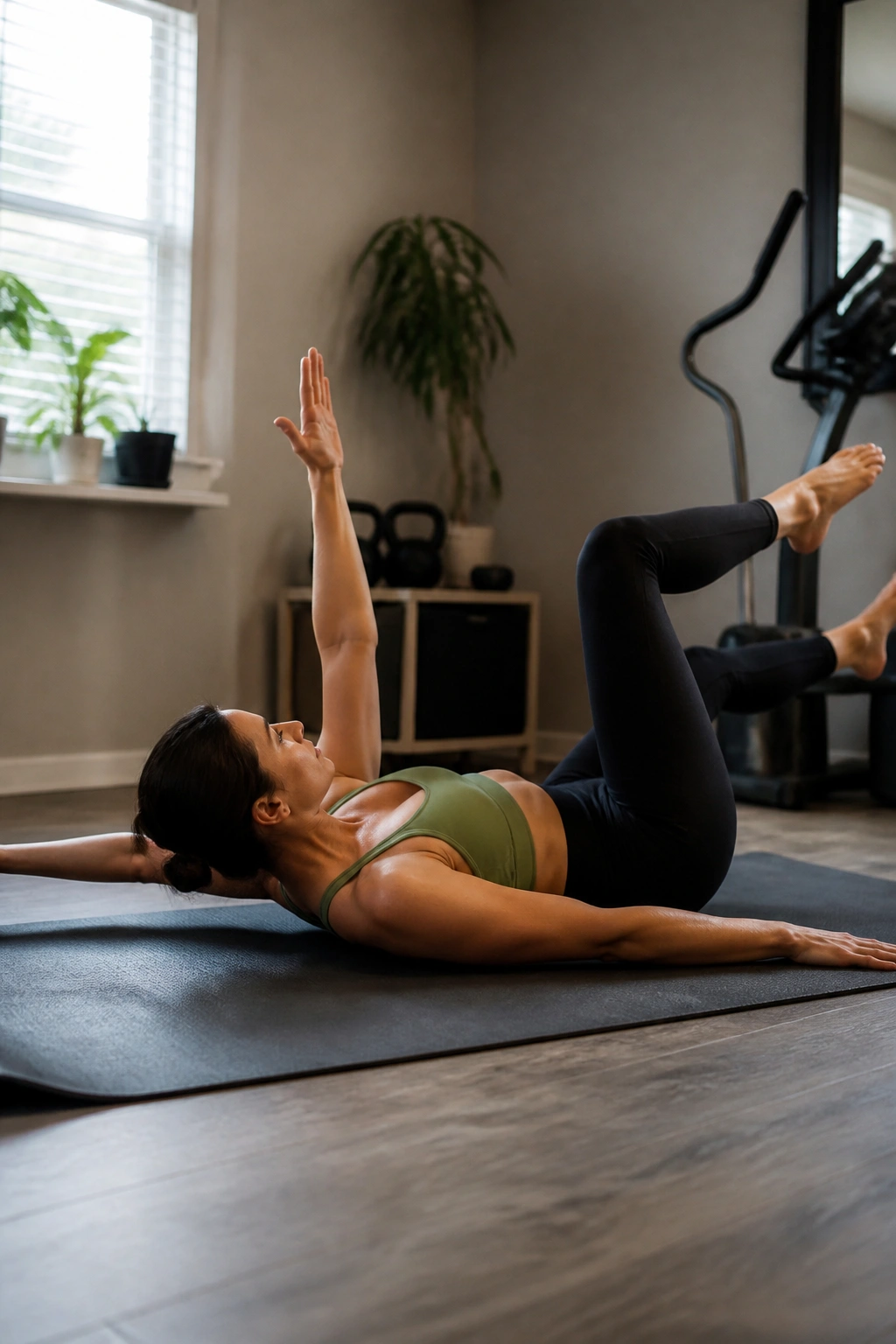
What if your joints feel tired but you still want to train? Then this is the smart path.
This plan uses bike, elliptical, rowing, or brisk incline walking for the cardio side, paired with short core blocks that do not beat up your lower back. The trick is to keep the effort steady, not savage. Twenty minutes of moderate work beats one heroic session followed by two days of soreness and skipped workouts.
What the sessions look like
Do 3 cardio days each week. Each one can follow a simple pattern: 5-minute easy warm-up, 10 to 15 minutes at a pace where your breathing is deeper but still controlled, then 3 to 5 minutes easy again.
After the cardio, do one core circuit:
- 8 dead bugs per side
- 20-second side plank per side
- 10 glute bridges
- 6 bird dogs per side
Repeat that circuit 2 to 3 times.
How to use it
On tired days, cut the cardio down to 12 minutes and keep the core gentle. On better days, add another round or push the middle segment a little harder. The useful part is the repeatability. You should feel worked, not flattened.
If your lower back tends to tighten up, this plan is usually a relief rather than a grind.
4. The Bodyweight AM/PM Split
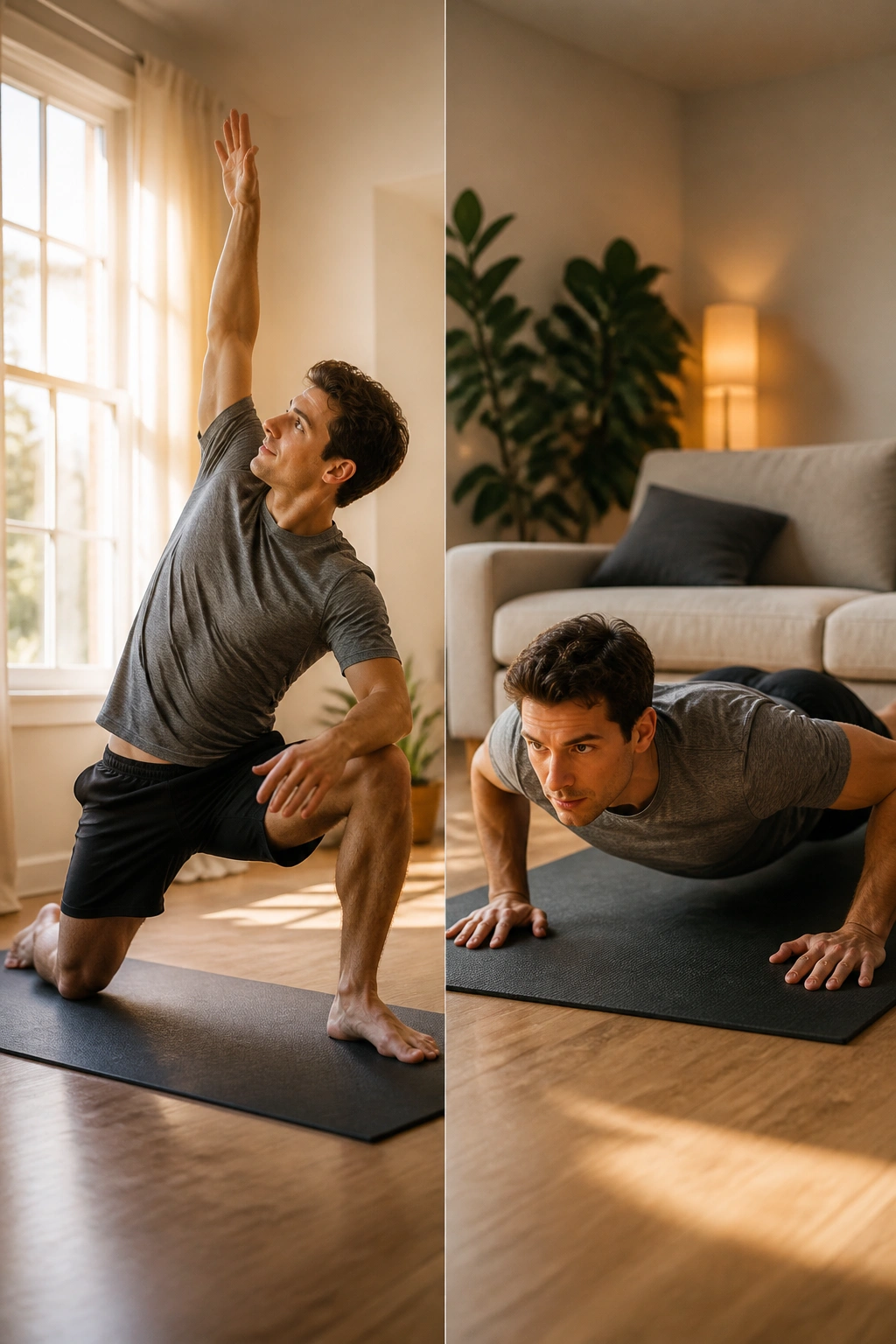
You do not need one giant workout to feel better. Sometimes two small sessions beat one big one because they are easier to start, easier to finish, and easier to repeat the next day.
Morning block: 10 to 15 minutes of mobility, squats, and light core work. Evening block: another 10 to 15 minutes with push-ups, lunges, glute bridges, or a short walk. That is the whole game. It sounds almost too simple, which is part of why people dismiss it before it starts working.
I like this split for busy weeks because it takes the pressure off one perfect hour. If the morning session is tiny, fine. If the evening session only lasts 8 minutes because life gets messy, that still counts.
One clean pattern
- Morning: 5 minutes mobility + 2 rounds of air squats, dead bugs, and wall push-ups
- Evening: 15-minute brisk walk or 2 rounds of reverse lunges, glute bridges, and plank holds
- Weekend: one slightly longer walk or easy hike
Keep the evening work away from bedtime if hard intervals make you feel wired. A calmer session late in the day usually lands better.
5. The Incline Treadmill Reset

The belt hums, your calves warm up, and your heart rate climbs without the pounding that comes with running. That is the appeal here.
An incline treadmill plan gives you a sturdy cardio dose with less impact on knees and shins. Set the incline between 5 and 12 percent, choose a walking speed that makes you breathe harder but not panic, and stay there for 20 to 30 minutes. Add a 5-minute warm-up and cool-down, because rushing straight into a steep grade is a good way to feel stiff later.
Unlike a flat walk, incline work asks more from your glutes and hamstrings. It also tends to feel mentally cleaner than sprint intervals. You can watch the timer, stay in control, and still get a decent sweat on your shirt.
A practical two-week setup
Do 2 incline sessions the first week and 3 in the second. Pair them with 2 short strength days:
- squats
- push-ups
- rows
- planks
If you hate running but want something that feels serious, this is a solid answer. And if your ankles or shins get cranky, it is often the kinder choice.
6. The Kettlebell Conditioning Plan

One bell. That is the point. You do not need a rack of gear to reset your body. A single kettlebell can hit your legs, back, grip, and lungs in one compact session.
This plan usually works best with 3 workouts per week, each around 25 to 35 minutes. A classic pattern is swings, goblet squats, presses, and carries. The hinge from the swing wakes up the back of your body fast, and the carry work quietly tells your trunk to stop slouching.
I like kettlebells because they feel blunt in a good way. No fluff. No fiddling around. You pick it up, do the work, and put it down before your brain has time to negotiate.
A sample session
- 10 swings
- 6 goblet squats
- 5 presses per side
- 30-meter carry
- Rest 60 to 90 seconds
Repeat that 4 to 6 times.
Week 1 should feel controlled. Week 2 can get a little denser by shaving off some rest or adding one extra round. If your grip starts failing before your legs do, the weight is probably right.
7. The Pilates and Resistance-Band Reset
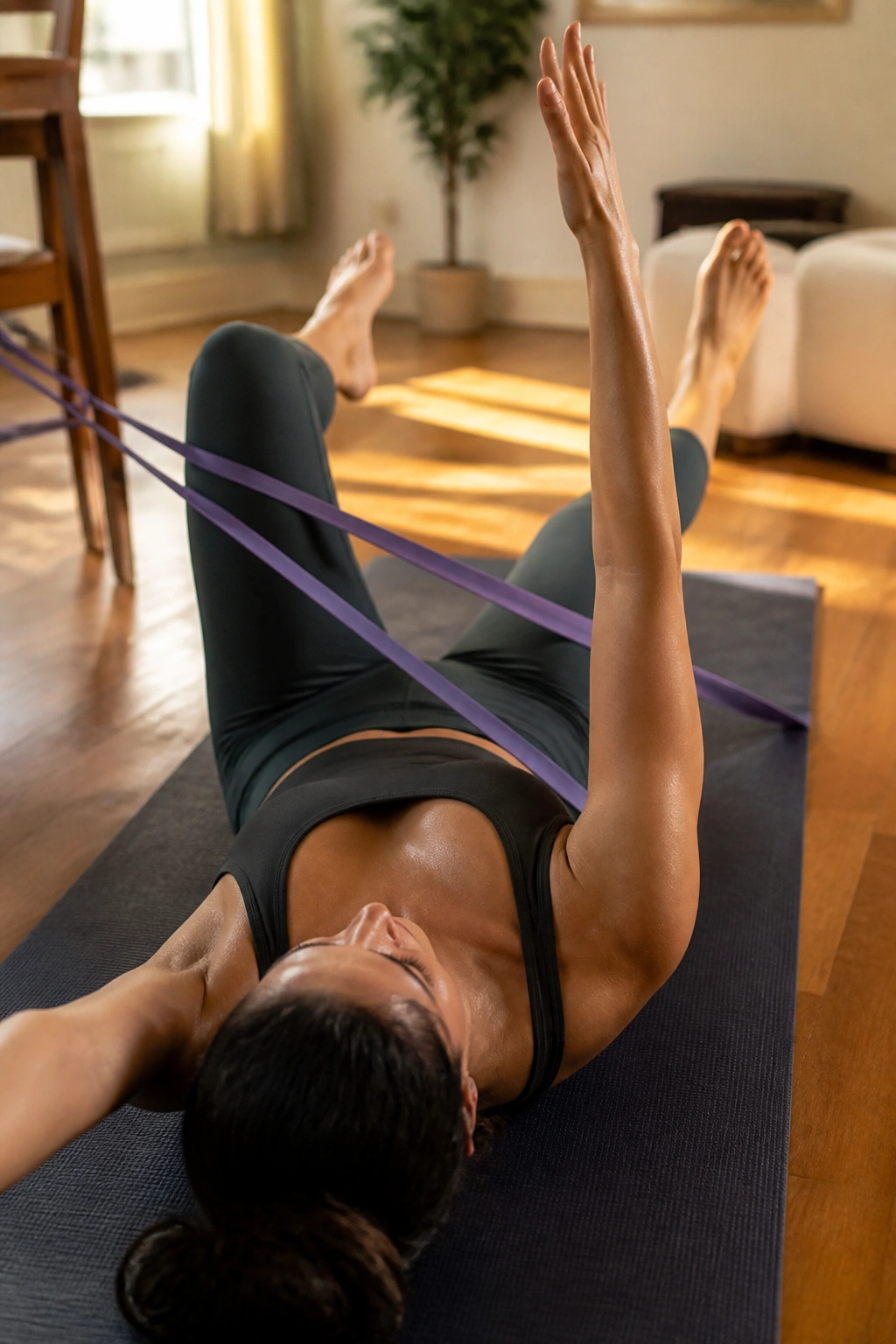
Four sessions, 30 minutes each, can change how your hips, ribs, and lower back feel faster than people expect. That is why this plan is sneaky good.
Pilates-style mat work pairs nicely with resistance bands because both ask for control. Dead bugs, side-lying leg lifts, glute bridges, banded rows, and slow squats sound tame until you do them with strict form. Then they get honest.
What to emphasize
- controlled breathing through the ribs
- slow lowering phases
- enough band tension to feel work, not strain
- no rushing through the core pieces
If your posture gets sloppy late in the day, this plan helps you feel more stacked up and less folded in half. It is also friendly for people who want training that does not leave them limping around the house.
A nice way to run it is two Pilates-focused days and two band-strength days each week. Mix in short walks on off days. The walks matter more than people think. They keep the body from stiffening back up between sessions.
8. The Upper/Lower Split for Returning Lifters

I like upper/lower splits for people who used to lift and want back in without making a mess of their first week. The structure is familiar, and familiar is comforting when your body feels a bit out of practice.
Train four days a week: upper, lower, rest, upper, lower. Keep the first week conservative. Leave 2 reps in reserve on almost everything, which means you stop before your form gets ugly. In the second week, add a little weight or one extra set to the main lifts.
A clean weekly layout
Upper day: press, row, incline press, curl, carry
Lower day: squat, hinge, split squat, calf raise, plank
That is enough. You do not need seven variations of each movement to make the plan work.
Unlike a body-part split that waits a full week to revisit the same muscle, this setup gives you practice twice. That matters when you are rebuilding momentum. You get more skill, less stiffness, and fewer excuses to skip a body part you do not like training.
If your shoulder or back feels old and cranky, this is a kinder re-entry than a high-volume mashup.
9. The Hill-Walk and Park Circuit Plan

A steep path in a park can feel like a mini gym with better air and fewer mirrors. That is a win in my book.
This plan blends uphill walking with simple bodyweight circuits at a bench, step, or patch of grass. Use 2 hill sessions and 2 circuit days each week. Hill walking can be 10 to 20 minutes of steady climbing, while the circuits can be split squats, incline push-ups, step-ups, and plank holds.
Why it works
Uphill walking drives your heart rate up fast without the pounding of running. The circuits add strength work where it matters: legs, chest, shoulders, and trunk. Together, they build a nice, not-too-fussy reset.
You can make the circuit small:
- 10 step-ups per leg
- 8 incline push-ups
- 10 reverse lunges per leg
- 20-second plank
Do 3 rounds.
This plan is best for someone who gets bored indoors or wants a reset that feels more like moving through the world than staring at a wall. It is simple. Also a little sneaky.
10. The Rowing Machine and Strength Circuit

Rowing is not easier than running. It only looks that way from a distance.
A good rowing reset uses short, repeatable intervals and pairs them with a compact strength circuit. The rower gives you full-body cardio with a lot of leg drive, and the strength work keeps the body from turning into a pile of tired shoulders and hip flexors. Three sessions each week is enough. Two if you are deconditioned. Four if you already like cardio and recover well.
On the rower, focus on the basics: push through the legs first, then finish with the arms. Do not yank with your shoulders. That is the classic mistake, and it makes the machine feel twice as ugly as it needs to.
Session idea
- 5-minute easy row
- 6 rounds of 1 minute moderate, 1 minute easy
- 2 rounds of 10 push-ups, 12 air squats, 10 dumbbell rows per side
The whole session should feel brisk, not chaotic. If your lower back feels overworked, shorten the stroke and slow down. Rowing rewards good form more than bravado.
11. The Recovery-First Reset for Burned-Out Weeks

What if you feel cooked before you even start? Then do not start with hard intervals. That is the wrong move.
This plan is for the weeks when stress, sleep, or life in general has taken the shine off your training. The goal is not to prove something. The goal is to get your body moving again without piling strain on top of strain. Think walking, gentle mobility, a little light strength, and one or two sessions that make you feel better after they end.
A simple day might be 20 minutes of walking, 8 minutes of stretching, and 2 sets of glute bridges and wall push-ups. That is enough. On another day, you might do a short yoga flow and some suitcase carries with a light dumbbell or grocery bag.
Your breathing should stay calm. Your shoulders should not live near your ears. If a session makes you feel wrung out, it missed the point.
This kind of reset often works better than a hard one when your sleep is messy or your appetite is strange. You are giving the nervous system a reason to settle down.
12. The EMOM Home Workout Plan

EMOM workouts are neat little pressure cookers. You get a minute, you do the work, and then whatever time is left becomes rest. That structure keeps you honest without needing much equipment.
For a two-week reset, use 3 EMOM sessions per week. Pick 3 moves and cycle them for 12 to 20 minutes. A clean starter version is 8 squats in minute one, 6 push-ups in minute two, and 10 mountain climbers per side in minute three. Repeat until the clock ends. The reps should leave you with 15 to 20 seconds of rest, not zero.
How to scale it
- If you finish with too much rest, add 2 reps
- If you are scrambling, cut reps by 2 or 3
- If your form slips, the set is too big
The nice part is that the workout tells on you fast. There is nowhere to hide. That can be useful when you want a reset with a little edge but do not want a 45-minute marathon. Keep the movements crisp, and resist the urge to make it a contest.
13. The 20-Minute Two-Week Workout Plan for Busy Schedules

Twenty minutes, five days, and a little discipline. That is enough.
This is the plan for people whose days get chopped into tiny pieces by work, kids, commuting, or the simple fact that life is messy. You train for 20 minutes, no drama, and each day has a purpose. One day is lower body, one is upper body, one is cardio, one is mobility, one is a mixed circuit. The second week repeats the same rhythm with a tiny bit more effort.
A workable week
- Monday: 20-minute lower-body circuit
- Tuesday: 20-minute brisk walk
- Wednesday: 20-minute upper-body circuit
- Thursday: 20-minute mobility and core
- Friday: 20-minute interval walk or bike
- Weekend: one optional long walk
The workouts should start fast. Three minutes warm-up, fourteen minutes of work, three minutes cool-down. That sort of shape leaves no room for dithering, which is part of the appeal.
I like this plan because it removes the fantasy that fitness only counts when it takes an hour. It counts when you do it. That is the whole argument here.
14. The Swim and Mobility Reset

Water takes the edge off everything. Joints feel lighter, breathing feels smoother, and hard work does not land with the same thump.
A swim-based reset is a good fit if running makes you ache or if you want cardio that does not leave your knees barking. Use 20 to 30 minutes in the pool, three times a week. You can swim easy laps, alternate lengths of steady work and relaxed recovery, or even walk in the shallow end if you are coming back from a layoff.
After each session, spend 10 minutes on mobility for shoulders, hips, and ankles. Swimming can make some people tight through the chest and upper back, so a few doorway stretches and thoracic rotations help a lot.
Good pool pattern
- 5 minutes easy warm-up
- 10 to 15 minutes steady lap work
- 5 minutes relaxed breathing or pool walking
- 10 minutes mobility on deck or at home
This plan suits people who like cardio but hate impact. It also works well when the weather makes outdoor work miserable. The pool does the heavy lifting; you just keep showing up.
15. The Stair-Climb and Bodyweight Plan

Stairs do not negotiate. They raise your heart rate fast and they ask your legs to actually work.
Use stair climbing as the main conditioning piece and bodyweight strength as the support. Two stair sessions and two bodyweight sessions each week is enough for a strong reset. A stair session can be as simple as 8 to 12 minutes of steady climbing, broken into short pushes with easy recovery on the way down.
A simple bodyweight round
- 12 squats
- 8 incline push-ups
- 10 glute bridges
- 20-second side plank per side
Repeat 3 rounds.
If your knees are touchy, shorten the stair volume and keep your steps smooth. Chopping your stride and slamming down is the fastest way to make a useful workout feel stupid. Slow, steady steps usually work better than a sprint up the staircase like you are late for a train.
This plan is good when you want your legs and lungs to wake up together. It is also easy to run almost anywhere with a decent set of stairs.
16. The Strength-Endurance Circuit

This is the plan I like when someone wants to sweat without turning the gym into a math exam.
Strength-endurance means your weights are moderate, your rest is short, and your muscles have to keep working after the first few easy reps disappear. A classic circuit might be squat, press, row, lunge, and plank. Do 8 to 12 reps of each move, rest 30 to 60 seconds, then repeat for 3 to 5 rounds.
The first few minutes feel almost too easy. Then it catches up with you. That is part of the charm.
A good circuit feels like this
- your breathing gets deeper
- your legs warm before they burn
- your shoulders start noticing the work
- your form stays clean even when you are tired
Do this 3 times in the first week and 4 times in the second if recovery is decent. If your grip goes first, use lighter weights or fewer moves per round. The point is to stay moving with control, not to turn every set into a near-collapse. There is enough stress in the body already.
17. The Core, Glutes, and Posture Plan
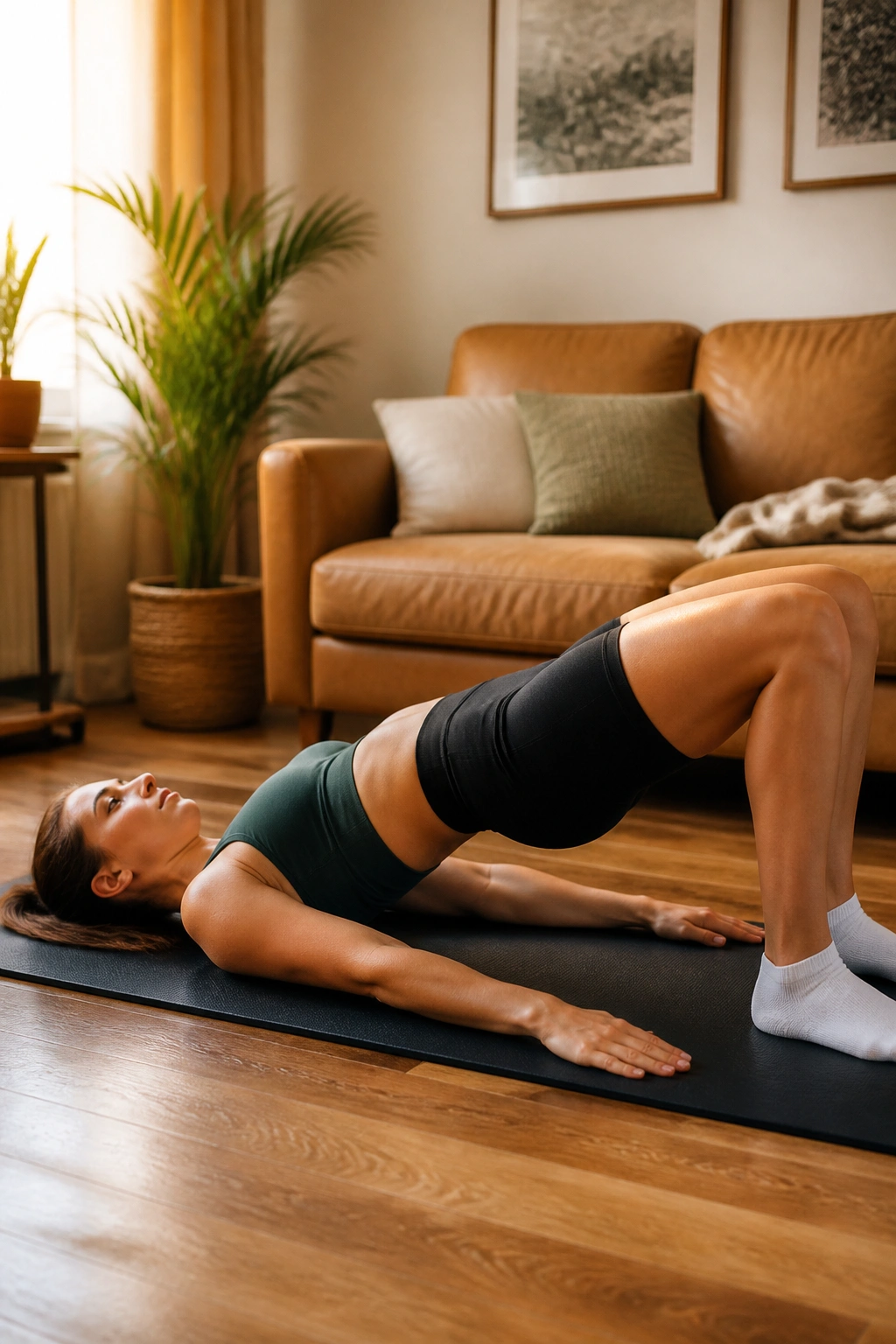
Unlike a full-body plan, this one puts your trunk and hips in the spotlight.
That is useful if you sit a lot, feel weak around the middle, or notice your lower back taking over when you move. Build the two weeks around dead bugs, bird dogs, side planks, glute bridges, hip hinges, and band walks. Add a little walking so the hips do not lock up between sessions.
What to keep in mind
- slow reps beat fast ones here
- glutes should feel awake, not numb
- ribs should stay down during core work
- you should never feel pinching in the lower back
Two or three short sessions a week can be enough. One session can focus on core control, another on glute strength, and another on posture work such as rows or wall slides. The result is not flashy. It is useful. You start standing a little taller, and your midsection stops feeling like it is doing all the holding by itself.
This is a nice reset for people who want to feel more stable before they go back to heavier lifting or harder cardio.
18. The Athletic Agility Reset

If you miss feeling quick on your feet, this is the plan that wakes that up.
Agility work is not just for athletes in jerseys. It helps with foot speed, coordination, and the kind of body awareness that makes everything else feel a little smoother. Use short sessions with lateral shuffles, skater steps, cone touches, jump rope, and short accelerations. Keep the total work time modest, around 15 to 25 minutes, because quality matters more than volume here.
A good setup
- 3 rounds of 20 seconds jump rope
- 20 seconds lateral shuffle
- 20 seconds skater steps
- 40 seconds easy walk
- repeat
Add 2 bodyweight strength days so the legs have something stable underneath the speed work. Squats, lunges, calf raises, and planks are enough.
This plan is best for people who get bored easily and want a reset that feels athletic instead of meditative. One warning, though: if your ankles or Achilles tendons are irritated, keep the jumps low and the footwork gentle. There is no prize for turning a reset into an injury.
19. The Mixed-Modality Two-Week Workout Plan

A little variety can help. Random workouts can turn into clutter.
This mixed-modality setup blends walking, strength, intervals, and mobility across the two weeks so your body gets different kinds of stress without any single piece dominating. That can be useful if you enjoy changing things up, but still want a plan that has a spine.
A simple two-week mix
- Day 1: full-body dumbbells
- Day 2: brisk walk and mobility
- Day 3: intervals on bike, rower, or incline walk
- Day 4: bodyweight strength
- Day 5: longer walk or easy swim
- Day 6: circuit training
- Day 7: recovery and stretching
Repeat the pattern in week two, then add a little more to the most comfortable piece — another round, a few extra minutes, a slightly heavier dumbbell.
What makes this work is not the novelty. It is the balance. You get heart rate work, muscle work, and a touch of recovery, which makes the whole block feel complete instead of lopsided. If you get bored easily, this might be the one that keeps you honest.
20. The Repeatable Reset You Can Run Again

The best reset is the one you can do without negotiating with yourself every morning.
If you only remember three things from these plans, make them these: keep the sessions short enough to start, mix movement types so your body does not get stuck in one groove, and leave a little energy in reserve so you can come back tomorrow. That last part matters more than people think. A reset that leaves you wrecked is not a reset. It is a detour.
Pick one plan that feels almost too easy, then run it cleanly for 14 days. If your joints feel better, your walk feels lighter, and your mood lifts a notch, you picked well. If the plan feels wrong by day three, switch to another one without guilt. That is not failure. That is useful information.
I’d keep the post-reset phase simple: one or two workouts from this list, a few walks each week, and a lift or cardio session that you actually like. The body responds well to boring consistency. Not glamorous. Very effective.
