



A living-room workout does not need a mat to work.
Standing cardio workouts can be sneaky hard, especially when you keep the moves tight, the arm drive sharp, and the rest periods short. They also solve the boring little problems that stop a lot of indoor sessions cold: no floor space, no jumping if the ceiling or the neighbors hate it, and no getting up and down a dozen times.
That matters more than it sounds. A lot of people start with big plans, then lose steam the moment a workout asks for burpees, planks, or a giant patch of empty floor. Standing drills cut through that mess. You can march while the kettle boils, box for two songs, or stack a few low-impact intervals into a 12-minute block before dinner.
And yes, technique matters even for moves that look simple. Tall posture, active hands, and quiet landings change everything. If you let the shoulders creep up and the feet slap the floor, the work turns sloppy fast; if you stay loose through the arms and quick through the legs, the same move feels twice as effective.
Start with the moves that look almost too easy, then build toward faster footwork and sharper combinations. That’s where the real indoor cardio lives.
1. Standing Cardio Starter: March in Place with Arm Drives
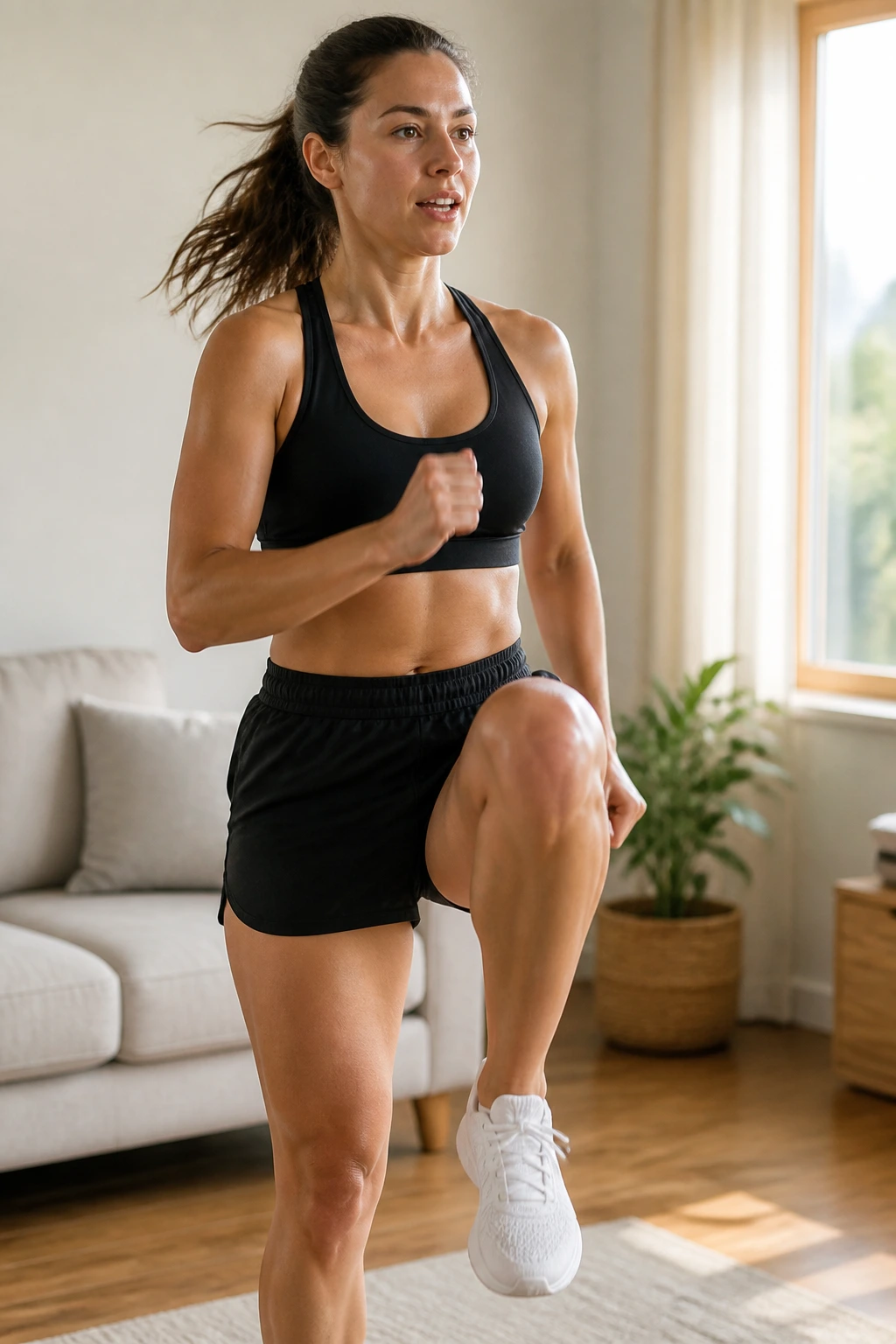
Marching is not a warm-up only. Done well, it can be a legitimate cardio interval, especially when you pump the arms like you mean it and keep the knees honest.
How to make a march feel like work
Lift each knee a few inches higher than your normal walk, then drive the opposite arm forward with a bent elbow. Keep your chest tall and your ribs stacked over your hips. That sounds fussy, but it keeps the move from collapsing into a sloppy sway.
- March for 30 seconds at a moderate pace, then speed up for 15 seconds.
- Aim for quiet feet. If the floor starts thudding, shorten the steps.
- Pull the elbows back, not just forward. That little back swing matters.
- Add a two-second pause at the top of each knee lift if you want more control.
The nice thing about this move is that it scales fast. A beginner can keep it low and steady. Someone who wants a harder indoor cardio block can turn the same march into a punishing interval just by increasing pace and arm range. Simple. Honest. Effective.
2. High Knees in Place
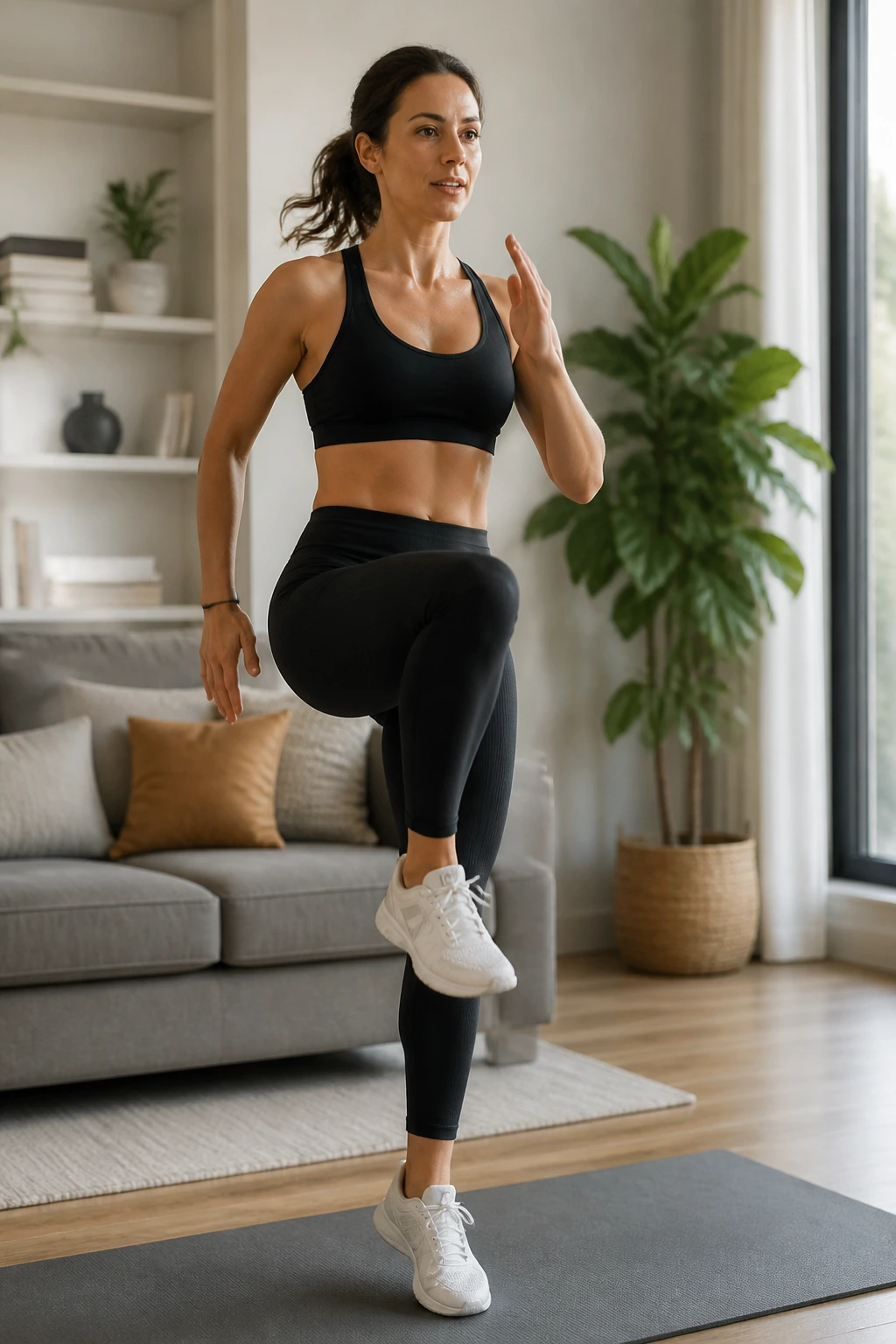
High knees are the move people love to hate. They look almost childish for the first few seconds, then the breathing changes and the whole room feels smaller.
What makes them work is not just the knee height. It’s the speed of the switch and the stiffness of the torso. Keep your upper body upright, drive one knee up, switch quickly, and let the opposite arm snap forward like you are running in place with purpose. If the shoulders start curling in, back off and reset.
A good rhythm is 20 seconds hard, 20 seconds easy for 6 to 8 rounds. If the ceiling is low, do not chase height at the expense of speed. Quick knees with a small lift still drive the heart rate up. They also make a nice pairing with a slower move, like marching or side steps, because your breathing drops fast when you recover.
Do not bounce from the waist. That’s the part that makes high knees feel rough on the lower back. Stay tall and let the legs do the work.
3. Butt Kicks
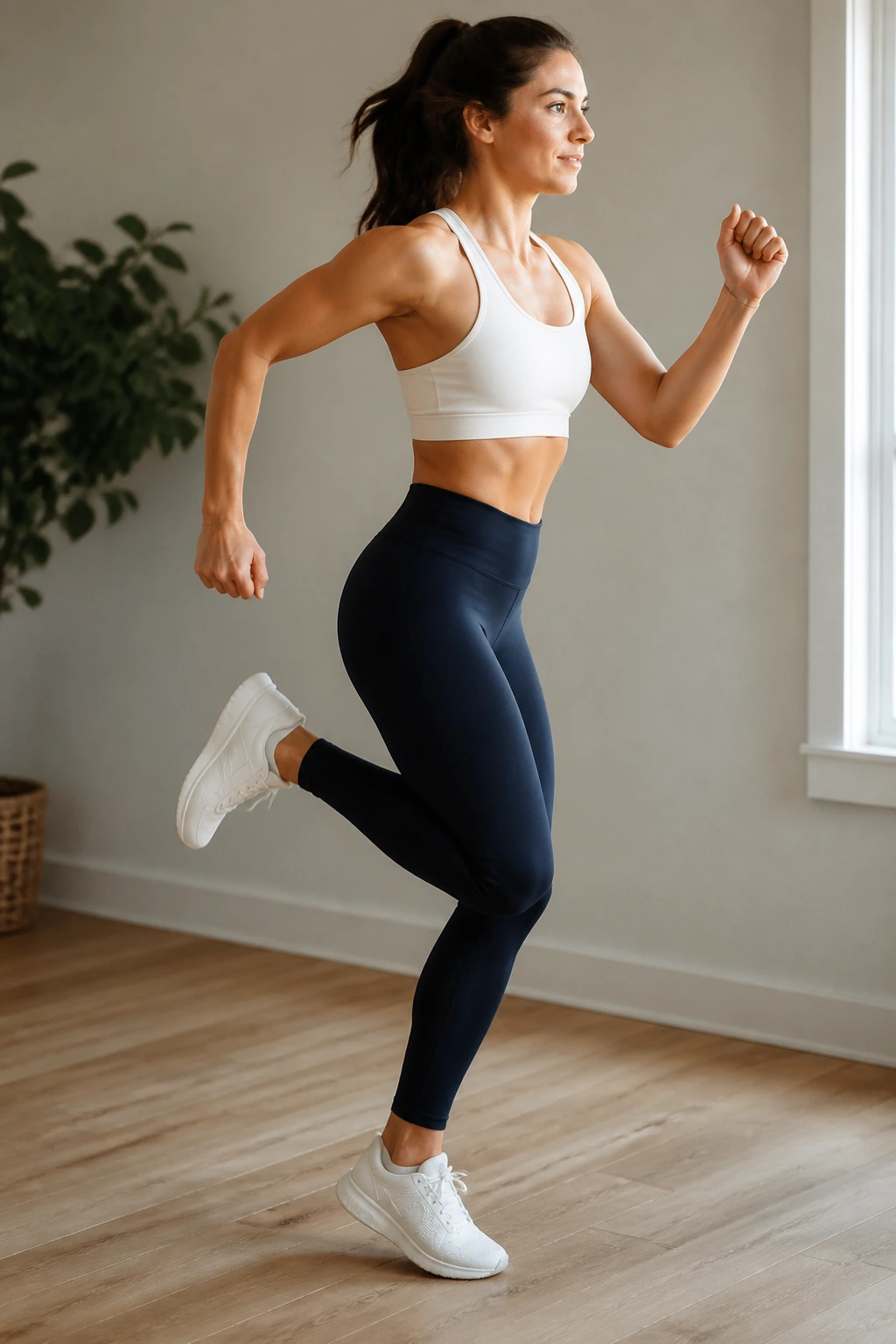
If your knees are tired but you still want speed, butt kicks do the job. They keep the pace high without asking for much jump or landing force, which is why I keep coming back to them for indoor cardio on noisy floors.
The cue is simple: heel up, heel back down, repeat. The trick is to keep the knees pointing down instead of letting the whole torso tip forward. You want a quick hamstring curl, not a weird backward lean. Arms can pump like a jog, or you can keep them a little wider for balance if the pace gets quick.
Where people go wrong
- They kick too high and arch the back.
- They turn the move into a lazy jog.
- They forget to move the arms, which cuts the intensity in half.
Try 30 seconds fast, 15 seconds easy for 5 rounds. If you want less impact, keep one heel closer to the floor and think more “heel tap behind me” than “heel smash into glutes.” It still counts. It still works.
4. Step Jacks
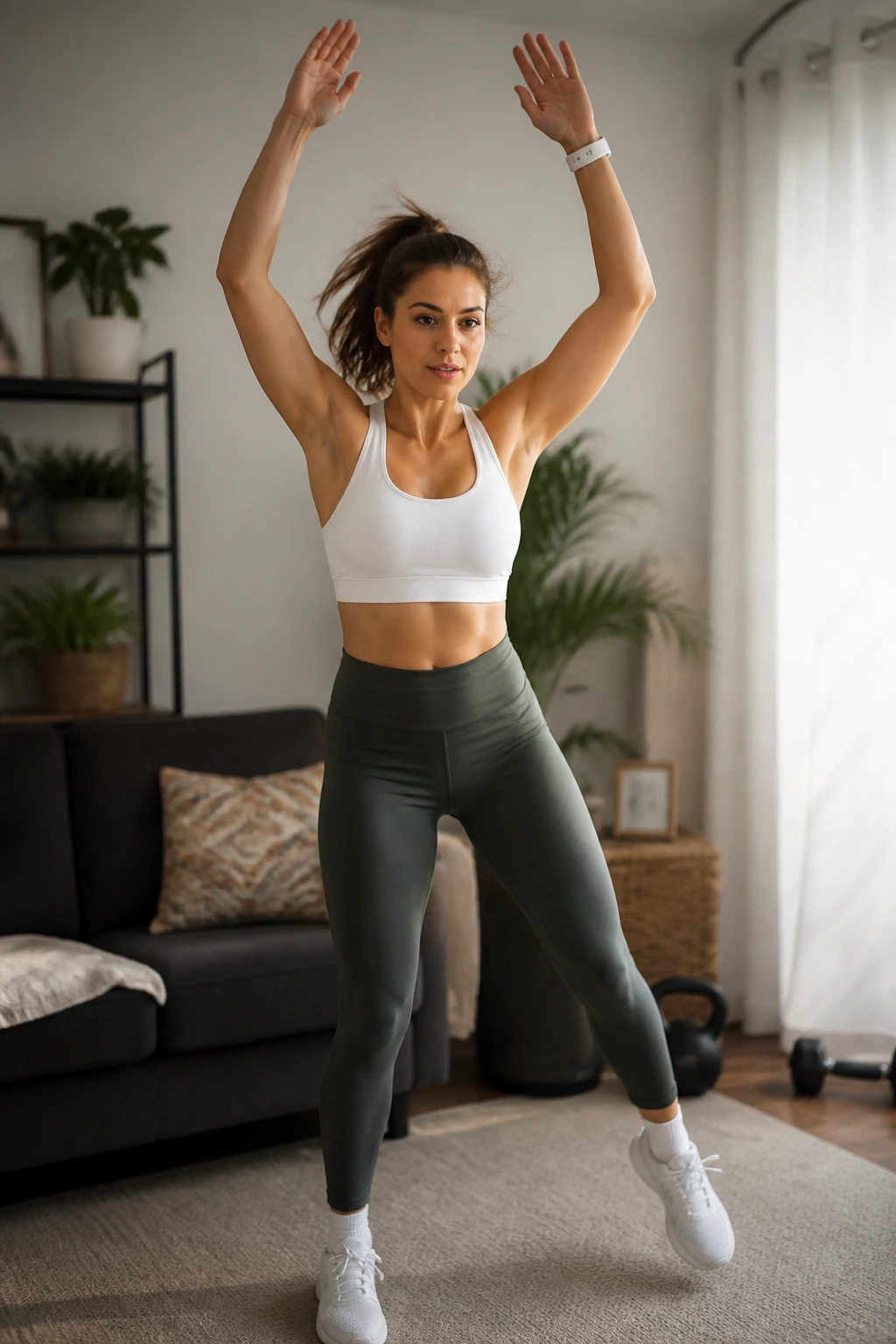
Step jacks look boring next to jumping jacks. That’s exactly why they’re useful indoors.
Take a step out to the right while the arms sweep overhead, bring the feet back together, then repeat on the left. That side-to-side rhythm keeps the heart rate up without the sharp landing of a jump. On a hard floor, it feels cleaner. In a small apartment, it feels civilized. That matters more than people admit.
What gives step jacks their edge
The arms are doing real work here. If you keep the hands lazy, the move turns into a simple side step. If you reach all the way overhead and bring the hands down with intent, the whole body gets involved. Keep the knees soft and the core lightly braced so the torso does not sway like a reed.
Use them as an active recovery move after high knees or boxing. Or keep them going for 40 seconds at a steady pace when you want indoor cardio that does not rattle the floorboards. They are not flashy. They are dependable, and that counts.
5. Shadow Boxing

Shadow boxing is the move I trust when I want cardio that feels fast without needing any equipment at all. It wakes up the shoulders, the core, the hips, and the brain, which is a nice little bonus when the day has been slow and sticky.
Start with a simple jab-cross, then add hooks once your hands warm up. Keep your fists at cheek height, turn the hips a little with each punch, and stay light on the balls of your feet. A full-power punch thrown from stiff legs looks dramatic for a second and then falls apart. Small, sharp, repeated punches are what carry the round.
A simple round structure
- Round 1: jab, cross, jab, cross
- Round 2: jab, cross, left hook
- Round 3: jab, cross, hook, uppercut
- Round 4: freestyle with quick footwork
Work in 3-minute rounds with 30 to 45 seconds of rest. Keep your shoulders relaxed. If they climb toward your ears, shake them out between rounds and start again. Shadow boxing gets better the more you stay loose.
6. Lateral Skater Steps
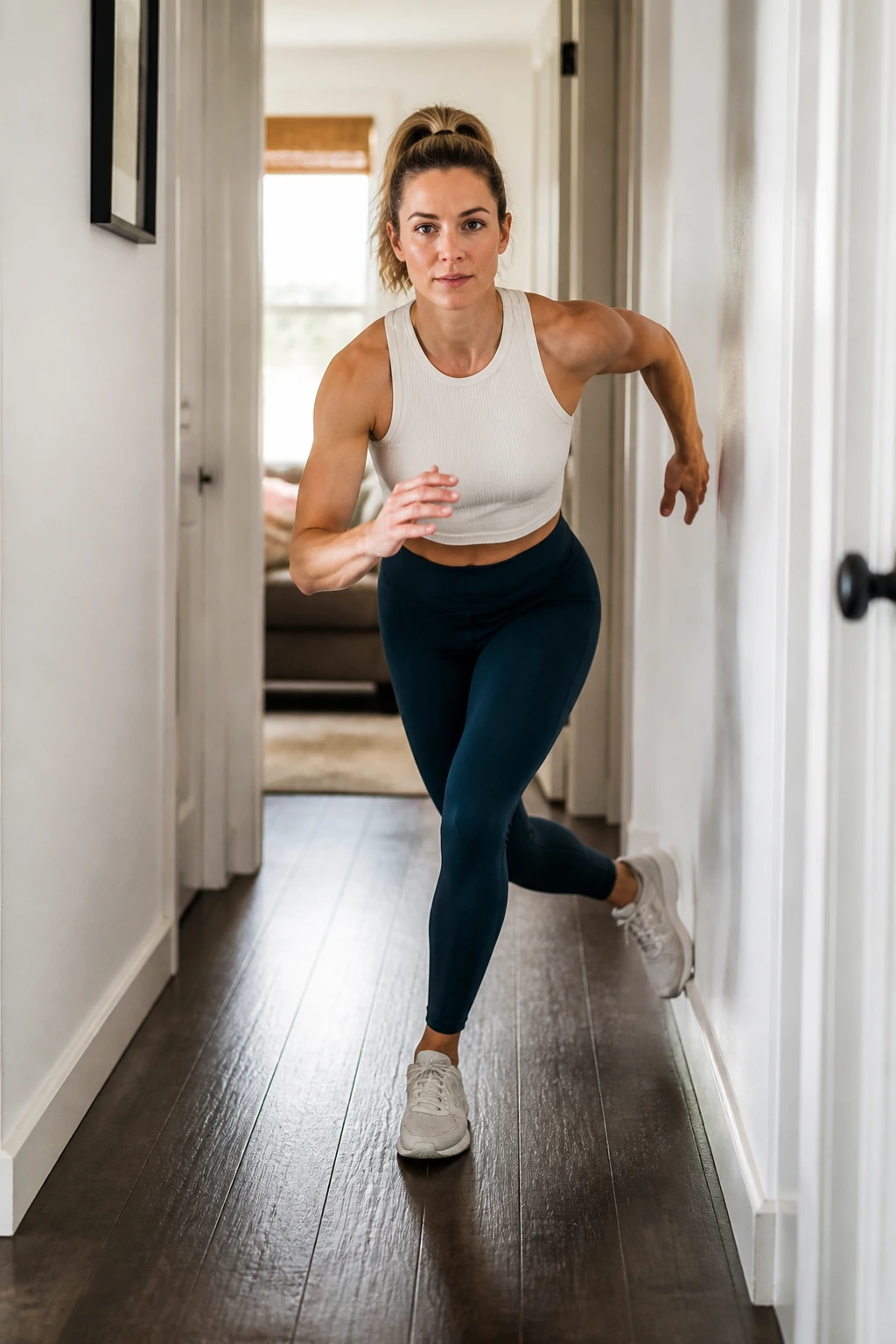
A narrow hallway and a noisy floor can make regular cardio feel awkward. Lateral skater steps fix both problems.
Step to the right, let the left foot sweep behind you lightly, then push off and move the other way. You do not need a huge jump to make this work. In fact, the cleaner version is usually better indoors because it keeps the movement controlled and the knees happier. Stay low enough to feel your legs, but not so low that your chest folds forward.
The side-to-side push is what matters. That little push-off loads the outer hips and forces the heart to work, even when the motion looks smooth from the outside. Add a light tap to the floor or keep the back foot hovering; both versions are useful.
Try 20 seconds fast, 10 seconds easy if you want a sharp interval, or 45 seconds steady if you are building a longer cardio block. Either way, this move brings a nice lateral burn that marching never quite gives you.
7. Cross-Body Knee Drives
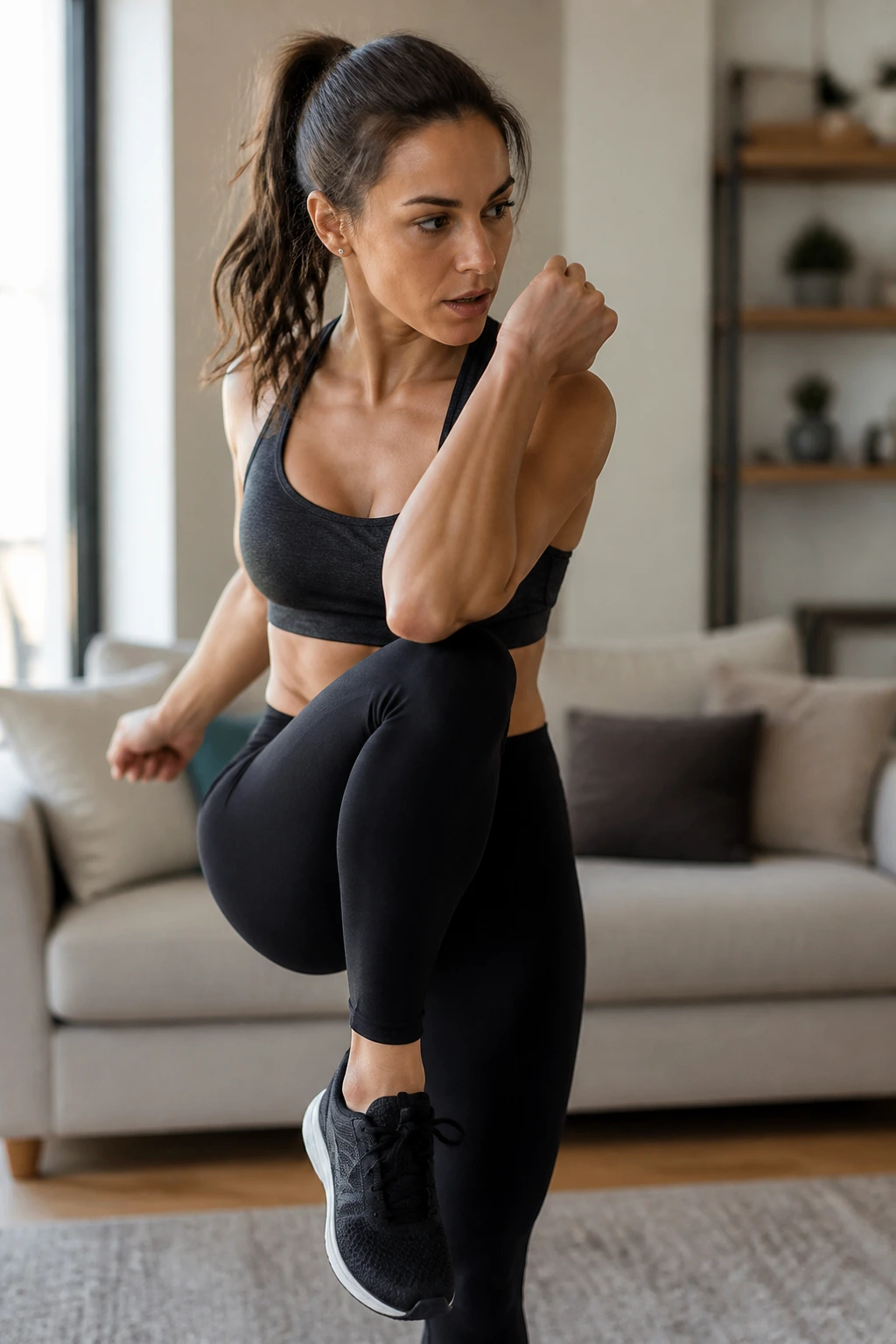
Why do these light up your breathing so fast? Because they hit the core and the legs at the same time, and that combo gets expensive in a hurry.
Drive the right knee toward the left elbow, then switch. Keep the torso tall and let the twist come from the ribs and hips, not from collapsing the chest forward. A lot of people turn this into a crunching motion and lose the smooth rhythm. Better to stay upright and punch the knee across the body with control.
How to keep it clean
- Lift the knee first, then rotate.
- Keep the standing foot planted and active.
- Make the elbow travel toward the knee, not the other way around.
- Use a fast exhale on each drive.
This works well in 30-second bursts between stronger moves like high knees or shadow boxing. It also gives the obliques a say in the workout, which is nice if you want standing cardio that does more than just jack up the pulse.
8. Fast Feet and Tap Outs
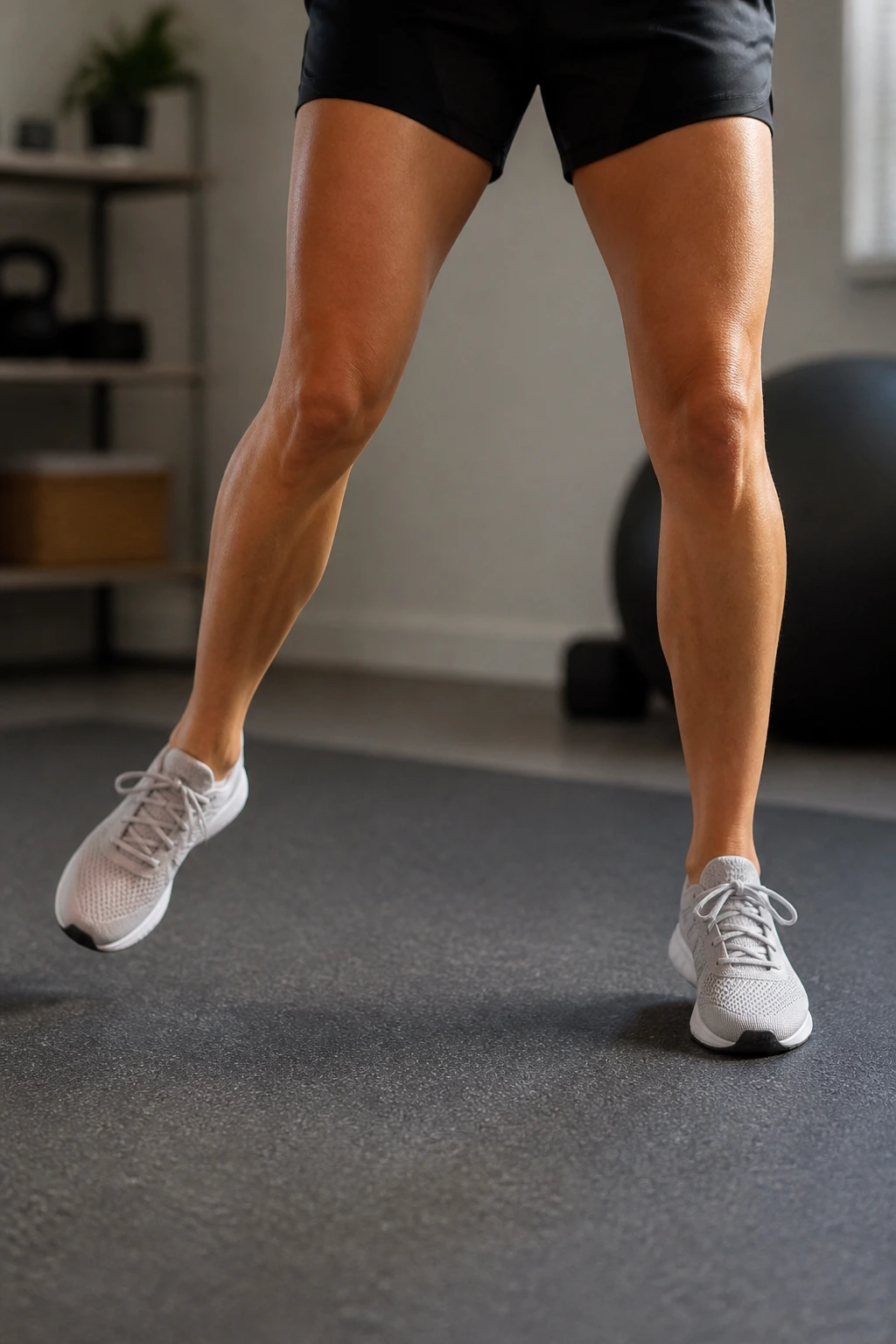
Fast feet are the move you reach for when you want your whole body to wake up in a hurry. Tap outs give that speed a shape.
Start with your feet under your hips and run in place for a few beats, then tap one foot out to the side, front, or back before snapping it back under you. That tiny reach keeps the drill from becoming a plain jog. The best version feels quick and a little restless, like you’re on the edge of moving somewhere else.
Short bursts are the sweet spot here. Try 15 to 20 seconds hard and then come back down for the same amount of time. If you want more challenge, make the taps smaller and faster instead of bigger. Bigger is not always better. Sometimes it just gets sloppy.
A simple pattern
- 4 fast steps in place
- 1 tap right
- 4 fast steps in place
- 1 tap left
- 4 fast steps in place
- 1 tap front
That pattern is easy to remember and weirdly hard to keep crisp. Which is exactly why it works.
9. Standing Mountain Climbers
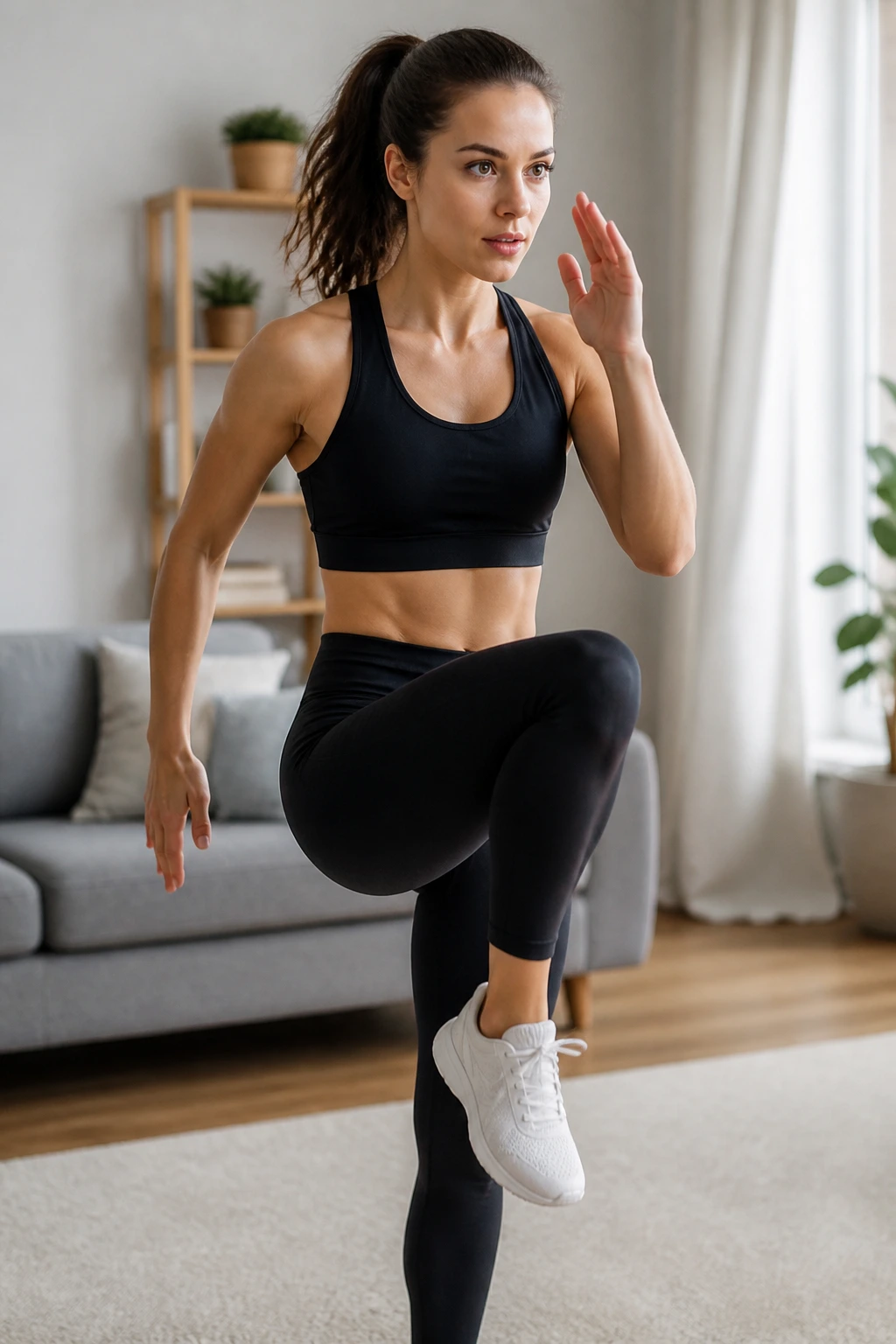
These are not just knee lifts with a fancier name.
Standing mountain climbers borrow the pace of the floor version without asking you to go down there. Lift one knee while the opposite elbow moves toward it, then switch quickly and keep the torso upright. The faster you switch, the more they feel like a standing sprint with a core job attached.
Use them when you want a cardio move that still feels athletic. The hips stay busy, the arms stay involved, and the heart rate rises fast if you keep the rhythm tight. If balance gets shaky, slow the pace for a few reps, then build back up. There is no prize for rushing into ugly form.
Watch the lower back. If you over-arch to reach the knee higher, the move turns into a stretch and loses its punch. Keep the ribs down, lift the knee only as high as you can control, and let the speed come from the switch.
10. Front Kicks with a Return
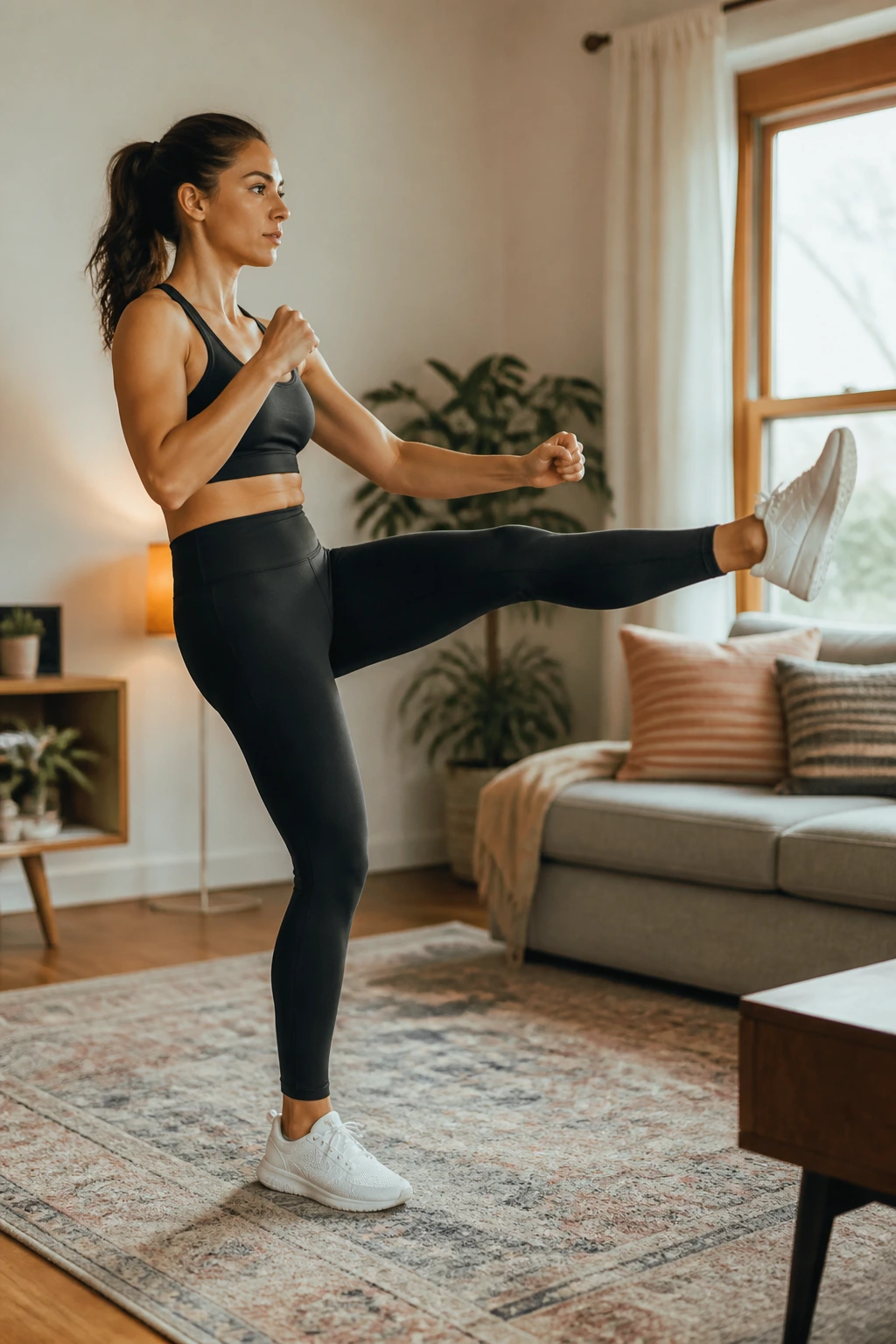
A sharp kick and a clean snap back wake up the whole front of the leg.
Front kicks are a little more controlled than they look. Lift one knee first, extend the lower leg forward, then pull it back under you with control before setting it down. That return matters. It keeps the move from turning into a wild leg swing and helps your balance stay steady, which is the part most people underestimate.
The best version feels crisp, not forceful. Kick to a comfortable height, especially if tight hamstrings or hip flexors complain. You want to feel the thigh muscles work, but you do not want to jerk the low back. Small kicks done quickly can still drive up your breathing.
A good rhythm is 10 kicks per leg or 30 seconds continuous. If you want more cardio, add a light hop on the standing leg. If you want less impact, keep both feet grounded and simply alternate quick knee lifts with the kick. Easy to scale. Easy to repeat.
11. Squat to Reach
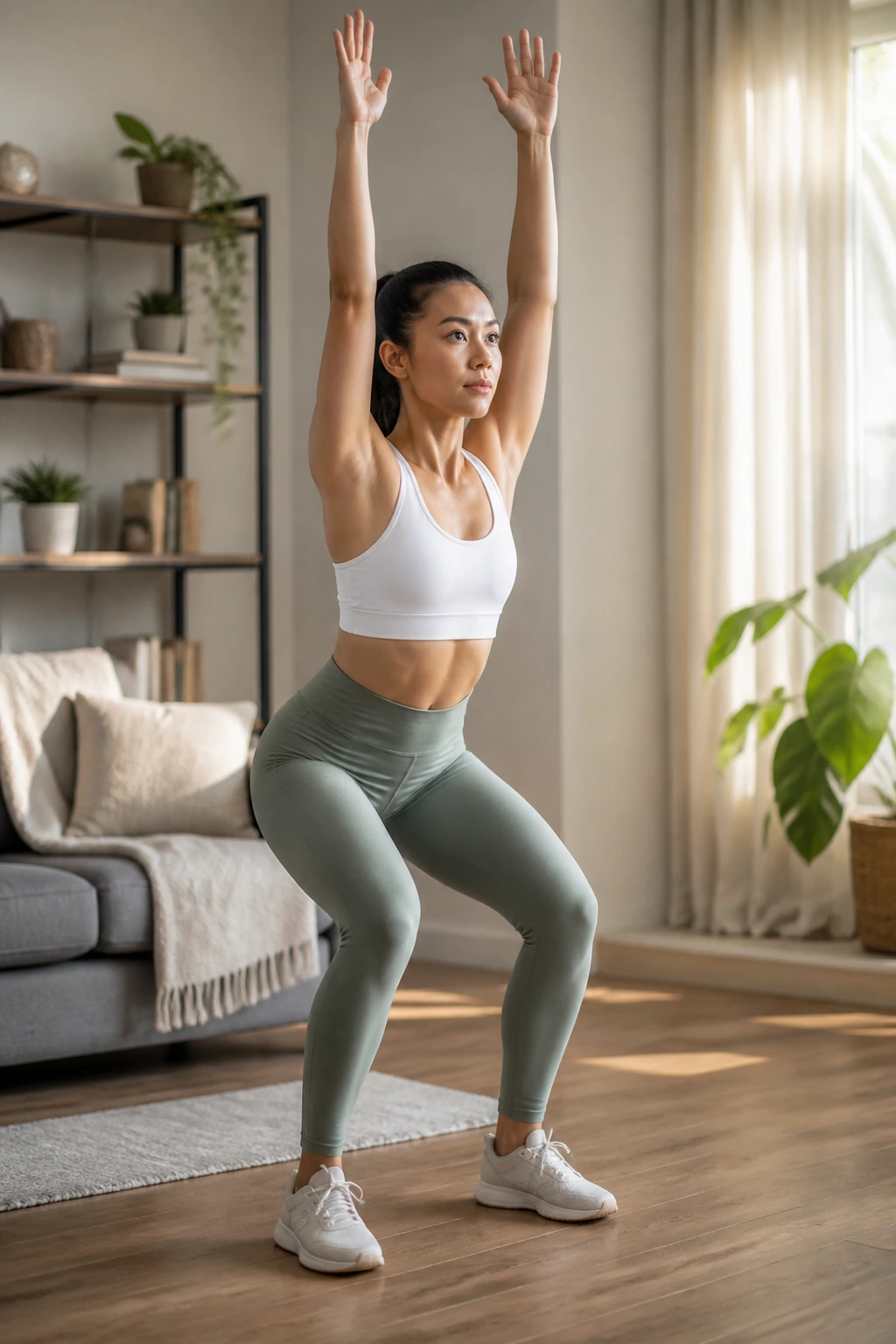
This one earns its place because it makes the legs and lungs work at the same time.
Drop into a shallow squat, press through the feet, and reach both arms overhead as you stand. Then repeat. The move is simple, but the repeated sit-and-rise pattern quickly gets your quads and glutes involved, and the overhead reach opens the upper body just enough to keep the motion from feeling dead.
What makes it worth doing
The squat does not need to be deep. A clean, controlled mini squat often does more for indoor cardio than a sloppy deep one. Keep your heels down, let the knees track over the toes, and stand with intent. The arm reach can be straight overhead, or slightly forward if your shoulders are tight.
If you want a longer set, use 40 seconds on, 20 seconds off. If you want a tougher version, speed up the stand phase so it feels like a quick drive upward. That little burst is where the heart rate climbs.
12. Standing Cardio Burst: Fast Feet and Punches
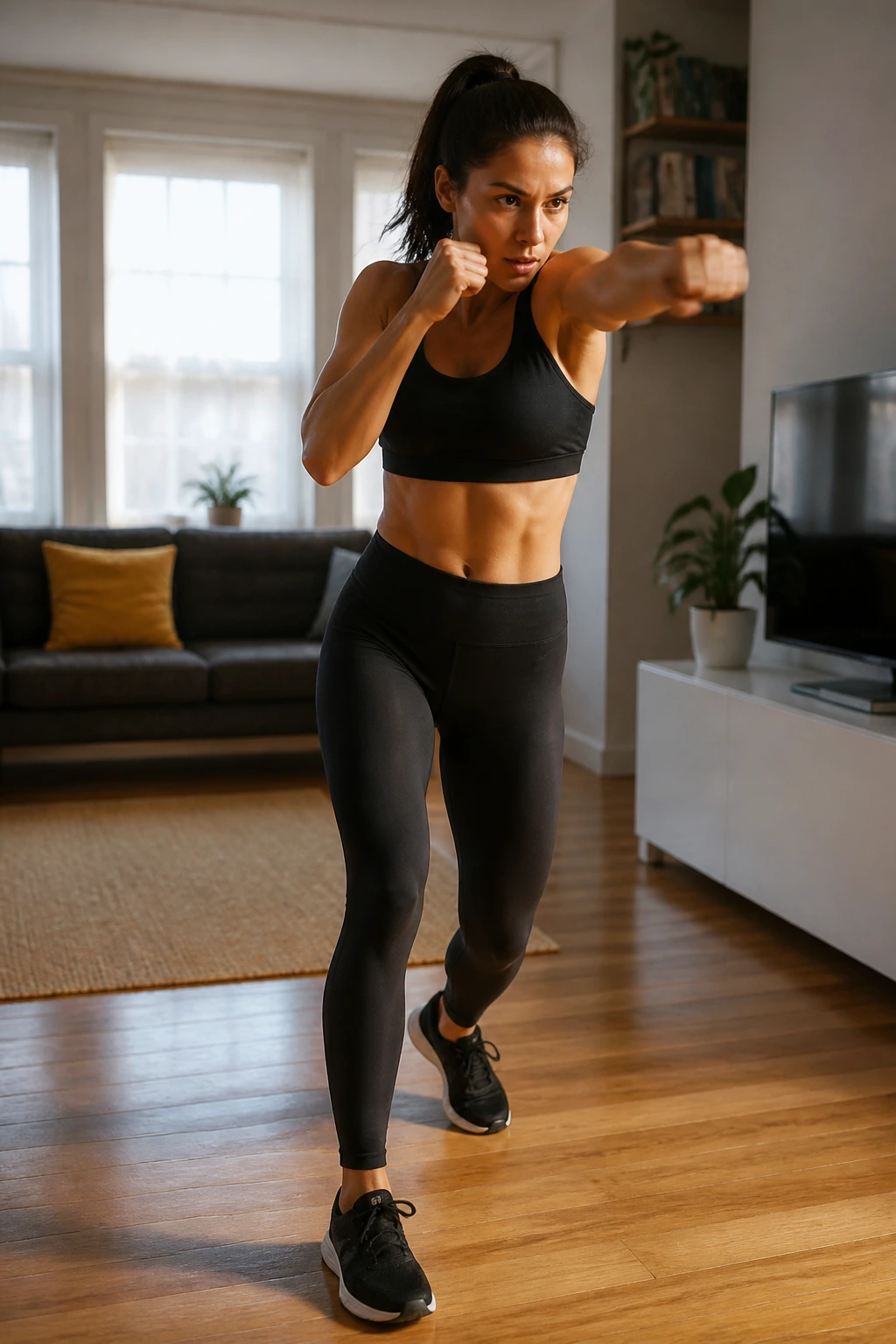
Need to feel winded without leaving a small patch of floor? This is the move.
Fast feet and punches combine a quick jog in place with sharp jabs, crosses, or straight punches. The feet keep the tempo high while the hands give your upper body something to do. It looks almost too simple, which is why people skip past it. Bad idea. The split focus makes it harder than it sounds, and that matters.
A clean way to run it
- 20 seconds fast feet
- 20 seconds jab-cross punches
- 20 seconds fast feet
- 20 seconds hooks
- 20 seconds fast feet
- 20 seconds uppercuts
Keep the knees soft and the shoulders loose. If the arms tighten, the whole thing starts to feel choppy. This is one of my favorite standing cardio workouts for a cramped room because it gives you a real sweat without demanding perfect space or fancy gear. It just wants effort. That’s all.
13. Heel Digs with Pull-Back Arms
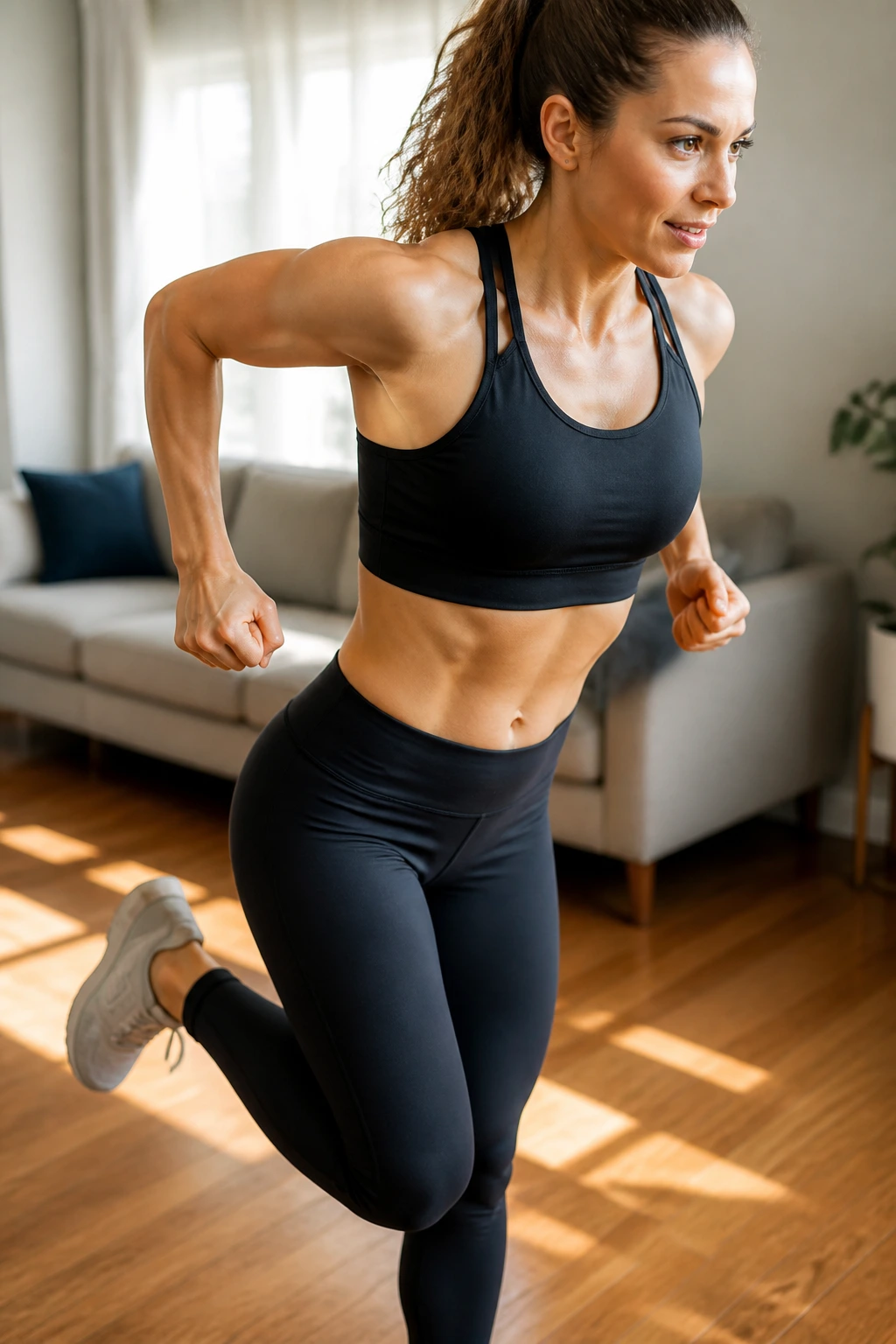
Compared with high knees, heel digs are kinder and easier to repeat for minutes at a time.
Step one heel out in front and lightly tap the floor, then pull the leg back under you and switch sides. At the same time, pull the arms back as if you’re rowing handles toward your ribs. The arm action is what keeps this from becoming a lazy step-touch. Without it, the move loses a chunk of its cardio value.
This one has a nice old-school dance feel, and that is not an accident. Rhythm helps people last longer. If you can keep a steady beat for 45 seconds or more, the move becomes a reliable low-impact option for indoor cardio on days when jumping feels annoying.
Add a little bounce through the supporting leg if you want more pace. Or keep it grounded and use bigger arm pulls. Both work. The only truly bad version is the one where the arms hang there like dead weight.
14. Standing Oblique Crunches
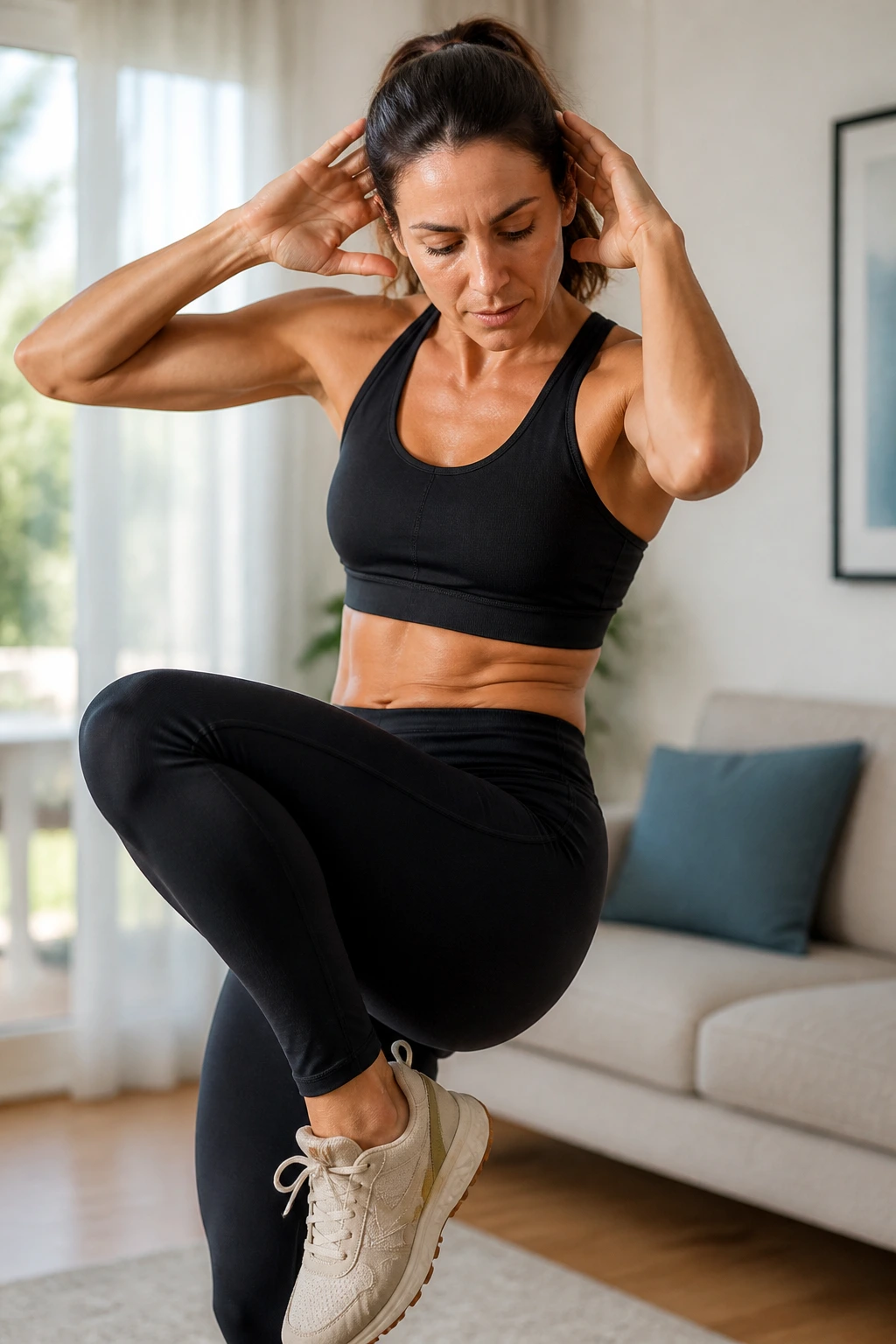
If your sides are asleep, these wake them up fast.
Stand tall, place one hand lightly behind your head or keep both hands near your temples, then drive the same-side elbow down toward the same-side knee. Return to center, switch sides, and keep the movement controlled. You are not trying to fold in half. You are trying to create a clean side crunch while staying upright.
The best cue here is simple: ribs down, hips steady, abs tight. If you lean backward between reps, the move gets sloppy and the waist stops doing its share. A small, crisp crunch works better than a big swinging one, especially when you want indoor cardio that also touches the core.
Try 15 reps per side or 30-second intervals. If you want a stronger cardio hit, pair these with a fast march or boxer shuffle. The side bend on its own is modest; the rhythm turns it into a real session.
15. Curtsy Lunge to Knee Lift
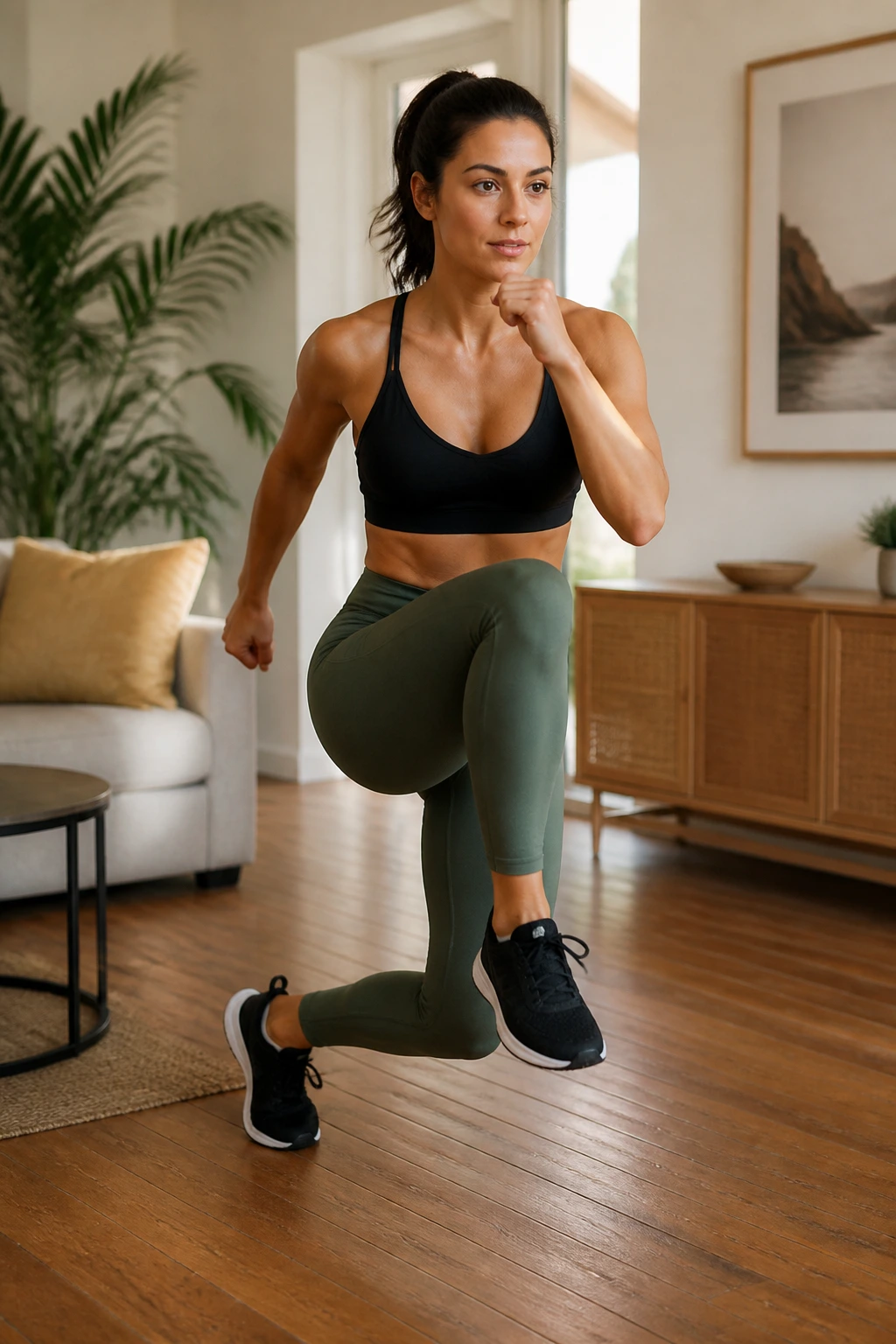
This is the first move on the list that starts to feel like real strength work, which is exactly why it belongs in a standing cardio session.
Step one leg behind and across into a curtsy lunge, then drive that same knee up as you return to standing. The rear step asks more from the glutes and outer hips than a plain step-back lunge, and the knee lift adds the cardio pop at the top. Done fast, it feels athletic. Done slowly, it feels like a very useful lower-body drill.
Keep the back foot light
- Step behind only as far as you can keep control.
- Keep the front knee tracking over the toes.
- Drive up through the standing heel.
- Bring the knee lift up fast, but land softly.
Use 8 to 10 reps per side if you want form practice, or 30 seconds continuous if you want a bigger cardio load. If the balance feels wobbly, shorten the step behind. The move gets better when it stays clean.
16. Power March with Overhead Sweep
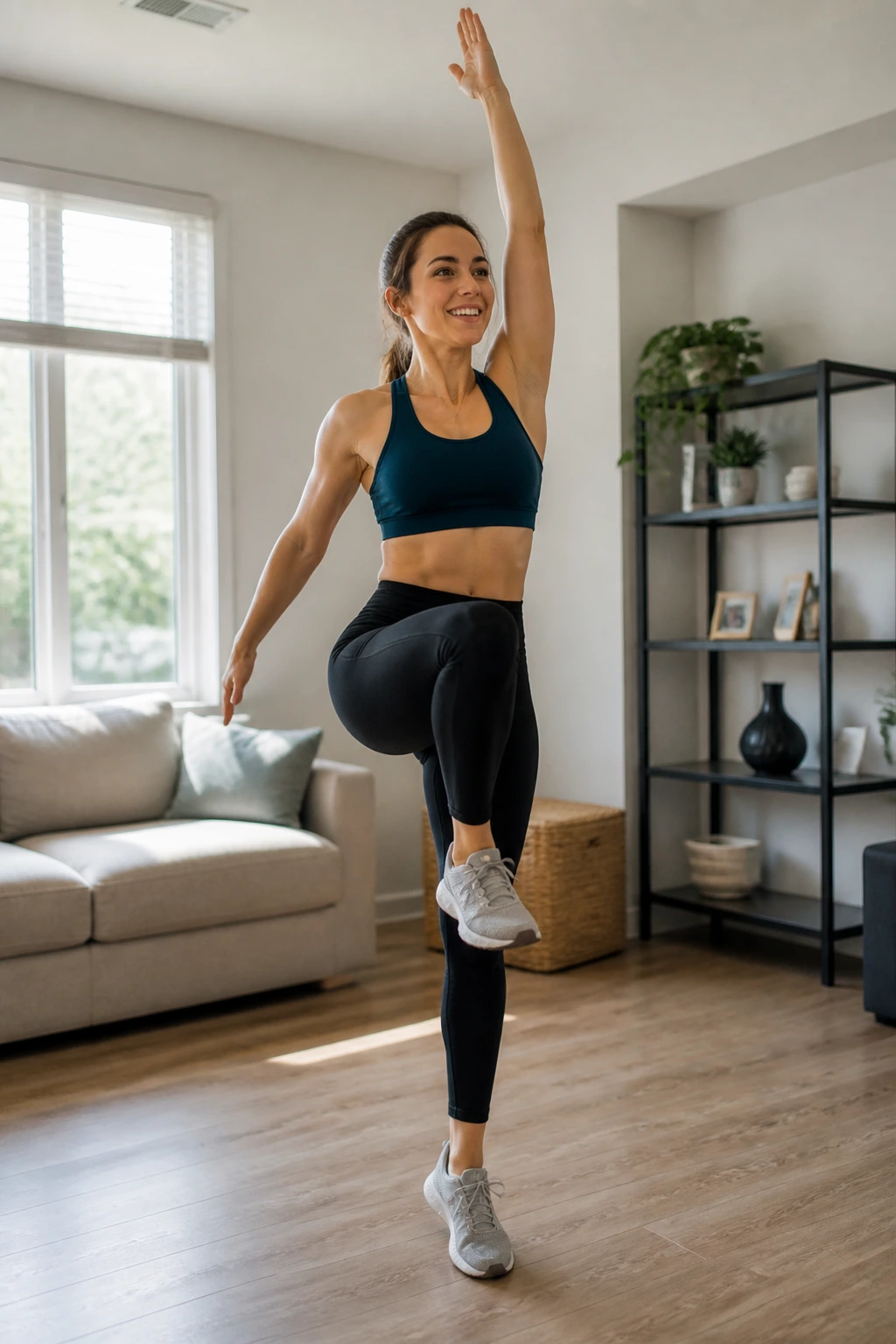
A power march is what happens when a walk decides to mean business.
Drive the knees up a little higher, swing the arms with more force, and add an overhead sweep every few steps. The sweep can be both arms reaching up together, or one arm at a time if that feels smoother on your shoulders. Either way, the change in arm path keeps the march from turning into background movement.
This is a useful choice when you want a standing cardio drill that does not feel frantic. It works as a warm-up, a recovery piece, or a light finisher when your legs are already cooked. The arms keep the posture open, and the marching pace keeps the heart rate honest.
I like this one for 1-minute rounds because it gives you enough time to settle into the rhythm. If your breathing stays too easy, pick up the knee lift or make the arm sweep larger. Small changes. Big difference.
17. Boxer Shuffle
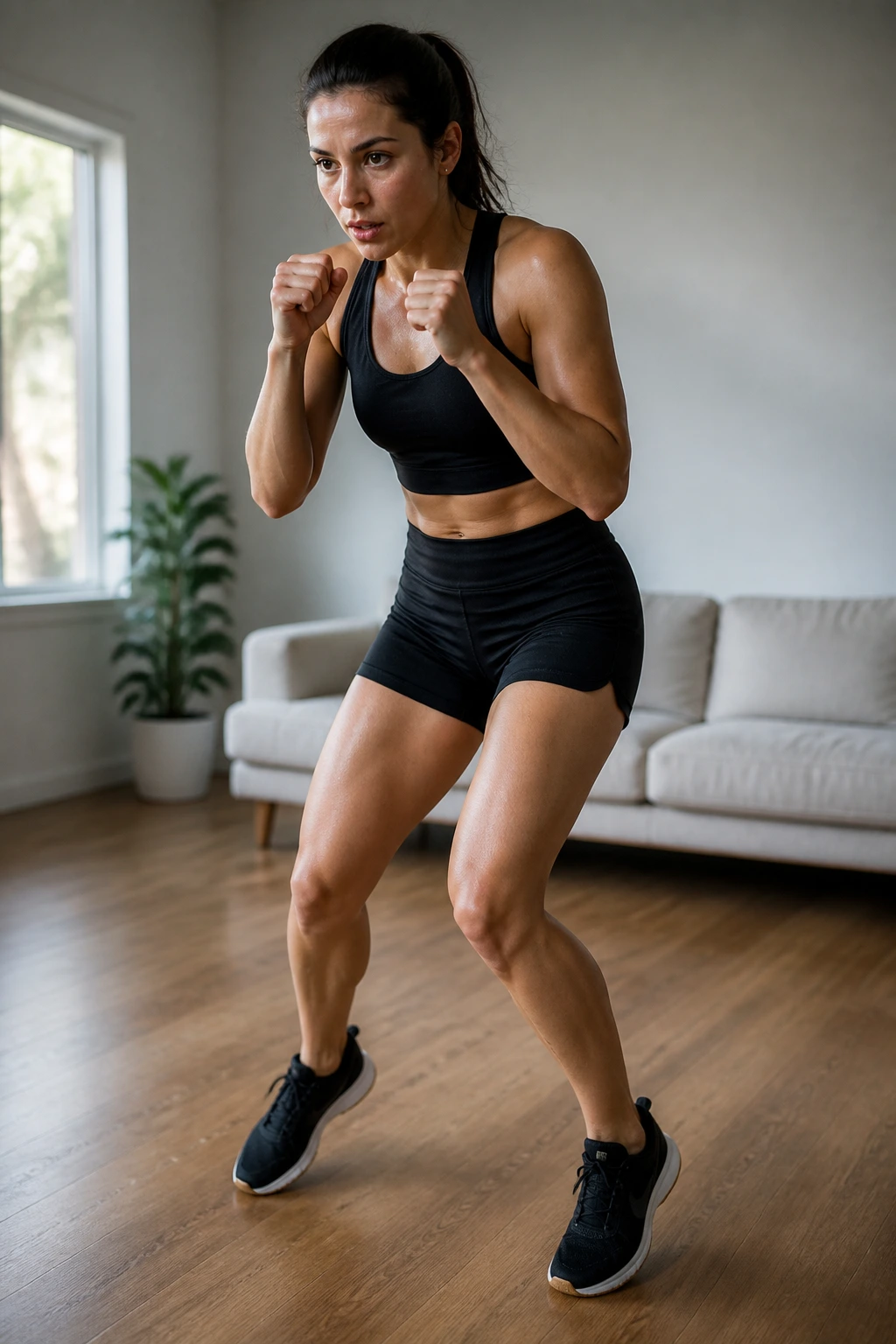
Unlike shadow boxing, the boxer shuffle lives in the feet.
Stay in a light stance, shift your weight from foot to foot, and keep a tiny bounce under you. Your heels do not need to leave the floor much. The point is to stay springy, not to hop all over the room like a cartoon. Hands can stay up in guard position or layer in short punches once the rhythm feels natural.
That bounce does two things. First, it keeps the calves and ankles active. Second, it gives the upper body a base for faster punches or head movement. The result is a compact indoor cardio drill that feels athletic without needing much room.
Best use
- Short bursts between harder intervals
- 30-second rounds before shadow boxing
- Light recovery when your legs need a break from jumping
If you have tile or wood floors, keep the bounce low. The boxer shuffle should sound almost quiet. If it sounds loud, you’re probably doing too much.
18. Lateral Shuffle Touches
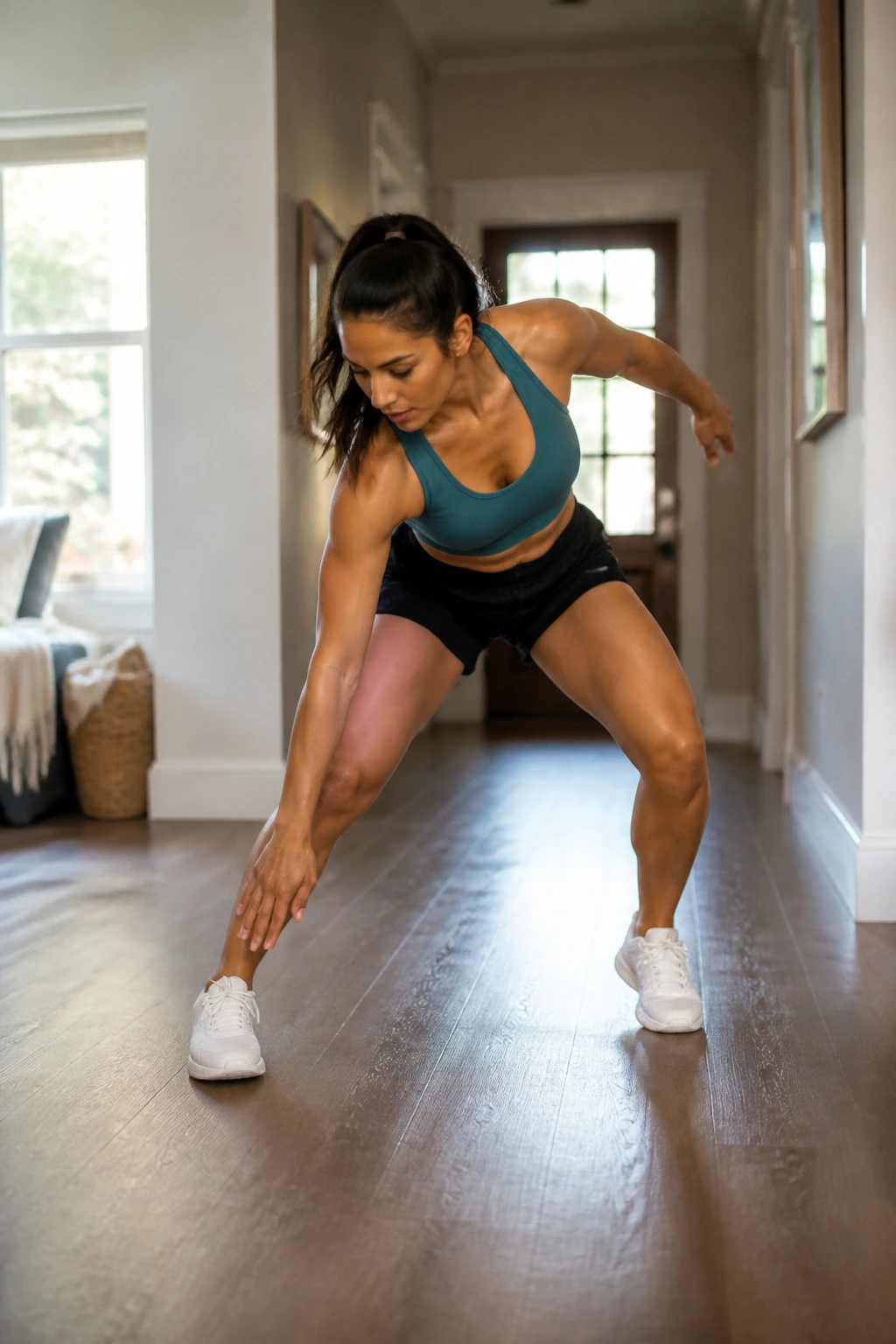
Picture two tape lines on the floor and a tiny lane between them. That is the whole game here.
Shuffle three quick steps to one side, touch the floor or your shin with the opposite hand, then move back the other way. The touch gives the drill a target, which helps you stay sharp instead of drifting into random side steps. It also keeps the torso engaged because you have to lower and return with control.
This move is a nice reminder that cardio does not have to be straight ahead. Side travel wakes up the hips in a different way and makes the room feel more useful than it did five minutes earlier. Keep the chest lifted, keep the knees soft, and do not overreach on the touch. A small touch is enough.
Try 20 to 30 seconds at a brisk pace. If you want to make it harder, move faster instead of stepping wider. Wider can be messy indoors. Faster usually wins.
19. Reverse Kickbacks with Arm Pumps
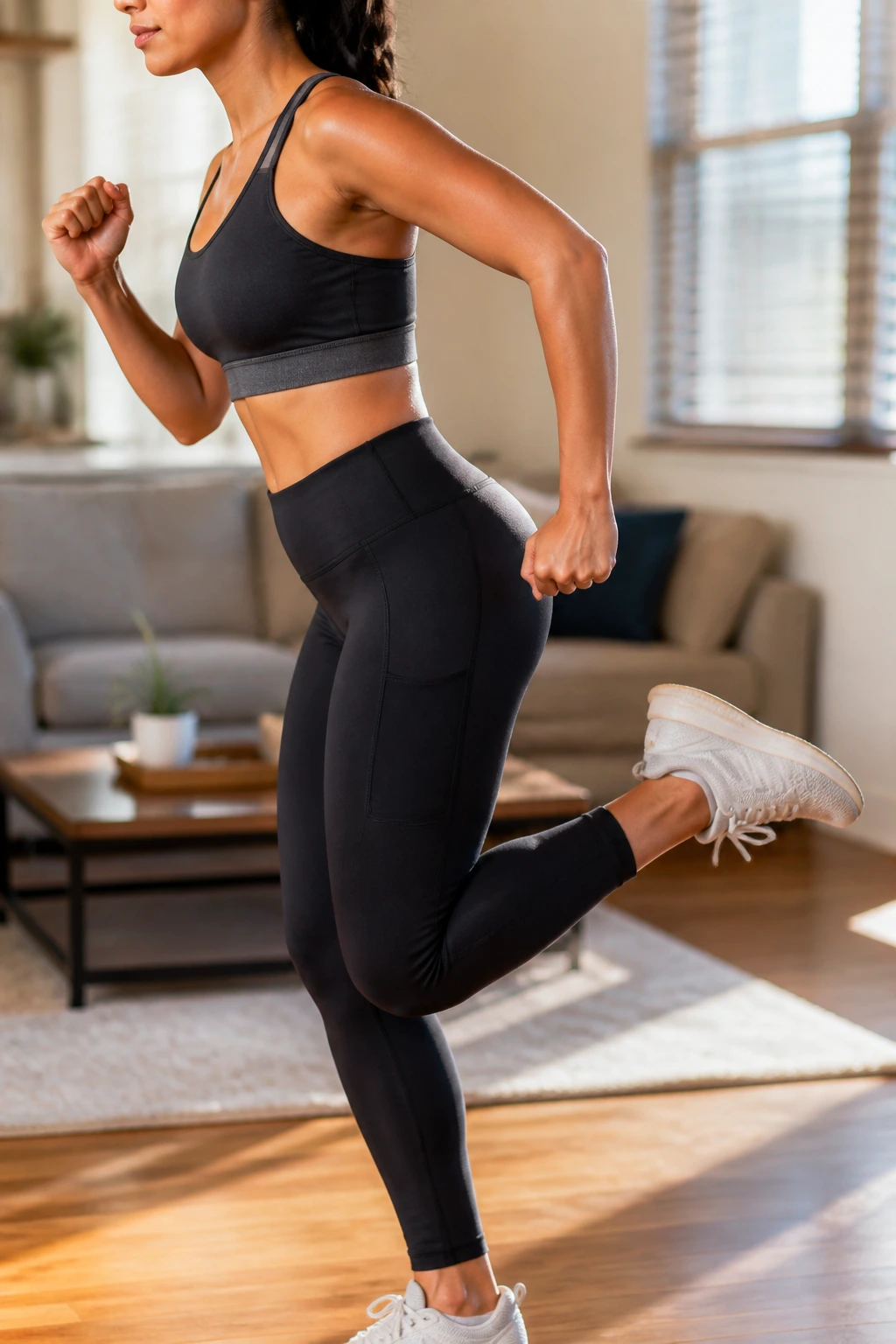
Glute-focused cardio is underrated.
Step one foot back and curl the heel up toward the glute, or keep the foot light and tap it behind you while the arms pump hard. Either version brings the back side of the body into play. That matters, because a lot of indoor cardio lives in the front of the body and never asks the hips to help.
Keep the torso tall and the pelvis steady. If you lean forward too much, the move changes shape and the kickback turns into a back strain waiting to happen. Think of it as a quick leg curl with a pulse, not a giant swing.
Quick cues
- Chest tall
- Arms moving like a brisk walk
- Heel driving back, not up and out
- Soft standing knee
Use 30-second sets on each leg or alternate sides every rep. It is a good one for active recovery because it keeps you moving while letting the breath settle a little. The burn is subtle. Then it isn’t.
20. Cross-Country Ski Arms
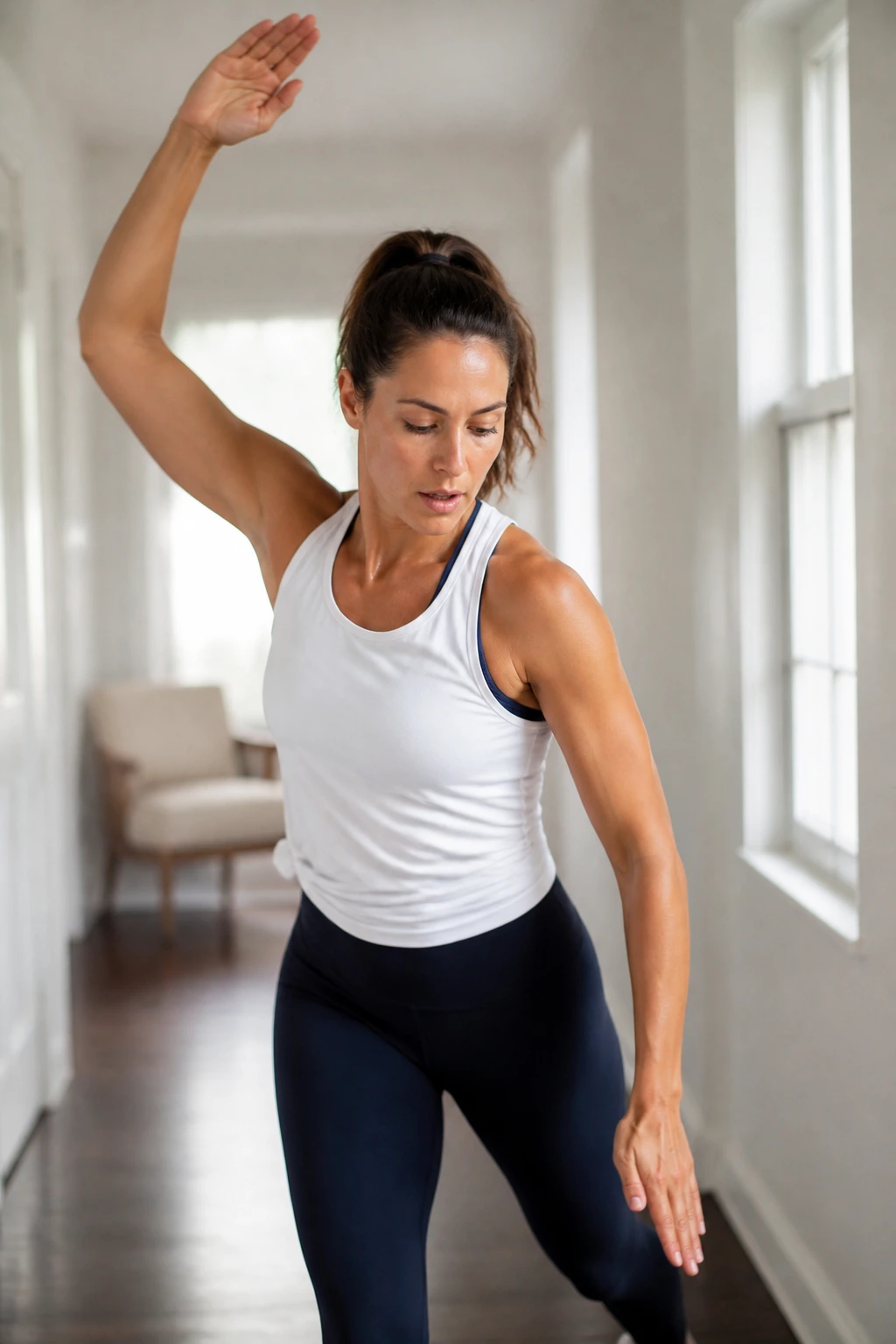
Why does a simple arm swing feel so tiring after one minute? Because the whole upper body is involved, not just the shoulders.
Cross-country ski arms work best when the arms move in long, diagonal sweeps, one hand traveling up while the other drops down toward the opposite hip. Add a light alternating step under you and the movement starts to feel like indoor skiing without the weirdness of pretending you own snow. It’s smoother than it sounds.
Low-impact or faster version
- Low-impact: step side to side and swing the arms wide
- Faster: add a quick toe push as the arms cross and open
- Best cue: keep the shoulders relaxed so the neck does not tighten up
This is one of those standing cardio workouts that looks gentle until the third round. The rhythm is what gets you. If you keep the arms long and the steps light, you can stay in the work zone for longer than with high knees or jumping jacks. Nice trade.
21. Diagonal Toe Taps
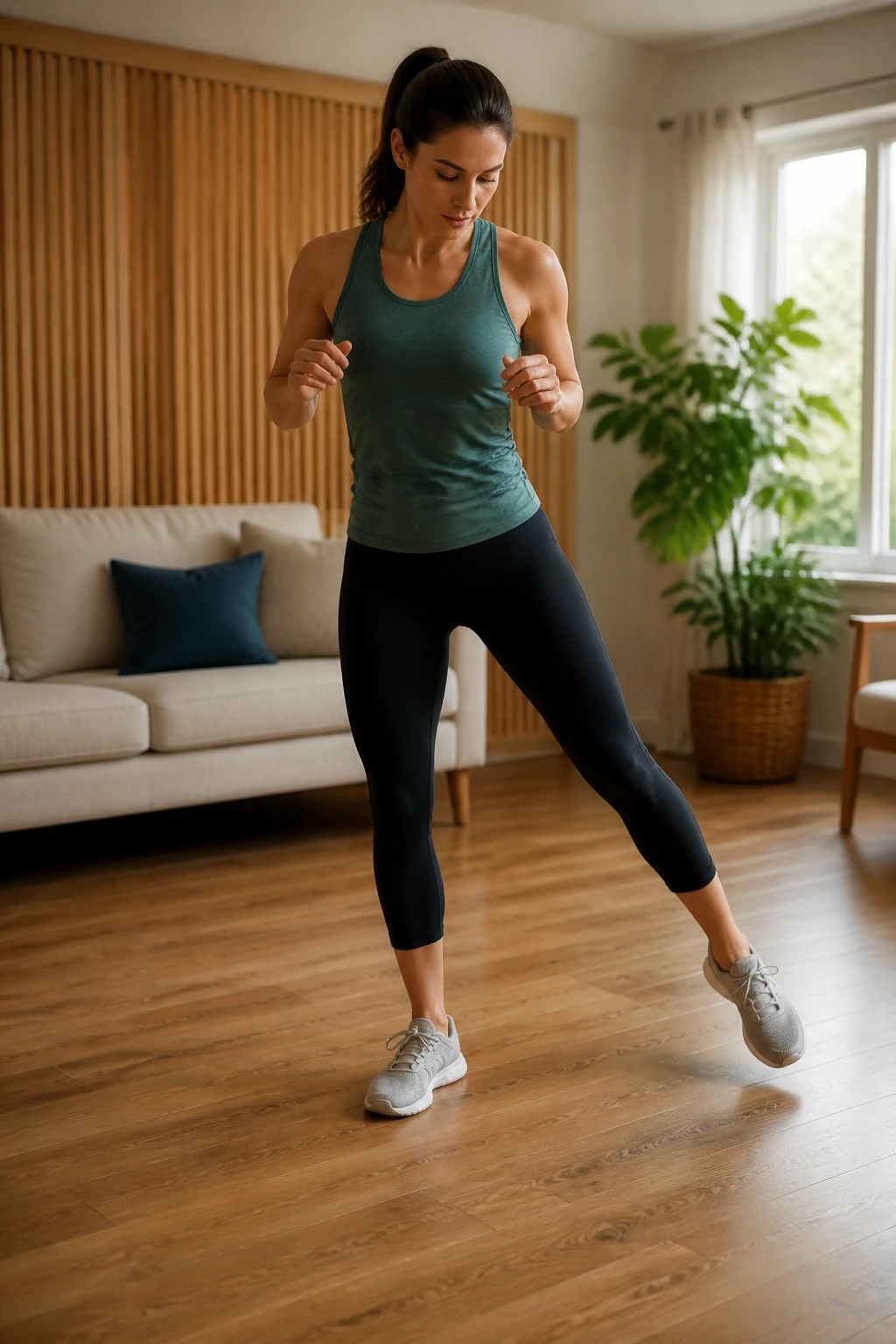
Imagine a clock face under your feet. Now tap around it.
Reach the right foot forward and slightly right, bring it back to center, then tap forward and left, then back and left, then back and right. Keep the standing leg soft and the torso tall. The pattern is small, but the brain work is real, which is why this drill feels sharper than it looks.
I like diagonal taps when I want a standing move that builds coordination instead of brute force. They keep the feet awake, force the hips to stay responsive, and give your breathing a steady climb. If you’re tired of straight-line cardio, this one changes the feel of the room in a good way.
A simple pattern to follow
- Front right
- Front left
- Back left
- Back right
Repeat that for 30 seconds, then switch the speed up for the next round. Keep the taps light. Heavy taps slow the drill down and make the floor noise worse than it needs to be.
22. Step-Behind Jacks
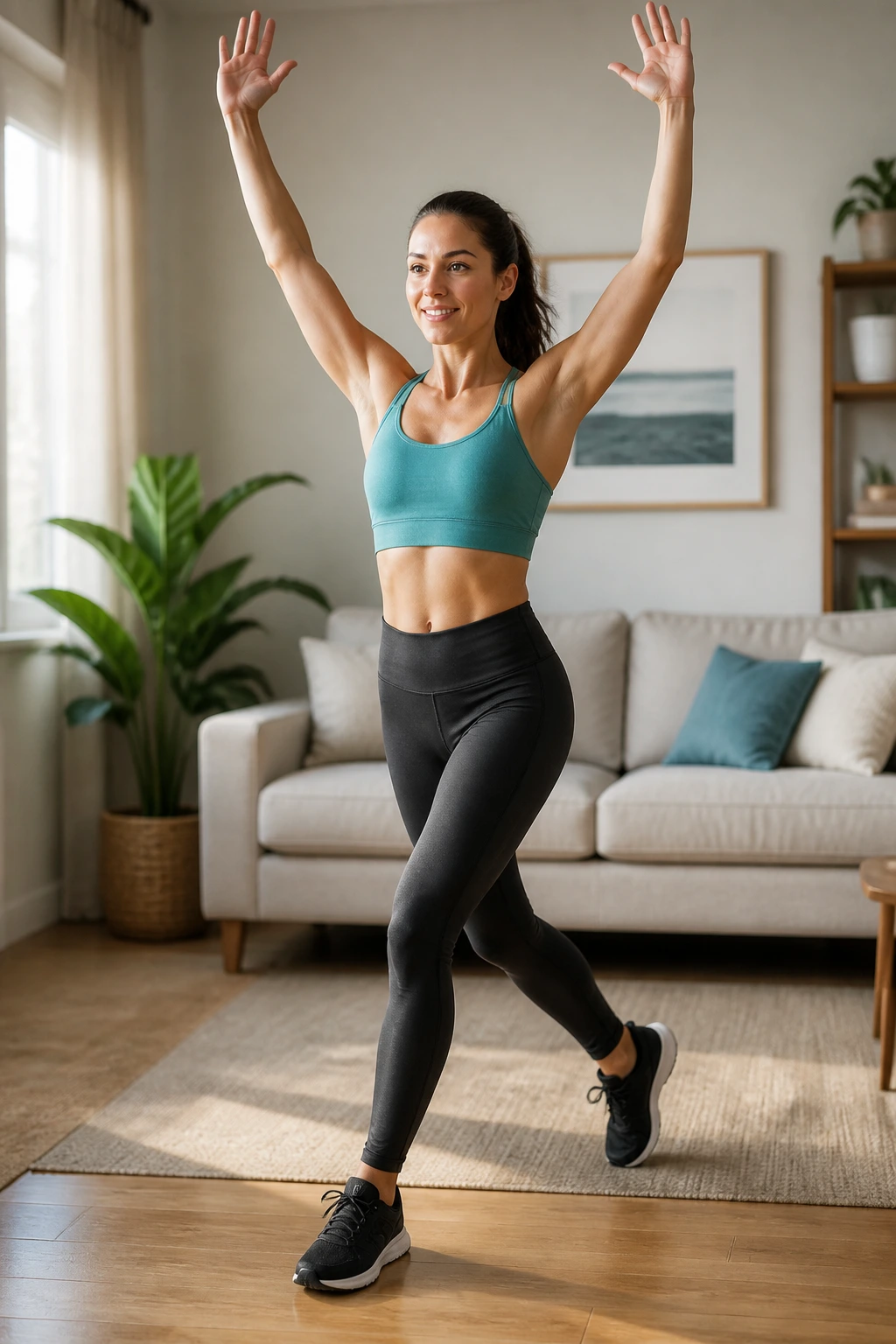
If regular jumping jacks start to feel loud or sloppy, step-behind jacks are the cleaner cousin.
Instead of jumping the feet out, step one foot behind and across the other while the arms open overhead. Come back to center and repeat on the other side. The crossing step makes the legs work a little harder than a plain side step, and the opening arms keep the heart rate up.
This move fits nicely between harder intervals because it keeps you moving without frying the calves. It also gives the hips a more interesting pattern than simple side steps. The crossing action asks for balance, so keep the pace steady at first. Speed comes later.
Do not rush the crossing step so much that the knees knock together. That usually means the stance is too narrow. Give yourself a little room, keep the chest up, and let the arms lead the motion overhead. Smooth beats frantic here.
23. Alternating Side Kicks
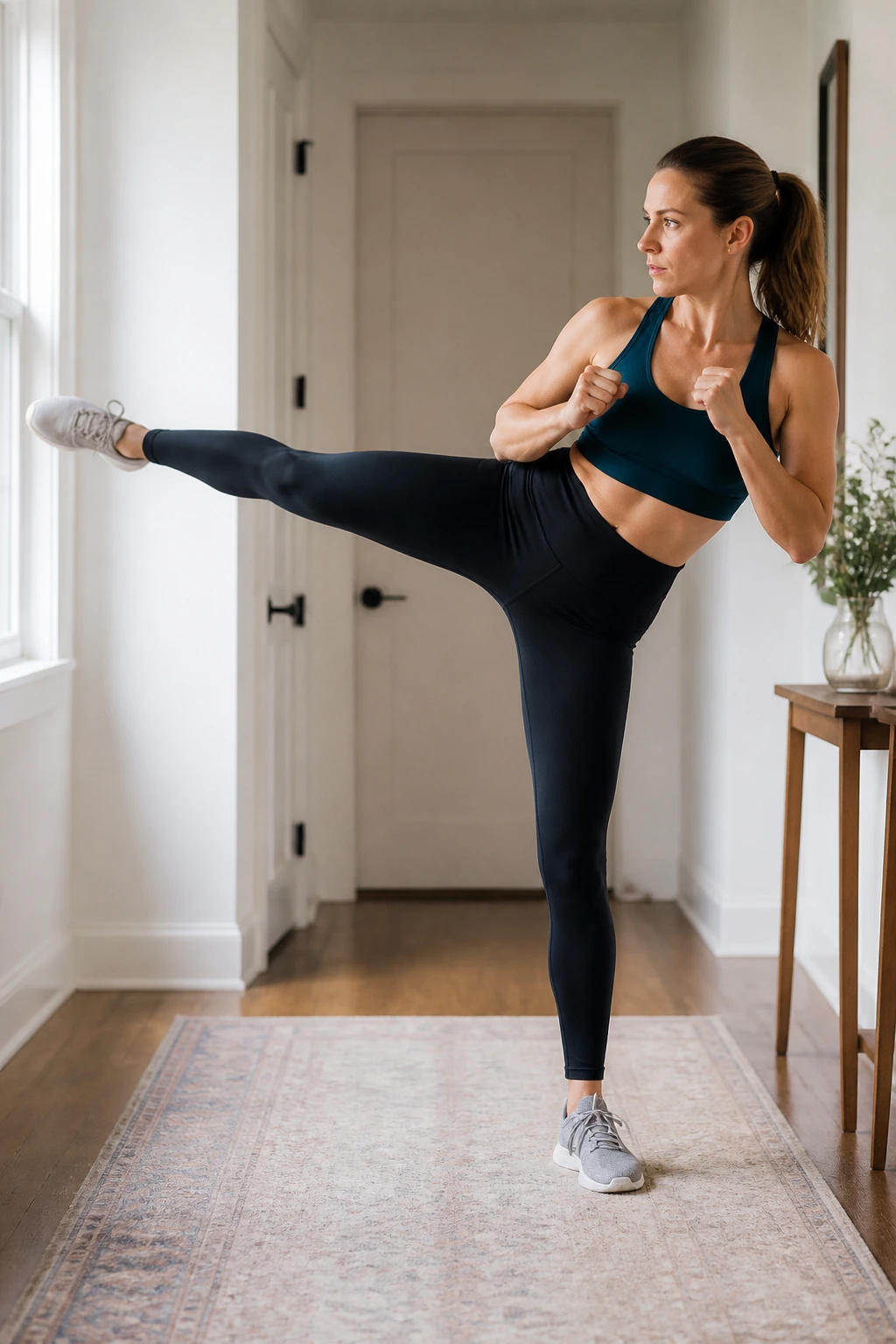
A side kick has a different feel from a knee lift. It opens the hip, wakes up the outer leg, and gives indoor cardio a sharper edge.
Lift the knee first, then extend the leg out to the side with control. Pull it back in and switch. The leg does not need to fly high. A lower kick done cleanly is often more useful than a giant swing that throws you off balance. That’s especially true indoors, where the wall or a couch is never far away.
This move gets more interesting when you keep the standing foot active and the core tight. If the torso leans away from the kick, you lose power and stability. Stay tall, kick from the hip, and think about returning the foot under you before the next rep starts.
Use 10 kicks per side or 30-second intervals. If you want a little more challenge, add a quick punch in the opposite direction as the leg extends. Small bonus. Big payoff.
24. Standing Jack Press
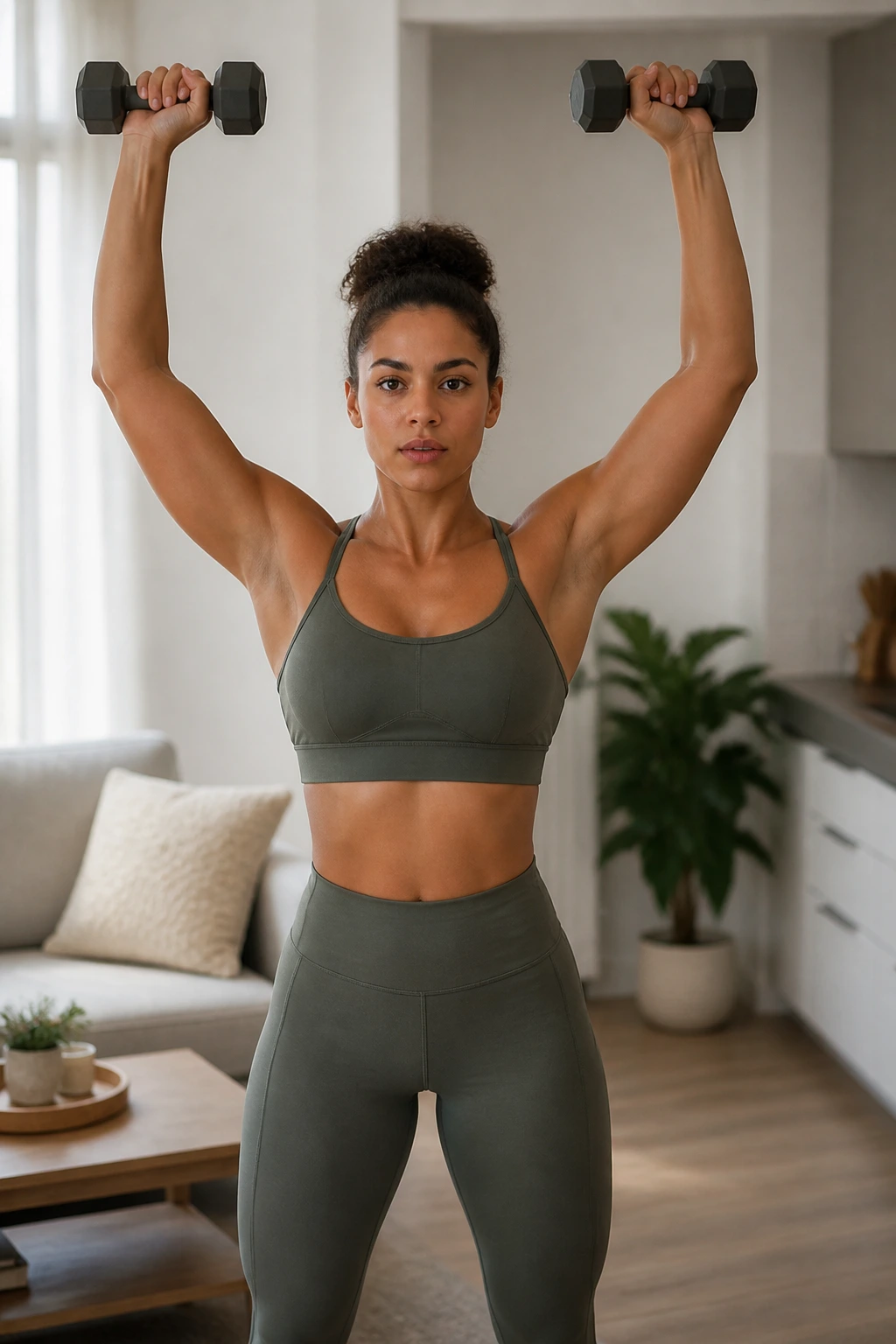
This one sneaks in shoulder work while your heart rate climbs.
Open the feet and arms like a jack, then press the arms down with force as the feet return to center. The pressing action changes the feel completely. Instead of just waving the arms overhead, you’re creating a downward push that fires the shoulders and upper back. It is a small detail, but it makes the move feel more athletic and less like a warm-up from gym class.
Why it works
The open-close pattern is easy to repeat, which means you can stay in motion longer. The arm press gives the upper body something real to do, and the steady foot rhythm keeps the legs awake. If you want a joint-friendly option that still feels active, this is a strong pick.
Try 40 seconds steady or mix it into a combo with marching and punches. Keep the movement crisp. Lazy jacks are just side steps with arm flapping, and that’s not the same thing.
25. Three-Move Cardio Finisher
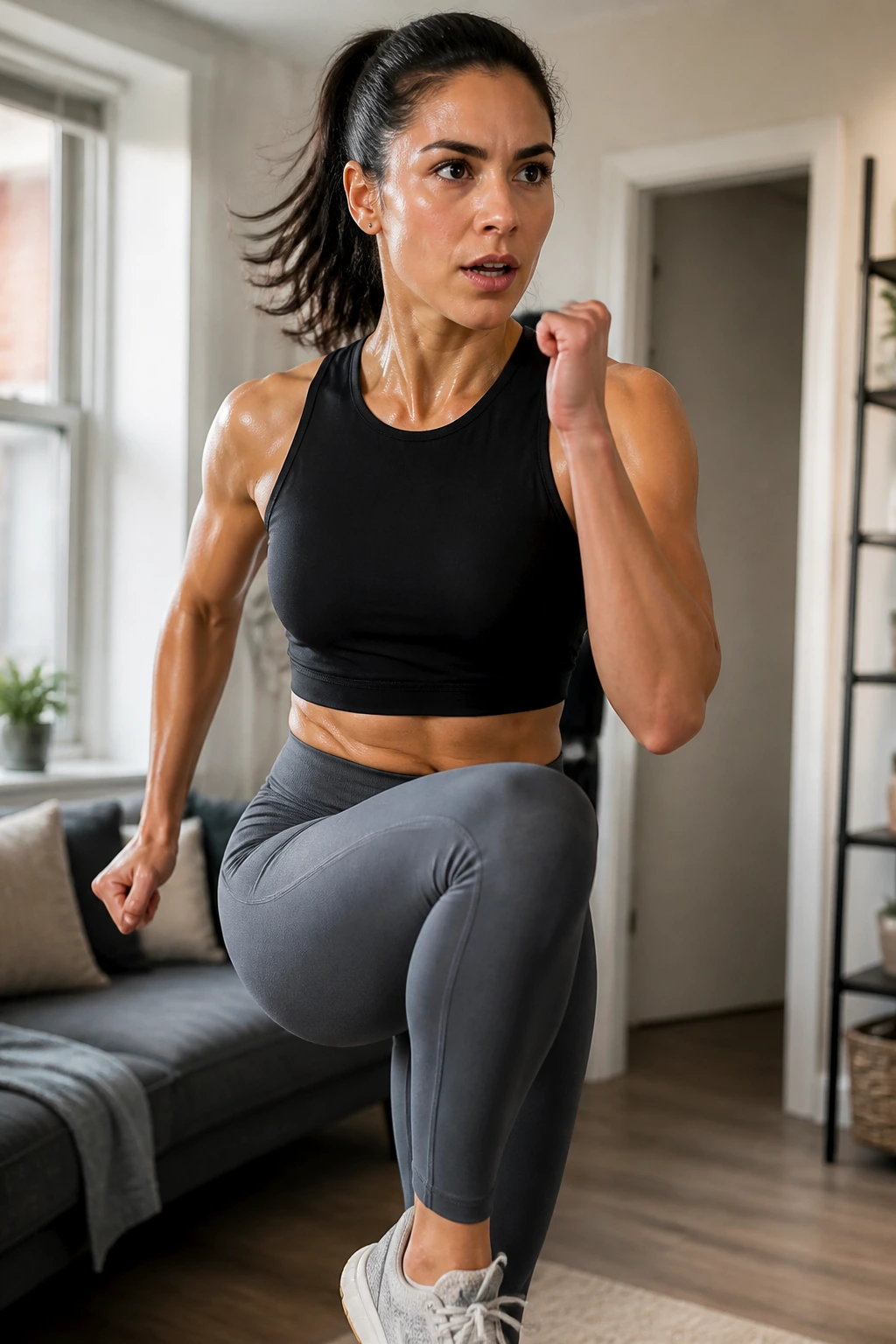
If you only have five to eight minutes, this is the one I’d keep.
Use three moves back to back: 30 seconds march with arm drives, 30 seconds fast feet and punches, 30 seconds knee drives. Rest for 30 seconds, then repeat the whole round 3 times. It is basic on purpose. The power comes from stacking simple standing drills in a way that barely gives your breathing time to settle.
One round looks like this
- 30 seconds power march
- 30 seconds fast feet and punches
- 30 seconds cross-body knee drives
- 30 seconds rest
Keep the transitions tight. No wandering around. No staring at the floor between intervals. If the room is tiny, even better; the whole point is to keep the work compact and repeatable. This kind of finisher is what makes standing cardio workouts useful in real life, not just on paper. You can do it in socks, in trainers, before a shower, after a long desk day. That flexibility is the win.
Final Note
The best part about standing indoor cardio is how little friction it asks for. No mat to unroll. No floor sequence to memorize. No dramatic setup that turns into procrastination.
Pick 4 or 5 of these moves, set a timer for 20 to 40 seconds per round, and keep the rest short. That is enough to make a small room feel useful. Enough to get sweaty. Enough to count.
And if one move feels awkward, skip it. There are twenty-four more waiting, which is the nice part of a list like this.
