



Pregnancy changes the rules fast.
A pose that felt harmless last month can start feeling wrong once your belly shifts, your joints loosen, and your balance gets weird. That is why prenatal yoga poses safe for all trimesters deserve more care than a pretty flow on social media.
A wall, a block, a bolster, and a chair do more useful work here than anything flashy. No hot room. No breath-holding. No deep twist that crams the middle of your body or leaves you getting up too fast with stars in your eyes.
If your clinician has given you exercise limits, or if you have bleeding, placenta issues, painful contractions, dizziness, or chest pain, skip the mat and ask first. For everyone else, the trick is simple: keep the breath smooth, keep space in the belly, and choose shapes that make the back, hips, and ribs feel better instead of tighter.
1. Cat-Cow on Hands and Knees
Cat-Cow is the pose that usually makes people exhale like they have been holding their shoulders near their ears all day. It feels small, but the movement can be a huge relief when your lower back starts to complain and your rib cage feels boxed in.
Why It Earns a Spot
On hands and knees, Cat-Cow gives your spine a gentle wave instead of one fixed shape. The “cow” part lets the belly soften and the chest broaden; the “cat” part gives the back a round, roomy stretch without forcing anything. That back-and-forth is useful in every trimester because you can keep the range tiny or make it a little bigger depending on how your body feels.
Keep your wrists under your shoulders and your knees wider than hip-width if your belly needs room. Press the floor away on the exhale, then soften the belly on the inhale. No need to push the range. The win is ease, not drama.
A Few Things to Watch
- Move slowly enough that your breath stays even.
- Keep your neck long instead of dropping your head hard.
- If your wrists get sore, place your hands on blocks or fists.
- If kneeling bothers you, use blankets under the knees.
Tip: If your lower back feels pinchy in the “cow” shape, make the movement smaller and focus on the rib cage instead of the low spine.
2. Pelvic Tilts Against a Wall
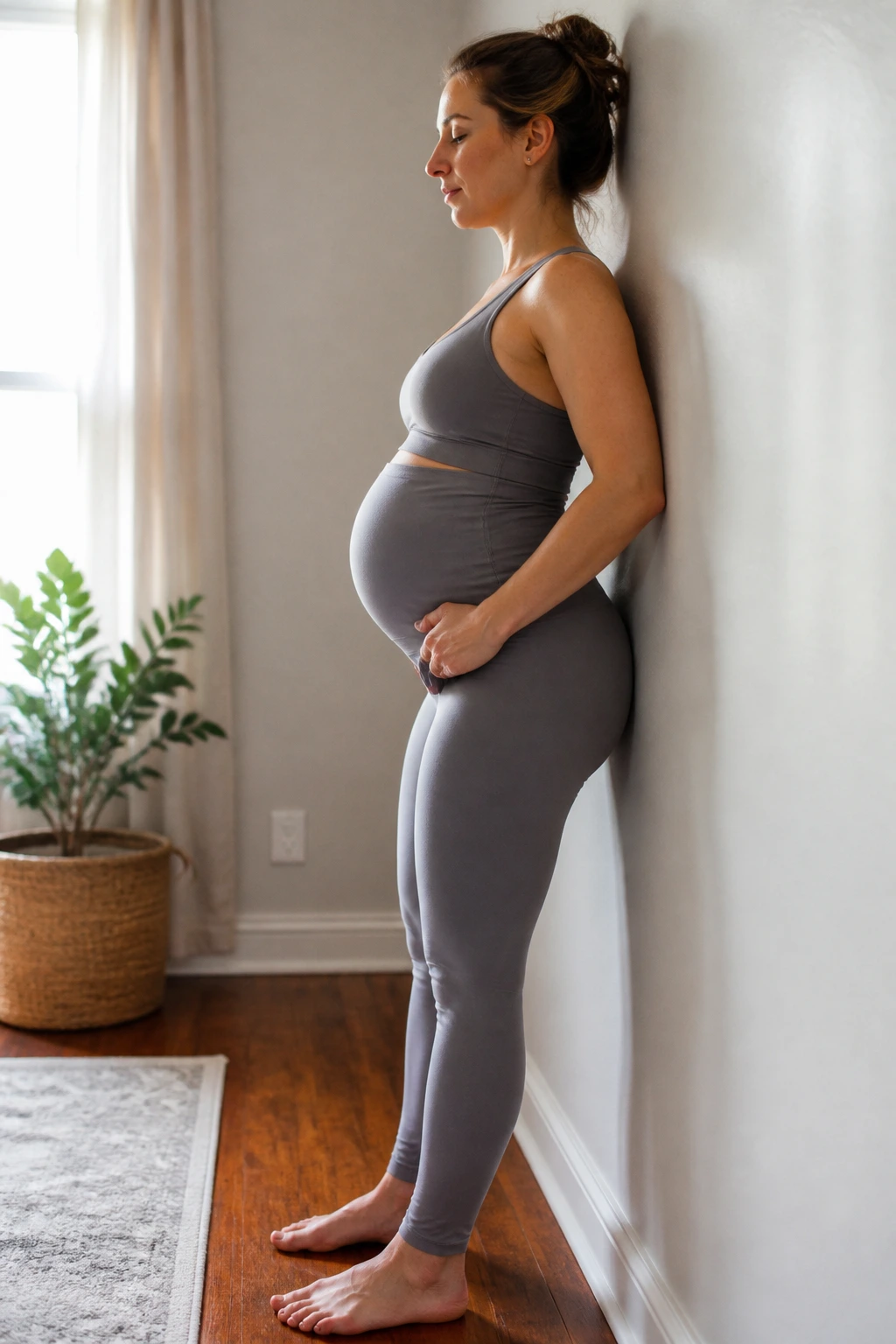
Why does such a tiny movement help so much? Because pregnancy often makes the pelvis tip forward and the low back work overtime, and a pelvic tilt gives you a clean way to reset that line without strain.
Stand with your back against a wall, feet about 8 to 12 inches forward, knees soft. Gently press the low back toward the wall on the exhale, then release on the inhale. That is the whole trick. The motion should feel more like “zip the ribs toward the pelvis” than a hard crunch.
You can also do pelvic tilts on hands and knees if standing feels boring or your balance is off. I like the wall version on days when the hips feel heavy, because you get support and feedback at the same time.
How to Feel It
- Exhale and flatten the low back lightly.
- Inhale and return to a neutral spine.
- Keep the shoulders relaxed.
- Stop if you feel abdominal coning or pressure downward.
The beauty here is that the exercise looks plain. Good. Prenatal work does not need to be showy to matter.
3. Mountain Pose With Calm Breath
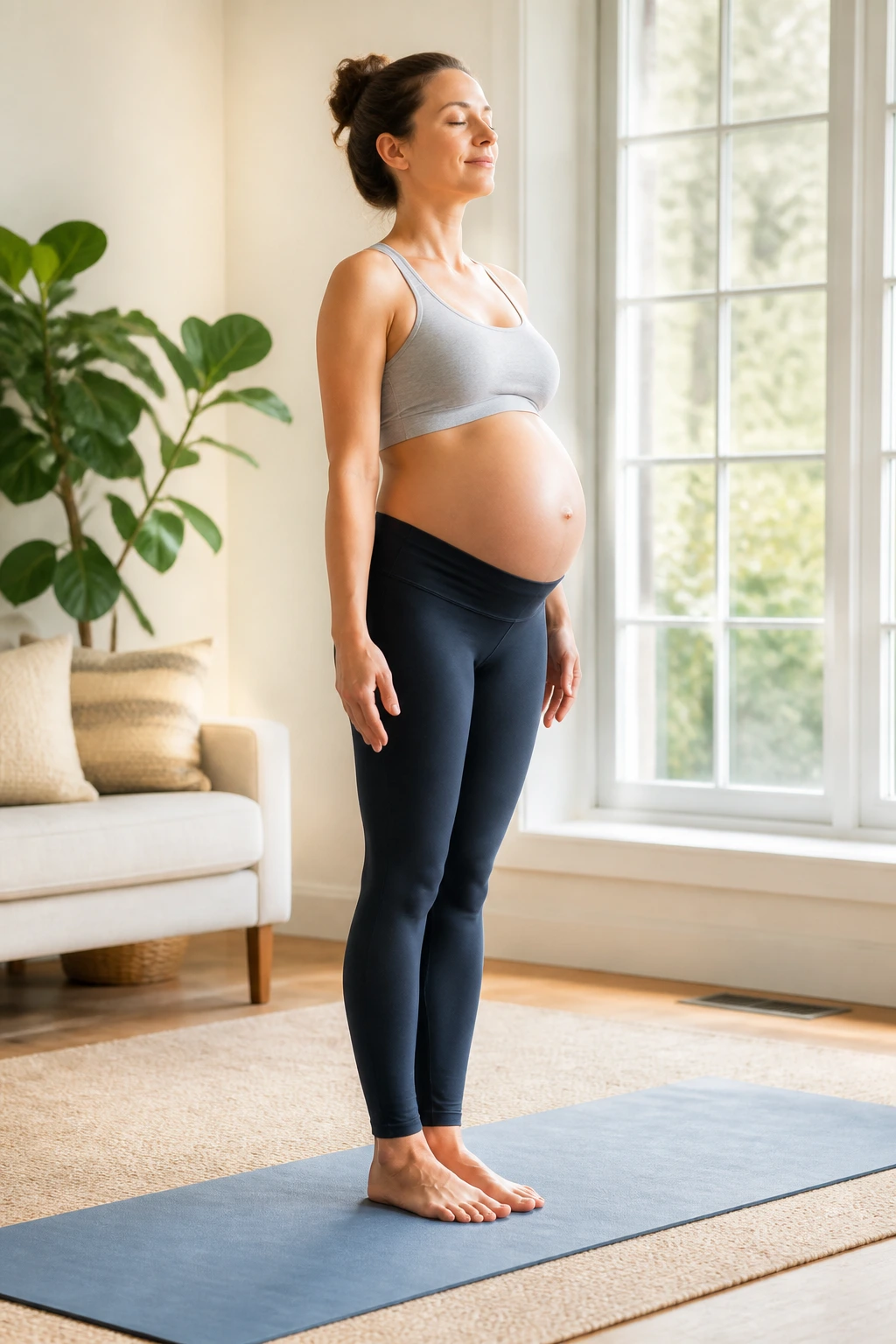
Mountain Pose is not filler. It is the place where posture, breath, and balance all get a say without making you sweat or wobble.
Stand with your feet about hip-width apart, or a little wider if that feels steadier. Soften the knees. Stack the ribs over the pelvis without jamming the tailbone under. Let the crown of the head lift while the shoulders drift down and back just enough to feel open, not military. The breath should move the sides of your ribs instead of pulling the belly tight.
This is the pose I reach for when someone says, “I feel off today,” because it gives the nervous system a clean, simple signal. You can stand here between stronger poses, during a long workday, or at the end of a walk when your hips feel like they have had enough.
One sentence matters more than the rest: steady feet, soft knees, easy breath. That combination helps more than trying to “stand up straight” in a stiff, old-school way.
4. Supported Child’s Pose With a Bolster
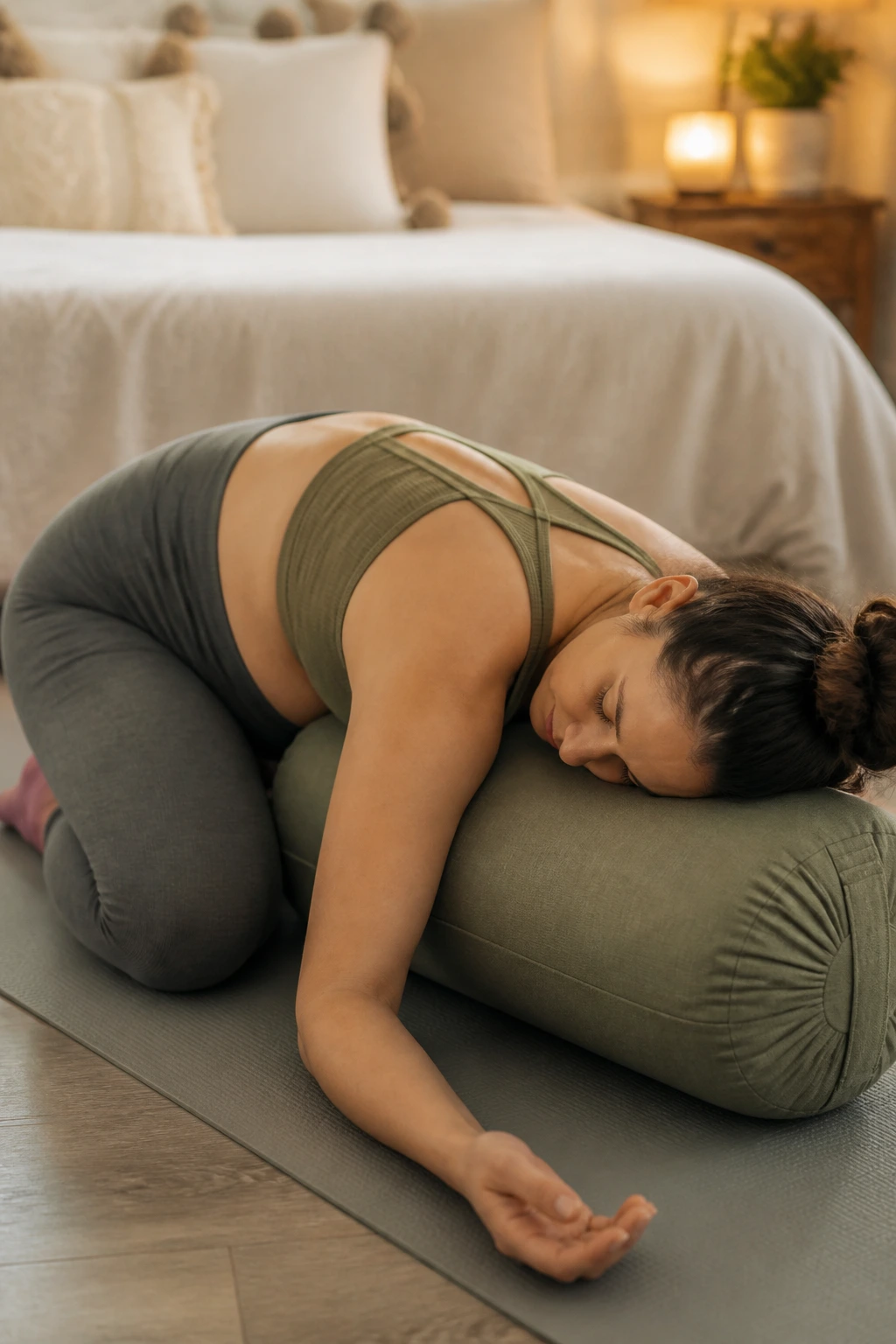
Supported Child’s Pose can feel like a permission slip. Not a deep stretch. A pause.
Kneel with your knees wide enough to leave space for the belly, then place a bolster, stacked pillows, or a firm cushion between the thighs. Fold forward so your chest rests on the support, and turn your head to one side. If your belly does not like the pressure, slide higher onto the support so the torso is more lifted. That small adjustment changes everything.
The shape is useful because it gives the back of the body a break while still keeping the hips open. A lot of people think Child’s Pose has to be a full fold to count. It doesn’t. In pregnancy, a softer version is usually the smarter one.
What to Watch For
- Keep the knees as wide as needed.
- Use a folded blanket under the shins if kneeling feels sharp.
- Skip it if you feel belly compression or shortness of breath.
- Swap in side-lying rest if the pose feels cramped.
A lot of prenatal yoga is learning to stop treating comfort like a luxury. Here, comfort is the point.
5. Goddess Pose With a Wide Stance
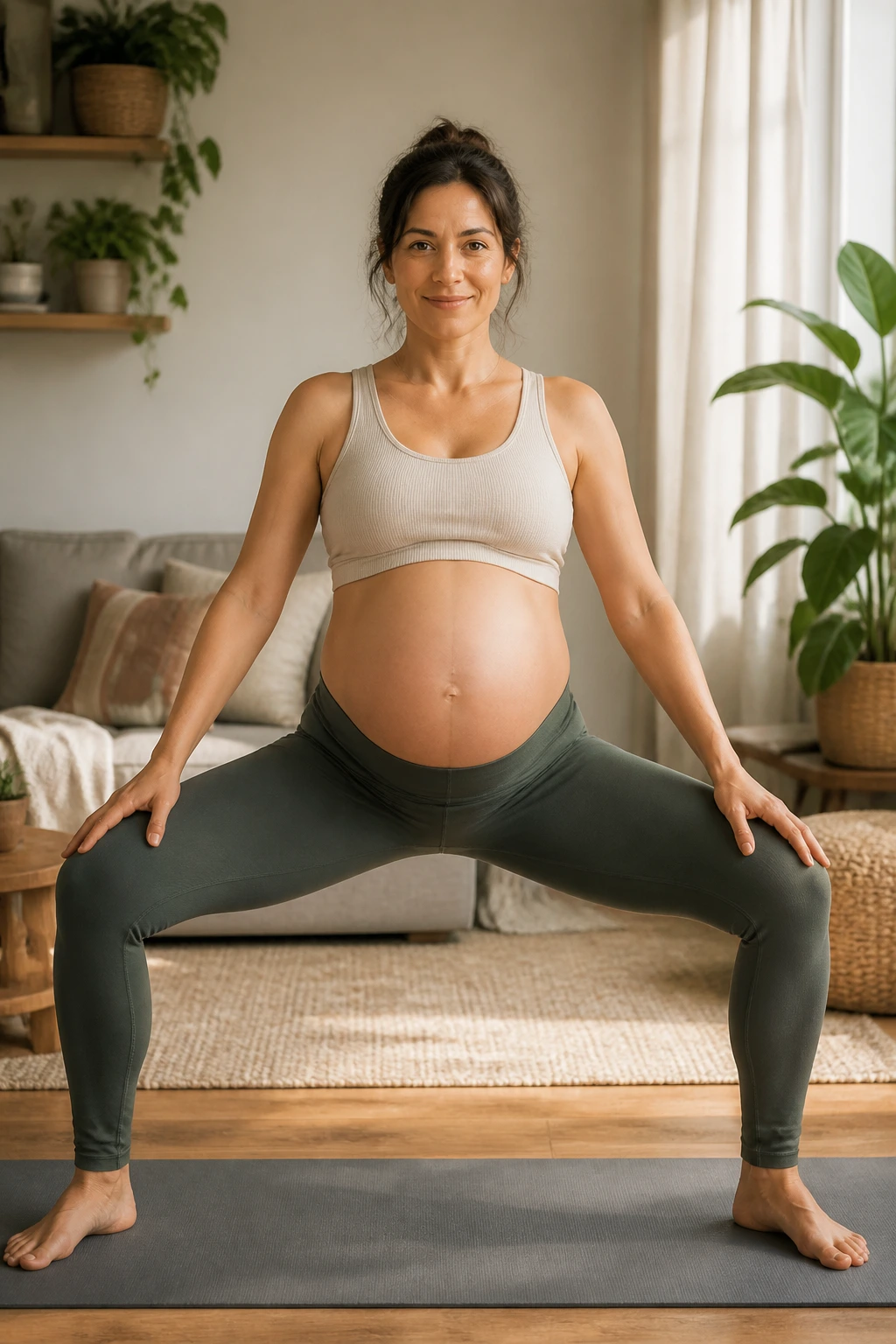
Goddess Pose is one of those shapes that looks simple and hits a surprising number of places at once. Thighs. Hips. Pelvic floor. Upper back if you keep the chest open.
Step your feet wide, turn the toes out a little, and bend the knees so they track over the second and third toes. You do not need a deep squat. Halfway down is often enough. The pelvis should feel grounded, not jammed, and the ribs should stay stacked instead of flaring forward.
What makes this pose so useful in prenatal yoga is the way it teaches you to sit into your legs without collapsing. That matters when climbing stairs starts to feel odd or when standing for long stretches makes your low back ache. Hold the arms at heart center, rest the hands on the thighs, or make cactus arms if the chest feels tight.
Breathe into the sides of the ribs. Exhale, let the thighs do the work. Inhale, keep the spine long. Simple. Harder than it looks. Worth it.
6. Warrior II With a Shorter Stance
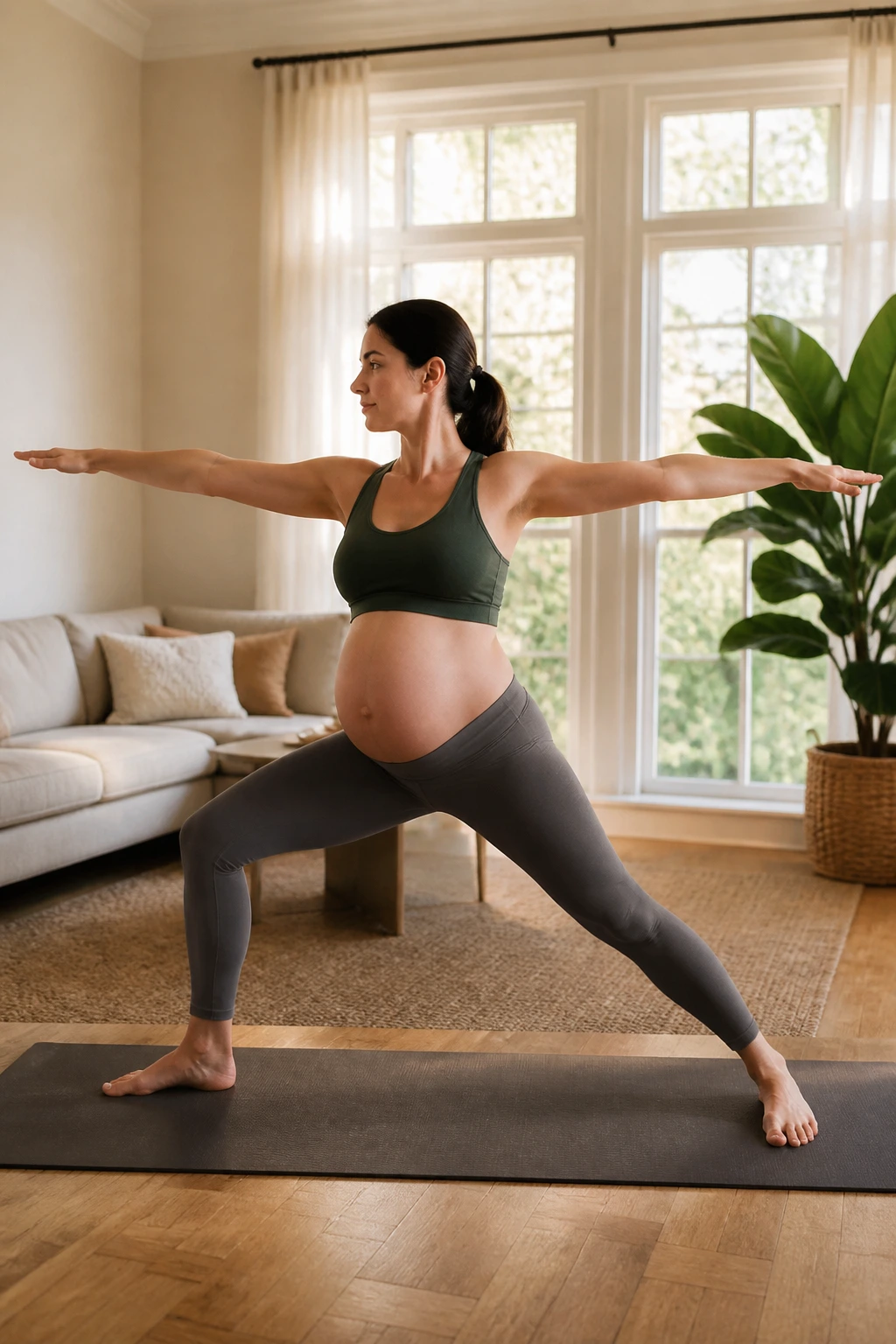
Warrior II is a strength pose, but in pregnancy it works best when you stop trying to make it look like a magazine shot. A shorter stance, softer front knee, and upright torso usually feel better than an exaggerated wide lunge.
Step the feet apart, turn the back toes in slightly, and bend the front knee only as far as feels stable. Keep the pelvis facing more forward than you might in a non-pregnant class. That small choice protects the hips and keeps the pose from turning into a balancing act.
Why the Wide Base Matters
- It gives the belly space to breathe.
- It keeps the front knee from diving inward.
- It reduces pressure on the low back.
- It makes the pose easier to hold for a few breaths without gripping.
If your arms get tiring, drop the back arm to the thigh or rest both hands on your hips. I actually prefer that version for longer holds. It looks less dramatic, sure, but it lets you feel the legs instead of fighting them.
Warrior II is not about power in the flashy sense. It is about staying steady while your body keeps changing shape.
7. Extended Side Angle With Forearm Support
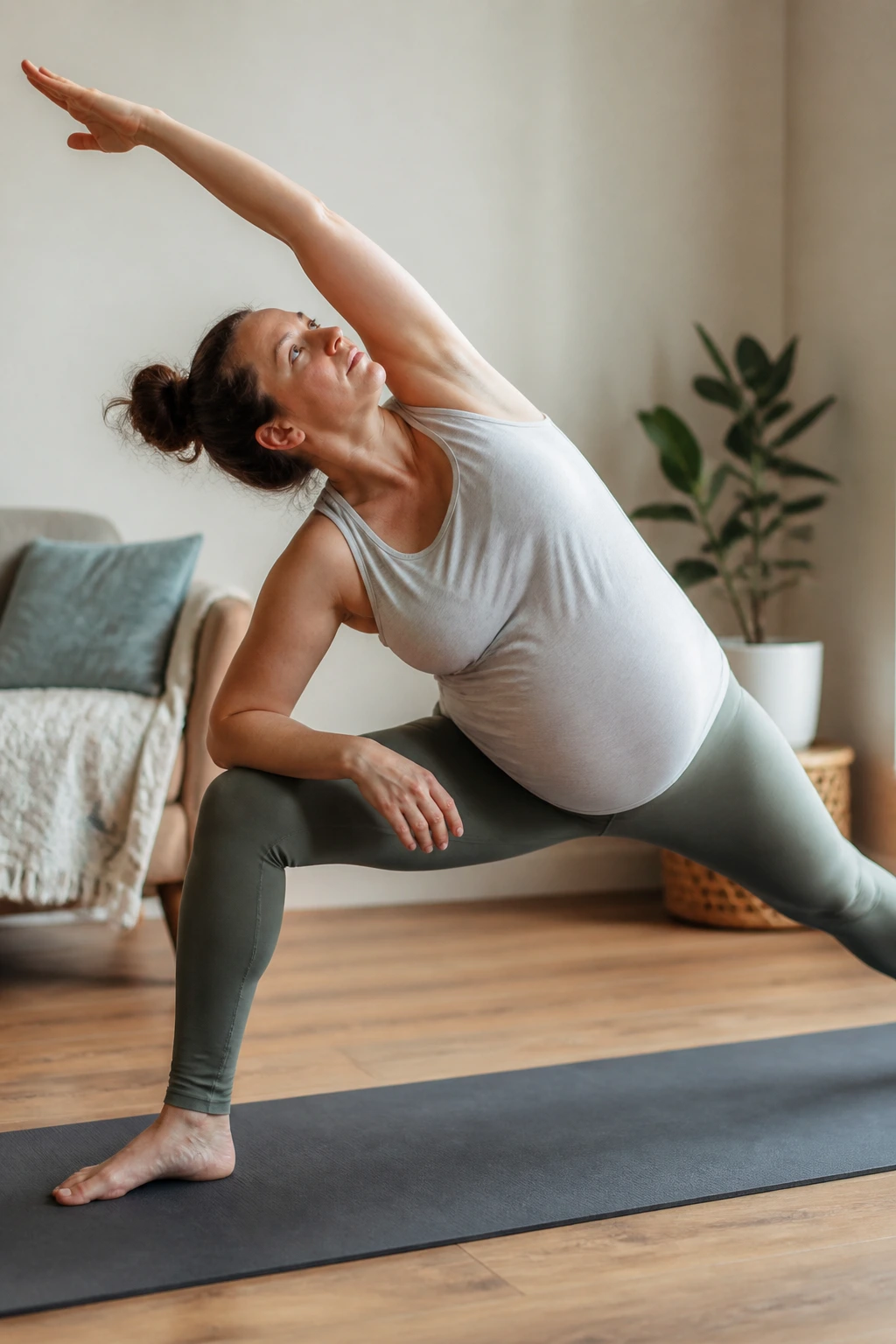
Can you do a side-angle shape in pregnancy without wrenching your spine? Yes, if you keep it open and modest.
From Warrior II, place the front forearm on the front thigh or a block. Stretch the top arm overhead, but do not force the torso to collapse toward the floor. The chest should stay open to the side rather than folding down. If the neck gets cranky, look straight ahead or down at the floor.
The point here is side-body length. That matters because the ribs can feel compressed as the belly grows, and a long reach through the top side can be a relief. What you do not want is a deep twist or a heavy lean that dumps weight into the knee.
How to Keep It Pregnancy-Friendly
- Keep the front knee stacked over the ankle.
- Use a block if your torso feels too far from the thigh.
- Shorten the stance if balance feels shaky.
- Exit slowly so you do not get lightheaded.
If you only remember one cue, make it this: lift through the top side, don’t fold and collapse. That changes the whole pose.
8. Triangle Pose With a Block
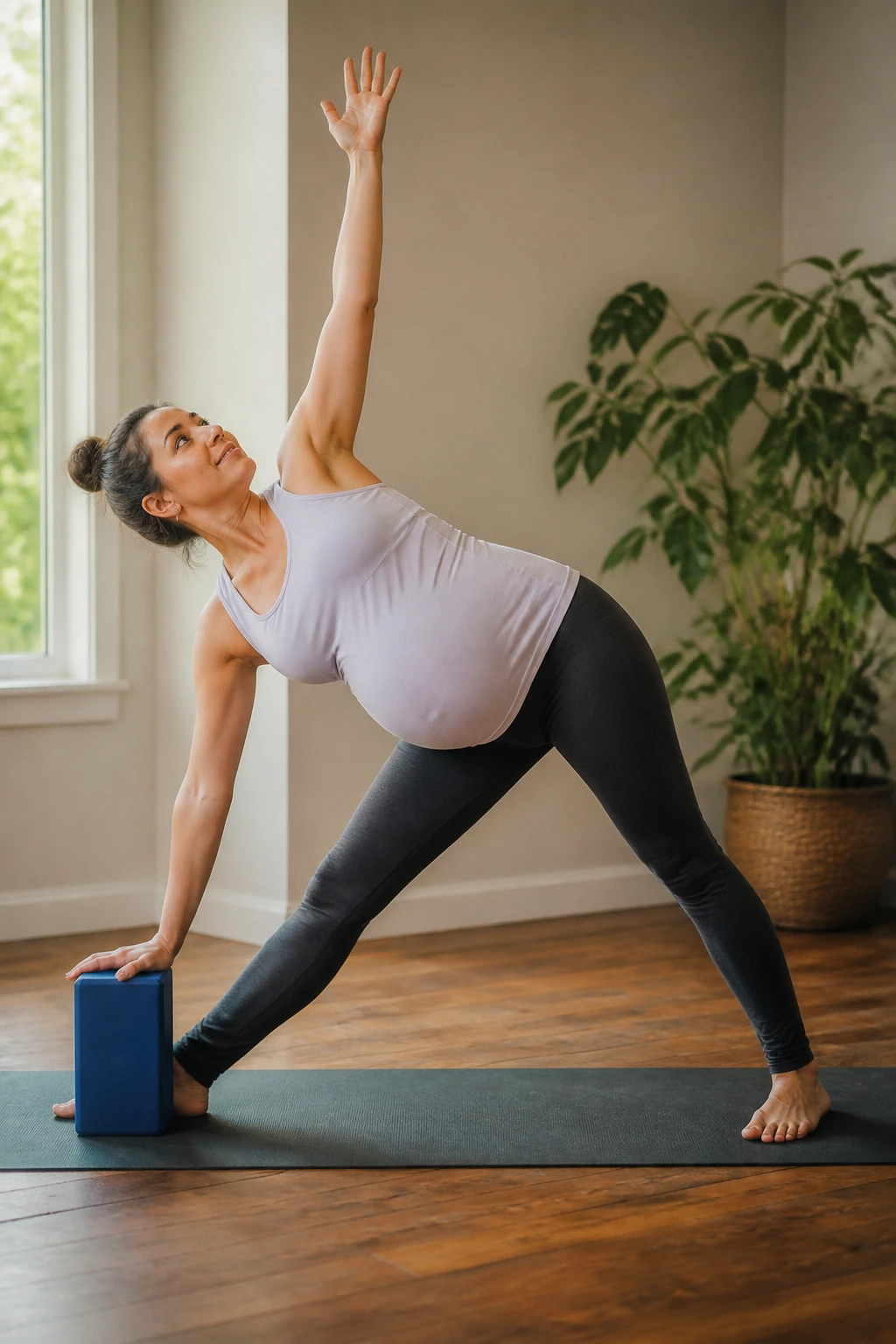
Triangle Pose looks like a hamstring stretch, but in pregnancy it is mostly a side-body and standing-balance shape. That matters, because chasing depth in the fold is the fastest way to make it feel awkward.
Start with a shorter stance than you think you need. Set a block on the floor outside the front shin or use a higher setting if the floor feels too far away. Reach the front hand down only as far as lets your chest stay open and your spine long. The front knee can stay softly bent. It does not need to lock.
The block is not cheating. It is the difference between a pose you can breathe in and one you are surviving. If you tend to overreach, this is the place to stop doing that. Keep the top shoulder stacked over the bottom shoulder, then turn the chest open only as far as it feels smooth.
A small bend in the knee beats a strained hamstring every time. Pregnant bodies do not need extra bravado.
9. Chair Pose With Hands on Thighs
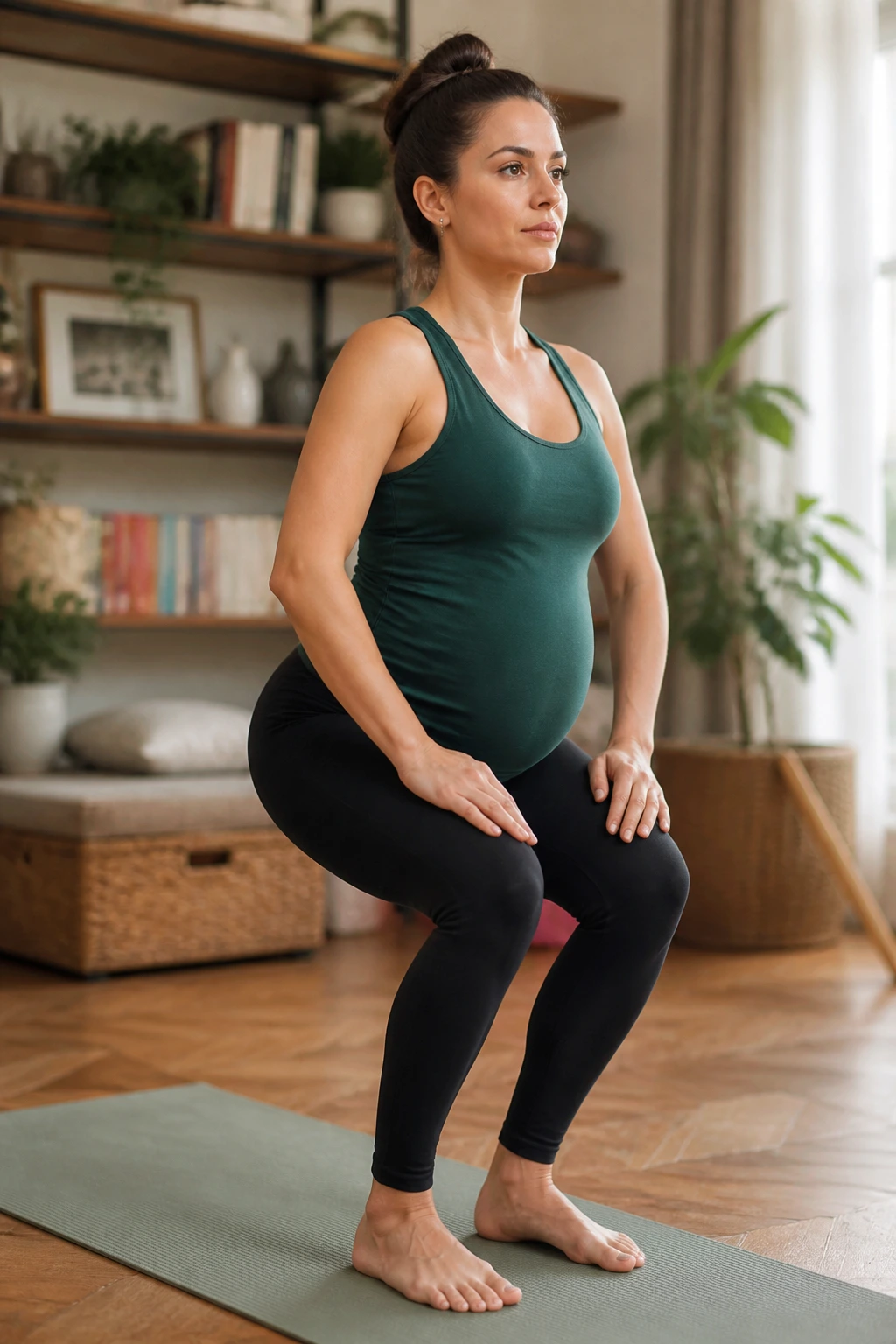
Chair Pose is one of the few standing shapes that can wake up the legs without bouncing around or needing a mat full of gear. It also gives the glutes and quads something to do, which can help when the pelvis starts feeling loose.
Stand with feet about hip-width apart. Bend the knees and send the hips back a little, as if you are reaching for a chair behind you. Keep the spine long. Hands can stay at heart center, reach forward, or rest on the thighs for support. That last option is underrated.
What Good Form Feels Like
- The weight stays in the heels and midfoot.
- The knees track in the same direction as the toes.
- The chest stays open instead of folding over the belly.
- The lower back stays long, not arched.
If you feel pressure in the knees, do less. If the belly feels crowded, stand taller. The pose should feel like a controlled sit-back, not a deep squat contest.
Chair Pose is especially helpful on days when you have been sitting too long. You stand up, bend a little, breathe a little, and suddenly the legs remember what they are for.
10. Bound Angle Pose on a Blanket
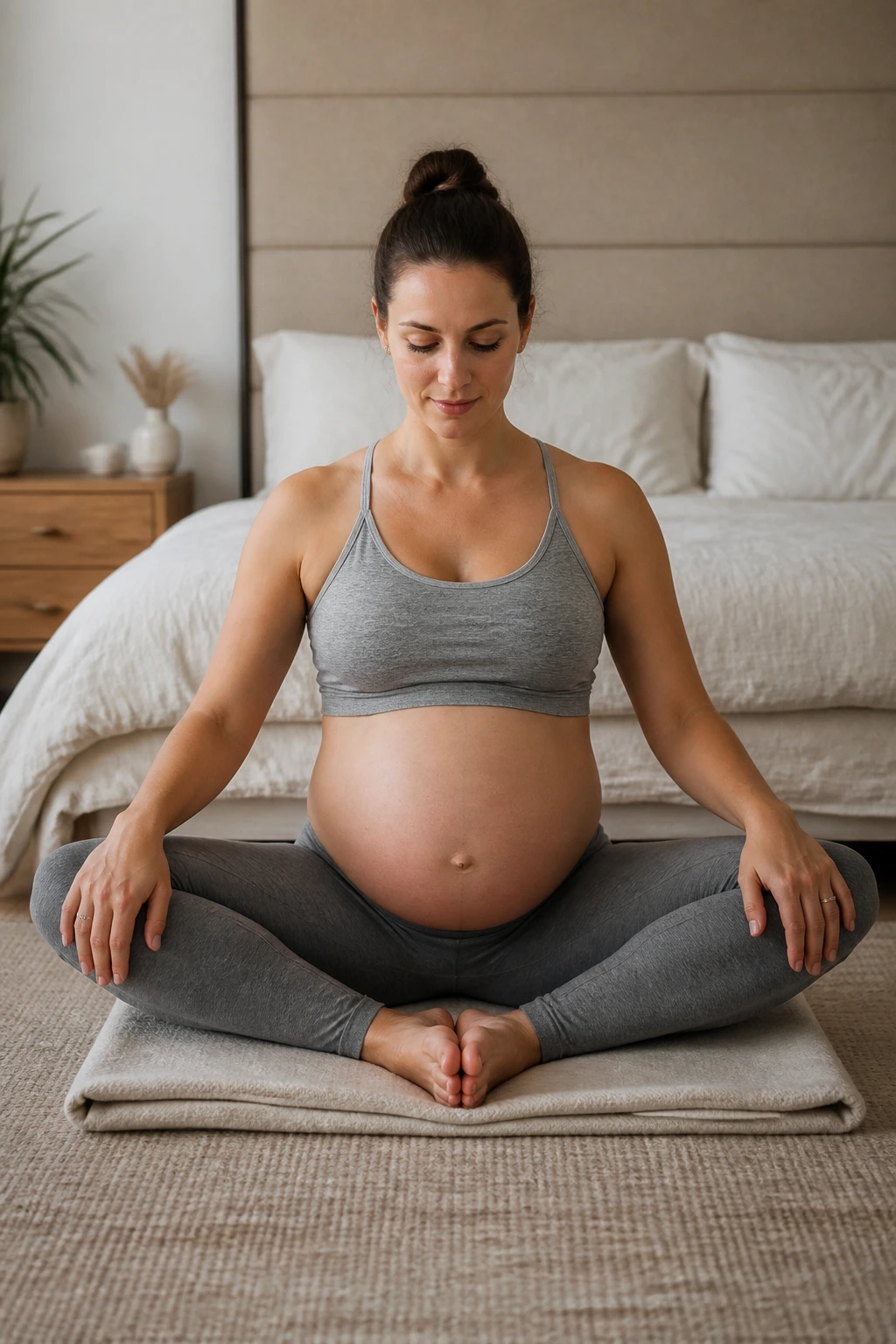
Bound Angle Pose is one of the nicest ways to open the inner thighs without asking the pelvis to work too hard. Sit on a folded blanket or bolster, bring the soles of the feet together, and let the knees fall open naturally.
Do not press the knees down. That is the old move, and it is usually a waste of effort. In pregnancy, joints can get loose, and forcing range tends to feel worse later. Let gravity do the work, then support the knees with blocks, pillows, or rolled blankets if they hover too high.
I like this pose for breath practice because it gives the pelvis a soft, open shape. You can sit tall, round slightly forward if that feels good, or just stay upright and notice how the ribs move when the belly has room. It is also one of the simplest ways to slow down without lying flat.
If the groin feels tuggy, sit higher. If the low back rounds too much, sit on more height. Tiny changes matter here. A lot.
11. Garland Pose With Blocks or a Wall
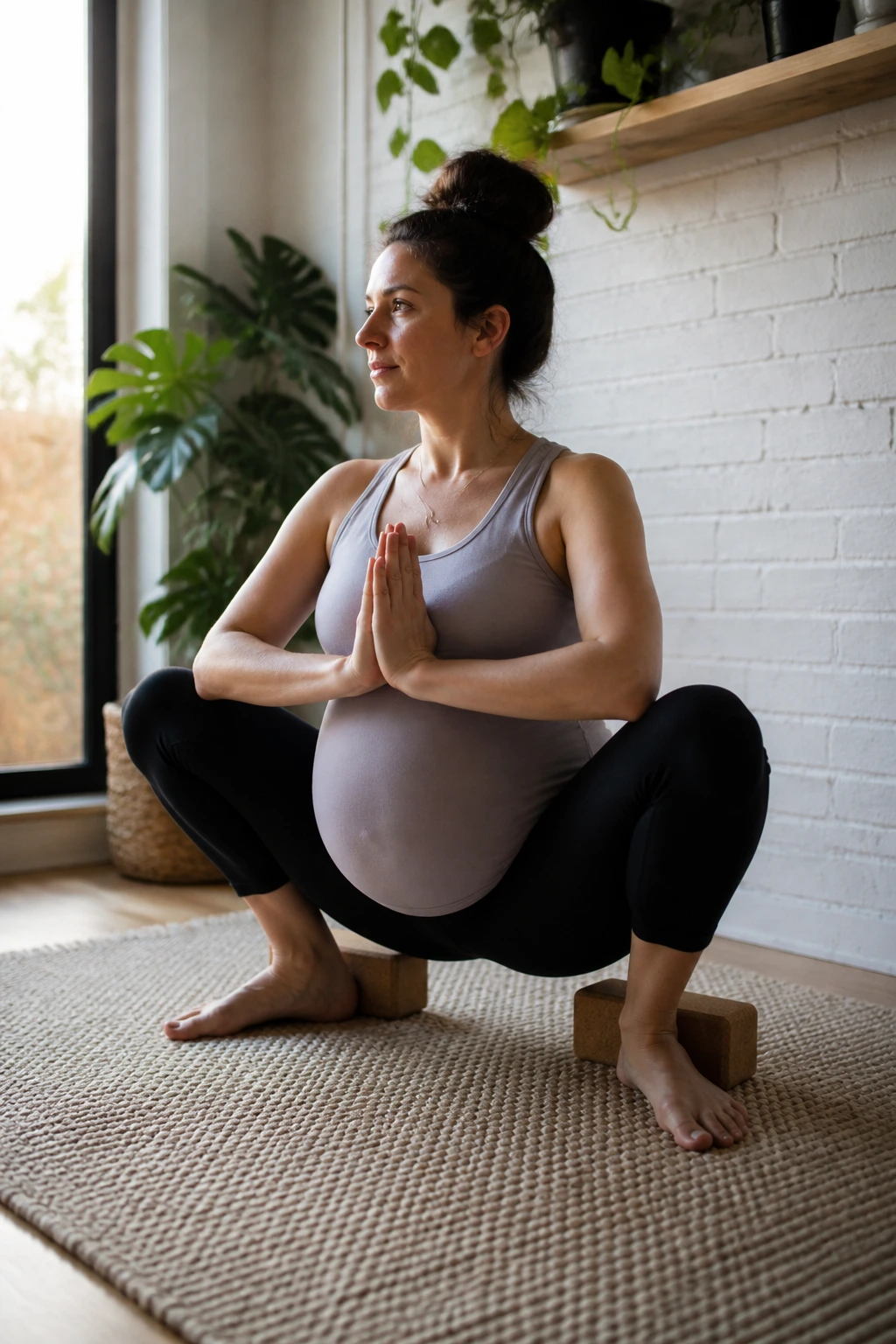
Why do squats show up so often in prenatal work? Because they train the hips to open while the feet stay planted, and that is useful long before labor enters the picture.
Lower into a squat with the heels on a folded blanket if they lift, or hold onto a doorframe or wall for support. You can also place a block under the sit bones and hover there instead of going all the way down. The goal is a deep hip opening without strain in the knees or ankles.
How to Make the Squat Friendlier
- Keep the feet a little wider than hip-width.
- Let the toes turn out only slightly.
- Hold a wall if balance is shaky.
- Sit on a block if the full squat feels too low.
A lot of people think Garland Pose has to be dramatic. It doesn’t. A supported half-squat still teaches the hips plenty, and it is much easier to breathe through. That matters more than depth.
If the ankles complain, shorten the hold. If the low back feels compressed, come up a few inches. The body will tell you when it has had enough.
12. Bird Dog in Tabletop
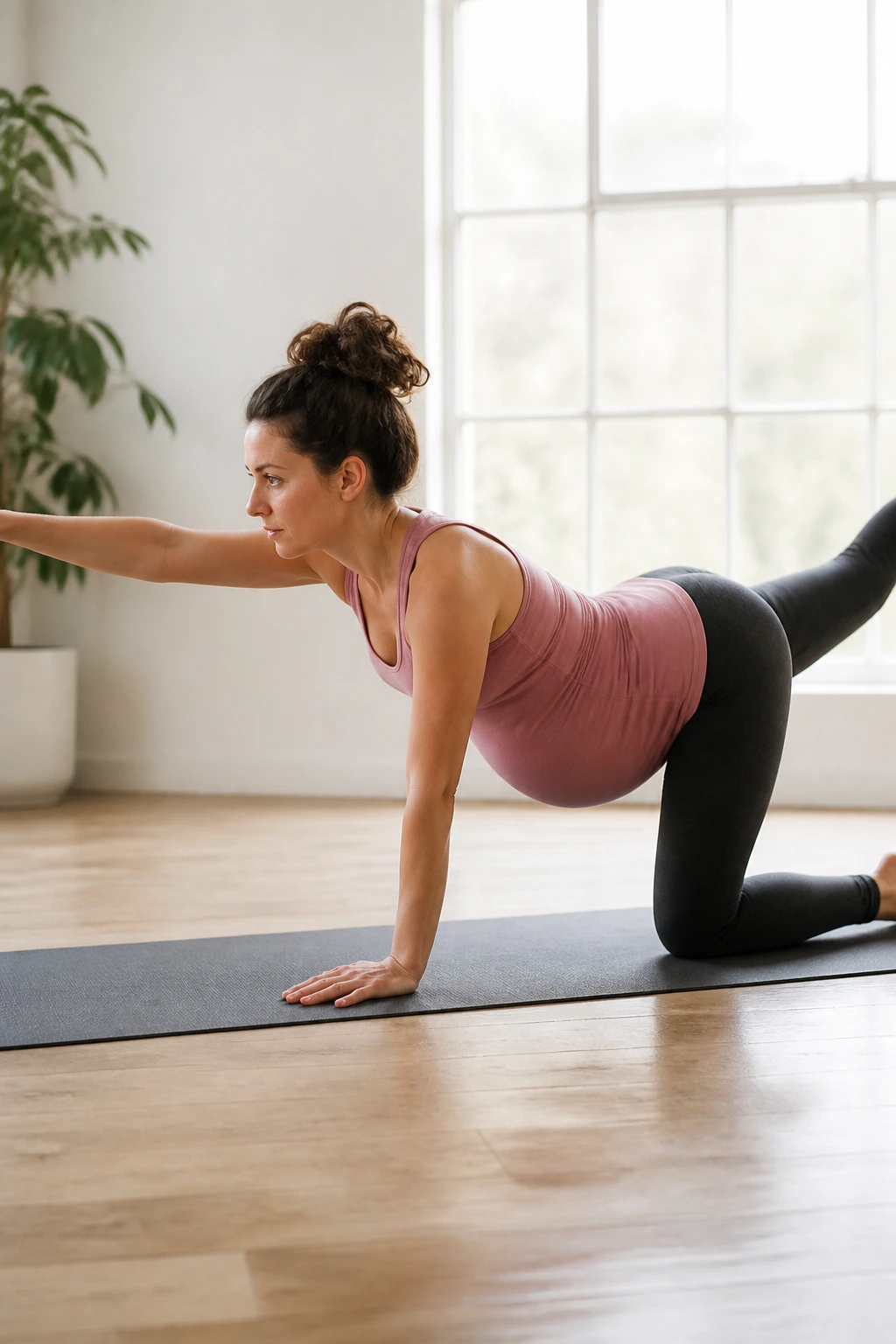
Bird Dog gives you core work without the pressure of a plank, and that alone makes it worth keeping around during pregnancy. You are on hands and knees, which gives you a stable base, and the reach of opposite arm and leg asks the trunk to stay steady.
Set up in tabletop with the knees wider if needed. Extend one arm forward and the opposite leg back only as far as you can keep the pelvis level. Don’t let the belly drop hard toward the floor. Don’t yank the heel high. Small is better. Clean is better.
What Makes It Different From Plank Work
- Less pressure on the belly.
- Less wrist load than a long plank hold.
- More chance to train balance without breath-holding.
- Easier to keep the ribs and pelvis stacked.
This is one of those moves that looks easy until you do it slowly. Then it gets sneaky. If you notice your low back taking over, shorten the reach and keep the toes on the floor while you practice the arm extension first. That is still useful.
Bird Dog rewards precision, not size. Nice and controlled beats a big wobbly lift every time.
13. Standing Side Stretch at the Wall
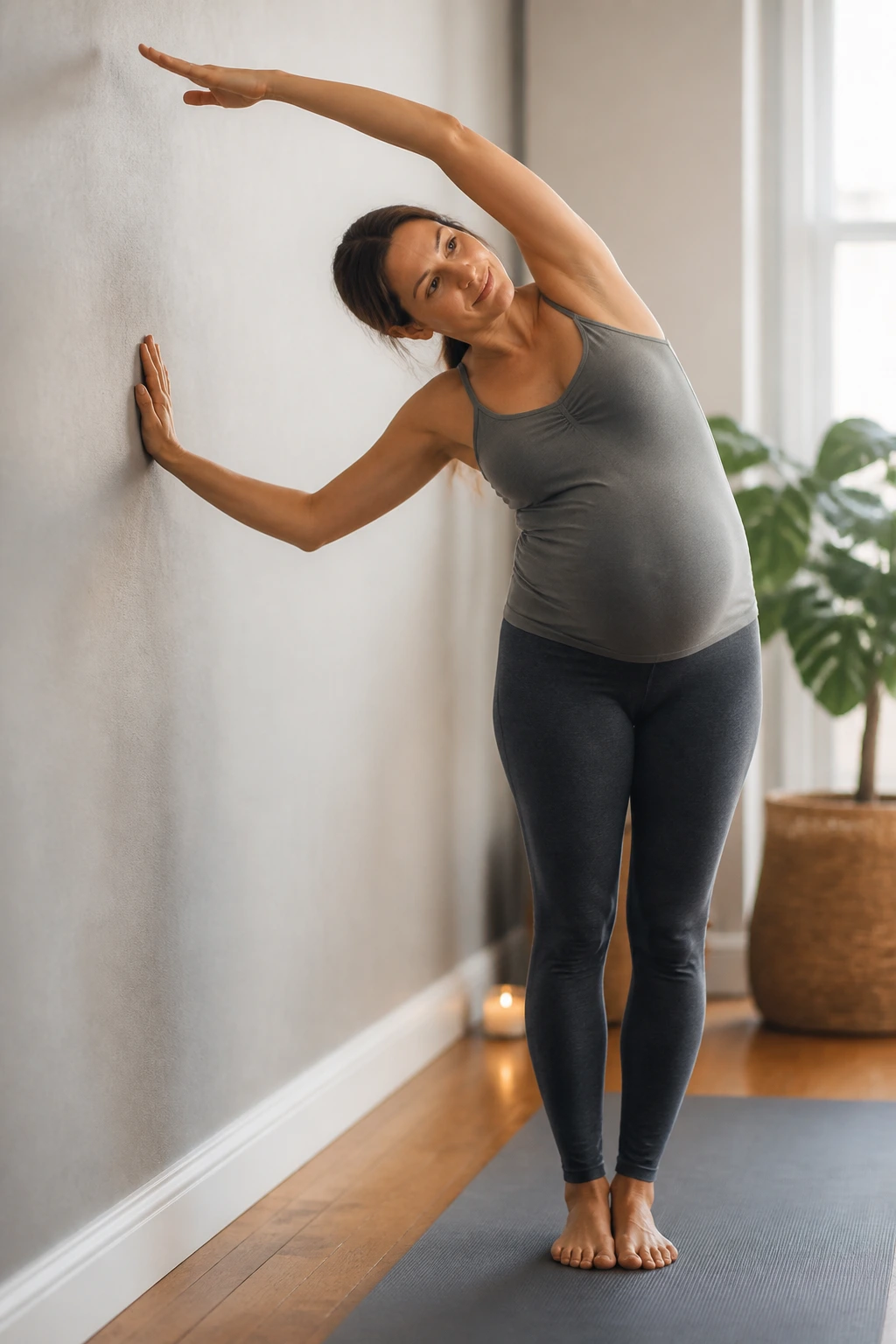
A standing side stretch can feel like a sigh you can see. That is why I like it on days when the ribs feel tight and the shoulders start creeping upward.
Stand beside a wall with one hand lightly touching it for balance. Reach the opposite arm overhead and lean just a little to the side, keeping both feet planted. The knees stay soft. The belly stays free. The torso lengthens more than it bends.
The wall matters because balance gets trickier as pregnancy moves along, and a small support lets you relax into the stretch instead of bracing. The side body usually responds fast. You feel the ribs open, the waist lengthen, and the breath spread wider across the chest.
Good Cues Here
- Keep the hips heavy and level.
- Avoid leaning backward.
- Think “long side” instead of “deep bend.”
- Switch sides before the stretch turns into strain.
If your lower back starts to pinch, come up higher. That is not failure. That is good information. Use it.
14. Seated Wide-Leg Forward Fold
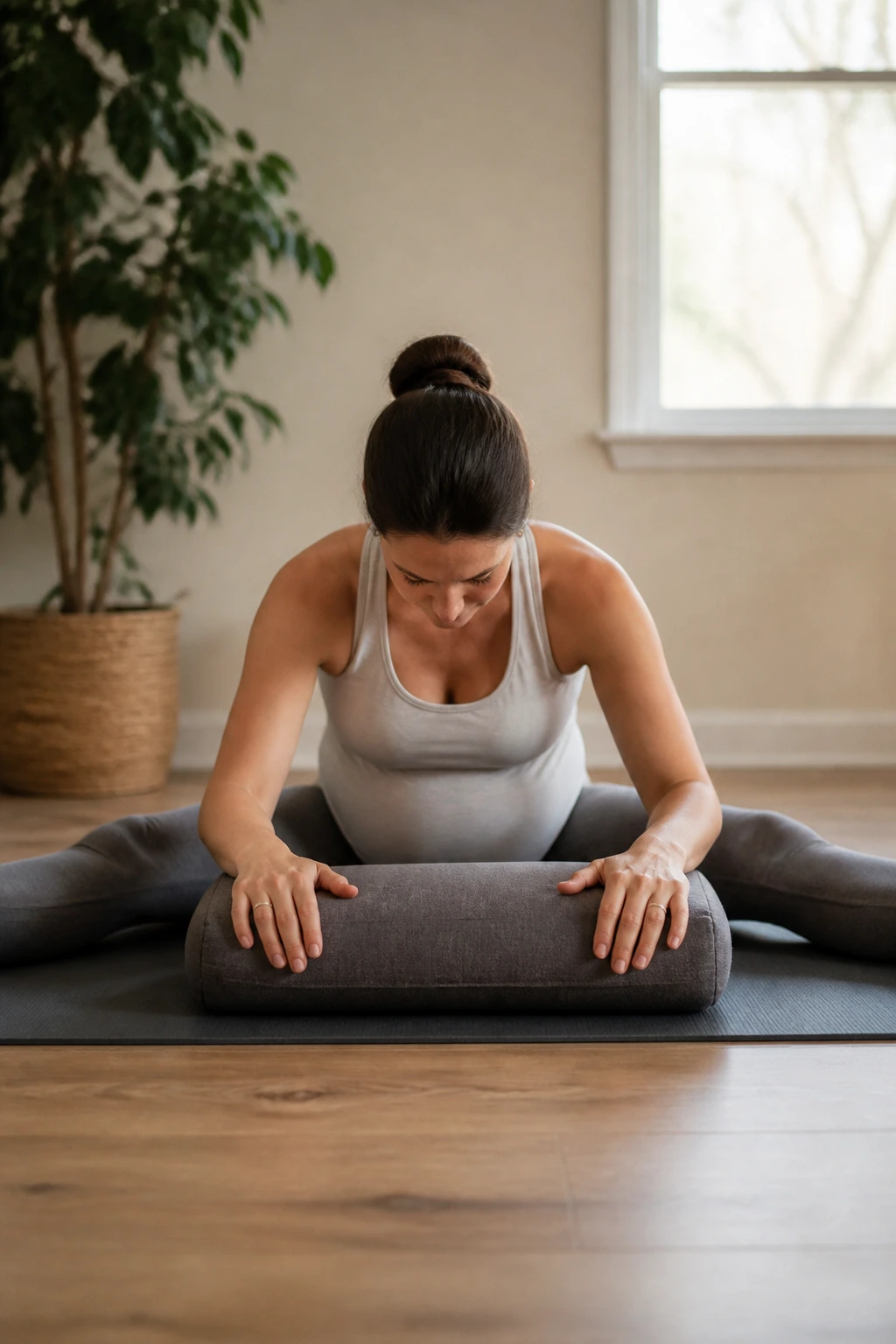
A prenatal forward fold should look calmer than a gym stretch. No yanking. No chasing the floor. No rounding the spine just to get deeper.
Sit on a blanket with the legs opened into a comfortable wide V, not a maxed-out split. Keep the knees soft. Hinge forward from the hips only as far as you can keep the back long, then rest the hands on the floor, a bolster, or a stack of pillows. You are looking for a stretch through the inner legs and a little release through the low back, not a contest.
The reason this works so well is that it lets the belly hang free instead of squashing it. It also gives you a chance to breathe into the back ribs, which is a nice trade when the front of the body feels crowded.
If the hamstrings are tight, sit on more height. If the groin feels too sharp, bring the legs in a bit. This pose improves when it gets gentler. Strange, but true.
15. Reverse Warrior With a Soft Backbend
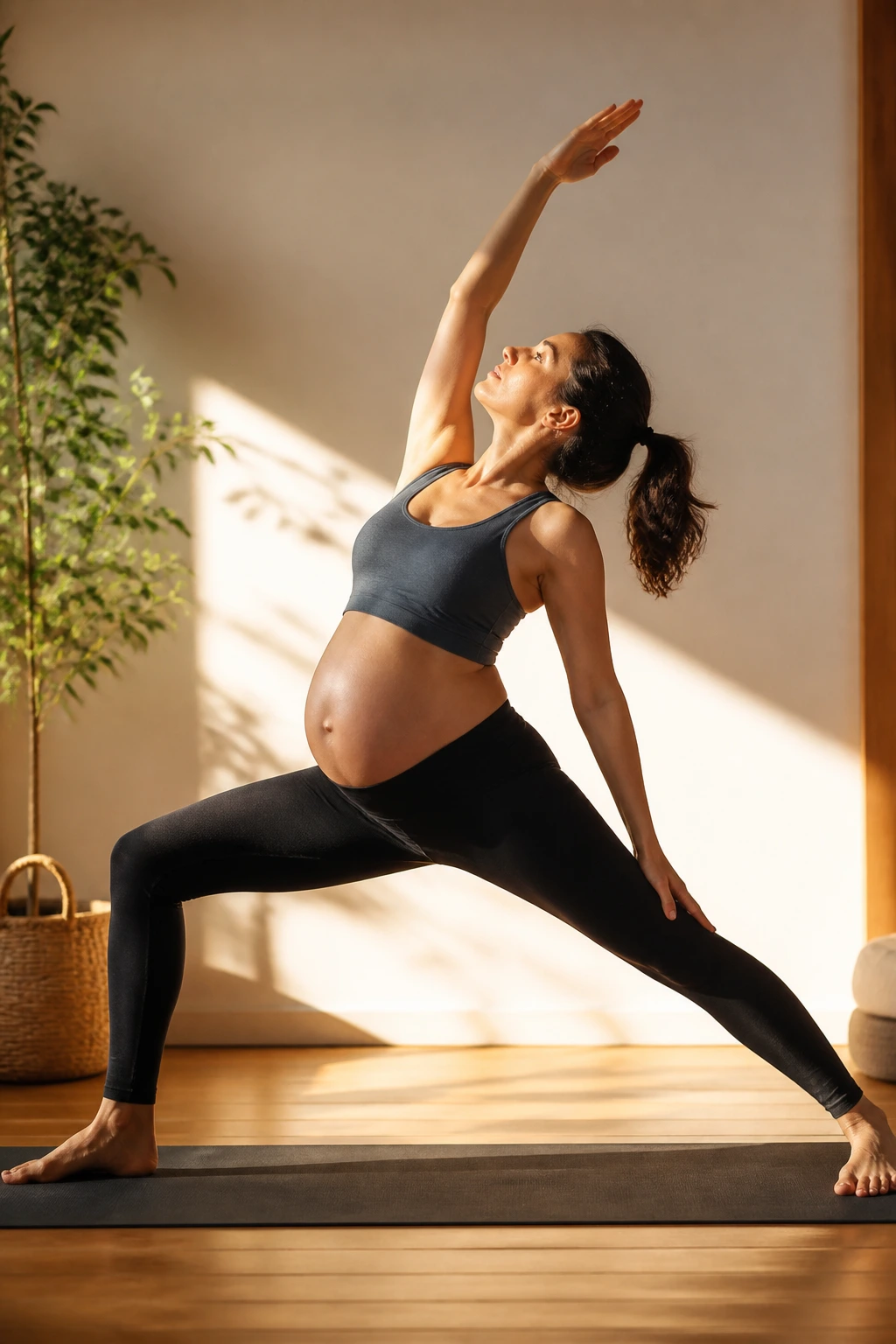
Reverse Warrior is not about throwing yourself backward. It is about a long side stretch with a bit of lift through the ribs and chest.
From Warrior II, slide the back hand lightly down the back leg or rest it on the thigh, then reach the front arm up and over. Keep the front knee bent and the torso open to the side. The movement should feel spacious, not cranky. If your low back starts to compress, reduce the reach and shorten the backbend.
This shape can feel especially good when the upper body is tired of hunching forward. It opens the side ribs and gives the front of the chest a little room. That said, it is not a pose to force on a day when your balance feels off or your back already feels tender.
Think lift, not lean. That cue saves a lot of trouble.
If you only stay in the shape for two breaths, that’s fine. A tiny dose done well is more useful than hanging out in a wobbly version for ages.
16. Supported Wide-Leg Fold at the Wall
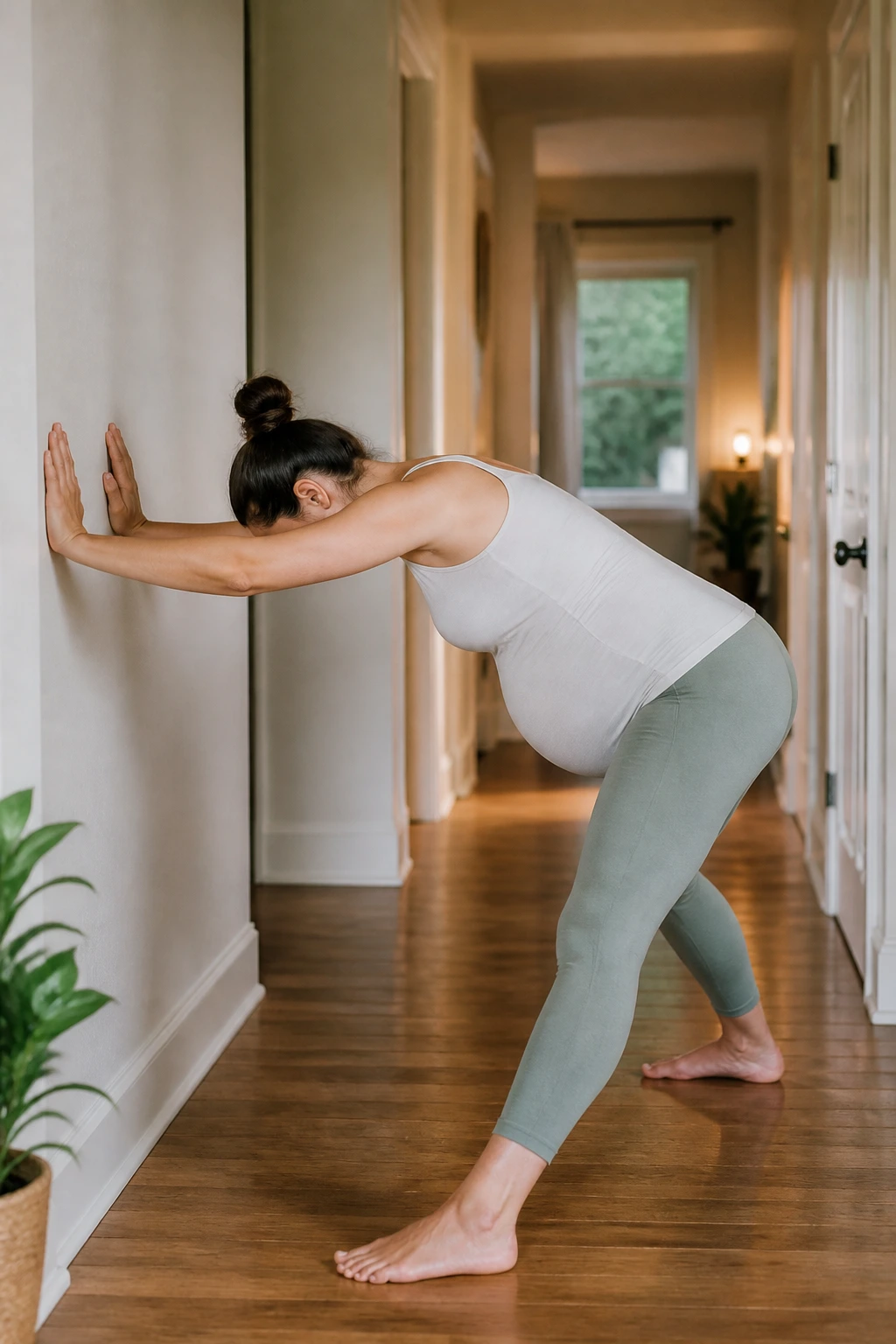
What if standing feels better than sitting, but you still want a forward fold? Use the wall. It gives you a way to hinge without dumping all your weight into the belly or the lower back.
Stand with your feet wide and your hands on a wall, countertop, or chair back. Bend the knees slightly and fold only enough to feel the spine lengthen. Keep the head in line with the heart if bending down makes you lightheaded. The position should feel supported, almost like a standing rest.
This is one of my favorite substitutes when the usual floor stretches feel like too much work. You can make it almost nothing, which is the point. Wide stance, soft knees, steady hands. That is enough.
Good Setup Cues
- Keep the feet far enough apart that the belly has room.
- Use a wall rather than reaching for the floor.
- Breathe into the back of the ribs.
- Come up slowly before stepping away.
If the hamstrings are tugging, bend the knees more. If your head feels heavy, come higher. You are not trying to prove anything here.
17. Standing Hamstring Stretch With a Chair
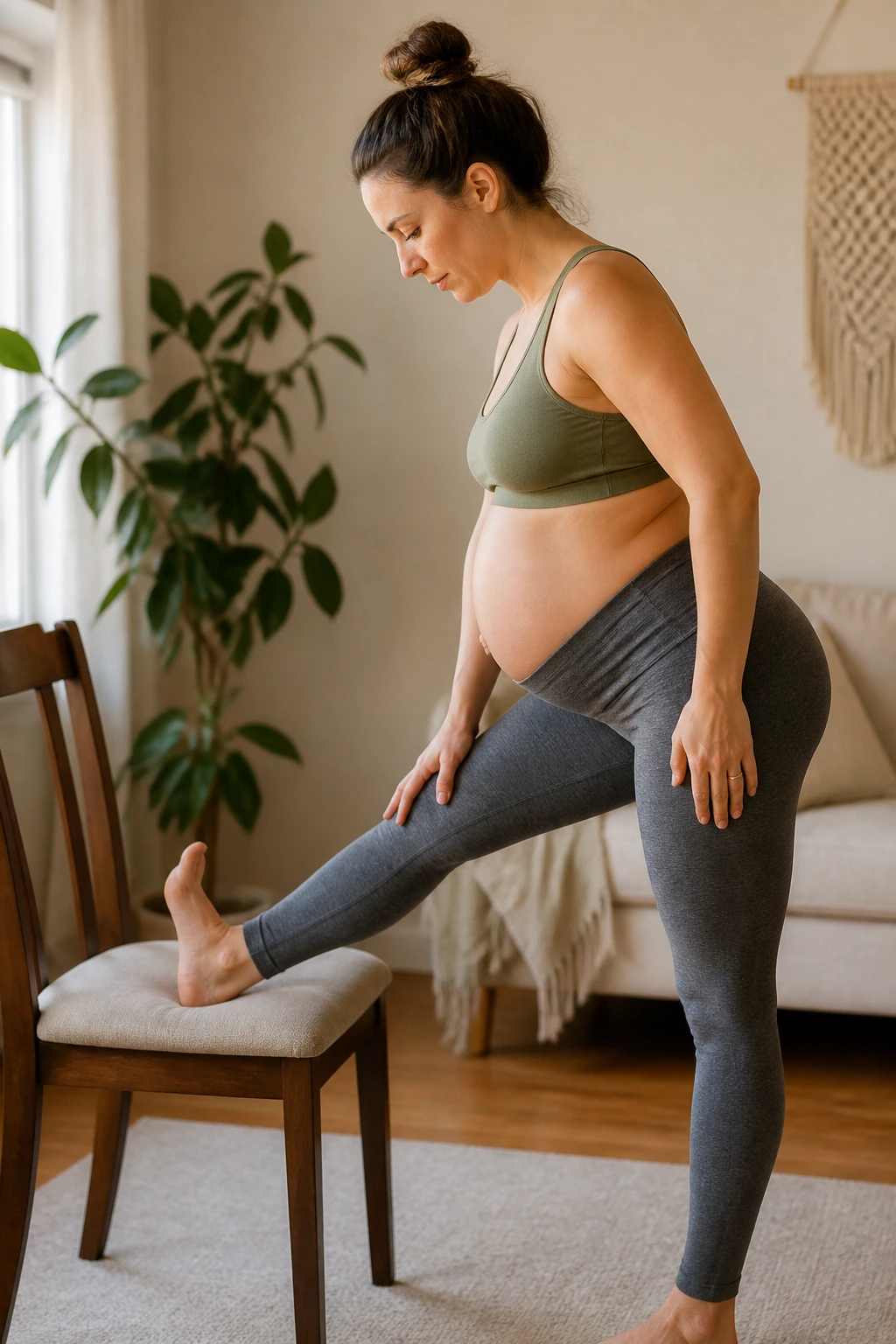
A prenatal hamstring stretch does not have to be a deep fold at all.
Place one heel on a low chair, bench, or sturdy step. Keep the standing knee soft, point the lifted toes toward the ceiling, and hinge forward only a few inches from the hips. Stop before the lower back rounds hard. You should feel the back of the lifted leg, not strain through the pelvis.
This version is useful because it keeps you upright, which matters when a big fold makes you dizzy or uncomfortable. It also lets you control the dose. A little stretch is often enough, especially when the back of the legs has started feeling tight from walking differently or standing with a changed center of gravity.
If the stretch feels too sharp, lower the foot or bend the lifted knee. If the pose feels too easy, hold it longer rather than pushing deeper. That patience pays off fast.
Sometimes the smallest stretch is the one that actually sticks.
18. Side-Lying Savasana With Pillows
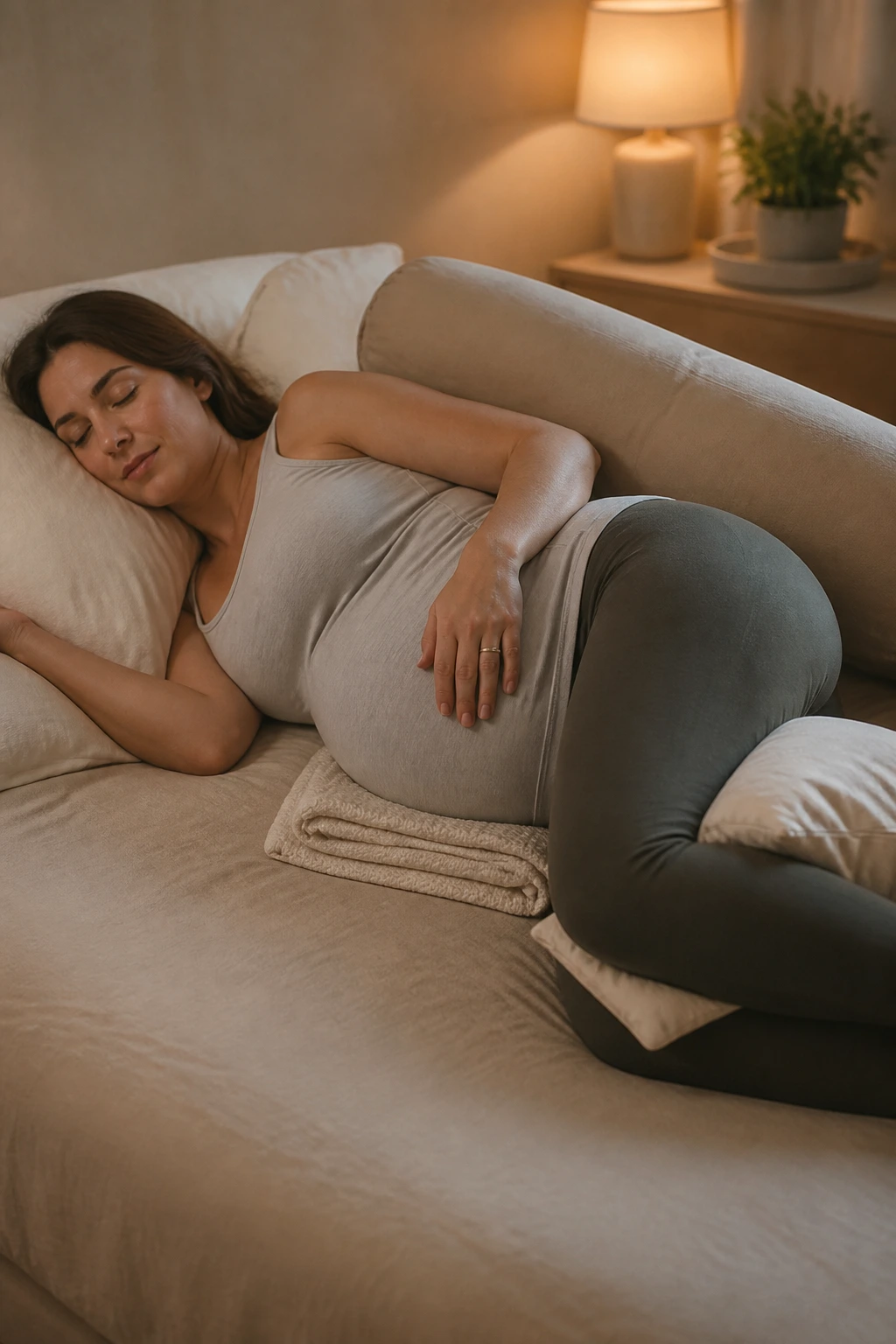
Side-Lying Savasana is the pose that saves the whole practice. No joke. When the body is tired, crowded, or a little irritable, this is the shape that lets everything settle without asking for one more ounce of effort.
Lie on your left side, or whichever side feels best, with a pillow under your head and another between your knees. A small folded blanket under the belly can help if the front feels heavy. If your top shoulder rolls forward, tuck a blanket behind your back or hug a bolster so you feel anchored. The goal is not perfect stillness. The goal is comfort.
The breath usually changes here. It gets quieter. Slower. More even. That is a nice sign, because it means the nervous system has stopped bracing for the next move. After a sequence of prenatal yoga poses safe for all trimesters, this is the part that tells the body the work is done.
Stay as long as you want. Five minutes helps. Ten helps more. A lot of people try to rush this pose because it feels passive, but that is exactly why it matters. A quiet ending gives the hips, ribs, and lower back time to catch up with everything else.
