



Most people treat the lunge as a simple back-and-forth movement, usually just something they do between heavy squat sets or because a trainer told them to. But the reverse lunge is perhaps the most underrated tool in your arsenal. It is safer on the knees than the forward lunge, builds incredible unilateral stability, and targets the glutes and hamstrings with surgical precision. If you are stuck in a rut, just doing the same basic movement with the same weight, your lower body development has likely plateaued.
The beauty of the reverse lunge lies in its versatility. You can load it, you can slow it down, you can add explosive elements, or you can use it to fix glaring imbalances between your left and right sides. Whether you are training for raw strength, athletic performance, or just looking to improve your balance and gait, these variations offer a way to stress the musculature from new angles. Do not look at this as just a list of exercises; look at it as a roadmap for rebuilding your lower body from the ground up.
1. Standard Reverse Lunge
This is the baseline. Before you start adding weight or fancy equipment, you need to own the movement pattern. Stand with your feet hip-width apart. Take a controlled step backward, keeping your torso upright and your core engaged. Lower your back knee until it hovers just an inch off the floor, then drive through your front heel to return to the starting position.
The Mechanics That Matter
You want a 90-degree angle at both the front and back knees at the bottom of the movement. If your front knee tracks too far over your toes, you might feel more quad tension, which is fine, but ensure the heel stays planted. A flat foot is the foundation of power.
Pro tip: Avoid pushing off the back foot. The work happens in the front leg. If you find yourself pushing off the back toes, you are robbing your front glute of the primary stimulus. Focus entirely on that front leg pulling you back to standing.
2. Dumbbell Reverse Lunge
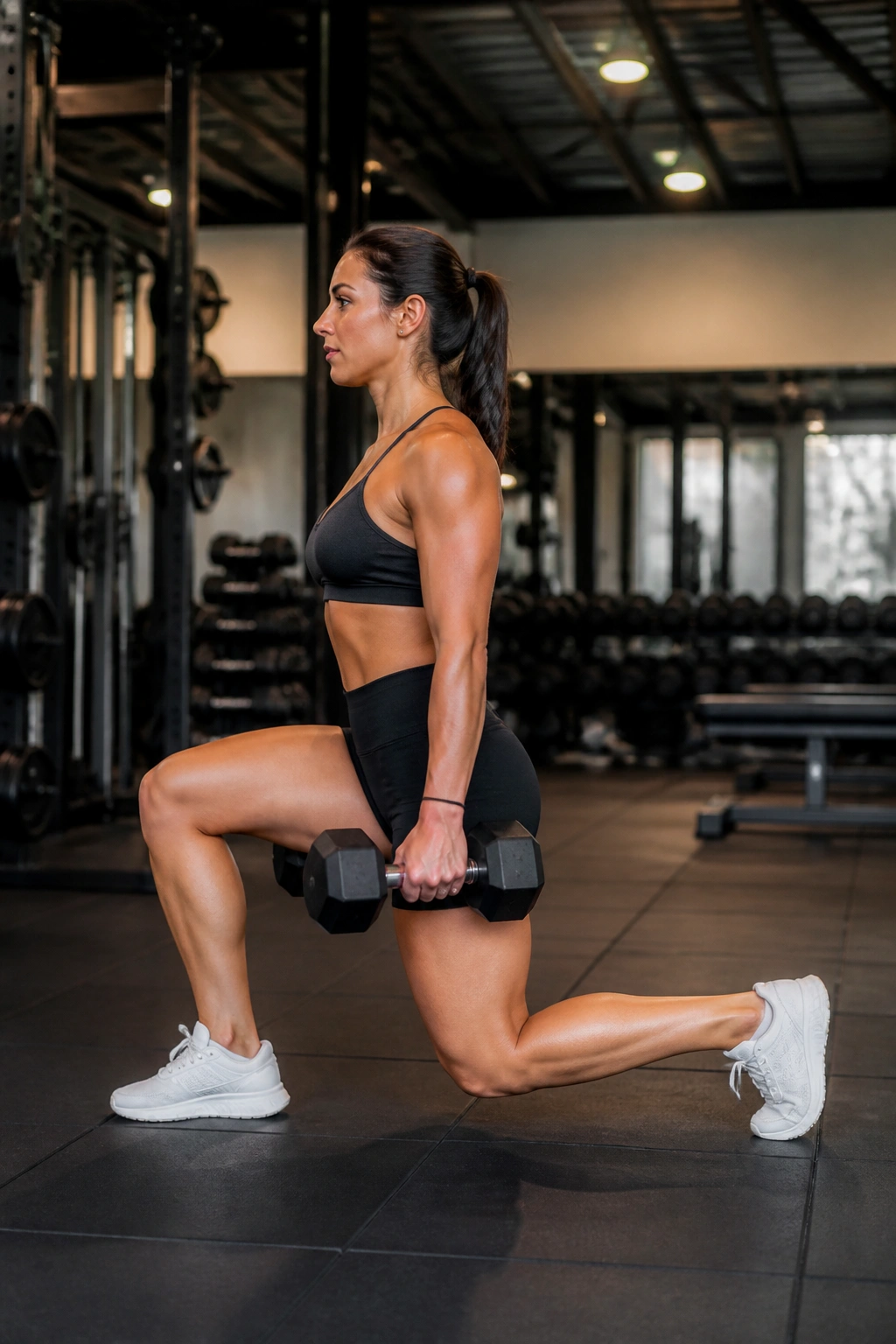
Once you have mastered your body weight, it is time to add resistance. Holding a dumbbell in each hand at your sides is the most straightforward progression. It forces you to maintain posture against the weight trying to pull you forward, effectively training your upper back and core as well.
Why Load Matters
Holding weight at your sides creates a counterbalance. It makes the movement feel more “anchored.” You aren’t just moving your body; you are moving your body plus resistance. This increases the mechanical tension on the glutes and quads significantly. Start light—maybe 10-pound dumbbells—and master your balance before moving up to heavy iron. You will be surprised how quickly 20-pound weights start to feel like 40s once you reach the double-digit rep range.
3. Barbell Reverse Lunge
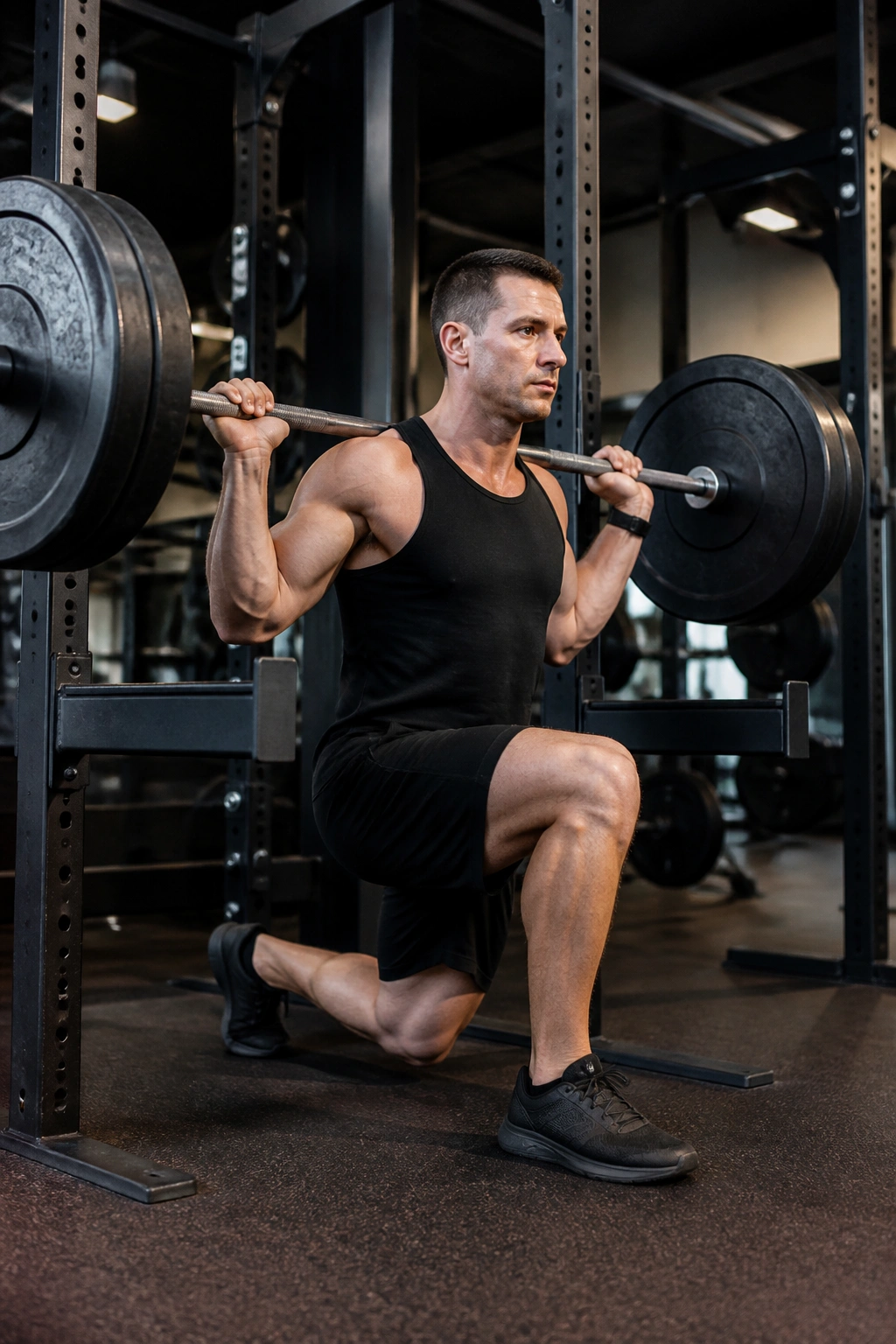
Placing a barbell on your back shifts the center of gravity significantly higher than holding dumbbells. This version is more akin to a back squat, requiring much more spinal bracing and core stability. It is the king of reverse lunge variations when your goal is pure, heavy strength.
Key Considerations for Safety
Because the load is on your back, you have to be rock solid. Do not rush the descent. The barbell will challenge your balance in the frontal plane, meaning you will wobble more if your core isn’t tight.
- Setup: Use a squat rack. Do not try to clean the bar over your head unless you are highly experienced.
- Back Position: Keep the chest up, but do not arch your lower back.
- The Descent: Take your time. Stability beats speed when there is a heavy bar on your shoulders.
4. Deficit Reverse Lunge
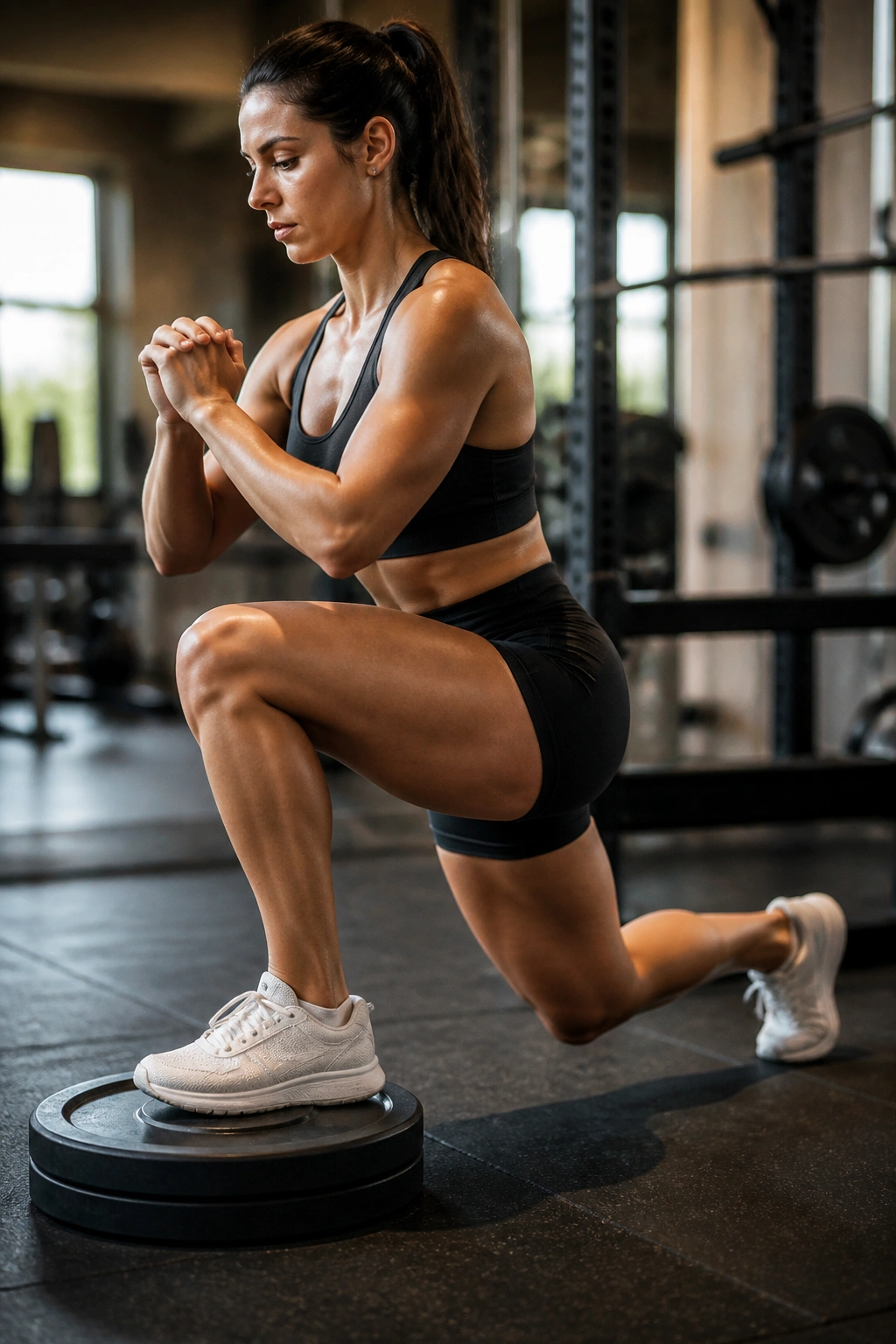
Standing on a small platform—like a 2- to 4-inch weight plate or a low step—increases your range of motion. By elevating your front foot, you allow the back knee to travel further toward the ground without the floor getting in the way. This creates a deeper stretch in the glute of the working leg.
The Benefit of Range
Most people barely scratch the surface of their potential hip mobility. This variation forces you to sink deeper into the hip hinge, emphasizing the gluteal muscles and the hamstrings in a way a flat-ground lunge cannot. It is essentially an “enhanced” lunge. Keep your platform stable. If you are standing on a shaky object, you will spend more energy balancing than training your legs.
5. Sliding Reverse Lunge
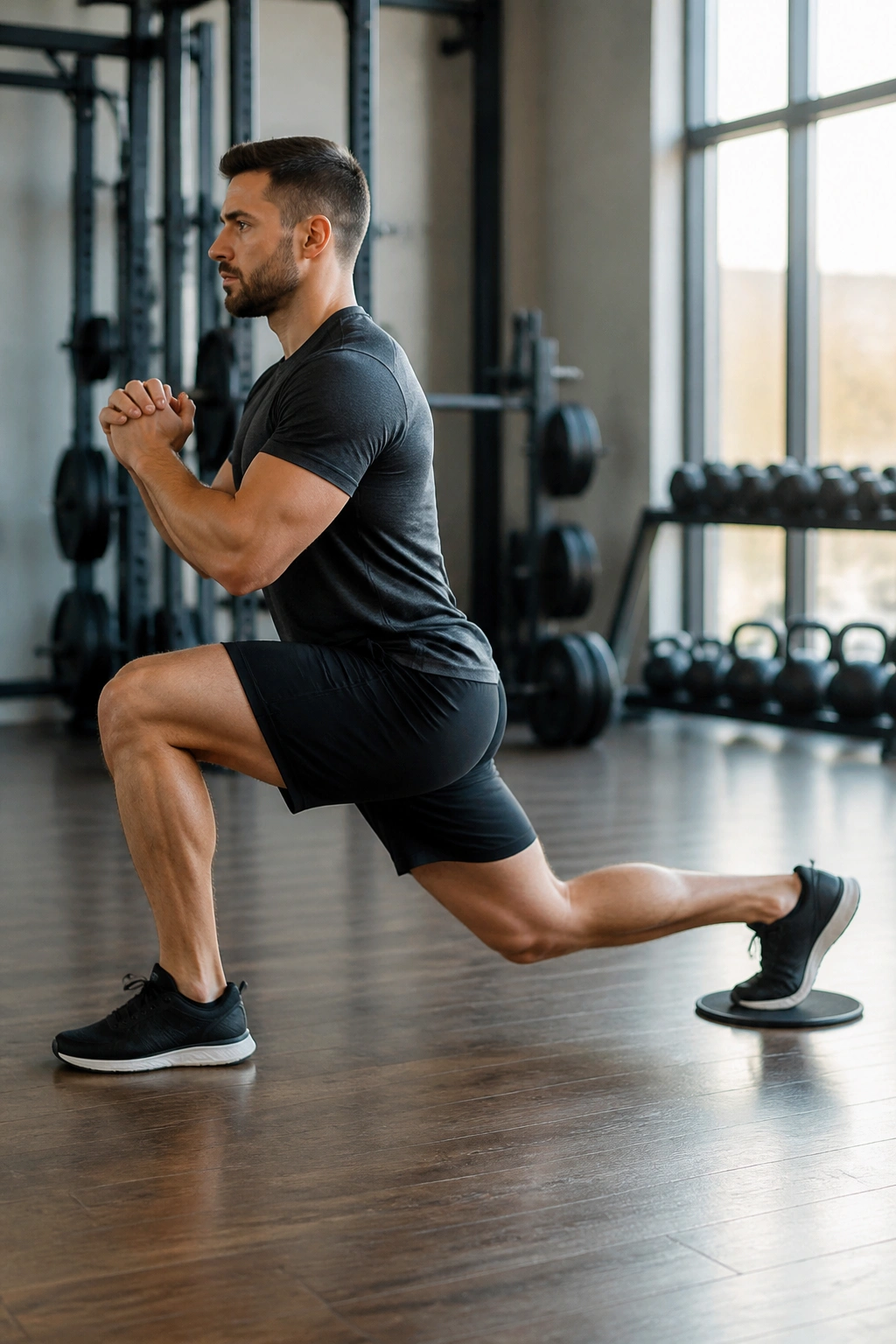
For this one, you need a slider or a towel on a hardwood floor. Place your sliding foot on the disk and perform the reverse lunge. Instead of picking your foot up and stepping back, you are sliding it back under tension. This eliminates the “impact” phase of the step and forces constant engagement throughout the eccentric portion of the lift.
Constant Tension
Because the back foot never leaves the floor, your muscles are under load during the entire range of motion. There is no “rest” at the top or bottom. It is a grueling, slow-burn variation. If you want to build endurance in your quads, this is the way to do it.
6. Elevated Front Foot Reverse Lunge
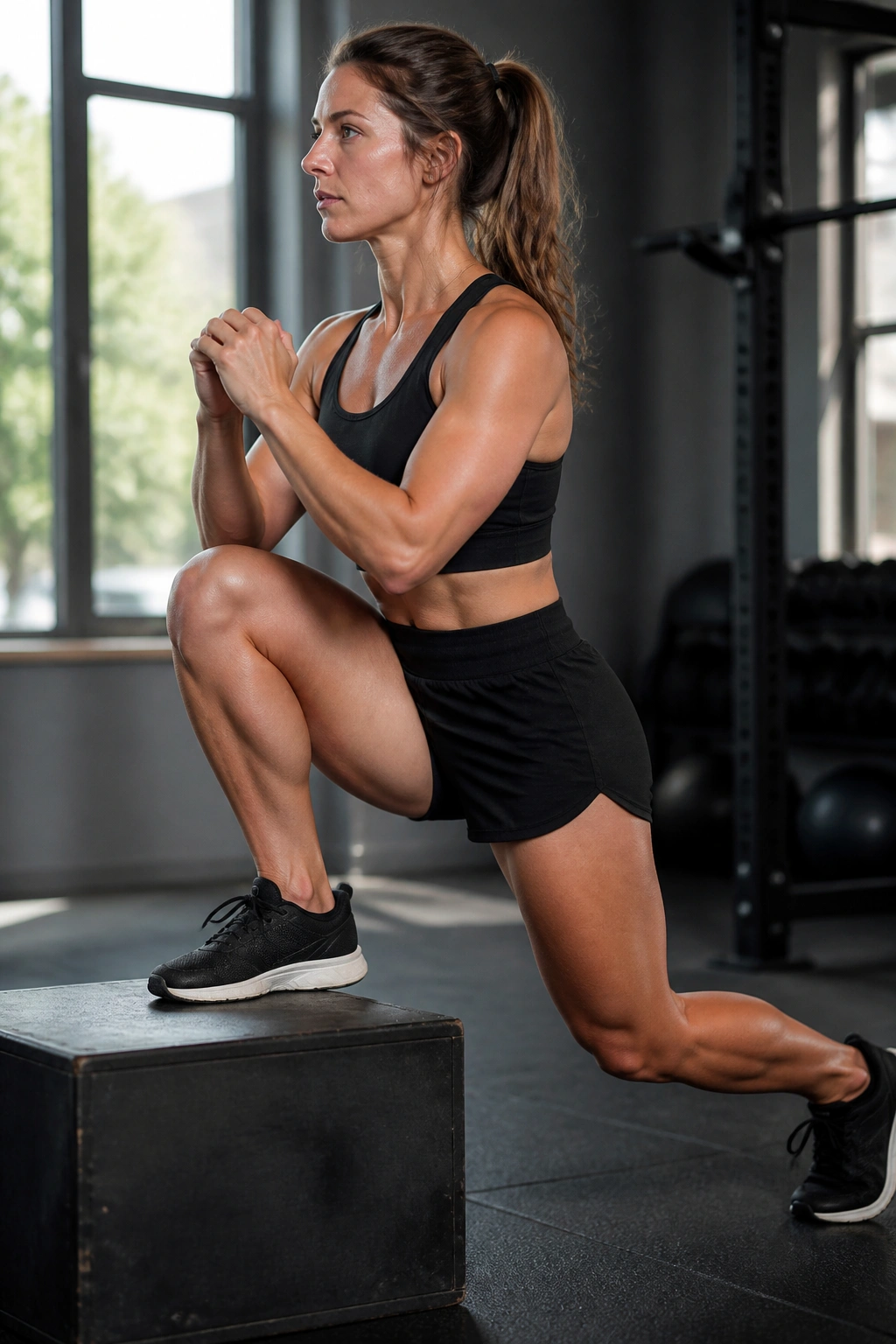
This is the opposite of the deficit lunge. Here, you place your front foot on a box or step. This forces the knee to travel much further forward over the toe, emphasizing the VMO—the teardrop-shaped muscle on the inside of your knee. It is an excellent variation for knee health and quad hypertrophy.
Why This Hurts (In a Good Way)
You will feel the quad scream on this one. Because the knee moves through a larger range of motion than in a standard lunge, the leverage is much harder. You do not need heavy weights for this. A pair of 10-pound dumbbells will feel heavy once you hit rep number 12. Focus on driving that front knee forward while keeping the heel glued to the platform.
7. Reverse Lunge with Knee Drive

Add an explosive element to the standard lunge. Step back into your reverse lunge, and as you return to the starting position, drive your back knee up toward your chest in one fluid, explosive movement. This changes the exercise from a simple strength move into a dynamic athletic drill.
The Power Component
This variation trains the hip flexors and develops coordination. When you drive the knee up, you have to stabilize on a single leg for a split second, which recruits all the tiny stabilizer muscles in your ankle and hip.
Pro Tip: Do not just go through the motions. At the top of the movement, pause for a second, balancing on your front leg. That brief moment of stability is where the real work happens.
8. Curtsy Lunge
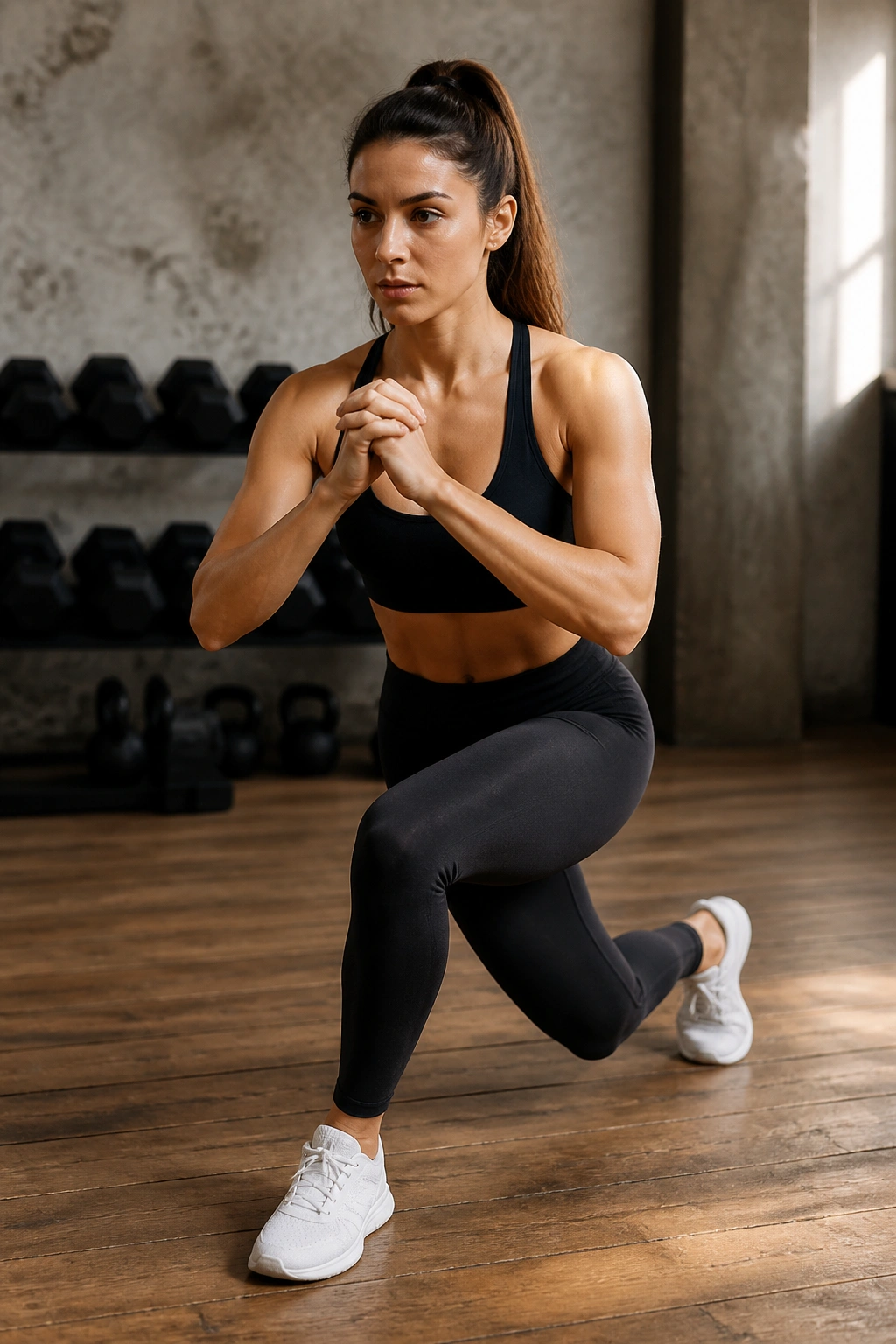
The curtsy lunge is a variation where you step your back foot behind and across your front leg. By stepping diagonally, you shift the load onto the outer portion of your glute—the glute medius. This muscle is responsible for pelvic stability, and most people have a very weak glute medius.
A Focus on Stability
Your knees might feel a bit weird during the first few attempts. That is normal. The angle changes the leverage at the knee joint. If you have any history of knee pain, start very slowly and perhaps stick to body weight for the first few sessions. Once you get the hang of it, you will notice a deep burn in the outer hip area that the standard reverse lunge just doesn’t hit.
9. Walking Reverse Lunge
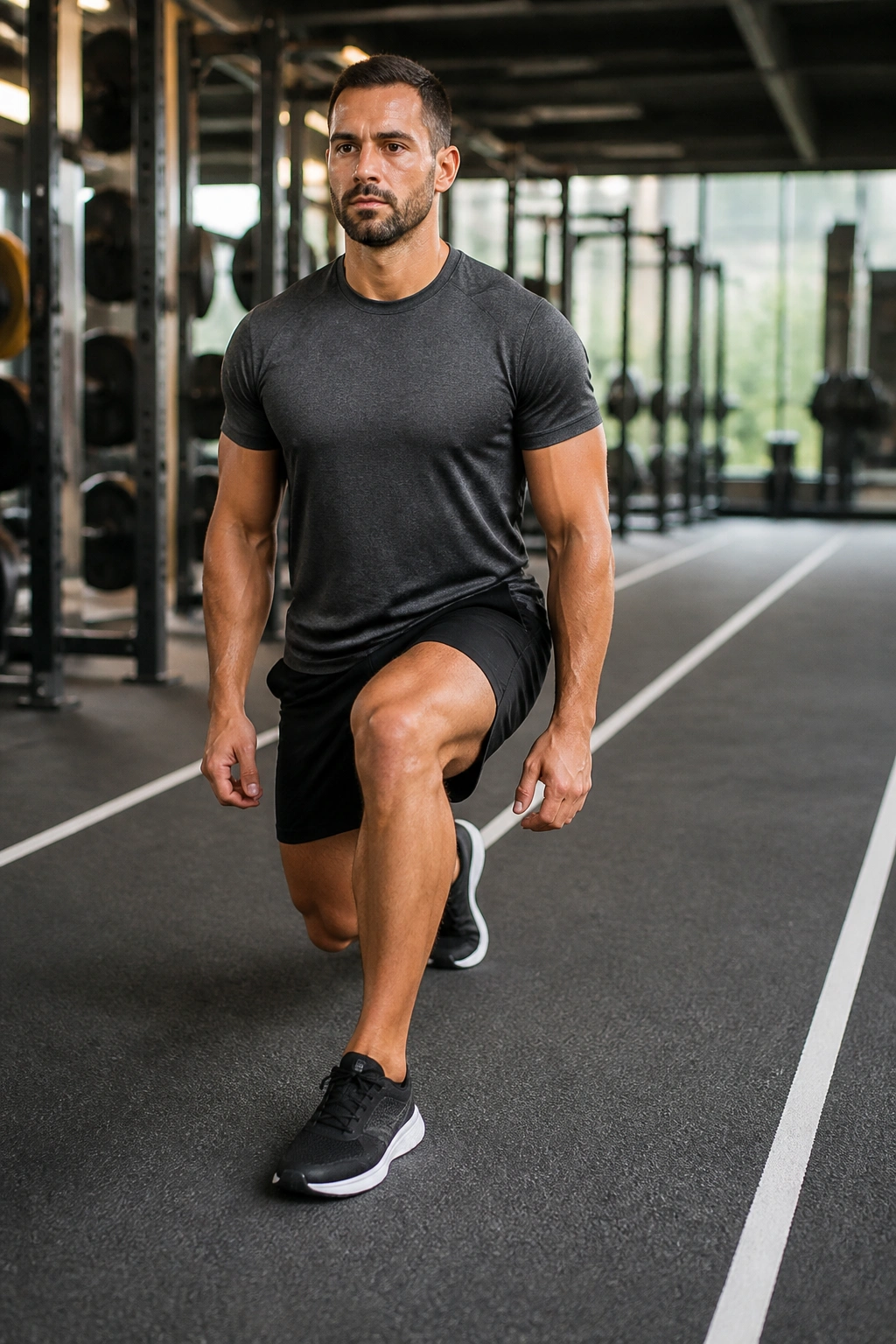
Instead of staying in place, you are going to alternate legs while moving backward. This requires significant coordination, as you have to find your footing behind you while keeping your center of mass shifted. It mimics walking backward, which is a rare movement pattern in our daily lives.
Why It’s Effective
The constant shift in weight keeps your heart rate high. It is a cardio-strength hybrid. Because you are constantly repositioning, you cannot rely on momentum. Every step requires a “reset” of your balance. It is a phenomenal way to improve proprioception—your body’s awareness of its position in space.
10. Kettlebell Goblet Reverse Lunge
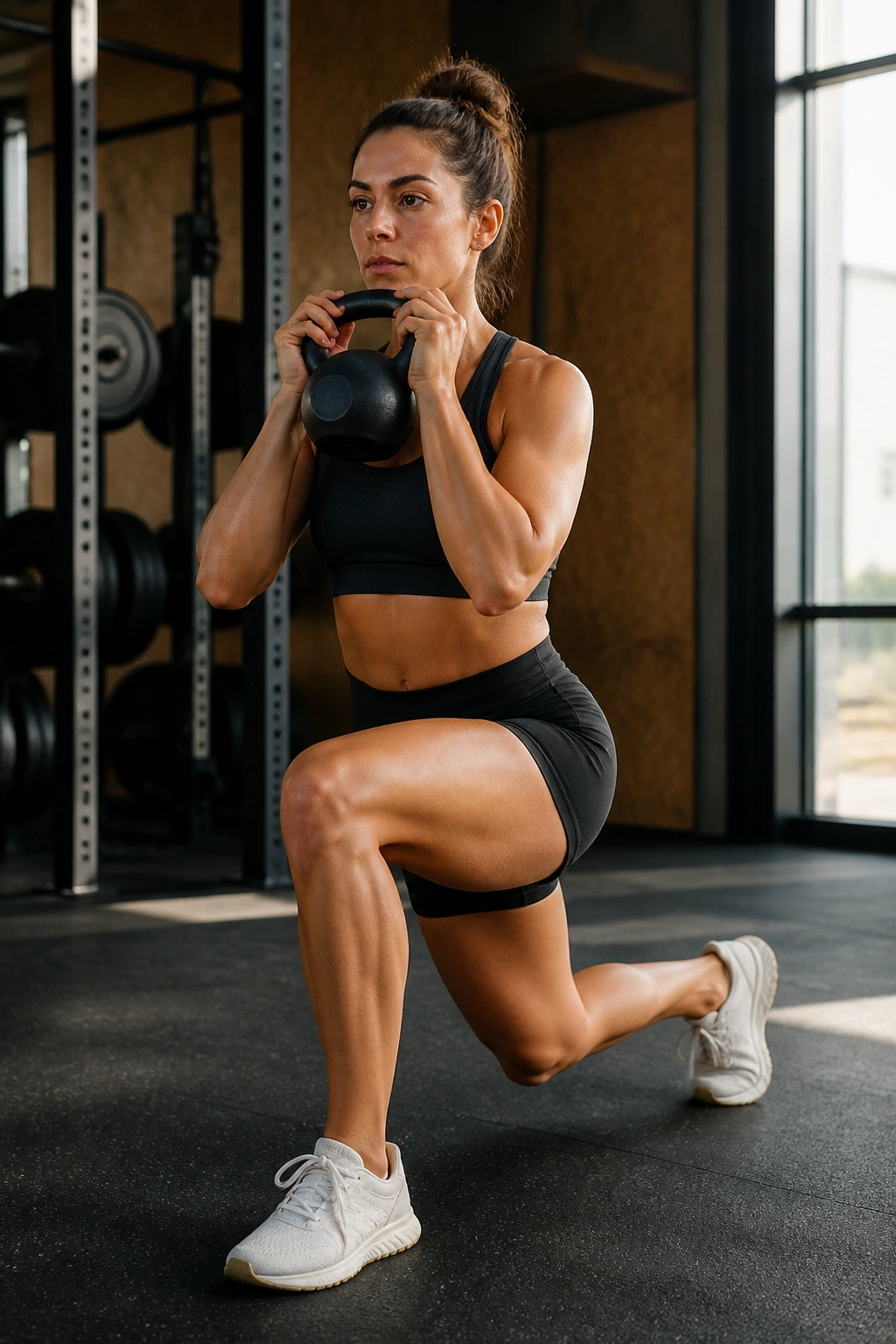
Hold a single kettlebell at your chest (the “goblet” position). The weight is now in front of you, which counterbalances your torso. This makes it easier to keep your chest upright and prevents you from leaning forward too much, putting the focus squarely on the quads and the core.
Core Engagement
Because the weight is in front, your abs and obliques have to work overtime to keep you from falling forward. It essentially turns a lower-body exercise into a full-body movement. If you find your lower back hurting during lunges, try the goblet version. The anterior load often solves that problem immediately.
11. Banded Reverse Lunge
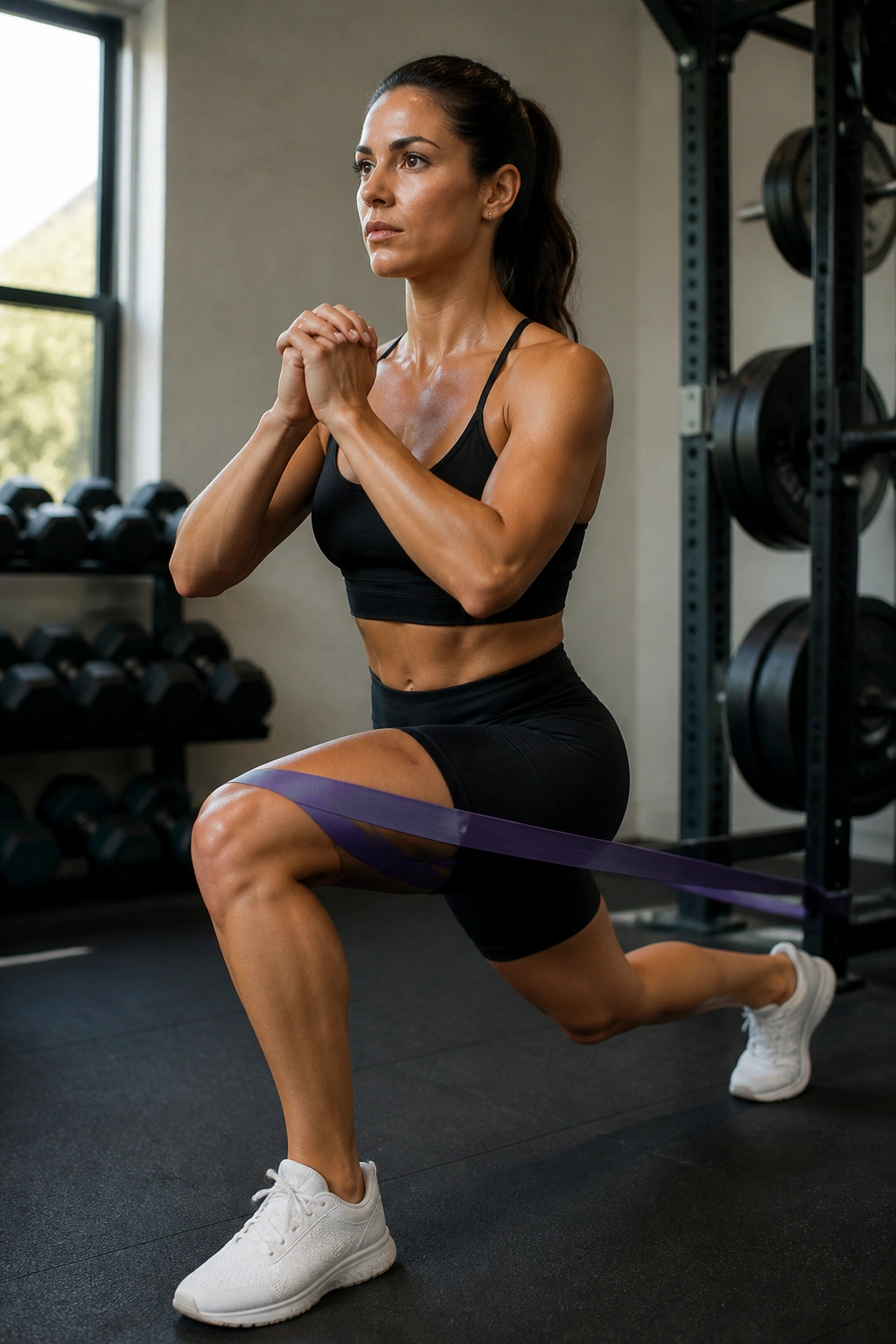
Loop a resistance band around your front knee and anchor it to a post behind you. As you lunge backward, the band will pull your knee forward. Your body must fight this pull, activating the glutes even harder to maintain stability. It adds a variable resistance component that free weights simply cannot provide.
The Science of Tension
Resistance bands offer accommodating resistance. The further you stretch the band, the more tension it provides. This means the hardest part of the lunge—the bottom—is made even harder. It is an advanced way to overload the pattern without needing heavy gym equipment. It’s perfect for home workouts where space and weight are limited.
12. Sandbag Reverse Lunge
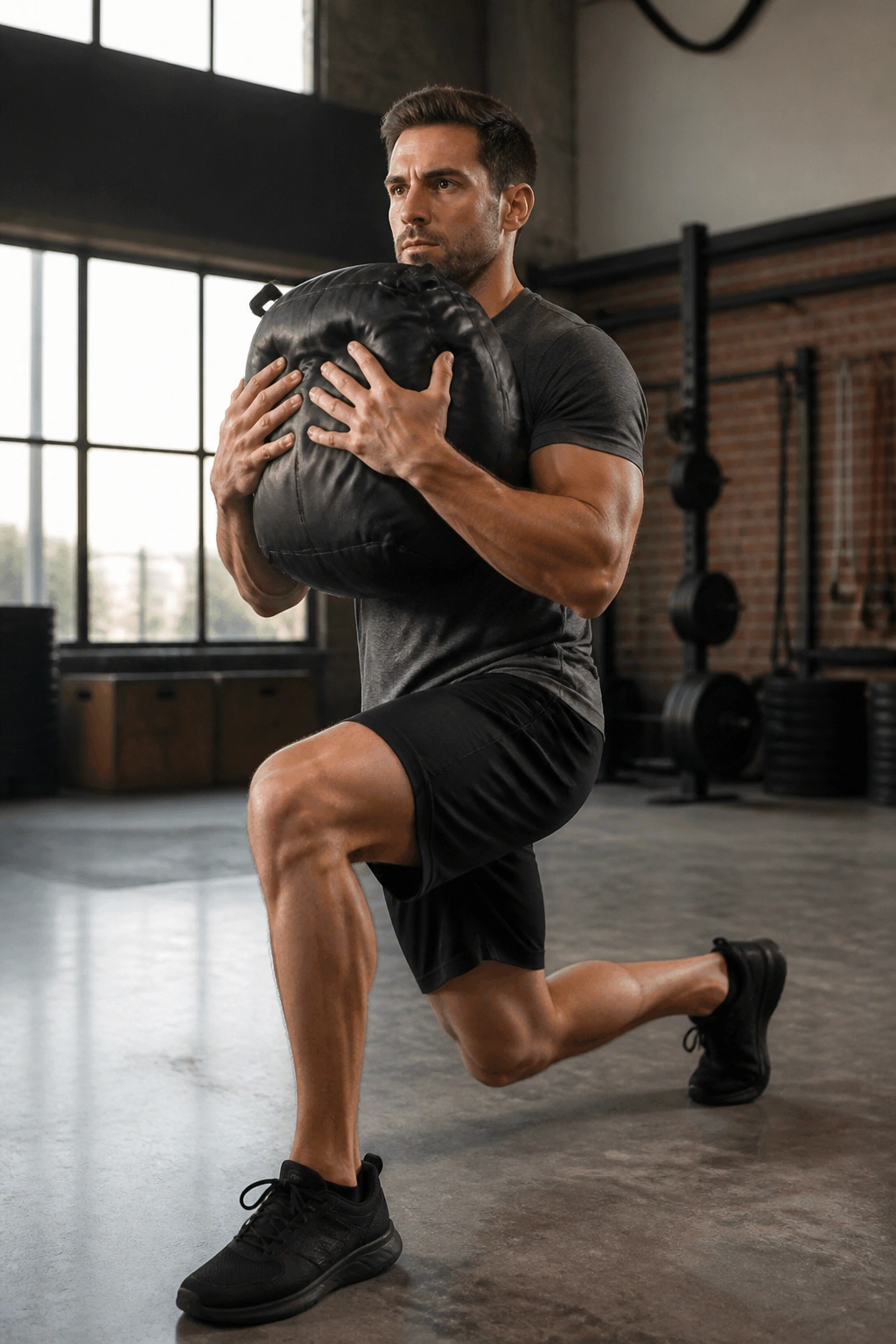
Sandbags are messy, unstable, and awkward. That is exactly why they work. Because the sand shifts inside the bag as you move, your core has to constantly adjust to keep the center of gravity stable. It is a much more “real-world” strength challenge than a static barbell.
Dealing with Instability
You can carry the sandbag on your back, over one shoulder, or in front of your chest (bear hug style). Each hold changes the exercise entirely. Bear hug style forces a rounded thoracic posture, which really engages the core. Shoulder carry turns it into an asymmetrical stability challenge. Choose your poison.
13. TRX Suspension Reverse Lunge
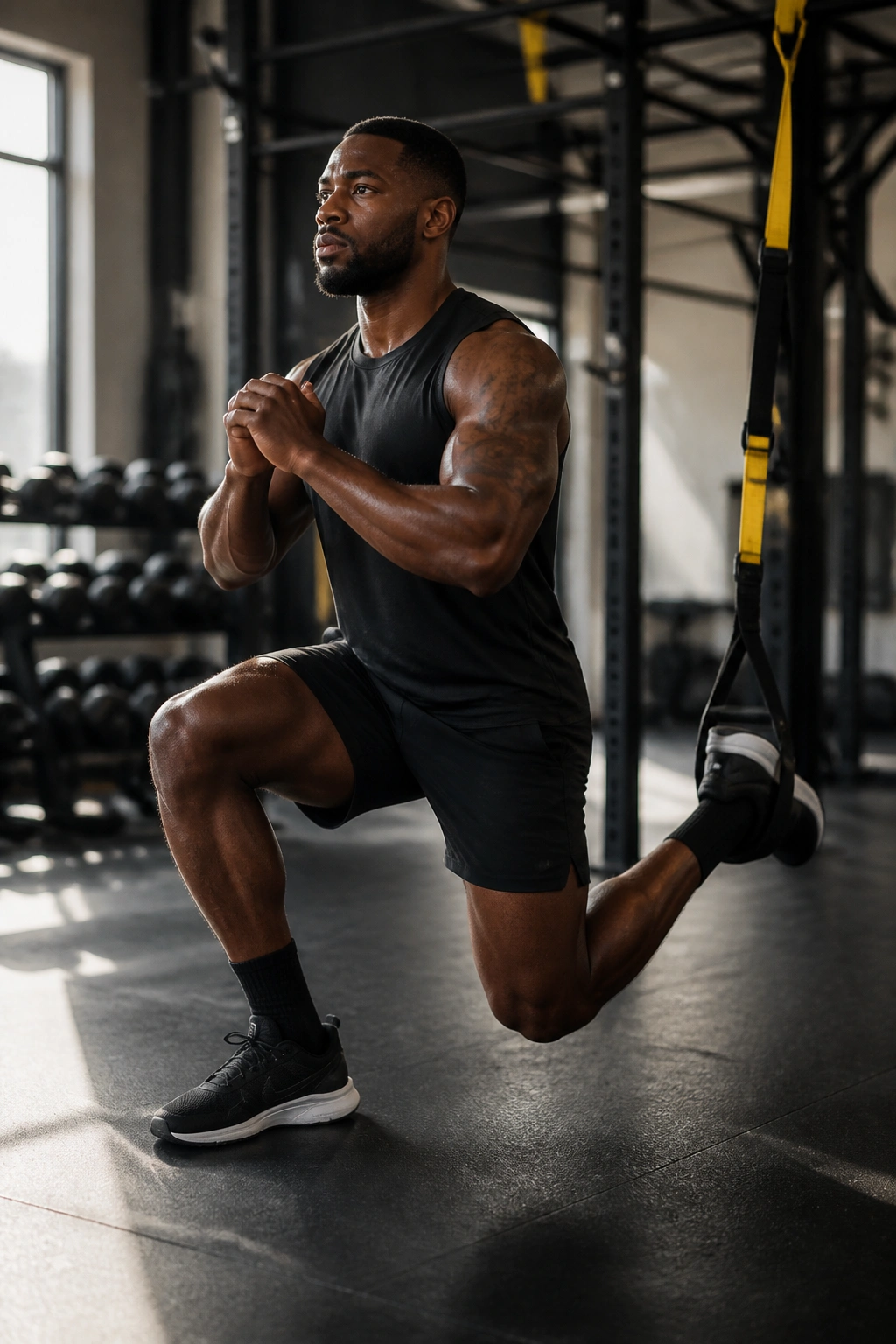
Place your back foot in a TRX handle. Perform a reverse lunge while the back foot remains suspended in the strap. This is a brutal stability challenge. You have to balance on one leg while the back leg is floating, which forces extreme engagement of the hip stabilizers and the core.
Why It’s Unique
You will wobble. A lot. Do not get discouraged by the lack of stability in the first few sets. Your nervous system is learning to manage a new environment. This is arguably the best variation for identifying which hip is weaker. You will notice the difference instantly when you switch legs.
14. Reverse Lunge to Single-Leg RDL
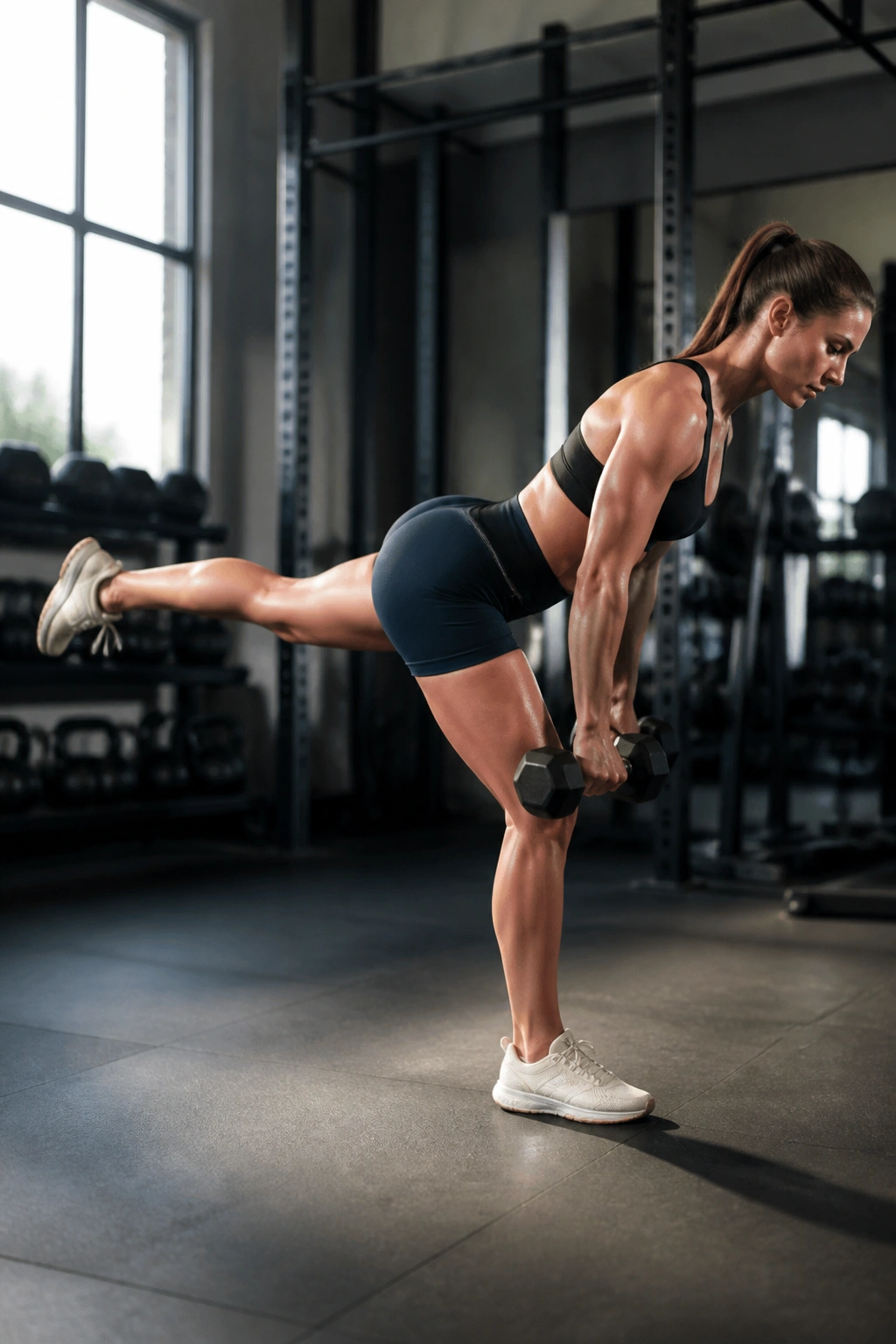
This is a combination move. Perform a reverse lunge, and as you return to standing, go immediately into a single-leg Romaninan Deadlift (RDL) without putting your foot down. This trains the entire posterior chain—glutes, hamstrings, and lower back—in one continuous, fluid motion.
Coordination Challenges
It is not easy. It requires focus and balance. If you are struggling, keep your back toe on the ground between the lunge and the RDL at first. Once you get the coordination, try to keep the leg elevated the entire time. It turns a standard leg workout into a masterclass in control.
15. Pause Reverse Lunge
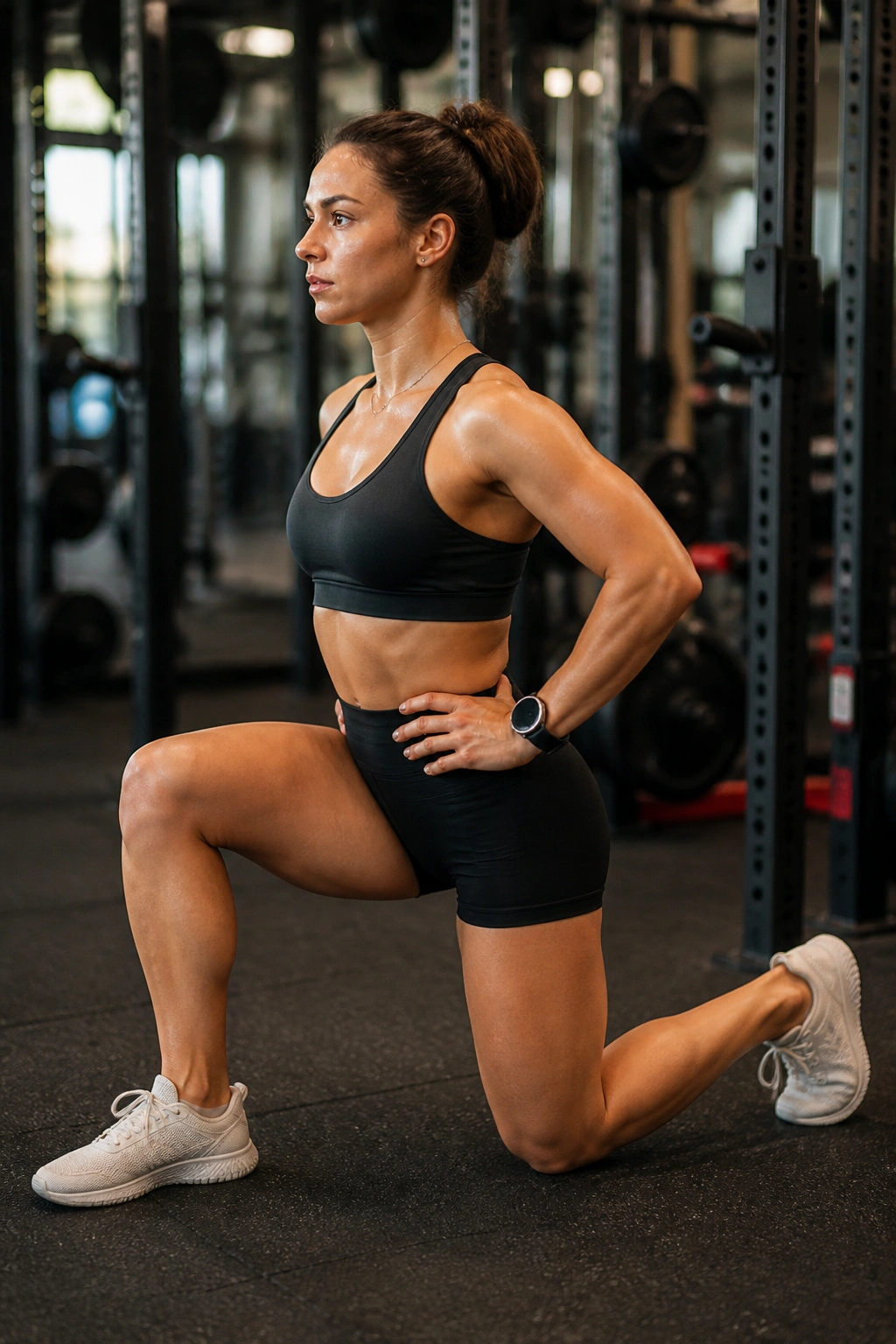
Take your time at the bottom. Hold the bottom position of the reverse lunge for 2 to 3 seconds. The “pause” eliminates the stretch reflex, meaning you have to generate power from a dead stop. This builds immense strength and reinforces proper bottom-position form.
Removing the Bounce
Most people “bounce” out of the bottom of a lunge, using the elastic energy of their tendons to get back up. That’s fine for athletics, but for building muscle, it’s a shortcut. By pausing, you force the muscle fibers to do the work. It is humbling, and you will have to drop your usual weight, but the growth stimulus is superior.
16. Tempo Reverse Lunge
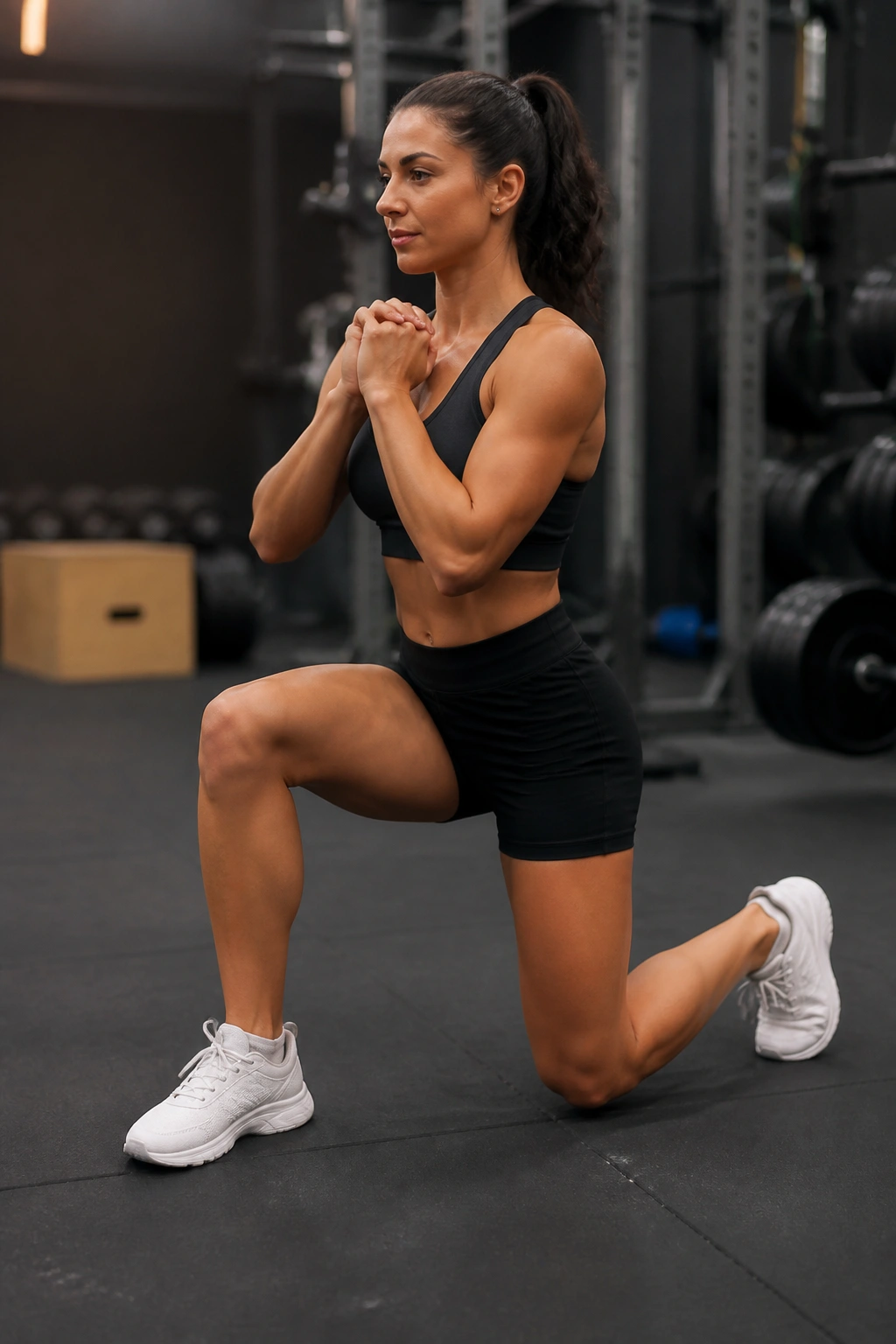
Control the speed. Take 3 seconds to lower yourself into the lunge, pause for 1 second, and then take 1 second to explode back up. This is a classic bodybuilding technique to increase “time under tension.” Muscles grow when they are forced to do work for a sustained period.
Eccentric Focus
The descent (eccentric) is where most muscle damage—and thus, growth—occurs. By slowing it down, you are maximizing that phase. Do not rush the countdown. If you are not sweating, you are probably moving too fast. Keep the tempo strict.
17. Reverse Lunge with Rotation
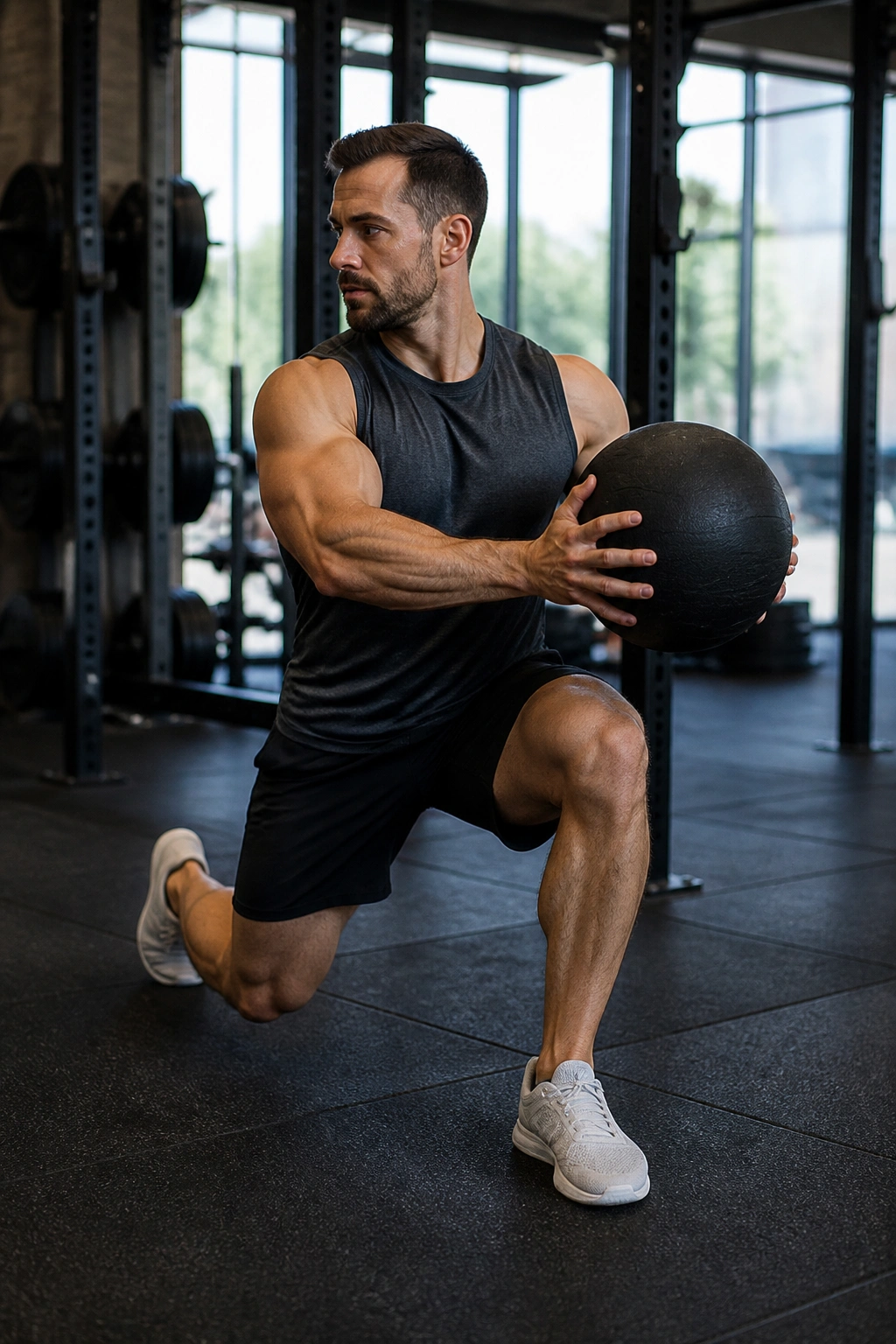
Add a torso twist. As you step back into the lunge, rotate your torso toward the front leg. If you are lunging with your right leg back, twist to the left. This forces your obliques and core to engage while you are in a compromised, unstable position.
Functional Strength
In everyday life, we rarely move in perfect straight lines. We rotate while we move. This variation trains that rotational stability, which is vital for athletic performance. Keep the movement slow. If you rotate too fast, you will lose your balance and defeat the purpose.
18. Lateral-Reverse Lunge Combo
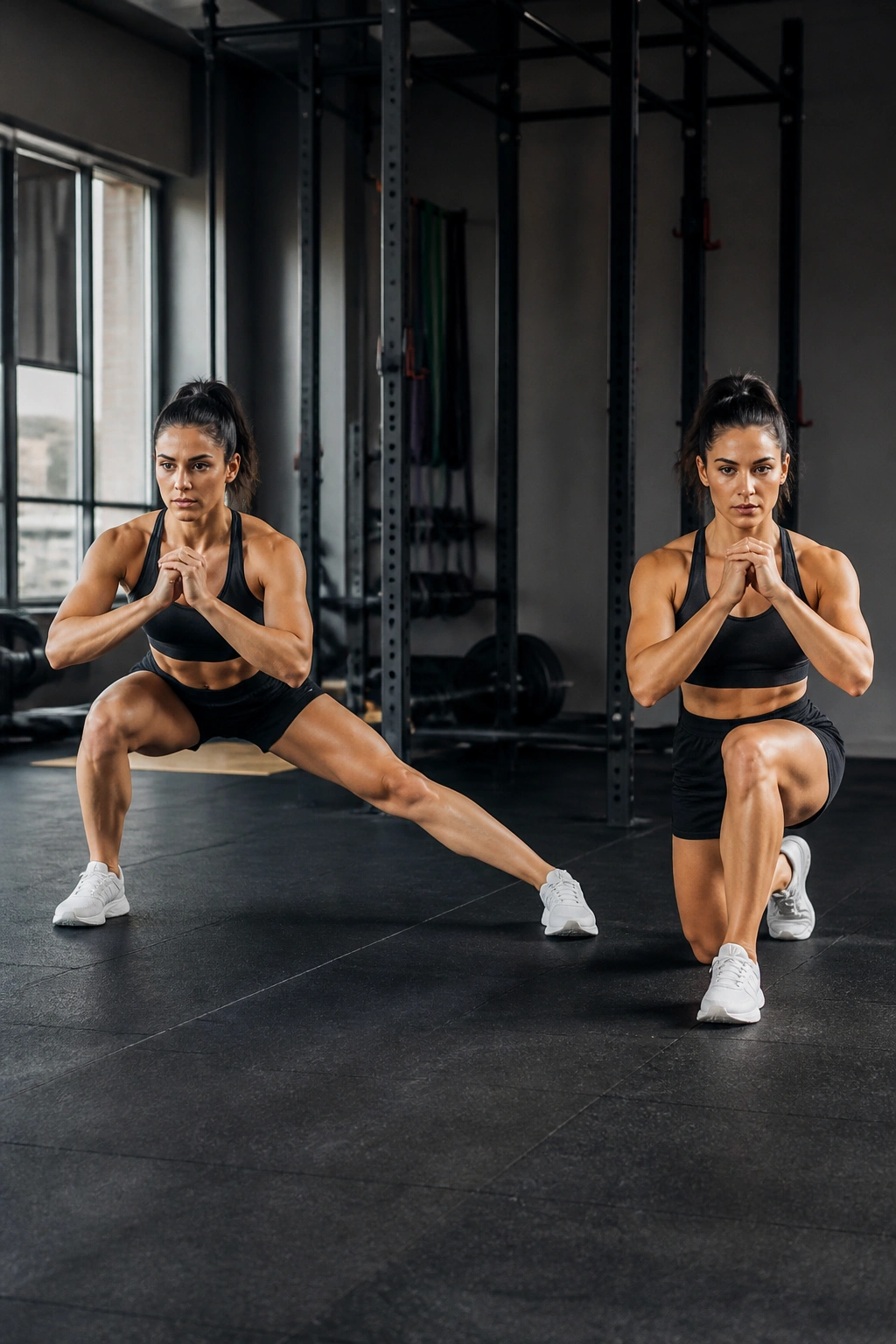
Combine a lateral lunge (side lunge) and a reverse lunge into one sequence. Step out to the side, recover to center, then step back into the reverse lunge. This hits the inner thighs (adductors) and the glutes simultaneously. It is a full-leg session in one exercise.
Multi-Planar Training
Our legs operate in multiple planes. Ignoring the frontal plane (side-to-side) leads to weak hips and a higher risk of injury. This combo ensures you are strong from every angle. It takes up a bit more room, so make sure your space is clear before you start lunging.
19. Step-Up to Reverse Lunge

Start by stepping up onto a box or bench with your right leg, then bring your left leg up. Step back off with your left, and immediately go into a reverse lunge with the left leg. This is a high-level coordination drill that keeps the heart rate soaring.
Seamless Transitions
The transition is the key. You are linking two distinct movements. It forces the legs to switch gears—from a concentric-heavy step-up to an eccentric-heavy lunge. It is perfect for those who want to get a “workout” feel in a short amount of time. Keep the box height conservative until you have the balance down.
20. Plate-Loaded Overhead Reverse Lunge
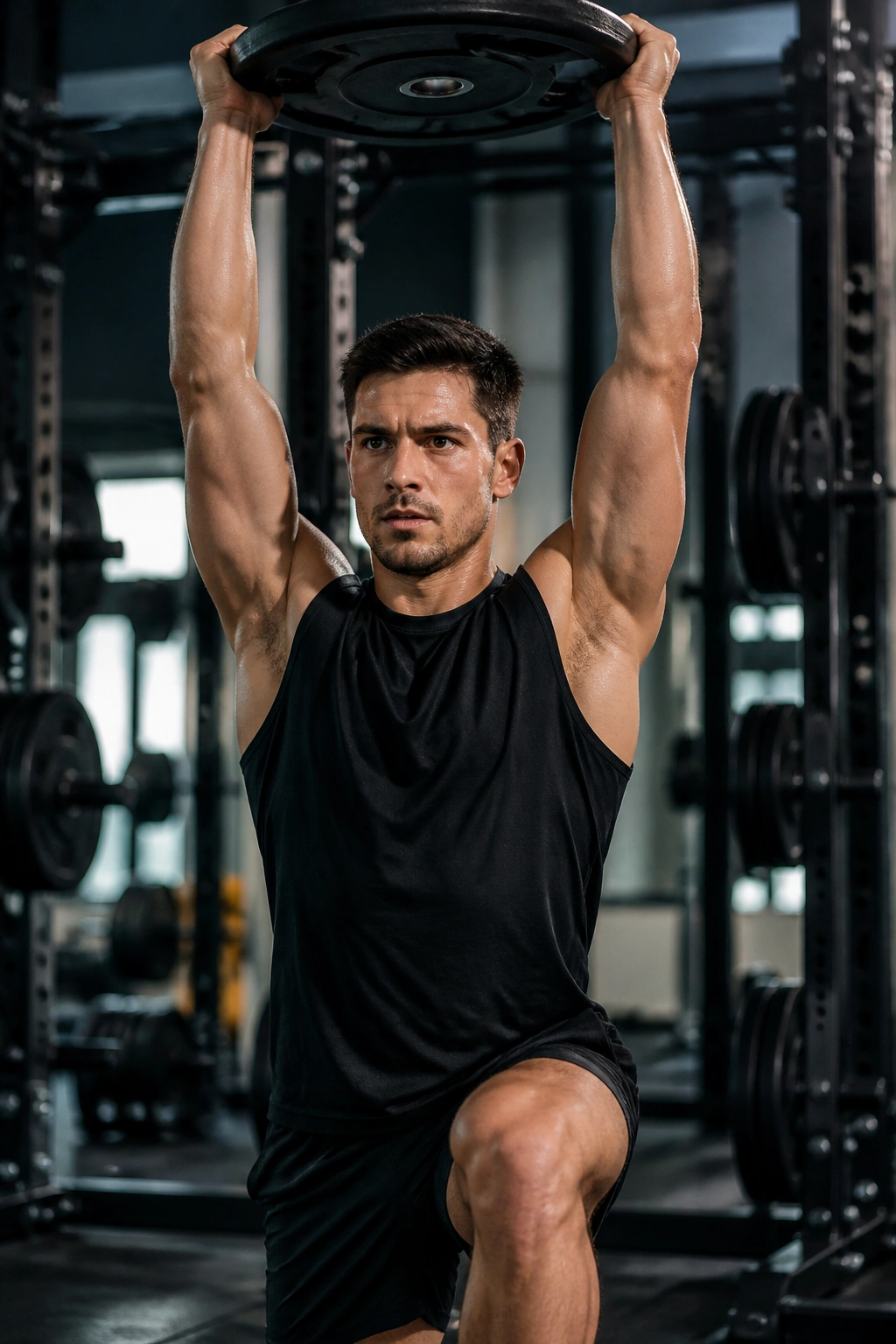
Hold a weight plate (or a dumbbell) directly over your head with arms locked out. Perform your reverse lunges. Having the weight overhead shifts your center of mass and requires massive core engagement to stay upright. It also tests your shoulder stability.
The Postural Payoff
You cannot slouch when the weight is overhead. It forces perfect spinal alignment. If your core is weak, you will see your ribcage flare out; fight that. Keep the ribs tucked. This is an advanced move. Do not attempt this if you have shoulder issues or limited thoracic mobility.
21. Reverse Lunge with Cross-Body Reach
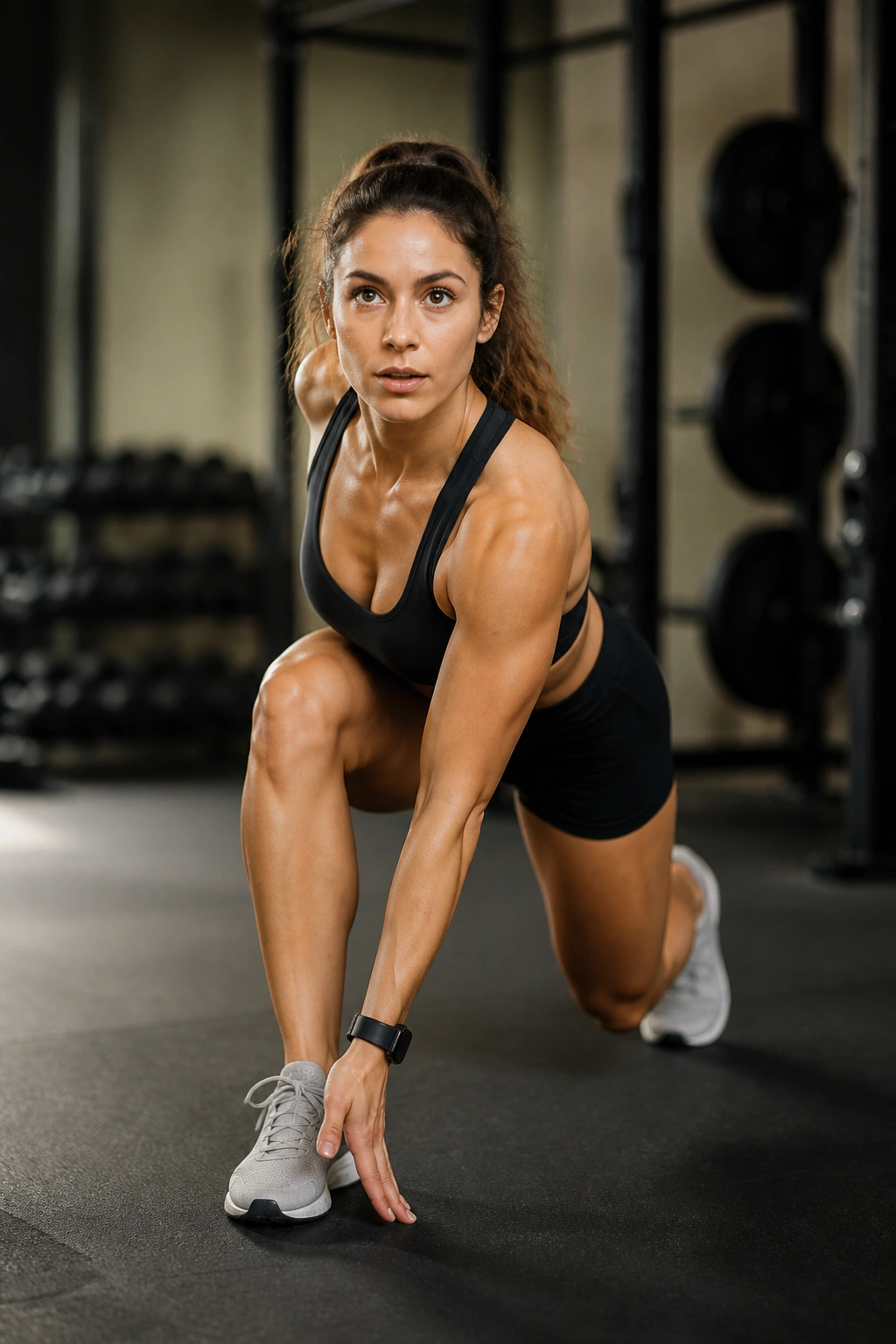
As you lunge back, reach your hands toward the ground on the inside of your front foot. This forces your torso to lean forward slightly, which increases the lever arm on the hip. This shifts the focus heavily onto the gluteal muscles.
Maximizing Glute Activation
You will feel a significant stretch in the working glute. It is much more intense than an upright lunge. Don’t worry about touching the floor—just reach as far as your mobility allows. The reaching motion also forces your core to stabilize your entire upper body against the fold.
22. Med Ball Slam to Reverse Lunge
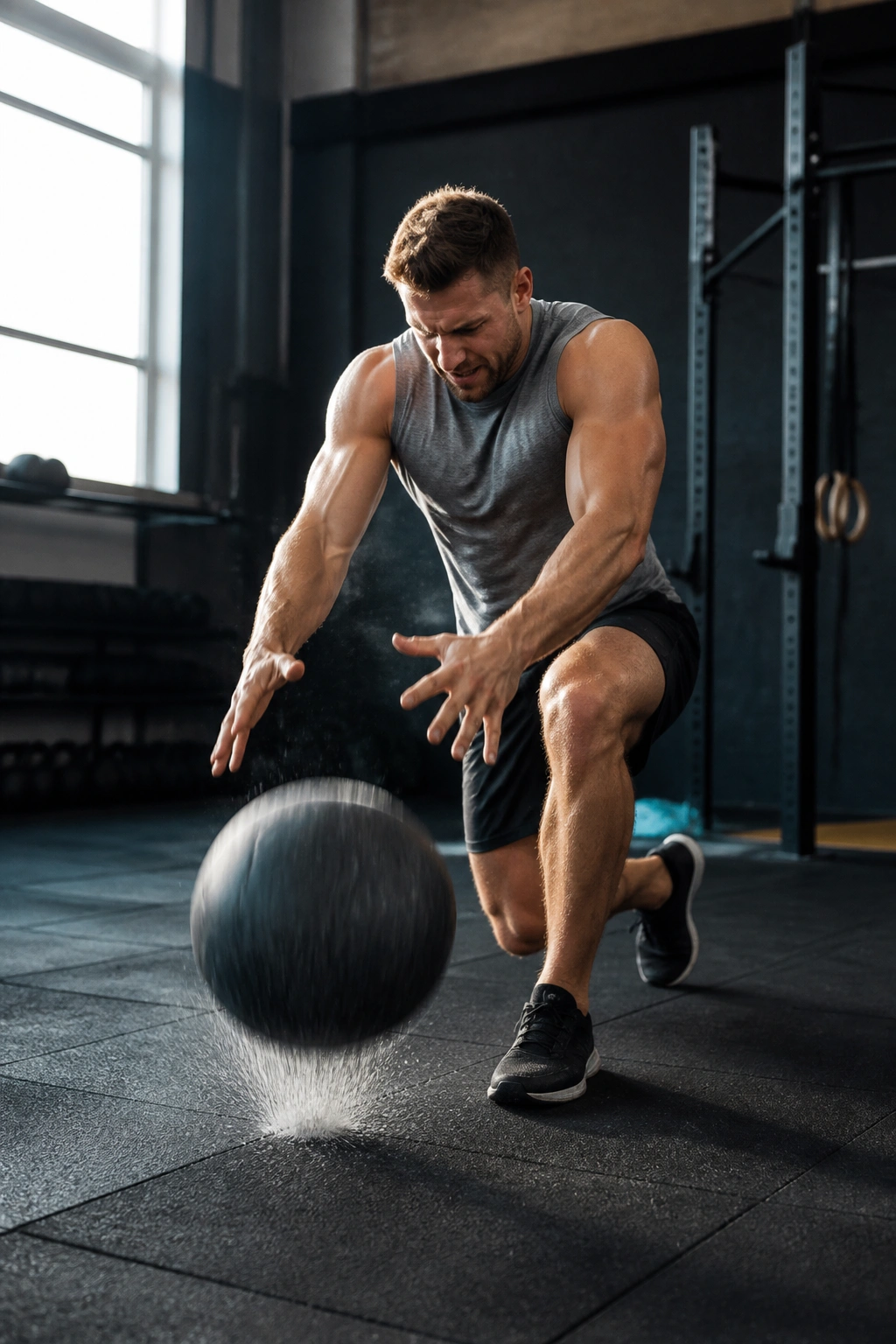
Hold a medicine ball. Slam it into the ground, and as you catch the bounce, step back into a reverse lunge. This incorporates upper body power and core engagement into your leg training. It is an intense, high-energy exercise.
Dynamic Energy
You have to be quick. You aren’t just lunging; you are reacting to the ball. It brings an athletic component to a gym movement. Just make sure the ball is a dead-bounce medicine ball, or it might hit you in the face. Safety first, fitness second.
23. Suitcase Reverse Lunge
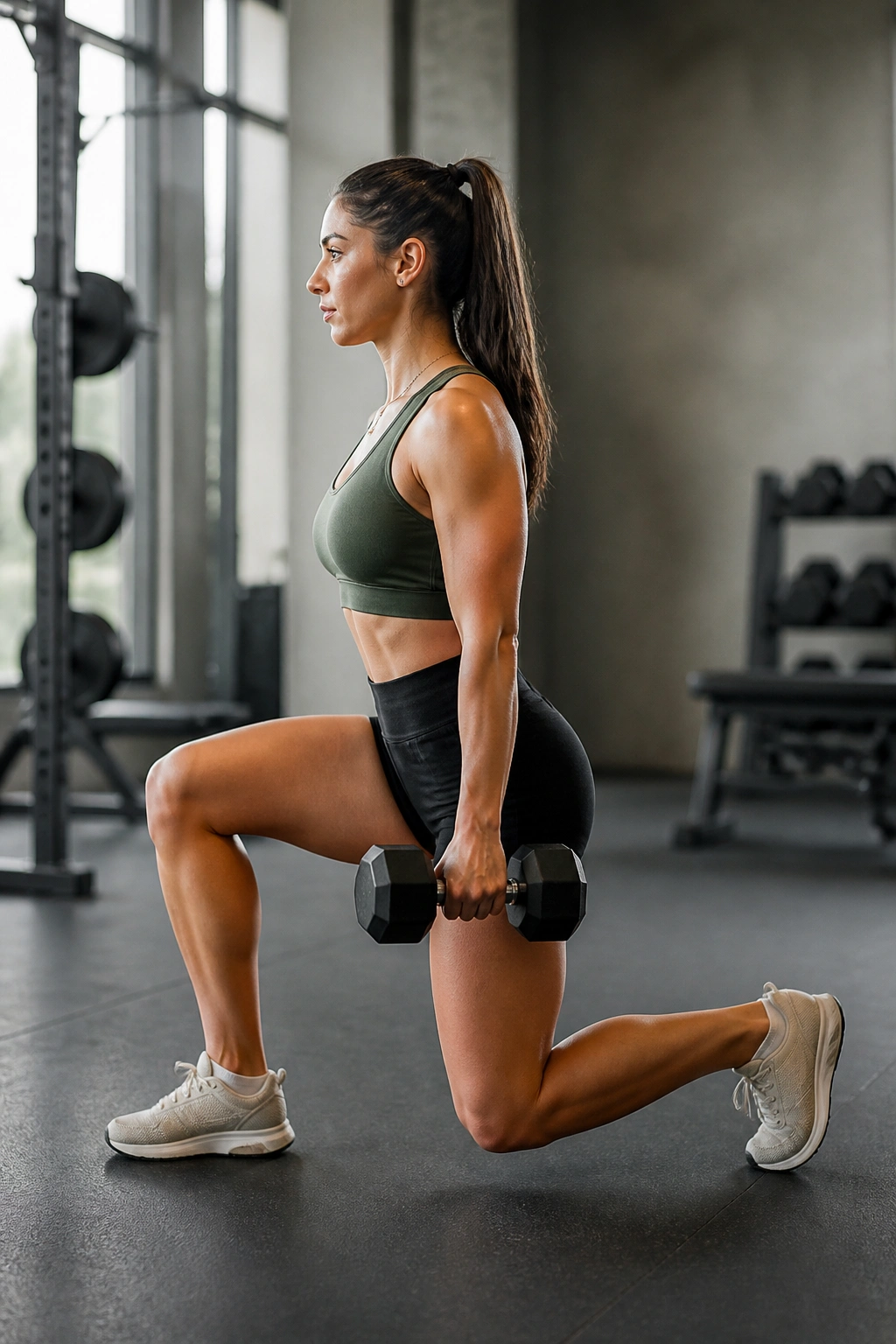
Hold a heavy dumbbell or kettlebell in only one hand. Step back into the lunge while holding the weight on the same side as the working leg. Your body will want to lean toward the weight, but your obliques must fire to keep you vertical.
Anti-Lateral Flexion
This is the ultimate core stability exercise. It teaches you to resist “lateral flexion”—the tendency for the spine to bend sideways. It is a fundamental movement pattern that saves your back during heavy lifting. Switch the weight to the other side halfway through the set to keep things balanced.
24. Pulse Reverse Lunge
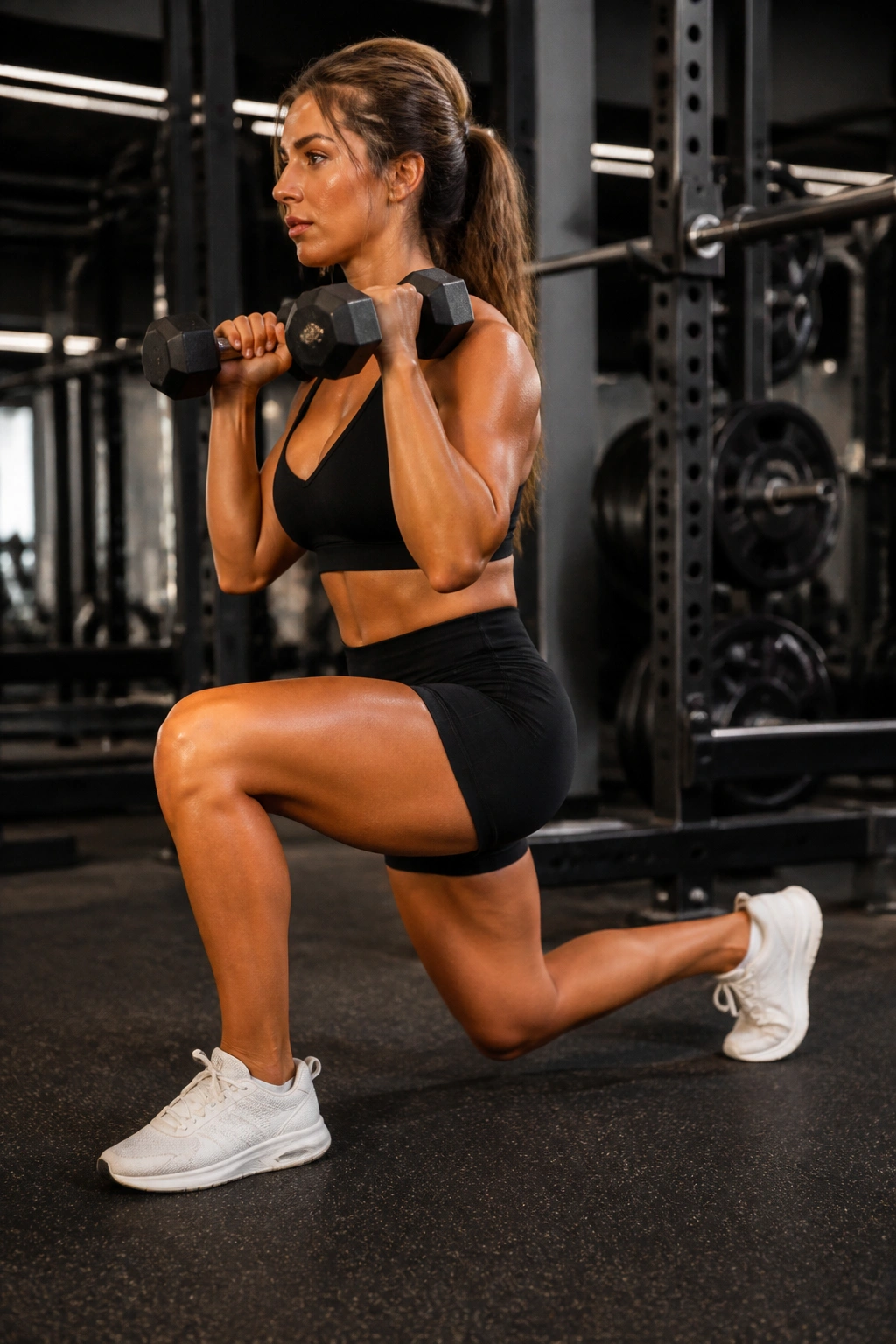
Sink into the bottom of your reverse lunge, but don’t come back up. Instead, move up and down about 3 to 4 inches, staying at the bottom of the movement. Do this for a set time (e.g., 30 seconds) or a specific number of pulses.
Metabolic Stress
This creates massive metabolic fatigue. Your quads will burn, and you will want to quit, but that burn is where the adaptation happens. Keep the pulses tight and controlled. Do not use momentum to bounce yourself out of the hole. It is about keeping the muscle under constant, twitching stress.
25. Isometric Hold Reverse Lunge
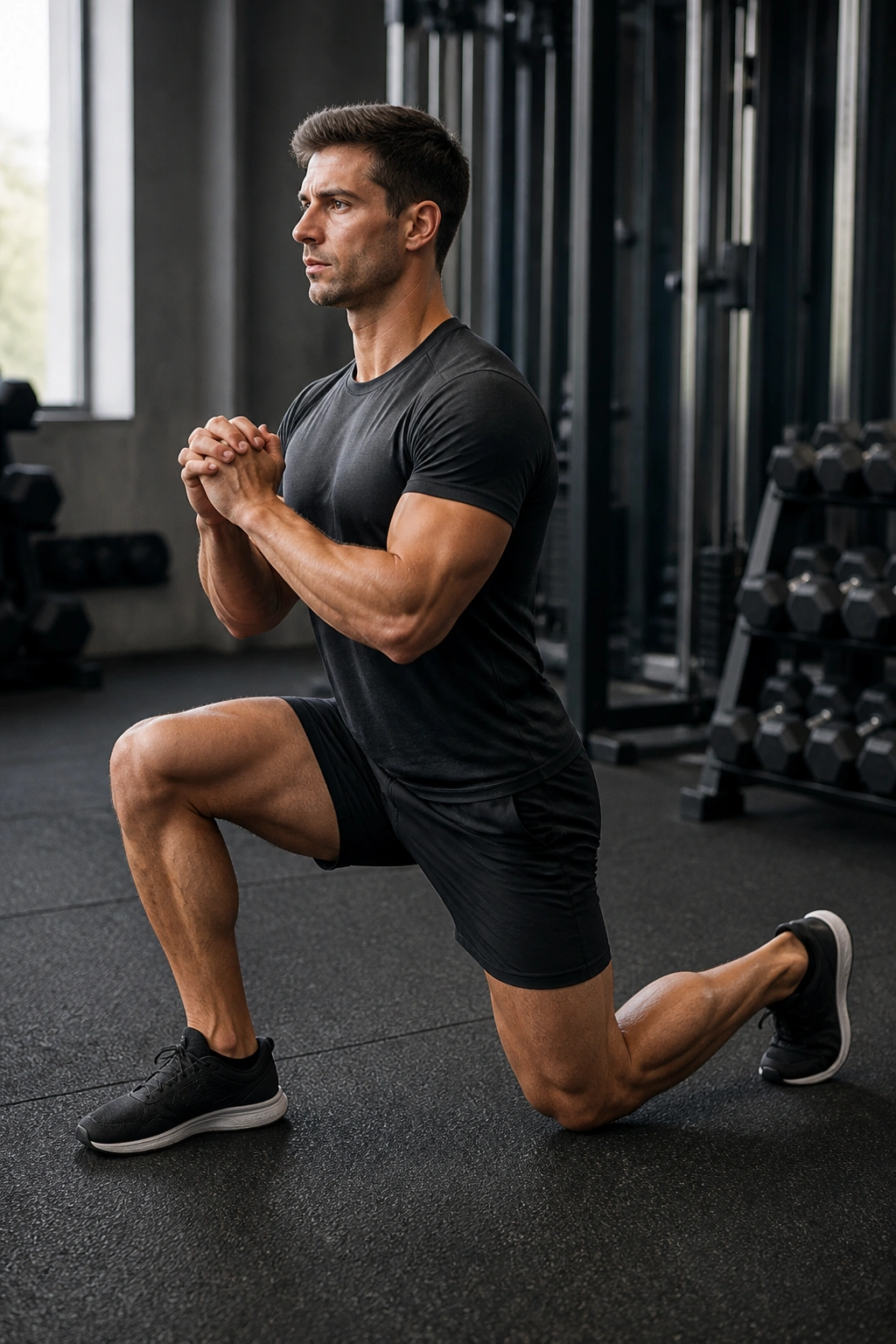
The simplest yet perhaps the most painful variation. Step back into your reverse lunge and hold the bottom position for as long as you can—or for a set time like 45 seconds. Keep your chest up and your core tight the whole time.
The Mental Game
This is as much mental as it is physical. You are teaching your nervous system to stay calm under intense muscular tension. You will shake. That is the muscles recruiting every available fiber to hold you in place. It’s an incredible finisher for a leg day, leaving your quads and glutes absolutely spent.
Final Thoughts
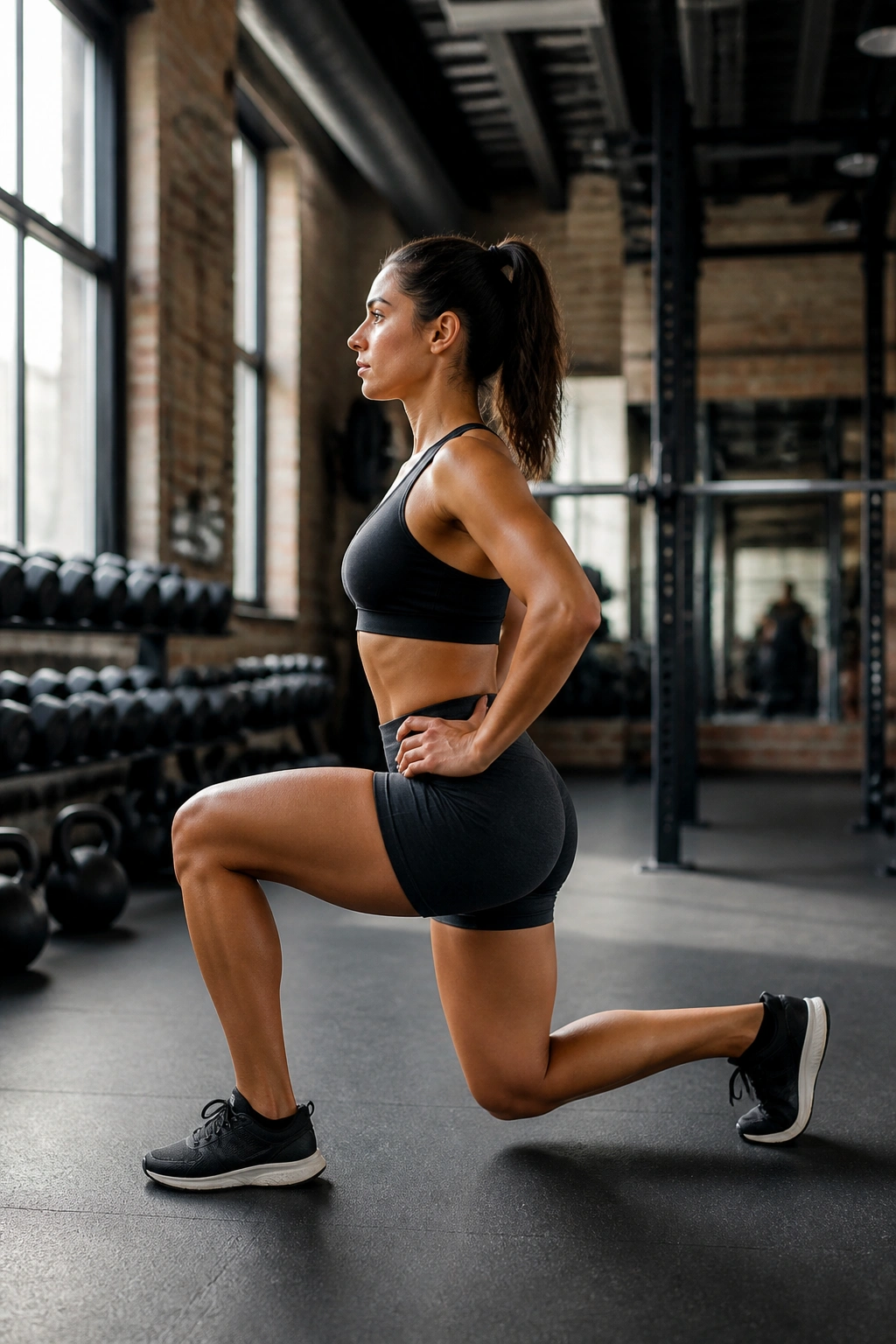
The reverse lunge is far more than a “leg exercise.” It is a foundational movement that tests your balance, your core strength, and your unilateral capacity. If you have been treating it as an afterthought—something to squeeze in at the end of a workout—you are missing a massive opportunity to build real, functional strength.
Start by mastering the basic movement, then rotate these variations into your routine. You do not need to do all 25 in one go. Pick two or three that target your weak points and stick with them for a few weeks. The goal is not just to perform the movement; it is to master the mechanics, load them effectively, and listen to what your body tells you. Consistency with the right variations will pay off in strength, stability, and longevity.
