



The single-leg deadlift is the great equalizer of lower-body training. You might be able to load a barbell with hundreds of pounds and move it with two feet firmly planted on the ground, but taking one foot away exposes everything. It reveals the asymmetries, the weak links, and the specific muscle imbalances that two-legged lifting masks. If you want glutes that actually function the way they were designed—rather than just looking good in a mirror—you need to master the art of unilateral hip hinging.
Most people skip the single-leg deadlift because it is humbling. It forces you to drop the weight, slow down, and focus on the tiny stabilizers in your hips and ankles. But that struggle is exactly where the growth happens. When you commit to these variations, you aren’t just building size; you are building an athletic foundation that translates to better running, jumping, and pain-free movement in your daily life.
1. Bodyweight Single-Leg Deadlift
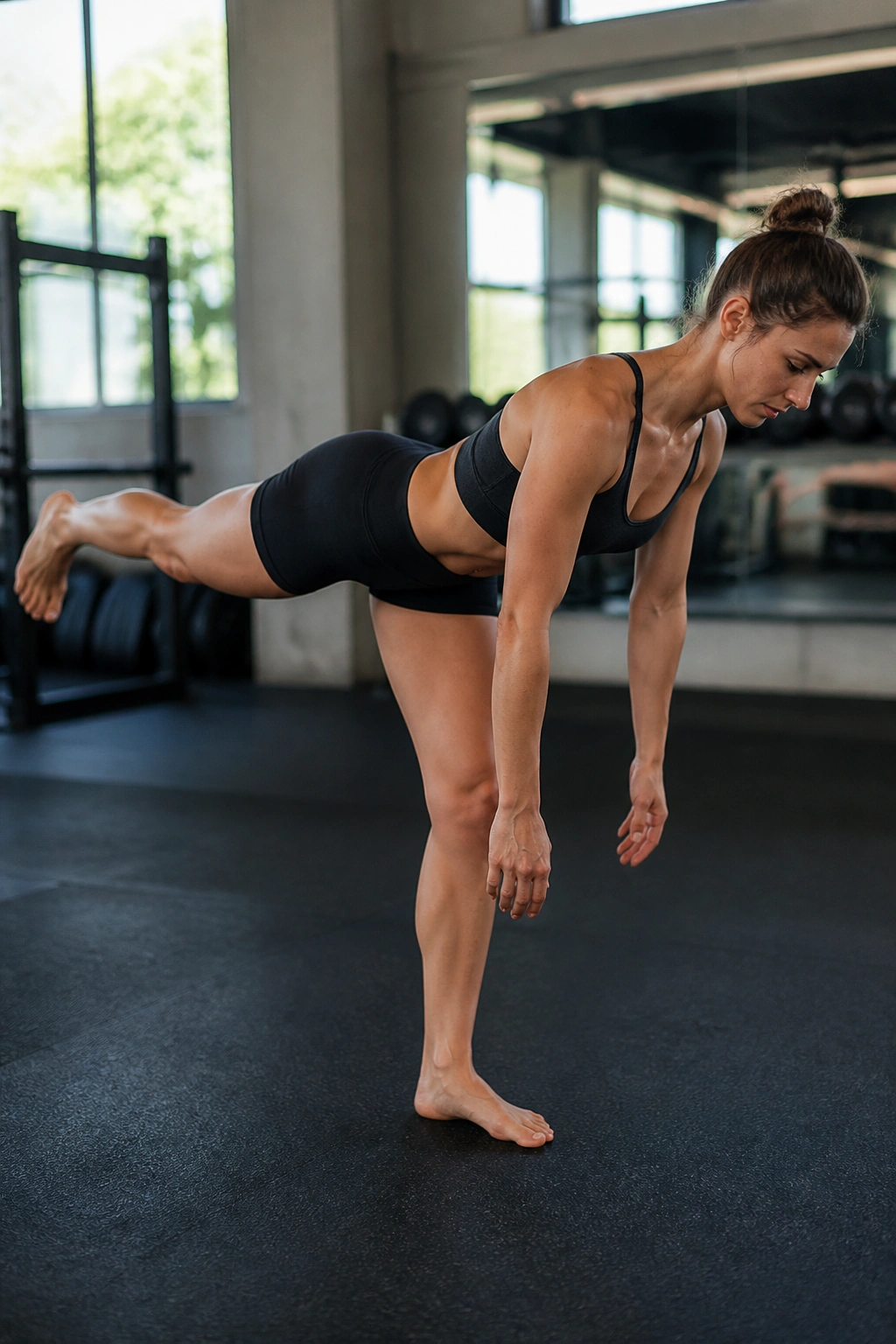
The most overlooked tool in the gym is your own body. Before you even think about grabbing a dumbbell or a barbell, you need to prove that you can control your center of gravity through a full range of motion. This variation is the ultimate diagnostic tool. If you cannot perform twelve clean repetitions on each leg without wobbling, losing your balance, or letting your hips rotate, you have no business loading heavy weight.
Why You Should Start Here
This version allows you to focus purely on the hip hinge mechanics. Your gluteus medius has to work overtime to keep your pelvis level, and your core is forced to stabilize without the aid of a heavy counterbalance.
The Execution
- Stand on one leg with a slight, soft bend in the knee.
- Hinge at the hips, pushing your butt backward as if trying to tap a wall behind you.
- Keep your back flat and your toes pointed toward the floor, not the side.
- Return to standing by driving through the heel and squeezing the glute of the working leg.
Pro tip: Imagine you have a cup of water balancing on your lower back. If you twist your hips open, you spill it. Keep that imaginary water level at all times.
2. Kickstand Deadlift
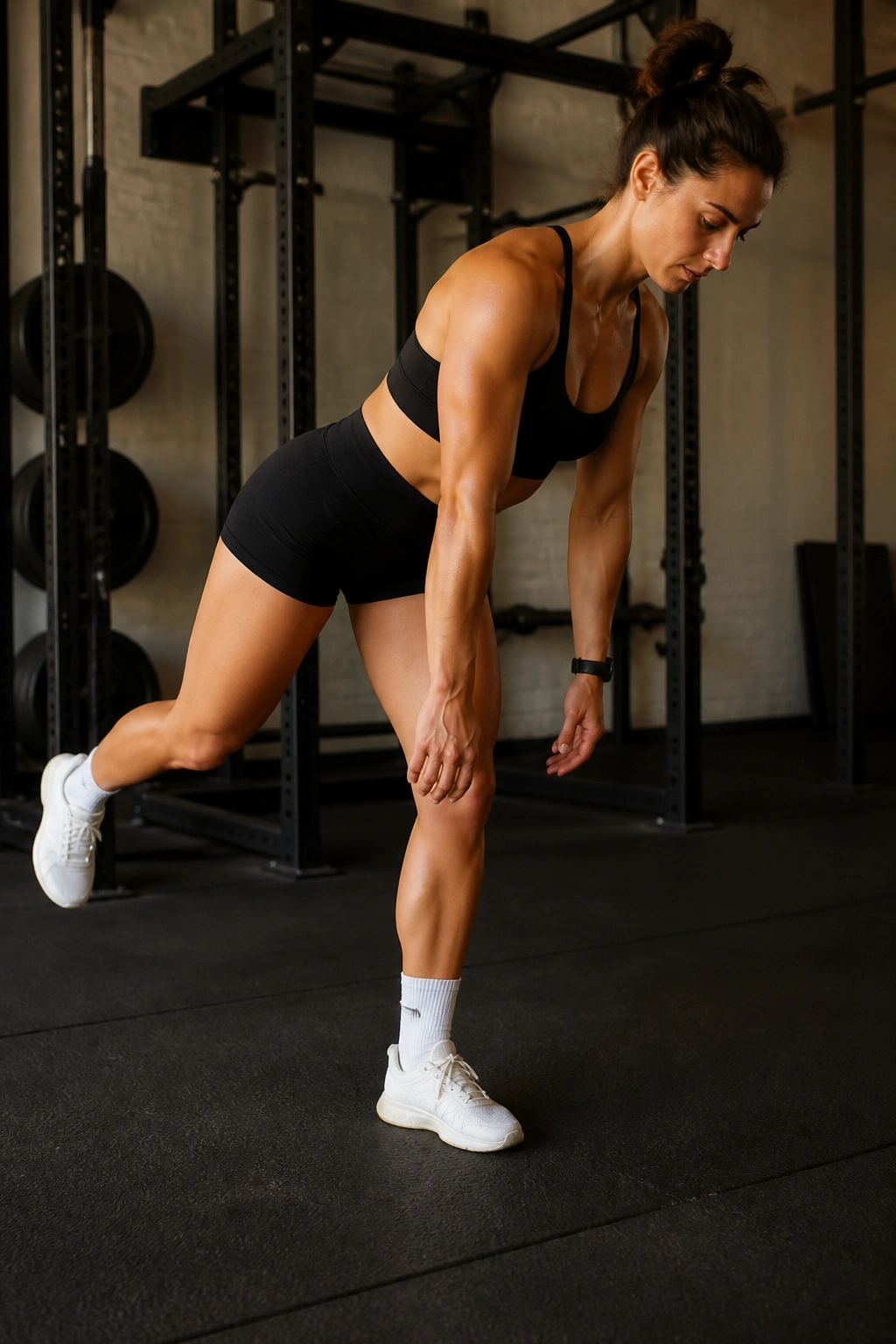
Think of the kickstand deadlift as the training wheels for unilateral training. It allows you to overload the primary leg while keeping just enough weight on the “kickstand” foot to provide stability. It is a fantastic bridge for people who are scared of losing their balance or who struggle with ankle mobility.
How to Set Up
You place your non-working foot behind you, resting only the ball of the foot on the floor. About 80% to 90% of your weight remains on the front, working leg. Because you have that rear point of contact, you can often push a bit heavier than you could with a true single-leg movement.
Key Benefits
- Allows for greater loading capacity than a full single-leg stance.
- Provides a safety net for those with limited ankle stability.
- Minimizes the “wobble” factor, letting you focus on the deep stretch in the glute.
Common Mistake: People often shift their weight backward onto the kickstand foot. Don’t do that. Keep your torso over the front leg the entire time.
3. Kettlebell Single-Leg Deadlift (Center Loaded)
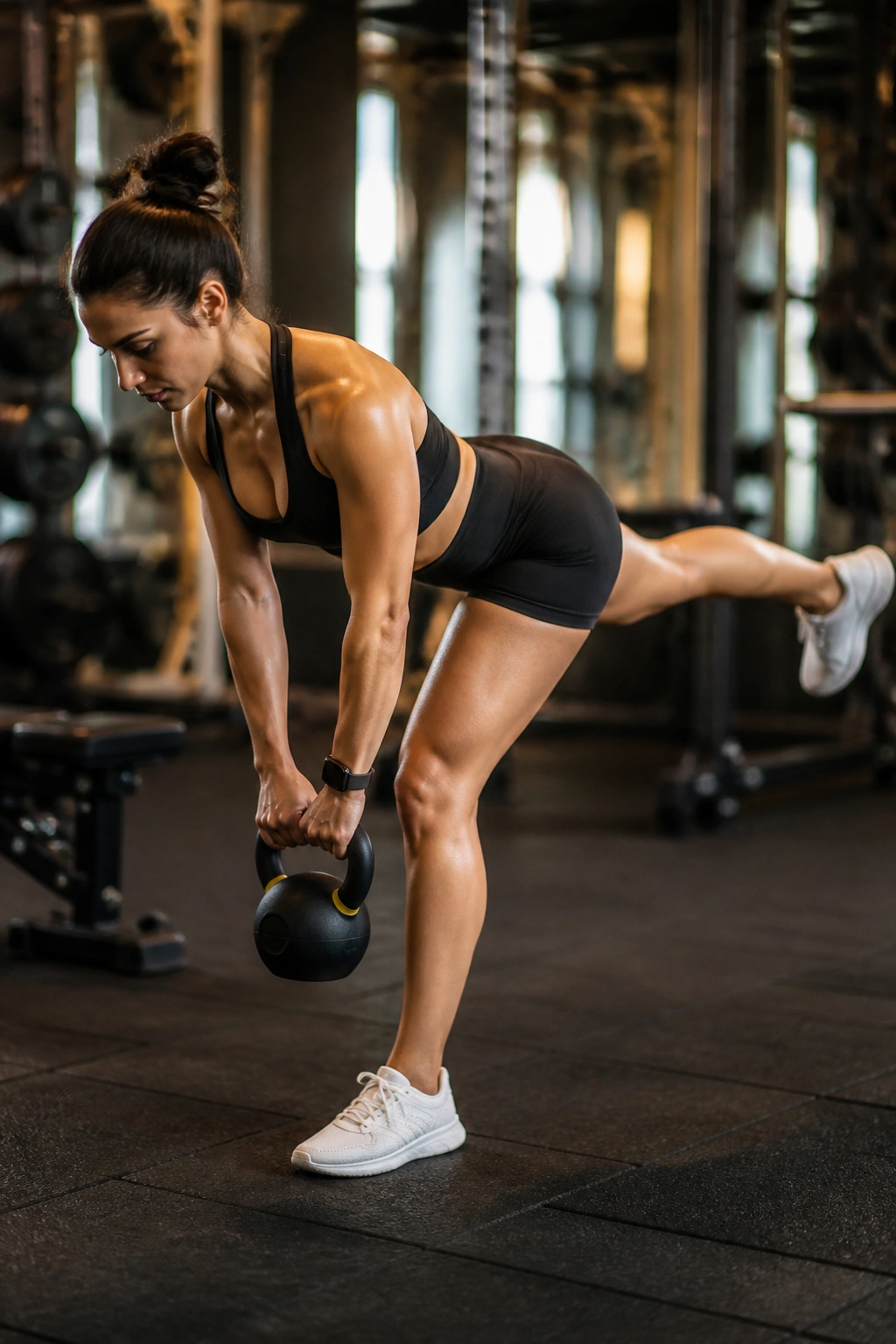
When you hold a weight in the center of your body, you change the lever arm. This variation requires more core bracing than holding a weight in your hand, as the kettlebell pulls your torso forward if you do not stay tight. It is essentially a counterweight system that keeps your movement honest.
Technique Notes
Hold the kettlebell in both hands, letting it hang directly beneath your center of gravity. As you hinge, the bell should travel in a straight vertical line, brushing past your knee and shin. This proximity to your body reduces the strain on your lower back, making it a great option for those who feel too much lumbar pressure with dumbbells.
Why It Builds Glutes
Because you aren’t fighting to keep the weight from pulling you sideways, you can focus purely on the drive. You can really exaggerate the “push the floor away” cue at the top of the movement.
Watch For This
Do not let your shoulders round forward. You might feel the weight pulling you down, but maintain that “proud chest” posture. If your shoulders sag, you are essentially training your upper back to fail before your glutes even get a chance to work.
4. Dumbbell Single-Leg Deadlift
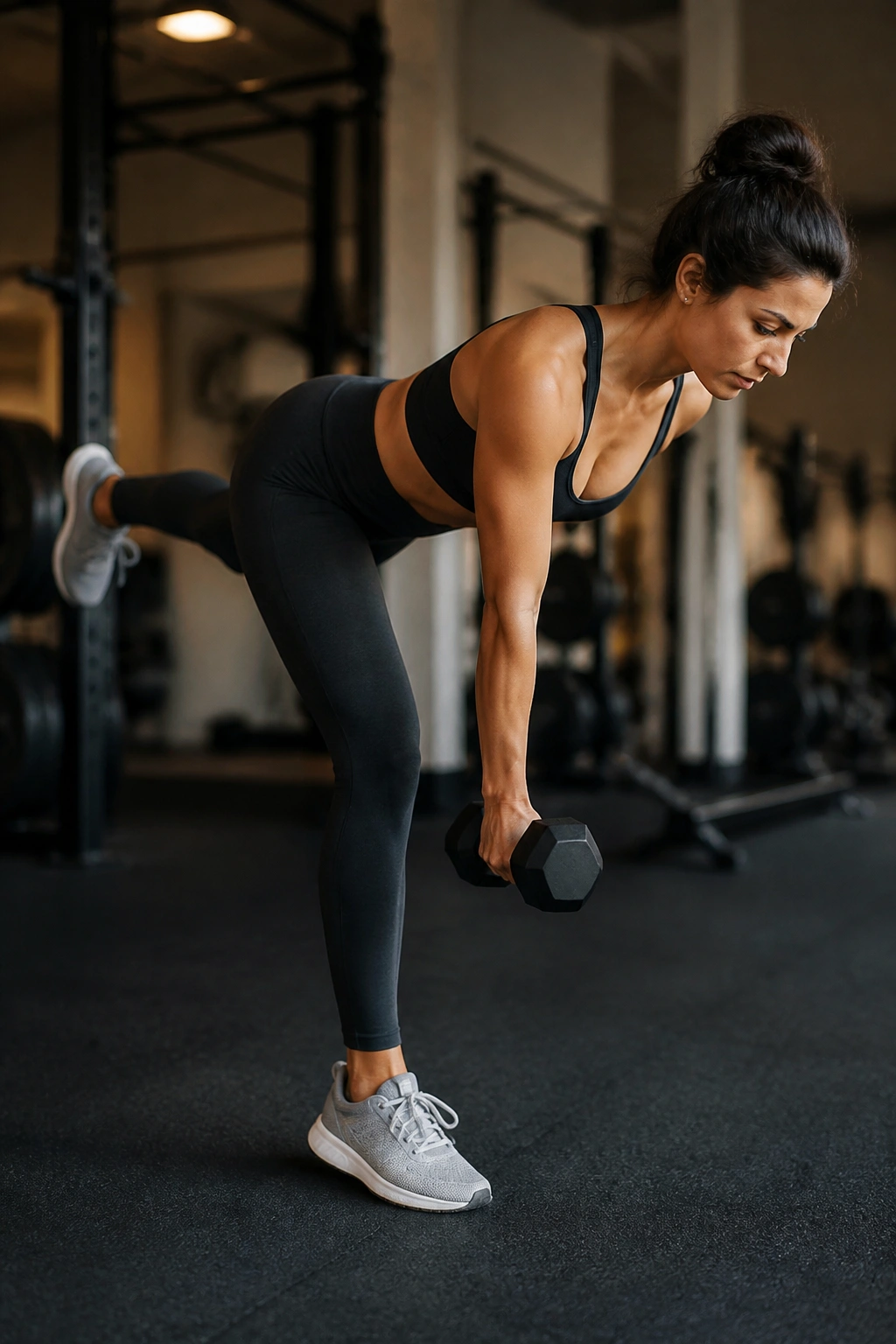
This is the standard, the classic, the variation you will see in almost every effective strength program. Holding a dumbbell in one hand—or two—creates a challenge for your stability that the kettlebell version simply cannot match. It forces the muscles on the side of the hip to work twice as hard to prevent you from tilting.
The One-Handed Advantage
Try holding the dumbbell in the opposite hand of the working leg. This is known as a contralateral hold. It forces your gluteus medius to fire rapidly to counter the pull of the weight. You will feel a deep, burning sensation in the side of your hip—that is exactly what you want.
Why It Works
It mimics real-life movement patterns where we often carry objects unevenly. It is practical, functional strength.
The Reality Check: Start lighter than you think you need to. You will be surprised at how much harder a 20-pound dumbbell feels when you only have one foot on the ground compared to when you have two.
5. Barbell Single-Leg Deadlift
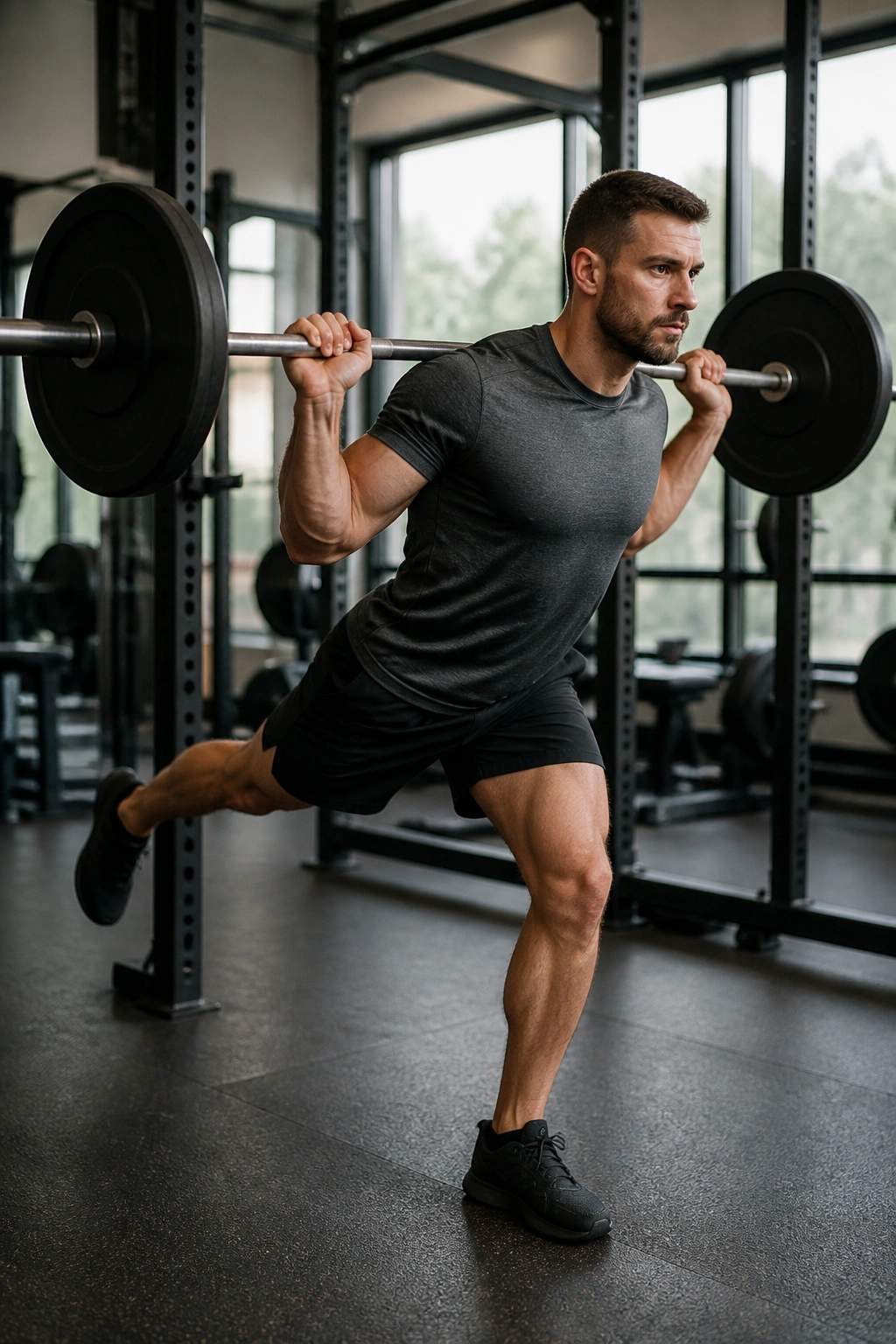
This is a high-level movement. The barbell introduces a long, rigid lever that is incredibly unforgiving. If you drift even an inch off-center, the bar will tilt, and you will have to compensate. This is not for the faint of heart, but for those who want to see massive strength gains, it is the pinnacle.
The Setup
You need to use a clean-and-press to get the bar into position, or you can start from a rack. Keep your grip slightly wider than your legs to allow the bar to pass close to your thigh without hitting your kneecap.
Why It’s Effective
- It provides a massive load for the posterior chain.
- It is excellent for identifying strength discrepancies between your left and right sides.
- The sheer weight forces your nervous system to “wake up” the smaller stabilizers.
A Warning on Safety: Do not try to max out on this. Use it for hypertrophy and strength endurance—think sets of 6 to 10 reps—rather than heavy 1-rep attempts. The injury risk is high if your form breaks down.
6. Landmine Single-Leg Deadlift
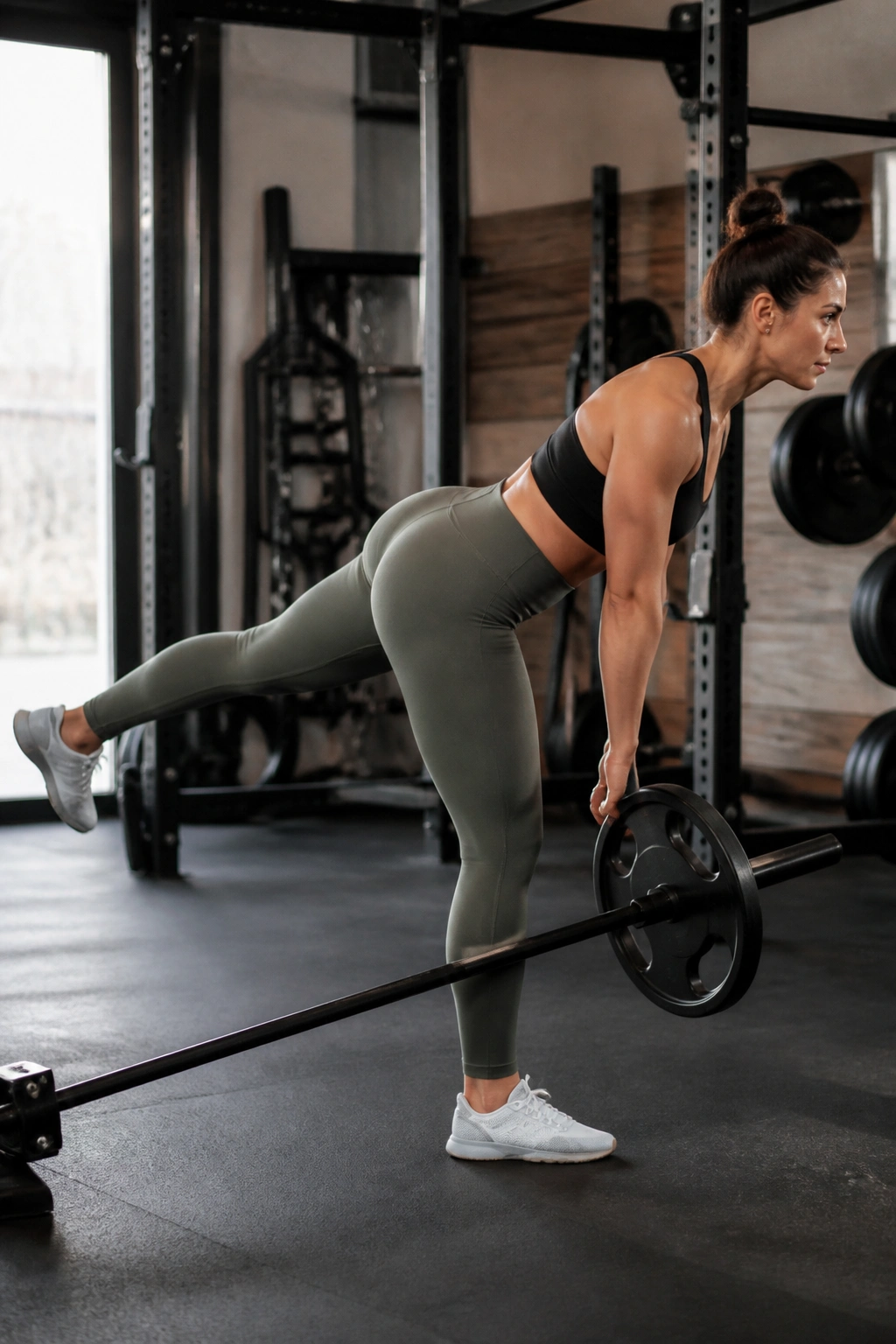
The landmine setup offers a unique arc of motion. Because one end of the barbell is anchored in a landmine attachment or a corner, the bar travels in a curve rather than a straight vertical line. This allows you to really sit back into your hip without the same fear of losing balance that comes with free weights.
The Mechanics
The landmine handle forces you to maintain a very specific position. You have to push the bar away from you, which naturally engages your lats. When you engage your lats, you create a more rigid spine.
Why It Helps Glutes
You can push harder against the resistance because the landmine provides a stability anchor. You can often go heavier here than with a standard dumbbell deadlift, which means more mechanical tension on the glute muscles.
Pro-Tip: If you feel the movement in your lower back, reset. Make sure you are pushing your hips back, not bending forward at the waist.
7. Band-Resisted Single-Leg Deadlift
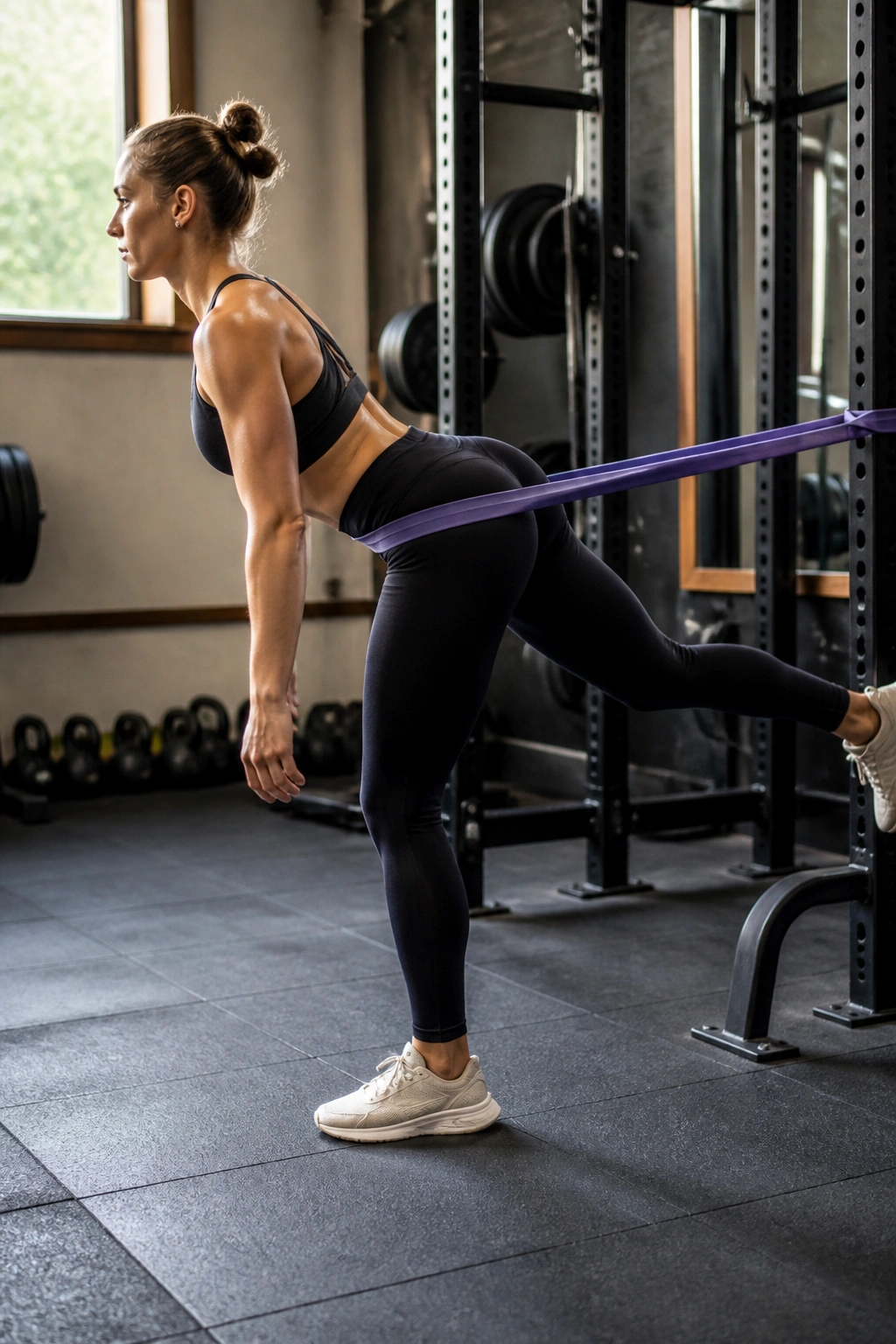
Resistance bands offer a unique resistance profile: the tension increases as you stand up. In a deadlift, that is exactly where your glutes are working the hardest—at the top of the lockout. By using a band, you are forcing your glutes to fight harder during the most critical part of the movement.
How to Use Bands
Anchor a heavy band to a sturdy rack and loop it around your waist. Step forward so the band has tension. As you hinge, the band will try to pull you backward. You have to fight that pull on the way down, and then explosively fight it on the way up.
The Muscle Burn
This creates a specific type of metabolic stress that really gets the glutes fired up. You will feel a “pump” that is difficult to achieve with free weights alone.
Important Note
Make sure the band is secure. If it slips while you are under tension, it can be a jarring surprise. Ensure the anchor point is at or slightly below hip height.
8. Single-Arm Single-Leg Deadlift
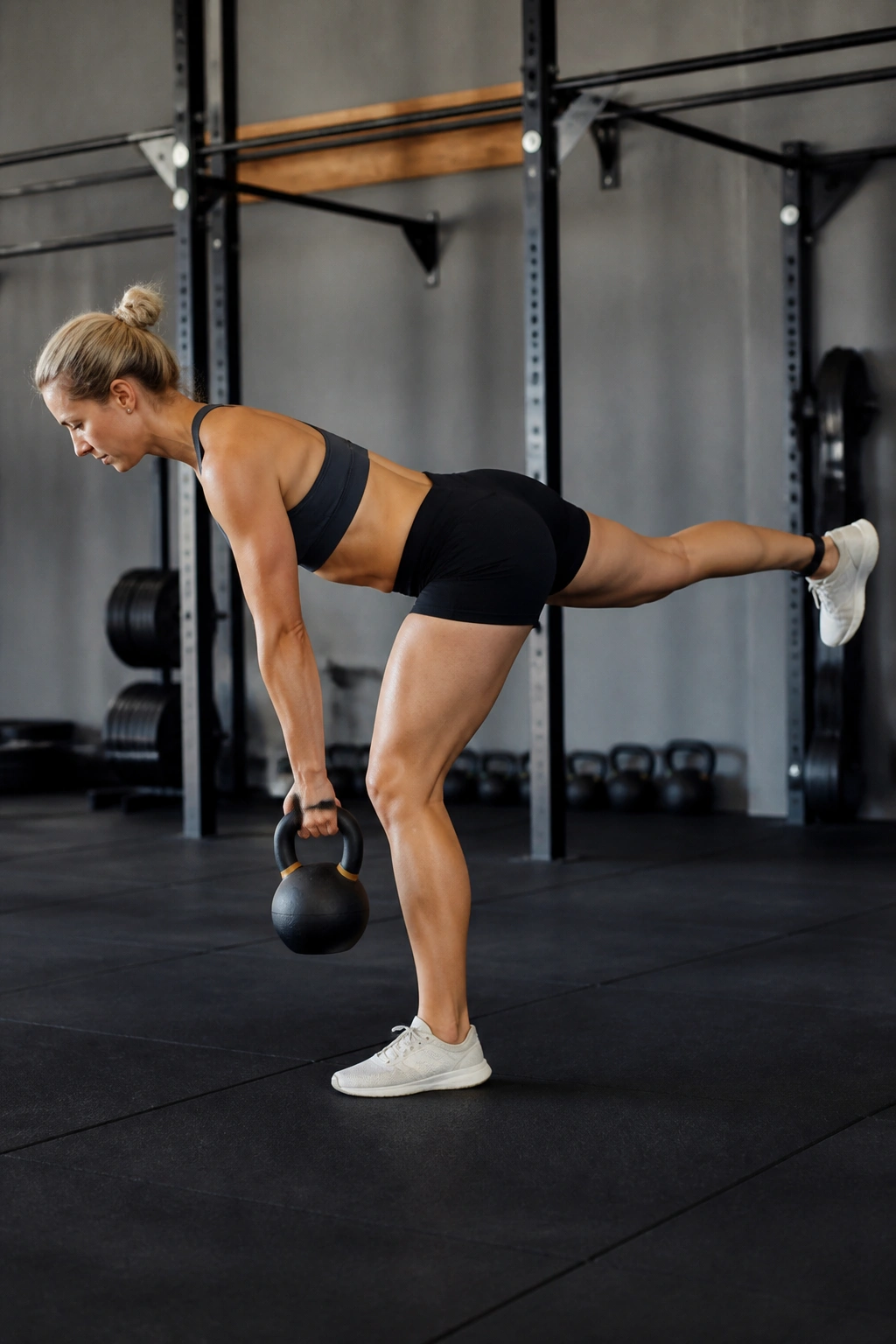
If you want to train your obliques and your glutes simultaneously, this is your movement. By holding the weight in only one hand—specifically on the side of the leg that is in the air—you force your core to fight a massive rotational force.
The Challenge
Your body wants to twist toward the weight. Your core and your hip stabilizers must work in concert to stop that rotation. This is the definition of functional training.
Practical Application
- Hold a kettlebell or dumbbell in the hand opposite the working leg.
- Perform the hinge as normal.
- Focus on keeping your shoulders square to the floor.
Why it matters: Most injuries in sports or daily life occur because of a lack of rotational stability. This exercise teaches your glutes to stabilize the hip while the core prevents unwanted rotation.
9. Deficit Single-Leg Deadlift
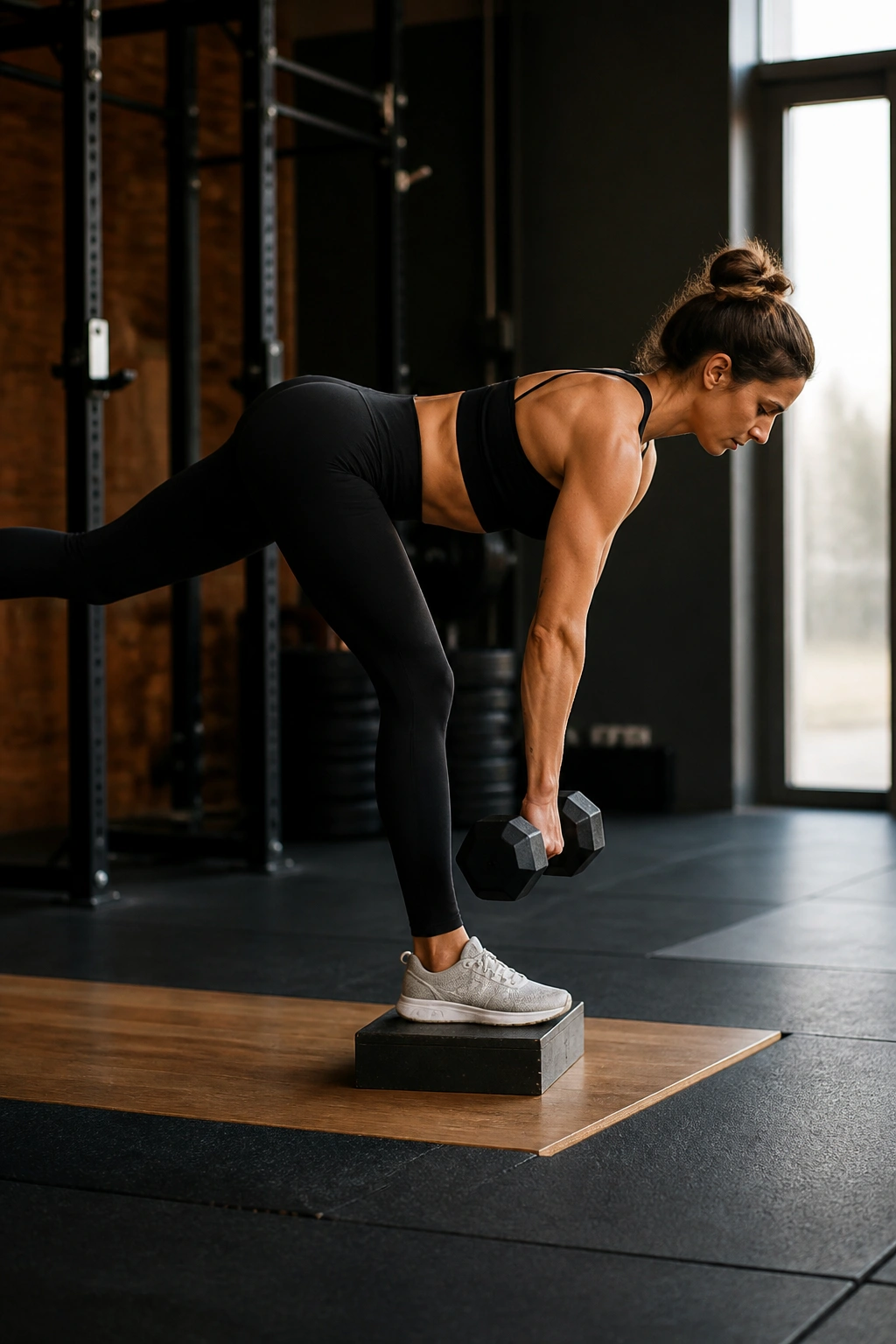
Sometimes the range of motion is just not enough. If you have good mobility, standing on a small platform—like a weight plate or a step box—can allow you to get a deeper stretch.
Why Go Lower?
A deeper stretch under load creates greater muscle damage and, consequently, greater muscle growth. By standing on a 2- to 4-inch plate, you force your glutes to work through a longer range of motion at the bottom of the movement, which is where they are mechanically disadvantaged.
The Risk
Do not go too high. If you stand on a box that is too tall, your back will round before you reach the bottom. Stick to a small deficit that challenges your flexibility without compromising your spinal alignment.
10. Stability Ball Single-Leg Deadlift
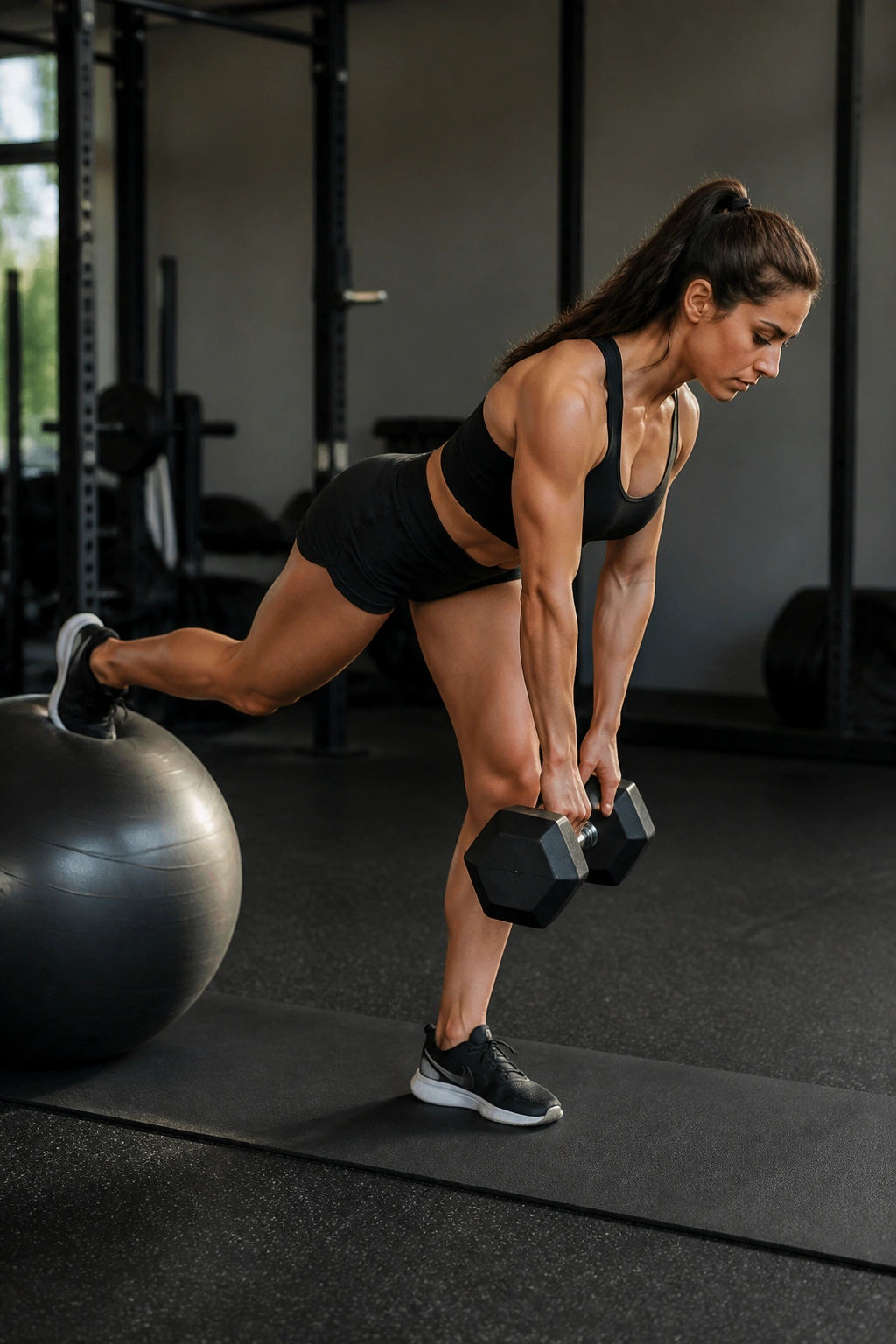
This is as much about balance as it is about strength. Placing your rear foot on a stability ball forces your stabilizers to work at a frantic pace. If you are sloppy, the ball will roll away. This variation is less about heavy loading and more about absolute control and mind-muscle connection.
How to Do It
Stand on your front leg and place the top of your rear foot on the ball. As you hinge, the ball will roll backward. You have to maintain balance while the ball moves.
Who Needs This?
- People returning from ankle or knee injuries.
- Athletes who need to improve proprioception (the body’s awareness of its position in space).
- Anyone who finds standard single-leg deadlifts too “easy” on the balance side.
Don’t Overthink It: It feels shaky at first. That is the point. Embrace the shake.
11. Sliding Single-Leg Deadlift
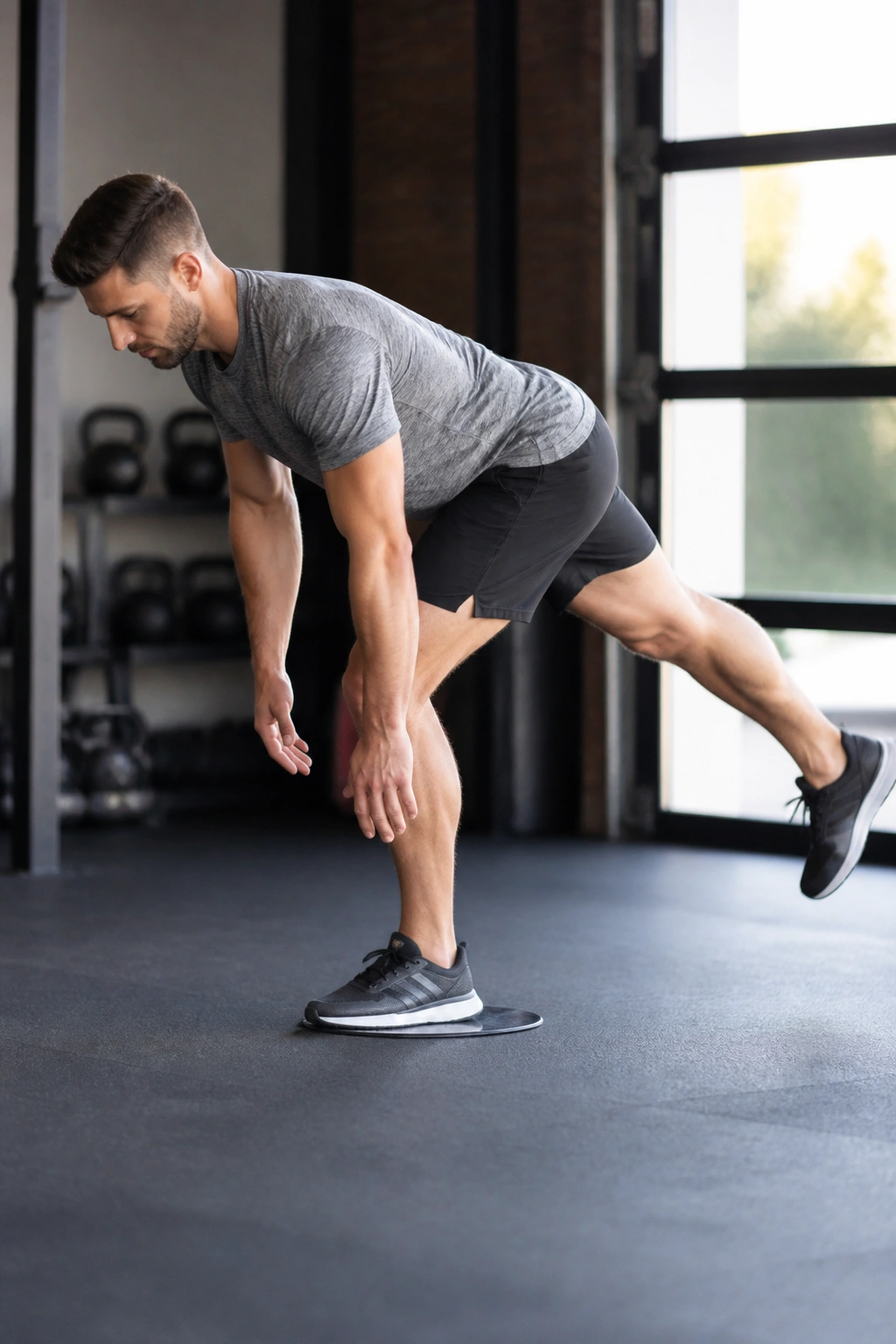
Using a furniture slider or a towel on a slick floor changes the movement entirely. Instead of lifting your leg into the air, you slide it backward along the floor. This keeps your center of mass closer to the ground and allows for a smooth, controlled eccentric (lowering) phase.
The Technique
Place a slider under your non-working foot. As you hinge, push the slider back. Keep your weight entirely on the front foot. The friction of the slider creates an artificial “load” that forces your glutes to work harder to maintain control.
Why I Like It
It is excellent for people who struggle to keep their hips square. Because you aren’t balancing a leg in the air, you can keep your hips perfectly level. It is purely about the hinge mechanics.
12. Suitcase Single-Leg Deadlift
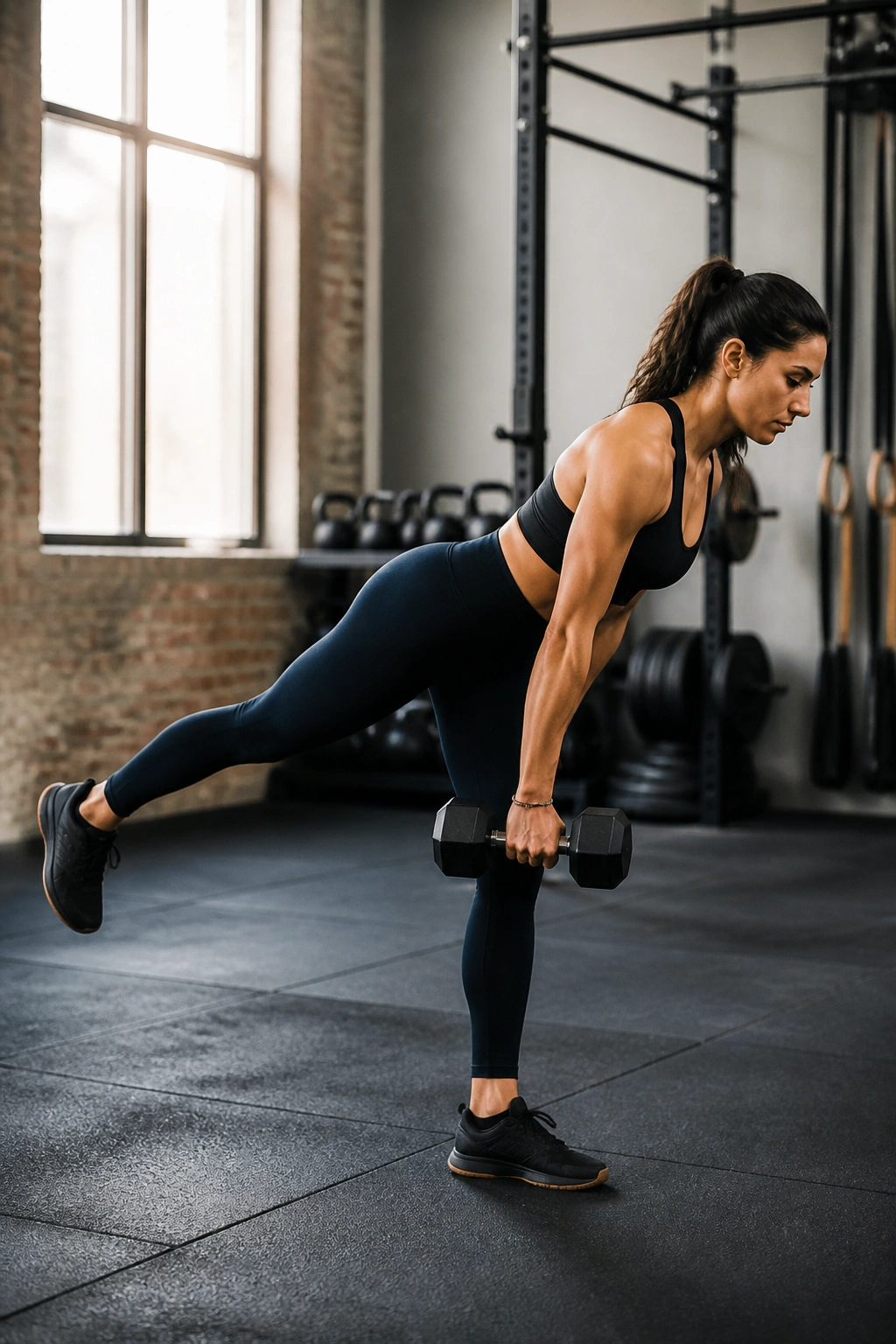
The name comes from the fact that you are holding the weight like a suitcase. This is a very natural movement pattern. It is one of the best ways to build lateral hip stability.
The Hold
Grab a heavy dumbbell or kettlebell in one hand. Let it hang by your side. Now, perform a single-leg deadlift on the same side as the weight. This is known as an ipsilateral load. It is incredibly difficult because it pulls you off-balance in the exact direction you are trying to stabilize.
Benefits for Glutes
Your gluteus medius has to fight hard to prevent your pelvis from dropping. This is the best move for sculpting the lateral glute and fixing the “hip dip” that many people complain about.
Pro-Tip: Your grip strength will be the limiting factor here. Don’t be afraid to use lifting straps if your hand gives out before your glutes do.
13. Contralateral Single-Leg Deadlift
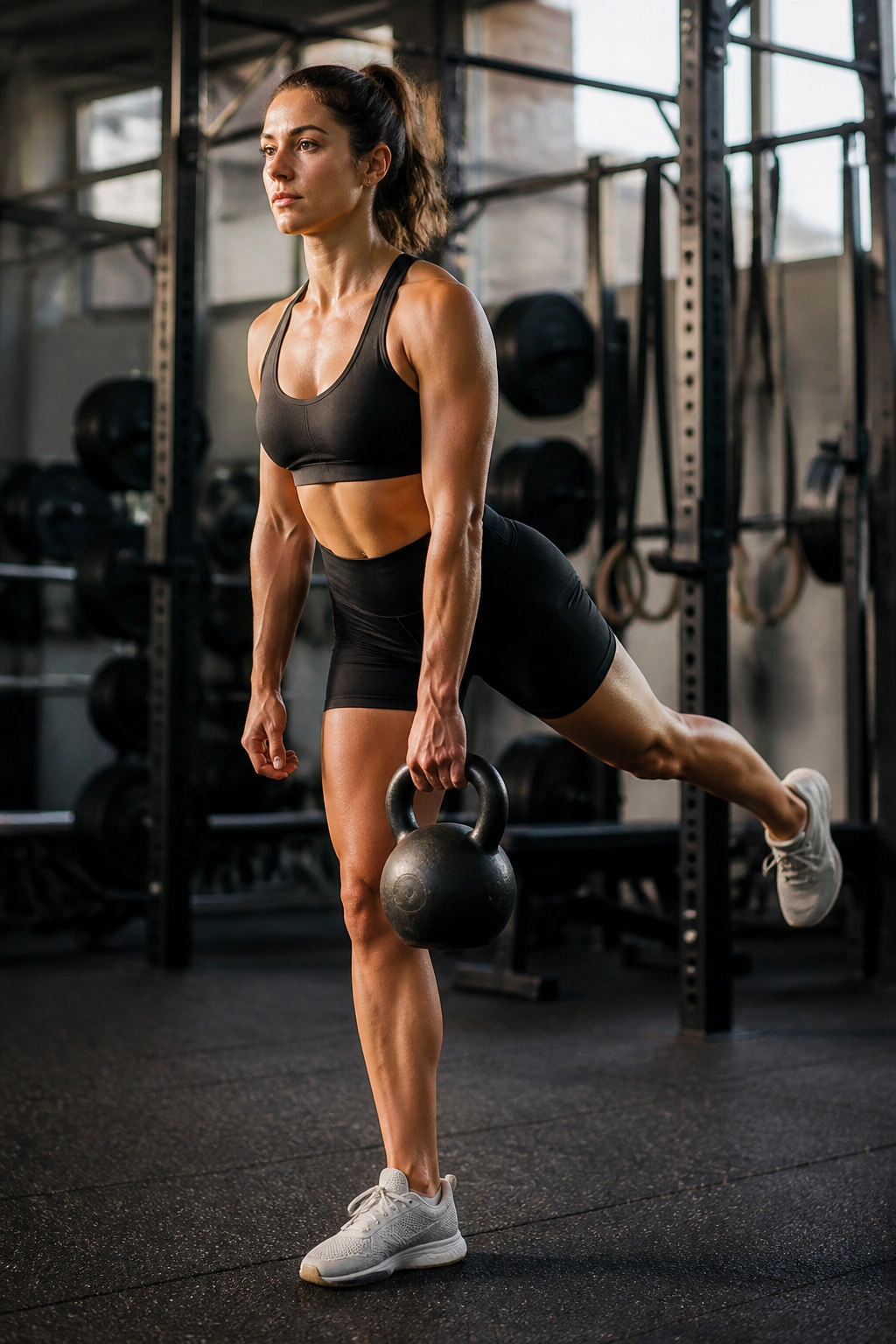
We touched on this briefly, but it deserves its own deep dive. Holding the weight in the opposite hand of the working leg creates a diagonal tension line across your body. This is structurally very stable for the spine and allows you to load quite heavy.
The Biomechanics
Because you have a counterbalance (the weight) opposite your working hip, you can keep your torso much more upright than you could with an ipsilateral load. This shifts more of the load directly onto the glute and takes some of the strain off the lower back.
The Verdict
If you are trying to pack on size and strength for your glutes, this is arguably the most efficient variation. You get the stability of the counterbalance with the focused load on the target muscle.
14. Ipsilateral Single-Leg Deadlift
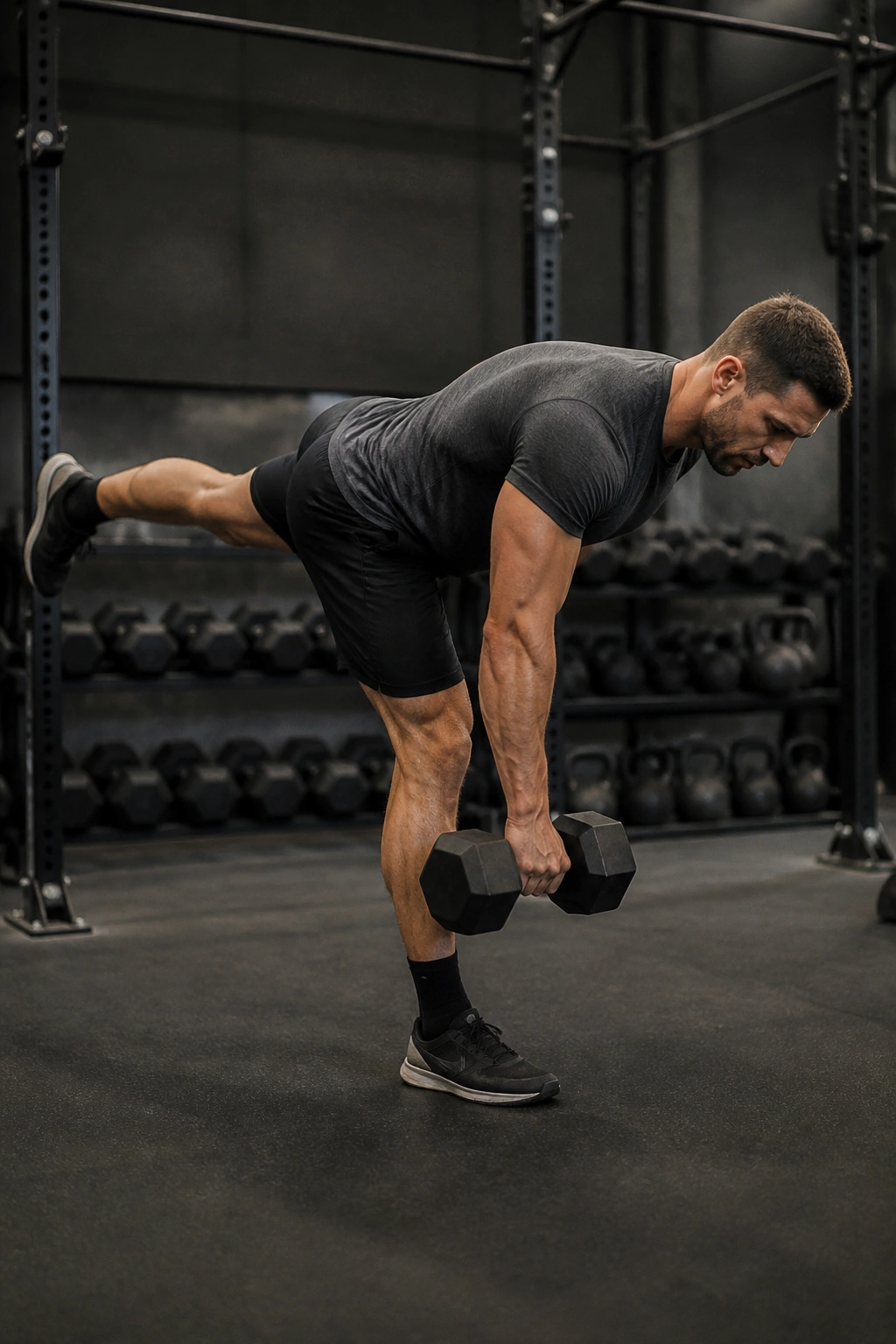
Yes, we mentioned this in the “Suitcase” section, but there is a nuance here that separates it. When you perform this with a barbell or a very heavy dumbbell, it becomes a completely different beast than a light suitcase carry.
Why it’s harder
Holding the weight on the same side as the working leg puts the lever arm right where you don’t want it: pulling you to the side. Your brain has to work harder to coordinate the firing pattern.
Training Focus
This is the ultimate test of control. Use this on days when you are feeling fresh and want to challenge your coordination. If you are tired, skip it—the risk of losing your balance is simply too high.
15. Tempo-Controlled Single-Leg Deadlift
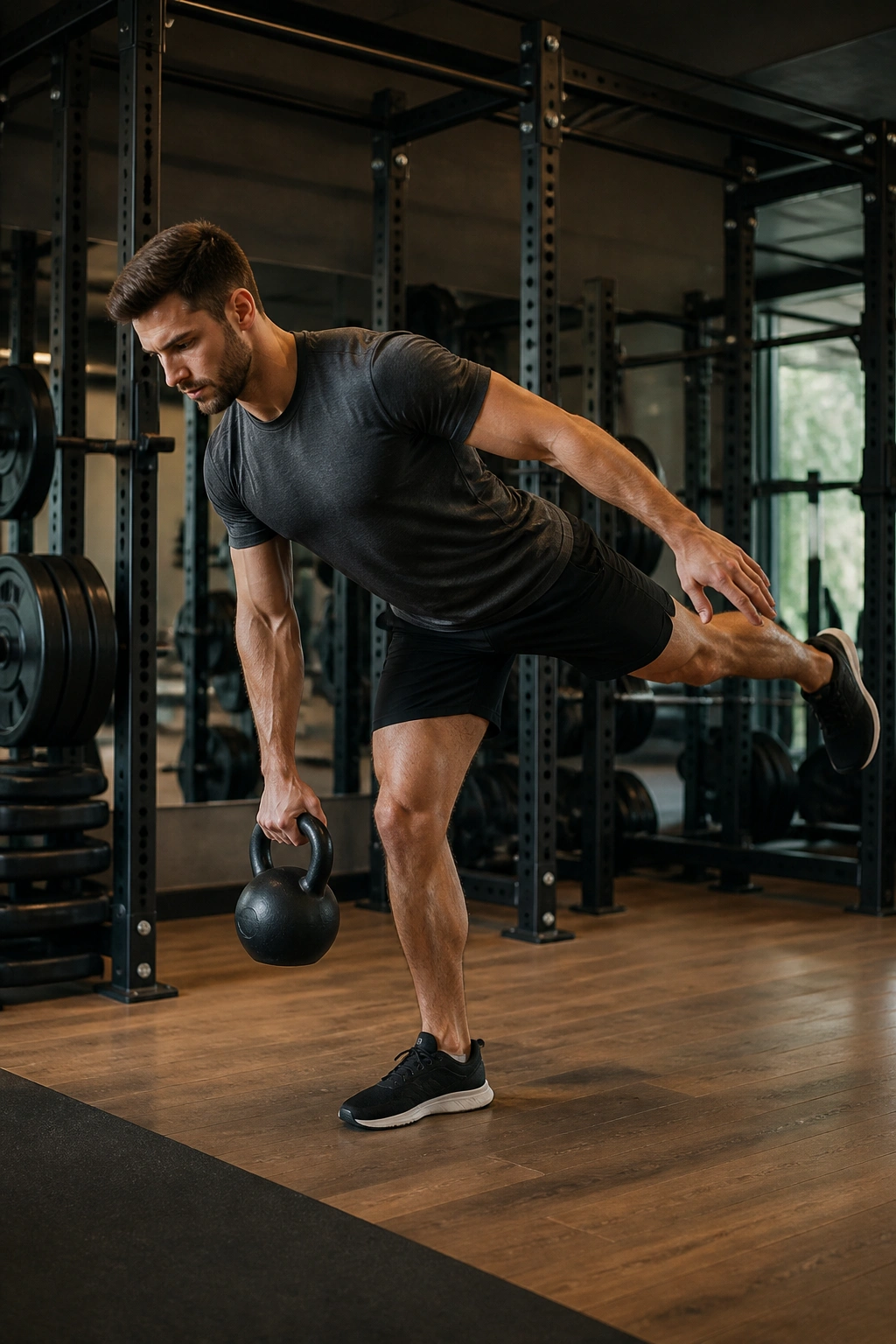
Strength is not just about moving weight; it is about controlling it. By slowing down the tempo, you eliminate the “bounce” or momentum that many people use to cheat their way through reps.
The 3-1-1 Rule
- 3 seconds to lower (eccentric).
- 1 second pause at the bottom (hold the stretch).
- 1 second to stand up (concentric).
Why the Pause Matters
Most people lose tension at the bottom of the deadlift. By pausing, you are forced to initiate the upward movement from a dead stop. This builds explosive glute power from a stretched position, which is essentially the “holy grail” of muscle hypertrophy.
16. Pause-at-the-Bottom Single-Leg Deadlift
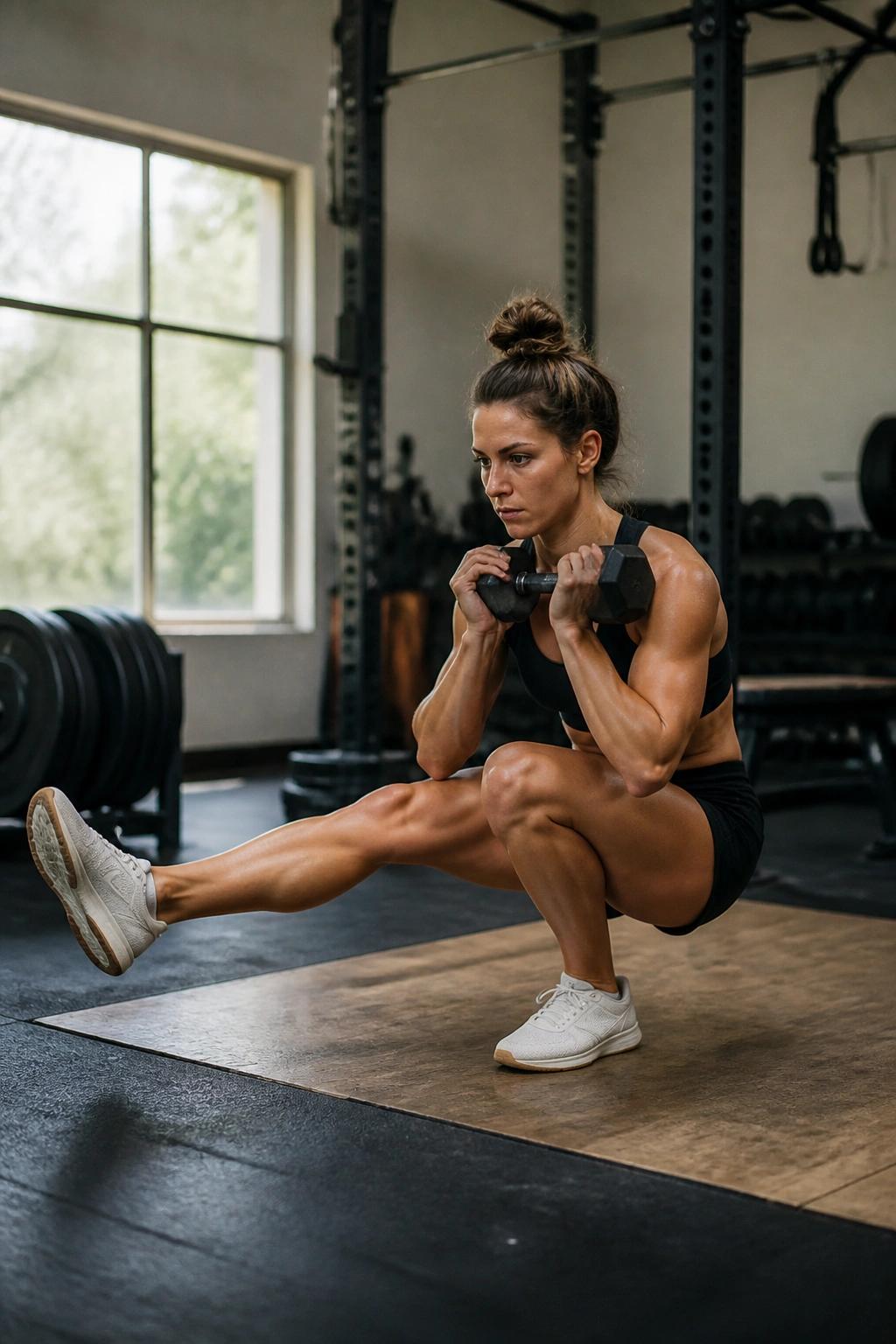
Similar to tempo work, but with a sharper focus. You don’t necessarily need to slow down the descent, but you must stop at the bottom for a full second. This eliminates the elastic energy your muscles store during the descent.
The Benefit
You can’t bounce out of the hole. You have to rely entirely on your glute strength to reverse the movement. It is a humbling experience. If you are used to doing 10 reps, you might find you can only do 5 with this method. That is okay. Quality always beats quantity.
How to Gauge Progress
As you get stronger, extend the pause. Make it 2 seconds, then 3. See how much control you can maintain while holding that deep stretch.
17. Rotational Single-Leg Deadlift
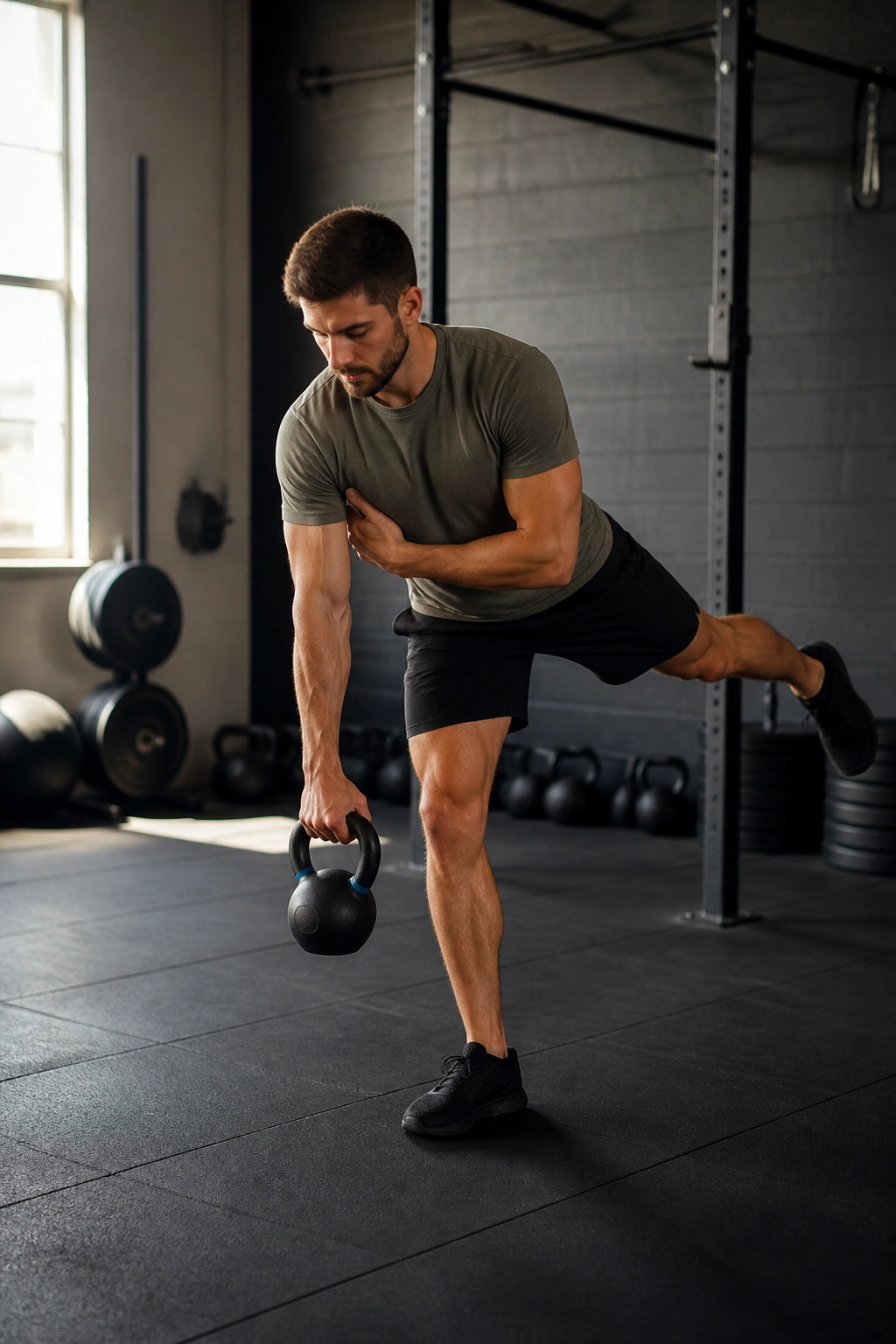
The glutes are not just hip extensors; they are also rotators. In the real world—and in sports—we rarely move in perfectly straight lines. Adding a slight rotation to your deadlift prepares your hips for the way you actually move through life.
The Movement
As you hinge, allow your torso to rotate slightly toward the working leg. Keep your hips square, but let your upper back turn. This engages the glute fibers that handle rotational stability.
Who Should Do This?
If you play golf, tennis, or any sport that involves swinging, this is a must. It builds the glute strength necessary to stabilize the hip during rapid rotation.
18. Zercher Single-Leg Deadlift
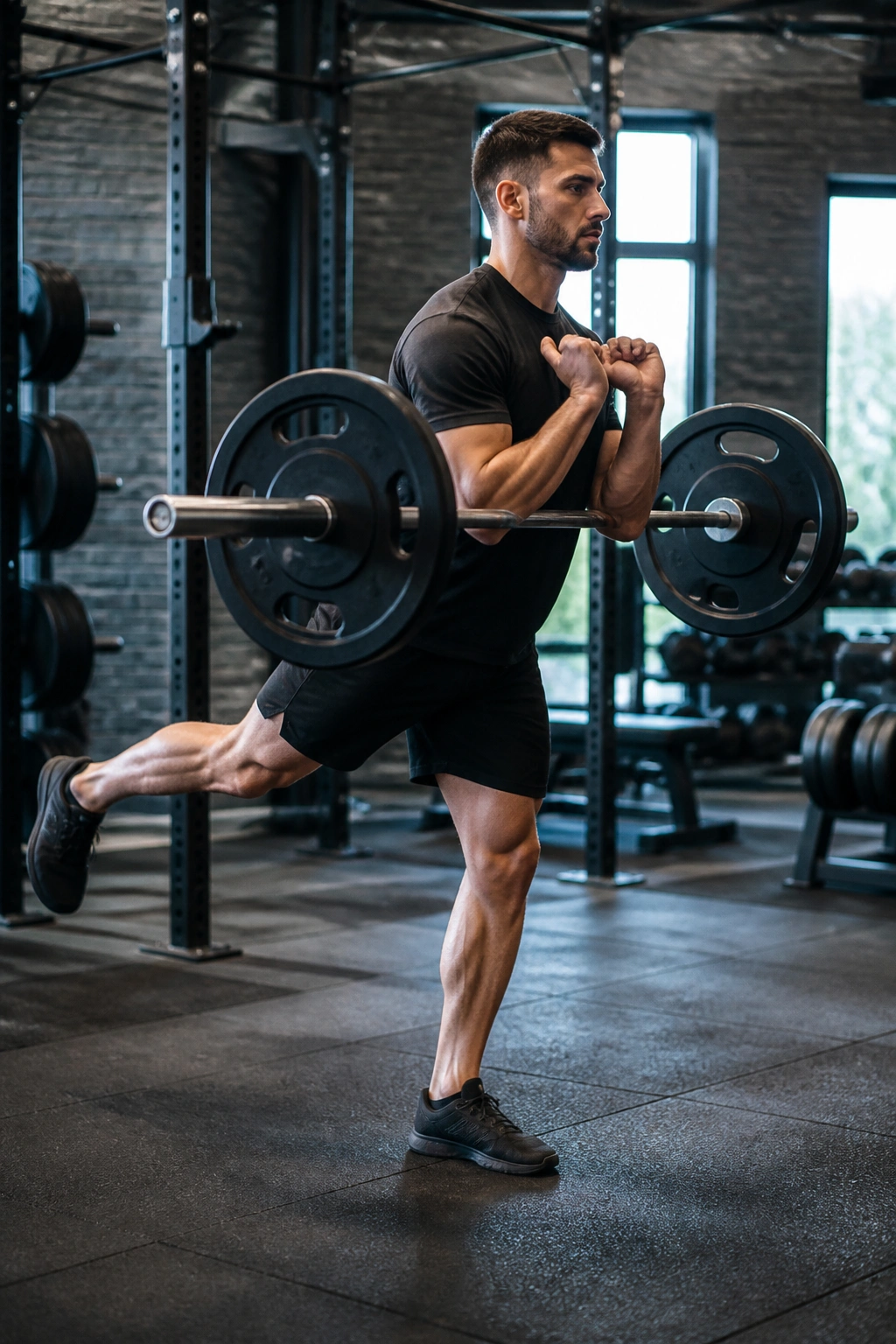
This is a brutal variation, but highly effective for posture. By holding the barbell in the crooks of your elbows (the Zercher position), you force your upper back to stay braced and your chest to stay up.
Why Use This?
Most people fail the single-leg deadlift because they round their upper back. The Zercher hold makes it physically impossible to round your back without dropping the bar. It forces perfect posture.
The Discomfort Factor
It hurts. The bar digs into your elbows. Use a bar pad or a towel. But once you get past the initial sting, you will find that your glutes can work much harder because your core is braced so effectively.
19. Weighted Vest Single-Leg Deadlift
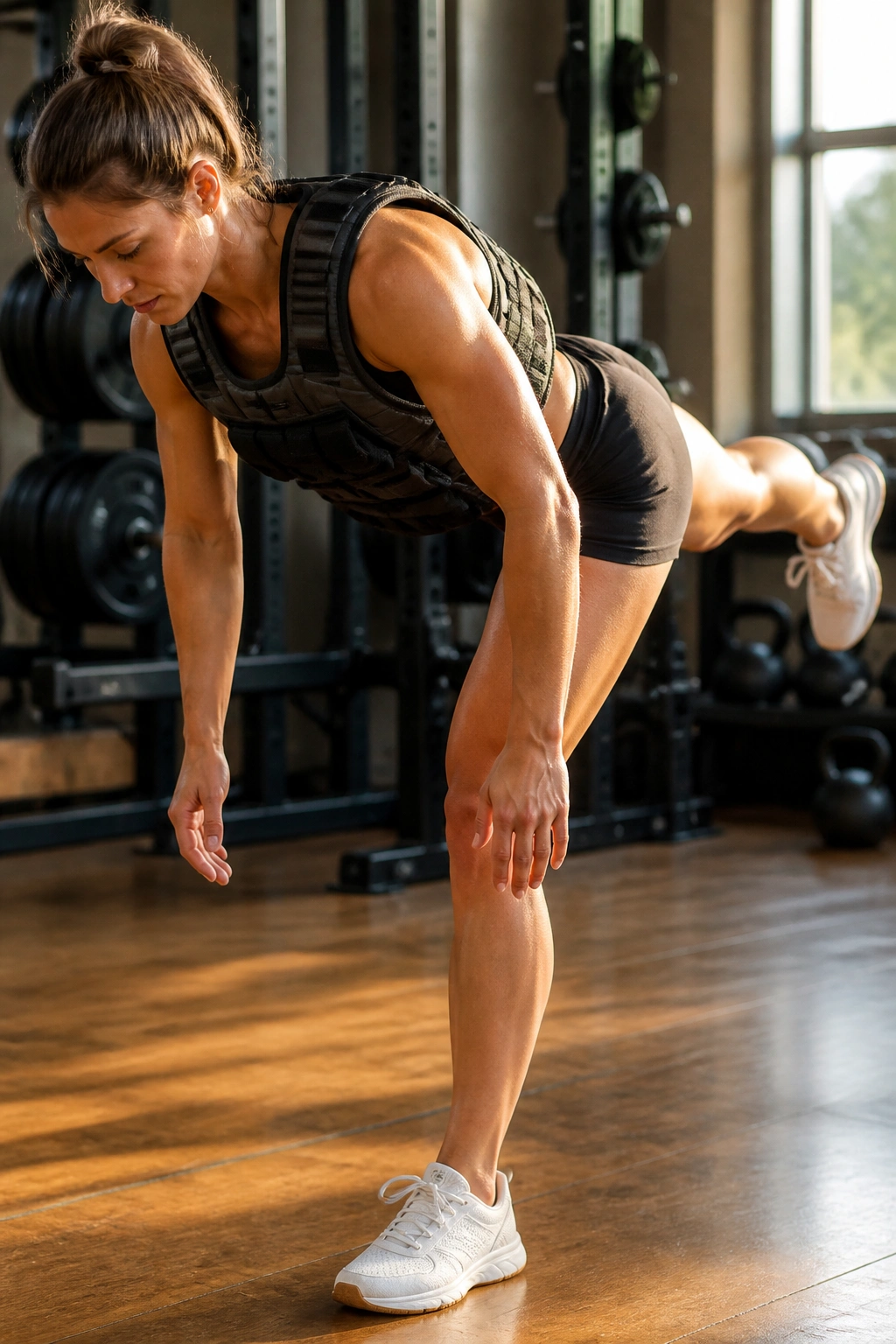
If you have mastered the balance aspect but want to add load without taxing your grip or your arms, a weighted vest is the answer. It keeps the load close to your center of gravity, which is safer for your spine than holding heavy dumbbells.
The Freedom
Because your hands are free, you can use them for balance. If you start to tip, you can reach out. This allows you to push your glutes to total failure without the fear of dropping heavy weights on your toes.
When to Use It
This is the perfect tool for high-volume, endurance-based glute training. You can do sets of 15 to 20 reps comfortably with a vest on.
20. Elevated Rear Foot Single-Leg Deadlift (B-Stance)
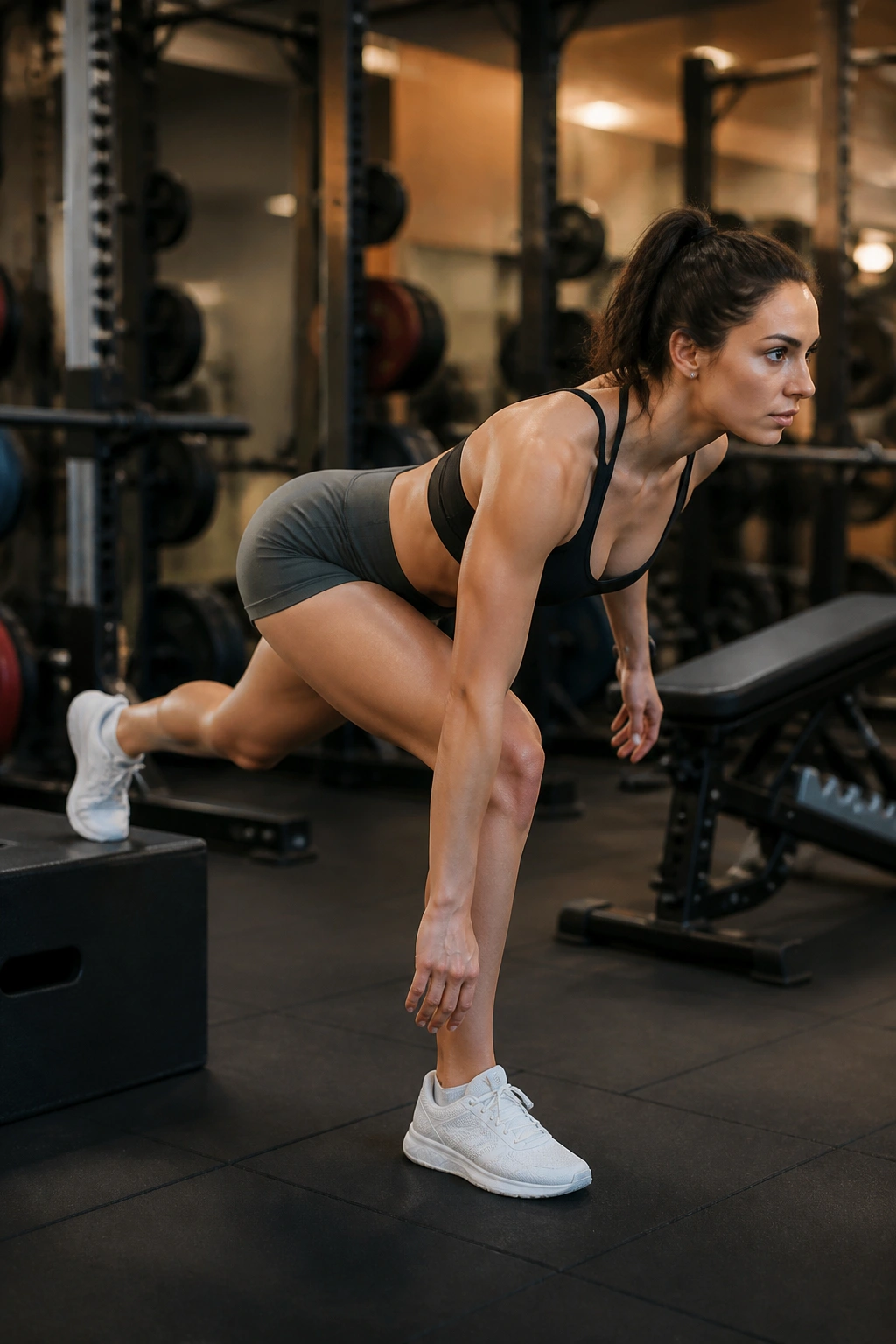
This is the final boss. By elevating your rear foot on a box or bench, you create a hybrid between a Bulgarian split squat and a single-leg deadlift. The rear foot is elevated, so it cannot help you balance. It is essentially a single-leg deadlift with an increased range of motion on the working hip.
The Difficulty
This requires incredible mobility in the working hip. Because the rear leg is elevated, your working hip is forced into deep flexion. You will feel this in the deep glute fibers more than almost any other movement.
Final Word
Do not start here. Earn your way up to this variation by mastering the bodyweight and kickstand versions first. Once you are ready, this will be the most effective glute builder in your arsenal.
Integrating Into Your Training
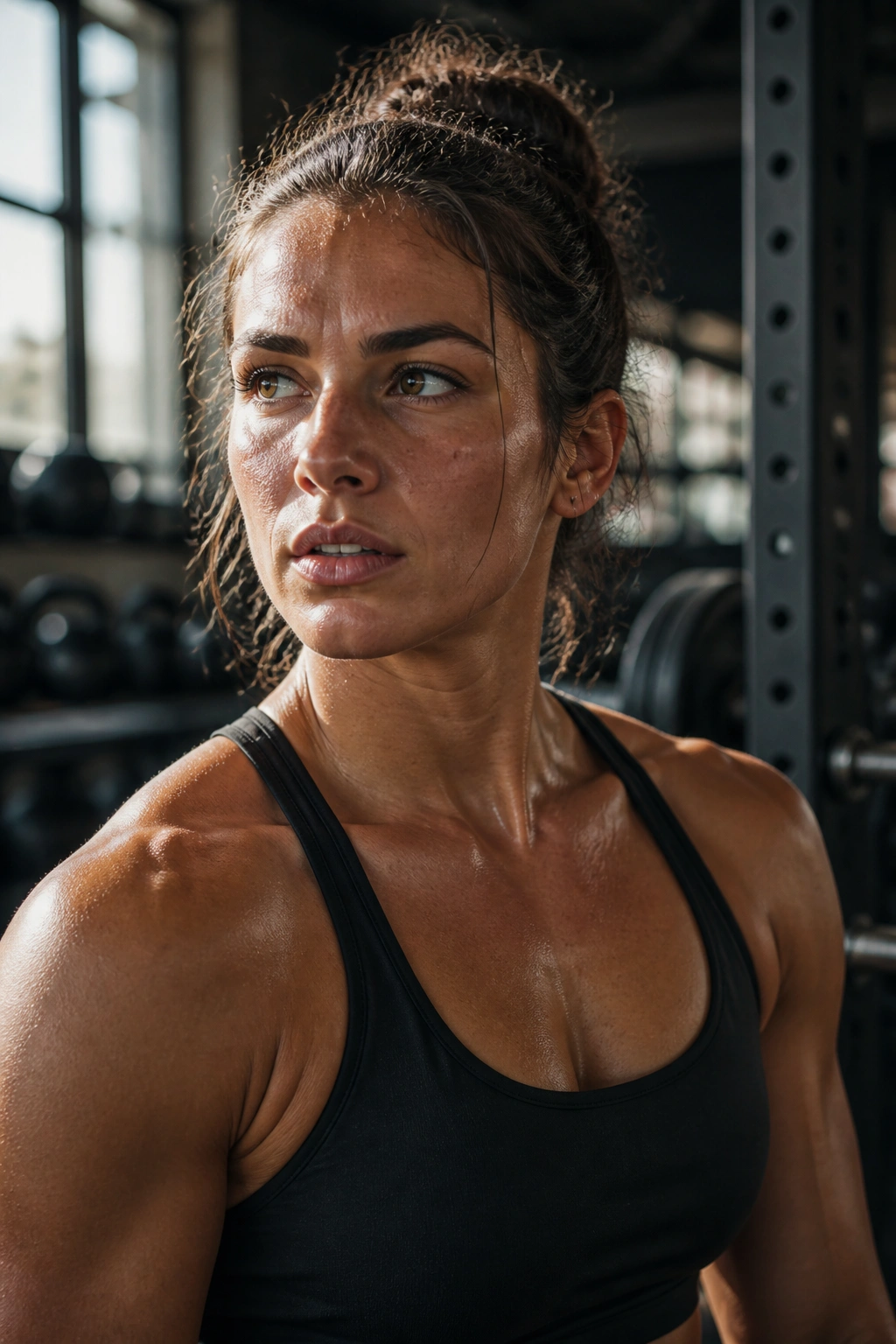
You do not need to do all twenty of these variations in one workout. In fact, that would be a recipe for extreme soreness and potential injury. Choose two or three variations and stick with them for a training block—say, four to six weeks.
Focus on mastering the technique. The glutes are stubborn muscles; they often don’t want to work, especially if you have spent the day sitting at a desk. These exercises are not just about loading weight; they are about teaching your nervous system to prioritize the glute muscles over the lower back and the hamstrings.
If you struggle to feel your glutes working, start with the Bodyweight or Sliding variations. Keep the volume high—3 sets of 12 to 15 reps—and focus on the squeeze at the top. If your glutes are already strong and you want to pack on size, use the Contralateral or Barbell variations in a lower rep range—3 sets of 6 to 8—with heavier weight.
Consistency is the secret sauce. You could do the “perfect” exercise once a month and see zero results. But if you pick one of these variations and perform it twice a week, every week, for a few months, you will see a transformation. Your balance will improve, your lower back pain will likely dissipate, and your glutes will become the powerhouse they were meant to be. Take your time, focus on the details, and do not be afraid to be a beginner again with each new variation.
